US20180098207A1 - Relay device, method and computer program - Google Patents
Relay device, method and computer program Download PDFInfo
- Publication number
- US20180098207A1 US20180098207A1 US15/833,755 US201715833755A US2018098207A1 US 20180098207 A1 US20180098207 A1 US 20180098207A1 US 201715833755 A US201715833755 A US 201715833755A US 2018098207 A1 US2018098207 A1 US 2018098207A1
- Authority
- US
- United States
- Prior art keywords
- network
- condition information
- emergency
- broadcast
- receiver
- Prior art date
- Legal status (The legal status is an assumption and is not a legal conclusion. Google has not performed a legal analysis and makes no representation as to the accuracy of the status listed.)
- Granted
Links
Images

Classifications
-
- H—ELECTRICITY
- H04—ELECTRIC COMMUNICATION TECHNIQUE
- H04W—WIRELESS COMMUNICATION NETWORKS
- H04W4/00—Services specially adapted for wireless communication networks; Facilities therefor
- H04W4/90—Services for handling of emergency or hazardous situations, e.g. earthquake and tsunami warning systems [ETWS]
-
- H—ELECTRICITY
- H04—ELECTRIC COMMUNICATION TECHNIQUE
- H04H—BROADCAST COMMUNICATION
- H04H20/00—Arrangements for broadcast or for distribution combined with broadcast
- H04H20/53—Arrangements specially adapted for specific applications, e.g. for traffic information or for mobile receivers
- H04H20/59—Arrangements specially adapted for specific applications, e.g. for traffic information or for mobile receivers for emergency or urgency
-
- H04W4/22—
-
- H—ELECTRICITY
- H04—ELECTRIC COMMUNICATION TECHNIQUE
- H04B—TRANSMISSION
- H04B7/00—Radio transmission systems, i.e. using radiation field
- H04B7/14—Relay systems
- H04B7/15—Active relay systems
- H04B7/155—Ground-based stations
- H04B7/15592—Adapting at the relay station communication parameters for supporting cooperative relaying, i.e. transmission of the same data via direct - and relayed path
-
- H—ELECTRICITY
- H04—ELECTRIC COMMUNICATION TECHNIQUE
- H04H—BROADCAST COMMUNICATION
- H04H20/00—Arrangements for broadcast or for distribution combined with broadcast
- H04H20/02—Arrangements for relaying broadcast information
-
- H—ELECTRICITY
- H04—ELECTRIC COMMUNICATION TECHNIQUE
- H04H—BROADCAST COMMUNICATION
- H04H60/00—Arrangements for broadcast applications with a direct linking to broadcast information or broadcast space-time; Broadcast-related systems
- H04H60/76—Arrangements characterised by transmission systems other than for broadcast, e.g. the Internet
- H04H60/81—Arrangements characterised by transmission systems other than for broadcast, e.g. the Internet characterised by the transmission system itself
- H04H60/82—Arrangements characterised by transmission systems other than for broadcast, e.g. the Internet characterised by the transmission system itself the transmission system being the Internet
- H04H60/87—Arrangements characterised by transmission systems other than for broadcast, e.g. the Internet characterised by the transmission system itself the transmission system being the Internet accessed over computer networks
- H04H60/88—Arrangements characterised by transmission systems other than for broadcast, e.g. the Internet characterised by the transmission system itself the transmission system being the Internet accessed over computer networks which are wireless networks
-
- H04L61/2007—
-
- H—ELECTRICITY
- H04—ELECTRIC COMMUNICATION TECHNIQUE
- H04L—TRANSMISSION OF DIGITAL INFORMATION, e.g. TELEGRAPHIC COMMUNICATION
- H04L61/00—Network arrangements, protocols or services for addressing or naming
- H04L61/50—Address allocation
- H04L61/5007—Internet protocol [IP] addresses
-
- H—ELECTRICITY
- H04—ELECTRIC COMMUNICATION TECHNIQUE
- H04W—WIRELESS COMMUNICATION NETWORKS
- H04W4/00—Services specially adapted for wireless communication networks; Facilities therefor
- H04W4/12—Messaging; Mailboxes; Announcements
- H04W4/14—Short messaging services, e.g. short message services [SMS] or unstructured supplementary service data [USSD]
-
- H04W72/005—
-
- H—ELECTRICITY
- H04—ELECTRIC COMMUNICATION TECHNIQUE
- H04W—WIRELESS COMMUNICATION NETWORKS
- H04W72/00—Local resource management
- H04W72/30—Resource management for broadcast services
-
- H04W76/007—
-
- H—ELECTRICITY
- H04—ELECTRIC COMMUNICATION TECHNIQUE
- H04W—WIRELESS COMMUNICATION NETWORKS
- H04W76/00—Connection management
- H04W76/50—Connection management for emergency connections
-
- H—ELECTRICITY
- H04—ELECTRIC COMMUNICATION TECHNIQUE
- H04H—BROADCAST COMMUNICATION
- H04H2201/00—Aspects of broadcast communication
- H04H2201/30—Aspects of broadcast communication characterised by the use of a return channel, e.g. for collecting users' opinions, for returning broadcast space/time information or for requesting data
- H04H2201/37—Aspects of broadcast communication characterised by the use of a return channel, e.g. for collecting users' opinions, for returning broadcast space/time information or for requesting data via a different channel
Definitions
- the present invention relates to a relay device, method and computer program.
- a relay device operable to relay emergency information to a plurality of mobile terminals, the device comprising: a receiver configured in use to receive a broadcast signal, the broadcast signal being in a first format and containing the emergency information; a transmitter configured in use to connect to the plurality of mobile terminals using a communication channel; and a processor configured in use to provide the emergency information received in the broadcast signal to the plurality of mobile terminals in a second format using the transmitter, wherein the second format is different to the first format.
- the communication channel may be unencrypted.
- the receiver may be configured to receive an emergency flag carried in the broadcast signal, whereby in response to the emergency flag, the transmitter is configured to broadcast a predetermined identifier, carried in the broadcast signal, which identifies the relay device to the plurality of mobile terminals.
- the emergency information may contain the text of a webpage to be displayed on the plurality of mobile terminals, and the processor is configured to convert the received text into the webpage to be displayed on the plurality of mobile terminals.
- the receiver may be configured to receive a feedback flag located in the broadcast signal, whereby in response to the feedback flag, the processor is configured to include a feedback element within the webpage.
- the relay device may further comprise a network connection operable to connect the relay device to a network, wherein the emergency information contains a unique resource identifier of the webpage to be displayed to the plurality of mobile terminals and the network connection is operable to provide the webpage at the unique resource identifier to the plurality of mobile terminals.
- a mobile terminal comprising: a first receiver operable to connect to the relay device of the above over the communication channel and to receive the emergency information in the second format is also provided,
- the mobile terminal may further comprise a second receiver operable to connect to a cellular network, wherein prior to connection of the first receiver to the relay device above, the second receiver is operable to receive a message over the cellular network, the message being sent using Short Message Service—Cell Broadcast.
- a second receiver operable to connect to a cellular network, wherein prior to connection of the first receiver to the relay device above, the second receiver is operable to receive a message over the cellular network, the message being sent using Short Message Service—Cell Broadcast.
- relay device configured in use to connect to the mobile terminal of the above via WiFi.
- a method of relaying emergency information to a plurality of mobile terminals comprising: receiving a broadcast signal, the broadcast signal being in a first format and containing the emergency information; connecting to the plurality of mobile terminals using a communication channel; and providing the emergency information received in the broadcast signal to the plurality of mobile terminals in a second format using the transmitter, wherein the second format is different to the first format.
- the communication channel may be unencrypted.
- the method may comprise receiving an emergency flag carried in the broadcast signal, whereby in response to the emergency flag, the method comprises broadcasting a predetermined identifier, carried in the broadcast signal, which identifies the relay device to the plurality of mobile terminals.
- the emergency information may contain the text of a webpage to be displayed on the plurality of mobile terminals, and the method comprises converting the received text into the webpage to be displayed on the plurality of mobile terminals.
- the method may comprise receiving a feedback flag located in the broadcast signal, whereby in response to the feedback flag, the method comprises including a feedback element within the webpage.
- the method may comprise connecting the relay device to a network, wherein the emergency information contains a unique resource identifier of the webpage to be displayed to the plurality of mobile terminals and providing the webpage at the unique resource identifier to the plurality of mobile terminals.
- a computer program comprising computer readable instructions which, when loaded onto a computer, configure the computer to perform the method of the above is provided.
- a storage medium configured to store the computer program of the above therein or thereon is provided.
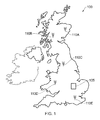
- FIG. 1 shows a map of the United Kingdom with representative broadcast stations
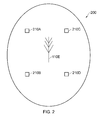
- FIG. 2 shows a broadcast region covered by one of the broadcast stations, the broadcast region including representative relay devices according to the disclosure
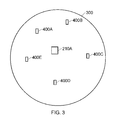
- FIG. 3 shows a cell covered by one of the relay devices of FIG. 2 , the cell including representative mobile terminals according to the disclosure;
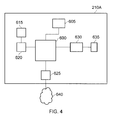
- FIG. 4 shows a block diagram of a relay device of FIG. 3 ;
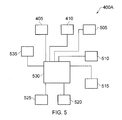
- FIG. 5 shows a block diagram of a mobile terminal of FIG. 3 ;
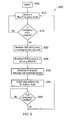
- FIG. 6 shows a flow diagram explaining the operation of the broadcast station of FIG. 2 ;
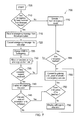
- FIG. 7 shows a flow diagram explaining the interaction of the relay device and mobile terminal according to the disclosure.
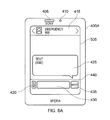
- FIG. 8A shows a mobile terminal of FIG. 5 receiving a Short Message Service (SMS) message
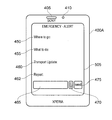
- FIG. 8B shows a mobile terminal of FIG. 5 connected to a webpage via the relay device of FIG. 4 ;
- FIG. 1 a map of the United Kingdom including a representation of broadcast stations 110 A- 110 E is shown.
- the broadcast stations 110 A- 110 E receive information from a central controller 105 .
- the central controller 105 provides broadcast programming to be transmitted by the broadcast stations 110 A- 110 E.
- the broadcast stations 110 A- 110 E may broadcast digital terrestrial television, such as streams complying with the Digital Video Broadcast—Terrestrial (DVB-T) and DVB-T2 and DVB-T2lite standards, the Integrated Services Digital Broadcasting (ISDB) standard or the like.
- the broadcast stations 110 A- 110 E may transmit signals and streams complying to other standards such as digital audio signals complying with Digital Audio Broadcast (DAB), digital television for mobile devices (DVB-H, DVB-NGH, ATSC M/H or ISDB-1 seg) or the like.
- DVB Digital Audio Broadcast
- DVB-H Digital Audio Broadcast
- DVB-NGH digital television for mobile devices
- ATSC M/H ATSC M/H or ISDB-1 seg
- the broadcast stations 110 A- 110 E are typically located on high ground to ensure that the coverage of the broadcast station 110 A- 110 E is uninterrupted.
- the position of broadcast stations 110 A- 110 E is usually high to avoid hills or mountains blocking the broadcast signal. This allows a typical broadcast station 110 A- 110 E to have a range of 150-200 km.
- the infrastructure associated with the broadcast station 110 A- 110 E is typically very robust.
- the power supply to the broadcast stations 110 A- 110 E is secure. This means that in the event of an emergency such as a tsunami or other natural disaster or terrorist attack, the broadcast stations 110 A- 110 E are likely to remain unaffected and will continue broadcasting.
- DVB-T2 is used for broadcasting the broadcast signal.
- DVB-T2 signals are created using some advanced forward error correction and other modulation techniques making it particularly robust.
- Some operating modes of DVB-T2 may be selected as offering levels of robustness over other operating modes.
- a typical cell 200 of coverage provided by one of the broadcast stations 110 E is shown. Additionally shown in the cell 200 is a plurality of representative relaying (or routing) devices 210 A- 210 D according to the disclosure. Of course, other devices such as televisions compatible with the DVB-T2 standard will also be present in the cell 200 but are not shown. These relaying devices 210 A- 210 D each contain a DVB-T2 receiver as will be explained later.
- the DVB-T2 receiver is configured to receive and decode the DVB-T2 signal transmitted by the broadcast stations 110 A- 110 E.
- a non-limiting example of a DVB-T2 receiver incorporates the CXD282OR demodulator chip made by Sony®.
- the DVB-T2 receiver located within the relaying devices 210 A- 210 E receives and decodes the DVB-T2 signalling and data packets.
- the central controller 105 inserts emergency information and, optionally, an emergency flag into the DVB-T2 stream to be broadcast by the broadcast stations 110 A- 110 E.
- the emergency information, and optional emergency flag is inserted within a Future Extension Frame part of the DVB-T2 Super-Frame.
- the emergency information and emergency flag could be located anywhere within the DVB-T2 stream.
- the emergency information and emergency flag could be located at an appropriate location within any other formatted stream such as within the service information in a DVB transport stream (i.e.
- the emergency information is information that the emergency services wish for people within the cell 200 of the broadcast station 110 E to receive or to view.
- the optional emergency flag indicates to the relaying device 210 A- 210 E that the relaying device 210 A- 210 E should operate in an emergency mode. It is envisaged, that the emergency flag is only optional and the relaying device 210 A- 210 E may operate in the emergency mode by the presence of the emergency information alone. In other words, as the DVB-T2 signal includes emergency information, the relaying device 210 A- 210 E may automatically enter the emergency mode. When in non-emergency mode, the relaying devices 210 A- 210 E may operate, in a non-limiting example, as a WiFi hotspot allowing users to connect to the internet or other wide area network.
- the relaying device 210 A- 210 F communicates with one or more mobile terminals, such as a cellular telephone, tablet computer, laptop computer or the like.
- a relaying device 210 A communicates with a plurality of mobile terminals 400 A- 400 E using a communication standard different to that of the broadcast station 110 E.
- the relaying device 210 A receives the emergency flag and the emergency information using a broadcast standard such as the DVB-T2 standard, the relaying device 210 A communicates with the mobile terminals 400 A- 400 E using a different standard.
- the relaying device 210 A may communicate with the mobile terminals using WiFi or any kind of communication protocol, such as WiMax, Bluetooth, NFC (Near Field Communications) or the like.
- the 30 relaying device 210 A communicates with the mobile terminals using WiFi.
- a relaying device 210 A shown in FIG. 3 contains a first processor 600 .
- the first processor 600 is controlled using a computer program.
- the computer program contains computer readable instructions which configure the first processor 600 to operate in a particular manner as will be 35 explained later.
- the computer program that controls the first processor 600 is stored on a computer readable storage medium.
- the computer storage medium is provided in the relaying device 210 A as memory 605 .
- the memory 605 is a solid state memory.
- the disclosure is not so limited and may be any kind of memory such as an optically readable memory or the like.
- the computer readable storage medium may be located outside of the relaying device 210 A for example, in a server or on the Internet or the like.
- a DVB-T2 receiver 630 Additionally connected to the first processor 600 is, in this case, a DVB-T2 receiver 630 .
- the DVB-T2 receiver 630 would be appropriately chosen to receive the signals transmitted by the broadcast station 110 E.
- the DVB-T2 receiver 630 receives the signals using a DVB-T2 antenna 635 also connected to the DVB-T2 receiver 630 .
- the DVB-T2 receiver 630 also decodes the signals transmitted by the broadcast station 110 E and passes the resultant data stream to the first processor 600 .
- a WiFi transceiver 620 is connected to the first processor 600 .
- a WiFi transceiver 620 is connected to the first processor 600 .
- the WiFi transceiver 620 would be appropriately chosen to transmit and receive signals with the mobile terminal 400 A with which the relaying device 210 A communicates.
- a non-limiting example WiFi transceiver chip is the STLC4420 by STMicroelectronics®.
- the WiFi transceiver 620 is also connected to a WiFi antenna 615 from which the WiFi signals are transmitted.
- the WiFi antenna 615 may be a Multiple-Input-Multiple-Output (MIMO)type antenna or the like.
- MIMO Multiple-Input-Multiple-Output
- the network connector 625 connects the relaying device 210 A to a wide or local area network 640 .
- the network connector 625 may be an Ethernet connector or the like that connects the relaying device 210 A to the Internet or a Local Area Network.
- FIG. 5 which shows a mobile terminal 400 A of the disclosure.
- a second processor 530 is provided.
- the second processor 530 is controlled using a computer program.
- the computer program contains computer readable instructions which configure the second processor 530 to operate in a particular manner as will be explained later.
- the computer program that controls the second processor 530 is stored on a computer readable storage medium.
- the computer storage medium is provided in the relaying device 400 A as memory 525 .
- the memory 525 is a solid state memory.
- the disclosure is not so limited and may be any kind of memory such as an optically readable memory or the like.
- the computer readable storage medium may be located outside of the mobile terminal 400 A for example, in a server or on the Internet or the like.
- a speaker 405 is connected to the second processor 530 .
- the speaker 405 is provided so that the user of the mobile terminal 400 A may listen to a telephone call or audio content such as music or the like.
- a camera 410 is also connected to the second processor 530 .
- the camera 410 is used to capture images using the mobile terminal 400 A.
- the camera 410 may be used to capture images of the emergency situation and sent to the emergency services. Further, the captured images may be attached to a Multi-Media Service (MMS) message or stored in the memory 525 .
- MMS Multi-Media Service
- the second processor 530 is also connected to a display 505 .
- the display 505 may be a high definition Organic Light Emitting Diode type display or the like.
- the display 505 is a touch-screen display that provides a user interface with the mobile terminal 400 A.
- the second processor 530 is also connected to a WiFi transceiver 510 (such as the STLC4550 by STMicroelectronics®).
- the WiFi transceiver 510 enables the mobile terminal 400 A to communicate with the relaying device 210 A using WiFi.
- a cellular network transceiver 525 is also connected to the second processor 530 .
- the cellular network transceiver 525 enables the mobile terminal 400 A to communicate with 3G or LTE cellular network.
- the cellular network transceiver 525 enables the mobile terminal 400 A to send and receive telephone calls and send and receive both SMS and MMS messages.
- a microphone 520 is connected to the second processor 530 .
- the microphone 530 enables the user to make telephone calls and/or issue voice commands to the mobile terminal 400 A.
- a near field communication (NFC) transceiver 535 is connected to the second processor 530 .
- the NFC transceiver 535 enables the mobile terminal 400 A to receive high bandwidth data over a very short distance and may be used to enable the mobile terminal 400 A to operate as an electronic wallet.
- NFC near field communication
- FIG. 6 shows a flow chart 600 describing the operation of a system according to an example embodiment the disclosure.
- the broadcast station 110 E starts operating at 605 .
- the broadcast station 110 E transmits the DVB-T2 data packets. These packets typically contain television programs (video data in the form of transport streams).
- DVB-T2 data packets typically contain television programs (video data in the form of transport streams).
- one or more Future Extension Frame of the DVB-T2 super frame does not include the emergency flag nor does the Future Extension Frame of the DVB-T2 super frame include the emergency information.
- the DVB-T2 receiver 630 of the relaying device 210 A simply ignores the received packets and continues to operate as a WiFi hotspot.
- the relaying device 210 A decides whether operation in emergency mode is required in decision 615 .
- the first processor 200 determines whether an emergency flag or emergency information is included in one or more Future Extension Frame of the DVB-T2 super frame. By providing the emergency flag, the first processor 200 only needs to review the Future Extension Frame for a flag which is smaller than the emergency information. This can make the decision step 615 quicker and requiring less processing if an emergency flag is present in the Future Extension Frame rather than the first processor 200 having to process all emergency information.
- the process returns to step 610 .
- operation in emergency mode is required.
- the emergency services provide information to the central controller 105 defining the location of the natural disaster.
- the central controller 105 identifies the broadcast station or broadcast stations 110 A- 110 E which is nearest the natural disaster. In this case, broadcast station 110 E is closest to the natural disaster.
- the central controller 105 then inserts the emergency flag and emergency information within the Future Extension Frame of the DVB-T2 stream broadcast from the broadcast station 110 E.
- the relaying device 210 A located in the vicinity of broadcast station 110 E then operates in emergency mode which will he described later in relation to FIG. 7 .
- the emergency services identify from the cellular network companies which mobile telephone cells are affected by the natural disaster.
- the emergency services generate an SMS telling users within the affected area that an emergency situation exists in their location (step 620 ).
- This generated SMS is broadcast using the Short Message Service—Cell Broadcast (SMS-CB) procedure an SMS message to all mobile devices located within the affected cells. This is step 625 .
- SMS-CB Short Message Service—Cell Broadcast
- SMS messaging service is quite robust to network overload. In other words, although voice traffic or interne traffic may not be allowed over the cellular network due to network overload, SMS messages are typically still received. This is because SMS messages are transmitted on network control signals between the mobile terminal and the base station as would be appreciated by the skilled person. Therefore, by sending a warning to a user that an emergency situation exists using SMS-CB, it is possible to reliably warn people located in a specific area that an emergency exists.
- FIG. 8 shows a non-limiting SMS message received on mobile terminal 400 A.
- the mobile terminal 400 A is a Sony® Xperia T® mobile telephone running the Android Operating System.
- the mobile terminal 400 A includes a speaker 405 and a camera 415 .
- the display 505 receives the SMS from “EMERGENCY”, which quickly indicates to the recipient that they need to read the SMS message. This is indicated in area 415 of the display 505 .
- the text box 425 displays the text of the generated emergency message broadcast using SMS-CB.
- the emergency message may read “An emergency exists in your location. Please connect to the nearest WiFi hotspot called “EMERGENCY” for more information. Message ends”.
- the limit for a single SMS message is 160 characters, it is useful that the emergency message has no more than 160 characters so only one SMS message is sent to each mobile terminal 400 A.
- Area 440 on the display 505 is a user interaction area.
- attachment button 420 is provided. By pressing this button, the user is prompted to attach one or more files to an SMS message.
- the attachment button 420 if the user presses the attachment button 420 , the user is prompted to attach a photograph to a reply to the emergency SMS message.
- This allows a user to provide a real time photographic update of the scene to the emergency services.
- this feature may be disabled by the emergency services or the cellular network operator.
- images can be uploaded via the WiFi or Wimax network to server to which emergency services have access. If a back channel to the interact or emergency services is unavailable, data may be cached on a data storage at the relay station and then transmitted at a later time for example when a connected has been restored or has bandwidth available.
- the mobile operator may push a read only SMS message to the mobile terminals. This is known in the field of roaming, where a welcome message from host operator is provided with tariff information.
- typing area 430 allows a user to type a message which will be relayed to the emergency services in reply to the emergency SMS message.
- a keyboard is displayed on the display 505 . This allows the user to enter a short message for the emergency services.
- SMS messages use network signals to communicate, providing the ability to reply to the text message gives the emergency services the opportunity to have real-time updates from the user, without increasing the data traffic on the overloaded network.
- the send button 435 allows a user to send a message to the emergency services using the SMS messaging service.
- the relay device 210 A is switched into emergency mode (step 635 ). This is described with reference to FIG. 7 .
- the emergency flag and emergency information is removed from the Future Extension Frame of the DVB-T2 super frame (step 640 ).
- the broadcast station 110 E then reverts to operating in the non-emergency mode (step 610 ).
- steps 630 and 635 may take place before or in parallel with steps 620 and 625 .
- the emergency information may he broadcast by the broadcast station before or at the same time as the SMS message is transmitted.
- FIG. 7 shows a flow chart describing the process of operating the relay device 210 A in an emergency mode.
- the process starts at step 705 .
- the first processor 600 within the routing device 210 A determines whether the emergency flag and/or emergency information are located within the Future Extension Frame of the DVB-T2 super frame. In the event of no emergency flag and/or emergency information located within the Future Extension Frame of the DVB-T2, the “no” path is followed and the routing device 210 A operates in a non-emergency mode (step 770 ). In other words, the routing device 210 A operates as a conventional WiFi hotspot.
- the emergency information may include text data. This text data may include details of the emergency, meeting points, points of safety, travel information, what a user of the mobile terminal 400 A should do to protect themselves or the like.
- the emergency information may include the Unique Resource Identifier (URI) of a webpage which contains all this information.
- the emergency information includes text data. This is because if the emergency information contained a URI, the routing device 210 A would need to he connected to an operation network in order to access the Internet. This may not be appropriate in an emergency situation.
- the emergency information is contains the text received from the broadcast station, and the routing device 210 A creates the webpage from the received emergency information, it is irrelevant whether the routing device 210 A can connect to the Internet.
- the WiFi hotspot may operate as a self-contained server for a local network.
- the emergency information text data is converted by the first processor 600 into a webpage (step 720 ) and store the webpage within the memory in the routing device 210 A. The details of the webpage will be described later.
- the first processor 600 changes the Service Set Identifier (SSID) of the routing device 210 A to for example, “Emergency” (step 725 ).
- SSID Service Set Identifier
- the user of the mobile terminal 400 A will immediately know which routing device can provide the emergency information. Also, as users move around the locality, the mobile terminal 400 A will connect to different routing devices with the same SSID.
- the first processor 600 controls the WiFi transceiver 620 to allow all requesting devices, such as the mobile terminal 400 A, to connect to the routing device 210 A over an unencrypted channel (step 730 ).
- the communication channel may be unencrypted such that members of the public can easily connect to it, or it may be encrypted for particular use by emergency services. Both scenarios may co-exist.
- Some encrypted data may be transmitted over the unencrypted channel
- Terminals operated by the emergency services may be provided with appropriate data for connecting to an encrypted communication channel.
- the first processor 600 decides if a new connection request from a mobile terminal is received. If no new connection request is received, the “no” path is followed and the first processor 600 waits for a new connection request to be received.
- the “yes” path is followed A webpage containing the emergency information is passed to the mobile terminal 400 A over WiFi.
- the mobile terminal 400 A receives the emergency information using a different mechanism which reduces the cellular network capacity.
- the routing device 210 A sends the webpage created in step 720 to the newly connected mobile terminal 400 A.
- the mobile terminal 400 A then displays the webpage to the user in step 740 .
- a non-limiting example of the webpage is shown in FIG. 8B . Similar to FIG. 8A , the mobile terminal 400 A in FIG. 8B is a Sony® Xperia T® cellular telephone. Like reference numerals in FIG. 8B refer to like features in FIG. 8A .
- the webpage there may be provided headings such as “Where to Go” 450 , “What to Do” 455 and “Transport Update” 460 . These example headings allow the user to read the information quickly, thus assisting the user in remaining safe.
- the webpage in certain circumstances, also provides the user the provide feedback to the emergency services under the “Report” heading 462 .
- the feedback is provided by the text box 465 which allows a user to enter text to send to the emergency services, an attachment button 470 which allows a user to attach a file, such as a photograph, to send to the emergency services and a send button 475 that sends the text and any attachment to the emergency services using the routing device 210 A.
- the routing device 210 A uses a captive portal. With this technique, when the mobile terminal 400 A connects to the routing device 210 A and the user opens a web browser within the mobile terminal 400 A, the mobile terminal 400 A will try to access the internet to take the user to their “Home Page”. However, as the routing device 210 A operates as a captive portal, the routing device 210 A will instead direct the user to a specific webpage. In the afore example, where the routing device 210 A constructs the webpage using the emergency information received from the broadcast station 110 E, the webpage to which the mobile terminal 400 A is re-directed will be stored locally within the memory of the routing device 210 A.
- the routing device 210 A will allow the browser in the mobile terminal 400 A to access this webpage.
- the URI of the webpage containing the emergency service information will be the only page whitelisted to prevent the user of the mobile terminal 400 A from accessing other web services which would reduce the capacity of other users to connect to the routing device 210 A.
- the routing device 210 A will detect this request front the mobile terminal 400 A. This is step 745 .
- the user may need to identify themselves via a cellular phone number, email address or an identifier of their handset or other computing device.
- the “yes” path is followed.
- the routing device 210 A determines whether the emergency services have permitted feedback to be provided (step 750 ).
- a feedback flag is included in the Future Extension Frame of the DVB-T2 stream. The presence of this flag indicates that feedback is permitted.
- the “no” path is followed and a second webpage indicating an error is displayed on the mobile terminal 400 A. This is step 755 .
- the routing device 210 A connects to the internet gateway allowing the feedback information to be uploaded to a particular server or webpage hosted by the emergency services. This is step 760 .
- the location of the routing device 210 A is also provided. This allows the emergency services to determine an approximate location of the user of the mobile terminal 400 A.
- the mobile terminal 400 A may also provide the location of the mobile terminal 400 A if a Global Positioning System (GPS) service is enabled on the mobile terminal 400 A (not shown).
- GPS Global Positioning System
- the routing device 210 A determines whether the emergency is still on-going at step 765 .
- the routing device 210 A determines this from the presence of the emergency information within the Future Extension Frame within the DVB-T2 stream. In other words, if the emergency information is present in the Future Extension Frame, the emergency is deemed on-going. In the event that there is the presence of emergency information, the “no” step is followed and a webpage corresponding to the emergency information is displayed on the mobile terminal (step 740 ). Alternatively, if there is no emergency information, the emergency is finished and the “yes” path is followed. In this case, the routing device 210 A returns to operating in a non-emergency mode. In other words, the routing device 210 A returns to operating as a conventional WiFi hotspot.
- the routing device 110 A may be a cellular network base-station, an internet enabled television (having a DVB-T2 receiver as standard) or other consumer product, a laptop computer or other mobile terminal which has the capability of operating as a WiFi hotspot or the like.
- the mobile terminal 400 A may also itself operate as a WiFi hotspot and thus once the webpage is received from the routing device 210 A, the mobile terminal 400 A may become a WiFi hotspot to which other mobile terminals can connect. This would increase the speed of dissemination of the webpage to numerous mobile terminals with a limited number of routing devices 210 A.
- any kind of broadcast signal is envisaged. This may be digital or indeed analogue.
- FM radio and/or accompanying RDS information is envisaged as well as so-called shortwave radio, which has a very long range and so thus requires few broadcast stations. Shortwave radio may be useful in national emergencies that impact a whole country where broadcast stations 110 A- 110 E are affected.
- the disclosure is not so limited. Indeed, where no feedback from the user is permitted, the webpage to which the mobile terminal 400 A is directed may not include the relevant computer code (either HTML or HTML5) when feedback is not permitted. In the situation where the first processor 600 within the routing device 210 A generates the webpage, the emergency information may not include the text box code or the feedback flag may determine whether or not predefined computer code for the text box stored within the memory of the routing device 210 A is inserted in the created webpage which is to be displayed on the mobile terminal 400 A.
Landscapes
- Engineering & Computer Science (AREA)
- Signal Processing (AREA)
- Computer Networks & Wireless Communication (AREA)
- Business, Economics & Management (AREA)
- Emergency Management (AREA)
- Health & Medical Sciences (AREA)
- Environmental & Geological Engineering (AREA)
- Public Health (AREA)
- General Engineering & Computer Science (AREA)
- Mobile Radio Communication Systems (AREA)
Abstract
Description
- The present application is a continuation of U.S. patent application Ser. No. 14/441,256, filed May 7, 2015, which is based on PCT filing PCT/GB2014/050244 filed Jan. 30, 2014, and claims priority to British Patent Application 1303463.2, filed in the UK IPO on Feb. 27, 2013, the entire contents of each of which being incorporated herein by reference.
- The present invention relates to a relay device, method and computer program.
- The “background” description provided herein is for the purpose of generally presenting the context of the disclosure. Work of the presently named inventor, to the extent it is described in the background section, as well as aspects of the description which may not otherwise qualify as prior art at the time of filing, are neither expressly or impliedly admitted as prior art against the present invention.
- In the event of an emergency situation, such as a natural disaster, it is usual for cellular networks to become overloaded due to people trying to use their cellular phones. This makes it very difficult for people to be updated of rapidly changing developments and thus may increase the risk to individuals. This is also applicable in the event of a security incident. Emergency authorities may request that service providers prevent certain types of communication, or temporarily cease operating parts of their network, yet at the same time provide appropriate information to the public. It is an aim of the following to address this.
- According to a first aspect, there is provided a relay device operable to relay emergency information to a plurality of mobile terminals, the device comprising: a receiver configured in use to receive a broadcast signal, the broadcast signal being in a first format and containing the emergency information; a transmitter configured in use to connect to the plurality of mobile terminals using a communication channel; and a processor configured in use to provide the emergency information received in the broadcast signal to the plurality of mobile terminals in a second format using the transmitter, wherein the second format is different to the first format.
- The communication channel may be unencrypted.
- The receiver may be configured to receive an emergency flag carried in the broadcast signal, whereby in response to the emergency flag, the transmitter is configured to broadcast a predetermined identifier, carried in the broadcast signal, which identifies the relay device to the plurality of mobile terminals.
- The emergency information may contain the text of a webpage to be displayed on the plurality of mobile terminals, and the processor is configured to convert the received text into the webpage to be displayed on the plurality of mobile terminals.
- The receiver may be configured to receive a feedback flag located in the broadcast signal, whereby in response to the feedback flag, the processor is configured to include a feedback element within the webpage.
- The relay device may further comprise a network connection operable to connect the relay device to a network, wherein the emergency information contains a unique resource identifier of the webpage to be displayed to the plurality of mobile terminals and the network connection is operable to provide the webpage at the unique resource identifier to the plurality of mobile terminals.
- A mobile terminal comprising: a first receiver operable to connect to the relay device of the above over the communication channel and to receive the emergency information in the second format is also provided,
- The mobile terminal may further comprise a second receiver operable to connect to a cellular network, wherein prior to connection of the first receiver to the relay device above, the second receiver is operable to receive a message over the cellular network, the message being sent using Short Message Service—Cell Broadcast.
- There is also provided a relay device according to the above configured in use to connect to the mobile terminal of the above via WiFi.
- According to another embodiment there is provided a method of relaying emergency information to a plurality of mobile terminals, the method comprising: receiving a broadcast signal, the broadcast signal being in a first format and containing the emergency information; connecting to the plurality of mobile terminals using a communication channel; and providing the emergency information received in the broadcast signal to the plurality of mobile terminals in a second format using the transmitter, wherein the second format is different to the first format.
- The communication channel may be unencrypted.
- The method may comprise receiving an emergency flag carried in the broadcast signal, whereby in response to the emergency flag, the method comprises broadcasting a predetermined identifier, carried in the broadcast signal, which identifies the relay device to the plurality of mobile terminals.
- The emergency information may contain the text of a webpage to be displayed on the plurality of mobile terminals, and the method comprises converting the received text into the webpage to be displayed on the plurality of mobile terminals.
- The method may comprise receiving a feedback flag located in the broadcast signal, whereby in response to the feedback flag, the method comprises including a feedback element within the webpage.
- The method may comprise connecting the relay device to a network, wherein the emergency information contains a unique resource identifier of the webpage to be displayed to the plurality of mobile terminals and providing the webpage at the unique resource identifier to the plurality of mobile terminals.
- A computer program comprising computer readable instructions which, when loaded onto a computer, configure the computer to perform the method of the above is provided.
- A storage medium configured to store the computer program of the above therein or thereon is provided.
- The foregoing paragraphs have been provided by way of general introduction, and are not intended to limit the scope of the following claims. The described embodiments, together with further advantages, will be best understood by reference to the following detailed description taken in conjunction with the accompanying drawings.
- A more complete appreciation of the disclosure and many of the attendant advantages thereof will be readily obtained as the same becomes better understood by reference to the following detailed description when considered in connection with the accompanying drawings, wherein:
-
FIG. 1 shows a map of the United Kingdom with representative broadcast stations; -
FIG. 2 shows a broadcast region covered by one of the broadcast stations, the broadcast region including representative relay devices according to the disclosure; -
FIG. 3 shows a cell covered by one of the relay devices ofFIG. 2 , the cell including representative mobile terminals according to the disclosure; -
FIG. 4 shows a block diagram of a relay device ofFIG. 3 ; -
FIG. 5 shows a block diagram of a mobile terminal ofFIG. 3 ; -
FIG. 6 shows a flow diagram explaining the operation of the broadcast station ofFIG. 2 ; -
FIG. 7 shows a flow diagram explaining the interaction of the relay device and mobile terminal according to the disclosure; -
FIG. 8A shows a mobile terminal ofFIG. 5 receiving a Short Message Service (SMS) message; and -
FIG. 8B shows a mobile terminal ofFIG. 5 connected to a webpage via the relay device ofFIG. 4 ; - Referring now to the drawings, wherein like reference numerals designate identical or corresponding parts throughout the several views.
- Referring to
FIG. 1 , a map of the United Kingdom including a representation ofbroadcast stations 110A-110E is shown. Thebroadcast stations 110A-110E receive information from acentral controller 105. Thecentral controller 105 provides broadcast programming to be transmitted by thebroadcast stations 110A-110E. - As a non-limiting example, the
broadcast stations 110A-110E may broadcast digital terrestrial television, such as streams complying with the Digital Video Broadcast—Terrestrial (DVB-T) and DVB-T2 and DVB-T2lite standards, the Integrated Services Digital Broadcasting (ISDB) standard or the like. However, thebroadcast stations 110A-110E may transmit signals and streams complying to other standards such as digital audio signals complying with Digital Audio Broadcast (DAB), digital television for mobile devices (DVB-H, DVB-NGH, ATSC M/H or ISDB-1 seg) or the like. For convenience, the following will be described with thebroadcast stations 110A-110E transmitting using the DVB-T2 standard. - As the skilled person will appreciate, the
broadcast stations 110A-110E are typically located on high ground to ensure that the coverage of thebroadcast station 110A-110E is uninterrupted. In other words, the position ofbroadcast stations 110A-110E is usually high to avoid hills or mountains blocking the broadcast signal. This allows atypical broadcast station 110A-110E to have a range of 150-200 km. Given thatbroadcast stations 110A-110E cover such a large area, containing a large number of receiving devices, the infrastructure associated with thebroadcast station 110A-110E is typically very robust. For example, the power supply to thebroadcast stations 110A-110E is secure. This means that in the event of an emergency such as a tsunami or other natural disaster or terrorist attack, thebroadcast stations 110A-110E are likely to remain unaffected and will continue broadcasting. In embodiments, DVB-T2 is used for broadcasting the broadcast signal. DVB-T2 signals are created using some advanced forward error correction and other modulation techniques making it particularly robust. Some operating modes of DVB-T2 may be selected as offering levels of robustness over other operating modes. - Referring to
FIG. 2 , atypical cell 200 of coverage provided by one of thebroadcast stations 110E is shown. Additionally shown in thecell 200 is a plurality of representative relaying (or routing)devices 210A-210D according to the disclosure. Of course, other devices such as televisions compatible with the DVB-T2 standard will also be present in thecell 200 but are not shown. These relayingdevices 210A-210D each contain a DVB-T2 receiver as will be explained later. The DVB-T2 receiver is configured to receive and decode the DVB-T2 signal transmitted by thebroadcast stations 110A-110E. A non-limiting example of a DVB-T2 receiver incorporates the CXD282OR demodulator chip made by Sony®. - The DVB-T2 receiver located within the relaying
devices 210A-210E receives and decodes the DVB-T2 signalling and data packets. As will be explained later, in the event of an emergency, thecentral controller 105 inserts emergency information and, optionally, an emergency flag into the DVB-T2 stream to be broadcast by thebroadcast stations 110A-110E. In example embodiments, the emergency information, and optional emergency flag is inserted within a Future Extension Frame part of the DVB-T2 Super-Frame. Of course, the emergency information and emergency flag could be located anywhere within the DVB-T2 stream. Moreover, the emergency information and emergency flag could be located at an appropriate location within any other formatted stream such as within the service information in a DVB transport stream (i.e. within the DVB-SI, Service Information). As will be apparent, the emergency information is information that the emergency services wish for people within thecell 200 of thebroadcast station 110E to receive or to view. Additionally, the optional emergency flag indicates to the relayingdevice 210A-210E that the relayingdevice 210A-210E should operate in an emergency mode. It is envisaged, that the emergency flag is only optional and the relayingdevice 210A-210E may operate in the emergency mode by the presence of the emergency information alone. In other words, as the DVB-T2 signal includes emergency information, the relayingdevice 210A-210E may automatically enter the emergency mode. When in non-emergency mode, the relayingdevices 210A-210E may operate, in a non-limiting example, as a WiFi hotspot allowing users to connect to the internet or other wide area network. - Referring to
FIG. 3 , when entering the emergency mode, the relayingdevice 210A-210F, communicates with one or more mobile terminals, such as a cellular telephone, tablet computer, laptop computer or the like. In particular, inFIG. 3 , a relayingdevice 210A communicates with a plurality ofmobile terminals 400A-400E using a communication standard different to that of thebroadcast station 110E. In other words, although the relayingdevice 210A receives the emergency flag and the emergency information using a broadcast standard such as the DVB-T2 standard, the relayingdevice 210A communicates with themobile terminals 400A-400E using a different standard. For example, the relayingdevice 210A may communicate with the mobile terminals using WiFi or any kind of communication protocol, such as WiMax, Bluetooth, NFC (Near Field Communications) or the like. In the following example, the 30 relayingdevice 210A communicates with the mobile terminals using WiFi. - Referring to
FIG. 4 , a relayingdevice 210A shown inFIG. 3 contains afirst processor 600. Thefirst processor 600 is controlled using a computer program. The computer program contains computer readable instructions which configure thefirst processor 600 to operate in a particular manner as will be 35 explained later. The computer program that controls thefirst processor 600 is stored on a computer readable storage medium. The computer storage medium is provided in the relayingdevice 210A asmemory 605. In particular, thememory 605 is a solid state memory. However, the disclosure is not so limited and may be any kind of memory such as an optically readable memory or the like. The computer readable storage medium may be located outside of the relayingdevice 210A for example, in a server or on the Internet or the like. - Additionally connected to the
first processor 600 is, in this case, a DVB-T2 receiver 630. However, it is envisaged that the DVB-T2 receiver 630 would be appropriately chosen to receive the signals transmitted by thebroadcast station 110E. The DVB-T2 receiver 630 receives the signals using a DVB-T2 antenna 635 also connected to the DVB-T2 receiver 630. The DVB-T2 receiver 630 also decodes the signals transmitted by thebroadcast station 110E and passes the resultant data stream to thefirst processor 600. - Additionally connected to the
first processor 600 is, in this case, aWiFi transceiver 620. This is because themobile terminal 400A communicate with the relayingdevice 210A using WiFi. However, it is envisaged that theWiFi transceiver 620 would be appropriately chosen to transmit and receive signals with themobile terminal 400A with which the relayingdevice 210A communicates. A non-limiting example WiFi transceiver chip is the STLC4420 by STMicroelectronics®. TheWiFi transceiver 620 is also connected to aWiFi antenna 615 from which the WiFi signals are transmitted. TheWiFi antenna 615 may be a Multiple-Input-Multiple-Output (MIMO)type antenna or the like. - Additionally connected to the
first processor 600 is anetwork connector 625. Thenetwork connector 625 connects the relayingdevice 210A to a wide orlocal area network 640. For example, thenetwork connector 625 may be an Ethernet connector or the like that connects the relayingdevice 210A to the Internet or a Local Area Network. - Referring to
FIG. 5 which shows amobile terminal 400A of the disclosure. asecond processor 530 is provided. Thesecond processor 530 is controlled using a computer program. The computer program contains computer readable instructions which configure thesecond processor 530 to operate in a particular manner as will be explained later. The computer program that controls thesecond processor 530 is stored on a computer readable storage medium. The computer storage medium is provided in the relayingdevice 400A asmemory 525. In particular, thememory 525 is a solid state memory. However. the disclosure is not so limited and may be any kind of memory such as an optically readable memory or the like. The computer readable storage medium may be located outside of themobile terminal 400A for example, in a server or on the Internet or the like. - Additionally connected to the
second processor 530 is aspeaker 405. Thespeaker 405 is provided so that the user of themobile terminal 400A may listen to a telephone call or audio content such as music or the like. Acamera 410 is also connected to thesecond processor 530. Thecamera 410 is used to capture images using themobile terminal 400A. Thecamera 410 may be used to capture images of the emergency situation and sent to the emergency services. Further, the captured images may be attached to a Multi-Media Service (MMS) message or stored in thememory 525. - The
second processor 530 is also connected to adisplay 505. Thedisplay 505 may be a high definition Organic Light Emitting Diode type display or the like. In a non-limiting example, thedisplay 505 is a touch-screen display that provides a user interface with themobile terminal 400A. Thesecond processor 530 is also connected to a WiFi transceiver 510 (such as the STLC4550 by STMicroelectronics®). TheWiFi transceiver 510 enables themobile terminal 400A to communicate with the relayingdevice 210A using WiFi. - A
cellular network transceiver 525 is also connected to thesecond processor 530. Thecellular network transceiver 525 enables themobile terminal 400A to communicate with 3G or LTE cellular network. Thecellular network transceiver 525 enables themobile terminal 400A to send and receive telephone calls and send and receive both SMS and MMS messages. - Additionally connected to the
second processor 530 is amicrophone 520. Themicrophone 530 enables the user to make telephone calls and/or issue voice commands to themobile terminal 400A. A near field communication (NFC)transceiver 535 is connected to thesecond processor 530. TheNFC transceiver 535 enables themobile terminal 400A to receive high bandwidth data over a very short distance and may be used to enable themobile terminal 400A to operate as an electronic wallet. -
FIG. 6 shows aflow chart 600 describing the operation of a system according to an example embodiment the disclosure. Thebroadcast station 110E starts operating at 605. In a non-emergency situation, thebroadcast station 110E transmits the DVB-T2 data packets. These packets typically contain television programs (video data in the form of transport streams). During the non-emergency operation mode, one or more Future Extension Frame of the DVB-T2 super frame does not include the emergency flag nor does the Future Extension Frame of the DVB-T2 super frame include the emergency information. As the Future Extension Frame of the DVB-T2 super frame does not include the emergency flag or emergency information, the DVB-T2 receiver 630 of the relayingdevice 210A simply ignores the received packets and continues to operate as a WiFi hotspot. - The relaying
device 210A decides whether operation in emergency mode is required indecision 615. In order to decide whether operation in emergency mode is required, thefirst processor 200 determines whether an emergency flag or emergency information is included in one or more Future Extension Frame of the DVB-T2 super frame. By providing the emergency flag, thefirst processor 200 only needs to review the Future Extension Frame for a flag which is smaller than the emergency information. This can make thedecision step 615 quicker and requiring less processing if an emergency flag is present in the Future Extension Frame rather than thefirst processor 200 having to process all emergency information. - If operation in emergency mode is not required, the process returns to step 610. However, if there is an emergency, such as a natural disaster in a particular location, operation in emergency mode is required. The emergency services provide information to the
central controller 105 defining the location of the natural disaster. Thecentral controller 105 identifies the broadcast station orbroadcast stations 110A-110E which is nearest the natural disaster. In this case,broadcast station 110E is closest to the natural disaster. Thecentral controller 105 then inserts the emergency flag and emergency information within the Future Extension Frame of the DVB-T2 stream broadcast from thebroadcast station 110E. As noted above, the relayingdevice 210A located in the vicinity ofbroadcast station 110E then operates in emergency mode which will he described later in relation toFIG. 7 . - In an example scenario, in order to inform the user of the
mobile terminal 400A that an emergency situation exists in their location, the emergency services identify from the cellular network companies which mobile telephone cells are affected by the natural disaster. The emergency services generate an SMS telling users within the affected area that an emergency situation exists in their location (step 620). This generated SMS is broadcast using the Short Message Service—Cell Broadcast (SMS-CB) procedure an SMS message to all mobile devices located within the affected cells. This isstep 625. - The SMS messaging service is quite robust to network overload. In other words, although voice traffic or interne traffic may not be allowed over the cellular network due to network overload, SMS messages are typically still received. This is because SMS messages are transmitted on network control signals between the mobile terminal and the base station as would be appreciated by the skilled person. Therefore, by sending a warning to a user that an emergency situation exists using SMS-CB, it is possible to reliably warn people located in a specific area that an emergency exists.
-
FIG. 8 shows a non-limiting SMS message received onmobile terminal 400A. In a non-limiting example, themobile terminal 400A is a Sony® Xperia T® mobile telephone running the Android Operating System. As noted with reference toFIG. 5 , themobile terminal 400A includes aspeaker 405 and acamera 415. Thedisplay 505 receives the SMS from “EMERGENCY”, which quickly indicates to the recipient that they need to read the SMS message. This is indicated inarea 415 of thedisplay 505. Thetext box 425 displays the text of the generated emergency message broadcast using SMS-CB. For example, the emergency message may read “An emergency exists in your location. Please connect to the nearest WiFi hotspot called “EMERGENCY” for more information. Message ends”. As the limit for a single SMS message is 160 characters, it is useful that the emergency message has no more than 160 characters so only one SMS message is sent to eachmobile terminal 400A. -
Area 440 on thedisplay 505 is a user interaction area. In this area,attachment button 420 is provided. By pressing this button, the user is prompted to attach one or more files to an SMS message. In this non-limiting example, if the user presses theattachment button 420, the user is prompted to attach a photograph to a reply to the emergency SMS message. This allows a user to provide a real time photographic update of the scene to the emergency services. Of course, if the network is overloaded, this feature may be disabled by the emergency services or the cellular network operator. In other embodiments images can be uploaded via the WiFi or Wimax network to server to which emergency services have access. If a back channel to the interact or emergency services is unavailable, data may be cached on a data storage at the relay station and then transmitted at a later time for example when a connected has been restored or has bandwidth available. - Alternatively, if the network is overloaded, the mobile operator may push a read only SMS message to the mobile terminals. This is known in the field of roaming, where a welcome message from host operator is provided with tariff information.
- In addition, typing
area 430 allows a user to type a message which will be relayed to the emergency services in reply to the emergency SMS message. When the user presses thetyping area 430, a keyboard is displayed on thedisplay 505. This allows the user to enter a short message for the emergency services. As noted above, as SMS messages use network signals to communicate, providing the ability to reply to the text message gives the emergency services the opportunity to have real-time updates from the user, without increasing the data traffic on the overloaded network. - The
send button 435 allows a user to send a message to the emergency services using the SMS messaging service. - Referring back to
FIG. 6 , after the SMS message is sent to themobile terminal 400A located in a particular cell, and the emergency information is detected in the Future Frame Extension of the DVB-T2 stream, therelay device 210A is switched into emergency mode (step 635). This is described with reference toFIG. 7 . - Once the emergency is finished, the emergency flag and emergency information is removed from the Future Extension Frame of the DVB-T2 super frame (step 640). The
broadcast station 110E then reverts to operating in the non-emergency mode (step 610). - Obviously, although the flow chart of
FIG. 6 has been explained in one particular order, the disclosure is not so limited. For example, steps 630 and 635 may take place before or in parallel withsteps -
FIG. 7 shows a flow chart describing the process of operating therelay device 210A in an emergency mode. The process starts atstep 705. Atstep 710, thefirst processor 600 within therouting device 210A determines whether the emergency flag and/or emergency information are located within the Future Extension Frame of the DVB-T2 super frame. In the event of no emergency flag and/or emergency information located within the Future Extension Frame of the DVB-T2, the “no” path is followed and therouting device 210A operates in a non-emergency mode (step 770). In other words, therouting device 210A operates as a conventional WiFi hotspot. - However, in the event that the
routing device 210A detects either the emergency flag or the emergency information in the Future Extension Frame of the DVB-T2 stream, the “yes” path is followed and theprocessor 600 of therouting device 210A extracts the emergency information from the Future Extension Frame of the DVB-T2 stream instep 715. The emergency information may include text data. This text data may include details of the emergency, meeting points, points of safety, travel information, what a user of themobile terminal 400A should do to protect themselves or the like. - In order to reduce the amount of data transmitted to the
routing device 210A, however, the emergency information may include the Unique Resource Identifier (URI) of a webpage which contains all this information. In this example though, the emergency information includes text data. This is because if the emergency information contained a URI, therouting device 210A would need to he connected to an operation network in order to access the Internet. This may not be appropriate in an emergency situation. - Therefore, where the emergency information is contains the text received from the broadcast station, and the
routing device 210A creates the webpage from the received emergency information, it is irrelevant whether therouting device 210A can connect to the Internet. In such a case the WiFi hotspot may operate as a self-contained server for a local network. The emergency information text data is converted by thefirst processor 600 into a webpage (step 720) and store the webpage within the memory in therouting device 210A. The details of the webpage will be described later. - In example embodiments, after conversion of the text data into a webpage, the
first processor 600 changes the Service Set Identifier (SSID) of therouting device 210A to for example, “Emergency” (step 725). By changing the SSID of eachrouting device 210A-210E to “Emergency”, the user of themobile terminal 400A will immediately know which routing device can provide the emergency information. Also, as users move around the locality, themobile terminal 400A will connect to different routing devices with the same SSID. - The
first processor 600 controls theWiFi transceiver 620 to allow all requesting devices, such as themobile terminal 400A, to connect to therouting device 210A over an unencrypted channel (step 730). The communication channel may be unencrypted such that members of the public can easily connect to it, or it may be encrypted for particular use by emergency services. Both scenarios may co-exist. Some encrypted data may be transmitted over the unencrypted channel Terminals operated by the emergency services may be provided with appropriate data for connecting to an encrypted communication channel. Atstep 735 thefirst processor 600 decides if a new connection request from a mobile terminal is received. If no new connection request is received, the “no” path is followed and thefirst processor 600 waits for a new connection request to be received. - Once a new connection request is received, the “yes” path is followed A webpage containing the emergency information is passed to the
mobile terminal 400A over WiFi. In other words, themobile terminal 400A receives the emergency information using a different mechanism which reduces the cellular network capacity. - The
routing device 210A sends the webpage created instep 720 to the newly connectedmobile terminal 400A. Themobile terminal 400A then displays the webpage to the user instep 740. A non-limiting example of the webpage is shown inFIG. 8B . Similar toFIG. 8A , themobile terminal 400A inFIG. 8B is a Sony® Xperia T® cellular telephone. Like reference numerals inFIG. 8B refer to like features inFIG. 8A . - On the webpage, there may be provided headings such as “Where to Go” 450, “What to Do” 455 and “Transport Update” 460. These example headings allow the user to read the information quickly, thus assisting the user in remaining safe. As will be explained later, the webpage, in certain circumstances, also provides the user the provide feedback to the emergency services under the “Report” heading 462. The feedback is provided by the
text box 465 which allows a user to enter text to send to the emergency services, anattachment button 470 which allows a user to attach a file, such as a photograph, to send to the emergency services and asend button 475 that sends the text and any attachment to the emergency services using therouting device 210A. - In order to provide the webpage to the
mobile terminal 400A, therouting device 210A uses a captive portal. With this technique, when themobile terminal 400A connects to therouting device 210A and the user opens a web browser within themobile terminal 400A, themobile terminal 400A will try to access the internet to take the user to their “Home Page”. However, as therouting device 210A operates as a captive portal, therouting device 210A will instead direct the user to a specific webpage. In the afore example, where therouting device 210A constructs the webpage using the emergency information received from thebroadcast station 110E, the webpage to which themobile terminal 400A is re-directed will be stored locally within the memory of therouting device 210A. Alternatively, if the emergency information contains a URI of a webpage to which the browser of themobile terminal 400A will be directed, therouting device 210A will allow the browser in themobile terminal 400A to access this webpage. However, in this case, only the URI of the webpage containing the emergency service information will be the only page whitelisted to prevent the user of themobile terminal 400A from accessing other web services which would reduce the capacity of other users to connect to therouting device 210A. - Returning to
FIG. 7 , if the user enters information under the “Report” heading such as text information describing the situation in their location intext box 465 or an attachment (such as a photograph of the scene captured using camera 410) usingattachment button 470 and presses thesend button 475, therouting device 210A will detect this request front themobile terminal 400A. This isstep 745. The user may need to identify themselves via a cellular phone number, email address or an identifier of their handset or other computing device. - If the user of the
mobile terminal 400A does enter information under the “Report” heading instep 745, the “yes” path is followed. Therouting device 210A then has to determine whether the emergency services have permitted feedback to be provided (step 750). In order to determine whether feedback is permitted, a feedback flag is included in the Future Extension Frame of the DVB-T2 stream. The presence of this flag indicates that feedback is permitted. In the event that the feedback flag is either missing or indicates that feedback is not permitted, the “no” path is followed and a second webpage indicating an error is displayed on themobile terminal 400A. This isstep 755. - Alternatively, if feedback is permitted, the “yes” path is followed. In this case, the
routing device 210A connects to the internet gateway allowing the feedback information to be uploaded to a particular server or webpage hosted by the emergency services. This isstep 760. Along with the feedback information from the user of themobile terminal 400A, the location of therouting device 210A is also provided. This allows the emergency services to determine an approximate location of the user of themobile terminal 400A. Of course, when themobile terminal 400A provides the feedback information, themobile terminal 400A may also provide the location of themobile terminal 400A if a Global Positioning System (GPS) service is enabled on themobile terminal 400A (not shown). This will be uploaded by therouting device 210A to the emergency services when the feedback is uploaded. In some instances, a webpage with feedback box is served if there is an active back channel available. However, if it is detected that the back channel is not available, a different webpage without feedback text box is served. - The
routing device 210A then determines whether the emergency is still on-going atstep 765. Therouting device 210A determines this from the presence of the emergency information within the Future Extension Frame within the DVB-T2 stream. In other words, if the emergency information is present in the Future Extension Frame, the emergency is deemed on-going. In the event that there is the presence of emergency information, the “no” step is followed and a webpage corresponding to the emergency information is displayed on the mobile terminal (step 740). Alternatively, if there is no emergency information, the emergency is finished and the “yes” path is followed. In this case, therouting device 210A returns to operating in a non-emergency mode. In other words, therouting device 210A returns to operating as a conventional WiFi hotspot. - Although the foregoing has described the
routing device 110A as a WiFi hotspot, the disclosure is not so limited. Therouting device 110A may be a cellular network base-station, an internet enabled television (having a DVB-T2 receiver as standard) or other consumer product, a laptop computer or other mobile terminal which has the capability of operating as a WiFi hotspot or the like. - Indeed, the
mobile terminal 400A may also itself operate as a WiFi hotspot and thus once the webpage is received from therouting device 210A, themobile terminal 400A may become a WiFi hotspot to which other mobile terminals can connect. This would increase the speed of dissemination of the webpage to numerous mobile terminals with a limited number ofrouting devices 210A. - Although the foregoing has been described with reference to DVB-T2, any kind of broadcast signal is envisaged. This may be digital or indeed analogue. For example, the use of FM radio and/or accompanying RDS information is envisaged as well as so-called shortwave radio, which has a very long range and so thus requires few broadcast stations. Shortwave radio may be useful in national emergencies that impact a whole country where
broadcast stations 110A-110E are affected. - Although the foregoing has described the textbox being included in all webpages and the
routing device 210A determining whether the user has entered text into the text box, the disclosure is not so limited. Indeed, where no feedback from the user is permitted, the webpage to which themobile terminal 400A is directed may not include the relevant computer code (either HTML or HTML5) when feedback is not permitted. In the situation where thefirst processor 600 within therouting device 210A generates the webpage, the emergency information may not include the text box code or the feedback flag may determine whether or not predefined computer code for the text box stored within the memory of therouting device 210A is inserted in the created webpage which is to be displayed on themobile terminal 400A. - Obviously, numerous modifications and variations of the present disclosure are possible in light of the above teachings. It is therefore to be understood that within the scope of the appended claims, the invention may be practiced otherwise than as specifically described herein.
- In so far as embodiments of the invention have been described as being implemented, at least in part, by software-controlled data processing apparatus, it will be appreciated that a non-transitory machine-readable medium carrying such software, such as an optical disk, a magnetic disk, semiconductor memory or the like, is also considered to represent an embodiment of the present invention.
Claims (24)
Priority Applications (2)
| Application Number | Priority Date | Filing Date | Title |
|---|---|---|---|
| US15/833,755 US11082825B2 (en) | 2013-02-27 | 2017-12-06 | Relay device, method and computer program |
| US17/379,531 US11871324B2 (en) | 2013-02-27 | 2021-07-19 | Relay device, method and computer program |
Applications Claiming Priority (6)
| Application Number | Priority Date | Filing Date | Title |
|---|---|---|---|
| GB1303463.2 | 2013-02-27 | ||
| GB1303463.2A GB2511313A (en) | 2013-02-27 | 2013-02-27 | A relay device, method and computer program |
| GB1303463 | 2013-02-27 | ||
| PCT/GB2014/050244 WO2014132027A1 (en) | 2013-02-27 | 2014-01-30 | A relay device, method and computer program |
| US14/441,256 US9888370B2 (en) | 2013-02-27 | 2014-01-30 | Relay device, method and computer program |
| US15/833,755 US11082825B2 (en) | 2013-02-27 | 2017-12-06 | Relay device, method and computer program |
Related Parent Applications (2)
| Application Number | Title | Priority Date | Filing Date |
|---|---|---|---|
| US14/441,256 Continuation US9888370B2 (en) | 2013-02-27 | 2014-01-30 | Relay device, method and computer program |
| PCT/GB2014/050244 Continuation WO2014132027A1 (en) | 2013-02-27 | 2014-01-30 | A relay device, method and computer program |
Related Child Applications (1)
| Application Number | Title | Priority Date | Filing Date |
|---|---|---|---|
| US17/379,531 Continuation US11871324B2 (en) | 2013-02-27 | 2021-07-19 | Relay device, method and computer program |
Publications (2)
| Publication Number | Publication Date |
|---|---|
| US20180098207A1 true US20180098207A1 (en) | 2018-04-05 |
| US11082825B2 US11082825B2 (en) | 2021-08-03 |
Family
ID=48092173
Family Applications (3)
| Application Number | Title | Priority Date | Filing Date |
|---|---|---|---|
| US14/441,256 Active US9888370B2 (en) | 2013-02-27 | 2014-01-30 | Relay device, method and computer program |
| US15/833,755 Active US11082825B2 (en) | 2013-02-27 | 2017-12-06 | Relay device, method and computer program |
| US17/379,531 Active US11871324B2 (en) | 2013-02-27 | 2021-07-19 | Relay device, method and computer program |
Family Applications Before (1)
| Application Number | Title | Priority Date | Filing Date |
|---|---|---|---|
| US14/441,256 Active US9888370B2 (en) | 2013-02-27 | 2014-01-30 | Relay device, method and computer program |
Family Applications After (1)
| Application Number | Title | Priority Date | Filing Date |
|---|---|---|---|
| US17/379,531 Active US11871324B2 (en) | 2013-02-27 | 2021-07-19 | Relay device, method and computer program |
Country Status (5)
| Country | Link |
|---|---|
| US (3) | US9888370B2 (en) |
| EP (1) | EP2920899B1 (en) |
| CN (1) | CN105075154B (en) |
| GB (1) | GB2511313A (en) |
| WO (1) | WO2014132027A1 (en) |
Cited By (2)
| Publication number | Priority date | Publication date | Assignee | Title |
|---|---|---|---|---|
| US20190199460A1 (en) * | 2017-11-14 | 2019-06-27 | Sinclair Broadcast Group, Inc. | Broadcast Relaying via Cooperative Multi-Channel Transmission |
| US20230012926A1 (en) * | 2020-04-30 | 2023-01-19 | Vivo Mobile Communication Co., Ltd. | State indication method, device, and system |
Families Citing this family (9)
| Publication number | Priority date | Publication date | Assignee | Title |
|---|---|---|---|---|
| GB2511313A (en) | 2013-02-27 | 2014-09-03 | Sony Corp | A relay device, method and computer program |
| CN113411677A (en) * | 2014-10-29 | 2021-09-17 | Lg 电子株式会社 | Broadcast signal transmitting apparatus and method, and broadcast signal receiving apparatus and method |
| US10547535B2 (en) * | 2016-12-22 | 2020-01-28 | Mitsubishi Electric Corporation | Relay device, display device, connection information transmission method, and network configuration display method |
| CN110061793B (en) * | 2019-04-18 | 2021-07-02 | 湖南科大天河通信股份有限公司 | Broadcasting method and device for air defense and disaster prevention alarm, electronic equipment and storage medium |
| CN110062336B (en) * | 2019-04-18 | 2022-03-18 | 湖南科大天河通信股份有限公司 | Broadcasting method and device for air defense and disaster prevention alarm, electronic equipment and storage medium |
| US11973678B2 (en) * | 2019-10-18 | 2024-04-30 | Gogo Business Aviation Llc | Captive portal pop up suppression |
| CN111447484B (en) * | 2020-03-31 | 2022-04-08 | 北京小米移动软件有限公司 | Loading method and device of electronic program guide EPG and storage medium |
| CN112968739B (en) * | 2021-01-28 | 2023-06-06 | 江苏恒宝智能系统技术有限公司 | Shortwave emergency communication channel evaluation and distribution method and system |
| CN116419197B (en) * | 2021-12-29 | 2026-02-06 | 维沃移动通信有限公司 | Communication method, device and terminal |
Citations (14)
| Publication number | Priority date | Publication date | Assignee | Title |
|---|---|---|---|---|
| US6072987A (en) * | 1998-09-11 | 2000-06-06 | Motorola, Inc. | Method for transmitting and receiving address information within a communication system |
| US20030143974A1 (en) * | 2002-01-30 | 2003-07-31 | Randy Navarro | Emergency warning indication over a wireless network |
| US20030226020A1 (en) * | 2002-06-04 | 2003-12-04 | Ripley Michael S. | Protecting digital broadcast content from unauthorized redistribution |
| US20040259568A1 (en) * | 2003-06-20 | 2004-12-23 | Lucent Technologies Inc. | Message broadcast to mobile station in wireless network |
| US20050195328A1 (en) * | 2003-10-21 | 2005-09-08 | Samsung Electronics Co., Ltd. | Apparatus and method for transmitting and receiving multiple signals inclusively |
| US20060058005A1 (en) * | 2004-09-10 | 2006-03-16 | Dolezal Anthony J | Wireless communication device for receiving an emergency broadcast message |
| US7106382B2 (en) * | 2001-08-23 | 2006-09-12 | Fujitsu Limited | Information processing system and information processing apparatus |
| US20090138353A1 (en) * | 2005-05-09 | 2009-05-28 | Ehud Mendelson | System and method for providing alarming notification and real-time, critical emergency information to occupants in a building or emergency designed area and evacuation guidance system to and in the emergency exit route |
| US20110044240A1 (en) * | 2009-08-20 | 2011-02-24 | Seo Woo Jang | Method for transmitting a packet at a base station in a network using multiple communication schemes |
| US20110063105A1 (en) * | 2009-09-16 | 2011-03-17 | Broadcom Corporation | Emergency message relay |
| US7962163B2 (en) * | 2005-07-01 | 2011-06-14 | Nec Corporation | Broadcast receiving system, broadcast receiving method, relay apparatus, mobile station, and control program therefor |
| WO2011091850A1 (en) * | 2010-01-28 | 2011-08-04 | Nokia Corporation | Error correction based on replacing padding bits by additional parity check bits |
| US8380159B2 (en) * | 2008-03-20 | 2013-02-19 | At&T Mobility Ii Llc | Provision of an emergency alert system alert message via a personal area network compatible accessory |
| US20140155019A1 (en) * | 2011-03-10 | 2014-06-05 | Elta Systems Ltd. | Moving cellular communication system operative in an emergency mode |
Family Cites Families (50)
| Publication number | Priority date | Publication date | Assignee | Title |
|---|---|---|---|---|
| US6625119B1 (en) * | 1999-03-17 | 2003-09-23 | 3Com Corporation | Method and system for facilitating increased call traffic by switching to a low bandwidth encoder in a public emergency mode |
| US6745021B1 (en) * | 2000-11-21 | 2004-06-01 | Alcatel | System, controller and method for alerting mobile subscribers about emergency situations |
| US7480501B2 (en) * | 2001-10-24 | 2009-01-20 | Statsignal Ipc, Llc | System and method for transmitting an emergency message over an integrated wireless network |
| JP3891341B2 (en) * | 2002-04-02 | 2007-03-14 | 株式会社日立国際電気 | Mobile communication system |
| US7039386B2 (en) * | 2002-04-18 | 2006-05-02 | Lucent Technologies Inc. | Cellular base station broadcast method and system |
| KR20050077007A (en) * | 2002-06-27 | 2005-07-29 | 톰슨 라이센싱 에스.에이. | Event masking for television signal receiver having an emergency alert function |
| US7370285B1 (en) * | 2002-07-31 | 2008-05-06 | Opinionlab, Inc. | Receiving and reporting page-specific user feedback concerning one or more particular web pages of a website |
| EP1561337A4 (en) * | 2002-11-15 | 2006-11-15 | Thomson Licensing | APPARATUS AND METHOD FOR PROVIDING ALERT OUTPUT SIGNALS |
| US7558558B2 (en) * | 2004-06-07 | 2009-07-07 | Cml Emergency Services Inc. | Automated mobile notification system |
| US20060005219A1 (en) * | 2004-07-02 | 2006-01-05 | Garry Owens | Standby television warning system |
| US20100229205A1 (en) * | 2005-05-27 | 2010-09-09 | Cellular Terrestrial Broadcasting, Llc | Cellular Television Broadcast System |
| KR100737404B1 (en) * | 2005-12-30 | 2007-07-09 | 한국표준과학연구원 | Multifunctional terminal device for communication in noise environment |
| US7746897B2 (en) * | 2006-02-17 | 2010-06-29 | Cisco Technology, Inc. | Expedited bandwidth request for emergency services for wireless clients |
| ATE551799T1 (en) * | 2006-04-29 | 2012-04-15 | Alcatel Lucent | METHOD FOR EMERGENCY GUEST ACCESS TO A WIRELESS NETWORK |
| US8442481B2 (en) * | 2006-05-16 | 2013-05-14 | RedSky Technologies, Inc. | Emergency location information gateway for public safety answering points (PSAPs) and method of use |
| JP2008011061A (en) * | 2006-06-28 | 2008-01-17 | Seiko Epson Corp | Base station apparatus and communication system |
| WO2008008408A2 (en) * | 2006-07-12 | 2008-01-17 | Spectrarep | System and method for managing emergency notifications over a network |
| JP2008205979A (en) * | 2007-02-22 | 2008-09-04 | Hitachi Ltd | Broadcast data converter |
| JP5222534B2 (en) * | 2007-11-16 | 2013-06-26 | 株式会社エヌ・ティ・ティ・ドコモ | Emergency information distribution system, emergency information distribution method, transmission server, and portable terminal |
| US8300560B2 (en) * | 2007-12-28 | 2012-10-30 | Motorola Mobility Llc | Using auxiliary information to direct users of wireless devices to safety in response to emergency alert system alerts |
| JP4992734B2 (en) * | 2008-01-17 | 2012-08-08 | 日本電気株式会社 | CONTENT DISTRIBUTION SYSTEM, RELAY DEVICE, USER TERMINAL, CONTENT DISTRIBUTION METHOD, PROGRAM, AND RECORDING MEDIUM |
| US20090273713A1 (en) * | 2008-05-02 | 2009-11-05 | Lucent Technologies, Inc. | Device and/or method for warning alert reception during power outage |
| JP2009302688A (en) * | 2008-06-10 | 2009-12-24 | Nec Corp | Mobile terminal, store-and-forward multihop communication method and program |
| CN101340248A (en) | 2008-08-07 | 2009-01-07 | 北京创毅视讯科技有限公司 | Display method and receiving terminal of urgent broadcast |
| US8311498B2 (en) * | 2008-09-29 | 2012-11-13 | Broadcom Corporation | Multiband communication device for use with a mesh network and methods for use therewith |
| US20100173603A1 (en) * | 2009-01-06 | 2010-07-08 | Electronics And Telecommunications Research Institute | Method and system for transmitting and receiving warning message |
| CN102415111A (en) * | 2009-04-22 | 2012-04-11 | 瑞典爱立信有限公司 | Method and apparatuses for transmission of warning information in a cellular communications network |
| KR101632739B1 (en) * | 2009-06-18 | 2016-06-22 | 한국전자통신연구원 | Data Transmission Method In Communication Systems and Relay Performing the Method |
| US8250598B2 (en) * | 2009-10-13 | 2012-08-21 | At&T Intellectual Property I, L.P. | Method and apparatus for transmitting emergency alert messages |
| US8539524B2 (en) * | 2009-10-26 | 2013-09-17 | Lg Electronics Inc. | Digital broadcasting system and method of processing data in digital broadcasting system |
| US20110140882A1 (en) * | 2009-12-10 | 2011-06-16 | Electronics And Telecommunications Research Institute | Emergency alert system and method thereof, and relay device |
| US8478229B2 (en) * | 2009-12-17 | 2013-07-02 | Verizon Patent And Licensing Inc. | Method and apparatus for notifying registered devices of an emergency call |
| US8681769B2 (en) * | 2010-05-14 | 2014-03-25 | Blackberry Limited | Incorporation of a notification in a network name |
| CN102412921B (en) | 2010-09-19 | 2015-08-12 | 中兴通讯股份有限公司 | The implementation method of multi-media broadcasting service and data card |
| CN102868469A (en) | 2011-07-08 | 2013-01-09 | 陈利人 | Wireless fidelity device, wireless receiving device, short-distance wireless broadcasting system and method |
| US20130057401A1 (en) * | 2011-09-07 | 2013-03-07 | Delphon Industries, Llc | Emergency information communicator |
| JP2013150206A (en) * | 2012-01-20 | 2013-08-01 | Funai Electric Co Ltd | Television receiver |
| US8965268B2 (en) * | 2012-02-14 | 2015-02-24 | Abroadcasting Company | Broadcasting and receiving emergency alerts |
| US9544075B2 (en) * | 2012-02-22 | 2017-01-10 | Qualcomm Incorporated | Platform for wireless identity transmitter and system using short range wireless broadcast |
| US9253589B2 (en) * | 2012-03-12 | 2016-02-02 | Blackberry Limited | Wireless local area network hotspot registration using near field communications |
| US8843103B2 (en) * | 2012-04-24 | 2014-09-23 | At&T Intellectual Property I, L.P. | Use of the commercial mobile alert system to trigger alternative receivers |
| US9173070B2 (en) * | 2012-04-24 | 2015-10-27 | At&T Intellectual Property I, L.P. | Receiving an emergency alert message via a broadcast data channel |
| US9351140B2 (en) * | 2012-06-06 | 2016-05-24 | Avaya Inc. | Special handling of certain types of communications |
| GB2507097A (en) | 2012-10-19 | 2014-04-23 | Sony Corp | Providing customised supplementary content to a personal user device |
| US9148676B2 (en) * | 2012-12-04 | 2015-09-29 | Sony Corporation | Broadcast transition channel |
| US9143978B2 (en) * | 2012-12-07 | 2015-09-22 | At&T Intellectual Property I, L.P. | Network congestion prevention and/or mitigation |
| GB2511313A (en) * | 2013-02-27 | 2014-09-03 | Sony Corp | A relay device, method and computer program |
| US9419733B2 (en) * | 2013-11-21 | 2016-08-16 | At&T Intellectual Property I, L.P. | Effective broadcasting of emergency messages |
| US9432965B2 (en) * | 2014-04-22 | 2016-08-30 | Comcast Cable Communications, Llc | Determining wireless coverage information using wireless access points |
| US10681522B1 (en) * | 2019-04-01 | 2020-06-09 | Sony Corporation | Emergency alert setting control based on location change |
-
2013
- 2013-02-27 GB GB1303463.2A patent/GB2511313A/en not_active Withdrawn
-
2014
- 2014-01-30 EP EP14702918.5A patent/EP2920899B1/en active Active
- 2014-01-30 US US14/441,256 patent/US9888370B2/en active Active
- 2014-01-30 CN CN201480009928.4A patent/CN105075154B/en not_active Expired - Fee Related
- 2014-01-30 WO PCT/GB2014/050244 patent/WO2014132027A1/en not_active Ceased
-
2017
- 2017-12-06 US US15/833,755 patent/US11082825B2/en active Active
-
2021
- 2021-07-19 US US17/379,531 patent/US11871324B2/en active Active
Patent Citations (15)
| Publication number | Priority date | Publication date | Assignee | Title |
|---|---|---|---|---|
| US6072987A (en) * | 1998-09-11 | 2000-06-06 | Motorola, Inc. | Method for transmitting and receiving address information within a communication system |
| US7106382B2 (en) * | 2001-08-23 | 2006-09-12 | Fujitsu Limited | Information processing system and information processing apparatus |
| US20030143974A1 (en) * | 2002-01-30 | 2003-07-31 | Randy Navarro | Emergency warning indication over a wireless network |
| US20030226020A1 (en) * | 2002-06-04 | 2003-12-04 | Ripley Michael S. | Protecting digital broadcast content from unauthorized redistribution |
| US7054612B2 (en) * | 2003-06-20 | 2006-05-30 | Lucent Technologies Inc. | Message broadcast to mobile station in wireless network |
| US20040259568A1 (en) * | 2003-06-20 | 2004-12-23 | Lucent Technologies Inc. | Message broadcast to mobile station in wireless network |
| US20050195328A1 (en) * | 2003-10-21 | 2005-09-08 | Samsung Electronics Co., Ltd. | Apparatus and method for transmitting and receiving multiple signals inclusively |
| US20060058005A1 (en) * | 2004-09-10 | 2006-03-16 | Dolezal Anthony J | Wireless communication device for receiving an emergency broadcast message |
| US20090138353A1 (en) * | 2005-05-09 | 2009-05-28 | Ehud Mendelson | System and method for providing alarming notification and real-time, critical emergency information to occupants in a building or emergency designed area and evacuation guidance system to and in the emergency exit route |
| US7962163B2 (en) * | 2005-07-01 | 2011-06-14 | Nec Corporation | Broadcast receiving system, broadcast receiving method, relay apparatus, mobile station, and control program therefor |
| US8380159B2 (en) * | 2008-03-20 | 2013-02-19 | At&T Mobility Ii Llc | Provision of an emergency alert system alert message via a personal area network compatible accessory |
| US20110044240A1 (en) * | 2009-08-20 | 2011-02-24 | Seo Woo Jang | Method for transmitting a packet at a base station in a network using multiple communication schemes |
| US20110063105A1 (en) * | 2009-09-16 | 2011-03-17 | Broadcom Corporation | Emergency message relay |
| WO2011091850A1 (en) * | 2010-01-28 | 2011-08-04 | Nokia Corporation | Error correction based on replacing padding bits by additional parity check bits |
| US20140155019A1 (en) * | 2011-03-10 | 2014-06-05 | Elta Systems Ltd. | Moving cellular communication system operative in an emergency mode |
Cited By (3)
| Publication number | Priority date | Publication date | Assignee | Title |
|---|---|---|---|---|
| US20190199460A1 (en) * | 2017-11-14 | 2019-06-27 | Sinclair Broadcast Group, Inc. | Broadcast Relaying via Cooperative Multi-Channel Transmission |
| US10951334B2 (en) * | 2017-11-14 | 2021-03-16 | Sinclair Broadcast Group, Inc. | Broadcast relaying via cooperative multi-channel transmission |
| US20230012926A1 (en) * | 2020-04-30 | 2023-01-19 | Vivo Mobile Communication Co., Ltd. | State indication method, device, and system |
Also Published As
| Publication number | Publication date |
|---|---|
| US11082825B2 (en) | 2021-08-03 |
| EP2920899A1 (en) | 2015-09-23 |
| GB2511313A (en) | 2014-09-03 |
| US9888370B2 (en) | 2018-02-06 |
| GB201303463D0 (en) | 2013-04-10 |
| US20220014896A1 (en) | 2022-01-13 |
| CN105075154B (en) | 2018-03-02 |
| EP2920899B1 (en) | 2022-07-27 |
| US11871324B2 (en) | 2024-01-09 |
| US20150373518A1 (en) | 2015-12-24 |
| WO2014132027A1 (en) | 2014-09-04 |
| CN105075154A (en) | 2015-11-18 |
Similar Documents
| Publication | Publication Date | Title |
|---|---|---|
| US11871324B2 (en) | Relay device, method and computer program | |
| US10887032B2 (en) | Receiving an emergency alert message via a broadcast data channel | |
| US9769636B2 (en) | Use of the commercial mobile alert system to trigger alternative receivers | |
| US8719874B2 (en) | System and method of streaming audio from a common video device | |
| US20090318110A1 (en) | Method and apparatus for transmission of emergency messages | |
| JP2006141020A (en) | Mobile communication terminal and system for receiving digital multimedia broadcasting | |
| JP6340335B2 (en) | Upper limit determination apparatus and upper limit determination method | |
| KR101901717B1 (en) | Method for transmitting text message in multi sim mobile terminal | |
| WO2013173846A1 (en) | Methods for increasing information in wireless broadcast messaging | |
| KR102557447B1 (en) | Method and system for broadcasting emergency alert | |
| US9313552B1 (en) | Method and apparatus for relaying terrestrial broadcast signal | |
| KR101701118B1 (en) | Wayside telecommunication boot and wayside telecommunication boot system | |
| CN115835284A (en) | Improved Prioritized Data Delivery | |
| CN118870310B (en) | Communication methods, systems and devices | |
| KR101254105B1 (en) | Method for Providing Data | |
| CN107018537B (en) | Voice communication method and device | |
| US20160094872A1 (en) | Content distribution | |
| KR101254109B1 (en) | Method for Providing Data | |
| KR101589311B1 (en) | Method and system for informing emergency situation using mobile browser | |
| KR20140079579A (en) | Apparatus and method of providing emergency information and supplementary information | |
| KR20100118202A (en) | Method and apparatus to download the original photo of the resizing photo sent by multimedia message of mobile phone | |
| KR20090132095A (en) | Apparatus and method for providing traffic information in a mobile communication system |
Legal Events
| Date | Code | Title | Description |
|---|---|---|---|
| FEPP | Fee payment procedure |
Free format text: ENTITY STATUS SET TO UNDISCOUNTED (ORIGINAL EVENT CODE: BIG.); ENTITY STATUS OF PATENT OWNER: LARGE ENTITY |
|
| STPP | Information on status: patent application and granting procedure in general |
Free format text: FINAL REJECTION MAILED |
|
| STPP | Information on status: patent application and granting procedure in general |
Free format text: DOCKETED NEW CASE - READY FOR EXAMINATION |
|
| STPP | Information on status: patent application and granting procedure in general |
Free format text: NON FINAL ACTION MAILED |
|
| STPP | Information on status: patent application and granting procedure in general |
Free format text: RESPONSE TO NON-FINAL OFFICE ACTION ENTERED AND FORWARDED TO EXAMINER |
|
| AS | Assignment |
Owner name: SONY EUROPE B.V., UNITED KINGDOM Free format text: MERGER;ASSIGNOR:SONY EUROPE LIMITED;REEL/FRAME:052162/0623 Effective date: 20190328 |
|
| STPP | Information on status: patent application and granting procedure in general |
Free format text: FINAL REJECTION MAILED |
|
| STPP | Information on status: patent application and granting procedure in general |
Free format text: ADVISORY ACTION MAILED |
|
| STPP | Information on status: patent application and granting procedure in general |
Free format text: DOCKETED NEW CASE - READY FOR EXAMINATION |
|
| STPP | Information on status: patent application and granting procedure in general |
Free format text: NON FINAL ACTION MAILED |
|
| STPP | Information on status: patent application and granting procedure in general |
Free format text: RESPONSE TO NON-FINAL OFFICE ACTION ENTERED AND FORWARDED TO EXAMINER |
|
| STPP | Information on status: patent application and granting procedure in general |
Free format text: NOTICE OF ALLOWANCE MAILED -- APPLICATION RECEIVED IN OFFICE OF PUBLICATIONS |
|
| STPP | Information on status: patent application and granting procedure in general |
Free format text: PUBLICATIONS -- ISSUE FEE PAYMENT RECEIVED |
|
| STPP | Information on status: patent application and granting procedure in general |
Free format text: PUBLICATIONS -- ISSUE FEE PAYMENT VERIFIED |
|
| STCF | Information on status: patent grant |
Free format text: PATENTED CASE |
|
| AS | Assignment |
Owner name: SONY GROUP CORPORATION, JAPAN Free format text: CHANGE OF NAME;ASSIGNOR:SONY CORPORATION;REEL/FRAME:069289/0880 Effective date: 20210401 Owner name: SATURN LICENSING LLC, NEW YORK Free format text: ASSIGNMENT OF ASSIGNORS INTEREST;ASSIGNOR:SONY GROUP CORPORATION;REEL/FRAME:069291/0226 Effective date: 20240911 Owner name: SATURN LICENSING LLC, NEW YORK Free format text: ASSIGNMENT OF ASSIGNORS INTEREST;ASSIGNOR:SONY EUROPE B.V.;REEL/FRAME:069109/0451 Effective date: 20240911 |
|
| MAFP | Maintenance fee payment |
Free format text: PAYMENT OF MAINTENANCE FEE, 4TH YEAR, LARGE ENTITY (ORIGINAL EVENT CODE: M1551); ENTITY STATUS OF PATENT OWNER: LARGE ENTITY Year of fee payment: 4 |