US20180098184A1 - Communication device and terminal device - Google Patents
Communication device and terminal device Download PDFInfo
- Publication number
- US20180098184A1 US20180098184A1 US15/716,619 US201715716619A US2018098184A1 US 20180098184 A1 US20180098184 A1 US 20180098184A1 US 201715716619 A US201715716619 A US 201715716619A US 2018098184 A1 US2018098184 A1 US 2018098184A1
- Authority
- US
- United States
- Prior art keywords
- authentication information
- terminal device
- authentication
- communication
- case
- Prior art date
- Legal status (The legal status is an assumption and is not a legal conclusion. Google has not performed a legal analysis and makes no representation as to the accuracy of the status listed.)
- Granted
Links
Images
Classifications
-
- H—ELECTRICITY
- H04—ELECTRIC COMMUNICATION TECHNIQUE
- H04W—WIRELESS COMMUNICATION NETWORKS
- H04W4/00—Services specially adapted for wireless communication networks; Facilities therefor
- H04W4/80—Services using short range communication, e.g. near-field communication [NFC], radio-frequency identification [RFID] or low energy communication
-
- H04W4/008—
-
- G—PHYSICS
- G06—COMPUTING OR CALCULATING; COUNTING
- G06F—ELECTRIC DIGITAL DATA PROCESSING
- G06F21/00—Security arrangements for protecting computers, components thereof, programs or data against unauthorised activity
- G06F21/30—Authentication, i.e. establishing the identity or authorisation of security principals
-
- G—PHYSICS
- G06—COMPUTING OR CALCULATING; COUNTING
- G06F—ELECTRIC DIGITAL DATA PROCESSING
- G06F21/00—Security arrangements for protecting computers, components thereof, programs or data against unauthorised activity
- G06F21/30—Authentication, i.e. establishing the identity or authorisation of security principals
- G06F21/44—Program or device authentication
-
- H—ELECTRICITY
- H04—ELECTRIC COMMUNICATION TECHNIQUE
- H04L—TRANSMISSION OF DIGITAL INFORMATION, e.g. TELEGRAPHIC COMMUNICATION
- H04L67/00—Network arrangements or protocols for supporting network services or applications
- H04L67/14—Session management
- H04L67/141—Setup of application sessions
-
- H—ELECTRICITY
- H04—ELECTRIC COMMUNICATION TECHNIQUE
- H04W—WIRELESS COMMUNICATION NETWORKS
- H04W12/00—Security arrangements; Authentication; Protecting privacy or anonymity
- H04W12/06—Authentication
-
- H—ELECTRICITY
- H04—ELECTRIC COMMUNICATION TECHNIQUE
- H04W—WIRELESS COMMUNICATION NETWORKS
- H04W88/00—Devices specially adapted for wireless communication networks, e.g. terminals, base stations or access point devices
- H04W88/02—Terminal devices
-
- H—ELECTRICITY
- H04—ELECTRIC COMMUNICATION TECHNIQUE
- H04W—WIRELESS COMMUNICATION NETWORKS
- H04W92/00—Interfaces specially adapted for wireless communication networks
- H04W92/16—Interfaces between hierarchically similar devices
- H04W92/18—Interfaces between hierarchically similar devices between terminal devices
-
- H—ELECTRICITY
- H04—ELECTRIC COMMUNICATION TECHNIQUE
- H04W—WIRELESS COMMUNICATION NETWORKS
- H04W4/00—Services specially adapted for wireless communication networks; Facilities therefor
- H04W4/50—Service provisioning or reconfiguring
Definitions
- the present disclosure discloses a communication device and a terminal device capable of performing a short distance wireless communication.
- An authentication method which uses an authentication card comprising an NFC tag for performing an NFC (abbreviation of Near Field Communication) communication.
- the NFC tag stores an authentication ID in advance.
- an administrator of an authentication device such as a printer inputs the authentication ID to the authentication device, and registers the authentication ID in the authentication device.
- the authentication device determines whether the received authentication ID and the registered authentication ID match (i.e., executes an authentication). It should be noted that a similar authentication method using a terminal device instead of an authentication card is also known.
- the present disclosure discloses a novel authentication method using a terminal device.
- a communication device disclosed in the present disclosure may comprise a wireless interface configured to perform a short distance wireless communication and comprising an interface memory; a processor; and a main memory storing computer-readable instructions therein, the computer-readable instructions, when executed by the processor, causing the communication device to: supply both identification information and first authentication information to the wireless interface so as to store both the identification information and the first authentication information in the interface memory, the identification information being for identifying a specific application program and for installing the specific application program, and the specific application program being for sending authentication information to the communication device and causing the communication device to execute an authentication using the authentication information, wherein the wireless interface is configured to send both the identification information and the first authentication information in the interface memory to a first terminal device by using a first communication session in a case where the first communication session with the first terminal device is established; receive the first authentication information from the first terminal device by using a second communication session in a case where the second communication session with the first terminal device in which the specific application program has been installed is established via the wireless interface after both the identification information and the first authentication information
- the present disclosure further discloses a non-transitory computer-readable recording medium storing computer-readable instructions for a terminal device, wherein the computer-readable instructions, when executed by a processor of the terminal device, may cause the terminal device to: determine whether registered authentication information which is registered in a communication device is stored in a non-volatile memory area of the terminal device in a case where a communication session with the communication device is established via a wireless interface of the terminal device, the wireless interface being configured to perform a short distance wireless communication; in a case where it is determined that the registered authentication information is stored in the non-volatile memory area, send the registered authentication information in the non-volatile memory area to the communication device by using the communication session so as to cause the communication device to execute an authentication using the registered authentication information; and in a case where it is determined that the registered authentication information is not stored in the non-volatile memory area, send received authentication information to the communication device by using the communication session so as to register the received authentication information in the communication device, the received authentication information being authentication information received from the communication device
- a control method, computer-readable instructions, and a non-transitory computer-readable recording medium storing the computer-readable instructions, for implementation of the aforementioned communication device are also novel and useful.
- a terminal device itself which is realized by the computer-readable instructions and a control method thereof are also novel and useful.
- a communication system which comprises the aforementioned communication device and terminal device is also novel and useful.
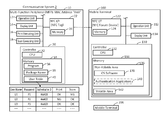
- FIG. 1 shows a configuration of a communication system
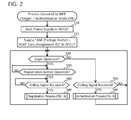
- FIG. 2 shows a flowchart of a process executed by a multi-function peripheral
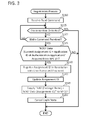
- FIG. 3 shows a flowchart of a registration process
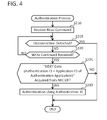
- FIG. 4 shows a flowchart of an authentication process
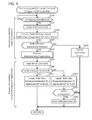
- FIG. 5 shows a flowchart of a process executed by a target terminal
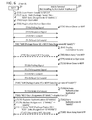
- FIG. 6 shows a sequence diagram of a case A in which an authentication ID is registered
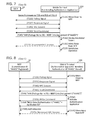
- FIG. 7 shows a sequence diagram of a case B in which an assignment ID after an update is sent
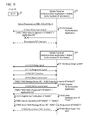
- FIG. 8 shows a sequence diagram of a case C in which an authentication is executed.
- FIG. 9 shows a sequence diagram of a case D in which a registration is re-tried.
- a communication system 2 comprises a multi-function peripheral 10 (called “MFP (abbreviation of Multi-Function Peripheral)” below), and mobile terminals 100 , 200 .
- MFP multi-function peripheral
- MFP abbreviation of Multi-Function Peripheral
- NFC abbreviation of Near Field Communication
- the MFP 10 comprises an operation unit 12 , a display unit 14 , a print executing unit 16 , a scan executing unit 18 , an NFC I/F 22 , and a controller 30 .
- the operation unit 12 comprises a plurality of keys. A user can input various instructions to the MFP 10 by operating the operation unit 12 .
- the display unit 14 is a display for displaying various information.
- the display unit 14 also functions as a so-called touch panel. That is, the display unit 14 also functions as an operation unit. Therefore, below, the operation unit 12 and the display unit 14 may collectively be termed “operation units 12 , 14 ”.
- the print executing unit 16 comprises a printing mechanism such as an ink jet scheme, a laser scheme, or the like.
- the scan executing unit 18 comprises a scanning mechanism such as a CCD, a CIS, or the like.
- the NFC I/F 22 is an I/F for executing the NFC communication.
- the NFC system is a wireless communication system based on international standards such as e.g., ISO/IEC14443, 15693, 18092.
- an I/F called an NFC forum device and an I/F called an NFC tag are known as types of I/F for executing the NFC communication.
- the NFC forum device is an I/F capable of selectively operating in any of a P2P (abbreviation of Peer To Peer) mode, an R/W (abbreviation of Reader/Writer) mode, and a CE (abbreviation of Card Emulation) mode.
- the NFC tag is not an I/F capable of selectively operating in any of these modes, but functions as an IC (abbreviation of Integrated Circuit) tag of the NFC system.
- the P2P mode is a mode for performing a bidirectional communication between one NFC apparatus operating in the P2P mode and another NFC apparatus operating in the P2P mode.
- the R/W mode and the CE mode are modes for performing a unidirectional communication between one NFC apparatus operating in the R/W mode and another NFC apparatus operating in the CE mode.
- the CE mode may be a CE mode requiring a secure element, or an HCE (abbreviation of Host Card Emulation) mode not requiring a secure element.
- a Reader mode in the R/W mode is a mode for reading out data from an NFC apparatus operating in the CE mode.
- a Writer mode in the R/W mode is a mode for writing data to an NFC apparatus operating in the CE mode. It should be noted that an NFC apparatus operating in the R/W mode can read out data from an NFC tag and write data to the NFC tag.
- the NFC I/F 22 is an NFC tag. Since an NFC tag is cheaper than an NFC forum device, a manufacturing cost of the MFP 10 can be reduced. In a case of receiving a polling signal from a partner device and sending a response signal for the polling signal to the partner device, the NFC I/F 22 establishes an NFC session with the partner device.
- the NFC I/F 22 comprises a memory 24 .
- the controller 30 comprises a CPU 32 and a memory 34 .
- the CPU 32 executes various processes in accordance with a program 36 stored in the memory 34 .
- the memory 34 is constituted of a volatile memory, a non-volatile memory, and the like. Further, the memory 34 stores a package name 39 and a user table 40 .
- the package name 39 is a package name of an authentication application 140 to be installed in the mobile terminals 100 , 200 .
- the package name is a name obtained by arranging a domain in its reverse order, such as “com.example.android.beam”.
- a user name, a password, an authentication ID, print permission information, and scan permission information are associated with each other in the user table 40 .
- the user name, the password, the print permission information and the scan permission information are registered in the user table 40 by, e.g., an administrator of the MFP 10 operating the operation units 12 , 14 , or accessing the MFP 10 from a mobile terminal.
- the print permission information and the scan permission information respectively indicate whether or not a printing function and a scanning function are permitted to the user. In each of the permission information, “OK” indicates that a use of its corresponding function is permitted, and “NG” indicates that the use of the corresponding function is not permitted.
- the authentication ID is identification information for identifying the mobile terminal, and is generated and registered by the MFP 10 .
- the authentication ID includes a combination of a MAC address “AAA” of the MFP 10 and a numeral part which is constituted of a multi-digit numeral (two-digit numeral in the present embodiment). It should be noted, in a modification, the authentication ID may be, for example, a random character string. Further, in another modification, the user table 40 may be stored in a memory of an external device different from the MFP 10 . In this case, the MFP 10 can communicate with the external device to use the information in the user table 40 .
- the mobile terminals 100 , 200 are portable terminal devices such as a mobile telephone, a smartphone, a PDA, a notebook PC, a tablet PC, a portable music playback device or a portable movie playback device. Since the mobile terminal 200 comprises a same configuration as the mobile terminal 100 , only the mobile terminal 100 will be described below.
- the mobile terminal 100 comprises an operation unit 112 , a display unit 114 , an NFC I/F 122 , and a controller 130 .
- the operation unit 112 comprises a plurality of keys.
- the user can input various instructions to the mobile terminal 100 by operating the operation unit 112 .
- the display unit 114 is a display for displaying various information.
- the display unit 114 also functions as a so-called touch panel. That is, the display unit 114 also functions as an operation unit. Therefore, below, the operation unit 112 and the display unit 114 may collectively be termed “operation units 112 , 114 ”.
- the NFC I/F 122 is an NFC forum device and comprises a memory 124 .
- the controller 130 comprises a CPU 132 and a memory 134 .
- the CPU 132 executes various processes in accordance with an OS software 138 stored in the memory 134 .
- the OS software 138 is software for controlling various basic operations of the mobile terminal 100 .
- the memory 134 comprises a non-volatile area 136 and a volatile area 142 .
- the OS software 138 is stored in the non-volatile area 136 .
- the authentication application 140 may further be stored in the non-volatile area 136 .
- the authentication application 140 is an application for causing the MFP 10 to execute an authentication by using an authentication ID.
- the authentication application 140 is provided by a vendor of the MFP 10 and is installed in the mobile terminal 100 from, e.g., a server on the Internet.
- the volatile area 142 stores information acquired or generated during the CPU 132 executing processes.
- the process of FIG. 2 is started when an operation for changing a setting of an authentication mode from OFF to ON is performed in the operation units 12 , 14 .
- the authentication mode is an operation mode for executing a registration of an authentication ID or for executing an authentication using an authentication ID.
- the CPU 32 starts power supply to the NFC I/F 22 .
- the NFC I/F 22 can receive a polling signal and send a response signal for the polling signal.
- the CPU 32 supplies both an AAR (abbreviation of “Android Application Record”) including the package name 39 and NDEF (abbreviation of “NFC Data Exchange Format”) data including a current assignment ID to the NFC I/F 22 , and stores both the AAR and the NDEF data in the memory 24 .
- the AAR is information instructing an activation of the authentication application 140 specified by the package name 39 .
- the assignment ID is information to be assigned to a mobile terminal and is information to be registered in the user table 40 as an authentication ID of the mobile terminal.
- the assignment ID includes a combination of the MAC address “AAA” (not shown) of the MFP 10 stored, in advance, in the memory 34 and a numeral part which is constituted of a multi-digit numeral (two-digit numeral in the present embodiment).
- the numeral part has “00” as an initial value.
- the assignment ID may, for example, be a random character string.
- the CPU 32 monitors whether a login operation is performed on the operation units 12 , 14 by the user. In a case where a combination of the user name and the password registered in the user table 40 has been inputted in the operation units 12 , 14 , the CPU 32 determines YES in S 20 , and proceeds to S 30 .
- the CPU 32 monitors whether a registration button for registering the authentication ID in the user table 40 is operated. In a case where the registration button is operated in the operation units 12 , 14 (YES in S 30 ), the CPU 32 proceeds to S 40 . It should be noted, although not shown, in a case where a button different from the registration button (e.g., a scan start button) is operated, the CPU 32 executes a process corresponding to the different button (e.g., a scan process).
- a button different from the registration button e.g., a scan start button
- the CPU 32 monitors whether the NFC I/F 22 receives a polling signal from a target terminal (e.g., the mobile terminal 100 , or the mobile terminal 200 ).
- a target terminal e.g., the mobile terminal 100 , or the mobile terminal 200 .
- a distance between the target terminal and the NFC I/F 22 becomes smaller than a maximum distance with which the NFC communication can be executed (e.g., 10 cm).
- the NFC I/F 22 receives the polling signal from the target terminal, and sends a response signal to the target terminal. Thereby, an NFC session is established between the NFC I/F 22 and the target terminal.
- the NFC I/F 22 supplies information indicating that the NFC session has been established to the controller 30 .
- the CPU 32 determines YES in S 40 , and executes a registration process of FIG. 3 in S 46 .
- S 46 ends, the process returns to S 20 .
- S 60 is the same as S 40 .
- the CPU 32 executes an authentication process of FIG. 4 .
- the process returns to S 20 . It should be noted, although not shown, when an operation for changing the setting of the authentication mode from ON to OFF is executed in the operation units 12 , 14 , the process of FIG. 2 ends.
- the CPU 32 receives a read command from the target terminal via the NFC I/F 22 by using the NFC session established in S 40 of FIG. 2 .
- the read command is a confirmation signal for confirming whether it is possible to execute a readout of information (i.e., whether the NFC I/F 22 is capable of sending information).
- the NFC I/F 22 sends an OK command for the read command.
- the NFC I/F 22 sends both the AAR and the NDEF data in the memory 24 to the target terminal.
- the NFC I/F 22 further supplies the read command to the controller 30 .
- the CPU 32 can confirm that both the AAR and the NDEF data have been sent to the target terminal.
- the CPU 32 monitors whether the NFC session with the target terminal is disconnected. For example, when the user moves the target terminal away from the MFP 10 , the distance between the target terminal and the NFC I/F 22 of the MFP 10 becomes longer than the maximum distance with which the NFC communication can be executed, and consequently the NFC session is disconnected. In this case, the NFC I/F 22 supplies information indicating that the NFC session has been disconnected to the controller 30 . In a case of acquiring the information from the NFC I/F 22 , the CPU 32 determines YES in S 115 , and ends the registration process of FIG. 3 .
- the CPU 32 monitors whether a write command is received from the target terminal via the NFC I/F 22 by using the NFC session established in S 40 of FIG. 2 .
- the write command is a confirmation signal for confirming whether it is possible to execute a writing of information (i.e., whether the NFC I/F 22 is capable of receiving information).
- the write command is sent from the target terminal in a case where the authentication application 140 has been installed in the target terminal (see S 335 of FIG. 5 , to be described later).
- the NFC I/F 22 sends an OK command for the write command.
- the NFC I/F 22 supplies the write command to the controller 30 .
- the CPU 32 determines YES in S 120 , and proceeds to S 125 .
- the CPU 32 determines whether NDEF data including the current assignment ID and an application ID of the authentication application 140 has been acquired from the NFC I/F 22 .
- the NFC I/F 22 acquires NDEF data including an assignment ID and an application ID from the target terminal.
- the assignment ID included in the NDEF data is an assignment ID which had been sent in the past from the MFP 10 to the target terminal.
- the application ID included in the NDEF data is information for identifying an application currently running in the target terminal (e.g., the authentication application 140 ).
- the NFC I/F 22 supplies the NDEF data including the assignment ID and the application ID to the controller 30 .
- the CPU 32 determines whether the assignment ID acquired from the NFC I/F 22 matches the current assignment ID. In a situation in which S 145 , which will be described later, has not been executed even once after the execution of S 15 of FIG. 2 , the current assignment ID is the assignment ID supplied to the NFC I/F 22 in S 15 . Further, in a situation in which S 145 , which will be described later, has been executed after the execution of S 15 of FIG. 2 , the current assignment ID is the assignment ID supplied to the NFC I/F 22 in the latest S 145 . Further, the CPU 32 determines whether the application ID acquired from the NFC I/F 22 matches an application ID (not shown) of the authentication application 140 stored in advance in the memory 34 .
- the CPU 32 proceeds to S 130 in a case of determining that the assignment ID acquired from the NFC I/F 22 and the current assignment ID match as well as determining that the application ID acquired from the NFC I/F 22 and the application ID of the authentication application 140 match (YES in S 125 ).
- the CPU 32 ends the registration process of FIG. 3 in a case of determining that the acquired assignment ID and the current assignment ID do not match (NO in S 125 ). For example, such an event can occur in a situation where the acquired assignment ID has already been registered in the user table 40 .
- the CPU 32 ends the registration process of FIG. 3 in a case of determining that the acquired application ID and the application ID of the authentication application 140 do not match (NO in S 125 ). For example, such an event can occur in a situation where, due to the target terminal running an application different from the authentication application 140 , an application ID of that application is received.
- the CPU 32 registers, in the user table 40 , the acquired assignment ID (i.e., the current assignment ID) in association with the user name and the password inputted in S 20 of FIG. 2 , as the authentication ID.
- the acquired assignment ID i.e., the current assignment ID
- the CPU 32 updates the assignment ID. Specifically, the CPU 32 increments the numeral part (e.g., “01”) included in the current assignment ID only by “1” to generate a new numeral part (e.g., “02”). Then, the CPU 32 combines the MAC address “AAA” of the MFP 10 and the new numeral part to generate a new assignment ID (e.g., “AAA02”).
- the numeral part e.g., “01” included in the current assignment ID only by “1” to generate a new numeral part (e.g., “02”).
- the CPU 32 combines the MAC address “AAA” of the MFP 10 and the new numeral part to generate a new assignment ID (e.g., “AAA02”).
- the CPU 32 supplies both the AAR including the package name 39 , and NDEF data including the new assignment ID updated in S 140 , to the NFC I/F 22 , and stores both the AAR and the NDEF data in the memory 24 instead of the information currently being stored in the memory 24 .
- the CPU 32 cancels the login state. That is, the CPU 32 shifts to a state capable of accepting an input of a user name and a password (i.e., a state of executing the monitoring of S 20 of FIG. 2 ).
- S 150 ends, the registration process of FIG. 3 ends.
- S 210 to S 220 are the same as S 110 to S 120 of FIG. 3 .
- the CPU 32 determines whether NDEF data including the application ID of the authentication application 140 has been acquired from the NFC I/F 22 . In a case of determining that an application ID included in the NDEF data acquired from the NFC I/F 22 and the application ID of the authentication application 140 stored in advance in the memory 34 match (YES in S 225 ), the CPU 32 proceeds to S 230 . In this case, the NDEF data includes an authentication ID stored in a non-volatile memory of the target terminal (see S 345 of FIG. 5 , to be described later). On the other hand, in a case of determining that the acquired application ID and the application ID of the authentication application 140 do not match (NO in S 225 ), the CPU 32 ends the authentication process of FIG. 4 .
- the CPU 32 executes an authentication by using the authentication ID included in the NDEF data acquired from the NFC I/F 22 . Specifically, the CPU 32 determines whether the acquired authentication ID has been registered in the user table 40 . In a case of determining that the acquired authentication ID has been registered in the user table 40 , the CPU 32 determines that the authentication succeeds. In this case, the CPU 32 permits the use of the functions corresponding to the respective permission information associated with the acquired authentication ID. Specifically, in a case where the print permission information is “OK”, the CPU 32 permits an execution of printing.
- the CPU 32 can receive the print data from the server and cause the print executing unit 16 to execute printing of an image represented by the print data. Further, in a case where the scan permission information is “OK”, the CPU 32 permits an execution of scanning. For example, when a button for executing a scan is operated, the CPU 32 causes the scan executing unit 18 to scan a document. On the other hand, in a case of determining that the acquired authentication ID is not registered in the user table 40 , the CPU 32 determines that the authentication has failed. For example, such an event can occur in a case where the administrator of the MFP 10 has deleted the acquired authentication ID from the user table 40 . When S 230 ends, the authentication process of FIG. 4 ends.
- the CPU 132 monitors whether the NFC I/F 122 establishes the NFC session with the MFP 10 . In a case of acquiring information indicating that the NFC session has been established from the NFC I/F 122 , the CPU 132 determines YES in S 310 , and proceeds to S 315 .
- the CPU 132 sends the read command to the MFP 10 via the NFC I/F 122 by using the NFC session with the MFP 10 (see S 110 of FIG. 3 , S 210 of FIG. 4 ).
- the NFC I/F 122 receives the OK command for the read command from the MFP 10 , receives both the AAR including the package name 39 and the NDEF data including the assignment ID from the MFP 10 by using the NFC session, and supplies both the AAR and the NDEF data to the controller 130 .
- the CPU 132 acquires both the AAR and the NDEF data from the NFC I/F 122 .
- the CPU 132 stores both the AAR and the NDEF data in the volatile area 142 in the memory 134 .
- the CPU 132 determines whether the authentication application 140 has been installed.
- the CPU 132 specifies a domain name of the authentication application 140 based on the package name 39 in the AAR stored in the volatile area 142 in S 320 .
- the CPU 132 proceeds to S 330 .
- the CPU 132 proceeds to S 370 .
- the CPU 132 causes the display unit 114 to display an installation screen by using the domain name of the authentication application 140 .
- the installation screen is a screen for installing the authentication application 140 specified by the package name 39 .
- the CPU 132 installs the authentication application 140 in a case where an operation for installing the authentication application 140 is performed on the installation screen in the operation units 112 , 114 .
- the CPU 132 sends the write command to the MFP 10 via the NFC I/F 122 by using the NFC session with the MFP 10 (see S 120 of FIG. 3 , S 220 of FIG. 4 ).
- the NFC I/F 122 receives the OK command for the write command from the MFP 10 .
- the CPU 132 determines whether the authentication ID has been stored in the non-volatile area 136 in the memory 134 . In a case where the authentication ID has been stored in the non-volatile area 136 in S 360 to be described later, the CPU 132 determines YES in S 340 , and proceeds to S 345 . On the other hand, in a case where the authentication ID is not being stored in the non-volatile area 136 , the CPU 132 determines NO in S 340 , and proceeds to S 350 .
- the CPU 132 supplies, to the NFC I/F 122 , the NDEF data including the authentication ID being stored in the non-volatile area 136 and the application ID of the authentication application 140 .
- the NFC OF 122 sends the NDEF data to the MFP 10 and can cause the MFP 10 to execute the authentication by using the authentication ID in the NDEF data (see S 230 of FIG. 4 ).
- S 345 ends, the process returns to S 310 .
- the CPU 132 supplies, to the NFC I/F 122 , the NDEF data including the assignment ID acquired in S 320 (i.e., the assignment ID stored in the volatile area 142 in S 320 ) and the application ID of the authentication application 140 that is currently activated.
- the NFC I/F 122 sends the NDEF data to the MFP 10 and can cause the MFP 10 to register the assignment ID in the NDEF data as the authentication ID (see S 130 of FIG. 3 ).
- the CPU 132 can appropriately cause the MFP 10 to execute the authentication using the authentication ID or the registration of the assignment ID.
- the CPU 132 determines whether a writing of the NDEF data to the MFP 10 has been completed.
- the NFC OF 122 supplies information indicating that the writing of the NDEF data has been completed to the controller 130 .
- the CPU 132 determines YES in S 355 , and proceeds to S 360 .
- a situation can be assumed in which the NFC session with the MFP 10 is disconnected due to the mobile terminal 100 being moved away from the MFP 10 , before the sending of the NDEF data to the MFP 10 is completed.
- the NFC I/F 122 supplies information indicating that the NFC session has been disconnected to the controller 130 , without supplying the information indicating that the writing of the NDEF data has been completed to the controller 130 .
- the CPU 132 determines NO in S 355 , skips S 360 , and returns to S 310 .
- the CPU 132 stores the assignment ID acquired in S 320 (i.e., the assignment ID stored in the volatile area 142 in S 320 ) in the non-volatile area 136 as the authentication ID. Thereby, in a case where the NFC session with the MFP 10 is re-established (YES in S 310 ), the CPU 132 can cause the MFP 10 to execute the authentication by using the authentication ID in the non-volatile area 136 (YES in S 340 , S 345 ). When S 360 ends, the process returns to S 310 .
- the authentication mode of the MFP 10 is set to ON, and the NFC I/F 122 of the mobile terminal 100 is operating in the R/W mode.
- the authentication application 140 is not installed in the mobile terminal 100 .
- the MFP 10 starts the power supply to the NFC I/F 22 (S 10 of FIG. 2 ), and in T 17 , stores both the AAR including the package name 39 and the NDEF data including an assignment ID “AAA01” in the memory 24 in the NFC I/F 22 (S 15 ).
- T 20 the user performs the login operation in the MFP 10 (YES in S 20 of FIG. 2 ), and in T 25 , operates the registration button (YES in S 30 ). Then, in T 35 , the user moves the mobile terminal 100 closer to the MFP 10 .
- the MFP 10 receives the polling signal from the mobile terminal 100 , and in T 37 , sends the response signal to the mobile terminal 100 (YES in S 40 of FIG. 2 ). As a result, in T 40 , the NFC session is established between the MFP 10 and the mobile terminal 100 .
- the MFP 10 receives the read command from the mobile terminal 100 by using the NFC session established in T 40 (S 110 of FIG. 3 ), and sends the OK command to the mobile terminal 100 by using the NFC session. Then, in T 45 , the MFP 10 sends both the AAR including the package name 39 and the NDEF data including the assignment ID “AAA01” to the mobile terminal 100 by using the NFC session.
- the mobile terminal 100 Upon receiving the AAR and the NDEF data from the MFP 10 by using the NFC session (S 320 of FIG. 5 ), since the authentication application 140 has not been installed (NO in S 325 ), in T 60 , the mobile terminal 100 displays the installation screen (S 370 ).
- T 65 the user moves the mobile terminal 100 away from the MFP 10 .
- T 70 the NFC session between the mobile terminal 100 and the MFP 10 is disconnected (YES in S 115 of FIG. 3 ).
- T 75 the user performs an installation operation in the mobile terminal 100 .
- the authentication application 140 is installed in the mobile terminal 100 .
- T 135 to T 145 which are executed thereafter, are the same as T 35 to T 45 . Since the authentication application 140 has been installed (YES in S 325 of FIG. 5 ), in T 150 , the mobile terminal 100 activates the authentication application 140 (S 330 ).
- the MFP 10 receives the write command from the mobile terminal 100 by using the NFC session established in T 140 (YES in S 120 of FIG. 3 ), and sends the OK command to the mobile terminal 100 by using the NFC session.
- the mobile terminal 100 Upon receiving the OK command from the MFP 10 , since the authentication ID is not being stored in the non-volatile area 136 (NO in S 340 of FIG. 5 ), in T 160 , the mobile terminal 100 sends the NDEF data, whch includes the assignment ID “AAA01” received in T 145 and the application ID of the authentication application 140 , to the MFP 10 by using the NFC session established in T 140 (S 350 ). Then, in T 165 , the mobile terminal 100 stores the assignment ID “AAA01” in the non-volatile area 136 as the authentication ID (S 360 ).
- the MFP 10 Upon receiving the NDEF data from the mobile terminal 100 by using the NFC session established in T 140 (YES in S 125 of FIG. 3 ), in T 170 , the MFP 10 registers the assignment ID “AAA01” in the NDEF data in the user table 40 as the authentication ID (S 130 ). Then, in T 175 , the MFP 10 updates the assignment ID “AAA01” to “AAA02” (S 140 ), and in T 177 , stores both the AAR including the package name 39 and NDEF data including the assignment ID “AAA02” in the memory 24 in the NFC I/F 22 (S 145 ). As described, the MFP 10 updates the assignment ID each time an authentication ID is registered, but does not update the assignment ID unless an authentication ID is registered.
- T 180 , T 185 are the same as T 65 , T 70 .
- the MFP 10 sends both the AAR including the package name 39 and the NDEF data including the assignment ID “AAA01” to the mobile terminal 100 (T 45 , T 145 ).
- the mobile terminal 100 can install the authentication application 140 by using the package name 39 included in the AAR (T 75 ).
- the mobile terminal 100 can cause the MFP 10 to register the assignment ID “AAA01” included in the NDEF data as the authentication ID (T 170 ). If a configuration is adopted in which the MFP 10 sends only one of the AAR and the NDEF data to the mobile terminal 100 depending on whether or not the authentication application 140 has already been installed, it is necessary that the MFP 10 receives information indicating whether the authentication application 140 has already been installed from the mobile terminal 100 . By contrast, in the present embodiment, the MFP 10 does not need to receive such information from the mobile terminal 100 , and further, does not need to change the information to be sent to the mobile terminal 100 . For this reason, the processing load of the MFP 10 can be reduced.
- the MFP 10 and the mobile terminal 200 execute the same processes as T 37 to T 60 . That is, in a case where an NFC session with the mobile terminal 200 is established before the assignment ID “AAA01” is updated (i.e., before the authentication ID “AAA01” is registered), the MFP 10 sends the assignment ID “AAA01” to the mobile terminal 200 .
- Case B of FIG. 7 is a case executed after the case A.
- the authentication application 140 is not installed in the mobile terminal 200 .
- the same operations as T 20 , T 25 of FIG. 6 are performed.
- T 235 the user moves the mobile terminal 200 closer to the MFP 10 .
- T 236 to T 243 the MFP 10 and the mobile terminal 200 execute the same processes as T 36 to T 43 of FIG. 6 .
- T 245 by using the NFC session established in T 240 , the MFP 10 sends the AAR including the package name 39 and the NDEF data including the new assignment ID “AAA02” updated in T 177 of FIG. 6 , to the mobile terminal 200 .
- T 260 to T 270 the MFP 10 and the mobile terminal 200 execute the same processes as T 60 to T 70 of FIG. 6 .
- T 275 the user performs the installation operation on the mobile terminal 200 .
- the authentication application 140 is installed in the mobile terminal 200 .
- the MFP 10 can register the assignment ID “AAA02” as the authentication ID of the mobile terminal 200 by the same method as T 137 to T 170 of FIG. 6 .
- Case C of FIG. 8 is a case executed after the case A.
- the authentication application 140 has been installed in the mobile terminal 100 , and the authentication ID “AAA01” is being stored in the non-volatile area 136 of the mobile terminal 100 .
- T 335 to T 343 are the same as T 35 to T 43 of FIG. 6 .
- T 345 the MFP 10 sends the AAR including the package name 39 and the NDEF data including the assignment ID “AAA02”, to the mobile terminal 100 by using the NFC session.
- T 350 , T 355 are the same as T 150 , T 155 of FIG. 6 .
- the mobile terminal 100 Since the authentication ID “AAA01” is being stored in the non-volatile area 136 (YES in S 340 of FIG. 5 ), in T 360 , the mobile terminal 100 sends the NDEF data including the authentication ID “AAA01” and the application ID to the MFP 10 by using the NFC session (S 345 ).
- the MFP 10 Upon receiving the NDEF data from the mobile terminal 100 by using the NFC session (YES in S 225 of FIG. 4 ), in T 365 , the MFP 10 executes an authentication using the authentication ID “AAA01” in the NDEF data (S 230 ). Since the authentication ID “AAA01” has been registered in the user table 40 , the authentication succeeds. Thereby, the MFP 10 permits the use of the functions corresponding to the respective permission information associated with the authentication ID “AAA01”. It should be noted, in the case C, since the assignment ID “AAA02” is not registered in the user table 40 as an authentication ID, the MFP 10 does not update the assignment ID. As described, since the MFP 10 does not update the assignment ID unnecessarily, the processing load of the MFP 10 can be reduced. T 370 , T 375 are the same as T 180 , T 185 of FIG. 6 .
- the MFP 10 has not registered the authentication ID of the mobile terminal 100 .
- the authentication application 140 has been installed in the mobile terminals 100 , 200 , the authentication ID is not stored in the non-volatile area.
- T 410 , T 415 are the same as T 150 , T 155 of FIG. 6 .
- the mobile terminal 100 sends the NDEF data including the assignment ID “AAA01” and the application ID to the MFP 10 by using the NFC session (S 350 of FIG. 5 ).
- the NFC session is disconnected before the receiving of the NDEF data is completed, the MFP 10 cannot receive all of the NDEF data (NO in S 125 of FIG. 3 , NO in S 355 of FIG. 5 ).
- the NFC session is disconnected by the user mistakenly moving the mobile terminal 100 away from the MFP 10 during the reception of the NDEF data.
- the MFP 10 Since the login state has not been cancelled, the MFP 10 is in a state in which the user name and the password have been inputted (YES in S 20 of FIG. 2 , YES in S 30 ).
- T 440 the user moves the mobile terminal 200 closer to the MFP 10 .
- the MFP 10 and the mobile terminal 200 execute T 443 to T 490 in the same manner as T 136 to T 185 of FIG. 6 . That is, the MFP 10 sends the AAR including the package name 39 and the NDEF data including the assignment ID “AAA01”, to the mobile terminal 200 by using the NFC session of T 450 .
- a configuration is assumed in which the MFP 10 returns to S 120 and monitors whether the write command is received, in the case where the NFC session is disconnected before the receiving of the NDEF data from the mobile terminal 100 is completed (NO in S 125 of FIG. 3 ).
- the MFP 10 since the MFP 10 is monitoring the reception of the write command, even if the read command is received from the mobile terminal 200 in T 453 , the MFP 10 cannot execute the processes following T 455 .
- the read command is received from the mobile terminal 200 in T 453 , and the AAR and the NDEF data are sent to the mobile terminal 200 in T 455 .
- the MFP 10 can register the authentication ID “AAA01”, and the mobile terminal 200 can store the authentication ID “AAA01”.
- the MFP 10 , the mobile terminal 100 , and the mobile terminal 200 are an example of “communication device”, “first terminal device”, and “second terminal device”, respectively.
- the NFC I/F 22 , the memory 24 , the memory 34 , and the NFC I/F 122 are an example of “wireless interface” of “communication device”, “interface memory”, “main memory”, and “wireless interface” of “terminal device”, respectively.
- the NFC communication, the authentication application 140 , the package name 39 are an example of “short distance wireless communication”, “specific application program”, “identification information”, respectively.
- the assignment (or authentication) ID “AAA01” is an example of “first authentication information” and “related information”.
- the assignment (or authentication) ID “AAA02” is an example of “second authentication information”.
- the NFC session of T 40 of FIG. 6 , the NFC session of T 340 of FIG. 8 , the NFC session of T 140 of FIG. 6 , the NFC session of T 240 of FIG. 7 , and the NFC session (not shown) established with the mobile terminal 200 after T 75 of FIG. 6 are an example of “first communication session”, “second communication session”, “third communication session”, “fourth communication session” and “fifth communication session”, respectively.
- the CPU 32 of the MFP 10 may supply, to the NFC I/F 22 , both an AAR which includes, instead of the package name 39 , a URL (abbreviation of Uniform Resource Locator) indicating a location of the authentication application 140 on the Internet and the NDEF data, and may store both the AAR and the NDEF data in the memory 24 . That is, “identification information” may be, e.g., a URL.
- the authentication application 140 is installed in the mobile terminal 100 (S 370 of FIG. 5 ) after the user has moved the mobile terminal 100 closer to the MFP 10 . Then, the authentication ID is registered in the MFP 10 (S 145 of FIG. 3 ) after the user has again moved the mobile terminal 100 closer to the MFP 10 .
- the authentication application 140 may be installed in the mobile terminal 100 and, further, the authentication ID may be registered in the MFP 10 after the user has moved the mobile terminal 100 closer to the MFP 10 only once.
- the CPU 32 of the MFP 10 skips S 115 to S 125 of FIG. 3 , and proceeds to S 130 .
- the CPU 132 of the mobile terminal 100 executes S 360 . Further, the CPU 132 skips S 340 , and proceeds to S 345 . That is, “receive related information” can be omitted.
- the CPU 32 may acquire, instead of the assignment ID, a registration instruction to register the current assignment ID.
- the registration instruction does not include the assignment ID. That is, “related information” may not be the first authentication information itself, but may be information related to the first authentication information.
- the NFC I/F 22 is an NFC tag, but in a modification, it may be an NFC forum device.
- the NFC I/F 22 may operate in the CE mode and the NFC I/F 122 may operate in the R/W mode
- the NFC I/F 22 may operate in the R/W mode and the NFC I/F 122 may operate in the CE mode
- both the NFC I/Fs 22 and 122 may operate in the P2P mode. That is, “wireless interface” of “communication device” may not be the NFC tag.
- the NFC I/F 122 may be an NFC tag.
- the MFP 10 Only the user name and the password may be registered in the user table 40 , and all the functions of the MFP 10 may be permitted to all users. Then, one authentication ID may be registered in the memory 34 . In this case, the CPU 32 does not update the assignment ID in S 140 of FIG. 3 . Therefore, an identical authentication ID can be stored in plural mobile terminals 100 , 200 . Each of the mobile terminals 100 , 200 sends the stored authentication ID to the MFP 10 and causes the MFP 10 to execute the authentication. In the case where the authentication succeeds, the MFP 10 permits all the functions of the MFP 10 . That is, “second authentication information” may not be stored in the interface memory instead of “first authentication information”.
- the CPU 32 of the MFP 10 may return to S 120 . Further, in the case where an NFC session with the MFP 10 is established after determining NO in S 355 , the CPU 132 of the mobile terminal 100 may send the write command without sending the read command. In this case, in the case D of FIGS. 9 , T 453 and T 455 are omitted. That is, “wireless interface” of “communication device” may not re-send the identification information and the first authentication information to the first terminal device by using the sixth communication session.
- S 360 of FIG. 5 can be omitted. It should be noted, in this case, when the authentication ID is inputted to the target terminal by the user, the authentication ID may be stored in the target terminal. That is, “store the received authentication information in the non-volatile memory area” can be omitted.
- the CPU 32 of the MFP 10 may not supply the AAR to the NFC I/F 22 , and may not cause the NFCl/F 22 to store the AAR in the memory 24 . That is, the NFC I/F 22 may not send the AAR to the target terminal. In this case, the user needs to perform on the target terminal, in advance, the installation operation and an activation operation for activating the authentication application 140 . Further, in another modification, in S 15 , the CPU 32 may supply, instead of the AAR including the package name 39 , the package name 39 to the NFC I/F 22 , and may store the package name 39 in the memory 24 . In this case, the user needs to perform the activation operation on the target terminal in advance, after the authentication application 140 has been installed on the target terminal.
- Wireless interface of “communication device” may not be an I/F for executing an NFC communication, but may be, e.g., an I/F for executing a wireless communication in accordance with another communication system such as Bluetooth (registered trademark), TransferJet (registered trademark), an infrared communication, or the like.
- wireless interface of “terminal device” may be an I/F for executing a wireless communication in accordance with another communication system such as Bluetooth, TransferJet, infrared communication, or the like.
- Communication device may not be the MFP 10 capable of executing a plurality of functions, but may be a printer capable of executing only a printing function, a scanner capable of executing only a scanning function, or the like. Further, “communication device” may be a PC, a server, a mobile terminal, or the like.
- the CPU 32 of the MFP 10 implements each of the processes of FIG. 2 to FIG. 4 by executing the program 36 (i.e., software).
- the program 36 i.e., software
- at least one of the processes of FIG. 2 to FIG. 4 may be implemented by hardware such as a logic circuit or the like.
Landscapes
- Engineering & Computer Science (AREA)
- Computer Security & Cryptography (AREA)
- Computer Networks & Wireless Communication (AREA)
- Signal Processing (AREA)
- Theoretical Computer Science (AREA)
- Computer Hardware Design (AREA)
- Software Systems (AREA)
- Physics & Mathematics (AREA)
- General Engineering & Computer Science (AREA)
- General Physics & Mathematics (AREA)
- Facsimiles In General (AREA)
- Mobile Radio Communication Systems (AREA)
Abstract
Description
- The present disclosure discloses a communication device and a terminal device capable of performing a short distance wireless communication.
- An authentication method is known which uses an authentication card comprising an NFC tag for performing an NFC (abbreviation of Near Field Communication) communication. The NFC tag stores an authentication ID in advance. For example, an administrator of an authentication device such as a printer inputs the authentication ID to the authentication device, and registers the authentication ID in the authentication device. Upon receiving the authentication ID from the authentication card by using the NFC communication, the authentication device determines whether the received authentication ID and the registered authentication ID match (i.e., executes an authentication). It should be noted that a similar authentication method using a terminal device instead of an authentication card is also known.
- The present disclosure discloses a novel authentication method using a terminal device.
- A communication device disclosed in the present disclosure may comprise a wireless interface configured to perform a short distance wireless communication and comprising an interface memory; a processor; and a main memory storing computer-readable instructions therein, the computer-readable instructions, when executed by the processor, causing the communication device to: supply both identification information and first authentication information to the wireless interface so as to store both the identification information and the first authentication information in the interface memory, the identification information being for identifying a specific application program and for installing the specific application program, and the specific application program being for sending authentication information to the communication device and causing the communication device to execute an authentication using the authentication information, wherein the wireless interface is configured to send both the identification information and the first authentication information in the interface memory to a first terminal device by using a first communication session in a case where the first communication session with the first terminal device is established; receive the first authentication information from the first terminal device by using a second communication session in a case where the second communication session with the first terminal device in which the specific application program has been installed is established via the wireless interface after both the identification information and the first authentication information have been sent to the first terminal device; and execute an authentication using the first authentication information in a case where the first authentication information is received.
- The present disclosure further discloses a non-transitory computer-readable recording medium storing computer-readable instructions for a terminal device, wherein the computer-readable instructions, when executed by a processor of the terminal device, may cause the terminal device to: determine whether registered authentication information which is registered in a communication device is stored in a non-volatile memory area of the terminal device in a case where a communication session with the communication device is established via a wireless interface of the terminal device, the wireless interface being configured to perform a short distance wireless communication; in a case where it is determined that the registered authentication information is stored in the non-volatile memory area, send the registered authentication information in the non-volatile memory area to the communication device by using the communication session so as to cause the communication device to execute an authentication using the registered authentication information; and in a case where it is determined that the registered authentication information is not stored in the non-volatile memory area, send received authentication information to the communication device by using the communication session so as to register the received authentication information in the communication device, the received authentication information being authentication information received from the communication device by using the communication session.
- A control method, computer-readable instructions, and a non-transitory computer-readable recording medium storing the computer-readable instructions, for implementation of the aforementioned communication device are also novel and useful. A terminal device itself which is realized by the computer-readable instructions and a control method thereof are also novel and useful. Further, a communication system which comprises the aforementioned communication device and terminal device is also novel and useful.
-
FIG. 1 shows a configuration of a communication system; -
FIG. 2 shows a flowchart of a process executed by a multi-function peripheral; -
FIG. 3 shows a flowchart of a registration process; -
FIG. 4 shows a flowchart of an authentication process; -
FIG. 5 shows a flowchart of a process executed by a target terminal; -
FIG. 6 shows a sequence diagram of a case A in which an authentication ID is registered; -
FIG. 7 shows a sequence diagram of a case B in which an assignment ID after an update is sent; -
FIG. 8 shows a sequence diagram of a case C in which an authentication is executed; and -
FIG. 9 shows a sequence diagram of a case D in which a registration is re-tried. - (Configuration of
Communication System 2;FIG. 1 ) - As shown in
FIG. 1 , acommunication system 2 comprises a multi-function peripheral 10 (called “MFP (abbreviation of Multi-Function Peripheral)” below), andmobile terminals devices - (Configuration of MFP 10)
- The
MFP 10 comprises anoperation unit 12, adisplay unit 14, aprint executing unit 16, ascan executing unit 18, an NFC I/F 22, and acontroller 30. - The
operation unit 12 comprises a plurality of keys. A user can input various instructions to theMFP 10 by operating theoperation unit 12. Thedisplay unit 14 is a display for displaying various information. Thedisplay unit 14 also functions as a so-called touch panel. That is, thedisplay unit 14 also functions as an operation unit. Therefore, below, theoperation unit 12 and thedisplay unit 14 may collectively be termed “operation units print executing unit 16 comprises a printing mechanism such as an ink jet scheme, a laser scheme, or the like. Thescan executing unit 18 comprises a scanning mechanism such as a CCD, a CIS, or the like. - The NFC I/
F 22 is an I/F for executing the NFC communication. The NFC system is a wireless communication system based on international standards such as e.g., ISO/IEC14443, 15693, 18092. It should be noted that an I/F called an NFC forum device and an I/F called an NFC tag are known as types of I/F for executing the NFC communication. The NFC forum device is an I/F capable of selectively operating in any of a P2P (abbreviation of Peer To Peer) mode, an R/W (abbreviation of Reader/Writer) mode, and a CE (abbreviation of Card Emulation) mode. The NFC tag is not an I/F capable of selectively operating in any of these modes, but functions as an IC (abbreviation of Integrated Circuit) tag of the NFC system. - The P2P mode is a mode for performing a bidirectional communication between one NFC apparatus operating in the P2P mode and another NFC apparatus operating in the P2P mode. The R/W mode and the CE mode are modes for performing a unidirectional communication between one NFC apparatus operating in the R/W mode and another NFC apparatus operating in the CE mode. It should be noted that the CE mode may be a CE mode requiring a secure element, or an HCE (abbreviation of Host Card Emulation) mode not requiring a secure element. A Reader mode in the R/W mode is a mode for reading out data from an NFC apparatus operating in the CE mode. A Writer mode in the R/W mode is a mode for writing data to an NFC apparatus operating in the CE mode. It should be noted that an NFC apparatus operating in the R/W mode can read out data from an NFC tag and write data to the NFC tag.
- The NFC I/F 22 is an NFC tag. Since an NFC tag is cheaper than an NFC forum device, a manufacturing cost of the MFP 10 can be reduced. In a case of receiving a polling signal from a partner device and sending a response signal for the polling signal to the partner device, the NFC I/F 22 establishes an NFC session with the partner device. The NFC I/
F 22 comprises amemory 24. - The
controller 30 comprises aCPU 32 and amemory 34. TheCPU 32 executes various processes in accordance with aprogram 36 stored in thememory 34. Thememory 34 is constituted of a volatile memory, a non-volatile memory, and the like. Further, thememory 34 stores apackage name 39 and a user table 40. Thepackage name 39 is a package name of anauthentication application 140 to be installed in themobile terminals - A user name, a password, an authentication ID, print permission information, and scan permission information are associated with each other in the user table 40. The user name, the password, the print permission information and the scan permission information are registered in the user table 40 by, e.g., an administrator of the MFP 10 operating the
operation units MFP 10 from a mobile terminal. The print permission information and the scan permission information respectively indicate whether or not a printing function and a scanning function are permitted to the user. In each of the permission information, “OK” indicates that a use of its corresponding function is permitted, and “NG” indicates that the use of the corresponding function is not permitted. The authentication ID is identification information for identifying the mobile terminal, and is generated and registered by theMFP 10. The authentication ID includes a combination of a MAC address “AAA” of theMFP 10 and a numeral part which is constituted of a multi-digit numeral (two-digit numeral in the present embodiment). It should be noted, in a modification, the authentication ID may be, for example, a random character string. Further, in another modification, the user table 40 may be stored in a memory of an external device different from theMFP 10. In this case, theMFP 10 can communicate with the external device to use the information in the user table 40. - (Configuration of Mobile Terminal 100)
- The
mobile terminals mobile terminal 200 comprises a same configuration as themobile terminal 100, only themobile terminal 100 will be described below. Themobile terminal 100 comprises anoperation unit 112, adisplay unit 114, an NFC I/F 122, and acontroller 130. - The
operation unit 112 comprises a plurality of keys. The user can input various instructions to themobile terminal 100 by operating theoperation unit 112. Thedisplay unit 114 is a display for displaying various information. Thedisplay unit 114 also functions as a so-called touch panel. That is, thedisplay unit 114 also functions as an operation unit. Therefore, below, theoperation unit 112 and thedisplay unit 114 may collectively be termed “operation units F 122 is an NFC forum device and comprises amemory 124. - The
controller 130 comprises aCPU 132 and amemory 134. TheCPU 132 executes various processes in accordance with anOS software 138 stored in thememory 134. TheOS software 138 is software for controlling various basic operations of themobile terminal 100. - The
memory 134 comprises anon-volatile area 136 and avolatile area 142. TheOS software 138 is stored in thenon-volatile area 136. Theauthentication application 140 may further be stored in thenon-volatile area 136. Theauthentication application 140 is an application for causing theMFP 10 to execute an authentication by using an authentication ID. Theauthentication application 140 is provided by a vendor of theMFP 10 and is installed in the mobile terminal 100 from, e.g., a server on the Internet. Thevolatile area 142 stores information acquired or generated during theCPU 132 executing processes. - (Process Executed by
MFP 10;FIG. 2 ) - Next, a process executed by the
CPU 32 of theMFP 10 will be described with reference toFIG. 2 . The process ofFIG. 2 is started when an operation for changing a setting of an authentication mode from OFF to ON is performed in theoperation units - In S10, the
CPU 32 starts power supply to the NFC I/F 22. As a result, the NFC I/F 22 can receive a polling signal and send a response signal for the polling signal. - In S15, the
CPU 32 supplies both an AAR (abbreviation of “Android Application Record”) including thepackage name 39 and NDEF (abbreviation of “NFC Data Exchange Format”) data including a current assignment ID to the NFC I/F 22, and stores both the AAR and the NDEF data in thememory 24. The AAR is information instructing an activation of theauthentication application 140 specified by thepackage name 39. The assignment ID is information to be assigned to a mobile terminal and is information to be registered in the user table 40 as an authentication ID of the mobile terminal. The assignment ID includes a combination of the MAC address “AAA” (not shown) of theMFP 10 stored, in advance, in thememory 34 and a numeral part which is constituted of a multi-digit numeral (two-digit numeral in the present embodiment). The numeral part has “00” as an initial value. Each time an assignment ID is registered in the user table 40 as an authentication ID, the numeral of its numeral part is incremented only by “1” to generate a new assignment ID. It should be noted, in a modification, the assignment ID may, for example, be a random character string. - In S20, the
CPU 32 monitors whether a login operation is performed on theoperation units operation units CPU 32 determines YES in S20, and proceeds to S30. - In S30, the
CPU 32 monitors whether a registration button for registering the authentication ID in the user table 40 is operated. In a case where the registration button is operated in theoperation units 12, 14 (YES in S30), theCPU 32 proceeds to S40. It should be noted, although not shown, in a case where a button different from the registration button (e.g., a scan start button) is operated, theCPU 32 executes a process corresponding to the different button (e.g., a scan process). - In S40, the
CPU 32 monitors whether the NFC I/F 22 receives a polling signal from a target terminal (e.g., themobile terminal 100, or the mobile terminal 200). When the user moves the target terminal provided with the NFC I/F which is operating in the R/W mode closer to theMFP 10, a distance between the target terminal and the NFC I/F 22 becomes smaller than a maximum distance with which the NFC communication can be executed (e.g., 10 cm). In this case, the NFC I/F 22 receives the polling signal from the target terminal, and sends a response signal to the target terminal. Thereby, an NFC session is established between the NFC I/F 22 and the target terminal. In a case where the NFC session with the target terminal is established, the NFC I/F 22 supplies information indicating that the NFC session has been established to thecontroller 30. In a case of acquiring the information from the NFC I/F 22, theCPU 32 determines YES in S40, and executes a registration process ofFIG. 3 in S46. When S46 ends, the process returns to S20. - S60 is the same as S40. In a case of determining YES in S60, in S66, the
CPU 32 executes an authentication process ofFIG. 4 . In a case of determining NO in S60, or in a case where S66 ends, the process returns to S20. It should be noted, although not shown, when an operation for changing the setting of the authentication mode from ON to OFF is executed in theoperation units FIG. 2 ends. - (Registration Process;
FIG. 3 ) - Next, the registration process executed in S46 of
FIG. 2 will be described with reference toFIG. 3 . In S110, theCPU 32 receives a read command from the target terminal via the NFC I/F 22 by using the NFC session established in S40 ofFIG. 2 . The read command is a confirmation signal for confirming whether it is possible to execute a readout of information (i.e., whether the NFC I/F 22 is capable of sending information). In a case of receiving the read command from the target terminal, the NFC I/F 22 sends an OK command for the read command. Then, by using the NFC session, the NFC I/F 22 sends both the AAR and the NDEF data in thememory 24 to the target terminal. The NFC I/F 22 further supplies the read command to thecontroller 30. By acquiring the read command from the NFC I/F 22 (i.e., by executing the process of S110), theCPU 32 can confirm that both the AAR and the NDEF data have been sent to the target terminal. - In S115, the
CPU 32 monitors whether the NFC session with the target terminal is disconnected. For example, when the user moves the target terminal away from theMFP 10, the distance between the target terminal and the NFC I/F 22 of theMFP 10 becomes longer than the maximum distance with which the NFC communication can be executed, and consequently the NFC session is disconnected. In this case, the NFC I/F 22 supplies information indicating that the NFC session has been disconnected to thecontroller 30. In a case of acquiring the information from the NFC I/F 22, theCPU 32 determines YES in S115, and ends the registration process ofFIG. 3 . - In S120, the
CPU 32 monitors whether a write command is received from the target terminal via the NFC I/F 22 by using the NFC session established in S40 ofFIG. 2 . The write command is a confirmation signal for confirming whether it is possible to execute a writing of information (i.e., whether the NFC I/F 22 is capable of receiving information). The write command is sent from the target terminal in a case where theauthentication application 140 has been installed in the target terminal (see S335 ofFIG. 5 , to be described later). In a case of receiving the write command from the target terminal, the NFC I/F 22 sends an OK command for the write command. In this case, the NFC I/F 22 supplies the write command to thecontroller 30. In a case of acquiring the write command from the NFC I/F 22, theCPU 32 determines YES in S120, and proceeds to S125. - In S125, the
CPU 32 determines whether NDEF data including the current assignment ID and an application ID of theauthentication application 140 has been acquired from the NFC I/F 22. In the case where the OK signal for the write command is sent to the target terminal, the NFC I/F 22 acquires NDEF data including an assignment ID and an application ID from the target terminal. Here, the assignment ID included in the NDEF data is an assignment ID which had been sent in the past from theMFP 10 to the target terminal. Further, the application ID included in the NDEF data is information for identifying an application currently running in the target terminal (e.g., the authentication application 140). The NFC I/F 22 supplies the NDEF data including the assignment ID and the application ID to thecontroller 30. TheCPU 32 determines whether the assignment ID acquired from the NFC I/F 22 matches the current assignment ID. In a situation in which S145, which will be described later, has not been executed even once after the execution of S15 ofFIG. 2 , the current assignment ID is the assignment ID supplied to the NFC I/F 22 in S15. Further, in a situation in which S145, which will be described later, has been executed after the execution of S15 ofFIG. 2 , the current assignment ID is the assignment ID supplied to the NFC I/F 22 in the latest S145. Further, theCPU 32 determines whether the application ID acquired from the NFC I/F 22 matches an application ID (not shown) of theauthentication application 140 stored in advance in thememory 34. TheCPU 32 proceeds to S130 in a case of determining that the assignment ID acquired from the NFC I/F 22 and the current assignment ID match as well as determining that the application ID acquired from the NFC I/F 22 and the application ID of theauthentication application 140 match (YES in S125). On the other hand, theCPU 32 ends the registration process ofFIG. 3 in a case of determining that the acquired assignment ID and the current assignment ID do not match (NO in S125). For example, such an event can occur in a situation where the acquired assignment ID has already been registered in the user table 40. Further, theCPU 32 ends the registration process ofFIG. 3 in a case of determining that the acquired application ID and the application ID of theauthentication application 140 do not match (NO in S125). For example, such an event can occur in a situation where, due to the target terminal running an application different from theauthentication application 140, an application ID of that application is received. - In S130, the
CPU 32 registers, in the user table 40, the acquired assignment ID (i.e., the current assignment ID) in association with the user name and the password inputted in S20 ofFIG. 2 , as the authentication ID. - In S140, the
CPU 32 updates the assignment ID. Specifically, theCPU 32 increments the numeral part (e.g., “01”) included in the current assignment ID only by “1” to generate a new numeral part (e.g., “02”). Then, theCPU 32 combines the MAC address “AAA” of theMFP 10 and the new numeral part to generate a new assignment ID (e.g., “AAA02”). - In S145, the
CPU 32 supplies both the AAR including thepackage name 39, and NDEF data including the new assignment ID updated in S140, to the NFC I/F 22, and stores both the AAR and the NDEF data in thememory 24 instead of the information currently being stored in thememory 24. - In S150, the
CPU 32 cancels the login state. That is, theCPU 32 shifts to a state capable of accepting an input of a user name and a password (i.e., a state of executing the monitoring of S20 ofFIG. 2 ). When S150 ends, the registration process ofFIG. 3 ends. - (Authentication Process;
FIG. 4 ) - Next, the authentication process executed in S66 of
FIG. 2 will be described with reference toFIG. 4 . S210 to S220 are the same as S110 to S120 ofFIG. 3 . - In S225, the
CPU 32 determines whether NDEF data including the application ID of theauthentication application 140 has been acquired from the NFC I/F 22. In a case of determining that an application ID included in the NDEF data acquired from the NFC I/F 22 and the application ID of theauthentication application 140 stored in advance in thememory 34 match (YES in S225), theCPU 32 proceeds to S230. In this case, the NDEF data includes an authentication ID stored in a non-volatile memory of the target terminal (see S345 ofFIG. 5 , to be described later). On the other hand, in a case of determining that the acquired application ID and the application ID of theauthentication application 140 do not match (NO in S225), theCPU 32 ends the authentication process ofFIG. 4 . - In S230, the
CPU 32 executes an authentication by using the authentication ID included in the NDEF data acquired from the NFC I/F 22. Specifically, theCPU 32 determines whether the acquired authentication ID has been registered in the user table 40. In a case of determining that the acquired authentication ID has been registered in the user table 40, theCPU 32 determines that the authentication succeeds. In this case, theCPU 32 permits the use of the functions corresponding to the respective permission information associated with the acquired authentication ID. Specifically, in a case where the print permission information is “OK”, theCPU 32 permits an execution of printing. For example, when an operation for downloading print data from a server on the Internet is performed on theoperation units CPU 32 can receive the print data from the server and cause theprint executing unit 16 to execute printing of an image represented by the print data. Further, in a case where the scan permission information is “OK”, theCPU 32 permits an execution of scanning. For example, when a button for executing a scan is operated, theCPU 32 causes thescan executing unit 18 to scan a document. On the other hand, in a case of determining that the acquired authentication ID is not registered in the user table 40, theCPU 32 determines that the authentication has failed. For example, such an event can occur in a case where the administrator of theMFP 10 has deleted the acquired authentication ID from the user table 40. When S230 ends, the authentication process ofFIG. 4 ends. - (Process Executed by Mobile Terminal;
FIG. 5 ) - Next, a process executed by the
CPU 132 of themobile terminal 100 will be described with reference toFIG. 5 . For example, when an operation for activating an operation of the NFC I/F 122 is executed on theoperation units F 122 operates in the R/W mode. Thereby, the process ofFIG. 5 is started. TheCPU 132 executes S310 to S330, and S370 by using the OS software 138 (i.e., without using the authentication application 140), and executes S335 to S360 by using theauthentication application 140. It should be noted that the same process as that inFIG. 5 is also executed on themobile terminal 200. - In S310, the
CPU 132 monitors whether the NFC I/F 122 establishes the NFC session with theMFP 10. In a case of acquiring information indicating that the NFC session has been established from the NFC I/F 122, theCPU 132 determines YES in S310, and proceeds to S315. - In S315, the
CPU 132 sends the read command to theMFP 10 via the NFC I/F 122 by using the NFC session with the MFP 10 (see S110 ofFIG. 3 , S210 ofFIG. 4 ). As a result, the NFC I/F 122 receives the OK command for the read command from theMFP 10, receives both the AAR including thepackage name 39 and the NDEF data including the assignment ID from theMFP 10 by using the NFC session, and supplies both the AAR and the NDEF data to thecontroller 130. - In S320, the
CPU 132 acquires both the AAR and the NDEF data from the NFC I/F 122. Here, theCPU 132 stores both the AAR and the NDEF data in thevolatile area 142 in thememory 134. - In S325, the
CPU 132 determines whether theauthentication application 140 has been installed. TheCPU 132 specifies a domain name of theauthentication application 140 based on thepackage name 39 in the AAR stored in thevolatile area 142 in S320. In a case where theauthentication application 140 specified by the domain name has been installed (YES in S325), theCPU 132 proceeds to S330. On the other hand, in a case where theauthentication application 140 has not been installed (NO in S325), theCPU 132 proceeds to S370. - In S370, the
CPU 132 causes thedisplay unit 114 to display an installation screen by using the domain name of theauthentication application 140. The installation screen is a screen for installing theauthentication application 140 specified by thepackage name 39. TheCPU 132 installs theauthentication application 140 in a case where an operation for installing theauthentication application 140 is performed on the installation screen in theoperation units - In S330, the
CPU 132 activates theauthentication application 140. Thereby, the subsequent processes of S335 to S360 are realized by theauthentication application 140. - In S335, the
CPU 132 sends the write command to theMFP 10 via the NFC I/F 122 by using the NFC session with the MFP 10 (see S120 ofFIG. 3 , S220 ofFIG. 4 ). As a result, the NFC I/F 122 receives the OK command for the write command from theMFP 10. - In S340, the
CPU 132 determines whether the authentication ID has been stored in thenon-volatile area 136 in thememory 134. In a case where the authentication ID has been stored in thenon-volatile area 136 in S360 to be described later, theCPU 132 determines YES in S340, and proceeds to S345. On the other hand, in a case where the authentication ID is not being stored in thenon-volatile area 136, theCPU 132 determines NO in S340, and proceeds to S350. - In S345, the
CPU 132 supplies, to the NFC I/F 122, the NDEF data including the authentication ID being stored in thenon-volatile area 136 and the application ID of theauthentication application 140. Thereby, by using the NFC session with theMFP 10, the NFC OF 122 sends the NDEF data to theMFP 10 and can cause theMFP 10 to execute the authentication by using the authentication ID in the NDEF data (see S230 ofFIG. 4 ). When S345 ends, the process returns to S310. - In S350, the
CPU 132 supplies, to the NFC I/F 122, the NDEF data including the assignment ID acquired in S320 (i.e., the assignment ID stored in thevolatile area 142 in S320) and the application ID of theauthentication application 140 that is currently activated. Thereby, by using the NFC session with theMFP 10, the NFC I/F 122 sends the NDEF data to theMFP 10 and can cause theMFP 10 to register the assignment ID in the NDEF data as the authentication ID (see S130 ofFIG. 3 ). In this way, depending on whether the authentication ID is being stored in thenon-volatile area 136 or not (S340), theCPU 132 can appropriately cause theMFP 10 to execute the authentication using the authentication ID or the registration of the assignment ID. - In S355, the
CPU 132 determines whether a writing of the NDEF data to theMFP 10 has been completed. When the sending of the NDEF data to theMFP 10 is completed, the NFC OF 122 supplies information indicating that the writing of the NDEF data has been completed to thecontroller 130. In this case, theCPU 132 determines YES in S355, and proceeds to S360. On the other hand, for example, a situation can be assumed in which the NFC session with theMFP 10 is disconnected due to themobile terminal 100 being moved away from theMFP 10, before the sending of the NDEF data to theMFP 10 is completed. In this case, the NFC I/F 122 supplies information indicating that the NFC session has been disconnected to thecontroller 130, without supplying the information indicating that the writing of the NDEF data has been completed to thecontroller 130. In this case, theCPU 132 determines NO in S355, skips S360, and returns to S310. - In S360, the
CPU 132 stores the assignment ID acquired in S320 (i.e., the assignment ID stored in thevolatile area 142 in S320) in thenon-volatile area 136 as the authentication ID. Thereby, in a case where the NFC session with theMFP 10 is re-established (YES in S310), theCPU 132 can cause theMFP 10 to execute the authentication by using the authentication ID in the non-volatile area 136 (YES in S340, S345). When S360 ends, the process returns to S310. - (Specific Cases)
- Next, specific cases A to D realized by the processes of
FIG. 2 toFIG. 5 will be described with reference toFIG. 6 toFIG. 9 . In an initial status of each of the cases A to D, the authentication mode of theMFP 10 is set to ON, and the NFC I/F 122 of themobile terminal 100 is operating in the R/W mode. - (Case A;
FIG. 6 ) - In the initial status of the case A of
FIG. 6 , theauthentication application 140 is not installed in themobile terminal 100. In T15, theMFP 10 starts the power supply to the NFC I/F 22 (S10 ofFIG. 2 ), and in T17, stores both the AAR including thepackage name 39 and the NDEF data including an assignment ID “AAA01” in thememory 24 in the NFC I/F 22 (S15). - In T20, the user performs the login operation in the MFP 10 (YES in S20 of
FIG. 2 ), and in T25, operates the registration button (YES in S30). Then, in T35, the user moves themobile terminal 100 closer to theMFP 10. - In T36, the
MFP 10 receives the polling signal from themobile terminal 100, and in T37, sends the response signal to the mobile terminal 100 (YES in S40 ofFIG. 2 ). As a result, in T40, the NFC session is established between theMFP 10 and themobile terminal 100. - In T43, the
MFP 10 receives the read command from themobile terminal 100 by using the NFC session established in T40 (S110 ofFIG. 3 ), and sends the OK command to themobile terminal 100 by using the NFC session. Then, in T45, theMFP 10 sends both the AAR including thepackage name 39 and the NDEF data including the assignment ID “AAA01” to themobile terminal 100 by using the NFC session. - Upon receiving the AAR and the NDEF data from the
MFP 10 by using the NFC session (S320 ofFIG. 5 ), since theauthentication application 140 has not been installed (NO in S325), in T60, themobile terminal 100 displays the installation screen (S370). - In T65, the user moves the
mobile terminal 100 away from theMFP 10. Thereby, in T70, the NFC session between themobile terminal 100 and theMFP 10 is disconnected (YES in S115 ofFIG. 3 ). In T75, the user performs an installation operation in themobile terminal 100. Thereby, theauthentication application 140 is installed in themobile terminal 100. - T135 to T145, which are executed thereafter, are the same as T35 to T45. Since the
authentication application 140 has been installed (YES in S325 ofFIG. 5 ), in T150, themobile terminal 100 activates the authentication application 140 (S330). - In T155, the
MFP 10 receives the write command from themobile terminal 100 by using the NFC session established in T140 (YES in S120 ofFIG. 3 ), and sends the OK command to themobile terminal 100 by using the NFC session. - Upon receiving the OK command from the
MFP 10, since the authentication ID is not being stored in the non-volatile area 136 (NO in S340 ofFIG. 5 ), in T160, themobile terminal 100 sends the NDEF data, whch includes the assignment ID “AAA01” received in T145 and the application ID of theauthentication application 140, to theMFP 10 by using the NFC session established in T140 (S350). Then, in T165, themobile terminal 100 stores the assignment ID “AAA01” in thenon-volatile area 136 as the authentication ID (S360). - Upon receiving the NDEF data from the
mobile terminal 100 by using the NFC session established in T140 (YES in S125 ofFIG. 3 ), in T170, theMFP 10 registers the assignment ID “AAA01” in the NDEF data in the user table 40 as the authentication ID (S130). Then, in T175, theMFP 10 updates the assignment ID “AAA01” to “AAA02” (S140), and in T177, stores both the AAR including thepackage name 39 and NDEF data including the assignment ID “AAA02” in thememory 24 in the NFC I/F 22 (S145). As described, theMFP 10 updates the assignment ID each time an authentication ID is registered, but does not update the assignment ID unless an authentication ID is registered. For example, if a configuration of a comparative example is adopted which updates the assignment ID each time NDEF data is sent in response to the read command, the assignment ID is updated even when the NDEF data is sent in T45, and a process of storing the new assignment ID in thememory 24 in the NFC I/F 22 is required to be executed. By contrast, in the present embodiment, such a process need not be executed when the NDEF data is sent in T45, and therefore a processing load of theMFP 10 can be reduced. It should be noted, in a modification, the configuration of the comparative example described above may be adopted. T180, T185 are the same as T65, T70. - (Effect of Case A)
- In the present case, regardless of the status of the mobile terminal 100 (i.e., whether the
authentication application 140 has been installed or not), theMFP 10 sends both the AAR including thepackage name 39 and the NDEF data including the assignment ID “AAA01” to the mobile terminal 100 (T45, T145). Thereby, in the case of receiving the AAR and the NDEF data from theMFP 10 for the first time (T45), themobile terminal 100 can install theauthentication application 140 by using thepackage name 39 included in the AAR (T75). Then, in the case of receiving the AAR and the NDEF data from theMFP 10 for the second time (T145), themobile terminal 100 can cause theMFP 10 to register the assignment ID “AAA01” included in the NDEF data as the authentication ID (T170). If a configuration is adopted in which theMFP 10 sends only one of the AAR and the NDEF data to themobile terminal 100 depending on whether or not theauthentication application 140 has already been installed, it is necessary that theMFP 10 receives information indicating whether theauthentication application 140 has already been installed from themobile terminal 100. By contrast, in the present embodiment, theMFP 10 does not need to receive such information from themobile terminal 100, and further, does not need to change the information to be sent to themobile terminal 100. For this reason, the processing load of theMFP 10 can be reduced. - It should be noted, in a case where, instead of the
mobile terminal 100, themobile terminal 200 in which theauthentication application 140 is not installed is moved closer to theMFP 10 after T75, theMFP 10 and themobile terminal 200 execute the same processes as T37 to T60. That is, in a case where an NFC session with themobile terminal 200 is established before the assignment ID “AAA01” is updated (i.e., before the authentication ID “AAA01” is registered), theMFP 10 sends the assignment ID “AAA01” to themobile terminal 200. - (Case B;
FIG. 7 ) - Case B of
FIG. 7 is a case executed after the case A. Theauthentication application 140 is not installed in themobile terminal 200. First, the same operations as T20, T25 ofFIG. 6 are performed. - In T235, the user moves the
mobile terminal 200 closer to theMFP 10. In T236 to T243, theMFP 10 and themobile terminal 200 execute the same processes as T36 to T43 ofFIG. 6 . - In T245, by using the NFC session established in T240, the
MFP 10 sends the AAR including thepackage name 39 and the NDEF data including the new assignment ID “AAA02” updated in T177 ofFIG. 6 , to themobile terminal 200. In T260 to T270, theMFP 10 and themobile terminal 200 execute the same processes as T60 to T70 ofFIG. 6 . In T275, the user performs the installation operation on themobile terminal 200. Thereby, theauthentication application 140 is installed in themobile terminal 200. It should be noted, in a case where the user again moves themobile terminal 200 closer to theMFP 10, theMFP 10 can register the assignment ID “AAA02” as the authentication ID of themobile terminal 200 by the same method as T137 to T170 ofFIG. 6 . - (Case C;
FIG. 8 ) - Case C of
FIG. 8 is a case executed after the case A. Theauthentication application 140 has been installed in themobile terminal 100, and the authentication ID “AAA01” is being stored in thenon-volatile area 136 of themobile terminal 100. T335 to T343 are the same as T35 to T43 ofFIG. 6 . - In T345, the
MFP 10 sends the AAR including thepackage name 39 and the NDEF data including the assignment ID “AAA02”, to themobile terminal 100 by using the NFC session. T350, T355 are the same as T150, T155 ofFIG. 6 . - Since the authentication ID “AAA01” is being stored in the non-volatile area 136 (YES in S340 of
FIG. 5 ), in T360, themobile terminal 100 sends the NDEF data including the authentication ID “AAA01” and the application ID to theMFP 10 by using the NFC session (S345). - Upon receiving the NDEF data from the
mobile terminal 100 by using the NFC session (YES in S225 ofFIG. 4 ), in T365, theMFP 10 executes an authentication using the authentication ID “AAA01” in the NDEF data (S230). Since the authentication ID “AAA01” has been registered in the user table 40, the authentication succeeds. Thereby, theMFP 10 permits the use of the functions corresponding to the respective permission information associated with the authentication ID “AAA01”. It should be noted, in the case C, since the assignment ID “AAA02” is not registered in the user table 40 as an authentication ID, theMFP 10 does not update the assignment ID. As described, since theMFP 10 does not update the assignment ID unnecessarily, the processing load of theMFP 10 can be reduced. T370, T375 are the same as T180, T185 ofFIG. 6 . - (Case D;
FIG. 9 ) - In the initial status of the case D of
FIG. 9 , theMFP 10 has not registered the authentication ID of themobile terminal 100. Although theauthentication application 140 has been installed in themobile terminals FIG. 6 are executed. T410, T415 are the same as T150, T155 ofFIG. 6 . - In T420, the
mobile terminal 100 sends the NDEF data including the assignment ID “AAA01” and the application ID to theMFP 10 by using the NFC session (S350 ofFIG. 5 ). However, since the NFC session is disconnected before the receiving of the NDEF data is completed, theMFP 10 cannot receive all of the NDEF data (NO in S125 ofFIG. 3 , NO in S355 ofFIG. 5 ). For example, the NFC session is disconnected by the user mistakenly moving themobile terminal 100 away from theMFP 10 during the reception of the NDEF data. - Since the login state has not been cancelled, the
MFP 10 is in a state in which the user name and the password have been inputted (YES in S20 ofFIG. 2 , YES in S30). In T440, the user moves themobile terminal 200 closer to theMFP 10. In this case, theMFP 10 and themobile terminal 200 execute T443 to T490 in the same manner as T136 to T185 ofFIG. 6 . That is, theMFP 10 sends the AAR including thepackage name 39 and the NDEF data including the assignment ID “AAA01”, to themobile terminal 200 by using the NFC session of T450. - A configuration is assumed in which the
MFP 10 returns to S120 and monitors whether the write command is received, in the case where the NFC session is disconnected before the receiving of the NDEF data from themobile terminal 100 is completed (NO in S125 ofFIG. 3 ). In this configuration, since theMFP 10 is monitoring the reception of the write command, even if the read command is received from themobile terminal 200 in T453, theMFP 10 cannot execute the processes following T455. On the other hand, in the present case, the read command is received from themobile terminal 200 in T453, and the AAR and the NDEF data are sent to themobile terminal 200 in T455. As a result, theMFP 10 can register the authentication ID “AAA01”, and themobile terminal 200 can store the authentication ID “AAA01”. - (Correspondence Relationship)
- The
MFP 10, themobile terminal 100, and themobile terminal 200 are an example of “communication device”, “first terminal device”, and “second terminal device”, respectively. The NFC I/F 22, thememory 24, thememory 34, and the NFC I/F 122 are an example of “wireless interface” of “communication device”, “interface memory”, “main memory”, and “wireless interface” of “terminal device”, respectively. - The NFC communication, the
authentication application 140, thepackage name 39 are an example of “short distance wireless communication”, “specific application program”, “identification information”, respectively. The assignment (or authentication) ID “AAA01” is an example of “first authentication information” and “related information”. The assignment (or authentication) ID “AAA02” is an example of “second authentication information”. The NFC session of T40 ofFIG. 6 , the NFC session of T340 ofFIG. 8 , the NFC session of T140 ofFIG. 6 , the NFC session of T240 ofFIG. 7 , and the NFC session (not shown) established with themobile terminal 200 after T75 ofFIG. 6 are an example of “first communication session”, “second communication session”, “third communication session”, “fourth communication session” and “fifth communication session”, respectively. - (Modification 1)
- In S15 of
FIG. 2 , theCPU 32 of theMFP 10 may supply, to the NFC I/F 22, both an AAR which includes, instead of thepackage name 39, a URL (abbreviation of Uniform Resource Locator) indicating a location of theauthentication application 140 on the Internet and the NDEF data, and may store both the AAR and the NDEF data in thememory 24. That is, “identification information” may be, e.g., a URL. - (Modification 2)
- In the above embodiment, the
authentication application 140 is installed in the mobile terminal 100 (S370 ofFIG. 5 ) after the user has moved themobile terminal 100 closer to theMFP 10. Then, the authentication ID is registered in the MFP 10 (S145 ofFIG. 3 ) after the user has again moved themobile terminal 100 closer to theMFP 10. In a modification, theauthentication application 140 may be installed in themobile terminal 100 and, further, the authentication ID may be registered in theMFP 10 after the user has moved themobile terminal 100 closer to theMFP 10 only once. In this case, theCPU 32 of theMFP 10 skips S115 to S125 ofFIG. 3 , and proceeds to S130. After S370, theCPU 132 of themobile terminal 100 executes S360. Further, theCPU 132 skips S340, and proceeds to S345. That is, “receive related information” can be omitted. - (Modification 3)
- In S125 of
FIG. 3 , theCPU 32 may acquire, instead of the assignment ID, a registration instruction to register the current assignment ID. The registration instruction does not include the assignment ID. That is, “related information” may not be the first authentication information itself, but may be information related to the first authentication information. - (Modification 4)
- In the above embodiment, the NFC I/
F 22 is an NFC tag, but in a modification, it may be an NFC forum device. In this case, when a communication of each information is executed, the NFC I/F 22 may operate in the CE mode and the NFC I/F 122 may operate in the R/W mode, the NFC I/F 22 may operate in the R/W mode and the NFC I/F 122 may operate in the CE mode, and both the NFC I/Fs F 122 operates in the CE mode, the NFC I/F 122 may be an NFC tag. - (Modification 5)
- Only the user name and the password may be registered in the user table 40, and all the functions of the
MFP 10 may be permitted to all users. Then, one authentication ID may be registered in thememory 34. In this case, theCPU 32 does not update the assignment ID in S140 ofFIG. 3 . Therefore, an identical authentication ID can be stored in pluralmobile terminals mobile terminals MFP 10 and causes theMFP 10 to execute the authentication. In the case where the authentication succeeds, theMFP 10 permits all the functions of theMFP 10. That is, “second authentication information” may not be stored in the interface memory instead of “first authentication information”. - (Modification 6)
- In the case of determining NO in S125 of
FIG. 3 , theCPU 32 of theMFP 10 may return to S120. Further, in the case where an NFC session with theMFP 10 is established after determining NO in S355, theCPU 132 of themobile terminal 100 may send the write command without sending the read command. In this case, in the case D ofFIGS. 9 , T453 and T455 are omitted. That is, “wireless interface” of “communication device” may not re-send the identification information and the first authentication information to the first terminal device by using the sixth communication session. - (Modification 7)
- S360 of
FIG. 5 can be omitted. It should be noted, in this case, when the authentication ID is inputted to the target terminal by the user, the authentication ID may be stored in the target terminal. That is, “store the received authentication information in the non-volatile memory area” can be omitted. - (Modification 8)
- In S15, the
CPU 32 of theMFP 10 may not supply the AAR to the NFC I/F 22, and may not cause the NFCl/F 22 to store the AAR in thememory 24. That is, the NFC I/F 22 may not send the AAR to the target terminal. In this case, the user needs to perform on the target terminal, in advance, the installation operation and an activation operation for activating theauthentication application 140. Further, in another modification, in S15, theCPU 32 may supply, instead of the AAR including thepackage name 39, thepackage name 39 to the NFC I/F 22, and may store thepackage name 39 in thememory 24. In this case, the user needs to perform the activation operation on the target terminal in advance, after theauthentication application 140 has been installed on the target terminal. - (Modification 9)
- “Wireless interface” of “communication device” may not be an I/F for executing an NFC communication, but may be, e.g., an I/F for executing a wireless communication in accordance with another communication system such as Bluetooth (registered trademark), TransferJet (registered trademark), an infrared communication, or the like. Similarly, “wireless interface” of “terminal device” may be an I/F for executing a wireless communication in accordance with another communication system such as Bluetooth, TransferJet, infrared communication, or the like.
- (Modification 10)
- “Communication device” may not be the
MFP 10 capable of executing a plurality of functions, but may be a printer capable of executing only a printing function, a scanner capable of executing only a scanning function, or the like. Further, “communication device” may be a PC, a server, a mobile terminal, or the like. - (Modification 11)
- In the above embodiment, the
CPU 32 of theMFP 10 implements each of the processes ofFIG. 2 toFIG. 4 by executing the program 36 (i.e., software). Instead, at least one of the processes ofFIG. 2 toFIG. 4 may be implemented by hardware such as a logic circuit or the like.
Claims (10)
Applications Claiming Priority (2)
| Application Number | Priority Date | Filing Date | Title |
|---|---|---|---|
| JP2016194524A JP6743634B2 (en) | 2016-09-30 | 2016-09-30 | Communication device and terminal device |
| JP2016-194524 | 2016-09-30 |
Publications (2)
| Publication Number | Publication Date |
|---|---|
| US20180098184A1 true US20180098184A1 (en) | 2018-04-05 |
| US10327124B2 US10327124B2 (en) | 2019-06-18 |
Family
ID=61757425
Family Applications (1)
| Application Number | Title | Priority Date | Filing Date |
|---|---|---|---|
| US15/716,619 Active 2037-10-08 US10327124B2 (en) | 2016-09-30 | 2017-09-27 | Communication device and terminal device |
Country Status (2)
| Country | Link |
|---|---|
| US (1) | US10327124B2 (en) |
| JP (1) | JP6743634B2 (en) |
Cited By (4)
| Publication number | Priority date | Publication date | Assignee | Title |
|---|---|---|---|---|
| US10554658B2 (en) * | 2017-12-29 | 2020-02-04 | Motorola Mobility Llc | Bootstrapping and adaptive interface |
| CN112711955A (en) * | 2020-04-08 | 2021-04-27 | 深圳市文鼎创数据科技有限公司 | NFC information transmission method, NFC information transmission device and NFC terminal |
| US11444930B2 (en) * | 2019-03-05 | 2022-09-13 | Brother Kogyo Kabushiki Kaisha | Computer-readable medium, information processing device, and method for providing better accessibility to cloud server |
| US11546314B2 (en) | 2019-03-05 | 2023-01-03 | Brother Kogyo Kabushiki Kaisha | Computer-readable medium, information processing device, and method for providing better accessibility to cloud server |
Families Citing this family (2)
| Publication number | Priority date | Publication date | Assignee | Title |
|---|---|---|---|---|
| JP7117896B2 (en) * | 2018-05-22 | 2022-08-15 | シャープ株式会社 | image forming device |
| WO2021229730A1 (en) * | 2020-05-13 | 2021-11-18 | パナソニックIpマネジメント株式会社 | Wireless communication system |
Citations (3)
| Publication number | Priority date | Publication date | Assignee | Title |
|---|---|---|---|---|
| US20020039343A1 (en) * | 2000-10-03 | 2002-04-04 | Hiroyuki Shindo | Optical pick-up device |
| US20140168687A1 (en) * | 2012-12-18 | 2014-06-19 | Samsung Electronics Co., Ltd | Image forming apparatus supporting near field communication (nfc) function and method of performing authentication of nfc device thereof |
| US20150096014A1 (en) * | 2013-09-30 | 2015-04-02 | Brother Kogyo Kabushiki Kaisha | Function Performing Apparatus and Portable Device |
Family Cites Families (5)
| Publication number | Priority date | Publication date | Assignee | Title |
|---|---|---|---|---|
| JP5900228B2 (en) * | 2012-08-06 | 2016-04-06 | ブラザー工業株式会社 | Communication device |
| JP5838987B2 (en) | 2013-03-28 | 2016-01-06 | ブラザー工業株式会社 | Communication device |
| JP6127880B2 (en) * | 2013-09-30 | 2017-05-17 | ブラザー工業株式会社 | Processing device and computer program |
| JP6402494B2 (en) * | 2014-05-30 | 2018-10-10 | ブラザー工業株式会社 | Function execution system, function execution device, and communication terminal |
| JP2016111485A (en) * | 2014-12-04 | 2016-06-20 | キヤノン株式会社 | Communication device, control method of communication device, and program |
-
2016
- 2016-09-30 JP JP2016194524A patent/JP6743634B2/en active Active
-
2017
- 2017-09-27 US US15/716,619 patent/US10327124B2/en active Active
Patent Citations (3)
| Publication number | Priority date | Publication date | Assignee | Title |
|---|---|---|---|---|
| US20020039343A1 (en) * | 2000-10-03 | 2002-04-04 | Hiroyuki Shindo | Optical pick-up device |
| US20140168687A1 (en) * | 2012-12-18 | 2014-06-19 | Samsung Electronics Co., Ltd | Image forming apparatus supporting near field communication (nfc) function and method of performing authentication of nfc device thereof |
| US20150096014A1 (en) * | 2013-09-30 | 2015-04-02 | Brother Kogyo Kabushiki Kaisha | Function Performing Apparatus and Portable Device |
Non-Patent Citations (1)
| Title |
|---|
| Kurita et al US Patent Application Publication no 20020029343 * |
Cited By (4)
| Publication number | Priority date | Publication date | Assignee | Title |
|---|---|---|---|---|
| US10554658B2 (en) * | 2017-12-29 | 2020-02-04 | Motorola Mobility Llc | Bootstrapping and adaptive interface |
| US11444930B2 (en) * | 2019-03-05 | 2022-09-13 | Brother Kogyo Kabushiki Kaisha | Computer-readable medium, information processing device, and method for providing better accessibility to cloud server |
| US11546314B2 (en) | 2019-03-05 | 2023-01-03 | Brother Kogyo Kabushiki Kaisha | Computer-readable medium, information processing device, and method for providing better accessibility to cloud server |
| CN112711955A (en) * | 2020-04-08 | 2021-04-27 | 深圳市文鼎创数据科技有限公司 | NFC information transmission method, NFC information transmission device and NFC terminal |
Also Published As
| Publication number | Publication date |
|---|---|
| US10327124B2 (en) | 2019-06-18 |
| JP2018056958A (en) | 2018-04-05 |
| JP6743634B2 (en) | 2020-08-19 |
Similar Documents
| Publication | Publication Date | Title |
|---|---|---|
| US12093583B2 (en) | Communication system, communication device appropriately perform wireless communication of identification data with information processing device, and non-transitory computer-readable storage medium storing instructions for the information processing device | |
| US10327124B2 (en) | Communication device and terminal device | |
| US10289351B2 (en) | Method and image forming apparatus using near field communication | |
| US10229297B2 (en) | Method and apparatus to write tag using near field communication | |
| US10750049B2 (en) | Non-transitory computer-readable information recording medium, information processing apparatus, and communications system | |
| JP6056558B2 (en) | Wireless communication device, wireless communication terminal, reconnection program, wireless communication method, and wireless communication system | |
| US20150350905A1 (en) | Function Execution Device and Communication Terminal | |
| KR101975636B1 (en) | Information processing apparatus and method of controlling the same, and storage medium | |
| US10143026B2 (en) | Communication device | |
| US10278072B2 (en) | Communication device and terminal device | |
| US10095856B2 (en) | Communication device capable of performing a wireless communication according to NFC (abbreviation of near field communication) standard | |
| JP2017212694A (en) | Information processing apparatus, information processing method, and program | |
| US10218875B2 (en) | Communication device capable of performing wireless communication according to NFC standard | |
| JP2019121990A (en) | Image forming apparatus and control method |
Legal Events
| Date | Code | Title | Description |
|---|---|---|---|
| AS | Assignment |
Owner name: BROTHER KOGYO KABUSHIKI KAISHA, JAPAN Free format text: ASSIGNMENT OF ASSIGNORS INTEREST;ASSIGNORS:TSUJI, RYOYA;ASAKURA, HIROTAKA;REEL/FRAME:043710/0322 Effective date: 20170921 |
|
| FEPP | Fee payment procedure |
Free format text: ENTITY STATUS SET TO UNDISCOUNTED (ORIGINAL EVENT CODE: BIG.); ENTITY STATUS OF PATENT OWNER: LARGE ENTITY |
|
| STPP | Information on status: patent application and granting procedure in general |
Free format text: NOTICE OF ALLOWANCE MAILED -- APPLICATION RECEIVED IN OFFICE OF PUBLICATIONS |
|
| STCF | Information on status: patent grant |
Free format text: PATENTED CASE |
|
| MAFP | Maintenance fee payment |
Free format text: PAYMENT OF MAINTENANCE FEE, 4TH YEAR, LARGE ENTITY (ORIGINAL EVENT CODE: M1551); ENTITY STATUS OF PATENT OWNER: LARGE ENTITY Year of fee payment: 4 |