US20130050737A1 - Image processing device, image processing system, and printing device - Google Patents
Image processing device, image processing system, and printing device Download PDFInfo
- Publication number
- US20130050737A1 US20130050737A1 US13/528,694 US201213528694A US2013050737A1 US 20130050737 A1 US20130050737 A1 US 20130050737A1 US 201213528694 A US201213528694 A US 201213528694A US 2013050737 A1 US2013050737 A1 US 2013050737A1
- Authority
- US
- United States
- Prior art keywords
- section
- data
- status code
- reason
- determining
- Prior art date
- Legal status (The legal status is an assumption and is not a legal conclusion. Google has not performed a legal analysis and makes no representation as to the accuracy of the status listed.)
- Granted
Links
Images




Classifications
-
- G—PHYSICS
- G06—COMPUTING OR CALCULATING; COUNTING
- G06F—ELECTRIC DIGITAL DATA PROCESSING
- G06F3/00—Input arrangements for transferring data to be processed into a form capable of being handled by the computer; Output arrangements for transferring data from processing unit to output unit, e.g. interface arrangements
- G06F3/12—Digital output to print unit, e.g. line printer, chain printer
- G06F3/1201—Dedicated interfaces to print systems
- G06F3/1202—Dedicated interfaces to print systems specifically adapted to achieve a particular effect
- G06F3/1203—Improving or facilitating administration, e.g. print management
- G06F3/1206—Improving or facilitating administration, e.g. print management resulting in increased flexibility in input data format or job format or job type
-
- G—PHYSICS
- G06—COMPUTING OR CALCULATING; COUNTING
- G06F—ELECTRIC DIGITAL DATA PROCESSING
- G06F3/00—Input arrangements for transferring data to be processed into a form capable of being handled by the computer; Output arrangements for transferring data from processing unit to output unit, e.g. interface arrangements
- G06F3/12—Digital output to print unit, e.g. line printer, chain printer
- G06F3/1201—Dedicated interfaces to print systems
- G06F3/1223—Dedicated interfaces to print systems specifically adapted to use a particular technique
- G06F3/1237—Print job management
- G06F3/1265—Printing by reference, e.g. retrieving document/image data for a job from a source mentioned in the job
-
- G—PHYSICS
- G06—COMPUTING OR CALCULATING; COUNTING
- G06F—ELECTRIC DIGITAL DATA PROCESSING
- G06F3/00—Input arrangements for transferring data to be processed into a form capable of being handled by the computer; Output arrangements for transferring data from processing unit to output unit, e.g. interface arrangements
- G06F3/12—Digital output to print unit, e.g. line printer, chain printer
- G06F3/1201—Dedicated interfaces to print systems
- G06F3/1278—Dedicated interfaces to print systems specifically adapted to adopt a particular infrastructure
- G06F3/1285—Remote printer device, e.g. being remote from client or server
-
- G—PHYSICS
- G06—COMPUTING OR CALCULATING; COUNTING
- G06F—ELECTRIC DIGITAL DATA PROCESSING
- G06F3/00—Input arrangements for transferring data to be processed into a form capable of being handled by the computer; Output arrangements for transferring data from processing unit to output unit, e.g. interface arrangements
- G06F3/12—Digital output to print unit, e.g. line printer, chain printer
- G06F3/1201—Dedicated interfaces to print systems
- G06F3/1202—Dedicated interfaces to print systems specifically adapted to achieve a particular effect
- G06F3/121—Facilitating exception or error detection and recovery, e.g. fault, media or consumables depleted
-
- G—PHYSICS
- G06—COMPUTING OR CALCULATING; COUNTING
- G06F—ELECTRIC DIGITAL DATA PROCESSING
- G06F3/00—Input arrangements for transferring data to be processed into a form capable of being handled by the computer; Output arrangements for transferring data from processing unit to output unit, e.g. interface arrangements
- G06F3/12—Digital output to print unit, e.g. line printer, chain printer
- G06F3/1201—Dedicated interfaces to print systems
- G06F3/1223—Dedicated interfaces to print systems specifically adapted to use a particular technique
- G06F3/1237—Print job management
- G06F3/1253—Configuration of print job parameters, e.g. using UI at the client
- G06F3/1258—Configuration of print job parameters, e.g. using UI at the client by updating job settings at the printer
Definitions
- the invention relates to an image processing device, an image processing system, and a printing device.
- a printing device is conventionally known that acquires reference information of data, that acquires the data from a reference location indicated by the reference information, and that performs printing.
- a printing device is conventionally known that acquires URL information for referring to a Web page, that acquires print data (contents) from the Web page at a reference location indicated by the URL information, and that performs printing.
- an object of the invention to provide an image processing device, an image processing system, and a printing device that can acquire data from a reference location appropriately.
- the image processing device includes an acquiring section, a determining section, a storage section, and a reacquiring section.
- the acquiring section is configured to acquire data based on reference information indicative of a reference location on a network.
- the determining section is configured to determine whether the acquiring section succeeds or fails in acquisition of the data.
- the storage section is configured to store the reference information when the determining section determines that the acquiring section fails in acquisition of the data.
- the reacquiring section is configured to reacquire data based on the reference information stored in the storage section.
- the invention also provides an image processing system.
- the image processing system includes an acquiring section, a determining section, a storage section, and a reacquiring section.
- the acquiring section is configured to acquire data based on reference information indicative of a reference location on a network.
- the determining section is configured to determine whether the acquiring section succeeds or fails in acquisition of the data.
- the storage section is configured to store the reference information when the determining section determines that the acquiring section fails in acquisition of the data.
- the reacquiring section is configured to reacquire data based on the reference information stored in the storage section.
- the invention also provides a printing device.
- the printing device includes a processor, a network interface, a memory storing a set of program instructions executable by the processor, and an image forming section.
- the network interface is connectable to a network.
- the set of program instructions includes acquiring data based on reference information indicative of a reference location on the network, determining whether acquisition of the data succeeds or fails, storing the reference information in the memory when acquisition of the data fails, and reacquiring data based on the reference information stored in the memory.
- the image forming section is configured to print either the data acquired in the instructions for acquiring data or the data reacquired in the instructions for reacquiring data.
- FIG. 1 is a block diagram showing the electrical configuration of a printer according to a first embodiment of the invention
- FIG. 2 is a flowchart showing steps in a Web-page printing process
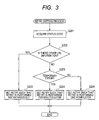
- FIG. 3 is a flowchart showing steps in a retry setting process in the Web-page printing process
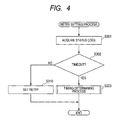
- FIG. 4 is a flowchart showing steps in a retry setting process according to a second embodiment of the invention.
- FIG. 5 is a flowchart showing steps in a timing determining process in the retry setting process of FIG. 4 ;
- FIG. 6 is a flowchart showing steps in a retry setting process according to a modification.
- FIG. 7 is a flowchart showing steps in a retry setting process according to another modification.
- FIGS. 1 through 3 A printer embodying an image processing device and a printing device according to a first embodiment of the invention will be described while referring to FIGS. 1 through 3 .
- the invention is applied to a printer having a function of acquiring print data from a Web page and of performing printing.
- a printer 100 (an example of an image processing device and a printing device) of the present embodiment includes a controller 30 having a CPU 31 , a ROM 32 , a RAM 33 , and an NVRAM (Non Volatile RAM) 34 .
- the controller 30 is electrically connected with an image forming section 10 that prints an image on paper, an operation panel 40 that displays operating conditions and that receives input operations by a user, a network interface 37 , a USB interface 38 , a wireless communication interface 39 , and a timer 35 for measuring time.
- the ROM 32 stores firmware, various settings, initial values, and the like.
- the firmware is a control program for controlling the printer 100 .
- the RAM 33 and the NVRAM 34 are used as a work area to which various control programs are read out, or as a storage area for storing print data temporarily.
- the NVRAM 34 (an example of a storage section) is also used as a storage area for storing various settings that are set by a user after shipment.
- the CPU 31 controls each element of the printer 100 while storing its processing results in the RAM 33 or in the NVRAM 34 in accordance with control programs read out from the ROM 32 and signals sent from various sensors.
- the network interface 37 and the USB interface 38 are interfaces that enable communication with other devices.
- the printer 100 receives data sent from the other devices via these interfaces.
- the printer 100 performs communication, via the network interface 37 , with a personal computer (PC) 200 in which a printer driver 210 for the printer 100 is installed and with a Web server 300 storing a Web page.
- the printer 100 together with the PC 200 and a communication device such as the Web server 300 , constitutes a printing system 900 .
- USB interface 38 other devices may be used via the USB interface 38 .
- the flash memory can be used as a storage area.
- the keyboard can be used to perform input operations.
- the image forming section 10 prints an image on paper.
- a type of forming images may be an electro photographic type or an inkjet type. Further, the image forming section 10 may be for color printing or only for monochromatic printing.
- the operation panel 40 has various buttons for receiving user inputs and a touch-panel screen for displaying text information, buttons, and the like.
- the various buttons include, for example, an OK button for starting a print operation, a cancel button for cancelling a print operation, and character buttons for a user to input URL of a Web page.
- the printer 100 of the first embodiment has a Web-page printing function of acquiring URL information (Uniform Resource Locator information) for referring to a Web page, acquiring print data (contents) from the Web page based on the URL information, and printing the contents.
- URL information Uniform Resource Locator information
- a user When performing Web page printing, first, a user operates the operation panel 40 to input an instruction for executing Web page printing. Upon receiving the instruction, the printer 100 displays an input screen for prompting the user to input URL information. The user inputs the URL information of a Web page on the input screen. For example, in order to print information of a Web page stored in a certain directory of the Web server 300 (see FIG. 1 ), the user inputs URL information including the directory path. Then, the user presses the OK button on the operation panel 40 .
- the printer 100 When the OK button is pressed, the printer 100 temporarily stores inputted URL information in the RAM 33 , accesses the directory of the Web server 300 based on the URL information, and downloads print data into the memory area (the RAM 33 or the NVRAM 34 ). Then, the printer 100 performs printing of downloaded print data. Note that, when the print data are printed, the printer 100 erases temporarily stored URL information from the RAM 33 .
- print data cannot always be downloaded to the memory area by accessing the directory of the Web server 300 .
- the printer 100 determines whether print data are downloaded normally or not. And, if the print data cannot be downloaded normally, the printer 100 stores, in the memory area, both a status code generated when the print data cannot be downloaded normally and the inputted URL information of the Web page.
- the printer 100 analyzes the status code stored in the memory area. After that, the printer 100 sets a time to access the directory of the Web server 300 , a time interval of accesses, or the like (hereinafter referred to as “retry setting”) using the URL information of the Web page stored in the memory area. After that, the printer 100 accesses the directory of the Web server 300 in accordance with the retry setting (hereinafter referred to as “retry”, an example of a reacquiring section).
- retry setting a time to accesses, a time interval of accesses, or the like
- the printer 100 determines that print data are downloaded normally if the printer 100 receives the status codes listed below as a response of a request for downloading the print data to the memory area of the printer 100 .
- a status code of “ 200 : OK” indicates that a request is completed. If the status code of “ 200 : OK” is received, the printer 100 determines that print data are downloaded normally. Further, if print data are downloaded separately, or the like, the printer 100 receives a status code of “ 206 : Partial Content”. Hence, the printer 100 determines that the print data are downloaded normally.
- the printer 100 determines that print data are not downloaded normally if the printer 100 receives the status codes listed below as a response of a request for downloading the print data to the memory area of the printer 100 .
- status codes are merely an example and other status codes may be used. Further, characters “X” are to be substituted with numbers of 0 through 9. Additionally, because status codes of “2XX” other than “ 200 ” and “ 206 ” are not a response to a request for downloading print data to the memory area of the printer 100 , the printer 100 may determine that print data are not downloaded normally.
- the printer 100 receives status codes of “ 301 : Moved Permanently”, “ 302 : Found”, “ 303 : See Other”, and “ 307 : Temporary Redirect”, it is likely that, although the printer 100 has accessed a directory of the Web server 300 based on the inputted URL information, there are no print data in the directory. In this case, the printer 100 received information from the Web server 300 , and this information sometimes includes URL information indicating a moved location of the print data. If the URL information indicating the moved location of the print data is included, the printer 100 temporarily stores the URL information indicating the moved location in the RAM 33 . After that the printer 100 accesses a directory of the moved location, and downloads the print data to the memory area of the printer 100 .
- retry setting is so performed that the printer 100 accesses the directory of the Web server 300 based on the URL information indicating the moved location of the print data.
- retry may be performed instantaneously after retry is set, because it is unlikely that a status code similar to the previously-received status code is received.
- the printer 100 receives a status code of “ 503 : Service Unavailable”, it is likely that a load on the Web server 300 is high (i.e. a busy state) or that the Web server 300 is temporarily unavailable due to maintenance of the Web server 300 . Thus, unless the printer 100 is provided with a time interval before retry is performed, the printer 100 will get a status code similar to the previously-received status code. So that retry is inefficient. Hence, the printer 100 performs retry after a time interval is provided prior to the retry.
- the printer 100 receives a status code of “ 403 : Forbidden” or “ 404 : Not Found”, it is likely that an access right is set erroneously at the Web server 300 , or the like. In this case, it is expected that it takes time of approximately one hour or longer, considering time in which an administrator of the Web server 300 receives notification and corrects the settings. Thus, unless the printer 100 is provided with a time interval before retry is performed, the printer 100 will get a status code similar to the previously-received status code. So that retry is inefficient.
- a time to return from such a status tends to be longer than a case in which the printer 100 receives a status code of “ 503 : Service Unavailable”.
- a time interval prior to retry in the case of the status code of “ 403 : Forbidden” or “ 404 : Not Found” is set to a longer value than in the case of the status code of “ 503 : Service Unavailable”. That is, by appropriately setting a time interval prior to retry, print data can be downloaded to the memory area of the printer 100 .
- the printer 100 receives a status code “ 408 : Request Timeout”, it is likely that timeout occurs at a server that is waiting for a request from a client. It is also likely that transmission speed (communication speed) has dropped because there are many accesses to the Web server 300 . In this case, even if the printer 100 has a time interval prior to retry, the printer 100 might have a similar status code. As the transmission speed gets faster, the printer 100 might not have a similar status code. Thus, the printer 100 checks the transmission speed. When the transmission speed becomes a predetermined transmission speed or higher, the printer 100 can download that print data to the memory area of the printer 100 .
- the CPU 31 starts the Web-page printing process when the OK button is pressed after URL information is inputted (as a trigger).
- the CPU 31 reads out and acquires URL information that is inputted by a user and temporarily stored in the RAM 33 , and acquires print data based on the URL information (S 101 , an example of an acquiring section). That is, the CPU 31 accesses a Web page at a reference location included in the URL information and the CPU 31 downloads the print data.
- the CPU 31 determines whether the Web page is acquired normally or not (S 102 , an example of a determining section). This determination in S 102 is performed by determining whether the print data are stored in the RAM 33 and whether the printer 100 receives a status code of “ 200 : OK” or “ 206 : Partial Content”.
- the CPU 31 determines that the Web page is acquired normally (S 102 : Yes)
- the CPU 31 converts the print data stored in the RAM 33 into printable-format data such as bitmap data (S 103 ).
- the CPU 31 controls the image forming section 10 to print an image on paper based on the printable-format data (S 104 ), and ends the Web-page printing process.
- the CPU 31 determines that the Web page is not acquired normally (S 102 : No), that is, if a status code other than “ 200 : OK” or “ 206 : Partial Content” is received, the CPU 31 stores, in the NVRAM 34 , the status code that is temporarily stored in the RAM 33 and the inputted URL information (S 105 , an example of a receiving section). Then, the CPU 31 executes a retry setting process (S 106 ) and ends the Web-page printing process. After the URL information and the like are stored in the NVRAM 34 , the CPU 31 can erase the URL information and the like from the RAM 33 .
- the CPU 31 executes retry in accordance with retry setting in a process separate from the Web-page printing process.
- the CPU 31 may execute retry in accordance with retry setting in the Web-page printing process (an example of a reacquiring section).
- the printer 100 fails in downloading print data based on inputted URL information, it is troublesome for a user to input the URL information again. Further, the user does not know the reason of failure in downloading. Thus, even if the user input the URL information again, the printer 100 may fail in downloading repeatedly. Hence, it is difficult to download print data at appropriate timing. Thus, the printer 100 executes the retry setting process, thereby setting timing of retry.
- the CPU 31 acquires a status code from the NVRAM 34 (S 201 ), and determines whether there is URL information indicating a moved location of print data or not (S 202 , an example of the reason determining section and a status-code determining section). This determination in S 202 is performed by determining whether the printer 100 receives a status code of “ 301 : Moved Permanently”, “ 302 : Found”, “ 303 : See Other”, or “ 307 : Temporary Redirect”.
- the CPU 31 determines that there is URL information indicating a moved location of print data (S 202 : Yes)
- the CPU 31 refers to the URL information indicating the moved location and sets retry such that retry is performed instantaneously (S 206 , an example of a setting section), and ends the retry setting process.
- reception of a status code does not necessarily mean a problem at the Web server 300 , the transmission speed, or the like.
- some status codes include URL of a moved location as described above. In this case, even if a control for resolving a trouble at the Web server 300 is performed, for example, a control suitable for the status code cannot be performed.
- the printer 100 refers to URL information indicating the moved location and performs retry instantaneously.
- the CPU 31 determines whether the status code indicates a temporary error or not (S 203 , an example of the reason determining section and the status-code determining section). This determination in S 203 is performed by determining whether the printer 100 receives a status code of “ 503 : Service Unavailable”.
- the CPU 31 sets retry such that retry is performed ten minutes later (S 204 , an example of the setting section) and ends the retry setting process.
- the CPU 31 sets retry such that retry is performed one hour later (S 205 , an example of the setting section) and ends the retry setting process.
- the CPU 31 determines that the Web page is not acquired normally (S 102 : No)
- the CPU 31 stores the status code and the inputted URL information in the NVRAM 34 (S 105 ) and executes the retry setting process (S 106 ). And, when the retry setting process is executed, the Web-page printing process is executed again in accordance with the retry setting.
- the CPU 31 downloads print data corresponding to the URL information stored in the NVRAM 34 , in accordance with the retry setting.
- the CPU 31 can acquire print data corresponding to the URL information even when it is determined that the Web page is not acquired normally.
- the CPU 31 determines that there is URL information indicating a moved location of print data (S 202 : Yes), it does not necessarily mean that there is a problem at the Web server 300 , the transmission speed, or the like. Thus, the CPU 31 sets retry such that retry is performed instantaneously (S 206 , an example of the setting section), and ends the retry setting process. Further, if the status code indicates a temporary error (S 203 : Yes), the CPU 31 sets retry such that retry is performed ten minutes later (S 204 , an example of the setting section) and ends the retry setting process.
- the CPU 31 sets retry such that retry is performed one hour later (S 205 , an example of the setting section) and ends the retry setting process.
- retry can be performed in an appropriate method depending on the reason of failure in acquisition of print data.
- a determination of whether there is URL information indicating a moved location of print data is performed by determining whether the printer 100 receives a status code of “ 301 : Moved Permanently”, “ 302 : Found”, “ 303 : See Other”, or “ 307 : Temporary Redirect”. Further, a determination of whether the status code indicates a temporary error is performed by determining whether the printer 100 receives a status code of “ 503 : Service Unavailable”. Hence, the reason of failure is determined based on the status code, and the reason of failure can be determined appropriately. Thus, it is likely that print data can be reacquired in an appropriate method depending on the reason of failure.
- the printer 100 receives a status code of “ 301 : Moved Permanently”, “ 302 : Found”, “ 303 : See Other”, or “ 307 : Temporary Redirect”, it is likely that, although the printer 100 has accessed a directory of the Web server 300 based on inputted URL information, there are no print data in the directory. In this case, the printer 100 received information from the Web server 300 , and this information sometimes includes URL information indicating a moved location of the print data. If the URL information indicating the moved location of the print data is included, the printer 100 temporarily stores the URL information in the RAM 33 . After that the CPU 31 accesses the directory of the moved location, and downloads the print data to the memory area of the printer 100 . Hence, it is likely that print data can be reacquired based on the URL information indicating the moved location of the print data.
- the printer 100 can perform retry more quickly when the status code indicates a temporary error (S 203 : Yes), than in a case where the status code does not indicate a temporary error (S 203 : No).
- a second embodiment of the invention differs from the first embodiment in the retry setting process.
- the second embodiment includes a timing determining process in the retry setting process.
- the Web-page printing process of the second embodiment is the same as that of the first embodiment.
- a period for executing retry is changed depending on the status code.
- the print data are downloaded at a predetermined transmission speed that does not cause timeout.
- the retry setting process (an example of the reason determining section and the setting section) in the Web-page printing process according to the second embodiment will be described while referring to the flowchart of FIG. 4 .
- the CPU 31 acquires a status code from the NVRAM 34 (S 301 ), and determines whether timeout has occurred or not (S 302 , an example of the reason determining section). This determination in S 302 is performed by determining whether the printer 100 receives a status code of “ 408 : Request Timeout”.
- the CPU 31 determines that timeout has occurred (S 302 : Yes)
- the CPU 31 executes the timing determining process (S 303 , an example of the setting section) and ends the retry setting process.
- timing determining process an example of the setting section of S 303 in the retry setting process will be described while referring to the flowchart of FIG. 5 .
- the CPU 31 acquires the transmission speed for data communication with the Web server 300 by executing Ping and, when the transmission speed reaches a predetermined transmission speed stored in the NVRAM 34 , the CPU 31 accesses a directory of the Web server 300 .
- the predetermined transmission speed is, for example, an average value of the transmission speed when a status code of “ 200 : OK” etc. is received.
- ICMP Internet Control Message Protocol
- an Echo request packet is transmitted to an IP address of the designated Web server 300 , and the Echo request packet, as it is, is returned from the Web server 300 to the printer 100 .
- the transmission speed can be determined based on a data amount of the Echo request packet and on a period from the transmission timing of the Echo request packet to the return timing of the Echo request packet.
- the CPU 31 executes Ping and transmits an Echo request packet to the Web server 300 , thereby accessing the Web server 300 (S 401 ).
- the CPU 31 measures a response period from timing at which an Echo request packet is transmitted to the Web server 300 to timing at which the Echo request packet is returned (S 402 ).
- the CPU 31 detects the transmission speed based on the data amount of the Echo request packet and on the response period from timing at which an Echo request packet is transmitted to timing at which the Echo request packet is returned (S 403 , an example of a detecting section).
- the CPU 31 determines whether the transmission speed detected in S 403 is higher than or equal to a predetermined transmission speed (S 404 , an example of a speed determining section). If the CPU 31 determines that the detected transmission speed is lower than the predetermined transmission speed (S 404 : No), the CPU 31 repeats the processes in S 401 -S 403 until the detected transmission speed becomes higher than or equal to the predetermined transmission speed.
- the CPU 31 determines that the transmission speed detected in S 403 is higher than or equal to the predetermined transmission speed (S 404 : Yes), the CPU 31 sets retry such that retry is executed instantaneously (S 405 ) and ends the timing determining process.
- retry is so set that retry is executed instantaneously (S 405 ) and ends the timing determining process.
- retry is performed when communication is not so busy, that is, when the transmission speed is higher than or equal to the predetermined transmission speed, which increases a possibility that print data can be acquired.
- the printing device of the invention may be a printer, a multifunction device, a copier, and any other device that has a printing function.
- the image processing device of the invention may be a PC, a smart phone, a server, and the like.
- an image processing device such as a PC may acquire print data based on URL information (S 101 ), determine whether a Web page is acquired normally or not (S 102 ), convert print data stored in the RAM 33 into printable-format data such as bitmap data etc. (S 103 ), store, in the NVRAM 34 , a status code stored temporarily in the RAM 33 and inputted URL information (S 105 ), and execute the retry setting process (S 106 ) in the Web-page printing process.
- the CPU 31 of the printer 100 executes the Web-page printing process, the retry setting process, and the timing determining process.
- the disclosure may not be limited to the specific embodiment thereof.
- some steps in the Web-page printing process, the retry setting process, and the timing determining process may be executed by the printer 100 , and other steps may be executed by the PC 200 .
- the printer 100 and the PC 200 in combination, constitute an example of an image processing system.
- a single CPU performs all of the processes.
- the disclosure may not be limited to the specific embodiment thereof, and a plurality of CPUs, a special application specific integrated circuit (“ASIC”), or a combination of a CPU and an ASIC may be used to perform the processes.
- ASIC application specific integrated circuit
- printing of a print job stored in the printer is started in accordance with operations on the operation panel 40 .
- the disclosure may not be limited to the specific embodiment thereof.
- printing may be started in accordance with a print instruction from a mobile device, authentication using a card reader, or the like.
- URL information of a Web page is inputted on the printer 100 .
- the disclosure may not be limited to the specific embodiment thereof.
- URL information of a Web page may be inputted on the PC 200 , and the URL information of the Web page may be transmitted from the PC 200 to the printer 100 .
- a device for transmitting URL information of a Web page to the printer is not limited to a PC, but may be a mobile device such as a smart phone etc., for example.
- a portable storage medium such as a USB storage device etc. may store URL information, and the printer 100 may read out the URL information from the USB storage device.
- status codes 3XX and 4XX are used for describing status codes that are obtained when print data are not downloaded normally.
- status codes 2XX other than 200 and 206 may be used.
- a status code 2XX other than 200 and 206 it is not an error that is generated when an access is made to a directory of the Web server 300 based on URL information, and hence the Web-page printing process may be ended.
- an access is made to a directory of the Web server 300 based on URL information instantaneously, ten minutes later, or one hour later, depending on the status code.
- timing (time interval) of making an access may be changed by increasing or decreasing a cycle to access the predetermined directory of the Web server 300 periodically.
- URL information when a failure occurs in acquisition of a Web page, URL information is read out from the RAM 33 and is stored in the NVRAM 34 in a non-volatile state (S 105 ).
- the disclosure may not be limited to the specific embodiment thereof, as long as URL information is memorized (stored) after a failure occurs in acquisition of a Web page and until retry is completed.
- URL information may be continuously stored in a temporary storage section such as the RAM 33 etc. after the URL information is inputted and until retry is completed.
- URL information may be stored in a flash memory mounted on the USB interface 38 , for example.
- the predetermined transmission speed is preliminarily stored in the NVRAM 34 .
- the CPU 31 may acquire the data amount of print data, and set the predetermined transmission speed to higher values as the data amount of print data is larger.
- the NVRAM 34 stores a table including the data amounts of print data in correspondence with the transmission speeds. For example, in case of a HTML file, after downloading a source text, the CPU 31 analyzes the source text and determines the data amount of image data linked with the HTML. Then, the CPU 31 obtains the transmission speed corresponding to the data amount of image data from the table, and determines whether the current transmission speed is higher than the transmission speed that is obtained from the table. If the current transmission speed is higher than the transmission speed that is obtained from the table, the CPU 31 downloads print data to the memory area of the printer 100 .
- the CPU 31 determines that the Web page is acquired normally when a status code of “ 200 : OK” or “ 206 : Partial Content” is received (S 102 : Yes). Nevertheless, the disclosure may not be limited to the specific embodiment thereof. For example, the CPU 31 may determine that the Web page is not acquired normally (S 102 : No) when print data is still in the middle of downloading, or when the printer 100 receives a status code of “ 301 : Moved Permanently”, “ 302 : Found”, “ 303 : See Other”, “ 307 : Temporary Redirect”, “ 403 : Forbidden”, or “ 404 : Not Found”.
- the CPU 31 determines whether timeout has occurred or not (S 302 ) by determining whether the printer 100 receives a status code of “ 408 : Request Timeout”.
- the disclosure may not be limited to the specific embodiment thereof.
- the CPU 31 may activate the timer 35 and may determine that timeout has occurred if a status code of “ 200 : OK” or “ 206 : Partial Content” is not received within a predetermined period. With this modification, a determination can be made accurately whether shortness of time is the reason of failure.
- the steps of S 202 and S 206 may be omitted in the retry setting process shown in FIG. 3 .
- the CPU 31 determines whether the status code indicates a temporary error or not (S 203 ).
- the CPU 31 sets retry such that retry is performed ten minutes later (S 204 ) if the status code indicates a temporary error (S 203 : Yes), and sets retry such that retry is performed one hour later (S 205 ) if the status code does not indicate a temporary error (S 203 : No). Then, the retry setting process ends.
- the steps of S 203 and S 205 may be omitted in the retry setting process shown in FIG. 3 .
- the CPU 31 acquires a status code from the NVRAM 34 (S 201 ), and determines whether there is URL information indicating a moved location of print data or not (S 202 ). If the CPU 31 determines that there is URL information indicating a moved location of print data (S 202 : Yes), the CPU 31 refers to the URL information indicating the moved location and sets retry such that retry is performed instantaneously (S 206 ), and ends the retry setting process.
- the CPU 31 determines that there is no URL information indicating a moved location of print data (S 202 : No), the CPU 31 sets retry such that retry is performed a predetermined period later (for example, 20 minutes later) (S 207 ) and ends the retry setting process.
Landscapes
- Engineering & Computer Science (AREA)
- Theoretical Computer Science (AREA)
- Human Computer Interaction (AREA)
- Physics & Mathematics (AREA)
- General Engineering & Computer Science (AREA)
- General Physics & Mathematics (AREA)
- Accessory Devices And Overall Control Thereof (AREA)
- Information Transfer Between Computers (AREA)
Abstract
Description
- This application claims priority from Japanese Patent Application No. 2011-188797 filed Aug. 31, 2011. The entire content of the priority application is incorporated herein by reference.
- The invention relates to an image processing device, an image processing system, and a printing device.
- A printing device is conventionally known that acquires reference information of data, that acquires the data from a reference location indicated by the reference information, and that performs printing. For example, a printing device is conventionally known that acquires URL information for referring to a Web page, that acquires print data (contents) from the Web page at a reference location indicated by the URL information, and that performs printing.
- However, when the printing device fails in acquisition of data from a Web page, a user needs to acquire URL information (reference information) and to, again, instruct acquisition of data from the Web page indicated by the URL information for printing. Otherwise, the data cannot be acquired from the Web page.
- In view of the foregoing, it is an object of the invention to provide an image processing device, an image processing system, and a printing device that can acquire data from a reference location appropriately.
- In order to attain the above and other objects, the invention provides an image processing device. The image processing device includes an acquiring section, a determining section, a storage section, and a reacquiring section. The acquiring section is configured to acquire data based on reference information indicative of a reference location on a network. The determining section is configured to determine whether the acquiring section succeeds or fails in acquisition of the data. The storage section is configured to store the reference information when the determining section determines that the acquiring section fails in acquisition of the data. The reacquiring section is configured to reacquire data based on the reference information stored in the storage section.
- According to another aspect, the invention also provides an image processing system. The image processing system includes an acquiring section, a determining section, a storage section, and a reacquiring section. The acquiring section is configured to acquire data based on reference information indicative of a reference location on a network. The determining section is configured to determine whether the acquiring section succeeds or fails in acquisition of the data. The storage section is configured to store the reference information when the determining section determines that the acquiring section fails in acquisition of the data. The reacquiring section is configured to reacquire data based on the reference information stored in the storage section.
- According to still another aspect, the invention also provides a printing device. The printing device includes a processor, a network interface, a memory storing a set of program instructions executable by the processor, and an image forming section. The network interface is connectable to a network. The set of program instructions includes acquiring data based on reference information indicative of a reference location on the network, determining whether acquisition of the data succeeds or fails, storing the reference information in the memory when acquisition of the data fails, and reacquiring data based on the reference information stored in the memory. The image forming section is configured to print either the data acquired in the instructions for acquiring data or the data reacquired in the instructions for reacquiring data.
- Embodiments in accordance with the invention will be described in detail with reference to the following figures wherein:
-
FIG. 1 is a block diagram showing the electrical configuration of a printer according to a first embodiment of the invention; -
FIG. 2 is a flowchart showing steps in a Web-page printing process; -
FIG. 3 is a flowchart showing steps in a retry setting process in the Web-page printing process; -
FIG. 4 is a flowchart showing steps in a retry setting process according to a second embodiment of the invention; -
FIG. 5 is a flowchart showing steps in a timing determining process in the retry setting process ofFIG. 4 ; -
FIG. 6 is a flowchart showing steps in a retry setting process according to a modification; and -
FIG. 7 is a flowchart showing steps in a retry setting process according to another modification. - A printer embodying an image processing device and a printing device according to a first embodiment of the invention will be described while referring to
FIGS. 1 through 3 . In the present embodiment, the invention is applied to a printer having a function of acquiring print data from a Web page and of performing printing. - As shown in
FIG. 1 , a printer 100 (an example of an image processing device and a printing device) of the present embodiment includes acontroller 30 having aCPU 31, aROM 32, aRAM 33, and an NVRAM (Non Volatile RAM) 34. Thecontroller 30 is electrically connected with animage forming section 10 that prints an image on paper, anoperation panel 40 that displays operating conditions and that receives input operations by a user, anetwork interface 37, aUSB interface 38, awireless communication interface 39, and atimer 35 for measuring time. - The
ROM 32 stores firmware, various settings, initial values, and the like. The firmware is a control program for controlling theprinter 100. TheRAM 33 and the NVRAM 34 are used as a work area to which various control programs are read out, or as a storage area for storing print data temporarily. The NVRAM 34 (an example of a storage section) is also used as a storage area for storing various settings that are set by a user after shipment. - The CPU 31 (an example of an acquiring section, a determining section, a reacquiring section, a reason determining section, a setting section, a detecting section, and a speed determining section) controls each element of the
printer 100 while storing its processing results in theRAM 33 or in theNVRAM 34 in accordance with control programs read out from theROM 32 and signals sent from various sensors. - The
network interface 37 and theUSB interface 38 are interfaces that enable communication with other devices. Theprinter 100 receives data sent from the other devices via these interfaces. - In the present embodiment, the
printer 100 performs communication, via thenetwork interface 37, with a personal computer (PC) 200 in which aprinter driver 210 for theprinter 100 is installed and with aWeb server 300 storing a Web page. Theprinter 100, together with the PC 200 and a communication device such as theWeb server 300, constitutes aprinting system 900. - In addition, other devices may be used via the
USB interface 38. For example, if a flash memory is connected to theUSB interface 38, the flash memory can be used as a storage area. Further, if a keyboard is connected, the keyboard can be used to perform input operations. - The
image forming section 10 prints an image on paper. Here, a type of forming images may be an electro photographic type or an inkjet type. Further, theimage forming section 10 may be for color printing or only for monochromatic printing. - The
operation panel 40 has various buttons for receiving user inputs and a touch-panel screen for displaying text information, buttons, and the like. The various buttons include, for example, an OK button for starting a print operation, a cancel button for cancelling a print operation, and character buttons for a user to input URL of a Web page. - Next, controls by the
printer 100 will be described. Theprinter 100 of the first embodiment has a Web-page printing function of acquiring URL information (Uniform Resource Locator information) for referring to a Web page, acquiring print data (contents) from the Web page based on the URL information, and printing the contents. - When performing Web page printing, first, a user operates the
operation panel 40 to input an instruction for executing Web page printing. Upon receiving the instruction, theprinter 100 displays an input screen for prompting the user to input URL information. The user inputs the URL information of a Web page on the input screen. For example, in order to print information of a Web page stored in a certain directory of the Web server 300 (seeFIG. 1 ), the user inputs URL information including the directory path. Then, the user presses the OK button on theoperation panel 40. - When the OK button is pressed, the
printer 100 temporarily stores inputted URL information in theRAM 33, accesses the directory of theWeb server 300 based on the URL information, and downloads print data into the memory area (theRAM 33 or the NVRAM 34). Then, theprinter 100 performs printing of downloaded print data. Note that, when the print data are printed, theprinter 100 erases temporarily stored URL information from theRAM 33. - However, print data cannot always be downloaded to the memory area by accessing the directory of the
Web server 300. Hence, theprinter 100 determines whether print data are downloaded normally or not. And, if the print data cannot be downloaded normally, theprinter 100 stores, in the memory area, both a status code generated when the print data cannot be downloaded normally and the inputted URL information of the Web page. - Then, the
printer 100 analyzes the status code stored in the memory area. After that, theprinter 100 sets a time to access the directory of theWeb server 300, a time interval of accesses, or the like (hereinafter referred to as “retry setting”) using the URL information of the Web page stored in the memory area. After that, theprinter 100 accesses the directory of theWeb server 300 in accordance with the retry setting (hereinafter referred to as “retry”, an example of a reacquiring section). - (1) Status Code Obtained When Downloading is Performed Normally
- Specifically, the
printer 100 determines that print data are downloaded normally if theprinter 100 receives the status codes listed below as a response of a request for downloading the print data to the memory area of theprinter 100. - 200: OK
- 206: Partial Content
- A status code of “200: OK” indicates that a request is completed. If the status code of “200: OK” is received, the
printer 100 determines that print data are downloaded normally. Further, if print data are downloaded separately, or the like, theprinter 100 receives a status code of “206: Partial Content”. Hence, theprinter 100 determines that the print data are downloaded normally. - (2) Status Code Obtained When Downloading is Not Performed Normally
- On the other hand, the
printer 100 determines that print data are not downloaded normally if theprinter 100 receives the status codes listed below as a response of a request for downloading the print data to the memory area of theprinter 100. - 1XX: Continuing processing in response to a request
- 3XX: Additional processing is needed for completing a request
- 4XX: Inappropriate request from a client
- 5XX: Server error
- Note that the above-listed status codes are merely an example and other status codes may be used. Further, characters “X” are to be substituted with numbers of 0 through 9. Additionally, because status codes of “2XX” other than “200” and “206” are not a response to a request for downloading print data to the memory area of the
printer 100, theprinter 100 may determine that print data are not downloaded normally. - Further, in the present embodiment, the status codes listed below are used to describe a case in which print data are not downloaded normally.
- 301: Moved Permanently
- 302: Found
- 303: See Other
- 307: Temporary Redirect
- 403: Forbidden
- 404: Not Found
- 408: Request Timeout
- 503: Service Unavailable
- (3) Status Code by Which Retry can be Performed Instantaneously
- If the
printer 100 receives status codes of “301: Moved Permanently”, “302: Found”, “303: See Other”, and “307: Temporary Redirect”, it is likely that, although theprinter 100 has accessed a directory of theWeb server 300 based on the inputted URL information, there are no print data in the directory. In this case, theprinter 100 received information from theWeb server 300, and this information sometimes includes URL information indicating a moved location of the print data. If the URL information indicating the moved location of the print data is included, theprinter 100 temporarily stores the URL information indicating the moved location in theRAM 33. After that theprinter 100 accesses a directory of the moved location, and downloads the print data to the memory area of theprinter 100. Thus, retry setting is so performed that theprinter 100 accesses the directory of theWeb server 300 based on the URL information indicating the moved location of the print data. Here, retry may be performed instantaneously after retry is set, because it is unlikely that a status code similar to the previously-received status code is received. - (4) Status Code by Which Retry can be Performed in a Short Time
- If the
printer 100 receives a status code of “503: Service Unavailable”, it is likely that a load on theWeb server 300 is high (i.e. a busy state) or that theWeb server 300 is temporarily unavailable due to maintenance of theWeb server 300. Thus, unless theprinter 100 is provided with a time interval before retry is performed, theprinter 100 will get a status code similar to the previously-received status code. So that retry is inefficient. Hence, theprinter 100 performs retry after a time interval is provided prior to the retry. - (5) Status Code by Which a Long Time is Required Prior to Retry
- On the other hand, if the
printer 100 receives a status code of “403: Forbidden” or “404: Not Found”, it is likely that an access right is set erroneously at theWeb server 300, or the like. In this case, it is expected that it takes time of approximately one hour or longer, considering time in which an administrator of theWeb server 300 receives notification and corrects the settings. Thus, unless theprinter 100 is provided with a time interval before retry is performed, theprinter 100 will get a status code similar to the previously-received status code. So that retry is inefficient. - Further, when the
printer 100 receives a status code of “403: Forbidden” or “404: Not Found”, a time to return from such a status tends to be longer than a case in which theprinter 100 receives a status code of “503: Service Unavailable”. Thus, a time interval prior to retry in the case of the status code of “403: Forbidden” or “404: Not Found” is set to a longer value than in the case of the status code of “503: Service Unavailable”. That is, by appropriately setting a time interval prior to retry, print data can be downloaded to the memory area of theprinter 100. - (6) Status Code Associated with Transmission Speed
- If the
printer 100 receives a status code “408: Request Timeout”, it is likely that timeout occurs at a server that is waiting for a request from a client. It is also likely that transmission speed (communication speed) has dropped because there are many accesses to theWeb server 300. In this case, even if theprinter 100 has a time interval prior to retry, theprinter 100 might have a similar status code. As the transmission speed gets faster, theprinter 100 might not have a similar status code. Thus, theprinter 100 checks the transmission speed. When the transmission speed becomes a predetermined transmission speed or higher, theprinter 100 can download that print data to the memory area of theprinter 100. - Next, a Web-page printing process for implementing the above-described Web page printing function will be described while referring to the flowchart of
FIG. 2 . TheCPU 31 starts the Web-page printing process when the OK button is pressed after URL information is inputted (as a trigger). - In the Web-page printing process, first, the
CPU 31 reads out and acquires URL information that is inputted by a user and temporarily stored in theRAM 33, and acquires print data based on the URL information (S101, an example of an acquiring section). That is, theCPU 31 accesses a Web page at a reference location included in the URL information and theCPU 31 downloads the print data. - Next, the
CPU 31 determines whether the Web page is acquired normally or not (S 102, an example of a determining section). This determination in S102 is performed by determining whether the print data are stored in theRAM 33 and whether theprinter 100 receives a status code of “200: OK” or “206: Partial Content”. - If the
CPU 31 determines that the Web page is acquired normally (S102: Yes), theCPU 31 converts the print data stored in theRAM 33 into printable-format data such as bitmap data (S 103). After that theCPU 31 controls theimage forming section 10 to print an image on paper based on the printable-format data (S104), and ends the Web-page printing process. - On the other hand, if the
CPU 31 determines that the Web page is not acquired normally (S102: No), that is, if a status code other than “200: OK” or “206: Partial Content” is received, theCPU 31 stores, in theNVRAM 34, the status code that is temporarily stored in theRAM 33 and the inputted URL information (S105, an example of a receiving section). Then, theCPU 31 executes a retry setting process (S106) and ends the Web-page printing process. After the URL information and the like are stored in theNVRAM 34, theCPU 31 can erase the URL information and the like from theRAM 33. - Note that, subsequent to execution of the retry setting process, the
CPU 31 executes retry in accordance with retry setting in a process separate from the Web-page printing process. Alternately, theCPU 31 may execute retry in accordance with retry setting in the Web-page printing process (an example of a reacquiring section). - Next, the retry setting process (an example of a reason determining section and a setting section) of S106 in the Web-page printing process will be described while referring to the flowchart of
FIG. 3 . - When the
printer 100 fails in downloading print data based on inputted URL information, it is troublesome for a user to input the URL information again. Further, the user does not know the reason of failure in downloading. Thus, even if the user input the URL information again, theprinter 100 may fail in downloading repeatedly. Hence, it is difficult to download print data at appropriate timing. Thus, theprinter 100 executes the retry setting process, thereby setting timing of retry. - In the retry setting process, first, the
CPU 31 acquires a status code from the NVRAM 34 (S201), and determines whether there is URL information indicating a moved location of print data or not (S202, an example of the reason determining section and a status-code determining section). This determination in S202 is performed by determining whether theprinter 100 receives a status code of “301: Moved Permanently”, “302: Found”, “303: See Other”, or “307: Temporary Redirect”. - If the
CPU 31 determines that there is URL information indicating a moved location of print data (S202: Yes), theCPU 31 refers to the URL information indicating the moved location and sets retry such that retry is performed instantaneously (S206, an example of a setting section), and ends the retry setting process. - Here, reception of a status code does not necessarily mean a problem at the
Web server 300, the transmission speed, or the like. For example, some status codes include URL of a moved location as described above. In this case, even if a control for resolving a trouble at theWeb server 300 is performed, for example, a control suitable for the status code cannot be performed. Thus, when the status code includes URL of a moved location, theprinter 100 refers to URL information indicating the moved location and performs retry instantaneously. - On the other hand, if the
CPU 31 determines that there is no URL information indicating a moved location of print data (S202: No), theCPU 31 determines whether the status code indicates a temporary error or not (S203, an example of the reason determining section and the status-code determining section). This determination in S203 is performed by determining whether theprinter 100 receives a status code of “503: Service Unavailable”. - If the status code indicates a temporary error (S203: Yes), the
CPU 31 sets retry such that retry is performed ten minutes later (S204, an example of the setting section) and ends the retry setting process. On the other hand, if the status code does not indicate a temporary error (S203: No), theCPU 31 sets retry such that retry is performed one hour later (S205, an example of the setting section) and ends the retry setting process. - That is, if the status code indicates a temporary error (S203: Yes), retry is so set that retry is performed in a shorter period than in a case where the status code does not indicate a temporary error (S203: No).
- As described above in detail, according to the
printer 100 of the first embodiment, if theCPU 31 determines that the Web page is not acquired normally (S102: No), theCPU 31 stores the status code and the inputted URL information in the NVRAM 34 (S105) and executes the retry setting process (S106). And, when the retry setting process is executed, the Web-page printing process is executed again in accordance with the retry setting. Hence, if theCPU 31 determines that the Web page is not acquired normally (S102: No), theCPU 31 downloads print data corresponding to the URL information stored in theNVRAM 34, in accordance with the retry setting. Thus, theCPU 31 can acquire print data corresponding to the URL information even when it is determined that the Web page is not acquired normally. - Further, if the
CPU 31 determines that there is URL information indicating a moved location of print data (S202: Yes), it does not necessarily mean that there is a problem at theWeb server 300, the transmission speed, or the like. Thus, theCPU 31 sets retry such that retry is performed instantaneously (S206, an example of the setting section), and ends the retry setting process. Further, if the status code indicates a temporary error (S203: Yes), theCPU 31 sets retry such that retry is performed ten minutes later (S204, an example of the setting section) and ends the retry setting process. On the other hand, if the status code does not indicate a temporary error (S203: No), theCPU 31 sets retry such that retry is performed one hour later (S205, an example of the setting section) and ends the retry setting process. Hence, retry can be performed in an appropriate method depending on the reason of failure in acquisition of print data. - Further, a determination of whether there is URL information indicating a moved location of print data (S202) is performed by determining whether the
printer 100 receives a status code of “301: Moved Permanently”, “302: Found”, “303: See Other”, or “307: Temporary Redirect”. Further, a determination of whether the status code indicates a temporary error is performed by determining whether theprinter 100 receives a status code of “503: Service Unavailable”. Hence, the reason of failure is determined based on the status code, and the reason of failure can be determined appropriately. Thus, it is likely that print data can be reacquired in an appropriate method depending on the reason of failure. - If the
printer 100 receives a status code of “301: Moved Permanently”, “302: Found”, “303: See Other”, or “307: Temporary Redirect”, it is likely that, although theprinter 100 has accessed a directory of theWeb server 300 based on inputted URL information, there are no print data in the directory. In this case, theprinter 100 received information from theWeb server 300, and this information sometimes includes URL information indicating a moved location of the print data. If the URL information indicating the moved location of the print data is included, theprinter 100 temporarily stores the URL information in theRAM 33. After that theCPU 31 accesses the directory of the moved location, and downloads the print data to the memory area of theprinter 100. Hence, it is likely that print data can be reacquired based on the URL information indicating the moved location of the print data. - Further, if the status code indicates a temporary error (S203: Yes), retry is so set that retry is performed in a shorter period than in a case where the status code does not indicate a temporary error (S203: No). Hence, the
printer 100 can perform retry more quickly when the status code indicates a temporary error (S203: Yes), than in a case where the status code does not indicate a temporary error (S203: No). - A second embodiment of the invention differs from the first embodiment in the retry setting process. The second embodiment includes a timing determining process in the retry setting process. The Web-page printing process of the second embodiment is the same as that of the first embodiment. In the retry setting process of the first embodiment, a period for executing retry is changed depending on the status code. In the retry setting process of the second embodiment, when a failure occurs in downloading print data due to timeout, the print data are downloaded at a predetermined transmission speed that does not cause timeout.
- The retry setting process (an example of the reason determining section and the setting section) in the Web-page printing process according to the second embodiment will be described while referring to the flowchart of
FIG. 4 . - In the retry setting process, first, the
CPU 31 acquires a status code from the NVRAM 34 (S301), and determines whether timeout has occurred or not (S302, an example of the reason determining section). This determination in S302 is performed by determining whether theprinter 100 receives a status code of “408: Request Timeout”. - If the
CPU 31 determines that timeout has not occurred (S302: No), in S310, theCPU 31 sets retry by executing S202 and the subsequent steps inFIG. 3 . Then, theCPU 31 ends the retry setting process. - On the other hand, if the
CPU 31 determines that timeout has occurred (S302: Yes), theCPU 31 executes the timing determining process (S303, an example of the setting section) and ends the retry setting process. - Next, the timing determining process (an example of the setting section) of S303 in the retry setting process will be described while referring to the flowchart of
FIG. 5 . - In the timing determining process, the
CPU 31 acquires the transmission speed for data communication with theWeb server 300 by executing Ping and, when the transmission speed reaches a predetermined transmission speed stored in theNVRAM 34, theCPU 31 accesses a directory of theWeb server 300. Note that the predetermined transmission speed is, for example, an average value of the transmission speed when a status code of “200: OK” etc. is received. - Here, “Ping” is a diagnosis command of network using Echo
- Message/Echo Reply Message of a communication protocol that is used on the internet and called ICMP (Internet Control Message Protocol). When Ping is executed, an Echo request packet is transmitted to an IP address of the designated
Web server 300, and the Echo request packet, as it is, is returned from theWeb server 300 to theprinter 100. At this time, the transmission speed can be determined based on a data amount of the Echo request packet and on a period from the transmission timing of the Echo request packet to the return timing of the Echo request packet. - In the timing determining process, first, the
CPU 31 executes Ping and transmits an Echo request packet to theWeb server 300, thereby accessing the Web server 300 (S401). TheCPU 31 then measures a response period from timing at which an Echo request packet is transmitted to theWeb server 300 to timing at which the Echo request packet is returned (S402). - Next, the
CPU 31 detects the transmission speed based on the data amount of the Echo request packet and on the response period from timing at which an Echo request packet is transmitted to timing at which the Echo request packet is returned (S403, an example of a detecting section). - The
CPU 31 then determines whether the transmission speed detected in S403 is higher than or equal to a predetermined transmission speed (S404, an example of a speed determining section). If theCPU 31 determines that the detected transmission speed is lower than the predetermined transmission speed (S404: No), theCPU 31 repeats the processes in S401-S403 until the detected transmission speed becomes higher than or equal to the predetermined transmission speed. - On the other hand, if the
CPU 31 determines that the transmission speed detected in S403 is higher than or equal to the predetermined transmission speed (S404: Yes), theCPU 31 sets retry such that retry is executed instantaneously (S405) and ends the timing determining process. - As described above in detail, according to the
printer 100 of the second embodiment, if it is determined that the detected transmission speed is higher than or equal to the predetermined transmission speed (S404: Yes), retry is so set that retry is executed instantaneously (S405) and ends the timing determining process. Hence, retry is performed when communication is not so busy, that is, when the transmission speed is higher than or equal to the predetermined transmission speed, which increases a possibility that print data can be acquired. - While the invention has been described in detail with reference to the above aspects thereof, it would be apparent to those skilled in the art that various changes and modifications may be made therein without departing from the scope of the claims. In the following descriptions, like parts and components are designated by the same reference numerals to avoid duplicating description.
- For example, the printing device of the invention may be a printer, a multifunction device, a copier, and any other device that has a printing function.
- The image processing device of the invention may be a PC, a smart phone, a server, and the like. For example, an image processing device such as a PC may acquire print data based on URL information (S101), determine whether a Web page is acquired normally or not (S102), convert print data stored in the
RAM 33 into printable-format data such as bitmap data etc. (S103), store, in theNVRAM 34, a status code stored temporarily in theRAM 33 and inputted URL information (S105), and execute the retry setting process (S106) in the Web-page printing process. - In the above-described embodiments, the
CPU 31 of theprinter 100 executes the Web-page printing process, the retry setting process, and the timing determining process. Nevertheless, the disclosure may not be limited to the specific embodiment thereof. For example, some steps in the Web-page printing process, the retry setting process, and the timing determining process may be executed by theprinter 100, and other steps may be executed by thePC 200. In this case, theprinter 100 and thePC 200, in combination, constitute an example of an image processing system. - Further, in the above-described embodiments, a single CPU performs all of the processes. Nevertheless, the disclosure may not be limited to the specific embodiment thereof, and a plurality of CPUs, a special application specific integrated circuit (“ASIC”), or a combination of a CPU and an ASIC may be used to perform the processes.
- In the above-described embodiments, printing of a print job stored in the printer is started in accordance with operations on the
operation panel 40. Nevertheless, the disclosure may not be limited to the specific embodiment thereof. For example, printing may be started in accordance with a print instruction from a mobile device, authentication using a card reader, or the like. - In the above-described embodiments, URL information of a Web page is inputted on the
printer 100. Nevertheless, the disclosure may not be limited to the specific embodiment thereof. For example, URL information of a Web page may be inputted on thePC 200, and the URL information of the Web page may be transmitted from thePC 200 to theprinter 100. Further, a device for transmitting URL information of a Web page to the printer is not limited to a PC, but may be a mobile device such as a smart phone etc., for example. Further, a portable storage medium such as a USB storage device etc. may store URL information, and theprinter 100 may read out the URL information from the USB storage device. - In the above-described embodiments, status codes 3XX and 4XX are used for describing status codes that are obtained when print data are not downloaded normally. However, status codes 2XX other than 200 and 206 may be used. For example, when a status code 2XX other than 200 and 206 is received, it is not an error that is generated when an access is made to a directory of the
Web server 300 based on URL information, and hence the Web-page printing process may be ended. - In the above-described embodiments, an access is made to a directory of the
Web server 300 based on URL information instantaneously, ten minutes later, or one hour later, depending on the status code. However, timing (time interval) of making an access may be changed by increasing or decreasing a cycle to access the predetermined directory of theWeb server 300 periodically. - In the above-described embodiments, when a failure occurs in acquisition of a Web page, URL information is read out from the
RAM 33 and is stored in theNVRAM 34 in a non-volatile state (S105). Nevertheless, the disclosure may not be limited to the specific embodiment thereof, as long as URL information is memorized (stored) after a failure occurs in acquisition of a Web page and until retry is completed. For example, URL information may be continuously stored in a temporary storage section such as theRAM 33 etc. after the URL information is inputted and until retry is completed. Further, URL information may be stored in a flash memory mounted on theUSB interface 38, for example. - In the above-described embodiments, the predetermined transmission speed is preliminarily stored in the
NVRAM 34. However, theCPU 31 may acquire the data amount of print data, and set the predetermined transmission speed to higher values as the data amount of print data is larger. In this modification, theNVRAM 34 stores a table including the data amounts of print data in correspondence with the transmission speeds. For example, in case of a HTML file, after downloading a source text, theCPU 31 analyzes the source text and determines the data amount of image data linked with the HTML. Then, theCPU 31 obtains the transmission speed corresponding to the data amount of image data from the table, and determines whether the current transmission speed is higher than the transmission speed that is obtained from the table. If the current transmission speed is higher than the transmission speed that is obtained from the table, theCPU 31 downloads print data to the memory area of theprinter 100. - In the above-described embodiments, in S102, the
CPU 31 determines that the Web page is acquired normally when a status code of “200: OK” or “206: Partial Content” is received (S102: Yes). Nevertheless, the disclosure may not be limited to the specific embodiment thereof. For example, theCPU 31 may determine that the Web page is not acquired normally (S102: No) when print data is still in the middle of downloading, or when theprinter 100 receives a status code of “301: Moved Permanently”, “302: Found”, “303: See Other”, “307: Temporary Redirect”, “403: Forbidden”, or “404: Not Found”. - In the retry setting process of the second embodiment, the
CPU 31 determines whether timeout has occurred or not (S302) by determining whether theprinter 100 receives a status code of “408: Request Timeout”. Nevertheless, the disclosure may not be limited to the specific embodiment thereof. For example, when an access is made to a Web page of a reference location included in URL information, theCPU 31 may activate thetimer 35 and may determine that timeout has occurred if a status code of “200: OK” or “206: Partial Content” is not received within a predetermined period. With this modification, a determination can be made accurately whether shortness of time is the reason of failure. - As shown in
FIG. 6 , the steps of S202 and S206 may be omitted in the retry setting process shown inFIG. 3 . In this modification, after theCPU 31 acquires a status code from the NVRAM 34 (S201), theCPU 31 determines whether the status code indicates a temporary error or not (S203). TheCPU 31 sets retry such that retry is performed ten minutes later (S204) if the status code indicates a temporary error (S203: Yes), and sets retry such that retry is performed one hour later (S205) if the status code does not indicate a temporary error (S203: No). Then, the retry setting process ends. - Further, as shown in
FIG. 7 , the steps of S203 and S205 may be omitted in the retry setting process shown inFIG. 3 . In this modification, theCPU 31 acquires a status code from the NVRAM 34 (S201), and determines whether there is URL information indicating a moved location of print data or not (S202). If theCPU 31 determines that there is URL information indicating a moved location of print data (S202: Yes), theCPU 31 refers to the URL information indicating the moved location and sets retry such that retry is performed instantaneously (S206), and ends the retry setting process. If theCPU 31 determines that there is no URL information indicating a moved location of print data (S202: No), theCPU 31 sets retry such that retry is performed a predetermined period later (for example, 20 minutes later) (S207) and ends the retry setting process.
Claims (20)
Applications Claiming Priority (2)
| Application Number | Priority Date | Filing Date | Title |
|---|---|---|---|
| JP2011188797A JP5824974B2 (en) | 2011-08-31 | 2011-08-31 | Image processing device |
| JP2011-188797 | 2011-08-31 |
Publications (2)
| Publication Number | Publication Date |
|---|---|
| US20130050737A1 true US20130050737A1 (en) | 2013-02-28 |
| US9007628B2 US9007628B2 (en) | 2015-04-14 |
Family
ID=47743315
Family Applications (1)
| Application Number | Title | Priority Date | Filing Date |
|---|---|---|---|
| US13/528,694 Active 2032-12-15 US9007628B2 (en) | 2011-08-31 | 2012-06-20 | Image processing device configured to reacquire data based on reference information |
Country Status (2)
| Country | Link |
|---|---|
| US (1) | US9007628B2 (en) |
| JP (1) | JP5824974B2 (en) |
Cited By (2)
| Publication number | Priority date | Publication date | Assignee | Title |
|---|---|---|---|---|
| US20140240743A1 (en) * | 2013-02-25 | 2014-08-28 | Canon Kabushiki Kaisha | Image forming apparatus capable of executing authentication processing, method of controlling the same, and storage medium |
| US9007628B2 (en) * | 2011-08-31 | 2015-04-14 | Brother Kogyo Kabushiki Kaisha | Image processing device configured to reacquire data based on reference information |
Families Citing this family (3)
| Publication number | Priority date | Publication date | Assignee | Title |
|---|---|---|---|---|
| JP6363363B2 (en) * | 2014-03-12 | 2018-07-25 | セイコーソリューションズ株式会社 | Control device, control method, and data management system |
| JP6215779B2 (en) * | 2014-06-10 | 2017-10-18 | 東芝テック株式会社 | Server apparatus and program |
| WO2018189951A1 (en) * | 2017-04-12 | 2018-10-18 | 住友電気工業株式会社 | Relay device, relay method, and computer program |
Citations (15)
| Publication number | Priority date | Publication date | Assignee | Title |
|---|---|---|---|---|
| US20010025313A1 (en) * | 2000-01-28 | 2001-09-27 | Nan Feng | Method of balancing load among mirror servers |
| US20020052928A1 (en) * | 2000-07-31 | 2002-05-02 | Eliyon Technologies Corporation | Computer method and apparatus for collecting people and organization information from Web sites |
| US6594697B1 (en) * | 1999-05-20 | 2003-07-15 | Microsoft Corporation | Client system having error page analysis and replacement capabilities |
| US6601098B1 (en) * | 1999-06-07 | 2003-07-29 | International Business Machines Corporation | Technique for measuring round-trip latency to computing devices requiring no client-side proxy presence |
| US6611835B1 (en) * | 2000-05-04 | 2003-08-26 | International Business Machines Corporation | System and method for maintaining up-to-date link information in the metadata repository of a search engine |
| US20040049579A1 (en) * | 2002-04-10 | 2004-03-11 | International Business Machines Corporation | Capacity-on-demand in distributed computing environments |
| US6928620B1 (en) * | 2000-10-23 | 2005-08-09 | Hewlett-Packard Development Company, L.P. | Direct printing of contents of a universal resource locator |
| US6981210B2 (en) * | 2001-02-16 | 2005-12-27 | International Business Machines Corporation | Self-maintaining web browser bookmarks |
| US20060041827A1 (en) * | 2004-08-17 | 2006-02-23 | Fujitsu Limited | Page information collection program, page information collection method, and page information collection apparatus |
| US20060253454A1 (en) * | 2005-05-05 | 2006-11-09 | International Business Machines Corporation | System, method and program product for determining if a user has received a redirected web page |
| US7339695B2 (en) * | 2001-02-19 | 2008-03-04 | Minolta Co., Ltd. | Data processing device, data processing method, and data processing program for recognizing characters in a URL |
| US20110072129A1 (en) * | 2009-09-21 | 2011-03-24 | At&T Intellectual Property I, L.P. | Icmp proxy device |
| US7990847B1 (en) * | 2005-04-15 | 2011-08-02 | Cisco Technology, Inc. | Method and system for managing servers in a server cluster |
| US8294927B2 (en) * | 2005-10-17 | 2012-10-23 | Canon Kabushiki Kaisha | Acquiring data from server or substitute data from mobile information terminal |
| US20130083348A1 (en) * | 2011-09-29 | 2013-04-04 | Brother Kogyo Kabushiki Kaisha | Printing device |
Family Cites Families (11)
| Publication number | Priority date | Publication date | Assignee | Title |
|---|---|---|---|---|
| JP2001184180A (en) | 1999-12-27 | 2001-07-06 | Fuji Xerox Co Ltd | Pull print printer |
| JP2004062573A (en) | 2002-07-30 | 2004-02-26 | Canon Inc | Printing system |
| JP2004112182A (en) * | 2002-09-17 | 2004-04-08 | Fuji Xerox Co Ltd | Communication terminal and control method thereof |
| JP2004153688A (en) * | 2002-10-31 | 2004-05-27 | Canon Inc | Information communication apparatus, control method thereof, and program |
| JP4115375B2 (en) | 2003-11-20 | 2008-07-09 | キヤノン株式会社 | Data processing apparatus and data processing method |
| JP4712639B2 (en) * | 2005-09-13 | 2011-06-29 | 株式会社リコー | Network printing system, printing apparatus, print data generation apparatus, network printing method, printing method, print data generation method, and program |
| JP4939046B2 (en) | 2005-12-02 | 2012-05-23 | キヤノン株式会社 | Image processing apparatus and control method thereof |
| JP2007304837A (en) * | 2006-05-11 | 2007-11-22 | Nec Fielding Ltd | Information processor, monitoring method, and program |
| JP2008269159A (en) | 2007-04-18 | 2008-11-06 | Canon Inc | Printing apparatus and control system therefor |
| JP5112278B2 (en) * | 2008-12-19 | 2013-01-09 | シャープ株式会社 | Data receiving apparatus, television apparatus, network information providing server, data receiving system, data receiving method, program, and recording medium |
| JP5824974B2 (en) * | 2011-08-31 | 2015-12-02 | ブラザー工業株式会社 | Image processing device |
-
2011
- 2011-08-31 JP JP2011188797A patent/JP5824974B2/en not_active Expired - Fee Related
-
2012
- 2012-06-20 US US13/528,694 patent/US9007628B2/en active Active
Patent Citations (15)
| Publication number | Priority date | Publication date | Assignee | Title |
|---|---|---|---|---|
| US6594697B1 (en) * | 1999-05-20 | 2003-07-15 | Microsoft Corporation | Client system having error page analysis and replacement capabilities |
| US6601098B1 (en) * | 1999-06-07 | 2003-07-29 | International Business Machines Corporation | Technique for measuring round-trip latency to computing devices requiring no client-side proxy presence |
| US20010025313A1 (en) * | 2000-01-28 | 2001-09-27 | Nan Feng | Method of balancing load among mirror servers |
| US6611835B1 (en) * | 2000-05-04 | 2003-08-26 | International Business Machines Corporation | System and method for maintaining up-to-date link information in the metadata repository of a search engine |
| US20020052928A1 (en) * | 2000-07-31 | 2002-05-02 | Eliyon Technologies Corporation | Computer method and apparatus for collecting people and organization information from Web sites |
| US6928620B1 (en) * | 2000-10-23 | 2005-08-09 | Hewlett-Packard Development Company, L.P. | Direct printing of contents of a universal resource locator |
| US6981210B2 (en) * | 2001-02-16 | 2005-12-27 | International Business Machines Corporation | Self-maintaining web browser bookmarks |
| US7339695B2 (en) * | 2001-02-19 | 2008-03-04 | Minolta Co., Ltd. | Data processing device, data processing method, and data processing program for recognizing characters in a URL |
| US20040049579A1 (en) * | 2002-04-10 | 2004-03-11 | International Business Machines Corporation | Capacity-on-demand in distributed computing environments |
| US20060041827A1 (en) * | 2004-08-17 | 2006-02-23 | Fujitsu Limited | Page information collection program, page information collection method, and page information collection apparatus |
| US7990847B1 (en) * | 2005-04-15 | 2011-08-02 | Cisco Technology, Inc. | Method and system for managing servers in a server cluster |
| US20060253454A1 (en) * | 2005-05-05 | 2006-11-09 | International Business Machines Corporation | System, method and program product for determining if a user has received a redirected web page |
| US8294927B2 (en) * | 2005-10-17 | 2012-10-23 | Canon Kabushiki Kaisha | Acquiring data from server or substitute data from mobile information terminal |
| US20110072129A1 (en) * | 2009-09-21 | 2011-03-24 | At&T Intellectual Property I, L.P. | Icmp proxy device |
| US20130083348A1 (en) * | 2011-09-29 | 2013-04-04 | Brother Kogyo Kabushiki Kaisha | Printing device |
Cited By (5)
| Publication number | Priority date | Publication date | Assignee | Title |
|---|---|---|---|---|
| US9007628B2 (en) * | 2011-08-31 | 2015-04-14 | Brother Kogyo Kabushiki Kaisha | Image processing device configured to reacquire data based on reference information |
| US20140240743A1 (en) * | 2013-02-25 | 2014-08-28 | Canon Kabushiki Kaisha | Image forming apparatus capable of executing authentication processing, method of controlling the same, and storage medium |
| US9041946B2 (en) * | 2013-02-25 | 2015-05-26 | Canon Kabushiki Kaisha | Image forming apparatus capable of executing non-plain text authentication processing, method of controlling the same, and storage medium |
| US20150229634A1 (en) * | 2013-02-25 | 2015-08-13 | Canon Kabushiki Kaisha | Image forming apparatus capable of executing authentication processing, method of controlling the same, and storage medium |
| US9461988B2 (en) * | 2013-02-25 | 2016-10-04 | Canon Kabushiki Kaisha | Image forming apparatus capable of executing authentication processing, method of controlling the same, and storage medium |
Also Published As
| Publication number | Publication date |
|---|---|
| US9007628B2 (en) | 2015-04-14 |
| JP5824974B2 (en) | 2015-12-02 |
| JP2013050865A (en) | 2013-03-14 |
Similar Documents
| Publication | Publication Date | Title |
|---|---|---|
| US11687297B2 (en) | Information processing apparatus, method for controlling information processing apparatus, and storage medium for acquiring configuration information | |
| US9626140B2 (en) | Printing apparatus, method of managing print job of printing apparatus, and storage medium storing program | |
| US20100073707A1 (en) | Systems and methods for facilitating virtual cloud printing | |
| US9116651B2 (en) | Image processing apparatus, control method, and recording medium storing computer program for image processing | |
| US11102367B2 (en) | Server and mobile device for an information processing system | |
| US9007628B2 (en) | Image processing device configured to reacquire data based on reference information | |
| US9639316B2 (en) | System including server and printing apparatus, printing apparatus, and control method that controls printing of access information | |
| US10009483B2 (en) | Information processing apparatus, control method, and storage medium for performing print data transmission methods suitable for each situation by causing an image forming apparatus to acquire print data by a suitable method based on whether the image forming apparatus can acquire the print data from a conversion server | |
| US20140293315A1 (en) | Image processing device, image processing system, and image processing method | |
| JP6476541B2 (en) | Image forming apparatus, print request deleting method, and program | |
| US8797583B2 (en) | Obtaining print data from a reference location and printing appropriate print data | |
| US12309338B2 (en) | Control device, non-transitory computer-readable recording medium storing computer-readable instructions for control device, and method executed by control device displaying service notification | |
| US9207896B2 (en) | Printing apparatus, method and computer-readable storage medium having a data request to a server before reception of a print instruction | |
| US9917964B2 (en) | Information processing apparatus, information system, information processing method, and storage medium | |
| US20180329657A1 (en) | Communication apparatus, control method, and non-transitory computer-readable storage medium | |
| US20200117402A1 (en) | Image forming system and image forming apparatus | |
| JP7155669B2 (en) | Application programs for mobile terminals and mobile terminals | |
| US20110010718A1 (en) | Electronic device, information processing method, and computer program product having computer-readable information processing program | |
| US9462142B2 (en) | Electronic device and display control method of electronic device | |
| US10768867B2 (en) | Image forming apparatus having held print job analysis, control method of image forming apparatus, and storage medium | |
| JP5958617B2 (en) | Image forming apparatus and image forming system | |
| US10620886B2 (en) | Image forming apparatus, image forming method, and recording medium | |
| JP6841751B2 (en) | Network system and network system control method | |
| US10019210B2 (en) | Print system that reduces transmission failure of instruction execution type print job and recording medium | |
| JP6657709B2 (en) | Program and information processing device |
Legal Events
| Date | Code | Title | Description |
|---|---|---|---|
| AS | Assignment |
Owner name: BROTHER KOGYO KABUSHIKI KAISHA, JAPAN Free format text: ASSIGNMENT OF ASSIGNORS INTEREST;ASSIGNOR:ICHIKAWA, KAZUKI;REEL/FRAME:028413/0799 Effective date: 20120612 |
|
| STCF | Information on status: patent grant |
Free format text: PATENTED CASE |
|
| MAFP | Maintenance fee payment |
Free format text: PAYMENT OF MAINTENANCE FEE, 4TH YEAR, LARGE ENTITY (ORIGINAL EVENT CODE: M1551); ENTITY STATUS OF PATENT OWNER: LARGE ENTITY Year of fee payment: 4 |
|
| MAFP | Maintenance fee payment |
Free format text: PAYMENT OF MAINTENANCE FEE, 8TH YEAR, LARGE ENTITY (ORIGINAL EVENT CODE: M1552); ENTITY STATUS OF PATENT OWNER: LARGE ENTITY Year of fee payment: 8 |