US20120184822A1 - Health care system, and apparatus and method for controlling health care - Google Patents
Health care system, and apparatus and method for controlling health care Download PDFInfo
- Publication number
- US20120184822A1 US20120184822A1 US13/192,616 US201113192616A US2012184822A1 US 20120184822 A1 US20120184822 A1 US 20120184822A1 US 201113192616 A US201113192616 A US 201113192616A US 2012184822 A1 US2012184822 A1 US 2012184822A1
- Authority
- US
- United States
- Prior art keywords
- health care
- gateway
- biological signal
- response
- transmitting
- Prior art date
- Legal status (The legal status is an assumption and is not a legal conclusion. Google has not performed a legal analysis and makes no representation as to the accuracy of the status listed.)
- Granted
Links
Images

Classifications
-
- G—PHYSICS
- G16—INFORMATION AND COMMUNICATION TECHNOLOGY [ICT] SPECIALLY ADAPTED FOR SPECIFIC APPLICATION FIELDS
- G16H—HEALTHCARE INFORMATICS, i.e. INFORMATION AND COMMUNICATION TECHNOLOGY [ICT] SPECIALLY ADAPTED FOR THE HANDLING OR PROCESSING OF MEDICAL OR HEALTHCARE DATA
- G16H50/00—ICT specially adapted for medical diagnosis, medical simulation or medical data mining; ICT specially adapted for detecting, monitoring or modelling epidemics or pandemics
- G16H50/30—ICT specially adapted for medical diagnosis, medical simulation or medical data mining; ICT specially adapted for detecting, monitoring or modelling epidemics or pandemics for calculating health indices; for individual health risk assessment
-
- A—HUMAN NECESSITIES
- A61—MEDICAL OR VETERINARY SCIENCE; HYGIENE
- A61B—DIAGNOSIS; SURGERY; IDENTIFICATION
- A61B5/00—Measuring for diagnostic purposes; Identification of persons
-
- G—PHYSICS
- G16—INFORMATION AND COMMUNICATION TECHNOLOGY [ICT] SPECIALLY ADAPTED FOR SPECIFIC APPLICATION FIELDS
- G16H—HEALTHCARE INFORMATICS, i.e. INFORMATION AND COMMUNICATION TECHNOLOGY [ICT] SPECIALLY ADAPTED FOR THE HANDLING OR PROCESSING OF MEDICAL OR HEALTHCARE DATA
- G16H40/00—ICT specially adapted for the management or administration of healthcare resources or facilities; ICT specially adapted for the management or operation of medical equipment or devices
- G16H40/60—ICT specially adapted for the management or administration of healthcare resources or facilities; ICT specially adapted for the management or operation of medical equipment or devices for the operation of medical equipment or devices
- G16H40/67—ICT specially adapted for the management or administration of healthcare resources or facilities; ICT specially adapted for the management or operation of medical equipment or devices for the operation of medical equipment or devices for remote operation
-
- A—HUMAN NECESSITIES
- A61—MEDICAL OR VETERINARY SCIENCE; HYGIENE
- A61B—DIAGNOSIS; SURGERY; IDENTIFICATION
- A61B5/00—Measuring for diagnostic purposes; Identification of persons
- A61B5/0002—Remote monitoring of patients using telemetry, e.g. transmission of vital signals via a communication network
-
- A—HUMAN NECESSITIES
- A61—MEDICAL OR VETERINARY SCIENCE; HYGIENE
- A61B—DIAGNOSIS; SURGERY; IDENTIFICATION
- A61B5/00—Measuring for diagnostic purposes; Identification of persons
- A61B5/0002—Remote monitoring of patients using telemetry, e.g. transmission of vital signals via a communication network
- A61B5/0015—Remote monitoring of patients using telemetry, e.g. transmission of vital signals via a communication network characterised by features of the telemetry system
-
- G—PHYSICS
- G16—INFORMATION AND COMMUNICATION TECHNOLOGY [ICT] SPECIALLY ADAPTED FOR SPECIFIC APPLICATION FIELDS
- G16H—HEALTHCARE INFORMATICS, i.e. INFORMATION AND COMMUNICATION TECHNOLOGY [ICT] SPECIALLY ADAPTED FOR THE HANDLING OR PROCESSING OF MEDICAL OR HEALTHCARE DATA
- G16H10/00—ICT specially adapted for the handling or processing of patient-related medical or healthcare data
- G16H10/60—ICT specially adapted for the handling or processing of patient-related medical or healthcare data for patient-specific data, e.g. for electronic patient records
-
- G—PHYSICS
- G16—INFORMATION AND COMMUNICATION TECHNOLOGY [ICT] SPECIALLY ADAPTED FOR SPECIFIC APPLICATION FIELDS
- G16H—HEALTHCARE INFORMATICS, i.e. INFORMATION AND COMMUNICATION TECHNOLOGY [ICT] SPECIALLY ADAPTED FOR THE HANDLING OR PROCESSING OF MEDICAL OR HEALTHCARE DATA
- G16H40/00—ICT specially adapted for the management or administration of healthcare resources or facilities; ICT specially adapted for the management or operation of medical equipment or devices
- G16H40/40—ICT specially adapted for the management or administration of healthcare resources or facilities; ICT specially adapted for the management or operation of medical equipment or devices for the management of medical equipment or devices, e.g. scheduling maintenance or upgrades
-
- H—ELECTRICITY
- H04—ELECTRIC COMMUNICATION TECHNIQUE
- H04L—TRANSMISSION OF DIGITAL INFORMATION, e.g. TELEGRAPHIC COMMUNICATION
- H04L12/00—Data switching networks
- H04L12/66—Arrangements for connecting between networks having differing types of switching systems, e.g. gateways
Definitions
- the following description relates to a health care system and apparatus and method for controlling health care.
- U-Health Care which has appeared in correspondence with development of communications technology, is a health management service utilizing a ubiquitous telemedicine technology.
- U-Health Care which is short for ubiquitous health care, allows a user to be provided medical services without time or space constraints.
- U-Health Care provides medical services, in other words, health care, to a user based on a mobile device such as a mobile phone connected to a wireless network.
- U-Health Care also provides health care to a user based on any of other consumer electronics such as a computer connected to the Internet via a wired/wireless network, a television, or a combination thereof. Users may receive medical treatment anytime and anywhere from medical professionals based on information regarding health care provided through a mobile device or other consumer electronics.
- health care is provided from an independent health care system in which different devices exist, and is not provided from a health care system in which different devices may be converged.
- an apparatus and method for controlling a biological signal transmitting and/or receiving function of various gateways and a health care system are provided.
- an apparatus for controlling health care in a health care system includes a communication unit configured to transmit and/or receive a sensed biological signal, a determination unit configured to determine whether the health care system comprises, in addition to a first gateway through which the sensed biological signal is transmitted and/or received, at least one second gateway through which the sensed biological signal can be transmitted and/or received, and determine which gateway the sensed biological signal is to be transmitted and/or received through in response to the health care system comprising the second gateway, and a communication control unit configured to control a transmitting and/or receiving function of each gateway according to a result of the determining.
- the determination unit may determine the gateway to transmit and/or receive the sensed biological signal based on a user's setting, processing capacities of the gateways, or a combination thereof.
- the communication control unit may control the transmitting and/or receiving function of the first gateway to be deactivated.
- At least one of the gateways may further include a signal strength measurement unit for measuring a signal strength corresponding to a sensing unit for sensing a biological signal.
- the health care controller may be included in a health care server.
- the determination unit may determine whether a biological signal received from the first gateway via the communication unit is the same as a biological signal received from the second gateway.
- the communication control unit may control the gateways by generating a control signal for controlling the transmitting and/or receiving function of each gateway according to a result of the determining.
- the communication control unit may generate a control signal that requests that the transmitting and/or receiving function of the first gateway be deactivated.
- the communication control unit may generate a control signal that requests the transmitting and/or receiving function of the first gateway be activated.
- the health care controller may be included in each gateway.
- the communication unit comprised in the second gateway may transmit a control signal that requests the transmitting and/or receiving function of the first gateway be deactivated.
- the communication unit comprised in the second gateway may transmit a control signal that requests the transmitting and/or receiving function of the first gateway be activated.
- the health care controller may be comprised in the sensing unit.
- the biological signal may be either an electrocardiogram (ECG) signal or an electromyogram (EMG) signal.
- ECG electrocardiogram
- EMG electromyogram
- a method of controlling health care in a health care system includes transmitting and/or receiving a sensed biological signal, determining whether the health care system comprises, in addition to a first gateway through which the sensed biological signal is transmitted and/or received, at least one second gateway through which the sensed biological signal can be transmitted and/or received, and determining which gateway the sensed biological signal is to be transmitted and/or received through in response to the health care system comprising the second gateway, and controlling a transmitting and/or receiving function of each gateway according to a result of the determining.
- the determining may include determining the gateway to transmit and/or receive the sensed biological signal based on a user's setting, processing capacities of the gateways, or a combination thereof.
- the controlling may include controlling the transmitting and/or receiving function of the first gateway to be deactivated.
- At least one of the gateways may measure a signal strength corresponding to a sensing unit for sensing a biological signal.
- a health care controller configured to perform the method of controlling health care being comprised in a health care server, the gateways, the sensing unit, or a combination thereof.
- the determining may include determining whether a biological signal received from the first gateway is the same as a biological signal received from the second gateway, and the controlling may include controlling the gateways by generating a control signal for controlling the transmitting and/or receiving function of each gateway according to a result of the determining.
- the controlling may include controlling by generating a control signal that requests the transmitting and/or receiving function of the first gateway be deactivated.
- the controlling may include controlling a control signal that requests the transmitting and/or receiving function of the first gateway be activated.
- each gateway in response to a determination determining that the health care system comprises the second gateway, further comprising transmitting a control signal that may request the transmitting and/or receiving function of the first gateway be deactivated.
- each gateway in response to the health care controller being comprised in each gateway, in response to the measured signal strength being less than a threshold value, further comprising transmitting a control signal that may request the transmitting and/or receiving function of the first gateway be activated.
- a non-transitory computer readable recording medium may have embodied thereon a computer program for executing the method.
- a health care system in yet another aspect, includes a sensing unit configured to sense a biological signal of a user, a health care server configured to analyze information regarding health care of the user based on the sensed biological signal, a plurality of gateways configured to receive the biological signal from the sensing unit, transmitting the received biological signal to the health care server, and displaying the information regarding health care, and a health care controller configured to receive the biological signal, configured to determine whether the health care system comprises, in addition to a first gateway through which the sensed biological signal is transmitted and/or received, at least one second gateway through which the sensed biological signal may be transmitted and/or received, configured to determine which gateway the sensed biological signal is to be transmitted and/or received through in response to the health care system comprises the second gateway, and configured to control a transmitting and/or receiving function of each gateway according to a result of the determining.
- the health care controller may be included in the health care server, the gateways, the sensing unit, or a combination thereof.
- an apparatus for controlling health care in a health care system includes a communication unit configured to transmit and/or receive a sensed biological signal, a determination unit configured to determine which gateway of a plurality of gateways the sensed biological signal is to be transmitted and/or received through based on a set of predefined conditions, and a communication control unit configured to control a transmitting and/or receiving function of each gateway according to a result of the determining.
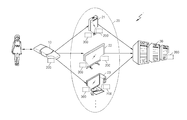
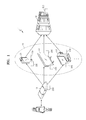
- FIG. 1 is a diagram illustrating an example of a health care system
- FIG. 2 is a diagram illustrating an example of a health care controller
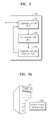
- FIG. 3A is a diagram illustrating an example of a health care server
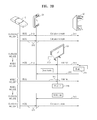
- FIG. 3B is a diagram illustrating an example of a method of controlling health care
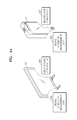
- FIG. 4A is a diagram illustrating an example of a portable terminal and a TV
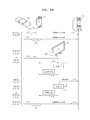
- FIG. 4B is a diagram illustrating an example of a method of controlling health care
- FIG. 5A is a diagram illustrating an example of a sensing unit
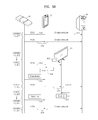
- FIG. 5B is a diagram illustrating an example of a method of controlling health care.
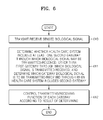
- FIG. 6 is a flowchart illustrating an example of a method of controlling health care.
- FIG. 1 illustrates an example of a health care system 1 .
- the health care system 1 includes a sensing unit 10 , a plurality of gateways 20 , and a health care server 30 .
- the health care system 1 may also include components other than the components illustrated in FIG. 1 .
- a health care controller 200 includes the sensing unit 10 , each gateway 20 , the health care server 30 , or a combination thereof. Examples for illustrating that providing of health care by the health care system 1 may be differently controlled according to where the health care controller 200 is disposed will be described later.
- the health care system 1 provides health care based on a user's biological signal.
- the sensing unit 10 senses a user's biological signal.
- the sensing unit 10 is carried by the user and communicates with other devices in a wired or wireless manner to transmit the sensed biological signal the other devices.
- the sensing unit 10 includes one or more sensors that may sense, for example, an electrocardiogram (ECG) signal or an electromyogram (EMG) signal.
- ECG electrocardiogram
- EMG electromyogram
- the sensing unit 10 is not limited to any one device for sensing a biological signal.
- the sensing unit 10 is carried by a user and senses a biological signal. Since the sensing unit 10 may be any device for sensing a biological signal, for example, an ECG sensor or an EMG sensor, which is understood, a description of the the sensing unit 10 is omitted.
- the gateways 20 include devices that may communicate with other devices in a wired or wireless manner via a network, for example, a portable terminal 21 , a TV 22 , and a personal computer (PC) 23 .
- the gateways 20 receive a sensed biological signal from the sensing unit 10 and transmit the received biological signal to the health care server 30 to function as passages of the health care system 1 .
- the gateways 20 receive information regarding health care from the health care server 30 and display the information regarding health care on a screen included in each gateway 20 .
- the information regarding health care may be information obtained by the health care server 30 analyzing a sensed biological signal.
- the gateways 20 are devices for providing health care to a user.
- the health care server 30 analyzes a user's health state based on a biological signal transmitted through the gateways 20 . For example, in response to the biological signal being the user's ECG signal, the health care server 30 analyzes the ECG signal to determine a state of the user's heart, for example, to determine whether the user has a heart disease such as atrial or ventricular hypertrophy, cardiac infarction, arrhythmia, or pericarditis. In response the analysis of the biological signal being finished, the health care server 30 sends a result of the analysis to the gateways 20 and the gateways 20 provide the result as health care to the user.
- the biological signal being the user's ECG signal
- the health care server 30 analyzes the ECG signal to determine a state of the user's heart, for example, to determine whether the user has a heart disease such as atrial or ventricular hypertrophy, cardiac infarction, arrhythmia, or pericarditis.
- the health care server 30 sends a result of the analysis to the gateways 20
- the mobile phone functioning as a gateway continuously receives a user's biological signal from a sensor carried by the user and transmits the received biological signal to a health care server to provide health care to the user via the mobile phone. Accordingly, since a communication module included in the mobile phone continuously operates in order to communicate with the sensor, a large amount of power of a battery of the mobile phone is consumed. Thus, time for other functions of the mobile phone, for example, a calling function or a text message sending function, is reduced.
- the mobile phone in response to the mobile phone transmitting and/or receiving processed data regarding a biological signal, a large amount of computing resources of the mobile phone is used, and thus resources for other functions of the mobile phone is reduced.
- the mobile phone in response to continuous real-time monitoring of the biological signal being necessary, the mobile phone should be within such a distance from the sensor that the mobile phone and the sensor are able to communicate with each other, even while a user is at home, in order to prevent data loss.
- the health care controller 200 controls the TV 22 to function as a gateway and controls the portable terminal 21 to stop functioning as a gateway, thereby decreasing consumption of power and resources of the portable terminal 21 . Also, even in response to the user not carrying the portable terminal 21 within a short distance from the sensing unit 10 while the user is at home, the user may be continuously provided health care in real time.
- FIG. 2 is a diagram illustrating an example of the health care controller 200 .
- the health care controller 200 includes a communication unit 210 , a determination unit 220 , and a communication control unit 230 .
- the health care controller 200 may include one or more processors. Each processor may be implemented by an array including a plurality of logic gates or by a combination of a general-purpose microprocessor and a memory storing a program executable by the microprocessor. Also, each processor may be implemented by a different type of hardware.
- the communication unit 210 transmits and/or receives a user's biological signal sensed by the sensing unit 10 of FIG. 1 .
- the communication unit 210 receives the user's biological signal, such as an ECG signal or an EMG signal.
- the communication unit 210 communicates with other devices such as, for example, the portable terminal 21 or the TV 22 , in the health care system 1 of FIG. 1 according to where the health care controller 200 is disposed.
- the determination unit 220 determines whether the health care system 1 of FIG. 1 includes, in addition to a first gateway through which a biological signal is transmitted and/or received, at least one second gateway through which the biological signal may be transmitted and/or received, and determines which gateway the biological signal is to be transmitted and/or received through in response to the health care system 1 including the second gateway.
- the determination unit 220 determines whether the TV 22 may transmit and/or receive a biological signal in response to the portable terminal 21 transmitting and/or receiving the biological signal.
- the determination unit 220 determines, from among the portable terminal 21 and the TV 22 , which gateway the biological signal is to be transmitted and/or received through in response to the TV 22 being capable of transmitting and/or receiving the biological signal.
- the determination unit 220 determines which gateway is to transmit and/or receive the biological signal based on a user's setting, processing capacities of the gateways, or a combination thereof. In response to the user previously setting that health care is to be provided through the TV 22 while the user is at home, in response to the user moving from outside a house to the inside the house, the determination unit 220 determines that the biological signal is to be transmitted and/or received through the TV 22 instead of the portable terminal 21 .
- the determination unit 220 may determine which gateway is to transmit and/or receive the biological signal based on processing capacities of the portable terminal 21 and the TV 22 . In other words, since the processing capacity of the TV 22 is greater than that of the portable terminal 21 , in response to the user moves from outside the house to inside the house, the determination unit 220 determines that the biological signal is to be transmitted and/or received through the TV 22 instead of the portable terminal 21 .
- the TV 22 transmits and/or receives the biological signal instead of the portable terminal 21 , and thus power and resources used by the portable terminal 21 to transmit and/or receive the biological signal are not consumed, as described above.
- the communication control unit 230 controls a transmitting and/or receiving function of each gateway according to a result of the determining by the determination unit 220 .
- the communication control unit 230 controls transmitting and/or receiving functions of the portable terminal 21 and the TV 22 according to a result of the determining.
- the communication control unit 230 controls the transmitting and/or receiving function of the portable terminal 21 to be inactive.
- power and resources used by the portable terminal 21 to transmit and/or receive the biological signal are not consumed by allowing the transmitting and/or receiving function of the portable terminal 21 to be inactive and allowing the TV 22 to transmit and/or receive the biological signal.
- the health care controller 200 may be included in the sensing unit 10 , each gateway 20 , the health care server 30 included in the health care system 1 , or a combination thereof.
- a case where the health care server 30 includes the health care controller 200 will be referred to as a first example
- a case where each gateway 20 includes the health care controller 200 will be referred to as a second example
- a case where the sensing unit 10 includes the health care controller 200 will be referred to as a third example.
- the health care system 1 is not limited thereto.
- the portable terminal 21 , the TV 22 , and the PC 23 are shown as the gateways 20 of the health care system 1
- the health care system 1 may include various different kinds of devices such as, for example, a set top box, a notebook computer, a PC, etc. in addition to the portable terminal 21 , the TV 22 , and the PC 23 or may include only one kind of device. Even in an environment in which such devices exist, each operation to be described in the follow examples may be expansively applied.
- each operation to be described in the follow examples may be expansively applied.
- each operation to be described in the follow examples may be expansively applied by assuming that all areas outside a house constitute a first room and all areas inside the house constitute a second room.
- an operation of the health care system 1 according to the first example is as follows.
- FIG. 3A illustrate as an example the health care server 30 .
- the health care controller 200 is configured as one module of the health care controller 200 .
- FIG. 3B illustrates an example of a method of controlling health care.
- Operations 310 and 311 illustrate a case where a user stays outside a house
- operations 312 through 316 illustrate a case where the user moves from outside the house to inside the house
- operation 317 illustrates a case where the user stays inside the house
- operations 318 and 319 illustrate a case where the user moves from inside the house to outside the house
- operation 320 illustrates a case where the user stays outside the house.
- the sensing unit 10 transmits a biological signal, for example, an ECG signal, to the portable terminal 21 .
- the portable terminal 21 receiving the biological signal transmits the biological signal to the health care server 30 via a cellular network.
- the communication unit 210 of the health care controller 200 included in the health care server 30 receives the biological signal.
- the sensing unit 10 transmits the biological signal to the portable terminal 21 , and the portable terminal 21 receiving the biological signal transmits the biological signal to the health care server 30 via the cellular network.
- the sensing unit 10 transmits the biological signal to the TV 22 .
- the TV 22 receiving the biological signal transmits the biological signal to the health care server 30 via the Internet in a wired or wireless manner.
- the communication unit 210 of the health care controller 200 included in the health care server 30 receives the biological signal.
- the determination unit 220 1) determines whether the TV 22 , in addition to the portable terminal 21 , may transmit and/or receive the biological signal and 2) determines, from among the portable terminal 21 and the TV 22 , which gateway the biological signal is to be transmitted and/or received through. The determination unit 220 determines whether the biological signal received from the portable terminal 21 is the same as the biological signal received from the TV 22 . In response to both the biological signals being the same, according to a result of the determining, the communication control unit 230 generates a deactivation control signal that requests that the transmitting and/or receiving function of the portable terminal 21 be deactivated. Also, in operation 315 , the communication control unit 230 may generate a maintaining control signal that maintains that the transmitting and/or receiving function of the TV 22 be maintained.
- the communication control unit 230 controls the portable terminal 21 to deactivate the transmitting and/or receiving function of the portable terminal 21 by transmitting the deactivation control signal to the portable terminal 21 via the communication unit 210 . Also, in operation 316 , the communication control unit 230 may control the TV 22 to maintain the transmitting and/or receiving function of the TV 22 by transmitting the maintaining control signal to the TV 22 via the communication unit 210 .
- the sensing unit 10 continuously transmits the biological signal to the TV 22 , and the TV 22 receiving the biological signal transmits the biological signal to the health care server 30 via the Internet in a wired or wireless manner. Also, in operation 317 , a signal strength measurement unit 300 included in the TV 22 continuously measures a signal strength between the TV 22 and the sensing unit 10 .
- the communication control unit 230 in response to the signal strength measured by the signal strength measurement unit 300 being less than a threshold value that is previously set or in response to the communication unit 210 not receiving the biological signal from the TV 22 , for example, in response to the user moving from inside the house to outside the house, the communication control unit 230 generates a wake-up signal as a control signal that requests that the transmitting and/or receiving function of the portable terminal 21 be deactivated.
- the communication control unit 230 controls the portable terminal 21 by transmitting the wake-up signal to the portable terminal 21 via the communication unit 210 .
- the sensing unit 10 transmits the biological signal to the portable terminal 21 , and the portable terminal 21 receiving the biological signal transmits the biological signal to the health care server 30 via the cellular network.
- an operation of the health care system 1 according to the second example is as follows.
- FIG. 4A illustrates an example of the portable terminal 21 .
- the health care controller 200 is configured as one module of the portable terminal 21 and as one module of the TV 22 .
- the portable terminal 21 and the TV 22 according to the second example may each include the signal strength measurement unit 300 .
- FIG. 4B illustrates an example of a method of controlling health care, according to the second example.
- Operations 410 and 411 illustrate a case where a user stays outside a house
- operations 412 through 416 illustrate a case where the user moves from outside the house to inside the house
- operation 417 illustrates a case where the user stays inside the house
- operations 418 and 419 illustrate a case where the user moves from inside the house to outside the house
- operation 420 illustrates a case where the user stays outside the house.
- the sensing unit 10 transmits a biological signal, for example, an ECG signal, to the portable terminal 21 .
- the portable terminal 21 receiving the biological signal transmits the biological signal to the health care server 30 via a cellular network. Also, in operation 411 , the biological signal is transmitted and/or received based on the communication unit 210 of the health care controller 200 included in the portable terminal 21 .
- the sensing unit 10 transmits the biological signal to the portable terminal 21 , and the portable terminal 21 receiving the biological signal transmits the biological signal to the health care server 30 via the cellular network.
- the sensing unit 10 transmits the biological signal to the TV 22 .
- the communication unit 210 of the portable terminal 21 communicates with the communication unit 210 of the TV 22 .
- the determination unit 220 included in the portable terminal 21 determines whether the TV 22 may transmit and/or receive the biological signal and determines, from among the portable terminal 21 and the TV 22 , which gateway the biological signal is to be transmitted and/or received through.
- the determination unit 220 included in the TV 22 may also perform the same determining operation performed by the determination unit 220 included in the portable terminal 21 .
- the communication control unit 230 of the TV 22 controls the portable terminal 21 by transmitting a deactivation control signal that requests that the transmitting and/or receiving function of the portable terminal 21 be deactivated to the portable terminal 21 .
- the communication control unit 230 of the portable terminal 21 deactivates the transmitting and/or receiving function of the portable terminal 21 according to the received deactivation control signal.
- the TV 22 transmits the biological signal via the Internet in a wired or wireless manner. Also, in operation 417 , the biological signal is transmitted based on the communication unit 210 of the health care controller 200 included in the TV 22 . The biological signal is received by the health care server 30 .
- the communication control unit 230 of the TV 22 in response to a signal strength measured by the signal strength measurement unit 300 being less than a threshold value that is previously set or in response to the biological signal not being transmitted from the communication unit 210 of the TV 22 , for example, in response to the user moving from inside the house to outside the house, the communication control unit 230 of the TV 22 generates a wake-up signal as a control signal that requests that the transmitting and/or receiving function of the portable terminal 21 be activated.
- the communication control unit 230 of the TV 22 controls the portable terminal 21 by transmitting the wake-up signal to the portable terminal 21 via the communication unit 201 of the TV 22 .
- the sensing unit 10 transmits the biological signal to the portable terminal 21 , and the portable terminal 21 receiving the biological signal transmits the biological signal to the health care server 30 via the cellular network.
- An operation of the health care system 1 according to the third example is as follows.
- FIG. 5A illustrates an example of the sensing unit 10 .
- the health care controller 200 is configured as one module of the sensing unit 10 .
- FIG. 5B illustrates an example of a method of controlling health care.
- Operations 510 and 511 illustrate a case where a user stays outside a house
- operations 512 through 515 illustrate a case where the user moves from outside the house to inside the house
- operation 516 illustrates a case where the user stays inside the house
- operations 517 and 518 illustrate a case where the user moves from inside the house to outside the house
- operation 519 illustrates a case where the user stays outside the house.
- the sensing unit 10 transmits a biological signal, for example, an ECG signal, to the portable terminal 21 . Also, in operation 510 , the biological signal is transmitted based on the communication unit 210 of the health care controller 200 included in the sensing unit 10 .
- the portable terminal 21 receiving the biological signal transmits the biological signal to the health care server 30 via a cellular network.
- the sensing unit 10 transmits the biological signal to the portable terminal 21 , and the portable terminal 21 receiving the biological signal transmits the biological signal to the health care server 30 via the cellular network.
- the sensing unit 10 transmits the biological signal to the TV 22 . Also, in operation 513 , the biological signal is transmitted based on the communication unit 210 of the health care controller 200 included in the sensing unit 10 .
- the determination unit 220 determines whether the TV 22 may transmit and/or receive the biological signal and determines, from among the portable terminal 21 and the TV 22 , which gateway the biological signal is to be transmitted and/or received through.
- the determination unit 220 determines that the TV 22 may transmit and/or receive the biological signal, and the communication control unit 230 controls the portable terminal 21 by transmitting a deactivation control signal that requests that the transmitting and/or receiving function of the portable terminal 21 be deactivated to the portable terminal 21 .
- the sensing unit 10 continuously transmits the biological signal to the TV 22 , and the TV 22 receiving the biological signal transmits the biological signal to the health care server 30 via the Internet in a wired or wireless manner.
- the health care server 30 receives the biological signal.
- the signal strength measurement unit 300 included in the TV 22 continuously measures a signal strength between the TV 22 and the sensing unit 10 .
- the communication control unit 230 In response to the signal strength measured by the signal strength measurement unit 300 being less than a threshold value that is previously set or in response to the communication unit 210 not transmitting the biological signal to the TV 22 , for example, in response to the user moving from inside the house to outside the house, the communication control unit 230 generates a wake-up signal as a control signal that requests that the transmitting and/or receiving function of the portable terminal 21 be activated and transmits the wake-up signal to the portable terminal 21 .
- the communication control unit 230 controls the portable terminal 21 by transmitting the wake-up signal to the portable terminal 21 .
- the sensing unit 10 transmits the biological signal to the portable terminal 21 , and the portable terminal 21 receiving the biological signal transmits the biological signal to the health care server 30 via the cellular network.
- the health care controller 200 may reduce power and resources consumed by the portable terminal 21 by controlling the TV 22 to function as a gateway and controlling the portable terminal 21 to stop functioning as a gateway. Also, even in response to the user not carrying the portable terminal 21 within a short distance from the sensing unit 10 while the user is at home, the user may be continuously provided health care in real time.
- the signal strength measurement unit 300 for measuring a signal strength corresponding to the sensing unit 10 is included in at least one gateway included in the health care system 1 .
- the signal strength measurement unit 300 may be included in the portable terminal 21 , the TV 22 , and the PC 23 or only in the TV 22 .
- FIG. 6 illustrates an example of a method of controlling health care.
- the method of controlling health care includes the above-described operations performed by the components of the health care controller 1 . Accordingly, even though not described below, the description with regard to the health care controller 1 may be applied to the method of controlling health care.
- the communication unit 210 transmits and/or receives a biological signal sensed by the sensing unit 10 of FIG. 1 .
- the communication unit 210 transmits and/or receives a biological signal such as a user's ECG signal or the user's EMG signal.
- the determination unit 220 determines whether the health care system 1 of FIG. 1 includes, in addition to a first gateway through which the biological signal is transmitted and/or received, at least one second gateway through which a biological signal may be transmitted and/or received, and determines which gateway the biological signal is to be transmitted and/or received through in response to the health care system 1 of FIG. 1 includes the second gateway.
- the communication control unit 230 controls a transmitting and/or receiving function of each gateway according to a result of the determining.
- a health care system in response to a health care system includes a sensor for sensing a user's biological signal, a health care server for analyzing information regarding health care, and a plurality of gateway terminals for delivering the biological signal exist between the sensor and the health care server, biological signal transmitting and/or receiving functions of the gateway terminals may be effectively controlled. Accordingly, each device may be effectively controlled in the health care system so as to reduce loads of devices having a relatively small processing capacity, thereby optimizing operations of the health care system. In other words, a health care system in which different devices are converged to effectively provide health care may be realized.
- a home appliance in response to a user is provided health care based on a portable terminal outside a house and then moves to inside the house, a home appliance is controlled to newly function as a gateway and the portable terminal is controlled to stop functioning as a gateway, thereby reducing power and resources consumed by the portable terminal. Also, even in response to the user not carrying the portable terminal within a short distance from a sensing unit while the user is at home, the user may be continuously provided health care in real time.
- Program instructions to perform a method described herein, or one or more operations thereof, may be recorded, stored, or fixed in one or more computer-readable storage media.
- the program instructions may be implemented by a computer.
- the computer may cause a processor to execute the program instructions.
- the media may include, alone or in combination with the program instructions, data files, data structures, and the like.
- Examples of computer-readable media include magnetic media, such as hard disks, floppy disks, and magnetic tape; optical media such as CD ROM disks and DVDs; magneto-optical media, such as optical disks; and hardware devices that are specially configured to store and perform program instructions, such as read-only memory (ROM), random access memory (RAM), flash memory, and the like.
- Examples of program instructions include machine code, such as produced by a compiler, and files containing higher level code that may be executed by the computer using an interpreter.
- the program instructions that is, software
- the program instructions may be distributed over network coupled computer systems so that the software is stored and executed in a distributed fashion.
- the software and data may be stored by one or more computer readable recording mediums.
- functional programs, codes, and code segments for accomplishing the example embodiments disclosed herein can be easily construed by programmers skilled in the art to which the embodiments pertain based on and using the flow diagrams and block diagrams of the figures and their corresponding descriptions as provided herein.
- the described unit to perform an operation or a method may be hardware, software, or some combination of hardware and software.
- the unit may be a software package running on a computer or the computer on which that software is running.
Landscapes
- Health & Medical Sciences (AREA)
- Engineering & Computer Science (AREA)
- Life Sciences & Earth Sciences (AREA)
- Biomedical Technology (AREA)
- Medical Informatics (AREA)
- Public Health (AREA)
- General Health & Medical Sciences (AREA)
- Pathology (AREA)
- Epidemiology (AREA)
- Primary Health Care (AREA)
- Biophysics (AREA)
- Animal Behavior & Ethology (AREA)
- General Business, Economics & Management (AREA)
- Business, Economics & Management (AREA)
- Heart & Thoracic Surgery (AREA)
- Molecular Biology (AREA)
- Surgery (AREA)
- Physics & Mathematics (AREA)
- Veterinary Medicine (AREA)
- Computer Networks & Wireless Communication (AREA)
- Data Mining & Analysis (AREA)
- Databases & Information Systems (AREA)
- Signal Processing (AREA)
- Measuring And Recording Apparatus For Diagnosis (AREA)
- Medical Treatment And Welfare Office Work (AREA)
- Telephonic Communication Services (AREA)
Abstract
Description
- This application claims the benefit of Korean Patent Application No. 10-2011-0005007, filed on Jan. 18, 2011, in the Korean Intellectual Property Office, the entire disclosure of which is incorporated herein by reference for all purposes.
- 1. Field
- The following description relates to a health care system and apparatus and method for controlling health care.
- 2. Description of the Related Art
- U-Health Care, which has appeared in correspondence with development of communications technology, is a health management service utilizing a ubiquitous telemedicine technology. U-Health Care, which is short for ubiquitous health care, allows a user to be provided medical services without time or space constraints. U-Health Care provides medical services, in other words, health care, to a user based on a mobile device such as a mobile phone connected to a wireless network. U-Health Care also provides health care to a user based on any of other consumer electronics such as a computer connected to the Internet via a wired/wireless network, a television, or a combination thereof. Users may receive medical treatment anytime and anywhere from medical professionals based on information regarding health care provided through a mobile device or other consumer electronics.
- In general, health care is provided from an independent health care system in which different devices exist, and is not provided from a health care system in which different devices may be converged.
- Provided is an apparatus and method for controlling a biological signal transmitting and/or receiving function of various gateways and a health care system.
- Additional aspects will be set forth in part in the following description and, in part, will be understood from the description, or may be learned by practice of the presented examples. In one general aspect, an apparatus for controlling health care in a health care system is provided. The apparatus includes a communication unit configured to transmit and/or receive a sensed biological signal, a determination unit configured to determine whether the health care system comprises, in addition to a first gateway through which the sensed biological signal is transmitted and/or received, at least one second gateway through which the sensed biological signal can be transmitted and/or received, and determine which gateway the sensed biological signal is to be transmitted and/or received through in response to the health care system comprising the second gateway, and a communication control unit configured to control a transmitting and/or receiving function of each gateway according to a result of the determining.
- In response to the determination unit determining that the health care system comprises the second gateway, the determination unit may determine the gateway to transmit and/or receive the sensed biological signal based on a user's setting, processing capacities of the gateways, or a combination thereof.
- In response to the determination unit determining that the health care system comprises the second gateway, the communication control unit may control the transmitting and/or receiving function of the first gateway to be deactivated.
- At least one of the gateways may further include a signal strength measurement unit for measuring a signal strength corresponding to a sensing unit for sensing a biological signal.
- The health care controller may be included in a health care server.
- The determination unit may determine whether a biological signal received from the first gateway via the communication unit is the same as a biological signal received from the second gateway. The communication control unit may control the gateways by generating a control signal for controlling the transmitting and/or receiving function of each gateway according to a result of the determining.
- In response to the determination unit determining that the received biological signals are the same, the communication control unit may generate a control signal that requests that the transmitting and/or receiving function of the first gateway be deactivated.
- In response to the measured signal strength being less than a threshold value or in response to the communication unit not receiving a biological signal from the second gateway, the communication control unit may generate a control signal that requests the transmitting and/or receiving function of the first gateway be activated.
- The health care controller may be included in each gateway.
- In response to the determination unit determining that the health care system comprises the second gateway, the communication unit comprised in the second gateway may transmit a control signal that requests the transmitting and/or receiving function of the first gateway be deactivated.
- In response to the measured signal strength being less than the threshold value, the communication unit comprised in the second gateway may transmit a control signal that requests the transmitting and/or receiving function of the first gateway be activated.
- The health care controller may be comprised in the sensing unit.
- The biological signal may be either an electrocardiogram (ECG) signal or an electromyogram (EMG) signal.
- In another aspect, a method of controlling health care in a health care system is provided. The method includes transmitting and/or receiving a sensed biological signal, determining whether the health care system comprises, in addition to a first gateway through which the sensed biological signal is transmitted and/or received, at least one second gateway through which the sensed biological signal can be transmitted and/or received, and determining which gateway the sensed biological signal is to be transmitted and/or received through in response to the health care system comprising the second gateway, and controlling a transmitting and/or receiving function of each gateway according to a result of the determining.
- In response to a determination determining that the health care system comprises the second gateway, the determining may include determining the gateway to transmit and/or receive the sensed biological signal based on a user's setting, processing capacities of the gateways, or a combination thereof.
- In response to a determination determining that the health care system comprises the second gateway, the controlling may include controlling the transmitting and/or receiving function of the first gateway to be deactivated.
- At least one of the gateways may measure a signal strength corresponding to a sensing unit for sensing a biological signal.
- A health care controller configured to perform the method of controlling health care being comprised in a health care server, the gateways, the sensing unit, or a combination thereof.
- In response to the health care controller being comprised in the health care server, the determining may include determining whether a biological signal received from the first gateway is the same as a biological signal received from the second gateway, and the controlling may include controlling the gateways by generating a control signal for controlling the transmitting and/or receiving function of each gateway according to a result of the determining.
- In response to a determination determining that the received biological signals are the same, the controlling may include controlling by generating a control signal that requests the transmitting and/or receiving function of the first gateway be deactivated.
- In response to the measured signal strength being less than a threshold value or in response to the health care server not receiving a biological signal from the second gateway, the controlling may include controlling a control signal that requests the transmitting and/or receiving function of the first gateway be activated.
- In response to the health care controller being comprised in each gateway, in response to a determination determining that the health care system comprises the second gateway, further comprising transmitting a control signal that may request the transmitting and/or receiving function of the first gateway be deactivated.
- In response to the health care controller being comprised in each gateway, in response to the measured signal strength being less than a threshold value, further comprising transmitting a control signal that may request the transmitting and/or receiving function of the first gateway be activated.
- A non-transitory computer readable recording medium may have embodied thereon a computer program for executing the method.
- In yet another aspect, a health care system is provided. The health care system includes a sensing unit configured to sense a biological signal of a user, a health care server configured to analyze information regarding health care of the user based on the sensed biological signal, a plurality of gateways configured to receive the biological signal from the sensing unit, transmitting the received biological signal to the health care server, and displaying the information regarding health care, and a health care controller configured to receive the biological signal, configured to determine whether the health care system comprises, in addition to a first gateway through which the sensed biological signal is transmitted and/or received, at least one second gateway through which the sensed biological signal may be transmitted and/or received, configured to determine which gateway the sensed biological signal is to be transmitted and/or received through in response to the health care system comprises the second gateway, and configured to control a transmitting and/or receiving function of each gateway according to a result of the determining. The health care controller may be included in the health care server, the gateways, the sensing unit, or a combination thereof.
- In yet another aspect, an apparatus for controlling health care in a health care system is provided. The apparatus includes a communication unit configured to transmit and/or receive a sensed biological signal, a determination unit configured to determine which gateway of a plurality of gateways the sensed biological signal is to be transmitted and/or received through based on a set of predefined conditions, and a communication control unit configured to control a transmitting and/or receiving function of each gateway according to a result of the determining.
- Other features and aspects may be apparent from the following detailed description, the drawings, and the claims.
-
FIG. 1 is a diagram illustrating an example of a health care system; -
FIG. 2 is a diagram illustrating an example of a health care controller; -
FIG. 3A is a diagram illustrating an example of a health care server; -
FIG. 3B is a diagram illustrating an example of a method of controlling health care; -
FIG. 4A is a diagram illustrating an example of a portable terminal and a TV; -
FIG. 4B is a diagram illustrating an example of a method of controlling health care; -
FIG. 5A is a diagram illustrating an example of a sensing unit; -
FIG. 5B is a diagram illustrating an example of a method of controlling health care; and -
FIG. 6 is a flowchart illustrating an example of a method of controlling health care. - Throughout the drawings and the detailed description, unless otherwise described, the same drawing reference numerals will be understood to refer to the same elements, features, and structures. The relative size and depiction of these elements may be exaggerated for clarity, illustration, and convenience.
- The following description will illustrate examples with reference to the attached drawings.
-
FIG. 1 illustrates an example of ahealth care system 1. Referring toFIG. 1 , thehealth care system 1 includes asensing unit 10, a plurality ofgateways 20, and ahealth care server 30. - Components related to the current example are illustrated in the
health care system 1 ofFIG. 1 . Accordingly, thehealth care system 1 may also include components other than the components illustrated inFIG. 1 . - Referring to
FIG. 1 , ahealth care controller 200 includes thesensing unit 10, eachgateway 20, thehealth care server 30, or a combination thereof. Examples for illustrating that providing of health care by thehealth care system 1 may be differently controlled according to where thehealth care controller 200 is disposed will be described later. - The
health care system 1 provides health care based on a user's biological signal. - The
sensing unit 10 senses a user's biological signal. Thesensing unit 10 is carried by the user and communicates with other devices in a wired or wireless manner to transmit the sensed biological signal the other devices. In this regard, thesensing unit 10 includes one or more sensors that may sense, for example, an electrocardiogram (ECG) signal or an electromyogram (EMG) signal. In other words, thesensing unit 10 is not limited to any one device for sensing a biological signal. - In a non-limiting example, in the
health care system 1, thesensing unit 10 is carried by a user and senses a biological signal. Since thesensing unit 10 may be any device for sensing a biological signal, for example, an ECG sensor or an EMG sensor, which is understood, a description of the thesensing unit 10 is omitted. - The
gateways 20 include devices that may communicate with other devices in a wired or wireless manner via a network, for example, aportable terminal 21, aTV 22, and a personal computer (PC) 23. Thegateways 20 receive a sensed biological signal from thesensing unit 10 and transmit the received biological signal to thehealth care server 30 to function as passages of thehealth care system 1. - Also, the
gateways 20 receive information regarding health care from thehealth care server 30 and display the information regarding health care on a screen included in eachgateway 20. The information regarding health care may be information obtained by thehealth care server 30 analyzing a sensed biological signal. In other words, thegateways 20 are devices for providing health care to a user. - The
health care server 30 analyzes a user's health state based on a biological signal transmitted through thegateways 20. For example, in response to the biological signal being the user's ECG signal, thehealth care server 30 analyzes the ECG signal to determine a state of the user's heart, for example, to determine whether the user has a heart disease such as atrial or ventricular hypertrophy, cardiac infarction, arrhythmia, or pericarditis. In response the analysis of the biological signal being finished, thehealth care server 30 sends a result of the analysis to thegateways 20 and thegateways 20 provide the result as health care to the user. - In a conventional health care system using a mobile device such as a mobile phone, the mobile phone functioning as a gateway continuously receives a user's biological signal from a sensor carried by the user and transmits the received biological signal to a health care server to provide health care to the user via the mobile phone. Accordingly, since a communication module included in the mobile phone continuously operates in order to communicate with the sensor, a large amount of power of a battery of the mobile phone is consumed. Thus, time for other functions of the mobile phone, for example, a calling function or a text message sending function, is reduced.
- Also, in response to the mobile phone transmitting and/or receiving processed data regarding a biological signal, a large amount of computing resources of the mobile phone is used, and thus resources for other functions of the mobile phone is reduced. For example, in response to continuous real-time monitoring of the biological signal being necessary, the mobile phone should be within such a distance from the sensor that the mobile phone and the sensor are able to communicate with each other, even while a user is at home, in order to prevent data loss.
- In the
health care system 1 of the current example, in response to there being, in addition to theportable terminal 21, a device capable of functioning as a gateway, for example, consumer electronics such as theTV 22 or thePC 23, around a user, thehealth care controller 200 controls theTV 22 to function as a gateway and controls theportable terminal 21 to stop functioning as a gateway, thereby decreasing consumption of power and resources of theportable terminal 21. Also, even in response to the user not carrying theportable terminal 21 within a short distance from thesensing unit 10 while the user is at home, the user may be continuously provided health care in real time. - Hereinafter, operations of the
health care controller 200 in thehealth care system 1 will be described. However, thehealth care controller 200 including components illustrated inFIG. 2 will first be described. -
FIG. 2 is a diagram illustrating an example of thehealth care controller 200. Referring toFIG. 2 , thehealth care controller 200 includes acommunication unit 210, adetermination unit 220, and acommunication control unit 230. - The
health care controller 200 may include one or more processors. Each processor may be implemented by an array including a plurality of logic gates or by a combination of a general-purpose microprocessor and a memory storing a program executable by the microprocessor. Also, each processor may be implemented by a different type of hardware. - The
communication unit 210 transmits and/or receives a user's biological signal sensed by thesensing unit 10 ofFIG. 1 . In other words, as described above, thecommunication unit 210 receives the user's biological signal, such as an ECG signal or an EMG signal. As will be described, thecommunication unit 210 communicates with other devices such as, for example, theportable terminal 21 or theTV 22, in thehealth care system 1 ofFIG. 1 according to where thehealth care controller 200 is disposed. - The
determination unit 220 determines whether thehealth care system 1 ofFIG. 1 includes, in addition to a first gateway through which a biological signal is transmitted and/or received, at least one second gateway through which the biological signal may be transmitted and/or received, and determines which gateway the biological signal is to be transmitted and/or received through in response to thehealth care system 1 including the second gateway. - For example, in the
health care system 1, thedetermination unit 220 determines whether theTV 22 may transmit and/or receive a biological signal in response to theportable terminal 21 transmitting and/or receiving the biological signal. Thedetermination unit 220 determines, from among theportable terminal 21 and theTV 22, which gateway the biological signal is to be transmitted and/or received through in response to theTV 22 being capable of transmitting and/or receiving the biological signal. - In this regard, in response to the
determination unit 220 determining that there is, in addition to a current gateway through which a biological signal is transmitted and/or received, another gateway through which the biological signal may be transmitted and/or received, thedetermination unit 220 determines which gateway is to transmit and/or receive the biological signal based on a user's setting, processing capacities of the gateways, or a combination thereof. In response to the user previously setting that health care is to be provided through theTV 22 while the user is at home, in response to the user moving from outside a house to the inside the house, thedetermination unit 220 determines that the biological signal is to be transmitted and/or received through theTV 22 instead of theportable terminal 21. Also, thedetermination unit 220 may determine which gateway is to transmit and/or receive the biological signal based on processing capacities of theportable terminal 21 and theTV 22. In other words, since the processing capacity of theTV 22 is greater than that of theportable terminal 21, in response to the user moves from outside the house to inside the house, thedetermination unit 220 determines that the biological signal is to be transmitted and/or received through theTV 22 instead of theportable terminal 21. - In response to the
determination unit 220 determining that theTV 22 is capable of transmitting and/or receiving a biological signal, theTV 22 transmits and/or receives the biological signal instead of theportable terminal 21, and thus power and resources used by theportable terminal 21 to transmit and/or receive the biological signal are not consumed, as described above. - The
communication control unit 230 controls a transmitting and/or receiving function of each gateway according to a result of the determining by thedetermination unit 220. In other words, in the above-described examples, thecommunication control unit 230 controls transmitting and/or receiving functions of theportable terminal 21 and theTV 22 according to a result of the determining. - In response to the
determination unit 220 determining that theTV 22 is capable of transmitting and/or receiving a biological signal, thecommunication control unit 230 controls the transmitting and/or receiving function of theportable terminal 21 to be inactive. Thus, power and resources used by theportable terminal 21 to transmit and/or receive the biological signal are not consumed by allowing the transmitting and/or receiving function of theportable terminal 21 to be inactive and allowing theTV 22 to transmit and/or receive the biological signal. - As described above, the
health care controller 200 may be included in thesensing unit 10, eachgateway 20, thehealth care server 30 included in thehealth care system 1, or a combination thereof. Hereinafter, a case where thehealth care server 30 includes thehealth care controller 200 will be referred to as a first example, a case where eachgateway 20 includes thehealth care controller 200 will be referred to as a second example, and a case where thesensing unit 10 includes thehealth care controller 200 will be referred to as a third example. - However, the
health care system 1 is not limited thereto. In other words, although theportable terminal 21, theTV 22, and thePC 23 are shown as thegateways 20 of thehealth care system 1, thehealth care system 1 may include various different kinds of devices such as, for example, a set top box, a notebook computer, a PC, etc. in addition to theportable terminal 21, theTV 22, and thePC 23 or may include only one kind of device. Even in an environment in which such devices exist, each operation to be described in the follow examples may be expansively applied. - Also, even in response to a user moving from one room to another room while the user is at home, each operation to be described in the follow examples may be expansively applied. In other words, each operation to be described in the follow examples may be expansively applied by assuming that all areas outside a house constitute a first room and all areas inside the house constitute a second room.
- First, an operation of the
health care system 1 according to the first example is as follows. -
FIG. 3A illustrate as an example thehealth care server 30. Referring toFIG. 3A , thehealth care controller 200 is configured as one module of thehealth care controller 200. -
FIG. 3B illustrates an example of a method of controlling health care. Referring toFIG. 3B , arrows are illustrated according to time.Operations operations 312 through 316 illustrate a case where the user moves from outside the house to inside the house,operation 317 illustrates a case where the user stays inside the house,operations operation 320 illustrates a case where the user stays outside the house. - In
operation 310, while the user stays outside the house, thesensing unit 10 transmits a biological signal, for example, an ECG signal, to theportable terminal 21. - In
operation 311, theportable terminal 21 receiving the biological signal transmits the biological signal to thehealth care server 30 via a cellular network. Thecommunication unit 210 of thehealth care controller 200 included in thehealth care server 30 receives the biological signal. - In
operation 312, even while the user is moving from outside the house to inside the house, thesensing unit 10 transmits the biological signal to theportable terminal 21, and theportable terminal 21 receiving the biological signal transmits the biological signal to thehealth care server 30 via the cellular network. - In
operation 313, also while the user is moving from outside the house to inside the house, thesensing unit 10 transmits the biological signal to theTV 22. - In
operation 314, theTV 22 receiving the biological signal transmits the biological signal to thehealth care server 30 via the Internet in a wired or wireless manner. Thecommunication unit 210 of thehealth care controller 200 included in thehealth care server 30 receives the biological signal. - In
operation 315, thedetermination unit 220 1) determines whether theTV 22, in addition to theportable terminal 21, may transmit and/or receive the biological signal and 2) determines, from among theportable terminal 21 and theTV 22, which gateway the biological signal is to be transmitted and/or received through. Thedetermination unit 220 determines whether the biological signal received from theportable terminal 21 is the same as the biological signal received from theTV 22. In response to both the biological signals being the same, according to a result of the determining, thecommunication control unit 230 generates a deactivation control signal that requests that the transmitting and/or receiving function of theportable terminal 21 be deactivated. Also, inoperation 315, thecommunication control unit 230 may generate a maintaining control signal that maintains that the transmitting and/or receiving function of theTV 22 be maintained. - In
operation 316, thecommunication control unit 230 controls theportable terminal 21 to deactivate the transmitting and/or receiving function of theportable terminal 21 by transmitting the deactivation control signal to theportable terminal 21 via thecommunication unit 210. Also, inoperation 316, thecommunication control unit 230 may control theTV 22 to maintain the transmitting and/or receiving function of theTV 22 by transmitting the maintaining control signal to theTV 22 via thecommunication unit 210. - In
operation 317, while the user stays inside the house, thesensing unit 10 continuously transmits the biological signal to theTV 22, and theTV 22 receiving the biological signal transmits the biological signal to thehealth care server 30 via the Internet in a wired or wireless manner. Also, inoperation 317, a signalstrength measurement unit 300 included in theTV 22 continuously measures a signal strength between theTV 22 and thesensing unit 10. - In
operation 318, in response to the signal strength measured by the signalstrength measurement unit 300 being less than a threshold value that is previously set or in response to thecommunication unit 210 not receiving the biological signal from theTV 22, for example, in response to the user moving from inside the house to outside the house, thecommunication control unit 230 generates a wake-up signal as a control signal that requests that the transmitting and/or receiving function of theportable terminal 21 be deactivated. - In
operation 319, thecommunication control unit 230 controls theportable terminal 21 by transmitting the wake-up signal to theportable terminal 21 via thecommunication unit 210. - In
operation 320, while the user stays outside the house, thesensing unit 10 transmits the biological signal to theportable terminal 21, and theportable terminal 21 receiving the biological signal transmits the biological signal to thehealth care server 30 via the cellular network. - Next, an operation of the
health care system 1 according to the second example is as follows. -
FIG. 4A illustrates an example of theportable terminal 21. Referring toFIG. 4A , thehealth care controller 200 is configured as one module of theportable terminal 21 and as one module of theTV 22. Theportable terminal 21 and theTV 22 according to the second example may each include the signalstrength measurement unit 300. -
FIG. 4B illustrates an example of a method of controlling health care, according to the second example. Referring toFIG. 4B , arrows are illustrated according to time.Operations 410 and 411 illustrate a case where a user stays outside a house,operations 412 through 416 illustrate a case where the user moves from outside the house to inside the house,operation 417 illustrates a case where the user stays inside the house,operations operation 420 illustrates a case where the user stays outside the house. - In operation 410, while the user stays outside the house, the
sensing unit 10 transmits a biological signal, for example, an ECG signal, to theportable terminal 21. - In
operation 411, theportable terminal 21 receiving the biological signal transmits the biological signal to thehealth care server 30 via a cellular network. Also, inoperation 411, the biological signal is transmitted and/or received based on thecommunication unit 210 of thehealth care controller 200 included in theportable terminal 21. - In
operation 412, even while the user is moving from outside the house to inside the house, thesensing unit 10 transmits the biological signal to theportable terminal 21, and theportable terminal 21 receiving the biological signal transmits the biological signal to thehealth care server 30 via the cellular network. - In
operation 413, also while the user is moving from outside the house to inside the house, thesensing unit 10 transmits the biological signal to theTV 22. - In
operation 414, thecommunication unit 210 of theportable terminal 21 communicates with thecommunication unit 210 of theTV 22. - In
operation 415, thedetermination unit 220 included in theportable terminal 21 determines whether theTV 22 may transmit and/or receive the biological signal and determines, from among theportable terminal 21 and theTV 22, which gateway the biological signal is to be transmitted and/or received through. Thedetermination unit 220 included in theTV 22 may also perform the same determining operation performed by thedetermination unit 220 included in theportable terminal 21. - In
operation 416, in response to thedetermination unit 220 determines that theTV 22 may transmit and/or receive the biological signal, thecommunication control unit 230 of theTV 22 controls theportable terminal 21 by transmitting a deactivation control signal that requests that the transmitting and/or receiving function of theportable terminal 21 be deactivated to theportable terminal 21. At this time, thecommunication control unit 230 of theportable terminal 21 deactivates the transmitting and/or receiving function of theportable terminal 21 according to the received deactivation control signal. - In
operation 417, while the user stays inside the house, theTV 22 transmits the biological signal via the Internet in a wired or wireless manner. Also, inoperation 417, the biological signal is transmitted based on thecommunication unit 210 of thehealth care controller 200 included in theTV 22. The biological signal is received by thehealth care server 30. - In
operation 418, in response to a signal strength measured by the signalstrength measurement unit 300 being less than a threshold value that is previously set or in response to the biological signal not being transmitted from thecommunication unit 210 of theTV 22, for example, in response to the user moving from inside the house to outside the house, thecommunication control unit 230 of theTV 22 generates a wake-up signal as a control signal that requests that the transmitting and/or receiving function of theportable terminal 21 be activated. - In
operation 419, thecommunication control unit 230 of theTV 22 controls theportable terminal 21 by transmitting the wake-up signal to theportable terminal 21 via the communication unit 201 of theTV 22. - In
operation 420, while the user stays outside the house, thesensing unit 10 transmits the biological signal to theportable terminal 21, and theportable terminal 21 receiving the biological signal transmits the biological signal to thehealth care server 30 via the cellular network. - An operation of the
health care system 1 according to the third example is as follows. -
FIG. 5A illustrates an example of thesensing unit 10. Referring toFIG. 5A , thehealth care controller 200 is configured as one module of thesensing unit 10. -
FIG. 5B illustrates an example of a method of controlling health care. Referring toFIG. 5B , arrows are illustrated according to time.Operations operations 512 through 515 illustrate a case where the user moves from outside the house to inside the house,operation 516 illustrates a case where the user stays inside the house,operations operation 519 illustrates a case where the user stays outside the house. - In
operation 510, while the user stays outside the house, thesensing unit 10 transmits a biological signal, for example, an ECG signal, to theportable terminal 21. Also, inoperation 510, the biological signal is transmitted based on thecommunication unit 210 of thehealth care controller 200 included in thesensing unit 10. - In
operation 511, theportable terminal 21 receiving the biological signal transmits the biological signal to thehealth care server 30 via a cellular network. - In
operation 512, even while the user is moving from outside the house to inside the house, thesensing unit 10 transmits the biological signal to theportable terminal 21, and theportable terminal 21 receiving the biological signal transmits the biological signal to thehealth care server 30 via the cellular network. - In
operation 513, also while the user is moving from outside the house to inside the house, thesensing unit 10 transmits the biological signal to theTV 22. Also, inoperation 513, the biological signal is transmitted based on thecommunication unit 210 of thehealth care controller 200 included in thesensing unit 10. - In
operation 514, thedetermination unit 220 determines whether theTV 22 may transmit and/or receive the biological signal and determines, from among theportable terminal 21 and theTV 22, which gateway the biological signal is to be transmitted and/or received through. - In
operation 515, thedetermination unit 220 determines that theTV 22 may transmit and/or receive the biological signal, and thecommunication control unit 230 controls theportable terminal 21 by transmitting a deactivation control signal that requests that the transmitting and/or receiving function of theportable terminal 21 be deactivated to theportable terminal 21. - In
operation 516, while the user stays inside the house, thesensing unit 10 continuously transmits the biological signal to theTV 22, and theTV 22 receiving the biological signal transmits the biological signal to thehealth care server 30 via the Internet in a wired or wireless manner. Thehealth care server 30 receives the biological signal. - In
operation 517, the signalstrength measurement unit 300 included in theTV 22 continuously measures a signal strength between theTV 22 and thesensing unit 10. In response to the signal strength measured by the signalstrength measurement unit 300 being less than a threshold value that is previously set or in response to thecommunication unit 210 not transmitting the biological signal to theTV 22, for example, in response to the user moving from inside the house to outside the house, thecommunication control unit 230 generates a wake-up signal as a control signal that requests that the transmitting and/or receiving function of theportable terminal 21 be activated and transmits the wake-up signal to theportable terminal 21. - In
operation 518, thecommunication control unit 230 controls theportable terminal 21 by transmitting the wake-up signal to theportable terminal 21. - In
operation 519, while the user stays outside the house, thesensing unit 10 transmits the biological signal to theportable terminal 21, and theportable terminal 21 receiving the biological signal transmits the biological signal to thehealth care server 30 via the cellular network. - As described in the examples of
FIGS. 3A through 5B , in thehealth care system 1, in response to theTV 22 being capable of functioning as a gateway, other than theportable terminal 21, around a user, thehealth care controller 200 may reduce power and resources consumed by theportable terminal 21 by controlling theTV 22 to function as a gateway and controlling theportable terminal 21 to stop functioning as a gateway. Also, even in response to the user not carrying theportable terminal 21 within a short distance from thesensing unit 10 while the user is at home, the user may be continuously provided health care in real time. - In the examples of
FIGS. 3A through 5B , the signalstrength measurement unit 300 for measuring a signal strength corresponding to thesensing unit 10 is included in at least one gateway included in thehealth care system 1. For example, the signalstrength measurement unit 300 may be included in theportable terminal 21, theTV 22, and thePC 23 or only in theTV 22. -
FIG. 6 illustrates an example of a method of controlling health care. Referring toFIG. 6 , the method of controlling health care includes the above-described operations performed by the components of thehealth care controller 1. Accordingly, even though not described below, the description with regard to thehealth care controller 1 may be applied to the method of controlling health care. - In
operation 610, thecommunication unit 210 transmits and/or receives a biological signal sensed by thesensing unit 10 ofFIG. 1 . In other words, as described above, thecommunication unit 210 transmits and/or receives a biological signal such as a user's ECG signal or the user's EMG signal. - In
operation 611, thedetermination unit 220 determines whether thehealth care system 1 ofFIG. 1 includes, in addition to a first gateway through which the biological signal is transmitted and/or received, at least one second gateway through which a biological signal may be transmitted and/or received, and determines which gateway the biological signal is to be transmitted and/or received through in response to thehealth care system 1 ofFIG. 1 includes the second gateway. - In
operation 612, thecommunication control unit 230 controls a transmitting and/or receiving function of each gateway according to a result of the determining. - As described above, in response to a health care system includes a sensor for sensing a user's biological signal, a health care server for analyzing information regarding health care, and a plurality of gateway terminals for delivering the biological signal exist between the sensor and the health care server, biological signal transmitting and/or receiving functions of the gateway terminals may be effectively controlled. Accordingly, each device may be effectively controlled in the health care system so as to reduce loads of devices having a relatively small processing capacity, thereby optimizing operations of the health care system. In other words, a health care system in which different devices are converged to effectively provide health care may be realized.
- In particular, in response to a user is provided health care based on a portable terminal outside a house and then moves to inside the house, a home appliance is controlled to newly function as a gateway and the portable terminal is controlled to stop functioning as a gateway, thereby reducing power and resources consumed by the portable terminal. Also, even in response to the user not carrying the portable terminal within a short distance from a sensing unit while the user is at home, the user may be continuously provided health care in real time.
- Program instructions to perform a method described herein, or one or more operations thereof, may be recorded, stored, or fixed in one or more computer-readable storage media. The program instructions may be implemented by a computer. For example, the computer may cause a processor to execute the program instructions. The media may include, alone or in combination with the program instructions, data files, data structures, and the like. Examples of computer-readable media include magnetic media, such as hard disks, floppy disks, and magnetic tape; optical media such as CD ROM disks and DVDs; magneto-optical media, such as optical disks; and hardware devices that are specially configured to store and perform program instructions, such as read-only memory (ROM), random access memory (RAM), flash memory, and the like. Examples of program instructions include machine code, such as produced by a compiler, and files containing higher level code that may be executed by the computer using an interpreter. The program instructions, that is, software, may be distributed over network coupled computer systems so that the software is stored and executed in a distributed fashion. For example, the software and data may be stored by one or more computer readable recording mediums. Also, functional programs, codes, and code segments for accomplishing the example embodiments disclosed herein can be easily construed by programmers skilled in the art to which the embodiments pertain based on and using the flow diagrams and block diagrams of the figures and their corresponding descriptions as provided herein. Also, the described unit to perform an operation or a method may be hardware, software, or some combination of hardware and software. For example, the unit may be a software package running on a computer or the computer on which that software is running.
- A number of examples have been described above. Nevertheless, it will be understood that various modifications may be made. For example, suitable results may be achieved if the described techniques are performed in a different order and/or if components in a described system, architecture, device, or circuit are combined in a different manner and/or replaced or supplemented by other components or their equivalents. Accordingly, other implementations are within the scope of the following claims.
Claims (25)
Applications Claiming Priority (2)
| Application Number | Priority Date | Filing Date | Title |
|---|---|---|---|
| KR10-2011-0005007 | 2011-01-18 | ||
| KR1020110005007A KR101759254B1 (en) | 2011-01-18 | 2011-01-18 | Health care system, apparatus and method for controlling health care |
Publications (2)
| Publication Number | Publication Date |
|---|---|
| US20120184822A1 true US20120184822A1 (en) | 2012-07-19 |
| US8625618B2 US8625618B2 (en) | 2014-01-07 |
Family
ID=46491283
Family Applications (1)
| Application Number | Title | Priority Date | Filing Date |
|---|---|---|---|
| US13/192,616 Active 2032-01-30 US8625618B2 (en) | 2011-01-18 | 2011-07-28 | Health care system, and apparatus and method for controlling health care |
Country Status (2)
| Country | Link |
|---|---|
| US (1) | US8625618B2 (en) |
| KR (1) | KR101759254B1 (en) |
Cited By (3)
| Publication number | Priority date | Publication date | Assignee | Title |
|---|---|---|---|---|
| US9375143B2 (en) * | 2013-04-26 | 2016-06-28 | Kabushiki Kaisha Toshiba | Electronic apparatus and communication control method |
| US10404784B2 (en) * | 2013-02-22 | 2019-09-03 | Samsung Electronics Co., Ltd. | Method and system for transmitting result of examination of specimen from medical device to destination |
| US20200229697A1 (en) * | 2017-07-28 | 2020-07-23 | Lifelens Technologies, Llc | Physiologic monitoring kits |
Families Citing this family (2)
| Publication number | Priority date | Publication date | Assignee | Title |
|---|---|---|---|---|
| KR102243216B1 (en) * | 2014-02-10 | 2021-04-22 | 삼성전자주식회사 | System and method for providing health data of peripheral device |
| US10542075B2 (en) * | 2016-02-24 | 2020-01-21 | Nokia Technologies Oy | Method and apparatus for configuration for monitoring patient information |
Citations (3)
| Publication number | Priority date | Publication date | Assignee | Title |
|---|---|---|---|---|
| US20020082480A1 (en) * | 2000-08-29 | 2002-06-27 | Riff Kenneth M. | Medical device systems implemented network scheme for remote patient management |
| US20120023193A1 (en) * | 2005-12-01 | 2012-01-26 | Firestar Software, Inc. | System and method for exchanging information among exchange applications |
| US20120108917A1 (en) * | 2008-12-15 | 2012-05-03 | Corventis, Inc. | Patient monitoring systems and methods |
Family Cites Families (7)
| Publication number | Priority date | Publication date | Assignee | Title |
|---|---|---|---|---|
| US7701858B2 (en) | 2003-07-17 | 2010-04-20 | Sensicast Systems | Method and apparatus for wireless communication in a mesh network |
| US20050079871A1 (en) | 2003-10-14 | 2005-04-14 | Rf Monolithics, Inc. | System and method for wireless data communications |
| US20060154642A1 (en) | 2004-02-20 | 2006-07-13 | Scannell Robert F Jr | Medication & health, environmental, and security monitoring, alert, intervention, information and network system with associated and supporting apparatuses |
| JP4435645B2 (en) | 2004-08-18 | 2010-03-24 | アイホン株式会社 | Nurse call system |
| KR100782905B1 (en) | 2006-11-22 | 2007-12-07 | 충북대학교 산학협력단 | Space-time cooperative diversity relay communication system |
| KR100762443B1 (en) | 2007-07-04 | 2007-10-02 | (주)영우시스템 | Nurse Calling System |
| US9949641B2 (en) | 2007-10-19 | 2018-04-24 | Smiths Medical Asd, Inc. | Method for establishing a telecommunications system for patient monitoring |
-
2011
- 2011-01-18 KR KR1020110005007A patent/KR101759254B1/en not_active Expired - Fee Related
- 2011-07-28 US US13/192,616 patent/US8625618B2/en active Active
Patent Citations (3)
| Publication number | Priority date | Publication date | Assignee | Title |
|---|---|---|---|---|
| US20020082480A1 (en) * | 2000-08-29 | 2002-06-27 | Riff Kenneth M. | Medical device systems implemented network scheme for remote patient management |
| US20120023193A1 (en) * | 2005-12-01 | 2012-01-26 | Firestar Software, Inc. | System and method for exchanging information among exchange applications |
| US20120108917A1 (en) * | 2008-12-15 | 2012-05-03 | Corventis, Inc. | Patient monitoring systems and methods |
Cited By (3)
| Publication number | Priority date | Publication date | Assignee | Title |
|---|---|---|---|---|
| US10404784B2 (en) * | 2013-02-22 | 2019-09-03 | Samsung Electronics Co., Ltd. | Method and system for transmitting result of examination of specimen from medical device to destination |
| US9375143B2 (en) * | 2013-04-26 | 2016-06-28 | Kabushiki Kaisha Toshiba | Electronic apparatus and communication control method |
| US20200229697A1 (en) * | 2017-07-28 | 2020-07-23 | Lifelens Technologies, Llc | Physiologic monitoring kits |
Also Published As
| Publication number | Publication date |
|---|---|
| KR20120083711A (en) | 2012-07-26 |
| US8625618B2 (en) | 2014-01-07 |
| KR101759254B1 (en) | 2017-07-19 |
Similar Documents
| Publication | Publication Date | Title |
|---|---|---|
| US11387860B2 (en) | Wireless device performance optimization using dynamic power control | |
| US9375143B2 (en) | Electronic apparatus and communication control method | |
| US9397522B2 (en) | Method and system to control ambient RF energy for wireless devices | |
| US11998346B2 (en) | Electronic device and method for determining sleep-related information | |
| US8750791B2 (en) | Hub, relay node, and node for reconfiguring active state position in wireless body area network (WBAN), and communication method thereof | |
| US8625618B2 (en) | Health care system, and apparatus and method for controlling health care | |
| CN110827818B (en) | A control method, device, equipment and storage medium of intelligent voice equipment | |
| Sodhro et al. | Green media-aware medical IoT system | |
| US9804661B2 (en) | Apparatus and method for controlling power of electronic device | |
| US9405714B2 (en) | Method and apparatus for managing sensor data and method and apparatus for analyzing sensor data | |
| KR102512986B1 (en) | Electronic system and electronic device | |
| Alex et al. | MidFusion: An adaptive middleware for information fusion in sensor network applications | |
| US8473251B1 (en) | Collecting application crashes on resource-constrained devices | |
| US20190043064A1 (en) | Real-time qualitative analysis | |
| Haghighi et al. | Open mobile miner: A toolkit for building situation-aware data mining applications | |
| US9918274B2 (en) | Method for reducing current consumption and electronic device therefor | |
| WO2023174180A1 (en) | Communication method and apparatus for analyte concentration data monitoring system | |
| KR102226606B1 (en) | Home gateway apparatus, sensor terminal, and method thereof | |
| CN112076025A (en) | Paper diaper alarm device and system | |
| KR102679433B1 (en) | Apparatus and method for processing sensor data based on adaptive polling | |
| CN114446290A (en) | Device response method, device, computer device and storage medium | |
| CN121614328B (en) | Information detection method and electronic equipment | |
| CN113127546A (en) | Data processing method and device and electronic equipment | |
| HK40022521B (en) | Method, apparatus, device, and storage medium for controlling smart voice device | |
| KR20240037481A (en) | System and method for monitoring application usage to calculate insurance premiums for companion anmimals |
Legal Events
| Date | Code | Title | Description |
|---|---|---|---|
| AS | Assignment |
Owner name: SAMSUNG ELECTRONICS CO., LTD., KOREA, REPUBLIC OF Free format text: ASSIGNMENT OF ASSIGNORS INTEREST;ASSIGNORS:KIM, SEOK CHAN;SHIN, KUNSOO;PARK, GUNGUK;AND OTHERS;SIGNING DATES FROM 20110707 TO 20110715;REEL/FRAME:026663/0963 |
|
| FEPP | Fee payment procedure |
Free format text: PAYOR NUMBER ASSIGNED (ORIGINAL EVENT CODE: ASPN); ENTITY STATUS OF PATENT OWNER: LARGE ENTITY |
|
| STCF | Information on status: patent grant |
Free format text: PATENTED CASE |
|
| FPAY | Fee payment |
Year of fee payment: 4 |
|
| MAFP | Maintenance fee payment |
Free format text: PAYMENT OF MAINTENANCE FEE, 8TH YEAR, LARGE ENTITY (ORIGINAL EVENT CODE: M1552); ENTITY STATUS OF PATENT OWNER: LARGE ENTITY Year of fee payment: 8 |
|
| MAFP | Maintenance fee payment |
Free format text: PAYMENT OF MAINTENANCE FEE, 12TH YEAR, LARGE ENTITY (ORIGINAL EVENT CODE: M1553); ENTITY STATUS OF PATENT OWNER: LARGE ENTITY Year of fee payment: 12 |