US20120144489A1 - Antimalware Protection of Virtual Machines - Google Patents
Antimalware Protection of Virtual Machines Download PDFInfo
- Publication number
- US20120144489A1 US20120144489A1 US12/961,854 US96185410A US2012144489A1 US 20120144489 A1 US20120144489 A1 US 20120144489A1 US 96185410 A US96185410 A US 96185410A US 2012144489 A1 US2012144489 A1 US 2012144489A1
- Authority
- US
- United States
- Prior art keywords
- guest
- antimalware
- scanning
- scanning mechanism
- partition
- Prior art date
- Legal status (The legal status is an assumption and is not a legal conclusion. Google has not performed a legal analysis and makes no representation as to the accuracy of the status listed.)
- Abandoned
Links
Images




Classifications
-
- G—PHYSICS
- G06—COMPUTING OR CALCULATING; COUNTING
- G06F—ELECTRIC DIGITAL DATA PROCESSING
- G06F21/00—Security arrangements for protecting computers, components thereof, programs or data against unauthorised activity
- G06F21/50—Monitoring users, programs or devices to maintain the integrity of platforms, e.g. of processors, firmware or operating systems
- G06F21/55—Detecting local intrusion or implementing counter-measures
- G06F21/56—Computer malware detection or handling, e.g. anti-virus arrangements
- G06F21/566—Dynamic detection, i.e. detection performed at run-time, e.g. emulation, suspicious activities
-
- G—PHYSICS
- G06—COMPUTING OR CALCULATING; COUNTING
- G06F—ELECTRIC DIGITAL DATA PROCESSING
- G06F21/00—Security arrangements for protecting computers, components thereof, programs or data against unauthorised activity
- G06F21/50—Monitoring users, programs or devices to maintain the integrity of platforms, e.g. of processors, firmware or operating systems
- G06F21/55—Detecting local intrusion or implementing counter-measures
- G06F21/56—Computer malware detection or handling, e.g. anti-virus arrangements
- G06F21/568—Computer malware detection or handling, e.g. anti-virus arrangements eliminating virus, restoring damaged files
-
- G—PHYSICS
- G06—COMPUTING OR CALCULATING; COUNTING
- G06F—ELECTRIC DIGITAL DATA PROCESSING
- G06F9/00—Arrangements for program control, e.g. control units
- G06F9/06—Arrangements for program control, e.g. control units using stored programs, i.e. using an internal store of processing equipment to receive or retain programs
- G06F9/44—Arrangements for executing specific programs
- G06F9/455—Emulation; Interpretation; Software simulation, e.g. virtualisation or emulation of application or operating system execution engines
- G06F9/45533—Hypervisors; Virtual machine monitors
- G06F9/45558—Hypervisor-specific management and integration aspects
-
- G—PHYSICS
- G06—COMPUTING OR CALCULATING; COUNTING
- G06F—ELECTRIC DIGITAL DATA PROCESSING
- G06F9/00—Arrangements for program control, e.g. control units
- G06F9/06—Arrangements for program control, e.g. control units using stored programs, i.e. using an internal store of processing equipment to receive or retain programs
- G06F9/44—Arrangements for executing specific programs
- G06F9/455—Emulation; Interpretation; Software simulation, e.g. virtualisation or emulation of application or operating system execution engines
- G06F9/45533—Hypervisors; Virtual machine monitors
- G06F9/45558—Hypervisor-specific management and integration aspects
- G06F2009/45587—Isolation or security of virtual machine instances
Definitions
- a virtual machine comprises software that executes on a guest partition of a hosting computer system to generally act as if it was an independent physical machine.
- a computer system may host multiple virtual machines, each running on a virtual machine monitor (VMM), also referred to as a hypervisor, that controls the sharing of the computer system's resources among the virtual machines.
- VMM virtual machine monitor
- Typically virtual machines are run to utilize a physical machine's hardware resources more fully than can be done by conventional programs, and/or to run different operating systems on the same physical machine at the same time.
- Virtual machines are becoming more and more prevalent, and, like any computer system, virtual machines are vulnerable to malicious software, or malware. As such, there exists a need for antimalware products to protect them. This may be accomplished by running traditional antimalware software on each guest partition.
- an antimalware scanning mechanism e.g., scanning components
- guest partitions may include a guest antimalware agent that communicates with the scanning mechanism to use its shared antimalware scanning resources and shared antimalware scanning functionality.
- the resources of the antimalware scanning mechanism may include antimalware signatures, so that each partition need not maintain its own signatures.
- the shared antimalware scanning functionality may comprise (e.g., code that performs) scanning of data such as objects (e.g., files) that are received from the guest antimalware agents.
- the guest antimalware agents may execute instructions provided by the antimalware scanning component to collect additional scanning or telemetry information, or take remedial actions against detected malware.
- a management component is coupled to the antimalware scanning mechanism so as to provide virtual machine management services to the antimalware scanning mechanism.
- the antimalware scanning mechanism may communicate with the management component to pause a guest partition, resume a guest partition, snapshot a guest partition, or rollback a guest partition to a previous snapshot.
- the management component may also provide shared orchestration for scanning any guest partition.
- the antimalware scanning mechanism resides in a guest partition that is separate from the other guest partitions that share the antimalware scanning mechanism. In an alternative implementation, the antimalware scanning mechanism resides on the root partition of the virtual machine environment.
- FIG. 1 is a block diagram representing an example virtual machine environment in which an antimalware scanning mechanism runs on a guest partition and is shared by guest partitions via guest agents.
- FIG. 2 is a block diagram representing an example virtual machine environment in which an antimalware scanning mechanism runs on a root partition and is shared by guest partitions via guest agents.
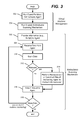
- FIG. 3 is a flow diagram representing example steps for implementing a shared antimalware scanning mechanism in a virtual machine environment.
- FIG. 4 is a flow diagram representing example steps for scanning a guest partition in an offline state.
- FIG. 5 is a block diagram representing exemplary non-limiting networked environments in which various embodiments described herein can be implemented.
- FIG. 6 is a block diagram representing an exemplary non-limiting computing system or operating environment in which one or more aspects of various embodiments described herein can be implemented.
- the antimalware software is divided into separate components, including a lightweight agent, a shared scanning and signature update component, and a management component.
- An agent runs on supported guest partitions and provides real-time and online operating system interaction services.
- the scanning and signature update component which may reside on a separate guest partition or the root partition, is configured to be used by each of the other guest agents.
- the management component provides centralized reporting and access to virtual machine services, and, for example, may reside on the root partition.
- the technology described herein provides centralized anti-malware capabilities for multiple guest virtual machines in a virtual machine environment via the shared scanning component. This facilitates real-time antimalware protection by directing scan requests to the shared scanning component, including possibly on-demand scans and remediation on guest partitions, e.g., through the use of simple scripts provided by shared scanning component.
- the management component by running on the root partition, provides pause/resume/snapshot/rollback and inspection services for the scanning component. This facilitates on-demand scans and remediation on guest partitions by the scanning component without the direct cooperation of the guest agent (e.g., if the guest agent is compromised or unavailable), while the guest partitions are paused via the management component, or while the guest is not running (offline), which may be used to detect malware that has stealth or protection capabilities from the perspective of the guest agent.
- any of the examples herein are non-limiting.
- security evaluation of other content such as for network intrusion protection, data leakage, guest verification and so forth may benefit from the technology described herein.
- the present invention is not limited to any particular embodiments, aspects, concepts, structures, functionalities or examples described herein. Rather, any of the embodiments, aspects, concepts, structures, functionalities or examples described herein are non-limiting, and the present invention may be used various ways that provide benefits and advantages in virtual computing and/or protection against malware in general.
- FIG. 1 shows example components of a computer system 102 configured with virtual machine distributed antimalware.
- the components in this exemplified implementation include a scanning mechanism 104 (comprising one or more antimalware components) residing in a dedicated scanning guest partition 106 , and an antimalware management component 108 (which may be interfaced with via a local or remote management console 109 ) as part of guest management services 110 on a root partition 112 .
- FIG. 1 is only a non-limiting example of a possible deployment, and others are feasible, including the example deployment represented in FIG. 2 .
- the root partition 112 comprises a running operating system environment from which the state of other virtual machine guest partitions 106 and 114 1 - 114 m may be controlled.
- Each guest partition 106 and 114 1 - 114 m corresponds to any virtual machine or machine partition that is not the root partition 112 .
- Each guest partition 114 1 - 114 m for which real-time antimalware support is provided includes a respective guest agent 116 1 - 116 m , comprising software that provides real-time protection services for that guest partition, possibly along with other services.
- Each guest agent 116 1 - 116 m is specific to the operating system being run on its respective guest partition 114 1 - 114 m . Note that although not shown in FIG. 1 , the guest partition 106 containing the antimalware scanning mechanism 104 also may include such a guest agent.
- a “privileged” protection component e.g., running inside the root partition or a dedicated security virtual machine
- Each guest agent (e.g., 116 1 ) provides real-time system monitoring with the capability to detect and block access to objects. To this end, the guest agent 116 1 communicates bi-directionally (e.g., at high speed) with the scanning guest partition 106 . Note that any communication mechanism is feasible, such as through the root partition, through a simulated network interface and so forth; however in one implementation communication is over a high-speed bus or shared memory block that exists between the partitions. Any guest agent (e.g., 116 1 ) may be configured with a user interface, such as if guest partitions are often used interactively. Such a user interface may provide an interactive user of the guest visibility into the current security state of the guest, or allow an interactive user to request that the antimalware component begin a specific on-demand scan.
- Each guest agent such as the agent 116 1 may be (optionally) configured with the ability to run simple scripts, e.g., provided by the scanning guest partition 106 over a suitable bi-directional communication mechanism as generally described herein. Configuring the agents with the ability to run scripts avoids the need for the agent to be coded with its own logic with respect to making decisions on what to scan, what to do when malware is detected, and the like.
- a script may request that the agent feed its files or some subset thereof to the antimalware scanning mechanism 104 , which scans them, may perform some needed remediation such as to clean a file, and may return results of the scanning/remediation to the agent, including a script with actions to take, e.g., files to delete or quarantine.
- Such scripts may include the ability to touch resources (e.g., triggering real-time transport protocol capabilities), and also to modify or terminate/delete resources.
- the antimalware scanning mechanism 104 performs scanning, remediation, signature update operations, and in general enforces antimalware aspects of security policy with the cooperation of the guest agent and/or the management components.
- the antimalware scanning mechanism 104 provides antimalware scanning as a service to the guest agents 116 1 - 116 m .
- the antimalware scanning mechanism 104 also may initiate scanning or remedial actions against a guest partition, such as cooperatively using services of the guest agent, or alternatively without the guest partition's knowledge or consent, (e.g., while the guest partition is paused/offline), through the support of the management component 108 .
- the antimalware scanning mechanism 104 communicates bi-directionally with the guest agents 116 1 - 116 m , including in one implementation to identify any malware in content transmitted from the guest partitions.
- each agent feeds data such as an object set (comprising one or more objects such as files, registry data, processes or the like) to the antimalware scanning mechanism 104 , which then evaluates the data against antimalware signatures, and returns a result, possibly taking a remedial action (e.g., cleaning the object) and/or including scripted instructions for the agent to take a remedial action (e.g., remove a file or quarantine a file), such as via a script.
- a remedial action e.g., cleaning the object
- scripted instructions for the agent e.g., remove a file or quarantine a file
- the antimalware scanning mechanism 104 may provide the guest agent with a subset of signatures to look for with respect to a given file or file type, whereby the guest agent can handle scanning or remediation itself in the event such a file is encountered. This may be via a script, and/or possibly to some extent by coding basic scanning functionality into the agent.
- Another benefit of the shared scanning mechanism 104 is that signatures as well as other scanning components may be updated, without experiencing significant scanning downtime. Further, information may be uploaded to a remote location, such as data, reports and sample object submission for subsequent analysis and so forth.
- This aspect of the shared scanning mechanism 104 is represented in FIG. 1 via signatures/telemetry/cloud service 118 . Note that the other guest partitions 114 1 - 114 m need not have access to the internet, for example, yet still benefit from the update and telemetry access of the shared guest partition 106 .
- the remote access capabilities of the antimalware scanning mechanism 104 may include communicating with a shared “cloud scanning” service for a decision (infected or clean) on suspicious content not yet matched by signatures.
- the antimalware scanning mechanism 104 may make such queries on behalf of multiple guests, such that guests get the benefit of the cloud service without needing Internet access directly.
- the antimalware scanning mechanism 104 may cache the results, so that it only has to make one request to the cloud service even if multiple guests are seeing the same suspicious content.
- the antimalware scanning mechanism 104 also has a communication link with the antimalware management component 108 . As described above, this provides the antimalware scanning mechanism 104 with the ability to integrate antimalware scanning with virtual machine management capabilities. For example, the antimalware scanning mechanism 104 may request that the management component 108 pause a guest partition, thereby providing the scanning mechanism 104 with the ability to scan a guest partition (or a snapshot thereof) offline, and/or with the ability to manipulate offline guest partition (or a snapshot thereof) to remove malware. Offline scanning may be performed if a serious problem is detected, that is, reactively, such as if the guest has crashed, or if an operating system file that cannot be cleaned is infected, but cannot be replaced online because the file is needed to run the operating system.
- Offline scanning also may be performed proactively, e.g., before staring a guest partition; if a partition is known to be free of infections at startup, but then becomes infected while running, a rapid diagnosis may be made.
- This integration capability also provides the ability to perform scans and remediation on guests not supported by a guest agent.
- the management component 108 thus comprises a component with access to the virtual machine management services 110 .
- the management component 108 is part of the virtual machine management services 110 , and communicates with the scanning mechanism 104 , but not with the individual guests agents 116 1 - 116 m .
- the management component 108 may monitor the scanning component's heartbeat, such that if the scanning component and/or scanning partition become unresponsive, the management component 108 may restart the scanning component or scanning partition, and/or raise an alert.
- some malware actively tries to disable antimalware protection, and having a shared scanning service monitoring the guests helps in making the agents running in the guests tamper-resistant.
- management component 108 is able to act as a centralized collection point and intermediary for communication to and from the security management console 109 .
- the management component 108 may provide the scanning partition 106 with the online ability to manipulate guest partitions, including the ability to stop an infected guest, or revert a guest partition to a snapshot.
- the management component 108 may provide the scanning mechanism 104 with the ability to manipulate a guest partition offline.
- the management component 108 has access to the virtual machine management services 110 , along with the ability to coordinate with the scanning mechanism 104 , and the ability to report (and potentially be reconfigured) by any central security management services, the management component 108 is a distinct component from virtual machine management, antimalware management, and the scanning mechanism 104 .
- the management component 108 need not even be on the same computer system as these components, as long as they can communicate, e.g., over network connections.
- deploying the management component 108 on the root partition 112 (as exemplified in FIG. 1 ) generally reduces the latency of communication with the scanning partition 106 and the virtual machine management services 110 .
- the scanning mechanism 104 may reside in the dedicated scanning guest partition 106 ; (note that “dedicated” as used herein refers to having resources reserved for scanning functionality, and does not mean that such a partition cannot also be used for other purposes).
- This implementation provides a security boundary between the antimalware scanning mechanism 104 (whose components are often targeted by security vulnerabilities) and the root partition 112 .
- multiple scanning partitions can be used, such as for failover capabilities, e.g., if one scanning partition fails, another one may quickly resume and take its place.
- Load balancing and/or workload distribution is another possible use of multiple scanning partitions, e.g., in the event that a single scanning partition is not able to meet scanning demands.
- a scanning component 204 (or more than one) may be deployed in the root partition 212 .
- This has the potential for significant optimization, saving the overhead of an entire guest partition/operating system, while providing direct access to management components and stored guest partition state.
- this requires the scanning component to be available for the operating system deployed on the root partition 212 , and reduces the protection of the root partition 212 from potential exploits from content found in guest partitions.
- FIG. 3 shows example steps that may be taken to provide malware protection using the above-described components.
- Steps 302 and 304 represent running the guest partition and an antimalware agent, and running the shared antimalware scanning mechanism, respectively; note that while only one agent is shown, it is understood that similar steps are performed with each other of the plurality of agents that are run. Further note that steps 302 and 304 are performed by virtual machine management in an implementation as in FIG. 1 , however step 304 may be performed by other root partition software in an implementation as in FIG. 2 where the shared antimalware scanning mechanism is not run in a guest partition.
- Steps 306 - 318 represent example actions performed by and from the perspective of the antimalware scanning mechanism, in which the agent relies on the antimalware scanning mechanism for the scan.
- Step 306 represents providing information such as a script to the agent.
- the script may identify what files, folders, or other operating system resources to provide for scanning, what file types to provide, and so forth.
- the information may be an instruction or the like informing the agent that scanning is turned on, and that the agent is to provide each appropriate object to the antimalware scanning mechanism for real time scanning.
- Step 308 represents the agent providing data such as an object set (e.g., one or more files, registry data or other data blobs) to the antimalware scanning mechanism, which receives it for scanning, as represented by step 310 .
- step 312 takes action with respect to that data as represented by step 314 .
- this may be by performing remediation in the antimalware scanning mechanism, e.g., cleaning data before returning it, and/or constructing a result that instructs the agent to take some remediation action (e.g., remove a file, quarantine a file, write a cleaned file back).
- malware cannot be cleaned from a compromised virtual machine.
- human operator intervention is needed, usually by reinstalling a machine.
- a management component can automatically (possibly after asking for administrator approval) restore the virtual machine to a previous known good snapshot, or by rebuilding a virtual machine image.
- Step 316 returns the result to the agent, which may include a script of one or more actions for the agent to perform, and/or a request for the next set of data.
- Step 318 represents ending the scanning process if the scan is complete, or continuing the scanning process if more scanning is needed, either because there is at least one more set of data to scan, or because the scan is a real time monitoring operation, which continues indefinitely by waiting for the next set of data.
- FIG. 4 is an example of offline scanning of a guest partition, beginning at step 402 where the management component 108 receives a request (e.g., from the antimalware scanning mechanism 104 ) to move the guest partition into an offline state (step 404 ).
- Steps 406 - 412 represent example actions performed by and from the perspective of the antimalware scanning mechanism 104 . If during the scan (step 406 ) malware is encountered at step 408 , remediation is performed at step 410 .
- the agent is offline, and thus cannot participate in remediation, which may include cleaning, removing or quarantining a file, as well as possibly replacing a corrupted operating system file that cannot be replaced while in an online state.
- step 410 represents saving the results of the malware remediation, for analysis purposes, for informing the guest partition what occurred, to upload telemetry data, and so forth.
- Step 412 repeats the scanning until it is complete, e.g., all appropriate file system files have been scanned, for example.
- steps 414 and 416 are performed by the management component 108 to restore the guest partition to an online state. e.g., as requested by the antimalware scanning mechanism 104 .
- the various embodiments and methods described herein can be implemented in connection with any computer or other client or server device, which can be deployed as part of a computer network or in a distributed computing environment, and can be connected to any kind of data store or stores.
- the various embodiments described herein can be implemented in any computer system or environment having any number of memory or storage units, and any number of applications and processes occurring across any number of storage units. This includes, but is not limited to, an environment with server computers and client computers deployed in a network environment or a distributed computing environment, having remote or local storage.
- Distributed computing provides sharing of computer resources and services by communicative exchange among computing devices and systems. These resources and services include the exchange of information, cache storage and disk storage for objects, such as files. These resources and services also include the sharing of processing power across multiple processing units for load balancing, expansion of resources, specialization of processing, and the like. Distributed computing takes advantage of network connectivity, allowing clients to leverage their collective power to benefit the entire enterprise. In this regard, a variety of devices may have applications, objects or resources that may participate in the resource management mechanisms as described for various embodiments of the subject disclosure.
- FIG. 5 provides a schematic diagram of an exemplary networked or distributed computing environment.
- the distributed computing environment comprises computing objects 510 , 512 , etc., and computing objects or devices 520 , 522 , 524 , 526 , 528 , etc., which may include programs, methods, data stores, programmable logic, etc. as represented by example applications 530 , 532 , 534 , 536 , 538 .
- computing objects 510 , 512 , etc. and computing objects or devices 520 , 522 , 524 , 526 , 528 , etc. may comprise different devices, such as personal digital assistants (PDAs), audio/video devices, mobile phones, MP3 players, personal computers, laptops, etc.
- PDAs personal digital assistants
- Each computing object 510 , 512 , etc. and computing objects or devices 520 , 522 , 524 , 526 , 528 , etc. can communicate with one or more other computing objects 510 , 512 , etc. and computing objects or devices 520 , 522 , 524 , 526 , 528 , etc. by way of the communications network 540 , either directly or indirectly.
- communications network 540 may comprise other computing objects and computing devices that provide services to the system of FIG. 5 , and/or may represent multiple interconnected networks, which are not shown.
- computing object or device 520 , 522 , 524 , 526 , 528 , etc. can also contain an application, such as applications 530 , 532 , 534 , 536 , 538 , that might make use of an API, or other object, software, firmware and/or hardware, suitable for communication with or implementation of the application provided in accordance with various embodiments of the subject disclosure.
- applications 530 , 532 , 534 , 536 , 538 that might make use of an API, or other object, software, firmware and/or hardware, suitable for communication with or implementation of the application provided in accordance with various embodiments of the subject disclosure.
- computing systems can be connected together by wired or wireless systems, by local networks or widely distributed networks.
- networks are coupled to the Internet, which provides an infrastructure for widely distributed computing and encompasses many different networks, though any network infrastructure can be used for exemplary communications made incident to the systems as described in various embodiments.
- client is a member of a class or group that uses the services of another class or group to which it is not related.
- a client can be a process, e.g., roughly a set of instructions or tasks, that requests a service provided by another program or process.
- the client process utilizes the requested service without having to “know” any working details about the other program or the service itself.
- a client is usually a computer that accesses shared network resources provided by another computer, e.g., a server.
- a server e.g., a server
- computing objects or devices 520 , 522 , 524 , 526 , 528 , etc. can be thought of as clients and computing objects 510 , 512 , etc.
- computing objects 510 , 512 , etc. acting as servers provide data services, such as receiving data from client computing objects or devices 520 , 522 , 524 , 526 , 528 , etc., storing of data, processing of data, transmitting data to client computing objects or devices 520 , 522 , 524 , 526 , 528 , etc., although any computer can be considered a client, a server, or both, depending on the circumstances.
- a server is typically a remote computer system accessible over a remote or local network, such as the Internet or wireless network infrastructures.
- the client process may be active in a first computer system, and the server process may be active in a second computer system, communicating with one another over a communications medium, thus providing distributed functionality and allowing multiple clients to take advantage of the information-gathering capabilities of the server.
- the computing objects 510 , 512 , etc. can be Web servers with which other computing objects or devices 520 , 522 , 524 , 526 , 528 , etc. communicate via any of a number of known protocols, such as the hypertext transfer protocol (HTTP).
- HTTP hypertext transfer protocol
- Computing objects 510 , 512 , etc. acting as servers may also serve as clients, e.g., computing objects or devices 520 , 522 , 524 , 526 , 528 , etc., as may be characteristic of a distributed computing environment.
- the techniques described herein can be applied to any device. It can be understood, therefore, that handheld, portable and other computing devices and computing objects of all kinds are contemplated for use in connection with the various embodiments. Accordingly, the below general purpose remote computer described below in FIG. 6 is but one example of a computing device.
- Embodiments can partly be implemented via an operating system, for use by a developer of services for a device or object, and/or included within application software that operates to perform one or more functional aspects of the various embodiments described herein.
- Software may be described in the general context of computer executable instructions, such as program modules, being executed by one or more computers, such as client workstations, servers or other devices.
- computers such as client workstations, servers or other devices.
- client workstations such as client workstations, servers or other devices.
- FIG. 6 thus illustrates an example of a suitable computing system environment 600 in which one or aspects of the embodiments described herein can be implemented, although as made clear above, the computing system environment 600 is only one example of a suitable computing environment and is not intended to suggest any limitation as to scope of use or functionality. In addition, the computing system environment 600 is not intended to be interpreted as having any dependency relating to any one or combination of components illustrated in the exemplary computing system environment 600 .
- an exemplary remote device for implementing one or more embodiments includes a general purpose computing device in the form of a computer 610 .
- Components of computer 610 may include, but are not limited to, a processing unit 620 , a system memory 630 , and a system bus 622 that couples various system components including the system memory to the processing unit 620 .
- Computer 610 typically includes a variety of computer readable media and can be any available media that can be accessed by computer 610 .
- the system memory 630 may include computer storage media in the form of volatile and/or nonvolatile memory such as read only memory (ROM) and/or random access memory (RAM).
- ROM read only memory
- RAM random access memory
- system memory 630 may also include an operating system, application programs, other program modules, and program data.
- a user can enter commands and information into the computer 610 through input devices 640 .
- a monitor or other type of display device is also connected to the system bus 622 via an interface, such as output interface 650 .
- computers can also include other peripheral output devices such as speakers and a printer, which may be connected through output interface 650 .
- the computer 610 may operate in a networked or distributed environment using logical connections to one or more other remote computers, such as remote computer 670 .
- the remote computer 670 may be a personal computer, a server, a router, a network PC, a peer device or other common network node, or any other remote media consumption or transmission device, and may include any or all of the elements described above relative to the computer 610 .
- the logical connections depicted in FIG. 6 include a network 672 , such local area network (LAN) or a wide area network (WAN), but may also include other networks/buses.
- LAN local area network
- WAN wide area network
- Such networking environments are commonplace in homes, offices, enterprise-wide computer networks, intranets and the Internet.
- an appropriate API e.g., an appropriate API, tool kit, driver code, operating system, control, standalone or downloadable software object, etc. which enables applications and services to take advantage of the techniques provided herein.
- embodiments herein are contemplated from the standpoint of an API (or other software object), as well as from a software or hardware object that implements one or more embodiments as described herein.
- various embodiments described herein can have aspects that are wholly in hardware, partly in hardware and partly in software, as well as in software.
- exemplary is used herein to mean serving as an example, instance, or illustration.
- the subject matter disclosed herein is not limited by such examples.
- any aspect or design described herein as “exemplary” is not necessarily to be construed as preferred or advantageous over other aspects or designs, nor is it meant to preclude equivalent exemplary structures and techniques known to those of ordinary skill in the art.
- the terms “includes,” “has,” “contains,” and other similar words are used, for the avoidance of doubt, such terms are intended to be inclusive in a manner similar to the term “comprising” as an open transition word without precluding any additional or other elements when employed in a claim.
- a component may be, but is not limited to being, a process running on a processor, a processor, an object, an executable, a thread of execution, a program, and/or a computer.
- a component may be, but is not limited to being, a process running on a processor, a processor, an object, an executable, a thread of execution, a program, and/or a computer.
- an application running on computer and the computer can be a component.
- One or more components may reside within a process and/or thread of execution and a component may be localized on one computer and/or distributed between two or more computers.
Landscapes
- Engineering & Computer Science (AREA)
- Software Systems (AREA)
- Theoretical Computer Science (AREA)
- Computer Security & Cryptography (AREA)
- General Engineering & Computer Science (AREA)
- Computer Hardware Design (AREA)
- General Physics & Mathematics (AREA)
- Health & Medical Sciences (AREA)
- Virology (AREA)
- Physics & Mathematics (AREA)
- General Health & Medical Sciences (AREA)
- Debugging And Monitoring (AREA)
- Multi Processors (AREA)
- Stored Programmes (AREA)
Priority Applications (7)
| Application Number | Priority Date | Filing Date | Title |
|---|---|---|---|
| US12/961,854 US20120144489A1 (en) | 2010-12-07 | 2010-12-07 | Antimalware Protection of Virtual Machines |
| EP11847224.0A EP2649548B1 (en) | 2010-12-07 | 2011-12-06 | Antimalware protection of virtual machines |
| JP2013543292A JP2013545208A (ja) | 2010-12-07 | 2011-12-06 | 仮想マシンのアンチ・マルウェア保護 |
| CA2817245A CA2817245A1 (en) | 2010-12-07 | 2011-12-06 | Antimalware protection of virtual machines |
| PCT/US2011/063615 WO2012078690A1 (en) | 2010-12-07 | 2011-12-06 | Antimalware protection of virtual machines |
| AU2011338482A AU2011338482B2 (en) | 2010-12-07 | 2011-12-06 | Antimalware protection of virtual machines |
| CN2011104304337A CN102542207A (zh) | 2010-12-07 | 2011-12-07 | 虚拟机的反恶意软件保护 |
Applications Claiming Priority (1)
| Application Number | Priority Date | Filing Date | Title |
|---|---|---|---|
| US12/961,854 US20120144489A1 (en) | 2010-12-07 | 2010-12-07 | Antimalware Protection of Virtual Machines |
Publications (1)
| Publication Number | Publication Date |
|---|---|
| US20120144489A1 true US20120144489A1 (en) | 2012-06-07 |
Family
ID=46163556
Family Applications (1)
| Application Number | Title | Priority Date | Filing Date |
|---|---|---|---|
| US12/961,854 Abandoned US20120144489A1 (en) | 2010-12-07 | 2010-12-07 | Antimalware Protection of Virtual Machines |
Country Status (7)
| Country | Link |
|---|---|
| US (1) | US20120144489A1 (enExample) |
| EP (1) | EP2649548B1 (enExample) |
| JP (1) | JP2013545208A (enExample) |
| CN (1) | CN102542207A (enExample) |
| AU (1) | AU2011338482B2 (enExample) |
| CA (1) | CA2817245A1 (enExample) |
| WO (1) | WO2012078690A1 (enExample) |
Cited By (47)
| Publication number | Priority date | Publication date | Assignee | Title |
|---|---|---|---|---|
| US20130097603A1 (en) * | 2011-04-27 | 2013-04-18 | Katsushige Amano | Virtual computer system, virtual computer control method, virtual computer control program, and semiconductor integrated circuit |
| US20140101771A1 (en) * | 2012-10-10 | 2014-04-10 | Honeywell International Inc. | Field device having tamper attempt reporting |
| WO2014078603A1 (en) * | 2012-11-15 | 2014-05-22 | Microsoft Corporation | Dynamic selection and loading of anti-malware signatures |
| WO2014116215A1 (en) * | 2013-01-23 | 2014-07-31 | Hewlett-Packard Development Company, L.P. | Shared resource contention |
| US20140283077A1 (en) * | 2013-03-15 | 2014-09-18 | Ron Gallella | Peer-aware self-regulation for virtualized environments |
| US20140330772A1 (en) * | 2012-01-03 | 2014-11-06 | Yext, Inc. | Providing enhanced business listings with structured lists to multiple search providers from a source system |
| US8990946B1 (en) | 2014-04-18 | 2015-03-24 | Kaspersky Lab Zao | System and methods of distributing antivirus checking tasks among virtual machines in a virtual network |
| US9009836B1 (en) * | 2014-07-17 | 2015-04-14 | Kaspersky Lab Zao | Security architecture for virtual machines |
| US9088618B1 (en) * | 2014-04-18 | 2015-07-21 | Kaspersky Lab Zao | System and methods for ensuring fault tolerance of antivirus protection realized in a virtual environment |
| US9104455B2 (en) | 2013-02-19 | 2015-08-11 | International Business Machines Corporation | Virtual machine-to-image affinity on a physical server |
| US20150288768A1 (en) * | 2013-10-28 | 2015-10-08 | Citrix Systems, Inc. | Systems and methods for managing a guest virtual machine executing within a virtualized environment |
| US9182974B1 (en) | 2014-04-18 | 2015-11-10 | AO Kaspersky Lab | System and methods for updating software of templates of virtual machines |
| US9203862B1 (en) * | 2012-07-03 | 2015-12-01 | Bromium, Inc. | Centralized storage and management of malware manifests |
| US20150381651A1 (en) * | 2014-06-30 | 2015-12-31 | Intuit Inc. | Method and system for secure delivery of information to computing environments |
| US9258324B2 (en) | 2013-11-26 | 2016-02-09 | At&T Intellectual Property I, L.P. | Methods, systems, and computer program products for protecting a communication network against internet enabled cyber attacks through use of screen replication from controlled internet access points |
| CN105631320A (zh) * | 2015-12-18 | 2016-06-01 | 北京奇虎科技有限公司 | 虚拟机逃逸的检测方法及装置 |
| US20160335110A1 (en) * | 2015-03-31 | 2016-11-17 | Fireeye, Inc. | Selective virtualization for security threat detection |
| US9565202B1 (en) * | 2013-03-13 | 2017-02-07 | Fireeye, Inc. | System and method for detecting exfiltration content |
| US9665714B1 (en) | 2016-05-31 | 2017-05-30 | AO Kaspersky Lab | System and method of detecting malicious files on virtual machines in a distributed network |
| US20170180318A1 (en) * | 2015-12-19 | 2017-06-22 | Bitdefender IPR Management Ltd. | Dual Memory Introspection for Securing Multiple Network Endpoints |
| US9923909B2 (en) | 2014-02-03 | 2018-03-20 | Intuit Inc. | System and method for providing a self-monitoring, self-reporting, and self-repairing virtual asset configured for extrusion and intrusion detection and threat scoring in a cloud computing environment |
| US9977894B2 (en) | 2015-11-18 | 2018-05-22 | Red Hat, Inc. | Virtual machine malware scanning |
| US10033759B1 (en) | 2015-09-28 | 2018-07-24 | Fireeye, Inc. | System and method of threat detection under hypervisor control |
| EP3361406A1 (en) * | 2017-02-08 | 2018-08-15 | AO Kaspersky Lab | System and method of analysis of files for maliciousness in a virtual machine |
| KR101901911B1 (ko) | 2013-05-21 | 2018-09-27 | 삼성전자주식회사 | 악성 프로그램을 탐지하는 방법 및 장치 |
| US10102082B2 (en) | 2014-07-31 | 2018-10-16 | Intuit Inc. | Method and system for providing automated self-healing virtual assets |
| US10178073B2 (en) * | 2015-02-20 | 2019-01-08 | Toucanh Llc | Method to split data operational function among system layers |
| US10216927B1 (en) | 2015-06-30 | 2019-02-26 | Fireeye, Inc. | System and method for protecting memory pages associated with a process using a virtualization layer |
| US10339301B2 (en) | 2017-02-08 | 2019-07-02 | AO Kaspersky Lab | System and method of analysis of files for maliciousness in a virtual machine |
| US10389747B2 (en) * | 2015-02-27 | 2019-08-20 | Hewlett-Packard Development Company, L.P. | Facilitating scanning of protected resources |
| US10395029B1 (en) | 2015-06-30 | 2019-08-27 | Fireeye, Inc. | Virtual system and method with threat protection |
| US10534918B1 (en) * | 2018-08-01 | 2020-01-14 | Vdoo Connected Trust Ltd. | Firmware verification |
| US10546118B1 (en) | 2011-05-25 | 2020-01-28 | Hewlett-Packard Development Company, L.P. | Using a profile to provide selective access to resources in performing file operations |
| US10642753B1 (en) | 2015-06-30 | 2020-05-05 | Fireeye, Inc. | System and method for protecting a software component running in virtual machine using a virtualization layer |
| US10726127B1 (en) | 2015-06-30 | 2020-07-28 | Fireeye, Inc. | System and method for protecting a software component running in a virtual machine through virtual interrupts by the virtualization layer |
| US10757133B2 (en) | 2014-02-21 | 2020-08-25 | Intuit Inc. | Method and system for creating and deploying virtual assets |
| US11075945B2 (en) * | 2013-09-30 | 2021-07-27 | Fireeye, Inc. | System, apparatus and method for reconfiguring virtual machines |
| US11079904B2 (en) | 2019-01-07 | 2021-08-03 | AppEsteem Corporation | Technologies for indicating third party content and resources |
| US11113086B1 (en) | 2015-06-30 | 2021-09-07 | Fireeye, Inc. | Virtual system and method for securing external network connectivity |
| WO2021245674A1 (en) * | 2020-06-03 | 2021-12-09 | KAZUAR Advanced Technologies Ltd. | Threat resistant multi-computing environment |
| US11294700B2 (en) | 2014-04-18 | 2022-04-05 | Intuit Inc. | Method and system for enabling self-monitoring virtual assets to correlate external events with characteristic patterns associated with the virtual assets |
| US20220345467A1 (en) * | 2021-04-21 | 2022-10-27 | Saudi Arabian Oil Company | Methods and systems for fast-paced dynamic malware analysis |
| US11487536B2 (en) | 2016-12-20 | 2022-11-01 | Aveva Software, Llc | System for automating user-defined actions for applications executed using virtual machines in a guest system |
| US20220413711A1 (en) * | 2021-06-23 | 2022-12-29 | Western Digital Technologies, Inc. | Secured firmware with anti-malware |
| US20230367877A1 (en) * | 2022-05-12 | 2023-11-16 | Vmware, Inc. | In-memory scanning for fileless malware on a host device |
| US12248560B2 (en) * | 2016-03-07 | 2025-03-11 | Crowdstrike, Inc. | Hypervisor-based redirection of system calls and interrupt-based task offloading |
| US12339979B2 (en) | 2016-03-07 | 2025-06-24 | Crowdstrike, Inc. | Hypervisor-based interception of memory and register accesses |
Families Citing this family (5)
| Publication number | Priority date | Publication date | Assignee | Title |
|---|---|---|---|---|
| CN103634366A (zh) * | 2012-08-27 | 2014-03-12 | 北京千橡网景科技发展有限公司 | 用于识别网络机器人的方法和设备 |
| US9571507B2 (en) | 2012-10-21 | 2017-02-14 | Mcafee, Inc. | Providing a virtual security appliance architecture to a virtual cloud infrastructure |
| US9652612B2 (en) * | 2015-03-25 | 2017-05-16 | International Business Machines Corporation | Security within a software-defined infrastructure |
| CN105844162B (zh) * | 2016-04-08 | 2019-03-29 | 北京北信源软件股份有限公司 | 一种虚拟化平台下windows虚拟机漏洞扫描的方法 |
| CN116150797B (zh) * | 2023-04-21 | 2023-08-01 | 深圳市科力锐科技有限公司 | 数据保护方法、系统、设备及存储介质 |
Citations (15)
| Publication number | Priority date | Publication date | Assignee | Title |
|---|---|---|---|---|
| US20060136720A1 (en) * | 2004-12-21 | 2006-06-22 | Microsoft Corporation | Computer security management, such as in a virtual machine or hardened operating system |
| US20060224930A1 (en) * | 2005-03-31 | 2006-10-05 | Ibm Corporation | Systems and methods for event detection |
| US20060236127A1 (en) * | 2005-04-01 | 2006-10-19 | Kurien Thekkthalackal V | Local secure service partitions for operating system security |
| US20080155208A1 (en) * | 2006-12-21 | 2008-06-26 | Hiltgen Daniel K | Securing Virtual Machine Data |
| US20080155223A1 (en) * | 2006-12-21 | 2008-06-26 | Hiltgen Daniel K | Storage Architecture for Virtual Machines |
| US20080155169A1 (en) * | 2006-12-21 | 2008-06-26 | Hiltgen Daniel K | Implementation of Virtual Machine Operations Using Storage System Functionality |
| US20080184373A1 (en) * | 2007-01-25 | 2008-07-31 | Microsoft Corporation | Protection Agents and Privilege Modes |
| US20080183996A1 (en) * | 2007-01-25 | 2008-07-31 | Microsoft Corporation | Protecting Operating-System Resources |
| US20080263658A1 (en) * | 2007-04-17 | 2008-10-23 | Microsoft Corporation | Using antimalware technologies to perform offline scanning of virtual machine images |
| US20080320594A1 (en) * | 2007-03-19 | 2008-12-25 | Xuxian Jiang | Malware Detector |
| US20080320127A1 (en) * | 2007-06-25 | 2008-12-25 | Microsoft Corporation | Secure publishing of data to dmz using virtual hard drives |
| US20090007100A1 (en) * | 2007-06-28 | 2009-01-01 | Microsoft Corporation | Suspending a Running Operating System to Enable Security Scanning |
| US20090158432A1 (en) * | 2007-12-12 | 2009-06-18 | Yufeng Zheng | On-Access Anti-Virus Mechanism for Virtual Machine Architecture |
| US20100058432A1 (en) * | 2008-08-28 | 2010-03-04 | Microsoft Corporation | Protecting a virtual guest machine from attacks by an infected host |
| US20110047618A1 (en) * | 2006-10-18 | 2011-02-24 | University Of Virginia Patent Foundation | Method, System, and Computer Program Product for Malware Detection, Analysis, and Response |
Family Cites Families (6)
| Publication number | Priority date | Publication date | Assignee | Title |
|---|---|---|---|---|
| US20060224623A1 (en) * | 2005-04-02 | 2006-10-05 | Microsoft Corporation | Computer status monitoring and support |
| CN101039177A (zh) * | 2007-04-27 | 2007-09-19 | 珠海金山软件股份有限公司 | 一种在线查毒的装置和方法 |
| US8839237B2 (en) * | 2007-12-31 | 2014-09-16 | Intel Corporation | Method and apparatus for tamper resistant communication in a virtualization enabled platform |
| JP2008152796A (ja) * | 2008-01-11 | 2008-07-03 | Nec Corp | データ複製システム、およびストレージ内のデータを複製するためのプログラム |
| JP5446167B2 (ja) * | 2008-08-13 | 2014-03-19 | 富士通株式会社 | ウイルス対策方法、コンピュータ、及びプログラム |
| US20100169972A1 (en) * | 2008-12-31 | 2010-07-01 | Microsoft Corporation | Shared repository of malware data |
-
2010
- 2010-12-07 US US12/961,854 patent/US20120144489A1/en not_active Abandoned
-
2011
- 2011-12-06 CA CA2817245A patent/CA2817245A1/en not_active Abandoned
- 2011-12-06 WO PCT/US2011/063615 patent/WO2012078690A1/en not_active Ceased
- 2011-12-06 AU AU2011338482A patent/AU2011338482B2/en not_active Ceased
- 2011-12-06 JP JP2013543292A patent/JP2013545208A/ja active Pending
- 2011-12-06 EP EP11847224.0A patent/EP2649548B1/en not_active Not-in-force
- 2011-12-07 CN CN2011104304337A patent/CN102542207A/zh active Pending
Patent Citations (16)
| Publication number | Priority date | Publication date | Assignee | Title |
|---|---|---|---|---|
| US20060136720A1 (en) * | 2004-12-21 | 2006-06-22 | Microsoft Corporation | Computer security management, such as in a virtual machine or hardened operating system |
| US20060224930A1 (en) * | 2005-03-31 | 2006-10-05 | Ibm Corporation | Systems and methods for event detection |
| US20060236127A1 (en) * | 2005-04-01 | 2006-10-19 | Kurien Thekkthalackal V | Local secure service partitions for operating system security |
| US20110047618A1 (en) * | 2006-10-18 | 2011-02-24 | University Of Virginia Patent Foundation | Method, System, and Computer Program Product for Malware Detection, Analysis, and Response |
| US20080155208A1 (en) * | 2006-12-21 | 2008-06-26 | Hiltgen Daniel K | Securing Virtual Machine Data |
| US20080155223A1 (en) * | 2006-12-21 | 2008-06-26 | Hiltgen Daniel K | Storage Architecture for Virtual Machines |
| US20080155169A1 (en) * | 2006-12-21 | 2008-06-26 | Hiltgen Daniel K | Implementation of Virtual Machine Operations Using Storage System Functionality |
| US20080184373A1 (en) * | 2007-01-25 | 2008-07-31 | Microsoft Corporation | Protection Agents and Privilege Modes |
| US20080183996A1 (en) * | 2007-01-25 | 2008-07-31 | Microsoft Corporation | Protecting Operating-System Resources |
| US20080320594A1 (en) * | 2007-03-19 | 2008-12-25 | Xuxian Jiang | Malware Detector |
| US20080263658A1 (en) * | 2007-04-17 | 2008-10-23 | Microsoft Corporation | Using antimalware technologies to perform offline scanning of virtual machine images |
| US8011010B2 (en) * | 2007-04-17 | 2011-08-30 | Microsoft Corporation | Using antimalware technologies to perform offline scanning of virtual machine images |
| US20080320127A1 (en) * | 2007-06-25 | 2008-12-25 | Microsoft Corporation | Secure publishing of data to dmz using virtual hard drives |
| US20090007100A1 (en) * | 2007-06-28 | 2009-01-01 | Microsoft Corporation | Suspending a Running Operating System to Enable Security Scanning |
| US20090158432A1 (en) * | 2007-12-12 | 2009-06-18 | Yufeng Zheng | On-Access Anti-Virus Mechanism for Virtual Machine Architecture |
| US20100058432A1 (en) * | 2008-08-28 | 2010-03-04 | Microsoft Corporation | Protecting a virtual guest machine from attacks by an infected host |
Cited By (88)
| Publication number | Priority date | Publication date | Assignee | Title |
|---|---|---|---|---|
| US20130097603A1 (en) * | 2011-04-27 | 2013-04-18 | Katsushige Amano | Virtual computer system, virtual computer control method, virtual computer control program, and semiconductor integrated circuit |
| US9460270B2 (en) * | 2011-04-27 | 2016-10-04 | Panasonic Intellectual Property Corporation Of America | Generating child virtual machine to execute authorized application with reduced risk of malware attack |
| US10546118B1 (en) | 2011-05-25 | 2020-01-28 | Hewlett-Packard Development Company, L.P. | Using a profile to provide selective access to resources in performing file operations |
| US9286359B2 (en) * | 2012-01-03 | 2016-03-15 | Yext, Inc. | Providing enhanced business listings with structured lists to multiple search providers from a source system |
| US20140330772A1 (en) * | 2012-01-03 | 2014-11-06 | Yext, Inc. | Providing enhanced business listings with structured lists to multiple search providers from a source system |
| US9203862B1 (en) * | 2012-07-03 | 2015-12-01 | Bromium, Inc. | Centralized storage and management of malware manifests |
| US9769199B2 (en) * | 2012-07-03 | 2017-09-19 | Bromium, Inc. | Centralized storage and management of malware manifests |
| US20160099951A1 (en) * | 2012-07-03 | 2016-04-07 | Bromium, Inc. | Centralized storage and management of malware manifests |
| US8984641B2 (en) * | 2012-10-10 | 2015-03-17 | Honeywell International Inc. | Field device having tamper attempt reporting |
| US20140101771A1 (en) * | 2012-10-10 | 2014-04-10 | Honeywell International Inc. | Field device having tamper attempt reporting |
| US8925085B2 (en) | 2012-11-15 | 2014-12-30 | Microsoft Corporation | Dynamic selection and loading of anti-malware signatures |
| WO2014078603A1 (en) * | 2012-11-15 | 2014-05-22 | Microsoft Corporation | Dynamic selection and loading of anti-malware signatures |
| US9954757B2 (en) | 2013-01-23 | 2018-04-24 | Hewlett Packard Enterprise Development Lp | Shared resource contention |
| WO2014116215A1 (en) * | 2013-01-23 | 2014-07-31 | Hewlett-Packard Development Company, L.P. | Shared resource contention |
| US9104455B2 (en) | 2013-02-19 | 2015-08-11 | International Business Machines Corporation | Virtual machine-to-image affinity on a physical server |
| US9104457B2 (en) | 2013-02-19 | 2015-08-11 | International Business Machines Corporation | Virtual machine-to-image affinity on a physical server |
| US9565202B1 (en) * | 2013-03-13 | 2017-02-07 | Fireeye, Inc. | System and method for detecting exfiltration content |
| US9934381B1 (en) | 2013-03-13 | 2018-04-03 | Fireeye, Inc. | System and method for detecting malicious activity based on at least one environmental property |
| US10467414B1 (en) * | 2013-03-13 | 2019-11-05 | Fireeye, Inc. | System and method for detecting exfiltration content |
| WO2014149623A1 (en) * | 2013-03-15 | 2014-09-25 | Mcafee, Inc. | Peer-aware self-regulation for virtualized environments |
| US9430647B2 (en) * | 2013-03-15 | 2016-08-30 | Mcafee, Inc. | Peer-aware self-regulation for virtualized environments |
| US20140283077A1 (en) * | 2013-03-15 | 2014-09-18 | Ron Gallella | Peer-aware self-regulation for virtualized environments |
| KR101901911B1 (ko) | 2013-05-21 | 2018-09-27 | 삼성전자주식회사 | 악성 프로그램을 탐지하는 방법 및 장치 |
| US11075945B2 (en) * | 2013-09-30 | 2021-07-27 | Fireeye, Inc. | System, apparatus and method for reconfiguring virtual machines |
| US20150288768A1 (en) * | 2013-10-28 | 2015-10-08 | Citrix Systems, Inc. | Systems and methods for managing a guest virtual machine executing within a virtualized environment |
| US10686885B2 (en) * | 2013-10-28 | 2020-06-16 | Citrix Systems, Inc. | Systems and methods for managing a guest virtual machine executing within a virtualized environment |
| US9258324B2 (en) | 2013-11-26 | 2016-02-09 | At&T Intellectual Property I, L.P. | Methods, systems, and computer program products for protecting a communication network against internet enabled cyber attacks through use of screen replication from controlled internet access points |
| US10530808B2 (en) | 2013-11-26 | 2020-01-07 | At&T Intellectual Property I, L.P. | Network protection from cyber attacks |
| US10360062B2 (en) | 2014-02-03 | 2019-07-23 | Intuit Inc. | System and method for providing a self-monitoring, self-reporting, and self-repairing virtual asset configured for extrusion and intrusion detection and threat scoring in a cloud computing environment |
| US9923909B2 (en) | 2014-02-03 | 2018-03-20 | Intuit Inc. | System and method for providing a self-monitoring, self-reporting, and self-repairing virtual asset configured for extrusion and intrusion detection and threat scoring in a cloud computing environment |
| US11411984B2 (en) | 2014-02-21 | 2022-08-09 | Intuit Inc. | Replacing a potentially threatening virtual asset |
| US10757133B2 (en) | 2014-02-21 | 2020-08-25 | Intuit Inc. | Method and system for creating and deploying virtual assets |
| US9239921B2 (en) | 2014-04-18 | 2016-01-19 | Kaspersky Lab Ao | System and methods of performing antivirus checking in a virtual environment using different antivirus checking techniques |
| US11294700B2 (en) | 2014-04-18 | 2022-04-05 | Intuit Inc. | Method and system for enabling self-monitoring virtual assets to correlate external events with characteristic patterns associated with the virtual assets |
| US9182974B1 (en) | 2014-04-18 | 2015-11-10 | AO Kaspersky Lab | System and methods for updating software of templates of virtual machines |
| EP2933747A1 (en) * | 2014-04-18 | 2015-10-21 | Kaspersky Lab, ZAO | System and methods of distributing antivirus checking tasks among virtual machines in a virtual network |
| EP2933748A1 (en) * | 2014-04-18 | 2015-10-21 | Kaspersky Lab, ZAO | System and methods for ensuring fault tolerance of antivirus protection realized in a virtual environment |
| US10055247B2 (en) | 2014-04-18 | 2018-08-21 | Intuit Inc. | Method and system for enabling self-monitoring virtual assets to correlate external events with characteristic patterns associated with the virtual assets |
| US9088618B1 (en) * | 2014-04-18 | 2015-07-21 | Kaspersky Lab Zao | System and methods for ensuring fault tolerance of antivirus protection realized in a virtual environment |
| US8990946B1 (en) | 2014-04-18 | 2015-03-24 | Kaspersky Lab Zao | System and methods of distributing antivirus checking tasks among virtual machines in a virtual network |
| EP3654582A1 (en) * | 2014-06-30 | 2020-05-20 | Intuit Inc. | Method and system for secure delivery of information to computing environments |
| EP3161999A4 (en) * | 2014-06-30 | 2018-02-14 | Intuit Inc. | Method and system for secure delivery of information to computing environments |
| US20150381651A1 (en) * | 2014-06-30 | 2015-12-31 | Intuit Inc. | Method and system for secure delivery of information to computing environments |
| US10050997B2 (en) | 2014-06-30 | 2018-08-14 | Intuit Inc. | Method and system for secure delivery of information to computing environments |
| US9866581B2 (en) * | 2014-06-30 | 2018-01-09 | Intuit Inc. | Method and system for secure delivery of information to computing environments |
| AU2015284527B2 (en) * | 2014-06-30 | 2019-03-14 | Intuit Inc. | Method and system for secure delivery of information to computing environments |
| US9009836B1 (en) * | 2014-07-17 | 2015-04-14 | Kaspersky Lab Zao | Security architecture for virtual machines |
| EP2975548A1 (en) * | 2014-07-17 | 2016-01-20 | Kaspersky Lab, ZAO | Customized extension of malware remediation capabilities of thin clients in virtual environments |
| DE202014011092U1 (de) | 2014-07-17 | 2017-10-19 | AO Kaspersky Lab | Sicherheitsarchitektur für virtuelle Maschinen |
| US10102082B2 (en) | 2014-07-31 | 2018-10-16 | Intuit Inc. | Method and system for providing automated self-healing virtual assets |
| US10178073B2 (en) * | 2015-02-20 | 2019-01-08 | Toucanh Llc | Method to split data operational function among system layers |
| US10389747B2 (en) * | 2015-02-27 | 2019-08-20 | Hewlett-Packard Development Company, L.P. | Facilitating scanning of protected resources |
| US10417031B2 (en) * | 2015-03-31 | 2019-09-17 | Fireeye, Inc. | Selective virtualization for security threat detection |
| US11294705B1 (en) * | 2015-03-31 | 2022-04-05 | Fireeye Security Holdings Us Llc | Selective virtualization for security threat detection |
| US20160335110A1 (en) * | 2015-03-31 | 2016-11-17 | Fireeye, Inc. | Selective virtualization for security threat detection |
| US11868795B1 (en) * | 2015-03-31 | 2024-01-09 | Musarubra Us Llc | Selective virtualization for security threat detection |
| US10642753B1 (en) | 2015-06-30 | 2020-05-05 | Fireeye, Inc. | System and method for protecting a software component running in virtual machine using a virtualization layer |
| US10216927B1 (en) | 2015-06-30 | 2019-02-26 | Fireeye, Inc. | System and method for protecting memory pages associated with a process using a virtualization layer |
| US10395029B1 (en) | 2015-06-30 | 2019-08-27 | Fireeye, Inc. | Virtual system and method with threat protection |
| US11113086B1 (en) | 2015-06-30 | 2021-09-07 | Fireeye, Inc. | Virtual system and method for securing external network connectivity |
| US10726127B1 (en) | 2015-06-30 | 2020-07-28 | Fireeye, Inc. | System and method for protecting a software component running in a virtual machine through virtual interrupts by the virtualization layer |
| US10033759B1 (en) | 2015-09-28 | 2018-07-24 | Fireeye, Inc. | System and method of threat detection under hypervisor control |
| US10402560B2 (en) | 2015-11-18 | 2019-09-03 | Red Hat, Inc. | Virtual machine malware scanning |
| US9977894B2 (en) | 2015-11-18 | 2018-05-22 | Red Hat, Inc. | Virtual machine malware scanning |
| CN105631320A (zh) * | 2015-12-18 | 2016-06-01 | 北京奇虎科技有限公司 | 虚拟机逃逸的检测方法及装置 |
| US10630643B2 (en) * | 2015-12-19 | 2020-04-21 | Bitdefender IPR Management Ltd. | Dual memory introspection for securing multiple network endpoints |
| US20170180318A1 (en) * | 2015-12-19 | 2017-06-22 | Bitdefender IPR Management Ltd. | Dual Memory Introspection for Securing Multiple Network Endpoints |
| US12339979B2 (en) | 2016-03-07 | 2025-06-24 | Crowdstrike, Inc. | Hypervisor-based interception of memory and register accesses |
| US12248560B2 (en) * | 2016-03-07 | 2025-03-11 | Crowdstrike, Inc. | Hypervisor-based redirection of system calls and interrupt-based task offloading |
| US9665714B1 (en) | 2016-05-31 | 2017-05-30 | AO Kaspersky Lab | System and method of detecting malicious files on virtual machines in a distributed network |
| JP2017215923A (ja) * | 2016-05-31 | 2017-12-07 | エーオー カスペルスキー ラボAO Kaspersky Lab | 分散ネットワークにおけるバーチャルマシン上の悪意のあるファイルを検出するシステム及び方法 |
| CN107454053A (zh) * | 2016-05-31 | 2017-12-08 | 卡巴斯基实验室股份制公司 | 在分布式网络中检测虚拟机上的恶意文件的系统和方法 |
| EP3252647A1 (en) * | 2016-05-31 | 2017-12-06 | AO Kaspersky Lab | System and method of detecting malicious files on a virtual machine in a distributed network |
| US11487536B2 (en) | 2016-12-20 | 2022-11-01 | Aveva Software, Llc | System for automating user-defined actions for applications executed using virtual machines in a guest system |
| US10339301B2 (en) | 2017-02-08 | 2019-07-02 | AO Kaspersky Lab | System and method of analysis of files for maliciousness in a virtual machine |
| EP3361406A1 (en) * | 2017-02-08 | 2018-08-15 | AO Kaspersky Lab | System and method of analysis of files for maliciousness in a virtual machine |
| US10642973B2 (en) * | 2017-02-08 | 2020-05-05 | AO Kaspersky Lab | System and method of analysis of files for maliciousness and determining an action |
| US10878106B2 (en) * | 2018-08-01 | 2020-12-29 | Vdoo Connected Trust Ltd. | Firmware verification |
| US10534918B1 (en) * | 2018-08-01 | 2020-01-14 | Vdoo Connected Trust Ltd. | Firmware verification |
| US11385766B2 (en) | 2019-01-07 | 2022-07-12 | AppEsteem Corporation | Technologies for indicating deceptive and trustworthy resources |
| US11079904B2 (en) | 2019-01-07 | 2021-08-03 | AppEsteem Corporation | Technologies for indicating third party content and resources |
| WO2021245674A1 (en) * | 2020-06-03 | 2021-12-09 | KAZUAR Advanced Technologies Ltd. | Threat resistant multi-computing environment |
| US20220345467A1 (en) * | 2021-04-21 | 2022-10-27 | Saudi Arabian Oil Company | Methods and systems for fast-paced dynamic malware analysis |
| US11930019B2 (en) * | 2021-04-21 | 2024-03-12 | Saudi Arabian Oil Company | Methods and systems for fast-paced dynamic malware analysis |
| US11954333B2 (en) * | 2021-06-23 | 2024-04-09 | Western Digital Technologies, Inc. | Secured firmware with anti-malware |
| US20220413711A1 (en) * | 2021-06-23 | 2022-12-29 | Western Digital Technologies, Inc. | Secured firmware with anti-malware |
| US12079339B2 (en) * | 2022-05-12 | 2024-09-03 | Vmware, Inc. | In-memory scanning for fileless malware on a host device |
| US20230367877A1 (en) * | 2022-05-12 | 2023-11-16 | Vmware, Inc. | In-memory scanning for fileless malware on a host device |
Also Published As
| Publication number | Publication date |
|---|---|
| CN102542207A (zh) | 2012-07-04 |
| AU2011338482A1 (en) | 2013-05-30 |
| CA2817245A1 (en) | 2012-06-14 |
| EP2649548A4 (en) | 2014-07-30 |
| JP2013545208A (ja) | 2013-12-19 |
| WO2012078690A1 (en) | 2012-06-14 |
| EP2649548A1 (en) | 2013-10-16 |
| EP2649548B1 (en) | 2018-08-08 |
| AU2011338482B2 (en) | 2016-11-03 |
Similar Documents
| Publication | Publication Date | Title |
|---|---|---|
| AU2011338482B2 (en) | Antimalware protection of virtual machines | |
| US11270015B2 (en) | Secure disk access control | |
| US8127412B2 (en) | Network context triggers for activating virtualized computer applications | |
| US11157300B2 (en) | Managing virtual machine security resources | |
| KR101535502B1 (ko) | 보안 내재형 가상 네트워크 제어 시스템 및 방법 | |
| US9213572B2 (en) | Interdependent virtual machine management | |
| US9473526B2 (en) | Fight-through nodes for survivable computer network | |
| US9594881B2 (en) | System and method for passive threat detection using virtual memory inspection | |
| US9769250B2 (en) | Fight-through nodes with disposable virtual machines and rollback of persistent state | |
| US8640238B2 (en) | Fight-through nodes for survivable computer network | |
| US11558265B1 (en) | Telemetry targeted query injection for enhanced debugging in microservices architectures | |
| US9021008B1 (en) | Managing targeted scripts | |
| US11588847B2 (en) | Automated seamless recovery | |
| US9734191B2 (en) | Asynchronous image repository functionality | |
| CN113656241B (zh) | 一种容器终端全生命周期管控系统及方法 | |
| GB2548147A (en) | Self-propagating cloud-aware distributed agents for benign cloud exploitation | |
| Xu et al. | Antivirus in the Network Cloud | |
| HK1176186A (en) | Virtual switch interceptor | |
| HK1176186B (en) | Virtual switch interceptor |
Legal Events
| Date | Code | Title | Description |
|---|---|---|---|
| AS | Assignment |
Owner name: MICROSOFT CORPORATION, WASHINGTON Free format text: ASSIGNMENT OF ASSIGNORS INTEREST;ASSIGNORS:JARRETT, MICHAEL SEAN;JOHNSON, JOSEPH JARED;KAPOOR, VISHAL;AND OTHERS;SIGNING DATES FROM 20101130 TO 20101207;REEL/FRAME:025462/0564 |
|
| AS | Assignment |
Owner name: MICROSOFT TECHNOLOGY LICENSING, LLC, WASHINGTON Free format text: ASSIGNMENT OF ASSIGNORS INTEREST;ASSIGNOR:MICROSOFT CORPORATION;REEL/FRAME:034544/0001 Effective date: 20141014 |
|
| STCB | Information on status: application discontinuation |
Free format text: ABANDONED -- FAILURE TO RESPOND TO AN OFFICE ACTION |