US20120040887A1 - Composition for the treatment of osteomyelitis, method for preparing the same, and method for the treatment of osteomyelitis - Google Patents
Composition for the treatment of osteomyelitis, method for preparing the same, and method for the treatment of osteomyelitis Download PDFInfo
- Publication number
- US20120040887A1 US20120040887A1 US12/899,823 US89982310A US2012040887A1 US 20120040887 A1 US20120040887 A1 US 20120040887A1 US 89982310 A US89982310 A US 89982310A US 2012040887 A1 US2012040887 A1 US 2012040887A1
- Authority
- US
- United States
- Prior art keywords
- composition
- osteomyelitis
- weight
- treatment
- parts
- Prior art date
- Legal status (The legal status is an assumption and is not a legal conclusion. Google has not performed a legal analysis and makes no representation as to the accuracy of the status listed.)
- Abandoned
Links
- 0 C.C.C.C.C.C.[1*]OCC(=O)OC(C)C(=O)OCCO[3*] Chemical compound C.C.C.C.C.C.[1*]OCC(=O)OC(C)C(=O)OCCO[3*] 0.000 description 5
- QDXNIEHMLITIAI-UHFFFAOYSA-N C.C.C.C.C.C.C.C.CC(OC(=O)CO)C(=O)OCCCO.CC1OC(=O)C(C)OC1=O.O=C1COC(=O)CO1.OCCCO Chemical compound C.C.C.C.C.C.C.C.CC(OC(=O)CO)C(=O)OCCCO.CC1OC(=O)C(C)OC1=O.O=C1COC(=O)CO1.OCCCO QDXNIEHMLITIAI-UHFFFAOYSA-N 0.000 description 1
Images




Classifications
-
- A—HUMAN NECESSITIES
- A61—MEDICAL OR VETERINARY SCIENCE; HYGIENE
- A61K—PREPARATIONS FOR MEDICAL, DENTAL OR TOILETRY PURPOSES
- A61K31/00—Medicinal preparations containing organic active ingredients
- A61K31/74—Synthetic polymeric materials
- A61K31/785—Polymers containing nitrogen
-
- A—HUMAN NECESSITIES
- A61—MEDICAL OR VETERINARY SCIENCE; HYGIENE
- A61K—PREPARATIONS FOR MEDICAL, DENTAL OR TOILETRY PURPOSES
- A61K38/00—Medicinal preparations containing peptides
- A61K38/04—Peptides having up to 20 amino acids in a fully defined sequence; Derivatives thereof
- A61K38/14—Peptides containing saccharide radicals; Derivatives thereof, e.g. bleomycin, phleomycin, muramylpeptides or vancomycin
-
- A—HUMAN NECESSITIES
- A61—MEDICAL OR VETERINARY SCIENCE; HYGIENE
- A61K—PREPARATIONS FOR MEDICAL, DENTAL OR TOILETRY PURPOSES
- A61K47/00—Medicinal preparations characterised by the non-active ingredients used, e.g. carriers or inert additives; Targeting or modifying agents chemically bound to the active ingredient
- A61K47/30—Macromolecular organic or inorganic compounds, e.g. inorganic polyphosphates
- A61K47/34—Macromolecular compounds obtained otherwise than by reactions only involving carbon-to-carbon unsaturated bonds, e.g. polyesters, polyamino acids, polysiloxanes, polyphosphazines, copolymers of polyalkylene glycol or poloxamers
-
- A—HUMAN NECESSITIES
- A61—MEDICAL OR VETERINARY SCIENCE; HYGIENE
- A61K—PREPARATIONS FOR MEDICAL, DENTAL OR TOILETRY PURPOSES
- A61K9/00—Medicinal preparations characterised by special physical form
- A61K9/0012—Galenical forms characterised by the site of application
- A61K9/0019—Injectable compositions; Intramuscular, intravenous, arterial, subcutaneous administration; Compositions to be administered through the skin in an invasive manner
-
- A—HUMAN NECESSITIES
- A61—MEDICAL OR VETERINARY SCIENCE; HYGIENE
- A61K—PREPARATIONS FOR MEDICAL, DENTAL OR TOILETRY PURPOSES
- A61K9/00—Medicinal preparations characterised by special physical form
- A61K9/10—Dispersions; Emulsions
- A61K9/107—Emulsions ; Emulsion preconcentrates; Micelles
-
- A—HUMAN NECESSITIES
- A61—MEDICAL OR VETERINARY SCIENCE; HYGIENE
- A61P—SPECIFIC THERAPEUTIC ACTIVITY OF CHEMICAL COMPOUNDS OR MEDICINAL PREPARATIONS
- A61P19/00—Drugs for skeletal disorders
-
- A—HUMAN NECESSITIES
- A61—MEDICAL OR VETERINARY SCIENCE; HYGIENE
- A61P—SPECIFIC THERAPEUTIC ACTIVITY OF CHEMICAL COMPOUNDS OR MEDICINAL PREPARATIONS
- A61P31/00—Antiinfectives, i.e. antibiotics, antiseptics, chemotherapeutics
- A61P31/04—Antibacterial agents
Definitions
- the disclosure relates to a biodegradable thermosensitive polymer composition, and in particular relates to a biodegradable thermosensitive polymer composition for the treatment of osteomyelitis and a method for the treatment of osteomyelitis.
- osteomyelitis usually results from the polyinfection of various bacteria, but the staphylococcus aureus is a major pathogen for osteomyelitis.
- the principles for treating the osteomyelitis are focus clearance, antibacterial action, and promotion of recovery protein hyperplasia.
- the treatment of the osteomyelitis includes applying a bone cement (polymethylmethacylate, PMMA)) composition with antibiotics to the affected region.
- Patients using the bone cement are not apt to develop allergies thereto due to the biologically inert properties thereof.
- the bone cement is non-biodegradable and may become a nidus for infection. Therefore, a second operation would be applied to the patients to remove the non-biodegradable material, resulting in an extension of the course of the treatment.
- the disclosure provides a composition for the treatment of osteomyelitis and a method for preparing the same.
- the composition includes: 100 parts by weight of water; 0.06-0.1 parts by weight of an antibiotic; and 5-40 parts by weight of a biodegradable thermosensitive polymer, wherein the biodegradable thermosensitive polymer has a structure as following:
- R 1 is hydrogen, or —C( ⁇ O)—R 2 ;
- R 2 is C 7-30 alkyl substituted or unsubstituted with functional groups;
- R 3 is hydrogen, or C 1-6 alkyl; and
- x, y or z individually are integers greater than 0.
- the disclosure also provides a method for preparing the aforementioned composition for the treatment of osteomyelitis, including mixing the above components under 5-10° C., and obtaining a liquid (injectable) drug delivery system.
- the liquid drug delivery systems are transferred to a sol-gel drug delivery system due to environmental temperatures.
- the sol-gel drug delivery system is capable of near-linear controlled release of antibiotics for an extended period of time for treatments.
- the disclosure also provides a method for the treatment of osteomyelitis.
- the method includes intramuscularly administering the aforementioned composition to a subject suffering from osteomyelitis under conditions such that said osteomyelitis is reduced.
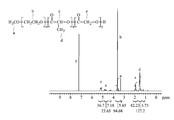
- FIG. 1 is a 1 H NMR spectra of Product III (mPEGe-PLGA).
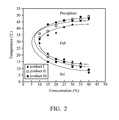
- FIG. 2 is the phase diagrams of Products I-III.
- FIG. 4A is a graph plotting residual weight against time of Product III.
- FIG. 4B is a graph plotting residual molecular weight against time of Product III.
- FIG. 5 is the release profiles of a composition with Product III and teicoplanin.
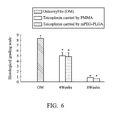
- FIG. 6 is the histological grading scale of osteomyelitic tissues after 4 weeks and 8 weeks, respectively, under various treatments.
- FIG. 7A is the expression of the COL1A1 protein of osteomyelitic tissues after 4 weeks under various treatments.
- FIG. 7B is the expression of the COL1A1 protein of osteomyelitic tissues after 8 weeks under various treatments.
- the disclosure provides a composition for the treatment of osteomyelitis and a method for preparing the same.
- the composition includes: 100 parts by weight of water; 0.06-0.1 parts by weight of an antibiotic; and 5-40 parts by weight of a biodegradable thermosensitive polymer, wherein the biodegradable thermosensitive polymer has a structure as following:
- R 1 is hydrogen, or —C( ⁇ O)—R 2 ;
- R 2 is C 7-30 alkyl substituted or unsubstituted with functional groups;
- R 3 is hydrogen, or C 1-6 alkyl; and
- x, y or z individually are integers greater than 0.
- the composition is not apt to be water-soluable when the dose of the biodegradable thermosensitive polymer is over 40 parts by weight; further, the composition is not apt to be transferred to a sol-gel state under human body temperature when the dose of the biodegradable thermosensitive polymer is below 5 parts by weight.
- the repeat unit mPEG can have a molecular weight of 550 g/mole. Further, the repeat unit PLGA can have a molecular weight of 990-1540 g/mole. Moreover, the ratio between x+y and z is from 1.8 to 2.8.
- the antibiotic can include teicoplanin, vancomycin, telavancin, neomycin, or tobromycin.
- the composition exhibited a solution below 10° C. and above 50° C., and the composition exhibited a sol-gel between 10-50.
- the composition can be prepared by mixing water, antibiotic, and biodegradable thermosensitive polymer under 5-10, exhibiting an injectable solution.
- the composition can be injected into the affected region of osteomyelitis, exhibiting a sol-gel due to the human body temperature.
- the drug release rate can be controlled by the in vivo hydrolysis rate of the gel. Therefore, the composition does not need to be removed by additional operations.
- mPEG-PLGA monomethoxypoly(ethylene glycol)-co-poly(lactic-co-glycolicacid) diblock copolymers
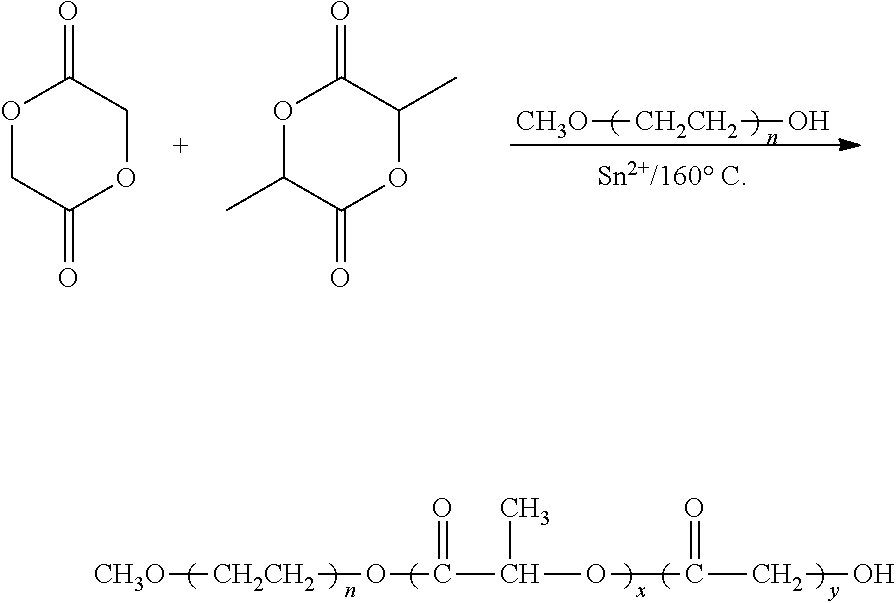
- the synthesis pathway was as follows:
- the resulting copolymer was further purified by dialysis (MWCO 1000) for 3 days at 4° C. and freeze dried by lyophilization for 5 days, obtaining Products I-III.
- the molecular weights of Products I-III were determined using a GPC (Spectra system (AS1000) P680HPLC pump and RI-150 refractive index detector coupled to a series of Plgel 5 mm column). Tetrahydrofuran (THF) served as a solvent with a flow rate of 1 ml/min. The molecular weights of Products I-III were determined relative to polyethylene glycol standards. The results are shown in Table 1.
- the CMC (Critical micelle concentration) values were determined by the dye solubilization method.
- the hydrophobic dye 1,6-diphenyl-1,3,5-hexatriene (DPH) was dissolved in methanol with a concentration of 0.4 mM.
- About 200 ml of the solution was mixed with 2.0 ml of copolymer aqueous solution with concentrations ranging from 0.0001 to 1 wt % and equilibrated overnight at 4° C.
- a UV-VIS spectrophotometer was used to measure the absorbance at 356 nm.
- the CMC value was determined by the plot of the absorbance versus logarithmic concentration, as shown in Table 2.
- the particle sizes of polymeric micelles were measured using dynamic light scattering (DLS).
- the DLS measurement was carried out on a Malvern Zeta 1000HS spectrophotometer equipped with a HeeNe laser at 633 nm at 25 ° C. and a fixed scattering angle of 90°.
- a nano-micelle solution prepared by a dialysis method was used for a particle size measurement (concentration: 1.0 wt %). The solution was first filtered through a 0.22 mm filter membrane before measurement. The results are shown in Table 2.
- Solutions of Products I-III in deionized water with a range of concentrations (10-40 wt %) were prepared, respectively, and stored in vials at 4° C. After 24 hrs, the vials containing the polymer solutions were immersed in a water bath at 5° C., and the phase transitions of the polymer solutions were investigated by raising the bath temperature from 5° C. to 55° C. in increments of 2.5° C., holding the sample for 10 min. at each temperature. After the 10 min. equilibrium time at each temperature, the vials were tilted to determine if the diblock copolymer solution flowed. The phase transition temperature was taken as the first temperature at which the solution did not flow when tilted.
- the phase diagrams of Products I-III are shown in FIG. 2 .
- Viscosity of the Products I-III aqueous solution with various concentrations was measured by the Rheometer (Haake Rheostress RS600) with a temperature controller (TC501) at 5-50° C.
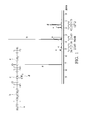
- the 0.5 ml polymeric solutions were stored in a corn-plate instrument with the temperature controller and subjected to the viscosity analysis, and the results are shown in FIG. 3 .
- the mPEG-PLGA copolymer exhibited a solution state at 5-10° C., and exhibited a sol-gel state at 37° C. (human body temperature).
- FIG. 4A shows a graph plotting residual weight against time of Product III
- FIG. 4B shows a graph plotting residual molecular weight of solid residues against time of Product III.
- a composition including the mPEG-PLGA copolymer (Product III) and Teicoplanin was prepared. Teicoplanin was added to 15 wt %-, 20 wt %- and 25 wt %-copolymer aqueous solution and homogenized with Vortex mixer for 1 min. at room temperature or below. The final concentration of teicoplanin in copolymer solution was 840 ⁇ g/ml. One milliliter of the teicoplanin-containing copolymer was subsequently loaded into the bottom of 10 ml release cell and kept at 37° C. for 5 min. to form the hydrogel.
- FIG. 5 shows the release profiles of a composition with Product III and Teicoplanin.
- the Teicoplanin release amount increases proportionately with the degradation degree of the mPEG-PLGA copolymer. Therefore, the encapsulated Teicoplanin is gradually released by the composition during the degradation of the mPEG-PLGA copolymer. Since the teicoplanin is released in a near-linear manner, the composition of the disclosure exhibited improved drug release control, avoiding undue release of drug.
- CFU colony-forming units
- each rabbit was sent to the operating room for a debridement procedure.
- the osteomyelitic group was treated with 5 ml of sterile mPEG-PLGA containing teicoplanin (840 ⁇ g/mL) or no antibiotic, or treated with sterile PMMA cement beads containing teicoplanin.
- PMMA cement beads were prepared by mixing 40 g of cement (Zimmer Inc., Warsaw, Ind.) with 0.6 g of teicoplanin. The resulting mixture was formed into beads approximately 4 mm in diameter, weighing approximately 0.15 g. Two beads containing a total antibiotic dose of 4.5 mg were placed into each femur for the treatment.
- bone specimens were sampled from affected region of the rabbits of the 3 subgroups.
- the bone specimens were fixed with 10% neutral buffered formalin.
- Histological specimens were decalcified, embedded in paraffin, and sections were stained with hematoxylin and eosin stain (H&E stain) and Gram's stain.
- the slides were evaluated by the histological grading scale, which contains three categories of investigation, including presence of bacteria, intraosseous inflammation and new bone formation. In each category the score was from 0 (healed) to 3 (worst) according to the severity of infection.
- the untreated subgroup exhibited a high histological grading scale.
- teicoplanin-impregnated PMMA or mPEG-PLGA mixed inflammatory cell filtration was still observed in marrow.
- An almost thorough recovery from the bone infection was shown after an 8-week treatment.
- the expression of the COL1A1 gene was also evaluated in the staphylococcus aureus -infected rabbits and the infected rabbits received with teicoplanin treatment.
- the COL1A1 gene encodes the pro-alpha 1 chain of type 1 collagen, which is the main component for bone development and for bone reconstitution after healing from osteomyelitis.
- FIG. 7A there were no statistic differences in the COL1A1 expression between untreated and teicoplanin-treated groups, as shown in FIG. 7A .
- both PMMA and mPEG-PLGA-treated groups had significantly elevated expression of the COL1A1 protein compared to the untreated group after 8 weeks, as shown in FIG. 7B .
- Antibiotic-impregnated PMMA bone cements that provide high local concentration of antibiotic have been proved effective in treating osteomyelitis.
- the PMMA bone cements were not biodegradable and a second surgery is required to remove the cement beads to prevent them from becoming a nidus for infection.
- the PMMA cement beads create some physical barriers that prevented new bone from growing into the defect.
- the composition of the disclosure can mitigate the aforementioned problems due to biodegradability.
- the composition of the disclosure possesses several additional advantages, including easy preparation, high encapsulation efficiency of drugs or bioactive molecules, and freedom from harmful organic solvents in the formulation process. Further, the composition of the disclosure is released in a near-linear manner.
Landscapes
- Health & Medical Sciences (AREA)
- Chemical & Material Sciences (AREA)
- Life Sciences & Earth Sciences (AREA)
- General Health & Medical Sciences (AREA)
- Veterinary Medicine (AREA)
- Public Health (AREA)
- Medicinal Chemistry (AREA)
- Animal Behavior & Ethology (AREA)
- Pharmacology & Pharmacy (AREA)
- Epidemiology (AREA)
- Proteomics, Peptides & Aminoacids (AREA)
- Bioinformatics & Cheminformatics (AREA)
- Engineering & Computer Science (AREA)
- General Chemical & Material Sciences (AREA)
- Dermatology (AREA)
- Organic Chemistry (AREA)
- Gastroenterology & Hepatology (AREA)
- Chemical Kinetics & Catalysis (AREA)
- Nuclear Medicine, Radiotherapy & Molecular Imaging (AREA)
- Immunology (AREA)
- Dispersion Chemistry (AREA)
- Inorganic Chemistry (AREA)
- Communicable Diseases (AREA)
- Physical Education & Sports Medicine (AREA)
- Oncology (AREA)
- Medicinal Preparation (AREA)
- Pharmaceuticals Containing Other Organic And Inorganic Compounds (AREA)
Abstract
The disclosure provides a composition for the treatment of osteomyelitis and a method for preparing the same. The composition includes: 100 parts by weight of water; 0.06-0.1 parts by weight of an antibiotic; and 5-40 parts by weight of a biodegradable thermosensitive polymer, wherein the biodegradable thermosensitive polymer has a structure as following:

wherein, R1 is hydrogen, or —C(═O)—R2; R2 is C7-30 alkyl substituted or unsubstituted with functional groups; R3 is hydrogen, or C1-6 alkyl; and x, y or z individually are integers greater than 0.
Description
- This application is based upon and claims the benefit of priority from the prior Taiwan Patent Application No. 099127259, filed on Aug. 16, 2010, the entire contents of which are incorporated herein by reference.
- The disclosure relates to a biodegradable thermosensitive polymer composition, and in particular relates to a biodegradable thermosensitive polymer composition for the treatment of osteomyelitis and a method for the treatment of osteomyelitis.
- The occurrence of osteomyelitis usually results from the polyinfection of various bacteria, but the staphylococcus aureus is a major pathogen for osteomyelitis. The principles for treating the osteomyelitis are focus clearance, antibacterial action, and promotion of recovery protein hyperplasia. Currently, the treatment of the osteomyelitis includes applying a bone cement (polymethylmethacylate, PMMA)) composition with antibiotics to the affected region. Patients using the bone cement are not apt to develop allergies thereto due to the biologically inert properties thereof. Specifically, the bone cement is non-biodegradable and may become a nidus for infection. Therefore, a second operation would be applied to the patients to remove the non-biodegradable material, resulting in an extension of the course of the treatment.
- The disclosure provides a composition for the treatment of osteomyelitis and a method for preparing the same. The composition includes: 100 parts by weight of water; 0.06-0.1 parts by weight of an antibiotic; and 5-40 parts by weight of a biodegradable thermosensitive polymer, wherein the biodegradable thermosensitive polymer has a structure as following:
-

- wherein, R1 is hydrogen, or —C(═O)—R2; R2 is C7-30 alkyl substituted or unsubstituted with functional groups; R3 is hydrogen, or C1-6 alkyl; and x, y or z individually are integers greater than 0.
- The disclosure also provides a method for preparing the aforementioned composition for the treatment of osteomyelitis, including mixing the above components under 5-10° C., and obtaining a liquid (injectable) drug delivery system. The liquid drug delivery systems are transferred to a sol-gel drug delivery system due to environmental temperatures. The sol-gel drug delivery system is capable of near-linear controlled release of antibiotics for an extended period of time for treatments.
- The disclosure also provides a method for the treatment of osteomyelitis. The method includes intramuscularly administering the aforementioned composition to a subject suffering from osteomyelitis under conditions such that said osteomyelitis is reduced.
- A detailed description is given in the following embodiments with reference to the accompanying drawings.
- The disclosure can be more fully understood by reading the subsequent detailed description and examples with references made to the accompanying drawings, wherein:
-
FIG. 1 is a 1H NMR spectra of Product III (mPEGe-PLGA). -
FIG. 2 is the phase diagrams of Products I-III. -
FIG. 3 is a graph plotting temperature against viscosity of Products I-III. -
FIG. 4A is a graph plotting residual weight against time of Product III. -
FIG. 4B is a graph plotting residual molecular weight against time of Product III. -
FIG. 5 is the release profiles of a composition with Product III and teicoplanin. -
FIG. 6 is the histological grading scale of osteomyelitic tissues after 4 weeks and 8 weeks, respectively, under various treatments. -
FIG. 7A is the expression of the COL1A1 protein of osteomyelitic tissues after 4 weeks under various treatments. -
FIG. 7B is the expression of the COL1A1 protein of osteomyelitic tissues after 8 weeks under various treatments. - The disclosure provides a composition for the treatment of osteomyelitis and a method for preparing the same. The composition includes: 100 parts by weight of water; 0.06-0.1 parts by weight of an antibiotic; and 5-40 parts by weight of a biodegradable thermosensitive polymer, wherein the biodegradable thermosensitive polymer has a structure as following:
-

- wherein, R1 is hydrogen, or —C(═O)—R2; R2 is C7-30 alkyl substituted or unsubstituted with functional groups; R3 is hydrogen, or C1-6 alkyl; and x, y or z individually are integers greater than 0.
- Regarding the composition, the composition is not apt to be water-soluable when the dose of the biodegradable thermosensitive polymer is over 40 parts by weight; further, the composition is not apt to be transferred to a sol-gel state under human body temperature when the dose of the biodegradable thermosensitive polymer is below 5 parts by weight.
- The repeat unit mPEG can have a molecular weight of 550 g/mole. Further, the repeat unit PLGA can have a molecular weight of 990-1540 g/mole. Moreover, the ratio between x+y and z is from 1.8 to 2.8.
- In an embodiment of the disclosure, the antibiotic can include teicoplanin, vancomycin, telavancin, neomycin, or tobromycin.
- The composition exhibited a solution below 10° C. and above 50° C., and the composition exhibited a sol-gel between 10-50. In practical applications, first the composition can be prepared by mixing water, antibiotic, and biodegradable thermosensitive polymer under 5-10, exhibiting an injectable solution. Next, the composition can be injected into the affected region of osteomyelitis, exhibiting a sol-gel due to the human body temperature. The drug release rate can be controlled by the in vivo hydrolysis rate of the gel. Therefore, the composition does not need to be removed by additional operations.
- The following examples are intended to illustrate the disclosure more fully without limiting the scope of the disclosure, since numerous modifications and variations will be apparent to those skilled in this art.
- Preparation of mPEG-PLGA
- A series of the monomethoxypoly(ethylene glycol)-co-poly(lactic-co-glycolicacid) (mPEG-PLGA) diblock copolymers were synthesized by the ring-opening polymerization of monomers and mPEG in the presence of stannous 2-ethylhexanoate.
- First, different amounts of mPEG (37.76 g for Product I, 30.54 g for Product II and 24.02 g for Product III) (sold by Polyscience) were mixed, respectively, with lactide (50 g, sold by PURAC biomaterial) and glycolide (11.39 g, sold by PURAC biomaterial) in a dry four-neck reactor with mechanical stirrer. The reactor temperature was controlled by an electric heater with a feedback sensor at 160° C. The catalyst, stannous 2-ethylhexanoate (38 ml for Product I, 37 ml for Product II, and 34 ml for Product III), was added in the reactor to process polymerization at 160° C. for 8 hrs.
- The synthesis pathway was as follows:
-
- The resulting copolymer was further purified by dialysis (MWCO 1000) for 3 days at 4° C. and freeze dried by lyophilization for 5 days, obtaining Products I-III.
- The molecular configuration of Product III was determined with an NMR spectrometer (Varian 500), as shown in
FIG. 1 . - The molecular weights of Products I-III were determined using a GPC (Spectra system (AS1000) P680HPLC pump and RI-150 refractive index detector coupled to a series of
Plgel 5 mm column). Tetrahydrofuran (THF) served as a solvent with a flow rate of 1 ml/min. The molecular weights of Products I-III were determined relative to polyethylene glycol standards. The results are shown in Table 1. -
TABLE 1 Theoretical composition of mPEG/PLGA Mn Mw MW Product I 550-1030 1278 1724 1.35 Product II 550-1105 1324 1875 1.42 Product III 550-1405 1492 2037 1.37 - Critical Micelle Concentration (CMC) Determination
- The CMC (Critical micelle concentration) values were determined by the dye solubilization method. The
hydrophobic dye 1,6-diphenyl-1,3,5-hexatriene (DPH) was dissolved in methanol with a concentration of 0.4 mM. About 200 ml of the solution was mixed with 2.0 ml of copolymer aqueous solution with concentrations ranging from 0.0001 to 1 wt % and equilibrated overnight at 4° C. A UV-VIS spectrophotometer was used to measure the absorbance at 356 nm. The CMC value was determined by the plot of the absorbance versus logarithmic concentration, as shown in Table 2. - The particle sizes of polymeric micelles were measured using dynamic light scattering (DLS). The DLS measurement was carried out on a Malvern Zeta 1000HS spectrophotometer equipped with a HeeNe laser at 633 nm at 25° C. and a fixed scattering angle of 90°. A nano-micelle solution prepared by a dialysis method was used for a particle size measurement (concentration: 1.0 wt %). The solution was first filtered through a 0.22 mm filter membrane before measurement. The results are shown in Table 2.
-
TABLE 2 CMC (mg/mL) Particle size (nm) Poly index Product I 6.7 * 10−2 50.8 0.35 Product II 5.3 * 10−2 62.8 0.35 Product III 3.2 * 10−2 100.1 0.50 - Determination of Solegel Phase Transition
- Solutions of Products I-III in deionized water with a range of concentrations (10-40 wt %) were prepared, respectively, and stored in vials at 4° C. After 24 hrs, the vials containing the polymer solutions were immersed in a water bath at 5° C., and the phase transitions of the polymer solutions were investigated by raising the bath temperature from 5° C. to 55° C. in increments of 2.5° C., holding the sample for 10 min. at each temperature. After the 10 min. equilibrium time at each temperature, the vials were tilted to determine if the diblock copolymer solution flowed. The phase transition temperature was taken as the first temperature at which the solution did not flow when tilted. The phase diagrams of Products I-III are shown in
FIG. 2 . - Viscosity of Sol-Gel Transition
- Viscosity of the Products I-III aqueous solution with various concentrations was measured by the Rheometer (Haake Rheostress RS600) with a temperature controller (TC501) at 5-50° C. The 0.5 ml polymeric solutions were stored in a corn-plate instrument with the temperature controller and subjected to the viscosity analysis, and the results are shown in
FIG. 3 . As shown inFIGS. 2 and 3 , the mPEG-PLGA copolymer exhibited a solution state at 5-10° C., and exhibited a sol-gel state at 37° C. (human body temperature). - In Vitro Degradation of the mPEG-PLGA Copolymers
- The degradation behavior of Products I-III was evaluated by mass loss and molecular weight (Mn) reduction was evaluated with time upon their in vitro incubation in phosphate buffered saline (PBS). Samples (0.5 ml) were incubated in 4 ml of PBS at 37° C. under mild agitation in a water bath. The solid residues were removed from the incubation medium at scheduled time intervals and lyophilized. The samples were weighted and the weight loss was calculated. Then, the solid residues were dissolved in THF and subjected to gel permeation chromatography (GPC) analysis to determine the average molecular weight of the samples.
FIG. 4A shows a graph plotting residual weight against time of Product III, andFIG. 4B shows a graph plotting residual molecular weight of solid residues against time of Product III. - Teicoplanin Release Experiment In Vitro
- First, a composition including the mPEG-PLGA copolymer (Product III) and Teicoplanin was prepared. Teicoplanin was added to 15 wt %-, 20 wt %- and 25 wt %-copolymer aqueous solution and homogenized with Vortex mixer for 1 min. at room temperature or below. The final concentration of teicoplanin in copolymer solution was 840 μg/ml. One milliliter of the teicoplanin-containing copolymer was subsequently loaded into the bottom of 10 ml release cell and kept at 37° C. for 5 min. to form the hydrogel. For analyzing the teicoplanin release, 9 ml of PBS was added into the release cell as release medium and maintained at 37° C. in a thermostatic bath with shaking for 50 rpm. At scheduled time points, the PBS media containing teicoplanin was collected to analyze the amount of teicoplanin by HPLC.
FIG. 5 shows the release profiles of a composition with Product III and Teicoplanin. - Referring to
FIGS. 4A and 5 , the Teicoplanin release amount increases proportionately with the degradation degree of the mPEG-PLGA copolymer. Therefore, the encapsulated Teicoplanin is gradually released by the composition during the degradation of the mPEG-PLGA copolymer. Since the teicoplanin is released in a near-linear manner, the composition of the disclosure exhibited improved drug release control, avoiding undue release of drug. - In Vivo Study
- Thirty-six New Zealand white rabbits, weighing 2.5-3 kg, were selected for this study. All animal experimental protocols were approved by the Institutional Animal Care and Use Committee of the Chang Gung Memorial Hospital and carried out according to the guideline of the National Institutes of Health (Bethesda, Md.). The right femur of each rabbit was inoculated with 2×10⁶ staphylococcus aureus. The staphylococcus aureus used in this study was isolated from an osteomyelitis patient, and deposited at the American Type Culture Collection as strain ATCC 49230. Briefly, the staphylococcus aureus cells were prepared from overnight cultures grown in a tryptic soy broth at 37° C. with aeration, and then harvested by centrifugation and re-suspended to a final concentration of 2×10⁸ colony-forming units (CFU)/mL. All animals fasted for one day before bacterial inoculation. Anesthesia was induced with ketamine (25 mg/kg) and xylazine (10 mg/kg) by intravenous injection. An incision was made on a lateral surface and extended down to a distal femur. A MicroHall oscillating saw (Linvatek, Largo, Fla.) was used to create a 0.8 cm diameter bony defect from the distal shaft of the femur. Ten microliters of staphylococcus aureus (2×10⁸ CFU/ml) was injected directly into the defect of the femur.
- Four weeks later, each rabbit was sent to the operating room for a debridement procedure. At the time of the second surgery, the infected rabbits were divided randomly into 3 subgroups for treating the infection. The osteomyelitic group was treated with 5 ml of sterile mPEG-PLGA containing teicoplanin (840 μg/mL) or no antibiotic, or treated with sterile PMMA cement beads containing teicoplanin. PMMA cement beads were prepared by mixing 40 g of cement (Zimmer Inc., Warsaw, Ind.) with 0.6 g of teicoplanin. The resulting mixture was formed into beads approximately 4 mm in diameter, weighing approximately 0.15 g. Two beads containing a total antibiotic dose of 4.5 mg were placed into each femur for the treatment.
- After four weeks and eight weeks, bone specimens were sampled from affected region of the rabbits of the 3 subgroups. The bone specimens were fixed with 10% neutral buffered formalin. Histological specimens were decalcified, embedded in paraffin, and sections were stained with hematoxylin and eosin stain (H&E stain) and Gram's stain. The slides were evaluated by the histological grading scale, which contains three categories of investigation, including presence of bacteria, intraosseous inflammation and new bone formation. In each category the score was from 0 (healed) to 3 (worst) according to the severity of infection.
- As shown in
FIG. 6 , the untreated subgroup exhibited a high histological grading scale. After a 4-week treatment with teicoplanin-impregnated PMMA or mPEG-PLGA, mixed inflammatory cell filtration was still observed in marrow. An almost thorough recovery from the bone infection was shown after an 8-week treatment. - The expression of the COL1A1 gene was also evaluated in the staphylococcus aureus-infected rabbits and the infected rabbits received with teicoplanin treatment. The COL1A1 gene encodes the
pro-alpha 1 chain oftype 1 collagen, which is the main component for bone development and for bone reconstitution after healing from osteomyelitis. After 4 weeks, there were no statistic differences in the COL1A1 expression between untreated and teicoplanin-treated groups, as shown inFIG. 7A . However, both PMMA and mPEG-PLGA-treated groups had significantly elevated expression of the COL1A1 protein compared to the untreated group after 8 weeks, as shown inFIG. 7B . - Antibiotic-impregnated PMMA bone cements that provide high local concentration of antibiotic have been proved effective in treating osteomyelitis. However, the PMMA bone cements were not biodegradable and a second surgery is required to remove the cement beads to prevent them from becoming a nidus for infection. In addition to these disadvantages, the PMMA cement beads create some physical barriers that prevented new bone from growing into the defect. Compared to the bone cements, the composition of the disclosure can mitigate the aforementioned problems due to biodegradability. Compared to the other biodegradable polymers, the composition of the disclosure possesses several additional advantages, including easy preparation, high encapsulation efficiency of drugs or bioactive molecules, and freedom from harmful organic solvents in the formulation process. Further, the composition of the disclosure is released in a near-linear manner.
- While the disclosure has been described by way of example and in terms of preferred embodiment, it is to be understood that the disclosure is not limited thereto. To the contrary, it is intended to cover various modifications and similar arrangements (as would be apparent to those skilled in the art). Therefore, the scope of the appended claims should be accorded the broadest interpretation so as to encompass all such modifications and similar arrangements.
Claims (6)
1. A composition for the treatment of osteomyelitis, comprising:
100 parts by weight of water;
0.06-0.1 parts by weight of an antibiotic; and
5-40 parts by weight of a biodegradable thermosensitive polymer, wherein the biodegradable thermosensitive polymer has a structure as following:

wherein, R1 is hydrogen, or —C(═O)—R2; R2 is C7-30 alkyl substituted or unsubstituted with functional groups; R3 is hydrogen, or C1-6 alkyl; and x, y or z individually are integers greater than 0.
2. The composition as claimed in claim 1 , wherein the antibiotic comprises teicoplanin, vancomycin, telavancin, neomycin, or tobromycin.
3. The composition as claimed in claim 1 , wherein the ration between x+y and z is from 1.8 to 2.8.
4. The composition as claimed in claim 1 , wherein the composition exhibited a solution state below 10° C. and above 50° C., and the composition exhibited a sol-gel state between 10-50° C.
5. A method for preparing a composition for the treatment of osteomyelitis, comprising:
mixing the following components:
100 parts by weight of water;
0.06-0.1 parts by weight of an antibiotic; and
5-40 parts by weight of a biodegradable thermosensitive polymer, wherein the biodegradable thermosensitive polymer has a structure as following:

wherein, R1 is hydrogen, or —C(═O)—R2; R2 is C7-30 alkyl substituted or unsubstituted with functional groups; R3 is hydrogen, or C1-6 alkyl; and x, y or z individually are integers greater than 0.
6. A method for the treatment of osteomyelitis, comprising:
intramuscularly administering the composition of claim 1 to a subject suffering from osteomyelitis under conditions such that said osteomyelitis is reduced.
Applications Claiming Priority (2)
| Application Number | Priority Date | Filing Date | Title |
|---|---|---|---|
| TW099127259 | 2010-08-16 | ||
| TW099127259A TW201208705A (en) | 2010-08-16 | 2010-08-16 | Composition for treatment of osteomyelitis and method for preparing the same |
Publications (1)
| Publication Number | Publication Date |
|---|---|
| US20120040887A1 true US20120040887A1 (en) | 2012-02-16 |
Family
ID=45565267
Family Applications (1)
| Application Number | Title | Priority Date | Filing Date |
|---|---|---|---|
| US12/899,823 Abandoned US20120040887A1 (en) | 2010-08-16 | 2010-10-07 | Composition for the treatment of osteomyelitis, method for preparing the same, and method for the treatment of osteomyelitis |
Country Status (2)
| Country | Link |
|---|---|
| US (1) | US20120040887A1 (en) |
| TW (1) | TW201208705A (en) |
Citations (2)
| Publication number | Priority date | Publication date | Assignee | Title |
|---|---|---|---|---|
| US20060034889A1 (en) * | 2004-08-16 | 2006-02-16 | Macromed, Inc. | Biodegradable diblock copolymers having reverse thermal gelation properties and methods of use thereof |
| US20070224169A1 (en) * | 2006-07-18 | 2007-09-27 | Sliwa John W Jr | Selectively switched gels for surgery, therapy and maintenance |
-
2010
- 2010-08-16 TW TW099127259A patent/TW201208705A/en unknown
- 2010-10-07 US US12/899,823 patent/US20120040887A1/en not_active Abandoned
Patent Citations (2)
| Publication number | Priority date | Publication date | Assignee | Title |
|---|---|---|---|---|
| US20060034889A1 (en) * | 2004-08-16 | 2006-02-16 | Macromed, Inc. | Biodegradable diblock copolymers having reverse thermal gelation properties and methods of use thereof |
| US20070224169A1 (en) * | 2006-07-18 | 2007-09-27 | Sliwa John W Jr | Selectively switched gels for surgery, therapy and maintenance |
Also Published As
| Publication number | Publication date |
|---|---|
| TW201208705A (en) | 2012-03-01 |
Similar Documents
| Publication | Publication Date | Title |
|---|---|---|
| Peng et al. | Treatment of osteomyelitis with teicoplanin-encapsulated biodegradable thermosensitive hydrogel nanoparticles | |
| Jiang et al. | Controlled release of silver ions from AgNPs using a hydrogel based on konjac glucomannan and chitosan for infected wounds | |
| Yuan et al. | Thermosensitive vancomycin@ PLGA-PEG-PLGA/HA hydrogel as an all-in-one treatment for osteomyelitis | |
| Zhu et al. | Rapid gelation of oxidized hyaluronic acid and succinyl chitosan for integration with insulin-loaded micelles and epidermal growth factor on diabetic wound healing | |
| Li et al. | In situ gel-forming AP-57 peptide delivery system for cutaneous wound healing | |
| Yao et al. | Long-term induction of endogenous BMPs growth factor from antibacterial dual network hydrogels for fast large bone defect repair | |
| Tanigo et al. | Sustained release of water-insoluble simvastatin from biodegradable hydrogel augments bone regeneration | |
| Kempen et al. | Controlled drug release from a novel injectable biodegradable microsphere/scaffold composite based on poly (propylene fumarate) | |
| Song et al. | Antibacterial and cell-adhesive polypeptide and poly (ethylene glycol) hydrogel as a potential scaffold for wound healing | |
| Yan et al. | Injectable in situ forming poly (l-glutamic acid) hydrogels for cartilage tissue engineering | |
| Wu et al. | Engineering bioresponsive hydrogels toward healthcare applications | |
| DK2521534T3 (en) | FUNCTIONALIZED TRIBLE COPOLYMERS AND COMPOSITIONS CONTAINING SUCH POLYMERS | |
| Ren et al. | Injectable enzymatically crosslinked hydrogels based on a poly (l-glutamic acid) graft copolymer | |
| Loh et al. | Encapsulation of basic fibroblast growth factor in thermogelling copolymers preserves its bioactivity | |
| Bos et al. | Tissue reactions of in situ formed dextran hydrogels crosslinked by stereocomplex formation after subcutaneous implantation in rats | |
| Overstreet et al. | In situ forming, resorbable graft copolymer hydrogels providing controlled drug release | |
| US8614190B2 (en) | Thermal responsive composition for treating bone diseases | |
| Costache et al. | Tyrosine-derived polycarbonate-silica xerogel nanocomposites for controlled drug delivery | |
| Sun et al. | Vancomycin-loaded in situ gelled hydrogel as an antibacterial system for enhancing repair of infected bone defects | |
| CN113301927B (en) | Biocompatible materials | |
| RU2761018C1 (en) | Composition for tissue restoration and method for production thereof | |
| JP2024128104A (en) | Tissue repair composition | |
| Lv et al. | Poly (β-amino ester) dual-drug-loaded hydrogels with antibacterial and osteogenic properties for bone repair | |
| Wu et al. | Engineered multifunctional artificial dermis for infected burn wound healing | |
| Guo et al. | Carbon dots loaded polycarbonate thermosensitive hydrogel: an innovative strategy for promoting infected wound healing |
Legal Events
| Date | Code | Title | Description |
|---|---|---|---|
| AS | Assignment |
Owner name: INDUSTRIAL TECHNOLOGY RESEARCH INSTITUTE, TAIWAN Free format text: ASSIGNMENT OF ASSIGNORS INTEREST;ASSIGNORS:CHEN, CHIN-FU;SHEN, HSIN-HSIN;LEE, YU-MIN;AND OTHERS;SIGNING DATES FROM 20100928 TO 20100929;REEL/FRAME:025107/0646 |
|
| STCB | Information on status: application discontinuation |
Free format text: ABANDONED -- FAILURE TO RESPOND TO AN OFFICE ACTION |