US20080098230A1 - Trusted compliance operations inside secure computing boundaries - Google Patents
Trusted compliance operations inside secure computing boundaries Download PDFInfo
- Publication number
- US20080098230A1 US20080098230A1 US11/584,859 US58485906A US2008098230A1 US 20080098230 A1 US20080098230 A1 US 20080098230A1 US 58485906 A US58485906 A US 58485906A US 2008098230 A1 US2008098230 A1 US 2008098230A1
- Authority
- US
- United States
- Prior art keywords
- data
- envelope
- compliance
- trusted
- server
- Prior art date
- Legal status (The legal status is an assumption and is not a legal conclusion. Google has not performed a legal analysis and makes no representation as to the accuracy of the status listed.)
- Granted
Links
Images




Classifications
-
- G—PHYSICS
- G06—COMPUTING OR CALCULATING; COUNTING
- G06F—ELECTRIC DIGITAL DATA PROCESSING
- G06F21/00—Security arrangements for protecting computers, components thereof, programs or data against unauthorised activity
- G06F21/50—Monitoring users, programs or devices to maintain the integrity of platforms, e.g. of processors, firmware or operating systems
- G06F21/57—Certifying or maintaining trusted computer platforms, e.g. secure boots or power-downs, version controls, system software checks, secure updates or assessing vulnerabilities
-
- G—PHYSICS
- G06—COMPUTING OR CALCULATING; COUNTING
- G06F—ELECTRIC DIGITAL DATA PROCESSING
- G06F21/00—Security arrangements for protecting computers, components thereof, programs or data against unauthorised activity
- G06F21/50—Monitoring users, programs or devices to maintain the integrity of platforms, e.g. of processors, firmware or operating systems
- G06F21/52—Monitoring users, programs or devices to maintain the integrity of platforms, e.g. of processors, firmware or operating systems during program execution, e.g. stack integrity ; Preventing unwanted data erasure; Buffer overflow
- G06F21/53—Monitoring users, programs or devices to maintain the integrity of platforms, e.g. of processors, firmware or operating systems during program execution, e.g. stack integrity ; Preventing unwanted data erasure; Buffer overflow by executing in a restricted environment, e.g. sandbox or secure virtual machine
Definitions
- This application relates to electronic computing, and more particularly to trusted compliance operations inside secure computing boundaries.
- Examples of industry mandated compliance include the North American Reliability Council Critical Infrastructure Program (NERC CIP), which mandates protection of power generation, transmission and distribution facilities control systems, American Gas Association (AGA 12), which mandates protection of gas and oil pipeline control systems, and the Payment Card Industry Data Security Standard (PCI DSS), which mandates protection of systems managing point of sale/credit card transactions.
- NERC CIP North American Reliability Council Critical Infrastructure Program
- AGA 12 American Gas Association
- PCI DSS Payment Card Industry Data Security Standard
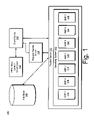
- FIG. 1 is a schematic illustration of a networked computing system architecture configured to implement trusted compliance operations inside secure computing boundaries.
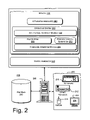
- FIG. 2 is a schematic illustration of a schematic illustration of a computing system configured to implement trusted compliance operations inside secure computing boundaries.
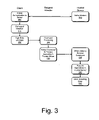
- FIG. 3 is a flowchart illustrating operations in one embodiment of a method to implement trusted compliance operations inside secure computing boundaries.
- FIG. 4A is a flowchart illustrating operations in one embodiment of a method to check-in data in a system to implement trusted compliance operations inside secure computing boundaries.
- FIG. 4B is a schematic depiction of a data structure to hold compliance data following the operations of FIG. 4A
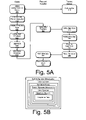
- FIG. 5A is a flowchart illustrating operations in one embodiment of a method to review data in a system to implement trusted compliance operations inside secure computing boundaries.
- FIG. 5B is a schematic depiction of a data structure to hold compliance data following the operations of FIG. 5A
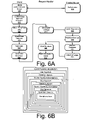
- FIG. 6A is a flowchart illustrating operations in one embodiment of a method to approve data in a system to implement trusted compliance operations inside secure computing boundaries.
- FIG. 6B is a schematic depiction of a data structure to hold compliance data following the operations of FIG. 6A .
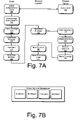
- FIG. 7A is a flowchart illustrating operations in one embodiment of a method to audit data in a system to implement trusted compliance operations inside secure computing boundaries.
- FIG. 7B is a schematic depiction of a data structure to hold compliance data following the operations of FIG. 7A .
- FIG. 8 is a flowchart illustrating operations in one embodiment of a method to delete data in a system to implement trusted compliance operations inside secure computing boundaries.
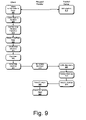
- FIG. 9 is a flowchart illustrating operations in one embodiment of a method to version data in a system to implement trusted compliance operations inside secure computing boundaries.
- FIG. 10 is a schematic illustration of a computing environment which may be used to implement one or more components of a system to implement trusted compliance operations inside secure computing boundaries.
- Described herein are exemplary systems and methods for trusted compliance operations inside secure computing boundaries.
- the methods described herein may be embodied as logic instructions on a computer-readable medium. When executed on a processor, the logic instructions cause a general purpose computing device to be programmed as a special-purpose machine that implements the described methods.
- the processor when configured by the logic instructions to execute the methods recited herein, constitutes structure for performing the described methods.
- FIG. 1 is a schematic illustration of a networked computing system architecture configured to implement trusted compliance operations inside secure computing boundaries.
- a system 100 comprises a trusted server 110 , a request handler server 130 , a client device 140 , a smart card 150 , and a file store 160 .
- client device 140 , request handler server 130 , trusted server 110 and file store 160 may be coupled by one or more communication links such as, e.g., an electronic communication network.
- computer system 100 implements a secure computing environment.
- computer system 100 may implement trust methodologies that comply with level 3 or level 4 of the Federal Information Processing Standards Publications (FIPS PUBS) 140-1 and 140-2 issued by the National Institute of Standards and Technology as described in commonly assigned, co-pending patent application Ser. No. 11/125,458 entitled, Secure Circuit Assembly, filed May 10, 2005, the disclosure of which is hereby incorporated by reference in its entirety.
- the system may also implement a secure initialization paradigm described in commonly assigned U.S. Pat. No. 6,378,072, the disclosure of which is also incorporated herein by reference in its entirety.
- a trusted cryptographic application layer runs on top of a secure operating system to provide security services the secure data log collection application will utilize as described commonly assigned and co-pending patent application Ser. No. 11/177,715 entitled, Policy Based Cryptographic Application Programming Interface Deployed in Secure Memory, filed Jul. 8, 2005, the disclosure of which is hereby incorporated by reference in its entirety.
- trusted server 110 may establish a plurality of memory partitions 114 , 116 , 118 , 120 , 122 , 124 , 126 since it is common Criteria certified at EAL (Evaluation Assurance Level) level 5 and above. Processes executing on trusted server 110 are confined to their respective memory partitions.
- smart card 150 may implement security operations in accord with the FIPS 140 standard and maybe used by an insecure client device to securely communicate with the trusted server by forming secure envelopes using cryptographic operations like digital signatures and encryption.
- Request handler server 130 and client device 140 may be implemented as computing devices.
- request handler server 130 may be implemented as a server computer.
- Client device 140 may be implemented as a computer, personal digital assistant (PDA) or other computing device.
- File store 160 may be implemented as one or more storage device(s) which may be dedicated to trusted server 110 , or which may be shared between trusted server 110 and other computing devices.
- file store 160 may be implemented as a network attached storage (NAS) device or a storage area network (SAN).
- NAS network attached storage
- SAN storage area network
- FIG. 2 is a schematic illustration of an exemplary computer system 200 adapted to configured to implement trusted compliance operations inside secure computing boundaries, such as may be used to implement trusted server 110 , request handler server 130 , or client device 140 .
- the computer system 200 may include a computer 208 and one or more accompanying input/output devices 206 including a display 202 having a screen 204 , a keyboard 210 , other I/O device(s) 212 , and a mouse 214 .
- the other device(s) 212 can include a touch screen, a voice-activated input device, a track ball, and any other device that allows the system 200 to receive input from a developer and/or a user.
- the computer 208 includes system hardware 220 and random access memory and/or read-only memory 230 .
- a file store 280 may be communicatively connected to computer 208 .
- File store 280 may be internal such as, e.g., one or more hard drives, or external such as, e.g., one or more external hard drives, network attached storage, or a separate storage network.
- Memory 230 includes an operating system 240 for managing operations of computer 208 .
- operating system 240 includes a hardware interface module 254 that provides an interface to system hardware 220 .
- operating system 240 includes a file system 250 that manages files used in the operation of computer 208 and a process control subsystem 252 that manages processes executing on computer 208 .
- Operating system 240 further includes a system call interface module 242 that provides an interface between the operating system 240 and one or more application modules and/or libraries.
- one or more application modules 260 and/or libraries executing on computer 208 make calls to the system call interface module 242 to execute one or more commands on the computer's processor.
- the system call interface module 242 invokes the services of the file system 250 to manage the files required by the command(s) and the process control subsystem 252 to manage the process required by the command(s).
- the file system 250 and the process control subsystem 252 invoke the services of the hardware interface module 254 to interface with the system hardware 220 .
- Operating system 240 is not critical to the subject matter described herein. However the operating system must have achieved a Common Criteria evaluation of EAL 5 or greater to insure processes can operate in secure memory partitions.
- Operating system 240 may be embodied as a UNIX operating system or any derivative thereof (e.g., Linux, Solaris, etc.) or as a Windows® brand operating system.
- computer system 200 implements a secure computing environment. For example, computer system 200 may implement security techniques that comply with level 3 or level 4 of the Federal Information Processing Standards Publications (FIPS PUBS) 140-1 and 140-2 issued by the National Institute of Standards and Technology.
- FIPS PUBS Federal Information Processing Standards Publications
- FIG. 3 is a flowchart that provides an overview of operations in one embodiment of a method to implement trusted compliance operations inside secure computing boundaries.
- the client 110 initiates an authentication process to authenticate itself, e.g., using smartcard 150 , to the trusted server 110 .
- trusted server 110 implements an authentication process to authenticate client 140 .
- a secure communication tunnel may be established between trusted server 110 and client device 140 .
- the client initiates a command, and at operation 320 the command is packaged in a data envelope which is signed by smart card 150 and forwarded to request handler server 130 .
- the request handler server may perform command processing, and at operation 330 the request handler server 130 assigns the command to a process executing in the trusted server 110 .
- the request handler server 130 may assign the command to a process executing in a specific memory partition of trusted server 110 .
- the trusted server 110 obtains data necessary to process the command in the trusted server.
- the trusted server 110 may obtain the data from the data envelope assembled by the client device 140 .
- the trusted server 110 may retrieve data from data store 160 and move the retrieved data into the secure memory partition in which the command is being processed.
- the command operations are executed within a secure memory partition of the trusted server.
- the data envelope may be verified in the trusted server 110 .
- the resulting data may be returned to the file store 160 .
- the processing results may be communicated back to the client 140 , e.g., via a communication link such as an encrypted tunnel.
- compliance data evidence is established with a check-in operation. After data is established in the system it should not be subject to alteration. Further, evidence of operations performed on the data should not be subject to alteration.
- the system implements a digital signature technology in secure hardware (FIPS 140-2) and trusted memory partitions (Common Criteria EAL 5+).
- the entity performing the check-in operation first digitally signs the compliance data and any associated comments using a FIPS 140-2 Level 3 Smart Card 150 .
- An associated secure time value may also be signed at this juncture.
- the data is then sent to the trusted server where the signing entity may be authenticated to determine whether the signing entity has approval for the operations being performed.
- the entire data set (compliance data, any associated comments, time, check-in entity digital signature) is then digitally signed by the trusted server 110 . This final signature herein will be referred to as notarization.
- FIG. 4A is a flowchart illustrating operations in one embodiment of a method to check-in data in a system to implement trusted compliance operations inside secure computing boundaries.
- the client 110 initiates an authentication process to authenticate itself, e.g., using smartcard 150 , to the trusted server 110 .
- trusted server 110 implements an authentication process to authenticate client 140 .
- a secure communication tunnel may be established between trusted server 110 and client device 140 .
- a user at the client initiates a check-in operation.
- the user check-in operation may include data set such as, e.g., compliance data, and comments or other information generated by a user of the system.
- the user confirms the data and, at operation 420 the client obtains current time/data data from the request handler server 130 .
- the client creates a data envelope containing the data and additional information such as, e.g., data type, time/date data, next required data review time, etc.
- the client generates a hash such as, e.g., a Secure Hash Algorithm (SHA)-256 hash of the data envelope.
- the client uses the smart card 150 to sign the hash.
- the client sends the data check-in command and the data envelope to the request handler server 130 for processing.
- SHA Secure Hash Algorithm
- the request handler server 130 sends the envelope containing the data to be checked-in to the trusted server 110 for processing.
- the various memory partitions in trusted server 110 may be reserved for specific processes.
- SMP 1 may be reserved to manage check-in processes.
- Request handler server 130 may maintain a table that tracks which processes are assigned to specific memory partitions in trusted server 110 .
- Request handler server 130 may consult this table to determine which memory partition should receive the data envelope.
- the trusted server 110 verifies the digital signature applied to the envelope in operation 430 and verifies that the user who signed it is permitted to check-in this type of data.
- the trusted server 110 then places the envelope within another envelope with additional information such as, e.g., current time and date information retrieved by the trusted server and signs the envelope with a signing key. This is referred to as ‘notarizing’ in that the trusted server 110 vouches that it has authenticated a user with smart card authentication credentials who is authorized to check-in this kind of data. It also serves to validate the compliance operation.
- the trusted server may then perform ancillary processing operations to implement the check-in compliance operation (e.g. storing the notarized data in a database, etc.) at operation 453 .
- the trusted server 110 returns the notarized envelope to the request handler server 130 , which stores (operation 460 ) the envelope, e.g., by sending the envelope to the file store 160 .
- the processing results may be communicated back to the client 140 , e.g., via a communication link such as an encrypted tunnel.
- FIG. 4B is a schematic depiction of a data structure to hold compliance data following the operations of FIG. 4A .
- the compliance data may be wrapped in an envelope that contains information that identifies the type of operation (i.e., check-in) and associated data such as, e.g., the information security level, time stamps, etc.
- This is wrapped in an envelope that contains the user signature generated in operation 430 , which is wrapped in an envelope that contains the system signature generated in operation 450 .
- This data structure may be stored in file store 160 .
- data is checked into the system, it may be reviewed for its accuracy.
- a reviewer may apply a digital signature to the compliance data reviewed and any associated comments the review may have using a FIPS 140-2 Level 3 Smart Card.
- An associated secure time value and “next review date” may also be signed at this juncture.
- the data is then sent to the trusted server 110 , where the signing entity is authenticated (i.e., confirmed that they have approval for the review they are performing).
- the entire data set (compliance data, reviewer comments, time, and reviewer entity digital signature) is then digitally signed by the trusted server.
- Data may be reviewed by more than one entity and thus, more than one notarized review signature record can be associated with the data.
- FIG. 5A is a flowchart illustrating operations in one embodiment of a method to review data in a system to implement trusted compliance operations inside secure computing boundaries.
- the client 110 initiates an authentication process to authenticate itself, e.g., using smartcard 150 , to the trusted server 110 .
- trusted server 110 implements an authentication process to authenticate client 140 .
- a secure communication tunnel may be established between trusted server 110 and client device 140 .
- a user at the client initiates a review operation.
- the data to be reviewed is read and displayed on the client device 140 .
- the user confirms the data presented (and may add comments) and, at operation 520 the client device 140 obtains current time/data data from the request handler server 130 .
- the client creates a data envelope containing the data envelope for the data that was reviewed (see FIG. 4B ) and at operation 530 the client generates a hash such as, e.g., a Secure Hash Algorithm (SHA)-256 hash of the data envelope.
- the client uses the smart card 150 to sign the hash.
- the client sends the data review command and the data envelope to the request handler server 130 for processing.
- SHA Secure Hash Algorithm
- the request handler server 130 sends the envelope containing the data to be reviewed to the trusted server 110 for processing.
- the various memory partitions in trusted server 110 may be reserved for specific processes.
- SMP 2 may be reserved to manage data review processes.
- Request handler server 130 may maintain a table that tracks which processes are assigned to specific memory partitions in trusted server 110 .
- Request handler server 130 may consult this table to determine which memory partition should receive the data envelope.
- the trusted server 110 verifies the digital signature applied to the envelope in operation 530 and verifies that the user who signed it is permitted to review this type of data.
- the trusted server 110 then places the envelope within another envelope with additional information such as, e.g., current time and date information retrieved by the trusted server and signs the envelope with a signing key (operation 550 ). This is referred to as ‘notarizing’ in that the trusted server 110 vouches that it has authenticated a user with smart card authentication credentials who is authorized to review this kind of data. It also serves to validate the compliance operation.
- the trusted server may then perform ancillary processing operations to implement the review compliance operation (e.g. storing the reviewers signed comments in a database, etc.) at operation 553 .
- the trusted server 110 returns the notarized envelope to the request handler server 130 , which stores (operation 560 ) the envelope, e.g., by sending the envelope to the file store 160 .
- the processing results may be communicated back to the client 140 , e.g., via a communication link such as an encrypted tunnel.
- FIG. 5B is a schematic depiction of a data structure to hold compliance data following the operations of FIG. 5A .
- the envelope depicted in FIG. 4B At the core of the envelope is the envelope depicted in FIG. 4B .
- This envelope is wrapped in an envelope that contains information that identifies the type of operation (i.e., review) and associated data such as, e.g., the information security level, time stamps, etc.
- This is wrapped in an envelope that contains the user signature generated in operation 530 , which is wrapped in an envelope that contains the system signature generated in operation 550 .
- This data structure may be stored in file store 160 .
- the data may be approved.
- Many compliance regulations require a “sign off” of data by at least on executive officer of an organization. In some cases the executive officer may lack necessary expertise to critically evaluate the data.
- the review process depicted in FIG. 4A may ensure the data has been reviewed and it is appropriate for the executive(s) to approve.
- the executive may sign the compliance data approved (and any associated comments he/she might have) using a FIPS 140-2 Level 3 Smart Card. An associated secure time value may also signed at this juncture.
- the data is then sent to the trusted server 110 where the signing entity is authenticated.
- the entire data set (compliance data, approver comments, time, approver entity digital signature) is then digitally signed by the trusted server 110 .
- the executive(s) signature is notarized in the trusted server 110 . Note that data may be approved by more than one executive and thus, more than one notarized approval signature record can be associated with the data.
- FIG. 6A is a flowchart illustrating operations in one embodiment of a method to approve data in a system to implement trusted compliance operations inside secure computing boundaries.
- the client 110 initiates an authentication process to authenticate itself, e.g., using smartcard 150 , to the trusted server 110 .
- trusted server 110 implements an authentication process to authenticate client 140 .
- a secure communication tunnel may be established between trusted server 110 and client device 140 .
- a user at the client initiates an data approve operation.
- the data to be approved is displayed on the client device 140 .
- the user confirms the data presented (and may add comments) and, at operation 620 the client device 140 obtains current time/data data from the request handler server 130 .
- the client creates a data envelope containing the data envelope for the data that was approved (see FIG. 6B ) and at operation 630 the client generates a hash such as, e.g., a Secure Hash Algorithm (SHA)-256 hash of the data envelope.
- the client uses the smart card 150 to sign the hash.
- the client sends the data approval command and the data envelope to the request handler server 130 for processing.
- SHA Secure Hash Algorithm
- the request handler server 130 sends the envelope containing the data to be approved to the trusted server 110 for processing.
- the various memory partitions in trusted server 110 may be reserved for specific processes.
- SMP 3 may be reserved to manage data approval processes.
- Request handler server 130 may maintain a table that tracks which processes are assigned to specific memory partitions in trusted server 110 .
- Request handler server 130 may consult this table to determine which memory partition should receive the data envelope.
- the trusted server 110 verifies the digital signature applied to the envelope in operation 630 and verifies that the user who signed it is permitted to approve this type of data.
- the trusted server 110 then places the envelope within another envelope with additional information such as, e.g., current time and date information retrieved by the trusted server and signs the envelope with a signing key (operation 650 ). This is referred to as ‘notarizing’ in that the trusted server 110 vouches that it has authenticated a user with smart card authentication credentials who is authorized to approve this kind of data. It also serves to validate the compliance operation.
- the trusted server may then perform ancillary processing operations to implement the approve compliance operation (e.g. storing the approver's signed comments in a database, etc.) at operation 653 .
- the trusted server 110 returns the notarized envelope to the request handler server 130 , which stores (operation 660 ) the envelope, e.g., by sending the envelope to the file store 160 .
- the processing results may be communicated back to the client 140 , e.g., via a communication link such as an encrypted tunnel.
- FIG. 6B is a schematic depiction of a data structure to hold compliance data following the operations of FIG. 6A .
- the envelope depicted in FIG. 5B At the core of the envelope is the envelope depicted in FIG. 5B .
- This envelope is wrapped in an envelope that contains information that identifies the type of operation (i.e., approve) and associated data such as, e.g., the information security level, time stamps, etc.
- This is wrapped in an envelope that contains the user signature generated in operation 630 , which is wrapped in an envelope that contains the system signature generated in operation 650 .
- This data structure may be stored in file store 160 .
- the trusted server 110 may prompt appropriate review personnel (e.g., via e-mail or other means) when the next review date as arrived for checked-in, reviewed, and approved data.
- a data audit may include an examination of all latest versions, checked-in, reviewed, and approved data at a point in time. To achieve this, pointers to all checked-in, reviewed, and approved data may be collected and the auditor's digital signature may be associated with the pointer data (and any comments the auditor might have regarding that data) using a FIPS 140-2 Level 3 Smart Card. An associated secure time value may also be signed at this juncture.
- the data is then sent to the trusted server 110 where the signing entity is authenticated (i.e., confirmed that the signing entity has approval for an audit).
- the entire data set (pointers to latest version checked-in, reviewed, and approved data, auditor comments, time, auditor entity digital signature) is then digitally signed by the trusted server 110 .
- FIG. 7A is a flowchart illustrating operations in one embodiment of a method to audit data in a system to implement trusted compliance operations inside secure computing boundaries.
- the client 110 initiates an authentication process to authenticate itself, e.g., using smartcard 150 , to the trusted server 110 .
- trusted server 110 implements an authentication process to authenticate client 140 .
- a secure communication tunnel may be established between trusted server 110 and client device 140 .
- a user at the client initiates an audit operation.
- the data to be audited is displayed on the client device 140 .
- the user confirms the data presented (and may add comments) and, at operation 720 the client device 140 obtains current time/data data from the request handler server 130 .
- the client creates a data envelope containing the data envelope for the data that was audited (see FIG. 7B ) and at operation 730 the client generates a hash such as, e.g., a Secure Hash Algorithm (SHA)-256 hash of the data envelope.
- the client uses the smart card 150 to sign the hash.
- the client sends the data audit command and the data envelope to the request handler server 130 for processing.
- SHA Secure Hash Algorithm
- the request handler server 130 sends the envelope containing the data to be audited to the trusted server 110 for processing.
- the various memory partitions in trusted server 110 may be reserved for specific processes.
- SMP 4 may be reserved to manage audit processes.
- Request handler server 130 may maintain a table that tracks which processes are assigned to specific memory partitions in trusted server 110 .
- Request handler server 130 may consult this table to determine which memory partition should receive the data envelope.
- the trusted server 110 verifies the digital signature applied to the envelope in operation 730 and verifies that the user who signed it is permitted to audit this type of data.
- the trusted server 110 then places the envelope within another envelope with additional information such as, e.g., current time and date information retrieved by the trusted server and signs the envelope with a signing key (operation 750 ). This is referred to as ‘notarizing’ in that the trusted server 110 vouches that it has authenticated a user with smart card authentication credentials who is authorized to audit this kind of data. It also serves to validate the compliance operation.
- the trusted server may then perform ancillary processing operations to implement the audit compliance operation (e.g. storing the auditor's signed comments regarding the audit in a database, etc.) at operation 753 .
- the trusted server 110 returns the notarized envelope to the request handler server 130 , which stores (operation 760 ) the envelope, e.g., by sending the envelope to the file store 160 .
- the processing results may be communicated back to the client 140 , e.g., via a communication link such as an encrypted tunnel.
- FIG. 7B is a schematic depiction of a data structure to hold compliance data following the operations of FIG. 7A .
- the one or more envelopes containing data structures which were audited by the audit process of FIG. 7A may be wrapped in an envelope that contains the system signature generated in operation 750 .
- This data structure may be stored in file store 160 .
- Some compliance initiatives require data to be maintained for only for a limited period of time.
- check-in review, approval and audit dates are securely recorded.
- the system is able to ascertain when data can be deleted. Since an internal policy may require longer retention times, data may not be automatically deleted. Instead, a list of potentially deletable documents may be compiled and presented at appropriate intervals for action to be taken.
- the entity which checked-in data may be responsible for its deletion.
- a text list of deleted document titles may be recorded after each document is deleted.
- FIG. 8 is a flowchart illustrating operations in one embodiment of a method to delete data in a system to implement trusted compliance operations inside secure computing boundaries.
- the client 110 initiates an authentication process to authenticate itself, e.g., using smartcard 150 , to the trusted server 110 .
- trusted server 110 implements an authentication process to authenticate client 140 .
- a secure communication tunnel may be established between trusted server 110 and client device 140 .
- a user at the client initiates a delete operation.
- the data to be deleted is displayed on the client device 140 .
- the user confirms the data presented (and may add comments) and, at operation 820 the client device 140 obtains current time/data data from the request handler server 130 .
- the client creates a data envelope containing the data envelope for the data that is to be deleted and at operation 830 the client generates a hash such as, e.g., a Secure Hash Algorithm (SHA)-256 hash of the data envelope.
- the client uses the smart card 150 to sign the hash.
- the client sends the data delete command and the data envelope to the request handler server 130 for processing.
- SHA Secure Hash Algorithm
- the request handler server 130 sends the envelope containing the data to be deleted to the trusted server 110 for processing.
- the various memory partitions in trusted server 110 may be reserved for specific processes.
- SMP 7 may be reserved to manage data deletion processes.
- Request handler server 130 may maintain a table that tracks which processes are assigned to specific memory partitions in trusted server 110 .
- Request handler server 130 may consult this table to determine which memory partition should receive the data envelope.
- the trusted server 110 verifies the digital signature applied to the envelope in operation 830 and verifies that the user who signed it is permitted to delete this type of data.
- the trusted server 110 then places the envelope within another envelope with additional information such as, e.g., current time and date information retrieved by the trusted server and signs the envelope with a signing key (operation 850 ). This is referred to as ‘notarizing’ in that the trusted server 110 vouches that it has authenticated a user with smart card authentication credentials who is authorized to delete this kind of data. It also serves to validate the compliance operation.
- the data identified in the delete operation is deleted from the system.
- the trusted server may then perform ancillary processing operations associated with the delete compliance operation (e.g. storing a signed list of file names of the data deleted in a database, etc.).
- the trusted server 110 returns the notarized envelope to the request handler server 130 , which stores (operation 860 ) the envelope, e.g., by sending the envelope to the file store 160 .
- the processing results may be communicated back to the client 140 , e.g., via a communication link such as an encrypted tunnel.
- the system may maintain a list of deleted files in file store 160 .
- data that has been checked-in, reviewed and approved may need to be revised.
- the newly revised document must be associated with prior documents for consistency. This may be accomplished internally via cryptographic or database techniques.
- pointers to one or more versions of data may be placed in the same database table as the older version(s).
- a hash of the last reviewed and approved version may be held in the data structure of the revised document. Comments may be associated with the newly revised document.
- the newly revised document may be reviewed and approved.
- FIG. 9 is a flowchart illustrating operations in one embodiment of a method to revise data in a system to implement trusted compliance operations inside secure computing boundaries.
- the client 110 initiates an authentication process to authenticate itself, e.g., using smartcard 150 , to the trusted server 110 .
- trusted server 110 implements an authentication process to authenticate client 140 .
- a secure communication tunnel may be established between trusted server 110 and client device 140 .
- a user at the client initiates a revise operation.
- the new data is displayed on the client device 140 .
- the user confirms the data presented (and may add comments) and, at operation 920 the client device 140 obtains current time/data data from the request handler server 130 .
- the client creates a data envelope containing the data envelope for the new data and at operation 930 the client generates a hash such as, e.g., a Secure Hash Algorithm (SHA)-256 hash of the data envelope.
- the client uses the smart card 150 to sign the hash.
- the client sends the data revision command and the data envelope to the request handler server 130 for processing.
- SHA Secure Hash Algorithm
- the request handler server 130 sends the envelope containing the new data to the trusted server 110 for processing.
- the various memory partitions in trusted server 110 may be reserved for specific processes.
- SMP 5 may be reserved to manage revision processes.
- Request handler server 130 may maintain a table that tracks which processes are assigned to specific memory partitions in trusted server 110 .
- Request handler server 130 may consult this table to determine which memory partition should receive the data envelope.
- the trusted server 110 verifies the digital signature applied to the envelope in operation 930 and verifies that the user who signed it is permitted to revise this type of data.
- the trusted server 110 then places the envelope within another envelope with additional information such as, e.g., current time and date information retrieved by the trusted server and signs the envelope with a signing key (operation 950 ). This is referred to as ‘notarizing’ in that the trusted server 110 vouches that it has authenticated a user with smart card authentication credentials who is authorized to revise this kind of data. It also serves to validate the compliance operation.
- the trusted server may then perform ancillary processing operations associated with the revision compliance operation (e.g. storing signed comments regarding the revision in a database, etc.).
- the trusted server 110 returns the notarized envelope to the request handler server 130 , which stores (operation 960 ) the envelope, e.g., by sending the envelope to the file store 160 .
- the processing results may be communicated back to the client 140 , e.g., via a communication link such as an encrypted tunnel.
- a unique audit record can be created describing every operation performed (e.g., check-in, review, approve, etc.), data involved in the operation, date it was performed on, and who performed it. This list of operations may also be incrementally signed (i.e., notarized) by the system whenever it needs to ejected from the secure boundary for examination or long term storage.
- Some embodiments discussed herein may include various operations performed by hardware components or may be embodied in machine-executable instructions, which may be in turn utilized to cause a general-purpose or special-purpose processor, or logic circuits programmed with the instructions to perform the operations. Alternatively, the operations may be performed by a combination of hardware and software.
- FIG. 10 shows components of typical example of such a computer, referred by to reference numeral 400 .
- the components shown in FIG. 10 are only examples, and are not intended to suggest any limitation as to the scope of the functionality of the invention; the invention is not necessarily dependent on the features shown in FIG. 10 .
- various different general purpose or special purpose computing system configurations can be used.
- Examples of well known computing systems, environments, and/or configurations that may be suitable for use with the invention include, but are not limited to, personal computers, server computers, hand-held or laptop devices, multiprocessor systems, microprocessor-based systems, set top boxes, programmable consumer electronics, network PCs, minicomputers, mainframe computers, distributed computing environments that include any of the above systems or devices, and the like.
- program modules include routines, programs, objects, components, data structures, etc. that perform particular tasks or implement particular abstract data types. Tasks might also be performed by remote processing devices that are linked through a communications network.
- program modules may be located in both local and remote computer storage media.
- the instructions and/or program modules are stored at different times in the various computer-readable media that are either part of the computer or that can be read by the computer.
- Programs are typically distributed, for example, on floppy disks, CD-ROMs, DVD, or some form of communication media such as a modulated signal. From there, they are installed or loaded into the secondary memory of a computer. At execution, they are loaded at least partially into the computer's primary electronic memory.
- the invention described herein includes these and other various types of computer-readable media when such media contain instructions, programs, and/or modules for implementing the steps described below in conjunction with a microprocessor or other data processors.
- the invention also includes the computer itself when programmed according to the methods and techniques described below.
- programs and other executable program components such as the operating system are illustrated herein as discrete blocks, although it is recognized that such programs and components reside at various times in different storage components of the computer, and are executed by the data processor(s) of the computer.
- the components of computer 1000 may include, but are not limited to, a processing unit 1004 , a system memory 1006 , and a system bus 1008 that couples various system components including the system memory 1006 to the processing unit 1004 .
- the system bus 1008 may be any of several types of bus structures including a memory bus or memory controller, a peripheral bus, and a local bus using any of a variety of bus architectures.
- bus architectures include Industry Standard Architecture (ISA) bus, Micro Channel Architecture (MCA) bus, Enhanced ISA (EISA) bus, Video Electronics Standards Association (VESA) local bus, and Peripheral Component Interconnect (PCI) bus also known as the Mezzanine bus.
- Computer 1000 typically includes a variety of computer-readable media.
- Computer-readable media can be any available media that can be accessed by computer 1000 and includes both volatile and nonvolatile media, removable and non-removable media.
- Computer-readable media may comprise computer storage media and communication media.
- Computer storage media includes volatile and nonvolatile, removable and non-removable media implemented in any method or technology for storage of information such as computer-readable instructions, data structures, program modules, or other data.
- Computer storage media includes, but is not limited to, RAM, ROM, EEPROM, flash memory or other memory technology, CD-ROM, digital versatile disks (DVD) or other optical disk storage, magnetic cassettes, magnetic tape, magnetic disk storage or other magnetic storage devices, or any other medium which can be used to store the desired information and which can be accessed by computer 1000 .
- Communication media typically embodies computer-readable instructions, data structures, program modules or other data in a modulated data signal such as a carrier wave or other transport mechanism and includes any information delivery media.
- modulated data signal means a signal that has one or more of its characteristics set or changed in such a manner as to encode information in the signal.
- communication media includes wired media such as a wired network, fiber optic networks, or direct-wired connection and wireless media such as acoustic, RF, infrared and other wireless media. Combinations of any of the above should also be included within the scope of computer readable media.
- the system memory 1006 includes computer storage media in the form of volatile and/or nonvolatile memory such as read only memory (ROM) 1010 and random access memory (RAM) 1012 .
- ROM read only memory
- RAM random access memory
- BIOS basic input/output system
- RAM 1012 typically contains data and/or program modules that are immediately accessible to and/or presently being operated on by processing unit 1004 .
- FIG. 10 illustrates operating system 1016 , application programs 1018 , other software components 1020 , and program data 1022 .
- the computer 1000 may also include other removable/non-removable, volatile/nonvolatile computer storage media.
- the computer system of FIG. 10 may include a hard disk drive 1024 that reads from or writes to non-removable, nonvolatile magnetic media, a magnetic disk drive 1026 that reads from or writes to a removable, nonvolatile magnetic disk 1028 , and an optical disk drive 1030 that reads from or writes to a removable, nonvolatile optical disk 1032 such as a CD ROM or other optical media.
- removable/non-removable, volatile/nonvolatile computer storage media that can be used in the exemplary operating environment include, but are not limited to, magnetic tape cassettes, flash memory cards, digital versatile disks, digital video tape, solid state RAM, solid state ROM, and the like.
- the hard disk drive 1024 is typically connected to the system bus 1008 through a non-removable memory interface such as data media interface 1034 , and magnetic disk drive 1026 and optical disk drive 1030 are typically connected to the system bus 1008 by a removable memory interface.
- hard disk drive 1024 is illustrated as storing operating system 1016 ′, application programs 1018 ′, software components 1020 ′, and program data 1022 ′. Note that these components can either be the same as or different from operating system 1016 , application programs 1018 , software components 1020 , and program data 1022 . Operating system 1016 , application programs 1018 , other program modules 1020 , and program data 1022 are given different numbers here to illustrate that, at a minimum, they are different copies.
- a user may enter commands and information into the computer 1000 through input devices such as a keyboard 1036 and pointing device 1038 , commonly referred to as a mouse, trackball, or touch pad.
- Other input devices may include a microphone 1040 , joystick, game pad, satellite dish, scanner, or the like.
- I/O input/output
- a monitor 1044 or other type of display device is also connected to the system bus 1006 via an interface, such as a video adapter 1046 .
- computers may also include other peripheral output devices (e.g., speakers) and one or more printers 1070 , which may be connected through the I/O interface 1042 .
- the computer may operate in a networked environment using logical connections to one or more remote computers, such as a remote computing device 1050 .
- the remote computing device 1050 may be a personal computer, a server, a router, a network PC, a peer device or other common network node, and typically includes many or all of the elements described above relative to computer 1000 .
- the logical connections depicted in FIG. 10 include a local area network (LAN) 1052 and a wide area network (WAN) 1054 .
- LAN local area network
- WAN wide area network
- the WAN 1054 shown in FIG. 10 is the Internet, the WAN 1054 may also include other networks.
- Such networking environments are commonplace in offices, enterprise-wide computer networks, intranets, and the like.
- the computer 1000 When used in a LAN networking environment, the computer 1000 is connected to the LAN 1052 through a network interface or adapter 1056 . When used in a WAN networking environment, the computer 1000 typically includes a modem 1058 or other means for establishing communications over the Internet 1054 .
- the modem 1058 which may be internal or external, may be connected to the system bus 1006 via the I/O interface 1042 , or other appropriate mechanism.
- program modules depicted relative to the computer 1000 may be stored in the remote computing device 1050 .
- FIG. 10 illustrates remote application programs 1060 as residing on remote computing device 1050 . It will be appreciated that the network connections shown are exemplary and other means of establishing a communications link between the computers may be used.
- some embodiments may be provided as computer program products, which may include a machine-readable or computer-readable medium having stored thereon instructions used to program a computer (or other electronic devices) to perform a process discussed herein.
- the machine-readable medium may include, but is not limited to, floppy diskettes, hard disk, optical disks, CD-ROMs, and magneto-optical disks, ROMs, RAMs, erasable programmable ROMs (EPROMs), electrically EPROMs (EEPROMs), magnetic or optical cards, flash memory, or other suitable types of media or computer-readable media suitable for storing electronic instructions and/or data.
- data discussed herein may be stored in a single database, multiple databases, or otherwise in select forms (such as in a table).
- a carrier wave shall be regarded as comprising a machine-readable medium.
Landscapes
- Engineering & Computer Science (AREA)
- Computer Security & Cryptography (AREA)
- Software Systems (AREA)
- Theoretical Computer Science (AREA)
- Computer Hardware Design (AREA)
- General Engineering & Computer Science (AREA)
- Physics & Mathematics (AREA)
- General Physics & Mathematics (AREA)
- Storage Device Security (AREA)
Abstract
Description
- This application relates to electronic computing, and more particularly to trusted compliance operations inside secure computing boundaries.
- Computer system security remains an important issue. Recently government and industry groups have established laws and guidelines requiring business entities to enact practices that protect information regarding business operations and infrastructure. Such mandates are now generally referred to as “compliance” initiatives.
- Examples of government legislated compliance include Sarbanes Oxley, which mandates protection of public company financial data, Gramm Leach Bliley, which mandates privacy protection of consumer information held by public and private companies, and the Federal Information Security Management Act, which mandates practices for protecting government IT infrastructure).
- Examples of industry mandated compliance include the North American Reliability Council Critical Infrastructure Program (NERC CIP), which mandates protection of power generation, transmission and distribution facilities control systems, American Gas Association (AGA 12), which mandates protection of gas and oil pipeline control systems, and the Payment Card Industry Data Security Standard (PCI DSS), which mandates protection of systems managing point of sale/credit card transactions.
- Computer systems which may be used to implement such compliance initiatives may find utility.
-
FIG. 1 is a schematic illustration of a networked computing system architecture configured to implement trusted compliance operations inside secure computing boundaries. -
FIG. 2 is a schematic illustration of a schematic illustration of a computing system configured to implement trusted compliance operations inside secure computing boundaries. -
FIG. 3 is a flowchart illustrating operations in one embodiment of a method to implement trusted compliance operations inside secure computing boundaries. -
FIG. 4A is a flowchart illustrating operations in one embodiment of a method to check-in data in a system to implement trusted compliance operations inside secure computing boundaries. -
FIG. 4B is a schematic depiction of a data structure to hold compliance data following the operations ofFIG. 4A -
FIG. 5A is a flowchart illustrating operations in one embodiment of a method to review data in a system to implement trusted compliance operations inside secure computing boundaries. -
FIG. 5B is a schematic depiction of a data structure to hold compliance data following the operations ofFIG. 5A -
FIG. 6A is a flowchart illustrating operations in one embodiment of a method to approve data in a system to implement trusted compliance operations inside secure computing boundaries. -
FIG. 6B is a schematic depiction of a data structure to hold compliance data following the operations ofFIG. 6A . -
FIG. 7A is a flowchart illustrating operations in one embodiment of a method to audit data in a system to implement trusted compliance operations inside secure computing boundaries. -
FIG. 7B is a schematic depiction of a data structure to hold compliance data following the operations ofFIG. 7A . -
FIG. 8 is a flowchart illustrating operations in one embodiment of a method to delete data in a system to implement trusted compliance operations inside secure computing boundaries. -
FIG. 9 is a flowchart illustrating operations in one embodiment of a method to version data in a system to implement trusted compliance operations inside secure computing boundaries. -
FIG. 10 is a schematic illustration of a computing environment which may be used to implement one or more components of a system to implement trusted compliance operations inside secure computing boundaries. - Described herein are exemplary systems and methods for trusted compliance operations inside secure computing boundaries. The methods described herein may be embodied as logic instructions on a computer-readable medium. When executed on a processor, the logic instructions cause a general purpose computing device to be programmed as a special-purpose machine that implements the described methods. The processor, when configured by the logic instructions to execute the methods recited herein, constitutes structure for performing the described methods.
-
FIG. 1 is a schematic illustration of a networked computing system architecture configured to implement trusted compliance operations inside secure computing boundaries. Referring toFIG. 1 , in one embodiment, asystem 100 comprises a trusted server 110, arequest handler server 130, aclient device 140, asmart card 150, and afile store 160. Theseclient device 140,request handler server 130, trusted server 110 andfile store 160 may be coupled by one or more communication links such as, e.g., an electronic communication network. - In one embodiment,
computer system 100 implements a secure computing environment. For example,computer system 100 may implement trust methodologies that comply withlevel 3 orlevel 4 of the Federal Information Processing Standards Publications (FIPS PUBS) 140-1 and 140-2 issued by the National Institute of Standards and Technology as described in commonly assigned, co-pending patent application Ser. No. 11/125,458 entitled, Secure Circuit Assembly, filed May 10, 2005, the disclosure of which is hereby incorporated by reference in its entirety. The system may also implement a secure initialization paradigm described in commonly assigned U.S. Pat. No. 6,378,072, the disclosure of which is also incorporated herein by reference in its entirety. - In one embodiment a trusted cryptographic application layer runs on top of a secure operating system to provide security services the secure data log collection application will utilize as described commonly assigned and co-pending patent application Ser. No. 11/177,715 entitled, Policy Based Cryptographic Application Programming Interface Deployed in Secure Memory, filed Jul. 8, 2005, the disclosure of which is hereby incorporated by reference in its entirety.
- The
operating system 112 of trusted server 110 may establish a plurality ofmemory partitions level 5 and above. Processes executing on trusted server 110 are confined to their respective memory partitions. Similarlysmart card 150 may implement security operations in accord with the FIPS 140 standard and maybe used by an insecure client device to securely communicate with the trusted server by forming secure envelopes using cryptographic operations like digital signatures and encryption. -
Request handler server 130 andclient device 140 may be implemented as computing devices. For example,request handler server 130 may be implemented as a server computer.Client device 140 may be implemented as a computer, personal digital assistant (PDA) or other computing device.File store 160 may be implemented as one or more storage device(s) which may be dedicated to trusted server 110, or which may be shared between trusted server 110 and other computing devices. For example,file store 160 may be implemented as a network attached storage (NAS) device or a storage area network (SAN). -
FIG. 2 is a schematic illustration of anexemplary computer system 200 adapted to configured to implement trusted compliance operations inside secure computing boundaries, such as may be used to implement trusted server 110,request handler server 130, orclient device 140. Thecomputer system 200 may include acomputer 208 and one or more accompanying input/output devices 206 including adisplay 202 having ascreen 204, akeyboard 210, other I/O device(s) 212, and amouse 214. The other device(s) 212 can include a touch screen, a voice-activated input device, a track ball, and any other device that allows thesystem 200 to receive input from a developer and/or a user. Thecomputer 208 includessystem hardware 220 and random access memory and/or read-only memory 230. Afile store 280 may be communicatively connected tocomputer 208.File store 280 may be internal such as, e.g., one or more hard drives, or external such as, e.g., one or more external hard drives, network attached storage, or a separate storage network. -
Memory 230 includes anoperating system 240 for managing operations ofcomputer 208. In one embodiment,operating system 240 includes ahardware interface module 254 that provides an interface tosystem hardware 220. In addition,operating system 240 includes afile system 250 that manages files used in the operation ofcomputer 208 and aprocess control subsystem 252 that manages processes executing oncomputer 208.Operating system 240 further includes a systemcall interface module 242 that provides an interface between theoperating system 240 and one or more application modules and/or libraries. - In operation, one or
more application modules 260 and/or libraries executing oncomputer 208 make calls to the systemcall interface module 242 to execute one or more commands on the computer's processor. The systemcall interface module 242 invokes the services of thefile system 250 to manage the files required by the command(s) and theprocess control subsystem 252 to manage the process required by the command(s). Thefile system 250 and theprocess control subsystem 252, in turn, invoke the services of thehardware interface module 254 to interface with thesystem hardware 220. - The particular embodiment of
operating system 240 is not critical to the subject matter described herein. However the operating system must have achieved a Common Criteria evaluation ofEAL 5 or greater to insure processes can operate in secure memory partitions.Operating system 240 may be embodied as a UNIX operating system or any derivative thereof (e.g., Linux, Solaris, etc.) or as a Windows® brand operating system. In one embodiment,computer system 200 implements a secure computing environment. For example,computer system 200 may implement security techniques that comply withlevel 3 orlevel 4 of the Federal Information Processing Standards Publications (FIPS PUBS) 140-1 and 140-2 issued by the National Institute of Standards and Technology. - Operation of one embodiment of a system for trusted compliance operations inside secure computing boundaries will be explained with reference to
FIGS. 3-9 .FIG. 3 is a flowchart that provides an overview of operations in one embodiment of a method to implement trusted compliance operations inside secure computing boundaries. Referring toFIG. 3 , at operation 305 the client 110 initiates an authentication process to authenticate itself, e.g., usingsmartcard 150, to the trusted server 110. Similarly, atoperation 310 trusted server 110 implements an authentication process to authenticateclient 140. In one embodiment a secure communication tunnel may be established between trusted server 110 andclient device 140. - At operation 315 the client initiates a command, and at
operation 320 the command is packaged in a data envelope which is signed bysmart card 150 and forwarded to requesthandler server 130. Atoperation 325 the request handler server may perform command processing, and at operation 330 therequest handler server 130 assigns the command to a process executing in the trusted server 110. For example, therequest handler server 130 may assign the command to a process executing in a specific memory partition of trusted server 110. - At operation 335 the trusted server 110 obtains data necessary to process the command in the trusted server. For example, the trusted server 110 may obtain the data from the data envelope assembled by the
client device 140. Alternatively, or in addition, the trusted server 110 may retrieve data fromdata store 160 and move the retrieved data into the secure memory partition in which the command is being processed. At operation 340 the command operations are executed within a secure memory partition of the trusted server. In some embodiments the data envelope may be verified in the trusted server 110. After the command is executed in the trusted server 110, the resulting data may be returned to thefile store 160. Optionally, the processing results may be communicated back to theclient 140, e.g., via a communication link such as an encrypted tunnel. - Methods associated with specific operations will be explained with reference to
FIGS. 4A-9 . In one embodiment, compliance data evidence is established with a check-in operation. After data is established in the system it should not be subject to alteration. Further, evidence of operations performed on the data should not be subject to alteration. - In one embodiment the system implements a digital signature technology in secure hardware (FIPS 140-2) and trusted memory partitions (Common Criteria EAL 5+). The entity performing the check-in operation first digitally signs the compliance data and any associated comments using a FIPS 140-2
Level 3Smart Card 150. An associated secure time value may also be signed at this juncture. The data is then sent to the trusted server where the signing entity may be authenticated to determine whether the signing entity has approval for the operations being performed. The entire data set (compliance data, any associated comments, time, check-in entity digital signature) is then digitally signed by the trusted server 110. This final signature herein will be referred to as notarization. -
FIG. 4A is a flowchart illustrating operations in one embodiment of a method to check-in data in a system to implement trusted compliance operations inside secure computing boundaries. Referring toFIG. 4A , atoperation 405 the client 110 initiates an authentication process to authenticate itself, e.g., usingsmartcard 150, to the trusted server 110. Similarly, atoperation 410 trusted server 110 implements an authentication process to authenticateclient 140. In one embodiment a secure communication tunnel may be established between trusted server 110 andclient device 140. - At operation 415 a user at the client initiates a check-in operation. The user check-in operation may include data set such as, e.g., compliance data, and comments or other information generated by a user of the system. The user confirms the data and, at
operation 420 the client obtains current time/data data from therequest handler server 130. - At
operation 425 the client creates a data envelope containing the data and additional information such as, e.g., data type, time/date data, next required data review time, etc. Atoperation 430 the client generates a hash such as, e.g., a Secure Hash Algorithm (SHA)-256 hash of the data envelope. The client uses thesmart card 150 to sign the hash. Atoperation 435 the client sends the data check-in command and the data envelope to therequest handler server 130 for processing. - At
operation 440 therequest handler server 130 sends the envelope containing the data to be checked-in to the trusted server 110 for processing. Referring briefly toFIG. 1 , as described above the various memory partitions in trusted server 110 may be reserved for specific processes. For example,SMP 1 may be reserved to manage check-in processes.Request handler server 130 may maintain a table that tracks which processes are assigned to specific memory partitions in trusted server 110.Request handler server 130 may consult this table to determine which memory partition should receive the data envelope. - At
operation 445 the trusted server 110 verifies the digital signature applied to the envelope inoperation 430 and verifies that the user who signed it is permitted to check-in this type of data. The trusted server 110 then places the envelope within another envelope with additional information such as, e.g., current time and date information retrieved by the trusted server and signs the envelope with a signing key. This is referred to as ‘notarizing’ in that the trusted server 110 vouches that it has authenticated a user with smart card authentication credentials who is authorized to check-in this kind of data. It also serves to validate the compliance operation. The trusted server may then perform ancillary processing operations to implement the check-in compliance operation (e.g. storing the notarized data in a database, etc.) atoperation 453. - At
operation 455 the trusted server 110 returns the notarized envelope to therequest handler server 130, which stores (operation 460) the envelope, e.g., by sending the envelope to thefile store 160. Optionally, atoperation 465 the processing results may be communicated back to theclient 140, e.g., via a communication link such as an encrypted tunnel. -
FIG. 4B is a schematic depiction of a data structure to hold compliance data following the operations ofFIG. 4A . Referring toFIG. 4B , at the core of the envelope is the compliance data (and any associated comments, etc.) submitted by the client 110. The compliance data may be wrapped in an envelope that contains information that identifies the type of operation (i.e., check-in) and associated data such as, e.g., the information security level, time stamps, etc. This is wrapped in an envelope that contains the user signature generated inoperation 430, which is wrapped in an envelope that contains the system signature generated inoperation 450. This data structure may be stored infile store 160. - Once data is checked into the system, it may be reviewed for its accuracy. A reviewer may apply a digital signature to the compliance data reviewed and any associated comments the review may have using a FIPS 140-2
Level 3 Smart Card. An associated secure time value and “next review date” may also be signed at this juncture. The data is then sent to the trusted server 110, where the signing entity is authenticated (i.e., confirmed that they have approval for the review they are performing). The entire data set (compliance data, reviewer comments, time, and reviewer entity digital signature) is then digitally signed by the trusted server. Data may be reviewed by more than one entity and thus, more than one notarized review signature record can be associated with the data. -
FIG. 5A is a flowchart illustrating operations in one embodiment of a method to review data in a system to implement trusted compliance operations inside secure computing boundaries. Referring toFIG. 5A , atoperation 505 the client 110 initiates an authentication process to authenticate itself, e.g., usingsmartcard 150, to the trusted server 110. Similarly, atoperation 510 trusted server 110 implements an authentication process to authenticateclient 140. In one embodiment a secure communication tunnel may be established between trusted server 110 andclient device 140. - At operation 515 a user at the client initiates a review operation. The data to be reviewed is read and displayed on the
client device 140. The user confirms the data presented (and may add comments) and, atoperation 520 theclient device 140 obtains current time/data data from therequest handler server 130. - At
operation 525 the client creates a data envelope containing the data envelope for the data that was reviewed (seeFIG. 4B ) and atoperation 530 the client generates a hash such as, e.g., a Secure Hash Algorithm (SHA)-256 hash of the data envelope. The client uses thesmart card 150 to sign the hash. Atoperation 535 the client sends the data review command and the data envelope to therequest handler server 130 for processing. - At
operation 540 therequest handler server 130 sends the envelope containing the data to be reviewed to the trusted server 110 for processing. Referring briefly toFIG. 1 , as described above the various memory partitions in trusted server 110 may be reserved for specific processes. For example,SMP 2 may be reserved to manage data review processes.Request handler server 130 may maintain a table that tracks which processes are assigned to specific memory partitions in trusted server 110.Request handler server 130 may consult this table to determine which memory partition should receive the data envelope. - At
operation 545 the trusted server 110 verifies the digital signature applied to the envelope inoperation 530 and verifies that the user who signed it is permitted to review this type of data. The trusted server 110 then places the envelope within another envelope with additional information such as, e.g., current time and date information retrieved by the trusted server and signs the envelope with a signing key (operation 550). This is referred to as ‘notarizing’ in that the trusted server 110 vouches that it has authenticated a user with smart card authentication credentials who is authorized to review this kind of data. It also serves to validate the compliance operation. The trusted server may then perform ancillary processing operations to implement the review compliance operation (e.g. storing the reviewers signed comments in a database, etc.) atoperation 553. - At
operation 555 the trusted server 110 returns the notarized envelope to therequest handler server 130, which stores (operation 560) the envelope, e.g., by sending the envelope to thefile store 160. Optionally, atoperation 565 the processing results may be communicated back to theclient 140, e.g., via a communication link such as an encrypted tunnel. -
FIG. 5B is a schematic depiction of a data structure to hold compliance data following the operations ofFIG. 5A . Referring toFIG. 5B , at the core of the envelope is the envelope depicted inFIG. 4B . This envelope is wrapped in an envelope that contains information that identifies the type of operation (i.e., review) and associated data such as, e.g., the information security level, time stamps, etc. This is wrapped in an envelope that contains the user signature generated inoperation 530, which is wrapped in an envelope that contains the system signature generated inoperation 550. This data structure may be stored infile store 160. - Once data has been reviewed by one or more reviewers, the data may be approved. Many compliance regulations require a “sign off” of data by at least on executive officer of an organization. In some cases the executive officer may lack necessary expertise to critically evaluate the data. Thus the review process depicted in
FIG. 4A may ensure the data has been reviewed and it is appropriate for the executive(s) to approve. The executive may sign the compliance data approved (and any associated comments he/she might have) using a FIPS 140-2Level 3 Smart Card. An associated secure time value may also signed at this juncture. The data is then sent to the trusted server 110 where the signing entity is authenticated. The entire data set (compliance data, approver comments, time, approver entity digital signature) is then digitally signed by the trusted server 110. After approval, the executive(s) signature is notarized in the trusted server 110. Note that data may be approved by more than one executive and thus, more than one notarized approval signature record can be associated with the data. -
FIG. 6A is a flowchart illustrating operations in one embodiment of a method to approve data in a system to implement trusted compliance operations inside secure computing boundaries. Referring toFIG. 6A , atoperation 605 the client 110 initiates an authentication process to authenticate itself, e.g., usingsmartcard 150, to the trusted server 110. Similarly, atoperation 610 trusted server 110 implements an authentication process to authenticateclient 140. In one embodiment a secure communication tunnel may be established between trusted server 110 andclient device 140. - At operation 615 a user at the client initiates an data approve operation. The data to be approved is displayed on the
client device 140. The user confirms the data presented (and may add comments) and, atoperation 620 theclient device 140 obtains current time/data data from therequest handler server 130. - At operation 625 the client creates a data envelope containing the data envelope for the data that was approved (see
FIG. 6B ) and atoperation 630 the client generates a hash such as, e.g., a Secure Hash Algorithm (SHA)-256 hash of the data envelope. The client uses thesmart card 150 to sign the hash. Atoperation 635 the client sends the data approval command and the data envelope to therequest handler server 130 for processing. - At
operation 640 therequest handler server 130 sends the envelope containing the data to be approved to the trusted server 110 for processing. Referring briefly toFIG. 1 , as described above the various memory partitions in trusted server 110 may be reserved for specific processes. For example,SMP 3 may be reserved to manage data approval processes.Request handler server 130 may maintain a table that tracks which processes are assigned to specific memory partitions in trusted server 110.Request handler server 130 may consult this table to determine which memory partition should receive the data envelope. - At
operation 645 the trusted server 110 verifies the digital signature applied to the envelope inoperation 630 and verifies that the user who signed it is permitted to approve this type of data. The trusted server 110 then places the envelope within another envelope with additional information such as, e.g., current time and date information retrieved by the trusted server and signs the envelope with a signing key (operation 650). This is referred to as ‘notarizing’ in that the trusted server 110 vouches that it has authenticated a user with smart card authentication credentials who is authorized to approve this kind of data. It also serves to validate the compliance operation. The trusted server may then perform ancillary processing operations to implement the approve compliance operation (e.g. storing the approver's signed comments in a database, etc.) atoperation 653. - At
operation 655 the trusted server 110 returns the notarized envelope to therequest handler server 130, which stores (operation 660) the envelope, e.g., by sending the envelope to thefile store 160. Optionally, atoperation 665 the processing results may be communicated back to theclient 140, e.g., via a communication link such as an encrypted tunnel. -
FIG. 6B is a schematic depiction of a data structure to hold compliance data following the operations ofFIG. 6A . Referring toFIG. 6B , at the core of the envelope is the envelope depicted inFIG. 5B . This envelope is wrapped in an envelope that contains information that identifies the type of operation (i.e., approve) and associated data such as, e.g., the information security level, time stamps, etc. This is wrapped in an envelope that contains the user signature generated inoperation 630, which is wrapped in an envelope that contains the system signature generated inoperation 650. This data structure may be stored infile store 160. - Some compliance initiatives require organizations to re-examine reviewed and approved data on regular intervals. At check-in this next review data may be automatically calculated and signed. The trusted server 110 may prompt appropriate review personnel (e.g., via e-mail or other means) when the next review date as arrived for checked-in, reviewed, and approved data.
- Some compliance initiatives require organizations to audit approved data. A data audit may include an examination of all latest versions, checked-in, reviewed, and approved data at a point in time. To achieve this, pointers to all checked-in, reviewed, and approved data may be collected and the auditor's digital signature may be associated with the pointer data (and any comments the auditor might have regarding that data) using a FIPS 140-2
Level 3 Smart Card. An associated secure time value may also be signed at this juncture. The data is then sent to the trusted server 110 where the signing entity is authenticated (i.e., confirmed that the signing entity has approval for an audit). The entire data set (pointers to latest version checked-in, reviewed, and approved data, auditor comments, time, auditor entity digital signature) is then digitally signed by the trusted server 110. -
FIG. 7A is a flowchart illustrating operations in one embodiment of a method to audit data in a system to implement trusted compliance operations inside secure computing boundaries. Referring toFIG. 7A , atoperation 705 the client 110 initiates an authentication process to authenticate itself, e.g., usingsmartcard 150, to the trusted server 110. Similarly, atoperation 710 trusted server 110 implements an authentication process to authenticateclient 140. In one embodiment a secure communication tunnel may be established between trusted server 110 andclient device 140. - At operation 715 a user at the client initiates an audit operation. The data to be audited is displayed on the
client device 140. The user confirms the data presented (and may add comments) and, atoperation 720 theclient device 140 obtains current time/data data from therequest handler server 130. - At
operation 725 the client creates a data envelope containing the data envelope for the data that was audited (seeFIG. 7B ) and atoperation 730 the client generates a hash such as, e.g., a Secure Hash Algorithm (SHA)-256 hash of the data envelope. The client uses thesmart card 150 to sign the hash. Atoperation 735 the client sends the data audit command and the data envelope to therequest handler server 130 for processing. - At
operation 740 therequest handler server 130 sends the envelope containing the data to be audited to the trusted server 110 for processing. Referring briefly toFIG. 1 , as described above the various memory partitions in trusted server 110 may be reserved for specific processes. For example,SMP 4 may be reserved to manage audit processes.Request handler server 130 may maintain a table that tracks which processes are assigned to specific memory partitions in trusted server 110.Request handler server 130 may consult this table to determine which memory partition should receive the data envelope. - At
operation 745 the trusted server 110 verifies the digital signature applied to the envelope inoperation 730 and verifies that the user who signed it is permitted to audit this type of data. The trusted server 110 then places the envelope within another envelope with additional information such as, e.g., current time and date information retrieved by the trusted server and signs the envelope with a signing key (operation 750). This is referred to as ‘notarizing’ in that the trusted server 110 vouches that it has authenticated a user with smart card authentication credentials who is authorized to audit this kind of data. It also serves to validate the compliance operation. The trusted server may then perform ancillary processing operations to implement the audit compliance operation (e.g. storing the auditor's signed comments regarding the audit in a database, etc.) atoperation 753. - At
operation 755 the trusted server 110 returns the notarized envelope to therequest handler server 130, which stores (operation 760) the envelope, e.g., by sending the envelope to thefile store 160. Optionally, atoperation 765 the processing results may be communicated back to theclient 140, e.g., via a communication link such as an encrypted tunnel. -
FIG. 7B is a schematic depiction of a data structure to hold compliance data following the operations ofFIG. 7A . Referring toFIG. 7B , the one or more envelopes containing data structures which were audited by the audit process ofFIG. 7A may be wrapped in an envelope that contains the system signature generated inoperation 750. This data structure may be stored infile store 160. - Some compliance initiatives require data to be maintained for only for a limited period of time. In the system described herein check-in, review, approval and audit dates are securely recorded. Thus, the system is able to ascertain when data can be deleted. Since an internal policy may require longer retention times, data may not be automatically deleted. Instead, a list of potentially deletable documents may be compiled and presented at appropriate intervals for action to be taken. The entity which checked-in data may be responsible for its deletion. A text list of deleted document titles may be recorded after each document is deleted.
-
FIG. 8 is a flowchart illustrating operations in one embodiment of a method to delete data in a system to implement trusted compliance operations inside secure computing boundaries. Referring toFIG. 8 , atoperation 805 the client 110 initiates an authentication process to authenticate itself, e.g., usingsmartcard 150, to the trusted server 110. Similarly, atoperation 810 trusted server 110 implements an authentication process to authenticateclient 140. In one embodiment a secure communication tunnel may be established between trusted server 110 andclient device 140. - At operation 815 a user at the client initiates a delete operation. The data to be deleted is displayed on the
client device 140. The user confirms the data presented (and may add comments) and, atoperation 820 theclient device 140 obtains current time/data data from therequest handler server 130. - At operation 825 the client creates a data envelope containing the data envelope for the data that is to be deleted and at
operation 830 the client generates a hash such as, e.g., a Secure Hash Algorithm (SHA)-256 hash of the data envelope. The client uses thesmart card 150 to sign the hash. Atoperation 835 the client sends the data delete command and the data envelope to therequest handler server 130 for processing. - At
operation 840 therequest handler server 130 sends the envelope containing the data to be deleted to the trusted server 110 for processing. Referring briefly toFIG. 1 , as described above the various memory partitions in trusted server 110 may be reserved for specific processes. For example,SMP 7 may be reserved to manage data deletion processes.Request handler server 130 may maintain a table that tracks which processes are assigned to specific memory partitions in trusted server 110.Request handler server 130 may consult this table to determine which memory partition should receive the data envelope. - At
operation 845 the trusted server 110 verifies the digital signature applied to the envelope inoperation 830 and verifies that the user who signed it is permitted to delete this type of data. The trusted server 110 then places the envelope within another envelope with additional information such as, e.g., current time and date information retrieved by the trusted server and signs the envelope with a signing key (operation 850). This is referred to as ‘notarizing’ in that the trusted server 110 vouches that it has authenticated a user with smart card authentication credentials who is authorized to delete this kind of data. It also serves to validate the compliance operation. Atoperation 852 the data identified in the delete operation is deleted from the system. The trusted server may then perform ancillary processing operations associated with the delete compliance operation (e.g. storing a signed list of file names of the data deleted in a database, etc.). - At
operation 855 the trusted server 110 returns the notarized envelope to therequest handler server 130, which stores (operation 860) the envelope, e.g., by sending the envelope to thefile store 160. Optionally, atoperation 865 the processing results may be communicated back to theclient 140, e.g., via a communication link such as an encrypted tunnel. In one embodiment the system may maintain a list of deleted files infile store 160. - In some embodiments, data that has been checked-in, reviewed and approved may need to be revised. The newly revised document must be associated with prior documents for consistency. This may be accomplished internally via cryptographic or database techniques. With the database approach, pointers to one or more versions of data may be placed in the same database table as the older version(s). In the cryptographic approach, a hash of the last reviewed and approved version may be held in the data structure of the revised document. Comments may be associated with the newly revised document. The newly revised document may be reviewed and approved.
-
FIG. 9 is a flowchart illustrating operations in one embodiment of a method to revise data in a system to implement trusted compliance operations inside secure computing boundaries. Referring toFIG. 9 , atoperation 905 the client 110 initiates an authentication process to authenticate itself, e.g., usingsmartcard 150, to the trusted server 110. Similarly, atoperation 910 trusted server 110 implements an authentication process to authenticateclient 140. In one embodiment a secure communication tunnel may be established between trusted server 110 andclient device 140. - At operation 915 a user at the client initiates a revise operation. The new data is displayed on the
client device 140. The user confirms the data presented (and may add comments) and, at operation 920 theclient device 140 obtains current time/data data from therequest handler server 130. - At operation 925 the client creates a data envelope containing the data envelope for the new data and at
operation 930 the client generates a hash such as, e.g., a Secure Hash Algorithm (SHA)-256 hash of the data envelope. The client uses thesmart card 150 to sign the hash. Atoperation 935 the client sends the data revision command and the data envelope to therequest handler server 130 for processing. - At
operation 940 therequest handler server 130 sends the envelope containing the new data to the trusted server 110 for processing. Referring briefly toFIG. 1 , as described above the various memory partitions in trusted server 110 may be reserved for specific processes. For example,SMP 5 may be reserved to manage revision processes.Request handler server 130 may maintain a table that tracks which processes are assigned to specific memory partitions in trusted server 110.Request handler server 130 may consult this table to determine which memory partition should receive the data envelope. - At
operation 945 the trusted server 110 verifies the digital signature applied to the envelope inoperation 930 and verifies that the user who signed it is permitted to revise this type of data. The trusted server 110 then places the envelope within another envelope with additional information such as, e.g., current time and date information retrieved by the trusted server and signs the envelope with a signing key (operation 950). This is referred to as ‘notarizing’ in that the trusted server 110 vouches that it has authenticated a user with smart card authentication credentials who is authorized to revise this kind of data. It also serves to validate the compliance operation. The trusted server may then perform ancillary processing operations associated with the revision compliance operation (e.g. storing signed comments regarding the revision in a database, etc.). - At
operation 955 the trusted server 110 returns the notarized envelope to therequest handler server 130, which stores (operation 960) the envelope, e.g., by sending the envelope to thefile store 160. Optionally, atoperation 965 the processing results may be communicated back to theclient 140, e.g., via a communication link such as an encrypted tunnel. - Since the operations described herein are performed in a trusted security boundary, a unique audit record can be created describing every operation performed (e.g., check-in, review, approve, etc.), data involved in the operation, date it was performed on, and who performed it. This list of operations may also be incrementally signed (i.e., notarized) by the system whenever it needs to ejected from the secure boundary for examination or long term storage.
- Some embodiments discussed herein may include various operations performed by hardware components or may be embodied in machine-executable instructions, which may be in turn utilized to cause a general-purpose or special-purpose processor, or logic circuits programmed with the instructions to perform the operations. Alternatively, the operations may be performed by a combination of hardware and software.
- The various components and functionality described herein are implemented with a number of individual computers. In some embodiments, the computers may comprise a FIPS 140-2 and Common Criteria security certifications.
FIG. 10 shows components of typical example of such a computer, referred by to reference numeral 400. The components shown inFIG. 10 are only examples, and are not intended to suggest any limitation as to the scope of the functionality of the invention; the invention is not necessarily dependent on the features shown inFIG. 10 . - Generally, various different general purpose or special purpose computing system configurations can be used. Examples of well known computing systems, environments, and/or configurations that may be suitable for use with the invention include, but are not limited to, personal computers, server computers, hand-held or laptop devices, multiprocessor systems, microprocessor-based systems, set top boxes, programmable consumer electronics, network PCs, minicomputers, mainframe computers, distributed computing environments that include any of the above systems or devices, and the like.
- The functionality of the computers is embodied in many cases by computer-executable instructions, such as program modules, that are executed by the computers. Generally, program modules include routines, programs, objects, components, data structures, etc. that perform particular tasks or implement particular abstract data types. Tasks might also be performed by remote processing devices that are linked through a communications network. In a distributed computing environment, program modules may be located in both local and remote computer storage media.
- The instructions and/or program modules are stored at different times in the various computer-readable media that are either part of the computer or that can be read by the computer. Programs are typically distributed, for example, on floppy disks, CD-ROMs, DVD, or some form of communication media such as a modulated signal. From there, they are installed or loaded into the secondary memory of a computer. At execution, they are loaded at least partially into the computer's primary electronic memory. The invention described herein includes these and other various types of computer-readable media when such media contain instructions, programs, and/or modules for implementing the steps described below in conjunction with a microprocessor or other data processors. The invention also includes the computer itself when programmed according to the methods and techniques described below.
- For purposes of illustration, programs and other executable program components such as the operating system are illustrated herein as discrete blocks, although it is recognized that such programs and components reside at various times in different storage components of the computer, and are executed by the data processor(s) of the computer.
- With reference to
FIG. 10 , the components ofcomputer 1000 may include, but are not limited to, aprocessing unit 1004, asystem memory 1006, and asystem bus 1008 that couples various system components including thesystem memory 1006 to theprocessing unit 1004. Thesystem bus 1008 may be any of several types of bus structures including a memory bus or memory controller, a peripheral bus, and a local bus using any of a variety of bus architectures. By way of example, and not limitation, such architectures include Industry Standard Architecture (ISA) bus, Micro Channel Architecture (MCA) bus, Enhanced ISA (EISA) bus, Video Electronics Standards Association (VESA) local bus, and Peripheral Component Interconnect (PCI) bus also known as the Mezzanine bus. -
Computer 1000 typically includes a variety of computer-readable media. Computer-readable media can be any available media that can be accessed bycomputer 1000 and includes both volatile and nonvolatile media, removable and non-removable media. By way of example, and not limitation, computer-readable media may comprise computer storage media and communication media. “Computer storage media” includes volatile and nonvolatile, removable and non-removable media implemented in any method or technology for storage of information such as computer-readable instructions, data structures, program modules, or other data. Computer storage media includes, but is not limited to, RAM, ROM, EEPROM, flash memory or other memory technology, CD-ROM, digital versatile disks (DVD) or other optical disk storage, magnetic cassettes, magnetic tape, magnetic disk storage or other magnetic storage devices, or any other medium which can be used to store the desired information and which can be accessed bycomputer 1000. Communication media typically embodies computer-readable instructions, data structures, program modules or other data in a modulated data signal such as a carrier wave or other transport mechanism and includes any information delivery media. The term “modulated data signal” means a signal that has one or more of its characteristics set or changed in such a manner as to encode information in the signal. By way of example, and not limitation, communication media includes wired media such as a wired network, fiber optic networks, or direct-wired connection and wireless media such as acoustic, RF, infrared and other wireless media. Combinations of any of the above should also be included within the scope of computer readable media. - The
system memory 1006 includes computer storage media in the form of volatile and/or nonvolatile memory such as read only memory (ROM) 1010 and random access memory (RAM) 1012. A basic input/output system 1014 (BIOS), containing the basic routines that help to transfer information between elements withincomputer 1000, such as during start-up, is typically stored inROM 1010.RAM 1012 typically contains data and/or program modules that are immediately accessible to and/or presently being operated on byprocessing unit 1004. By way of example, and not limitation,FIG. 10 illustratesoperating system 1016,application programs 1018,other software components 1020, andprogram data 1022. - The
computer 1000 may also include other removable/non-removable, volatile/nonvolatile computer storage media. By way of example only, the computer system ofFIG. 10 may include ahard disk drive 1024 that reads from or writes to non-removable, nonvolatile magnetic media, amagnetic disk drive 1026 that reads from or writes to a removable, nonvolatilemagnetic disk 1028, and anoptical disk drive 1030 that reads from or writes to a removable, nonvolatileoptical disk 1032 such as a CD ROM or other optical media. Other removable/non-removable, volatile/nonvolatile computer storage media that can be used in the exemplary operating environment include, but are not limited to, magnetic tape cassettes, flash memory cards, digital versatile disks, digital video tape, solid state RAM, solid state ROM, and the like. Thehard disk drive 1024 is typically connected to thesystem bus 1008 through a non-removable memory interface such asdata media interface 1034, andmagnetic disk drive 1026 andoptical disk drive 1030 are typically connected to thesystem bus 1008 by a removable memory interface. - The drives and their associated computer storage media discussed above and illustrated in
FIG. 10 provide storage of computer-readable instructions, data structures, program modules, and other data forcomputer 1000. InFIG. 10 , for example,hard disk drive 1024 is illustrated as storingoperating system 1016′,application programs 1018′,software components 1020′, andprogram data 1022′. Note that these components can either be the same as or different fromoperating system 1016,application programs 1018,software components 1020, andprogram data 1022.Operating system 1016,application programs 1018,other program modules 1020, andprogram data 1022 are given different numbers here to illustrate that, at a minimum, they are different copies. A user may enter commands and information into thecomputer 1000 through input devices such as akeyboard 1036 andpointing device 1038, commonly referred to as a mouse, trackball, or touch pad. Other input devices (not shown) may include amicrophone 1040, joystick, game pad, satellite dish, scanner, or the like. These and other input devices are often connected to theprocessing unit 1004 through an input/output (I/O)interface 1042 that is coupled to the system bus, but may be connected by other interface and bus structures, such as a parallel port, game port, or a universal serial bus (USB). Amonitor 1044 or other type of display device is also connected to thesystem bus 1006 via an interface, such as avideo adapter 1046. In addition to themonitor 1044, computers may also include other peripheral output devices (e.g., speakers) and one ormore printers 1070, which may be connected through the I/O interface 1042. - The computer may operate in a networked environment using logical connections to one or more remote computers, such as a
remote computing device 1050. Theremote computing device 1050 may be a personal computer, a server, a router, a network PC, a peer device or other common network node, and typically includes many or all of the elements described above relative tocomputer 1000. The logical connections depicted inFIG. 10 include a local area network (LAN) 1052 and a wide area network (WAN) 1054. Although theWAN 1054 shown inFIG. 10 is the Internet, theWAN 1054 may also include other networks. Such networking environments are commonplace in offices, enterprise-wide computer networks, intranets, and the like. - When used in a LAN networking environment, the
computer 1000 is connected to theLAN 1052 through a network interface or adapter 1056. When used in a WAN networking environment, thecomputer 1000 typically includes amodem 1058 or other means for establishing communications over theInternet 1054. Themodem 1058, which may be internal or external, may be connected to thesystem bus 1006 via the I/O interface 1042, or other appropriate mechanism. In a networked environment, program modules depicted relative to thecomputer 1000, or portions thereof, may be stored in theremote computing device 1050. By way of example, and not limitation,FIG. 10 illustratesremote application programs 1060 as residing onremote computing device 1050. It will be appreciated that the network connections shown are exemplary and other means of establishing a communications link between the computers may be used. - Moreover, some embodiments may be provided as computer program products, which may include a machine-readable or computer-readable medium having stored thereon instructions used to program a computer (or other electronic devices) to perform a process discussed herein. The machine-readable medium may include, but is not limited to, floppy diskettes, hard disk, optical disks, CD-ROMs, and magneto-optical disks, ROMs, RAMs, erasable programmable ROMs (EPROMs), electrically EPROMs (EEPROMs), magnetic or optical cards, flash memory, or other suitable types of media or computer-readable media suitable for storing electronic instructions and/or data. Moreover, data discussed herein may be stored in a single database, multiple databases, or otherwise in select forms (such as in a table).
- Additionally, some embodiments discussed herein may be downloaded as a computer program product, wherein the program may be transferred from a remote computer (e.g., a server) to a requesting computer (e.g., a client) by way of data signals embodied in a carrier wave or other propagation medium via a communication link (e.g., a modem or network connection). Accordingly, herein, a carrier wave shall be regarded as comprising a machine-readable medium.
- Reference in the specification to “one embodiment” or “an embodiment” means that a particular feature, structure, or characteristic described in connection with the embodiment is included in at least an implementation. The appearances of the phrase “in one embodiment” in various places in the specification are not necessarily all referring to the same embodiment.
Claims (20)
Priority Applications (1)
| Application Number | Priority Date | Filing Date | Title |
|---|---|---|---|
| US11/584,859 US8826024B2 (en) | 2006-10-23 | 2006-10-23 | Trusted compliance operations inside secure computing boundaries |
Applications Claiming Priority (1)
| Application Number | Priority Date | Filing Date | Title |
|---|---|---|---|
| US11/584,859 US8826024B2 (en) | 2006-10-23 | 2006-10-23 | Trusted compliance operations inside secure computing boundaries |
Publications (2)
| Publication Number | Publication Date |
|---|---|
| US20080098230A1 true US20080098230A1 (en) | 2008-04-24 |
| US8826024B2 US8826024B2 (en) | 2014-09-02 |
Family
ID=39319453
Family Applications (1)
| Application Number | Title | Priority Date | Filing Date |
|---|---|---|---|
| US11/584,859 Active 2033-12-31 US8826024B2 (en) | 2006-10-23 | 2006-10-23 | Trusted compliance operations inside secure computing boundaries |
Country Status (1)
| Country | Link |
|---|---|
| US (1) | US8826024B2 (en) |
Cited By (12)
| Publication number | Priority date | Publication date | Assignee | Title |
|---|---|---|---|---|
| US20080228827A1 (en) * | 2007-03-14 | 2008-09-18 | Radia Joy Perlman | Safe processing of on-demand delete requests |
| US20100050249A1 (en) * | 2008-08-20 | 2010-02-25 | Reliant Security | Payment card industry (pci) compliant architecture and associated methodology of managing a service infrastructure |
| US20110154021A1 (en) * | 2008-05-05 | 2011-06-23 | Netsecure Innovations Inc. | Apparatus and method to prevent man in the middle attack |
| US8112633B1 (en) * | 2008-06-30 | 2012-02-07 | Symantec Corporation | Server side verification of digital signatures in streaming environments |
| US20120324226A1 (en) * | 2010-02-26 | 2012-12-20 | International Business Machines Corporation | Transaction auditing for data security devices |
| US20130311772A1 (en) * | 2012-05-17 | 2013-11-21 | Zenerji Llc | Non-pki digital signatures and information notary public in the cloud |
| US8793802B2 (en) | 2007-05-22 | 2014-07-29 | Mcafee, Inc. | System, method, and computer program product for preventing data leakage utilizing a map of data |
| US8862752B2 (en) | 2007-04-11 | 2014-10-14 | Mcafee, Inc. | System, method, and computer program product for conditionally preventing the transfer of data based on a location thereof |
| US20140337223A1 (en) * | 2011-08-10 | 2014-11-13 | Monk Akarshala Design Pvt Ltd | Modularity in a learning system |
| US20150089611A1 (en) * | 2012-09-24 | 2015-03-26 | Claremont Speede | Mobile sender controlled data access and data deletion method and system |
| US20160044028A1 (en) * | 2014-08-11 | 2016-02-11 | Kt Corporation | Message authentication |
| US20210035120A1 (en) * | 2019-07-31 | 2021-02-04 | EMC IP Holding Company LLC | Adaptive and verifiable bill of materials |
Citations (4)
| Publication number | Priority date | Publication date | Assignee | Title |
|---|---|---|---|---|
| US5884312A (en) * | 1997-02-28 | 1999-03-16 | Electronic Data Systems Corporation | System and method for securely accessing information from disparate data sources through a network |
| US7296160B2 (en) * | 2002-03-18 | 2007-11-13 | Ubs Ag | Secure user authentication over a communication network |
| US7383440B1 (en) * | 2003-05-01 | 2008-06-03 | Lockheed Martin Corporation | Private user control of a shared remote process |
| US7509392B2 (en) * | 2005-03-24 | 2009-03-24 | International Business Machines Corporation | Creating and removing application server partitions in a server cluster based on client request contexts |
-
2006
- 2006-10-23 US US11/584,859 patent/US8826024B2/en active Active
Patent Citations (4)
| Publication number | Priority date | Publication date | Assignee | Title |
|---|---|---|---|---|
| US5884312A (en) * | 1997-02-28 | 1999-03-16 | Electronic Data Systems Corporation | System and method for securely accessing information from disparate data sources through a network |
| US7296160B2 (en) * | 2002-03-18 | 2007-11-13 | Ubs Ag | Secure user authentication over a communication network |
| US7383440B1 (en) * | 2003-05-01 | 2008-06-03 | Lockheed Martin Corporation | Private user control of a shared remote process |
| US7509392B2 (en) * | 2005-03-24 | 2009-03-24 | International Business Machines Corporation | Creating and removing application server partitions in a server cluster based on client request contexts |
Cited By (22)
| Publication number | Priority date | Publication date | Assignee | Title |
|---|---|---|---|---|
| US9189642B2 (en) * | 2007-03-14 | 2015-11-17 | Oracle America, Inc. | Safe processing of on-demand delete requests |
| US20080228827A1 (en) * | 2007-03-14 | 2008-09-18 | Radia Joy Perlman | Safe processing of on-demand delete requests |
| US8862752B2 (en) | 2007-04-11 | 2014-10-14 | Mcafee, Inc. | System, method, and computer program product for conditionally preventing the transfer of data based on a location thereof |
| US8793802B2 (en) | 2007-05-22 | 2014-07-29 | Mcafee, Inc. | System, method, and computer program product for preventing data leakage utilizing a map of data |
| US20110154021A1 (en) * | 2008-05-05 | 2011-06-23 | Netsecure Innovations Inc. | Apparatus and method to prevent man in the middle attack |
| US8417941B2 (en) * | 2008-05-05 | 2013-04-09 | Olympia Trust Company | Apparatus and method to prevent man in the middle attack |
| US8112633B1 (en) * | 2008-06-30 | 2012-02-07 | Symantec Corporation | Server side verification of digital signatures in streaming environments |
| US20100050249A1 (en) * | 2008-08-20 | 2010-02-25 | Reliant Security | Payment card industry (pci) compliant architecture and associated methodology of managing a service infrastructure |
| US8261342B2 (en) * | 2008-08-20 | 2012-09-04 | Reliant Security | Payment card industry (PCI) compliant architecture and associated methodology of managing a service infrastructure |
| US9043897B2 (en) | 2008-08-20 | 2015-05-26 | Reliant Security | Payment card industry (PCI) compliant architecture and associated methodology of managing a service infrastructure |
| US8949969B2 (en) | 2008-08-20 | 2015-02-03 | Reliant Security | Payment card industry (PCI) compliant architecture and associated methodology of managing a service infrastructure |
| US8688988B2 (en) * | 2010-02-26 | 2014-04-01 | International Business Machines Corporation | Transaction auditing for data security devices |
| US8667287B2 (en) * | 2010-02-26 | 2014-03-04 | International Business Machines Corporation | Transaction auditing for data security devices |
| US20130024694A1 (en) * | 2010-02-26 | 2013-01-24 | International Business Machines Corporation | Transaction auditing for data security devices |
| US20120324226A1 (en) * | 2010-02-26 | 2012-12-20 | International Business Machines Corporation | Transaction auditing for data security devices |
| US20140337223A1 (en) * | 2011-08-10 | 2014-11-13 | Monk Akarshala Design Pvt Ltd | Modularity in a learning system |
| US20130311772A1 (en) * | 2012-05-17 | 2013-11-21 | Zenerji Llc | Non-pki digital signatures and information notary public in the cloud |
| US9049027B2 (en) * | 2012-05-17 | 2015-06-02 | Zenerji Llc | Non-PKI digital signatures and information notary public in the cloud |
| US20150089611A1 (en) * | 2012-09-24 | 2015-03-26 | Claremont Speede | Mobile sender controlled data access and data deletion method and system |
| US9760590B2 (en) * | 2012-09-24 | 2017-09-12 | Claremont Speede | Mobile sender controlled data access and data deletion method and system |
| US20160044028A1 (en) * | 2014-08-11 | 2016-02-11 | Kt Corporation | Message authentication |
| US20210035120A1 (en) * | 2019-07-31 | 2021-02-04 | EMC IP Holding Company LLC | Adaptive and verifiable bill of materials |
Also Published As
| Publication number | Publication date |
|---|---|
| US8826024B2 (en) | 2014-09-02 |
Similar Documents
| Publication | Publication Date | Title |
|---|---|---|
| US20240364530A1 (en) | System and method for content storage and ownership verification | |
| Pradeep et al. | Blockchain improving trust in BIM data exchange: a case study on BIMCHAIN | |
| CN102760219B (en) | A kind of Android platform software protection system, method and apparatus | |
| CN110383313B (en) | Method and system for recording point-to-point transaction processing | |
| US7788730B2 (en) | Secure bytecode instrumentation facility | |
| US9900157B2 (en) | Object signing within a cloud-based architecture | |
| US20210019763A1 (en) | A method for managing a verified digital identity | |
| Chandramouli et al. | Strategies for the integration of software supply chain security in DevSecOps CI/CD pipelines | |
| US8826024B2 (en) | Trusted compliance operations inside secure computing boundaries | |
| US7421579B2 (en) | Multiplexing a secure counter to implement second level secure counters | |
| CN111859411B (en) | Method and system for blockchains in a blockchain network | |
| WO2023005862A1 (en) | Data governance apparatus and method, computer device, and storage medium | |
| CN110555293A (en) | Method, apparatus, electronic device and computer readable medium for protecting data | |
| Tiwari et al. | India’s “Aadhaar” biometric ID: structure, security, and vulnerabilities | |
| US8745375B2 (en) | Handling of the usage of software in a disconnected computing environment | |
| Hegde et al. | Cloud security frameworks: A comparison to evaluate cloud control standards | |
| US8799680B2 (en) | Transactional sealed storage | |
| Kar et al. | Risk analysis of blockchain application for aerospace records management | |
| US10438003B2 (en) | Secure document repository | |
| US20080126429A1 (en) | Secure data log management | |
| Santiago et al. | Industry Contribution: Digital signature as a method to strengthen enterprise risk management practices across the US government | |
| Garcia et al. | Powerful authentication regime applicable to naval OFP integrated development (PARANOID): A vision for non-circumventable code signing and traceability for embedded avionics software | |
| US9779255B2 (en) | Split storage and communication of documents | |
| Almedallah et al. | A Consortium Blockchain for Smart Contracts in Oil and Gas Projects | |
| US12271478B2 (en) | Signed update package including a software update payload and compatibility data |
Legal Events
| Date | Code | Title | Description |
|---|---|---|---|
| AS | Assignment |
Owner name: HEWLETT-PACKARD DEVELOPMENT COMPANY, L.P., TEXAS Free format text: ASSIGNMENT OF ASSIGNORS INTEREST;ASSIGNORS:KALIBJIAN, JEFF;LIBERSHTEYN, VLADIMIR;WIERENGA, STEVEN W.;AND OTHERS;REEL/FRAME:018446/0001 Effective date: 20061019 |
|
| STCF | Information on status: patent grant |
Free format text: PATENTED CASE |
|
| AS | Assignment |
Owner name: HEWLETT PACKARD ENTERPRISE DEVELOPMENT LP, TEXAS Free format text: ASSIGNMENT OF ASSIGNORS INTEREST;ASSIGNOR:HEWLETT-PACKARD DEVELOPMENT COMPANY, L.P.;REEL/FRAME:037079/0001 Effective date: 20151027 |
|
| CC | Certificate of correction | ||
| MAFP | Maintenance fee payment |
Free format text: PAYMENT OF MAINTENANCE FEE, 4TH YEAR, LARGE ENTITY (ORIGINAL EVENT CODE: M1551) Year of fee payment: 4 |
|
| MAFP | Maintenance fee payment |
Free format text: PAYMENT OF MAINTENANCE FEE, 8TH YEAR, LARGE ENTITY (ORIGINAL EVENT CODE: M1552); ENTITY STATUS OF PATENT OWNER: LARGE ENTITY Year of fee payment: 8 |
|
| AS | Assignment |
Owner name: MARQETA, INC., CALIFORNIA Free format text: ASSIGNMENT OF ASSIGNORS INTEREST;ASSIGNORS:HEWLETT PACKARD ENTERPRISE DEVELOPMENT LP;HEWLETT PACKARD ENTERPRISE COMPANY;REEL/FRAME:061705/0832 Effective date: 20221017 |
|
| MAFP | Maintenance fee payment |
Free format text: PAYMENT OF MAINTENANCE FEE, 12TH YEAR, LARGE ENTITY (ORIGINAL EVENT CODE: M1553); ENTITY STATUS OF PATENT OWNER: LARGE ENTITY Year of fee payment: 12 |