US20070227135A1 - Integrated load-sensing hydraulic system - Google Patents
Integrated load-sensing hydraulic system Download PDFInfo
- Publication number
- US20070227135A1 US20070227135A1 US11/392,771 US39277106A US2007227135A1 US 20070227135 A1 US20070227135 A1 US 20070227135A1 US 39277106 A US39277106 A US 39277106A US 2007227135 A1 US2007227135 A1 US 2007227135A1
- Authority
- US
- United States
- Prior art keywords
- hydraulic
- fluid
- pressurized fluid
- source
- hydraulic system
- Prior art date
- Legal status (The legal status is an assumption and is not a legal conclusion. Google has not performed a legal analysis and makes no representation as to the accuracy of the status listed.)
- Abandoned
Links
- 239000012530 fluid Substances 0.000 claims abstract description 171
- 230000000694 effects Effects 0.000 claims abstract description 26
- 230000033001 locomotion Effects 0.000 claims abstract description 19
- 230000007246 mechanism Effects 0.000 claims description 41
- 230000005540 biological transmission Effects 0.000 claims description 18
- 238000000034 method Methods 0.000 claims description 18
- 238000001816 cooling Methods 0.000 claims description 7
- 230000004044 response Effects 0.000 claims description 7
- 239000012809 cooling fluid Substances 0.000 claims description 3
- 230000001105 regulatory effect Effects 0.000 claims 1
- 238000005086 pumping Methods 0.000 description 5
- 230000000875 corresponding effect Effects 0.000 description 4
- 238000006073 displacement reaction Methods 0.000 description 3
- 239000007788 liquid Substances 0.000 description 2
- 238000005461 lubrication Methods 0.000 description 2
- VNWKTOKETHGBQD-UHFFFAOYSA-N methane Chemical compound C VNWKTOKETHGBQD-UHFFFAOYSA-N 0.000 description 2
- 239000003921 oil Substances 0.000 description 2
- 244000007853 Sarothamnus scoparius Species 0.000 description 1
- 238000002485 combustion reaction Methods 0.000 description 1
- 238000010276 construction Methods 0.000 description 1
- 230000001276 controlling effect Effects 0.000 description 1
- 238000005520 cutting process Methods 0.000 description 1
- 230000000994 depressogenic effect Effects 0.000 description 1
- 238000009826 distribution Methods 0.000 description 1
- 238000009313 farming Methods 0.000 description 1
- 239000000446 fuel Substances 0.000 description 1
- 239000010720 hydraulic oil Substances 0.000 description 1
- 230000000977 initiatory effect Effects 0.000 description 1
- 238000005065 mining Methods 0.000 description 1
- 238000012986 modification Methods 0.000 description 1
- 230000004048 modification Effects 0.000 description 1
- 239000003345 natural gas Substances 0.000 description 1
- 238000005096 rolling process Methods 0.000 description 1
- 238000007789 sealing Methods 0.000 description 1
- 238000003860 storage Methods 0.000 description 1
Images


Classifications
-
- E—FIXED CONSTRUCTIONS
- E02—HYDRAULIC ENGINEERING; FOUNDATIONS; SOIL SHIFTING
- E02F—DREDGING; SOIL-SHIFTING
- E02F9/00—Component parts of dredgers or soil-shifting machines, not restricted to one of the kinds covered by groups E02F3/00 - E02F7/00
- E02F9/20—Drives; Control devices
- E02F9/22—Hydraulic or pneumatic drives
- E02F9/2217—Hydraulic or pneumatic drives with energy recovery arrangements, e.g. using accumulators, flywheels
-
- E—FIXED CONSTRUCTIONS
- E02—HYDRAULIC ENGINEERING; FOUNDATIONS; SOIL SHIFTING
- E02F—DREDGING; SOIL-SHIFTING
- E02F9/00—Component parts of dredgers or soil-shifting machines, not restricted to one of the kinds covered by groups E02F3/00 - E02F7/00
- E02F9/20—Drives; Control devices
- E02F9/22—Hydraulic or pneumatic drives
- E02F9/2221—Control of flow rate; Load sensing arrangements
-
- E—FIXED CONSTRUCTIONS
- E02—HYDRAULIC ENGINEERING; FOUNDATIONS; SOIL SHIFTING
- E02F—DREDGING; SOIL-SHIFTING
- E02F9/00—Component parts of dredgers or soil-shifting machines, not restricted to one of the kinds covered by groups E02F3/00 - E02F7/00
- E02F9/20—Drives; Control devices
- E02F9/22—Hydraulic or pneumatic drives
- E02F9/2278—Hydraulic circuits
- E02F9/2296—Systems with a variable displacement pump
-
- F—MECHANICAL ENGINEERING; LIGHTING; HEATING; WEAPONS; BLASTING
- F15—FLUID-PRESSURE ACTUATORS; HYDRAULICS OR PNEUMATICS IN GENERAL
- F15B—SYSTEMS ACTING BY MEANS OF FLUIDS IN GENERAL; FLUID-PRESSURE ACTUATORS, e.g. SERVOMOTORS; DETAILS OF FLUID-PRESSURE SYSTEMS, NOT OTHERWISE PROVIDED FOR
- F15B11/00—Servomotor systems without provision for follow-up action; Circuits therefor
- F15B11/16—Servomotor systems without provision for follow-up action; Circuits therefor with two or more servomotors
- F15B11/161—Servomotor systems without provision for follow-up action; Circuits therefor with two or more servomotors with sensing of servomotor demand or load
- F15B11/162—Servomotor systems without provision for follow-up action; Circuits therefor with two or more servomotors with sensing of servomotor demand or load for giving priority to particular servomotors or users
-
- F—MECHANICAL ENGINEERING; LIGHTING; HEATING; WEAPONS; BLASTING
- F15—FLUID-PRESSURE ACTUATORS; HYDRAULICS OR PNEUMATICS IN GENERAL
- F15B—SYSTEMS ACTING BY MEANS OF FLUIDS IN GENERAL; FLUID-PRESSURE ACTUATORS, e.g. SERVOMOTORS; DETAILS OF FLUID-PRESSURE SYSTEMS, NOT OTHERWISE PROVIDED FOR
- F15B11/00—Servomotor systems without provision for follow-up action; Circuits therefor
- F15B11/16—Servomotor systems without provision for follow-up action; Circuits therefor with two or more servomotors
- F15B11/161—Servomotor systems without provision for follow-up action; Circuits therefor with two or more servomotors with sensing of servomotor demand or load
- F15B11/165—Servomotor systems without provision for follow-up action; Circuits therefor with two or more servomotors with sensing of servomotor demand or load for adjusting the pump output or bypass in response to demand
-
- F—MECHANICAL ENGINEERING; LIGHTING; HEATING; WEAPONS; BLASTING
- F15—FLUID-PRESSURE ACTUATORS; HYDRAULICS OR PNEUMATICS IN GENERAL
- F15B—SYSTEMS ACTING BY MEANS OF FLUIDS IN GENERAL; FLUID-PRESSURE ACTUATORS, e.g. SERVOMOTORS; DETAILS OF FLUID-PRESSURE SYSTEMS, NOT OTHERWISE PROVIDED FOR
- F15B2211/00—Circuits for servomotor systems
- F15B2211/20—Fluid pressure source, e.g. accumulator or variable axial piston pump
- F15B2211/205—Systems with pumps
- F15B2211/20507—Type of prime mover
- F15B2211/20523—Internal combustion engine
-
- F—MECHANICAL ENGINEERING; LIGHTING; HEATING; WEAPONS; BLASTING
- F15—FLUID-PRESSURE ACTUATORS; HYDRAULICS OR PNEUMATICS IN GENERAL
- F15B—SYSTEMS ACTING BY MEANS OF FLUIDS IN GENERAL; FLUID-PRESSURE ACTUATORS, e.g. SERVOMOTORS; DETAILS OF FLUID-PRESSURE SYSTEMS, NOT OTHERWISE PROVIDED FOR
- F15B2211/00—Circuits for servomotor systems
- F15B2211/20—Fluid pressure source, e.g. accumulator or variable axial piston pump
- F15B2211/205—Systems with pumps
- F15B2211/2053—Type of pump
- F15B2211/20546—Type of pump variable capacity
- F15B2211/20553—Type of pump variable capacity with pilot circuit, e.g. for controlling a swash plate
-
- F—MECHANICAL ENGINEERING; LIGHTING; HEATING; WEAPONS; BLASTING
- F15—FLUID-PRESSURE ACTUATORS; HYDRAULICS OR PNEUMATICS IN GENERAL
- F15B—SYSTEMS ACTING BY MEANS OF FLUIDS IN GENERAL; FLUID-PRESSURE ACTUATORS, e.g. SERVOMOTORS; DETAILS OF FLUID-PRESSURE SYSTEMS, NOT OTHERWISE PROVIDED FOR
- F15B2211/00—Circuits for servomotor systems
- F15B2211/60—Circuit components or control therefor
- F15B2211/62—Cooling or heating means
-
- F—MECHANICAL ENGINEERING; LIGHTING; HEATING; WEAPONS; BLASTING
- F15—FLUID-PRESSURE ACTUATORS; HYDRAULICS OR PNEUMATICS IN GENERAL
- F15B—SYSTEMS ACTING BY MEANS OF FLUIDS IN GENERAL; FLUID-PRESSURE ACTUATORS, e.g. SERVOMOTORS; DETAILS OF FLUID-PRESSURE SYSTEMS, NOT OTHERWISE PROVIDED FOR
- F15B2211/00—Circuits for servomotor systems
- F15B2211/70—Output members, e.g. hydraulic motors or cylinders or control therefor
- F15B2211/705—Output members, e.g. hydraulic motors or cylinders or control therefor characterised by the type of output members or actuators
- F15B2211/7051—Linear output members
- F15B2211/7053—Double-acting output members
-
- F—MECHANICAL ENGINEERING; LIGHTING; HEATING; WEAPONS; BLASTING
- F15—FLUID-PRESSURE ACTUATORS; HYDRAULICS OR PNEUMATICS IN GENERAL
- F15B—SYSTEMS ACTING BY MEANS OF FLUIDS IN GENERAL; FLUID-PRESSURE ACTUATORS, e.g. SERVOMOTORS; DETAILS OF FLUID-PRESSURE SYSTEMS, NOT OTHERWISE PROVIDED FOR
- F15B2211/00—Circuits for servomotor systems
- F15B2211/70—Output members, e.g. hydraulic motors or cylinders or control therefor
- F15B2211/78—Control of multiple output members
- F15B2211/781—Control of multiple output members one or more output members having priority
Definitions
- the present disclosure relates generally to a hydraulic system and, more particularly, to an integrated hydraulic system having load-sensing capabilities.
- Machines such as motor graders, wheel loaders, backhoes, excavators, haul trucks, and other machines known in the art often include multiple separate hydraulic systems.
- a machine may include an implement system that utilizes pressurized fluid to move a work tool of the machine, and a steering system having one or more hydraulic actuators associated with a traction device to effect maneuvering of the machine.
- the machine may also include a brake system that decelerates the machine, a hydraulic drive system for propelling the machine, and a cooling system that cools the fluid circulated through each of the machine's hydraulic systems.
- Each of these separate systems may include a fluid-pressurizing pump that derives power from the machine's primary power source and generates an associated efficiency loss for the power source.
- the flow control system of the '936 patent may lower machine efficiency losses by providing a single pump that is common to two separate fluid circuits, the pump of the '936 patent could be operated more efficiently. Specifically, because the output of the pump is not controlled according to system load, but instead is directly related to engine speed, there may be situations where the output of the pump exceeds system demand. In these situations, efficiency losses associated with the fluid system of the '936 patent may increase. In addition, during situations of low engine speed, operation of the hydraulic cylinder may be inconveniently impossible. Further, although the flow control system of '936 patent may eliminate one pump from the engine, there may be additional pumps associated with other systems of the engine that are inefficiently separate from the integrated flow control system.
- the disclosed hydraulic system is directed to overcoming one or more of the problems set forth above.
- the present disclosure is directed to a hydraulic system for a machine having a work tool.
- the hydraulic system includes a tank configured to hold a supply of fluid, and a source configured to pressurize the fluid from the tank.
- the hydraulic system also includes a first hydraulic actuator configured to receive pressurized fluid from the source and effect movement of the work tool, and a second hydraulic actuator configured to receive pressurized fluid from the source and effect steering of the machine.
- the hydraulic system additionally includes at least one operator interface device configured to receive pressurized fluid from the source and selectively meter the pressurized fluid to a control valve to effect movement of the control valve.
- the present disclosure is directed to a hydraulic system for a machine having a traction device.
- the hydraulic system includes a tank configured to hold a supply of fluid, and a source configured to pressurize the fluid from the tank.
- the hydraulic system also includes a hydraulic braking mechanism configured to receive pressurized fluid from the source and effect deceleration of the traction device.
- the hydraulic system additionally includes a hydraulic drive motor associated with a transmission unit and being configured to receive pressurized fluid from the source.
- the present disclosure is directed to a method of operating a hydraulic system.
- the method includes pressurizing a fluid within a common circuit, and directing the pressurized fluid to a first hydraulic actuator within the common circuit to effect movement of a work tool.
- the method also includes directing the pressurized fluid to a second hydraulic actuator within the common circuit to effect steering of a machine, and directing the pressurized fluid to at least one operator interface device within the common circuit.
- the method further includes selectively metering pressurized fluid from the at least one operator interface device to effect movement of a control valve.
- the present disclosure is directed to another method of operating a hydraulic system.
- the method includes pressurizing a fluid within a circuit and directing the pressurized fluid from the circuit to a hydraulic braking mechanism to effect deceleration of a traction device.
- the method also includes directing the pressurized fluid from the circuit to a hydraulic drive motor associated with a transmission unit.
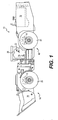
- FIG. 1 is a diagrammatic illustration of an exemplary disclosed machine
- FIG. 2 is a schematic illustration of an exemplary disclosed hydraulic system for the machine of FIG. 1 .
- FIG. 1 illustrates an exemplary machine 10 .
- Machine 10 may be a mobile machine that performs some type of operation associated with an industry such as mining, construction, farming, transportation, or any other industry known in the art.
- machine 10 may embody the “load-haul-dump” wheel loader depicted in FIG. 1 , a conventional wheel loader, a motor grader, a backhoe, an excavator, a passenger vehicle, or any other machine known in the art.
- Machine 10 may include a power source 12 , a work tool 14 , at least one traction device 16 , at least one brake mechanism 18 , and an operator station 20 .
- Power source 12 may embody an internal combustion engine such as, for example, a diesel engine, a gasoline engine, a gaseous fuel-powered engine such as a natural gas engine, or any other type of engine apparent to one skilled in the art. Power source 12 may alternatively embody another source of power such as a fuel cell, a power storage device, or any other suitable source of power.
- an internal combustion engine such as, for example, a diesel engine, a gasoline engine, a gaseous fuel-powered engine such as a natural gas engine, or any other type of engine apparent to one skilled in the art.
- Power source 12 may alternatively embody another source of power such as a fuel cell, a power storage device, or any other suitable source of power.
- Work tool 14 may include any device used to perform a particular task such as, for example, a bucket, a fork arrangement, a blade, a shovel, a ripper, a dump bed, a broom, a snow blower, a propelling device, a cutting device, a grasping device, or any other task-performing device known in the art.
- Work tool 14 may be connected to machine 10 via a direct pivot, via a linkage system, via one or more hydraulic cylinders, via a motor, or in any other appropriate manner.
- Work tool 14 may be configured to pivot, rotate, slide, swing, lift, or move relative to machine 10 in any way known in the art.
- Traction device 16 may include wheels 21 located on each side of machine 10 (only one side shown) and configured to support machine 10 .
- traction device 16 may include tracks, belts or other similar traction devices. It is contemplated that any of wheels 21 on machine 10 may be steerable for maneuvering of machine 10 and/or driven to propel machine 10 .
- Brake mechanism 18 may be configured to retard the motion of machine 10 and may be operably associated with one or more wheels 21 of machine 10 .
- brake mechanism 18 may include a hydraulic pressure-actuated wheel brake such as, for example, a disk brake or a drum brake that is disposed intermediate wheel 21 and a final drive assembly (not shown) of machine 10 .
- pressurized fluid within brake mechanism 18 may be utilized to increase the rolling friction of machine 10 .
- Operator station 20 may be configured to receive input from a machine operator indicative of a desired work tool or machine movement.
- operator station 20 may include one or more operator interface devices 22 embodied as single or multi-axis joysticks located proximal an operator seat, and one or more brake pedals 24 .
- Each operator interface device 22 may be a proportional-type controller configured to position or orient work tool 14 or machine 10 by passing a flow of pilot fluid to a control valve at a rate indicative of a desired velocity.
- brake pedal 24 may be associated with brake mechanism 18 for manual control of brake mechanism 18 .
- pressurized fluid may be directed to brake mechanism 18 such that a degree of brake pedal actuation proportionally controls a pressure of the fluid supplied to brake mechanism 18 .
- operator interface devices may be included within operator station 20 , if desired, such as, for example, wheels, knobs, push-pull devices, switches, and other operator interface devices known in the art.
- machine 10 may also include a hydraulic control system 26 having a plurality of fluid components that cooperate to move work tool 14 , steer and drive wheels 21 , and actuate brake mechanisms 18 .
- hydraulic control system 26 may include a tank 27 holding a supply of fluid, a first circuit 28 and a second circuit 30 both configured to draw fluid from and return fluid to tank 27 .
- First circuit 28 may include a source 32 configured to pressurize a first flow of fluid drawn from tank 27 and to direct the pressurized fluid to a pair of lift cylinders 34 , a tilt cylinder 36 , a pair of ejector cylinders 38 , and a steering cylinder 40 .
- Tank 27 may constitute a reservoir configured to hold a supply of fluid.
- the fluid may include, for example, a dedicated hydraulic oil, an engine lubrication oil, a transmission lubrication oil, or any other fluid known in the art.
- One or more hydraulic systems within machine 10 may draw fluid from and return fluid to tank 27 . It is also contemplated that hydraulic control system 26 may alternatively be connected to multiple separate fluid tanks, if desired.
- Source 32 may embody a variable delivery pump such as a swashplate-type pump configured to draw fluid from tank 27 via a passageway 41 and produce a flow of pressurized fluid, wherein an angle of a swashplate 48 corresponds to a displacement of associated pump pistons (not shown).
- a load sensing valve 50 may selectively communicate fluid exiting source 32 and fluid returning to tank 27 with one or more actuators 52 operatively linked to swashplate 48 such that the angle of swashplate 48 may be controlled in response to a load on source 32 .
- Source 32 may alternatively embody a metering sleeve-type pump wherein a position of a metering sleeve (not shown) corresponds to a delivery rate of the pump, or any other type of variable delivery pump known in the art.
- Source 32 may be drivingly connected to an electric motor 54 of machine 10 by, for example, a countershaft 56 such that an output rotation of motor 54 results in a corresponding input rotation of source 32 .
- source 32 may be indirectly connected to motor 54 via a torque converter (not shown), via a gear box (not shown), or in any other manner known in the art.
- lift cylinders 34 , tilt cylinder 36 , ejector cylinders 38 , and steering cylinder 40 are similar in makeup and function, the description of hydraulic control system 26 will be made with reference to only lift cylinders 34 . It is to be noted, however, that the description of lift cylinders 34 may be just as applicable to tilt cylinder 36 , ejector cylinders 38 , and steering cylinder 40 . In addition, the description of lift cylinders 34 may be similarly applicable to a swing actuator (not shown) that may function to swing work tool 14 relative machine 10 , or to any other suitable hydraulic actuator.
- Lift cylinders 34 may each be connected to a frame of machine 10 via a direct pivot, via a linkage system with lift cylinders 34 forming members in the linkage system, or in any other appropriate manner. As illustrated in FIG. 2 , each lift cylinder 34 may include a tube 58 and a piston assembly 60 disposed within tube 58 . Tube 58 may be divided by piston assembly 60 into a first chamber 62 and a second chamber 64 . First and second chambers 62 , 64 may be selectively supplied with pressurized fluid from source 32 and selectively connected with tank 27 to cause piston assembly 60 to displace within tube 58 , thereby changing the effective length of lift cylinder 34 . The expansion and retraction of lift cylinder 34 may assist in moving work tool 14 (or, in the case of steering cylinder 40 , may assist in steering wheels 21 or articulating machine 10 ).
- Piston assembly 60 may be axially aligned with and disposed within tube 58 , and may include a first hydraulic surface 66 and a second hydraulic surface 68 disposed opposite first hydraulic surface 66 .
- An imbalance of force caused by fluid pressure on first and second hydraulic surfaces 66 , 68 may result in movement of piston assembly 60 within tube 58 .
- a force on first hydraulic surface 66 being greater than a force on second hydraulic surface 68 may cause piston assembly 60 to retract within tube 58 to decrease the effective length of lift cylinder 34 .
- piston assembly 60 may displace to increase the effective length of lift cylinder 34 .
- a flow rate of fluid into and out of first and second chambers 62 and 64 may correspond with a velocity of lift cylinder 34
- a pressure of the fluid in contact with first and second hydraulic surfaces 66 and 68 may correspond with an actuation force of lift cylinder 34
- a sealing member (not shown), such as an o-ring, may be connected to piston assembly 60 to restrict a flow of fluid between an internal wall of tube 58 and an outer cylindrical surface of piston assembly 60 .
- Each of lift, tilt, ejector, and steering cylinders 34 - 40 may include an associated control valve to regulate the motion of their related fluid actuators.
- lift cylinder 34 may be associated with a lift control valve 70 ;
- tilt cylinder 36 may be associated with a tilt control valve 72 ;
- ejector cylinder 38 may be associated with an ejector control valve 74 ;
- steering cylinder 40 may be associated with a steering control valve 76 .
- Each of these control valves may be connected to allow pressurized fluid to flow to and drain from their respective actuators via common passageways.
- each of control valves 70 - 76 may be connected in parallel to source 32 by way of a common supply passageway 78 and individual fluid passageways 82 , 84 , 86 , and 88 , respectively.
- each of control valves 70 - 76 may be connected in parallel to tank 27 by way of a common drain passageway 80 and individual fluid passageways 90 , 92 , 94 , and 96 , respectively.
- a priority valve element 98 may be disposed within common supply passageway 78 , between individual fluid passageways 86 and 88 , to provide priority in flow distribution to steering cylinder 40 over lift, tilt, and ejector cylinders 34 - 38 .
- the flow from source 32 may first be directed to steering cylinder 40 , leaving any remaining flow to be divided amongst lift, tilt, and ejector cylinders 34 - 38 .
- lift control valve 70 may include a first chamber supply element (not shown), a first chamber drain element (not shown), a second chamber supply element (not shown), and a second chamber drain element (not shown).
- the first and second chamber supply elements may be connected in parallel to individual fluid passageway 82 to fill their respective chambers with fluid from source 32 , while the first and second chamber drain elements may be connected in parallel to individual fluid passageway 90 to drain the respective chambers of fluid.
- first chamber supply element may be moved to allow the pressurized fluid from source 32 to fill the first chambers of lift cylinders 34 with pressurized fluid via individual fluid passageway 82
- second chamber drain element may be moved to drain fluid from the second chambers of lift cylinders 34 to tank 27 via individual fluid passageway 90
- the second chamber supply element may be moved to fill the second chambers of lift cylinders 34 with pressurized fluid
- the first chamber drain element may be moved to drain fluid from the first chambers of lift cylinders 34 . It is contemplated that both the supply and drain functions may alternatively be performed by a single element associated with the first chamber and a single element associated with the second chamber, or a single element associated with both the first and second chambers, if desired.
- control valves 70 - 76 may be pilot operated to move against a spring bias in response to an operator manipulation of interface devices 22 .
- pressurized fluid from source 32 may be directed from common supply passageway 78 to a common pilot supply passageway 100 by way of a pilot control valve 102 .
- Each operator interface device 22 may receive pilot fluid from common pilot supply passageway 100 via individual pilot supply passageways 104 , 106 , and 108 , respectively, and pass the pilot fluid to the appropriate control valves in response to an operator manipulation.
- Each operator interface device 22 may also drain pilot fluid from the appropriate control valves to tank 27 via individual pilot drain passageways 110 , 112 , and 114 , a common pilot drain passageway 116 , and common drain passageway 80 in response to the operator manipulation.
- the elements of lift, tilt, ejector, and steering control valves 70 - 76 may be moved to specific flow passing positions that correspond to the tilt angle of operator interface devices 22 and result in a desired velocity of the associated cylinder.
- Second circuit 30 may also include a source 42 configured to pressurize fluid drawn from tank 27 via a supply passageway 115 , and direct the pressurized fluid to brake mechanisms 18 , a hydraulic cooler 44 , and a drive motor 46 .
- Source 42 may embody a fixed displacement pump configured to produce a flow of pressurized fluid proportional to a rotational input speed.
- Source 42 may be drivably connected to source 32 by, for example, a countershaft 116 such that an output rotation of source 32 results in a corresponding input rotation of source 42 .
- source 42 may be directly driven by electric motor 54 , if desired. It is contemplated that source 42 may or may or may not be a fixed delivery pump (e.g., a pump that delivers a constant flow rate of pressurized fluid per input revolution).
- Pressurized fluid from source 42 may be directed to brake mechanisms 18 by way of a supply passageway 118 .
- a brake charging valve 120 , one or more accumulators 122 , and a brake control valve 124 may be associated with brake mechanisms 18 and configured to regulate the flow of pressurized fluid from supply passageway 118 to brake mechanisms 18 .
- each accumulator 122 may be fluidly connected to an associated brake mechanism 18 by way of a fluid passageway 126 .
- Accumulators 122 may be selectively filled with pressurized fluid from supply passageway 118 via brake charging valve 120 in anticipation of brake actuation.
- Brake control valve 124 may embody an open center type valve disposed within fluid passageways 126 between brake mechanisms 18 and accumulators 122 and selectively actuated in response to operator manipulation of brake pedal 24 to either direct pressurized fluid from accumulators 122 to brake mechanisms 18 causing deceleration of machine 10 , or to drain the pressurized fluid from brake mechanisms 18 to tank 27 via a passageway (not shown), thereby stopping the deceleration of machine 10 .
- Hydraulic cooler 44 may be disposed with a drain passageway 128 between brake charging valve 120 and tank 27 to cool the fluid flowing through brake charging valve 120 .
- Hydraulic cooler 44 may embody a heat exchanger such as, for example, an air-to-liquid heat exchanger or a liquid-to-liquid heat exchanger configured to facilitate the transfer of heat from the fluid of hydraulic control system 26 to a transfer medium.
- hydraulic cooler 44 may embody a tube and shell type heat exchanger, a corrugated plate type heat exchanger, a tube and fine type heat exchanger, or any other type of heat exchanger known in the art. Because source 42 may be a fixed displacement pump, fluid may always flow through brake charging valve 120 to hydraulic cooler 44 , even when brake mechanisms 18 are not draining. In this manner, hydraulic cooler 44 may function to continuously cool the fluid within hydraulic control system 26 , regardless of brake actuation.
- Drive motor 46 may be connected to supply passageway 118 via a passageway 136 and driven by a fluid pressure differential to rotate a pumping mechanism 138 associated with a transmission unit 132 .
- drive motor 46 may include a first and a second chamber (not shown) located to either side of an impeller (not shown). When the first chamber is filled with pressurized fluid and the second chamber is drained of fluid, the impeller may be urged to rotate in a first direction. Conversely, when the first chamber is drained of fluid and the second chamber is filled with pressurized fluid, the impeller may be urged to rotate in an opposite direction.
- the flow rate of fluid into and out of the first and second chambers may determine an output rotational velocity of drive motor 46 , while a pressure differential across the impeller may determine an output torque.
- Drive motor 46 may be connected to pumping mechanism 138 by way of a countershaft 130 and such that an output rotation of drive motor 46 results in a corresponding action of pumping mechanism 138 .
- Transmission unit 132 may embody, for example, a reducing mechanism associated with traction device 16 .
- transmission unit 132 may be configured to couple an output of power source 12 to drive traction devices 16 and selectively increase or decrease the rotation ratio of traction devices 16 to that of power source 12 by a predetermined amount.
- Pumping mechanism 138 may function to circulate cooling fluid through transmission unit 132 and a transmission heat exchanger (not shown), thereby transferring heat away from transmission unit 132 . It is contemplated that pumping mechanism 138 and transmission unit 132 may be omitted from second circuit 30 , if desired. After exiting drive motor 46 , return fluid may drain to tank 27 by way of drain passageway 134 .
- the disclosed hydraulic system finds potential application in any machine where it is desirable to join multiple hydraulic circuits and utilize common pumps.
- the disclosed hydraulic system may improve efficiency of a machine by reducing the number of fluid pumps driven by a power source and by controlling an output of one or more of the pumps according to a system load. Operation of hydraulic control system 26 will now be described.
- the pressurized fluid may be directed through common supply passageway 78 and control valves 70 - 76 to lift cylinders 34 , tilt cylinder 36 , ejector cylinders 38 , and steering cylinder 40 . If the pressure or the flow rate of the fluid from source 32 falls below a predetermined threshold value, priority valve element 98 may move to divert a greater portion of the flow from cylinders 34 - 38 to steering cylinder 40 . Simultaneous to the direction of pressurized fluid to cylinders 34 - 40 , fluid from common supply passageway 78 may be directed to operator interface devices 22 via pilot control valve 102 and common pilot supply passageway 100 . The manipulation of operator interface devices 22 may then result in the pilot fluid from common pilot supply passageway 100 flowing to selective valve elements of control valves 70 - 76 , thereby selectively initiating actuation of cylinders 34 - 40 at a corresponding desired velocity.
- the loading of first circuit 28 may control the output of source 32 . That is, pressurized fluid indicative of the loading on cylinders 34 - 40 may be redirected back to actuators 52 associated with swashplate 48 of source 32 via load sensing valve 50 . Load sensing valve 50 may then use the pressure of the redirected fluid to control the angle of swashplate 48 and thus the output of source 32 .
- source 42 of second circuit 30 may also be driven to pressurize fluid drawn from tank 27 .
- the pressurized fluid from source 42 may be directed through supply passageway 118 to drive motor 46 and to brake mechanisms 18 by way of brake charging valve 120 , accumulators 122 , and brake control valve 124 . Thereafter the fluid may be recirculated back to tank 27 .
- the flow of return fluid from brake charging valve 120 may be directed through hydraulic cooler 44 , where the fluid may be cooled to a predetermined temperature. Because tank 27 may be common to both first and second circuits 28 , 30 , hydraulic cooler 44 may reduce the temperature of the fluid within both circuits.
- Hydraulic control system 26 may improve efficiency and lower the cost of machine 10 by integrating multiple hydraulic circuits.
- an implement system cylinders 34 - 38
- a steering system cylinder 40
- a pilot fluid system pilot fluid supplied to operator interface devices 22
- first circuit 28 powered by a common source (source 32 )
- second circuit 30 powered by a common source (source 42 )
- drive motor 46 drive motor 46
- both sources 32 and 42 may be driven by common motor 54 , additional driving components of machine 10 may be eliminated. Also, because source 32 may embody a variable delivery type of pump with load sensing capabilities, source 32 may only be operated as necessary, further improving the efficiency of machine 10 while ensuring operation of cylinders 34 - 40 under a range of conditions. Additionally, because source 42 may embody a fixed delivery type of pump the fluid of hydraulic control system 26 may be continuously circulated through hydraulic cooler 44 for consistent cooling of the fluid, regardless of other operations performed by the same fluid circuit.
Landscapes
- Engineering & Computer Science (AREA)
- General Engineering & Computer Science (AREA)
- Physics & Mathematics (AREA)
- Fluid Mechanics (AREA)
- Mining & Mineral Resources (AREA)
- Civil Engineering (AREA)
- Structural Engineering (AREA)
- Mechanical Engineering (AREA)
- Fluid-Pressure Circuits (AREA)
Abstract
A hydraulic system for a machine having a work tool is disclosed. The hydraulic system has a tank configured to hold a supply of fluid, and a source configured to pressurize the fluid from the tank. The hydraulic system also has a first hydraulic actuator configured to receive pressurized fluid from the source and effect movement of the work tool, and a second hydraulic actuator configured to receive pressurized fluid from the source and effect steering of the machine. The hydraulic system additionally has at least one operator interface device configured to receive pressurized fluid from the source and selectively meter the pressurized fluid to a control valve to effect movement of the control valve.
Description
- This invention was made with government support under the terms of Contract No. DE-FC36-01GO11095 awarded by the Department of Energy. The government may have certain rights in this invention.
- The present disclosure relates generally to a hydraulic system and, more particularly, to an integrated hydraulic system having load-sensing capabilities.
- Machines such as motor graders, wheel loaders, backhoes, excavators, haul trucks, and other machines known in the art often include multiple separate hydraulic systems. For example, a machine may include an implement system that utilizes pressurized fluid to move a work tool of the machine, and a steering system having one or more hydraulic actuators associated with a traction device to effect maneuvering of the machine. The machine may also include a brake system that decelerates the machine, a hydraulic drive system for propelling the machine, and a cooling system that cools the fluid circulated through each of the machine's hydraulic systems. Each of these separate systems may include a fluid-pressurizing pump that derives power from the machine's primary power source and generates an associated efficiency loss for the power source.
- In order to minimize the efficiency loss of the power source and overall cost of the machine, some of the separate systems may be integrated to receive pressurized fluid from a single common pump. One such integrated system is described in U.S. Pat. No. 4,663,936 (the '936 patent) issued to Morgan on May 12, 1987. The '963 patent describes a flow control system having a common engine-driven pump, a load sensing priority flow control valve, a priority load circuit for supplying pressurized fluid to a steering cylinder, and an auxiliary load circuit for powering a hydraulic cylinder. In order to prevent stalling of the engine during low engine speed situations, flow through the auxiliary load circuit is unrestricted, thereby preventing actuation of the hydraulic cylinder. During high engine speed situations, flow through the auxiliary load circuit is restricted to increase the pressure therein allowing actuation of the hydraulic cylinder.
- Although the flow control system of the '936 patent may lower machine efficiency losses by providing a single pump that is common to two separate fluid circuits, the pump of the '936 patent could be operated more efficiently. Specifically, because the output of the pump is not controlled according to system load, but instead is directly related to engine speed, there may be situations where the output of the pump exceeds system demand. In these situations, efficiency losses associated with the fluid system of the '936 patent may increase. In addition, during situations of low engine speed, operation of the hydraulic cylinder may be inconveniently impossible. Further, although the flow control system of '936 patent may eliminate one pump from the engine, there may be additional pumps associated with other systems of the engine that are inefficiently separate from the integrated flow control system.
- The disclosed hydraulic system is directed to overcoming one or more of the problems set forth above.
- In one aspect, the present disclosure is directed to a hydraulic system for a machine having a work tool. The hydraulic system includes a tank configured to hold a supply of fluid, and a source configured to pressurize the fluid from the tank. The hydraulic system also includes a first hydraulic actuator configured to receive pressurized fluid from the source and effect movement of the work tool, and a second hydraulic actuator configured to receive pressurized fluid from the source and effect steering of the machine. The hydraulic system additionally includes at least one operator interface device configured to receive pressurized fluid from the source and selectively meter the pressurized fluid to a control valve to effect movement of the control valve.
- In another aspect, the present disclosure is directed to a hydraulic system for a machine having a traction device. The hydraulic system includes a tank configured to hold a supply of fluid, and a source configured to pressurize the fluid from the tank. The hydraulic system also includes a hydraulic braking mechanism configured to receive pressurized fluid from the source and effect deceleration of the traction device. The hydraulic system additionally includes a hydraulic drive motor associated with a transmission unit and being configured to receive pressurized fluid from the source.
- In yet another aspect, the present disclosure is directed to a method of operating a hydraulic system. The method includes pressurizing a fluid within a common circuit, and directing the pressurized fluid to a first hydraulic actuator within the common circuit to effect movement of a work tool. The method also includes directing the pressurized fluid to a second hydraulic actuator within the common circuit to effect steering of a machine, and directing the pressurized fluid to at least one operator interface device within the common circuit. The method further includes selectively metering pressurized fluid from the at least one operator interface device to effect movement of a control valve.
- In yet another aspect, the present disclosure is directed to another method of operating a hydraulic system. The method includes pressurizing a fluid within a circuit and directing the pressurized fluid from the circuit to a hydraulic braking mechanism to effect deceleration of a traction device. The method also includes directing the pressurized fluid from the circuit to a hydraulic drive motor associated with a transmission unit.
-
FIG. 1 is a diagrammatic illustration of an exemplary disclosed machine; and -
FIG. 2 is a schematic illustration of an exemplary disclosed hydraulic system for the machine ofFIG. 1 . -
FIG. 1 illustrates anexemplary machine 10.Machine 10 may be a mobile machine that performs some type of operation associated with an industry such as mining, construction, farming, transportation, or any other industry known in the art. For example,machine 10 may embody the “load-haul-dump” wheel loader depicted inFIG. 1 , a conventional wheel loader, a motor grader, a backhoe, an excavator, a passenger vehicle, or any other machine known in the art.Machine 10 may include apower source 12, awork tool 14, at least onetraction device 16, at least onebrake mechanism 18, and anoperator station 20. -
Power source 12 may embody an internal combustion engine such as, for example, a diesel engine, a gasoline engine, a gaseous fuel-powered engine such as a natural gas engine, or any other type of engine apparent to one skilled in the art.Power source 12 may alternatively embody another source of power such as a fuel cell, a power storage device, or any other suitable source of power. - Numerous
different work tools 14 may be attachable to asingle machine 10 and controllable fromoperator station 20.Work tool 14 may include any device used to perform a particular task such as, for example, a bucket, a fork arrangement, a blade, a shovel, a ripper, a dump bed, a broom, a snow blower, a propelling device, a cutting device, a grasping device, or any other task-performing device known in the art.Work tool 14 may be connected tomachine 10 via a direct pivot, via a linkage system, via one or more hydraulic cylinders, via a motor, or in any other appropriate manner.Work tool 14 may be configured to pivot, rotate, slide, swing, lift, or move relative tomachine 10 in any way known in the art. -
Traction device 16 may include wheels 21 located on each side of machine 10 (only one side shown) and configured to supportmachine 10. Alternately,traction device 16 may include tracks, belts or other similar traction devices. It is contemplated that any of wheels 21 onmachine 10 may be steerable for maneuvering ofmachine 10 and/or driven topropel machine 10. -
Brake mechanism 18 may be configured to retard the motion ofmachine 10 and may be operably associated with one or more wheels 21 ofmachine 10. In one embodiment,brake mechanism 18 may include a hydraulic pressure-actuated wheel brake such as, for example, a disk brake or a drum brake that is disposed intermediate wheel 21 and a final drive assembly (not shown) ofmachine 10. When actuated, pressurized fluid withinbrake mechanism 18 may be utilized to increase the rolling friction ofmachine 10. -
Operator station 20 may be configured to receive input from a machine operator indicative of a desired work tool or machine movement. Specifically,operator station 20 may include one or moreoperator interface devices 22 embodied as single or multi-axis joysticks located proximal an operator seat, and one ormore brake pedals 24. Eachoperator interface device 22 may be a proportional-type controller configured to position ororient work tool 14 ormachine 10 by passing a flow of pilot fluid to a control valve at a rate indicative of a desired velocity. Similarly,brake pedal 24 may be associated withbrake mechanism 18 for manual control ofbrake mechanism 18. Asbrake pedal 24 is depressed by a machine operator, pressurized fluid may be directed tobrake mechanism 18 such that a degree of brake pedal actuation proportionally controls a pressure of the fluid supplied tobrake mechanism 18. It is contemplated that additional and/or different operator interface devices may be included withinoperator station 20, if desired, such as, for example, wheels, knobs, push-pull devices, switches, and other operator interface devices known in the art. - As illustrated in
FIG. 2 ,machine 10 may also include ahydraulic control system 26 having a plurality of fluid components that cooperate to movework tool 14, steer and drive wheels 21, and actuatebrake mechanisms 18. Specifically,hydraulic control system 26 may include atank 27 holding a supply of fluid, afirst circuit 28 and asecond circuit 30 both configured to draw fluid from and return fluid totank 27.First circuit 28 may include asource 32 configured to pressurize a first flow of fluid drawn fromtank 27 and to direct the pressurized fluid to a pair oflift cylinders 34, atilt cylinder 36, a pair ofejector cylinders 38, and asteering cylinder 40. -
Tank 27 may constitute a reservoir configured to hold a supply of fluid. The fluid may include, for example, a dedicated hydraulic oil, an engine lubrication oil, a transmission lubrication oil, or any other fluid known in the art. One or more hydraulic systems withinmachine 10 may draw fluid from and return fluid totank 27. It is also contemplated thathydraulic control system 26 may alternatively be connected to multiple separate fluid tanks, if desired. -
Source 32 may embody a variable delivery pump such as a swashplate-type pump configured to draw fluid fromtank 27 via apassageway 41 and produce a flow of pressurized fluid, wherein an angle of aswashplate 48 corresponds to a displacement of associated pump pistons (not shown). Aload sensing valve 50 may selectively communicatefluid exiting source 32 and fluid returning totank 27 with one ormore actuators 52 operatively linked toswashplate 48 such that the angle ofswashplate 48 may be controlled in response to a load onsource 32.Source 32 may alternatively embody a metering sleeve-type pump wherein a position of a metering sleeve (not shown) corresponds to a delivery rate of the pump, or any other type of variable delivery pump known in the art.Source 32 may be drivingly connected to anelectric motor 54 ofmachine 10 by, for example, acountershaft 56 such that an output rotation ofmotor 54 results in a corresponding input rotation ofsource 32. Alternatively,source 32 may be indirectly connected tomotor 54 via a torque converter (not shown), via a gear box (not shown), or in any other manner known in the art. - Because
lift cylinders 34,tilt cylinder 36,ejector cylinders 38, and steeringcylinder 40 are similar in makeup and function, the description ofhydraulic control system 26 will be made with reference toonly lift cylinders 34. It is to be noted, however, that the description oflift cylinders 34 may be just as applicable to tiltcylinder 36,ejector cylinders 38, and steeringcylinder 40. In addition, the description oflift cylinders 34 may be similarly applicable to a swing actuator (not shown) that may function to swingwork tool 14relative machine 10, or to any other suitable hydraulic actuator. - Lift
cylinders 34 may each be connected to a frame ofmachine 10 via a direct pivot, via a linkage system withlift cylinders 34 forming members in the linkage system, or in any other appropriate manner. As illustrated inFIG. 2 , eachlift cylinder 34 may include atube 58 and apiston assembly 60 disposed withintube 58.Tube 58 may be divided bypiston assembly 60 into afirst chamber 62 and asecond chamber 64. First andsecond chambers source 32 and selectively connected withtank 27 to causepiston assembly 60 to displace withintube 58, thereby changing the effective length oflift cylinder 34. The expansion and retraction oflift cylinder 34 may assist in moving work tool 14 (or, in the case of steeringcylinder 40, may assist in steering wheels 21 or articulating machine 10). -
Piston assembly 60 may be axially aligned with and disposed withintube 58, and may include a firsthydraulic surface 66 and a secondhydraulic surface 68 disposed opposite firsthydraulic surface 66. An imbalance of force caused by fluid pressure on first and secondhydraulic surfaces piston assembly 60 withintube 58. For example, a force on firsthydraulic surface 66 being greater than a force on secondhydraulic surface 68 may causepiston assembly 60 to retract withintube 58 to decrease the effective length oflift cylinder 34. Similarly, when a force on secondhydraulic surface 68 is greater than a force on firsthydraulic surface 66,piston assembly 60 may displace to increase the effective length oflift cylinder 34. A flow rate of fluid into and out of first andsecond chambers lift cylinder 34, while a pressure of the fluid in contact with first and secondhydraulic surfaces lift cylinder 34. A sealing member (not shown), such as an o-ring, may be connected topiston assembly 60 to restrict a flow of fluid between an internal wall oftube 58 and an outer cylindrical surface ofpiston assembly 60. - Each of lift, tilt, ejector, and steering cylinders 34-40 may include an associated control valve to regulate the motion of their related fluid actuators. Specifically,
lift cylinder 34 may be associated with alift control valve 70;tilt cylinder 36 may be associated with atilt control valve 72;ejector cylinder 38 may be associated with anejector control valve 74; and steeringcylinder 40 may be associated with asteering control valve 76. Each of these control valves may be connected to allow pressurized fluid to flow to and drain from their respective actuators via common passageways. In particular, each of control valves 70-76 may be connected in parallel to source 32 by way of acommon supply passageway 78 andindividual fluid passageways tank 27 by way of acommon drain passageway 80 andindividual fluid passageways priority valve element 98 may be disposed withincommon supply passageway 78, between individualfluid passageways cylinder 40 over lift, tilt, and ejector cylinders 34-38. In other words, the flow fromsource 32 may first be directed to steeringcylinder 40, leaving any remaining flow to be divided amongst lift, tilt, and ejector cylinders 34-38. - Because the elements of control valves 70-76 may be similar and function in a related manner, the operation of only
lift control valve 70 will be discussed in this disclosure. In one example,lift control valve 70 may include a first chamber supply element (not shown), a first chamber drain element (not shown), a second chamber supply element (not shown), and a second chamber drain element (not shown). The first and second chamber supply elements may be connected in parallel toindividual fluid passageway 82 to fill their respective chambers with fluid fromsource 32, while the first and second chamber drain elements may be connected in parallel toindividual fluid passageway 90 to drain the respective chambers of fluid. To extendlift cylinders 34, first chamber supply element may be moved to allow the pressurized fluid fromsource 32 to fill the first chambers oflift cylinders 34 with pressurized fluid viaindividual fluid passageway 82, while the second chamber drain element may be moved to drain fluid from the second chambers oflift cylinders 34 totank 27 viaindividual fluid passageway 90. To movelift cylinders 34 in the opposite direction, the second chamber supply element may be moved to fill the second chambers oflift cylinders 34 with pressurized fluid, while the first chamber drain element may be moved to drain fluid from the first chambers oflift cylinders 34. It is contemplated that both the supply and drain functions may alternatively be performed by a single element associated with the first chamber and a single element associated with the second chamber, or a single element associated with both the first and second chambers, if desired. - The supply and drain elements of control valves 70-76 may be pilot operated to move against a spring bias in response to an operator manipulation of
interface devices 22. In particular, pressurized fluid fromsource 32 may be directed fromcommon supply passageway 78 to a commonpilot supply passageway 100 by way of apilot control valve 102. Eachoperator interface device 22 may receive pilot fluid from commonpilot supply passageway 100 via individualpilot supply passageways operator interface device 22 may also drain pilot fluid from the appropriate control valves totank 27 via individualpilot drain passageways pilot drain passageway 116, andcommon drain passageway 80 in response to the operator manipulation. In this manner, the elements of lift, tilt, ejector, and steering control valves 70-76 may be moved to specific flow passing positions that correspond to the tilt angle ofoperator interface devices 22 and result in a desired velocity of the associated cylinder. -
Second circuit 30 may also include asource 42 configured to pressurize fluid drawn fromtank 27 via asupply passageway 115, and direct the pressurized fluid to brakemechanisms 18, ahydraulic cooler 44, and adrive motor 46.Source 42 may embody a fixed displacement pump configured to produce a flow of pressurized fluid proportional to a rotational input speed.Source 42 may be drivably connected to source 32 by, for example, acountershaft 116 such that an output rotation ofsource 32 results in a corresponding input rotation ofsource 42. Alternatively,source 42 may be directly driven byelectric motor 54, if desired. It is contemplated thatsource 42 may or may or may not be a fixed delivery pump (e.g., a pump that delivers a constant flow rate of pressurized fluid per input revolution). - Pressurized fluid from
source 42 may be directed to brakemechanisms 18 by way of asupply passageway 118. Abrake charging valve 120, one ormore accumulators 122, and abrake control valve 124 may be associated withbrake mechanisms 18 and configured to regulate the flow of pressurized fluid fromsupply passageway 118 to brakemechanisms 18. Specifically, eachaccumulator 122 may be fluidly connected to an associatedbrake mechanism 18 by way of afluid passageway 126.Accumulators 122 may be selectively filled with pressurized fluid fromsupply passageway 118 viabrake charging valve 120 in anticipation of brake actuation.Brake control valve 124 may embody an open center type valve disposed withinfluid passageways 126 betweenbrake mechanisms 18 andaccumulators 122 and selectively actuated in response to operator manipulation ofbrake pedal 24 to either direct pressurized fluid fromaccumulators 122 to brakemechanisms 18 causing deceleration ofmachine 10, or to drain the pressurized fluid frombrake mechanisms 18 totank 27 via a passageway (not shown), thereby stopping the deceleration ofmachine 10. -
Hydraulic cooler 44 may be disposed with adrain passageway 128 betweenbrake charging valve 120 andtank 27 to cool the fluid flowing throughbrake charging valve 120.Hydraulic cooler 44 may embody a heat exchanger such as, for example, an air-to-liquid heat exchanger or a liquid-to-liquid heat exchanger configured to facilitate the transfer of heat from the fluid ofhydraulic control system 26 to a transfer medium. For example,hydraulic cooler 44 may embody a tube and shell type heat exchanger, a corrugated plate type heat exchanger, a tube and fine type heat exchanger, or any other type of heat exchanger known in the art. Becausesource 42 may be a fixed displacement pump, fluid may always flow throughbrake charging valve 120 tohydraulic cooler 44, even whenbrake mechanisms 18 are not draining. In this manner,hydraulic cooler 44 may function to continuously cool the fluid withinhydraulic control system 26, regardless of brake actuation. - Drive
motor 46 may be connected to supplypassageway 118 via apassageway 136 and driven by a fluid pressure differential to rotate apumping mechanism 138 associated with atransmission unit 132. Specifically, drivemotor 46 may include a first and a second chamber (not shown) located to either side of an impeller (not shown). When the first chamber is filled with pressurized fluid and the second chamber is drained of fluid, the impeller may be urged to rotate in a first direction. Conversely, when the first chamber is drained of fluid and the second chamber is filled with pressurized fluid, the impeller may be urged to rotate in an opposite direction. The flow rate of fluid into and out of the first and second chambers may determine an output rotational velocity ofdrive motor 46, while a pressure differential across the impeller may determine an output torque. Drivemotor 46 may be connected topumping mechanism 138 by way of acountershaft 130 and such that an output rotation ofdrive motor 46 results in a corresponding action ofpumping mechanism 138. -
Transmission unit 132 may embody, for example, a reducing mechanism associated withtraction device 16. In particular,transmission unit 132 may be configured to couple an output ofpower source 12 to drivetraction devices 16 and selectively increase or decrease the rotation ratio oftraction devices 16 to that ofpower source 12 by a predetermined amount.Pumping mechanism 138 may function to circulate cooling fluid throughtransmission unit 132 and a transmission heat exchanger (not shown), thereby transferring heat away fromtransmission unit 132. It is contemplated thatpumping mechanism 138 andtransmission unit 132 may be omitted fromsecond circuit 30, if desired. After exitingdrive motor 46, return fluid may drain totank 27 by way ofdrain passageway 134. - The disclosed hydraulic system finds potential application in any machine where it is desirable to join multiple hydraulic circuits and utilize common pumps. The disclosed hydraulic system may improve efficiency of a machine by reducing the number of fluid pumps driven by a power source and by controlling an output of one or more of the pumps according to a system load. Operation of
hydraulic control system 26 will now be described. - As
source 32 offirst circuit 28 pressurizes fluid drawn fromtank 27, the pressurized fluid may be directed throughcommon supply passageway 78 and control valves 70-76 to liftcylinders 34,tilt cylinder 36,ejector cylinders 38, and steeringcylinder 40. If the pressure or the flow rate of the fluid fromsource 32 falls below a predetermined threshold value,priority valve element 98 may move to divert a greater portion of the flow from cylinders 34-38 to steeringcylinder 40. Simultaneous to the direction of pressurized fluid to cylinders 34-40, fluid fromcommon supply passageway 78 may be directed tooperator interface devices 22 viapilot control valve 102 and commonpilot supply passageway 100. The manipulation ofoperator interface devices 22 may then result in the pilot fluid from commonpilot supply passageway 100 flowing to selective valve elements of control valves 70-76, thereby selectively initiating actuation of cylinders 34-40 at a corresponding desired velocity. - The loading of
first circuit 28 may control the output ofsource 32. That is, pressurized fluid indicative of the loading on cylinders 34-40 may be redirected back toactuators 52 associated withswashplate 48 ofsource 32 viaload sensing valve 50.Load sensing valve 50 may then use the pressure of the redirected fluid to control the angle ofswashplate 48 and thus the output ofsource 32. - As
source 32 offirst circuit 28 is rotated bymotor 54,source 42 ofsecond circuit 30 may also be driven to pressurize fluid drawn fromtank 27. The pressurized fluid fromsource 42 may be directed throughsupply passageway 118 to drivemotor 46 and to brakemechanisms 18 by way ofbrake charging valve 120,accumulators 122, andbrake control valve 124. Thereafter the fluid may be recirculated back totank 27. However, prior to reachingtank 27, the flow of return fluid frombrake charging valve 120 may be directed through hydraulic cooler 44, where the fluid may be cooled to a predetermined temperature. Becausetank 27 may be common to both first andsecond circuits hydraulic cooler 44 may reduce the temperature of the fluid within both circuits. -
Hydraulic control system 26 may improve efficiency and lower the cost ofmachine 10 by integrating multiple hydraulic circuits. In particular, by combining an implement system (cylinders 34-38), a steering system (cylinder 40), and a pilot fluid system (pilot fluid supplied to operator interface devices 22) into a single circuit (first circuit 28) powered by a common source (source 32), two sources may be eliminated frommachine 10. In addition, by combining a braking system (brake mechanisms 18), a fluid cooling system (hydraulic cooler 44), and a drive system (drive motor 46) into a single circuit (second circuit 30) powered by a common source (source 42), two more sources may be eliminated frompower source 12. Further, because bothsources common motor 54, additional driving components ofmachine 10 may be eliminated. Also, becausesource 32 may embody a variable delivery type of pump with load sensing capabilities,source 32 may only be operated as necessary, further improving the efficiency ofmachine 10 while ensuring operation of cylinders 34-40 under a range of conditions. Additionally, becausesource 42 may embody a fixed delivery type of pump the fluid ofhydraulic control system 26 may be continuously circulated through hydraulic cooler 44 for consistent cooling of the fluid, regardless of other operations performed by the same fluid circuit. - It will be apparent to those skilled in the art that various modifications and variations can be made to the hydraulic system of the present disclosure. Other embodiments of the hydraulic system will be apparent to those skilled in the art from consideration of the specification and practice of the invention disclosed herein. It is intended that the specification and examples be considered as exemplary only, with a true scope of the invention being indicated by the following claims and their equivalents.
Claims (31)
1. A hydraulic system for a machine having a work tool, comprising:
a tank configured to hold a supply of fluid;
a source configured to pressurize the fluid from the tank;
a first hydraulic actuator configured to receive pressurized fluid from the source and effect movement of the work tool;
a second hydraulic actuator configured to receive pressurized fluid from the source and effect steering of the machine; and
at least one operator interface device configured to receive pressurized fluid from the source and selectively meter the pressurized fluid to a control valve to effect movement of the control valve.
2. The hydraulic system of claim 1 , wherein movement of the control valve affects filling and draining of the first hydraulic actuator.
3. The hydraulic system of claim 1 , wherein movement of the control valve affects filling and draining of the second hydraulic actuator.
4. The hydraulic system of claim 1 , wherein the source is a variable delivery pump.
5. The hydraulic system of claim 4 , further including a load-sensing valve in fluid communication with the source and configured to control a delivery of the source in response to a load on the hydraulic system.
6. The hydraulic system of claim 1 , further including a priority valve configured to give flow priority to the second hydraulic actuator.
7. The hydraulic system of claim 1 , further including a pilot control valve configured to regulate the flow of pressurized fluid from the source to the operator interface device.
8. The hydraulic system of claim 1 , further including an electric motor configured to drive the source.
9. The hydraulic system of claim 1 , further including:
a second source configured to pressurize the fluid from the tank;
a hydraulic braking mechanism configured to receive pressurized fluid from the second source and effect deceleration of a traction device; and
a hydraulic motor associated with a transmission unit and being configured to receive pressurized fluid from the second source.
10. The hydraulic system of claim 9 , wherein the source and the second source are operatively connected to a common countershaft.
11. The hydraulic system of claim 9 , further including a hydraulic cooler configured to cool the pressurized fluid from the second source before it drains to the tank.
12. The hydraulic system of claim 11 , wherein the second source is a fixed delivery pump configured to direct a flow of pressurized fluid though the hydraulic cooler during operation of the machine.
13. The hydraulic system of claim 11 , wherein the hydraulic cooler is disposed between the hydraulic braking mechanism and the tank.
14. The hydraulic system of claim 9 , further including:
a brake charging valve disposed between the source and the hydraulic braking mechanism;
at least one accumulator in selective fluid communication with the brake charging valve and the hydraulic braking mechanism; and
a brake control valve disposed between the at least one accumulator and the hydraulic braking mechanism.
15. A hydraulic system for a machine having a traction device, comprising:
a tank configured to hold a supply of fluid;
a source configured to pressurize the fluid from the tank;
a hydraulic braking mechanism configured to receive pressurized fluid from the source and effect deceleration of the traction device; and
a hydraulic motor configured to receive pressurized fluid from the second source and drive a transmission pump for circulating cooling fluid through a transmission unit.
16. The hydraulic system of claim 15 , further including a hydraulic cooler configured to cool the pressurized fluid from the source before it drains to the tank.
17. The hydraulic system of claim 16 , wherein the source is a fixed delivery pump configured to direct a flow of pressurized fluid though the hydraulic cooler during operation of the machine.
18. The hydraulic system of claim 16 , wherein the hydraulic cooler is disposed between the hydraulic braking mechanism and the tank.
19. The hydraulic system of claim 15 , further including:
a brake charging valve disposed between the source and the hydraulic braking mechanism;
at least one accumulator in selective fluid communication with the brake charging valve and the hydraulic braking mechanism; and
a brake control valve disposed between the at least one accumulator and the hydraulic braking mechanism.
20. A method of operating a hydraulic system, comprising:
pressurizing a fluid within a common circuit;
directing the pressurized fluid to a first hydraulic actuator within the common circuit to effect movement of a work tool;
directing the pressurized fluid to a second hydraulic actuator within the common circuit to effect steering of a machine;
directing the pressurized fluid to at least one operator interface device within the common circuit; and
selectively metering pressurized fluid from the at least one operator interface device to effect movement of a control valve.
21. The method of claim 20 , wherein movement of the control valve affects filling and draining of at least one of the first and second hydraulic actuators.
22. The method of claim 20 , further including:
sensing a load on the hydraulic system; and
in response to the sensed load, varying a rate at which the fluid is pressurized.
23. The method of claim 20 , wherein directing the pressurized fluid to the first and second hydraulic actuators includes:
first directing the pressurized fluid to the second hydraulic actuator; and
then directing a remaining flow of the pressurized fluid to the first hydraulic actuator.
24. The method of claim 20 , further including regulating the flow of pressurized fluid to the at least one operator interface device.
25. The method of claim 20 , further including:
pressurizing a fluid within a second circuit;
directing the pressurized fluid from the second circuit to a hydraulic braking mechanism to effect deceleration of a traction device; and
directing the pressurized fluid from the second circuit to a hydraulic drive motor associated with a transmission unit.
26. The method of claim 25 , further including driving a source of the pressurized fluid in the second circuit with the source of pressurized fluid in the common circuit.
27. The method of claim 25 , further including cooling the pressurized fluid in the second circuit.
28. The method of claim 27 , wherein cooling the fluid in the second circuit results in cooling of the fluid in the first circuit.
29. A method of operating a hydraulic system, comprising:
pressurizing a fluid within a circuit;
directing the pressurized fluid from the circuit to a hydraulic braking mechanism to effect deceleration of a traction device;
directing the pressurized fluid from the circuit to a hydraulic drive motor coupled to a transmission pump; and
driving the transmission pump to circulate cooling fluid through the transmission unit.
30. The method of claim 29 , further including cooling the pressurized fluid in the circuit.
31. A machine having a work tool, the machine comprising:
a power source configured to produce a power output;
at least one traction device configured to propel the machine;
a tank configured to hold a supply of fluid;
a variable delivery pump operatively driven by the power source and configured to pressurize the fluid from the tank;
a first hydraulic actuator configured to receive pressurized fluid from the variable delivery pump and effect movement of the work tool;
a second hydraulic actuator configured to receive pressurized fluid from the variable delivery pump and effect steering of the machine;
at least one operator interface device configured to receive pressurized fluid from the variable delivery pump and selectively meter the pressurized fluid to a control valve to effect movement of the control valve;
a fixed delivery pump operatively driven by the first source and configured to pressurize the fluid from the tank;
a hydraulic braking mechanism configured to receive pressurized fluid from the fixed delivery pump and effect deceleration of the machine;
a hydraulic drive motor associated with a transmission unit and being configured to receive pressurized fluid from the fixed delivery pump; and
a hydraulic cooler configured to cool the pressurized fluid from the fixed delivery pump before it drains to the tank.
Priority Applications (1)
| Application Number | Priority Date | Filing Date | Title |
|---|---|---|---|
| US11/392,771 US20070227135A1 (en) | 2006-03-30 | 2006-03-30 | Integrated load-sensing hydraulic system |
Applications Claiming Priority (1)
| Application Number | Priority Date | Filing Date | Title |
|---|---|---|---|
| US11/392,771 US20070227135A1 (en) | 2006-03-30 | 2006-03-30 | Integrated load-sensing hydraulic system |
Publications (1)
| Publication Number | Publication Date |
|---|---|
| US20070227135A1 true US20070227135A1 (en) | 2007-10-04 |
Family
ID=38556852
Family Applications (1)
| Application Number | Title | Priority Date | Filing Date |
|---|---|---|---|
| US11/392,771 Abandoned US20070227135A1 (en) | 2006-03-30 | 2006-03-30 | Integrated load-sensing hydraulic system |
Country Status (1)
| Country | Link |
|---|---|
| US (1) | US20070227135A1 (en) |
Cited By (7)
| Publication number | Priority date | Publication date | Assignee | Title |
|---|---|---|---|---|
| US20110146261A1 (en) * | 2009-12-23 | 2011-06-23 | Caterpillar Inc. | System and method for controlling an electro-hydraulic charging system |
| CN102536761A (en) * | 2011-12-26 | 2012-07-04 | 中联重科股份有限公司 | Power control system and control method for construction machinery and its non-electrically controlled hydraulic pump |
| US8766466B2 (en) * | 2011-10-31 | 2014-07-01 | Aquantis, Inc. | Submerged electricity generation plane with marine current-driven rotors |
| CN104179734A (en) * | 2014-08-27 | 2014-12-03 | 浙江德泰机电工程有限公司 | Constant-pressure control device and method for hydraulic pump |
| US20150040553A1 (en) * | 2012-05-01 | 2015-02-12 | Hitachi Construction Machinery Co., Ltd. | Hybrid working machine |
| EP2901025A4 (en) * | 2012-09-28 | 2016-06-22 | Volvo Constr Equip Ab | DOUBLE PRIORITY VALVE |
| EP3832033B1 (en) | 2019-11-26 | 2023-08-23 | J.C. Bamford Excavators Limited | Hydraulic system |
Citations (22)
| Publication number | Priority date | Publication date | Assignee | Title |
|---|---|---|---|---|
| US3230699A (en) * | 1964-01-21 | 1966-01-25 | Sundstrand Corp | Hydrostatic transmission |
| US3355994A (en) * | 1966-01-13 | 1967-12-05 | New York Air Brake Co | Hydraulic system |
| US3866419A (en) * | 1973-09-06 | 1975-02-18 | Parker Hannifin Corp | Integrated pressure compensated load sensing system |
| US4005636A (en) * | 1975-02-13 | 1977-02-01 | J. I. Case Company | Hydraulic system for a working machine |
| US4215720A (en) * | 1978-10-02 | 1980-08-05 | General Signal Corporation | Fluid control valve system |
| US4317331A (en) * | 1978-11-28 | 1982-03-02 | Kabushiki Kaisha Komatsu Seisakusho | Hydraulic circuit for a hydraulically driven vehicle |
| US4343151A (en) * | 1980-05-16 | 1982-08-10 | Caterpillar Tractor Co. | Series - parallel selector for steering and implement |
| US4485623A (en) * | 1981-08-10 | 1984-12-04 | Clark Equipment Company | Vehicle hydraulic system with pump speed control |
| US4663936A (en) * | 1984-06-07 | 1987-05-12 | Eaton Corporation | Load sensing priority system with bypass control |
| US4773216A (en) * | 1985-01-22 | 1988-09-27 | Kanzaki Kokykoki Mfg. Co. Ltd. | Flow divider valve for hydraulic system in working vehicles |
| US4966066A (en) * | 1988-06-24 | 1990-10-30 | Mannesmann Rexroth Gmbh | Load sensing system with increasing priority in series of control valves |
| US5201176A (en) * | 1991-02-07 | 1993-04-13 | Kayaba Industry Co. Ltd. | Hydraulic control circuit and hydraulic control apparatus therefor |
| US5479845A (en) * | 1993-02-17 | 1996-01-02 | Kanzaki Kokyukoki Mfg. Co., Ltd. | Fluid supply assembly for working vehicles |
| US5577435A (en) * | 1996-03-11 | 1996-11-26 | New Holland North America, Inc. | High flow hydraulic circuit for tractors |
| US5615553A (en) * | 1995-06-28 | 1997-04-01 | Case Corporation | Hydraulic circuit with load sensing feature |
| US5896943A (en) * | 1994-02-25 | 1999-04-27 | Danfoss A/S | Hydraulic control system for work vehicles |
| US5927072A (en) * | 1997-04-24 | 1999-07-27 | Caterpillar Inc. | Load sense hydraulic system |
| US6135065A (en) * | 1999-04-09 | 2000-10-24 | Caterpillar Inc. | Cooling system for a machine |
| US6672056B2 (en) * | 2001-05-23 | 2004-01-06 | Linde Aktiengesellschaft | Device for cooling components by means of hydraulic fluid from a hydraulic circuit |
| US6681568B2 (en) * | 2002-03-28 | 2004-01-27 | Caterpillar Inc | Fluid system for two hydraulic circuits having a common source of pressurized fluid |
| US6758266B1 (en) * | 1998-02-27 | 2004-07-06 | Volvo Wheel Loader Ab | Work machine having a hydraulic liquid cooling and heating system |
| US6775966B2 (en) * | 2001-12-18 | 2004-08-17 | New Holland North America, Inc. | Integrated combine reel drive system |
-
2006
- 2006-03-30 US US11/392,771 patent/US20070227135A1/en not_active Abandoned
Patent Citations (22)
| Publication number | Priority date | Publication date | Assignee | Title |
|---|---|---|---|---|
| US3230699A (en) * | 1964-01-21 | 1966-01-25 | Sundstrand Corp | Hydrostatic transmission |
| US3355994A (en) * | 1966-01-13 | 1967-12-05 | New York Air Brake Co | Hydraulic system |
| US3866419A (en) * | 1973-09-06 | 1975-02-18 | Parker Hannifin Corp | Integrated pressure compensated load sensing system |
| US4005636A (en) * | 1975-02-13 | 1977-02-01 | J. I. Case Company | Hydraulic system for a working machine |
| US4215720A (en) * | 1978-10-02 | 1980-08-05 | General Signal Corporation | Fluid control valve system |
| US4317331A (en) * | 1978-11-28 | 1982-03-02 | Kabushiki Kaisha Komatsu Seisakusho | Hydraulic circuit for a hydraulically driven vehicle |
| US4343151A (en) * | 1980-05-16 | 1982-08-10 | Caterpillar Tractor Co. | Series - parallel selector for steering and implement |
| US4485623A (en) * | 1981-08-10 | 1984-12-04 | Clark Equipment Company | Vehicle hydraulic system with pump speed control |
| US4663936A (en) * | 1984-06-07 | 1987-05-12 | Eaton Corporation | Load sensing priority system with bypass control |
| US4773216A (en) * | 1985-01-22 | 1988-09-27 | Kanzaki Kokykoki Mfg. Co. Ltd. | Flow divider valve for hydraulic system in working vehicles |
| US4966066A (en) * | 1988-06-24 | 1990-10-30 | Mannesmann Rexroth Gmbh | Load sensing system with increasing priority in series of control valves |
| US5201176A (en) * | 1991-02-07 | 1993-04-13 | Kayaba Industry Co. Ltd. | Hydraulic control circuit and hydraulic control apparatus therefor |
| US5479845A (en) * | 1993-02-17 | 1996-01-02 | Kanzaki Kokyukoki Mfg. Co., Ltd. | Fluid supply assembly for working vehicles |
| US5896943A (en) * | 1994-02-25 | 1999-04-27 | Danfoss A/S | Hydraulic control system for work vehicles |
| US5615553A (en) * | 1995-06-28 | 1997-04-01 | Case Corporation | Hydraulic circuit with load sensing feature |
| US5577435A (en) * | 1996-03-11 | 1996-11-26 | New Holland North America, Inc. | High flow hydraulic circuit for tractors |
| US5927072A (en) * | 1997-04-24 | 1999-07-27 | Caterpillar Inc. | Load sense hydraulic system |
| US6758266B1 (en) * | 1998-02-27 | 2004-07-06 | Volvo Wheel Loader Ab | Work machine having a hydraulic liquid cooling and heating system |
| US6135065A (en) * | 1999-04-09 | 2000-10-24 | Caterpillar Inc. | Cooling system for a machine |
| US6672056B2 (en) * | 2001-05-23 | 2004-01-06 | Linde Aktiengesellschaft | Device for cooling components by means of hydraulic fluid from a hydraulic circuit |
| US6775966B2 (en) * | 2001-12-18 | 2004-08-17 | New Holland North America, Inc. | Integrated combine reel drive system |
| US6681568B2 (en) * | 2002-03-28 | 2004-01-27 | Caterpillar Inc | Fluid system for two hydraulic circuits having a common source of pressurized fluid |
Cited By (12)
| Publication number | Priority date | Publication date | Assignee | Title |
|---|---|---|---|---|
| US20110146261A1 (en) * | 2009-12-23 | 2011-06-23 | Caterpillar Inc. | System and method for controlling an electro-hydraulic charging system |
| US8844278B2 (en) | 2009-12-23 | 2014-09-30 | Caterpillar Inc. | System and method for controlling an electro-hydraulic charging system |
| US8766466B2 (en) * | 2011-10-31 | 2014-07-01 | Aquantis, Inc. | Submerged electricity generation plane with marine current-driven rotors |
| CN103930669A (en) * | 2011-10-31 | 2014-07-16 | 阿卡蒂斯有限公司 | Multi-megawatt ocean current energy extraction device |
| US9080548B2 (en) | 2011-10-31 | 2015-07-14 | Aquantis, Inc. | Method of controlling depth of a buoyant submersible apparatus in a fluid flow |
| CN102536761A (en) * | 2011-12-26 | 2012-07-04 | 中联重科股份有限公司 | Power control system and control method for construction machinery and its non-electrically controlled hydraulic pump |
| US20150040553A1 (en) * | 2012-05-01 | 2015-02-12 | Hitachi Construction Machinery Co., Ltd. | Hybrid working machine |
| US9702379B2 (en) * | 2012-05-01 | 2017-07-11 | Hitachi Construction Machinery Tierra Co., Ltd. | Hybrid working machine |
| EP2901025A4 (en) * | 2012-09-28 | 2016-06-22 | Volvo Constr Equip Ab | DOUBLE PRIORITY VALVE |
| US10082159B2 (en) | 2012-09-28 | 2018-09-25 | Volvo Construction Equipment Ab | Twin priority valve |
| CN104179734A (en) * | 2014-08-27 | 2014-12-03 | 浙江德泰机电工程有限公司 | Constant-pressure control device and method for hydraulic pump |
| EP3832033B1 (en) | 2019-11-26 | 2023-08-23 | J.C. Bamford Excavators Limited | Hydraulic system |
Similar Documents
| Publication | Publication Date | Title |
|---|---|---|
| US8997476B2 (en) | Hydraulic energy recovery system | |
| US8468818B2 (en) | HST cooling circuit | |
| US7412827B2 (en) | Multi-pump control system and method | |
| US7712309B2 (en) | Arrangement and a method for controlling a work vehicle | |
| US6748738B2 (en) | Hydraulic regeneration system | |
| CN104334893B (en) | Electro-hydraulic system for recovering and reusing potential energy | |
| US8096227B2 (en) | Hydraulic system having regeneration modulation | |
| CN104011406B (en) | Hydraulic system | |
| US7559197B2 (en) | Combiner valve control system and method | |
| CN106979183B (en) | System with combinable transmission and execution circuits | |
| US8973358B2 (en) | Closed-loop hydraulic system having force modulation | |
| CN104011402B (en) | Hydraulic system | |
| US8984873B2 (en) | Meterless hydraulic system having flow sharing and combining functionality | |
| CN104520594B (en) | Meterless hydraulics with force modulation | |
| US7146808B2 (en) | Hydraulic system having priority based flow control | |
| US20130098013A1 (en) | Closed-loop system having multi-circuit flow sharing | |
| US8919114B2 (en) | Closed-loop hydraulic system having priority-based sharing | |
| US20130098463A1 (en) | Meterless hydraulic system having sharing and combining functionality | |
| US20070227135A1 (en) | Integrated load-sensing hydraulic system | |
| US20140033697A1 (en) | Meterless hydraulic system having force modulation | |
| US20060196179A1 (en) | Load-sensing integrated brake and fan hydraulic system | |
| US20140033698A1 (en) | Meterless hydraulic system having force modulation | |
| US7707829B2 (en) | Flushing system having a single charge relief valve | |
| US20070044464A1 (en) | Combiner valve control system and method | |
| EP3870862B1 (en) | A hydraulic system for a working machine |
Legal Events
| Date | Code | Title | Description |
|---|---|---|---|
| AS | Assignment |
Owner name: CATERPILLAR INC., ILLINOIS Free format text: ASSIGNMENT OF ASSIGNORS INTEREST;ASSIGNOR:KHALIL, RABIE E.;REEL/FRAME:017735/0732 Effective date: 20060315 |
|
| AS | Assignment |
Owner name: ENERGY, UNITED STATES DEPARTMENT OF, DISTRICT OF C Free format text: CONFIRMATORY LICENSE;ASSIGNOR:CATERPILLAR INC.;REEL/FRAME:018170/0382 Effective date: 20060525 |
|
| STCB | Information on status: application discontinuation |
Free format text: ABANDONED -- FAILURE TO PAY ISSUE FEE |