US20030191599A1 - Method and protocol tester for decoding data encoded in accordance with a protocol description - Google Patents
Method and protocol tester for decoding data encoded in accordance with a protocol description Download PDFInfo
- Publication number
- US20030191599A1 US20030191599A1 US10/391,986 US39198603A US2003191599A1 US 20030191599 A1 US20030191599 A1 US 20030191599A1 US 39198603 A US39198603 A US 39198603A US 2003191599 A1 US2003191599 A1 US 2003191599A1
- Authority
- US
- United States
- Prior art keywords
- protocol
- measurement task
- protocol description
- data
- description
- Prior art date
- Legal status (The legal status is an assumption and is not a legal conclusion. Google has not performed a legal analysis and makes no representation as to the accuracy of the status listed.)
- Granted
Links
- 238000000034 method Methods 0.000 title claims abstract description 18
- 238000005259 measurement Methods 0.000 claims abstract description 68
- 238000012545 processing Methods 0.000 claims abstract description 12
- 238000001914 filtration Methods 0.000 claims abstract description 8
- 238000012986 modification Methods 0.000 abstract description 17
- 230000004048 modification Effects 0.000 abstract description 17
- 238000004364 calculation method Methods 0.000 abstract description 11
- 230000008901 benefit Effects 0.000 description 3
- 230000006835 compression Effects 0.000 description 3
- 238000007906 compression Methods 0.000 description 3
- 238000004458 analytical method Methods 0.000 description 2
- 238000010348 incorporation Methods 0.000 description 2
- 238000009434 installation Methods 0.000 description 2
- 230000015572 biosynthetic process Effects 0.000 description 1
- 230000001419 dependent effect Effects 0.000 description 1
- 238000005516 engineering process Methods 0.000 description 1
- 230000007717 exclusion Effects 0.000 description 1
- 230000003252 repetitive effect Effects 0.000 description 1
- 238000012360 testing method Methods 0.000 description 1
- 238000012546 transfer Methods 0.000 description 1
Images




Classifications
-
- H—ELECTRICITY
- H04—ELECTRIC COMMUNICATION TECHNIQUE
- H04L—TRANSMISSION OF DIGITAL INFORMATION, e.g. TELEGRAPHIC COMMUNICATION
- H04L9/00—Cryptographic mechanisms or cryptographic arrangements for secret or secure communications; Network security protocols
- H04L9/40—Network security protocols
-
- H—ELECTRICITY
- H04—ELECTRIC COMMUNICATION TECHNIQUE
- H04L—TRANSMISSION OF DIGITAL INFORMATION, e.g. TELEGRAPHIC COMMUNICATION
- H04L69/00—Network arrangements, protocols or services independent of the application payload and not provided for in the other groups of this subclass
- H04L69/12—Protocol engines
-
- H—ELECTRICITY
- H04—ELECTRIC COMMUNICATION TECHNIQUE
- H04L—TRANSMISSION OF DIGITAL INFORMATION, e.g. TELEGRAPHIC COMMUNICATION
- H04L69/00—Network arrangements, protocols or services independent of the application payload and not provided for in the other groups of this subclass
- H04L69/18—Multiprotocol handlers, e.g. single devices capable of handling multiple protocols
Definitions
- the present invention relates to protocol testing, and more particularly to a method and a protocol tester for decoding data encoded in accordance with a protocol description for the performance of a measurement task.
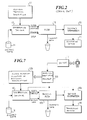
- FIG. 1 shows a procedure known from prior art, in which an interpretative decoder 10 reads a general protocol description 12 and, based on the protocol description, decodes encoded data 14 also read in, and makes the data available as decoded information 16 to a processing device 20 .
- the general protocol description is firm, suited for a plurality of measurement tasks and describes the encoded data, as a maximum, exactly down to each bit.
- the general protocol description preferably includes information on the meaning of the bits, the names of bit groups, the format of the presentation, for example a string, hexadecimal or binary, and on the formation of summaries in the form of parameters or messages.
- interpretative decoding routines i.e. decoders with an interpreter
- Tree-structured protocol descriptions lead to a high storage demand for a reduced calculation expense, while linear protocol descriptions lead to an increased calculation expense for a reduced storage demand.
- FIG. 2 shows elements of another protocol tester known from the prior art, the same reference signs being used in the figures for the same or for comparable elements—this applies to all figures.
- the decoder 10 has a downstream filter 18 , the decoder 10 transmitting on the one hand decoded data to the filter, and on the other hand information for filter adjustment.
- filter 18 data not required, i.e., data which fail to meet at least one filter condition, are discarded.
- the data which meet the at least one filter condition are made available as decoded information 16 to the processing device 20 .
- the decoder executes the protocol description, regardless of whether a protocol element, which does not fulfil the at least one filter condition, has already been decoded and has to be taken as a indication that a whole series of subsequent decoding depending thereon are no longer necessary. This means that certain data may be excluded from further decoding because they are of no importance for the present measurement task, which in turn means that, in the prior art, the decoding process is continued and hence the calculation expense increased unnecessarily, even though it is not really required.
- the present invention is based on the realisation that a generic method and protocol tester may be achieved by having an original general protocol description at least in part automatically modified at the time of the configuration of a measurement task.
- the modification reflects the interest situation, i.e. the protocol elements to be decoded with regard to the measurement task.
- the configuration point in time is the point in time at which all protocol description parts necessary for the measurement task, which have to be provided by the decoding device as an output signal for the solution of the measurement task, have been fixed.
- the modified protocol description is stored in the protocol tester in particular only temporarily for the performance of a certain measurement task, while the general protocol description remains unchanged and can again be used for modification for other measurement tasks and other configurations, respectively.
- the calculation expense is minimised by modifying the protocol description by installing at least one of filter conditions within the protocol description.
- FIG. 1 is a schematic representation of elements of a protocol tester known from prior art.
- FIG. 2 is a schematic representation of elements of a second protocol tester known from prior art.
- FIG. 3 is an embodiment of a protocol tester according to the present invention.
- FIG. 4 is an example of a measurement task.
- FIG. 5 a is a sequence of a protocol description for the performance of the measurement task of FIG. 4 with the prior art protocol tester according to FIG. 1.
- FIG. 5 b shows the decoding results belonging to FIG. 5 a.
- FIG. 6 a is a modified protocol description required for solving the measurement task of FIG. 4 according to the protocol tester of FIG. 3.
- FIG. 6 b shows the decoding result belonging to the protocol description of FIG. 6 a.
- FIG. 7 is another embodiment of a protocol tester according to the present invention.
- FIG. 8 is an example of a filter condition for a protocol tester.
- FIG. 9 a is the protocol description for the decoding of data to be executed by the prior art protocol tester of FIG. 2.
- FIG. 9 b is the decoding result belonging to FIG. 9 a.
- FIG. 9 c is the filter step succeeding the decoding process in order to perform the filter condition of FIG. 8 with the prior art protocol tester of FIG. 2.
- FIG. 10 a is the modified protocol description to be executed by the protocol tester of FIG. 7.
- FIG. 10 b is the result belonging to the modified protocol description of FIG. 10 a.
- FIG. 3 a first embodiment of a protocol tester according to the present invention is shown which executes a compressed protocol description, with protocol elements of the protocol description which are of no relevance with respect to the measurement task being combined with respect to the measurement task to be performed, or, respectively, with dependencies and/or conditions being combined, or respectively, skip commands being incorporated into the protocol description, the skip commands being worded such that at least the subsequent part of the protocol description which is irrelevant with respect to the measurement task is skipped, or, respectively, a stop command being included at a point of the protocol description in case it is certain that all protocol elements of the relevant protocol description have already been decoded.
- FIG. 1 one notices that in FIG.
- This compression of the protocol description is performed by a device 15 a for the modification of the protocol description.
- a device 15 a for the modification of the protocol description an operator is shown a selection menu on a display 17 , for example a computer screen, on which the operator can specify a measurement task by a corresponding selection and entry.
- the device 15 a for the modification of the protocol description modifies the general protocol description 12 to the compressed protocol description 12 a .
- the decoder 10 which reads the compressed protocol description 12 a , makes available to the processing device 20 decoded information 16 a , as is seen more clearly below.
- a compression of the protocol description can particularly occur through one or several of the following steps:
- decoding demands used in connection with FIGS. 4, 5, 6 , 8 , 9 , 10 have the following meanings: check check the dependency towards the other protocol data element; decode decode the protocol data element; skip position the decoder in the data stream; switch_on position the decoder in the protocol description.
- FIG. 4 the determination of a cell identifier parameter “CID_LAC” is given as an example of a characteristic measurement task.
- a general protocol description is executed, which is shown in FIG. 5 a .
- a respective “decode” command a respective protocol data element from the data stream is decoded (see also decoding results in FIG. 5 b ), while a “check” command represents a conditional data access that depends on the value or the existence of another protocol data element.
- the parameter value is determined by CID_LAC in step 10 .
- CID_LAC depends only directly on CID_DISC
- the determination of the other parameters dependent on CID_DISC is necessary to determine the correct position of CID_LAC in the data stream.
- the associated decoding commands (“decode”) are unnecessary because the real parameter value is of no interest, rather what is important is only whether or not it exists. The latter is determined by the corresponding “check” command. Therefore, in the present case, steps 3 , 4 , 6 , 8 , 11 , 12 , 13 , 14 and 15 are performed, even though they are not relevant with respect to the measurement task.
- FIG. 5 b shows the associated decoding result, with the corresponding bit mask being shown on the very left, in the second column the name of the protocol data element, and in the right column the meaning of the protocol data element.
- FIG. 6 a shows the associated modified protocol description for solving the measurement task of FIG. 4, with which a protocol tester according to the present invention pursuant to FIG. 3 works.
- CIS_DISC is decoded.
- a switch-on command is executed in accordance with the decoded value of CIS_DISC, which positions the decoder in the protocol description.
- a positioning of the decoder in the data stream is performed via a skip command.
- the parameter CID_LAC which is of interest, is decoded and made available as the only decoding result, see FIG. 6 b.
- FIG. 7 shows another protocol tester which, compared to the protocol tester known from prior art and shown in FIG. 2, is developed further in that a part of the filter function originally envisaged in the filter device 18 is included in the protocol description 12 b , which is read by the decoder 10 .
- a device 15 b is used for the modification of the protocol description which, in the general sense, works like the device 15 a already mentioned in connection with FIG. 3 and also acts jointly with a display device 17 .
- a reduced filter device 18 b As a consequence there now is a reduced filter device 18 b .
- the example described below with reference to FIGS. 8 to 10 b is to show clearly the benefits of the invention over the prior art.
- FIG. 8 shows a filter condition, which consists in letting data pass through when the protocol data unit CIC_MCC is not equal to 222.
- FIG. 9 a shows the associated decoding steps which are performed for the prior art protocol tester of FIG. 2, these being the same decoding steps as shown in FIG. 5 a .
- FIG. 9 b shows the associated decoding result, which corresponds to that of FIG. 5 b .
- a filter step follows, in which it is examined whether CIC_MCC is not equal to 222. As can be seen from the sequence, the value of CIC_MCC is already determined in step 3 of FIG. 9 a , with CIC_MCC in the present case being equal to 222, and hence, see filter condition of FIG. 8, the subsequent data being irrelevant with respect to the measurement task to be solved. At least steps 4 to 15 are therefore performed unnecessarily.
- FIG. 10 a shows a protocol description modified according to the present invention, for which the value of CIC_MCC is already determined in step 4 .
- CIC_MCC equals 222
- the subsequent data are to be allowed to pass through, the execution can be stopped at this point.
- FIG. 10 b shows the result belonging to the modified protocol description of FIG. 10 a .
- the calculation expense can be reduced quite substantially by the invention through the exclusion of data from further processing.
- FIGS. 3 and 7 can be combined with one another.
- the modification of the protocol description can occur automatically, particularly at the time of the configuration of the measurement task, for example by having an operator select a certain measurement task, i.e., by way of a selection menu shown on a screen, to have a corresponding modification of the general protocol description performed fully automatically by a device for the modification of the protocol description, located in the protocol tester.
- the device for the modification of the protocol description performs the following partial steps: first, the measurement task is analysed, after that the parts of the protocol description relevant with respect to the measurement task are fixed on the basis of the dependencies described in the protocol description, and finally, the protocol description is modified through the installation of one or several of the above-mentioned partial steps.
- the automatic modification of the protocol description can, alternatively or additionally, include the following partial steps: first, analysis of the measurement task, then determination of at least one filter condition by which the protocol description is to be expanded, and finally, modification of the protocol description through the installation of the at least one filter condition determined earlier.
- the modification of the protocol description can be preceded by a selection step for at least one measurement task, for example, by making a catalogue of measurement tasks available to an operator on a display medium, from which the operator may select.
- the selection step is especially preferably dialogue-controlled, particularly through the entry of specifications of the measurement task by an operator into entry fields envisaged therefor, for example, as an answer to a query and/or by way of selection from a selection menu made available.
- the modified protocol description is stored in the protocol tester, particularly temporarily for the performance of the measurement task, while the original, general protocol description is stored permanently therein, in order to suitably modify it with respect to the performance of other measurement tasks.
- the original, general protocol description is stored permanently therein, in order to suitably modify it with respect to the performance of other measurement tasks.
- other general protocol descriptions of different transfer protocols it is possible for other general protocol descriptions of different transfer protocols to be filed in the protocol tester, so that a large application area results for a protocol tester.
- the present invention provides a protocol tester that modifies a protocol description with respect to a specified measurement task and processes the modified protocol description, which modified protocol description may also include a filter condition.
Landscapes
- Engineering & Computer Science (AREA)
- Computer Security & Cryptography (AREA)
- Computer Networks & Wireless Communication (AREA)
- Signal Processing (AREA)
- Maintenance And Management Of Digital Transmission (AREA)
- Computer And Data Communications (AREA)
Abstract
Description
- The present invention relates to protocol testing, and more particularly to a method and a protocol tester for decoding data encoded in accordance with a protocol description for the performance of a measurement task.
- Particularly in protocol measurement technology, the encoding, decoding and analysis of digital data occupies a central role, with so-called protocol data units being examined by computer software and the information contained therein being extracted. In this context, FIG. 1 shows a procedure known from prior art, in which an
interpretative decoder 10 reads ageneral protocol description 12 and, based on the protocol description, decodes encodeddata 14 also read in, and makes the data available as decodedinformation 16 to aprocessing device 20. The general protocol description is firm, suited for a plurality of measurement tasks and describes the encoded data, as a maximum, exactly down to each bit. The general protocol description preferably includes information on the meaning of the bits, the names of bit groups, the format of the presentation, for example a string, hexadecimal or binary, and on the formation of summaries in the form of parameters or messages. In contrast to firm decoding routines, which exist unchangeably for certain protocols, interpretative decoding routines, i.e. decoders with an interpreter, have the advantage that the very same hardware can be adapted easily to different protocols by loading the corresponding general protocol description of the associated protocol. Tree-structured protocol descriptions, however, lead to a high storage demand for a reduced calculation expense, while linear protocol descriptions lead to an increased calculation expense for a reduced storage demand. - There is also the possibility to manually program protocol descriptions for certain repetitive measurement tasks, the disadvantage being that the manually programmed protocol descriptions are designed for a certain measurement task and are therefore already no longer suitable for performing a slightly modified measurement task. In particular, it proves awkward and time-consuming, depending on the measurement task to be resolved, to select and load into the decoder device a suitable protocol description programmed manually in a reduced manner. In order to be able to perform any measurement tasks, it is therefore necessary, in the prior art, to work with the general protocol description which, regardless of whether it shows a linear structure or a tree structure, leads to a high calculation expense for the decoding process.
- FIG. 2 shows elements of another protocol tester known from the prior art, the same reference signs being used in the figures for the same or for comparable elements—this applies to all figures. For the protocol tester shown in FIG. 2, the
decoder 10 has adownstream filter 18, thedecoder 10 transmitting on the one hand decoded data to the filter, and on the other hand information for filter adjustment. Infilter 18 data not required, i.e., data which fail to meet at least one filter condition, are discarded. The data which meet the at least one filter condition are made available as decodedinformation 16 to theprocessing device 20. - Note that the decoder executes the protocol description, regardless of whether a protocol element, which does not fulfil the at least one filter condition, has already been decoded and has to be taken as a indication that a whole series of subsequent decoding depending thereon are no longer necessary. This means that certain data may be excluded from further decoding because they are of no importance for the present measurement task, which in turn means that, in the prior art, the decoding process is continued and hence the calculation expense increased unnecessarily, even though it is not really required.
- What is desired is a generic method and a generic protocol tester that performs a plurality of measurement tasks at a low expense of time and calculation.
- Accordingly the present invention is based on the realisation that a generic method and protocol tester may be achieved by having an original general protocol description at least in part automatically modified at the time of the configuration of a measurement task. The modification reflects the interest situation, i.e. the protocol elements to be decoded with regard to the measurement task. The configuration point in time is the point in time at which all protocol description parts necessary for the measurement task, which have to be provided by the decoding device as an output signal for the solution of the measurement task, have been fixed. Only general protocol descriptions have to be filed in the protocol tester, as the protocol descriptions optimised with respect to a specific measurement task only have to be stored temporarily and can be re-created from the relevant general protocol description by an appropriate entry without much effort, resulting in a major saving of storage space. With an existing storage medium, the storage space may then be used to keep protocol descriptions of the most diverse of other protocols available in the very same protocol tester so as to increase the universality of the protocol tester. With the calculation expense optimised, one single protocol tester is usable for the most diverse of protocols and still guarantees the performance of measurement tasks in a very short time. With the general protocol description optimally modified, the calculation expense for the decoding is reduced to what is absolutely necessary. The modified protocol description is stored in the protocol tester in particular only temporarily for the performance of a certain measurement task, while the general protocol description remains unchanged and can again be used for modification for other measurement tasks and other configurations, respectively. With another variant, the calculation expense is minimised by modifying the protocol description by installing at least one of filter conditions within the protocol description.
- The objects, advantages and other novel features of the present invention are apparent from the following detailed description when read in conjunction with the appended claims and attached drawing.
- FIG. 1 is a schematic representation of elements of a protocol tester known from prior art.
- FIG. 2 is a schematic representation of elements of a second protocol tester known from prior art.
- FIG. 3 is an embodiment of a protocol tester according to the present invention.
- FIG. 4 is an example of a measurement task.
- FIG. 5 a is a sequence of a protocol description for the performance of the measurement task of FIG. 4 with the prior art protocol tester according to FIG. 1.
- FIG. 5 b shows the decoding results belonging to FIG. 5a.
- FIG. 6 a is a modified protocol description required for solving the measurement task of FIG. 4 according to the protocol tester of FIG. 3.
- FIG. 6 b shows the decoding result belonging to the protocol description of FIG. 6a.
- FIG. 7 is another embodiment of a protocol tester according to the present invention.
- FIG. 8 is an example of a filter condition for a protocol tester.
- FIG. 9 a is the protocol description for the decoding of data to be executed by the prior art protocol tester of FIG. 2.
- FIG. 9 b is the decoding result belonging to FIG. 9a.
- FIG. 9 c is the filter step succeeding the decoding process in order to perform the filter condition of FIG. 8 with the prior art protocol tester of FIG. 2.
- FIG. 10 a is the modified protocol description to be executed by the protocol tester of FIG. 7.
- FIG. 10 b is the result belonging to the modified protocol description of FIG. 10a.
- Referring now to FIG. 3 a first embodiment of a protocol tester according to the present invention is shown which executes a compressed protocol description, with protocol elements of the protocol description which are of no relevance with respect to the measurement task being combined with respect to the measurement task to be performed, or, respectively, with dependencies and/or conditions being combined, or respectively, skip commands being incorporated into the protocol description, the skip commands being worded such that at least the subsequent part of the protocol description which is irrelevant with respect to the measurement task is skipped, or, respectively, a stop command being included at a point of the protocol description in case it is certain that all protocol elements of the relevant protocol description have already been decoded. Compared with FIG. 1 one notices that in FIG. 3 in the protocol description the first four protocol elements have been combined, as they are not relevant for the measurement task assumed as an example. This compression of the protocol description is performed by a
device 15 a for the modification of the protocol description. To this end, an operator is shown a selection menu on adisplay 17, for example a computer screen, on which the operator can specify a measurement task by a corresponding selection and entry. With regard to the selection and entry by the operator, thedevice 15 a for the modification of the protocol description modifies thegeneral protocol description 12 to thecompressed protocol description 12 a. Thedecoder 10, which reads thecompressed protocol description 12 a, makes available to theprocessing device 20 decodedinformation 16 a, as is seen more clearly below. - A compression of the protocol description can particularly occur through one or several of the following steps:
- a) Combining of protocol elements of the protocol description, which are of no relevance with respect to the measurement task; and/or
- b) Combining of dependencies and/or conditions; and/or
- c) Incorporation of at least one skip command into the protocol description, the skip command being worded such that at least one subsequent part of the modified protocol description, which is irrelevant with respect to the measurement task, is skipped; and/or
- d) Incorporation of a stop command in case all protocol elements of the relevant protocol description have been decoded.
- The decoding demands used in connection with FIGS. 4, 5, 6, 8, 9, 10 have the following meanings:
check check the dependency towards the other protocol data element; decode decode the protocol data element; skip position the decoder in the data stream; switch_on position the decoder in the protocol description. - In FIG. 4 the determination of a cell identifier parameter “CID_LAC” is given as an example of a characteristic measurement task. On the protocol tester shown in FIG. 1 and known from prior art, a general protocol description is executed, which is shown in FIG. 5 a. With a respective “decode” command, a respective protocol data element from the data stream is decoded (see also decoding results in FIG. 5b), while a “check” command represents a conditional data access that depends on the value or the existence of another protocol data element. As can be seen clearly, the parameter value is determined by CID_LAC in
step 10. Although CID_LAC depends only directly on CID_DISC, the determination of the other parameters dependent on CID_DISC is necessary to determine the correct position of CID_LAC in the data stream. However, the associated decoding commands (“decode”) are unnecessary because the real parameter value is of no interest, rather what is important is only whether or not it exists. The latter is determined by the corresponding “check” command. Therefore, in the present case, steps 3, 4, 6, 8, 11, 12, 13, 14 and 15 are performed, even though they are not relevant with respect to the measurement task. - FIG. 5 b shows the associated decoding result, with the corresponding bit mask being shown on the very left, in the second column the name of the protocol data element, and in the right column the meaning of the protocol data element.
- FIG. 6 a shows the associated modified protocol description for solving the measurement task of FIG. 4, with which a protocol tester according to the present invention pursuant to FIG. 3 works. In
step 1, CIS_DISC is decoded. In step 2 a switch-on command is executed in accordance with the decoded value of CIS_DISC, which positions the decoder in the protocol description. In step 3 a positioning of the decoder in the data stream is performed via a skip command. Finally, instep 4, the parameter CID_LAC, which is of interest, is decoded and made available as the only decoding result, see FIG. 6b. - This example clearly shows that it is possible with the invention to clearly reduce the interpretative calculation expense compared with the prior art.
- FIG. 7 shows another protocol tester which, compared to the protocol tester known from prior art and shown in FIG. 2, is developed further in that a part of the filter function originally envisaged in the
filter device 18 is included in theprotocol description 12 b, which is read by thedecoder 10. For the performance of the modification adevice 15 b is used for the modification of the protocol description which, in the general sense, works like thedevice 15 a already mentioned in connection with FIG. 3 and also acts jointly with adisplay device 17. As a consequence there now is a reducedfilter device 18 b. The example described below with reference to FIGS. 8 to 10 b is to show clearly the benefits of the invention over the prior art. - With this embodiment part of the filter conditions filed in the
filter device 18 in the prior art is accordingly used for the modification of theprotocol description 12. Thus, filtering already takes place on the one hand through the modified protocol description, and on the other hand through a modifiedfilter device 18 b with a reduced filter scope. When it is noted that the at least one filter condition is not fulfilled, that part of the modified protocol description is not executed, which is only relevant in case of the fulfilment of the at least one filter condition. This allows saving considerable computation time. At least a subset of the data can be transmitted to thefilter device 18 b for the examination of at least one further filter condition. Alternatively, or additionally, at least a subset of the data can be transmitted directly to the processing device 20 (shown by the dotted line in FIG. 7), bypassing thefilter device 18 b. The last-mentioned measure is to be preferred in particular when it is clear that the data, which fulfill the at least one filter condition, are not subjected to any further filtering in thefilter device 18 b. Moreover, it may be envisaged that a skip command is installed into the protocol description, which has to be executed if the at least one filter condition is not fulfilled, the skip command being worded such that at least the subsequent part of the modified protocol description, which is irrelevant with respect to the unfulfilled filter condition, is skipped. A modification of the protocol description can thus lead to a compression with respect to the time required for its execution and/or to the computation steps required for its execution. - FIG. 8 shows a filter condition, which consists in letting data pass through when the protocol data unit CIC_MCC is not equal to 222. FIG. 9 a shows the associated decoding steps which are performed for the prior art protocol tester of FIG. 2, these being the same decoding steps as shown in FIG. 5a. In addition, FIG. 9b shows the associated decoding result, which corresponds to that of FIG. 5b. According to FIG. 9c, a filter step follows, in which it is examined whether CIC_MCC is not equal to 222. As can be seen from the sequence, the value of CIC_MCC is already determined in
step 3 of FIG. 9a, with CIC_MCC in the present case being equal to 222, and hence, see filter condition of FIG. 8, the subsequent data being irrelevant with respect to the measurement task to be solved. Atleast steps 4 to 15 are therefore performed unnecessarily. - FIG. 10 a shows a protocol description modified according to the present invention, for which the value of CIC_MCC is already determined in
step 4. As the result in this example is that CIC_MCC equals 222, the subsequent data are to be allowed to pass through, the execution can be stopped at this point. FIG. 10b shows the result belonging to the modified protocol description of FIG. 10a. As is shown with this example, the calculation expense can be reduced quite substantially by the invention through the exclusion of data from further processing. - Of course, the embodiments shown in FIGS. 3 and 7 can be combined with one another.
- The modification of the protocol description can occur automatically, particularly at the time of the configuration of the measurement task, for example by having an operator select a certain measurement task, i.e., by way of a selection menu shown on a screen, to have a corresponding modification of the general protocol description performed fully automatically by a device for the modification of the protocol description, located in the protocol tester. In this process, the device for the modification of the protocol description performs the following partial steps: first, the measurement task is analysed, after that the parts of the protocol description relevant with respect to the measurement task are fixed on the basis of the dependencies described in the protocol description, and finally, the protocol description is modified through the installation of one or several of the above-mentioned partial steps.
- With respect to the modification of the filtering, according to the present invention, the automatic modification of the protocol description can, alternatively or additionally, include the following partial steps: first, analysis of the measurement task, then determination of at least one filter condition by which the protocol description is to be expanded, and finally, modification of the protocol description through the installation of the at least one filter condition determined earlier.
- The modification of the protocol description can be preceded by a selection step for at least one measurement task, for example, by making a catalogue of measurement tasks available to an operator on a display medium, from which the operator may select. The selection step is especially preferably dialogue-controlled, particularly through the entry of specifications of the measurement task by an operator into entry fields envisaged therefor, for example, as an answer to a query and/or by way of selection from a selection menu made available.
- It is particularly advantageous if the modified protocol description is stored in the protocol tester, particularly temporarily for the performance of the measurement task, while the original, general protocol description is stored permanently therein, in order to suitably modify it with respect to the performance of other measurement tasks. Of course, it is possible for other general protocol descriptions of different transfer protocols to be filed in the protocol tester, so that a large application area results for a protocol tester.
- It may also be envisaged with regard to frequently recurring measurement tasks, that such tasks do not have to be specified again and again by an operator by dialogue control, but that, for example, with the assignment of a random name, the measurement task and/or the associated modified protocol description can be stored in the protocol tester, so that it can again be called up when required.
- The preferred embodiments described in connection with the method according to the present invention apply, as is evident to the expert, of course also to the protocol tester according to the present invention, with process steps according to the present invention being realised through corresponding devices in the protocol tester, without again going into detail at this stage.
- Thus the present invention provides a protocol tester that modifies a protocol description with respect to a specified measurement task and processes the modified protocol description, which modified protocol description may also include a filter condition.
Claims (10)
Applications Claiming Priority (3)
| Application Number | Priority Date | Filing Date | Title |
|---|---|---|---|
| EP02006711A EP1347599B1 (en) | 2002-03-22 | 2002-03-22 | Protocol analyzer and method for decoding data based on a protocol description |
| EP02006711.2 | 2002-03-22 | ||
| EP02006711 | 2002-03-22 |
Publications (2)
| Publication Number | Publication Date |
|---|---|
| US20030191599A1 true US20030191599A1 (en) | 2003-10-09 |
| US7685578B2 US7685578B2 (en) | 2010-03-23 |
Family
ID=27771876
Family Applications (1)
| Application Number | Title | Priority Date | Filing Date |
|---|---|---|---|
| US10/391,986 Active 2027-06-02 US7685578B2 (en) | 2002-03-22 | 2003-03-18 | Method and protocol tester for decoding data encoded in accordance with a protocol description |
Country Status (3)
| Country | Link |
|---|---|
| US (1) | US7685578B2 (en) |
| EP (1) | EP1347599B1 (en) |
| DE (1) | DE50203675D1 (en) |
Cited By (16)
| Publication number | Priority date | Publication date | Assignee | Title |
|---|---|---|---|---|
| WO2011134739A1 (en) * | 2010-04-28 | 2011-11-03 | Siemens Aktiengesellschaft | Method for searching for message sequences, protocol analysis engine and protocol analyzer |
| US20160226944A1 (en) * | 2015-01-29 | 2016-08-04 | Splunk Inc. | Facilitating custom content extraction from network packets |
| US9762443B2 (en) | 2014-04-15 | 2017-09-12 | Splunk Inc. | Transformation of network data at remote capture agents |
| US9838512B2 (en) | 2014-10-30 | 2017-12-05 | Splunk Inc. | Protocol-based capture of network data using remote capture agents |
| US9843598B2 (en) | 2014-10-30 | 2017-12-12 | Splunk Inc. | Capture triggers for capturing network data |
| US9923767B2 (en) | 2014-04-15 | 2018-03-20 | Splunk Inc. | Dynamic configuration of remote capture agents for network data capture |
| US10127273B2 (en) | 2014-04-15 | 2018-11-13 | Splunk Inc. | Distributed processing of network data using remote capture agents |
| US10360196B2 (en) | 2014-04-15 | 2019-07-23 | Splunk Inc. | Grouping and managing event streams generated from captured network data |
| US10366101B2 (en) | 2014-04-15 | 2019-07-30 | Splunk Inc. | Bidirectional linking of ephemeral event streams to creators of the ephemeral event streams |
| US10462004B2 (en) | 2014-04-15 | 2019-10-29 | Splunk Inc. | Visualizations of statistics associated with captured network data |
| US10523521B2 (en) | 2014-04-15 | 2019-12-31 | Splunk Inc. | Managing ephemeral event streams generated from captured network data |
| US10693742B2 (en) | 2014-04-15 | 2020-06-23 | Splunk Inc. | Inline visualizations of metrics related to captured network data |
| US10700950B2 (en) | 2014-04-15 | 2020-06-30 | Splunk Inc. | Adjusting network data storage based on event stream statistics |
| US11086897B2 (en) | 2014-04-15 | 2021-08-10 | Splunk Inc. | Linking event streams across applications of a data intake and query system |
| US11281643B2 (en) | 2014-04-15 | 2022-03-22 | Splunk Inc. | Generating event streams including aggregated values from monitored network data |
| US12028208B1 (en) | 2014-05-09 | 2024-07-02 | Splunk Inc. | Selective event stream data storage based on network traffic volume |
Families Citing this family (1)
| Publication number | Priority date | Publication date | Assignee | Title |
|---|---|---|---|---|
| CN115509911A (en) * | 2022-09-27 | 2022-12-23 | 山东云海国创云计算装备产业创新中心有限公司 | Performance analysis method, system, terminal and storage medium of a tracking system |
Citations (1)
| Publication number | Priority date | Publication date | Assignee | Title |
|---|---|---|---|---|
| US5828677A (en) * | 1996-03-20 | 1998-10-27 | Lucent Technologies Inc. | Adaptive hybrid ARQ coding schemes for slow fading channels in mobile radio systems |
Family Cites Families (4)
| Publication number | Priority date | Publication date | Assignee | Title |
|---|---|---|---|---|
| EP0332286A3 (en) * | 1988-03-09 | 1990-02-28 | Hewlett-Packard Company | Programmable protocol analyzer |
| US5793954A (en) * | 1995-12-20 | 1998-08-11 | Nb Networks | System and method for general purpose network analysis |
| DE50013051D1 (en) | 2000-04-14 | 2006-08-03 | Tektronix Berlin Gmbh & Co Kg | Method and device for analyzing data |
| DE50013466D1 (en) * | 2000-06-19 | 2006-10-26 | Tektronix Berlin Gmbh & Co Kg | Decoding device for the analysis of communication protocols |
-
2002
- 2002-03-22 EP EP02006711A patent/EP1347599B1/en not_active Expired - Lifetime
- 2002-03-22 DE DE50203675T patent/DE50203675D1/en not_active Expired - Lifetime
-
2003
- 2003-03-18 US US10/391,986 patent/US7685578B2/en active Active
Patent Citations (1)
| Publication number | Priority date | Publication date | Assignee | Title |
|---|---|---|---|---|
| US5828677A (en) * | 1996-03-20 | 1998-10-27 | Lucent Technologies Inc. | Adaptive hybrid ARQ coding schemes for slow fading channels in mobile radio systems |
Cited By (43)
| Publication number | Priority date | Publication date | Assignee | Title |
|---|---|---|---|---|
| WO2011134739A1 (en) * | 2010-04-28 | 2011-11-03 | Siemens Aktiengesellschaft | Method for searching for message sequences, protocol analysis engine and protocol analyzer |
| US11296951B2 (en) | 2014-04-15 | 2022-04-05 | Splunk Inc. | Interval-based generation of event streams by remote capture agents |
| US10374883B2 (en) | 2014-04-15 | 2019-08-06 | Splunk Inc. | Application-based configuration of network data capture by remote capture agents |
| US10951474B2 (en) | 2014-04-15 | 2021-03-16 | Splunk Inc. | Configuring event stream generation in cloud-based computing environments |
| US12381780B1 (en) | 2014-04-15 | 2025-08-05 | Splunk Inc. | Configuring generation of time-series event data from network packets captured by remote capture agent |
| US9923767B2 (en) | 2014-04-15 | 2018-03-20 | Splunk Inc. | Dynamic configuration of remote capture agents for network data capture |
| US10127273B2 (en) | 2014-04-15 | 2018-11-13 | Splunk Inc. | Distributed processing of network data using remote capture agents |
| US12212475B1 (en) | 2014-04-15 | 2025-01-28 | Splunk Inc. | Applying updated configuration dynamically to remote capture agents |
| US10257059B2 (en) | 2014-04-15 | 2019-04-09 | Splunk Inc. | Transforming event data using remote capture agents and transformation servers |
| US12204531B1 (en) | 2014-04-15 | 2025-01-21 | Splunk Inc. | Dynamically modifying remote capture agent event stream destinations |
| US11252056B2 (en) | 2014-04-15 | 2022-02-15 | Splunk Inc. | Transforming event data generated by remote capture agents using user-generated code |
| US10348583B2 (en) | 2014-04-15 | 2019-07-09 | Splunk Inc. | Generating and transforming timestamped event data at a remote capture agent |
| US10360196B2 (en) | 2014-04-15 | 2019-07-23 | Splunk Inc. | Grouping and managing event streams generated from captured network data |
| US10366101B2 (en) | 2014-04-15 | 2019-07-30 | Splunk Inc. | Bidirectional linking of ephemeral event streams to creators of the ephemeral event streams |
| US11281643B2 (en) | 2014-04-15 | 2022-03-22 | Splunk Inc. | Generating event streams including aggregated values from monitored network data |
| US11863408B1 (en) | 2014-04-15 | 2024-01-02 | Splunk Inc. | Generating event streams including modified network data monitored by remote capture agents |
| US10462004B2 (en) | 2014-04-15 | 2019-10-29 | Splunk Inc. | Visualizations of statistics associated with captured network data |
| US10523521B2 (en) | 2014-04-15 | 2019-12-31 | Splunk Inc. | Managing ephemeral event streams generated from captured network data |
| US10693742B2 (en) | 2014-04-15 | 2020-06-23 | Splunk Inc. | Inline visualizations of metrics related to captured network data |
| US11818018B1 (en) | 2014-04-15 | 2023-11-14 | Splunk Inc. | Configuring event streams based on identified security risks |
| US10700950B2 (en) | 2014-04-15 | 2020-06-30 | Splunk Inc. | Adjusting network data storage based on event stream statistics |
| US9762443B2 (en) | 2014-04-15 | 2017-09-12 | Splunk Inc. | Transformation of network data at remote capture agents |
| US11716248B1 (en) | 2014-04-15 | 2023-08-01 | Splunk Inc. | Selective event stream data storage based on network traffic volume |
| US11451453B2 (en) | 2014-04-15 | 2022-09-20 | Splunk Inc. | Configuring the generation of ephemeral event streams by remote capture agents |
| US11086897B2 (en) | 2014-04-15 | 2021-08-10 | Splunk Inc. | Linking event streams across applications of a data intake and query system |
| US11108659B2 (en) | 2014-04-15 | 2021-08-31 | Splunk Inc. | Using storage reactors to transform event data generated by remote capture agents |
| US11314737B2 (en) | 2014-04-15 | 2022-04-26 | Splunk Inc. | Transforming event data using values obtained by querying a data source |
| US11245581B2 (en) | 2014-04-15 | 2022-02-08 | Splunk Inc. | Selective event stream data storage based on historical stream data |
| US12028208B1 (en) | 2014-05-09 | 2024-07-02 | Splunk Inc. | Selective event stream data storage based on network traffic volume |
| US10812514B2 (en) | 2014-10-30 | 2020-10-20 | Splunk Inc. | Configuring the generation of additional time-series event data by remote capture agents |
| US10382599B2 (en) | 2014-10-30 | 2019-08-13 | Splunk Inc. | Configuring generation of event streams by remote capture agents |
| US9843598B2 (en) | 2014-10-30 | 2017-12-12 | Splunk Inc. | Capture triggers for capturing network data |
| US11425229B2 (en) | 2014-10-30 | 2022-08-23 | Splunk Inc. | Generating event streams from encrypted network traffic monitored by remote capture agents |
| US9838512B2 (en) | 2014-10-30 | 2017-12-05 | Splunk Inc. | Protocol-based capture of network data using remote capture agents |
| US10805438B2 (en) | 2014-10-30 | 2020-10-13 | Splunk Inc. | Configuring the protocol-based generation of event streams by remote capture agents |
| US10701191B2 (en) | 2014-10-30 | 2020-06-30 | Splunk Inc. | Configuring rules for filtering events to be included in event streams |
| US10193916B2 (en) | 2014-10-30 | 2019-01-29 | Splunk Inc. | Configuring the generation of event data based on a triggering search query |
| US11936764B1 (en) | 2014-10-30 | 2024-03-19 | Splunk Inc. | Generating event streams based on application-layer events captured by remote capture agents |
| US10264106B2 (en) | 2014-10-30 | 2019-04-16 | Splunk Inc. | Configuring generation of multiple event streams from a packet flow |
| US10334085B2 (en) * | 2015-01-29 | 2019-06-25 | Splunk Inc. | Facilitating custom content extraction from network packets |
| US11973852B2 (en) | 2015-01-29 | 2024-04-30 | Splunk Inc. | Generating event data at remote capture agents based on identified network addresses |
| US20160226944A1 (en) * | 2015-01-29 | 2016-08-04 | Splunk Inc. | Facilitating custom content extraction from network packets |
| US11115505B2 (en) | 2015-01-29 | 2021-09-07 | Splunk Inc. | Facilitating custom content extraction rule configuration for remote capture agents |
Also Published As
| Publication number | Publication date |
|---|---|
| DE50203675D1 (en) | 2005-08-25 |
| EP1347599A1 (en) | 2003-09-24 |
| EP1347599B1 (en) | 2005-07-20 |
| US7685578B2 (en) | 2010-03-23 |
Similar Documents
| Publication | Publication Date | Title |
|---|---|---|
| US7685578B2 (en) | Method and protocol tester for decoding data encoded in accordance with a protocol description | |
| US6460044B1 (en) | Intelligent method for computer file compression | |
| US7769088B2 (en) | Context adaptive binary arithmetic code decoding engine | |
| US5983022A (en) | System and method for using profiles to manage data streams for device verification | |
| US20120275525A1 (en) | System and Method for Compressing Video Data and Alpha Channel Data using a Single Stream | |
| US7940280B2 (en) | System and method for color format conversion in a graphics environment | |
| JP3341962B2 (en) | Variable length decoder and method for decoding variable length code value | |
| US7567716B2 (en) | Method and device for randomly accessing a region of an encoded image for the purpose of decoding it and a method and device for encoding an image | |
| US20010004760A1 (en) | Chip testing apparatus and method | |
| US6337710B1 (en) | Graphical video editing system for regeneration of bitstreams | |
| JPH10500273A (en) | Video image color encoding | |
| US7688333B2 (en) | Method and/or apparatus for color space reduction for transcoding subpicture elements | |
| US6333705B1 (en) | Methods and devices for coding and decoding digital signals, and systems using them | |
| US6529554B1 (en) | Low branch-mispredict technique for MPEG run length encoding | |
| JP2000350215A (en) | Image encoding device, image decoding device, and device and method for encoding and decoding image | |
| US7940807B2 (en) | Methods, decoder circuits and computer program products for processing MPEG audio frames | |
| US20070168735A1 (en) | System and method for automatic testing | |
| US7245769B2 (en) | Archival of transformed and compressed data | |
| US7684627B2 (en) | Techniques for image decompression | |
| US6560288B1 (en) | Method and system for variable length decoding | |
| US20090316775A1 (en) | Video encoding and decoding method and system thereof | |
| EP4246446B1 (en) | Data processing method and apparatus for edge offset mode based on sample adaptive offset | |
| CN117014597A (en) | Equipment testing method and device, computer equipment and storage medium | |
| CN114022578B (en) | GIF file decoding method and device | |
| US7184094B2 (en) | Decoding system, video color converter and method thereof |
Legal Events
| Date | Code | Title | Description |
|---|---|---|---|
| STCF | Information on status: patent grant |
Free format text: PATENTED CASE |
|
| FEPP | Fee payment procedure |
Free format text: PAYOR NUMBER ASSIGNED (ORIGINAL EVENT CODE: ASPN); ENTITY STATUS OF PATENT OWNER: LARGE ENTITY |
|
| FPAY | Fee payment |
Year of fee payment: 4 |
|
| SULP | Surcharge for late payment | ||
| AS | Assignment |
Owner name: TEKTRONIX TEXAS, LLC, MASSACHUSETTS Free format text: ASSIGNMENT OF ASSIGNORS INTEREST;ASSIGNOR:TEKTRONIX, INC.;REEL/FRAME:036355/0563 Effective date: 20150813 Owner name: JPMORGAN CHASE BANK, N.A., NEW YORK Free format text: SECURITY INTEREST;ASSIGNOR:NETSCOUT SYSTEMS, INC.;REEL/FRAME:036355/0586 Effective date: 20150714 |
|
| AS | Assignment |
Owner name: NETSCOUT SYSTEMS TEXAS, LLC, MASSACHUSETTS Free format text: CHANGE OF NAME;ASSIGNOR:TEKTRONIX TEXAS, LLC;REEL/FRAME:039665/0256 Effective date: 20160627 |
|
| AS | Assignment |
Owner name: NETSCOUT SYSTEMS TEXAS, LLC, MASSACHUSETTS Free format text: CHANGE OF NAME;ASSIGNOR:TEKTRONIX TEXAS, LLC;REEL/FRAME:039919/0208 Effective date: 20160819 |
|
| MAFP | Maintenance fee payment |
Free format text: PAYMENT OF MAINTENANCE FEE, 8TH YEAR, LARGE ENTITY (ORIGINAL EVENT CODE: M1552) Year of fee payment: 8 |
|
| MAFP | Maintenance fee payment |
Free format text: PAYMENT OF MAINTENANCE FEE, 12TH YEAR, LARGE ENTITY (ORIGINAL EVENT CODE: M1553); ENTITY STATUS OF PATENT OWNER: LARGE ENTITY Year of fee payment: 12 |