US20030191317A1 - Sulfonyl aryl or heteroaryl hydroxamic acid compounds - Google Patents
Sulfonyl aryl or heteroaryl hydroxamic acid compounds Download PDFInfo
- Publication number
- US20030191317A1 US20030191317A1 US09/728,408 US72840800A US2003191317A1 US 20030191317 A1 US20030191317 A1 US 20030191317A1 US 72840800 A US72840800 A US 72840800A US 2003191317 A1 US2003191317 A1 US 2003191317A1
- Authority
- US
- United States
- Prior art keywords
- group
- alkyl
- aryl
- substituted
- amino
- Prior art date
- Legal status (The legal status is an assumption and is not a legal conclusion. Google has not performed a legal analysis and makes no representation as to the accuracy of the status listed.)
- Granted
Links
- 0 [1*]S(=O)(=O)*CCC([2*])([3*])C([20*])=O.[5*]C.[6*]C.[W] Chemical compound [1*]S(=O)(=O)*CCC([2*])([3*])C([20*])=O.[5*]C.[6*]C.[W] 0.000 description 140
- ITQTTZVARXURQS-UHFFFAOYSA-N CC1=CC=CN=C1 Chemical compound CC1=CC=CN=C1 ITQTTZVARXURQS-UHFFFAOYSA-N 0.000 description 29
- YXFVVABEGXRONW-UHFFFAOYSA-N CC1=CC=CC=C1 Chemical compound CC1=CC=CC=C1 YXFVVABEGXRONW-UHFFFAOYSA-N 0.000 description 28
- GYBMIIMARPGPOJ-UHFFFAOYSA-N CC1=CC=C(N2CCN(C)CC2)C=C1 Chemical compound CC1=CC=C(N2CCN(C)CC2)C=C1 GYBMIIMARPGPOJ-UHFFFAOYSA-N 0.000 description 24
- FKNQCJSGGFJEIZ-UHFFFAOYSA-N CC1=CC=NC=C1 Chemical compound CC1=CC=NC=C1 FKNQCJSGGFJEIZ-UHFFFAOYSA-N 0.000 description 23
- SEKVDGJLBQJSTO-UHFFFAOYSA-N CC1=CC=C(N2CCCCC2)C=C1 Chemical compound CC1=CC=C(N2CCCCC2)C=C1 SEKVDGJLBQJSTO-UHFFFAOYSA-N 0.000 description 22
- NPDACUSDTOMAMK-UHFFFAOYSA-N CC1=CC=C(Cl)C=C1 Chemical compound CC1=CC=C(Cl)C=C1 NPDACUSDTOMAMK-UHFFFAOYSA-N 0.000 description 19
- WRWPPGUCZBJXKX-UHFFFAOYSA-N CC1=CC=C(F)C=C1 Chemical compound CC1=CC=C(F)C=C1 WRWPPGUCZBJXKX-UHFFFAOYSA-N 0.000 description 16
- NXIAVERGTMRISY-UHFFFAOYSA-N CC1=CC=C(N2C=NC=N2)C=C1 Chemical compound CC1=CC=C(N2C=NC=N2)C=C1 NXIAVERGTMRISY-UHFFFAOYSA-N 0.000 description 16
- URLKBWYHVLBVBO-UHFFFAOYSA-N CC1=CC=C(C)C=C1 Chemical compound CC1=CC=C(C)C=C1 URLKBWYHVLBVBO-UHFFFAOYSA-N 0.000 description 15
- VYUNLDVEMSMJNP-UHFFFAOYSA-N CC1=CC=C(N2C=CC=C2)C=C1 Chemical compound CC1=CC=C(N2C=CC=C2)C=C1 VYUNLDVEMSMJNP-UHFFFAOYSA-N 0.000 description 15
- STRWKFUEXQHMFW-UHFFFAOYSA-N CC1=CC=C(N2CCCC2)C=C1 Chemical compound CC1=CC=C(N2CCCC2)C=C1 STRWKFUEXQHMFW-UHFFFAOYSA-N 0.000 description 15
- GWHJZXXIDMPWGX-UHFFFAOYSA-N CC1=CC=C(C)C(C)=C1 Chemical compound CC1=CC=C(C)C(C)=C1 GWHJZXXIDMPWGX-UHFFFAOYSA-N 0.000 description 14
- TTWGNOOILHAXQA-UHFFFAOYSA-N CC1=CC=C(N2C=NN=C2)C=C1 Chemical compound CC1=CC=C(N2C=NN=C2)C=C1 TTWGNOOILHAXQA-UHFFFAOYSA-N 0.000 description 14
- AJQYSKAABYAZGP-UHFFFAOYSA-N CC1=CC=C(NC(=O)C2=CC(Cl)=CC=C2)C=C1 Chemical compound CC1=CC=C(NC(=O)C2=CC(Cl)=CC=C2)C=C1 AJQYSKAABYAZGP-UHFFFAOYSA-N 0.000 description 14
- IVSZLXZYQVIEFR-UHFFFAOYSA-N CC1=CC=CC(C)=C1 Chemical compound CC1=CC=CC(C)=C1 IVSZLXZYQVIEFR-UHFFFAOYSA-N 0.000 description 14
- WYUIWKFIFOJVKW-UHFFFAOYSA-N CC1=CC=C(Cl)C(Cl)=C1 Chemical compound CC1=CC=C(Cl)C(Cl)=C1 WYUIWKFIFOJVKW-UHFFFAOYSA-N 0.000 description 13
- IEAYECHBGTTWPZ-UHFFFAOYSA-N CC1=CC=C(N2C=CN=C2)C=C1 Chemical compound CC1=CC=C(N2C=CN=C2)C=C1 IEAYECHBGTTWPZ-UHFFFAOYSA-N 0.000 description 13
- CRWYLZLIZQKHMM-UHFFFAOYSA-N CC1=CC=C(NC(=O)C2=CC(C)=CC=C2)C=C1 Chemical compound CC1=CC=C(NC(=O)C2=CC(C)=CC=C2)C=C1 CRWYLZLIZQKHMM-UHFFFAOYSA-N 0.000 description 13
- MMXPRQGDAUNXSX-UHFFFAOYSA-N COC1=CC=C(C(=O)NC2=CC=C(C)C=C2)C=C1 Chemical compound COC1=CC=C(C(=O)NC2=CC=C(C)C=C2)C=C1 MMXPRQGDAUNXSX-UHFFFAOYSA-N 0.000 description 13
- LUCLQMOGUYTWGK-UHFFFAOYSA-N CC1=CC=C(OC2=CC=CC(Cl)=C2)C=C1 Chemical compound CC1=CC=C(OC2=CC=CC(Cl)=C2)C=C1 LUCLQMOGUYTWGK-UHFFFAOYSA-N 0.000 description 12
- OSOUNOBYRMOXQQ-UHFFFAOYSA-N CC1=CC=CC(Cl)=C1 Chemical compound CC1=CC=CC(Cl)=C1 OSOUNOBYRMOXQQ-UHFFFAOYSA-N 0.000 description 12
- JXFVMNFKABWTHD-UHFFFAOYSA-N CCCC1=CC=C(C)C=C1 Chemical compound CCCC1=CC=C(C)C=C1 JXFVMNFKABWTHD-UHFFFAOYSA-N 0.000 description 12
- QEGNUYASOUJEHD-UHFFFAOYSA-N CC1(C)CCCCC1 Chemical compound CC1(C)CCCCC1 QEGNUYASOUJEHD-UHFFFAOYSA-N 0.000 description 11
- UWURPEZTQPTYLV-UHFFFAOYSA-N CCC1=CC=C(C(=O)NC2=CC=C(C)C=C2)C=C1 Chemical compound CCC1=CC=C(C(=O)NC2=CC=C(C)C=C2)C=C1 UWURPEZTQPTYLV-UHFFFAOYSA-N 0.000 description 11
- YMKCHVDAAZJDTM-UHFFFAOYSA-N CC1=CC=C(N2CCC(C)CC2)C=C1 Chemical compound CC1=CC=C(N2CCC(C)CC2)C=C1 YMKCHVDAAZJDTM-UHFFFAOYSA-N 0.000 description 10
- LKZULIBYXBNDAH-UHFFFAOYSA-N CC1=CC=C(NC(=O)C2=CC(F)=C(F)C=C2)C=C1 Chemical compound CC1=CC=C(NC(=O)C2=CC(F)=C(F)C=C2)C=C1 LKZULIBYXBNDAH-UHFFFAOYSA-N 0.000 description 10
- MVUCVCCWUWKWAC-UHFFFAOYSA-N CCC1=CC=C(NC(=O)NC2=CC=C(C)C=C2)C=C1 Chemical compound CCC1=CC=C(NC(=O)NC2=CC=C(C)C=C2)C=C1 MVUCVCCWUWKWAC-UHFFFAOYSA-N 0.000 description 10
- WSWPHHNIHLTAHB-UHFFFAOYSA-N CCOC1=CC=C(C)C=C1 Chemical compound CCOC1=CC=C(C)C=C1 WSWPHHNIHLTAHB-UHFFFAOYSA-N 0.000 description 10
- TXMFDSUMJLQLGB-UHFFFAOYSA-N CCSC1=CC=C(C)C=C1 Chemical compound CCSC1=CC=C(C)C=C1 TXMFDSUMJLQLGB-UHFFFAOYSA-N 0.000 description 10
- SLZCOYDOFRTTHF-UHFFFAOYSA-N CN(C)CC1=CC=CN=C1 Chemical compound CN(C)CC1=CC=CN=C1 SLZCOYDOFRTTHF-UHFFFAOYSA-N 0.000 description 10
- SASNBVQSOZSTPD-UHFFFAOYSA-N CNCCC1=CC=CC=C1 Chemical compound CNCCC1=CC=CC=C1 SASNBVQSOZSTPD-UHFFFAOYSA-N 0.000 description 10
- UEPGMSOIQCDFBZ-UHFFFAOYSA-N CC1=CC=C(NC(=O)C2=CC([N+](=O)[O-])=CC=C2)C=C1 Chemical compound CC1=CC=C(NC(=O)C2=CC([N+](=O)[O-])=CC=C2)C=C1 UEPGMSOIQCDFBZ-UHFFFAOYSA-N 0.000 description 9
- ICVSMZGTNJTHIS-UHFFFAOYSA-N CC1=CC=C(NC(=O)C2=CN=C(Cl)C=C2)C=C1 Chemical compound CC1=CC=C(NC(=O)C2=CN=C(Cl)C=C2)C=C1 ICVSMZGTNJTHIS-UHFFFAOYSA-N 0.000 description 9
- PRVCBVJGABWHPY-UHFFFAOYSA-N CC1=CC=C(NC(=O)NC2=CC=CC(C)=C2)C=C1 Chemical compound CC1=CC=C(NC(=O)NC2=CC=CC(C)=C2)C=C1 PRVCBVJGABWHPY-UHFFFAOYSA-N 0.000 description 9
- GQIHFIQMGCJUNB-UHFFFAOYSA-N CC1=CC=C(NC(=O)NC2=CC=CC=C2C)C=C1 Chemical compound CC1=CC=C(NC(=O)NC2=CC=CC=C2C)C=C1 GQIHFIQMGCJUNB-UHFFFAOYSA-N 0.000 description 9
- QJPJQORXNCZSDP-UHFFFAOYSA-N CCCCCOC1=CC=C(C(=O)NC2=CC=C(C)C=C2)C=C1 Chemical compound CCCCCOC1=CC=C(C(=O)NC2=CC=C(C)C=C2)C=C1 QJPJQORXNCZSDP-UHFFFAOYSA-N 0.000 description 9
- DJEQZVQFEPKLOY-UHFFFAOYSA-N CCCCN(C)C Chemical compound CCCCN(C)C DJEQZVQFEPKLOY-UHFFFAOYSA-N 0.000 description 9
- ZUHZZVMEUAUWHY-UHFFFAOYSA-N CCCN(C)C Chemical compound CCCN(C)C ZUHZZVMEUAUWHY-UHFFFAOYSA-N 0.000 description 9
- QLTKVDKXTKKJOX-UHFFFAOYSA-N CCCOC1=CC=C(C)C=C1 Chemical compound CCCOC1=CC=C(C)C=C1 QLTKVDKXTKKJOX-UHFFFAOYSA-N 0.000 description 9
- IXOMJZNGYMCDGN-UHFFFAOYSA-N CCCSC1=CC=C(C)C=C1 Chemical compound CCCSC1=CC=C(C)C=C1 IXOMJZNGYMCDGN-UHFFFAOYSA-N 0.000 description 9
- LMBUJNXYGGNSAH-UHFFFAOYSA-N CNCC1=CC=C(Cl)C=C1 Chemical compound CNCC1=CC=C(Cl)C=C1 LMBUJNXYGGNSAH-UHFFFAOYSA-N 0.000 description 9
- MCSAQVGDZLPTBS-UHFFFAOYSA-N CNCC1=CC=CN=C1 Chemical compound CNCC1=CC=CN=C1 MCSAQVGDZLPTBS-UHFFFAOYSA-N 0.000 description 9
- DNBWGFKLIBQQSL-UHFFFAOYSA-N CNCC1=CC=NC=C1 Chemical compound CNCC1=CC=NC=C1 DNBWGFKLIBQQSL-UHFFFAOYSA-N 0.000 description 9
- VCSUCPDSYSXLEX-UHFFFAOYSA-N CNCCC1=CC=C(Cl)C=C1 Chemical compound CNCCC1=CC=C(Cl)C=C1 VCSUCPDSYSXLEX-UHFFFAOYSA-N 0.000 description 9
- JCMWSVNNSPUNER-UHFFFAOYSA-N CNCCC1=CC=C(OC)C=C1 Chemical compound CNCCC1=CC=C(OC)C=C1 JCMWSVNNSPUNER-UHFFFAOYSA-N 0.000 description 9
- RZTDESRVPFKCBH-UHFFFAOYSA-N CC1=CC=C(C2=CC=C(C)C=C2)C=C1 Chemical compound CC1=CC=C(C2=CC=C(C)C=C2)C=C1 RZTDESRVPFKCBH-UHFFFAOYSA-N 0.000 description 8
- KJNZQKYSNAQLEO-UHFFFAOYSA-N CC1=CC=C(C2=CC=CC=N2)C=C1 Chemical compound CC1=CC=C(C2=CC=CC=N2)C=C1 KJNZQKYSNAQLEO-UHFFFAOYSA-N 0.000 description 8
- YGYASICDDPBVIN-UHFFFAOYSA-N CC1=CC=C(NC(=O)C2=CC(F)=CC=C2)C=C1 Chemical compound CC1=CC=C(NC(=O)C2=CC(F)=CC=C2)C=C1 YGYASICDDPBVIN-UHFFFAOYSA-N 0.000 description 8
- SFMBQQUKFGHDDU-UHFFFAOYSA-N CC1=CC=C(NC(=O)C2=CC(N)=CC=C2)C=C1 Chemical compound CC1=CC=C(NC(=O)C2=CC(N)=CC=C2)C=C1 SFMBQQUKFGHDDU-UHFFFAOYSA-N 0.000 description 8
- KMGUTHKHSSVKDE-UHFFFAOYSA-N CC1=CC=C(NC(=O)CC(C)C)C=C1 Chemical compound CC1=CC=C(NC(=O)CC(C)C)C=C1 KMGUTHKHSSVKDE-UHFFFAOYSA-N 0.000 description 8
- HIIZOYBOCSCLPH-UHFFFAOYSA-N CC1=CC=C(NC(=O)NC2=CC=C(C)C=C2)C=C1 Chemical compound CC1=CC=C(NC(=O)NC2=CC=C(C)C=C2)C=C1 HIIZOYBOCSCLPH-UHFFFAOYSA-N 0.000 description 8
- AGZGRJNNPSJVKR-UHFFFAOYSA-N CC1=CC=C(NC(=O)NC2=CC=CC=C2)C=C1 Chemical compound CC1=CC=C(NC(=O)NC2=CC=CC=C2)C=C1 AGZGRJNNPSJVKR-UHFFFAOYSA-N 0.000 description 8
- GFLNGNJGOASWGN-UHFFFAOYSA-N CCCC1=CC=C(C(=O)NC2=CC=C(C)C=C2)C=C1 Chemical compound CCCC1=CC=C(C(=O)NC2=CC=C(C)C=C2)C=C1 GFLNGNJGOASWGN-UHFFFAOYSA-N 0.000 description 8
- CWANVXZFJSTQGS-UHFFFAOYSA-N CCCCC1=CC=C(C(=O)NC2=CC=C(C)C=C2)C=C1 Chemical compound CCCCC1=CC=C(C(=O)NC2=CC=C(C)C=C2)C=C1 CWANVXZFJSTQGS-UHFFFAOYSA-N 0.000 description 8
- WRNBTZAOILXRGJ-UHFFFAOYSA-N CCCCCC1=CC=C(C(=O)NC2=CC=C(C)C=C2)C=C1 Chemical compound CCCCCC1=CC=C(C(=O)NC2=CC=C(C)C=C2)C=C1 WRNBTZAOILXRGJ-UHFFFAOYSA-N 0.000 description 8
- XMXKREATCYVMEL-UHFFFAOYSA-N CCCCCCC1=CC=C(C(=O)NC2=CC=C(C)C=C2)C=C1 Chemical compound CCCCCCC1=CC=C(C(=O)NC2=CC=C(C)C=C2)C=C1 XMXKREATCYVMEL-UHFFFAOYSA-N 0.000 description 8
- CFLONQAAEPIUSG-UHFFFAOYSA-N CCCCCNC1=CC(C(=O)NC2=CC=C(C)C=C2)=CC=C1 Chemical compound CCCCCNC1=CC(C(=O)NC2=CC=C(C)C=C2)=CC=C1 CFLONQAAEPIUSG-UHFFFAOYSA-N 0.000 description 8
- QCOGKXLOEWLIDC-UHFFFAOYSA-N CCCCNC Chemical compound CCCCNC QCOGKXLOEWLIDC-UHFFFAOYSA-N 0.000 description 8
- WPPPLNVFLUIPPS-UHFFFAOYSA-N CCCCOC1=CC=C(C(=O)NC2=CC=C(C)C=C2)C=C1 Chemical compound CCCCOC1=CC=C(C(=O)NC2=CC=C(C)C=C2)C=C1 WPPPLNVFLUIPPS-UHFFFAOYSA-N 0.000 description 8
- GVWISOJSERXQBM-UHFFFAOYSA-N CCCNC Chemical compound CCCNC GVWISOJSERXQBM-UHFFFAOYSA-N 0.000 description 8
- ZTGRDEBLBSKLDT-UHFFFAOYSA-N CCCOC1=CC=C(C(=O)NC2=CC=C(C)C=C2)C=C1 Chemical compound CCCOC1=CC=C(C(=O)NC2=CC=C(C)C=C2)C=C1 ZTGRDEBLBSKLDT-UHFFFAOYSA-N 0.000 description 8
- PPZZKSMWIQPOPK-UHFFFAOYSA-N CCOC1=CC=C(C(=O)NC2=CC=C(C)C=C2)C=C1 Chemical compound CCOC1=CC=C(C(=O)NC2=CC=C(C)C=C2)C=C1 PPZZKSMWIQPOPK-UHFFFAOYSA-N 0.000 description 8
- XXBDWLFCJWSEKW-UHFFFAOYSA-N CN(C)CC1=CC=CC=C1 Chemical compound CN(C)CC1=CC=CC=C1 XXBDWLFCJWSEKW-UHFFFAOYSA-N 0.000 description 8
- TXOFSCODFRHERQ-UHFFFAOYSA-N CN(C)CCC1=CC=CC=C1 Chemical compound CN(C)CCC1=CC=CC=C1 TXOFSCODFRHERQ-UHFFFAOYSA-N 0.000 description 8
- DZOSVKUXMNMXTK-UHFFFAOYSA-N CN(C)CCC1=CC=CN=C1 Chemical compound CN(C)CCC1=CC=CN=C1 DZOSVKUXMNMXTK-UHFFFAOYSA-N 0.000 description 8
- YDFFIGRIWDSNOZ-UHFFFAOYSA-N CNCC1=CC=C(C)C=C1 Chemical compound CNCC1=CC=C(C)C=C1 YDFFIGRIWDSNOZ-UHFFFAOYSA-N 0.000 description 8
- AIJFPNKGGAPZFJ-UHFFFAOYSA-N CNCC1=CC=C(OC)C=C1 Chemical compound CNCC1=CC=C(OC)C=C1 AIJFPNKGGAPZFJ-UHFFFAOYSA-N 0.000 description 8
- RIWRFSMVIUAEBX-UHFFFAOYSA-N CNCC1=CC=CC=C1 Chemical compound CNCC1=CC=CC=C1 RIWRFSMVIUAEBX-UHFFFAOYSA-N 0.000 description 8
- WKRUEUNOCVALAM-UHFFFAOYSA-N CNCCC1=CC=CN=C1 Chemical compound CNCCC1=CC=CN=C1 WKRUEUNOCVALAM-UHFFFAOYSA-N 0.000 description 8
- QZBUGNURVLWJPK-UHFFFAOYSA-N CNCCC1=CC=NC=C1 Chemical compound CNCCC1=CC=NC=C1 QZBUGNURVLWJPK-UHFFFAOYSA-N 0.000 description 8
- DBGGJDWYVIWOIA-UHFFFAOYSA-N CC1=CC=C(C2=CC=C(C(F)(F)F)C=C2)C=C1 Chemical compound CC1=CC=C(C2=CC=C(C(F)(F)F)C=C2)C=C1 DBGGJDWYVIWOIA-UHFFFAOYSA-N 0.000 description 7
- YIZGIRUSWOYMQX-UHFFFAOYSA-N CC1=CC=C(C2=CC=CC(C(F)(F)F)=C2)C=C1 Chemical compound CC1=CC=C(C2=CC=CC(C(F)(F)F)=C2)C=C1 YIZGIRUSWOYMQX-UHFFFAOYSA-N 0.000 description 7
- RBIDPZJTXCPESJ-UHFFFAOYSA-N CC1=CC=C(C2=CC=CC(C)=C2)C=C1 Chemical compound CC1=CC=C(C2=CC=CC(C)=C2)C=C1 RBIDPZJTXCPESJ-UHFFFAOYSA-N 0.000 description 7
- DXLNQBADBSYAHT-UHFFFAOYSA-N CC1=CC=C(C2CCCC2)C=C1 Chemical compound CC1=CC=C(C2CCCC2)C=C1 DXLNQBADBSYAHT-UHFFFAOYSA-N 0.000 description 7
- SIYISNUJKMAQBV-UHFFFAOYSA-N CC1=CC=C(CC2=CC=CC=C2)C=C1 Chemical compound CC1=CC=C(CC2=CC=CC=C2)C=C1 SIYISNUJKMAQBV-UHFFFAOYSA-N 0.000 description 7
- OLAFVASCPJETBP-UHFFFAOYSA-N CC1=CC=C(N2CCOCC2)C=C1 Chemical compound CC1=CC=C(N2CCOCC2)C=C1 OLAFVASCPJETBP-UHFFFAOYSA-N 0.000 description 7
- CASABFMVXICIJN-UHFFFAOYSA-N CC1=CC=C(NC(=O)C2=CC=C(C(F)(F)F)C=C2)C=C1 Chemical compound CC1=CC=C(NC(=O)C2=CC=C(C(F)(F)F)C=C2)C=C1 CASABFMVXICIJN-UHFFFAOYSA-N 0.000 description 7
- WORRRULUJWEBMH-UHFFFAOYSA-N CC1=CC=C(NC(=O)C2=CC=CC=N2)C=C1 Chemical compound CC1=CC=C(NC(=O)C2=CC=CC=N2)C=C1 WORRRULUJWEBMH-UHFFFAOYSA-N 0.000 description 7
- YWYHGNUFMPSTTR-UHFFFAOYSA-N CC1=CC=C(OC2=CC=C(C)C=C2)C=C1 Chemical compound CC1=CC=C(OC2=CC=C(C)C=C2)C=C1 YWYHGNUFMPSTTR-UHFFFAOYSA-N 0.000 description 7
- QOTSWPBGGVJFSA-UHFFFAOYSA-N CC1=CC=C(OC2=CC=C3OCOC3=C2)C=C1 Chemical compound CC1=CC=C(OC2=CC=C3OCOC3=C2)C=C1 QOTSWPBGGVJFSA-UHFFFAOYSA-N 0.000 description 7
- ZQOBWFUSPVPEFA-UHFFFAOYSA-N CC1=CC=C(OC2=CC=CC(C(F)(F)F)=C2)C=C1 Chemical compound CC1=CC=C(OC2=CC=CC(C(F)(F)F)=C2)C=C1 ZQOBWFUSPVPEFA-UHFFFAOYSA-N 0.000 description 7
- RRBYIXOWAKAATA-UHFFFAOYSA-N CC1=CC=C(SC2=NC=CS2)C=C1 Chemical compound CC1=CC=C(SC2=NC=CS2)C=C1 RRBYIXOWAKAATA-UHFFFAOYSA-N 0.000 description 7
- DXYYSGDWQCSKKO-UHFFFAOYSA-N CC1=NC2=C(C=CC=C2)S1 Chemical compound CC1=NC2=C(C=CC=C2)S1 DXYYSGDWQCSKKO-UHFFFAOYSA-N 0.000 description 7
- SBBKUBSYOVDBBC-UHFFFAOYSA-N CCCCC1=CC=C(C)C=C1 Chemical compound CCCCC1=CC=C(C)C=C1 SBBKUBSYOVDBBC-UHFFFAOYSA-N 0.000 description 7
- AGARRLZBNOJWLG-UHFFFAOYSA-N CCCCOC1=CC=C(C)C=C1 Chemical compound CCCCOC1=CC=C(C)C=C1 AGARRLZBNOJWLG-UHFFFAOYSA-N 0.000 description 7
- ZTXWGLLWOCJFOW-UHFFFAOYSA-N CNCCC1=CC=C(C)C=C1 Chemical compound CNCCC1=CC=C(C)C=C1 ZTXWGLLWOCJFOW-UHFFFAOYSA-N 0.000 description 7
- BLYBSGZCQHWMMJ-UHFFFAOYSA-N COC1=CC(C2=CC=C(C)C=C2)=CC=C1 Chemical compound COC1=CC(C2=CC=C(C)C=C2)=CC=C1 BLYBSGZCQHWMMJ-UHFFFAOYSA-N 0.000 description 7
- MESZMFJIBADYLT-UHFFFAOYSA-N COC1=CC=C(NC(=O)NC2=CC=C(C)C=C2)C=C1 Chemical compound COC1=CC=C(NC(=O)NC2=CC=C(C)C=C2)C=C1 MESZMFJIBADYLT-UHFFFAOYSA-N 0.000 description 7
- PBIJFSCPEFQXBB-UHFFFAOYSA-N CC1(C)CC1 Chemical compound CC1(C)CC1 PBIJFSCPEFQXBB-UHFFFAOYSA-N 0.000 description 6
- OFZYBEBWCZBCPM-UHFFFAOYSA-N CC1(C)CCC1 Chemical compound CC1(C)CCC1 OFZYBEBWCZBCPM-UHFFFAOYSA-N 0.000 description 6
- QWHNJUXXYKPLQM-UHFFFAOYSA-N CC1(C)CCCC1 Chemical compound CC1(C)CCCC1 QWHNJUXXYKPLQM-UHFFFAOYSA-N 0.000 description 6
- WXPWZZHELZEVPO-UHFFFAOYSA-N CC1=CC=C(C(=O)C2=CC=CC=C2)C=C1 Chemical compound CC1=CC=C(C(=O)C2=CC=CC=C2)C=C1 WXPWZZHELZEVPO-UHFFFAOYSA-N 0.000 description 6
- XYOKCUNCQZYSPK-UHFFFAOYSA-N CC1=CC=C(C2=CC=C(Cl)C=C2)C=C1 Chemical compound CC1=CC=C(C2=CC=C(Cl)C=C2)C=C1 XYOKCUNCQZYSPK-UHFFFAOYSA-N 0.000 description 6
- PWBUQQMWBMAJHL-UHFFFAOYSA-N CC1=CC=C(C2=CC=C(OC(C)C)C=C2)C=C1 Chemical compound CC1=CC=C(C2=CC=C(OC(C)C)C=C2)C=C1 PWBUQQMWBMAJHL-UHFFFAOYSA-N 0.000 description 6
- WAEKCHUPDOGQJY-UHFFFAOYSA-N CC1=CC=C(C2=CC=CC(Cl)=C2)C=C1 Chemical compound CC1=CC=C(C2=CC=CC(Cl)=C2)C=C1 WAEKCHUPDOGQJY-UHFFFAOYSA-N 0.000 description 6
- ZZLCFHIKESPLTH-UHFFFAOYSA-N CC1=CC=C(C2=CC=CC=C2)C=C1 Chemical compound CC1=CC=C(C2=CC=CC=C2)C=C1 ZZLCFHIKESPLTH-UHFFFAOYSA-N 0.000 description 6
- KUZNURGIXXKBEJ-UHFFFAOYSA-N CC1=CC=C(C2=CC=CN=C2)C=C1 Chemical compound CC1=CC=C(C2=CC=CN=C2)C=C1 KUZNURGIXXKBEJ-UHFFFAOYSA-N 0.000 description 6
- MRAIVJPPOXSJNG-UHFFFAOYSA-N CC1=CC=C(C2=CC=NC=C2)C=C1 Chemical compound CC1=CC=C(C2=CC=NC=C2)C=C1 MRAIVJPPOXSJNG-UHFFFAOYSA-N 0.000 description 6
- GDFJTZFSMFVMKX-UHFFFAOYSA-N CC1=CC=C(C2CCCCC2)C=C1 Chemical compound CC1=CC=C(C2CCCCC2)C=C1 GDFJTZFSMFVMKX-UHFFFAOYSA-N 0.000 description 6
- JYWDUSDJFUSKBV-UHFFFAOYSA-N CC1=CC=C(N2CCC(C3=CC=CC=C3)CC2)C=C1 Chemical compound CC1=CC=C(N2CCC(C3=CC=CC=C3)CC2)C=C1 JYWDUSDJFUSKBV-UHFFFAOYSA-N 0.000 description 6
- VFGFOGNGUOELPC-UHFFFAOYSA-N CC1=CC=C(NC(=O)C2=CC(C(F)(F)F)=CC=C2)C=C1 Chemical compound CC1=CC=C(NC(=O)C2=CC(C(F)(F)F)=CC=C2)C=C1 VFGFOGNGUOELPC-UHFFFAOYSA-N 0.000 description 6
- IKOQAZLFSPOYRG-UHFFFAOYSA-N CC1=CC=C(NC(=O)C2=CC=C(Cl)C=C2)C=C1 Chemical compound CC1=CC=C(NC(=O)C2=CC=C(Cl)C=C2)C=C1 IKOQAZLFSPOYRG-UHFFFAOYSA-N 0.000 description 6
- JOMGKZLYQNILNV-UHFFFAOYSA-N CC1=CC=C(NC(=O)C2CCCC2)C=C1 Chemical compound CC1=CC=C(NC(=O)C2CCCC2)C=C1 JOMGKZLYQNILNV-UHFFFAOYSA-N 0.000 description 6
- CAKLGRXELZTXPH-UHFFFAOYSA-N CC1=CC=C(NC(=O)C2CCCCC2)C=C1 Chemical compound CC1=CC=C(NC(=O)C2CCCCC2)C=C1 CAKLGRXELZTXPH-UHFFFAOYSA-N 0.000 description 6
- SSTNIXFHCIOCJI-UHFFFAOYSA-N CC1=CC=C(OC2=CC=CC=C2)C=C1 Chemical compound CC1=CC=C(OC2=CC=CC=C2)C=C1 SSTNIXFHCIOCJI-UHFFFAOYSA-N 0.000 description 6
- WJPVFWSONCRYGL-UHFFFAOYSA-N CC1=CC=C(OC2=CC=CC=C2C)C=C1 Chemical compound CC1=CC=C(OC2=CC=CC=C2C)C=C1 WJPVFWSONCRYGL-UHFFFAOYSA-N 0.000 description 6
- XEVBKELBUKSBCX-UHFFFAOYSA-N CC1=CC=C(OC2=CC=CN=C2)C=C1 Chemical compound CC1=CC=C(OC2=CC=CN=C2)C=C1 XEVBKELBUKSBCX-UHFFFAOYSA-N 0.000 description 6
- CPZFPNKPHBCUOB-UHFFFAOYSA-N CC1=CC=C(SC2=CC=CC=C2)C=C1 Chemical compound CC1=CC=C(SC2=CC=CC=C2)C=C1 CPZFPNKPHBCUOB-UHFFFAOYSA-N 0.000 description 6
- OTOWUFRQLAQQPD-UHFFFAOYSA-N CC1=CC=C(SC2=NC3=C(C=CC=C3)O2)C=C1 Chemical compound CC1=CC=C(SC2=NC3=C(C=CC=C3)O2)C=C1 OTOWUFRQLAQQPD-UHFFFAOYSA-N 0.000 description 6
- JJXLFHMPPWQFEX-UHFFFAOYSA-N CC1=CC=C(SC2=NC3=C(C=CC=C3)S2)C=C1 Chemical compound CC1=CC=C(SC2=NC3=C(C=CC=C3)S2)C=C1 JJXLFHMPPWQFEX-UHFFFAOYSA-N 0.000 description 6
- RVKOEEUSRASRBF-UHFFFAOYSA-N CC1=CC=C(SC2=NC=CC=N2)C=C1 Chemical compound CC1=CC=C(SC2=NC=CC=N2)C=C1 RVKOEEUSRASRBF-UHFFFAOYSA-N 0.000 description 6
- HFPYBIDKCVNOMY-UHFFFAOYSA-N CC1=CC=C(SC2CCCC2)C=C1 Chemical compound CC1=CC=C(SC2CCCC2)C=C1 HFPYBIDKCVNOMY-UHFFFAOYSA-N 0.000 description 6
- GXOJPYYZNHTODC-UHFFFAOYSA-N CC1=CC=C(SC2CCCCC2)C=C1 Chemical compound CC1=CC=C(SC2CCCCC2)C=C1 GXOJPYYZNHTODC-UHFFFAOYSA-N 0.000 description 6
- BTIGDIZWWFXKIA-UHFFFAOYSA-N CC1=CC=C(SCC2=CC=CC=N2)C=C1 Chemical compound CC1=CC=C(SCC2=CC=CC=N2)C=C1 BTIGDIZWWFXKIA-UHFFFAOYSA-N 0.000 description 6
- OOAIKIZQXZBEAF-UHFFFAOYSA-N CC1=CC=C(SCC2=CC=CN=C2)C=C1 Chemical compound CC1=CC=C(SCC2=CC=CN=C2)C=C1 OOAIKIZQXZBEAF-UHFFFAOYSA-N 0.000 description 6
- BSKHPKMHTQYZBB-UHFFFAOYSA-N CC1=NC=CC=C1 Chemical compound CC1=NC=CC=C1 BSKHPKMHTQYZBB-UHFFFAOYSA-N 0.000 description 6
- GIWQSPITLQVMSG-UHFFFAOYSA-N CC1=NC=CN1C Chemical compound CC1=NC=CN1C GIWQSPITLQVMSG-UHFFFAOYSA-N 0.000 description 6
- FUYIIAJEXUJNFA-UHFFFAOYSA-N CCCCSC1=CC=C(C)C=C1 Chemical compound CCCCSC1=CC=C(C)C=C1 FUYIIAJEXUJNFA-UHFFFAOYSA-N 0.000 description 6
- NUYPDWFRPYDMJJ-UHFFFAOYSA-N CN1CCC(OCCC2=CC=CC=C2)CC1 Chemical compound CN1CCC(OCCC2=CC=CC=C2)CC1 NUYPDWFRPYDMJJ-UHFFFAOYSA-N 0.000 description 6
- NPIRAAMFNSKDMR-UHFFFAOYSA-N CN1CCC(OCCCl)CC1 Chemical compound CN1CCC(OCCCl)CC1 NPIRAAMFNSKDMR-UHFFFAOYSA-N 0.000 description 6
- RSKNMFIKJMDLHO-UHFFFAOYSA-N CNC(=O)C1CCCN(C)C1 Chemical compound CNC(=O)C1CCCN(C)C1 RSKNMFIKJMDLHO-UHFFFAOYSA-N 0.000 description 6
- ASKBXZKXIBPNRA-UHFFFAOYSA-N COC1=CC=C(C2=CC=C(C)C=C2)C=C1 Chemical compound COC1=CC=C(C2=CC=C(C)C=C2)C=C1 ASKBXZKXIBPNRA-UHFFFAOYSA-N 0.000 description 6
- LXBGSDVWAMZHDD-UHFFFAOYSA-N [H]N1C=CN=C1C Chemical compound [H]N1C=CN=C1C LXBGSDVWAMZHDD-UHFFFAOYSA-N 0.000 description 6
- PZKFSRWSQOQYNR-UHFFFAOYSA-N [H]N1C=NC(C)=N1 Chemical compound [H]N1C=NC(C)=N1 PZKFSRWSQOQYNR-UHFFFAOYSA-N 0.000 description 6
- DQSRXHWFZRQSIH-UHFFFAOYSA-N CC1=CC=C(NC(=O)C2=C(C(F)(F)F)C=CC=C2)C=C1 Chemical compound CC1=CC=C(NC(=O)C2=C(C(F)(F)F)C=CC=C2)C=C1 DQSRXHWFZRQSIH-UHFFFAOYSA-N 0.000 description 5
- UKZCQNUSSCDZFJ-UHFFFAOYSA-N CC1=CC=C(NC(=O)C2=C(C)C=CC=C2)C=C1 Chemical compound CC1=CC=C(NC(=O)C2=C(C)C=CC=C2)C=C1 UKZCQNUSSCDZFJ-UHFFFAOYSA-N 0.000 description 5
- NKUJXBPYWPGLBA-UHFFFAOYSA-N CC1=CC=C(NC(=O)C2=C(Cl)C=CC=C2)C=C1 Chemical compound CC1=CC=C(NC(=O)C2=C(Cl)C=CC=C2)C=C1 NKUJXBPYWPGLBA-UHFFFAOYSA-N 0.000 description 5
- IYSZSRMLCQIVAJ-UHFFFAOYSA-N CC1=CC=C(NC(=O)C2=CC=C(C)C=C2)C=C1 Chemical compound CC1=CC=C(NC(=O)C2=CC=C(C)C=C2)C=C1 IYSZSRMLCQIVAJ-UHFFFAOYSA-N 0.000 description 5
- YUIHXKGKVSVIEL-UHFFFAOYSA-N CC1=CC=C(NC(=O)C2=CC=CC=C2)C=C1 Chemical compound CC1=CC=C(NC(=O)C2=CC=CC=C2)C=C1 YUIHXKGKVSVIEL-UHFFFAOYSA-N 0.000 description 5
- ASDNYPJFMDMYPQ-UHFFFAOYSA-N CC1=CC=C(NC(=O)C2=CC=CN=C2)C=C1 Chemical compound CC1=CC=C(NC(=O)C2=CC=CN=C2)C=C1 ASDNYPJFMDMYPQ-UHFFFAOYSA-N 0.000 description 5
- UIBTVOZOVXDOKJ-UHFFFAOYSA-N CC1=CC=C(NC(=O)C2=CC=NC=C2)C=C1 Chemical compound CC1=CC=C(NC(=O)C2=CC=NC=C2)C=C1 UIBTVOZOVXDOKJ-UHFFFAOYSA-N 0.000 description 5
- QTERLAXNZRFFMZ-UHFFFAOYSA-N CC1=CC=C(NC(=O)N(C)C)C=C1 Chemical compound CC1=CC=C(NC(=O)N(C)C)C=C1 QTERLAXNZRFFMZ-UHFFFAOYSA-N 0.000 description 5
- FFCRJNWJPHNZQO-UHFFFAOYSA-N CC1=CC=C(NC(=O)N2CCCC2)C=C1 Chemical compound CC1=CC=C(NC(=O)N2CCCC2)C=C1 FFCRJNWJPHNZQO-UHFFFAOYSA-N 0.000 description 5
- NSXGCPYCUKGQIL-UHFFFAOYSA-N CC1=CC=C(NC(=O)N2CCCCC2)C=C1 Chemical compound CC1=CC=C(NC(=O)N2CCCCC2)C=C1 NSXGCPYCUKGQIL-UHFFFAOYSA-N 0.000 description 5
- AUGSLAFVLXPSSX-UHFFFAOYSA-N CC1=CC=C(OC2=CC=C(C(F)(F)F)C=C2)C=C1 Chemical compound CC1=CC=C(OC2=CC=C(C(F)(F)F)C=C2)C=C1 AUGSLAFVLXPSSX-UHFFFAOYSA-N 0.000 description 5
- MITOOYSZNBJNHQ-UHFFFAOYSA-N CC1=CC=C(OC2=CC=C(C)C(C)=C2)C=C1 Chemical compound CC1=CC=C(OC2=CC=C(C)C(C)=C2)C=C1 MITOOYSZNBJNHQ-UHFFFAOYSA-N 0.000 description 5
- PRMQIOLGISAQSB-UHFFFAOYSA-N CC1=CC=C(OC2=CC=C(Cl)C=C2)C=C1 Chemical compound CC1=CC=C(OC2=CC=C(Cl)C=C2)C=C1 PRMQIOLGISAQSB-UHFFFAOYSA-N 0.000 description 5
- DBKWISXILXVKEW-UHFFFAOYSA-N CC1=CC=C(OC2=CC=CC(C)=C2)C=C1 Chemical compound CC1=CC=C(OC2=CC=CC(C)=C2)C=C1 DBKWISXILXVKEW-UHFFFAOYSA-N 0.000 description 5
- VTFYAGUKTYQNPT-UHFFFAOYSA-N CC1=CC=C(OC2=CC=CC=N2)C=C1 Chemical compound CC1=CC=C(OC2=CC=CC=N2)C=C1 VTFYAGUKTYQNPT-UHFFFAOYSA-N 0.000 description 5
- SOHVMBQOQNOYCV-UHFFFAOYSA-N CC1=CC=C(OC2=CC=NC=C2)C=C1 Chemical compound CC1=CC=C(OC2=CC=NC=C2)C=C1 SOHVMBQOQNOYCV-UHFFFAOYSA-N 0.000 description 5
- CTMYJGJOVBCXKQ-UHFFFAOYSA-N CC1=CC=C(OC2CCCCC2)C=C1 Chemical compound CC1=CC=C(OC2CCCCC2)C=C1 CTMYJGJOVBCXKQ-UHFFFAOYSA-N 0.000 description 5
- GXIXSGUDPIONGM-UHFFFAOYSA-N CC1=CC=C(OCC(F)(F)F)C=C1 Chemical compound CC1=CC=C(OCC(F)(F)F)C=C1 GXIXSGUDPIONGM-UHFFFAOYSA-N 0.000 description 5
- FIKPOAQRJVKWBX-UHFFFAOYSA-N CC1=CC=C(OCC2=CC=CC=N2)C=C1 Chemical compound CC1=CC=C(OCC2=CC=CC=N2)C=C1 FIKPOAQRJVKWBX-UHFFFAOYSA-N 0.000 description 5
- MBXHTPHHTRZFMY-UHFFFAOYSA-N CC1=CC=C(OCC2=CC=CN=C2)C=C1 Chemical compound CC1=CC=C(OCC2=CC=CN=C2)C=C1 MBXHTPHHTRZFMY-UHFFFAOYSA-N 0.000 description 5
- RLEAAEAIXCTSFN-UHFFFAOYSA-N CC1=CC=C(OCC2=CC=NC=C2)C=C1 Chemical compound CC1=CC=C(OCC2=CC=NC=C2)C=C1 RLEAAEAIXCTSFN-UHFFFAOYSA-N 0.000 description 5
- GIXOBMNKWSCRHN-UHFFFAOYSA-N CC1=CC=C(SC2=CC=C3OCOC3=C2)C=C1 Chemical compound CC1=CC=C(SC2=CC=C3OCOC3=C2)C=C1 GIXOBMNKWSCRHN-UHFFFAOYSA-N 0.000 description 5
- FJPMTWYCKBNWAG-UHFFFAOYSA-N CC1=CC=C(SC2=CC=CC=N2)C=C1 Chemical compound CC1=CC=C(SC2=CC=CC=N2)C=C1 FJPMTWYCKBNWAG-UHFFFAOYSA-N 0.000 description 5
- LLGZCVQFSCDYCY-UHFFFAOYSA-N CC1=CC=C(SC2=CC=CN=C2)C=C1 Chemical compound CC1=CC=C(SC2=CC=CN=C2)C=C1 LLGZCVQFSCDYCY-UHFFFAOYSA-N 0.000 description 5
- KWEYCYLSENXKPE-UHFFFAOYSA-N CC1=CC=C(SC2=CC=NC=C2)C=C1 Chemical compound CC1=CC=C(SC2=CC=NC=C2)C=C1 KWEYCYLSENXKPE-UHFFFAOYSA-N 0.000 description 5
- QXWXTFULQXUNMT-UHFFFAOYSA-N CC1=CC=C(SC2=NC=CN2C)C=C1 Chemical compound CC1=CC=C(SC2=NC=CN2C)C=C1 QXWXTFULQXUNMT-UHFFFAOYSA-N 0.000 description 5
- MVRATAJOLJDQME-UHFFFAOYSA-N CC1=CC=C(SC2=NC=CO2)C=C1 Chemical compound CC1=CC=C(SC2=NC=CO2)C=C1 MVRATAJOLJDQME-UHFFFAOYSA-N 0.000 description 5
- AAOVAFQOSDPFBC-UHFFFAOYSA-N CC1=CC=C(SCC2=CC=NC=C2)C=C1 Chemical compound CC1=CC=C(SCC2=CC=NC=C2)C=C1 AAOVAFQOSDPFBC-UHFFFAOYSA-N 0.000 description 5
- DQSHFKPKFISSNM-UHFFFAOYSA-N CC1=NC2=C(C=CC=C2)O1 Chemical compound CC1=NC2=C(C=CC=C2)O1 DQSHFKPKFISSNM-UHFFFAOYSA-N 0.000 description 5
- LNJMHEJAYSYZKK-UHFFFAOYSA-N CC1=NC=CC=N1 Chemical compound CC1=NC=CC=N1 LNJMHEJAYSYZKK-UHFFFAOYSA-N 0.000 description 5
- ZCHCHJQEWYIJDQ-UHFFFAOYSA-N CC1=NC=CO1 Chemical compound CC1=NC=CO1 ZCHCHJQEWYIJDQ-UHFFFAOYSA-N 0.000 description 5
- VZWOXDYRBDIHMA-UHFFFAOYSA-N CC1=NC=CS1 Chemical compound CC1=NC=CS1 VZWOXDYRBDIHMA-UHFFFAOYSA-N 0.000 description 5
- XWSRKIHDBLVVQU-UHFFFAOYSA-N CCC(=O)NC1=CC=C(C)C=C1 Chemical compound CCC(=O)NC1=CC=C(C)C=C1 XWSRKIHDBLVVQU-UHFFFAOYSA-N 0.000 description 5
- JRLPEMVDPFPYPJ-UHFFFAOYSA-N CCC1=CC=C(C)C=C1 Chemical compound CCC1=CC=C(C)C=C1 JRLPEMVDPFPYPJ-UHFFFAOYSA-N 0.000 description 5
- JZRVZLJSPDSHMA-UHFFFAOYSA-N CCCCOC1CCN(C)CC1 Chemical compound CCCCOC1CCN(C)CC1 JZRVZLJSPDSHMA-UHFFFAOYSA-N 0.000 description 5
- HRUXQKWRAWZZDD-UHFFFAOYSA-N CCNC(=O)C1CCN(C)CC1 Chemical compound CCNC(=O)C1CCN(C)CC1 HRUXQKWRAWZZDD-UHFFFAOYSA-N 0.000 description 5
- JWXOOQCMGJBSML-UHFFFAOYSA-N CCOC(=O)C1CCN(C)CC1 Chemical compound CCOC(=O)C1CCN(C)CC1 JWXOOQCMGJBSML-UHFFFAOYSA-N 0.000 description 5
- VYZZSLPQHPRABZ-UHFFFAOYSA-N CN1CCC(C(=O)NCC(=O)O)CC1 Chemical compound CN1CCC(C(=O)NCC(=O)O)CC1 VYZZSLPQHPRABZ-UHFFFAOYSA-N 0.000 description 5
- BTVJTKWOCSGJDQ-UHFFFAOYSA-N CN1CCC(C(N)=O)CC1 Chemical compound CN1CCC(C(N)=O)CC1 BTVJTKWOCSGJDQ-UHFFFAOYSA-N 0.000 description 5
- ZETXHVRPKUXQIT-UHFFFAOYSA-N CN1CCC(C2=CC=CC=C2)CC1 Chemical compound CN1CCC(C2=CC=CC=C2)CC1 ZETXHVRPKUXQIT-UHFFFAOYSA-N 0.000 description 5
- OWTJFLQKIYKAFD-UHFFFAOYSA-N CN1CCCC(C(=O)C(F)(F)F)C1 Chemical compound CN1CCCC(C(=O)C(F)(F)F)C1 OWTJFLQKIYKAFD-UHFFFAOYSA-N 0.000 description 5
- JWYAXIZEPIZLBY-UHFFFAOYSA-N CN1CCCC(C(=O)N2CCOCC2)C1 Chemical compound CN1CCCC(C(=O)N2CCOCC2)C1 JWYAXIZEPIZLBY-UHFFFAOYSA-N 0.000 description 5
- JCMBUJZAIZUVKK-UHFFFAOYSA-N CN1CCCC(C(N)=O)C1 Chemical compound CN1CCCC(C(N)=O)C1 JCMBUJZAIZUVKK-UHFFFAOYSA-N 0.000 description 5
- BMSCGOILIWBARW-UHFFFAOYSA-N CN1CCCC(CN2CCOCC2)C1 Chemical compound CN1CCCC(CN2CCOCC2)C1 BMSCGOILIWBARW-UHFFFAOYSA-N 0.000 description 5
- ZJUKUMNDELIRBT-UHFFFAOYSA-N COC1=C(C(=O)NC2=CC=C(C)C=C2)C=CC=C1 Chemical compound COC1=C(C(=O)NC2=CC=C(C)C=C2)C=CC=C1 ZJUKUMNDELIRBT-UHFFFAOYSA-N 0.000 description 5
- BIJLHGLTLCKSIT-UHFFFAOYSA-N COC1=CC=CC(C(=O)NC2=CC=C(C)C=C2)=C1 Chemical compound COC1=CC=CC(C(=O)NC2=CC=C(C)C=C2)=C1 BIJLHGLTLCKSIT-UHFFFAOYSA-N 0.000 description 5
- FUJIHCVOEMIUBC-UHFFFAOYSA-N COCCOC1CCN(C)CC1 Chemical compound COCCOC1CCN(C)CC1 FUJIHCVOEMIUBC-UHFFFAOYSA-N 0.000 description 5
- IWLXSUWHOQPYDS-UHFFFAOYSA-N [H]N1C=CN=C1SC1=CC=C(C)C=C1 Chemical compound [H]N1C=CN=C1SC1=CC=C(C)C=C1 IWLXSUWHOQPYDS-UHFFFAOYSA-N 0.000 description 5
- IRIZGAMYKHTLKS-UHFFFAOYSA-N CC(=O)C1=CC=C(N2CCN(C)CC2)C=C1 Chemical compound CC(=O)C1=CC=C(N2CCN(C)CC2)C=C1 IRIZGAMYKHTLKS-UHFFFAOYSA-N 0.000 description 4
- YICAMJWHIUMFDI-UHFFFAOYSA-N CC(=O)NC1=CC=C(C)C=C1 Chemical compound CC(=O)NC1=CC=C(C)C=C1 YICAMJWHIUMFDI-UHFFFAOYSA-N 0.000 description 4
- LPNBBFKOUUSUDB-UHFFFAOYSA-N CC1=CC=C(C(=O)O)C=C1 Chemical compound CC1=CC=C(C(=O)O)C=C1 LPNBBFKOUUSUDB-UHFFFAOYSA-N 0.000 description 4
- CVFXRTRMJYAVJB-UHFFFAOYSA-N CC1=CC=C(CCC2=CC=CC=C2)C=C1 Chemical compound CC1=CC=C(CCC2=CC=CC=C2)C=C1 CVFXRTRMJYAVJB-UHFFFAOYSA-N 0.000 description 4
- RKJMKXWQXLKXNI-UHFFFAOYSA-N CC1=CC=C(N2CCN(C3=CC=CC=C3)CC2)C=C1 Chemical compound CC1=CC=C(N2CCN(C3=CC=CC=C3)CC2)C=C1 RKJMKXWQXLKXNI-UHFFFAOYSA-N 0.000 description 4
- QBDSOJOPEQKRQZ-UHFFFAOYSA-N CC1=CC=C(NC(=O)C2=CC(C)=CC=C2)C=C1.CC1=CC=C(NC(=O)C2=CC(Cl)=CC=C2)C=C1 Chemical compound CC1=CC=C(NC(=O)C2=CC(C)=CC=C2)C=C1.CC1=CC=C(NC(=O)C2=CC(Cl)=CC=C2)C=C1 QBDSOJOPEQKRQZ-UHFFFAOYSA-N 0.000 description 4
- HPJFBZDISMIHFS-UHFFFAOYSA-N CC1=CC=C(NC(=O)C2=CC(F)=C(F)C=C2)C=C1.CC1=CC=C(NC(=O)C2=CC([N+](=O)[O-])=CC=C2)C=C1.COC1=CC=C(NC(=O)NC2=CC=C(C)C=C2)C=C1 Chemical compound CC1=CC=C(NC(=O)C2=CC(F)=C(F)C=C2)C=C1.CC1=CC=C(NC(=O)C2=CC([N+](=O)[O-])=CC=C2)C=C1.COC1=CC=C(NC(=O)NC2=CC=C(C)C=C2)C=C1 HPJFBZDISMIHFS-UHFFFAOYSA-N 0.000 description 4
- OJYQWGZBEVYOAR-UHFFFAOYSA-N CC1=CC=C(NC(=O)C2=CC(F)=CC=C2)C=C1.CC1=CC=C(NC(=O)C2=CN=C(Cl)C=C2)C=C1.CCCCCNC1=CC(C(=O)NC2=CC=C(C)C=C2)=CC=C1 Chemical compound CC1=CC=C(NC(=O)C2=CC(F)=CC=C2)C=C1.CC1=CC=C(NC(=O)C2=CN=C(Cl)C=C2)C=C1.CCCCCNC1=CC(C(=O)NC2=CC=C(C)C=C2)=CC=C1 OJYQWGZBEVYOAR-UHFFFAOYSA-N 0.000 description 4
- TURRJBKPMLPUTO-UHFFFAOYSA-N CC1=CC=C(NC(=O)C2=CC(N)=CC=C2)C=C1.CC1=CC=C(NC(=O)CC(C)C)C=C1.CCC1=CC=C(NC(=O)NC2=CC=C(C)C=C2)C=C1 Chemical compound CC1=CC=C(NC(=O)C2=CC(N)=CC=C2)C=C1.CC1=CC=C(NC(=O)CC(C)C)C=C1.CCC1=CC=C(NC(=O)NC2=CC=C(C)C=C2)C=C1 TURRJBKPMLPUTO-UHFFFAOYSA-N 0.000 description 4
- GAAFPGOFVUJWLX-UHFFFAOYSA-N CC1=CC=C(NC(=O)NC2=CC=C(C)C=C2)C=C1.CCC1=CC=C(C(=O)NC2=CC=C(C)C=C2)C=C1.COC1=CC=C(C(=O)NC2=CC=C(C)C=C2)C=C1 Chemical compound CC1=CC=C(NC(=O)NC2=CC=C(C)C=C2)C=C1.CCC1=CC=C(C(=O)NC2=CC=C(C)C=C2)C=C1.COC1=CC=C(C(=O)NC2=CC=C(C)C=C2)C=C1 GAAFPGOFVUJWLX-UHFFFAOYSA-N 0.000 description 4
- JYEWWKDYTDHRRS-UHFFFAOYSA-N CC1=CC=C(NC(=O)NC2=CC=CC(C)=C2)C=C1.CCCC1=CC=C(C(=O)NC2=CC=C(C)C=C2)C=C1.CCOC1=CC=C(C(=O)NC2=CC=C(C)C=C2)C=C1 Chemical compound CC1=CC=C(NC(=O)NC2=CC=CC(C)=C2)C=C1.CCCC1=CC=C(C(=O)NC2=CC=C(C)C=C2)C=C1.CCOC1=CC=C(C(=O)NC2=CC=C(C)C=C2)C=C1 JYEWWKDYTDHRRS-UHFFFAOYSA-N 0.000 description 4
- OGCDPSYRTGWALJ-UHFFFAOYSA-N CC1=CC=C(NC(=O)NC2=CC=CC=C2)C=C1.CCCCC1=CC=C(C(=O)NC2=CC=C(C)C=C2)C=C1.CCCOC1=CC=C(C(=O)NC2=CC=C(C)C=C2)C=C1 Chemical compound CC1=CC=C(NC(=O)NC2=CC=CC=C2)C=C1.CCCCC1=CC=C(C(=O)NC2=CC=C(C)C=C2)C=C1.CCCOC1=CC=C(C(=O)NC2=CC=C(C)C=C2)C=C1 OGCDPSYRTGWALJ-UHFFFAOYSA-N 0.000 description 4
- FVQXGIGYPSOBKW-UHFFFAOYSA-N CC1=CC=C(NC(=O)NC2=CC=CC=C2C)C=C1.CCCCCCC1=CC=C(C(=O)NC2=CC=C(C)C=C2)C=C1.CCCCCOC1=CC=C(C(=O)NC2=CC=C(C)C=C2)C=C1 Chemical compound CC1=CC=C(NC(=O)NC2=CC=CC=C2C)C=C1.CCCCCCC1=CC=C(C(=O)NC2=CC=C(C)C=C2)C=C1.CCCCCOC1=CC=C(C(=O)NC2=CC=C(C)C=C2)C=C1 FVQXGIGYPSOBKW-UHFFFAOYSA-N 0.000 description 4
- JSSIRQJITXDDGR-UHFFFAOYSA-N CC1=CC=C(NS(C)(=O)=O)C=C1 Chemical compound CC1=CC=C(NS(C)(=O)=O)C=C1 JSSIRQJITXDDGR-UHFFFAOYSA-N 0.000 description 4
- PMCOWOCKUQWYRL-UHFFFAOYSA-N CC1=CC=NC(C)=N1 Chemical compound CC1=CC=NC(C)=N1 PMCOWOCKUQWYRL-UHFFFAOYSA-N 0.000 description 4
- IGJDIGJIINCEDE-UHFFFAOYSA-N CC1CC(C)CN(C)C1 Chemical compound CC1CC(C)CN(C)C1 IGJDIGJIINCEDE-UHFFFAOYSA-N 0.000 description 4
- ONQLCPDIXPYJSS-UHFFFAOYSA-N CC1CCCN(C)C1 Chemical compound CC1CCCN(C)C1 ONQLCPDIXPYJSS-UHFFFAOYSA-N 0.000 description 4
- TZQSDVSIKWPTEH-UHFFFAOYSA-N CCCCCC1=CC=C(C(=O)NC2=CC=C(C)C=C2)C=C1.CCCCOC1=CC=C(C(=O)NC2=CC=C(C)C=C2)C=C1 Chemical compound CCCCCC1=CC=C(C(=O)NC2=CC=C(C)C=C2)C=C1.CCCCOC1=CC=C(C(=O)NC2=CC=C(C)C=C2)C=C1 TZQSDVSIKWPTEH-UHFFFAOYSA-N 0.000 description 4
- JVMCZMQYJIRKRV-UHFFFAOYSA-N CN1CCC(O)(C2=CC=CC=C2)CC1 Chemical compound CN1CCC(O)(C2=CC=CC=C2)CC1 JVMCZMQYJIRKRV-UHFFFAOYSA-N 0.000 description 4
- YLPBUMOJYDPQJB-UHFFFAOYSA-N CN1CCC2(CC1)OCCO2 Chemical compound CN1CCC2(CC1)OCCO2 YLPBUMOJYDPQJB-UHFFFAOYSA-N 0.000 description 4
- GHJMFLHSVUMQMV-UHFFFAOYSA-N CN1CCCC(C(=O)N(C)C)C1 Chemical compound CN1CCCC(C(=O)N(C)C)C1 GHJMFLHSVUMQMV-UHFFFAOYSA-N 0.000 description 4
- AYBJOYHCSCVXCS-UHFFFAOYSA-N CN1CCN(C2=CC(C(F)(F)F)=CC=C2)CC1 Chemical compound CN1CCN(C2=CC(C(F)(F)F)=CC=C2)CC1 AYBJOYHCSCVXCS-UHFFFAOYSA-N 0.000 description 4
- BITRTHRIXOPUIB-UHFFFAOYSA-N CN1CCN(C2=CC(F)=CC=C2)CC1 Chemical compound CN1CCN(C2=CC(F)=CC=C2)CC1 BITRTHRIXOPUIB-UHFFFAOYSA-N 0.000 description 4
- JIPGOGCZDXFCEG-UHFFFAOYSA-N CN1CCN(C2=CC=C(F)C=C2)CC1 Chemical compound CN1CCN(C2=CC=C(F)C=C2)CC1 JIPGOGCZDXFCEG-UHFFFAOYSA-N 0.000 description 4
- GZNDUKANJZIZOT-UHFFFAOYSA-N CN1CCN(C2=CC=C([N+](=O)[O-])C=C2)CC1 Chemical compound CN1CCN(C2=CC=C([N+](=O)[O-])C=C2)CC1 GZNDUKANJZIZOT-UHFFFAOYSA-N 0.000 description 4
- WQDDXVGJRSTLED-UHFFFAOYSA-N CN1CCN(C2=CC=CC=C2)CC1 Chemical compound CN1CCN(C2=CC=CC=C2)CC1 WQDDXVGJRSTLED-UHFFFAOYSA-N 0.000 description 4
- PVOAHINGSUIXLS-UHFFFAOYSA-N CN1CCNCC1 Chemical compound CN1CCNCC1 PVOAHINGSUIXLS-UHFFFAOYSA-N 0.000 description 4
- SJRJJKPEHAURKC-UHFFFAOYSA-N CN1CCOCC1 Chemical compound CN1CCOCC1 SJRJJKPEHAURKC-UHFFFAOYSA-N 0.000 description 4
- CHLICZRVGGXEOD-UHFFFAOYSA-N COC1=CC=C(C)C=C1 Chemical compound COC1=CC=C(C)C=C1 CHLICZRVGGXEOD-UHFFFAOYSA-N 0.000 description 4
- DOSUSQYYROSQFJ-UHFFFAOYSA-N COCCOC1=CC=C(C)C=C1 Chemical compound COCCOC1=CC=C(C)C=C1 DOSUSQYYROSQFJ-UHFFFAOYSA-N 0.000 description 4
- QZURMXFXKAPVRT-UHFFFAOYSA-N O=C(NO)C1=CC=CC=C1S(=O)(=O)N1CCC(OC2=CC=C(OC(F)(F)F)C=C2)CC1 Chemical compound O=C(NO)C1=CC=CC=C1S(=O)(=O)N1CCC(OC2=CC=C(OC(F)(F)F)C=C2)CC1 QZURMXFXKAPVRT-UHFFFAOYSA-N 0.000 description 4
- QAXVWJIEUOZHMI-UHFFFAOYSA-N C=CCCOC1=CC=C(C)C=C1 Chemical compound C=CCCOC1=CC=C(C)C=C1 QAXVWJIEUOZHMI-UHFFFAOYSA-N 0.000 description 3
- NKTDTMONXHODTI-UHFFFAOYSA-N CC#CCC Chemical compound CC#CCC NKTDTMONXHODTI-UHFFFAOYSA-N 0.000 description 3
- MELUCTCJOARQQG-UHFFFAOYSA-N CC#CCCC Chemical compound CC#CCCC MELUCTCJOARQQG-UHFFFAOYSA-N 0.000 description 3
- CPTWNJFKDSOTAR-UHFFFAOYSA-N CC(=O)NC1=CC(C)=C(C)S1 Chemical compound CC(=O)NC1=CC(C)=C(C)S1 CPTWNJFKDSOTAR-UHFFFAOYSA-N 0.000 description 3
- JGNQKHGDMIEOHZ-UHFFFAOYSA-N CC1(C)CCN(CC(N)=O)CC1 Chemical compound CC1(C)CCN(CC(N)=O)CC1 JGNQKHGDMIEOHZ-UHFFFAOYSA-N 0.000 description 3
- NNRCVPAIZQYQRX-UHFFFAOYSA-N CC1(C)CCSCC1 Chemical compound CC1(C)CCSCC1 NNRCVPAIZQYQRX-UHFFFAOYSA-N 0.000 description 3
- ZBTMRBYMKUEVEU-UHFFFAOYSA-N CC1=CC=C(Br)C=C1 Chemical compound CC1=CC=C(Br)C=C1 ZBTMRBYMKUEVEU-UHFFFAOYSA-N 0.000 description 3
- GYIIMRAUHWVENH-UHFFFAOYSA-N CC1=CC=C(C2=NC=CC=C2)S1 Chemical compound CC1=CC=C(C2=NC=CC=C2)S1 GYIIMRAUHWVENH-UHFFFAOYSA-N 0.000 description 3
- MLGNIFRFJHSQIR-UHFFFAOYSA-N CC1=CC=C(C2=NOC=C2)S1 Chemical compound CC1=CC=C(C2=NOC=C2)S1 MLGNIFRFJHSQIR-UHFFFAOYSA-N 0.000 description 3
- UDHAWRUAECEBHC-UHFFFAOYSA-N CC1=CC=C(I)C=C1 Chemical compound CC1=CC=C(I)C=C1 UDHAWRUAECEBHC-UHFFFAOYSA-N 0.000 description 3
- RZXMPPFPUUCRFN-UHFFFAOYSA-N CC1=CC=C(N)C=C1 Chemical compound CC1=CC=C(N)C=C1 RZXMPPFPUUCRFN-UHFFFAOYSA-N 0.000 description 3
- UTLLHJULQYAUIK-UHFFFAOYSA-N CC1=CC=C(NC(=O)C(F)(F)F)C=C1 Chemical compound CC1=CC=C(NC(=O)C(F)(F)F)C=C1 UTLLHJULQYAUIK-UHFFFAOYSA-N 0.000 description 3
- IWDCLRJOBJJRNH-UHFFFAOYSA-N CC1=CC=C(O)C=C1 Chemical compound CC1=CC=C(O)C=C1 IWDCLRJOBJJRNH-UHFFFAOYSA-N 0.000 description 3
- XLBXFZZAIFZWGM-UHFFFAOYSA-N CC1=CC=C(OCC(=O)NC2=CC=CC=C2)C=C1 Chemical compound CC1=CC=C(OCC(=O)NC2=CC=CC=C2)C=C1 XLBXFZZAIFZWGM-UHFFFAOYSA-N 0.000 description 3
- XQQBUAPQHNYYRS-UHFFFAOYSA-N CC1=CC=CS1 Chemical compound CC1=CC=CS1 XQQBUAPQHNYYRS-UHFFFAOYSA-N 0.000 description 3
- QENGPZGAWFQWCZ-UHFFFAOYSA-N CC1=CSC=C1 Chemical compound CC1=CSC=C1 QENGPZGAWFQWCZ-UHFFFAOYSA-N 0.000 description 3
- ZLCSFXXPPANWQY-UHFFFAOYSA-N CCC1=CC=CC(C)=C1 Chemical compound CCC1=CC=CC(C)=C1 ZLCSFXXPPANWQY-UHFFFAOYSA-N 0.000 description 3
- KQPVRCMWSSRUKH-UHFFFAOYSA-N CCCC(=O)NC1=CC=C(C)C=C1 Chemical compound CCCC(=O)NC1=CC=C(C)C=C1 KQPVRCMWSSRUKH-UHFFFAOYSA-N 0.000 description 3
- JAWZAONCXMJLFT-UHFFFAOYSA-N CCCC1=CC=NC=C1 Chemical compound CCCC1=CC=NC=C1 JAWZAONCXMJLFT-UHFFFAOYSA-N 0.000 description 3
- LGKMWHPZOZYYTQ-UHFFFAOYSA-N CCCCCC1=CC=C(C)C=C1 Chemical compound CCCCCC1=CC=C(C)C=C1 LGKMWHPZOZYYTQ-UHFFFAOYSA-N 0.000 description 3
- FPHFMZTUFVNDQL-UHFFFAOYSA-N CCCCNC1=CC=C(C)C=C1 Chemical compound CCCCNC1=CC=C(C)C=C1 FPHFMZTUFVNDQL-UHFFFAOYSA-N 0.000 description 3
- CWHCTKAJYQOXMG-UHFFFAOYSA-N CN1CCC(C)(C)CC1 Chemical compound CN1CCC(C)(C)CC1 CWHCTKAJYQOXMG-UHFFFAOYSA-N 0.000 description 3
- GVRLUVITUZCBGF-UHFFFAOYSA-N CNC(=O)COC1=CC=C(C)C=C1 Chemical compound CNC(=O)COC1=CC=C(C)C=C1 GVRLUVITUZCBGF-UHFFFAOYSA-N 0.000 description 3
- KOZGCDYGVIOVTL-UHFFFAOYSA-N O=C(NO)C1=C(NS(=O)(=O)C2=CC=C(OC3=CC=CC=C3)C=C2)C=CC=C1 Chemical compound O=C(NO)C1=C(NS(=O)(=O)C2=CC=C(OC3=CC=CC=C3)C=C2)C=CC=C1 KOZGCDYGVIOVTL-UHFFFAOYSA-N 0.000 description 3
- SMUHFCXUZGSRMF-UHFFFAOYSA-N O=C(NO)C1=C(S(=O)(=O)N2CCC(OC3=CC=C(C(F)(F)F)C=C3)CC2)C=CC=C1F Chemical compound O=C(NO)C1=C(S(=O)(=O)N2CCC(OC3=CC=C(C(F)(F)F)C=C3)CC2)C=CC=C1F SMUHFCXUZGSRMF-UHFFFAOYSA-N 0.000 description 3
- PNSDQBFKKMUHCP-UHFFFAOYSA-N O=C(NO)C1=CC=CC=C1S(=O)(=O)N1CCC(OC2=CC=NC=C2)CC1 Chemical compound O=C(NO)C1=CC=CC=C1S(=O)(=O)N1CCC(OC2=CC=NC=C2)CC1 PNSDQBFKKMUHCP-UHFFFAOYSA-N 0.000 description 3
- YOZFGFQUBUJIAN-UHFFFAOYSA-N O=C(NO)C1=CC=CC=C1S(=O)(=O)NC1=CC=C(OC2=CC=CC=C2)C=C1 Chemical compound O=C(NO)C1=CC=CC=C1S(=O)(=O)NC1=CC=C(OC2=CC=CC=C2)C=C1 YOZFGFQUBUJIAN-UHFFFAOYSA-N 0.000 description 3
- HYOHUHODXRPKMQ-UHFFFAOYSA-N [H]C#CCCOC1=CC=C(C)C=C1 Chemical compound [H]C#CCCOC1=CC=C(C)C=C1 HYOHUHODXRPKMQ-UHFFFAOYSA-N 0.000 description 3
- VTTSYCSMXOZFGP-UHFFFAOYSA-N C#CCN1CCC(C)(C)CC1 Chemical compound C#CCN1CCC(C)(C)CC1 VTTSYCSMXOZFGP-UHFFFAOYSA-N 0.000 description 2
- RQQPLIYQNIPOJE-UHFFFAOYSA-N C=C(C1CCCN(C)C1)N(C)C Chemical compound C=C(C1CCCN(C)C1)N(C)C RQQPLIYQNIPOJE-UHFFFAOYSA-N 0.000 description 2
- HWYGNAMEHXCLMT-UHFFFAOYSA-N CC(=O)N1CCC(C)(C)CC1 Chemical compound CC(=O)N1CCC(C)(C)CC1 HWYGNAMEHXCLMT-UHFFFAOYSA-N 0.000 description 2
- XUKXLRKEMQTGPV-UHFFFAOYSA-N CC(C)N1CCC(C)(C)CC1 Chemical compound CC(C)N1CCC(C)(C)CC1 XUKXLRKEMQTGPV-UHFFFAOYSA-N 0.000 description 2
- GRYWTJHKSDDPMI-UHFFFAOYSA-N CC(O)(C(=O)NO)C1=CC=CC=C1S(=O)(=O)N1CCC(C2=CC=CC=C2)CC1 Chemical compound CC(O)(C(=O)NO)C1=CC=CC=C1S(=O)(=O)N1CCC(C2=CC=CC=C2)CC1 GRYWTJHKSDDPMI-UHFFFAOYSA-N 0.000 description 2
- NOAYIGGUCILCPM-UHFFFAOYSA-N CC1(C)CCN(C2CC2)CC1 Chemical compound CC1(C)CCN(C2CC2)CC1 NOAYIGGUCILCPM-UHFFFAOYSA-N 0.000 description 2
- PBYUBJHGQRPQAA-UHFFFAOYSA-N CC1(C)CCN(CC(=O)O)CC1 Chemical compound CC1(C)CCN(CC(=O)O)CC1 PBYUBJHGQRPQAA-UHFFFAOYSA-N 0.000 description 2
- XBJKYZSIXYVZDO-UHFFFAOYSA-N CC1(C)CCN(S(C)(=O)=O)CC1 Chemical compound CC1(C)CCN(S(C)(=O)=O)CC1 XBJKYZSIXYVZDO-UHFFFAOYSA-N 0.000 description 2
- IECMOFZIMWVOAS-UHFFFAOYSA-N CC1(C)CCNCC1 Chemical compound CC1(C)CCNCC1 IECMOFZIMWVOAS-UHFFFAOYSA-N 0.000 description 2
- GPBBNPPLBQIADY-UHFFFAOYSA-N CC1(C)CCOCC1 Chemical compound CC1(C)CCOCC1 GPBBNPPLBQIADY-UHFFFAOYSA-N 0.000 description 2
- XVAQNLRCNMLBRL-UHFFFAOYSA-N CC1(C)CCS(=O)(=O)CC1 Chemical compound CC1(C)CCS(=O)(=O)CC1 XVAQNLRCNMLBRL-UHFFFAOYSA-N 0.000 description 2
- NKWKEWCDRULVJN-UHFFFAOYSA-N CC1(C)CC[SH](O)CC1 Chemical compound CC1(C)CC[SH](O)CC1 NKWKEWCDRULVJN-UHFFFAOYSA-N 0.000 description 2
- QBKOONLHJLXWCE-UHFFFAOYSA-N CC1=C(C(=O)NO)C(S(=O)(=O)N2CCC(OC3=CC=CC=C3)CC2)=C(C)C=C1 Chemical compound CC1=C(C(=O)NO)C(S(=O)(=O)N2CCC(OC3=CC=CC=C3)CC2)=C(C)C=C1 QBKOONLHJLXWCE-UHFFFAOYSA-N 0.000 description 2
- GPQACAMRHBYOJH-UHFFFAOYSA-N CC1=C(C(=O)NO)C(S(=O)(=O)N2CCC(OC3=CC=CC=C3)CC2)=C(C)O1 Chemical compound CC1=C(C(=O)NO)C(S(=O)(=O)N2CCC(OC3=CC=CC=C3)CC2)=C(C)O1 GPQACAMRHBYOJH-UHFFFAOYSA-N 0.000 description 2
- GHPODDMCSOYWNE-UHFFFAOYSA-N CC1=CC2=C(C=C1)OCO2 Chemical compound CC1=CC2=C(C=C1)OCO2 GHPODDMCSOYWNE-UHFFFAOYSA-N 0.000 description 2
- YJVAGZMVKRHRDS-UHFFFAOYSA-N CC1=CC=C(CCCC2=CC=CC=C2)C=C1 Chemical compound CC1=CC=C(CCCC2=CC=CC=C2)C=C1 YJVAGZMVKRHRDS-UHFFFAOYSA-N 0.000 description 2
- UOPLDEWGEPWRMH-UHFFFAOYSA-N CC1=CC=C(NS(=O)(=O)C2=CC=CC=C2)C=C1 Chemical compound CC1=CC=C(NS(=O)(=O)C2=CC=CC=C2)C=C1 UOPLDEWGEPWRMH-UHFFFAOYSA-N 0.000 description 2
- CHBXCQHBCCLICW-UHFFFAOYSA-N CC1=CC=C(OCC2=CC=CC=C2)C=C1 Chemical compound CC1=CC=C(OCC2=CC=CC=C2)C=C1 CHBXCQHBCCLICW-UHFFFAOYSA-N 0.000 description 2
- QTLHEQKAVLOLPX-UHFFFAOYSA-N CC1=CC=C(SCCC2=CC=CC=C2)C=C1 Chemical compound CC1=CC=C(SCCC2=CC=CC=C2)C=C1 QTLHEQKAVLOLPX-UHFFFAOYSA-N 0.000 description 2
- ZWEHNKRNPOVVGH-UHFFFAOYSA-N CCC(C)=O Chemical compound CCC(C)=O ZWEHNKRNPOVVGH-UHFFFAOYSA-N 0.000 description 2
- HYFLWBNQFMXCPA-UHFFFAOYSA-N CCC1=C(C)C=CC=C1 Chemical compound CCC1=C(C)C=CC=C1 HYFLWBNQFMXCPA-UHFFFAOYSA-N 0.000 description 2
- CVGAWKYSRYXQOI-UHFFFAOYSA-N CCC1=C(Cl)C=CC=C1 Chemical compound CCC1=C(Cl)C=CC=C1 CVGAWKYSRYXQOI-UHFFFAOYSA-N 0.000 description 2
- CJMQJIVJUOODMH-UHFFFAOYSA-N CCCC1=C(C(F)(F)F)C=CC=C1 Chemical compound CCCC1=C(C(F)(F)F)C=CC=C1 CJMQJIVJUOODMH-UHFFFAOYSA-N 0.000 description 2
- YQZBFMJOASEONC-UHFFFAOYSA-N CCCC1=C(C)C=CC=C1 Chemical compound CCCC1=C(C)C=CC=C1 YQZBFMJOASEONC-UHFFFAOYSA-N 0.000 description 2
- QUEBYVKXYIKVSO-UHFFFAOYSA-N CCCC1=CC=CC(C)=C1 Chemical compound CCCC1=CC=CC(C)=C1 QUEBYVKXYIKVSO-UHFFFAOYSA-N 0.000 description 2
- PQZTVWVYCLIIJY-UHFFFAOYSA-N CCCN(CC)CC Chemical compound CCCN(CC)CC PQZTVWVYCLIIJY-UHFFFAOYSA-N 0.000 description 2
- NMILGIZTAZXMTM-UHFFFAOYSA-N CCCN1CCOCC1 Chemical compound CCCN1CCOCC1 NMILGIZTAZXMTM-UHFFFAOYSA-N 0.000 description 2
- VVIXUFRGZJZPMO-UHFFFAOYSA-N CN(C)C(C(=O)NO)C1=CC=CC=C1S(=O)(=O)N1CCC(OC2=CC=C(OC(F)(F)F)C=C2)CC1 Chemical compound CN(C)C(C(=O)NO)C1=CC=CC=C1S(=O)(=O)N1CCC(OC2=CC=C(OC(F)(F)F)C=C2)CC1 VVIXUFRGZJZPMO-UHFFFAOYSA-N 0.000 description 2
- HFFYUJBGSREFDM-UHFFFAOYSA-N CN(C)C1=C(C(=O)NO)C(S(=O)(=O)N2CCC(OC3=CC=CC=C3)CC2)=CC=C1 Chemical compound CN(C)C1=C(C(=O)NO)C(S(=O)(=O)N2CCC(OC3=CC=CC=C3)CC2)=CC=C1 HFFYUJBGSREFDM-UHFFFAOYSA-N 0.000 description 2
- XIXDLMWHOAINLW-UHFFFAOYSA-N CN(C)CCNC(=O)C1=CC=CC(S(=O)(=O)N2CCC(OC3=CC=C(C(F)(F)F)C=C3)CC2)=C1C(=O)NO Chemical compound CN(C)CCNC(=O)C1=CC=CC(S(=O)(=O)N2CCC(OC3=CC=C(C(F)(F)F)C=C3)CC2)=C1C(=O)NO XIXDLMWHOAINLW-UHFFFAOYSA-N 0.000 description 2
- LQOSUUDWECYJEK-UHFFFAOYSA-N CN(CC1=CC=C(C2=CC=CC=C2)C=C1)S(=O)(=O)C1=CC=CC=C1C(=O)NOC1CCCCO1 Chemical compound CN(CC1=CC=C(C2=CC=CC=C2)C=C1)S(=O)(=O)C1=CC=CC=C1C(=O)NOC1CCCCO1 LQOSUUDWECYJEK-UHFFFAOYSA-N 0.000 description 2
- ROOPVOJHBBBNNU-UHFFFAOYSA-N CNC(=O)CN1CCC(C)(C)CC1 Chemical compound CNC(=O)CN1CCC(C)(C)CC1 ROOPVOJHBBBNNU-UHFFFAOYSA-N 0.000 description 2
- JXPATLOBUFGUHW-UHFFFAOYSA-N COC(=O)CN1CCC(C)(C)CC1 Chemical compound COC(=O)CN1CCC(C)(C)CC1 JXPATLOBUFGUHW-UHFFFAOYSA-N 0.000 description 2
- BUCJXOIEQOOYAB-UHFFFAOYSA-N COC1=C(OC)C(C(=O)NO)=C(S(=O)(=O)N2CCC(SC3=CC=CC=C3)CC2)C=C1 Chemical compound COC1=C(OC)C(C(=O)NO)=C(S(=O)(=O)N2CCC(SC3=CC=CC=C3)CC2)C=C1 BUCJXOIEQOOYAB-UHFFFAOYSA-N 0.000 description 2
- SCJDSSFAEYTLGW-UHFFFAOYSA-N COC1=CC=C(C(=O)NC2CCN(S(=O)(=O)C3=CC=CC=C3C(=O)NO)C2)C=C1 Chemical compound COC1=CC=C(C(=O)NC2CCN(S(=O)(=O)C3=CC=CC=C3C(=O)NO)C2)C=C1 SCJDSSFAEYTLGW-UHFFFAOYSA-N 0.000 description 2
- UNYWJVNGOZMHAU-UHFFFAOYSA-N COC1=CC=C(NS(=O)(=O)C2=C(C(=O)NO)C=CC=C2)C=C1 Chemical compound COC1=CC=C(NS(=O)(=O)C2=C(C(=O)NO)C=CC=C2)C=C1 UNYWJVNGOZMHAU-UHFFFAOYSA-N 0.000 description 2
- FLAUUOJKGHWIEV-UHFFFAOYSA-N COC1=CC=C(S(=O)(=O)CC2=C(C(=O)NO)C=CC=C2)C=C1 Chemical compound COC1=CC=C(S(=O)(=O)CC2=C(C(=O)NO)C=CC=C2)C=C1 FLAUUOJKGHWIEV-UHFFFAOYSA-N 0.000 description 2
- FAKNSEULVMYDJD-UHFFFAOYSA-N Cc(cc1)ccc1NC(c1cc(NCCCCO)ccc1)=O Chemical compound Cc(cc1)ccc1NC(c1cc(NCCCCO)ccc1)=O FAKNSEULVMYDJD-UHFFFAOYSA-N 0.000 description 2
- ZSXVZBZEKPBTSE-UHFFFAOYSA-N NC(=O)C1=CC=CC(S(=O)(=O)N2CCC(OC3=CC=C(OC(F)(F)F)C=C3)CC2)=C1C(=O)NO Chemical compound NC(=O)C1=CC=CC(S(=O)(=O)N2CCC(OC3=CC=C(OC(F)(F)F)C=C3)CC2)=C1C(=O)NO ZSXVZBZEKPBTSE-UHFFFAOYSA-N 0.000 description 2
- NUKNLGACLXMSMK-UHFFFAOYSA-N NS(=O)(=O)C1=CC=CC(S(=O)(=O)N2CCC(OC3=CC=C(C(F)(F)F)C=C3)CC2)=C1C(=O)NO Chemical compound NS(=O)(=O)C1=CC=CC(S(=O)(=O)N2CCC(OC3=CC=C(C(F)(F)F)C=C3)CC2)=C1C(=O)NO NUKNLGACLXMSMK-UHFFFAOYSA-N 0.000 description 2
- DCUXTOBFTLPUIF-UHFFFAOYSA-N O=C(CC1=C(S(=O)(=O)C2=CC=C(OC3=CC=CC=C3)C=C2)C=CC=C1)NO Chemical compound O=C(CC1=C(S(=O)(=O)C2=CC=C(OC3=CC=CC=C3)C=C2)C=CC=C1)NO DCUXTOBFTLPUIF-UHFFFAOYSA-N 0.000 description 2
- ILHZSVJJNMTSAU-UHFFFAOYSA-N O=C(CC1=CC=CC=C1S(=O)(=O)N1CCC(OC2=CC=C(OC(F)(F)F)C=C2)CC1)NO Chemical compound O=C(CC1=CC=CC=C1S(=O)(=O)N1CCC(OC2=CC=C(OC(F)(F)F)C=C2)CC1)NO ILHZSVJJNMTSAU-UHFFFAOYSA-N 0.000 description 2
- SCMOIZPWKOQSBM-UHFFFAOYSA-N O=C(NO)C(C1=CC=CC=C1S(=O)(=O)N1CCC(OC2=CC=C(C(F)(F)F)C=C2)CC1)C1=NC=CN1 Chemical compound O=C(NO)C(C1=CC=CC=C1S(=O)(=O)N1CCC(OC2=CC=C(C(F)(F)F)C=C2)CC1)C1=NC=CN1 SCMOIZPWKOQSBM-UHFFFAOYSA-N 0.000 description 2
- OLCDLNBNSWZHLZ-UHFFFAOYSA-N O=C(NO)C(O)C1=CC=CC=C1S(=O)(=O)N1CCC(OC2=CC=C(C(F)(F)F)C=C2)CC1 Chemical compound O=C(NO)C(O)C1=CC=CC=C1S(=O)(=O)N1CCC(OC2=CC=C(C(F)(F)F)C=C2)CC1 OLCDLNBNSWZHLZ-UHFFFAOYSA-N 0.000 description 2
- JPXREEHVEMOYNH-UHFFFAOYSA-N O=C(NO)C(O)C1=CC=CC=C1S(=O)(=O)N1CCC(OC2=CC=CC=C2)CC1 Chemical compound O=C(NO)C(O)C1=CC=CC=C1S(=O)(=O)N1CCC(OC2=CC=CC=C2)CC1 JPXREEHVEMOYNH-UHFFFAOYSA-N 0.000 description 2
- VXMSHPGZDGWWRB-UHFFFAOYSA-N O=C(NO)C(O)C1=CSC=C1S(=O)(=O)N1CCC(OC2=CC=CC=C2)CC1 Chemical compound O=C(NO)C(O)C1=CSC=C1S(=O)(=O)N1CCC(OC2=CC=CC=C2)CC1 VXMSHPGZDGWWRB-UHFFFAOYSA-N 0.000 description 2
- JDRAWZOVTMVGBI-UHFFFAOYSA-N O=C(NO)C1=C(CS(=O)(=O)C2=CC=C(OC3=CC=CC=C3)C=C2)C=CC=C1 Chemical compound O=C(NO)C1=C(CS(=O)(=O)C2=CC=C(OC3=CC=CC=C3)C=C2)C=CC=C1 JDRAWZOVTMVGBI-UHFFFAOYSA-N 0.000 description 2
- LGSJACYKGMNZKT-UHFFFAOYSA-N O=C(NO)C1=C(Cl)C=CC=C1S(=O)(=O)N1CCC(OC2=CC=C(C(F)(F)F)C=C2)CC1 Chemical compound O=C(NO)C1=C(Cl)C=CC=C1S(=O)(=O)N1CCC(OC2=CC=C(C(F)(F)F)C=C2)CC1 LGSJACYKGMNZKT-UHFFFAOYSA-N 0.000 description 2
- NPVUYQZBYDLGMY-UHFFFAOYSA-N O=C(NO)C1=C(S(=O)(=O)CC2=CC=C(C3=CC=CC=C3)C=C2)C=CC=C1 Chemical compound O=C(NO)C1=C(S(=O)(=O)CC2=CC=C(C3=CC=CC=C3)C=C2)C=CC=C1 NPVUYQZBYDLGMY-UHFFFAOYSA-N 0.000 description 2
- YTDQNSGULXQVKB-UHFFFAOYSA-N O=C(NO)C1=C(S(=O)(=O)N2CCC(CC3=CC=CC=C3)CC2)C=CC=C1 Chemical compound O=C(NO)C1=C(S(=O)(=O)N2CCC(CC3=CC=CC=C3)CC2)C=CC=C1 YTDQNSGULXQVKB-UHFFFAOYSA-N 0.000 description 2
- XZVYAGSXQWVXKK-UHFFFAOYSA-N O=C(NO)C1=C(S(=O)(=O)N2CCC(OC3=CC=CC=C3)CC2)C=NN1CC1=CC=CC=N1 Chemical compound O=C(NO)C1=C(S(=O)(=O)N2CCC(OC3=CC=CC=C3)CC2)C=NN1CC1=CC=CC=N1 XZVYAGSXQWVXKK-UHFFFAOYSA-N 0.000 description 2
- IVNFEVQBFMHHNJ-UHFFFAOYSA-N O=C(NO)C1=C(S(=O)(=O)N2CCC(OC3=CC=NC=C3)CC2)C=CC=C1C(F)(F)F Chemical compound O=C(NO)C1=C(S(=O)(=O)N2CCC(OC3=CC=NC=C3)CC2)C=CC=C1C(F)(F)F IVNFEVQBFMHHNJ-UHFFFAOYSA-N 0.000 description 2
- MNSCIDWEUDHWNR-UHFFFAOYSA-N O=C(NO)C1=C(S(=O)(=O)NCC2=CC=CC=C2)C=CC=C1 Chemical compound O=C(NO)C1=C(S(=O)(=O)NCC2=CC=CC=C2)C=CC=C1 MNSCIDWEUDHWNR-UHFFFAOYSA-N 0.000 description 2
- IKNMMCONKUJUMV-UHFFFAOYSA-N O=C(NO)C1=C2OC=CC2=CC=C1S(=O)(=O)N1CCC(OC2=CC=CC=C2)CC1 Chemical compound O=C(NO)C1=C2OC=CC2=CC=C1S(=O)(=O)N1CCC(OC2=CC=CC=C2)CC1 IKNMMCONKUJUMV-UHFFFAOYSA-N 0.000 description 2
- RGHANNJVNFHOMO-UHFFFAOYSA-N O=C(NO)C1=CC=CC=C1S(=O)(=O)N1CCC(C2=CC=CC=C2)CC1 Chemical compound O=C(NO)C1=CC=CC=C1S(=O)(=O)N1CCC(C2=CC=CC=C2)CC1 RGHANNJVNFHOMO-UHFFFAOYSA-N 0.000 description 2
- LGHHCGQENBRXEW-UHFFFAOYSA-N O=C(NO)C1=CC=CC=C1S(=O)(=O)N1CCC(OC2=CC=C(C(F)(F)F)C=C2)C1 Chemical compound O=C(NO)C1=CC=CC=C1S(=O)(=O)N1CCC(OC2=CC=C(C(F)(F)F)C=C2)C1 LGHHCGQENBRXEW-UHFFFAOYSA-N 0.000 description 2
- RMDGEXDQWGEALM-UHFFFAOYSA-N O=C(NO)C1=CC=CC=C1S(=O)(=O)N1CCC(OCC2=CC=C(C(F)(F)F)C=C2)CC1 Chemical compound O=C(NO)C1=CC=CC=C1S(=O)(=O)N1CCC(OCC2=CC=C(C(F)(F)F)C=C2)CC1 RMDGEXDQWGEALM-UHFFFAOYSA-N 0.000 description 2
- XMMOSWICTOMSDI-UHFFFAOYSA-N O=C(NO)C1=CC=CN=C1S(=O)(=O)N1CCC(OC2=CC=CC=C2)CC1 Chemical compound O=C(NO)C1=CC=CN=C1S(=O)(=O)N1CCC(OC2=CC=CC=C2)CC1 XMMOSWICTOMSDI-UHFFFAOYSA-N 0.000 description 2
- UOYYDGDTYQMOJU-UHFFFAOYSA-N O=C(NOC1CCCCO1)C1=CC=CC=C1S(=O)(=O)N1CC(O)C(OC2=CC=C(OC(F)(F)F)C=C2)C1 Chemical compound O=C(NOC1CCCCO1)C1=CC=CC=C1S(=O)(=O)N1CC(O)C(OC2=CC=C(OC(F)(F)F)C=C2)C1 UOYYDGDTYQMOJU-UHFFFAOYSA-N 0.000 description 2
- BERMXPOWPMABAX-UHFFFAOYSA-N O=C(NOC1CCCCO1)C1=CC=CC=C1S(=O)(=O)N1CCC(OC2=CC=C(O)C=C2)CC1 Chemical compound O=C(NOC1CCCCO1)C1=CC=CC=C1S(=O)(=O)N1CCC(OC2=CC=C(O)C=C2)CC1 BERMXPOWPMABAX-UHFFFAOYSA-N 0.000 description 2
- YUXADOXRUZGRFV-UHFFFAOYSA-N O=C(NOC1CCCCO1)C1=CC=CC=C1S(=O)(=O)N1CCC(OC2=CC=NC=C2)CC1 Chemical compound O=C(NOC1CCCCO1)C1=CC=CC=C1S(=O)(=O)N1CCC(OC2=CC=NC=C2)CC1 YUXADOXRUZGRFV-UHFFFAOYSA-N 0.000 description 2
- GTZZBHRDFSLWOT-UHFFFAOYSA-N O=C(NOC1CCCCO1)C1=CC=CC=C1S(=O)(=O)N1CCC(OC2CCCCC2)CC1 Chemical compound O=C(NOC1CCCCO1)C1=CC=CC=C1S(=O)(=O)N1CCC(OC2CCCCC2)CC1 GTZZBHRDFSLWOT-UHFFFAOYSA-N 0.000 description 2
- IKQJDUAIRREAAD-UHFFFAOYSA-N O=C(NOC1CCCCO1)C1=CC=CC=C1S(=O)(=O)N1CCC(OCCCC(F)(F)F)CC1 Chemical compound O=C(NOC1CCCCO1)C1=CC=CC=C1S(=O)(=O)N1CCC(OCCCC(F)(F)F)CC1 IKQJDUAIRREAAD-UHFFFAOYSA-N 0.000 description 2
- MPRREFWTVLPQHH-UHFFFAOYSA-N O=C(NOC1CCCCO1)C1=CC=CC=C1S(=O)(=O)N1CCN(C2=CC=C(OC(F)(F)F)C=C2)CC1 Chemical compound O=C(NOC1CCCCO1)C1=CC=CC=C1S(=O)(=O)N1CCN(C2=CC=C(OC(F)(F)F)C=C2)CC1 MPRREFWTVLPQHH-UHFFFAOYSA-N 0.000 description 2
- WYOQBDHKANEJFO-UHFFFAOYSA-N O=C(NOC1CCCCO1)C1=CC=CC=C1S(=O)(=O)N1CCN(CC2=CC=CC=C2)CC1 Chemical compound O=C(NOC1CCCCO1)C1=CC=CC=C1S(=O)(=O)N1CCN(CC2=CC=CC=C2)CC1 WYOQBDHKANEJFO-UHFFFAOYSA-N 0.000 description 2
- VRFHPOOJESKWET-UHFFFAOYSA-N O=C(NOC1CCCCO1)C1=CC=CC=C1S(=O)(=O)NC1=CC=C(OC2=CC=CC=C2)C=C1 Chemical compound O=C(NOC1CCCCO1)C1=CC=CC=C1S(=O)(=O)NC1=CC=C(OC2=CC=CC=C2)C=C1 VRFHPOOJESKWET-UHFFFAOYSA-N 0.000 description 2
- UOCWYXUUVYHWOG-UHFFFAOYSA-N O=C(O)C1=CC=CC(S(=O)(=O)N2CCC(OC3=CC=C(C(F)(F)F)C=C3)CC2)=C1C(=O)NO Chemical compound O=C(O)C1=CC=CC(S(=O)(=O)N2CCC(OC3=CC=C(C(F)(F)F)C=C3)CC2)=C1C(=O)NO UOCWYXUUVYHWOG-UHFFFAOYSA-N 0.000 description 2
- CNTBDKWZKWOEBW-UHFFFAOYSA-N O=C(O)C1=CC=CC=C1S(=O)(=O)N1CCC(OC2=CC=C(C(F)(F)F)C=C2)CC1 Chemical compound O=C(O)C1=CC=CC=C1S(=O)(=O)N1CCC(OC2=CC=C(C(F)(F)F)C=C2)CC1 CNTBDKWZKWOEBW-UHFFFAOYSA-N 0.000 description 2
- KDKYADYSIPSCCQ-UHFFFAOYSA-N [H]C#CCC Chemical compound [H]C#CCC KDKYADYSIPSCCQ-UHFFFAOYSA-N 0.000 description 2
- CXQSAQVLHMZKPJ-UHFFFAOYSA-N [H]N(C(=O)C1=CC=C(CCC)C=C1)C1CCN(S(=O)(=O)C2=CC=CC=C2C(=O)NOC2CCCCO2)CC1 Chemical compound [H]N(C(=O)C1=CC=C(CCC)C=C1)C1CCN(S(=O)(=O)C2=CC=CC=C2C(=O)NOC2CCCCO2)CC1 CXQSAQVLHMZKPJ-UHFFFAOYSA-N 0.000 description 2
- QLINDSKWOUQDDN-UHFFFAOYSA-N [H]N1=C(C(F)(F)F)NC(C(=O)NO)=C1S(=O)(=O)N1CCC(OC2=CC=CC=C2)CC1 Chemical compound [H]N1=C(C(F)(F)F)NC(C(=O)NO)=C1S(=O)(=O)N1CCC(OC2=CC=CC=C2)CC1 QLINDSKWOUQDDN-UHFFFAOYSA-N 0.000 description 2
- YVKXHTHVHMPJJO-UHFFFAOYSA-N C.O=C(NO)C1=CC=CC=C1S(=O)(=O)NCC1=CC=C(C2=CC=CC=C2)C=C1 Chemical compound C.O=C(NO)C1=CC=CC=C1S(=O)(=O)NCC1=CC=C(C2=CC=CC=C2)C=C1 YVKXHTHVHMPJJO-UHFFFAOYSA-N 0.000 description 1
- OTMSDBZUPAUEDD-UHFFFAOYSA-N CC Chemical compound CC OTMSDBZUPAUEDD-UHFFFAOYSA-N 0.000 description 1
- OQLZINXFSUDMHM-UHFFFAOYSA-N CC(=N)N Chemical compound CC(=N)N OQLZINXFSUDMHM-UHFFFAOYSA-N 0.000 description 1
- YZZYFRBPGIXHPD-UHFFFAOYSA-N CC(=O)CN1CCCC1 Chemical compound CC(=O)CN1CCCC1 YZZYFRBPGIXHPD-UHFFFAOYSA-N 0.000 description 1
- WAPBWMNFSOOTGB-UHFFFAOYSA-N CC(=O)CN1CCCCC1 Chemical compound CC(=O)CN1CCCCC1 WAPBWMNFSOOTGB-UHFFFAOYSA-N 0.000 description 1
- LOBSVGRXQAHJDT-UHFFFAOYSA-N CC(=O)CN1CCOCC1 Chemical compound CC(=O)CN1CCOCC1 LOBSVGRXQAHJDT-UHFFFAOYSA-N 0.000 description 1
- UREBSILQEPRGNE-UHFFFAOYSA-N CC(C)(C(=O)NO)C1=CC=CC=C1S(=O)(=O)N1CCC(OC2=CC=C(OC(F)(F)F)C=C2)CC1 Chemical compound CC(C)(C(=O)NO)C1=CC=CC=C1S(=O)(=O)N1CCC(OC2=CC=C(OC(F)(F)F)C=C2)CC1 UREBSILQEPRGNE-UHFFFAOYSA-N 0.000 description 1
- BUFLYPNOBQVLNE-UHFFFAOYSA-N CC(C)(C(=O)NOC1CCCCO1)C1=CC=CC=C1S(=O)(=O)N1CCC(OC2=CC=C(OC(F)(F)F)C=C2)CC1 Chemical compound CC(C)(C(=O)NOC1CCCCO1)C1=CC=CC=C1S(=O)(=O)N1CCC(OC2=CC=C(OC(F)(F)F)C=C2)CC1 BUFLYPNOBQVLNE-UHFFFAOYSA-N 0.000 description 1
- AJTOUNCQYQRPEU-UHFFFAOYSA-N CC(C)(C(=O)NO[Si](C)(C)C)C1=CC=CC=C1S(=O)(=O)N1CCC(OC2=CC=C(OC(F)(F)F)C=C2)CC1 Chemical compound CC(C)(C(=O)NO[Si](C)(C)C)C1=CC=CC=C1S(=O)(=O)N1CCC(OC2=CC=C(OC(F)(F)F)C=C2)CC1 AJTOUNCQYQRPEU-UHFFFAOYSA-N 0.000 description 1
- CSCPPACGZOOCGX-UHFFFAOYSA-N CC(C)=O Chemical compound CC(C)=O CSCPPACGZOOCGX-UHFFFAOYSA-N 0.000 description 1
- NNPPMTNAJDCUHE-UHFFFAOYSA-N CC(C)C Chemical compound CC(C)C NNPPMTNAJDCUHE-UHFFFAOYSA-N 0.000 description 1
- RRGVWJCLYOGFOV-UHFFFAOYSA-N CC(O)(C(=O)NO)C1=CC=CC=C1S(=O)(=O)N1CCC(C2=CC=CC=C2)CC1.COC1=CC=C(C(=O)NC2CCN(S(=O)(=O)C3=CC=CC=C3C(=O)NO)C2)C=C1.O=C(NO)C1=CC=CC=C1S(=O)(=O)N1CCC(C2=CC=CC=C2)CC1.O=C(NO)C1=CC=CC=C1S(=O)(=O)N1CCC(OC2=CC=C(C(F)(F)F)C=C2)CC1.O=C(NO)C1=CC=CC=C1S(=O)(=O)N1CCC(OC2=CC=C(OC(F)(F)F)C=C2)CC1.O=C(NO)C1=CC=CC=C1S(=O)(=O)N1CCC(OCC2=CC=C(C(F)(F)F)C=C2)CC1.O=C(NO)C1=CC=CC=C1S(=O)(=O)NC1=CC=C(OC2=CC=CC=C2)C=C1 Chemical compound CC(O)(C(=O)NO)C1=CC=CC=C1S(=O)(=O)N1CCC(C2=CC=CC=C2)CC1.COC1=CC=C(C(=O)NC2CCN(S(=O)(=O)C3=CC=CC=C3C(=O)NO)C2)C=C1.O=C(NO)C1=CC=CC=C1S(=O)(=O)N1CCC(C2=CC=CC=C2)CC1.O=C(NO)C1=CC=CC=C1S(=O)(=O)N1CCC(OC2=CC=C(C(F)(F)F)C=C2)CC1.O=C(NO)C1=CC=CC=C1S(=O)(=O)N1CCC(OC2=CC=C(OC(F)(F)F)C=C2)CC1.O=C(NO)C1=CC=CC=C1S(=O)(=O)N1CCC(OCC2=CC=C(C(F)(F)F)C=C2)CC1.O=C(NO)C1=CC=CC=C1S(=O)(=O)NC1=CC=C(OC2=CC=CC=C2)C=C1 RRGVWJCLYOGFOV-UHFFFAOYSA-N 0.000 description 1
- FVIYFVFJNZVUPY-UHFFFAOYSA-N CC(O)(C(=O)NO)C1=CC=CC=C1S(=O)(=O)N1CCC(N2CCC(C3=CC=C(OC(F)(F)F)C=C3)CC2)CC1 Chemical compound CC(O)(C(=O)NO)C1=CC=CC=C1S(=O)(=O)N1CCC(N2CCC(C3=CC=C(OC(F)(F)F)C=C3)CC2)CC1 FVIYFVFJNZVUPY-UHFFFAOYSA-N 0.000 description 1
- JGJCNABFQCKZCX-UHFFFAOYSA-N CC(O)(C(=O)NO)C1=CC=CC=C1S(=O)(=O)N1CCC(OC2=CC=C(C(F)(F)F)C=C2)CC1 Chemical compound CC(O)(C(=O)NO)C1=CC=CC=C1S(=O)(=O)N1CCC(OC2=CC=C(C(F)(F)F)C=C2)CC1 JGJCNABFQCKZCX-UHFFFAOYSA-N 0.000 description 1
- ISJKBXMFXIOSJF-UHFFFAOYSA-N CC(O)(C(=O)NOC1CCCCO1)C1=CC=CC=C1S(=O)(=O)N1CCC(C2=CC=CC=C2)CC1 Chemical compound CC(O)(C(=O)NOC1CCCCO1)C1=CC=CC=C1S(=O)(=O)N1CCC(C2=CC=CC=C2)CC1 ISJKBXMFXIOSJF-UHFFFAOYSA-N 0.000 description 1
- DFPMDVZGHQSIGQ-UHFFFAOYSA-N CC(O)(C(=O)NOC1CCCCO1)C1=CC=CC=C1S(=O)(=O)N1CCC(C2=CC=CC=C2)CC1.O=C(CC1=C(S(=O)(=O)C2=CC=C(OC3=CC=CC=C3)C=C2)C=CC=C1)NOC1CCCCO1.O=C(NOC1CCCCO1)C1=C(NS(=O)(=O)C2=CC=C(OC3=CC=CC=C3)C=C2)C=CC=C1.O=C(NOC1CCCCO1)C1=C(S(=O)(=O)CC2=CC=C(C3=CC=CC=C3)C=C2)C=CC=C1.O=C(NOC1CCCCO1)C1=C(S(=O)(=O)N2CCC(CC3=CC=CC=C3)CC2)C=CC=C1.O=C(NOC1CCCCO1)C1=CC=CC=C1S(=O)(=O)N1CCC(C2=CC=CC=C2)CC1 Chemical compound CC(O)(C(=O)NOC1CCCCO1)C1=CC=CC=C1S(=O)(=O)N1CCC(C2=CC=CC=C2)CC1.O=C(CC1=C(S(=O)(=O)C2=CC=C(OC3=CC=CC=C3)C=C2)C=CC=C1)NOC1CCCCO1.O=C(NOC1CCCCO1)C1=C(NS(=O)(=O)C2=CC=C(OC3=CC=CC=C3)C=C2)C=CC=C1.O=C(NOC1CCCCO1)C1=C(S(=O)(=O)CC2=CC=C(C3=CC=CC=C3)C=C2)C=CC=C1.O=C(NOC1CCCCO1)C1=C(S(=O)(=O)N2CCC(CC3=CC=CC=C3)CC2)C=CC=C1.O=C(NOC1CCCCO1)C1=CC=CC=C1S(=O)(=O)N1CCC(C2=CC=CC=C2)CC1 DFPMDVZGHQSIGQ-UHFFFAOYSA-N 0.000 description 1
- WDGFUFXQZVJVHG-UHFFFAOYSA-N CC(O)(C(=O)NOC1CCCCO1)C1=CC=CC=C1S(=O)(=O)N1CCC(N2CCC(C3=CC=C(OC(F)(F)F)C=C3)CC2)CC1 Chemical compound CC(O)(C(=O)NOC1CCCCO1)C1=CC=CC=C1S(=O)(=O)N1CCC(N2CCC(C3=CC=C(OC(F)(F)F)C=C3)CC2)CC1 WDGFUFXQZVJVHG-UHFFFAOYSA-N 0.000 description 1
- IMSYGCBHPZIDFX-UHFFFAOYSA-N CC(O)(C(=O)NOC1CCCCO1)C1=CC=CC=C1S(=O)(=O)N1CCC(OC2=CC=C(C(F)(F)F)C=C2)CC1 Chemical compound CC(O)(C(=O)NOC1CCCCO1)C1=CC=CC=C1S(=O)(=O)N1CCC(OC2=CC=C(C(F)(F)F)C=C2)CC1 IMSYGCBHPZIDFX-UHFFFAOYSA-N 0.000 description 1
- QTNSWSVZUPOUQK-UHFFFAOYSA-N CC(O)(C(=O)NO[Si](C)(C)C)C1=CC=CC=C1S(=O)(=O)N1CCC(N2CCC(C3=CC=C(OC(F)(F)F)C=C3)CC2)CC1 Chemical compound CC(O)(C(=O)NO[Si](C)(C)C)C1=CC=CC=C1S(=O)(=O)N1CCC(N2CCC(C3=CC=C(OC(F)(F)F)C=C3)CC2)CC1 QTNSWSVZUPOUQK-UHFFFAOYSA-N 0.000 description 1
- DGYRQWFOIDPCJF-UHFFFAOYSA-N CC(O)(C(=O)NO[Si](C)(C)C)C1=CC=CC=C1S(=O)(=O)N1CCC(OC2=CC=C(C(F)(F)F)C=C2)CC1 Chemical compound CC(O)(C(=O)NO[Si](C)(C)C)C1=CC=CC=C1S(=O)(=O)N1CCC(OC2=CC=C(C(F)(F)F)C=C2)CC1 DGYRQWFOIDPCJF-UHFFFAOYSA-N 0.000 description 1
- CIGFKTQTQYVZBY-UHFFFAOYSA-N CC([PH](C)=O)[PH](C)=O.CS(=O)(=O)C1=CC=CC=C1CC(=O)O.CSC1=CC=CC=C1CC(=O)O.O=C(CC1=CC=CC=C1S(=O)(=O)C1=CC=C(OC2=CC=CC=C2)C=C1)NO.[H]C(=O)C1=CC=CC=C1F.[H]C(=O)C1=CC=CC=C1SC1=CC=C(OC2=CC=CC=C2)C=C1 Chemical compound CC([PH](C)=O)[PH](C)=O.CS(=O)(=O)C1=CC=CC=C1CC(=O)O.CSC1=CC=CC=C1CC(=O)O.O=C(CC1=CC=CC=C1S(=O)(=O)C1=CC=C(OC2=CC=CC=C2)C=C1)NO.[H]C(=O)C1=CC=CC=C1F.[H]C(=O)C1=CC=CC=C1SC1=CC=C(OC2=CC=CC=C2)C=C1 CIGFKTQTQYVZBY-UHFFFAOYSA-N 0.000 description 1
- MKHGLDYMLQRUSP-UHFFFAOYSA-N CC1(C2=CC=CC=C2S(C)(=O)=O)CCOCC1.CCC1=CC=CC=C1S(C)(=O)=O.CS(=O)(=O)C1=CC=CC=C1C1(C(=O)NO)CCOCC1.CS(=O)(=O)C1=CC=CC=C1CC(=O)O.O=S(Cl)Cl Chemical compound CC1(C2=CC=CC=C2S(C)(=O)=O)CCOCC1.CCC1=CC=CC=C1S(C)(=O)=O.CS(=O)(=O)C1=CC=CC=C1C1(C(=O)NO)CCOCC1.CS(=O)(=O)C1=CC=CC=C1CC(=O)O.O=S(Cl)Cl MKHGLDYMLQRUSP-UHFFFAOYSA-N 0.000 description 1
- VSFGTVLDERTOAS-UHFFFAOYSA-N CC1=C(C(=O)NOC2CCCCO2)C(S(=O)(=O)N2CCC(OC3=CC=CC=C3)CC2)=C(C)O1 Chemical compound CC1=C(C(=O)NOC2CCCCO2)C(S(=O)(=O)N2CCC(OC3=CC=CC=C3)CC2)=C(C)O1 VSFGTVLDERTOAS-UHFFFAOYSA-N 0.000 description 1
- MMZYCBHLNZVROM-UHFFFAOYSA-N CC1=C(F)C=CC=C1 Chemical compound CC1=C(F)C=CC=C1 MMZYCBHLNZVROM-UHFFFAOYSA-N 0.000 description 1
- JECGYHXCEQUFAO-UHFFFAOYSA-N CC1=CC(S(=O)(=O)N2CCC(OC3=CC=CC=C3)CC2)=C(C(=O)NO)S1 Chemical compound CC1=CC(S(=O)(=O)N2CCC(OC3=CC=CC=C3)CC2)=C(C(=O)NO)S1 JECGYHXCEQUFAO-UHFFFAOYSA-N 0.000 description 1
- WVYXNBLJFRKPOX-UHFFFAOYSA-N CC1=CC=C(C(=O)C2=CC=CC=C2)C=C1.CC1=CC=C(SC2CCCC2)C=C1.CC1=CC=C(SC2CCCCC2)C=C1 Chemical compound CC1=CC=C(C(=O)C2=CC=CC=C2)C=C1.CC1=CC=C(SC2CCCC2)C=C1.CC1=CC=C(SC2CCCCC2)C=C1 WVYXNBLJFRKPOX-UHFFFAOYSA-N 0.000 description 1
- LGBVBTDFLQSTRB-UHFFFAOYSA-N CC1=CC=C(CC2=CC=CC=C2)C=C1.CC1=CC=C(OC2=CC=CC(Cl)=C2)C=C1.CC1=CC=C(SC2=CC=CC=C2)C=C1 Chemical compound CC1=CC=C(CC2=CC=CC=C2)C=C1.CC1=CC=C(OC2=CC=CC(Cl)=C2)C=C1.CC1=CC=C(SC2=CC=CC=C2)C=C1 LGBVBTDFLQSTRB-UHFFFAOYSA-N 0.000 description 1
- SFHXSUPMNYVYLZ-UHFFFAOYSA-N CC1=CC=C(CCC2=CC=CC=C2)C=C1.CCCCOC1=CC=C(C)C=C1.CCCCSC1=CC=C(C)C=C1 Chemical compound CC1=CC=C(CCC2=CC=CC=C2)C=C1.CCCCOC1=CC=C(C)C=C1.CCCCSC1=CC=C(C)C=C1 SFHXSUPMNYVYLZ-UHFFFAOYSA-N 0.000 description 1
- GZYXXAWSGHOESS-UHFFFAOYSA-N CC1=CC=C(CCCC2=CC=CC=C2)C=C1.CCCOC1=CC=C(C)C=C1.CCCSC1=CC=C(C)C=C1 Chemical compound CC1=CC=C(CCCC2=CC=CC=C2)C=C1.CCCOC1=CC=C(C)C=C1.CCCSC1=CC=C(C)C=C1 GZYXXAWSGHOESS-UHFFFAOYSA-N 0.000 description 1
- RXSRHLHJFNWCFN-UHFFFAOYSA-N CC1=CC=C(NC(=O)C2=C(C(F)(F)F)C=CC=C2)C=C1.CC1=CC=C(NC(=O)C2=CC=NC=C2)C=C1.COC1=C(C(=O)NC2=CC=C(C)C=C2)C=CC=C1 Chemical compound CC1=CC=C(NC(=O)C2=C(C(F)(F)F)C=CC=C2)C=C1.CC1=CC=C(NC(=O)C2=CC=NC=C2)C=C1.COC1=C(C(=O)NC2=CC=C(C)C=C2)C=CC=C1 RXSRHLHJFNWCFN-UHFFFAOYSA-N 0.000 description 1
- IJTKSSUFCHOTHE-UHFFFAOYSA-N CC1=CC=C(NC(=O)C2=C(C)C=CC=C2)C=C1.CC1=CC=C(NC(=O)C2=C(Cl)C=CC=C2)C=C1.CC1=CC=C(NC(=O)C2=CC=CC=C2)C=C1 Chemical compound CC1=CC=C(NC(=O)C2=C(C)C=CC=C2)C=C1.CC1=CC=C(NC(=O)C2=C(Cl)C=CC=C2)C=C1.CC1=CC=C(NC(=O)C2=CC=CC=C2)C=C1 IJTKSSUFCHOTHE-UHFFFAOYSA-N 0.000 description 1
- SPMZKIYXJGVKJT-UHFFFAOYSA-N CC1=CC=C(NC(=O)C2=CC(C(F)(F)F)=CC=C2)C=C1.CC1=CC=C(NC(=O)C2CCCCC2)C=C1.COC1=CC=CC(C(=O)NC2=CC=C(C)C=C2)=C1 Chemical compound CC1=CC=C(NC(=O)C2=CC(C(F)(F)F)=CC=C2)C=C1.CC1=CC=C(NC(=O)C2CCCCC2)C=C1.COC1=CC=CC(C(=O)NC2=CC=C(C)C=C2)=C1 SPMZKIYXJGVKJT-UHFFFAOYSA-N 0.000 description 1
- AWCLOYLGCWGRDJ-UHFFFAOYSA-N CC1=CC=C(NC(=O)C2=CC(C)=CC=C2)C=C1.CC1=CC=C(NC(=O)C2=CC(Cl)=CC=C2)C=C1.CC1=CC=C(NC(=O)C2=CC=CC=N2)C=C1 Chemical compound CC1=CC=C(NC(=O)C2=CC(C)=CC=C2)C=C1.CC1=CC=C(NC(=O)C2=CC(Cl)=CC=C2)C=C1.CC1=CC=C(NC(=O)C2=CC=CC=N2)C=C1 AWCLOYLGCWGRDJ-UHFFFAOYSA-N 0.000 description 1
- FHKLACZOVPREMY-UHFFFAOYSA-N CC1=CC=C(NC(=O)C2=CC=C(C(F)(F)F)C=C2)C=C1.CC1=CC=C(NC(=O)C2CCCC2)C=C1.COC1=CC=C(C(=O)NC2=CC=C(C)C=C2)C=C1 Chemical compound CC1=CC=C(NC(=O)C2=CC=C(C(F)(F)F)C=C2)C=C1.CC1=CC=C(NC(=O)C2CCCC2)C=C1.COC1=CC=C(C(=O)NC2=CC=C(C)C=C2)C=C1 FHKLACZOVPREMY-UHFFFAOYSA-N 0.000 description 1
- VRJVXTQBRCNSEX-UHFFFAOYSA-N CC1=CC=C(NC(=O)C2=CC=C(C)C=C2)C=C1.CC1=CC=C(NC(=O)C2=CC=C(Cl)C=C2)C=C1.CC1=CC=C(NC(=O)C2=CC=CN=C2)C=C1 Chemical compound CC1=CC=C(NC(=O)C2=CC=C(C)C=C2)C=C1.CC1=CC=C(NC(=O)C2=CC=C(Cl)C=C2)C=C1.CC1=CC=C(NC(=O)C2=CC=CN=C2)C=C1 VRJVXTQBRCNSEX-UHFFFAOYSA-N 0.000 description 1
- OBCQZBGQLQZHHJ-UHFFFAOYSA-N CC1=CC=C(NC(=O)CC2=CC=CC=C2)C=C1 Chemical compound CC1=CC=C(NC(=O)CC2=CC=CC=C2)C=C1 OBCQZBGQLQZHHJ-UHFFFAOYSA-N 0.000 description 1
- HMTLQWYYJQNILY-UHFFFAOYSA-N CC1=CC=C(NC(=O)N(C)C)C=C1.CC1=CC=C(NC(=O)N2CCCC2)C=C1.CC1=CC=C(NC(=O)N2CCCCC2)C=C1 Chemical compound CC1=CC=C(NC(=O)N(C)C)C=C1.CC1=CC=C(NC(=O)N2CCCC2)C=C1.CC1=CC=C(NC(=O)N2CCCCC2)C=C1 HMTLQWYYJQNILY-UHFFFAOYSA-N 0.000 description 1
- RZQIVXIZYYPPFP-UHFFFAOYSA-N CC1=CC=C(OC2=CC=C(C(F)(F)F)C=C2)C=C1.CC1=CC=C(OC2=CC=CC(C(F)(F)F)=C2)C=C1.CC1=CC=C(OC2CCCCC2)C=C1 Chemical compound CC1=CC=C(OC2=CC=C(C(F)(F)F)C=C2)C=C1.CC1=CC=C(OC2=CC=CC(C(F)(F)F)=C2)C=C1.CC1=CC=C(OC2CCCCC2)C=C1 RZQIVXIZYYPPFP-UHFFFAOYSA-N 0.000 description 1
- KRJBLBXPQMTRNV-UHFFFAOYSA-N CC1=CC=C(OC2=CC=C(C)C(C)=C2)C=C1.[H]N1C=CN=C1SC1=CC=C(C)C=C1.[H]N1C=NC(C)=N1 Chemical compound CC1=CC=C(OC2=CC=C(C)C(C)=C2)C=C1.[H]N1C=CN=C1SC1=CC=C(C)C=C1.[H]N1C=NC(C)=N1 KRJBLBXPQMTRNV-UHFFFAOYSA-N 0.000 description 1
- WIXWQNKMEGJBSK-UHFFFAOYSA-N CC1=CC=C(OC2=CC=C(C)C=C2)C=C1.CC1=CC=C(OC2=CC=CC(Cl)=C2)C=C1.CC1=CC=C(OC2=CC=NC=C2)C=C1 Chemical compound CC1=CC=C(OC2=CC=C(C)C=C2)C=C1.CC1=CC=C(OC2=CC=CC(Cl)=C2)C=C1.CC1=CC=C(OC2=CC=NC=C2)C=C1 WIXWQNKMEGJBSK-UHFFFAOYSA-N 0.000 description 1
- UUCJDXJDSXOPJY-UHFFFAOYSA-N CC1=CC=C(OC2=CC=C(Cl)C=C2)C=C1.CC1=CC=C(OC2=CC=CC=C2)C=C1.CC1=CC=C(SC2=CC=CC=N2)C=C1 Chemical compound CC1=CC=C(OC2=CC=C(Cl)C=C2)C=C1.CC1=CC=C(OC2=CC=CC=C2)C=C1.CC1=CC=C(SC2=CC=CC=N2)C=C1 UUCJDXJDSXOPJY-UHFFFAOYSA-N 0.000 description 1
- GIIHDLKOKLXKNJ-UHFFFAOYSA-N CC1=CC=C(OC2=CC=C3OCOC3=C2)C=C1.CC1=CC=C(SC2=CC=C3OCOC3=C2)C=C1 Chemical compound CC1=CC=C(OC2=CC=C3OCOC3=C2)C=C1.CC1=CC=C(SC2=CC=C3OCOC3=C2)C=C1 GIIHDLKOKLXKNJ-UHFFFAOYSA-N 0.000 description 1
- XRKXNCDDCNLWKO-UHFFFAOYSA-N CC1=CC=C(OC2=CC=CC(C)=C2)C=C1.CC1=CC=C(OC2=CC=CN=C2)C=C1.CC1=CC=C(SC2=CC=NC=C2)C=C1 Chemical compound CC1=CC=C(OC2=CC=CC(C)=C2)C=C1.CC1=CC=C(OC2=CC=CN=C2)C=C1.CC1=CC=C(SC2=CC=NC=C2)C=C1 XRKXNCDDCNLWKO-UHFFFAOYSA-N 0.000 description 1
- XDRCIHNJHMZUAP-UHFFFAOYSA-N CC1=CC=C(OC2=CC=CC=C2C)C=C1.CC1=CC=C(OC2=CC=CC=N2)C=C1.CC1=CC=C(SC2=CC=CC=N2)C=C1 Chemical compound CC1=CC=C(OC2=CC=CC=C2C)C=C1.CC1=CC=C(OC2=CC=CC=N2)C=C1.CC1=CC=C(SC2=CC=CC=N2)C=C1 XDRCIHNJHMZUAP-UHFFFAOYSA-N 0.000 description 1
- HFMAQNVROUISOT-UHFFFAOYSA-N CC1=CC=C(OC2CCN(S(=O)(=O)C3=C(C(=O)NO)C(C(=O)NCCN(C)C)=CC=C3)CC2)C=C1 Chemical compound CC1=CC=C(OC2CCN(S(=O)(=O)C3=C(C(=O)NO)C(C(=O)NCCN(C)C)=CC=C3)CC2)C=C1 HFMAQNVROUISOT-UHFFFAOYSA-N 0.000 description 1
- DLJORZAXLWJZKE-UHFFFAOYSA-N CC1=CC=C(OC2CCN(S(=O)(=O)C3=C(C(=O)NO)C(C(F)(F)F)=CC=C3)CC2)C=C1 Chemical compound CC1=CC=C(OC2CCN(S(=O)(=O)C3=C(C(=O)NO)C(C(F)(F)F)=CC=C3)CC2)C=C1 DLJORZAXLWJZKE-UHFFFAOYSA-N 0.000 description 1
- BPAZOGBEVVFBOB-UHFFFAOYSA-N CC1=CC=C(OCC(F)(F)F)C=C1.CC1=CC=C(SCC2=CC=CC=N2)C=C1.CC1=CC=C(SCC2=CC=NC=C2)C=C1 Chemical compound CC1=CC=C(OCC(F)(F)F)C=C1.CC1=CC=C(SCC2=CC=CC=N2)C=C1.CC1=CC=C(SCC2=CC=NC=C2)C=C1 BPAZOGBEVVFBOB-UHFFFAOYSA-N 0.000 description 1
- VOEOMDPXRGDGSQ-UHFFFAOYSA-N CC1=CC=C(OCC2=CC=CC=C2)C=C1.CC1=CC=C(OCC2=CC=CN=C2)C=C1.CC1=CC=C(SCC2=CC=CC=C2)C=C1 Chemical compound CC1=CC=C(OCC2=CC=CC=C2)C=C1.CC1=CC=C(OCC2=CC=CN=C2)C=C1.CC1=CC=C(SCC2=CC=CC=C2)C=C1 VOEOMDPXRGDGSQ-UHFFFAOYSA-N 0.000 description 1
- YDGYNALXWOVESZ-UHFFFAOYSA-N CC1=CC=C(OCC2=CC=CC=N2)C=C1.CCOC1=CC=C(C)C=C1.CCSC1=CC=C(C)C=C1 Chemical compound CC1=CC=C(OCC2=CC=CC=N2)C=C1.CCOC1=CC=C(C)C=C1.CCSC1=CC=C(C)C=C1 YDGYNALXWOVESZ-UHFFFAOYSA-N 0.000 description 1
- VMRXGDKBJNRZAJ-UHFFFAOYSA-N CC1=CC=C(OCC2=CC=NC=C2)C=C1.CC1=CC=C(OCCC2=CC=CC=C2)C=C1.CC1=CC=C(SCCC2=CC=CC=C2)C=C1 Chemical compound CC1=CC=C(OCC2=CC=NC=C2)C=C1.CC1=CC=C(OCCC2=CC=CC=C2)C=C1.CC1=CC=C(SCCC2=CC=CC=C2)C=C1 VMRXGDKBJNRZAJ-UHFFFAOYSA-N 0.000 description 1
- IVJKZUFJSLMOJK-UHFFFAOYSA-N CC1=CC=C(OCCC2=CC=CC=C2)C=C1 Chemical compound CC1=CC=C(OCCC2=CC=CC=C2)C=C1 IVJKZUFJSLMOJK-UHFFFAOYSA-N 0.000 description 1
- YYDNBUBMBZRNQQ-UHFFFAOYSA-N CC1=CC=C(S(C)(=O)=O)C=C1 Chemical compound CC1=CC=C(S(C)(=O)=O)C=C1 YYDNBUBMBZRNQQ-UHFFFAOYSA-N 0.000 description 1
- FTPHSSNKWQVNSP-UHFFFAOYSA-N CC1=CC=C(SC2=NC3=C(C=CC=C3)O2)C=C1.CC1=CC=NC=C1.CC1=NC=CO1.CC1=NC=CS1 Chemical compound CC1=CC=C(SC2=NC3=C(C=CC=C3)O2)C=C1.CC1=CC=NC=C1.CC1=NC=CO1.CC1=NC=CS1 FTPHSSNKWQVNSP-UHFFFAOYSA-N 0.000 description 1
- PREYXQZWVPMAGW-UHFFFAOYSA-N CC1=CC=C(SC2=NC3=C(C=CC=C3)S2)C=C1.CC1=CC=CC=C1.CC1=CN=CC=C1.[H]N1C=CN=C1C Chemical compound CC1=CC=C(SC2=NC3=C(C=CC=C3)S2)C=C1.CC1=CC=CC=C1.CC1=CN=CC=C1.[H]N1C=CN=C1C PREYXQZWVPMAGW-UHFFFAOYSA-N 0.000 description 1
- WFUVLPIVVGGIES-UHFFFAOYSA-N CC1=CC=C(SC2=NC=CC=N2)C=C1.CC1=CC=C(SC2=NC=CO2)C=C1.CC1=NC=CN1C Chemical compound CC1=CC=C(SC2=NC=CC=N2)C=C1.CC1=CC=C(SC2=NC=CO2)C=C1.CC1=NC=CN1C WFUVLPIVVGGIES-UHFFFAOYSA-N 0.000 description 1
- GVGAXCOCOOJBRI-UHFFFAOYSA-N CC1=CC=C(SC2=NC=CN2C)C=C1.CC1=CC=NC(C)=N1.CC1=NC=CC=C1.CC1=NC=CC=N1 Chemical compound CC1=CC=C(SC2=NC=CN2C)C=C1.CC1=CC=NC(C)=N1.CC1=NC=CC=C1.CC1=NC=CC=N1 GVGAXCOCOOJBRI-UHFFFAOYSA-N 0.000 description 1
- NSOVMGWRTDYIRL-UHFFFAOYSA-N CC1=CC=C(SC2=NC=CS2)C=C1.CC1=NC2=C(C=CC=C2)O1.CC1=NC2=C(C=CC=C2)S1 Chemical compound CC1=CC=C(SC2=NC=CS2)C=C1.CC1=NC2=C(C=CC=C2)O1.CC1=NC2=C(C=CC=C2)S1 NSOVMGWRTDYIRL-UHFFFAOYSA-N 0.000 description 1
- JBTXDAWGRAWSMD-UHFFFAOYSA-N CC1=CC=C(SC2CCCCC2)C=C1.CSC1=CC=C(C)C=C1 Chemical compound CC1=CC=C(SC2CCCCC2)C=C1.CSC1=CC=C(C)C=C1 JBTXDAWGRAWSMD-UHFFFAOYSA-N 0.000 description 1
- VCMADTQZCBWKAB-UHFFFAOYSA-N CC1=CC=C(SCC2=CC=CC=C2)C=C1 Chemical compound CC1=CC=C(SCC2=CC=CC=C2)C=C1 VCMADTQZCBWKAB-UHFFFAOYSA-N 0.000 description 1
- PIAXWOCOSHVYMT-UHFFFAOYSA-N CC1=CC=CC(S(=O)(=O)N2CCC(C(=O)N3CC(C)CC(C)C3)CC2)=C1C(=O)NO Chemical compound CC1=CC=CC(S(=O)(=O)N2CCC(C(=O)N3CC(C)CC(C)C3)CC2)=C1C(=O)NO PIAXWOCOSHVYMT-UHFFFAOYSA-N 0.000 description 1
- AVPREUMITORQBB-UHFFFAOYSA-N CC1=CC=CC(S(=O)(=O)N2CCN(C(=O)N3CC(C)CC(C)C3)CC2)=C1C(=O)NO Chemical compound CC1=CC=CC(S(=O)(=O)N2CCN(C(=O)N3CC(C)CC(C)C3)CC2)=C1C(=O)NO AVPREUMITORQBB-UHFFFAOYSA-N 0.000 description 1
- LVILGAOSPDLNRM-UHFFFAOYSA-N CC1=CC=NC=N1 Chemical compound CC1=CC=NC=N1 LVILGAOSPDLNRM-UHFFFAOYSA-N 0.000 description 1
- ARIDPRZCOYMNQD-UHFFFAOYSA-N CC1=NCCCN1 Chemical compound CC1=NCCCN1 ARIDPRZCOYMNQD-UHFFFAOYSA-N 0.000 description 1
- GDOPTJXRTPNYNR-UHFFFAOYSA-N CC1CCCC1 Chemical compound CC1CCCC1 GDOPTJXRTPNYNR-UHFFFAOYSA-N 0.000 description 1
- UAEPNZWRGJTJPN-UHFFFAOYSA-N CC1CCCCC1 Chemical compound CC1CCCCC1 UAEPNZWRGJTJPN-UHFFFAOYSA-N 0.000 description 1
- ATUOYWHBWRKTHZ-UHFFFAOYSA-N CCC Chemical compound CCC ATUOYWHBWRKTHZ-UHFFFAOYSA-N 0.000 description 1
- DAULPTBIYCGZFK-UHFFFAOYSA-N CCC#CC1=CC=CC(Cl)=C1 Chemical compound CCC#CC1=CC=CC(Cl)=C1 DAULPTBIYCGZFK-UHFFFAOYSA-N 0.000 description 1
- JZGRJYOJHZGKND-UHFFFAOYSA-N CCC#CC1=CC=CC(OC)=C1 Chemical compound CCC#CC1=CC=CC(OC)=C1 JZGRJYOJHZGKND-UHFFFAOYSA-N 0.000 description 1
- OMNQODYUAHCNPA-UHFFFAOYSA-N CCC#CCC1=CC=CC(Cl)=C1 Chemical compound CCC#CCC1=CC=CC(Cl)=C1 OMNQODYUAHCNPA-UHFFFAOYSA-N 0.000 description 1
- YIIKSIJQXGXXMR-UHFFFAOYSA-N CCC#CCC1=CC=CC(OC)=C1 Chemical compound CCC#CCC1=CC=CC(OC)=C1 YIIKSIJQXGXXMR-UHFFFAOYSA-N 0.000 description 1
- DHNQYXLXBUSWEY-UHFFFAOYSA-N CCC#CCC1=CC=CC=C1 Chemical compound CCC#CCC1=CC=CC=C1 DHNQYXLXBUSWEY-UHFFFAOYSA-N 0.000 description 1
- SRRDSRCWRHKEKU-UHFFFAOYSA-N CCC#CCCCCC Chemical compound CCC#CCCCCC SRRDSRCWRHKEKU-UHFFFAOYSA-N 0.000 description 1
- MJFDBGVNZGFLMU-UHFFFAOYSA-N CCC(C(=O)NO)C1=CC=CC=C1S(=O)(=O)N1CCC(OC2=CC=C(OC(F)(F)F)C=C2)CC1 Chemical compound CCC(C(=O)NO)C1=CC=CC=C1S(=O)(=O)N1CCC(OC2=CC=C(OC(F)(F)F)C=C2)CC1 MJFDBGVNZGFLMU-UHFFFAOYSA-N 0.000 description 1
- NDTSXIYMHIHANU-UHFFFAOYSA-N CCC(C(=O)NO)C1=CC=CC=C1S(=O)(=O)N1CCC(OC2=CC=C(SC(F)(F)F)C=C2)CC1 Chemical compound CCC(C(=O)NO)C1=CC=CC=C1S(=O)(=O)N1CCC(OC2=CC=C(SC(F)(F)F)C=C2)CC1 NDTSXIYMHIHANU-UHFFFAOYSA-N 0.000 description 1
- KJWOOPPTUUOVOB-UHFFFAOYSA-N CCC(C(=O)NO)C1=CC=CC=C1S(=O)(=O)N1CCC(SC2=CC=C(OC(F)(F)F)C=C2)CC1 Chemical compound CCC(C(=O)NO)C1=CC=CC=C1S(=O)(=O)N1CCC(SC2=CC=C(OC(F)(F)F)C=C2)CC1 KJWOOPPTUUOVOB-UHFFFAOYSA-N 0.000 description 1
- MDULUEUVGJMFCS-UHFFFAOYSA-N CCC(C(=O)NO)C1=CC=CC=C1S(=O)(=O)N1CCC(SC2=CC=C(SC(F)(F)F)C=C2)CC1 Chemical compound CCC(C(=O)NO)C1=CC=CC=C1S(=O)(=O)N1CCC(SC2=CC=C(SC(F)(F)F)C=C2)CC1 MDULUEUVGJMFCS-UHFFFAOYSA-N 0.000 description 1
- DLSCVNIGXXOCOP-UHFFFAOYSA-N CCC(C(=O)NOC1CCCCO1)C1=CC=CC=C1S(=O)(=O)N1CCC(OC2=CC=C(OC(F)(F)F)C=C2)CC1 Chemical compound CCC(C(=O)NOC1CCCCO1)C1=CC=CC=C1S(=O)(=O)N1CCC(OC2=CC=C(OC(F)(F)F)C=C2)CC1 DLSCVNIGXXOCOP-UHFFFAOYSA-N 0.000 description 1
- OACXMHWWJQZLGC-UHFFFAOYSA-N CCC(C(=O)NOC1CCCCO1)C1=CC=CC=C1S(=O)(=O)N1CCC(OC2=CC=C(SC(F)(F)F)C=C2)CC1 Chemical compound CCC(C(=O)NOC1CCCCO1)C1=CC=CC=C1S(=O)(=O)N1CCC(OC2=CC=C(SC(F)(F)F)C=C2)CC1 OACXMHWWJQZLGC-UHFFFAOYSA-N 0.000 description 1
- ZTWJDGXKEAGZQQ-UHFFFAOYSA-N CCC(C(=O)NOC1CCCCO1)C1=CC=CC=C1S(=O)(=O)N1CCC(SC2=CC=C(OC(F)(F)F)C=C2)CC1 Chemical compound CCC(C(=O)NOC1CCCCO1)C1=CC=CC=C1S(=O)(=O)N1CCC(SC2=CC=C(OC(F)(F)F)C=C2)CC1 ZTWJDGXKEAGZQQ-UHFFFAOYSA-N 0.000 description 1
- IOGHZKSYRMRBJS-UHFFFAOYSA-N CCC(C(=O)NOC1CCCCO1)C1=CC=CC=C1S(=O)(=O)N1CCC(SC2=CC=C(SC(F)(F)F)C=C2)CC1 Chemical compound CCC(C(=O)NOC1CCCCO1)C1=CC=CC=C1S(=O)(=O)N1CCC(SC2=CC=C(SC(F)(F)F)C=C2)CC1 IOGHZKSYRMRBJS-UHFFFAOYSA-N 0.000 description 1
- JLWFQYQNTXDWRN-UHFFFAOYSA-N CCC(C(=O)NO[Si](C)(C)C)C1=CC=CC=C1S(=O)(=O)N1CCC(OC2=CC=C(OC(F)(F)F)C=C2)CC1 Chemical compound CCC(C(=O)NO[Si](C)(C)C)C1=CC=CC=C1S(=O)(=O)N1CCC(OC2=CC=C(OC(F)(F)F)C=C2)CC1 JLWFQYQNTXDWRN-UHFFFAOYSA-N 0.000 description 1
- GFTRAMCDRXYRSA-UHFFFAOYSA-N CCC(C(=O)NO[Si](C)(C)C)C1=CC=CC=C1S(=O)(=O)N1CCC(OC2=CC=C(SC(F)(F)F)C=C2)CC1 Chemical compound CCC(C(=O)NO[Si](C)(C)C)C1=CC=CC=C1S(=O)(=O)N1CCC(OC2=CC=C(SC(F)(F)F)C=C2)CC1 GFTRAMCDRXYRSA-UHFFFAOYSA-N 0.000 description 1
- ABHVYMVSMHERQA-UHFFFAOYSA-N CCC(C(=O)NO[Si](C)(C)C)C1=CC=CC=C1S(=O)(=O)N1CCC(SC2=CC=C(SC(F)(F)F)C=C2)CC1 Chemical compound CCC(C(=O)NO[Si](C)(C)C)C1=CC=CC=C1S(=O)(=O)N1CCC(SC2=CC=C(SC(F)(F)F)C=C2)CC1 ABHVYMVSMHERQA-UHFFFAOYSA-N 0.000 description 1
- PDTXMUIHGBOBIX-UHFFFAOYSA-N CCC(C)(C(=O)NO)C1=CC=CC=C1S(=O)(=O)N1CCC(OC2=CC=C(OC(F)(F)F)C=C2)CC1 Chemical compound CCC(C)(C(=O)NO)C1=CC=CC=C1S(=O)(=O)N1CCC(OC2=CC=C(OC(F)(F)F)C=C2)CC1 PDTXMUIHGBOBIX-UHFFFAOYSA-N 0.000 description 1
- XMDOZKWCNMZAIE-UHFFFAOYSA-N CCC(C)(C(=O)NOC1CCCCO1)C1=CC=CC=C1S(=O)(=O)N1CCC(SC2=CC=C(OC(F)(F)F)C=C2)CC1 Chemical compound CCC(C)(C(=O)NOC1CCCCO1)C1=CC=CC=C1S(=O)(=O)N1CCC(SC2=CC=C(OC(F)(F)F)C=C2)CC1 XMDOZKWCNMZAIE-UHFFFAOYSA-N 0.000 description 1
- HVMRXPGEDRQIGU-UHFFFAOYSA-N CCC(C)(C(=O)NO[Si](C)(C)C)C1=CC=CC=C1S(=O)(=O)N1CCC(OC2=CC=C(OC(F)(F)F)C=C2)CC1 Chemical compound CCC(C)(C(=O)NO[Si](C)(C)C)C1=CC=CC=C1S(=O)(=O)N1CCC(OC2=CC=C(OC(F)(F)F)C=C2)CC1 HVMRXPGEDRQIGU-UHFFFAOYSA-N 0.000 description 1
- YEFRNUDXXWZZCS-UHFFFAOYSA-N CCC1=C(C(F)(F)F)C=CC=C1 Chemical compound CCC1=C(C(F)(F)F)C=CC=C1 YEFRNUDXXWZZCS-UHFFFAOYSA-N 0.000 description 1
- IHHXYTIKYUHTQU-UHFFFAOYSA-N CCC1=CC=C(C(F)(F)F)C=C1 Chemical compound CCC1=CC=C(C(F)(F)F)C=C1 IHHXYTIKYUHTQU-UHFFFAOYSA-N 0.000 description 1
- GPOFSFLJOIAMSA-UHFFFAOYSA-N CCC1=CC=C(Cl)C=C1 Chemical compound CCC1=CC=C(Cl)C=C1 GPOFSFLJOIAMSA-UHFFFAOYSA-N 0.000 description 1
- CKQINTYJQOUAOQ-UHFFFAOYSA-N CCC1=CC=CC(C(F)(F)F)=C1 Chemical compound CCC1=CC=CC(C(F)(F)F)=C1 CKQINTYJQOUAOQ-UHFFFAOYSA-N 0.000 description 1
- LOXUEGMPESDGBQ-UHFFFAOYSA-N CCC1=CC=CC(Cl)=C1 Chemical compound CCC1=CC=CC(Cl)=C1 LOXUEGMPESDGBQ-UHFFFAOYSA-N 0.000 description 1
- YNQLUTRBYVCPMQ-UHFFFAOYSA-N CCC1=CC=CC=C1 Chemical compound CCC1=CC=CC=C1 YNQLUTRBYVCPMQ-UHFFFAOYSA-N 0.000 description 1
- NRGGMCIBEHEAIL-UHFFFAOYSA-N CCC1=CC=CC=N1 Chemical compound CCC1=CC=CC=N1 NRGGMCIBEHEAIL-UHFFFAOYSA-N 0.000 description 1
- MFEIKQPHQINPRI-UHFFFAOYSA-N CCC1=CC=CN=C1 Chemical compound CCC1=CC=CN=C1 MFEIKQPHQINPRI-UHFFFAOYSA-N 0.000 description 1
- FGTAQHKNELJEDR-UHFFFAOYSA-N CCCC#CC1=CC=CC(Cl)=C1 Chemical compound CCCC#CC1=CC=CC(Cl)=C1 FGTAQHKNELJEDR-UHFFFAOYSA-N 0.000 description 1
- QNAVHKQZVKQPHI-UHFFFAOYSA-N CCCC#CC1=CC=CC(OC)=C1 Chemical compound CCCC#CC1=CC=CC(OC)=C1 QNAVHKQZVKQPHI-UHFFFAOYSA-N 0.000 description 1
- DEGIOKWPYFOHGH-UHFFFAOYSA-N CCCC#CC1=CC=CC=C1 Chemical compound CCCC#CC1=CC=CC=C1 DEGIOKWPYFOHGH-UHFFFAOYSA-N 0.000 description 1
- QFINPPFXTGDKTG-UHFFFAOYSA-N CCCC#CCC1=CC=CC(Cl)=C1 Chemical compound CCCC#CCC1=CC=CC(Cl)=C1 QFINPPFXTGDKTG-UHFFFAOYSA-N 0.000 description 1
- CWCQJDIEYBNOBP-UHFFFAOYSA-N CCCC#CCC1=CC=CC(OC)=C1 Chemical compound CCCC#CCC1=CC=CC(OC)=C1 CWCQJDIEYBNOBP-UHFFFAOYSA-N 0.000 description 1
- OOXGRFLHBJNDOL-UHFFFAOYSA-N CCCC#CCC1=CC=CC=C1 Chemical compound CCCC#CCC1=CC=CC=C1 OOXGRFLHBJNDOL-UHFFFAOYSA-N 0.000 description 1
- KVUNBQMRRNMQIZ-UHFFFAOYSA-N CCCC#CCCCCC Chemical compound CCCC#CCCCCC KVUNBQMRRNMQIZ-UHFFFAOYSA-N 0.000 description 1
- WRZSIHUUDJFHNY-UHFFFAOYSA-N CCCC1=C(Cl)C=CC=C1 Chemical compound CCCC1=C(Cl)C=CC=C1 WRZSIHUUDJFHNY-UHFFFAOYSA-N 0.000 description 1
- OKXWTILSPGNEBA-UHFFFAOYSA-N CCCC1=CC=C(C(F)(F)F)C=C1 Chemical compound CCCC1=CC=C(C(F)(F)F)C=C1 OKXWTILSPGNEBA-UHFFFAOYSA-N 0.000 description 1
- QXQAPNSHUJORMC-UHFFFAOYSA-N CCCC1=CC=C(Cl)C=C1 Chemical compound CCCC1=CC=C(Cl)C=C1 QXQAPNSHUJORMC-UHFFFAOYSA-N 0.000 description 1
- DVWOVSRLFSASKK-UHFFFAOYSA-N CCCC1=CC=CC(C(F)(F)F)=C1 Chemical compound CCCC1=CC=CC(C(F)(F)F)=C1 DVWOVSRLFSASKK-UHFFFAOYSA-N 0.000 description 1
- AVBDQUQDFWSKSV-UHFFFAOYSA-N CCCC1=CC=CC(Cl)=C1 Chemical compound CCCC1=CC=CC(Cl)=C1 AVBDQUQDFWSKSV-UHFFFAOYSA-N 0.000 description 1
- ODLMAHJVESYWTB-UHFFFAOYSA-N CCCC1=CC=CC=C1 Chemical compound CCCC1=CC=CC=C1 ODLMAHJVESYWTB-UHFFFAOYSA-N 0.000 description 1
- OIALIKXMLIAOSN-UHFFFAOYSA-N CCCC1=CC=CC=N1 Chemical compound CCCC1=CC=CC=N1 OIALIKXMLIAOSN-UHFFFAOYSA-N 0.000 description 1
- MLAXEZHEGARMPE-UHFFFAOYSA-N CCCC1=CC=CN=C1 Chemical compound CCCC1=CC=CN=C1 MLAXEZHEGARMPE-UHFFFAOYSA-N 0.000 description 1
- ORSUTASIQKBEFU-UHFFFAOYSA-N CCCCN(CC)CC Chemical compound CCCCN(CC)CC ORSUTASIQKBEFU-UHFFFAOYSA-N 0.000 description 1
- JSHASCFKOSDFHY-UHFFFAOYSA-N CCCCN1CCCC1 Chemical compound CCCCN1CCCC1 JSHASCFKOSDFHY-UHFFFAOYSA-N 0.000 description 1
- AXWLKJWVMMAXBD-UHFFFAOYSA-N CCCCN1CCCCC1 Chemical compound CCCCN1CCCCC1 AXWLKJWVMMAXBD-UHFFFAOYSA-N 0.000 description 1
- LMRKVKPRHROQRR-UHFFFAOYSA-N CCCCN1CCOCC1 Chemical compound CCCCN1CCOCC1 LMRKVKPRHROQRR-UHFFFAOYSA-N 0.000 description 1
- SGZTZYQJFPLMQG-UHFFFAOYSA-N CCCCNC(C)=N Chemical compound CCCCNC(C)=N SGZTZYQJFPLMQG-UHFFFAOYSA-N 0.000 description 1
- HLNRRPIYRBBHSQ-UHFFFAOYSA-N CCCN1CCCC1 Chemical compound CCCN1CCCC1 HLNRRPIYRBBHSQ-UHFFFAOYSA-N 0.000 description 1
- VTDIWMPYBAVEDY-UHFFFAOYSA-N CCCN1CCCCC1 Chemical compound CCCN1CCCCC1 VTDIWMPYBAVEDY-UHFFFAOYSA-N 0.000 description 1
- VNKYTQGIUYNRMY-UHFFFAOYSA-N CCCOC Chemical compound CCCOC VNKYTQGIUYNRMY-UHFFFAOYSA-N 0.000 description 1
- SPKULSWYJUTHTJ-UHFFFAOYSA-N CCNC(C)=N Chemical compound CCNC(C)=N SPKULSWYJUTHTJ-UHFFFAOYSA-N 0.000 description 1
- XTQVAMYKKREYKA-UHFFFAOYSA-N CN(C)C(C(=O)NOC1CCCCO1)C1=CC=CC=C1S(=O)(=O)N1CCC(OC2=CC=C(OC(F)(F)F)C=C2)CC1 Chemical compound CN(C)C(C(=O)NOC1CCCCO1)C1=CC=CC=C1S(=O)(=O)N1CCC(OC2=CC=C(OC(F)(F)F)C=C2)CC1 XTQVAMYKKREYKA-UHFFFAOYSA-N 0.000 description 1
- IUMZDCFFWZUCKA-UHFFFAOYSA-N CN(C)C(C(=O)NO[Si](C)(C)C)C1=CC=CC=C1S(=O)(=O)N1CCC(OC2=CC=C(OC(F)(F)F)C=C2)CC1 Chemical compound CN(C)C(C(=O)NO[Si](C)(C)C)C1=CC=CC=C1S(=O)(=O)N1CCC(OC2=CC=C(OC(F)(F)F)C=C2)CC1 IUMZDCFFWZUCKA-UHFFFAOYSA-N 0.000 description 1
- CLJSLOWGYXPCRZ-UHFFFAOYSA-N CN(C)C1=C(C(=O)NOC2CCCCO2)C(S(=O)(=O)N2CCC(OC3=CC=CC=C3)CC2)=CC=C1 Chemical compound CN(C)C1=C(C(=O)NOC2CCCCO2)C(S(=O)(=O)N2CCC(OC3=CC=CC=C3)CC2)=CC=C1 CLJSLOWGYXPCRZ-UHFFFAOYSA-N 0.000 description 1
- ZEPFWEZQCZOSJA-UHFFFAOYSA-N CN(C)CCNC(=O)C1=CC=CC(S(=O)(=O)N2CCC(OC3=CC4=C(C=C3)OCO4)CC2)=C1C(=O)NO Chemical compound CN(C)CCNC(=O)C1=CC=CC(S(=O)(=O)N2CCC(OC3=CC4=C(C=C3)OCO4)CC2)=C1C(=O)NO ZEPFWEZQCZOSJA-UHFFFAOYSA-N 0.000 description 1
- ZTJZJBOCFGEYQY-UHFFFAOYSA-N CN(C)CCNC(=O)C1=CC=CC(S(=O)(=O)N2CCC(OC3=CC=NC=C3)CC2)=C1C(=O)NO Chemical compound CN(C)CCNC(=O)C1=CC=CC(S(=O)(=O)N2CCC(OC3=CC=NC=C3)CC2)=C1C(=O)NO ZTJZJBOCFGEYQY-UHFFFAOYSA-N 0.000 description 1
- VYHIXBOAWKNDII-UHFFFAOYSA-N CN(C)CCSC1=CC=CC(S(=O)(=O)N2CCC(OC3=CC=C(C(F)(F)F)C=C3)CC2)=C1C(=O)NO Chemical compound CN(C)CCSC1=CC=CC(S(=O)(=O)N2CCC(OC3=CC=C(C(F)(F)F)C=C3)CC2)=C1C(=O)NO VYHIXBOAWKNDII-UHFFFAOYSA-N 0.000 description 1
- UXUQHCICMDURET-UHFFFAOYSA-N CN1CCN(C2=CC=CC=C2F)CC1 Chemical compound CN1CCN(C2=CC=CC=C2F)CC1 UXUQHCICMDURET-UHFFFAOYSA-N 0.000 description 1
- NKQBQVNKUQULLD-UHFFFAOYSA-N CNC(C)=N Chemical compound CNC(C)=N NKQBQVNKUQULLD-UHFFFAOYSA-N 0.000 description 1
- MMFZNKYOMDDZJG-UHFFFAOYSA-N CNCCC1=CC=C(C)C=C1.CNCCC1=CC=C(Cl)C=C1 Chemical compound CNCCC1=CC=C(C)C=C1.CNCCC1=CC=C(Cl)C=C1 MMFZNKYOMDDZJG-UHFFFAOYSA-N 0.000 description 1
- YQPFUXICMKDPMA-UHFFFAOYSA-N CO.COC(=O)C1=CC=CC=C1S(=O)(=O)Cl.COC(=O)C1=CC=CC=C1S(=O)(=O)OC.COC(=O)C1=CC=CC=C1S(C)(=O)=O.CS(=O)(=O)C1=CC=CC=C1C(=O)NO.CS(=O)(=O)C1=CC=CC=C1C(=O)NOC1CCCCO1.CS(=O)(=O)C1=CC=CC=C1C(=O)O.O=C1OS(=O)(=O)C2=CC=CC=C12 Chemical compound CO.COC(=O)C1=CC=CC=C1S(=O)(=O)Cl.COC(=O)C1=CC=CC=C1S(=O)(=O)OC.COC(=O)C1=CC=CC=C1S(C)(=O)=O.CS(=O)(=O)C1=CC=CC=C1C(=O)NO.CS(=O)(=O)C1=CC=CC=C1C(=O)NOC1CCCCO1.CS(=O)(=O)C1=CC=CC=C1C(=O)O.O=C1OS(=O)(=O)C2=CC=CC=C12 YQPFUXICMKDPMA-UHFFFAOYSA-N 0.000 description 1
- SULKJLPIFCWOLT-UHFFFAOYSA-N COC1=C(C(=O)NOC2CCCCO2)C(S(=O)(=O)N2CCC(OC3=CC=CC=C3)CC2)=C(OC)C=C1 Chemical compound COC1=C(C(=O)NOC2CCCCO2)C(S(=O)(=O)N2CCC(OC3=CC=CC=C3)CC2)=C(OC)C=C1 SULKJLPIFCWOLT-UHFFFAOYSA-N 0.000 description 1
- WMKGCRJAIFVSEX-UHFFFAOYSA-N COC1=C(Cl)C(C(=O)NO)=C(S(=O)(=O)N2CCC(OC3=CC=C(C(F)(F)F)C=C3)CC2)C=C1 Chemical compound COC1=C(Cl)C(C(=O)NO)=C(S(=O)(=O)N2CCC(OC3=CC=C(C(F)(F)F)C=C3)CC2)C=C1 WMKGCRJAIFVSEX-UHFFFAOYSA-N 0.000 description 1
- SHUXEAWEBUSHDY-UHFFFAOYSA-N COC1=C(O)C=CC(S(=O)(=O)N2CCC(OC3=CC=C(C(F)(F)F)C=C3)CC2)=C1C(=O)NO Chemical compound COC1=C(O)C=CC(S(=O)(=O)N2CCC(OC3=CC=C(C(F)(F)F)C=C3)CC2)=C1C(=O)NO SHUXEAWEBUSHDY-UHFFFAOYSA-N 0.000 description 1
- FIJYKILWDCPREQ-UHFFFAOYSA-N COC1=C(OC)C(C(=O)NO)=C(S(=O)(=O)N2CCC(OC3=CC4=C(C=C3)OCO4)CC2)C=C1 Chemical compound COC1=C(OC)C(C(=O)NO)=C(S(=O)(=O)N2CCC(OC3=CC4=C(C=C3)OCO4)CC2)C=C1 FIJYKILWDCPREQ-UHFFFAOYSA-N 0.000 description 1
- SWDPDYNSAGSRKE-UHFFFAOYSA-N COC1=C(OC)C(C(=O)NO)=C(S(=O)(=O)N2CCC(OC3=CC=C(OC(F)(F)F)C=C3)CC2)C=C1 Chemical compound COC1=C(OC)C(C(=O)NO)=C(S(=O)(=O)N2CCC(OC3=CC=C(OC(F)(F)F)C=C3)CC2)C=C1 SWDPDYNSAGSRKE-UHFFFAOYSA-N 0.000 description 1
- WVKQJDRTAGAXDU-UHFFFAOYSA-N COC1=C(OC)C(C(=O)NO)=C(S(=O)(=O)N2CCC(OC3=CC=NC=C3)CC2)C=C1 Chemical compound COC1=C(OC)C(C(=O)NO)=C(S(=O)(=O)N2CCC(OC3=CC=NC=C3)CC2)C=C1 WVKQJDRTAGAXDU-UHFFFAOYSA-N 0.000 description 1
- MWJDGPYFFWLMJF-UHFFFAOYSA-N COC1=CC(N(C)C)=CC(S(=O)(=O)N2CCC(OC3=CC=C(C(F)(F)F)C=C3)CC2)=C1C(=O)NO Chemical compound COC1=CC(N(C)C)=CC(S(=O)(=O)N2CCC(OC3=CC=C(C(F)(F)F)C=C3)CC2)=C1C(=O)NO MWJDGPYFFWLMJF-UHFFFAOYSA-N 0.000 description 1
- GIMHFCWVBPNFSO-UHFFFAOYSA-N COC1=CC(S(=O)(=O)N2CCC(OC3=CC=CC=C3)CC2)=C(C(=O)NO)S1 Chemical compound COC1=CC(S(=O)(=O)N2CCC(OC3=CC=CC=C3)CC2)=C(C(=O)NO)S1 GIMHFCWVBPNFSO-UHFFFAOYSA-N 0.000 description 1
- OTGNSKGDGGDGON-UHFFFAOYSA-N COC1=CC=C(C(=O)NC2CCN(S(=O)(=O)C3=CC=CC=C3C(=O)NOC3CCCCO3)C2)C=C1 Chemical compound COC1=CC=C(C(=O)NC2CCN(S(=O)(=O)C3=CC=CC=C3C(=O)NOC3CCCCO3)C2)C=C1 OTGNSKGDGGDGON-UHFFFAOYSA-N 0.000 description 1
- PSYRAYUPBVKTHD-UHFFFAOYSA-N COC1=CC=C(C)C=C1.COC1=CC=C(C)C=C1 Chemical compound COC1=CC=C(C)C=C1.COC1=CC=C(C)C=C1 PSYRAYUPBVKTHD-UHFFFAOYSA-N 0.000 description 1
- YAMGFPVEHUSHMB-UHFFFAOYSA-N COC1=CC=C(NS(=O)(=O)C2=C(C(=O)NO)C=CC=C2)C=C1.COC1=CC=C(S(=O)(=O)CC2=C(C(=O)NO)C=CC=C2)C=C1.O=C(CC1=C(S(=O)(=O)C2=CC=C(OC3=CC=CC=C3)C=C2)C=CC=C1)NO.O=C(NO)C1=C(CS(=O)(=O)C2=CC=C(OC3=CC=CC=C3)C=C2)C=CC=C1.O=C(NO)C1=C(NS(=O)(=O)C2=CC=C(OC3=CC=CC=C3)C=C2)C=CC=C1.O=C(NO)C1=C(S(=O)(=O)CC2=CC=C(C3=CC=CC=C3)C=C2)C=CC=C1.O=C(NO)C1=C(S(=O)(=O)N2CCC(CC3=CC=CC=C3)CC2)C=CC=C1.O=C(NO)C1=C(S(=O)(=O)NCC2=CC=CC=C2)C=CC=C1 Chemical compound COC1=CC=C(NS(=O)(=O)C2=C(C(=O)NO)C=CC=C2)C=C1.COC1=CC=C(S(=O)(=O)CC2=C(C(=O)NO)C=CC=C2)C=C1.O=C(CC1=C(S(=O)(=O)C2=CC=C(OC3=CC=CC=C3)C=C2)C=CC=C1)NO.O=C(NO)C1=C(CS(=O)(=O)C2=CC=C(OC3=CC=CC=C3)C=C2)C=CC=C1.O=C(NO)C1=C(NS(=O)(=O)C2=CC=C(OC3=CC=CC=C3)C=C2)C=CC=C1.O=C(NO)C1=C(S(=O)(=O)CC2=CC=C(C3=CC=CC=C3)C=C2)C=CC=C1.O=C(NO)C1=C(S(=O)(=O)N2CCC(CC3=CC=CC=C3)CC2)C=CC=C1.O=C(NO)C1=C(S(=O)(=O)NCC2=CC=CC=C2)C=CC=C1 YAMGFPVEHUSHMB-UHFFFAOYSA-N 0.000 description 1
- BLUDKIPJDAADKC-UHFFFAOYSA-N COC1=CC=C(OC2CCN(S(=O)(=O)C3=C(C(=O)NO)C(C(=O)O)=CC=C3)CC2)C=C1.O=C(O)C1=CC=CC(S(=O)(=O)N2CCC(OC3=CC=C(C(F)(F)F)C=C3)CC2)=C1C(=O)NO Chemical compound COC1=CC=C(OC2CCN(S(=O)(=O)C3=C(C(=O)NO)C(C(=O)O)=CC=C3)CC2)C=C1.O=C(O)C1=CC=CC(S(=O)(=O)N2CCC(OC3=CC=C(C(F)(F)F)C=C3)CC2)=C1C(=O)NO BLUDKIPJDAADKC-UHFFFAOYSA-N 0.000 description 1
- VVACRWOGXIBAPB-UHFFFAOYSA-N COC1=CC=C(OC2CCN(S(=O)(=O)C3=C(C(=O)NO)C(C(N)=O)=CC=C3)CC2)C=C1 Chemical compound COC1=CC=C(OC2CCN(S(=O)(=O)C3=C(C(=O)NO)C(C(N)=O)=CC=C3)CC2)C=C1 VVACRWOGXIBAPB-UHFFFAOYSA-N 0.000 description 1
- GJKRYRKJGHFDMG-UHFFFAOYSA-N COC1=CC=C(OC2CCN(S(=O)(=O)C3=C(C(=O)NO)C(F)=CC=C3)CC2)C=C1 Chemical compound COC1=CC=C(OC2CCN(S(=O)(=O)C3=C(C(=O)NO)C(F)=CC=C3)CC2)C=C1 GJKRYRKJGHFDMG-UHFFFAOYSA-N 0.000 description 1
- SIHGMYIKPJCAQZ-UHFFFAOYSA-N COC1=CC=C(OC2CCN(S(=O)(=O)C3=C(C(=O)NO)C(O)=CC=C3)CC2)C=C1 Chemical compound COC1=CC=C(OC2CCN(S(=O)(=O)C3=C(C(=O)NO)C(O)=CC=C3)CC2)C=C1 SIHGMYIKPJCAQZ-UHFFFAOYSA-N 0.000 description 1
- DLQDIVPCTCJXSZ-UHFFFAOYSA-N COC1=CC=C(OC2CCN(S(=O)(=O)C3=C(C(=O)NO)C(OC)=C(OC)C=C3)CC2)C=C1 Chemical compound COC1=CC=C(OC2CCN(S(=O)(=O)C3=C(C(=O)NO)C(OC)=C(OC)C=C3)CC2)C=C1 DLQDIVPCTCJXSZ-UHFFFAOYSA-N 0.000 description 1
- LALRGXYVYXGTFW-UHFFFAOYSA-N COC1=CC=C(OC2CCN(S(=O)(=O)C3=C(C(=O)NO)C(OC)=CC=C3)CC2)C=C1 Chemical compound COC1=CC=C(OC2CCN(S(=O)(=O)C3=C(C(=O)NO)C(OC)=CC=C3)CC2)C=C1 LALRGXYVYXGTFW-UHFFFAOYSA-N 0.000 description 1
- AHOANZNSBSGANX-UHFFFAOYSA-N COC1=CC=C(S(=O)(=O)N2CCC(C3=CC=C(C(F)(F)F)C=C3)CC2)C(C(=O)NO)=C1OC Chemical compound COC1=CC=C(S(=O)(=O)N2CCC(C3=CC=C(C(F)(F)F)C=C3)CC2)C(C(=O)NO)=C1OC AHOANZNSBSGANX-UHFFFAOYSA-N 0.000 description 1
- VBIGWHLBFPZUHZ-UHFFFAOYSA-N COC1=CC=C(S(=O)(=O)N2CCC(C3=CC=C(C(F)(F)F)C=C3)CC2)C(C(=O)NOC2CCCCO2)=C1OC Chemical compound COC1=CC=C(S(=O)(=O)N2CCC(C3=CC=C(C(F)(F)F)C=C3)CC2)C(C(=O)NOC2CCCCO2)=C1OC VBIGWHLBFPZUHZ-UHFFFAOYSA-N 0.000 description 1
- JVWFOTNQRDMUFU-UHFFFAOYSA-N COC1=CC=C(S(=O)(=O)N2CCC(OC3=CC=C(C(F)(F)F)C=C3)CC2)C(C(=O)NO)=C1OC Chemical compound COC1=CC=C(S(=O)(=O)N2CCC(OC3=CC=C(C(F)(F)F)C=C3)CC2)C(C(=O)NO)=C1OC JVWFOTNQRDMUFU-UHFFFAOYSA-N 0.000 description 1
- ZZXPCRANLKTGKA-UHFFFAOYSA-N COC1=CC=C(S(=O)(=O)N2CCC(OC3=CC=C(C(F)(F)F)C=C3)CC2)C(C(=O)NO)=C1OC.Cl.O=C(NO)C(O)C1=CC=CC=C1S(=O)(=O)N1CCC(OC2=CC=C(C(F)(F)F)C=C2)CC1.O=C(NO)C1=C(Cl)C=CC=C1S(=O)(=O)N1CCC(OC2=CC=C(C(F)(F)F)C=C2)CC1.O=C(NO)C1=C(F)C=CC=C1S(=O)(=O)N1CCC(OC2=CC=C(C(F)(F)F)C=C2)CC1.O=C(NO)C1=CC=CC=C1S(=O)(=O)N1CCC(OC2=CC=C(C(F)(F)F)C=C2)C1.O=C(NO)C1=CC=CC=C1S(=O)(=O)N1CCC(OC2=CC=NC=C2)CC1.O=C(O)C1=CC=CC=C1S(=O)(=O)N1CCC(OC2=CC=C(C(F)(F)F)C=C2)CC1 Chemical compound COC1=CC=C(S(=O)(=O)N2CCC(OC3=CC=C(C(F)(F)F)C=C3)CC2)C(C(=O)NO)=C1OC.Cl.O=C(NO)C(O)C1=CC=CC=C1S(=O)(=O)N1CCC(OC2=CC=C(C(F)(F)F)C=C2)CC1.O=C(NO)C1=C(Cl)C=CC=C1S(=O)(=O)N1CCC(OC2=CC=C(C(F)(F)F)C=C2)CC1.O=C(NO)C1=C(F)C=CC=C1S(=O)(=O)N1CCC(OC2=CC=C(C(F)(F)F)C=C2)CC1.O=C(NO)C1=CC=CC=C1S(=O)(=O)N1CCC(OC2=CC=C(C(F)(F)F)C=C2)C1.O=C(NO)C1=CC=CC=C1S(=O)(=O)N1CCC(OC2=CC=NC=C2)CC1.O=C(O)C1=CC=CC=C1S(=O)(=O)N1CCC(OC2=CC=C(C(F)(F)F)C=C2)CC1 ZZXPCRANLKTGKA-UHFFFAOYSA-N 0.000 description 1
- OHYANRFEKXKXGN-UHFFFAOYSA-N COC1=CC=C(S(=O)(=O)N2CCC(OC3=CC=C(C(F)(F)F)C=C3)CC2)C(C(=O)NOC2CCCCO2)=C1OC.O=C(NOC1CCCCO1)C1=CC=CC=C1S(=O)(=O)N1CCC(OC2=CC=C(C(F)(F)F)C=C2)CC1.O=C(NOC1CCCCO1)C1=CC=CC=C1S(=O)(=O)N1CCC(OC2=CC=C(OC(F)(F)F)C=C2)CC1.O=C(NOC1CCCCO1)C1=CC=CC=C1S(=O)(=O)N1CCC(OCC2=CC=C(C(F)(F)F)C=C2)CC1.O=C(NOC1CCCCO1)C1=CC=CC=C1S(=O)(=O)NC1=CC=C(OC2=CC=CC=C2)C=C1 Chemical compound COC1=CC=C(S(=O)(=O)N2CCC(OC3=CC=C(C(F)(F)F)C=C3)CC2)C(C(=O)NOC2CCCCO2)=C1OC.O=C(NOC1CCCCO1)C1=CC=CC=C1S(=O)(=O)N1CCC(OC2=CC=C(C(F)(F)F)C=C2)CC1.O=C(NOC1CCCCO1)C1=CC=CC=C1S(=O)(=O)N1CCC(OC2=CC=C(OC(F)(F)F)C=C2)CC1.O=C(NOC1CCCCO1)C1=CC=CC=C1S(=O)(=O)N1CCC(OCC2=CC=C(C(F)(F)F)C=C2)CC1.O=C(NOC1CCCCO1)C1=CC=CC=C1S(=O)(=O)NC1=CC=C(OC2=CC=CC=C2)C=C1 OHYANRFEKXKXGN-UHFFFAOYSA-N 0.000 description 1
- KPHJPHWFHHBUEL-UHFFFAOYSA-N COC1=CC=CC(C(=O)NO)=C1S(=O)(=O)N1CCC(OC2=CC=C(C(F)(F)F)C=C2)CC1 Chemical compound COC1=CC=CC(C(=O)NO)=C1S(=O)(=O)N1CCC(OC2=CC=C(C(F)(F)F)C=C2)CC1 KPHJPHWFHHBUEL-UHFFFAOYSA-N 0.000 description 1
- SOKYQVHGGZZKHO-UHFFFAOYSA-N COC1=CC=CC(S(=O)(=O)N2CCC(C(=O)C3=C(OC)C=CC=C3)CC2)=C1C(=O)NO Chemical compound COC1=CC=CC(S(=O)(=O)N2CCC(C(=O)C3=C(OC)C=CC=C3)CC2)=C1C(=O)NO SOKYQVHGGZZKHO-UHFFFAOYSA-N 0.000 description 1
- WKMYALRKVZWVMB-UHFFFAOYSA-N COC1=CC=CC(S(=O)(=O)N2CCC(OC3=CC4=C(C=C3)OCO4)CC2)=C1C(=O)NO Chemical compound COC1=CC=CC(S(=O)(=O)N2CCC(OC3=CC4=C(C=C3)OCO4)CC2)=C1C(=O)NO WKMYALRKVZWVMB-UHFFFAOYSA-N 0.000 description 1
- ZRPAZDPTLCHDRB-UHFFFAOYSA-N COC1=CC=CC(S(=O)(=O)N2CCC(OC3=CC=C(C(F)(F)F)C=C3)CC2)=C1C(=O)NO Chemical compound COC1=CC=CC(S(=O)(=O)N2CCC(OC3=CC=C(C(F)(F)F)C=C3)CC2)=C1C(=O)NO ZRPAZDPTLCHDRB-UHFFFAOYSA-N 0.000 description 1
- GBSJVKNAUHIYJB-UHFFFAOYSA-N COC1=CC=CC(S(=O)(=O)N2CCC(OC3=CC=C(Cl)C=C3)CC2)=C1C(=O)NO Chemical compound COC1=CC=CC(S(=O)(=O)N2CCC(OC3=CC=C(Cl)C=C3)CC2)=C1C(=O)NO GBSJVKNAUHIYJB-UHFFFAOYSA-N 0.000 description 1
- MYTHLYPHHKGKIC-UHFFFAOYSA-N COC1=CC=CC(S(=O)(=O)N2CCC(OC3=CC=C(OC(F)(F)F)C=C3)CC2)=C1C(=O)NO Chemical compound COC1=CC=CC(S(=O)(=O)N2CCC(OC3=CC=C(OC(F)(F)F)C=C3)CC2)=C1C(=O)NO MYTHLYPHHKGKIC-UHFFFAOYSA-N 0.000 description 1
- WQWKYTIHUJGVRA-UHFFFAOYSA-N COC1=CC=CC(S(=O)(=O)N2CCC(OC3=CC=C(SC(F)(F)F)C=C3)CC2)=C1C(=O)NO Chemical compound COC1=CC=CC(S(=O)(=O)N2CCC(OC3=CC=C(SC(F)(F)F)C=C3)CC2)=C1C(=O)NO WQWKYTIHUJGVRA-UHFFFAOYSA-N 0.000 description 1
- QVHLWTALYOAUQG-UHFFFAOYSA-N COC1=CC=CC(S(=O)(=O)N2CCC(OC3=CC=NC=C3)CC2)=C1C(=O)NO Chemical compound COC1=CC=CC(S(=O)(=O)N2CCC(OC3=CC=NC=C3)CC2)=C1C(=O)NO QVHLWTALYOAUQG-UHFFFAOYSA-N 0.000 description 1
- DOCKNIJXKGCWQV-UHFFFAOYSA-N COCCOC1=CC=CC(S(=O)(=O)N2CCC(OC3=CC=C(C(F)(F)F)C=C3)CC2)=C1C(=O)NO Chemical compound COCCOC1=CC=CC(S(=O)(=O)N2CCC(OC3=CC=C(C(F)(F)F)C=C3)CC2)=C1C(=O)NO DOCKNIJXKGCWQV-UHFFFAOYSA-N 0.000 description 1
- RSFFGLVYIGZXJT-UHFFFAOYSA-N COc(cc1)ccc1S(Cc1ccccc1C(ON)=O)(=O)=O Chemical compound COc(cc1)ccc1S(Cc1ccccc1C(ON)=O)(=O)=O RSFFGLVYIGZXJT-UHFFFAOYSA-N 0.000 description 1
- JCDWETOKTFWTHA-UHFFFAOYSA-N CS(=O)(=O)C1=CC=CC=C1 Chemical compound CS(=O)(=O)C1=CC=CC=C1 JCDWETOKTFWTHA-UHFFFAOYSA-N 0.000 description 1
- LIWIVQUCCWJMFQ-UHFFFAOYSA-N CS(=O)(=O)CC1=C(C(=O)NO)C=CC=C1 Chemical compound CS(=O)(=O)CC1=C(C(=O)NO)C=CC=C1 LIWIVQUCCWJMFQ-UHFFFAOYSA-N 0.000 description 1
- XZKNMJQZXYTYDJ-UHFFFAOYSA-N CSO(C)O Chemical compound CSO(C)O XZKNMJQZXYTYDJ-UHFFFAOYSA-N 0.000 description 1
- HFUMOBLFISSRCR-UHFFFAOYSA-N C[Si](C)(C)ONC(=O)C(C1=CC=CC=C1S(=O)(=O)N1CCC(OC2=CC=C(C(F)(F)F)C=C2)CC1)C1=NC=CN1 Chemical compound C[Si](C)(C)ONC(=O)C(C1=CC=CC=C1S(=O)(=O)N1CCC(OC2=CC=C(C(F)(F)F)C=C2)CC1)C1=NC=CN1 HFUMOBLFISSRCR-UHFFFAOYSA-N 0.000 description 1
- QFLIHKUCQSCHNQ-UHFFFAOYSA-N C[Si](C)(C)ONC(=O)C(O)C1=CC=CC=C1S(=O)(=O)N1CCC(OC2=CC=CC=C2)CC1 Chemical compound C[Si](C)(C)ONC(=O)C(O)C1=CC=CC=C1S(=O)(=O)N1CCC(OC2=CC=CC=C2)CC1 QFLIHKUCQSCHNQ-UHFFFAOYSA-N 0.000 description 1
- VQPQRVJSWQVBPQ-UHFFFAOYSA-N C[Si](C)(C)ONC(=O)C(O)C1=CC=CC=C1S(=O)(=O)N1CCC(SC2=CC=C(OC(F)(F)F)C=C2)CC1 Chemical compound C[Si](C)(C)ONC(=O)C(O)C1=CC=CC=C1S(=O)(=O)N1CCC(SC2=CC=C(OC(F)(F)F)C=C2)CC1 VQPQRVJSWQVBPQ-UHFFFAOYSA-N 0.000 description 1
- FMGPCXDRJOSRST-UHFFFAOYSA-N C[Si](C)(C)ONC(=O)C(O)C1=CSC=C1S(=O)(=O)N1CCC(OC2=CC=CC=C2)CC1 Chemical compound C[Si](C)(C)ONC(=O)C(O)C1=CSC=C1S(=O)(=O)N1CCC(OC2=CC=CC=C2)CC1 FMGPCXDRJOSRST-UHFFFAOYSA-N 0.000 description 1
- CMMHLIZQWWZPTC-UHFFFAOYSA-N C[Si](C)(C)ONC(=O)C1(C2=CC=CC=C2S(=O)(=O)N2CCC(OC3=CC=C(C(F)(F)F)C=C3)CC2)CCN(C2CC2)CC1 Chemical compound C[Si](C)(C)ONC(=O)C1(C2=CC=CC=C2S(=O)(=O)N2CCC(OC3=CC=C(C(F)(F)F)C=C3)CC2)CCN(C2CC2)CC1 CMMHLIZQWWZPTC-UHFFFAOYSA-N 0.000 description 1
- BDNMIINHLVJGNM-UHFFFAOYSA-N C[Si](C)(C)ONC(=O)CC1=CC=CC=C1S(=O)(=O)N1CCC(OC2=CC=C(OC(F)(F)F)C=C2)CC1 Chemical compound C[Si](C)(C)ONC(=O)CC1=CC=CC=C1S(=O)(=O)N1CCC(OC2=CC=C(OC(F)(F)F)C=C2)CC1 BDNMIINHLVJGNM-UHFFFAOYSA-N 0.000 description 1
- FIIZYYMRWPNOAU-UHFFFAOYSA-N N.N=C(C(=N)S(=O)(=O)N1CCC(OC2=CC=CC=C2)CC1)C(=O)NO Chemical compound N.N=C(C(=N)S(=O)(=O)N1CCC(OC2=CC=CC=C2)CC1)C(=O)NO FIIZYYMRWPNOAU-UHFFFAOYSA-N 0.000 description 1
- XCAKIZYYMDGRDZ-OYKBVOJLSA-N N/C(/C(NO)=O)=C(\C(C(F)(F)F)=N)/S(N(CC1)CCC1Oc1ccccc1)=O Chemical compound N/C(/C(NO)=O)=C(\C(C(F)(F)F)=N)/S(N(CC1)CCC1Oc1ccccc1)=O XCAKIZYYMDGRDZ-OYKBVOJLSA-N 0.000 description 1
- SXGDOBUWCWOGND-BKXSORIKSA-N N=C(/C(=C(\N)C(=O)NO)S(=O)(=O)N1CCC(OC2=CC=CC=C2)CC1)C(F)(F)F.[HH] Chemical compound N=C(/C(=C(\N)C(=O)NO)S(=O)(=O)N1CCC(OC2=CC=CC=C2)CC1)C(F)(F)F.[HH] SXGDOBUWCWOGND-BKXSORIKSA-N 0.000 description 1
- GFHIEPURMIDNED-DQWBOZCBSA-N N=C(/C(C(=O)NO)=C(\N)S(=O)(=O)N1CCC(OC2=CC=CC=C2)CC1)C(F)(F)F.[HH] Chemical compound N=C(/C(C(=O)NO)=C(\N)S(=O)(=O)N1CCC(OC2=CC=CC=C2)CC1)C(F)(F)F.[HH] GFHIEPURMIDNED-DQWBOZCBSA-N 0.000 description 1
- UHYMXKTZEKDTKI-UHFFFAOYSA-N NC(=O)C1=CC=CC(S(=O)(=O)N2CCC(OC3=CC4=C(C=C3)OCO4)CC2)=C1C(=O)NO Chemical compound NC(=O)C1=CC=CC(S(=O)(=O)N2CCC(OC3=CC4=C(C=C3)OCO4)CC2)=C1C(=O)NO UHYMXKTZEKDTKI-UHFFFAOYSA-N 0.000 description 1
- LNMGAVBUTXGFOV-UHFFFAOYSA-N NC(=O)C1=CC=CC(S(=O)(=O)N2CCC(OC3=CC=C(C(F)(F)F)C=C3)CC2)=C1C(=O)NO Chemical compound NC(=O)C1=CC=CC(S(=O)(=O)N2CCC(OC3=CC=C(C(F)(F)F)C=C3)CC2)=C1C(=O)NO LNMGAVBUTXGFOV-UHFFFAOYSA-N 0.000 description 1
- LJZIWLKRZVRSRX-UHFFFAOYSA-N NC(=O)C1=CC=CC(S(=O)(=O)N2CCC(OC3=CC=NC=C3)CC2)=C1C(=O)NO Chemical compound NC(=O)C1=CC=CC(S(=O)(=O)N2CCC(OC3=CC=NC=C3)CC2)=C1C(=O)NO LJZIWLKRZVRSRX-UHFFFAOYSA-N 0.000 description 1
- YFXUJYWLQIZVTB-UHFFFAOYSA-N NC1=CC=CC(S(=O)(=O)N2CCC(OC3=CC=C(C(F)(F)F)C=C3)CC2)=C1C(=O)NO Chemical compound NC1=CC=CC(S(=O)(=O)N2CCC(OC3=CC=C(C(F)(F)F)C=C3)CC2)=C1C(=O)NO YFXUJYWLQIZVTB-UHFFFAOYSA-N 0.000 description 1
- VVVVYRSZLBTSJE-UHFFFAOYSA-N NOC(c1ccccc1S(N1CCCC1)(=O)=O)=O Chemical compound NOC(c1ccccc1S(N1CCCC1)(=O)=O)=O VVVVYRSZLBTSJE-UHFFFAOYSA-N 0.000 description 1
- SHXDDGYNDSASEA-UHFFFAOYSA-N NOC(c1ccccc1S(N1CCCCC1)(=O)=O)=O Chemical compound NOC(c1ccccc1S(N1CCCCC1)(=O)=O)=O SHXDDGYNDSASEA-UHFFFAOYSA-N 0.000 description 1
- JRABLYYQHULNHZ-UHFFFAOYSA-N O.O=C(NO)C1=C(CS(=O)(=O)C2=CC=C(OC3=CC=CC=C3)C=C2)C=CC=C1.O=C(NO)C1=C(CSC2=CC=C(OC3=CC=CC=C3)C=C2)C=CC=C1.O=C(O)C1=C(CSC2=CC=C(OC3=CC=CC=C3)C=C2)C=CC=C1.O=C1OCC2=C1C=CC=C2.SC1=CC=C(OC2=CC=CC=C2)C=C1 Chemical compound O.O=C(NO)C1=C(CS(=O)(=O)C2=CC=C(OC3=CC=CC=C3)C=C2)C=CC=C1.O=C(NO)C1=C(CSC2=CC=C(OC3=CC=CC=C3)C=C2)C=CC=C1.O=C(O)C1=C(CSC2=CC=C(OC3=CC=CC=C3)C=C2)C=CC=C1.O=C1OCC2=C1C=CC=C2.SC1=CC=C(OC2=CC=CC=C2)C=C1 JRABLYYQHULNHZ-UHFFFAOYSA-N 0.000 description 1
- IYCOPYMUVIOCSU-UHFFFAOYSA-N O=C(CC1=C(S(=O)(=O)C2=CC=C(OC3=CC=CC=C3)C=C2)C=CC=C1)NOC1CCCCO1 Chemical compound O=C(CC1=C(S(=O)(=O)C2=CC=C(OC3=CC=CC=C3)C=C2)C=CC=C1)NOC1CCCCO1 IYCOPYMUVIOCSU-UHFFFAOYSA-N 0.000 description 1
- YGABLNWLSFLFHU-UHFFFAOYSA-N O=C(CC1=CC=CC=C1S(=O)(=O)N1CCC(OC2=CC=C(OC(F)(F)F)C=C2)CC1)NOC1CCCCO1 Chemical compound O=C(CC1=CC=CC=C1S(=O)(=O)N1CCC(OC2=CC=C(OC(F)(F)F)C=C2)CC1)NOC1CCCCO1 YGABLNWLSFLFHU-UHFFFAOYSA-N 0.000 description 1
- JKUGBQZWPLPKQG-UHFFFAOYSA-N O=C(CC1=CC=CC=C1S(=O)(=O)N1CCC(OC2=CC=C(SC(F)(F)F)C=C2)CC1)NO Chemical compound O=C(CC1=CC=CC=C1S(=O)(=O)N1CCC(OC2=CC=C(SC(F)(F)F)C=C2)CC1)NO JKUGBQZWPLPKQG-UHFFFAOYSA-N 0.000 description 1
- AVEYLXMGXYWHRQ-UHFFFAOYSA-N O=C(NO)C1(C2=CC=CC=C2S(=O)(=O)N2CCC(OC3=CC=C(C(F)(F)F)C=C3)CC2)CCN(C2CC2)CC1 Chemical compound O=C(NO)C1(C2=CC=CC=C2S(=O)(=O)N2CCC(OC3=CC=C(C(F)(F)F)C=C3)CC2)CCN(C2CC2)CC1 AVEYLXMGXYWHRQ-UHFFFAOYSA-N 0.000 description 1
- GWHCOCOKHHHFNX-UHFFFAOYSA-N O=C(NO)C1=C(S(=O)(=O)N2CCC(OC3=CC4=C(C=C3)OCO4)CC2)C=CC=C1C(F)(F)F Chemical compound O=C(NO)C1=C(S(=O)(=O)N2CCC(OC3=CC4=C(C=C3)OCO4)CC2)C=CC=C1C(F)(F)F GWHCOCOKHHHFNX-UHFFFAOYSA-N 0.000 description 1
- LBXVDLLVEHPCCZ-UHFFFAOYSA-N O=C(NO)C1=C(S(=O)(=O)N2CCC(OC3=CC4=C(C=C3)OCO4)CC2)C=CC=C1F Chemical compound O=C(NO)C1=C(S(=O)(=O)N2CCC(OC3=CC4=C(C=C3)OCO4)CC2)C=CC=C1F LBXVDLLVEHPCCZ-UHFFFAOYSA-N 0.000 description 1
- HRRWJNFAEXGWTB-UHFFFAOYSA-N O=C(NO)C1=C(S(=O)(=O)N2CCC(OC3=CC4=C(C=C3)OCO4)CC2)C=CC=C1O Chemical compound O=C(NO)C1=C(S(=O)(=O)N2CCC(OC3=CC4=C(C=C3)OCO4)CC2)C=CC=C1O HRRWJNFAEXGWTB-UHFFFAOYSA-N 0.000 description 1
- PSVJEWYIYVUJGI-UHFFFAOYSA-N O=C(NO)C1=C(S(=O)(=O)N2CCC(OC3=CC=C(C(F)(F)F)C=C3)CC2)C=CC2=C1NC(C(F)(F)F)=N2.[HH] Chemical compound O=C(NO)C1=C(S(=O)(=O)N2CCC(OC3=CC=C(C(F)(F)F)C=C3)CC2)C=CC2=C1NC(C(F)(F)F)=N2.[HH] PSVJEWYIYVUJGI-UHFFFAOYSA-N 0.000 description 1
- LWJBWUTVFAHZHD-UHFFFAOYSA-N O=C(NO)C1=C(S(=O)(=O)N2CCC(OC3=CC=C(C(F)(F)F)C=C3)CC2)C=CC2=C1NC=N2.[HH] Chemical compound O=C(NO)C1=C(S(=O)(=O)N2CCC(OC3=CC=C(C(F)(F)F)C=C3)CC2)C=CC2=C1NC=N2.[HH] LWJBWUTVFAHZHD-UHFFFAOYSA-N 0.000 description 1
- PZVMOZVAOHCYSE-UHFFFAOYSA-N O=C(NO)C1=C(S(=O)(=O)N2CCC(OC3=CC=C(C(F)(F)F)C=C3)CC2)C=CC2=C1SC=N2 Chemical compound O=C(NO)C1=C(S(=O)(=O)N2CCC(OC3=CC=C(C(F)(F)F)C=C3)CC2)C=CC2=C1SC=N2 PZVMOZVAOHCYSE-UHFFFAOYSA-N 0.000 description 1
- ATODLUIPXJVTID-UHFFFAOYSA-N O=C(NO)C1=C(S(=O)(=O)N2CCC(OC3=CC=C(C(F)(F)F)C=C3)CC2)C=CC=C1C(F)(F)F Chemical compound O=C(NO)C1=C(S(=O)(=O)N2CCC(OC3=CC=C(C(F)(F)F)C=C3)CC2)C=CC=C1C(F)(F)F ATODLUIPXJVTID-UHFFFAOYSA-N 0.000 description 1
- JNRYAAZTHIWGOF-UHFFFAOYSA-N O=C(NO)C1=C(S(=O)(=O)N2CCC(OC3=CC=C(C(F)(F)F)C=C3)CC2)C=CC=C1CCO Chemical compound O=C(NO)C1=C(S(=O)(=O)N2CCC(OC3=CC=C(C(F)(F)F)C=C3)CC2)C=CC=C1CCO JNRYAAZTHIWGOF-UHFFFAOYSA-N 0.000 description 1
- MLIXNIPQICKIOY-UHFFFAOYSA-N O=C(NO)C1=C(S(=O)(=O)N2CCC(OC3=CC=C(C(F)(F)F)C=C3)CC2)C=CC=C1N1CCOCC1 Chemical compound O=C(NO)C1=C(S(=O)(=O)N2CCC(OC3=CC=C(C(F)(F)F)C=C3)CC2)C=CC=C1N1CCOCC1 MLIXNIPQICKIOY-UHFFFAOYSA-N 0.000 description 1
- WJPFOFQAJNPVLJ-UHFFFAOYSA-N O=C(NO)C1=C(S(=O)(=O)N2CCC(OC3=CC=C(C(F)(F)F)C=C3)CC2)C=CC=C1O Chemical compound O=C(NO)C1=C(S(=O)(=O)N2CCC(OC3=CC=C(C(F)(F)F)C=C3)CC2)C=CC=C1O WJPFOFQAJNPVLJ-UHFFFAOYSA-N 0.000 description 1
- VCZTXZHJBZOJTH-UHFFFAOYSA-N O=C(NO)C1=C(S(=O)(=O)N2CCC(OC3=CC=C(C(F)(F)F)C=C3)CC2)C=CC=C1OC1=CN=CC=C1 Chemical compound O=C(NO)C1=C(S(=O)(=O)N2CCC(OC3=CC=C(C(F)(F)F)C=C3)CC2)C=CC=C1OC1=CN=CC=C1 VCZTXZHJBZOJTH-UHFFFAOYSA-N 0.000 description 1
- VCAHVABRBKFTAI-UHFFFAOYSA-N O=C(NO)C1=C(S(=O)(=O)N2CCC(OC3=CC=C(C(F)(F)F)C=C3)CC2)C=CC=C1S Chemical compound O=C(NO)C1=C(S(=O)(=O)N2CCC(OC3=CC=C(C(F)(F)F)C=C3)CC2)C=CC=C1S VCAHVABRBKFTAI-UHFFFAOYSA-N 0.000 description 1
- AMJCHNABNWAXAR-UHFFFAOYSA-N O=C(NO)C1=C(S(=O)(=O)N2CCC(OC3=CC=C(C(F)(F)F)C=C3)CC2)C=CC=C1SCCO Chemical compound O=C(NO)C1=C(S(=O)(=O)N2CCC(OC3=CC=C(C(F)(F)F)C=C3)CC2)C=CC=C1SCCO AMJCHNABNWAXAR-UHFFFAOYSA-N 0.000 description 1
- VTGVYWAWCKPHEZ-UHFFFAOYSA-N O=C(NO)C1=C(S(=O)(=O)N2CCC(OC3=CC=C(OC(F)(F)F)C=C3)CC2)C=CC2=C1NC(C(F)(F)F)=N2.[HH] Chemical compound O=C(NO)C1=C(S(=O)(=O)N2CCC(OC3=CC=C(OC(F)(F)F)C=C3)CC2)C=CC2=C1NC(C(F)(F)F)=N2.[HH] VTGVYWAWCKPHEZ-UHFFFAOYSA-N 0.000 description 1
- AUJRZGYGFPLBKJ-UHFFFAOYSA-N O=C(NO)C1=C(S(=O)(=O)N2CCC(OC3=CC=C(OC(F)(F)F)C=C3)CC2)C=CC2=C1NC=N2.[HH] Chemical compound O=C(NO)C1=C(S(=O)(=O)N2CCC(OC3=CC=C(OC(F)(F)F)C=C3)CC2)C=CC2=C1NC=N2.[HH] AUJRZGYGFPLBKJ-UHFFFAOYSA-N 0.000 description 1
- SAHPSNMJTLLCQL-UHFFFAOYSA-N O=C(NO)C1=C(S(=O)(=O)N2CCC(OC3=CC=C(OC(F)(F)F)C=C3)CC2)C=CC=C1C(F)(F)F Chemical compound O=C(NO)C1=C(S(=O)(=O)N2CCC(OC3=CC=C(OC(F)(F)F)C=C3)CC2)C=CC=C1C(F)(F)F SAHPSNMJTLLCQL-UHFFFAOYSA-N 0.000 description 1
- BRBYBYOXVPGHLB-UHFFFAOYSA-N O=C(NO)C1=C(S(=O)(=O)N2CCC(OC3=CC=C(OC(F)(F)F)C=C3)CC2)C=CC=C1F Chemical compound O=C(NO)C1=C(S(=O)(=O)N2CCC(OC3=CC=C(OC(F)(F)F)C=C3)CC2)C=CC=C1F BRBYBYOXVPGHLB-UHFFFAOYSA-N 0.000 description 1
- GHZPRRMWBYBIHC-UHFFFAOYSA-N O=C(NO)C1=C(S(=O)(=O)N2CCC(OC3=CC=C(OC(F)(F)F)C=C3)CC2)C=CC=C1O Chemical compound O=C(NO)C1=C(S(=O)(=O)N2CCC(OC3=CC=C(OC(F)(F)F)C=C3)CC2)C=CC=C1O GHZPRRMWBYBIHC-UHFFFAOYSA-N 0.000 description 1
- IFGWSAICWFIYEJ-UHFFFAOYSA-N O=C(NO)C1=C(S(=O)(=O)N2CCC(OC3=CC=NC=C3)CC2)C=CC=C1F Chemical compound O=C(NO)C1=C(S(=O)(=O)N2CCC(OC3=CC=NC=C3)CC2)C=CC=C1F IFGWSAICWFIYEJ-UHFFFAOYSA-N 0.000 description 1
- GERYBTXQTRENQO-UHFFFAOYSA-N O=C(NO)C1=C(S(=O)(=O)N2CCC(OC3=CC=NC=C3)CC2)C=CC=C1O Chemical compound O=C(NO)C1=C(S(=O)(=O)N2CCC(OC3=CC=NC=C3)CC2)C=CC=C1O GERYBTXQTRENQO-UHFFFAOYSA-N 0.000 description 1
- KZBVOMAFBDOVMD-UHFFFAOYSA-N O=C(NO)C1=CC=CC=C1S(=O)(=O)N1CC(O)C(OC2=CC=C(OC(F)(F)F)C=C2)C1 Chemical compound O=C(NO)C1=CC=CC=C1S(=O)(=O)N1CC(O)C(OC2=CC=C(OC(F)(F)F)C=C2)C1 KZBVOMAFBDOVMD-UHFFFAOYSA-N 0.000 description 1
- ZDGWBFIDBWXZDW-UHFFFAOYSA-N O=C(NO)C1=CC=CC=C1S(=O)(=O)N1CCC(O)(C2=CC=C(OC(F)(F)F)C=C2)CC1 Chemical compound O=C(NO)C1=CC=CC=C1S(=O)(=O)N1CCC(O)(C2=CC=C(OC(F)(F)F)C=C2)CC1 ZDGWBFIDBWXZDW-UHFFFAOYSA-N 0.000 description 1
- MTQCLPYWKXTOJW-UHFFFAOYSA-N O=C(NO)C1=CC=CC=C1S(=O)(=O)N1CCC(OC2=CC3=C(C=C2)OCO3)CC1 Chemical compound O=C(NO)C1=CC=CC=C1S(=O)(=O)N1CCC(OC2=CC3=C(C=C2)OCO3)CC1 MTQCLPYWKXTOJW-UHFFFAOYSA-N 0.000 description 1
- URNFYSXQOHQAJN-UHFFFAOYSA-N O=C(NO)C1=CC=CC=C1S(=O)(=O)N1CCC(OC2=CC=C(C(F)(F)F)C=C2)CC1 Chemical compound O=C(NO)C1=CC=CC=C1S(=O)(=O)N1CCC(OC2=CC=C(C(F)(F)F)C=C2)CC1 URNFYSXQOHQAJN-UHFFFAOYSA-N 0.000 description 1
- KOWMGLOCITYTNN-UHFFFAOYSA-N O=C(NO)C1=CC=CC=C1S(=O)(=O)N1CCC(OC2=CC=C(O)C=C2)CC1 Chemical compound O=C(NO)C1=CC=CC=C1S(=O)(=O)N1CCC(OC2=CC=C(O)C=C2)CC1 KOWMGLOCITYTNN-UHFFFAOYSA-N 0.000 description 1
- WJGNJOYWHMUTSE-UHFFFAOYSA-N O=C(NO)C1=CC=CC=C1S(=O)(=O)N1CCC(OC2CCCCC2)CC1 Chemical compound O=C(NO)C1=CC=CC=C1S(=O)(=O)N1CCC(OC2CCCCC2)CC1 WJGNJOYWHMUTSE-UHFFFAOYSA-N 0.000 description 1
- YMIPIENFDXMYJT-UHFFFAOYSA-N O=C(NO)C1=CC=CC=C1S(=O)(=O)N1CCC(OCCCC(F)(F)F)CC1 Chemical compound O=C(NO)C1=CC=CC=C1S(=O)(=O)N1CCC(OCCCC(F)(F)F)CC1 YMIPIENFDXMYJT-UHFFFAOYSA-N 0.000 description 1
- NEYMNUBZWOUSDS-UHFFFAOYSA-N O=C(NO)C1=CC=CC=C1S(=O)(=O)N1CCC(SC2=CC=CC=C2)CC1 Chemical compound O=C(NO)C1=CC=CC=C1S(=O)(=O)N1CCC(SC2=CC=CC=C2)CC1 NEYMNUBZWOUSDS-UHFFFAOYSA-N 0.000 description 1
- PZRHWSYIBDECBU-UHFFFAOYSA-N O=C(NO)C1=CC=CC=C1S(=O)(=O)N1CCC2(CCCCC2)CC1 Chemical compound O=C(NO)C1=CC=CC=C1S(=O)(=O)N1CCC2(CCCCC2)CC1 PZRHWSYIBDECBU-UHFFFAOYSA-N 0.000 description 1
- OHMJTQARFRFRFR-UHFFFAOYSA-N O=C(NO)C1=CC=CC=C1S(=O)(=O)N1CCN(C2=CC=C(OC(F)(F)F)C=C2)CC1 Chemical compound O=C(NO)C1=CC=CC=C1S(=O)(=O)N1CCN(C2=CC=C(OC(F)(F)F)C=C2)CC1 OHMJTQARFRFRFR-UHFFFAOYSA-N 0.000 description 1
- ONLGDBHXUCQGDZ-UHFFFAOYSA-N O=C(NO)C1=CC=CC=C1S(=O)(=O)N1CCN(CC2=CC=CC=C2)CC1 Chemical compound O=C(NO)C1=CC=CC=C1S(=O)(=O)N1CCN(CC2=CC=CC=C2)CC1 ONLGDBHXUCQGDZ-UHFFFAOYSA-N 0.000 description 1
- OAAKATKYOAWKAY-UHFFFAOYSA-N O=C(NO)C1=NNN=C1S(=O)(=O)N1CCC(OC2=CC=CC=C2)CC1 Chemical compound O=C(NO)C1=NNN=C1S(=O)(=O)N1CCC(OC2=CC=CC=C2)CC1 OAAKATKYOAWKAY-UHFFFAOYSA-N 0.000 description 1
- XRHKDMUTQMLAEJ-UHFFFAOYSA-N O=C(NOC1CCCCO1)C(C1=CC=CC=C1S(=O)(=O)N1CCC(OC2=CC=C(C(F)(F)F)C=C2)CC1)C1=NCC=N1 Chemical compound O=C(NOC1CCCCO1)C(C1=CC=CC=C1S(=O)(=O)N1CCC(OC2=CC=C(C(F)(F)F)C=C2)CC1)C1=NCC=N1 XRHKDMUTQMLAEJ-UHFFFAOYSA-N 0.000 description 1
- FVMVAHHGOYHGIL-UHFFFAOYSA-N O=C(NOC1CCCCO1)C(O)C1=CC=CC=C1S(=O)(=O)N1CCC(OC2=CC=C(C(F)(F)F)C=C2)CC1 Chemical compound O=C(NOC1CCCCO1)C(O)C1=CC=CC=C1S(=O)(=O)N1CCC(OC2=CC=C(C(F)(F)F)C=C2)CC1 FVMVAHHGOYHGIL-UHFFFAOYSA-N 0.000 description 1
- INHGQMZFWQFPLC-UHFFFAOYSA-N O=C(NOC1CCCCO1)C(O)C1=CC=CC=C1S(=O)(=O)N1CCC(OC2=CC=C(C(F)(F)F)C=C2)CC1.O=C(NOC1CCCCO1)C1=C(Cl)C=CC=C1S(=O)(=O)N1CCC(OC2=CC=C(C(F)(F)F)C=C2)CC1.O=C(NOC1CCCCO1)C1=C(F)C=CC=C1S(=O)(=O)N1CCC(OC2=CC=C(C(F)(F)F)C=C2)CC1.O=C(NOC1CCCCO1)C1=CC=CC=C1S(=O)(=O)N1CCC(OC2=CC=C(C(F)(F)F)C=C2)C1.O=C(NOC1CCCCO1)C1=CC=CC=C1S(=O)(=O)N1CCC(OC2=CC=NC=C2)CC1 Chemical compound O=C(NOC1CCCCO1)C(O)C1=CC=CC=C1S(=O)(=O)N1CCC(OC2=CC=C(C(F)(F)F)C=C2)CC1.O=C(NOC1CCCCO1)C1=C(Cl)C=CC=C1S(=O)(=O)N1CCC(OC2=CC=C(C(F)(F)F)C=C2)CC1.O=C(NOC1CCCCO1)C1=C(F)C=CC=C1S(=O)(=O)N1CCC(OC2=CC=C(C(F)(F)F)C=C2)CC1.O=C(NOC1CCCCO1)C1=CC=CC=C1S(=O)(=O)N1CCC(OC2=CC=C(C(F)(F)F)C=C2)C1.O=C(NOC1CCCCO1)C1=CC=CC=C1S(=O)(=O)N1CCC(OC2=CC=NC=C2)CC1 INHGQMZFWQFPLC-UHFFFAOYSA-N 0.000 description 1
- SDFOJPAPWQKCQQ-UHFFFAOYSA-N O=C(NOC1CCCCO1)C(O)C1=CC=CC=C1S(=O)(=O)N1CCC(OC2=CC=CC=C2)CC1 Chemical compound O=C(NOC1CCCCO1)C(O)C1=CC=CC=C1S(=O)(=O)N1CCC(OC2=CC=CC=C2)CC1 SDFOJPAPWQKCQQ-UHFFFAOYSA-N 0.000 description 1
- QRXVQXQEGINOOC-UHFFFAOYSA-N O=C(NOC1CCCCO1)C(O)C1=CSC=C1S(=O)(=O)N1CCC(OC2=CC=C(OC(F)(F)F)C=C2)CC1 Chemical compound O=C(NOC1CCCCO1)C(O)C1=CSC=C1S(=O)(=O)N1CCC(OC2=CC=C(OC(F)(F)F)C=C2)CC1 QRXVQXQEGINOOC-UHFFFAOYSA-N 0.000 description 1
- VXYRCNFJNHPWKR-UHFFFAOYSA-N O=C(NOC1CCCCO1)C1(C2=CC=CC=C2S(=O)(=O)N2CCC(OC3=CC=C(C(F)(F)F)C=C3)CC2)CCN(C2CC2)CC1 Chemical compound O=C(NOC1CCCCO1)C1(C2=CC=CC=C2S(=O)(=O)N2CCC(OC3=CC=C(C(F)(F)F)C=C3)CC2)CCN(C2CC2)CC1 VXYRCNFJNHPWKR-UHFFFAOYSA-N 0.000 description 1
- XFFAIMWIJPZPDG-UHFFFAOYSA-N O=C(NOC1CCCCO1)C1=C(Cl)C=CC=C1S(=O)(=O)N1CCC(OC2=CC=C(C(F)(F)F)C=C2)CC1 Chemical compound O=C(NOC1CCCCO1)C1=C(Cl)C=CC=C1S(=O)(=O)N1CCC(OC2=CC=C(C(F)(F)F)C=C2)CC1 XFFAIMWIJPZPDG-UHFFFAOYSA-N 0.000 description 1
- IDGQAYVDSXBEDO-UHFFFAOYSA-N O=C(NOC1CCCCO1)C1=C(F)C=CC=C1S(=O)(=O)N1CCC(OC2=CC=C(C(F)(F)F)C=C2)CC1 Chemical compound O=C(NOC1CCCCO1)C1=C(F)C=CC=C1S(=O)(=O)N1CCC(OC2=CC=C(C(F)(F)F)C=C2)CC1 IDGQAYVDSXBEDO-UHFFFAOYSA-N 0.000 description 1
- NUSHQZDZMGAUKH-UHFFFAOYSA-N O=C(NOC1CCCCO1)C1=C(NS(=O)(=O)C2=CC=C(OC3=CC=CC=C3)C=C2)C=CC=C1 Chemical compound O=C(NOC1CCCCO1)C1=C(NS(=O)(=O)C2=CC=C(OC3=CC=CC=C3)C=C2)C=CC=C1 NUSHQZDZMGAUKH-UHFFFAOYSA-N 0.000 description 1
- YQIHIHQSAMRNBR-UHFFFAOYSA-N O=C(NOC1CCCCO1)C1=C(S(=O)(=O)CC2=CC=C(C3=CC=CC=C3)C=C2)C=CC=C1 Chemical compound O=C(NOC1CCCCO1)C1=C(S(=O)(=O)CC2=CC=C(C3=CC=CC=C3)C=C2)C=CC=C1 YQIHIHQSAMRNBR-UHFFFAOYSA-N 0.000 description 1
- GFIXRCRSQJSDSB-UHFFFAOYSA-N O=C(NOC1CCCCO1)C1=C(S(=O)(=O)N2CCC(OC3=CC=CC=C3)CC2)C=NN1CC1=CC=CC=N1 Chemical compound O=C(NOC1CCCCO1)C1=C(S(=O)(=O)N2CCC(OC3=CC=CC=C3)CC2)C=NN1CC1=CC=CC=N1 GFIXRCRSQJSDSB-UHFFFAOYSA-N 0.000 description 1
- DGGWBNIQYZAFAO-UHFFFAOYSA-N O=C(NOC1CCCCO1)C1=C2O/C=C\C2=CC=C1S(=O)(=O)N1CCC(OC2=CC=CC=C2)CC1 Chemical compound O=C(NOC1CCCCO1)C1=C2O/C=C\C2=CC=C1S(=O)(=O)N1CCC(OC2=CC=CC=C2)CC1 DGGWBNIQYZAFAO-UHFFFAOYSA-N 0.000 description 1
- AJCMOLWABMWUMM-UHFFFAOYSA-N O=C(NOC1CCCCO1)C1=CC=CC=C1S(=O)(=O)N1CCC(C2=CC=CC=C2)CC1 Chemical compound O=C(NOC1CCCCO1)C1=CC=CC=C1S(=O)(=O)N1CCC(C2=CC=CC=C2)CC1 AJCMOLWABMWUMM-UHFFFAOYSA-N 0.000 description 1
- YGAKHCVKGYSOQT-UHFFFAOYSA-N O=C(NOC1CCCCO1)C1=CC=CC=C1S(=O)(=O)N1CCC(CC2=CC=CC=C2)CC1 Chemical compound O=C(NOC1CCCCO1)C1=CC=CC=C1S(=O)(=O)N1CCC(CC2=CC=CC=C2)CC1 YGAKHCVKGYSOQT-UHFFFAOYSA-N 0.000 description 1
- QLHWIEHDKSTVLP-UHFFFAOYSA-N O=C(NOC1CCCCO1)C1=CC=CC=C1S(=O)(=O)N1CCC(O)(C2=CC=C(OC(F)(F)F)C=C2)CC1 Chemical compound O=C(NOC1CCCCO1)C1=CC=CC=C1S(=O)(=O)N1CCC(O)(C2=CC=C(OC(F)(F)F)C=C2)CC1 QLHWIEHDKSTVLP-UHFFFAOYSA-N 0.000 description 1
- MISITTJUOWKANO-UHFFFAOYSA-N O=C(NOC1CCCCO1)C1=CC=CC=C1S(=O)(=O)N1CCC(OC2=CC3=C(C=C2)OCO3)CC1 Chemical compound O=C(NOC1CCCCO1)C1=CC=CC=C1S(=O)(=O)N1CCC(OC2=CC3=C(C=C2)OCO3)CC1 MISITTJUOWKANO-UHFFFAOYSA-N 0.000 description 1
- DYHUBYYLHLRYHN-UHFFFAOYSA-N O=C(NOC1CCCCO1)C1=CC=CC=C1S(=O)(=O)N1CCC(OC2=CC=C(C(F)(F)F)C=C2)C1 Chemical compound O=C(NOC1CCCCO1)C1=CC=CC=C1S(=O)(=O)N1CCC(OC2=CC=C(C(F)(F)F)C=C2)C1 DYHUBYYLHLRYHN-UHFFFAOYSA-N 0.000 description 1
- ZYODZTGTBOJCMQ-UHFFFAOYSA-N O=C(NOC1CCCCO1)C1=CC=CC=C1S(=O)(=O)N1CCC(OC2=CC=C(C(F)(F)F)C=C2)CC1 Chemical compound O=C(NOC1CCCCO1)C1=CC=CC=C1S(=O)(=O)N1CCC(OC2=CC=C(C(F)(F)F)C=C2)CC1 ZYODZTGTBOJCMQ-UHFFFAOYSA-N 0.000 description 1
- ILRVGRODTUDBFY-UHFFFAOYSA-N O=C(NOC1CCCCO1)C1=CC=CC=C1S(=O)(=O)N1CCC(OC2=CC=C(OC(F)(F)F)C=C2)CC1 Chemical compound O=C(NOC1CCCCO1)C1=CC=CC=C1S(=O)(=O)N1CCC(OC2=CC=C(OC(F)(F)F)C=C2)CC1 ILRVGRODTUDBFY-UHFFFAOYSA-N 0.000 description 1
- QBJJPCOPLDGMSR-UHFFFAOYSA-N O=C(NOC1CCCCO1)C1=CC=CC=C1S(=O)(=O)N1CCC(OCC2=CC=C(C(F)(F)F)C=C2)CC1 Chemical compound O=C(NOC1CCCCO1)C1=CC=CC=C1S(=O)(=O)N1CCC(OCC2=CC=C(C(F)(F)F)C=C2)CC1 QBJJPCOPLDGMSR-UHFFFAOYSA-N 0.000 description 1
- XWNAYLUFFDYCKD-UHFFFAOYSA-N O=C(NOC1CCCCO1)C1=CC=CC=C1S(=O)(=O)N1CCC(SC2=CC=CC=C2)CC1 Chemical compound O=C(NOC1CCCCO1)C1=CC=CC=C1S(=O)(=O)N1CCC(SC2=CC=CC=C2)CC1 XWNAYLUFFDYCKD-UHFFFAOYSA-N 0.000 description 1
- DNUDVFGXKHILLC-UHFFFAOYSA-N O=C(NOC1CCCCO1)C1=CC=CC=C1S(=O)(=O)N1CCC2(CCCCC2)CC1 Chemical compound O=C(NOC1CCCCO1)C1=CC=CC=C1S(=O)(=O)N1CCC2(CCCCC2)CC1 DNUDVFGXKHILLC-UHFFFAOYSA-N 0.000 description 1
- UKXQCTJAORQSCG-UHFFFAOYSA-N O=C(NOC1CCCCO1)C1=NNN=C1S(=O)(=O)N1CCC(OC2=CC=CC=C2)CC1 Chemical compound O=C(NOC1CCCCO1)C1=NNN=C1S(=O)(=O)N1CCC(OC2=CC=CC=C2)CC1 UKXQCTJAORQSCG-UHFFFAOYSA-N 0.000 description 1
- HENGRAYQVUBHEW-UHFFFAOYSA-N O=C(O)C1=CC=CC(S(=O)(=O)N2CCC(OC3=CC4=C(C=C3)OCO4)CC2)=C1C(=O)NO Chemical compound O=C(O)C1=CC=CC(S(=O)(=O)N2CCC(OC3=CC4=C(C=C3)OCO4)CC2)=C1C(=O)NO HENGRAYQVUBHEW-UHFFFAOYSA-N 0.000 description 1
- MAWNMGCLWDYFJP-UHFFFAOYSA-N O=C(O)C1=CC=CC(S(=O)(=O)N2CCC(OC3=CC=C(OC(F)(F)F)C=C3)CC2)=C1C(=O)NO Chemical compound O=C(O)C1=CC=CC(S(=O)(=O)N2CCC(OC3=CC=C(OC(F)(F)F)C=C3)CC2)=C1C(=O)NO MAWNMGCLWDYFJP-UHFFFAOYSA-N 0.000 description 1
- BFZGREQXQJHPMX-UHFFFAOYSA-N O=C(O)C1=CC=CC(S(=O)(=O)N2CCC(OC3=CC=NC=C3)CC2)=C1C(=O)NO Chemical compound O=C(O)C1=CC=CC(S(=O)(=O)N2CCC(OC3=CC=NC=C3)CC2)=C1C(=O)NO BFZGREQXQJHPMX-UHFFFAOYSA-N 0.000 description 1
- RNGFBDXTPLHCJO-UHFFFAOYSA-N ONC(c(c1c(cc2)nc(C(F)(F)F)[nH]1)c2S(N(CC1)CCC1Oc(cc1)ccc1OC(F)(F)F)(=O)=O)=O Chemical compound ONC(c(c1c(cc2)nc(C(F)(F)F)[nH]1)c2S(N(CC1)CCC1Oc(cc1)ccc1OC(F)(F)F)(=O)=O)=O RNGFBDXTPLHCJO-UHFFFAOYSA-N 0.000 description 1
- VNWKTOKETHGBQD-UHFFFAOYSA-N [H]C Chemical compound [H]C VNWKTOKETHGBQD-UHFFFAOYSA-N 0.000 description 1
- IBXNCJKFFQIKKY-UHFFFAOYSA-N [H]C#CCCC Chemical compound [H]C#CCCC IBXNCJKFFQIKKY-UHFFFAOYSA-N 0.000 description 1
- CCEUIGQCFZDSDC-UHFFFAOYSA-N [H]N(C(=O)C1=CC=C(CCC)C=C1)C1CCN(S(=O)(=O)C2=CC=CC=C2C(=O)NO)CC1 Chemical compound [H]N(C(=O)C1=CC=C(CCC)C=C1)C1CCN(S(=O)(=O)C2=CC=CC=C2C(=O)NO)CC1 CCEUIGQCFZDSDC-UHFFFAOYSA-N 0.000 description 1
- ZMGJDZOXGNOBHH-UHFFFAOYSA-N [H]N(C(=O)C1=CC=CO1)C1CCN(S(=O)(=O)C2=C(C(=O)NO)C(C)=CC=C2)CC1 Chemical compound [H]N(C(=O)C1=CC=CO1)C1CCN(S(=O)(=O)C2=C(C(=O)NO)C(C)=CC=C2)CC1 ZMGJDZOXGNOBHH-UHFFFAOYSA-N 0.000 description 1
- DTIMKLVOSPXZHN-UHFFFAOYSA-N [H]N(C(C)=O)C1=CC=CC(S(=O)(=O)N2CCC(OC3=CC=C(C(F)(F)F)C=C3)CC2)=C1C(=O)NO Chemical compound [H]N(C(C)=O)C1=CC=CC(S(=O)(=O)N2CCC(OC3=CC=C(C(F)(F)F)C=C3)CC2)=C1C(=O)NO DTIMKLVOSPXZHN-UHFFFAOYSA-N 0.000 description 1
- VMWLVYYDIMTJDZ-UHFFFAOYSA-N [H]N(C)C1=CC=CC(S(=O)(=O)N2CCC(OC3=CC=C(C(F)(F)F)C=C3)CC2)=C1C(=O)NO Chemical compound [H]N(C)C1=CC=CC(S(=O)(=O)N2CCC(OC3=CC=C(C(F)(F)F)C=C3)CC2)=C1C(=O)NO VMWLVYYDIMTJDZ-UHFFFAOYSA-N 0.000 description 1
- HJCATJCQVKLVLC-UHFFFAOYSA-N [H]N1=N=C(C(F)(F)F)C(C(=O)NO)=C1S(=O)(=O)N1CCC(OC2=CC=CC=C2)CC1 Chemical compound [H]N1=N=C(C(F)(F)F)C(C(=O)NO)=C1S(=O)(=O)N1CCC(OC2=CC=CC=C2)CC1 HJCATJCQVKLVLC-UHFFFAOYSA-N 0.000 description 1
- KWGAVUNYTAFPLV-UHFFFAOYSA-N [H]N1=N=C(C(F)(F)F)C(C(=O)NOC2CCCCO2)=C1S(=O)(=O)N1CCC(OC2=CC=CC=C2)CC1 Chemical compound [H]N1=N=C(C(F)(F)F)C(C(=O)NOC2CCCCO2)=C1S(=O)(=O)N1CCC(OC2=CC=CC=C2)CC1 KWGAVUNYTAFPLV-UHFFFAOYSA-N 0.000 description 1
- DZXFEKLDFPALBK-UHFFFAOYSA-N [H]N1N=C(C(F)(F)F)C(S(=O)(=O)N2CCC(OC3=CC=CC=C3)CC2)=C1C(=O)NO Chemical compound [H]N1N=C(C(F)(F)F)C(S(=O)(=O)N2CCC(OC3=CC=CC=C3)CC2)=C1C(=O)NO DZXFEKLDFPALBK-UHFFFAOYSA-N 0.000 description 1
- WLZFBTMFRZAVFH-UHFFFAOYSA-N [H]N1N=C(C(F)(F)F)C(S(=O)(=O)N2CCC(OC3=CC=CC=C3)CC2)=C1C(=O)NOC1CCCCO1 Chemical compound [H]N1N=C(C(F)(F)F)C(S(=O)(=O)N2CCC(OC3=CC=CC=C3)CC2)=C1C(=O)NOC1CCCCO1 WLZFBTMFRZAVFH-UHFFFAOYSA-N 0.000 description 1
Classifications
-
- C—CHEMISTRY; METALLURGY
- C07—ORGANIC CHEMISTRY
- C07D—HETEROCYCLIC COMPOUNDS
- C07D295/00—Heterocyclic compounds containing polymethylene-imine rings with at least five ring members, 3-azabicyclo [3.2.2] nonane, piperazine, morpholine or thiomorpholine rings, having only hydrogen atoms directly attached to the ring carbon atoms
- C07D295/22—Heterocyclic compounds containing polymethylene-imine rings with at least five ring members, 3-azabicyclo [3.2.2] nonane, piperazine, morpholine or thiomorpholine rings, having only hydrogen atoms directly attached to the ring carbon atoms with hetero atoms directly attached to ring nitrogen atoms
- C07D295/26—Sulfur atoms
-
- C—CHEMISTRY; METALLURGY
- C07—ORGANIC CHEMISTRY
- C07C—ACYCLIC OR CARBOCYCLIC COMPOUNDS
- C07C311/00—Amides of sulfonic acids, i.e. compounds having singly-bound oxygen atoms of sulfo groups replaced by nitrogen atoms, not being part of nitro or nitroso groups
- C07C311/15—Sulfonamides having sulfur atoms of sulfonamide groups bound to carbon atoms of six-membered aromatic rings
- C07C311/16—Sulfonamides having sulfur atoms of sulfonamide groups bound to carbon atoms of six-membered aromatic rings having the nitrogen atom of at least one of the sulfonamide groups bound to hydrogen atoms or to an acyclic carbon atom
-
- C—CHEMISTRY; METALLURGY
- C07—ORGANIC CHEMISTRY
- C07C—ACYCLIC OR CARBOCYCLIC COMPOUNDS
- C07C311/00—Amides of sulfonic acids, i.e. compounds having singly-bound oxygen atoms of sulfo groups replaced by nitrogen atoms, not being part of nitro or nitroso groups
- C07C311/15—Sulfonamides having sulfur atoms of sulfonamide groups bound to carbon atoms of six-membered aromatic rings
- C07C311/21—Sulfonamides having sulfur atoms of sulfonamide groups bound to carbon atoms of six-membered aromatic rings having the nitrogen atom of at least one of the sulfonamide groups bound to a carbon atom of a six-membered aromatic ring
-
- C—CHEMISTRY; METALLURGY
- C07—ORGANIC CHEMISTRY
- C07C—ACYCLIC OR CARBOCYCLIC COMPOUNDS
- C07C317/00—Sulfones; Sulfoxides
- C07C317/16—Sulfones; Sulfoxides having sulfone or sulfoxide groups and singly-bound oxygen atoms bound to the same carbon skeleton
- C07C317/22—Sulfones; Sulfoxides having sulfone or sulfoxide groups and singly-bound oxygen atoms bound to the same carbon skeleton with sulfone or sulfoxide groups bound to carbon atoms of six-membered aromatic rings of the carbon skeleton
-
- C—CHEMISTRY; METALLURGY
- C07—ORGANIC CHEMISTRY
- C07C—ACYCLIC OR CARBOCYCLIC COMPOUNDS
- C07C317/00—Sulfones; Sulfoxides
- C07C317/44—Sulfones; Sulfoxides having sulfone or sulfoxide groups and carboxyl groups bound to the same carbon skeleton
-
- C—CHEMISTRY; METALLURGY
- C07—ORGANIC CHEMISTRY
- C07C—ACYCLIC OR CARBOCYCLIC COMPOUNDS
- C07C323/00—Thiols, sulfides, hydropolysulfides or polysulfides substituted by halogen, oxygen or nitrogen atoms, or by sulfur atoms not being part of thio groups
- C07C323/64—Thiols, sulfides, hydropolysulfides or polysulfides substituted by halogen, oxygen or nitrogen atoms, or by sulfur atoms not being part of thio groups containing thio groups and sulfur atoms, not being part of thio groups, bound to the same carbon skeleton
- C07C323/65—Thiols, sulfides, hydropolysulfides or polysulfides substituted by halogen, oxygen or nitrogen atoms, or by sulfur atoms not being part of thio groups containing thio groups and sulfur atoms, not being part of thio groups, bound to the same carbon skeleton containing sulfur atoms of sulfone or sulfoxide groups bound to the carbon skeleton
-
- C—CHEMISTRY; METALLURGY
- C07—ORGANIC CHEMISTRY
- C07D—HETEROCYCLIC COMPOUNDS
- C07D207/00—Heterocyclic compounds containing five-membered rings not condensed with other rings, with one nitrogen atom as the only ring hetero atom
- C07D207/02—Heterocyclic compounds containing five-membered rings not condensed with other rings, with one nitrogen atom as the only ring hetero atom with only hydrogen or carbon atoms directly attached to the ring nitrogen atom
- C07D207/04—Heterocyclic compounds containing five-membered rings not condensed with other rings, with one nitrogen atom as the only ring hetero atom with only hydrogen or carbon atoms directly attached to the ring nitrogen atom having no double bonds between ring members or between ring members and non-ring members
- C07D207/10—Heterocyclic compounds containing five-membered rings not condensed with other rings, with one nitrogen atom as the only ring hetero atom with only hydrogen or carbon atoms directly attached to the ring nitrogen atom having no double bonds between ring members or between ring members and non-ring members with hetero atoms or with carbon atoms having three bonds to hetero atoms with at the most one bond to halogen, e.g. ester or nitrile radicals, directly attached to ring carbon atoms
- C07D207/14—Nitrogen atoms not forming part of a nitro radical
-
- C—CHEMISTRY; METALLURGY
- C07—ORGANIC CHEMISTRY
- C07D—HETEROCYCLIC COMPOUNDS
- C07D207/00—Heterocyclic compounds containing five-membered rings not condensed with other rings, with one nitrogen atom as the only ring hetero atom
- C07D207/02—Heterocyclic compounds containing five-membered rings not condensed with other rings, with one nitrogen atom as the only ring hetero atom with only hydrogen or carbon atoms directly attached to the ring nitrogen atom
- C07D207/04—Heterocyclic compounds containing five-membered rings not condensed with other rings, with one nitrogen atom as the only ring hetero atom with only hydrogen or carbon atoms directly attached to the ring nitrogen atom having no double bonds between ring members or between ring members and non-ring members
- C07D207/10—Heterocyclic compounds containing five-membered rings not condensed with other rings, with one nitrogen atom as the only ring hetero atom with only hydrogen or carbon atoms directly attached to the ring nitrogen atom having no double bonds between ring members or between ring members and non-ring members with hetero atoms or with carbon atoms having three bonds to hetero atoms with at the most one bond to halogen, e.g. ester or nitrile radicals, directly attached to ring carbon atoms
- C07D207/16—Carbon atoms having three bonds to hetero atoms with at the most one bond to halogen, e.g. ester or nitrile radicals
-
- C—CHEMISTRY; METALLURGY
- C07—ORGANIC CHEMISTRY
- C07D—HETEROCYCLIC COMPOUNDS
- C07D211/00—Heterocyclic compounds containing hydrogenated pyridine rings, not condensed with other rings
- C07D211/04—Heterocyclic compounds containing hydrogenated pyridine rings, not condensed with other rings with only hydrogen or carbon atoms directly attached to the ring nitrogen atom
- C07D211/06—Heterocyclic compounds containing hydrogenated pyridine rings, not condensed with other rings with only hydrogen or carbon atoms directly attached to the ring nitrogen atom having no double bonds between ring members or between ring members and non-ring members
- C07D211/08—Heterocyclic compounds containing hydrogenated pyridine rings, not condensed with other rings with only hydrogen or carbon atoms directly attached to the ring nitrogen atom having no double bonds between ring members or between ring members and non-ring members with hydrocarbon or substituted hydrocarbon radicals directly attached to ring carbon atoms
- C07D211/10—Heterocyclic compounds containing hydrogenated pyridine rings, not condensed with other rings with only hydrogen or carbon atoms directly attached to the ring nitrogen atom having no double bonds between ring members or between ring members and non-ring members with hydrocarbon or substituted hydrocarbon radicals directly attached to ring carbon atoms with radicals containing only carbon and hydrogen atoms attached to ring carbon atoms
- C07D211/16—Heterocyclic compounds containing hydrogenated pyridine rings, not condensed with other rings with only hydrogen or carbon atoms directly attached to the ring nitrogen atom having no double bonds between ring members or between ring members and non-ring members with hydrocarbon or substituted hydrocarbon radicals directly attached to ring carbon atoms with radicals containing only carbon and hydrogen atoms attached to ring carbon atoms with acylated ring nitrogen atom
-
- C—CHEMISTRY; METALLURGY
- C07—ORGANIC CHEMISTRY
- C07D—HETEROCYCLIC COMPOUNDS
- C07D211/00—Heterocyclic compounds containing hydrogenated pyridine rings, not condensed with other rings
- C07D211/04—Heterocyclic compounds containing hydrogenated pyridine rings, not condensed with other rings with only hydrogen or carbon atoms directly attached to the ring nitrogen atom
- C07D211/06—Heterocyclic compounds containing hydrogenated pyridine rings, not condensed with other rings with only hydrogen or carbon atoms directly attached to the ring nitrogen atom having no double bonds between ring members or between ring members and non-ring members
- C07D211/08—Heterocyclic compounds containing hydrogenated pyridine rings, not condensed with other rings with only hydrogen or carbon atoms directly attached to the ring nitrogen atom having no double bonds between ring members or between ring members and non-ring members with hydrocarbon or substituted hydrocarbon radicals directly attached to ring carbon atoms
- C07D211/18—Heterocyclic compounds containing hydrogenated pyridine rings, not condensed with other rings with only hydrogen or carbon atoms directly attached to the ring nitrogen atom having no double bonds between ring members or between ring members and non-ring members with hydrocarbon or substituted hydrocarbon radicals directly attached to ring carbon atoms with substituted hydrocarbon radicals attached to ring carbon atoms
-
- C—CHEMISTRY; METALLURGY
- C07—ORGANIC CHEMISTRY
- C07D—HETEROCYCLIC COMPOUNDS
- C07D211/00—Heterocyclic compounds containing hydrogenated pyridine rings, not condensed with other rings
- C07D211/04—Heterocyclic compounds containing hydrogenated pyridine rings, not condensed with other rings with only hydrogen or carbon atoms directly attached to the ring nitrogen atom
- C07D211/06—Heterocyclic compounds containing hydrogenated pyridine rings, not condensed with other rings with only hydrogen or carbon atoms directly attached to the ring nitrogen atom having no double bonds between ring members or between ring members and non-ring members
- C07D211/36—Heterocyclic compounds containing hydrogenated pyridine rings, not condensed with other rings with only hydrogen or carbon atoms directly attached to the ring nitrogen atom having no double bonds between ring members or between ring members and non-ring members with hetero atoms or with carbon atoms having three bonds to hetero atoms with at the most one bond to halogen, e.g. ester or nitrile radicals, directly attached to ring carbon atoms
- C07D211/40—Oxygen atoms
- C07D211/44—Oxygen atoms attached in position 4
- C07D211/46—Oxygen atoms attached in position 4 having a hydrogen atom as the second substituent in position 4
-
- C—CHEMISTRY; METALLURGY
- C07—ORGANIC CHEMISTRY
- C07D—HETEROCYCLIC COMPOUNDS
- C07D211/00—Heterocyclic compounds containing hydrogenated pyridine rings, not condensed with other rings
- C07D211/04—Heterocyclic compounds containing hydrogenated pyridine rings, not condensed with other rings with only hydrogen or carbon atoms directly attached to the ring nitrogen atom
- C07D211/06—Heterocyclic compounds containing hydrogenated pyridine rings, not condensed with other rings with only hydrogen or carbon atoms directly attached to the ring nitrogen atom having no double bonds between ring members or between ring members and non-ring members
- C07D211/36—Heterocyclic compounds containing hydrogenated pyridine rings, not condensed with other rings with only hydrogen or carbon atoms directly attached to the ring nitrogen atom having no double bonds between ring members or between ring members and non-ring members with hetero atoms or with carbon atoms having three bonds to hetero atoms with at the most one bond to halogen, e.g. ester or nitrile radicals, directly attached to ring carbon atoms
- C07D211/54—Sulfur atoms
-
- C—CHEMISTRY; METALLURGY
- C07—ORGANIC CHEMISTRY
- C07D—HETEROCYCLIC COMPOUNDS
- C07D211/00—Heterocyclic compounds containing hydrogenated pyridine rings, not condensed with other rings
- C07D211/04—Heterocyclic compounds containing hydrogenated pyridine rings, not condensed with other rings with only hydrogen or carbon atoms directly attached to the ring nitrogen atom
- C07D211/06—Heterocyclic compounds containing hydrogenated pyridine rings, not condensed with other rings with only hydrogen or carbon atoms directly attached to the ring nitrogen atom having no double bonds between ring members or between ring members and non-ring members
- C07D211/36—Heterocyclic compounds containing hydrogenated pyridine rings, not condensed with other rings with only hydrogen or carbon atoms directly attached to the ring nitrogen atom having no double bonds between ring members or between ring members and non-ring members with hetero atoms or with carbon atoms having three bonds to hetero atoms with at the most one bond to halogen, e.g. ester or nitrile radicals, directly attached to ring carbon atoms
- C07D211/60—Carbon atoms having three bonds to hetero atoms with at the most one bond to halogen, e.g. ester or nitrile radicals
- C07D211/62—Carbon atoms having three bonds to hetero atoms with at the most one bond to halogen, e.g. ester or nitrile radicals attached in position 4
-
- C—CHEMISTRY; METALLURGY
- C07—ORGANIC CHEMISTRY
- C07D—HETEROCYCLIC COMPOUNDS
- C07D213/00—Heterocyclic compounds containing six-membered rings, not condensed with other rings, with one nitrogen atom as the only ring hetero atom and three or more double bonds between ring members or between ring members and non-ring members
- C07D213/02—Heterocyclic compounds containing six-membered rings, not condensed with other rings, with one nitrogen atom as the only ring hetero atom and three or more double bonds between ring members or between ring members and non-ring members having three double bonds between ring members or between ring members and non-ring members
- C07D213/04—Heterocyclic compounds containing six-membered rings, not condensed with other rings, with one nitrogen atom as the only ring hetero atom and three or more double bonds between ring members or between ring members and non-ring members having three double bonds between ring members or between ring members and non-ring members having no bond between the ring nitrogen atom and a non-ring member or having only hydrogen or carbon atoms directly attached to the ring nitrogen atom
- C07D213/24—Heterocyclic compounds containing six-membered rings, not condensed with other rings, with one nitrogen atom as the only ring hetero atom and three or more double bonds between ring members or between ring members and non-ring members having three double bonds between ring members or between ring members and non-ring members having no bond between the ring nitrogen atom and a non-ring member or having only hydrogen or carbon atoms directly attached to the ring nitrogen atom with substituted hydrocarbon radicals attached to ring carbon atoms
- C07D213/28—Radicals substituted by singly-bound oxygen or sulphur atoms
- C07D213/30—Oxygen atoms
-
- C—CHEMISTRY; METALLURGY
- C07—ORGANIC CHEMISTRY
- C07D—HETEROCYCLIC COMPOUNDS
- C07D213/00—Heterocyclic compounds containing six-membered rings, not condensed with other rings, with one nitrogen atom as the only ring hetero atom and three or more double bonds between ring members or between ring members and non-ring members
- C07D213/02—Heterocyclic compounds containing six-membered rings, not condensed with other rings, with one nitrogen atom as the only ring hetero atom and three or more double bonds between ring members or between ring members and non-ring members having three double bonds between ring members or between ring members and non-ring members
- C07D213/04—Heterocyclic compounds containing six-membered rings, not condensed with other rings, with one nitrogen atom as the only ring hetero atom and three or more double bonds between ring members or between ring members and non-ring members having three double bonds between ring members or between ring members and non-ring members having no bond between the ring nitrogen atom and a non-ring member or having only hydrogen or carbon atoms directly attached to the ring nitrogen atom
- C07D213/60—Heterocyclic compounds containing six-membered rings, not condensed with other rings, with one nitrogen atom as the only ring hetero atom and three or more double bonds between ring members or between ring members and non-ring members having three double bonds between ring members or between ring members and non-ring members having no bond between the ring nitrogen atom and a non-ring member or having only hydrogen or carbon atoms directly attached to the ring nitrogen atom with hetero atoms or with carbon atoms having three bonds to hetero atoms with at the most one bond to halogen, e.g. ester or nitrile radicals, directly attached to ring carbon atoms
- C07D213/78—Carbon atoms having three bonds to hetero atoms, with at the most one bond to halogen, e.g. ester or nitrile radicals
- C07D213/81—Amides; Imides
- C07D213/82—Amides; Imides in position 3
-
- C—CHEMISTRY; METALLURGY
- C07—ORGANIC CHEMISTRY
- C07D—HETEROCYCLIC COMPOUNDS
- C07D295/00—Heterocyclic compounds containing polymethylene-imine rings with at least five ring members, 3-azabicyclo [3.2.2] nonane, piperazine, morpholine or thiomorpholine rings, having only hydrogen atoms directly attached to the ring carbon atoms
- C07D295/04—Heterocyclic compounds containing polymethylene-imine rings with at least five ring members, 3-azabicyclo [3.2.2] nonane, piperazine, morpholine or thiomorpholine rings, having only hydrogen atoms directly attached to the ring carbon atoms with substituted hydrocarbon radicals attached to ring nitrogen atoms
- C07D295/14—Heterocyclic compounds containing polymethylene-imine rings with at least five ring members, 3-azabicyclo [3.2.2] nonane, piperazine, morpholine or thiomorpholine rings, having only hydrogen atoms directly attached to the ring carbon atoms with substituted hydrocarbon radicals attached to ring nitrogen atoms substituted by carbon atoms having three bonds to hetero atoms with at the most one bond to halogen, e.g. ester or nitrile radicals
- C07D295/145—Heterocyclic compounds containing polymethylene-imine rings with at least five ring members, 3-azabicyclo [3.2.2] nonane, piperazine, morpholine or thiomorpholine rings, having only hydrogen atoms directly attached to the ring carbon atoms with substituted hydrocarbon radicals attached to ring nitrogen atoms substituted by carbon atoms having three bonds to hetero atoms with at the most one bond to halogen, e.g. ester or nitrile radicals with the ring nitrogen atoms and the carbon atoms with three bonds to hetero atoms attached to the same carbon chain, which is not interrupted by carbocyclic rings
- C07D295/15—Heterocyclic compounds containing polymethylene-imine rings with at least five ring members, 3-azabicyclo [3.2.2] nonane, piperazine, morpholine or thiomorpholine rings, having only hydrogen atoms directly attached to the ring carbon atoms with substituted hydrocarbon radicals attached to ring nitrogen atoms substituted by carbon atoms having three bonds to hetero atoms with at the most one bond to halogen, e.g. ester or nitrile radicals with the ring nitrogen atoms and the carbon atoms with three bonds to hetero atoms attached to the same carbon chain, which is not interrupted by carbocyclic rings to an acyclic saturated chain
-
- C—CHEMISTRY; METALLURGY
- C07—ORGANIC CHEMISTRY
- C07D—HETEROCYCLIC COMPOUNDS
- C07D309/00—Heterocyclic compounds containing six-membered rings having one oxygen atom as the only ring hetero atom, not condensed with other rings
- C07D309/02—Heterocyclic compounds containing six-membered rings having one oxygen atom as the only ring hetero atom, not condensed with other rings having no double bonds between ring members or between ring members and non-ring members
- C07D309/08—Heterocyclic compounds containing six-membered rings having one oxygen atom as the only ring hetero atom, not condensed with other rings having no double bonds between ring members or between ring members and non-ring members with hetero atoms or with carbon atoms having three bonds to hetero atoms with at the most one bond to halogen, e.g. ester or nitrile radicals, directly attached to ring carbon atoms
- C07D309/10—Oxygen atoms
- C07D309/12—Oxygen atoms only hydrogen atoms and one oxygen atom directly attached to ring carbon atoms, e.g. tetrahydropyranyl ethers
-
- C—CHEMISTRY; METALLURGY
- C07—ORGANIC CHEMISTRY
- C07D—HETEROCYCLIC COMPOUNDS
- C07D401/00—Heterocyclic compounds containing two or more hetero rings, having nitrogen atoms as the only ring hetero atoms, at least one ring being a six-membered ring with only one nitrogen atom
- C07D401/02—Heterocyclic compounds containing two or more hetero rings, having nitrogen atoms as the only ring hetero atoms, at least one ring being a six-membered ring with only one nitrogen atom containing two hetero rings
- C07D401/04—Heterocyclic compounds containing two or more hetero rings, having nitrogen atoms as the only ring hetero atoms, at least one ring being a six-membered ring with only one nitrogen atom containing two hetero rings directly linked by a ring-member-to-ring-member bond
-
- C—CHEMISTRY; METALLURGY
- C07—ORGANIC CHEMISTRY
- C07D—HETEROCYCLIC COMPOUNDS
- C07D401/00—Heterocyclic compounds containing two or more hetero rings, having nitrogen atoms as the only ring hetero atoms, at least one ring being a six-membered ring with only one nitrogen atom
- C07D401/02—Heterocyclic compounds containing two or more hetero rings, having nitrogen atoms as the only ring hetero atoms, at least one ring being a six-membered ring with only one nitrogen atom containing two hetero rings
- C07D401/12—Heterocyclic compounds containing two or more hetero rings, having nitrogen atoms as the only ring hetero atoms, at least one ring being a six-membered ring with only one nitrogen atom containing two hetero rings linked by a chain containing hetero atoms as chain links
-
- C—CHEMISTRY; METALLURGY
- C07—ORGANIC CHEMISTRY
- C07D—HETEROCYCLIC COMPOUNDS
- C07D401/00—Heterocyclic compounds containing two or more hetero rings, having nitrogen atoms as the only ring hetero atoms, at least one ring being a six-membered ring with only one nitrogen atom
- C07D401/14—Heterocyclic compounds containing two or more hetero rings, having nitrogen atoms as the only ring hetero atoms, at least one ring being a six-membered ring with only one nitrogen atom containing three or more hetero rings
-
- C—CHEMISTRY; METALLURGY
- C07—ORGANIC CHEMISTRY
- C07D—HETEROCYCLIC COMPOUNDS
- C07D405/00—Heterocyclic compounds containing both one or more hetero rings having oxygen atoms as the only ring hetero atoms, and one or more rings having nitrogen as the only ring hetero atom
- C07D405/02—Heterocyclic compounds containing both one or more hetero rings having oxygen atoms as the only ring hetero atoms, and one or more rings having nitrogen as the only ring hetero atom containing two hetero rings
- C07D405/12—Heterocyclic compounds containing both one or more hetero rings having oxygen atoms as the only ring hetero atoms, and one or more rings having nitrogen as the only ring hetero atom containing two hetero rings linked by a chain containing hetero atoms as chain links
-
- C—CHEMISTRY; METALLURGY
- C07—ORGANIC CHEMISTRY
- C07D—HETEROCYCLIC COMPOUNDS
- C07D405/00—Heterocyclic compounds containing both one or more hetero rings having oxygen atoms as the only ring hetero atoms, and one or more rings having nitrogen as the only ring hetero atom
- C07D405/14—Heterocyclic compounds containing both one or more hetero rings having oxygen atoms as the only ring hetero atoms, and one or more rings having nitrogen as the only ring hetero atom containing three or more hetero rings
-
- C—CHEMISTRY; METALLURGY
- C07—ORGANIC CHEMISTRY
- C07D—HETEROCYCLIC COMPOUNDS
- C07D409/00—Heterocyclic compounds containing two or more hetero rings, at least one ring having sulfur atoms as the only ring hetero atoms
- C07D409/02—Heterocyclic compounds containing two or more hetero rings, at least one ring having sulfur atoms as the only ring hetero atoms containing two hetero rings
- C07D409/12—Heterocyclic compounds containing two or more hetero rings, at least one ring having sulfur atoms as the only ring hetero atoms containing two hetero rings linked by a chain containing hetero atoms as chain links
Definitions
- This invention is directed to proteinase (protease) inhibitors, and more particularly to sulfonyl aryl or heteroaryl hydroxamic acid compounds that, inter alia, inhibit the activity of matrix metalloproteinases, compositions of those inhibitors, intermediates for the syntheses of those compounds, processes for the preparation of the compounds and processes for treating pathological conditions associated with pathological matrix metalloproteinase activity.
- protease proteas
- sulfonyl aryl or heteroaryl hydroxamic acid compounds that, inter alia, inhibit the activity of matrix metalloproteinases, compositions of those inhibitors, intermediates for the syntheses of those compounds, processes for the preparation of the compounds and processes for treating pathological conditions associated with pathological matrix metalloproteinase activity.
- Connective tissue, extracellular matrix constituents and basement membranes are required components of all mammals. These components are the biological materials that provide rigidity, differentiation, attachments and, in some cases, elasticity to biological systems including human beings and other mammals.
- Connective tissues components include, for example, collagen, elastin, proteoglycans, fibronectin and laminin. These biochemicals make up, or are components of structures, such as skin, bone, teeth, tendon, cartilage, basement membrane, blood vessels, cornea and vitreous humor.
- MMPs zinc metalloproteinases
- the metalloprotease enzymes are divided into classes with some members having several different names in common use. Examples are: collagenase I (MMP-1, fibroblast collagenase; EC 3.4.24.3); collagenase II (MMP-8, neutrophil collagenase; EC 3.4.24.34), collagenase III (MMP-13), stromelysin 1 (MMP-3; EC 3.4.24.17), stromelysin 2 (MMP-10; EC 3.4.24.22), proteoglycanase, matrilysin (MMP-7), gelatinase A (MMP-2, 72 kDa gelatinase, basement membrane collagenase; EC 3.4.24.24), gelatinase B (MMP-9, 92 kDa gelatinase; EC 3.4.24.35), stromelysin 3 (MMP-11), metalloelastase (MMP-12, HME, human macrophage elastase) and membrane
- the uncontrolled breakdown of connective tissue by metalloproteases is a feature of many pathological conditions. Examples include rheumatoid arthritis, osteoarthritis, septic arthritis; corneal, epidermal or gastric ulceration; tumor metastasis, invasion or angiogenesis; periodontal disease; proteinuria; Alzheimer's Disease; coronary thrombosis and bone disease. Defective injury repair processes can also occur. This can produce improper wound healing leading to weak repairs, adhesions and scarring. These latter defects can lead to disfigurement and/or permanent disabilities as with post-surgical adhesions.
- TNF- ⁇ tumor necrosis factor
- TNF- ⁇ is a cytokine that at present is thought to be produced initially as a 28 kD cell-associated molecule. It is released as an active, 17 kD form that can mediate a large number of deleterious effects in vitro and in vivo.
- TNF can cause and/or contribute to the effects of inflammation, rheumatoid arthritis, autoimmune disease, multiple sclerosis, graft rejection, fibrotic disease, cancer, infectious diseases, malaria, mycobacterial infection, meningitis, fever, psoriasis, cardiovascular/pulmonary effects such as post-ischemic reperfusion injury, congestive heart failure, hemorrhage, coagulation, hyperoxic alveolar injury, radiation damage and acute phase responses like those seen with infections and sepsis and during shock such as septic shock and hemodynamic shock.
- Chronic release of active TNF can cause cachexia and anorexia.
- TNF can be lethal.
- TNF- ⁇ convertase is a metalloproteinase involved in the formation of active TNF- ⁇ . Inhibition of TNF- ⁇ convertase inhibits production of active TNF- ⁇ .
- Compounds that inhibit both MMPs activity have been disclosed in WIPO International Publication Nos. WO 94/24140, WO 94/02466 and WO 97/20824. There remains a need for effective MMP and TNF- ⁇ convertase inhibiting agents.
- Compounds that inhibit MMPs such as collagenase, stromelysin and gelatinase have been shown to inhibit the release of TNF (Gearing et al. Nature 376, 555-557 (1994), McGeehan et al., Nature 376, 558-561 (1994)).
- MMPs are involved in other biochemical processes in mammals as well. Included is the control of ovulation, post-partum uterine involution, possibly implantation, cleavage of APP ( ⁇ -Amyloid Precursor Protein) to the amyloid plaque and inactivation of ⁇ 1 -protease inhibitor ( ⁇ 1 -PI). Inhibition of these metalloproteases permits the control of fertility and the treatment or prevention of Alzheimers Disease. In addition, increasing and maintaining the levels of an endogenous or administered serine protease inhibitor drug or biochemical such as ⁇ 1 -PI supports the treatment and prevention of diseases such as emphysema, pulmonary diseases, inflammatory diseases and diseases of aging such as loss of skin or organ stretch and resiliency.
- diseases such as emphysema, pulmonary diseases, inflammatory diseases and diseases of aging such as loss of skin or organ stretch and resiliency.
- MMP-3 stromelysin
- MMP-2 gelatinase
- MMP-9 gelatinase B
- MMP-13 collagenase III
- a drug that does not inhibit collagenase I can have a superior therapeutic profile.
- Osteoarthritis another prevalent disease wherein it is believed that cartilage degradation in inflamed joints is at least partially caused by MMP-13 released from cells such as stimulated chrondrocytes, may be best treated by administration of drugs one of whose modes of action is inhibition of MMP-13. See, for example, Mitchell et al., J. Clin. Invest., 97:761-768 (1996) and Reboul et al., J. Clin. Invest., 97:2011-2019 (1996).
- Inhibitors of metalloproteases are known. Examples include natural biochemicals such as tissue inhibitor of metalloproteinase (TIMP), ⁇ 2-macroglobulin and their analogs or derivatives. These are high molecular weight protein molecules that form inactive complexes with metalloproteases. A number of smaller peptide-like compounds that inhibit metalloproteases have been described. Mercaptoamide peptidyl derivatives have shown ACE inhibition in vitro and in vivo. Angiotensin converting enzyme (ACE) aids in the production of angiotensin II, a potent pressor substance in mammals and inhibition of this enzyme leads to the lowering of blood pressure.
- ACE Angiotensin converting enzyme
- MMP metalloprotease
- Hydroxamate group-containing MMP inhibitors are disclosed in a number of published patent applications such as WO 95/29892, WO 97/24117, WO 97/49679 and EP 0 780 386 that disclose carbon back-boned compounds, and WO 90/05719, WO 93/20047, WO 95/09841 and WO 96/06074 that disclose hydroxamates that have a peptidyl back-bones or peptidomimetic back-bones, as does the article by Schwartz et al., Progr. Med. Chem., 29:271-334(1992) and those of Rasmussen et al., Pharmacol. Ther., 75(1): 69-75 (1997) and Denis et al., Invest. New Drugs, 15(3): 175-185 (1997).
- MMP inhibitors One possible problem associated with known MMP inhibitors is that such compounds often exhibit the same or similar inhibitory effects against each of the MMP enzymes.
- batimastat the peptidomimetic hydroxamate known as batimastat is reported to exhibit IC 50 values of about 1 to about 20 nanomolar (nM) against each of MMP-1, MMP-2, MMP-3, MMP-7, and MMP-9.
- Marimastat another peptidomimetic hydroxamate was reported to be another broad-spectrum MMP inhibitor with an enzyme inhibitory spectrum very similar to batimastat, except that marimastat exhibited an IC 50 value against MMP-3 of 230 nM. Rasmussen et al., Pharmacol. Ther., 75(1): 69-75 (1997).
- hydroxamate MMP inhibitor compounds In view of the importance of hydroxamate MMP inhibitor compounds in the treatment of several diseases and the lack of enzyme specificity exhibited by two of the more potent drugs in clinical trials, it would be a great benefit if hydroxamates of greater enzyme specificity could be found. This would be particularly the case if the hydroxamate inhibitors exhibited strong inhibitory activity against one or more of MMP-2, MMP-9 or MMP-13 that are associated with several pathological conditions, while at the same time exhibiting limited inhibition of MMP-1, an enzyme that is relatively ubiquitous and as yet not associated with any pathological condition.
- the disclosure that follows describes one family of hydroxamate MMP inhibitors that exhibit those desirable activities
- the present invention is directed to a family of molecules that among other properties inhibit matrix metalloprotease (MMP) activity and particularly inhibit the activity of one or more of MMP-2, MMP-9, or MMP-13, while generally exhibiting little activity against MMP-1.
- MMP matrix metalloprotease
- the present invention is also directed to intermediates useful in the synthesis of inhibitors, processes for preparing a contemplated compound and for treating a mammal having a condition associated with pathological matrix metalloprotease activity.
- one embodiment of the present invention is directed to a sulfonyl aryl or heteroaryl hydroxamic acid compound, a pharmaceutically acceptable salt of such a compound that can act as a matrix metalloprotease enzyme inhibitor, a precursor to such a compound or a pro-drug form of such a compound.
- a contemplated compound corresponds in structure to Formula A.
- y and z are each zero or one and the sum of z+y is zero or one;
- the ring structure W is a 5- or 6-membered aromatic or heteroaromatic ring
- X is —CH 2 — or —NR 9 —, wherein R 9 is selected from the group consisting of a hydrido, aryl, alkyl and arylalkyl substituent;
- R 1 is (i) a substituent containing a 5- or 6-membered cyclohydrocarbyl, heterocyclo, aryl or heteroaryl radical bonded directly to the depicted SO 2 -group and having a length greater than about that of a hexyl group and less than about that of an eicosyl group, said R 1 defining a three-dimensional volume, when rotated about an axis drawn through the SO 2 -bonded 1-position and the 4-position of a 6-membered ring radical or drawn through the SO 2 -bonded 1-position and the center of 3,4-bond of a 5-membered ring radical, whose widest dimension in a direction transverse to the axis of rotation is about that of one furanyl ring to about that of two phenyl rings, or (ii) an —NR 7 R 8 group in which R 7 and R 8 are independently selected from the group consisting of hydrido, hydrocarbyl, aryl, substituted aryl,
- A is selected from the group consisting of
- A is absent and R is directly bonded to R 7 or R 8 , or both R 7 and R 8 ;
- the moiety R is selected from the group consisting of alkyl, alkoxyalkyl, aryl, heteroaryl, cycloalkyl, heterocycloalkyl, aralkyl, heteroaralkyl, heterocycloalkyl, cycloalkylalkyl, cycloalkoxyalkyl, heterocycloalkoxyalkyl, aryloxyalkyl, heteroaryloxyalkyl, arylthioalkyl, heteroarylthioalkyl, cycloalkylthioalkyl, and a heterocycloalkylthioalkyl group wherein the aryl, heteroaryl, cycloalkyl or heterocycloalkyl substituent is (i) unsubstituted or (ii) substituted with one or two radicals selected from the group consisting of a halo, alkyl, perfluoroalkyl, perfluoroalkoxy, perfluoroalkylthio, trifluoro
- the group E is selected from the group consisting of
- Y is absent or is selected from the group consisting of a hydrido, alkyl, alkoxy, haloalkyl, aryl, aralkyl, cycloalkyl, heteroaryl, hydroxy, nitrile, nitro, aryloxy, aralkoxy, heteroaryloxy, heteroaralkyl, R a oxyalkyl, perfluoroalkoxy, perfluoroalkylthio, trifluoromethylalkyl, alkenyl, heterocycloalkyl, cycloalkyl, trifluoromethyl, alkoxycarbonyl, and a aminoalkyl group, wherein the aryl, heteroaryl or heterocycloalkyl group is (i) unsubstituted or (ii) substituted with one or two radicals independently selected from the group consisting of an alkanoyl, halo, nitro, nitrile, haloalkyl, alkyl, aralkyl
- R 7 and R 8 taken together with the nitrogen atom to which they are bonded form a group —G—A—R—E—Y wherein
- G is a N-heterocyclo group
- the substituent A is selected from the group consisting of
- A is absent and R is directly bonded to the N-heterocyclo group, G;
- the moiety R is selected from the group consisting of alkyl, alkoxyalkyl, aryl, heteroaryl, cycloalkyl, heterocycloalkyl, aralkyl, heteroaralkyl, heterocycloalkyl, cycloalkylalkyl, cycloalkoxyalkyl, heterocycloalkoxyalkyl, aryloxyalkyl, heteroaryloxyalkyl, arylthioalkyl, heteroarylthioalkyl, cycloalkylthioalkyl, and a heterocycloalkylthioalkyl group wherein the aryl or heteroaryl or cycloalkyl or heterocycloalkyl substituent is (i) unsubstituted or (ii) substituted with one or two radicals selected from the group consisting of a halo, alkyl, perfluoroalkyl, perfluoroalkoxy, perfluoroalkylthio, trifluoro
- the moiety E is selected from the group consisting of
- the moiety Y is absent or is selected from the group consisting of a hydrido, alkyl, alkoxy, haloalkyl, aryl, aralkyl, cycloalkyl, heteroaryl, hydroxy, aryloxy, aralkoxy, heteroaryloxy, heteroaralkyl, perfluoroalkoxy, perfluoroalkylthio, trifluoromethylalkyl, alkenyl, heterocycloalkyl, cycloalkyl, trifluoromethyl, alkoxycarbonyl, and a aminoalkyl group, wherein the aryl or heteroaryl or heterocycloalkyl group is (i) unsubstituted or (ii) substituted with one or two radicals independently selected from the group consisting of an alkanoyl, halo, nitro, aralkyl, aryl, alkoxy, and an amino group wherein the amino nitrogen is (i) unsubstituted or (
- R 2 and R 3 are independently selected from the group consisting of hydrido, alkyl, alkenyl, alkynyl, hydroxyalkyl, R a oxyalkyl, hydroxyl, thiol, R a thioalkyl, haloalkyl, amino, R b R c amino, R b R c aminoalkyl, R d R e aminoalkanoyl(R b )aminoalkyl, R b R c aminoalkyloxy, R b R c aminoalkyloxyalkyl, heterocyclo, heterocycloalkyl, heterocyclooxy, heterocyclothio, heteroaryl, heteroarylalkyl, heteroaryloxy, heteroarylthio, or
- R 2 and R 3 together with the depicted carbon atom to which they are bonded form a 4- to 8-membered carbocyclic or heterocyclic ring, that is preferably a 5- or 6-membered ring, in which the heteroatom is oxygen, sulfur or nitrogen, said heteroatom being optionally substituted with one or two oxygens when sulfur and being optionally substituted with a moiety selected from the group consisting of a C 1 -C 4 hydrocarbyl, C 3 -C 6 cyclohydrocarbyl, C 1 -C 4 hydrocarbylcarbonyl, and sulfonyl C 1 -C 4 hydrocarbyl group when nitrogen;
- R 5 and R 6 are independently selected from the group consisting of a hydrido, alkyl, cycloalkyl, acylalkyl, halo, nitro, hydroxyl, cyano, alkoxy, haloalkyl, haloalkyloxy, hydroxyalkyl, a R b R c aminoalkyl substituent, thiol (—SH), alkylthio, arylthio, cycloalkylthio, cycloalkkoxy, alkoxyalkoxy, perfluoroalkyl, haloalkyl, heterocyclooxy and a R b R c aminoalkyloxy substituent;
- R 5 and R 6 together with the atoms to which they are bonded form a further aliphatic or aromatic carbocyclic or heterocyclic ring having 5- to 7-members;
- R 20 is (a) —O—R 21 , where R 21 is selected from the group consisting of a hydrido, C 1 -C 6 -alkyl, aryl, ar-C 1 -C 6 -alkyl group and a pharmaceutically acceptable cation, (b) —NR 13 —O—R 22 wherein R 22 is a selectively removable protecting group such as a 2-tetrahydropyranyl, benzyl, p-methoxybenzyl (MOZ), C 1 -C 6 -alkoxycarbonyl, trisubstituted silyl group or o-nitrophenyl group, peptide systhesis resin and the like, wherein the trisubstituted silyl group is substituted with C 1 -C 6 -alkyl, aryl, or ar-C 1 -C 6 -alkyl or a mixture thereof, and R 13 is a hydrido, C 1 -C 6 -
- R a is selected from the group consisting of a hydrido, alkyl, alkenyl, alkenyl, arylalkyl, aryl, alkanoyl, aroyl, arylalkycarbonyl, R b R c aminoalkanoyl, haloalkanoyl, R b R c aminoalkyl, alkoxyalkyl, haloalkyl and an arylalkyloxy group;
- R b and R c are independently selected from the group consisting of a hydrido, alkanoyl, arylalkyl, aroyl, bisalkoxyalkyl, alkyl, haloalkyl, perfluoroalkyl, trifluoromethylalkyl, perfluoroalkoxyalkyl, alkoxyalkyl, cycloalkyl, heterocycloalkyl, heterocycloalkylcarbonyl, aryl, heterocyclo, heteroaryl, cycloalkylalkyl, aryloxyalkyl, heteroarylokyalkyl, heteroarylalkoxyalkyl, heteroarylthioalkyl, arylsulfonyl, aralkanoyl, alkylsulfonyl, heteroarylsulfonyl, carboxyalkyl, alkoxycarbonylalkyl, aminocarbonyl, alkyliminocarbonyl, arylimino
- R d and R e are independently selected from the group consisting of a hydrido, alkyl, alkenyl, alkenyl, arylalkyl, aryl, alkanoyl, aroyl, arylalkycarbonyl, alkoxycarbonyl or arylalkyloxycarbonyl group;
- R f is selected from the group consisting of a nitro, hydroxy, alkyl, halogen (halo; F, Cl, Br, I), aryl, alkoxy, cyano, and R d R e amino group;
- R g is selected from the group consisting of a hydrido, aryl, heteroaryl, heterocyclo, aroyl, alkanoyl, heteroaroyl, halogen (F, Cl, Br, I), cyano, aldehydo (CHO, formyl), hydroxy, amino, alkyl, alkenyl, alkynyl, cycloalkyl, cycloalkenyl, alkoxy, aryloxy, heteroaryloxy, alkenyloxy, alkynyloxy, alkoxyaryl, alkoxyheteroaryl, R h R i -amino, alkoxyalkyl, alkylenedioxy, aryloxyalkyl, perfluoroalkyl, trifluoroalkyl, alkylthio, arylthio, alkyloxycarbonyl, alkyloxycarbonyloxy, aryloxycarbonyl, arylalkyloxycarbonyl,
- R h is selected from the group consisting of an arylalkyl, aryl, heteroaryl, heterocyclo, alkyl, alkynyl, alkenyl, alkoxyalkyl, alkoxyalkyl, substituted or unsubstituted aminoalkyl, alkyloxycarbonyl, arylalkyloxycarbonyl, carboxyalkyl, haloalkyl, alkanoyl, aroyl, substituted or unsubstituted aminoalkanoyl, halo alkanoyl and a hydroxyalkyl group, each of which groups is optionally substituted by one or two groups independently selected from R j substituents as are the substituents of the substituted aminoalkyl and substituted aminoalkanoyl groups;
- R i is selected from the group consisting of an arylalkyl, aryl, heteroaryl, heterocyclo, alkyl, alkynyl, alkenyl, alkoxyalkyl, alkoxyalkylalkyl, substituted or unsubstituted aminoalkyl, alkyloxycarbonyl, arylalkyloxycarbonyl, carboxyalkyl, haloalkyl, alkanoyl, aroyl, substituted or unsubstituted aminoalkanoyl, halo alkanoyl and a hydroxyalkyl group, each of which groups are optionally substituted by one or two R j substituents;
- R j is selected from the group consisting of an arylalkyl, aryl, heteroaryl, heterocyclo, alkyl, alkynyl, alkenyl, alkoxyalkyl, alkoxyalkyl, substituted or unsubstituted aminoalkyl, alkyloxycarbonyl, arylalkyloxycarbonyl, carboxyalkyl, haloalkyl, alkanoyl, aroyl, substituted or unsubstituted aminoalkanoyl, halo alkanoyl and a hydroxyalkyl group, wherein the substituents of the substituted aminoalkyl and substituted aminoalkanoyl groups are selected from the group consisting of an alkyl, alkenyl, alkenyl, aryl, arylalkyl, heteroaryl, heteroarylalkyl, aryloxycarbonyl and an alkyloxycarbonyl group; and
- R k is selected from hydrido, alkyl, alkenyl, alkenyl, aryl, arylalkyl, heteroaryl, heteroarylalkyl, aryloxycarbonyl, alkyloxycarbonyl, R c R d amino carbonyl, R c R d aminosulfonyl, R c R d aminoalkanoyl and R c R d aminoalkysulfonyl.
- R 2 , R 3 , R 5 and R 6 are independently selected from the group consisting of hydrido, hydrocarbyl, preferably C 1 -C 4 hydrocarbyl, hydroxylhydrocarbyl, hydroxyl, amino, dihydrocarbylamino, heterocyclo, heterocyclohydrocarbyl, heterocyclooxy, and heterocyclothio.
- a contemplated compound corresponds in structure to Formula I
- y and z are each zero or one and the sum of z+y is zero or one;
- the ring structure W is a 5- or 6-membered aromatic or heteroaromatic ring
- X is —CH 2 — or —NR 9 —, where R 9 is selected from the group consisting of a hydrido, aryl, alkyl and arylalkyl substituent;
- R 1 is (i) a substituent containing a 5- or 6-membered cyclohydrocarbyl, heterocyclo, aryl or heteroaryl radical bonded directly to the depicted SO 2 -group and having a length equivalent to a length that is greater than about that of a fully extended hexyl group and less than about that of a fully extended eicosyl group, said R 1 defining a three-dimensional volume, when rotated about an axis drawn through the SO 2 -bonded 1-position and the 4-position of a 6-membered ring radical or drawn through the SO 2 -bonded 1-position and the center of 3,4-bond of a 5-membered ring radical, whose widest dimension in a direction transverse to the axis of rotation is about that of one furanyl ring to about that of two phenyl rings or (ii) an —NR 7 R 8 group in which R 7 and R 8 are independently selected from the group consisting of hydrido, hydrocarbyl,
- A is selected from the group consisting of
- A is absent and R is directly bonded to R 7 or R 8, or both R 7 and R 8 ;
- the moiety R is selected from the group consisting of alkyl, alkoxyalkyl, aryl, heteroaryl, cycloalkyl, heterocycloalkyl, aralkyl, heteroaralkyl, heterocycloalkyl, cycloalkylalkyl, cycloalkoxyalkyl, heterocycloalkoxyalkyl, aryloxyalkyl, heteroaryloxyalkyl, arylthioalkyl, heteroarylthioalkyl, cycloalkylthioalkyl, and a heterocycloalkylthioalkyl group wherein the aryl, heteroaryl, cycloalkyl or heterocycloalkyl substituent is (i) unsubstituted or (ii) substituted with one or two radicals selected from the group consisting of a halo, alkyl, perfluoroalkyl, perfluoroalkoxy, perfluoroalkylthio, trifluoro
- the group E is selected from the group consisting of
- Y is absent or is selected from the group consisting of a hydrido, alkyl, alkoxy, haloalkyl, aryl, aralkyl, cycloalkyl, heteroaryl, hydroxy, nitrile, nitro, aryloxy, aralkoxy, heteroaryloxy, heteroaralkyl, R C oxyalkyl, perfluoroalkoxy, perfluoroalkylthio, trifluoromethylalkyl, alkenyl, heterocycloalkyl, cycloalkyl, trifluoromethyl, alkoxycarbonyl, and a aminoalkyl group, wherein the aryl, heteroaryl or heterocycloalkyl group is (i) unsubstituted or (ii) substituted with one or two radicals independently selected from the group consisting of an alkanoyl, halo, nitro, nitrile, haloalkyl, alkyl, aralkyl,
- R 7 and R 8 taken together with the nitrogen atom to which they are bonded form a group —G—A—R—E—Y wherein
- G is a N-heterocyclo group
- the substituent A is selected from the group consisting of
- A is absent and R is directly bonded to the N-heterocyclo group, G;
- the moiety R is selected from the group consisting of alkyl, alkoxyalkyl, aryl, heteroaryl, cycloalkyl, heterocycloalkyl, aralkyl, heteroaralkyl, heterocycloalkyl, cycloalkylalkyl, cycloalkoxyalkyl, heterocycloalkoxyalkyl, aryloxyalkyl, heteroaryloxyalkyl, arylthioalkyl, heteroarylthioalkyl, cycloalkylthioalkyl, and a heterocycloalkylthioalkyl group wherein the aryl or heteroaryl or cycloalkyl or heterocycloalkyl substituent is (i) unsubstituted or (ii) substituted with one or two radicals selected from the group consisting of a halo, alkyl, perfluoroalkyl, perfluoroalkoxy, perfluoroalkylthio, trifluoro
- the moiety E is selected from the group consisting of
- the moiety Y is absent or is selected from the group consisting of a hydrido, alkyl, alkoxy, haloalkyl, aryl, aralkyl, cycloalkyl, heteroaryl, hydroxy, aryloxy, aralkoxy, heteroaryloxy, heteroaralkyl, perfluoroalkoxy, perfluoroalkylthio, trifluoromethylalkyl, alkenyl, heterocycloalkyl, cycloalkyl, trifluoromethyl, alkoxycarbonyl, and a aminoalkyl group, wherein the aryl or heteroaryl or heterocycloalkyl group is (i) unsubstituted or (ii) substituted with one or two radicals independently selected from the group consisting of an alkanoyl, halo, nitro, aralkyl, aryl, alkoxy, and an amino group wherein the amino nitrogen is (i) unsubstituted or (
- R 2 and R 3 are independently selected from the group consisting of hydrido, alkyl, alkenyl, alkynyl, hydroxyalkyl, R a oxyalkyl, hydroxyl, thiol, R a thioalkyl, haloalkyl, amino, R b R c amino, R b R c aminoalkyl, R d R e aminoalkanoyl(R b )aminoalkyl, R b R c aminoalkyloxy, R b R c aminoalkyloxyalkyl, heterocyclo, heterocycloalkyl, heterocyclooxy, heterocyclothio, heteroaryl, heteroarylalkyl, heteroaryloxy, heteroarylthio, or
- R 2 and R 3 together with the depicted carbon atom to which they are bonded form a 4- to 8-membered carbocyclic or heterocyclic ring, that is preferably a 5- or 6-membered ring, in which the heteroatom is oxygen, sulfur or nitrogen, said heteroatom being optionally substituted with one or two oxygens when sulfur and being optionally substituted with a moiety selected from the group consisting of a C 1 -C 4 hydrocarbyl, C 3 -C 6 cyclohydrocarbyl, C 1 -C 4 hydrocarbylcarbonyl, and sulfonyl C 1 -C 4 hydrocarbyl group when nitrogen; and
- R 5 and R 6 are independently selected from the group consisting of a hydrido, alkyl, cycloalkyl, acylalkyl, halo, nitro, hydroxyl, cyano, alkoxy, haloalkyl, haloalkyloxy, hydroxyalkyl, and a R b R c aminoalkyl substituent,
- R 5 and R 6 together with the atoms to which they are bonded form a further aliphatic or aromatic carbocyclic or heterocyclic ring having 5- to 7-members, and R a , R b , R c , R d , R e , R f , R g , R h , R i , R j and R k are as defined before.
- the sum of y plus z is preferably one, and R 2 and R 3 , when present, are independently hydrido, C 1 -C 4 hydrocarbyl, hydroxyl or amino, or R 2 and R 3 together with the depicted carbon atom to which they are bonded form a 5- or 6-membered heterocyclic ring in which the heteroatom is oxygen, sulfur or nitrogen, said heteroatom being optionally substituted with one or two oxygens when sulfur and being optionally substituted with a moiety selected from the group consisting of a C 1 -C 4 hydrocarbyl, C 3 -C 6 cyclohydrocarbyl, C 1 -C 4 hydrocarbylcarbonyl, and sulfonyl C 1 -C 4 hydrocarbyl group when nitrogen.
- a contemplated compound corresponds in structure to Formula IA,
- a R 4 substituent can be a single-ringed cyclohydrocarbyl, heterocyclo, aryl such as phenyl or heteroaryl group or another substituent having a chain length of 3 to about 14 carbon atoms such as a hydrocarbyl or hydrocarbyloxy group [e.g., C 3 -C 14 hydrocarbyl or O—C 2 -C 14 hydrocarbyl], a phenoxy group [—OC 6 H 5 ], a thiophenoxy group [phenylsulfanyl; —SC 6 H 5 ], an anilino group [—NHC 6 H 5 ], a phenylazo group [—N 2 C 6 H 5 ], a phenylureido group [aniline carbonylamino
- a contemplated compound corresponds in structure to Formula VI
- each of y, R 2 , R 3 , R 5 , R 6 , R 7 , R 8 and R 20 is as defined before and each of A, B, C and D is carbon, nitrogen, sulfur or oxygen and is present or absent so that the depicted ring has 5- or 6-members.
- R 20 is NH—OH
- compound of one of the above formulas such as Formula A or VI is a hydroxamate that is a selective inhibitor of MMP-2 over both of MMP-1 and MMP-13. That is, a hydroxamate compound of one of the formulas such as Formula A or VI exhibits greater activity in inhibiting MMP-2 than in inhibiting either MMP-1 or MMP-13.
- R 20 is other than NH—OH, a compound of Formula VI can be a precursor, pro-drug or active carboxylate as is the compound of Example 13.
- a particularly preferred embodiment of this aspect is a compound that corresponds in structure to Formulas VIA or VIA-1
- R 20 , R 4 , R 5 and R 6 are as defined before and ring structure W 2 including the depicted nitrogen atom is a heterocylic ring that contains 5- or 6-members, and R 4 is bonded at the 4-position relative to that depicted nitrogen atom when W 2 is a 6-membered ring and at the 3- or 4-position relative to that depicted nitrogen when W 2 is a 5-membered ring.
- Another particularly preferred embodiment of this aspect is a compound that corresponds in structure to Formulas VIB, VIB-1, VIB-2 or VIB-3
- R 20 , R 5 , R 6 , R 7 , and R 8 are as defined before.
- a benefit of this invention is the provision of a compound and composition effective for inhibiting metalloproteinases, particularly MMP-13 and/or MMP-2, associated with pathological conditions such as, for example, rheumatoid arthritis, osteoarthritis, septic arthritis, corneal, epidermal or gastric ulceration, tumor metastasis, invasion or angiogenesis, periodontal disease, proteinuria, Alzheimer's Disease, coronary thrombosis, plaque formation and bone disease.
- pathological conditions such as, for example, rheumatoid arthritis, osteoarthritis, septic arthritis, corneal, epidermal or gastric ulceration, tumor metastasis, invasion or angiogenesis, periodontal disease, proteinuria, Alzheimer's Disease, coronary thrombosis, plaque formation and bone disease.
- An advantage of the invention is the provision of a method for preparing such compounds and compositions. Another benefit is the provision of a method for treating a pathological condition associated with abnormal matrix metalloproteinase activity.
- Another advantage of the invention is the provision of compounds, compositions and methods effective for treating such pathological conditions by selective inhibition of a metalloproteinase such as MMP-13 and MMP-2 associated with such conditions with minimal side effects resulting from inhibition of other proteinases such as MMP-1, whose activity is necessary or desirable for normal body function.
- a metalloproteinase such as MMP-13 and MMP-2 associated with such conditions with minimal side effects resulting from inhibition of other proteinases such as MMP-1, whose activity is necessary or desirable for normal body function.
- certain sulfonyl aryl or heteroaryl hydroxamic acids are effective, inter alia, for inhibition of matrix metalloproteinases (“MMPs”) believed to be associated with uncontrolled or otherwise pathological breakdown of connective tissue.
- MMPs matrix metalloproteinases
- these certain sulfonyl aryl or heteroaryl hydroxamic acid compounds are effective for inhibition of collagenase III (MMP-13) and also gelatinase A (MMP-2), which can be particularly destructive to tissue if present or generated in abnormal quantities or concentrations, and thus exhibit a pathological activity.
- One embodiment of the present invention is directed to a sulfonyl aryl or heteroaryl hydroxamic acid compound, a pharmaceutically acceptable salt of such a compound that can act as a matrix metalloprotease enzyme inhibitor, a precursor to such a compound or a pro-drug form of such a compound.
- a contemplated compound corresponds in structure to Formula A.
- y and z are each zero or one and the sum of z+y is zero or one;
- the ring structure W is a 5- or 6-membered aromatic or heteroaromatic ring
- X is —CH 2 — or —NR 9 —, where R 9 is selected from the group consisting of a hydrido, aryl, alkyl and arylalkyl substituent;
- R 1 is (i) a substituent containing a 5- or 6-membered cyclohydrocarbyl, heterocyclo, aryl or heteroaryl radical bonded directly to the depicted SO 2 -group and having a length greater than about that of a hexyl group and less than about that of an eicosyl group, said R 1 defining a three-dimensional volume, when rotated about an axis drawn through the SO 2 -bonded 1-position and the 4-position of a 6-membered ring radical or drawn through the SO 2 -bonded 1-position and the center of 3,4-bond of a 5-membered ring radical, whose widest dimension in a direction transverse to the axis of rotation is about that of one furanyl ring to about that of two phenyl rings, or (ii) an —NR 7 R 8 group in which R 7 and R 8 are independently selected from the group consisting of hydrido, hydrocarbyl, aryl, substituted aryl,
- A is selected from the group consisting of
- A is absent and R is directly bonded to R 7 or R 8 , or both R 7 and R 8 ;
- the moiety R is selected from the group consisting of alkyl, alkoxyalkyl, aryl, heteroaryl, cycloalkyl, heterocycloalkyl, aralkyl, heteroaralkyl, heterocycloalkyl, cycloalkylalkyl, cycloalkoxyalkyl, heterocycloalkoxyalkyl, aryloxyalkyl, heteroaryloxyalkyl, arylthioalkyl, heteroarylthioalkyl, cycloalkylthioalkyl, and a heterocycloalkylthioalkyl group wherein the aryl, heteroaryl, cycloalkyl or heterocycloalkyl substituent is (i) unsubstituted or (ii) substituted with one or two radicals selected from the group consisting of a halo, alkyl, perfluoroalkyl, perfluoroalkoxy, perfluoroalkylthio, trifluoro
- the group E is selected from the group consisting of
- Y is absent or is selected from the group consisting of a hydrido, alkyl, alkoxy, haloalkyl, aryl, aralkyl, cycloalkyl, heteroaryl, hydroxy, nitrile, nitro, aryloxy, aralkoxy, heteroaryloxy, heteroaralkyl, R c oxyalkyl, perfluoroalkoxy, perfluoroalkylthio, trifluoromethylalkyl, alkenyl, heterocycloalkyl, cycloalkyl, trifluoromethyl, alkoxycarbonyl, and a aminoalkyl group, wherein the aryl, heteroaryl or heterocycloalkyl group is (i) unsubstituted or (ii) substituted with one or two radicals independently selected from the group consisting of an alkanoyl, halo, nitro, nitrile, haloalkyl, alkyl, aralkyl
- R 7 and R 8 taken together with the nitrogen atom to which they are bonded form a group —G—A—R—E—Y wherein
- G is a N-heterocyclo group
- the substituent A is selected from the group consisting of
- A is absent and R is directly bonded to the N-heterocyclo group, G;
- the moiety R is selected from the group consisting of alkyl, alkoxyalkyl, aryl, heteroaryl, cycloalkyl, heterocycloalkyl, aralkyl, heteroaralkyl, heterocycloalkyl, cycloalkylalkyl, cycloalkoxyalkyl, heterocycloalkoxyalkyl, aryloxyalkyl, heteroaryloxyalkyl, arylthioalkyl, heteroarylthioalkyl, cycloalkylthioalkyl, and a heterocycloalkylthioalkyl group wherein the aryl or heteroaryl or cycloalkyl or heterocycloalkyl substituent is (i) unsubstituted or (ii) substituted with one or two radicals selected from the group consisting of a halo, alkyl, perfluoroalkyl, perfluoroalkoxy, perfluoroalkylthio, trifluoro
- the moiety E is selected from the group consisting of
- the moiety Y is absent or is selected from the group consisting of a hydrido, alkyl, alkoxy, haloalkyl, aryl, aralkyl, cycloalkyl, heteroaryl, hydroxy, aryloxy, aralkoxy, heteroaryloxy, heteroaralkyl, perfluoroalkoxy, perfluoroalkylthio, trifluoromethylalkyl, alkenyl, heterocycloalkyl, cycloalkyl, trifluoromethyl, alkoxycarbonyl, and a aminoalkyl group, wherein the aryl or heteroaryl or heterocycloalkyl group is (i) unsubstituted or (ii) substituted with one or two radicals independently selected from the group consisting of an alkanoyl, halo, nitro, aralkyl, aryl, alkoxy, and an amino group wherein the amino nitrogen is (i) unsubstituted or (
- R 2 and R 3 are independently selected from the group consisting of alkyl, alkenyl, alkynyl, hydroxyalkyl, R a oxyalkyl, hydroxyl, thiol, R a thioalkyl, haloalkyl, amino, R b R c amino, R b R c aminoalkyl, R d R e aminoalkanoyl(R b )aminoalkyl, R b R c aminoalkyloxy, R b R c aminoalkyloxyalkyl, heterocyclo, heterocycloalkyl, heterocyclooxy, heterocyclothio, heteroaryl, heteroarylalkyl, heteroaryloxy, heteroarylthio; or
- R 2 and R 3 together with the depicted carbon atom to which they are bonded form a 4- to 8-membered carbocyclic or heterocyclic ring, that is preferably a 5- or 6-membered ring, in which the heteroatom is oxygen, sulfur or nitrogen, said heteroatom being optionally substituted with one or two oxygens when sulfur and being optionally substituted with a moiety selected from the group consisting of a C 1 -C 4 hydrocarbyl, C 3 -C 6 cyclohydrocarbyl, C 1 -C 4 hydrocarbylcarbonyl, and sulfonyl C 1 -C 4 hydrocarbyl group when nitrogen,
- R 5 and R 6 are independently selected from the group consisting of a hydrido, alkyl, cycloalkyl, acylalkyl, halo, nitro, hydroxyl, cyano, alkoxy, haloalkyl, haloalkyloxy, hydroxyalkyl, and a R b R c aminoalkyl substituent; or
- R 5 and R 6 together with the atoms to which they are bonded form a further aliphatic or aromatic carbocyclic or heterocyclic ring having 5- to 7-members;
- R b and R c are independently selected from the group consisting of a hydrido, alkanoyl, arylalkyl, aroyl, bisalkoxyalkyl, alkyl, haloalkyl, perfluoroalkyl, trifluoromethylalkyl, perfluoroalkoxyalkyl, alkoxyalkyl, cycloalkyl, heterocycloalkyl, heterocycloalkylcarbonyl, aryl, heterocyclo, heteroaryl, cycloalkylalkyl, aryloxyalkyl, heteroaryloxyalkyl, heteroarylalkoxyalkyl, heteroarylthioalkyl, arylsulfonyl, aralkanoyl, alkylsulfonyl, heteroarylsulfonyl, carboxyalkyl, alkoxycarbonylalkyl, aminocarbonyl, alkyliminocarbonyl, arylimin
- R d and R e are independently selected from the group consisting of a hydrido, alkyl, alkenyl, alkenyl, arylalkyl, aryl, alkanoyl, aroyl, arylalkycarbonyl, alkoxycarbonyl or arylalkyloxycarbonyl group;
- R f is selected from the group consisting of a nitro, hydroxy, alkyl, halogen (halo; F, Cl, Br, I), aryl, alkoxy, cyano, and R d R e amino;
- R g is selected from the group consisting of a hydrido, aryl, heteroaryl, heterocyclo, aroyl, alkanoyl, heteroaroyl, halogen (F, Cl, Br, I), cyano, aldehydo (CHO, formyl), hydroxy, amino, alkyl, alkenyl, alkynyl, cycloalkyl, cycloalkenyl, alkoxy, aryloxy, heteroaryloxy, alkenyloxy, alkynyloxy, alkoxyaryl, alkoxyheteroaryl, R h R i -amino, alkoxyalkyl, alkylenedioxy, aryloxyalkyl, perfluoroalkyl, trifluoroalkyl, alkylthio, arylthio, alkyloxycarbonyl, alkyloxycarbonyloxy, aryloxycarbonyl, arylalkyloxycarbonyl,
- R h is selected from the group consisting of an arylalkyl, aryl, heteroaryl, heterocyclo, alkyl, alkynyl, alkenyl, alkoxyalkyl, alkoxyalkyl, substituted or unsubstituted aminoalkyl, alkyloxycarbonyl, arylalkyloxycarbonyl, carboxyalkyl, haloalkyl, alkanoyl, aroyl, substituted or unsubstituted aminoalkanoyl, halo alkanoyl and a hydroxyalkyl group, each of which groups is optionally substituted by one or two groups independently selected from R j substituents as are the substituents of the substituted aminoalkyl and substituted aminoalkanoyl groups;
- R i is selected from the group consisting of an arylalkyl, aryl, heteroaryl, heterocyclo, alkyl, alkynyl, alkenyl, alkoxyalkyl, alkoxyalkylalkyl, substituted or unsubstituted aminoalkyl, alkyloxycarbonyl, arylalkyloxycarbonyl, carboxyalkyl, haloalkyl, alkanoyl, aroyl, substituted or unsubstituted aminoalkanoyl, halo alkanoyl and a hydroxyalkyl group, each of which groups are optionally substituted by one or two R j substituents;
- R j is selected from the group consisting of an arylalkyl, aryl, heteroaryl, heterocyclo, alkyl, alkynyl, alkenyl, alkoxyalkyl, alkoxyalkyl, substituted or unsubstituted aminoalkyl, alkyloxycarbonyl, arylalkyloxycarbonyl, carboxyalkyl, haloalkyl, alkanoyl, aroyl, substituted or unsubstituted aminoalkanoyl, halo alkanoyl and a hydroxyalkyl group, wherein the substituents of the substituted aminoalkyl and substituted aminoalkanoyl groups are selected from the group consisting of an alkyl, alkenyl, alkenyl, aryl, arylalkyl, heteroaryl, heteroarylalkyl, aryloxycarbonyl and an alkyloxycarbonyl group; and
- R k is selected from hydrido, alkyl, alkenyl, alkenyl, aryl, arylalkyl, heteroaryl, heteroarylalkyl, aryloxycarbonyl, alkyloxycarbonyl, R c R d amino carbonyl, R c R d aminosulfonyl, R c R d aminoalkanoyl and R c R d aminoalkysulfonyl; and
- R 20 is (a) —O—R 21 , where R 21 is selected from the group consisting of a hydrido, C 1 -C 6 -alkyl, aryl, ar-C 1 -C 6 -alkyl group and a pharmaceutically acceptable cation, (b) —NR 13 —O—R 22 wherein R 22 is a selectively removable protecting group such as a 2-tetrahydropyranyl, benzyl, p-methoxybenzyl (MOZ), C 1 —C 6 -alkoxycarbonyl, trisubstituted silyl group or o-nitrophenyl group, peptide systhesis resin and the like, wherein the trisubstituted silyl group is substituted with C 1 -C 6 -alkyl, aryl, or ar-C 1 -C 6 -alkyl or a mixture thereof, and R 13 is a hydrido, C 1 -C 6 -
- a compound of Formula A embraces a useful precursor compound, a pro-drug form of a hydroxamate and the hydroxamate itself, as well as amide compounds that can be used as intermediates and also as MMP inhibitor compounds.
- R 20 is —O—R 21 , in which R 21 is selected from the group consisting of a hydrido, C 1 -C 6 -alkyl, aryl, ar-C 1 -C 6 -alkyl group and a pharmaceutically acceptable cation
- a precursor carboxylic acid or ester is defined that can be readily transformed into a hydroxamic acid, as is illustrated in several Examples hereinafter.
- Such a carboxyl compound that is a precursor to a hydroxamate can also have activity as an inhibitor of MMP enzymes as is seen from the Inhibition Table of those Examples.
- R 20 is —NR 13 —O—R 22 , wherein R 22 is a selectively removable protecting group and R 13 is a hydrido or benzyl group, preferably a hydrido group.
- a selectively removable protecting group is exemplified as a 2-tetrahydropyranyl, benzyl, p-methoxybenzyloxy-carbonyl (MOZ), benzyloxycarbonyl (BOC), C 1 -C 6 -alkoxycarbonyl, C 1 -C 6 -alkoxy—CH 2 —, C 1 -C 6 -alkoxy-C 1 -C 6 -alkoxy-CH 2 —, trisubstituted silyl group, an o-nitrophenyl group, peptide synthesis resin and the like.
- MOZ p-methoxybenzyloxy-carbonyl
- BOC benzyloxycarbonyl
- C 1 -C 6 -alkoxycarbonyl C 1 -C 6 -alkoxy—CH 2 —
- C 1 -C 6 -alkoxy-C 1 -C 6 -alkoxy-CH 2 — trisubstituted silyl group
- a trisubstituted silyl group is a silyl group substituted with C 1 -C 6 -alkyl, aryl, or ar-C 1 -C 6 -alkyl substituent groups or a mixture thereof such as a trimethylsilyl, triethylsilyl, dimethylisopropylsilyl, triphenylsilyl, t-butyldiphenylsilyl, diphenylmethylsilyl, a tribenzylsilyl group, and the like.
- Exemplary trisubstituted silyl protecting groups and their uses are discussed at several places in Greene et al., Protective Groups In Organic Synthesis, 2nd ed., John Wiley & Sons, Inc., New York (1991).
- a contemplated peptide synthesis resin is solid phase support also known as a so-called Merrifield's Peptide Resin that is adapted for synthesis and selective release of hydroxamic acid derivatives as is commercially available from Sigma Chemical Co., St. Louis , Mo.
- An exemplary peptide synthesis resin so adapted and its use in the synthesis of hydroxamic acid derivatives is discussed in Floyd et al., Tetrahedron Let., 37(44):8048-8048(1996).
- a 2-tetrahydropyranyl (THP) protecting group is a particularly preferred selectively removable protecting group and is often used when R 13 is a hydrido group.
- a contemplated THP-protected hydroxamate compound of Formula A can be prepared by reacting the carboxylic acid precursor compound of Formula A [where R 20 is —O—R 21 and R 21 is a hydrido group] in water with O-(tetrahydro-2H-pyran-2-yl)hydroxylamine in the presence of N-methylmorpholine, N-hydroxybenzotriazole hydrate and a water-soluble carbodiimide such as 1-(3-dimethylaminopropyl)-3-ethylcarbodiimide hydrochloride.
- THP-protected hydroxamate corresponds in structure to Formula B, below, where W, X, Y, z, R 1 , R 2 , R 3 , R 5 and R 6 are as defined previously and more fully hereinafter.
- the THP protecting group is readily removable in an aqueous acid solution such as an aqueous mixture of p-toluenesulfonic acid or HCl and acetonitrile or methanol.
- Another aspect of the invention contemplates a compound that corresponds in structure to Formula VI, below,
- a hydroxamate compound of Formula VI is a selective inhibitor of MMP-2 over both of MMP-1 and MMP-13. That is, a hydroxamate compound of Formula VI exhibits greater activity in inhibiting MMP-2 than in inhibiting either MMP-1 or MMP-13.
- a particularly preferred embodiment of this aspect of the invention is a compound that corresponds in structure to Formulas VIA or VIA-1
- ring structure W 2 including the depicted nitrogen atom is a heterocylic ring that contains 5- or 6-members, and R 4 is bonded at the 4-position relative to that depicted nitrogen atom when W 2 is a 6-membered ring and at the 3- or 4-position relative to that depicted nitrogen when W 2 is a 5-membered ring.
- Another particularly preferred embodiment of this aspect is a compound that corresponds in structure to Formula VIB
- R 20 , R 5 , R 6 , R 7 , and R 8 are as defined before.
- a further embodiment of the present invention is directed to a sulfonyl aryl or heteroaryl hydroxamic acid compound that can act as a matrix metalloprotease enzyme inhibitor. That compound corresponds in structure to Formula I
- y and z are each zero or one and the sum of z+y is zero or one;
- the ring structure W is a 5- or 6-membered aromatic or heteroaromatic ring
- X is —CH 2 — or —NR 9 —, wherein R 9 is selected from the group consisting of a hydrido, aryl, alkyl and arylalkyl substituent;
- R 1 is (i) a substituent containing a 5- or 6-membered cyclohydrocarbyl, heterocyclo, aryl or heteroaryl radical bonded directly to the depicted SO 2 -group and having a length equivalent to a length that is greater than about that of a fully extended hexyl group and less than about that of a fully extended eicosyl group, said R 1 defining a three-dimensional volume, when rotated about an axis drawn through the SO 2 -bonded 1-position and the 4-position of a 6-membered ring radical or drawn through the SO 2 -bonded 1-position and the center of 3,4-bond of a 5-membered ring radical, whose widest dimension in a direction transverse to the axis of rotation is about that of one furanyl ring to about that of two phenyl rings, or (ii) an —NR 7 R 8 group in which R 7 and R 8 are independently selected from the group consisting of hydrido, hydrocarbyl
- A is selected from the group consisting of
- A is absent and R is directly bonded to R 7 or R 8 , or both R 7 and R 8 ;
- the moiety R is selected from the group consisting of alkyl, alkoxyalkyl, aryl, heteroaryl, cycloalkyl, heterocycloalkyl, aralkyl, heteroaralkyl, heterocycloalkyl, cycloalkylalkyl, cycloalkoxyalkyl, heterocycloalkoxyalkyl, aryloxyalkyl, heteroaryloxyalkyl, arylthioalkyl, heteroarylthioalkyl, cycloalkylthioalkyl, and a heterocycloalkylthioalkyl group wherein the aryl, heteroaryl, cycloalkyl or heterocycloalkyl substituent is (i) unsubstituted or (ii) substituted with one or two radicals selected from the group consisting of a halo, alkyl, perfluoroalkyl, perfluoroalkoxy, perfluoroalkylthio, trifluoro
- the group E is selected from the group consisting of
- Y is absent or is selected from the group consisting of a hydrido, alkyl, alkoxy, haloalkyl, aryl, aralkyl, cycloalkyl, heteroaryl, hydroxy, nitrile, nitro, aryloxy, aralkoxy, heteroaryloxy, heteroaralkyl, R c oxyalkyl, perfluoroalkoxy, perfluoroalkylthio, trifluoromethylalkyl, alkenyl, heterocycloalkyl, cycloalkyl, trifluoromethyl, alkoxycarbonyl, and a aminoalkyl group, wherein the aryl, heteroaryl or heterocycloalkyl group is (i) unsubstituted or (ii) substituted with one or two radicals independently selected from the group consisting of an alkanoyl, halo, nitro, nitrile, haloalkyl, alkyl, aralkyl
- R e is selected from the group consisting of a hydrido, alkyl, alkenyl, alkenyl, aryl, arylalkyl, heteroaryl, heteroarylalkyl, aryloxycarbonyl, alkyloxycarbonyl, R c R d amino carbonyl, R c R d aminosulfonyl, R c R d aminoalkanoyl and R c R d aminoalkysulfonyl; or
- R 7 and R 8 taken together with the nitrogen atom to which they are bonded form a group —G—A—R—E—Y wherein
- G is a N-heterocyclo group
- the substituent A is selected from the group consisting of
- A is absent and R is directly bonded to the N-heterocyclo group, G;
- the moiety R is selected from the group consisting of alkyl, alkoxyalkyl, aryl, heteroaryl, cycloalkyl, heterocycloalkyl, aralkyl, heteroaralkyl, heterocycloalkyl, cycloalkylalkyl, cycloalkoxyalkyl, heterocycloalkoxyalkyl, aryloxyalkyl, heteroaryloxyalkyl, arylthioalkyl, heteroarylthioalkyl, cycloalkylthioalkyl, and a heterocycloalkylthioalkyl group wherein the aryl or heteroaryl or cycloalkyl or heterocycloalkyl substituent is (i) unsubstituted or (ii) substituted with one or two radicals selected from the group consisting of a halo, alkyl, perfluoroalkyl, perfluoroalkoxy, perfluoroalkylthio, trifluoro
- the moiety E is selected from the group consisting of
- the moiety Y is absent or is selected from the group consisting of a hydrido, alkyl, alkoxy, haloalkyl, aryl, aralkyl, cycloalkyl, heteroaryl, hydroxy, aryloxy, aralkoxy, heteroaryloxy, heteroaralkyl, perfluoroalkoxy, perfluoroalkylthio, trifluoromethylalkyl, alkenyl, heterocycloalkyl, cycloalkyl, trifluoromethyl, alkoxycarbonyl, and a aminoalkyl group, wherein the aryl or heteroaryl or heterocycloalkyl group is (i) unsubstituted or (ii) substituted with one or two radicals independently selected from the group consisting of an alkanoyl, halo, nitro, aralkyl, aryl, alkoxy, and an amino group wherein the amino nitrogen is (i) unsubstituted or (
- R 2 and R 3 are independently hydrido, C 1 -C 4 hydrocarbyl, hydroxyl or amino, or R 2 and R 3 together with the depicted carbon atom to which they are bonded form a 5- or 6-membered heterocyclic ring in which the heteroatom is oxygen, sulfur or nitrogen, said heteroatom being optionally substituted with one or two oxygens when sulfur and being optionally substituted with a moiety selected from the group consisting of a C 1 -C 4 hydrocarbyl, C 3 -C 6 cyclohydrocarbyl, C 1 -C 4 hydrocarbylcarbonyl, and sulfonyl C 1 -C 4 hydrocarbyl group when nitrogen.
- R 2 and R 3 are independently selected from the group consisting of hydrido, alkyl, alkenyl, alkynyl, hydroxyalkyl, R a oxyalkyl, hydroxyl, thiol, R a thioalkyl, haloalkyl, amino, R b R c amino, R b R c aminoalkyl, R d R e aminoalkanoyl(R b )aminoalkyl, R b R c aminoalkyloxy, R b R c aminoalkyloxyalkyl, heterocyclo, heterocycloalkyl, heterocyclooxy, heterocyclothio, heteroaryl, heteroarylalkyl, heteroaryloxy, heteroarylthio.
- one of y and z is one and the other is zero so that the sum of y plus z is one, or both y and z are zero (absent) so that the sum of y plus z is zero.
- either or both of the —CR 2 R 3 —, the —CH 2 — and the —NR 9 — groups of such formulas is absent in each contemplated compound.
- the ring structure W is a 5- or 6-membered aromatic or heteroaromatic ring in which the one or neither of the depicted —CR 2 R 3 — and —CH 2 — or —NR 9 — groups is bonded to adjacent carbon atoms of the aryl or heteroaryl ring.
- the hydroxamate carbonyl group and the R 1 -linked sulfonyl group are separated by two or three atoms in each contemplated compound.
- R 2 , R 3 , R 5 and R 6 are independently selected from the group consisting of a hydrido, hydrocarbyl, preferably C 1 -C 4 hydrocarbyl, hydroxylhydrocarbyl, hyroxyl, amino, R b R c aminohydrocarbyl, halo, nitro, cyano, hydrocarbyloxy, halohydrocarbyl, halohydrocarbyloxy, hydroxyhydrocarbyl, dihydrocarbylamino, heterocyclo, heterocyclohydrocarbyl, heterocyclooxy, and a heterocyclothio group.
- R 2 , R 3 , R 5 and R 6 are independently selected from the group consisting of a hydrido, alkyl, cycloalkyl, acylalkyl, halo, nitro, hydroxyl, cyano, alkoxy, haloalkyl, haloalkyloxy, hydroxyalkyl, and a R b R c aminoalkyl substituent.
- Contemplated aromatic or heteroaromatic rings include 1,2-phenylene, 2,3-pyridinylene, 3,4-pyridinylene, 4,5-pyridinylene, 2,3-pyrazinylene, 4,5-pyrimidinylene, and 5,6-pyrimidinylene groups.
- 1,2-Phenylene a 1,2-disubstituted phenyl ring
- W is a particularly preferred aromatic or heteroaromatic ring, and is used illustratively herein as W.
- an R 1 substituent contains a 5- or 6-membered cyclohydrocarbyl, heterocyclo, aryl or heteroaryl radical bonded directly to the depicted SO 2 -group.
- An R 1 substituent also has length, width and substitution requirements that are discussed in detail below. It is noted here, however, that a single-ringed or fused ring cyclohydrocarbyl, heterocyclo, aryl or heteroaryl radical is not itself long enough to fulfill the length requirement for a preferred compound, particularly where R 1 is NR 7 R 8 . As such, that cyclohydrocarbyl, heterocyclo, aryl or heteroaryl radical should itself be substituted.
- Exemplary 5- or 6-membered cyclohydrocarbyl, heterocyclo, aryl or heteroaryl radicals that can constitute a portion of a R 1 substituent and are themselves substituted as discussed herein include phenyl, 2-, 3-, or 4-pyridyl, 2-naththyl, 2-pyrazinyl, 2- or 5-pyrimidinyl, 2- or 3-benzo(b)thienyl, 8-purinyl, 2- or 3-furyl, 2- or 3-pyrrolyl, 2-imidazolyl, cyclopentyl, cyclohexyl, 2- or 3-piperidinyl, 2- or 3-morpholinyl, 2- or 3-tetrahydropyranyl, 2-imidazolidinyl, 2- or 3-pyrazolidinyl and the like.
- a phenyl radical is particularly preferred and is used illustratively herein.
- an R 1 substituent When examined along its longest chain of atoms, an R 1 substituent (including NR 7 R 8 as an R 1 substituent), including its own substituent when present, has a total length equivalent to a length that is greater than that of a fully extended saturated chain of six carbon atoms (a hexyl group); i.e., a length of a heptyl chain in staggered conformation or longer, and a length that is less than that of a fully extended saturated chain of about 20 carbons (an eicosyl group).
- that length is about 8 to about 18 carbon atoms, even though many more atoms may be present in ring structures or substituents. This length requirement is discussed further below.
- an R 1 substituent (radical, group or moiety) has a length of a heptyl group or greater. Such an R 1 substituent also has a length that is less than that of an eicosyl group. That is to say that a R 1 is a substituent having a length greater than that of a fully extended saturated six carbon chain and shorter than that of a fully extended saturated twenty carbon chain, and more preferably, a length greater than that of a octyl group and less than that of a palmityl group.
- the radical chain lengths are measured along the longest linear atom chain in the radical, following the skeletal atoms of a ring where necessary. Each atom in the chain, e.g. carbon, oxygen or nitrogen, is presumed to be carbon for ease in calculation.
- Such lengths can be readily determined by using published bond angles, bond lengths and atomic radii, as needed, to draw and measure a chain, or by building models using commercially available kits whose bond angles, lengths and atomic radii are in accord with accepted, published values. Radical (substituent) lengths can also be determined somewhat less exactly by presuming, as is done here, that all atoms have bond lengths of saturated carbon, that unsaturated and aromatic bonds have the same lengths as saturated bonds and that bond angles for unsaturated bonds are the same as those for saturated bonds, although the above-mentioned modes of measurement are preferred.
- a 4-phenyl or 4-pyridyl group has a length of a four carbon chain, as does a propoxy group, whereas a biphenyl group has a length of about an eight carbon chain using a contemplated measurement mode.
- an R 1 substituent when rotated about an axis drawn through the SO 2 -bonded 1-position and the 4-position of a 6-membered ring radical or the SO 2 -bonded 1-position and through the 3,4 bond of a 5-membered ring radical defines a three-dimensional volume whose widest dimension has the width of about one furanyl ring to about the width of two phenyl rings in a direction transverse to that axis to rotation.
- a fused ring system such as a naphthyl or purinyl radical is considered to be a 6- or 5-membered ring that is substituted at appropriate positions numbered from the SO 2 -linkage that is deemed to be at the 1-position as discussed before.
- a 2-naphthyl substituent or an 8-purinyl substituent is an appropriately sized R 1 radical as to width when examined using the above rotational width criterion.
- a 1-naphthyl group or a 7- or 9-purinyl group is too large upon rotation and is excluded.
- R 1 substituents such as 4-(phenyl)phenyl [biphenyl], 4-(41-methoxyphenyl)-phenyl, 4-(phenoxy)phenyl, 4-(thiophenyl)phenyl [4-(phenylthio)phenyl], 4-(phenylazo)phenyl 4-(phenylureido)phenyl, 4-(anilino)phenyl, 4-(nicotinamido)phenyl, 4-(isonicotinamido)phenyl, 4-(picolinamido)phenyl and 4-(benzamido)phenyl are among particularly preferred R 1 substituents, with 4-(phenoxy)phenyl and 4-(thiophenyl)phenyl being most preferred.
- An SO 2 -linked cyclohydrocarbyl, heterocyclo, aryl or heteroaryl radical is a 5- or 6-membered single-ring that is itself substituted with one other substituent, R 4 .
- the SO 2 -linked single-ringed cyclohydrocarbyl, heterocyclo, aryl or heteroaryl radical is R 4 -substituted at its own 4-position when a 6-membered ring and at its own 3- or 4-position when a 5-membered ring.
- the cyclohydrocarbyl, heterocyclo, aryl or heteroaryl radical to which R 4 is bonded in some embodiments is preferably a phenyl group, so that R 1 is preferably PhR 4 in which R 4 is bonded at the 4-position of the SO 2 -linked phenyl (Ph) radical, and in which R 4 can itself be optionally substituted as is discussed hereinafter.
- a heterocyclo or heteroaryl radical is preferred over a phenyl radical, with the R 4 substituent being linked at the 4-position relative to the bond between the ring and the SO 2 group.
- R 4 substituent can be a single-ringed cyclohydrocarbyl, heterocyclo, aryl or heteroaryl group or another substituent having a chain length of 3 to about 14 carbon atoms such as a hydrocarbyl or hydrocarbyloxy group [e.g., C 3 -C 14 hydrocarbyl or O—C 2 -C 14 hydrocarbyl], a phenyl group, a phenoxy group [—OC 6 H 5 ], a thiophenoxy group [phenylsulfanyl; —SC 6 H 5 ], an anilino group [—NHC 6 H 5 ], a phenylazo group [—N 2 C 6 H 5 ], a phenylureido group [aniline carbonylamino; —NHC(O)NH—C 6 H 5 ], a benzamido group [—NHC(O)C 6 H 5 ], a nicotinamido group [3
- R 4 substituent groups include a heterocyclo, heterocyclohydrocarbyl, arylhydrocarbyl, arylheterocyclohydrocarbyl, heteroarylhydrocarbyl, heteroarylheterocyclo-hydrocarbyl, arylhydrocarbyloxyhydrocarbyl, aryloxyhydrocarbyl, hydrocarboylhydrocarbyl, arylhydrocarboylhydrocarbyl, arylcarbonylhydrocarbyl, arylazoaryl, arylhydrazinoaryl, hydrocarbyl-thiohydrocarbyl, hydrocarbylthioaryl, arylthiohydrocarbyl, heteroarylthiohydrocarbyl, hydrocarbylthioarylhydrocarbyl, arylhydrocarbyl-thiohydrocarbyl, arylhydrocarbylthioaryl, arylhydrocarbylamino, heteroarylhydrocarbyl,
- R 4 substituent can itself also be substituted with one or more substituent radicals at the meta- or para-position or both of a six-membered ring with a single atom or a substituent containing a longest chain of up to ten atoms, excluding hydrogen.
- substituent radicals include a halo, hydrocarbyl, hydrocarbyloxy, nitro, cyano, perfluorohydrocarbyl, trifluoromethyl-hydrocarbyl, hydroxy, mercapto, hydroxycarbonyl, aryloxy, arylthio, arylamino, arylhydrocarbyl, aryl, heteroaryloxy, heteroarylthio, heteroarylamino, heteroarhydrocarbyl, hydrocarbyloxycarbonyl-hydrocarbyl, heterocyclooxy, hydroxycarbonyl-hydrocarbyl, heterocyclothio, heterocycloamino, cyclohydrocarbyloxy, cyclohydrocarbylthio, cyclohydrocarbylamino, heteroarylhydrocarbyloxy, heteroarylhydrocarbylthio, heteroarylhydrocarbylamino, arylhydrocarbyloxy, arylhydrocarbylthio, heteroarylhydr
- a particularly preferred R 4 substituent of an SO 2 -linked Ph group is a single-ringed aryl or heteroaryl, phenoxy, thiophenoxy, phenylazo, phenylureido, nicotinamido, isonicotinamido, picolinamido, anilino or benzamido group that is unsubstituted or is itself substituted (optionally substituted) at the para-position when a 6-membered ring or the 3- or 4-position when a 5-membered ring.
- single atoms such as halogen moieties or substituents that contain one to a chain of about ten atoms other than hydrogen such as C 1 -C 10 hydrocarbyl, C 1 -C 9 hydrocarbyloxy or carboxyethyl groups can be used.
- Exemplary particularly preferred PhR 4 (particularly preferred R 1 ) substituents include biphenyl, 4-phenoxyphenyl, 4-thiophenoxyphenyl, 4-benzamidophenyl, 4-phenylureido, 4-anilinophenyl, 4-nicotinamido, 4-isonicotinamido, and 4-picolinamido.
- Exemplary particularly preferred R 4 groups contain a 6-membered aromatic ring and include a phenyl group, a phenoxy group, a thiophenoxy group, a phenylazo group, a phenylureido group, an anilino group, a nicotinamido group, an isonicotinamido group, a picolinamido group and a benzamido group.
- a particularly preferred sulfonyl butanhydroxamate compounds has an R 4 substituent that is a phenyl group, a phenoxy group, a thiophenoxy group, a phenylazo group, a phenylureido group, an anilino group, a nicotinamido group, an isonicotinamido group, a picolinamido group or a benzamido group that is itself optionally substituted at its own meta or para-position or both with a moiety that is selected from the group consisting of a halogen, a halohydrocarbyl group, a halo C 1 -C 9 hydrocarbyloxy group, a perfluoro C 1 -C 9 hydrocarbyl group, a C 1 -C 9 hydrocarbyloxy (—O—C 1 -C 9 hydrocarbyl) group, a C 1 -C 10 hydrocarbyl group,
- the 1-position of an above-discussed SO 2 -linked cyclohydrocarbyl, heterocyclo, aryl or heteroaryl radical is the position at which the SO 2 -group is bonded to the ring.
- the 4- and 3-positions of rings discussed here are numbered from the sites of substituent bonding from the SO 2 -linkage as compared to formalized ring numbering positions used in heteroaryl nomenclature.
- a contemplated compound corresponds in structure to Formula IA, wherein W, X, y, z, R 2 , R 3 , R 5 , R 6 and R 14 are as defined above, Ph is phenyl substituted at the 4-position with substituent R 4 that is defined hereinabove.
- R 2 and R 3 substituents are independently selected. Those groups can be hydrido, C 1 -C 4 hydrocarbyl such as methyl, ethyl, propyl, allyl, propargyl, butyl and but-2-ynyl and the like, hydroxyl or amino.
- R 2 and R 3 together with the depicted carbon atom to which they are bonded can form a 5- or 6-membered heterocyclic ring in which the heteroatom is oxygen, sulfur or nitrogen. That heteroatom is optionally substituted with one or two oxygens when sulfur, and when nitrogen is optionally substituted with a moiety (R 10 ) selected from the group consisting of a C 1 -C 4 hydrocarbyl (as above), C 3 -C 6 cyclohydrocarbyl such as cyclopropyl, cyclobutyl, cyclopentenyl and cyclohexenyl, C 1 -C 4 hydrocarbylcarbonyl such as formyl, acetyl, acrylyol, and butyryl , and a sulfonyl C 1 -C 4 hydrocarbyl group such as methylsulfonyl, ethylsulfonyl and the like.
- R 10 a moiety selected from the group consisting of a C
- R 2 and R 3 together can form a 4-tetrahydrothiopyranyl group, its corresponding sulfoxide or sulfone, a 4-piperidinyl or a 4-tetrahydropyranyl group.
- the 4-piperidinyl group can be N-substituted with an above-described R 10 substituent.
- the length of a R 1 substituent bonded to the SO 2 group is believed to play a role in the overall activity of a contemplated inhibitor compound against MMP enzymes generally.
- a compound having an R 1 substituent that is shorter in length than a heptyl group e.g., a 4-methoxyphenyl group (compound of Example 6) typically exhibits moderate to poor inhibitory activity against all of the MMP enzymes
- compounds whose R 1 substituents have a length of about an heptyl chain or longer e.g., a 4-phenoxyphenyl group (compound of Example 1) that has a length of about a nine-carbon chain, typically exhibit good to excellent potencies against MMP-13 or MMP-2 and also selectivity against MMP-1.
- Exemplary data are provided in the Inhibition Table hereinafter in which the activities of the above two compounds can be compared.
- a contemplated compound corresponds in structure to Formula II, below,
- R 1 is preferably PhR 4 , as is also defined above.
- a contemplated compound corresponds in structure to Formula III, below,
- R 1 is preferably PhR 4 , as is also defined above.
- a contemplated compound corresponds in structure to Formulas II-1 or III-1, below,
- R 1 is preferably PhR 4 , as is also defined above.
- R 2 and R 3 together with the carbon atom to which they are bonded form a 4-piperidinyl or tetrahydropyranyl group in which the nitrogen of the 4-piperidinyl group is optionally substituted with a moiety R g , as defined before, or a moiety R 10 that is selected from the group consisting of hydrido, C 1 -C 5 -alkyl, C 1 -C 5 -alkanoyl, benzyl, benzoyl, C 3 -C 5 -alkynyl, C 3 -C 5 -alkenyl, C 1 -C 3 -alkoxy-C 1 -C 4 -alkyl, C 3 -C 6 -cycloalkyl, heteroaryl-C 1 -C 6 -alkyl, C 1 -C 5 -hydroxyalkyl, C 1 -C 5 -carboxyalkyl, C 1 -C 5 -
- ring W, R 1 , R g and R 10 are as defined elsewhere, and in some embodiments is preferably PhR 4 , as is also defined above, and is —NR 7 R 8 , as is also defined above.
- W be a 1,2-phenylene radical and the preference for R 1 being PhR 4
- particularly preferred compounds of Formulas IV and V correspond in structure to Formulas IVA, VB, VC, VIB, VIB-1, VIB-2 VIB-3, VIII or VIII-B, below, wherein the above definitions for —A—R—E—Y, —G—A—R—E—Y, R g , R 5 , R 6 , R 10 and PhR 4 also apply, and wherein the substituent —A—R—E—Y is bonded to ring structure W 2 or a depicted ring structure.
- hydrocarbyl is used herein as a short hand term to include straight and branched chain aliphatic as well as alicyclic groups or radicals that contain only carbon and hydrogen.
- alkyl, alkenyl and alkynyl groups are contemplated, whereas aromatic hydrocarbons such as phenyl and naphthyl groups, which strictly speaking are also hydrocarbyl groups, are referred to herein as aryl groups or radicals, as discussed hereinafter.
- aryl groups or radicals as discussed hereinafter.
- hydrocarbyl groups contain a chain of 1 to about 12 carbon atoms, and preferably one to about 10 carbon atoms.
- a particularly preferred hydrocarbyl group is an alkyl group.
- a generalized, but more preferred substituent can be recited by replacing the descriptor “hydrocarbyl” with “alkyl” in any of the substituent groups enumerated herein.
- alkyl radicals include methyl, ethyl, n-propyl, isopropyl, n-butyl, isobutyl, sec-butyl, tert-butyl, pentyl, iso-amyl, hexyl, octyl and the like.
- suitable alkenyl radicals include ethenyl (vinyl), 2-propenyl, 3-propenyl, 1,4-pentadienyl, 1,4-butadienyl, 1-butenyl, 2-butenyl, 3-butenyl, decenyl and the like.
- alkynyl radicals examples include ethynyl, 2-propynyl, 3-propynyl, decynyl, 1-butynyl, 2-butynyl, 3-butynyl, and the like.
- hydrocarbyl ether is referred to as a “hydrocarbyloxy” group rather than a “hydrocarboxy” group as may possibly be more proper when following the usual rules of chemical nomenclature.
- hydrocarbyl group containing a —C(O)O— functionality is referred to as a hydrocarboyl group inasmuch as there is no ambiguity in using that suffix.
- a substituent that cannot exist such as a C 1 alkenyl group is not intended to be encompassed by the word “hydrocarbyl”.
- carbonyl alone or in combination, means a —C( ⁇ O)— group wherein the remaining two bonds (valences) are independently substituted.
- thiol or “sulfhydryl”, alone or in combination, means a —SH group.
- amino alone or in combination, means an amine or —NH 2 group
- mono-substituted amino alone or in combination, means a substituted amine —N(H)(substituent) group wherein one hydrogen atom is replaced with a substituent
- disubstituted amine means a —N(substituent) 2 wherein two hydrogen atoms of the amino group are replaced with independently selected substituent groups.
- Amines, amino groups and amides are classes that can be designated as primary (I°), secondary (II°) or tertiary (III°) or unsubstituted, mono-substituted or di-substituted depending on the degree of substitution of the amino nitrogen.
- Quaternary amine (IV°) means a nitrogen with four substituents [—N + (substituent) 4 ] that is positively charged and accompanied by a counter ion or N-oxide means one substituent is oxygen and the group is represented as [—N + (substituent) 3 -O ⁇ ]; i.e., the charges are internally compensated.
- cyano alone or in combination, means a —C-triple bond-N (—CN) group.
- zido alone or in combination, means an —N-double bond-N-double bond-N— (—N ⁇ N ⁇ N—).
- hydroxyl alone or in combination, means a “—OH group.
- nitro alone or in combination, means a —NO 2 group.
- azo alone or in combination, means a —N ⁇ N— group wherein the bonds at the terminal positions are independently substituted.
- hydrazino alone or in combination, means a —NH—NH— group wherein the remaining two bonds (valences) are independently substituted.
- the hydrogen atoms of the hydrazino group can be replaced, independently, with substituents and the nitrogen atoms can form acid addition salts or be quaternized.
- sulfonyl alone or in combination, means a —S(O) 2 — group wherein the remaining two bonds (valences) can be independently substituted.
- sulfoxido alone or in combination, means a —S( ⁇ O)— group wherein the remaining two bonds (valences) can be independently substituted.
- sulfonylamide alone or in combination, means a —S( ⁇ O) 2 —N ⁇ group wherein the remaining three bonds (valences) are independently substituted.
- sulfinamido alone or in combination, means a —S( ⁇ O) 1 N ⁇ group wherein the remaining three bonds (valences) are independently substituted.
- sulfenamide alone or in combination, means a —S—N ⁇ group wherein the remaining three bonds (valences) are independently substituted.
- hydrocarbyloxy means an hydrocarbyl ether radical wherein the term hydrocarbyl is as defined above.
- suitable hydrocarbyl ether radicals include methoxy, ethoxy, n-propoxy, isopropoxy, allyloxy, n-butoxy, iso-butoxy, sec-butoxy, tert-butoxy and the like.
- cyclohydrocarbyl alone or in combination, means a hydrocarbyl radical that contains 3 to about 8 carbon atoms, preferably from about 3 to about 6 carbon atoms, and is cyclic.
- cyclohydrocarbylhydrocarbyl means an hydrocarbyl radical as defined above which is substituted by a cyclohydrocarbyl as also defined above.
- examples of such cyclohydrocarbylhydrocarbyl radicals include cyclopropyl, cyclobutyl, cyclopentenyl, cyclohexyl cyclooctynyl and the like.
- aryl alone or in combination, means a phenyl or naphthyl radical that optionally carries one or more substituents selected from hydrocarbyl, hydrocarbyloxy, halogen, hydroxy, amino, nitro and the like, such as phenyl, p-tolyl, 4-methoxyphenyl, 4-(tert-butoxy)phenyl, 4-fluorophenyl, 4-chlorophenyl, 4-hydroxyphenyl, and the like.
- arylhydrocarbyl alone or in combination, means an hydrocarbyl radical as defined above in which one hydrogen atom is replaced by an aryl radical as defined above, such as benzyl, 2-phenylethyl and the like.
- arylhydrocarbyloxycarbonyl alone or in combination, means a radical of the formula —C(O)—O— arylhydrocarbyl in which the term “arylhydrocarbyl” has the significance given above.
- An example of an arylhydrocarbyloxycarbonyl radical is benzyloxycarbonyl.
- aryloxyl means a radical of the formula aryl-O— in which the term aryl has the significance given above.
- aromatic ring in combinations such as substituted-aromatic ring sulfonamide, substituted-aromatic ring sulfinamide or substituted-aromatic ring sulfenamide means aryl or heteroaryl as defined above.
- hydrocarbyloyl or “hydrocarbylcarbonyl”, alone or in combination, mean an acyl radical derived from an hydrocarbylcarboxylic acid, examples of which include acetyl, propionyl, acryloyl, butyryl, valeryl, 4-methylvaleryl, and the like.
- cyclohydrocarbylcarbonyl means an acyl group derived from a monocyclic or bridged cyclohydrocarbylcarboxylic acid such as cyclopropanecarbonyl, cyclohexenecarbonyl, adamantanecarbonyl, and the like, or from a benz-fused monocyclic cyclohydrocarbylcarboxylic acid that is optionally substituted by, for example, a hydrocarbyloylamino group, such as 1,2,3,4-tetrahydro-2-naphthoyl, 2-acetamido-1,2,3,4-tetrahydro-2-naphthoyl.
- arylhydrocarbyloyl or “arylhydrocarbylcarbonyl” mean an acyl radical derived from an aryl-substituted hydrocarbylcarboxylic acid such as phenylacetyl, 3-phenylpropenyl (cinnamoyl), 4-phenylbutyryl, (2-naphthyl)acetyl, 4-chlorohydrocinnamoyl, 4-aminocinnamoyl, 4-methoxycinnamoyl and the like.
- aroyl or “arylcarbonyl” means an acyl radical derived from an aromatic carboxylic acid.
- radicals include aromatic carboxylic acids, an optionally substituted benzoic or naphthoic acid such as benzoyl, 4-chlorobenzoyl, 4-carboxybenzoyl, 4-(benzyloxycarbonyl)benzoyl, 2-naphthoyl, 6-carboxy-2 naphthoyl, 6-(benzyloxycarbonyl)-2-naphthoyl, 3-benzyloxy-2-naphthoyl, 3-hydroxy-2-naphthoyl, 3-(benzyloxyformamido)-2-naphthoyl, and the like.
- the heterocyclyl (heterocyclo) or heterocyclohydrocarbyl portion of a heterocyclylcarbonyl, heterocyclyloxycarbonyl, heterocyclylhydrocarbyloxycarbonyl, or heterocyclohydrocarbyl group or the like is a saturated or partially unsaturated monocyclic, bicyclic or tricyclic heterocycle that contains one to four hetero atoms selected from nitrogen, oxygen and sulphur, which is optionally substituted on one or more carbon atoms by a halogen, alkyl, alkoxy, oxo group, and the like, and/or on a secondary nitrogen atom (i.e., —NH—) by an hydrocarbyl, arylhydrocarbyloxycarbonyl, hydrocarbyloyl, aryl or arylhydrocarbyl or on a tertiary nitrogen atom (i.e.
- ⁇ N— by oxido and that is attached via a carbon atom.
- the tertiary nitrogen atom with three substituents can also form a N-oxide [ ⁇ N + (O) ⁇ ] group.
- heterocyclyl groups are pyrrolidinyl, piperidinyl, piperazinyl, morpholinyl, thiamorpholinyl, and the like.
- heteroaryl portion of a heteroaroyl, heteroaryloxycarbonyl, or a heteroarylhydrocarbyloyl (heteroarylhydrocarbyl carbonyl) group or the like is an aromatic monocyclic, bicyclic, or tricyclic heterocycle that contains the hetero atoms and is optionally substituted as defined above with respect to the definition of heterocyclyl.
- a “heteroaryl” group is an aromatic heterocyclic ring substituent that preferably contains one, or two, up to three or four, atoms in the ring other than carbon. Those heteroatoms can be nitrogen, sulfur or oxygen.
- a heteroaryl group can contain a single 5- or 6-membered ring or a fused ring system having two 6-membered rings or a 5- and a 6-membered ring.
- Exemplary heteroaryl groups include 6-membered ring substituents such as pyridyl, pyrazyl, pyrimidinyl, and pyridazinyl; 5-membered ring substituents such as 1,3,5-, 1,2,4- or 1,2,3-triazinyl, imidazyl, furanyl, thiophenyl, pyrazolyl, oxazolyl, isoxazolyl, thiazolyl, 1,2,3-, 1,2,4-, 1,2,5-, or 1,3,4-oxadiazolyl and isothiazolyl groups; 6-/5-membered fused ring substituents such as benzothiofuranyl, isobenzothiofuranyl, benzisoxazolyl, benzoxazolyl
- cyclohydrocarbylhydrocarbyloxycarbonyl means an acyl group derived from a cyclohydrocarbylhydrocarbyloxycarboxylic acid of the formula cyclohydrocarbylhydrocarbyl-O—COOH wherein cyclohydrocarbylhydrocarbylhas the significance given above.
- aryloxyhydrocarbyloyl means an acyl radical of the formula aryl-O-hydrocarbyloyl wherein aryl and hydrocarbyloyl have the significance given above.
- heterocyclyloxycarbonyl means an acyl group derived from heterocyclyl-O—COOH wherein heterocyclyl is as defined above.
- heterocyclylhydrocarbyloyl is an acyl radical derived from a heterocyclyl-substituted hydrocarbylcarboxylic acid wherein heterocyclyl has the significance given above.
- heterocyclylhydrocarbyloxycarbonyl means an acyl radical derived from a heterocyclyl-substituted hydrocarbyl-O—COOH wherein heterocyclyl has the significance given above.
- heteroaryloxycarbonylyl means an acyl radical derived from a carboxylic acid represented by heteroaryl-O—COOH wherein heteroaryl has the significance given above.
- aminocarbonyl alone or in combination, means an amino-substituted carbonyl (carbamoyl) group derived from an amino-substituted carboxylic acid wherein the amino group can be a primary, secondary or tertiary amino group containing substituents selected from hydrogen, hydrocarbyl, aryl, aralkyl, cyclohydrocarbyl, cyclohydrocarbylhydrocarbyl radicals and the like.
- aminohydrocarbyloyl means an acyl group derived from an amino-substituted hydrocarbylcarboxylic acid wherein the amino group can be a primary, secondary or tertiary amino group containing substituents independently selected from hydrogen, alkyl, aryl, aralkyl, cyclohydrocarbyl, cyclohydrocarbylhydrocarbyl radicals and the like.
- halogen means fluorine, chlorine, bromine or iodine.
- halohydrocarbyl means a hydrocarbyl radical having the significance as defined above wherein one or more hydrogens are replaced with a halogen. Examples of such halohydrocarbyl radicals include chloromethyl, 1-bromoethyl, fluoromethyl, difluoromethyl, trifluoromethyl, 1,1,1-trifluoroethyl and the like.
- perfluorohydrocarbyl means a hydrocarbyl group wherein each hydrogen has been replaced by a fluorine atom. Examples of such perfluorohydrocarbyl groups, in addition to trifluoromethyl above, are perfluorobutyl, perfluoroisopropyl, perfluorododecyl and perfluorodecyl.
- Table 1 through Table 104 show several contemplated sulfonyl aryl or heteroaryl hydroxamic acid compounds as structural formulas that illustrate substituent groups.
- Each group of compounds of Tables 1 through 86 is illustrated by a generic formula, followed by a series of preferred moieties or groups that constitute various substituents that can be attached at the position clearly shown in the generic structure.
- the substituent symbols, e.g., R 1 , R 2 , X are as shown in each Table, and are typically different from those shown elsewhere herein in structural formulas bearing Roman numerals.
- One or two bonds are shown with those substituents to indicate the respective positions of attachment in the illustrated compound.
- a process for treating a host mammal having a condition associated with pathological matrix metalloprotease activity comprises administering a compound described hereinbefore in an MMP enzyme-inhibiting effective amount to a mammalian host having such a condition.
- the use of administration repeated a plurality of times is particularly contemplated.
- a contemplated compound is used for treating a host mammal such as a mouse, rat, rabbit, dog, horse, primate such as a monkey, chimpanzee or human that has a condition associated with pathological matrix metalloprotease activity.
- contemplated is the similar use of a contemplated compound in the treatment of a disease state that can be affected by the activity of metalloproteases such as TNF- ⁇ convertase.
- exemplary of such disease states are the acute phase responses of shock and sepsis, coagulation responses, hemorrhage and cardiovascular effects, fever and inflammation, anorexia and cachexia.
- a contemplated MMP inhibitor compound in treating a disease condition associated with pathological matrix metalloproteinase activity, can be used, where appropriate, in the form of an amine salt derived from an inorganic or organic acid.
- exemplary acid salts include but are not limited to the following: acetate, adipate, alginate, citrate, aspartate, benzoate, benzenesulfonate, bisulfate, butyrate, camphorate, camphorsulfonate, digluconate, cyclopentanepropionate, dodecylsulfate, ethanesulfonate, glucoheptanoate, glycerophosphate, hemisulfate, heptanoate, hexanoate, fumarate, hydrochloride, hydrobromide, hydroiodide, 2-hydroxy-ethanesulfonate, lactate, maleate, methanesulfonate, nicotinate, 2-
- a basic nitrogen-containing group can be quaternized with such agents as lower alkyl (C 1 -C 6 ) halides, such as methyl, ethyl, propyl, and butyl chloride, bromides, and iodides; dialkyl sulfates like dimethyl, diethyl, dibuytl, and diamyl sulfates, long chain (C 8 -C 20 ) halides such as decyl, lauryl, myristyl and dodecyl chlorides, bromides and iodides, aralkyl halides like benzyl and phenethyl bromides, and others to provide enhanced water-solubility. Water or oil-soluble or dispersible products are thereby obtained as desired.
- the salts are formed by combining the basic compounds with the desired acid.
- salts can also form salts. Examples include salts with alkali metals or alkaline earth metals, such as sodium, potassium, calcium or magnesium or with organic bases or basic quaternary ammonium salts.
- the salts can also be used as an aid in the isolation, purification or resolution of the compounds of this invention.
- Total daily dose administered to a host mammal in single or divided doses of an MMP enzyme-inhibiting effective amount can be in amounts, for example, of about 0.001 to about 100 mg/kg body weight daily, preferably about 0.001 to about 30 mg/kg body weight daily and more usually about 0.01 to about 10 mg.
- Dosage unit compositions can contain such amounts or submultiples thereof to make up the daily dose.
- a suitable dose can be administered, in multiple sub-doses per day. Multiple doses per day can also increase the total daily dose, should such dosing be desired by the person prescribing the drug.
- the dosage regimen for treating a disease condition with a compound and/or composition of this invention is selected in accordance with a variety of factors, including the type, age, weight, sex, diet and medical condition of the patient, the severity of the disease, the route of administration, pharmacological considerations such as the activity, efficacy, pharmacokinetic and toxicology profiles of the particular compound employed, whether a drug delivery system is utilized and whether the compound is administered as Part of a drug combination.
- the dosage regimen actually employed can vary widely and therefore can deviate from the preferred dosage regimen set forth above.
- a compound useful in the present invention can be formulated as a pharmaceutical composition. Such a composition can then be administered orally, parenterally, by inhalation spray, rectally, or topically in dosage unit formulations containing conventional nontoxic pharmaceutically acceptable carriers, adjuvants, and vehicles as desired. Topical administration can also involve the use of transdermal administration such as transdermal patches or iontophoresis devices.
- parenteral as used herein includes subcutaneous injections, intravenous, intramuscular, intrasternal injection, or infusion techniques. Formulation of drugs is discussed in, for example, Hoover, John E., Remington's Pharmaceutical Sciences, Mack Publishing Co., Easton, Pa.; 1975 and Liberman, H. A. and Lachman, L., Eds., Pharmaceutical Dosage Forms, Marcel Decker, New York, N.Y., 1980.
- Injectable preparations for example, sterile injectable aqueous or oleaginous suspensions can be formulated according to the known art using suitable dispersing or wetting agents and suspending agents.
- the sterile injectable preparation can also be a sterile injectable solution or suspension in a nontoxic parenterally acceptable diluent or solvent, for example, as a solution in 1,3-butanediol.
- acceptable vehicles and solvents that can be employed are water, Ringer's solution, and isotonic sodium chloride solution.
- sterile, fixed oils are conventionally employed as a solvent or suspending medium.
- any bland fixed oil can be employed including synthetic mono- or diglycerides.
- fatty acids such as oleic acid find use in the preparation of injectables.
- Suppositories for rectal administration of the drug can be prepared by mixing the drug with a suitable nonirritating excipient such as cocoa butter, synthetic mono- di- or triglycerides, fatty acids and polyethylene glycols that are sold at ordinary temperatures but liquid at the rectal temperature and will therefore melt in the rectum and release the drug.
- a suitable nonirritating excipient such as cocoa butter, synthetic mono- di- or triglycerides, fatty acids and polyethylene glycols that are sold at ordinary temperatures but liquid at the rectal temperature and will therefore melt in the rectum and release the drug.
- Solid dosage forms for oral administration can include capsules, tablets, pills, powders, and granules.
- the compounds of this invention are ordinarily combined with one or more adjuvants appropriate to the indicated route of administration. If administered per os, the compounds can be admixed with lactose, sucrose, starch powder, cellulose esters of alkanoic acids, cellulose alkyl esters, talc, stearic acid, magnesium stearate, magnesium oxide, sodium and calcium salts of phosphoric and sulfuric acids, gelatin, acacia gum, sodium alginate, polyvinylpyrrolidone, and/or polyvinyl alcohol, and then tableted or encapsulated for convenient administration.
- Such capsules or tablets can contain a controlled-release formulation as can be provided in a dispersion of active compound in hydroxypropylmethyl cellulose.
- the dosage forms can also comprise buffering agents such as sodium citrate, magnesium or calcium carbonate or bicarbonate. Tablets and pills can additionally be prepared with enteric coatings.
- formulations for parenteral administration can be in the form of aqueous or non-aqueous isotonic sterile injection solutions or suspensions.
- solutions and suspensions can be prepared from sterile powders or granules having one or more of the carriers or diluents mentioned for use in the formulations for oral administration.
- the compounds can be dissolved in water, polyethylene glycol, propylene glycol, ethanol, corn oil, cottonseed oil, peanut oil, sesame oil, benzyl alcohol, sodium chloride, and/or various buffers.
- Other adjuvants and modes of administration are well and widely known in the pharmaceutical art.
- Liquid dosage forms for oral administration can include pharmaceutically acceptable emulsions, solutions, suspensions, syrups, and elixirs containing inert diluents commonly used in the art, such as water.
- Such compositions can also comprise adjuvants, such as wetting agents, emulsifying and suspending agents, and sweetening, flavoring, and perfuming agents.
- the amount of active ingredient that can be combined with the carrier materials to produce a single dosage form varies depending upon the mammalian host treated and the particular mode of administration.
- Aryl and heteroaryl aryl compounds of this invention as define above by W can be prepared in a similar manner as is known to those skilled in the art. It should be understood that the discussion below refers to both aromatic systems, i.e., heteroaromatics and carbon aromatics, even though only one may be specifically mentioned.
- An aromatic compound of this invention where y is 1 can be prepared as illustrated by converting a carbonyl group bonded to an aromatic (e.g.,benzene) ring ortho-substituted with a sulfide.
- the sulfide can be prepared via a nucleophilic displacement reaction of the ortho fluoride.
- the nucleophile can be a thiol or thiolate anion prepared from a aryl thiol discussed below.
- a preferred thiol is 4-phenoxybenzenethiol converted in situ into its anion (thiolate) using potassium carbonate in iso-propyl alcohol at reflux temperature.
- the carbonyl group can be a aldehyde, ketone or carboxylic acid derivative, i.e, a protected carboxylic acid or hydroxamate.
- a preferred carbonyl group is an aldehyde and a preferred aldehyde is 2-flourobenzaldehyde (ortho-fluorobenzaldehyde).
- a ketone can be converted by oxidation into an acid and/or an acid derivative using reagents such as those discussed below for oxidation of a sulfide or other methods well known in the art. It is noted that this oxidation can accomplish the oxidation of a sulfide intermediate into the corresponding sulfone in the same reaction system; i.e., in the same pot, if desired.
- the carbonyl group can then be homologated if desired by reaction with an anion to form an addition compound.
- An example of a homologation reagent is a tri-substituted methane compound such as tetraethyl dimethylammoniummethylenediphosphonate or trimethylorthoformate. Tetraethyl dimethylammoniummethylenediphosphonate is preferred.
- Hydrolysis of the reaction product can provide a phenylacetic substituted on the aromatic ring with a sulfide of this invention. Acid hydrolysis is preferred. Acids and bases are discussed below and hydrochloric acid is preferred.
- the sulfide can then be oxidized to form a sulfone in one or two steps as discused below.
- a preferred oxidizing agent is hydrogen peroxide in acetic acid.
- the carboxylic acid product or intermediate of this invention can then be converted into a protected derivative such as an ester or converted into an activated carboxyl group for reaction with hydroxylamine or and protected hydroxylamine; i.e, a hydroxamate.
- a protected derivative such as an ester or converted into an activated carboxyl group for reaction with hydroxylamine or and protected hydroxylamine; i.e, a hydroxamate.
- the conversion of an acid into a hydroxamate is discussed below as is the coupling process and removal of a protecting group if required.
- the preferred protected hydroxamic acid derivative is the O-tetrahydropyranyl compound and the preferred coupling procedure utilizes a diimide (EDC), hydroxybenzotriazol and DMF solvent for the coupling reaction to form the intermediate hydroxybenzotriazol activated ester.
- EDC diimide
- hydroxybenzotriazol hydroxybenzotriazol
- DMF solvent for the coupling reaction to form the intermediate hydroxybenzotriazol activated ester.
- a preferred reagent for removal of the THP protecting group is hydrochloric acid.
- Alkylation of the acid at the carbon alpha to the carbonyl group to form the compounds of this invention can be carried out by first forming an anion using a base.
- Bases are discussed below.
- the preferred bases are strong bases that are either hindered and/or non-nucleophilic such as lithium amides, metal hydrides or lithium alkyls.
- an alkylating agent an electrophile
- an alkylating agent an electrophile
- Non-limiting examples of such alkylating agents are haloalkanes, dihaloalkanes, haloalkanes also substituted by an activated ester group or activated esters and alkanes substitued with sulfate esters.
- Activated ester groups are well known in the art and can include, for example, an activated ester of an alcohol or a halo compound, an ester of a haloalcohol such as a bromo-, iodo- or chloro-derivative of a tosylate, triflate or mesylate activated ester.
- Compounds wherein, for example, R 2 and R 3 are taken together as defined above, can be prepared using disubstituted-alkylating agent; i.e., alkylating agents with two leaving groups in the same molecule.
- 1,5-dihalo-diethylether or analogous reagents containing one or more sulfate ester leaving groups replacing one or more halogens can be used to form a pyran ring.
- a similar sulfur, nitrogen or protected nitrogen alkylating agent can be used to form a thiapyran or piperidine ring.
- a thiapyran can be oxidized to form a sulfoxide or a sulfone using methods discussed herein.
- a leaving group in an electrophilic reagent can be a halogen such as chlorine, bromine or iodine or an active ester such as a sulfonate ester, e.g., toluenesulfonate (tosylate), triflate, mesylate and the like as discussed above.
- a halogen such as chlorine, bromine or iodine
- an active ester such as a sulfonate ester, e.g., toluenesulfonate (tosylate), triflate, mesylate and the like as discussed above.
- the conversion of a cyclic amino acid, heterocycle or alpha-amino acid defined by R 2 and R 3 that can include an amino acid (nitrogen heterocycle), which can be protected or unprotected, into a compound of this invention can be accomplished by alkylation or acylation.
- the carboxylic acid group can be protected with a group such as an alkyl ester such as methyl, ethyl, tert-butyl and the like or a tetrahydropyranyl ester or an arylalkyl ester such as benzyl or it can remain as a carboxylic acid.
- a protected amino acid such as an ethyl ester is preferred.
- the substituent on the heterocycle group is as defined above and can include hydrogen, tert-butoxycarbonyl (BOC or tBOC), benzyloxycarbonyl (Z) and iso-butyloxycarbonyl groups.
- the amine can be considered as being a protected intermediate as well as being a product of this invention when the N-substituent is not hydrogen.
- the nitrogen substituent on the amino acid portion of the compounds of this invention can be varied. In addition, that variation can be accomplished at different stages in the synthetic sequence based on the needs and objectives of the skilled person preparing the compounds of this invention.
- the nitrogen side chain variations can include replacing the hydrogen substituent with a alkyl, arylalkyl, alkene or alkyne.
- alkylation of the amine with an electrophile such as halo- or sulfate ester (activated ester) derivative of the desired sidechain.
- An alkylation reaction is typically carried out in the presence of a base such as those discussed above and in a pure or mixed solvent as discussed above.
- a preferred base is postassium carbonate and a preferred solvent is DMF.
- the alkenes, arylalkenes, arylalkynes and alkynes so formed can be reduced, for example, by hydrogenation with a metal catalyst and hydrogen, to an alkyl or arylalkyl compound of this invention and a alkyne or arylalkyne can be reduced to a alkene, arylalkene, arylakane or alkane with under catalytic hydrogenation conditions as discussed herein or with an deactivated metal catalyst.
- Catalysts can include, for example, Pd, Pd on Carbon, Pt, PtO 2 and the like. Less robust catalysts (deactivated) include such thing as Pd on BaCO 3 or Pd with quinoline or/and sulfur.
- An alternative method for alkylation of the amine nitrogen is reductive alkylation.
- This process allows treatment of the secondary amine with an aldehyde or ketone in the presence of a reducing agent such as borane, borane:THF, borane:pyridine, lithium aluminum hydride.
- a reducing agent such as borane, borane:THF, borane:pyridine, lithium aluminum hydride.
- reductive alkylation can be carried out under hydrogenation conditions in the presence of a metal catalyst. Catalysts, hydrogen pressures and temperatures are discussed and are well known in the art.
- a preferred reductive alkylation catalyst is borane:pyridine complex.
- an intermediate is a carboxylic acid
- standard coupling reactions well known in the art can be used to form the compounds of this invention including protected intermediates.
- the acid can be converted into an acid chloride, mixed anhydride or activated ester and reacted with an alcohol, amine, hydroxylamine or a protected hydroxylamine in the presence of base to form the amide, ester, hydroxamic acid, protected hydroxamic acid.
- Bases are discussed above and include N-methyl-morpholine, triethylamine and the like.
- Coupling reactions of this nature are well known in the art and especially the art related to peptide and amino acid chemistry. Removal of the protecting group can be accomplished, if desired, using standard hydrolysis conditions such as base hydrolysis or exchange or acid exchange or hydrolysis as discussed.
- the Schemes and/or dicussion also illustrate conversion of a carboxylic acid protected as an ester or amide into an hydroxamic acid derivative such as a O-arylalkylether or O-cycloalkoxyalkylether group such as the THP group.
- hydroxamic acid derivative such as a O-arylalkylether or O-cycloalkoxyalkylether group such as the THP group.
- Methods of treating an acid or acid derivative with hydroxylamine or a hydroxylamine derivative to form a hydroxamic acid or hydroxamate derivative are discussed above.
- Hydroxylamine can be used in an exchange reaction by treatment of a precursor compound where the carboxyl is protected as an ester or amide with one or more equivalents of hydroxylamine hydrochloride or hydroxylamine at room temperature or above to provide a hydroxamic acid directly.
- the solvent or solvents usually protic or protic solvent mixtures such as those listed herein.
- This exchange process can be further catalyzed by the addition of additional acid.
- a base such as a salt of an alcohol used as a solvent, for example, sodium methoxide in methanol, can be used to form hydroxylamine from hydroxylamine hydrochloride in situ which can exchange with an ester or amide.
- exchange can be carried out with a protected hydroxyl amine such as tetrahydropyranyl-hydroxyamine (THPONH 2 ), benzylhydroxylamine (BnONH 2 ), O-(trimethylsilyl)hydroxylamine and the like, in which case the compounds formed are tetrahydropyranyl (THP), benzyl (Bn) or TMS hydroxamic acid derivatives.
- a protected hydroxyl amine such as tetrahydropyranyl-hydroxyamine (THPONH 2 ), benzylhydroxylamine (BnONH 2 ), O-(trimethylsilyl)hydroxylamine and the like, in which case the compounds formed are tetrahydropyranyl (THP), benzyl (Bn) or TMS hydroxamic acid derivatives.
- Removal of the protecting groups when desired, for example, following further transformations in another Part of the molecule or following storage, can be accomplished by standard methods well known in the art such as acid hydrolysis of the THP group as discussed above or reductive removal of the benzyl group with hydrogen and a metal catalyst such as palladium, platinum, palladium on carbon or nickel.
- alpha-Amino acids or alpha-hydroxy carboxylic acids or protected carboxylic acids, hydroxamates or hydroxamic acid derivatives or intermediates (precursors) of this invention can be prepared by displacing, for example, a halogen, sulfate ester or other electrophile, from the alpha carbon of an acid or a derivative as listed.
- Methods for the halogenation of acids, esters, acid chlorides and like are well known in the art and include, for example, the HVZ reaction, treatment with CuCl 2 , N-bromo- or N-chloro-succinimide, I 2 , carbon tetraiodide or bromide and the like.
- the halogen can be displaced with a nucleophile in an SN 2 reaction. Nucleophiles can include hydroxide, ammonia or amines.
- the aryl or heteroaryl carboxylic acids of this invention where Y is 0 and z is 1 can be prepared from heteroaryl or aryl fused lactones.
- An example of a fused lactone is phthalide.
- a preferred starting material is phthalide.
- This compound can be treated with an thiol, thiolate or metal —SH in order to undergo a SN 2 displacement at the methylene carbon to provide a sulfide or thiol compound of this invention or intermediate to a compound of this invention.
- a preferred thiol is 4-phenoxy-benzenethiol that is used in the presence of potassium carbonate as a preferred base.
- the sulfide can be oxidized, before or after conversion of the acid to a hydroxamate or hydroxamic acid, to a sulfone of this invention.
- a preferred oxidizing agent is meta-chloroperbenzoic acid.
- a preferred acid activating group is the chloride prepared by reaction of an acid with oxalyl chloride as a preferred reagent.
- a phthalide or a heteroaryl analog of a phthalide can be treated with a Lewis acid such as zinc chloride or zinc bromide along with a halogenating reagent such as phosphorus trichloride or thionyl bromide or the like to form a ortho-(haloalkyl)-aryl acid or ortho-(haloalkyl)-heteroaryl acid derivative.
- a Lewis acid such as zinc chloride or zinc bromide
- a halogenating reagent such as phosphorus trichloride or thionyl bromide or the like
- Examples include bromomethyl acid bromides and chloromethyl acid chlorides.
- carboxylic acids can be derivatized with protecting groups, hydroxamic acids or hydroxamic acid precursors (hydroxamates) or hydrolyzed to the acid as required.
- a preferred hydroxamate forming reagent is O-(trimethylsilyl)hydroxylamine (TMS-hydroxylamine) and removal of the TMS protecting group is preferably accomplished by acid hydrolysis using hydrochloric acid.
- Displacement (SN 2 ) of the halogen in this example by a thiol in the presence of base or a preformed thiolate can be accomplished as discussed and/or shown and as is well known in the art.
- oxidation of the sulfide can be carried out before or after derivatization of the carboxylic acid as discussed to prepare the hydroxamic acids of this invention. Removal of the protecting groups can be carried out using acid hydrolysis or reduction as discussed elsewhere in this document.
- the alcohols of this invention can be protected or deprotected as required or desired.
- Protecting groups can include THP ethers, acylated compounds and various silyl derivatives. These groups, including there protection and removal, are well known in the art.
- bases examples include, for example, metal hydroxides such as sodium, potassium, lithium or magnesium hydroxide, oxides such as those of sodium, potassium, lithium, calcium or magnesium, metal carbonates such as those of sodium, potassium, lithium, calcium or magnesium, metal bicarbonates such as sodium bicarbonate or potassium bicarbonate, primary (I°), secondary (II°) or tertiary (III°) organic amines such as alkyl amines, arylalkyl amines, alkylarylalkyl amines, heterocyclic amines or heteroaryl amines, ammonium hydroxides or quaternary ammonium hydroxides.
- metal hydroxides such as sodium, potassium, lithium or magnesium hydroxide
- oxides such as those of sodium, potassium, lithium, calcium or magnesium
- metal carbonates such as those of sodium, potassium, lithium, calcium or magnesium
- metal bicarbonates such as sodium bicarbonate or potassium bicarbonate
- such amines can include triethyl amine, trimethyl amine, diisopropyl amine, methyldiisopropyl amine, diazabicyclononane, tribenzyl amine, dimethylbenzyl amine, morpholine, N-methylmorpholine, N,N′-dimethylpiperazine, N-ethylpiperidine, 1,1,5,5-tetramethylpiperidine, dimethylaminopyridine, pyridine, quinoline, tetramethylethylenediamine and the like.
- Non-limiting examples of ammonium hydroxides can include ammonium hydroxide, triethyl ammonium hydroxide, trimethyl ammonium hydroxide, methyldiiospropyl ammonium hydroxide, tribenzyl ammonium hydroxide, dimethylbenzyl ammonium hydroxide, morpholinium hydroxide, N-methylmorpholinium hydroxide, N,N′-dimethylpiperazinium hydroxide, N-ethylpiperidinium hydroxide, and the like.
- quaternary ammonium hydroxides can include tetraethyl ammonium hydroxide, tetramethyl ammonium hydroxide, dimethyldiiospropyl ammonium hydroxide, benzymethyldiisopropyl ammonium hydroxide, methyldiazabicyclononyl ammonium hydroxide, methyltribenzyl ammonium hydroxide, N,N-dimethylmorpholinium hydroxide, N,N,N′, N′,-tetramethylpiperazenium hydroxide, and N-ethyl-N′-hexylpiperidinium hydroxide and the like.
- Metal hydrides, amide or alcoholates such as calcium hydride, sodium hydride, potassium hydride, lithium hydride, sodium methoxide, potassium tert-butoxide, calcium ethoxide, magnesium ethoxide, sodium amide, potassium diisopropyl amide and the like can also be suitable reagents.
- Organometallic deprotonating agents such as alkyl or aryl lithium reagents such as methyl, phenyl, butyl, iso-butyl, sec-butyl or tert-butyl lithium, nodium or potassium salts of dimethylsulfoxide, Grignard reagents such as methylmagnesium bromide or methymagnesium chloride, organocadium reagents such as dimethylcadium and the like can also serve as bases for causing salt formation or catalyzing the reaction. Quaternary ammonium hydroxides or mixed salts are also useful for aiding phase transfer couplings or serving as phase transfer reagents.
- Preferred base for use in the alkylation reaction is lithium diisopropyl amide as mentioned above.
- Reaction media in general can be comprised of a single solvent, mixed solvents of the same or different classes or serve as a reagent in a single or mixed solvent system.
- the solvents can be protic, non-protic or dipolar aprotic.
- protic solvents include water, methanol (MeOH), denatured or pure 95% or absolute ethanol, isopropanol and the like.
- Typical non-protic solvents include acetone, tetrahydrofurane (THF), dioxane, diethylether, tert-butylmethyl ether (TBME), aromatics such as xylene, toluene, or benzene, ethyl acetate, methyl acetate, butyl acetate, trichloroethane, methylene chloride, ethylenedichloride (EDC), hexane, heptane, isooctane, cyclohexane and the like.
- Dipolar aprotic solvents include compounds such as dimethylformamide (DMF), dimethylacetamide (DMAc), acetonitrile, nitromethane, tetramethylurea, N-methylpyrrolidone and the like.
- Non-limiting examples of reagents that can be used as solvents or as Part of a mixed solvent system include organic or inorganic mono- or multi-protic acids or bases such as hydrochloric acid, phosphoric acid, sulfuric acid, acetic acid, formic acid, citric acid, succinic acid, triethylamine, morpholine, N-methylmorpholine, piperidine, pyrazine, piperazine, pyridine, potassium hydroxide, sodium hydroxide, alcohols or amines for making esters or amides or thiols for making the products of this invention and the like.
- Room temperature or less or moderate warming are the preferred temperatures of the reaction. If desired, the reaction temperature might be about ⁇ 78° C. to the reflux point of the reaction solvent or solvents.
- the preferred solvent for an alkylation reaction is tetrahydrofurane (THF).
- Acids are used in many reactions during various synthesis.
- the Schemes as well as this discussion preparative methods illustrate acid use for the removal of the THP protecting group to produce a hydroxamic acid, removal of a tert-butoxy carbonyl group, hydroxylamine/ester exchange and the like.
- Acid hydrolysis of carboxylic acid protecting groups or derivatives is well known in the art. These methods, as is well known in the art, can use acid or acidic catalysts.
- the acid can be mono-, di- or or tri-protic organic or inorganic acids.
- acids include hydrochloric acid, phosphoric acid, sulfuric acid, acetic acid, formic acid, citric acid, succinic acid, hydrobromic acid, hydrofluoric acid, carbonic acid, phosphorus acid, p-toluene sulfonic acid, trifluoromethane sulfonic acid, trifluoroacetic acid, difluoroacetic acid, benzoic acid, methane sulfonic acid, benzene sulfonic acid, 2,6-dimethylbenzene sulfonic acid, trichloroacetic acid, nitrobenzoic acid, dinitrobenzoic acid, trinitrobenzoic acid, and the like.
- Lewis acids such as aluminum chloride, borontrifluoride, antimony pentafluoride and the like.
- Contemplated compounds can include compounds wherein a nitrogen of an amine is acylated to provide, for example, amino acid carbamates.
- Non-limiting examples of these carbamates are the carbobenzoxycarbonyl (Z, CBZ, benzyloxycarbonyl), iso-butoxycarbonyl and tert-butoxycarbonyl (BOC, tBOC) compounds.
- the materials can be made, as discussed above, at various stages in the synthesis based on the needs and decisions made by a person skilled in the art using methods well know in the art.
- Useful synthetic techniques and reagents include those used in protein, peptide and amino acid synthesis, coupling and transformation chemistry.
- the use of the tert-butoxycarbonyl (BOC) and benzyloxycarbonyl (Z) as will as their synthesis and removal are examples of such protection or synthesis schemes. Transformations of amino acids, amino esters, amino acid hydroxamates, amino acid hydroxamate derivatives and amino acid amides of this invention or compounds used in this invention is discussed herein or/and shown in the schemes. This includes, for example, active ester or mixed anhydride couplings wherein preferred bases, if required, are tertiary amines such as N-methylmorpholine.
- Reagents for protection of the amine group of the protected amino acids include carbobenzoxy chloride, iso-butylchloroformate, tert-butoxycarbonyl chloride, di-tert-butyl dicarbonate and the like which are reacted with the amine in non-protic or dipolar aprotic solvents such as DMF or THF or mixtures of solvents.
- Removal of protecting groups such as carbamates, silyl groups and benzyl, p-methoxybenzyl, or other substituted benzyl groups or diphenylmethyl (benzhydryl) or triphenylmethyl (trityl) can be carried out at different stages in the synthesis of the compounds of this invention as required by methods selected by one skilled in the art. These methods are well known in the art including the amino acid, amino acid coupling, peptide synthesis, peptide mimetic synthesis art. Removal methods can include catalytic hydrogenation, base hydrolysis, carbonyl addition reactions, acid hydrolysis and the like.
- Sulfone compounds such as those where R 1 is nitrobenzene can be prepared as compounds of this invention by synthesis of a thiol, displacement of an electrophile by the nucleophilic thiol or thiolate and oxidation of the product thiol ether to the sulfone.
- displacement of the electrophilic group with a nitro-benzene thiol can yield a compound where R 1 is nitrobenzene, whose nitro group can be reduced to provide a useful amino compound wherein R 1 is an aniline.
- nitrobenzenethiol is an example and not to be considered as limiting or required. Oxidation of the thioether product can be carried out as discussed below when desired.
- the resulting amino group can be alkylated if desired. It can also be acylated with, for example, an aroyl chloride, heteroaryl chloride or other amine carbonyl forming agent to form an R 1 amide of this invention.
- the amino sulfone or thioether can also be reacted with a carbonic acid ester chloride, a sulfonyl chloride, a carbamoyl chloride or an isocyanate to produce the corresponding carbamate, sulfonamides, or ureas of this invention. Acylation of amines of this type are well known in the art and the reagents are also well known.
- thiol reagents can also be used in the preparation of compounds of this invention. Examples are fluoroaryl, fluoroheteroaryl, azidoaryl or azidoheteroaryl or heteroaryl thiol reagents. These thiols can be used a nucleophiles to as discussed above. Oxidation to the corresponding sulfone can then be carried out.
- the sulfones if substituted by a hydrazine or substituted hydrazine, can be oxidized to a hydrazone of this invention.
- the fluoro substituted sulfone can be treated with a nucleophile such as ammonia, a primary amine, a quaternary ammonium or metal azide salt or a hydrazine under pressure if desired, to provide an azido, amino, substituted amino or hydrazino group.
- Azides can be reduced to an amino group using, for example, hydrogen with a metal catalyst or metal chelate catalyst or by an activated hydride transfer reagent.
- the amines can be acylated as discussed above.
- Methods of preparing useful aminethiol intermediates include protection of an aromatic or heteroaromatic thiol with trityl chloride to form the trityl thiol derivative, treatment of the amine with as reagent such as an aromatic or heteraromatic acid chloride to form the amide, removal of the trityl group, with acid to form the thiol.
- Acylating agents include benzoyl chloride and trityl removing reagents include triflouroacetic acid and trisiopropylsilane.
- the fluorine on the fluorosulfones of this invention can also be displaced with other aryl or heteroaryl nucleophiles for form compounds of this invention.
- nucleophiles include salts of phenols, thiophenols, —OH group containing aromatic heterocyclic compounds or —SH containing heteroaryl compounds. Tautomers of such groups azo, hydrazo, —OH or —SH are specifically included as useful isomers.
- a preferred method of preparing intermediates in the synthesis of the substituted sulfones is by oxidation of an appropriate acetophenone, prepared from a flouroacetophenone, with for example, peroxymonosulfate, to form the corresponding phenol-ether.
- the phenol-ether is converted into its dimethylthiocarbamoyl derivative using dimethylthiocarbamoyl chloride, rearranged into the dimethylthiocarbamoyl derivative with heat to provide the thiol required for preparation of the thioether intermediate discussed and/or shown in the schemes.
- the compounds of this invention including protected compounds or intermediates can be oxidized to the sulfones as shown in the schemes and/or discussed above.
- the selection of the stage of the alternative synthesis to implement this conversion of sulfides into the sulfones or sulfoxides can be carried out by one skilled in the art.
- Reagents for this oxidation process may, in a non-limiting example, include peroxymonosulfate (OXONE®), hydrogen peroxide, meta-chloroperbenzoic acid, perbenzoic acid, peracetic acid, perlactic acid, tert-butyl peroxide, tert-butyl hydroperoxide, tert-butyl hypochlorite, sodium hypochlorite, hypochlorus acid, sodium meta-peroiodate, periodic acid, ozone and the like.
- Protic, non-protic, dipolar aprotic solvents, either pure or mixed, can be chosen, for example, methanol/water.
- the oxidation can be carried out at temperature of about ⁇ 78° to about 50° degrees centigrade and normally selected from a range ⁇ 10° C. to about 40° C.
- Preparation of the sulfones can also be carried out in two steps by the oxidation of a sulfide to a sulfoxide followed by oxidation of the sulfoxide to the sulfone. This can occur in one pot or by isolation of the sulfoxide. This latter oxidation can be carried out in a manner similar to the oxidation directly to the sulfone except that about one equivalent of oxidizing agent can be used preferably at a lower temperature such as about zero degrees C.
- Preferred oxidizing agents include peroxymonosulfate and meta-chloroperbenzoic acid.
- a sulfonamide of this invention can be prepared in a similar manner using methods and procedures discussed hereinbefore.
- Aryl, substituted aryl, heteroaryl or substituted heteroaryl dicarboxylic anhydrides, imides (e.g., phthalic anhydrides or imides), their sulfonyl analogs or mixed carboxylic-sulfonic acid amides, imides (e.g., 1,2-benzenethiazole-3(2H)-one 1,1-dioxides) or anhydrides are useful starting material substrates. Reactions utilizing such substrates can be carried out before or after changes in the substitution patterns of the aryl or heteroaryl rings are made.
- the sulfonamides can also be prepared from heterocyclic compounds such as saccharine, saccharine analogs and saccharine homologs. Such compounds and methods are well known in the literature. For example, alkylation of sodium saccharine followed by ring opening or ring opening followed by alkylation permits coupling toto form a protected hydroxamic acid derivative such as a THP (tetrahydropyranyl) or TMS (trimethylsilyl) derivative. Hydrolysis of the protecting group provides the hydroxamic acid.
- the sulfonamide nitrogen can be further alkylated, acylated or otherwise treated to form various compounds of, for example, Formula VI at this stage of prior to coupling and deprotection.
- a mixed sulfonic/carboxylic anhydride (2-sulfobenzoic acid cyclic anhydride) with an alcohol or the salt of an alcohol or a protected hydroxamic acid provides a ring opened carboxylic acid derivative (ester or anhydride, respectively) as a sulfonic acid or salt.
- the carboxylic acid derivative so prepared is a product of this invention, and can be converted by standard procedures with reagents such as thionyl chloride, phosphorus pentachloride or the like into a sulfonylhalide.
- Reaction of the sulfonylhalide with a primary amine, secondary amine or ammonia with or without added base provides a sulfonamide or sulfonimide of this invention, a sulfonamide that can be alkylated to produce a sulfonamide of this invention or an intermediate to a sulfonamide of this invention.
- These imides or amides of sulfonamides can be alkylated as desired before or after opening to a benzoic acid substituted sulfonamide or phenylacetic acid substituted sulfonamide.
- Aryl or heteraryl 5- or 6-membered ring thiolactones or dithiolactones are also desirable starting materials for the preparation of compounds of this invention.
- Such thiolactones can be opened to form protected carboxylic acid derivatives such as esters, amides or hydroxylamides before or after changes in the substitution patterns of the aryl or heteroaryl rings are made. Oxidation of the thiol function can be achieved prior to or following substitution changes depending upon the needs and wishes of the skilled chemist.
- Sulfur compounds can also be oxidized directly to sulfonyl chloride compounds using oxidizing agents whose mechanism involved putative positive chlorine species. Oxidizing agents and methods are discussed hereinabove. The sulfonic acid derivatives so obtained are then converted into the sulfonamides of this invention as previously discussed.
- Changes in substitution patterns on the rings of the compounds of this invention can be carried out by processes well known in the art.
- Non-limiting examples of such processes include diazonium chemistry, aromatic ring substitution reactions or addition-elimination sequences, metallation reactions and halogen metal exchange reactions.
- a substituted or unsubstituted aryl or heteroaryl sulfonic acid, sulfonic acid derivative or sulfonamide of this invention can be prepared starting with a halo-sulfonic acid or a sulfonic acid substituted in such a manner that the corresponding anion can be reacted with carbon dioxide, a carbonyl compound, isocyanate, a halogenating reagent, alkylating reagent, acylating reagent,a protected hydroxylamine isocyanate or isothiocyanatederivative to form a compound of this invention or an intermediate to a compound of this invention.
- An anion can be formed via, for example, direct metallation or metal-halogen exchange.
- the substituted or unsubstituted aryl or heteroaryl sulfonic acid, sulfonic acid derivative or sulfonamide can be prepared by sulfonation or chlorosulfonation of the substituted or unsubstituted aryl or heteroaryl compound.
- Metallation reactions as well as halogen-metal exchange reactions to form the salts of the corresponding anions or complexed anions can be carried out by direct treatment with a metal such as lithium, sodium, potassium, palladium, platinum or their compleses, and the like or treatment with a strong base such as tert-butyl lithium, sec-butyl lithium, and the like as discussed above. These intermediates are then quenched with a reagent such as is discussed elsewhere.
- the resulting carboxylic acids or carboxylic acid derivatives are converted into the sulfonamides of this invention by methods and processes known in the art and discussed herein.
- Salts of the compounds or intermediates of this invention are prepared in the normal manner wherein acidic compounds are reacted with bases such as those discussed above to produce metal or nitrogen containing cation salts.
- Basic compounds such as amines can be treated with an acid to form an amine salt.
- methoxy groups can be converted by the liver in situ into alcohols and/or phenols. Where more than one methoxy group is present, either or both groups can be independently metabolized to hydroxy compounds.
- optical isomers can possess one or more asymmetric carbon atoms and are thus capable of existing in the form of optical isomers as well as in the form of racemic or nonracemic mixtures thereof.
- the optical isomers can be obtained by resolution of the racemic mixtures according to conventional processes well known in the art, for example by formation of diastereoisomeric salts by treatment with an optically active acid or base.
- Examples of appropriate acids are tartaric, diacetyltartaric, dibenzoyltartaric, ditoluoyltartaric and camphorsulfonic acid and then separation of the mixture of diastereoisomers by crystallization followed by liberation of the optically active bases from these salts.
- a different process for separation of optical isomers involves the use of a chiral chromatography column optimally chosen to maximize the separation of the enantiomers.
- Still another available method involves synthesis of covalent diastereoisomeric molecules, e.g., esters, amides, acetals, ketals, and the like, by reacting compounds of Formula I with an optically active acid in an activated form, a optically active diol or an optically active isocyanate.
- the synthesized diastereoisomers can be separated by conventional means such as chromatography, distillation, crystallization or sublimation, and then hydrolyzed to deliver the enantiomericaly pure compound. In some cases hydrolysis to the parent optically active drug is not necessary prior to dosing the patient since the compound can behave as a prodrug.
- the optically active compounds of Formula I can likewise be obtained by utilizing optically active starting materials.
- optical isomers or potentially optical isomers are specifically intended to be included in this discussion and in this invention.
- examples include cis isomers, trans isomers, E isomers, Z isomers, syn-isomers, anti-isomers, tautomers and the like.
- Aryl, heterocyclo or heteroaryl tautomers, heteroatom isomers and ortho, meta or para substitution isomers are also included as isomers.
- Solvates or solvent addition compounds such as hydrates or alcoholates are also specifically included both as chemicals of this invention and in, for example, formulations or pharmaceutical compositions for drug delivery.
- a substituent is designated as, or can be, a hydrogen
- the exact chemical nature of a substituent which is other than hydrogen at that position e.g., a hydrocarbyl radical or a halogen, hydroxy, amino and the like functional group, is not critical so long as it does not adversely affect the overall activity and/or synthesis procedure.
- a hydrocarbyl radical or a halogen, hydroxy, amino and the like functional group is not critical so long as it does not adversely affect the overall activity and/or synthesis procedure.
- two hydroxyl groups, two amino groups, two thiol groups or a mixture of two hydrogen-heteroatom groups on the same carbon are known not to be stable without protection or as a derivative.
- salts can also form salts. Examples include salts with alkali metals or alkaline earth metals, such as sodium, potassium, calcium or magnesium or with organic bases or basic quaternary ammonium salts.
- the salts can also be used as an aid in the isolation, purification or resolution of the compounds of this invention.
- Part B To a solution of the sulfide of Part A (3.00 g, 8.92 mmol) in dichloromethane (28 mL) and DMF (1 drop) was added oxalyl chloride (1.08 mL, 12.4 mmol) and the solution was stirred for one hour. After concentration in vacuo, the residue was dissolved into dichloromethane (16 mL) and the solution was cooled to zero degrees Celsius. Tetramethylsilyl hydroxylamine (2.55 mL, 20.8 mmol) was added and the solution was stirred for 1.5 hours. The solution was diluted with dichloromethane and washed with 1 N HCl, H 2 O and saturated NaCl and dried over MgSO 4 . Chromatography (on silica, ethyl acetate/hexane/toluene) provide the hydroxylamine as a clear paste (970 mg, 31%).
- Part C To a solution of the hydroxylamine of Part B (970 mg, 2.76 mmol) in dichloromethane (25 mL) cooled to zero degrees Celsius was added 3-chloroperbenzoic acid (60%, 2.14 g, 7.45 mmol) and the solution was stirred for 3 hours at ambient temperature. The solution was diluted with ethyl ether and washed with saturated Na 2 SO 3 , saturated NaHCO 3 and saturated NaCl and dried over MgSO 4 . Reverse phase chromatography (on silica, acetonitrile/H 2 O) provided the title compound as a white solid (345 mg, 33%).
- Part A To a solution of 4-(phenoxy)-benzenethiol (6.06 g, 30.0 mmol) and K 2 CO 3 (4.55 g, 33.0 mmol) in isopropanol (30 mL) was added 2-fluorobenzaldehyde (3.2 mL, 30.0 mmol). The solution was refluxed for 20 hours. The reaction was quenched by the addition of ice-H 2 O and was extracted with CHCl 3 . The organic layer was dried over MgSO 4 . Filtration through a pad of silica gel provided the sulfide as a yellow solid (7.43 g, 81%)
- Part B A solution of NaH (60% dispersion in mineral oil, washed with hexane, 264 mg, 6.6 mmol) in THF (12 mL) was cooled to zero degrees Celsius and tetraethyl dimethylammoniummethylene diphosphonate (1.99 g, 6.0 mmol) was added. The solution was warmed to ambient temperature and the sulfide of Part A (1.84 g, 6.0 mmol) was added. The solution was stirred for 4 hours at ambient temperature. The solution was extracted with ethyl acetate and washed with H 2 O and dried over MgSO 4 .
- Part C To a solution of the acid of Part B (918 mg, 3 mmol) in acetic acid (30 mL) was added 30% hydrogen peroxide (1.2 mL, 12 mmol) and the solution was heated to one hundred degrees Celsius for 40 minutes. The solution was lyophilized and chromatography (hexane/ethyl acetate) provided the sulfone as a foam (697 mg, 63%).
- Part D To a solution of the sulfone of Part C (695 mg, 1.89 mmol) in acetonitrile (2 mL) was added O-tetrahydropyranyl hydroxylamine (270 mg, 2.3 mmol). After 5 minutes EDC (442 mg, 2.3 mmol) was added and the solution was stirred for 3 hours. The solution was concentrated in vacuo and the residue was partitioned between ethyl acetate and H 2 O. The organic layer was dried over MgSO 4 . Chromatography (on silica gel, ethyl acetate/hexane) provided the THP-ether as a white foam (688 mg, 77%)
- Part E To a solution of the THP-ether of Part D (565 mg, 1.2 mmol) in methanol (10 mL) was added p-toluenesulfonic acid (25 mg) and the solution was stirred at ambient temperature for 2 hours. The solution was concentrated in vacuo and chromatography (chloroform/methanol) provided the title compound as a white solid (339 mg, 74%).
- Part A To a solution of 2-chlorosulfonyl-benzoic acid ethyl ester, prepared per Nagasawa, et. al. J. Med. Chem. 1995, 38, 1865-1871, (5.80 g, 23.0 mmol) in acetonitrile (50 mL) was added 4-benzylpiperidine (4.38 mL, 25 mmol), triethylamine (3.78 mL, 27 mmol) and 4-dimethylaminopyridine (50 mg). The solution was stirred for 4 hours at ambient temperature and concentrated in vacua. The residue was dissolved into 1N HCl and extracted with ethyl acetate. The organic layer was dried over MgSO 4 and filtered through a pad of silica gel to provide the sulfonamide as an oil (7.45 g, 84%)
- Part B To a solution of the sulfonamide of Part A (1.08 g, 2.80 mmol) in methanol (50 mL) and H 2 O (20 mL) was added KOH (2 g) and the solution was stirred for 3 hours at ambient temperature. The solution was concentrated in vacuo and the remaining aqueous solution was acidified with 1N HCl. The solution was extracted with chloroform and the organic layer was dried over MgSO 4 and filtered through a pad of silica gel. Concentration in vacuo provided the acid as a white foam (996 mg, quantitative yield).
- Part C To a solution of the acid of Part B (415 mg, 1.2 mmol) in acetonitrile (2 mL) was added O-tetrahydropyranyl hydroxylamine (200 mg, 1.7 mmol). After the solution was stirred for 5 minutes EDC (325 mg, 1.7 mmol) was added and the solution was stirred for 3 hours at ambient temperature. The solution was concentrated in vacuo and the residue was dissolved into H 2 O and extracted with ethyl acetate. The organic layer was dried over MgSO 4 . Chromatography (on silica, ethyl acetate/hexane) provided the THP ether as a white solid (437 mg, 82%).
- Part D To a solution of the THP-ether of Part C (437 mg, 0.98 mmol) in methanol (5 mL) was added p-toluenesulfonic acid (40 mg) and the solution was stirred for 1 hour at ambient temperature. The solution was concentrated in vacuo. Chromatography (ethyl acetate,1% NH 4 OH) provided the title compound as an oil (122 mg, 34%)
- Part A To a solution of thiosalicylic acid (5.00 g, 32.4 mmol) and 4-phenylbenzyl chloride (6.57 g, 32.4 mmol) in ethanol (81 mL) and H 2 O (40 mL) was added K 2 CO 3 (4.48 g, 32.4 mmol) and the solution was heated to ref lux for 2 hours. Upon cooling to ambient temperature a white solid formed. To this mixture is added 1N HCl (200 mL) and vacuum filtration provided the sulfide as a white solid (7.32 9, 70%)
- Part B To a solution of the sulfide of Part A (1.00 g, 3.12 mmol) in formic acid (17 mL) heated to fifty degrees Celsius was added 30% hydrogen peroxide (1.16 mL). The solution was stirred at fifty-five degrees Celsius for 3 hours followed by 40 hours at ambient temperature. The solution was concentrated and reverse phase chromatography (acetonitrile/H 2 O) provided the sulfone as a white solid (500 mg, 45%)
- Part C To a solution of the sulfone of Part B (500 mg, 1.42 mmol) in DMF (2.8 mL) was added O-tetrahydropyranyl hydroxylamine (173 mg, 1.48 mmol), N-hydroxybenzotriazole (211 mg, 1.56 mmol) and EDC (299 mg, 1.56 mmol) and the solution was stirred for 18 hours at ambient temperature. The solution was concentrated in vacuo and the residue was dissolved into H 2 O. The solution was extracted with ethyl acetate and the organic layer was washed with 1 N HCl, saturated NaHCO 3 , H 2 O and saturated NaCl and dried over MgSO 4 . Concentrated in vacuo provided the ester as a white solid (571 mg, 89%). MS (CI) MH + calculated for C 25 H 25 NO 5 S: 452, found 452.
- Part D To a solution of the ester of Part C (570 mg, 1.26 mmol) in methanol (10 mL) was added p-toluenesulfonic acid (15 mg) and the solution was stirred at ambient temperature for 1.5 hours. The solution was concentrated in vacuo and reverse phase chromatography (acetonitrile/H 2 O) provided the title compound as a white solid (244 mg, 53%). MS(EI) M + calculated for C 20 H 17 NO 4 S: 367, found 367. Analytical calculation for C 20 H 17 NO 4 S: C, 65.38; H, 4.66; N, 3.81. Found: C, 65.01; H, 4.64; N, 4.04.
- Part B To a solution of 4-(phenoxy)benzene sulfonyl chloride, prepared per J. Am. Chem. Soc., 1931, 93, 1112-1115) (341 mg, 1.27 mmoL) in pyridine (2 mL) cooled to zero degrees Celsius was added the THP-ether of Part B (300 mg, 1.27 mmol) and the solution was stirred at zero degrees Celsius for 3 hours. The solution was concentrated in vacuo and the residue was dissolved in 1 N HCl and was extracted with ethyl acetate. The organic layer was washed with 1 N HCl, H 2 O and saturated NaCl and dried over MgSO 4 .
- Part C Into a solution of the sulfone of Part B (320 mg, 0.68 mmol) in methanol (3 mL) cooled to zero degrees Celsius was bubbled HCl gas for 5 minutes. The solution was concentrated in vacuo and the residue was triturated with ethyl ether. Collection by vacuum filtration provided the title compound as a pink solid (163 mg, 62%). MS(CI) MH + calculated for C 19 H 16 N 2 O d S: 385, found 385. Analytical calculation for C 19 H 16 N 2 O 6 S.0.2H 2 O: C, 58.81; H, 4.26; N, 7.22; S, 8.26. Found: C, 58.88; H, 4.37; N, 6.98; S, 7.83.
- Part A A 500 mL round bottom flask equipped with magnetic stir bar and N 2 inlet was charged with 1.5 mL (1.7 g, 12.0 mM) 4-methoxybenzenethiol and 2.5 g (10.9 mM) methyl (2-bromomethyl)benzoate in acetone (100 mL). The solution was treated with 1.8 g (13.1 mM) potassium carbonate and heated at 55° in an oil bath. The reaction mixture was stirred at 55° C. for 17 hours, then concentrated in vacuo.
- Part B A 500 mL round bottom flask equipped with magnetic stir bar and N 2 inlet was charged with 3.1 g (10.8 mM) of product from Part A in 90 mL MeOH. The solution was then treated with 15 mL water and 13.9 g (22.6 mM) Oxone®. The reaction mixture was stirred 17 hours, then filtered. The filter cake was washed with MeOH, and the filtrate was concentrated in vacuo. The residue was partitioned between EtOAc and H 2 O, the layers were separated and the aqueous layer was extracted with EtOAc (2 ⁇ ).
- Part C A 250 mL round bottom flask equipped with magnetic stir bar and N 2 inlet was charged with 2.1 g (6.6 mM) of product from Part B in acetic acid (25 mL) and conc. HCl solution (25 mL) and the solution was heated to reflux for a total of 24 hours. The reaction mixture was concentrated in vacuo, then two aliquots of toluene were added and stripped, then dried under high vacuum to yield 2.0 g of product suitable for the next reaction.
- Part D A 2-necked 50 mL round bottom flask equipped with addition funnel, thermometer, magnetic stir bar and N 2 inlet was charged with 1.0 mL of DMF in 10 mL CH 2 Cl 2 . The solution was cooled in an ice bath, then treated with 3.5 mL (0.9 g, 6.9 mM) of a 2.0 M oxalyl chloride solution in CH 2 Cl 2 , then with a solution of 1.0 g (3.3 mM) of product from Part C in 5 mL DMF. The bath was removed and the reaction was stirred for 1 hour.
- Part A A 3-necked 100 mL round bottom flask equipped with addition funnel, thermometer, magnetic stir bar and N 2 inlet was charged with 0.5 g (4.3 mM) of p-anisidine and 1.8 mL (1.3 g, 12.8 mM) triethylamine in CH 2 Cl 2 (20 mL). The solution was cooled in an ice bath, then treated with a solution of 1.0 g (4.3 mM) methyl (2-chlorosulfonyl)benzoate in CH 2 Cl 2 (10 mL). The reaction mixture was stirred for 17 hours, then concentrated in vacuo.
- Part B A 100 mL round bottom flask equipped with magnetic stir bar and N 2 inlet was charged with 0.7 g (2.1 mM) of the product from Part A and 0.7 g (10.2 mM) of hydroxylamine hydrochloride in 10 mL MeOH. The reaction was cooled to zero degrees C. and charged with 0.4 g (16.4 mM) of sodium metal. After stirring for 17 hours, the reaction was concentrated in vacuo, the residue was slurried in 20 mL of water, then acidified using 2 N HCl solution. The aqueous slurry was extracted with EtOAc (3 ⁇ ).
- Part A A 3-necked 100 mL round bottom flask equipped with addition funnel, thermometer, magnetic stir bar and N 2 inlet was charged with 0.5 mL (0.5 g, 4.3 mM) of benzylamine and 1.8 mL (1.3 g, 12.8 mM) triethylamine in CH 2 Cl 2 (20 mL). The solution was cooled in an ice bath, then treated with a solution of 1.0 g (4.3 mM) methyl (2-chlorosulfonyl)benzoate in CH 2 Cl 2 (10 mL). The reaction mixture was stirred for 2 hours, then concentrated in vacuo.
- Part B A 100 mL round bottom flask equipped with magnetic stir bar and N 2 inlet was charged with 0.7 g (2.1 mM) of the product from Part A and 0.7 g (10.6 mM) of hydroxylamine hydrochloride in 10 mL MeOH. The reaction was cooled to zero degrees C. and charged with 0.4 g (17.0 mM) of sodium metal. After stirring for 17 hours, the reaction was concentrated in vacuo, the residue was slurried in 20 mL of water, then acidified using 2 N HCl solution. The aqueous slurry was extracted with EtOAc (3 ⁇ ).
- Part B The ester sulfonamide from Part A (938 mg, 2.51 mmol) was stirred for 20 hours at ambient temperature in the presence of potassium hydroxide (940 mg, 17 mmol), ethanol (15 mL), and water (5 mL). The mixture was diluted with water (20 mL) and acidified using concentrated HCl to approximately pH 4. The product was extracted using chloroform (2 ⁇ 100 mL), and the combined organic layers were dried using anhydrous magnesium sulfate. Concentration afforded carboxylic acid (768 mg, 89%), which was carried on to the next step.
- Part C To a solution of the acid from Part B (764 mg, 2.2 mmol) dissolved in acetonitrile (15 mL) was-added O-tetrahydropyranyl hydroxylamine (351 mg, 3.0 mmol) and N-hydroxybenzotriazole (405 mg, 3.0 mmol), followed by 1-(3-dimethylaminopropyl)-3-ethylcarbodiimide hydrochloride (600 mg, 3 mmol). The reaction was stirred for 16 hours and then concentrated. The residue was diluted with half-saturated brine (15 mL) and extracted with ethyl acetate (100 mL). The organic phase was dried using magnesium sulfate, concentrated, and the residue was purified by silica gel chromatography affording, on concentration, the desired THP-protected hydroxamate as a white foam (833 mg, 82%).
- Part D The THP-protected hydroxamate from Part C (833 mg, 1.8 mmol) was dissolved in absolute methanol (3 mL). Acetyl chloride (0.28 mL, 4 mmol) was added drop-wise. After 3 hours, the reaction was concentrated, and the residue was subjected to purification by chromatography, affording the title compound (430 mg, 66%) as a white foam.
- Part B The bromo sulfonamide (359 mg, 1 mmol) was dissolved in dry tetrahydrofuran (2 mL) and cooled to minus seventy-eight degrees. t-Butyllithium (0.68 mL, 1.7 M in pentane) was added drop-wise and the anion was permitted to form over 15 minutes. Ethyl pyruvate (0.11 mL, 1.15 mmol) was added. The cooling bath was removed. When the reaction reached ambient temperature, the mixture was quenched with water (10 mL) and extracted with ethyl acetate (100 mL). The organic layer was dried over magnesium sulfate, filtered through silica, concentrated, and chromatographed to afford the desired hydroxy ester as a glass (163 mg 40%).
- Part C The hydroxy ester from Part B (134 mg, 0.33 mmol) was stirred in the presence of potassium hydroxide (134 mg, 2.4 mmol) in ethanol (1 mL) and water (1 mL). After 4 hours the mixture was heated at 50 degrees Celsius for one hour, then cooled, neutralized with dilute hydrochloric acid, concentrated, and azeotroped to dryness with acetonitrile to afford the crude hydroxy acid, which was used directly as is. The hydroxy acid was diluted with acetonitrile (1 mL).
- Part D The THP-protected hydroxamate from Part C (80 mg) was diluted with absolute methanol (4 mL), and toluenesulfonic acid (6 mg) was added. After 3 hours, the reaction mixture was concentrated, and the residue was chromatographed using 1:1 hexane:ethyl acetate 1% NH 4 H. The title compound was isolated as a white foam (40 mg, 60%). Analysis calculated for C 20 H 24 N 2 O 5 S(1.33 H 2 O): C, 53.75; H, 5.90; N, 6.27. Found: C, 53.80; H, 5.65; N, 5.84.
- Part B The amide sulfonamide from Part A (272 mg,0.63 mmol) was combined with potassium hydroxide (156 mg, 2.8 mmol), ethanol (3 mL), and water (2 mL) and was brought to reflux. After 40 minutes, the reaction was permitted to cool. Acetic acid (0.1 mL) and absolute ethanol (20 mL) were added. Concentration followed by chromatography (9:1 ethyl acetate:methanol to methanol; 20 g silica gel) afforded the desired acid as a crystalline solid (229 mg, 96%). The acid (229 mg, 0.57 mmol) was dissolved in acetonitrile (1 mL).
- Part B A solution of the amine of Part A (1.90 g, 7.28 mmol), ethyl 2-chlorosulfonylbenzoate (1.70, 6.85 mmol), triethylamine (1.15 mL, 8.22 mmol), and 4-dimethylaminopyridine (10 mg) in acetonitrile (20 mL) was stirred under an atmosphere of nitrogen at ambient temperature for 18 hours. After concentrating the solution, the residue was diluted with H 2 O and extracted into ethyl acetate. The organic layer was washed with 1.0 N KHSO 4, saturated NaHCO 3 , H 2 O, and brine; and then dried over MgSO 4 and concentrated to a yellow oil.
- Part C A solution of the sulfonamide of Part B (1.45 g, 3.17 mmol) and potassium hydroxide (1.77 g, 31.7 mmol) in a mixture of MeOH (30 mL), H 2 O (10 mL), and THF (10 mL) was heated at reflux for 1.5 hours. After the solution was concentrated in vacuo, the residue was triturated with ethyl ether, dissolved into H 2 O, acidified with concentrated HCl, and extracted into ethyl acetate. The organic layer was washed with brine, dried over MgSO 4 , and concentrated in vacuo to provide the acid as a clear oil (1.04 g, 74%); Anal. calculated for C 19 H 18 NO 6 F 3 S: C, 51.23; H, 4.07; N, 3.14; S, 7.20. Found: C, 51.34; H, 3.78; N, 3.15; S, 7.30.
- Part D A solution of the acid of Part C (0.97 g, 2.18 mmol), N-hydroxybenzotriazole (0.89 g, 6.50 mmol), 4-methylmorpholine (0.71 mL, 6.50 mmol), O-tetrahydro-2H-pyran-2-yl-hydroxylamine (0.51 g, 4.36 mmol), and 1-(3-dimethylaminopropyl)-3-ethylcarbodiimide hydrochloride (1.25 g, 6.50 mmol) in DMF (19 mL) was stirred at ambient temperature under a nitrogen atmosphere for 20 hours. The mixture was concentrated in vacuo, diluted with water, and extracted with ethyl acetate.
- Part E The THP-protected hydroxamate of Part D (1.01 g,1.86 mmol) was dissolved in methanol (10 mL). Acetyl chloride (0.36 mL, 5.0 mmol) was added. After 1 hour, the solution was concentrated, and the residue was subjected to chromatography (1:1 hexane:ethyl acetate; 1% NH 4 OH to ethyl acetate; 1% NH 4 OH) affording the title compound as foam (643 mg, 75%).
- Part A A solution of N-(tert-butyloxy-carbonyl)-4-piperidinol (5.00 g, 2.48 mmol), 4-fluorobenzo-trifluoride (3.46 mL, 2.73 mmol), and cesium carbonate (12.1 g, 3.72 mmol) in DMF (60 mL) was heated at 120 degrees Celsius under an atmosphere of nitrogen for 2 days. The mixture was concentrated, diluted with H 2 O, and extracted with ethyl acetate. The organic layer was washed with H 2 O and brine, dried with MgSO 4 , and concentrated in vacuo.
- Part B A solution of the BOC-aminoether of Part A (4.00 g, 11.6 mmol) and p-toluenesulfonic acid (6.61 g, 34.7 mmol) in CH 2 Cl 2 (30 mL) at ambient temperature under an atmosphere of nitrogen was stirred for 3 hours and then concentrated in vacuo. The residue was partitioned between aqueous NaHCO 3 and ethyl acetate. The organic layer was dried over MgSO 4 and concentrated to provide the free amine as a clear, yellow oil (1.57 g, 55%); MS MH+ calculated. for C 12 H 14 NOF 3 : 246, found 246.
- Part C A solution of the amine of Part B (1.57 g, 6.40 mmol), ethyl 2-chlorosulfonylbenzoate (1.57 g, 6.03 mmol), triethylamine (1.00 mL, 7.24 mmol), and 4-dimethylaminopyridine (10 mg) in acetonitrile (20 mL) was stirred under an atmosphere of nitrogen at ambient temperature for around 1.5 hours. After concentrating the solution, the residue was diluted with H 2 O and extracted into ethyl acetate.
- Part D A solution of the sulfonamide of Part C (2.50 g, 5.46 mmol) and potassium hydroxide (3.06 g, 54.6 mmol) in a mixture of MeOH (49 mL) and H 2 O (24 mL) was heated at reflux for 4 hours. After the solution was concentrated in vacuo, the residue was triturated with ethyl ether, dissolved into H 2 O, acidified with concentrated HCl, and extracted into ethyl acetate.
- Part E A solution of the acid of Part D (2.10 g, 4.89 mmol), N-hydroxybenzotriazole (1.97 g, 14.6 mmol), 4-methylmorpholine (1.61 mL, 14.6 mmol), O-tetrahydro-2H-pyran-2-yl-hydroxylamine (1.15 g, 9.79 mmol), and 1-(3-dimethylaminopropyl)-3-ethylcarbodiimide hydrochloride (2.80 g, 14.6 mmol) in DMF (43 mL) was stirred at ambient temperature under a nitrogen atmosphere for about 18 hours. The mixture was concentrated in vacuo, diluted with water, and extracted into ethyl acetate.
- Part F To a solution of the THP-protected hydroxamate of Part C (1.80 g, 3.41 mmol) in methanol (24 mL) was added acetyl chloride (0.73 mL, 10.2 mmol) and the solution was stirred at ambient temperature under a nitrogen atmosphere for 1.5 hours. The solution was concentrated in vacuo and chromatography (on silica, MeOH/CHCl 3 ) provided the title compound as an off white solid (1.18 g, 78%): Anal. calculated. for C 19 H 19 N 2 O 5 F 3 S 0.2% H 2 O: C, 50.94; H, 4.36; N, 6.25; S, 7.16. Found: C, 50.88; H, 4.31; N, 6.20; S, 7.43. MS MH+ calculated. for C 19 H 19 N 2 O 5 F 3 S: 445, found 445.
- Part A A solution of 4-(trifluoromethylybenzyl bromide (2.00 mL, 12.9 mmol) in THF (6 mL) was added drop-wise under an atmosphere of nitrogen to a ⁇ 52 degrees Celsius mixture of N-(tert-butyloxycarbonyl)-4-piperidinol (2.85, 14.9 mmol) and 60% sodium hydride (0.600 g, 14.9 mmol) in THF (15 mL) and then stirred at ambient temperature for about 20 hours. The reaction mixture was quenched with a saturated NH 4 Cl solution, concentrated in vacuc, diluted with H 2 O, and extracted with ethyl acetate.
- Part B A zero degrees Celsius solution of the BOC-aminoether of Part A (3.35 g, 9.32 mmol) in ethyl acetate (40 mL) was saturated with HCl (gas) and the stirred at ambient temperature for 1 hour. After concentrating in vacuc and triturating with ethyl ether, the crude free base was partitioned between aqueous NaHCO 3 and ethyl ether. The organic layer was washed with H 2 O and brine, dried over MgSO 4 , and concentrated in vacuc to provide the amine as a clear, yellow oil (2.11 g, 87%), which had a proton NMR spectrum consistent for the desired product.
- Part C A solution of the amine of Part B (2.11 g, 8.14 mmol), ethyl 2-chlorosulfonylbenzoate (2.65 g, 10.7 mmol),triethylamine (1.75 mL, 12.6 mmol), and 4-dimethylaminopyridine (50 mg) in acetonitrile (25 mL) was stirred under an atmosphere of nitrogen at ambient temperature for about 13 hours. After concentrating the solution, the residue was diluted with 1.0 N KHSO 4 and extracted into ethyl acetate.
- Part D A solution of the sulfonamide of Part C (2.10 g, 4.45 mmol) and potassium hydroxide (2.49 g, 44.5 mmol) in a mixture of MeOH (40 mL), H 2 O (20 mL), and THF (4 mL) was heated at reflux for 1.5 hours. After the solution was concentrated in vacuo, the residue was triturated with ethyl ether, dissolved into H 2 O, acidified with concentrated HCl, and extracted into ethyl acetate.
- Part E A solution of the acid of Part D (2.00 g, 4.51 mmol), N-hydroxybenzotriazole (1.83 g, 13.5 mmol), 4-methylmorpholine (1.48 mL, 13.5 mmol), O-tetrahydro-2H-pyran-2-yl-hydroxylamine (1.06 g, 9.02 mmol), and 1-(3-dimethylaminopropyl)-3-ethylcarbodiimide hydrochloride (2.59 g, 13.5 mmol) in DMF (40 mL) was stirred at ambient temperature under a nitrogen atmosphere for about 20 hours. The mixture was concentrated in vacuo, diluted with water, and extracted into ethyl acetate.
- Part F To a solution of the THP-protected hydroxamate of Part E (2.00 g, 3.69 mmol) in methanol (25.9 mL) was added acetyl chloride (0.78 mL, 11.1 mmol), and the solution was stirred at ambient temperature under a nitrogen atmosphere for 1.5 hours. The solution was concentrated in vacuo and chromatography (on silica, MeOH/CHCl 3 ) provided the title compound as an off-white solid (1.07 g, 63%): Anal. calculated. for C 20 H 21 N 2 O 5 F 3 S: C, 52.40; H, 4.62; N, 6.11; S, 6.99. Found: C, 52.53; H, 4.74; N, 6.25; S, 7.16. MS MH+ calculated. for C 20 H 21 N 2 O 5 SF 3 : 459, found 459.
- Part A A solution of 4-phenoxyaniline (3.43 g, 18.5 mmol), ethyl 2-chlorosulfonylbenzoate (4.25 g, 17.1 mmol), triethylamine (2.81 mL, 20.1 mmol), and 4-dimethylaminopyridine (50 mg) in acetonitrile (40 mL) was stirred under an atmosphere of nitrogen at ambient temperature for about 18 hours. After concentrating the solution, the residue was diluted with 1.0 N KHSO 4 and extracted into ethyl acetate. The organic layer was washed with 1.0 N KHSO 4 , H 2 O, and brine, and then dried over MgSO 4 and concentrated in vacuo.
- Part B A solution of the sulfonamide of Part A (3.00 g, 7.55 mmol) and potassium hydroxide (4.23 g, 75.5 mmol) in a mixture of MeOH (68 mL), THF (8 mL), and H 2 O (33 mL) was heated at reflux for 2 hours. After the solution was concentrated in vacuo, the residue was triturated with ethyl ether, dissolved into H 2 O, acidified with concentrated HCl, and extracted into ethyl acetate.
- Part C A solution of the acid of Part B (2.30 g, 6.23 mmol), N-hydroxybenzotriazole (2.52 g, 18.6 mmol), 4-methylmorpholine (2.04 mL, 18.6 mmol), O-tetrahydro-2H-pyran-2-yl-hydroxylamine (1.46 g, 12.5 mmol), and 1-(3-dimethylaminopropyl)-3-ethylcarbodiimide hydrochloride (3.57 g, 18.6 mmol) in DMF (55 mL) was stirred at ambient temperature under a nitrogen atmosphere for about 18 hours. The mixture was diluted with water, and extracted into ethyl acetate.
- Part D A solution of the saccharin of Part C (0.500 g, 1.42 mmol) and O-tetrahydro-2H-pyran-2-yl-hydroxylamine (0.183 g, 1.56 mmol) in dioxane (2 mL) under an atmosphere of nitrogen was stirred for 6 days at ambient temperature and 1 day at 50 degrees Celsius. The solution was concentrated and chromatography provided the THP-protected hydroxamate as a white solid (0.285 g, 43%); MS MH + calculated for C 24 H 24 N 2 O 6 S: 469, found 469.
- Part E To a solution of the THP-protected hydroxamate of Part D (0.275 g, 0.587 mmol) in methanol (5 mL) was added acetyl chloride (0.150 mL, 2.13 mmol) and the solution was stirred at ambient temperature under a nitrogen atmosphere for 2 hours. The solution was concentrated in vacuo and chromatography (on silica, MeOH/CHCl 3 ) provided the title compound as an off-white solid (1.18 g, 78%). The proton NMR was consistent for the desired product.
- Part A The piperidine from Example 13, Part B (as the hydrochloride) (1.12 g, 4.0 mmol) was dissolved in a mixture of acetonitrile (6 ml), triethylamine (1.3 mL, 9.0 mmol), and N,N-dimethylaminopyridine (80 mg). 3,4-Dimethoxybenzenesulfonyl chloride (947 mg, 4.0 mmol) was added, and the mixture was stirred at ambient temperature for 6 hours. The reaction mixture was concentrated, and the residue was extracted with ethyl acetate (100, then 25 mL). The combined organic layers were dried over magnesium sulfate, filtered through silica, and concentrated to afford the desired sulfonamide as a white solid (1.05 g, 59%)
- Part B The sulfonamide from Part A (1.05 g, 2.38 mmol) was dissolved in tetrahydrofuran (20 mL) and was cooled to zero degrees Celsius. t-Butyllithium (1.7 M in pentane, 2.8 mL) was added drop-wise. Fifteen minutes after complete addition of the base, the solution was rapidly saturated with dry carbon dioxide gas. After an additional 15 minutes, the solution was acidified with a minimum of concentrated hydrogen chloride. The reaction mixture was concentrated, azeotroped with absolute ethanol, and the residue was subjected to silica gel chromatography, using 8:1 ethyl acetate:methanol, affording the desired acid as a glass (279 mg, 24%).
- Part C The acid from Part B (231 mg, 0.47 mmol) was dissolved in methylene chloride (4 mL). N,N-Dimethylformamide (2 drops) was added, followed by oxalyl chloride (0.35 mL, 4 mmol). The reaction was stirred for 1.5 hours at ambient temperature, during which time gas was evolved. The reaction mixture was concentrated, and dried in vacuo, affording crude acid chloride, which was used as is. To the acid chloride was added a solution of O-tetrahydropyranylhydroxylamine (234 mg, 2.0 mmol) and pyridine (0.5 mL, 6.0 mmol) in acetonitrile (2-3 mL).
- Part B To the BOC-protected amine of Part A (1.75 g, 5.28 mmol) was added a solution of 4 N HCl in dioxane (13.2 mL, 52.8 mmol). After 1 hour, the reaction mixture was concentrated, diluted with ethyl ether, and concentrated to give an oil. The oil was dissolved in water and saturated NaHCO 3 solution was added until the pH value was 8. The mixture was extracted with ethyl acetate.
- Part C A solution of the amine of Part B (0.680 g, 2.94 mmol), ethyl 2-chlorosulfonylbenzoate (0.688, 2.77 mmol), triethylamine (0.46 mL, 3.3 mmol), and 4-dimethylaminopyridine (10 mg) in acetonitrile (10 mL) was stirred under an atmosphere of nitrogen at ambient temperature for 18 hours. After concentrating in vacuo, the residue was diluted with H 2 O and extracted with ethyl acetate. The organic layer was washed with 1.0 N KHSO 4 , saturated NaHCO 3 , H 2 O, and brine, dried over MgSO 4 and concentrated to a yellow oil.
- Part D A solution of the sulfonamide of Part C (0.85 g, 1.9 mmol) and potassium hydroxide (1.07 g, 19.2 mmol) in a mixture of MeOH (17 mL) and H 2 O (8 mL) was heated at reflux for 4 hours. After the solution was concentrated in vacuo, the residue was dissolved into H 2 O, acidified with concentrated HCl, and extracted into ethyl acetate. The organic layer was washed with H 2 O and brine, dried over MgSO 4 , and concentrated in vacuo to provide the acid as a clear, colorless wax (0.74 g, 93%); MS MH + calculated for C 18 H 16 NO 5 F 3 S: 415, found 416.
- Part E A solution of the acid of Part D (0.690 g, 1.56 mmol), N-hydroxybenzotriazole (0.629 g, 4.65 mmol), 4-methylmorpholine (0.51 mL, 4.7 mmol), O-tetrahydro-2H-pyran-2-yl-hydroxylamine (0.340 g, 2.90 mmol), and 1-(3-dimethylaminopropyl)-3-ethylcarbodiimide hydrochloride (0.891 g, 4.65 mmol) in DMF (13 mL) was stirred at ambient temperature under a nitrogen atmosphere for 3 days.
- Part F To a solution of the THP-protected hydroxamate of Part E (0.500 g, 0.972 mmol) in methanol (6 mL) was added acetyl chloride (0.24 mL, 3.5 mmol) and the solution was stirred at ambient temperature under a nitrogen atmosphere for 4.5 hours. The solution was concentrated in vacuo and chromatography (on silica, MeOH/CHCl 3 ) provided the title compound as a white solid (0.325 g, 77.8%): MS MH+ calculated. for C 18 H 17 N 2 O 5 SF 3 : 430, found 431.
- Part A A mixture of 4-[(4-trifluoromethyl)-phenoxy]piperidine hydrochloride (the hydrochloride from the product of Example 13, Part B (2.50 g, 8.87 mmol), 2-bromobenenesulfonyl chloride (2.16 g, 8.45 mmol), triethylamine (2.51 mL, 18.0 mmol), and 4-(dimethylamino)pyridine (20 mg) in acetonitrile (25 mL) was stirred at ambient temperature under an atmosphere of nitrogen for 18 hours, concentrated in vacuo, and partitioned between H 2 O and ethyl acetate.
- Part B To a ⁇ 78 degree Celsius solution of the sulfonamide from Part A (3.68 g, 7.93 mmol) in anhydrous THF (40 mL) under an atmosphere of nitrogen was added 1.7 M tert-butyl lithium (9.35 mL, 15.9 mmol). The reaction was maintained at ⁇ 78 degrees Celsius for 1 hour, warmed up to ⁇ 30 degrees Celsius, and then cooled down to ⁇ 78 degrees Celsius. A 50% ethyl glyoxalate solution in toluene was added drop-wise while maintaining the reaction mixture at a temperature below ⁇ 50 degrees Celsius.
- Part C A solution of the ester of Part B (1.35 g, 2.77 mmol) and potassium hydroxide (1.55 g, 27.7 mmol) in a mixture of MeOH (24.5 mL) and H 2 O (14.7 mL) was stirred at ambient temperature for 1 hour. The solution was concentrated in vacuo, dissolved into a mixture of H 2 O and acetonitrile, acidified with concentrated HCl, and extracted with ethyl acetate. The organic layer was washed with 1.0 N KHSO 4 , H 2 O, and brine, dried over MgSO 4 , and concentrated in vacuo to provide the acid as a wax (1.09 g, 85.8%); Anal. calculated. for C 20 H 20 NO 6 F 3 S: C, 52.29; H, 4.39; N, 3.05; S, 6.98. Found: C, 52.06; H, 4.41; N, 2.90; S, 7.11.
- Part D A solution of the acid of Part C (1.00 g, 2.18 mmol), N-hydroxybenzotriazole (0.876 g, 6.48 mmol), 4-methylmorpholine (0.712 mL, 6.48 mmol), O-tetrahydro-2H-pyran-2-yl-hydroxylamine (0.474 g, 4.05 mmol), and 1-(3-dimethylaminopropyl)-3-ethylcarbodiimide hydrochloride (1.24 g, 6.48 mmol) in DMF (15 mL) was stirred at ambient temperature under a nitrogen atmosphere for 18 hours. The mixture was concentrated in vacuo, diluted with water, and extracted with ethyl acetate.
- Part E A solution of the THP-protected hydroxamate of Part D (0.800 g, 1.43 mmol) and acetyl chloride (0.36 mL, 5.2 mmol) in methanol (15 mL) was stirred at ambient temperature under a nitrogen atmosphere for 1.5 hours. The solution was concentrated in vacuo and purified by preparatory HPLC (CH 3 CN/H 2 O) to provide the title compound as a white solid (0.310 g, 45%). Anal. calculated. for C 20 H 21 N 2 O 6 SF 3 0.2% H 2 O: C, 50.25; H, 4.51; N, 5.86; S, 6.71. Found: C, 50.18; H, 4.52; N, 5.82; S, 6.58
- Part A A solution of the piperidine from Example 13, Part B (as the hydrochloride) (2.0 g, 6.72 mmol), 3-flourobenzenesulphonyl chloride (1.19 g, 6.11 mmol), triethylamine (2.13 mL, 15.3 mmol), and 4-dimethylaminopyridine (10 mg) in acetonitrile (10 mL) was stirred under an atmosphere of argon at ambient temperature for 18 hours. After concentrating the solution, the residue was diluted with H 2 O and extracted into ethyl acetate. The organic layer was washed with saturated NaHSO 4 , H 2 O, and brine; and dried over MgSO 4 and concentrated to an oil.
- Part C A solution of the acid of Part 2 (880 mg, 1.97 mmol), N-hydroxybenzotriazole (319 mg, 2.36 mmol), 4-methylmorpholine (0.649 mL, 5.91 mmol), O-tetrahydro-2H-pyran-2-yl-hydroxylamine (346 mg, 2.95 mmol), and 1-(3-dimethylaminopropyl)-3-ethylcarbodiimide hydrochloride (528 mg, 2.76 mmol) in DMF (10 mL) was stirred at ambient temperature under an argon atmosphere for 18 hours, followed by stirring at 60° C. for 24 hours.
- Part D To a solution of the THP-protected hydroxamate of Part C (230 mg, 0.422 mmol), in dioxane (5 mL) was added 4 N HCl (1 mL), and the solution was stirred at ambient temperature under argon atmosphere for 1 hour. The solution was concentrated in vacuo to give an oil. Chromatography on a C-18 reverse phase column, eluting with acetonitrile/water afforded the titled hydroxamate as a white foam (180 mg, 92%).
- Part A A solution of the amine of piperidine from Example 13, Part B (as the hydrochloride) (2.00 g, 6.72 mmol), 3-chlorobenzenesulphonyl chloride (1.29 g, 6.11 mmol), triethylamine (2.2 mL, 15.3 mmol), and 4-dimethylaminopyridine (10 mg) in acetonitrile (10 mL) was stirred under an atmosphere of argon at ambient temperature for 18 hours. After concentrating the solution, the residue was diluted with H 2 O and extracted into ethyl acetate. The organic layer was washed with saturated NaHSO 4 , H 2 O, and brine, and dried over MgSO 4 and concentrated to an oil.
- Part C Oxalyl chloride (0.154 mL) was added to a solution of the acid of Part B (410 mg, 0.88 mmol) in methylene chloride (4 mL) at ambient temperature and the solution was stirred under argon atmosphere for 1 hour. The solution was concentrated in vacuo to give the acid chloride. To the acid chloride in DMF (5 mL) was added 4-methylmorpholine (0.200 mL, 1.77 mmol), O-tetrahydro-2H-pyran-2-yl-hydroxylamine (155 mg, 1.30 mmol) and the reaction was stirred at ambient temperature under an argon atmosphere for 4 hours. The mixture was diluted with water, and extracted with ethyl acetate.
- Part D To a solution of the THP-protected hydroxamate of Part C in dioxane was added 4 N HCl and the was solution stirred at ambient temperature under argon atmosphere for 1 hour. The solution was concentrated in vacuo to give a semi-solid. Chromatography (on silica, 60% ethyl acetate/hexane) provided the title compound.
- Part B A solution of hydrogen chloride in 1,4-dioxane (20 mL of a 4 N solution, 80 mmol) is added to a solution of pyridyloxypiperidine of Part A (3.81 g, 13.7 mmol) in 1,4-dioxane (28 mL) at ambient temperature. After one hour, the suspension is concentrated and the residue triturated with hot iso-propanol. The resulting solid is dried at 50 degrees Celsius under vacuum to afford the desired piperidine hydrochloride salt as a white powder (3.03 g, 88%). Analytical calculation for C 10 H 14 N 2 0.2HCl: C, 47.82; H, 6.42; N, 11.15. Found: C, 47.40; H, 6.64; N, 11.04.
- Part C The solid piperidine hydrochloride from Part B (450 mg, 1.79 mmol) is added to a solution of 2-carboxyethoxy-benzenesulfonyl chloride (580 mg, 2.33 mmol) in acetonitrile (5 mL), followed by the addition of neat triethylamine (0.95 mL, 7.16 mmol) and dimethylaminopyridine (10 mg, 0.08 mmol). Additional acetonitrile (10 mL) is added, along with methylene chloride (3 mL) to aid in dissolution. After 16 hours at ambient temperature, water (100 mL) is added and the mixture is extracted twice with ethyl acetate.
- Part D Sodium hydroxide (10 equivalents) is added to a solution of the aryl sulfonamide of Part C in ethanol, water and tetrahydrofuran, and the solution is heated to 60 degrees Celsius for 24 hours. The solution is cooled and then diluted with water followed by 10% aqueous hydrochloric acid to bring the pH value to 3. The resulting solution is extracted with ethyl acetate. The organic extracts are combined and washed with water and brine, and dried over sodium sulfate to afford the desired carboxylic acid.
- Part E To a solution of the carboxylic acid of Part D in N,N-dimethylformamide are added 4-methylmorpholine (6.0 equivalents), N-hydroxybenzotriazole (1.2 equivalents), and 1-[3-(dimethylamino)propyl]-3-ethylcarbodiimide hydrochloride (1.3 equivalents), followed by O-(tetrahydro-2H-pyran-2-yl)hydroxylamine (1.3 equivalents). After stirring for 2 days at ambient temperature the solution is concentrated. Water is added and the mixture is extracted with ethyl acetate. The organic extracts are washed with water and brine, and dried over sodium sulfate. Concentration affords a residue that is chromatographed on silica gel eluting with ethyl acetate/hexane (20/80 to 90/10) as eluate to afford the THP-protected hydroxamate derivative.
- 4-methylmorpholine 6.0 equivalents
- N-hydroxybenzotriazole
- Part F To a solution of the THP-protected hydroxamate of Part E in 1,4-dioxane is added 4 N HCl in 1,4-dioxane (10 equivalents), and the solution is permitted to stir at ambient temperature for 3 hours. Concentration gives a residue that is then triturated with diethyl ether to afford the title compound.
- MMP-13 from a full length cDNA clone was expressed as a proenzyme using a baculovirus as discussed in V. A. Luckow, Insect Cell Expression Technology, pages 183-218, in Protein Engineering: Principles and Practice, J. L. Cleland et al eds., Wiley-Liss, Inc., (1996). See, also, Luckow et al., J. Virol., 67:4566-4579 (1993); O'Reilly et al., Baculovirus Expression Vectors: A Laboratory Manual, W. H.
- the expressed enzyme was purified first over a heparin agarose column and then over a chelating zinc chloride column.
- the proenzyme was activated by APMA for use in the assay.
- MMP-1 expressed in transfected HT-1080 cells was provided by Dr. Harold Welgus of Washington University, St. Louis, Mo. The enzyme was also activated using APMA and was then purified over a hydroxamic acid column. Transfected cells that expressed MMP-2 were provided by Dr. Gregory Goldberg, also of Washington University. Studies carried out using MMP-2 in the presence of 0.02% 2-mercaptoethanol are shown in the table below with an asterisk. Further specifics for preparation and use of these enzymes can be found in the scientific literature describing these enzymes. See, for example, Enzyme Nomenclature, Academic Press, San Diego, Calif. (1992) and the citations therein, and Frije et al., J. Biol. Chem., 26(24): 16766-16773 (1994).
- the enzyme substrate is a methoxycoumarin-containing polypeptide having the following sequence:
- MCA-ProLeuGlyLeuDpaAlaArgNH 2 wherein MCA is methoxycoumarin and Dpa is 3-(2,4-dinitrophenyl)-L-2,3-diaminopropionyl alanine.
- This substrate is commercially available from Baychem as product M-1895.
- the buffer used for assays contained 100 mM Tris-HCl, 100 mM NaCl, 10 mM CaCl 2 and 0.05 percent polyethyleneglycol (23) lauryl ether at a pH value of 7.5. Assays were carried out at room temperature, and dimethyl sulfoxide (DMSO) at a final concentration of 1 percent was used to dissolve inhibitor compound.
- DMSO dimethyl sulfoxide
- the assayed inhibitor compound in DMSO/buffer solution was compared to an equal amount of DMSO/buffer with no inhibitor as control using MicrofluorTM White Plates (Dynatech). The inhibitor or control solution was maintained in the plate for 10 minutes and the substrate was added to provide a final concentration of 4 ⁇ M.
- the study of angiogenesis depends on a and reproducible model for the stimulation and inhibition of a neovascular response.
- the corneal micropocket assay provides such a model of angiogenesis in the cornea of a mouse. See, A Model of Angiogenesis in the Mouse Cornea; Kenyon, B M, et al., Investigative Ophthalmology & Visual Science, July 1996, Vol. 37, No. 8.
- the corneal pocket is made by anesthetizing a 7 week old C57Bl/6 female mouse, then proptosing the eye with a jeweler's forceps. Using a dissecting microscope, a central, intrastromal linear keratotomy of approximately 0.6 mm in length is performed with a #15 surgical blade, parallel to the insertion of the lateral rectus muscle. Using a modified cataract knife, a lamellar micropocket is dissected toward the temporal limbus. The pocket is extended to within 1.0 mm of the temporal limbus. A single pellet is placed on the corneal surface at the base of the pocket with a jeweler's forceps. The pellet is then advanced to the temporal end of the pocket. Antibiotic ointment is then applied to the eye.
- mice are dosed on a daily basis for the duration of the assay. Dosing of the animals is based on bioavailability and overall potency of the compound. an exemplary dose is 50 mg/kg bid, po.
- Neovascularization of the corneal stroma begins at about day three and is permitted to continue under the influence of the assayed compound until day five. At day five, the degree of angiogenic inhibition is scored by viewing the neovascular progression with a slit lamp microscope.
- mice are anesthetized and the studied eye is once again proptosed.
- the maximum vessel length of neovascularization, extending from the limbal vascular plexus toward the pellet is measured.
- the contiguous circumferential zone of neovascularization is measured as clock hours, where 30 degrees of arc equals one clock hour.
- mice are thereafter compared to control mice and the difference in the area of neovascularization is recorded.
- a contemplated compound typically exhibits about 25 to about 75 percent inhibition, whereas the vehicle control exhibits zero percent inhibition.
Landscapes
- Chemical & Material Sciences (AREA)
- Organic Chemistry (AREA)
- Pharmaceuticals Containing Other Organic And Inorganic Compounds (AREA)
Abstract
A sulfonyl aromatic or heteroaromatic ring hydroxamic acid compound that inter alia inhibits matrix metalloprotease activity is disclosed as are a treatment process that comprises administering a contemplated sulfonyl aromatic or heteroaromatic ring hydroxamic acid compound in a MMP enzyme-inhibiting effective amount to a host having a condition associated with pathological matrix metalloprotease activity.
Description
- This is a continuation-in-part of application Ser. No. 09/230,209, filed Jan. 21, 1999, based on Provisional application No. 60/035,182, filed Mar. 4, 1997, whose disclosures are incorporated by reference.
- This invention is directed to proteinase (protease) inhibitors, and more particularly to sulfonyl aryl or heteroaryl hydroxamic acid compounds that, inter alia, inhibit the activity of matrix metalloproteinases, compositions of those inhibitors, intermediates for the syntheses of those compounds, processes for the preparation of the compounds and processes for treating pathological conditions associated with pathological matrix metalloproteinase activity.
- Connective tissue, extracellular matrix constituents and basement membranes are required components of all mammals. These components are the biological materials that provide rigidity, differentiation, attachments and, in some cases, elasticity to biological systems including human beings and other mammals. Connective tissues components include, for example, collagen, elastin, proteoglycans, fibronectin and laminin. These biochemicals make up, or are components of structures, such as skin, bone, teeth, tendon, cartilage, basement membrane, blood vessels, cornea and vitreous humor.
- Under normal conditions, connective tissue turnover and/or repair processes are controlled and in equilibrium. The loss of this balance for whatever reason leads to a number of disease states. Inhibition of the enzymes responsible for the loss of equilibrium provides a control mechanism for this tissue decomposition and, therefore, a treatment for these diseases.
- Degradation of connective tissue or connective tissue components is carried out by the action of proteinase enzymes released from resident tissue cells and/or invading inflammatory or tumor cells. A major class of enzymes involved in this function are the zinc metalloproteinases (metalloproteases, or MMPs).
- The metalloprotease enzymes are divided into classes with some members having several different names in common use. Examples are: collagenase I (MMP-1, fibroblast collagenase; EC 3.4.24.3); collagenase II (MMP-8, neutrophil collagenase; EC 3.4.24.34), collagenase III (MMP-13), stromelysin 1 (MMP-3; EC 3.4.24.17), stromelysin 2 (MMP-10; EC 3.4.24.22), proteoglycanase, matrilysin (MMP-7), gelatinase A (MMP-2, 72 kDa gelatinase, basement membrane collagenase; EC 3.4.24.24), gelatinase B (MMP-9, 92 kDa gelatinase; EC 3.4.24.35), stromelysin 3 (MMP-11), metalloelastase (MMP-12, HME, human macrophage elastase) and membrane MMP (MMP-14). MMP is an abbreviation or acronym representing the term Matrix Metalloprotease with the attached numerals providing differentiation between specific members of the MMP group.
- The uncontrolled breakdown of connective tissue by metalloproteases is a feature of many pathological conditions. Examples include rheumatoid arthritis, osteoarthritis, septic arthritis; corneal, epidermal or gastric ulceration; tumor metastasis, invasion or angiogenesis; periodontal disease; proteinuria; Alzheimer's Disease; coronary thrombosis and bone disease. Defective injury repair processes can also occur. This can produce improper wound healing leading to weak repairs, adhesions and scarring. These latter defects can lead to disfigurement and/or permanent disabilities as with post-surgical adhesions.
- Matrix metalloproteases are also involved in the biosynthesis of tumor necrosis factor (TNF) and inhibition of the production or action of TNF and related compounds is an important clinical disease treatment mechanism. TNF-α for example, is a cytokine that at present is thought to be produced initially as a 28 kD cell-associated molecule. It is released as an active, 17 kD form that can mediate a large number of deleterious effects in vitro and in vivo. For example, TNF can cause and/or contribute to the effects of inflammation, rheumatoid arthritis, autoimmune disease, multiple sclerosis, graft rejection, fibrotic disease, cancer, infectious diseases, malaria, mycobacterial infection, meningitis, fever, psoriasis, cardiovascular/pulmonary effects such as post-ischemic reperfusion injury, congestive heart failure, hemorrhage, coagulation, hyperoxic alveolar injury, radiation damage and acute phase responses like those seen with infections and sepsis and during shock such as septic shock and hemodynamic shock. Chronic release of active TNF can cause cachexia and anorexia. TNF can be lethal.
- TNF-α convertase is a metalloproteinase involved in the formation of active TNF-α. Inhibition of TNF-α convertase inhibits production of active TNF-α. Compounds that inhibit both MMPs activity have been disclosed in WIPO International Publication Nos. WO 94/24140, WO 94/02466 and WO 97/20824. There remains a need for effective MMP and TNF-α convertase inhibiting agents. Compounds that inhibit MMPs such as collagenase, stromelysin and gelatinase have been shown to inhibit the release of TNF (Gearing et al. Nature 376, 555-557 (1994), McGeehan et al., Nature 376, 558-561 (1994)).
- MMPs are involved in other biochemical processes in mammals as well. Included is the control of ovulation, post-partum uterine involution, possibly implantation, cleavage of APP (β-Amyloid Precursor Protein) to the amyloid plaque and inactivation of α 1-protease inhibitor (α1-PI). Inhibition of these metalloproteases permits the control of fertility and the treatment or prevention of Alzheimers Disease. In addition, increasing and maintaining the levels of an endogenous or administered serine protease inhibitor drug or biochemical such as α1-PI supports the treatment and prevention of diseases such as emphysema, pulmonary diseases, inflammatory diseases and diseases of aging such as loss of skin or organ stretch and resiliency.
- Inhibition of selected MMPs can also be desirable in other instances. Treatment of cancer and/or inhibition of metastasis and/or inhibition of angiogenesis are examples of approaches to the treatment of diseases wherein the selective inhibition of stromelysin (MMP-3), gelatinase (MMP-2), gelatinase B (MMP-9) or collagenase III (MMP-13) may be relatively more important than inhibition of collagenase I (MMP-1). A drug that does not inhibit collagenase I can have a superior therapeutic profile. Osteoarthritis, another prevalent disease wherein it is believed that cartilage degradation in inflamed joints is at least partially caused by MMP-13 released from cells such as stimulated chrondrocytes, may be best treated by administration of drugs one of whose modes of action is inhibition of MMP-13. See, for example, Mitchell et al., J. Clin. Invest., 97:761-768 (1996) and Reboul et al., J. Clin. Invest., 97:2011-2019 (1996).
- Inhibitors of metalloproteases are known. Examples include natural biochemicals such as tissue inhibitor of metalloproteinase (TIMP), α2-macroglobulin and their analogs or derivatives. These are high molecular weight protein molecules that form inactive complexes with metalloproteases. A number of smaller peptide-like compounds that inhibit metalloproteases have been described. Mercaptoamide peptidyl derivatives have shown ACE inhibition in vitro and in vivo. Angiotensin converting enzyme (ACE) aids in the production of angiotensin II, a potent pressor substance in mammals and inhibition of this enzyme leads to the lowering of blood pressure.
- Thiol group-containing amide or peptidyl amide-based metalloprotease (MMP) inhibitors are known as is shown in, for example, WO95/12389, WO96/11209 and U.S. Pat. No. 4,595,700. Hydroxamate group-containing MMP inhibitors are disclosed in a number of published patent applications such as WO 95/29892, WO 97/24117, WO 97/49679 and EP 0 780 386 that disclose carbon back-boned compounds, and WO 90/05719, WO 93/20047, WO 95/09841 and WO 96/06074 that disclose hydroxamates that have a peptidyl back-bones or peptidomimetic back-bones, as does the article by Schwartz et al., Progr. Med. Chem., 29:271-334(1992) and those of Rasmussen et al., Pharmacol. Ther., 75(1): 69-75 (1997) and Denis et al., Invest. New Drugs, 15(3): 175-185 (1997).
- One possible problem associated with known MMP inhibitors is that such compounds often exhibit the same or similar inhibitory effects against each of the MMP enzymes. For example, the peptidomimetic hydroxamate known as batimastat is reported to exhibit IC 50 values of about 1 to about 20 nanomolar (nM) against each of MMP-1, MMP-2, MMP-3, MMP-7, and MMP-9. Marimastat, another peptidomimetic hydroxamate was reported to be another broad-spectrum MMP inhibitor with an enzyme inhibitory spectrum very similar to batimastat, except that marimastat exhibited an IC50 value against MMP-3 of 230 nM. Rasmussen et al., Pharmacol. Ther., 75(1): 69-75 (1997).
- Meta analysis of data from Phase I/II studies using marimastat in patients with advanced, rapidly progressive, treatment-refractory solid tumor cancers (colorectal, pancreatic, ovarian, prostate) indicated a dose-related reduction in the rise of cancer-specific antigens used as surrogate markers for biological activity. Although marimastat exhibited some measure of efficacy via these markers, toxic side effects were noted. The most common drug-related toxicity of marimastat in those clinical trials was musculoskeletal pain and stiffness, often commencing in the small joints in the hands, spreading to the arms and shoulder. A short dosing holiday of 1-3 weeks followed by dosage reduction permits treatment to continue. Rasmussen et al., Pharmacol. Ther., 75(1): 69-75 (1997). It is thought that the lack of specificity of inhibitory effect among the MMPs may be the cause of that effect.
- In view of the importance of hydroxamate MMP inhibitor compounds in the treatment of several diseases and the lack of enzyme specificity exhibited by two of the more potent drugs in clinical trials, it would be a great benefit if hydroxamates of greater enzyme specificity could be found. This would be particularly the case if the hydroxamate inhibitors exhibited strong inhibitory activity against one or more of MMP-2, MMP-9 or MMP-13 that are associated with several pathological conditions, while at the same time exhibiting limited inhibition of MMP-1, an enzyme that is relatively ubiquitous and as yet not associated with any pathological condition. The disclosure that follows describes one family of hydroxamate MMP inhibitors that exhibit those desirable activities
- The present invention is directed to a family of molecules that among other properties inhibit matrix metalloprotease (MMP) activity and particularly inhibit the activity of one or more of MMP-2, MMP-9, or MMP-13, while generally exhibiting little activity against MMP-1. The present invention is also directed to intermediates useful in the synthesis of inhibitors, processes for preparing a contemplated compound and for treating a mammal having a condition associated with pathological matrix metalloprotease activity.
- Briefly, one embodiment of the present invention is directed to a sulfonyl aryl or heteroaryl hydroxamic acid compound, a pharmaceutically acceptable salt of such a compound that can act as a matrix metalloprotease enzyme inhibitor, a precursor to such a compound or a pro-drug form of such a compound. A contemplated compound corresponds in structure to Formula A.

- wherein
- y and z are each zero or one and the sum of z+y is zero or one;
- the ring structure W is a 5- or 6-membered aromatic or heteroaromatic ring;
- X is —CH 2— or —NR9—, wherein R9 is selected from the group consisting of a hydrido, aryl, alkyl and arylalkyl substituent;
- R 1 is (i) a substituent containing a 5- or 6-membered cyclohydrocarbyl, heterocyclo, aryl or heteroaryl radical bonded directly to the depicted SO2-group and having a length greater than about that of a hexyl group and less than about that of an eicosyl group, said R1 defining a three-dimensional volume, when rotated about an axis drawn through the SO2-bonded 1-position and the 4-position of a 6-membered ring radical or drawn through the SO2-bonded 1-position and the center of 3,4-bond of a 5-membered ring radical, whose widest dimension in a direction transverse to the axis of rotation is about that of one furanyl ring to about that of two phenyl rings, or (ii) an —NR7R8 group in which R7 and R8 are independently selected from the group consisting of hydrido, hydrocarbyl, aryl, substituted aryl, arylhydrocarbyl, and subsituted arylhydrocarbyl, and R7 and R8 are more preferably independently selected from the group consisting of a hydrido, alkyl, alkenyl, alkynyl, alkoxyalkyl, haloalkyl, Raoxyalkyl, cycloalkyl, cycloalkylalkyl, aryl, arylalkyl, heteroaryl, heteroarylalkyl, and a heterocyclo substituent, each of which substituent groups is optionally substituted with an —A—R—E—Y substituent;
- in such an —A—R—E—Y substituent, A is selected from the group consisting of
- (1) —O—;
- (2) —S—;
- (3) —NR k—;
- (4) —CO—N(R k) or —N(Rk)—CO—;
- (5) —CO—O— or —O—CO—;
- (6) —O—CO—O—;
- (7) —HC═CH—;
- (8) —NH—CO—NH—;
- (9) —C≡C—;
- (10) —N═N—;
- (11) —NH—NH—;
- (12) —CS—N(R k)— or —N(Rk)—CS—;
- (13) —CH 2—;
- (14) —O—CH 2— or —CH2—O—;
- (15) —S—CH 2— or —CH2—S—;
- (16) —SO—; and
- (17) —SO2—; or
- (18) A is absent and R is directly bonded to R 7 or R8, or both R7 and R8;
- the moiety R is selected from the group consisting of alkyl, alkoxyalkyl, aryl, heteroaryl, cycloalkyl, heterocycloalkyl, aralkyl, heteroaralkyl, heterocycloalkyl, cycloalkylalkyl, cycloalkoxyalkyl, heterocycloalkoxyalkyl, aryloxyalkyl, heteroaryloxyalkyl, arylthioalkyl, heteroarylthioalkyl, cycloalkylthioalkyl, and a heterocycloalkylthioalkyl group wherein the aryl, heteroaryl, cycloalkyl or heterocycloalkyl substituent is (i) unsubstituted or (ii) substituted with one or two radicals selected from the group consisting of a halo, alkyl, perfluoroalkyl, perfluoroalkoxy, perfluoroalkylthio, trifluoromethylalkyl, amino, alkoxycarbonylalkyl, alkoxy, C 1-C2-alkylenedioxy, hydroxycarbonylalkyl, hydroxycarbonylalkylamino, nitro, hydroxy, hydroxyalkyl, alkanoylamino, and a alkoxycarbonyl group;
- the group E is selected from the group consisting of
- (1) —COR g— or —RgCO—;
- (2) —CON(R k)— or —(Rk)NCO—;
- (3) —CO—;
- (4) —SO 2Rg— or —RgSO2—;
- (5) —SO 2—;
- (6) —N(R k)—SO2— or —SO2—N(Rk)—; or
- (7) E is absent and R is bonded directly to Y; and
- Y is absent or is selected from the group consisting of a hydrido, alkyl, alkoxy, haloalkyl, aryl, aralkyl, cycloalkyl, heteroaryl, hydroxy, nitrile, nitro, aryloxy, aralkoxy, heteroaryloxy, heteroaralkyl, R aoxyalkyl, perfluoroalkoxy, perfluoroalkylthio, trifluoromethylalkyl, alkenyl, heterocycloalkyl, cycloalkyl, trifluoromethyl, alkoxycarbonyl, and a aminoalkyl group, wherein the aryl, heteroaryl or heterocycloalkyl group is (i) unsubstituted or (ii) substituted with one or two radicals independently selected from the group consisting of an alkanoyl, halo, nitro, nitrile, haloalkyl, alkyl, aralkyl, aryl, alkoxy, and an amino group wherein the amino nitrogen is (i) unsubstituted or (ii) substituted with one or two groups independently selected from hydrido, alkyl, and an aralkyl group; or
- R 7 and R8 taken together with the nitrogen atom to which they are bonded form a group —G—A—R—E—Y wherein
- G is a N-heterocyclo group;
- the substituent A is selected from the group consisting of
- (1) —O—;
- (2) —S—;
- (3) —NR k—;
- (4) —CO—N(R k) or —N(Rk)—CO—;
- (5) —CO—O— or —O—CO—;
- (6) —O—CO—O—;
- (7) —HC═CH—;
- (8) —NH—CO—NH—;
- (9) —C≡C—;
- (10) —N═N—;
- (11) —NH—NH—;
- (12) —CS—N(R k)— or —N(Rk)—CS—;
- (13) —CH 2—;
- (14) —O—CH 2— or —CH2—O—;
- (15) —S—CH 2— or —CH2—S—;
- (16) —SO—; and
- (17) —SO2—; or
- (18) A is absent and R is directly bonded to the N-heterocyclo group, G;
- the moiety R is selected from the group consisting of alkyl, alkoxyalkyl, aryl, heteroaryl, cycloalkyl, heterocycloalkyl, aralkyl, heteroaralkyl, heterocycloalkyl, cycloalkylalkyl, cycloalkoxyalkyl, heterocycloalkoxyalkyl, aryloxyalkyl, heteroaryloxyalkyl, arylthioalkyl, heteroarylthioalkyl, cycloalkylthioalkyl, and a heterocycloalkylthioalkyl group wherein the aryl or heteroaryl or cycloalkyl or heterocycloalkyl substituent is (i) unsubstituted or (ii) substituted with one or two radicals selected from the group consisting of a halo, alkyl, perfluoroalkyl, perfluoroalkoxy, perfluoroalkylthio, trifluoromethylalkyl, amino, alkoxycarbonylalkyl, alkoxy, C 1-C2-alkylenedioxy, hydroxycarbonylalkyl, hydroxycarbonylalkylamino, nitro, hydroxy, hydroxyalkyl, alkanoylamino, and a alkoxycarbonyl group;
- the moiety E is selected from the group consisting of
- (1) —COR g— or —RgCO—;
- (2) —CON(R k)— or —(Rk)NCO—;
- (3) —CO—;
- (4) —SO 2—Rg— or —Rg—SO2—;
- (5) —SO 2—;
- (6) —N(R k)—SO2— or —SO2—N(Rk)—; or
- (7) E is absent and R is bonded directly to Y; and
- the moiety Y is absent or is selected from the group consisting of a hydrido, alkyl, alkoxy, haloalkyl, aryl, aralkyl, cycloalkyl, heteroaryl, hydroxy, aryloxy, aralkoxy, heteroaryloxy, heteroaralkyl, perfluoroalkoxy, perfluoroalkylthio, trifluoromethylalkyl, alkenyl, heterocycloalkyl, cycloalkyl, trifluoromethyl, alkoxycarbonyl, and a aminoalkyl group, wherein the aryl or heteroaryl or heterocycloalkyl group is (i) unsubstituted or (ii) substituted with one or two radicals independently selected from the group consisting of an alkanoyl, halo, nitro, aralkyl, aryl, alkoxy, and an amino group wherein the amino nitrogen is (i) unsubstituted or (ii) substituted with one or two groups independently selected from hydrido, alkyl, and an aralkyl group;
- R 2 and R3 are independently selected from the group consisting of hydrido, alkyl, alkenyl, alkynyl, hydroxyalkyl, Raoxyalkyl, hydroxyl, thiol, Rathioalkyl, haloalkyl, amino, RbRcamino, RbRcaminoalkyl, RdReaminoalkanoyl(Rb)aminoalkyl, RbRcaminoalkyloxy, RbRcaminoalkyloxyalkyl, heterocyclo, heterocycloalkyl, heterocyclooxy, heterocyclothio, heteroaryl, heteroarylalkyl, heteroaryloxy, heteroarylthio, or
- R 2 and R3 together with the depicted carbon atom to which they are bonded form a 4- to 8-membered carbocyclic or heterocyclic ring, that is preferably a 5- or 6-membered ring, in which the heteroatom is oxygen, sulfur or nitrogen, said heteroatom being optionally substituted with one or two oxygens when sulfur and being optionally substituted with a moiety selected from the group consisting of a C1-C4 hydrocarbyl, C3-C6 cyclohydrocarbyl, C1-C4 hydrocarbylcarbonyl, and sulfonyl C1-C4 hydrocarbyl group when nitrogen;
- R 5 and R6 are independently selected from the group consisting of a hydrido, alkyl, cycloalkyl, acylalkyl, halo, nitro, hydroxyl, cyano, alkoxy, haloalkyl, haloalkyloxy, hydroxyalkyl, a RbRcaminoalkyl substituent, thiol (—SH), alkylthio, arylthio, cycloalkylthio, cycloalkkoxy, alkoxyalkoxy, perfluoroalkyl, haloalkyl, heterocyclooxy and a RbRcaminoalkyloxy substituent;
- or R 5 and R6 together with the atoms to which they are bonded form a further aliphatic or aromatic carbocyclic or heterocyclic ring having 5- to 7-members; and
- R 20 is (a) —O—R21, where R21 is selected from the group consisting of a hydrido, C1-C6-alkyl, aryl, ar-C1-C6-alkyl group and a pharmaceutically acceptable cation, (b) —NR13—O—R22 wherein R22 is a selectively removable protecting group such as a 2-tetrahydropyranyl, benzyl, p-methoxybenzyl (MOZ), C1-C6-alkoxycarbonyl, trisubstituted silyl group or o-nitrophenyl group, peptide systhesis resin and the like, wherein the trisubstituted silyl group is substituted with C1-C6-alkyl, aryl, or ar-C1-C6-alkyl or a mixture thereof, and R13 is a hydrido, C1-C6-alkyl or benzyl group, (c) —NR13—O—R14, where R13 is as before and R14 is hydrido, a pharmaceutically acceptable cation or C(V)R15 where V is O (oxo) or S (thioxo) and R15 is selected from the group consisting of an C1-C6-alkyl, aryl, C1-C6-alkoxy, heteroaryl-C1-C6-alkyl, C3-C8-cycloalkyl-C1-C6-alkyl, aryloxy, ar-C1-C6-alkoxy, ar-C1-C6-alkyl, heteroaryl and amino C1-C6-alkyl group wherein the amino C1-C6-alkyl nitrogen is (i) unsubstituted or (ii) substituted with one or two substituents independently selected from the group consisting of an C1-C6-alkyl, aryl, ar-C1-C6-alkyl, C3-C8-cycloalkyl-C1-C6-alkyl, ar-C1-C6-alkoxycarbonyl, C1-C6-alkoxycarbonyl, and C1-C6-alkanoyl radical, or (iii) wherein the amino C1-C6-alkyl nitrogen and two substituents attached thereto form a 5- to 8-membered heterocyclo or heteroaryl ring, or (d) —NR23R24, where R23 and R24 are independently selected from the group consisting of a hydrido, C1-C6-alkyl, amino C1-C6-alkyl, hydroxy C1-6-alkyl, aryl, and an ar-C1-C6-alkyl group, or R23 and R24 together with the depicted nitrogen atom form a 5- to 8-membered ring containing zero or one additional heteroatom that is oxygen, nitrogen or sulfur; and wherein
- R a is selected from the group consisting of a hydrido, alkyl, alkenyl, alkenyl, arylalkyl, aryl, alkanoyl, aroyl, arylalkycarbonyl, RbRcaminoalkanoyl, haloalkanoyl, RbRcaminoalkyl, alkoxyalkyl, haloalkyl and an arylalkyloxy group;
- R b and Rc are independently selected from the group consisting of a hydrido, alkanoyl, arylalkyl, aroyl, bisalkoxyalkyl, alkyl, haloalkyl, perfluoroalkyl, trifluoromethylalkyl, perfluoroalkoxyalkyl, alkoxyalkyl, cycloalkyl, heterocycloalkyl, heterocycloalkylcarbonyl, aryl, heterocyclo, heteroaryl, cycloalkylalkyl, aryloxyalkyl, heteroarylokyalkyl, heteroarylalkoxyalkyl, heteroarylthioalkyl, arylsulfonyl, aralkanoyl, alkylsulfonyl, heteroarylsulfonyl, carboxyalkyl, alkoxycarbonylalkyl, aminocarbonyl, alkyliminocarbonyl, aryliminocarbonyl, heterocycloiminocarbonyl, arylthioalkyl, alkylthioalkyl, arylthioalkenyl, alkylthioalkenyl, heteroarylalkyl, haloalkanoyl, hydroxyalkanoyl, thiolalkanoyl, alkenyl, alkynyl, alkoxyalkyl, alkoxycarbonyl, aryloxycarbonyl, aminoalkylcarbonyl, hydroxyalkyl, aminoalkyl, aminoalkylsulfonyl, aminosulfonyl wherein the amino nitrogen is (i) unsubstituted or (ii) independently substituted with one or two Rd radicals, or the substituents on the amino group taken together with the amino nitrogen form a saturated or partially unsaturated heterocyclo group optionally substituted with one, two or three groups independently selected from Rd substituents or a heteroaryl group optionally substituted with one, two or three groups independently selected from Rf substituents;
- R d and Re are independently selected from the group consisting of a hydrido, alkyl, alkenyl, alkenyl, arylalkyl, aryl, alkanoyl, aroyl, arylalkycarbonyl, alkoxycarbonyl or arylalkyloxycarbonyl group;
- R f is selected from the group consisting of a nitro, hydroxy, alkyl, halogen (halo; F, Cl, Br, I), aryl, alkoxy, cyano, and RdReamino group;
- R g is selected from the group consisting of a hydrido, aryl, heteroaryl, heterocyclo, aroyl, alkanoyl, heteroaroyl, halogen (F, Cl, Br, I), cyano, aldehydo (CHO, formyl), hydroxy, amino, alkyl, alkenyl, alkynyl, cycloalkyl, cycloalkenyl, alkoxy, aryloxy, heteroaryloxy, alkenyloxy, alkynyloxy, alkoxyaryl, alkoxyheteroaryl, RhRi-amino, alkoxyalkyl, alkylenedioxy, aryloxyalkyl, perfluoroalkyl, trifluoroalkyl, alkylthio, arylthio, alkyloxycarbonyl, alkyloxycarbonyloxy, aryloxycarbonyl, arylalkyloxycarbonyl, arylalkyloxycarbonylamino, aryloxycarbonyloxy, carboxy, RhRi-aminocarbonyloxy, RhRi-aminocarbonyl, RhRi-aminoalkanoyl, hydroxyaminocarbonyl, RhRi-aminosulfonyl, RhRi-aminocarbonyl(Rh)amino, trifluoromethylsulfonyl(Rh)amino, heteroarylsulfonyl-(Rh)amino, arylsulfonyl(Rh)amino, arylsulfonyl(Rh)-aminocarbonyl, alkylsulfonyl(Rh)amino, arylcarbonyl-(Rh)aminosulfonyl, and an alkylsulfonyl(Rh) aminocarbonyl substituent;
- wherein R h is selected from the group consisting of an arylalkyl, aryl, heteroaryl, heterocyclo, alkyl, alkynyl, alkenyl, alkoxyalkyl, alkoxyalkyl, substituted or unsubstituted aminoalkyl, alkyloxycarbonyl, arylalkyloxycarbonyl, carboxyalkyl, haloalkyl, alkanoyl, aroyl, substituted or unsubstituted aminoalkanoyl, halo alkanoyl and a hydroxyalkyl group, each of which groups is optionally substituted by one or two groups independently selected from Rj substituents as are the substituents of the substituted aminoalkyl and substituted aminoalkanoyl groups;
- R i is selected from the group consisting of an arylalkyl, aryl, heteroaryl, heterocyclo, alkyl, alkynyl, alkenyl, alkoxyalkyl, alkoxyalkylalkyl, substituted or unsubstituted aminoalkyl, alkyloxycarbonyl, arylalkyloxycarbonyl, carboxyalkyl, haloalkyl, alkanoyl, aroyl, substituted or unsubstituted aminoalkanoyl, halo alkanoyl and a hydroxyalkyl group, each of which groups are optionally substituted by one or two Rj substituents;
- wherein R j is selected from the group consisting of an arylalkyl, aryl, heteroaryl, heterocyclo, alkyl, alkynyl, alkenyl, alkoxyalkyl, alkoxyalkyl, substituted or unsubstituted aminoalkyl, alkyloxycarbonyl, arylalkyloxycarbonyl, carboxyalkyl, haloalkyl, alkanoyl, aroyl, substituted or unsubstituted aminoalkanoyl, halo alkanoyl and a hydroxyalkyl group, wherein the substituents of the substituted aminoalkyl and substituted aminoalkanoyl groups are selected from the group consisting of an alkyl, alkenyl, alkenyl, aryl, arylalkyl, heteroaryl, heteroarylalkyl, aryloxycarbonyl and an alkyloxycarbonyl group; and
- R k is selected from hydrido, alkyl, alkenyl, alkenyl, aryl, arylalkyl, heteroaryl, heteroarylalkyl, aryloxycarbonyl, alkyloxycarbonyl, RcRdamino carbonyl, RcRdaminosulfonyl, RcRdaminoalkanoyl and RcRdaminoalkysulfonyl.
- In some preferred embodiments, R 2, R3, R5 and R6 are independently selected from the group consisting of hydrido, hydrocarbyl, preferably C1-C4 hydrocarbyl, hydroxylhydrocarbyl, hydroxyl, amino, dihydrocarbylamino, heterocyclo, heterocyclohydrocarbyl, heterocyclooxy, and heterocyclothio.
- In one aspect of the invention, a contemplated compound corresponds in structure to Formula I

- wherein
- y and z are each zero or one and the sum of z+y is zero or one;
- the ring structure W is a 5- or 6-membered aromatic or heteroaromatic ring;
- X is —CH 2— or —NR9—, where R9 is selected from the group consisting of a hydrido, aryl, alkyl and arylalkyl substituent;
- R 1 is (i) a substituent containing a 5- or 6-membered cyclohydrocarbyl, heterocyclo, aryl or heteroaryl radical bonded directly to the depicted SO2-group and having a length equivalent to a length that is greater than about that of a fully extended hexyl group and less than about that of a fully extended eicosyl group, said R1 defining a three-dimensional volume, when rotated about an axis drawn through the SO2-bonded 1-position and the 4-position of a 6-membered ring radical or drawn through the SO2-bonded 1-position and the center of 3,4-bond of a 5-membered ring radical, whose widest dimension in a direction transverse to the axis of rotation is about that of one furanyl ring to about that of two phenyl rings or (ii) an —NR7R8 group in which R7 and R8 are independently selected from the group consisting of hydrido, hydrocarbyl, aryl, substituted aryl, arylhydrocarbyl, and subsituted arylhydrocarbyl, and in which R7 and R8 are more preferably independently selected from the group consisting of a hydrido, alkyl, alkenyl, alkynyl, alkoxyalkyl, haloalkyl, Raoxyalkyl, cycloalkyl, cycloalkylalkyl, aryl, arylalkyl, heteroaryl, heteroarylalkyl, and a heterocyclo substituent, each of which substituent groups is optionally substituted with an —A—R—E—Y substituent;
- in such an —A—R—E—Y substituent, A is selected from the group consisting of
- (1) —O—;
- (2) —S—;
- (3) —NR k—;
- (4) —CO—N(R k) or —N(Rk)—CO—;
- (5) —CO—O— or —O—CO—;
- (6) —O—CO—O—;
- (7) —HC═CH—;
- (8) —NH—CO—NH—;
- (9) —C≡C—;
- (10) —N═N—;
- (11) —NH—NH—;
- (12) —CS—N(R k)— or —N(Rk)—CS—;
- (13) —CH 2—;
- (14) —O—CH 2— or —CH2—O—;
- (15) —S—CH 2— or —CH2—S—;
- (16) —SO—; and
- (17) —SO2—; or
- (18) A is absent and R is directly bonded to R 7 or R8, or both R7 and R8;
- the moiety R is selected from the group consisting of alkyl, alkoxyalkyl, aryl, heteroaryl, cycloalkyl, heterocycloalkyl, aralkyl, heteroaralkyl, heterocycloalkyl, cycloalkylalkyl, cycloalkoxyalkyl, heterocycloalkoxyalkyl, aryloxyalkyl, heteroaryloxyalkyl, arylthioalkyl, heteroarylthioalkyl, cycloalkylthioalkyl, and a heterocycloalkylthioalkyl group wherein the aryl, heteroaryl, cycloalkyl or heterocycloalkyl substituent is (i) unsubstituted or (ii) substituted with one or two radicals selected from the group consisting of a halo, alkyl, perfluoroalkyl, perfluoroalkoxy, perfluoroalkylthio, trifluoromethylalkyl, amino, alkoxycarbonylalkyl, alkoxy, C 1-C2-alkylene-dioxy, hydroxycarbonylalkyl, hydroxycarbonylalkylamino, nitro, hydroxy, hydroxyalkyl, alkanoylamino, and a alkoxycarbonyl group;
- the group E is selected from the group consisting of
- (1) —COR g— or —RgCO—;
- (2) —CON(R k)— or —(Rk)NCO—;
- (3) —CO—;
- (4) —SO 2—Rg or —RgSO2—;
- (5) —SO 2—;
- (6) —N(R k)—SO2— or —SO2—N(Rk)—; or
- (7) E is absent and R is bonded directly to Y; and
- Y is absent or is selected from the group consisting of a hydrido, alkyl, alkoxy, haloalkyl, aryl, aralkyl, cycloalkyl, heteroaryl, hydroxy, nitrile, nitro, aryloxy, aralkoxy, heteroaryloxy, heteroaralkyl, R Coxyalkyl, perfluoroalkoxy, perfluoroalkylthio, trifluoromethylalkyl, alkenyl, heterocycloalkyl, cycloalkyl, trifluoromethyl, alkoxycarbonyl, and a aminoalkyl group, wherein the aryl, heteroaryl or heterocycloalkyl group is (i) unsubstituted or (ii) substituted with one or two radicals independently selected from the group consisting of an alkanoyl, halo, nitro, nitrile, haloalkyl, alkyl, aralkyl, aryl, alkoxy, and an amino group wherein the amino nitrogen is (i) unsubstituted or (ii) substituted with one or two groups independently selected from hydrido, alkyl, and an aralkyl group; or
- R 7 and R8 taken together with the nitrogen atom to which they are bonded form a group —G—A—R—E—Y wherein
- G is a N-heterocyclo group;
- the substituent A is selected from the group consisting of
- (1) —O—;
- (2) —S—;
- (3) —NR k—;
- (4) —CO—N(R k) or —N(Rk)—CO—;
- (5) —CO—O— or —O—CO—;
- (6) —O—CO—O—;
- (7) —HC═CH—;
- (8) —NH—CO—NH—;
- (9) —C≡C—;
- (10) —N═N—;
- (11) —NH—NH—;
- (12) —CS—N(R k)— or —N(Rk)—CS—;
- (13) —CH 2—;
- (14) —O—CH 2— or —CH2—O—;
- (15) —S—CH 2— or —CH2—S—;
- (16) —SO—; and
- (17) —SO2—; or
- (18) A is absent and R is directly bonded to the N-heterocyclo group, G;
- The moiety R is selected from the group consisting of alkyl, alkoxyalkyl, aryl, heteroaryl, cycloalkyl, heterocycloalkyl, aralkyl, heteroaralkyl, heterocycloalkyl, cycloalkylalkyl, cycloalkoxyalkyl, heterocycloalkoxyalkyl, aryloxyalkyl, heteroaryloxyalkyl, arylthioalkyl, heteroarylthioalkyl, cycloalkylthioalkyl, and a heterocycloalkylthioalkyl group wherein the aryl or heteroaryl or cycloalkyl or heterocycloalkyl substituent is (i) unsubstituted or (ii) substituted with one or two radicals selected from the group consisting of a halo, alkyl, perfluoroalkyl, perfluoroalkoxy, perfluoroalkylthio, trifluoromethylalkyl, amino, alkoxycarbonylalkyl, alkoxy, C 1-C2-alkylene-dioxy, hydroxycarbonylalkyl, hydroxycarbonylalkylamino, nitro, hydroxy, hydroxyalkyl, alkanoylamino, and a alkoxycarbonyl group;
- The moiety E is selected from the group consisting of
- (1) —COR g— or —RgCO—;
- (2) —CON(R k)— or —(Rk)NCO—;
- (3) —CO—;
- (4) —SO 2—Rg— or —Rg—SO2—;
- (5) —SO 2—;
- (6) —N(R k)—SO2— or —SO2—N(Rk)—; or
- (7) E is absent and R is bonded directly to Y; and
- The moiety Y is absent or is selected from the group consisting of a hydrido, alkyl, alkoxy, haloalkyl, aryl, aralkyl, cycloalkyl, heteroaryl, hydroxy, aryloxy, aralkoxy, heteroaryloxy, heteroaralkyl, perfluoroalkoxy, perfluoroalkylthio, trifluoromethylalkyl, alkenyl, heterocycloalkyl, cycloalkyl, trifluoromethyl, alkoxycarbonyl, and a aminoalkyl group, wherein the aryl or heteroaryl or heterocycloalkyl group is (i) unsubstituted or (ii) substituted with one or two radicals independently selected from the group consisting of an alkanoyl, halo, nitro, aralkyl, aryl, alkoxy, and an amino group wherein the amino nitrogen is (i) unsubstituted or (ii) substituted with one or two groups independently selected from hydrido, alkyl, and an aralkyl group;
- R 2 and R3 are independently selected from the group consisting of hydrido, alkyl, alkenyl, alkynyl, hydroxyalkyl, Raoxyalkyl, hydroxyl, thiol, Rathioalkyl, haloalkyl, amino, RbRcamino, RbRcaminoalkyl, RdReaminoalkanoyl(Rb)aminoalkyl, RbRcaminoalkyloxy, RbRcaminoalkyloxyalkyl, heterocyclo, heterocycloalkyl, heterocyclooxy, heterocyclothio, heteroaryl, heteroarylalkyl, heteroaryloxy, heteroarylthio, or
- or R 2 and R3 together with the depicted carbon atom to which they are bonded form a 4- to 8-membered carbocyclic or heterocyclic ring, that is preferably a 5- or 6-membered ring, in which the heteroatom is oxygen, sulfur or nitrogen, said heteroatom being optionally substituted with one or two oxygens when sulfur and being optionally substituted with a moiety selected from the group consisting of a C1-C4 hydrocarbyl, C3-C6 cyclohydrocarbyl, C1-C4 hydrocarbylcarbonyl, and sulfonyl C1-C4 hydrocarbyl group when nitrogen; and
- R 5 and R6 are independently selected from the group consisting of a hydrido, alkyl, cycloalkyl, acylalkyl, halo, nitro, hydroxyl, cyano, alkoxy, haloalkyl, haloalkyloxy, hydroxyalkyl, and a RbRcaminoalkyl substituent,
- or R 5 and R6 together with the atoms to which they are bonded form a further aliphatic or aromatic carbocyclic or heterocyclic ring having 5- to 7-members, and Ra, Rb, Rc, Rd, Re, Rf, Rg, Rh, Ri, Rj and Rk are as defined before.
- Here, for some embodiments, the sum of y plus z is preferably one, and R 2 and R3, when present, are independently hydrido, C1-C4 hydrocarbyl, hydroxyl or amino, or R2 and R3 together with the depicted carbon atom to which they are bonded form a 5- or 6-membered heterocyclic ring in which the heteroatom is oxygen, sulfur or nitrogen, said heteroatom being optionally substituted with one or two oxygens when sulfur and being optionally substituted with a moiety selected from the group consisting of a C1-C4 hydrocarbyl, C3-C6 cyclohydrocarbyl, C1-C4 hydrocarbylcarbonyl, and sulfonyl C1-C4 hydrocarbyl group when nitrogen.
- In one preferred embodiment of this aspect, a contemplated compound corresponds in structure to Formula IA,

- wherein W, X, y, z, R 2, R3, R5 R6 and R14 are as defined above and Ph is a phenyl group substituted at the 4-position with substituent R4. A R4 substituent can be a single-ringed cyclohydrocarbyl, heterocyclo, aryl such as phenyl or heteroaryl group or another substituent having a chain length of 3 to about 14 carbon atoms such as a hydrocarbyl or hydrocarbyloxy group [e.g., C3-C14 hydrocarbyl or O—C2-C14 hydrocarbyl], a phenoxy group [—OC6H5], a thiophenoxy group [phenylsulfanyl; —SC6H5], an anilino group [—NHC6H5], a phenylazo group [—N2C6H5], a phenylureido group [aniline carbonylamino; —NHC(O)NH—C6H5], a benzamido group [—NHC(O)C6H5], a nicotinamido group [3-NHC(O)C5H4N], an isonicotinamido group [4-NHC(O)C5H4N], or a picolinamido group [2-NHC(O)C5H4N]. A R4 substituent is further defined hereinafter.
- In another aspect of the invention, a contemplated compound corresponds in structure to Formula VI

- wherein each of y, R 2, R3, R5, R6, R7, R8 and R20 is as defined before and each of A, B, C and D is carbon, nitrogen, sulfur or oxygen and is present or absent so that the depicted ring has 5- or 6-members. When R20 is NH—OH, compound of one of the above formulas such as Formula A or VI is a hydroxamate that is a selective inhibitor of MMP-2 over both of MMP-1 and MMP-13. That is, a hydroxamate compound of one of the formulas such as Formula A or VI exhibits greater activity in inhibiting MMP-2 than in inhibiting either MMP-1 or MMP-13. When R20 is other than NH—OH, a compound of Formula VI can be a precursor, pro-drug or active carboxylate as is the compound of Example 13.
- A particularly preferred embodiment of this aspect is a compound that corresponds in structure to Formulas VIA or VIA-1

- wherein R 20, R4, R5 and R6 are as defined before and ring structure W2 including the depicted nitrogen atom is a heterocylic ring that contains 5- or 6-members, and R4 is bonded at the 4-position relative to that depicted nitrogen atom when W2 is a 6-membered ring and at the 3- or 4-position relative to that depicted nitrogen when W2 is a 5-membered ring.
- Another particularly preferred embodiment of this aspect is a compound that corresponds in structure to Formulas VIB, VIB-1, VIB-2 or VIB-3

- wherein R 20, R5, R6, R7, and R8 are as defined before.
- Among the several benefits and advantages of the present invention are the provision of compounds and compositions that are effective for the inhibition of metalloproteinases implicated in diseases and disorders involving uncontrolled breakdown of connective tissue.
- More particularly, a benefit of this invention is the provision of a compound and composition effective for inhibiting metalloproteinases, particularly MMP-13 and/or MMP-2, associated with pathological conditions such as, for example, rheumatoid arthritis, osteoarthritis, septic arthritis, corneal, epidermal or gastric ulceration, tumor metastasis, invasion or angiogenesis, periodontal disease, proteinuria, Alzheimer's Disease, coronary thrombosis, plaque formation and bone disease.
- An advantage of the invention is the provision of a method for preparing such compounds and compositions. Another benefit is the provision of a method for treating a pathological condition associated with abnormal matrix metalloproteinase activity.
- Another advantage of the invention is the provision of compounds, compositions and methods effective for treating such pathological conditions by selective inhibition of a metalloproteinase such as MMP-13 and MMP-2 associated with such conditions with minimal side effects resulting from inhibition of other proteinases such as MMP-1, whose activity is necessary or desirable for normal body function.
- Still further benefits and advantages of the invention will be apparent to the skilled worker from the disclosure that follows.
- In accordance with the present invention, it has been found that certain sulfonyl aryl or heteroaryl hydroxamic acids (hydroxamates) are effective, inter alia, for inhibition of matrix metalloproteinases (“MMPs”) believed to be associated with uncontrolled or otherwise pathological breakdown of connective tissue. In particular, it has been found that these certain sulfonyl aryl or heteroaryl hydroxamic acid compounds are effective for inhibition of collagenase III (MMP-13) and also gelatinase A (MMP-2), which can be particularly destructive to tissue if present or generated in abnormal quantities or concentrations, and thus exhibit a pathological activity.
- Moreover, it has been discovered that many of these aromatic sulfonyl alpha-cycloamino hydroxamic acids are selective in the inhibition of MMPs associated with diseased conditions without excessive inhibition of other collagenases essential to normal bodily function such as tissue turnover and repair. More particularly, it has been found that particularly preferred sulfonyl aryl or heteroaryl hydroxamic acid compounds are particularly active in inhibiting of MMP-13 and/or MMP-2, while having a limited or minimal effect on MMP-1, and some compounds such as that of Example 8, also exhibit minimal inhibition of MMP-7. This point is discussed in detail hereinafter and is illustrated in the Inhibition Table hereinafter.
- One embodiment of the present invention is directed to a sulfonyl aryl or heteroaryl hydroxamic acid compound, a pharmaceutically acceptable salt of such a compound that can act as a matrix metalloprotease enzyme inhibitor, a precursor to such a compound or a pro-drug form of such a compound. A contemplated compound corresponds in structure to Formula A.

- wherein
- y and z are each zero or one and the sum of z+y is zero or one;
- the ring structure W is a 5- or 6-membered aromatic or heteroaromatic ring;
- X is —CH 2— or —NR9—, where R9 is selected from the group consisting of a hydrido, aryl, alkyl and arylalkyl substituent;
- R 1 is (i) a substituent containing a 5- or 6-membered cyclohydrocarbyl, heterocyclo, aryl or heteroaryl radical bonded directly to the depicted SO2-group and having a length greater than about that of a hexyl group and less than about that of an eicosyl group, said R1 defining a three-dimensional volume, when rotated about an axis drawn through the SO2-bonded 1-position and the 4-position of a 6-membered ring radical or drawn through the SO2-bonded 1-position and the center of 3,4-bond of a 5-membered ring radical, whose widest dimension in a direction transverse to the axis of rotation is about that of one furanyl ring to about that of two phenyl rings, or (ii) an —NR7R8 group in which R7 and R8 are independently selected from the group consisting of hydrido, hydrocarbyl, aryl, substituted aryl, arylhydrocarbyl, and subsituted arylhydrocarbyl, and R7 and R8 are more preferably independently selected from the group consisting of a hydrido, alkyl, alkenyl, alkynyl, alkoxyalkyl, haloalkyl, Raoxyalkyl, cycloalkyl, cycloalkylalkyl, aryl, arylalkyl, heteroaryl, heteroarylalkyl, and a heterocyclo substituent, each of which substituent groups is optionally substituted with an —A—R—E—Y substituent;
- in such an —A—R—E—Y substituent, A is selected from the group consisting of
- (1) —O—;
- (2) —S—;
- (3) —NR k—;
- (4) —CO—N(R k) or —N(Rk)—CO—;
- (5) —CO—O— or —O—CO—;
- (6) —O—CO—O—;
- (7) —HC═CH—;
- (8) —NH—CO—NH—;
- (9) —C≡C—;
- (10) —N═N—;
- (11) —NH—NH—;
- (12) —CS—N(R k)— or —N(Rk)—CS—;
- (13) —CH 2—;
- (14) —O—CH 2— or —CH2—O—;
- (15) —S—CH 2— or —CH2—S—;
- (16) —SO—; and
- (17) —SO2—; or
- (18) A is absent and R is directly bonded to R 7 or R8, or both R7 and R8;
- the moiety R is selected from the group consisting of alkyl, alkoxyalkyl, aryl, heteroaryl, cycloalkyl, heterocycloalkyl, aralkyl, heteroaralkyl, heterocycloalkyl, cycloalkylalkyl, cycloalkoxyalkyl, heterocycloalkoxyalkyl, aryloxyalkyl, heteroaryloxyalkyl, arylthioalkyl, heteroarylthioalkyl, cycloalkylthioalkyl, and a heterocycloalkylthioalkyl group wherein the aryl, heteroaryl, cycloalkyl or heterocycloalkyl substituent is (i) unsubstituted or (ii) substituted with one or two radicals selected from the group consisting of a halo, alkyl, perfluoroalkyl, perfluoroalkoxy, perfluoroalkylthio, trifluoromethylalkyl, amino, alkoxycarbonylalkyl, alkoxy, C 1-C2-alkylene-dioxy, hydroxycarbonylalkyl, hydroxycarbonylalkylamino, nitro, hydroxy, hydroxyalkyl, alkanoylamino, and a alkoxycarbonyl group;
- the group E is selected from the group consisting of
- (1) —COR g— or —RgCO—;
- (2) —CON(R k)— or —(Rk)NCO—;
- (3) —CO—;
- (4) —SO 2(Rg)— or —(Rg)SO2—;
- (5) —SO 2—;
- (6) —N(R k)—SO2— or —SO2—N(Rk)—; or
- (7) E is absent and R is bonded directly to Y; and
- Y is absent or is selected from the group consisting of a hydrido, alkyl, alkoxy, haloalkyl, aryl, aralkyl, cycloalkyl, heteroaryl, hydroxy, nitrile, nitro, aryloxy, aralkoxy, heteroaryloxy, heteroaralkyl, R coxyalkyl, perfluoroalkoxy, perfluoroalkylthio, trifluoromethylalkyl, alkenyl, heterocycloalkyl, cycloalkyl, trifluoromethyl, alkoxycarbonyl, and a aminoalkyl group, wherein the aryl, heteroaryl or heterocycloalkyl group is (i) unsubstituted or (ii) substituted with one or two radicals independently selected from the group consisting of an alkanoyl, halo, nitro, nitrile, haloalkyl, alkyl, aralkyl, aryl, alkoxy, and an amino group wherein the amino nitrogen is (i) unsubstituted or (ii) substituted with one or two groups independently selected from hydrido, alkyl, and an aralkyl group;
- or
- R 7 and R8 taken together with the nitrogen atom to which they are bonded form a group —G—A—R—E—Y wherein
- G is a N-heterocyclo group;
- the substituent A is selected from the group consisting of
- (1) —O—:
- (2) —S—:
- (3) —NR k—;
- (4) —CO—N(R k) or —N(Rk)—CO—;
- (5) —CO—C— or —O—CO—;
- (6) —O—CO—O—:
- (7) —HC═CH—;
- (8) —NH—CO—NH—;
- (9) —C≡C—;
- (10) —N═N—;
- (11) —NH—NH—;
- (12) —CS—N(R k)— or —N(Rk)—CS—;
- (13) —CH 2—;
- (14) —O—CH 2— or —CH2—O—;
- (15) —S—CH 2— or —CH2—S—;
- (16) —SO—; and
- (17) —SO2—; or
- (18) A is absent and R is directly bonded to the N-heterocyclo group, G;
- The moiety R is selected from the group consisting of alkyl, alkoxyalkyl, aryl, heteroaryl, cycloalkyl, heterocycloalkyl, aralkyl, heteroaralkyl, heterocycloalkyl, cycloalkylalkyl, cycloalkoxyalkyl, heterocycloalkoxyalkyl, aryloxyalkyl, heteroaryloxyalkyl, arylthioalkyl, heteroarylthioalkyl, cycloalkylthioalkyl, and a heterocycloalkylthioalkyl group wherein the aryl or heteroaryl or cycloalkyl or heterocycloalkyl substituent is (i) unsubstituted or (ii) substituted with one or two radicals selected from the group consisting of a halo, alkyl, perfluoroalkyl, perfluoroalkoxy, perfluoroalkylthio, trifluoromethylalkyl, amino, alkoxycarbonylalkyl, alkoxy, C 1-C2-alkylene-dioxy, hydroxycarbonylalkyl, hydroxycarbonylalkylamino, nitro, hydroxy, hydroxyalkyl, alkanoylamino, and a alkoxycarbonyl group;
- The moiety E is selected from the group consisting of
- (1) —COR g— or —RgCO—;
- (2) —CON(R k)— or —(Rk)NCO—;
- (3) —CO—;
- (4) —SO 2(Rg)— or —(Rg)SO2—;
- (5) —SO 2—;
- (6) —N(R k)—SO2— or —SO2—N(Rk)—; or
- (7) E is absent and R is bonded directly to Y; and
- the moiety Y is absent or is selected from the group consisting of a hydrido, alkyl, alkoxy, haloalkyl, aryl, aralkyl, cycloalkyl, heteroaryl, hydroxy, aryloxy, aralkoxy, heteroaryloxy, heteroaralkyl, perfluoroalkoxy, perfluoroalkylthio, trifluoromethylalkyl, alkenyl, heterocycloalkyl, cycloalkyl, trifluoromethyl, alkoxycarbonyl, and a aminoalkyl group, wherein the aryl or heteroaryl or heterocycloalkyl group is (i) unsubstituted or (ii) substituted with one or two radicals independently selected from the group consisting of an alkanoyl, halo, nitro, aralkyl, aryl, alkoxy, and an amino group wherein the amino nitrogen is (i) unsubstituted or (ii) substituted with one or two groups independently selected from hydrido, alkyl, and an aralkyl group;
- R 2 and R3 are independently selected from the group consisting of alkyl, alkenyl, alkynyl, hydroxyalkyl, Raoxyalkyl, hydroxyl, thiol, Rathioalkyl, haloalkyl, amino, RbRcamino, RbRcaminoalkyl, RdReaminoalkanoyl(Rb)aminoalkyl, RbRcaminoalkyloxy, RbRcaminoalkyloxyalkyl, heterocyclo, heterocycloalkyl, heterocyclooxy, heterocyclothio, heteroaryl, heteroarylalkyl, heteroaryloxy, heteroarylthio; or
- R 2 and R3 together with the depicted carbon atom to which they are bonded form a 4- to 8-membered carbocyclic or heterocyclic ring, that is preferably a 5- or 6-membered ring, in which the heteroatom is oxygen, sulfur or nitrogen, said heteroatom being optionally substituted with one or two oxygens when sulfur and being optionally substituted with a moiety selected from the group consisting of a C1-C4 hydrocarbyl, C3-C6 cyclohydrocarbyl, C1-C4 hydrocarbylcarbonyl, and sulfonyl C1-C4 hydrocarbyl group when nitrogen,
- R 5 and R6 are independently selected from the group consisting of a hydrido, alkyl, cycloalkyl, acylalkyl, halo, nitro, hydroxyl, cyano, alkoxy, haloalkyl, haloalkyloxy, hydroxyalkyl, and a RbRcaminoalkyl substituent; or
- R 5 and R6 together with the atoms to which they are bonded form a further aliphatic or aromatic carbocyclic or heterocyclic ring having 5- to 7-members;
- wherein R b and Rc are independently selected from the group consisting of a hydrido, alkanoyl, arylalkyl, aroyl, bisalkoxyalkyl, alkyl, haloalkyl, perfluoroalkyl, trifluoromethylalkyl, perfluoroalkoxyalkyl, alkoxyalkyl, cycloalkyl, heterocycloalkyl, heterocycloalkylcarbonyl, aryl, heterocyclo, heteroaryl, cycloalkylalkyl, aryloxyalkyl, heteroaryloxyalkyl, heteroarylalkoxyalkyl, heteroarylthioalkyl, arylsulfonyl, aralkanoyl, alkylsulfonyl, heteroarylsulfonyl, carboxyalkyl, alkoxycarbonylalkyl, aminocarbonyl, alkyliminocarbonyl, aryliminocarbonyl, heterocycloiminocarbonyl, arylthioalkyl, alkylthioalkyl, arylthioalkenyl, alkylthioalkenyl, heteroarylalkyl, haloalkanoyl, hydroxyalkanoyl, thiolalkanoyl, alkenyl, alkynyl, alkoxyalkyl, alkoxycarbonyl, aryloxycarbonyl, aminoalkylcarbonyl, hydroxyalkyl, aminoalkyl, aminoalkylsulfonyl, aminosulfonyl wherein the amino nitrogen is (i) unsubstituted or (ii) independently substituted with one or two Rd radicals, or the substituents on the amino group taken together with the amino nitrogen form a saturated or partially unsaturated heterocyclo group optionally substituted with one, two or three groups independently selected from Rd substituents or a heteroaryl group optionally substituted with one, two or three groups independently selected from Rf substituents;
- wherein R d and Re are independently selected from the group consisting of a hydrido, alkyl, alkenyl, alkenyl, arylalkyl, aryl, alkanoyl, aroyl, arylalkycarbonyl, alkoxycarbonyl or arylalkyloxycarbonyl group;
- wherein R f is selected from the group consisting of a nitro, hydroxy, alkyl, halogen (halo; F, Cl, Br, I), aryl, alkoxy, cyano, and RdReamino;
- R g is selected from the group consisting of a hydrido, aryl, heteroaryl, heterocyclo, aroyl, alkanoyl, heteroaroyl, halogen (F, Cl, Br, I), cyano, aldehydo (CHO, formyl), hydroxy, amino, alkyl, alkenyl, alkynyl, cycloalkyl, cycloalkenyl, alkoxy, aryloxy, heteroaryloxy, alkenyloxy, alkynyloxy, alkoxyaryl, alkoxyheteroaryl, RhRi-amino, alkoxyalkyl, alkylenedioxy, aryloxyalkyl, perfluoroalkyl, trifluoroalkyl, alkylthio, arylthio, alkyloxycarbonyl, alkyloxycarbonyloxy, aryloxycarbonyl, arylalkyloxycarbonyl, arylalkyloxycarbonylamino, aryloxycarbonyloxy, carboxy, RhRi-aminocarbonyloxy, RhRi-aminocarbonyl, RhRi-aminoalkanoyl, hydroxyaminocarbonyl, RhRi-aminosulfonyl, RhRi-aminocarbonyl(Rh)amino, trifluoromethylsulfonyl(Rh)amino, heteroarylsulfonyl-(Rh)amino, arylsulfonyl(Rh)amino, arylsulfonyl(Rh)-aminocarbonyl, alkylsulfonyl(Rh)amino, arylcarbonyl-(Rh)aminosulfonyl, and an alkylsulfonyl(Rh)-aminocarbonyl substituent;
- wherein R h is selected from the group consisting of an arylalkyl, aryl, heteroaryl, heterocyclo, alkyl, alkynyl, alkenyl, alkoxyalkyl, alkoxyalkyl, substituted or unsubstituted aminoalkyl, alkyloxycarbonyl, arylalkyloxycarbonyl, carboxyalkyl, haloalkyl, alkanoyl, aroyl, substituted or unsubstituted aminoalkanoyl, halo alkanoyl and a hydroxyalkyl group, each of which groups is optionally substituted by one or two groups independently selected from Rj substituents as are the substituents of the substituted aminoalkyl and substituted aminoalkanoyl groups;
- R i is selected from the group consisting of an arylalkyl, aryl, heteroaryl, heterocyclo, alkyl, alkynyl, alkenyl, alkoxyalkyl, alkoxyalkylalkyl, substituted or unsubstituted aminoalkyl, alkyloxycarbonyl, arylalkyloxycarbonyl, carboxyalkyl, haloalkyl, alkanoyl, aroyl, substituted or unsubstituted aminoalkanoyl, halo alkanoyl and a hydroxyalkyl group, each of which groups are optionally substituted by one or two Rj substituents;
- wherein R j is selected from the group consisting of an arylalkyl, aryl, heteroaryl, heterocyclo, alkyl, alkynyl, alkenyl, alkoxyalkyl, alkoxyalkyl, substituted or unsubstituted aminoalkyl, alkyloxycarbonyl, arylalkyloxycarbonyl, carboxyalkyl, haloalkyl, alkanoyl, aroyl, substituted or unsubstituted aminoalkanoyl, halo alkanoyl and a hydroxyalkyl group, wherein the substituents of the substituted aminoalkyl and substituted aminoalkanoyl groups are selected from the group consisting of an alkyl, alkenyl, alkenyl, aryl, arylalkyl, heteroaryl, heteroarylalkyl, aryloxycarbonyl and an alkyloxycarbonyl group; and
- R k is selected from hydrido, alkyl, alkenyl, alkenyl, aryl, arylalkyl, heteroaryl, heteroarylalkyl, aryloxycarbonyl, alkyloxycarbonyl, RcRdamino carbonyl, RcRdaminosulfonyl, RcRdaminoalkanoyl and RcRdaminoalkysulfonyl; and
- R 20 is (a) —O—R21, where R21 is selected from the group consisting of a hydrido, C1-C6-alkyl, aryl, ar-C1-C6-alkyl group and a pharmaceutically acceptable cation, (b) —NR13—O—R22 wherein R22 is a selectively removable protecting group such as a 2-tetrahydropyranyl, benzyl, p-methoxybenzyl (MOZ), C1—C6-alkoxycarbonyl, trisubstituted silyl group or o-nitrophenyl group, peptide systhesis resin and the like, wherein the trisubstituted silyl group is substituted with C1-C6-alkyl, aryl, or ar-C1-C6-alkyl or a mixture thereof, and R13 is a hydrido, C1-C6-alkyl or benzyl group, (c) —NR13—O—R14, where R13 is as before and R14 is hydrido, a pharmaceutically acceptable cation or C(V)R15 where V is O (oxo) or S (thioxo) and R15 is selected from the group consisting of an C1-C6-alkyl, aryl, C1-C6-alkoxy, heteroaryl-C1-C6-alkyl, C3-C8-cycloalkyl-C1-C6-alkyl, aryloxy, ar-C1-C6-alkoxy, ar-C1-C6-alkyl, heteroaryl and amino C1-C6-alkyl group wherein the amino C1-C6-alkyl nitrogen is (i) unsubstituted or (ii) substituted with one or two substituents independently selected from the group consisting of an C1-C6-alkyl, aryl, ar-C1-C6-alkyl, C3-C8-cycloalkyl-C1-C6-alkyl, ar-C1-C6-alkoxycarbonyl, C1-C6-alkoxycarbonyl, and C1-C6-alkanoyl radical, or (iii) wherein the amino C1-C6-alkyl nitrogen and two substituents attached thereto form a 5- to 8-membered heterocyclo or heteroaryl ring, or (d) —NR23R24, where R23 and R24 are independently selected from the group consisting of a hydrido, C1-C6-alkyl, amino C1-C6-alkyl, hydroxy C1-C6-alkyl, aryl, and an ar-C1-C6-alkyl group, or R23 and R24 together with the depicted nitrogen atom form a 5- to 8-membered ring containing zero or one additional heteroatom that is oxygen, nitrogen or sulfur.
- A compound of Formula A embraces a useful precursor compound, a pro-drug form of a hydroxamate and the hydroxamate itself, as well as amide compounds that can be used as intermediates and also as MMP inhibitor compounds. Thus, for example, where R 20 is —O—R21, in which R21 is selected from the group consisting of a hydrido, C1-C6-alkyl, aryl, ar-C1-C6-alkyl group and a pharmaceutically acceptable cation, a precursor carboxylic acid or ester is defined that can be readily transformed into a hydroxamic acid, as is illustrated in several Examples hereinafter. Such a carboxyl compound that is a precursor to a hydroxamate can also have activity as an inhibitor of MMP enzymes as is seen from the Inhibition Table of those Examples.
- Another useful precursor compound is defined when R 20 is —NR13—O—R22, wherein R22 is a selectively removable protecting group and R13 is a hydrido or benzyl group, preferably a hydrido group. A selectively removable protecting group is exemplified as a 2-tetrahydropyranyl, benzyl, p-methoxybenzyloxy-carbonyl (MOZ), benzyloxycarbonyl (BOC), C1-C6-alkoxycarbonyl, C1-C6-alkoxy—CH2—, C1-C6-alkoxy-C1-C6-alkoxy-CH2—, trisubstituted silyl group, an o-nitrophenyl group, peptide synthesis resin and the like. A trisubstituted silyl group is a silyl group substituted with C1-C6-alkyl, aryl, or ar-C1-C6-alkyl substituent groups or a mixture thereof such as a trimethylsilyl, triethylsilyl, dimethylisopropylsilyl, triphenylsilyl, t-butyldiphenylsilyl, diphenylmethylsilyl, a tribenzylsilyl group, and the like. Exemplary trisubstituted silyl protecting groups and their uses are discussed at several places in Greene et al., Protective Groups In Organic Synthesis, 2nd ed., John Wiley & Sons, Inc., New York (1991).
- A contemplated peptide synthesis resin is solid phase support also known as a so-called Merrifield's Peptide Resin that is adapted for synthesis and selective release of hydroxamic acid derivatives as is commercially available from Sigma Chemical Co., St. Louis , Mo. An exemplary peptide synthesis resin so adapted and its use in the synthesis of hydroxamic acid derivatives is discussed in Floyd et al., Tetrahedron Let., 37(44):8048-8048(1996).
- A 2-tetrahydropyranyl (THP) protecting group is a particularly preferred selectively removable protecting group and is often used when R 13 is a hydrido group. A contemplated THP-protected hydroxamate compound of Formula A can be prepared by reacting the carboxylic acid precursor compound of Formula A [where R20 is —O—R21 and R21 is a hydrido group] in water with O-(tetrahydro-2H-pyran-2-yl)hydroxylamine in the presence of N-methylmorpholine, N-hydroxybenzotriazole hydrate and a water-soluble carbodiimide such as 1-(3-dimethylaminopropyl)-3-ethylcarbodiimide hydrochloride. The resulting THP-protected hydroxamate corresponds in structure to Formula B, below, where W, X, Y, z, R1, R2, R3, R5 and R6 are as defined previously and more fully hereinafter. The THP protecting group is readily removable in an aqueous acid solution such as an aqueous mixture of p-toluenesulfonic acid or HCl and acetonitrile or methanol.

- Another aspect of the invention contemplates a compound that corresponds in structure to Formula VI, below,

- wherein each of y, R 2, R3, R5, R6, R7, R8 and R20 is as defined before, and in greater detail hereinafter, and each of A, B, C and D is carbon, nitrogen, sulfur or oxygen and is present or absent so that the depicted ring has 5- or 6-members. A hydroxamate compound of Formula VI is a selective inhibitor of MMP-2 over both of MMP-1 and MMP-13. That is, a hydroxamate compound of Formula VI exhibits greater activity in inhibiting MMP-2 than in inhibiting either MMP-1 or MMP-13.
- A particularly preferred embodiment of this aspect of the invention is a compound that corresponds in structure to Formulas VIA or VIA-1

- wherein R 20, R5, R6 and R4 are as defined before, ring structure W2 including the depicted nitrogen atom is a heterocylic ring that contains 5- or 6-members, and R4 is bonded at the 4-position relative to that depicted nitrogen atom when W2 is a 6-membered ring and at the 3- or 4-position relative to that depicted nitrogen when W2 is a 5-membered ring.
- Another particularly preferred embodiment of this aspect is a compound that corresponds in structure to Formula VIB

- wherein R 20, R5, R6, R7, and R8 are as defined before.
- A further embodiment of the present invention is directed to a sulfonyl aryl or heteroaryl hydroxamic acid compound that can act as a matrix metalloprotease enzyme inhibitor. That compound corresponds in structure to Formula I

- wherein
- y and z are each zero or one and the sum of z+y is zero or one;
- the ring structure W is a 5- or 6-membered aromatic or heteroaromatic ring;
- X is —CH 2— or —NR9—, wherein R9 is selected from the group consisting of a hydrido, aryl, alkyl and arylalkyl substituent;
- R 1 is (i) a substituent containing a 5- or 6-membered cyclohydrocarbyl, heterocyclo, aryl or heteroaryl radical bonded directly to the depicted SO2-group and having a length equivalent to a length that is greater than about that of a fully extended hexyl group and less than about that of a fully extended eicosyl group, said R1 defining a three-dimensional volume, when rotated about an axis drawn through the SO2-bonded 1-position and the 4-position of a 6-membered ring radical or drawn through the SO2-bonded 1-position and the center of 3,4-bond of a 5-membered ring radical, whose widest dimension in a direction transverse to the axis of rotation is about that of one furanyl ring to about that of two phenyl rings, or (ii) an —NR7R8 group in which R7 and R8 are independently selected from the group consisting of hydrido, hydrocarbyl, aryl, substituted aryl, arylhydrocarbyl, and subsituted arylhydrocarbyl, and R7 and R8 are more preferably independently selected from the group consisting of a hydrido, alkyl, alkenyl, alkynyl, alkoxyalkyl, haloalkyl, Raoxyalkyl, cycloalkyl, cycloalkylalkyl, aryl, arylalkyl, heteroaryl, heteroarylalkyl, and a heterocyclo substituent, each of which substituent groups is optionally substituted with an —A—R—E—Y substituent;
- in such an —A—R—E—Y substituent, A is selected from the group consisting of
- (1) —O—;
- (2) —S—;
- (3) —NR k—;
- (4) —CO—N(R k) or —N(Rk)—CO—;
- (5) —CO—O— or —O—CO—;
- (6) —O—CO—O—;
- (7) —HC═CH—;
- (8) —NH—CO—NH—;
- (9) —C≡C—;
- (10) —N═N—;
- (11) —NH—NH—:
- (12) —CS—N(R k)— or —N(Rk)—CS—;
- (13) —CH 2—;
- (14) —O—CH 2— or —CH2—O—;
- (15) —S—CH 2— or —CH2—S—;
- (16) —SO—; and
- (17) —SO2—; or
- (18) A is absent and R is directly bonded to R 7 or R8, or both R7 and R8;
- the moiety R is selected from the group consisting of alkyl, alkoxyalkyl, aryl, heteroaryl, cycloalkyl, heterocycloalkyl, aralkyl, heteroaralkyl, heterocycloalkyl, cycloalkylalkyl, cycloalkoxyalkyl, heterocycloalkoxyalkyl, aryloxyalkyl, heteroaryloxyalkyl, arylthioalkyl, heteroarylthioalkyl, cycloalkylthioalkyl, and a heterocycloalkylthioalkyl group wherein the aryl, heteroaryl, cycloalkyl or heterocycloalkyl substituent is (i) unsubstituted or (ii) substituted with one or two radicals selected from the group consisting of a halo, alkyl, perfluoroalkyl, perfluoroalkoxy, perfluoroalkylthio, trifluoromethylalkyl, amino, alkoxycarbonylalkyl, alkoxy, C 1-C2-alkylene-dioxy, hydroxycarbonylalkyl, hydroxycarbonylalkylamino, nitro, hydroxy, hydroxyalkyl, alkanoylamino, and a alkoxycarbonyl group;
- the group E is selected from the group consisting of
- (1) —COR g— or —RgCO—;
- (2) —CON(R k) or —(Rk)NCO—;
- (3) —CO—;
- (4) —SO 2(Rg)— or —(Rg)SO2—;
- (5) —SO 2—;
- (6) —N(R k)—SO2— or —SO2—N(Rk)—; or
- (7) E is absent and R is bonded directly to Y; and
- Y is absent or is selected from the group consisting of a hydrido, alkyl, alkoxy, haloalkyl, aryl, aralkyl, cycloalkyl, heteroaryl, hydroxy, nitrile, nitro, aryloxy, aralkoxy, heteroaryloxy, heteroaralkyl, R coxyalkyl, perfluoroalkoxy, perfluoroalkylthio, trifluoromethylalkyl, alkenyl, heterocycloalkyl, cycloalkyl, trifluoromethyl, alkoxycarbonyl, and a aminoalkyl group, wherein the aryl, heteroaryl or heterocycloalkyl group is (i) unsubstituted or (ii) substituted with one or two radicals independently selected from the group consisting of an alkanoyl, halo, nitro, nitrile, haloalkyl, alkyl, aralkyl, aryl, alkoxy, and an amino group wherein the amino nitrogen is (i) unsubstituted or (ii) substituted with one or two groups independently selected from hydrido, alkyl, and an aralkyl group;
- wherein R e is selected from the group consisting of a hydrido, alkyl, alkenyl, alkenyl, aryl, arylalkyl, heteroaryl, heteroarylalkyl, aryloxycarbonyl, alkyloxycarbonyl, RcRdamino carbonyl, RcRdaminosulfonyl, RcRdaminoalkanoyl and RcRdaminoalkysulfonyl; or
- R 7 and R8 taken together with the nitrogen atom to which they are bonded form a group —G—A—R—E—Y wherein
- G is a N-heterocyclo group;
- the substituent A is selected from the group consisting of
- (1) —O—;
- (2) —S—;
- (3) —NR k—;
- (4) —CO—N(R k) or —N(Rk)—CO—;
- (5) —CO—O— or —O—CO—;
- (6) —O—CO—O—;
- (7) —HC═CH—;
- (8) —NH—CO—NH—;
- (9) —C≡C—;
- (10) —N═N—;
- (11) —NH—NH—:
- (12) —CS—N(R k)— or —N(Rk)—CS—;
- (13) —CH 2—;
- (14) —O—CH 2— or —CH2—O—;
- (15) —S—CH 2— or —CH2—S—;
- (16) —SO—; and
- (17) —SO2—; or
- (18) A is absent and R is directly bonded to the N-heterocyclo group, G;
- The moiety R is selected from the group consisting of alkyl, alkoxyalkyl, aryl, heteroaryl, cycloalkyl, heterocycloalkyl, aralkyl, heteroaralkyl, heterocycloalkyl, cycloalkylalkyl, cycloalkoxyalkyl, heterocycloalkoxyalkyl, aryloxyalkyl, heteroaryloxyalkyl, arylthioalkyl, heteroarylthioalkyl, cycloalkylthioalkyl, and a heterocycloalkylthioalkyl group wherein the aryl or heteroaryl or cycloalkyl or heterocycloalkyl substituent is (i) unsubstituted or (ii) substituted with one or two radicals selected from the group consisting of a halo, alkyl, perfluoroalkyl, perfluoroalkoxy, perfluoroalkylthio, trifluoromethylalkyl, amino, alkoxycarbonylalkyl, alkoxy, C 1-C2-alkylene-dioxy, hydroxycarbonylalkyl, hydroxycarbonylalkylamino, nitro, hydroxy, hydroxyalkyl, alkanoylamino, and a alkoxycarbonyl group;
- The moiety E is selected from the group consisting of
- (1) —COR g— or —RgCO—;
- (2) —CONR k— or —RkNCO—;
- (3) —CO—;
- (4) —SO 2(Rg)— or —(Rg)SO2—;
- (5) —SO 2—;
- (6) —N(R k)—SO2— or —SO2—N(Rk)—; or
- (7) E is absent and R is bonded directly to Y; and
- The moiety Y is absent or is selected from the group consisting of a hydrido, alkyl, alkoxy, haloalkyl, aryl, aralkyl, cycloalkyl, heteroaryl, hydroxy, aryloxy, aralkoxy, heteroaryloxy, heteroaralkyl, perfluoroalkoxy, perfluoroalkylthio, trifluoromethylalkyl, alkenyl, heterocycloalkyl, cycloalkyl, trifluoromethyl, alkoxycarbonyl, and a aminoalkyl group, wherein the aryl or heteroaryl or heterocycloalkyl group is (i) unsubstituted or (ii) substituted with one or two radicals independently selected from the group consisting of an alkanoyl, halo, nitro, aralkyl, aryl, alkoxy, and an amino group wherein the amino nitrogen is (i) unsubstituted or (ii) substituted with one or two groups independently selected from hydrido, alkyl, and an aralkyl group;
- R 2 and R3 are independently hydrido, C1-C4 hydrocarbyl, hydroxyl or amino, or R2 and R3 together with the depicted carbon atom to which they are bonded form a 5- or 6-membered heterocyclic ring in which the heteroatom is oxygen, sulfur or nitrogen, said heteroatom being optionally substituted with one or two oxygens when sulfur and being optionally substituted with a moiety selected from the group consisting of a C1-C4 hydrocarbyl, C3-C6 cyclohydrocarbyl, C1-C4 hydrocarbylcarbonyl, and sulfonyl C1-C4 hydrocarbyl group when nitrogen. In one preferred aspect, R2 and R3 are independently selected from the group consisting of hydrido, alkyl, alkenyl, alkynyl, hydroxyalkyl, Raoxyalkyl, hydroxyl, thiol, Rathioalkyl, haloalkyl, amino, RbRcamino, RbRcaminoalkyl, RdReaminoalkanoyl(Rb)aminoalkyl, RbRcaminoalkyloxy, RbRcaminoalkyloxyalkyl, heterocyclo, heterocycloalkyl, heterocyclooxy, heterocyclothio, heteroaryl, heteroarylalkyl, heteroaryloxy, heteroarylthio.
- In the above structural formula and other formulas herein, one of y and z is one and the other is zero so that the sum of y plus z is one, or both y and z are zero (absent) so that the sum of y plus z is zero. Thus, either or both of the —CR 2R3—, the —CH2— and the —NR9— groups of such formulas is absent in each contemplated compound.
- The ring structure W is a 5- or 6-membered aromatic or heteroaromatic ring in which the one or neither of the depicted —CR 2R3— and —CH2— or —NR9— groups is bonded to adjacent carbon atoms of the aryl or heteroaryl ring. As a consequence, the hydroxamate carbonyl group and the R1-linked sulfonyl group are separated by two or three atoms in each contemplated compound.
- In one preferred embodiment, R 2, R3, R5 and R6 are independently selected from the group consisting of a hydrido, hydrocarbyl, preferably C1-C4 hydrocarbyl, hydroxylhydrocarbyl, hyroxyl, amino, RbRcaminohydrocarbyl, halo, nitro, cyano, hydrocarbyloxy, halohydrocarbyl, halohydrocarbyloxy, hydroxyhydrocarbyl, dihydrocarbylamino, heterocyclo, heterocyclohydrocarbyl, heterocyclooxy, and a heterocyclothio group. More preferably, R2, R3, R5 and R6 are independently selected from the group consisting of a hydrido, alkyl, cycloalkyl, acylalkyl, halo, nitro, hydroxyl, cyano, alkoxy, haloalkyl, haloalkyloxy, hydroxyalkyl, and a RbRcaminoalkyl substituent.
- Contemplated aromatic or heteroaromatic rings include 1,2-phenylene, 2,3-pyridinylene, 3,4-pyridinylene, 4,5-pyridinylene, 2,3-pyrazinylene, 4,5-pyrimidinylene, and 5,6-pyrimidinylene groups. 1,2-Phenylene (a 1,2-disubstituted phenyl ring) is a particularly preferred aromatic or heteroaromatic ring, and is used illustratively herein as W.
- As noted above, an R 1 substituent contains a 5- or 6-membered cyclohydrocarbyl, heterocyclo, aryl or heteroaryl radical bonded directly to the depicted SO2-group. An R1 substituent also has length, width and substitution requirements that are discussed in detail below. It is noted here, however, that a single-ringed or fused ring cyclohydrocarbyl, heterocyclo, aryl or heteroaryl radical is not itself long enough to fulfill the length requirement for a preferred compound, particularly where R1 is NR7R8. As such, that cyclohydrocarbyl, heterocyclo, aryl or heteroaryl radical should itself be substituted.
- Exemplary 5- or 6-membered cyclohydrocarbyl, heterocyclo, aryl or heteroaryl radicals that can constitute a portion of a R 1 substituent and are themselves substituted as discussed herein include phenyl, 2-, 3-, or 4-pyridyl, 2-naththyl, 2-pyrazinyl, 2- or 5-pyrimidinyl, 2- or 3-benzo(b)thienyl, 8-purinyl, 2- or 3-furyl, 2- or 3-pyrrolyl, 2-imidazolyl, cyclopentyl, cyclohexyl, 2- or 3-piperidinyl, 2- or 3-morpholinyl, 2- or 3-tetrahydropyranyl, 2-imidazolidinyl, 2- or 3-pyrazolidinyl and the like. A phenyl radical is particularly preferred and is used illustratively herein.
- When examined along its longest chain of atoms, an R 1 substituent (including NR7R8 as an R1 substituent), including its own substituent when present, has a total length equivalent to a length that is greater than that of a fully extended saturated chain of six carbon atoms (a hexyl group); i.e., a length of a heptyl chain in staggered conformation or longer, and a length that is less than that of a fully extended saturated chain of about 20 carbons (an eicosyl group). Preferably, that length is about 8 to about 18 carbon atoms, even though many more atoms may be present in ring structures or substituents. This length requirement is discussed further below.
- Looked at more generally, and aside from specific moieties from which it is constructed, an R 1 substituent (radical, group or moiety) has a length of a heptyl group or greater. Such an R1 substituent also has a length that is less than that of an eicosyl group. That is to say that a R1 is a substituent having a length greater than that of a fully extended saturated six carbon chain and shorter than that of a fully extended saturated twenty carbon chain, and more preferably, a length greater than that of a octyl group and less than that of a palmityl group. The radical chain lengths are measured along the longest linear atom chain in the radical, following the skeletal atoms of a ring where necessary. Each atom in the chain, e.g. carbon, oxygen or nitrogen, is presumed to be carbon for ease in calculation.
- Such lengths can be readily determined by using published bond angles, bond lengths and atomic radii, as needed, to draw and measure a chain, or by building models using commercially available kits whose bond angles, lengths and atomic radii are in accord with accepted, published values. Radical (substituent) lengths can also be determined somewhat less exactly by presuming, as is done here, that all atoms have bond lengths of saturated carbon, that unsaturated and aromatic bonds have the same lengths as saturated bonds and that bond angles for unsaturated bonds are the same as those for saturated bonds, although the above-mentioned modes of measurement are preferred. For example, a 4-phenyl or 4-pyridyl group has a length of a four carbon chain, as does a propoxy group, whereas a biphenyl group has a length of about an eight carbon chain using a contemplated measurement mode.
- In addition, an R 1 substituent, when rotated about an axis drawn through the SO2-bonded 1-position and the 4-position of a 6-membered ring radical or the SO2-bonded 1-position and through the 3,4 bond of a 5-membered ring radical defines a three-dimensional volume whose widest dimension has the width of about one furanyl ring to about the width of two phenyl rings in a direction transverse to that axis to rotation.
- When utilizing this width or volume criterion, a fused ring system such as a naphthyl or purinyl radical is considered to be a 6- or 5-membered ring that is substituted at appropriate positions numbered from the SO 2-linkage that is deemed to be at the 1-position as discussed before. Thus, a 2-naphthyl substituent or an 8-purinyl substituent is an appropriately sized R1 radical as to width when examined using the above rotational width criterion. On the other hand, a 1-naphthyl group or a 7- or 9-purinyl group is too large upon rotation and is excluded.
- As a consequence of these length and width requirements, R 1 substituents such as 4-(phenyl)phenyl [biphenyl], 4-(41-methoxyphenyl)-phenyl, 4-(phenoxy)phenyl, 4-(thiophenyl)phenyl [4-(phenylthio)phenyl], 4-(phenylazo)phenyl 4-(phenylureido)phenyl, 4-(anilino)phenyl, 4-(nicotinamido)phenyl, 4-(isonicotinamido)phenyl, 4-(picolinamido)phenyl and 4-(benzamido)phenyl are among particularly preferred R1 substituents, with 4-(phenoxy)phenyl and 4-(thiophenyl)phenyl being most preferred.
- An SO 2-linked cyclohydrocarbyl, heterocyclo, aryl or heteroaryl radical is a 5- or 6-membered single-ring that is itself substituted with one other substituent, R4. The SO2-linked single-ringed cyclohydrocarbyl, heterocyclo, aryl or heteroaryl radical is R4-substituted at its own 4-position when a 6-membered ring and at its own 3- or 4-position when a 5-membered ring. The cyclohydrocarbyl, heterocyclo, aryl or heteroaryl radical to which R4 is bonded in some embodiments is preferably a phenyl group, so that R1 is preferably PhR4 in which R4 is bonded at the 4-position of the SO2-linked phenyl (Ph) radical, and in which R4 can itself be optionally substituted as is discussed hereinafter. In other embodiments, a heterocyclo or heteroaryl radical is preferred over a phenyl radical, with the R4 substituent being linked at the 4-position relative to the bond between the ring and the SO2 group.
- A contemplated R 4 substituent can be a single-ringed cyclohydrocarbyl, heterocyclo, aryl or heteroaryl group or another substituent having a chain length of 3 to about 14 carbon atoms such as a hydrocarbyl or hydrocarbyloxy group [e.g., C3-C14 hydrocarbyl or O—C2-C14 hydrocarbyl], a phenyl group, a phenoxy group [—OC6H5], a thiophenoxy group [phenylsulfanyl; —SC6H5], an anilino group [—NHC6H5], a phenylazo group [—N2C6H5], a phenylureido group [aniline carbonylamino; —NHC(O)NH—C6H5], a benzamido group [—NHC(O)C6H5], a nicotinamido group [3-NHC(O)C5H4N], an isonicotinamido group [4-NHC(O)C5H4N], or a picolinamido group [2-NHC(O)C5H4N]. Additionally contemplated R4 substituent groups include a heterocyclo, heterocyclohydrocarbyl, arylhydrocarbyl, arylheterocyclohydrocarbyl, heteroarylhydrocarbyl, heteroarylheterocyclo-hydrocarbyl, arylhydrocarbyloxyhydrocarbyl, aryloxyhydrocarbyl, hydrocarboylhydrocarbyl, arylhydrocarboylhydrocarbyl, arylcarbonylhydrocarbyl, arylazoaryl, arylhydrazinoaryl, hydrocarbyl-thiohydrocarbyl, hydrocarbylthioaryl, arylthiohydrocarbyl, heteroarylthiohydrocarbyl, hydrocarbylthioarylhydrocarbyl, arylhydrocarbyl-thiohydrocarbyl, arylhydrocarbylthioaryl, arylhydrocarbylamino, heteroarylhydrocarbylamino, or a heteroarylthio group.
- A contemplated R 4 substituent can itself also be substituted with one or more substituent radicals at the meta- or para-position or both of a six-membered ring with a single atom or a substituent containing a longest chain of up to ten atoms, excluding hydrogen. Exemplary substituent radicals include a halo, hydrocarbyl, hydrocarbyloxy, nitro, cyano, perfluorohydrocarbyl, trifluoromethyl-hydrocarbyl, hydroxy, mercapto, hydroxycarbonyl, aryloxy, arylthio, arylamino, arylhydrocarbyl, aryl, heteroaryloxy, heteroarylthio, heteroarylamino, heteroarhydrocarbyl, hydrocarbyloxycarbonyl-hydrocarbyl, heterocyclooxy, hydroxycarbonyl-hydrocarbyl, heterocyclothio, heterocycloamino, cyclohydrocarbyloxy, cyclohydrocarbylthio, cyclohydrocarbylamino, heteroarylhydrocarbyloxy, heteroarylhydrocarbylthio, heteroarylhydrocarbylamino, arylhydrocarbyloxy, arylhydrocarbylthio, arylhydrocarbylamino, heterocyclic, heteroaryl, hydroxycarbonyl-hydrocarbyloxy, alkoxycarbonylalkoxy, hydrocarbyloyl, arylcarbonyl, arylhydrocarbyloyl, hydrocarboyloxy, arylhydrocarboyloxy, hydroxyhydrocarbyl, hydroxy-hydrocarbyloxy, hydrocarbylthio, hydrocarbyloxy-hydrocarbylthio, hydrocarbyloxycarbonyl, hydroxycarbonylhydrocarbyloxy, hydrocarbyloxycarbonylhydrocarbyl, hydrocarbylhydroxycarbonyl-hydrocarbylthio, hydrocarbyloxycarbonyl-hydrocarbyloxy, hydrocarbyloxycarbonyl-hydrocarbylthio, amino, hydrocarbylcarbonylamino, arylcarbonylamino, cyclohydrocarbylcarbonylamino, heterocyclohydrocarbylcarbonylamino, arylhydrocarbylcarbonylamino, heteroarylcarbonylamino, heteroarylhydrocarbylcarbonylamino, heterocyclohydrocarbyloxy, hydrocarbylsulfonylamino, arylsulfonylamino, arylhydrocarbylsulfonylamino, heteroarylsulfonylamino, heteroarylhydrocarbylsulfonylamino, cyclohydrocarbylsulfonylamino, heterocyclohydrocarbylsulfonylamino and N-monosubstituted or N,N-disubstituted aminohydrocarbyl group wherein the substituent(s) on the nitrogen are selected from the group consisting of hydrocarbyl, aryl, arylhydrocarbyl, cyclohydrocarbyl, arylhydrocarbyloxycarbonyl, hydrocarbyloxycarbonyl, and hydrocarboyl, or wherein the nitrogen and two substituents attached thereto form a 5- to 8-membered heterocyclic or heteroaryl ring group.
- Thus, initial studies indicate that so long as the length, substitution and width (volume upon rotation) requirements of an SO 2-linked R1 substituent discussed herein are met, an R1 substituent can be extremely varied.
- A particularly preferred R 4 substituent of an SO2-linked Ph group is a single-ringed aryl or heteroaryl, phenoxy, thiophenoxy, phenylazo, phenylureido, nicotinamido, isonicotinamido, picolinamido, anilino or benzamido group that is unsubstituted or is itself substituted (optionally substituted) at the para-position when a 6-membered ring or the 3- or 4-position when a 5-membered ring. Here, single atoms such as halogen moieties or substituents that contain one to a chain of about ten atoms other than hydrogen such as C1-C10 hydrocarbyl, C1-C9 hydrocarbyloxy or carboxyethyl groups can be used.
- Exemplary particularly preferred PhR 4 (particularly preferred R1) substituents include biphenyl, 4-phenoxyphenyl, 4-thiophenoxyphenyl, 4-benzamidophenyl, 4-phenylureido, 4-anilinophenyl, 4-nicotinamido, 4-isonicotinamido, and 4-picolinamido. Exemplary particularly preferred R4 groups contain a 6-membered aromatic ring and include a phenyl group, a phenoxy group, a thiophenoxy group, a phenylazo group, a phenylureido group, an anilino group, a nicotinamido group, an isonicotinamido group, a picolinamido group and a benzamido group.
- More specifically, a particularly preferred sulfonyl butanhydroxamate compounds has an R 4 substituent that is a phenyl group, a phenoxy group, a thiophenoxy group, a phenylazo group, a phenylureido group, an anilino group, a nicotinamido group, an isonicotinamido group, a picolinamido group or a benzamido group that is itself optionally substituted at its own meta or para-position or both with a moiety that is selected from the group consisting of a halogen, a halohydrocarbyl group, a halo C1-C9 hydrocarbyloxy group, a perfluoro C1-C9 hydrocarbyl group, a C1-C9 hydrocarbyloxy (—O—C1-C9 hydrocarbyl) group, a C1-C10 hydrocarbyl group, a di-C1-C9 hydrocarbylamino [—N(C1-C9 hydrocarbyl)(C1-C9 hydrocarbyl)] group, a carboxyl C1-C8 hydrocarbyl (C1-C8 hydrocarbyl-CO2H) group, a C1-C4 hydrocarbyloxy carbonyl C1-C4 hydrocarbyl [C1-C4 hydrocarbyl-O—(CO)—C1-C4 hydrocarbyl] group, a C1-C4hydrocarbyloxycarbonyl C1-C4 hydrocarbyl [C1-C4 hydrocarbyl(CO)—O—C1-C4 hydrocarbyl] group and a C1-C8 hydrocarbyl carboxamido [—NH(CO)—C1-C8 hydrocarbyl] group, or is substituted at the meta- and para-positions by two methyl groups or by a C1-C2 alkylenedioxy group such as a methylenedioxy group.
- Inasmuch as a contemplated SO 2-linked cyclohydrocarbyl, heterocyclo, aryl or heteroaryl radical is itself preferably substituted with a 6-membered aromatic ring, two nomenclature systems are used together herein for ease in understanding substituent positions. The first system uses position numbers for the ring directly bonded to the SO2-group, whereas the second system uses ortho, meta or para for the position of one or more substituents of a 6-membered ring bonded to a SO2-linked cyclohydrocarbyl, heterocyclo, aryl or heteroaryl radical. When a R4 substituent is other than a 6-membered ring, substituent positions are numbered from the position of linkage to the aromatic or heteroaromatic ring. Formal chemical nomenclature is used in naming particular compounds.
- Thus, the 1-position of an above-discussed SO 2-linked cyclohydrocarbyl, heterocyclo, aryl or heteroaryl radical is the position at which the SO2-group is bonded to the ring. The 4- and 3-positions of rings discussed here are numbered from the sites of substituent bonding from the SO2-linkage as compared to formalized ring numbering positions used in heteroaryl nomenclature.

- In some preferred embodiments, a contemplated compound corresponds in structure to Formula IA, wherein W, X, y, z, R 2, R3, R5, R6 and R14 are as defined above, Ph is phenyl substituted at the 4-position with substituent R4 that is defined hereinabove.
- R 2 and R3 substituents are independently selected. Those groups can be hydrido, C1-C4 hydrocarbyl such as methyl, ethyl, propyl, allyl, propargyl, butyl and but-2-ynyl and the like, hydroxyl or amino.
- In addition, R 2 and R3 together with the depicted carbon atom to which they are bonded can form a 5- or 6-membered heterocyclic ring in which the heteroatom is oxygen, sulfur or nitrogen. That heteroatom is optionally substituted with one or two oxygens when sulfur, and when nitrogen is optionally substituted with a moiety (R10) selected from the group consisting of a C1-C4 hydrocarbyl (as above), C3-C6 cyclohydrocarbyl such as cyclopropyl, cyclobutyl, cyclopentenyl and cyclohexenyl, C1-C4 hydrocarbylcarbonyl such as formyl, acetyl, acrylyol, and butyryl , and a sulfonyl C1-C4 hydrocarbyl group such as methylsulfonyl, ethylsulfonyl and the like. Thus, R2 and R3 together can form a 4-tetrahydrothiopyranyl group, its corresponding sulfoxide or sulfone, a 4-piperidinyl or a 4-tetrahydropyranyl group. When present, the 4-piperidinyl group can be N-substituted with an above-described R10 substituent.
- The length of a R 1 substituent bonded to the SO2 group is believed to play a role in the overall activity of a contemplated inhibitor compound against MMP enzymes generally. Thus, a compound having an R1 substituent that is shorter in length than a heptyl group, e.g., a 4-methoxyphenyl group (compound of Example 6), typically exhibits moderate to poor inhibitory activity against all of the MMP enzymes, whereas compounds whose R1 substituents have a length of about an heptyl chain or longer, e.g., a 4-phenoxyphenyl group (compound of Example 1) that has a length of about a nine-carbon chain, typically exhibit good to excellent potencies against MMP-13 or MMP-2 and also selectivity against MMP-1. Exemplary data are provided in the Inhibition Table hereinafter in which the activities of the above two compounds can be compared.
- The data of the Inhibition Table also illustrate that compounds of seemingly similar structure are not particularly effective inhibitors of the activity of MMP-13. Thus, those data indicate that the before-noted spacing of three carbon atoms between the carbonyl of the hydroxamate and the sulfonyl group has some criticality for these compounds and that the third carbon cannot be replaced by an amido nitrogen atom.
- In view of the above-discussed preferences, compounds corresponding in structure to particular formulas constitute particularly preferred embodiments.
- In one of those embodiments, a contemplated compound corresponds in structure to Formula II, below,

- wherein W, R 1, R2, and R3 are as defined above, and R1 is preferably PhR4, as is also defined above.
- In another of those embodiments, a contemplated compound corresponds in structure to Formula III, below,

- wherein W, R 1, R2, and R3 are as defined above, and R1 is preferably PhR4, as is also defined above.
- In still other embodiments, a contemplated compound corresponds in structure to Formulas II-1 or III-1, below,

- wherein W, R 1, R2, R3, R5 and R6 are as defined above, and R1 is preferably PhR4, as is also defined above.
- Taking into account the before-stated preference that W be a 1,2-phenylene radical and the preference for R 1 being PhR4, particularly preferred compounds of Formulas II and III correspond in structure to Formulas IIA and IIIA, and IIB and IIIB, below,

- wherein the above definitions for R 2, R3, R5, R6 and PhR4 also apply.
- In yet another group of preferred compounds, R 2 and R3 together with the carbon atom to which they are bonded form a 4-piperidinyl or tetrahydropyranyl group in which the nitrogen of the 4-piperidinyl group is optionally substituted with a moiety Rg, as defined before, or a moiety R10 that is selected from the group consisting of hydrido, C1-C5-alkyl, C1-C5-alkanoyl, benzyl, benzoyl, C3-C5-alkynyl, C3-C5-alkenyl, C1-C3-alkoxy-C1-C4-alkyl, C3-C6-cycloalkyl, heteroaryl-C1-C6-alkyl, C1-C5-hydroxyalkyl, C1-C5-carboxyalkyl, C1-C5-alkoxy C1-C5-alkylcarbonyl, NR11R12—C1-C5-alkylcarbonyl or NR11R12—C1-C5-alkyl wherein R11 and R12 are independently hydrido, C1-C5-alkyl, C1-C5-alkoxycarbonyl or aryl-C1-C5-alkoxycarbonyl, or NR11R12 together form a heterocyclic ring containing 5- to 8-atoms in the ring and —SO2R16, wherein R16 is selected from the group consisting of an arylalkyl, aryl, heteroaryl, heterocyclo, C1-C6-alkyl, C3-C6-alkynyl, C3-C6-alkenyl, C1-C6-carboxyalkyl and a C1-C6-hydroxyalkyl group., and R10 is more preferably selected from the group consisting of a C1-C4 hydrocarbyl, C3-C6 cyclohydrocarbyl, C1-C4 hydrocarbylcarbonyl, and a sulfonyl C1-C4 hydrocarbyl group. Those preferred compounds correspond in structure to Formulas V, VA and IV, respectively,
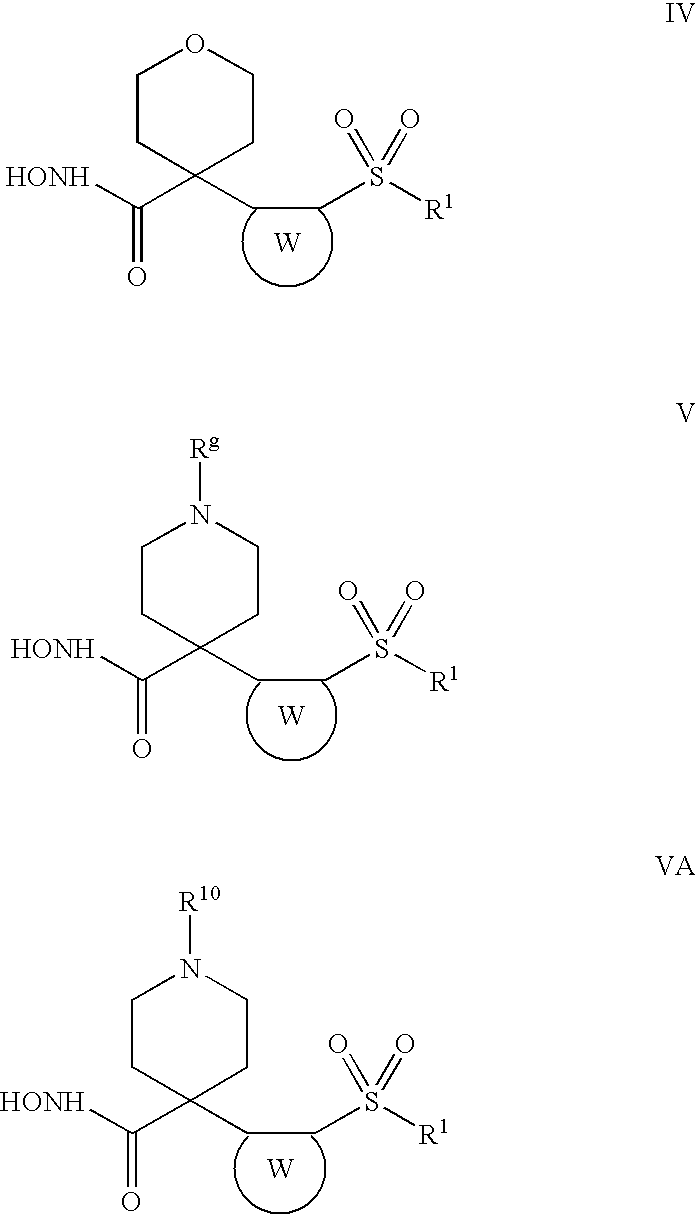
- wherein ring W, R 1, Rg and R10 are as defined elsewhere, and in some embodiments is preferably PhR4, as is also defined above, and is —NR7R8, as is also defined above.
- Again taking into account the before-stated preference that W be a 1,2-phenylene radical and the preference for R 1 being PhR4, particularly preferred compounds of Formulas IV and V correspond in structure to Formulas IVA, VB, VC, VIB, VIB-1, VIB-2 VIB-3, VIII or VIII-B, below, wherein the above definitions for —A—R—E—Y, —G—A—R—E—Y, Rg, R5, R6, R10 and PhR4 also apply, and wherein the substituent —A—R—E—Y is bonded to ring structure W2 or a depicted ring structure.
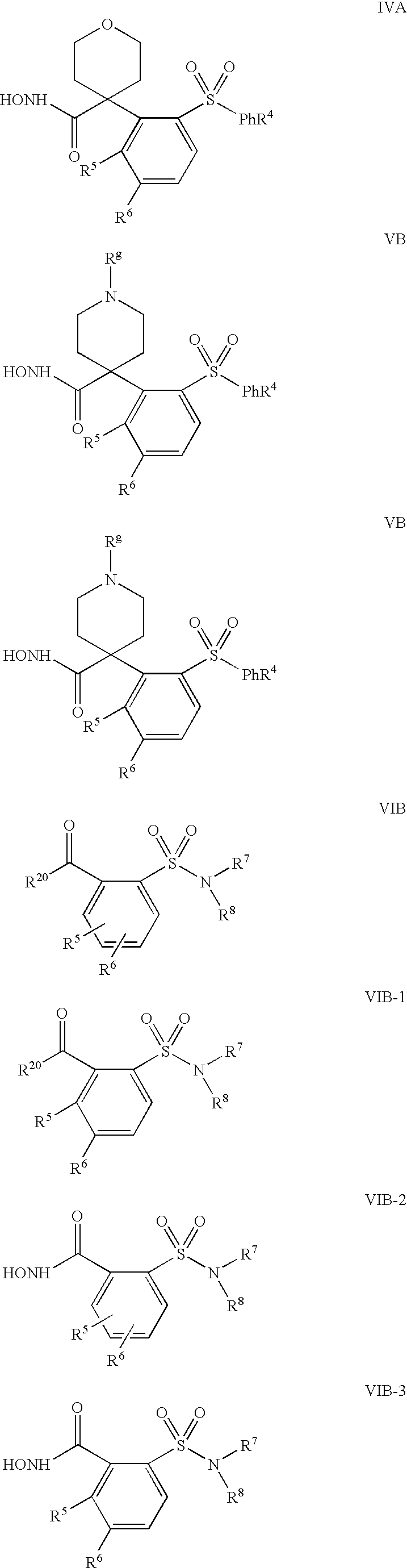

- Particularly preferred compounds contemplated herein are illustrated hereinbelow, along with the number of the specific Example in which each is prepared.


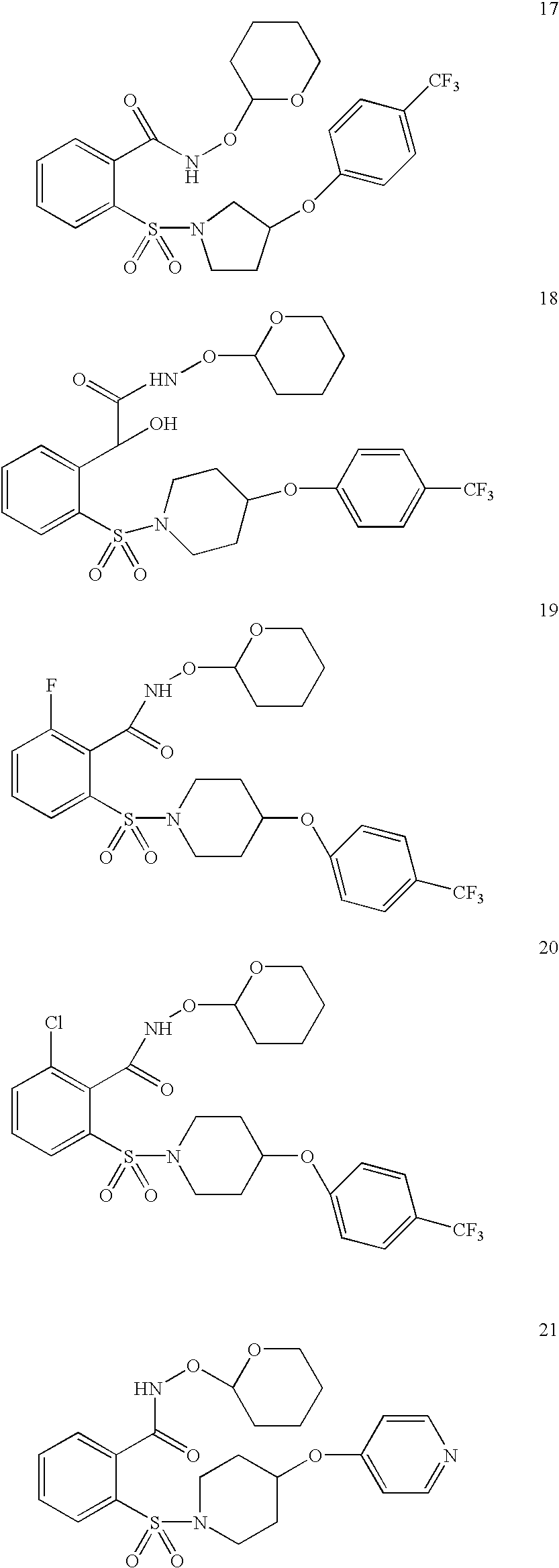
- The word “hydrocarbyl” is used herein as a short hand term to include straight and branched chain aliphatic as well as alicyclic groups or radicals that contain only carbon and hydrogen. Thus, alkyl, alkenyl and alkynyl groups are contemplated, whereas aromatic hydrocarbons such as phenyl and naphthyl groups, which strictly speaking are also hydrocarbyl groups, are referred to herein as aryl groups or radicals, as discussed hereinafter. Where a specific aliphatic hydrocarbyl substituent group is intended, that group is recited; i.e., C 1-C4 alkyl, methyl or dodecenyl. Exemplary hydrocarbyl groups contain a chain of 1 to about 12 carbon atoms, and preferably one to about 10 carbon atoms.
- A particularly preferred hydrocarbyl group is an alkyl group. As a consequence, a generalized, but more preferred substituent can be recited by replacing the descriptor “hydrocarbyl” with “alkyl” in any of the substituent groups enumerated herein.
- Examples of alkyl radicals include methyl, ethyl, n-propyl, isopropyl, n-butyl, isobutyl, sec-butyl, tert-butyl, pentyl, iso-amyl, hexyl, octyl and the like. Examples of suitable alkenyl radicals include ethenyl (vinyl), 2-propenyl, 3-propenyl, 1,4-pentadienyl, 1,4-butadienyl, 1-butenyl, 2-butenyl, 3-butenyl, decenyl and the like. Examples of alkynyl radicals include ethynyl, 2-propynyl, 3-propynyl, decynyl, 1-butynyl, 2-butynyl, 3-butynyl, and the like.
- Usual chemical suffix nomenclature is followed when using the word “hydrocarbyl” except that the usual practice of removing the terminal “yl” and adding an appropriate suffix is not always followed because of the possible similarity of a resulting name to one or more substituents. Thus, a hydrocarbyl ether is referred to as a “hydrocarbyloxy” group rather than a “hydrocarboxy” group as may possibly be more proper when following the usual rules of chemical nomenclature. On the other hand, a hydrocarbyl group containing a —C(O)O— functionality is referred to as a hydrocarboyl group inasmuch as there is no ambiguity in using that suffix. As a skilled worker will understand, a substituent that cannot exist such as a C 1 alkenyl group is not intended to be encompassed by the word “hydrocarbyl”.
- The term “carbonyl”, alone or in combination, means a —C(═O)— group wherein the remaining two bonds (valences) are independently substituted. The term “thiol” or “sulfhydryl”, alone or in combination, means a —SH group. The term “thiol” or “thia”, alone or in combination, means a thiaether group; i.e., an ether group wherein the ether oxygen is replaced by a sulfur atom, as in a thiophenoxy group (C 6H5—S—).
- The term “amino”, alone or in combination, means an amine or —NH 2 group, whereas the term mono-substituted amino, alone or in combination, means a substituted amine —N(H)(substituent) group wherein one hydrogen atom is replaced with a substituent, and disubstituted amine means a —N(substituent)2 wherein two hydrogen atoms of the amino group are replaced with independently selected substituent groups. Amines, amino groups and amides are classes that can be designated as primary (I°), secondary (II°) or tertiary (III°) or unsubstituted, mono-substituted or di-substituted depending on the degree of substitution of the amino nitrogen. Quaternary amine (IV°) means a nitrogen with four substituents [—N+(substituent)4] that is positively charged and accompanied by a counter ion or N-oxide means one substituent is oxygen and the group is represented as [—N+(substituent)3-O−]; i.e., the charges are internally compensated.
- The term “cyano”, alone or in combination, means a —C-triple bond-N (—CN) group. The term “azido”, alone or in combination, means an —N-double bond-N-double bond-N— (—N═N═N—).
- The term “hydroxyl”, alone or in combination, means a “—OH group. The term “nitro”, alone or in combination, means a —NO 2 group.
- The term “azo”, alone or in combination, means a —N═N— group wherein the bonds at the terminal positions are independently substituted. The term “hydrazino”, alone or in combination, means a —NH—NH— group wherein the remaining two bonds (valences) are independently substituted. The hydrogen atoms of the hydrazino group can be replaced, independently, with substituents and the nitrogen atoms can form acid addition salts or be quaternized.
- The term “sulfonyl”, alone or in combination, means a —S(O) 2— group wherein the remaining two bonds (valences) can be independently substituted. The term “sulfoxido”, alone or in combination, means a —S(═O)— group wherein the remaining two bonds (valences) can be independently substituted. The term “sulfonylamide”, alone or in combination, means a —S(═O)2—N═ group wherein the remaining three bonds (valences) are independently substituted. The term “sulfinamido”, alone or in combination, means a —S(═O)1N═ group wherein the remaining three bonds (valences) are independently substituted. The term “sulfenamide”, alone or in combination, means a —S—N═ group wherein the remaining three bonds (valences) are independently substituted.
- The term “hydrocarbyloxy”, alone or in combination, means an hydrocarbyl ether radical wherein the term hydrocarbyl is as defined above. Examples of suitable hydrocarbyl ether radicals include methoxy, ethoxy, n-propoxy, isopropoxy, allyloxy, n-butoxy, iso-butoxy, sec-butoxy, tert-butoxy and the like. The term “cyclohydrocarbyl”, alone or in combination, means a hydrocarbyl radical that contains 3 to about 8 carbon atoms, preferably from about 3 to about 6 carbon atoms, and is cyclic. The term “cyclohydrocarbylhydrocarbyl” means an hydrocarbyl radical as defined above which is substituted by a cyclohydrocarbyl as also defined above. Examples of such cyclohydrocarbylhydrocarbyl radicals include cyclopropyl, cyclobutyl, cyclopentenyl, cyclohexyl cyclooctynyl and the like.
- The term “aryl”, alone or in combination, means a phenyl or naphthyl radical that optionally carries one or more substituents selected from hydrocarbyl, hydrocarbyloxy, halogen, hydroxy, amino, nitro and the like, such as phenyl, p-tolyl, 4-methoxyphenyl, 4-(tert-butoxy)phenyl, 4-fluorophenyl, 4-chlorophenyl, 4-hydroxyphenyl, and the like. The term “arylhydrocarbyl”, alone or in combination, means an hydrocarbyl radical as defined above in which one hydrogen atom is replaced by an aryl radical as defined above, such as benzyl, 2-phenylethyl and the like. The term “arylhydrocarbyloxycarbonyl”, alone or in combination, means a radical of the formula —C(O)—O— arylhydrocarbyl in which the term “arylhydrocarbyl” has the significance given above. An example of an arylhydrocarbyloxycarbonyl radical is benzyloxycarbonyl. The term “aryloxyl” means a radical of the formula aryl-O— in which the term aryl has the significance given above. The term “aromatic ring” in combinations such as substituted-aromatic ring sulfonamide, substituted-aromatic ring sulfinamide or substituted-aromatic ring sulfenamide means aryl or heteroaryl as defined above.
- The terms “hydrocarbyloyl” or “hydrocarbylcarbonyl”, alone or in combination, mean an acyl radical derived from an hydrocarbylcarboxylic acid, examples of which include acetyl, propionyl, acryloyl, butyryl, valeryl, 4-methylvaleryl, and the like. The term “cyclohydrocarbylcarbonyl” means an acyl group derived from a monocyclic or bridged cyclohydrocarbylcarboxylic acid such as cyclopropanecarbonyl, cyclohexenecarbonyl, adamantanecarbonyl, and the like, or from a benz-fused monocyclic cyclohydrocarbylcarboxylic acid that is optionally substituted by, for example, a hydrocarbyloylamino group, such as 1,2,3,4-tetrahydro-2-naphthoyl, 2-acetamido-1,2,3,4-tetrahydro-2-naphthoyl. The terms “arylhydrocarbyloyl” or “arylhydrocarbylcarbonyl” mean an acyl radical derived from an aryl-substituted hydrocarbylcarboxylic acid such as phenylacetyl, 3-phenylpropenyl (cinnamoyl), 4-phenylbutyryl, (2-naphthyl)acetyl, 4-chlorohydrocinnamoyl, 4-aminocinnamoyl, 4-methoxycinnamoyl and the like.
- The terms “aroyl” or “arylcarbonyl” means an acyl radical derived from an aromatic carboxylic acid. Examples of such radicals include aromatic carboxylic acids, an optionally substituted benzoic or naphthoic acid such as benzoyl, 4-chlorobenzoyl, 4-carboxybenzoyl, 4-(benzyloxycarbonyl)benzoyl, 2-naphthoyl, 6-carboxy-2 naphthoyl, 6-(benzyloxycarbonyl)-2-naphthoyl, 3-benzyloxy-2-naphthoyl, 3-hydroxy-2-naphthoyl, 3-(benzyloxyformamido)-2-naphthoyl, and the like.
- The heterocyclyl (heterocyclo) or heterocyclohydrocarbyl portion of a heterocyclylcarbonyl, heterocyclyloxycarbonyl, heterocyclylhydrocarbyloxycarbonyl, or heterocyclohydrocarbyl group or the like is a saturated or partially unsaturated monocyclic, bicyclic or tricyclic heterocycle that contains one to four hetero atoms selected from nitrogen, oxygen and sulphur, which is optionally substituted on one or more carbon atoms by a halogen, alkyl, alkoxy, oxo group, and the like, and/or on a secondary nitrogen atom (i.e., —NH—) by an hydrocarbyl, arylhydrocarbyloxycarbonyl, hydrocarbyloyl, aryl or arylhydrocarbyl or on a tertiary nitrogen atom (i.e. ═N—) by oxido and that is attached via a carbon atom. The tertiary nitrogen atom with three substituents can also form a N-oxide [═N +(O)−] group. Examples of such heterocyclyl groups are pyrrolidinyl, piperidinyl, piperazinyl, morpholinyl, thiamorpholinyl, and the like.
- The heteroaryl portion of a heteroaroyl, heteroaryloxycarbonyl, or a heteroarylhydrocarbyloyl (heteroarylhydrocarbyl carbonyl) group or the like is an aromatic monocyclic, bicyclic, or tricyclic heterocycle that contains the hetero atoms and is optionally substituted as defined above with respect to the definition of heterocyclyl. A “heteroaryl” group is an aromatic heterocyclic ring substituent that preferably contains one, or two, up to three or four, atoms in the ring other than carbon. Those heteroatoms can be nitrogen, sulfur or oxygen. A heteroaryl group can contain a single 5- or 6-membered ring or a fused ring system having two 6-membered rings or a 5- and a 6-membered ring. Exemplary heteroaryl groups include 6-membered ring substituents such as pyridyl, pyrazyl, pyrimidinyl, and pyridazinyl; 5-membered ring substituents such as 1,3,5-, 1,2,4- or 1,2,3-triazinyl, imidazyl, furanyl, thiophenyl, pyrazolyl, oxazolyl, isoxazolyl, thiazolyl, 1,2,3-, 1,2,4-, 1,2,5-, or 1,3,4-oxadiazolyl and isothiazolyl groups; 6-/5-membered fused ring substituents such as benzothiofuranyl, isobenzothiofuranyl, benzisoxazolyl, benzoxazolyl, purinyl and anthranilyl groups; and 6-/6-membered fused rings such as 1,2-, 1,4-, 2,3- and 2,1-benzopyronyl, quinolinyl, isoquinolinyl, cinnolinyl, quinazolinyl, and 1,4-benzoxazinyl groups.
- The term “cyclohydrocarbylhydrocarbyloxycarbonyl” means an acyl group derived from a cyclohydrocarbylhydrocarbyloxycarboxylic acid of the formula cyclohydrocarbylhydrocarbyl-O—COOH wherein cyclohydrocarbylhydrocarbylhas the significance given above. The term “aryloxyhydrocarbyloyl” means an acyl radical of the formula aryl-O-hydrocarbyloyl wherein aryl and hydrocarbyloyl have the significance given above. The term “heterocyclyloxycarbonyl” means an acyl group derived from heterocyclyl-O—COOH wherein heterocyclyl is as defined above. The term “heterocyclylhydrocarbyloyl” is an acyl radical derived from a heterocyclyl-substituted hydrocarbylcarboxylic acid wherein heterocyclyl has the significance given above. The term “heterocyclylhydrocarbyloxycarbonyl” means an acyl radical derived from a heterocyclyl-substituted hydrocarbyl-O—COOH wherein heterocyclyl has the significance given above. The term “heteroaryloxycarbonylyl” means an acyl radical derived from a carboxylic acid represented by heteroaryl-O—COOH wherein heteroaryl has the significance given above.
- The term “aminocarbonyl” alone or in combination, means an amino-substituted carbonyl (carbamoyl) group derived from an amino-substituted carboxylic acid wherein the amino group can be a primary, secondary or tertiary amino group containing substituents selected from hydrogen, hydrocarbyl, aryl, aralkyl, cyclohydrocarbyl, cyclohydrocarbylhydrocarbyl radicals and the like. The term “aminohydrocarbyloyl” means an acyl group derived from an amino-substituted hydrocarbylcarboxylic acid wherein the amino group can be a primary, secondary or tertiary amino group containing substituents independently selected from hydrogen, alkyl, aryl, aralkyl, cyclohydrocarbyl, cyclohydrocarbylhydrocarbyl radicals and the like.
- The term “halogen” means fluorine, chlorine, bromine or iodine. The term “halohydrocarbyl” means a hydrocarbyl radical having the significance as defined above wherein one or more hydrogens are replaced with a halogen. Examples of such halohydrocarbyl radicals include chloromethyl, 1-bromoethyl, fluoromethyl, difluoromethyl, trifluoromethyl, 1,1,1-trifluoroethyl and the like. The term perfluorohydrocarbyl means a hydrocarbyl group wherein each hydrogen has been replaced by a fluorine atom. Examples of such perfluorohydrocarbyl groups, in addition to trifluoromethyl above, are perfluorobutyl, perfluoroisopropyl, perfluorododecyl and perfluorodecyl.
- Table 1 through Table 104, below, show several contemplated sulfonyl aryl or heteroaryl hydroxamic acid compounds as structural formulas that illustrate substituent groups. Each group of compounds of Tables 1 through 86 is illustrated by a generic formula, followed by a series of preferred moieties or groups that constitute various substituents that can be attached at the position clearly shown in the generic structure. The substituent symbols, e.g., R 1, R2, X, are as shown in each Table, and are typically different from those shown elsewhere herein in structural formulas bearing Roman numerals. One or two bonds (straight lines) are shown with those substituents to indicate the respective positions of attachment in the illustrated compound. This system is well known in the chemical communication arts and is widely used in scientific papers and presentations. Tables 87 through 104 illustrate compounds of the previous tables as well as other contemplated compounds using complete molecular formulas.
TABLE 1 
Example R1 R2 1 —H —H 2 —H —CH3 3 —CH3 —CH3 4 —H —OH 5 —CH3 —OH 6 
7 
8 
9 
10 
11 
12 
13 
14 
15 
16 
17 
18 
19 
20 
21 
22 
23 
24 
-
TABLE 2 
Example R1 R2 1 —H —H 2 —H —CH3 3 —CH3 —CH3 4 —H —OH 5 —CH3 —OH 6 
7 
8 
9 
10 
11 
12 
13 
14 
15 
16 
17 
18 
19 
20 
21 
22 
23 
24 
-
TABLE 3 
Example R1 R2 X Ar 1 
O 
2 
O 
3 
O 
4 
O 
5 
O 
6 
O 
7 
O 
8 
O 
9 
S 
10 
S 
-
TABLE 4 
Example X Ar 1 O 
2 O 
3 O 
4 O 
5 O 
6 O 
7 O 
8 O 
9 O 
10 O 
11 O 
12 S 
13 S 
14 S 
15 S 
16 S 
17 S 
18 S 
19 S 
20 S 
21 S 
22 S 
-
TABLE 5 
Example X Ar 1 O 
2 O 
3 O 
4 O 
5 O 
6 O 
7 O 
8 O 
9 O 
10 O 
11 O 
12 S 
13 S 
14 S 
15 S 
16 S 
17 S 
18 S 
19 S 
20 S 
21 S 
22 S 
-
TABLE 6 
Example X Ar 1 O 
2 O 
3 O 
4 O 
5 O 
6 O 
7 O 
8 O 
9 S 
10 S 
11 S 
12 S 
13 S 
14 S 
15 S 
16 S 
-
TABLE 7 
Example X 1 
2 
3 
4 
5 
6 
7 
8 
9 
10 
11 
12 
13 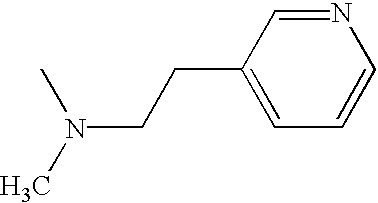
14 
15 
16 
17 
18 
19 
20 
-
TABLE 8 
Example X 1 
2 
3 
4 
5 
6 
7 
8 
9 
10 
11 
12 
13 
14 
15 
16 
17 
18 
19 
20 
-
TABLE 9 
Example X 1 
2 
3 
4 
5 
6 
7 
8 
9 
10 
11 
12 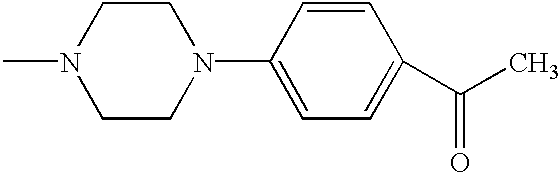
13 
14 
15 
16 
-
TABLE 10 
Example X 1 
2 
3 
4 
5 
6 
7 
8 
9 
10 
11 
12 
13 
14 
15 
16 
-
TABLE 11 
Example X 1 
2 
3 
4 
5 
6 
7 
8 
9 
10 
11 
12 
13 
14 
15 
16 
-
TABLE 12 
Example X 1 
2 
3 
4 
5 
6 
7 
8 
9 
10 
11 
-
TABLE 13 


-
TABLE 14 


-
TABLE 15 


-
TABLE 16 


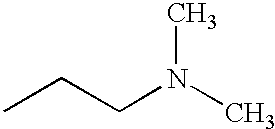
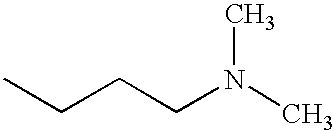


-
TABLE 17 
Example X Ar 1 O 
2 O 
3 O 
4 O 
5 O 
6 O 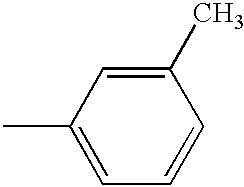
7 O 
8 O 
9 O 
10 O 
11 O 
12 S 
13 S 
14 S 
15 S 
16 S 
17 S 
18 S 
19 S 
20 S 
21 S 
22 S 
-
TABLE 18 
Example X 1 
2 
3 
4 
5 
6 
7 
8 
9 
10 
11 
-
TABLE 19 
Example X 1 
2 
3 
4 
5 
6 
7 
8 
9 
10 
11 
12 
13 
14 
15 
16 
17 
18 
19 
20 
-
TABLE 20 
Example X 1 
2 
3 
4 
5 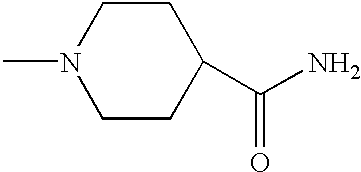
6 
7 
8 
9 
10 
11 
12 
13 
14 
15 
16 
-
TABLE 21 
Example X Ar 1 O 
2 O 
3 O 
4 O 
5 O 
6 O 
7 O 
8 O 
9 S 
10 S 
11 S 
12 S 
13 S 
14 S 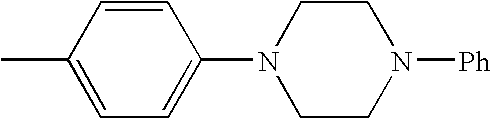
15 S 
16 S 
-
TABLE 22 


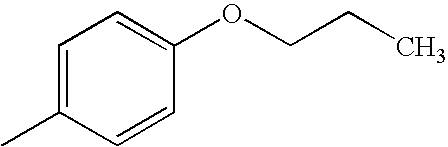


-
TABLE 23 


-
TABLE 24 


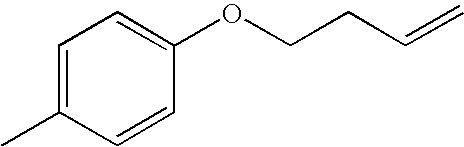


-
TABLE 25 


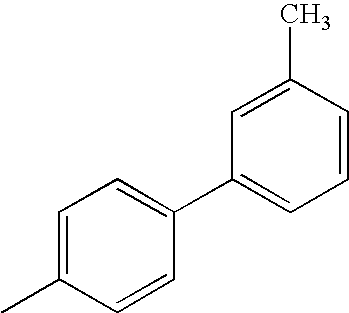


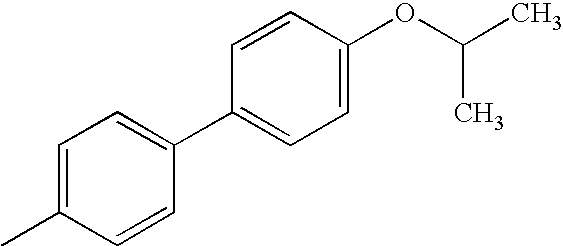


-
TABLE 26 

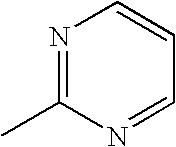


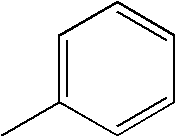


-
TABLE 27 


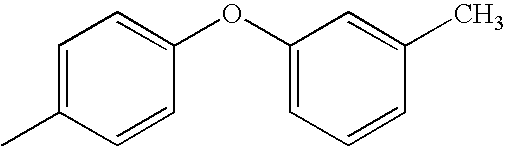


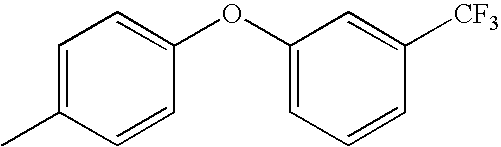
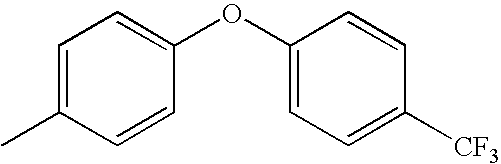

-
TABLE 28 


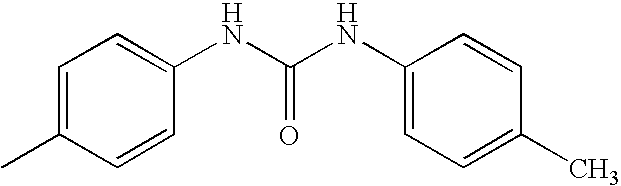


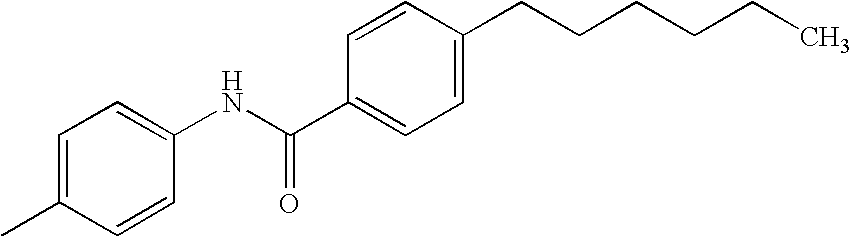


-
TABLE 29 
Example X Ar 1 O 
2 O 
3 S 
4 S 
5 S 
6 S 
-
TABLE 30 
Example R1 R2 X Ar 1 
O 
2 
O 
3 
O 
4 
O 
5 
O 
6 
O 
7 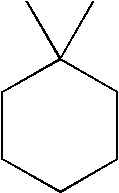
O 
8 
O 
9 
S 
10 
S 
11 
S 
-
TABLE 31 
Example X Ar 1 O 
2 O 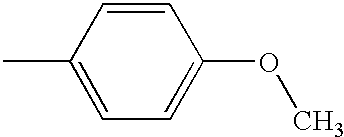
3 S 
4 S 
5 S 
-
TABLE 32 
Example X Ar 1 O 
2 O 
3 O 
4 O 
5 O 
6 O 
7 O 
8 O 
9 O 
10 O 
11 O 
12 S 
13 S 
14 S 
15 S 
16 S 
17 S 
18 S 
19 S 
20 S 
21 S 
22 S 
-
TABLE 33 
Example —NR7R8 1 
2 
3 
4 
5 
6 
7 
8 
9 
10 
11 
-
TABLE 34 
Example —NR7R8 1 
2 
3 
4 
5 
6 
7 
8 
9 
10 
11 
12 
13 
14 
15 
16 
17 
18 
19 
20 
-
TABLE 35 
Example X Ar 1 O 
2 O 
3 O 
4 O 
5 O 
6 O 
7 O 
8 O 
9 S 
10 S 
11 S 
12 S 
13 S 
14 S 
15 S 
16 S 
-
TABLE 36 


-
TABLE 37 


-
TABLE 38 


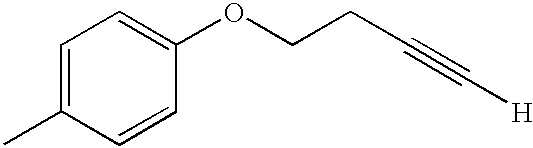

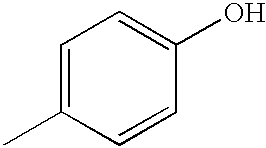


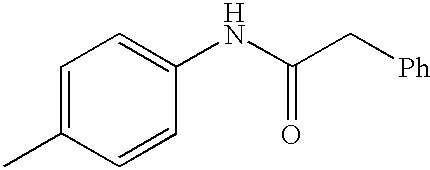


-
TABLE 39 


-
TABLE 40 


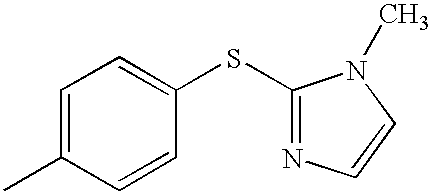


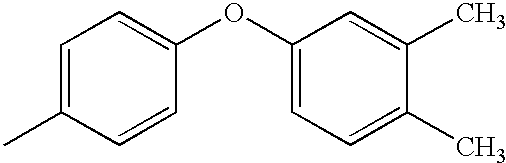


-
TABLE 41 


-
TABLE 42 


-
TABLE 43 
Example X Ar 1 O 
2 O 
3 O 
4 O 
5 O 
6 O 
7 O 
8 O 
9 O 
10 O 
11 O 
12 S 
13 S 
14 S 
15 S 
16 S 
17 S 
18 S 
19 S 
20 S 
21 S 
22 S 
-
TABLE 44 
Example —NR7R8 1 
2 
3 
4 
5 
6 
7 
8 
9 
10 
11 
-
TABLE 45 
Example —NR7R8 1 
2 
3 
4 
5 
6 
7 
8 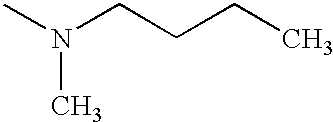
9 
10 
11 
12 
13 
14 
15 
16 
17 
18 
19 
20 
-
TABLE 46 
Example X Ar 1 O 
2 O 
3 O 
4 O 
5 O 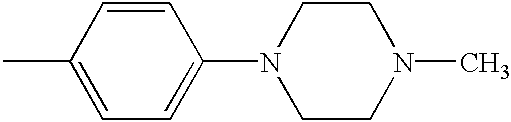
6 O 
7 O 
8 O 
9 S 
10 S 
11 S 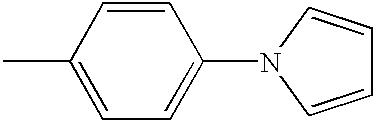
12 S 
13 S 
14 S 
15 S 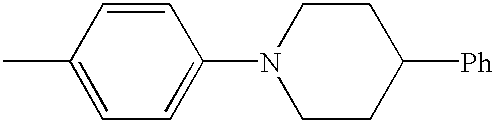
16 S 
-
TABLE 47 


-
TABLE 48 


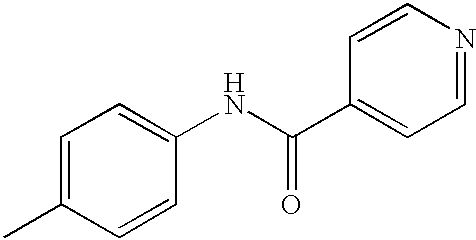


-
TABLE 49 


-
TABLE 50 


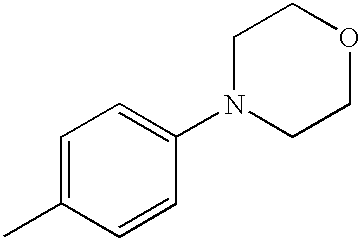
-
TABLE 51 


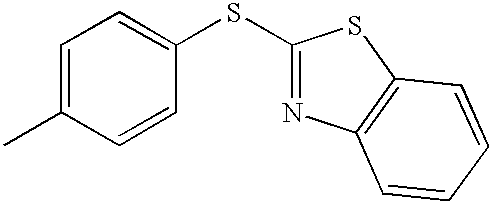


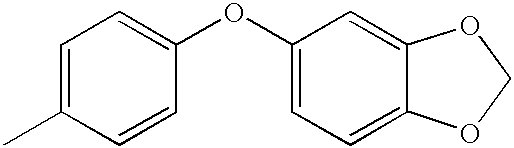


-
TABLE 52 


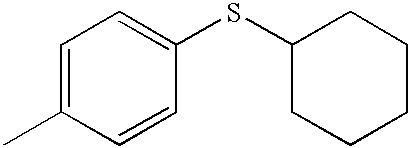


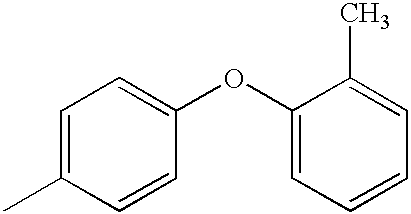


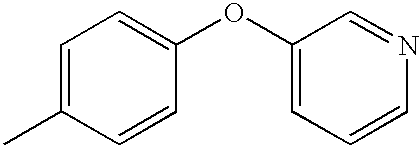
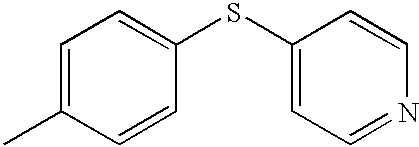

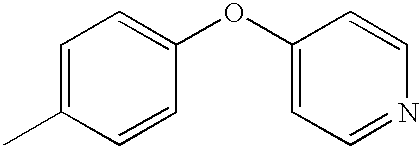


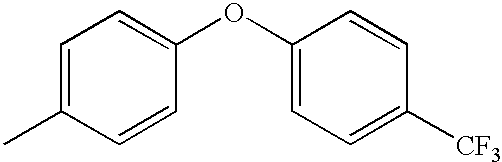

-
TABLE 53 
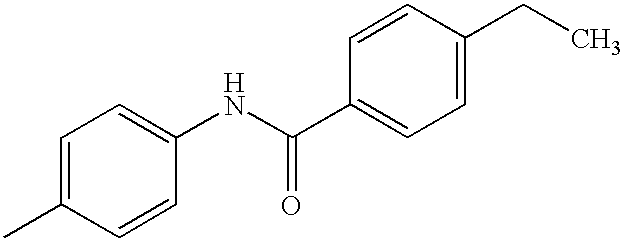


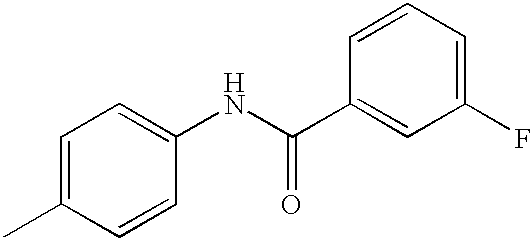
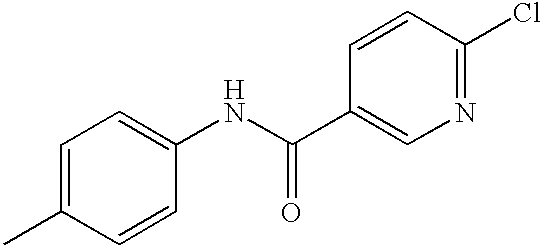


-
TABLE 54 
Example X Ar 1 O 
2 O 
3 O 
4 O 
5 O 
6 O 
7 O 
8 O 
9 O 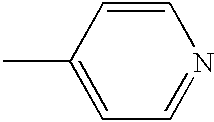
10 O 
11 O 
12 S 
13 S 
14 S 
15 S 
16 S 
17 S 
18 S 
19 S 
20 S 
21 S 
22 S 
-
TABLE 55 
Example —NR7R8 1 
2 
3 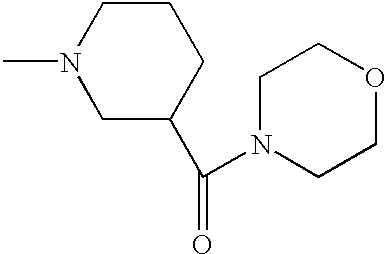
4 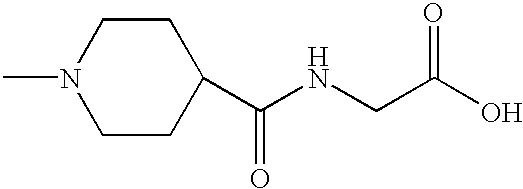
5 
6 
7 
8 
9 
10 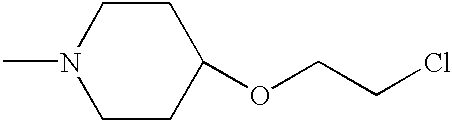
11 
-
TABLE 56 
Example —NR7R8 1 
2 
3 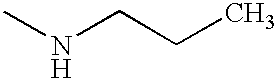
4 
5 
6 
7 
8 
9 
10 
11 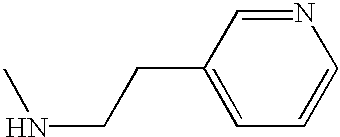
12 
13 
14 
15 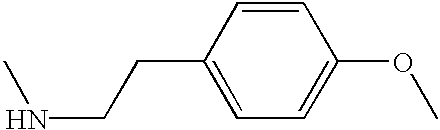
16 
17 
18 
19 
20 
-
TABLE 57 
Example X Ar 1 O 
2 O 
3 O 
4 O 
5 O 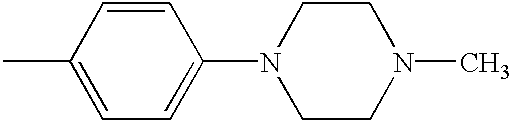
6 O 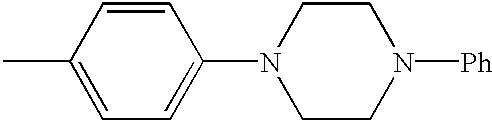
7 O 
8 O 
9 S 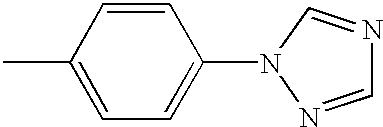
10 S 
11 S 
12 S 
13 S 
14 S 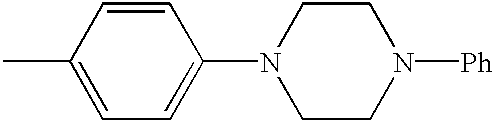
15 S 
16 S 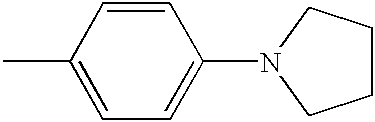
-
TABLE 58 


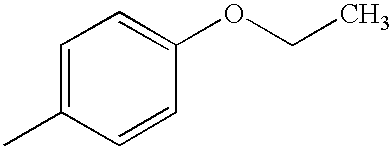
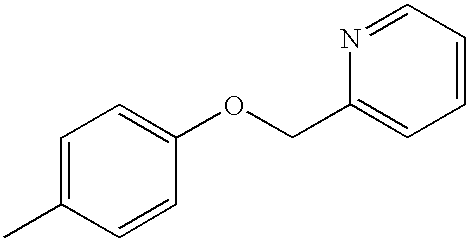


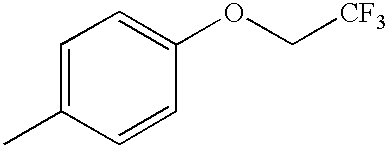


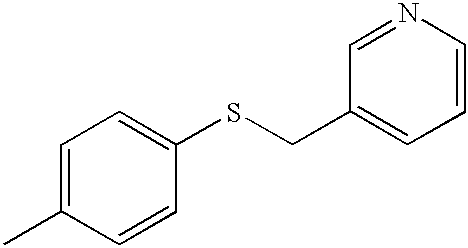
-
TABLE 59 


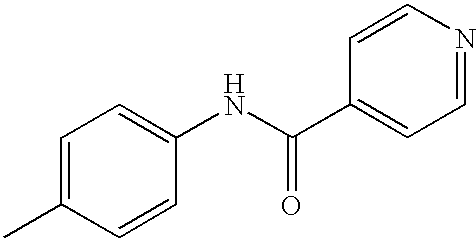


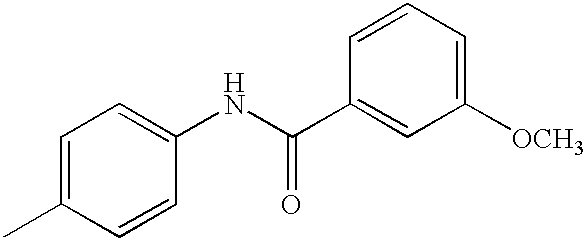


-
TABLE 61 


-
TABLE 62 


-
TABLE 63 





-
TABLE 64 







-
TABLE 65 





-
TABLE 66 





-
TABLE 67 
Example R4 1 
2 
3 
4 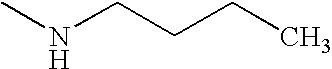
5 
6 
7 
8 
9 
10 
11 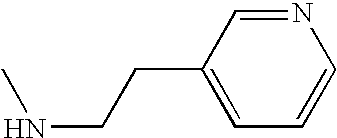
12 
13 
14 
15 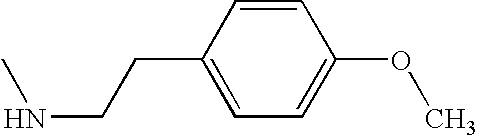
16 
17 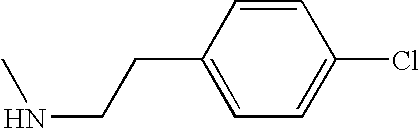
18 
19 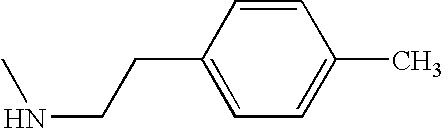
20 
-
TABLE 68 
Example X Ar 1 O 
2 O 
3 O 
4 O 
5 O 
6 O 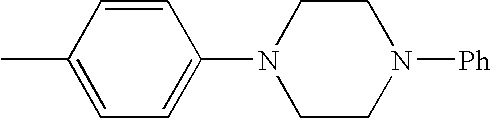
7 O 
8 O 
9 S 
10 S 
11 S 
12 S 
13 S 
14 S 
15 S 
16 S 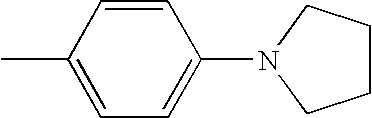
-
TABLE 69 


-
TABLE 70 




-
TABLE 71 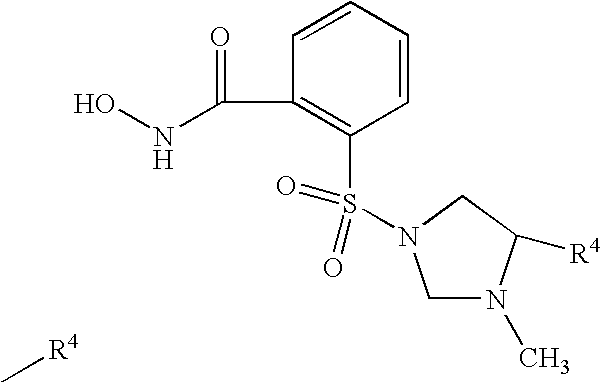





-
TABLE 72 


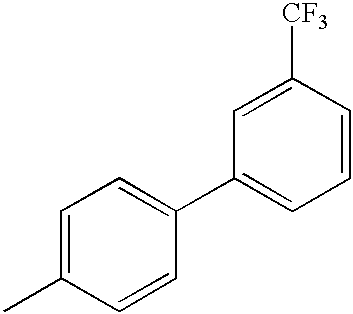


-
TABLE 73 


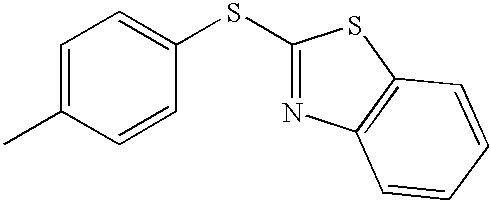


-
TABLE 74 


-
TABLE 75 


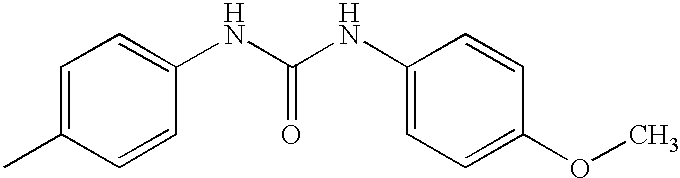


-
TABLE 76 


-
TABLE 77 


-
TABLE 78 
Example R4 1 
2 
3 
4 
5 
6 
7 
8 
9 
10 
11 
12 
13 
14 
15 
16 
17 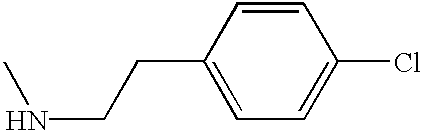
18 
19 
20 
-
TABLE 79 
Example X Ar 1 O 
2 O 
3 O 
4 O 
5 O 
6 O 
7 O 
8 O 
9 S 
10 S 
11 S 
12 S 
13 S 
14 S 
15 S 
16 S 
-
TABLE 80 


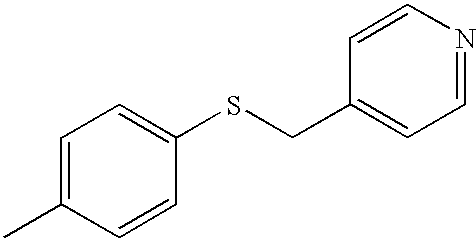

-
TABLE 81 


-
TABLE 82 


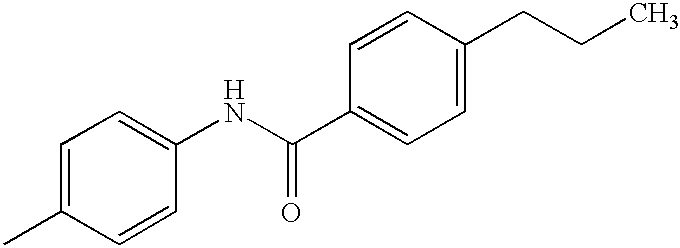


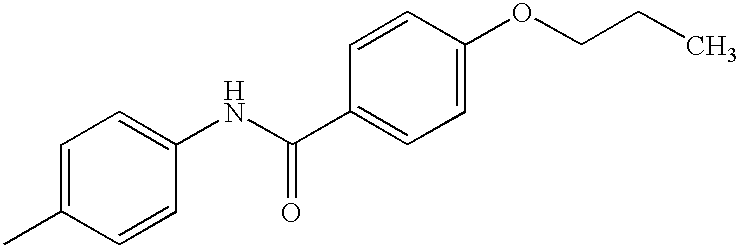


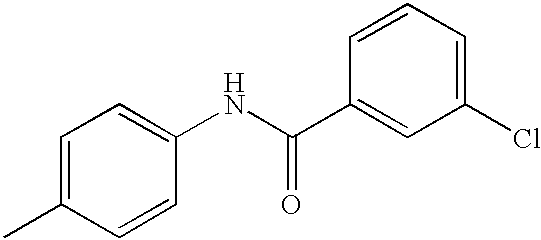
-
TABLE 83 

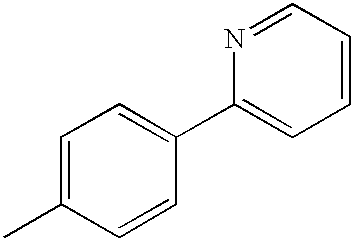


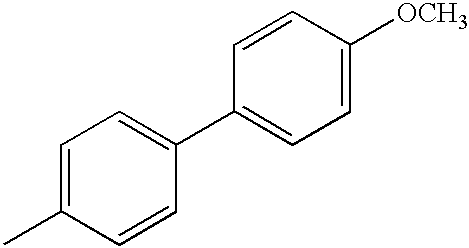


-
TABLE 84 


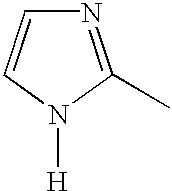


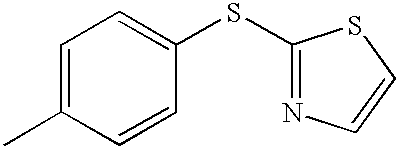


-
TABLE 85 


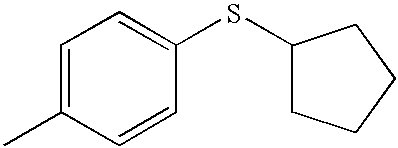


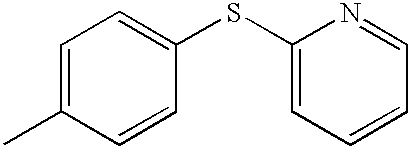


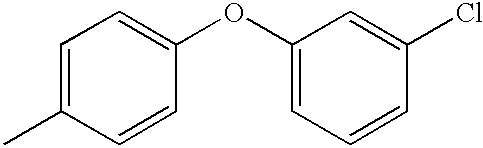


-
TABLE 86 


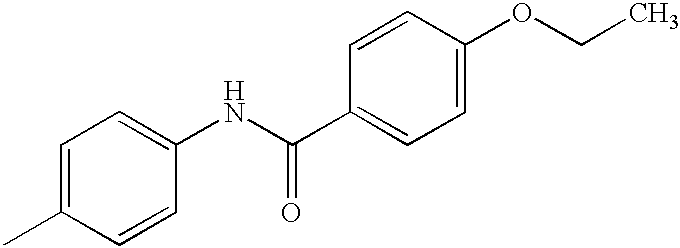


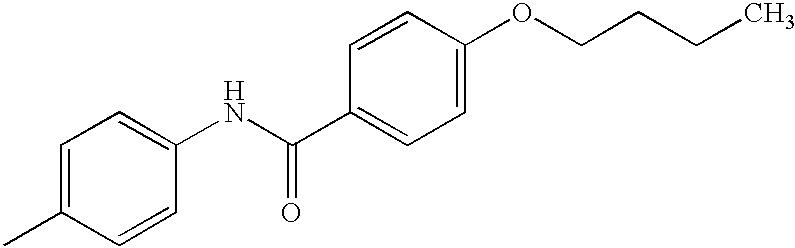


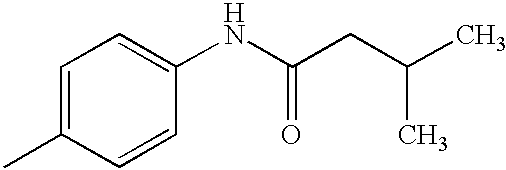


-
TABLE 87 


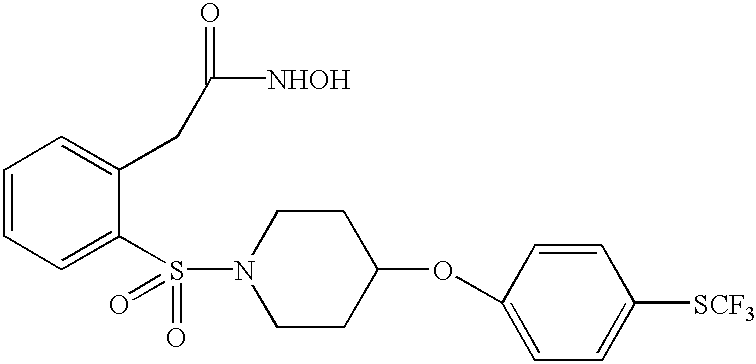
-
TABLE 88 
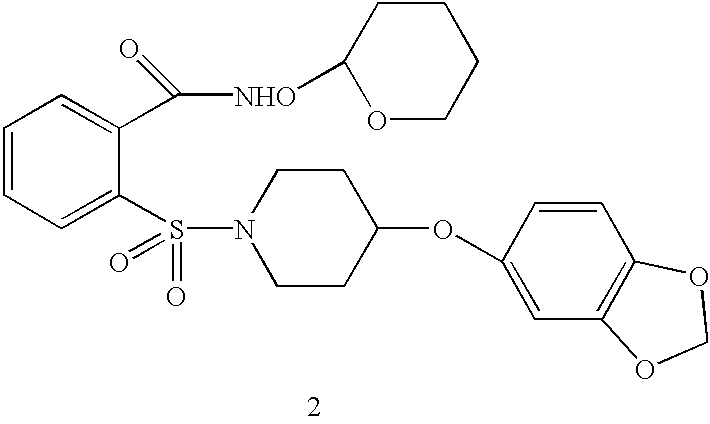


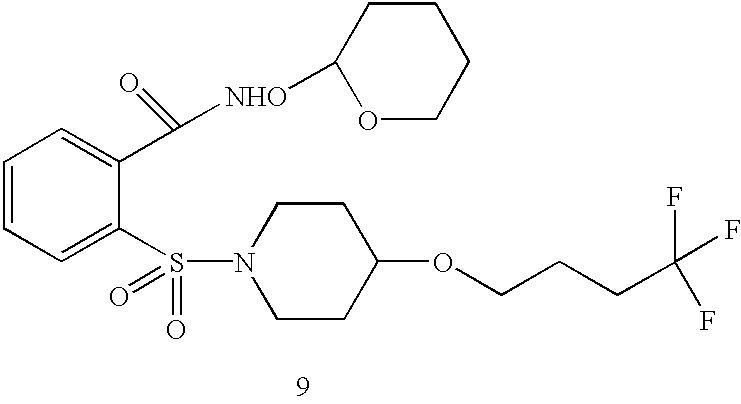

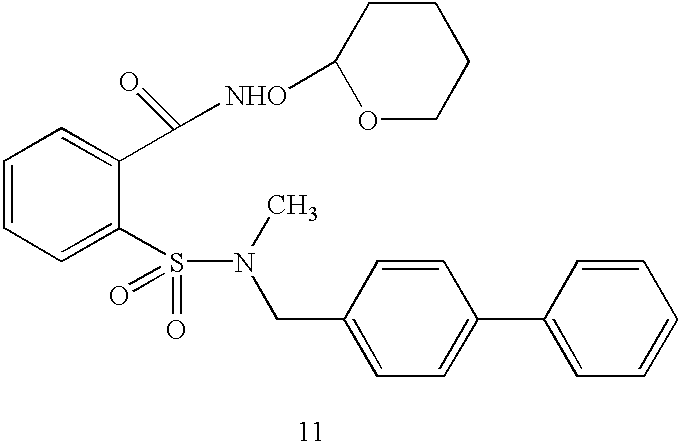
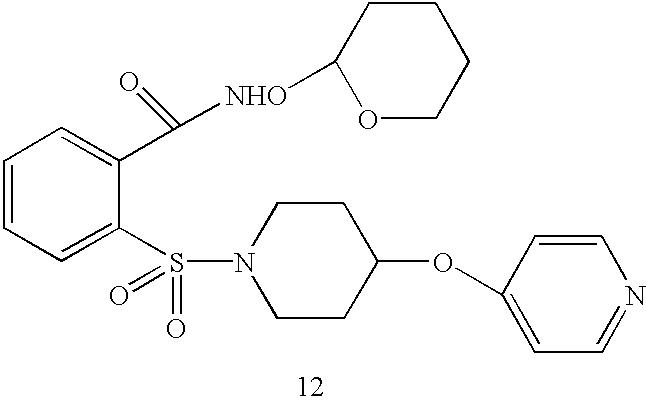

-
TABLE 89 


-
TABLE 90 


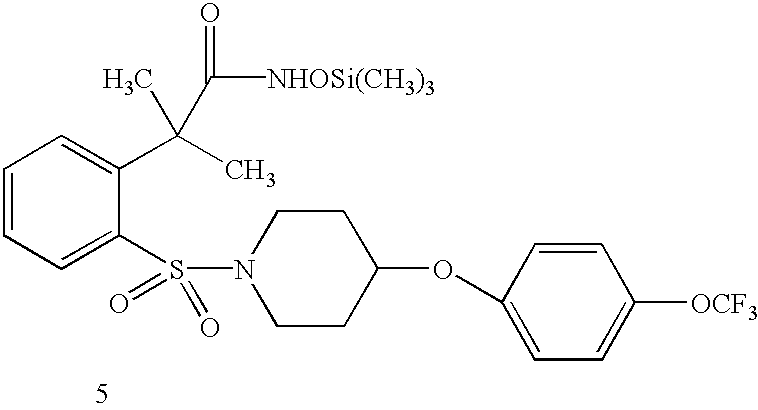


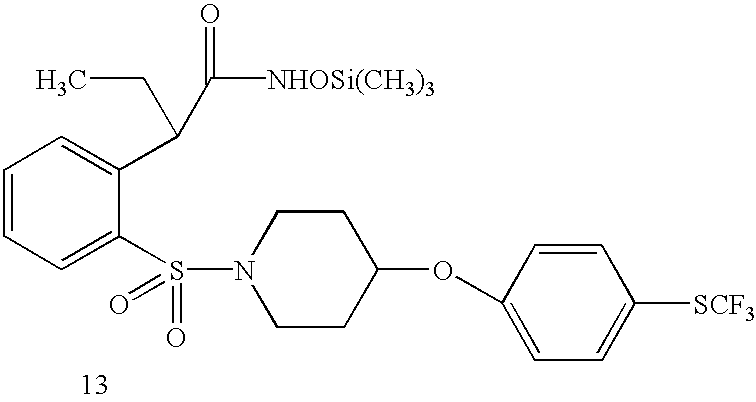


-
TABLE 91 


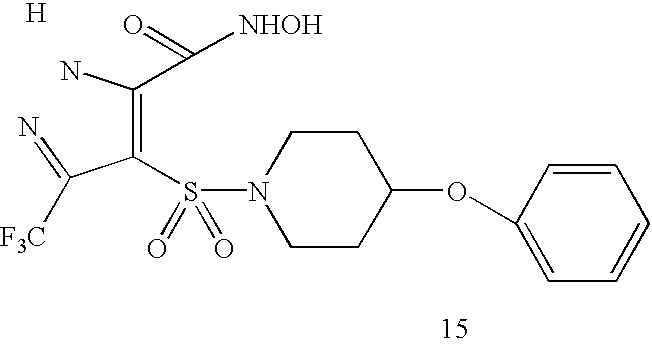


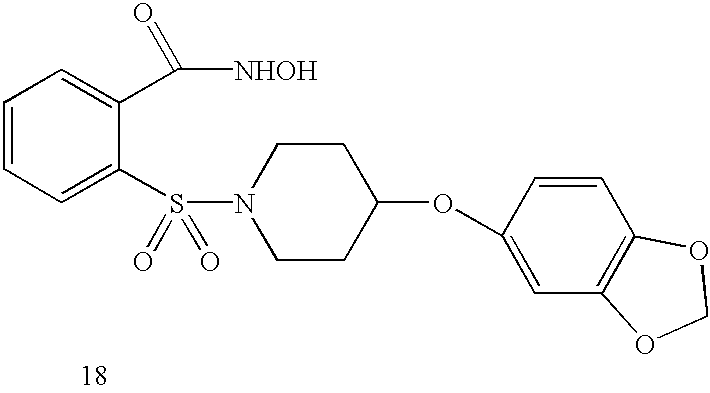
-
TABLE 92 

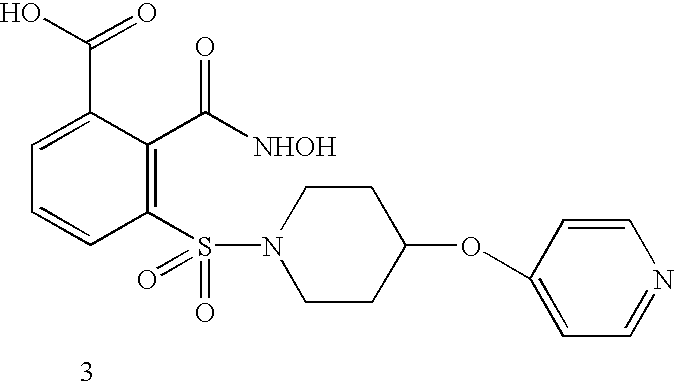
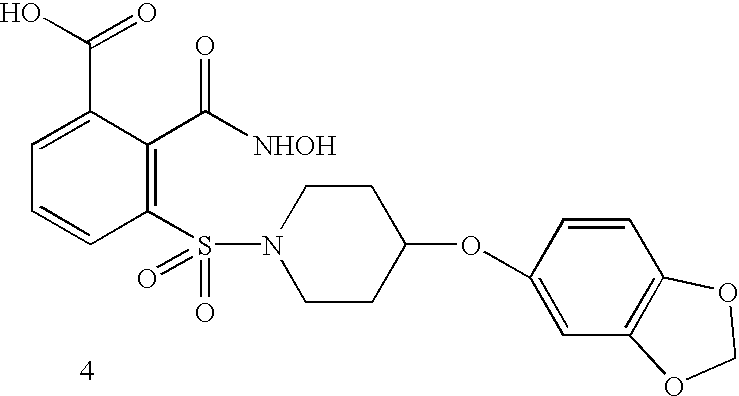


-
TABLE 93 


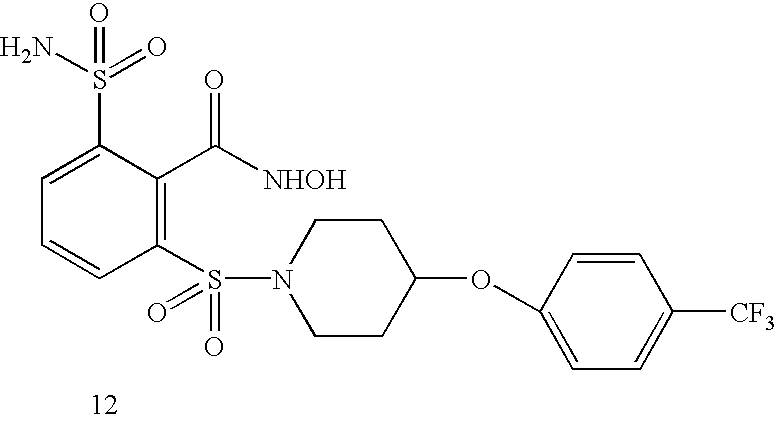
-
TABLE 94 
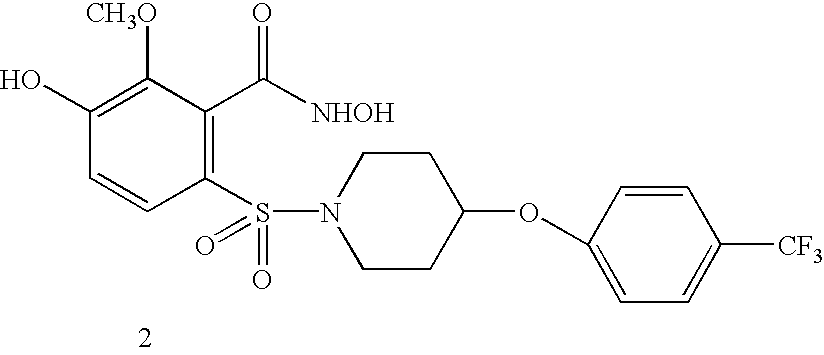


-
TABLE 95 

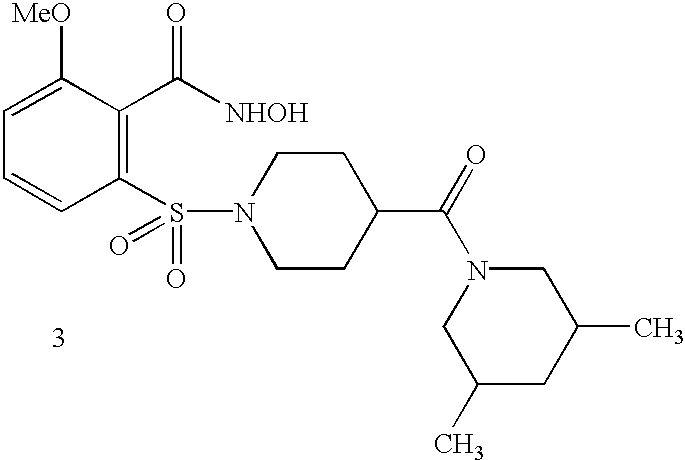


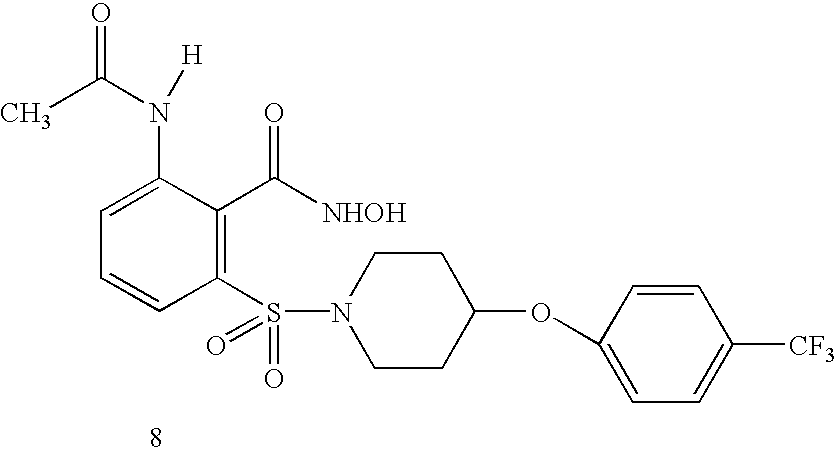
-
TABLE 96 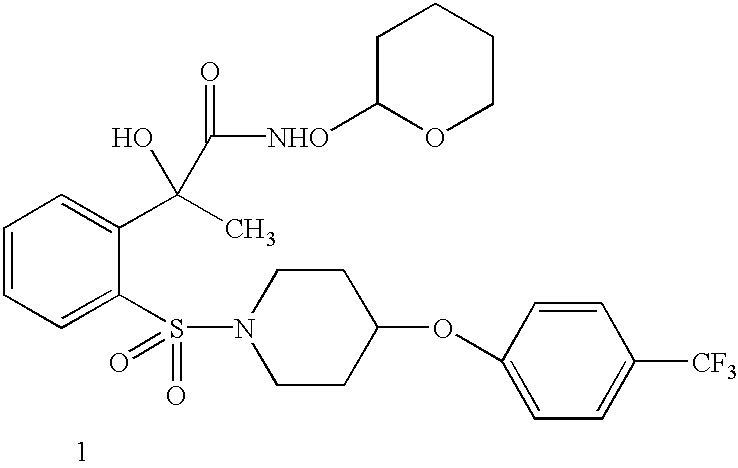


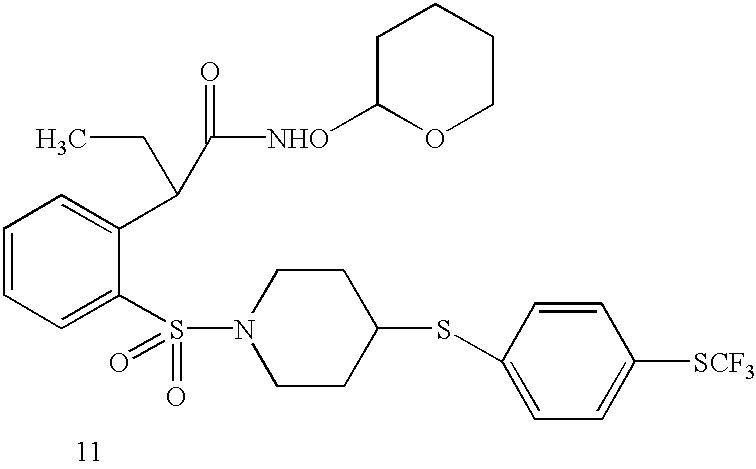
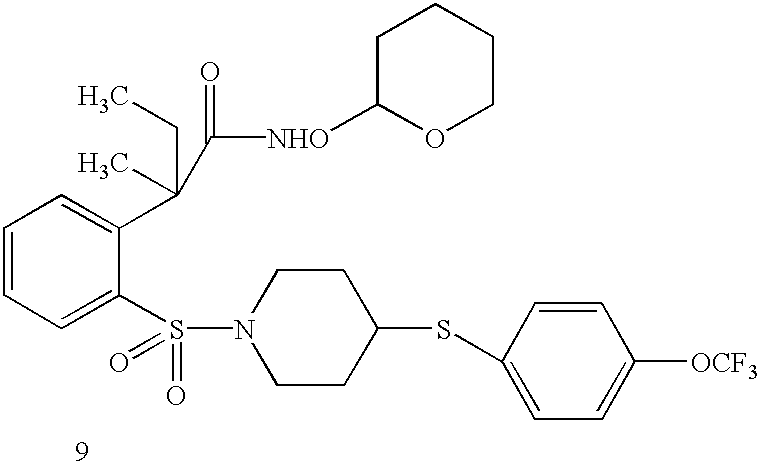
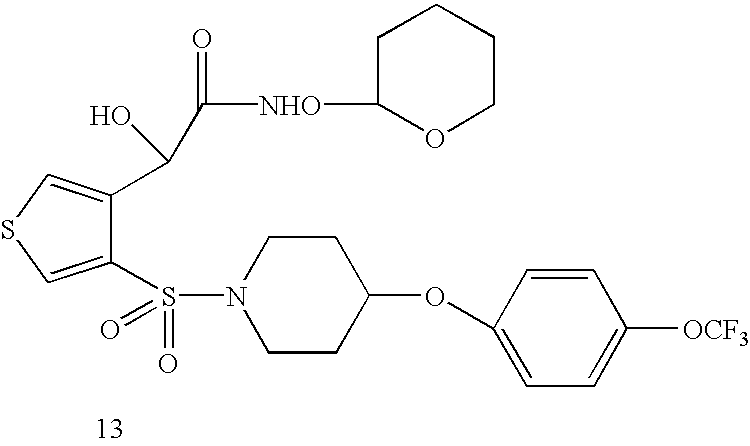

-
TABLE 97 
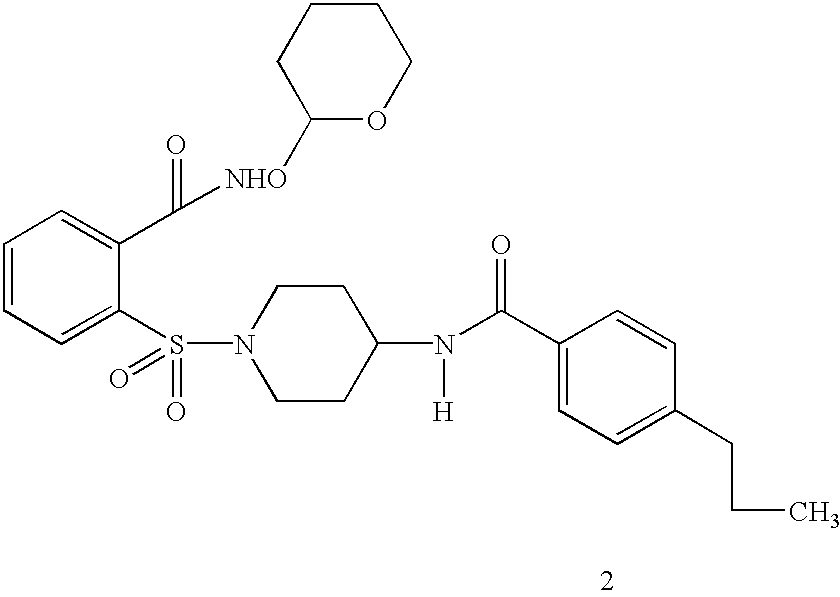


-
TABLE 98 


-
TABLE 99 


-
TABLE 100 


-
TABLE 101 


-
TABLE 102 


-
TABLE 103 


-
TABLE 104 


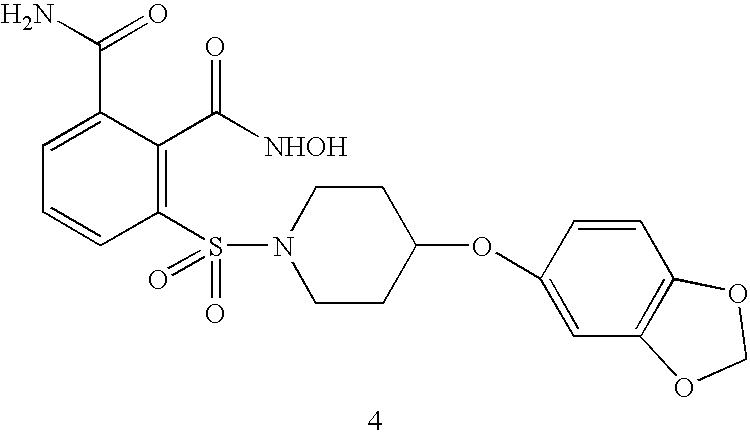

- Treatment Process
- A process for treating a host mammal having a condition associated with pathological matrix metalloprotease activity is also contemplated. That process comprises administering a compound described hereinbefore in an MMP enzyme-inhibiting effective amount to a mammalian host having such a condition. The use of administration repeated a plurality of times is particularly contemplated.
- A contemplated compound is used for treating a host mammal such as a mouse, rat, rabbit, dog, horse, primate such as a monkey, chimpanzee or human that has a condition associated with pathological matrix metalloprotease activity.
- Also contemplated is the similar use of a contemplated compound in the treatment of a disease state that can be affected by the activity of metalloproteases such as TNF-α convertase. Exemplary of such disease states are the acute phase responses of shock and sepsis, coagulation responses, hemorrhage and cardiovascular effects, fever and inflammation, anorexia and cachexia.
- In treating a disease condition associated with pathological matrix metalloproteinase activity, a contemplated MMP inhibitor compound can be used, where appropriate, in the form of an amine salt derived from an inorganic or organic acid. Exemplary acid salts include but are not limited to the following: acetate, adipate, alginate, citrate, aspartate, benzoate, benzenesulfonate, bisulfate, butyrate, camphorate, camphorsulfonate, digluconate, cyclopentanepropionate, dodecylsulfate, ethanesulfonate, glucoheptanoate, glycerophosphate, hemisulfate, heptanoate, hexanoate, fumarate, hydrochloride, hydrobromide, hydroiodide, 2-hydroxy-ethanesulfonate, lactate, maleate, methanesulfonate, nicotinate, 2-naphthalenesulfonate, oxalate, palmoate, pectinate, persulfate, 3-phenylpropionate, picrate, pivalate, propionate, succinate, tartrate, thiocyanate, tosylate, mesylate and undecanoate.
- Also, a basic nitrogen-containing group can be quaternized with such agents as lower alkyl (C 1-C6) halides, such as methyl, ethyl, propyl, and butyl chloride, bromides, and iodides; dialkyl sulfates like dimethyl, diethyl, dibuytl, and diamyl sulfates, long chain (C8-C20) halides such as decyl, lauryl, myristyl and dodecyl chlorides, bromides and iodides, aralkyl halides like benzyl and phenethyl bromides, and others to provide enhanced water-solubility. Water or oil-soluble or dispersible products are thereby obtained as desired. The salts are formed by combining the basic compounds with the desired acid.
- Other compounds useful in this invention that are acids can also form salts. Examples include salts with alkali metals or alkaline earth metals, such as sodium, potassium, calcium or magnesium or with organic bases or basic quaternary ammonium salts.
- In some cases, the salts can also be used as an aid in the isolation, purification or resolution of the compounds of this invention.
- Total daily dose administered to a host mammal in single or divided doses of an MMP enzyme-inhibiting effective amount can be in amounts, for example, of about 0.001 to about 100 mg/kg body weight daily, preferably about 0.001 to about 30 mg/kg body weight daily and more usually about 0.01 to about 10 mg. Dosage unit compositions can contain such amounts or submultiples thereof to make up the daily dose. A suitable dose can be administered, in multiple sub-doses per day. Multiple doses per day can also increase the total daily dose, should such dosing be desired by the person prescribing the drug.
- The dosage regimen for treating a disease condition with a compound and/or composition of this invention is selected in accordance with a variety of factors, including the type, age, weight, sex, diet and medical condition of the patient, the severity of the disease, the route of administration, pharmacological considerations such as the activity, efficacy, pharmacokinetic and toxicology profiles of the particular compound employed, whether a drug delivery system is utilized and whether the compound is administered as Part of a drug combination. Thus, the dosage regimen actually employed can vary widely and therefore can deviate from the preferred dosage regimen set forth above.
- A compound useful in the present invention can be formulated as a pharmaceutical composition. Such a composition can then be administered orally, parenterally, by inhalation spray, rectally, or topically in dosage unit formulations containing conventional nontoxic pharmaceutically acceptable carriers, adjuvants, and vehicles as desired. Topical administration can also involve the use of transdermal administration such as transdermal patches or iontophoresis devices. The term parenteral as used herein includes subcutaneous injections, intravenous, intramuscular, intrasternal injection, or infusion techniques. Formulation of drugs is discussed in, for example, Hoover, John E., Remington's Pharmaceutical Sciences, Mack Publishing Co., Easton, Pa.; 1975 and Liberman, H. A. and Lachman, L., Eds., Pharmaceutical Dosage Forms, Marcel Decker, New York, N.Y., 1980.
- Injectable preparations, for example, sterile injectable aqueous or oleaginous suspensions can be formulated according to the known art using suitable dispersing or wetting agents and suspending agents. The sterile injectable preparation can also be a sterile injectable solution or suspension in a nontoxic parenterally acceptable diluent or solvent, for example, as a solution in 1,3-butanediol. Among the acceptable vehicles and solvents that can be employed are water, Ringer's solution, and isotonic sodium chloride solution. In addition, sterile, fixed oils are conventionally employed as a solvent or suspending medium. For this purpose any bland fixed oil can be employed including synthetic mono- or diglycerides. In addition, fatty acids such as oleic acid find use in the preparation of injectables. Dimethyl acetamide, surfactants including ionic and non-ionic detergents, polyethylene glycols can be used. Mixtures of solvents and wetting agents such as those discussed above are also useful.
- Suppositories for rectal administration of the drug can be prepared by mixing the drug with a suitable nonirritating excipient such as cocoa butter, synthetic mono- di- or triglycerides, fatty acids and polyethylene glycols that are sold at ordinary temperatures but liquid at the rectal temperature and will therefore melt in the rectum and release the drug.
- Solid dosage forms for oral administration can include capsules, tablets, pills, powders, and granules. In such solid dosage forms, the compounds of this invention are ordinarily combined with one or more adjuvants appropriate to the indicated route of administration. If administered per os, the compounds can be admixed with lactose, sucrose, starch powder, cellulose esters of alkanoic acids, cellulose alkyl esters, talc, stearic acid, magnesium stearate, magnesium oxide, sodium and calcium salts of phosphoric and sulfuric acids, gelatin, acacia gum, sodium alginate, polyvinylpyrrolidone, and/or polyvinyl alcohol, and then tableted or encapsulated for convenient administration. Such capsules or tablets can contain a controlled-release formulation as can be provided in a dispersion of active compound in hydroxypropylmethyl cellulose. In the case of capsules, tablets, and pills, the dosage forms can also comprise buffering agents such as sodium citrate, magnesium or calcium carbonate or bicarbonate. Tablets and pills can additionally be prepared with enteric coatings.
- For therapeutic purposes, formulations for parenteral administration can be in the form of aqueous or non-aqueous isotonic sterile injection solutions or suspensions. These solutions and suspensions can be prepared from sterile powders or granules having one or more of the carriers or diluents mentioned for use in the formulations for oral administration. The compounds can be dissolved in water, polyethylene glycol, propylene glycol, ethanol, corn oil, cottonseed oil, peanut oil, sesame oil, benzyl alcohol, sodium chloride, and/or various buffers. Other adjuvants and modes of administration are well and widely known in the pharmaceutical art.
- Liquid dosage forms for oral administration can include pharmaceutically acceptable emulsions, solutions, suspensions, syrups, and elixirs containing inert diluents commonly used in the art, such as water. Such compositions can also comprise adjuvants, such as wetting agents, emulsifying and suspending agents, and sweetening, flavoring, and perfuming agents.
- The amount of active ingredient that can be combined with the carrier materials to produce a single dosage form varies depending upon the mammalian host treated and the particular mode of administration.
- Preparation of Useful Compounds
- Procedures are provided in the discussion and schemes that follow of exemplary chemical transformations that can be useful for the preparation of compounds of this invention. These syntheses, as with all of the reactions discussed herein, can be carried out under a dry inert atmosphere such a nitrogen or argon if desired. Selected reactions known to those skilled in the art, can be carried out under a dry atmosphere such as dry air whereas other synthetic steps, for example, aqueous acid or base ester or amide hydrolyses, can be carried out under laboratory air.
- Aryl and heteroaryl aryl compounds of this invention as define above by W can be prepared in a similar manner as is known to those skilled in the art. It should be understood that the discussion below refers to both aromatic systems, i.e., heteroaromatics and carbon aromatics, even though only one may be specifically mentioned.
- In general, the choices of starting material and reaction conditions can vary as is well know to those skilled in the art. Usually, no single set of conditions is limiting because variations can be applied as required and selected by one skilled in the art. Conditions will also will be selected as desired to suit a specific purpose such as small scale preparations or large scale preparations. In either case, the use of less safe or less environmentally sound materials or reagents will usually be minimized. Examples of such less desirable materials are diazomethane, diethyl ether, heavy metal salts, dimethyl sulfide, some halogenated solvents, benzene and the like. In addition, many starting materials can be obtained from commericial sources from catalogs or through other arrangements.
- An aromatic compound of this invention where y is 1 can be prepared as illustrated by converting a carbonyl group bonded to an aromatic (e.g.,benzene) ring ortho-substituted with a sulfide. The sulfide can be prepared via a nucleophilic displacement reaction of the ortho fluoride.
- The nucleophile can be a thiol or thiolate anion prepared from a aryl thiol discussed below. A preferred thiol is 4-phenoxybenzenethiol converted in situ into its anion (thiolate) using potassium carbonate in iso-propyl alcohol at reflux temperature.
- The carbonyl group can be a aldehyde, ketone or carboxylic acid derivative, i.e, a protected carboxylic acid or hydroxamate. A preferred carbonyl group is an aldehyde and a preferred aldehyde is 2-flourobenzaldehyde (ortho-fluorobenzaldehyde). A ketone can be converted by oxidation into an acid and/or an acid derivative using reagents such as those discussed below for oxidation of a sulfide or other methods well known in the art. It is noted that this oxidation can accomplish the oxidation of a sulfide intermediate into the corresponding sulfone in the same reaction system; i.e., in the same pot, if desired.
- The carbonyl group can then be homologated if desired by reaction with an anion to form an addition compound. An example of a homologation reagent is a tri-substituted methane compound such as tetraethyl dimethylammoniummethylenediphosphonate or trimethylorthoformate. Tetraethyl dimethylammoniummethylenediphosphonate is preferred. Hydrolysis of the reaction product can provide a phenylacetic substituted on the aromatic ring with a sulfide of this invention. Acid hydrolysis is preferred. Acids and bases are discussed below and hydrochloric acid is preferred.
- The sulfide can then be oxidized to form a sulfone in one or two steps as discused below. A preferred oxidizing agent is hydrogen peroxide in acetic acid. The carboxylic acid product or intermediate of this invention can then be converted into a protected derivative such as an ester or converted into an activated carboxyl group for reaction with hydroxylamine or and protected hydroxylamine; i.e, a hydroxamate. The conversion of an acid into a hydroxamate is discussed below as is the coupling process and removal of a protecting group if required.
- The preferred protected hydroxamic acid derivative is the O-tetrahydropyranyl compound and the preferred coupling procedure utilizes a diimide (EDC), hydroxybenzotriazol and DMF solvent for the coupling reaction to form the intermediate hydroxybenzotriazol activated ester. A preferred reagent for removal of the THP protecting group is hydrochloric acid.
- Alkylation of the acid at the carbon alpha to the carbonyl group to form the compounds of this invention can be carried out by first forming an anion using a base. Bases are discussed below. The preferred bases are strong bases that are either hindered and/or non-nucleophilic such as lithium amides, metal hydrides or lithium alkyls.
- Following or during formation of the anion, an alkylating agent (an electrophile) is added that undergoes a nucleophilic substitution reaction. Non-limiting examples of such alkylating agents are haloalkanes, dihaloalkanes, haloalkanes also substituted by an activated ester group or activated esters and alkanes substitued with sulfate esters.
- Activated ester groups are well known in the art and can include, for example, an activated ester of an alcohol or a halo compound, an ester of a haloalcohol such as a bromo-, iodo- or chloro-derivative of a tosylate, triflate or mesylate activated ester. Compounds wherein, for example, R 2 and R3 are taken together as defined above, can be prepared using disubstituted-alkylating agent; i.e., alkylating agents with two leaving groups in the same molecule. For example, 1,5-dihalo-diethylether or analogous reagents containing one or more sulfate ester leaving groups replacing one or more halogens can be used to form a pyran ring. A similar sulfur, nitrogen or protected nitrogen alkylating agent can be used to form a thiapyran or piperidine ring. A thiapyran can be oxidized to form a sulfoxide or a sulfone using methods discussed herein. A leaving group in an electrophilic reagent, as is well known in the art, can be a halogen such as chlorine, bromine or iodine or an active ester such as a sulfonate ester, e.g., toluenesulfonate (tosylate), triflate, mesylate and the like as discussed above.
- The conversion of a cyclic amino acid, heterocycle or alpha-amino acid defined by R 2 and R3 that can include an amino acid (nitrogen heterocycle), which can be protected or unprotected, into a compound of this invention can be accomplished by alkylation or acylation. The carboxylic acid group can be protected with a group such as an alkyl ester such as methyl, ethyl, tert-butyl and the like or a tetrahydropyranyl ester or an arylalkyl ester such as benzyl or it can remain as a carboxylic acid. A protected amino acid such as an ethyl ester is preferred. The substituent on the heterocycle group is as defined above and can include hydrogen, tert-butoxycarbonyl (BOC or tBOC), benzyloxycarbonyl (Z) and iso-butyloxycarbonyl groups. In addition, the amine can be considered as being a protected intermediate as well as being a product of this invention when the N-substituent is not hydrogen.
- The nitrogen substituent on the amino acid portion of the compounds of this invention can be varied. In addition, that variation can be accomplished at different stages in the synthetic sequence based on the needs and objectives of the skilled person preparing the compounds of this invention. The nitrogen side chain variations can include replacing the hydrogen substituent with a alkyl, arylalkyl, alkene or alkyne.
- This can be accomplished by methods well known in the art such as alkylation of the amine with an electrophile such as halo- or sulfate ester (activated ester) derivative of the desired sidechain. An alkylation reaction is typically carried out in the presence of a base such as those discussed above and in a pure or mixed solvent as discussed above. A preferred base is postassium carbonate and a preferred solvent is DMF.
- The alkenes, arylalkenes, arylalkynes and alkynes so formed can be reduced, for example, by hydrogenation with a metal catalyst and hydrogen, to an alkyl or arylalkyl compound of this invention and a alkyne or arylalkyne can be reduced to a alkene, arylalkene, arylakane or alkane with under catalytic hydrogenation conditions as discussed herein or with an deactivated metal catalyst. Catalysts can include, for example, Pd, Pd on Carbon, Pt, PtO 2 and the like. Less robust catalysts (deactivated) include such thing as Pd on BaCO3 or Pd with quinoline or/and sulfur.
- An alternative method for alkylation of the amine nitrogen is reductive alkylation. This process, well known in the art, allows treatment of the secondary amine with an aldehyde or ketone in the presence of a reducing agent such as borane, borane:THF, borane:pyridine, lithium aluminum hydride. Alternatively, reductive alkylation can be carried out under hydrogenation conditions in the presence of a metal catalyst. Catalysts, hydrogen pressures and temperatures are discussed and are well known in the art. A preferred reductive alkylation catalyst is borane:pyridine complex.
- In the case where an intermediate is a carboxylic acid, standard coupling reactions well known in the art can be used to form the compounds of this invention including protected intermediates. For example, the acid can be converted into an acid chloride, mixed anhydride or activated ester and reacted with an alcohol, amine, hydroxylamine or a protected hydroxylamine in the presence of base to form the amide, ester, hydroxamic acid, protected hydroxamic acid. This is the same product as discussed above. Bases are discussed above and include N-methyl-morpholine, triethylamine and the like.
- Coupling reactions of this nature are well known in the art and especially the art related to peptide and amino acid chemistry. Removal of the protecting group can be accomplished, if desired, using standard hydrolysis conditions such as base hydrolysis or exchange or acid exchange or hydrolysis as discussed.
- The Schemes and/or dicussion also illustrate conversion of a carboxylic acid protected as an ester or amide into an hydroxamic acid derivative such as a O-arylalkylether or O-cycloalkoxyalkylether group such as the THP group. Methods of treating an acid or acid derivative with hydroxylamine or a hydroxylamine derivative to form a hydroxamic acid or hydroxamate derivative are discussed above. Hydroxylamine can be used in an exchange reaction by treatment of a precursor compound where the carboxyl is protected as an ester or amide with one or more equivalents of hydroxylamine hydrochloride or hydroxylamine at room temperature or above to provide a hydroxamic acid directly. The solvent or solvents, usually protic or protic solvent mixtures such as those listed herein.
- This exchange process can be further catalyzed by the addition of additional acid. Alternatively, a base such as a salt of an alcohol used as a solvent, for example, sodium methoxide in methanol, can be used to form hydroxylamine from hydroxylamine hydrochloride in situ which can exchange with an ester or amide. As mentioned above, exchange can be carried out with a protected hydroxyl amine such as tetrahydropyranyl-hydroxyamine (THPONH 2), benzylhydroxylamine (BnONH2), O-(trimethylsilyl)hydroxylamine and the like, in which case the compounds formed are tetrahydropyranyl (THP), benzyl (Bn) or TMS hydroxamic acid derivatives. Removal of the protecting groups when desired, for example, following further transformations in another Part of the molecule or following storage, can be accomplished by standard methods well known in the art such as acid hydrolysis of the THP group as discussed above or reductive removal of the benzyl group with hydrogen and a metal catalyst such as palladium, platinum, palladium on carbon or nickel.
- alpha-Amino acids or alpha-hydroxy carboxylic acids or protected carboxylic acids, hydroxamates or hydroxamic acid derivatives or intermediates (precursors) of this invention can be prepared by displacing, for example, a halogen, sulfate ester or other electrophile, from the alpha carbon of an acid or a derivative as listed. Methods for the halogenation of acids, esters, acid chlorides and like are well known in the art and include, for example, the HVZ reaction, treatment with CuCl 2, N-bromo- or N-chloro-succinimide, I2, carbon tetraiodide or bromide and the like. The halogen can be displaced with a nucleophile in an SN2 reaction. Nucleophiles can include hydroxide, ammonia or amines.
- The aryl or heteroaryl carboxylic acids of this invention where Y is 0 and z is 1 can be prepared from heteroaryl or aryl fused lactones. An example of a fused lactone is phthalide. A preferred starting material is phthalide. This compound can be treated with an thiol, thiolate or metal —SH in order to undergo a SN 2 displacement at the methylene carbon to provide a sulfide or thiol compound of this invention or intermediate to a compound of this invention. A preferred thiol is 4-phenoxy-benzenethiol that is used in the presence of potassium carbonate as a preferred base. The sulfide can be oxidized, before or after conversion of the acid to a hydroxamate or hydroxamic acid, to a sulfone of this invention. A preferred oxidizing agent is meta-chloroperbenzoic acid.
- A preferred acid activating group is the chloride prepared by reaction of an acid with oxalyl chloride as a preferred reagent. A phthalide or a heteroaryl analog of a phthalide can be treated with a Lewis acid such as zinc chloride or zinc bromide along with a halogenating reagent such as phosphorus trichloride or thionyl bromide or the like to form a ortho-(haloalkyl)-aryl acid or ortho-(haloalkyl)-heteroaryl acid derivative. Examples include bromomethyl acid bromides and chloromethyl acid chlorides. These carboxylic acids can be derivatized with protecting groups, hydroxamic acids or hydroxamic acid precursors (hydroxamates) or hydrolyzed to the acid as required. A preferred hydroxamate forming reagent is O-(trimethylsilyl)hydroxylamine (TMS-hydroxylamine) and removal of the TMS protecting group is preferably accomplished by acid hydrolysis using hydrochloric acid.
- Displacement (SN 2) of the halogen in this example by a thiol in the presence of base or a preformed thiolate can be accomplished as discussed and/or shown and as is well known in the art. Again, oxidation of the sulfide can be carried out before or after derivatization of the carboxylic acid as discussed to prepare the hydroxamic acids of this invention. Removal of the protecting groups can be carried out using acid hydrolysis or reduction as discussed elsewhere in this document.
- The alcohols of this invention can be protected or deprotected as required or desired. Protecting groups can include THP ethers, acylated compounds and various silyl derivatives. These groups, including there protection and removal, are well known in the art.
- Examples of bases that can be used include, for example, metal hydroxides such as sodium, potassium, lithium or magnesium hydroxide, oxides such as those of sodium, potassium, lithium, calcium or magnesium, metal carbonates such as those of sodium, potassium, lithium, calcium or magnesium, metal bicarbonates such as sodium bicarbonate or potassium bicarbonate, primary (I°), secondary (II°) or tertiary (III°) organic amines such as alkyl amines, arylalkyl amines, alkylarylalkyl amines, heterocyclic amines or heteroaryl amines, ammonium hydroxides or quaternary ammonium hydroxides. As non-limiting examples, such amines can include triethyl amine, trimethyl amine, diisopropyl amine, methyldiisopropyl amine, diazabicyclononane, tribenzyl amine, dimethylbenzyl amine, morpholine, N-methylmorpholine, N,N′-dimethylpiperazine, N-ethylpiperidine, 1,1,5,5-tetramethylpiperidine, dimethylaminopyridine, pyridine, quinoline, tetramethylethylenediamine and the like.
- Non-limiting examples of ammonium hydroxides, usually made from amines and water, can include ammonium hydroxide, triethyl ammonium hydroxide, trimethyl ammonium hydroxide, methyldiiospropyl ammonium hydroxide, tribenzyl ammonium hydroxide, dimethylbenzyl ammonium hydroxide, morpholinium hydroxide, N-methylmorpholinium hydroxide, N,N′-dimethylpiperazinium hydroxide, N-ethylpiperidinium hydroxide, and the like. As non-limiting examples, quaternary ammonium hydroxides can include tetraethyl ammonium hydroxide, tetramethyl ammonium hydroxide, dimethyldiiospropyl ammonium hydroxide, benzymethyldiisopropyl ammonium hydroxide, methyldiazabicyclononyl ammonium hydroxide, methyltribenzyl ammonium hydroxide, N,N-dimethylmorpholinium hydroxide, N,N,N′, N′,-tetramethylpiperazenium hydroxide, and N-ethyl-N′-hexylpiperidinium hydroxide and the like. Metal hydrides, amide or alcoholates such as calcium hydride, sodium hydride, potassium hydride, lithium hydride, sodium methoxide, potassium tert-butoxide, calcium ethoxide, magnesium ethoxide, sodium amide, potassium diisopropyl amide and the like can also be suitable reagents. Organometallic deprotonating agents such as alkyl or aryl lithium reagents such as methyl, phenyl, butyl, iso-butyl, sec-butyl or tert-butyl lithium, nodium or potassium salts of dimethylsulfoxide, Grignard reagents such as methylmagnesium bromide or methymagnesium chloride, organocadium reagents such as dimethylcadium and the like can also serve as bases for causing salt formation or catalyzing the reaction. Quaternary ammonium hydroxides or mixed salts are also useful for aiding phase transfer couplings or serving as phase transfer reagents. Preferred base for use in the alkylation reaction is lithium diisopropyl amide as mentioned above.
- Reaction media in general can be comprised of a single solvent, mixed solvents of the same or different classes or serve as a reagent in a single or mixed solvent system. The solvents can be protic, non-protic or dipolar aprotic. Non-limiting examples of protic solvents include water, methanol (MeOH), denatured or pure 95% or absolute ethanol, isopropanol and the like.
- Typical non-protic solvents include acetone, tetrahydrofurane (THF), dioxane, diethylether, tert-butylmethyl ether (TBME), aromatics such as xylene, toluene, or benzene, ethyl acetate, methyl acetate, butyl acetate, trichloroethane, methylene chloride, ethylenedichloride (EDC), hexane, heptane, isooctane, cyclohexane and the like. Dipolar aprotic solvents include compounds such as dimethylformamide (DMF), dimethylacetamide (DMAc), acetonitrile, nitromethane, tetramethylurea, N-methylpyrrolidone and the like.
- Non-limiting examples of reagents that can be used as solvents or as Part of a mixed solvent system include organic or inorganic mono- or multi-protic acids or bases such as hydrochloric acid, phosphoric acid, sulfuric acid, acetic acid, formic acid, citric acid, succinic acid, triethylamine, morpholine, N-methylmorpholine, piperidine, pyrazine, piperazine, pyridine, potassium hydroxide, sodium hydroxide, alcohols or amines for making esters or amides or thiols for making the products of this invention and the like. Room temperature or less or moderate warming (—10° C. to 60° C.) are the preferred temperatures of the reaction. If desired, the reaction temperature might be about −78° C. to the reflux point of the reaction solvent or solvents. The preferred solvent for an alkylation reaction is tetrahydrofurane (THF).
- Acids are used in many reactions during various synthesis. The Schemes as well as this discussion preparative methods illustrate acid use for the removal of the THP protecting group to produce a hydroxamic acid, removal of a tert-butoxy carbonyl group, hydroxylamine/ester exchange and the like. Acid hydrolysis of carboxylic acid protecting groups or derivatives is well known in the art. These methods, as is well known in the art, can use acid or acidic catalysts. The acid can be mono-, di- or or tri-protic organic or inorganic acids. Examples of acids include hydrochloric acid, phosphoric acid, sulfuric acid, acetic acid, formic acid, citric acid, succinic acid, hydrobromic acid, hydrofluoric acid, carbonic acid, phosphorus acid, p-toluene sulfonic acid, trifluoromethane sulfonic acid, trifluoroacetic acid, difluoroacetic acid, benzoic acid, methane sulfonic acid, benzene sulfonic acid, 2,6-dimethylbenzene sulfonic acid, trichloroacetic acid, nitrobenzoic acid, dinitrobenzoic acid, trinitrobenzoic acid, and the like. They can also be Lewis acids such as aluminum chloride, borontrifluoride, antimony pentafluoride and the like.
- Contemplated compounds can include compounds wherein a nitrogen of an amine is acylated to provide, for example, amino acid carbamates. Non-limiting examples of these carbamates are the carbobenzoxycarbonyl (Z, CBZ, benzyloxycarbonyl), iso-butoxycarbonyl and tert-butoxycarbonyl (BOC, tBOC) compounds. The materials can be made, as discussed above, at various stages in the synthesis based on the needs and decisions made by a person skilled in the art using methods well know in the art.
- Useful synthetic techniques and reagents include those used in protein, peptide and amino acid synthesis, coupling and transformation chemistry. The use of the tert-butoxycarbonyl (BOC) and benzyloxycarbonyl (Z) as will as their synthesis and removal are examples of such protection or synthesis schemes. Transformations of amino acids, amino esters, amino acid hydroxamates, amino acid hydroxamate derivatives and amino acid amides of this invention or compounds used in this invention is discussed herein or/and shown in the schemes. This includes, for example, active ester or mixed anhydride couplings wherein preferred bases, if required, are tertiary amines such as N-methylmorpholine. Reagents for protection of the amine group of the protected amino acids include carbobenzoxy chloride, iso-butylchloroformate, tert-butoxycarbonyl chloride, di-tert-butyl dicarbonate and the like which are reacted with the amine in non-protic or dipolar aprotic solvents such as DMF or THF or mixtures of solvents.
- Removal of protecting groups such as carbamates, silyl groups and benzyl, p-methoxybenzyl, or other substituted benzyl groups or diphenylmethyl (benzhydryl) or triphenylmethyl (trityl) can be carried out at different stages in the synthesis of the compounds of this invention as required by methods selected by one skilled in the art. These methods are well known in the art including the amino acid, amino acid coupling, peptide synthesis, peptide mimetic synthesis art. Removal methods can include catalytic hydrogenation, base hydrolysis, carbonyl addition reactions, acid hydrolysis and the like. Both the preparation and removal of protecting groups, for example, carbamates, benzyl groups and/or substitued arylalkyl groups is discussed in Green, T., Protecting Groups in Organic Chemistry, Second ed., John Wiley & Sons, New York (1991). A preferred method of removal of a BOC group is HCl gas in methylene chloride which, following normal workup, provides directly an HCl salt of an aminoacid of this invention.
- Sulfone compounds such as those where R 1 is nitrobenzene can be prepared as compounds of this invention by synthesis of a thiol, displacement of an electrophile by the nucleophilic thiol or thiolate and oxidation of the product thiol ether to the sulfone. For example, displacement of the electrophilic group with a nitro-benzene thiol can yield a compound where R1 is nitrobenzene, whose nitro group can be reduced to provide a useful amino compound wherein R1 is an aniline. It should be noted that nitrobenzenethiol is an example and not to be considered as limiting or required. Oxidation of the thioether product can be carried out as discussed below when desired.
- The reduction of nitro groups to amines is well known in the art with a preferred method being hydrogenation. There is usually a metal catalyst such as Rh, Pd, Pt, Ni or the like with or without an additional support such as carbon, barium carbonate and the like. Solvents can be protic or non-protic pure solvents or mixed solvents as required. The reductions can be carried out at atmospheric pressure to a pressure of multiple atmospheres with atmospheric pressure to about 40 pounds per square inch (psi) preferred.
- The resulting amino group can be alkylated if desired. It can also be acylated with, for example, an aroyl chloride, heteroaryl chloride or other amine carbonyl forming agent to form an R 1 amide of this invention. The amino sulfone or thioether can also be reacted with a carbonic acid ester chloride, a sulfonyl chloride, a carbamoyl chloride or an isocyanate to produce the corresponding carbamate, sulfonamides, or ureas of this invention. Acylation of amines of this type are well known in the art and the reagents are also well known.
- Usually these reactions are carried out in aprotic solvents under an inert or/and dry atmosphere at about 45° C. to about −10° C. An equivalent of a non-competitive base is usually used with sulfonyl chloride, acid chloride or carbonyl chloride reagents. Following or before this acylation step, synthesis of the hydroxamic acid products of this invention can proceed as discussed.
- Other thiol reagents can also be used in the preparation of compounds of this invention. Examples are fluoroaryl, fluoroheteroaryl, azidoaryl or azidoheteroaryl or heteroaryl thiol reagents. These thiols can be used a nucleophiles to as discussed above. Oxidation to the corresponding sulfone can then be carried out.
- The sulfones, if substituted by a hydrazine or substituted hydrazine, can be oxidized to a hydrazone of this invention. The fluoro substituted sulfone can be treated with a nucleophile such as ammonia, a primary amine, a quaternary ammonium or metal azide salt or a hydrazine under pressure if desired, to provide an azido, amino, substituted amino or hydrazino group. Azides can be reduced to an amino group using, for example, hydrogen with a metal catalyst or metal chelate catalyst or by an activated hydride transfer reagent. The amines can be acylated as discussed above.
- Methods of preparing useful aminethiol intermediates include protection of an aromatic or heteroaromatic thiol with trityl chloride to form the trityl thiol derivative, treatment of the amine with as reagent such as an aromatic or heteraromatic acid chloride to form the amide, removal of the trityl group, with acid to form the thiol. Acylating agents include benzoyl chloride and trityl removing reagents include triflouroacetic acid and trisiopropylsilane.
- The fluorine on the fluorosulfones of this invention can also be displaced with other aryl or heteroaryl nucleophiles for form compounds of this invention. Examples of such nucleophiles include salts of phenols, thiophenols, —OH group containing aromatic heterocyclic compounds or —SH containing heteroaryl compounds. Tautomers of such groups azo, hydrazo, —OH or —SH are specifically included as useful isomers.
- A preferred method of preparing intermediates in the synthesis of the substituted sulfones is by oxidation of an appropriate acetophenone, prepared from a flouroacetophenone, with for example, peroxymonosulfate, to form the corresponding phenol-ether. The phenol-ether is converted into its dimethylthiocarbamoyl derivative using dimethylthiocarbamoyl chloride, rearranged into the dimethylthiocarbamoyl derivative with heat to provide the thiol required for preparation of the thioether intermediate discussed and/or shown in the schemes.
- The compounds of this invention including protected compounds or intermediates can be oxidized to the sulfones as shown in the schemes and/or discussed above. The selection of the stage of the alternative synthesis to implement this conversion of sulfides into the sulfones or sulfoxides can be carried out by one skilled in the art.
- Reagents for this oxidation process may, in a non-limiting example, include peroxymonosulfate (OXONE®), hydrogen peroxide, meta-chloroperbenzoic acid, perbenzoic acid, peracetic acid, perlactic acid, tert-butyl peroxide, tert-butyl hydroperoxide, tert-butyl hypochlorite, sodium hypochlorite, hypochlorus acid, sodium meta-peroiodate, periodic acid, ozone and the like. Protic, non-protic, dipolar aprotic solvents, either pure or mixed, can be chosen, for example, methanol/water. The oxidation can be carried out at temperature of about −78° to about 50° degrees centigrade and normally selected from a range −10° C. to about 40° C.
- Preparation of the sulfones can also be carried out in two steps by the oxidation of a sulfide to a sulfoxide followed by oxidation of the sulfoxide to the sulfone. This can occur in one pot or by isolation of the sulfoxide. This latter oxidation can be carried out in a manner similar to the oxidation directly to the sulfone except that about one equivalent of oxidizing agent can be used preferably at a lower temperature such as about zero degrees C. Preferred oxidizing agents include peroxymonosulfate and meta-chloroperbenzoic acid.
- A sulfonamide of this invention can be prepared in a similar manner using methods and procedures discussed hereinbefore. Aryl, substituted aryl, heteroaryl or substituted heteroaryl dicarboxylic anhydrides, imides (e.g., phthalic anhydrides or imides), their sulfonyl analogs or mixed carboxylic-sulfonic acid amides, imides (e.g., 1,2-benzenethiazole-3(2H)-one 1,1-dioxides) or anhydrides are useful starting material substrates. Reactions utilizing such substrates can be carried out before or after changes in the substitution patterns of the aryl or heteroaryl rings are made.
- The sulfonamides can also be prepared from heterocyclic compounds such as saccharine, saccharine analogs and saccharine homologs. Such compounds and methods are well known in the literature. For example, alkylation of sodium saccharine followed by ring opening or ring opening followed by alkylation permits coupling toto form a protected hydroxamic acid derivative such as a THP (tetrahydropyranyl) or TMS (trimethylsilyl) derivative. Hydrolysis of the protecting group provides the hydroxamic acid. The sulfonamide nitrogen can be further alkylated, acylated or otherwise treated to form various compounds of, for example, Formula VI at this stage of prior to coupling and deprotection.
- As a non-limiting example, treatment of a mixed sulfonic/carboxylic anhydride (2-sulfobenzoic acid cyclic anhydride) with an alcohol or the salt of an alcohol or a protected hydroxamic acid provides a ring opened carboxylic acid derivative (ester or anhydride, respectively) as a sulfonic acid or salt. The carboxylic acid derivative so prepared is a product of this invention, and can be converted by standard procedures with reagents such as thionyl chloride, phosphorus pentachloride or the like into a sulfonylhalide.
- Reaction of the sulfonylhalide with a primary amine, secondary amine or ammonia with or without added base provides a sulfonamide or sulfonimide of this invention, a sulfonamide that can be alkylated to produce a sulfonamide of this invention or an intermediate to a sulfonamide of this invention. These imides or amides of sulfonamides can be alkylated as desired before or after opening to a benzoic acid substituted sulfonamide or phenylacetic acid substituted sulfonamide.
- Compounds prepared as above with protected carboxyl groups are readily converted by exchange, combination exchange/hydrolysis or hydrolysis-coupling processes into the hydroxamic acids of this invention. The exchange/conversion of esters, amides and protected hydroxylamines (protected hydroxamic acids) into hydroxamic acids is discussed herein. For example, a sulfonamide-ester can be hydrolyzed to a carboxylic acid that is coupled via a benzotriazole active ester with a THP-hydroxylamine reagent and then deprotected. Phenylacetic acid analogs of the above sulfo benzoic acid compounds can also be used in processes similar to those above to prepare the corresponding phenylacetic-derived compounds of this invention.
- Aryl or heteraryl 5- or 6-membered ring thiolactones or dithiolactones are also desirable starting materials for the preparation of compounds of this invention. Such thiolactones can be opened to form protected carboxylic acid derivatives such as esters, amides or hydroxylamides before or after changes in the substitution patterns of the aryl or heteroaryl rings are made. Oxidation of the thiol function can be achieved prior to or following substitution changes depending upon the needs and wishes of the skilled chemist. Sulfur compounds can also be oxidized directly to sulfonyl chloride compounds using oxidizing agents whose mechanism involved putative positive chlorine species. Oxidizing agents and methods are discussed hereinabove. The sulfonic acid derivatives so obtained are then converted into the sulfonamides of this invention as previously discussed.
- Changes in substitution patterns on the rings of the compounds of this invention can be carried out by processes well known in the art. Non-limiting examples of such processes include diazonium chemistry, aromatic ring substitution reactions or addition-elimination sequences, metallation reactions and halogen metal exchange reactions.
- A substituted or unsubstituted aryl or heteroaryl sulfonic acid, sulfonic acid derivative or sulfonamide of this invention can be prepared starting with a halo-sulfonic acid or a sulfonic acid substituted in such a manner that the corresponding anion can be reacted with carbon dioxide, a carbonyl compound, isocyanate, a halogenating reagent, alkylating reagent, acylating reagent,a protected hydroxylamine isocyanate or isothiocyanatederivative to form a compound of this invention or an intermediate to a compound of this invention. An anion can be formed via, for example, direct metallation or metal-halogen exchange. The substituted or unsubstituted aryl or heteroaryl sulfonic acid, sulfonic acid derivative or sulfonamide can be prepared by sulfonation or chlorosulfonation of the substituted or unsubstituted aryl or heteroaryl compound. Metallation reactions as well as halogen-metal exchange reactions to form the salts of the corresponding anions or complexed anions can be carried out by direct treatment with a metal such as lithium, sodium, potassium, palladium, platinum or their compleses, and the like or treatment with a strong base such as tert-butyl lithium, sec-butyl lithium, and the like as discussed above. These intermediates are then quenched with a reagent such as is discussed elsewhere. The resulting carboxylic acids or carboxylic acid derivatives are converted into the sulfonamides of this invention by methods and processes known in the art and discussed herein.
- Salts of the compounds or intermediates of this invention are prepared in the normal manner wherein acidic compounds are reacted with bases such as those discussed above to produce metal or nitrogen containing cation salts. Basic compounds such as amines can be treated with an acid to form an amine salt.
- It is noted that some compounds of this invention can be synthesized by biochemical processes, including mammalian metabolic processes. For example, methoxy groups can be converted by the liver in situ into alcohols and/or phenols. Where more than one methoxy group is present, either or both groups can be independently metabolized to hydroxy compounds.
- Compounds of the present can possess one or more asymmetric carbon atoms and are thus capable of existing in the form of optical isomers as well as in the form of racemic or nonracemic mixtures thereof. The optical isomers can be obtained by resolution of the racemic mixtures according to conventional processes well known in the art, for example by formation of diastereoisomeric salts by treatment with an optically active acid or base.
- Examples of appropriate acids are tartaric, diacetyltartaric, dibenzoyltartaric, ditoluoyltartaric and camphorsulfonic acid and then separation of the mixture of diastereoisomers by crystallization followed by liberation of the optically active bases from these salts. A different process for separation of optical isomers involves the use of a chiral chromatography column optimally chosen to maximize the separation of the enantiomers.
- Still another available method involves synthesis of covalent diastereoisomeric molecules, e.g., esters, amides, acetals, ketals, and the like, by reacting compounds of Formula I with an optically active acid in an activated form, a optically active diol or an optically active isocyanate. The synthesized diastereoisomers can be separated by conventional means such as chromatography, distillation, crystallization or sublimation, and then hydrolyzed to deliver the enantiomericaly pure compound. In some cases hydrolysis to the parent optically active drug is not necessary prior to dosing the patient since the compound can behave as a prodrug. The optically active compounds of Formula I can likewise be obtained by utilizing optically active starting materials.
- In addition to the optical isomers or potentially optical isomers discussed above, other types of isomers are specifically intended to be included in this discussion and in this invention. Examples include cis isomers, trans isomers, E isomers, Z isomers, syn-isomers, anti-isomers, tautomers and the like. Aryl, heterocyclo or heteroaryl tautomers, heteroatom isomers and ortho, meta or para substitution isomers are also included as isomers. Solvates or solvent addition compounds such as hydrates or alcoholates are also specifically included both as chemicals of this invention and in, for example, formulations or pharmaceutical compositions for drug delivery.
- Where a substituent is designated as, or can be, a hydrogen, the exact chemical nature of a substituent which is other than hydrogen at that position, e.g., a hydrocarbyl radical or a halogen, hydroxy, amino and the like functional group, is not critical so long as it does not adversely affect the overall activity and/or synthesis procedure. For example, two hydroxyl groups, two amino groups, two thiol groups or a mixture of two hydrogen-heteroatom groups on the same carbon are known not to be stable without protection or as a derivative.
- The chemical reactions described above are generally disclosed in terms of their broadest application to the preparation of the compounds of this invention. Occasionally, the reactions can not be applicable as described to each compound included within the disclosed scope. The compounds for which this occurs will be readily recognized by those skilled in the art. In all such cases, either the reactions can be successfully performed by conventional modifications known to those skilled in the art, e.g., by appropriate protection of interfering groups, by changing to alternative conventional reagents, by routine modification of reaction conditions, and the like, or other reactions disclosed herein or otherwise conventional, will be applicable to the preparation of the corresponding compounds of this invention. In all preparative methods, all starting materials are known or readily preparable from known starting materials.
- Other compounds of this invention that are acids can also form salts. Examples include salts with alkali metals or alkaline earth metals, such as sodium, potassium, calcium or magnesium or with organic bases or basic quaternary ammonium salts.
- In some cases, the salts can also be used as an aid in the isolation, purification or resolution of the compounds of this invention.

-

-


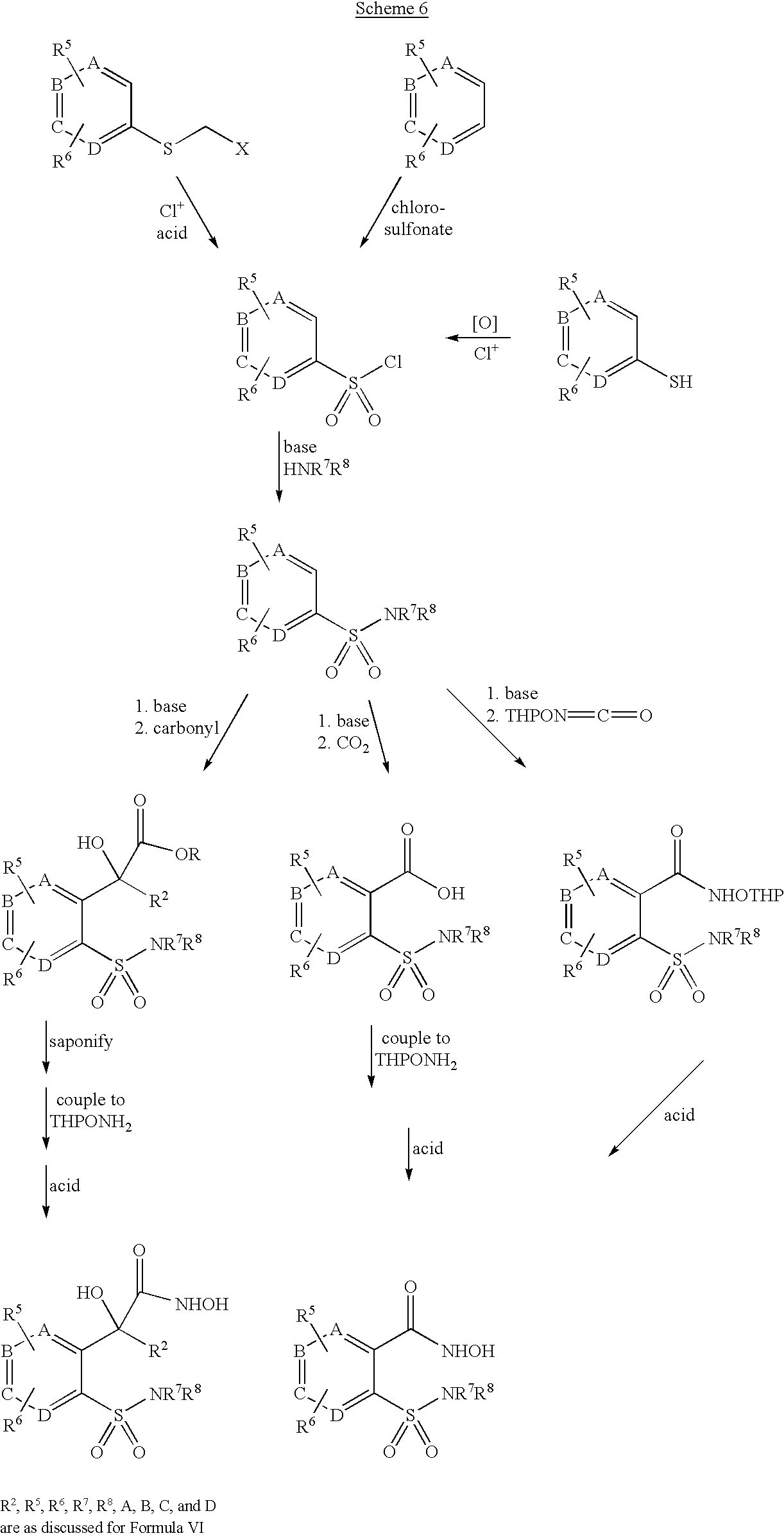
- Best Mode for Carrying Out the Invention
- Without further elaboration, it is believed that one skilled in the art can, using the preceding description, utilize the present invention to its fullest extent. The following preferred specific embodiments are, therefore, to be construed as merely illustrative, and not limiting of the remainder of the disclosure in any way whatsoever.
-
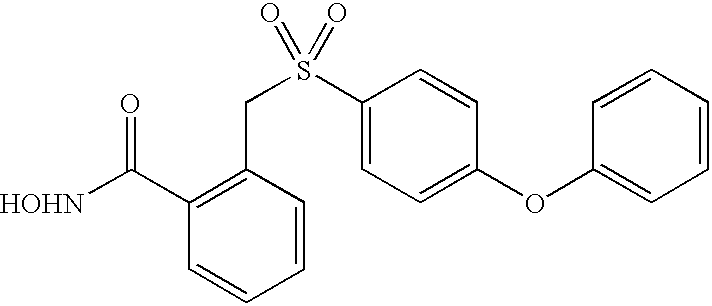
- Part A: To a solution of phthalide (6.30 g, 47.0 mmol) in DMF (100 mL) was added K 2CO3 (10.0 g, 49.4 mmol) and 4-(phenoxy)benzenethiol (9.59 g, 49.4 mmol) and the solution was heated to one hundred degrees Celsius for 2 hours. The solution was diluted with H2O and acidified with 1N HCl to pH=1. The resulting tan solid was collected and washed with H2O. The solid was dissolved into ethyl ether and dried over MgSO4. Concentration in vacuo followed by recrystallization (ethyl ether/hexane) provided the sulfide as a white solid (9.12 g, 58%). MS(CI) MH+ calculated for C20H16O3S: 337, found 337. Analytical calculation for C20H16O3S: C, 71.41; H, 4.79; S, 9.53. Found: C, 71.28; H, 4.67; S, 9.19.
- Part B: To a solution of the sulfide of Part A (3.00 g, 8.92 mmol) in dichloromethane (28 mL) and DMF (1 drop) was added oxalyl chloride (1.08 mL, 12.4 mmol) and the solution was stirred for one hour. After concentration in vacuo, the residue was dissolved into dichloromethane (16 mL) and the solution was cooled to zero degrees Celsius. Tetramethylsilyl hydroxylamine (2.55 mL, 20.8 mmol) was added and the solution was stirred for 1.5 hours. The solution was diluted with dichloromethane and washed with 1 N HCl, H 2O and saturated NaCl and dried over MgSO4. Chromatography (on silica, ethyl acetate/hexane/toluene) provide the hydroxylamine as a clear paste (970 mg, 31%).
- Part C: To a solution of the hydroxylamine of Part B (970 mg, 2.76 mmol) in dichloromethane (25 mL) cooled to zero degrees Celsius was added 3-chloroperbenzoic acid (60%, 2.14 g, 7.45 mmol) and the solution was stirred for 3 hours at ambient temperature. The solution was diluted with ethyl ether and washed with saturated Na 2SO3, saturated NaHCO3 and saturated NaCl and dried over MgSO4. Reverse phase chromatography (on silica, acetonitrile/H2O) provided the title compound as a white solid (345 mg, 33%). MS (CI) MH+ calculated for C20H17NO5S: 384, found 384. Analytical calculation for C20H17NO5S.0.3H2O: C, 61.70; H, 4.56; N, 3.60; S, 8.25. Found: C, 61.74; H, 4.42; N, 3.61; S, 8.31.
-

- Part A: To a solution of 4-(phenoxy)-benzenethiol (6.06 g, 30.0 mmol) and K 2CO3 (4.55 g, 33.0 mmol) in isopropanol (30 mL) was added 2-fluorobenzaldehyde (3.2 mL, 30.0 mmol). The solution was refluxed for 20 hours. The reaction was quenched by the addition of ice-H2O and was extracted with CHCl3. The organic layer was dried over MgSO4. Filtration through a pad of silica gel provided the sulfide as a yellow solid (7.43 g, 81%)
- Part B: A solution of NaH (60% dispersion in mineral oil, washed with hexane, 264 mg, 6.6 mmol) in THF (12 mL) was cooled to zero degrees Celsius and tetraethyl dimethylammoniummethylene diphosphonate (1.99 g, 6.0 mmol) was added. The solution was warmed to ambient temperature and the sulfide of Part A (1.84 g, 6.0 mmol) was added. The solution was stirred for 4 hours at ambient temperature. The solution was extracted with ethyl acetate and washed with H 2O and dried over MgSO4. Concentration in vacuo provided a brown oil which was dissolved in 6M HCl (10 mL) and the solution was heated to one hundred degrees Celsius for 1 hour. The solution was extracted with CHCl3 and the organic layer was dried over MgSO4. Concentration in vacuo provided the acid as an oil (918 mg, 48%).
- Part C: To a solution of the acid of Part B (918 mg, 3 mmol) in acetic acid (30 mL) was added 30% hydrogen peroxide (1.2 mL, 12 mmol) and the solution was heated to one hundred degrees Celsius for 40 minutes. The solution was lyophilized and chromatography (hexane/ethyl acetate) provided the sulfone as a foam (697 mg, 63%).
- Part D: To a solution of the sulfone of Part C (695 mg, 1.89 mmol) in acetonitrile (2 mL) was added O-tetrahydropyranyl hydroxylamine (270 mg, 2.3 mmol). After 5 minutes EDC (442 mg, 2.3 mmol) was added and the solution was stirred for 3 hours. The solution was concentrated in vacuo and the residue was partitioned between ethyl acetate and H 2O. The organic layer was dried over MgSO4. Chromatography (on silica gel, ethyl acetate/hexane) provided the THP-ether as a white foam (688 mg, 77%)
- Part E: To a solution of the THP-ether of Part D (565 mg, 1.2 mmol) in methanol (10 mL) was added p-toluenesulfonic acid (25 mg) and the solution was stirred at ambient temperature for 2 hours. The solution was concentrated in vacuo and chromatography (chloroform/methanol) provided the title compound as a white solid (339 mg, 74%).
-

- Part A: To a solution of 2-chlorosulfonyl-benzoic acid ethyl ester, prepared per Nagasawa, et. al. J. Med. Chem. 1995, 38, 1865-1871, (5.80 g, 23.0 mmol) in acetonitrile (50 mL) was added 4-benzylpiperidine (4.38 mL, 25 mmol), triethylamine (3.78 mL, 27 mmol) and 4-dimethylaminopyridine (50 mg). The solution was stirred for 4 hours at ambient temperature and concentrated in vacua. The residue was dissolved into 1N HCl and extracted with ethyl acetate. The organic layer was dried over MgSO 4 and filtered through a pad of silica gel to provide the sulfonamide as an oil (7.45 g, 84%)
- Part B: To a solution of the sulfonamide of Part A (1.08 g, 2.80 mmol) in methanol (50 mL) and H 2O (20 mL) was added KOH (2 g) and the solution was stirred for 3 hours at ambient temperature. The solution was concentrated in vacuo and the remaining aqueous solution was acidified with 1N HCl. The solution was extracted with chloroform and the organic layer was dried over MgSO4 and filtered through a pad of silica gel. Concentration in vacuo provided the acid as a white foam (996 mg, quantitative yield).
- Part C: To a solution of the acid of Part B (415 mg, 1.2 mmol) in acetonitrile (2 mL) was added O-tetrahydropyranyl hydroxylamine (200 mg, 1.7 mmol). After the solution was stirred for 5 minutes EDC (325 mg, 1.7 mmol) was added and the solution was stirred for 3 hours at ambient temperature. The solution was concentrated in vacuo and the residue was dissolved into H 2O and extracted with ethyl acetate. The organic layer was dried over MgSO4. Chromatography (on silica, ethyl acetate/hexane) provided the THP ether as a white solid (437 mg, 82%).
- Part D: To a solution of the THP-ether of Part C (437 mg, 0.98 mmol) in methanol (5 mL) was added p-toluenesulfonic acid (40 mg) and the solution was stirred for 1 hour at ambient temperature. The solution was concentrated in vacuo. Chromatography (ethyl acetate,1% NH 4OH) provided the title compound as an oil (122 mg, 34%)
-

- Part A: To a solution of thiosalicylic acid (5.00 g, 32.4 mmol) and 4-phenylbenzyl chloride (6.57 g, 32.4 mmol) in ethanol (81 mL) and H 2O (40 mL) was added K2CO3 (4.48 g, 32.4 mmol) and the solution was heated to ref lux for 2 hours. Upon cooling to ambient temperature a white solid formed. To this mixture is added 1N HCl (200 mL) and vacuum filtration provided the sulfide as a white solid (7.32 9, 70%)
- Part B: To a solution of the sulfide of Part A (1.00 g, 3.12 mmol) in formic acid (17 mL) heated to fifty degrees Celsius was added 30% hydrogen peroxide (1.16 mL).The solution was stirred at fifty-five degrees Celsius for 3 hours followed by 40 hours at ambient temperature. The solution was concentrated and reverse phase chromatography (acetonitrile/H 2O) provided the sulfone as a white solid (500 mg, 45%)
- Part C: To a solution of the sulfone of Part B (500 mg, 1.42 mmol) in DMF (2.8 mL) was added O-tetrahydropyranyl hydroxylamine (173 mg, 1.48 mmol), N-hydroxybenzotriazole (211 mg, 1.56 mmol) and EDC (299 mg, 1.56 mmol) and the solution was stirred for 18 hours at ambient temperature. The solution was concentrated in vacuo and the residue was dissolved into H 2O. The solution was extracted with ethyl acetate and the organic layer was washed with 1 N HCl, saturated NaHCO3, H2O and saturated NaCl and dried over MgSO4. Concentrated in vacuo provided the ester as a white solid (571 mg, 89%). MS (CI) MH+ calculated for C25H25NO5S: 452, found 452.
- Part D: To a solution of the ester of Part C (570 mg, 1.26 mmol) in methanol (10 mL) was added p-toluenesulfonic acid (15 mg) and the solution was stirred at ambient temperature for 1.5 hours. The solution was concentrated in vacuo and reverse phase chromatography (acetonitrile/H 2O) provided the title compound as a white solid (244 mg, 53%). MS(EI) M+ calculated for C20H17NO4S: 367, found 367. Analytical calculation for C20H17NO4S: C, 65.38; H, 4.66; N, 3.81. Found: C, 65.01; H, 4.64; N, 4.04.
-

- Part A: To a solution of isatoic anhydride (1.00 g, 6.13 mmol) in acetonitrile (3 mL) was added O-tetrahydropyranyl hydroxylamine (1.56 g, 6.74 mmol) and the solution was heated to reflux for 2 hours. The solution was concentrated in vacuo and recrystallization of the residue (ethyl acetate/hexane) provided the THP-ether as a white solid (760 mg, 52%). MS(CI) MH + calculated for C12H16N2O3: 237, found 237. Analytical calculation for C12H16N2O3: C, 61.00; H, 6.83; N, 11.86. Found: C, 60.82; H, 6.95; N, 11.76.
- Part B: To a solution of 4-(phenoxy)benzene sulfonyl chloride, prepared per J. Am. Chem. Soc., 1931, 93, 1112-1115) (341 mg, 1.27 mmoL) in pyridine (2 mL) cooled to zero degrees Celsius was added the THP-ether of Part B (300 mg, 1.27 mmol) and the solution was stirred at zero degrees Celsius for 3 hours. The solution was concentrated in vacuo and the residue was dissolved in 1 N HCl and was extracted with ethyl acetate. The organic layer was washed with 1 N HCl, H 2O and saturated NaCl and dried over MgSO4. Chromatography (on silica gel, ethyl acetate/hexane) provided the sulfone as a white solid (321 mg, 54%). MS(CI) MH+ calculated for C24H24N2O6S: 469, found 469. Analytical calculation for C24H24N2O6S: C, 61.53; H, 5.16; N, 5.98; S, 6.84. Found: C, 61.10; H, 4.93; N, 5.86; S, 6.41.
- Part C: Into a solution of the sulfone of Part B (320 mg, 0.68 mmol) in methanol (3 mL) cooled to zero degrees Celsius was bubbled HCl gas for 5 minutes. The solution was concentrated in vacuo and the residue was triturated with ethyl ether. Collection by vacuum filtration provided the title compound as a pink solid (163 mg, 62%). MS(CI) MH + calculated for C19H16N2OdS: 385, found 385. Analytical calculation for C19H16N2O6S.0.2H2O: C, 58.81; H, 4.26; N, 7.22; S, 8.26. Found: C, 58.88; H, 4.37; N, 6.98; S, 7.83.
-

- Part A: A 500 mL round bottom flask equipped with magnetic stir bar and N 2 inlet was charged with 1.5 mL (1.7 g, 12.0 mM) 4-methoxybenzenethiol and 2.5 g (10.9 mM) methyl (2-bromomethyl)benzoate in acetone (100 mL). The solution was treated with 1.8 g (13.1 mM) potassium carbonate and heated at 55° in an oil bath. The reaction mixture was stirred at 55° C. for 17 hours, then concentrated in vacuo. The residue was partitioned between EtOAc and H2O, the layers were separated and the aqueous layer was extracted with EtOAc (1×), the organic phases were combined, washed with 5% citric acid solution, saturated sodium bicarbonate solution and brine, dried (Na2SO4), and concentrated in vacuo to yield 3.3 g of product suitable for the next reaction.
- Part B: A 500 mL round bottom flask equipped with magnetic stir bar and N 2 inlet was charged with 3.1 g (10.8 mM) of product from Part A in 90 mL MeOH. The solution was then treated with 15 mL water and 13.9 g (22.6 mM) Oxone®. The reaction mixture was stirred 17 hours, then filtered. The filter cake was washed with MeOH, and the filtrate was concentrated in vacuo. The residue was partitioned between EtOAc and H2O, the layers were separated and the aqueous layer was extracted with EtOAc (2×). The organic phases were combined, washed with saturated sodium bicarbonate solution and brine, dried (MgSO4), and concentrated in vacuo to yield the 3.3 g of crude product. This was chromatographed on silica gel using 25-45% ethyl acetate/hexane to yield 2.1 g of pure product, m/z=321 (M+H).
- Part C: A 250 mL round bottom flask equipped with magnetic stir bar and N 2 inlet was charged with 2.1 g (6.6 mM) of product from Part B in acetic acid (25 mL) and conc. HCl solution (25 mL) and the solution was heated to reflux for a total of 24 hours. The reaction mixture was concentrated in vacuo, then two aliquots of toluene were added and stripped, then dried under high vacuum to yield 2.0 g of product suitable for the next reaction.
- Part D: A 2-necked 50 mL round bottom flask equipped with addition funnel, thermometer, magnetic stir bar and N 2 inlet was charged with 1.0 mL of DMF in 10 mL CH2Cl2. The solution was cooled in an ice bath, then treated with 3.5 mL (0.9 g, 6.9 mM) of a 2.0 M oxalyl chloride solution in CH2Cl2, then with a solution of 1.0 g (3.3 mM) of product from Part C in 5 mL DMF. The bath was removed and the reaction was stirred for 1 hour. That reaction mixture was added to a 2-necked 100 mL round-bottomed flask equipped with addition funnel, thermometer, magnetic stir bar and N2 inlet and containing a cooled solution of 2.1 mL (1.1 g, 37.7 mM) of 50% aqueous hydroxylamine in THF (25 mL). The bath was then removed and the reaction mixture was stirred for 2 hours. The reaction was filtered, the filtrate was concentrated in vacuo, the residue was partitioned between EtOAc/water, the layers were separated, the aqueous layer was extracted with EtOAc (1×), the organic phases were combined and washed with water and brine, dried (Na2SO4) and concentrated in vacuo to yield 1.3 g of crude product. That material was chromatographed on silica gel using 80% ethyl acetate/hexane to yield 0.5 g of pure product, m/z=328 (M+Li).
-

- Part A: A 3-necked 100 mL round bottom flask equipped with addition funnel, thermometer, magnetic stir bar and N 2 inlet was charged with 0.5 g (4.3 mM) of p-anisidine and 1.8 mL (1.3 g, 12.8 mM) triethylamine in CH2Cl2 (20 mL). The solution was cooled in an ice bath, then treated with a solution of 1.0 g (4.3 mM) methyl (2-chlorosulfonyl)benzoate in CH2Cl2 (10 mL). The reaction mixture was stirred for 17 hours, then concentrated in vacuo. The residue was partitioned between EtOAc and H2O, the layers were separated and the organic phase was washed with 5% citric acid solution, saturated sodium bicarbonate solution and brine, dried (Na2SO4), and concentrated in vacuo to yield 0.9 g of crude product. This was chromatographed on silica gel using 20-30% ethyl acetate/hexane to yield 0.7 g of pure product, m/z=328 (M+Li).
- Part B: A 100 mL round bottom flask equipped with magnetic stir bar and N 2 inlet was charged with 0.7 g (2.1 mM) of the product from Part A and 0.7 g (10.2 mM) of hydroxylamine hydrochloride in 10 mL MeOH. The reaction was cooled to zero degrees C. and charged with 0.4 g (16.4 mM) of sodium metal. After stirring for 17 hours, the reaction was concentrated in vacuo, the residue was slurried in 20 mL of water, then acidified using 2 N HCl solution. The aqueous slurry was extracted with EtOAc (3×). The organic layers were combined and washed with brine, dried (Na2SO4), and concentrated in vacuo to yield 0.6 g of crude product. The addition of methylene chloride to the crude product precipitated an off-white solid. Filtration gave 0.2 g of pure product, m/z=323 (M+Li).
-

- Part A: A 3-necked 100 mL round bottom flask equipped with addition funnel, thermometer, magnetic stir bar and N 2 inlet was charged with 0.5 mL (0.5 g, 4.3 mM) of benzylamine and 1.8 mL (1.3 g, 12.8 mM) triethylamine in CH2Cl2 (20 mL). The solution was cooled in an ice bath, then treated with a solution of 1.0 g (4.3 mM) methyl (2-chlorosulfonyl)benzoate in CH2Cl2 (10 mL). The reaction mixture was stirred for 2 hours, then concentrated in vacuo. The residue was partitioned between EtOAc and H2O, the layers were separated and the organic phase was washed with 5% citric acid solution, saturated sodium bicarbonate solution and brine, dried (Na2SO4), and concentrated in vacuo to yield 0.9 g of crude product. This was chromatographed on silica gel using 20% ethyl acetate/hexane to yield 0.7 g of pure product, m/z=312 (M+Li).
- Part B A 100 mL round bottom flask equipped with magnetic stir bar and N 2 inlet was charged with 0.7 g (2.1 mM) of the product from Part A and 0.7 g (10.6 mM) of hydroxylamine hydrochloride in 10 mL MeOH. The reaction was cooled to zero degrees C. and charged with 0.4 g (17.0 mM) of sodium metal. After stirring for 17 hours, the reaction was concentrated in vacuo, the residue was slurried in 20 mL of water, then acidified using 2 N HCl solution. The aqueous slurry was extracted with EtOAc (3×). The organic layers were combined and washed with brine, dried (Na2SO4), and concentrated in vacuo to yield 0.3 g of crude product. The addition of methylene chloride to the crude product precipitated a white solid. Filtration gave 0.1 g of pure product, m/z=307 (M+H).
-

- Part A: 2-Carboethoxybenzenesulfonyl chloride (3.72 g, 15 mmol) was dissolved in methylene chloride (60 mL). 4-Phenylpiperidine (2.89 g, 18 mmol) was added, followed by triethylamine (2.5 mL, 18 mmol) and 4-(dimethylamino)piperidine (100 mg). After 5 hours, the mixture was diluted with 10 percent aqueous HCl (100 mL). The organic layer was separated and dried over magnesium sulfate. The solution was filtered through a silica pad and concentrated affording the ester sulfonamide as an oil (3.27 g, 63%).
- Part B: The ester sulfonamide from Part A (938 mg, 2.51 mmol) was stirred for 20 hours at ambient temperature in the presence of potassium hydroxide (940 mg, 17 mmol), ethanol (15 mL), and water (5 mL). The mixture was diluted with water (20 mL) and acidified using concentrated HCl to approximately pH 4. The product was extracted using chloroform (2×100 mL), and the combined organic layers were dried using anhydrous magnesium sulfate. Concentration afforded carboxylic acid (768 mg, 89%), which was carried on to the next step.
- Part C: To a solution of the acid from Part B (764 mg, 2.2 mmol) dissolved in acetonitrile (15 mL) was-added O-tetrahydropyranyl hydroxylamine (351 mg, 3.0 mmol) and N-hydroxybenzotriazole (405 mg, 3.0 mmol), followed by 1-(3-dimethylaminopropyl)-3-ethylcarbodiimide hydrochloride (600 mg, 3 mmol). The reaction was stirred for 16 hours and then concentrated. The residue was diluted with half-saturated brine (15 mL) and extracted with ethyl acetate (100 mL). The organic phase was dried using magnesium sulfate, concentrated, and the residue was purified by silica gel chromatography affording, on concentration, the desired THP-protected hydroxamate as a white foam (833 mg, 82%).
- Part D: The THP-protected hydroxamate from Part C (833 mg, 1.8 mmol) was dissolved in absolute methanol (3 mL). Acetyl chloride (0.28 mL, 4 mmol) was added drop-wise. After 3 hours, the reaction was concentrated, and the residue was subjected to purification by chromatography, affording the title compound (430 mg, 66%) as a white foam. Anal. calculated for C 18H20N2O4S(H2O): C, 57.08; H, 5.81; N, 7.40. Found: C, 57.02; H, 5.61; N, 6.90.
-

- Part A: 2-Bromobenzenesulfonyl chloride (2.56 g, 10 mmol) was added to a solution of 4-phenylpiperidine (1.61 g, 10 mmol), triethylamine (2.0 mL, 14 mmol), 4-dimethylaminopyridine (75 mg), and acetonitrile (20 mL). After 24 hours, water (100 mL) was added. The mixture was extracted with ethyl acetate (100 ml, then 50 mL). The combined organic layers were dried over magnesium sulfate, filtered through silica, and concentrated to afford the bromo sulfonamide as a white solid (3.47 g, 96%).
- Part B: The bromo sulfonamide (359 mg, 1 mmol) was dissolved in dry tetrahydrofuran (2 mL) and cooled to minus seventy-eight degrees. t-Butyllithium (0.68 mL, 1.7 M in pentane) was added drop-wise and the anion was permitted to form over 15 minutes. Ethyl pyruvate (0.11 mL, 1.15 mmol) was added. The cooling bath was removed. When the reaction reached ambient temperature, the mixture was quenched with water (10 mL) and extracted with ethyl acetate (100 mL). The organic layer was dried over magnesium sulfate, filtered through silica, concentrated, and chromatographed to afford the desired hydroxy ester as a glass (163 mg 40%).
- Part C: The hydroxy ester from Part B (134 mg, 0.33 mmol) was stirred in the presence of potassium hydroxide (134 mg, 2.4 mmol) in ethanol (1 mL) and water (1 mL). After 4 hours the mixture was heated at 50 degrees Celsius for one hour, then cooled, neutralized with dilute hydrochloric acid, concentrated, and azeotroped to dryness with acetonitrile to afford the crude hydroxy acid, which was used directly as is. The hydroxy acid was diluted with acetonitrile (1 mL). 0-Tetrahydropyranylhydroxylamine (117 mg, 1.0 mmol) and N-hydroxybenzotriazole (135 mg, 1.0 mmol) were added, followed by 1-(3-dimethylaminopropyl)-3-ethylcarbodiimide hydrochloride (191 mg, 1 mmol). The reaction was stirred overnight (about 18 hours), then diluted with water (10 mL) and extracted with ethyl acetate (50 mL). The organic layer was dried over ethyl acetate, concentrated and chromatographed to afford the THP-protected hydroxamate as a glass (80 mg, 48%).
- Part D: The THP-protected hydroxamate from Part C (80 mg) was diluted with absolute methanol (4 mL), and toluenesulfonic acid (6 mg) was added. After 3 hours, the reaction mixture was concentrated, and the residue was chromatographed using 1:1 hexane:ethyl acetate 1% NH 4H. The title compound was isolated as a white foam (40 mg, 60%). Analysis calculated for C20H24N2O5S(1.33 H2O): C, 53.75; H, 5.90; N, 6.27. Found: C, 53.80; H, 5.65; N, 5.84.
-

- Part A: 3-Aminopyrrolidine (636 mg, 4 mmol), triethylamine (2.7 mL, 20 mmol), and 4-(dimethylamino)pyridine (75 mg) were suspended in acetonitrile. After 10 minutes, the reaction was chilled to zero degrees Celsius. 4-Methoxybenzoyl chloride (0.54 mL, 4 mmol) was added, drop-wise. After 30 minutes, 2-carboethoxybenzenesulfonyl chloride (0.996 g, 4.0 mmol) was introduced, drop-wise, by syringe. The mixture was stirred at zero Celsius for 1 hour, then at ambient temperature for 2 hours. Water was added (50 mL). The mixture was extracted using ethyl acetate (2×50 mL). The organic layer was dried over magnesium sulfate, filtered through silica, and concentrated. The residue was purified using silica gel chromatography using 1:1 ethyl acetate:hexane to ethyl acetate as eluant. The desired amide sulfonamide was isolated as a foam (282 mg,16%).
- Part B: The amide sulfonamide from Part A (272 mg,0.63 mmol) was combined with potassium hydroxide (156 mg, 2.8 mmol), ethanol (3 mL), and water (2 mL) and was brought to reflux. After 40 minutes, the reaction was permitted to cool. Acetic acid (0.1 mL) and absolute ethanol (20 mL) were added. Concentration followed by chromatography (9:1 ethyl acetate:methanol to methanol; 20 g silica gel) afforded the desired acid as a crystalline solid (229 mg, 96%). The acid (229 mg, 0.57 mmol) was dissolved in acetonitrile (1 mL). O-Tetrahydropyranyl hydroxylamine (117 mg, 1.0 mmol) and N-hydroxybenzotriazole (135 mg, 1.0 mmol) were added, followed by 1-(3-dimethylaminopropyl)-3-ethylcarbodiimide hydrochloride (191 mg, 1 mmol). The mixture was stirred at ambient temperature overnight (about 18 hours), then concentrated and chromatographed (ethyl acetate to 9:1 ethyl acetate:methanol), affording the THP-protected hydroxamate as a white crystalline solid (98 mg, 33%).
- Part C: The THP-protected hydroxamate (76 mg, 0.15 mmol) was dissolved in methanol (2 mL). Acetyl chloride (0.01 mL, 1 mmol) was added. After 30 minutes, the solution was concentrated, and then azeotroped with chloroform/acetonitrile affording the title compound as a solid (65 mg, quantitative.). MS (EI) MH +: calculated for C19H21N3O6S: 420, found 420.
-

- Part A: Diethyl azodicarboxylate (4.11 g, 23.6 mmol) was added at ambient temperature under an atmosphere of nitrogen to a mixture of N-(tert-butyloxycarbonyl)-4-piperidinol (4.31 g,21.4 mmol) (Wells, Kenneth M.; et al; Tetrahedron Lett., 1996, 37, 6439-6442), 4-trifluoromethoxyphenol (4.20 g, 23.6 mmol) and triphenylphosphine (6.19 g, 23.6 mmol) in THF (200 mL). After 1.5 hours, the reaction mixture was concentrated. The residue was diluted with ethyl ether, filtered, and purified by chromatography (on silica, methyl tert-butyl ether/hexane) to afford the impure BOC-amine as an off-white solid (5.23 g). To the off-white solid cooled to zero degrees Celsius under an atmosphere of nitrogen was added a solution of 4 N HCl in dioxane (36.1 mL, 145 mmol). After two hours, the reaction mixture was concentrated and diluted with ethyl ether to give a white solid. The white solid was diluted with H2O (15 mL) and a solution of NaHCO3 (1.68 g, 20.0 mmol) in water (10 mL) was added. The precipitate was extracted into ethyl ether. The organic layer was washed with brine, dried over MgSO4, and concentrated to give the amine as a white solid (1.93 g, 34%); MS MH+ calculated for C12H14NO2F3:262, found 262.
- Part B: A solution of the amine of Part A (1.90 g, 7.28 mmol), ethyl 2-chlorosulfonylbenzoate (1.70, 6.85 mmol), triethylamine (1.15 mL, 8.22 mmol), and 4-dimethylaminopyridine (10 mg) in acetonitrile (20 mL) was stirred under an atmosphere of nitrogen at ambient temperature for 18 hours. After concentrating the solution, the residue was diluted with H 2O and extracted into ethyl acetate. The organic layer was washed with 1.0 N KHSO4, saturated NaHCO3, H2O, and brine; and then dried over MgSO4 and concentrated to a yellow oil. Chromatography (on silica, ethyl acetate/hexane) provided the sulfonamide as a white solid (1.59 g, 51%); MS MH+ calculated for C21H22NO6F3S:474, found 474.
- Part C: A solution of the sulfonamide of Part B (1.45 g, 3.17 mmol) and potassium hydroxide (1.77 g, 31.7 mmol) in a mixture of MeOH (30 mL), H 2O (10 mL), and THF (10 mL) was heated at reflux for 1.5 hours. After the solution was concentrated in vacuo, the residue was triturated with ethyl ether, dissolved into H2O, acidified with concentrated HCl, and extracted into ethyl acetate. The organic layer was washed with brine, dried over MgSO4, and concentrated in vacuo to provide the acid as a clear oil (1.04 g, 74%); Anal. calculated for C19H18NO6F3S: C, 51.23; H, 4.07; N, 3.14; S, 7.20. Found: C, 51.34; H, 3.78; N, 3.15; S, 7.30.
- Part D: A solution of the acid of Part C (0.97 g, 2.18 mmol), N-hydroxybenzotriazole (0.89 g, 6.50 mmol), 4-methylmorpholine (0.71 mL, 6.50 mmol), O-tetrahydro-2H-pyran-2-yl-hydroxylamine (0.51 g, 4.36 mmol), and 1-(3-dimethylaminopropyl)-3-ethylcarbodiimide hydrochloride (1.25 g, 6.50 mmol) in DMF (19 mL) was stirred at ambient temperature under a nitrogen atmosphere for 20 hours. The mixture was concentrated in vacuo, diluted with water, and extracted with ethyl acetate. The organic layer was washed with 1.0 N KHSO 4, saturated NaHCO3, H2O, and brine; and then dried over MgSO4 and concentrated in vacuo to afford the THP-protected hydroxamate as a white solid (1.05 g, 88%): Anal. calculated. for C24H27N2O7F3S: C, 52.94; H, 5.00; N, 5.14; S, 5.89. Found: C, 52.80; H, 4.84; N, 5.23; S, 6.14.
- Part E: The THP-protected hydroxamate of Part D (1.01 g,1.86 mmol) was dissolved in methanol (10 mL). Acetyl chloride (0.36 mL, 5.0 mmol) was added. After 1 hour, the solution was concentrated, and the residue was subjected to chromatography (1:1 hexane:ethyl acetate; 1% NH 4OH to ethyl acetate; 1% NH4OH) affording the title compound as foam (643 mg, 75%). Anal. calculated for C19H19F3N2O6S: C, 49.56; H, 4.13; N, 6.09. Found: C, 49.27; H, 3.72; N, 5.87.
-

- Part A: A solution of N-(tert-butyloxy-carbonyl)-4-piperidinol (5.00 g, 2.48 mmol), 4-fluorobenzo-trifluoride (3.46 mL, 2.73 mmol), and cesium carbonate (12.1 g, 3.72 mmol) in DMF (60 mL) was heated at 120 degrees Celsius under an atmosphere of nitrogen for 2 days. The mixture was concentrated, diluted with H 2O, and extracted with ethyl acetate. The organic layer was washed with H2O and brine, dried with MgSO4, and concentrated in vacuo. Chromatography (on silica, ethyl acetate/hexane) provided the BOC-aminoether as a white solid (6.97 g, 81%); Anal. calculated. for C17H22NO3F3: C, 59.12; H, 6.42; N, 4.06. Found: C, 59.29; H, 6.47; N, 3.99.
- Part B: A solution of the BOC-aminoether of Part A (4.00 g, 11.6 mmol) and p-toluenesulfonic acid (6.61 g, 34.7 mmol) in CH 2Cl2 (30 mL) at ambient temperature under an atmosphere of nitrogen was stirred for 3 hours and then concentrated in vacuo. The residue was partitioned between aqueous NaHCO3 and ethyl acetate. The organic layer was dried over MgSO4 and concentrated to provide the free amine as a clear, yellow oil (1.57 g, 55%); MS MH+ calculated. for C12H14NOF3: 246, found 246.
- Part C: A solution of the amine of Part B (1.57 g, 6.40 mmol), ethyl 2-chlorosulfonylbenzoate (1.57 g, 6.03 mmol), triethylamine (1.00 mL, 7.24 mmol), and 4-dimethylaminopyridine (10 mg) in acetonitrile (20 mL) was stirred under an atmosphere of nitrogen at ambient temperature for around 1.5 hours. After concentrating the solution, the residue was diluted with H 2O and extracted into ethyl acetate. The organic layer was washed with 1.0 N KHSO4, saturated NaHCO3, H2O, and brine; and then dried over MgSO4 and concentrated to provided the sulfonamide as a clear, yellow oil (2.52 g, 92%); MS MH+ calculated for C21H22NO5F3S: 458, found 458.
- Part D: A solution of the sulfonamide of Part C (2.50 g, 5.46 mmol) and potassium hydroxide (3.06 g, 54.6 mmol) in a mixture of MeOH (49 mL) and H 2O (24 mL) was heated at reflux for 4 hours. After the solution was concentrated in vacuo, the residue was triturated with ethyl ether, dissolved into H2O, acidified with concentrated HCl, and extracted into ethyl acetate. The organic layer was washed with 1.0 N KHSO4, H2O, and brine, dried over MgSO4, and concentrated in vacuo to provide the acid as an oil (2.17 g, 93%); MS MH+ calculated for C19H18NO5F3S: 430, found 430.
- Part E: A solution of the acid of Part D (2.10 g, 4.89 mmol), N-hydroxybenzotriazole (1.97 g, 14.6 mmol), 4-methylmorpholine (1.61 mL, 14.6 mmol), O-tetrahydro-2H-pyran-2-yl-hydroxylamine (1.15 g, 9.79 mmol), and 1-(3-dimethylaminopropyl)-3-ethylcarbodiimide hydrochloride (2.80 g, 14.6 mmol) in DMF (43 mL) was stirred at ambient temperature under a nitrogen atmosphere for about 18 hours. The mixture was concentrated in vacuo, diluted with water, and extracted into ethyl acetate. The organic layer was washed with 1.0 N KHSO 4, H2O, and brine, and then dried over MgSO4 and concentrated in vacuo. Chromatography (on silica, ethanol/CHCl3) provided the THP-protected hydroxamate as a white solid (2.09 g, 81%): MS MH+ calculated for C24H27N2O6F3S: 529, found 529.
- Part F: To a solution of the THP-protected hydroxamate of Part C (1.80 g, 3.41 mmol) in methanol (24 mL) was added acetyl chloride (0.73 mL, 10.2 mmol) and the solution was stirred at ambient temperature under a nitrogen atmosphere for 1.5 hours. The solution was concentrated in vacuo and chromatography (on silica, MeOH/CHCl 3) provided the title compound as an off white solid (1.18 g, 78%): Anal. calculated. for C19H19N2O5F3S 0.2% H2O: C, 50.94; H, 4.36; N, 6.25; S, 7.16. Found: C, 50.88; H, 4.31; N, 6.20; S, 7.43. MS MH+ calculated. for C19H19N2O5F3S: 445, found 445.
-

- Part A: A solution of 4-(trifluoromethylybenzyl bromide (2.00 mL, 12.9 mmol) in THF (6 mL) was added drop-wise under an atmosphere of nitrogen to a −52 degrees Celsius mixture of N-(tert-butyloxycarbonyl)-4-piperidinol (2.85, 14.9 mmol) and 60% sodium hydride (0.600 g, 14.9 mmol) in THF (15 mL) and then stirred at ambient temperature for about 20 hours. The reaction mixture was quenched with a saturated NH 4Cl solution, concentrated in vacuc, diluted with H2O, and extracted with ethyl acetate. The organic layer was washed with 1.0 N HCl, a saturated NaHCO3 solution, H2O, and brine; and then dried over MgSO4 and concentrated in vacuc to provide the BOC-aminoether as an off white solid (3.35 g, 72%); MS MH+ calculated for C18H24NO3F3: 360, found 360.
- Part B: A zero degrees Celsius solution of the BOC-aminoether of Part A (3.35 g, 9.32 mmol) in ethyl acetate (40 mL) was saturated with HCl (gas) and the stirred at ambient temperature for 1 hour. After concentrating in vacuc and triturating with ethyl ether, the crude free base was partitioned between aqueous NaHCO 3 and ethyl ether. The organic layer was washed with H2O and brine, dried over MgSO4, and concentrated in vacuc to provide the amine as a clear, yellow oil (2.11 g, 87%), which had a proton NMR spectrum consistent for the desired product.
- Part C: A solution of the amine of Part B (2.11 g, 8.14 mmol), ethyl 2-chlorosulfonylbenzoate (2.65 g, 10.7 mmol),triethylamine (1.75 mL, 12.6 mmol), and 4-dimethylaminopyridine (50 mg) in acetonitrile (25 mL) was stirred under an atmosphere of nitrogen at ambient temperature for about 13 hours. After concentrating the solution, the residue was diluted with 1.0 N KHSO 4 and extracted into ethyl acetate. The organic layer was washed with 1.0 N KHSO4, saturated NaHCO3, H2O, and brine, and then dried over MgSO4 and concentrated to a yellow oil. Chromatography (on silica, ethyl acetate/hexane) provided the sulfonamide as a clear oil (2.48 g, 65%); MS MH+ calculated for C22H24NO5F3S: 472, found 472.
- Part D: A solution of the sulfonamide of Part C (2.10 g, 4.45 mmol) and potassium hydroxide (2.49 g, 44.5 mmol) in a mixture of MeOH (40 mL), H 2O (20 mL), and THF (4 mL) was heated at reflux for 1.5 hours. After the solution was concentrated in vacuo, the residue was triturated with ethyl ether, dissolved into H2O, acidified with concentrated HCl, and extracted into ethyl acetate. The organic layer was washed with 1.0 N KHSO4, H2O, and brine, dried over MgSO4, and concentrated in vacuo to provide the acid as a white solid (2.08 g, 1.06%); Anal. Calculated for C20H20NO5F3S: C, 54.17; H, 4.55; N, 3.16; S, 7.23. Found: C, 54.29; H, 4.68; N, 3.11; S, 7.19.
- Part E: A solution of the acid of Part D (2.00 g, 4.51 mmol), N-hydroxybenzotriazole (1.83 g, 13.5 mmol), 4-methylmorpholine (1.48 mL, 13.5 mmol), O-tetrahydro-2H-pyran-2-yl-hydroxylamine (1.06 g, 9.02 mmol), and 1-(3-dimethylaminopropyl)-3-ethylcarbodiimide hydrochloride (2.59 g, 13.5 mmol) in DMF (40 mL) was stirred at ambient temperature under a nitrogen atmosphere for about 20 hours. The mixture was concentrated in vacuo, diluted with water, and extracted into ethyl acetate. The organic layer was washed with saturated NaHCO 3, H2O, and brine, and then dried over MgSO4 and concentrated in vacuo to provide the THP-protected hydroxamate as a white solid (2.01 g, 82%): Anal. calculated. for C25H29N2O6F3S: C, 55.34; H, 5.39; N, 5.16; S, 5.91. Found: C, 55.36; H, 5.63; N, 5.20; S, 6.12.
- Part F: To a solution of the THP-protected hydroxamate of Part E (2.00 g, 3.69 mmol) in methanol (25.9 mL) was added acetyl chloride (0.78 mL, 11.1 mmol), and the solution was stirred at ambient temperature under a nitrogen atmosphere for 1.5 hours. The solution was concentrated in vacuo and chromatography (on silica, MeOH/CHCl 3) provided the title compound as an off-white solid (1.07 g, 63%): Anal. calculated. for C20H21N2O5F3S: C, 52.40; H, 4.62; N, 6.11; S, 6.99. Found: C, 52.53; H, 4.74; N, 6.25; S, 7.16. MS MH+ calculated. for C20H21N2O5SF3: 459, found 459.
-

- Part A: A solution of 4-phenoxyaniline (3.43 g, 18.5 mmol), ethyl 2-chlorosulfonylbenzoate (4.25 g, 17.1 mmol), triethylamine (2.81 mL, 20.1 mmol), and 4-dimethylaminopyridine (50 mg) in acetonitrile (40 mL) was stirred under an atmosphere of nitrogen at ambient temperature for about 18 hours. After concentrating the solution, the residue was diluted with 1.0 N KHSO 4 and extracted into ethyl acetate. The organic layer was washed with 1.0 N KHSO4, H2O, and brine, and then dried over MgSO4 and concentrated in vacuo. Chromatography (on silica, ethyl acetate/hexane) provided the sulfonamide as a tan solid (4.94 g, 73%); Anal. calculated. for C21H19NO5S: C, 63.46; H, 4.82; N. 3.52; S, 8.07. Found: C, 63.36; H, 4.78; N, 3.45; S, 8.31. MS M+ calculated for C21H19NO5S: 397, found 397.
- Part B: A solution of the sulfonamide of Part A (3.00 g, 7.55 mmol) and potassium hydroxide (4.23 g, 75.5 mmol) in a mixture of MeOH (68 mL), THF (8 mL), and H 2O (33 mL) was heated at reflux for 2 hours. After the solution was concentrated in vacuo, the residue was triturated with ethyl ether, dissolved into H2O, acidified with concentrated HCl, and extracted into ethyl acetate. The organic layer was washed with 1.0 N HCl, H2O, and brine, dried over MgSO4, and concentrated in vacuo to provide the acid as a tan solid (2.31 g, 83%); Anal. calculated. for C19H15NO5S: C, 61.78; H, 4.09; N, 3.79; S, 8.68. Found: C, 61.66; H, 4.22; N, 3.73; S, 8.70. MS M+ calculated for C19H15NO5S: 369, found 369.
- Part C: A solution of the acid of Part B (2.30 g, 6.23 mmol), N-hydroxybenzotriazole (2.52 g, 18.6 mmol), 4-methylmorpholine (2.04 mL, 18.6 mmol), O-tetrahydro-2H-pyran-2-yl-hydroxylamine (1.46 g, 12.5 mmol), and 1-(3-dimethylaminopropyl)-3-ethylcarbodiimide hydrochloride (3.57 g, 18.6 mmol) in DMF (55 mL) was stirred at ambient temperature under a nitrogen atmosphere for about 18 hours. The mixture was diluted with water, and extracted into ethyl acetate. The organic layer was washed with saturated NaHCO 3, H2O, and brine, and then dried over MgSO4 and concentrated in vacuo to provide the saccharin compound as a white solid (2.13 g, 97%): Anal. calculated. for C19H13NO4S: C, 64.95; H, 3.73; N, 3.99; S, 9.13. Found: C, 64.98; H, 3.82; N, 4.17; S, 9.07. MS MH+ calculated for C19H13NO4S: 352, found 352.
- Part D: A solution of the saccharin of Part C (0.500 g, 1.42 mmol) and O-tetrahydro-2H-pyran-2-yl-hydroxylamine (0.183 g, 1.56 mmol) in dioxane (2 mL) under an atmosphere of nitrogen was stirred for 6 days at ambient temperature and 1 day at 50 degrees Celsius. The solution was concentrated and chromatography provided the THP-protected hydroxamate as a white solid (0.285 g, 43%); MS MH + calculated for C24H24N2O6S: 469, found 469.
- Part E: To a solution of the THP-protected hydroxamate of Part D (0.275 g, 0.587 mmol) in methanol (5 mL) was added acetyl chloride (0.150 mL, 2.13 mmol) and the solution was stirred at ambient temperature under a nitrogen atmosphere for 2 hours. The solution was concentrated in vacuo and chromatography (on silica, MeOH/CHCl 3) provided the title compound as an off-white solid (1.18 g, 78%). The proton NMR was consistent for the desired product.
-

- Part A: The piperidine from Example 13, Part B (as the hydrochloride) (1.12 g, 4.0 mmol) was dissolved in a mixture of acetonitrile (6 ml), triethylamine (1.3 mL, 9.0 mmol), and N,N-dimethylaminopyridine (80 mg). 3,4-Dimethoxybenzenesulfonyl chloride (947 mg, 4.0 mmol) was added, and the mixture was stirred at ambient temperature for 6 hours. The reaction mixture was concentrated, and the residue was extracted with ethyl acetate (100, then 25 mL). The combined organic layers were dried over magnesium sulfate, filtered through silica, and concentrated to afford the desired sulfonamide as a white solid (1.05 g, 59%)
- Part B: The sulfonamide from Part A (1.05 g, 2.38 mmol) was dissolved in tetrahydrofuran (20 mL) and was cooled to zero degrees Celsius. t-Butyllithium (1.7 M in pentane, 2.8 mL) was added drop-wise. Fifteen minutes after complete addition of the base, the solution was rapidly saturated with dry carbon dioxide gas. After an additional 15 minutes, the solution was acidified with a minimum of concentrated hydrogen chloride. The reaction mixture was concentrated, azeotroped with absolute ethanol, and the residue was subjected to silica gel chromatography, using 8:1 ethyl acetate:methanol, affording the desired acid as a glass (279 mg, 24%).
- Part C: The acid from Part B (231 mg, 0.47 mmol) was dissolved in methylene chloride (4 mL). N,N-Dimethylformamide (2 drops) was added, followed by oxalyl chloride (0.35 mL, 4 mmol). The reaction was stirred for 1.5 hours at ambient temperature, during which time gas was evolved. The reaction mixture was concentrated, and dried in vacuo, affording crude acid chloride, which was used as is. To the acid chloride was added a solution of O-tetrahydropyranylhydroxylamine (234 mg, 2.0 mmol) and pyridine (0.5 mL, 6.0 mmol) in acetonitrile (2-3 mL). The reaction was stirred at ambient temperature for 16 hours, then was diluted with water (3 mL. The mixture was extracted with ethyl acetate (100 mL, then 50 mL). The combined organic layers were dried over magnesium sulfate, filtered through a silica pad, and concentrated, affording 376 mg of crude THP-protected hydroxamate. The THP-protected hydroxamate was used directly without purification and was diluted with absolute methanol (10 mL). Acetyl chloride (0.36 mL, 5.0 mmol) was added, drop-wise. After 2.5 hours, the mixture was concentrated and the residue was chromatographed (ethyl acetate:1% NH 4OH). The desired hydroxamate was obtained as a glass (121 mg, 51% from acid). MS MH+ calculated for C21H23F3N2O7S: 505, found 505.
-

- Part A: Diethyl azodicarboxylate (2.03 mL, 12.9 mmol) was added under an atmosphere of nitrogen to a solution of 1-(tert-butoxycarbonyl)-3-hydroxypyrrlidine (2.31 g, 12.3 mmol), p-trifluoromethylphenol (2.09 g, 12.9 mmol), and triphenylphosphine (3.38 g, 12.9 mmol) in anhydrous THF (40 mL) at ambient temperature. After stirring for 2 hours, the reaction was concentrated in vacuo. The residue was diluted with ether, filtered through a silica gel bed, concentrated, and purified by flash chromatography (on silica, ethyl acetate/hexane) to afford the BOC-protected amine as a white solid (1.85 g, 45%); Anal. Calculated for C 16H20NO3F3: C, 58.00; H, 6.08; N, 4.23. Found: C, 57.86; H, 6.17; N, 3.92.
- Part B: To the BOC-protected amine of Part A (1.75 g, 5.28 mmol) was added a solution of 4 N HCl in dioxane (13.2 mL, 52.8 mmol). After 1 hour, the reaction mixture was concentrated, diluted with ethyl ether, and concentrated to give an oil. The oil was dissolved in water and saturated NaHCO 3 solution was added until the pH value was 8. The mixture was extracted with ethyl acetate. The organic layer was washed with H2O and brine, dried over MgSO4, and concentrated in vacuo to give the amine as a clear, yellow oil (0.75 g, 61%); MS MH+ calculated for C11H12NOF3:231, found 232.
- Part C: A solution of the amine of Part B (0.680 g, 2.94 mmol), ethyl 2-chlorosulfonylbenzoate (0.688, 2.77 mmol), triethylamine (0.46 mL, 3.3 mmol), and 4-dimethylaminopyridine (10 mg) in acetonitrile (10 mL) was stirred under an atmosphere of nitrogen at ambient temperature for 18 hours. After concentrating in vacuo, the residue was diluted with H 2O and extracted with ethyl acetate. The organic layer was washed with 1.0 N KHSO4, saturated NaHCO3, H2O, and brine, dried over MgSO4 and concentrated to a yellow oil. Chromatography (on silica, ethyl acetate/hexane) provided the sulfonamide as a clear, colorless oil (0.95 g, 76%); MS MH+ calculated for C20H20NO5F3S:443, found 444. Anal. Calculated for C20H20NO5F3S: C, 54.17; H, 4.55; N, 3.16; S, 7.23. Found: C, 53.82; H, 4.35; N, 3.13.
- Part D: A solution of the sulfonamide of Part C (0.85 g, 1.9 mmol) and potassium hydroxide (1.07 g, 19.2 mmol) in a mixture of MeOH (17 mL) and H 2O (8 mL) was heated at reflux for 4 hours. After the solution was concentrated in vacuo, the residue was dissolved into H2O, acidified with concentrated HCl, and extracted into ethyl acetate. The organic layer was washed with H2O and brine, dried over MgSO4, and concentrated in vacuo to provide the acid as a clear, colorless wax (0.74 g, 93%); MS MH+ calculated for C18H16NO5F3S: 415, found 416.
- Part E: A solution of the acid of Part D (0.690 g, 1.56 mmol), N-hydroxybenzotriazole (0.629 g, 4.65 mmol), 4-methylmorpholine (0.51 mL, 4.7 mmol), O-tetrahydro-2H-pyran-2-yl-hydroxylamine (0.340 g, 2.90 mmol), and 1-(3-dimethylaminopropyl)-3-ethylcarbodiimide hydrochloride (0.891 g, 4.65 mmol) in DMF (13 mL) was stirred at ambient temperature under a nitrogen atmosphere for 3 days. The mixture was concentrated in vacuo, diluted with 1.0 N KHSO 4, and extracted with ethyl acetate. The organic layer was washed with 1.0 N KHSO4, saturated NaHCO3, H2O, and brine, dried over MgSO4, and concentrated in vacuo. Chromatography on silica, with ethyl acetate/hexane as eluant afford the THP-protected hydroxamate as a white foam (0.575 g, 71.6%): Anal. calculated. for C23H25N2O6F3S: C, 53.69; H, 4.90; N, 5.44; S, 6.23. Found: C, 53.48; H, 4.95; N, 5.37; S, 6.35.
- Part F: To a solution of the THP-protected hydroxamate of Part E (0.500 g, 0.972 mmol) in methanol (6 mL) was added acetyl chloride (0.24 mL, 3.5 mmol) and the solution was stirred at ambient temperature under a nitrogen atmosphere for 4.5 hours. The solution was concentrated in vacuo and chromatography (on silica, MeOH/CHCl 3) provided the title compound as a white solid (0.325 g, 77.8%): MS MH+ calculated. for C18H17N2O5SF3: 430, found 431.
-

- Part A: A mixture of 4-[(4-trifluoromethyl)-phenoxy]piperidine hydrochloride (the hydrochloride from the product of Example 13, Part B (2.50 g, 8.87 mmol), 2-bromobenenesulfonyl chloride (2.16 g, 8.45 mmol), triethylamine (2.51 mL, 18.0 mmol), and 4-(dimethylamino)pyridine (20 mg) in acetonitrile (25 mL) was stirred at ambient temperature under an atmosphere of nitrogen for 18 hours, concentrated in vacuo, and partitioned between H 2O and ethyl acetate. The organic layer was washed with 1.0 N KHSO4, saturated NaHCO3, H2O, and brine, dried over MgSO4, and concentrated in vacuo. The oil was purified by chromatography (on silica, ethyl acetate/hexane) to provide the bromide as a clear oil (3.38 9, 82.8%): MS+ calculated. for C18H17NO3SF3Br 464, found 464.
- Part B: To a −78 degree Celsius solution of the sulfonamide from Part A (3.68 g, 7.93 mmol) in anhydrous THF (40 mL) under an atmosphere of nitrogen was added 1.7 M tert-butyl lithium (9.35 mL, 15.9 mmol). The reaction was maintained at −78 degrees Celsius for 1 hour, warmed up to −30 degrees Celsius, and then cooled down to −78 degrees Celsius. A 50% ethyl glyoxalate solution in toluene was added drop-wise while maintaining the reaction mixture at a temperature below −50 degrees Celsius. The solution was warmed up slowly to ambient temperature, stirred 2 days at ambient temperature, poured into a saturated NH 4Cl solution, diluted with H2O, and extracted with ethyl acetate. The organic layer was washed with H2O and brine, dried over MgSO4, and concentrated in vacuo. Chromatography on silica, with ethyl acetate/hexane as eluant provided the ester as a yellow oil (1.55 g, 40%); Anal. calculated. for C22H24NO6F3S: C, 54.20; H, 4.96; N, 2.87. Found: C, 54.18; H, 4.72; N, 2.77. MS MH+ calculated for C22H24NO6F3S: 487, found 488.
- Part C: A solution of the ester of Part B (1.35 g, 2.77 mmol) and potassium hydroxide (1.55 g, 27.7 mmol) in a mixture of MeOH (24.5 mL) and H 2O (14.7 mL) was stirred at ambient temperature for 1 hour. The solution was concentrated in vacuo, dissolved into a mixture of H2O and acetonitrile, acidified with concentrated HCl, and extracted with ethyl acetate. The organic layer was washed with 1.0 N KHSO4, H2O, and brine, dried over MgSO4, and concentrated in vacuo to provide the acid as a wax (1.09 g, 85.8%); Anal. calculated. for C20H20NO6F3S: C, 52.29; H, 4.39; N, 3.05; S, 6.98. Found: C, 52.06; H, 4.41; N, 2.90; S, 7.11.
- Part D: A solution of the acid of Part C (1.00 g, 2.18 mmol), N-hydroxybenzotriazole (0.876 g, 6.48 mmol), 4-methylmorpholine (0.712 mL, 6.48 mmol), O-tetrahydro-2H-pyran-2-yl-hydroxylamine (0.474 g, 4.05 mmol), and 1-(3-dimethylaminopropyl)-3-ethylcarbodiimide hydrochloride (1.24 g, 6.48 mmol) in DMF (15 mL) was stirred at ambient temperature under a nitrogen atmosphere for 18 hours. The mixture was concentrated in vacuo, diluted with water, and extracted with ethyl acetate. The organic layer was washed with 1.0 N KHSO 4, saturated NaHCO3, H2O, and brine, dried over MgSO4 and concentrated in vacuo. Chromatography on silica with ethyl acetate/hexane as eluant provided the THP-protected hydroxamate as a white solid (0.81 g, 66%): Anal. calculated. for C25H29N2O7F3S: C, 53.76; H, 5.23; N, 5.02; S, 5.74. Found: C, 53.73; H, 5.39; N, 4.85; S, 5.72.
- Part E: A solution of the THP-protected hydroxamate of Part D (0.800 g, 1.43 mmol) and acetyl chloride (0.36 mL, 5.2 mmol) in methanol (15 mL) was stirred at ambient temperature under a nitrogen atmosphere for 1.5 hours. The solution was concentrated in vacuo and purified by preparatory HPLC (CH 3CN/H2O) to provide the title compound as a white solid (0.310 g, 45%). Anal. calculated. for C20H21N2O6SF3 0.2% H2O: C, 50.25; H, 4.51; N, 5.86; S, 6.71. Found: C, 50.18; H, 4.52; N, 5.82; S, 6.58
-

- Part A: A solution of the piperidine from Example 13, Part B (as the hydrochloride) (2.0 g, 6.72 mmol), 3-flourobenzenesulphonyl chloride (1.19 g, 6.11 mmol), triethylamine (2.13 mL, 15.3 mmol), and 4-dimethylaminopyridine (10 mg) in acetonitrile (10 mL) was stirred under an atmosphere of argon at ambient temperature for 18 hours. After concentrating the solution, the residue was diluted with H 2O and extracted into ethyl acetate. The organic layer was washed with saturated NaHSO4, H2O, and brine; and dried over MgSO4 and concentrated to an oil. Chromatography (on silica, 20% ethyl acetate/hexane) provided the sulfonamide as a viscous oil (2.35 g, 95%); MS H+ calculated for C18H17NSO3F4:404, found 404.
- Part B: t-Butyl lithium (3.5 mL, 5.96 mmol) was added to a solution of the sulfonamide of Part A (1.2 g, 2.98 mmol) in dry THF (10 mL) at 0° C. The solution was stirred at this temperature for 15 minutes. Carbon dioxide was bubbled into the reaction mixture for 7 minutes at 0° C., and the mixture was stirred for 0.5 hours. Water was added to the solution, the mixture was acidified to pH=1.0 with 1 N HCl, and concentrated in vacuo to give an oil. Chromatography (on silica, 1% acetic acid/5% methanol/ethyl acetate) provided the acid as a white powder (0.970 mg, 73%). MS H+ calculated for C 19H16NSO5F4:448, found 448.
- Part C: A solution of the acid of Part 2 (880 mg, 1.97 mmol), N-hydroxybenzotriazole (319 mg, 2.36 mmol), 4-methylmorpholine (0.649 mL, 5.91 mmol), O-tetrahydro-2H-pyran-2-yl-hydroxylamine (346 mg, 2.95 mmol), and 1-(3-dimethylaminopropyl)-3-ethylcarbodiimide hydrochloride (528 mg, 2.76 mmol) in DMF (10 mL) was stirred at ambient temperature under an argon atmosphere for 18 hours, followed by stirring at 60° C. for 24 hours. The mixture was concentrated in vacuo, diluted with water, and extracted with ethyl acetate. The organic layer was washed with brine, dried over MgSO 4 and concentrated in vacuo to give a solid. Chromatography on a C-18 reverse phase column, eluting with acetonitrile/water afforded the THP-protected hydroxamate as a white solid (240 mg, 30%)
- Part D: To a solution of the THP-protected hydroxamate of Part C (230 mg, 0.422 mmol), in dioxane (5 mL) was added 4 N HCl (1 mL), and the solution was stirred at ambient temperature under argon atmosphere for 1 hour. The solution was concentrated in vacuo to give an oil. Chromatography on a C-18 reverse phase column, eluting with acetonitrile/water afforded the titled hydroxamate as a white foam (180 mg, 92%).
-

- Part A: A solution of the amine of piperidine from Example 13, Part B (as the hydrochloride) (2.00 g, 6.72 mmol), 3-chlorobenzenesulphonyl chloride (1.29 g, 6.11 mmol), triethylamine (2.2 mL, 15.3 mmol), and 4-dimethylaminopyridine (10 mg) in acetonitrile (10 mL) was stirred under an atmosphere of argon at ambient temperature for 18 hours. After concentrating the solution, the residue was diluted with H 2O and extracted into ethyl acetate. The organic layer was washed with saturated NaHSO4, H2O, and brine, and dried over MgSO4 and concentrated to an oil. Chromatography (on silica, 20% ethyl acetate/hexane) provided the sulfonamide as a viscous oil (2.44 g, 95%); MS H+ calculated for C18H17NSO3F3Cl:419, found 419.
- Part B: t-Butyl lithium (3.4 mL, 5.7 mmol) was added to a solution of the sulfonamide of Part A (1.2 g, 2.9 mmol) in dry THF (10 mL) at 0° C. The solution was stirred at this temperature for 15 minutes. Carbon dioxide was bubbled into the reaction mixture for 7 minutes at 0° C., then the reaction was stirred for 1.5 hours. Water was added to the solution, which was then acidified to pH=1.0 with 1 N HCl, and then concentrated in vacuo to give an oil. Chromatography (on silica, 1% acetic acid/5% methanol/ethyl acetate) provided the acid as a white powder (320 mg, 24%).
- Part C: Oxalyl chloride (0.154 mL) was added to a solution of the acid of Part B (410 mg, 0.88 mmol) in methylene chloride (4 mL) at ambient temperature and the solution was stirred under argon atmosphere for 1 hour. The solution was concentrated in vacuo to give the acid chloride. To the acid chloride in DMF (5 mL) was added 4-methylmorpholine (0.200 mL, 1.77 mmol), O-tetrahydro-2H-pyran-2-yl-hydroxylamine (155 mg, 1.30 mmol) and the reaction was stirred at ambient temperature under an argon atmosphere for 4 hours. The mixture was diluted with water, and extracted with ethyl acetate. The organic layer was washed with brine, dried over MgSO 4 and concentrated in vacuo to give an oil. Chromatography on a C-18 reverse phase column, eluting with acetonitrile/water afforded the THP-protected hydroxamate as a white foam (260 mg, 52%).
- Part D: To a solution of the THP-protected hydroxamate of Part C in dioxane was added 4 N HCl and the was solution stirred at ambient temperature under argon atmosphere for 1 hour. The solution was concentrated in vacuo to give a semi-solid. Chromatography (on silica, 60% ethyl acetate/hexane) provided the title compound.
-

- Part A: To a solution of N-BOC-4-hydroxypiperidine (3.00 g, 14.9 mmol) in dimethylsulfoxide (10 mL) are sequentially added 4-chloropyridine hydrochloride (2.35 g, 15.6 mmol) and potassium-t-butoxide (30.5 mL of a 1.0 M solution in tetrahydrofuran, 30.5 mmol). After 16 hours at ambient temperature, the reaction mixture is diluted with diethyl ether (100 mL) and washed with water (3×) and brine, and then dried over sodium sulfate. Concentration of the organic solution gives the desired 4-pyridyloxypiperidine (4.24 g, 100%) as a white solid. Analytical calculation for C 15H22N2O3: C, 64.73; H, 7.97; N, 10.06. Found: C, 64.48; H, 8.14; N, 9.82.
- Part B: A solution of hydrogen chloride in 1,4-dioxane (20 mL of a 4 N solution, 80 mmol) is added to a solution of pyridyloxypiperidine of Part A (3.81 g, 13.7 mmol) in 1,4-dioxane (28 mL) at ambient temperature. After one hour, the suspension is concentrated and the residue triturated with hot iso-propanol. The resulting solid is dried at 50 degrees Celsius under vacuum to afford the desired piperidine hydrochloride salt as a white powder (3.03 g, 88%). Analytical calculation for C 10H14N20.2HCl: C, 47.82; H, 6.42; N, 11.15. Found: C, 47.40; H, 6.64; N, 11.04.
- Part C: The solid piperidine hydrochloride from Part B (450 mg, 1.79 mmol) is added to a solution of 2-carboxyethoxy-benzenesulfonyl chloride (580 mg, 2.33 mmol) in acetonitrile (5 mL), followed by the addition of neat triethylamine (0.95 mL, 7.16 mmol) and dimethylaminopyridine (10 mg, 0.08 mmol). Additional acetonitrile (10 mL) is added, along with methylene chloride (3 mL) to aid in dissolution. After 16 hours at ambient temperature, water (100 mL) is added and the mixture is extracted twice with ethyl acetate. The combined organic extracts are washed successively with water (3×) and brine, and then dried over sodium sulfate. Concentration gives a residue (0.49 g) that is chromatographed on silica gel eluting with ethanol/ethyl acetate (4/96) to afford the desired aryl sulfonamide (462 mg, 66%) as a pale yellow foam. Analytical calculation for Cl 19H22N2O5S. ¾H2O: C, 56.49; H, 5.86; N, 6.93. Found: C, 56.36; H, 5.88; N, 6.68.
- Part D: Sodium hydroxide (10 equivalents) is added to a solution of the aryl sulfonamide of Part C in ethanol, water and tetrahydrofuran, and the solution is heated to 60 degrees Celsius for 24 hours. The solution is cooled and then diluted with water followed by 10% aqueous hydrochloric acid to bring the pH value to 3. The resulting solution is extracted with ethyl acetate. The organic extracts are combined and washed with water and brine, and dried over sodium sulfate to afford the desired carboxylic acid.
- Part E: To a solution of the carboxylic acid of Part D in N,N-dimethylformamide are added 4-methylmorpholine (6.0 equivalents), N-hydroxybenzotriazole (1.2 equivalents), and 1-[3-(dimethylamino)propyl]-3-ethylcarbodiimide hydrochloride (1.3 equivalents), followed by O-(tetrahydro-2H-pyran-2-yl)hydroxylamine (1.3 equivalents). After stirring for 2 days at ambient temperature the solution is concentrated. Water is added and the mixture is extracted with ethyl acetate. The organic extracts are washed with water and brine, and dried over sodium sulfate. Concentration affords a residue that is chromatographed on silica gel eluting with ethyl acetate/hexane (20/80 to 90/10) as eluate to afford the THP-protected hydroxamate derivative.
- Part F: To a solution of the THP-protected hydroxamate of Part E in 1,4-dioxane is added 4 N HCl in 1,4-dioxane (10 equivalents), and the solution is permitted to stir at ambient temperature for 3 hours. Concentration gives a residue that is then triturated with diethyl ether to afford the title compound.
- The compounds prepared in the manner described in the Examples above were assayed for activity by an in vitro assay. Following the procedures of Knight et al., FEBS Lett. 296(3):263 (1992). Briefly, 4-aminophenylmercuric acetate (APMA) or trypsin-activated MMPs were incubated with various concentrations of the inhibitor compound at room temperature for 5 minutes.
- More specifically, recombinant human MMP-13, MMP-1 and MMP-2 enzymes were prepared in laboratories of the assignee following usual laboratory procedures. MMP-13 from a full length cDNA clone was expressed as a proenzyme using a baculovirus as discussed in V. A. Luckow, Insect Cell Expression Technology, pages 183-218, in Protein Engineering: Principles and Practice, J. L. Cleland et al eds., Wiley-Liss, Inc., (1996). See, also, Luckow et al., J. Virol., 67:4566-4579 (1993); O'Reilly et al., Baculovirus Expression Vectors: A Laboratory Manual, W. H. Freeman and Company, New York, (1992); and King et al., The Baculovirus Expression System: A Laboratory Guide, Chapman & Hall, London (1992) for further details on use of baculovirus expression systems. The expressed enzyme was purified first over a heparin agarose column and then over a chelating zinc chloride column. The proenzyme was activated by APMA for use in the assay.
- MMP-1 expressed in transfected HT-1080 cells was provided by Dr. Harold Welgus of Washington University, St. Louis, Mo. The enzyme was also activated using APMA and was then purified over a hydroxamic acid column. Transfected cells that expressed MMP-2 were provided by Dr. Gregory Goldberg, also of Washington University. Studies carried out using MMP-2 in the presence of 0.02% 2-mercaptoethanol are shown in the table below with an asterisk. Further specifics for preparation and use of these enzymes can be found in the scientific literature describing these enzymes. See, for example, Enzyme Nomenclature, Academic Press, San Diego, Calif. (1992) and the citations therein, and Frije et al., J. Biol. Chem., 26(24): 16766-16773 (1994).
- The enzyme substrate is a methoxycoumarin-containing polypeptide having the following sequence:
- MCA-ProLeuGlyLeuDpaAlaArgNH 2, wherein MCA is methoxycoumarin and Dpa is 3-(2,4-dinitrophenyl)-L-2,3-diaminopropionyl alanine. This substrate is commercially available from Baychem as product M-1895.
- The buffer used for assays contained 100 mM Tris-HCl, 100 mM NaCl, 10 mM CaCl 2 and 0.05 percent polyethyleneglycol (23) lauryl ether at a pH value of 7.5. Assays were carried out at room temperature, and dimethyl sulfoxide (DMSO) at a final concentration of 1 percent was used to dissolve inhibitor compound.
- The assayed inhibitor compound in DMSO/buffer solution was compared to an equal amount of DMSO/buffer with no inhibitor as control using Microfluor™ White Plates (Dynatech). The inhibitor or control solution was maintained in the plate for 10 minutes and the substrate was added to provide a final concentration of 4 μM.
- In the absence of inhibitor activity, a fluorogenic peptide was cleaved at the gly-leu peptide bond, separating the highly fluorogenic peptide from a 2,4-dinitrophenyl quencher, resulting in an increase of fluorescence intensity (excitation at 328 nm/emission at 415 nm). Inhibition was measured as a reduction in fluorescent intensity as a function of inhibitor concentration, using a Perkin Elmer L550 plate reader. The IC 50 values were calculated from those values. The results are set forth in the Inhibition Table below, reported in terms of IC50 to three significant figures, where appropriate.
Inhibition Table (IC50 values in nM) Example MMP-1 MMP-2 MMP-13 1 >10,000 10 45 2 900 0.3 2 3 >10,000 148 1000 4 >10,000 >10,000 >10,000 5 >10,000 3500 >10,000 6 >10,000 — 4000 7 >10,000 — >10,000 8 >10,000 — >10,000 9 >10,000 45.0 1500 10 >10,000 70.0 520 11 >10,000 2,300 2,200 12 >10,000 2.2 33.0 13D >10,000 3300 3800 13 >10,000 1.3 28.5 14 >10,000 35 900 15 >10,000 3,500 9,000 16 >10,000 2.4 2.7 17 >10,000 1,800 2,000 18 — — — 19 >10,000 5.0 12.3 20 — — — 21 — — — - The study of angiogenesis depends on a and reproducible model for the stimulation and inhibition of a neovascular response. The corneal micropocket assay provides such a model of angiogenesis in the cornea of a mouse. See, A Model of Angiogenesis in the Mouse Cornea; Kenyon, B M, et al., Investigative Ophthalmology & Visual Science, July 1996, Vol. 37, No. 8.
- In this assay, uniformly sized Hydron™ pellets containing bFGF and sucralfate are prepared and surgically implanted into the stroma mouse cornea adjacent to the temporal limbus. The pellets are formed by making a suspension of 20 μL sterile saline containing 10 μg recombinant bFGF, 10 mg of sucralfate and 10 μL of 12 percent Hydron™ in ethanol. The slurry is then deposited on a 10×10 mm piece of sterile nylon mesh. After drying, the nylon fibers of the mesh are separated to release the pellets.
- The corneal pocket is made by anesthetizing a 7 week old C57Bl/6 female mouse, then proptosing the eye with a jeweler's forceps. Using a dissecting microscope, a central, intrastromal linear keratotomy of approximately 0.6 mm in length is performed with a #15 surgical blade, parallel to the insertion of the lateral rectus muscle. Using a modified cataract knife, a lamellar micropocket is dissected toward the temporal limbus. The pocket is extended to within 1.0 mm of the temporal limbus. A single pellet is placed on the corneal surface at the base of the pocket with a jeweler's forceps. The pellet is then advanced to the temporal end of the pocket. Antibiotic ointment is then applied to the eye.
- Mice are dosed on a daily basis for the duration of the assay. Dosing of the animals is based on bioavailability and overall potency of the compound. an exemplary dose is 50 mg/kg bid, po. Neovascularization of the corneal stroma begins at about day three and is permitted to continue under the influence of the assayed compound until day five. At day five, the degree of angiogenic inhibition is scored by viewing the neovascular progression with a slit lamp microscope.
- The mice are anesthetized and the studied eye is once again proptosed. The maximum vessel length of neovascularization, extending from the limbal vascular plexus toward the pellet is measured. In addition, the contiguous circumferential zone of neovascularization is measured as clock hours, where 30 degrees of arc equals one clock hour. The area of angiogenesis is calculated as follows.

- The studied mice are thereafter compared to control mice and the difference in the area of neovascularization is recorded. A contemplated compound typically exhibits about 25 to about 75 percent inhibition, whereas the vehicle control exhibits zero percent inhibition.
- From the foregoing, it will be observed that numerous modifications and variations can be effectuated without departing from the true spirit and scope of the novel concepts of the present invention. It is to be understood that no limitation with respect to the specific example presented is intended or should be inferred. The disclosure is intended to cover by the appended claims all such modifications as fall within the scope of the claims.
Claims (119)
1. A compound corresponding to Formula A, or a pharmaceutically acceptable salt thereof:

wherein
y and z are each zero or one and the sum of z+y is zero or one;
the ring structure W is a 5- or 6-membered aromatic or heteroaromatic ring;
X is —CH2— or —NR9—, wherein R9 is selected from the group consisting of a hydrido, aryl, alkyl and arylalkyl substituent;
R1 is (i) a substituent containing a 5- or 6-membered cyclohydrocarbyl, heterocyclo, aryl or heteroaryl radical bonded directly to the depicted SO2-group and having a length greater than about that of a hexyl group and less than about that of an eicosyl group, said R1 defining a three-dimensional volume, when rotated about an axis drawn through the SO2-bonded 1-position and the 4-position of a 6-membered ring radical or drawn through the SO2-bonded 1-position and the center of 3,4-bond of a 5-membered ring radical, whose widest dimension in a direction transverse to the axis of rotation is about that of one furanyl ring to about that of two phenyl rings, or (ii) an —NR7R8 group in which R7 and R8 are independently selected from the group consisting of hydrido, hydrocarbyl, aryl, substituted aryl, arylhydrocarbyl, and subsituted arylhydrocarbyl;
R2 and R3 are independently selected from the group consisting of hydrido, alkyl, alkenyl, alkynyl, hydroxyalkyl, Raoxyalkyl, hydroxyl, thiol, Rathioalkyl, haloalkyl, amino, RbRcamino, RbRcaminoalkyl, RdReaminoalkanoyl(Rb)aminoalkyl, RbRcaminoalkyloxy, RbRcaminoalkyloxyalkyl, heterocyclo, heterocycloalkyl, heterocyclooxy, heterocyclothio, heteroaryl, heteroarylalkyl, heteroaryloxy, heteroarylthio, or
R2 and R3 together with the depicted carbon atom to which they are bonded form a 4- to 8-membered carbocyclic or heterocyclic ring, that is preferably a 5- or 6-membered ring, in which the heteroatom is oxygen, sulfur or nitrogen, said heteroatom being optionally substituted with one or two oxygens when sulfur and being optionally substituted with a moiety selected from the group consisting of a C1-C4 hydrocarbyl, C3-C6 cyclohydrocarbyl, C1-C4 hydrocarbylcarbonyl, and sulfonyl C1-C4 hydrocarbyl group when nitrogen;
R5 and R6 are independently selected from the group consisting of a hydrido, alkyl, cycloalkyl, acylalkyl, halo, nitro, hydroxyl, cyano, alkoxy, haloalkyl, haloalkyloxy, hydroxyalkyl, a RbRcaminoalkyl substituent, thiol, alkylthio, arylthio, cycloalkylthio, cycloalkkoxy, alkoxyalkoxy, perfluoroalkyl, haloalkyl, heterocyclooxy and a RbRcaminoalkyloxy substituent;
or R5 and R6 together with the atoms to which they are bonded form a further aliphatic or aromatic carbocyclic or heterocyclic ring having 5- to 7-members; and
R20 is (a) —O—R21, where R21 is selected from the group consisting of a hydrido, C1-C6-alkyl, aryl, ar-C1-C6-alkyl group and a pharmaceutically acceptable cation, (b) —NR13—O—R22 wherein R22 is a selectively removable protecting group and R13 is a hydrido, C1-C6-alkyl or benzyl group, (c) —NR13—O—R14, where R13 is as before and R14 is hydrido, a pharmaceutically acceptable cation or C(V)R15 where V is O or S and R15 is selected from the group consisting of an C1-C6-alkyl, aryl, C1-C6-alkoxy, heteroaryl-C1-C6-alkyl, C3-C8-cycloalkyl-C1-C6-alkyl, aryloxy, ar-C1-C6-alkoxy, ar-C1-C6-alkyl, heteroaryl and amino C1-C6-alkyl group wherein the amino C1-C6-alkyl nitrogen is (i) unsubstituted or (ii) substituted with one or two substituents independently selected from the group consisting of an C1-C6-alkyl, aryl, ar-C1-C6-alkyl, C3-C8-cycloalkyl-C1-C6-alkyl, ar-C1-C6-alkoxycarbonyl, C1-C6-alkoxycarbonyl, and C1-C6-alkanoyl radical, or (iii) wherein the amino C1-C6-alkyl nitrogen and two substituents attached thereto form a 5- to 8-membered heterocyclo or heteroaryl ring, or (d) —NR23R24, where R23 and R24 are independently selected from the group consisting of a hydrido, C1-C6-alkyl, amino C1-C6-alkyl, hydroxy C1-C6-alkyl, aryl, and an ar-C1-C6-alkyl group, or R23 and R24 together with the depicted nitrogen atom form a 5- to 8-membered ring containing zero or one additional heteroatom that is oxygen, nitrogen or sulfur;
wherein:
Ra is selected from the group consisting of a hydrido, alkyl, alkenyl, alkenyl, arylalkyl, aryl, alkanoyl, aroyl, arylalkycarbonyl, RbRcaminoalkanoyl, haloalkanoyl, RbRcaminoalkyl, alkoxyalkyl, haloalkyl and an arylalkyloxy group;
Rb and Rc are independently selected from the group consisting of a hydrido, alkanoyl, arylalkyl, aroyl, bisalkoxyalkyl, alkyl, haloalkyl, perfluoroalkyl, trifluoromethylalkyl, perfluoroalkoxyalkyl, alkoxyalkyl, cycloalkyl, heterocycloalkyl, heterocycloalkylcarbonyl, aryl, heterocyclo, heteroaryl, cycloalkylalkyl, aryloxyalkyl, heteroaryloxyalkyl, heteroarylalkoxyalkyl, heteroarylthioalkyl, arylsulfonyl, aralkanoyl, alkylsulfonyl, heteroarylsulfonyl, carboxyalkyl, alkoxycarbonylalkyl, aminocarbonyl, alkyliminocarbonyl, aryliminocarbonyl, heterocycloiminocarbonyl, arylthioalkyl, alkylthioalkyl, arylthioalkenyl, alkylthioalkenyl, heteroarylalkyl, haloalkanoyl, hydroxyalkanoyl, thiolalkanoyl, alkenyl, alkynyl, alkoxyalkyl, alkoxycarbonyl, aryloxycarbonyl, aminoalkylcarbonyl, hydroxyalkyl, aminoalkyl, aminoalkylsulfonyl, aminosulfonyl wherein the amino nitrogen is (i) unsubstituted or (ii) independently substituted with one or two Rd radicals, or the substituents on the amino group taken together with the amino nitrogen form a saturated or partially unsaturated heterocyclo group optionally substituted with one, two or three groups independently selected from Rd substituents or a heteroaryl group optionally substituted with one, two or three groups independently selected from Rf substituents;
Rd and Re are independently selected from the group consisting of a hydrido, alkyl, alkenyl, alkenyl, arylalkyl, aryl, alkanoyl, aroyl, arylalkycarbonyl, alkoxycarbonyl and an arylalkyloxycarbonyl group; and
Rf is selected from the group consisting of a nitro, hydroxy, alkyl, halogen, aryl, alkoxy, cyano, and a RdReamino group.
2. The compound according to claim 1 wherein said R7 and R8 are independently selected from the group consisting of a hydrido, alkyl, alkenyl, alkynyl, alkoxyalkyl, haloalkyl, Raoxyalkyl, cycloalkyl, cycloalkylalkyl, aryl, arylalkyl, heteroaryl, heteroarylalkyl, and a heterocyclo substituent, each of which substituent groups is optionally substituted with an —A—R—E—Y substituent;
in said —A—R—E—Y substituent, A is selected from the group consisting of
(1) —O—;
(2) —S—;
(3) —NRk—;
(4) —CO—N(Rk) or —N(Rk)—CO—;
(5) —CO—O— or —O—CO—;
(6) —O—CO—O—;
(7) —HC═CH—;
(8) —NH—CO—NH—;
(9) —C≡C—;
(10) —N═N—;
(11) —NH—NH—;
(12) —CS—N(Rk)— or —N(Rk)—CS—;
(13) —CH2—;
(14) —O—CH2— or —CH2—O—;
(15) —S—CH2— or —CH2—S—;
(16) —SO—; and
(17) —SO2—; or
(18) A is absent and R is directly bonded to R7 or R8, or both R7 and R8;
the moiety R is selected from the group consisting of alkyl, alkoxyalkyl, aryl, heteroaryl, cycloalkyl, heterocycloalkyl, aralkyl, heteroaralkyl, heterocycloalkyl, cycloalkylalkyl, cycloalkoxyalkyl, heterocycloalkoxyalkyl, aryloxyalkyl, heteroaryloxyalkyl, arylthloalkyl, heteroarylthioalkyl, cycloalkylthioalkyl, and a heterocycloalkylthioalkyl group wherein the aryl, heteroaryl, cycloalkyl or heterocycloalkyl substituent is (i) unsubstituted or (ii) substituted with one or two radicals selected from the group consisting of a halo, alkyl, perfluoroalkyl, perfluoroalkoxy, perfluoroalkylthio, trifluoromethylalkyl, amino, alkoxycarbonylalkyl, alkoxy, C1-C2-alkylenedioxy, hydroxycarbonylalkyl, hydroxycarbonylalkylamino, nitro, hydroxy, hydroxyalkyl, alkanoylamino, and a alkoxycarbonyl group;
the group E is selected from the group consisting of
(1) —CORg— or —RgCO—;
(2) —CON(Rk)— or —(Rk)NCO—;
(3) —CO—;
(4) —SO2Rg— or —RgSO2—;
(5) —SO2—;
(6) —N(Rk)—SO2— or —SO2—N(Rk)—; or
(7) E is absent and R is bonded directly to Y; and
Y is absent or is selected from the group consisting of a hydrido, alkyl, alkoxy, haloalkyl, aryl, aralkyl, cycloalkyl, heteroaryl, hydroxy, nitrile, nitro, aryloxy, aralkoxy, heteroaryloxy, heteroaralkyl, Raoxyalkyl, perfluoroalkoxy, perfluoroalkylthio, trifluoromethylalkyl, alkenyl, heterocycloalkyl, cycloalkyl, trifluoromethyl, alkoxycarbonyl, and a aminoalkyl group, wherein the aryl, heteroaryl or heterocycloalkyl group is (i) unsubstituted or (ii) substituted with one or two radicals independently selected from the group consisting of an alkanoyl, halo, nitro, nitrile, haloalkyl, alkyl, aralkyl, aryl, alkoxy, and an amino group wherein the amino nitrogen is (i) unsubstituted or (ii) substituted with one or two groups independently selected from hydrido, alkyl, and an aralkyl group; or
R7 and R8 taken together with the nitrogen atom to which they are bonded form a group —G—A—R—E—Y wherein
G is a N-heterocyclo group;
the substituent A is selected from the group consisting of
(1) —O—;
(2) —S—;
(3) —NRk—;
(4) —CO—N(Rk) or —N(Rk)—CO—;
(5) —CO—O— or —O—CO—;
(6) —O—CO—O—;
(7) —HC═CH—;
(8) —NH—CO—NH—;
(9) —C≡C—;
(10) —N═N—;
(11) —NH—NH—
(12) —CS—N(Rk)— or —N(Rk)—CS—;
(13) —CH2—;
(14) —O—CH2— or —CH2—O—;
(15) —S—CH2— or —CH2—S—;
(16) —SO—; and
(17) —SO2—; or
(18) A is absent and R is directly bonded to the N-heterocyclo group, G;
the moiety R is selected from the group consisting of alkyl, alkoxyalkyl, aryl, heteroaryl, cycloalkyl, heterocycloalkyl, aralkyl, heteroaralkyl, heterocycloalkyl, cycloalkylalkyl, cycloalkoxyalkyl, heterocycloalkoxyalkyl, aryloxyalkyl, heteroaryloxyalkyl, arylthioalkyl, heteroarylthioalkyl, cycloalkylthioalkyl, and a heterocycloalkylthioalkyl group wherein the aryl or heteroaryl or cycloalkyl or heterocycloalkyl substituent is (i) unsubstituted or (ii) substituted with one or two radicals selected from the group consisting of a halo, alkyl, perfluoroalkyl, perfluoroalkoxy, perfluoroalkylthio, trifluoromethylalkyl, amino, alkoxycarbonylalkyl, alkoxy, C1-C2-alkylenedioxy, hydroxycarbonylalkyl, hydroxycarbonylalkylamino, nitro, hydroxy, hydroxyalkyl, alkanoylamino, and a alkoxycarbonyl group;
the moiety E is selected from the group consisting of
(1) —CORg— or —RgCO—;
(2) —CON(Rk)— or —(Rk)NCO—;
(3) —CO—;
(4) —SO2—Rg— or —Rg—SO2—;
(5) —SO2—;
(6) —N(Rk)—SO2— or —SO2—N(Rk)—; or
(7) E is absent and R is bonded directly to Y; and
the moiety Y is absent or is selected from the group consisting of a hydrido, alkyl, alkoxy, haloalkyl, aryl, aralkyl, cycloalkyl, heteroaryl, hydroxy, aryloxy, aralkoxy, heteroaryloxy, heteroaralkyl, perfluoroalkoxy, perfluoroalkylthio, trifluoromethylalkyl, alkenyl, heterocycloalkyl, cycloalkyl, trifluoromethyl, alkoxycarbonyl, and a aminoalkyl group, wherein the aryl or heteroaryl or heterocycloalkyl group is (i) unsubstituted or (ii) substituted with one or two radicals independently selected from the group consisting of an alkanoyl, halo, nitro, aralkyl, aryl, alkoxy, and an amino group wherein the amino nitrogen is (i) unsubstituted or (ii) substituted with one or two groups independently selected from hydrido, alkyl, and an aralkyl group;
wherein Rg is selected from the group consisting of a hydrido, aryl, heteroaryl, heterocyclo, aroyl, alkanoyl, heteroaroyl, halogen cyano, aldehydo, hydroxy, amino, alkyl, alkenyl, alkynyl, cycloalkyl, cycloalkenyl, alkoxy, aryloxy, heteroaryloxy, alkenyloxy, alkynyloxy, alkoxyaryl, alkoxyheteroaryl, RhRi-amino, alkoxyalkyl, alkylenedioxy, aryloxyalkyl, perfluoroalkyl, trifluoroalkyl, alkylthio, arylthio, alkyloxycarbonyl, alkyloxycarbonyloxy, aryloxycarbonyl, arylalkyloxycarbonyl, arylalkyloxycarbonylamino, aryloxycarbonyloxy, carboxy, RhRi-aminocarbonyloxy, RhRi-aminocarbonyl, RhRi-aminoalkanoyl, hydroxyaminocarbonyl, RhRi-aminosulfonyl, RhRi-aminocarbonyl(Rh)amino, trifluoromethylsulfonyl(Rh)amino, heteroarylsulfonyl-(Rh)amino, arylsulfonyl(Rh)amino, arylsulfonyl(Rh)-aminocarbonyl, alkylsulfonyl(Rh)amino, arylcarbonyl-(Rh)aminosulfonyl, and an alkylsulfonyl(Rh)-aminocarbonyl substituent;
wherein Rh is selected from the group consisting of an arylalkyl, aryl, heteroaryl, heterocyclo, alkyl, alkynyl, alkenyl, alkoxyalkyl, alkoxyalkyl, substituted or unsubstituted aminoalkyl, alkyloxycarbonyl, arylalkyloxycarbonyl, carboxyalkyl, haloalkyl, alkanoyl, aroyl, substituted or unsubstituted aminoalkanoyl, halo alkanoyl and a hydroxyalkyl group, each of which groups is optionally substituted by one or two groups independently selected from Rj substituents as are the substituents of the substituted aminoalkyl and substituted aminoalkanoyl groups;
Ri is selected from the group consisting of an arylalkyl, aryl, heteroaryl, heterocyclo, alkyl, alkynyl, alkenyl, alkoxyalkyl, alkoxyalkylalkyl, substituted or unsubstituted aminoalkyl, alkyloxycarbonyl, arylalkyloxycarbonyl, carboxyalkyl, haloalkyl, alkanoyl, aroyl, substituted or unsubstituted aminoalkanoyl, halo alkanoyl and a hydroxyalkyl group, each of which groups are optionally substituted by one or two Rj substituents;
wherein Rj is selected from the group consisting of an arylalkyl, aryl, heteroaryl, heterocyclo, alkyl, alkynyl, alkenyl, alkoxyalkyl, alkoxyalkyl, substituted or unsubstituted aminoalkyl, alkyloxycarbonyl, arylalkyloxycarbonyl, carboxyalkyl, haloalkyl, alkanoyl, aroyl, substituted or unsubstituted aminoalkanoyl, halo alkanoyl and a hydroxyalkyl group, wherein the substituents of the substituted aminoalkyl and substituted aminoalkanoyl groups are selected from the group consisting of an alkyl, alkenyl, alkenyl, aryl, arylalkyl, heteroaryl, heteroarylalkyl, aryloxycarbonyl and an alkyloxycarbonyl group; and
Rk is selected from hydrido, alkyl, alkenyl, alkenyl, aryl, arylalkyl, heteroaryl, heteroarylalkyl, aryloxycarbonyl, alkyloxycarbonyl, RcRdamino carbonyl, RcRdaminosulfonyl, RcRdaminoalkanoyl and RcRdaminoalkysulfonyl.
3. The compound according to claim 1 wherein said R2, R3, R5 and R6 are independently selected from the group consisting of a hydrido, hydrocarbyl, hydroxylhydrocarbyl, hydroxyl, amino, dihydrocarbylamino, heterocyclo, heterocyclo-hydrocarbyl, heterocyclooxy, and a heterocyclothio group.
4. The compound according to claim 1 wherein the sum of y+z is one.
5. The compound according to claim 4 wherein y is one.
6. The compound according to claim 4 wherein z is one.
7. The compound according to claim 1 wherein the sum of y+z is zero.
8. The compound according to claim 1 wherein said R20 is —NR13—O—R14.
9. The compound according to claim 1 wherein said R20 is —NR13—O—R22.
10. The compound according to claim 1 wherein X is —CH2—.
11. The compound according to claim 1 wherein X is —NR9—.
12. The compound according to claim 1 wherein said R2 and R3 are independently hydrido, C1-C4 hydrocarbyl, hydroxyl or amino, or R2 and R3 together with the depicted carbon atom to which they are bonded form a 5- or 6-membered heterocyclic ring in which the heteroatom is oxygen, sulfur or nitrogen, said heteroatom being optionally substituted with one or two oxygens when sulfur and being optionally substituted with a moiety selected from the group consisting of a C1-C4 hydrocarbyl, C3-C6 cyclohydrocarbyl, C1-C4 hydrocarbylcarbonyl, and sulfonyl C1-C4 hydrocarbyl group when nitrogen.
13. The compound according to claim 1 that corresponds in structure to Formula I

wherein W, X, y, z, R2, R3, R5, R6 and R1 are as defined before.
14. The compound according to claim 1 that corresponds in structure to Formula IA

Wherein W, X, y, z, R2, R3, R5, R6 and R14 are as defined before, Ph is phenyl substituted at its own 4-position with a substituent R4, wherein R4 is a substituent that has a chain length of 3 to about 14 carbon atoms.
15. The compound according to claim 14 wherein said R4 substituent is selected from the group consisting of a phenyl group, a phenoxy group, a thiophenoxy group, an anilino group, a phenylazo group, a phenylureido, a benzamido, a nicotinamido, an isonicotinamido, a picolinamido group, a heterocyclo, heterocyclohydrocarbyl, arylheterocyclohydrocarbyl, arylhydrocarbyl, heteroarylhydrocarbyl, heteroarylheterocyclo-hydrocarbyl, arylhydrocarbyloxyhydrocarbyl, aryloxyhydrocarbyl, hydrocarboylhydrocarbyl, arylhydrocarboylhydrocarbyl, arylcarbonylhydrocarbyl, arylazoaryl, arylhydrazinoaryl, hydrocarbylthio-hydrocarbyl, hydrocarbylthioaryl, arylthio-hydrocarbyl, heteroarylthiohydrocarbyl, hydrocarbyl-thioarylhydrocarbyl, arylhydrocarbylthiohydrocarbyl, arylhydrocarbylthioaryl, arylhydrocarbylamino, heteroarylhydrocarbylamino, and a heteroarylthio group.
16. The compound according to claim 15 wherein said R4 substituent is itself substituted by one or more substituents selected from the group consisting of a halogen, hydrocarbyl, hydrocarbyloxy, nitro, cyano, perfluorohydrocarbyl, trifluoromethyl-hydrocarbyl, hydroxy, mercapto, hydroxycarbonyl, aryloxy, arylthio, arylamino, arylhydrocarbyl, aryl, heteroaryloxy, heteroarylthio, heteroarylamino, heteroarhydrocarbyl, hydrocarbyloxycarbonyl-hydrocarbyl, heterocyclooxy, hydroxycarbonyl-hydrocarbyl, heterocyclothio, heterocycloamino, cyclohydrocarbyloxy, cyclohydrocarbylthio, cyclohydrocarbylamino, heteroarylhydrocarbyloxy, heteroarylhydrocarbylthio, heteroarylhydrocarbyl-amino, arylhydrocarbyloxy, arylhydrocarbylthio, arylhydrocarbylamino, heterocyclic, heteroaryl, hydroxycarbonyl-hydrocarbyloxy, alkoxycarbonylalkoxy, hydrocarbyloyl, arylcarbonyl, arylhydrocarbyloyl, hydrocarboyloxy, arylhydrocarboyloxy, hydroxyhydrocarbyl, hydroxyhydrocarbyloxy, hydrocarbylthio, hydrocarbyloxyhydrocarbylthio, hydrocarbyloxycarbonyl, hydroxycarbonyl-hydrocarbyloxy, hydrocarbyloxy-carbonylhydrocarbyl, hydrocarbylhydroxycarbonyl-hydrocarbylthio, hydrocarbyloxycarbonylhydrocarbyloxy, hydrocarbyloxycarbonylhydrocarbylthio, amino, hydrocarbylcarbonylamino, arylcarbonylamino, cyclohydrocarbylcarbonylamino, heterocyclo-hydrocarbylcarbonylamino, arylhydrocarbyl-carbonylamino, heteroarylcarbonylamino, heteroarylhydrocarbylcarbonylamino, heterocyclohydrocarbyloxy, hydrocarbylsulfonylamino, arylsulfonylamino, arylhydrocarbylsulfonylamino, heteroarylsulfonylamino, heteroarylhydrocarbyl-sulfonylamino, cyclohydrocarbylsulfonylamino, heterocyclohydrocarbylsulfonylamino and N-monosubstituted or N,N-disubstituted aminohydrocarbyl group, wherein the substituent(s) on the nitrogen are selected from the group consisting of hydrocarbyl, aryl, arylhydrocarbyl, cyclohydrocarbyl, arylhydrocarbyloxycarbonyl, hydrocarbyloxycarbonyl, and hydrocarboyl, or wherein the nitrogen and two substituents attached thereto form a 5- to 8-membered heterocyclic or heteroaryl ring group.
17. The compound according to claim 1 that corresponds in structure to Formula VI

wherein each of y, R2, R3, R5, R6, R7, R8 and R20 is as defined before and each of A, B, C and D is carbon, nitrogen, sulfur or oxygen that is present or absent so that the depicted ring has 5- or 6-members.
18. A compound corresponding to Formula I, or a pharmaceutically acceptable salt thereof:

wherein
y and z are each zero or one and the sum of z+y is one;
the ring structure W is a 5- or 6-membered aromatic or heteroaromatic ring;
X is —CH2— or —NR9—, wherein R9 is selected from the group consisting of a hydrido, aryl, alkyl and arylalkyl substituent;
R1 is a substituent containing a 5- or 6-membered cyclohydrocarbyl, heterocyclo, aryl or heteroaryl radical bonded directly to the depicted SO2-group and having a length greater than about that of a hexyl group and less than about that of an eicosyl group, said R1 defining a three-dimensional volume, when rotated about an axis drawn through the SO2-bonded 1-position and the 4-position of a 6-membered ring radical or drawn through the SO2-bonded 1-position and the center of 3,4-bond of a 5-membered ring radical, whose widest dimension in a direction transverse to the axis of rotation is about that of one furanyl ring to about that of two phenyl rings; and
R2 and R3 are independently hydrido, C1-C4 hydrocarbyl, hydroxyl or amino, or R2 and R3 together with the depicted carbon atom to which they are bonded form a 5- or 6-membered heterocyclic ring in which the heteroatom is oxygen, sulfur or nitrogen, said heteroatom being optionally substituted with one or two oxygens when sulfur and being optionally substituted with a moiety selected from the group consisting of a C1-C4 hydrocarbyl, C3-C6 cyclohydrocarbyl, C1-C4 hydrocarbylcarbonyl, and sulfonyl C1-C4 hydrocarbyl group when nitrogen; and
R5 and R6 are independently selected from the group consisting of a hydrido, alkyl, cycloalkyl, acylalkyl, halo, nitro, hydroxyl, cyano, alkoxy, haloalkyl, haloalkyloxy, hydroxyalkyl, a RbRcaminoalkyl substituent, thiol, alkylthio, arylthio, cycloalkylthio, cycloalkkoxy, alkoxyalkoxy, perfluoroalkyl, haloalkyl, heterocyclooxy and a RbRcaminoalkyloxy substituent;
or R5 and R6 together with the atoms to which they are bonded form a further aliphatic or aromatic carbocyclic or heterocyclic ring having 5- to 7-members.
19. The compound according to claim 18 wherein said 5- or 6-membered cyclohydrocarbyl, heterocyclo, aryl or heteroaryl radical of R1 is substituted with a substituent, R4, that has a chain length of 3 to about 14 carbon atoms.
20. The compound according to claim 19 wherein said R4 substituent is selected from the group consisting of a phenyl group, a phenoxy group, a thiophenoxy group, an anilino group, a phenylazo group, a phenylureido, a benzamido, a nicotinamido, an isonicotinamido, a picolinamido group, a heterocyclo, heterocyclohydrocarbyl, arylheterocyclohydrocarbyl, arylhydrocarbyl, heteroarylhydrocarbyl, heteroarylhetero-cyclohydrocarbyl, arylhydrocarbyloxyhydrocarbyl, aryloxyhydrocarbyl, hydrocarboylhydrocarbyl, arylhydrocarboylhydrocarbyl, arylcarbonylhydrocarbyl, arylazoaryl, arylhydrazinoaryl, hydrocarbyl-thiohydrocarbyl, hydrocarbylthioaryl, arylthiohydrocarbyl, heteroarylthiohydrocarbyl, hydrocarbylthioarylhydrocarbyl, arylhydrocarbyl-thiohydrocarbyl, arylhydrocarbylthioaryl, arylhydrocarbylamino, heteroarylhydrocarbylamino, and a heteroarylthio group.
21. The compound according to claim 20 wherein said R4 substituent is itself substituted by one or more substituents selected from the group consisting of a halogen, hydrocarbyl, hydrocarbyloxy, nitro, cyano, perfluorohydrocarbyl, trifluoromethylhydrocarbyl, hydroxy, mercapto, hydroxycarbonyl, aryloxy, arylthio, arylamino, arylhydrocarbyl, aryl, heteroaryloxy, heteroarylthio, heteroarylamino, heteroarhydrocarbyl, hydrocarbyloxycarbonylhydrocarbyl, heterocyclooxy, hydroxycarbonylhydrocarbyl, heterocyclothio, heterocycloamino, cyclohydrocarbyloxy, cyclohydrocarbylthio, cyclohydrocarbylamino, heteroarylhydrocarbyloxy, heteroarylhydrocarbylthio, heteroarylhydrocarbylamino, arylhydrocarbyloxy, arylhydrocarbylthlo, arylhydrocarbylamino, heterocyclic, heteroaryl, hydroxycarbonyl-hydrocarbyloxy, alkoxycarbonylalkoxy, hydrocarbyloyl, arylcarbonyl, arylhydrocarbyloyl, hydrocarboyloxy, arylhydrocarboyloxy, hydroxyhydrocarbyl, hydroxyhydrocarbyloxy, hydrocarbylthio, hydrocarbyloxyhydrocarbylthio, hydrocarbyloxycarbonyl, hydroxycarbonyl-hydrocarbyloxy, hydrocarbyloxy-carbonylhydrocarbyl, hydrocarbylhydroxycarbonyl-hydrocarbylthic, hydrocarbyloxycarbonylhydrocarbyloxy, hydrocarbyloxycarbonylhydrocarbylthio, amino, hydrocarbylcarbonylamino, arylcarbonylamino, cyclohydrocarbylcarbonylamino, heterocyclo-hydrocarbylcarbonylamino, arylhydrocarbyl-carbonylamino, heteroarylcarbonylamino, heteroarylhydrocarbylcarbonylamino, heterocyclohydrocarbyloxy, hydrocarbylsulfonylamino, arylsulfonylamino, arylhydrocarbylsulfonylamino, heteroarylsulfonylamino, heteroarylhydrocarbyl-sulfonylamino, cyclohydrocarbylsulfonylamino, heterocyclohydrocarbylsulfonylamino and N-monosubstituted or N,N-disubstituted aminohydrocarbyl group, wherein the substituent(s) on the nitrogen are selected from the group consisting of hydrocarbyl, aryl, arylhydrocarbyl, cyclohydrocarbyl, arylhydrocarbyloxycarbonyl, hydrocarbyloxycarbonyl, and hydrocarboyl, or wherein the nitrogen and two substituents attached thereto form a 5- to 8-membered heterocyclic or heteroaryl ring group.
22. The compound according to claim 18 wherein said R1 substituent is itself substituted with a substituent R4 that is selected from the group consisting of one other single-ringed cyclohydrocarbyl, heterocyclo, aryl or heteroaryl group, a C3-C14 hydrocarbyl group, a C2-C14 hydrocarbyloxy group, a phenoxy group, a thiophenoxy group, a 4-thiopyridyl group, a phenylazo group, a phenylureido group, a nicotinamido group, an isonicotinamido group, a picolinamido group, an anilino group and a benzamido group.
23. The compound according to claim 22 wherein said R1 substituent is PhR4 in which Ph is phenyl substituted with R4 at the 4-position, and said R4 is selected from the group consisting of a phenyl, phenoxy, thiophenoxy, phenylazo, benzamido, anilino, nicotinamido, isonicotinamido, picolinamido or phenylureido group that is optionally substituted at the meta- or para-position or both with a moiety that is selected from the group consisting of a halogen, a C1-C9 hydrocarbyloxy group, a C1-C10 hydrocarbyl group, a di- C1-C9 hydrocarbylamino group, a carboxyl C1-C8 hydrocarbyl group, a C1-C4 hydrocarbyloxy carbonyl C1-C4 hydrocarbyl group, a C1-C4 hydrocarbyloxycarbonyl C1-C4 hydrocarbyl group and a carboxamido C1-C8 hydrocarbyl group, or is substituted at the meta- and para-positions by two methyl groups or by a methylenedioxy group.
24. The compound according to claim 18 wherein z is one and y is zero.
25. The compound according to claim 18 wherein y is one and z is zero.
26. The compound according to claim 18 wherein said R1 substituent has a length greater than that of an octyl group and less than that of a stearyl group.
27. A compound corresponding to Formula II-1 or III-1, or a pharmaceutically acceptable salt thereof:

wherein
the ring structure W is a 5- or 6-membered aromatic or heteroaromatic;
R1 is (i) a substituent containing a 5- or 6-membered cyclohydrocarbyl, heterocyclo, aryl or heteroaryl radical bonded directly to the depicted SO2-group and having a length greater than about that of a hexyl group and less than about that of an eicosyl group, said R1 defining a three-dimensional volume, when rotated about an axis drawn through the SO2-bonded 1-position and the 4-position of a 6-membered ring radical or drawn through the SO2-bonded 1-position and the center of 3,4-bond of a 5-membered ring radical, whose widest dimension in a direction transverse to the axis of rotation is about that of one furanyl ring to about that of two phenyl rings, or (ii) an —NR7R8 group in which R7 and R8 are independently selected from the group consisting of hydrido, hydrocarbyl, aryl, substituted aryl, arylhydrocarbyl, and subsituted arylhydrocarbyl;
R2 and R3 are independently selected from the group consisting of hydrido, alkyl, alkenyl, alkynyl, hydroxyalkyl, Raoxyalkyl, hydroxyl, thiol, Rathioalkyl, haloalkyl, amino, RbRcamino, RbRcaminoalkyl, RdReaminoalkanoyl(Rb)aminoalkyl, RbRcaminoalkyloxy, RbRcaminoalkyloxyalkyl, heterocyclo, heterocycloalkyl, heterocyclooxy, heterocyclothio, heteroaryl, heteroarylalkyl, heteroaryloxy, heteroarylthio, or
R2 and R3 together with the depicted carbon atom to which they are bonded form a 4- to 8-membered carbocyclic or heterocyclic ring, that is preferably a 5- or 6-membered ring, in which the heteroatom is oxygen, sulfur or nitrogen, said heteroatom being optionally substituted with one or two oxygens when sulfur and being optionally substituted with a moiety selected from the group consisting of a C1-C4 hydrocarbyl, C3-C6 cyclohydrocarbyl, C1-C4 hydrocarbylcarbonyl, and sulfonyl C1-C4 hydrocarbyl group when nitrogen;
R5 and R6 are independently selected from the group consisting of a hydrido, alkyl, cycloalkyl, acylalkyl, halo, nitro, hydroxyl, cyano, alkoxy, haloalkyl, haloalkyloxy, hydroxyalkyl, a RbRcaminoalkyl substituent, thiol, alkylthio, arylthio, cycloalkylthio, cycloalkkoxy, alkoxyalkoxy, perfluoroalkyl, haloalkyl, heterocyclooxy and a RbRcaminoalkyloxy substituent; and
or R5 and R6 together with the atoms to which they are bonded form a further aliphatic or aromatic carbocyclic or heterocyclic ring having 5- to 7-members;
wherein:
Ra is selected from the group consisting of a hydrido, alkyl, alkenyl, alkenyl, arylalkyl, aryl, alkanoyl, aroyl, arylalkycarbonyl, RbRcaminoalkanoyl, haloalkanoyl, RbRcaminoalkyl, alkoxyalkyl, haloalkyl and an arylalkyloxy group;
Rb and Rc are independently selected from the group consisting of a hydrido, alkanoyl, arylalkyl, aroyl, bisalkoxyalkyl, alkyl, haloalkyl, perfluoroalkyl, trifluoromethylalkyl, perfluoroalkoxyalkyl, alkoxyalkyl, cycloalkyl, heterocycloalkyl, heterocycloalkylcarbonyl, aryl, heterocyclo, heteroaryl, cycloalkylalkyl, aryloxyalkyl, heteroaryloxyalkyl, heteroarylalkoxyalkyl, heteroarylthioalkyl, arylsulfonyl, aralkanoyl, alkylsulfonyl, heteroarylsulfonyl, carboxyalkyl, alkoxycarbonylalkyl, aminocarbonyl, alkyliminocarbonyl, aryliminocarbonyl, heterocycloiminocarbonyl, arylthioalkyl, alkylthioalkyl, arylthioalkenyl, alkylthioalkenyl, heteroarylalkyl, haloalkanoyl, hydroxyalkanoyl, thiolalkanoyl, alkenyl, alkynyl, alkoxyalkyl, alkoxycarbonyl, aryloxycarbonyl, aminoalkylcarbonyl, hydroxyalkyl, aminoalkyl, aminoalkylsulfonyl, aminosulfonyl wherein the amino nitrogen is (i) unsubstituted or (ii) independently substituted with one or two Rd radicals, or the substituents on the amino group taken together with the amino nitrogen form a saturated or partially unsaturated heterocyclo group optionally substituted with one, two or three groups independently selected from Rd substituents or a heteroaryl group optionally substituted with one, two or three groups independently selected from Rf substituents;
Rd and Re are independently selected from the group consisting of a hydrido, alkyl, alkenyl, alkenyl, arylalkyl, aryl, alkanoyl, aroyl, arylalkycarbonyl, alkoxycarbonyl and an arylalkyloxycarbonyl group; and
Rf is selected from the group consisting of a nitro, hydroxy, alkyl, halogen, aryl, alkoxy, cyano, and a RdReamino group.
28. The compound according to claim 27 wherein said R7 and R8 are independently selected from the group consisting of a hydrido, alkyl, alkenyl, alkynyl, alkoxyalkyl, haloalkyl, Raoxyalkyl, cycloalkyl, cycloalkylalkyl, aryl, arylalkyl, heteroaryl, heteroarylalkyl, and a heterocyclo substituent, each of which substituent groups is optionally substituted with an —A—R—E—Y substituent;
in said —A—R—E—Y substituent, A is selected from the group consisting of
(1) —O—;
(2) —S—;
(3) —NRk—;
(4) —CO—N(Rk) or —N(Rk)—CO—;
(5) —CO—O— or —O—CO-—;
(6) —O—CO—O—;
(7) —HC═CH—;
(8) —NH—CO—NH—;
(9) —C≡C—;
(10) —N═N—;
(11) —NH—NH—;
(12) —CS—N (Rk)— or —N(Rk)—CS—;
(13) —CH2—;
(14) —O—CH2— or —CH2—O—;
(15) —S—CH2— or —CH2—S—;
(16) —SO—; and
(17) —SO2—; or
(18) A is absent and R is directly bonded to R7 or R8, or both R7 and R8;
the moiety R is selected from the group consisting of alkyl, alkoxyalkyl, aryl, heteroaryl, cycloalkyl, heterocycloalkyl, aralkyl, heteroaralkyl, heterocycloalkyl, cycloalkylalkyl, cycloalkoxyalkyl, heterocycloalkoxyalkyl, aryloxyalkyl, heteroaryloxyalkyl, arylthioalkyl, heteroarylthioalkyl, cycloalkylthioalkyl, and a heterocycloalkylthioalkyl group wherein the aryl, heteroaryl, cycloalkyl or heterocycloalkyl substituent is (i) unsubstituted or (ii) substituted with one or two radicals selected from the group consisting of a halo, alkyl, perfluoroalkyl, perfluoroalkoxy, perfluoroalkylthio, trifluoromethylalkyl, amino, alkoxycarbonylalkyl, alkoxy, C1-C2-alkylenedioxy, hydroxycarbonylalkyl, hydroxycarbonylalkylamino, nitro, hydroxy, hydroxyalkyl, alkanoylamino, and a alkoxycarbonyl group;
the group E is selected from the group consisting of
(1) —CORg— or —RgCO—;
(2) —CON(Rk)— or —(Rk)NCO—;
(3) —CO—;
(4) —SO2Rg— or —RgSO2—;
(5) —SO2—;
(6) —N(Rk)—SO2— or —SO2—N(Rk)—; or
(7) E is absent and R is bonded directly to Y; and
Y is absent or is selected from the group consisting of a hydrido, alkyl, alkoxy, haloalkyl, aryl, aralkyl, cycloalkyl, heteroaryl, hydroxy, nitrile, nitro, aryloxy, aralkoxy, heteroaryloxy, heteroaralkyl, Raoxyalkyl, perfluoroalkoxy, perfluoroalkylthio, trifluoromethylalkyl, alkenyl, heterocycloalkyl, cycloalkyl, trifluoromethyl, alkoxycarbonyl, and a aminoalkyl group, wherein the aryl, heteroaryl or heterocycloalkyl group is (i) unsubstituted or (ii) substituted with one or two radicals independently selected from the group consisting of an alkanoyl, halo, nitro, nitrile, haloalkyl, alkyl, aralkyl, aryl, alkoxy, and an amino group wherein the amino nitrogen is (i) unsubstituted or (ii) substituted with one or two groups independently selected from hydrido, alkyl, and an aralkyl group; or
R7 and R8 taken together with the nitrogen atom to which they are bonded form a group —G—A—R—E—Y wherein
G is a N-heterocyclo group;
the substituent A is selected from the group consisting of
(1) —O—;
(2) —S—;
(3) —NRk—;
(4) —CO—N(Rk) or —N(Rk)—CO—;
(5) —CO—O— or —O—CO—;
(6) —O—CO—O—;
(7) —HC═CH—;
(8) —NH—CO—NH—;
(9) —C≡C—;
(10) —N═N—;
(11) —NH—NH—;
(12) —CS—N(Rk)— or —N(Rk)—CS—;
(13) —CH2—;
(14) —O—CH2— or —CH2—O—;
(15) —S—CH2— or —CH2—S—;
(16) —SO—; and
(17) —SO2—; or
(18) A is absent and R is directly bonded to the N-heterocyclo group, G;
the moiety R is selected from the group consisting of alkyl, alkoxyalkyl, aryl, heteroaryl, cycloalkyl, heterocycloalkyl, aralkyl, heteroaralkyl, heterocycloalkyl, cycloalkylalkyl, cycloalkoxyalkyl, heterocycloalkoxyalkyl, aryloxyalkyl, heteroaryloxyalkyl, arylthioalkyl, heteroarylthioalkyl, cycloalkylthioalkyl, and a heterocycloalkylthioalkyl group wherein the aryl or heteroaryl or cycloalkyl or heterocycloalkyl substituent is (i) unsubstituted or (ii) substituted with one or two radicals selected from the group consisting of a halo, alkyl, perfluoroalkyl, perfluoroalkoxy, perfluoroalkylthio, trifluoromethylalkyl, amino, alkoxycarbonylalkyl, alkoxy, C1-C2-alkylenedioxy, hydroxycarbonylalkyl, hydroxycarbonylalkylamino, nitro, hydroxy, hydroxyalkyl, alkanoylamino, and a alkoxycarbonyl group;
the moiety E is selected from the group consisting of
(1) —CORg— or —RgCO—;
(2) —CON(Rk)— or —(Rk)NCO—;
(3) —CO—;
(4) —SO2—Rg— or —Rg—SO2—;
(5) —SO2—;
(6) —N(Rk)—SO2— or —SO2—N(Rk)—; or
(7) E is absent and R is bonded directly to Y; and
the moiety Y is absent or is selected from the group consisting of a hydrido, alkyl, alkoxy, haloalkyl, aryl, aralkyl, cycloalkyl, heteroaryl, hydroxy, aryloxy, aralkoxy, heteroaryloxy, heteroaralkyl, perfluoroalkoxy, perfluoroalkylthio, trifluoromethylalkyl, alkenyl, heterocycloalkyl, cycloalkyl, trifluoromethyl, alkoxycarbonyl, and a aminoalkyl group, wherein the aryl or heteroaryl or heterocycloalkyl group is (i) unsubstituted or (ii) substituted with one or two radicals independently selected from the group consisting of an alkanoyl, halo, nitro, aralkyl, aryl, alkoxy, and an amino group wherein the amino nitrogen is (i) unsubstituted or (ii) substituted with one or two groups independently selected from hydrido, alkyl, and an aralkyl group;
wherein Rg is selected from the group consisting of a hydrido, aryl, heteroaryl, heterocyclo, aroyl, alkanoyl, heteroaroyl, halogen cyano, aldehydo, hydroxy, amino, alkyl, alkenyl, alkynyl, cycloalkyl, cycloalkenyl, alkoxy, aryloxy, heteroaryloxy, alkenyloxy, alkynyloxy, alkoxyaryl, alkoxyheteroaryl, RhRi-amino, alkoxyalkyl, alkylenedioxy, aryloxyalkyl, perfluoroalkyl, trifluoroalkyl, alkylthio, arylthio, alkyloxycarbonyl, alkyloxycarbonyloxy, aryloxycarbonyl, arylalkyloxycarbonyl, arylalkyloxycarbonylamino, aryloxycarbonyloxy, carboxy, RhRi-aminocarbonyloxy, RhRi-aminocarbonyl, RhRi-aminoalkanoyl, hydroxyaminocarbonyl, RhRi- aminosulfonyl, RhRi-aminocarbonyl(Rh)amino, trifluoromethylsulfonyl(Rh)amino, heteroarylsulfonyl-(Rh)amino, arylsulfonyl(Rh)amino, arylsulfonyl(Rh)-aminocarbonyl, alkylsulfonyl(Rh)amino, arylcarbonyl-(Rh)aminosulfonyl, and an alkylsulfonyl(Rh)-aminocarbonyl substituent;
wherein Rh is selected from the group consisting of an arylalkyl, aryl, heteroaryl, heterocyclo, alkyl, alkynyl, alkenyl, alkoxyalkyl, alkoxyalkyl, substituted or unsubstituted aminoalkyl, alkyloxycarbonyl, arylalkyloxycarbonyl, carboxyalkyl, haloalkyl, alkanoyl, aroyl, substituted or unsubstituted aminoalkanoyl, halo alkanoyl and a hydroxyalkyl group, each of which groups is optionally substituted by one or two groups independently selected from Rj substituents as are the substituents of the substituted aminoalkyl and substituted aminoalkanoyl groups;
Ri is selected from the group consisting of an arylalkyl, aryl, heteroaryl, heterocyclo, alkyl, alkynyl, alkenyl, alkoxyalkyl, alkoxyalkylalkyl, substituted or unsubstituted aminoalkyl, alkyloxycarbonyl, arylalkyloxycarbonyl, carboxyalkyl, haloalkyl, alkanoyl, aroyl, substituted or unsubstituted aminoalkanoyl, halo alkanoyl and a hydroxyalkyl group, each of which groups are optionally substituted by one or two Rj substituents;
wherein Rj is selected from the group consisting of an arylalkyl, aryl, heteroaryl, heterocyclo, alkyl, alkynyl, alkenyl, alkoxyalkyl, alkoxyalkyl, substituted or unsubstituted aminoalkyl, alkyloxycarbonyl, arylalkyloxycarbonyl, carboxyalkyl, haloalkyl, alkanoyl, aroyl, substituted or unsubstituted aminoalkanoyl, halo alkanoyl and a hydroxyalkyl group, wherein the substituents of the substituted aminoalkyl and substituted aminoalkanoyl groups are selected from the group consisting of an alkyl, alkenyl, alkenyl, aryl, arylalkyl, heteroaryl, heteroarylalkyl, aryloxycarbonyl and an alkyloxycarbonyl group; and
Rk is selected from hydrido, alkyl, alkenyl, alkenyl, aryl, arylalkyl, heteroaryl, heteroarylalkyl, aryloxycarbonyl, alkyloxycarbonyl, RcRdamino carbonyl, RcRdaminosulfonyl, RcRdaminoalkanoyl and RcRdaminoalkysulfonyl.
29. The compound according to claim 27 wherein said R2 and R3 are independently hydrido, C1-C4 hydrocarbyl, hydroxyl or amino, or R2 and R3 together with the depicted carbon atom to which they are bonded form a 5- or 6-membered heterocyclic ring in which the heteroatom is oxygen, sulfur or nitrogen, said heteroatom being optionally substituted with one or two oxygens when sulfur and being optionally substituted with a moiety selected from the group consisting of a C1-C4 hydrocarbyl, C3-C6 cyclohydrocarbyl, C1-C4 hydrocarbylcarbonyl, and sulfonyl C1-C4 hydrocarbyl group when nitrogen.
30. The compound according to claim 27 that corresponds in structure to Formula II or Formula III

31. The compound according to claim 30 wherein
R1 is a substituent containing a single cyclohydrocarbyl, heterocyclo, aryl or heteroaryl radical bonded directly to the depicted SO2-group that is itself substituted at its own 4-position when a 6-membered ring and at its own 3- or 4-position when a 5-membered ring with a substituent R4 selected from the group consisting of one other single-ringed aryl or heteroaryl group, a C3-C14 hydrocarbyl group, a C2-C14 hydrocarbyloxy group, a phenoxy group, a thiophenoxy group, a 4-thiopyridyl group, a phenylazo group, a phenylureido group, a nicotinamido group, an isonicotinamido group, a picolinamido group, an anilino group and a benzamido group; and
R2 and R3 are independently hydrido, C1-C4 hydrocarbyl, hydroxyl or amino, or R2 and R3 together with the depicted carbon atom to which they are bonded form a 5- or 6-membered heterocyclic ring in which the heteroatom is oxygen, sulfur or nitrogen, said heteroatom being optionally substituted with one or two oxygens when sulfur and being optionally substituted with a moiety selected from the group consisting of a C1-C4 hydrocarbyl, C3-C6 cyclohydrocarbyl, C1-C4 hydrocarbylcarbonyl, and sulfonyl C1-C4 hydrocarbyl group when nitrogen.
32. The compound according to claim 31 wherein said R4 is selected from the group consisting of a phenyl, phenoxy, anilino, thiophenoxy, benzamido, nicotinamido, isonicotinamido, picolinamido or phenylureido group that is itself optionally substituted at meta or para position or both with a moiety that is selected from the group consisting of a halogen, a C1-C9 hydrocarbyloxy group, a C1-C10 hydrocarbyl group, a di-C1-C9 hydrocarbylamino group, a carboxyl C1-C8 hydrocarbyl group, a C1-C4 hydrocarbyloxy carbonyl C1-C4 hydrocarbyl group, a C1-C4 hydrocarbyloxycarbonyl C1-C4 hydrocarbyl group, and a carboxamido C1-C8 hydrocarbyl group, or is substituted at the meta- and para-positions by two methyl groups or by a C1-C2 alkylenedioxy group.
33. The compound according to claim 32 wherein said R4 is a phenoxy or thiophenoxy group that is unsubstituted.
34. The compound according to claim 30 that corresponds in structure to Formula II.
35. The compound according to claim 30 that corresponds in structure to Formula III.
36. The compound according to claim 30 wherein R2 and R3 together with the carbon atom to which they are bonded form a 4-tetrahydropyranyl or 4-piperidinyl group, said 4-piperidinyl group when present being optionally substituted with a moiety R10 selected from the group consisting of a C1-C4 hydrocarbyl, C3-C6 cyclohydrocarbyl, C1-C4 hydrocarbylcarbonyl, and sulfonyl C1-C4 hydrocarbyl group.
37. The compound according co claim 36 corresponding in structure to Formula IV

38. The compound according to claim 36 corresponding in structure to Formula V

wherein Rg is selected from the group consisting of a hydrido, aryl, heteroaryl, heterocyclo, aroyl, alkanoyl, heteroaroyl, halogen cyano, aldehydo, hydroxy, amino, alkyl, alkenyl, alkynyl, cycloalkyl, cycloalkenyl, alkoxy, aryloxy, heteroaryloxy, alkenyloxy, alkynyloxy, alkoxyaryl, alkoxyheteroaryl, RhRi-amino, alkoxyalkyl, alkylenedioxy, aryloxyalkyl, perfluoroalkyl, trifluoroalkyl, alkylthio, arylthio, alkyloxycarbonyl, alkyloxycarbonyloxy, aryloxycarbonyl, arylalkyloxycarbonyl, arylalkyloxycarbonylamino, aryloxycarbonyloxy, carboxy, RhRi-aminocarbonyloxy, RhRi-aminocarbonyl, RhRi-aminoalkanoyl, hydroxyaminocarbonyl, RhRi-aminosulfonyl, RhRi-aminocarbonyl(Rh)amino, trifluoromethylsulfonyl(Rh)amino, heteroarylsulfonyl-(Rh)amino, arylsulfonyl(Rh)amino, arylsulfonyl(Rh)-aminocarbonyl, alkylsulfonyl(Rh)amino, arylcarbonyl-(Rh)aminosulfonyl, and an alkylsulfonyl(Rh)-aminocarbonyl substituent;
wherein Rh is selected from the group consisting of an arylalkyl, aryl, heteroaryl, heterocyclo, alkyl, alkynyl, alkenyl, alkoxyalkyl, alkoxyalkyl, substituted or unsubstituted aminoalkyl, alkyloxycarbonyl, arylalkyloxycarbonyl, carboxyalkyl, haloalkyl, alkanoyl, aroyl, substituted or unsubstituted aminoalkanoyl, halo alkanoyl and a hydroxyalkyl group, each of which groups is optionally substituted by one or two groups independently selected from Rj substituents as are the substituents of the substituted aminoalkyl and substituted aminoalkanoyl groups;
Ri is selected from the group consisting of an arylalkyl, aryl, heteroaryl, heterocyclo, alkyl, alkynyl, alkenyl, alkoxyalkyl, alkoxyalkylalkyl, substituted or unsubstituted aminoalkyl, alkyloxycarbonyl, arylalkyloxycarbonyl, carboxyalkyl, haloalkyl, alkanoyl, aroyl, substituted or unsubstituted aminoalkanoyl, halo alkanoyl and a hydroxyalkyl group, each of which groups are optionally substituted by one or two Rj substituents;
wherein Rj is selected from the group consisting of an arylalkyl, aryl, heteroaryl, heterocyclo, alkyl, alkynyl, alkenyl, alkoxyalkyl, alkoxyalkyl, substituted or unsubstituted aminoalkyl, alkyloxycarbonyl, arylalkyloxycarbonyl, carboxyalkyl, haloalkyl, alkanoyl, aroyl, substituted or unsubstituted aminoalkanoyl, halo alkanoyl and a hydroxyalkyl group, wherein the substituents of the substituted aminoalkyl and substituted aminoalkanoyl groups are selected from the group consisting of an alkyl, alkenyl, alkenyl, aryl, arylalkyl, heteroaryl, heteroarylalkyl, aryloxycarbonyl and an alkyloxycarbonyl group.
39. The compound according to claim 36 corresponding in structure to Formula VA

wherein R10 is selected from the group consisting of a C1-C4 hydrocarbyl, C3-C6 cyclohydrocarbyl, C1-C4 hydrocarbylcarbonyl, and a sulfonyl C1-C4 hydrocarbyl group.
40. The compound according to claim 36 wherein said 5- or 6-membered aromatic or heteroaromatic ring W is selected from the group consisting of a 1,2-phenylene, 2,3-pyridinylene, 3,4-pyridinylene, 4,5-pyridinylene, 2,3-pyrazinylene, 4,5-pyrimidinylene, and 5,6-pyrimidinylene group.
41. The compound according to claim 36 corresponding in structure to Formula IIA
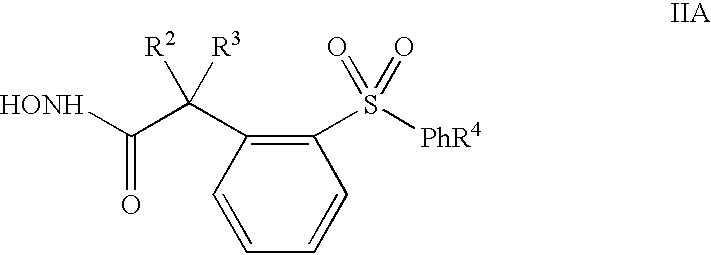
42. The compound according to claim 36 corresponding in structure to Formula IIIA

43. A compound corresponding to Formula VIA, or a pharmaceutically acceptable salt thereof:

wherein:
ring structure W2 including the depicted nitrogen atom is a heterocylic ring that contains 5- or 6-members, and R4 is a substituent bonded at the 4-position relative to that depicted nitrogen atom when W2 is a 6-membered ring and at the 3- or 4-position relative to that depicted nitrogen when W2 is a 5-membered ring;
R4 is a substituent that has a chain length of 3 to about 14 carbon atoms;
R5 and R6 are independently selected from the group consisting of a hydrido, alkyl, cycloalkyl, acylalkyl, halo, nitro, hydroxyl, cyano, alkoxy, haloalkyl, haloalkyloxy, hydroxyalkyl, a RbRcaminoalkyl substituent, thiol, alkylthio, arylthio, cycloalkylthio, cycloalkkoxy, alkoxyalkoxy, perfluoroalkyl, haloalkyl, heterocyclooxy and a RbRc aminoalkyloxy substituent;
or R5 and R6 together with the atoms to which they are bonded form a further aliphatic or aromatic carbocyclic or heterocyclic ring having 5- to 7-members; and
R20 is (a) —O—R21, where R21 is selected from the group consisting of a hydrido, C1-C6-alkyl, aryl, ar-C1-C6-alkyl group and a pharmaceutically acceptable cation, (b) —NR13O—R22 wherein R22 is a selectively removable protecting group and R13 is a hydrido, C1-C6-alkyl or benzyl group, (c) —NR13—O—R14, where R13 is as before and R14 is hydrido, a pharmaceutically acceptable cation or C(V)R15 where V is O or S and R15 is selected from the group consisting of an C1-C6-alkyl, aryl, -C1-C6-alkoxy, heteroaryl-C1-C6-alkyl, C3-C8-cycloalkyl-C1-C6-alkyl, aryloxy, ar-C1-C6-alkoxy, ar-C1-C6-alkyl, heteroaryl and amino C1-C6-alkyl group wherein the amino C1-C6-alkyl nitrogen is (i) unsubstituted or (ii) substituted with one or two substituents independently selected from the group consisting of an C1-C6-alkyl, aryl, ar-C1-C6-alkyl, C3-C8-cycloalkyl-C1-C6-alkyl, ar-C1-C6-alkoxycarbonyl, C1-C6-alkoxycarbonyl, and C1-C6-alkanoyl radical, or (iii) wherein the amino C1-C6-alkyl nitrogen and two substituents attached thereto form a 5- to 8-membered heterocyclo or heteroaryl ring, or (d) —NR23R24, where R23 and R24 are independently selected from the group consisting of a hydrido, C1-C6-alkyl, amino C1-C6-alkyl, hydroxy C1-C6-alkyl, aryl, and an ar-C1-C6-alkyl group, or R23 and R24 together with the depicted nitrogen atom form a 5- to 8-membered ring containing zero or one additional heteroatom that is oxygen, nitrogen or sulfur;
Rb and Rc are independently selected from the group consisting of a hydrido, alkanoyl, arylalkyl, aroyl, bisalkoxyalkyl, alkyl, haloalkyl, perfluoroalkyl, trifluoromethylalkyl, perfluoroalkoxyalkyl, alkoxyalkyl, cycloalkyl, heterocycloalkyl, heterocycloalkylcarbonyl, aryl, heterocyclo, heteroaryl, cycloalkylalkyl, aryloxyalkyl, heteroaryloxyalkyl, heteroarylalkoxyalkyl, heteroarylthioalkyl, arylsulfonyl, aralkanoyl, alkylsulfonyl, heteroarylsulfonyl, carboxyalkyl, alkoxycarbonylalkyl, aminocarbonyl, alkyliminocarbonyl, aryliminocarbonyl, heterocycloiminocarbonyl, arylthioalkyl, alkylthioalkyl, arylthioalkenyl, alkylthioalkenyl, heteroarylalkyl, haloalkanoyl, hydroxyalkanoyl, thiolalkanoyl, alkenyl, alkynyl, alkoxyalkyl, alkoxycarbonyl, aryloxycarbonyl, aminoalkylcarbonyl, hydroxyalkyl, aminoalkyl, aminoalkylsulfonyl, aminosulfonyl wherein the amino nitrogen is (i) unsubstituted or (ii) independently substituted with one or two Rd radicals, or the substituents on the amino group taken together with the amino nitrogen form a saturated or partially unsaturated heterocyclo group optionally substituted with one, two or three groups independently selected from Rd substituents or a heteroaryl group optionally substituted with one, two or three groups independently selected from Rf substituents;
Rd and Re are independently selected from the group consisting of a hydrido, alkyl, alkenyl, alkenyl, arylalkyl, aryl, alkanoyl, aroyl, arylalkycarbonyl, alkoxycarbonyl and an arylalkyloxycarbonyl group; and
Rf is selected from the group consisting of a nitro, hydroxy, alkyl, halogen, aryl, alkoxy, cyano, and a RdReamino group.
44. The compound according to claim 43 wherein said R4 substituent is selected from the group consisting of a phenyl group, a phenoxy group, a thiophenoxy group, an anilino group, a phenylazo group, a phenylureido, a benzamido, a nicotinamido, an isonicotinamido, a picolinamido group, a heterocyclo, heterocyclohydrocarbyl, arylheterocyclohydrocarbyl, arylhydrocarbyl, heteroarylhydrocarbyl, heteroarylheterocyclo-hydrocarbyl, arylhydrocarbyloxyhydrocarbyl, aryloxyhydrocarbyl, hydrocarboylhydrocarbyl, arylhydrocarboylhydrocarbyl, arylcarbonylhydrocarbyl, arylazoaryl, arylhydrazinoaryl, hydrocarbylthio-hydrocarbyl, hydrocarbylthioaryl, arylthio-hydrocarbyl, heteroarylthiohydrocarbyl, hydrocarbyl-thioarylhydrocarbyl, arylhydrocarbylthiohydrocarbyl, arylhydrocarbylthioaryl, arylhydrocarbylamino, heteroarylhydrocarbylamino, and a heteroarylthio group.
45. The compound according to claim 44 wherein said R4 substituent is itself substituted by one or more substituents selected from the group consisting of a halogen, hydrocarbyl, hydrocarbyloxy, nitro, cyano, perfluorohydrocarbyl, trifluoromethyl-hydrocarbyl, hydroxy, mercapto, hydroxycarbonyl, aryloxy, arylthio, arylamino, arylhydrocarbyl, aryl, heteroaryloxy, heteroarylthio, heteroarylamino, heteroarhydrocarbyl, hydrocarbyloxycarbonyl-hydrocarbyl, heterocyclooxy, hydroxycarbonyl-hydrocarbyl, heterocyclothio, heterocycloamino, cyclohydrocarbyloxy, cyclohydrocarbylthio, cyclohydrocarbylamino, heteroarylhydrocarbyloxy, heteroarylhydrocarbylthio, heteroarylhydrocarbyl-amino, arylhydrocarbyloxy, arylhydrocarbylthio, arylhydrocarbylamino, heterocyclic, heteroaryl, hydroxycarbonyl-hydrocarbyloxy, alkoxycarbonylalkoxy, hydrocarbyloyl, arylcarbonyl, arylhydrocarbyloyl, hydrocarboyloxy, arylhydrocarboyloxy, hydroxyhydrocarbyl, hydroxyhydrocarbyloxy, hydrocarbylthio, hydrocarbyloxyhydrocarbylthio, hydrocarbyloxycarbonyl, hydroxycarbonyl-hydrocarbyloxy, hydrocarbyloxy-carbonylhydrocarbyl, hydrocarbylhydroxycarbonyl-hydrocarbylthio, hydrocarbyloxycarbonylhydrocarbyloxy, hydrocarbyloxycarbonylhydrocarbylthio, amino, hydrocarbylcarbonylamino, arylcarbonylamino, cyclohydrocarbylcarbonylamino, heterocyclo-hydrocarbylcarbonylamino, arylhydrocarbyl-carbonylamino, heteroarylcarbonylamino, heteroarylhydrocarbylcarbonylamino, heterocyclohydrocarbyloxy, hydrocarbylsulfonylamino, arylsulfonylamino, arylhydrocarbylsulfonylamino, heteroarylsulfonylamino, heteroarylhydrocarbyl-sulfonylamino, cyclohydrocarbylsulfonylamino, heterocyclohydrocarbylsulfonylamino and N-monosubstituted or N,N-disubstituted aminohydrocarbyl group, wherein the substituent(s) on the nitrogen are selected from the group consisting of hydrocarbyl, aryl, arylhydrocarbyl, cyclohydrocarbyl, arylhydrocarbyloxycarbonyl, hydrocarbyloxycarbonyl, and hydrocarboyl, or wherein the nitrogen and two substituents attached thereto form a 5- to 8-membered heterocyclic or heteroaryl ring group.
46. The compound according to claim 43 wherein said R20 is —NR13O—R14.
47. The compound according to claim 46 wherein said R13 is hydrido.
48. The compound according to claim 43 wherein said R20 is —NR13O—R22.
49. The compound according to claim 48 wherein said R13 is hydrido and said R22 is selected from the group consisting of a 2-tetrahydropyranyl, benzyl, p-methoxybenzyl, C1-C6-alkoxycarbonyl, trisubstituted silyl group, o-nitrophenyl group, and a peptide systhesis resin, wherein said trisubstituted silyl group is substituted with a C1-C6-alkyl, aryl, or ar-C1-C6-alkyl group or a mixture thereof.
50. The compound according to claim 43 that corresponds in structure to Formula VIA-1, or a pharmaceutically acceptable salt thereof

51. A compound corresponding to Formula VIIC, or a pharmaceutically acceptable salt thereof:

wherein:
ring structure W2 including the depicted nitrogen atom is a heterocylic ring that contains 5- or 6-members, and the substituent —A—R—E—Y is bonded at the 4-position relative to that depicted nitrogen atom when W2 is a 6-membered ring and at the 3- or 4-position relative to that depicted nitrogen when W2 is a 5-membered ring;
in said —A—R—E—Y substituent, A is selected from the group consisting of
(1) —O—;
(2) —S—;
(3) —NRk—;
(4) —CO—N(Rk) or —N(Rk)—CO—;
(5) —CO—O— or —O—CO—;
(6) —O—CO—O—;
(7) —HC═CH—;
(8) —NH—CO—NH—;
(9) —C≡C—;
(10) —N═N—;
(11) —NH—NH—;
(12) —CS—N(Rk)— or —N(Rk)—CS—;
(13) —CH2—;
(14) —O—CH2— or —CH2—O—;
(15) —S—CH2— or —CH2—S—;
(16) —SO—; and
(17) —SO2—; or
(18) A is absent and R is directly bonded to ring structure W2;
the moiety R is selected from the group consisting of alkyl, alkoxyalkyl, aryl, heteroaryl, cycloalkyl, heterocycloalkyl, aralkyl, heteroaralkyl, heterocycloalkyl, cycloalkylalkyl, cycloalkoxyalkyl, heterocycloalkoxyalkyl, aryloxyalkyl, heteroaryloxyalkyl, arylthioalkyl, heteroarylthioalkyl, cycloalkylthioalkyl, and a heterocycloalkylthioalkyl group wherein the aryl, heteroaryl, cycloalkyl or heterocycloalkyl substituent is (i) unsubstituted or (ii) substituted with one or two radicals selected from the group consisting of a halo, alkyl, perfluoroalkyl, perfluoroalkoxy, perfluoroalkylthio, trifluoromethylalkyl, amino, alkoxycarbonylalkyl, alkoxy, C1-C2-alkylenedioxy, hydroxycarbonylalkyl, hydroxycarbonylalkylamino, nitro, hydroxy, hydroxyalkyl, alkanoylamino, and a alkoxycarbonyl group;
the group E is selected from the group consisting of
(1) —CORg— or —RgCO—;
(2) —CON(Rk)— or —(Rk)NCO—;
(3) —CO—;
(4) —SO2Rg— or —RgSO2—;
(5) —SO2—;
(6) —N(Rk)—SO2 or —SO2—N(Rk)—; or
(7) E is absent and R is bonded directly to Y; and
Y is absent or is selected from the group consisting of a hydrido, alkyl, alkoxy, haloalkyl, aryl, aralkyl, cycloalkyl, heteroaryl, hydroxy, nitrile, nitro, aryloxy, aralkoxy, heteroaryloxy, heteroaralkyl, Raoxyalkyl, perfluoroalkoxy, perfluoroalkylthio, trifluoromethylalkyl, alkenyl, heterocycloalkyl, cycloalkyl, trifluoromethyl, alkoxycarbonyl, and a aminoalkyl group, wherein the aryl, heteroaryl or heterocycloalkyl group is (i) unsubstituted or (ii) substituted with one or two radicals independently selected from the group consisting of an alkanoyl, halo, nitro, nitrile, haloalkyl, alkyl, aralkyl, aryl, alkoxy, and an amino group wherein the amino nitrogen is (i) unsubstituted or (ii) substituted with one or two groups independently selected from hydrido, alkyl, and an aralkyl group;
wherein
Ra is selected from the group consisting of a hydrido, alkyl, alkenyl, alkenyl, arylalkyl, aryl, alkanoyl, aroyl, arylalkycarbonyl, RbRcaminoalkanoyl, haloalkanoyl, RbRcaminoalkyl, alkoxyalkyl, haloalkyl and an arylalkyloxy group;
Rb and Rc are independently selected from the group consisting of a hydrido, alkanoyl, arylalkyl, aroyl, bisalkoxyalkyl, alkyl, haloalkyl, perfluoroalkyl, trifluoromethylalkyl, perfluoroalkoxyalkyl, alkoxyalkyl, cycloalkyl, heterocycloalkyl, heterocycloalkylcarbonyl, aryl, heterocyclo, heteroaryl, cycloalkylalkyl, aryloxyalkyl, heteroaryloxyalkyl, heteroarylalkoxyalkyl, heteroarylthioalkyl, arylsulfonyl, aralkanoyl, alkylsulfonyl, heteroarylsulfonyl, carboxyalkyl, alkoxycarbonylalkyl, aminocarbonyl, alkyliminocarbonyl, aryliminocarbonyl, heterocycloiminocarbonyl, arylthioalkyl, alkylthioalkyl, arylthioalkenyl, alkylthioalkenyl, heteroarylalkyl, haloalkanoyl, hydroxyalkanoyl, thiolalkanoyl, alkenyl, alkynyl, alkoxyalkyl, alkoxycarbonyl, aryloxycarbonyl, aminoalkylcarbonyl, hydroxyalkyl, aminoalkyl, aminoalkylsulfonyl, aminosulfonyl wherein the amino nitrogen is (i) unsubstituted or (ii) independently substituted with one or two Rd radicals, or the substituents on the amino group taken together with the amino nitrogen form a saturated or partially unsaturated heterocyclo group optionally substituted with one, two or three groups independently selected from Rd substituents or a heteroaryl group optionally substituted with one, two or three groups independently selected from Rf substituents;
Rd and Re are independently selected from the group consisting of a hydrido, alkyl, alkenyl, alkenyl, arylalkyl, aryl, alkanoyl, aroyl, arylalkycarbonyl, alkoxycarbonyl and an arylalkyloxycarbonyl group;
Rf is selected from the group consisting of a nitro, hydroxy, alkyl, halogen, aryl, alkoxy, cyano, and a RdReamino group;
wherein Rg is selected from the group consisting of a hydrido, aryl, heteroaryl, heterocyclo, aroyl, alkanoyl, heteroaroyl, halogen cyano, aldehydo, hydroxy, amino, alkyl, alkenyl, alkynyl, cycloalkyl, cycloalkenyl, alkoxy, aryloxy, heteroaryloxy, alkenyloxy, alkynyloxy, alkoxyaryl, alkoxyheteroaryl, RhRi-amino, alkoxyalkyl, alkylenedioxy, aryloxyalkyl, perfluoroalkyl, trifluoroalkyl, alkylthio, arylthio, alkyloxycarbonyl, alkyloxycarbonyloxy, aryloxycarbonyl, arylalkyloxycarbonyl, arylalkyloxycarbonylamino, aryloxycarbonyloxy, carboxy, RhRi-aminocarbonyloxy, RhRi-aminocarbonyl, RhRi-aminoalkanoyl, hydroxyaminocarbonyl, RhRi-aminosulfonyl, RhRi-aminocarbonyl(Rh)amino, trifluoromethylsulfonyl (Rh)amino, heteroarylsulfonyl-(Rh)amino, arylsulfonyl(Rh)amino, arylsulfonyl(Rh)-aminocarbonyl, alkylsulfonyl(Rh)amino, arylcarbonyl-(Rh)aminosulfonyl, and an alkylsulfonyl(Rh)-aminocarbonyl substituent;
wherein Rh is selected from the group consisting of an arylalkyl, aryl, heteroaryl, heterocyclo, alkyl, alkynyl, alkenyl, alkoxyalkyl, alkoxyalkyl, substituted or unsubstituted aminoalkyl, alkyloxycarbonyl, arylalkyloxycarbonyl, carboxyalkyl, haloalkyl, alkanoyl, aroyl, substituted or unsubstituted aminoalkanoyl, halo alkanoyl and a hydroxyalkyl group, each of which groups is optionally substituted by one or two groups independently selected from Rj substituents as are the substituents of the substituted aminoalkyl and substituted aminoalkanoyl groups;
Ri is selected from the group consisting of an arylalkyl, aryl, heteroaryl, heterocyclo, alkyl, alkynyl, alkenyl, alkoxyalkyl, alkoxyalkylalkyl, substituted or unsubstituted aminoalkyl, alkyloxycarbonyl, arylalkyloxycarbonyl, carboxyalkyl, haloalkyl, alkanoyl, aroyl, substituted or unsubstituted aminoalkanoyl, halo alkanoyl and a hydroxyalkyl group, each of which groups are optionally substituted by one or two Rj substituents;
wherein Rj is selected from the group consisting of an arylalkyl, aryl, heteroaryl, heterocyclo, alkyl, alkynyl, alkenyl, alkoxyalkyl, alkoxyalkyl, substituted or unsubstituted aminoalkyl, alkyloxycarbonyl, arylalkyloxycarbonyl, carboxyalkyl, haloalkyl, alkanoyl, aroyl, substituted or unsubstituted aminoalkanoyl, halo alkanoyl and a hydroxyalkyl group, wherein the substituents of the substituted aminoalkyl and substituted aminoalkanoyl groups are selected from the group consisting of an alkyl, alkenyl, alkenyl, aryl, arylalkyl, heteroaryl, heteroarylalkyl, aryloxycarbonyl and an alkyloxycarbonyl group; and
Rk is selected from hydrido, alkyl, alkenyl, alkenyl, aryl, arylalkyl, heteroaryl, heteroarylalkyl, aryloxycarbonyl, alkyloxycarbonyl, RcRdamino carbonyl, RcRdaminosulfonyl, RcRdaminoalkanoyl and RcRdaminoalkysulfonyl.
52. A compound corresponding to Formula VIIB, or a pharmaceutically acceptable salt thereof:

wherein:
G is a N-heterocyclo group;
the substituent A is selected from the group consisting of
(1) —O—;
(2) —S—;
(3) —NRk—;
(4) —CO—N(Rk) or —N(Rk)—CO—;
(5) —CO—O— or —O—CO—;
(6) —O—CO—O—;
(7) —HC═CH—;
(8) —NH—CO—NH—;
(9) —C≡C—;
(10) —N═N—;
(11) —NH—NH—;
(12) —CS—N(Rk)— or —N(Rk)—CS—;
(13) —CH2—;
(14) —O—CH2— or —CH2—O—;
(15) —S—CH2— or —CH2—S—;
(16) —SO—; and
(17) —SO2—; or
(18) A is absent and R is directly bonded to the N-heterocyclo group, G;
the moiety R is selected from the group consisting of alkyl, alkoxyalkyl, aryl, heteroaryl, cycloalkyl, heterocycloalkyl, aralkyl, heteroaralkyl, heterocycloalkyl, cycloalkylalkyl, cycloalkoxyalkyl, heterocycloalkoxyalkyl, aryloxyalkyl, heteroaryloxyalkyl, arylthioalkyl, heteroarylthioalkyl, cycloalkylthioalkyl, and a heterocycloalkylthioalkyl group wherein the aryl or heteroaryl or cycloalkyl or heterocycloalkyl substituent is (i) unsubstituted or (ii) substituted with one or two radicals selected from the group consisting of a halo, alkyl, perfluoroalkyl, perfluoroalkoxy, perfluoroalkylthio, trifluoromethylalkyl, amino, alkoxycarbonylalkyl, alkoxy, C1-C2-alkylenedioxy, hydroxycarbonylalkyl, hydroxycarbonylalkylamino, nitro, hydroxy, hydroxyalkyl, alkanoylamino, and a alkoxycarbonyl group;
the moiety E is selected from the group consisting of
(1) —CORg— or —RgCO—;
(2) —CON(Rk)— or —(Rk)NCO—;
(3) —CO—;
(4) —SO2—Rg— or —Rg—SO2—;
(5) —SO2—;
(6) —N(Rk)—SO2— or —SO2—N(Rk)—; or
(7) E is absent and R is bonded directly to Y; and
the moiety Y is absent or is selected from the group consisting of a hydrido, alkyl, alkoxy, haloalkyl, aryl, aralkyl, cycloalkyl, heteroaryl, hydroxy, aryloxy, aralkoxy, heteroaryloxy, heteroaralkyl, perfluoroalkoxy, perfluoroalkylthio, trifluoromethylalkyl, alkenyl, heterocycloalkyl, cycloalkyl, trifluoromethyl, alkoxycarbonyl, and a aminoalkyl group, wherein the aryl or heteroaryl or heterocycloalkyl group is (i) unsubstituted or (ii) substituted with one or two radicals independently selected from the group consisting of an alkanoyl, halo, nitro, aralkyl, aryl, alkoxy, and an amino group wherein the amino nitrogen is (i) unsubstituted or (ii) substituted with one or two groups independently selected from hydrido, alkyl, and an aralkyl group;
wherein
Ra is selected from the group consisting of a hydrido, alkyl, alkenyl, alkenyl, arylalkyl, aryl, alkanoyl, aroyl, arylalkycarbonyl, RbRcaminoalkanoyl, haloalkanoyl, RbRcaminoalkyl, alkoxyalkyl, haloalkyl and an arylalkyloxy group;
Rb and Rc are independently selected from the group consisting of a hydrido, alkanoyl, arylalkyl, aroyl, bisalkoxyalkyl, alkyl, haloalkyl, perfluoroalkyl, trifluoromethylalkyl, perfluoroalkoxyalkyl, alkoxyalkyl, cycloalkyl, heterocycloalkyl, heterocycloalkylcarbonyl, aryl, heterocyclo, heteroaryl, cycloalkylalkyl, aryloxyalkyl, heteroaryloxyalkyl, heteroarylalkoxyalkyl, heteroarylthioalkyl, arylsulfonyl, aralkanoyl, alkylsulfonyl, heteroarylsulfonyl, carboxyalkyl, alkoxycarbonylalkyl, aminocarbonyl, alkyliminocarbonyl, aryliminocarbonyl, heterocycloiminocarbonyl, arylthioalkyl, alkylthioalkyl, arylthioalkenyl, alkylthioalkenyl, heteroarylalkyl, haloalkanoyl, hydroxyalkanoyl, thiolalkanoyl, alkenyl, alkynyl, alkoxyalkyl, alkoxycarbonyl, aryloxycarbonyl, aminoalkylcarbonyl, hydroxyalkyl, aminoalkyl, aminoalkylsulfonyl, aminosulfonyl wherein the amino nitrogen is (i) unsubstituted or (ii) independently substituted with one or two Rd radicals, or the substituents on the amino group taken together with the amino nitrogen form a saturated or partially unsaturated heterocyclo group optionally substituted with one, two or three groups independently selected from Rd substituents or a heteroaryl group optionally substituted with one, two or three groups independently selected from Rf substituents;
Rd and Re are independently selected from the group consisting of a hydrido, alkyl, alkenyl, alkenyl, arylalkyl, aryl, alkanoyl, aroyl, arylalkycarbonyl, alkoxycarbonyl and an arylalkyloxycarbonyl group;
Rf is selected from the group consisting of a nitro, hydroxy, alkyl, halogen, aryl, alkoxy, cyano, and a RdReamino group;
wherein Rg is selected from the group consisting of a hydrido, aryl, heteroaryl, heterocyclo, aroyl, alkanoyl, heteroaroyl, halogen cyano, aldehydo, hydroxy, amino, alkyl, alkenyl, alkynyl, cycloalkyl, cycloalkenyl, alkoxy, aryloxy, heteroaryloxy, alkenyloxy, alkynyloxy, alkoxyaryl, alkoxyheteroaryl, RhRi-amino, alkoxyalkyl, alkylenedioxy, aryloxyalkyl, perfluoroalkyl, trifluoroalkyl, alkylthio, arylthio, alkyloxycarbonyl, alkyloxycarbonyloxy, aryloxycarbonyl, arylalkyloxycarbonyl, arylalkyloxycarbonylamino, aryloxycarbonyloxy, carboxy, RhRi-aminocarbonyloxy, RhRi-aminocarbonyl, RhRi-aminoalkanoyl, hydroxyaminocarbonyl, RhRi-aminosulfonyl, RhRi-aminocarbonyl(Rh)amino, trifluoromethylsulfonyl(Rh)amino, heteroarylsulfonyl-(Rh)amino, arylsulfonyl(Rh)amino, arylsulfonyl(Rh)-aminocarbonyl, alkylsulfonyl(Rh)amino, arylcarbonyl-(Rh)aminosulfonyl, and an alkylsulfonyl(Rh)-aminocarbonyl substituent;
wherein Rh is selected from the group consisting of an arylalkyl, aryl, heteroaryl, heterocyclo, alkyl, alkynyl, alkenyl, alkoxyalkyl, alkoxyalkyl, substituted or unsubstituted aminoalkyl, alkyloxycarbonyl, arylalkyloxycarbonyl, carboxyalkyl, haloalkyl, alkanoyl, aroyl, substituted or unsubstituted aminoalkanoyl, halo alkanoyl and a hydroxyalkyl group, each of which groups is optionally substituted by one or two groups independently selected from Rj substituents as are the substituents of the substituted aminoalkyl and substituted aminoalkanoyl groups;
Ri is selected from the group consisting of an arylalkyl, aryl, heteroaryl, heterocyclo, alkyl, alkynyl, alkenyl, alkoxyalkyl, alkoxyalkylalkyl, substituted or unsubstituted aminoalkyl, alkyloxycarbonyl, arylalkyloxycarbonyl, carboxyalkyl, haloalkyl, alkanoyl, aroyl, substituted or unsubstituted aminoalkanoyl, halo alkanoyl and a hydroxyalkyl group, each of which groups are optionally substituted by one or two Rj substituents;
wherein Rj is selected from the group consisting of an arylalkyl, aryl, heteroaryl, heterocyclo, alkyl, alkynyl, alkenyl, alkoxyalkyl, alkoxyalkyl, substituted or unsubstituted aminoalkyl, alkyloxycarbonyl, arylalkyloxycarbonyl, carboxyalkyl, haloalkyl, alkanoyl, aroyl, substituted or unsubstituted aminoalkanoyl, halo alkanoyl and a hydroxyalkyl group, wherein the substituents of the substituted aminoalkyl and substituted aminoalkanoyl groups are selected from the group consisting of an alkyl, alkenyl, alkenyl, aryl, arylalkyl, heteroaryl, heteroarylalkyl, aryloxycarbonyl and an alkyloxycarbonyl group; and
Rk is selected from hydrido, alkyl, alkenyl, alkenyl, aryl, arylalkyl, heteroaryl, heteroarylalkyl, aryloxycarbonyl, alkyloxycarbonyl, RcRdamino carbonyl, RcRdaminosulfonyl, RcRdaminoalkanoyl and RcRdaminoalkysulfonyl.
53. A compound corresponding to the formula

54. A compound corresponding to the formula

55. A compound corresponding to the formula

56. A compound corresponding to the formula

57. A compound corresponding to the formula

58. A compound corresponding to the formula

59. A compound corresponding to the formula

60. A compound corresponding to the formula

61. A compound corresponding to the formula

62. A compound corresponding to the formula

63. A compound corresponding to the formula

64. A compound corresponding to the formula

65. A compound corresponding to the formula

66. A compound corresponding to the formula

67. A compound corresponding to the formula

68. A compound corresponding to the formula

69. A compound corresponding to the formula

70. A compound corresponding to the formula

71. A compound corresponding to the formula

72. A compound corresponding to the formula

73. A compound corresponding to the formula

74. A compound corresponding to the formula

75. A compound corresponding to the formula

76. A compound corresponding to the formula

77. A compound corresponding to the formula

78. A compound corresponding to the formula

79. A compound corresponding to the formula

80. A compound corresponding to the formula

81. A compound corresponding to the formula

82. A compound corresponding to the formula

83. A compound corresponding to the formula

84. A compound corresponding to the formula

85. A compound corresponding to the formula

86. A compound corresponding to the formula

87. A compound corresponding to the formula

88. A compound corresponding to the formula

89. A compound corresponding to the formula

90. A compound corresponding to the formula

91. A compound corresponding to the formula

92. A process for treating a host mammal having a condition associated with pathological matrix metalloprotease activity that comprises administering a compound corresponding in structure to Formula A or a pharmaceutically acceptable salt thereof in an MMP enzyme-inhibiting effective amount to a mammalian host having such a condition:

wherein
y and z are each zero or one and the sum of z+y is zero or one;
the ring structure W is a 5- or 6-membered aromatic or heteroaromatic ring;
X is —CH2— or —NR9—, wherein R9 is selected from the group consisting of a hydrido, aryl, alkyl and arylalkyl substituent;
R1 is (i) a substituent containing a 5- or 6-membered cyclohydrocarbyl, heterocyclo, aryl or heteroaryl radical bonded directly to the depicted SO2-group and having a length greater than about that of a hexyl group and less than about that of an eicosyl group, said R1 defining a three-dimensional volume, when rotated about an axis drawn through the SO2-bonded 1-position and the 4-position of a 6-membered ring radical or drawn through the SO2-bonded 1-position and the center of 3,4-bond of a 5-membered ring radical, whose widest dimension in a direction transverse to the axis of rotation is about that of one furanyl ring to about that of two phenyl rings, or (ii) an —NR7R8 group in which R7 and R8 are independently selected from the group consisting of hydrido, hydrocarbyl, aryl, substituted aryl, arylhydrocarbyl, and subsituted arylhydrocarbyl;
R2 and R3 are independently selected from the group consisting of hydrido, alkyl, alkenyl, alkynyl, hydroxyalkyl, Raoxyalkyl, hydroxyl, thiol, Rathioalkyl, haloalkyl, amino, RbRcamino, RbRcaminoalkyl, RdReaminoalkanoyl(Rb)aminoalkyl, RbRcaminoalkyloxy, RbRcaminoalkyloxyalkyl, heterocyclo, heterocycloalkyl, heterocyclooxy, heterocyclothio, heteroaryl, heteroarylalkyl, heteroaryloxy, heteroarylthio, or
R2 and R3 together with the depicted carbon atom to which they are bonded form a 4- to 8-membered carbocyclic or heterocyclic ring, that is preferably a 5- or 6-membered ring, in which the heteroatom is oxygen, sulfur or nitrogen, said heteroatom being optionally substituted with one or two oxygens when sulfur and being optionally substituted with a moiety selected from the group consisting of a C1-C4 hydrocarbyl, C3-C6 cyclohydrocarbyl, C1-C4 hydrocarbylcarbonyl, and sulfonyl C1-C4 hydrocarbyl group when nitrogen;
R5 and R6 are independently selected from the group consisting of a hydrido, alkyl, cycloalkyl, acylalkyl, halo, nitro, hydroxyl, cyano, alkoxy, haloalkyl, haloalkyloxy, hydroxyalkyl, a RbRcaminoalkyl substituent, thiol, alkylthio, arylthio, cycloalkylthio, cycloalkkoxy, alkoxyalkoxy, perfluoroalkyl, haloalkyl, heterocyclooxy and a RbRcaminoalkyloxy substituent;
or R5 and R6 together with the atoms to which they are bonded form a further aliphatic or aromatic carbocyclic or heterocyclic ring having 5- to 7-members; and
R20 is (a) —O—R21, where R21 is selected from the group consisting of a hydrido, C1-C6-alkyl, aryl, ar-C1-C6-alkyl group and a pharmaceutically acceptable cation, (b) —NR13—O—R22 wherein R22 is a selectively removable protecting group and R13 is a hydrido, C1-C6-alkyl or benzyl group, (c) —NR—O—R14, where R13 is as before and R14 is hydrido, a pharmaceutically acceptable cation or C(V)R15 where V is O or S and R15 is selected from the group consisting of an C1-C6-alkyl, aryl, C1-C6-alkoxy, heteroaryl-C1-C6-alkyl, C3-C8-cycloalkyl-C1-C6-alkyl, aryloxy, ar-C1-C6-alkoxy, ar-C1-C6-alkyl, heteroaryl and amino C1-C6-alkyl group wherein the amino C1-C6-alkyl nitrogen is (i) unsubstituted or (ii) substituted with one or two substituents independently selected from the group consisting of an C1-C6-alkyl, aryl, ar-C1-C6-alkyl, C3-C8-cycloalkyl-C1-C6-alkyl, ar-C1-C6-alkoxycarbonyl, C1-C6-alkoxycarbonyl, and C1-C6-alkanoyl radical, or (iii) wherein the amino C1-C6-alkyl nitrogen and two substituents attached thereto form a 5- to 8-membered heterocyclo or heteroaryl ring, or (d) —NR23R24, where R23 and R24 are independently selected from the group consisting of a hydrido, C1-C6-alkyl, amino C1-C6-alkyl, hydroxy C1-C6-alkyl, aryl, and an ar-C1-C6-alkyl group, or R23 and R24 together with the depicted nitrogen atom form a 5- to 8-membered ring containing zero or one additional heteroatom that is oxygen, nitrogen or sulfur;
wherein:
Ra is selected from the group consisting of a hydrido, alkyl, alkenyl, alkenyl, arylalkyl, aryl, alkanoyl, aroyl, arylalkycarbonyl, RbRcaminoalkanoyl, haloalkanoyl, RbRcaminoalkyl, alkoxyalkyl, haloalkyl and an arylalkyloxy group;
Rb and Rc are independently selected from the group consisting of a hydrido, alkanoyl, arylalkyl, aroyl, bisalkoxyalkyl, alkyl, haloalkyl, perfluoroalkyl, trifluoromethylalkyl, perfluoroalkoxyalkyl, alkoxyalkyl, cycloalkyl, heterocycloalkyl, heterocycloalkylcarbonyl, aryl, heterocyclo, heteroaryl, cycloalkylalkyl, aryloxyalkyl, heteroaryloxyalkyl, heteroarylalkoxyalkyl, heteroarylthioalkyl, arylsulfonyl, aralkanoyl, alkylsulfonyl, heteroarylsulfonyl, carboxyalkyl, alkoxycarbonylalkyl, aminocarbonyl, alkyliminocarbonyl, aryliminocarbonyl, heterocycloiminocarbonyl, arylthioalkyl, alkylthioalkyl, arylthioalkenyl, alkylthioalkenyl, heteroarylalkyl, haloalkanoyl, hydroxyalkanoyl, thiolalkanoyl, alkenyl, alkynyl, alkoxyalkyl, alkoxycarbonyl, aryloxycarbonyl, aminoalkylcarbonyl, hydroxyalkyl, aminoalkyl, aminoalkylsulfonyl, aminosulfonyl wherein the amino nitrogen is (i) unsubstituted or (ii) independently substituted with one or two Rd radicals, or the substituents on the amino group taken together with the amino nitrogen form a saturated or partially unsaturated heterocyclo group optionally substituted with one, two or three groups independently selected from Rd substituents or a heteroaryl group optionally substituted with one, two or three groups independently selected from Rf substituents;
Rd and Re are independently selected from the group consisting of a hydrido, alkyl, alkenyl, alkenyl, arylalkyl, aryl, alkanoyl, aroyl, arylalkycarbonyl, alkoxycarbonyl and an arylalkyloxycarbonyl group; and
Rf is selected from the group consisting of a nitro, hydroxy, alkyl, halogen, aryl, alkoxy, cyano, and a RdReamino group.
93. The process according to claim 92 wherein said R7 and R8 are independently selected from the group consisting of a hydrido, alkyl, alkenyl, alkynyl, alkoxyalkyl, haloalkyl, Raoxyalkyl, cycloalkyl, cycloalkylalkyl, aryl, arylalkyl, heteroaryl, heteroarylalkyl, and a heterocyclo substituent, each of which substituent groups is optionally substituted with an —A—R—E—Y substituent;
in said —A—R—E—Y substituent, A is selected from the group consisting of
(1) —O—;
(2) —S—;
(3) —NRk—;
(4) —CO—N(Rk) or —N(Rk)—CO—;
(5) —CO—O— or —O—CO—;
(6) —O—CO—C—;
(7) —HC═CH—;
(8) —NH—CO—NH—;
(9) —C≡C—;
(10) —N═N—;
(11) —NH—NH—;
(12) —CS—N(Rk)— or —N(Rk)—CS—;
(13) —CH2—;
(14) —O—CH2— or —CH2—O—;
(15) —S—CH2— or —CH2—S—;
(16) —SO—; and
(17) —SO2—; or
(18) A is absent and R is directly bonded to R7 or R8, or both R7 and R8;
the moiety R is selected from the group consisting of alkyl, alkoxyalkyl, aryl, heteroaryl, cycloalkyl, heterocycloalkyl, aralkyl, heteroaralkyl, heterocycloalkyl, cycloalkylalkyl, cycloalkoxyalkyl, heterocycloalkoxyalkyl, aryloxyalkyl, heteroaryloxyalkyl, arylthioalkyl, heteroarylthioalkyl, cycloalkylthioalkyl, and a heterocycloalkylthioalkyl group wherein the aryl, heteroaryl, cycloalkyl or heterocycloalkyl substituent is (i) unsubstituted or (ii) substituted with one or two radicals selected from the group consisting of a halo, alkyl, perfluoroalkyl, perfluoroalkoxy, perfluoroalkylthio, trifluoromethylalkyl, amino, alkoxycarbonylalkyl, alkoxy, C1-C2-alkylenedioxy, hydroxycarbonylalkyl, hydroxycarbonylalkylamino, nitro, hydroxy, hydroxyalkyl, alkanoylamino, and a alkoxycarbonyl group;
the group E is selected from the group consisting of
(1) —CORg— or —RgCO—;
(2) —CON(Rk)— or (Rk)NCO—;
(3) —CO—;
(4) —SO2Rg— or —RgSO2—;
(5) —SO2—;
(6) —N(Rk)—SO2— or SO2—N(Rk)—; or
(7) E is absent and R is bonded directly to Y; and
Y is absent or is selected from the group consisting of a hydrido, alkyl, alkoxy, haloalkyl, aryl, aralkyl, cycloalkyl, heteroaryl, hydroxy, nitrile, nitro, aryloxy, aralkoxy, heteroaryloxy, heteroaralkyl, Raoxyalkyl, perfluoroalkoxy, perfluoroalkylthio, trifluoromethylalkyl, alkenyl, heterocycloalkyl, cycloalkyl, trifluoromethyl, alkoxycarbonyl, and a aminoalkyl group, wherein the aryl, heteroaryl or heterocycloalkyl group is (i) unsubstituted or (ii) substituted with one or two radicals independently selected from the group consisting of an alkanoyl, halo, nitro, nitrile, haloalkyl, alkyl, aralkyl, aryl, alkoxy, and an amino group wherein the amino nitrogen is (i) unsubstituted or (ii) substituted with one or two groups independently selected from hydrido, alkyl, and an aralkyl group; or
R7 and R8 taken together with the nitrogen atom to which they are bonded form a group —G—A—R—E—Y wherein
G is a N-heterocyclo group;
the substituent A is selected from the group consisting of
(1) —O—;
(2) —S—;
(3) —NRk—;
(4) —CO—N(Rk) or —N(Rk)—CO—;
(5) —C—O— or —O—CO—;
(6) —O—CO—O—;
(7) —HC═CH—;
(8) —NH—CO—NH—;
(9) —C≡C—;
(10) —N═N—;
(11) —NH—NH—;
(12) —CS—N(Rk)— or —N(Rk)—CS—;
(13) —CH2—;
(14) —O—CH2— or —CH2—O—;
(15) —S—CH2— or —CH2—S—;
(16) —SO—; and
(17) —SO2—; or
(18) A is absent and R is directly bonded to the N-heterocyclo group, G;
the moiety R is selected from the group consisting of alkyl, alkoxyalkyl, aryl, heteroaryl, cycloalkyl, heterocycloalkyl, aralkyl, heteroaralkyl, heterocycloalkyl, cycloalkylalkyl, cycloalkoxyalkyl, heterocycloalkoxyalkyl, aryloxyalkyl, heteroaryloxyalkyl, arylthioalkyl, heteroarylthioalkyl, cycloalkylthioalkyl, and a heterocycloalkylthioalkyl group wherein the aryl or heteroaryl or cycloalkyl or heterocycloalkyl substituent is (i) unsubstituted or (ii) substituted with one or two radicals selected from the group consisting of a halo, alkyl, perfluoroalkyl, perfluoroalkoxy, perfluoroalkylthio, trifluoromethylalkyl, amino, alkoxycarbonylalkyl, alkoxy, C1-C2-alkylenedioxy, hydroxycarbonylalkyl, hydroxycarbonylalkylamino, nitro, hydroxy, hydroxyalkyl, alkanoylamino, and a alkoxycarbonyl group;
the moiety E is selected from the group consisting of
(1) —CORg— or —RgCO—;
(2) —CON(Rk)— or —(Rk)NCO—;
(3) —CO—;
(4) —SO2—Rg— or —Rg—SO2—;
(5) —SO2—;
(6) —N(Rk)—SO2— or —SO2—N(Rk)—; or
(7) E is absent and R is bonded directly to Y; and
the moiety Y is absent or is selected from the group consisting of a hydrido, alkyl, alkoxy, haloalkyl, aryl, aralkyl, cycloalkyl, heteroaryl, hydroxy, aryloxy, aralkoxy, heteroaryloxy, heteroaralkyl, perfluoroalkoxy, perfluoroalkylthio, trifluoromethylalkyl, alkenyl, heterocycloalkyl, cycloalkyl, trifluoromethyl, alkoxycarbonyl, and a aminoalkyl group, wherein the aryl or heteroaryl or heterocycloalkyl group is (i) unsubstituted or (ii) substituted with one or two radicals independently selected from the group consisting of an alkanoyl, halo, nitro, aralkyl, aryl, alkoxy, and an amino group wherein the amino nitrogen is (i) unsubstituted or (ii) substituted with one or two groups independently selected from hydrido, alkyl, and an aralkyl group;
wherein Rg is selected from the group consisting of a hydrido, aryl, heteroaryl, heterocyclo, aroyl, alkanoyl, heteroaroyl, halogen cyano, aldehydo, hydroxy, amino, alkyl, alkenyl, alkynyl, cycloalkyl, cycloalkenyl, alkoxy, aryloxy, heteroaryloxy, alkenyloxy, alkynyloxy, alkoxyaryl, alkoxyheteroaryl, RhRi-amino, alkoxyalkyl, alkylenedioxy, aryloxyalkyl, perfluoroalkyl, trifluoroalkyl, alkylthio, arylthio, alkyloxycarbonyl, alkyloxycarbonyloxy, aryloxycarbonyl, arylalkyloxycarbonyl, arylalkyloxycarbonylamino, aryloxycarbonyloxy, carboxy, RhRi-aminocarbonyloxy, RhRi-aminocarbonyl, RhRi-aminoalkanoyl, hydroxyaminocarbonyl, RhRi-aminosulfonyl, RhRi-aminocarbonyl(Rh)amino, trifluoromethylsulfonyl(Rh)amino, heteroarylsulfonyl-(Rh)amino, arylsulfonyl(Rh)amino, arylsulfonyl(Rh)-aminocarbonyl, alkylsulfonyl(Rh)amino, arylcarbonyl-(Rh)aminosulfonyl, and an alkylsulfonyl(Rh)-aminocarbonyl substituent;
wherein Rh is selected from the group consisting of an arylalkyl, aryl, heteroaryl, heterocyclo, alkyl, alkynyl, alkenyl, alkoxyalkyl, alkoxyalkyl, substituted or unsubstituted aminoalkyl, alkyloxycarbonyl, arylalkyloxycarbonyl, carboxyalkyl, haloalkyl, alkanoyl, aroyl, substituted or unsubstituted aminoalkanoyl, halo alkanoyl and a hydroxyalkyl group, each of which groups is optionally substituted by one or two groups independently selected from Rj substituents as are the substituents of the substituted aminoalkyl and substituted aminoalkanoyl groups;
Ri is selected from the group consisting of an arylalkyl, aryl, heteroaryl, heterocyclo, alkyl, alkynyl, alkenyl, alkoxyalkyl, alkoxyalkylalkyl, substituted or unsubstituted aminoalkyl, alkyloxycarbonyl, arylalkyloxycarbonyl, carboxyalkyl, haloalkyl, alkanoyl, aroyl, substituted or unsubstituted aminoalkanoyl, halo alkanoyl and a hydroxyalkyl group, each of which groups are optionally substituted by one or two Rj substituents;
wherein Rj is selected from the group consisting of an arylalkyl, aryl, heteroaryl, heterocyclo, alkyl, alkynyl, alkenyl, alkoxyalkyl, alkoxyalkyl, substituted or unsubstituted aminoalkyl, alkyloxycarbonyl, arylalkyloxycarbonyl, carboxyalkyl, haloalkyl, alkanoyl, aroyl, substituted or unsubstituted aminoalkanoyl, halo alkanoyl and a hydroxyalkyl group, wherein the substituents of the substituted aminoalkyl and substituted aminoalkanoyl groups are selected from the group consisting of an alkyl, alkenyl, alkenyl, aryl, arylalkyl, heteroaryl, heteroarylalkyl, aryloxycarbonyl and an alkyloxycarbonyl group; and
Rk is selected from hydrido, alkyl, alkenyl, alkenyl, aryl, arylalkyl, heteroaryl, heteroarylalkyl, aryloxycarbonyl, alkyloxycarbonyl, RcRdamino carbonyl, RcRdaminosulfonyl, RcRdaminoalkanoyl and RcRdaminoalkysulfonyl.
94. The process according to claim 92 wherein said wherein the sum of y+z is one.
95. The process according to claim 92 wherein y is one.
96. The process according to claim 92 wherein z is one.
97. The process according to claim 92 wherein the sum of y+z is zero.
98. The process according to claim 92 wherein X is —CH2—.
99. The process according to claim 92 wherein said R2 and R3 are independently hydrido, C1-C4 hydrocarbyl, hydroxyl or amino, or R2 and R3 together with the depicted carbon atom to which they are bonded form a 5- or 6-membered heterocyclic ring in which the heteroatom is oxygen, sulfur or nitrogen, said heteroatom being optionally substituted with one or two oxygens when sulfur and being optionally substituted with a moiety selected from the group consisting of a C1-C4 hydrocarbyl, C3-C6 cyclohydrocarbyl, C1-C4 hydrocarbylcarbonyl, and sulfonyl C1-C4 hydrocarbyl group when nitrogen.
100. The process according to claim 92 wherein said compound corresponds in structure to Formula I

wherein W, X, y, z, R2, R3, R5, R6 and R1 are as defined before.
101. The process according to claim 92 wherein said compound corresponds in structure to Formula IA

Wherein W, X, y, z, R2, R3, R5, R6 and R14 are as defined before, Ph is phenyl substituted at its own 4-position with a substituent R4, wherein R4 is a substituent that has a chain length of 3 to about 14 carbon atoms.
102. The process according to claim 101 wherein said R4 substituent is selected from the group consisting of a phenyl group, a phenoxy group, a thiophenoxy group, an anilino group, a phenylazo group, a phenylureido, a benzamido, a nicotinamido, an isonicotinamido, a picolinamido group, a heterocyclo, heterocyclohydrocarbyl, arylheterocyclohydrocarbyl, arylhydrocarbyl, heteroarylhydrocarbyl, heteroarylheterocyclo-hydrocarbyl, arylhydrocarbyloxyhydrocarbyl, aryloxyhydrocarbyl, hydrocarboylhydrocarbyl, arylhydrocarboylhydrocarbyl, arylcarbonylhydrocarbyl, arylazoaryl, arylhydrazinoaryl, hydrocarbylthio-hydrocarbyl, hydrocarbylthioaryl, arylthio-hydrocarbyl, heteroarylthiohydrocarbyl, hydrocarbyl-thioarylhydrocarbyl, arylhydrocarbylthiohydrocarbyl, arylhydrocarbylthioaryl, arylhydrocarbylamino, heteroarylhydrocarbylamino, and a heteroarylthio group.
103. The process according to claim 102 wherein said R4 substituent is itself substituted by one or more substituents selected from the group consisting of a halogen, hydrocarbyl, hydrocarbyloxy, nitro, cyano, perfluorohydrocarbyl, trifluoromethyl-hydrocarbyl, hydroxy, mercapto, hydroxycarbonyl, aryloxy, arylthio, arylamino, arylhydrocarbyl, aryl, heteroaryloxy, heteroarylthio, heteroarylamino, heteroarhydrocarbyl, hydrocarbyloxycarbonyl-hydrocarbyl, heterocyclooxy, hydroxycarbonyl-hydrocarbyl, heterocyclothio, heterocycloamino, cyclohydrocarbyloxy, cyclohydrocarbylthio, cyclohydrocarbylamino, heteroarylhydrocarbyloxy, heteroarylhydrocarbylthio, heteroarylhydrocarbyl-amino, arylhydrocarbyloxy, arylhydrocarbylthio, arylhydrocarbylamino, heterocyclic, heteroaryl, hydroxycarbonyl-hydrocarbyloxy, alkoxycarbonylalkoxy, hydrocarbyloyl, arylcarbonyl, arylhydrocarbyloyl, hydrocarboyloxy, arylhydrocarboyloxy, hydroxyhydrocarbyl, hydroxyhydrocarbyloxy, hydrocarbylthio, hydrocarbyloxyhydrocarbylthio, hydrocarbyloxycarbonyl, hydroxycarbonyl-hydrocarbyloxy, hydrocarbyloxy-carbonylhydrocarbyl, hydrocarbylhydroxycarbonyl-hydrocarbylthio, hydrocarbyloxycarbonylhydrocarbyloxy, hydrocarbyloxycarbonylhydrocarbylthio, amino, hydrocarbylcarbonylamino, arylcarbonylamino, cyclohydrocarbylcarbonylamino, heterocyclo-hydrocarbylcarbonylamino, arylhydrocarbyl-carbonylamino, heteroarylcarbonylamino, heteroarylhydrocarbylcarbonylamino, heterocyclohydrocarbyloxy, hydrocarbylsulfonylamino, arylsulfonylamino, arylhydrocarbylsulfonylamino, heteroarylsulfonylamino, heteroarylhydrocarbyl-sulfonylamino, cyclohydrocarbylsulfonylamino, heterocyclohydrocarbylsulfonylamino and N-monosubstituted or N,N-disubstituted aminohydrocarbyl group, wherein the substituent(s) on the nitrogen are selected from the group consisting of hydrocarbyl, aryl, arylhydrocarbyl, cyclohydrocarbyl, arylhydrocarbyloxycarbonyl, hydrocarbyloxycarbonyl, and hydrocarboyl, or wherein the nitrogen and two substituents attached thereto form a 5- to 8-membered heterocyclic or heteroaryl ring group.
104. The process according to claim 92 wherein said compound corresponds in structure to Formula VI

wherein each of y, R2, R3, R5, R6, R7, R8 and R20 is as defined before and each of A, B, C and D is carbon, nitrogen, sulfur or oxygen that is present or absent so that the depicted ring has 5- or 6-members.
105. A process for treating a host mammal having a condition associated with pathological matrix metalloprotease activity that comprises administering a compound corresponding in structure to Formula A or a pharmaceutically acceptable salt thereof in an MMP enzyme-inhibiting effective amount to a mammalian host having such a condition:

wherein
y and z are each zero or one and the sum of z+y is zero or one;
the ring structure W is a 5- or 6-membered aromatic or heteroaromatic ring;
X is —CH2— or —NR9—, wherein R9 is selected from the group consisting of a hydrido, aryl, alkyl and arylalkyl substituent;
R1 is a substituent containing a 5- or 6-membered cyclohydrocarbyl, heterocyclo, aryl or heteroaryl radical bonded directly to the depicted SO2-group and having a length greater than about that of a hexyl group and less than about that of an eicosyl group, said R1 defining a three-dimensional volume, when rotated about an axis drawn through the SO2-bonded 1-position and the 4-position of a 6-membered ring radical or drawn through the SO2-bonded 1-position and the center of 3,4-bond of a 5-membered ring radical, whose widest dimension in a direction transverse to the axis of rotation is about that of one furanyl ring to about that of two phenyl rings; and
R2 and R3 are independently hydrido, C1-C4 hydrocarbyl, hydroxyl or amino, or R2 and R3 together with the depicted carbon atom to which they are bonded form a 5- or 6-membered heterocyclic ring in which the heteroatom is oxygen, sulfur or nitrogen, said heteroatom being optionally substituted with one or two oxygens when sulfur and being optionally substituted with a moiety selected from the group consisting of a C1-C4 hydrocarbyl, C3-C6 cyclohydrocarbyl, C1-C4 hydrocarbylcarbonyl, and sulfonyl C1-C4 hydrocarbyl group when nitrogen; and
R5 and R6 are independently selected from the group consisting of a hydrido, alkyl, cycloalkyl, acylalkyl, halo, nitro, hydroxyl, cyano, alkoxy, haloalkyl, haloalkyloxy, hydroxyalkyl, a RbRcaminoalkyl substituent, thiol, alkylthio, arylthio, cycloalkylthio, cycloalkkoxy, alkoxyalkoxy, perfluoroalkyl, haloalkyl, heterocyclooxy and a RbRcaminoalkyloxy substituent;
or R5 and R6 together with the atoms to which they are bonded form a further aliphatic or aromatic carbocyclic or heterocyclic ring having 5- to 7-members.
106. The process according to claim 105 wherein said 5- or 6-membered cyclohydrocarbyl, heterocyclo, aryl or heteroaryl radical of R1 is substituted with a substituent, R4, that has a chain length of 3 to about 14 carbon atoms.
107. The process according to claim 106 wherein said R4 substituent is selected from the group consisting of a phenyl group, a phenoxy group, a thiophenoxy group, an anilino group, a phenylazo group, a phenylureido, a benzamido, a nicotinamido, an isonicotinamido, a picolinamido group, a heterocyclo, heterocyclohydrocarbyl, arylheterocyclohydrocarbyl, arylhydrocarbyl, heteroarylhydrocarbyl, heteroarylhetero-cyclohydrocarbyl, arylhydrocarbyloxyhydrocarbyl, aryloxyhydrocarbyl, hydrocarboylhydrocarbyl, arylhydrocarboylhydrocarbyl, arylcarbonylhydrocarbyl, arylazoaryl, arylhydrazinoaryl, hydrocarbyl-thiohydrocarbyl, hydrocarbylthioaryl, arylthiohydrocarbyl, heteroarylthiohydrocarbyl, hydrocarbylthioarylhydrocarbyl, arylhydrocarbyl-thiohydrocarbyl, arylhydrocarbylthioaryl, arylhydrocarbylamino, heteroarylhydrocarbylamino, and a heteroarylthio group.
108. The process according to claim 105 wherein R1 is a single-ringed cyclohydrocarbyl, heterocyclo, aryl or heteroaryl substituent that is 5- or 6-membered, and is itself substituted at its own 4-position when a 6-membered ring and at its own 3- or 4-position when a 5-membered ring with a substituent R4 selected from the group consisting of one other single-ringed aryl or heteroaryl group, a C3-C14 hydrocarbyl group, a C2-C14 hydrocarbyloxy group, a phenoxy group, a thiophenoxy group, an anilino group, a 4-thiopyridyl group, a phenylazo group, a phenylureido group, a nicotinamido group, an isonicotinamido group, a picolinamido group and a benzamido group.
109. The process according to claim 108 wherein said R1 substituent is PhR4 in which Ph is phenyl substituted with R4 at the 4-position, and R4 is a phenyl, phenoxy, anilino, thiophenoxy, phenylazo, benzamido, nicotinamido, isonicotinamido, picolinamido or phenylureido group
110. The process according to claim 109 wherein said R1 substituent is PhR4 in which Ph is phenyl substituted with R4 at the 4-position, and said R4 is a phenyl, phenoxy, anilino, thiophenoxy, phenylazo, benzamido, nicotinamido, isonicotinamido, picolinamido or phenylureido group that is substituted at the meta- or para-position or both with a moiety that is selected from the group consisting of a halogen, a C1-C9 hydrocarbyloxy group, a C1-C10 hydrocarbyl group, a di- C1-C9 hydrocarbylamino group, a carboxyl C1-C8 hydrocarbyl group, a C1-C4 hydrocarbyloxy carbonyl C1-C4 hydrocarbyl group, a C1-C4 hydrocarbyloxycarbonyl C1-C4 hydrocarbyl group and a carboxamido C1-C8 hydrocarbyl group, or is substituted at the meta- and para-positions by two methyl groups or by a methylenedioxy group.
111. The process according to claim 105 wherein said R1 substituent has a length greater than that of an octyl group and less than that of a stearyl group.
112. The process according to claim 105 wherein said R3 is a phenoxy or thiophenoxy group that is unsubstituted.
113. The process according to claim 105 wherein said compound is administered a plurality of times.
114. A process for treating a host mammal having a condition associated with pathological matrix metalloprotease activity that comprises administering a compound corresponding in structure to Formula VIB-2 or a pharmaceutically acceptable salt thereof in an MMP enzyme-inhibiting effective amount to a mammalian host having such a condition:

wherein
R5 and R6 are independently selected from the group consisting of a hydrido, alkyl, cycloalkyl, acylalkyl, halo, nitro, hydroxyl, cyano, alkoxy, haloalkyl, haloalkyloxy, hydroxyalkyl, a RbRcaminoalkyl substituent, thiol, alkylthio, arylthio, cycloalkylthio, cycloalkkoxy, alkoxyalkoxy, perfluoroalkyl, haloalkyl, heterocyclooxy and a RbRcaminoalkyloxy substituent;
or R5 and R6 together with the atoms to which they are bonded form a further aliphatic or aromatic carbocyclic or heterocyclic ring having 5- to 7-members; and
said R7 and R8 are independently selected from the group consisting of a hydrido, alkyl, alkenyl, alkynyl, alkoxyalkyl, haloalkyl, Raoxyalkyl, cycloalkyl, cycloalkylalkyl, aryl, arylalkyl, heteroaryl, heteroarylalkyl, and a heterocyclo substituent, each of which substituent groups is optionally substituted with an —A—R—E—Y substituent;
in said —A—R—E—Y substituent, A is selected from the group consisting of
(1) —O—;
(2) —S—;
(3) —NRk—;
(4) —CO—N(Rk) or —N(Rk)—CO—;
(5) —CO—O— or —O—CO—;
(6) —O—CO—O—;
(7) —HC═CH—;
(8) —NH—CO—NH—;
(9) —C≡C—;
(10) —N═N—;
(11) —NH—NH—;
(12) —CS—N(Rk)— or —N(Rk)—CS—;
(13) —CH2—;
(14) —O—CH2— or —CH2—O—;
(15) —S—CH2— or —CH2—S—;
(16) —SO—; and
(17) —SO2—; or
(18) A is absent and R is directly bonded to R7 or R8, or both R7 and R8;
the moiety R is selected from the group consisting of alkyl, alkoxyalkyl, aryl, heteroaryl, cycloalkyl, heterocycloalkyl, aralkyl, heteroaralkyl, heterocycloalkyl, cycloalkylalkyl, cycloalkoxyalkyl, heterocycloalkoxyalkyl, aryloxyalkyl, heteroaryloxyalkyl, arylthioalkyl, heteroarylthioalkyl, cycloalkylthioalkyl, and a heterocycloalkylthioalkyl group wherein the aryl, heteroaryl, cycloalkyl or heterocycloalkyl substituent is (i) unsubstituted or (ii) substituted with one or two radicals selected from the group consisting of a halo, alkyl, perfluoroalkyl, perfluoroalkoxy, perfluoroalkylthio, trifluoromethylalkyl, amino, alkoxycarbonylalkyl, alkoxy, C1-C2-alkylenedioxy, hydroxycarbonylalkyl, hydroxycarbonylalkylamino, nitro, hydroxy, hydroxyalkyl, alkanoylamino, and a alkoxycarbonyl group;
the group E is selected from the group consisting of
(1) —CORg— or —RgCO—;
(2) —CON(Rk)— or —(Rk)NCO—;
(3) —CO—;
(4) —SO2Rg— or —RgSO2—;
(5) —SO2—;
(6) —N(Rk)—SO2— or —SO2—N(Rk)—; or
(7) E is absent and R is bonded directly to Y; and
Y is absent or is selected from the group consisting of a hydrido, alkyl, alkoxy, haloalkyl, aryl, aralkyl, cycloalkyl, heteroaryl, hydroxy, nitrile, nitro, aryloxy, aralkoxy, heteroaryloxy, heteroaralkyl, Raoxyalkyl, perfluoroalkoxy, perfluoroalkylthio, trifluoromethylalkyl, alkenyl, heterocycloalkyl, cycloalkyl, trifluoromethyl, alkoxycarbonyl, and a aminoalkyl group, wherein the aryl, heteroaryl or heterocycloalkyl group is (i) unsubstituted or (ii) substituted with one or two radicals independently selected from the group consisting of an alkanoyl, halo, nitro, nitrile, haloalkyl, alkyl, aralkyl, aryl, alkoxy, and an amino group wherein the amino nitrogen is (i) unsubstituted or (ii) substituted with one or two groups independently selected from hydrido, alkyl, and an aralkyl group; or
R7 and R8 taken together with the nitrogen atom to which they are bonded form a group —G—A—R—E—Y wherein
G is a N-heterocyclo group;
the substituent A is selected from the group consisting of
(1) —O—;
(2) —S—;
(3) —NRk—;
(4) —CO—N(Rk) or —N(Rk)—CO—;
(5) —CO—O— or —O—CO—;
(6) —O—CO—O—;
(7) —HC═CH—;
(8) —NH—CO—NH—;
(9) —C≡C—;
(10) —N═N—;
(11) —NH—NH—;
(12) —CS—N(Rk)— or —N(Rk)—CS—;
(13) —CH2—;
(14) —O—CH2— or —CH2—O—;
(15) —S—CH2— or —CH2—S—;
(16) —SO—; and
(17) —SO2—; or
(18) A is absent and R is directly bonded to the N-heterocyclo group, G;
the moiety R is selected from the group consisting of alkyl, alkoxyalkyl, aryl, heteroaryl, cycloalkyl, heterocycloalkyl, aralkyl, heteroaralkyl, heterocycloalkyl, cycloalkylalkyl, cycloalkoxyalkyl, heterocycloalkoxyalkyl, aryloxyalkyl, heteroaryloxyalkyl, arylthioalkyl, heteroarylthioalkyl, cycloalkylthioalkyl, and a heterocycloalkylthioalkyl group wherein the aryl or heteroaryl or cycloalkyl or heterocycloalkyl substituent is (i) unsubstituted or (ii) substituted with one or two radicals selected from the group consisting of a halo, alkyl, perfluoroalkyl, perfluoroalkoxy, perfluoroalkylthio, trifluoromethylalkyl, amino, alkoxycarbonylalkyl, alkoxy, C1-C2-alkylenedioxy, hydroxycarbonylalkyl, hydroxycarbonylalkylamino, nitro, hydroxy, hydroxyalkyl, alkanoylamino, and a alkoxycarbonyl group;
the moiety E is selected from the group consisting of
(1) —CORg— or —RgCO—;
(2) —CON(Rk)— or —(Rk)NCO—;
(3) —CO—;
(4) —SO2—Rg— or —Rg—SO2—;
(5) —SO2—;
(6) —N(Rk)—SO2— or —SO2—N(Rk)—; or
(7) E is absent and R is bonded directly to Y; and
the moiety Y is absent or is selected from the group consisting of a hydrido, alkyl, alkoxy, haloalkyl, aryl, aralkyl, cycloalkyl, heteroaryl, hydroxy, aryloxy, aralkoxy, heteroaryloxy, heteroaralkyl, perfluoroalkoxy, perfluoroalkylthio, trifluoromethylalkyl, alkenyl, heterocycloalkyl, cycloalkyl, trifluoromethyl, alkoxycarbonyl, and a aminoalkyl group, wherein the aryl or heteroaryl or heterocycloalkyl group is (i) unsubstituted or (ii) substituted with one or two radicals independently selected from the group consisting of an alkanoyl, halo, nitro, aralkyl, aryl, alkoxy, and an amino group wherein the amino nitrogen is (i) unsubstituted or (ii) substituted with one or two groups independently selected from hydrido, alkyl, and an aralkyl group;
Ra is selected from the group consisting of a hydrido, alkyl, alkenyl, alkenyl, arylalkyl, aryl, alkanoyl, aroyl, arylalkycarbonyl, RbRcaminoalkanoyl, haloalkanoyl, RbRcaminoalkyl, alkoxyalkyl, haloalkyl and an arylalkyloxy group;
Rb and Rc are independently selected from the group consisting of a hydrido, alkanoyl, arylalkyl, aroyl, bisalkoxyalkyl, alkyl, haloalkyl, perfluoroalkyl, trifluoromethylalkyl, perfluoroalkoxyalkyl, alkoxyalkyl, cycloalkyl, heterocycloalkyl, heterocycloalkylcarbonyl, aryl, heterocyclo, heteroaryl, cycloalkylalkyl, aryloxyalkyl, heteroaryloxyalkyl, heteroarylalkoxyalkyl, heteroarylthioalkyl, arylsulfonyl, aralkanoyl, alkylsulfonyl, heteroarylsulfonyl, carboxyalkyl, alkoxycarbonylalkyl, aminocarbonyl, alkyliminocarbonyl, aryliminocarbonyl, heterocycloiminocarbonyl, arylthioalkyl, alkylthioalkyl, arylthioalkenyl, alkylthioalkenyl, heteroarylalkyl, haloalkanoyl, hydroxyalkanoyl, thiolalkanoyl, alkenyl, alkynyl, alkoxyalkyl, alkoxycarbonyl, aryloxycarbonyl, aminoalkylcarbonyl, hydroxyalkyl, aminoalkyl, aminoalkylsulfonyl, aminosulfonyl wherein the amino nitrogen is (i) unsubstituted or (ii) independently substituted with one or two Rd radicals, or the substituents on the amino group taken together with the amino nitrogen form a saturated or partially unsaturated heterocyclo group optionally substituted with one, two or three groups independently selected from Rd substituents or a heteroaryl group optionally substituted with one, two or three groups independently selected from Rf substituents;
Rd and Re are independently selected from the group consisting of a hydrido, alkyl, alkenyl, alkenyl, arylalkyl, aryl, alkanoyl, aroyl, arylalkycarbonyl, alkoxycarbonyl and an arylalkyloxycarbonyl group; and
Rf is selected from the group consisting of a nitro, hydroxy, alkyl, halogen, aryl, alkoxy, cyano, and a RdReamino group;
Rg is selected from the group consisting of a hydrido, aryl, heteroaryl, heterocyclo, aroyl, alkanoyl, heteroaroyl, halogen cyano, aldehydo, hydroxy, amino, alkyl, alkenyl, alkynyl, cycloalkyl, cycloalkenyl, alkoxy, aryloxy, heteroaryloxy, alkenyloxy, alkynyloxy, alkoxyaryl, alkoxyheteroaryl, RhRi-amino, alkoxyalkyl, alkylenedioxy, aryloxyalkyl, perfluoroalkyl, trifluoroalkyl, alkylthio, arylthio, alkyloxycarbonyl, alkyloxycarbonyloxy, aryloxy-carbonyl, arylalkyloxycarbonyl, arylalkyloxy-carbonylamino, aryloxycarbonyloxy, carboxy, RhRi-aminocarbonyloxy, RhRi-aminocarbonyl, RhRi-aminoalkanoyl, hydroxyaminocarbonyl, RhRi-aminosulfonyl, RhRi-aminocarbonyl(Rh)amino, trifluoromethylsulfonyl(Rh)amino, heteroarylsulfonyl-(Rh)amino, arylsulfonyl(Rh)amino, arylsulfonyl(Rh)-aminocarbonyl, alkylsulfonyl(Rh)amino, arylcarbonyl-(Rh)aminosulfonyl, and an alkylsulfonyl(Rh)-aminocarbonyl substituent;
Rh is selected from the group consisting of an arylalkyl, aryl, heteroaryl, heterocyclo, alkyl, alkynyl, alkenyl, alkoxyalkyl, alkoxyalkyl, substituted or unsubstituted aminoalkyl, alkyloxycarbonyl, arylalkyloxycarbonyl, carboxyalkyl, haloalkyl, alkanoyl, aroyl, substituted or unsubstituted aminoalkanoyl, halo alkanoyl and a hydroxyalkyl group, each of which groups is optionally substituted by one or two groups independently selected from Rj substituents as are the substituents of the substituted aminoalkyl and substituted aminoalkanoyl groups;
Ri is selected from the group consisting of an arylalkyl, aryl, heteroaryl, heterocyclo, alkyl, alkynyl, alkenyl, alkoxyalkyl, alkoxyalkylalkyl, substituted or unsubstituted aminoalkyl, alkyloxycarbonyl, arylalkyloxycarbonyl, carboxyalkyl, haloalkyl, alkanoyl, aroyl, substituted or unsubstituted aminoalkanoyl, halo alkanoyl and a hydroxyalkyl group, each of which groups are optionally substituted by one or two Rj substituents;
Rj is selected from the group consisting of an arylalkyl, aryl, heteroaryl, heterocyclo, alkyl, alkynyl, alkenyl, alkoxyalkyl, alkoxyalkyl, substituted or unsubstituted aminoalkyl, alkyloxycarbonyl, arylalkyloxycarbonyl, carboxyalkyl, haloalkyl, alkanoyl, aroyl, substituted or unsubstituted aminoalkanoyl, halo alkanoyl and a hydroxyalkyl group, wherein the substituents of the substituted aminoalkyl and substituted aminoalkanoyl groups are selected from the group consisting of an alkyl, alkenyl, alkenyl, aryl, arylalkyl, heteroaryl, heteroarylalkyl, aryloxycarbonyl and an alkyloxycarbonyl group; and
Rk is selected from hydrido, alkyl, alkenyl, alkenyl, aryl, arylalkyl, heteroaryl, heteroarylalkyl, aryloxycarbonyl, alkyloxycarbonyl, RcRdamino carbonyl, RcRdaminosulfonyl, RcRdaminoalkanoyl and RcRdaminoalkysulfonyl.
115. The process according to claim 114 wherein said compound corresponds in structure to

116. The process according to claim 114 wherein said compound corresponds in structure to Formula VIII or VIII-B

117. The process according to claim 114 wherein said NR7R8 substituent has a length greater than that of an octyl group and less than that of a stearyl group.
118. The process according to claim 114 wherein said NR7R8 is the substituent —G—A—R—E—Y.
119. The process according to claim 114 wherein said compound is administered a plurality of times.
Priority Applications (3)
| Application Number | Priority Date | Filing Date | Title |
|---|---|---|---|
| US09/728,408 US6794511B2 (en) | 1997-03-04 | 2000-12-01 | Sulfonyl aryl or heteroaryl hydroxamic acid compounds |
| US09/909,227 US6696449B2 (en) | 1997-03-04 | 2001-07-19 | Sulfonyl aryl hydroxamates and their use as matrix metalloprotease inhibitors |
| US10/867,391 US20050075374A1 (en) | 1997-03-04 | 2004-06-14 | Sulfonyl aryl or heteroaryl hydroxamic acid compounds |
Applications Claiming Priority (5)
| Application Number | Priority Date | Filing Date | Title |
|---|---|---|---|
| US3518297P | 1997-03-04 | 1997-03-04 | |
| US09/230,209 US6380258B2 (en) | 1997-03-04 | 1998-03-04 | Sulfonyl divalent aryl or heteroaryl hydroxamic acid compounds |
| PCT/US1998/004300 WO1998038859A1 (en) | 1997-03-04 | 1998-03-04 | Sulfonyl divalent aryl or heteroaryl hydroxamic acid compounds |
| US31081399A | 1999-05-12 | 1999-05-12 | |
| US09/728,408 US6794511B2 (en) | 1997-03-04 | 2000-12-01 | Sulfonyl aryl or heteroaryl hydroxamic acid compounds |
Related Parent Applications (4)
| Application Number | Title | Priority Date | Filing Date |
|---|---|---|---|
| PCT/US1998/004300 Continuation-In-Part WO1998038859A1 (en) | 1997-03-04 | 1998-03-04 | Sulfonyl divalent aryl or heteroaryl hydroxamic acid compounds |
| US09/230,209 Continuation-In-Part US6380258B2 (en) | 1997-03-04 | 1998-03-04 | Sulfonyl divalent aryl or heteroaryl hydroxamic acid compounds |
| US31081399A Continuation | 1997-03-04 | 1999-05-12 | |
| US09310813 Continuation | 2000-05-12 |
Related Child Applications (2)
| Application Number | Title | Priority Date | Filing Date |
|---|---|---|---|
| US09/909,227 Continuation-In-Part US6696449B2 (en) | 1997-03-04 | 2001-07-19 | Sulfonyl aryl hydroxamates and their use as matrix metalloprotease inhibitors |
| US10/867,391 Continuation US20050075374A1 (en) | 1997-03-04 | 2004-06-14 | Sulfonyl aryl or heteroaryl hydroxamic acid compounds |
Publications (2)
| Publication Number | Publication Date |
|---|---|
| US20030191317A1 true US20030191317A1 (en) | 2003-10-09 |
| US6794511B2 US6794511B2 (en) | 2004-09-21 |
Family
ID=32995701
Family Applications (2)
| Application Number | Title | Priority Date | Filing Date |
|---|---|---|---|
| US09/728,408 Expired - Fee Related US6794511B2 (en) | 1997-03-04 | 2000-12-01 | Sulfonyl aryl or heteroaryl hydroxamic acid compounds |
| US10/867,391 Abandoned US20050075374A1 (en) | 1997-03-04 | 2004-06-14 | Sulfonyl aryl or heteroaryl hydroxamic acid compounds |
Family Applications After (1)
| Application Number | Title | Priority Date | Filing Date |
|---|---|---|---|
| US10/867,391 Abandoned US20050075374A1 (en) | 1997-03-04 | 2004-06-14 | Sulfonyl aryl or heteroaryl hydroxamic acid compounds |
Country Status (1)
| Country | Link |
|---|---|
| US (2) | US6794511B2 (en) |
Cited By (2)
| Publication number | Priority date | Publication date | Assignee | Title |
|---|---|---|---|---|
| US20080249137A1 (en) * | 2005-09-07 | 2008-10-09 | Jack Lin | PPAR active compounds |
| EP2565182A4 (en) * | 2010-04-27 | 2014-01-01 | Mitsubishi Tanabe Pharma Corp | NOVEL AMIDE DERIVATIVE AND USE THEREOF AS MEDICAMENT |
Families Citing this family (2)
| Publication number | Priority date | Publication date | Assignee | Title |
|---|---|---|---|---|
| US7115632B1 (en) * | 1999-05-12 | 2006-10-03 | G. D. Searle & Co. | Sulfonyl aryl or heteroaryl hydroxamic acid compounds |
| US7262318B2 (en) * | 2004-03-10 | 2007-08-28 | Pfizer, Inc. | Substituted heteroaryl- and phenylsulfamoyl compounds |
Family Cites Families (37)
| Publication number | Priority date | Publication date | Assignee | Title |
|---|---|---|---|---|
| US4148801A (en) | 1978-07-03 | 1979-04-10 | American Home Products Corporation | 3-[(Chlorophenylsulfonyl)methyl]-1,2,4-oxadiazole-5-carboxylic acid derivatives |
| US4595700A (en) | 1984-12-21 | 1986-06-17 | G. D. Searle & Co. | Thiol based collagenase inhibitors |
| US5103014A (en) | 1987-09-30 | 1992-04-07 | American Home Products Corporation | Certain 3,3'-[[[(2-phenyl-4-thiazolyl)methoxy]phenyl]methylene]dithiobis-propanoic acid derivatives |
| GB2212153B (en) | 1987-11-16 | 1992-01-15 | Squibb & Sons Inc | Phenyl hydroxamic acids |
| GB8827305D0 (en) | 1988-11-23 | 1988-12-29 | British Bio Technology | Compounds |
| ES2110433T3 (en) | 1990-12-17 | 1998-02-16 | Sankyo Co | DERIVATIVES OF PYRAZOLES OF HERBICIDAL ACTIVITY, ITS PREPARATION AND ITS USE. |
| JP3348725B2 (en) | 1992-04-07 | 2002-11-20 | ブリティッシュ バイオテック ファーマシューティカルズ リミテッド | Hydroxamic acid-based collagenases and cytokine inhibitors |
| US5376664A (en) | 1992-07-27 | 1994-12-27 | The Du Pont Merck Pharmaceutical Company | Unsymmetrical mono-3-nitro bis-naphthalimides as anticancer agents |
| US5646167A (en) | 1993-01-06 | 1997-07-08 | Ciba-Geigy Corporation | Arylsulfonamido-substituted hydroxamix acids |
| US5455258A (en) | 1993-01-06 | 1995-10-03 | Ciba-Geigy Corporation | Arylsulfonamido-substituted hydroxamic acids |
| US5552419A (en) | 1993-01-06 | 1996-09-03 | Ciba-Geigy Corporation | Arylsulfonamido-substituted hydroxamic acids |
| US5506242A (en) | 1993-01-06 | 1996-04-09 | Ciba-Geigy Corporation | Arylsufonamido-substituted hydroxamic acids |
| GB9307956D0 (en) | 1993-04-17 | 1993-06-02 | Walls Alan J | Hydroxamic acid derivatives |
| GB9320660D0 (en) | 1993-10-07 | 1993-11-24 | British Bio Technology | Inhibition of cytokine production |
| GB9323165D0 (en) | 1993-11-10 | 1994-01-05 | Chiros Ltd | Compounds |
| WO1995029892A1 (en) | 1994-04-28 | 1995-11-09 | The Du Pont Merck Pharmaceutical Company | Hydroxamic acid and amino acid derivatives and their use as anti-arthritic agents |
| GB9416897D0 (en) | 1994-08-20 | 1994-10-12 | British Biotech Pharm | Metalloproteinase inhibitors |
| ES2133807T3 (en) | 1994-10-05 | 1999-09-16 | Darwin Discovery Ltd | PEPTIDYL COMPOUNDS AND THEIR THERAPEUTIC USE AS METALOPROTEASE INHIBITORS. |
| DE69633947T2 (en) | 1995-12-08 | 2005-12-01 | Agouron Pharmaceuticals, Inc., San Diego | Intermediates for the production of metalloproteinase inhibitors |
| ATE225343T1 (en) | 1995-12-20 | 2002-10-15 | Hoffmann La Roche | MATRIX METALLOPROTEASE INHIBITORS |
| WO1997024117A1 (en) | 1996-01-02 | 1997-07-10 | Rhone-Poulenc Rorer Pharmaceuticals Inc. | Substituted (aryl, heteroaryl, arylmethyl or heteroarylmethyl) hydroxamic acid compounds |
| WO1997049679A1 (en) | 1996-06-27 | 1997-12-31 | Ono Pharmaceutical Co., Ltd. | Aryl (sulfide, sulfoxide and sulfone) derivatives and drugs containing the same as the active ingredient |
| CA2260859A1 (en) | 1996-07-22 | 1998-01-29 | Monsanto Company | Thiol sulfone metalloprotease inhibitors |
| PT968182E (en) * | 1996-08-07 | 2004-08-31 | Darwin Discovery Ltd | HYDROXAMIC AND CARBOXYLIC ACID DERIVATIVES WITH MPM AND TNF INHIBITING ACTIVITY |
| US6093718A (en) | 1996-08-14 | 2000-07-25 | Zeneca Limited | Substituted pyrimidine derivatives and their pharmaceutical use |
| ATE205306T1 (en) | 1997-01-13 | 2001-09-15 | Fuji Photo Film Co Ltd | HEAT DEVELOPABLE PHOTOSENSITIVE COLOR MATERIAL |
| GEP20022626B (en) | 1997-02-27 | 2002-02-25 | American Cyanamid Company Us | N-Hydroxy-2-(Alkyl, Aryl, or Heteroaryl Sulfanyl, Sulfinil or Sulfonyl)-3-Substituted Alkyl, Aryl or Heteroarylamides as Matrix Metalloproteinase Inhibitors |
| WO1998038859A1 (en) | 1997-03-04 | 1998-09-11 | Monsanto Company | Sulfonyl divalent aryl or heteroaryl hydroxamic acid compounds |
| US6576664B1 (en) | 1997-08-18 | 2003-06-10 | Bristol-Myers Squibb Pharma Company | Inhibitors of aggrecanase and matrix metalloproteinases for the treatment of arthritis |
| US6750228B1 (en) | 1997-11-14 | 2004-06-15 | Pharmacia Corporation | Aromatic sulfone hydroxamic acid metalloprotease inhibitor |
| US20010039287A1 (en) | 1997-11-14 | 2001-11-08 | Thomas E Barta | Aromatic sulfone hydroxamic acid metalloprotease inhibitor |
| JP2001523662A (en) | 1997-11-14 | 2001-11-27 | ジー・ディー・サール・アンド・カンパニー | Aromatic sulfone hydroxamic acid metalloprotease inhibitors |
| CN1398189A (en) | 1998-12-23 | 2003-02-19 | G.D.西尔公司 | Combination therapy of radiation and COX-2 inhibitor for treatment of neoplasia |
| AP2001002240A0 (en) | 1999-02-08 | 2001-09-30 | Searle & Co | Sufamato hydroxamic acid metalloprotease inhibitor. |
| CA2367963A1 (en) | 1999-03-22 | 2000-09-28 | Darwin Discovery Limited | Hydroxamic and carboxylic acid derivatives |
| WO2000059874A1 (en) | 1999-04-02 | 2000-10-12 | Du Pont Pharmaceuticals Company | NOVEL AMIDE DERIVATIVES AS INHIBITORS OF MATRIX METALLOPROTEINASES, TNF-α, AND AGGRECANASE |
| EP1081137A1 (en) | 1999-08-12 | 2001-03-07 | Pfizer Products Inc. | Selective inhibitors of aggrecanase in osteoarthritis treatment |
-
2000
- 2000-12-01 US US09/728,408 patent/US6794511B2/en not_active Expired - Fee Related
-
2004
- 2004-06-14 US US10/867,391 patent/US20050075374A1/en not_active Abandoned
Cited By (3)
| Publication number | Priority date | Publication date | Assignee | Title |
|---|---|---|---|---|
| US20080249137A1 (en) * | 2005-09-07 | 2008-10-09 | Jack Lin | PPAR active compounds |
| EP2565182A4 (en) * | 2010-04-27 | 2014-01-01 | Mitsubishi Tanabe Pharma Corp | NOVEL AMIDE DERIVATIVE AND USE THEREOF AS MEDICAMENT |
| US8816079B2 (en) | 2010-04-27 | 2014-08-26 | Mitsubishi Tanabe Pharma Corporation | Amide derivative and use thereof as medicine |
Also Published As
| Publication number | Publication date |
|---|---|
| US6794511B2 (en) | 2004-09-21 |
| US20050075374A1 (en) | 2005-04-07 |
Similar Documents
| Publication | Publication Date | Title |
|---|---|---|
| US6656954B2 (en) | Sulfonyl divalent aryl or heteroaryl hydroxamic acid compounds | |
| US7115632B1 (en) | Sulfonyl aryl or heteroaryl hydroxamic acid compounds | |
| AU781339B2 (en) | Hydroxamic acid derivatives as matrix metalloprotease inhibitors | |
| US6696449B2 (en) | Sulfonyl aryl hydroxamates and their use as matrix metalloprotease inhibitors | |
| US6638952B1 (en) | Aromatic sulfonyl alpha-cycloamino hydroxamic acid compounds | |
| US6476027B1 (en) | N-hydroxy 4-sulfonyl butanamide compounds | |
| US6362183B1 (en) | Aromatic sulfonyl alpha-hydroxy hydroxamic acid compounds | |
| US6683078B2 (en) | Use of sulfonyl aryl or heteroaryl hydroxamic acids and derivatives thereof as aggrecanase inhibitors | |
| US6794511B2 (en) | Sulfonyl aryl or heteroaryl hydroxamic acid compounds | |
| AU737329C (en) | Aromatic sulfonyl alpha-hydroxy hydroxamic acid compounds | |
| AU9135501A (en) | Salts of aromatic sulfonyl alpha-hydroxy hydroxamic acid compounds |
Legal Events
| Date | Code | Title | Description |
|---|---|---|---|
| AS | Assignment |
Owner name: PHARMACIA CORPORATION, MISSOURI Free format text: ASSIGNMENT OF ASSIGNORS INTEREST;ASSIGNORS:BEDELL, LOUIS J.;MCDONALD, JOSEPH J.;BARTA, THOMAS E.;AND OTHERS;REEL/FRAME:013826/0757;SIGNING DATES FROM 20030211 TO 20030214 |
|
| REMI | Maintenance fee reminder mailed | ||
| LAPS | Lapse for failure to pay maintenance fees | ||
| STCH | Information on status: patent discontinuation |
Free format text: PATENT EXPIRED DUE TO NONPAYMENT OF MAINTENANCE FEES UNDER 37 CFR 1.362 |
|
| FP | Lapsed due to failure to pay maintenance fee |
Effective date: 20080921 |