US20030190700A1 - Synthetic nucleic acid molecule for imparting multiple traits - Google Patents
Synthetic nucleic acid molecule for imparting multiple traits Download PDFInfo
- Publication number
- US20030190700A1 US20030190700A1 US10/131,814 US13181402A US2003190700A1 US 20030190700 A1 US20030190700 A1 US 20030190700A1 US 13181402 A US13181402 A US 13181402A US 2003190700 A1 US2003190700 A1 US 2003190700A1
- Authority
- US
- United States
- Prior art keywords
- virus
- dna
- plant
- trait
- grapevine
- Prior art date
- Legal status (The legal status is an assumption and is not a legal conclusion. Google has not performed a legal analysis and makes no representation as to the accuracy of the status listed.)
- Granted
Links
- 150000007523 nucleic acids Chemical class 0.000 title claims abstract description 167
- 102000039446 nucleic acids Human genes 0.000 title claims abstract description 154
- 108020004707 nucleic acids Proteins 0.000 title claims abstract description 154
- 108020004414 DNA Proteins 0.000 claims abstract description 357
- 125000003729 nucleotide group Chemical group 0.000 claims abstract description 171
- 239000002773 nucleotide Substances 0.000 claims abstract description 168
- 230000009261 transgenic effect Effects 0.000 claims abstract description 155
- 238000000034 method Methods 0.000 claims abstract description 99
- 102000053602 DNA Human genes 0.000 claims abstract description 91
- 230000003584 silencer Effects 0.000 claims abstract description 33
- 230000001131 transforming effect Effects 0.000 claims abstract description 7
- 241000196324 Embryophyta Species 0.000 claims description 399
- 108090000623 proteins and genes Proteins 0.000 claims description 188
- 210000004027 cell Anatomy 0.000 claims description 85
- 241000700605 Viruses Species 0.000 claims description 70
- 241000016010 Tomato spotted wilt orthotospovirus Species 0.000 claims description 56
- 230000003612 virological effect Effects 0.000 claims description 40
- 241000725580 Groundnut ringspot virus Species 0.000 claims description 39
- 108091028043 Nucleic acid sequence Proteins 0.000 claims description 38
- 241000723990 Papaya ringspot virus Species 0.000 claims description 36
- 101710141454 Nucleoprotein Proteins 0.000 claims description 32
- 101710132601 Capsid protein Proteins 0.000 claims description 31
- 101710094648 Coat protein Proteins 0.000 claims description 31
- 101710125418 Major capsid protein Proteins 0.000 claims description 31
- 101710083689 Probable capsid protein Proteins 0.000 claims description 31
- 102000004169 proteins and genes Human genes 0.000 claims description 31
- 240000007377 Petunia x hybrida Species 0.000 claims description 24
- 108020005120 Plant DNA Proteins 0.000 claims description 24
- 238000004519 manufacturing process Methods 0.000 claims description 24
- 102100021181 Golgi phosphoprotein 3 Human genes 0.000 claims description 23
- 241001171045 Grapevine leafroll-associated virus 6 Species 0.000 claims description 22
- 241001609145 Grapevine rupestris stem pitting-associated virus 1 Species 0.000 claims description 22
- 241001492237 Grapevine virus B Species 0.000 claims description 22
- 240000003768 Solanum lycopersicum Species 0.000 claims description 20
- 235000011684 Sorghum saccharatum Nutrition 0.000 claims description 19
- 230000032361 posttranscriptional gene silencing Effects 0.000 claims description 19
- 235000007688 Lycopersicon esculentum Nutrition 0.000 claims description 18
- 102000004190 Enzymes Human genes 0.000 claims description 17
- 108090000790 Enzymes Proteins 0.000 claims description 17
- 230000000694 effects Effects 0.000 claims description 17
- 241000723762 Potato virus Y Species 0.000 claims description 16
- 241000723792 Tobacco etch virus Species 0.000 claims description 16
- 241000723873 Tobacco mosaic virus Species 0.000 claims description 16
- 235000009467 Carica papaya Nutrition 0.000 claims description 15
- 235000002637 Nicotiana tabacum Nutrition 0.000 claims description 15
- 230000004927 fusion Effects 0.000 claims description 15
- 230000002068 genetic effect Effects 0.000 claims description 15
- 240000001980 Cucurbita pepo Species 0.000 claims description 13
- 241000709992 Potato virus X Species 0.000 claims description 13
- 235000011299 Brassica oleracea var botrytis Nutrition 0.000 claims description 12
- 240000003259 Brassica oleracea var. botrytis Species 0.000 claims description 12
- 235000009854 Cucurbita moschata Nutrition 0.000 claims description 12
- 208000035240 Disease Resistance Diseases 0.000 claims description 12
- 241000208125 Nicotiana Species 0.000 claims description 12
- 241000723635 Arabis mosaic virus Species 0.000 claims description 11
- 241000219212 Grapevine leafroll-associated virus 1 Species 0.000 claims description 11
- 241000905450 Grapevine leafroll-associated virus 2 Species 0.000 claims description 11
- 241000546277 Grapevine leafroll-associated virus 3 Species 0.000 claims description 11
- 241001609719 Grapevine leafroll-associated virus 7 Species 0.000 claims description 11
- 241001643772 Grapevine leafroll-associated virus 8 Species 0.000 claims description 11
- 241001492240 Grapevine virus A Species 0.000 claims description 11
- 241000712893 Impatiens necrotic spot virus Species 0.000 claims description 11
- 241000702305 Tomato mottle virus Species 0.000 claims description 11
- 241000702308 Tomato yellow leaf curl virus Species 0.000 claims description 11
- 241000723838 Turnip mosaic virus Species 0.000 claims description 11
- 108010067390 Viral Proteins Proteins 0.000 claims description 10
- 235000011293 Brassica napus Nutrition 0.000 claims description 9
- 235000002595 Solanum tuberosum Nutrition 0.000 claims description 9
- 244000061456 Solanum tuberosum Species 0.000 claims description 9
- 108700005077 Viral Genes Proteins 0.000 claims description 9
- 239000013604 expression vector Substances 0.000 claims description 9
- 108010026228 mRNA guanylyltransferase Proteins 0.000 claims description 9
- 240000002791 Brassica napus Species 0.000 claims description 8
- 240000007124 Brassica oleracea Species 0.000 claims description 8
- 235000000540 Brassica rapa subsp rapa Nutrition 0.000 claims description 8
- 235000011430 Malus pumila Nutrition 0.000 claims description 8
- 230000001580 bacterial effect Effects 0.000 claims description 8
- 235000017060 Arachis glabrata Nutrition 0.000 claims description 7
- 244000105624 Arachis hypogaea Species 0.000 claims description 7
- 235000010777 Arachis hypogaea Nutrition 0.000 claims description 7
- 235000018262 Arachis monticola Nutrition 0.000 claims description 7
- 235000002566 Capsicum Nutrition 0.000 claims description 7
- 241000219130 Cucurbita pepo subsp. pepo Species 0.000 claims description 7
- 235000003954 Cucurbita pepo var melopepo Nutrition 0.000 claims description 7
- 235000010469 Glycine max Nutrition 0.000 claims description 7
- 244000068988 Glycine max Species 0.000 claims description 7
- 235000002678 Ipomoea batatas Nutrition 0.000 claims description 7
- 244000017020 Ipomoea batatas Species 0.000 claims description 7
- 235000003228 Lactuca sativa Nutrition 0.000 claims description 7
- 240000008415 Lactuca sativa Species 0.000 claims description 7
- 239000006002 Pepper Substances 0.000 claims description 7
- 235000010627 Phaseolus vulgaris Nutrition 0.000 claims description 7
- 244000046052 Phaseolus vulgaris Species 0.000 claims description 7
- 235000016761 Piper aduncum Nutrition 0.000 claims description 7
- 240000003889 Piper guineense Species 0.000 claims description 7
- 235000017804 Piper guineense Nutrition 0.000 claims description 7
- 235000008184 Piper nigrum Nutrition 0.000 claims description 7
- 235000010582 Pisum sativum Nutrition 0.000 claims description 7
- 240000000111 Saccharum officinarum Species 0.000 claims description 7
- 235000007201 Saccharum officinarum Nutrition 0.000 claims description 7
- 240000006365 Vitis vinifera Species 0.000 claims description 7
- 235000014787 Vitis vinifera Nutrition 0.000 claims description 7
- 240000008042 Zea mays Species 0.000 claims description 7
- 235000002017 Zea mays subsp mays Nutrition 0.000 claims description 7
- 235000020232 peanut Nutrition 0.000 claims description 7
- 235000002732 Allium cepa var. cepa Nutrition 0.000 claims description 6
- 240000002234 Allium sativum Species 0.000 claims description 6
- 244000099147 Ananas comosus Species 0.000 claims description 6
- 235000007119 Ananas comosus Nutrition 0.000 claims description 6
- 240000007087 Apium graveolens Species 0.000 claims description 6
- 235000015849 Apium graveolens Dulce Group Nutrition 0.000 claims description 6
- 235000010591 Appio Nutrition 0.000 claims description 6
- 241000219195 Arabidopsis thaliana Species 0.000 claims description 6
- 235000000832 Ayote Nutrition 0.000 claims description 6
- 235000016068 Berberis vulgaris Nutrition 0.000 claims description 6
- 241000335053 Beta vulgaris Species 0.000 claims description 6
- 235000003899 Brassica oleracea var acephala Nutrition 0.000 claims description 6
- 235000011301 Brassica oleracea var capitata Nutrition 0.000 claims description 6
- 235000004221 Brassica oleracea var gemmifera Nutrition 0.000 claims description 6
- 235000017647 Brassica oleracea var italica Nutrition 0.000 claims description 6
- 235000001169 Brassica oleracea var oleracea Nutrition 0.000 claims description 6
- 244000308368 Brassica oleracea var. gemmifera Species 0.000 claims description 6
- 235000007516 Chrysanthemum Nutrition 0.000 claims description 6
- 244000189548 Chrysanthemum x morifolium Species 0.000 claims description 6
- 240000006740 Cichorium endivia Species 0.000 claims description 6
- 235000007542 Cichorium intybus Nutrition 0.000 claims description 6
- 241000207199 Citrus Species 0.000 claims description 6
- 229920000742 Cotton Polymers 0.000 claims description 6
- 241000219112 Cucumis Species 0.000 claims description 6
- 235000015510 Cucumis melo subsp melo Nutrition 0.000 claims description 6
- 240000008067 Cucumis sativus Species 0.000 claims description 6
- 235000010799 Cucumis sativus var sativus Nutrition 0.000 claims description 6
- 235000009852 Cucurbita pepo Nutrition 0.000 claims description 6
- 235000009804 Cucurbita pepo subsp pepo Nutrition 0.000 claims description 6
- 235000002767 Daucus carota Nutrition 0.000 claims description 6
- 244000000626 Daucus carota Species 0.000 claims description 6
- 235000009355 Dianthus caryophyllus Nutrition 0.000 claims description 6
- 240000006497 Dianthus caryophyllus Species 0.000 claims description 6
- 240000002395 Euphorbia pulcherrima Species 0.000 claims description 6
- 235000016623 Fragaria vesca Nutrition 0.000 claims description 6
- 240000009088 Fragaria x ananassa Species 0.000 claims description 6
- 235000011363 Fragaria x ananassa Nutrition 0.000 claims description 6
- 241000219146 Gossypium Species 0.000 claims description 6
- 244000020551 Helianthus annuus Species 0.000 claims description 6
- 235000003222 Helianthus annuus Nutrition 0.000 claims description 6
- 240000005979 Hordeum vulgare Species 0.000 claims description 6
- 235000007340 Hordeum vulgare Nutrition 0.000 claims description 6
- 235000015103 Malus silvestris Nutrition 0.000 claims description 6
- 235000017587 Medicago sativa ssp. sativa Nutrition 0.000 claims description 6
- 240000007594 Oryza sativa Species 0.000 claims description 6
- 235000007164 Oryza sativa Nutrition 0.000 claims description 6
- 240000004370 Pastinaca sativa Species 0.000 claims description 6
- 235000017769 Pastinaca sativa subsp sativa Nutrition 0.000 claims description 6
- 241000208181 Pelargonium Species 0.000 claims description 6
- 235000014443 Pyrus communis Nutrition 0.000 claims description 6
- 235000006140 Raphanus sativus var sativus Nutrition 0.000 claims description 6
- 240000007651 Rubus glaucus Species 0.000 claims description 6
- 235000011034 Rubus glaucus Nutrition 0.000 claims description 6
- 235000009122 Rubus idaeus Nutrition 0.000 claims description 6
- 241000209056 Secale Species 0.000 claims description 6
- 235000007238 Secale cereale Nutrition 0.000 claims description 6
- 235000002597 Solanum melongena Nutrition 0.000 claims description 6
- 244000061458 Solanum melongena Species 0.000 claims description 6
- 235000009337 Spinacia oleracea Nutrition 0.000 claims description 6
- 244000300264 Spinacia oleracea Species 0.000 claims description 6
- 241001112810 Streptocarpus Species 0.000 claims description 6
- 235000021307 Triticum Nutrition 0.000 claims description 6
- 235000009754 Vitis X bourquina Nutrition 0.000 claims description 6
- 235000012333 Vitis X labruscana Nutrition 0.000 claims description 6
- 235000005824 Zea mays ssp. parviglumis Nutrition 0.000 claims description 6
- 240000003307 Zinnia violacea Species 0.000 claims description 6
- FJJCIZWZNKZHII-UHFFFAOYSA-N [4,6-bis(cyanoamino)-1,3,5-triazin-2-yl]cyanamide Chemical compound N#CNC1=NC(NC#N)=NC(NC#N)=N1 FJJCIZWZNKZHII-UHFFFAOYSA-N 0.000 claims description 6
- 235000003733 chicria Nutrition 0.000 claims description 6
- 235000020971 citrus fruits Nutrition 0.000 claims description 6
- 235000005822 corn Nutrition 0.000 claims description 6
- 235000004611 garlic Nutrition 0.000 claims description 6
- 235000015136 pumpkin Nutrition 0.000 claims description 6
- 235000009566 rice Nutrition 0.000 claims description 6
- 235000020354 squash Nutrition 0.000 claims description 6
- 230000001902 propagating effect Effects 0.000 claims description 5
- 239000002299 complementary DNA Substances 0.000 claims description 4
- 241000234282 Allium Species 0.000 claims 5
- 241000219173 Carica Species 0.000 claims 5
- 241000723343 Cichorium Species 0.000 claims 5
- 241000220225 Malus Species 0.000 claims 5
- 241000219823 Medicago Species 0.000 claims 5
- 240000004713 Pisum sativum Species 0.000 claims 5
- 240000001987 Pyrus communis Species 0.000 claims 5
- 241000220259 Raphanus Species 0.000 claims 5
- 240000003829 Sorghum propinquum Species 0.000 claims 5
- 241000209140 Triticum Species 0.000 claims 5
- 241000242583 Scyphozoa Species 0.000 claims 3
- 230000008878 coupling Effects 0.000 claims 2
- 238000010168 coupling process Methods 0.000 claims 2
- 238000005859 coupling reaction Methods 0.000 claims 2
- 210000005253 yeast cell Anatomy 0.000 claims 2
- 108091032973 (ribonucleotides)n+m Proteins 0.000 description 84
- 108700019146 Transgenes Proteins 0.000 description 51
- 239000012634 fragment Substances 0.000 description 41
- 108091035707 Consensus sequence Proteins 0.000 description 40
- 108700005078 Synthetic Genes Proteins 0.000 description 39
- 239000013598 vector Substances 0.000 description 32
- 230000014509 gene expression Effects 0.000 description 31
- 230000030279 gene silencing Effects 0.000 description 31
- 238000004458 analytical method Methods 0.000 description 30
- 102000040650 (ribonucleotides)n+m Human genes 0.000 description 29
- 230000015556 catabolic process Effects 0.000 description 27
- 238000006731 degradation reaction Methods 0.000 description 27
- 241000710078 Potyvirus Species 0.000 description 26
- 230000004048 modification Effects 0.000 description 26
- 238000012986 modification Methods 0.000 description 26
- 108020004999 messenger RNA Proteins 0.000 description 25
- 230000009466 transformation Effects 0.000 description 25
- 230000001404 mediated effect Effects 0.000 description 23
- 238000012226 gene silencing method Methods 0.000 description 22
- 108010010888 1-aminocyclopropane-1-carboxylic acid oxidase Proteins 0.000 description 20
- 239000013612 plasmid Substances 0.000 description 20
- 238000010367 cloning Methods 0.000 description 15
- 108010060641 flavanone synthetase Proteins 0.000 description 15
- 230000007246 mechanism Effects 0.000 description 15
- 210000001519 tissue Anatomy 0.000 description 15
- 238000013518 transcription Methods 0.000 description 14
- 230000035897 transcription Effects 0.000 description 14
- 241000207746 Nicotiana benthamiana Species 0.000 description 13
- 108091034117 Oligonucleotide Proteins 0.000 description 13
- 241000712894 Orthotospovirus Species 0.000 description 13
- 244000062793 Sorghum vulgare Species 0.000 description 12
- 239000003184 complementary RNA Substances 0.000 description 12
- 230000009368 gene silencing by RNA Effects 0.000 description 12
- 239000002609 medium Substances 0.000 description 12
- 108020005544 Antisense RNA Proteins 0.000 description 11
- 230000003321 amplification Effects 0.000 description 11
- 208000015181 infectious disease Diseases 0.000 description 11
- 238000003199 nucleic acid amplification method Methods 0.000 description 11
- PAJPWUMXBYXFCZ-UHFFFAOYSA-N 1-aminocyclopropanecarboxylic acid Chemical group OC(=O)C1(N)CC1 PAJPWUMXBYXFCZ-UHFFFAOYSA-N 0.000 description 10
- 241000589155 Agrobacterium tumefaciens Species 0.000 description 10
- 230000008859 change Effects 0.000 description 10
- 230000008569 process Effects 0.000 description 10
- 230000001105 regulatory effect Effects 0.000 description 10
- 241000894007 species Species 0.000 description 10
- 240000006432 Carica papaya Species 0.000 description 9
- 241000701489 Cauliflower mosaic virus Species 0.000 description 9
- 108010059820 Polygalacturonase Proteins 0.000 description 9
- 230000015572 biosynthetic process Effects 0.000 description 9
- 238000013461 design Methods 0.000 description 9
- 238000011081 inoculation Methods 0.000 description 9
- 244000052769 pathogen Species 0.000 description 9
- 101150083464 CP gene Proteins 0.000 description 8
- 101100412102 Haemophilus influenzae (strain ATCC 51907 / DSM 11121 / KW20 / Rd) rec2 gene Proteins 0.000 description 8
- 108090000854 Oxidoreductases Proteins 0.000 description 8
- 102000004316 Oxidoreductases Human genes 0.000 description 8
- 206010034133 Pathogen resistance Diseases 0.000 description 8
- 241000894006 Bacteria Species 0.000 description 7
- 102100033472 Lysosomal-trafficking regulator Human genes 0.000 description 7
- 241000016009 Tomato chlorotic spot orthotospovirus Species 0.000 description 7
- 238000011161 development Methods 0.000 description 7
- 230000018109 developmental process Effects 0.000 description 7
- 230000001939 inductive effect Effects 0.000 description 7
- 210000001938 protoplast Anatomy 0.000 description 7
- 238000011160 research Methods 0.000 description 7
- 241000227653 Lycopersicon Species 0.000 description 6
- 235000002262 Lycopersicon Nutrition 0.000 description 6
- 238000012228 RNA interference-mediated gene silencing Methods 0.000 description 6
- 108091030071 RNAI Proteins 0.000 description 6
- 230000001419 dependent effect Effects 0.000 description 6
- 210000002257 embryonic structure Anatomy 0.000 description 6
- 230000004345 fruit ripening Effects 0.000 description 6
- 230000001976 improved effect Effects 0.000 description 6
- 239000003550 marker Substances 0.000 description 6
- 238000010369 molecular cloning Methods 0.000 description 6
- 230000001717 pathogenic effect Effects 0.000 description 6
- 230000004044 response Effects 0.000 description 6
- 108010043121 Green Fluorescent Proteins Proteins 0.000 description 5
- 102000004144 Green Fluorescent Proteins Human genes 0.000 description 5
- 108020004459 Small interfering RNA Proteins 0.000 description 5
- JLCPHMBAVCMARE-UHFFFAOYSA-N [3-[[3-[[3-[[3-[[3-[[3-[[3-[[3-[[3-[[3-[[3-[[5-(2-amino-6-oxo-1H-purin-9-yl)-3-[[3-[[3-[[3-[[3-[[3-[[5-(2-amino-6-oxo-1H-purin-9-yl)-3-[[5-(2-amino-6-oxo-1H-purin-9-yl)-3-hydroxyoxolan-2-yl]methoxy-hydroxyphosphoryl]oxyoxolan-2-yl]methoxy-hydroxyphosphoryl]oxy-5-(5-methyl-2,4-dioxopyrimidin-1-yl)oxolan-2-yl]methoxy-hydroxyphosphoryl]oxy-5-(6-aminopurin-9-yl)oxolan-2-yl]methoxy-hydroxyphosphoryl]oxy-5-(6-aminopurin-9-yl)oxolan-2-yl]methoxy-hydroxyphosphoryl]oxy-5-(6-aminopurin-9-yl)oxolan-2-yl]methoxy-hydroxyphosphoryl]oxy-5-(6-aminopurin-9-yl)oxolan-2-yl]methoxy-hydroxyphosphoryl]oxyoxolan-2-yl]methoxy-hydroxyphosphoryl]oxy-5-(5-methyl-2,4-dioxopyrimidin-1-yl)oxolan-2-yl]methoxy-hydroxyphosphoryl]oxy-5-(4-amino-2-oxopyrimidin-1-yl)oxolan-2-yl]methoxy-hydroxyphosphoryl]oxy-5-(5-methyl-2,4-dioxopyrimidin-1-yl)oxolan-2-yl]methoxy-hydroxyphosphoryl]oxy-5-(5-methyl-2,4-dioxopyrimidin-1-yl)oxolan-2-yl]methoxy-hydroxyphosphoryl]oxy-5-(6-aminopurin-9-yl)oxolan-2-yl]methoxy-hydroxyphosphoryl]oxy-5-(6-aminopurin-9-yl)oxolan-2-yl]methoxy-hydroxyphosphoryl]oxy-5-(4-amino-2-oxopyrimidin-1-yl)oxolan-2-yl]methoxy-hydroxyphosphoryl]oxy-5-(4-amino-2-oxopyrimidin-1-yl)oxolan-2-yl]methoxy-hydroxyphosphoryl]oxy-5-(4-amino-2-oxopyrimidin-1-yl)oxolan-2-yl]methoxy-hydroxyphosphoryl]oxy-5-(6-aminopurin-9-yl)oxolan-2-yl]methoxy-hydroxyphosphoryl]oxy-5-(4-amino-2-oxopyrimidin-1-yl)oxolan-2-yl]methyl [5-(6-aminopurin-9-yl)-2-(hydroxymethyl)oxolan-3-yl] hydrogen phosphate Polymers Cc1cn(C2CC(OP(O)(=O)OCC3OC(CC3OP(O)(=O)OCC3OC(CC3O)n3cnc4c3nc(N)[nH]c4=O)n3cnc4c3nc(N)[nH]c4=O)C(COP(O)(=O)OC3CC(OC3COP(O)(=O)OC3CC(OC3COP(O)(=O)OC3CC(OC3COP(O)(=O)OC3CC(OC3COP(O)(=O)OC3CC(OC3COP(O)(=O)OC3CC(OC3COP(O)(=O)OC3CC(OC3COP(O)(=O)OC3CC(OC3COP(O)(=O)OC3CC(OC3COP(O)(=O)OC3CC(OC3COP(O)(=O)OC3CC(OC3COP(O)(=O)OC3CC(OC3COP(O)(=O)OC3CC(OC3COP(O)(=O)OC3CC(OC3COP(O)(=O)OC3CC(OC3COP(O)(=O)OC3CC(OC3COP(O)(=O)OC3CC(OC3CO)n3cnc4c(N)ncnc34)n3ccc(N)nc3=O)n3cnc4c(N)ncnc34)n3ccc(N)nc3=O)n3ccc(N)nc3=O)n3ccc(N)nc3=O)n3cnc4c(N)ncnc34)n3cnc4c(N)ncnc34)n3cc(C)c(=O)[nH]c3=O)n3cc(C)c(=O)[nH]c3=O)n3ccc(N)nc3=O)n3cc(C)c(=O)[nH]c3=O)n3cnc4c3nc(N)[nH]c4=O)n3cnc4c(N)ncnc34)n3cnc4c(N)ncnc34)n3cnc4c(N)ncnc34)n3cnc4c(N)ncnc34)O2)c(=O)[nH]c1=O JLCPHMBAVCMARE-UHFFFAOYSA-N 0.000 description 5
- 230000000692 anti-sense effect Effects 0.000 description 5
- 238000005516 engineering process Methods 0.000 description 5
- 238000002474 experimental method Methods 0.000 description 5
- 239000005090 green fluorescent protein Substances 0.000 description 5
- 238000009396 hybridization Methods 0.000 description 5
- 239000000411 inducer Substances 0.000 description 5
- 239000012528 membrane Substances 0.000 description 5
- 230000036961 partial effect Effects 0.000 description 5
- 230000008929 regeneration Effects 0.000 description 5
- 238000011069 regeneration method Methods 0.000 description 5
- 230000001629 suppression Effects 0.000 description 5
- 238000003786 synthesis reaction Methods 0.000 description 5
- 238000012546 transfer Methods 0.000 description 5
- 206010020649 Hyperkeratosis Diseases 0.000 description 4
- TWRXJAOTZQYOKJ-UHFFFAOYSA-L Magnesium chloride Chemical compound [Mg+2].[Cl-].[Cl-] TWRXJAOTZQYOKJ-UHFFFAOYSA-L 0.000 description 4
- 206010028980 Neoplasm Diseases 0.000 description 4
- 230000001594 aberrant effect Effects 0.000 description 4
- 238000013459 approach Methods 0.000 description 4
- 230000008901 benefit Effects 0.000 description 4
- 238000006243 chemical reaction Methods 0.000 description 4
- 230000001086 cytosolic effect Effects 0.000 description 4
- 238000009826 distribution Methods 0.000 description 4
- 235000013399 edible fruits Nutrition 0.000 description 4
- 230000006698 induction Effects 0.000 description 4
- 229940124276 oligodeoxyribonucleotide Drugs 0.000 description 4
- 239000002245 particle Substances 0.000 description 4
- 230000001124 posttranscriptional effect Effects 0.000 description 4
- 230000002829 reductive effect Effects 0.000 description 4
- 108091008146 restriction endonucleases Proteins 0.000 description 4
- 230000005070 ripening Effects 0.000 description 4
- 230000008685 targeting Effects 0.000 description 4
- 241000589158 Agrobacterium Species 0.000 description 3
- 240000008100 Brassica rapa Species 0.000 description 3
- 241000588724 Escherichia coli Species 0.000 description 3
- 241000233866 Fungi Species 0.000 description 3
- 101150066002 GFP gene Proteins 0.000 description 3
- 101100288095 Klebsiella pneumoniae neo gene Proteins 0.000 description 3
- 241000209510 Liliopsida Species 0.000 description 3
- 244000061176 Nicotiana tabacum Species 0.000 description 3
- 108090001074 Nucleocapsid Proteins Proteins 0.000 description 3
- 238000010222 PCR analysis Methods 0.000 description 3
- 241000219843 Pisum Species 0.000 description 3
- 241001026602 Quintana Species 0.000 description 3
- 101710118046 RNA-directed RNA polymerase Proteins 0.000 description 3
- 238000009825 accumulation Methods 0.000 description 3
- 239000011543 agarose gel Substances 0.000 description 3
- 238000000137 annealing Methods 0.000 description 3
- 230000000840 anti-viral effect Effects 0.000 description 3
- 230000003115 biocidal effect Effects 0.000 description 3
- 238000009395 breeding Methods 0.000 description 3
- 230000001413 cellular effect Effects 0.000 description 3
- 238000003776 cleavage reaction Methods 0.000 description 3
- 238000010835 comparative analysis Methods 0.000 description 3
- 230000000295 complement effect Effects 0.000 description 3
- 230000003247 decreasing effect Effects 0.000 description 3
- 230000029087 digestion Effects 0.000 description 3
- 201000010099 disease Diseases 0.000 description 3
- 208000037265 diseases, disorders, signs and symptoms Diseases 0.000 description 3
- 241001233957 eudicotyledons Species 0.000 description 3
- 239000003862 glucocorticoid Substances 0.000 description 3
- 230000002363 herbicidal effect Effects 0.000 description 3
- 239000004009 herbicide Substances 0.000 description 3
- 230000006872 improvement Effects 0.000 description 3
- 230000002779 inactivation Effects 0.000 description 3
- 210000004962 mammalian cell Anatomy 0.000 description 3
- 239000000203 mixture Substances 0.000 description 3
- 238000002887 multiple sequence alignment Methods 0.000 description 3
- 230000008659 phytopathology Effects 0.000 description 3
- 230000008121 plant development Effects 0.000 description 3
- 230000014493 regulation of gene expression Effects 0.000 description 3
- 230000007017 scission Effects 0.000 description 3
- 230000010474 transient expression Effects 0.000 description 3
- 238000013519 translation Methods 0.000 description 3
- 229910052721 tungsten Inorganic materials 0.000 description 3
- 244000052613 viral pathogen Species 0.000 description 3
- QKNYBSVHEMOAJP-UHFFFAOYSA-N 2-amino-2-(hydroxymethyl)propane-1,3-diol;hydron;chloride Chemical compound Cl.OCC(N)(CO)CO QKNYBSVHEMOAJP-UHFFFAOYSA-N 0.000 description 2
- 108020005345 3' Untranslated Regions Proteins 0.000 description 2
- 108020003589 5' Untranslated Regions Proteins 0.000 description 2
- 108010085238 Actins Proteins 0.000 description 2
- 244000291564 Allium cepa Species 0.000 description 2
- 108700003860 Bacterial Genes Proteins 0.000 description 2
- 235000011303 Brassica alboglabra Nutrition 0.000 description 2
- 235000011302 Brassica oleracea Nutrition 0.000 description 2
- 235000011292 Brassica rapa Nutrition 0.000 description 2
- 238000002965 ELISA Methods 0.000 description 2
- 108010060309 Glucuronidase Proteins 0.000 description 2
- 102000053187 Glucuronidase Human genes 0.000 description 2
- 241000238631 Hexapoda Species 0.000 description 2
- 241000016007 Impatiens necrotic spot orthotospovirus Species 0.000 description 2
- 108091026898 Leader sequence (mRNA) Proteins 0.000 description 2
- 244000081841 Malus domestica Species 0.000 description 2
- 101000763602 Manilkara zapota Thaumatin-like protein 1 Proteins 0.000 description 2
- 101000763586 Manilkara zapota Thaumatin-like protein 1a Proteins 0.000 description 2
- 101000966653 Musa acuminata Glucan endo-1,3-beta-glucosidase Proteins 0.000 description 2
- 241001495644 Nicotiana glutinosa Species 0.000 description 2
- 241001467036 Peanut mottle virus Species 0.000 description 2
- 108091005804 Peptidases Proteins 0.000 description 2
- 108010002747 Pfu DNA polymerase Proteins 0.000 description 2
- 238000002123 RNA extraction Methods 0.000 description 2
- 241001506137 Rapa Species 0.000 description 2
- 108700008625 Reporter Genes Proteins 0.000 description 2
- 240000006394 Sorghum bicolor Species 0.000 description 2
- 241000723658 Squash mosaic virus Species 0.000 description 2
- 108010006785 Taq Polymerase Proteins 0.000 description 2
- 108091036066 Three prime untranslated region Proteins 0.000 description 2
- 229920004890 Triton X-100 Polymers 0.000 description 2
- 241000251539 Vertebrata <Metazoa> Species 0.000 description 2
- 108020005202 Viral DNA Proteins 0.000 description 2
- 108020000999 Viral RNA Proteins 0.000 description 2
- 230000003213 activating effect Effects 0.000 description 2
- 239000003242 anti bacterial agent Substances 0.000 description 2
- 229940088710 antibiotic agent Drugs 0.000 description 2
- 230000033228 biological regulation Effects 0.000 description 2
- 230000001488 breeding effect Effects 0.000 description 2
- 238000004113 cell culture Methods 0.000 description 2
- 230000006800 cellular catabolic process Effects 0.000 description 2
- 230000007248 cellular mechanism Effects 0.000 description 2
- 239000003795 chemical substances by application Substances 0.000 description 2
- 150000001875 compounds Chemical class 0.000 description 2
- 238000004590 computer program Methods 0.000 description 2
- 244000038559 crop plants Species 0.000 description 2
- 230000000593 degrading effect Effects 0.000 description 2
- 230000003111 delayed effect Effects 0.000 description 2
- 239000012636 effector Substances 0.000 description 2
- 238000004520 electroporation Methods 0.000 description 2
- 230000001747 exhibiting effect Effects 0.000 description 2
- 238000010348 incorporation Methods 0.000 description 2
- 230000005764 inhibitory process Effects 0.000 description 2
- 230000033001 locomotion Effects 0.000 description 2
- 229910001629 magnesium chloride Inorganic materials 0.000 description 2
- 230000011987 methylation Effects 0.000 description 2
- 238000007069 methylation reaction Methods 0.000 description 2
- 210000004940 nucleus Anatomy 0.000 description 2
- 238000011084 recovery Methods 0.000 description 2
- 239000000523 sample Substances 0.000 description 2
- 238000012163 sequencing technique Methods 0.000 description 2
- 239000002689 soil Substances 0.000 description 2
- 230000030118 somatic embryogenesis Effects 0.000 description 2
- UCSJYZPVAKXKNQ-HZYVHMACSA-N streptomycin Chemical compound CN[C@H]1[C@H](O)[C@@H](O)[C@H](CO)O[C@H]1O[C@@H]1[C@](C=O)(O)[C@H](C)O[C@H]1O[C@@H]1[C@@H](NC(N)=N)[C@H](O)[C@@H](NC(N)=N)[C@H](O)[C@H]1O UCSJYZPVAKXKNQ-HZYVHMACSA-N 0.000 description 2
- 230000009885 systemic effect Effects 0.000 description 2
- 230000002103 transcriptional effect Effects 0.000 description 2
- XLYOFNOQVPJJNP-UHFFFAOYSA-N water Substances O XLYOFNOQVPJJNP-UHFFFAOYSA-N 0.000 description 2
- FWMNVWWHGCHHJJ-SKKKGAJSSA-N 4-amino-1-[(2r)-6-amino-2-[[(2r)-2-[[(2r)-2-[[(2r)-2-amino-3-phenylpropanoyl]amino]-3-phenylpropanoyl]amino]-4-methylpentanoyl]amino]hexanoyl]piperidine-4-carboxylic acid Chemical compound C([C@H](C(=O)N[C@H](CC(C)C)C(=O)N[C@H](CCCCN)C(=O)N1CCC(N)(CC1)C(O)=O)NC(=O)[C@H](N)CC=1C=CC=CC=1)C1=CC=CC=C1 FWMNVWWHGCHHJJ-SKKKGAJSSA-N 0.000 description 1
- 101000929973 Actinidia deliciosa 1-aminocyclopropane-1-carboxylate oxidase Proteins 0.000 description 1
- 241000589156 Agrobacterium rhizogenes Species 0.000 description 1
- 241000724328 Alfalfa mosaic virus Species 0.000 description 1
- 241000219194 Arabidopsis Species 0.000 description 1
- 101000930006 Arabidopsis thaliana 1-aminocyclopropane-1-carboxylate oxidase 4 Proteins 0.000 description 1
- 101100433917 Arabidopsis thaliana At1g12010 gene Proteins 0.000 description 1
- 101001000135 Arabidopsis thaliana Polygalacturonase 1 beta-like protein 1 Proteins 0.000 description 1
- 229930192334 Auxin Natural products 0.000 description 1
- 229930194845 Bahia Natural products 0.000 description 1
- 241000710076 Bean common mosaic virus Species 0.000 description 1
- 244000178993 Brassica juncea Species 0.000 description 1
- 235000011332 Brassica juncea Nutrition 0.000 description 1
- 235000014700 Brassica juncea var napiformis Nutrition 0.000 description 1
- 101150058917 CHS gene Proteins 0.000 description 1
- 241001468265 Candidatus Phytoplasma Species 0.000 description 1
- 241000219172 Caricaceae Species 0.000 description 1
- 101710134872 Chalcone synthase 1 Proteins 0.000 description 1
- 101710134864 Chalcone synthase 2 Proteins 0.000 description 1
- 101710134867 Chalcone synthase 3 Proteins 0.000 description 1
- 101710134885 Chalcone synthase 4 Proteins 0.000 description 1
- 101710134884 Chalcone synthase 5 Proteins 0.000 description 1
- 101710134869 Chalcone synthase 6 Proteins 0.000 description 1
- 101710134871 Chalcone synthase 7 Proteins 0.000 description 1
- 244000298479 Cichorium intybus Species 0.000 description 1
- 108091026890 Coding region Proteins 0.000 description 1
- 108020004705 Codon Proteins 0.000 description 1
- 108020004394 Complementary RNA Proteins 0.000 description 1
- 241000723655 Cowpea mosaic virus Species 0.000 description 1
- 101150074155 DHFR gene Proteins 0.000 description 1
- 102000012410 DNA Ligases Human genes 0.000 description 1
- 108010061982 DNA Ligases Proteins 0.000 description 1
- 238000007400 DNA extraction Methods 0.000 description 1
- 230000007023 DNA restriction-modification system Effects 0.000 description 1
- 108090000626 DNA-directed RNA polymerases Proteins 0.000 description 1
- 102000004163 DNA-directed RNA polymerases Human genes 0.000 description 1
- 240000008955 Dioscorea japonica Species 0.000 description 1
- 235000005251 Dioscorea japonica Nutrition 0.000 description 1
- YQYJSBFKSSDGFO-UHFFFAOYSA-N Epihygromycin Natural products OC1C(O)C(C(=O)C)OC1OC(C(=C1)O)=CC=C1C=C(C)C(=O)NC1C(O)C(O)C2OCOC2C1O YQYJSBFKSSDGFO-UHFFFAOYSA-N 0.000 description 1
- 101100437498 Escherichia coli (strain K12) uidA gene Proteins 0.000 description 1
- 241000620209 Escherichia coli DH5[alpha] Species 0.000 description 1
- 108700024394 Exon Proteins 0.000 description 1
- 241000223221 Fusarium oxysporum Species 0.000 description 1
- 108700007698 Genetic Terminator Regions Proteins 0.000 description 1
- 229930182566 Gentamicin Natural products 0.000 description 1
- CEAZRRDELHUEMR-URQXQFDESA-N Gentamicin Chemical compound O1[C@H](C(C)NC)CC[C@@H](N)[C@H]1O[C@H]1[C@H](O)[C@@H](O[C@@H]2[C@@H]([C@@H](NC)[C@@](C)(O)CO2)O)[C@H](N)C[C@@H]1N CEAZRRDELHUEMR-URQXQFDESA-N 0.000 description 1
- 101800000653 Helper component proteinase Proteins 0.000 description 1
- 206010020751 Hypersensitivity Diseases 0.000 description 1
- 108091092195 Intron Proteins 0.000 description 1
- 239000007836 KH2PO4 Substances 0.000 description 1
- FBOZXECLQNJBKD-ZDUSSCGKSA-N L-methotrexate Chemical compound C=1N=C2N=C(N)N=C(N)C2=NC=1CN(C)C1=CC=C(C(=O)N[C@@H](CCC(O)=O)C(O)=O)C=C1 FBOZXECLQNJBKD-ZDUSSCGKSA-N 0.000 description 1
- 241000134253 Lanka Species 0.000 description 1
- 244000147568 Laurus nobilis Species 0.000 description 1
- 235000017858 Laurus nobilis Nutrition 0.000 description 1
- 241000209082 Lolium Species 0.000 description 1
- 108060001084 Luciferase Proteins 0.000 description 1
- 239000005089 Luciferase Substances 0.000 description 1
- 241000723994 Maize dwarf mosaic virus Species 0.000 description 1
- 244000141359 Malus pumila Species 0.000 description 1
- 241000124008 Mammalia Species 0.000 description 1
- 240000004658 Medicago sativa Species 0.000 description 1
- 241001465754 Metazoa Species 0.000 description 1
- 241000244206 Nematoda Species 0.000 description 1
- 108020004485 Nonsense Codon Proteins 0.000 description 1
- 101710163270 Nuclease Proteins 0.000 description 1
- 239000004677 Nylon Substances 0.000 description 1
- 108700020796 Oncogene Proteins 0.000 description 1
- 241000713112 Orthobunyavirus Species 0.000 description 1
- 241000723997 Pea seed-borne mosaic virus Species 0.000 description 1
- 241000723996 Pepper mottle virus Species 0.000 description 1
- 102000035195 Peptidases Human genes 0.000 description 1
- 101100495932 Petunia hybrida CHSB gene Proteins 0.000 description 1
- 101100495940 Petunia hybrida CHSD gene Proteins 0.000 description 1
- 101100383789 Petunia hybrida CHSF gene Proteins 0.000 description 1
- 101100383791 Petunia hybrida CHSG gene Proteins 0.000 description 1
- 101100383799 Petunia hybrida CHSJ gene Proteins 0.000 description 1
- 241000233622 Phytophthora infestans Species 0.000 description 1
- 101710089297 Polygalacturonase 1 Proteins 0.000 description 1
- 101710089302 Polygalacturonase-2 Proteins 0.000 description 1
- 241000710007 Potexvirus Species 0.000 description 1
- 239000004365 Protease Substances 0.000 description 1
- 241000589516 Pseudomonas Species 0.000 description 1
- 241000589624 Pseudomonas amygdali pv. tabaci Species 0.000 description 1
- 241001331185 Pseudupeneus grandisquamis Species 0.000 description 1
- 241000220324 Pyrus Species 0.000 description 1
- 235000011400 Pyrus pyrifolia Nutrition 0.000 description 1
- 244000079529 Pyrus serotina Species 0.000 description 1
- 244000088415 Raphanus sativus Species 0.000 description 1
- 108020004511 Recombinant DNA Proteins 0.000 description 1
- 108091081062 Repeated sequence (DNA) Proteins 0.000 description 1
- 240000004808 Saccharomyces cerevisiae Species 0.000 description 1
- 108091027967 Small hairpin RNA Proteins 0.000 description 1
- 101000906875 Sorghum bicolor Chalcone synthase 1 Proteins 0.000 description 1
- 101000709577 Sorghum bicolor Chalcone synthase 2 Proteins 0.000 description 1
- 101000737953 Sorghum bicolor Chalcone synthase 3 Proteins 0.000 description 1
- 101000943201 Sorghum bicolor Chalcone synthase 4 Proteins 0.000 description 1
- 101000943173 Sorghum bicolor Chalcone synthase 5 Proteins 0.000 description 1
- 101000709535 Sorghum bicolor Chalcone synthase 6 Proteins 0.000 description 1
- 101000884112 Sorghum bicolor Chalcone synthase 7 Proteins 0.000 description 1
- 238000002105 Southern blotting Methods 0.000 description 1
- 241000723808 Soybean mosaic virus N Species 0.000 description 1
- 108091081024 Start codon Proteins 0.000 description 1
- 241000723806 Sugarcane mosaic virus Species 0.000 description 1
- 229940100389 Sulfonylurea Drugs 0.000 description 1
- 101710137500 T7 RNA polymerase Proteins 0.000 description 1
- 239000004098 Tetracycline Substances 0.000 description 1
- 241001414989 Thysanoptera Species 0.000 description 1
- 101500019503 Tobacco etch virus Capsid protein Proteins 0.000 description 1
- 241000150367 Tospoviridae Species 0.000 description 1
- 244000098338 Triticum aestivum Species 0.000 description 1
- 108090000848 Ubiquitin Proteins 0.000 description 1
- 102000044159 Ubiquitin Human genes 0.000 description 1
- 235000006582 Vigna radiata Nutrition 0.000 description 1
- 240000004922 Vigna radiata Species 0.000 description 1
- 108050006628 Viral movement proteins Proteins 0.000 description 1
- 241000726445 Viroids Species 0.000 description 1
- 241000219094 Vitaceae Species 0.000 description 1
- 241000306265 Xanthomonas campestris pv. pelargonii Species 0.000 description 1
- 235000016383 Zea mays subsp huehuetenangensis Nutrition 0.000 description 1
- 241000723854 Zucchini yellow mosaic virus Species 0.000 description 1
- 239000002253 acid Substances 0.000 description 1
- 230000009471 action Effects 0.000 description 1
- 238000007792 addition Methods 0.000 description 1
- 238000000246 agarose gel electrophoresis Methods 0.000 description 1
- 150000001413 amino acids Chemical class 0.000 description 1
- 229960000723 ampicillin Drugs 0.000 description 1
- AVKUERGKIZMTKX-NJBDSQKTSA-N ampicillin Chemical compound C1([C@@H](N)C(=O)N[C@H]2[C@H]3SC([C@@H](N3C2=O)C(O)=O)(C)C)=CC=CC=C1 AVKUERGKIZMTKX-NJBDSQKTSA-N 0.000 description 1
- 230000002155 anti-virotic effect Effects 0.000 description 1
- 239000002363 auxin Substances 0.000 description 1
- 230000000680 avirulence Effects 0.000 description 1
- 238000009835 boiling Methods 0.000 description 1
- 229960003669 carbenicillin Drugs 0.000 description 1
- FPPNZSSZRUTDAP-UWFZAAFLSA-N carbenicillin Chemical compound N([C@H]1[C@H]2SC([C@@H](N2C1=O)C(O)=O)(C)C)C(=O)C(C(O)=O)C1=CC=CC=C1 FPPNZSSZRUTDAP-UWFZAAFLSA-N 0.000 description 1
- 230000030833 cell death Effects 0.000 description 1
- 210000002421 cell wall Anatomy 0.000 description 1
- 108091092328 cellular RNA Proteins 0.000 description 1
- 235000013339 cereals Nutrition 0.000 description 1
- 238000012512 characterization method Methods 0.000 description 1
- 239000013043 chemical agent Substances 0.000 description 1
- 239000003153 chemical reaction reagent Substances 0.000 description 1
- 229960005091 chloramphenicol Drugs 0.000 description 1
- WIIZWVCIJKGZOK-RKDXNWHRSA-N chloramphenicol Chemical compound ClC(Cl)C(=O)N[C@H](CO)[C@H](O)C1=CC=C([N+]([O-])=O)C=C1 WIIZWVCIJKGZOK-RKDXNWHRSA-N 0.000 description 1
- 239000013611 chromosomal DNA Substances 0.000 description 1
- 210000000349 chromosome Anatomy 0.000 description 1
- 239000013599 cloning vector Substances 0.000 description 1
- 230000002301 combined effect Effects 0.000 description 1
- 238000012790 confirmation Methods 0.000 description 1
- 230000021615 conjugation Effects 0.000 description 1
- UQHKFADEQIVWID-UHFFFAOYSA-N cytokinin Natural products C1=NC=2C(NCC=C(CO)C)=NC=NC=2N1C1CC(O)C(CO)O1 UQHKFADEQIVWID-UHFFFAOYSA-N 0.000 description 1
- 239000004062 cytokinin Substances 0.000 description 1
- 230000009089 cytolysis Effects 0.000 description 1
- 230000006378 damage Effects 0.000 description 1
- 230000007812 deficiency Effects 0.000 description 1
- 238000012217 deletion Methods 0.000 description 1
- 230000037430 deletion Effects 0.000 description 1
- 239000005547 deoxyribonucleotide Substances 0.000 description 1
- 125000002637 deoxyribonucleotide group Chemical group 0.000 description 1
- 230000001627 detrimental effect Effects 0.000 description 1
- UREBDLICKHMUKA-CXSFZGCWSA-N dexamethasone Chemical compound C1CC2=CC(=O)C=C[C@]2(C)[C@]2(F)[C@@H]1[C@@H]1C[C@@H](C)[C@@](C(=O)CO)(O)[C@@]1(C)C[C@@H]2O UREBDLICKHMUKA-CXSFZGCWSA-N 0.000 description 1
- 229960003957 dexamethasone Drugs 0.000 description 1
- 238000010790 dilution Methods 0.000 description 1
- 239000012895 dilution Substances 0.000 description 1
- ZPWVASYFFYYZEW-UHFFFAOYSA-L dipotassium hydrogen phosphate Chemical compound [K+].[K+].OP([O-])([O-])=O ZPWVASYFFYYZEW-UHFFFAOYSA-L 0.000 description 1
- 229910000396 dipotassium phosphate Inorganic materials 0.000 description 1
- 238000002224 dissection Methods 0.000 description 1
- 238000001962 electrophoresis Methods 0.000 description 1
- 239000003623 enhancer Substances 0.000 description 1
- 210000003527 eukaryotic cell Anatomy 0.000 description 1
- 238000000605 extraction Methods 0.000 description 1
- 235000013305 food Nutrition 0.000 description 1
- 230000005078 fruit development Effects 0.000 description 1
- 239000000499 gel Substances 0.000 description 1
- 238000001502 gel electrophoresis Methods 0.000 description 1
- 238000007429 general method Methods 0.000 description 1
- 238000010353 genetic engineering Methods 0.000 description 1
- BRZYSWJRSDMWLG-CAXSIQPQSA-N geneticin Natural products O1C[C@@](O)(C)[C@H](NC)[C@@H](O)[C@H]1O[C@@H]1[C@@H](O)[C@H](O[C@@H]2[C@@H]([C@@H](O)[C@H](O)[C@@H](C(C)O)O2)N)[C@@H](N)C[C@H]1N BRZYSWJRSDMWLG-CAXSIQPQSA-N 0.000 description 1
- PCHJSUWPFVWCPO-UHFFFAOYSA-N gold Chemical compound [Au] PCHJSUWPFVWCPO-UHFFFAOYSA-N 0.000 description 1
- 239000010931 gold Substances 0.000 description 1
- 229910052737 gold Inorganic materials 0.000 description 1
- 235000002532 grape seed extract Nutrition 0.000 description 1
- 235000021021 grapes Nutrition 0.000 description 1
- 239000001963 growth medium Substances 0.000 description 1
- 239000003630 growth substance Substances 0.000 description 1
- 238000010438 heat treatment Methods 0.000 description 1
- 239000005556 hormone Substances 0.000 description 1
- 229940088597 hormone Drugs 0.000 description 1
- 230000000415 inactivating effect Effects 0.000 description 1
- SEOVTRFCIGRIMH-UHFFFAOYSA-N indole-3-acetic acid Chemical compound C1=CC=C2C(CC(=O)O)=CNC2=C1 SEOVTRFCIGRIMH-UHFFFAOYSA-N 0.000 description 1
- 239000003112 inhibitor Substances 0.000 description 1
- 230000002401 inhibitory effect Effects 0.000 description 1
- 239000002054 inoculum Substances 0.000 description 1
- 238000003780 insertion Methods 0.000 description 1
- 230000037431 insertion Effects 0.000 description 1
- 230000002452 interceptive effect Effects 0.000 description 1
- 230000009545 invasion Effects 0.000 description 1
- 238000011835 investigation Methods 0.000 description 1
- 238000005304 joining Methods 0.000 description 1
- 229960000318 kanamycin Drugs 0.000 description 1
- 229930027917 kanamycin Natural products 0.000 description 1
- SBUJHOSQTJFQJX-NOAMYHISSA-N kanamycin Chemical compound O[C@@H]1[C@@H](O)[C@H](O)[C@@H](CN)O[C@@H]1O[C@H]1[C@H](O)[C@@H](O[C@@H]2[C@@H]([C@@H](N)[C@H](O)[C@@H](CO)O2)O)[C@H](N)C[C@@H]1N SBUJHOSQTJFQJX-NOAMYHISSA-N 0.000 description 1
- 229930182823 kanamycin A Natural products 0.000 description 1
- OOYGSFOGFJDDHP-KMCOLRRFSA-N kanamycin A sulfate Chemical compound OS(O)(=O)=O.O[C@@H]1[C@@H](O)[C@H](O)[C@@H](CN)O[C@@H]1O[C@H]1[C@H](O)[C@@H](O[C@@H]2[C@@H]([C@@H](N)[C@H](O)[C@@H](CO)O2)O)[C@H](N)C[C@@H]1N OOYGSFOGFJDDHP-KMCOLRRFSA-N 0.000 description 1
- 229960002064 kanamycin sulfate Drugs 0.000 description 1
- 101150066555 lacZ gene Proteins 0.000 description 1
- 238000004020 luminiscence type Methods 0.000 description 1
- 210000003712 lysosome Anatomy 0.000 description 1
- 230000001868 lysosomic effect Effects 0.000 description 1
- 235000009973 maize Nutrition 0.000 description 1
- 210000001161 mammalian embryo Anatomy 0.000 description 1
- 239000000463 material Substances 0.000 description 1
- 239000011159 matrix material Substances 0.000 description 1
- 230000037353 metabolic pathway Effects 0.000 description 1
- 239000002207 metabolite Substances 0.000 description 1
- 229960000485 methotrexate Drugs 0.000 description 1
- 239000011859 microparticle Substances 0.000 description 1
- 229910000402 monopotassium phosphate Inorganic materials 0.000 description 1
- 239000006870 ms-medium Substances 0.000 description 1
- 238000002703 mutagenesis Methods 0.000 description 1
- 231100000350 mutagenesis Toxicity 0.000 description 1
- 230000035772 mutation Effects 0.000 description 1
- 108091027963 non-coding RNA Proteins 0.000 description 1
- 102000042567 non-coding RNA Human genes 0.000 description 1
- 108010058731 nopaline synthase Proteins 0.000 description 1
- 235000015097 nutrients Nutrition 0.000 description 1
- 229920001778 nylon Polymers 0.000 description 1
- 244000045947 parasite Species 0.000 description 1
- 230000007170 pathology Effects 0.000 description 1
- 229920001277 pectin Polymers 0.000 description 1
- 235000010987 pectin Nutrition 0.000 description 1
- 239000001814 pectin Substances 0.000 description 1
- 230000002085 persistent effect Effects 0.000 description 1
- 150000002989 phenols Chemical class 0.000 description 1
- 230000009894 physiological stress Effects 0.000 description 1
- 239000003375 plant hormone Substances 0.000 description 1
- 239000013600 plasmid vector Substances 0.000 description 1
- 230000008488 polyadenylation Effects 0.000 description 1
- 238000003752 polymerase chain reaction Methods 0.000 description 1
- 229920001184 polypeptide Polymers 0.000 description 1
- 239000013641 positive control Substances 0.000 description 1
- GNSKLFRGEWLPPA-UHFFFAOYSA-M potassium dihydrogen phosphate Chemical compound [K+].OP(O)([O-])=O GNSKLFRGEWLPPA-UHFFFAOYSA-M 0.000 description 1
- 230000037452 priming Effects 0.000 description 1
- 108090000765 processed proteins & peptides Proteins 0.000 description 1
- 102000004196 processed proteins & peptides Human genes 0.000 description 1
- 230000000750 progressive effect Effects 0.000 description 1
- 230000000644 propagated effect Effects 0.000 description 1
- 238000000163 radioactive labelling Methods 0.000 description 1
- 230000009467 reduction Effects 0.000 description 1
- 230000001172 regenerating effect Effects 0.000 description 1
- 102000037983 regulatory factors Human genes 0.000 description 1
- 108091008025 regulatory factors Proteins 0.000 description 1
- 230000010076 replication Effects 0.000 description 1
- 230000002441 reversible effect Effects 0.000 description 1
- 210000003705 ribosome Anatomy 0.000 description 1
- 150000003839 salts Chemical class 0.000 description 1
- 238000002864 sequence alignment Methods 0.000 description 1
- 230000001568 sexual effect Effects 0.000 description 1
- GEHJYWRUCIMESM-UHFFFAOYSA-L sodium sulfite Chemical compound [Na+].[Na+].[O-]S([O-])=O GEHJYWRUCIMESM-UHFFFAOYSA-L 0.000 description 1
- 210000001082 somatic cell Anatomy 0.000 description 1
- 230000000392 somatic effect Effects 0.000 description 1
- 229960000268 spectinomycin Drugs 0.000 description 1
- UNFWWIHTNXNPBV-WXKVUWSESA-N spectinomycin Chemical compound O([C@@H]1[C@@H](NC)[C@@H](O)[C@H]([C@@H]([C@H]1O1)O)NC)[C@]2(O)[C@H]1O[C@H](C)CC2=O UNFWWIHTNXNPBV-WXKVUWSESA-N 0.000 description 1
- 238000002798 spectrophotometry method Methods 0.000 description 1
- 238000005507 spraying Methods 0.000 description 1
- 230000010473 stable expression Effects 0.000 description 1
- 229960005322 streptomycin Drugs 0.000 description 1
- 239000000126 substance Substances 0.000 description 1
- 238000006467 substitution reaction Methods 0.000 description 1
- YROXIXLRRCOBKF-UHFFFAOYSA-N sulfonylurea Chemical class OC(=N)N=S(=O)=O YROXIXLRRCOBKF-UHFFFAOYSA-N 0.000 description 1
- 239000000725 suspension Substances 0.000 description 1
- 208000024891 symptom Diseases 0.000 description 1
- 230000002194 synthesizing effect Effects 0.000 description 1
- 230000002123 temporal effect Effects 0.000 description 1
- 238000012360 testing method Methods 0.000 description 1
- 229960002180 tetracycline Drugs 0.000 description 1
- 229930101283 tetracycline Natural products 0.000 description 1
- 235000019364 tetracycline Nutrition 0.000 description 1
- 150000003522 tetracyclines Chemical class 0.000 description 1
- 239000003053 toxin Substances 0.000 description 1
- 231100000765 toxin Toxicity 0.000 description 1
- 108700012359 toxins Proteins 0.000 description 1
- 230000005030 transcription termination Effects 0.000 description 1
- 238000010361 transduction Methods 0.000 description 1
- 230000026683 transduction Effects 0.000 description 1
- 230000014621 translational initiation Effects 0.000 description 1
- 230000001960 triggered effect Effects 0.000 description 1
- WFKWXMTUELFFGS-UHFFFAOYSA-N tungsten Chemical compound [W] WFKWXMTUELFFGS-UHFFFAOYSA-N 0.000 description 1
- 239000010937 tungsten Substances 0.000 description 1
- 235000013311 vegetables Nutrition 0.000 description 1
- 108700026220 vif Genes Proteins 0.000 description 1
- 230000029812 viral genome replication Effects 0.000 description 1
- 230000009385 viral infection Effects 0.000 description 1
- 239000013603 viral vector Substances 0.000 description 1
- 238000005406 washing Methods 0.000 description 1
- 230000003442 weekly effect Effects 0.000 description 1
Images


















Classifications
-
- C—CHEMISTRY; METALLURGY
- C12—BIOCHEMISTRY; BEER; SPIRITS; WINE; VINEGAR; MICROBIOLOGY; ENZYMOLOGY; MUTATION OR GENETIC ENGINEERING
- C12N—MICROORGANISMS OR ENZYMES; COMPOSITIONS THEREOF; PROPAGATING, PRESERVING, OR MAINTAINING MICROORGANISMS; MUTATION OR GENETIC ENGINEERING; CULTURE MEDIA
- C12N15/00—Mutation or genetic engineering; DNA or RNA concerning genetic engineering, vectors, e.g. plasmids, or their isolation, preparation or purification; Use of hosts therefor
- C12N15/09—Recombinant DNA-technology
- C12N15/63—Introduction of foreign genetic material using vectors; Vectors; Use of hosts therefor; Regulation of expression
- C12N15/79—Vectors or expression systems specially adapted for eukaryotic hosts
- C12N15/82—Vectors or expression systems specially adapted for eukaryotic hosts for plant cells, e.g. plant artificial chromosomes (PACs)
- C12N15/8216—Methods for controlling, regulating or enhancing expression of transgenes in plant cells
-
- C—CHEMISTRY; METALLURGY
- C12—BIOCHEMISTRY; BEER; SPIRITS; WINE; VINEGAR; MICROBIOLOGY; ENZYMOLOGY; MUTATION OR GENETIC ENGINEERING
- C12N—MICROORGANISMS OR ENZYMES; COMPOSITIONS THEREOF; PROPAGATING, PRESERVING, OR MAINTAINING MICROORGANISMS; MUTATION OR GENETIC ENGINEERING; CULTURE MEDIA
- C12N15/00—Mutation or genetic engineering; DNA or RNA concerning genetic engineering, vectors, e.g. plasmids, or their isolation, preparation or purification; Use of hosts therefor
- C12N15/09—Recombinant DNA-technology
- C12N15/63—Introduction of foreign genetic material using vectors; Vectors; Use of hosts therefor; Regulation of expression
- C12N15/79—Vectors or expression systems specially adapted for eukaryotic hosts
- C12N15/82—Vectors or expression systems specially adapted for eukaryotic hosts for plant cells, e.g. plant artificial chromosomes (PACs)
- C12N15/8216—Methods for controlling, regulating or enhancing expression of transgenes in plant cells
- C12N15/8218—Antisense, co-suppression, viral induced gene silencing [VIGS], post-transcriptional induced gene silencing [PTGS]
-
- C—CHEMISTRY; METALLURGY
- C12—BIOCHEMISTRY; BEER; SPIRITS; WINE; VINEGAR; MICROBIOLOGY; ENZYMOLOGY; MUTATION OR GENETIC ENGINEERING
- C12N—MICROORGANISMS OR ENZYMES; COMPOSITIONS THEREOF; PROPAGATING, PRESERVING, OR MAINTAINING MICROORGANISMS; MUTATION OR GENETIC ENGINEERING; CULTURE MEDIA
- C12N15/00—Mutation or genetic engineering; DNA or RNA concerning genetic engineering, vectors, e.g. plasmids, or their isolation, preparation or purification; Use of hosts therefor
- C12N15/09—Recombinant DNA-technology
- C12N15/63—Introduction of foreign genetic material using vectors; Vectors; Use of hosts therefor; Regulation of expression
- C12N15/79—Vectors or expression systems specially adapted for eukaryotic hosts
- C12N15/82—Vectors or expression systems specially adapted for eukaryotic hosts for plant cells, e.g. plant artificial chromosomes (PACs)
- C12N15/8241—Phenotypically and genetically modified plants via recombinant DNA technology
- C12N15/8242—Phenotypically and genetically modified plants via recombinant DNA technology with non-agronomic quality (output) traits, e.g. for industrial processing; Value added, non-agronomic traits
- C12N15/8243—Phenotypically and genetically modified plants via recombinant DNA technology with non-agronomic quality (output) traits, e.g. for industrial processing; Value added, non-agronomic traits involving biosynthetic or metabolic pathways, i.e. metabolic engineering, e.g. nicotine, caffeine
- C12N15/8249—Phenotypically and genetically modified plants via recombinant DNA technology with non-agronomic quality (output) traits, e.g. for industrial processing; Value added, non-agronomic traits involving biosynthetic or metabolic pathways, i.e. metabolic engineering, e.g. nicotine, caffeine involving ethylene biosynthesis, senescence or fruit development, e.g. modified tomato ripening, cut flower shelf-life
-
- C—CHEMISTRY; METALLURGY
- C12—BIOCHEMISTRY; BEER; SPIRITS; WINE; VINEGAR; MICROBIOLOGY; ENZYMOLOGY; MUTATION OR GENETIC ENGINEERING
- C12N—MICROORGANISMS OR ENZYMES; COMPOSITIONS THEREOF; PROPAGATING, PRESERVING, OR MAINTAINING MICROORGANISMS; MUTATION OR GENETIC ENGINEERING; CULTURE MEDIA
- C12N15/00—Mutation or genetic engineering; DNA or RNA concerning genetic engineering, vectors, e.g. plasmids, or their isolation, preparation or purification; Use of hosts therefor
- C12N15/09—Recombinant DNA-technology
- C12N15/63—Introduction of foreign genetic material using vectors; Vectors; Use of hosts therefor; Regulation of expression
- C12N15/79—Vectors or expression systems specially adapted for eukaryotic hosts
- C12N15/82—Vectors or expression systems specially adapted for eukaryotic hosts for plant cells, e.g. plant artificial chromosomes (PACs)
- C12N15/8241—Phenotypically and genetically modified plants via recombinant DNA technology
- C12N15/8242—Phenotypically and genetically modified plants via recombinant DNA technology with non-agronomic quality (output) traits, e.g. for industrial processing; Value added, non-agronomic traits
- C12N15/8243—Phenotypically and genetically modified plants via recombinant DNA technology with non-agronomic quality (output) traits, e.g. for industrial processing; Value added, non-agronomic traits involving biosynthetic or metabolic pathways, i.e. metabolic engineering, e.g. nicotine, caffeine
- C12N15/825—Phenotypically and genetically modified plants via recombinant DNA technology with non-agronomic quality (output) traits, e.g. for industrial processing; Value added, non-agronomic traits involving biosynthetic or metabolic pathways, i.e. metabolic engineering, e.g. nicotine, caffeine involving pigment biosynthesis
-
- C—CHEMISTRY; METALLURGY
- C12—BIOCHEMISTRY; BEER; SPIRITS; WINE; VINEGAR; MICROBIOLOGY; ENZYMOLOGY; MUTATION OR GENETIC ENGINEERING
- C12N—MICROORGANISMS OR ENZYMES; COMPOSITIONS THEREOF; PROPAGATING, PRESERVING, OR MAINTAINING MICROORGANISMS; MUTATION OR GENETIC ENGINEERING; CULTURE MEDIA
- C12N15/00—Mutation or genetic engineering; DNA or RNA concerning genetic engineering, vectors, e.g. plasmids, or their isolation, preparation or purification; Use of hosts therefor
- C12N15/09—Recombinant DNA-technology
- C12N15/63—Introduction of foreign genetic material using vectors; Vectors; Use of hosts therefor; Regulation of expression
- C12N15/79—Vectors or expression systems specially adapted for eukaryotic hosts
- C12N15/82—Vectors or expression systems specially adapted for eukaryotic hosts for plant cells, e.g. plant artificial chromosomes (PACs)
- C12N15/8241—Phenotypically and genetically modified plants via recombinant DNA technology
- C12N15/8261—Phenotypically and genetically modified plants via recombinant DNA technology with agronomic (input) traits, e.g. crop yield
- C12N15/8271—Phenotypically and genetically modified plants via recombinant DNA technology with agronomic (input) traits, e.g. crop yield for stress resistance, e.g. heavy metal resistance
- C12N15/8279—Phenotypically and genetically modified plants via recombinant DNA technology with agronomic (input) traits, e.g. crop yield for stress resistance, e.g. heavy metal resistance for biotic stress resistance, pathogen resistance, disease resistance
- C12N15/8283—Phenotypically and genetically modified plants via recombinant DNA technology with agronomic (input) traits, e.g. crop yield for stress resistance, e.g. heavy metal resistance for biotic stress resistance, pathogen resistance, disease resistance for virus resistance
Definitions
- the present invention relates to DNA constructs containing a modified nucleic acid molecule capable of imparting multiple desired traits to a plant, as well as host cells, plant cells, transgenic plants, and transgenic plant seeds containing such DNA constructs.
- the present invention also relates to a method of preparing a modified nucleic acid molecule capable of imparting multiple traits to a plant, a method of determining whether multiple desired traits can be imparted to plants by a single modified DNA molecule, and a method for imparting traits to plants.
- TMV tobacco mosaic virus
- CP coat protein
- PDR pathogen-derived resistance
- the viral genes can be effective in the translatable and nontranslatable sense forms, and less frequently, antisense forms (Baulcombe, “Mechanisms of Pathogen-Derived Resistance to Viruses in Transgenic Plants,” Plant Cell 8:1833-44 (1996); Dougherty et al., “Transgenes and Gene Suppression: Telling us Something New?,” Current Opinion in Cell Biology 7:399-05 (1995); Lomonossoff, G. P., “Pathogen-Derived Resistance to Plant Viruses,” Ann. Rev. Phytopathol. 33:323-43 (1995)).
- RNA-mediated resistance is the form of PDR where there is clear evidence that viral proteins do not play a role in conferring resistance to the transgenic plant.
- the first clear cases for RNA-mediated resistance were reported in 1992 for tobacco etch (“TEV”) potyvirus (Lindbo et al., “Pathogen-Derived Resistance to a Potyvirus Immune and Resistance Phenotypes in Transgenic Tobacco Expressing Altered Forms of a Potyvirus Coat Protein Nucleotide Sequence,” Mol. Plant Microbe Interact.
- PVY potato virus Y
- TSWV tomato spotted wilt
- RNA-mediated resistance with potyviruses (Smith et al., “Transgenic Plant Virus Resistance Mediated by Untranslatable Sense RNAs: Expression, Regulation, and Fate of Nonessential RNAs,” Plant Cell 6:1441-53 (1994)), potexviruses (“PXV”) (Mueller et al., “Homology-Dependent Resistance: Transgenic Virus Resistance in Plants Related to Homology-Dependent Gene Silencing,” Plant Journal 7:1001-13 (1995)), and TSWV and other tospoviruses (Pang et al., “Resistance of Transgenic Nicotiana Benthamiana Plants to Tomato Spotted Wilt and Impatiens Necrotic Spot Tospoviruses: Evidence of Involvement of the N Protein and N Gene RNA in Resistance,” Phytopathology 84:243-49 (1994); Pang et al., “Different Mechanisms Protect Transgenic Tob
- RNA-mediated resistance also occurs with the comovirus cowpea mosaic virus (Sijen et al., “RNA-Mediated Virus Resistance: Role of Repeated Transgene and Delineation of Targeted Regions,” Plant Cell 8:2227-94 (1996)) and squash mosaic virus (Pang et al., “Resistance to Squash Mosaic Comovirus in Transgenic Squash Plants Expressing its Coat Protein Genes,” Molecular Breeding 6:87-93 (2000)).
- RNA levels may be due to post-transcriptional gene silencing (“PTGS”), causing a lack of expression of the transcribed gene, a phenomenon that was first proposed by de Carvalho et al., “Suppression of Beta-1,3-glucanase Transgene Expression in Homozygous Plants,” EMBO J. 11:2595-602 (1992) for the suppression of ⁇ -1,3-glucanase transgene in homozygous transgenic plants.
- PTGS post-transcriptional gene silencing
- RNA threshold model was proposed to account for these observations (Lindbo et al., “Induction of a Highly Specific Antiviral State in Transgenic Plants: Implications for Regulation of Gene Expression and Virus Resistance,” Plant Cell, 5:1749-59 (1993)).
- This model states that there is a cytoplasmic cellular degradation mechanism that acts to limit the RNA levels in plant cells, and that this mechanism is activated when the transgenic RNA transcript goes above a threshold level.
- the degradation mechanism is specific for the transcript that goes above the threshold level; and if the transcript that goes above a certain threshold is a viral transgene, the virus resistance state is observed in the plant, because the degradation mechanism also targets, for inactivation, the specific sequences of the incoming virus.
- the model also accounts for the ‘recovery’ of transgenic plants by suggesting that viral RNA from the systemically invading virus triggers the phenomenon in some transgenic plants that have two copies of the transgenes. Plants that had more than three copies of the transgenes caused the threshold level to be surpassed without the invasion of virus (Goodwin et al., “Genetic and Biochemical Dissection of Transgenic RNA-Mediated Virus Resistance,” Plant Cell 8:95-105 (1996); Smith et al., “Transgenic Plant Virus Resistance Mediated by Untranslatable Sense RNAs: Expression, Regulation, and Fate of Nonessential RNAs,” Plant Cell 6:1441-53 (1994)).
- RNA dependent RNA polymerase binds to the transcript and produces small fragments of antisense RNA which then bind to other transcripts to form duplexes which are then degraded by nucleases that specifically recognize RNA-RNA duplexes.
- This degradation mechanism is sequence specific, which accounts for the specificity of RNA-mediated resistance.
- RNA level is not the sole trigger to activate the cellular degradation mechanism, but instead aberrant RNAs that are produced during the transcription of the transgene play an important part in activating the cytoplasmic cellular mechanism that degrades specific RNA.
- aberrant RNA may be enhanced by positional affects of the transgene on the chromosome and by methylation of the transgene DNA.
- the precise nature of the aberrant RNA is not defined, but it may contain a characteristic that makes it a preferred template for the production of antisense RNA by the host encoded RdRp (Baulcombe, D.
- homology-dependent resistance was proposed to describe the resistance in plants that show homology-dependent gene silencing (Mueller et al., “Homology-Dependent Resistance: Transgenic Virus Resistance in Plants Related to Homology-Dependent Gene Silencing,” Plant Journal 7:1001-13 (1995)).
- RNA-interference RNA-interference
- post-transcriptional gene silencing is astonishing, and point all to the crucial role played by sequence homology in triggering these two mechanistically related phenomena (Matzke et al., “RNA-Based Silencing Strategies in Plants,” Curr. Opin. Genet. Dev. 11(2):221-227 (2001)).
- RNAi RNA-interference
- RNAi short interfering molecules of 21-, 22- or 23-nucleotide RNAs (“siRNA”) by a putative RNAaseIII-like enzyme (Tuschl T., “RNA Interference and Small Interfering RNAs,” Chembiochem 2: 239-245 (2001); Zamore et al., “RNAi: Double Stranded RNA Directs the ATP-Dependent Cleavage of mRNA at 21 to 23 Nucleotide Intervals,” Cell 101, 25-3, (2000)).
- the endogenously generated siRNAs mediate and direct the specific degradation of the target mRNA.
- RNAi the cleavage site in the mRNA molecule targeted for degradation is located near the center of the region covered by the siRNA (Elbashir et al., “RNA Interference is Mediated by 21- and 22-Nucleotide RNAs,” Gene Dev. 15(2):188-200 (2001)).
- TSWV Tomato Spotted Wilt Virus
- N nucleocapsid
- any single fragment of the TSWV-BL N gene is able to confer resistance against the virus by post-transcriptional gene silencing (Pang et al., “Nontarget DNA Sequences Reduce the Transgene Length Necessary for RNA-Mediated Tospovirus Resistance in Transgenic Plants,” Proc. Natl. Acad. Sci. USA, 94:8261-66 (1997)).
- the fragments can be reduced to a minimum of 100 nt long and still trigger post-transcriptional gene silencing if transcriptionally fused to a non-related, carrier DNA (Pang et al., “Nontarget DNA Sequences Reduce the Transgene Length Necessary for RNA-Mediated Tospovirus Resistance in Transgenic Plants,” Proc. Natl. Acad. Sci. USA, 94:8261-66 (1997) (“Pang 1997)).
- the present invention is directed to overcoming these and other deficiencies in the art.
- the present invention relates to a DNA construct containing a modified nucleic acid molecule with a nucleotide sequence which is at least 80%, but less than 100%, homologous to two or more desired trait DNA molecules.
- a modified nucleic acid molecule with a nucleotide sequence which is at least 80%, but less than 100%, homologous to two or more desired trait DNA molecules.
- Each of the desired trait DNA molecules, relative to the modified nucleic acid molecule have a nucleotide sequences similarity value and each of these similarity values differs by no more than 3 percentage points.
- the modified nucleic acid molecule imparts the desired trait to plants transformed with the DNA construct.
- the present invention also relates to a DNA construct containing a plurality of modified nucleic acid molecules, at least some of which have a nucleotide sequence which is at least 80%, but less than 100%, homologous to one or more desired trait DNA molecules.
- This plurality of modified nucleic acid molecules collectively impart their plurality of traits to plants transformed with the DNA construct.
- At least some of the desired trait DNA molecules relative to their respective modified nucleic acid molecule have a nucleotide sequence similarity value and each of these similarity values differs by no more than 3 percentage points.
- the present invention also relates to expression vectors, host cells, plant cells, transgenic plants, and transgenic plant seeds containing the DNA construct of the present invention. Methods of imparting one or more traits to plants with the DNA construct of the present invention are also disclosed.
- the present invention also relates to a method of preparing a modified nucleic acid molecule suitable to impart multiple traits to a plant. This involves identifying a plurality of desired traits to be imparted to plants, where the desired traits are imparted by desired DNA molecules having nucleotide sequences. This method also involves selecting, as a reference nucleotide sequence, one nucleotide sequence from among the desired trait DNA molecules identified. The reference nucleic acid molecule is then modified to be at least 80%, but less than 100%, homologous to the nucleotide sequences of the desired DNA molecules identified. Each of the desired trait DNA molecules, relative to the modified nucleic acid molecule, have a nucleotide sequence similarity value and each of these similarity values differs by 3 percentage points or less.
- the present invention also relates to a method of determining whether multiple desired traits can be imparted to plants by a single modified DNA molecule. This involves identifying a plurality of desired traits to be imparted to plants, where the desired traits are imparted by desired trait DNA molecules, having nucleotide sequences. One nucleotide sequence from among the desired trait DNA molecules identified is selected as a reference nucleotide sequence, and the reference nucleotide sequence is modified.
- Post-transcriptional silencing influences traits (including viral resistance) in transgenic plants and its effect is sequence homology dependent. For example, a transgene will confer resistance to a virus if it has a homology of 80% or greater to that virus. Applicants have taken advantage of the sequence homology dependent characteristic of post-transcriptional silencing. Previously, it was shown that linking a trait DNA to a silencer DNA which triggers post-transcriptional silencing allows the use of trait DNA molecules that are shorter than required if the trait DNA was used alone. For example, a 200 bp segment of the N gene of TSWV does not confer resistance to transgenic plants when used alone as the transgene, but does confer resistance when linked to a silencer DNA such as a green fluorescent protein.
- transgenic plants were obtained with multiple traits by linking short DNA trait molecules to a silencer DNA.
- Two advantages of this previous finding are that a single transgene with only one promoter could impart multiple traits, and that the length of the trait DNA could be considerably shortened by linking them to a silencer DNA.
- short synthetic DNAs can impart multiple traits by simply making the synthetic DNA so that it has sufficient sequence homology to the individual DNA molecules to impart the traits.
- TSWV and groundnut ringspot virus (“GRSV”) are two tosposviruses that share only 76% homology within their N gene.
- GRSV groundnut ringspot virus
- this synthetic DNA was only 216 bp long (whereas, using the previous approach would need to link a 216 bp segment of TSWV to a 216 bp segment of GRSV to impart resistance to both viruses); 2) this synthetic DNA could easily be synthesized without using any DNA from the virus as a template for generating the trait DNA whereas the latter had to be done when the previous approach was used; 3) homology of the DNA to the trait DNA molecules could be obtained by simply designing a synthetic DNA that showed at least 80% homology to the target trait molecules; and 4) this invention could be applied to any trait that is affected by post-transcriptional silencing (and thus is sequence homology dependent).
- synthetic genes that impart multiple traits can be custom designed by simply comparing nucleotide sequences of DNAs that confer separate traits and synthesizing a short DNA that has at least 80% homology to each of the target trait DNAs.
- the number of traits can be expanded by linking these synthetic DNA molecules.
- FIG. 1 shows the scheme of the 216 bp TSWV fragment and the corresponding primers to be named to be used for its synthesis.
- the diagonal lines indicate the place in the oligonucleotides (“oligos”) where six random nucleotides and six nucleotides corresponding to restriction sites are located: XhoI for the 5′ end (left) and BamHI for the 3′ end (right).
- the XX in the middle of the oligo name refers to the percentage of change for every single construct according to Tables 3 and 4.
- the fragment is shown in the sense orientation.
- FIG. 2 is a schematic representation of the cloning/expression cassette vector pEPJ86GFP.
- the expression vector is located in a pUC backbone between the HindIII and KpnI sites in the multiple cloning site (MCS) adjacent to the lacZ gene.
- MCS multiple cloning site
- the expression cassette contains a double 35S CaMV enhancer (the first two ‘hatched’ regions), the 35S Cauliflower Mosaic Virus (CaMV) promoter (striped regions with thin vertical lines), the Alfalfa Mosaic Virus leader sequence (region with thick vertical lines), the green fluorescent protein (GFP) gene (region of horizontal lines), and the CaMV 35S terminator sequence (bubbled region).
- the HindIII/KpnI fragments were subcloned into the plant transformation vector pGA482G.
- FIG. 3 shows a gel electrophoresis of one of the PCR assembly and amplification products obtained in this work (e.g., 5% changes in this case).
- Row 1 a molecular ladder 100 bp step
- Row 2 assembled products after 55 cycles of all mixed different oligonucleotides, as described in examples
- Row 3 a unique, single amplification product from the assembled reaction, prior to digestion.
- FIGS. 4 A-B show PCR analysis of some resulting transgenic lines.
- FIG. 4A shows PCR analysis of the nptII gene;
- FIG. 4B shows PCR analysis of 3 ⁇ 4 N gene.
- Genomic DNA was isolated from independent transgenic lines as indicated. The examples shown here correspond to some plants transformed with a gene with 5% changes scattered (5) or clustered at the 3′ end (5-3′).
- As a control seed-derived plants from lines FJ-5 and FJ-22 transformed with the native ⁇ fraction (3/3) ⁇ N gene were used, as well as non-transgenic N. benthamiana DNA (C ⁇ ).
- An additional positive control (C + ) was DNA from the corresponding 5%-modified synthetic gene fragment clones in pGA482G.
- FIG. 5 shows susceptible and resistant plants: a transgenic (left) and a non-transgenic (right) plant four weeks after inoculation with TSWV-BL.
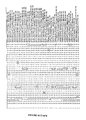
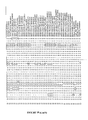
- FIG. 6 shows a comparison of the 3 ⁇ 4N gene of three different Tospoviruses: Tomato Spotted Wilt Virus (“TSWV”) (SEQ ID NO: 1), Groundnut Ringspot Virus (“GRSV”) (SEQ ID NO: 2), and Tomato Chlorotic Spot Virus (“TCSV”) (SEQ ID NO: 3), and the Rec2 synthetic gene (SEQ ID NO: 4). Nucleotides that differ from Rec2 are shown in lower case.
- TSWV Tomato Spotted Wilt Virus
- GRSV Groundnut Ringspot Virus
- TCSV Tomato Chlorotic Spot Virus
- FIG. 7 shows the starting sequences for the conserved regions of the coat protein (CP) gene of the TH (SEQ ID NO: 6), KE (SEQ ID NO: 7) and YK (SEQ ID NO: 8) sequences from papaya ringspot virus compared to each other and to the sequence of the modified synthetic nucleic acid (SEQ ID NO: 5) generated for targeting these PRSV isolates.
- the underlined portions identify segments of more than 20 nt long of perfect similarity.
- the nucleotide changes differing from the synthetic sequence are shown in lowercase.
- FIG. 8 shows the distribution of dissimilar nucleotides compared to the synthetic gene (SEQ ID NO: 9) for the variable regions of the of the CP gene of TH (SEQ ID NO: 10), KE (SEQ ID NO: 11) and YK (SEQ ID NO: 12).
- the underlined portions identify segments of more than 20 nt long of perfect similarity.
- the nucleotide changes differing from the synthetic sequence are shown in lowercase.
- FIG. 9 shows the CLUSTALW alignment of the nine selected potyvirus sequences (SEQ ID NO: 13-SEQ ID NO: 22) and their consensus sequence before modification.
- FIG. 10 shows the CLUSTALW alignment of the nine selected potyvirus sequences and their consensus sequence from FIG. 9 after modification in comparison to the synthetic modified sequence (SEQ ID NO: 23).
- FIG. 11 shows the CLUSTALW alignment of the five selected tomato polygalacturonase sequences (SEQ ID NO: 24-SEQ ID NO: 29) before modification.
- FIG. 12 shows the CLUSTALW alignment of the nine selected potyvirus sequences and their consensus sequence from FIG. 11 after modification in comparison to the synthetic modified potyvirus sequence (SEQ ID NO: 30).
- FIG. 13 shows the CLUSTALW alignment of the six selected Petunia chalcone synthase (“CHS”) sequences and their consensus sequence (SEQ ID NO: 31-SEQ ID NO: 37) before modification.
- CHS Petunia chalcone synthase
- FIG. 14 shows the CLUSTALW alignment of the of the six selected Petunia chalcone synthase (“CHS”) and their consensus sequence from FIG. 13 after modification in comparison to the synthetic modified Petunia CHS sequence (SEQ ID NO: 38).
- CHS Petunia chalcone synthase
- FIG. 15 shows the CLUSTALW alignment of the seven selected Sorghum CHS gene sequences and their consensus sequence (SEQ ID NO: 39-SEQ ID NO: 46) before modification.
- FIG. 16 shows the CLUSTALW alignment of the seven selected Sorghum CHS genes sequences and their consensus sequence from FIG. 15 after modification in comparison to the synthetic modified Sorghum CHS sequence (SEQ ID NO: 47).
- FIG. 17 shows the CLUSTALW alignment of the nineteen selected ACC-oxidase (“ACC”) sequences from various plants and their consensus sequence (SEQ ID NO: 48-SEQ ID NO: 67) before modification.
- ACC ACC-oxidase
- FIG. 18 shows the CLUSTALW alignment of the nineteen selected ACC-oxidase (“ACC”) sequences from various plants and their consensus sequence from FIG. 17 after modification in comparison to the synthetic modified ACC sequence (SEQ ID NO: 68).
- ACC ACC-oxidase
- FIG. 19 shows the CLUSTALW alignment of the resulting synthetic modified “Universal” PRSV isolate sequence in comparison with the starting sequences, the consensus sequences, and synthetic gene sequences (SEQ ID NO: 69-SEQ ID NO: 156).
- FIG. 20 shows the CLUSTALW alignment of the resulting synthetic modified “Universal Americas” PRSV isolate sequence in comparison with the starting sequences, the consensus sequence, and synthetic gene sequence from FIG. 19.
- FIG. 21 shows the CLUSTALW alignment of the resulting synthetic modified “Universal Asia” PRSV isolate sequence in comparison with the starting sequences, the consensus sequence, and synthetic gene sequence from FIG. 19.
- FIG. 22 shows the CLUSTALW alignment of the resulting synthetic modified “Universal Pacific” PRSV isolate sequence in comparison with the starting sequences, the consensus sequence, and synthetic gene sequence from FIG. 19.
- the present invention relates to a DNA construct containing a modified nucleic acid molecule with a nucleotide sequence which is at least 80%, but less than 100%, homologous to two or more desired trait DNA molecules.
- a modified nucleic acid molecule with a nucleotide sequence which is at least 80%, but less than 100%, homologous to two or more desired trait DNA molecules.
- Each of the desired trait DNA molecules relative to the modified nucleic acid molecule have a nucleotide sequence similarity value and each of these similarity values differs by no more than 3 percentage points.
- the modified nucleic acid molecule imparts the desired trait to plants transformed with the DNA construct.
- the construct also includes a silencer DNA molecule operatively coupled to the modified nucleic acid molecule.
- the modified nucleic acid molecule and silencer DNA molecule collectively impart the desired trait to plants transformed with the DNA construct.
- the DNA construct can be a fusion gene (chimera) which includes a plurality of modified DNA molecules at least some of which have a nucleotide sequence that is at least 80%, but less than 100%, homologous to the two or more desired trait DNA molecules.
- the plurality of trait molecules may be directed to one or more desired traits, and collectively impart the plurality of traits to plants transformed with the DNA construct.
- At least some of the desired trait DNA molecules, relative to their respective modified nucleic acid molecule have a nucleotide sequence similarity value and each of these similarity values differs by no more than 3 percentage points.
- Trait refers to any characteristic genetically determined in a given organism, as well as any characteristic that may be imparted by transformation and regulated by post-transcriptional gene silencing. Therefore, the DNA molecules of the present invention may be endogenous (normally occurring), or exogenous (not normally occurring) in an organism.
- homologous and “homology” are used herein to mean a structural similarity between or among nucleic acid sequences, measured as percent of similarity of corresponding deoxyribonucleotide bases (a, t, c, g) in two or more nucleic acid sequences compared to one another by any method. For example, once desired trait sequences are identified, they may be used to perform a BLAST search for further homologous nucleic acids in the GenBank database, or any other gene database.
- a computer program such as DNAStar (LaserGene Software, Madison, Wis.), or the GeneDoc software ((Nicholas et al., “GeneDoc: A Tool For Editing and Annotating Multiple Sequence Alignments” Software Ver. 2.6.002 (1997), and www.psc.edu/biomed/genedoc and similarity trees can be generated with the Tree View software (Page, Software version 1.6. (2001), www. ⁇ taxonomy.zoology.glaac.uk/rod/rod/.htm) and both of these programs are freely available on the web and are suitable and hereby incorporated by reference in their entirety).
- Percent similarity and percent identity are values used interchangeably in the art as measures of nucleotide homology. For example, two sequences having perfect identity would have 100% similarity and, therefore, would be described as having perfect, or 100%, homology to one another.
- One aspect of the present invention relates to the use of trait DNA molecules which are exogenous to the plant, for example, DNA molecules that confer disease resistance to plants transformed with the DNA construct.
- the present invention is useful in plants for imparting resistance to a wide variety of pathogens including viruses, bacteria, fungi, viroids, phytoplasmas, nematodes, and insects.
- viruses can be achieved by the method of the present invention: tomato spotted wilt virus, impatiens necrotic spot virus, groundnut ringspot virus, potato virus Y, potato virus X, tobacco mosaic virus, turnip mosaic virus, tobacco etch virus, papaya ringspot virus, tomato mottle virus, tomato yellow leaf curl virus, arabis mosaic virus, grapevine rupestris stem pitting associated virus-1, rupestris stem pitting associated virus-1, grapevine leafroll-associated virus 3, grapevine leafroll-associated virus 4, grapevine leafroll-associated virus 8, grapevine leafroll-associated virus 1, grapevine leafroll-associated virus 5, grapevine leafroll-associated virus 7, grapevine leafroll-associated virus 2, grapevine virus A, grapevine trichovirus B, grapevine virus B, or combinations thereof.
- Resistance, inter alia, to the following bacteria can also be imparted to plants in accordance with present invention: Pseudomonas solancearum, Pseudomonas syringae pv. tabaci, Xanthomonas campestris pv. pelargonii , and Agrobacterium spp., including Agrobacterium tumefaciens .
- Plants can be made resistant, inter alia, to the following fungi by use of the method of the present invention: Fusarium oxysporum and Phytophthora infestans .
- Suitable DNA molecules include a DNA molecule encoding any gene of the viral genome, including a coat protein, a replicase, a DNA molecule not encoding protein, a DNA molecule encoding a viral gene product, or combinations thereof. Furthermore, the present invention may also be used to impart genetic traits in many organisms, including, but not limited to, bacteria, plants, and mammals.
- the present invention is also used to confer traits other than disease resistance on plants.
- DNA molecules which impart a genetic trait can be used as the desired trait molecule of the present invention.
- suitable trait molecules encode for desired color, enzyme production (or cessation of production), plant hormones, or combinations thereof. Enzymes include those involved in fruit development, such as ripening, or in any developmental or metabolic pathway.
- the DNA construct of the present invention contains a plurality of modified trait DNA molecules operably linked together.
- each single modified trait molecule is designed to impart a different collection of desired traits.
- a plurality of trait DNA molecules are identified. From this plurality of trait DNA molecules, one is selected as a reference sequence. This reference sequence is used to design a modified nucleic acid which is ultimately at least 80% (but less than 100%) homologous to the trait DNA molecules.
- Each of these trait DNA molecules, relative to the final modified nucleic acid molecule has a nucleotide sequence similarity value and each of these similarity values differs by no more than 3 percentage points. This process may be repeated for other traits to be imparted to plants.
- the desired trait to be imparted to plants is resistance to both tomato spotted wilt virus (“TSWV”) and Groundnut Ringspot Virus (“GRSV”).
- TSWV tomato spotted wilt virus
- GRSV Groundnut Ringspot Virus
- the DNA molecules which encode a coat protein gene of TSWV and of GRSV will be individually identified and aligned to find a region of high homology (“homologized”). This region, or block of sequences of high homology is then modified to create a single short nucleotide sequence with at least 80% homology to both of the identified DNA sequences (TSWV and GRSV).
- This process may be repeated for additional desired traits (“trait set 2,” “trait set 3,” etc.) to be imparted to plants, and the resultant modified synthetic nucleic acid sequences for each trait set can be linked to prepare a fusion transgene, inserting, for example, the single modified synthetic nucleic acid molecule for “trait set 2” into the fusion gene vector behind the modified synthetic nucleic acid molecule for “trait set 1.”
- the modified nucleic acid molecules collectively impart the desired trait(s) to plants transformed with this nucleic acid construct.
- the fusion gene of the present invention also contains a “silencer”.
- This silencer DNA molecule of the present invention can be selected from virtually any nucleic acid which effects gene silencing.
- the silencer molecule may be useful to enhance the triggering of RNA degradation effected by the synthetic molecule of the present invention. This involves the cellular mechanism to degrade mRNA homologous to the transgene mRNA.
- the silencer DNA molecule can be heterologous to the plant, need not interact with the trait DNA molecule in the plant, and can be positioned 3′ to the trait DNA molecule.
- DNA molecules suitable as a silencer DNA in the construct of the present invention include, without limitation, a viral cDNA molecule, a green fluorescence protein encoding DNA molecule, a plant DNA molecule, or combinations thereof. While not wishing to be bound by theory, is believed that in some situations, gene-silencing may be more readily achieved when a silencer molecule is included in the transgene. More particularly, the silencer DNA molecule is believed to boost the level of heterologous RNA within the cell above a threshold level, contributing to post-transcriptional gene silencing.
- the silencer molecule is operatively linked to a single modified trait nucleic acid molecule.
- the single modified nucleic acid molecule has a nucleotide sequence and length that is insufficient to impart its trait to plants transformed with the molecule; however, the modified DNA molecule and the silencer molecule collectively impart the desired trait(s) to plants transformed with this DNA construct.
- the construct of the present invention which contains a plurality of modified trait DNA molecules may also contain an operably linked silencer molecule.
- each single modified trait nucleic acid has a nucleotide sequence and length insufficient to impart its trait(s) to the plant transformed with the molecule; however, the modified trait molecules and the silencer molecule collectively impart the desired traits to the plant transformed with this construct.
- nucleic acid molecule is incorporated into a DNA construct. This involves inserting the modified homologized nucleic acid molecule into a vector using conventional recombinant DNA technology. Generally, this involves inserting the nucleic acid molecule into an expression system to which the nucleic acid molecule is exogenous (i.e., not normally present). The exogenous nucleic acid molecule is inserted into the expression system which includes the necessary elements for the transcription and translation of the inserted protein coding sequences.
- the modified nucleic acid molecule of the present invention is inserted in an expression system in such a way as to cause the transcription of dsRNA in the host cell, to effect RNA-mediated degradation and effect gene silencing.
- This can be accomplished in a number of ways.
- One method involves further modifying the first synthetic nucleotide sequence using restriction enzyme-PCR methodology to generate a second modified synthetic nucleotide sequence having inverted nucleotide repeats and cloning the second modified nucleic acid into an expression vector of choice. No special vector or further manipulation is required to achieve the dsRNA transcription.
- Another suitable method is to generate two identical molecules of a first modified nucleic acid and insert them into the expression vector with the first copy in a forward-reverse fashion, i.e., one molecule facing 5′ ⁇ 3′, and the second copy linked to the first and facing 3′ ⁇ 5′.
- the 5′ promoter in such a construct can be at either end of the two linked molecules, as it will read through and transcribe a dsRNA of the modified synthetic nucleic acid molecule.
- Another suitable method is to use an expression vector specifically designed for making inverted repeat transcripts of a gene, flanking a loop, which should efficiently produce a dsRNA.
- Exemplary binary vectors for this purpose include, without limitation, pMCG161 (Waterhouse et al., Proc.
- the engineered self-annealing sequences can be engineered in such a way that they can be processed either by splicing in the nucleus (i.e., a single transgene that produces a single transcript that might be processed post-transcriptionally) or by cytoplasmic enzymes to render dsRNAs only in this cellular compartment.
- New vectors have been developed elsewhere that might facilitate this task (Wesley et al., “Construct Design For Efficient, Effective and High-Throughput Gene Silencing in Plants,” The Plant Journal 27: 581-590 (2001), which is hereby incorporated by reference in its entirety).
- the DNA constructs of the present invention also may be inserted into any of the many available expression vectors and cell systems using reagents that are well known in the art.
- Suitable vectors include, but are not limited to, the following viral vectors such as lambda vector system gt11, gt WES.tB, Charon 4, and plasmid vectors such as pBR322, pBR325, pACYC177, pACYC1084, pUC8, pUC9, pUC18, pUC19, pLG339, pR290, pKC37, pKC101, SV 40, pBluescript II SK +/ ⁇ or KS +/ ⁇ (see “Stratagene Cloning Systems” Catalog (1993) from Stratagene, La Jolla, Calif., which is hereby incorporated by reference in its entirety), pQE, pIH821, pGEX, pET series (see F.
- Recombinant molecules can be introduced into cells via transformation, particularly transduction, conjugation, mobilization, or electroporation.
- the DNA sequences are cloned into the vector using standard cloning procedures in the art, as described by Sambrook et al., Molecular Cloning: A Laboratory Manual , Second Edition, Cold Spring Harbor Press, NY (1989), and Ausubel, F. M. et al. (1989) Current Protocols in Molecular Biology , John Wiley & Sons, New York, N.Y., which are hereby incorporated by reference in their entirety.
- the various DNA sequences may normally be inserted or substituted into a bacterial plasmid.
- Any convenient plasmid may be employed, which will be characterized by having a bacterial replication system, a marker which allows for selection in a bacterium, and, generally, one or more unique, conveniently located restriction sites.
- Numerous plasmids referred to as transformation vectors, are available for plant transformation. The selection of a vector will depend on the preferred transformation technique and target species for transformation. A variety of vectors are available for stable transformation using Agrobacterium tumefaciens , a soilborne bacterium that causes crown gall.
- Crown gall are characterized by tumors or galls that develop on the lower stem and main roots of the infected plant. These tumors are due to the transfer and incorporation of part of the bacterium plasmid DNA into the plant chromosomal DNA.
- This transfer DNA (T-DNA) is expressed along with the normal genes of the plant cell.
- the plasmid DNA, pTi, or Ti-DNA, for “tumor inducing plasmid,” contains the vir genes necessary for movement of the T-DNA into the plant.
- the T-DNA carries genes that encode proteins involved in the biosynthesis of plant regulatory factors, and bacterial nutrients (opines).
- the T-DNA is delimited by two 25 bp imperfect direct repeat sequences called the “border sequences.”
- control elements or “regulatory sequences” are also incorporated into the vector-construct. These include non-translated regions of the vector, promoters, and 5′ and 3′ untranslated regions which interact with host cellular proteins to carry out transcription and translation. Such elements may vary in their strength and specificity. Depending on the vector system and host utilized, any number of suitable transcription and translation elements, including constitutive and inducible promoters, may be used.
- a constitutive promoter is a promoter that directs expression of a gene throughout the development and life of an organism.
- Examples of some constitutive promoters that are widely used for inducing expression of transgenes include the nopoline synthase (NOS) gene promoter, from Agrobacterium tumefaciens (U.S. Pat. No. 5,034,322 issued to Rogers et al., which is hereby incorporated by reference in its entirety), the cauliflower mosaic virus (CaMV) 35S and 19S promoters (U.S. Pat. No.
- NOS nopoline synthase
- An inducible promoter is a promoter that is capable of directly or indirectly activating transcription of one or more DNA sequences or genes in response to an inducer. In the absence of an inducer, the DNA sequences or genes will not be transcribed.
- the inducer can be a chemical agent, such as a metabolite, growth regulator, herbicide, or phenolic compound, or a physiological stress directly imposed upon the plant such as cold, heat, salt, toxins, or through the action of a pathogen or disease agent such as a virus or fungus.
- a plant cell containing an inducible promoter may be exposed to an inducer by externally applying the inducer to the cell or plant such as by spraying, watering, heating, or by exposure to the operative pathogen.
- an appropriate inducible promoter for use in the present invention is a glucocorticoid-inducible promoter (Schena et al., “A Steroid-Inducible Gene Expression System for Plant Cells,” Proc. Natl. Acad. Sci. 88:10421-5 (1991), which is hereby incorporated by reference in its entirety). Expression of the transgene-encoded protein is induced in the transformed plants when the transgenic plants are brought into contact with nanomolar concentrations of a glucocorticoid, or by contact with dexamethasone, a glucocorticoid analog (Schena et al., “A Steroid-Inducible Gene Expression System for Plant Cells,” Proc. Natl.
- inducible promoters include promoters that function in a tissue specific manner to regulate the gene of interest within selected tissues of the plant.
- tissue specific promoters include seed, flower, or root specific promoters as are well known in the field (U.S. Pat. No. 5,750,385 issued to Shewmaker et al., which is hereby incorporated by reference in its entirety).
- an exogenous promoter is linked to the nucleic acid of the construct, where “exogenous promoter” is defined as a promoter to which the nucleic acid of the construct is not linked in nature.
- the nucleic acid construct of the present invention also includes an operable 3′ regulatory region, selected from among those which are capable of providing correct transcription termination and polyadenylation of mRNA for expression in the host cell of choice, operably linked to a modified trait DNA molecule of the present invention.
- an operable 3′ regulatory region selected from among those which are capable of providing correct transcription termination and polyadenylation of mRNA for expression in the host cell of choice, operably linked to a modified trait DNA molecule of the present invention.
- 3′ regulatory regions are known to be operable in plants. Exemplary 3′ regulatory regions include, without limitation, the nopaline synthase (“nos”) 3′ regulatory region (Fraley, et al., “Expression of Bacterial Genes in Plant Cells,” Proc. Nat'l Acad. Sci.
- the modified trait DNA molecule(s), a suitable promoter, silencing gene if included, and an appropriate 3′ regulatory region can be ligated together to produce the expression systems which contain the DNA constructs of the present invention, using well known molecular cloning techniques as described in Sambrook et al., Molecular Cloning: A Laboratory Manual , Second Edition, Cold Spring Harbor Press, NY (1989), and Ausubel et al. (1989) Current Protocols in Molecular Biology , John Wiley & Sons, New York, N.Y., which are hereby incorporated by reference in their entirety.
- the DNA molecule imparting the desired trait can be positioned within the DNA construct in the sense (5′ ⁇ 3′) orientation. Alternatively, it can have an antisense (3′ ⁇ 5′) orientation.
- Antisense RNA technology involves the production of an RNA molecule that is complementary to the messenger RNA molecule of a target gene. The antisense RNA can potentially block all expression of the targeted gene.
- plants are made to express an antisense RNA molecule corresponding to a viral RNA (that is, the antisense RNA is an RNA molecule which is complementary to a plus sense RNA species encoded by an infecting virus). Such plants may show a slightly decreased susceptibility to infection by that virus.
- antisense RNA is termed antisense RNA.
- the DNA construct of the present invention is configured so that the trait and silencer DNA molecules encode RNA molecules which are translatable. As a result, that RNA molecule will be translated at the ribosomes to produce the protein encoded by the DNA construct. Production of proteins in this manner can be increased by joining the cloned gene encoding the DNA construct of interest with synthetic double-stranded oligonucleotides which represent a viral regulatory sequence (i.e., a 5′ untranslated sequence) (U.S. Pat. No. 4,820,639 to Gehrke, and U.S. Pat. No. 5,849,527 to Wilson, which are hereby incorporated by reference in their entirety).
- a viral regulatory sequence i.e., a 5′ untranslated sequence
- the DNA construct of the present invention may be configured so that the modified trait and silencer molecules encode an mRNA which is not translatable, i.e., does not result in the production of a protein or polypeptide.
- This is achieved, for example, by introducing into the modified DNA sequence of the present invention one or more premature stop codons, adding one or more bases (except multiples of 3 bases) to displace the reading frame, and removing the translation initiation codon (U.S. Pat. No. 5,583,021 to Dougherty et al., which is hereby incorporated by reference in its entirety).
- a primer to which a stop codon such as TAATGA
- TAATGA a stop codon inserted into the sense (or “forward”) PCR-primer for amplification of the full nucleic acid, between the 5′ end of that primer, which corresponds to the appropriate restriction enzyme site of the vector into which the nucleic acid is to be inserted, and the 3′ end of the primer, which corresponds to the 5′ sequence of the enzyme-encoding nucleic acid.
- Constructs containing nontranslatable DNA molecules may be particularly useful for results which employ post-transcriptional gene silencing as a mechanism to achieve viral resistance in plants transformed with the DNA constructs of the present invention.
- the DNA construct of the present invention is ready to be incorporated into a host cell.
- another aspect of the present invention relates to a recombinant host cell containing one or more of the DNA constructs of the present invention.
- this method is carried out by transforming a host cell with a DNA construct of the present invention under conditions effective to yield transcription of the DNA molecule in the host cell, using standard cloning procedures known in the art, such as described by Sambrook et al., Molecular Cloning: A Laboratory Manual , Second Edition, Cold Springs Laboratory, Cold Springs Harbor, N.Y. (1989), which is hereby incorporated by reference in its entirety.
- Suitable host cells include, but are not limited to, bacteria, virus, yeast, mammalian cells, insect, plant, and the like.
- the host cells are either a bacterial cell or a plant cell.
- Methods of transformation may result in transient or stable expression of the DNA under control of the promoter.
- a DNA construct of the present invention is stably inserted into the genome of the recombinant plant cell as a result of the transformation, to produce a heritable trait, although transient expression can serve an important purpose, particularly when the plant under investigation is slow-growing.
- Plant tissue suitable for transformation include leaf tissue, root tissue, meristems, zygotic and somatic embryos, callus, protoplasts, tassels, pollen, embryos, anthers, and the like.
- the means of transformation chosen is that most suited to the tissue to be transformed.
- Transient expression in plant tissue is often achieved by particle bombardment (Klein et al., “High-Velocity Microprojectiles for Delivering Nucleic Acids Into Living Cells,” Nature 327:70-73 (1987), which is hereby incorporated by reference in its entirety).
- particle bombardment Klein et al., “High-Velocity Microprojectiles for Delivering Nucleic Acids Into Living Cells,” Nature 327:70-73 (1987), which is hereby incorporated by reference in its entirety).
- tungsten or gold microparticles (1 to 2 ⁇ m in diameter) are coated with the DNA of interest and then bombarded at the tissue using high pressure gas. In this way, it is possible to deliver foreign DNA into the nucleus and obtain a temporal expression of the gene under the current conditions of the tissue.
- Biologically active particles e.g., dried bacterial cells containing the vector and heterologous DNA
- Other variations of particle bombardment now known or hereafter developed, can also be used.
- An appropriate method of stably introducing the nucleic acid construct into plant cells is to infect a plant cell with Agrobacterium tumefaciens or Agrobacterium rhizogenes previously transformed with the nucleic acid construct.
- the Ti (or RI) plasmid of Agrobacterium enables the highly successful transfer of a foreign DNA into plant cells.
- particle bombardment also known as biolistic transformation
- the DNA molecule may also be introduced into the plant cells by electroporation (Fromm et al., Proc. Natl. Acad. Sci. USA 82:5824 (1985), which is hereby incorporated by reference in its entirety).
- plant protoplasts are electroporated in the presence of plasmids containing the expression cassette. Electrical impulses of high field strength reversibly permeabilize biomembranes allowing the introduction of the plasmids. Electroporated plant protoplasts reform the cell wall, divide, and regenerate.
- the precise method of transformation is not critical to the practice of the present invention. Any method that results in efficient transformation of the host cell of choice is appropriate for practicing the present invention.
- Means for regeneration vary from species to species of plants, but generally a suspension of transformed protoplasts or a petri plate containing explants is first provided. Callus tissue is formed and shoots may be induced from callus and subsequently rooted. Alternatively, embryo formation can be induced in the callus tissue. These embryos germinate as natural embryos to form plants.
- the culture media will generally contain various amino acids and hormones, such as auxin and cytokinins. Efficient regeneration will depend on the medium, on the genotype, and on the history of the culture. If these three variables are controlled, then regeneration is usually reproducible and repeatable.
- transformed cells are first identified using a selection marker simultaneously introduced into the host cells along with the nucleic acid construct of the present invention.
- selection markers include, without limitation, markers encoding for antibiotic resistance, such as the nptII gene which confers kanamycin resistance (Fraley, et al., Proc. Natl. Acad. Sci. USA 80:4803-4807 (1983), which is hereby incorporated by reference in its entirety), and the genes which confer resistance to gentamycin, G418, hygromycin, streptomycin, spectinomycin, tetracycline, chloramphenicol, and the like.
- Cells or tissues are grown on a selection medium containing the appropriate antibiotic, whereby generally only those transformants expressing the antibiotic resistance marker continue to grow.
- Other types of markers are also suitable for inclusion in the expression cassette of the present invention.
- a gene encoding for herbicide tolerance such as tolerance to sulfonylurea is useful, or the dhfr gene, which confers resistance to methotrexate (Bourouis et al., EMBO J. 2:1099-1104 (1983), which is hereby incorporated by reference in its entirety).
- reporter genes which encode for enzymes providing for production of a compound identifiable are suitable.
- uidA a gene from Escherichia coli that encodes the ⁇ -glucuronidase protein, also known as GUS.
- GUS ⁇ -glucuronidase protein
- Jefferson et al. “GUS Fusions: ⁇ Glucuronidase as a Sensitive and Versatile Gene Fusion Marker in Higher Plants,” EMBO J. 6:3901-3907 (1987), which is hereby incorporated by reference in its entirety.
- enzymes providing for production of a compound identifiable by luminescence such as luciferase, are useful.
- the selection marker employed will depend on the target species; for certain target species, different antibiotics, herbicide, or biosynthesis selection markers are preferred.
- Plant cells and tissues selected by means of an inhibitory agent or other selection marker are then tested for the acquisition of the viral gene by Southern blot hybridization analysis, using a probe specific to the viral genes contained in the given cassette used for transformation (Sambrook et al., “Molecular Cloning: A Laboratory Manual,” Cold Spring Harbor, N.Y.: Cold Spring Harbor Press (1989), which is hereby incorporated by reference in its entirety).
- the transgene can be transferred to other plants by sexual crossing. Any of a number of standard breeding techniques can be used, depending upon the species to be crossed.
- transgenic plants of this type are produced, the plants themselves can be cultivated in accordance with conventional procedure so that the DNA construct is present in the resulting plants.
- transgenic seeds are recovered from the transgenic plants. These seeds can then be planted in the soil and cultivated using conventional procedures to produce transgenic plants.
- the present invention can be utilized in conjunction with a wide variety of plants or their seeds.
- Suitable plants include dicots and monocots. More particularly, useful crop plants can include: alfalfa, rice, wheat, barley, rye, cotton, sunflower, peanut, corn, potato, sweet potato, bean, pea, chicory, lettuce, endive, cabbage, brussel sprout, beet, parsnip, turnip, cauliflower, broccoli, turnip, radish, spinach, onion, garlic, eggplant, pepper, celery, carrot, squash, pumpkin, zucchini, cucumber, apple, pear, melon, citrus, strawberry, grape, raspberry, pineapple, soybean, tobacco, tomato, sorghum, papaya, and sugarcane.
- suitable ornamental plants are: Arabidopsis thaliana , Saintpaulia, petunia, pelargonium, poinsettia, chrysanthemum, carnation, and zinnia.
- Another aspect of the present invention is a method of imparting one or more desired traits to plants. This may involve transforming a plant with a DNA construct of the present invention containing a modified synthetic nucleic acid molecule of the present invention, regenerating the transgenic plant, and propagating the progeny of the transgenic plant. Alternatively, the seed of the transgenic plant containing the construct of the present invention may be collected, and a transgenic plant propagated from the transgenic plant seed.
- the present invention also relates to a method of preparing a modified nucleic acid molecule suitable to impart multiple traits to a plant. This generally involves identifying a plurality of desired traits to be imparted to plants, where the desired traits are imparted by desired trait DNA molecules having nucleotide sequences. This method also involves selecting, as a reference nucleotide sequence, one nucleotide sequence from among the desired trait DNA molecules identified. The nucleotide sequence of the reference nucleic acid molecule is then modified to form a modified nucleic acid molecule which is at least 80% homologous to the nucleotide sequences of the desired DNA molecules identified.
- Each of the desired trait DNA molecules, relative to the modified nucleic acid sequence, have a nucleotide sequence similarity value and each of these similarity values differs by 3 percentage points or less. This is an important attribute of the modified nucleic acid molecule of the present invention.
- a synthetic nucleic acid molecule that has a degree of homology within 3 percentage points of each desired trait DNA molecule can be expected to be an effector of RNA degradation in the host cell of a variety of plants. This is because the modified nucleic acid molecule is more similar, on average, than many of the target starting sequences were to one another, or to the consensus sequence.
- Trait nucleic acid sequences are obtained either from a public database, e.g., GenBank, from a commercial source, or may be known to those who intend to carry out this aspect of the present invention. Once desired trait sequences are identified, they may be used to perform a BLAST search for further homologous nucleotides at the GenBank database, or any other gene database. It is preferable that the nucleic acid sequence selected as a trait molecule be selected from those known to encode full-length, not partial mRNA, and areas of a genome including 5′ or 3′ untranslated regions and introns be avoided.
- the potential locations of sequences amenable to be manipulated to generate a short synthetic sequence are identified. This involves comparing the trait sequences for sequence similarity (“homologizing”) to find a common region of high homology among the trait sequences.
- Any commercially or publicly available software can be used for analysis of the nucleotide sequences in this aspect of the present invention. For example, the comparative analysis of selected DNA sequences the DNAStar package (LaserGene Software, Madison, Wis.) can be used for aligning and editing. DNAStar and the Blast 2 Sequences from NCBI can be used to compare sequences by pairs.
- DNAStar is also capable of generating phylogenetic trees and sequence similarity matrixes. Alignments can also be analyzed with the GeneDoc software (Nicholas et al., “GeneDoc: A Tool For Editing and Annotating Multiple Sequence Alignments” Software Ver. 2.6.002 (1997) and similarity trees generated with the Tree View software (Page, Software version 1.6. (2001) both of them freely available on the web and hereby incorporated by reference in their entirety).
- a suitable length for the starting sequence of a homologized native DNA, in accordance with the present invention is in the range of 100-200 nts.
- the amount of foreign DNA that is delivered to the plant is minimized.
- this is not meant in any way to set a minimum or maximum limit on the size of starting sequences or the size of the synthetic modified nucleic acid sequence of the present invention. If two sequences are found to be identical, one is discarded. If a region, or block of sequences, of interest can be identified as having at least 80% but less than 100% homology, that block is chosen as the “starting sequence” for each of the desired traits.
- a single synthetic (meaning “not naturally occurring”) nucleotide sequence with at least 80% homology and a low range of variation in similarity to each of the identified DNA sequences is formed. It is likely that a single synthetic sequence will not be found that has the same percent similarity to each of the starting sequence, and this is acceptable. However, the synthetic modified sequence of the present invention will preferably not vary in percent similarity by more than 3 percentage points when compared to the least and most similar starting sequences. Even more preferably, this variation is no more than 2 percentage points, and most preferably, less than 1 percentage points. In theory, it is possible to create a synthetic sequence that has a 0% variation when compared to all starting sequences. Variations of 5% percentage points in the similarity values between each of the trait DNA molecules and the modified nucleic acid molecule can also be useful.
- the reference sequence used for modification to the final synthetic sequence may be any of the starting sequences or the consensus sequence.
- the consensus sequence will not be chosen as the reference sequence when it contains any “N,” i.e., any unknown or unidentified nucleotide in the alignment sequence, or when there is no consensus for that position.
- Two other suitable choices are 1) the starting sequence most similar to all other starting sequences (i.e., having the highest similarity value in comparison to all other trait nucleotides) or 2) the starting sequence most dissimilar to all other starting sequences (i.e., having the lowest similarity value in comparison to all other trait nucleotides). The process is the same regardless of the choice of reference sequence.
- Nucleotide modifications are made step-wise within the reference sequence, changing those nucleotides that are most different from the other sequences to make the reference sequence more similar to the other starting sequences.
- the modifications made to the reference sequence will depend on the degree of similarity (or lack thereof) among the starting sequences, and between the starting sequences and the reference sequence. However, in no case is an individual nucleotide that is 100% shared among the homologized sequences modified.
- the reference sequence may, in some situations (e.g., when the consensus sequence or the most similar sequence, is used as the reference sequence) need to be modified in such a way as to decrease the similarity between it and a potential final synthetic sequence in order to create a synthetic sequence that has a narrow range of variation when comparing the similarity of the synthetic sequence to the least and most similar of the starting sequences.
- the reference sequence having been modified as a potential synthetic sequence, will be analyzed against the other starting sequences to assess homology and range of homology. This process of modification of nucleotides followed by similarity analysis may need to be repeated numerous times to achieve a synthetic nucleotide sequence that has a narrow range of variation in similarity, if not 0%, to all the starting trait molecules.
- a “second” reference sequence can be identified each time the process is repeated, so as to have a second sequence to use for progressive comparative analysis during the process.
- the second reference sequence can be any of the trait sequences, the consensus sequence from any of the comparisons, or it can be the same sequence chosen as the first reference sequence and previously modified.
- the synthetic nucleic acid may be prepared by recombinant methodologies including, without limitation, site mutagenesis of one of the original trait nucleic acids; polymerase chain reaction, using an available original nucleic acid and suitable primers, or other methods of nucleic acid manipulation known in the art.
- the identified homologized nucleotide sequence of present invention can be synthesized using any DNA synthesizer capable of producing an oligonucleotide of the desired size.
- the present invention can be carried out without handling the actual source organism for the trait DNA.
- the resulting modified nucleotide is subsequently cloned into an expression vector suitable for transformation into a chosen host, as described above.
- the present invention also relates to a method of determining whether multiple desired traits can be imparted to plants by a single modified DNA molecule. This involves identifying a plurality of desired traits to be imparted to plants, where the desired traits are imparted by desired trait DNA molecules having nucleotide sequences. One nucleotide sequence from among the desired trait DNA molecules identified is selected as a reference nucleotide sequence, and the reference nucleotide sequence is modified. A determination is then made regarding whether the modified nucleic acid molecule is at least 80% homologous to the desired trait DNA molecules identified relative to the modified nucleic acid molecule and whether each of these similarity values differs by no more than 3 percentage points.
- RNAs As noted above in the Background of the Invention, if sufficient similarity exists between siRNAs and the RNA target, degradation of the RNA ensues and gene silencing occurs.
- the determination of homology among the various trait nucleotide sequences may be made using any computer program capable of performing nucleotide homology analysis, for example, the DNAStar alignment program.
- a modified DNA molecule which is determined to have an 80% or greater homology to each of the other identified trait nucleic acid sequences can be expected to impart the desired trait to the transformed plant. The higher the homology over 80%, the greater the expectation that modified nucleotide will impart the desired multiple traits.
- the range of variability in homology can be determined (by software analysis) that exists between the modified trait DNA molecule and the nucleotide sequence of the further trait molecules.
- nucleotide sequences having 20 nts each are used here to create a synthetic modified gene which is 80-100% homologous to each of the four chosen nucleic acid sequences, in accordance with the present invention.
- Each of the starting sequences have only a narrow variation in homology relative to final synthetic sequence.
- the desired nucleotide sequences are identified and obtained.
- An alignment is carried out to find a region of high homology among the trait DNA sequences, which can be manipulated to create a synthetic sequence. This is done using any commercially available computer software. In this example, a region of 20 nucleotides was found to be a likely region for this purpose.
- These “starting sequences” are as follows: Seq 1 ATAGCGTAGCTAGCTCGAGA (SEQ ID NO: 157) Seq 2 CTGGCGTATCTAGGTCGAGA (SEQ ID NO: 158) Seq 3 ATAGCGTAACTAGCTCGAGA (SEQ ID NO: 159) Seq 4 ATGGCGTAGCTAGGTCGAGA (SEQ ID NO: 160)
- the homology, or degree of similarity, among the selected 20 nucleotide starting sequences is determined by performing another alignment using a commercially available computer software.
- the results of the alignment for Seqs 1-4, showing nucleotide positions that are different from among the sequences in boldfaced type, are as follows: Seq 1 A T A GCGTA G CTAG C TCGAGA (SEQ ID NO: 157) Seq 2 C T G GCGTA T CTAG G TCGAGA (SEQ ID NO: 158) Seq 3 A T A GCGTA A CTAG C TCGAGA (SEQ ID NO: 159) Seq 4 A T G GCGTA G CTAG G TCGAGA (SEQ ID NO: 160) Consensus ATGGCGTAGCTAGGTCGAGA (SEQ ID NO: 161)
- the alignment information becomes the basis of the next step in the process of creating a synthetic nucleotide.
- a single nucleotide sequence is chosen as a reference sequence which will be manipulated to achieve the synthetic nucleotide. It may also be the consensus sequence (not shown here for Seq. 1-4) as ascertained by the alignment. It is preferable, however, that the reference sequence be the sequence that is most dissimilar from the other sequences.
- the range of variation is taken from the alignment data.
- the highest and lowest percentage of homology in the pair-wise alignment shown in Table 1, above, are 95% and 75%, respectively, for a total variation in homology 20%.
- the variation is divided by two, and then multiplied by the average number of nucleotides in the starting sequences.
- the average starting sequence number is 20 nt.
- the number of nucleotides that can be expected to be modified to create a synthetic gene of the present invention is approximately two.
- Nucleotide changes are then made in the reference sequence using the alignment charts to determine which changes will bring the reference sequence to a nucleotide composition that is within the goal of greater than 80%, and less than 100%, homology to all the starting sequences.
- Seq. 2 is a good choice as a reference sequence, because it has only a 75% similarity to Seq. 1 and Seq. 3, while all other homologies, pair-wise, are higher than 80%.
- a suitable starting point for making changes to nucleotides is to identify a position with a nucleotide that is shared by more than two starting sequences, and change the reference sequence to match at that position.
- position 1 is “A” in three of the starting sequences, but “C” in Seq. 2. Therefore, modifying position 1 to an “A” in the reference sequence is the first change made here.
- position 14 is “G.”
- Seq. 4 also has a “G” at position 14, while Seq. 1 and 3 have “C” at position 14. Therefore, the starting sequence of Seq.
- Step-wise modifications in nucleotides are made in this fashion. Following the initial number of nucleotide changes in a given reference sequence suggested by the application of Formula I above, alignment determinations are made to check if the modification(s) are bringing the reference sequence towards the goal of greater than 80, but less than 100% homology in comparison to each of the starting sequences, and varying in similarity by no more than 3% from each starting trait sequence. This process may need to be repeated a number of times for larger sequences.
- Modifications can be considered complete when a modified sequence is determined to be at least 80, but less than 100% homologous to all the starting sequences, with the sequences also having a narrow range of variance in percent homology (preferably 3% or less) among the starting sequences in comparison to the synthetic sequence.
- Nucleotides that differ from the synthetic sequence are bolded. This example also demonstrates that a classic consensus sequence is not the same as the synthetic sequence of the present invention. Consensus sequence software is designed to choose the nucleotide that is most frequently repeated in a given position when comparing two or more sequences. Because the synthetic sequence of the present invention requires not only high similarity, but a narrow range of variation, the consensus sequence may vary (even considerably) from the synthetic gene of the present invention.
- each of the starting sequences has a similarity value of 90% in comparison to the modified sequence (i.e., each starting sequence differs from the modified nucleotide sequence by 2 out of 20). Therefore, the difference in the similarity value among the starting sequences relative to the modified sequence is 0%.
- oligonucleotides used for the assembly and amplification of the synthetic gene fragments derived from the 3 ⁇ 4 N gene of TSV-BL are listed in Table 3, below.
- FIG. 1 shows the scheme of the 216 bp TSWV fragment and the corresponding primers to be named to be used for its synthesis.
- the diagonal lines indicate the place in the oligos where six random nucleotides and six nucleotides corresponding to restriction sites are located: XhoI for the 5′ end (left) and BamHI for the 3′ end (right).
- the XX in the middle of the oligo name refers to the percentage of change for every single construct according to Tables 1 and 2.
- the fragment is shown in the sense orientation.
- Escherichia coli DH5 ⁇ or XL1-Blue were routinely used.
- plasmid miniprep either the alkaline lysis or the boiling method were used. Five independent recombinant plasmids per construct were sequenced; plasmids with identical sequence to the computer-generated gene fragments were chosen for digestion and subsequent subcloning into pGA482G. Digestion with KpnI and HindIII renders a subcloning fragment with the GFP gene fused to the synthetic 3 ⁇ 4 N gene fragment, and under the control of the 35S promoter.
- Leaf discs of young, greenhouse-grown Nicotiana benthamiana plants were transformed with A. tumefaciens as described essentially by Horsch (Horsch et al., “A Simple and General Method for Transferring Genes into Plants,” Science, 227:1229-31 (1985), which is hereby incorporated by reference in its entirety).
- Transformed leaf discs were selected and regenerated in MS medium containing 250 mg/L of carbenicillin and 150 mg/L of kanamycin sulfate. Rooting was induced in a hormone-free medium in the presence of both antibiotics. All regenerated and rooted explants derived from independent calli. Fully rooted transformants were transferred to Cornell soil mixture and grown under greenhouse conditions. Transgenic plants were self-pollinated and seeds were collected from all of them at the end of the experiments.
- Seedlings of 5-7 leaf stage grown in the greenhouse were challenged with either TSWV-BL or GRSV. Both viruses were multiplied in N. benthamiana , tested by ELISA for tospoviruses and by indirect ELISA with specific antibodies raised against each virus. After multiplication and immunotesting individual leaves were kept at ⁇ 20° C. for inoculation experiments. A week in advance to inoculation of transgenic plants non-transgenic N. benthamiana was infected with the frozen leaves to serve as a source of fresh virus inoculum. In every round of inoculation of no more than 50 plants per set, 4 non-transgenic plants were included as a control.
- Infected leaves were ground in a 0.033 M KH 2 PO 4 , 0.067 M K 2 HPO 4 , and 0.01 M Na 2 SO 3 cold buffer.
- Ten-fold diluted leaf extract was immediately applied onto carborundum-dusted leaves, and subsequently rinsed with water. Symptoms were recorded daily starting 5 days after inoculation, but only weekly 2 weeks after inoculation and until the plants set seeds. At least one leaf was taken from every plant before infection and stored at ⁇ 20° C. for further RNA extraction.
- DNA from 100 mg of transgenic and non-transgenic N. benthamiana leaves was extracted according to Fulton et al., “Microprep Protocol for Extraction of DNA from Tomato and Other Herbaceous Plants,” Plant Molecular Biology Reporter 13(3):207-209 (1995), which is hereby incorporated by reference in its entirety, from plants 3 weeks old. DNA was kept in water at ⁇ 20° C. until used for PCR or Southern analysis.
- Probes for hybridization by Southern and Northern analysis were labeled with ⁇ - 32 P-dATP by random priming according to Feinberg et al., “A Technique for Radiolabeling DNA Restriction Endonuclease Fragments to High Specific Activity,” Anal. Biochem. 132(1):6-13 (1983), which is hereby incorporated by reference in its entirety.
- Southern analysis 15 ⁇ g of DNA from transgenic and non-transgenic lines were digested with an excess of restriction enzymes for at least 16 hours. Electrophoresis, transfer, and DNA fixation onto nylon membranes were performed as recommended by the manufacturer (NEN Life Sciences, Boston, Mass.). Hybridization was carried out with the homologous 3 ⁇ 4 N gene fragment of the analyzed samples.
- Sequence modifications made to a DNA fragment are generally limited by the availability of restriction sites, but also by the ability of mutating at random, or even site-specifically, the gene under analysis.
- both the number and the location of nucleotide changes must be assessed under controlled conditions. This is, by far, the most important requisite in the design for making synthetic genes with specific desired properties, to test different hypothesis, and to attain specific plant phenotypes.
- new fragments of 216 bp of TSWV N gene were designed with nucleotides changes to render scattered, 5′ end, middle and 3′ end region constructs differing by 5% and 15%, and scattered 10% and 20% from the native N TSWV-BL gene.
- a starting assumption was that in modifying the nucleotide sequence of a previous fragment proven to confer resistance in transgenic plants, a point would be reached in which resistance was no longer viable. In this way, information could be gathered regarding what extent of similarity is important to trigger post-transcriptional gene silencing, and, even more importantly, on how the location of nucleotide changes affect the phenotype of transgenic plants when challenged with the homologous virus.
- the design of the oligos and the changes introduced to the N sequence were performed by computer using the DNAStar software program. For every construct, all oligos required for their synthesis were individually designed and the complementary strand deduced using the DNAStar software. When all oligo sequences were deduced they were introduced in a different program of the same software to allow its virtual assemblage. All of them, without exception, gave a unique contig that matches 100% with the intended sequence when assembled as indicated in Table 4. That is, no other assemblage product was produced in this simulation-like exercise. Afterwards, computer-simulated restriction analysis were performed to assess whether the introduced changes created BamHI, XhoI, KpnI, and/or HindIII restriction sites that would eventually complicate the cloning and subcloning process.
- the first goal was to determine how location of nucleotide changes, and the amount of those changes, affect the ability of transgenic plants to be resistant to TSWV.
- the fragment chosen for engineering i.e., the third fourth of the TSWV N gene, 3 ⁇ 4 N
- the nucleotide sequence of such a fragment was modified and used to transform N. benthamiana plants. Plants were analyzed by PCR for nptII and 3 ⁇ 4 N gene; as shown in FIG. 4, and some selected lines for every construct were tested by Southern and Northern analysis. Results of inoculation are shown in Table 5, and examples of susceptible and resistant plants in FIG. 5. TABLE 5 Response of N.
- N-transgenic line 5 seeds # Necessary for RNA-Mediated Tospovirus Resistance in Transgenic Plants,” Proc. Natl. Acad. Sci. USA, # 94: 8261-66 (1997) which is hereby incorporated by reference in its entirety) N-transgenic line 5 seeds.
- N-transgenic line 22 seeds # Necessary for RNA-Mediated Tospovirus Resistance in Transgenic Plants,” Proc. Natl. Acad. Sci. USA, # 94: 8261-66 (1997) which is hereby incorporated by reference in its entirety) N-transgenic line 22 seeds.
- Transgenic plants transformed with 3 ⁇ 4N gene fused to GFP can confer resistance to TSWV but not to the related tospovirus Groundnut Ringspot Virus (GRSV).
- GRSV Groundnut Ringspot Virus
- TSWV and GRSV are 78% similar, and it is possible that the lack of resistance of transgenic plants challenged with GRSV is due to a level of homology which is insufficient to target the GRSV genome for degradation, even if post-transcriptional gene silencing is triggered.
- a gene was synthesized that is, in toto, approximately 90% similar to the corresponding fragments of both TSWV and GRSV.
- a 3 ⁇ 4N TSWV gene was modified to make it more homologous to the GRSV N gene nucleotide sequence. In doing so, of course, the similarity to the native TSWV N gene decreased, the net result being that the artificial sequence presented here is 90% similar to both TSWV N gene and its counterpart in GRSV.
- the nt 1417-1632 (in sense form) of TSWV and nt 560-775 of GRSV were used.
- the newly created synthetic sequence (called Rec2 herein), when compared with its parental 3 ⁇ 4N TSWV-BL gene sequence, has the following changes: one insertion and one deletion, plus 22 base changes (ca. 10% changes compared with the native sequence of 3 ⁇ 4N TSWV gene).
- TSWV N gene dropped from 100% to 90% according to sequence alignment. Similarity to GRSV rose from 73% to 89% according to the same analysis.
- Nicotiana benthamiana plants were transformed with a 3 ⁇ 4 N TSWV-BL gene fragment modified for a 90% similarity to TSWV, GRSV and TCSV according to the examples above. The transgenic plants were then challenged with TSWV-BL or GRSV. Table 9 shows the results of virus resistance for the transgenic plants. TABLE 9 Response to Infection of Transgenics With a 3 ⁇ 4 N TSWV-BL Modified Fragment Challenging virus Total Plants Resistant Susceptible TSWV-BL 10 3 (30%) 7 GRSV 15 4 (27%) 11 Total 25 7 (28%) 18
- a set of synthetic genes were designed according to the present invention to target for degradation the RNAs of three different isolates of PRSV.
- the isolates were the Keaau (Hawaii) strain (“KE”), the Thailand strain (“TH”), and the severe Taiwan strain (“YK”).
- the starting sequences were the conserved and variable regions, respectively of the coat protein (“CP”) gene.
- the DNAStar package (LaserGene Software, Madison, Wis.) was used for editing and aligning. DNAStar and the Blast 2 Sequences from NCBI were used to compare sequences by pairs.
- FIG. 7 shows the starting sequences for the conserved regions of the CP gene of TH (SEQ ID NO: 6), KE (SEQ ID NO: 7) and YK (SEQ ID NO: 8) compared to each other and to the sequence of the modified synthetic nucleic acid (SEQ ID NO: 5) sequence generated for targeting these PRSV isolates.
- the underlined portions identify segments of more than 20 nt long of perfect similarity.
- the nucleotide changes differing from the synthetic sequence are shown in lowercase. Because the homology of the three starting sequences chosen for the isolates was high, a high homology (97%) synthetic sequence with a low variation (range: 0%) was created, as shown in Table 10.
- FIG. 8 shows the distribution of dissimilar nucleotides compared to the synthetic gene (SEQ ID NO: 9) for the variable regions of the of the CP gene of TH (SEQ ID NO: 10) KE (SEQ ID NO: 11) and YK (SEQ ID NO: 12).
- the underlined portions identify segments of more than 20 nt long of perfect similarity.
- the nucleotide changes differing from the synthetic sequence are shown in lowercase.
- the starting homologies among the variable regions of the CP gene are shown in Table 10. In this case, the homology of the starting sequence was 84.2%, and was raised to 91.8% when compared to the synthetic sequence. In addition, the variation among the starting sequences relative to the synthetic is very low, >1%.
- a synthetic sequence was generated according to the present invention to target for degradation a variety of different potyviruses.
- the desired trait is potyvirus resistance in different crop plants, both dicots and monocots. Therefore, the complete potyvirus genome was the starting point for this synthetic sequence.
- the nucleotide sequences were obtained from the GenBank database.
- a variety of genes of the potyvirus genome were potential candidates for applying the method of the present invention. Table 11, below, gives the numerical coordinates of all the genes of the potyviruses used for this analysis.
- Table 12 shows an analysis of percent of nucleotide identity for all different genes in selected potyviruses. Using this type of analyses assists in selecting a gene within a genome suitable for generating the synthetic nucleic acid molecule of the present invention.
- FIG. 9 shows the CLUSTALW alignment of the nine selected potyvirus sequences and their consensus sequence. The similarity among the nine native sequences, having approximately 200 nucleotides, was determined to be 64.4-92.1% (range: 27.7%).
- This synthetic modified potyvirus nucleic acid molecule has a nucleotide sequence of SEQ ID NO: 23 as follows: atgggagttg tgatgaatgg cctcatggtt tggtgcattg aaaatggaac ctcaccaaac 60 atcaatggag tatgggctat gatggatggg gacgaacaag ttgagtttcc attaaagcca 120 gtgattgaga atgcaaagcc aacttttcga caaatcatgc atcattttc agatgca 180 gaagcttaca tagagtagag ca 202
- This example illustrates that the present invention can be applied to a highly divergent trait DNA group with significant results in terms of creating a molecule that is a marked improvement over the variation in homology found among the members of the group in nature.
- the range of homology was reduced from 27.7% for the starting sequences themselves to 3.9% for the starting sequences in comparison to the modified sequence. It is highly probable that with further manipulations in accordance with the present invention, a suitable single modified nucleic acid molecule will be created that has yet a lower range in homology with respect to the starting trait DNA group.
- a synthetic sequence was generated according to the present invention to target for degradation of different genes of the same gene family in the same plant, in this case the polygalacturonase (“PG”) gene of tomato.
- PG polygalacturonase
- the desired trait to be imparted by this synthetic gene is delayed fruit ripening.
- PG is a well-characterized enzyme family implicated in the disassembly of pectin that accompanies many stages of plant development, in particular, fruit ripening (Sheehy et al., “Reduction of Polygalacturonase Activity in Tomato Fruit by Antisense RNA,” Proc. Natl. Acad. Sci.
- DNAStar package (LaserGene Software, Madison, Wis.) was used for editing and aligning.
- DNAStar and the Blast 2 Sequences from NCBI were used to compare sequences by pairs.
- GenBank database the GenBank database
- Blast program was used (Altschul et al., “Gapped BLAST and PSI-BLAST: A New Generation of Protein Database Search Programs, Nucleic Acids Research 35:3389-3402 (1997), which is hereby incorporated by reference in its entirety).
- FIG. 11 shows the alignment of the five selected tomato PG sequences and their consensus sequence. The similarity among the five native sequences was determined to be 86.0-96.1% (range: 10.1%).
- the similarity with the consensus sequence was determined to be 90.3-96.6% (range: 6.3%).
- Formula I supra it was determined that approximately 20 nucleotides could be expected to be modified in order to create a suitable synthetic sequence to target PG RNA.
- nucleotides were changed step-wise to create a single 207 nt synthetic gene.
- the similarity with the synthetic gene was determined to be 92.3-93.2% (range: 0.9%) for all of the starting tomato genes.
- the modified nucleic acid molecule has a high percent homology, and, importantly, also has an decreased variation in similarity, as compared to all the starting sequences.
- FIG. 12 shows the percent identity determined for the five starting sequences compared to the synthetic sequence. This synthetic gene is then cloned into an appropriate vector, as described above herein, and used to transform a tomato plant, plant cell, or plant line.
- the transgene can be engineered by creating a sequence having inverted repeats that lead to the production of a dsRNA upon transcription in the transgenic plant
- a transgene engineered in this way should lead to gene silencing of the endogenous gene, and, in this case, delayed plant ripening in the transgenic tomato plant.
- This synthetic modified tomato PG nucleic acid molecule has a nucleotide sequence of SEQ ID NO: 30 as follows: caaggagtga aggtgtcagc tccaggaaat agccccaata ctgatggaat tcatgtacaa 60 tcatcatctg gagttagtat tatgaaatca aatattggta ctggagacga ttgtatatct 120 attggccctg gaacttcgaa cttatggatt gaaggcattg cttgtggccc tggccatgga 180 ataagcattg gaagcttagg ctgggaa 207
- a synthetic sequence was generated according to the present invention to target for degradation different genes of the same gene family in the same plant, using the chalcone synthase gene of Petunia.
- the desired trait in this example is the species-specific inactivation of color development in Petunia.
- Petunia was also chosen as a representative of the application of the present invention to a dicot.
- the similarity among the six sequences was determined to be 76.1-86.6% (range: 10.5%).
- the similarity with the consensus sequence was determined to be 83.6-93.3% (range: 9.7%).
- a single 134 nt synthetic gene, SEQ ID NO: 38, shown below, was manually designed using the region of high homology within the identified consensus sequences.
- the similarity with the synthetic gene was determined to be 85.8-86.6% (range: 0.8%) for all of the starting Petunia genes.
- the synthetic modified nucleic acid molecule for Petunia CHS not only has an improved degree of homology, having raised the least homologous starting sequence from 76.1% to 85.8%, but it also has a narrow range of variation in similarity compared to all starting sequences, i.e., 0.8% compared to a range of 10.5% variation in similarity among the native starting sequences.
- This combination of homology greater than 80% and a narrow range of variation make the Petunia synthetic nucleic acid molecule a good candidate for degrading RNA in a target host, because the transcribed dsRNA is less likely to be perceived as foreign by its host, and will, therefore, be able to initiate RNA degradation of the target host RNA and impart its intended trait.
- This synthetic gene is then cloned into an appropriate vector, using methods described above, and then used to transform a Petunia plant, plant cell or plant line.
- the transgene can be engineered by creating a sequence having inverted repeats that lead to the production of a dsRNA upon transcription in the transgenic plant. Without being bound to a theory, a transgene engineered in this way should lead to gene silencing of the endogenous gene, and, in this case, disruption of color development in the transgenic Petunia plant.
- This synthetic modified Petunia CHS nucleic acid molecule has a nucleotide sequence of SEQ ID NO: 38 as follows: aagctccttg gacttagtcc atcagtcaag cgactaatga tgtaccaaca aggttgcttt 60 gctggtggca ctgtgcttcg attggcaaag gacttggctg agaataacaa aggcgctcga 120 gtccttgtgtgtg 134
- a synthetic sequence was generated according to the present invention to target for degradation different genes of the same gene family in the same plant, this time using the chalcone synthase gene of Sorghum.
- Sorghum was selected, because it is a grain crop of commercial value and is a representative of the application of the present invention to a monocot. Seven reported sequences for the chalcone synthase gene in Sorghum, shown below in Table 16 along with their GenBank accession numbers, were chosen as starting sequences for analysis.
- Sorghum bicolor chalcone synthase 7 gene AF152554 Sorghum bicolor chalcone synthase 6 (CHS6) gene AF152553 Sorghum bicolor chalcone synthase 5 (CHS5) gene AF152552 Sorghum bicolor chalcone synthase 4 (CHS4) gene AF152551 Sorghum bicolor chalcone synthase 3 (CHS3) gene AF152550 Sorghum bicolor chalcone synthase 2 (CHS2) gene AF152549 Sorghum bicolor chalcone synthase 1 (CHS1) gene AF152548
- the similarity with the synthetic gene was determined to be 91.8-93.1% (range: 1.3%) for all of the starting Sorghum genes.
- This synthetic gene could then cloned into an appropriate vector, using methods described above, and then used to transform a Sorghum plant, plant cell or plant line.
- the transgene can be engineered by creating a sequence having inverted repeats that lead to the production of a dsRNA upon transcription in the transgenic plant. Without being bound to a theory, a transgene engineered in this way should lead to gene silencing of the endogenous gene, and, in this case, disruption of color development in the transgenic Sorghum plant.
- the synthetic modified Sorghum CHS nucleic acid molecule has a nucleotide sequence of SEQ ID NO: 47 as follows: cctcaaggag aagttcaaga ggatatgcga caagtcgaag atcaggaagc gttacatgca 60 cttgacggag gagaacctag cggagaaccc caacatatgc gcgtacaggg cgccgtcgct 120 ggacgcccgc caggacatcg tggtggtgga gatacccaag ctaggcgagg ccgcggcgca 180 gaaggcgatc aaagagtggg ggcagccgaa ttccaagatc acgcacctcg tctctgcac 240 cacctccggc gtcgacatgc ctggcgaacatg
- a synthetic sequence was generated according to the present invention to target for degradation the same gene present in several different plant species.
- the desired trait is fruit ripening delay in different plant species.
- Sequences for 20 different genes of the ACC-oxidase gene involved in fruit ripening were used (see Table 17). From different possible ‘families’, a branch was selected that includes a varied group of plants—some of them of economic value.
- mRNA for ACC oxidase (acoii gene) AJ309322 rapa Brassica rapa subsp. mRNA for ACC oxidase (acoi gene) AJ309321 rapa Carica papaya ripening-induced ACC AY- oxidase mRNA 077461 Carica papaya ACC oxidase gene AF320071 Lycopersicon LE-ACO4 mRNA for 1- AB013101 esculentum aminocyclopropane-1-carboxylate oxidase Malus domestica ACC oxidase gene X89627 Malus domestica 1-aminocyclopropane-1-carboxylate AF015787 oxidase (ACO2) gene Nicotiana glutinosa ACC oxidase (NGACO3) mRNA U62764 Nicotiana glutinosa 1-aminocyclopropane-1-carboxylic U54566 acid oxidas
- the similarity with the identified consensus sequence was determined to be 77.3-90.0% (range: 12.7%).
- Formula I supra it was estimated that approximately 31 nucleotides would need to be modified to create a suitable synthetic gene.
- FIG. 18 shows the alignment determined for the 20 starting sequences compared to the synthetic sequence.
- the similarity with the synthetic gene was determined to be 91.8-93.1% (range: 1.3%) for all of the starting genes.
- this synthetic gene can then be cloned into an appropriate vector, using methods described above, and then used to transform a plurality of different plants, plant cells or plant lines, chosen from among the different plant species from which the starting genes were selected.
- the transgene can be engineered by creating a sequence having inverted repeats that lead to the production of a dsRNA upon transcription in the transgenic plant. Without being bound to a theory, a transgene engineered in this way should lead to gene silencing of the endogenous gene, and, in this case, disruption of color development in any plant transformed with the synthetic transgene.
- This synthetic modified multi-species ACC-oxidase nucleic acid molecule has a nucleotide sequence of SEQ ID NO: 68 as follows: ccagagctga tcaagggcct tcgggctcac acagatgctg gtggcatcat cctgctgttc 60 caagatgaca aggtcagtgg tctccagcttcctcaaagatg gtgattggat tgatgttcct 120 ccaatgaacc actccattgt catcaatctt ggtgaccagc ttgaggtgat taccaatgga 180 aaatacaaga gtgtgatgca ccgtgtgatt gctcagacag atggaaacag aatgtcaata 240 gcatcgttct acaatccggg 260
- transgenic papayas are resistant, in most cases, to closely similar strains of the virus (homologous resistance), which creates the unforeseen disadvantage of a potential low durability of transgenic resistance due to mutation or introduction of new variants of PRSV (Tennant et al., “Papaya Ringspot Virus Resistance of Transgenic Rainbow and Sunup is Affected By Gene Dosage, Plant Development, and Coat Protein Homology,” European J. of Plant Pathology 107:645-653 (2001), which is hereby incorporated by reference in its entirety).
- PRSV homologous resistance
- the homology of the synthetic sequence relative to the starting sequences was lower than the maximum homology of the starting sequences, but was above the lower limits of similarity found for the consensus sequence relative to the starting sequences.
- the synthetic nucleic acid also had a narrow range of variation in similarity compared to all starting sequences (i.e., 0.8%) compared to a range of 10.5% variation in similarity among the native starting sequences. This combination of homology greater than 80% and a narrow range of variation make the Petunia synthetic nucleic acid molecule a good candidate for degrading RNA in a target host because the transcribed dsRNA is less likely to be perceived as foreign by its host, and will therefore be able to initiate RNA degradation of the target host RNA and impart its intended trait.
- This universal PRSV synthetic molecule has a nucleotide sequence of SEQ ID NO: 156 as follows: gccagatacg ctttcgattt ctatgaggtg aattcaaaa cacctgatag agctcgtgaa 60 gctcacacgc agatgaaagc tgcagcactg cgtaacacta atcycagaat gtttggaatg 120 gacggcagtg tcagtaacaa agaagaaaac acagaaagac acacagtgga agatgtaaac 180 agagacatgc actctctcct gggtatgcgc aactga 216
- the CP genes were analyzed in smaller geographic groupings. All isolates from North and South American countries (excluding those from Hawaii) were grouped as “the Americas.” The starting sequences within this group were aligned using CLUSTALW, and DNAStar and the Blast 2 Sequences from NCBI were used to compare sequences by pairs. This analysis showed a similarity among starting sequences of 91.7-100% (range: 8.3%), with a similarity of 94-100% (range: 6.0%) for the starting sequences compared to the consensus sequence. A reference sequence was chosen from a region of high homology and select nucleotides were manipulated. Using Formula I, supra, it was determined that approximately 20 nucleotides would need to be manipulated to create a suitable synthetic gene.
- the modified sequence was aligned with the starting sequences numerous times until a modified 216 nt synthetic “universal“nucleic acid molecule for the combined “Americas” isolates was determined to be suitable.
- the final CLUSTALW alignment is shown in FIG. 20.
- the final homology analysis resulted in a similarity of 93.1-94.9% (range: 1.8%) with the synthetic gene compared to all starting sequences.
- the modified sequence had a degree of homology over 90%, with a much improved range of variation in similarity values over those of the starting sequences or even the consensus sequence.
- the “universal Americas” PRSV synthetic molecule has a nucleotide sequence of SEQ ID NO: 153 as follows: gccagatacg cttttgattt ctatgaggtg aattcaaaa cacctgatag agctcgtgaa 60 gctcacatgc agatgaaggc tgcagcgctg cgaaacacta atcgtagaat gtttggtatg 120 gacggcagtg ttagcaacaa tgaagaaaac acggagagac acacagtgga agatgtcaat 180 agagacatgc actctctct gggtatgcgc aactaa 216
- the modified sequences were aligned numerous times until a final 216 nt synthetic “universal” nucleic acid molecule for the combined “Asia” isolates was determined to be suitable.
- the final CLUSTALW alignment is shown in FIG. 21.
- the final homology analysis showed a similarity of 89.9-93.1% (range: 3.2%) with the synthetic gene compared to all starting sequences.
- the modified Asia sequence has a fairly high degree of homology, well over the 80% minimum. Striking here is the variation in the range of similarity, which was improved significantly from that among the starting sequences themselves (18.9%). While the modifications in this trait group were halted when the values shown here were reached, it is highly probable that the 3.2% variance in homology can be further reduced with additional manipulations.
- This “universal Asia” PRSV synthetic molecule has a nucleotide sequence of SEQ ID NO: 154 as follows: gccagatatg ctttcgattt ctatgaagtg aattcaaaa cacctgatag agctcgtgaa 60 gctcacatgc agatgaaagc tgcagcactg cgtaacgcta atcgcagaat gtttggaatg 120 gacggcactg tcagtaacaa agaagaaaac acagaaagac acacagtgga agatgtaac 180 agagacatgc aatctctcct gggtatgcgc aactga 216
- a reference sequence was selected, manipulated, and aligned, and a modified 216 nt synthetic “universal” nucleic acid molecule was determined to be suitable for gene silencing of PRSV isolates within the Asia geographic group.
- the final CLUSTALW alignment is shown in FIG. 22.
- the similarity with the synthetic gene was determined to be 97.7-98.1% (range: 0.4%) compared to all starting sequences.
- the modified sequence of this trait group has a high homology value that is very similar to each of the starting sequences (0.4% variation), which is an improvement over the native starting sequences themselves, and in comparison to the consensus sequence.
- This trait group is an example that the present invention can create a molecule with improved range of variation in similarity values, even from a trait group which exhibits high native homology.
- This “universal Pacific” PRSV synthetic molecule has a nucleotide sequence of SEQ ID NO: 155 as follows: gctagatatg ctttcgattt ttatgaggtg aattcgaaaa cacctgatag ggctcgcgaa 60 gctcacatgc agatgaaagc tgcagcgctg cgaaacacta gtcgcagaat gtttggtatg 120 gacggcagtg ttagtaacaa ggaagaaaac acggagagac acacagtgga agatgtcaat 180 agagacatgc actctctct gggtatgcgc aactaa 216
- All of the “universal” synthetic sequences of the present invention can be used to prepare DNA constructs of the present invention, as described above, that are capable of producing transcribed dsRNA of the nucleic acid sequence in the plant, plant cell or plant line transformed with the construct, thereby effecting gene silencing and imparting the trait of resistance to multiple strains of PRSV, a devastating pathogen of Carica papaya worldwide.
- Fusing multiple synthetic modified genes in a single transgene may result in a single construct able to trigger gene silencing and resistance against all isolates of PRSV.
- the Universal synthetic nucleic acid molecule could be combined in a single construct with the synthetic molecule for the Americas; or all three universal geographic synthetic sequences could be combined in a single transgene.
Landscapes
- Health & Medical Sciences (AREA)
- Genetics & Genomics (AREA)
- Life Sciences & Earth Sciences (AREA)
- Engineering & Computer Science (AREA)
- Biotechnology (AREA)
- Biomedical Technology (AREA)
- Chemical & Material Sciences (AREA)
- Zoology (AREA)
- Bioinformatics & Cheminformatics (AREA)
- Wood Science & Technology (AREA)
- General Engineering & Computer Science (AREA)
- Organic Chemistry (AREA)
- Molecular Biology (AREA)
- Plant Pathology (AREA)
- Microbiology (AREA)
- Biophysics (AREA)
- Physics & Mathematics (AREA)
- Cell Biology (AREA)
- Biochemistry (AREA)
- General Health & Medical Sciences (AREA)
- Nutrition Science (AREA)
- Virology (AREA)
- Breeding Of Plants And Reproduction By Means Of Culturing (AREA)
- Micro-Organisms Or Cultivation Processes Thereof (AREA)
- Measuring Or Testing Involving Enzymes Or Micro-Organisms (AREA)
Abstract
Description
- This application claims the benefit of U.S. Provisional Patent Application Serial No. 60/286,075, filed Apr. 24, 2001.
- The present invention relates to DNA constructs containing a modified nucleic acid molecule capable of imparting multiple desired traits to a plant, as well as host cells, plant cells, transgenic plants, and transgenic plant seeds containing such DNA constructs. The present invention also relates to a method of preparing a modified nucleic acid molecule capable of imparting multiple traits to a plant, a method of determining whether multiple desired traits can be imparted to plants by a single modified DNA molecule, and a method for imparting traits to plants.
- Control of plant virus diseases took a major step forward when it was shown that the tobacco mosaic virus (“TMV”) coat protein (“CP”) gene that was expressed in transgenic tobacco conferred resistance to TMV (Powell-Abel et al., “Delay of Disease Development in Transgenic Plants that Express the Tobacco Mosaic Virus Coat Protein Gene,” Science 232:738-43 (1986)). The concept of pathogen-derived resistance (“PDR”), which states that pathogen genes that are expressed in transgenic plants will confer resistance to infection by the homologous or related pathogens (Sanford et al., “The Concept of Parasite-Derived Resistance—Deriving Resistance Genes from the Parasite's Own Genome,” J. Theor. Biol., 113 :395-405 (1985)) was introduced at about the same time. Since then, numerous reports have confirmed that PDR is a useful strategy for developing transgenic plants that are resistant to many different viruses (Lomonossoff, G. P., “Pathogen-Derived Resistance to Plant Viruses,” Ann. Rev. Phytopathol., 33:323-43 (1995)).
- Remarkable progress has been made in developing virus resistant transgenic plants despite a poor understanding of the mechanisms involved in the various forms of pathogen-derived resistance (Lomonossoff, G. P., “Pathogen-Derived Resistance to Plant Viruses,” Ann. Rev. Phytopathol. 33:323-43 (1995)). Although most reports deal with the use of coat protein genes to confer resistance, a growing number of reports have shown that viral replicase (Golemboski et al., “Plants Transformed with a Tobacco Mosaic Virus Nonstructural Gene Sequence are Resistant to the Virus,” Proc. Natl. Acad. Sci. USA 87:6311-15 (1990)), movement protein (Beck et al., “Disruption of Virus Movement Confers Broad-Spectrum Resistance Against Systemic Infection by Plant Viruses with a Triple Gene Block,” Proc. Natl. Acad. Sci. USA, 91:10310-14 (1994)), NIa proteases of potyviruses (Maiti et al., “Plants that Express a Potyvirus Proteinase Gene are Resistant to Virus Infection,” Proc. Natl. Acad. Sci. USA, 90:6110-14 (1993)), and other viral genes are effective. This led to the conclusion that any part of a plant viral genome may give rise to PDR. Furthermore, the viral genes can be effective in the translatable and nontranslatable sense forms, and less frequently, antisense forms (Baulcombe, “Mechanisms of Pathogen-Derived Resistance to Viruses in Transgenic Plants,” Plant Cell 8:1833-44 (1996); Dougherty et al., “Transgenes and Gene Suppression: Telling us Something New?,” Current Opinion in Cell Biology 7:399-05 (1995); Lomonossoff, G. P., “Pathogen-Derived Resistance to Plant Viruses,” Ann. Rev. Phytopathol. 33:323-43 (1995)).
- RNA-mediated resistance is the form of PDR where there is clear evidence that viral proteins do not play a role in conferring resistance to the transgenic plant. The first clear cases for RNA-mediated resistance were reported in 1992 for tobacco etch (“TEV”) potyvirus (Lindbo et al., “Pathogen-Derived Resistance to a Potyvirus Immune and Resistance Phenotypes in Transgenic Tobacco Expressing Altered Forms of a Potyvirus Coat Protein Nucleotide Sequence,” Mol. Plant Microbe Interact. 5:144-53 (1992)), potato virus Y (“PVY”) potyvirus (Van Der Vlugt et al., “Evidence for Sense RNA-Mediated Protection to PVY in Tobacco Plants Transformed with the Viral Oat Protein Cistron,” Plant Mol. Biol., 20:631-39 (1992), and for tomato spotted wilt (“TSWV”) tospovirus (de Haan et al., “Characterization of RNA-Mediated Resistance to Tomato Spotted Wilt Virus in Transgenic Tobacco Plants,” Bio/Technology 10:1133-37 (1992)).
- Other workers confirmed the occurrence of RNA-mediated resistance with potyviruses (Smith et al., “Transgenic Plant Virus Resistance Mediated by Untranslatable Sense RNAs: Expression, Regulation, and Fate of Nonessential RNAs,” Plant Cell 6:1441-53 (1994)), potexviruses (“PXV”) (Mueller et al., “Homology-Dependent Resistance: Transgenic Virus Resistance in Plants Related to Homology-Dependent Gene Silencing,” Plant Journal 7:1001-13 (1995)), and TSWV and other tospoviruses (Pang et al., “Resistance of Transgenic Nicotiana Benthamiana Plants to Tomato Spotted Wilt and Impatiens Necrotic Spot Tospoviruses: Evidence of Involvement of the N Protein and N Gene RNA in Resistance,” Phytopathology 84:243-49 (1994); Pang et al., “Different Mechanisms Protect Transgenic Tobacco Against Tomato Spotted Wilt Virus and Impatiens Necrotic Spot Tospoviruses,” Bio/Technology 11:819-24 (1993)). More recent work has shown that RNA-mediated resistance also occurs with the comovirus cowpea mosaic virus (Sijen et al., “RNA-Mediated Virus Resistance: Role of Repeated Transgene and Delineation of Targeted Regions,” Plant Cell 8:2227-94 (1996)) and squash mosaic virus (Pang et al., “Resistance to Squash Mosaic Comovirus in Transgenic Squash Plants Expressing its Coat Protein Genes,” Molecular Breeding 6:87-93 (2000)).
- Major advances towards understanding the mechanism(s) of RNA-mediated resistance were made by Dougherty and colleagues in a series of experiments with TEV and PVY. Using TEV, this group showed that transgenic plants expressing translatable full length coat protein, truncated translatable coat protein, antisense coat protein genes, and nontranslatable coat protein genes had various phenotypic reactions after inoculation with TEV (Lindbo, J. A., “Pathogen-Derived Resistance to a Potyvirus Immune and Resistant Phenotypes in Transgenic Tobacco Expressing Altered Forms of a Potyvirus Coat Protein Nucleotide Sequence,” Mol. Plant Microbe Interact. 5:144-53 (1992) and Lindbo et al., “Untranslatable Transcripts of the Tobacco Etch Virus Coat Protein Gene Sequence Can Interfere with Tobacco Etch Virus Replication in Transgenic Plants and Protoplasts,” Virology 189:725-33 (1992)). Transgenic plants displayed resistance, recovery (inoculated plants initially show systemic infection but younger leaves that develop later are symptomless and resistant to the virus), or susceptible phenotypes. Furthermore, they showed that leaves of resistant plants and asymptomatic leaves of recovered plants had relatively low levels of steady state RNA when compared to those in leaves of susceptible plants (Lindbo et al., “Induction of a Highly Specific Antiviral State in Transgenic Plants: Implications for Regulation of Gene Expression and Virus Resistance,” Plant Cell 5:1749-59 (1993)). However, nuclear run off experiments showed that those plants with low levels of steady state RNA had higher transcription rates of the viral transgene than those plants that were susceptible (and had high steady state RNA levels). To account for these observations, it was proposed “that the resistant state and reduced steady state levels of transgene transcript accumulation are mediated at the cellular level by a cytoplasmic activity that targets specific RNA sequences for inactivation” (Lindbo et al., “Induction of a Highly Specific Antiviral State in Transgenic Plants: Implications for Regulation of Gene Expression and Virus Resistance,” Plant Cell 5:1749-59 (1993)). It was also suggested that the low steady state RNA levels may be due to post-transcriptional gene silencing (“PTGS”), causing a lack of expression of the transcribed gene, a phenomenon that was first proposed by de Carvalho et al., “Suppression of Beta-1,3-glucanase Transgene Expression in Homozygous Plants,” EMBO J. 11:2595-602 (1992) for the suppression of β-1,3-glucanase transgene in homozygous transgenic plants.
- An RNA threshold model was proposed to account for these observations (Lindbo et al., “Induction of a Highly Specific Antiviral State in Transgenic Plants: Implications for Regulation of Gene Expression and Virus Resistance,” Plant Cell, 5:1749-59 (1993)). This model states that there is a cytoplasmic cellular degradation mechanism that acts to limit the RNA levels in plant cells, and that this mechanism is activated when the transgenic RNA transcript goes above a threshold level. The degradation mechanism is specific for the transcript that goes above the threshold level; and if the transcript that goes above a certain threshold is a viral transgene, the virus resistance state is observed in the plant, because the degradation mechanism also targets, for inactivation, the specific sequences of the incoming virus. The model also accounts for the ‘recovery’ of transgenic plants by suggesting that viral RNA from the systemically invading virus triggers the phenomenon in some transgenic plants that have two copies of the transgenes. Plants that had more than three copies of the transgenes caused the threshold level to be surpassed without the invasion of virus (Goodwin et al., “Genetic and Biochemical Dissection of Transgenic RNA-Mediated Virus Resistance,” Plant Cell 8:95-105 (1996); Smith et al., “Transgenic Plant Virus Resistance Mediated by Untranslatable Sense RNAs: Expression, Regulation, and Fate of Nonessential RNAs,” Plant Cell 6:1441-53 (1994)). Although the degradation mechanism is not clear, it is proposed that a cellular RNA dependent RNA polymerase (“RdRp”) binds to the transcript and produces small fragments of antisense RNA which then bind to other transcripts to form duplexes which are then degraded by nucleases that specifically recognize RNA-RNA duplexes. This degradation mechanism is sequence specific, which accounts for the specificity of RNA-mediated resistance.
- Work on PVX by Baulcombe and colleagues (English et al., “Suppression of Virus Accumulation in Transgenic Plants Exhibiting Silencing of Nuclear Genes,” Plant Cell 8: 179-88 (1996); Mueller et al., “Homology-Dependent Resistance: Transgenic Virus Resistance in Plants Related to Homology-Dependent Gene Silencing,” Plant Journal 7:1001-13 (1995)) confirmed and extended the results by Dougherty and colleagues. An aberrant RNA model which is a modification of the RNA threshold model of Dougherty was proposed. The features of the model are similar to the Dougherty model except that it states that the RNA level is not the sole trigger to activate the cellular degradation mechanism, but instead aberrant RNAs that are produced during the transcription of the transgene play an important part in activating the cytoplasmic cellular mechanism that degrades specific RNA. The production of aberrant RNA may be enhanced by positional affects of the transgene on the chromosome and by methylation of the transgene DNA. The precise nature of the aberrant RNA is not defined, but it may contain a characteristic that makes it a preferred template for the production of antisense RNA by the host encoded RdRp (Baulcombe, D. C., “Mechanisms of Pathogen-Derived Resistance to Viruses in Transgenic Plants,” Plant Cell 8:1833-44 (1996); English et al., “Suppression of Virus Accumulation in Transgenic Plants Exhibiting Silencing of Nuclear Genes,” Plant Cell 8: 179-88 (1996)). Thus, the model also proposes that RdRp and antisense molecules are involved in the degradation mechanism. Baulcombe and colleagues confirmed that plants which show low steady state transgene levels have multiple copies of transgenes and that the low steady state RNA and the accompanying resistant state is due to post-transcriptional gene silencing. The term homology-dependent resistance was proposed to describe the resistance in plants that show homology-dependent gene silencing (Mueller et al., “Homology-Dependent Resistance: Transgenic Virus Resistance in Plants Related to Homology-Dependent Gene Silencing,” Plant Journal 7:1001-13 (1995)).
- Numerous reports have been published on critical advances in the understanding of the biochemistry and genetics of both gene silencing and RNA-interference. Similarities between RNA-interference (“RNAi”) and post-transcriptional gene silencing are astonishing, and point all to the crucial role played by sequence homology in triggering these two mechanistically related phenomena (Matzke et al., “RNA-Based Silencing Strategies in Plants,” Curr. Opin. Genet. Dev. 11(2):221-227 (2001)). In RNAi, the introduction of double stranded RNA into animal or plant cells leads to the destruction of the endogenous, homologous mRNA, phenocopying a null mutant for that specific gene. In both post-transcriptional gene silencing and RNAi, the dsRNA is processed to short interfering molecules of 21-, 22- or 23-nucleotide RNAs (“siRNA”) by a putative RNAaseIII-like enzyme (Tuschl T., “RNA Interference and Small Interfering RNAs,” Chembiochem 2: 239-245 (2001); Zamore et al., “RNAi: Double Stranded RNA Directs the ATP-Dependent Cleavage of mRNA at 21 to 23 Nucleotide Intervals,”
Cell 101, 25-3, (2000)). The endogenously generated siRNAs mediate and direct the specific degradation of the target mRNA. In the case of RNAi the cleavage site in the mRNA molecule targeted for degradation is located near the center of the region covered by the siRNA (Elbashir et al., “RNA Interference is Mediated by 21- and 22-Nucleotide RNAs,” Gene Dev. 15(2):188-200 (2001)). - Whether the same model applies for post-transcriptional gene silencing is still under debate (however, see Thomas et al., “Size Constraints for Targeting Post-Transcriptional Gene Silencing and for RNA-Directed Methylation in Nicotiana Benthamiana Using a Potato Virus X Vector,” Plant J. 25(4):417-425 (2001)).
- Tomato Spotted Wilt Virus (“TSWV”) is a very damaging virus of worldwide distribution that attacks ornamentals and vegetable crops, causing multimillion-dollar losses annually. TSWV belongs to the Tospoviridae family (Bunyavirus group), has a tripartite genome composed of sense and antisense RNA, and is transmitted by thrips in a persistent manner. Tobacco plants have been engineered to express full or partial version of the nucleocapsid (“N”) gene of TSWV-BL. It has been clearly demonstrated that any single fragment of the TSWV-BL N gene is able to confer resistance against the virus by post-transcriptional gene silencing (Pang et al., “Nontarget DNA Sequences Reduce the Transgene Length Necessary for RNA-Mediated Tospovirus Resistance in Transgenic Plants,” Proc. Natl. Acad. Sci. USA, 94:8261-66 (1997)). Moreover, the fragments can be reduced to a minimum of 100 nt long and still trigger post-transcriptional gene silencing if transcriptionally fused to a non-related, carrier DNA (Pang et al., “Nontarget DNA Sequences Reduce the Transgene Length Necessary for RNA-Mediated Tospovirus Resistance in Transgenic Plants,” Proc. Natl. Acad. Sci. USA, 94:8261-66 (1997) (“Pang 1997)). Furthermore, it has been shown that the use of short fragments allowed the incorporation of viral gene fragments from multiple viral sources, imparting resistance to the plant against a plurality of viral pathogens (Jan, Doctor in Philosophy Thesis Dissertation, “Roles of Non-Target DNA and Viral Gene Length in Influencing Multi-virus Resistance Through Homology-Dependent Gene Silencing,” Cornell University, p. 286 (1988)). These short fragments, which individually have insufficient length to impart such resistance, are more easily and cost effectively produced than full length genes. Furthermore, there is no need to include in the plant separate promoters for each of the fragments; only a single promoter is required.
- Two important, and heretofore unanswered questions related to genetically engineered viral resistance using short viral DNA fragments are: 1) how do changes in sequence homology of the transgene affect its effectiveness in conferring resistance, and 2) can a synthetic DNA be produced with sufficient sequence homology such that the synthetic DNA would confer resistance against multiple viruses. While great strides have been made in PDR methodology, such as imparting resistance to multiple viral pathogens, even Pang's method involves time-consuming and expensive steps required to isolate and manipulate multiple viral DNAs for transformation purposes. What is needed now is a method for utilizing sequence homology information to design and create a single, short synthetic transgene that will impart multiple traits, thereby significantly reducing the labor and materials currently invested in cloning and subcloning procedures directed to imparting pathogen resistance and other traits.
- The present invention is directed to overcoming these and other deficiencies in the art.
- The present invention relates to a DNA construct containing a modified nucleic acid molecule with a nucleotide sequence which is at least 80%, but less than 100%, homologous to two or more desired trait DNA molecules. Each of the desired trait DNA molecules, relative to the modified nucleic acid molecule, have a nucleotide sequences similarity value and each of these similarity values differs by no more than 3 percentage points. The modified nucleic acid molecule imparts the desired trait to plants transformed with the DNA construct.
- The present invention also relates to a DNA construct containing a plurality of modified nucleic acid molecules, at least some of which have a nucleotide sequence which is at least 80%, but less than 100%, homologous to one or more desired trait DNA molecules. This plurality of modified nucleic acid molecules collectively impart their plurality of traits to plants transformed with the DNA construct. At least some of the desired trait DNA molecules relative to their respective modified nucleic acid molecule have a nucleotide sequence similarity value and each of these similarity values differs by no more than 3 percentage points.
- The present invention also relates to expression vectors, host cells, plant cells, transgenic plants, and transgenic plant seeds containing the DNA construct of the present invention. Methods of imparting one or more traits to plants with the DNA construct of the present invention are also disclosed.
- The present invention also relates to a method of preparing a modified nucleic acid molecule suitable to impart multiple traits to a plant. This involves identifying a plurality of desired traits to be imparted to plants, where the desired traits are imparted by desired DNA molecules having nucleotide sequences. This method also involves selecting, as a reference nucleotide sequence, one nucleotide sequence from among the desired trait DNA molecules identified. The reference nucleic acid molecule is then modified to be at least 80%, but less than 100%, homologous to the nucleotide sequences of the desired DNA molecules identified. Each of the desired trait DNA molecules, relative to the modified nucleic acid molecule, have a nucleotide sequence similarity value and each of these similarity values differs by 3 percentage points or less.
- The present invention also relates to a method of determining whether multiple desired traits can be imparted to plants by a single modified DNA molecule. This involves identifying a plurality of desired traits to be imparted to plants, where the desired traits are imparted by desired trait DNA molecules, having nucleotide sequences. One nucleotide sequence from among the desired trait DNA molecules identified is selected as a reference nucleotide sequence, and the reference nucleotide sequence is modified. A determination is then made whether the modified nucleic acid molecule is at least 80%, but less than 100%, homologous to the desired trait DNA molecules identified and whether each of the desired trait DNA molecules, relative to the modified nucleic acid molecule, have a nucleotide sequence similarity value and whether each of these similarity values differs by no more than 3 percentage points.
- Post-transcriptional silencing influences traits (including viral resistance) in transgenic plants and its effect is sequence homology dependent. For example, a transgene will confer resistance to a virus if it has a homology of 80% or greater to that virus. Applicants have taken advantage of the sequence homology dependent characteristic of post-transcriptional silencing. Previously, it was shown that linking a trait DNA to a silencer DNA which triggers post-transcriptional silencing allows the use of trait DNA molecules that are shorter than required if the trait DNA was used alone. For example, a 200 bp segment of the N gene of TSWV does not confer resistance to transgenic plants when used alone as the transgene, but does confer resistance when linked to a silencer DNA such as a green fluorescent protein. Thus, transgenic plants were obtained with multiple traits by linking short DNA trait molecules to a silencer DNA. Two advantages of this previous finding are that a single transgene with only one promoter could impart multiple traits, and that the length of the trait DNA could be considerably shortened by linking them to a silencer DNA.
- In accordance with the present invention, short synthetic DNAs can impart multiple traits by simply making the synthetic DNA so that it has sufficient sequence homology to the individual DNA molecules to impart the traits. For example, TSWV and groundnut ringspot virus (“GRSV”) are two tosposviruses that share only 76% homology within their N gene. Applicants synthesized a 216 bp DNA that has 90% homology to both viruses and that DNA conferred resistance to both viruses when linked to the silencer DNA. Compared to the previous finding: 1) this synthetic DNA was only 216 bp long (whereas, using the previous approach would need to link a 216 bp segment of TSWV to a 216 bp segment of GRSV to impart resistance to both viruses); 2) this synthetic DNA could easily be synthesized without using any DNA from the virus as a template for generating the trait DNA whereas the latter had to be done when the previous approach was used; 3) homology of the DNA to the trait DNA molecules could be obtained by simply designing a synthetic DNA that showed at least 80% homology to the target trait molecules; and 4) this invention could be applied to any trait that is affected by post-transcriptional silencing (and thus is sequence homology dependent). In short, synthetic genes that impart multiple traits can be custom designed by simply comparing nucleotide sequences of DNAs that confer separate traits and synthesizing a short DNA that has at least 80% homology to each of the target trait DNAs. The number of traits can be expanded by linking these synthetic DNA molecules.
- FIG. 1 shows the scheme of the 216 bp TSWV fragment and the corresponding primers to be named to be used for its synthesis. The diagonal lines indicate the place in the oligonucleotides (“oligos”) where six random nucleotides and six nucleotides corresponding to restriction sites are located: XhoI for the 5′ end (left) and BamHI for the 3′ end (right). The XX in the middle of the oligo name refers to the percentage of change for every single construct according to Tables 3 and 4. The fragment is shown in the sense orientation.
- FIG. 2 is a schematic representation of the cloning/expression cassette vector pEPJ86GFP. The expression vector is located in a pUC backbone between the HindIII and KpnI sites in the multiple cloning site (MCS) adjacent to the lacZ gene. In the same order, from left to right, the expression cassette contains a double 35S CaMV enhancer (the first two ‘hatched’ regions), the 35S Cauliflower Mosaic Virus (CaMV) promoter (striped regions with thin vertical lines), the Alfalfa Mosaic Virus leader sequence (region with thick vertical lines), the green fluorescent protein (GFP) gene (region of horizontal lines), and the CaMV 35S terminator sequence (bubbled region). After sequence confirmation the HindIII/KpnI fragments were subcloned into the plant transformation vector pGA482G.
- FIG. 3 shows a gel electrophoresis of one of the PCR assembly and amplification products obtained in this work (e.g., 5% changes in this case). Row 1: a
molecular ladder 100 bp step; Row 2: assembled products after 55 cycles of all mixed different oligonucleotides, as described in examples; Row 3: a unique, single amplification product from the assembled reaction, prior to digestion. - FIGS. 4A-B show PCR analysis of some resulting transgenic lines. FIG. 4A shows PCR analysis of the nptII gene; FIG. 4B shows PCR analysis of ¾ N gene. Genomic DNA was isolated from independent transgenic lines as indicated. The examples shown here correspond to some plants transformed with a gene with 5% changes scattered (5) or clustered at the 3′ end (5-3′). As a control, seed-derived plants from lines FJ-5 and FJ-22 transformed with the native {fraction (3/3)}N gene were used, as well as non-transgenic N. benthamiana DNA (C−). An additional positive control (C+) was DNA from the corresponding 5%-modified synthetic gene fragment clones in pGA482G.
- FIG. 5 shows susceptible and resistant plants: a transgenic (left) and a non-transgenic (right) plant four weeks after inoculation with TSWV-BL.
- FIG. 6 shows a comparison of the ¾N gene of three different Tospoviruses: Tomato Spotted Wilt Virus (“TSWV”) (SEQ ID NO: 1), Groundnut Ringspot Virus (“GRSV”) (SEQ ID NO: 2), and Tomato Chlorotic Spot Virus (“TCSV”) (SEQ ID NO: 3), and the Rec2 synthetic gene (SEQ ID NO: 4). Nucleotides that differ from Rec2 are shown in lower case.
- FIG. 7 shows the starting sequences for the conserved regions of the coat protein (CP) gene of the TH (SEQ ID NO: 6), KE (SEQ ID NO: 7) and YK (SEQ ID NO: 8) sequences from papaya ringspot virus compared to each other and to the sequence of the modified synthetic nucleic acid (SEQ ID NO: 5) generated for targeting these PRSV isolates. The underlined portions identify segments of more than 20 nt long of perfect similarity. The nucleotide changes differing from the synthetic sequence are shown in lowercase.
- FIG. 8 shows the distribution of dissimilar nucleotides compared to the synthetic gene (SEQ ID NO: 9) for the variable regions of the of the CP gene of TH (SEQ ID NO: 10), KE (SEQ ID NO: 11) and YK (SEQ ID NO: 12). The underlined portions identify segments of more than 20 nt long of perfect similarity. The nucleotide changes differing from the synthetic sequence are shown in lowercase.
- FIG. 9 shows the CLUSTALW alignment of the nine selected potyvirus sequences (SEQ ID NO: 13-SEQ ID NO: 22) and their consensus sequence before modification.
- FIG. 10 shows the CLUSTALW alignment of the nine selected potyvirus sequences and their consensus sequence from FIG. 9 after modification in comparison to the synthetic modified sequence (SEQ ID NO: 23).
- FIG. 11 shows the CLUSTALW alignment of the five selected tomato polygalacturonase sequences (SEQ ID NO: 24-SEQ ID NO: 29) before modification.
- FIG. 12 shows the CLUSTALW alignment of the nine selected potyvirus sequences and their consensus sequence from FIG. 11 after modification in comparison to the synthetic modified potyvirus sequence (SEQ ID NO: 30).
- FIG. 13 shows the CLUSTALW alignment of the six selected Petunia chalcone synthase (“CHS”) sequences and their consensus sequence (SEQ ID NO: 31-SEQ ID NO: 37) before modification.
- FIG. 14 shows the CLUSTALW alignment of the of the six selected Petunia chalcone synthase (“CHS”) and their consensus sequence from FIG. 13 after modification in comparison to the synthetic modified Petunia CHS sequence (SEQ ID NO: 38).
- FIG. 15 shows the CLUSTALW alignment of the seven selected Sorghum CHS gene sequences and their consensus sequence (SEQ ID NO: 39-SEQ ID NO: 46) before modification.
- FIG. 16 shows the CLUSTALW alignment of the seven selected Sorghum CHS genes sequences and their consensus sequence from FIG. 15 after modification in comparison to the synthetic modified Sorghum CHS sequence (SEQ ID NO: 47).
- FIG. 17 shows the CLUSTALW alignment of the nineteen selected ACC-oxidase (“ACC”) sequences from various plants and their consensus sequence (SEQ ID NO: 48-SEQ ID NO: 67) before modification.
- FIG. 18 shows the CLUSTALW alignment of the nineteen selected ACC-oxidase (“ACC”) sequences from various plants and their consensus sequence from FIG. 17 after modification in comparison to the synthetic modified ACC sequence (SEQ ID NO: 68).
- FIG. 19 shows the CLUSTALW alignment of the resulting synthetic modified “Universal” PRSV isolate sequence in comparison with the starting sequences, the consensus sequences, and synthetic gene sequences (SEQ ID NO: 69-SEQ ID NO: 156).
- FIG. 20 shows the CLUSTALW alignment of the resulting synthetic modified “Universal Americas” PRSV isolate sequence in comparison with the starting sequences, the consensus sequence, and synthetic gene sequence from FIG. 19.
- FIG. 21 shows the CLUSTALW alignment of the resulting synthetic modified “Universal Asia” PRSV isolate sequence in comparison with the starting sequences, the consensus sequence, and synthetic gene sequence from FIG. 19.
- FIG. 22 shows the CLUSTALW alignment of the resulting synthetic modified “Universal Pacific” PRSV isolate sequence in comparison with the starting sequences, the consensus sequence, and synthetic gene sequence from FIG. 19.
- The present invention relates to a DNA construct containing a modified nucleic acid molecule with a nucleotide sequence which is at least 80%, but less than 100%, homologous to two or more desired trait DNA molecules. Each of the desired trait DNA molecules relative to the modified nucleic acid molecule have a nucleotide sequence similarity value and each of these similarity values differs by no more than 3 percentage points. The modified nucleic acid molecule imparts the desired trait to plants transformed with the DNA construct.
- In one aspect of the present invention, the construct also includes a silencer DNA molecule operatively coupled to the modified nucleic acid molecule. In this embodiment, the modified nucleic acid molecule and silencer DNA molecule collectively impart the desired trait to plants transformed with the DNA construct.
- In another aspect of the present invention, the DNA construct can be a fusion gene (chimera) which includes a plurality of modified DNA molecules at least some of which have a nucleotide sequence that is at least 80%, but less than 100%, homologous to the two or more desired trait DNA molecules. The plurality of trait molecules may be directed to one or more desired traits, and collectively impart the plurality of traits to plants transformed with the DNA construct. At least some of the desired trait DNA molecules, relative to their respective modified nucleic acid molecule, have a nucleotide sequence similarity value and each of these similarity values differs by no more than 3 percentage points.
- “Trait” as used herein refers to any characteristic genetically determined in a given organism, as well as any characteristic that may be imparted by transformation and regulated by post-transcriptional gene silencing. Therefore, the DNA molecules of the present invention may be endogenous (normally occurring), or exogenous (not normally occurring) in an organism.
- The terms “homologous” and “homology” are used herein to mean a structural similarity between or among nucleic acid sequences, measured as percent of similarity of corresponding deoxyribonucleotide bases (a, t, c, g) in two or more nucleic acid sequences compared to one another by any method. For example, once desired trait sequences are identified, they may be used to perform a BLAST search for further homologous nucleic acids in the GenBank database, or any other gene database. For the design, virtual assembly, and alignment of all synthetic and native sequences, a computer program, such as DNAStar (LaserGene Software, Madison, Wis.), or the GeneDoc software ((Nicholas et al., “GeneDoc: A Tool For Editing and Annotating Multiple Sequence Alignments” Software Ver. 2.6.002 (1997), and www.psc.edu/biomed/genedoc and similarity trees can be generated with the Tree View software (Page, Software version 1.6. (2001), www.\\taxonomy.zoology.glaac.uk/rod/rod/.htm) and both of these programs are freely available on the web and are suitable and hereby incorporated by reference in their entirety).
- Percent similarity and percent identity are values used interchangeably in the art as measures of nucleotide homology. For example, two sequences having perfect identity would have 100% similarity and, therefore, would be described as having perfect, or 100%, homology to one another.
- One aspect of the present invention relates to the use of trait DNA molecules which are exogenous to the plant, for example, DNA molecules that confer disease resistance to plants transformed with the DNA construct. The present invention is useful in plants for imparting resistance to a wide variety of pathogens including viruses, bacteria, fungi, viroids, phytoplasmas, nematodes, and insects. Resistance, inter alia, to the following viruses can be achieved by the method of the present invention: tomato spotted wilt virus, impatiens necrotic spot virus, groundnut ringspot virus, potato virus Y, potato virus X, tobacco mosaic virus, turnip mosaic virus, tobacco etch virus, papaya ringspot virus, tomato mottle virus, tomato yellow leaf curl virus, arabis mosaic virus, grapevine rupestris stem pitting associated virus-1, rupestris stem pitting associated virus-1, grapevine leafroll-associated
virus 3, grapevine leafroll-associatedvirus 4, grapevine leafroll-associatedvirus 8, grapevine leafroll-associatedvirus 1, grapevine leafroll-associatedvirus 5, grapevine leafroll-associatedvirus 7, grapevine leafroll-associatedvirus 2, grapevine virus A, grapevine trichovirus B, grapevine virus B, or combinations thereof. Resistance, inter alia, to the following bacteria can also be imparted to plants in accordance with present invention: Pseudomonas solancearum, Pseudomonas syringae pv. tabaci, Xanthomonas campestris pv. pelargonii, and Agrobacterium spp., including Agrobacterium tumefaciens. Plants can be made resistant, inter alia, to the following fungi by use of the method of the present invention: Fusarium oxysporum and Phytophthora infestans. Suitable DNA molecules include a DNA molecule encoding any gene of the viral genome, including a coat protein, a replicase, a DNA molecule not encoding protein, a DNA molecule encoding a viral gene product, or combinations thereof. Furthermore, the present invention may also be used to impart genetic traits in many organisms, including, but not limited to, bacteria, plants, and mammals. - The present invention is also used to confer traits other than disease resistance on plants. For example, DNA molecules which impart a genetic trait can be used as the desired trait molecule of the present invention. In this aspect of the present invention, suitable trait molecules encode for desired color, enzyme production (or cessation of production), plant hormones, or combinations thereof. Enzymes include those involved in fruit development, such as ripening, or in any developmental or metabolic pathway.
- In one aspect of the present invention, the DNA construct of the present invention contains a plurality of modified trait DNA molecules operably linked together. In this embodiment, each single modified trait molecule is designed to impart a different collection of desired traits. For each set of desired traits, a plurality of trait DNA molecules are identified. From this plurality of trait DNA molecules, one is selected as a reference sequence. This reference sequence is used to design a modified nucleic acid which is ultimately at least 80% (but less than 100%) homologous to the trait DNA molecules. Each of these trait DNA molecules, relative to the final modified nucleic acid molecule has a nucleotide sequence similarity value and each of these similarity values differs by no more than 3 percentage points. This process may be repeated for other traits to be imparted to plants. For example, for “trait set 1” the desired trait to be imparted to plants is resistance to both tomato spotted wilt virus (“TSWV”) and Groundnut Ringspot Virus (“GRSV”). For “trait set 1”, the DNA molecules which encode a coat protein gene of TSWV and of GRSV will be individually identified and aligned to find a region of high homology (“homologized”). This region, or block of sequences of high homology is then modified to create a single short nucleotide sequence with at least 80% homology to both of the identified DNA sequences (TSWV and GRSV).
- This process may be repeated for additional desired traits (“trait set 2,” “trait set 3,” etc.) to be imparted to plants, and the resultant modified synthetic nucleic acid sequences for each trait set can be linked to prepare a fusion transgene, inserting, for example, the single modified synthetic nucleic acid molecule for “trait set 2” into the fusion gene vector behind the modified synthetic nucleic acid molecule for “trait set 1.” In this embodiment, the modified nucleic acid molecules collectively impart the desired trait(s) to plants transformed with this nucleic acid construct.
- In another aspect of the present invention, the fusion gene of the present invention also contains a “silencer”. This silencer DNA molecule of the present invention can be selected from virtually any nucleic acid which effects gene silencing. The silencer molecule may be useful to enhance the triggering of RNA degradation effected by the synthetic molecule of the present invention. This involves the cellular mechanism to degrade mRNA homologous to the transgene mRNA. The silencer DNA molecule can be heterologous to the plant, need not interact with the trait DNA molecule in the plant, and can be positioned 3′ to the trait DNA molecule. Examples of DNA molecules suitable as a silencer DNA in the construct of the present invention include, without limitation, a viral cDNA molecule, a green fluorescence protein encoding DNA molecule, a plant DNA molecule, or combinations thereof. While not wishing to be bound by theory, is believed that in some situations, gene-silencing may be more readily achieved when a silencer molecule is included in the transgene. More particularly, the silencer DNA molecule is believed to boost the level of heterologous RNA within the cell above a threshold level, contributing to post-transcriptional gene silencing. This activates the degradation mechanism by which viral resistance (or conference of another trait) is achieved (Jan, F.-J., “Roles of Nontarget DNA and Viral Gene Length In Influencing Multi-Virus Resistance Through Homology-Dependent Gene Silencing, ” Faculty of the Graduate School, Cornell University, Ithaca, N.Y., p. 286 (1998); Jan et al., “A Minimum Length of N Gene Sequence in Transgenic Plants is Required For RNA-Mediated Tospovirus Resistance,” J. General Virology 81:235-242 (2000); Pang et al., “Nontarget DNA Sequences Reduce the Transgene Length Necessary For RNA-Mediated Tospovirus Resistance in Transgenic Plants,” Proc. Natl. Acad. Sci. USA 94:8261-8266 (1997), which are hereby incorporated by reference in their entirety).
- In another aspect of the present invention, the silencer molecule is operatively linked to a single modified trait nucleic acid molecule. In this construct, the single modified nucleic acid molecule has a nucleotide sequence and length that is insufficient to impart its trait to plants transformed with the molecule; however, the modified DNA molecule and the silencer molecule collectively impart the desired trait(s) to plants transformed with this DNA construct.
- Alternatively, the construct of the present invention which contains a plurality of modified trait DNA molecules may also contain an operably linked silencer molecule. In such a construct, each single modified trait nucleic acid has a nucleotide sequence and length insufficient to impart its trait(s) to the plant transformed with the molecule; however, the modified trait molecules and the silencer molecule collectively impart the desired traits to the plant transformed with this construct.
- Once a suitable modified trait DNA molecule is created, that nucleic acid molecule is incorporated into a DNA construct. This involves inserting the modified homologized nucleic acid molecule into a vector using conventional recombinant DNA technology. Generally, this involves inserting the nucleic acid molecule into an expression system to which the nucleic acid molecule is exogenous (i.e., not normally present). The exogenous nucleic acid molecule is inserted into the expression system which includes the necessary elements for the transcription and translation of the inserted protein coding sequences.
- Preferably, the modified nucleic acid molecule of the present invention is inserted in an expression system in such a way as to cause the transcription of dsRNA in the host cell, to effect RNA-mediated degradation and effect gene silencing. This can be accomplished in a number of ways. One method involves further modifying the first synthetic nucleotide sequence using restriction enzyme-PCR methodology to generate a second modified synthetic nucleotide sequence having inverted nucleotide repeats and cloning the second modified nucleic acid into an expression vector of choice. No special vector or further manipulation is required to achieve the dsRNA transcription. Another suitable method is to generate two identical molecules of a first modified nucleic acid and insert them into the expression vector with the first copy in a forward-reverse fashion, i.e., one molecule facing 5′→3′, and the second copy linked to the first and facing 3′→5′. The 5′ promoter in such a construct can be at either end of the two linked molecules, as it will read through and transcribe a dsRNA of the modified synthetic nucleic acid molecule. Another suitable method is to use an expression vector specifically designed for making inverted repeat transcripts of a gene, flanking a loop, which should efficiently produce a dsRNA. Exemplary binary vectors for this purpose include, without limitation, pMCG161 (Waterhouse et al., Proc. Nat'l Acad. Sci. USA 10(23):13959-64 (1998); Smith et al., “Total Silencing by Intron-Spliced Hairpin RNAs,” 407(6802): 319-320 (2000), which are hereby incorporated by reference in their entirety) and pFGC5941, pGSA1252, pGSA1204 and pGSA1285 (ChromDB, Univ. of AZ, Tucson, Ariz.). Other suitable vectors are those commercially available that are designed for dsRNA transcription or designed by the user of the present invention. Alternatively, the engineered self-annealing sequences can be engineered in such a way that they can be processed either by splicing in the nucleus (i.e., a single transgene that produces a single transcript that might be processed post-transcriptionally) or by cytoplasmic enzymes to render dsRNAs only in this cellular compartment. New vectors have been developed elsewhere that might facilitate this task (Wesley et al., “Construct Design For Efficient, Effective and High-Throughput Gene Silencing in Plants,” The Plant Journal 27: 581-590 (2001), which is hereby incorporated by reference in its entirety).
- The DNA constructs of the present invention also may be inserted into any of the many available expression vectors and cell systems using reagents that are well known in the art. Suitable vectors include, but are not limited to, the following viral vectors such as lambda vector system gt11, gt WES.tB,
Charon 4, and plasmid vectors such as pBR322, pBR325, pACYC177, pACYC1084, pUC8, pUC9, pUC18, pUC19, pLG339, pR290, pKC37, pKC101,SV 40, pBluescript II SK +/− or KS +/− (see “Stratagene Cloning Systems” Catalog (1993) from Stratagene, La Jolla, Calif., which is hereby incorporated by reference in its entirety), pQE, pIH821, pGEX, pET series (see F. W. Studier et. al., “Use of T7 RNA Polymerase to Direct Expression of Cloned Genes,” Gene Expression Technology vol. 185 (1990), which is hereby incorporated by reference in its entirety), and any derivatives thereof, as well as those mentioned above for producing dsRNA in the cell. Recombinant molecules can be introduced into cells via transformation, particularly transduction, conjugation, mobilization, or electroporation. The DNA sequences are cloned into the vector using standard cloning procedures in the art, as described by Sambrook et al., Molecular Cloning: A Laboratory Manual, Second Edition, Cold Spring Harbor Press, NY (1989), and Ausubel, F. M. et al. (1989) Current Protocols in Molecular Biology, John Wiley & Sons, New York, N.Y., which are hereby incorporated by reference in their entirety. - In preparing a DNA vector for expression, the various DNA sequences may normally be inserted or substituted into a bacterial plasmid. Any convenient plasmid may be employed, which will be characterized by having a bacterial replication system, a marker which allows for selection in a bacterium, and, generally, one or more unique, conveniently located restriction sites. Numerous plasmids, referred to as transformation vectors, are available for plant transformation. The selection of a vector will depend on the preferred transformation technique and target species for transformation. A variety of vectors are available for stable transformation using Agrobacterium tumefaciens, a soilborne bacterium that causes crown gall. Crown gall are characterized by tumors or galls that develop on the lower stem and main roots of the infected plant. These tumors are due to the transfer and incorporation of part of the bacterium plasmid DNA into the plant chromosomal DNA. This transfer DNA (T-DNA) is expressed along with the normal genes of the plant cell. The plasmid DNA, pTi, or Ti-DNA, for “tumor inducing plasmid,” contains the vir genes necessary for movement of the T-DNA into the plant. The T-DNA carries genes that encode proteins involved in the biosynthesis of plant regulatory factors, and bacterial nutrients (opines). The T-DNA is delimited by two 25 bp imperfect direct repeat sequences called the “border sequences.” By removing the oncogene and opine genes, and replacing them with a gene of interest, it is possible to transfer foreign DNA into the plant without the formation of tumors or the multiplication of Agrobacterium tumefaciens (Fraley et al., “Expression of Bacterial Genes in Plant Cells,” Proc. Nat'l Acad. Sci. 80:4803-4807 (1983), which is hereby incorporated by reference in its entirety).
- Further improvement of this technique led to the development of the binary vector system (Bevan, M., “Binary Agrobacterium Vectors for Plant Transformation,” Nucleic Acids Res. 12:8711-8721 (1984), which is hereby incorporated by reference in its entirety). In this system, all the T-DNA sequences (including the borders) are removed from the pTi, and a second vector containing T-DNA is introduced into Agrobacterium tumefaciens. This second vector has the advantage of being replicable in E. coli as well as A. tumefaciens, and contains a multiclonal site that facilitates the cloning of a transgene. An example of a commonly used vector is pBin19 (Frisch, et al., “Complete Sequence of the Binary Vector Bin19,” Plant Molec. Biol. 27:405-409 (1995), which is hereby incorporated by reference in its entirety). Any appropriate vectors now known or later described for genetic transformation are suitable for use with the present invention.
- U.S. Pat. No. 4,237,224 issued to Cohen and Boyer, which is hereby incorporated by reference in its entirety, describes the production of expression systems in the form of recombinant plasmids using restriction enzyme cleavage and ligation with DNA ligase. These recombinant plasmids are then introduced by means of transformation and replicated in unicellular cultures including procaryotic organisms and eukaryotic cells grown in tissue culture.
- Certain “control elements” or “regulatory sequences” are also incorporated into the vector-construct. These include non-translated regions of the vector, promoters, and 5′ and 3′ untranslated regions which interact with host cellular proteins to carry out transcription and translation. Such elements may vary in their strength and specificity. Depending on the vector system and host utilized, any number of suitable transcription and translation elements, including constitutive and inducible promoters, may be used.
- A constitutive promoter is a promoter that directs expression of a gene throughout the development and life of an organism. Examples of some constitutive promoters that are widely used for inducing expression of transgenes include the nopoline synthase (NOS) gene promoter, from Agrobacterium tumefaciens (U.S. Pat. No. 5,034,322 issued to Rogers et al., which is hereby incorporated by reference in its entirety), the cauliflower mosaic virus (CaMV) 35S and 19S promoters (U.S. Pat. No. 5,352,605 issued to Fraley et al., which is hereby incorporated by reference in its entirety), those derived from any of the several actin genes, which are known to be expressed in most cells types (U.S. Pat. No. 6,002,068 issued to Privalle et al., which is hereby incorporated by reference in its entirety), and the ubiquitin promoter, which is a gene product known to accumulate in many cell types.
- An inducible promoter is a promoter that is capable of directly or indirectly activating transcription of one or more DNA sequences or genes in response to an inducer. In the absence of an inducer, the DNA sequences or genes will not be transcribed. The inducer can be a chemical agent, such as a metabolite, growth regulator, herbicide, or phenolic compound, or a physiological stress directly imposed upon the plant such as cold, heat, salt, toxins, or through the action of a pathogen or disease agent such as a virus or fungus. A plant cell containing an inducible promoter may be exposed to an inducer by externally applying the inducer to the cell or plant such as by spraying, watering, heating, or by exposure to the operative pathogen. An example of an appropriate inducible promoter for use in the present invention is a glucocorticoid-inducible promoter (Schena et al., “A Steroid-Inducible Gene Expression System for Plant Cells,” Proc. Natl. Acad. Sci. 88:10421-5 (1991), which is hereby incorporated by reference in its entirety). Expression of the transgene-encoded protein is induced in the transformed plants when the transgenic plants are brought into contact with nanomolar concentrations of a glucocorticoid, or by contact with dexamethasone, a glucocorticoid analog (Schena et al., “A Steroid-Inducible Gene Expression System for Plant Cells,” Proc. Natl. Acad. Sci. USA 88:10421-5 (1991); Aoyama et al., “A Glucocorticoid-Mediated Transcriptional Induction System in Transgenic Plants,” Plant J. 11: 605-612 (1997), and McNellis et al., “Glucocorticoid-Inducible Expression of a Bacterial Avirulence Gene in Transgenic Arabidopsis Induces Hypersensitive Cell Death, Plant J. 14(2):247-57 (1998), which are hereby incorporated by reference in their entirety). In addition, inducible promoters include promoters that function in a tissue specific manner to regulate the gene of interest within selected tissues of the plant. Examples of such tissue specific promoters include seed, flower, or root specific promoters as are well known in the field (U.S. Pat. No. 5,750,385 issued to Shewmaker et al., which is hereby incorporated by reference in its entirety). In the preferred embodiment of the present invention, an exogenous promoter is linked to the nucleic acid of the construct, where “exogenous promoter” is defined as a promoter to which the nucleic acid of the construct is not linked in nature.
- The nucleic acid construct of the present invention also includes an operable 3′ regulatory region, selected from among those which are capable of providing correct transcription termination and polyadenylation of mRNA for expression in the host cell of choice, operably linked to a modified trait DNA molecule of the present invention. A number of 3′ regulatory regions are known to be operable in plants. Exemplary 3′ regulatory regions include, without limitation, the nopaline synthase (“nos”) 3′ regulatory region (Fraley, et al., “Expression of Bacterial Genes in Plant Cells,” Proc. Nat'l Acad. Sci. USA 80:4803-4807 (1983), which is hereby incorporated by reference in its entirety) and the cauliflower mosaic virus (“CaMV”) 3′ regulatory region (Odell, et al., “Identification of DNA Sequences Required for Activity of the Cauliflower Mosaic Virus 35S Promoter,” Nature 313(6005):810-812 (1985), which is hereby incorporated by reference in its entirety). Virtually any 3′ regulatory region known to be operable in plants would suffice for proper expression of the coding sequence of the nucleic acid of the present invention.
- The modified trait DNA molecule(s), a suitable promoter, silencing gene if included, and an appropriate 3′ regulatory region can be ligated together to produce the expression systems which contain the DNA constructs of the present invention, using well known molecular cloning techniques as described in Sambrook et al., Molecular Cloning: A Laboratory Manual, Second Edition, Cold Spring Harbor Press, NY (1989), and Ausubel et al. (1989) Current Protocols in Molecular Biology, John Wiley & Sons, New York, N.Y., which are hereby incorporated by reference in their entirety.
- In any of the constructs of the present invention, the DNA molecule imparting the desired trait can be positioned within the DNA construct in the sense (5′→3′) orientation. Alternatively, it can have an antisense (3′→5′) orientation. Antisense RNA technology involves the production of an RNA molecule that is complementary to the messenger RNA molecule of a target gene. The antisense RNA can potentially block all expression of the targeted gene. In the anti-virus context, plants are made to express an antisense RNA molecule corresponding to a viral RNA (that is, the antisense RNA is an RNA molecule which is complementary to a plus sense RNA species encoded by an infecting virus). Such plants may show a slightly decreased susceptibility to infection by that virus. Such a complementary RNA molecule is termed antisense RNA.
- It is possible for the DNA construct of the present invention to be configured so that the trait and silencer DNA molecules encode RNA molecules which are translatable. As a result, that RNA molecule will be translated at the ribosomes to produce the protein encoded by the DNA construct. Production of proteins in this manner can be increased by joining the cloned gene encoding the DNA construct of interest with synthetic double-stranded oligonucleotides which represent a viral regulatory sequence (i.e., a 5′ untranslated sequence) (U.S. Pat. No. 4,820,639 to Gehrke, and U.S. Pat. No. 5,849,527 to Wilson, which are hereby incorporated by reference in their entirety).
- Alternatively, the DNA construct of the present invention may be configured so that the modified trait and silencer molecules encode an mRNA which is not translatable, i.e., does not result in the production of a protein or polypeptide. This is achieved, for example, by introducing into the modified DNA sequence of the present invention one or more premature stop codons, adding one or more bases (except multiples of 3 bases) to displace the reading frame, and removing the translation initiation codon (U.S. Pat. No. 5,583,021 to Dougherty et al., which is hereby incorporated by reference in its entirety). This can involve the use of a primer to which a stop codon, such as TAATGA, is inserted into the sense (or “forward”) PCR-primer for amplification of the full nucleic acid, between the 5′ end of that primer, which corresponds to the appropriate restriction enzyme site of the vector into which the nucleic acid is to be inserted, and the 3′ end of the primer, which corresponds to the 5′ sequence of the enzyme-encoding nucleic acid. Constructs containing nontranslatable DNA molecules may be particularly useful for results which employ post-transcriptional gene silencing as a mechanism to achieve viral resistance in plants transformed with the DNA constructs of the present invention.
- Once the DNA construct of the present invention has been prepared, it is ready to be incorporated into a host cell. Accordingly, another aspect of the present invention relates to a recombinant host cell containing one or more of the DNA constructs of the present invention. Basically, this method is carried out by transforming a host cell with a DNA construct of the present invention under conditions effective to yield transcription of the DNA molecule in the host cell, using standard cloning procedures known in the art, such as described by Sambrook et al., Molecular Cloning: A Laboratory Manual, Second Edition, Cold Springs Laboratory, Cold Springs Harbor, N.Y. (1989), which is hereby incorporated by reference in its entirety. Suitable host cells include, but are not limited to, bacteria, virus, yeast, mammalian cells, insect, plant, and the like. Preferably the host cells are either a bacterial cell or a plant cell. Methods of transformation may result in transient or stable expression of the DNA under control of the promoter. Preferably, a DNA construct of the present invention is stably inserted into the genome of the recombinant plant cell as a result of the transformation, to produce a heritable trait, although transient expression can serve an important purpose, particularly when the plant under investigation is slow-growing.
- Plant tissue suitable for transformation include leaf tissue, root tissue, meristems, zygotic and somatic embryos, callus, protoplasts, tassels, pollen, embryos, anthers, and the like. The means of transformation chosen is that most suited to the tissue to be transformed.
- Transient expression in plant tissue is often achieved by particle bombardment (Klein et al., “High-Velocity Microprojectiles for Delivering Nucleic Acids Into Living Cells,” Nature 327:70-73 (1987), which is hereby incorporated by reference in its entirety). In this method, tungsten or gold microparticles (1 to 2 μm in diameter) are coated with the DNA of interest and then bombarded at the tissue using high pressure gas. In this way, it is possible to deliver foreign DNA into the nucleus and obtain a temporal expression of the gene under the current conditions of the tissue. Biologically active particles (e.g., dried bacterial cells containing the vector and heterologous DNA) can also be propelled into plant cells. Other variations of particle bombardment, now known or hereafter developed, can also be used.
- An appropriate method of stably introducing the nucleic acid construct into plant cells is to infect a plant cell with Agrobacterium tumefaciens or Agrobacterium rhizogenes previously transformed with the nucleic acid construct. As described above, the Ti (or RI) plasmid of Agrobacterium enables the highly successful transfer of a foreign DNA into plant cells. Another approach to transforming plant cells with a gene which imparts resistance to pathogens is particle bombardment (also known as biolistic transformation) of the host cell, as disclosed in U.S. Pat. Nos. 4,945,050, 5,036,006, and 5,100,792, all to Sanford et al., and in Emerschad et al., “Somatic Embryogenesis and Plant Development from Immature Zygotic Embryos of Seedless Grapes (Vitis vinifera),” Plant Cell Reports 14:6-12 (1995), which are hereby incorporated by reference in their entirety. Yet another method of introduction is fusion of protoplasts with other entities, either minicells, cells, lysosomes, or other fusible lipid-surfaced bodies (Fraley, et al., Proc. Natl. Acad. Sci. USA 79:1859-63 (1982), which is hereby incorporated by reference in its entirety). The DNA molecule may also be introduced into the plant cells by electroporation (Fromm et al., Proc. Natl. Acad. Sci. USA 82:5824 (1985), which is hereby incorporated by reference in its entirety). In this technique, plant protoplasts are electroporated in the presence of plasmids containing the expression cassette. Electrical impulses of high field strength reversibly permeabilize biomembranes allowing the introduction of the plasmids. Electroporated plant protoplasts reform the cell wall, divide, and regenerate. The precise method of transformation is not critical to the practice of the present invention. Any method that results in efficient transformation of the host cell of choice is appropriate for practicing the present invention.
- After transformation, the transformed plant cells must be regenerated. Plant regeneration from cultured protoplasts is described in Evans et al., Handbook of Plant Cell Cultures, Vol. 1: (MacMillan Publishing Co., New York, 1983); Vasil I. R. (ed.), Cell Culture and Somatic Cell Genetics of Plants, Acad. Press, Orlando, Vol. I , 1984, and Vol. III (1986), and Fitch et al., “Somatic Embryogenesis and Plant Regeneration from Immature Zygotic Embryos of Papaya (Carica papaya L.),” Plant Cell Rep. 9:320 (1990), which are hereby incorporated by reference in its entirety.
- Means for regeneration vary from species to species of plants, but generally a suspension of transformed protoplasts or a petri plate containing explants is first provided. Callus tissue is formed and shoots may be induced from callus and subsequently rooted. Alternatively, embryo formation can be induced in the callus tissue. These embryos germinate as natural embryos to form plants. The culture media will generally contain various amino acids and hormones, such as auxin and cytokinins. Efficient regeneration will depend on the medium, on the genotype, and on the history of the culture. If these three variables are controlled, then regeneration is usually reproducible and repeatable.
- Preferably, transformed cells are first identified using a selection marker simultaneously introduced into the host cells along with the nucleic acid construct of the present invention. Suitable selection markers include, without limitation, markers encoding for antibiotic resistance, such as the nptII gene which confers kanamycin resistance (Fraley, et al., Proc. Natl. Acad. Sci. USA 80:4803-4807 (1983), which is hereby incorporated by reference in its entirety), and the genes which confer resistance to gentamycin, G418, hygromycin, streptomycin, spectinomycin, tetracycline, chloramphenicol, and the like. Cells or tissues are grown on a selection medium containing the appropriate antibiotic, whereby generally only those transformants expressing the antibiotic resistance marker continue to grow. Other types of markers are also suitable for inclusion in the expression cassette of the present invention. For example, a gene encoding for herbicide tolerance, such as tolerance to sulfonylurea is useful, or the dhfr gene, which confers resistance to methotrexate (Bourouis et al., EMBO J. 2:1099-1104 (1983), which is hereby incorporated by reference in its entirety). Similarly, “reporter genes,” which encode for enzymes providing for production of a compound identifiable are suitable. The most widely used reporter gene for gene fusion experiments has been uidA, a gene from Escherichia coli that encodes the β-glucuronidase protein, also known as GUS. Jefferson et al., “GUS Fusions: β Glucuronidase as a Sensitive and Versatile Gene Fusion Marker in Higher Plants,” EMBO J. 6:3901-3907 (1987), which is hereby incorporated by reference in its entirety. Similarly, enzymes providing for production of a compound identifiable by luminescence, such as luciferase, are useful. The selection marker employed will depend on the target species; for certain target species, different antibiotics, herbicide, or biosynthesis selection markers are preferred.
- Plant cells and tissues selected by means of an inhibitory agent or other selection marker are then tested for the acquisition of the viral gene by Southern blot hybridization analysis, using a probe specific to the viral genes contained in the given cassette used for transformation (Sambrook et al., “Molecular Cloning: A Laboratory Manual,” Cold Spring Harbor, N.Y.: Cold Spring Harbor Press (1989), which is hereby incorporated by reference in its entirety).
- After the DNA construct of the present invention is stably incorporated in transgenic plants, the transgene can be transferred to other plants by sexual crossing. Any of a number of standard breeding techniques can be used, depending upon the species to be crossed.
- Once transgenic plants of this type are produced, the plants themselves can be cultivated in accordance with conventional procedure so that the DNA construct is present in the resulting plants. Alternatively, transgenic seeds are recovered from the transgenic plants. These seeds can then be planted in the soil and cultivated using conventional procedures to produce transgenic plants.
- The present invention can be utilized in conjunction with a wide variety of plants or their seeds. Suitable plants include dicots and monocots. More particularly, useful crop plants can include: alfalfa, rice, wheat, barley, rye, cotton, sunflower, peanut, corn, potato, sweet potato, bean, pea, chicory, lettuce, endive, cabbage, brussel sprout, beet, parsnip, turnip, cauliflower, broccoli, turnip, radish, spinach, onion, garlic, eggplant, pepper, celery, carrot, squash, pumpkin, zucchini, cucumber, apple, pear, melon, citrus, strawberry, grape, raspberry, pineapple, soybean, tobacco, tomato, sorghum, papaya, and sugarcane. Examples of suitable ornamental plants are: Arabidopsis thaliana, Saintpaulia, petunia, pelargonium, poinsettia, chrysanthemum, carnation, and zinnia.
- Another aspect of the present invention is a method of imparting one or more desired traits to plants. This may involve transforming a plant with a DNA construct of the present invention containing a modified synthetic nucleic acid molecule of the present invention, regenerating the transgenic plant, and propagating the progeny of the transgenic plant. Alternatively, the seed of the transgenic plant containing the construct of the present invention may be collected, and a transgenic plant propagated from the transgenic plant seed.
- The present invention also relates to a method of preparing a modified nucleic acid molecule suitable to impart multiple traits to a plant. This generally involves identifying a plurality of desired traits to be imparted to plants, where the desired traits are imparted by desired trait DNA molecules having nucleotide sequences. This method also involves selecting, as a reference nucleotide sequence, one nucleotide sequence from among the desired trait DNA molecules identified. The nucleotide sequence of the reference nucleic acid molecule is then modified to form a modified nucleic acid molecule which is at least 80% homologous to the nucleotide sequences of the desired DNA molecules identified. Each of the desired trait DNA molecules, relative to the modified nucleic acid sequence, have a nucleotide sequence similarity value and each of these similarity values differs by 3 percentage points or less. This is an important attribute of the modified nucleic acid molecule of the present invention. A synthetic nucleic acid molecule that has a degree of homology within 3 percentage points of each desired trait DNA molecule can be expected to be an effector of RNA degradation in the host cell of a variety of plants. This is because the modified nucleic acid molecule is more similar, on average, than many of the target starting sequences were to one another, or to the consensus sequence. Therefore, it is the combined effect of a high similarity value (i.e., ≧80%) and a low range of variation in similarity relative to the modified nucleic acid, that makes the synthetic molecule of the present invention an effective universal trigger of RNA degradation for the desired trait molecules.
- Trait nucleic acid sequences are obtained either from a public database, e.g., GenBank, from a commercial source, or may be known to those who intend to carry out this aspect of the present invention. Once desired trait sequences are identified, they may be used to perform a BLAST search for further homologous nucleotides at the GenBank database, or any other gene database. It is preferable that the nucleic acid sequence selected as a trait molecule be selected from those known to encode full-length, not partial mRNA, and areas of a genome including 5′ or 3′ untranslated regions and introns be avoided.
- Once the desired trait nucleic acid sequences are obtained, the potential locations of sequences amenable to be manipulated to generate a short synthetic sequence are identified. This involves comparing the trait sequences for sequence similarity (“homologizing”) to find a common region of high homology among the trait sequences. Any commercially or publicly available software can be used for analysis of the nucleotide sequences in this aspect of the present invention. For example, the comparative analysis of selected DNA sequences the DNAStar package (LaserGene Software, Madison, Wis.) can be used for aligning and editing. DNAStar and the
Blast 2 Sequences from NCBI can be used to compare sequences by pairs. To compare the sequence of interest with the GenBank database the Blast program is commonly used (Altschul et al., “Gapped BLAST and PSI-BLAST: A New Generation of Protein Database Search Programs,” Nucleic Acid Research 25:3389-3402(1997), which is hereby incorporated by reference in its entirety). For multiple alignment, both ClustalW and Map are suitable (both of them freely available), whereas for searching motifs MEME and MAST programs yield the best results (Bailey et al., “Family Pairwise Search with Embedded Motif Models,” Bioinformatics 15(6):463-470 (1999); and Bailey et al., “Methods and Statistics for Combining Motif Match Scores,” J. Comput. Biol. 5(2):211-221 (1998), which are hereby incorporated by reference in their entirety). DNAStar is also capable of generating phylogenetic trees and sequence similarity matrixes. Alignments can also be analyzed with the GeneDoc software (Nicholas et al., “GeneDoc: A Tool For Editing and Annotating Multiple Sequence Alignments” Software Ver. 2.6.002 (1997) and similarity trees generated with the Tree View software (Page, Software version 1.6. (2001) both of them freely available on the web and hereby incorporated by reference in their entirety). - A suitable length for the starting sequence of a homologized native DNA, in accordance with the present invention is in the range of 100-200 nts. By using small synthetic sequences, even in multiples, in a transgene, the amount of foreign DNA that is delivered to the plant is minimized. However, this is not meant in any way to set a minimum or maximum limit on the size of starting sequences or the size of the synthetic modified nucleic acid sequence of the present invention. If two sequences are found to be identical, one is discarded. If a region, or block of sequences, of interest can be identified as having at least 80% but less than 100% homology, that block is chosen as the “starting sequence” for each of the desired traits.
- From this block of similar nucleotides, a single synthetic (meaning “not naturally occurring”) nucleotide sequence with at least 80% homology and a low range of variation in similarity to each of the identified DNA sequences is formed. It is likely that a single synthetic sequence will not be found that has the same percent similarity to each of the starting sequence, and this is acceptable. However, the synthetic modified sequence of the present invention will preferably not vary in percent similarity by more than 3 percentage points when compared to the least and most similar starting sequences. Even more preferably, this variation is no more than 2 percentage points, and most preferably, less than 1 percentage points. In theory, it is possible to create a synthetic sequence that has a 0% variation when compared to all starting sequences. Variations of 5% percentage points in the similarity values between each of the trait DNA molecules and the modified nucleic acid molecule can also be useful.
- The reference sequence used for modification to the final synthetic sequence may be any of the starting sequences or the consensus sequence. Preferably, the consensus sequence will not be chosen as the reference sequence when it contains any “N,” i.e., any unknown or unidentified nucleotide in the alignment sequence, or when there is no consensus for that position. Two other suitable choices are 1) the starting sequence most similar to all other starting sequences (i.e., having the highest similarity value in comparison to all other trait nucleotides) or 2) the starting sequence most dissimilar to all other starting sequences (i.e., having the lowest similarity value in comparison to all other trait nucleotides). The process is the same regardless of the choice of reference sequence. Nucleotide modifications are made step-wise within the reference sequence, changing those nucleotides that are most different from the other sequences to make the reference sequence more similar to the other starting sequences. The modifications made to the reference sequence will depend on the degree of similarity (or lack thereof) among the starting sequences, and between the starting sequences and the reference sequence. However, in no case is an individual nucleotide that is 100% shared among the homologized sequences modified. The reference sequence may, in some situations (e.g., when the consensus sequence or the most similar sequence, is used as the reference sequence) need to be modified in such a way as to decrease the similarity between it and a potential final synthetic sequence in order to create a synthetic sequence that has a narrow range of variation when comparing the similarity of the synthetic sequence to the least and most similar of the starting sequences. During the modification process, the reference sequence, having been modified as a potential synthetic sequence, will be analyzed against the other starting sequences to assess homology and range of homology. This process of modification of nucleotides followed by similarity analysis may need to be repeated numerous times to achieve a synthetic nucleotide sequence that has a narrow range of variation in similarity, if not 0%, to all the starting trait molecules. A “second” reference sequence can be identified each time the process is repeated, so as to have a second sequence to use for progressive comparative analysis during the process. The second reference sequence can be any of the trait sequences, the consensus sequence from any of the comparisons, or it can be the same sequence chosen as the first reference sequence and previously modified.
- When a modified synthetic nucleotide sequence is selected as having the attributes of a synthetic nucleic acid sequence of the present invention and, therefore, is identified as suitable for use in imparting a trait, the synthetic nucleic acid may be prepared by recombinant methodologies including, without limitation, site mutagenesis of one of the original trait nucleic acids; polymerase chain reaction, using an available original nucleic acid and suitable primers, or other methods of nucleic acid manipulation known in the art. As a preferable alternative, the identified homologized nucleotide sequence of present invention can be synthesized using any DNA synthesizer capable of producing an oligonucleotide of the desired size. Thus, the present invention can be carried out without handling the actual source organism for the trait DNA. This eliminates the need for time-consuming recombinant manipulations, significantly reducing both the effort and cost of producing a suitable modified nucleic acid sequence. The resulting modified nucleotide is subsequently cloned into an expression vector suitable for transformation into a chosen host, as described above.
- The present invention also relates to a method of determining whether multiple desired traits can be imparted to plants by a single modified DNA molecule. This involves identifying a plurality of desired traits to be imparted to plants, where the desired traits are imparted by desired trait DNA molecules having nucleotide sequences. One nucleotide sequence from among the desired trait DNA molecules identified is selected as a reference nucleotide sequence, and the reference nucleotide sequence is modified. A determination is then made regarding whether the modified nucleic acid molecule is at least 80% homologous to the desired trait DNA molecules identified relative to the modified nucleic acid molecule and whether each of these similarity values differs by no more than 3 percentage points.
- As noted above in the Background of the Invention, if sufficient similarity exists between siRNAs and the RNA target, degradation of the RNA ensues and gene silencing occurs. The determination of homology among the various trait nucleotide sequences may be made using any computer program capable of performing nucleotide homology analysis, for example, the DNAStar alignment program. A modified DNA molecule which is determined to have an 80% or greater homology to each of the other identified trait nucleic acid sequences can be expected to impart the desired trait to the transformed plant. The higher the homology over 80%, the greater the expectation that modified nucleotide will impart the desired multiple traits. In addition, the range of variability in homology can be determined (by software analysis) that exists between the modified trait DNA molecule and the nucleotide sequence of the further trait molecules. The less variation in the percent similarity (homology) to the synthetic sequence in comparison to all the starting sequences, the more efficient the DNA construct of the present invention will be in targeting all starting sequences for degradation.
- This aspect of the present invention is illustrated in the generalized description that follows.
- Four nucleotide sequences having 20 nts each are used here to create a synthetic modified gene which is 80-100% homologous to each of the four chosen nucleic acid sequences, in accordance with the present invention. Each of the starting sequences have only a narrow variation in homology relative to final synthetic sequence.
- First, the desired nucleotide sequences are identified and obtained. An alignment is carried out to find a region of high homology among the trait DNA sequences, which can be manipulated to create a synthetic sequence. This is done using any commercially available computer software. In this example, a region of 20 nucleotides was found to be a likely region for this purpose. These “starting sequences” are as follows:
Seq 1ATAGCGTAGCTAGCTCGAGA (SEQ ID NO: 157) Seq 2CTGGCGTATCTAGGTCGAGA (SEQ ID NO: 158) Seq 3ATAGCGTAACTAGCTCGAGA (SEQ ID NO: 159) Seq 4ATGGCGTAGCTAGGTCGAGA (SEQ ID NO: 160) - Next, the homology, or degree of similarity, among the selected 20 nucleotide starting sequences is determined by performing another alignment using a commercially available computer software. The results of the alignment for Seqs 1-4, showing nucleotide positions that are different from among the sequences in boldfaced type, are as follows:
Seq 1ATAGCGTAGCTAGCTCGAGA (SEQ ID NO: 157) Seq 2CTGGCGTATCTAGGTCGAGA (SEQ ID NO: 158) Seq 3ATAGCGTAACTAGCTCGAGA (SEQ ID NO: 159) Seq 4ATGGCGTAGCTAGGTCGAGA (SEQ ID NO: 160) Consensus ATGGCGTAGCTAGGTCGAGA (SEQ ID NO: 161) - The percent of similarity by pairs determined by the alignment software is shown for the four starting nucleotides in Table 1, below.
TABLE 1 1 2 3 4 1 75% 95% 90% 2 75% 90% 3 85% - The alignment information becomes the basis of the next step in the process of creating a synthetic nucleotide. Using the values of similarity found by aligning the sequences, a single nucleotide sequence is chosen as a reference sequence which will be manipulated to achieve the synthetic nucleotide. It may also be the consensus sequence (not shown here for Seq. 1-4) as ascertained by the alignment. It is preferable, however, that the reference sequence be the sequence that is most dissimilar from the other sequences.
- Next, an approximation is made of how many nucleotides will need to be changed to create the synthetic sequence. The initial assessment uses the Formula as follows:
- Nucleotides to be changed=[(range of variation in homology)/2]× average starting sequence length Formula I
- where the range of variation is taken from the alignment data. Here, for example, the highest and lowest percentage of homology in the pair-wise alignment, shown in Table 1, above, are 95% and 75%, respectively, for a total variation in
homology 20%. Because one of the attributes of the synthetic gene is a sequence with an even distribution of dissimilarity, the variation is divided by two, and then multiplied by the average number of nucleotides in the starting sequences. Here, the average starting sequence number is 20 nt. Formula I is then applied as follows: - [(95%−75%)/2×20 nt]=2nt
- Therefore, the number of nucleotides that can be expected to be modified to create a synthetic gene of the present invention is approximately two.
- Nucleotide changes are then made in the reference sequence using the alignment charts to determine which changes will bring the reference sequence to a nucleotide composition that is within the goal of greater than 80%, and less than 100%, homology to all the starting sequences. In this example, Seq. 2 is a good choice as a reference sequence, because it has only a 75% similarity to Seq. 1 and Seq. 3, while all other homologies, pair-wise, are higher than 80%. To create a suitable synthetic nucleotide sequence from the reference sequence, it is preferable to avoid making a change to any nucleotide that is identical in all sequences. A suitable starting point for making changes to nucleotides is to identify a position with a nucleotide that is shared by more than two starting sequences, and change the reference sequence to match at that position. For example, in Seq. 2, the reference sequence here,
position 1 is “A” in three of the starting sequences, but “C” in Seq. 2. Therefore, modifyingposition 1 to an “A” in the reference sequence is the first change made here. Next, looking at the alignment data again, it is noted that in Seq. 2, the reference sequence here,position 14 is “G.” Seq. 4 also has a “G” atposition 14, while Seq. 1 and 3 have “C” atposition 14. Therefore, the starting sequence of Seq. 2 is similar to one of the other four sequences atposition 14, and dissimilar to two other sequences (25% similar overall). Changing the “G” inposition 14 of Seq. 2 to a “C” will raise the level of homology of the modified Seq. 2, i.e., the reference sequence above that of the starting sequence of Seq. 2, because the reference sequence now is similar atposition 14 to 3 out of 5 sequences (the 4 starting sequences and the Reference seq now being a pool of 5), and dissimilar to 2 out 5 other sequences at that position (60% similar). In addition, a change to a “C” atposition 14 makes “C” the nucleotide present at 75% of the sequences compared, as opposed to only 50% of the starting sequences. - Step-wise modifications in nucleotides are made in this fashion. Following the initial number of nucleotide changes in a given reference sequence suggested by the application of Formula I above, alignment determinations are made to check if the modification(s) are bringing the reference sequence towards the goal of greater than 80, but less than 100% homology in comparison to each of the starting sequences, and varying in similarity by no more than 3% from each starting trait sequence. This process may need to be repeated a number of times for larger sequences. Modifications can be considered complete when a modified sequence is determined to be at least 80, but less than 100% homologous to all the starting sequences, with the sequences also having a narrow range of variance in percent homology (preferably 3% or less) among the starting sequences in comparison to the synthetic sequence.
- For the four starting sequences in this example, the two modifications made at
positions - Synthetic ATGGCGTATCTAGCTCGAGA (SEQ ID NO: 162)
- The synthetic sequence compared to the starting sequences and the consensus sequence for the starting sequences are below:
Seq 1ATAGCGTAGCTAGCTCGAGA (SEQ ID NO: 157) Seq 2CTGGCGTATCTAGGTCGAGA (SEQ ID NO: 158) Seq 3ATAGCGTAACTAGCTCGAGA (SEQ ID NO: 159) Seq 4ATGGCGTAGCTAGGTCGAGA (SEQ ID NO: 160) Consensus ATGGCGTAGCTAGGTCGAGA (SEQ ID NO: 161) Synthetic ATGGCGTATCTAGCTCGAGA (SEQ ID NO: 162) - Nucleotides that differ from the synthetic sequence are bolded. This example also demonstrates that a classic consensus sequence is not the same as the synthetic sequence of the present invention. Consensus sequence software is designed to choose the nucleotide that is most frequently repeated in a given position when comparing two or more sequences. Because the synthetic sequence of the present invention requires not only high similarity, but a narrow range of variation, the consensus sequence may vary (even considerably) from the synthetic gene of the present invention.
- The homology of the final synthetic sequence compared to the starting sequences is shown in Table 2.
TABLE 2 1 2 3 4 Cons. Sync. 1 75 95 90 90 90 2 — 75 90 90 90 3 — 85 85 90 4 — 100 90 Cons. 90 - In this illustration, each of the starting sequences has a similarity value of 90% in comparison to the modified sequence (i.e., each starting sequence differs from the modified nucleotide sequence by 2 out of 20). Therefore, the difference in the similarity value among the starting sequences relative to the modified sequence is 0%. This is an “ideal” modified nucleotide according to the present invention i.e., not only is the degree of homology high relative to each starting sequence; each has exactly the same degree of homology to the modified nucleic acid.
- The universality of the present invention has been demonstrated by the feasibility of inactivating genes by RNAi, not only in plants, but also in vertebrate and invertebrate systems (Caplen et al., “Specific Inhibition of Gene Expression By Small Double-Stranded RNAs in Invertebrate and Vertebrate Systems,” (2001)), including cultured mammalian cells (Elbashir et al., “Duplexes of 21-Nucleotides RNAs Mediate RNA Interference In Cultured Mammalian Cells, Nature 411:494-498 (2001), which are hereby incorporated by reference in their entirety). Thus, the present invention has potential application in many biological, and even non-biological systems.
- The oligonucleotides used for the assembly and amplification of the synthetic gene fragments derived from the ¾ N gene of TSV-BL are listed in Table 3, below. For the assembly and amplification of the aforementioned constructs the protocol of Stemmer et al., “Single-Step Assembly of a Gene and Entire Plasmid from Large Numbers of Oligodeoxyribonucleotides,” Gene 164(1):49-53 (1995), which is hereby incorporated by reference in its entirety, was essentially followed. Briefly, for the assembly step, 1 μl of each oligonucleotides (250 μM) corresponding to every single construct, were mixed in combinations as shown in Table 4 to produce the 10 final constructs. From this mixture an aliquot of 0.2 μl was mixed with 0.2 mM for each of the dNTPs, 50 mM KCl, 10 mM Tris-HCl (pH 9.0), 0.1% Triton® X-100, 2.25 mM MgCl2, 1 unit of Taq polymerase and 0.5 units of Pfu polymerase in a final reaction volume of 20 μl. Conditions for PCR, in all cases, were as follows: 55 cycles of denaturing at 94° C. for 30 seconds, annealing at 52° C. for 30 seconds, and extension at 72° C. for 30 seconds. From the assembly step 2.5 μl were mixed for amplification with the appropriate pair of primers, as shown in Table 2, at a final concentration of 1 μM each, 0.2 mM for each of the dNTPs, 50 mM KCl, 10 mM Tris-HCl (pH 9.0), 0.1% Triton® X-100, 2.25 mM MgCl2, 5 units of Taq polymerase and 0.5 units of Pfu polymerase in a final reaction volume of 100 μl. Conditions for amplification were: 35 cycles of denaturing at 92° C. for 30 seconds, annealing at 65° C. for 30 seconds and extension at 72° C. for 2 minutes. Size and yield of every single product were determined by agarose gel electrophoresis with molecular markers of known concentration.
TABLE 3 Oligos used for the synthesis and amplification of all different constructs 5′-ATCATTCTCGAGGCAAAGTCTGTGAGGC-3′: SEQ ID NO: 163 TS-N-1AH 5′-TTGCCATAATGCTGGGAGGTAGCTTACCTCTTATTGCTTC-3′: SEQ ID NO: 164 TS-N-2H 5′-AGTTGATAGCTTTGAGATGATCAGTGTTGTCTTGGCTATA-3′: SEQ ID NO: 165 TS-N-3H 5′-TATCAGGATGCAAAATACAAGGATCTCGGGATCGACCCAA-3′: SEQ ID NO: 166 TS-N-4H 5′-AGAAGTATGACACCAGGGAAGCCTTAGGAAAAGTTTGCAC-3′: SEQ ID NO: 167 TS-N-5H 5′-TGTGCTGAAAAGAAAAGCATTTGAAATGAATGAAGATCAG-3′: SEQ ID NO: 168 TS-N-6H 5′-AGCTAAGGATCCCTGATCTTCATTCATTTCAA-3′: SEQ ID NO: 169 TS-N-1AC 5′-ATGCTTTTCTTTTCAGCACAGTGCAAACTTTTCCTAAGGC-3′: SEQ ID NO: 170 TS-N-2C 5′-TTCCCTGGTGTCATACTTCTTTGGGTCGATCCCGAGATCC-3′: SEQ ID NO: 171 TS-N-3C 5′-TTGTATTTTGCATCCTGATATATAGCCAAGACAACACTGA-3′: SEQ ID NO: 172 TS-N-4C 5′-TCATCTCAAAGCTATCAACTGAAGCAATAAGAGGTAAGCT-3′: SEQ ID NO: 173 TS-N-5C 5′-ACCTCCCAGCATTATGGCAAGCCTCACAGACTTTGCCTCG-3′: SEQ ID NO: 174 TS-N-6C 5′-TTCCCATAATGCTGGGAGGTATCTTACCTCTTATTGCTTC-3′: SEQ ID NO: 175 TS-5-211 5′-TGTTGATAGCTTTGAGATGTTCAGTGTTGTCTTGGCTAAA-3′: SEQ ID NO: 176 TS-5-3H 5′-TATCAGGATGCAAAATAGAAGGATCTCGGGATCGACGCAA-3′: SEQ ID NO: 177 TS-5-4H 5′-AGAAGTATGACACCACGGAAGCCTTAGGAAAAGTATGCAC-3′: SEQ ID NO: 178 TS-5-5H 5′-TGTGCTGAAAAGATAAGCATTTGAAATGAATGTAGATCAG-3′: SEQ ID NO: 179 TS-5-6H 5′-AGCTAAGGATCCCTGATCTACATTCATTTCAA-3′: SEQ ID NO: 180 TS-5-1AC 5′-ATGCTTATCTTTTCAGCACAGTGCATACTTTTCCTAAGGC-3′: SEQ ID NO: 181 TS-5-2C 5′-TTCCGTGGTGTCATACTTCTTTGCGTCGATCCCGAGATCC-3′: SEQ ID NO: 182 TS-5-3C 5′-TTCTATTTTGCATCCTGATATTTAGCCAAGACAACACTGA-3′: SEQ ID NO: 183 TS-5-4C 5′-ACATCTCAAAGCIATCAACAGAAGCAATAAGAGGTAAGAT-3′: SEQ ID NO: 184 TS-5-5C 5′-ACCTCCCAGCATTATGGGAAGCCTCACAGACTTTGCCTCG-3′: SEQ ID NO: 185 TS-5-6C 5′-ATCATTCTCGAGCGTTTCAGACAGAGGC-3′: SEQ ID NO: 186 TS-5-5′-1AH 5′-ACCTCCCAGCATTATGGCAAGCCTCTGTCTGAAACGCTCG-3′: SEQ ID NO: 187 TS-5-5′-6C 5′-TGTGCTGAAAAGAAAAGCATTTGAAATGATACTTCTAGTC-3′: SEQ ID NO: 188 TS-5-3′-6H 5′-AGCTAAGGATCCGACTAGAAGTATCATTTCAA-3′: SEQ ID NO: 189 TS-5-3′-1AC 5′-ATAGTCCTACGAAAATACAAGGATCTCGGGATCGACCCAA-3′: SEQ ID NO: 190 TS-5-m-4H 5′-TTGTATTTTCGTAGGACTATTATAGCCAAGACAACACTGA-3′: SEQ ID NO: 191 TS-5-m-4C 5′-ATCATTCTCGAGCGTTTCAGACACTCCG-3′: SEQ ID NO: 192 TS-10-5′-1AH 5′-AACATAAAACGTAGGACTATTATAGCCAAGACAACACTGA-3′: SEQ ID NO: 193 TS-10-m-4C 5′-AGCTAAGGATCCGACTAGAAGTAAGTAAAGTT-3′: SEQ ID NO: 194 TS-10-3′-1AC 5′-ATCATTCTCGAGCCAAAGACTGTGACGC-3′: SEQ ID NO: 195 TS-15-1AH 5′-TTGCGATAATGGTGGGAGCTAGCTTTCCTCTTTTTGCTTG-3′: SEQ ID NO: 196 TS-15-2H 5′-AGTTGACAGCTTTCAGATGAACAGTGTAGTCTTGCCTATA-3′: SEQ ID NO: 197 TS-15-3H 5′-TTTCAGGAAGCAAAAAACAAGGTTCTCGGCATCGACGCAA-3′: SEQ ID NO: 198 TS-15-4H 5′-AGATGTATGAGACCAGGCAAGCCTAAGGAAATGTTTGCTC-3′: SEQ ID NO: 199 TS-15-5H 5′-TGTGCTCAAAAGATAAGCATATGAAATCAATGAACATCAC-3′: SEQ ID NO: 200 TS-15-6H 5′-AGCTAAGGATCCGTGATGTTCATTGATTTCAT-3′: SEQ ID NO: 201 TS-15-1AC 5′-ATGCTTATCTTTTGAGCACAGAGCAAACATTTCCTTAGGC-3′: SEQ ID NO: 202 TS-15-2C 5′-TTGCCTGGTCTCATACATCTTTGCGTCGATGCCGAGAACC-3′: SEQ ID NO: 203 TS-15-3C 5′-TTGTTTTTTGCTTCCTGAAATATAGGCAAGACTACACTGT-3′: SEQ ID NO: 204 TS-15-4C 5′-TCATCTGAAAGCTGTCAACTCAAGCAAAAAGAGGAAAGCT-3′ SEQ ID NO: 205 TS-15-5C 5′-AGCTCCCACCATTATCGCAAGCGTCACAGTCTTTGGCTCG-3′: SEQ ID NO: 206 TS-15-6C 5′-ACCTGGGTCGTAATACCGTTCGGAGTGTCTGAAACGCTCG-3′: SEQ ID NO: 207 TS-15-5′-6C 5′-TGTGCTGATTTCTTTTCGTAAACTTTACTTACTTCTAGTC-3′: SEQ ID NO: 208 TS-15-3′-6H 5′-TACGAAAAGAAATCAGCACAGTGCAAATTTTCCTAAGGC-3′: SEQ ID NO: 209 TS-15-3′-2C 5′-ATAGTCCTACGTTTTATGTTCCTAGAGCCCTACGACCCAA-3′: SEQ ID NO: 210 TS-15-m-4H 5′-TTCCCTGGTGTCATACTTCTTTGGGTCGTAGGGCTCTAGG-3′: SEQ ID NO: 211 TS-15-m-3C 5′-ATCATTCTCGAGGCAATGTCTCTGAGCC-3′: SEQ ID NO: 212 TS-20-1AH 5′-TTGGCATATTGCTCGGAGCTAGCATACCACTTAATGCTAC-3′: SEQ ID NO: 213 TS-20-2H 5′-AGTAGATACCTTTCAGATCATCACTGTTCTCTTCGCTAAA-3′: SEQ ID NO: 214 TS-20-3H 5′-TATGAGGAAGCAATATACTAGGAACTCGCGATCCACCCTA-3′: SEQ ID NO: 215 TS-20-4H 5′-AGATGTATCACACGAGGGTAGCCATAGGTAAAGATTGCTC-3′: SEQ ID NO: 216 TS-20-5H 5′-TGTCCTGATAAGATAAGCTTTTGTAATGTATGATGATCTG-3′: SEQ ID NO: 217 TS-20-6H 5′-AGCTAAGGATCCCAGATCATCATACATTACAA-3′: SEQ ID NO: 218 TS-20-1AC 5′-AAGCTTATCTTATCAGGACAGAGCAATCTTTACCTATGGC-3′: SEQ ID NO: 219 TS-20-2C 5′-TACCCTCGTGTGATACATCTTAGGGTGGATCGCGAGTTCC-3′: SEQ ID NO: 220 TS-20-3C 5′-TAGTATATTGCTTCCTCATATTTAGCGAAGAGAACAGTGA-3′: SEQ ID NO: 221 TS-20-4C 5′-TGATCTGAAAGGTATCTACTGTAGCATTAAGTGGTATGCT-3′: SEQ ID NO: 222 TS-20-5C 5′-AGCTCCGAGCAATATGCCAAGGCTCAGAGACATTGCCTCG-3′: SEQ ID NO: 223 TS-20-6C 5′-ATCATTCTCGAGGCAAAATCTGTGAGAC-3′: SEQ ID NO: 224 Rec2-1AH 5′-TTGCCATAATGCTGGGAGGTAGTATCCCTCTTATTGCTTC-3′: SEQ ID NO: 225 Rec2-2H 5′-TGTTGACAGCTTTGAAATGATCAGTGTTGTCCTTGCTATA-3′: SEQ ID NO: 226 Rec2-3H 5′-TATCAAGATGCAAAATACAAGGATCTCGGGATTGAACCAA-3′: SEQ ID NO: 227 Rec2-4H 5′-CGAAGTATAACACTAAGGAAGCCTTAGGAAAAGTTTGCAC-3′ SEQ ID NO: 228 Rec2-5H 5′-TGTGCTGAAAAGCAAAGGATTTACAATGGATGAAGATCAG-3′ SEQ ID NO: 229 Rec2-6H 5′-AGCTAAGGATCCCTGATCTTCATCCATTGTAA-3′ SEQ ID NO: 230 Rec2-1AC 5′-ATCCTTTGCTTTTCAGCACAGTGCAAACTTTTCCTAAGGC-3′ SEQ ID NO: 231 Rec2-2C 5′-TTCCTTAGTGTTATACTTCGTTGGTTCAATCCCGAGATCC-3′ SEQ ID NO: 232 Rec2-3C 5′-TTGTATTTTGCATCTTGATATATAGCAAGGACAACACTGA-3′ SEQ ID NO: 233 Rec2-4C 5′-TCATTTCAAAGCTGTCAACAGAAGCAATAAGAGGGATACT-3′ SEQ ID NO: 234 Rec2-5C 5′-ACCTCCCAGCATTATGGCAAGTCTCACAGATTTTGCCTCG-3′ SEQ ID NO: 235 Rec2-6C - FIG. 1 shows the scheme of the 216 bp TSWV fragment and the corresponding primers to be named to be used for its synthesis. The diagonal lines indicate the place in the oligos where six random nucleotides and six nucleotides corresponding to restriction sites are located: XhoI for the 5′ end (left) and BamHI for the 3′ end (right). The XX in the middle of the oligo name refers to the percentage of change for every single construct according to Tables 1 and 2. The fragment is shown in the sense orientation.
- All gene fragments were digested with an excess of BamHI and XhoI for no less than 12 hours, according to Sambrook et al., “Molecular Cloning: A Laboratory Manual,” Cold Spring Harbor, N.Y.: Cold Spring Harbor Press (1989), which is hereby incorporated by reference in its entirety. The digested fragments were excised from agarose gels and column purified for ligation into the BamHI/XhoI cloning site of vector pEPJ86GFP, shown in FIG. 2. In this cloning vector, a transcriptional fusion with GFP gene was created under the control of a double 35S promoter. For chemical or electro transformation either Escherichia coli DH5α or XL1-Blue were routinely used. For plasmid miniprep either the alkaline lysis or the boiling method were used. Five independent recombinant plasmids per construct were sequenced; plasmids with identical sequence to the computer-generated gene fragments were chosen for digestion and subsequent subcloning into pGA482G. Digestion with KpnI and HindIII renders a subcloning fragment with the GFP gene fused to the synthetic ¾ N gene fragment, and under the control of the 35S promoter. After checking by PCR and restriction analysis the recombinant derivatives of pGA482G were sequenced again before transforming Agrobacterium tumefaciens LBA4404. A. tumefaciens transformants were kept at −80° C. after checking for the recombinant plasmid by restriction analysis. PCR products from transgenic plants were also column purified and sequenced from at least three different transgenic lines. All sequencing was done using an ABI 373 automated sequencer.
- Leaf discs of young, greenhouse-grown Nicotiana benthamiana plants were transformed with A. tumefaciens as described essentially by Horsch (Horsch et al., “A Simple and General Method for Transferring Genes into Plants,” Science, 227:1229-31 (1985), which is hereby incorporated by reference in its entirety). Transformed leaf discs were selected and regenerated in MS medium containing 250 mg/L of carbenicillin and 150 mg/L of kanamycin sulfate. Rooting was induced in a hormone-free medium in the presence of both antibiotics. All regenerated and rooted explants derived from independent calli. Fully rooted transformants were transferred to Cornell soil mixture and grown under greenhouse conditions. Transgenic plants were self-pollinated and seeds were collected from all of them at the end of the experiments.
- Seedlings of 5-7 leaf stage grown in the greenhouse were challenged with either TSWV-BL or GRSV. Both viruses were multiplied in N. benthamiana, tested by ELISA for tospoviruses and by indirect ELISA with specific antibodies raised against each virus. After multiplication and immunotesting individual leaves were kept at −20° C. for inoculation experiments. A week in advance to inoculation of transgenic plants non-transgenic N. benthamiana was infected with the frozen leaves to serve as a source of fresh virus inoculum. In every round of inoculation of no more than 50 plants per set, 4 non-transgenic plants were included as a control. Infected leaves were ground in a 0.033 M KH2PO4, 0.067 M K2HPO4, and 0.01 M Na2SO3 cold buffer. Ten-fold diluted leaf extract was immediately applied onto carborundum-dusted leaves, and subsequently rinsed with water. Symptoms were recorded daily starting 5 days after inoculation, but only weekly 2 weeks after inoculation and until the plants set seeds. At least one leaf was taken from every plant before infection and stored at −20° C. for further RNA extraction.
- DNA from 100 mg of transgenic and non-transgenic N. benthamiana leaves was extracted according to Fulton et al., “Microprep Protocol for Extraction of DNA from Tomato and Other Herbaceous Plants,” Plant Molecular Biology Reporter 13(3):207-209 (1995), which is hereby incorporated by reference in its entirety, from
plants 3 weeks old. DNA was kept in water at −20° C. until used for PCR or Southern analysis. RNA was extracted before and after infection fromplants - Probes for hybridization by Southern and Northern analysis were labeled with α- 32P-dATP by random priming according to Feinberg et al., “A Technique for Radiolabeling DNA Restriction Endonuclease Fragments to High Specific Activity,” Anal. Biochem. 132(1):6-13 (1983), which is hereby incorporated by reference in its entirety. For
Southern analysis 15 μg of DNA from transgenic and non-transgenic lines were digested with an excess of restriction enzymes for at least 16 hours. Electrophoresis, transfer, and DNA fixation onto nylon membranes were performed as recommended by the manufacturer (NEN Life Sciences, Boston, Mass.). Hybridization was carried out with the homologous ¾ N gene fragment of the analyzed samples. After 24 hours of hybridization at 65° C., membranes were washed according to manufacturer's recommendations (NEN Life Sciences, Boston, Mass.). For Northern analysis, after 24 hours hybridization at 60° C., membranes were washed as before. After washing the membrane was put in contact with an auto radiographic film for different intervals of time. For Northern analysis membranes were stripped and hybridized with an α-32P-dATP-labeled actin gene. - For the design, virtual assembly, and alignment of all synthetic and native sequences the DNAStar program was used. Sequences were used to perform a BLAST search for homologous sequences at the GenBank database. For measuring band intensities both in photographed gels and in X-ray films the NIH Scio Image 1.59 software was used.
- Sequence modifications made to a DNA fragment are generally limited by the availability of restriction sites, but also by the ability of mutating at random, or even site-specifically, the gene under analysis. When trying to establish how important nucleotides changes are, both the number and the location of nucleotide changes must be assessed under controlled conditions. This is, by far, the most important requisite in the design for making synthetic genes with specific desired properties, to test different hypothesis, and to attain specific plant phenotypes. Based on a sequence previously known to confer resistance, new fragments of 216 bp of TSWV N gene were designed with nucleotides changes to render scattered, 5′ end, middle and 3′ end region constructs differing by 5% and 15%, and scattered 10% and 20% from the native N TSWV-BL gene. A starting assumption was that in modifying the nucleotide sequence of a previous fragment proven to confer resistance in transgenic plants, a point would be reached in which resistance was no longer viable. In this way, information could be gathered regarding what extent of similarity is important to trigger post-transcriptional gene silencing, and, even more importantly, on how the location of nucleotide changes affect the phenotype of transgenic plants when challenged with the homologous virus.
- Using the strategy originally devised by Stemmer et al., “Single-Step Assembly of a Gene and Entire Plasmid from Large Numbers of Oligodeoxyribonucleotides,” Gene 164(1):49-53 (1995), which is hereby incorporated by reference in its entirety, the constructs indicated by Table 4 were synthesized. The engineered N gene fragment of TSWV-BL (the lettuce isolate of TSWV) is the nucleotide sequence designated as ¾N by Pang et al., “Nontarget DNA Sequences Reduce the Transgene Length Necessary for RNA-Mediated Tospovirus Resistance in Transgenic Plants,” Proc. Natl. Acad. Sci. USA, 94:8261-8266 (1997), which is hereby incorporated by reference in its entirety), which corresponds to bases 2668-2373 (antisense orientation) according to Pang et al., “Resistance to Heterologous Isolates of Tomato Spotted Wilt Virus in Transgenic Plants Expressing its Nucleocapsid Protein Gene,” Phytopathology, 82: 1223-29 (1992), which is hereby incorporated by reference in its entirety. All fragments were 216 nt long, but adding the restriction recognition sites and random nucleotides introduced for cloning purposes, all assembled products are 240 nt long. No cloning from native virus was required. Even the native version of the ¾N gene fragment was synthetic, but also used as controls were ¾N-transgenic segregating lines previously obtained in this laboratory. In this sense the synthetic N gene fragment here used is identical to the one published by Pang et al., “Resistance to Heterologous Isolates of Tomato Spotted Wilt Virus in Transgenic Plants Expressing its Nucleocapsid Protein Gene,” Phytopathology 82: 1223-29 (1992), which is hereby incorporated by reference in its entirety, and all modified constructs derived from this single original sequence. This sequence was chosen as a baseline due to its short size and its ability to confer good level of resistance to TSWV when transcriptionally fused to GFP gene. The design of the oligos and the changes introduced to the N sequence were performed by computer using the DNAStar software program. For every construct, all oligos required for their synthesis were individually designed and the complementary strand deduced using the DNAStar software. When all oligo sequences were deduced they were introduced in a different program of the same software to allow its virtual assemblage. All of them, without exception, gave a unique contig that matches 100% with the intended sequence when assembled as indicated in Table 4. That is, no other assemblage product was produced in this simulation-like exercise. Afterwards, computer-simulated restriction analysis were performed to assess whether the introduced changes created BamHI, XhoI, KpnI, and/or HindIII restriction sites that would eventually complicate the cloning and subcloning process. All 10 newly-created sequences harbored only the restriction sites purposely introduced in the amplification oligos for cloning purposes (BamHI and XhoI). In all cases, the introduced nucleotide changes were transversions; meaning that no overall change in G+C content is expected. The 10 constructs created are listed in Table 4.
TABLE 4 % Changes Location Assembly Primers Amplification Primers None TS-N-2H, TS-N-3H, TS-N-4H, TS-N-1AH, TS-N-1AC TS-N-5H, TS-N-6H, TS-N2C, TS-N-3C, TS-N-4C, TS-N-5C, TS-N-6C 5 Scattered TS-5-2H, TS-5-3H, TS-5-4H, TS-N-1AH, TS-5-1AC TS-5-5H, TS-5-6H, TS-5-2C, TS-5-3C, TS-5-4C, TS-5-5C, TS-5-6C 5 5′ TS-N-2H, TS-N-3H, TS-N-4H, TS-5-5′-1AH, TS-N-1AC TS-N-5H, TS-N-6H, TS-N2C, TS-N-3C, TS-N-4C, TS-N-5C, TS-5-5′-6C 5 Middle TS-N-2H, TS-N-3H, TS-5-m-4H, TS-N-1AH, TS-N-1AC TS-N-5H, TS-N-6H, TS-N2C, TS-N-3C, TS-5-m-4C, TS-N-5C, TS-N-6C 5 3′ TS-N-2H, TS-N-3H, TS-N-4H, TS-N-1AH, TS-5-3′-1AC TS-N-5H, TS-5-3′-6H, TS-N2C, TS-N-3C, TS-N-4C, TS-N-5C, TS-N-6C 10 Scattered Rec2-2H, Rec2-3H, Rec2-4H, Rec2-1AH, Rec2-1AC Rec2-5H, Rec2-6H, Rec2-2C, Rec2-3C, Rec2-4C, Rec2-5C, Rec2-6C 15 Scattered TS-15-2H, TS-15-3H, TS-15-4H, TS-15-1AH, TS-15-1AC TS-15-5H, TS-15-6H, TS-15-2C, TS-15-3C, TS-15-4C, TS-15-5C, TS-15-6C 15 5′ TS-15-5′-2H, TS-N-3H, TS-N-4H, TS-10-5′-1AH, TS-N-5H, TS-N-6H, TS-N2C, TS-N-1AC TS-N-3C, TS-N-4C, TS-N-5C, TS-15-5′-6C 15 Middle TS-N-2H, TS-N-3H, TS-15-m-4H, TS-N-1AH, TS-N-1AC TS-N-5H, TS-N-6H, TS-N2C, TS-15-m-3C, TS-10-m-4C, TS-N-5C, TS-N-6C 15 3′ TS-N-2H, TS-N-3H, TS-N-4H, TS-N-1AH, TS-N-5H, TS-15-3′-6H, TS-10-3′-1AC TS-15-3′-2C, TS-N-3C, TS-N-4C, TS-N-5C, TS-N-6C 20 Scattered TS-20-2H, TS-20-3H, TS-20-4H, TS-20-1AH, TS-20-1AC TS-20-5H, TS-20-6H, TS-20-2C, TS-20-3C, TS-20-4C, TS-20-5C, TS-20-6C - The strategy here used was devised by Stemmer et al., “Single-Step Assembly of a Gene and Entire Plasmid from Large Numbers of Oligodeoxyribonucleotides,” Gene 164(1):49-53 (1995), which is hereby incorporated by reference in its entirety, to assemble and amplify a synthetic bla (ampicillin resistance) gene in E. coli. Briefly, a set of different oligos corresponding to both strands of the DNA of interest is synthesized and mixed together in a PCR tube. After transformation and plasmid DNA extraction, samples were digested and those that yielded the expected size fragment were sequenced. In all cases, the sequence of the cloned gene matched perfectly with the virtual version of the designed fragment obtained by computer analysis. One example is shown in FIG. 3. All of the different synthetic constructs have the exact sequence generated by computer analysis.
- The first goal was to determine how location of nucleotide changes, and the amount of those changes, affect the ability of transgenic plants to be resistant to TSWV. The fragment chosen for engineering (i.e., the third fourth of the TSWV N gene, ¾ N) proved to be very effective when transcriptionally fused to GFP. The nucleotide sequence of such a fragment was modified and used to transform N. benthamiana plants. Plants were analyzed by PCR for nptII and ¾ N gene; as shown in FIG. 4, and some selected lines for every construct were tested by Southern and Northern analysis. Results of inoculation are shown in Table 5, and examples of susceptible and resistant plants in FIG. 5.
TABLE 5 Response of N. benthamiana Transgenic Plants to TSWV Infection: Summary of Results by Construct Inserted transgenea Transgenic lines/phenotypeb % Changes Position Total Susceptible Delay Resistant 5% 5′ 57 23 2 32 (56.1%) M 38 15 — 23 (60.5%) 3′ 51 30 — 21 (42.2%) Scattered 33 13 — 20 (57.5%) 15% 5′ 64 31 — 33 (51.5%) M 61 26 6 29 (47.5%) 3′ 36 20 — 16 (44.4%) Scattered 20 14 1 5 (25.0%) 20% Scattered 50 43 5 2 (4.0%) None Synthetic N 36 14 — 22 (61.1%) Native N c50 21 6 23 (46.1%) Native N d19 5 3 11 (57.8%) # stage with a 1:10 dilution of the virus, and scored daily until they set flowers. # Necessary for RNA-Mediated Tospovirus Resistance in Transgenic Plants,” Proc. Natl. Acad. Sci. USA, # 94: 8261-66 (1997) which is hereby incorporated by reference in its entirety) N- transgenic line 5 seeds.# Necessary for RNA-Mediated Tospovirus Resistance in Transgenic Plants,” Proc. Natl. Acad. Sci. USA, # 94: 8261-66 (1997) which is hereby incorporated by reference in its entirety) N- transgenic line 22 seeds. - As expected, a higher number of nucleotide changes that diminish sequence similarity between the transgene and the incoming virus have a detrimental effect on viral resistance. For 5%, 15%, and 20% changes, the number of resistant transgenic plants were 57.5%, 25%, and 2%, respectively. The highest number of resistant plants was obtained with the synthetic, unmodified version of ¾N gene (61.1%). Even at levels of homology as low as 80%, it is still possible to obtain some level of resistance. The 2 out of 50 plants with 20% changes that showed some level of resistance are under analysis in the second generation. This trend is also evident when all plants with a similar amount of changes are added up, regardless of the location, as shown in Table 6.
TABLE 6 Response of N. benthamiana Transgenic Plants to TSWV Infection (Summary of results by percentage of change)* Inserted transgenea Transgemic lines/phenotypeb % Changes Number Susceptible Delay Resistant 5 179 81 2 96 (53.6%) 15 181 91 7 83 (45.9%) 20 50 43 5 2 (4.0%) None: synthetic 47 19 — 28 (59.6%) None: nativec 50 21 6 23 (46.0%) None: natived 19 5 3 11 (57.8%) - It also appears that location of nucleotide changes in the transgene can exert an impact on transgenic resistance. Both for sequences with 5% and 15% changes, the number of resistant plants with engineered changes at the 3′ end was lower when compared with plants with changes clustered at the 5′ end or the middle section of the gene fragment. Apparently, the 3′ end is somehow more critical in conferring resistance than the 5′ end, regardless of the length of the modified 3′ end, as shown in Table 5 and in Table 7, which shows a summary of results by location of change.
TABLE 7 Response of N. benthamiana Transgenic Plants to TSWV Infection Inserted transgenea Transgenic lines/phenotypeb Location of change Number Susceptible Delay Resistant 5′ end 121 54 2 65 (53.8%) 3′ end 87 50 — 37 (42.3%) middle 99 41 6 52 (52.5%) None: synthetic 47 19 — 28 (59.6%) None: nativec 50 21 6 23 (46.0%) None: natived 19 5 3 11 (57.8%) - Transgenic plants transformed with ¾N gene fused to GFP can confer resistance to TSWV but not to the related tospovirus Groundnut Ringspot Virus (GRSV). TSWV and GRSV are 78% similar, and it is possible that the lack of resistance of transgenic plants challenged with GRSV is due to a level of homology which is insufficient to target the GRSV genome for degradation, even if post-transcriptional gene silencing is triggered. To further explore the possibility that modifying the TSWV ¾N transgene would allow broader viral resistance of transgenic plants, a gene was synthesized that is, in toto, approximately 90% similar to the corresponding fragments of both TSWV and GRSV. To design this sequence, a ¾N TSWV gene was modified to make it more homologous to the GRSV N gene nucleotide sequence. In doing so, of course, the similarity to the native TSWV N gene decreased, the net result being that the artificial sequence presented here is 90% similar to both TSWV N gene and its counterpart in GRSV. The nt 1417-1632 (in sense form) of TSWV and nt 560-775 of GRSV were used. The newly created synthetic sequence (called Rec2 herein), when compared with its parental ¾N TSWV-BL gene sequence, has the following changes: one insertion and one deletion, plus 22 base changes (ca. 10% changes compared with the native sequence of ¾N TSWV gene). Similarity of TSWV N gene dropped from 100% to 90% according to sequence alignment. Similarity to GRSV rose from 73% to 89% according to the same analysis. The homologous gene of Tomato Chlorotic Spot Virus (TCSV), another member of the same group as TSWV and GRSV, is also 89% similar to Rec2, as seen in Table 8. In FIG. 6, all modifications are highlighted and uninterrupted stretches of full similarity are also indicated.
TABLE 8 Sequence Similarity (%) Among 216 bp 3/4 N Gene Fragments ofSelected Tospoviruses and Recombinant, Synthetic Sequence Rec2. TSWV TCSV GRSV Rec2 TSWV 100.0 78.7 73.1 90.0 TCSV 100.0 77.3 89.0 GRSV 100.0 89.0 Rec2 100.0 - Approximately 27% of the transgenic lines analyzed showed a good level of resistance against either TSWV or GRSV. At first glance, plants transformed with constructs differing by 10% from its native source support the trend observed for scattered changes. The proportion of resistant plants with engineered constructs differing by 10% lies between the values observed for plants transformed with 5% changes (56.1%) and 15% changes (25%)—although very similar for the latter. It must be taken into consideration that changes for construct Rec2 were not made at random, and the distance between changed nucleotides is not even; this was the case for all the other scattered changes constructs. A second important observation is that the original hypothesis—i.e., that a DNA fragment can be engineered that confers resistance to two different viruses whose “natural” similarity is below a threshold to trigger post-transcriptional gene silencing -- can be effectively applied to obtain transgenic plants with multiple viral resistance. Using the current model for post-transcriptional gene silencing and RNA-interference, it would be possible to engineer a construct not only to confer resistance to three-distantly related virus, but also to manipulate other genetic traits using a single, short, gene fragment built from the information of different gene systems.
- Nicotiana benthamiana plants were transformed with a ¾ N TSWV-BL gene fragment modified for a 90% similarity to TSWV, GRSV and TCSV according to the examples above. The transgenic plants were then challenged with TSWV-BL or GRSV. Table 9 shows the results of virus resistance for the transgenic plants.
TABLE 9 Response to Infection of Transgenics With a ¾ N TSWV-BL Modified Fragment Challenging virus Total Plants Resistant Susceptible TSWV- BL 10 3 (30%) 7 GRSV 15 4 (27%) 11 Total 25 7 (28%) 18 - A set of synthetic genes were designed according to the present invention to target for degradation the RNAs of three different isolates of PRSV. The isolates were the Keaau (Hawaii) strain (“KE”), the Thailand strain (“TH”), and the severe Taiwan strain (“YK”). The starting sequences were the conserved and variable regions, respectively of the coat protein (“CP”) gene. For the analysis of selected DNA sequences, the DNAStar package (LaserGene Software, Madison, Wis.) was used for editing and aligning. DNAStar and the
Blast 2 Sequences from NCBI were used to compare sequences by pairs. To compare the sequence of interest with the GenBank database, the Blast program was used (Altschul et al., “Gapped BLAST and PSI-BLAST: A New Generation of Protein Database Search Programs, Nucleic Acids Research 35:3389-3402 (1997), which is hereby incorporated by reference in its entirety). For multiple alignment both ClustalW and Map were employed (both of them freely available), whereas for searching motifs MEME and MAST yielded the best results (Bailey et al, “New Tools for Quantifying Molecular Diversity,” Pharmainformatics 6-7 (1999); Bailey et al., “Combining Evidence Using p-Values: Application to Sequence Homology Searches,” Bioinformatics 14:48-54 (1998), which are hereby incorporated by reference in their entirety). DNAStar can also be used to generate phylogenetic trees and sequence similarity matrices. The CP gene sequences employed for this work were isolated and were sequenced in inventors' laboratory. - Alignments were also analyzed with the GeneDoc software Nicholas et al., “GeneDoc: A Tool For Editing and Annotating Multiple Sequence Alignments” Software Ver. 2.6.002 (1997), and similarity trees generated with the Tree View software (Page, Software version 1.6. (2001), both of them freely available on the web.
- The similarity matrix for the conserved and variable regions of the CP gene for the KE, TH and YK isolates and the synthetic sequence created for the conserved region and the variable region is shown below in Table 10.
TABLE 10 Conserved region (203 nt) Variable region (209 nt) Syn- Syn- KE TH YK con KE TH YK var KE 100.0 94.1 94.1 97.0 KE 100.0 83.5 83.7 91.9 TH 100.0 96.1 97.0 TH 100.0 85.4 91.7 YK 100.0 97.0 YK 100.0 91.9 Syn- 100.0 Syn- 100.0 con var # for the synthetic sequence for the conserved region, and “Synvar” for variable region. - FIG. 7 shows the starting sequences for the conserved regions of the CP gene of TH (SEQ ID NO: 6), KE (SEQ ID NO: 7) and YK (SEQ ID NO: 8) compared to each other and to the sequence of the modified synthetic nucleic acid (SEQ ID NO: 5) sequence generated for targeting these PRSV isolates. The underlined portions identify segments of more than 20 nt long of perfect similarity. The nucleotide changes differing from the synthetic sequence are shown in lowercase. Because the homology of the three starting sequences chosen for the isolates was high, a high homology (97%) synthetic sequence with a low variation (range: 0%) was created, as shown in Table 10.
- FIG. 8 shows the distribution of dissimilar nucleotides compared to the synthetic gene (SEQ ID NO: 9) for the variable regions of the of the CP gene of TH (SEQ ID NO: 10) KE (SEQ ID NO: 11) and YK (SEQ ID NO: 12). The underlined portions identify segments of more than 20 nt long of perfect similarity. The nucleotide changes differing from the synthetic sequence are shown in lowercase. The starting homologies among the variable regions of the CP gene are shown in Table 10. In this case, the homology of the starting sequence was 84.2%, and was raised to 91.8% when compared to the synthetic sequence. In addition, the variation among the starting sequences relative to the synthetic is very low, >1%.
- Note that in both cases, as seen in FIG. 7 and FIG. 8, the long fragments of perfect similarity are present in all of the three isolates when compared with the sequence of the synthetic transgene. The rationale of this approach is based on the proposed concept that the mediator molecules of dsRNA that trigger gene silencing seem to be 20-27 nt long (Hamilton et al., “A Species of Small Antisense RNA in Posttranscriptional Gene Silencing in Plants,” Science 286:950-952 (1999); Waterhouse et al., “Role of Short RNAs in Gene Silencing,” Trends in Plant Science 6:297-301 (2001), which are hereby incorporated by reference in their entirety). This is not meant to limit in any way the size of similar segments chosen for a synthetic sequence of the present invention in comparison with the desired trait DAN molecules.
- A synthetic sequence was generated according to the present invention to target for degradation a variety of different potyviruses. The desired trait is potyvirus resistance in different crop plants, both dicots and monocots. Therefore, the complete potyvirus genome was the starting point for this synthetic sequence. Nineteen sequences from potyviruses whose complete genomes have been already sequenced, having an overall homology of 34-83%, were chosen as starting nucleotide sequences for comparative analysis. The nucleotide sequences were obtained from the GenBank database. A variety of genes of the potyvirus genome were potential candidates for applying the method of the present invention. Table 11, below, gives the numerical coordinates of all the genes of the potyviruses used for this analysis.
- Table 12 shows an analysis of percent of nucleotide identity for all different genes in selected potyviruses. Using this type of analyses assists in selecting a gene within a genome suitable for generating the synthetic nucleic acid molecule of the present invention.
TABLE 11 P1 HC- NIa- NIa- CP VIRUS 5′UTRa (1)b PROc P3d 6K1e CIf 6k2g VPgh Proi NIbj (2)k 3′UTR1 Bean common mosaic 1 131 1400 2771 3812 3968 5870 6029 6599 7328 8876 9737 Japanese yam mosaic 1 154 1135 2509 3574 3730 5662 5821 6397 7126 8680 9553 Maize dwarf mosaic 1 140 839 2219 3260 3461 5375 5534 6101 6827 8390 9263 Papaya ringspot 1 86 1727 3098 4133 4289 6210 6365 6932 7646 9197 10199 Peanut Mottle 1 123 1086 2460 3507 3663 5565 5724 6294 7032 8586 9423 Peanut Stripe 1 134 1463 2834 3875 4031 5933 6092 6662 7391 8939 9800 Pea seed-borne 1 144 1338 2715 3771 3927 5835 5994 6567 7305 8865 9738 Pepper mottle 1 168 1029 2397 3480 3636 5538 5694 6258 6996 8553 9372 Plum pox 1 147 1071 2445 3495 3651 5556 5715 6294 7023 8577 9522 Potato Y 1 185 1056 2427 3468 3624 5529 5688 6255 7010 8573 9373 Potato A 1 162 1037 2405 3500 3656 5558 5714 6278 6984 8532 9339 Ryegrass mosaic 1 113 881 2246 3302 3461 5372 5531 6110 6833 8153 9371 Scallion mosaic 1 110 743 2114 3176 3332 5264 5423 5999 6728 8279 9113 Soybean mosaic N 1 132 1056 2427 3468 3624 5526 5685 6255 6984 8535 9330 Sugarcane mosaic 1 150 849 2229 3260 3471 5385 5544 6111 6837 8400 9339 Sweet Potato feathery 1 118 2110 3484 4540 4696 6625 6784 7360 8089 9652 10597 mottle Tobacco etch 1 144 1056 2433 3474 3633 5532 5691 6255 6981 8517 9306 Turnip mosaic 1 131 1217 2591 3656 3812 5744 5903 6479 7208 8759 9623 Zucchini yellow mosaic 1 139 1069 2437 3475 3631 5533 5692 6262 6991 8542 9379 -
TABLE 12 Percent Maximum Similarity Workable Length (%) Length Gene (nt) ClustalW (nt) Quality 5′ UTR 85-184 22-80 30 Low P1 633-1992 19-85 20 Low HC-Pro 1368-1380 39-86 1: 85 Medium → 2: 158 Medium 3: 90 Medium P3 1035-1083 30-81 83 Low 6K1 156-211 27-86 59 Low CI 1899-1932 50-82 1: 152 Medium 2: 46 High → 3: 188 Medium 6K2 96-159 27-81 <20 Low NIa Pro 706-738 45-88 1: 94 Medium 2: 190 Low NIa VPg 564-579 42-87 → 1: 121 Medium 2: 105 Medium NIb 1320-1563 54-86 → 1: 211 High → 2: 273 High CP 801-1218 37-91 → 1: 201 High → 2: 250 Medium 3′ UTR 165-331 18-93 None None Whole 9324-10820 34-83 Indi- Indi- genome cated cated - From these 19 potyviruses, the group was narrowed down to the 9 potyviruses, shown along with their accession numbers, in Table 13, below.
TABLE 13 Accession Plant Species Gene Number Bean common mosaic virus Complete Genome NC 003397 Maize dwarf mosaic virus Complete Genome NC 003377 Peanut mottle virus Complete Genome NC 002600 Pea seed-borne mosaic virus Complete Genome AJ252242 Pepper mottle virus Complete Genome NC 001517 Potato virus Y Complete Genome NC 001616 Soybean mosaic virus N Complete Genome NC 002634 Sugarcane mosaic virus Complete Genome NC 003398 Zucchini yellow mosaic virus Complete Genome NC 003224 - The nine selected potyvirus genes were compared and analyzed using DNAStar package (LaserGene Software, Madison, Wis.) which was utilized for editing and aligning. DNAStar and the
Blast 2 Sequences from NCBI were used to compare sequences by pairs. To compare the sequence of interest with the GenBank database, the Blast program was used (Altschul et al., “Gapped BLAST and PSI-BLAST: A New Generation of Protein Database Search Programs, Nucleic Acids Research 35:3389-3402 (1997), which is hereby incorporated by reference in its entirety). For multiple alignment both ClustalW and Map were employed (both of them freely available), whereas for searching motifs MEME and MAST yielded the best results (Bailey et al, “New Tools for Quantifying Molecular Diversity,” Pharmainformatics 6-7 (1999); Bailey et al., “Combining Evidence Using p-Values: Application to Sequence Homology Searches,” Bioinformatics 14:48-54 (1998), which are hereby incorporated by reference in their entirety). FIG. 9 shows the CLUSTALW alignment of the nine selected potyvirus sequences and their consensus sequence. The similarity among the nine native sequences, having approximately 200 nucleotides, was determined to be 64.4-92.1% (range: 27.7%). The similarity with the consensus sequence identified for the nineteen sequences was found to be: 75.2-86.6% (range: 11.4%). Using Formula I supra, it was determined the total number of changes would be approximately 20. A reference sequence was chosen from among the starting sequences, and nucleotide changes were made by reviewing the alignment data of FIG. 9 and determining those modifications that would result in a single synthetic sequence with a homology of greater than 80, but less than 100% relative to each starting sequence, and which would also result in variation in percent identity narrower than 3%. After approximately 20 nucleotides were changed, the CLUSTALW alignment was run again as shown in FIG. 10. The similarity with the synthetic gene was determined to be 74.3-78.2% (range: 3.9%). Thus, a single 202 nt synthetic gene was designed in this step-wise fashion. This synthetic modified potyvirus nucleic acid molecule has a nucleotide sequence of SEQ ID NO: 23 as follows:atgggagttg tgatgaatgg cctcatggtt tggtgcattg aaaatggaac ctcaccaaac 60 atcaatggag tatgggctat gatggatggg gacgaacaag ttgagtttcc attaaagcca 120 gtgattgaga atgcaaagcc aacttttcga caaatcatgc atcatttttc agatgcagca 180 gaagcttaca tagagtagag ca 202 - This example illustrates that the present invention can be applied to a highly divergent trait DNA group with significant results in terms of creating a molecule that is a marked improvement over the variation in homology found among the members of the group in nature. The range of homology was reduced from 27.7% for the starting sequences themselves to 3.9% for the starting sequences in comparison to the modified sequence. It is highly probable that with further manipulations in accordance with the present invention, a suitable single modified nucleic acid molecule will be created that has yet a lower range in homology with respect to the starting trait DNA group.
- Note that more than one “block” or region of homology can be used from different genes, and sequences can be grouped separately to create chimeras of the same block or chimeras of different blocks. The one presented here is just one example of a multitude of possibilities.
- A synthetic sequence was generated according to the present invention to target for degradation of different genes of the same gene family in the same plant, in this case the polygalacturonase (“PG”) gene of tomato. The desired trait to be imparted by this synthetic gene is delayed fruit ripening.
- PG is a well-characterized enzyme family implicated in the disassembly of pectin that accompanies many stages of plant development, in particular, fruit ripening (Sheehy et al., “Reduction of Polygalacturonase Activity in Tomato Fruit by Antisense RNA,” Proc. Natl. Acad. Sci. USA 85:8805-8809 (1988); Smith et al., “Antisense RNA Inhibition of Polygalacturonase Gene Expression in Transgenic Tomatoes,” Nature 334:724-726 (1988); Giovannoni et al., “Expression of a Chimeric Polygalacturonase Gene in Transgenic Rin (Ripening Inhibitor) Tomato Fruit Results in Polyuronide Degradation But Not Fruit Softening,” Plant Cell 1:53-63 (1989), which are hereby incorporated by reference in their entirety). Delivery to market of mature, full-flavored, and unadulterated fruits, such as tomato and papaya, is a challenge to producers, especially when long-distance transport is involved. Therefore, the ability to control fruit ripening is a commercially desirable trait.
- Five reported sequences for the polygalacturonase gene in Lycopersicon esculentum were obtained from GenBank, as shown Table 14.
TABLE 14 GenBank Accession Plant Species Gene Number Lycopersicon Polygalacturonase 3 (TAPG3) gene AF000999 esculentum Lycopersicon Polygalacturonase 5 (TAPG5) gene AF001003 esculentum Lycopersicon Polygalacturonase 4 (TAPG4) gene AF001002 esculentum Lycopersicon Polygalacturonase 2 (TAPG2) gene AF001001 esculentum Lycopersicon Polygalacturonase 1 (TAPG1) gene AF00100 esculentum - Once the sequence were obtained, DNAStar package (LaserGene Software, Madison, Wis.) was used for editing and aligning. DNAStar and the
Blast 2 Sequences from NCBI were used to compare sequences by pairs. To compare the sequence of interest with the GenBank database the Blast program was used (Altschul et al., “Gapped BLAST and PSI-BLAST: A New Generation of Protein Database Search Programs, Nucleic Acids Research 35:3389-3402 (1997), which is hereby incorporated by reference in its entirety). For multiple alignment both ClustalW and Map were employed (both of them freely available), whereas for searching motifs MEME and MAST yielded the best results (Bailey et al, “New Tools for Quantifying Molecular Diversity,” Pharmainformatics 6-7 (1999); Bailey et al., “Combining Evidence Using p-Values: Application t Sequence Homology Searches,” Bioinformatics 14:48-54 (1998), which are hereby incorporated by reference in their entirety). FIG. 11 shows the alignment of the five selected tomato PG sequences and their consensus sequence. The similarity among the five native sequences was determined to be 86.0-96.1% (range: 10.1%). The similarity with the consensus sequence was determined to be 90.3-96.6% (range: 6.3%). Using Formula I supra, it was determined that approximately 20 nucleotides could be expected to be modified in order to create a suitable synthetic sequence to target PG RNA. Using a reference sequence chosen from among the starting PG sequences, nucleotides were changed step-wise to create a single 207 nt synthetic gene. The similarity with the synthetic gene was determined to be 92.3-93.2% (range: 0.9%) for all of the starting tomato genes. The modified nucleic acid molecule has a high percent homology, and, importantly, also has an decreased variation in similarity, as compared to all the starting sequences. This means that the synthetic nucleic acid molecule is more likely to be an effector of RNA degradation in a variety of plants because it is more similar, on average, than many of the native starting sequences were to one another, or to the consensus sequence. FIG. 12 shows the percent identity determined for the five starting sequences compared to the synthetic sequence. This synthetic gene is then cloned into an appropriate vector, as described above herein, and used to transform a tomato plant, plant cell, or plant line. The transgene can be engineered by creating a sequence having inverted repeats that lead to the production of a dsRNA upon transcription in the transgenic plant Without being bound to a theory, a transgene engineered in this way should lead to gene silencing of the endogenous gene, and, in this case, delayed plant ripening in the transgenic tomato plant. - This synthetic modified tomato PG nucleic acid molecule has a nucleotide sequence of SEQ ID NO: 30 as follows:
caaggagtga aggtgtcagc tccaggaaat agccccaata ctgatggaat tcatgtacaa 60 tcatcatctg gagttagtat tatgaaatca aatattggta ctggagacga ttgtatatct 120 attggccctg gaacttcgaa cttatggatt gaaggcattg cttgtggccc tggccatgga 180 ataagcattg gaagcttagg ctgggaa 207 - A synthetic sequence was generated according to the present invention to target for degradation different genes of the same gene family in the same plant, using the chalcone synthase gene of Petunia. In flowers, as well as food crops, the ability to manipulate color through genetic engineering is desirable because it is more predictable and less time-consuming than classic breeding methods. Thus, the desired trait in this example is the species-specific inactivation of color development in Petunia. Petunia was also chosen as a representative of the application of the present invention to a dicot. Six reported sequences for the chalcone synthase gene of Petunia, shown below in Table 15 along with their GenBank accession numbers, were chosen.
TABLE 15 GenBank Accession Plant Species Gene Number Petunia x hybrida chalcone synthase (chs) mRNA AF233638 Petunia hybrida chsJ gene for chalcone synthase X14597 Petunia hybrida chsG gene for chalcone synthase X14595 Petunia hybrida chsF gene for chalcone synthase X14594 Petunia hybrida chsD gene for chalcone synthase X14593 Petunia hybrida chsB gene for chalcone synthase X14592 - The genes of the six Petunia CHS genes were compared and analyzed using both ClustalW and MAP for multiple alignment. DNAStar package (LaserGene Software, Madison, Wis.) was used for editing and aligning, and DNAStar and the
Blast 2 Sequences from NCBI were used to compare sequences by pairs. To compare the sequence of interest with the GenBank database the Blast program was used (Altschul et al., “Gapped BLAST and PSI-BLAST: A New Generation of Protein Database Search Programs, Nucleic Acids Research 35:3389-3402 (1997), which is hereby incorporated by reference in its entirety). FIG. 13 shows the homology of the starting sequences and their consensus sequence. The similarity among the six sequences was determined to be 76.1-86.6% (range: 10.5%). The similarity with the consensus sequence was determined to be 83.6-93.3% (range: 9.7%). A single 134 nt synthetic gene, SEQ ID NO: 38, shown below, was manually designed using the region of high homology within the identified consensus sequences. The similarity with the synthetic gene was determined to be 85.8-86.6% (range: 0.8%) for all of the starting Petunia genes. The synthetic modified nucleic acid molecule for Petunia CHS not only has an improved degree of homology, having raised the least homologous starting sequence from 76.1% to 85.8%, but it also has a narrow range of variation in similarity compared to all starting sequences, i.e., 0.8% compared to a range of 10.5% variation in similarity among the native starting sequences. This combination of homology greater than 80% and a narrow range of variation make the Petunia synthetic nucleic acid molecule a good candidate for degrading RNA in a target host, because the transcribed dsRNA is less likely to be perceived as foreign by its host, and will, therefore, be able to initiate RNA degradation of the target host RNA and impart its intended trait. FIG. 14 shows the percent identity determined for the six starting sequences compared to the synthetic sequence. This synthetic gene is then cloned into an appropriate vector, using methods described above, and then used to transform a Petunia plant, plant cell or plant line. The transgene can be engineered by creating a sequence having inverted repeats that lead to the production of a dsRNA upon transcription in the transgenic plant. Without being bound to a theory, a transgene engineered in this way should lead to gene silencing of the endogenous gene, and, in this case, disruption of color development in the transgenic Petunia plant. This synthetic modified Petunia CHS nucleic acid molecule has a nucleotide sequence of SEQ ID NO: 38 as follows:aagctccttg gacttagtcc atcagtcaag cgactaatga tgtaccaaca aggttgcttt 60 gctggtggca ctgtgcttcg attggcaaag gacttggctg agaataacaa aggcgctcga 120 gtccttgttg tgtg 134 - A synthetic sequence was generated according to the present invention to target for degradation different genes of the same gene family in the same plant, this time using the chalcone synthase gene of Sorghum. Sorghum was selected, because it is a grain crop of commercial value and is a representative of the application of the present invention to a monocot. Seven reported sequences for the chalcone synthase gene in Sorghum, shown below in Table 16 along with their GenBank accession numbers, were chosen as starting sequences for analysis.
TABLE 16 GenBank Accession Plant Species Gene Number Sorghum bicolor chalcone synthase 7 (CHS7) gene AF152554 Sorghum bicolor chalcone synthase 6 (CHS6) gene AF152553 Sorghum bicolor chalcone synthase 5 (CHS5) gene AF152552 Sorghum bicolor chalcone synthase 4 (CHS4) gene AF152551 Sorghum bicolor chalcone synthase 3 (CHS3) gene AF152550 Sorghum bicolor chalcone synthase 2 (CHS2) gene AF152549 Sorghum bicolor chalcone synthase 1 (CHS1) gene AF152548 - The genes of the seven Sorghum CHS genes were compared and analyzed using both ClustalW and MAP for multiple alignment. DNAStar package (LaserGene Software, Madison, Wis.) was used for editing and aligning, and DNAStar and the
Blast 2 Sequences from NCBI were used to compare sequences by pairs. To compare the sequence of interest with the GenBank database the Blast program was used (Altschul et al., “Gapped BLAST and PSI-BLAST: A New Generation of Protein Database Search Programs, Nucleic Acids Research 35:3389-3402 (1997), which is hereby incorporated by reference in its entirety). The alignment of the selected sorghum sequences are shown in FIG. 15. The similarity among the seven sequences was determined to be 95.9-97.9% (range: 2.0%). The similarity with the consensus sequence was determined to be 93.5-99% (range: 5.5%). Using Formula I supra, it was determined the total number of nucleotide changes would be approximately 3. A reference sequence was chosen from among the starting sequences, and nucleotide changes were made by reviewing the alignment data of FIG. 15 and determining those modifications that would result in a single synthetic sequence with a homology of greater than 80, but less than 100% relative to each starting sequence, and which would also result in variation in percent identity of 3% or less. After the nucleotide changes were made the alignment was run again as shown in FIG. 16. The similarity with the synthetic gene was determined to be 91.8-93.1% (range: 1.3%) for all of the starting Sorghum genes. This synthetic gene could then cloned into an appropriate vector, using methods described above, and then used to transform a Sorghum plant, plant cell or plant line. The transgene can be engineered by creating a sequence having inverted repeats that lead to the production of a dsRNA upon transcription in the transgenic plant. Without being bound to a theory, a transgene engineered in this way should lead to gene silencing of the endogenous gene, and, in this case, disruption of color development in the transgenic Sorghum plant. The synthetic modified Sorghum CHS nucleic acid molecule has a nucleotide sequence of SEQ ID NO: 47 as follows:cctcaaggag aagttcaaga ggatatgcga caagtcgaag atcaggaagc gttacatgca 60 cttgacggag gagaacctag cggagaaccc caacatatgc gcgtacaggg cgccgtcgct 120 ggacgcccgc caggacatcg tggtggtgga gatacccaag ctaggcgagg ccgcggcgca 180 gaaggcgatc aaagagtggg ggcagccgaa ttccaagatc acgcacctcg tcttctgcac 240 cacctccggc gtcgacatgc ctggcgccga ctaccagctc atcaagatgc t 291 - A synthetic sequence was generated according to the present invention to target for degradation the same gene present in several different plant species. The desired trait is fruit ripening delay in different plant species. Sequences for 20 different genes of the ACC-oxidase gene involved in fruit ripening were used (see Table 17). From different possible ‘families’, a branch was selected that includes a varied group of plants—some of them of economic value.
TABLE 17 GenBank Accession Plant Species Gene Number Actinidia deliciosa ACC oxidase homologue M97961 protein mRNA Arabidopsis thaliana ACC oxidase (ACO2) mRNA AF016100 Arabidopsis thaliana At1g12010/F12F1_12 mRNA AY- 052694 Brassica juncea 1-aminocyclopropane-1-carboxylate AF252628 oxidase (EFEMR2) mRNA Brassica napus amino-cyclopropane-carboxylic acid L27664 oxidase exons 1-4 Brassica oleracea mRNA for ACC oxidase (ACC0x1) X81628 Brassica oleracea mRNA for ACC oxidase (ACC0x2) X81629 Brassica rapa subsp. mRNA for ACC oxidase (acoii gene) AJ309322 rapa Brassica rapa subsp. mRNA for ACC oxidase (acoi gene) AJ309321 rapa Carica papaya ripening-induced ACC AY- oxidase mRNA 077461 Carica papaya ACC oxidase gene AF320071 Lycopersicon LE-ACO4 mRNA for 1- AB013101 esculentum aminocyclopropane-1-carboxylate oxidase Malus domestica ACC oxidase gene X89627 Malus domestica 1-aminocyclopropane-1-carboxylate AF015787 oxidase (ACO2) gene Nicotiana glutinosa ACC oxidase (NGACO3) mRNA U62764 Nicotiana glutinosa 1-aminocyclopropane-1-carboxylic U54566 acid oxidase (NGACO2) mRNA Pisum sativum1- aminocyclopropane-1-carboxylate M98357 oxidase mRNA Pyrus pyrifolia mRNA for ACC oxidase D67038 Solanum tuberosum 1-aminocyclopropane-1-carboxylate AF384821 oxidase (ACO2) mRNA Vigna radiata ACC oxidase gene, complete cds AF315316 - The genes of the 20 ACC-oxidase genes were compared and analyzed using both ClustalW and MAP for multiple alignment. DNAStar package (LaserGene Software, Madison, Wis.) was used for editing and aligning, and DNAStar and the
Blast 2 Sequences from NCBI were used to compare sequences by pairs. To compare the sequence of interest with the GenBank database the Blast program was used (Altschul et al., “Gapped BLAST and PSI-BLAST: A New Generation of Protein Database Search Programs, Nucleic Acids Research 35:3389-3402 (1997), which is hereby incorporated by reference in its entirety). The similarity among the 20 sequences was determined to be 73.1-97.7% (range: 24.2%). The similarity with the identified consensus sequence was determined to be 77.3-90.0% (range: 12.7%). Using Formula I supra, it was estimated that approximately 31 nucleotides would need to be modified to create a suitable synthetic gene. A single 260 nt synthetic gene shown below, was designed using the region of high homology within the identified consensus sequence for all the starting ACC sequences, as seen in FIG. 17. FIG. 18 shows the alignment determined for the 20 starting sequences compared to the synthetic sequence. The similarity with the synthetic gene was determined to be 91.8-93.1% (range: 1.3%) for all of the starting genes. The modified nucleotide for this trait, even though derived from a variety of plant species, has an improved homology over that of the consensus sequence compared to the starting sequences, and a significantly improved range of similarity. In accordance with the present invention, this synthetic gene can then be cloned into an appropriate vector, using methods described above, and then used to transform a plurality of different plants, plant cells or plant lines, chosen from among the different plant species from which the starting genes were selected. The transgene can be engineered by creating a sequence having inverted repeats that lead to the production of a dsRNA upon transcription in the transgenic plant. Without being bound to a theory, a transgene engineered in this way should lead to gene silencing of the endogenous gene, and, in this case, disruption of color development in any plant transformed with the synthetic transgene. - This synthetic modified multi-species ACC-oxidase nucleic acid molecule has a nucleotide sequence of SEQ ID NO: 68 as follows:
ccagagctga tcaagggcct tcgggctcac acagatgctg gtggcatcat cctgctgttc 60 caagatgaca aggtcagtgg tctccagctt ctcaaagatg gtgattggat tgatgttcct 120 ccaatgaacc actccattgt catcaatctt ggtgaccagc ttgaggtgat taccaatgga 180 aaatacaaga gtgtgatgca ccgtgtgatt gctcagacag atggaaacag aatgtcaata 240 gcatcgttct acaatccggg 260 - A synthetic sequence able to target for degradation of all known isolates of PRSV was generated. These isolates come from the Americas, Asia, and the Pacific (i.e., Australia and Hawaii). The desired trait is PRSV resistance in papaya (and probably some cucurbits). Sequences from 47 American isolates, 29 Asian isolates, and 8 from Hawaii and Australia, were used for a total of 84 sequences. These isolates and their accession numbers are shown in Table 18. It has been shown that transgenic papayas are resistant, in most cases, to closely similar strains of the virus (homologous resistance), which creates the unforeseen disadvantage of a potential low durability of transgenic resistance due to mutation or introduction of new variants of PRSV (Tennant et al., “Papaya Ringspot Virus Resistance of Transgenic Rainbow and Sunup is Affected By Gene Dosage, Plant Development, and Coat Protein Homology,” European J. of Plant Pathology 107:645-653 (2001), which is hereby incorporated by reference in its entirety). On the other hand, due to an extreme dependence on sequence similarity, different transgenic lines should, theoretically, be created for every geographical location in which a different variant of the virus is prevalent to keep the virus under control. Such a task, although apparently pragmatic, would be impractical in terms of cost and labor. Furthermore, many isolates of PRSV have been a source of CP genes that have been already cloned, and most of them sequenced.
TABLE 18 GenBank Geographical Origin Accession Country Isolate Source Number Australia Bridgeman Do. GenBank U14736 Bundaberg GenBank U14737 W GenBank S89893 W, Gatton GenBank U14739 W, Nort. Terr. GenBank U14744 P, no name GenBank U14738 Wellington Po. GenBank U14740 Brazil No name Gonsalves Lab Not applicable Bahia GenBank AF344641 Brasilia GenBank AF344650 W-Brasilia GenBank AF344649 Ceara GenBank AF344647 W-Ceara GenBank AF344648 Espirito Santo GenBank AF344644 Itabela 1 GenBank AF344639 Itabela 2 GenBank AF344640 Paraiba GenBank AF344645 Parana GenBank AF344643 Pernambuco GenBank AF344646 Sao Paulo GenBank AF344642 China Severe GenBank X96538 Vb GenBank AF243496 India AP, partial GenBank AF323637 Bangalore GenBank AF120270 Chiengmai-1 GenBank AY010719 Chiengmai-2 GenBank AY010720 Ratchaburi GenBank AY010721 UP, partial GenBank AF323638 W GenBank AF063221 P, no name GenBank AF063220 Indonesia 1 GenBank AF374864 2 GenBank AF374865 Jamaica No name Gonsalves Not applicable Japan (Hanada's) GenBank E12704 (Maoka's) GenBank AB044339 Okinawa S, no name GenBank D50591 Malaysia (Maoka's) GenBank AB044342 Mexico Chiapas-11 GenBank AJ012650 Chiapas-30 GenBank AY017190 Chiapas-39 GenBank AF319500 Chiapas-40 GenBank AF319501 Colima GenBank AF309968 Guerrero-9 GenBank AY017189 Jalisco-13 GenBank AF319482 Jalisco-14 GenBank AF319483 Jalisco-39 GenBank AF319484 Michoacan-18 GenBank AF319485 Michoacan-57 GenBank AF319486 Nayarit-22 GenBank AF319487 Oaxaca-27 GenBank AF319488 Oaxaca-66 GenBank AF319489 Oaxaca-80 GenBank AF319490 Quintana Roo-1 GenBank AF319491 Quintana Roo-2 GenBank AF319492 Quintana Roo-3 GenBank AF319493 San Luis Potosi GenBank AF319502 Tabasco-42 GenBank AF319503 Tabasco-43 GenBank AF319504 Tamaulipas-25 GenBank AF319494 Tamaulipas-70 GenBank AF319495 Veracruz-1 GenBank AF319497 Veracruz-6 GenBank AJ012649 Veracruz-7 GenBank AF319507 Veracruz-15 GenBank AF319506 Veracruz-18 GenBank AF319498 Veracruz-Al-18 GenBank AF319496 Veracruz-27 GenBank AF319505 Veracruz-28 GenBank AJ012099 Yucatan GenBank AF319499 Sri Lanka W, no name GenBank U14741 Taiwan (Maoka's) GenBank AB044340 W-Chiayi GenBank AY027810 W-Pintung GenBank AY027811 W-Tainan GenBank AY027812 YK GenBank X78557 YK, complete GenBank X97251 Thailand No name Gonsalves Not applicable Bangkok GenBank AY010712 Chonburi-1 GenBank AY010715 Chonburi-2 GenBank AY010716 Chonburi-3 GenBank AF405529 Chumporn GenBank AY010713 Khon Kaen GenBank AY010714 Nan GenBank AF405530 Nakhon Phat. GenBank AF405532 Nakhon Ratc. GenBank AF405531 Lab. Mild GenBank AY010717 Lab. Severe GenBank AY010718 (Maoka's) GenBank AB044340 W, complete GenBank NC_002814 AY010722 W, partial GenBank U14743 United States Florida GenBank AF196839 Hawaii, HA GenBank X67673 Idem, complete GenBank S46722 Hawaii, revised GenBank NC_001785 Hawaii, Kapoho Gonsalves Not applicable Hawaii, Keaau Gonsalves Not applicable Hawaii, Oahu Gonsalves Not applicable Puerto Rico GenBank AF196838 Venezuela El Vigia Gonsalves Not applicable Lagunillas Gonsalves Not applicable Vietnam W, no name GenBank U14742 - Eighty-four sequences of geographical isolates of PRSV worldwide were analyzed and compared by multiple alignments for the CP gene alone. Given that CP gene sequences have been obtained from different laboratories using different cloning strategies, it was necessary to trim the sequences in order to compare only the region that was available for (and shared by) all of them. After this step, the sequences were once again aligned. DNAStar package was used for editing and aligning, and DNAStar and the
Blast 2 Sequences from NCBI were used to compare sequences by pairs. The similarity among the starting sequences was determined to be 79.2-100% (range: 20.8%). The similarity with the consensus was found to be 84.3-99.5% (range: 15.2%). - After the sequences were aligned, a potential location of high homology amenable to manipulation was chosen. Using Formula I, supra, it was determined that approximately 20 nucleotides would need to be manipulated to create a suitable synthetic gene. A reference sequence was chosen and nucleotides modified until a 216 nt nucleic acid molecule was determined to be suitable for gene silencing of all 84 PRSV isolates. FIG. 19 shows the CLUSTALW alignment of the resulting synthetic “Universal” PRSV isolate sequence. Sequence similarity analysis with the synthetic gene was 89.8-93.5% (range: 3.7%) compared to all starting sequences. The homology of the synthetic sequence relative to the starting sequences, was lower than the maximum homology of the starting sequences, but was above the lower limits of similarity found for the consensus sequence relative to the starting sequences. The synthetic nucleic acid also had a narrow range of variation in similarity compared to all starting sequences (i.e., 0.8%) compared to a range of 10.5% variation in similarity among the native starting sequences. This combination of homology greater than 80% and a narrow range of variation make the Petunia synthetic nucleic acid molecule a good candidate for degrading RNA in a target host because the transcribed dsRNA is less likely to be perceived as foreign by its host, and will therefore be able to initiate RNA degradation of the target host RNA and impart its intended trait. This universal PRSV synthetic molecule has a nucleotide sequence of SEQ ID NO: 156 as follows:
gccagatacg ctttcgattt ctatgaggtg aattcaaaaa cacctgatag agctcgtgaa 60 gctcacacgc agatgaaagc tgcagcactg cgtaacacta atcycagaat gtttggaatg 120 gacggcagtg tcagtaacaa agaagaaaac acagaaagac acacagtgga agatgtaaac 180 agagacatgc actctctcct gggtatgcgc aactga 216 - Additionally, the CP genes were analyzed in smaller geographic groupings. All isolates from North and South American countries (excluding those from Hawaii) were grouped as “the Americas.” The starting sequences within this group were aligned using CLUSTALW, and DNAStar and the
Blast 2 Sequences from NCBI were used to compare sequences by pairs. This analysis showed a similarity among starting sequences of 91.7-100% (range: 8.3%), with a similarity of 94-100% (range: 6.0%) for the starting sequences compared to the consensus sequence. A reference sequence was chosen from a region of high homology and select nucleotides were manipulated. Using Formula I, supra, it was determined that approximately 20 nucleotides would need to be manipulated to create a suitable synthetic gene. The modified sequence was aligned with the starting sequences numerous times until a modified 216 nt synthetic “universal“nucleic acid molecule for the combined “Americas” isolates was determined to be suitable. The final CLUSTALW alignment is shown in FIG. 20. The final homology analysis resulted in a similarity of 93.1-94.9% (range: 1.8%) with the synthetic gene compared to all starting sequences. The modified sequence had a degree of homology over 90%, with a much improved range of variation in similarity values over those of the starting sequences or even the consensus sequence. The “universal Americas” PRSV synthetic molecule has a nucleotide sequence of SEQ ID NO: 153 as follows:gccagatacg cttttgattt ctatgaggtg aattcaaaaa cacctgatag agctcgtgaa 60 gctcacatgc agatgaaggc tgcagcgctg cgaaacacta atcgtagaat gtttggtatg 120 gacggcagtg ttagcaacaa tgaagaaaac acggagagac acacagtgga agatgtcaat 180 agagacatgc actctctcct gggtatgcgc aactaa 216 - All isolates from Asia were grouped as “Asia.” The starting sequences within this group were aligned using CLUSTALW, and DNAStar and the
Blast 2 Sequences from NCBI were used to compare sequences by pairs. This analysis showed a similarity of 80.6-99.5% (range: 18.9%) among starting sequences and a similarity of 84.3-99.5% (range: 15.2%) for the starting sequences compared to the consensus sequence. A reference sequence was chosen from a region of high homology and select nucleotides were manipulated as described above. Using Formula I, supra, it was determined that approximately 20 nucleotides would need to be manipulated to create a suitable synthetic gene. The modified sequences were aligned numerous times until a final 216 nt synthetic “universal” nucleic acid molecule for the combined “Asia” isolates was determined to be suitable. The final CLUSTALW alignment is shown in FIG. 21. The final homology analysis showed a similarity of 89.9-93.1% (range: 3.2%) with the synthetic gene compared to all starting sequences. The modified Asia sequence has a fairly high degree of homology, well over the 80% minimum. Striking here is the variation in the range of similarity, which was improved significantly from that among the starting sequences themselves (18.9%). While the modifications in this trait group were halted when the values shown here were reached, it is highly probable that the 3.2% variance in homology can be further reduced with additional manipulations. This “universal Asia” PRSV synthetic molecule has a nucleotide sequence of SEQ ID NO: 154 as follows:gccagatatg ctttcgattt ctatgaagtg aattcaaaaa cacctgatag agctcgtgaa 60 gctcacatgc agatgaaagc tgcagcactg cgtaacgcta atcgcagaat gtttggaatg 120 gacggcactg tcagtaacaa agaagaaaac acagaaagac acacagtgga agatgtaaac 180 agagacatgc aatctctcct gggtatgcgc aactga 216 - All isolates from Australia and Hawaii were grouped as the “Pacific” isolates. The sequences within each of these groups were aligned using the CLUSTALW, and DNAStar and the
Blast 2 Sequences from NCBI were used to compare sequences by pairs. This analysis showed a similarity among starting sequences of 96.8-99.5% (range: 2.7%), with the similarity of 96.8-100% (range: 2.7%) for the starting sequences compared to the consensus sequence. Following alignment, a potential location amenable to manipulation was chosen. In this case, due to the high similarity value among the starting sequences (96.8-99.5%), only about 4 nts are required for manipulation in order to create a suitable modified synthetic nucleic acid molecule. A reference sequence was selected, manipulated, and aligned, and a modified 216 nt synthetic “universal” nucleic acid molecule was determined to be suitable for gene silencing of PRSV isolates within the Asia geographic group. The final CLUSTALW alignment is shown in FIG. 22. The similarity with the synthetic gene was determined to be 97.7-98.1% (range: 0.4%) compared to all starting sequences. The modified sequence of this trait group has a high homology value that is very similar to each of the starting sequences (0.4% variation), which is an improvement over the native starting sequences themselves, and in comparison to the consensus sequence. This trait group is an example that the present invention can create a molecule with improved range of variation in similarity values, even from a trait group which exhibits high native homology. This “universal Pacific” PRSV synthetic molecule has a nucleotide sequence of SEQ ID NO: 155 as follows:gctagatatg ctttcgattt ttatgaggtg aattcgaaaa cacctgatag ggctcgcgaa 60 gctcacatgc agatgaaagc tgcagcgctg cgaaacacta gtcgcagaat gtttggtatg 120 gacggcagtg ttagtaacaa ggaagaaaac acggagagac acacagtgga agatgtcaat 180 agagacatgc actctctcct gggtatgcgc aactaa 216 - All of the “universal” synthetic sequences of the present invention can be used to prepare DNA constructs of the present invention, as described above, that are capable of producing transcribed dsRNA of the nucleic acid sequence in the plant, plant cell or plant line transformed with the construct, thereby effecting gene silencing and imparting the trait of resistance to multiple strains of PRSV, a devastating pathogen of Carica papaya worldwide.
- Fusing multiple synthetic modified genes in a single transgene may result in a single construct able to trigger gene silencing and resistance against all isolates of PRSV. For example, the Universal synthetic nucleic acid molecule could be combined in a single construct with the synthetic molecule for the Americas; or all three universal geographic synthetic sequences could be combined in a single transgene. With the PCR assembly strategy (Stemmer et al., “Single-Step Assembly of a Gene and Entire Plasmid From Large Numbers of Oligodeoxyribonucleotides,” Gene 164:49-53 (1985), which is hereby incorporated by reference in its entirety) that was already successfully used with the N gene of different tospoviruses as explained above, it highly likely that such a transgene would be effective.
- Although preferred embodiments have been depicted and described in detail herein, it will be apparent to those skilled in the relevant art that various modifications, additions, substitutions, and the like can be made without departing from the spirit of the invention and these are therefore considered to be within the scope of the invention as defined in the claims which follow.
Claims (123)
Priority Applications (2)
| Application Number | Priority Date | Filing Date | Title |
|---|---|---|---|
| US10/131,814 US7122720B2 (en) | 2001-04-24 | 2002-04-24 | Synthetic nucleic acid molecule for imparting multiple traits |
| US11/397,226 US7534938B2 (en) | 2001-04-24 | 2006-04-04 | Synthetic nucleic acid molecule for imparting multiple traits |
Applications Claiming Priority (2)
| Application Number | Priority Date | Filing Date | Title |
|---|---|---|---|
| US28607501P | 2001-04-24 | 2001-04-24 | |
| US10/131,814 US7122720B2 (en) | 2001-04-24 | 2002-04-24 | Synthetic nucleic acid molecule for imparting multiple traits |
Related Child Applications (1)
| Application Number | Title | Priority Date | Filing Date |
|---|---|---|---|
| US11/397,226 Division US7534938B2 (en) | 2001-04-24 | 2006-04-04 | Synthetic nucleic acid molecule for imparting multiple traits |
Publications (2)
| Publication Number | Publication Date |
|---|---|
| US20030190700A1 true US20030190700A1 (en) | 2003-10-09 |
| US7122720B2 US7122720B2 (en) | 2006-10-17 |
Family
ID=23096958
Family Applications (2)
| Application Number | Title | Priority Date | Filing Date |
|---|---|---|---|
| US10/131,814 Expired - Fee Related US7122720B2 (en) | 2001-04-24 | 2002-04-24 | Synthetic nucleic acid molecule for imparting multiple traits |
| US11/397,226 Expired - Fee Related US7534938B2 (en) | 2001-04-24 | 2006-04-04 | Synthetic nucleic acid molecule for imparting multiple traits |
Family Applications After (1)
| Application Number | Title | Priority Date | Filing Date |
|---|---|---|---|
| US11/397,226 Expired - Fee Related US7534938B2 (en) | 2001-04-24 | 2006-04-04 | Synthetic nucleic acid molecule for imparting multiple traits |
Country Status (5)
| Country | Link |
|---|---|
| US (2) | US7122720B2 (en) |
| AU (1) | AU2002309610A1 (en) |
| BR (1) | BR0209181A (en) |
| MX (1) | MXPA03009627A (en) |
| WO (1) | WO2002086146A2 (en) |
Families Citing this family (9)
| Publication number | Priority date | Publication date | Assignee | Title |
|---|---|---|---|---|
| US7119250B2 (en) | 1997-06-03 | 2006-10-10 | The University Of Chicago | Plant centromere compositions |
| US7235716B2 (en) | 1997-06-03 | 2007-06-26 | Chromatin, Inc. | Plant centromere compositions |
| US7193128B2 (en) | 1997-06-03 | 2007-03-20 | Chromatin, Inc. | Methods for generating or increasing revenues from crops |
| US7227057B2 (en) | 1997-06-03 | 2007-06-05 | Chromatin, Inc. | Plant centromere compositions |
| US20030237108A1 (en) | 2002-05-06 | 2003-12-25 | Genesis Corporation Research & Development Corporation Limited | Compositions isolated from forage grasses and methods for their use |
| US9096909B2 (en) | 2009-07-23 | 2015-08-04 | Chromatin, Inc. | Sorghum centromere sequences and minichromosomes |
| US8669413B2 (en) | 2009-11-25 | 2014-03-11 | Hm.Clause, Inc. | Breeding and selection for resistance to melon severe mosaic virus (MeSMV) |
| CN103060303B (en) * | 2012-12-28 | 2014-05-14 | 中国农业大学 | Application of protein IbMVD (Mevalonate Pyrophosphate Decarboxylase) and encoding gene of same in improving nematodosis resistance of sweet potato stalk |
| CN112779356B (en) * | 2021-01-11 | 2023-05-23 | 中国农业科学院果树研究所 | Method for detecting GRSPaV by using double nested RT-PCR |
Citations (16)
| Publication number | Priority date | Publication date | Assignee | Title |
|---|---|---|---|---|
| US4818689A (en) * | 1985-07-05 | 1989-04-04 | The Trustees Of Columbia University In The City Of New York | Late differentiation antigen associated with helper T lymphocyte function |
| US5034323A (en) * | 1989-03-30 | 1991-07-23 | Dna Plant Technology Corporation | Genetic engineering of novel plant phenotypes |
| US5175102A (en) * | 1986-01-23 | 1992-12-29 | Agricultural Genetics Company, Limited | Modification of plant viruses or their effects |
| US5231020A (en) * | 1989-03-30 | 1993-07-27 | Dna Plant Technology Corporation | Genetic engineering of novel plant phenotypes |
| US5254802A (en) * | 1987-12-17 | 1993-10-19 | Sietske Hoekstra | Male sterile brassica plants |
| US5292362A (en) * | 1990-07-27 | 1994-03-08 | The Trustees Of Columbia University In The City Of New York | Tissue bonding and sealing composition and method of using the same |
| US5405750A (en) * | 1989-01-09 | 1995-04-11 | The Trustees Of Columbia University In The City Of New York | Differentiation antigen, NDA4, associated with the receptor for B cell growth factor |
| US5491084A (en) * | 1993-09-10 | 1996-02-13 | The Trustees Of Columbia University In The City Of New York | Uses of green-fluorescent protein |
| US5530196A (en) * | 1983-01-17 | 1996-06-25 | Monsanto Company | Chimeric genes for transforming plant cells using viral promoters |
| US5576202A (en) * | 1994-05-19 | 1996-11-19 | Helsinki University Licensing, Ltd. | Virus-resistant transgenic plants |
| US5589612A (en) * | 1992-07-09 | 1996-12-31 | Monsanto Company | Virus resistant plants transformed with a PVY protease gene |
| US5589625A (en) * | 1992-03-18 | 1996-12-31 | Kemira Oy, Biotech | Transgenic plants displaying multiple virus resistance and a process for their production |
| US5596132A (en) * | 1990-03-12 | 1997-01-21 | Cornell Research Foundation, Inc. | Induction of resistance to virus diseases by transformation of plants with a portion of a plant virus genome involving a read-through replicase gene |
| US5741668A (en) * | 1994-02-04 | 1998-04-21 | Rutgers, The State University Of New Jersey | Expression of a gene for a modified green-fluorescent protein |
| US5998699A (en) * | 1988-08-19 | 1999-12-07 | Seminis Vegetable Seeds, Inc. | Potyvirus coat protein genes and plants transformed therewith |
| US6002072A (en) * | 1994-12-30 | 1999-12-14 | Seminis Vegetable Seeds, Inc. | Coat protein gene for the FLA83 W strain of papaya ringspot virus |
Family Cites Families (34)
| Publication number | Priority date | Publication date | Assignee | Title |
|---|---|---|---|---|
| US5316931A (en) | 1988-02-26 | 1994-05-31 | Biosource Genetics Corp. | Plant viral vectors having heterologous subgenomic promoters for systemic expression of foreign genes |
| HUT57265A (en) | 1989-11-03 | 1991-11-28 | Zaadunie Bv | Process for producing plants of diminished infection-sensitivity |
| US5939600A (en) | 1989-11-03 | 1999-08-17 | Goldbach; Robert Willem | Nucleic acids encoding tospovirus genome and expression thereof |
| DE4203441C1 (en) | 1992-02-06 | 1993-10-14 | Max Planck Gesellschaft | RNA and DNA molecules to create virus resistance |
| JPH08500003A (en) | 1992-02-19 | 1996-01-09 | オレゴン州 | Production of virus-resistant plants by introducing untranslatable plussense virus RNA |
| GB9206016D0 (en) | 1992-03-19 | 1992-04-29 | Sandoz Ltd | Improvements in or relating to organic compounds |
| ES2187505T3 (en) | 1992-04-02 | 2003-06-16 | Sembiosys Genetics Inc | CIS ELEMENTS OF OIL BODY PROTEINS AS REGULATORY SIGNS. |
| US6239328B1 (en) | 1992-10-05 | 2001-05-29 | North Carolina State University | Method for reducing expression variability of transgenes in plant cells |
| WO1994016550A1 (en) | 1993-01-29 | 1994-08-04 | Cornell Research Foundation | Tomato spotted wilt virus |
| US6013864A (en) | 1993-02-03 | 2000-01-11 | Monsanto Company | Plants resistant to infection by luteoviruses |
| DE4317845A1 (en) * | 1993-05-28 | 1994-12-01 | Bayer Ag | Deoxyribonucleic acids |
| US5912411A (en) | 1993-06-14 | 1999-06-15 | University Of Heidelberg | Mice transgenic for a tetracycline-inducible transcriptional activator |
| US5789156A (en) | 1993-06-14 | 1998-08-04 | Basf Ag | Tetracycline-regulated transcriptional inhibitors |
| GB9320548D0 (en) | 1993-10-06 | 1993-11-24 | Sandoz Ltd | Improvements in or relating to organic compounds |
| US5571706A (en) | 1994-06-17 | 1996-11-05 | The United States Of America As Represented By The Secretary Of Agriculture | Plant virus resistance gene and methods |
| EP0800582B1 (en) | 1994-12-30 | 2007-08-15 | Seminis Vegetable Seeds, Inc. | Transgenic plants expressing dna constructs containing a plurality of genes to impart virus resistance |
| DE19502053A1 (en) | 1995-01-13 | 1996-07-18 | Inst Genbiologische Forschung | Processes and DNA molecules to increase the rate of photosynthesis in plants, as well as plant cells and plants with an increased rate of photosynthesis |
| US5716837A (en) | 1995-02-10 | 1998-02-10 | Monsanto Company | Expression of sucrose phosphorylase in plants |
| GB9505907D0 (en) | 1995-03-23 | 1995-05-10 | Sandoz Ltd | Improvements in or relating to organic compounds |
| GB9509575D0 (en) | 1995-05-11 | 1995-07-05 | Gatsby Charitable Foundation T | Plant pathogen resistance genes and uses thereof |
| ZA9610721B (en) | 1995-12-21 | 1998-06-19 | Cornell Res Foundation Inc | Grapevine leafroll virus proteins and their uses. |
| CA2248547A1 (en) | 1996-03-13 | 1997-09-18 | National Research Council Of Canada | Process of raising squalene levels in plants and dna sequences used therefor |
| EP0900278A1 (en) | 1996-05-09 | 1999-03-10 | Plant Bioscience Limited | Plant pathogen resistance genes and uses thereof |
| GB9611981D0 (en) | 1996-06-07 | 1996-08-07 | Zeneca Ltd | Enhancement of gene expression |
| AR008231A1 (en) | 1996-06-13 | 1999-12-29 | Univ Michigan State | AN ISOLATED NUCLEIC ACID SEQUENCE, A VECTOR UNDERSTANDING IT, A TRANSGENIC PLANT CELL, A SEED OF SUCH A PLANT AND A METHOD TO REDUCE THE TRANSCRIPTION OF A DNA SEQUENCE IN A TRANSGENIC PLANT |
| US5880330A (en) | 1996-08-07 | 1999-03-09 | The Salk Institute For Biological Studies | Shoot meristem specific promoter sequences |
| DE19644478A1 (en) | 1996-10-25 | 1998-04-30 | Basf Ag | Leaf-specific expression of genes in transgenic plants |
| AU720780B2 (en) | 1997-01-20 | 2000-06-15 | Plant Genetic Systems N.V. | Pathogen-induced plant promoters |
| US5998701A (en) | 1997-06-04 | 1999-12-07 | Her Majesty The Queen In Right Of Canada As Represented By The Department Of Agriculture | Potatoes having improved quality characteristics and methods for their production |
| CN1252102A (en) | 1997-02-19 | 2000-05-03 | 康乃尔研究基金会有限公司 | DNA construct to confer multiple traits on plants |
| US5939541A (en) | 1997-03-28 | 1999-08-17 | University Of South Carolina | Method for enhancing expression of a foreign or endogenous gene product in plants |
| GB9720148D0 (en) | 1997-09-22 | 1997-11-26 | Innes John Centre Innov Ltd | Gene silencing materials and methods |
| IT1302885B1 (en) | 1998-11-30 | 2000-10-10 | Univ Roma | ISOLATION AND CHARACTERIZATION OF A GENE FOR GENICA SILENCE N. CRASSA AND ITS USES. |
| US6222096B1 (en) | 1999-03-01 | 2001-04-24 | Stine Biotechnology | Promoter and construct for plant transformation |
-
2002
- 2002-04-24 AU AU2002309610A patent/AU2002309610A1/en not_active Abandoned
- 2002-04-24 WO PCT/US2002/013377 patent/WO2002086146A2/en not_active Ceased
- 2002-04-24 US US10/131,814 patent/US7122720B2/en not_active Expired - Fee Related
- 2002-04-24 MX MXPA03009627A patent/MXPA03009627A/en active IP Right Grant
- 2002-04-24 BR BR0209181-0A patent/BR0209181A/en not_active Application Discontinuation
-
2006
- 2006-04-04 US US11/397,226 patent/US7534938B2/en not_active Expired - Fee Related
Patent Citations (17)
| Publication number | Priority date | Publication date | Assignee | Title |
|---|---|---|---|---|
| US5530196A (en) * | 1983-01-17 | 1996-06-25 | Monsanto Company | Chimeric genes for transforming plant cells using viral promoters |
| US4818689A (en) * | 1985-07-05 | 1989-04-04 | The Trustees Of Columbia University In The City Of New York | Late differentiation antigen associated with helper T lymphocyte function |
| US5175102A (en) * | 1986-01-23 | 1992-12-29 | Agricultural Genetics Company, Limited | Modification of plant viruses or their effects |
| US5254802A (en) * | 1987-12-17 | 1993-10-19 | Sietske Hoekstra | Male sterile brassica plants |
| US5998699A (en) * | 1988-08-19 | 1999-12-07 | Seminis Vegetable Seeds, Inc. | Potyvirus coat protein genes and plants transformed therewith |
| US5405750A (en) * | 1989-01-09 | 1995-04-11 | The Trustees Of Columbia University In The City Of New York | Differentiation antigen, NDA4, associated with the receptor for B cell growth factor |
| US5034323A (en) * | 1989-03-30 | 1991-07-23 | Dna Plant Technology Corporation | Genetic engineering of novel plant phenotypes |
| US5231020A (en) * | 1989-03-30 | 1993-07-27 | Dna Plant Technology Corporation | Genetic engineering of novel plant phenotypes |
| US5283184A (en) * | 1989-03-30 | 1994-02-01 | Dna Plant Technology Corporation | Genetic engineering of novel plant phenotypes |
| US5596132A (en) * | 1990-03-12 | 1997-01-21 | Cornell Research Foundation, Inc. | Induction of resistance to virus diseases by transformation of plants with a portion of a plant virus genome involving a read-through replicase gene |
| US5292362A (en) * | 1990-07-27 | 1994-03-08 | The Trustees Of Columbia University In The City Of New York | Tissue bonding and sealing composition and method of using the same |
| US5589625A (en) * | 1992-03-18 | 1996-12-31 | Kemira Oy, Biotech | Transgenic plants displaying multiple virus resistance and a process for their production |
| US5589612A (en) * | 1992-07-09 | 1996-12-31 | Monsanto Company | Virus resistant plants transformed with a PVY protease gene |
| US5491084A (en) * | 1993-09-10 | 1996-02-13 | The Trustees Of Columbia University In The City Of New York | Uses of green-fluorescent protein |
| US5741668A (en) * | 1994-02-04 | 1998-04-21 | Rutgers, The State University Of New Jersey | Expression of a gene for a modified green-fluorescent protein |
| US5576202A (en) * | 1994-05-19 | 1996-11-19 | Helsinki University Licensing, Ltd. | Virus-resistant transgenic plants |
| US6002072A (en) * | 1994-12-30 | 1999-12-14 | Seminis Vegetable Seeds, Inc. | Coat protein gene for the FLA83 W strain of papaya ringspot virus |
Also Published As
| Publication number | Publication date |
|---|---|
| US7534938B2 (en) | 2009-05-19 |
| US20060174371A1 (en) | 2006-08-03 |
| US7122720B2 (en) | 2006-10-17 |
| WO2002086146A3 (en) | 2003-10-30 |
| BR0209181A (en) | 2004-08-24 |
| WO2002086146A2 (en) | 2002-10-31 |
| AU2002309610A1 (en) | 2002-11-05 |
| MXPA03009627A (en) | 2004-01-29 |
Similar Documents
| Publication | Publication Date | Title |
|---|---|---|
| AU2005213934B2 (en) | Engrafted plants resistant to viral diseases and methods of producing same | |
| US7772462B2 (en) | Recessive plant viral resistance results from mutations in translation initiation factor eIF4E | |
| CA2325344A1 (en) | Methods and means for obtaining modified phenotypes | |
| US6750382B2 (en) | DNA constructs and methods to impart resistance to papaya ringspot virus on plants | |
| WO2005121364A2 (en) | Polynucleotides and polypeptides involved in plant fiber development and methods of using same | |
| BRPI0712201A2 (en) | compositions for silencing the expression of gibberellin 2-oxidase and uses thereof | |
| US7534938B2 (en) | Synthetic nucleic acid molecule for imparting multiple traits | |
| CN109811005B (en) | Plant type related protein OsSLA 1and application of encoding gene thereof in regulation and control of rice leaf inclination angle | |
| WO2010048398A2 (en) | Mutated eif4e sequences from potato which are useful in imparting virus resistance | |
| EP0819176A1 (en) | Transgenic plants exhibiting heterologous virus resistance | |
| JP2008283978A (en) | Papaya ring crest virus gene | |
| CN101157927B (en) | Rice disease-resistant related gene OsDR10 and its application in rice disease resistance | |
| CN118048386A (en) | Application of OsMAK7 gene and its encoded protein in improving salt tolerance of rice | |
| EP2537936A1 (en) | P0 gene silencing constructs and use | |
| US7663024B2 (en) | P15 hairpin constructs and use | |
| US8901372B2 (en) | Plant resistance to banana bunchy top virus | |
| CN111712513A (en) | geminivirus resistant plants | |
| KR20070021156A (en) | Grafted plants resistant to viral diseases and methods of producing them | |
| AU2016202762B2 (en) | Polynucleotides and Polypeptides Involved in Plant Fiber Development and Methods of Using Same | |
| AU2014233612B2 (en) | Polynucleotides and Polypeptides Involved in Plant Fiber Development and Methods of Using Same | |
| Sonoda et al. | Resistance against a Heterologous Potyvirus in Transgenic Tobacco Plants Expressing Antisense RNA of HC-Pro Gene of Sweet Potato Feathery Mottle Potyvirus |
Legal Events
| Date | Code | Title | Description |
|---|---|---|---|
| AS | Assignment |
Owner name: CORNELL RESEARCH FOUNDATION, INC., NEW YORK Free format text: ASSIGNMENT OF ASSIGNORS INTEREST;ASSIGNORS:GONSALVES, DENNIS;FERMIN-MUNOZ, GUSTAVO ALBERTO;REEL/FRAME:013462/0408;SIGNING DATES FROM 20020918 TO 20020924 |
|
| FEPP | Fee payment procedure |
Free format text: PAYOR NUMBER ASSIGNED (ORIGINAL EVENT CODE: ASPN); ENTITY STATUS OF PATENT OWNER: SMALL ENTITY |
|
| REMI | Maintenance fee reminder mailed | ||
| FPAY | Fee payment |
Year of fee payment: 4 |
|
| SULP | Surcharge for late payment | ||
| FPAY | Fee payment |
Year of fee payment: 8 |
|
| FEPP | Fee payment procedure |
Free format text: MAINTENANCE FEE REMINDER MAILED (ORIGINAL EVENT CODE: REM.) |
|
| LAPS | Lapse for failure to pay maintenance fees |
Free format text: PATENT EXPIRED FOR FAILURE TO PAY MAINTENANCE FEES (ORIGINAL EVENT CODE: EXP.); ENTITY STATUS OF PATENT OWNER: SMALL ENTITY |
|
| STCH | Information on status: patent discontinuation |
Free format text: PATENT EXPIRED DUE TO NONPAYMENT OF MAINTENANCE FEES UNDER 37 CFR 1.362 |
|
| FP | Lapsed due to failure to pay maintenance fee |
Effective date: 20181017 |