US1925587A - Method of producing potassium nitrate - Google Patents
Method of producing potassium nitrate Download PDFInfo
- Publication number
- US1925587A US1925587A US371723A US37172329A US1925587A US 1925587 A US1925587 A US 1925587A US 371723 A US371723 A US 371723A US 37172329 A US37172329 A US 37172329A US 1925587 A US1925587 A US 1925587A
- Authority
- US
- United States
- Prior art keywords
- aluminium
- nitrate
- grams
- chloride
- potassium
- Prior art date
- Legal status (The legal status is an assumption and is not a legal conclusion. Google has not performed a legal analysis and makes no representation as to the accuracy of the status listed.)
- Expired - Lifetime
Links
- FGIUAXJPYTZDNR-UHFFFAOYSA-N potassium nitrate Chemical compound [K+].[O-][N+]([O-])=O FGIUAXJPYTZDNR-UHFFFAOYSA-N 0.000 title description 82
- 235000010333 potassium nitrate Nutrition 0.000 title description 41
- 239000004323 potassium nitrate Substances 0.000 title description 39
- 238000000034 method Methods 0.000 title description 28
- VSCWAEJMTAWNJL-UHFFFAOYSA-K aluminium trichloride Chemical compound Cl[Al](Cl)Cl VSCWAEJMTAWNJL-UHFFFAOYSA-K 0.000 description 62
- WCUXLLCKKVVCTQ-UHFFFAOYSA-M Potassium chloride Chemical compound [Cl-].[K+] WCUXLLCKKVVCTQ-UHFFFAOYSA-M 0.000 description 58
- JLDSOYXADOWAKB-UHFFFAOYSA-N aluminium nitrate Chemical compound [Al+3].[O-][N+]([O-])=O.[O-][N+]([O-])=O.[O-][N+]([O-])=O JLDSOYXADOWAKB-UHFFFAOYSA-N 0.000 description 44
- 239000000243 solution Substances 0.000 description 32
- 235000011164 potassium chloride Nutrition 0.000 description 29
- 239000001103 potassium chloride Substances 0.000 description 29
- 229910001868 water Inorganic materials 0.000 description 26
- XLYOFNOQVPJJNP-UHFFFAOYSA-N water Chemical compound O XLYOFNOQVPJJNP-UHFFFAOYSA-N 0.000 description 25
- 239000012452 mother liquor Substances 0.000 description 16
- 229910002651 NO3 Inorganic materials 0.000 description 13
- NHNBFGGVMKEFGY-UHFFFAOYSA-N Nitrate Chemical compound [O-][N+]([O-])=O NHNBFGGVMKEFGY-UHFFFAOYSA-N 0.000 description 13
- 229910052782 aluminium Inorganic materials 0.000 description 13
- XAGFODPZIPBFFR-UHFFFAOYSA-N aluminium Chemical compound [Al] XAGFODPZIPBFFR-UHFFFAOYSA-N 0.000 description 13
- 238000001704 evaporation Methods 0.000 description 13
- 239000004411 aluminium Substances 0.000 description 11
- PNEYBMLMFCGWSK-UHFFFAOYSA-N aluminium oxide Inorganic materials [O-2].[O-2].[O-2].[Al+3].[Al+3] PNEYBMLMFCGWSK-UHFFFAOYSA-N 0.000 description 11
- 230000008020 evaporation Effects 0.000 description 11
- 229920006395 saturated elastomer Polymers 0.000 description 11
- 239000007789 gas Substances 0.000 description 9
- GQPLMRYTRLFLPF-UHFFFAOYSA-N nitrous oxide Inorganic materials [O-][N+]#N GQPLMRYTRLFLPF-UHFFFAOYSA-N 0.000 description 8
- GRYLNZFGIOXLOG-UHFFFAOYSA-N Nitric acid Chemical compound O[N+]([O-])=O GRYLNZFGIOXLOG-UHFFFAOYSA-N 0.000 description 7
- 229910017604 nitric acid Inorganic materials 0.000 description 7
- 238000005406 washing Methods 0.000 description 7
- BNGXYYYYKUGPPF-UHFFFAOYSA-M (3-methylphenyl)methyl-triphenylphosphanium;chloride Chemical compound [Cl-].CC1=CC=CC(C[P+](C=2C=CC=CC=2)(C=2C=CC=CC=2)C=2C=CC=CC=2)=C1 BNGXYYYYKUGPPF-UHFFFAOYSA-M 0.000 description 6
- 238000001816 cooling Methods 0.000 description 6
- 150000002927 oxygen compounds Chemical class 0.000 description 6
- 150000003839 salts Chemical class 0.000 description 6
- 238000000926 separation method Methods 0.000 description 6
- 239000002253 acid Substances 0.000 description 5
- 150000007513 acids Chemical class 0.000 description 5
- 229910021502 aluminium hydroxide Inorganic materials 0.000 description 5
- 229910052500 inorganic mineral Inorganic materials 0.000 description 5
- 235000010755 mineral Nutrition 0.000 description 5
- 239000011707 mineral Substances 0.000 description 5
- VEXZGXHMUGYJMC-UHFFFAOYSA-N Hydrochloric acid Chemical compound Cl VEXZGXHMUGYJMC-UHFFFAOYSA-N 0.000 description 4
- ZLMJMSJWJFRBEC-UHFFFAOYSA-N Potassium Chemical compound [K] ZLMJMSJWJFRBEC-UHFFFAOYSA-N 0.000 description 4
- 238000006243 chemical reaction Methods 0.000 description 4
- 239000013078 crystal Substances 0.000 description 4
- 238000004519 manufacturing process Methods 0.000 description 4
- 239000011591 potassium Substances 0.000 description 4
- 229910052700 potassium Inorganic materials 0.000 description 4
- WNROFYMDJYEPJX-UHFFFAOYSA-K aluminium hydroxide Chemical compound [OH-].[OH-].[OH-].[Al+3] WNROFYMDJYEPJX-UHFFFAOYSA-K 0.000 description 3
- 238000003756 stirring Methods 0.000 description 3
- 230000015572 biosynthetic process Effects 0.000 description 2
- 150000001875 compounds Chemical class 0.000 description 2
- 238000000354 decomposition reaction Methods 0.000 description 2
- 238000001914 filtration Methods 0.000 description 2
- 238000010438 heat treatment Methods 0.000 description 2
- XLYOFNOQVPJJNP-UHFFFAOYSA-M hydroxide Chemical compound [OH-] XLYOFNOQVPJJNP-UHFFFAOYSA-M 0.000 description 2
- 230000003993 interaction Effects 0.000 description 2
- 150000002500 ions Chemical class 0.000 description 2
- 239000000463 material Substances 0.000 description 2
- 150000002823 nitrates Chemical class 0.000 description 2
- VWDWKYIASSYTQR-UHFFFAOYSA-N sodium nitrate Chemical compound [Na+].[O-][N+]([O-])=O VWDWKYIASSYTQR-UHFFFAOYSA-N 0.000 description 2
- 239000007787 solid Substances 0.000 description 2
- 239000007858 starting material Substances 0.000 description 2
- QGZKDVFQNNGYKY-UHFFFAOYSA-O Ammonium Chemical compound [NH4+] QGZKDVFQNNGYKY-UHFFFAOYSA-O 0.000 description 1
- 241000501754 Astronotus ocellatus Species 0.000 description 1
- OYPRJOBELJOOCE-UHFFFAOYSA-N Calcium Chemical compound [Ca] OYPRJOBELJOOCE-UHFFFAOYSA-N 0.000 description 1
- 235000002568 Capsicum frutescens Nutrition 0.000 description 1
- VEXZGXHMUGYJMC-UHFFFAOYSA-M Chloride anion Chemical compound [Cl-] VEXZGXHMUGYJMC-UHFFFAOYSA-M 0.000 description 1
- ZAMOUSCENKQFHK-UHFFFAOYSA-N Chlorine atom Chemical compound [Cl] ZAMOUSCENKQFHK-UHFFFAOYSA-N 0.000 description 1
- FYYHWMGAXLPEAU-UHFFFAOYSA-N Magnesium Chemical compound [Mg] FYYHWMGAXLPEAU-UHFFFAOYSA-N 0.000 description 1
- 239000011575 calcium Substances 0.000 description 1
- 229910052791 calcium Inorganic materials 0.000 description 1
- XTEGARKTQYYJKE-UHFFFAOYSA-N chloric acid Chemical compound OCl(=O)=O XTEGARKTQYYJKE-UHFFFAOYSA-N 0.000 description 1
- 229940005991 chloric acid Drugs 0.000 description 1
- 239000000460 chlorine Substances 0.000 description 1
- 229910052801 chlorine Inorganic materials 0.000 description 1
- 150000001805 chlorine compounds Chemical class 0.000 description 1
- 125000004122 cyclic group Chemical group 0.000 description 1
- 229910003460 diamond Inorganic materials 0.000 description 1
- 239000010432 diamond Substances 0.000 description 1
- 238000010790 dilution Methods 0.000 description 1
- 239000012895 dilution Substances 0.000 description 1
- 238000004090 dissolution Methods 0.000 description 1
- 239000000706 filtrate Substances 0.000 description 1
- 239000011777 magnesium Substances 0.000 description 1
- 229910052749 magnesium Inorganic materials 0.000 description 1
- QSHDDOUJBYECFT-UHFFFAOYSA-N mercury Chemical compound [Hg] QSHDDOUJBYECFT-UHFFFAOYSA-N 0.000 description 1
- 229910052753 mercury Inorganic materials 0.000 description 1
- 239000000203 mixture Substances 0.000 description 1
- -1 potassium chloride aluminum nitrate Chemical compound 0.000 description 1
- 239000002244 precipitate Substances 0.000 description 1
- 230000001376 precipitating effect Effects 0.000 description 1
- 238000001556 precipitation Methods 0.000 description 1
- 239000000047 product Substances 0.000 description 1
- 238000004064 recycling Methods 0.000 description 1
- 230000001105 regulatory effect Effects 0.000 description 1
- 239000012266 salt solution Substances 0.000 description 1
- 235000010344 sodium nitrate Nutrition 0.000 description 1
- 239000004317 sodium nitrate Substances 0.000 description 1
- 239000000725 suspension Substances 0.000 description 1
Images
Classifications
-
- C—CHEMISTRY; METALLURGY
- C01—INORGANIC CHEMISTRY
- C01D—COMPOUNDS OF ALKALI METALS, i.e. LITHIUM, SODIUM, POTASSIUM, RUBIDIUM, CAESIUM, OR FRANCIUM
- C01D9/00—Nitrates of sodium, potassium or alkali metals in general
- C01D9/08—Preparation by double decomposition
Definitions
- My invention refers to ther production .of potassium nitrate, more especially by the Imteraction of aluminium nitrate and potassium chloride and has fory its particular object to provide means whereby potassium nitrate can be produced in a simpler and more eiiicient manner than was hitherto possible.
- potassium nitrate In former times almost all potassium nitrate on the market was produced by the interaction of sodium nitrate (Chili saltpetre) with potassium chloride. In the present days potassium nitrate is produced lonly from the nitrous gases resulting in the manufacture of nitric acid from the air and from the nitrates produced with the aid of these gases. Of these nitrates those of magnesium, calcium and ammonium have been converted, by interaction with potassium chloride, into potassium nitrate.
- aluminium can be utilized for this purpose with particular advantage insofar that the separation of the aluminium chloride resulting in the reaction with aluminium nitrate and potassium chloride, can easily be effected so that the liquors can always be returned into the process, and that further ⁇ aluminium chloride can easily be converted by Vthermic decomposition into hydrochloric acid the resulting aluminium chloride as well as the potassium nitrate can be separated out as solids.
- the AlCl-i-GHzO ⁇ is either soldas such orv is .decomposed by heating with steam into hydro- 55 chloric acid and aluminium "oxide or aluminium hydroxide (both in a state soluble in mineral acids) which can be reconverted by means of nitric acid or nitrous gases into aluminium nitrate, which is then returned into the process.
- this process is a cyclic process, in which the liquors are always reutilized and evaporated and filled up with water and in which potassium nitrate and aluminium chloride are recovered in equivalent quantities, while equivalent quantities of the starting materials (KCl and aluminium" nitrate) are added.
- the products which separate out are pure and require only being slightly washed in order ⁇ to remove the mother liquor which adheres Vto' them.
- the washewaters are utilized also in the process.
- washing liquor can be added to the concentrated liquorinstead of water.
- Example 2 The liquor used as starting material is saturated at 0 0. with KNOB, A1013 and KCl and contains per. 100 grams water 31.32 grams 0l, 11.47 grams NO3, 2.63 grams K and 9 grams Al.
- the aluminium nitrate can be easily produced from nitric acid'or nitrous gases and aluminium oxide or hydroxide, which is for instance obtained by thermic decomposition oi the aluminium chloride resulting in the process.
- the aluminium nitrate can be produced by add'- ing to the mother liquor, to which it shall be added, aluminium oxide or hydroxide and nitric acidvor -nitrous gases, the percentage of water in the solution being regulated in such manner that afterthe precipitation of the aluminium chloride the original concentration ismaintained. Therefore 6 mols. water have tobe suppliedfrom without for each molecule aluminium and the same must also be taken care of when adding aluminium nitrate containing less water.
- the aluminum ⁇ nitrate employed in my invention can .be incorporated into the, concentrated salt solutions either by'direct addition orby forming itin vthe solution by the addition of an oxygen compound of aluminum followed by the addition of nitrous gases and air, or nitric acid.
- the generic process of my invention comprises crease of temperature the process can be Vcarried preparing a concentrated solution containing potassium nitrate, aluminum chloride and a third salt, having ions common to both KNOs and A1013 selected from a group consisting of potassium chloride and aluminum nitrate; incorporating in said solution aluminum nitrate; adding potassium chloride; recovering from said solution aluminum chloride and potassium nitrate as separate precipitates, and recycling the resulting solution in a repetition of the process.
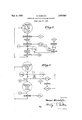
- My invention may be illustrated by the accompanying drawing which shows, in the form of flow sheets, two embodiments thereof.
- al concentrated solution usually saturated
- potassium nitrate and either aluminum nitrate or potassium chloride is treated by successive steps, including incorporating into said solution Aaluminum nitrate and adding potassium chloride, withy the ultimate formation and separation of potassium nitrate and aluminum chloride.
- the several steps of the processes areindicated on the ow sheets by appropriate legends.
- al concentrated solution usually saturated
- Fig. 1 represents the processes of Examples 1 and 2
- Fig. 2 represents the process of Example 3 and also the process above described wherein the separation of potassium nitrate and of aluminum chloride are conducted at substantially the same temperatures without evaporation.
- nitrous gasses is intended to exclusively cover gases containing the compound NO2 and/or the compound NO, while the expression oxygen compounds.
- of aluminium means aluminium oxide and aluminium hydroxide exclusively.
- the method of producing potassium nitrate comprising incorporating aluminium nitrate in a solution of potassium chloride to form a solution saturated with potassium nitrate, aluminium chlorideand aluminium nitrate, concentrating said solution by evaporation, whereby on looling AlClz'HgO is separated out, incorporating in the mother liquor separated therefrom additional quantities of potassium chloride and aluminium nitrate equivalent to the aluminium chloride separated out, adding water to restore to the solution the constitution existing before evaporation, cooling, separating potassium nitrate precipitated thereby, evaporating the remaining solution and proceeding further as in the first operation.
- the method of producing potassium nitrate comprising incorporating in a solution of potassium chloride aluminum nitrate to form a solu- Y tion saturated with potassium nitrate, aluminium chloride and aluminium nitrate, adding potassium chloride to precipitate potassium nitrate, removing same, incorporating in the mother liquor additional aluminium nitrate to precipitate aluminium chloride, removing same, adding to the filtrate potassium chloride and proceeding further as in the first operation.
- the method-of producing potassium nitrate comprising concentrating by evaporation a solution saturated with potassium nitrate, aluminium chloride and potassium chloride, until on cooling solid AlCla-GHzO is separated out, incorporating in the mother liquor separated therefrom quantities of potassium chloride and aluminium nitrate equivalent to the aluminium chloride separated out, adding Water to restore to the solution the constitution existing before evaporation, cooling, separating potassium nitrate precipitated thereby, evaporating the remaining solution and proceeding further as in the first operation.
- the method of producing potassium nitrate comprising adding to a solution of potassium chloride an oxygen compound of aluminium soluble in mineral acids, acting on the liquor thus obtained with nitric acid to precipitate aluminium chloride, separating said aluminium chloride and increasing the potassium concentration of the mother liquor to precipitate potassium nitrate.
- the method of producing potassium nitrate comprising adding to a solution of potassium l chloride an oxygen compound of aluminium soluble in mineral acids, acting on the liquor thus obtained with nitrous gases to precipitate aluminium chloride, separating said aluminium chloride and increasing the potassium concentration of the mother liquor to precipitate potassium nitrate.
Landscapes
- Chemical & Material Sciences (AREA)
- Organic Chemistry (AREA)
- Life Sciences & Earth Sciences (AREA)
- Agronomy & Crop Science (AREA)
- Engineering & Computer Science (AREA)
- Materials Engineering (AREA)
- Inorganic Chemistry (AREA)
- Compounds Of Alkaline-Earth Elements, Aluminum Or Rare-Earth Metals (AREA)
Description
Patented Sept. 5, 1933 METHOD 0F PRODUCING PoTAssIUM NITRATE Oscar Kaselitz, Berlin, Germany Application June 17, 1929, Serial No. 371,723,V an
in Germany December 3, 1928 s claims. (c1. z3-102) My invention refers to ther production .of potassium nitrate, more especially by the Imteraction of aluminium nitrate and potassium chloride and has fory its particular object to provide means whereby potassium nitrate can be produced in a simpler and more eiiicient manner than was hitherto possible.
In former times almost all potassium nitrate on the market was produced by the interaction of sodium nitrate (Chili saltpetre) with potassium chloride. In the present days potassium nitrate is produced lonly from the nitrous gases resulting in the manufacture of nitric acid from the air and from the nitrates produced with the aid of these gases. Of these nitrates those of magnesium, calcium and ammonium have been converted, by interaction with potassium chloride, into potassium nitrate.
I have now found that aluminium can be utilized for this purpose with particular advantage insofar that the separation of the aluminium chloride resulting in the reaction with aluminium nitrate and potassium chloride, can easily be effected so that the liquors can always be returned into the process, and that further` aluminium chloride can easily be converted by Vthermic decomposition into hydrochloric acid the resulting aluminium chloride as well as the potassium nitrate can be separated out as solids.
In practising my invention Irevaporate, preferably in vacuo, in order to prevent the formation of hydrochloric acid, and at moderate temperature, a solution, saturated at 0. C., of potassium nitrate, aluminium chloride and laluminium nitrate. This solution is concentrated so far that on cooling to C., whereby AlCla-i-GHZO is separated out, Y a4v mother liquor is obtained which contains about 36 grams NO3 per 100 grams H2O. To this mother: liquor'are now added KCl and aluminium nitrate, the quantities ladded being equivalent to the AlCls-l-GHzO 'which had separated out. The
Al(NOV3)a, KNOS and AlCla andcontains per 100 water removed by evaporation and in theform of crystal waterin the AlCls-l-HzO is replaced and the solution is.v then cooled down to 0 C. in order to separate out potassium nitrate. The mother liquor resulting in this operation is again evaporated as above described. I may also cool down below 0 C., although by so doing I do not `obtain a considerably greater yield of KNOs. The AlCl-i-GHzO` is either soldas such orv is .decomposed by heating with steam into hydro- 55 chloric acid and aluminium "oxide or aluminium hydroxide (both in a state soluble in mineral acids) which can be reconverted by means of nitric acid or nitrous gases into aluminium nitrate, which is then returned into the process.
The above shows that .this process is a cyclic process, in which the liquors are always reutilized and evaporated and filled up with water and in which potassium nitrate and aluminium chloride are recovered in equivalent quantities, while equivalent quantities of the starting materials (KCl and aluminium" nitrate) are added. The products which separate out are pure and require only being slightly washed in order` to remove the mother liquor which adheres Vto' them. The washewaters are utilized also in the process.
Under the conditions of operation above described the chlorine resulting in the `decomposition of potassium chloride can Aber removed 55 from'the liquors so that the mother liquors can be always returned into the process for a production of further quantities ofpotassium nitrate. l
I have now found that it is more advantageous to start from a liquor which at 0 C. is saturated with the chlorides and KNOa, i. e. saturated with AlCl3, KCl and KNOa. 'If this liquor is concentrated by evaporation4-in`vacuo, if desired-until on cooling to 20 C. a liquor is obtained which contains 19.5 grams NO3 in 100 grams water, only about 56% of the quantity of water must be levaporated per unit of' nitrate, whichis .to beevaporated in accordance with the method above described. Apart therefrom the'liquors thus obtained'ar'e better t for `further opera- -tions .in'view of their-lowerfspecic weight and Y Example 1 5 `The starting liquoris saturated atO" C. with 110 grams H20 22.15 grams 0l, 17.67 grams NO3, 2.52 grams K and 7.59 grams A1.
150 grams of this liquor are heated to about 50 C. in a vacuum of about 50 mms mercury column until 40.7 grams water are removed by evaporation, a liquor being obtained which contains 36 grams NO3 per 100 grams water. This liquor is now cooled to 20 C. and 21 grams Al0l3.6I-I2O (equal to 11.6 grams anhydrous A1013) separate out and can easily be iiltered by suction. The crystals are freed from `the adhering liquor by slight washing'with saturated AlCl solution. The A1013 thus obtained can be reduced to alumina by heating or by treating with superheated steam and the alumina is reconverted into aluminium nitrate with nitric acid and is returned into the process.
To this liquor are now added, according to the quantity of A1013 which has separated out, 50.1 grams water, to replace the 40.7 grams water removed by evaporation and 9.4 grams crystal water, and 18.6 grams Al(NO3)3,' preferably in the form of A1(NO'3)3'9H2O. After the salt has dissolved, 19.5 grams KCl are added and the liquor is now cooled slowly to 0 Cpunder stirring, whereupon 26.5 grams KNOa separate out. This salt is now freed from the adhering liquor by slight washing with cold water and about 25 grams pure KNOs are obtained. The
washing liquor can be added to the concentrated liquorinstead of water.
Example 2 The liquor used as starting material is saturated at 0 0. with KNOB, A1013 and KCl and contains per. 100 grams water 31.32 grams 0l, 11.47 grams NO3, 2.63 grams K and 9 grams Al.
`154.5 grams of this liquor are concentrated in vacuo at about 50 0., until 29.4 grams water have been evaporated. The liquor is now cooled to 20 C. and there separate out 26.7 grams AlCla'GHzOV (equal to 14.8 grams anhydrous A1013). This salt yis freed from the adhering liquor'by washing with saturated A1013 solution Aand can then be treated further as described with reference to Example 1 to convert it into `alumina or aluminium nitrate. The quantity of water removed from the liquor (29.4 grams evap- .orated and 11.9 grams crystal water=41.3 grams) yis now restored to it together with 23.7 grams Al(l\TO3)3 preferably in the form of Al NO3 39H20. After dissolution of the salt 24.9 grams KCl are added and the solution is cooled under continuousY stirring to 0 C., whereupon 33.7 grams KNO3 separate out. The adheringr liquor is removed by washing with some cold Water and the washing liquor canbe added to the concentrated mother liquor instead of water.
32 grams pure KNO3 are thus obtained.
Y Esca/niptev 3 `During this operation the temperature should not be raised considerably above 20 C.
There separate out at first 145 kilograms Al0l3-l-6H2O, which are separated from the mother liquor at 20 C. by filtering and suction. The mother liquor contains per litre 260.5 grams A1(NO3)3, 262.5 grams A1013 and 97.1 grams KNOa. To this mother liquor is now added a quantity (134 kilograms) of potassium `chloride which isY equivalent to the aluminium chloride which had been separated out. The conversion of the potassium chloride into potassium nitrate comes to an end after short stirring and 182 kilograms pure potassium nitrate separate out and are freed from the adhering liquor by slight washing. The mother liquor has the same composition and' volume as the starting liquor and is instantly used in a new operation. The Washwater is 'used for the suspension of the aluminium hydroxide.
I have further found that the two processes, the separation of potassium nitrate and the separation of aluminium chloride, can be conducted at substantially the same temperature without an evaporation of the liquors being required. The potassium nitrate precipitated by the' addition of potassium chloride, from a solution which is saturated with aluminum nitrate, potassium nitrate and aluminium chloride, and from the solution thereby obtained the aluminium chloride formed in the reaction is precipitated by adding aluminium nitrate at the point, atwhich the solution issaturated with aluminium chloride, potassium chloride and potassium nitrate. To the solution thus obtained is again added potassium chloride, whereby potassium nitrate is precipitated in the same manner las above so that the process can be carried through with thel same liquors without any evaporation being necessary. The aluminium nitrate can be easily produced from nitric acid'or nitrous gases and aluminium oxide or hydroxide, which is for instance obtained by thermic decomposition oi the aluminium chloride resulting in the process. The aluminium nitrate can be produced by add'- ing to the mother liquor, to which it shall be added, aluminium oxide or hydroxide and nitric acidvor -nitrous gases, the percentage of water in the solution being regulated in such manner that afterthe precipitation of the aluminium chloride the original concentration ismaintained. Therefore 6 mols. water have tobe suppliedfrom without for each molecule aluminium and the same must also be taken care of when adding aluminium nitrate containing less water.
-The `use of an aluminium nitrate containing more water would result inra gradual dilution of the liquors.l It is, however, a very simple matter to obtain an aluminium nitrate having a lowerpercentage of water.
The separation of small quantities of potassium nitrate besides aluminium chloride can be avoided by slightly raising the temperature when precipitating the aluminium chloride. Such `a rise of temperature is admissible in view of the fact that the degree of solubility of aluminium chlorideis independent within Wide Ylimits from the temperature. Apart from this slight inthrough in both phases at the sametemperature.
It is ,seen from the above description that the aluminum `nitrate employed in my invention can .be incorporated into the, concentrated salt solutions either by'direct addition orby forming itin vthe solution by the addition of an oxygen compound of aluminum followed by the addition of nitrous gases and air, or nitric acid.
The generic process of my invention comprises crease of temperature the process can be Vcarried preparing a concentrated solution containing potassium nitrate, aluminum chloride and a third salt, having ions common to both KNOs and A1013 selected from a group consisting of potassium chloride and aluminum nitrate; incorporating in said solution aluminum nitrate; adding potassium chloride; recovering from said solution aluminum chloride and potassium nitrate as separate precipitates, and recycling the resulting solution in a repetition of the process.
My invention may be illustrated by the accompanying drawing which shows, in the form of flow sheets, two embodiments thereof. In this showing al concentrated solution (usually saturated) of aluminum chloride, potassium nitrate and either aluminum nitrate or potassium chloride is treated by successive steps, including incorporating into said solution Aaluminum nitrate and adding potassium chloride, withy the ultimate formation and separation of potassium nitrate and aluminum chloride. The several steps of the processes areindicated on the ow sheets by appropriate legends. In this showing:
Fig. 1 represents the processes of Examples 1 and 2, while Fig. 2 represents the process of Example 3 and also the process above described wherein the separation of potassium nitrate and of aluminum chloride are conducted at substantially the same temperatures without evaporation.
It is believed that the processes'represented by the ilow sheets can be readily understood from the above description. The steps such as evaporation, filtration and cooling are indicated on the flow sheets as rectangles. The materials entering the reactions are indicated by circles and the materials separated out and recovered by diamond shaped outlines.
Various changes may be made in the details disclosed in the foregoing specication Without departing from the invention or sacrificing the advantages thereof.
Throughout this specication and the claims aiiixed thereto the expression nitrous gasses is intended to exclusively cover gases containing the compound NO2 and/or the compound NO, while the expression oxygen compounds. of aluminium means aluminium oxide and aluminium hydroxide exclusively.
I claim:-
1. The method of producing potassium nitrate comprising incorporating aluminium nitrate in a solution of potassium chloride to form a solution saturated with potassium nitrate, aluminium chlorideand aluminium nitrate, concentrating said solution by evaporation, whereby on looling AlClz'HgO is separated out, incorporating in the mother liquor separated therefrom additional quantities of potassium chloride and aluminium nitrate equivalent to the aluminium chloride separated out, adding water to restore to the solution the constitution existing before evaporation, cooling, separating potassium nitrate precipitated thereby, evaporating the remaining solution and proceeding further as in the first operation.
2. The method of producing potassium nitrate comprising incorporating in a solution of potassium chloride aluminum nitrate to form a solu- Y tion saturated with potassium nitrate, aluminium chloride and aluminium nitrate, adding potassium chloride to precipitate potassium nitrate, removing same, incorporating in the mother liquor additional aluminium nitrate to precipitate aluminium chloride, removing same, adding to the filtrate potassium chloride and proceeding further as in the first operation.
3. The method-of producing potassium nitrate comprising concentrating by evaporation a solution saturated with potassium nitrate, aluminium chloride and potassium chloride, until on cooling solid AlCla-GHzO is separated out, incorporating in the mother liquor separated therefrom quantities of potassium chloride and aluminium nitrate equivalent to the aluminium chloride separated out, adding Water to restore to the solution the constitution existing before evaporation, cooling, separating potassium nitrate precipitated thereby, evaporating the remaining solution and proceeding further as in the first operation.
4. In the method claimed in claim 2 Athe step of incorporating in the mother liquor aluminium nitrate by adding to said liquor nitric acid and an oxygen compound of aluminium soluble in mineral acids. k
5. In the method claimedin claim'Z the step of incorporating in the mother liquor aluminium nitrate by adding to said liquor an oxygen compound of aluminium soluble in mineral acids, and introducing nitrous gases into the liquor thus obtained.
6. The method of producing potassium nitrate comprising adding to a solution of potassium chloride an oxygen compound of aluminium soluble in mineral acids, acting on the liquor thus obtained with nitric acid to precipitate aluminium chloride, separating said aluminium chloride and increasing the potassium concentration of the mother liquor to precipitate potassium nitrate.
7. The method of producing potassium nitrate comprising adding to a solution of potassium l chloride an oxygen compound of aluminium soluble in mineral acids, acting on the liquor thus obtained with nitrous gases to precipitate aluminium chloride, separating said aluminium chloride and increasing the potassium concentration of the mother liquor to precipitate potassium nitrate.
8. In the manufacture of `potassium nitrate from aluminium nitrate and potassium chloride, the process which comprises preparing a concentrated solution containing potassium nitrate, aluminum chloride and a third salt, having ions common to both KNOa and AlCla selected from a group consisting of potassium chloride and aluminum nitrate; incorporating in said solution aluminum nitrate; adding potassium chloride;
recovering fromv said solution aluminum chloride
Applications Claiming Priority (1)
| Application Number | Priority Date | Filing Date | Title |
|---|---|---|---|
| DE1925587X | 1928-12-03 |
Publications (1)
| Publication Number | Publication Date |
|---|---|
| US1925587A true US1925587A (en) | 1933-09-05 |
Family
ID=7749697
Family Applications (1)
| Application Number | Title | Priority Date | Filing Date |
|---|---|---|---|
| US371723A Expired - Lifetime US1925587A (en) | 1928-12-03 | 1929-06-17 | Method of producing potassium nitrate |
Country Status (1)
| Country | Link |
|---|---|
| US (1) | US1925587A (en) |
-
1929
- 1929-06-17 US US371723A patent/US1925587A/en not_active Expired - Lifetime
Similar Documents
| Publication | Publication Date | Title |
|---|---|---|
| US3620671A (en) | Process for the acid treatment of aluminous ores for the recovery of alumina | |
| US2376696A (en) | Production of alumina | |
| US2127504A (en) | Alumina production | |
| US2808313A (en) | Method for the production of high purity caesium compounds from caesium-bearing minerals | |
| US1792410A (en) | Max btjchnee | |
| US1925587A (en) | Method of producing potassium nitrate | |
| US2862788A (en) | Process for purifying impure solid-phase kainite | |
| US3279897A (en) | Selective precipitation of potassium chloride by addition of ammonia | |
| US2758912A (en) | Process for producing a substantially sulfate-free and potassium-free magnesium chloride solution | |
| US1430449A (en) | Method of preparing aluminum-chloride crystals | |
| US3440023A (en) | Obtaining kci from crude salts by equilibrating and diluting prior to precipitation | |
| US3212863A (en) | Recovery of potassium chloride from aqueous solutions | |
| US513971A (en) | Wtlhelm ackermann | |
| US2044018A (en) | Separation of lithium salts | |
| US2394570A (en) | Production of potassium chloride and magnesia | |
| US1948888A (en) | Method of manufacturing alumina | |
| US4394368A (en) | High temperature hydrolysis of aluminum sulfate solutions | |
| US2375977A (en) | Preparation of alumina from clay | |
| US1413754A (en) | Process for the production of alumina from aluminium-nitrate solutions | |
| US2191561A (en) | Recovery of usable values from brines | |
| US2395567A (en) | Process of manufacturing potassium tetraborate | |
| US3846081A (en) | Process for separating sodium sulfate from brines | |
| US1148522A (en) | Process for regenerating electrolytes. | |
| US3017245A (en) | Removal of sodium sulfate from caustic salt | |
| US3212849A (en) | Conversion of ammonium fluoride to ammonium bifluoride by subatmospheric evaporationof an aqueous solution of ammonium fluoride |