US1925290A - Rising and falling table - Google Patents
Rising and falling table Download PDFInfo
- Publication number
- US1925290A US1925290A US417922A US41792230A US1925290A US 1925290 A US1925290 A US 1925290A US 417922 A US417922 A US 417922A US 41792230 A US41792230 A US 41792230A US 1925290 A US1925290 A US 1925290A
- Authority
- US
- United States
- Prior art keywords
- machine
- stacker
- sheets
- sheet
- feed
- Prior art date
- Legal status (The legal status is an assumption and is not a legal conclusion. Google has not performed a legal analysis and makes no representation as to the accuracy of the status listed.)
- Expired - Lifetime
Links
Images


Classifications
-
- B—PERFORMING OPERATIONS; TRANSPORTING
- B65—CONVEYING; PACKING; STORING; HANDLING THIN OR FILAMENTARY MATERIAL
- B65H—HANDLING THIN OR FILAMENTARY MATERIAL, e.g. SHEETS, WEBS, CABLES
- B65H11/00—Feed tables
Definitions
- This invention relates to rising and falling
- parof the present invention we have shown in the ticularly cross-feed tables, and the temporary emdrawings a folding machine of the buckle-fold ployment of a stacker or other paper handling type having a horizontal cross-feed table.
- a cross-feed table is first fold section of the machine, which may inbulky and heavy, and it is frequently impossible elude a series of rolls 1'7, 18, 19, 20, 21 and 22 and for one man to lift it out of the machine or refold plates 23, 24, 25 and 26. Any number of 70 placeit. Furthermore there is always thedanger parallel folds up to four may be imparted to the that the heavy table may be dropped and damaged sheets by thismeehanism, as will be well underwhile being handled in this way. stood by'tho'se skilled in the art without further One of the objects of the present invention explanation.
- a further object is the provision in, a folding sheets leaving folding rolls 21 and 22, and these machine of a mounting for a cross-feed table feed rolls are adapted to deliver the sheets onto which will carry the table endwise as well as up either the cross carrier or the stacker as will be and down, so that when moved to inoperative posihereinafter explained.
- Figure 1 is a rear elevational view of a folding 5
- the cross-feed table comprises a frame having 40 machine embodying our invention, the stacker side members 38 and end members 39 and 40. being shown in position to receive sheets from the In the frame rollers 41 are rotatably mounted and second or cross-fold section of the machine. may be vdriven by any suitable means, that dis- Fig. 2 is a side elevation of the same machine. closedherein consisting of "a belt 42, the upper Fig. 3 is a fragznental view, corresponding toa run of which 'has frictional engagement with all portion of Fig.
- means may be provided in accordance withthe present invention for holding the table in its upper or operative position.
- the latch having a notch 63 therein adapted to engage with the rod 53, and being adapted to be tilted upon its pivot by reason of the engagement of the rod with a beveled surface 64 of the latch, whereby the latter is adapted to be set in latching position auto matically when the table is raised.
- the swinging of the latch 62 downwardly beyond a predetermined point is prevented by a pin 65 on the machine frame.
- the latch 62 may of course be manually. disengaged.
- a ledge 66 on the machineframe adapted to engage'the lower side of a. rail 38 of the table frame, and we provide a iurther inwardly extending projection 67 on oneor both sides of the machine frame adapted to engage beneath one or both of the links 52.
- the table is provided with a side guide '68 adjustable transversely of the table and adapted to be secured in various positions of adjustment by a set screw '69 or the like.
- Fig. 1 of the drawings there is illustrated 1 the second'or cross-fold section of the folding machine, comprising rolls 70, '71, '72, and 73. and fold plates '74 .a'nd '75.
- the sheets in leaving this fold section travel over a guide plate '76 and through feed rolls '77 and 78, all driven by any suitable means, not shown.
- 79 is one or a ,.pair of parallel rails which areadapted 't'o removably support'the side-members 80 of the stacker frame. On this frame there are two rolls 81 and 82 over eration.
- the roller ,81 carries at one end a gear 84 which meshes with a small gear 85, also carried by the frame.
- gear 84 On the same shaft with gear 85 there is a larger gear 86 which meshes with a gear on the feed roll '78 when the stacker frame is in the position of Fig. 1.
- the rails 79 carry one or more pivotally mounted eye-bolts 87 which can be swung up and into slots formed in extensions of the frame memhere 86, the thumb nuts on the bolts being then tightened to hold the frame against movement.
- the driving mechanism for the stacker must be such as to turn the roller 81 at such speed as to impart a stackiiig motion to the belt 83, and that any suitable mechanism for this purpose may be employed instead of that just described.
- the invention in its broader aspects contemplates the use of other paper handling apparatus for receiving and handling sheets delivered from the second fold section, a feed table being quite commonly used in this stage of the machine.
- This means consists of a pair of rails 88, 89, preferably angle irons, which are slotted to fit over headed pins that are threaded into bosses on the machine frame and may be tightened to hold the rails firmly in position.
- These rails like the rails 79, are provided with pivotally mounted eye-bolts 87 having winged nuts by means of which the stacker frame may be fastened securely in place after it is slid into position over the rails 88, 89.
- the gear 86 car ried by the stacker frame then meshes with the gear on feed roll 29, from which the stacker gets its driving power.
- a frame In a machine of the class described, a frame, a cross feed table permanently connected therewith adapted to be raised and lowered to and from operative position, means for delivering sheets to said table in its operative position, and means for receiving and handling sheets delivered from said delivering means when said table is in its inoperative position.
- a feed table movable up and down, means for delivering sheets to said table, means for controlling and guiding the movements of said table, a sheet stacker, and means for mounting said stacker in the machine at the approximate level of said table in the operative position of thelatter, said stacker being then adapted to receive sheets from said first named means.
- a feed table movable up and down, means for delivering sheets to said table, means supporting said table in its out of operative position, means for counter-balancing said table, a sheet stacker, and means for mounting said stacker in the machine at the approximate level of said table in the operative position of the latter, said stacker being then adapted to receive sheets from said first named means.
- a feed table movable up and down, means for deliver ing sheets to said table,-means for'supporting said table in its out of operative position, a latch for holding said table in operative position, a sheet stacker, and means for mounting said stacker in the machine at the approximate level of said table in the operative position ofv the latter, said stacker'being thenadapted to re- 5.
- feed table movable up and down, means for delivering sheets to saidtable, means for guilding said table during its movements to'and from operative position, means ior counter-balancing said table, a latch automatically set when the table is raised for holding the same in operative position, a sheet stacker; and means for mounting said stacker in the machine when said table is lowered, said stacker beingthen adapted to receive sheets from said first named means.
- a feed table movable up and down, means for delivering sheets to said table, means for guiding said table during its movements to and-from operative position, sheet feeding elements on said table, means carried by the table for driving said elements, and a power connection on said machine adapted to be automatically engaged'by, said driving means when the table is raised and disen- 8.
- a feed table comprising a set of parallel links upon which said table is mounted, whereby the table may be raised and lowered to and from operative position, means tending to counterbalance said table, means for delivering sheets to said table in its operative position, and a further means for receiving and handling sheets from said delivery means adapted to be positioned above said table when the latter is in its lowered or inoperative position.
- a feed table comprising a set of parallel links upon which said table is mounted, whereby the table may be raised and lowered to and from operative position, a latch adapted to automatically engage and hold said table when the latter is raised to operative position, means for delivering sheets to said table in its operative position, and a further means for receiving and handling sheets from said delivery means when said table is in its lowered or inoperative position.
- a feed table movable up and down, means for delivering sheets onto said table from one side thereof,
- a feed table movable up and down, means for delivering sheets onto said table from one side thereof, means for guiding said table upward and endwise into operative position and downward and endwise into inoperative position, a pair of rails adapted to be removably mounted upon the machine transversely of thetablewhen the table is in, its lowered position, and a stacker adapted to he slid upon said rails into position to receive sheets from said sheet delivering means.
- a frame a set of parallel links pivotally mounted thereon,- afeedtable to which the outer. ends of said links are connected near opposite ends of the table, a lower inoperative position upward and endwise to an upper operative position and vice versa, means for delivering sheets onto said table in its operative position, and means adapted to receive whereby the table is adaptedto move from said.
- a frame In a machine of the class described, a frame, a set of parallel links pivotally mounted thereon, a feed table to which the outer ends of said links are connected near opposite ends of the table, whereby the table is adapted to move from a lower inoperative position upward and endwise to an upper operative position and, vice versa, means for delivering sheets onto said table in its operative position, a pair of rails adapted to be removably mounted upon the machine transversely of the table when the table is in its lowered position, and a stacker adapted to be slid upon said rails into position to receive sheets from said sheet delivering means.
- a feed table movable up and down, means for delivering sheets to said table, means for guiding said table during its movements to and from operative position, means for counter-balancing said table, a latch adapted to hold said table in that one of its said two positions away from which it hasa tendency to move, a sheet stacker, and means for mounting said stacker in the machine when said table is lowered, said stacker being then adapted to receive sheets from said first named means.
- a feed table comprising a set of parallel links upon which said table is mounted, whereby the table may be raised and lowered to and from operative position, countenbalanclng means for said table, a latch adapted to hold the table in one of its said positions, means for delivering sheets to said table in its operative position, and a further means for receiving and handling sheets from said delivering means adapted to be positioned above said table when the latter is in its lowered or inoperative position.
- a feed table movable up and down, means for'delivering sheets onto said table from one side thereof, means for guiding said table upward and .endwise into operative position and downward and endwise into inoperative position, a. pair of rails adapted to assume parallel positions in alignment conjointly with said delivering meansabove the table in the lowered position of the latter, and a stack r adapted to be slid upon said rails into position 'to-receive sheets from said sheet delivering means.
- sheet conveying means and sheet stacking means selectively adapted for use within the machine in the same plane therein, one of said means being permanently mounted in the machine and movable to and from said plane to providefor selective use of both means as aforesaid.
- sheet conveying means and sheet stacking means selectively adapted for use within the machine in the same plane therein, said sheet conveying means being permanentlymounted in the ma chine and movable into and out ofsaid plane .to provide for selective use of the sheet conveying means and the sheet stacking means as aforeangle roller feed table and-a stacker selectively adapted for use in the machine, the angle roller feed table being permanently mounted in said machine and movable to different positions therethe stacker as aforesaid.
- sheet conveying means and sheet stacking means selectively adapted for use within the machine in the same plane therein, one of said means being permanently mounted in said machine and movable to and from said plane to provide for selective use of both means as aforesaid, and counterbalancing means for the permanently mounted movable means.
- sheet conveying means and sheet stacking means selectively adapted for use within the machine in the same plane therein, one of said means being permanently, mounted in the machine and movable to and from saidplane to provide for selective use of both means as aforesaid, and latching means for the permanently mounted movable means.
- sheet feeding means In a machine of the character described, sheet feeding means, sheet conveying means and sheet stacking means selectively employed to receive sheetsfrom the sheet feeding means, and means for selectively supporting the sheet conveying means or the sheet stacking means within the machine in the same plane of delivery of sheets from said sheet feeding means.
- sheet feeding means In a machine of the character described, sheet feeding means, a sheet conveyor located Within the machine and adapted for movement in opposite directions therein, a sheet stacker movable into and out of said machine when the sheet conveyor is moved in one of said directions, and
- the stacker Within the machine in the same I plane of delivery of sheets from said sheet feeding means.
- sheet feeding means In a machine of the character, described, sheet feeding means, a sheet conveyor and a sheet stacker selectively employed to receive sheets from the sheet feeding means, and conveyor supporting means and stacked supporting means selectively adapted to support the conveyor or the stacker Within the machine in the same plane of delivery of sheets from said sheet feeding means.
- a feed table mechanism and a stacker mechanism adapted for use selectively in the machine in the same plane therein, and means on the machine supporting one of said mechanisms permanently therein and movable to carry it into and out of said plane and thereby provide for selective use.
- sheet conveying mechanism and sheet stacking mechanism adapted for use selectively in the machine in the same plane therein, means on the machine permanently supporting one of the mechanisms therein and movable to carry it into and out of saidplane, and means for mounting the other of said mechanisms in said plane upon removal therefrom of the mechanism supported by said'first named means.
- a feed table and a stacker adapted-for use selectively in the machine in the same plane therein, and means on said machine permanently supporting the feed table therein and movable to carry it into and out of said plane and thereby provide for selective use of the feed table andlthe stacker as aforesaid.
- a feed table mechanism and a stacker mechanism adapted for use selectively within the inachine in the same plane therein, and oscillatory means supporting one of said mechanisms for movement thereof into and out of said plane, whereby the mechanisms may be selectively used as aforesaid.
- an angle roller feed table and a sheet stacker adapted for use selectively, and oscillatory means supporting the angle roller feed table for movement in opposite directions whereby said table and the stacker may be selectively used as aforesaid.
- an angle roller feed table and means on the machine supporting said angle roller feed table therein and movable to carry it to different positions within the machine.
- an angle roller feed table and oscillatory means supporting said angle roller feed table for movement thereof to different positions.
- an angle roller feed table and one or more oscillatory means supporting said angleroller feed table for movement thereof to operative and inoperative positions.
- sheet feeding means an angle roller'feed table adapted to be raised and lowered with respect to said means, and oscillatory means supporting said angle roller feed table for raising and lowering movements thereof as aforesaid.
- an angle roller feed table bodily movable up and down to different positions, and movable feed table supporting means providing for bodily movement of the angle roller feed table up and down as aforesaid.
- sheet feeding means sheet conveying mechanism and sheet stacking mechanism selectively employed to receive sheets from the sheet feeding means, supporting means for one of said mechanisms movable to carry it toward and away from said sheet feeding means and thereby provide for selective use of the mechanisms therewith, and means for counterbalancing the mechanism car-- ried by said supporting means.
- sheet feeding means sheet conveying mechanism and sheet stacking mechanism selectively employed to receive sheets from the sheet feeding means, supporting means for one of said mechanisms movable to carry it toward and away from said sheet feeding means and thereby provide for selective use of the mechanisms therewith, and latching means for the mechanism carried by said supporting means.
- an angle roller feed table In a machine of the character described, an angle roller feed table, supporting means therefor movable to carry it to different positions, and means for counterbalancing said angle roller feed table.
- an angle roller feed table supporting means therefor movable to carry it to different positions, and
- sheet conveying mechanism and sheet stacking mechanism selectively employed within the machine in the same plane therein, one of said mechanisms having sheet moving elements and driving means therefor and said mechanism being permanently mounted on the machine for movement into and out of said plane so that the mechanisms may be selectively employed therein as aforesaid, and a source of power engaged by the driving means when said mechanism is moved into said plane and disengaged from said driving means when said mechanism is moved out of said plane.
- an angle roller feed table movable in opposite directions between two different positions in two different planes, means on said table for driving the rollers thereof, and a source of power engaged by the driving means when the table is moved into one of said positions and disengaged from said driving means when said table is moved into the other of said positions.
- a feed table movable in opposite directions between two different positions in two different planes and having a plurality of sheet moving elements, means on the table for driving said elements simultaneously, and a source of power engaged by the driving means when the table is moved into one of said positions, and disengaged from said driving means when said table is moved into the other of said positions- LESLEY R. TUFTS. ANDREW OLSON.
Landscapes
- Pile Receivers (AREA)
Description
ATTO RN EYS L. R. TUFTS ET!" AL RISING AND FALLING TABLE Filed Jan. 2, 1930 3 Sheets-Sheet 2 Sept. 5, 1933.
5 5. R WY 0 O E mg M M m -Rw vwA YE Mm W 5N II r lll llllt l 1 1 11 I! w Sept 5, 1933. R TUFTS r AL 1,925,290
RISING AND FALLING TABLE Filed Jan. 2, 1930 3 Sheets-Sheet 3 Ere. 3.
INVENTORS, LESLEY R. TuFTc. HIV-DREW OLso/v.
12% Wm M ATTORNEYS,
Patented Sept. 1933 I I v u v UNHTED sTArs s PATENT OFFICE RISING AND FALZING TABLE Lesley R. Tufts, East Cleveland, and Andrew Olson, Cleveland, Ohio, assignors to The Cleveland Folding Machine Company, Cleveland, Ohio, a corporation of Ohio Application January 2, 1930. Serial No. 417,922
- 41 Claims. 01. 271-64) This invention relates to rising and falling For the purpose of illustrating an application tables for use in paper handling machines, parof the present invention we have shown in the ticularly cross-feed tables, and the temporary emdrawings a folding machine of the buckle-fold ployment of a stacker or other paper handling type having a horizontal cross-feed table. The
5 device in the place 'of the feed table when the .,machine comprises a suitable framework 10, and '60 latter is moved downward to its inoperative posi preferably includes an electric motor 11 as :3. tion. power source. A driving belt 12 serves to transmi The substitution of a sheet stacker for a feed power from the motor pulley 13 to a driving table in folding machines in order to cut out furwheel or pulley 14 mounted in suitable bearings their movement of the sheets through the machine at one side of themachine. The primary feed 65 after the desired number of folds has been imtable is illustrated at 15. I This table is adapted parted to the sheets, is a known expedient. In to deliver sheets through a deflector 16 into the machines of fairly large size a cross-feed table is first fold section of the machine, which may inbulky and heavy, and it is frequently impossible elude a series of rolls 1'7, 18, 19, 20, 21 and 22 and for one man to lift it out of the machine or refold plates 23, 24, 25 and 26. Any number of 70 placeit. Furthermore there is always thedanger parallel folds up to four may be imparted to the that the heavy table may be dropped and damaged sheets by thismeehanism, as will be well underwhile being handled in this way. stood by'tho'se skilled in the art without further One of the objects of the present invention explanation. All of the rolls 17, 1'8, 19, 20,21 and therefore is the provision of a construction where- 22 are driven through a gear train 27 which it is in a feed table of the class described may be unnecessary to describe in detail, one element of readily moved into or out of operative position by the train being mounted upon theshaft 28 of a single operator, and without appreciable physipulley 14. Two feed rolls 29, 30 are arranged in cal effort. the machine in the path of movement of the A further object is the provision in, a folding sheets leaving folding rolls 21 and 22, and these machine of a mounting for a cross-feed table feed rolls are adapted to deliver the sheets onto which will carry the table endwise as well as up either the cross carrier or the stacker as will be and down, so that when moved to inoperative posihereinafter explained.
. tion it will entirely clear the cross-fold section of p The rolls 29, are intergeared, as indicated in 3 the machine. Figs. 2 and 4 The gear on roll 29 meshes wit 85 Another object is the provision of an automatic an idler gear 31, and this gear in turn meshes latch for engaging and holding the table in its with'a spur gear (not shown) on a shaft 32 which operative position. carries abevel gear 33, the latter meshing with a Other objects and features of novelty'will apbevel gear 34 on the lower end of a shaft 35, the
35 pear as we proceed with the description of that upper'lend of which carries a bevel gear 36 mesh- 90 embodiment of the invention which, for the pur ing with a bevel gear 37 on the shaft 28. In poses of the present application, we have illusthis manner the'rolls 29, 30 get their driving force trated in the accompanying drawings. in which from the drive wheel 14. V
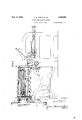
Figure 1 is a rear elevational view of a folding 5 The cross-feed table comprises a frame having 40 machine embodying our invention, the stacker side members 38 and end members 39 and 40. being shown in position to receive sheets from the In the frame rollers 41 are rotatably mounted and second or cross-fold section of the machine. may be vdriven by any suitable means, that dis- Fig. 2 is a side elevation of the same machine. closedherein consisting of "a belt 42, the upper Fig. 3 is a fragznental view, corresponding toa run of which 'has frictional engagement with all portion of Fig. 1, illustrating-the movable table in of the rollers; At one end this belt runs over a its lowered orino erative position and 'thestaeker pulley 43 which is carried by shaft 44 mounted in in position to receive sheets directly, from the first bearings depending from the frame members 38 fold section of the machine. 1 and 39. On its outer end shaft 44 carries abevel Fig. 4 is a fragmental view, corresponding to gear 45 which meshes with a bevel gear 46 on 50 Fig. 2, showing the table lowered and'the stacker shaft 47, the latter being mounted in bearings in position to receive sheets from the first fold supported to one side of frame member 38. This section, and 1 I shaft on its opposite end carries a spur gear 48 V Fig. 5is a fragmental plan view of themovable which meshes with idler31 when the'eross-feed table, this view being taken substantially on the 7 table is in its upper'or'operative position.
.. line 5 5 r P1 4, v v 4 On the legs of the machine frame we mount two parallel shafts 49 and 50 which are held from rotation by suitable means. On the shaft 49 there are rotatably supported the inner ends of two links 51, and two links 52 are similarly supported upon the shaft 50. The outer ends of links 51 are connected with a rod 53, while the links 52 are similarly connected with a rod 54. The frame of the cross-feed table is supported upon these rods 53 and 54 by extension brackets 55 which are bolted to the frame member 39 and by vertical brackets 56 bolted to the side members, 38 of the frame. The brackets 55 and 56 being of the same height and the links 51 and 52 being of the same length, the feed table which they support must be maintained parallel to itself throughout its movement. While it is not essential that the table remain in a horizontal position during its move ment nor while it is supported in its inoperative position, a mounting which will bring about these results is preferred.
Some means for counter-balancing the table either partially or wholly may be provided in accordance with the present invention. In the drawings we have shown for this purpose heavy coil springs 57, 58 and 59 surrounding the shafts 49 and 50, one end of each spring being secured to a sleeve 60 that may be locked to the shaft by a set screw or other means, and the other end of each spring engaging against a projection 61 on the side of the corresponding link 51 or 52, as the case may be. The counter-balancing springs may or may not be strong enough to raise the table without assistance from the op erator. In the event that they are thus capable of overcoming the weight of the table, it is desirable to make some provision for locking the table in its lowered position. In the event that they require assistance from the operator to move 7 the table upwardly, as in the embodiment illustrated herein, means may be provided in accordance withthe present invention for holding the table in its upper or operative position. In the present instance we employ a gravity latch 62 for this purpose, the latch having a notch 63 therein adapted to engage with the rod 53, and being adapted to be tilted upon its pivot by reason of the engagement of the rod with a beveled surface 64 of the latch, whereby the latter is adapted to be set in latching position auto matically when the table is raised. The swinging of the latch 62 downwardly beyond a predetermined point is prevented by a pin 65 on the machine frame. When it is desired to lower the table the latch 62 may of course be manually. disengaged. To support the table in its lowered position we provide a ledge 66 on the machineframe adapted to engage'the lower side of a. rail 38 of the table frame, and we provide a iurther inwardly extending projection 67 on oneor both sides of the machine frame adapted to engage beneath one or both of the links 52. The table is provided with a side guide '68 adjustable transversely of the table and adapted to be secured in various positions of adjustment by a set screw '69 or the like.
In Fig. 1 of the drawings there is illustrated 1 the second'or cross-fold section of the folding machine, comprising rolls 70, '71, '72, and 73. and fold plates '74 .a'nd '75. The sheets in leaving this fold section travel over a guide plate '76 and through feed rolls '77 and 78, all driven by any suitable means, not shown. 79 is one or a ,.pair of parallel rails which areadapted 't'o removably support'the side-members 80 of the stacker frame. On this frame there are two rolls 81 and 82 over eration.
which runs a carrier belt 83. The roller ,81 carries at one end a gear 84 which meshes with a small gear 85, also carried by the frame. On the same shaft with gear 85 there is a larger gear 86 which meshes with a gear on the feed roll '78 when the stacker frame is in the position of Fig. 1. The rails 79 carry one or more pivotally mounted eye-bolts 87 which can be swung up and into slots formed in extensions of the frame memhere 86, the thumb nuts on the bolts being then tightened to hold the frame against movement. It will be understood that the driving mechanism for the stacker 'must be such as to turn the roller 81 at such speed as to impart a stackiiig motion to the belt 83, and that any suitable mechanism for this purpose may be employed instead of that just described. Furthermore the invention in its broader aspects contemplates the use of other paper handling apparatus for receiving and handling sheets delivered from the second fold section, a feed table being quite commonly used in this stage of the machine.
Returning now to that portion of the machine in which the rising and falling table is incorporated, we provide means for removably mounting in this location the same stacker as is illustrated in Fig. 1. This means consists of a pair of rails 88, 89, preferably angle irons, which are slotted to fit over headed pins that are threaded into bosses on the machine frame and may be tightened to hold the rails firmly in position. These rails, like the rails 79, are provided with pivotally mounted eye-bolts 87 having winged nuts by means of which the stacker frame may be fastened securely in place after it is slid into position over the rails 88, 89. The gear 86 car ried by the stacker frame then meshes with the gear on feed roll 29, from which the stacker gets its driving power. I
Assuming that the cross-feed table is in the position illustrated in Fig. 1, and assuming that the operator desires to do a folding job in which parallel folds only are required, he then lifts the latch grasps some part of the table such as the rod 53, and pulls the table endwise and if:
sition is required, but it comes to rest againstthe ledge '66 and the stop 67 and remains there. Next the operator places'the rails 88' and 89 in position upon the pins 90 and turns the latter to secure the rails firmly in place. He now loosens the bolts 87 shown at the right of Fig. 1 and I slidesfthe stacker out of the machine over the rails 79. He then carries the stacker, which is comparatively light in weight, around to a position in front of the rails 88, 39 and slides it into the machine over these rails, causing the gears 86 and 29 to come into mesh, after which he swings the bolts 8'? into position in the slots on the staclzerframe and tightens the winged nuts on the bolts. Themachine is then ready for opand 89 being removed bodily, and the cross-feed ceive sheets-from said first named. means.
table being swung up into its operative position. This raising of the table requires but a slight physical effort, since its weight is largely counterbalanced by the springs 57, 58 and 59. It will be noted also that the springs are in their state of greatest tension at the time when the movement of the table has its greatest vertical component, and that when the springs are in their state of lowest tension, the movement of the tablehas its lowest vertical componentJHe-nce the counter-balancing action is most effective when most required. Just as the table reaches its operative position the rod 53 engages the beveled surface 64 on the latch 62v and rocks the latter about its pivot until the notch 63 receives the rod 53, when the latch falls by gravity to locking position. At the same time the spur gear 48 moves in a direction which is substantially axial, its teeth sliding into engagement with the teeth of gear 31. The machine is then again ready for operation.
While in. the foregoing description and in the accompanying drawings we have disclosed a particular embodiment of the invention more or less in detail, we desire it to be understood that such detail disclosure has been resorted to primarily for the purpose of fully illustrating the invention and is not'to be construed. as carrying any limitation upon the scope thereof.
Having thus described our invention, we claim: 1. In a machine of the class described, a frame, a cross feed table permanently connected therewith adapted to be raised and lowered to and from operative position, means for delivering sheets to said table in its operative position, and means for receiving and handling sheets delivered from said delivering means when said table is in its inoperative position.
2. In a machine of the class described, a feed table movable up and down, means for delivering sheets to said table, means for controlling and guiding the movements of said table, a sheet stacker, and means for mounting said stacker in the machine at the approximate level of said table in the operative position of thelatter, said stacker being then adapted to receive sheets from said first named means.-
3. In a machine or" the class described, a feed table movable up and down, means for delivering sheets to said table, means supporting said table in its out of operative position, means for counter-balancing said table, a sheet stacker, and means for mounting said stacker in the machine at the approximate level of said table in the operative position of the latter, said stacker being then adapted to receive sheets from said first named means. v
i. In a machine of the class described, a feed table movable up and down, means for deliver ing sheets to said table,-means for'supporting said table in its out of operative position, a latch for holding said table in operative position, a sheet stacker, and means for mounting said stacker in the machine at the approximate level of said table in the operative position ofv the latter, said stacker'being thenadapted to re- 5. In a machine or" the class described, feed table movable up and down, means for delivering sheets to saidtable, means for guilding said table during its movements to'and from operative position, means ior counter-balancing said table, a latch automatically set when the table is raised for holding the same in operative position, a sheet stacker; and means for mounting said stacker in the machine when said table is lowered, said stacker beingthen adapted to receive sheets from said first named means.
6. Ina machine of the class described, a feed table movable up and down, means for delivering sheets to said table, means for guiding said table during its movements to and-from operative position, sheet feeding elements on said table, means carried by the table for driving said elements, and a power connection on said machine adapted to be automatically engaged'by, said driving means when the table is raised and disen- 8. In a machine of the class described, a feed table, said machine comprising a set of parallel links upon which said table is mounted, whereby the table may be raised and lowered to and from operative position, means tending to counterbalance said table, means for delivering sheets to said table in its operative position, and a further means for receiving and handling sheets from said delivery means adapted to be positioned above said table when the latter is in its lowered or inoperative position.
9. In a machine of the class described, a feed table, said machine comprisinga set of parallel links upon which said table is mounted, whereby the table may be raised and lowered to and from operative position, a latch adapted to automatically engage and hold said table when the latter is raised to operative position, means for delivering sheets to said table in its operative position, and a further means for receiving and handling sheets from said delivery means when said table is in its lowered or inoperative position.
10. In a machine of the class described, a feed table movable up and down, means for delivering sheets onto said table from one side thereof,
means for guiding said table upward and endwise into operative position and downward and endwise into inoperative position, and means adaptedto receive and handle the sheets. delivered by said first named means when said table is in its lowered or inoperative position.
11. In a machine of the class described, a feed table movable up and down, means for delivering sheets onto said table from one side thereof, means for guiding said table upward and endwise into operative position and downward and endwise into inoperative position, a pair of rails adapted to be removably mounted upon the machine transversely of thetablewhen the table is in, its lowered position, and a stacker adapted to he slid upon said rails into position to receive sheets from said sheet delivering means. 4
12. In a'machine oi the class described, a frame, a set of parallel links pivotally mounted thereon,- afeedtable to which the outer. ends of said links are connected near opposite ends of the table, a lower inoperative position upward and endwise to an upper operative position and vice versa, means for delivering sheets onto said table in its operative position, and means adapted to receive whereby the table is adaptedto move from said. I r
19. In a machine of the character described, an
and handle the sheets when said table is in its lowered inoperative position.
13. In a machine of the class described, a frame, a set of parallel links pivotally mounted thereon, a feed table to which the outer ends of said links are connected near opposite ends of the table, whereby the table is adapted to move from a lower inoperative position upward and endwise to an upper operative position and, vice versa, means for delivering sheets onto said table in its operative position, a pair of rails adapted to be removably mounted upon the machine transversely of the table when the table is in its lowered position, and a stacker adapted to be slid upon said rails into position to receive sheets from said sheet delivering means.
14. In a machine of the class described, a feed table movable up and down, means for delivering sheets to said table, means for guiding said table during its movements to and from operative position, means for counter-balancing said table, a latch adapted to hold said table in that one of its said two positions away from which it hasa tendency to move, a sheet stacker, and means for mounting said stacker in the machine when said table is lowered, said stacker being then adapted to receive sheets from said first named means.
15. In a machine of the. class described, a feed table, said machine comprising a set of parallel links upon which said table is mounted, whereby the table may be raised and lowered to and from operative position, countenbalanclng means for said table, a latch adapted to hold the table in one of its said positions, means for delivering sheets to said table in its operative position, and a further means for receiving and handling sheets from said delivering means adapted to be positioned above said table when the latter is in its lowered or inoperative position.
16. In a machine of the class described, a feed table movable up and down, means for'delivering sheets onto said table from one side thereof, means for guiding said table upward and .endwise into operative position and downward and endwise into inoperative position, a. pair of rails adapted to assume parallel positions in alignment conjointly with said delivering meansabove the table in the lowered position of the latter, and a stack r adapted to be slid upon said rails into position 'to-receive sheets from said sheet delivering means.-
17. In a machine of the character described, sheet conveying means and sheet stacking means selectively adapted for use within the machine in the same plane therein, one of said means being permanently mounted in the machine and movable to and from said plane to providefor selective use of both means as aforesaid.
18. In a machine. of the character, described,
"sheet conveying means and sheet stacking means selectively adapted for use within the machine in the same plane therein, said sheet conveying means being permanentlymounted in the ma chine and movable into and out ofsaid plane .to provide for selective use of the sheet conveying means and the sheet stacking means as aforeangle roller feed table and-a stacker selectively adapted for use in the machine, the angle roller feed table being permanently mounted in said machine and movable to different positions therethe stacker as aforesaid.
20. In a machine of the character described, sheet conveying means and sheet stacking means selectively adapted for use within the machine in the same plane therein, one of said means being permanently mounted in said machine and movable to and from said plane to provide for selective use of both means as aforesaid, and counterbalancing means for the permanently mounted movable means.
21. In a machine of the character described, sheet conveying means and sheet stacking means selectively adapted for use within the machine in the same plane therein, one of said means being permanently, mounted in the machine and movable to and from saidplane to provide for selective use of both means as aforesaid, and latching means for the permanently mounted movable means. I
22. In a machine of the character described, sheet feeding means, sheet conveying means and sheet stacking means selectively employed to receive sheetsfrom the sheet feeding means, and means for selectively supporting the sheet conveying means or the sheet stacking means within the machine in the same plane of delivery of sheets from said sheet feeding means.
23. In a machine of the character described, sheet feeding means, a sheet conveyor located Within the machine and adapted for movement in opposite directions therein, a sheet stacker movable into and out of said machine when the sheet conveyor is moved in one of said directions, and
the stacker Within the machine in the same I plane of delivery of sheets from said sheet feeding means.
24. In a machine of the character, described, sheet feeding means, a sheet conveyor and a sheet stacker selectively employed to receive sheets from the sheet feeding means, and conveyor supporting means and stacked supporting means selectively adapted to support the conveyor or the stacker Within the machine in the same plane of delivery of sheets from said sheet feeding means.
25. In a machine of the character described, a feed table mechanism and a stacker mechanism adapted for use selectively in the machine in the same plane therein, and means on the machine supporting one of said mechanisms permanently therein and movable to carry it into and out of said plane and thereby provide for selective use.
of the mechanisms as aforesaid.
26. In a machine of the character described, sheet conveying mechanism and sheet stacking mechanism adapted for use selectively in the machine in the same plane therein, means on the machine permanently supporting one of the mechanisms therein and movable to carry it into and out of saidplane, and means for mounting the other of said mechanisms in said plane upon removal therefrom of the mechanism supported by said'first named means. I
27; In a machine of the character described, a feed table and a stacker adapted-for use selectively in the machine in the same plane therein, and means on said machine permanently supporting the feed table therein and movable to carry it into and out of said plane and thereby provide for selective use of the feed table andlthe stacker as aforesaid. I
28. In a machine of the character described, a feed table mechanism and a stacker mechanism adapted for use selectively within the inachine in the same plane therein, and oscillatory means supporting one of said mechanisms for movement thereof into and out of said plane, whereby the mechanisms may be selectively used as aforesaid. 1
29. In a machine of the character described, an angle roller feed table and a sheet stacker adapted for use selectively, and oscillatory means supporting the angle roller feed table for movement in opposite directions whereby said table and the stacker may be selectively used as aforesaid.
30. In a machine of the character described, an angle roller feed table, and means on the machine supporting said angle roller feed table therein and movable to carry it to different positions within the machine.
31. In a machine of the character described, an angle roller feed table, and oscillatory means supporting said angle roller feed table for movement thereof to different positions.
32. In a machine of the character described, an angle roller feed table, and one or more oscillatory means supporting said angleroller feed table for movement thereof to operative and inoperative positions.
33. In a machine of the character described, sheet feeding means, an angle roller'feed table adapted to be raised and lowered with respect to said means, and oscillatory means supporting said angle roller feed table for raising and lowering movements thereof as aforesaid.
34. In a machine of the character described, an angle roller feed table bodily movable up and down to different positions, and movable feed table supporting means providing for bodily movement of the angle roller feed table up and down as aforesaid.
35. In a machine of the character described, sheet feeding means, sheet conveying mechanism and sheet stacking mechanism selectively employed to receive sheets from the sheet feeding means, supporting means for one of said mechanisms movable to carry it toward and away from said sheet feeding means and thereby provide for selective use of the mechanisms therewith, and means for counterbalancing the mechanism car-- ried by said supporting means. I
36. In a machine of the character described, sheet feeding means, sheet conveying mechanism and sheet stacking mechanism selectively employed to receive sheets from the sheet feeding means, supporting means for one of said mechanisms movable to carry it toward and away from said sheet feeding means and thereby provide for selective use of the mechanisms therewith, and latching means for the mechanism carried by said supporting means.
37. In a machine of the character described, an angle roller feed table, supporting means therefor movable to carry it to different positions, and means for counterbalancing said angle roller feed table.
38. In a machine of the character described, an angle roller feed table, supporting means therefor movable to carry it to different positions, and
latching means for said angle roller feed table.
39. In a machine of the character described, sheet conveying mechanism and sheet stacking mechanism selectively employed within the machine in the same plane therein, one of said mechanisms having sheet moving elements and driving means therefor and said mechanism being permanently mounted on the machine for movement into and out of said plane so that the mechanisms may be selectively employed therein as aforesaid, and a source of power engaged by the driving means when said mechanism is moved into said plane and disengaged from said driving means when said mechanism is moved out of said plane.
40. In a machine of the character described,
an angle roller feed table movable in opposite directions between two different positions in two different planes, means on said table for driving the rollers thereof, and a source of power engaged by the driving means when the table is moved into one of said positions and disengaged from said driving means when said table is moved into the other of said positions.
41. In a machine of the character described, a feed table movable in opposite directions between two different positions in two different planes and having a plurality of sheet moving elements, means on the table for driving said elements simultaneously, and a source of power engaged by the driving means when the table is moved into one of said positions, and disengaged from said driving means when said table is moved into the other of said positions- LESLEY R. TUFTS. ANDREW OLSON.
Priority Applications (1)
| Application Number | Priority Date | Filing Date | Title |
|---|---|---|---|
| US417922A US1925290A (en) | 1930-01-02 | 1930-01-02 | Rising and falling table |
Applications Claiming Priority (1)
| Application Number | Priority Date | Filing Date | Title |
|---|---|---|---|
| US417922A US1925290A (en) | 1930-01-02 | 1930-01-02 | Rising and falling table |
Publications (1)
| Publication Number | Publication Date |
|---|---|
| US1925290A true US1925290A (en) | 1933-09-05 |
Family
ID=23655902
Family Applications (1)
| Application Number | Title | Priority Date | Filing Date |
|---|---|---|---|
| US417922A Expired - Lifetime US1925290A (en) | 1930-01-02 | 1930-01-02 | Rising and falling table |
Country Status (1)
| Country | Link |
|---|---|
| US (1) | US1925290A (en) |
-
1930
- 1930-01-02 US US417922A patent/US1925290A/en not_active Expired - Lifetime
Similar Documents
| Publication | Publication Date | Title |
|---|---|---|
| US2156020A (en) | Conveyer | |
| US2665633A (en) | Panel brander | |
| CN106042446B (en) | Process the die-cutting machine Automatic-feeding and feeding device and method of different model cardboard | |
| US2257469A (en) | Sheet piler | |
| US1948001A (en) | Sheet feeder | |
| US3934375A (en) | Arrangement for automatically loading and unloading a machining apparatus | |
| US1865308A (en) | Sheet handling mechanism | |
| US1925290A (en) | Rising and falling table | |
| US1942172A (en) | Pile-forming and delivery means | |
| US2747280A (en) | Apparatus for automatically cutting glass sheets | |
| US3324773A (en) | Squaring equipment for folded box blanks | |
| US2218401A (en) | Sheet feeder | |
| US1987352A (en) | Paper handling machine | |
| US2124855A (en) | Paper handling machine | |
| US1952392A (en) | Tilting table for sheet mills | |
| US1953049A (en) | Pile handling mechanism for printing machines | |
| US2603484A (en) | Paper handling machine | |
| US1840370A (en) | Sheet piling mechanism | |
| US2053328A (en) | Sorting machine | |
| US1303040A (en) | Sheet-delivery mechanism | |
| CN208629989U (en) | A raw material conveying device for a water-based printing slotting die-cutting machine | |
| USRE22395E (en) | Sheet stacking machine | |
| US2141394A (en) | Apparatus and method for handling sheetlike material | |
| JPH0248467B2 (en) | ||
| US1450701A (en) | Machine for treating bolts of cloth for clothing |