US1859966A - Art of cracking hydrocarbons - Google Patents
Art of cracking hydrocarbons Download PDFInfo
- Publication number
- US1859966A US1859966A US184274A US18427427A US1859966A US 1859966 A US1859966 A US 1859966A US 184274 A US184274 A US 184274A US 18427427 A US18427427 A US 18427427A US 1859966 A US1859966 A US 1859966A
- Authority
- US
- United States
- Prior art keywords
- pressure
- cracking
- still
- oil
- distillate
- Prior art date
- Legal status (The legal status is an assumption and is not a legal conclusion. Google has not performed a legal analysis and makes no representation as to the accuracy of the status listed.)
- Expired - Lifetime
Links
- 238000005336 cracking Methods 0.000 title description 59
- 229930195733 hydrocarbon Natural products 0.000 title description 21
- 150000002430 hydrocarbons Chemical class 0.000 title description 21
- 239000003921 oil Substances 0.000 description 59
- 239000011269 tar Substances 0.000 description 28
- 239000004215 Carbon black (E152) Substances 0.000 description 18
- NINIDFKCEFEMDL-UHFFFAOYSA-N Sulfur Chemical compound [S] NINIDFKCEFEMDL-UHFFFAOYSA-N 0.000 description 16
- 239000000470 constituent Substances 0.000 description 16
- 239000005864 Sulphur Substances 0.000 description 14
- 238000004821 distillation Methods 0.000 description 12
- 239000002253 acid Substances 0.000 description 9
- 239000000571 coke Substances 0.000 description 9
- 150000001875 compounds Chemical class 0.000 description 8
- 239000000295 fuel oil Substances 0.000 description 7
- 238000010438 heat treatment Methods 0.000 description 7
- 238000004519 manufacturing process Methods 0.000 description 7
- 239000000203 mixture Substances 0.000 description 6
- 238000010992 reflux Methods 0.000 description 6
- 238000000034 method Methods 0.000 description 5
- OKTJSMMVPCPJKN-UHFFFAOYSA-N Carbon Chemical compound [C] OKTJSMMVPCPJKN-UHFFFAOYSA-N 0.000 description 4
- 229910052799 carbon Inorganic materials 0.000 description 4
- 239000004927 clay Substances 0.000 description 4
- 229910000286 fullers earth Inorganic materials 0.000 description 4
- 238000003860 storage Methods 0.000 description 4
- 238000005194 fractionation Methods 0.000 description 3
- 239000003502 gasoline Substances 0.000 description 3
- XEEYBQQBJWHFJM-UHFFFAOYSA-N Iron Chemical compound [Fe] XEEYBQQBJWHFJM-UHFFFAOYSA-N 0.000 description 2
- QAOWNCQODCNURD-UHFFFAOYSA-N Sulfuric acid Chemical compound OS(O)(=O)=O QAOWNCQODCNURD-UHFFFAOYSA-N 0.000 description 2
- 239000011282 acid tar Substances 0.000 description 2
- 238000004140 cleaning Methods 0.000 description 2
- 230000002035 prolonged effect Effects 0.000 description 2
- 239000010802 sludge Substances 0.000 description 2
- 235000011149 sulphuric acid Nutrition 0.000 description 2
- 239000001117 sulphuric acid Substances 0.000 description 2
- MBMLMWLHJBBADN-UHFFFAOYSA-N Ferrous sulfide Chemical compound [Fe]=S MBMLMWLHJBBADN-UHFFFAOYSA-N 0.000 description 1
- 238000010306 acid treatment Methods 0.000 description 1
- 238000013019 agitation Methods 0.000 description 1
- 239000003513 alkali Substances 0.000 description 1
- 239000012670 alkaline solution Substances 0.000 description 1
- 238000004458 analytical method Methods 0.000 description 1
- 238000009835 boiling Methods 0.000 description 1
- 230000001351 cycling effect Effects 0.000 description 1
- 238000001704 evaporation Methods 0.000 description 1
- 230000008020 evaporation Effects 0.000 description 1
- 238000001914 filtration Methods 0.000 description 1
- 239000000446 fuel Substances 0.000 description 1
- 229910052742 iron Inorganic materials 0.000 description 1
- 238000002156 mixing Methods 0.000 description 1
- 238000006386 neutralization reaction Methods 0.000 description 1
- 239000003208 petroleum Substances 0.000 description 1
- 238000003825 pressing Methods 0.000 description 1
- 230000000750 progressive effect Effects 0.000 description 1
- 230000001737 promoting effect Effects 0.000 description 1
- 238000011084 recovery Methods 0.000 description 1
- 230000001105 regulatory effect Effects 0.000 description 1
- 238000011268 retreatment Methods 0.000 description 1
- 238000000926 separation method Methods 0.000 description 1
- 238000009331 sowing Methods 0.000 description 1
- -1 sulphur compounds Chemical class 0.000 description 1
Images

Classifications
-
- C—CHEMISTRY; METALLURGY
- C10—PETROLEUM, GAS OR COKE INDUSTRIES; TECHNICAL GASES CONTAINING CARBON MONOXIDE; FUELS; LUBRICANTS; PEAT
- C10G—CRACKING HYDROCARBON OILS; PRODUCTION OF LIQUID HYDROCARBON MIXTURES, e.g. BY DESTRUCTIVE HYDROGENATION, OLIGOMERISATION, POLYMERISATION; RECOVERY OF HYDROCARBON OILS FROM OIL-SHALE, OIL-SAND, OR GASES; REFINING MIXTURES MAINLY CONSISTING OF HYDROCARBONS; REFORMING OF NAPHTHA; MINERAL WAXES
- C10G9/00—Thermal non-catalytic cracking, in the absence of hydrogen, of hydrocarbon oils
- C10G9/06—Thermal non-catalytic cracking, in the absence of hydrogen, of hydrocarbon oils by pressure distillation
-
- C—CHEMISTRY; METALLURGY
- C10—PETROLEUM, GAS OR COKE INDUSTRIES; TECHNICAL GASES CONTAINING CARBON MONOXIDE; FUELS; LUBRICANTS; PEAT
- C10C—WORKING-UP PITCH, ASPHALT, BITUMEN, TAR; PYROLIGNEOUS ACID
- C10C1/00—Working-up tar
- C10C1/20—Refining by chemical means inorganic or organic compounds
Definitions
- This invention relates to improvements in cracking heavier hydrocarbon oils, such as gas oil, fuel oil and heavy residuesnfor the production of lighter hydrocarhon oils, such as gasoline and pressure distillates, there-V from hy distillation under pressure.
- the de- P position of pitch or carbon on the heang surfaces of the pressure still is prevented or greatly reduced, so thatoverheating or dan'- gcr of failure of the heating walls isvcorrespondingly prevented or reduced, and the time Vott' useful operation in a single run prolonged with correspondingly increased continuity of operation, reduced loss of working time and increased production per still per day.
- Asphaltic or pitchvlike constituents may/ remain and mix with the charge inH the still.
- a small amount of asphaltic or pitchvlike constituents is pro-l gressively formed. Such constituents apthey may remain,
- the pressurey still tar when operating'in this manner, contains a substantial percentage 'of lighter oil and 'it is customary -to subject the pressure tar to someA distillation rocess to recover the content oi lighter oil or return to and retreatment in the cracking operation.
- the tar may he distvetted Vto dryness at atmospheric pressure in a coke still, the major portion ot the pitch-like constituents contained in the pressure tar ⁇ remaining in the still as coke.
- the distillate from such operation may then he returned tothe pressure still, together with fresh charging-stock, tor turther-,cracking treatment.
- the pressure tar may be converted into coke or left behind as an undistilled residue on redistillation the more objectionable, sulphur-containing compounds tend to remain in the distillate. If this distillate is returned to the pressure still for further cracking treatment'the complete cycle tends progressively to increase the concentration of the more objectionable sulphur-containing compoundsin the pressure still charge. Similarly a large part of the sulphur-containing compounds which are carried'over from the pressure still with the crude pressure distillate become concentrated in the heavier portions of the pressure distillate on redistillation or fractionation.
- the fresh pressure still charging stock is treated to relnove the more objectionable sulphurcontaining compounds before introduction to the pressure still.
- the proportion of such compounds present in the pressure still charge during the cracking operation due to the sulphur contained in the fresh charging stock is thereby materially reduced. While theremoval of the greater part of the sulphur compounds from the fresh charging stock may be readily accomplished by ordinary refiningVv methods, a suiiciently vigorous treatment to remove the most refractory sulphur compounds is not commercially practicable from an' economic standpoint, and Where only a part of the sulphur compounds'are removedl by pretreatment of the charging stock, those which remain become concentrated in the "pressure still charge, as above described, on
- the desulphurizing treatment applied tothe fresh charging stock may advantageously be combined' with the similar treatment of tar distillatesto be recycled, as well as with any further treatment of the heavier portions of the pressuredistillate bottoms, as where the crude pressure distillate is not subjected to a desulphurizing operation before redistillation or fractination.
- the average concentration of such constituents in the average pressure still charge may be repressed wlthout requiring Iunusual or expensive treatmentof the fresh charging stock.
- the desulphurizing treatment may be carried out-byr any of the known methods, such as agitation with sulphuric acid and subsequent neutralization of the oil with an alkaline solution.
- One particularly advantageous method of carrying out the desulphurizing operation is intimately to contact the oil with sulphuric acid in a mechanical treater as hereinafter described, and after separating any remaining acid and acid sludge, to remove any remaining acid or fullers earth, the clay 'or fullers earth with the constituents absorbed therein being separatedv from the oil either directly or after' aol settling ⁇ by a filtering operationor other suitable treatment.
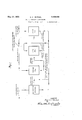
- Fig. 1 is a flow sheet diagrammatically illustrating the sequence of steps in a preferred method of operation'according to the present invention.
- Fig. 2 shows an arrangement of apparatus, partly in section and partly in elevation, adapted for the practice of the invention.
- the pressure still shown is of the general type described and illustrated in U. S. Patent No. 1,285,200 issued toSinclair Retning "Company on an application of E. W. Isom filed November 19, 1918, and comprises a bulk supply tank 2, a battery of heating tubes 3 arranged in asuitable furnace 4, and circulating connections 5, 6 and 7 whereby oil may be circulated by the pump 8 from and to the bulk supply tank through the battery of heat-ing tubes in which it is heated to a cracking temperature.
- the vapors generated in the cracking operation pass through the reflux tower 9, and reflux condensate, together with unvaporized fresh oil when fresh oil is introduced to the refluxing f operation, is returned to the cracking still through connection 10.
- Fresh charging stock may be supplied to the reiux tower from the tank 11 by the pump 12 through lines 13 and 14. A portion of the fresh charging stock may be introduced to the still through the circulating pump bearings by branch connection 15 to cool and lubricate the same. Vapors escaping from the reflux tower 9 pass through line 16 to condenser 17, from which condensate passes to receiver 18 which may be of the usual type employed in connection with pressure cracking stills. The crude pressure distillate withdrawn from receiver 18 may be charged directly to the reiux tower 19 on the rerun still 20 ⁇ through connections 21 and 22 by means of the pump 23,
- the vapors generated in the rerun still are passed to the condenser 24- from which the distillate of the desired end point is discharged through connection 25, for example, to storage or to a-urther treating operation.
- the rerun still 20 may be utilized to redistill crude pressure distillate from a battery of pressure cracking stills, the additional crude pressure distillate from such other cracking operations being introduced .thereto through conncction 30.
- the rerun pressure distillate bottoms may be passed directly to the storage tank 26 through lines 27 and 28 by the pump ⁇ 29.
- the crude pressure distillate may be discharged d ircctly to thc desulphurizing operation-from receiver 18 through connection 31 and this desulphurized stock, together with any other ⁇ oil requiring distillation, may be introduced to the rerun still through the connection 32, the bottoms from such redistillation being discharged through connection 33.
- Tar may alsk several. preferably operated at substantially atmospheric pressure. The sensible heat contained in the pressure tar may thus be utilized to assist in the evaporation of the volatile constituents upon lowering of pressure. rhe pressure still, for example, may be operated under a pressure of to 150 pounds per square inch.
- Connection 36 is provided for draining the pressure still at the end of the run, and the pressure tar so Withdrawn may be pumped to a coke still by the pump 37 through connection 38.
- the coke stills and rerun stills may be of the ordinary shell type provided with reflux towers and mounted in suitable turnace structures.
- the coke still 35 is provided with a valved'connection 39 for withdrawing heavy residue when it is not desired to continue the distillation to coke.
- the vapors generated in the still 35 pass through the reflux tower 40 to the condenser 41.
- rEhe distillate may be Withdrawn through valved connection 42 or passed directly to the tank 26 through pipe 43 by the pump 44. ln addition to the crude pressure distillate bottoms and coke still .distillate supplied to the tank 26 through connections 28 and 43 respectively, fresh oil may be su plied thereto through valved connection 6%'.
- the tank 26 is connected with the mechanical i treater 45 by valved connection 46.
- mechanical treater consists of a series of cells located .one above another and with rotary disks or bames carried by a vertical shaft. These rotary disks are arranged at approximately the center of each cell between sidev tively. sowing ont@ ai@ highest disk at ai@ top of the treater, are caused to interminfgle as they How down over successive disks and are thrown by centrifugal force against the walls of the apparatus, their intermixture being promoted by the resulting impact. The mingled oil and acid are collected by the. side baliies and delivered to the next lower disk.
- the acid-treated oil before being subjected to the earth treatment, may advantageously be heated, for example approximately to 175o F., and a steam coil 63 is provided in tank l52 for'ths purpose.
- the treated oil is thoroughly agitated with the clay' or fullers earth and when the treatment is completed, the oil and earth are pumped by pump 60 through the line 57 to a pressure filter 61 from which the finished oil is discharged at 62.
- a pressure filter 61 from which the finished oil is discharged at 62.
- the acid treatment may be omitted and the.4
- pass connection 64 and pump 65 are provided to supply oil from the tank 26 directly to the receiving tank 52.
- the earth and oil mixture from the treater 55 may be permitted to settle before being subjected to the lter pressing operation and only the relatively.
- the earth and oil mixture from the treater 55 may accordingly be directed to either of the-settlers 58 or 59. and after standing the required length of time the settled oi-l may be ⁇ withdrawn through the swing lines 66.
- the filtered oil is delivered to the charging stock storage tank 11 through line 68 by the pump 69.
- the tank y11 is provided with valved connection 70 through which additional substantially sulphur-free oil may be supplied, such the equilibrium content of sulphur and su'll phur compounds can be kept at a value materially promoting the economy and efficiency yof the pressure still operation.
- Tha-improvement in the cracking of heavy hydrocarbon oils for the roduction of lighter hydrocarbon oils there rom comprising distilling the heavy hydrocarbon oils y under vpressure and at a cracking temperature supplying additional heavy oil to this t cracking operation and withdrawing tar therefrom, subjecting the crude pressure distillate obtained from the cracking operation to a desulphurizing treatment and fractionating the desulphurized pressure distillate, subjecting the tar withdrawn fromthe' cracking operation to distillation, subjecting the distillate from-the tar distillation together with additional heavy oil to be supplled to the cracking operation to a desulphurizing treatment, and introducing the desulphurized additionalheavy oil and tar distillate together with a heavier fraction of the desu phurized pressure distillate to the first mentioned cracking operation.
Landscapes
- Chemical & Material Sciences (AREA)
- Oil, Petroleum & Natural Gas (AREA)
- Engineering & Computer Science (AREA)
- Chemical Kinetics & Catalysis (AREA)
- General Chemical & Material Sciences (AREA)
- Organic Chemistry (AREA)
- Materials Engineering (AREA)
- Physics & Mathematics (AREA)
- Thermal Sciences (AREA)
- Production Of Liquid Hydrocarbon Mixture For Refining Petroleum (AREA)
Description
May 24, 1932. E. c. HERTHEL ABT OF CRACKING HYDROCARBONS Filed April 16. 1927 2 Sheets-Sheet e w RM E mr m N6 O WH. H m( A May 24, 1932. E. c. HERTHEL ART OF CRACKING HYDHOGARBONS 2 Sheets-Sheet 2 Filed April 16. 1927 ATToRNYs INVENTOR Fayene (/ferfel BY w@ L7-f 'Inn-Unull H51! l...
nGCrW UIDwWWIm ww ww EMT-...bmw
. to cracking and the lcharge is heated to the Patented May 24, 1932 UNITED Ns'rnfllas inserat PATENT carrier EUGENE c. Hamann or crnIcAGo, ILLINOIS, AssIGNon iro snrcnm mme coat- PANY, on NEW vonk, N.` Y.,
A CORPORATION 0F MAINE am or cnAcxme mnocnnons llippinatnminea April 1s,
This invention relates to improvements in cracking heavier hydrocarbon oils, such as gas oil, fuel oil and heavy residuesnfor the production of lighter hydrocarhon oils, such as gasoline and pressure distillates, there-V from hy distillation under pressure.
In the cracking of heavier petroleum oils in pressure stills for the production of gasoline or pressure distillates, there are formed during the cracking operation certain constituents of an asphaltic or pitch-like character. With continuation of the cracking operation., the amount of such constituents increases an there is a tendency for deposits of carbon or coke to form on the heated walls of the still, thus necessitating the shutting down of the still for cleaning purposes between successive runs. The shutting down of the pressure still, the withdrawal of the chargertherefrom, the cleaning ofthe still, the recharging of the still and the preliminary heating of the stlll to bring the fresh charge up to cracng conditions, all require time, and the total amount ottime so required in ordinary commercial operations meansa corresponding reduction in the proportion of the time when the still'isoperating for 'carrying out the desired cracking operation.
According to the present invention, the de- P position of pitch or carbon on the heang surfaces of the pressure still is prevented or greatly reduced, so thatoverheating or dan'- gcr of failure of the heating walls isvcorrespondingly prevented or reduced, and the time Vott' useful operation in a single run prolonged with correspondingly increased continuity of operation, reduced loss of working time and increased production per still per day. A 4
When a pressure still is-charged with gas oil or other charging stock tohe subjected cracking temperature. the. cracking takes place in a gradual and progressive manner and the 'lighter constituents produced by the cracking operation which go to make up the pressure distillate 'are removed from th still progressively during the cracking operation. @ther constituents, such as heavier hydrocarbons 'formed by the crackdstituents gradually and progressivel ma serial no. 184,274. f
ing operation, may/ remain and mix with the charge inH the still. A small amount of asphaltic or pitchvlike constituents is pro-l gressively formed. Such constituents apthey may remain,
amount of such asphaltic or pitch-like con- '4 mcreases until eventually the amount o such constituents increases beyond the saturation point. s the charge becomes su rsaturated there is an increasedl danger ofpdeposit of pitch or carbon on the heating walls of i the still,with corresponding danger of over'- heating andfailure of the heated walls if T 4of fresh feed and the withdrawal of pitchladen/tar so that concentration of pitch-like y K constituents in the still charge as a whole may "he maintained below the saturation oint. The pressurey still tar, when operating'in this manner, contains a substantial percentage 'of lighter oil and 'it is customary -to subject the pressure tar to someA distillation rocess to recover the content oi lighter oil or return to and retreatment in the cracking operation. For example, the tar may he distiiled Vto dryness at atmospheric pressure in a coke still, the major portion ot the pitch-like constituents contained in the pressure tar `remaining in the still as coke. The distillate from such operation may then he returned tothe pressure still, together with fresh charging-stock, tor turther-,cracking treatment. it is also customf A ary to redistill or tract/innate crude pressure distillates, andthe heavier ends or 'bottoms from such redistillation or fractionationy treatment are frequently returned to the pressure still for further cracking treatment.
In charging` stock which contains sulphur,
certain of vthe sulphur vcompounds appear to undergo cracking to form sulphur-contain- In order to convert the crude pressure dising constituents, probably of an asphalt-like character, which are particularly objectionable. Analyses of the carbon'deposits on the heating walls of cracking stills indicate that certain of these sulphur-containing constituents have a preferential affinity for the heated surfaces, or tend to separate out on such surfaces, and cause depositscontaining lboth iron and sulphur in proportions approximating those of iron sulfide. Separation of certain of the more objectionable sulphur-containing, compounds from the pressure still charge or pressure tar is eX- ceptionally diiiicult as they have boiling points closely approximating -those of the pressure still chargingv stock. Accordingly,
while the majority of the less objectionable` pitch-like constituents in ,the pressure tar may be converted into coke or left behind as an undistilled residue on redistillation the more objectionable, sulphur-containing compounds tend to remain in the distillate. If this distillate is returned to the pressure still for further cracking treatment'the complete cycle tends progressively to increase the concentration of the more objectionable sulphur-containing compoundsin the pressure still charge. Similarly a large part of the sulphur-containing compounds which are carried'over from the pressure still with the crude pressure distillate become concentrated in the heavier portions of the pressure distillate on redistillation or fractionation.
According to the present invention, the fresh pressure still charging stock is treated to relnove the more objectionable sulphurcontaining compounds before introduction to the pressure still. The proportion of such compounds present in the pressure still charge during the cracking operation due to the sulphur contained in the fresh charging stock is thereby materially reduced. While theremoval of the greater part of the sulphur compounds from the fresh charging stock may be readily accomplished by ordinary refiningVv methods, a suiiciently vigorous treatment to remove the most refractory sulphur compounds is not commercially practicable from an' economic standpoint, and Where only a part of the sulphur compounds'are removedl by pretreatment of the charging stock, those which remain become concentrated in the "pressure still charge, as above described, on
reintroduction of distillates from the tar or of heavier portions of the pressure distillate to the pressure still. Further, according to the present invention, however, both such tar distillates and heavier portions of the pressure distillate, to the extent that they are returned to the pressure still for further cracking treatment, are subjected to a desulphurizing treatment before reintroduction to the pressure still.
compoundsy by treatment with a clay tillates-from the usual pressure cracking operations into marketable products, such as gasoline or motor fuel, it is generally necessary, in addition to redistillation or ractionation, to further treat the distillate, for example with an acid and alkali, to remove the sulphur and unstable unsaturated compounds which decolnpose on prolonged standing and exposure to sunlight to form gummy and resinous bodies. In some cases, crude pressure, distillates are treated to remove the sulphur and gum-forming constituents prior to Acrude pressure distillate is treated in this manner prior to redistillation, the pressure distillate bottoms may advantageously be returned directly to the pressure still without further treatment. The desulphurizing treatment applied tothe fresh charging stock may advantageously be combined' with the similar treatment of tar distillatesto be recycled, as well as with any further treatment of the heavier portions of the pressuredistillate bottoms, as where the crude pressure distillate is not subjected to a desulphurizing operation before redistillation or fractination.
By treating the stocks to be recycled to the pressure still to remove more objectionable sulphur-containing compounds, in accordance with the present invention, the average concentration of such constituents in the average pressure still charge may be repressed wlthout requiring Iunusual or expensive treatmentof the fresh charging stock.
The desulphurizing treatment may be carried out-byr any of the known methods, such as agitation with sulphuric acid and subsequent neutralization of the oil with an alkaline solution. One particularly advantageous method of carrying out the desulphurizing operation, however, is intimately to contact the oil with sulphuric acid in a mechanical treater as hereinafter described, and after separating any remaining acid and acid sludge, to remove any remaining acid or fullers earth, the clay 'or fullers earth with the constituents absorbed therein being separatedv from the oil either directly or after' aol settling `by a filtering operationor other suitable treatment. y
The invention will be further described in connection with the accompanying drawings, illustrating in a diagrammatic and somewhat conventional manner, one particularly advantageous embodiment of the improved method of operation of the invention and arrangement of apparatus adapted for the practice of the lnvention, but it is intended and will be understood that the invention is illustrated thereby but is not limited thereto. In the drawings:
Fig. 1 is a flow sheet diagrammatically illustrating the sequence of steps in a preferred method of operation'according to the present invention.
Fig. 2 shows an arrangement of apparatus, partly in section and partly in elevation, adapted for the practice of the invention.
Referring to Fig. 2, the pressure still shown is of the general type described and illustrated in U. S. Patent No. 1,285,200 issued toSinclair Retning "Company on an application of E. W. Isom filed November 19, 1918, and comprises a bulk supply tank 2, a battery of heating tubes 3 arranged in asuitable furnace 4, and circulating connections 5, 6 and 7 whereby oil may be circulated by the pump 8 from and to the bulk supply tank through the battery of heat-ing tubes in which it is heated to a cracking temperature. The vapors generated in the cracking operation pass through the reflux tower 9, and reflux condensate, together with unvaporized fresh oil when fresh oil is introduced to the refluxing f operation, is returned to the cracking still through connection 10. Fresh charging stock may be supplied to the reiux tower from the tank 11 by the pump 12 through lines 13 and 14. A portion of the fresh charging stock may be introduced to the still through the circulating pump bearings by branch connection 15 to cool and lubricate the same. Vapors escaping from the reflux tower 9 pass through line 16 to condenser 17, from which condensate passes to receiver 18 which may be of the usual type employed in connection with pressure cracking stills. The crude pressure distillate withdrawn from receiver 18 may be charged directly to the reiux tower 19 on the rerun still 20` through connections 21 and 22 by means of the pump 23,
and fractionally distilled therein. The vapors generated in the rerun still are passed to the condenser 24- from which the distillate of the desired end point is discharged through connection 25, for example, to storage or to a-urther treating operation. The rerun still 20 may be utilized to redistill crude pressure distillate from a battery of pressure cracking stills, the additional crude pressure distillate from such other cracking operations being introduced .thereto through conncction 30. The rerun pressure distillate bottoms may be passed directly to the storage tank 26 through lines 27 and 28 by the pump` 29. Where it is desirable to subject the crude pressure distillate to a desulphurizing treatment prior to the redistilling operation the crude pressure distillate may be discharged d ircctly to thc desulphurizing operation-from receiver 18 through connection 31 and this desulphurized stock, together with any other` oil requiring distillation, may be introduced to the rerun still through the connection 32, the bottoms from such redistillation being discharged through connection 33. Tar may aufk several. preferably operated at substantially atmospheric pressure. The sensible heat contained in the pressure tar may thus be utilized to assist in the evaporation of the volatile constituents upon lowering of pressure. rhe pressure still, for example, may be operated under a pressure of to 150 pounds per square inch. Connection 36 is provided for draining the pressure still at the end of the run, and the pressure tar so Withdrawn may be pumped to a coke still by the pump 37 through connection 38. The coke stills and rerun stills may be of the ordinary shell type provided with reflux towers and mounted in suitable turnace structures. The coke still 35 is provided with a valved'connection 39 for withdrawing heavy residue when it is not desired to continue the distillation to coke. The vapors generated in the still 35 pass through the reflux tower 40 to the condenser 41. rEhe distillate may be Withdrawn through valved connection 42 or passed directly to the tank 26 through pipe 43 by the pump 44. ln addition to the crude pressure distillate bottoms and coke still .distillate supplied to the tank 26 through connections 28 and 43 respectively, fresh oil may be su plied thereto through valved connection 6%'.
` The tank 26 is connected with the mechanical i treater 45 by valved connection 46. The
mechanical treater consists of a series of cells located .one above another and with rotary disks or bames carried by a vertical shaft. These rotary disks are arranged at approximately the center of each cell between sidev tively. sowing ont@ ai@ highest disk at ai@ top of the treater, are caused to interminfgle as they How down over successive disks and are thrown by centrifugal force against the walls of the apparatus, their intermixture being promoted by the resulting impact. The mingled oil and acid are collected by the. side baliies and delivered to the next lower disk. Leading from the bottom of the treater is an outlet for the oil and acid tar which are pumped by the pump 48 through the` pipe 49 to the settler 50, or to the irst of a series of settlers. In such settlers the acid-tar separates from the oil and the oil overdows through the pipe 51 either to another settling tank or a receiving tank 52 for the acidtreated oil, while the acid sludge collecting in the bottom of the settling tank is drawn olf through connection 53 and pumped for example, to an acid recovery plant. From the tank 52 the acid-treated oil passes through the pipe 54 to the mixing apparatus 55 to Which clay or fullers earth from the storage bin 56 is supplied in regulated amounts. The acid-treated oil, before being subjected to the earth treatment, may advantageously be heated, for example approximately to 175o F., and a steam coil 63 is provided in tank l52 for'ths purpose. The treated oil is thoroughly agitated with the clay' or fullers earth and when the treatment is completed, the oil and earth are pumped by pump 60 through the line 57 to a pressure filter 61 from which the finished oil is discharged at 62. In the treatment of oils containing relatively less refractory sulphur compounds,
the acid treatment may be omitted and the.4
earth treatment relied upon entirely.' `By.-
clear oil charged to the filter press. The earth and oil mixture from the treater 55 may accordingly be directed to either of the- settlers 58 or 59. and after standing the required length of time the settled oi-l may be `withdrawn through the swing lines 66. The filtered oil is delivered to the charging stock storage tank 11 through line 68 by the pump 69. The tank y11 is provided with valved connection 70 through which additional substantially sulphur-free oil may be supplied, such the equilibrium content of sulphur and su'll phur compounds can be kept at a value materially promoting the economy and efficiency yof the pressure still operation.
j I claim:
1. The improvement in the cracking of heavy hydrocarbon oils for the production of lighter hydrocarbon oils therefrom, comprising distilling the heavy hydrocarbon oils under pressure and at a cracking temperature, supplying fresh oil to this cracking operation and 4withdrawing tar therefrom, subjecting the tar withdrawn from the cracking operation to distillation at a lowerp'ressure, subjecting the distillate from the vtar distillation to a desulphurizingtreatment, and returning the desulphu-rized tar distillate to the' first mentioned cracking operation.` Y
2. The improvement in the cracking of heavy hydrocarbon oils for the production oflighter hydrocarbon oils therefrom, comprising distilling the heavy hydrocarbon oils under pressure and at a cracking temperature, supplying additional heavy oil to this 'i cracking operation and withdrawing tar` therefrom, subjecting the tar withdrawn from the cracking operation to distillation, at'V a lower pressure, commingling` the distillate from the t'ar distillation with fresh oils, subjecting thetardistillate and admixed fresh oil to a desulphurizing treatment and supplying the desulphurized oil mixture to the first mentioned cracking operation.
3. The improvement in the cracking of heavy hydrocarbon oils for the production of lighter hydrocarbon oils therefrom, comprising distilling the heavy' hydrocarbon oils under pressure and at a cracking temperature, supplying additional heavy oil to the cracking operation and withdrawing tar therefrom, subjecting the tar i withdrawn from the cracking operation to distillation at a lower pressure, subjecting the distillate from the tar distillationto a desulphurizing treatment, returning the desulphurized tai distillateto the first mentioned cracking operation, and vsubjecting the additional heavy oil to be supplied to the irstmentioned cracking operation to a desulphurizing treatment.
4. The improvement in the cracking of' heavy hydrocarbon oils for the production of lighter hydrocarbon oils therefrom, comioo prising distilling the heavy oils under pressure and at a cracking temperature, fractionating -the crude pressure distillate obtained from this cracking operation, commingling a heavier fraction from the fractionation of the crude pressure distillate with fresh oil and subjecting the oil mixture to a desulphurizing treatment, introducing the desulphurized oil'mixture to the 'first mentioned cracking operation, and withdrawing tar therefrom.
5. The improvement in the cracking-ofy heavy hydrocarbon oils for the production` of lighter hydrocarbon oils therefrom, comprising distilling the heavy hydrocarbon oils undery pressure and'. at a ycracking temperature, supplying additionalheavy oil to this cracking operation and withdrawing'. tar therefrom, fractionating the pressure distillate and subjecting the tar withdrawn from the lcracking operation to distillation, rey
cycling a heavier fractionl from the frac tionation 'of the crude pressure distillate and the distillate from the tar distillationfto` the4 first mentioned cracking operation, and subjecting the additional oil to'be supplied to` the cracking operation and the fractions to be recycled to a desulphurizing treatment be-` fore supplying them 'to the first mentioned cracking operation. 6. Tha-improvement in the cracking of heavy hydrocarbon oils for the roduction of lighter hydrocarbon oils there rom, comprising distilling the heavy hydrocarbon oils y under vpressure and at a cracking temperature supplying additional heavy oil to this t cracking operation and withdrawing tar therefrom, subjecting the crude pressure distillate obtained from the cracking operation to a desulphurizing treatment and fractionating the desulphurized pressure distillate, subjecting the tar withdrawn fromthe' cracking operation to distillation, subjecting the distillate from-the tar distillation together with additional heavy oil to be supplled to the cracking operation to a desulphurizing treatment, and introducing the desulphurized additionalheavy oil and tar distillate together with a heavier fraction of the desu phurized pressure distillate to the first mentioned cracking operation.
In testimony whereof I have subscribed my name'. Y
. EUGENE C; HERTI-IEL.
Priority Applications (1)
| Application Number | Priority Date | Filing Date | Title |
|---|---|---|---|
| US184274A US1859966A (en) | 1927-04-16 | 1927-04-16 | Art of cracking hydrocarbons |
Applications Claiming Priority (1)
| Application Number | Priority Date | Filing Date | Title |
|---|---|---|---|
| US184274A US1859966A (en) | 1927-04-16 | 1927-04-16 | Art of cracking hydrocarbons |
Publications (1)
| Publication Number | Publication Date |
|---|---|
| US1859966A true US1859966A (en) | 1932-05-24 |
Family
ID=22676254
Family Applications (1)
| Application Number | Title | Priority Date | Filing Date |
|---|---|---|---|
| US184274A Expired - Lifetime US1859966A (en) | 1927-04-16 | 1927-04-16 | Art of cracking hydrocarbons |
Country Status (1)
| Country | Link |
|---|---|
| US (1) | US1859966A (en) |
-
1927
- 1927-04-16 US US184274A patent/US1859966A/en not_active Expired - Lifetime
Similar Documents
| Publication | Publication Date | Title |
|---|---|---|
| US3423308A (en) | Solvent decarbonizing process | |
| EP0067020B1 (en) | Hydrostripping process of crude oil | |
| Bacon et al. | The American petroleum industry | |
| US2853439A (en) | Combination distillation and hydrocarbon conversion process | |
| US2266359A (en) | Treatment of petroleum oils | |
| US2091892A (en) | Treating oils in the presence of clay | |
| US1859966A (en) | Art of cracking hydrocarbons | |
| US2106013A (en) | Process for refining and cracking oil | |
| US3247096A (en) | Hydrocarbon conversion process to produce lubricating oils and waxes | |
| US1959467A (en) | Method of refining hydrocarbons | |
| US2007114A (en) | Method of treating oils | |
| US2050772A (en) | Process of refining mineral oil | |
| US2001313A (en) | Art of cracking hydrocarbon oils | |
| US1864687A (en) | Treatment of petroleum materials | |
| US1661565A (en) | Process for the conversion of high-boiling hydrocarbons into low-boiling hydrocarbons | |
| US2748061A (en) | Thermal treatment and separation process | |
| RU2803037C2 (en) | Method for demetallization of high-viscosity oils | |
| US1811272A (en) | Cracking of hydrocarbons and treatment of residues | |
| US1931757A (en) | Process for cracking hydrocarbon oils | |
| US2092200A (en) | Treatment of acid sludge products | |
| US1807241A (en) | Art of cracking hydrocarbon oils | |
| US1993386A (en) | Production of valuable hydrocarbon liquids | |
| US2069191A (en) | Conversion of hydrocarbon oils | |
| US2099835A (en) | Process of producing gasoline from cracked naphtha | |
| US1823175A (en) | Art of refining hydrocarbons |