US1856489A - Mechanism - Google Patents
Mechanism Download PDFInfo
- Publication number
- US1856489A US1856489A US1856489DA US1856489A US 1856489 A US1856489 A US 1856489A US 1856489D A US1856489D A US 1856489DA US 1856489 A US1856489 A US 1856489A
- Authority
- US
- United States
- Prior art keywords
- valve
- burner
- pilot
- pipe
- gas
- Prior art date
- Legal status (The legal status is an assumption and is not a legal conclusion. Google has not performed a legal analysis and makes no representation as to the accuracy of the status listed.)
- Expired - Lifetime
Links
Images


Classifications
-
- G—PHYSICS
- G05—CONTROLLING; REGULATING
- G05D—SYSTEMS FOR CONTROLLING OR REGULATING NON-ELECTRIC VARIABLES
- G05D23/00—Control of temperature
- G05D23/01—Control of temperature without auxiliary power
- G05D23/02—Control of temperature without auxiliary power with sensing element expanding and contracting in response to changes of temperature
-
- F—MECHANICAL ENGINEERING; LIGHTING; HEATING; WEAPONS; BLASTING
- F23—COMBUSTION APPARATUS; COMBUSTION PROCESSES
- F23N—REGULATING OR CONTROLLING COMBUSTION
- F23N1/00—Regulating fuel supply
- F23N1/08—Regulating fuel supply conjointly with another medium, e.g. boiler water
- F23N1/087—Regulating fuel supply conjointly with another medium, e.g. boiler water using mechanical means
-
- F—MECHANICAL ENGINEERING; LIGHTING; HEATING; WEAPONS; BLASTING
- F23—COMBUSTION APPARATUS; COMBUSTION PROCESSES
- F23N—REGULATING OR CONTROLLING COMBUSTION
- F23N2227/00—Ignition or checking
- F23N2227/22—Pilot burners
Definitions
- This invention relates to aburner for-a combustible fluid, more particularly to an improved means dependent on the burning or non-burning ofa pilot jet or flame to control the fluid supply to the burner.
- One object of the invention is to provide an improved valve operating mechanism and a control means therefor associated with the burner or a pilotl therefor, whereby the combustible medium 1s cut off in the event the flame serving as a pilot goes out accidentally or otherwise.
- Another object of the invention is to provide an improved valve mechanism under control of a' pilot flame and capable of operating positively and quickly, wherebythe inaction of the valve and its mechanism .for a long period of time does not affect its action when the pilot flame goes ont.
- Another object ofthe invention is to associate with a rfluid burner and the combustible fluid supply therefor, an improved thermostatically operated valve mechanism arranged to positively cut off the ⁇ fluid supply in the event the pilot flame becomes extinguished.
- Another object of the invention is to provide a thermostat mechanism for controlling the fluid supply to a burner and to associate withthe thermo elements of such mechanism a suitable heat guard or spreader to prevent overheatingr of such elements.
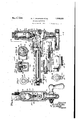
- Fig. 1 is a. vertical section of a fluid heaterl having a burner and a pilot and 'our improved mechanismassociated with the latter for controlling the supply of combustible medium tothe burner.
- Fig. 2 is aA fragmentarysectional view of parts shown in Fig. 1, enlarged. n
- Fig. 8 is a fragmentary section of the thermostat. valve operating mechanism and valve, the parts shown being similar to those shown in Fig. 2. but disposed in the position they occupy after the pilot is extinguished and the valve is closed.
- Fig. 4 is a section on the line l-4 of Fig. 3.
- F Figa 12 is a, section on the line 12-12 of 1g. 11.
- Fig. 13 is a fragmentary View of a further modified form of construction.
- Fig. 14 is a section on the line 11i- 14 of Fig. 13.
- 1 indicates a burner for a .suitable combustible medium such as oil or gas for illuminating or heating purposes.
- the burner 1 is constructed to burn natural or artificial gas supplied by conduit or pipe 2, preferably formed integrally with the walls of the burner 1.
- the burner 1 may be of any desired construction, thatshown in the drawings having a plurality of jets on its upper face.
- the outer end of the conduit 2 is shaped to form a suitable mixin chamber 3 into which the gas is supplie
- the chamber 'wall is provided with a bridge 8a on which a plate 5 is adjustably mounted to regulate the air supply in a well known manner.
- the bridge 3a is'provided centrally with a hollow boss 3a through which extends the nozzle 6 of a valve 7.
- the burner 1 is shown associated with a water heater 8 of the storage type wherein the water is heated to and maintained at approximately a predetermined temperature for heating or service purposes.
- the supply of gas is controlled by the temperature of the water in the heater through a smtable thermostat 9, so that when the water in the container cools by radiation or bythe use of the heated water and its replacement with cold water, the burner is supplied with gas and serves to heat the water to the desired temperature, whereupon the gas supply is cut oft.l
- our invention may be used in connection with any kind or type of fluid burner, whether it is used for lighting or heating purposes, we have used it most adaround the thermostat and the valve actuated thereby is provided, so that a relatively low iame will burn from the burner to serve as a pilot there-for when the full gas supplyis admitted thereto by the thermostat, and in other forms the by-pass leads toy a separate pilot jet close to the burner.
- the thermostat upon the .lowering of temperature of the fluid in the container, will open the valve controlled or lactuated by it and allow the full supply of gas to flow to the burner, and as the pilot flame of the burner or pilot, as the case may be, is out', this gas will escape and be wasted. and possibly .result in an explosion and damage therefrom'or fatal consequences .to persons in the house in which the apparatus is installed.
- Our invention has for its purpose the cutting off of the entire gas supply to the burner, in the event the pilot flamein 'either of the forms of construction 'referred to is extinguished to prevent waste and other resulting damage.
- a separate pilot gas supply pipe 4 is associated' with the burner 1, its jet 4a being arranged adjacent and slightly above one edge of the-latter, to ignite the gas when admitted to the burner.
- the heater 8 comprises a suitable container 8a having a suitable. insulationjacket 8b and a skirt 10 forming 'a fire-chamber 10a in which the .burner 1 is mounted.
- 11 indicates a suitable spreader mounted in the bottom of the container and in operative'frelation to the burner 1 and connected through thev container bottom with the interior thereof. 11a vis a suitable ⁇ drain pipe.
- 12 indicates the water supplypipe and 13 indicates the discharge pipe leading to various lpoints in a service or heating system.
- 14 indicates a iue preferably leading from the fire chamber 10a through the bottom and top walls of the container 8a.
- the pipe 4 is connected to the gas supply pipe 15 above the main thermostat 9.
- the construction of the thermostat 9 is not illus- 1; likewise, upon the fall in temperature of the water in the container 8a the thermostat 9 will open the valve and admit gasto the burner 1.- A
- the supply pipe 15 leads to and is connected withV an inlet nipple or tubular portion 16 of a casing 17.
- the opposite wall of the casing 17 is'provided with an outlet nipple 18 conn'ected with the valve 7, preferably directly to its inlet branch 7a.
- the thermostat casing, pipe 15, casing 17 and valve 7 constitute the gas supply means to the mixing chamber 3 and burner 1.
- the inner Wall of the inlet nipple 16 is preferably provided with screw threads to permit the mounting therein ofl a pipe section 19.
- the upper end of thepipe section is connected to the adjacent end of the pipe 15 in any desired manner, for example by a union 20.
- the lower end of the pipe section 19 is tapered and ground to form a valve seat 21 with which a valve element 22 (preferably a ball) engages to close off the supply of gas and disengages to permit the gas to flow to the burner.
- the casing 17 is enlarged, as shown at 17 a, to provide a suitable space therewithin for a linkage, indicated as an entirety 23, acted upon bythe thermostat elements 24, 25,
- the thermostat elements, 24, 25, comprise a rod and a tube, respectively.
- the valve element 22 is below its seat 21 and moves upwardly to engage therewith and close the valve; and the tube 25 is formed of a suitable metal (such as copper) which has a relatively high co-eiiicient of expansion and the rod 24 is formed of a material which has a substantially zero co-eficient of (expansion.
- the outer ends of the thermostat elements are adjustably connected together in the manner to be later set forth, Whereas the inner end of the tube 25 is fiXedly moiuited on the wall of the enlarged portion 17 a and the inner end of the rod 24 ⁇ operatively engages one of the levers of the linkage 23 ,to reffect its movement in one direction or the other.
- Theinner end of the'tube-25' is preferably mounted in thel end wall u17 of the enlarged portion 17a of the casing, in the following manner, so that the inner end of the rod 24- may extend through an opening 26 formed in such wall for engagement with .the vlinkage ,23; the end wall .17 vis thickened and the outer portion ⁇ of the opening -26 .is enlarged,
- the bottom of the-enlarged hollow plug has a conical end wall which fits against the flared walls of the tube 25, so that Vwhen the plug 29 is tightened it clamps the inner end of the tube 25 against the surface 28 and thus insures a liquid tight and rigid connection between the tube and casing wall.
- ⁇ a plug 30 fixed in any' desired manner in the end of the tube 25 and having a threaded opening 31 through it to receive the threaded portion 32 of the rod 24,
- Vthermo-elements 24, 25, may be mounted in any position relativeto the pilot jet whereby'the heat of the latter will maintain the tubev 25 in expanded condition, but by preference the gas supply pipe 4 extends slightly belowv and parallel tothe tube 25.
- thermoelements do not obstruct the heat' and prode ucts of 'combustion from the burner 1 .and
- thermo-elements provision is readily made ⁇ for protecting -the thermo-elements from undue heating which would affect their tensile strength and otherwise damage the metal.
- I provide a guard device 34 which is so constructed and associated with the pilot jet 4a that the flame therefrom cannot play on or contactl with the metal of the tube 25.
- the guard device 34 consists of a relatively thick brass disk 34a (see Figs. Sand 7 )y having a diameter somewhat larger than that of the tube 25 and interposed between the nut 33 and. outer'end of the tube 25 and in'contact with the hollow plu The lower portion ofthe disk 34a is exten ed and formed with an opening 35 through which the pipe 4' extends. 'In this arrangement the pilot'jet 4a is beyond the'guard 34a and the latter guards the tube from the flame and excess'ive heat.
- the jet 4a extends far enough beyond' the guard 34a to direct itsflame on the nut 33, so that the guard 34a as well as the tube 25 is heatedby conduction and radiation.4
- a relatively large wall area is provided to enable 4the excessive heat to quickly radiate and not effect'overheating of the tube 25.l .
- the nut 33 may be'closed'on its outer side andthusform ar capfor the rod end. ⁇ The nut 33 removably secures the guard in position. f
- the pilot jet may be disposed below the outer portion of the tube 25 and the lower portion of the guard is extended inwardly Abelow thev tube and its lateral portions, as
- the extended portion 346 is substantially semi-circular in cross section and its inner end carries a depending wingv37 formed with an opening 37a through which the pilot pipev 4 extends.
- guard device In.either form of guard device where it is found that the tube 25 isunduly heated, we may provide between it and the adjacent parts a Wall of suitable'insulation vmaterial .38, such as asbestos, which serves toretard heat conduction to the tube.
- a Wall of suitable'insulation vmaterial .38 such as asbestos, which serves toretard heat conduction to the tube.
- This form of construction is shown in'Fig. 10, l,the in sulation wall38 being shown between the inner face of the disk portion 34a and the tube end and between the inwardly extended portion 346 and sides of the tube.
- the insulation wall 38 may be 'of any desired thickness. If desired, the heat retarding member 38 may be removed and another member of greater or lesser thickness or having a greater or lesser co-eicient of heat conductivity substituted.
- Each guard device or member 34 herein shown is formed with an opening 39 through.
- the linkage 23 is shown 'as comprising two I links 23a., 23b (the former constituting a lever) having operative engagement with the walls of the casing 17 or 17a and pivotally connected together so that when .their pivoted together portions are articulated about their respective points of engagement with the casing, and the outer end of the long arm 23a of the relatively long arc.
- the engagement of the lever 23a with the casing is provided by a transverse shaft 39 supported by the side walls of the casing portion 17a, this shaft serving to support the link 23a and also the link 23?), and the engagement of .the latter link with the casing-17 is provided by an abutment 40.
- the abutment 40 preferably consists of a pin having a screw threaded portion fitted into a threaded opening 41 formed in the casing wall.
- the ro-d 40 may be rotated to adjust its free end to regulate the movement of the links and through them adjust the seating and unseating of the valve element 22.
- the inner end of the thermorod 24 is arranged to engage one of the links, preferably thelink 231) to cause their mo'vement -about the shaft 39 and abutment 40 and relative to each other.
- the inner e-nd of the member 39a is formed with an axial opening 390 ⁇ and the inner end of the member 39bis reduced to form a pivot 396 which extends through an opening'in the link 23a .and into the opening 390.
- the shoulder formed bythe reduced pivot portion 39?/- and the inner end of the member 39a engage the opposite sides of the link 23a, to maintain it in position and against lateral movement.
- thermo-rod 2 4 and link23b The connectionbetween the inner end of the thermo-rod 2 4 and link23b is preferably of the ball and socket type, that is, the rod end is rounded and the adjacent link 231) fis formed with a. spherical socket ⁇ 42 into 1 concentric relation to theopening 26 and tube which the rounded rod end fits, this construction serving to connect these parts together and tosuppert the inner end of the rod in 2 5. No claim is made herein to this form of lconnection as vit forms the subject-matter of a co-.pending application Serial No. 7 8,886 filed link or lever 23a will swing througha'
- the shaft 39 preferably consists of two members 39a, 395,
- the base 44 is provided with a depending lug 46 'which fits between bifurcations provided on the end of 'the arm 23a.
- the lug 46 is pivoted on a cross pin 47 supported by the bifurcations.
- the spring 45 is interposed between the base. 44 and valve element 22 and engagesl and supports the latter to move it toward and from its seat.
- the valve element 22 is guidedvertically that is, axially of the valve seat 21, by ribs 50.
- the supy ply pipe 15 leads directly to the pipe-19. and latter is in line with the valve element 22. If desired, provision may be made for protectingthe valve'element and itsseat from foreign matter and the heavier ingredients containedin the gasso that they will not accumulate thereonl and prevent the closing of the valve, for example, as shown in Figs. 11 to 14, inclusive.
- the casing 17 b is provided near itsnpper portion and-below the inlet pipe 19 ywith an annular wall 17 c having on its lower surface a collar 21 forming a suitable seat for the valve'ele'ment-22. Disposed above and in.
- dome member 13 17d being interposed in the path of the gas 'y ao fiowing ⁇ from the inlet or supply pipe to the ⁇ valve opening, serves to collect on its surface those heavy ingredients 'which would otherwise have a tendency to accumulate on the valveelement and prevent its effective clos- In Fi s. 13 and 14, that portion of the casing 17a/zv etween the boss 16:1: for the supply pipe (not shown) and valve seat 21m and valve element 22a: is offset, as shown at 17m.
- a reservoir is provided in thepath of the gas to permit the accumulation in said offset of these heavyingredif ents or foreign matter so that the same will not flow toV and lodge on theivalve 22m and affect its seating.
- the wall 17m is provided withy an upstanding flange 17f lwhich serves to prevent the fiow of such material off of the wall 17 m.
- the lower portion of the casing 17m is preferably also off-I setto position the boss 18m for the gas ⁇ connecting pipe (not-shown) in line with the boss 16m.
- tendency o f the heavy ingredients and foreign material in thegas clogging the valve and preventing seating of the valve element is materially reduced oreliminated.
- control mechanism operates in a positive manner to close the valve element 22-against its seat and to release the valve therefrom, permitting its weight supplemented bythe pressure of the gas to unseat it.
- the operating-mechanism acts infa positive manner on the valve element 22, it will be understood that'even if the pilot .burns for an indefinite period, perhaps for man months and longer without being extinguis ed (during which period of time the thermostat elements, the linkage 23 and valve.elementthe latter open-remain stationary), such mechanism will, upon the going out of the pilotflame, positively and quickly operate the valve and shut off the gas.
- valve element is below its valve seat andthe movement of the arm 23a f thrusts it positively against the fseat, the
- the seat 21 may be tapered and ground to provide a substantially knife edge seat.
- Y 51 indicates a guard de endingfrom the upper wall 17av and strad ling the lever arm 23a at a point 'beyondits pivot, vso that the ""gasnflowingthrough the casing 17 will be' directed ⁇ away from the ivot'39 and thus reduce the tendency of eavy and foreign materials in the gas to accumulate in the casing.
- . 52 lindicates a device for supplying air to the gas which is burned from the jet 4a. This device serves to mix air with the gas to support combustion and is so constructed that (l) the air is heated prior to mixing and (2) 'danger of back firing at the air inlet ports is eliminated.
- the'device 52 is shown in section in connection with one of the modified embodiments (Fig. 10), but it will be understood that the device shown in Figs. l and 2 is similarly constructed.
- 53 indicates a plug or body member formed with openings v in its opposite ends in aligned relation to receive the adjoining ends of the pipe sections 4', 4m.
- the body member is ⁇ formed with a tapered opening 54 forming lan injector leadingcentrally into the pipe section 4m.
- 55 indicates a plurality of air i11- let ports formed in the pipe section 4.a' adjacent the injector opening 54.
- 56 indicates a wall surrounding the pipe section 4m and in spaced relation thereto and connected with the body member 53 at one end. The wall 56 extends longitudinaly of the pipe section 4x and in concentric relation thereto to a point remote from the a'ir inlet ports so that the air entering its open end will travel a relatively long distance'l before mixing with the gas.
- the'wall and plug 53 close the annular spacearound the pipesection on that side of the air inlet vports 55 remote from the pilot jet 4a and the wall extends to the otherside of these ports or toward the pilot jet a relatively long distance.
- valve having a downwardly facing ⁇ seat and the valve element therefor being disposed between the seat and said voperating means, whereby the latter' forces the valve element against its ⁇ seat when operated in a direction opposite to both gravity and the fiow of the combustible medium.
- combination-of a burner a supply pipe for a combustible medium connected I t said burner, means for providinga pilot flame for said burner, a thermostat mechanism interposed in said supply pipe and having thermoelements disposed in the heat zone of the pilot fiame, operating means operatively con- A nected with one of said elements, a valve actuated by said operating means for control- Ilingl the vflow of the combustible medium through said pipe, said valve having a downwardly facing seat and the valve element therefor being disposed beneath the seat and above said operating means, and a compression spring interposed between said operating means and said valve element to compensate. for the movement of said operating means after the valve element is seated.
- a burner a supplyplpe for a combustible medium connected to said burner, means for providing a ilot fiame for said burner, a thermostat mecl anism interposed in said supply pipe and having thermo-elements disposed in the heat zone of the pilot y flame, operating means operatively connected with one of said elements, a valve actuated by said operating means for controlling the flow of the combustible medium through said pipe', the valve element of said valve comprising a ball'and the operating means including a lever for operating said ball, ⁇ means Yfor guiding the ball toward and from its seat in a vsubstantially axial direction, and a yieldable device between said ball and said lever on theopposite side of the ball.
- aburner a supply pipe for a combustible medium connected to said burner, means for providing a pilot flame for said burner, avalve in said pipe, a thermostat mechanism.l having thermo-elements, a por tionI of said elements being disposed in the heat ⁇ zone of the pilot flame, operating means operatively connected with one of s to automatically close-and open the latter,
- said .guard comprising a. plate'transversely of the outer endsof? said elements in contact therewith and having v id elev ments and the valve element of sai valve- ⁇ combination of a burner, a'supply pipe for a combustible medium connected to said burner, means for providing a pilot ame for said burner, a valve in said pipe, a thermostat mechanism comprising concentrically arranged thermo-.elements having their inner ends disposed in the heat zone of the pilot flame, operating means operatively connected with one of said elements and the valve element of said valve to automatically close and open the latter, and heat guard comprising a plate fitting over the inner thermo-element and engaging the outer element and a device threaded on the inner element and clamped against said plate and serving toconnect the thermo-elements and. plate together.
- thermoelements comprising a device mounted on the inner end of the outer -element and having a portion bent back below the lower side thereof.
- thermo-elements disposed in the heat zone of the pilot flame, and comprising a tube connected at its 7.
- the l rod in engagement with the outer end of the p tube and a nut enclosing the free end of the rod and engaging said plate.
Landscapes
- Engineering & Computer Science (AREA)
- Physics & Mathematics (AREA)
- General Physics & Mathematics (AREA)
- Automation & Control Theory (AREA)
- Chemical & Material Sciences (AREA)
- Combustion & Propulsion (AREA)
- Mechanical Engineering (AREA)
- General Engineering & Computer Science (AREA)
- Feeding And Controlling Fuel (AREA)
Description
May 3, 1932- s. J. L ONERGAN ET Al. 1,856,489
CONTROL MECHANISM Filed May 28. 1927 s Sheets-sheer lill 'Il l May 3, 1932- s. J. LONERGAN ET AL l 1,856,489.
CONTROL MEGHANI SM Filed May 28 1927 .'5 Sheets-Sheet 3 #"R fmefm Y (BJ mygormey Patented May` 3, 1932";y i
UNITED STATEAS PATENTy OFFICE SIMON J. LONERGAN AND HOWARD E. GINTHEB., OF LA PORTE, INDIANA, ASSIGNOR T BASTIAN-MORLEY C0., 0F LA PORTE, INDIANA, A CORPORATION 0F INDIANA.
CONTROL MECHANISM lApplicataon`led May 28, 1927. Serial No. 194,987.
` This invention relates to aburner for-a combustible fluid, more particularly to an improved means dependent on the burning or non-burning ofa pilot jet or flame to control the fluid supply to the burner.
One object of the invention is to provide an improved valve operating mechanism and a control means therefor associated with the burner or a pilotl therefor, whereby the combustible medium 1s cut off in the event the flame serving as a pilot goes out accidentally or otherwise.
Another object of the invention is to provide an improved valve mechanism under control of a' pilot flame and capable of operating positively and quickly, wherebythe inaction of the valve and its mechanism .for a long period of time does not affect its action when the pilot flame goes ont.-
Another object ofthe invention is to associate with a rfluid burner and the combustible fluid supply therefor, an improved thermostatically operated valve mechanism arranged to positively cut off the `fluid supply in the event the pilot flame becomes extinguished.
Another object of the invention is to provide a thermostat mechanism for controlling the fluid supply to a burner and to associate withthe thermo elements of such mechanism a suitable heat guard or spreader to prevent overheatingr of such elements.
Other objects of the invention will be apparent to those skilled in the artv to which ourl invention relates from the following description taken in connection with the accompanying drawings, wherein Fig. 1 is a. vertical section of a fluid heaterl having a burner and a pilot and 'our improved mechanismassociated with the latter for controlling the supply of combustible medium tothe burner.
Fig. 2,'is aA fragmentarysectional view of parts shown in Fig. 1, enlarged. n
Fig. 8 is a fragmentary section of the thermostat. valve operating mechanism and valve, the parts shown being similar to those shown in Fig. 2. but disposed in the position they occupy after the pilot is extinguished and the valve is closed.
Fig. 4 is a section on the line l-4 of Fig. 3.
View, partly' in showing another form of construcsimilar to F ig. 3, but showing a different form of construct-ion. F Figa 12 is a, section on the line 12-12 of 1g. 11. Fig. 13 is a fragmentary View of a further modified form of construction.
Fig. 14 is a section on the line 11i- 14 of Fig. 13.
In the drawings, 1 indicates a burner for a .suitable combustible medium such as oil or gas for illuminating or heating purposes.
In the illustrated adaptation of our invention, the burner 1 is constructed to burn natural or artificial gas supplied by conduit or pipe 2, preferably formed integrally with the walls of the burner 1. The burner 1 may be of any desired construction, thatshown in the drawings having a plurality of jets on its upper face. The outer end of the conduit 2 is shaped to form a suitable mixin chamber 3 into which the gas is supplie The chamber 'wall is provided with a bridge 8a on which a plate 5 is adjustably mounted to regulate the air supply in a well known manner. The bridge 3a is'provided centrally with a hollow boss 3a through which extends the nozzle 6 of a valve 7.
In the application of our invention herein chosen for illustration, the burner 1 is shown associated with a water heater 8 of the storage type wherein the water is heated to and maintained at approximately a predetermined temperature for heating or service purposes. In this form of construction the supply of gas is controlled by the temperature of the water in the heater through a smtable thermostat 9, so that when the water in the container cools by radiation or bythe use of the heated water and its replacement with cold water, the burner is supplied with gas and serves to heat the water to the desired temperature, whereupon the gas supply is cut oft.l While our invention may be used in connection with any kind or type of fluid burner, whether it is used for lighting or heating purposes, we have used it most adaround the thermostat and the valve actuated thereby is provided, so that a relatively low iame will burn from the burner to serve as a pilot there-for when the full gas supplyis admitted thereto by the thermostat, and in other forms the by-pass leads toy a separate pilot jet close to the burner. In the event the burner in the first mentioned form of construction or the pilot in .the second mentioned form of construction 'is extingushed, the thermostat. upon the .lowering of temperature of the fluid in the container, will open the valve controlled or lactuated by it and allow the full supply of gas to flow to the burner, and as the pilot flame of the burner or pilot, as the case may be, is out', this gas will escape and be wasted. and possibly .result in an explosion and damage therefrom'or fatal consequences .to persons in the house in which the apparatus is installed. Our invention has for its purpose the cutting off of the entire gas supply to the burner, in the event the pilot flamein 'either of the forms of construction 'referred to is extinguished to prevent waste and other resulting damage. In the illustrated arrangement, a separate pilot gas supply pipe 4 is associated' with the burner 1, its jet 4a being arranged adjacent and slightly above one edge of the-latter, to ignite the gas when admitted to the burner.
In the illustrated construction, the heater 8 comprises a suitable container 8a having a suitable. insulationjacket 8b and a skirt 10 forming 'a fire-chamber 10a in which the .burner 1 is mounted. 11 indicates a suitable spreader mounted in the bottom of the container and in operative'frelation to the burner 1 and connected through thev container bottom with the interior thereof. 11a vis a suitable `drain pipe. 12 indicates the water supplypipe and 13 indicates the discharge pipe leading to various lpoints in a service or heating system. 14 indicates a iue preferably leading from the fire chamber 10a through the bottom and top walls of the container 8a.
The pipe 4 is connected to the gas supply pipe 15 above the main thermostat 9. The construction of the thermostat 9 is not illus- 1; likewise, upon the fall in temperature of the water in the container 8a the thermostat 9 will open the valve and admit gasto the burner 1.- A
From the casingof the thermostat 9 the supply pipe 15 leads to and is connected withV an inlet nipple or tubular portion 16 of a casing 17. The opposite wall of the casing 17 is'provided with an outlet nipple 18 conn'ected with the valve 7, preferably directly to its inlet branch 7a. As will be understood the thermostat casing, pipe 15, casing 17 and valve 7 constitute the gas supply means to the mixing chamber 3 and burner 1. The inner Wall of the inlet nipple 16 is preferably provided with screw threads to permit the mounting therein ofl a pipe section 19. The upper end of thepipe section is connected to the adjacent end of the pipe 15 in any desired manner, for example by a union 20. The lower end of the pipe section 19 is tapered and ground to form a valve seat 21 with which a valve element 22 (preferably a ball) engages to close off the supply of gas and disengages to permit the gas to flow to the burner. The casing 17 is enlarged, as shown at 17 a, to provide a suitable space therewithin for a linkage, indicated as an entirety 23, acted upon bythe thermostat elements 24, 25,
to actuate the valve element 22. The thermostat elements, 24, 25, comprise a rod and a tube, respectively. In the form of construction shown in Figs. 1, 2 and`3, the valve element 22 is below its seat 21 and moves upwardly to engage therewith and close the valve; and the tube 25 is formed of a suitable metal (such as copper) which has a relatively high co-eiiicient of expansion and the rod 24 is formed of a material which has a substantially zero co-eficient of (expansion. The outer ends of the thermostat elements are adjustably connected together in the manner to be later set forth, Whereas the inner end of the tube 25 is fiXedly moiuited on the wall of the enlarged portion 17 a and the inner end of the rod 24 `operatively engages one of the levers of the linkage 23 ,to reffect its movement in one direction or the other. The outer portion or end of the thermostat elements 24,25,
is associated with or disposed in the heat zone of the pilot flame 4a whereby the heat therefrom will affect these elements to' maintain the valve 22 open. Under normal conditions, that is, with the pilot-jet 4a lighted as shown iet- inIiigs. .lv and 2, the tubeis expanded and the rod 24 is'moved thereby endwise toward the left (asviewed in Figs. l, 2 and 3), thus releasing `pressure lon the linkage 23 and permlttlng it, due to its weight, the weight of the valve element 22 and pressure of the gas thereon, to swing downwardly and allowing l the valve element 22 to disengagethe valge seat 21, as shown in Fig. 2, and the gas to pass the valve to the burnery 1. In the event the pilot fialne becomes extinguished, by accident orotherwise, the contraction of the element Will effect movement of the rod 24` in' the opposite direction and it in turn through the linkage 23 Willmove the valve y element 22 against its seat 21, as shown in F i'gs. 3 and 4, and hence positively-shut oli` the gas supply.
Theinner end of the'tube-25'is preferably mounted in thel end wall u17 of the enlarged portion 17a of the casing, in the following manner, so that the inner end of the rod 24- may extend through an opening 26 formed in such wall for engagement with .the vlinkage ,23; the end wall .17 vis thickened and the outer portion`of the opening -26 .is enlarged,
as shown at 27. AThe bottom of the-enlarged hollow plug'has a conical end wall which fits against the flared walls of the tube 25, so that Vwhen the plug 29 is tightened it clamps the inner end of the tube 25 against the surface 28 and thus insures a liquid tight and rigid connection between the tube and casing wall.
. Thel adjustable connection .between the- @outer ends of the thermo- elements 24, 25,
preferably comprises `a plug 30 fixed in any' desired manner in the end of the tube 25 and having a threaded opening 31 through it to receive the threaded portion 32 of the rod 24,
' and a locking nut 33.
' The Vthermo- elements 24, 25, may be mounted in any position relativeto the pilot jet whereby'the heat of the latter will maintain the tubev 25 in expanded condition, but by preference the gas supply pipe 4 extends slightly belowv and parallel tothe tube 25.
and the latter is arranged s o lthat its outer end terminates in close proximity -to the pilot jet 4a. In this arrangement (1) the thermoelements do not obstruct the heat' and prode ucts of 'combustion from the burner 1 .and
(2) provision is readily made `for protecting -the thermo-elements from undue heating whichwould affect their tensile strength and otherwise damage the metal. For this latter purpose I provide a guard device 34 which is so constructed and associated with the pilot jet 4a that the flame therefrom cannot play on or contactl with the metal of the tube 25.
As avresult the tube is heated by conduction.
by its contact directly or indirectly with such device or byradiation of heat therefrom. In one form the guard device 34 consists of a relatively thick brass disk 34a (see Figs. Sand 7 )y having a diameter somewhat larger than that of the tube 25 and interposed between the nut 33 and. outer'end of the tube 25 and in'contact with the hollow plu The lower portion ofthe disk 34a is exten ed and formed with an opening 35 through which the pipe 4' extends. 'In this arrangement the pilot'jet 4a is beyond the'guard 34a and the latter guards the tube from the flame and excess'ive heat. By preference, the jet 4a extends far enough beyond' the guard 34a to direct itsflame on the nut 33, so that the guard 34a as well as the tube 25 is heatedby conduction and radiation.4 In this latter arrangement, a relatively large wall area is provided to enable 4the excessive heat to quickly radiate and not effect'overheating of the tube 25.l .To protect the outer end of the rod 24, the nut 33, may be'closed'on its outer side andthusform ar capfor the rod end.` The nut 33 removably secures the guard in position. f
In anotherform of heat guard (see Figs. 8 and 9) the pilot jet may be disposed below the outer portion of the tube 25 and the lower portion of the guard is extended inwardly Abelow thev tube and its lateral portions, as
shown at 346. In this form of construction:
the extended portion 346 is substantially semi-circular in cross section and its inner end carries a depending wingv37 formed with an opening 37a through which the pilot pipev 4 extends.
In.either form of guard device where it is found that the tube 25 isunduly heated, we may provide between it and the adjacent parts a Wall of suitable'insulation vmaterial .38, such as asbestos, which serves toretard heat conduction to the tube. This form of construction is shown in'Fig. 10, l,the in sulation wall38 being shown between the inner face of the disk portion 34a and the tube end and between the inwardly extended portion 346 and sides of the tube. The insulation wall 38 may be 'of any desired thickness. If desired, the heat retarding member 38 may be removed and another member of greater or lesser thickness or having a greater or lesser co-eicient of heat conductivity substituted. Each guard device or member 34 herein shown is formed with an opening 39 through.
which the rod 24 extends and the nut serves 'to removably secure the device in rigid pos1-1 tion, and where the device is lined with insulation or heat reta'rding material it also jper its the latter to be removed.. Accordingly, ither or both may be replaced by devices of a different thicknessior formedofV mateity.
The linkage 23 is shown 'as comprising two I links 23a., 23b (the former constituting a lever) having operative engagement with the walls of the casing 17 or 17a and pivotally connected together so that when .their pivoted together portions are articulated about their respective points of engagement with the casing, and the outer end of the long arm 23a of the relatively long arc. By mounting the valve element 22 on the free end of the arm 23a', slight movement Lof the links relative to each other will effectively control the valve element 22 with respect toits seat. The engagement of the lever 23a with the casing is provided by a transverse shaft 39 supported by the side walls of the casing portion 17a, this shaft serving to support the link 23a and also the link 23?), and the engagement of .the latter link with the casing-17 is provided by an abutment 40. The abutment 40 preferably consists of a pin having a screw threaded portion fitted into a threaded opening 41 formed in the casing wall. The ro-d 40 may be rotated to adjust its free end to regulate the movement of the links and through them adjust the seating and unseating of the valve element 22. The inner end of the thermorod 24 is arranged to engage one of the links, preferably thelink 231) to cause their mo'vement -about the shaft 39 and abutment 40 and relative to each other.
threaded and removably mountedin aligned threaded openings 39a ormed in the side walls of the casing portion 17a (see Fig. 6). The inner e-nd of the member 39a is formed with an axial opening 390` and the inner end of the member 39bis reduced to form a pivot 396 which extends through an opening'in the link 23a .and into the opening 390. As shown, the shoulder formed bythe reduced pivot portion 39?/- and the inner end of the member 39a engage the opposite sides of the link 23a, to maintain it in position and against lateral movement.
The construction of the linkage and its mounting in the casing hereinV show n by way of examplev is substantially similar to the construction described and claimed in Letters- Patent No. -1,402,189 granted to M.
Thomas. The connectionbetween the inner end of the thermo-rod 2 4 and link23b is preferably of the ball and socket type, that is, the rod end is rounded and the adjacent link 231) fis formed with a. spherical socket` 42 into 1 concentric relation to theopening 26 and tube which the rounded rod end fits, this construction serving to connect these parts together and tosuppert the inner end of the rod in 2 5. No claim is made herein to this form of lconnection as vit forms the subject-matter of a co-.pending application Serial No. 7 8,886 filed link or lever 23a will swing througha' The shaft 39 preferably consists of two members 39a, 395,
' the ing an annular seat around the latter for the end convolution of a coiled spring 4,5. The base 44 is provided with a depending lug 46 'which fits between bifurcations provided on the end of 'the arm 23a. The lug 46 is pivoted on a cross pin 47 supported by the bifurcations. The spring 45 is interposed between the base. 44 and valve element 22 and engagesl and supports the latter to move it toward and from its seat. The valve element 22 is guidedvertically that is, axially of the valve seat 21, by ribs 50.
48 indicates a washer engaging the lower convolution of the spring 45 and engaged by the head vofa screw 49 threaded into an opening in the boss 44a, these elements servingto connect the spring to the base. convolution is not fixed to the base 44 by the washer 48, but is preferably loosely connected thereto so that its upperend may' swing laterally on the base and thus permit it to more freely accommodate itself to the valve element 22, which is guided vertically to and from its seat 21 bythe guide ribs 50, as the lever arm 23a swings about-its fulcrum or shaft 39. The convolutions of the spring The spring are shaped to form a substantially conical coil, so that its upper or enlarged end will form a receptacle to support the ball when unseated. By providing a spring between the leverarm 23a and valve element 22, theV movement of the arm about its pivot may continue, after seating of the valve, Without .movement of the lever arm 23a', thus insuring the closing of the valve relatively soon after the pilot becomes extinguished and saving of gas.
' In the form of construction shown, the supy ply pipe 15 leads directly to the pipe-19. and latter is in line with the valve element 22. If desired, provision may be made for protectingthe valve'element and itsseat from foreign matter and the heavier ingredients containedin the gasso that they will not accumulate thereonl and prevent the closing of the valve, for example, as shown in Figs. 11 to 14, inclusive. Referring 12, the casing 17 b is provided near itsnpper portion and-below the inlet pipe 19 ywith an annular wall 17 c having on its lower surface a collar 21 forming a suitable seat for the valve'ele'ment-22. Disposed above and in.
to Figs.l 11 and The dome member 13 17d being interposed in the path of the gas 'y ao fiowing `from the inlet or supply pipe to the `valve opening, serves to collect on its surface those heavy ingredients 'which would otherwise have a tendency to accumulate on the valveelement and prevent its effective clos- In Fi s. 13 and 14, that portion of the casing 17a/zv etween the boss 16:1: for the supply pipe (not shown) and valve seat 21m and valve element 22a: is offset, as shown at 17m. In thisarrangement,.a reservoir is provided in thepath of the gas to permit the accumulation in said offset of these heavyingredif ents or foreign matter so that the same will not flow toV and lodge on theivalve 22m and affect its seating.` By preference, the wall 17m is provided withy an upstanding flange 17f lwhich serves to prevent the fiow of such material off of the wall 17 m. The lower portion of the casing 17m is preferably also off-I setto position the boss 18m for the gas` connecting pipe (not-shown) in line with the boss 16m. In the forms of'constuctionV just referred to, tendency o f the heavy ingredients and foreign material in thegas clogging the valve and preventing seating of the valve element is materially reduced oreliminated.
From the foregoing description it will be seen that the control mechanism operates in a positive manner to close the valve element 22-against its seat and to release the valve therefrom, permitting its weight supplemented bythe pressure of the gas to unseat it. As the operating-mechanism acts infa positive manner on the valve element 22, it will be understood that'even if the pilot .burns for an indefinite period, perhaps for man months and longer without being extinguis ed (during which period of time the thermostat elements, the linkage 23 and valve.elementthe latter open-remain stationary), such mechanism will, upon the going out of the pilotflame, positively and quickly operate the valve and shut off the gas.
.In thepreferred forms of construction, as shown herein, the valve element is below its valve seat andthe movement of the arm 23a f thrusts it positively against the fseat, the
-spring serving as a yieldable member between the arm and valve element. As a result the longer the movement of the arm the greater the pressureof the valve element against the sea-t, s o that in the event any material accu- `mulates on the valve element the pressure on the valve will tend to displace Ait therefrom. To. insure seating, the seat 21 may be tapered and ground to provide a substantially knife edge seat. Y 51 indicates a guard de endingfrom the upper wall 17av and strad ling the lever arm 23a at a point 'beyondits pivot, vso that the ""gasnflowingthrough the casing 17 will be' directed` away from the ivot'39 and thus reduce the tendency of eavy and foreign materials in the gas to accumulate in the casing.
. 52 lindicates a device for supplying air to the gas which is burned from the jet 4a. This device serves to mix air with the gas to support combustion and is so constructed that (l) the air is heated prior to mixing and (2) 'danger of back firing at the air inlet ports is eliminated. For convenience, the'device 52 is shown in section in connection with one of the modified embodiments (Fig. 10), but it will be understood that the device shown in Figs. l and 2 is similarly constructed. Of the device 52, 53 indicates a plug or body member formed with openings v in its opposite ends in aligned relation to receive the adjoining ends of the pipe sections 4', 4m. Be-
tween these pipe ends the body member is` formed with a tapered opening 54 forming lan injector leadingcentrally into the pipe section 4m. 55 indicates a plurality of air i11- let ports formed in the pipe section 4.a' adjacent the injector opening 54. 56 indicates a wall surrounding the pipe section 4m and in spaced relation thereto and connected with the body member 53 at one end. The wall 56 extends longitudinaly of the pipe section 4x and in concentric relation thereto to a point remote from the a'ir inlet ports so that the air entering its open end will travel a relatively long distance'l before mixing with the gas. In the preferredconstruction the'wall and plug 53 close the annular spacearound the pipesection on that side of the air inlet vports 55 remote from the pilot jet 4a and the wall extends to the otherside of these ports or toward the pilot jet a relatively long distance. Y
In our construction it will be noted that the main thermostat mechanism 9 and the e thermostat mechanism under control of the pilot lflame are interposed in the gas supply pipe 15 but at different points and are operated independenly of each other by different heated mediums.
To thosev skilled in the art to which our invention relates many changes in construction and Widely differing vembodiments and applications of our invention will suggest themselves without departing from the spirit and scope thereof. Our disclosures and the description herein are purely illustrative and are not intended to be in any sense limiting.
What we claim is:
1. In apparatus of the class described, the combination of a. burner, a supply pipe for a combustible medium connected to said burner, means for providing a pilot fiame for said burner, a thermostat mechanism interposed in said supply pipe and having thermoelements disposed in the heat zone of thc pilot dame, operatingvmeans operatively connected with 'one'of said elements, and a valve actuated by said operating means for con- '..trollng the flow of the combustible medium .Noma-WMV,
through said pipe, said valve having a downwardly facing` seat and the valve element therefor being disposed between the seat and said voperating means, whereby the latter' forces the valve element against its` seat when operated in a direction opposite to both gravity and the fiow of the combustible medium.
2.' In apparatus of the class described, the
', combination-of a burner, a supply pipe for a combustible medium connected I t said burner, means for providinga pilot flame for said burner, a thermostat mechanism interposed in said supply pipe and having thermoelements disposed in the heat zone of the pilot fiame, operating means operatively con- A nected with one of said elements, a valve actuated by said operating means for control- Ilingl the vflow of the combustible medium through said pipe, said valve having a downwardly facing seat and the valve element therefor being disposed beneath the seat and above said operating means, and a compression spring interposed between said operating means and said valve element to compensate. for the movement of said operating means after the valve element is seated.
3. In apparatus of the class described, the
combination of a burner, a supplyplpe for a combustible medium connected to said burner, means for providing a ilot fiame for said burner, a thermostat mecl anism interposed in said supply pipe and having thermo-elements disposed in the heat zone of the pilot y flame, operating means operatively connected with one of said elements, a valve actuated by said operating means for controlling the flow of the combustible medium through said pipe', the valve element of said valve comprising a ball'and the operating means including a lever for operating said ball,` means Yfor guiding the ball toward and from its seat in a vsubstantially axial direction, and a yieldable device between said ball and said lever on theopposite side of the ball. from the seat and arranged to transmit the movement of said lever to said ball while permitl, tingit to move ax1ally into a seating position. f A 4. In apparatus of the class described, the combination of aburner, a supply pipe for a combustible medium connected to said burner, means for providing a pilot flame for said burner, avalve in said pipe, a thermostat mechanism.l having thermo-elements, a por tionI of said elements being disposed in the heat `zone of the pilot flame, operating means operatively connected with one of s to automatically close-and open the latter,
and-a heat guard, said .guard comprising a. plate'transversely of the outer endsof? said elements in contact therewith and having v id elev ments and the valve element of sai valve-` combination of a burner, a'supply pipe for a combustible medium connected to said burner, means for providing a pilot ame for said burner, a valve in said pipe, a thermostat mechanism comprising concentrically arranged thermo-.elements having their inner ends disposed in the heat zone of the pilot flame, operating means operatively connected with one of said elements and the valve element of said valve to automatically close and open the latter, and heat guard comprising a plate fitting over the inner thermo-element and engaging the outer element and a device threaded on the inner element and clamped against said plate and serving toconnect the thermo-elements and. plate together.
6. In apparatus of the class described, the combination of a burner, a supply pipe for a combustible medium connected to said burner, means for providing a pilot flame for said burner, a valve. in said pipe, thermostat ele-` ments arranged concentrically and having their inner ends-disposed in the heatzone of thejpilot flame, operating means operatively connected with one of said elements-and the valve element of said valve to`auto1naticallyA open land closethe latter, and a heat guard y carried by the inner ends of said thermoelements,.said guard comprising a device mounted on the inner end of the outer -element and having a portion bent back below the lower side thereof.
combination of a burner, a supply pipe fora combustible medium connected to said burner, means for providing a pilot flame for said burner, a thermostat mechanism interposed in said supply pipe and having thermo-elements disposed in the heat zone of the pilot flame, and comprising a tube connected at its 7. In apparatus of the class described, the l rod in engagement with the outer end of the p tube and a nut enclosing the free end of the rod and engaging said plate..
In 'testimony whereof, we have hereunto subscribed. our names.
' SIMON-J. LONERGAN.
HOWARDE. GINTHER.
portions extending radiallyk beyond said elemerits.
5. In apparatus of the class described, the
v 12in
Publications (1)
| Publication Number | Publication Date |
|---|---|
| US1856489A true US1856489A (en) | 1932-05-03 |
Family
ID=3423717
Family Applications (1)
| Application Number | Title | Priority Date | Filing Date |
|---|---|---|---|
| US1856489D Expired - Lifetime US1856489A (en) | Mechanism |
Country Status (1)
| Country | Link |
|---|---|
| US (1) | US1856489A (en) |
Cited By (3)
| Publication number | Priority date | Publication date | Assignee | Title |
|---|---|---|---|---|
| US2749047A (en) * | 1952-04-25 | 1956-06-05 | Garrett Corp | Thermostatic valve |
| US2974944A (en) * | 1957-12-04 | 1961-03-14 | Leslie S Terp | Temperature responsive spring rate compensating device |
| US20100015559A1 (en) * | 2008-07-18 | 2010-01-21 | Invensys Controls Australia Pty Ltd. | Micro-Pilot For Gas Appliance |
-
0
- US US1856489D patent/US1856489A/en not_active Expired - Lifetime
Cited By (4)
| Publication number | Priority date | Publication date | Assignee | Title |
|---|---|---|---|---|
| US2749047A (en) * | 1952-04-25 | 1956-06-05 | Garrett Corp | Thermostatic valve |
| US2974944A (en) * | 1957-12-04 | 1961-03-14 | Leslie S Terp | Temperature responsive spring rate compensating device |
| US20100015559A1 (en) * | 2008-07-18 | 2010-01-21 | Invensys Controls Australia Pty Ltd. | Micro-Pilot For Gas Appliance |
| US8454352B2 (en) * | 2008-07-18 | 2013-06-04 | Invensys Controls Australia Pty Ltd. | Micro-pilot for gas appliance |
Similar Documents
| Publication | Publication Date | Title |
|---|---|---|
| US2432143A (en) | Liquid fuel feeding and burning apparatus | |
| US1720241A (en) | Air moistener | |
| US1678658A (en) | Control mechanism | |
| US1952550A (en) | Gas burner | |
| US2753926A (en) | Oil burning furnace with fire extinguisher | |
| US1991863A (en) | Thermostatically operated emergency gas shut-off valve for hot water heaters | |
| US2353278A (en) | Combination coal and gas range with automatic oven heat control | |
| US2134297A (en) | Oil burning appliance | |
| US1934486A (en) | Boiler feed control | |
| US1432071A (en) | Liquid-fuel burner | |
| US1962200A (en) | Burner and safety control therefor | |
| US1457127A (en) | Safety gas-control system | |
| US1874969A (en) | Gas controlling device | |
| US2098498A (en) | Fluid heater | |
| US1766242A (en) | Oil-burning system | |
| US2168749A (en) | Safety device for heaters | |
| US1502228A (en) | Oil burner | |
| US1826205A (en) | Assigztob to bhs bito-sob hcahub aotitbihg | |
| US1856502A (en) | A corpora | |
| US1690223A (en) | Pilot-light controller | |
| US2582900A (en) | Alcohol heater for refrigerator cars | |
| US1892948A (en) | Automatic conteol | |
| US1963340A (en) | Oil burner | |
| US1839229A (en) | Thermostatic valve | |
| US1741657A (en) | Steam generator |