US1856428A - Phonograph - Google Patents
Phonograph Download PDFInfo
- Publication number
- US1856428A US1856428A US107361A US10736126A US1856428A US 1856428 A US1856428 A US 1856428A US 107361 A US107361 A US 107361A US 10736126 A US10736126 A US 10736126A US 1856428 A US1856428 A US 1856428A
- Authority
- US
- United States
- Prior art keywords
- needle
- stylus
- phonograph
- holder
- projecting
- Prior art date
- Legal status (The legal status is an assumption and is not a legal conclusion. Google has not performed a legal analysis and makes no representation as to the accuracy of the status listed.)
- Expired - Lifetime
Links
- 238000010276 construction Methods 0.000 description 9
- 241001422033 Thestylus Species 0.000 description 3
- 230000033458 reproduction Effects 0.000 description 3
- 238000006748 scratching Methods 0.000 description 2
- 230000002393 scratching effect Effects 0.000 description 2
- 229920001342 Bakelite® Polymers 0.000 description 1
- 229920001875 Ebonite Polymers 0.000 description 1
- 101710083262 Ectin Proteins 0.000 description 1
- 229910000831 Steel Inorganic materials 0.000 description 1
- 230000003321 amplification Effects 0.000 description 1
- 239000004637 bakelite Substances 0.000 description 1
- 210000000988 bone and bone Anatomy 0.000 description 1
- 238000004519 manufacturing process Methods 0.000 description 1
- 239000000463 material Substances 0.000 description 1
- 239000002184 metal Substances 0.000 description 1
- 239000007769 metal material Substances 0.000 description 1
- 238000003199 nucleic acid amplification method Methods 0.000 description 1
- 239000010959 steel Substances 0.000 description 1
- 238000005496 tempering Methods 0.000 description 1
Images
Classifications
-
- G—PHYSICS
- G11—INFORMATION STORAGE
- G11B—INFORMATION STORAGE BASED ON RELATIVE MOVEMENT BETWEEN RECORD CARRIER AND TRANSDUCER
- G11B3/00—Recording by mechanical cutting, deforming or pressing, e.g. of grooves or pits; Reproducing by mechanical sensing; Record carriers therefor
- G11B3/44—Styli, e.g. sapphire, diamond
- G11B3/46—Constructions or forms ; Dispositions or mountings, e.g. attachment of point to shank
Definitions
- This invention relates to the reproducing apparatus of phonographs and is especially concerned with the construction of the stylus which is directly vibrated by the record.
- the invenio tion aims especially to eliminate the scratching or surface noise which practically always accompanies the playing of a phonograph record, and to make the reproduction true and accurate.
- Figure 1 is a side View of a part of a reproducer showing it in its operative relationship to a record
- Fig. 1a is a view of a part of the reproducer shown in Fig. l but using a different form of stylus;
- Figs. 2 to 5, inclusive are cross-sectional views through the axes of several forms of so styli constructed in accordance with this invention.
- Figs. 2a to 5a inclusive, are views similar to Figs. 2 to 5, respectively, but each showing a one-piece or integral construction of stylus.
- Figs. 2 to 5, inclusive four slightly different forms of stylus are shown, each comprising a needle holder or body and a needle supported therein.
- the holders or bodies of the several constructions shown are indicated at 2, 3, 4 and 5, respectively.
- Each of these needle holders is of approximately globular shape, those shown in Figs. 3, 4 and 5 being somewhat elongated.
- Each body or holder includes a shank 6, preferably integral with the body, and adapted to be secured in the socket of a phonograph reproducer of the ordinary commercial type.
- each stylus is very large or massive when compared to the needle or the shank, and that its external surfaces are rounded and smooth and are devoid of any projecting angles.
- These holders may be made either of metal, bakelite, bone, hard rubber, or a great variety of other materials.
- the needles 7 usually are made of steel, properly tempered, a spring temper being preferable.
- the needles may vary considerably in size, and it is convenient to use different sizes according to the results desired, a small needle of, say, ten to fifteen thousandths of an inch in diameter giving a softer tone than a larger needle of, say, twenty-five or thirty thousandths.
- the extremity or point which runs in the groove of the record should be made to fit the groove accurately.
- the dimensions of the bodies or holders 2, 3, 4 and 5 may vary, but preferably should be between three thirty-seconds and one-quarter of an inch in diameter. I have obtained very satisfactory results with bodies of about three-sixteenths of an inch in diameter.
- a stylus of the construction shown in Figs. 2 to 5 equipped with a needle of the kind described produces unusually pleasing results.
- the scratching sound is practically eliminated, and the fine gradations in tone and quality are faithfully reproduced without the usual tendency to emphasize certain tones or notes which is always an objectionable characteristic and is present in all prior forms of phonograph reproducers of which I am aware.
- Fig. 1 shows the sound box 10 and the connection between this sound box and the tone arm 12 .do not have the sham ro'ectin an les or corners which are common in apparatus of this character, but the surfaces are rounded 25 andfsmooth, changing gradually in dimensions at those points where heretofore projecting angles have been presented. Also, the projecting angles have been eliminated from the needle holder 14 in which thenecdle 7 is mounted.
- Fig. 1 shows the needle operatively positioned on a record 15 mounted on the usual revolving table 16.
- a stylus for phonographs comprising a relatively massive rigid bodyof non-metallic' materiahsaid body having smooth exterior surfaces and being devoid of prominent angular projecting parts, andfa needle re'movably secured insaid body.
- a stylus for phonographs comprising a relatively massive b'ody'of non-metallic material, said body having smooth exterior surfaces and being devoid of prominentangular projecting parts, said body having a socket to receive a needle and having a reduced shank projecting from the side ofsaid body opposite to said socket, and means for releasably securing a needle in said socket.
- a stylusfor phonographs comprising a needle holder consisting of a relatively massive body havingsmooth exterior surfaces and devoid of prominent angular projecting parts, said body being between and 4. of an inch in diameter, and having a socket therein to receive a needle, and a shank projecting from said body and adapted to be secured in the socket of a phonograph reproducer.
- a needle holder comprising a relatively massive rigid body having smooth exterior s rfaces and devoid of prominent angular projecting parts.
- a stylus for phonographs comprising a relatively large body having rounded external surfaces and devoid of prominent projecting angles, a shank projecting from said Ill
Landscapes
- Holding Or Fastening Of Disk On Rotational Shaft (AREA)
Description
May 3, 1932.
A. RAPISARDI PHONOGRAPH Filed May 7, 1926 INVEW Patented May 3, 1932 PATENT OFFICE ALFIO RAPISARDI, F BOSTON, MASSACHUSETTS PHONOGRAPH Application filed May 7, 1926. Serial No. 107,361.
This invention relates to the reproducing apparatus of phonographs and is especially concerned with the construction of the stylus which is directly vibrated by the record.
It is the chief object of the invention to improve the construction of the stylus and adjacent parts of the reproducing mechanism of a phonograph with a view to improving the quality of the reproduction. The invenio tion aims especially to eliminate the scratching or surface noise which practically always accompanies the playing of a phonograph record, and to make the reproduction true and accurate.
The nature of the invention will be readily understood from the following description when read in connection, with the accompanying drawings, and the novel features will be particularly pointed out in the appended claims.
In the drawings, 7
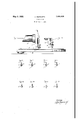
Figure 1 is a side View of a part of a reproducer showing it in its operative relationship to a record;
Fig. 1a is a view of a part of the reproducer shown in Fig. l but using a different form of stylus;
Figs. 2 to 5, inclusive, are cross-sectional views through the axes of several forms of so styli constructed in accordance with this invention; and
Figs. 2a to 5a, inclusive, are views similar to Figs. 2 to 5, respectively, but each showing a one-piece or integral construction of stylus.
Referring first to Figs. 2 to 5, inclusive, four slightly different forms of stylus are shown, each comprising a needle holder or body and a needle supported therein. The holders or bodies of the several constructions shown are indicated at 2, 3, 4 and 5, respectively. Each of these needle holders is of approximately globular shape, those shown in Figs. 3, 4 and 5 being somewhat elongated. Each body or holder includes a shank 6, preferably integral with the body, and adapted to be secured in the socket of a phonograph reproducer of the ordinary commercial type. Formed in the side of each body opposite to the shank 6, and preferably co-axial there- 59 with, is a socket to receive a phonograph,
needle 7 like that shown in Fig. 6, the needle I being releasably secured in the holder or body by a set screw 8.
It will be observed that the body or holder of each stylus is very large or massive when compared to the needle or the shank, and that its external surfaces are rounded and smooth and are devoid of any projecting angles. These holders may be made either of metal, bakelite, bone, hard rubber, or a great variety of other materials. The needles 7 usually are made of steel, properly tempered, a spring temper being preferable. The needles may vary considerably in size, and it is convenient to use different sizes according to the results desired, a small needle of, say, ten to fifteen thousandths of an inch in diameter giving a softer tone than a larger needle of, say, twenty-five or thirty thousandths. In either case, however, the extremity or point which runs in the groove of the record should be made to fit the groove accurately. The dimensions of the bodies or holders 2, 3, 4 and 5 may vary, but preferably should be between three thirty-seconds and one-quarter of an inch in diameter. I have obtained very satisfactory results with bodies of about three-sixteenths of an inch in diameter.
A stylus of the construction shown in Figs. 2 to 5 equipped with a needle of the kind described produces unusually pleasing results. The scratching sound is practically eliminated, and the fine gradations in tone and quality are faithfully reproduced without the usual tendency to emphasize certain tones or notes which is always an objectionable characteristic and is present in all prior forms of phonograph reproducers of which I am aware.
The reasons for the improved results are somewhat obscure, but a long series of experiments and extensive trials seem to indicate very clearly that the use of a relatively massive body of proper shape and located near the point of the needle is an important factor in producing these results. The shape of this body is important; that is, its outer surface should be rounded and smooth and devoid of angular projectiOns. The presence because of improved amplification of the vi-- brations in the stylus itself, is diflicult to de- M termine. The fact that a superior reproduc tion is obtained, however, has been conclusively demonstrated.
Ihave also found that an improvement in quality is produced by the application of this same principle to the construction of the needle holder and sound box or reproducer of a phonograph. Referring to Fig. 1 it will be seen that the sound box 10 and the connection between this sound box and the tone arm 12 .do not have the sham ro'ectin an les or corners which are common in apparatus of this character, but the surfaces are rounded 25 andfsmooth, changing gradually in dimensions at those points where heretofore projecting angles have been presented. Also, the projecting angles have been eliminated from the needle holder 14 in which thenecdle 7 is mounted. Fig. 1 shows the needle operatively positioned on a record 15 mounted on the usual revolving table 16.
v In order to be able to selectstyli suited to the requirements of the selection being played, and the room or enclosure in which the selection is rendered, I prefer, even with a construction such as that shown inFig. 1, to use styli of the forms shown, forexample, in Figs. 2'to 5, inclusive, in the needle holder 1% instead of mounting the needle 7 directly in this holder, as in Fig. 1. Such an arrange- I "ment, therefore, is' illustrated in Fig. 1a
which shows a stylus of the form illustrated in Fig; 3 mounted in the holder 14.
' It is possible, also, to make styli of the general form shown in Figs. 2 to 5 of a one-piece or integral construction, and Figs. 2a and 5a, inclusive, show at 2 to 5 one-piece constructioiis corresponding in generalform to those shown in Figs. 2 to 5. A difliculty encoungtered, however, in the manufacture of the styli shown in Figs. 2a to 5a is that of properly tempering the needles or points. It is usually preferable, therefore, to make the needles removable, as in the construction shown in Figs. 2 to 5. This permits the use of one set of stylus bodies or needle holders 7 with different sizes of needles and it is more economical since the bodies or holders will last almost indefinitely, the needles being replaced as soon as they become worn.
While I have described and illustrated typvention, it will be understood that the invention may be embodied in a great variety of 2: A stylus for phonographs, comprising a relatively massive rigid bodyof non-metallic' materiahsaid body having smooth exterior surfaces and being devoid of prominent angular projecting parts, andfa needle re'movably secured insaid body.
3: A stylus for phonographs, comprising a relatively massive b'ody'of non-metallic material, said body having smooth exterior surfaces and being devoid of prominentangular projecting parts, said body having a socket to receive a needle and having a reduced shank projecting from the side ofsaid body opposite to said socket, and means for releasably securing a needle in said socket.
4. A stylusfor phonographs, comprising a needle holder consisting of a relatively massive body havingsmooth exterior surfaces and devoid of prominent angular projecting parts, said body being between and 4. of an inch in diameter, and having a socket therein to receive a needle, and a shank projecting from said body and adapted to be secured in the socket of a phonograph reproducer. s I
5., In a phonograph reproducer, a needle holder comprising a relatively massive rigid body having smooth exterior s rfaces and devoid of prominent angular projecting parts.
6'. A stylus for phonographs, comprising a relatively large body having rounded external surfaces and devoid of prominent projecting angles, a shank projecting from said Ill
Priority Applications (1)
| Application Number | Priority Date | Filing Date | Title |
|---|---|---|---|
| US107361A US1856428A (en) | 1926-05-07 | 1926-05-07 | Phonograph |
Applications Claiming Priority (1)
| Application Number | Priority Date | Filing Date | Title |
|---|---|---|---|
| US107361A US1856428A (en) | 1926-05-07 | 1926-05-07 | Phonograph |
Publications (1)
| Publication Number | Publication Date |
|---|---|
| US1856428A true US1856428A (en) | 1932-05-03 |
Family
ID=22316247
Family Applications (1)
| Application Number | Title | Priority Date | Filing Date |
|---|---|---|---|
| US107361A Expired - Lifetime US1856428A (en) | 1926-05-07 | 1926-05-07 | Phonograph |
Country Status (1)
| Country | Link |
|---|---|
| US (1) | US1856428A (en) |
-
1926
- 1926-05-07 US US107361A patent/US1856428A/en not_active Expired - Lifetime
Similar Documents
| Publication | Publication Date | Title |
|---|---|---|
| US2259715A (en) | Sound record | |
| US2328889A (en) | Sound reproducing stylus | |
| US1444147A (en) | Stylus | |
| US1739201A (en) | Phonograph needle | |
| US3292936A (en) | Phonograph stylus | |
| US2200866A (en) | Apparatus for recording sound on thin disks | |
| US2819089A (en) | Recording method using translating head and stylus | |
| US1437799A (en) | Phonograph sound box | |
| US831779A (en) | Magnetic sound-record. | |
| Frederick | Vertical sound records: Recent fundamental advances in mechanical records on wax | |
| US1522547A (en) | Means for recording sound | |
| US1084573A (en) | Talking-machine. | |
| US2614848A (en) | Phonograph needle | |
| US1511860A (en) | Needle for phonographs and similar machines | |
| US1409630A (en) | Talking-machine needle or stylus | |
| US2624584A (en) | Phonograph | |
| US2577149A (en) | Corundum phonograph needle and sound reproducing apparatus embodying same | |
| US1407928A (en) | Sound-reproducing device | |
| US1188080A (en) | Sound-box for talking-machines. | |
| US963546A (en) | Sound-box for talking-machines. | |
| US2837340A (en) | Mechanical sound reproducing device | |
| USRE22183E (en) | Apparatus for recording sound on | |
| US424914A (en) | John h | |
| US1013421A (en) | Phonograph. | |
| US1393106A (en) | Sound-reproducer for phonographs |