US1855097A - Trolling fish lure - Google Patents
Trolling fish lure Download PDFInfo
- Publication number
- US1855097A US1855097A US519546A US51954631A US1855097A US 1855097 A US1855097 A US 1855097A US 519546 A US519546 A US 519546A US 51954631 A US51954631 A US 51954631A US 1855097 A US1855097 A US 1855097A
- Authority
- US
- United States
- Prior art keywords
- hook
- lure
- fish
- eye
- trolling
- Prior art date
- Legal status (The legal status is an assumption and is not a legal conclusion. Google has not performed a legal analysis and makes no representation as to the accuracy of the status listed.)
- Expired - Lifetime
Links
- 241000251468 Actinopterygii Species 0.000 title description 11
- XLYOFNOQVPJJNP-UHFFFAOYSA-N water Substances O XLYOFNOQVPJJNP-UHFFFAOYSA-N 0.000 description 7
- 230000015572 biosynthetic process Effects 0.000 description 5
- 230000000630 rising effect Effects 0.000 description 4
- 239000007787 solid Substances 0.000 description 4
- 238000010276 construction Methods 0.000 description 3
- 238000007598 dipping method Methods 0.000 description 3
- 229910052751 metal Inorganic materials 0.000 description 3
- 239000002184 metal Substances 0.000 description 3
- 229910045601 alloy Inorganic materials 0.000 description 1
- 239000000956 alloy Substances 0.000 description 1
- 229910052782 aluminium Inorganic materials 0.000 description 1
- XAGFODPZIPBFFR-UHFFFAOYSA-N aluminium Chemical compound [Al] XAGFODPZIPBFFR-UHFFFAOYSA-N 0.000 description 1
- 230000001788 irregular Effects 0.000 description 1
- 238000000034 method Methods 0.000 description 1
Images
Classifications
-
- A—HUMAN NECESSITIES
- A01—AGRICULTURE; FORESTRY; ANIMAL HUSBANDRY; HUNTING; TRAPPING; FISHING
- A01K—ANIMAL HUSBANDRY; AVICULTURE; APICULTURE; PISCICULTURE; FISHING; REARING OR BREEDING ANIMALS, NOT OTHERWISE PROVIDED FOR; NEW BREEDS OF ANIMALS
- A01K85/00—Artificial bait for fishing
- A01K85/16—Artificial bait for fishing with other than flat, or substantially flat, undulating bodies, e.g. plugs
Definitions
- This invention appertains j to rovements in fish lures or artificial bait an more particularl to a type thereof for the catch-- of fish y trolling somewhat in a manner I mg 5 similar'to these forms of the same as 816,618-
- Figure 4 is a rear end elevation
- 1 Figure 5' is a vertical longitudinal-sectiontaken on the line 5--5 of Figure 1
- l 4 Figure '6 is a similar view but taken on-the.
- ine'6-'6of Figure1,and Figure 7' is another similar view but taken on the line 77 of Figure 1;
- characters of reference designate correspond-- embodiment of the invention,- as shown there'- in by way of example only, is constituted in a. body' 12 which has the general configurawherein like to thereof, the
- a further object of the invention is to promotion of the bait or lure and otherwise -low-, videa bait' or lure of fish form to simulate 'ers the effectiveness of'its alluring qualities.
- the body 12- has a trolling line of water, wherein the caudal fin ortail. por-, attaching member or 11 loosely sup tion of the bodyisupwardly curvedin aman ported in the nose of the head rtion '13 nor to e'fiecta natural rising and dipping mo- 7 thereof, which portion, whenthe is in tion during its travel in addition to the lateral darting movements aforesaid, the curvature of the caudal fin or tail portion also having the added function of effectively concealinfila major portion of the hook structure and o erwisepro the same to an appreciable extent in l
- the caudal fin ortail. loosely sup tion of the bodyisupwardly curvedin aman ported in the nose of the head rtion '13 nor to e'fiecta natural rising and dipping mo- 7 thereof, which portion, whenthe is in tion during its travel in addition to the lateral darting movements aforesaid, the
- FIG. 2 is a side elevation
- the lure is the water at ostion of use, is upwardly and forwardart a slight rising motionits travel through the water when being trolled;
- the forward end portion of the body (as shown) is, however, of greater 'we' ht'than the rear endportion ta s g nrotio'n under the angleoffp of. a trollin line.
- the travel osubstantially horizontal thro all times, but such travel will accompanied by a slight and dipping motion, as well-as the lateral artingmotion aforesaid.
- curving portion which, in turn continues substantially as is shown in- Figure 1..
- the opening 16 In order to permit of'the placing of-the hoo k of the similar body portion of An actualfish, structure in position, the opening 16 must be to its point of connection'with the flared elongated in a longitudinal'direction relacaudal fin ortail portion'1'5, the tips of the tively to the body 12 and toflan'extent to prolatter having a spread substantially equal to vide a length thereto Slightly greater than the greatest width of the body 12.- the diameter of the eye 23. Also, the hook Anopening 16is formed vertically-through.
- toproper poand leads forwardly fromthe upper end of 'sition by disposing the books 21 and 21' in ,the openin 16 to a point substantially in the 'an upward direction.
- the opening 16 need not be of .eloninkilg A -fiml b 19 opens into the gated form but only of a size large enough depression 18 at its upper end, while a second t Pe mit f. h P s age of the free end of the grove 20 is formed in the under side of the hook to be pa downwardly therethrough caudal fin or tail. portion 15 rearwardlyfrom from an inverted position, when the shank the lower end of the opening'16 and in line and eye ortions thereof will lower into the ter of the body 12.
- an elongated, solid metal body having its two sides convexed, line attaching means at the forward end of said body, and a hook carried at the rear end of said body, the selected weight of said body acting to determine the depth of eflective operation of the lure in a body of water.
- line attaching mg line connected to said attaching means.
Landscapes
- Life Sciences & Earth Sciences (AREA)
- Environmental Sciences (AREA)
- Marine Sciences & Fisheries (AREA)
- Animal Husbandry (AREA)
- Biodiversity & Conservation Biology (AREA)
Description
April 19, 1932. J.E. M. CHAMBERLAIN: 1,855,097
, TROLLING FISH LURE Fil ed March 2, 1931 J Z111 (flu/2730142))? Patented Apr.,19$ 1932 UNITED 'srATEsj zosarnnxcnmmmmnorm rnonnrqae rrsn Lon ima fled larch 2,1081. i
Figure '3-is a vertical longitudinal section,
This invention appertains j to rovements in fish lures or artificial bait an more particularl to a type thereof for the catch-- of fish y trolling somewhat in a manner I mg 5 similar'to these forms of the same as 816,618-
closed in my co-pending ap December 11, 1930 (Serial- 7 An. object of the provide a lure or bait of the'class mentioned, 10 wherein the hook supporting body is made to the configuration of an actual fish and of metal, preferably solid when used in deep water and whereby it mayhavethe weight to it to a selected 15 depth of water without resorting to the attachment of separate weighting devices or sinkers thereto. j Another object of the invention resides in the body, while having the true form of .an 99 actual fish, is also to a somewhat vertical irregular curvature in its longitudinal extent in order that it willtravel through the water with the lateral darting movements 7 of, for instance, a
thereby accentuating present invention is to the alluring qualities plication filed on" No. 501,649).
ing parts in the several views frightened live fish,
Serial no. 819,546;
taken on the-line 3-3 of Figure 1, v
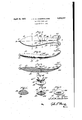
Figure 4 is a rear end elevation, 1 Figure 5'is a vertical longitudinal-sectiontaken on the line 5--5 ofFigure 1, l 4 Figure '6 is a similar view but taken on-the. ]ine'6-'6ofFigure1,and Figure 7' is another similar view but taken on the line 77 of Figure 1; V
Referring to the drawings, characters of reference designate correspond-- embodiment of the invention,- as shown there'- in by way of example only, is constituted in a. body' 12 which has the general configurawherein like to thereof, the
tion of a fish and is preferabl .made from metal, either solid or hollow, emetal em ployed being non-unstable in character,such as aluminum or its alloys. be made'in difierent sizes and weights and is of solid construction, particularly when employed for deepwater fisbing,'1n order to avoid the common-p 'ce of attaching additional weight, usually in the form of one or more lead sinkers, thereto which seriously thereof. p r interfere with the desired A further object of the invention is to promotion of the bait or lure and otherwise -low-, videa bait' or lure of fish form to simulate 'ers the effectiveness of'its alluring qualities. an actual'fish when trolled through a body As shown, the body 12-has a trolling line of water, wherein the caudal fin ortail. por-, attaching member or 11 loosely sup tion of the bodyisupwardly curvedin aman ported in the nose of the head rtion '13 nor to e'fiecta natural rising and dipping mo- 7 thereof, which portion, whenthe is in tion during its travel in addition to the lateral darting movements aforesaid, the curvature of the caudal fin or tail portion also having the added function of effectively concealinfila major portion of the hook structure and o erwisepro the same to an appreciable extent in l With the foregoing and other equally. imrtant objects and advan in view, the invention resides in the certain new and use construction and arrangewill be hereinafter more forth in the appended claims, and illustrated in the accompanying drawings in which: r
Figure 1 is a top plan view of the practical v embodiment of the device,- a
a Figure 2 is a side elevation,
combination,
.ly inclined to imp to the latter during thereof, in or er to too.
{the lure is the water at ostion of use, is upwardly and forwardart a slight rising motionits travel through the water when being trolled; The forward end portion of the body (as shown) is, however, of greater 'we' ht'than the rear endportion ta s g nrotio'n under the angleoffp of. a trollin line. As a'consequence of-this, the travel osubstantially horizontal thro all times, but such travel will accompanied by a slight and dipping motion, as well-as the lateral artingmotion aforesaid. The lower surface of the upwardin a rearward direction into a somewhat tened surface of comparatively small arenas at 14, which s situated at the approximate Thebody12isto natural fish-like lyinclined head portion of thebody 12 transverse center of the body or slightly for-- straight. length of the shank brought into ward of such center. .From the flattened surjuxtaposition to the corresponding shank face'portion '14, the lower surface of the body portion 22 of the hook 21,.with its free'severed 12 merges into an upwardly andrearwardly end abutted against the eye23 of the latter,
curving portion, which, in turn continues substantially as is shown in-Figure 1.. In
' into the lower surface of the caudal fin'or tail this position of the hook shanks 22 and 22',
portion15 rising sharply upwardand having the same may be 'joined together, as by a weldthe tips of the fin disposed substantially in ing or other process. Here, the two hooks 21 the plane of the highest point of curvature of and 21 :willpreferably be spread apart to vfihe forwardly disposed head portion of the oppositely and upwardly angled" or inclined y.. 7 positions, so that, when in place on the body The upper side-of the body curves rear- 12, the free end portions of the books will wardly om the highest point of curvature extend forwardly in overlying relation with of the head portion thereof in a downward respect to the tips of the oppositely flared porand rearward direction from a point sometions of the caudal fin or tail portion 15 (Fig- 30 what forwardly of t 9 front end of the flatures 1 and 4) the point of mergence of the tened portion 14 at the lower side of the-bodyjoined shanks 22 and 22' from the groove and reaches the lowest point of its downward 2( at the under side of the latter rtion of trend well beyond the plane .of the rearwardthe body 12 being at the point of 'vergence ly directed end of the said flattened portion of the rearwardly directed edges of the said 14 and in the approximate plane of the transfin portions.
verse center-of the rear half portion of the -With the hook structure in operative posibody, from whence it curves sharply upward tion on the body 12, the opening in the eye 23 for mer nee into the upper surface of the will be engaged over the end of a bolt 24 caudal or tail portion 15. The approxi-- which is passed upwardl through the vermate rear half portion of the body 12 tapers tical bore .19 in the body 12 forthe purpose, rearwardly in curved lines, both horizon and thereafter securedln place by a nut 25. tal and vertical directions, after the manner In order to permit of'the placing of-the hoo k of the similar body portion of An actualfish, structure in position, the opening 16 must be to its point of connection'with the flared elongated in a longitudinal'direction relacaudal fin ortail portion'1'5, the tips of the tively to the body 12 and toflan'extent to prolatter having a spread substantially equal to vide a length thereto Slightly greater than the greatest width of the body 12.- the diameter of the eye 23. Also, the hook Anopening 16is formed vertically-through. structure must be turned sidewise from its the y 12 in the plane of the apprhximate 'normal position of useto permit of the insercenter of the narrowest portion thereof and a tion of the eye 23 upwardly of the opening grove'17 is-formed in the upper-body surface 16 and thereafter turnedback. toproper poand leads forwardly fromthe upper end of 'sition by disposing the books 21 and 21' in ,the openin 16 to a point substantially in the 'an upward direction.
planejof I e transverse center of the body, However, if a singlehook only is-to be emwhere-itopens into a depression or counterployed, the opening 16 need not be of .eloninkilg A -fiml b 19 opens into the gated form but only of a size large enough depression 18 at its upper end, while a second t Pe mit f. h P s age of the free end of the grove 20 is formed in the under side of the hook to be pa downwardly therethrough caudal fin or tail. portion 15 rearwardlyfrom from an inverted position, when the shank the lower end of the opening'16 and in line and eye ortions thereof will lower into the ter of the body 12. mounted in place on the body 12 by first hav- {Juliewith the groove 17 both of which grooves are 1 gr veil and the depr ssion 18 as the hook disposed m the plane of the longitudinal 'cenep rtion is moved rearwardly" beneath the caudalfin'or tail portion 15 byan' endfor end By Vthisarrangement; a hook 21 is to be turning movement of the entire hook strucbus, as the eye 23 and the shank 22 eningthe eye end 23 of itsshank 22 inserted upgage respectively in the depression 18. and
wardlg through the opening 16 and -therethe groove 17, the'rear end-portion of the after rought to rest with the shank portion tshankcwlll engage in the groove '20 at the 22in the grooves 17 and 20 and the eye porlower slde of th cau l fill 11 Portion rm tion 23 the drepression'18, whenfthe hook alldvthe f end P of-t e k take 21 will curve upw'ardlyof and from thep p r p t o n ef rw rdlyidirected and groove andth n for dl f', d in overlying relation with the new I tail portion 15 of the spaced overlyingrelation to the caudal-fin or In this instance," however, the, hooked end' Inthe present instanoe,-adoublehookstrucably dis' sed inolinerwith the-longitudinal is contemplated and, shown, the same center'o the body12, ratherthan in may made: up offltwo standard hooks relation to 'one side or the other thereof. 1 whereln the eye end'of theshank 22- of the, In the actual use'of a lure or bait, as thus .seeo nd hook be' severed: and the constructed ,and arranged, it has been demon- 9 portion of the hook structure will-be prefer 2 'while at the same time,
reaching the same when in motion, so that its natural alluring qualities are greatly enhanced thereby.
\Vithout further description, it is thought that the features and advantages of the invention will be readily apparent to those skilled in the art, and it will of. course be understood that changes in form, proportion and minor details of construct-ion may be resorted to, without departing from the spirit of the invention or its scopeas claimed.
' I claim:
"1. Ina fish lure of the class described, an elongated, solid metal body having its two sides convexed, line attaching means at the forward end of said body, and a hook carried at the rear end of said body, the selected weight of said body acting to determine the depth of eflective operation of the lure in a body of water.
2. A lure'as' set forth in claim 1, wherein the pointed end of the hook overlies the rear end of said body in forwardly projecting resaid bod is in the form of a fish turned sidewise an has the caudal fin formation at its rear end curving upwardly and rearwardly therefrom, with a central opening formed upwardly through the connected portion of the same, and the hook has its shank portion passing forwardly through the said opening from beneath said caudal fin formation for the securement of its attaching eye to the upper side of the body.
In testimony whereof I aflix my signature.
JOSEPH. E. M. CHAMBERLAINE, v
lation thereto and the shank portion of the V hook is attached to the body in a manner that it is shielded thereby substantially throughout its length. g
3.- A lure as set forth in claim 1, wherein the forward end portion of said body is of greater weight than the other end thereof, in
order to cause a dipping and rising motion of the lure under the pulling action of a trolland lower sides convexed, line attaching mg line connected to said attaching means.
means at the forward end of said body, a
caudal fin formation at the rear end of said body, and a hook projecting rearwardly from;
the latter end of said body and upturned substantially from between the oppositely diverging portions of said fin formation, the selected weight of said body acting to determine the depth f effective operation of the lure in a body of a ater. v,
5. A lure as set forth in claim 4, wherein of the shank and in a the said caudal fin formation is upwardly angled to conform substantially to the bend of the connected portion of the hooked end -mannero act as a guard therefor.
6. A lure as set forthfin claim 4, wherein
Priority Applications (1)
| Application Number | Priority Date | Filing Date | Title |
|---|---|---|---|
| US519546A US1855097A (en) | 1931-03-02 | 1931-03-02 | Trolling fish lure |
Applications Claiming Priority (1)
| Application Number | Priority Date | Filing Date | Title |
|---|---|---|---|
| US519546A US1855097A (en) | 1931-03-02 | 1931-03-02 | Trolling fish lure |
Publications (1)
| Publication Number | Publication Date |
|---|---|
| US1855097A true US1855097A (en) | 1932-04-19 |
Family
ID=24068770
Family Applications (1)
| Application Number | Title | Priority Date | Filing Date |
|---|---|---|---|
| US519546A Expired - Lifetime US1855097A (en) | 1931-03-02 | 1931-03-02 | Trolling fish lure |
Country Status (1)
| Country | Link |
|---|---|
| US (1) | US1855097A (en) |
Cited By (13)
| Publication number | Priority date | Publication date | Assignee | Title |
|---|---|---|---|---|
| US2579864A (en) * | 1949-05-31 | 1951-12-25 | Kenneth M Rooker | Drag hook |
| US2583616A (en) * | 1946-03-01 | 1952-01-29 | Waddell Clark William | Fish lure |
| US2633659A (en) * | 1949-08-26 | 1953-04-07 | John W Baum | Fish lure |
| US2680927A (en) * | 1948-04-06 | 1954-06-15 | Stephen E Napier | Fish lure |
| US2765572A (en) * | 1952-10-10 | 1956-10-09 | Sam Mumford | Fish lure |
| US3280498A (en) * | 1964-10-12 | 1966-10-25 | John R Decker | Fishing sinker |
| US5020265A (en) * | 1990-02-07 | 1991-06-04 | Nuckols Charles E | Weighted fishing lure |
| USD358193S (en) | 1993-05-11 | 1995-05-09 | Donald Kender | Fishing lure |
| USD376408S (en) | 1995-03-23 | 1996-12-10 | Artificial fishing lure | |
| US5638632A (en) * | 1995-03-23 | 1997-06-17 | Douglas C. Smith | Artificial fishing lure |
| US6460286B1 (en) * | 2001-05-17 | 2002-10-08 | Ngc Worldwide Inc. | Articulating fishing lure |
| US20070175083A1 (en) * | 2006-01-30 | 2007-08-02 | Scott Wilson | Segmented soft plastic lure in the form of a fish |
| US10165766B2 (en) * | 2015-09-24 | 2019-01-01 | Robert A. Locker | Horizontally balanced symmetrical fishing lure |
-
1931
- 1931-03-02 US US519546A patent/US1855097A/en not_active Expired - Lifetime
Cited By (14)
| Publication number | Priority date | Publication date | Assignee | Title |
|---|---|---|---|---|
| US2583616A (en) * | 1946-03-01 | 1952-01-29 | Waddell Clark William | Fish lure |
| US2680927A (en) * | 1948-04-06 | 1954-06-15 | Stephen E Napier | Fish lure |
| US2579864A (en) * | 1949-05-31 | 1951-12-25 | Kenneth M Rooker | Drag hook |
| US2633659A (en) * | 1949-08-26 | 1953-04-07 | John W Baum | Fish lure |
| US2765572A (en) * | 1952-10-10 | 1956-10-09 | Sam Mumford | Fish lure |
| US3280498A (en) * | 1964-10-12 | 1966-10-25 | John R Decker | Fishing sinker |
| US5020265A (en) * | 1990-02-07 | 1991-06-04 | Nuckols Charles E | Weighted fishing lure |
| USD358193S (en) | 1993-05-11 | 1995-05-09 | Donald Kender | Fishing lure |
| USD376408S (en) | 1995-03-23 | 1996-12-10 | Artificial fishing lure | |
| US5638632A (en) * | 1995-03-23 | 1997-06-17 | Douglas C. Smith | Artificial fishing lure |
| US6460286B1 (en) * | 2001-05-17 | 2002-10-08 | Ngc Worldwide Inc. | Articulating fishing lure |
| WO2002091817A3 (en) * | 2001-05-17 | 2003-08-14 | Ngc Worldwide Inc | Articulating fishing lure |
| US20070175083A1 (en) * | 2006-01-30 | 2007-08-02 | Scott Wilson | Segmented soft plastic lure in the form of a fish |
| US10165766B2 (en) * | 2015-09-24 | 2019-01-01 | Robert A. Locker | Horizontally balanced symmetrical fishing lure |
Similar Documents
| Publication | Publication Date | Title |
|---|---|---|
| US1781598A (en) | Fish lure | |
| US2184031A (en) | Artificial minnow | |
| US2088775A (en) | Fish lure | |
| US7036266B2 (en) | Weighted shank fish hooks | |
| US2005554A (en) | Artificial bait or fish lure | |
| US1499819A (en) | Artificial fish bait | |
| US2235331A (en) | Artificial bait | |
| US1791316A (en) | Fish bait or lure | |
| US2214266A (en) | Trolling lure and hook attachment means therefor | |
| US3500573A (en) | Fishing lure | |
| US2860443A (en) | Animation attachment for minnow bait | |
| US2877592A (en) | Fishing lure | |
| US2588055A (en) | Artificial lure | |
| US1490161A (en) | Artificial fish bait | |
| US2179641A (en) | Artificial fish lure | |
| US1923840A (en) | Fish lure | |
| US2159230A (en) | Fish lure | |
| US1513011A (en) | Weedless fishhook | |
| US2281809A (en) | Fish lure | |
| US1986991A (en) | Fish lure | |
| US3006103A (en) | Fishermen's sinkers capable of being used as lures or spinners | |
| US2254981A (en) | Fish lure | |
| US1365813A (en) | Fish bait or lure | |
| US1627455A (en) | Artificial fishing bait | |
| US1485643A (en) | Artificial bait and fishhook therefor |