US1854909A - Making welded joints of radiators and other structures - Google Patents
Making welded joints of radiators and other structures Download PDFInfo
- Publication number
- US1854909A US1854909A US249538A US24953828A US1854909A US 1854909 A US1854909 A US 1854909A US 249538 A US249538 A US 249538A US 24953828 A US24953828 A US 24953828A US 1854909 A US1854909 A US 1854909A
- Authority
- US
- United States
- Prior art keywords
- straps
- projections
- welded
- welding
- radiators
- Prior art date
- Legal status (The legal status is an assumption and is not a legal conclusion. Google has not performed a legal analysis and makes no representation as to the accuracy of the status listed.)
- Expired - Lifetime
Links
- 229910052751 metal Inorganic materials 0.000 description 25
- 239000002184 metal Substances 0.000 description 25
- 238000003466 welding Methods 0.000 description 24
- 238000000034 method Methods 0.000 description 20
- 238000010438 heat treatment Methods 0.000 description 16
- RYGMFSIKBFXOCR-UHFFFAOYSA-N Copper Chemical compound [Cu] RYGMFSIKBFXOCR-UHFFFAOYSA-N 0.000 description 12
- 229910052802 copper Inorganic materials 0.000 description 12
- 239000010949 copper Substances 0.000 description 12
- 229910000831 Steel Inorganic materials 0.000 description 11
- 239000010959 steel Substances 0.000 description 11
- 150000002739 metals Chemical class 0.000 description 5
- 238000010276 construction Methods 0.000 description 4
- 230000004048 modification Effects 0.000 description 3
- 238000012986 modification Methods 0.000 description 3
- 125000006850 spacer group Chemical group 0.000 description 2
- 229910001369 Brass Inorganic materials 0.000 description 1
- CWYNVVGOOAEACU-UHFFFAOYSA-N Fe2+ Chemical compound [Fe+2] CWYNVVGOOAEACU-UHFFFAOYSA-N 0.000 description 1
- 239000000956 alloy Substances 0.000 description 1
- 229910045601 alloy Inorganic materials 0.000 description 1
- 229910052782 aluminium Inorganic materials 0.000 description 1
- XAGFODPZIPBFFR-UHFFFAOYSA-N aluminium Chemical compound [Al] XAGFODPZIPBFFR-UHFFFAOYSA-N 0.000 description 1
- 239000010951 brass Substances 0.000 description 1
- 230000008602 contraction Effects 0.000 description 1
- -1 ferrous metals Chemical class 0.000 description 1
- 239000000463 material Substances 0.000 description 1
- 230000001105 regulatory effect Effects 0.000 description 1
- 238000005476 soldering Methods 0.000 description 1
- XLYOFNOQVPJJNP-UHFFFAOYSA-N water Substances O XLYOFNOQVPJJNP-UHFFFAOYSA-N 0.000 description 1
Images
Classifications
-
- B—PERFORMING OPERATIONS; TRANSPORTING
- B23—MACHINE TOOLS; METAL-WORKING NOT OTHERWISE PROVIDED FOR
- B23K—SOLDERING OR UNSOLDERING; WELDING; CLADDING OR PLATING BY SOLDERING OR WELDING; CUTTING BY APPLYING HEAT LOCALLY, e.g. FLAME CUTTING; WORKING BY LASER BEAM
- B23K11/00—Resistance welding; Severing by resistance heating
- B23K11/002—Resistance welding; Severing by resistance heating specially adapted for particular articles or work
Definitions
- a radiator comprising a 5 steam pipe or other heating element and a radiating structure of sheet metal applied thereto by means of supplementary straps welded to each other through the sheet metal.
- the present invention is directed to a Welded joint and'method which are particularly designed for radiators of the same general class, and which are useful also in various other structures.
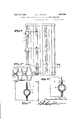
- Fig. 1 is a side elevation of the upper portion of the end of a radiator
- Fig. 1 is a plan of the same;
- Fig. 2 is a vertical section through one of the joints of Fig. 1;
- Fig. 3 is a similar section through a joint of an alternative style of radiator
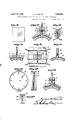
- Fig. 4 is a face view of an end-0f one of the straps
- Fig. 5 isa longitudinal section ofthe parts before welding
- Fig. 6 is a cross-section of the same on the line 66; v
- Fig. 7 is a view similar to Fig. 2 of an alternative construction
- Fig. 8 is a section on the line 88 of Fi 7' ig. 9 is a section similar to Fig. 2 of an alternative construction;
- Fig. 10 is a section similar to Fig. 5 illustrating a modification
- Fig. 11 is an elevatlon and Fig. 12 a crosssection on the line 12--12 of a brake drum made of two plates welded together;
- Fig. 13 is a section similar to Fig. 12 illustrating a modification.
- Fig. 1 illustrates the application to a steam pipe 1 of a radiating structure comprising metal sheets corrugated to form laterally extending fins 2, slightly oblique, and longitudinally extending portions 3 which are bent outwardly at intervals to form recesses 4; embracing the pipe 1 between them.
- the pipe and the corrugated plates are preferably copper or aluminum or other metals or alloys of comparatively high electrical and heat conductivity.
- the sheets 3 and the straps 5 were pressed together between electrodes while passing a current so that the sheets became alloyed with or dissolved into the steel of the straps.
- Fig. 2 shows the plates 8 united by straps 5 with welded joints 7 passing through openings in the plates.
- Fig. 3 shows a similar method of attaching a single copper plate 3 to a pipe 1. The copper plate is recessed at 4 to extend partially around the pipe. teel straps 5 are placed in position andwvelded to each other at 7 through holes in the single copper sheet.
- the straps 5 need not be of steel. They may be of other metals, such as brass or even copper. Since during the heating period the straps are nowhere in intimate contact with anything but the electrodes and each other (see Fig. 5), there is no reason why the straps cannot be made of any material which can be formed to the desired shape and which can be butt welded.
- Figs. 4, 5 and 6 show the particular method of welding proposed.
- the straps are punched to form short tubular projections 8 and 9 with squared edges which make a butt weld when pressed between electrodes and heated by the current.
- radiators the straps and the welding projectionswhich'pass through the sheet or sheets may be variously 5 shaped.
- the straps are in the form of half rings 12, the ends of which are reduced and passed through openings in the sheets 3 and butt welded to form ties 13;
- Fig. 9 shows such a construction with sheets 14 having recesses 15 which embrace the pipe 1, the sheets having projections on their adjacent faces which are Welded together to provide ties 16. This involves a space between the opposed sheets which is determined by the regulating of the size of the projections and the take-up..dur-
- Such a construction is particularly useful in making radiators with fins or other radiating structure of steel or similar metaL,
- Fig. 10 is a. section similar to Fig. 5 in which the projections 8 and 9 are simple tubular projections with squared ends abutting against each other. This type of projection (omitting the lateral engagement of the rib.
- Figs. 11 and 12 illustrate a brake drum made of two discs 17 with outward flanges 18.
- the discs are punched to provide proj ections which are Welded together to provide substantially integral connections 19, which at the same time serve as spacers to maintain the desired width and lateral stiflness of the drum.
- the two discs 17 may be brought close together at the end of the welding operation, as in Fig. 13.
- the tubular projections are entirely taken up in the welding operation, leaving short ties 20 which hold the two plates close together.
- this process may be used in many cases as a substitute for spot welding with the advantage that many welds may be made simultaneously, and with the further advantage that the resulting welds are of a far better quality.
- any molten or burned metal is extruded from the joint.
- the projections may be of various shapes, sizes and locations ,according to the metal and the character of the work. And in the welding of two pieces to each other through a hole in one or more intermediate pieces,
- projections may be used on only one instead of both of the'two outer pieces. 7
- radiators For radiators, this style of joint has particular advantages over soldering, clamping and similar methods previously used for attaching fins or radiating structures to steam or hot water pipes or to electric heatin elements.
- e alternate expansion and contraction of the heating element causes a great strain on the joints between the pipe and the radiating structure and may in time destroy the intimate connection which is important in securing a rapid transfer of heat.
- Some such methods of uniting the heating elements and the radiating structure are also tedious and therefore expensive.
- the joints of the present invention can be made, all or in large groups at one machine operation so as to be quite economical. And they hold the parts together unyieldingly and at the same time stiffen the tubes and the radiating plates so as to permit the making of these of the desired thin metal and of such comparatively soft metals as the desired high conductive copper and the like.
- a welded structure comprising two pieces united face to face by projections extending inward from the adjacent faces, said projections being welded to each other at their forward ends and being of tubular form with central openings extending to their forward ends.
- a welded structure comprising two pieces united face to face by projections extending inward from the adjacent faces, said projections being welded to each other at their forward ends and being of tubular form with central openings extending to their forward ends, said welded projections constituting spacers of determined length holding said pieces correspondingly spaced apart.
- a welded structure comprising two pieces united face to face by projections extending inward from the adjacent faces, said projections being welded to each other at their forward ends and being of tubular form with central openings extending to their forward ends and a third piece surrounding said projections between the first two pieces and serving to limit the spacing thereof.
- a welded structure comprising two plates and two fasteners, the plates being embraced between the fasteners and the latter having projections extending through holes in the plates and welded to each other.
- the method of applying a radiating structure closely about the heating element of a radiator which consists in applying the radiating structure to the outside of the heating element, applying straps at opposite sides of the heating element and welding them to each other through holes in the radiating structure, using metal for the straps which has a lower coefficient of thermal expansion than the metal of the heating element so that when the latter is heated its degree of contact with the radiating structure will be increased.
- the method of applying a radiating structure closely about the heating element of a radiator which consists in applying the radiating structure to the outside of the heating element, applying straps at opposite sides of the heating element and welding them to each other through holes in the radiating structure, using steel for the straps and copper for the heating element so that as the latter is heated a degree of contact with the radiating structure will be increased.
- a welded structure comprising at least one intermediate piece, two pieces welded to each other through a hole in said intermediate piece so as to join all said pieces together, the two outer pieces being of metal of compartively low coefiicient of thermal expansion and the intermediate piece being of metal of comparatively high coefficient of thermal expansion.
- a welded structure comprising at least one intermediate piece and two pieces welded to each other through a hole in said intermediate piece so as to join all said pieces together, the two outer pieces being of steel and the intermediate piece being of copper.
Landscapes
- Engineering & Computer Science (AREA)
- Mechanical Engineering (AREA)
- Cooling Or The Like Of Semiconductors Or Solid State Devices (AREA)
Description
April 19, 1932. G. PHELPS 1,854,909
MAKING W LDED JOINTS OF RADIATORS AND OTHER STRUCTURES 2 Sheets-Sheet Filed Jan. 28
11v VENTOR GEQRGEHBi ELP April 19, 1932. G PHELPS 1,854,909
MAKING WELDED JOINTS OF RADIATORS AND OTHER STRUCTURES Filed Jan. 26, 1928 2 Sheets-Sheet 2 'I/I/IIIIIIIII/III/b IIII/IlIlI/IIIIIIIA @675: INVENTOR GEORGEH BIELP-S.
B Y Wa k A TTORNE Y Patented Apr. 19, 1932 UNITED STATES} PATENT OFFICE GEORGE E. PHELPS, WAREHOUSE POINT, CONNECTICUT, ASSIGNOR TO THOMAS E.
MURRAY, OF BROOKLYN, NEW YORK;
JOSEPH BRADLEY MURRAY, THOMAS E.
MURRAY, JR., AND JOHN F. MURRAY, EXECUTORS OF SAID THOMAS E. MURRAY, DECEASED, ASSIGNORS, BY MESNE ASSIGNMENTS, TO METROPOLITAN ENGINEER- ING COMPANY, A CORPORATION OF NEW YORK MAKING WELDED J'ODTTS OF RADIATORS AND OTHER STRUCTURES Application filed January 26, 1928. Serial No. 249,538.
In certain previous applications, particularly those of Murray. and Bennett Nos.
203,437 and 203,438, filed July th, 1927,
there is described a radiator comprising a 5 steam pipe or other heating element and a radiating structure of sheet metal applied thereto by means of supplementary straps welded to each other through the sheet metal. The present invention is directed to a Welded joint and'method which are particularly designed for radiators of the same general class, and which are useful also in various other structures.
The accompanying drawings illustrate embodimentsof the invention.
Fig. 1 is a side elevation of the upper portion of the end of a radiator;
Fig. 1 is a plan of the same; Fig. 2 is a vertical section through one of the joints of Fig. 1;
Fig. 3 is a similar section through a joint of an alternative style of radiator;
Fig. 4 is a face view of an end-0f one of the straps; r
Fig. 5 isa longitudinal section ofthe parts before welding;
Fig. 6 is a cross-section of the same on the line 66; v
Fig. 7 is a view similar to Fig. 2 of an alternative construction;
Fig. 8 is a section on the line 88 of Fi 7' ig. 9 is a section similar to Fig. 2 of an alternative construction;
Fig. 10 is a section similar to Fig. 5 illustrating a modification;
Fig. 11 is an elevatlon and Fig. 12 a crosssection on the line 12--12 of a brake drum made of two plates welded together;
Fig. 13 is a section similar to Fig. 12 illustrating a modification.
Fig. 1 illustrates the application to a steam pipe 1 of a radiating structure comprising metal sheets corrugated to form laterally extending fins 2, slightly oblique, and longitudinally extending portions 3 which are bent outwardly at intervals to form recesses 4; embracing the pipe 1 between them. The pipe and the corrugated plates are preferably copper or aluminum or other metals or alloys of comparatively high electrical and heat conductivity.
The spot welding of such metals is ahnost, or quite impracticable because of the rapid conduction of the current and the heat from the points to be joined as well as the high. electrical conductivity of the metal itself. This difficulty is avoided, according to the inventions of the above cited applications, by the application of welding straps 5 of steel or ferrous metal, and the present invention provides an improved method of welding such straps. The straps are provided with recesses 6 which embrace the copper sheet around the pipe and are welded together to form joints indicated as a whole by the numeral 7 between the opposite straps 5 and extending through the plates 3.
According to the previous application the sheets 3 and the straps 5 were pressed together between electrodes while passing a current so that the sheets became alloyed with or dissolved into the steel of the straps.
In applying the present improvement to such radiators the sheets 3 are provided With holes through which portions of the straps ex tend and are welded to each other. Fig. 2 shows the plates 8 united by straps 5 with welded joints 7 passing through openings in the plates. Fig. 3 shows a similar method of attaching a single copper plate 3 to a pipe 1. The copper plate is recessed at 4 to extend partially around the pipe. teel straps 5 are placed in position andwvelded to each other at 7 through holes in the single copper sheet.
With this method the straps 5 need not be of steel. They may be of other metals, such as brass or even copper. Since during the heating period the straps are nowhere in intimate contact with anything but the electrodes and each other (see Fig. 5), there is no reason why the straps cannot be made of any material which can be formed to the desired shape and which can be butt welded.
Figs. 4, 5 and 6 show the particular method of welding proposed. The straps are punched to form short tubular projections 8 and 9 with squared edges which make a butt weld when pressed between electrodes and heated by the current. One of the tubular projections, 8,
is provided with a fiat face and the other with a conical point or pilot 11 which enters the other projection when the parts are assembled. This serves to bring the projections 8 and 9 into correct alignment and to hold them so during the initial stages of the welding operation. The point is so fine that it does not alter the shape of the main part of the projection nor alter the character of the m weld as a true butt weld. The process, therefore, obtains the excellent and uniform welds characteristic of the butt method, and the abutting projections are made self-aligning in the welding machine by the lateral engagement of the point 11 in the opposite direction.
The methods described above may be used also for uniting parts analogous to the steel straps to other parts analogous to the copper sheets without the inclusion of the pipe and in various other structures than radiators. For radiators (as well as other structures) the straps and the welding projectionswhich'pass through the sheet or sheets may be variously 5 shaped.
In Figs. 7 and 8, for example, the straps are in the form of half rings 12, the ends of which are reduced and passed through openings in the sheets 3 and butt welded to form ties 13;
The same method of welding may be applied directly to the. sheets, without the use of supplementary straps. Fig. 9 shows such a construction with sheets 14 having recesses 15 which embrace the pipe 1, the sheets having projections on their adjacent faces which are Welded together to provide ties 16. This involves a space between the opposed sheets which is determined by the regulating of the size of the projections and the take-up..dur-
ing the welding operation. Such a construction is particularly useful in making radiators with fins or other radiating structure of steel or similar metaL,
Fig. 10 is a. section similar to Fig. 5 in which the projections 8 and 9 are simple tubular projections with squared ends abutting against each other. This type of projection (omitting the lateral engagement of the rib.
and groove 11 and 10 of Fig. 5) is used where other means are provided for holdin the straps in proper register during the we ding operation. 1
Figs. 11 and 12 illustrate a brake drum made of two discs 17 with outward flanges 18. The discs are punched to provide proj ections which are Welded together to provide substantially integral connections 19, which at the same time serve as spacers to maintain the desired width and lateral stiflness of the drum. Or the two discs 17 may be brought close together at the end of the welding operation, as in Fig. 13. The tubular projections are entirely taken up in the welding operation, leaving short ties 20 which hold the two plates close together. Thus this process may be used in many cases as a substitute for spot welding with the advantage that many welds may be made simultaneously, and with the further advantage that the resulting welds are of a far better quality. By this butt welding method any molten or burned metal is extruded from the joint.
The projections may be of various shapes, sizes and locations ,according to the metal and the character of the work. And in the welding of two pieces to each other through a hole in one or more intermediate pieces,
projections may be used on only one instead of both of the'two outer pieces. 7
For radiators, this style of joint has particular advantages over soldering, clamping and similar methods previously used for attaching fins or radiating structures to steam or hot water pipes or to electric heatin elements. In the use of such radiators," e alternate expansion and contraction of the heating element causes a great strain on the joints between the pipe and the radiating structure and may in time destroy the intimate connection which is important in securing a rapid transfer of heat. Some such methods of uniting the heating elements and the radiating structure are also tedious and therefore expensive.
The joints of the present invention can be made, all or in large groups at one machine operation so as to be quite economical. And they hold the parts together unyieldingly and at the same time stiffen the tubes and the radiating plates so as to permit the making of these of the desired thin metal and of such comparatively soft metals as the desired high conductive copper and the like.
There is a peculiar advantage also in the use of straps of steel (in which term I include ferrous metals generally) where the heating element or the radiating structure or both are of copper (in which term I include cuprous metals generally) the higher coefficient of thermal expansion of the copper results in a greater enlargement of the latter as the temperature is raised so that it expands to a greater extent than the steel and increases the intimacy of contact with the radiating structure and thus increases the conductivity of the joint. The comparatively slight expansion of the steel will be within its elastic limit so that when the radiator is cooled the steel will return to its original dimensions and will grip the parts together with its original efiiciency. No claim is made in the present application to the radiator, such claims being presented in a divisional application Ser. N 0. 369,622 filed June 10, 1929.
Various other modifications may be made by those skilled in the art without departing from the invention as defined in the following claims.
What I claim is:
1. A welded structure comprising two pieces united face to face by projections extending inward from the adjacent faces, said projections being welded to each other at their forward ends and being of tubular form with central openings extending to their forward ends.
2. A welded structure comprising two pieces united face to face by projections extending inward from the adjacent faces, said projections being welded to each other at their forward ends and being of tubular form with central openings extending to their forward ends, said welded projections constituting spacers of determined length holding said pieces correspondingly spaced apart.
8. A welded structure comprising two pieces united face to face by projections extending inward from the adjacent faces, said projections being welded to each other at their forward ends and being of tubular form with central openings extending to their forward ends and a third piece surrounding said projections between the first two pieces and serving to limit the spacing thereof.
4. A welded structure comprising two plates and two fasteners, the plates being embraced between the fasteners and the latter having projections extending through holes in the plates and welded to each other.
5. The method of joining two plates which consists in embracing them between fastening devices having projections extending through holes in the plates and welding said projections to each other.
6. The method of welding two pieces together face to face which consists in providing them with tubular projections, one having a shoulder engaging the other and an end entering the other, and butt welding said projections to each other.
7. The method of welding two pieces together face to face which consists in providing them with projections of tubular form with openings extending to the forward ends and with their forward ends shaped to be engaged and held against lateral movement, bringing the ends of the projections into such engagement and butt-welding saidprojections to eachother.
8. The method of applyin a sheet metal radiating plate closely about t e heating element of a radiator which consists in passing the sheet metal about the heating element, applying straps at opposite sides of the heating element and welding said straps to each other through holes in the sheet metal.
9. The method of applying a sheet metal radiating metal plate closely about the steam pipe of a radiator which consists in applying the sheet metalabout the pipe, applying at opposite sides of the pipe straps with projections passing through holes in the sheet metal and welding such projections together.
10. The method of applying a radiating structure closely about the heating element of a radiator which consists in applying the radiating structure to the outside of the heating element, applying straps at opposite sides of the heating element and welding them to each other through holes in the radiating structure, using metal for the straps which has a lower coefficient of thermal expansion than the metal of the heating element so that when the latter is heated its degree of contact with the radiating structure will be increased.
11. The method of applying a radiating structure closely about the heating element of a radiator which consists in applying the radiating structure to the outside of the heating element, applying straps at opposite sides of the heating element and welding them to each other through holes in the radiating structure, using steel for the straps and copper for the heating element so that as the latter is heated a degree of contact with the radiating structure will be increased.
12. A welded structure comprising at least one intermediate piece, two pieces welded to each other through a hole in said intermediate piece so as to join all said pieces together, the two outer pieces being of metal of compartively low coefiicient of thermal expansion and the intermediate piece being of metal of comparatively high coefficient of thermal expansion.
13. A welded structure comprising at least one intermediate piece and two pieces welded to each other through a hole in said intermediate piece so as to join all said pieces together, the two outer pieces being of steel and the intermediate piece being of copper.
In witness whereof, I have hereunto signed my name.
GEORGE H. PHELPS.
Priority Applications (2)
| Application Number | Priority Date | Filing Date | Title |
|---|---|---|---|
| US249538A US1854909A (en) | 1928-01-26 | 1928-01-26 | Making welded joints of radiators and other structures |
| US369622A US1841379A (en) | 1928-01-26 | 1929-06-10 | Radiator |
Applications Claiming Priority (1)
| Application Number | Priority Date | Filing Date | Title |
|---|---|---|---|
| US249538A US1854909A (en) | 1928-01-26 | 1928-01-26 | Making welded joints of radiators and other structures |
Publications (1)
| Publication Number | Publication Date |
|---|---|
| US1854909A true US1854909A (en) | 1932-04-19 |
Family
ID=22943911
Family Applications (1)
| Application Number | Title | Priority Date | Filing Date |
|---|---|---|---|
| US249538A Expired - Lifetime US1854909A (en) | 1928-01-26 | 1928-01-26 | Making welded joints of radiators and other structures |
Country Status (1)
| Country | Link |
|---|---|
| US (1) | US1854909A (en) |
-
1928
- 1928-01-26 US US249538A patent/US1854909A/en not_active Expired - Lifetime
Similar Documents
| Publication | Publication Date | Title |
|---|---|---|
| US3710473A (en) | Method of manufacturing a heat exchanger | |
| US2573161A (en) | Heat exchanger | |
| US3120869A (en) | Furnace wall of spaced tubes welded to contoured plate | |
| DE112016003449B4 (en) | Heat exchangers and methods for manufacturing them | |
| US1750643A (en) | Welding copper and the like | |
| US2231027A (en) | Method of producing welded joints | |
| US2790628A (en) | Fabricated fin tube heat exchanger | |
| US1939772A (en) | Method of making a welded pipe joint | |
| WO2017018438A1 (en) | Heat exchanger and method for producing same | |
| ES2047479T3 (en) | WELDING ELEMENT FOR THE WELDING OF PLASTIC MATERIAL PIPES BUTTED. | |
| US4558735A (en) | Heat exchanger having a metal baffle plate secured to a steel member | |
| US1674109A (en) | Method of electric welding | |
| US1788201A (en) | Machine for making radiators and other structures | |
| US1659920A (en) | Electric welding process | |
| US1731472A (en) | Radiator | |
| US1841379A (en) | Radiator | |
| JPS6137366A (en) | Two-step brazing method for sleeves | |
| US2107435A (en) | Welding fins to tubes | |
| US1056061A (en) | Process for welding dissimilar metals. | |
| US2226291A (en) | Heat exchanger | |
| US1890625A (en) | Radiator | |
| US1885536A (en) | Radiator | |
| US3496324A (en) | Method of brazing aluminum | |
| JPH04332392A (en) | Heat exchanging device | |
| US1790241A (en) | Radiator |