US1854032A - Buffer for the bottom rails of sashes - Google Patents
Buffer for the bottom rails of sashes Download PDFInfo
- Publication number
- US1854032A US1854032A US457568A US45756830A US1854032A US 1854032 A US1854032 A US 1854032A US 457568 A US457568 A US 457568A US 45756830 A US45756830 A US 45756830A US 1854032 A US1854032 A US 1854032A
- Authority
- US
- United States
- Prior art keywords
- sash
- sill
- lip
- buffer
- bottom rail
- Prior art date
- Legal status (The legal status is an assumption and is not a legal conclusion. Google has not performed a legal analysis and makes no representation as to the accuracy of the status listed.)
- Expired - Lifetime
Links
- 238000010276 construction Methods 0.000 description 4
- 239000002184 metal Substances 0.000 description 2
- 229910001369 Brass Inorganic materials 0.000 description 1
- 239000010951 brass Substances 0.000 description 1
- 239000003818 cinder Substances 0.000 description 1
- 239000000428 dust Substances 0.000 description 1
- 230000001788 irregular Effects 0.000 description 1
- 235000015250 liver sausages Nutrition 0.000 description 1
- XYSQXZCMOLNHOI-UHFFFAOYSA-N s-[2-[[4-(acetylsulfamoyl)phenyl]carbamoyl]phenyl] 5-pyridin-1-ium-1-ylpentanethioate;bromide Chemical compound [Br-].C1=CC(S(=O)(=O)NC(=O)C)=CC=C1NC(=O)C1=CC=CC=C1SC(=O)CCCC[N+]1=CC=CC=C1 XYSQXZCMOLNHOI-UHFFFAOYSA-N 0.000 description 1
Images
Classifications
-
- E—FIXED CONSTRUCTIONS
- E06—DOORS, WINDOWS, SHUTTERS, OR ROLLER BLINDS IN GENERAL; LADDERS
- E06B—FIXED OR MOVABLE CLOSURES FOR OPENINGS IN BUILDINGS, VEHICLES, FENCES OR LIKE ENCLOSURES IN GENERAL, e.g. DOORS, WINDOWS, BLINDS, GATES
- E06B7/00—Special arrangements or measures in connection with doors or windows
- E06B7/16—Sealing arrangements on wings or parts co-operating with the wings
- E06B7/22—Sealing arrangements on wings or parts co-operating with the wings by means of elastic edgings, e.g. elastic rubber tubes; by means of resilient edgings, e.g. felt or plush strips, resilient metal strips
- E06B7/23—Plastic, sponge rubber, or like strips or tubes
- E06B7/2305—Plastic, sponge rubber, or like strips or tubes with an integrally formed part for fixing the edging
- E06B7/2312—Plastic, sponge rubber, or like strips or tubes with an integrally formed part for fixing the edging with two or more sealing-lines or -planes between the wing and part co-operating with the wing
-
- Y—GENERAL TAGGING OF NEW TECHNOLOGICAL DEVELOPMENTS; GENERAL TAGGING OF CROSS-SECTIONAL TECHNOLOGIES SPANNING OVER SEVERAL SECTIONS OF THE IPC; TECHNICAL SUBJECTS COVERED BY FORMER USPC CROSS-REFERENCE ART COLLECTIONS [XRACs] AND DIGESTS
- Y10—TECHNICAL SUBJECTS COVERED BY FORMER USPC
- Y10S—TECHNICAL SUBJECTS COVERED BY FORMER USPC CROSS-REFERENCE ART COLLECTIONS [XRACs] AND DIGESTS
- Y10S220/00—Receptacles
- Y10S220/03—Breaker strips and sealing strips
Definitions
- This invention relates to window sashes and'guides therefor and has for its object a particularly simple, economical and elicient buifer for the lower edges of the bottom rails or sashes, which builer readily conforms to e of a window sash and frame sills of different inclines and also to unevennesses of variations in the surface of the sill whether inherent in the sill or produced by dust, cinders etc. accumulating on the sill.
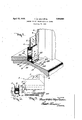
- FIG. 1 is a fragmentary perspective View embodying this invention.
- Figure 2 is a fragmentary sectional View through the bottom rail.
- Figure 3 is a fragmentary elevation of one of the corners of the sash.
- This invention comprises generally a buffer comprising a tubular body secured to the lower edge of the bottom rail of the sash,
- the body being ⁇ collapsible and having,
- resilient walls particularly having a resilient bottom wall for engaging the sill, the side walls being also exible and resilient and a lip or flange extending lengthwise of the body at the rear edge of the bottom wall or at the rear lower corner of the body for engaging the sill, the construction being such that the body andthe liange conform to sills of various inclines and also readily conform tounevennesses of the surface of the sill, thus making the edge along the bottom rail thereof substantially air tight and Weather tight when the sash is closed.
- the sash designates the sash, and 2, the frame, the frame including the usual sill 3 and sash guides 4 in the form of channels at the opposite sides of the sash, one of such guides being shown in the drawings.
- the sash may be of any suitable construction and includes the usual top and bottom rails and stiles.
- bulging bottom wall 15 7 designates the' glazing.
- the sash is formed up of light sheet metal as brass and the braces are utilized to chanen the bottom rail particularly as it is open at its lower edge. The construction of the sash forms no part of this invention.
- the buffer 10 designates the buffer including a tubular body which is resilient and collapsible and a iiexible resilient lip 11 extending lengthwise of the body and offset from the central vertical plane thereof so that the body and the lip are in general form Q-shped in cross section.
- the body and lip are usually formed of rubber and normally forms an extension of the outer rear wall of the body. rlhe body is rigidly secured to the lower edge of the bottom s.
- a base 12 formed integral with the body and extending into the lower o en edge of the bottom rail and interlocked wit the bottom rail by means of the inturned flanges 8 which extend into grooves in the base 12.
- tubular body may be circular in general form, it is here "shown as provided with normally flat outer and inner sides 13 and 14 flush with the outer and inner faces of the bottom rail and with a downwardly which turns upwardly and then downwardly at 16 where it joins the flange 11 and the upright wall'13.
- This bottom wallv15 is resilient and flexible and also the outer, and inner walls/13, 14 are flexible.
- the passage 17 of the tubular body is, in order to bring out to the highest degree the conformity of the buier to the different inclines of the sills and the variations or unevennesses of the surface thereof formed irregular with tion at 18 where the lip 11 joins the body of the buiier strip, the passage being so formed as to permit the bottom wall 15 to lie iatwise on the sill snugly and conform to the sill and to cause the lip l1 to also lie flatwisev onthe sill regardless of its incline and variation or unevenness thereof and form an extension of although a corner porible and collapsible member having a iiexible ⁇ the bottom wall when compressed against the sill.
- the lip 11 terminates at 19 short of the ends of the buffer strip so that the end portions 20 of the body extend into the channels of the window guides 4 behind the outer walls 21 thereof while the lip terminates at the edges 22 of the walls 21.
- the tubular body can conform to the walls of the channels ot the guides and coact with the lip 11 or the terminal 19 thereof to render the sash weather tight at the corners thereof adjacent the guide.
- the buier is normally in the form shown in Figure 2, when the sash is raised with the lip 11 in line with the outer wall 10 of the body of the bader.
- the bottom wall 15 collapses or assumes the position shown in Figure 2 snugly fitting against the sill regardless of whether the sill is level or inclined various degrees.
- the lip snugly engages and presses against the sill. rlhe rear wall of the tubular body also bulges outwardly against thesurface 23 of the sill.
- vend portions of the strip during the collapsing action also conform 'to the walls of the window guides while the terminal 19 of the lip coacts with the ed es 22 ⁇ 0 the guide to further render the sas weather tight when closed.
- the combination with a sash and window frame having a sill, of a buffer strip extending along the llower edge of the bottom rail of the sash comprising a collapsible resilient tubular body having a base Jfor rigid attachment tothe bottom rail of the sash, Vand a lengthwise lip extending along the lower outerzcollllr of the body and normally forming an extension of an uprightl side of the body.
- a collapsible resilient tubular body having a base Jfor rigid attachment tothe bottom rail of the sash, Vand a lengthwise lip extending along the lower outerzcollllr of the body and normally forming an extension of an uprightl side of the body.
- the combination with a sash and window frame having a sill, of a buiifer strip extending along the lower edge of the bottom rail of the sash comprising a tubular collapsible body having a yielding bottom wall for engaging the sill and a flexible resilient lip extendin lengthwise of the body at the rear edge of t e bottom wall and normally forming an extension of the rear upright wail of the tubular body and movable into position to form an extension of the bottom wall as the bu'er and lip compress against the sill.
- a sash and window frame having a sill and sash guides in the form of channels, of a buffer strip extending along the lower edge of the bottom rail of the sash
- a resilient tubular body having a base for rigid attachment to the bottom rail of the sash, the body having a. resilient lip extending lengthwise thereof for engaging the sill, the body with the lip being Q- shape in general form in cross section, said lip terminating short ofthe ends of the body whereby the ends thereof are adjacent 'the inner edges of the outer walls of the window guides, and the end portions of the body without the lip extend into the channels.
Landscapes
- Engineering & Computer Science (AREA)
- Civil Engineering (AREA)
- Structural Engineering (AREA)
- Door And Window Frames Mounted To Openings (AREA)
Description
April 12, 1932,- l T..w. HoLT ET Al. 1,854,032
BUFFER FOR THE BOTTOM RAILS OF SASHES Filed May 30, 1930 TORS A TToRNEYs Patented Apr. 12, 1932 UNITI) STATES PATE @Price THOMAS W. BOLT, F .'EIZTIKB'AIRT,` INDIANA, AND CLOYD NEW' YORK,l ASSIGNOBS T0 THE 0. M. EDWARDS COMPANY INC., 0F SYRACUSE, NEW
Yonx, A oonron'ATIoN or INEW Yom:
BUFFER FOR THE BOTTOM 2.' ,e s f s or sssnns This invention relates to window sashes and'guides therefor and has for its object a particularly simple, economical and elicient buifer for the lower edges of the bottom rails or sashes, which builer readily conforms to e of a window sash and frame sills of different inclines and also to unevennesses of variations in the surface of the sill whether inherent in the sill or produced by dust, cinders etc. accumulating on the sill.
The invention consists in the novel features and in the combinations and constructions hereinafter set forth and claimed. 'l
In describing this'invention, reference is had to the accompanying drawings in which like characters designate corresponding parts in all theviews.,
Figure 1 is a fragmentary perspective View embodying this invention.
Figure 2 is a fragmentary sectional View through the bottom rail.
Figure 3 is a fragmentary elevation of one of the corners of the sash.
This invention comprises generally a buffer comprising a tubular body secured to the lower edge of the bottom rail of the sash,
the body being` collapsible and having,
resilient walls particularly having a resilient bottom wall for engaging the sill, the side walls being also exible and resilient and a lip or flange extending lengthwise of the body at the rear edge of the bottom wall or at the rear lower corner of the body for engaging the sill, the construction being such that the body andthe liange conform to sills of various inclines and also readily conform tounevennesses of the surface of the sill, thus making the edge along the bottom rail thereof substantially air tight and Weather tight when the sash is closed.
1 designates the sash, and 2, the frame, the frame including the usual sill 3 and sash guides 4 in the form of channels at the opposite sides of the sash, one of such guides being shown in the drawings. The sash may be of any suitable construction and includes the usual top and bottom rails and stiles.
5 designates the bottom rail and 6 one of the Stiles.
bulging bottom wall 15 7 designates the' glazing.
up of sheet metal open at its lower edge and having inturned flanges 8 at its lower edge. It is also shown as provided with an internal brace 9. The sash is formed up of light sheet metal as brass and the braces are utilized to stiften the bottom rail particularly as it is open at its lower edge. The construction of the sash forms no part of this invention.
10 designates the buffer including a tubular body which is resilient and collapsible and a iiexible resilient lip 11 extending lengthwise of the body and offset from the central vertical plane thereof so that the body and the lip are in general form Q-shped in cross section. The body and lip are usually formed of rubber and normally forms an extension of the outer rear wall of the body. rlhe body is rigidly secured to the lower edge of the bottom s. HENDERSON, or smcusn,
rail by suitable means here shown as a base 12 formed integral with the body and extending into the lower o en edge of the bottom rail and interlocked wit the bottom rail by means of the inturned flanges 8 which extend into grooves in the base 12.
Although the tubular body may be circular in general form, it is here "shown as provided with normally flat outer and inner sides 13 and 14 flush with the outer and inner faces of the bottom rail and with a downwardly which turns upwardly and then downwardly at 16 where it joins the flange 11 and the upright wall'13. This bottom wallv15 is resilient and flexible and also the outer, and inner walls/13, 14 are flexible. The passage 17 of the tubular body, it maybe circular, is, in order to bring out to the highest degree the conformity of the buier to the different inclines of the sills and the variations or unevennesses of the surface thereof formed irregular with tion at 18 where the lip 11 joins the body of the buiier strip, the passage being so formed as to permit the bottom wall 15 to lie iatwise on the sill snugly and conform to the sill and to cause the lip l1 to also lie flatwisev onthe sill regardless of its incline and variation or unevenness thereof and form an extension of although a corner porible and collapsible member having a iiexible` the bottom wall when compressed against the sill.
The lip 11 terminates at 19 short of the ends of the buffer strip so that the end portions 20 of the body extend into the channels of the window guides 4 behind the outer walls 21 thereof while the lip terminates at the edges 22 of the walls 21. Ilhus, the tubular body can conform to the walls of the channels ot the guides and coact with the lip 11 or the terminal 19 thereof to render the sash weather tight at the corners thereof adjacent the guide.
lt is to be understood that it has been particularly difficult to render a sash entirely weather tight at the corners thereof.
ln operation, the buier is normally in the form shown in Figure 2, when the sash is raised with the lip 11 in line with the outer wall 10 of the body of the bader. vWhen the sash is closed against the sill, the bottom wall 15 collapses or assumes the position shown in Figure 2 snugly fitting against the sill regardless of whether the sill is level or inclined various degrees. Also, the lip snugly engages and presses against the sill. rlhe rear wall of the tubular body also bulges outwardly against thesurface 23 of the sill. The
vend portions of the strip during the collapsing action also conform 'to the walls of the window guides while the terminal 19 of the lip coacts with the ed es 22`0 the guide to further render the sas weather tight when closed.
What we claim is:
1. The combination with a sash and window frame having a sill, of-a buffer strip extending along the lower edge of the bottom rail of the sash, said strip comprising a tubular iiexresilient lip extending from the outer lower corner thereof.
2. Thecombination with a sash and window frame having a sill, of a bui'er strip extending along the lower edge of the bottom rail of the sash, said strip comprising a tubular flexible and collapsible body having a flexible resilient lip extending from the outer lower corner thereof normally forming an extension of the outer upright-wall of the body and movable as the body and the .lip compress against the sill in a position where it forms an extension of the bottom wall of the body.
3. The combination with a sash and window frame having a sill, of a buffer strip extending along the llower edge of the bottom rail of the sash comprising a collapsible resilient tubular body having a base Jfor rigid attachment tothe bottom rail of the sash, Vand a lengthwise lip extending along the lower outerzcollllr of the body and normally forming an extension of an uprightl side of the body. 4. The combination with a sash and win- 'the bottom rail of the sash,the body having a resilient lip extending lengthwise thereof for engaging the sill, the body with the lip being @-shape in general form in crosssection.
5. The combination with a sash and window frame having a sill, of a buiifer strip extending along the lower edge of the bottom rail of the sash comprising a tubular collapsible body having a yielding bottom wall for engaging the sill and a flexible resilient lip extendin lengthwise of the body at the rear edge of t e bottom wall and normally forming an extension of the rear upright wail of the tubular body and movable into position to form an extension of the bottom wall as the bu'er and lip compress against the sill.
6. The combination with a sash and window frame having a sill and sash guides in the form of channels, of a buier strip extending along the lower edge of the bottom rail of the sash, said strip comprising a tubular dexible and collapsible member havin a flexible resilient lip extending from t e outer lower corner thereof, said lip terminating short of the ends of the body whereby the ends thereof are adjacent the" inner edges of the "and cllapsible member having a iiexible and resilient lip extending from the outer lower corner thereof normally forming an extension of the outer upright wall of the body, said lip terminating short of the ends of the body whereby the ends thereof are adjacent the inner edges of the outer walls of the window guides and theend portions of the body without the li extend into the channels.
8. The com ination with a sash and window frame having a sill and sash guides in the form of channels, of a buffer strip extending along the lower edge of the bottom rail of the sash comprising a resilient tubular body having a base for rigid attachment to the bottom rail of the sash, the body having a. resilient lip extending lengthwise thereof for engaging the sill, the body with the lip being Q- shape in general form in cross section, said lip terminating short ofthe ends of the body whereby the ends thereof are adjacent 'the inner edges of the outer walls of the window guides, and the end portions of the body without the lip extend into the channels. Y
In testimony whereof, we Yhave hereunto lsigned our names at Elkhart., in the county of v Elkhart, and State of Indiana, this 24th day of May, 1930, and at Syracuse in the countyV f Ononda a, and State of New York, thls 22nd day o Msg, 1930.
T OMAS W. HLT. CLOYD S. HENDERSON.,
Priority Applications (1)
| Application Number | Priority Date | Filing Date | Title |
|---|---|---|---|
| US457568A US1854032A (en) | 1930-05-30 | 1930-05-30 | Buffer for the bottom rails of sashes |
Applications Claiming Priority (1)
| Application Number | Priority Date | Filing Date | Title |
|---|---|---|---|
| US457568A US1854032A (en) | 1930-05-30 | 1930-05-30 | Buffer for the bottom rails of sashes |
Publications (1)
| Publication Number | Publication Date |
|---|---|
| US1854032A true US1854032A (en) | 1932-04-12 |
Family
ID=23817234
Family Applications (1)
| Application Number | Title | Priority Date | Filing Date |
|---|---|---|---|
| US457568A Expired - Lifetime US1854032A (en) | 1930-05-30 | 1930-05-30 | Buffer for the bottom rails of sashes |
Country Status (1)
| Country | Link |
|---|---|
| US (1) | US1854032A (en) |
Cited By (7)
| Publication number | Priority date | Publication date | Assignee | Title |
|---|---|---|---|---|
| US2666548A (en) * | 1949-04-09 | 1954-01-19 | Dole Valve Co | Spaced wall container |
| US2683905A (en) * | 1950-10-20 | 1954-07-20 | Gen Tire & Rubber Co | Gasket with pressure leg and trim flap |
| US2698072A (en) * | 1950-10-31 | 1954-12-28 | Gen Tire & Rubber Co | Flexible mounting with garnish flap |
| US2812886A (en) * | 1953-08-04 | 1957-11-12 | Abraham S Weinstein | Paint can channel cover and brush support |
| US2938245A (en) * | 1956-09-24 | 1960-05-31 | Gen Motors Corp | Weather sealing member structure |
| US3023804A (en) * | 1959-07-30 | 1962-03-06 | Sr Edward N Howell | Articulated door construction |
| US3712005A (en) * | 1969-12-15 | 1973-01-23 | Aztec Mfg Co | Extrusions for partitions, walls and enclosures |
-
1930
- 1930-05-30 US US457568A patent/US1854032A/en not_active Expired - Lifetime
Cited By (7)
| Publication number | Priority date | Publication date | Assignee | Title |
|---|---|---|---|---|
| US2666548A (en) * | 1949-04-09 | 1954-01-19 | Dole Valve Co | Spaced wall container |
| US2683905A (en) * | 1950-10-20 | 1954-07-20 | Gen Tire & Rubber Co | Gasket with pressure leg and trim flap |
| US2698072A (en) * | 1950-10-31 | 1954-12-28 | Gen Tire & Rubber Co | Flexible mounting with garnish flap |
| US2812886A (en) * | 1953-08-04 | 1957-11-12 | Abraham S Weinstein | Paint can channel cover and brush support |
| US2938245A (en) * | 1956-09-24 | 1960-05-31 | Gen Motors Corp | Weather sealing member structure |
| US3023804A (en) * | 1959-07-30 | 1962-03-06 | Sr Edward N Howell | Articulated door construction |
| US3712005A (en) * | 1969-12-15 | 1973-01-23 | Aztec Mfg Co | Extrusions for partitions, walls and enclosures |
Similar Documents
| Publication | Publication Date | Title |
|---|---|---|
| US2257035A (en) | Window sash construction | |
| US2136273A (en) | Sheet metal window frame structure and method of forming the same | |
| US2107773A (en) | Window frame and sash unit | |
| US2189960A (en) | Metal window | |
| US2114896A (en) | Window construction | |
| US2297051A (en) | Window and car construction | |
| US2304063A (en) | Window construction | |
| US1594765A (en) | Window-sash construction | |
| US2119667A (en) | Closure frame | |
| US1800008A (en) | Weather-strip construction for window sashes | |
| US2065078A (en) | Weather strip | |
| US2286493A (en) | Door construction | |
| US1666839A (en) | Metallic window sash | |
| US1652607A (en) | Window-sash construction | |
| US1270011A (en) | Slidable metallic door. | |
| US2647571A (en) | Storm window and screen frame and assembly | |
| US1703092A (en) | Window construction | |
| US1959148A (en) | Window sash construction | |
| US2898646A (en) | Metal window | |
| US1380372A (en) | Sash construction | |
| US1405829A (en) | Metal sash construction | |
| US1663134A (en) | Metal window construction | |
| US1031575A (en) | Car-window. | |
| US1981192A (en) | Window construction | |
| US2545901A (en) | Storm window |