US1853022A - Automatic dialing circuits - Google Patents
Automatic dialing circuits Download PDFInfo
- Publication number
- US1853022A US1853022A US487154A US48715430A US1853022A US 1853022 A US1853022 A US 1853022A US 487154 A US487154 A US 487154A US 48715430 A US48715430 A US 48715430A US 1853022 A US1853022 A US 1853022A
- Authority
- US
- United States
- Prior art keywords
- relay
- switch
- key
- circuit
- conductor
- Prior art date
- Legal status (The legal status is an assumption and is not a legal conclusion. Google has not performed a legal analysis and makes no representation as to the accuracy of the status listed.)
- Expired - Lifetime
Links
- 239000004020 conductor Substances 0.000 description 70
- 238000004804 winding Methods 0.000 description 63
- 238000012360 testing method Methods 0.000 description 41
- 230000005540 biological transmission Effects 0.000 description 11
- 230000000994 depressogenic effect Effects 0.000 description 8
- 230000000977 initiatory effect Effects 0.000 description 5
- 230000001419 dependent effect Effects 0.000 description 4
- 238000003780 insertion Methods 0.000 description 2
- 230000037431 insertion Effects 0.000 description 2
- 238000009877 rendering Methods 0.000 description 2
- RYGMFSIKBFXOCR-UHFFFAOYSA-N Copper Chemical compound [Cu] RYGMFSIKBFXOCR-UHFFFAOYSA-N 0.000 description 1
- 101100379079 Emericella variicolor andA gene Proteins 0.000 description 1
- RYXPMWYHEBGTRV-UHFFFAOYSA-N Omeprazole sodium Chemical compound [Na+].N=1C2=CC(OC)=CC=C2[N-]C=1S(=O)CC1=NC=C(C)C(OC)=C1C RYXPMWYHEBGTRV-UHFFFAOYSA-N 0.000 description 1
- 230000000881 depressing effect Effects 0.000 description 1
- 238000005286 illumination Methods 0.000 description 1
- JCCNYMKQOSZNPW-UHFFFAOYSA-N loratadine Chemical compound C1CN(C(=O)OCC)CCC1=C1C2=NC=CC=C2CCC2=CC(Cl)=CC=C21 JCCNYMKQOSZNPW-UHFFFAOYSA-N 0.000 description 1
- 239000004576 sand Substances 0.000 description 1
- 238000004904 shortening Methods 0.000 description 1
- 238000006467 substitution reaction Methods 0.000 description 1
Images



Classifications
-
- H—ELECTRICITY
- H04—ELECTRIC COMMUNICATION TECHNIQUE
- H04M—TELEPHONIC COMMUNICATION
- H04M3/00—Automatic or semi-automatic exchanges
- H04M3/22—Arrangements for supervision, monitoring or testing
- H04M3/26—Arrangements for supervision, monitoring or testing with means for applying test signals or for measuring
- H04M3/28—Automatic routine testing ; Fault testing; Installation testing; Test methods, test equipment or test arrangements therefor
- H04M3/32—Automatic routine testing ; Fault testing; Installation testing; Test methods, test equipment or test arrangements therefor for lines between exchanges
- H04M3/323—Automatic routine testing ; Fault testing; Installation testing; Test methods, test equipment or test arrangements therefor for lines between exchanges for the arrangements providing the connection (test connection, test call, call simulation)
Definitions
- n correoiae'rnn or NEW YORK, N. Yi, ,A'conroiae'rioir or NEW YORK y AUTOMATIC nrALINe CIRCUITS Appiicaummea october s, 19:30. ⁇ seriai No. 487,154.
- This invention k relates todial switching telephone-systems and more particularlyto apparatus for accurately simulating the acts of an average subscriberrin initiating a call and dialing the letters yor numeralsL of any call number which such subscriber would be desirous of making.
- the obj ect of the invention is to provide mechanical dialing appara-V tus which accurately simulates the theoretical average times required for the average subscriber to perform all of the functions required in setting .up a connectionjfrom the tiineofrremoval of his receiver from the switchliook until the completion of dialing.
- the mechanicaldialin'gapparatus comprising the ⁇ subject matter of thepresent invention was decal digits zero. may be operated to vrecord whetherthe oiice vised whereby time yintervals ,equivalent to the theoretical ⁇ average time required for subscribers to perform yactsincideiit to making calls are measured.; v
- a keyset is provided upon which -theletters and numerals ofy any call number may be setup.
- Such call numbers may, for example, comprisejone, two or three office code lettersy followed by four numeri'- and lin some instances 'by-Aa party line letter' seven numerical di its with or f ⁇ without a party line ting up step-by-step switches;vthree numer ical digits for special operator calls; or calls to a zero operator involving a single digit ther keys are also provided which code comprises ,one or' two code letters, ⁇ a single code number or whethery all of the code digits have-- numerical rather than letter values, whether the ynumber comprises but three-numerical digits. as for calls to special operators, whether the call is such as requires coin box operation and for other operating functions. ⁇ r f
- Two timing Vinterrupters are y also provided, one of which measuresunder then control of certain ⁇ of the auxiliarykeys van interval equivalentto the theoretical average time from the removal of a receiver from the switchhook until dialingstarts Varied in accordance with whether the call requires the first dialing of a .code letteror a code numeral and also measures intervals equivalent to the theoretical average time required yfor a subscriber to hunt for succeedwhich may be a pull down' a ⁇ yletter as used in setvision being made under the control of the latter interrupter to transmit impulses for setting selector switches or for setting the registers of a sender during the time that the dial run down periods are being measured.
- a third stepping switch is also provided which functions as a steering switch to successively associate the rows of keys of the keyboard with the lirst two stepping switches for determining the numerical values ot' the several digits of any line number which the tester may desire to transmit.
- a bank ot lamps is provided for indicating the progress of dialing and a remote co fl means is made available wherebyy the tes after having set up any desired called number on the keyboard, may control the starting and stopping of the equipment from a remote point, for example, from the frame on which the sender under observation is loc( ted.
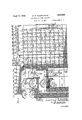
- Fig. 1 shows a subscribers line terminating in a main distributing frame, an intermediate distributing i'rame, the diagrammatic representation of a line finder, district selector, district finder, and sender selector, and ay connecting shoe by means of which a test set disclosed in Figs. 3 and 4 may be patched to the line terminals at the intermediate distributing frame;
- Fig. 2 shows a skeletonized sender circuit
- Figs. 3 and 4 taken together show the test set embodying the present invention.
- the line finder, district selector, district linder, sender selector and sender which have been diagrammatically disclosed, are of the type shown in Patent No. 1,690,206, granted to A. Raynsford on November 6, 1928.
- the switches 300, 350 and 400 are of the well known rota-ry stepping type which are advanced step by step by the deenergization of their respective stepping magnets 301, 351 and 401 and which are restored to normal by being stepped forwardly under the control of the interrupter contacts of their stepping magnets.
- Switches 350 and 400 have two normal positions.
- the keys of keyboard 302 are of the locking type and the keys of each vertical row released by means of the release magnets shown above such vertical row.
- a recording milliammeter 200 is connected between the central office battery and the battery bus bar in the sender ⁇ and a second milliammeter 205 is connected between the central olice ground and the ground bus bar of the sender, -and the test set of Figs. 3 and 4 is patched by means of a cord extending from contacts of the group key 303 and terminating in shoe 101. to the tip and ring conductors of a subscribers line such as 100 in the particular group of lines having access to the sender of Fig. it' tests are to be made in other groups, similar cords would be connected from the contacts of other group keys such as 304, 305, etc.
- a circuit is established for relay 403 extending from battery at the inner lower alternate contact of key 402, conductor 404, winding of relay 403, to round at the outer right back contact cf relay 405 and a circuit is established for relay 40G from battery on conductor 404 through the winding of relay 406, the upper contacts or" key 402 to ground at the inner left back contact of relay 407.
- Relay 40G upon operating locks over its left contact to ground at the right back contact of relay 408.
- lVith relays 403 and 406 operated a loop circuit is established simulating the removal ot a subscribers receiver from the switchhook which may be traced from battery through the winding of line relay 102 of the subscribers line to which the test set has been patched, left back contact of cut-oil relay 103, ring terminals of? 'the intermediate distributing frame, ring terminal of thel shoe 101, conductor 104,? left ycontacts of key 303, conductor 314, right' front contacts of relays 403 and 40G, resistance 409,'conductor 410, right contacts of key 303, conductor 105, tip terminalof shoe 101, tip terminals of the intermediate distributing frame to ground at the right back contact ot cut-off relay 103.
- Line relay Y102 operates in this circuit and in the well known manner causes the line finder 10G to find theI calling line, and the district finder 107 and sender selector 108 to associate an idle sender such as is shown in Fig. 2 with the calling line and with the district selector 109.
- Key 402 also establishes a circuit for relay 421 extending from battery through the right winding of relay 421, inner upper contacts of key 402, conductor 318 to ground at the normal terminal of brush 319 of steering switch 300.
- T he operation of key 402 also establishes a Yno 415, left back contact ofrelay at the inner right back Contact of relay 4071.V
- a circuit is also effective for the left ⁇ .winding l circuit y'from batteryV i on conductor'404V through resistance 411, ⁇ the right black contact of relay 412, right back contact of relay 413,l v.right winding'of'relay 414, resistance 413, to ground of relay'414 extendingy from'battery on con# ductor 404, resistance 411, right back contact 'of relay 412, right 'back contactfof relay 413,
- Relay 414 being differentially woundland polarized, does not operatev sincey the current flowing through its right windingunbalances the charging current flowing through its left winding and condenserr 420;'- When, however, condenservr 420 becomes fully charged, the current flowing through its left winding unbalances 'the current flowing measured before relay 414 operates is therefore dependent upon the value of resistance 419 and condenser 420; Relay414 upon opf conductor 404, windingof backk contact of relay 412, front Contact of erating closes a ycircuit1for operatingrelay 413 which may be' traced from battery ⁇ on relay 413, left relay 414 to ground at they innerright back ⁇ contact of relay 407 Relay 413 upon operatrelay 416, extend ing establishes a circuit for ing from battery on Vconductor 404,.,winding of relay 416,'outer right front contact of rey lay 413, to ground at the inner
- Relay 413 upon operating also reverses extends fromground at the inner right :back Contact ofrelay 407 ⁇ left front'contact of relay 413, left winding of relay 414, conductor 417,..
- polarized relay 414 operates its armature against-its ⁇ back contact, opening the circuit of relay 413 which releases in turn releasing relay 416 to open the circuit ofmagnet 301.
- the steering 419, condenser 420, left back n through its rightkk Y windingand'relay 414 operates its armaturer against its yfront contact.y
- the time interval switch is thereby'advanced from normal po-y sition ⁇ into position 1.
- y vlith the steering'- switch 300 in position 1, vthe initial 'circuiti of relay 421 is opened and lamp 321 lights lover brush-322 to indicate tothe test man that the ycircuit has been advanced off normal.
- relay 413 With relay 413 released 'and steering switcn 300 ⁇ in position 2 the circuit previously traced through the right winding oit re- Y lay 414 is reestablished and a circuit is closed through the left winding of relay 414, from l battery over the right back contact of'relay 413, left winding of relay 414, conductor 417, brush 316 and theiNo. 2 terminal of its bank, conductor332upper normal contacts of key 423, resistance 432,-condenser 420, left contact of relay 413 ⁇ to ground. condenser 420 rbecomes ⁇ fully larized relayy 414 operates against vitslfront contact, thereby again operating relay 413 whichin turn operates relay 416 and stepping magnet 301. Relay 413 also reverses 'the rconnection of battery and ground to the windings of relay 414 as previously described, and after an interval measured by the time required to recharge charged, po-
- lay 414 operates its armature against its back i contact, opening the circuit of :relay 413.
- timing relays413 and 414 an interval has been measured ⁇ equivalent to the average theoretical time the connection of battery and ground to the terminals of the ywindings offrelay 414 ⁇ and with switch 300 innormal position the cir-v cuitthrough the left winding of relay 414 now for the removal of a subscribers receiver ing of relay424, resistance 427, ⁇ condenser 428, inner left back contact-of relay 405t0 ground, theleft winding of relay 424 being shunted over the outer lettback contactof back I As soon as f its armature from the switchhook until the finger hole of. 'n
- larized relay 424 moves its armature against its front contact, thereby closing a. circuit for b.relay 405 extending from battery at the back icontact of relay 421, winding of relay 405,
- Relay 405 upon operating reverses the connection of battery and ground through the windingsof polar- 1 ized relay 424 and opens the circuit of relay 403 at its outer right back contact.
- Relay 403 releases and establishes a circuit for relay 407 extending from battery on conductor 404, back contact of relay 431, Winding of relay 407 to ground at the inner right back contact o'f relay 403.
- Relay 407 operates and locks to ground over its inner left front contact, opens the circuit of stepping magnet 301 at its outer right back contact thereby advancing the steering switch 300 into position 3, removes operating ground from the circuit of relays 413 and 414 and supplies operating ground 'for relays 405 and 424 at its inner right contacts.
- relay 403 establishes au operating circuit for magnet 401 ot switch 400 extending froln battery, winding of magnet 401, upper intermediate contacts o key 402, left back contact of relay 408 to ground at the left back contact of relay 403 preparatory to advancing switch 400 into position 1.
- relay 405 With relay 405 operated, the current ⁇ iowing through the windings oit polarized relay 424 and condenser 428 is reversed and after condenser 428 has become fully charged in the opposite direction, relay 424 operates its armature against its back contact, thereby opening the circuit of relay 405 which thereupon dee-nergizes again establishing the circuit of relay 403 which in turn opens the circuit of magnet 401 to advance switch 400 into position 1.
- Relay 405 upon deenergizing also again reverses the direction of current flowing through the windings of relay 424. again causing it to operate its armature against its front contactto again operate relay 405 which in turn releases relay 403 and reverses the direction of current flowingr through the windings of polarized relay 424.
- relay 424 again operates its armature against its back contact thereby releasing relay 405 and in turn reoperating relay 403 which opens the circuit of magnet 401 to advance switch 400 into position 2. In this manner under the control oi timing relays 405 and 424, switch 400 is advanced from position to position until it reaches position 9.
- Relays 408 and 425 both energize, relay 408opening at its right back contact the holding circuit of relay 406, thereby releasing this relay and locking itself operated to ground over its right front contact.
- Relay 425 upon operating closes a restoring circuit for switch 400, extending from battery through the winding and interrupter contacts of magnet 401, strapped off normal terminals and brush 456 of switch 400 to ground at the front contact of relay 425.
- Switch 400 thereupon advances to its-11th or second normal position, in which position the circuit of relay 425 is opened and relay 425 is released to open the circuit of magnet 401.
- the advance oi switch 400 into position 9 under the control of timing relays 405 and 424 has now measured a time interval corresponding to the time required for the average subscriber to rotate the dial to the finger stop for the code letter W.
- relay 405 deenergized to cause the advance of switch 400 into position 9 it again reversed the connection of battery and ground to the windings of polarized relay 424, causing relay 424 to operate its armature against its front contact, thereby operating relay 405 to again release relay 403. Since at this time relay 408 is operated, the release of relay 403 closes a circuit from battery, winding of stepping magnet 351 of switch 350, conductor 327, left front contact of relay 408 toground at the lett back contact of relay 403 preparatory to advancing switch 350 from normal. Relay 405 also again reverses the connection of battery and ground to the windings of relay 424 which after an interval operates its armature against its back contact thereby releasing relay 405.
- Relay 405 upon releasing again reverses battery and ground to the windings of relay 424 and reestablishes the circuit of relay 403 which in turn opens the circuit of magnet 351 to advance switch 350 into position 1. In this manner under the control of timing relays 405 and 424, switch 350 advances from position to position into position 9.
- relayV 406 was released and upon each energization'of relay 405 relay With relay 406 lreleased ,Y
- Vother timingrelays 413 relay 424 which may be traced 'from'rbattery on conductor a 404,v resistance 411, right Vback contact of relay 412, right back contact of relay 413, right winding 'of relay 41,4, 'resistance 415, ⁇ left back contact of relay 413 to.
- y relay Y' 414 operates its armature against its yback contact in the manner previously ide-1,90 i l -scribed, releasingzrelay 413.
- Relay 416 also upon'operatingvstarts the operation ottiming relays 405 and vu424 as previously described, yrelay405 upon Voperating .opening the circuit of relay 403 which in turn closesg the circuit of magnet 401 of switchf400j and the lcircuit of relay ⁇ 407 which operates and locks as previously described? ⁇ r
- the operation of relay407 releases magnet 301 lwhich f advancesswitch 300 into position 4 and per-1400 functions previously 'de-j scribed.
- the advanceof switch 300 from pol sition ⁇ ⁇ 3 to position 4 un'der'the control of and 414 has thusmeasured a theoretical time interval .'equ'ivalent to the ⁇ 1.05 timefrequir'ed lfor ⁇ the average subscriber towf tindr the finger hole of. the dial corresponding f to the secondfcode letter of the line designa'- .-tion'.
- relay 405 At the time relay 405 energized to cause the advance of switch 400 into position 6, it again reversed the connection of battery and ground to the windings ot polarized relay 424 causing relay 424 to operate its armature against its front contact, thereby operating relay 405 to again release relay 403. Since at this time relay 408 is operated, the release of relay 403 closes a circuit trom battery through the winding ot stepping magnet 351 of switch 350, conductor tact of relay 408 to ground at the left back contact of relay 403 preparatory to advancing switch 350 from normal.
- Relay 405 also again reverses the connection of battery and ground to'the'windings ot relay 424 whichy after an interval operates its armature gainst its back contact,tliereby lreleasing relay 405.
- Relay 405 upon releasing again reverses battery and ground to the windings of relay 424 and reestablishes the circuit of relay 403 which in turn opens the circuit otl magnet 351 to advance switch 350 into posiunder Vthe control ot" relays 405 'and 424, switch 350 advances from tion 1. In'this manner,
- Relay 407 performs the functions previously described including tlie advance ot switch 350 'to' its normal position and the preparation of circuits for controlling theY operation of timing relays 413 and. 414.
- timing relayf414 which may ⁇ be traced from battery on conductor 404, resistance 411,v right back contact. of relay 412,
- relay 414 operates its armature against its frontcontact, establishing the l switch 300 into position 5 and timing relays 405 and 424' functioning to first advance vswitch 400 to a position indicated by the depressed thousands key 309 and then to vance switch 350.
- resistance 434 and condenser 435 have been substituted in the circuit of timing relay 41,4 for the resistance 432 and condenser 420 for the purpose of reducingthe time required for relay 414 to operate, thereby reducing the interval measured' by thel advance ot' switch 300. This is done to 'simulate the time required for a subscriber to hunt for thetinger hole of Ithe dial corresponding to a numerical digit. Since a numerical digit is easier to find on the dial than a letter, the time interval measured A1s correspondingly 1 shortened.
- switch 300 is adto position intoV position 8, measuring in each advance a time interval corresponding to the time required for a subscriber to find a numerical digit, time intervals being thus measured for the subscriber to iind the hundreds, tens and unitsf digits.
- Switches 400 and 350 are also alter-A nately operated to positions indicated by the depressed keys 309, 310, 311 and 312, and impulses are transmitted during the successive operations of switch 350, as previously described for setting the thousands, hundreds, tens and units registers of the sender.
- progress lamps 339, 340, 341 and 342 are operated in circuits extending over brush 322 to indicate when the test circuit is functioning to transmit the thousands, hundreds, tens and units digit impulses to the sender.
- relay 407 releases and the timing relays 413 and 414 again operate for measuring ay time intervalcorresponding to the time required for a subscribery to find the required stations letter on the dial.
- steering-switch 300 will be in vposition Sand consequently resistance -432 and condenser 420 .will be connected into the circuit through the left windingof relayV 414 over brush 316 of switch 300 and conductor 344 and the time interval measured will therefore be thesame as the intervals measured in-connection with the first two code letters.
- Steering switch 300 will be advanced from position 8 to position 9 under the control of timingrelays 413 and 414 as previously described, linwhich position the stations progress lamp 343 will be lighted and switches 400 and-350 will be controlledby timing relays 405 and 424 in the manner previously described.
- impulses will be sent to the sender to set the stationsrregister thereof into a position corresponding to the den circuit over "2? tion of the test.
- Atthe sender assoonas the complete line designation has been recorded pressed stations key 313.
- lay 412 upon-operating opens the battery lead extending to the windings of timing relays 413 and-414 thereby preventingthe'fur-y ther operation ofthese relays.v Theoperator, noting the illumination of OKy lamp 347 mayl now restorethe operators start key' 402 and the keyr433. The restoration of key 402 now establishes a'y restoringvcircuit for the steering switch 300 extendingfrom bat-.-
- thetestlset ⁇ would ythe depressed keys of the keyboard 302y may kbe released through themomentary opera- ⁇ tion of; releasingkey 438 which establishes an obvious circuit for the key restoring rmagnets 351 to 358 inclusive.
- Timing relays 413 and 414 will, however, function as previously described vto advance the steering switch into position 9.V Since timing relay405 does not operate, the circuit of relay ⁇ 403 is, maintained, andr relay 407 does not operate-atthis time. yVhen therefore, steeringswitch 300 reaches position 9,
- relay 412 operates over the ⁇ previously tracedcircuit to prevent any further operation'of timing relays 413 and 414 and steering-switch 300'is advanced into po-v Y sitionlO to light the OK lamp 347 At this point the circuits are restoredto normal.
- Test on a call fo zero operator For testing the sender current drain on a call to the zero operator for which the single digit 0 is dialed, the operator depresses the key 442- and no keys in keyboard 302. In this case after the steering switch 300 advances into position 1 as previously described, relay 421 is held energized in a circuit through its left winding, the inner lower and three inner upper contacts of key 442, conductor 336 to ground at brush 319.
- relay 421 Vith relay 421 operated, a circuit is established from ground at brush 319 over conductor 336, the intermediate upper contacts o key 442, front contact of relay 421, conductor 337, to battery through the interrupter contacts and winding of magnet 301, thus advancing switch 300 into position 2, In position 2 of switch 300, relay 421 is held operated in a circuit extending from battery through its lett winding, the inner lower contacts of key 442, conductor brush 348 ot switch 300, conductor 345 to ground at the outer right back contact of relay 407. With relay 421 operated, a circuit is established for advancing switch 300 directly into position 3, extending from ground on conductor 345, brush 348 and its No.
- relay 421 When steering switch 300 advances into position 4 following the transmission of this .series of impulses, relay 421 is operated in a circuit extending from battery through its le'it wiinling, the lowermost contacts of key 442, conductor 443, the strapped Nos. 4, 5, 6 and 7 terminals and brush 348 of switch 300, coinluctor 345 to ground at the outer right back contact ot relay 407 as soon as relay 407 releases upon the completion of impulsing.
- lVith relay 421 held operated, a circuit is established for advancing switch 300 directly into position 8, extending from ground on conductor 345, brush 348 and the strapped terminals 4, 5, 6 and 7 conductor 443, the lower and inner upper contacts of key 442, front contact of relay 421, conductor 337, to battery through the interrupter contacts and winding of magnet 301. Since no station key was depressed, the steering switch 300 is advanced out ot' position 8 into position 9 and thence into position 10 to light the OK lamp 347 in the manner previously described in connection with the test involving a line designation having no stations letter.
- the numeral 0 used for calls to the zero operator is included in a finger hole of a subscribers dial which is clearly marked Operator, it is much easier for a subscriber to tind than a code letter and therefore the time interval measured by the timing relays 413 and 414 corresponding to the theoretical time required t'or a subscriber to find this finger hole should be less than that measured for a subscriber to find a code letter.
- the keys 445 and 423, and keys 362 363 and 364 of the keyboard 302 are-operated'. With thesekeys operated, the test set functions in much the vsame manner as for thecallirst described up to the point Where switch 300V. is advanced into positionv4, thus transmittinggthree series of vimpulses tof-the senderunder the control of depressed keyboard vkeys 362, 363 and 364,;exceptj that vWith key 423 operated, the timing relays 413 and '-414 advance steering switch y 2, ⁇ r fromk positionf2 to position3,-and from position 3'to position 4 at a faster rate vas determinedb the operation oftiming'relay- 414 under .the
- YVhen steering switch 300 advances -intoposition 4 under the control of timing relays 413 and 414.7forthe transmissionof thethird of these series of impulses,
- relay kr421 is operated ina circuit extending from battery through its lett Winding, the contacts of key 445, conductor 443, the strapped Nos. 4, 5, 6 and 7 terminals and brush348 f 7 oiV switch 300, conductor 345, to ground at the outer right back contact of relay 407 as soon f asrelay 407 deenergizes upon the ycompletion lished for advancing switch 300 directly into offthe transmission ofimpulses for the third digit l of the three numeral designation 211.
- Thetest set may also be employed to simulate the initiation of a call from a subscribers line z'equippedwith a coin box by depressing key ⁇ i41n8.
- -It Vbe assumed that-the test manideysireslfto se viously- .described, WO 8432-5, andV operselector switches.
- the timingrelays 413-an 414 functionV to measure' time intervals ⁇ corresponding to the time requiredV for asubscriber to hunt for the digits of a line designation
- the resistances 446 and 434 areconnected ⁇ through condenser 435 .inI the circuit previously traced through the lle'ft'vvinding oftimngrelay 414 in place of resistanc'es 45,3 and 432 and .condenser 420 and consequently the timing relays 413 and 414 *measure shorter time intervals correspondingto the time required for the average subscriber to hunt for the line designating digits.
- Remote control ,of test Aset y l If the test man ⁇ desires to control the test described'for the assumed Y set for a particularftype'of callV from a remote point, yfor example from the sender frame in order that Ahe may remain at'the sender frame for observation purposes, he may set up Ythe test set forthe ⁇ desired call and then depress the remotel control key436 instead lof the start key 402 to control the starting and restoration ofthe test set. He
- the sender current drain may easily be computed. For more accurate computation of the current drain for any particular type ot call, ten calls of the same character may be made between readings of the milliammeters and ythe difference between the readings divided by ten.
- Vhat is claimed is:
- an automatic dialing apparatus for simulating the operation of a subscribers dial
- a key set for recording the letters and numerical digits of called line numbers
- a time measuring device for simulating the time elapsing between the removal of a subscribers receiver from the switchhook and the dialing of a first digit
- a ⁇ key set for recording the letters and numerical digits of called line numbers
- a rtime measuring device including a relay for simulating the time elapsing. between the removal of a subscribers receiver from the switchhook and the dialing of a first digit, resistances and condensers for insertion in the circuit of said relay for overning the speed of its operation, and a key or varying the amount of resistance and capacitance in accordance with whether the first series of impulses to be transmitted is in accordance with an otlice code letter or a numerical digit.
- a key set for recording the letters and numerical digits of called line numbers, means for successively transmitting series of impulses in accordance with the record set up on said key set, a time measuring device for simulating the time elapsing between the removal of a subscribers receiver from the switchhook and the dialing ot a first digit, and means for varying the action ot said time measuring device in accordance with whether a call from a message rate line or from a coin box line is being simulated.
- a key set for recording the letters and numerical digits of called line numbers, means for successively transmitting series of impulses in accordance with the record set up on said key set, a time measuring device including a relay for simulating the time elaps'ing between the removal of a subscribers receiver from the switchhook and the dialing of a first digit, resistances and a condenser for insertion in the circuit of said relay for governing the speed of its operation, and a key for increasing the amount of resistance to prolong the time period measured if a call from a subscribers line having a coin box in which the subscriber must deposit a coin before dialing, is being simulated.
- an automatic dialing apparatus for simulating the operation of a subscribers dial
- a'key set for recording the letters and numerical digits of called line numbers
- a time measuring device operable prior to the transmission of each successive series of impulses to simulate the time required forasubscriber to hunt for the finger hole of his dial corresponding to the next character' to be transmitted
- an automatic dialing apparatus for simulating the operation of asubscribersdial, a key set for recording the letters and numerical digits of called line members, means for successively transmitting series of im pulses in accordance with the record set up on said key set, a steering switch for successively placing said transmitting means -under the control of the operated keys of said key set, a time measuring device operable prior to the transmission of each successive series of impulses to successively advance said steering switch and to measure for each such advance a time interval simulatin the time required for a subscriber to hunt or the linger hole of his dial corresponding to the next character vto be transmitted, and means controlled by said steering switch for varying the action of said time measuring device in accordance with whether the character to be transmitted in an office code letter, a numerical digit, or a stations letter.
- an automatic dialing appara-tus for simulating the operation of a subscribers dial, a key set or recording the letters and numerical digits of called line numbers, means for successively transmitting series of impulses in accordance with the record set up on said key set, a steering switch for succontrolled by. said steering ⁇ switch for vary' ing the action of said time measuring yde-l vice in. accordance with whether the character to be transmitted is an oiiice code letter or a numerical digit, and a key for rendering the operation of said timeineasuringdevice invariable if alll the characters recorded are numerical digits. .y
- Inkan automatic dialing apparatus for simulating the operation of a subscribers dial, a key set for recording the'oitce code letters and numerical digits of any called line number, means for successively transmittingk series of impulses in'accordance with the record set up on said key set, a steering switch for successively placing said transmitting means under the control of the operated keys of said key set, a start key for initiating the cycle of operation ofl said apparatus, andra plurality of keys for initially advancing said steering switch one or more positions dependent uponwhether a two or one-letter ⁇ oflice code has been recorded 0n said key set;
- Inan automatic dialing ⁇ apparatus for simulating the operation of a subscribers dial, a key set Jfor recording theoiiice code letters and numerical digits of any called line number, means for successively transmitting series of impulses in accordance with the record set up on said key set, a steering switch for successively placing said transmitting means under the control of the operated keys of said key set, a time measuring device operable prior to the transmission of each successive series of impulses to successively advance saidv steering switch and to measure for each such advance a time interval simulating the time required ⁇ for a subscriber to hunt for the linger hole of his dial corresponding tothe next character to be transmitted, and a key operable when a single dig-y it zero is'recorded for a call to a Zero opera?
- an automatic dialing apparatus for simulating the operation of a subscribers dial, a key set for recording the oilice code the record setup onY said key set, asteering switch for successively placing said transmitting means under the control oftheopera-ted keys of saidkey'set, aI time ymeasure ⁇ ing device operable.k prior to the transmission of each successive series of impulsesto-successively advancerfsai'd steering switch and to measure for each suchadvancea time iiiterval Vsimulating A ⁇ the time required for aV subsciiberrto hunt for the linger ⁇ hole of his dial vcorresponding to the next character vto be transmitted,',means controlled by said steering switch for varying the action of said an otlice code YYletteror a numericalfdigit, a key for rendering the operation of said' time measuring device invariable if all of the characters recorded are numerical digits, and a key for advancingl said steering .switch through ,
- an automatic dialing apparatus for simulating the operation of a subscribers dial, a key set for' recording ⁇ digit oi a called line number, a time measuring device, a rstj switch, means under the control of said time measuring device for advancing said switch fa number of steps in accordance withthe recorded to measure a tiineinterval simulating they time required for a subscriber topull kletters and 1 numerical digits of any calledA line number,l means ⁇ tor successively trans- ⁇ mitting series of impulses in accordance with:y
- a second switch means under the control of said time measuring device following the sett-ing ot said first switch for advancing said second switch a number of steps in accordance with the digit recorded to measure a time interval simulating the time required for the dial to run down for the corresponding digit, and means controlled by said time measuring device to transmit a series of impulses corresponding to the recorded digit during the setting of said second switch.
- an automatic dialing apparatus for simulating the operation of a subscriber-r dial, a key set for recording the digits et any called line number, a time measuring device, means for successively operating said time measuring device in accordance with the several digits of the recording line designation, said time measuring device operating for each digit recorded to iirst measure a time interval simulating the time required tor a subscriber to pull down his dial for that digit and then to measure a. time interval simulating the time required for the dial to run down for that particular digit, and means controlled by said timing device for successively transmitting series ot impulses corresponding to the recorded line designation.
- a key set for recording the digits of a called line designation a time measuring device, a first switch, a second switch, means for successively operating said time measuring device to alternately advance and restore said first and second switches in accordance ⁇ with the several digits of the recorded line, designation
- said time measuring device operating for each digit recorded to irst measure a ime interval simulating the time required for a subscriber to pull doivn his dial for that digit during the advance of said first switch and then to measure a time interval simulating the time required for the dial to run doivn for that particular digit during the advancel of said second switch, and means controlled by said timing device to successively transmit series of impulses corresponding to the recorded digits during the successive settings of said second switch.
- a key set for recording the digits of any called line number
- means for measuring a time interval simulating the time required for the subscriber to remove his receiver from the sivitchhook and prepare to dial means for measuring time intervals simulating the times required for a subscriber to locate each digit of the line number recorded on the key set, and means for measuring time intervals simulating the pull-down and rundown periods of a dial for each digit recorded whereby the total time measured is an aecurate measure of the average theoretical time required for any subscriber to complete the dialing of the recorded line number.
- a key set for recording the digits of any called. line number, means for transmitting series of impulses in accordance with the digits of the recorded line number, and rcmote control means for at will causing said apparatus to function through one or more cycles of operation.
Landscapes
- Engineering & Computer Science (AREA)
- Signal Processing (AREA)
- Relay Circuits (AREA)
Description
April 12, 1932. sqw. ALLISON ET Al.
I AUTOMATIC DIALING CIRCUITS 4 sheets-sheet 1 Filed Oct. 8, 1930 drk s. w. ALL/50N N VENTO w. wel/MGH @Y @s/mw ATTORNEY April 12, 1932- s. w. ALLISQN ET AL 1,853,022
AUTOMATIC DIALING C IRCUI TS Filed oct. 8, 195o 4 sheets-sheet 2 `\l w' s. W. ALL/50N '"VENTORS W. MCCULLAGH ATTO/PNE? April 12, 1932'o s. w. ALLlsoN ET AL AUTOMATIC DIALING CIRCUITS Filed Oct, 8, 1930 4 Sheets-Sheet 3 A TTORNEY April l2, 1932. s. w. ALLlsoN ET AL AUTOMATIC DIALING CIRCUITS Filed OCL. 8, 1950 4 Shees-Sheet 4 WAL 50N /NVENTORS WSJMM/LAGH Arm/vw 1 A nection, it has been .in the laboratoryto ard subscribers dial, the average subscrib- Patented" pi". 12,. 19324 y Unire@ STATES GREAT KILLS, `NEW VVlSYZORVK, ASSIGNORS TG :BELLV TIlllJ-loNE`LABORATORIES,l.N-k
n correoiae'rnn, or NEW YORK, N. Yi, ,A'conroiae'rioir or NEW YORK y AUTOMATIC nrALINe CIRCUITS Appiicaummea october s, 19:30.` seriai No. 487,154.
This invention krelates todial switching telephone-systems and more particularlyto apparatus for accurately simulating the acts of an average subscriberrin initiating a call and dialing the letters yor numeralsL of any call number which such subscriber would be desirous of making.- The obj ect of the invention is to provide mechanical dialing appara-V tus which accurately simulates the theoretical average times required for the average subscriber to perform all of the functions required in setting .up a connectionjfrom the tiineofrremoval of his receiver from the switchliook until the completion of dialing.
In the study yof selector switch performance in step-by-step type systems andthe study` of ysender performance in panel type systems responsive to the initiation of calls and ldialing by a subscriber, particularlyin connection with studies of current drain, which is quite largely dependent uponthe speed with which the subscriber sets up a confound that it Vis difficult reproduce on the stander operation of the dial. Obviously, a trained laboratory engineer is able to dial connections on a standard subscribers dial much more accurately and with greater speed than would the averagesubscriber and therefore the Alaboratory operation of a dial would. not` be an accurate reproduction of the opera'- tion which'can=be expected in regular service and would not therefore provide an/accurate measure for computing the current drain of apparatus dependent =upon such dial operation. y
In order therefore to accurately simulate the operations which a subscriber performs in setting up a connection from thetime he removes his receiver fromV the switchhookf until he completes dialing any number which he would be called upon to dial, the mechanicaldialin'gapparatus comprising the `subject matter of thepresent invention was decal digits zero. may be operated to vrecord whetherthe oiice vised whereby time yintervals ,equivalent to the theoretical `average time required for subscribers to perform yactsincideiit to making calls are measured.; v
lnaccordance withy the present invention, one embodiment of'which has been disclosed by way of example, a keyset is provided upon which -theletters and numerals ofy any call number may be setup. Such call numbers may, for example, comprisejone, two or three office code lettersy followed by four numeri'- and lin some instances 'by-Aa party line letter' seven numerical di its with or f` without a party line ting up step-by-step switches;vthree numer ical digits for special operator calls; or calls to a zero operator involving a single digit ther keys are also provided which code comprises ,one or' two code letters,` a single code number or whethery all of the code digits have-- numerical rather than letter values, whether the ynumber comprises but three-numerical digits. as for calls to special operators, whether the call is such as requires coin box operation and for other operating functions.`r f
Two timing Vinterrupters are y also provided, one of which measuresunder then control of certain` of the auxiliarykeys van interval equivalentto the theoretical average time from the removal of a receiver from the switchhook until dialingstarts Varied in accordance with whether the call requires the first dialing of a .code letteror a code numeral and also measures intervals equivalent to the theoretical average time required yfor a subscriber to hunt for succeedwhich may be a pull down' a` yletter as used in setvision being made under the control of the latter interrupter to transmit impulses for setting selector switches or for setting the registers of a sender during the time that the dial run down periods are being measured. A third stepping switch is also provided which functions as a steering switch to successively associate the rows of keys of the keyboard with the lirst two stepping switches for determining the numerical values ot' the several digits of any line number which the tester may desire to transmit.
A bank ot lamps is provided for indicating the progress of dialing and a remote co fl means is made available wherebyy the tes after having set up any desired called number on the keyboard, may control the starting and stopping of the equipment from a remote point, for example, from the frame on which the sender under observation is loc( ted.
A clearer conception of the scope and purpose of the invention will be obtained from a consideration of the following description taken in connection with the attached drawings in which:
Fig. 1 shows a subscribers line terminating in a main distributing frame, an intermediate distributing i'rame, the diagrammatic representation of a line finder, district selector, district finder, and sender selector, and ay connecting shoe by means of which a test set disclosed in Figs. 3 and 4 may be patched to the line terminals at the intermediate distributing frame;
Fig. 2 shows a skeletonized sender circuit; and
Figs. 3 and 4 taken together show the test set embodying the present invention.
The line finder, district selector, district linder, sender selector and sender, which have been diagrammatically disclosed, are of the type shown in Patent No. 1,690,206, granted to A. Raynsford on November 6, 1928. For a full disclosure of the sender, 'referencemay bei had toPatent No. 1,589,402, granted to O. H. Kopp on June 22, 1926. The switches 300, 350 and 400 are of the well known rota-ry stepping type which are advanced step by step by the deenergization of their respective stepping magnets 301, 351 and 401 and which are restored to normal by being stepped forwardly under the control of the interrupter contacts of their stepping magnets. Switches 350 and 400 have two normal positions. The keys of keyboard 302 are of the locking type and the keys of each vertical row released by means of the release magnets shown above such vertical row.
Test with two letter office code It will be assumed that it is desired to make a study of the current drain in the sender of Fig. 2 which serves the group of subscribers lines in which the line 100 is located. To
make this study, a recording milliammeter 200 is connected between the central office battery and the battery bus bar in the sender` and a second milliammeter 205 is connected between the central olice ground and the ground bus bar of the sender, -and the test set of Figs. 3 and 4 is patched by means of a cord extending from contacts of the group key 303 and terminating in shoe 101. to the tip and ring conductors of a subscribers line such as 100 in the particular group of lines having access to the sender of Fig. it' tests are to be made in other groups, similar cords would be connected from the contacts of other group keys such as 304, 305, etc. It will first be assumed that a current drain test is to be made on a call for which two office code letters, four numerical digits and a station letter would be dialed by a calling subscriber, and that the test man depresses the keys 307 to 313 inclusive corresponding to the line designation WOrth S432-J, and then depresses the start key 402, the two code letter key 433 and the group key 303.
Upon the operation of start key 402 a circuit is established for relay 403 extending from battery at the inner lower alternate contact of key 402, conductor 404, winding of relay 403, to round at the outer right back contact cf relay 405 and a circuit is established for relay 40G from battery on conductor 404 through the winding of relay 406, the upper contacts or" key 402 to ground at the inner left back contact of relay 407. Relay 40G upon operating locks over its left contact to ground at the right back contact of relay 408. lVith relays 403 and 406 operated a loop circuit is established simulating the removal ot a subscribers receiver from the switchhook which may be traced from battery through the winding of line relay 102 of the subscribers line to which the test set has been patched, left back contact of cut-oil relay 103, ring terminals of? 'the intermediate distributing frame, ring terminal of thel shoe 101, conductor 104,? left ycontacts of key 303, conductor 314, right' front contacts of relays 403 and 40G, resistance 409,'conductor 410, right contacts of key 303, conductor 105, tip terminalof shoe 101, tip terminals of the intermediate distributing frame to ground at the right back contact ot cut-off relay 103. Line relay Y102 operates in this circuit and in the well known manner causes the line finder 10G to find theI calling line, and the district finder 107 and sender selector 108 to associate an idle sender such as is shown in Fig. 2 with the calling line and with the district selector 109. Key 402 also establishes a circuit for relay 421 extending from battery through the right winding of relay 421, inner upper contacts of key 402, conductor 318 to ground at the normal terminal of brush 319 of steering switch 300.
T he operation of key 402 also establishes a Yno 415, left back contact ofrelay at the inner right back Contact of relay 4071.V A circuit is also effective for the left `.winding l circuit y'from batteryV i on conductor'404V through resistance 411, `the right black contact of relay 412, right back contact of relay 413,l v.right winding'of'relay 414, resistance 413, to ground of relay'414 extendingy from'battery on con# ductor 404, resistance 411, right back contact 'of relay 412, right 'back contactfof relay 413,
right back contact of relay 407; Relay 414 being differentially woundland polarized, does not operatev sincey the current flowing through its right windingunbalances the charging current flowing through its left winding and condenserr 420;'- When, however, condenservr 420 becomes fully charged, the current flowing through its left winding unbalances 'the current flowing measured before relay 414 operates is therefore dependent upon the value of resistance 419 and condenser 420; Relay414 upon opf conductor 404, windingof backk contact of relay 412, front Contact of erating closes a ycircuit1for operatingrelay 413 which may be' traced from battery `on relay 413, left relay 414 to ground at they innerright back `contact of relay 407 Relay 413 upon operatrelay 416, extend ing establishes a circuit for ing from battery on Vconductor 404,.,winding of relay 416,'outer right front contact of rey lay 413, to ground at the inner right back Contact of relay 407 which in turn closes a circuit extending from battery through theV winding of magnet 301 of steeringswitch 300,
`With the two letter code key 433 operated]y as previously assumed andV steering switch 300 in after switch300 leaves normal over a circuit extending through thefleitwinding of position 1,A relay 421 is held operated relay 421, lower contacts of key l433, conduc-L f tor 336 to ground at'brush 319: With relay" 421 operated a circuit is Yestablished yfrom ground at brush 319 over conductor 336 the upper contacts of key 433, front Contact of relay 421, conductor 337 to battery through the interrupter contacts and -winding of magnet 301 thus advancingswitch 300 into position y2-whereupon relay V421 releases openingthe circuit of magnet 301.
With relay 413 released 'and steering switcn 300`in position 2 the circuit previously traced through the right winding oit re- Y lay 414 is reestablished and a circuit is closed through the left winding of relay 414, from l battery over the right back contact of'relay 413, left winding of relay 414, conductor 417, brush 316 and theiNo. 2 terminal of its bank, conductor332upper normal contacts of key 423, resistance 432,-condenser 420, left contact of relay 413`to ground. condenser 420 rbecomes `fully larized relayy 414 operates against vitslfront contact, thereby again operating relay 413 whichin turn operates relay 416 and stepping magnet 301. Relay 413 also reverses 'the rconnection of battery and ground to the windings of relay 414 as previously described, and after an interval measured by the time required to recharge charged, po-
ycondenser 420 in the opposite direction, re-
lay 414 operates its armature against its back i contact, opening the circuit of :relay 413. Thus under the control of timing relays413 and 414, an interval has been measured `equivalent to the average theoretical time the connection of battery and ground to the terminals of the ywindings offrelay 414 `and with switch 300 innormal position the cir-v cuitthrough the left winding of relay 414 now for the removal of a subscribers receiver ing of relay424, resistance 427,`condenser 428, inner left back contact-of relay 405t0 ground, theleft winding of relay 424 being shunted over the outer lettback contactof back I As soon as f its armature from the switchhook until the finger hole of. 'n
l. the d ialy has been found corresponding to the 1 15k relay 405 through resistance 430. As soon as condenser 428 becomes fully charged, po-
front contact of relay 424 to ground at the left Contact of relay 416V. Relay 405 upon operating reverses the connection of battery and ground through the windingsof polar- 1 ized relay 424 and opens the circuit of relay 403 at its outer right back contact.
With relay 405 operated, the current {iowing through the windings oit polarized relay 424 and condenser 428 is reversed and after condenser 428 has become fully charged in the opposite direction, relay 424 operates its armature against its back contact, thereby opening the circuit of relay 405 which thereupon dee-nergizes again establishing the circuit of relay 403 which in turn opens the circuit of magnet 401 to advance switch 400 into position 1. Relay 405 upon deenergizing also again reverses the direction of current flowing through the windings of relay 424. again causing it to operate its armature against its front contactto again operate relay 405 which in turn releases relay 403 and reverses the direction of current flowingr through the windings of polarized relay 424.
It was assumed that the test man operated key 307 of the second vertical row of keys in the keyboard 302 corresponding to theletter W having a numerical equivalent Relay 403 upon releasing closes the circuit of of the numeral 9. With steering switch 300 in position 3 and switch 400 in position 9, a circuit is now established from ground at brush 319 and its No. 3 terminal, contacts of key 307 conductor 323, the No. 9 terminal and brush 454 of switch 400, thence in parallel through the winding of relay 408, back contact of relay 431 to battery on conductor 404 and through the winding of relay 425, back contact of relay 431 to ground on conductor 404. Relays 408 and 425 both energize, relay 408opening at its right back contact the holding circuit of relay 406, thereby releasing this relay and locking itself operated to ground over its right front contact. Relay 425 upon operating closes a restoring circuit for switch 400, extending from battery through the winding and interrupter contacts of magnet 401, strapped off normal terminals and brush 456 of switch 400 to ground at the front contact of relay 425. Switch 400 thereupon advances to its-11th or second normal position, in which position the circuit of relay 425 is opened and relay 425 is released to open the circuit of magnet 401. The advance oi switch 400 into position 9 under the control of timing relays 405 and 424 has now measured a time interval corresponding to the time required for the average subscriber to rotate the dial to the finger stop for the code letter W.
At the time relay 405 deenergized to cause the advance of switch 400 into position 9 it again reversed the connection of battery and ground to the windings of polarized relay 424, causing relay 424 to operate its armature against its front contact, thereby operating relay 405 to again release relay 403. Since at this time relay 408 is operated, the release of relay 403 closes a circuit from battery, winding of stepping magnet 351 of switch 350, conductor 327, left front contact of relay 408 toground at the lett back contact of relay 403 preparatory to advancing switch 350 from normal. Relay 405 also again reverses the connection of battery and ground to the windings of relay 424 which after an interval operates its armature against its back contact thereby releasing relay 405. Relay 405 upon releasing again reverses battery and ground to the windings of relay 424 and reestablishes the circuit of relay 403 which in turn opens the circuit of magnet 351 to advance switch 350 into position 1. In this manner under the control of timing relays 405 and 424, switch 350 advances from position to position into position 9.
With steering switch 300 in position 3 and switch 350 in position 9, a circuit is established from ground at brush 319 over the contacts of key 307, conductor 323, the 9th position terminal and brush 328 of switch 350, conductor 329, winding of relay 431, to battery on conductor 404 thus operating ref leases. Relay 4017V kalso removes operating' groimd from the cirvances switch y 3,50
lay 431 which in turn releases relays 408 and 407. yRelay 407 upon releasing closes a fcircuit extending from battery, winding and interrupter contacts of magnet "351, brush: t330 and/strapped terminals of switch 350,. conductor331 to ground` at theinner leftr relay 407. Magnet y351 adinto its 11th or second which position thev cir.r
back Contact of no rmal position, in cuit of relay 431 isvopened and relay 431 reaty its inner right contact i cuits of timing relays-405 and `424 and re- Y of switch 3.50 under circuit previously y Y cord Y conductors 104 and timing relays 413 left back contact 'for transmitting impulses ground to the circuits vof and 414, and at its inner establishes the previously traced"operatingqcircuit for relay -406 which stores operating now operates and locksk over its left front. ground,y at the right backcontact ofk `contact to relay 408. The advance of switch 350 under thefcontrol of timing relays 405v and 424`has f nowmeasured a time interval corresponding,
to the time required for the dial to run down the code letter; Durin ,these operations Y with switchy 300 in position 3, the progress lamp 333 has been illuminated in a circuitV o over brush 322` indicatingthe transmissions, of impulses correspondingto the `rstk code letter.v c Y e It will lbe noted that during the advance 403 wasV released. 1 upon each deenergization Vof relay 403,y the traced over theV patching 105y is opened. This ycircuit following the association lof the sender `with the calling -line extends over the terminal 110 and brush-111 ot the line nder 106,
lower contact 'of cam 112, terminal 113k and o brush`114 of district finder 107 ,brush 115 'and f terminal116 of sender selector 108C0nductor pulsing Yrelay 2,01,l
to batteryvand 117, letty winding of sender 106, left contact of cam 120,7terminal 121 and Y the. switch brush'122 ofdistrict linder -107 brushf123 and lterminal 124er sender selector *.125 to ground over the -back'contact of relay Y 202 .through milliammeter 205.r` Thus upon v108, conductor e'achdeenergizration of relay 403, this circuit is opened and pulsing relay 201 of the sender injresponse thereto causes the setting of its A code register in the sendery in vthe mannerfully to'. letter 'V -wa'sfselected-by the test man' and 350 was` therefore advanced nine steps, relay 403` transmits nine impulses to the sender to set the A code register.
l l VVit-h relay 407 `releasedfas 'above described,
vupon the termination for' pulsing for. the rst codeletter, a' circuit is established for timing4 brush 316 in position 3,
l relay 407.
corresponding to y the control of timing f relays 405 and 424, relayV 406 was released and upon each energization'of relay 405 relay With relay 406 lreleased ,Y
- forms the Vother timingrelays 413 relay 424 which may be traced 'from'rbattery on conductor a 404,v resistance 411, right Vback contact of relay 412, right back contact of relay 413, right winding 'of relay 41,4, 'resistance 415, `left back contact of relay 413 to. ,ground at the inner right back ,contact 'of re-' lay 407 and from battery as traced through the left 'winding ofy relay 414,;conductor 417 conductor 332, upper4 normal contact of key423, resistance 432, conf v denser 420, to ground at the baclrcontact of s soon as condenser 420 becomes relay 414 operates its armature f fully charged,
- the against Lits front vcont-act establishing previously ytraced circuit for relay 413 whichv1 v80, I
reverses the-connection of battery and ground to the windings 1 of polarized. relay 414k and closesthe previously traced circuit forrelay 416.,"Relay y416; in turn closes the circuit'of Vstepping magnet'301 preparatory to advanc-QSS v ing switch 300 into position 4. Uponthe re-":L versal ocurrentthrough the windingsoi'.re-V f lay 414 V'following the operation of relay 413,y relay Y' 414 operates its armature against its yback contact in the manner previously ide-1,90 i l -scribed, releasingzrelay 413. Relay 416 also upon'operatingvstarts the operation ottiming relays 405 and vu424 as previously described, yrelay405 upon Voperating .opening the circuit of relay 403 which in turn closesg the circuit of magnet 401 of switchf400j and the lcircuit of relay`407 which operates and locks as previously described?`r The operation of relay407 releases magnet 301 lwhich f advancesswitch 300 into position 4 and per-1400 functions previously 'de-j scribed. The advanceof switch 300 from pol sition` `3 to position 4 un'der'the control of and 414 has thusmeasured a theoretical time interval .'equ'ivalent to the `1.05 timefrequir'ed lfor `the average subscriber towf tindr the finger hole of. the dial corresponding f to the secondfcode letter of the line designa'- .-tion'. ithf switch' v300 i in position 4 `the progress'lamp334 is lighted in a circuit ex# l; {1 10 tending over brush 322, to indicate tothe test manY that the test circuit is functioning, to transmit impulses to the Vsender corresponde ing ,to the second code letterof the liney desig-k l nation.' f .c l Withrelay 405 operated, the current flowing Vthrough the windings of polarized relay Y 424 and condenser 428 is reversedand after condenser'428 has lbecome fullyl charged in the opposite direction, relay 424 operates its i120 armature against its back conta-ct, thereby opening the circuit of relay 405 which there upon deenergizes, again establishing the circuitof relay 403 which in turn opens the cir- V cuitolfiniagnetc401'to,advance switch 4005125 y into position 1. In the manner previously i described, timing. relays 405 and 424 roperate l toV advance switch400 step by step runtil. it'
reaches position i6 when acircuit is estab'- ,c
lished fromgroundfover brushvh319 at its :530 Y e. fourth position terminal.
308,' conductor 335, brush 454 and its sixth Contacts of key osition terminal, thence to battery in paralf el through the windings ot relays 425 and 408 locks as previously de- 408. Relay of relay 431 and rescribed under the control leases relay 406, and relay 425 establishes the previously traced restoring circuit 4for advancing switch 400 to its next normal position. With switch 400 in normal position, relay 425 releases. The advance of switch 400 into position ing relays 405 and 424 has thus measured oit a time interval equivalent to the time required for a subscriber to pull down his dial for the code letter O. f
At the time relay 405 energized to cause the advance of switch 400 into position 6, it again reversed the connection of battery and ground to the windings ot polarized relay 424 causing relay 424 to operate its armature against its front contact, thereby operating relay 405 to again release relay 403. Since at this time relay 408 is operated, the release of relay 403 closes a circuit trom battery through the winding ot stepping magnet 351 of switch 350, conductor tact of relay 408 to ground at the left back contact of relay 403 preparatory to advancing switch 350 from normal. Relay 405 also again reverses the connection of battery and ground to'the'windings ot relay 424 whichy after an interval operates its armature gainst its back contact,tliereby lreleasing relay 405. Relay 405 upon releasing again reverses battery and ground to the windings of relay 424 and reestablishes the circuit of relay 403 which in turn opens the circuit otl magnet 351 to advance switch 350 into posiunder Vthe control ot" relays 405 'and 424, switch 350 advances from tion 1. In'this manner,
position to position into position 0.
With steering'switch 300 in position 4 and switch 350 in position 6, a circuit is established from groundat'brush 319 over contacts ot key 308, conductor 335, the sixth position terminal and brush 328 of switch 350, conductor .329, winding of relay =to battery on conductor 404, thus 'operating' relay 431 which in turn releases relays 408 and 407. Relay 407 performs the functions previously described including tlie advance ot switch 350 'to' its normal position and the preparation of circuits for controlling theY operation of timing relays 413 and. 414. The advance of switch 350 into position 6 h as now measured a time interval corresponding to the time required or a dial to run down tor transmittinr impulses corresponding to the code letter During the advance of switch 350, since relay 406 was deenergized and relay 403 operated intermittent-ly under the control of relay 405 for each step of switch 350, a series of six impulses was transmitted to theseiider for setting the B code register thereof.
6 under the control of tim-A 327, leit front conf vance'd from position With relay 407 released, a circuit now established for timing relayf414 which may `be traced from battery on conductor 404, resistance 411,v right back contact. of relay 412,
right back contact of relay 413, right winding of relay 414, resistance 415, lett back contact of relay 413, to ground at the inner right back contact ot relay 407 and trom battery as 'traced to the left winding of relay 414, conductor 417, brush 316 in position 4, conductor 338, resistance 434, condenser 435 to ground at the right back contact of relay 407. As soon as condenser 435 becomes fully charged, relay 414 operates its armature against its frontcontact, establishing the l switch 300 into position 5 and timing relays 405 and 424' functioning to first advance vswitch 400 to a position indicated by the depressed thousands key 309 and then to vance switch 350.
It is to be noted in this connection that resistance 434 and condenser 435 have been substituted in the circuit of timing relay 41,4 for the resistance 432 and condenser 420 for the purpose of reducingthe time required for relay 414 to operate, thereby reducing the interval measured' by thel advance ot' switch 300. This is done to 'simulate the time required for a subscriber to hunt for thetinger hole of Ithe dial corresponding to a numerical digit. Since a numerical digit is easier to find on the dial than a letter, the time interval measured A1s correspondingly 1 shortened.
In a similarr manner the switch 300 is adto position intoV position 8, measuring in each advance a time interval corresponding to the time required for a subscriber to find a numerical digit, time intervals being thus measured for the subscriber to iind the hundreds, tens and unitsf digits. Switches 400 and 350 are also alter-A nately operated to positions indicated by the depressed keys 309, 310, 311 and 312, and impulses are transmitted during the successive operations of switch 350, as previously described for setting the thousands, hundreds, tens and units registers of the sender.
As steering switch 300 advances troni position to position, progress lamps 339, 340, 341 and 342 are operated in circuits extending over brush 322 to indicate when the test circuit is functioning to transmit the thousands, hundreds, tens and units digit impulses to the sender.
When relay 431 operates upon the termination of the setting of switch 350 for the units er f digit, relay 407 releases and the timing relays 413 and 414 again operate for measuring ay time intervalcorresponding to the time required for a subscribery to find the required stations letter on the dial. At this time, steering-switch 300 will be in vposition Sand consequently resistance -432 and condenser 420 .will be connected into the circuit through the left windingof relayV 414 over brush 316 of switch 300 and conductor 344 and the time interval measured will therefore be thesame as the intervals measured in-connection with the first two code letters. Steering switch 300 will be advanced from position 8 to position 9 under the control of timingrelays 413 and 414 as previously described, linwhich position the stations progress lamp 343 will be lighted and switches 400 and-350 will be controlledby timing relays 405 and 424 in the manner previously described. Duringv the advance of'switch 350, impulseswill be sent to the sender to set the stationsrregister thereof into a position corresponding to the den circuit over "2? tion of the test. Atthe sender assoonas the complete line designation has been recorded pressed stations key 313. f
When Vrelay 431 operates upon the termination of the setting of switch 350 for the stations digit, relay407 releases and at its outer right back contact establishes a ycircuit leX- tending'over conductor 345, brush 346 and its No. 9 terminal,1interruptercontacts*and winding of magnet 301k for advancing steer- Y ing switch 300 intoposition 10. In position 10 the OK progress lamp347 is lighted in a brush 322 indicating the compleand it 'has controlled the establishment-of a connection in accordance therewith, the
Y sender becomes dismissed'in the well known manner.
j In positions 9 and 10` of switch 300a circuit is established from ground at the outer right back contact 'of relay407over con-v ductor 345, brush 348, conductor 349 to battery through the winding of relay 412. Re-
lay 412 upon-operating opens the battery lead extending to the windings of timing relays 413 and-414 thereby preventingthe'fur-y ther operation ofthese relays.v Theoperator, noting the illumination of OKy lamp 347 mayl now restorethe operators start key' 402 and the keyr433. The restoration of key 402 now establishes a'y restoringvcircuit for the steering switch 300 extendingfrom bat-.-
tery through thewinding and interruptor contacts of magnet 301, conductor 337, 'lower normal contacts of key 402, normal contact of key 436, conductor437 to ground over the strappedterminals and brush 351 yof switch Wien switchy 300 leaves positional@ the progress lamp 347 is extinguishedA andA if when the switchreaches:normal, its restoring circuit is opened. If the test man does knot wish to set up another call at this time,
that
f Thereafter, thetestlset `would ythe depressed keys of the keyboard 302y may kbe released through themomentary opera-` tion of; releasingkey 438 which establishes an obvious circuit for the key restoring rmagnets 351 to 358 inclusive.
In the n previous discussion it was assumed thek line designation set up on the keyi board 302V included a stations letter. If,
however, a designation is set up not including a stations letter,`no stations keyfwill be operated and therefore when relay 407 lreleases upon the termination of the setting4 of switch 350 forthe units digit, a circuit will be closed for relay 421 extending from battery', leftwinding Aof relay421, conductor; `439, contacts 359y whichare lclosed when no stations'key is -operated,"N.o. 8 terminal and brush 348 of steering switch y300, conductor` 345 to ground atl the outer right'back "con-f,
tact of relay 407. Relay 421 upon operating, removesoperatingbattery from the windings of timingirelays 405 and y424 to prevent their further operation. Timing relays 413 and 414 will, however, function as previously described vto advance the steering switch into position 9.V Since timing relay405 does not operate, the circuit of relay `403 is, maintained, andr relay 407 does not operate-atthis time. yVhen therefore, steeringswitch 300 reaches position 9,
the manner previously described.
Test wz'ti three letter Ofic@ 00de Had the `,test set been patched toa sub-i i scribers line terminating in an ofiice equipped with senders of the type requiring ythe dialing'of a three-letterfcode,l for example, a sender ofthe general typedisclosed infPatent 1,505,171, granted lAugust 19, 1924 tol?. `A:
Stearn, then'the4 test man would 'have operated keys in-the 4iirst three vertical rows of the keyboard V302 in accordance with theoiiice designationjandthen keys of the remission of impulses corresponding ltothe first code letter as indicated by the depressed keyv of, the firstvertical rowv of ,.thekeyboard.
function as previously described. 1
.s 441, the No. 2 terminal and T est with single letter oyce de It the test man desires to test the current drain of a sender for a call involving but a single code letter followed by the numerical digits and stations letter, he will depress keys in the third to eighth vertical rows ot the keyboard, thus registering the single code letter on the third vertical row of keys and will also operate the key 440, In this case, after the steering switch 300 advances into osition 1 as previously described, relay 421 1s held energized in a circuit through its left winding, the upper and lowermest contacts of key 440, conductor 336 to ground at brush 319. lith relay 421 held operated, a circuit is established from ground at brush 319 over conductor 336, the three lower contacts of key 440.1eft contact of relay 421, conductor 337 to battery through the interrupter contacts and winding ot magnet 301, thus advancing switch 300 into position 2. ln position 2 of switch 300` relay 421 is held. op erated in a circuit extending from battery through its left winding. the upper contacts of key 440, conductor 441, brush 348 and its No. 2 terminal, conductor to ground at the outer right back contact et relay 407. With relay 421 operated, al circuit is established for advancing switch 300 directly position 3 extending from grmmd on cenuuetor 345, brush 348 and its No. 2 terminal, conductor 441, intermediate contacts ot key 440, front contacts of relay 421, conductor 337, to battery through the interrupter contacts and winding of magnet 301. With steering switch 300 in position 3, the transmission of impulses under the control of the depressed key in the third vertical row of keyboard is controlled and from this point the test circuit functions in the manner previously described.
Test on a call fo zero operator For testing the sender current drain on a call to the zero operator for which the single digit 0 is dialed, the operator depresses the key 442- and no keys in keyboard 302. In this case after the steering switch 300 advances into position 1 as previously described, relay 421 is held energized in a circuit through its left winding, the inner lower and three inner upper contacts of key 442, conductor 336 to ground at brush 319. Vith relay 421 operated, a circuit is established from ground at brush 319 over conductor 336, the intermediate upper contacts o key 442, front contact of relay 421, conductor 337, to battery through the interrupter contacts and winding of magnet 301, thus advancing switch 300 into position 2, In position 2 of switch 300, relay 421 is held operated in a circuit extending from battery through its lett winding, the inner lower contacts of key 442, conductor brush 348 ot switch 300, conductor 345 to ground at the outer right back contact of relay 407. With relay 421 operated, a circuit is established for advancing switch 300 directly into position 3, extending from ground on conductor 345, brush 348 and its No. 2 terminal, conductor 441, the inner upper contacts of key 442, front contact of relay 421, conductor 337 to battery through the interrupter contacts and winding of magnet 301. Vith steering switch 300 in position 3, the transmission of impulses under the control of the depressed key 442 is controlled'. The circuit for controlling the positioning of switches 350 and 400 in response to the timing relays 405 and 424 now extending from ground at brush 310 in position 3, conductor 361, the uppermost contacts of key 442, conductor 444 to the tenth position terminals of switches 400 and 350.
When steering switch 300 advances into position 4 following the transmission of this .series of impulses, relay 421 is operated in a circuit extending from battery through its le'it wiinling, the lowermost contacts of key 442, conductor 443, the strapped Nos. 4, 5, 6 and 7 terminals and brush 348 of switch 300, coinluctor 345 to ground at the outer right back contact ot relay 407 as soon as relay 407 releases upon the completion of impulsing. lVith relay 421 held operated, a circuit is established for advancing switch 300 directly into position 8, extending from ground on conductor 345, brush 348 and the strapped terminals 4, 5, 6 and 7 conductor 443, the lower and inner upper contacts of key 442, front contact of relay 421, conductor 337, to battery through the interrupter contacts and winding of magnet 301. Since no station key was depressed, the steering switch 300 is advanced out ot' position 8 into position 9 and thence into position 10 to light the OK lamp 347 in the manner previously described in connection with the test involving a line designation having no stations letter.
Inasmuch as the numeral 0 used for calls to the zero operator is included in a finger hole of a subscribers dial which is clearly marked Operator, it is much easier for a subscriber to tind than a code letter and therefore the time interval measured by the timing relays 413 and 414 corresponding to the theoretical time required t'or a subscriber to find this finger hole should be less than that measured for a subscriber to find a code letter. For the purpose of shortening the time measured for advancing switch 300 from position 3 to position 4, the test man in addition to operating key 442 also operated key 423.- Thus the operating circuit through the lett winding of timing relay 414 is extended from battery on conductor 404, resistance 411, right back Contact of relay 412, right back contact of relay 413, lett winding of relay 414, conductor 417, brush 316 in position 3, conductor 332, upper alternate Test on calls 150 'ananti/vc o/zlccs Ita/ving three t numeral numbers v Certain, calls to executivek lines of a ,telephone oiiice are vmade by dialinga three-number code, for example,.211, involving no code letters. For suchl a call, the keys 445 and 423, and keys 362 363 and 364 of the keyboard 302 are-operated'. With thesekeys operated, the test set functions in much the vsame manner as for thecallirst described up to the point Where switch 300V. is advanced into positionv4, thus transmittinggthree series of vimpulses tof-the senderunder the control of depressed keyboard vkeys 362, 363 and 364,;exceptj that vWith key 423 operated, the timing relays 413 and '-414 advance steering switch y 2,` r fromk positionf2 to position3,-and from position 3'to position 4 at a faster rate vas determinedb the operation oftiming'relay- 414 under .the
' control ofresistances434and 446 `and condenser-435. YVhen steering switch 300 advances -intoposition 4 under the control of timing relays 413 and 414.7forthe transmissionof thethird of these series of impulses,
relay kr421 is operated ina circuit extending from battery through its lett Winding, the contacts of key 445, conductor 443, the strapped Nos. 4, 5, 6 and 7 terminals and brush348 f 7 oiV switch 300, conductor 345, to ground at the outer right back contact of relay 407 as soon f asrelay 407 deenergizes upon the ycompletion lished for advancing switch 300 directly into offthe transmission ofimpulses for the third digit l of the three numeral designation 211.
positionS extending from ground on conductor 345. b-rush 3481and` the strapped terminals otits bank, `conductor1443.the lowermost contactsofkey445, front contact of relay 421;, conductor 337 toy battery-.through the interrupter contacts andlvvinding of magnet 301. Since' no station keyvvas operated, the steering` switch is Aadvanced out ofpositlon 8 into position 9 and thence into position 10 to light the OK lampv 347 inthe manner previously described;y A f p 'f Y f Test on. recall whenzoz'n loom operation, ls
:Thetest set may also be employed to simulate the initiation of a call from a subscribers line z'equippedwith a coin box by depressing key`i41n8. -It Vbe assumed that-the test manideysireslfto se viously- .described, WO 8432-5, andV operselector switches.
t up, thesame.callwpre-` ates Athe keys 402,1 433,307 to313 inclusive, and yin* addition, thecoin key 418.1 rWith key 418 operated, ground through resistance 447 is connected over the lower contact'of key 418 to the tip side ofthe calling line`100 to which the test set is'connected, thus simulating the deposit of a coin in the coin box andthe connection of a coin box magnet-to the tip side of thecalling line Key '41,81 at its upper contacts,substitutes resistance v448 for resistance 419 in the path previously tracedy through condenser 420 and the-lefty winding of ,timing relay 414. The' substitution of resistance 448 yislfor lengthening the operating ktime of relayf'414 for measuring a longer yperiod corresponding to the time required for the average subi scriber to'remove his receiver and to deposit a coin, since obviously the deposit of a coink will consume additional'time, and thus increase the holding time of the sender,'other the purpose'l 0f e Wise the test set functions in the same 'manner as previously call WO 8432-J.
Y senders of vpaneltype-systems, the invention maybe employedto test the drain-in selector switches of step-by-step systems bysimilarly connecting lthe test set to a subscribers' line terminating in an olice' equipped vWith such .Since all `of* the digits dialed in= such a system-may be numerical in character,no oflice code letters being employed, the test man would for such la call, operatel the key 423. Consequentlygdurin the period When the timingrelays 413-an 414 functionV to measure' time intervals `corresponding to the time requiredV for asubscriber to hunt for the digits of a line designation, the resistances 446 and 434 areconnected `through condenser 435 .inI the circuit previously traced through the lle'ft'vvinding oftimngrelay 414 in place of resistanc'es 45,3 and 432 and .condenser 420 and consequently the timing relays 413 and 414 *measure shorter time intervals correspondingto the time required for the average subscriber to hunt for the line designating digits.
Remote control ,of test Aset y l If the test man `desires to control the test described'for the assumed Y set for a particularftype'of callV from a remote point, yfor example from the sender frame in order that Ahe may remain at'the sender frame for observation purposes, he may set up Ythe test set forthe `desired call and then depress the remotel control key436 instead lof the start key 402 to control the starting and restoration ofthe test set. He
may then operate thekey 449 which he may carry With him to the sender `frame and Which is ,connectedl byan'extension line 450 to the Windingvof' relay 451 in :thetest set.
' tablishment of the test call being made.
From the readings thus taken the sender current drain may easily be computed. For more accurate computation of the current drain for any particular type ot call, ten calls of the same character may be made between readings of the milliammeters and ythe difference between the readings divided by ten.
Vhat is claimed is:
1. In an automatic dialing apparatus for simulating the operation of a subscribers dial, a key set for recording the letters and numerical digits of called line numbers, means for successively transmitting series of impulses in accordance with the record set up on said key set, a time measuring device for simulating the time elapsing between the removal of a subscribers receiver from the switchhook and the dialing of a first digit, and means for varying the action of said time measuring device in accordance with whether the irst series of impulses to be transmitted isin accordance with an oHice code letter or a numerical digit.
2. In an automatic dialing apparatus for simulating the operation of a subscribers dial, a `key set for recording the letters and numerical digits of called line numbers, means for successively transmitting series of impulses in accordance with the record set up on said key set, a rtime measuring device including a relay for simulating the time elapsing. between the removal of a subscribers receiver from the switchhook and the dialing of a first digit, resistances and condensers for insertion in the circuit of said relay for overning the speed of its operation, and a key or varying the amount of resistance and capacitance in accordance with whether the first series of impulses to be transmitted is in accordance with an otlice code letter or a numerical digit.
3. In an automatic dialing apparatus for simulating the operation of a subscribers dial, a key set for recording the letters and numerical digits of called line numbers, means for successively transmitting series of impulses in accordance with the record set up on said key set, a time measuring device for simulating the time elapsing between the removal of a subscribers receiver from the switchhook and the dialing ot a first digit, and means for varying the action ot said time measuring device in accordance with whether a call from a message rate line or from a coin box line is being simulated.
4. In an automatic dialing apparatus for simulating the operation of a subscribers dial, a key set for recording the letters and numerical digits of called line numbers, means for successively transmitting series of impulses in accordance with the record set up on said key set, a time measuring device including a relay for simulating the time elaps'ing between the removal of a subscribers receiver from the switchhook and the dialing of a first digit, resistances and a condenser for insertion in the circuit of said relay for governing the speed of its operation, and a key for increasing the amount of resistance to prolong the time period measured if a call from a subscribers line having a coin box in which the subscriber must deposit a coin before dialing, is being simulated.
5. In an automatic dialing apparatus for simulating the operation of a subscribers dial, a'key set for recording the letters and numerical digits of called line numbers, means for successively transmitting series of impulses in accordance with the record set up on said key set, a time measuring device operable prior to the transmission of each successive series of impulses to simulate the time required forasubscriber to hunt for the finger hole of his dial corresponding to the next character' to be transmitted, and means for varying the action of said time measuring device in accordance with whether the character is an oflice code letter or a numerical digit.
6. In an automatic dialing apparatus for simulating the operation of asubscribersdial, a key set for recording the letters and numerical digits of called line members, means for successively transmitting series of im pulses in accordance with the record set up on said key set, a steering switch for successively placing said transmitting means -under the control of the operated keys of said key set, a time measuring device operable prior to the transmission of each successive series of impulses to successively advance said steering switch and to measure for each such advance a time interval simulatin the time required for a subscriber to hunt or the linger hole of his dial corresponding to the next character vto be transmitted, and means controlled by said steering switch for varying the action of said time measuring device in accordance with whether the character to be transmitted in an office code letter, a numerical digit, or a stations letter.
7. In an automatic dialing appara-tus for simulating the operation of a subscribers dial, a key set or recording the letters and numerical digits of called line numbers, means for successively transmitting series of impulses in accordance with the record set up on said key set, a steering switch for succontrolled by. said steering `switch for vary' ing the action of said time measuring yde-l vice in. accordance with whether the character to be transmitted is an oiiice code letter or a numerical digit, anda key for rendering the operation of said timeineasuringdevice invariable if alll the characters recorded are numerical digits. .y
8. In an automatic dialing apparatus for simulating the operation of a subscribers dial, a key set for recording the otlice code,y
numerical and stations digits of any called line number, `means for transmitting series of impulses in accordance with the digits of.` the recorded line number, a start key for ini tiating the cycle of operation of said apparatus, and keys for determining whether said apparatus shall complete its cycle of opera-k tion after transmitting the maximum number of. series of impulses for which it is designed to transmit or particular lesser numbers ofk y n timeimeasuring device Vin accordance with whether-the character to be transmitted Vis series of impulses. y v
9. Inkan automatic dialing apparatus for simulating the operation of a subscribers dial, a key set for recording the'oitce code letters and numerical digits of any called line number, means for successively transmittingk series of impulses in'accordance with the record set up on said key set, a steering switch for successively placing said transmitting means under the control of the operated keys of said key set, a start key for initiating the cycle of operation ofl said apparatus, andra plurality of keys for initially advancing said steering switch one or more positions dependent uponwhether a two or one-letter` oflice code has been recorded 0n said key set;
l0. Inan automatic dialing` apparatus for simulating the operation of a subscribers dial, a key set Jfor recording theoiiice code letters and numerical digits of any called line number, means for successively transmitting series of impulses in accordance with the record set up on said key set, a steering switch for successively placing said transmitting means under the control of the operated keys of said key set, a time measuring device operable prior to the transmission of each successive series of impulses to successively advance saidv steering switch and to measure for each such advance a time interval simulating the time required` for a subscriber to hunt for the linger hole of his dial corresponding tothe next character to be transmitted, and a key operable when a single dig-y it zero is'recorded for a call to a Zero opera? tor for initially advancing said steeringL switch through a plurality of transmitting control positions, to then speed the action of said time measuring deviceto measure a time interval simulating the timerequired :tor a subscriber to find the nger holemarked Operatorand vtothen further advance said steering switclithrough its remaining trans-` mitting control positions ,following the transmission of the single series of impulses cOrf responding to the single digit recorded.
11. In an automatic dialing apparatus for simulating the operation of a subscribers dial, a key set for recording the oilice code the record setup onY said key set, asteering switch for successively placing said transmitting means under the control oftheopera-ted keys of saidkey'set, aI time ymeasure` ing device operable.k prior to the transmission of each successive series of impulsesto-successively advancerfsai'd steering switch and to measure for each suchadvancea time iiiterval Vsimulating A`the time required for aV subsciiberrto hunt for the linger `hole of his dial vcorresponding to the next character vto be transmitted,',means controlled by said steering switch for varying the action of said an otlice code YYletteror a numericalfdigit, a key for rendering the operation of said' time measuring device invariable if all of the characters recorded are numerical digits, and a key for advancingl said steering .switch through ,the remainder ofrits transmission controlling positions if a three numerical,
- his dial in accordance with the recorded digit and then a time interval simulating the time required4 for the dial to run downl for the corresponding. digit, and means controlled kby said time measuringkdevice to transmit a sie-v ries of impulses kcorresponding tothe recorded digit.
13. Inv an automatic dialing apparatus for simulating the operation of a subscribers dial, a key set for' recording `digit oi a called line number, a time measuring device, a rstj switch, means under the control of said time measuring device for advancing said switch fa number of steps in accordance withthe recorded to measure a tiineinterval simulating they time required for a subscriber topull kletters and 1 numerical digits of any calledA line number,l means `tor successively trans-` mitting series of impulses in accordance with:y
down a dial in accordance with the recorded digit, a second switch, means under the control of said time measuring device following the sett-ing ot said first switch for advancing said second switch a number of steps in accordance with the digit recorded to measure a time interval simulating the time required for the dial to run down for the corresponding digit, and means controlled by said time measuring device to transmit a series of impulses corresponding to the recorded digit during the setting of said second switch.
14. In an automatic dialing apparatus for simulating the operation of a subscriber-r dial, a key set for recording the digits et any called line number, a time measuring device, means for successively operating said time measuring device in accordance with the several digits of the recording line designation, said time measuring device operating for each digit recorded to iirst measure a time interval simulating the time required tor a subscriber to pull down his dial for that digit and then to measure a. time interval simulating the time required for the dial to run down for that particular digit, and means controlled by said timing device for successively transmitting series ot impulses corresponding to the recorded line designation.
15. In an automatic dialing apparatus for simulating the operation of a subscribers dial, a key set for recording the digits of a called line designation, a time measuring device, a first switch, a second switch, means for successively operating said time measuring device to alternately advance and restore said first and second switches in accordance `with the several digits of the recorded line, designation, said time measuring device operating for each digit recorded to irst measure a ime interval simulating the time required for a subscriber to pull doivn his dial for that digit during the advance of said first switch and then to measure a time interval simulating the time required for the dial to run doivn for that particular digit during the advancel of said second switch, and means controlled by said timing device to successively transmit series of impulses corresponding to the recorded digits during the successive settings of said second switch.
16. In an automatic dialing apparatus for simulating the operation of a subscribers dial, a key set for recording the digits of any called line number, means for measuring a time interval simulating the time required for the subscriber to remove his receiver from the sivitchhook and prepare to dial, means for measuring time intervals simulating the times required for a subscriber to locate each digit of the line number recorded on the key set, and means for measuring time intervals simulating the pull-down and rundown periods of a dial for each digit recorded whereby the total time measured is an aecurate measure of the average theoretical time required for any subscriber to complete the dialing of the recorded line number.
17. In an automatic dialing apparatus for simulating the operation of a subscribers dial, a key set for recording the digits of any called. line number, means for transmitting series of impulses in accordance with the digits of the recorded line number, and rcmote control means for at will causing said apparatus to function through one or more cycles of operation.
In Witness whereof, We hereunto subscribe our names this 6th day of October, 1930.
SEVVELL XV. ALLISON. VILLIS I. McCULLAGI-I.
Priority Applications (1)
| Application Number | Priority Date | Filing Date | Title |
|---|---|---|---|
| US487154A US1853022A (en) | 1930-10-08 | 1930-10-08 | Automatic dialing circuits |
Applications Claiming Priority (1)
| Application Number | Priority Date | Filing Date | Title |
|---|---|---|---|
| US487154A US1853022A (en) | 1930-10-08 | 1930-10-08 | Automatic dialing circuits |
Publications (1)
| Publication Number | Publication Date |
|---|---|
| US1853022A true US1853022A (en) | 1932-04-12 |
Family
ID=23934623
Family Applications (1)
| Application Number | Title | Priority Date | Filing Date |
|---|---|---|---|
| US487154A Expired - Lifetime US1853022A (en) | 1930-10-08 | 1930-10-08 | Automatic dialing circuits |
Country Status (1)
| Country | Link |
|---|---|
| US (1) | US1853022A (en) |
Cited By (1)
| Publication number | Priority date | Publication date | Assignee | Title |
|---|---|---|---|---|
| US2680161A (en) * | 1950-10-09 | 1954-06-01 | North Electric Mfg Company | Pulse testing apparatus |
-
1930
- 1930-10-08 US US487154A patent/US1853022A/en not_active Expired - Lifetime
Cited By (1)
| Publication number | Priority date | Publication date | Assignee | Title |
|---|---|---|---|---|
| US2680161A (en) * | 1950-10-09 | 1954-06-01 | North Electric Mfg Company | Pulse testing apparatus |
Similar Documents
| Publication | Publication Date | Title |
|---|---|---|
| GB527836A (en) | Improvements in or relating to testing electrical circuits | |
| US1853022A (en) | Automatic dialing circuits | |
| US2108140A (en) | Telephone system | |
| US2301015A (en) | Telephone system | |
| US2172579A (en) | Key sender | |
| US1916760A (en) | Telephone exchange system | |
| US2294464A (en) | Impulse transmitter | |
| US1559251A (en) | Private-branch exchange sender circuit | |
| US1846262A (en) | Telephone system | |
| US3005052A (en) | Party line identification circuit | |
| US2213511A (en) | Telephone system | |
| US1857827A (en) | Telephone system | |
| US2222099A (en) | Telephone system | |
| US1620286A (en) | Trouble-indicating system | |
| US2318267A (en) | Telephone line identification | |
| US1743429A (en) | Telephone-exchange system | |
| US1205499A (en) | Telephone-exchange system. | |
| US1505171A (en) | Telephone-exchange system | |
| US2868885A (en) | Local first selector circuit | |
| US2358267A (en) | Telephone system | |
| US1539380A (en) | Telephone-exchange system | |
| US1767961A (en) | Automatic telephone-exchange system | |
| US2991335A (en) | Routine testing equipment for use in automatic telephone exchanges | |
| US2901545A (en) | Director hunter and selector | |
| US3009020A (en) | Digit absorbing converter for telephone switchboards |