US1851594A - Metallurgy of complex ores - Google Patents
Metallurgy of complex ores Download PDFInfo
- Publication number
- US1851594A US1851594A US395183A US39518329A US1851594A US 1851594 A US1851594 A US 1851594A US 395183 A US395183 A US 395183A US 39518329 A US39518329 A US 39518329A US 1851594 A US1851594 A US 1851594A
- Authority
- US
- United States
- Prior art keywords
- zinc
- copper
- concentrate
- lead
- treating
- Prior art date
- Legal status (The legal status is an assumption and is not a legal conclusion. Google has not performed a legal analysis and makes no representation as to the accuracy of the status listed.)
- Expired - Lifetime
Links
- 238000005272 metallurgy Methods 0.000 title description 4
- HCHKCACWOHOZIP-UHFFFAOYSA-N Zinc Chemical compound [Zn] HCHKCACWOHOZIP-UHFFFAOYSA-N 0.000 description 97
- 239000011701 zinc Substances 0.000 description 94
- 229910052725 zinc Inorganic materials 0.000 description 93
- RYGMFSIKBFXOCR-UHFFFAOYSA-N Copper Chemical compound [Cu] RYGMFSIKBFXOCR-UHFFFAOYSA-N 0.000 description 77
- 239000010949 copper Substances 0.000 description 76
- 229940108928 copper Drugs 0.000 description 76
- 229910052802 copper Inorganic materials 0.000 description 75
- 235000008504 concentrate Nutrition 0.000 description 60
- 239000012141 concentrate Substances 0.000 description 60
- 239000011133 lead Substances 0.000 description 38
- 238000000034 method Methods 0.000 description 38
- 239000010931 gold Substances 0.000 description 16
- 239000002893 slag Substances 0.000 description 16
- PCHJSUWPFVWCPO-UHFFFAOYSA-N gold Chemical compound [Au] PCHJSUWPFVWCPO-UHFFFAOYSA-N 0.000 description 14
- 229910052737 gold Inorganic materials 0.000 description 14
- BQCADISMDOOEFD-UHFFFAOYSA-N Silver Chemical compound [Ag] BQCADISMDOOEFD-UHFFFAOYSA-N 0.000 description 13
- 238000011084 recovery Methods 0.000 description 13
- 229910052709 silver Inorganic materials 0.000 description 13
- 239000004332 silver Substances 0.000 description 13
- 238000003723 Smelting Methods 0.000 description 11
- 229910052500 inorganic mineral Inorganic materials 0.000 description 9
- 239000011707 mineral Substances 0.000 description 9
- 235000010755 mineral Nutrition 0.000 description 9
- 238000002386 leaching Methods 0.000 description 8
- 239000002184 metal Substances 0.000 description 7
- 229910052751 metal Inorganic materials 0.000 description 7
- XEEYBQQBJWHFJM-UHFFFAOYSA-N Iron Chemical compound [Fe] XEEYBQQBJWHFJM-UHFFFAOYSA-N 0.000 description 6
- 239000005083 Zinc sulfide Substances 0.000 description 6
- 229910001779 copper mineral Inorganic materials 0.000 description 6
- 238000005188 flotation Methods 0.000 description 6
- 238000000926 separation method Methods 0.000 description 6
- 239000000243 solution Substances 0.000 description 6
- 229910001656 zinc mineral Inorganic materials 0.000 description 6
- NWONKYPBYAMBJT-UHFFFAOYSA-L zinc sulfate Chemical compound [Zn+2].[O-]S([O-])(=O)=O NWONKYPBYAMBJT-UHFFFAOYSA-L 0.000 description 6
- 229960001763 zinc sulfate Drugs 0.000 description 6
- 229910000368 zinc sulfate Inorganic materials 0.000 description 6
- DRDVZXDWVBGGMH-UHFFFAOYSA-N zinc;sulfide Chemical compound [S-2].[Zn+2] DRDVZXDWVBGGMH-UHFFFAOYSA-N 0.000 description 6
- 239000003638 chemical reducing agent Substances 0.000 description 5
- BWFPGXWASODCHM-UHFFFAOYSA-N copper monosulfide Chemical compound [Cu]=S BWFPGXWASODCHM-UHFFFAOYSA-N 0.000 description 5
- QAOWNCQODCNURD-UHFFFAOYSA-N Sulfuric acid Chemical compound OS(O)(=O)=O QAOWNCQODCNURD-UHFFFAOYSA-N 0.000 description 4
- XLOMVQKBTHCTTD-UHFFFAOYSA-N Zinc monoxide Chemical compound [Zn]=O XLOMVQKBTHCTTD-UHFFFAOYSA-N 0.000 description 4
- 238000010438 heat treatment Methods 0.000 description 4
- 150000002739 metals Chemical class 0.000 description 4
- FQGMPQGXUXIOKI-UHFFFAOYSA-N [S--].[S--].[Cu++].[Zn++] Chemical compound [S--].[S--].[Cu++].[Zn++] FQGMPQGXUXIOKI-UHFFFAOYSA-N 0.000 description 3
- 229910052742 iron Inorganic materials 0.000 description 3
- 229910017518 Cu Zn Inorganic materials 0.000 description 2
- 239000003517 fume Substances 0.000 description 2
- 230000001590 oxidative effect Effects 0.000 description 2
- 238000007670 refining Methods 0.000 description 2
- 229910001739 silver mineral Inorganic materials 0.000 description 2
- 238000010561 standard procedure Methods 0.000 description 2
- 239000002699 waste material Substances 0.000 description 2
- 150000003752 zinc compounds Chemical class 0.000 description 2
- 239000011787 zinc oxide Substances 0.000 description 2
- UCKMPCXJQFINFW-UHFFFAOYSA-N Sulphide Chemical compound [S-2] UCKMPCXJQFINFW-UHFFFAOYSA-N 0.000 description 1
- 238000003556 assay Methods 0.000 description 1
- 230000000052 comparative effect Effects 0.000 description 1
- 235000014987 copper Nutrition 0.000 description 1
- TVZPLCNGKSPOJA-UHFFFAOYSA-N copper zinc Chemical compound [Cu].[Zn] TVZPLCNGKSPOJA-UHFFFAOYSA-N 0.000 description 1
- 230000000694 effects Effects 0.000 description 1
- 238000005868 electrolysis reaction Methods 0.000 description 1
- 238000009291 froth flotation Methods 0.000 description 1
- 238000002347 injection Methods 0.000 description 1
- 239000007924 injection Substances 0.000 description 1
- SZVJSHCCFOBDDC-UHFFFAOYSA-N iron(II,III) oxide Inorganic materials O=[Fe]O[Fe]O[Fe]=O SZVJSHCCFOBDDC-UHFFFAOYSA-N 0.000 description 1
- 230000007775 late Effects 0.000 description 1
- 150000002611 lead compounds Chemical class 0.000 description 1
- JQJCSZOEVBFDKO-UHFFFAOYSA-N lead zinc Chemical compound [Zn].[Pb] JQJCSZOEVBFDKO-UHFFFAOYSA-N 0.000 description 1
- WABPQHHGFIMREM-UHFFFAOYSA-N lead(0) Chemical compound [Pb] WABPQHHGFIMREM-UHFFFAOYSA-N 0.000 description 1
- 239000000463 material Substances 0.000 description 1
- VUQUOGPMUUJORT-UHFFFAOYSA-N methyl 4-methylbenzenesulfonate Chemical compound COS(=O)(=O)C1=CC=C(C)C=C1 VUQUOGPMUUJORT-UHFFFAOYSA-N 0.000 description 1
- 230000001105 regulatory effect Effects 0.000 description 1
- 230000000717 retained effect Effects 0.000 description 1
- 239000010802 sludge Substances 0.000 description 1
- 239000002910 solid waste Substances 0.000 description 1
- 229910052984 zinc sulfide Inorganic materials 0.000 description 1
- 229910000859 α-Fe Inorganic materials 0.000 description 1
Images
Classifications
-
- C—CHEMISTRY; METALLURGY
- C22—METALLURGY; FERROUS OR NON-FERROUS ALLOYS; TREATMENT OF ALLOYS OR NON-FERROUS METALS
- C22B—PRODUCTION AND REFINING OF METALS; PRETREATMENT OF RAW MATERIALS
- C22B15/00—Obtaining copper
- C22B15/0026—Pyrometallurgy
- C22B15/0028—Smelting or converting
- C22B15/005—Smelting or converting in a succession of furnaces
-
- C—CHEMISTRY; METALLURGY
- C22—METALLURGY; FERROUS OR NON-FERROUS ALLOYS; TREATMENT OF ALLOYS OR NON-FERROUS METALS
- C22B—PRODUCTION AND REFINING OF METALS; PRETREATMENT OF RAW MATERIALS
- C22B11/00—Obtaining noble metals
-
- C—CHEMISTRY; METALLURGY
- C22—METALLURGY; FERROUS OR NON-FERROUS ALLOYS; TREATMENT OF ALLOYS OR NON-FERROUS METALS
- C22B—PRODUCTION AND REFINING OF METALS; PRETREATMENT OF RAW MATERIALS
- C22B13/00—Obtaining lead
- C22B13/02—Obtaining lead by dry processes
-
- C—CHEMISTRY; METALLURGY
- C22—METALLURGY; FERROUS OR NON-FERROUS ALLOYS; TREATMENT OF ALLOYS OR NON-FERROUS METALS
- C22B—PRODUCTION AND REFINING OF METALS; PRETREATMENT OF RAW MATERIALS
- C22B13/00—Obtaining lead
- C22B13/04—Obtaining lead by wet processes
-
- C—CHEMISTRY; METALLURGY
- C22—METALLURGY; FERROUS OR NON-FERROUS ALLOYS; TREATMENT OF ALLOYS OR NON-FERROUS METALS
- C22B—PRODUCTION AND REFINING OF METALS; PRETREATMENT OF RAW MATERIALS
- C22B15/00—Obtaining copper
- C22B15/0002—Preliminary treatment
- C22B15/0004—Preliminary treatment without modification of the copper constituent
- C22B15/0006—Preliminary treatment without modification of the copper constituent by dry processes
-
- C—CHEMISTRY; METALLURGY
- C22—METALLURGY; FERROUS OR NON-FERROUS ALLOYS; TREATMENT OF ALLOYS OR NON-FERROUS METALS
- C22B—PRODUCTION AND REFINING OF METALS; PRETREATMENT OF RAW MATERIALS
- C22B15/00—Obtaining copper
- C22B15/0026—Pyrometallurgy
- C22B15/0028—Smelting or converting
- C22B15/003—Bath smelting or converting
-
- C—CHEMISTRY; METALLURGY
- C22—METALLURGY; FERROUS OR NON-FERROUS ALLOYS; TREATMENT OF ALLOYS OR NON-FERROUS METALS
- C22B—PRODUCTION AND REFINING OF METALS; PRETREATMENT OF RAW MATERIALS
- C22B19/00—Obtaining zinc or zinc oxide
- C22B19/02—Preliminary treatment of ores; Preliminary refining of zinc oxide
-
- C—CHEMISTRY; METALLURGY
- C22—METALLURGY; FERROUS OR NON-FERROUS ALLOYS; TREATMENT OF ALLOYS OR NON-FERROUS METALS
- C22B—PRODUCTION AND REFINING OF METALS; PRETREATMENT OF RAW MATERIALS
- C22B19/00—Obtaining zinc or zinc oxide
- C22B19/04—Obtaining zinc by distilling
-
- C—CHEMISTRY; METALLURGY
- C22—METALLURGY; FERROUS OR NON-FERROUS ALLOYS; TREATMENT OF ALLOYS OR NON-FERROUS METALS
- C22B—PRODUCTION AND REFINING OF METALS; PRETREATMENT OF RAW MATERIALS
- C22B19/00—Obtaining zinc or zinc oxide
- C22B19/20—Obtaining zinc otherwise than by distilling
- C22B19/22—Obtaining zinc otherwise than by distilling with leaching with acids
-
- C—CHEMISTRY; METALLURGY
- C22—METALLURGY; FERROUS OR NON-FERROUS ALLOYS; TREATMENT OF ALLOYS OR NON-FERROUS METALS
- C22B—PRODUCTION AND REFINING OF METALS; PRETREATMENT OF RAW MATERIALS
- C22B19/00—Obtaining zinc or zinc oxide
- C22B19/34—Obtaining zinc oxide
-
- Y—GENERAL TAGGING OF NEW TECHNOLOGICAL DEVELOPMENTS; GENERAL TAGGING OF CROSS-SECTIONAL TECHNOLOGIES SPANNING OVER SEVERAL SECTIONS OF THE IPC; TECHNICAL SUBJECTS COVERED BY FORMER USPC CROSS-REFERENCE ART COLLECTIONS [XRACs] AND DIGESTS
- Y02—TECHNOLOGIES OR APPLICATIONS FOR MITIGATION OR ADAPTATION AGAINST CLIMATE CHANGE
- Y02P—CLIMATE CHANGE MITIGATION TECHNOLOGIES IN THE PRODUCTION OR PROCESSING OF GOODS
- Y02P10/00—Technologies related to metal processing
- Y02P10/20—Recycling
Definitions
- This invention relates to the metallurgy complex of ores and has for an object the provision of an improved process for recovering the metal values from such ores. More particularly, the invention contemplates the .provision of an improved process for treating complex copper-zinc ores and for recovering the copper an zinc and associated valuable metals such as lead, gold and silver.
- mixed copper and zinc ores are subjected to differential flotation operations or other concentration processes for the purpose of obtaining separate concentrates consisting largely of copper and zinc.
- present commercial concentration processes are not capable of efiecting a complete separation of copper and zinc minerals, and, consequently, the copper concentrate contains some zinc minerals, and the zinc concentrate contains some copper minerals.
- the lead, gold, and silver minerals will be found with one or the other of the concentrates.
- the copper and zinc in the ore constitute the major values, and all recovery efiorts are directed primarily toward obtaining as complete as possible separation of the zinc and copper minerals in order that the two concentrates may be treated separately and independently to recover the copper and zinc in suitable commercial forms.
- the zinc together with any lead contained in the copper concentrate is lost, the copper concentrate being treated only for the purpose of recovering copper and any gold and silver which is notslagged oil or otherwise eliminated in carrying out the-reduction of the copper minerals.
- the ore containing copper and zinc and associated minerals is concentrated to produce two grades of concentrates, one consisting chiefly of zinc minerals and the other consistingchieflyofcopperminerals.
- a lar e proportion of any lead minerals contained in the ore is found usually in the copper concentrate, and iron, silver and gold minerals are found tosome extent in both concentrates.
- the zinc concentrate also contains some lead mineral, if lead minerals are present in the ore.
- the copper concentrate is subjected to a smelting operation, and, simultaneously the zinc concentrate may be subjectedto a suitable process for recovering metallic zinc.
- a molten bath of copper matte and slag is formed. Any lead present will be found alinost entirely in the matte, and the zinc is distributed rather evenly between the matte and slag.
- the slag and matte are treated to recover the zinc and lead.
- the slag is discarded and the treatment of the copper matte is then carried on to produce metallic copper.
- the zinc product obtained from the slag and matte is joined with the zinc consilver being recovered during the copper recentrate for treatment or with a product of some step of the process for treating the zinc concentrate.
- the lead product is likewise subjected to suitable treatment for the recovery of lead.
- the treatment of the zinc and lead minerals and products is continued, preferably, until metallic zinc and metallic ead are produced.
- Any copper, lead, gold and silver contained in the zinc concentrate are discarded in some form of residue during the carrying out of the process for the recovery of zinc.
- the residue may contain small amounts of copper, zinc, lead, gold, and silver, and it is combined for treatment with the slag and matte obtained from smelting the copper concentrate.
- the zinc and lead added in the residue will be removed and returned to the zinc and lead recovery processes.
- the copper, gold and silver will be retained in the matte, the cop per being recovered in subsequent converting and refining operations, and the gold and fining operations.
- the process of the invention may be so regulated that the valuable metals may be recovered either in metallic form or in a suitable relatively concentrated form with the discarding of solid waste products at one point only subsequent to the concentrating step and prior to the recovery of goldand silver in metallic forms.
- the excessive loss of' metals occasioned by discarding waste products at several different points is thus eliminated. Imperfection of metal separation in any one step is corrected in succeeding steps.
- the ore In applying the process of the invention to the treatment of a sulfide ore containing copper, zinc, iron, lead, gold and silver, the ore, preferably, is concentrated by means of a differential froth flotation process to recover separate concentrates one containing most of the copper mineral and the other containing most of the zinc mineral.
- the lead, old and silver minerals will be found in 0th concentrates.
- the flotation process is carried out with a view to rejecting as large a portion of the iron as possible without disturbing the recovery of other valuable minerals.
- the copper concentrate is treated in a copper smeltingfurnace to produce amoltenbath of slag and matte which is treated in a dezincing converter by injecting a reducing agent.
- the lead, silver and gold will be found lar ely in the matte while the zinc will be rat or evenly distributed between the matte and slag.
- the injection of the reducing agents into the molten bath will cause reduction of the lead and zinc compounds and volatilization of the resulting metallic lead and zinc.
- Air under pressure is introduced above the bath to oxidize the volatilized products and the resulting fume containing the oxidized products is passed to a baghouse and collected for subsequent treatment.
- the molten bath is passed to a settler for the purpose of eliminating a portion of the slag.
- the remaining slag and matte are transferred to a converter and treated, if desired, to produce a blister copper product suitable for electrolytic refining.
- the silver and gold values may be recovered in the sludge from the electrolytic cells.
- the disposal of the dezinced and de-leaded slag and matte is immaterial to my process as they are freed of complicating factors and can be disposed of by any known method.
- the zinc concentrate is preferably subjected to an oxidizing roast during which a small amount of zinc sulfate is formed and during which the copper is converted to insoluble copper ferrite. treatment is leached with dilute sulfuric acid to form a solution of zinc sulfate. The zinc sulfate solution is treated electrolytically to obtain metallic zinc.
- the mixed zinc and lead product from the de-zincing converter is also treated to produce a zinc sulfate solutionwhich may be added to and treated with the zinc sulfate solution obtained from the leaching of the roasted zinc concentrate.
- the mixed zinc and lead product from. the de-zincing converter is leached with sulfuric acid, the zinc product being converted to soluble zinc sulfate and The product of the roasting the lead product being converted to insoluble J unleached zinc compounds.
- the roasting operation on zinc concentrate is expensive and always imperfect.
- the provision of the above described sequence of operations allows use of a cheaper roast and leaving more insoluble zinc in the residue because the subsequent treatment in the copper smelting furnace and de-zincing converter 'make up for the shortcomings of the roast and leach.
- the shortcomings of the concentration into separate copper and zinc concentrates are corrected by this method of operation and permit simpler and more economical concentration to be practiced.
- grades of concentrate can be produced which would normally be classed as non-com- .mercial.
- I claim 1 The method for treating ores containing "ti-ate to produce a molten bath of slag andv matte, treating the molten bath to recover any zinc contained therein, and treating the zinc thus recovered and the zinc concentrate in an electrolytic process.
- the method for treating ores containing'copper and zinc which comprises treating the ore to obtain separate concentrates of copper and zinc, subjecting the copper concentrate to a heat treatment to form a molten bath, treating the molten bath to recover any zinc contained therein, treating the bath to recover metallic copper, and treating the zinc product obtained fromthe moltenbath together with the zinc concentrate to recover metallic zinc.
- the method of treating an ore containing zinc and copper which comprises treating the ore to obtain separate zinc and copper concentrates, subjecting the copperconheat treatment to produce a molten bath of slag and matte, subjecting the molten bath to the action of a reducing agent to obtain a zinc product, treating the matte to obtain metallic copper, and treating the zinc product together with the zinc concentrate to obtain metallic zinc.
- the method of treating ore containing copper and zinc which comprises treating the ore to obtain separate concentrates of copper and zinc, treating the zinc concentrate to obtain metallic zinc and a. residue containing copper, and smelting the zinc residue and copper concentrate to recover any zinc-contamed therein.
- the method of treating ore containing 0 Y copper and zinc which comprises treating the ore to obtain separate concentrates of copper and zinc, treating the zinc concentrate to obtain metallic zinc and a residuecontain ing copper, heating the copper concentrate and zinc residue to produce a molten bath, and subjecting the molten bath to the action of a reducing agent to obtain a zinc product.
- the method of treating ore containing copper and zinc which comprises treating the ore to obtain separate concentrates of copper and zinc, subjecting the zinc concentrate to an oxidizing roast, leaching the roasted product to obtain a zinc solution, and treating the residue from the leaching operation with the copper concentrate to recover any zinc contained therein.
- the method of treating ore containing copper, zinc and lead which comprises treating the ore to obtain separate concentrates of copper and zinc, heating the copper concentrate'to produce a molten bath, treating the molten bath to recover a mixed zinc and lead product, leaching the zinc and lead product to obtain a zinc solution, and treating the residue from the leaching operation to recover lead.
- the method of treating ore containing copper, zinc and lead which comprises treating the ore to obtain separate concentrates of copper and zinc, treating the zinc concentrate to obtain metallic zinc and a residue containing copper, heating the copper concentrate and zinc residue to produce a molten bath, treating the molten bath to recover a mixed zlnc and lead product, leaching the zinc and lead product to obtain a zinc solution, and treating the residue from the leaching operation to recover lead.
- the method of treating complex copper-zinc sulphide ore which comprises subjecting the ore to successive flotation operations to obtain a copper concentrate containing the major portion of the copper sulphide and some zinc sulphide and a zinc concen trate containing the major portion of the zinc sulphide and some copper sulphide, smelting the copper concentrate to produce matte and a zinc oxide product, subjecting the zinc concentrat-e and the zinc oxide product to a; hydrometallurgical operation to produce metallic zinc and a copper-bearing residue, smelting the residue with the copper concentrate, and treating the matte to produce metallic copper.
- the method of treating complex copper-zinc sulphide ore which comprises sub- 1 ecting the ore to successive flotation operations to obtain a copper concentrate containing the major portion of the copper sulphide and some zinc sulphide and a zinc concentrate containing the major portion of the zinc sulphide and some copper sulphide, smelting the copper concentrate to produce a. molten bath, injecting a. reducing agent into the molten bath to separatea zinc product, treating the remainder of the molten bath for the recovery of metallic copper, subjecting the zinc concentrate and the zinc product to a hydrometallurgical operation to produce metallic zinc and a copper-bearing residue,
Landscapes
- Chemical & Material Sciences (AREA)
- Engineering & Computer Science (AREA)
- Organic Chemistry (AREA)
- Materials Engineering (AREA)
- Mechanical Engineering (AREA)
- Metallurgy (AREA)
- Manufacturing & Machinery (AREA)
- Life Sciences & Earth Sciences (AREA)
- Environmental & Geological Engineering (AREA)
- General Life Sciences & Earth Sciences (AREA)
- Geochemistry & Mineralogy (AREA)
- Geology (AREA)
- Manufacture And Refinement Of Metals (AREA)
Description
March 29,1932. o, c. RALSTON 1,851,594
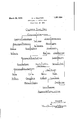
METALLURGY OF COMPLEX ORES I Filed Sept. 25. 1929 COPPER'ZINC ORE.
CON CJENTRATOR COPPER GONCSENTRATE 4 ZINC CONCENTRATEL T ILIN s (SMELTING FURNACF. ROASTERS To WASTE.
GAsE s SLAQANDMATTE LEAC'HlNC-i TOWASTE. Rasnoua ZmcSoLunoN REMQVALOF ZINC AND LEAD ELECTROLYSIS SLAGANDMATTE ZINCANDLEADFUME METALLIC Zm,
ANDGASES SEPARATIONOFSLAG AND MATTE.
. BAG; Hou SE.
' SLA MATTE. gAsas Fuma ToWAsTE CONVERTER BWASTE LEACHING -l"|ETA| uc'CoPPER Y ZmcsoLuTaow LEADRESIDUF.
RECOVERYOFMETALLIC LEAD INVENTOR OLIVER G. RALsToN f ATTORNEYS Patented Mar. 29, 1932 UNITED STATES PATENT OFFICE,
OLIVER C. RALSTON, OF GLARKDALE, ARIZONA, ASSIGNOR TO UNITED VERDE COPPER COMPANY, OF CLARKDALE, ARIZONA, A CORPORATION OF DELAWARE METALLURGY OF COMPLEX ORES Application filed September 25, 1929. Serial No. 395,183.
This invention relates to the metallurgy complex of ores and has for an object the provision of an improved process for recovering the metal values from such ores. More particularly, the invention contemplates the .provision of an improved process for treating complex copper-zinc ores and for recovering the copper an zinc and associated valuable metals such as lead, gold and silver.
According to some present practices, mixed copper and zinc ores are subjected to differential flotation operations or other concentration processes for the purpose of obtaining separate concentrates consisting largely of copper and zinc. However, present commercial concentration processes are not capable of efiecting a complete separation of copper and zinc minerals, and, consequently, the copper concentrate contains some zinc minerals, and the zinc concentrate contains some copper minerals. The lead, gold, and silver minerals will be found with one or the other of the concentrates. As a general rule, the copper and zinc in the ore constitute the major values, and all recovery efiorts are directed primarily toward obtaining as complete as possible separation of the zinc and copper minerals in order that the two concentrates may be treated separately and independently to recover the copper and zinc in suitable commercial forms. Usually the zinc together with any lead contained in the copper concentrate is lost, the copper concentrate being treated only for the purpose of recovering copper and any gold and silver which is notslagged oil or otherwise eliminated in carrying out the-reduction of the copper minerals.
In carrying out the concentrating operation, it is essential that great care be used in order that the best separation at the lowest cost may be made. Under even the best possible working conditions, the separation is relatively costly, and, as a result of the effort which must be made to effect a complete separation, it is impossible to avoid the inclusion of undesirable minerals and gangue in the concentrates. These undesirable minerals and gangue materials not only increase the cost of smelting or otherwise treating the concensrates, but, also, complicate the procedures use The present invention contem lates the provision of a process by means 0 which recoveries of all of the valuable metals may be increased substantially, and in which the extreme care required in carrying out certain steps of the present customary processes may be eliminated.
According to the process of the present invention, the ore containing copper and zinc and associated minerals is concentrated to produce two grades of concentrates, one consisting chiefly of zinc minerals and the other consistingchieflyofcopperminerals.' A lar e proportion of any lead minerals contained in the ore is found usually in the copper concentrate, and iron, silver and gold minerals are found tosome extent in both concentrates.
The copper concentratecontains some zinc mineral, and, likewise, the zinc concentrate contains some copper mineral. The zinc concentrate also contains some lead mineral, if lead minerals are present in the ore.
The copper concentrate is subjected to a smelting operation, and, simultaneously the zinc concentrate may be subjectedto a suitable process for recovering metallic zinc. During the smelting of. the copper concentrate, a molten bath of copper matte and slag is formed. Any lead present will be found alinost entirely in the matte, and the zinc is distributed rather evenly between the matte and slag. The slag and matte are treated to recover the zinc and lead. After the zinc and lead have been removed, the slag is discarded and the treatment of the copper matte is then carried on to produce metallic copper. The zinc product obtained from the slag and matteis joined with the zinc consilver being recovered during the copper recentrate for treatment or with a product of some step of the process for treating the zinc concentrate. The lead product is likewise subjected to suitable treatment for the recovery of lead. The treatment of the zinc and lead minerals and products is continued, preferably, until metallic zinc and metallic ead are produced. Any copper, lead, gold and silver contained in the zinc concentrate are discarded in some form of residue during the carrying out of the process for the recovery of zinc. The residue may contain small amounts of copper, zinc, lead, gold, and silver, and it is combined for treatment with the slag and matte obtained from smelting the copper concentrate. During the subsequent treatment of the slag and matte, the zinc and lead added in the residue will be removed and returned to the zinc and lead recovery processes. The copper, gold and silver will be retained in the matte, the cop per being recovered in subsequent converting and refining operations, and the gold and fining operations.
The process of the invention may be so regulated that the valuable metals may be recovered either in metallic form or in a suitable relatively concentrated form with the discarding of solid waste products at one point only subsequent to the concentrating step and prior to the recovery of goldand silver in metallic forms. The excessive loss of' metals occasioned by discarding waste products at several different points is thus eliminated. Imperfection of metal separation in any one step is corrected in succeeding steps. a
The invention will be better understood from a consideration of the accompanying flow sheet in conjunction with the following description of one of the complete processes which may be carried out in accordance with the invention.
In applying the process of the invention to the treatment of a sulfide ore containing copper, zinc, iron, lead, gold and silver, the ore, preferably, is concentrated by means of a differential froth flotation process to recover separate concentrates one containing most of the copper mineral and the other containing most of the zinc mineral. The lead, old and silver minerals will be found in 0th concentrates. The flotation process is carried out with a view to rejecting as large a portion of the iron as possible without disturbing the recovery of other valuable minerals.
The copper concentrate is treated in a copper smeltingfurnace to produce amoltenbath of slag and matte which is treated in a dezincing converter by injecting a reducing agent. The lead, silver and gold will be found lar ely in the matte while the zinc will be rat or evenly distributed between the matte and slag. The injection of the reducing agents into the molten bath will cause reduction of the lead and zinc compounds and volatilization of the resulting metallic lead and zinc. Air under pressure is introduced above the bath to oxidize the volatilized products and the resulting fume containing the oxidized products is passed to a baghouse and collected for subsequent treatment.
After the removal of the zinc and lead, the molten bath is passed to a settler for the purpose of eliminating a portion of the slag. The remaining slag and matte are transferred to a converter and treated, if desired, to produce a blister copper product suitable for electrolytic refining. The silver and gold values may be recovered in the sludge from the electrolytic cells. The disposal of the dezinced and de-leaded slag and matte is immaterial to my process as they are freed of complicating factors and can be disposed of by any known method.
The zinc concentrate is preferably subjected to an oxidizing roast during which a small amount of zinc sulfate is formed and during which the copper is converted to insoluble copper ferrite. treatment is leached with dilute sulfuric acid to form a solution of zinc sulfate. The zinc sulfate solution is treated electrolytically to obtain metallic zinc.
The mixed zinc and lead product from the de-zincing converter is also treated to produce a zinc sulfate solutionwhich may be added to and treated with the zinc sulfate solution obtained from the leaching of the roasted zinc concentrate. The mixed zinc and lead product from. the de-zincing converter is leached with sulfuric acid, the zinc product being converted to soluble zinc sulfate and The product of the roasting the lead product being converted to insoluble J unleached zinc compounds.
The roasting operation on zinc concentrate is expensive and always imperfect. The provision of the above described sequence of operations allows use of a cheaper roast and leaving more insoluble zinc in the residue because the subsequent treatment in the copper smelting furnace and de-zincing converter 'make up for the shortcomings of the roast and leach. Likewise, the shortcomings of the concentration into separate copper and zinc concentrates are corrected by this method of operation and permit simpler and more economical concentration to be practiced. In
fact, grades of concentrate can be produced which would normally be classed as non-com- .mercial.
As an example of how my method of treatment compares to former methods of ore treatment, the following data on United .Verde mine ore can be cited:
The differential flotation of the ore gave the followlng products:
l I Assays Product Oz/T Oz/T Cu Zn Ag Au Pb Recoveries Product 7: Cu Zn Ag Au Pb Heading; 100 100 100 100 100 100 Copper conct 10 11 70 60 8 Zincconct 1a 1s 79 15 10 27 Taihng 77 7 9 15 30 3 the copper, silver and gold, while any zinc and lead in it would be lost. By the introducing of the dezincing converter into the copper smelter to treat both slag and matte and following out the method of operation of my invention, 80% of the zinc and lead loss normally suffered in treatment of the two concentrates may be eliminated. Furthermore, the-dezincing process is effective in removing zinc sulfide and magnetite from the slag and thus provides better settling conditions so that an increased copper, silver and gold recovery takes place in the matte.
Assuming a normal copper smelter recovery to be 95% of the copper, silver and gold; an 80% electrolytic zinc plant recovery from concentrate and 95% from zinc-lead fume, the following table shows the comparative metal recoveries by the old standard methods and by my new method.
Standard methods Improved method the weight of the two concentrates onlythe advantages of my improved method are even more clearly apparent.
I claim 1. The method for treating ores containing "ti-ate to produce a molten bath of slag andv matte, treating the molten bath to recover any zinc contained therein, and treating the zinc thus recovered and the zinc concentrate in an electrolytic process. 1
3. The method for treating ores containing'copper and zinc which comprises treating the ore to obtain separate concentrates of copper and zinc, subjecting the copper concentrate to a heat treatment to form a molten bath, treating the molten bath to recover any zinc contained therein, treating the bath to recover metallic copper, and treating the zinc product obtained fromthe moltenbath together with the zinc concentrate to recover metallic zinc.
4. The method of treating an ore containing zinc and copper which comprises treating the ore to obtain separate zinc and copper concentrates, subjecting the copperconheat treatment to produce a molten bath of slag and matte, subjecting the molten bath to the action of a reducing agent to obtain a zinc product, treating the matte to obtain metallic copper, and treating the zinc product together with the zinc concentrate to obtain metallic zinc.
6. The method of treating ore containing copper and zinc which comprises treating the ore to obtain separate concentrates of copper and zinc, treating the zinc concentrate to obtain metallic zinc and a. residue containing copper, and smelting the zinc residue and copper concentrate to recover any zinc-contamed therein.
7. The method of treating ore containing 0 Y copper and zinc which comprises treating the ore to obtain separate concentrates of copper and zinc, treating the zinc concentrate to obtain metallic zinc and a residuecontain ing copper, heating the copper concentrate and zinc residue to produce a molten bath, and subjecting the molten bath to the action of a reducing agent to obtain a zinc product. v
8. The method of treating ore containing copper and zinc which comprises treating the ore to obtain separate concentrates of copper and zinc, subjecting the zinc concentrate to an oxidizing roast, leaching the roasted product to obtain a zinc solution, and treating the residue from the leaching operation with the copper concentrate to recover any zinc contained therein.
9. The method of treating ore containing copper, zinc and lead which comprises treating the ore to obtain separate concentrates of copper and zinc, heating the copper concentrate'to produce a molten bath, treating the molten bath to recover a mixed zinc and lead product, leaching the zinc and lead product to obtain a zinc solution, and treating the residue from the leaching operation to recover lead.
10. The method of treating ore containing copper, zinc and lead which comprises treating the ore to obtain separate concentrates of copper and zinc, treating the zinc concentrate to obtain metallic zinc and a residue containing copper, heating the copper concentrate and zinc residue to produce a molten bath, treating the molten bath to recover a mixed zlnc and lead product, leaching the zinc and lead product to obtain a zinc solution, and treating the residue from the leaching operation to recover lead.
11. The method of treating complex copper-zinc sulphide ore which comprises subjecting the ore to successive flotation operations to obtain a copper concentrate containing the major portion of the copper sulphide and some zinc sulphide and a zinc concen trate containing the major portion of the zinc sulphide and some copper sulphide, smelting the copper concentrate to produce matte and a zinc oxide product, subjecting the zinc concentrat-e and the zinc oxide product to a; hydrometallurgical operation to produce metallic zinc and a copper-bearing residue, smelting the residue with the copper concentrate, and treating the matte to produce metallic copper. r 12. The method of treating complex copper-zinc sulphide ore which comprises sub- 1 ecting the ore to successive flotation operations to obtain a copper concentrate containing the major portion of the copper sulphide and some zinc sulphide and a zinc concentrate containing the major portion of the zinc sulphide and some copper sulphide, smelting the copper concentrate to produce a. molten bath, injecting a. reducing agent into the molten bath to separatea zinc product, treating the remainder of the molten bath for the recovery of metallic copper, subjecting the zinc concentrate and the zinc product to a hydrometallurgical operation to produce metallic zinc and a copper-bearing residue,
and smelting the residue with the copper concentrate.
13. The method of treating complex copper-zinc sulphide ore whichcomprises subjecting the ore to successive flotation operations to obtain a copper concentrate containing the major portionof the copper sulphide and some zinc sulphide and a zinc concen-
Priority Applications (1)
| Application Number | Priority Date | Filing Date | Title |
|---|---|---|---|
| US395183A US1851594A (en) | 1929-09-25 | 1929-09-25 | Metallurgy of complex ores |
Applications Claiming Priority (1)
| Application Number | Priority Date | Filing Date | Title |
|---|---|---|---|
| US395183A US1851594A (en) | 1929-09-25 | 1929-09-25 | Metallurgy of complex ores |
Publications (1)
| Publication Number | Publication Date |
|---|---|
| US1851594A true US1851594A (en) | 1932-03-29 |
Family
ID=23562005
Family Applications (1)
| Application Number | Title | Priority Date | Filing Date |
|---|---|---|---|
| US395183A Expired - Lifetime US1851594A (en) | 1929-09-25 | 1929-09-25 | Metallurgy of complex ores |
Country Status (1)
| Country | Link |
|---|---|
| US (1) | US1851594A (en) |
-
1929
- 1929-09-25 US US395183A patent/US1851594A/en not_active Expired - Lifetime
Similar Documents
| Publication | Publication Date | Title |
|---|---|---|
| US4022866A (en) | Recovery of metals | |
| US5380354A (en) | Recovery of metals from sulphidic material | |
| US3976743A (en) | Treatment of zinc plant residue | |
| US4545963A (en) | Process for separately recovering zinc and lead values from zinc and lead containing sulphidic ore | |
| US8052774B2 (en) | Method for concentration of gold in copper sulfide minerals | |
| US3293027A (en) | Method of leaching high grade nickel matte | |
| US20080173132A1 (en) | Integrated hydrometallurgical and pyrometallurgical processing of base-metal sulphides | |
| EP0100237A2 (en) | Recovery of zinc from zinc-containing sulphidic material | |
| US3652264A (en) | Recovery of zinc values from zinc plant residue | |
| US10385420B2 (en) | Purification of copper concentrate by removal of arsenic and antimony with concomitant regeneration and recycle of lixiviant | |
| JPH0237414B2 (en) | ||
| DE2611592A1 (en) | PROCESS FOR THE PROCESSING OF A FINELY DISTRIBUTED LEAD SULFIDE CONCENTRATE, FERROUS SULFIDE AND IF ANY ZINCY MINERAL CONCENTRATE | |
| EP0113649A1 (en) | A method for working-up complex sulphidic ore concentrates | |
| US2878102A (en) | Recovery of metallic and non-metallic values from sulfide and sulfide-oxide ores | |
| Buban et al. | Iron control in zinc pressure leach processes | |
| US4443253A (en) | Recovery of zinc from zinc containing sulphidic materials | |
| US2927017A (en) | Recovery of metal values from complex ores | |
| US3241950A (en) | Aqueous acid oxidation of copper bearing mineral sulphides | |
| NO133812B (en) | ||
| US1435891A (en) | Process of treating lead-zinc sulphide ores | |
| US1528209A (en) | Metallurgical process | |
| US3915690A (en) | Composition and method of making alloy steel powder | |
| GB2114966A (en) | Recovery of zinc from sulphidic material | |
| US3972790A (en) | Production of metallic lead | |
| US1509947A (en) | Metallurgical process |