US1851272A - Production of anhydrous aluminum chloride - Google Patents
Production of anhydrous aluminum chloride Download PDFInfo
- Publication number
- US1851272A US1851272A US231795A US23179527A US1851272A US 1851272 A US1851272 A US 1851272A US 231795 A US231795 A US 231795A US 23179527 A US23179527 A US 23179527A US 1851272 A US1851272 A US 1851272A
- Authority
- US
- United States
- Prior art keywords
- aluminum chloride
- sulfur
- alumina
- anhydrous aluminum
- carbon
- Prior art date
- Legal status (The legal status is an assumption and is not a legal conclusion. Google has not performed a legal analysis and makes no representation as to the accuracy of the status listed.)
- Expired - Lifetime
Links
- VSCWAEJMTAWNJL-UHFFFAOYSA-K aluminium trichloride Chemical compound Cl[Al](Cl)Cl VSCWAEJMTAWNJL-UHFFFAOYSA-K 0.000 title description 44
- 238000004519 manufacturing process Methods 0.000 title description 13
- 239000000463 material Substances 0.000 description 26
- VEXZGXHMUGYJMC-UHFFFAOYSA-N Hydrochloric acid Chemical compound Cl VEXZGXHMUGYJMC-UHFFFAOYSA-N 0.000 description 23
- 238000000034 method Methods 0.000 description 23
- NINIDFKCEFEMDL-UHFFFAOYSA-N Sulfur Chemical compound [S] NINIDFKCEFEMDL-UHFFFAOYSA-N 0.000 description 20
- PNEYBMLMFCGWSK-UHFFFAOYSA-N aluminium oxide Inorganic materials [O-2].[O-2].[O-2].[Al+3].[Al+3] PNEYBMLMFCGWSK-UHFFFAOYSA-N 0.000 description 18
- OKTJSMMVPCPJKN-UHFFFAOYSA-N Carbon Chemical compound [C] OKTJSMMVPCPJKN-UHFFFAOYSA-N 0.000 description 16
- 229910052799 carbon Inorganic materials 0.000 description 16
- 239000011593 sulfur Substances 0.000 description 12
- 229910052717 sulfur Inorganic materials 0.000 description 12
- 239000007789 gas Substances 0.000 description 11
- 239000003575 carbonaceous material Substances 0.000 description 10
- 238000006243 chemical reaction Methods 0.000 description 10
- QGJOPFRUJISHPQ-UHFFFAOYSA-N Carbon disulfide Chemical compound S=C=S QGJOPFRUJISHPQ-UHFFFAOYSA-N 0.000 description 8
- RAHZWNYVWXNFOC-UHFFFAOYSA-N Sulphur dioxide Chemical compound O=S=O RAHZWNYVWXNFOC-UHFFFAOYSA-N 0.000 description 6
- 239000000203 mixture Substances 0.000 description 5
- VEXZGXHMUGYJMC-UHFFFAOYSA-M Chloride anion Chemical compound [Cl-] VEXZGXHMUGYJMC-UHFFFAOYSA-M 0.000 description 4
- 239000002253 acid Substances 0.000 description 4
- 239000008246 gaseous mixture Substances 0.000 description 4
- 229960000443 hydrochloric acid Drugs 0.000 description 4
- 235000011167 hydrochloric acid Nutrition 0.000 description 4
- 239000007787 solid Substances 0.000 description 4
- XAGFODPZIPBFFR-UHFFFAOYSA-N aluminium Chemical compound [Al] XAGFODPZIPBFFR-UHFFFAOYSA-N 0.000 description 3
- 229910052782 aluminium Inorganic materials 0.000 description 3
- 239000003610 charcoal Substances 0.000 description 3
- 239000004927 clay Substances 0.000 description 3
- 229910052570 clay Inorganic materials 0.000 description 3
- 230000003993 interaction Effects 0.000 description 3
- 235000010269 sulphur dioxide Nutrition 0.000 description 3
- 239000005864 Sulphur Substances 0.000 description 2
- 230000005494 condensation Effects 0.000 description 2
- 238000009833 condensation Methods 0.000 description 2
- 229930195733 hydrocarbon Natural products 0.000 description 2
- 150000002430 hydrocarbons Chemical class 0.000 description 2
- 239000011872 intimate mixture Substances 0.000 description 2
- 239000000126 substance Substances 0.000 description 2
- XPYQFIISZQCINN-QVXDJYSKSA-N 4-amino-1-[(2r,3e,4s,5r)-3-(fluoromethylidene)-4-hydroxy-5-(hydroxymethyl)oxolan-2-yl]pyrimidin-2-one;hydrate Chemical compound O.O=C1N=C(N)C=CN1[C@H]1C(=C/F)/[C@H](O)[C@@H](CO)O1 XPYQFIISZQCINN-QVXDJYSKSA-N 0.000 description 1
- 101100389815 Caenorhabditis elegans eva-1 gene Proteins 0.000 description 1
- RYGMFSIKBFXOCR-UHFFFAOYSA-N Copper Chemical compound [Cu] RYGMFSIKBFXOCR-UHFFFAOYSA-N 0.000 description 1
- 101100379079 Emericella variicolor andA gene Proteins 0.000 description 1
- QVGXLLKOCUKJST-UHFFFAOYSA-N atomic oxygen Chemical compound [O] QVGXLLKOCUKJST-UHFFFAOYSA-N 0.000 description 1
- 229910001570 bauxite Inorganic materials 0.000 description 1
- 239000000470 constituent Substances 0.000 description 1
- 238000010276 construction Methods 0.000 description 1
- 229910052802 copper Inorganic materials 0.000 description 1
- 239000010949 copper Substances 0.000 description 1
- 230000018044 dehydration Effects 0.000 description 1
- 238000006297 dehydration reaction Methods 0.000 description 1
- 229960002089 ferrous chloride Drugs 0.000 description 1
- 238000010438 heat treatment Methods 0.000 description 1
- 239000012535 impurity Substances 0.000 description 1
- 238000009413 insulation Methods 0.000 description 1
- 150000002500 ions Chemical class 0.000 description 1
- NMCUIPGRVMDVDB-UHFFFAOYSA-L iron dichloride Chemical compound Cl[Fe]Cl NMCUIPGRVMDVDB-UHFFFAOYSA-L 0.000 description 1
- TWNQGVIAIRXVLR-UHFFFAOYSA-N oxo(oxoalumanyloxy)alumane Chemical compound O=[Al]O[Al]=O TWNQGVIAIRXVLR-UHFFFAOYSA-N 0.000 description 1
- 229910052760 oxygen Inorganic materials 0.000 description 1
- 239000001301 oxygen Substances 0.000 description 1
- 229920000136 polysorbate Polymers 0.000 description 1
- 239000002994 raw material Substances 0.000 description 1
- 238000011084 recovery Methods 0.000 description 1
- FDNAPBUWERUEDA-UHFFFAOYSA-N silicon tetrachloride Chemical compound Cl[Si](Cl)(Cl)Cl FDNAPBUWERUEDA-UHFFFAOYSA-N 0.000 description 1
- 239000004291 sulphur dioxide Substances 0.000 description 1
- XLYOFNOQVPJJNP-UHFFFAOYSA-N water Substances O XLYOFNOQVPJJNP-UHFFFAOYSA-N 0.000 description 1
Images
Classifications
-
- C—CHEMISTRY; METALLURGY
- C01—INORGANIC CHEMISTRY
- C01F—COMPOUNDS OF THE METALS BERYLLIUM, MAGNESIUM, ALUMINIUM, CALCIUM, STRONTIUM, BARIUM, RADIUM, THORIUM, OR OF THE RARE-EARTH METALS
- C01F7/00—Compounds of aluminium
- C01F7/48—Halides, with or without other cations besides aluminium
- C01F7/56—Chlorides
- C01F7/58—Preparation of anhydrous aluminium chloride
- C01F7/60—Preparation of anhydrous aluminium chloride from oxygen-containing aluminium compounds
Definitions
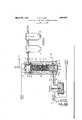
- a thick layer of heat insulation 24 is arranged about the entire construction.k Ducts 25 are provided in the insulatin layer.V 24 through which carbon is su plie to the resistor layer in the vicinity of t ie electrode 22.
- the electrodesv are rovided 'with copper electrode ⁇ l lconnector c amps 26-27 attached thereto, ⁇ 'which maybe v ⁇ Water cooled as is customary in this art,y
- the electrode clamps are in turn connected with a pair of lead-in wires 28 leading to a source of electric current.
- an illustrative embodiment of the general manner of carrying out ,the process of my invention is as follows:
- the chargev forfthe furnace, com-j prising the charcoal and the alumina, is preferably pre ai'edk as an intimate mixture and:
- olten or solid sulfur is then, or previ- '0us'ly, introduced into the sulfur pot 3 through the feed pipe 4, and the temperature in the t is brought to and maintained preferably tween 300 Gand 350 C., or atsucli temperature as willV provide the proper porportionof sulphur vapor in the hydrochloric acid as.
- the valve 2 is then opened and the dry drochloric acid gas is introduced throng the conduit 1 into the sulfur pot 3 at 'the' bottom thereof whence it bubbles up i through the molten sulfur and, charged with sulfur vapor, then passes over through the delivery pipe 7Jinto the bottom of furnace 9.
- anhydrous aluminum chloride comes 0H through the ipe 17 in a mixture of'various gases from w ich it is easily separated by condensation in thecondensers 18 and 19.
- the yexit ases consist mainly of H Cl,-H2S, CO, CS2, OS, and probably some H2.r
- the CO and HBS are, in the main, the normal products of the major reaction indiby interaction of carbon Witli'the moisture 'which is usually present in slight amount,
- H also resulting yfrom this reaction.
- a slight amount of CO also may be formed by interaction of some of the carbon with atmospheric oxygen, for some sli ht amount of air ⁇ is usually'present in the urnace.
- the H2 formed' is mainly ascribable to the tendencyv of VHZS to dissociate into H2 and S2 at the temperature of the furnace, the sulfur formed thereby reacting with vcarbon and C0 to formCSz and COS.
- the amount of carbon provided in the charge should, in practice, be in excesspof the theoretical amount called for by the major reaction indicated by 'Equation A in order to assure, with an adequate margin of safety, substantially complete utilization of the aluymina, and to compensate for carbon losses-y caused by interaction of the samewith other- Amov than the principal raw materials, some of' which have just been noted.
- the excess of carbon ineach case is determined by the particular conditions, and especially by the nature and composition of the materials being used.
- Vhile I have found it preferable in carrying out the process to mix the hydrochloric 'acid'gas and the sulfur -vapor prior to their joint'introduction into the furnace, individual introduction can also be resorted to; y
- f vhigher content of impurities is generally taken care of simply vhy a properl adjustment of ythe amounts of carbonaceous material, sul-y urous material, 'andy hydrochloriccvacid to Y Y ie'lillre be used; zview; of the f n :generaluncl sir'abillityfrof having anylsubstantial amount or" *ent finthefu-rnace 1 I prefer to employ ⁇ solid alumina canfbe obtained Whiclrris,uti-lizableff in .ther presentfprocess, and the hydrochloric" compensate;ferzsazmeunts ofgtfhe-fsame?whichy -arefusedupzmside reactions.; k.f
- ipiiocessef proces resides therfa fct'that it isf inherent/,ly
- n naceous centreedrou'sffal-uminumchloride which :comprises Lpassinghydrochloric acid gas and-fsulllirya,- n Y por'iln contactgyvith al chargefcomprisingaluV Y yminabearmgmater-ialand carbonaceous gna- '5 f -tersalat@temperaturebetween 11509 -G .endll fm y drous aluminun'i chl'oriclem-Ilich ⁇ comprisesfre-:filoo i 8.
- Thev 'process of manufacturing anhydrous aluminum chloride which comprises .preparing a mixtureof h drochloric acid gas vand sulfur vapor, andA t en passing the rel' yphur ⁇ dioxide, and carbon bisulfide in contact sVsultant gaseous mixture in contact with a charge comprising alumina-bearing material and carbonaceous material while maintaining the temperature above substantially 850 C.
- anhydrous aluminum chloride which comprises effecting a reaction between an alumina-bearing material, sulfurous material, carbona ⁇ ceous material, and hydrochloric acid gas under theinfluence of heat, the said carbonaceous material being ofsuch a nature that it contains a low percentage of hydrocarbons l capable of reacting to form water under th conditions of the aforesaid process.
- anhydrous aluminum chloride which comprises reacting hydrochloric acid gas, alumina-bearingmateriaI, carbonaceous material and a substance yfrom the group consisting of suljphur, sulphur dioxide, and carbon ybisulfide under the influence of heat to form aluminum chloride.
- anhydrous aluminum chloride which comprises reacting hydrochloric acid gas, alumina-bearing material, sulfur dioxide, and carbonaceous material under the influence of heat to form aluminum chloride.
Landscapes
- Chemical & Material Sciences (AREA)
- Organic Chemistry (AREA)
- Life Sciences & Earth Sciences (AREA)
- Geology (AREA)
- Inorganic Chemistry (AREA)
- Compounds Of Alkaline-Earth Elements, Aluminum Or Rare-Earth Metals (AREA)
- Solid-Sorbent Or Filter-Aiding Compositions (AREA)
- Developing Agents For Electrophotography (AREA)
Description
March CHARGE@L2 03 ww MU@ SOURCE CURRENT INVENTOR HCL GAS j@ AT1-0mmY struction surroundstlie chamber 10. A thick layer of heat insulation 24 is arranged about the entire construction.k Ducts 25 are provided in the insulatin layer.V 24 through which carbon is su plie to the resistor layer in the vicinity of t ie electrode 22. The electrodesv are rovided 'with copper electrode `l lconnector c amps 26-27 attached thereto, `'which maybe v`Water cooled as is customary in this art,y The electrode clamps are in turn connected with a pair of lead-in wires 28 leading to a source of electric current. c
With the alumina-bearing material called for by my process being supplied in the form of substantially pure alumina, the carbonaceous material as charcoal, andthe sulfurous material as elemental sulfur, an illustrative embodiment of the general manner of carrying out ,the process of my invention is as follows: The chargev forfthe furnace, com-j prising the charcoal and the alumina, is preferably pre ai'edk as an intimate mixture and:
cated. Sonie CO is probably formed also i isfpreferab y'i'vell dehydrated; I have found briquetting of they mixture of carbon and yaluxxiina to 'be Well suited to the present operation. This charge is introduced into the upper portion of the furnacethrough the 4inlet 16, and the temperature iii the furnace brought up to abovelsubstantially 850C., and referably between 1150 C. and 1350c C. olten or solid sulfur is then, or previ- '0us'ly, introduced into the sulfur pot 3 through the feed pipe 4, and the temperature in the t is brought to and maintained preferably tween 300 Gand 350 C., or atsucli temperature as willV provide the proper porportionof sulphur vapor in the hydrochloric acid as. The valve 2 is then opened and the dry drochloric acid gas is introduced throng the conduit 1 into the sulfur pot 3 at 'the' bottom thereof whence it bubbles up i through the molten sulfur and, charged with sulfur vapor, then passes over through the delivery pipe 7Jinto the bottom of furnace 9. 'y This gaseous mixture-then passes up through n the heated charge 11, and thereupon a reaction takes place in which anhydrous aluminum chloride'is formed. The rate of fiow of' tion which takes place in the furnaceis difficult to ascertain, but irrespective of its exact nature it is apparently best explained by the following equation: i"
i I have found'thatthe proportions of the reacting materials, i. e., the 'roportion 'of alumina to carbon in the solid charge, and the proportion of sulfur to hydrochloric acid in the entering gases, may be maintained roughly about the same as theoreticallyv required by ythe uation, although as pointed out hereinafter prefer to have present an excess of carbon over the theoretical amount, and the same applies to the hydrochloric acid. This reaction appears to proceed best when the tem erature of the chamber is maintained asnote i'. e., above substantially 850 C. and preferably between 1150'C. and 1350 C.
When the process is carried out in the manner described, anhydrous aluminum chloride comes 0H through the ipe 17 in a mixture of'various gases from w ich it is easily separated by condensation in thecondensers 18 and 19. The yexit ases consist mainly of H Cl,-H2S, CO, CS2, OS, and probably some H2.r The CO and HBS are, in the main, the normal products of the major reaction indiby interaction of carbon Witli'the moisture 'which is usually present in slight amount,
H, also resulting yfrom this reaction. A slight amount of CO also may be formed by interaction of some of the carbon with atmospheric oxygen, for some sli ht amount of air `is usually'present in the urnace. The H2 formed' is mainly ascribable to the tendencyv of VHZS to dissociate into H2 and S2 at the temperature of the furnace, the sulfur formed thereby reacting with vcarbon and C0 to formCSz and COS.
The amount of carbon provided in the charge should, in practice, be in excesspof the theoretical amount called for by the major reaction indicated by 'Equation A in order to assure, with an adequate margin of safety, substantially complete utilization of the aluymina, and to compensate for carbon losses-y caused by interaction of the samewith other- Amov than the principal raw materials, some of' which have just been noted. The excess of carbon ineach case is determined by the particular conditions, and especially by the nature and composition of the materials being used.
. Vhile I have found it preferable in carrying out the process to mix the hydrochloric 'acid'gas and the sulfur -vapor prior to their joint'introduction into the furnace, individual introduction can also be resorted to; y
The methodof procedure I have just described, using substantially pure alumina, elemental sulfur, and charcoal with the hydrochloric acid,is` likewise applicable when working with other combinations of raw inaterials of `a similar order. The fundamental requirements yare ftha-tkthe charge contain some alumina-bearing materialsuch as natural alumina, the residual aluminum oxide obtained from dehydration of the hydrous chloride, beaiixite, clay or other siliceoiis aliileo i :the use of alumina-bearing material having a inina-bearingfinaterials,in .'conjluncltiolriwith Whichmayvreact to form Watch# *aafcarbonaceous material such asffcharcoal, fco-le, -fcoal, etc.,g.and*that, fiiif 'a'dcvi'tion'ftofzhyrdifoclrloriciacid, asnlnrousgmaterial suclras 'elemental sulfurycarhon: bisullilcle, `sulumdi- Y frox'cle, andy rWater J inthea constituents :pilescarbonaceous .material flow in hydrocarbons lV/hen carbonlhisulfide, is :substitntedor f ftheselemental sulfur'. the ,Y process zjnst.; de- Y, scribed, thev reaction Whichfj takes place is probably .best expressed byv theaequation y emergence gfcHg-s 1 .In the absence sof f carbon in tlfe; charge' an, ma'
Y 1120 Y c mal-lyrbe venpected as a-iesultant product acf:
lcordingftozlthe equations: I a A 1 essere i The presence 'of thecafrbonin #the haten,
v lh'enf Sis the sulfurous V material used in Y 'the process, the reaction apparentlyiproceeds accordinglto Vrv:he equation:
the Vprop'crtions of fthe-srea'otingfmaterials :in
(B) and (C) maybe roughlywahcntithe -samek those theoretically'called :for 'fby 'the respeer/ive.: equations V,noted -Withlzsuchzfcompen- "sat-,ions and regulationzroframounts.asth'e ziparf tisular conditions lcall for;
The cxitgases resultinglwhencGSfg: and-S62 yare used ec ont ain subst anti-allylihe, same productsasinfthe case of elementalsuliur.
Whenbauxite, clay, and other rforms of A alumina-bearing material are used as alumina sources in the,processhereinbefore described, the procedure is carried out insuhstantially f the same ymanner With `such Y reasonable ychanges as are necessary to take care of the additional components of the alumina-hearing charge. "When f these materials are used,
someimpnrities such as ferrous chloride and. silicon chloride occasionally condensev with the anhydrous aluminum chlorideand it` is necessary rtojseparajte them therefrom ,by rac- ,1
tional condensation. In themain, however,
f vhigher content of impurities is generally taken care of simply vhy a properl adjustment of ythe amounts of carbonaceous material, sul-y urous material, 'andy hydrochloriccvacid to Y Y ie'lillre be used; zview; of the f n :generaluncl sir'abillityfrof having anylsubstantial amount or" *ent finthefu-rnace 1 I prefer to employ `solid alumina canfbe obtained Whiclrris,uti-lizableff in .ther presentfprocess, and the hydrochloric" compensate;ferzsazmeunts ofgtfhe-fsame?whichy -arefusedupzmside reactions.; k.f
- lnf zadvantagegof; some. :Importance chloride .fin`1petroleum frcfinfn,g-.iJ VBy he ating the hsy'drous alu-minumw Chloride -v resulting vfrom ythe refning-fprocesspfa relatively pure acid` evolved jupon; heating fris falso possible of :fuse asa-source ofthe gas called Afor by; :my
. ipiiocessef procesresides therfa fct'that it isf inherent/,ly
practical recovery ofi' lanh'ydreus1 aluminum" Whilelimewaescribdfaiilreferfeambtrgf A mentv of my invention, itis to he understood that Iconsider:'my-inventionvto contemplate and to extendfto the use of all equivalentma- YVteri als, steps, V`r vand operations-:such `-as may *Y reactinghydrochloric iacid;gas, -aluininafbearheatgato 1formaluminumchloride. v
reacting hydrochloric acid gas, aluminaebear-gf, 1 f ing-material, sulfur, and carbonaceousfmafte-rial under 'zt-he?, influence v of :heat: ,:toj formi aluminulinchloride. I n ff The-processfof y'mafnuacfuri-ng y,anhya actingfa l:charge containing,aluminabearing g f fmaterial and c'arhonaccous Imaterial x`in angab- Ofg @iluminan-gi, emily;
ffalliwithin the scope of the folloivfing1elaimsaV mosphere of hydrochloric acidgajs-and-sul-v furious :gas under .the influence of heattof :Eorm aluminumchloridef-if c ,Y
f4. ,Thefpirocess -of ,-manulacturingr fanhydrosfaluninum a chloride which? comprises passing hydrochloric-acid gas and-.;sulur Eva-1 por infcontactrwith a -jcharge Vcomprisingalu- Y mina-bearingg-material and carbon at 1a tem-y perature:abone-substantially i850? 5. The?,prociess;ofgmamlfacturing-,anhy"V di?,ous,aluminum chloride which comprises reacting-,hydrochloric acidgas, 2 aluminafbearingV inmaterial, sulfur-ous- Amazerial, and carho- ',115
n naceous materiale@agtemperature aboyesubnaceous materialatfa:temperaturebetween Y drou'sffal-uminumchloride; Which :comprises Lpassinghydrochloric acid gas and-fsulllirya,- n Y por'iln contactgyvith al chargefcomprisingaluV Y yminabearmgmater-ialand carbonaceous gna- '5 f -tersalat@temperaturebetween 11509 -G .endll fm y drous aluminun'i chl'oriclem-Ilich` comprisesfre-:filoo i 8. Thev 'process of manufacturing anhydrous aluminum chloride which comprises .preparing a mixtureof h drochloric acid gas vand sulfur vapor, andA t en passing the rel' yphur` dioxide, and carbon bisulfide in contact sVsultant gaseous mixture in contact with a charge comprising alumina-bearing material and carbonaceous material while maintaining the temperature above substantially 850 C.
350-C.,-and then passing the resultant gaseous mixture incontactwith a lcharge com-r rised ofY an intimate mixture of aluminaaring material and solid carbon at ateniperature between 11.50 C. and'1350 C.
12.k The process of manufacturing anhydrous aluminum chloride which comprises reacting hydrochloric acid gas, bauxite, sulfur, and carbon under the'influence of heat to form aluminum chloride. y
13. The process of manufacturing anhydrous aluminum chloride, which comprises effecting a reaction between an alumina-bearing material, sulfurous material, carbonaceous material, and hydrochloric acid gas under the influence of heat, the said cai'- bonaceous vmaterial being present in excess of the theoretical amounts required to produce anhydrous aluminum chloride.'
14. The process of manufacturing anhydrous aluminum chloride, which comprises effecting a reaction between an alumina-bearing material, sulfurous material, carbona` ceous material, and hydrochloric acid gas under theinfluence of heat, the said carbonaceous material being ofsuch a nature that it contains a low percentage of hydrocarbons l capable of reacting to form water under th conditions of the aforesaid process. y
15. The process of manufacturing anhydrous aluminum chloride, which comprises reacting hydrochloric acid gas, alumina-bearingmateriaI, carbonaceous material and a substance yfrom the group consisting of suljphur, sulphur dioxide, and carbon ybisulfide under the influence of heat to form aluminum chloride.
ystantially 850r C.v
16. The process ofmanufacturing anhydrous aluminum chloride, which comprises passing hydrochloric acid gas and a substance from they group consisting ofr sulphur, sul- With alumina-bearing material and carbonaceous material While maintaining the temperature above substantially 850 C.
' VV,17. The process of manufacturing anhyceous material under the influence of heat to form aluminum chloride.
, 19..The process of manufacturing anhydrous aluminum chloride which comprises reacting hydrochloric acid gas, alumina-bearing material, sulfur dioxide, and carbonaceous material under the influence of heat to form aluminum chloride.
20. The process of manufacturing anhydrous aluminum chloride which comprises passing hydrochloric acid gas and sulfur dioxide gas in contact ywith alumina-bearing material and carbonaceous material While maintaining the temperature above substantiaily 850 C.
21. The process of manufacturing anhydrous aluminum chloride which comprises passing a mixture of hydrochloric acid gas and carbon bisulfide in contact with aluminabearing material and carbonaceous material while maintaining the temperature above sub- 22. The process of manufacturing anhy-y drous aluminum chloride which comprises reacting hydrochloric acid gas, clay, sulfur and carbon under the yinfiuence of heat t0 form aluminum chloride.
In testimony whereof, I affix my signature.
CYRIL B. CLARK.
Priority Applications (1)
| Application Number | Priority Date | Filing Date | Title |
|---|---|---|---|
| US231795A US1851272A (en) | 1927-11-08 | 1927-11-08 | Production of anhydrous aluminum chloride |
Applications Claiming Priority (1)
| Application Number | Priority Date | Filing Date | Title |
|---|---|---|---|
| US231795A US1851272A (en) | 1927-11-08 | 1927-11-08 | Production of anhydrous aluminum chloride |
Publications (1)
| Publication Number | Publication Date |
|---|---|
| US1851272A true US1851272A (en) | 1932-03-29 |
Family
ID=22870671
Family Applications (1)
| Application Number | Title | Priority Date | Filing Date |
|---|---|---|---|
| US231795A Expired - Lifetime US1851272A (en) | 1927-11-08 | 1927-11-08 | Production of anhydrous aluminum chloride |
Country Status (1)
| Country | Link |
|---|---|
| US (1) | US1851272A (en) |
-
1927
- 1927-11-08 US US231795A patent/US1851272A/en not_active Expired - Lifetime
Similar Documents
| Publication | Publication Date | Title |
|---|---|---|
| HU176191B (en) | Method for producing aluminium-silicon alloys by carbothermal process | |
| US2989376A (en) | Method of producing pure silicon | |
| BG49608A3 (en) | Method for preparing aluminium oxide | |
| US1851272A (en) | Production of anhydrous aluminum chloride | |
| GB240834A (en) | Process for the production of alumina | |
| US1982194A (en) | Manufacture of anhydrous metal chlorides | |
| US1866731A (en) | Process for producing anhydrous aluminum chloride | |
| GB284661A (en) | A process for preparing pure alumina | |
| US1874735A (en) | Process of dehydrating magnesium chloride | |
| US2084289A (en) | Process of making aluminum chloride | |
| US2555512A (en) | Preparation of diborane | |
| US1311175A (en) | Herbert h | |
| US2296763A (en) | Process for the production of chlorine and metal nitrate | |
| US2200906A (en) | Manufacture of alkali metals and alkali metal hydroxides | |
| US1214991A (en) | Production of alumina and potassium sulfate from alunite. | |
| US1688822A (en) | Process of preparing purified phosphoric acid | |
| US3592594A (en) | Process for the manufacture of phosphorus pentafluoride | |
| SU986848A1 (en) | Method of producing sulphur | |
| US612364A (en) | Frangois raynaud | |
| US2225131A (en) | Purification of industrial gases | |
| US2715563A (en) | Process for the production of ammonium sulphamate | |
| US1123584A (en) | Process for fixing atmospheric nitrogen. | |
| US599111A (en) | klrkpatkick | |
| US2441550A (en) | Process of producing chlorine and sodium sulfate | |
| GB424757A (en) | Process for the treatment of originating materials containing lithium phosphate |