US1668898A - William htjntlsy hampton - Google Patents
William htjntlsy hampton Download PDFInfo
- Publication number
- US1668898A US1668898A US1668898DA US1668898A US 1668898 A US1668898 A US 1668898A US 1668898D A US1668898D A US 1668898DA US 1668898 A US1668898 A US 1668898A
- Authority
- US
- United States
- Prior art keywords
- oil
- earthy
- mixture
- digestion
- shale
- Prior art date
- Legal status (The legal status is an assumption and is not a legal conclusion. Google has not performed a legal analysis and makes no representation as to the accuracy of the status listed.)
- Expired - Lifetime
Links
- 239000000463 material Substances 0.000 description 197
- 239000003921 oil Substances 0.000 description 149
- 238000000034 method Methods 0.000 description 59
- 230000029087 digestion Effects 0.000 description 51
- 239000000203 mixture Substances 0.000 description 51
- 239000007788 liquid Substances 0.000 description 46
- 229930195733 hydrocarbon Natural products 0.000 description 45
- 150000002430 hydrocarbons Chemical class 0.000 description 45
- 239000004215 Carbon black (E152) Substances 0.000 description 43
- 239000007787 solid Substances 0.000 description 35
- 238000010438 heat treatment Methods 0.000 description 25
- 239000002904 solvent Substances 0.000 description 15
- 239000000295 fuel oil Substances 0.000 description 13
- 238000007654 immersion Methods 0.000 description 10
- 239000003350 kerosene Substances 0.000 description 10
- 238000007865 diluting Methods 0.000 description 9
- 230000000694 effects Effects 0.000 description 6
- 238000004821 distillation Methods 0.000 description 5
- 238000013019 agitation Methods 0.000 description 4
- 239000007789 gas Substances 0.000 description 4
- 238000000926 separation method Methods 0.000 description 4
- 238000005406 washing Methods 0.000 description 4
- 230000001464 adherent effect Effects 0.000 description 3
- 150000001875 compounds Chemical class 0.000 description 3
- 238000005336 cracking Methods 0.000 description 3
- 239000011874 heated mixture Substances 0.000 description 3
- 239000000470 constituent Substances 0.000 description 2
- 239000012530 fluid Substances 0.000 description 2
- 229910052500 inorganic mineral Inorganic materials 0.000 description 2
- 239000011707 mineral Substances 0.000 description 2
- 238000000197 pyrolysis Methods 0.000 description 2
- 235000007575 Calluna vulgaris Nutrition 0.000 description 1
- 241000196324 Embryophyta Species 0.000 description 1
- UFHFLCQGNIYNRP-UHFFFAOYSA-N Hydrogen Chemical compound [H][H] UFHFLCQGNIYNRP-UHFFFAOYSA-N 0.000 description 1
- 235000009421 Myristica fragrans Nutrition 0.000 description 1
- 208000007256 Nevus Diseases 0.000 description 1
- 235000015076 Shorea robusta Nutrition 0.000 description 1
- 244000166071 Shorea robusta Species 0.000 description 1
- 230000035508 accumulation Effects 0.000 description 1
- 238000009825 accumulation Methods 0.000 description 1
- 239000010426 asphalt Substances 0.000 description 1
- 239000002199 base oil Substances 0.000 description 1
- 238000004140 cleaning Methods 0.000 description 1
- 239000000567 combustion gas Substances 0.000 description 1
- 230000001419 dependent effect Effects 0.000 description 1
- 238000000605 extraction Methods 0.000 description 1
- 238000001914 filtration Methods 0.000 description 1
- 239000008246 gaseous mixture Substances 0.000 description 1
- 238000000227 grinding Methods 0.000 description 1
- 239000001257 hydrogen Substances 0.000 description 1
- 229910052739 hydrogen Inorganic materials 0.000 description 1
- 230000001050 lubricating effect Effects 0.000 description 1
- 239000001115 mace Substances 0.000 description 1
- 238000004519 manufacturing process Methods 0.000 description 1
- 239000004058 oil shale Substances 0.000 description 1
- 239000002245 particle Substances 0.000 description 1
- 235000011837 pasties Nutrition 0.000 description 1
- 238000010298 pulverizing process Methods 0.000 description 1
- 238000007670 refining Methods 0.000 description 1
- 239000011369 resultant mixture Substances 0.000 description 1
- 230000000717 retained effect Effects 0.000 description 1
- 238000007790 scraping Methods 0.000 description 1
- 239000003079 shale oil Substances 0.000 description 1
- 238000003860 storage Methods 0.000 description 1
- 239000002699 waste material Substances 0.000 description 1
Images
Classifications
-
- C—CHEMISTRY; METALLURGY
- C10—PETROLEUM, GAS OR COKE INDUSTRIES; TECHNICAL GASES CONTAINING CARBON MONOXIDE; FUELS; LUBRICANTS; PEAT
- C10G—CRACKING HYDROCARBON OILS; PRODUCTION OF LIQUID HYDROCARBON MIXTURES, e.g. BY DESTRUCTIVE HYDROGENATION, OLIGOMERISATION, POLYMERISATION; RECOVERY OF HYDROCARBON OILS FROM OIL-SHALE, OIL-SAND, OR GASES; REFINING MIXTURES MAINLY CONSISTING OF HYDROCARBONS; REFORMING OF NAPHTHA; MINERAL WAXES
- C10G1/00—Production of liquid hydrocarbon mixtures from oil-shale, oil-sand, or non-melting solid carbonaceous or similar materials, e.g. wood, coal
- C10G1/006—Combinations of processes provided in groups C10G1/02 - C10G1/08
-
- C—CHEMISTRY; METALLURGY
- C10—PETROLEUM, GAS OR COKE INDUSTRIES; TECHNICAL GASES CONTAINING CARBON MONOXIDE; FUELS; LUBRICANTS; PEAT
- C10G—CRACKING HYDROCARBON OILS; PRODUCTION OF LIQUID HYDROCARBON MIXTURES, e.g. BY DESTRUCTIVE HYDROGENATION, OLIGOMERISATION, POLYMERISATION; RECOVERY OF HYDROCARBON OILS FROM OIL-SHALE, OIL-SAND, OR GASES; REFINING MIXTURES MAINLY CONSISTING OF HYDROCARBONS; REFORMING OF NAPHTHA; MINERAL WAXES
- C10G1/00—Production of liquid hydrocarbon mixtures from oil-shale, oil-sand, or non-melting solid carbonaceous or similar materials, e.g. wood, coal
- C10G1/04—Production of liquid hydrocarbon mixtures from oil-shale, oil-sand, or non-melting solid carbonaceous or similar materials, e.g. wood, coal by extraction
Definitions
- This invention relates to treatment of solid bituminiferous material; and it rclates more particularly to a process of treating bituminous shale or the like to obtain valuable hydrocarbons therefrom, wherein the shale or other bituminous solid to be treated is digested under heat with a suitable hydrocarbon solvent, such as a heavy oil, to liquefy and extract bitumens from the shale, and separation of the residual solid matter from the accompanying liquid is best accomplished by centrifuging, most desirably after first diluting or thinning the digestion mixture with a lighter oil.
- a suitable hydrocarbon solvent such as a heavy oil
- a shale which yields about Q7 gallons of distillate per ton when subjected to destructive distillation in the usual manner is mixed, after crushing coarsely, say to one-half inch mesh size, with about one-half its volume of a heavy paraiiin base oil yielding substantially no distillate below 7000 F. Any other suitable heavy oil may of course be employed, but that specified has given good results in practice.
- the mixture is first preheated to a temperature sutliciently high to soften the bitumen in the shale and render the latter friable and easily reducible to finely divided condition. In practice this may be accomplished by ⁇ preheating to around SOOo to LL F.
- rlhe mass is then introduced into a grinder of some kind, such as a ball or tube mill, for example, and is thoroughly ground, preferably until 60 per cent or more of the solid particles will pass a G-mesh sieve.
- the mixture which at this stage is a semi-fluid pasty mass, is next passed to a retort or digestor and is therein heated to a temperature high enough to elfect liquelaction of the shale bitumens as completely as is practicable, but not high enough to cause substantial cracking in the generally accepted sense of that term.
- digestion at around 6650 to 675 F. and at mespheric pressure has given excellent results; and ordinarily about 700o F. may be taker desirable upper limit when it is essen. bl, to avoid substantial cracking, The'.
- the period required for proper digestion of the pulverized shale With the a'dmixed heavy oil depends somewhat upon the articular shale used; but in general it should be long enough to ensure thorough liquefaction of the shale bitumens and the drivofl of the said oil fractions.
- the distillation may be advantageously facilitated by introducing live steam into the retort or 'operating at reduced pressure, either expedient having the effect of distilling olf at 700o F. certain paratlins and the like which would not distil below 850 F. under ordinary conditions.
- the steam may be introduced below the surface of the mass in the retort, or it may be caused to sweep over the surface. In place of steam, some other inert may be used; and Where it is desired to still further reduce the proportion Vof unsaturated compounds in the distillate, af reducing gas such as hydrogen may be introduced instead of, or in conjunction With, steam.
- the contents of the digestor in highly heated condition are mixed with a. sutticient quantity of a relatively light oil to ensure the production of a mixture which is quite fluent at considerably lower temperatures.
- the lighter oil thus added is a kerosene fraction which may have been used to Wash the tailings at a later stage of the process; and it is convenient to mix this kerosene A"h the digest-ion mass 'While the transit te ceni'srifug sepai'fator,
- usiiigan agitator' or other suitable means it necessary to eti'ect complete ii'iiXture and to ensure solution oi'f the 'heavy oils, paratlins, ete., presentin the mixture.
- the amount 5 of lighter oil thus used to thin down the digestion mixture may vary considerably in practice, but it is desirable to Akeep the amount down as much as possible, and the method o'j separation to be hereinafter dei "scribed is especially etii'ective in accon'iplish- 'ing this end.
- the an'iountot kerosene or kerosene traction added asa thinner amounts to about l part oi lthinner to 'l part of die'estion mixture, by i volume, though 'ot' course the proportion Vfnecessari'ly varies with the character oiE the shale being treated.
- the result- 'ant fluent mixture is passed into 'a centrit A"ugalseparator provided ⁇ with a very line fmesh basket which will etlectively catch fand holdthepulverised mineral matter pres- "ent, tliisfeartliyaiid insoluble mineral inat- /:fter being herein*conveniently ratei-red to as residues or tailings.
- the liquid passing vthrough the basket and leavi" the centi-itugafl is ⁇ conducted away 'ior iiurthe'r treatment, While the residues or tailings are Washed ivitha fresh portion oi2 the light oil, 'such fas vthe kerosene traction referred to, fi'vhereby ⁇ the tailingsare substantially freer. from adherent heavir oils, etc. 'It this *Washing leaves Athe tailings su'tliciently fclean, the'tailingsinay be passed through a drier at als'uliiciently high temperature to vvolatilize and drive oil' the residual light oil.
- the washing with light oil does not ⁇ sui'lieiently tree the tailings trom adherent t0 heavy oils, etc.
- the tailings may be tui-ther "wished with gasoline or similar light oil @liar-tion to remove practically all the residual "kerosene lfraction
- the iva-sh 'gasoline containing kerosene iti-actions, etc., 15 1 may be conveye'dto a still
- the gasoline disltilled 'o'ti' and the residual oil remaining in the 'still may be conveyed to the common stock "of dilutingoil Aor inay be otherwise disposed et.
- the liquid mattei' separated from the tailings by the centrifugal machine is largely Vdiluted digestion oil, ordinarily containing valuable heavy bitumens ol" the shale, and said liquid can ⁇ be treated by well known methods ot' oil distillation and refining to-I ⁇ separate and recover its various constituent ilractions, the heavier fractions being used Afor digestion-0f fresh shale, it' desired, and the lighter ⁇ fractionsgoing-to the stock or supply of diluting oil.
- the liquid mixture coming from the centrifugal contains but Va small portion oi the shale bituinens, the larger part liaving passed oit as distillatel during digestion, and'iiiost otthe remainder being still. held by the tailings.
- the liquid mixture lroin the centrifugal contains a substantial yquantity of the bituinens ot' the-bituminous solid treated,
- the quantity of thinning or diluting oil may be lrept very ⁇ much below that which must be used Where-separation ot the insoluble mineralv tion or ordinary filtration, about 3 to 5 volumes of light oil must be used with l volume oit digestionmixture to ell'ect the necessary thinning.
- the present 'method therefore re- 4stilts in effecting a, considerable economy bothioflthiniiing oil and in the time and
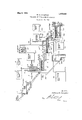
- 1 is a supply hopper containing uncrushed shale or the like from which shale may pass overV a. conveyor screen 2, the larger pieces going to and through gyratory Crushers 3 and 4 which are arranged in series in the particular arrangement her-e illustrated.
- the shale goes to a storage bin 5, from which it may pass over a conveyor 6 and be introduced in regulable quantities into a mixer and preheater 7, in which are arranged a series of helical conveyors 8.
- Adjacent the inlet for the crushed shale is an oil supply pipe 9 through which is int-roduced a heavy hydrocarbon oil for adniixture with the crushed shale. It is desirable to preheat this digestion oil, and to this end the oil is conducted from either one of the supply tanks 10, 11, through a coil 12 which may be placed in an enlargement 13 of the flue 14 leading from the preheater furnace 15.
- the preheated mixture of crushed shale and digestion oil passes by way of discharge conduit 16 into a grinding or pulverizing device such as a tube mill or ballv mill 17, the finely ground mixture passing thence through pipe 18 into the retort or digestor 19, or a series of such digest-ors, the digestor or digestors being heated lby suitable furnace means indicated at 20.
- Vapor pipes 21 carry volatilized oil fractions into vapor line 22 which leads to a condenser 23, discharginginto a receiving tank 24.
- Suitable means, 24, may be provided for introducing steam or other gas into the retort or digestor.
- the material introduced into the digestor or digestors is moved slowly therethrough by suitable conveyor means, in this instance by a rotary helical conveyor indicated at 25.
- the conveyor blades also serve the purpose of scraping the bottom of the retort or retorts and thus keeping them free from accumulations.
- the digestion mixture is discharged through 25 into a. chamber 27 provided with baille means 28.
- diluting oil such as a kerosene fraction is introduced in proper quantity through pipe 29 connected to supply tank 30.
- the digestion mixture and diluting oil are thoroughly mixed, the mixture passing thence through pipes 31 and 31a into a centrifugal 32.
- the residual solid matter is retained on the rotary centrifugal screen 33 and may be discharged downwardly into chute
- the separated liquid leaves centrifugal through line, supplied from tank 39 through conduit 40.
- this wash oil containing some of the diluted digestion oil may be passed through pipe 41 to a separate collecting tank 42, from which it may be conveyed by pump 43, through pipe 44 to the stock tank 30.
- the residual solids discharged into chute 34 go to a drier chamber 45 arranged to be heated by waste combustion gases from a furnace 46.
- This drier chamber conta-ins rotary conveyors 47 which move the washed residual solids in the direction of thearrows and discharge them into a retort 43 which is heated by said furnace 46, and through which the solids are moved by rotary conveyor 49 to a point of discharge at 50.
- the drier is provided with a valved vapor outlet 51 leading to a suitable condenser; and a. similar vapor outlet 52 is provided for the retort 43.
- any suitable means for heating the retorts may be provided, but in the present example, the retort furnaces are adapted to be fired with combustible gas provided by a producer 53 of the mechanical Stoker type which is adapted to lburn oil shale supplied from hopper 54.
- Vhat I claim is:
- the process of treatingr solid bit-uminiferous materials, of shale-like character, to obtain valuable products therefrom which comprises bringing pulver-ized vmaterial of the character described preheated to a relatively low temperature into contact with a hot digestion lbath at a substantially higher temperature, said bathcomprising heavy oil 'fractions non-volatile under the conditions of digestion. leading away and recovering volatilized products. and separating unvolatilized bituminous Amatter from the digestion mixture.
- the process of treating solid bitumillt) ' bath of oil, ysubjecting all of said earthy ma- Lacasse 5 niferous materials, of shale-like character, to obtain valuable products therefrom which comprises preparing a heated mixture of pulverized shale or the like and an oil having a temperaturenot exceeding approximately 500o F., then commingling said mixture with a digestion bath heated to a temperature exceeding 5000 if., but not substantially exceeding 7000 F., said bath comprising oil fractions non-volatile under the conditions of digestion, agitating the resultant mixture, and recovering both volatile and non-volatile products therefrom.
- the process of continuously obtaining hydrocarbon oil from oil bearing earthy material which process consists of continuously subjecting the earthy material to be treated to immersion in a bath of liquid oil in a container, continuously subjecting all of said earthy material so treated to heat treatment to drive oif substantially all volatilizable material therein and passing-the material thus driven off into the container of said bath of oil and utilizing the hydrocarbon material so driven off as the material of said bath of liquid oil.
- the process of obtaining hydrocarbon oil material from oil bearing earthy material which process consists of continuously subjecting the earthy material to be treatedr to immersion in a bath of liquid oil in a container, continuously separating the earthy materialfrom said bat-h of oil, cont-inuously subjecting all of said earthy material so separated to heat treatment to drive off substantiallyA all volatilizable material therefrom, passing the material thus driven 0H into the container of said bath of oil and utilizing the hydrocarbon material so driven off ast-he material of said bath of liquid oil, continuously vwithdrawing liquid oil from said bath, and continuously withdrawing aeriform material from the region of said bath of oil and subjecting the aeriforin niaterial to a condensing treatment.
- the process of obtaining hydrocarbon oil material from oil bearing earthy material which process consists of subjecting the earthy material to be treated to digestion with solvent liquid oil to ell'ect the solvent removal from said earthy material of a portion of its oil content, separating the earthy material from said liquid oil, subjecting the earthy material so separated 'to heat treatment tov drive off substantially all volatili-zable material therefrom, and utilizing. the hydrocarbon material so driven olf indigesting a further quantity of said earthy material.
- the process of obtaining hydrocarbon oil material from oil bearing earthy material which process consists of subjecting the earthy material to be treated to immersion in a bath of solvent liquid oil to elfect the solvent removal from said earthy ymaterial rial which process comprises subjectingsuch earthy material to digestion with liquid oil m a container, separating the earth material from the digestion mixture, su jecting all of said earthy material so separatedto heat treatment to drive olf substantially all volatilizable material therefrom, passingthe material thus driven olf into the container and utilizing the hydrocarbon material so driven olf inV digesting a further quantity of saidv oil bearing earthy material.
- the process of obtaining hydrocarbon oilmaterial from oil ⁇ bearing earthy material-Which process comprises subjecting4 such earthy material to digestion with liquid oil in a container, separating earthy material from the digestion mixture, subjecting all of the earthy material so separated to heat treatment tol drive off substantially all volalee til-izable material therefrom, passing the mafrom the.
- digestion mixture A subjecting"V all' of said ⁇ earthy material so separated to heat treatment to drive olf substantially all vola- Lacasse 2 tilizable material therefrom, passing the material thus driven o into said container and utilizing the hydrocarbon material so driven ott in digesting a further quantity oj said oil bearing earthy material, withdrawing liquid oil from the digestion mixture, withdrawing aerioi-m material from the region oi said digestion mixture, and subjecting the aeritorni material to a condensing treatment.
- the process oi continuously obtaining hydrocarbon oil from oil bearing earthy material which process comprises contin ⁇ uously separating earthy material from the digestion mixture, continuously subjecting such earthy material to digestion with liquid oil in a container, continuously subjecting all oi said earthy material so separated to heat treatment to drive oil' substantially all volatilizable material thereinand passing the material thus driven on' into said container, and utilizing the hydrocarbon material so driven oil in digesting a tui-ther quantity of said oil bearing earthy material.
- the process ot continuously obtaining hydrocarbon oil material from oil bearing earthy material which p'rocess compri-ses continuously subjecting earthy material to digestion with liquid oil in a. container, continuously separating earthy material 'from the digestion mixture, continuously subjectq ing all of said earthy material so separated to heat treatment to drive olil substantially all volatilizable material therefrom, passing the material thus driven oit into said container and utilizing the hydrocarbon material so driven oil in digesting a further quantity oit said oil bearing earthy material. and continuously withdrawing liquid oil from the digestion mixture.
- the process of obtaining hydrocarbon oil material from oil bearing earthy materia-l which process comprises continuously subjecting such earthy material to digestion with liquid oil in a container, continuously separating earthy material from the digestion mixture, continuously subjecting all of said earthy material so separated to heat treatment to drive o substantially all volatilizable material thereirom, passing the ma terial thus driven ott into said container, and continuously withdrawing aieri'orni material from the region ot' Isaid digestion mixture.
- the process of obtaining hydrocarbon oil material from oil bearing earthy material which process comprises continuously subjecting such earthy material to digestion with liquid oil in a container, continuously separating earthy material from the digestion mixture, continuously subjecting all of the earthy material so separated to heat treatment to drive substantially all volatilizable material therefrom, passing the material thus driven off into said container and utilizing the hydrocarbon material so driven olf in digesting a further quantity of said oil bearing earthy material, continuously withdrawing aerilorm material Jfrom the region of said digestion mixture, and subjecting the aieritorm material to a condensing treatment.
Landscapes
- Chemical & Material Sciences (AREA)
- Engineering & Computer Science (AREA)
- Oil, Petroleum & Natural Gas (AREA)
- Life Sciences & Earth Sciences (AREA)
- Wood Science & Technology (AREA)
- Chemical Kinetics & Catalysis (AREA)
- General Chemical & Material Sciences (AREA)
- Organic Chemistry (AREA)
- Production Of Liquid Hydrocarbon Mixture For Refining Petroleum (AREA)
Description
. W. H. HAMPTON TREATMENT OF BITUMINIFEROUS MATERIAL May 8. 1928.
Filed Aug. 20, 1919 .Patented May i928,
'WILLIAM HUNTLEY HAMTON, OF NEVI YORK, I\T. Y.
TREATMENT OF SOLID BITUMINIFEROUS MATERIAL.
Application led August 20, 1919.
This invention relates to treatment of solid bituminiferous material; and it rclates more particularly to a process of treating bituminous shale or the like to obtain valuable hydrocarbons therefrom, wherein the shale or other bituminous solid to be treated is digested under heat with a suitable hydrocarbon solvent, such as a heavy oil, to liquefy and extract bitumens from the shale, and separation of the residual solid matter from the accompanying liquid is best accomplished by centrifuging, most desirably after first diluting or thinning the digestion mixture with a lighter oil.
rl`he principles of the invention Will be more fully understood from a description of a concrete example illustrating one particularly desirable Way of practicing the invention. t is to be understood that the invention is not limited to the specific details of procedure to be set forth in the following description.
ln a typical instance, a shale which yields about Q7 gallons of distillate per ton when subjected to destructive distillation in the usual manner is mixed, after crushing coarsely, say to one-half inch mesh size, with about one-half its volume of a heavy paraiiin base oil yielding substantially no distillate below 7000 F. Any other suitable heavy oil may of course be employed, but that specified has given good results in practice. The mixture is first preheated to a temperature sutliciently high to soften the bitumen in the shale and render the latter friable and easily reducible to finely divided condition. In practice this may be accomplished by `preheating to around SOOo to LL F. rlhe mass is then introduced into a grinder of some kind, such as a ball or tube mill, for example, and is thoroughly ground, preferably until 60 per cent or more of the solid particles will pass a G-mesh sieve. The mixture, which at this stage is a semi-fluid pasty mass, is next passed to a retort or digestor and is therein heated to a temperature high enough to elfect liquelaction of the shale bitumens as completely as is practicable, but not high enough to cause substantial cracking in the generally accepted sense of that term. In practice, digestion at around 6650 to 675 F. and at mespheric pressure has given excellent results; and ordinarily about 700o F. may be taker desirable upper limit when it is essen. bl, to avoid substantial cracking, The'.
Serial No. 318,833.
temperatures mentioned are those of the fluid mass in the retort or still. In this connection it may be pointed out that, in the broader aspects of the invention, avoidance of cracking is not absolutely essential, but it is much to be preferred as giving a bet-ter yield. During the digestion, certain fractions of the shale oil distil olf and are recovered in any suitable condensing system. ln practice, he distillate thus obtained amounts to l0 gallons or more per ton of this particular shale. Not only is the yield at least per cent higher than by the old method of destruct-ive distillation, but the quality of the distillate is much better. The distillate in the present case averages 44,0 B., with about 524i per cent unsaturated compounds; YWhereas the distillate obtained by the old method is much heavier, say about 360 B., and contains 80 per cent of unsaturated compounds.
The period required for proper digestion of the pulverized shale With the a'dmixed heavy oil depends somewhat upon the articular shale used; but in general it should be long enough to ensure thorough liquefaction of the shale bitumens and the drivofl of the said oil fractions. The distillation may be advantageously facilitated by introducing live steam into the retort or 'operating at reduced pressure, either expedient having the effect of distilling olf at 700o F. certain paratlins and the like which would not distil below 850 F. under ordinary conditions. The steam may be introduced below the surface of the mass in the retort, or it may be caused to sweep over the surface. In place of steam, some other inert may be used; and Where it is desired to still further reduce the proportion Vof unsaturated compounds in the distillate, af reducing gas such as hydrogen may be introduced instead of, or in conjunction With, steam.
.After the digestion is completed, the contents of the digestor in highly heated condition are mixed with a. sutticient quantity of a relatively light oil to ensure the production of a mixture which is quite fluent at considerably lower temperatures. Most desirably, the lighter oil thus added is a kerosene fraction Which may have been used to Wash the tailings at a later stage of the process; and it is convenient to mix this kerosene A"h the digest-ion mass 'While the transit te ceni'srifug sepai'fator,
usiiigan agitator' or other suitable means it necessary to eti'ect complete ii'iiXture and to ensure solution oi'f the 'heavy oils, paratlins, ete., presentin the mixture. The amount 5 of lighter oil thus used to thin down the digestion mixture may vary considerably in practice, but it is desirable to Akeep the amount down as much as possible, and the method o'j separation to be hereinafter dei "scribed is especially etii'ective in accon'iplish- 'ing this end. In a typical instance, the an'iountot kerosene or kerosene traction added asa thinner amounts to about l part oi lthinner to 'l part of die'estion mixture, by i volume, though 'ot' course the proportion Vfnecessari'ly varies with the character oiE the shale being treated.
After the digestion iiiixtiiie has been properlylthinnedfdoivn as described, the result- 'ant fluent mixture is passed into 'a centrit A"ugalseparator provided `with a very line fmesh basket which will etlectively catch fand holdthepulverised mineral matter pres- "ent, tliisfeartliyaiid insoluble mineral inat- /:fter being herein*conveniently ratei-red to as residues or tailings. The liquid passing vthrough the basket and leavi" the centi-itugafl is `conducted away 'ior iiurthe'r treatment, While the residues or tailings are Washed ivitha fresh portion oi2 the light oil, 'such fas vthe kerosene traction referred to, fi'vhereby` the tailingsare substantially freer. from adherent heavir oils, etc. 'It this *Washing leaves Athe tailings su'tliciently fclean, the'tailingsinay be passed through a drier at als'uliiciently high temperature to vvolatilize and drive oil' the residual light oil. lt the washing with light oil does not `sui'lieiently tree the tailings trom adherent t0 heavy oils, etc., the tailings may be tui-ther "wished with gasoline or similar light oil @liar-tion to remove practically all the residual "kerosene lfraction, While the iva-sh 'gasoline containing kerosene iti-actions, etc., 15 1 may be conveye'dto a still, the gasoline disltilled 'o'ti' and the residual oil remaining in the 'still may be conveyed to the common stock "of dilutingoil Aor inay be otherwise disposed et. The tailings washed with gas'ol-ine maybe'discharged liroin the centriuga-l and/conveyed to a drier to recover adherent gasoline by appropriate apparatus "It the residues or tailings trom the centrit* ugahatter passing through the drier either "from the light oil Wash or trointhe gaso- 'liiie Wash, be touiid still to contain a. suhstantial percentage ot' valuable hituinens "which have escaped liquetaction and extraction, these tailings can be conveyed `to a suitableiretort and subjected to distillation at vhigher temperatures, say 9000 to 10000 F., forreco'very of such bitumens. ln this Way an especially refractory shale can be mace to yield an additional portion oi' heavy oil of high quality, dependent upon the nature and character of the bituineinbearing shale or other bituniinous solid treated. ln the case ot the shale used in` this specitic example, the additional heavy oil thus obtained haslainounted to 13 gallons per ton of tai'lings in actual practice. This is high grade heavy oil which Ycaribe relined to yield valuable lubricating fractions. Heavy `oil so obtained can, if desired, beadded'to the oil fused in gninding and digesting the Vshale or may be otherwise disposed o'l.
By utilizing `the heat fromV the drier to prelieat the initial mixture ot shale and Aheavy oil to a temperature sutlniciently high 'PUL'POSQFL The liquid mattei' separated from the tailings by the centrifugal machine is largely Vdiluted digestion oil, ordinarily containing valuable heavy bitumens ol" the shale, and said liquid can `be treated by well known methods ot' oil distillation and refining to-I `separate and recover its various constituent ilractions, the heavier fractions being used Afor digestion-0f fresh shale, it' desired, and the lighter `fractionsgoing-to the stock or supply of diluting oil. In the case of certain shales, the liquid mixture coming from the centrifugal contains but Va small portion oi the shale bituinens, the larger part liaving passed oit as distillatel during digestion, and'iiiost otthe remainder being still. held by the tailings. In the case ot other shalei and ozolrerites, especially/.the softer varieties vhigh in -W-:iXy constituents, the liquid mixture lroin the centrifugal contains a substantial yquantity of the bituinens ot' the-bituminous solid treated,
By centrituging the diluted digestion niixture in the manner above described the quantity of thinning or diluting oil may be lrept very `much below that which must be used Where-separation ot the insoluble mineralv tion or ordinary filtration, about 3 to 5 volumes of light oil must be used with l volume oit digestionmixture to ell'ect the necessary thinning. The present 'method therefore re- 4stilts in effecting a, considerable economy bothioflthiniiing oil and in the time and |labor required to handle the large volumes ot 'liquid `necessary in transit through a treating plant.` Furthermore, the unavoidable losses iir handling light oils, and the matically a typical Vassembly of apparatus' elements. Referring to this drawing, 1 is a supply hopper containing uncrushed shale or the like from which shale may pass overV a. conveyor screen 2, the larger pieces going to and through gyratory Crushers 3 and 4 which are arranged in series in the particular arrangement her-e illustrated. From the crushers, the shale goes to a storage bin 5, from which it may pass over a conveyor 6 and be introduced in regulable quantities into a mixer and preheater 7, in which are arranged a series of helical conveyors 8. Adjacent the inlet for the crushed shale is an oil supply pipe 9 through which is int-roduced a heavy hydrocarbon oil for adniixture with the crushed shale. It is desirable to preheat this digestion oil, and to this end the oil is conducted from either one of the supply tanks 10, 11, through a coil 12 which may be placed in an enlargement 13 of the flue 14 leading from the preheater furnace 15.
The preheated mixture of crushed shale and digestion oil passes by way of discharge conduit 16 into a grinding or pulverizing device such as a tube mill or ballv mill 17, the finely ground mixture passing thence through pipe 18 into the retort or digestor 19, or a series of such digest-ors, the digestor or digestors being heated lby suitable furnace means indicated at 20. Vapor pipes 21carry volatilized oil fractions into vapor line 22 which leads to a condenser 23, discharginginto a receiving tank 24. Suitable means, 24, may be provided for introducing steam or other gas into the retort or digestor. The material introduced into the digestor or digestors is moved slowly therethrough by suitable conveyor means, in this instance by a rotary helical conveyor indicated at 25. The conveyor blades also serve the purpose of scraping the bottom of the retort or retorts and thus keeping them free from accumulations. From the digestor means the digestion mixture is discharged through 25 into a. chamber 27 provided with baille means 28. Into the top of this chamber, diluting oil, such as a kerosene fraction is introduced in proper quantity through pipe 29 connected to supply tank 30. In chamber 27 the digestion mixture and diluting oil are thoroughly mixed, the mixture passing thence through pipes 31 and 31a into a centrifugal 32. The residual solid matter is retained on the rotary centrifugal screen 33 and may be discharged downwardly into chute The separated liquid leaves centrifugal through line, supplied from tank 39 through conduit 40. By suitably setting valve 36, this wash oil containing some of the diluted digestion oil, may be passed through pipe 41 to a separate collecting tank 42, from which it may be conveyed by pump 43, through pipe 44 to the stock tank 30.
The residual solids discharged into chute 34 go to a drier chamber 45 arranged to be heated by waste combustion gases from a furnace 46. This drier chamber conta-ins rotary conveyors 47 which move the washed residual solids in the direction of thearrows and discharge them into a retort 43 which is heated by said furnace 46, and through which the solids are moved by rotary conveyor 49 to a point of discharge at 50. The drier is provided with a valved vapor outlet 51 leading to a suitable condenser; and a. similar vapor outlet 52 is provided for the retort 43. Any suitable means for heating the retorts may be provided, but in the present example, the retort furnaces are adapted to be fired with combustible gas provided by a producer 53 of the mechanical Stoker type which is adapted to lburn oil shale supplied from hopper 54.
By means of the novel combination or system of apparatus above described, which also constitutes a part of this invention, the treatment of shale or the like in accordance with the invention may be carried on practically continuously for long periods of time without shutting down for purposes of adjustment or cleaning out.
Vhat I claim is:
1. The process of treating solid bituminiferous material of shale-like character to obtain valuable products therefrom, which comprises digesting at temperatures above 5000 F. a fluent mixture of such material all in pulverized condition with a solvent for heavy bitumens while agitating said mixture, and thereafter separating residual solid matter by centrifuging.
2. The process of treating solid bituminiferous material of shale-like character to obtain valuable products therefrom, which comprises digesting a fluent mixture of such material all in pulvcrized condition with a heavy oil under the action of heat and agitation, diluting the resultant digestion mixture with a lighter oil, and centrifuging to separate residual solid matter.
3. The process of treating solid bituminiferous material of shale-like character to obtain valuable products therefrom. which comprises heating a mixture of such material with a hydrocarbon liquid to a temperature sufiicient to soften said material. treating the heated mixture to reduce said inalcrial to more finely divided condition, continuing to heat at a higher temperature with .agitation to extract heavy bitumens from said materiahand centrifuging to separate ,residual solid matter.
4. `The process of treating solid bituminifcrous material of shale-Lilie character to obtain valuable products therefron, `which comprises digesting a fluent mixture of such material all in. finely divided condition with a heavy oil under the action of heat, diluting the resultant dieestion mixture with a lighter oil, centrifi no' to separate residual yabout 700O F., thinning the digestion mixture `with the aid of a lighter oil, centrifuging to separate residual solid matter, washing with a relativelyilight oil, and using the wash oil tothin further digestion mixture.
6. rhe process of treating solid bituminiferous material of shale-like character to obtain valuable products therefrom, which comprises digesting such material in finely divided condition with a heavy oil at tcmperatures around ()O to 700" F. with agitation of the mixture, separating residual solid matter. and distillingsuch separated residual solid matter at around 900@ to 10000 F.
7 The process of treating solid bituminiferous material of shale-like character to obtain valuable products therefrmn. which comprises digesting such material. in finely divided condition, with heavy oil under the action of heat and agitation at a tempera.- ture insufficiently high to effect substantial distillation of heavy fractions, but high enough to effectively liquefv heavy hydrocarbons contained in said material, passing a gaseous mixture into contact 'with the mass undergoing di.k tion'. and recovering a condensate from ie resultant distill..v
8. The process of treatingsolid bituminiferous rmiterial of shale-like character to obtain valuable products therefrom, which lcomprises digesting such material with a heavy hydrocarbon oil under the action of heat, and then diluting the resultant digestion mixture with a kerosene fraction, whereby separation of residual solid matter is facilitated.
9. The process of treating solid liiitumi-y niferous .material of shale-like character .to obtain valuable products therefrom, which comprises digesting such material with a heavy hydrocarbon oil under `the action of heat, then diluting the resultant digestion` mixture with a kerosene fraction, separating undissolved solid matter from the liquid, and washing the separated solid matt-er With gasoline.
l0. The process of treating solid'bituminiferous u'iaterial of shale-like character to obtain valuable products therefrom, which comprises heating and agitatinga mixture of such material in pulverized condition rxith a hydrocarbon solvent, the bulk of said material being tine enough to pass a 10U-mesh sieve, and thereafter separating residual solid matt-er rfrom' the resultant liquid.
ll. The process of treating solid bituminiferous material of shale-like character jto obtain valuable products therefrom, vwhich comprises heating and agit-ating a mixture of such material in pulverized condition with a hydrocarbon solventoverhalf of said material being tine enough to lpass a QOO-n'iesh sieve, and thereafter "separating residual solid matter from the resultant liquid.
l2. The process of treatingr solid bit-uminiferous materials, of shale-like character, to obtain valuable products therefrom, which comprises bringing pulver-ized vmaterial of the character described preheated to a relatively low temperature into contact with a hot digestion lbath at a substantially higher temperature, said bathcomprising heavy oil 'fractions non-volatile under the conditions of digestion. leading away and recovering volatilized products. and separating unvolatilized bituminous Amatter from the digestion mixture.
13. The process of treating solid bituminiferous materials, of shale-like character, to obtain valuable products therefrom, which comprises preparing aheated mixture of an oil with pulverized material of the character described. the temperature ofthe mixture being below that. at .which substantial distillation occurs` then subjcct-ingthe mixture to the effect of a. substantially higher temperature. and recovering both volatile and non-volatile products therefrom.
14. The process of treating` solid bituminiferous materials, of shale-like character. to obtain valuable products therefrom, which comprisespreparing a heatedmixture ofr an oil with pulverized material of vthe character described, comminglingsaid mixture with a substantiallyhotter digestionbath comprising oilfractions non-volatile under the conditions of digestion, and recovering both volatile and non-volatile products of digestion. i
The process of treating solid bitumillt) ' bath of oil, ysubjecting all of said earthy ma- Lacasse 5 niferous materials, of shale-like character, to obtain valuable products therefrom, which comprises preparing a heated mixture of pulverized shale or the like and an oil having a temperaturenot exceeding approximately 500o F., then commingling said mixture with a digestion bath heated to a temperature exceeding 5000 if., but not substantially exceeding 7000 F., said bath comprising oil fractions non-volatile under the conditions of digestion, agitating the resultant mixture, and recovering both volatile and non-volatile products therefrom.
16. The process of obtaining hydrocarbon oil material from oil bearing earthy material which process consists of subjecting the earthy material to be treated to immersion in a bath of liquid oil in a container, separating the earthy material from said bath of oil, subjecting all'of said earthy material so separated to heat treatment to drive 0E substantially all volatilizable material therefrom, and passing the material thus driven @if into the container of said bath of oil and utilizing the hydrocarbon material so driven olf as the material of said bath of liquid oil.
17. The process of obtainingV hydrocarbon oil material from oil bearing earthy material which process consists of subjecting` the earthy material, to be treated to immersion in a bath of liquid oil in a container, separating the earthy material from said bath of oil, subjecting all of said earthy material so separated to heat treatment to drive ofiE substantially all volatilizable material therefrom, passing the material-*thus driven off into the container of said bath of oil and utilizing the hydrocarbon material so driven off as the Vmaterial of said bath of liquid oil, and withdrawingl liquid oil from said bath.
18. rlhe process of obtaining hydrocarbon oil materialfrom oil bearing earthy ma.- terial which process consists of subjecting the earthy material to be treated to immersion in a bath of liquid oil in a container, separating the earthy material from said terial so separated to heat treatment to drive y0H substantially all volatilizable material separating the earthy material from said bath of oil, subjectingall of said earthy material so separated to heat treatment to drive olf substantially all volatilizable material therefrom, passing the material thus driven 0E into the container of said bath of oil and utilizing the hydrocarbon material so driven ofi' as the material of said bath of liquidl oil, withdrawing liquid oil from said bath, and withdrawing aeriform material from the region of said bath of oil and subjecting the aeriform material to a condensing treatment.
' 20. The process of continuously obtaining hydrocarbon oil from oil bearing earthy material which process consists of continuously subjecting the earthy material to be treated to immersion in a bath of liquid oil in a container, continuously subjecting all of said earthy material so treated to heat treatment to drive oif substantially all volatilizable material therein and passing-the material thus driven off into the container of said bath of oil and utilizing the hydrocarbon material so driven off as the material of said bath of liquid oil.
21. The process of continuously obtainingI hydrocarbon oil material from oil bearing earthy material which process consists of continuously subjecting earthy material to be treated to immersion in a bath of liquid oil in a container, continuously separating the earthy material from said bath of oil, continuously subjecting all of said earthy material so separated to heat treatment to drive off substantially all volatilizable material therefrom, passing the material thus driven off into t-he container of said bath of oil and utilizing the hydrocarbon material so driven o as the material of said bath of liquid oil, and continuously withdrawing liquid oil from said bath.
22. The process of obtaining hydrocarbon oil material from oil bearing earthy. material which process consists of continuously subjecting the earthy material to be treated toV immersion in a bath of liquid oil in a container, continuously separating the earthy material from said bath of oil, continuously subjecting all of said earthy material so separated to heat treatment to drive off substantially all volatilizable material therefrom, passing the material thus driven o into the container of said bat-h of oil and continuously withdrawing aeriform material from the region of said bath of oil.
23. The process of obtaining hydrocarbon oil material from oil bearing earthy material which process consists of continuously subjecting the earthy material to be treatedr to immersion in a bath of liquid oil in a container, continuously separating the earthy materialfrom said bat-h of oil, cont-inuously subjecting all of said earthy material so separated to heat treatment to drive off substantiallyA all volatilizable material therefrom, passing the material thus driven 0H into the container of said bath of oil and utilizing the hydrocarbon material so driven off ast-he material of said bath of liquid oil, continuously vwithdrawing liquid oil from said bath, and continuously withdrawing aeriform material from the region of said bath of oil and subjecting the aeriforin niaterial to a condensing treatment.
2a. The process of obtaining hydrocarbon oil material from oil bearing earthy material which process consists of subjecting the earthy material to be treated to digestion with solvent liquid oil to ell'ect the solvent removal from said earthy material of a portion of its oil content, separating the earthy material from said liquid oil, subjecting the earthy material so separated 'to heat treatment tov drive off substantially all volatili-zable material therefrom, and utilizing. the hydrocarbon material so driven olf indigesting a further quantity of said earthy material.
25. The process of obtaining hydrocarbon oil) material from oil bearing. earthy material which process consists of subjecting the earthy material to be treated to digestion with solvent liquid oil to effect the solvent removal from said earthy material of ay portion of itsoil content, separating the earthy material from said liquid cil, subjecting the earthy material so separated to heat treatment suflicient to drive off substantially all volatilizable material therefrom and crack a portion of the same, and utilizing` the hydrocarbon material so driven olf in digesting a furtherA quantity of said earthy material.
26. The process of obtaining hydrocarbon oil material from oil bearing earthy material Which process consists of subjecting the earthy material to be treated to immersion in a bath of solvent liquid oil to efi'ect the solvent removal from said earthy materialof av portiony of its oil content, separating the earthy material from said bath of oil, subjecting the earthy material` so separated to heattreatment to drive olf substantially all volatilizable material therefrom, and utilizing the hydrocarbon material so driven off as the material of said bath of solvent liquid oil.
27. The process of obtaining hydrocarbon oil material from oil bearing earthy materia-l which process consists of subjecting the earthy material to be treated to immersion ini ai bath of solvent liquid oil to effect the solvent removal from said earthy material of a! portion of its' oil content, separating the earthy materiall from said bath of oil,
subjecting the earthy material sor separated to heat treatment suiiicient to drive off substantially all volatilizable material therefrom and crack a portion of the same, and utilizing the hydrocarbon material so driven off as the material of said bath of solventliquid oil.
28. The process of obtaining hydrocarbon oil material from oil bearing earthy material which process consists of subjecting the earthy material to be treated to immersion in a bath of solvent liquid oil to elfect the solvent removal from said earthy ymaterial rial which process comprises subjectingsuch earthy material to digestion with liquid oil m a container, separating the earth material from the digestion mixture, su jecting all of said earthy material so separatedto heat treatment to drive olf substantially all volatilizable material therefrom, passingthe material thus driven olf into the container and utilizing the hydrocarbon material so driven olf inV digesting a further quantity of saidv oil bearing earthy material.
30. The process of obtaining. hydrocarbon oil material from oil bearing earthy material which process comprises subjecting such earthy material to digestionk with liquid oil,
in a container, separating. earthy material from the digestion mixture, subjecting all of the earthy material so separated to heat treatment to drive off substantially all volatilizable material therefrom, passing the material thus driven off into said container and utilizing the hydrocarbon material so driven off in digesting a further quantity of said oil bearing earthy material, and withdrawing liquidv oil from the digestion mixture.
3l. The process of obtaining hydrocarbon oilmaterial from oil` bearing earthy material-Which process comprises subjecting4 such earthy material to digestion with liquid oil in a container, separating earthy material from the digestion mixture, subjecting all of the earthy material so separated to heat treatment tol drive off substantially all volalee til-izable material therefrom, passing the mafrom the. digestion mixture,A subjecting"V all' of said` earthy material so separated to heat treatment to drive olf substantially all vola- Lacasse 2 tilizable material therefrom, passing the material thus driven o into said container and utilizing the hydrocarbon material so driven ott in digesting a further quantity oj said oil bearing earthy material, withdrawing liquid oil from the digestion mixture, withdrawing aerioi-m material from the region oi said digestion mixture, and subjecting the aeritorni material to a condensing treatment.
38. The process oi continuously obtaining hydrocarbon oil from oil bearing earthy material which process comprises contin` uously separating earthy material from the digestion mixture, continuously subjecting such earthy material to digestion with liquid oil in a container, continuously subjecting all oi said earthy material so separated to heat treatment to drive oil' substantially all volatilizable material thereinand passing the material thus driven on' into said container, and utilizing the hydrocarbon material so driven oil in digesting a tui-ther quantity of said oil bearing earthy material.
34C. The process ot continuously obtaining hydrocarbon oil material from oil bearing earthy material which p'rocess compri-ses continuously subjecting earthy material to digestion with liquid oil in a. container, continuously separating earthy material 'from the digestion mixture, continuously subjectq ing all of said earthy material so separated to heat treatment to drive olil substantially all volatilizable material therefrom, passing the material thus driven oit into said container and utilizing the hydrocarbon material so driven oil in digesting a further quantity oit said oil bearing earthy material. and continuously withdrawing liquid oil from the digestion mixture.
35. The process of obtaining hydrocarbon oil material from oil bearing earthy materia-l which process comprises continuously subjecting such earthy material to digestion with liquid oil in a container, continuously separating earthy material from the digestion mixture, continuously subjecting all of said earthy material so separated to heat treatment to drive o substantially all volatilizable material thereirom, passing the ma terial thus driven ott into said container, and continuously withdrawing aerii'orni material from the region ot' Isaid digestion mixture.
36. The process of obtaining hydrocarbon oil material from oil bearing earthy material which process comprises continuously subjecting such earthy material to digestion with liquid oil in a container, continuously separating earthy material from the digestion mixture, continuously subjecting all of the earthy material so separated to heat treatment to drive substantially all volatilizable material therefrom, passing the material thus driven off into said container and utilizing the hydrocarbon material so driven olf in digesting a further quantity of said oil bearing earthy material, continuously withdrawing aerilorm material Jfrom the region of said digestion mixture, and subjecting the aeriitorm material to a condensing treatment.
37. rl`he proces-s of obtaining hydrocarbon oil material from oil bearing earthy material which process comprises subjecting such earthy material to digestion in liquid oil to effect the solvent removal from said earthy material of a portion of its oil content, separating earthy material from the digestion mixture, subjecting the earthy material so separated to heat treatment suicient to drive oli substantially all volatilizable material therefrom and crack a portion ot the same, and utilizing hydrocarbon material so driven oil at a temperature of at least 300O F. in digesting a further quantity of said oil bearing earthy material.
In testimony whereof I hereunto aiix my si gnature.
WM. HUNTLEY HAMPTON.
Publications (1)
| Publication Number | Publication Date |
|---|---|
| US1668898A true US1668898A (en) | 1928-05-08 |
Family
ID=3415157
Family Applications (1)
| Application Number | Title | Priority Date | Filing Date |
|---|---|---|---|
| US1668898D Expired - Lifetime US1668898A (en) | William htjntlsy hampton |
Country Status (1)
| Country | Link |
|---|---|
| US (1) | US1668898A (en) |
Cited By (1)
| Publication number | Priority date | Publication date | Assignee | Title |
|---|---|---|---|---|
| WO2015191806A1 (en) * | 2014-06-12 | 2015-12-17 | Strategy Earth, Inc. | Material separation devices, systems and related methods |
-
0
- US US1668898D patent/US1668898A/en not_active Expired - Lifetime
Cited By (1)
| Publication number | Priority date | Publication date | Assignee | Title |
|---|---|---|---|---|
| WO2015191806A1 (en) * | 2014-06-12 | 2015-12-17 | Strategy Earth, Inc. | Material separation devices, systems and related methods |
Similar Documents
| Publication | Publication Date | Title |
|---|---|---|
| US28341A (en) | Improvement in apparatus for condensing coal-oil | |
| US4589973A (en) | Process for recovering oil from raw oil shale using added pulverized coal | |
| US1778515A (en) | Art of treating shale or the like | |
| US4495057A (en) | Combination thermal and solvent extraction oil recovery process and apparatus | |
| US1327572A (en) | Process of recovering bituminous matter from shale | |
| US4055480A (en) | Multi-phase separation methods and apparatus | |
| US3379638A (en) | Coal solvation with nonhydrogenated solvent in the absence of added hydrogen | |
| US3509037A (en) | Tar sand separation process using solvent,hot water and correlated conditions | |
| US4587006A (en) | Process for recovering shale oil from raw oil shale | |
| US2431677A (en) | Process for the recovery of oil from shales | |
| US1668898A (en) | William htjntlsy hampton | |
| US1420165A (en) | Process of purifying materials | |
| US1687763A (en) | Process of and apparatus for treating shale and the like | |
| US705034A (en) | Process of extracting grease. | |
| US598646A (en) | Manufacture of carbons | |
| US1657815A (en) | Method of distilling hydrocarbons and fuel produced thereby | |
| WO2001040406A1 (en) | A process for recovering hydrocarbons from a carbon containing material | |
| US1707759A (en) | Peogbss of and apparatus fob treatment op bituminous materials | |
| US3130142A (en) | Method of deaeration | |
| US1952647A (en) | Extraction of asphalt | |
| US1864720A (en) | Method of distilling hydrocarbons and producing coke and product thereof | |
| US1814745A (en) | Composition of and method for the treatment of hydrocarbon compounds | |
| US1706468A (en) | Treatment of carbonaceous materials | |
| US1904521A (en) | Separation of oils from solid residues | |
| US1562723A (en) | Process of distillation |