US1237653A - Method of cleaning and renewing electric lamps. - Google Patents
Method of cleaning and renewing electric lamps. Download PDFInfo
- Publication number
- US1237653A US1237653A US81487214A US1914814872A US1237653A US 1237653 A US1237653 A US 1237653A US 81487214 A US81487214 A US 81487214A US 1914814872 A US1914814872 A US 1914814872A US 1237653 A US1237653 A US 1237653A
- Authority
- US
- United States
- Prior art keywords
- lamp
- tungsten
- cleaning
- walls
- filament
- Prior art date
- Legal status (The legal status is an assumption and is not a legal conclusion. Google has not performed a legal analysis and makes no representation as to the accuracy of the status listed.)
- Expired - Lifetime
Links
- 238000000034 method Methods 0.000 title description 14
- 238000004140 cleaning Methods 0.000 title description 7
- WFKWXMTUELFFGS-UHFFFAOYSA-N tungsten Chemical compound [W] WFKWXMTUELFFGS-UHFFFAOYSA-N 0.000 description 16
- 229910052721 tungsten Inorganic materials 0.000 description 16
- 239000010937 tungsten Substances 0.000 description 16
- 239000003039 volatile agent Substances 0.000 description 10
- 239000002245 particle Substances 0.000 description 8
- SURLGNKAQXKNSP-DBLYXWCISA-N chlorin Chemical compound C\1=C/2\N/C(=C\C3=N/C(=C\C=4NC(/C=C\5/C=CC/1=N/5)=CC=4)/C=C3)/CC\2 SURLGNKAQXKNSP-DBLYXWCISA-N 0.000 description 7
- XKRFYHLGVUSROY-UHFFFAOYSA-N Argon Chemical compound [Ar] XKRFYHLGVUSROY-UHFFFAOYSA-N 0.000 description 4
- 239000007789 gas Substances 0.000 description 4
- KWYUFKZDYYNOTN-UHFFFAOYSA-M Potassium hydroxide Chemical compound [OH-].[K+] KWYUFKZDYYNOTN-UHFFFAOYSA-M 0.000 description 3
- HEMHJVSKTPXQMS-UHFFFAOYSA-M Sodium hydroxide Chemical compound [OH-].[Na+] HEMHJVSKTPXQMS-UHFFFAOYSA-M 0.000 description 3
- 239000000463 material Substances 0.000 description 3
- IJGRMHOSHXDMSA-UHFFFAOYSA-N Atomic nitrogen Chemical compound N#N IJGRMHOSHXDMSA-UHFFFAOYSA-N 0.000 description 2
- 229910052786 argon Inorganic materials 0.000 description 2
- 238000006243 chemical reaction Methods 0.000 description 2
- 238000000151 deposition Methods 0.000 description 2
- 239000011521 glass Substances 0.000 description 2
- 125000005843 halogen group Chemical group 0.000 description 2
- 239000001307 helium Substances 0.000 description 2
- 229910052734 helium Inorganic materials 0.000 description 2
- SWQJXJOGLNCZEY-UHFFFAOYSA-N helium atom Chemical compound [He] SWQJXJOGLNCZEY-UHFFFAOYSA-N 0.000 description 2
- 239000001257 hydrogen Substances 0.000 description 2
- 229910052739 hydrogen Inorganic materials 0.000 description 2
- KPGXUAIFQMJJFB-UHFFFAOYSA-H tungsten hexachloride Chemical compound Cl[W](Cl)(Cl)(Cl)(Cl)Cl KPGXUAIFQMJJFB-UHFFFAOYSA-H 0.000 description 2
- UFHFLCQGNIYNRP-UHFFFAOYSA-N Hydrogen Chemical compound [H][H] UFHFLCQGNIYNRP-UHFFFAOYSA-N 0.000 description 1
- 235000019687 Lamb Nutrition 0.000 description 1
- KUGRPPRAQNPSQD-UHFFFAOYSA-N OOOOO Chemical compound OOOOO KUGRPPRAQNPSQD-UHFFFAOYSA-N 0.000 description 1
- OAICVXFJPJFONN-UHFFFAOYSA-N Phosphorus Chemical compound [P] OAICVXFJPJFONN-UHFFFAOYSA-N 0.000 description 1
- 229910000831 Steel Inorganic materials 0.000 description 1
- 150000001875 compounds Chemical class 0.000 description 1
- 230000008021 deposition Effects 0.000 description 1
- 230000006866 deterioration Effects 0.000 description 1
- 229910052736 halogen Inorganic materials 0.000 description 1
- 150000002367 halogens Chemical class 0.000 description 1
- 150000002431 hydrogen Chemical class 0.000 description 1
- 239000012535 impurity Substances 0.000 description 1
- 238000011065 in-situ storage Methods 0.000 description 1
- 239000007788 liquid Substances 0.000 description 1
- 229910052751 metal Inorganic materials 0.000 description 1
- 239000002184 metal Substances 0.000 description 1
- 229910052757 nitrogen Inorganic materials 0.000 description 1
- 229910052698 phosphorus Inorganic materials 0.000 description 1
- 239000011574 phosphorus Substances 0.000 description 1
- 235000011118 potassium hydroxide Nutrition 0.000 description 1
- 235000011121 sodium hydroxide Nutrition 0.000 description 1
- 239000010959 steel Substances 0.000 description 1
- 239000000126 substance Substances 0.000 description 1
- ZNOKGRXACCSDPY-UHFFFAOYSA-N tungsten trioxide Chemical compound O=[W](=O)=O ZNOKGRXACCSDPY-UHFFFAOYSA-N 0.000 description 1
- WIDQNNDDTXUPAN-UHFFFAOYSA-I tungsten(v) chloride Chemical compound Cl[W](Cl)(Cl)(Cl)Cl WIDQNNDDTXUPAN-UHFFFAOYSA-I 0.000 description 1
Images
Classifications
-
- H—ELECTRICITY
- H01—ELECTRIC ELEMENTS
- H01J—ELECTRIC DISCHARGE TUBES OR DISCHARGE LAMPS
- H01J9/00—Apparatus or processes specially adapted for the manufacture, installation, removal, maintenance of electric discharge tubes, discharge lamps, or parts thereof; Recovery of material from discharge tubes or lamps
- H01J9/38—Exhausting, degassing, filling, or cleaning vessels
Definitions
- IIVVENTOR WITNESSES OOOOO BY WTTORNEY n FREDERICK G. REYES, OF EAST ORANGE, NEW JERSEY, ASSIGNOR TO COOPER HEWITT ELECTRIC COMPANY, OF HOIBOKEN, NEW JERSEY, A CORPORATION OF NEW JERSEY.
- My invention relates to a method of cleaning filament lamps, 'such as lamps having tungsten filaments, notably large tungsten filaments wherein, during operation particles of the filament material cause a more or less rapid deterioration of the light-giving capacity of the lampby bein thrown against the inner walls of the lig t transmitting portion of the lamp and adhering.
- the lamp may become so obscured by the bombardment thereof with minute filament particles as to lower its light-giving power fully 80% or 90%.
- the tungsten halids are volatile and, moreover, that fine tungsten particles re-act with the halogens atv comparatively low temperature (about 300 C.) Owing to its cheapness and general availability chlorin'is the halid I usually employ. For example, tungsten hexachlorid boils at approximately 350 C. These characteristics I utilize in carrying out my clean- .ing process.
- the idea is that the deposited particles on the glass. walls of the lamp are subjected to contact with one of the halids, forming a volatile compound therewith when the lamp is subjected to a moderate heat from' the outside. The said volatile compound may then be pumped out or collected in a separate chamber, leaving the lamp walls as clean as new. The process may be aided by rinsing the interior of the lamp with air introduced for the purpose.
- ' 10, and other tubes, 11 and 12 are joined respectively to a source of air and a source of some as, such as argon, helium, hydrogen or indi erent gas which may be passed into the lamp bulb in order to diminish the tendency of the lamp filament to spatter against the walls of the lamp.
- a source of air such as argon, helium, hydrogen or indi erent gas which may be passed into the lamp bulb in order to diminish the tendency of the lamp filament to spatter against the walls of the lamp.
- the object of the air-inlet is to provide means for rinsing out the lamb globe and causlng the impurities to fall into the chamber 6 or permitting them to be drawn off by the pump 10.
- Suitable cocks, 13, 14, 15 and 16 provide for the opening or closing of the various tubes mentioned above. The operation is as follows: The lamp 7 having been exhausted, the cook, 14, is closed and.
- admission of air to the lamp, and again the cock, 16, may be opened to admit a suitable gas,.such as argon, helium or hydrogen, or
- Such a lamp which may have been previously rendered useless owing to the deposition of metallic tungsten upon the light transmitting portion, may be then rendered quite as good as new without disturbing any portion of the lamp, except the seal off at 8.
- the lamp - may be indefinitely renewed by the process described above.
- chlorin forms a compound with tungsten, namely either tungsten hexachlorid or tungsten pentachlorid.
- the walls of the light transmitting portion of the envelop are brought to a temperature of about 200 C. to 300 C. It is proposed, therefore, since the reaction temperature of finely divided tungsten and chlorin is in the neighborhood of 20Q C. to 300 C. to introduce a small amount of chlorin along with the restringent gas suggested in the foregomenses ing.
- a lamp prepared according to this description would function as follows:
- the particles of tungsten thrown ofi from the filament wouldre-act at once with the chlorin or other halid present.
- the tungsten halid would then distil or deposit or condense on the coolest portion of the lamp, namely, the upper portion.
- the vapor of this volatile compound would, of course, always be present, but when coming into contact with the hot filament would there dissociate, depositing metallic tungsten and liberating free halids, which latter would in turnre-act with further tungsten particles thrown off so that the cycle of reactions would be indefinitely continued throughout the life of the filament, thus automatically preventing any particles of tungsten ever obstructing the passage of lightthroughthe vitreous envelop.
Landscapes
- Engineering & Computer Science (AREA)
- Manufacturing & Machinery (AREA)
- Cleaning And De-Greasing Of Metallic Materials By Chemical Methods (AREA)
- Cleaning In General (AREA)
Description
F. G. KEYES.
METHOD OF CLEANING AND'RENEWING ELECTRIC LAMPS.
APPLICATION FILED JAN.28.19$4.
1,237,653. Patented Aug. 21, 1917.
IIVVENTOR WITNESSES OOOOO BY WTTORNEY n FREDERICK G. REYES, OF EAST ORANGE, NEW JERSEY, ASSIGNOR TO COOPER HEWITT ELECTRIC COMPANY, OF HOIBOKEN, NEW JERSEY, A CORPORATION OF NEW JERSEY.
v Specification of Letters Patent.
Patented Aug. 21, 191?.
Application filed January 28, 1914, Serial No. 814,872.
To all whom it may concern:
Be it known that I, FREDERICK G. Kms, a citizen of the United States, and resident of East Orange, county of Essex, State of New Jersey, have invented certain new and useful Improvements in Methods. of Cleaning and Renewing Electric Lamps, of which the following is a'specification.
My invention relates to a method of cleaning filament lamps, 'such as lamps having tungsten filaments, notably large tungsten filaments wherein, during operation particles of the filament material cause a more or less rapid deterioration of the light-giving capacity of the lampby bein thrown against the inner walls of the lig t transmitting portion of the lamp and adhering.
thereto. In extreme cases, after long use, the lamp may become so obscured by the bombardment thereof with minute filament particles as to lower its light-giving power fully 80% or 90%.
Heretofore, it has been customary to scrap lamps which had-been brought to such a state and to substitute new lamps in their place. This involves an expense which would be quite needless if it were possible to remove from the lamp Walls the accumu lated deposit of filament particles.
I have invented a method of cleaning lamps which have been thus spattered or dusted and this method constitutes the subject of the present application. The principle of the method consists in withdrawing the air from the lamp to be treated and forming in situ on the glass walls a volatile compound of tungsten.
It has been found that the tungsten halids are volatile and, moreover, that fine tungsten particles re-act with the halogens atv comparatively low temperature (about 300 C.) Owing to its cheapness and general availability chlorin'is the halid I usually employ. For example, tungsten hexachlorid boils at approximately 350 C. These characteristics I utilize in carrying out my clean- .ing process. The idea is that the deposited particles on the glass. walls of the lamp are subjected to contact with one of the halids, forming a volatile compound therewith when the lamp is subjected to a moderate heat from' the outside. The said volatile compound may then be pumped out or collected in a separate chamber, leaving the lamp walls as clean as new. The process may be aided by rinsing the interior of the lamp with air introduced for the purpose.
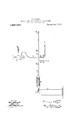
In order to illustrate the process herein described, I have caused to be prepared a drawing representing schematically a system adapted to the carrying out of the process. 7
' Chlorin in liquid form being now obtainable in steel cylinders, I generally make use of such a cylinder of chlorin, shown in the drawing at 1. 1 Connected to the cylinder by a suitable tube, 2, is a cylindrical vessel, 3, containing phosphorus pentoxid. The contents of the vessel 3 serve to remove all the bulb 6 by a neck 8. By a tube, 9, the
tubes 4 and 5 are joined to an exhaust pump,
' 10, and other tubes, 11 and 12, are joined respectively to a source of air and a source of some as, such as argon, helium, hydrogen or indi erent gas which may be passed into the lamp bulb in order to diminish the tendency of the lamp filament to spatter against the walls of the lamp.
The object of the air-inlet is to provide means for rinsing out the lamb globe and causlng the impurities to fall into the chamber 6 or permitting them to be drawn off by the pump 10. Suitable cocks, 13, 14, 15 and 16 provide for the opening or closing of the various tubes mentioned above. The operation is as follows: The lamp 7 having been exhausted, the cook, 14, is closed and.
admission of air to the lamp, and again the cock, 16, may be opened to admit a suitable gas,.such as argon, helium or hydrogen, or
useful in connection with lamps provided with heavy filaments having large current carrying capacity. Such a lamp, which may have been previously rendered useless owing to the deposition of metallic tungsten upon the light transmitting portion, may be then rendered quite as good as new without disturbing any portion of the lamp, except the seal off at 8. The absolute amount of tun sten thrown ofi', even up to the point where very little light is transmitted, is very small.
Consequently, with thick filaments, the lamp -may be indefinitely renewed by the process described above.
In certain cases, owing to accidents, air may be admitted to the lamp and, when the lamp is filled with nitrogen, a deposit of tungsten nitrid may be formed upon the vitreous envelop. The presence of air would result in the fo'a'mation of tungsten trioxid and nitri-d. These substances are readily soluble in aqua ammoniaor a strong, hot concentrated solution of either caustic soda or caustic potash and, accordingly, may be easily removed by the application of such a solution.
It has been noted above that chlorin, for example, forms a compound with tungsten, namely either tungsten hexachlorid or tungsten pentachlorid. As a result of the high temperature at which filaments are operated, the walls of the light transmitting portion of the envelop are brought to a temperature of about 200 C. to 300 C. It is proposed, therefore, since the reaction temperature of finely divided tungsten and chlorin is in the neighborhood of 20Q C. to 300 C. to introduce a small amount of chlorin along with the restringent gas suggested in the foregomenses ing. A lamp prepared according to this description would function as follows:
The particles of tungsten thrown ofi from the filament wouldre-act at once with the chlorin or other halid present. The tungsten halid would then distil or deposit or condense on the coolest portion of the lamp, namely, the upper portion. The vapor of this volatile compound would, of course, always be present, but when coming into contact with the hot filament would there dissociate, depositing metallic tungsten and liberating free halids, which latter would in turnre-act with further tungsten particles thrown off so that the cycle of reactions would be indefinitely continued throughout the life of the filament, thus automatically preventing any particles of tungsten ever obstructing the passage of lightthroughthe vitreous envelop.
ll claim as my invention:
1. The method of cleaning filament lampswhich have been darkened or blackened by the spattering of filament material upon the walls of the transparent portion of the lamp which consists in formingon the said walls a volatile compound of tungsten and removing the said volatile compound.
2. The method of cleaning filament lamps which have been darkened or blackened by the spattering of filament material upon the walls of the transparent portion of the lamp which consists in forming on the said walls a volatile compound of tungstemremoving the said volatile compound and rinsing the lamp with air. i
3. The method of cleaning filament lamps which have been darkened or blackened by the spattering of filament metal upon the walls of the transparent portion of the lamp which consists in forming on the said walls a volatile compound of tungsten, removing the said volatile compound, and introducing into the lamp a restrmgent gas.
Signed at New York in the county of New York and State of New York this 26th day of January A. D. 1914.
FREDERICK G. KEYES.
- Witnesses:
GEORGE H. STOCKBRIDGE, Tnos. H. BROWN.
Priority Applications (1)
| Application Number | Priority Date | Filing Date | Title |
|---|---|---|---|
| US81487214A US1237653A (en) | 1914-01-28 | 1914-01-28 | Method of cleaning and renewing electric lamps. |
Applications Claiming Priority (1)
| Application Number | Priority Date | Filing Date | Title |
|---|---|---|---|
| US81487214A US1237653A (en) | 1914-01-28 | 1914-01-28 | Method of cleaning and renewing electric lamps. |
Publications (1)
| Publication Number | Publication Date |
|---|---|
| US1237653A true US1237653A (en) | 1917-08-21 |
Family
ID=3305471
Family Applications (1)
| Application Number | Title | Priority Date | Filing Date |
|---|---|---|---|
| US81487214A Expired - Lifetime US1237653A (en) | 1914-01-28 | 1914-01-28 | Method of cleaning and renewing electric lamps. |
Country Status (1)
| Country | Link |
|---|---|
| US (1) | US1237653A (en) |
-
1914
- 1914-01-28 US US81487214A patent/US1237653A/en not_active Expired - Lifetime
Similar Documents
| Publication | Publication Date | Title |
|---|---|---|
| US1922244A (en) | Electrode and method of making the same | |
| US4237401A (en) | Low-pressure mercury vapor discharge lamp | |
| US1653366A (en) | Clean-up and activation by misch metal and the rare-earth metals | |
| US1895855A (en) | Method of lamp manufacture | |
| US1905866A (en) | Process of producing yttrium and metals of the yttrium group | |
| US2009221A (en) | Gaseous electric discharge device | |
| US2100879A (en) | Electric lamp | |
| US1566848A (en) | Incandescent lamp | |
| US2463743A (en) | Hydrogen tube | |
| US1809661A (en) | Electric lamp | |
| US2184323A (en) | Cathode activation and degassing | |
| US3475649A (en) | Tungsten incandescent lamps with iodine halides | |
| US2099874A (en) | Method of evacuating vessels, more particularly lamps | |
| US1237210A (en) | Method of producing vacuums. | |
| US1738420A (en) | Method of preparing electric discharge devices | |
| US1323836A (en) | Method of removing gases and apparatus produced thereby. | |
| US1966219A (en) | Photo-electric tube | |
| US1689297A (en) | Vacuum device and method of exhausting same | |
| US1273629A (en) | Method of exhausting incandescent lamps. | |
| US1691446A (en) | Electron-discharge device with oxide-coated filament | |
| GB271419A (en) | Improvements in electric discharge devices | |
| US2456968A (en) | Process for outgassing photocells containing antimony | |
| GB1407568A (en) | Method of manufacturing a halogen incandescent lamp | |
| US2116432A (en) | Getter for vacuum devices | |
| US1847927A (en) | Gaseous conduction device |