US1237342A - Process for producing color-printing plates. - Google Patents
Process for producing color-printing plates. Download PDFInfo
- Publication number
- US1237342A US1237342A US11129516A US11129516A US1237342A US 1237342 A US1237342 A US 1237342A US 11129516 A US11129516 A US 11129516A US 11129516 A US11129516 A US 11129516A US 1237342 A US1237342 A US 1237342A
- Authority
- US
- United States
- Prior art keywords
- negative
- silhouette
- picture
- parts
- color
- Prior art date
- Legal status (The legal status is an assumption and is not a legal conclusion. Google has not performed a legal analysis and makes no representation as to the accuracy of the status listed.)
- Expired - Lifetime
Links
- 238000000034 method Methods 0.000 title description 18
- 239000003086 colorant Substances 0.000 description 6
- 229920002160 Celluloid Polymers 0.000 description 2
- RTZKZFJDLAIYFH-UHFFFAOYSA-N Diethyl ether Chemical compound CCOCC RTZKZFJDLAIYFH-UHFFFAOYSA-N 0.000 description 2
- 239000002131 composite material Substances 0.000 description 2
- 238000004519 manufacturing process Methods 0.000 description 2
- 239000002184 metal Substances 0.000 description 2
- XLYOFNOQVPJJNP-UHFFFAOYSA-N water Substances O XLYOFNOQVPJJNP-UHFFFAOYSA-N 0.000 description 2
- OTMSDBZUPAUEDD-UHFFFAOYSA-N Ethane Chemical compound CC OTMSDBZUPAUEDD-UHFFFAOYSA-N 0.000 description 1
- 244000228957 Ferula foetida Species 0.000 description 1
- 239000007844 bleaching agent Substances 0.000 description 1
- 235000019646 color tone Nutrition 0.000 description 1
- 230000000694 effects Effects 0.000 description 1
- 239000000203 mixture Substances 0.000 description 1
Images
Classifications
-
- G—PHYSICS
- G03—PHOTOGRAPHY; CINEMATOGRAPHY; ANALOGOUS TECHNIQUES USING WAVES OTHER THAN OPTICAL WAVES; ELECTROGRAPHY; HOLOGRAPHY
- G03F—PHOTOMECHANICAL PRODUCTION OF TEXTURED OR PATTERNED SURFACES, e.g. FOR PRINTING, FOR PROCESSING OF SEMICONDUCTOR DEVICES; MATERIALS THEREFOR; ORIGINALS THEREFOR; APPARATUS SPECIALLY ADAPTED THEREFOR
- G03F3/00—Colour separation; Correction of tonal value
- G03F3/04—Colour separation; Correction of tonal value by photographic means
Definitions
- silhouette, vEF g. 5, may, 1111 this case, mover printed 1 in' two or "more superimposed-colors "to preducecolors?intermediate theithree' pri- :mary ones.
- wFig. 4 trep're'sents a 'silhouette of the red parts; Eig. "'5 .represents a -silhouette of those parts wantedato be printed in .black to give body to 'thei'final ⁇ P111113 6 1 represents sfa nejmative -("alhalf tone*negative) *of'rthe'origi- *na' picture; :and Figs. '7, 8, 9 and fIOzreprev sent negatives of ithe respective silhouettes vI shall first texplain any 'gpreferrefd anode of procedure for producing any one tof the color ;plates.
- Negatives are now made of each of the silhouettes. If the original silhouettes have been made on a clear transparency, such as celluloid, a backing of white is used when the silhouette is photographed to produce the negative silhouette; but if white paper has been used as a transparency, then no backing is needed. In my preferred method of procedure an ordinary half-tone negative has also been made of the original picture. (See Fig. 6.) These negative silhouettes are next stripped and the strips are successively superimposed on the half-tone negative.
- contrasty negative (notahalf-tone negative) is made in the ordinary manner preferably on a wet plate, which is then stripped and superimposed on the half-tone negative.
- the result is to greatly deepen and make more opaque the dark parts of the composite negative, which means that the light parts of the print then taken on the key plate will be clear of all tone.
- the contrasty negative is merely a negative wherein the dark parts are darker than usual and the light parts lighter than usual; in fact the contrasty negative is very much similar to the silhouette negative shown in Fig. 10, except that the contrasty negative has graduations from light to dark while in the silhouette there may be no graduations.
- this method of making the key negative and key plate I may and do modify the composite negative in the following manner: Suppose that there are certain parts in the picture that I wish to show clearly in brilliant color without any gray or black tones at all; or that there are certain parts that I particularly wish to finally show in subdued gray or gray color tones. Before the contrasty negative-is made I place my transparent medium over the original picture and white over any parts desired to be finally shown in clear color, and black over any tones desired to'be shown in gray or grayish tones. The contrasty negative is then made of the picture behind this whited' and blacked transparency; and this contrasty negative then has opaque parts where it is desired to finall show clear color and transparent parts W ere it is finally desired to accentuate the gray tones.
- This modified contrasty negatlve is then somewhat like both the plain contrasty negative and the black silhouette negative (Fig. 10) in that it is an ordinary negative in all its unmodified parts and has transparent parts where the picture was covered with black and where it is desired to show gray tones in the finished print and has opaque parts where the picture was covered with white and where it is desired to show clear color in the final print.
- the contrasty negative is then superimposed as before over the half-tone negative and the print made on the key-plate; with the result that the key plate then has clear spaces where it is desired to show clear color (that is, where no gray tones are wanted), and has all the gray tones of the halftone negative, un-
- the key plate thus made is used in the ordinary manner to make the black or key printing.
- a feature of this process is the making of a negative silhouette, or a reverse silhouette, which has opaque parts over those parts of the half-tone negative not wanted and transparent parts over those parts of the half-tone negative wanted in the final plate.
- a negative silhouette or a reverse silhouette
- This hand made negative silhouette may then be used in superposition on the half-tone negative in the manner before described.
- the production of the negative silhouettes does not necessarily involve the use of a transparency placed over the picture.
- I may prepare a set of prints of the picture and silhouette in black directly on the prints for the black and the colors. I may then bleach out all those portions of each print not blocked out by the silhouette and then make a photographic negative of each silhouetted and bleached prmt; the negative silhouettes thus produced eing the same as the negative silhouettes hereinbefore described.
- I claimz' 1.
- the herein described process of making engravers plates which comprises producing a half-tone negative of a picture, producing a silhouette of any desired portion of the picture, makingv a negative of said silhouette, thus making a negative silhouette with opaque and transparent portions, superposing said negative silhouette upon the said half-tone negative, and then printing therefrom onto the engravers plate. 2.
- the herein described process of making engravers plates which comprises producing a half-tone negative of a picture, superposing a transparent medium upon the original picture, silhouetting thereon those parts of the picture desired to be finally reproduced in the plate, producing a photo graphic negative of said silhouette, thereby producing a negative silhouette having opaque and transparent portions, and then superposing said negative silhouette upon said half-tone negative and printing'therethrough onto the engravers plate.
- the herein described process of producing engravers plates which comprises producing a half-tone negative from a picture, producing an ordinary negative from the same picture, in which negative the light and dark tones are more highly contrasted than in the half-tone negative, superposing said negatives, and printing therethrough onto an engravers plate to form a key plate; producing a silhouette of those portions of the origin-a1 picture desired to appear in a final color plate, producing a photographic negative of the said silhouette, thereby producing a negative silhouette having clear portions corresponding to those portions of the picture desired to appear in the final color plate, superimposing the negativesilhouette and the half-tone negative and printing therethrough onto an engravers plate to produce a color plate.
Landscapes
- Physics & Mathematics (AREA)
- General Physics & Mathematics (AREA)
- Printing Methods (AREA)
Description
J. D. JOHNSEN. PROCESS FOR PRODUCING COLOR PRINTlNG PLATES. APPLICATION FILED JULY 25. X916.
Patented Aug. 21, 1917.
rnocnss:zsonrrnonncmegcononrrzemrme rmrns.
T $pecmcetton ofrlzettersiratent. iPatntefl'Aug,;21, 1917,
for reproducing natural -color effects; and it is a primary object of this inventionto provide a method -:of 'procedure which is simple and effective in its use and 'results, and to provide amethod-ofprecedureewhereby the artist "may -work "directly upon #the picture itself rather than upoma rnegative oif the picture.
It is a feature (if-this procedurei'thatmegative or reverse silhouettes are made "of the original picture a and are used 'in -,-superposition on a half-tone negative c'of the-voriginal to make a finaI "print on &-the plate "of :en-
/ing the silhouettes :is done "directly on or over the original gpicture, math-er athan on '01- over a negative; *the "procedure being such that, by makinga silhouette offrcertain {parts of the original picture, the artist -thus-selects from the picturefthosespartswvhichl'he'awishes to be finally printed :"i'nr-any perticular col'or or in black. Now,?although siti-s possible, as hereinafter pointed outstosilhouette, in:any case, either those portions which are 2110i Wanted in the corresponding ,plate, or ito silhouette those portions *vthich tare wanted in the corresponding gplaite, "yet .51 'prefer to silhouette those portions which are "Wanted in the corresponding 'aplate. Ether avarictions of my processwill:appear'fifrom the fol lowing description these variations, includin among other things, a choice of :procedures in "making :the black sol-key plate, and a choice as to whether the isilhouettin'g is done on-atransparent'xmedimn placetl over the picture or;onaa printvoftheipicture itself.
I shallexplaiinzmy processesascarried ent in the three colors *blueerefl :tanii yllow. it will be understood, '-:of:course,"a that1in using my process :the vitrtist :must unders'tmfd ithe composition 0fc6lors rand nnust ghave ..=a '2pre- :conceived lidea as :ito what icolors the "wishes any certain part :ofithe 'gpictureito ibe g-pi'inted in. Some parts"ofithegpictureiwillabeqprint- 55 t ed *in "one :color alone, while :others will be producing color printing;plates,pparticularly grs tvers metal ;rand that the Work o%f1 mak-' rare covered in this silhouette,
silhouette, vEF g. 5, may, 1111 this case, mover printed 1 in' two or "more superimposed-colors "to preducecolors?intermediate theithree' pri- :mary ones.
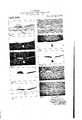
g :I- zre'fer ito the accompanying L-flm wings wherem I illustratettypicalvsilhouettimgqirocedures and wherein Figure 1 1 :may :represent the-"original picture i (a positive print: ofan'ykind Eig. :52 :represents :a silhouette difithe yellow parts: (if :the original {picture i; Fig. 3
:represents a I's'ilhouette of the blue iparts;
wFig. 4 trep're'sents a 'silhouette of the red parts; Eig. "'5 .represents a -silhouette of those parts wantedato be printed in .black to give body to 'thei'final {P111113 6 1 represents sfa nejmative -("alhalf tone*negative) *of'rthe'origi- *na' picture; :and Figs. '7, 8, 9 and fIOzreprev sent negatives of ithe respective silhouettes vI shall first texplain any 'gpreferrefd anode of procedure for producing any one tof the color ;plates. "The original picture 1 (usually :a photograph) sis taken and a tsuitahles transfrparentrtmedium, preferably celluloid, vplaced over it, The artist then, with =a hleck ink, or other imedinm, vcovers cor silhouettes call thoseaportionsofathe ictureewhichl'he -wis'hes ftQhaVefiIIaIly printe" Iimtheparticularcolor :he @is "thenWorkingcn For lmstance, a'asi'for 'Jthe vi-eds, Ehe silhouettes Pall those portions evhichihe wishes'to have appear iin :red-r'orin a color "of which red is a co1nponent Such :a silhouette 1 is :represented ;in @sFig. sywhere' iti'may'ihes'desired'sto give :laxre'ddish castato :a "mountain in sunset glow. This silhouette "ibeing finishedfihe zthen simila'i'ly silhouettes s other rtwo feelers; fi'ha'ving ithen mrfor Ft duced ithree silhouettes $011 ithe ztranspa'rent smedium. "The gzellows silhouette Eig.figwill .be opaque l over all ithat t 'iswanted lin yellow, or yellow zcomponent, "the vfin'al print;
Thussthezgreenzof the water; and oftthei-hills W111 #re quire lye'llow und ithesej partsere covweredfiin :mal'cing this silhouette. 'lThe lhlue silhouette,Wig.-T3;Will,lin tliis partic ilarcase, coverrellmostz all'gpartssoiflthegpictureiinclud- 111g the *hlue :s'ky, nthe g'green ma the green-water. l .aThe silhouette for ':the 'zhl a'k '"or .key i'plate may ithen 'ibe made 1 in :exactly i th'e sam'eamaniner was just .described, "excepting that zonly ':-those :portions wished to ?be ;.printed in ljhlack The lblack 'certain portions :of theihills where a dark shade'ii-s desired in ithfi tfinal print', zan'climay so I also cover the outlines of the different features of the picture. The black gives body to the finally printed reproduction which cannot be obtained by the colors alone. Another, and preferred, method of producing the black or key plate is hereinafter described. These negatives are illustrated in Fi'gs.'-7 to 10; and it will be seen that in each negative there is a clear part corresponding to the parts of the picture wanted in the particular color corresponding to that negative.
' Negatives are now made of each of the silhouettes. If the original silhouettes have been made on a clear transparency, such as celluloid, a backing of white is used when the silhouette is photographed to produce the negative silhouette; but if white paper has been used as a transparency, then no backing is needed. In my preferred method of procedure an ordinary half-tone negative has also been made of the original picture. (See Fig. 6.) These negative silhouettes are next stripped and the strips are successively superimposed on the half-tone negative. It will be remembered that the original silhouette blocked out all those parts wished to be printed in a particular color or in black; so that the negative silhouettes will, in each case, be transparent over those parts of the half-tone negative wished to be printed in any particular color and lie opaque over those parts not wanted in this particular color. A print is then made through the half-tone negative and the superimposed negative silhouette onto engravers metal for producing a color plate. This operation is repeated with each of the negative silhouettes for the different colors and for the black; so that there is then produced a set of four plates, one for black and one for each of the colors.
The foregoing describes my preferred procedure for producing the plates for color printing; but I prefer to make the black or key plate by superimposing a contrasty negative upon the ordinary half-tone negative. This contrasty negative (notahalf-tone negative) is made in the ordinary manner preferably on a wet plate, which is then stripped and superimposed on the half-tone negative. The result is to greatly deepen and make more opaque the dark parts of the composite negative, which means that the light parts of the print then taken on the key plate will be clear of all tone. The contrasty negative is merely a negative wherein the dark parts are darker than usual and the light parts lighter than usual; in fact the contrasty negative is very much similar to the silhouette negative shown in Fig. 10, except that the contrasty negative has graduations from light to dark while in the silhouette there may be no graduations.
In this method of making the key negative and key plate I may and do modify the composite negative in the following manner: Suppose that there are certain parts in the picture that I wish to show clearly in brilliant color without any gray or black tones at all; or that there are certain parts that I particularly wish to finally show in subdued gray or gray color tones. Before the contrasty negative-is made I place my transparent medium over the original picture and white over any parts desired to be finally shown in clear color, and black over any tones desired to'be shown in gray or grayish tones. The contrasty negative is then made of the picture behind this whited' and blacked transparency; and this contrasty negative then has opaque parts where it is desired to finall show clear color and transparent parts W ere it is finally desired to accentuate the gray tones. This modified contrasty negatlve is then somewhat like both the plain contrasty negative and the black silhouette negative (Fig. 10) in that it is an ordinary negative in all its unmodified parts and has transparent parts where the picture was covered with black and where it is desired to show gray tones in the finished print and has opaque parts where the picture was covered with white and where it is desired to show clear color in the final print. The contrasty negative is then superimposed as before over the half-tone negative and the print made on the key-plate; with the result that the key plate then has clear spaces where it is desired to show clear color (that is, where no gray tones are wanted), and has all the gray tones of the halftone negative, un-
modified by the contrasty negative, in those parts wished to be accentuated in gray. The key plate thus made is used in the ordinary manner to make the black or key printing.
It will be seen that a feature of this process is the making of a negative silhouette, or a reverse silhouette, which has opaque parts over those parts of the half-tone negative not wanted and transparent parts over those parts of the half-tone negative wanted in the final plate. Now, as hereinbefore described, I prefer to make these negative or reverse silhouettes by making a positive silhouette and then hotograp'hing it; but the artist may make t e negative silhouette directly by using a clear transparency over the original picture and blacking out those portions not wanted. This hand made negative silhouette may then be used in superposition on the half-tone negative in the manner before described.
Now, in general, the production of the negative silhouettes does not necessarily involve the use of a transparency placed over the picture. I may prepare a set of prints of the picture and silhouette in black directly on the prints for the black and the colors. I may then bleach out all those portions of each print not blocked out by the silhouette and then make a photographic negative of each silhouetted and bleached prmt; the negative silhouettes thus produced eing the same as the negative silhouettes hereinbefore described.
In my process, carried out in accordance with any of the abovestated procedures, it will be seen that the artist works directly upon or over the original picture and is not compelled to work upon a negative. The
artist also always has at hand the silhouettes or negative silhouettes which he has reviously made so that one silhouette may be a guide in making another silhouette. Having once produced the negative silhouettes, the operation of my superimposing them on the half-tone negative and printing onto the final plate is very simple and easily carried out with great accuracy.
Having described a preferred form of my invention, I claimz' 1. The herein described process of making engravers plates, which comprises producing a half-tone negative of a picture, producing a silhouette of any desired portion of the picture, makingv a negative of said silhouette, thus making a negative silhouette with opaque and transparent portions, superposing said negative silhouette upon the said half-tone negative, and then printing therefrom onto the engravers plate. 2. The herein described process of making engravers plates, which comprises producing a half-tone negative of a picture, superposing a transparent medium upon the original picture, silhouetting thereon those parts of the picture desired to be finally reproduced in the plate, producing a photo graphic negative of said silhouette, thereby producing a negative silhouette having opaque and transparent portions, and then superposing said negative silhouette upon said half-tone negative and printing'therethrough onto the engravers plate.
3. The herein described process of makparts of the picture wished to be reproduced on the final color plate, super osing the negative silhouette and the hal -tone negative,
and printing therethrough onto an engrav I ers plate to form a color plate.
4. The herein described process of producing engravers plates, which comprises producing a half-tone negative from a picture, producing an ordinary negative from the same picture, in which negative the light and dark tones are more highly contrasted than in the half-tone negative, superposing said negatives, and printing therethrough onto an engravers plate to form a key plate; producing a silhouette of those portions of the origin-a1 picture desired to appear in a final color plate, producing a photographic negative of the said silhouette, thereby producing a negative silhouette having clear portions corresponding to those portions of the picture desired to appear in the final color plate, superimposing the negativesilhouette and the half-tone negative and printing therethrough onto an engravers plate to produce a color plate.
. In witness that I claim the foregoing I have hereunto subscribed my name this 8th day of July, 1916.
JOHN D. Jomvsnn.
Witnesses:
JAMES T. Banxnnnw, Enwooo H. Bammnnw.
. I am...
Priority Applications (1)
| Application Number | Priority Date | Filing Date | Title |
|---|---|---|---|
| US11129516A US1237342A (en) | 1916-07-25 | 1916-07-25 | Process for producing color-printing plates. |
Applications Claiming Priority (1)
| Application Number | Priority Date | Filing Date | Title |
|---|---|---|---|
| US11129516A US1237342A (en) | 1916-07-25 | 1916-07-25 | Process for producing color-printing plates. |
Publications (1)
| Publication Number | Publication Date |
|---|---|
| US1237342A true US1237342A (en) | 1917-08-21 |
Family
ID=3305161
Family Applications (1)
| Application Number | Title | Priority Date | Filing Date |
|---|---|---|---|
| US11129516A Expired - Lifetime US1237342A (en) | 1916-07-25 | 1916-07-25 | Process for producing color-printing plates. |
Country Status (1)
| Country | Link |
|---|---|
| US (1) | US1237342A (en) |
Cited By (2)
| Publication number | Priority date | Publication date | Assignee | Title |
|---|---|---|---|---|
| US3022164A (en) * | 1956-09-25 | 1962-02-20 | Weir Ralph | Reproduction of color drawings, film transparencies and photographs |
| US4869165A (en) * | 1986-07-04 | 1989-09-26 | Fabrication D'ouvrages De Dames | Silkscreen process for producing a design and proximate inscription |
-
1916
- 1916-07-25 US US11129516A patent/US1237342A/en not_active Expired - Lifetime
Cited By (2)
| Publication number | Priority date | Publication date | Assignee | Title |
|---|---|---|---|---|
| US3022164A (en) * | 1956-09-25 | 1962-02-20 | Weir Ralph | Reproduction of color drawings, film transparencies and photographs |
| US4869165A (en) * | 1986-07-04 | 1989-09-26 | Fabrication D'ouvrages De Dames | Silkscreen process for producing a design and proximate inscription |
Similar Documents
| Publication | Publication Date | Title |
|---|---|---|
| US2096794A (en) | Method of producing gravure etchings | |
| US2577984A (en) | Method of making color printing plates | |
| US2048876A (en) | Method of preparing printing plates | |
| US2100346A (en) | Intaglio printing elements and method of producing the same | |
| US2084353A (en) | Process of printing multicolored pictures | |
| US2692825A (en) | Color correcting in photomechanical processes | |
| US1957433A (en) | Method of making a photographic printing plate | |
| US3210186A (en) | Intaglio printing screen for superimposing with autotypy screen positives in the production of etchings for autotypical intaglio printing | |
| US1670195A (en) | High-light process for photo-engraving | |
| US2349900A (en) | Method of making color reproductions | |
| US1446754A (en) | Process of producing multicolor prints | |
| US855705A (en) | Process of printing in colors. | |
| US401510A (en) | Carl august muller | |
| US498396A (en) | William kurtz | |
| US506109A (en) | Half-tone negative for photo processes | |
| US2700609A (en) | Method of making intaglio engravings | |
| US3022164A (en) | Reproduction of color drawings, film transparencies and photographs | |
| US1477866A (en) | Producing printing surfaces | |
| US1361783A (en) | Cinematograph-film and process of making the same | |
| US896733A (en) | Art of multicolor-printing. | |
| US2019500A (en) | Article and method by which "ben day" tones are photographically produced | |
| US788274A (en) | Process of making prints on dark backgrounds. | |
| US761887A (en) | Method of photographically producing plates. | |
| US2021191A (en) | Article and method by which "ben day" tones are photographically produced | |
| US1618534A (en) | Art of halftone photoengraving color printing |