US12355993B2 - Scalable systems for controlling color management comprising varying levels of metadata - Google Patents
Scalable systems for controlling color management comprising varying levels of metadata Download PDFInfo
- Publication number
- US12355993B2 US12355993B2 US19/049,442 US202519049442A US12355993B2 US 12355993 B2 US12355993 B2 US 12355993B2 US 202519049442 A US202519049442 A US 202519049442A US 12355993 B2 US12355993 B2 US 12355993B2
- Authority
- US
- United States
- Prior art keywords
- metadata
- video
- display
- image
- content
- Prior art date
- Legal status (The legal status is an assumption and is not a legal conclusion. Google has not performed a legal analysis and makes no representation as to the accuracy of the status listed.)
- Active
Links
Images




Classifications
-
- H—ELECTRICITY
- H04—ELECTRIC COMMUNICATION TECHNIQUE
- H04N—PICTORIAL COMMUNICATION, e.g. TELEVISION
- H04N21/00—Selective content distribution, e.g. interactive television or video on demand [VOD]
- H04N21/20—Servers specifically adapted for the distribution of content, e.g. VOD servers; Operations thereof
- H04N21/23—Processing of content or additional data; Elementary server operations; Server middleware
- H04N21/234—Processing of video elementary streams, e.g. splicing of video streams or manipulating encoded video stream scene graphs
- H04N21/2343—Processing of video elementary streams, e.g. splicing of video streams or manipulating encoded video stream scene graphs involving reformatting operations of video signals for distribution or compliance with end-user requests or end-user device requirements
- H04N21/234327—Processing of video elementary streams, e.g. splicing of video streams or manipulating encoded video stream scene graphs involving reformatting operations of video signals for distribution or compliance with end-user requests or end-user device requirements by decomposing into layers, e.g. base layer and one or more enhancement layers
-
- G—PHYSICS
- G06—COMPUTING OR CALCULATING; COUNTING
- G06T—IMAGE DATA PROCESSING OR GENERATION, IN GENERAL
- G06T9/00—Image coding
-
- G—PHYSICS
- G09—EDUCATION; CRYPTOGRAPHY; DISPLAY; ADVERTISING; SEALS
- G09G—ARRANGEMENTS OR CIRCUITS FOR CONTROL OF INDICATING DEVICES USING STATIC MEANS TO PRESENT VARIABLE INFORMATION
- G09G5/00—Control arrangements or circuits for visual indicators common to cathode-ray tube indicators and other visual indicators
- G09G5/02—Control arrangements or circuits for visual indicators common to cathode-ray tube indicators and other visual indicators characterised by the way in which colour is displayed
-
- H—ELECTRICITY
- H04—ELECTRIC COMMUNICATION TECHNIQUE
- H04N—PICTORIAL COMMUNICATION, e.g. TELEVISION
- H04N1/00—Scanning, transmission or reproduction of documents or the like, e.g. facsimile transmission; Details thereof
- H04N1/46—Colour picture communication systems
- H04N1/56—Processing of colour picture signals
- H04N1/60—Colour correction or control
- H04N1/603—Colour correction or control controlled by characteristics of the picture signal generator or the picture reproducer
-
- H—ELECTRICITY
- H04—ELECTRIC COMMUNICATION TECHNIQUE
- H04N—PICTORIAL COMMUNICATION, e.g. TELEVISION
- H04N19/00—Methods or arrangements for coding, decoding, compressing or decompressing digital video signals
- H04N19/10—Methods or arrangements for coding, decoding, compressing or decompressing digital video signals using adaptive coding
- H04N19/189—Methods or arrangements for coding, decoding, compressing or decompressing digital video signals using adaptive coding characterised by the adaptation method, adaptation tool or adaptation type used for the adaptive coding
-
- H—ELECTRICITY
- H04—ELECTRIC COMMUNICATION TECHNIQUE
- H04N—PICTORIAL COMMUNICATION, e.g. TELEVISION
- H04N19/00—Methods or arrangements for coding, decoding, compressing or decompressing digital video signals
- H04N19/30—Methods or arrangements for coding, decoding, compressing or decompressing digital video signals using hierarchical techniques, e.g. scalability
-
- H—ELECTRICITY
- H04—ELECTRIC COMMUNICATION TECHNIQUE
- H04N—PICTORIAL COMMUNICATION, e.g. TELEVISION
- H04N19/00—Methods or arrangements for coding, decoding, compressing or decompressing digital video signals
- H04N19/46—Embedding additional information in the video signal during the compression process
-
- H—ELECTRICITY
- H04—ELECTRIC COMMUNICATION TECHNIQUE
- H04N—PICTORIAL COMMUNICATION, e.g. TELEVISION
- H04N21/00—Selective content distribution, e.g. interactive television or video on demand [VOD]
- H04N21/20—Servers specifically adapted for the distribution of content, e.g. VOD servers; Operations thereof
- H04N21/23—Processing of content or additional data; Elementary server operations; Server middleware
- H04N21/235—Processing of additional data, e.g. scrambling of additional data or processing content descriptors
-
- H—ELECTRICITY
- H04—ELECTRIC COMMUNICATION TECHNIQUE
- H04N—PICTORIAL COMMUNICATION, e.g. TELEVISION
- H04N21/00—Selective content distribution, e.g. interactive television or video on demand [VOD]
- H04N21/20—Servers specifically adapted for the distribution of content, e.g. VOD servers; Operations thereof
- H04N21/23—Processing of content or additional data; Elementary server operations; Server middleware
- H04N21/235—Processing of additional data, e.g. scrambling of additional data or processing content descriptors
- H04N21/2353—Processing of additional data, e.g. scrambling of additional data or processing content descriptors specifically adapted to content descriptors, e.g. coding, compressing or processing of metadata
-
- H—ELECTRICITY
- H04—ELECTRIC COMMUNICATION TECHNIQUE
- H04N—PICTORIAL COMMUNICATION, e.g. TELEVISION
- H04N21/00—Selective content distribution, e.g. interactive television or video on demand [VOD]
- H04N21/40—Client devices specifically adapted for the reception of or interaction with content, e.g. set-top-box [STB]; Operations thereof
- H04N21/43—Processing of content or additional data, e.g. demultiplexing additional data from a digital video stream; Elementary client operations, e.g. monitoring of home network or synchronising decoder's clock; Client middleware
- H04N21/44—Processing of video elementary streams, e.g. splicing a video clip retrieved from local storage with an incoming video stream or rendering scenes according to encoded video stream scene graphs
- H04N21/4402—Processing of video elementary streams, e.g. splicing a video clip retrieved from local storage with an incoming video stream or rendering scenes according to encoded video stream scene graphs involving reformatting operations of video signals for household redistribution, storage or real-time display
- H04N21/440227—Processing of video elementary streams, e.g. splicing a video clip retrieved from local storage with an incoming video stream or rendering scenes according to encoded video stream scene graphs involving reformatting operations of video signals for household redistribution, storage or real-time display by decomposing into layers, e.g. base layer and one or more enhancement layers
-
- H—ELECTRICITY
- H04—ELECTRIC COMMUNICATION TECHNIQUE
- H04N—PICTORIAL COMMUNICATION, e.g. TELEVISION
- H04N9/00—Details of colour television systems
- H04N9/64—Circuits for processing colour signals
- H04N9/68—Circuits for processing colour signals for controlling the amplitude of colour signals, e.g. automatic chroma control circuits
- H04N9/69—Circuits for processing colour signals for controlling the amplitude of colour signals, e.g. automatic chroma control circuits for modifying the colour signals by gamma correction
-
- G—PHYSICS
- G06—COMPUTING OR CALCULATING; COUNTING
- G06F—ELECTRIC DIGITAL DATA PROCESSING
- G06F3/00—Input arrangements for transferring data to be processed into a form capable of being handled by the computer; Output arrangements for transferring data from processing unit to output unit, e.g. interface arrangements
- G06F3/14—Digital output to display device ; Cooperation and interconnection of the display device with other functional units
- G06F3/1454—Digital output to display device ; Cooperation and interconnection of the display device with other functional units involving copying of the display data of a local workstation or window to a remote workstation or window so that an actual copy of the data is displayed simultaneously on two or more displays, e.g. teledisplay
Definitions
- the present invention relates to image processing and, more particularly, to the encoding and decoding of image and video signals employing metadata, and more particularly, in various layers of metadata.
- Known scalable video encoding and decoding techniques allow for the expansion or contraction of video quality, depending on the capabilities of the target video display and the quality of the source video data.
- Improvements in image and/or video rendering and the experience to the viewers may be made, however, in the use and application of image metadata in either a single level or in various levels of metadata.
- a method for processing and rendering image data on a target display through a set of levels of metadata wherein the metadata is associated with the image content.
- the method comprises inputting the image data; ascertaining the set of levels of metadata associated with the image data; if no metadata is associated with the image data, performing at least one of a group of image processing steps, said group comprising: switching to default values and adaptively calculating parameter values; if metadata is associated with the image data, calculating color management algorithm parameters according to set of levels of metadata associated with the image data.
- a system for decoding and rendering image data on a target display through a set of levels of metadata comprises: a video decoder, said video decoder receiving input image data and outputting intermediate image data; a metadata decoder, said metadata decoder receiving input image data wherein said metadata decoder capable of detecting a set of levels of metadata associated with said input image data and outputting intermediate metadata; a color management module, said color management module receiving intermediate metadata from said metadata decoder, receiving intermediate image data from said video decoder, and performing image processing upon intermediate image data based upon said intermediate metadata; and a target display, said target display receiving and displaying the image data from said color management module.
- FIGS. 1 A, 1 B and 1 C show one embodiment of a current video pipeline from creation, to distribution, to consumption of a video signal.
- FIG. 2 A depicts one embodiment of a video pipeline that comprises a metadata pipeline in accordance with the teachings of the present application.
- FIG. 2 B depicts one embodiment of a metadata prediction block.
- FIG. 3 shows one embodiment of a sigmoidal curve that employs Level 1 metadata.
- FIG. 4 shows one embodiment of a sigmoidal curve that employs Level 2 metadata.
- FIG. 5 shows one embodiment of a histogram plot based on image/scene analysis that may be used to adjust the image/video mapping onto a target display.
- FIG. 6 shows one embodiment of an adjusted image/video mapping based on Level 3 metadata that includes a second reference display grading of the image/video data.
- FIG. 7 shows one embodiment of a linear mapping that might occur if the target display is a substantially good match to the second reference display used to color grade the image/video data.
- FIG. 8 is one embodiment of a video/metadata pipeline, made in accordance with the principles of the present application.
- CM Color Management
- FIGS. 1 A, 1 B and 1 C depict one embodiment of a current video pipeline 100 that follows a video signal from creation, to distribution and to consumption of that video signal.
- Creation 102 of video signal may occur with the video signal being color graded 104 by a color grader 106 who may grade the signal for various image characteristics—e.g. luminance, contrast, color rendering of an input video signal.
- Color grader 106 may grade the signal to produce image/video mapping 108 and such grading may be done to a reference display device 110 that may have, for example, a gamma response curve 112 .
- the video signal may be sent through a distribution 114 —where such distribution should be proper conceived of broadly.
- distribution could be via the internet, DVD, movie theatre showings and the like.
- the distribution is shown in FIG. 1 A as taking the signal to a target display 120 of maximum luminance of 100 nits and having gamma response curve 124 .
- the mapping applied to the video signal may be as simple as a 1:1 mapping 122 —and made in accordance with, for example, Rec 709 STD for color management 118 . Holding all other factors equal (like for example, ambient light conditions at the target display), then what one might see at the reference display is substantially what you would see at the target display.
- This situation may change, for example, as shown in FIG. 1 B , wherein the target display 130 differs from the reference display 110 in several aspects—e.g. maximum luminance (500 nits as opposed to 100 nits for the reference display).
- the mapping 132 might be a 1:5 mapping to render on the target display.
- the mapping is a linear stretch through the Rec 709 CM block. Any potential distortion from reference display viewing to target display viewing may or may not be objectionable to the viewer, depending on levels of individual discrimination. For example, the darks and mid-tones are stretched but might be acceptable. In addition, it may make MPEG blocking artifacts more significant.
- FIG. 1 C shows a more extreme example.
- the target display 140 may have more significant differences from the reference display.
- target display 140 has maximum luminance of 1000 nits—as opposed to 100 nits for the reference display.
- the same linear stretch mapping 142 were to be applied to the video signal going to the target display, then much more noticeable, and objectionable, distortions may be present for the viewer.
- the video content may be displayed at a significantly higher luminance level (1:10 ratio).
- the darks and mid-tones may be stretched to a point where camera noise of the original capture is noticeable, and banding in the dark areas of the image becomes more significant.
- the MPEG blocking artifacts may be more significant.
- the reference display has a different in maximum luminance (say 600 nits) to the target display (say 1000 nits). Applying a linear stretch, even though there may be only a small ratio difference (that is, close to 1:2), the magnitude difference in maximum luminance is potentially large and objectionable. Due to the magnitude difference, the image may be far too bright and might be uncomfortable to watch. The mid-tones may be stretched unnaturally and might appear to be washed out. In addition, both camera noise and compression noise may be noticeable and objectionable.
- the reference display has a color gamut equal to P3 and the target display has a gamut that is smaller than REC. 709.
- mapping the content from the reference display gamut to the target gamut might unnecessarily compress the content and desaturate the appearance.
- tone and gamut mappers generally perform adequately for roughly 80-95% of the images processed for a particular display, there are issues using such generic solutions to process the images. Typically, these methods do not guarantee the image displayed on the screen matches the intent of the director or initial creator. It has also been noted that different tone or gamut mappers may work better with different types of images or better preserve the mood of the images. In addition, it is also noted that different tone and gamut mappers may cause clipping and loss of detail or a shift in color or hue.
- the color-grading parameters such as the content's minimal black level and maximum white level may be desirable parameters to drive the tone-mapping of color-graded content onto a particular display.
- the color-grader has already made the content (on a per image, as well as a temporal basis) look the way he/she prefers.
- it may be desired to preserve the perceived viewing experience of the image sequence. It should be appreciated that with increasing levels of metadata, it may be possible to improve such preservation of the appearance.
- a sunrise sequence has been filmed, and color-graded by a professional on a 1000 nit reference display.
- the content is to be mapped for display on a 200 nit display.
- the images before the sun rises may not be using the whole range of the reference display (e.g. 200 nits max).
- the image sequence could use the whole 1000 nit range, which is the maximum of the content.
- many tone-mappers use the maximum value (such as luminance) as a guideline for how to map content.
- the tone-curves applied to the pre-sunrise images (a 1:1 mapping) may be different than the tone-curves applied to the post-sunrise images (a 5 ⁇ tone compression).
- the resulting images shown on the target display may have the same peak luminance before and after the sunrise, which is a distortion of the creative intent.
- metadata may be defined that fully describes the dynamic range of the scene; and the use of that metadata may ensure that the artistic effect is maintained. It may also be used to minimize luminance temporal issues from scene to scene.
- tone and gamut need not be treated as separate entities or conditions of a set of images/video.
- “Memory colors” are colors in an image that, even though a viewer may not aware of the initial intent, they will look wrong if adjusted incorrectly. Skin tones, sky, and grass are good examples of a memory color that, when tone mapped, their hue might be changed to look wrong.
- the gamut mapper has knowledge of a protected color (as metadata) in an image to ensure its hue is maintained during the tone mapping process. The use of this metadata may define and highlight protected colors in the image to ensure correct handling of memory colors.
- the ability to define localized tone and gamut mapper parameters is an example of metadata that is not necessarily a mere product of the reference and/or target display parameters.
- systems and methods for providing a robust color management scheme whereby several sources of metadata are employed to provide better image/video fidelity that matches the original intent of the content creator.
- various sources of metadata may be added to the processing, according the availability of certain metadata, as will be discussed in greater detail herein.
- FIG. 2 A shows a high level block diagram of an image/video pipeline 200 that employs metadata.
- Image creation and post-production may take place in block 202 .
- Video source 208 is input into video encoder 210 .
- metadata 204 is input into a metadata encoder 206 .
- metadata 204 have been previously discussed; but may include such items as gamut boundaries and other parameters of the source and/or reference display, the environment of the reference display and other encoding parameters.
- the metadata accompanies the video signals, as a subset of metadata might be co-located temporally and spatially with the video signals that are intended to be rendered at a given time.
- metadata encoder 206 and video encoder 210 may be considered the source image encoder.
- Video signal and metadata are then distributed via distribution 212 —in any suitable manner—e.g. multiplexed, serial, parallel or by some other known scheme. It should be appreciated that distribution 212 should be conceived of broadly for the purposes of the present application. Suitable distribution schemes might include: internet, DVD, cable, satellite, wireless, wired or the like.
- Video signals and metadata are input into a target display environment 220 .
- Metadata and video decoders, 222 and 224 respectively, receive their respective data streams and provide decoding appropriate for the characteristics of the target display, among other factors.
- Metadata at this point might preferably be sent to either a third party Color Management (CM) block 220 and/or to one of the embodiments of a CM module 228 of the present application.
- CM parameter generator 232 may take as inputs metadata from metadata decoder 222 as well as metadata prediction block 230 .
- the system might compute the mean of the image intensity values (luminance). Image intensity may then be scaled by a perceptual weighting, such as log, power function, or a LUT.
- the system might then estimate the highlight and shadow regions (e.g. headroom and footroom on FIG. 5 ) from pre-determined percentiles of the image histogram (for example 10% and 90%).
- the system may estimate the highlight and shadow regions from when the slope of the histogram is above or below a certain threshold.
- the system may calculate the maximum and minimum values of the input image, or from pre-defined percentiles (for example 1% and 99%).
- the values may be stabilized over time (e.g. frame to frame), such as with a fixed rise and fall rate. Sudden changes may be indicative of a scene change, so the values might be exempt from time-stabilization. For example, if the change is below a certain threshold, the system might limit the rate of change, otherwise, go with the new value. Alternatively, the system may reject certain values from influencing the shape of the histogram (such as letterbox, or zero values).
- CM parameter generator 232 could take other metadata (i.e. not necessarily based on content creation) such as display parameters, the ambient display environment and user preferences to factor into the color management of the images/video data. It will be appreciated that display parameters could be made available to CM parameter generator 232 by standard interfaces, e.g. EDID or the like via interfaces (such as DDC serial interfaces, HDMI, DVI or the like). In addition, ambient display environment data may be supplied by ambient light sensors (not shown) that measure the ambient light conditions or reflectance of such from the target display.
- CM parameter generator 232 may set parameters in a downstream CM algorithm 234 which may concern itself with the final mapping of image/video data upon the target display 236 . It should be appreciated that there does not need to be a bifurcation of functions as shown between CM parameter generator 232 and CM algorithm 234 . In fact, in some embodiments, these features may be combined in one block.
- FIGS. 2 A and 2 B are optional from the standpoint of the present embodiment and that it is possible to design many other embodiments—with or without these recited blocks—that are within the scope of the present application.
- CM processing may take place at different points in the image pipeline 200 and not necessarily as depicted in FIG. 2 A .
- CM of the target display may be placed and contained within the target display itself, or such processing may be performed in a set top box.
- CM of the target display could take place in the distribution or at the point of post-production.
- systems and methods for providing a scalable color management scheme whereby the several sources of metadata may be arranged in a set of varying levels of metadata to provide an even higher level of image/video fidelity to the original intent of the content creator.
- various levels of metadata may be added to the processing, according the availability of certain metadata, as will be discussed in greater detail herein.
- suitable metadata algorithms may consider a plethora of information, such as, for example:
- the method for converting to linear light may be desirable so that the appearance (luminance, color gamut, etc.) of the actual image observed by the content creators can be calculated.
- the gamut boundaries aid in specifying in advance what the outer-most colors may be, so that such outer-most colors may be mapped into the target display without clipping or leaving too much overhead.
- the information on the post production environment may be desirable so that any external factors that that could influence the appearance of the display might be modeled.
- One embodiment of a scalable system of metadata levels is disclosed herein that enables the use of reference and target displays with a wider and enhanced range of capabilities.
- the various metadata levels enable a CM algorithm to tailor source content for a given target display with increasing levels of accuracy.
- the following sections describe the levels of metadata proposed:
- Level 0 metadata is the default case and essentially means zero metadata. Metadata may be absent for a number of reasons including:
- CM processing handle Level 0 i.e. where no metadata is present
- CM processing handle Level 0 either by estimating it based on video analysis or by assuming default values.
- Color Management algorithms may be able to operate in the absence of metadata in at least two different ways:
- a display would operate much like today's distribution system where the characteristics of the post production reference display are assumed.
- the assumed reference display could potentially be different.
- a Rec. 601/709 display could be assumed for 8 bit RGB data.
- P3 or Rec 709 gamut could be assumed for higher bit depth RGB data or LogYuv encoded data. This might work well if there is only one standard or a de facto standard for higher dynamic range content. However, if the higher dynamic range content is created under custom conditions, the results may not be greatly improved and may be poor.
- the CM algorithm might start with some default assumptions and refine those assumptions based on information gained from analyzing the source content. Typically, this might involve analyzing the histogram of the video frames to determine how to best adjust the luminance of the incoming source, possibly by calculating parameter values for a CM algorithm. In doing so, there may be a risk in that it may produce an ‘auto exposure’ type of look to the video where each scene or frame is balanced to the same luminance level. In addition, some formats may present some other challenges—for example, there is currently no automated way to determine the color gamut if the source content is in RGB format.
- gamut and encoding parameters could be assumed to be a standardized default value and a histogram could be used to adjust the luminance levels.
- Level 1 metadata provides information describing how the source content was created and packaged. This data may allow CM processing to predict how the video content actually appeared to the content producers.
- the Level 1 metadata parameters may be grouped into three areas:
- encoding schemes such as LogYuv, OpenEXR, LogYxy or LogLuv TIFF, inherently contain the information necessary to convert to a linear light format.
- additional information such as gamma and color primaries may be desired.
- YCbCr or RGB input the following pieces of information may be supplied:
- the source display gamut parameters measured preferably in a completely dark environment, might include:
- the Color Management algorithms may be useful for the Color Management algorithms to know the bounds of the color gamut used in generating the source content. Typically, these values correspond to the capabilities of the reference display used to grade the content; however, they may be different due to software settings—or if only a subset of the display's capabilities were used.
- the gamut of the source content may not match the gamut of the encoded video data.
- the video data may be encoded in LogYuv (or the some other encoding) which encompasses the entire visual spectrum.
- the source gamut parameters might include:
- a single sigmoidal curve applied globally to video frames in RGB space may be a simple and stable way of mapping between different source and target dynamic ranges. Additionally, a single sigmoidal curve may be used to modify each channel (R, G, B) independently. Such a curve might also be sigmoidal in some perceptual space, such as log or power functions. An example curve 300 is shown in FIG. 3 . It will be appreciated that other mapping curves would also be suitable, such as a linear map (as shown in FIGS. 3 , 4 and 6 ), or other maps, such as gamma.
- the minimum and maximum points on the curve are known from the Level 1 metadata and information on the target display.
- the exact shape of the curve could be static and one that has been found to work well on average based on the input and output range. It could also be modified adaptively based on the source content.
- FIGS. 4 and 5 depict one embodiment of the use of Level 2 metadata.
- FIG. 4 is a mapping 400 of input luminance to output luminance on the target display.
- Mapping 400 is depicted here as a substantially sigmoidal curve comprising a set of break points along its curve. These points may correspond to image processing relevant values—labeled there as: min in , foot in , mid in , head in and max in .
- min in and max in may correspond to the minimum and maximum luminance values for a scene.
- the third point, mid in may be the middle value which corresponds to a perceptually ‘average’ luminance value or ‘middle grey’.
- the final two points, foot in and head in may be the footroom and headroom values.
- the region between the footroom and headroom values may define an important portion of the scene's dynamic range. It may be desirable that content between these points should be preserved as much as possible. Content below the footroom may be crushed if desired. Content above the headroom corresponds to highlights and may be clipped if desired. It should be appreciated that these points tend to define a curve itself, so another embodiment might be a best fit curve to these points. Additionally, such a curve might assume linear, gamma, sigmoidal or any other suitable and/or desirable shape.
- the histogram analysis may be used to redefine points along the luminance map of FIG. 4 on a dynamic basis—and hence alter the curve over time. This may also be helpful to improve content fidelity as displayed to the viewer on a target display. For example, in one embodiment, passing the histogram along periodically allows the decoder to potentially derive more information than just the min, max, etc. The encoder might also only include a new histogram when there was a significant change. This might save the decoder the effort of calculating it for each frame on the fly. In yet another embodiment, the histogram might be used to estimate metadata—to either replace missing metadata or to supplement existing metadata.
- Level 3 metadata may add additional data—e.g. gamut, environment, primaries, etc. and luminance level information for a second reference grading of the source content. This additional information may then be combined to define a sigmoidal curve 600 (as shown in FIG. 6 ) that will map the primary input to the range of the reference display.
- FIG. 6 shows an example of how the input and reference display (output) levels can be combined to form a suitable mapping curve.
- this curve can be used directly for mapping the primary source content. However, if the target display's capabilities sit somewhere between that of the primary and secondary reference display, then the mapping curve for the secondary display can be used as a lower bound.
- the curve used for actual target display can then be an interpolation between no reduction (e.g. a linear mapping 700 as shown in FIG. 7 ) and the full range reduction curve generated using the reference levels.
- Level 4 metadata is the same as Level 3 metadata except that the metadata for the second reference grading is tailored to the actual target display.
- Level 4 metadata could also be implemented in an over-the-top (OTT) scenario (i.e. Netflix, mobile streaming or some other VOD service) where the actual target display sends its characteristics to the content provider and the content is distributed with most suitable curves available.
- the target display may be in communication with the video streaming service, VOD service or the like, and the target display may sent to the streaming service information, such as its EDID data or any other suitable metadata available.
- Such communication path is depicted as the dotted line path 240 in FIG. 2 A , to either video and/or the metadata encoder ( 210 and 206 respectively)—as is known in the art with services like Netflix and the like.
- Netflix and other such VOD services are monitoring the amount of data and speed of data throughput to the target device—and not necessarily metadata for color management purposes. It is sufficient for the purposes of this present embodiment, though, that metadata be sent from the target data to the creation or post-production—either through the distribution 212 or otherwise (in realtime or a priori)—to change the color, tone or other characteristics of the image data to be delivered to the target display.
- Level 4 metadata the reference luminance levels provided are specifically for the target display.
- a sigmoidal curve could be constructed as shown in FIG. 6 and used directly without any interpolation or adjustment.
- Level 5 metadata enhances Level 3 or Level 4 with identification of salient features such as the following:
- these identify objects could be artificial mapped to the maximum of the display. If the target display is capable of lower luminance, these objects could be clipped to the display maximum while not compensating for detail. These object might then be ignored and the mapping curve defined might be applied to the remaining content and maintain higher amounts of detail.
- Level 5 could apply to either Level 3 or Level 4 data.
- some lower numbered levels may not be present; yet the system may process higher numbered levels, if present.
- the varying metadata levels provide increasing information about the source material that allows a CM algorithm to provide increasingly accurate mappings for a target display.
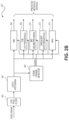
- One embodiment that employs such scalable and varying levels of metadata is shown in FIG. 8 .
- System 800 shows an entire video/metadata pipeline through five blocks—creation 802 , container 808 , encoding/distribution 814 , decoding 822 and consumption 834 . It will be appreciated that many variations of different implementations are possible—some having more blocks and some less blocks. The scope of the present application should not be limited to the recitation of the embodiments herein and, in fact, the scope of the present application encompasses these various implementations and embodiments.
- Creation 802 broadly takes image/video content 804 and processes it, as previously discussed, through a color grading tool 806 .
- Processed video and metadata is placed in a suitable container 810 —e.g. any suitable format or data structure that is known in the art for subsequent dissemination.
- video may be stored and sent as VDR color graded video and metadata as VDR XML formatted metadata.
- This metadata as shown in 812 , is partitioned in the various Levels previously discussed.
- Encoding may proceed by taking the metadata and providing it to algorithm parameter determination block 816 , while the video may be provided to AVCVDR encoder 818 —which may also comprise CM block for processing video prior to distribution 820 .
- decoding of the video/metadata data may proceed to AVCVDR decoder 824 (or optionally to a legacy decoder 826 , if the target display is not VDR enabled). Both video data and metadata are recovered from decoding (as block 830 , 828 respectively—and possibly 832 , if target display is legacy). Decoder 824 may take input image/video data and recover and/or split out the input image data into an image/video data stream to be further processed and rendered, and a metadata stream for calculating parameters for later CM algorithm processing on the image/video data stream to be rendered.
- the metadata stream should also contain information as whether there is any metadata associated with the image/video data stream. If no metadata is associated, then the system may proceed with Level 0 processing as discussed above. Otherwise, the system may proceed with further processing according to whatever metadata is associated with the image/video data stream, as discussed above according to a set of varying levels of metadata.
- whether there is or is not any metadata associated with the image/video data to be rendered may be determined in real-time. For example, it may be possible that for some sections of a video stream that no metadata is associated with those section (whether through data corruption or that the content creator intended that there be no metadata)—and in other sections there may be metadata, perhaps a rich set of metadata with varying levels, are now available and associated with other sections of the video stream. This may be intentional on the part of the content creator; but at least one embodiment of the present application should be able to make such determinations as to whether any, or what level, of metadata is associated with the video stream on a real-time or substantially dynamic basis.
- algorithm parameter determination block 836 can either recover the previous parameters perhaps done prior to distribution or may recalculate parameters based on metadata from the target display and/or target environment (perhaps from standard interfaces, e.g. EDID or emerging VDR interfaces as well as input from the viewer or sensors in the target environment—as discussed previously in the context of the embodiment of FIGS. 2 A and/or 2 B ). Once the parameters have been calculated or recovered, they may be send to one or more of the CM systems ( 838 , 840 and/or 840 ) for final mapping of source and intermediate image/video data onto the target display 844 in accordance with the several embodiments disclosed herein.
- CM systems 838 , 840 and/or 840
- the implementation blocks of FIG. 8 need not finely divided.
- the processing involving the algorithm parameter determination and the color management algorithm itself need not necessarily be bifurcated as shown in FIG. 8 ; but may be conceived of, and/or implemented as, a color management module.
Landscapes
- Engineering & Computer Science (AREA)
- Multimedia (AREA)
- Signal Processing (AREA)
- Physics & Mathematics (AREA)
- General Physics & Mathematics (AREA)
- Theoretical Computer Science (AREA)
- Computer Hardware Design (AREA)
- Library & Information Science (AREA)
- Two-Way Televisions, Distribution Of Moving Picture Or The Like (AREA)
- Image Processing (AREA)
- Compression Or Coding Systems Of Tv Signals (AREA)
- Processing Of Color Television Signals (AREA)
- Controls And Circuits For Display Device (AREA)
- Image Generation (AREA)
Abstract
Several embodiments of scalable image processing systems and methods are disclosed herein whereby color management processing of source image data to be displayed on a target display is changed according to varying levels of metadata.
Description
This application is a continuation of U.S. patent application Ser. No. 18/957,187, filed Nov. 22, 2024, which is a continuation of U.S. patent application Ser. No. 18/731,860, filed Jun. 3, 2024, which is a continuation of U.S. patent application Ser. No. 18/413,720, filed Jan. 16, 2024, which is a continuation of U.S. patent application Ser. No. 18/219,344, filed Jul. 7, 2023, now U.S. Pat. No. 11,917,171, which is a continuation of U.S. patent application Ser. No. 17/353,519, filed Jun. 21, 2021, now U.S. Pat. No. 11,736,703, which is a continuation of U.S. patent application Ser. No. 14/740,862, filed on Jun. 16, 2015, now U.S. Pat. No. 11,218,709, which is a continuation of U.S. patent application Ser. No. 14/003,097, filed Sep. 4, 2013, now U.S. Pat. No. 9,111,330, which is a Section 371 National Stage Application of International Application No. PCT/US2012/038448, filed May 17, 2012, which claims priority to U.S. Provisional Patent Application No. 61/491,014, filed May 27, 2011, which are hereby incorporated by reference in their entirety.
The present invention relates to image processing and, more particularly, to the encoding and decoding of image and video signals employing metadata, and more particularly, in various layers of metadata.
Known scalable video encoding and decoding techniques allow for the expansion or contraction of video quality, depending on the capabilities of the target video display and the quality of the source video data.
Improvements in image and/or video rendering and the experience to the viewers may be made, however, in the use and application of image metadata in either a single level or in various levels of metadata.
Several embodiments of scalable image processing systems and methods are disclosed herein whereby color management processing of source image data to be displayed on a target display is changed according to varying levels of metadata.
In one embodiment, a method for processing and rendering image data on a target display through a set of levels of metadata is disclosed wherein the metadata is associated with the image content. The method comprises inputting the image data; ascertaining the set of levels of metadata associated with the image data; if no metadata is associated with the image data, performing at least one of a group of image processing steps, said group comprising: switching to default values and adaptively calculating parameter values; if metadata is associated with the image data, calculating color management algorithm parameters according to set of levels of metadata associated with the image data.
In yet another embodiment, a system for decoding and rendering image data on a target display through a set of levels of metadata is disclosed. The system comprises: a video decoder, said video decoder receiving input image data and outputting intermediate image data; a metadata decoder, said metadata decoder receiving input image data wherein said metadata decoder capable of detecting a set of levels of metadata associated with said input image data and outputting intermediate metadata; a color management module, said color management module receiving intermediate metadata from said metadata decoder, receiving intermediate image data from said video decoder, and performing image processing upon intermediate image data based upon said intermediate metadata; and a target display, said target display receiving and displaying the image data from said color management module.
Other features and advantages of the present system are presented below in the Detailed Description when read in connection with the drawings presented within this application.
Exemplary embodiments are illustrated in referenced figures of the drawings. It is intended that the embodiments and figures disclosed herein are to be considered illustrative rather than restrictive.
Throughout the following description, specific details are set forth in order to provide a more thorough understanding to persons skilled in the art. However, well known elements may not have been shown or described in detail to avoid unnecessarily obscuring the disclosure. Accordingly, the description and drawings are to be regarded in an illustrative, rather than a restrictive, sense.
One aspect of video quality concerns itself with having images or video rendered on a target display with the same or substantially the same fidelity as it was intended by the creator of the images or video. It is desirable to have a Color Management (CM) scheme that tries to maintain the original appearance of video content on displays with differing capabilities. In order to accomplish this task, it might be desirable that such a CM algorithm be able to predict how the video appeared to viewers in the post production environment where it was finalized.
To illustrate the issues germane to the present application and system, FIGS. 1A, 1B and 1C depict one embodiment of a current video pipeline 100 that follows a video signal from creation, to distribution and to consumption of that video signal.
Once the signal has been graded, the video signal may be sent through a distribution 114—where such distribution should be proper conceived of broadly. For example, distribution could be via the internet, DVD, movie theatre showings and the like. In the present case, the distribution is shown in FIG. 1A as taking the signal to a target display 120 of maximum luminance of 100 nits and having gamma response curve 124. Assuming that the reference display 110 had substantially the same maximum luminance as the target display and substantially the same response curve, then the mapping applied to the video signal may be as simple as a 1:1 mapping 122—and made in accordance with, for example, Rec 709 STD for color management 118. Holding all other factors equal (like for example, ambient light conditions at the target display), then what one might see at the reference display is substantially what you would see at the target display.
This situation may change, for example, as shown in FIG. 1B , wherein the target display 130 differs from the reference display 110 in several aspects—e.g. maximum luminance (500 nits as opposed to 100 nits for the reference display). In this case, the mapping 132 might be a 1:5 mapping to render on the target display. In such a case, the mapping is a linear stretch through the Rec 709 CM block. Any potential distortion from reference display viewing to target display viewing may or may not be objectionable to the viewer, depending on levels of individual discrimination. For example, the darks and mid-tones are stretched but might be acceptable. In addition, it may make MPEG blocking artifacts more significant.
Without exploring exhaustively all possible examples of how objectionable artifacts may appear to the viewer, it may be instructive to discuss a few more. For example, supposing that the reference display had a larger maximum luminance (say, 600 nits) than the target display (say, 100 nits). In this case, if the mapping is again a 6:1 linear stretch, then the content may be displayed at an overall lower luminance level and the image may appear to be dark and the dark detail of the image may have a noticeable crush.
In yet another example, suppose the reference display has a different in maximum luminance (say 600 nits) to the target display (say 1000 nits). Applying a linear stretch, even though there may be only a small ratio difference (that is, close to 1:2), the magnitude difference in maximum luminance is potentially large and objectionable. Due to the magnitude difference, the image may be far too bright and might be uncomfortable to watch. The mid-tones may be stretched unnaturally and might appear to be washed out. In addition, both camera noise and compression noise may be noticeable and objectionable. In yet another example, suppose the reference display has a color gamut equal to P3 and the target display has a gamut that is smaller than REC. 709. Assume the content was color graded on the reference display but the rendered content has a gamut equivalent to the target display. In this case, mapping the content from the reference display gamut to the target gamut might unnecessarily compress the content and desaturate the appearance.
Without some sort of intelligent (or at least more accurate) model of image rendering on a target display, it is likely that some distortion or objectionable artifacts will be apparent for the viewer of the images/video. In fact, it is likely that what the viewer experiences is not what was intended by the creator of images/video. While the discussion has focused on luminance, it would be appreciated that the same concerns would also apply to color. In fact, if there is a difference in the source display's color space and the target display's color space and that difference is not properly accounted for, then color distortion would be a noticeable artifact as well. The same concept holds for any differences in the ambient environment between the source display and the target display.
As these examples set out, it may be desirable to have an understanding as to the nature and capabilities of the reference display, target display and source content in order to create as high a fidelity to the originally intended video as possible. There are other data—that describes aspects, and conveys information, of the raw image data, called “metadata” that is useful in such faithful renderings.
While tone and gamut mappers generally perform adequately for roughly 80-95% of the images processed for a particular display, there are issues using such generic solutions to process the images. Typically, these methods do not guarantee the image displayed on the screen matches the intent of the director or initial creator. It has also been noted that different tone or gamut mappers may work better with different types of images or better preserve the mood of the images. In addition, it is also noted that different tone and gamut mappers may cause clipping and loss of detail or a shift in color or hue.
When tone-mapping a color-graded image-sequence, the color-grading parameters such as the content's minimal black level and maximum white level may be desirable parameters to drive the tone-mapping of color-graded content onto a particular display. The color-grader has already made the content (on a per image, as well as a temporal basis) look the way he/she prefers. When translating it to a different display, it may be desired to preserve the perceived viewing experience of the image sequence. It should be appreciated that with increasing levels of metadata, it may be possible to improve such preservation of the appearance.
For example, assume that a sunrise sequence has been filmed, and color-graded by a professional on a 1000 nit reference display. In this example, the content is to be mapped for display on a 200 nit display. The images before the sun rises may not be using the whole range of the reference display (e.g. 200 nits max). As soon as the sun rises, the image sequence could use the whole 1000 nit range, which is the maximum of the content. Without metadata, many tone-mappers use the maximum value (such as luminance) as a guideline for how to map content. Thus, the tone-curves applied to the pre-sunrise images (a 1:1 mapping) may be different than the tone-curves applied to the post-sunrise images (a 5× tone compression). The resulting images shown on the target display may have the same peak luminance before and after the sunrise, which is a distortion of the creative intent. The artist intended for the image to be darker before the sunrise and brighter during, as it was produced on the reference display. In this scenario, metadata may be defined that fully describes the dynamic range of the scene; and the use of that metadata may ensure that the artistic effect is maintained. It may also be used to minimize luminance temporal issues from scene to scene.
For yet another example, consider the reverse of the above-given situation. Assume that Scene 1 is graded for 350 nits and that Scene 1 is filmed in outdoor natural light. If Scene 2 is filmed in a darkened room, and shown in the same range, then Scene 2 would appear to be too dark. The use of metadata in this case could be used to define the proper tone curve and ensure that Scene 2 is appropriately visible. In yet another example, suppose the reference display has a color gamut equal to P3 and the target display has a gamut that is smaller than REC. 709. Assume the content was color graded on the reference display but the rendered content has a gamut equivalent to the target display. The use of metadata that defines the gamut of the content and the gamut of the source display may enable the mapping to make an intelligent decision and map the content gamut 1:1. This may ensure the content color saturation remains intact.
In certain embodiments of the present system, tone and gamut need not be treated as separate entities or conditions of a set of images/video. “Memory colors” are colors in an image that, even though a viewer may not aware of the initial intent, they will look wrong if adjusted incorrectly. Skin tones, sky, and grass are good examples of a memory color that, when tone mapped, their hue might be changed to look wrong. In one embodiment, the gamut mapper has knowledge of a protected color (as metadata) in an image to ensure its hue is maintained during the tone mapping process. The use of this metadata may define and highlight protected colors in the image to ensure correct handling of memory colors. The ability to define localized tone and gamut mapper parameters is an example of metadata that is not necessarily a mere product of the reference and/or target display parameters.
In several embodiments of the present application, systems and methods for providing a robust color management scheme is disclosed, whereby several sources of metadata are employed to provide better image/video fidelity that matches the original intent of the content creator. In one embodiment, various sources of metadata may be added to the processing, according the availability of certain metadata, as will be discussed in greater detail herein.
As merely one exemplary, FIG. 2A shows a high level block diagram of an image/video pipeline 200 that employs metadata. Image creation and post-production may take place in block 202. Video source 208 is input into video encoder 210. Captured as well as video source, metadata 204 is input into a metadata encoder 206. Examples of metadata 204 have been previously discussed; but may include such items as gamut boundaries and other parameters of the source and/or reference display, the environment of the reference display and other encoding parameters. In one embodiment, the metadata accompanies the video signals, as a subset of metadata might be co-located temporally and spatially with the video signals that are intended to be rendered at a given time. Together, metadata encoder 206 and video encoder 210 may be considered the source image encoder.
Video signal and metadata are then distributed via distribution 212—in any suitable manner—e.g. multiplexed, serial, parallel or by some other known scheme. It should be appreciated that distribution 212 should be conceived of broadly for the purposes of the present application. Suitable distribution schemes might include: internet, DVD, cable, satellite, wireless, wired or the like.
Video signals and metadata, thus distributed, are input into a target display environment 220. Metadata and video decoders, 222 and 224 respectively, receive their respective data streams and provide decoding appropriate for the characteristics of the target display, among other factors. Metadata at this point might preferably be sent to either a third party Color Management (CM) block 220 and/or to one of the embodiments of a CM module 228 of the present application. In the case that the video and metadata are processed by CM block 228, CM parameter generator 232 may take as inputs metadata from metadata decoder 222 as well as metadata prediction block 230.
In yet another embodiment, the system might compute the mean of the image intensity values (luminance). Image intensity may then be scaled by a perceptual weighting, such as log, power function, or a LUT. The system might then estimate the highlight and shadow regions (e.g. headroom and footroom on FIG. 5 ) from pre-determined percentiles of the image histogram (for example 10% and 90%). Alternatively, the system may estimate the highlight and shadow regions from when the slope of the histogram is above or below a certain threshold. Many variations are possible—for example, the system may calculate the maximum and minimum values of the input image, or from pre-defined percentiles (for example 1% and 99%).
In other embodiments, the values may be stabilized over time (e.g. frame to frame), such as with a fixed rise and fall rate. Sudden changes may be indicative of a scene change, so the values might be exempt from time-stabilization. For example, if the change is below a certain threshold, the system might limit the rate of change, otherwise, go with the new value. Alternatively, the system may reject certain values from influencing the shape of the histogram (such as letterbox, or zero values).
In addition, CM parameter generator 232 could take other metadata (i.e. not necessarily based on content creation) such as display parameters, the ambient display environment and user preferences to factor into the color management of the images/video data. It will be appreciated that display parameters could be made available to CM parameter generator 232 by standard interfaces, e.g. EDID or the like via interfaces (such as DDC serial interfaces, HDMI, DVI or the like). In addition, ambient display environment data may be supplied by ambient light sensors (not shown) that measure the ambient light conditions or reflectance of such from the target display.
Having received any appropriate metadata, CM parameter generator 232 may set parameters in a downstream CM algorithm 234 which may concern itself with the final mapping of image/video data upon the target display 236. It should be appreciated that there does not need to be a bifurcation of functions as shown between CM parameter generator 232 and CM algorithm 234. In fact, in some embodiments, these features may be combined in one block.
Likewise, it will be appreciated the various blocks forming FIGS. 2A and 2B are optional from the standpoint of the present embodiment and that it is possible to design many other embodiments—with or without these recited blocks—that are within the scope of the present application. In addition, CM processing may take place at different points in the image pipeline 200 and not necessarily as depicted in FIG. 2A . For example, CM of the target display may be placed and contained within the target display itself, or such processing may be performed in a set top box. Alternatively, depending on what level of metadata processing is available or deemed appropriate, CM of the target display could take place in the distribution or at the point of post-production.
In several embodiments of the present application, systems and methods for providing a scalable color management scheme is disclosed, whereby the several sources of metadata may be arranged in a set of varying levels of metadata to provide an even higher level of image/video fidelity to the original intent of the content creator. In one embodiment, various levels of metadata may be added to the processing, according the availability of certain metadata, as will be discussed in greater detail herein.
In many embodiments of the present system, suitable metadata algorithms may consider a plethora of information, such as, for example:
-
- (1) the encoded video content,
- (2) a method for converting the encoded content into linear light
- (3) the gamut boundaries (both luminance and chromaticity) of the source content, and
- (4) information on the post-production environment.
The method for converting to linear light may be desirable so that the appearance (luminance, color gamut, etc.) of the actual image observed by the content creators can be calculated. The gamut boundaries aid in specifying in advance what the outer-most colors may be, so that such outer-most colors may be mapped into the target display without clipping or leaving too much overhead. The information on the post production environment may be desirable so that any external factors that that could influence the appearance of the display might be modeled.
In current video distribution mechanisms, only the encoded video content is provided to a target display. It is assumed that the content has been produced in a reference studio environment using reference displays compliant with Rec. 601/709 and various SMPTE standards. The target display system is typically assumed to comply with Rec. 601/709—and the target display environment is largely ignored. Because of the underlying assumption that the post-production display and target display will both comply with Rec.601/709, neither of the displays may be upgraded without introducing some level of image distortion. In fact, as Rec. 601 and Rec. 709 differ slightly in their choice of primaries, some distortion may have already been introduced.
One embodiment of a scalable system of metadata levels is disclosed herein that enables the use of reference and target displays with a wider and enhanced range of capabilities. The various metadata levels enable a CM algorithm to tailor source content for a given target display with increasing levels of accuracy. The following sections describe the levels of metadata proposed:
Level 0 metadata is the default case and essentially means zero metadata. Metadata may be absent for a number of reasons including:
-
- (1) Content creators did not include it (or it was lost at some point in the post-production pipeline)
- (2) Display switches between content (i.e. channel surfing or commercial break)
- (3) Data corruption or loss.
In one embodiment, it may be desirable that CM processing handle Level 0 (i.e. where no metadata is present) either by estimating it based on video analysis or by assuming default values.
In such an embodiment, Color Management algorithms may be able to operate in the absence of metadata in at least two different ways:
-
- Switch to default values
In this case a display would operate much like today's distribution system where the characteristics of the post production reference display are assumed. Depending on the video encoding format, the assumed reference display could potentially be different. For example, a Rec. 601/709 display could be assumed for 8 bit RGB data. If color graded on a professional monitor (such as a ProMonitor) in 600 nit mode, P3 or Rec 709 gamut could be assumed for higher bit depth RGB data or LogYuv encoded data. This might work well if there is only one standard or a de facto standard for higher dynamic range content. However, if the higher dynamic range content is created under custom conditions, the results may not be greatly improved and may be poor.
-
- Adaptively calculate parameter values
In this case, the CM algorithm might start with some default assumptions and refine those assumptions based on information gained from analyzing the source content. Typically, this might involve analyzing the histogram of the video frames to determine how to best adjust the luminance of the incoming source, possibly by calculating parameter values for a CM algorithm. In doing so, there may be a risk in that it may produce an ‘auto exposure’ type of look to the video where each scene or frame is balanced to the same luminance level. In addition, some formats may present some other challenges—for example, there is currently no automated way to determine the color gamut if the source content is in RGB format.
In another embodiment, it is possible to implement a combination of the two approaches. For example, gamut and encoding parameters (like gamma) could be assumed to be a standardized default value and a histogram could be used to adjust the luminance levels.
In the present embodiment, Level 1 metadata provides information describing how the source content was created and packaged. This data may allow CM processing to predict how the video content actually appeared to the content producers. The Level 1 metadata parameters may be grouped into three areas:
-
- (1) video encoding parameters,
- (2) source display parameters,
- (3) source content gamut parameters, and
- (4) environmental parameters.
As most Color Management algorithms work at least partially in a linear light space, it may be desirable to have a method to convert the encoded video to a linear (but relative) (X,Y,Z) representation—either inherent in the encoding scheme or provided as metadata itself. For example, encoding schemes, such as LogYuv, OpenEXR, LogYxy or LogLuv TIFF, inherently contain the information necessary to convert to a linear light format. However, for many RGB or YCbCr formats, additional information such as gamma and color primaries may be desired. As an example, to process YCbCr or RGB input, the following pieces of information may be supplied:
-
- (1) the coordinates of the primaries and white point used for encoding the source content. This may be used to generate the RGB to XYZ color space transform matrix. (x,y) coordinates for each of red, green, blue, and white.
- (2) the minimum and maximum code values (eg. ‘standard’ or ‘full’ range). This may be used to convert code values into normalized input values.
- (3) the global or per-channel response curve for each primary (eg. ‘gamma’). This may be used to linearize the intensity values by undoing any non-linear response that may have been applied by the interface or the reference display.
It may be useful for the Color Management algorithms to know the color gamut of the source display. These values correspond to the capabilities of the reference display used to grade the content. The source display gamut parameters, measured preferably in a completely dark environment, might include:
-
- (1) Primaries, such as provided as CIE x,y chromaticity coordinates with maximum luminance specified or XYZ.
- (2) Tristimulus value for white and black, such as CIE XYZ.
It may be useful for the Color Management algorithms to know the bounds of the color gamut used in generating the source content. Typically, these values correspond to the capabilities of the reference display used to grade the content; however, they may be different due to software settings—or if only a subset of the display's capabilities were used. In some cases, the gamut of the source content may not match the gamut of the encoded video data. For example, the video data may be encoded in LogYuv (or the some other encoding) which encompasses the entire visual spectrum. The source gamut parameters might include:
-
- (1) Primaries, such as provided as CIE x,y chromaticity coordinates with maximum luminance specified or XYZ
- (2) Tristimulus value for white and black, such as CIE XYZ.
In certain circumstances, just knowing the light levels produced by the reference display may not be enough to determine how the source content ‘appeared’ to viewers in post production. Information regarding the light levels produced by the ambient environment may also be useful. The combination of both display and environmental light is the signal that strikes the human eye and creates an “appearance”. It may be desired to preserve this appearance through the video pipeline. The environmental parameters, preferably measured in the normal color grading environment, might include:
-
- (1) Reference monitor surround color provided as absolute XYZ value. The viewer's level of adaptation to their environment may be estimated using this value.
- (2) Absolute XYZ value for the black level of the reference monitor in the normal color grading environment. The impact of the ambient lighting on the black level might be determined using this value.
- (3) Color temperature of the ambient light provided as absolute XYZ value of white reflective sample on front of screen (like paper). The viewer's white point adaptation may be estimated using this value.
As noted, Level 1 metadata may provide the gamut, encoding and environmental parameters for the source content. This may allow the CM solution to predict how the source content appeared when approved. However, it may not provide much guidance on how to best adjust the colors and luminance to suit the target display.
In one embodiment, a single sigmoidal curve applied globally to video frames in RGB space may be a simple and stable way of mapping between different source and target dynamic ranges. Additionally, a single sigmoidal curve may be used to modify each channel (R, G, B) independently. Such a curve might also be sigmoidal in some perceptual space, such as log or power functions. An example curve 300 is shown in FIG. 3 . It will be appreciated that other mapping curves would also be suitable, such as a linear map (as shown in FIGS. 3, 4 and 6 ), or other maps, such as gamma.
In this case, the minimum and maximum points on the curve are known from the Level 1 metadata and information on the target display. The exact shape of the curve could be static and one that has been found to work well on average based on the input and output range. It could also be modified adaptively based on the source content.
For the sake of exposition, FIGS. 4 and 5 depict one embodiment of the use of Level 2 metadata. FIG. 4 is a mapping 400 of input luminance to output luminance on the target display. Mapping 400 is depicted here as a substantially sigmoidal curve comprising a set of break points along its curve. These points may correspond to image processing relevant values—labeled there as: minin, footin, midin, headin and maxin.
In this embodiment, minin and maxin may correspond to the minimum and maximum luminance values for a scene. The third point, midin, may be the middle value which corresponds to a perceptually ‘average’ luminance value or ‘middle grey’. The final two points, footin and headin, may be the footroom and headroom values. The region between the footroom and headroom values may define an important portion of the scene's dynamic range. It may be desirable that content between these points should be preserved as much as possible. Content below the footroom may be crushed if desired. Content above the headroom corresponds to highlights and may be clipped if desired. It should be appreciated that these points tend to define a curve itself, so another embodiment might be a best fit curve to these points. Additionally, such a curve might assume linear, gamma, sigmoidal or any other suitable and/or desirable shape.
Further to this embodiment, FIG. 5 illustrates the minimum, footroom, middle, headroom and maximum points as shown on a histogram plot 500. Such a histogram may be produced on an image basis, video scene basis or even a set of video scene basis, depending on which level of granularity of the histogram analysis is desired to help preserve content fidelity. In one embodiment, the five points may be specified in code values, in the same encoding representation as the video data. Note that the min and max may typically correspond to the same values as the range of the video signal, but not always.
Depending on the granularity and frequency of such histogram plots, the histogram analysis may be used to redefine points along the luminance map of FIG. 4 on a dynamic basis—and hence alter the curve over time. This may also be helpful to improve content fidelity as displayed to the viewer on a target display. For example, in one embodiment, passing the histogram along periodically allows the decoder to potentially derive more information than just the min, max, etc. The encoder might also only include a new histogram when there was a significant change. This might save the decoder the effort of calculating it for each frame on the fly. In yet another embodiment, the histogram might be used to estimate metadata—to either replace missing metadata or to supplement existing metadata.
In one embodiment, for level 3 metadata, the Level 1 and Level 2 metadata parameters may be employed for a second reference grading of the source content. For example, the primary grade of the source content may have been performed on a reference monitor (e.g. ProMonitor) using a P3 gamut at 600 nits luminance. With Level 3 metadata, information on a secondary grading might be performed, for example, on a CRT reference could be provided as well. In this case, the additional information would indicate Rec.601 or Rec.709 primaries and a lower luminance like 120 nits. The corresponding min, foot, mid, head, and max levels would also be provided to the CM algorithm.
If the target display's capabilities are a good match for the secondary reference display then this curve can be used directly for mapping the primary source content. However, if the target display's capabilities sit somewhere between that of the primary and secondary reference display, then the mapping curve for the secondary display can be used as a lower bound. The curve used for actual target display can then be an interpolation between no reduction (e.g. a linear mapping 700 as shown in FIG. 7 ) and the full range reduction curve generated using the reference levels.
With Level 4 metadata the reference luminance levels provided are specifically for the target display. In this case, a sigmoidal curve could be constructed as shown in FIG. 6 and used directly without any interpolation or adjustment.
-
- (1) Protected colors—colors in the image that have been identified as common memory colors that should not be processed such as skin tones, color of the sky, grass, etc. Such regions of an image having protected colors may have their image data passed onto the target display without alteration.
- (2) Salient highlights—identify light sources, maximum emissive and specular highlights
- (3) Out of gamut color—features in the image that have been purposely color graded outside the gamut of the source content.
In some embodiments, if the target display is capable of higher luminance, these identify objects could be artificial mapped to the maximum of the display. If the target display is capable of lower luminance, these objects could be clipped to the display maximum while not compensating for detail. These object might then be ignored and the mapping curve defined might be applied to the remaining content and maintain higher amounts of detail.
It should be also appreciated that, in some embodiments, e.g. in the case of trying to map VDR down to a lower dynamic range display, it may be useful to know the light sources and highlights because one might clip them without doing too much harm. For one example, a brightly lit face on the other hand (i.e. definitely not a light source) may not be a feature that it is desirable to clip. Alternatively, such a feature might be compressed more gradually. In yet another embodiment, if the target display is capable of a wider gamut, these content object may be expanded and to the full capabilities of the display. Additionally, in another embodiment, the system might ignore any mapping curve defined to ensure a highly saturated color.
It should be appreciated that in several embodiments of the present application, the levels themselves may not be a strict hierarchy of metadata processing. For example, Level 5 could apply to either Level 3 or Level 4 data. In addition, some lower numbered levels may not be present; yet the system may process higher numbered levels, if present.
As discussed above, the varying metadata levels provide increasing information about the source material that allows a CM algorithm to provide increasingly accurate mappings for a target display. One embodiment that employs such scalable and varying levels of metadata is shown in FIG. 8 .
Encoding may proceed by taking the metadata and providing it to algorithm parameter determination block 816, while the video may be provided to AVCVDR encoder 818—which may also comprise CM block for processing video prior to distribution 820.
Once distributed (as thought broadly via, e.g. internet, DVD, cable, satellite, wireless, wired or the like), decoding of the video/metadata data may proceed to AVCVDR decoder 824 (or optionally to a legacy decoder 826, if the target display is not VDR enabled). Both video data and metadata are recovered from decoding (as block 830, 828 respectively—and possibly 832, if target display is legacy). Decoder 824 may take input image/video data and recover and/or split out the input image data into an image/video data stream to be further processed and rendered, and a metadata stream for calculating parameters for later CM algorithm processing on the image/video data stream to be rendered. The metadata stream should also contain information as whether there is any metadata associated with the image/video data stream. If no metadata is associated, then the system may proceed with Level 0 processing as discussed above. Otherwise, the system may proceed with further processing according to whatever metadata is associated with the image/video data stream, as discussed above according to a set of varying levels of metadata.
It will be appreciated that whether there is or is not any metadata associated with the image/video data to be rendered may be determined in real-time. For example, it may be possible that for some sections of a video stream that no metadata is associated with those section (whether through data corruption or that the content creator intended that there be no metadata)—and in other sections there may be metadata, perhaps a rich set of metadata with varying levels, are now available and associated with other sections of the video stream. This may be intentional on the part of the content creator; but at least one embodiment of the present application should be able to make such determinations as to whether any, or what level, of metadata is associated with the video stream on a real-time or substantially dynamic basis.
In the consumption block, algorithm parameter determination block 836 can either recover the previous parameters perhaps done prior to distribution or may recalculate parameters based on metadata from the target display and/or target environment (perhaps from standard interfaces, e.g. EDID or emerging VDR interfaces as well as input from the viewer or sensors in the target environment—as discussed previously in the context of the embodiment of FIGS. 2A and/or 2B ). Once the parameters have been calculated or recovered, they may be send to one or more of the CM systems (838, 840 and/or 840) for final mapping of source and intermediate image/video data onto the target display 844 in accordance with the several embodiments disclosed herein.
In other embodiments, the implementation blocks of FIG. 8 need not finely divided. For example, and broadly speaking, the processing involving the algorithm parameter determination and the color management algorithm itself need not necessarily be bifurcated as shown in FIG. 8 ; but may be conceived of, and/or implemented as, a color management module.
In addition, while it has been described herein a set of varying levels of metadata for use by a video/image pipeline, it should be appreciated that, in practice, the system does not need to process the image/video data in exacting order as the Levels of metadata are numbered. In fact, it may be the case that some levels of metadata are available at the time of rendering, and other levels not available. For example, a second reference color grading may or may not be performed and that Level 3 metadata may or may not be present at the time of rendering. A system made in accordance with the present application takes the presence or absence of the different levels of metadata into consideration and continues with the best metadata processing as is possible at the time.
A detailed description of one or more embodiments of the invention, read along with accompanying figures, that illustrate the principles of the invention has now been given. It is to be appreciated that the invention is described in connection with such embodiments, but the invention is not limited to any embodiment. The scope of the invention is limited only by the claims and the invention encompasses numerous alternatives, modifications and equivalents. Numerous specific details have been set forth in this description in order to provide a thorough understanding of the invention. These details are provided for the purpose of example and the invention may be practiced according to the claims without some or all of these specific details. For the purpose of clarity, technical material that is known in the technical fields related to the invention has not been described in detail so that the invention is not unnecessarily obscured.
Claims (2)
1. A method to encode image data with a processor, the method comprising:
receiving image data and two or more sets of metadata associated with the image data;
encoding the image data and the two or more sets of metadata to generate a bitstream; and
transmitting the bitstream to a target display;
wherein:
a first set of metadata describes characteristics of a reference display comprising:
a) a white point for the reference display, and
b) three primaries for the reference display,
a second set of metadata describes video characteristic of the image data and includes at least a maximum luminance level of the image data; and
a third set of metadata indicative of ambient light conditions for an environment of the reference display during encoding of the image data on the reference display.
2. The method of claim 1 , wherein the first set of metadata, the second set of metadata, and the third set of metadata are separately partitioned in the bitstream and can be encoded independently of each other.
Priority Applications (1)
| Application Number | Priority Date | Filing Date | Title |
|---|---|---|---|
| US19/049,442 US12355993B2 (en) | 2011-05-27 | 2025-02-10 | Scalable systems for controlling color management comprising varying levels of metadata |
Applications Claiming Priority (10)
| Application Number | Priority Date | Filing Date | Title |
|---|---|---|---|
| US201161491014P | 2011-05-27 | 2011-05-27 | |
| PCT/US2012/038448 WO2012166382A2 (en) | 2011-05-27 | 2012-05-17 | Scalable systems for controlling color management comprising varying levels of metadata |
| US201314003097A | 2013-09-04 | 2013-09-04 | |
| US14/740,862 US11218709B2 (en) | 2011-05-27 | 2015-06-16 | Scalable systems for controlling color management comprising varying levels of metadata |
| US17/353,519 US11736703B2 (en) | 2011-05-27 | 2021-06-21 | Scalable systems for controlling color management comprising varying levels of metadata |
| US18/219,344 US11917171B2 (en) | 2011-05-27 | 2023-07-07 | Scalable systems for controlling color management comprising varying levels of metadata |
| US18/413,720 US12231660B2 (en) | 2011-05-27 | 2024-01-16 | Scalable systems for controlling color management comprising varying levels of metadata |
| US18/731,860 US12432364B2 (en) | 2011-05-27 | 2024-06-03 | Scalable systems for controlling color management comprising varying levels of metadata |
| US18/957,187 US12418666B2 (en) | 2011-05-27 | 2024-11-22 | Scalable systems for controlling color management comprising varying levels of metadata |
| US19/049,442 US12355993B2 (en) | 2011-05-27 | 2025-02-10 | Scalable systems for controlling color management comprising varying levels of metadata |
Related Parent Applications (1)
| Application Number | Title | Priority Date | Filing Date |
|---|---|---|---|
| US18/957,187 Continuation US12418666B2 (en) | 2011-05-27 | 2024-11-22 | Scalable systems for controlling color management comprising varying levels of metadata |
Publications (2)
| Publication Number | Publication Date |
|---|---|
| US20250184504A1 US20250184504A1 (en) | 2025-06-05 |
| US12355993B2 true US12355993B2 (en) | 2025-07-08 |
Family
ID=47260176
Family Applications (26)
| Application Number | Title | Priority Date | Filing Date |
|---|---|---|---|
| US14/003,097 Active US9111330B2 (en) | 2011-05-27 | 2012-05-17 | Scalable systems for controlling color management comprising varying levels of metadata |
| US14/740,862 Active 2033-03-28 US11218709B2 (en) | 2011-05-27 | 2015-06-16 | Scalable systems for controlling color management comprising varying levels of metadata |
| US15/979,212 Abandoned US20180262767A1 (en) | 2011-05-27 | 2018-05-14 | Scalable systems for controlling color management comprising varying levels of metadata |
| US16/433,228 Abandoned US20190289305A1 (en) | 2011-05-27 | 2019-06-06 | Scalable systems for controlling color management comprising varying levels of metadata |
| US17/353,519 Active US11736703B2 (en) | 2011-05-27 | 2021-06-21 | Scalable systems for controlling color management comprising varying levels of metadata |
| US18/219,344 Active US11917171B2 (en) | 2011-05-27 | 2023-07-07 | Scalable systems for controlling color management comprising varying levels of metadata |
| US18/413,691 Active US12081778B2 (en) | 2011-05-27 | 2024-01-16 | Scalable systems for controlling color management comprising varying levels of metadata |
| US18/413,720 Active US12231660B2 (en) | 2011-05-27 | 2024-01-16 | Scalable systems for controlling color management comprising varying levels of metadata |
| US18/731,860 Active US12432364B2 (en) | 2011-05-27 | 2024-06-03 | Scalable systems for controlling color management comprising varying levels of metadata |
| US18/731,823 Active US12348740B2 (en) | 2011-05-27 | 2024-06-03 | Scalable systems for controlling color management comprising varying levels of metadata |
| US18/957,187 Active US12418666B2 (en) | 2011-05-27 | 2024-11-22 | Scalable systems for controlling color management comprising varying levels of metadata |
| US19/049,625 Active US12363326B2 (en) | 2011-05-27 | 2025-02-10 | Scalable systems for controlling color management comprising varying levels of metadata |
| US19/049,442 Active US12355993B2 (en) | 2011-05-27 | 2025-02-10 | Scalable systems for controlling color management comprising varying levels of metadata |
| US19/049,275 Active US12328438B1 (en) | 2011-05-27 | 2025-02-10 | Scalable systems for controlling color management comprising varying levels of metadata |
| US19/049,618 Active US12418667B2 (en) | 2011-05-27 | 2025-02-10 | Scalable systems for controlling color management comprising varying levels of metadata |
| US19/268,800 Active US12671827B2 (en) | 2011-05-27 | 2025-07-14 | Scalable systems for controlling color management comprising varying levels of metadata |
| US19/268,713 Pending US20250343932A1 (en) | 2011-05-27 | 2025-07-14 | Scalable systems for controlling color management comprising varying levels of metadata |
| US19/308,110 Pending US20250392739A1 (en) | 2011-05-27 | 2025-08-22 | Scalable systems for controlling color management comprising varying levels of metadata |
| US19/308,068 Active US12549746B2 (en) | 2011-05-27 | 2025-08-22 | Scalable systems for controlling color management comprising varying levels of metadata |
| US19/360,418 Active US12621474B2 (en) | 2011-05-27 | 2025-10-16 | Scalable systems for controlling color management comprising varying levels of metadata |
| US19/360,673 Active US12556723B2 (en) | 2011-05-27 | 2025-10-16 | Scalable systems for controlling color management comprising varying levels of metadata |
| US19/443,216 Active US12666063B2 (en) | 2011-05-27 | 2026-01-08 | Scalable systems for controlling color management comprising varying levels of metadata |
| US19/443,424 Pending US20260136028A1 (en) | 2011-05-27 | 2026-01-08 | Scalable systems for controlling color management comprising varying levels of metadata |
| US19/529,822 Active US12659497B1 (en) | 2011-05-27 | 2026-02-04 | Scalable systems for controlling color management comprising varying levels of metadata |
| US19/530,579 Pending US20260172581A1 (en) | 2011-05-27 | 2026-02-05 | Scalable systems for controlling color management comprising varying levels of metadata |
| US19/556,849 Pending US20260197472A1 (en) | 2011-05-27 | 2026-03-04 | Scalable systems for controlling color management comprising varying levels of metadata |
Family Applications Before (12)
| Application Number | Title | Priority Date | Filing Date |
|---|---|---|---|
| US14/003,097 Active US9111330B2 (en) | 2011-05-27 | 2012-05-17 | Scalable systems for controlling color management comprising varying levels of metadata |
| US14/740,862 Active 2033-03-28 US11218709B2 (en) | 2011-05-27 | 2015-06-16 | Scalable systems for controlling color management comprising varying levels of metadata |
| US15/979,212 Abandoned US20180262767A1 (en) | 2011-05-27 | 2018-05-14 | Scalable systems for controlling color management comprising varying levels of metadata |
| US16/433,228 Abandoned US20190289305A1 (en) | 2011-05-27 | 2019-06-06 | Scalable systems for controlling color management comprising varying levels of metadata |
| US17/353,519 Active US11736703B2 (en) | 2011-05-27 | 2021-06-21 | Scalable systems for controlling color management comprising varying levels of metadata |
| US18/219,344 Active US11917171B2 (en) | 2011-05-27 | 2023-07-07 | Scalable systems for controlling color management comprising varying levels of metadata |
| US18/413,691 Active US12081778B2 (en) | 2011-05-27 | 2024-01-16 | Scalable systems for controlling color management comprising varying levels of metadata |
| US18/413,720 Active US12231660B2 (en) | 2011-05-27 | 2024-01-16 | Scalable systems for controlling color management comprising varying levels of metadata |
| US18/731,860 Active US12432364B2 (en) | 2011-05-27 | 2024-06-03 | Scalable systems for controlling color management comprising varying levels of metadata |
| US18/731,823 Active US12348740B2 (en) | 2011-05-27 | 2024-06-03 | Scalable systems for controlling color management comprising varying levels of metadata |
| US18/957,187 Active US12418666B2 (en) | 2011-05-27 | 2024-11-22 | Scalable systems for controlling color management comprising varying levels of metadata |
| US19/049,625 Active US12363326B2 (en) | 2011-05-27 | 2025-02-10 | Scalable systems for controlling color management comprising varying levels of metadata |
Family Applications After (13)
| Application Number | Title | Priority Date | Filing Date |
|---|---|---|---|
| US19/049,275 Active US12328438B1 (en) | 2011-05-27 | 2025-02-10 | Scalable systems for controlling color management comprising varying levels of metadata |
| US19/049,618 Active US12418667B2 (en) | 2011-05-27 | 2025-02-10 | Scalable systems for controlling color management comprising varying levels of metadata |
| US19/268,800 Active US12671827B2 (en) | 2011-05-27 | 2025-07-14 | Scalable systems for controlling color management comprising varying levels of metadata |
| US19/268,713 Pending US20250343932A1 (en) | 2011-05-27 | 2025-07-14 | Scalable systems for controlling color management comprising varying levels of metadata |
| US19/308,110 Pending US20250392739A1 (en) | 2011-05-27 | 2025-08-22 | Scalable systems for controlling color management comprising varying levels of metadata |
| US19/308,068 Active US12549746B2 (en) | 2011-05-27 | 2025-08-22 | Scalable systems for controlling color management comprising varying levels of metadata |
| US19/360,418 Active US12621474B2 (en) | 2011-05-27 | 2025-10-16 | Scalable systems for controlling color management comprising varying levels of metadata |
| US19/360,673 Active US12556723B2 (en) | 2011-05-27 | 2025-10-16 | Scalable systems for controlling color management comprising varying levels of metadata |
| US19/443,216 Active US12666063B2 (en) | 2011-05-27 | 2026-01-08 | Scalable systems for controlling color management comprising varying levels of metadata |
| US19/443,424 Pending US20260136028A1 (en) | 2011-05-27 | 2026-01-08 | Scalable systems for controlling color management comprising varying levels of metadata |
| US19/529,822 Active US12659497B1 (en) | 2011-05-27 | 2026-02-04 | Scalable systems for controlling color management comprising varying levels of metadata |
| US19/530,579 Pending US20260172581A1 (en) | 2011-05-27 | 2026-02-05 | Scalable systems for controlling color management comprising varying levels of metadata |
| US19/556,849 Pending US20260197472A1 (en) | 2011-05-27 | 2026-03-04 | Scalable systems for controlling color management comprising varying levels of metadata |
Country Status (18)
| Country | Link |
|---|---|
| US (26) | US9111330B2 (en) |
| EP (7) | EP4787830A1 (en) |
| JP (16) | JP5833233B2 (en) |
| KR (16) | KR102758672B1 (en) |
| CN (6) | CN106101483B (en) |
| CY (1) | CY1125240T1 (en) |
| DK (2) | DK3595281T3 (en) |
| ES (4) | ES2992160T3 (en) |
| FI (1) | FI3742715T3 (en) |
| HR (3) | HRP20250991T1 (en) |
| HU (3) | HUE068924T2 (en) |
| LT (2) | LT3742715T (en) |
| PL (3) | PL4009620T3 (en) |
| PT (1) | PT3742715T (en) |
| RS (2) | RS66113B1 (en) |
| SI (2) | SI3742715T1 (en) |
| SM (2) | SMT202400426T1 (en) |
| WO (1) | WO2012166382A2 (en) |
Families Citing this family (72)
| Publication number | Priority date | Publication date | Assignee | Title |
|---|---|---|---|---|
| JP3065724B2 (en) * | 1991-08-12 | 2000-07-17 | 大阪瓦斯株式会社 | Pipe repair tools |
| PT3742715T (en) | 2011-05-27 | 2024-10-21 | Dolby Laboratories Licensing Corp | Scalable systems for controlling color management comprising varying levels of metadata |
| US9024961B2 (en) | 2011-12-19 | 2015-05-05 | Dolby Laboratories Licensing Corporation | Color grading apparatus and methods |
| CN104240674B (en) * | 2013-06-14 | 2016-10-05 | 联想(北京)有限公司 | A kind of method regulating display unit and a kind of electronic equipment |
| US9875724B2 (en) * | 2012-08-21 | 2018-01-23 | Beijing Lenovo Software Ltd. | Method and electronic device for adjusting display |
| US10055866B2 (en) | 2013-02-21 | 2018-08-21 | Dolby Laboratories Licensing Corporation | Systems and methods for appearance mapping for compositing overlay graphics |
| US9521438B2 (en) | 2013-03-29 | 2016-12-13 | Microsoft Technology Licensing, Llc | Custom data indicating nominal range of samples of media content |
| US9607658B2 (en) * | 2013-07-30 | 2017-03-28 | Dolby Laboratories Licensing Corporation | System and methods for generating scene stabilized metadata |
| US9554020B2 (en) * | 2013-11-13 | 2017-01-24 | Dolby Laboratories Licensing Corporation | Workflow for content creation and guided display management of EDR video |
| JP6576018B2 (en) * | 2013-12-26 | 2019-09-18 | キヤノン株式会社 | Image processing apparatus and imaging apparatus |
| US10009588B2 (en) | 2013-12-26 | 2018-06-26 | Canon Kabushiki Kaisha | Image processing apparatus and imaging apparatus |
| KR101898643B1 (en) | 2014-02-25 | 2018-09-14 | 애플 인크. | Adaptive transfer function for video encoding and decoding |
| JP6439418B2 (en) * | 2014-03-05 | 2018-12-19 | ソニー株式会社 | Image processing apparatus, image processing method, and image display apparatus |
| US11064204B2 (en) | 2014-05-15 | 2021-07-13 | Arris Enterprises Llc | Automatic video comparison of the output of a video decoder |
| US20170249521A1 (en) * | 2014-05-15 | 2017-08-31 | Arris Enterprises, Inc. | Automatic video comparison of the output of a video decoder |
| US20150334386A1 (en) * | 2014-05-15 | 2015-11-19 | Arris Enterprises, Inc. | Automatic video comparison of the output of a video decoder |
| JP6571073B2 (en) * | 2014-05-20 | 2019-09-04 | エルジー エレクトロニクス インコーポレイティド | Video data processing method and apparatus for display adaptive video playback |
| EP3562135A1 (en) * | 2014-06-10 | 2019-10-30 | Panasonic Intellectual Property Management Co., Ltd. | Display system, display method, and display apparatus |
| EP3570555B1 (en) * | 2014-06-16 | 2023-10-18 | Panasonic Intellectual Property Management Co., Ltd. | Display method and display device using type information and hdmi and hdcp |
| CN111901599B (en) * | 2014-06-27 | 2024-05-14 | 松下知识产权经营株式会社 | Reproducing apparatus |
| JP6421504B2 (en) * | 2014-07-28 | 2018-11-14 | ソニー株式会社 | Image processing apparatus and image processing method |
| WO2016021809A1 (en) * | 2014-08-08 | 2016-02-11 | 엘지전자 주식회사 | Video data processing method and device for reproducing display-adaptive image |
| JP2016058848A (en) | 2014-09-08 | 2016-04-21 | ソニー株式会社 | Image processing system and image processing method |
| CN110992914B (en) * | 2014-10-06 | 2022-07-01 | 三星电子株式会社 | Display apparatus and method of controlling the same |
| KR102190233B1 (en) * | 2014-10-06 | 2020-12-11 | 삼성전자주식회사 | Apparatus and method for processing image thereof |
| US9779691B2 (en) * | 2015-01-23 | 2017-10-03 | Dell Products, Lp | Display front of screen performance architecture |
| EP3065127A1 (en) * | 2015-03-02 | 2016-09-07 | Thomson Licensing | Method and device for processing image data |
| WO2016166838A1 (en) * | 2015-04-15 | 2016-10-20 | ソニー株式会社 | Playback device, playback method, and program |
| US10708564B2 (en) | 2015-05-11 | 2020-07-07 | Samsung Electronics Co., Ltd. | Image processing apparatus and image processing method based on metadata |
| US10056042B2 (en) | 2015-05-12 | 2018-08-21 | Dolby Laboratories Licensing Corporation | Metadata filtering for display mapping for high dynamic range images |
| US10368105B2 (en) | 2015-06-09 | 2019-07-30 | Microsoft Technology Licensing, Llc | Metadata describing nominal lighting conditions of a reference viewing environment for video playback |
| GB2539461B (en) * | 2015-06-16 | 2020-01-08 | Canon Kk | Image data encapsulation |
| US10007412B2 (en) * | 2015-06-24 | 2018-06-26 | Samsung Electronics Co., Ltd. | Tone mastering system with creative intent metadata |
| US10542289B2 (en) | 2015-07-16 | 2020-01-21 | Dolby Laboratories Licensing Corporation | Signal reshaping and coding for HDR and wide color gamut signals |
| CN107925785B (en) * | 2015-08-24 | 2020-07-07 | 夏普株式会社 | Receiving apparatus, broadcasting system, receiving method, and recording medium |
| US10902567B2 (en) * | 2015-11-24 | 2021-01-26 | Koninklijke Philips N.V. | Handling multiple HDR image sources |
| EP3185571A1 (en) * | 2015-12-22 | 2017-06-28 | Thomson Licensing | Hierarchical scene segmentation metadata transmission for content enhancement |
| US10516810B2 (en) | 2016-03-07 | 2019-12-24 | Novatek Microelectronics Corp. | Method of gamut mapping and related image conversion system |
| US10019785B2 (en) * | 2016-03-07 | 2018-07-10 | Novatek Microelectronics Corp. | Method of processing high dynamic range images using dynamic metadata |
| WO2017163685A1 (en) * | 2016-03-24 | 2017-09-28 | シャープ株式会社 | Video processing device, display apparatus, video processing method, control program, and recording medium |
| JP2017184220A (en) * | 2016-03-24 | 2017-10-05 | シャープ株式会社 | Video processing apparatus, display apparatus, video processing method, control program, and recording medium |
| JP6682322B2 (en) * | 2016-03-31 | 2020-04-15 | シャープ株式会社 | Gradation value conversion device, television receiver, gradation value conversion method, control program, and recording medium |
| US11102495B2 (en) | 2016-05-17 | 2021-08-24 | Qualcomm Incorporated | Methods and systems for generating and processing content color volume messages for video |
| US9916638B2 (en) * | 2016-07-20 | 2018-03-13 | Dolby Laboratories Licensing Corporation | Transformation of dynamic metadata to support alternate tone rendering |
| KR102672149B1 (en) | 2016-10-05 | 2024-06-05 | 돌비 레버러토리즈 라이쎈싱 코오포레이션 | Source color volume information messaging |
| WO2018132329A1 (en) * | 2017-01-10 | 2018-07-19 | Dolby Laboratories Licensing Corporation | Display mapping for high dynamic range images |
| US10944974B2 (en) * | 2017-01-11 | 2021-03-09 | Raytheon Company | Method for encoding and processing raw UHD video via an existing HD video architecture |
| JP2017143546A (en) * | 2017-03-21 | 2017-08-17 | ソニー株式会社 | REPRODUCTION DEVICE, RECORDING MEDIUM, DISPLAY DEVICE, AND INFORMATION PROCESSING METHOD |
| EP3399497A1 (en) * | 2017-05-05 | 2018-11-07 | Koninklijke Philips N.V. | Optimizing decoded high dynamic range image saturation |
| US10939158B2 (en) * | 2017-06-23 | 2021-03-02 | Samsung Electronics Co., Ltd. | Electronic apparatus, display apparatus and control method thereof |
| PL3679716T3 (en) * | 2017-09-06 | 2026-05-11 | Dolby Laboratories Licensing Corporation | Tone-curve optimization method and associated video encoder and video decoder |
| CN119629402A (en) | 2017-10-12 | 2025-03-14 | 索尼公司 | Receiving device and receiving method |
| US10778979B2 (en) * | 2018-01-11 | 2020-09-15 | Qualcomm Incorporated | Signaling mechanisms for equal ranges and other DRA parameters for video coding |
| US10917583B2 (en) | 2018-04-27 | 2021-02-09 | Apple Inc. | Standard and high dynamic range display systems and methods for high dynamic range displays |
| JP6583501B2 (en) * | 2018-08-28 | 2019-10-02 | ソニー株式会社 | Playback device, display device, and information processing method |
| US11158024B2 (en) * | 2019-05-31 | 2021-10-26 | Apple Inc. | Configuring alpha channel video based on display settings |
| JP7591499B2 (en) | 2019-06-12 | 2024-11-28 | サターン ライセンシング エルエルシー | Receiving device, receiving method, server device, and server processing method |
| US20220109781A1 (en) * | 2019-06-13 | 2022-04-07 | Hewlett-Packard Development Company, L.P. | Color matching |
| KR102755132B1 (en) * | 2019-12-27 | 2025-01-17 | 삼성전자 주식회사 | Electronic device for video editing with dynamic tone metadata and operating method thereof |
| US11301973B2 (en) * | 2020-03-30 | 2022-04-12 | Arm Limited | Tone mapping method |
| US11769234B2 (en) * | 2020-10-07 | 2023-09-26 | Qualcomm Incorporated | Methods and apparatus for histogram based tone mapping |
| KR102980892B1 (en) | 2020-10-27 | 2026-06-25 | 울산과학기술원 | Electronic apparatus and method of controlling the same |
| US20240013475A1 (en) * | 2020-11-12 | 2024-01-11 | Interdigital Ce Patent Holdings, Sas | Transparency range for volumetric video |
| WO2022268748A1 (en) * | 2021-06-23 | 2022-12-29 | Interdigital Ce Patent Holdings, Sas | Device and method for applying a look-up table |
| US11734806B2 (en) | 2021-11-24 | 2023-08-22 | Roku, Inc. | Dynamic tone mapping |
| US12666158B2 (en) * | 2023-01-04 | 2026-06-23 | Adobe Inc. | Gain map generation, embedding, and application for high dynamic range digital image functionality |
| CN116437162B (en) * | 2023-06-12 | 2023-08-22 | 美视信息科技(常州)有限公司 | An information transmission method, device, display and storage medium |
| US20250029309A1 (en) * | 2023-07-19 | 2025-01-23 | Ticha Melody Sethapakdi | System for the creation and viewing of custom coded image animations |
| CN116776237A (en) * | 2023-08-23 | 2023-09-19 | 深圳前海环融联易信息科技服务有限公司 | Metadata classification and classification method, device, equipment and medium |
| US12597181B2 (en) | 2023-10-05 | 2026-04-07 | Adobe Inc. | High dynamic range digital image editing visualizations |
| US12602841B2 (en) | 2023-10-05 | 2026-04-14 | Adobe Inc. | High dynamic range visualizations indicating ranges, point curves, and previews |
| GB2701329A (en) * | 2024-10-08 | 2026-04-29 | Sony Interactive Entertainment Inc | Gameplay video system and method |
Citations (131)
| Publication number | Priority date | Publication date | Assignee | Title |
|---|---|---|---|---|
| JPS6361591A (en) | 1986-09-02 | 1988-03-17 | Fuji Photo Film Co Ltd | Method and device for image processing |
| US5276779A (en) | 1991-04-01 | 1994-01-04 | Eastman Kodak Company | Method for the reproduction of color images based on viewer adaption |
| JPH08153197A (en) | 1994-11-28 | 1996-06-11 | Sony Corp | Image processing device |
| JPH09149275A (en) | 1995-11-20 | 1997-06-06 | Nec Corp | Color management method and system in color image system |
| JPH10294853A (en) | 1997-04-21 | 1998-11-04 | Fuji Photo Film Co Ltd | Image composition method |
| JPH11355798A (en) | 1998-06-12 | 1999-12-24 | Matsushita Electric Ind Co Ltd | Method of generating correction data for image display device |
| US6075888A (en) | 1996-01-11 | 2000-06-13 | Eastman Kodak Company | System for creating a device specific color profile |
| JP2001251640A (en) | 2000-03-03 | 2001-09-14 | Mitsubishi Electric Corp | Color characteristic conversion method and image display device |
| US20010050757A1 (en) | 2000-05-15 | 2001-12-13 | Yasuhiro Yoshida | Image display device and electronic apparatus using same, and image display method of same |
| US6335983B1 (en) | 1998-09-28 | 2002-01-01 | Eastman Kodak Company | Representing an extended color gamut digital image in a limited color gamut color space |
| JP2002027266A (en) | 2000-07-04 | 2002-01-25 | Ricoh Co Ltd | Image processing system, image processing method, and recording medium |
| US20020024529A1 (en) | 1997-11-14 | 2002-02-28 | Miller Michael E. | Automatic luminance and contrast adjustment for display device |
| JP2002092655A (en) | 2000-09-20 | 2002-03-29 | Minolta Co Ltd | System and method for displaying three-dimensional virtual reality |
| US20020041287A1 (en) | 1998-11-13 | 2002-04-11 | Engeldrum Peter G. | Method and system for characterizing color display monitor output |
| US20020075136A1 (en) | 2000-12-05 | 2002-06-20 | Nissan Motor Co., Ltd. | Display apparatus and method for automotive vehicle |
| US20020080245A1 (en) | 2000-12-22 | 2002-06-27 | Parulski Kenneth A. | Camera having verification display with reverse white balanced viewer adaptation compensation and method |
| JP2003052050A (en) | 2001-05-30 | 2003-02-21 | Sharp Corp | Color display |
| US20030095197A1 (en) | 2001-09-20 | 2003-05-22 | Eastman Kodak Company | System and method for deciding when to correct image-specific defects based on camera, scene, display and demographic data |
| JP2003248467A (en) | 2001-12-21 | 2003-09-05 | Sharp Corp | Correction characteristic determination device, correction characteristic determination method, and display device |
| CN1467655A (en) | 2002-06-24 | 2004-01-14 | Systems and methods for providing color management | |
| US20040057061A1 (en) | 2002-07-02 | 2004-03-25 | Samsung Electronics Co., Ltd. | Method and apparatus of adjusting image tone and graphic user interface for the same |
| US6757010B2 (en) | 1999-04-16 | 2004-06-29 | Avid Technology, Inc. | Method and system for calibrating color correction instructions between color correction devices |
| US20040183813A1 (en) | 2003-01-30 | 2004-09-23 | Edge Christopher J. | Color correction using a device-dependent display profile |
| JP2004282599A (en) | 2003-03-18 | 2004-10-07 | Matsushita Electric Ind Co Ltd | Image display device, image display method, program, and recording medium |
| US6844881B1 (en) | 2002-03-29 | 2005-01-18 | Apple Computer, Inc. | Method and apparatus for improved color correction |
| WO2005013087A2 (en) | 2003-08-01 | 2005-02-10 | Microsoft Corporation | Strategies for processing image information using a color information data structure |
| US20050050043A1 (en) | 2003-08-29 | 2005-03-03 | Nokia Corporation | Organization and maintenance of images using metadata |
| GB2408872A (en) | 2003-12-01 | 2005-06-08 | Inventec Appliances Corp | Converting a high dynamic range image to a low dynamic range image using a film transfer function |
| US20050123267A1 (en) | 2003-11-14 | 2005-06-09 | Yasufumi Tsumagari | Reproducing apparatus and reproducing method |
| JP2005210526A (en) | 2004-01-23 | 2005-08-04 | Konica Minolta Photo Imaging Inc | Image processing apparatus, imaging apparatus, image processing method, image data output method, image processing program, and image data output program |
| US6989859B2 (en) | 2000-12-22 | 2006-01-24 | Eastman Kodak Company | Camera having user interface ambient sensor viewer adaptation compensation and method |
| US20060020624A1 (en) | 2002-02-28 | 2006-01-26 | Hugh Svendsen | Automated discovery, assignment, and submission of image metadata to a network-based photosharing service |
| JP2006042294A (en) | 2003-09-11 | 2006-02-09 | Matsushita Electric Ind Co Ltd | Image processing apparatus, image processing method, and image processing program |
| JP2006145577A (en) | 2004-11-16 | 2006-06-08 | Seiko Epson Corp | Color conversion matrix creation device, color conversion matrix creation program, and image display device |
| US20060203107A1 (en) | 2003-06-26 | 2006-09-14 | Eran Steinberg | Perfecting of digital image capture parameters within acquisition devices using face detection |
| US20060263758A1 (en) | 2005-05-06 | 2006-11-23 | Crutchfield Corporation | System and method of image display simulation |
| JP2006343957A (en) | 2005-06-08 | 2006-12-21 | Canon Inc | Color processing method and device |
| US20060288400A1 (en) | 2005-06-17 | 2006-12-21 | Martin Weston | System and method for display control |
| US20060294125A1 (en) | 2005-06-25 | 2006-12-28 | General Electric Company | Adaptive video compression of graphical user interfaces using application metadata |
| US7158673B2 (en) | 1998-12-07 | 2007-01-02 | Sony Corporation | Image-processing apparatus and image-processing method |
| US20070046826A1 (en) | 2005-09-01 | 2007-03-01 | Texas Instruments Incorporated | Managing the color temperature for a light source array |
| JP2007067559A (en) | 2005-08-29 | 2007-03-15 | Canon Inc | Image processing method, image processing apparatus, and imaging apparatus control method |
| US20070065005A1 (en) | 2005-03-04 | 2007-03-22 | Samsung Electronics Co., Ltd. | Color space scalable video coding and decoding method and apparatus for the same |
| US20070080974A1 (en) | 1997-06-27 | 2007-04-12 | Edge Christopher J | Arrangement for mapping colors between imaging systems and method therefor |
| US7206791B2 (en) | 2002-01-17 | 2007-04-17 | International Business Machines Corporation | System and method for managing and securing meta data |
| KR20070054066A (en) | 2005-11-22 | 2007-05-28 | 삼성전자주식회사 | Digital video stream transmission system and transmission method to which the SC method is applied |
| US20070127093A1 (en) | 2005-12-07 | 2007-06-07 | Brother Kogyo Kabushiki Kaisha | Apparatus and Method for Processing Image |
| CN101025764A (en) | 2006-02-24 | 2007-08-29 | 佳能株式会社 | Image processing apparatus, image processing method, and server and control method of the same |
| CN101031972A (en) | 2004-09-29 | 2007-09-05 | 彩色印片公司 | Method and apparatus for color decision metadata generation |
| JP2007251891A (en) | 2006-03-20 | 2007-09-27 | Matsushita Electric Ind Co Ltd | Content shooting device |
| CN101049009A (en) | 2004-11-01 | 2007-10-03 | 彩色印片公司 | Method and system for mastering and distributing enhanced color space content |
| US7289663B2 (en) | 2002-07-24 | 2007-10-30 | Eastman Kodak Company | Producing an extended color gamut luminance-chrominance digital image from a captured image |
| US20070262985A1 (en) | 2006-05-08 | 2007-11-15 | Tatsumi Watanabe | Image processing device, image processing method, program, storage medium and integrated circuit |
| KR20070111391A (en) | 2006-05-17 | 2007-11-21 | 제록스 코포레이션 | Histogram Adjustment for High Range Image Mapping |
| JP2007318256A (en) | 2006-05-23 | 2007-12-06 | Sony Corp | Image correction circuit, image correction method, and image display apparatus |
| JP2007325134A (en) | 2006-06-02 | 2007-12-13 | Seiko Epson Corp | Image correction apparatus, image correction method, image correction program, image reading apparatus, image reading method, and printing apparatus |
| WO2007142624A1 (en) | 2006-06-02 | 2007-12-13 | Thomson Licensing | Converting a colorimetric transform from an input color space to an output color space |
| JP2007336531A (en) | 2006-05-17 | 2007-12-27 | Sony Corp | Image correction circuit, image correction method, and image display apparatus |
| US20080080767A1 (en) | 2006-09-29 | 2008-04-03 | Samsung Electronics Co., Ltd. | Method and apparatus for performing gamut mapping between heterogeneous devices |
| US20080088857A1 (en) | 2006-10-13 | 2008-04-17 | Apple Inc. | System and Method for RAW Image Processing |
| US20080094515A1 (en) | 2004-06-30 | 2008-04-24 | Koninklijke Philips Electronics, N.V. | Dominant color extraction for ambient light derived from video content mapped thorugh unrendered color space |
| US20080170031A1 (en) | 2007-01-17 | 2008-07-17 | Chia-Hui Kuo | Method for performing chromatic adaptation while displaying image, and corresponding display circuit and device |
| US20080186707A1 (en) | 2007-02-05 | 2008-08-07 | Dreamworks Animation Llc | Illuminated surround and method for operating same for video and other displays |
| WO2008095037A2 (en) | 2007-01-30 | 2008-08-07 | Fergason Patent Properties, Llc | Image acquistion and display system and method using information derived from an area of interest in a video image implementing system synchronized brightness control and use of metadata |
| US20080186413A1 (en) | 2007-02-02 | 2008-08-07 | Mitsubishi Electric Corporation | Video display apparatus |
| US20080225180A1 (en) | 2006-06-07 | 2008-09-18 | Callway Edward G | Display Information Feedback |
| US20080297815A1 (en) | 2007-05-31 | 2008-12-04 | Sharp Laboratories Of America, Inc. | Systems and methods for attenuation of near-neutral image colors |
| KR20080107389A (en) | 2006-01-23 | 2008-12-10 | 막스-플랑크-게젤샤프트 츄어 푀르더룽 데어 비쎈샤프텐 에.파우. | High dynamic range codecs |
| US20090002561A1 (en) | 2007-06-26 | 2009-01-01 | Apple Inc. | Color-adjustment technique for video playback |
| JP2009017200A (en) | 2007-07-04 | 2009-01-22 | Sony Corp | Image processing apparatus, image processing method, and program |
| KR20090009832A (en) | 2006-03-27 | 2009-01-23 | 노키아 지멘스 네트웍스 게엠베하 운트 코. 카게 | Method for generating digital data stream |
| US20090027558A1 (en) | 2007-07-27 | 2009-01-29 | Rafal Mantiuk | Apparatus and Method for Rendering High Dynamic Range Images for Standard Dynamic Range Display |
| US7492375B2 (en) | 2003-11-14 | 2009-02-17 | Microsoft Corporation | High dynamic range image viewing on low dynamic range displays |
| KR20090017029A (en) | 2007-08-13 | 2009-02-18 | 삼성전자주식회사 | Metadata encoding / decoding method and apparatus |
| US20090092325A1 (en) | 2007-10-09 | 2009-04-09 | Samsung Electronics Co., Ltd. | Systems and methods for selective handling of out-of-gamut color conversions |
| US20090115901A1 (en) | 2005-07-18 | 2009-05-07 | Thomson Licensing | Method and Device for Handling Multiple Video Streams Using Metadata |
| US20090161017A1 (en) | 2007-12-20 | 2009-06-25 | Ati Technologies Ulc | Method, apparatus and machine-readable medium for describing video processing |
| WO2009095732A1 (en) | 2008-01-31 | 2009-08-06 | Thomson Licensing | Method and system for look data definition and transmission over a high definition multimedia interface |
| US20090201309A1 (en) | 2008-02-13 | 2009-08-13 | Gary Demos | System for accurately and precisely representing image color information |
| CN101523888A (en) | 2006-10-13 | 2009-09-02 | 苹果公司 | Systems and methods for processing images using predetermined tone reproduction curves |
| US7599551B2 (en) | 2003-11-14 | 2009-10-06 | Mitsubishi Denki Kabushiki Kaisha | Color correction device and color correction method |
| US20090267876A1 (en) | 2008-04-28 | 2009-10-29 | Kerofsky Louis J | Methods and Systems for Image Compensation for Ambient Conditions |
| CN101582977A (en) | 2008-05-14 | 2009-11-18 | 富士施乐株式会社 | Color management apparatus and color management method |
| US20090284554A1 (en) | 2005-12-21 | 2009-11-19 | Ingo Tobias Doser | Constrained Color Palette in a Color Space |
| CN101600049A (en) | 2008-06-06 | 2009-12-09 | 联咏科技股份有限公司 | Image processing device and method |
| US20100007599A1 (en) | 2008-07-10 | 2010-01-14 | Louis Joseph Kerofsky | Methods and Systems for Color Preservation with a Color-Modulated Backlight |
| US20100008427A1 (en) | 2008-07-10 | 2010-01-14 | Yi-Jen Chiu | Color gamut scalability techniques |
| US20100020242A1 (en) | 2006-11-30 | 2010-01-28 | Nxp, B.V. | Device and method for processign color image data |
| CN101641949A (en) | 2007-04-03 | 2010-02-03 | 汤姆逊许可公司 | Methods and systems for displays with chromatic correction with differing chromatic ranges |
| WO2010021705A1 (en) | 2008-08-22 | 2010-02-25 | Thomson Licensing | Method and system for content delivery |
| WO2010024782A1 (en) | 2008-08-26 | 2010-03-04 | Agency For Science, Technology And Research | A method and system for displaying an hdr image on a ldr display device |
| US20100073390A1 (en) | 2008-07-18 | 2010-03-25 | Myers Robert L | Color Profiling Of Monitors |
| US20100073362A1 (en) | 2008-09-23 | 2010-03-25 | Ike Ikizyan | Method And System For Scene Adaptive Dynamic 3-D Color Management |
| US20100118008A1 (en) | 2008-11-10 | 2010-05-13 | Canon Kabushiki Kaisha | Color processing apparatus, color processing method, and storage medium |
| US20100128057A1 (en) | 2007-06-27 | 2010-05-27 | Ingo Tobias Doser | System and method for color correction between displays with and without average picture dependency |
| US20100150457A1 (en) | 2008-12-11 | 2010-06-17 | International Business Machines Corporation | Identifying and Generating Color and Texture Video Cohorts Based on Video Input |
| US20100149207A1 (en) | 2008-11-21 | 2010-06-17 | Madden Thomas E | Grayscale characteristic for color display device |
| US20100158099A1 (en) | 2008-09-16 | 2010-06-24 | Realnetworks, Inc. | Systems and methods for video/multimedia rendering, composition, and user interactivity |
| US7746411B1 (en) | 2005-12-07 | 2010-06-29 | Marvell International Ltd. | Color management unit |
| KR20100074016A (en) | 2008-12-22 | 2010-07-01 | 톰슨 라이센싱 | Method of calibration of a target color reproduction device |
| KR20100081886A (en) | 2009-01-07 | 2010-07-15 | 한양대학교 산학협력단 | Adaptive tone mapping apparatus and method, and image processing system using the method |
| US20100183071A1 (en) | 2009-01-19 | 2010-07-22 | Segall Christopher A | Methods and Systems for Enhanced Dynamic Range Images and Video from Multiple Exposures |
| US20100195901A1 (en) | 2009-02-02 | 2010-08-05 | Andrus Jeremy C | Digital image processing and systems incorporating the same |
| KR20100093112A (en) | 2007-12-10 | 2010-08-24 | 콸콤 인코포레이티드 | Selective display of interpolated or extrapolated video units |
| US20100226547A1 (en) | 2009-03-03 | 2010-09-09 | Microsoft Corporation | Multi-Modal Tone-Mapping of Images |
| WO2010104624A2 (en) | 2009-03-10 | 2010-09-16 | Dolby Laboratories Licensing Corporation | Extended dynamic range and extended dimensionality image signal conversion |
| US20100231935A1 (en) | 2009-03-11 | 2010-09-16 | Ricoh Company, Limited | Color conversion apparatus, and color conversion method and computer program product |
| US7809200B2 (en) | 2005-11-15 | 2010-10-05 | Teledyne Licensing, Llc | Dynamic range compression of high dynamic range imagery |
| JP2010239498A (en) | 2009-03-31 | 2010-10-21 | Fujifilm Corp | Image input / output method and system |
| WO2010128962A1 (en) | 2009-05-06 | 2010-11-11 | Thomson Licensing | Methods and systems for delivering multimedia content optimized in accordance with presentation device capabilities |
| US20100289812A1 (en) | 2009-05-13 | 2010-11-18 | Stmicroelectronics, Inc. | Device, system, and method for wide gamut color space support |
| US7844140B2 (en) | 2006-02-24 | 2010-11-30 | Canon Kabushiki Kaisha | Image processing apparatus, image processing method, and server and control method of the same |
| US20100329646A1 (en) | 2009-06-26 | 2010-12-30 | Loeffler Markus E | System and method for remote film color correction |
| US20110026824A1 (en) | 2009-04-14 | 2011-02-03 | Canon Kabushiki Kaisha | Image processing device and image processing method |
| KR20110043775A (en) | 2008-08-19 | 2011-04-27 | 디지맥 코포레이션 | Methods and systems for content processing |
| JP2011091753A (en) | 2009-10-26 | 2011-05-06 | Nikon Corp | Imaging apparatus, image processing apparatus, and program |
| US20110216162A1 (en) | 2010-01-05 | 2011-09-08 | Dolby Laboratories Licensing Corporation | Multi-View Video Format Control |
| US20120066640A1 (en) | 2010-09-13 | 2012-03-15 | Ati Technologies Ulc | Apparatus for providing multi-mode warping of graphical user interface objects |
| WO2012118961A1 (en) | 2011-03-02 | 2012-09-07 | Dolby Laboratories Licensing Corporation | Local multiscale tone-mapping operator |
| WO2012125802A1 (en) | 2011-03-15 | 2012-09-20 | Dolby Laboratories Licensing Corporation | Method and apparatus for image data transformation |
| WO2012166382A2 (en) | 2011-05-27 | 2012-12-06 | Dolby Laboratories Licensing Corporation | Scalable systems for controlling color management comprising varying levels of metadata |
| US20120321273A1 (en) | 2010-02-22 | 2012-12-20 | Dolby Laboratories Licensing Corporation | Video display control using embedded metadata |
| US20130076763A1 (en) | 2010-06-08 | 2013-03-28 | Dolby Laboratories Licensing Corporation | Tone and Gamut Mapping Methods and Apparatus |
| US8483479B2 (en) | 2009-05-11 | 2013-07-09 | Dolby Laboratories Licensing Corporation | Light detection, color appearance models, and modifying dynamic range for image display |
| US8525933B2 (en) | 2010-08-02 | 2013-09-03 | Dolby Laboratories Licensing Corporation | System and method of creating or approving multiple video streams |
| US20140092004A1 (en) | 2012-09-28 | 2014-04-03 | Ashok K. Mishra | Audio information and/or control via an intermediary device |
| US8831343B2 (en) | 2009-01-19 | 2014-09-09 | Dolby Laboratories Licensing Corporation | Image processing and displaying methods for devices that implement color appearance models |
| US8837825B2 (en) | 2011-04-14 | 2014-09-16 | Dolby Laboratories Licensing Corporation | Image Prediction based on primary color grading model |
| JP2016522588A (en) | 2013-03-11 | 2016-07-28 | ドルビー ラボラトリーズ ライセンシング コーポレイション | Multi-format high dynamic range video delivery using hierarchical coding |
| US10057633B2 (en) | 2013-07-14 | 2018-08-21 | Lg Electronics Inc. | Method and apparatus for transmitting and receiving ultra high-definition broadcasting signal for expressing high-quality color in digital broadcasting system |
| JP2021104767A (en) | 2019-12-26 | 2021-07-26 | ダイハツ工業株式会社 | instrument panel |
Family Cites Families (16)
| Publication number | Priority date | Publication date | Assignee | Title |
|---|---|---|---|---|
| JP2501370B2 (en) | 1990-10-11 | 1996-05-29 | 三菱電機株式会社 | Television receiver |
| US7023580B2 (en) | 2001-04-20 | 2006-04-04 | Agilent Technologies, Inc. | System and method for digital image tone mapping using an adaptive sigmoidal function based on perceptual preference guidelines |
| US8194997B2 (en) * | 2006-03-24 | 2012-06-05 | Sharp Laboratories Of America, Inc. | Methods and systems for tone mapping messaging |
| US8537285B2 (en) | 2007-03-14 | 2013-09-17 | Larry Silver | Carrier recovery system with phase noise suppression |
| US8237633B2 (en) | 2009-05-12 | 2012-08-07 | Global Oled Technology Llc | Electro-luminescent display with adjustable white point |
| CN103535038B (en) | 2011-05-16 | 2017-10-13 | 杜比实验室特许公司 | Effective framework for being layered VDR codings |
| JP5488583B2 (en) | 2011-12-27 | 2014-05-14 | カシオ計算機株式会社 | Information providing system, server, information providing method, and program |
| US9219916B2 (en) | 2012-06-12 | 2015-12-22 | Dolby Laboratories Licensing Corporation | Joint base layer and enhancement layer quantizer adaptation in EDR video coding |
| DK3231174T3 (en) * | 2014-12-11 | 2020-10-26 | Koninklijke Philips Nv | OPTIMIZATION OF HIGH DYNAMIC RANGE IMAGES FOR SPECIFIC DISPLAYS |
| KR102308192B1 (en) * | 2017-03-09 | 2021-10-05 | 삼성전자주식회사 | Display apparatus and control method thereof |
| GB2611129B (en) * | 2022-03-31 | 2024-03-27 | V Nova Int Ltd | Signal processing with overlay regions |
| US20250285336A1 (en) * | 2022-04-25 | 2025-09-11 | Lg Electronics Inc. | Point cloud data transmission device, point cloud data transmission method, point cloud data reception device, and point cloud data reception method |
| CN117395455A (en) * | 2022-07-05 | 2024-01-12 | 华为技术有限公司 | An encoding and decoding method, device and system |
| CN117834833B (en) * | 2022-08-19 | 2026-07-21 | 腾讯科技(深圳)有限公司 | Data processing method of point cloud media and related equipment |
| CN115988215B (en) * | 2022-12-12 | 2025-11-21 | 上海交通大学 | Variable code rate image compression method, system, device, terminal and storage medium |
| US20250317618A1 (en) * | 2024-04-09 | 2025-10-09 | Nokia Technologies Oy | Method and apparatus for enabling backward compatible multilayer bitstream in single layer tracks |
-
2012
- 2012-05-17 PT PT201799467T patent/PT3742715T/en unknown
- 2012-05-17 KR KR1020247010970A patent/KR102758672B1/en active Active
- 2012-05-17 KR KR1020207016377A patent/KR20200074229A/en not_active Ceased
- 2012-05-17 SM SM20240426T patent/SMT202400426T1/en unknown
- 2012-05-17 RS RS20241187A patent/RS66113B1/en unknown
- 2012-05-17 KR KR1020217005628A patent/KR102553977B1/en active Active
- 2012-05-17 KR KR1020237038793A patent/KR102655945B1/en active Active
- 2012-05-17 SI SI201232075T patent/SI3742715T1/en unknown
- 2012-05-17 CN CN201610544390.8A patent/CN106101483B/en active Active
- 2012-05-17 ES ES20179946T patent/ES2992160T3/en active Active
- 2012-05-17 HR HRP20250991TT patent/HRP20250991T1/en unknown
- 2012-05-17 HR HRP20220617TT patent/HRP20220617T1/en unknown
- 2012-05-17 ES ES24196328T patent/ES3075396T3/en active Active
- 2012-05-17 ES ES21216250T patent/ES3039285T3/en active Active
- 2012-05-17 KR KR1020147003166A patent/KR101634090B1/en active Active
- 2012-05-17 DK DK19190529.8T patent/DK3595281T3/en active
- 2012-05-17 EP EP26185306.3A patent/EP4787830A1/en active Pending
- 2012-05-17 JP JP2014512894A patent/JP5833233B2/en active Active
- 2012-05-17 HU HUE20179946A patent/HUE068924T2/en unknown
- 2012-05-17 CN CN201280025742.9A patent/CN103563347B/en active Active
- 2012-05-17 EP EP21216250.7A patent/EP4009620B1/en active Active
- 2012-05-17 CN CN201610544411.6A patent/CN105933573B/en active Active
- 2012-05-17 HR HRP20241473TT patent/HRP20241473T1/en unknown
- 2012-05-17 HU HUE19190529A patent/HUE058712T2/en unknown
- 2012-05-17 US US14/003,097 patent/US9111330B2/en active Active
- 2012-05-17 SI SI201231993T patent/SI3595281T1/en unknown
- 2012-05-17 KR KR1020177033903A patent/KR20170135977A/en not_active Ceased
- 2012-05-17 KR KR1020227033042A patent/KR102602528B1/en active Active
- 2012-05-17 WO PCT/US2012/038448 patent/WO2012166382A2/en not_active Ceased
- 2012-05-17 EP EP19190529.8A patent/EP3595281B8/en active Active
- 2012-05-17 KR KR1020177021921A patent/KR20170094460A/en not_active Ceased
- 2012-05-17 KR KR1020147022206A patent/KR20140110071A/en not_active Ceased
- 2012-05-17 LT LTEP20179946.7T patent/LT3742715T/en unknown
- 2012-05-17 DK DK20179946.7T patent/DK3742715T3/en active
- 2012-05-17 HU HUE21216250A patent/HUE072456T2/en unknown
- 2012-05-17 KR KR1020237020197A patent/KR102656330B1/en active Active
- 2012-05-17 SM SM20220185T patent/SMT202200185T1/en unknown
- 2012-05-17 KR KR1020257001860A patent/KR20250016487A/en active Pending
- 2012-05-17 EP EP24196328.9A patent/EP4447460B1/en active Active
- 2012-05-17 PL PL21216250.7T patent/PL4009620T3/en unknown
- 2012-05-17 KR KR1020257001861A patent/KR20250020684A/en active Pending
- 2012-05-17 KR KR1020197019839A patent/KR20190086036A/en not_active Ceased
- 2012-05-17 KR KR1020247010968A patent/KR102758666B1/en active Active
- 2012-05-17 KR KR1020167011420A patent/KR20160054039A/en not_active Ceased
- 2012-05-17 CN CN201610736168.8A patent/CN106357955B/en active Active
- 2012-05-17 PL PL19190529T patent/PL3595281T3/en unknown
- 2012-05-17 PL PL20179946.7T patent/PL3742715T3/en unknown
- 2012-05-17 CN CN201610544228.6A patent/CN106057168B/en active Active
- 2012-05-17 RS RS20220438A patent/RS63194B1/en unknown
- 2012-05-17 EP EP12792811.7A patent/EP2716028B1/en active Active
- 2012-05-17 EP EP20179946.7A patent/EP3742715B1/en active Active
- 2012-05-17 EP EP26185302.2A patent/EP4783564A1/en active Pending
- 2012-05-17 KR KR1020137031003A patent/KR101405032B1/en active Active
- 2012-05-17 ES ES19190529T patent/ES2913154T3/en active Active
- 2012-05-17 CN CN201410138876.2A patent/CN103873738B/en active Active
- 2012-05-17 LT LTEP19190529.8T patent/LT3595281T/en unknown
- 2012-05-17 FI FIEP20179946.7T patent/FI3742715T3/en active
-
2015
- 2015-06-16 US US14/740,862 patent/US11218709B2/en active Active
- 2015-10-28 JP JP2015211773A patent/JP6224052B2/en active Active
-
2017
- 2017-10-04 JP JP2017194221A patent/JP6561098B2/en active Active
-
2018
- 2018-05-14 US US15/979,212 patent/US20180262767A1/en not_active Abandoned
-
2019
- 2019-06-06 US US16/433,228 patent/US20190289305A1/en not_active Abandoned
- 2019-07-22 JP JP2019134476A patent/JP6905010B2/en active Active
-
2021
- 2021-06-21 US US17/353,519 patent/US11736703B2/en active Active
- 2021-06-24 JP JP2021104767A patent/JP7145290B2/en active Active
-
2022
- 2022-04-18 CY CY20221100291T patent/CY1125240T1/en unknown
- 2022-09-16 JP JP2022147722A patent/JP7422832B2/en active Active
- 2022-09-16 JP JP2022147723A patent/JP7422833B2/en active Active
-
2023
- 2023-07-07 US US18/219,344 patent/US11917171B2/en active Active
-
2024
- 2024-01-16 JP JP2024004518A patent/JP7612061B2/en active Active
- 2024-01-16 US US18/413,691 patent/US12081778B2/en active Active
- 2024-01-16 US US18/413,720 patent/US12231660B2/en active Active
- 2024-01-16 JP JP2024004519A patent/JP7612062B2/en active Active
- 2024-06-03 US US18/731,860 patent/US12432364B2/en active Active
- 2024-06-03 US US18/731,823 patent/US12348740B2/en active Active
- 2024-11-22 US US18/957,187 patent/US12418666B2/en active Active
- 2024-12-24 JP JP2024227290A patent/JP7781252B2/en active Active
- 2024-12-24 JP JP2024226841A patent/JP7858769B2/en active Active
-
2025
- 2025-02-10 US US19/049,625 patent/US12363326B2/en active Active
- 2025-02-10 US US19/049,442 patent/US12355993B2/en active Active
- 2025-02-10 US US19/049,275 patent/US12328438B1/en active Active
- 2025-02-10 US US19/049,618 patent/US12418667B2/en active Active
- 2025-07-14 US US19/268,800 patent/US12671827B2/en active Active
- 2025-07-14 US US19/268,713 patent/US20250343932A1/en active Pending
- 2025-08-22 US US19/308,110 patent/US20250392739A1/en active Pending
- 2025-08-22 US US19/308,068 patent/US12549746B2/en active Active
- 2025-10-16 US US19/360,418 patent/US12621474B2/en active Active
- 2025-10-16 US US19/360,673 patent/US12556723B2/en active Active
- 2025-11-25 JP JP2025202781A patent/JP2026032118A/en active Pending
- 2025-11-25 JP JP2025202765A patent/JP2026032117A/en active Pending
-
2026
- 2026-01-08 US US19/443,216 patent/US12666063B2/en active Active
- 2026-01-08 US US19/443,424 patent/US20260136028A1/en active Pending
- 2026-02-04 US US19/529,822 patent/US12659497B1/en active Active
- 2026-02-05 US US19/530,579 patent/US20260172581A1/en active Pending
- 2026-03-04 US US19/556,849 patent/US20260197472A1/en active Pending
- 2026-04-28 JP JP2026074791A patent/JP2026126323A/en active Pending
- 2026-04-28 JP JP2026074842A patent/JP2026120852A/en active Pending
- 2026-04-28 JP JP2026074855A patent/JP2026120853A/en active Pending
Patent Citations (172)
| Publication number | Priority date | Publication date | Assignee | Title |
|---|---|---|---|---|
| JPS6361591A (en) | 1986-09-02 | 1988-03-17 | Fuji Photo Film Co Ltd | Method and device for image processing |
| US5276779A (en) | 1991-04-01 | 1994-01-04 | Eastman Kodak Company | Method for the reproduction of color images based on viewer adaption |
| JPH08153197A (en) | 1994-11-28 | 1996-06-11 | Sony Corp | Image processing device |
| JPH09149275A (en) | 1995-11-20 | 1997-06-06 | Nec Corp | Color management method and system in color image system |
| US6075888A (en) | 1996-01-11 | 2000-06-13 | Eastman Kodak Company | System for creating a device specific color profile |
| JPH10294853A (en) | 1997-04-21 | 1998-11-04 | Fuji Photo Film Co Ltd | Image composition method |
| US20070080974A1 (en) | 1997-06-27 | 2007-04-12 | Edge Christopher J | Arrangement for mapping colors between imaging systems and method therefor |
| US20020024529A1 (en) | 1997-11-14 | 2002-02-28 | Miller Michael E. | Automatic luminance and contrast adjustment for display device |
| US6529212B2 (en) | 1997-11-14 | 2003-03-04 | Eastman Kodak Company | Automatic luminance and contrast adjustment as functions of ambient/surround luminance for display device |
| JPH11355798A (en) | 1998-06-12 | 1999-12-24 | Matsushita Electric Ind Co Ltd | Method of generating correction data for image display device |
| US6335983B1 (en) | 1998-09-28 | 2002-01-01 | Eastman Kodak Company | Representing an extended color gamut digital image in a limited color gamut color space |
| US20020041287A1 (en) | 1998-11-13 | 2002-04-11 | Engeldrum Peter G. | Method and system for characterizing color display monitor output |
| US7158673B2 (en) | 1998-12-07 | 2007-01-02 | Sony Corporation | Image-processing apparatus and image-processing method |
| US6757010B2 (en) | 1999-04-16 | 2004-06-29 | Avid Technology, Inc. | Method and system for calibrating color correction instructions between color correction devices |
| JP2001251640A (en) | 2000-03-03 | 2001-09-14 | Mitsubishi Electric Corp | Color characteristic conversion method and image display device |
| US20010050757A1 (en) | 2000-05-15 | 2001-12-13 | Yasuhiro Yoshida | Image display device and electronic apparatus using same, and image display method of same |
| JP4150490B2 (en) | 2000-07-04 | 2008-09-17 | 株式会社リコー | Image processing system, image processing method, and recording medium |
| JP2002027266A (en) | 2000-07-04 | 2002-01-25 | Ricoh Co Ltd | Image processing system, image processing method, and recording medium |
| JP2002092655A (en) | 2000-09-20 | 2002-03-29 | Minolta Co Ltd | System and method for displaying three-dimensional virtual reality |
| US20020075136A1 (en) | 2000-12-05 | 2002-06-20 | Nissan Motor Co., Ltd. | Display apparatus and method for automotive vehicle |
| US20020080245A1 (en) | 2000-12-22 | 2002-06-27 | Parulski Kenneth A. | Camera having verification display with reverse white balanced viewer adaptation compensation and method |
| US6989859B2 (en) | 2000-12-22 | 2006-01-24 | Eastman Kodak Company | Camera having user interface ambient sensor viewer adaptation compensation and method |
| JP2003052050A (en) | 2001-05-30 | 2003-02-21 | Sharp Corp | Color display |
| US20030095197A1 (en) | 2001-09-20 | 2003-05-22 | Eastman Kodak Company | System and method for deciding when to correct image-specific defects based on camera, scene, display and demographic data |
| JP2003248467A (en) | 2001-12-21 | 2003-09-05 | Sharp Corp | Correction characteristic determination device, correction characteristic determination method, and display device |
| US7206791B2 (en) | 2002-01-17 | 2007-04-17 | International Business Machines Corporation | System and method for managing and securing meta data |
| US20060020624A1 (en) | 2002-02-28 | 2006-01-26 | Hugh Svendsen | Automated discovery, assignment, and submission of image metadata to a network-based photosharing service |
| US6844881B1 (en) | 2002-03-29 | 2005-01-18 | Apple Computer, Inc. | Method and apparatus for improved color correction |
| CN1467655A (en) | 2002-06-24 | 2004-01-14 | Systems and methods for providing color management | |
| US20040057061A1 (en) | 2002-07-02 | 2004-03-25 | Samsung Electronics Co., Ltd. | Method and apparatus of adjusting image tone and graphic user interface for the same |
| US7289663B2 (en) | 2002-07-24 | 2007-10-30 | Eastman Kodak Company | Producing an extended color gamut luminance-chrominance digital image from a captured image |
| US20040183813A1 (en) | 2003-01-30 | 2004-09-23 | Edge Christopher J. | Color correction using a device-dependent display profile |
| JP2004282599A (en) | 2003-03-18 | 2004-10-07 | Matsushita Electric Ind Co Ltd | Image display device, image display method, program, and recording medium |
| US20060203107A1 (en) | 2003-06-26 | 2006-09-14 | Eran Steinberg | Perfecting of digital image capture parameters within acquisition devices using face detection |
| US7616233B2 (en) | 2003-06-26 | 2009-11-10 | Fotonation Vision Limited | Perfecting of digital image capture parameters within acquisition devices using face detection |
| KR20110028403A (en) | 2003-08-01 | 2011-03-17 | 마이크로소프트 코포레이션 | Method and computer-readable memory device for processing image information |
| WO2005013087A2 (en) | 2003-08-01 | 2005-02-10 | Microsoft Corporation | Strategies for processing image information using a color information data structure |
| US20050050043A1 (en) | 2003-08-29 | 2005-03-03 | Nokia Corporation | Organization and maintenance of images using metadata |
| JP2006042294A (en) | 2003-09-11 | 2006-02-09 | Matsushita Electric Ind Co Ltd | Image processing apparatus, image processing method, and image processing program |
| US7599551B2 (en) | 2003-11-14 | 2009-10-06 | Mitsubishi Denki Kabushiki Kaisha | Color correction device and color correction method |
| US7492375B2 (en) | 2003-11-14 | 2009-02-17 | Microsoft Corporation | High dynamic range image viewing on low dynamic range displays |
| US20050123267A1 (en) | 2003-11-14 | 2005-06-09 | Yasufumi Tsumagari | Reproducing apparatus and reproducing method |
| GB2408872A (en) | 2003-12-01 | 2005-06-08 | Inventec Appliances Corp | Converting a high dynamic range image to a low dynamic range image using a film transfer function |
| JP2005210526A (en) | 2004-01-23 | 2005-08-04 | Konica Minolta Photo Imaging Inc | Image processing apparatus, imaging apparatus, image processing method, image data output method, image processing program, and image data output program |
| US20080094515A1 (en) | 2004-06-30 | 2008-04-24 | Koninklijke Philips Electronics, N.V. | Dominant color extraction for ambient light derived from video content mapped thorugh unrendered color space |
| JP2008515349A (en) | 2004-09-29 | 2008-05-08 | テクニカラー・インコーポレイテッド | Method and apparatus for generating color decision metadata |
| CN101031972A (en) | 2004-09-29 | 2007-09-05 | 彩色印片公司 | Method and apparatus for color decision metadata generation |
| US20070268411A1 (en) | 2004-09-29 | 2007-11-22 | Rehm Eric C | Method and Apparatus for Color Decision Metadata Generation |
| CN101049009A (en) | 2004-11-01 | 2007-10-03 | 彩色印片公司 | Method and system for mastering and distributing enhanced color space content |
| JP2008519497A (en) | 2004-11-01 | 2008-06-05 | テクニカラー インコーポレイテツド | Method and system for mastering and distributing extended color space content |
| JP2006145577A (en) | 2004-11-16 | 2006-06-08 | Seiko Epson Corp | Color conversion matrix creation device, color conversion matrix creation program, and image display device |
| US20070065005A1 (en) | 2005-03-04 | 2007-03-22 | Samsung Electronics Co., Ltd. | Color space scalable video coding and decoding method and apparatus for the same |
| US20060263758A1 (en) | 2005-05-06 | 2006-11-23 | Crutchfield Corporation | System and method of image display simulation |
| JP2006343957A (en) | 2005-06-08 | 2006-12-21 | Canon Inc | Color processing method and device |
| US20060288400A1 (en) | 2005-06-17 | 2006-12-21 | Martin Weston | System and method for display control |
| US20060294125A1 (en) | 2005-06-25 | 2006-12-28 | General Electric Company | Adaptive video compression of graphical user interfaces using application metadata |
| US20090115901A1 (en) | 2005-07-18 | 2009-05-07 | Thomson Licensing | Method and Device for Handling Multiple Video Streams Using Metadata |
| JP2007067559A (en) | 2005-08-29 | 2007-03-15 | Canon Inc | Image processing method, image processing apparatus, and imaging apparatus control method |
| US20070046826A1 (en) | 2005-09-01 | 2007-03-01 | Texas Instruments Incorporated | Managing the color temperature for a light source array |
| US7809200B2 (en) | 2005-11-15 | 2010-10-05 | Teledyne Licensing, Llc | Dynamic range compression of high dynamic range imagery |
| KR20070054066A (en) | 2005-11-22 | 2007-05-28 | 삼성전자주식회사 | Digital video stream transmission system and transmission method to which the SC method is applied |
| US7746411B1 (en) | 2005-12-07 | 2010-06-29 | Marvell International Ltd. | Color management unit |
| US20070127093A1 (en) | 2005-12-07 | 2007-06-07 | Brother Kogyo Kabushiki Kaisha | Apparatus and Method for Processing Image |
| US20090284554A1 (en) | 2005-12-21 | 2009-11-19 | Ingo Tobias Doser | Constrained Color Palette in a Color Space |
| US20140086321A1 (en) | 2006-01-23 | 2014-03-27 | Max-Planck-Gesellschaft Zur Forderung Der Wissenschaften E.V. | High dynamic range codecs |
| US8537893B2 (en) | 2006-01-23 | 2013-09-17 | Max-Planck-Gesellschaft Zur Forderung Der Wissenschaften E.V. | High dynamic range codecs |
| US20150156506A1 (en) | 2006-01-23 | 2015-06-04 | Max-Planck-Gesellschaft Zur Forderung Der Wissenschaften E.V. | High dynamic range codecs |
| US8611421B1 (en) | 2006-01-23 | 2013-12-17 | Max-Plank-Gesselschaft zur Forderung der Wissenschaften E.V. | High dynamic range codecs |
| US20130322532A1 (en) | 2006-01-23 | 2013-12-05 | Max-Planck-Gesellschaft Zur Forderung Der Wissenschaften E.V. | High dynamic range codecs |
| US8989267B2 (en) | 2006-01-23 | 2015-03-24 | Max-Planck-Gesellschaft Zur Forderung Der Wissenschaften E.V. | High dynamic range codecs |
| JP2009524371A (en) | 2006-01-23 | 2009-06-25 | マックス−プランク−ゲゼルシャフト・ツア・フェルデルング・デア・ヴィッセンシャフテン・エー・ファオ | High dynamic range codec |
| US20100172411A1 (en) | 2006-01-23 | 2010-07-08 | Alexander Efremov | High dynamic range codecs |
| KR20080107389A (en) | 2006-01-23 | 2008-12-10 | 막스-플랑크-게젤샤프트 츄어 푀르더룽 데어 비쎈샤프텐 에.파우. | High dynamic range codecs |
| US7844140B2 (en) | 2006-02-24 | 2010-11-30 | Canon Kabushiki Kaisha | Image processing apparatus, image processing method, and server and control method of the same |
| CN101025764A (en) | 2006-02-24 | 2007-08-29 | 佳能株式会社 | Image processing apparatus, image processing method, and server and control method of the same |
| JP2007251891A (en) | 2006-03-20 | 2007-09-27 | Matsushita Electric Ind Co Ltd | Content shooting device |
| KR20090009832A (en) | 2006-03-27 | 2009-01-23 | 노키아 지멘스 네트웍스 게엠베하 운트 코. 카게 | Method for generating digital data stream |
| US20070262985A1 (en) | 2006-05-08 | 2007-11-15 | Tatsumi Watanabe | Image processing device, image processing method, program, storage medium and integrated circuit |
| KR20070111391A (en) | 2006-05-17 | 2007-11-21 | 제록스 코포레이션 | Histogram Adjustment for High Range Image Mapping |
| JP2007336531A (en) | 2006-05-17 | 2007-12-27 | Sony Corp | Image correction circuit, image correction method, and image display apparatus |
| JP2007318256A (en) | 2006-05-23 | 2007-12-06 | Sony Corp | Image correction circuit, image correction method, and image display apparatus |
| JP2007325134A (en) | 2006-06-02 | 2007-12-13 | Seiko Epson Corp | Image correction apparatus, image correction method, image correction program, image reading apparatus, image reading method, and printing apparatus |
| WO2007142624A1 (en) | 2006-06-02 | 2007-12-13 | Thomson Licensing | Converting a colorimetric transform from an input color space to an output color space |
| US20090174726A1 (en) | 2006-06-02 | 2009-07-09 | Pierre Jean Ollivier | Converting a Colorimetric Transform from an Input Color Space to an Output Color Space |
| US20080225180A1 (en) | 2006-06-07 | 2008-09-18 | Callway Edward G | Display Information Feedback |
| US20080080767A1 (en) | 2006-09-29 | 2008-04-03 | Samsung Electronics Co., Ltd. | Method and apparatus for performing gamut mapping between heterogeneous devices |
| CN101523888A (en) | 2006-10-13 | 2009-09-02 | 苹果公司 | Systems and methods for processing images using predetermined tone reproduction curves |
| US20080088857A1 (en) | 2006-10-13 | 2008-04-17 | Apple Inc. | System and Method for RAW Image Processing |
| US20100020242A1 (en) | 2006-11-30 | 2010-01-28 | Nxp, B.V. | Device and method for processign color image data |
| US20080170031A1 (en) | 2007-01-17 | 2008-07-17 | Chia-Hui Kuo | Method for performing chromatic adaptation while displaying image, and corresponding display circuit and device |
| WO2008095037A2 (en) | 2007-01-30 | 2008-08-07 | Fergason Patent Properties, Llc | Image acquistion and display system and method using information derived from an area of interest in a video image implementing system synchronized brightness control and use of metadata |
| US20080186413A1 (en) | 2007-02-02 | 2008-08-07 | Mitsubishi Electric Corporation | Video display apparatus |
| US20080186707A1 (en) | 2007-02-05 | 2008-08-07 | Dreamworks Animation Llc | Illuminated surround and method for operating same for video and other displays |
| US20100220237A1 (en) | 2007-04-03 | 2010-09-02 | Ingo Tobias Doser | Method and system for color correcting displays with different color gamuts |
| US20100289810A1 (en) | 2007-04-03 | 2010-11-18 | Ingo Tobias Doser | Methods and systems for displays with chromatic correction having differing chromatic ranges |
| JP2010524025A (en) | 2007-04-03 | 2010-07-15 | トムソン ライセンシング | Method and system for color correction of displays having different color gamuts |
| CN101641949A (en) | 2007-04-03 | 2010-02-03 | 汤姆逊许可公司 | Methods and systems for displays with chromatic correction with differing chromatic ranges |
| US20080297815A1 (en) | 2007-05-31 | 2008-12-04 | Sharp Laboratories Of America, Inc. | Systems and methods for attenuation of near-neutral image colors |
| US20090002561A1 (en) | 2007-06-26 | 2009-01-01 | Apple Inc. | Color-adjustment technique for video playback |
| US20100128057A1 (en) | 2007-06-27 | 2010-05-27 | Ingo Tobias Doser | System and method for color correction between displays with and without average picture dependency |
| JP2009017200A (en) | 2007-07-04 | 2009-01-22 | Sony Corp | Image processing apparatus, image processing method, and program |
| US20090027558A1 (en) | 2007-07-27 | 2009-01-29 | Rafal Mantiuk | Apparatus and Method for Rendering High Dynamic Range Images for Standard Dynamic Range Display |
| KR20090017029A (en) | 2007-08-13 | 2009-02-18 | 삼성전자주식회사 | Metadata encoding / decoding method and apparatus |
| US20090092325A1 (en) | 2007-10-09 | 2009-04-09 | Samsung Electronics Co., Ltd. | Systems and methods for selective handling of out-of-gamut color conversions |
| KR20100093112A (en) | 2007-12-10 | 2010-08-24 | 콸콤 인코포레이티드 | Selective display of interpolated or extrapolated video units |
| US20090161017A1 (en) | 2007-12-20 | 2009-06-25 | Ati Technologies Ulc | Method, apparatus and machine-readable medium for describing video processing |
| WO2009095732A1 (en) | 2008-01-31 | 2009-08-06 | Thomson Licensing | Method and system for look data definition and transmission over a high definition multimedia interface |
| US20110064373A1 (en) | 2008-01-31 | 2011-03-17 | Thomson Licensing Llc | Method and system for look data definition and transmission over a high definition multimedia interface |
| CN101933094A (en) | 2008-01-31 | 2010-12-29 | 汤姆逊许可证公司 | Method and system for viewing data definition and transmission over high definition multimedia interface |
| US9014533B2 (en) | 2008-01-31 | 2015-04-21 | Thomson Licensing | Method and system for look data definition and transmission over a high definition multimedia interface |
| US20090201309A1 (en) | 2008-02-13 | 2009-08-13 | Gary Demos | System for accurately and precisely representing image color information |
| US20090267876A1 (en) | 2008-04-28 | 2009-10-29 | Kerofsky Louis J | Methods and Systems for Image Compensation for Ambient Conditions |
| CN101582977A (en) | 2008-05-14 | 2009-11-18 | 富士施乐株式会社 | Color management apparatus and color management method |
| CN101600049A (en) | 2008-06-06 | 2009-12-09 | 联咏科技股份有限公司 | Image processing device and method |
| US20100008427A1 (en) | 2008-07-10 | 2010-01-14 | Yi-Jen Chiu | Color gamut scalability techniques |
| US20100007599A1 (en) | 2008-07-10 | 2010-01-14 | Louis Joseph Kerofsky | Methods and Systems for Color Preservation with a Color-Modulated Backlight |
| US20100073390A1 (en) | 2008-07-18 | 2010-03-25 | Myers Robert L | Color Profiling Of Monitors |
| KR20110043775A (en) | 2008-08-19 | 2011-04-27 | 디지맥 코포레이션 | Methods and systems for content processing |
| WO2010021705A1 (en) | 2008-08-22 | 2010-02-25 | Thomson Licensing | Method and system for content delivery |
| WO2010024782A1 (en) | 2008-08-26 | 2010-03-04 | Agency For Science, Technology And Research | A method and system for displaying an hdr image on a ldr display device |
| US20100158099A1 (en) | 2008-09-16 | 2010-06-24 | Realnetworks, Inc. | Systems and methods for video/multimedia rendering, composition, and user interactivity |
| US20100073362A1 (en) | 2008-09-23 | 2010-03-25 | Ike Ikizyan | Method And System For Scene Adaptive Dynamic 3-D Color Management |
| US20100118008A1 (en) | 2008-11-10 | 2010-05-13 | Canon Kabushiki Kaisha | Color processing apparatus, color processing method, and storage medium |
| US20100149207A1 (en) | 2008-11-21 | 2010-06-17 | Madden Thomas E | Grayscale characteristic for color display device |
| US20100150457A1 (en) | 2008-12-11 | 2010-06-17 | International Business Machines Corporation | Identifying and Generating Color and Texture Video Cohorts Based on Video Input |
| KR20100074016A (en) | 2008-12-22 | 2010-07-01 | 톰슨 라이센싱 | Method of calibration of a target color reproduction device |
| KR20100081886A (en) | 2009-01-07 | 2010-07-15 | 한양대학교 산학협력단 | Adaptive tone mapping apparatus and method, and image processing system using the method |
| US8831343B2 (en) | 2009-01-19 | 2014-09-09 | Dolby Laboratories Licensing Corporation | Image processing and displaying methods for devices that implement color appearance models |
| US20100183071A1 (en) | 2009-01-19 | 2010-07-22 | Segall Christopher A | Methods and Systems for Enhanced Dynamic Range Images and Video from Multiple Exposures |
| US20100195901A1 (en) | 2009-02-02 | 2010-08-05 | Andrus Jeremy C | Digital image processing and systems incorporating the same |
| US20100226547A1 (en) | 2009-03-03 | 2010-09-09 | Microsoft Corporation | Multi-Modal Tone-Mapping of Images |
| WO2010104624A2 (en) | 2009-03-10 | 2010-09-16 | Dolby Laboratories Licensing Corporation | Extended dynamic range and extended dimensionality image signal conversion |
| US20100231935A1 (en) | 2009-03-11 | 2010-09-16 | Ricoh Company, Limited | Color conversion apparatus, and color conversion method and computer program product |
| JP2010239498A (en) | 2009-03-31 | 2010-10-21 | Fujifilm Corp | Image input / output method and system |
| US20110026824A1 (en) | 2009-04-14 | 2011-02-03 | Canon Kabushiki Kaisha | Image processing device and image processing method |
| US20120054664A1 (en) | 2009-05-06 | 2012-03-01 | Thomson Licensing | Method and systems for delivering multimedia content optimized in accordance with presentation device capabilities |
| JP2012526451A (en) | 2009-05-06 | 2012-10-25 | トムソン ライセンシング | Method and system for delivering multimedia content optimized according to the capabilities of a presentation device |
| WO2010128962A1 (en) | 2009-05-06 | 2010-11-11 | Thomson Licensing | Methods and systems for delivering multimedia content optimized in accordance with presentation device capabilities |
| US8483479B2 (en) | 2009-05-11 | 2013-07-09 | Dolby Laboratories Licensing Corporation | Light detection, color appearance models, and modifying dynamic range for image display |
| US20100289812A1 (en) | 2009-05-13 | 2010-11-18 | Stmicroelectronics, Inc. | Device, system, and method for wide gamut color space support |
| US20100329646A1 (en) | 2009-06-26 | 2010-12-30 | Loeffler Markus E | System and method for remote film color correction |
| JP2011091753A (en) | 2009-10-26 | 2011-05-06 | Nikon Corp | Imaging apparatus, image processing apparatus, and program |
| US20110216162A1 (en) | 2010-01-05 | 2011-09-08 | Dolby Laboratories Licensing Corporation | Multi-View Video Format Control |
| US20120321273A1 (en) | 2010-02-22 | 2012-12-20 | Dolby Laboratories Licensing Corporation | Video display control using embedded metadata |
| US20130076763A1 (en) | 2010-06-08 | 2013-03-28 | Dolby Laboratories Licensing Corporation | Tone and Gamut Mapping Methods and Apparatus |
| US8525933B2 (en) | 2010-08-02 | 2013-09-03 | Dolby Laboratories Licensing Corporation | System and method of creating or approving multiple video streams |
| US20120066640A1 (en) | 2010-09-13 | 2012-03-15 | Ati Technologies Ulc | Apparatus for providing multi-mode warping of graphical user interface objects |
| WO2012118961A1 (en) | 2011-03-02 | 2012-09-07 | Dolby Laboratories Licensing Corporation | Local multiscale tone-mapping operator |
| WO2012125802A1 (en) | 2011-03-15 | 2012-09-20 | Dolby Laboratories Licensing Corporation | Method and apparatus for image data transformation |
| US20140002478A1 (en) | 2011-03-15 | 2014-01-02 | Dolby Laboratories Licensing Corporation | Method and Apparatus for Image Data Transformation |
| US8593480B1 (en) | 2011-03-15 | 2013-11-26 | Dolby Laboratories Licensing Corporation | Method and apparatus for image data transformation |
| US8837825B2 (en) | 2011-04-14 | 2014-09-16 | Dolby Laboratories Licensing Corporation | Image Prediction based on primary color grading model |
| WO2012166382A2 (en) | 2011-05-27 | 2012-12-06 | Dolby Laboratories Licensing Corporation | Scalable systems for controlling color management comprising varying levels of metadata |
| US11917171B2 (en) | 2011-05-27 | 2024-02-27 | Dolby Laboratories Licensing Corporation | Scalable systems for controlling color management comprising varying levels of metadata |
| US20140078165A1 (en) | 2011-05-27 | 2014-03-20 | Neil W. Messmer | Scalable Systems for Controlling Color Management Comprising Varying Levels of Metadata |
| US9111330B2 (en) | 2011-05-27 | 2015-08-18 | Dolby Laboratories Licensing Corporation | Scalable systems for controlling color management comprising varying levels of metadata |
| US12231660B2 (en) | 2011-05-27 | 2025-02-18 | Dolby Laboratories Corporation | Scalable systems for controlling color management comprising varying levels of metadata |
| US20240323413A1 (en) | 2011-05-27 | 2024-09-26 | Dolby Laboratories Licensing Corporation | Scalable systems for controlling color management comprising varying levels of metadata |
| US20180262767A1 (en) | 2011-05-27 | 2018-09-13 | Dolby Laboratories Licensing Corporation | Scalable systems for controlling color management comprising varying levels of metadata |
| US20190289305A1 (en) | 2011-05-27 | 2019-09-19 | Dolby Laboratories Licensing Corporation | Scalable systems for controlling color management comprising varying levels of metadata |
| US20240323414A1 (en) | 2011-05-27 | 2024-09-26 | Dolby Laboratories Licensing Corporation | Scalable systems for controlling color management comprising varying levels of metadata |
| US11218709B2 (en) | 2011-05-27 | 2022-01-04 | Dolby Laboratories Licensing Corporation | Scalable systems for controlling color management comprising varying levels of metadata |
| US20220086467A1 (en) | 2011-05-27 | 2022-03-17 | Dolby Laboratories Licensing Corporation | Scalable systems for controlling color management comprising varying levels of metadata |
| US11736703B2 (en) | 2011-05-27 | 2023-08-22 | Dolby Laboratories Licensing Corporation | Scalable systems for controlling color management comprising varying levels of metadata |
| US20230353762A1 (en) | 2011-05-27 | 2023-11-02 | Dolby Laboratories Licensing Corporation | Scalable systems for controlling color management comprising varying levels of metadata |
| US12081778B2 (en) | 2011-05-27 | 2024-09-03 | Dolby Laboratories Licensing Corporation | Scalable systems for controlling color management comprising varying levels of metadata |
| US20240155144A1 (en) | 2011-05-27 | 2024-05-09 | Dolby Laboratories Licensing Corporation | Scalable systems for controlling color management comprising varying levels of metadata |
| US20240155143A1 (en) | 2011-05-27 | 2024-05-09 | Dolby Laboratories Licensing Corporation | Scalable systems for controlling color management comprising varying levels of metadata |
| US20140092004A1 (en) | 2012-09-28 | 2014-04-03 | Ashok K. Mishra | Audio information and/or control via an intermediary device |
| JP2016522588A (en) | 2013-03-11 | 2016-07-28 | ドルビー ラボラトリーズ ライセンシング コーポレイション | Multi-format high dynamic range video delivery using hierarchical coding |
| US10057633B2 (en) | 2013-07-14 | 2018-08-21 | Lg Electronics Inc. | Method and apparatus for transmitting and receiving ultra high-definition broadcasting signal for expressing high-quality color in digital broadcasting system |
| JP2021104767A (en) | 2019-12-26 | 2021-07-26 | ダイハツ工業株式会社 | instrument panel |
Non-Patent Citations (34)
| Title |
|---|
| Adobe Photoshop, "Adobe Photoshop 5.0 Limited Edition, Chapter 4: Making Color and Tonal Adjustments," Jan. 1, 1998, pp. 67-89. |
| Cadik et al., "Evaluation of HDR Tone Mapping Methods Using Essential Perceptual Attributes," Computers and Graphics 32, 2008, 330-349. |
| Chou and Chang, "Color Calibration of Recovering High Dynamic Range Images," International Conference on Computer Science and Software Engineering, CSSE 2008, v. 6, pp. 286-289. |
| Drago et al., "Adaptive Logarithmic Mapping for Displaying High Contrast Scenes," Eurographics, vol. 22 (2003) No. 3, 9 pages. |
| Extended European Search Report and Written Opinion in European Appln. No. 21216250.7, mailed on May 9, 2022, 7 pages. |
| Extended European Search Report issued in EP12792811.7, mailed on Sep. 4, 2015, 5 pages. |
| Extended European Search Report issued in European Application No. 19190529.8, mailed on Dec. 3, 2019, 13 pages. |
| Farbman et al., "Edge-Preserving Decompositions for Multi-Scale Tone and Detail Manipulation," ACM Transactions on Graphics, Aug. 11, 2008, 27(3):1-10. |
| Gatta et al., "Perceptually Inspired HDR Images Tone Mapping with Color Correction," International Journal of Imaging Systems and Technology, 2007, 17(5):285-294 (Abstract Only). |
| Green et al., "How Scalable are Gamut Mapping Algorithms?" Proc. SPIE 5293, Color Imaging IX: Processing, Hardcopy, and Applications, San Jose, CA. Jan. 18, 2004. |
| International Preliminary Report on Patentability issued in PCT/US2012/038448, mailed on Dec. 2, 2013, 4 pages. |
| International Search Report issued in PCT/US2012/038448, mailed on Jan. 2, 2013, 3 pages. |
| Kang et al., "High Dynamic Range Video" SIGGRAPH ACM, 2003, pp. 319-325. |
| Lee et al., "Dynamic Range Compression Algorithm for Mobile Display Devices Using Average Luminance Values," ISIC-2009, 12th International Symposium on Integrated Circuits Proceedings, Dec. 14, 2009, pp. 340-343. |
| Li et al., "Algorithm for Visualization of High Dynamic Range Images," Application Research of Computers, Nov. 2007, 24(11):303-5 (Abstract Only). |
| Mantiuk et al. "A Perceptual Framework for Contrast Processing of High Dynamic Range Images," ACM Trans. Appl. Percept. vol. 3, No. 3, 2006, 9 pages. |
| Mantiuk et al., "Display Adaptive Tone Mapping," SIGGRAPH 2008 ACM papers, pp. 1-10. |
| Mantiuk et al., "High Dynamic Range Image and Video Compression—Fidelity Matching Human Visual Performance," Source: Proc. 2007 IEEE International Conference on Image Processing, 4 pages. |
| Pattanaik et al., "Adaptive Gain Control for High Dynamic Range Image Display," Proc. of the 18th Spring Conference on Computer Graphics, 2002, pp. 83-87. |
| Pouli et al. "Progressive Histogram Reshaping for Creative Color Transfer and Tone Reproduction," Proc. of the 8th International Symposium on Non-Photorealistic Animation and Rendering, 2010, pp. 81-90, published by ACM. |
| Raffin et al., "Tone Mapping and Enhancement of High Dynamic Range Images Based on a Model of Visual Perception," Proc. of the Tenth IASTED International Conference on Computer Graphics and Imaging, 2008, pp. 190-195 (Abstract Only). |
| Reinhard et al., "Color Imaging," SIGGRAPH ACM, 2009, pp. 1-239. |
| Reinhard et al., "Photographic Tone Reproduction for Digital Images," ACM Transactions on Graphics, Jul. 2002, Proc. of SIGGRAPH 2002, pp. 267-276. |
| Rempel et al., "Video Viewing Preferences for HDR Displays Under Varying Ambient Illumination," Proc. of the 6th Symposium on Applied Perception in Graphics and Visualization, 2009, pp. 45-52. |
| Shaw, "Color Correction, Enhancement and Creativity: Advancing the Craft," Oct. 2005, 6 pages. |
| Smith et al., "Beyond Tone Mapping: Enhanced Depiction of Tone Mapped HDR Images," vol. 25, 2006, No. 3, 12 pages. |
| Stauder et al., "Gamut ID," IET 4th European Conference on Visual Media Production (CVMP 2007), Jan. 2007, p. 22. |
| Tamburrino et al., "Digital Camera Workflow for High Dynamic Range Images Using a Model of Retinal Processing," Proc. of SPIE—The International Society for Optical Engineering, v. 6817, 2008 (Abstract Only). |
| Wang et al., "Retinex-Based Color Correction for Displaying High Dynamic Range Images," International Conference on Signal Processing Proceedings, 2010 10th International Conference, pp. 1021-1024. |
| Ward and Simmons, "JPEG-HDR: A Backwards-Compatible, High Dynamic Range Extension to JPEG," Submitted to 13th Color Imaging Conference, Nov. 2005, 8 pages. |
| Ward et al., "High Dynamic Range Imaging & Image-Based Lighting," SIGGRAPH 2008 ACM, pp. 1-137. |
| Wei et al., "Performance Evaluation of Color Correction Approaches for Automatic Multi-View Image and Video Stitching," Computer Vision and Pattern Recognition, 2010 IEEE Conference, 8 pages. |
| Written Opinion of the International Searching Authority issued in PCT/US2012/038448, mailed on Dec. 28, 2012, 3 pages. |
| Zhang et al. "An Adaptive Tone Mapping Algorithm for High Dynamic Range Images," Computational Color Imaging: Second International Workshop, Mar. 26-27, 2009, pp. 207-215. |
Also Published As
Similar Documents
| Publication | Publication Date | Title |
|---|---|---|
| US12363326B2 (en) | Scalable systems for controlling color management comprising varying levels of metadata | |
| HK40041880B (en) | Scalable systems for controlling color management comprising varying levels of metadata |
Legal Events
| Date | Code | Title | Description |
|---|---|---|---|
| FEPP | Fee payment procedure |
Free format text: ENTITY STATUS SET TO UNDISCOUNTED (ORIGINAL EVENT CODE: BIG.); ENTITY STATUS OF PATENT OWNER: LARGE ENTITY |
|
| AS | Assignment |
Owner name: DOLBY LABORATORIES LICENSING CORPORATION, CALIFORNIA Free format text: ASSIGNMENT OF ASSIGNORS INTEREST;ASSIGNORS:MESSMER, NEIL;ATKINS, ROBIN;MARGERM, STEVE;AND OTHERS;SIGNING DATES FROM 20110722 TO 20110727;REEL/FRAME:070801/0583 |
|
| STCF | Information on status: patent grant |
Free format text: PATENTED CASE |