US12342694B2 - Display module and display device - Google Patents
Display module and display device Download PDFInfo
- Publication number
- US12342694B2 US12342694B2 US17/789,550 US202217789550A US12342694B2 US 12342694 B2 US12342694 B2 US 12342694B2 US 202217789550 A US202217789550 A US 202217789550A US 12342694 B2 US12342694 B2 US 12342694B2
- Authority
- US
- United States
- Prior art keywords
- transistor
- reset
- electrically connected
- frequency
- light
- Prior art date
- Legal status (The legal status is an assumption and is not a legal conclusion. Google has not performed a legal analysis and makes no representation as to the accuracy of the status listed.)
- Active, expires
Links
Images


Classifications
-
- H—ELECTRICITY
- H10—SEMICONDUCTOR DEVICES; ELECTRIC SOLID-STATE DEVICES NOT OTHERWISE PROVIDED FOR
- H10K—ORGANIC ELECTRIC SOLID-STATE DEVICES
- H10K59/00—Integrated devices, or assemblies of multiple devices, comprising at least one organic light-emitting element covered by group H10K50/00
- H10K59/10—OLED displays
- H10K59/12—Active-matrix OLED [AMOLED] displays
- H10K59/131—Interconnections, e.g. wiring lines or terminals
-
- G—PHYSICS
- G09—EDUCATION; CRYPTOGRAPHY; DISPLAY; ADVERTISING; SEALS
- G09G—ARRANGEMENTS OR CIRCUITS FOR CONTROL OF INDICATING DEVICES USING STATIC MEANS TO PRESENT VARIABLE INFORMATION
- G09G3/00—Control arrangements or circuits, of interest only in connection with visual indicators other than cathode-ray tubes
- G09G3/20—Control arrangements or circuits, of interest only in connection with visual indicators other than cathode-ray tubes for presentation of an assembly of a number of characters, e.g. a page, by composing the assembly by combination of individual elements arranged in a matrix no fixed position being assigned to or needed to be assigned to the individual characters or partial characters
- G09G3/22—Control arrangements or circuits, of interest only in connection with visual indicators other than cathode-ray tubes for presentation of an assembly of a number of characters, e.g. a page, by composing the assembly by combination of individual elements arranged in a matrix no fixed position being assigned to or needed to be assigned to the individual characters or partial characters using controlled light sources
- G09G3/30—Control arrangements or circuits, of interest only in connection with visual indicators other than cathode-ray tubes for presentation of an assembly of a number of characters, e.g. a page, by composing the assembly by combination of individual elements arranged in a matrix no fixed position being assigned to or needed to be assigned to the individual characters or partial characters using controlled light sources using electroluminescent panels
- G09G3/32—Control arrangements or circuits, of interest only in connection with visual indicators other than cathode-ray tubes for presentation of an assembly of a number of characters, e.g. a page, by composing the assembly by combination of individual elements arranged in a matrix no fixed position being assigned to or needed to be assigned to the individual characters or partial characters using controlled light sources using electroluminescent panels semiconductive, e.g. using light-emitting diodes [LED]
-
- G—PHYSICS
- G09—EDUCATION; CRYPTOGRAPHY; DISPLAY; ADVERTISING; SEALS
- G09G—ARRANGEMENTS OR CIRCUITS FOR CONTROL OF INDICATING DEVICES USING STATIC MEANS TO PRESENT VARIABLE INFORMATION
- G09G3/00—Control arrangements or circuits, of interest only in connection with visual indicators other than cathode-ray tubes
- G09G3/20—Control arrangements or circuits, of interest only in connection with visual indicators other than cathode-ray tubes for presentation of an assembly of a number of characters, e.g. a page, by composing the assembly by combination of individual elements arranged in a matrix no fixed position being assigned to or needed to be assigned to the individual characters or partial characters
- G09G3/22—Control arrangements or circuits, of interest only in connection with visual indicators other than cathode-ray tubes for presentation of an assembly of a number of characters, e.g. a page, by composing the assembly by combination of individual elements arranged in a matrix no fixed position being assigned to or needed to be assigned to the individual characters or partial characters using controlled light sources
- G09G3/30—Control arrangements or circuits, of interest only in connection with visual indicators other than cathode-ray tubes for presentation of an assembly of a number of characters, e.g. a page, by composing the assembly by combination of individual elements arranged in a matrix no fixed position being assigned to or needed to be assigned to the individual characters or partial characters using controlled light sources using electroluminescent panels
- G09G3/32—Control arrangements or circuits, of interest only in connection with visual indicators other than cathode-ray tubes for presentation of an assembly of a number of characters, e.g. a page, by composing the assembly by combination of individual elements arranged in a matrix no fixed position being assigned to or needed to be assigned to the individual characters or partial characters using controlled light sources using electroluminescent panels semiconductive, e.g. using light-emitting diodes [LED]
- G09G3/3208—Control arrangements or circuits, of interest only in connection with visual indicators other than cathode-ray tubes for presentation of an assembly of a number of characters, e.g. a page, by composing the assembly by combination of individual elements arranged in a matrix no fixed position being assigned to or needed to be assigned to the individual characters or partial characters using controlled light sources using electroluminescent panels semiconductive, e.g. using light-emitting diodes [LED] organic, e.g. using organic light-emitting diodes [OLED]
-
- G—PHYSICS
- G09—EDUCATION; CRYPTOGRAPHY; DISPLAY; ADVERTISING; SEALS
- G09G—ARRANGEMENTS OR CIRCUITS FOR CONTROL OF INDICATING DEVICES USING STATIC MEANS TO PRESENT VARIABLE INFORMATION
- G09G3/00—Control arrangements or circuits, of interest only in connection with visual indicators other than cathode-ray tubes
- G09G3/20—Control arrangements or circuits, of interest only in connection with visual indicators other than cathode-ray tubes for presentation of an assembly of a number of characters, e.g. a page, by composing the assembly by combination of individual elements arranged in a matrix no fixed position being assigned to or needed to be assigned to the individual characters or partial characters
- G09G3/22—Control arrangements or circuits, of interest only in connection with visual indicators other than cathode-ray tubes for presentation of an assembly of a number of characters, e.g. a page, by composing the assembly by combination of individual elements arranged in a matrix no fixed position being assigned to or needed to be assigned to the individual characters or partial characters using controlled light sources
- G09G3/30—Control arrangements or circuits, of interest only in connection with visual indicators other than cathode-ray tubes for presentation of an assembly of a number of characters, e.g. a page, by composing the assembly by combination of individual elements arranged in a matrix no fixed position being assigned to or needed to be assigned to the individual characters or partial characters using controlled light sources using electroluminescent panels
- G09G3/32—Control arrangements or circuits, of interest only in connection with visual indicators other than cathode-ray tubes for presentation of an assembly of a number of characters, e.g. a page, by composing the assembly by combination of individual elements arranged in a matrix no fixed position being assigned to or needed to be assigned to the individual characters or partial characters using controlled light sources using electroluminescent panels semiconductive, e.g. using light-emitting diodes [LED]
- G09G3/3208—Control arrangements or circuits, of interest only in connection with visual indicators other than cathode-ray tubes for presentation of an assembly of a number of characters, e.g. a page, by composing the assembly by combination of individual elements arranged in a matrix no fixed position being assigned to or needed to be assigned to the individual characters or partial characters using controlled light sources using electroluminescent panels semiconductive, e.g. using light-emitting diodes [LED] organic, e.g. using organic light-emitting diodes [OLED]
- G09G3/3225—Control arrangements or circuits, of interest only in connection with visual indicators other than cathode-ray tubes for presentation of an assembly of a number of characters, e.g. a page, by composing the assembly by combination of individual elements arranged in a matrix no fixed position being assigned to or needed to be assigned to the individual characters or partial characters using controlled light sources using electroluminescent panels semiconductive, e.g. using light-emitting diodes [LED] organic, e.g. using organic light-emitting diodes [OLED] using an active matrix
- G09G3/3233—Control arrangements or circuits, of interest only in connection with visual indicators other than cathode-ray tubes for presentation of an assembly of a number of characters, e.g. a page, by composing the assembly by combination of individual elements arranged in a matrix no fixed position being assigned to or needed to be assigned to the individual characters or partial characters using controlled light sources using electroluminescent panels semiconductive, e.g. using light-emitting diodes [LED] organic, e.g. using organic light-emitting diodes [OLED] using an active matrix with pixel circuitry controlling the current through the light-emitting element
-
- G—PHYSICS
- G09—EDUCATION; CRYPTOGRAPHY; DISPLAY; ADVERTISING; SEALS
- G09G—ARRANGEMENTS OR CIRCUITS FOR CONTROL OF INDICATING DEVICES USING STATIC MEANS TO PRESENT VARIABLE INFORMATION
- G09G3/00—Control arrangements or circuits, of interest only in connection with visual indicators other than cathode-ray tubes
- G09G3/20—Control arrangements or circuits, of interest only in connection with visual indicators other than cathode-ray tubes for presentation of an assembly of a number of characters, e.g. a page, by composing the assembly by combination of individual elements arranged in a matrix no fixed position being assigned to or needed to be assigned to the individual characters or partial characters
- G09G3/22—Control arrangements or circuits, of interest only in connection with visual indicators other than cathode-ray tubes for presentation of an assembly of a number of characters, e.g. a page, by composing the assembly by combination of individual elements arranged in a matrix no fixed position being assigned to or needed to be assigned to the individual characters or partial characters using controlled light sources
- G09G3/30—Control arrangements or circuits, of interest only in connection with visual indicators other than cathode-ray tubes for presentation of an assembly of a number of characters, e.g. a page, by composing the assembly by combination of individual elements arranged in a matrix no fixed position being assigned to or needed to be assigned to the individual characters or partial characters using controlled light sources using electroluminescent panels
- G09G3/32—Control arrangements or circuits, of interest only in connection with visual indicators other than cathode-ray tubes for presentation of an assembly of a number of characters, e.g. a page, by composing the assembly by combination of individual elements arranged in a matrix no fixed position being assigned to or needed to be assigned to the individual characters or partial characters using controlled light sources using electroluminescent panels semiconductive, e.g. using light-emitting diodes [LED]
- G09G3/3208—Control arrangements or circuits, of interest only in connection with visual indicators other than cathode-ray tubes for presentation of an assembly of a number of characters, e.g. a page, by composing the assembly by combination of individual elements arranged in a matrix no fixed position being assigned to or needed to be assigned to the individual characters or partial characters using controlled light sources using electroluminescent panels semiconductive, e.g. using light-emitting diodes [LED] organic, e.g. using organic light-emitting diodes [OLED]
- G09G3/3225—Control arrangements or circuits, of interest only in connection with visual indicators other than cathode-ray tubes for presentation of an assembly of a number of characters, e.g. a page, by composing the assembly by combination of individual elements arranged in a matrix no fixed position being assigned to or needed to be assigned to the individual characters or partial characters using controlled light sources using electroluminescent panels semiconductive, e.g. using light-emitting diodes [LED] organic, e.g. using organic light-emitting diodes [OLED] using an active matrix
- G09G3/3258—Control arrangements or circuits, of interest only in connection with visual indicators other than cathode-ray tubes for presentation of an assembly of a number of characters, e.g. a page, by composing the assembly by combination of individual elements arranged in a matrix no fixed position being assigned to or needed to be assigned to the individual characters or partial characters using controlled light sources using electroluminescent panels semiconductive, e.g. using light-emitting diodes [LED] organic, e.g. using organic light-emitting diodes [OLED] using an active matrix with pixel circuitry controlling the voltage across the light-emitting element
-
- H—ELECTRICITY
- H10—SEMICONDUCTOR DEVICES; ELECTRIC SOLID-STATE DEVICES NOT OTHERWISE PROVIDED FOR
- H10K—ORGANIC ELECTRIC SOLID-STATE DEVICES
- H10K59/00—Integrated devices, or assemblies of multiple devices, comprising at least one organic light-emitting element covered by group H10K50/00
- H10K59/10—OLED displays
- H10K59/12—Active-matrix OLED [AMOLED] displays
- H10K59/121—Active-matrix OLED [AMOLED] displays characterised by the geometry or disposition of pixel elements
- H10K59/1213—Active-matrix OLED [AMOLED] displays characterised by the geometry or disposition of pixel elements the pixel elements being TFTs
-
- G—PHYSICS
- G09—EDUCATION; CRYPTOGRAPHY; DISPLAY; ADVERTISING; SEALS
- G09G—ARRANGEMENTS OR CIRCUITS FOR CONTROL OF INDICATING DEVICES USING STATIC MEANS TO PRESENT VARIABLE INFORMATION
- G09G2300/00—Aspects of the constitution of display devices
- G09G2300/04—Structural and physical details of display devices
- G09G2300/0421—Structural details of the set of electrodes
- G09G2300/0426—Layout of electrodes and connections
-
- G—PHYSICS
- G09—EDUCATION; CRYPTOGRAPHY; DISPLAY; ADVERTISING; SEALS
- G09G—ARRANGEMENTS OR CIRCUITS FOR CONTROL OF INDICATING DEVICES USING STATIC MEANS TO PRESENT VARIABLE INFORMATION
- G09G2300/00—Aspects of the constitution of display devices
- G09G2300/08—Active matrix structure, i.e. with use of active elements, inclusive of non-linear two terminal elements, in the pixels together with light emitting or modulating elements
- G09G2300/0809—Several active elements per pixel in active matrix panels
- G09G2300/0819—Several active elements per pixel in active matrix panels used for counteracting undesired variations, e.g. feedback or autozeroing
-
- G—PHYSICS
- G09—EDUCATION; CRYPTOGRAPHY; DISPLAY; ADVERTISING; SEALS
- G09G—ARRANGEMENTS OR CIRCUITS FOR CONTROL OF INDICATING DEVICES USING STATIC MEANS TO PRESENT VARIABLE INFORMATION
- G09G2300/00—Aspects of the constitution of display devices
- G09G2300/08—Active matrix structure, i.e. with use of active elements, inclusive of non-linear two terminal elements, in the pixels together with light emitting or modulating elements
- G09G2300/0809—Several active elements per pixel in active matrix panels
- G09G2300/0842—Several active elements per pixel in active matrix panels forming a memory circuit, e.g. a dynamic memory with one capacitor
-
- G—PHYSICS
- G09—EDUCATION; CRYPTOGRAPHY; DISPLAY; ADVERTISING; SEALS
- G09G—ARRANGEMENTS OR CIRCUITS FOR CONTROL OF INDICATING DEVICES USING STATIC MEANS TO PRESENT VARIABLE INFORMATION
- G09G2300/00—Aspects of the constitution of display devices
- G09G2300/08—Active matrix structure, i.e. with use of active elements, inclusive of non-linear two terminal elements, in the pixels together with light emitting or modulating elements
- G09G2300/0809—Several active elements per pixel in active matrix panels
- G09G2300/0842—Several active elements per pixel in active matrix panels forming a memory circuit, e.g. a dynamic memory with one capacitor
- G09G2300/0861—Several active elements per pixel in active matrix panels forming a memory circuit, e.g. a dynamic memory with one capacitor with additional control of the display period without amending the charge stored in a pixel memory, e.g. by means of additional select electrodes
-
- G—PHYSICS
- G09—EDUCATION; CRYPTOGRAPHY; DISPLAY; ADVERTISING; SEALS
- G09G—ARRANGEMENTS OR CIRCUITS FOR CONTROL OF INDICATING DEVICES USING STATIC MEANS TO PRESENT VARIABLE INFORMATION
- G09G2310/00—Command of the display device
- G09G2310/02—Addressing, scanning or driving the display screen or processing steps related thereto
- G09G2310/0243—Details of the generation of driving signals
- G09G2310/0251—Precharge or discharge of pixel before applying new pixel voltage
-
- G—PHYSICS
- G09—EDUCATION; CRYPTOGRAPHY; DISPLAY; ADVERTISING; SEALS
- G09G—ARRANGEMENTS OR CIRCUITS FOR CONTROL OF INDICATING DEVICES USING STATIC MEANS TO PRESENT VARIABLE INFORMATION
- G09G2310/00—Command of the display device
- G09G2310/02—Addressing, scanning or driving the display screen or processing steps related thereto
- G09G2310/0264—Details of driving circuits
- G09G2310/0286—Details of a shift registers arranged for use in a driving circuit
-
- G—PHYSICS
- G09—EDUCATION; CRYPTOGRAPHY; DISPLAY; ADVERTISING; SEALS
- G09G—ARRANGEMENTS OR CIRCUITS FOR CONTROL OF INDICATING DEVICES USING STATIC MEANS TO PRESENT VARIABLE INFORMATION
- G09G2310/00—Command of the display device
- G09G2310/06—Details of flat display driving waveforms
- G09G2310/061—Details of flat display driving waveforms for resetting or blanking
-
- G—PHYSICS
- G09—EDUCATION; CRYPTOGRAPHY; DISPLAY; ADVERTISING; SEALS
- G09G—ARRANGEMENTS OR CIRCUITS FOR CONTROL OF INDICATING DEVICES USING STATIC MEANS TO PRESENT VARIABLE INFORMATION
- G09G2310/00—Command of the display device
- G09G2310/08—Details of timing specific for flat panels, other than clock recovery
-
- G—PHYSICS
- G09—EDUCATION; CRYPTOGRAPHY; DISPLAY; ADVERTISING; SEALS
- G09G—ARRANGEMENTS OR CIRCUITS FOR CONTROL OF INDICATING DEVICES USING STATIC MEANS TO PRESENT VARIABLE INFORMATION
- G09G2320/00—Control of display operating conditions
- G09G2320/02—Improving the quality of display appearance
- G09G2320/0247—Flicker reduction other than flicker reduction circuits used for single beam cathode-ray tubes
Definitions
- the present application relates to a field of display technology, and in particular, to a display module and a display device.
- a transistor T 3 and a transistor T 4 in the pixel driving circuit shown in FIG. 1 are oxide transistors.
- a threshold voltage shift of the driving transistor T 1 caused under a long-term bias action would also cause a current flowing through the light-emitting device to be changed, and aggravate the flicker problem.
- Embodiments of the present application provide a display module and a display device, to improve the problem that when the display panel is driven at a low-frequency, the current flowing through the light-emitting device changes due to a threshold voltage shift of the first transistor under an action of bias for a long time, and aggravate flickering.
- the display module includes a display panel.
- the display panel includes a plurality of first scanning lines, a plurality of data lines, a plurality of cascaded first gate driving circuits, a plurality of pixel driving circuit, and a reset module.
- Each of the pixel driving circuits includes a light-emitting device, a first transistor, and a second transistor.
- the first transistor and the light-emitting device are connected in series between the first voltage terminal and the second voltage terminal.
- a drain electrode of the second transistor is electrically connected to one of a source electrode or a drain electrode of the first transistor that is electrically connected to the first voltage terminal.
- a source electrode of the second transistor is electrically connected to a corresponding data line.
- An output terminal of the reset module is electrically connected to a plurality of first scanning lines.
- the reset module simultaneously transmits a first reset signal to the gate electrode of the second transistor in each of the pixel driving circuits through the plurality of first scanning lines, and wherein each of the second transistor in the pixel driving circuits transmits a bias signal transmitted by the data line to one of the source electrode and the drain electrode of the first transistor that is electrically connected to the data line according to the first reset signal.
- Embodiments of the present application further provide a display device including any one of the above-mentioned display modules.
- the display module includes a display panel.
- the display panel includes a plurality of first scanning lines, a plurality of data lines, a plurality of cascaded first gate driving circuit, a plurality of pixel driving circuits, and a reset module.
- the plurality of first scanning lines are electrically connected between the plurality of first gate driving circuits and the plurality of pixel driving circuits, and the plurality of first scanning lines are also electrically connected between the reset module and the plurality of pixel driving circuits.
- the reset module By using the reset module output the first reset signal in a blanking interval, the plurality of bias signals transmitted by the plurality of data lines are applied to the plurality of first transistors through the second transistors in the plurality of pixel driving circuits. Therefore, the plurality of first transistors are turned on in the blanking interval at the same time to improve the problem due to a threshold voltage shift of the first transistor under an action of bias for a long-term bias, the current flowing through the light-emitting device to be changed, which accentuate a flicker problem when the display panel is driven at a low frequency.
- FIG. 1 is a schematic structural diagram of a pixel driving circuit in the prior art.
- FIG. 2 is a schematic structural diagram of a display module provided by one embodiment of the present application.
- FIG. 3 is a schematic diagram of a connection structure of a first gate driving circuit, a reset module, and a first scanning line provided by one embodiment of the present application.
- FIG. 4 is a schematic structural diagram and a time sequence diagram of a reset unit provided by one embodiment of the present application.
- FIG. 5 is a schematic structural diagram of a pixel driving circuit provided by one embodiment of the present application.
- FIG. 6 is a time sequence diagram corresponding to the pixel driving circuit shown in FIG. 5 provided by one embodiment of the present application.
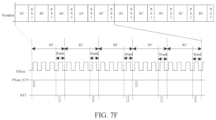
- FIG. 7 A to FIG. 7 F are driving time sequence diagrams corresponding to different image refresh frequencies provided by embodiments of the present application.
- FIG. 2 is a schematic structural diagram of a display module provided by one embodiment of the present application.
- One embodiment of the present application provides a display module.
- the display module includes a display panel 100 and a driving chip 200 .
- the display panel 100 includes a display area 100 a and a non-display area 100 b .
- the display panel 100 implements a display function in the display area 100 a .
- the non-display area 100 b is positioned at a periphery of the display area 100 a .
- the display panel 100 may further include a sensing area.
- the sensing area may be positioned in the display area 100 a or in the non-display area 100 b .
- the display panel 100 includes sensing elements disposed corresponding to the sensing regions.
- the sensing element includes a camera, a fingerprint sensor, a distance sensor, and the like.
- the display panel 100 includes a plurality of scanning lines SL, a plurality of data lines DL, a plurality of gate driving circuits, a plurality of pixel driving circuits, and a reset module.
- a plurality of the gate driving circuits are electrically connected to a plurality of the scanning lines SL for transmitting a plurality of the scanning signals to the plurality of the scanning lines SL.
- a plurality of the gate driving circuits are electrically connected between the driving chip 200 and a plurality of the scanning lines SL.
- a plurality of the gate driving circuits are positioned in the non-display area 100 b.
- the light-emitting device D includes an organic light-emitting diode, a sub-millimeter light-emitting diode, a miniature light-emitting diode, and the like.
- the light-emitting layer of the light-emitting device includes quantum dot material.
- the reset module is configured to apply a plurality of bias signals transmitted by a plurality of the data lines DL to a plurality of the first transistors T 1 in a blanking interval, to turned on the first transistors T 1 in the plurality of pixel driving circuits at the same time, to improve a problem that due to the threshold voltage shift of the first transistor T 1 under the action of a long-term bias, the driving current flowing through the light-emitting device D to be changed to accentuate a flicker problem when the display panel is driven at a low frequency.
- the reset module is electrically connected to the driving chip 200 .
- the reset module is electrically connected to the driving chip 200 through a first reset line VI 1 .
- the reset module is positioned in the non-display area 100 b.
- the blanking interval includes a vertical blanking interval and a horizontal blanking interval.
- the reset module can function within each horizontal blanking interval, or can function at several horizontal blanking intervals.
- the reset module is configured to apply a plurality of bias signals transmitted by a plurality of the data lines DL to a plurality of the first transistors T 1 within the vertical blanking interval, so that the first transistors T 1 of the plurality of pixel driving circuits are turned on at the same time to reduce power consumption while improving a flicker problem.
- the driving chip 200 is electrically connected to the display panel 100 through the flexible circuit board 300 , and the driving chip 200 outputs various control signals, so that the display panel 100 realizes display under the control of various control signals.
- the driving chip 200 includes a display driver IC (DDIC).
- FIG. 3 is a schematic diagram of a connection structure of a first gate driving circuit, a reset module, and a first scanning line provided by one embodiment of the present application.
- the plurality of scanning lines SL include a plurality of first scanning lines SL 1 , wherein an output terminal of the reset module is electrically connected to the plurality of first scanning lines SL 1 , and wherein the reset module outputs a first reset signal RST to the plurality of first scanning lines SL 1 within the blanking interval.
- the plurality of gate driving circuits include a plurality of first gate driving circuits G 1 , and the plurality of the first gate driving circuits G 1 output a plurality of first initial scanning signals according to the clock signals CK, XCK, and the power supply signals Vgh and Vgl.
- the output terminal of each of the first gate driving circuits G 1 is electrically connected to each of the first scanning lines SL 1 .
- the plurality of first scanning lines SL 1 receive the first reset signal RST when the reset module outputs the first reset signal RST.
- the plurality of first scanning lines SL 1 receive the plurality of first initial scanning signals when the plurality of first gate driving circuits G 1 output a plurality of the first initial scanning signal. Therefore, the plurality of first scanning signals transmitted in the plurality of first scanning lines SL 1 are composed of the plurality of the first initial scanning signals and the first reset signals.
- the reset module is electrically connected to the driving chip 200 through the first reset line VI 1 .
- the first reset signal RST can be directly provided by the driving chip 200 , or the first reset signal RST is generated by the reset module according to the control signal CRST output by the driving chip 200 .
- the reset module may include connecting lines electrically connected to the first reset line VI 1 and the plurality of first scanning lines SL 1 when the first reset signal RST is directly provided by the driving chip 200 .
- the first reset signal RST is simultaneously transmitted to a plurality of the first scanning lines SL 1 through the first reset line VI 1 and the connecting lines, and the first reset signal RST is applied to a plurality of the pixel driving circuits through the plurality of the first scanning lines SL 1 .
- the reset module includes at least one reset unit RU when the first reset signal RST is generated by the reset module according to the control signal CRST output by the driving chip 200 .
- the reset unit RU is electrically connected between the first reset line VI 1 and the first scanning line SL 1 .
- the reset unit RU is configured to output the first reset signal RST according to the control signal CRST output by the driving chip 200 . That is, each of the first scanning lines SL 1 can be electrically connected to one of the reset units RU, or at least two of the first scanning lines SL 1 can be electrically connected to one of the reset units RU.
- the reset unit RU is electrically connected between the first reset line VI 1 and a plurality of the first scanning lines SL 1 , so that a plurality of first scanning signals transmitted by the plurality of first scanning line SL 1 are all affected by the reset unit RU, which can save layout space and manufacturing cost.
- the reset module may also include a plurality of the reset units RU.
- Each of the reset units RU is electrically connected between the first reset line VI 1 and each of the first scanning lines SL 1 , as shown in FIG. 3 , so that a plurality of the first scanning signals transmitted by each of the first scanning lines SL 1 are affected by a corresponding reset unit RU.
- the reset unit RU includes a reset transistor TR.
- FIG. 4 is a schematic structural diagram and a time sequence diagram of a reset unit provided by one embodiment of the present application.
- PScan represents a first scanning signal output by the first scanning line SL 1 .
- a gate electrode of the reset transistor TR is electrically connected to the first reset line VI 1 , and one of a source electrode and a drain electrode of the reset transistor TR is electrically connected to the gate electrode of the reset transistor TR.
- the other of the source electrode and the drain electrode of the reset transistor TR is electrically connected to the first scanning line SL 1 .
- the reset transistor TR is configured to output the first reset signal RST according to the control signal CRST output by the driving chip 200 .
- the reset transistor TR is a P-type transistor or an N-type transistor, and an active layer of the reset transistor TR includes a silicon semiconductor or an oxide semiconductor.
- a plurality of the first gate driving circuits G 1 are arranged in cascade, as shown in FIG. 3 . That is, a start-up signal of an 1 st stage first gate driving circuit G 11 is PScan_STV, a start-up signal of an n th stage first gate driving circuit G 1 n can be supplied by output signal of an n ⁇ 1 th stage first gate driving circuit G 1 (n ⁇ 1) or an n ⁇ 2 th stage first gate driving circuit G 1 ( n ⁇ 2), where n is an integer and greater than 1.
- the display panel further includes an interlock module.
- the interlock module is electrically connected between a first node A and a second node B, or the interlock module is electrically connected between the first node A and an output terminal of the first gate driving circuit, or the interlock module is electrically connected between the second node B and the output terminal of the reset module.
- the interlock module is configured to block a path which the reset module transmits the first reset signal RST to the first gate driving circuit G 1 .
- the first node A is a connection point where the first gate driving circuit is electrically connected to a corresponding first scanning line SL 1 .
- the second node B is a connection point where the reset module is electrically connected to a corresponding first scanning line SL 1 .
- the interlocking module includes an interlocking transistor.
- a gate electrode of the interlocking transistor is electrically connected to the first reset line VI 1 .
- a source electrode and a drain electrode of the interlocking transistor are electrically connected between the first node A and the second node B, or the source electrode and the drain electrode of the interlock transistor are electrically connected between the first node A and the output terminal of the first gate driving circuit, or the source electrode and the drain electrode of the interlocking transistor are electrically connected between the second node B and the output terminal of the reset module.
- the interlock transistor is one of an N-type transistor or a P-type transistor
- the reset transistor is another one of the P-type or N-type transistor.
- the interlocking transistor is one of the N-type transistor or the P-type transistor
- a transistor of the pixel driving circuit which is electrically connected to the first scanning line SL 1 is another one of the N-type transistor or the P-type transistor, so as to ensure that a plurality of the pixel driving circuits do not interact with each other when responding to the output signals of the first gate driving circuit G 1 and the reset module.
- FIG. 5 is a schematic structural diagram of a pixel driving circuit provided by one embodiment of the present application.
- FIG. 6 is a time sequence diagram corresponding to the pixel driving circuit shown in FIG. 5 provided by one embodiment of the present application.
- the present application is described by taking a structure of the pixel driving circuit including seven transistors and one capacitor as an example. It can be understood that the pixel driving circuit is not actually limited to the form shown in FIG. 5 . “Blank” represents the blanking interval.
- each of the pixel driving circuits includes the first transistor T 1 , the second transistor T 2 , and at least one of the light-emitting devices D.
- the first transistor T 1 and the light-emitting device D are connected in series between the first voltage terminal VDD and the second voltage terminal VSS.
- one of the source electrode or the drain electrode of the first transistor T 1 is electrically connected to the first voltage terminal VDD
- the other one of the source electrode or the drain electrode of the first transistor T 1 is electrically connected to an anode of the light-emitting device D.
- a cathode of the light-emitting device D is electrically connected to the second voltage terminal VSS.
- the source electrode and the drain electrode of the second transistor T 2 are electrically connected between the first transistor T 1 and a corresponding data line DL, and the gate electrode of the second transistor T 2 is electrically connected to a corresponding first gate driving circuit G 1 through a corresponding first scanning line SL 1 .
- the second transistor T 2 is configured to transmit data signals transmitted by a plurality of data lines to the first transistor T 1 according to the first initial scanning signal output by a corresponding first gate driving circuit G 1 , to make the first transistor T 1 generates a driving current for driving the light-emitting device D to emit light according to the data signal.
- the second transistor T 2 is further configured to apply a plurality of bias signals transmitted by a plurality of the data lines to a plurality of the first transistors according to a first reset signal RST output by the reset module within the blanking interval. Therefore, the plurality of first transistors are turned on at the same time, to improve a problem that due to the threshold voltage shift of the first transistor T 1 under an action of a long-term bias, the driving current flowing through the light-emitting device D be changed, which accentuate a flicker problem when the display panel is driven at a low frequency
- the second transistor T 2 is a P-type transistor or an N-type transistor.
- An active layer of the second transistor T 2 includes a silicon semiconductor or an oxide semiconductor.
- one of the source electrode and the drain electrode of the second transistor T 2 is electrically connected to the one of the source electrode or the drain electrode of the first transistor T 1 that is electrically connected to the first voltage terminal VDD, or one of the source electrode or the drain electrode of the second transistor T 2 is electrically connected to the one of the source electrode or the drain electrode of the first transistor T 1 that is electrically connected to the anode of the light-emitting device D.
- the other one of the source electrode or the drain electrode of the two transistors T 2 is electrically connected to a corresponding data line DL.
- the source electrode of the second transistor T 2 is electrically connected to a corresponding data line DL, and the drain electrode of the second transistor T 2 is electrically connected to one of the source electrode or the drain electrode of the first transistor T 1 that is electrically connected to the first voltage terminal VDD.
- the second transistor T 2 is a P-type transistor as an example for description.
- the reset module outputs the first reset signal RST to make the plurality of the first scanning signals are valid for the second transistors T 2 in the plurality of pixel driving circuits.
- the plurality of the first scanning signals are simultaneously transmitted to the gate electrodes of the second transistors T 2 in the plurality of pixel driving circuits through the plurality of the first scanning lines SL 1 , to make the plurality of the second transistors T 2 are simultaneously turned on, a plurality of the bias signals transmitted by the plurality of the data lines DL are applied to the one of the source electrode or the drain electrode of the plurality of the first transistors T 1 that is electrically connected to the data line DL, the plurality of first transistors T 1 are biased and turned on at the same time, thereby shortening the biasing time of the first transistors T 1 in the previous stage while compensating the threshold voltage bias of the first transistors T 1 .
- a plurality of the offset signals transmitted by the plurality of the data lines DL may be the same or different.
- the voltage values of the plurality of the bias signals may be determined according to a hysteresis effect characteristic of a corresponding first transistor T 1 .
- a voltage value of the bias signal may be less than or equal to the highest voltage VGMP of the positive grayscale voltages.
- the bias signal is a DC voltage signal.
- An action time of the bias signal can be set according to actual requirements.
- each of the pixel driving circuits further includes a third transistor T 3 , a source electrode and a drain electrode of the third transistor T 3 are electrically connected between the second reset line V 12 and an anode of the light-emitting device D.
- a gate electrode of the third transistor T 3 is electrically connected to a corresponding first scanning line SL 1 .
- the third transistor T 3 is configured to apply the second reset signal transmitted by the second reset line V 12 to the anode of the light-emitting device D according to a corresponding first scanning signal, and reset an anode voltage of the light-emitting device D.
- the reset module passes through a plurality of the first scanning line SL 1 simultaneously transmits a first reset signal RST to the gate electrode of the third transistor T 3 in each of the pixel driving circuits, so that the third transistor T 3 in each of the pixel driving circuits also configured to apply a second reset signal transmitted by the second reset line V 12 to the anodes of the plurality of light-emitting devices D according to the first reset signal RST, to make the anode voltages of the plurality of light-emitting devices D are reset within the blanking interval, so that the plurality of light-emitting devices D can have better display quality when emitting light.
- the gate electrode of the second transistor T 2 and the gate electrode of the third transistor T 3 may be electrically connected to the first scanning line SL 1 at the same stage (for example, the gate electrode of the second transistor T 2 and the gate electrode of the third transistor T 3 are electrically connected to an n th stage first scanning line SL 1 ( n ); or the gate electrode of the second transistor T 2 and the gate electrode of the third transistor T 3 are electrically connected to different stage first scanning line SL 1 (For example, the gate electrode of the second transistor T 2 is electrically connected to the n ⁇ 1 th stage first scanning line SL 1 ( n ⁇ 1), the gate electrode of the third transistor T 3 is electrically connected to an n th stage first scanning line SL 1 ( n )).
- n is an integer and greater than 1.
- the n th stage first scanning line SL 1 ( n ) transmits an n th stage first scanning signal PScan(n).
- the third transistor T 3 is a P-type transistor or an N-type transistor.
- An active layer of the third transistor T 3 includes an oxide semiconductor or a silicon semiconductor.
- the pixel driving circuit further includes a fourth transistor T 4 and a fifth transistor T 5 .
- the source electrode and the drain electrode of the fourth transistor T 4 are electrically connected between the gate electrode of the first transistor T 1 and one of the source electrode or the drain electrode of the first transistor T 1 that is electrically connected to the light-emitting device D.
- the fourth transistor T 4 is configured to compensate the threshold voltage of the first transistor T 1 .
- the source electrode and the drain electrode of the fifth transistor T 5 are electrically connected between the third reset line VI 3 and the gate electrode of the first transistor T 1 .
- the fifth transistor T 5 is configured to transmit the third reset signal transmitted by the third reset line VI 3 to the gate electrode of the first transistor T 1 to initialize the gate voltage of the first transistor T 1 .
- the first scanning signal includes information of the first reset signal RST
- the first scanning signal is used to control the turn-on and turn-off of the fourth transistor T 4 and the fifth transistor T 5 , all the pixel driving circuit may not be able to accurately realize the display of the display panel 100 . Therefore, the turn-on and turn-off control of the fourth transistor T 4 and the fifth transistor T 5 requires a corresponding gate driving circuit independently.
- the plurality of gate driving circuits further include a plurality of second gate driving circuits G 2 .
- the plurality of scanning lines SL further include a plurality of second scanning lines SL 2 .
- the plurality of second scanning lines SL 2 transmit a plurality of second scanning signals.
- the plurality of the second gate driving circuits G 2 are electrically connected to the plurality of the second scanning lines SL 2 .
- the gate electrode of the fourth transistor T 4 is electrically connected to a corresponding second scanning line SL 2 , so that the fourth transistor T 4 compensates the threshold voltage of the first transistor T 1 according to the corresponding second scanning signal.
- a gate electrode of the fifth transistor T 5 is electrically connected to the corresponding second scanning line SL 2 , so that the fifth transistor T 5 initializes the gate electrode of the first transistor T 1 according to the corresponding second scanning signal.
- the gate electrode of the fourth transistor T 4 and the gate electrode of the fifth transistor T 5 are electrically connected to different stage scanning lines SL 2 .
- the gate electrode of the fourth transistor T 4 is electrically connected to an n th stage second scanning line SL 2 ( n )
- the gate electrode of the fifth transistor T 5 is electrically connected to an n ⁇ 1 th stage second scanning line SL 2 ( n ⁇ 1).
- n is an integer and greater than 1.
- the n ⁇ 1 th stage second scanning line SL 2 ( n ⁇ 1) transmits an n ⁇ 1 th stage second scanning signal NScan(n ⁇ 1).
- the n th stage second scanning line SL 2 ( n ) transmits an n th stage second scanning signal NScan(n).
- the fourth transistor T 4 and the second transistor T 2 need to be simultaneously turned on in a certain period of time. Therefore, when the second scanning signal transmitted by the second scanning line SL 2 electrically connected to the fourth transistor T 4 is valid, the first scan signal transmitted by the first scanning line SL 1 electrically connected to the gate electrode of the second transistor T 2 is also valid, so as to ensure a normal writing of the data signal transmitted by the data line DL.
- a plurality of the second gate driving circuits are arranged in cascade.
- the second scanning signal transmitted by each of the second scanning lines SL 2 has a second frequency, wherein the second frequency is less than the first frequency.
- the first frequency is an integer multiple of the second frequency.
- the second frequency is 120 Hz, 60 Hz, 30 Hz, 24 Hz, 15 Hz, 1 Hz, and the like.
- the active layers of the fourth transistor T 4 and the fifth transistor T 5 include oxide semiconductors, so as to utilize the low leakage characteristics of oxide transistors compared with silicon transistors to reduce a leakage of the gate electrode of the first transistor T 1 to the third reset line VI 3 and one of the source electrode and the drain electrode of the first transistor T 1 .
- the P-type transistors whose active layers include oxide semiconductors are restricted by the current P-type oxide materials, a manufacturing of high-quality P-type transistors whose active layers include oxide semiconductors are also restricted. Therefore, based on the prior art, the fourth transistor T 4 and the fifth transistor T 5 are N-type transistors when the active layers of the fourth transistor T 4 and the fifth transistor T 5 include oxide semiconductors.
- the transistors whose active layers include oxide semiconductors in the present application can also be P-type transistors.
- the display panel further includes a plurality of light-emitting control lines EL and a plurality of light-emitting control driving circuits GE.
- a plurality of the light-emitting control driving circuits GE are electrically connected to a plurality of the light-emitting control lines EL.
- a plurality of the light-emitting control driving circuits GE output a plurality of light-emitting control signals.
- a plurality of the light-emitting control driving circuits GE are positioned in the non-display area 100 b .
- the plurality of the light-emitting control driving circuits GE are arranged in cascade.
- the pixel driving circuit further includes a sixth transistor T 6 and a seventh transistor T 7 .
- a source electrode and a drain electrode of the sixth transistor T 6 are electrically connected between the first voltage terminal VDD and one of the source electrode or the drain electrode of the first transistor T 1 .
- a source electrode and a drain electrode of the seventh transistor T 7 are electrically connected between the anode of the light-emitting device D and the other one of the source electrode or the drain electrode of the first transistor T 1 .
- a gate electrode of the seventh transistor T 7 and a gate electrode of the sixth transistor T 6 is electrically connected to a corresponding light-emitting control line EL.
- the gate electrode of the seventh transistor T 7 and the gate electrode of the sixth transistor T 6 are electrically connected to a same level of the light-emitting control line EL (for example, the gate electrode of the seventh transistor T 7 and the gate electrode of the sixth transistor T 6 are electrically connected to an n th stage light-emitting control line EL(n)), or the gate electrode of the seventh transistor T 7 and the gate electrode of sixth transistor T 6 are electrically connected to different stages light-emitting control lines EL.
- the n th stage light-emitting control line EL(n) transmits an n th stage light-emitting control signal EM(n).
- the light-emitting control signal transmitted by each of the light-emitting control lines EL has a third frequency, wherein the first frequency is less than or equal to the third frequency.
- the third frequency is an integer multiple of the first frequency.
- the third frequency can be 480 Hz, 360 Hz, 240 Hz, 120 Hz, 60 Hz, 30 Hz, 24 Hz, 15 Hz, 1 Hz, and the like.
- the sixth transistor T 6 and the seventh transistor T 7 are P-type transistors or N-type transistors, and the active layers of the sixth transistor T 6 and the seventh transistor T 7 include oxide semiconductors or silicon semiconductors.
- the reset signal RST is valid during an inactive period of the light-emitting control signal EM.
- the pixel driving circuit further includes a first capacitor C 1 .
- the first capacitor C 1 is connected in series between the first voltage terminal VDD and the gate electrode of the first transistor T 1 .
- the pixel driving circuit further includes a second capacitor.
- the second capacitor is connected in series between the gate electrode of the first transistor T 1 and the gate electrode of the second transistor T 2 .
- a plurality of the gate driving circuits and the plurality of the light-emitting control driving circuits GE may adopt the currently circuit structure, and details are not described herein again.
- FIG. 7 A to FIG. 7 F are driving time sequence diagrams corresponding to different image refresh frequencies provided by the embodiments of the present application. Since the reset module outputs the first reset signal RST in the blanking interval, the first frequency of the first reset signal RST is greater than or equal to the image refresh frequency of the display panel 100 .
- the image refresh frequency of the display panel 100 may be 120 Hz, 60 Hz, 120 Hz, 30 Hz, 24 Hz, 15 Hz, 1 Hz, or variable frequency.
- the first frequency is an integer multiple of the image refresh frequency, so that the first transistor T 1 can achieve bias conduction in more frequency under the action of the first reset signal RST, thereby improving the shift of the threshold voltage of the first transistor T 1 due to the hysteresis effect, and improving a flicker problem.
- the first frequency can be 480 Hz, 360 Hz, 240 Hz, 120 Hz, 60 Hz, 30 Hz, 24 Hz, 15 Hz, 1 Hz, and the like.
- the display panel includes a display frame DF and a reset frame RF during display when the first frequency is greater than the image refresh frequency. According to a difference between the first frequency and the image refresh frequency, numbers of the reset frames RF included in the two display frames DF are different. Specifically, if the first frequency is M times the image refresh frequency, a number ratio of the display frame DF to the reset frame RF is 1:(M ⁇ 1).
- the reset module outputs the first reset signal RST in the vertical blanking interval, the first transistor T 1 , the second transistor T 2 , the third transistor T 3 , the sixth transistor T 6 and the seven transistors T 7 are P-type transistors, the fourth transistor T 4 and the fifth transistor T 5 are N-type transistors, the gate electrode of the second transistor T 2 and the gate electrode of the third transistor T 3 are electrically connected to the n th stage first scanning line SL 1 ( n ), the gate electrode of the fourth transistor T 4 is electrically connected to the n th stage second scanning line SL 2 ( n ), the gate electrode of the fifth transistor T 5 is electrically connected to the n ⁇ 1 th stage second scanning line SL 2 ( n ⁇ 1), the gate electrode of the sixth transistor and the gate electrode of the seventh transistor T 7 are electrically connected to the n th stage light-emitting control line EL(n), the reset module outputs the first reset signal RST in the vertical blanking interval,
- a frequency of a start-up signal PScan_STV of an 1st stage first gate driving circuit G 11 is also 120 Hz.
- the plurality of cascaded first gate driving circuits G 1 sequentially output a plurality of the first initial scanning signals, the plurality of the first initial scanning signals are transmitted to a plurality of the pixel driving circuits through the plurality of the first scanning lines SL 1 , and the plurality of the pixel driving circuits control the corresponding light-emitting devices D to emit light according to the plurality of first initial scanning signal, the plurality of second scanning signals, and the plurality of the light-emitting control signal.
- Each pixel driving circuit includes an initialization stage, a data writing and compensation stage, a light-emitting stage, and a biasing stage.
- the fifth transistor T 5 is turned on in response to an n ⁇ 1 th second scanning signal NScan(n ⁇ 1) transmitted by an n ⁇ 1 th stage second scanning line SL 2 ( n ⁇ 1), a third reset signal transmitted by the third reset line VI 3 is transmitted to the gate electrode of the first transistor T 1 to initialize a gate voltage of the first transistor T 1 .
- the second transistor T 2 and the third transistor T 3 are turned on respond to the n th stage first scanning signal PScan(n) transmitted by the n th stage first scanning line SL 1 ( n ), the fourth transistor T 4 is turned on in response to the n th stage second scanning signal NScan(n) transmitted by the n th stage second scanning line SL 2 ( n ), the data signal transmitted by the data line DL with the function of compensating the threshold voltage of the first transistor T 1 is transmitted to the gate electrode of the first transistor T 1 through the second transistor T 2 , the first transistor T 1 , and the fourth transistor T 4 .
- the sixth transistor T 6 and the seventh transistor T 7 are turned on in response to the n th stage light-emitting control signal EM(n) transmitted by the n th light-emitting control line EL(n), the transistor T 1 generates a driving current for driving the light-emitting device D to emit light according to the data signal.
- the reset module outputs the first reset signal RST, the second transistors T 2 and the third transistors T 3 in the plurality of pixel driving circuits respond to a corresponding first scanning signal transmitted by the first scanning line SL 1 , causes the second transistors T 2 and the third transistors T 3 in the plurality of pixel driving circuits to be turned on at the same time, and the plurality of the data lines DL simultaneously transmit a plurality of the bias signal, to make the plurality of first transistors T 1 turned on at the same time.
- the second reset signal transmitted by the second reset line VI 2 is transmitted to the anodes of the light-emitting devices D through the third transistors T 3 to initialize the anode voltage of the light-emitting devices D.
- the 1st stage start-up signal PScan_STV of the first gate driving circuit G 11 is valid again, and a plurality of the pixel driving circuits go through the initialization stage, the data writing and compensation stage, the light-emitting stage, the biasing stage cycled in sequence to realize the display function of the display panel.
- the full-screen reset of the display panel can be realized only through one of the first reset signals RST, and the full-screen reset of the display panel is hidden within the blanking interval, which can improve a flicker problem and reduce a power consumption of the display module.
- the first frequency may be greater than or equal to the image refresh frequency when the display module is driven in a variable frequency (Random). That is, it will use a higher frequency to refresh the image when the driving chip 200 detects the display content needs to be updated, and the driving chip 200 will gradually reduce the frequency of the first scanning signal and the second scanning signal when the display content unnecessary to be updated. Therefore, the display panel includes the display frame DF and the reset frame RF during display when the display module adopts the variable frequency driving or the first frequency is greater than the image refresh frequency.
- the display module is driven at a fixed frequency, and the first frequency is greater than the image refresh frequency as an example, to explain the operating principle of the display module.
- the image refresh frequency and a frequency of the start-up signal PScan_STV of the 1st stage first gate driving circuit G 11 are 60 Hz, and the first frequency is 120 Hz as example.
- the first frequency is twice the image refresh frequency, and a ratio of the number of the display frame DF to the reset frame RF is 1:1. That is, one of the display frames DF is followed by one of the reset frames RF, one of the display frames DF immediately after the reset frame RF, and the display is performed cyclically in sequence.
- the plurality of cascaded first gate driving circuits G 1 sequentially output a plurality of the first initial scanning signals, the plurality of the first initial scanning signals are transmitted to the plurality of the pixel driving circuits through the plurality of the first scanning lines SL 1 , and the plurality of the pixel driving circuits control corresponding light-emitting devices D to emit light according to a plurality of the first initial scan signals, a plurality of the second scanning signals, and a plurality of the light-emitting control signal EM.
- Each of the pixel drive circuits undergoes the initialization stage, the data writing and compensation stage, the light-emitting stage, and the biasing stage.
- the display panel maintains the display content of the display frame RF until the blanking interval.
- the second transistor T 2 in the pixel driving circuit applies a plurality of the bias signals output by the plurality of data lines DL to the first transistor according to the first reset signal RST output by the reset module T 1 , to turn on the plurality of first transistors T 1 ; at the same time, the second reset signal output by the second reset line VI 2 is transmitted to the anodes of the plurality of light-emitting devices D through the third transistor T 3 , to initialize the anode voltage of light-emitting device D.
- the start-up signal PScan_STV of the 1st stage first gate driving circuit G 11 is valid again, and the plurality of pixel driving circuits go through the initialization stage, the data writing and compensation stage, the light-emitting stage, the biasing stage, and then enter the reset frame RF again, and cycle in turn.
- the image refresh frequency and the frequency of the start-up signal PScan_STV of the 1st stage first gate driving circuit G 11 are 30 Hz, and the first frequency is 120 Hz as example.
- the first frequency is 4 times the image refresh frequency, and a ratio of the number of the display frame DF to the reset frame RF is 1:3. That is, one of the display frames DF is immediately followed by three of the reset frames RF, and then the reset frame RF is immediately followed by one of the display frames DF, and then three of the display frames RF are immediately followed by the display frame DF, and the display is performed cyclically in sequence.
- the image refresh frequency and the frequency of the start-up signal PScan_STV of the 1st stage first gate driving circuit G 11 are 24 Hz, and the first frequency of 120 Hz as example.
- the first frequency is 5 times the image refresh frequency, and a ratio of the number of the display frame DF to the reset frame RF is 1:4. That is, one of the display frames DF is immediately followed by four of the reset frame RF, and then the reset frame RF is immediately followed by one display frame DF, and four reset frames RF are immediately followed by the display frame DF, and the display is performed cyclically in sequence.
- the image refresh frequency and the frequency of the start-up signal PScan_STV of the 1st stage first gate driving circuit G 11 are 15 Hz, and the first frequency is 120 Hz as example.
- the first frequency is 8 times the image refresh frequency, and a ratio of the number of the display frame DF to the reset frame RF is 1:7. That is, one display frame DF is followed by seven reset frames RF, and then seven reset frames RF are immediately followed by one display frame DF, and then seven reset frames RF are immediately followed by the display frame DF, and the display is performed cyclically in sequence.
- the driving chip 200 when the display module is driven in a variable frequency (Random), if the driving chip 200 detects that the display content needs to be updated, the driving chip 200 output the start-up signal PScan_STV to the 1 st stage first gate driving circuit G 11 , so that a display stage of the display panel enters the display frame DF; when the driving chip 200 detects that the display content unnecessary to be updated, the driving chip 200 will gradually reduce the frequency of the start-up signal PScan_STV output to the 1st stage first gate driving circuit G 11 , and gradually reduce the frequency of the start-up signal output to an 1 st stage second gate driving circuit, so that he frequencies of the first initial scanning signal output by the first gate driving circuit and the second scanning signal output by the second gate driving circuit are gradually reduced, so that unequal number of the reset frames RF are inserted between two adjacent display frames DF.
- a variable frequency Random
- An operating principle of the display frame DF and the reset frame RF is similar to the operating principle corresponding to the driving frequency shown in FIG. 7 B when the display module adopts the driving frequency corresponding to FIG. 7 C to FIG. 7 F , and will not be repeated here.
- FIG. 7 A to FIG. 7 F are all described by taking the blanking interval as a vertical blanking interval as an example, when the blanking interval is a horizontal blanking interval, the operating principle of the display module is similar to the operating principle when the blanking interval is a vertical blanking interval, and will not be repeated here.
- the display panel further includes polarizers, touch electrodes and other parts not shown.
- the display panel includes a backlight driving circuit.
- the backlight driving circuit includes the first transistor T 1 and the light-emitting device D.
- the backlight driving circuit can improve the threshold voltage shift of the first transistor T 1 under a long-time bias action through the reset module.
- the present application further provides a display device comprising any of the above-mentioned display panels or any of the above-mentioned display modules.
- the display device includes a movable display device such as a notebook computer, a mobile phone, etc., a fixed terminal such as a desktop computer, a TV, etc., a measurement device such as a sports bracelet, a thermometer, etc., and the like.
- a movable display device such as a notebook computer, a mobile phone, etc.
- a fixed terminal such as a desktop computer, a TV, etc.
- a measurement device such as a sports bracelet, a thermometer, etc., and the like.
Landscapes
- Engineering & Computer Science (AREA)
- Physics & Mathematics (AREA)
- Computer Hardware Design (AREA)
- General Physics & Mathematics (AREA)
- Theoretical Computer Science (AREA)
- Microelectronics & Electronic Packaging (AREA)
- Geometry (AREA)
- Control Of Indicators Other Than Cathode Ray Tubes (AREA)
Abstract
Description
Claims (20)
Applications Claiming Priority (3)
| Application Number | Priority Date | Filing Date | Title |
|---|---|---|---|
| CN202210591659.9 | 2022-05-27 | ||
| CN202210591658.9A CN114863872A (en) | 2022-05-27 | 2022-05-27 | Display module and display device |
| PCT/CN2022/096877 WO2023226076A1 (en) | 2022-05-27 | 2022-06-02 | Display module and display apparatus |
Publications (2)
| Publication Number | Publication Date |
|---|---|
| US20230397459A1 US20230397459A1 (en) | 2023-12-07 |
| US12342694B2 true US12342694B2 (en) | 2025-06-24 |
Family
ID=82641070
Family Applications (1)
| Application Number | Title | Priority Date | Filing Date |
|---|---|---|---|
| US17/789,550 Active 2043-12-02 US12342694B2 (en) | 2022-05-27 | 2022-06-02 | Display module and display device |
Country Status (3)
| Country | Link |
|---|---|
| US (1) | US12342694B2 (en) |
| CN (1) | CN114863872A (en) |
| WO (1) | WO2023226076A1 (en) |
Families Citing this family (3)
| Publication number | Priority date | Publication date | Assignee | Title |
|---|---|---|---|---|
| CN115565494B (en) * | 2022-09-29 | 2024-07-23 | 武汉天马微电子有限公司 | Display panel and display device |
| CN115734676B (en) * | 2022-11-15 | 2025-12-02 | 武汉华星光电半导体显示技术有限公司 | Display panel |
| CN118506748A (en) * | 2024-05-23 | 2024-08-16 | 绵阳惠科光电科技有限公司 | Display panel, display driving method and display device |
Citations (19)
| Publication number | Priority date | Publication date | Assignee | Title |
|---|---|---|---|---|
| CN103778896A (en) | 2014-01-20 | 2014-05-07 | 深圳市华星光电技术有限公司 | Integrated gate drive circuit and display panel with same |
| US20160124491A1 (en) | 2014-10-29 | 2016-05-05 | Samsung Display Co., Ltd. | Display apparatus and method of driving the same |
| CN106548748A (en) | 2017-02-06 | 2017-03-29 | 京东方科技集团股份有限公司 | Clock signal transmission circuit and driving method, gate driver circuit, display device |
| CN107452334A (en) | 2017-08-30 | 2017-12-08 | 京东方科技集团股份有限公司 | Image element circuit and its driving method, display base plate and its driving method, display device |
| CN108597441A (en) | 2017-03-14 | 2018-09-28 | 鸿富锦精密工业(深圳)有限公司 | Pixel driving circuit and display device with pixel driving circuit |
| US20190057664A1 (en) * | 2017-08-16 | 2019-02-21 | Shenzhen China Star Optoelectronics Semiconductor Display Technology Co., Ltd. | Goa cicuit and lcd device |
| CN109410832A (en) | 2017-08-17 | 2019-03-01 | 苹果公司 | Electronic device with low refresh rate display pixels |
| CN109935212A (en) | 2019-02-28 | 2019-06-25 | 合肥京东方卓印科技有限公司 | Display panel, display device and driving method |
| CN110148390A (en) | 2019-06-24 | 2019-08-20 | 京东方科技集团股份有限公司 | Array substrate, its driving method and display device |
| CN111383594A (en) | 2018-12-27 | 2020-07-07 | 三星显示有限公司 | Drive controller and display device including the same |
| CN111429837A (en) | 2019-01-09 | 2020-07-17 | 三星显示有限公司 | display device |
| CN111435587A (en) | 2019-01-11 | 2020-07-21 | 苹果公司 | Electronic display with hybrid in-pixel and external compensation |
| CN111754922A (en) | 2020-07-24 | 2020-10-09 | 武汉华星光电半导体显示技术有限公司 | Pixel driving circuit and driving method thereof, and display panel |
| CN111798789A (en) | 2020-07-16 | 2020-10-20 | 昆山国显光电有限公司 | Pixel circuit, driving method thereof and display panel |
| CN112201204A (en) | 2019-07-08 | 2021-01-08 | 苹果公司 | Adaptive park voltage tuning with dynamic supply voltage to optimize front-of-screen display |
| CN113140179A (en) | 2021-04-12 | 2021-07-20 | 武汉华星光电半导体显示技术有限公司 | Pixel driving circuit, driving method thereof and display panel |
| CN113674668A (en) | 2021-08-16 | 2021-11-19 | 武汉华星光电半导体显示技术有限公司 | Pixel driving circuit and display panel |
| CN114120881A (en) | 2021-12-13 | 2022-03-01 | 武汉华星光电半导体显示技术有限公司 | Pixel circuit, display device and driving method thereof |
| CN114360441A (en) | 2020-09-28 | 2022-04-15 | 三星显示有限公司 | Variable frequency display device |
Family Cites Families (3)
| Publication number | Priority date | Publication date | Assignee | Title |
|---|---|---|---|---|
| CN101567160B (en) * | 2009-05-31 | 2011-02-09 | 上海广电光电子有限公司 | GIP type liquid crystal display panel and detecting method thereof |
| CN107068033B (en) * | 2017-01-25 | 2020-12-08 | 京东方科技集团股份有限公司 | Shift register unit, gate driving circuit, testing method and display device |
| CN112992024B (en) * | 2021-02-08 | 2022-10-14 | 昆山龙腾光电股份有限公司 | Display device and detection method thereof |
-
2022
- 2022-05-27 CN CN202210591658.9A patent/CN114863872A/en active Pending
- 2022-06-02 WO PCT/CN2022/096877 patent/WO2023226076A1/en not_active Ceased
- 2022-06-02 US US17/789,550 patent/US12342694B2/en active Active
Patent Citations (20)
| Publication number | Priority date | Publication date | Assignee | Title |
|---|---|---|---|---|
| CN103778896A (en) | 2014-01-20 | 2014-05-07 | 深圳市华星光电技术有限公司 | Integrated gate drive circuit and display panel with same |
| US20160124491A1 (en) | 2014-10-29 | 2016-05-05 | Samsung Display Co., Ltd. | Display apparatus and method of driving the same |
| CN106548748A (en) | 2017-02-06 | 2017-03-29 | 京东方科技集团股份有限公司 | Clock signal transmission circuit and driving method, gate driver circuit, display device |
| CN108597441A (en) | 2017-03-14 | 2018-09-28 | 鸿富锦精密工业(深圳)有限公司 | Pixel driving circuit and display device with pixel driving circuit |
| US20190057664A1 (en) * | 2017-08-16 | 2019-02-21 | Shenzhen China Star Optoelectronics Semiconductor Display Technology Co., Ltd. | Goa cicuit and lcd device |
| CN109410832A (en) | 2017-08-17 | 2019-03-01 | 苹果公司 | Electronic device with low refresh rate display pixels |
| CN107452334A (en) | 2017-08-30 | 2017-12-08 | 京东方科技集团股份有限公司 | Image element circuit and its driving method, display base plate and its driving method, display device |
| CN111383594A (en) | 2018-12-27 | 2020-07-07 | 三星显示有限公司 | Drive controller and display device including the same |
| CN111429837A (en) | 2019-01-09 | 2020-07-17 | 三星显示有限公司 | display device |
| CN111435587A (en) | 2019-01-11 | 2020-07-21 | 苹果公司 | Electronic display with hybrid in-pixel and external compensation |
| CN109935212A (en) | 2019-02-28 | 2019-06-25 | 合肥京东方卓印科技有限公司 | Display panel, display device and driving method |
| CN110148390A (en) | 2019-06-24 | 2019-08-20 | 京东方科技集团股份有限公司 | Array substrate, its driving method and display device |
| CN112201204A (en) | 2019-07-08 | 2021-01-08 | 苹果公司 | Adaptive park voltage tuning with dynamic supply voltage to optimize front-of-screen display |
| CN111798789A (en) | 2020-07-16 | 2020-10-20 | 昆山国显光电有限公司 | Pixel circuit, driving method thereof and display panel |
| CN111754922A (en) | 2020-07-24 | 2020-10-09 | 武汉华星光电半导体显示技术有限公司 | Pixel driving circuit and driving method thereof, and display panel |
| CN212624745U (en) | 2020-07-24 | 2021-02-26 | 武汉华星光电半导体显示技术有限公司 | Pixel drive circuit and display panel |
| CN114360441A (en) | 2020-09-28 | 2022-04-15 | 三星显示有限公司 | Variable frequency display device |
| CN113140179A (en) | 2021-04-12 | 2021-07-20 | 武汉华星光电半导体显示技术有限公司 | Pixel driving circuit, driving method thereof and display panel |
| CN113674668A (en) | 2021-08-16 | 2021-11-19 | 武汉华星光电半导体显示技术有限公司 | Pixel driving circuit and display panel |
| CN114120881A (en) | 2021-12-13 | 2022-03-01 | 武汉华星光电半导体显示技术有限公司 | Pixel circuit, display device and driving method thereof |
Non-Patent Citations (5)
| Title |
|---|
| Chinese Office Action issued in corresponding Chinese Patent Application No. 202210591658.9 dated Aug. 28, 2023, pp. 1-9. |
| Chinese Office Action issued in corresponding Chinese Patent Application No. 202210591658.9 dated Jun. 6, 2023, pp. 1-8. |
| Chinese Office Action issued in corresponding Chinese Patent Application No. 202210591658.9 dated Mar. 9, 2023, pp. 1-9. |
| International Search Report in International application No. PCT/CN2022/096877,mailed on Dec. 21, 2022. |
| Written Opinion of the International Search Authority in International application No. PCT/CN2022/096877,mailed on Dec. 21, 2022. |
Also Published As
| Publication number | Publication date |
|---|---|
| CN114863872A (en) | 2022-08-05 |
| WO2023226076A1 (en) | 2023-11-30 |
| US20230397459A1 (en) | 2023-12-07 |
Similar Documents
| Publication | Publication Date | Title |
|---|---|---|
| US11854509B2 (en) | Display substrate and driving method conducive to reduce total number of gate scan lines narrowing bezel of display substate | |
| US10242620B2 (en) | Pixel circuit, method for driving the same, display panel, and display device | |
| CN112992070B (en) | Pixel circuit, driving method thereof, display panel and display device | |
| US11763744B2 (en) | Pixel driving circuit and method for controlling the same, and display apparatus | |
| CN111599308B (en) | Display device, control method thereof and electronic equipment | |
| US12342694B2 (en) | Display module and display device | |
| US20250046251A1 (en) | Display control method of display panel, display module, and display device | |
| US11741896B2 (en) | Pixel driving circuit, display apparatus, and pixel driving method | |
| US20220301510A1 (en) | Shift register and control method therefor, gate driving circuit, and display panel | |
| CN107610640A (en) | A kind of array base palte and driving method, display panel and display device | |
| US12542104B2 (en) | Display substrate configured with different drive modes, driving method thereof, and display apparatus | |
| CN114766048B (en) | Pixel circuit, driving method, display panel, display device | |
| US12033576B2 (en) | Display panel and drive method therefor | |
| WO2025066638A1 (en) | Pixel circuit and driving method therefor, and display panel and display apparatus | |
| KR20230165953A (en) | Display device | |
| US20220051613A1 (en) | Pixel circuit, display panel, display apparatus and control method thereof | |
| US20240021154A1 (en) | Driving circuit and display panel | |
| US11568797B2 (en) | Light-emitting driving circuit and driving method thereof, and light-emitting apparatus | |
| WO2025001587A9 (en) | Pixel circuit and driving method therefor, display panel, and display device | |
| US12159568B2 (en) | Pixel driving circuit and driving method thereof, and display panel | |
| US12260824B2 (en) | Pixel driving circuit and display panel | |
| US12236889B2 (en) | Display substrate and display device | |
| US12315430B2 (en) | Pixel circuit, drive method therefor, display substrate, and display device | |
| US20240346980A1 (en) | Display panel, driving method, and display device |
Legal Events
| Date | Code | Title | Description |
|---|---|---|---|
| AS | Assignment |
Owner name: WUHAN CHINA STAR OPTOELECTRONICS SEMICONDUCTOR DISPLAY TECHNOLOGY CO., LTD., CHINA Free format text: ASSIGNMENT OF ASSIGNORS INTEREST;ASSIGNOR:ZENG, MIAN;REEL/FRAME:060331/0889 Effective date: 20220325 |
|
| FEPP | Fee payment procedure |
Free format text: ENTITY STATUS SET TO UNDISCOUNTED (ORIGINAL EVENT CODE: BIG.); ENTITY STATUS OF PATENT OWNER: LARGE ENTITY |
|
| STPP | Information on status: patent application and granting procedure in general |
Free format text: DOCKETED NEW CASE - READY FOR EXAMINATION |
|
| STPP | Information on status: patent application and granting procedure in general |
Free format text: NOTICE OF ALLOWANCE MAILED -- APPLICATION RECEIVED IN OFFICE OF PUBLICATIONS |
|
| STPP | Information on status: patent application and granting procedure in general |
Free format text: AWAITING TC RESP., ISSUE FEE NOT PAID |
|
| STPP | Information on status: patent application and granting procedure in general |
Free format text: NOTICE OF ALLOWANCE MAILED -- APPLICATION RECEIVED IN OFFICE OF PUBLICATIONS |
|
| AS | Assignment |
Owner name: WUHAN CHINA STAR OPTOELECTRONICS SEMICONDUCTOR DISPLAY TECHNOLOGY CO., LTD., CHINA Free format text: ASSIGNMENT OF ASSIGNORS INTEREST;ASSIGNOR:SUN, LIANG;REEL/FRAME:071192/0563 Effective date: 20220328 |
|
| STCF | Information on status: patent grant |
Free format text: PATENTED CASE |