US12339639B2 - Controller, machine tool, calculation method, and non-transitory computer readable storage medium - Google Patents
Controller, machine tool, calculation method, and non-transitory computer readable storage medium Download PDFInfo
- Publication number
- US12339639B2 US12339639B2 US17/680,294 US202217680294A US12339639B2 US 12339639 B2 US12339639 B2 US 12339639B2 US 202217680294 A US202217680294 A US 202217680294A US 12339639 B2 US12339639 B2 US 12339639B2
- Authority
- US
- United States
- Prior art keywords
- data
- learning
- machining
- dimension
- machined
- Prior art date
- Legal status (The legal status is an assumption and is not a legal conclusion. Google has not performed a legal analysis and makes no representation as to the accuracy of the status listed.)
- Active, expires
Links
Images




Classifications
-
- G—PHYSICS
- G05—CONTROLLING; REGULATING
- G05B—CONTROL OR REGULATING SYSTEMS IN GENERAL; FUNCTIONAL ELEMENTS OF SUCH SYSTEMS; MONITORING OR TESTING ARRANGEMENTS FOR SUCH SYSTEMS OR ELEMENTS
- G05B19/00—Program-control systems
- G05B19/02—Program-control systems electric
- G05B19/18—Numerical control [NC], i.e. automatically operating machines, in particular machine tools, e.g. in a manufacturing environment, so as to execute positioning, movement or co-ordinated operations by means of program data in numerical form
- G05B19/408—Numerical control [NC], i.e. automatically operating machines, in particular machine tools, e.g. in a manufacturing environment, so as to execute positioning, movement or co-ordinated operations by means of program data in numerical form characterised by data handling or data format, e.g. reading, buffering or conversion of data
- G05B19/4083—Adapting program, configuration
-
- B—PERFORMING OPERATIONS; TRANSPORTING
- B23—MACHINE TOOLS; METAL-WORKING NOT OTHERWISE PROVIDED FOR
- B23Q—DETAILS, COMPONENTS, OR ACCESSORIES FOR MACHINE TOOLS, e.g. ARRANGEMENTS FOR COPYING OR CONTROLLING; MACHINE TOOLS IN GENERAL CHARACTERISED BY THE CONSTRUCTION OF PARTICULAR DETAILS OR COMPONENTS; COMBINATIONS OR ASSOCIATIONS OF METAL-WORKING MACHINES, NOT DIRECTED TO A PARTICULAR RESULT
- B23Q15/00—Automatic control or regulation of feed movement, cutting velocity or position of tool or work
- B23Q15/007—Automatic control or regulation of feed movement, cutting velocity or position of tool or work while the tool acts upon the workpiece
- B23Q15/12—Adaptive control, i.e. adjusting itself to have a performance which is optimum according to a preassigned criterion
-
- B—PERFORMING OPERATIONS; TRANSPORTING
- B23—MACHINE TOOLS; METAL-WORKING NOT OTHERWISE PROVIDED FOR
- B23Q—DETAILS, COMPONENTS, OR ACCESSORIES FOR MACHINE TOOLS, e.g. ARRANGEMENTS FOR COPYING OR CONTROLLING; MACHINE TOOLS IN GENERAL CHARACTERISED BY THE CONSTRUCTION OF PARTICULAR DETAILS OR COMPONENTS; COMBINATIONS OR ASSOCIATIONS OF METAL-WORKING MACHINES, NOT DIRECTED TO A PARTICULAR RESULT
- B23Q15/00—Automatic control or regulation of feed movement, cutting velocity or position of tool or work
- B23Q15/007—Automatic control or regulation of feed movement, cutting velocity or position of tool or work while the tool acts upon the workpiece
- B23Q15/18—Compensation of tool-deflection due to temperature or force
-
- G—PHYSICS
- G05—CONTROLLING; REGULATING
- G05B—CONTROL OR REGULATING SYSTEMS IN GENERAL; FUNCTIONAL ELEMENTS OF SUCH SYSTEMS; MONITORING OR TESTING ARRANGEMENTS FOR SUCH SYSTEMS OR ELEMENTS
- G05B13/00—Adaptive control systems, i.e. systems automatically adjusting themselves to have a performance which is optimum according to some preassigned criterion
- G05B13/02—Adaptive control systems, i.e. systems automatically adjusting themselves to have a performance which is optimum according to some preassigned criterion electric
- G05B13/0265—Adaptive control systems, i.e. systems automatically adjusting themselves to have a performance which is optimum according to some preassigned criterion electric the criterion being a learning criterion
-
- G—PHYSICS
- G05—CONTROLLING; REGULATING
- G05B—CONTROL OR REGULATING SYSTEMS IN GENERAL; FUNCTIONAL ELEMENTS OF SUCH SYSTEMS; MONITORING OR TESTING ARRANGEMENTS FOR SUCH SYSTEMS OR ELEMENTS
- G05B19/00—Program-control systems
- G05B19/02—Program-control systems electric
- G05B19/18—Numerical control [NC], i.e. automatically operating machines, in particular machine tools, e.g. in a manufacturing environment, so as to execute positioning, movement or co-ordinated operations by means of program data in numerical form
- G05B19/404—Numerical control [NC], i.e. automatically operating machines, in particular machine tools, e.g. in a manufacturing environment, so as to execute positioning, movement or co-ordinated operations by means of program data in numerical form characterised by control arrangements for compensation, e.g. for backlash, overshoot, tool offset, tool wear, temperature, machine construction errors, load, inertia
-
- G—PHYSICS
- G06—COMPUTING OR CALCULATING; COUNTING
- G06N—COMPUTING ARRANGEMENTS BASED ON SPECIFIC COMPUTATIONAL MODELS
- G06N20/00—Machine learning
-
- G—PHYSICS
- G05—CONTROLLING; REGULATING
- G05B—CONTROL OR REGULATING SYSTEMS IN GENERAL; FUNCTIONAL ELEMENTS OF SUCH SYSTEMS; MONITORING OR TESTING ARRANGEMENTS FOR SUCH SYSTEMS OR ELEMENTS
- G05B2219/00—Program-control systems
- G05B2219/30—Nc systems
- G05B2219/33—Director till display
- G05B2219/33034—Online learning, training
-
- G—PHYSICS
- G05—CONTROLLING; REGULATING
- G05B—CONTROL OR REGULATING SYSTEMS IN GENERAL; FUNCTIONAL ELEMENTS OF SUCH SYSTEMS; MONITORING OR TESTING ARRANGEMENTS FOR SUCH SYSTEMS OR ELEMENTS
- G05B2219/00—Program-control systems
- G05B2219/30—Nc systems
- G05B2219/37—Measurements
- G05B2219/37211—Measure temperature, compensate cmm program for temperature
-
- G—PHYSICS
- G05—CONTROLLING; REGULATING
- G05B—CONTROL OR REGULATING SYSTEMS IN GENERAL; FUNCTIONAL ELEMENTS OF SUCH SYSTEMS; MONITORING OR TESTING ARRANGEMENTS FOR SUCH SYSTEMS OR ELEMENTS
- G05B2219/00—Program-control systems
- G05B2219/30—Nc systems
- G05B2219/49—Nc machine tool, till multiple
- G05B2219/49206—Compensation temperature, thermal displacement, use measured temperature
-
- G—PHYSICS
- G05—CONTROLLING; REGULATING
- G05B—CONTROL OR REGULATING SYSTEMS IN GENERAL; FUNCTIONAL ELEMENTS OF SUCH SYSTEMS; MONITORING OR TESTING ARRANGEMENTS FOR SUCH SYSTEMS OR ELEMENTS
- G05B2219/00—Program-control systems
- G05B2219/30—Nc systems
- G05B2219/49—Nc machine tool, till multiple
- G05B2219/49219—Compensation temperature, thermal displacement
Definitions
- the present invention relates to a controller, a machine tool, a calculation method, and a non-transitory computer readable storage medium.
- thermal expansion is known to cause an error in the positioning between the cutting edge of a tool and a workpiece machined, to the detriment of the accuracy with which a machine tool machines a workpiece.
- thermal displacement Such thermal expansion-caused degradation in the accuracy of the positioning between the cutting edge of a tool and a workpiece machined is referred to as thermal displacement.
- controller(s) for controlling machine tools have a function to correct thermal displacement.
- a thermal displacement correcting function employed is implemented by: providing each of main components constituting a machine tool with a temperature sensor; multiplying the temperature of each component by a coefficient; obtaining a sum of the values obtained by the multiplications; and regarding the sum as the amount of thermal displacement correction.
- a controller includes data collect circuitry configured to collect machining data including a date and a time when at least one machined portion of a workpiece has been machined by a machine tool, the at least one machined portion being set as a learning target; temperature circuitry configured to obtain, at predetermined time intervals, temperature data at a plurality of positions on the machine tool; dimension data input circuitry configured to receive dimension measurement data which includes a dimension of the at least one machined portion after the at least one machined portion has been machined; learning data generate circuitry configured to generate learning data based on the machining data and the dimension measurement data; and machine learning circuitry configured to execute a machine learning based on the temperature data and the learning data to obtain a correction coefficient based on which a displacement caused by a change in a temperature of the machine tool is corrected according to a thermal displacement correction equation.
- a machine tool includes a machining data collect circuitry configured to collect machining data including a date and a time when at least one machined portion of a workpiece has been machined by the machine tool, the at least one machined portion being set as a learning target; temperature circuitry configured to obtain, at predetermined time intervals, temperature data at a plurality of positions on the machine tool; dimension data input circuitry configured to receive dimension measurement data which includes a dimension of the at least one machined portion after the at least one machined portion has been machined; learning data generate circuitry configured to generate learning data based on the machining data and the dimension measurement data; and machine learning circuitry configured to execute a machine learning based on the temperature data and the learning data to obtain a correction coefficient based on which a displacement caused by a change in a temperature of the machine tool is corrected according to a thermal displacement correction equation.
- a calculation method includes setting at least one machined portion of a workpiece as a learning target, collecting machining data including a date and a time when the at least one machined portion has been machined by a machine tool, obtaining, at predetermined time intervals, temperature data at a plurality of positions on the machine tool, receiving dimension measurement data which includes a dimension of the at least one machined portion after the at least one machined portion has been machined, generating learning data based on the machining data and the dimension measurement data, and executing a machine learning based on the temperature data and the learning data to obtain a correction coefficient based on which a displacement caused by a change in a temperature of the machine tool is corrected according to a thermal displacement correction equation.
- a non-transitory computer readable storage medium is configured to retrievably storing a computer-executable program therein.
- the computer-executable program causes a computer to perform a calculation method.
- the calculation method includes setting at least one machined portion of a workpiece as a learning target, collecting machining data including a date and a time when the at least one machined portion has been machined by a machine tool, obtaining, at predetermined time intervals, temperature data at a plurality of positions on the machine tool, receiving dimension measurement data which includes a dimension of the at least one machined portion after the at least one machined portion has been machined, generating learning data based on the machining data and the dimension measurement data, and executing a machine learning based on the temperature data and the learning data to obtain a correction coefficient based on which a displacement caused by a change in a temperature of the machine tool is corrected according to a thermal displacement correction equation.
- FIG. 1 is a perspective view of a configuration of a machine tool according to an embodiment
- FIG. 2 is a block diagram of a controller provided in the machine tool according to the embodiment.
- FIG. 3 illustrates a relationship between machined portion and block No
- FIG. 4 is a flowchart of how a learning circuitry operates
- FIG. 5 is a flowchart of a learning calculation
- FIG. 6 illustrates a file layout of trigger information
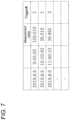
- FIG. 7 illustrates a file layout of dimension data
- FIG. 8 illustrates a file layout of integrated data
- FIG. 9 illustrates a file layout of a thermal displacement correction log
- FIG. 10 illustrates a file layout of a temperature log
- FIG. 11 illustrates a file layout of correction-including dimension data in learning data
- FIG. 13 illustrates a file layout of a learning weight
- FIG. 15 is a diagram illustrating an example dimension data input receiver (where machining dimensions are manually input).
- FIG. 16 illustrates an estimated value display
- FIG. 1 illustrates a main configuration of a machine tool 1 according to this embodiment.
- the machine tool according to this embodiment includes: a workpiece holder that holds a workpiece; and a tool holder that holds a tool.
- the machine tool machines the workpiece using the tool by rotating at least one of the workpiece and the tool and moving at least one of the workpiece and the tool in a predetermined direction.
- the machine tool also includes a plurality of temperature sensors mounted on components constituting the machine tool.
- the machine tool 1 includes: a bed 3 ; a first workpiece headstock 5 , which is fixed to the bed 3 ; a first workpiece spindle 7 , which is mounted on the first workpiece headstock 5 and rotatable in C axis direction; a carriage base 18 , which is a movable member movable on the bed 3 along Y axis direction and Z axis direction; a carriage 9 , which is placed on the carriage base 18 ; a saddle 10 , which is a movable member movable on the carriage 9 along X axis direction; a tool headstock 11 , which is mounted on the saddle 10 and swingable along B axis direction; a tool spindle 13 , which is a rotatable tool holder mounted on the tool headstock 11 ; and a controller 23 , which controls these components.
- X axis, Y axis, and Z axis are regarded as axes along which a movable member moves.
- B axis is intended to mean a movement axis of the tool spindle 13 in the direction in which the tool spindle 13 rotates about the Y axis
- C axis is intended to mean a movement axis of the first workpiece spindle 7 or a second workpiece spindle 19 in the direction in which the first workpiece spindle 7 or the second workpiece spindle 19 rotates about the Z axis.
- a tool TL is attached to the tool spindle 13 , and a workpiece W 1 is attached to a chuck 15 , which is a workpiece holder mounted on the first workpiece spindle 7 .
- the workpiece W 1 is machined using the tool TL.
- the machine tool 1 further includes a second workpiece headstock 17 , which is movable on the bed 3 along the Z axis direction.
- the second workpiece headstock 17 includes the second workpiece spindle 19 , which is rotatable along the C axis direction.
- a workpiece W 2 is attached to a chuck 21 , which is a workpiece holder mounted on the second workpiece spindle 19 . With the workpiece W 2 in this arrangement, the workpiece W 2 is machined using the tool TL as well.
- the tool spindle 13 of the machine tool 1 illustrated in FIG. 1 has a configuration of an upper tool rest
- the tool spindle 13 may have a configuration of a lower tool rest in addition to a configuration of an upper tool rest.
- temperature sensors T 1 to T 6 are mounted on the above-described components of the machine tool 1 (the temperature sensors are indicated by dots or broken line circles in FIG. 1 ). Specifically, the temperature sensor T 1 is mounted on the tool headstock 11 . The temperature sensor T 2 is mounted on the carriage 9 . The temperature sensor T 3 is mounted on the carriage base 18 . The temperature sensor T 4 is mounted on the first workpiece headstock 5 . The temperature sensor T 5 is mounted on the bed 3 at or near its center portion immediately under the machining region, considering that the center portion is greatly affected by heating involved in cutting. The temperature sensor T 6 is mounted on the second workpiece headstock 17 .
- the temperature sensors T 1 to T 6 are respectively mounted on the tool headstock 11 , the carriage 9 , the carriage base 18 , the first workpiece headstock 5 , the bed 3 , and the second workpiece headstock 17 . This arrangement ensures that not only temperatures at particular positions on the machine tool 1 but also temperatures at various other positions on the machine tool 1 are measured.
- the amount of thermal displacement correction thus calculated is added to position commands transmitted to an X axis motor 59 , a Y axis motor 61 , and a Z axis motor 63 , which are mounted on predetermined components. In this manner, the movement of the cutting edge is corrected.
- to automatically calculate an appropriate amount of thermal displacement correction for a machine tool means to automatically calculate the correction coefficients a1 to an in the above-described equation so that an appropriate amount of thermal displacement correction is calculated.
- the controller 23 of the machine tool 1 is communicably connected to the machine tool 1 .
- the communication between the controller 23 and the machine tool 1 may be made through a cable 27 or using another communication means such as wireless communication.
- the controller 23 is implemented by a computer, another information processing device, and a storage device, and includes elements such as a CPU, a RAM, and a ROM, not illustrated.
- a display 25 may be mounted on the controller 23 or in the form of a structure separate from the controller 23 .
- the display 25 may also serve as a trigger setting input receiver (an example of “trigger setting input circuitry”) 69 , a learning data generation/generation result display 83 , a generation result display 87 , and an estimated value display 103 , which are illustrated in FIG. 2 .
- the display 25 is also capable of displaying various kinds of data and serving as an input-output device. Therefore, the display 25 may also serve as the trigger setting input receiver 69 and a dimension data input receiver (an example of “dimension data input circuitry”) 75 .
- the display 25 may be implemented in the form of a touch panel on which an input and an output are made.
- FIG. 2 is a diagram illustrating a hardware configuration of the controller 23 , which is provided in the machine tool 1 .
- the controller 23 includes: a temperature collector (an example of “temperature circuitry”) 29 , which is associated with the temperature sensors T 1 to T 6 ; a thermal displacement correction amount estimator 33 ; a memory 39 , which is made up of elements such as an SRAM; a thermal displacement estimated amount logger 45 ; and a commander 47 .
- the temperature collector 29 includes a temperature logger 31 . At predetermined time intervals (for example, 10-second intervals), the temperature collector 29 collects and stores temperature data of a plurality of positions on the machine tool 1 from the temperature sensors T 1 to T 6 .
- the thermal displacement correction amount estimator 33 reads a correction equation from a thermal displacement correction equation memory 41 , which is stored in the memory 39 . Then, the thermal displacement correction amount estimator 33 calculates a thermal displacement correction amount by solving this correction equation.
- the thermal displacement estimated amount logger 45 stores the value of the thermal displacement correction amount obtained at the thermal displacement correction amount estimator 33 .
- the commander 47 outputs: a movement command indicating a correction amount X 51 , which is for the X axis; a movement command indicating a correction amount Y 53 , which is for the Y axis; and a movement command indicating a correction amount Z 55 , which is for the Z axis.
- the machine tool 1 also includes a thermal displacement correction motion executor 57 .
- the thermal displacement correction motion executor 57 adds the above-described correction amounts to the respective position commands for the X, Y, and Z axes, and causes the X axis motor 59 , the Y axis motor 61 , and the Z axis motor 63 to move the cutting edge in the X, Y, and Z axes by amounts indicated by the position commands.
- Each of the X axis motor 59 , the Y axis motor 61 , and the Z axis motor 63 is made up of a servo motor, for example. With the configuration described above, the workpiece W 1 is machined into proper dimensions within a tolerance range.
- a learning circuitry 65 includes a machining data collector (an example of “machining data collect circuitry”) 67 , the dimension data input receiver 75 , the learning data generation/generation result display 83 , a learning condition setter (an example of “learning condition setting circuitry”) 89 , a machine learning executor (an example of “machine learning circuitry”) 95 , a learning result display/executor 99 , and a memory rewriting instructor 105 .
- machining data collector an example of “machining data collect circuitry”
- the dimension data input receiver 75 the learning data generation/generation result display 83
- a learning condition setter an example of “learning condition setting circuitry”
- machine learning executor an example of “machine learning circuitry”
- the machining data collector 67 is configured to select machining data (log data) that is to be subjected to machine learning. For this purpose, in order to identify the kind of log data to collect, it is necessary at the machining data collector 67 to set, as a learning target, items such as: information for identifying an axis along which to move a movable member of the machine tool; and a machined portion.
- the trigger setting input receiver 69 is an input receiver for identifying such collection data.
- the trigger setting input receiver 69 (1) information concerning initial product and chip exchange, (2) specification of diameter/radius, (3) target value, (4) upper tolerance limit, (5) lower tolerance limit, (6) learning target position (for example, “upper tool rest of first workpiece spindle X axis”), (7) workpiece No. (workpiece number), (8) trigger No. (trigger number), and (9) block No. (block number).
- (7) workpiece No. is information for identifying a machining program
- (9) block No. is a number indicating a command position of an individual machined portion in the machining program.
- temperatures are automatically measured at predetermined time intervals at the temperature sensors T 1 to T 6 (which are provided at predetermined positions on the machine tool 1 ) and are stored in correlation with measurement times. Also, the date and time when the current workpiece was machined are input, ensuring that the temperature at the machining time can be checked. Then, by inputting dimension measurement data at the actual machining time, a difference between the target dimension and the actual dimension can be calculated. Then, by correlating the difference with the temperatures measured at the temperature sensors T 1 to T 6 , which are provided on the machine tool 1 , learning data can be obtained. It is to be noted that the dimension measurement data difference may be calculated based on an initial product dimension.
- FIG. 3 illustrates a cross-section of a part of a final product obtained by machining the workpiece W using the machine tool 1 .
- the workpiece W exemplified here has a cylindrical portion having a diameter ⁇ of 176.0 mm (millimeter), a cylindrical portion having a diameter ⁇ of 120.0 mm (millimeter), a cylindrical portion having a diameter ⁇ of 82.0 mm (millimeter), and a cylindrical portion having a diameter ⁇ of 35.0 mm (millimeter). Adjacent cylindrical portions are connected to each other by a continuous inclined surface.
- Block Nos. indicate portions of the workpiece W represented by numbers starting with “N” in FIG.
- a block No. facilitates the identification of a command position of an individual machined portion in the machining program in machining the workpiece W.
- the command for machining the cylindrical portion having a diameter ⁇ of 176.0 mm (millimeter) is described in block No. “N013”
- the command for machining the cylindrical portion having a diameter ⁇ of 82.0 mm (millimeter) is described in “N009”
- the command for machining the cylindrical portion having a diameter ⁇ of 35.0 mm (millimeter) is described in “N007”.
- a machined portion where a high level of accuracy is required in conforming with tolerance and to machine this machined portion with a higher level of accuracy.
- the machined portion having a diameter ⁇ of 35.0 mm (millimeter) and the machined portion having a diameter ⁇ of 82.0 mm (millimeter) will be assumed as corresponding to such machined portion.
- block Nos. “N007” and “N009” are used to set, as learning targets, these machined portions where a high level of accuracy is required in conforming with tolerance. That is, a machined portion can be specified by a number indicating a position in the machining program.
- the trigger setting input receiver 69 includes (a) a target value entry field 69 a , which is for inputting a target dimension of a workpiece (a value indicated in the figure), (b) an upper limit entry field 69 b and a lower limit entry field 69 c , which are for inputting upper/lower tolerance limits, respectively, (c) 69 e , which is an entry field for inputting block No., (d) 69 f , which is checked when the target value and tolerance are in diameter, (e) 69 g , which is a check column for initial product and chip exchange time, (f) a learning target axis entry field 69 h , which is for inputting information for identifying an axis that is among the axes to move a movable member of the machine tool and that is a target axis for learning, (g) a workpiece number entry field 69 i , which is for inputting a learning
- the trigger setting input receiver 69 further includes: a trigger setting button 69 j , which is for setting (storing) input data; and a clear button 69 k , which is for clearing (deleting) input data.
- the content set using the trigger setting input receiver 69 is effective through all machinings once the trigger setting button 69 j is pressed. It is also possible to make a setting for each group of machined portions of a workpiece. For example, by switching between “1”, “2”, and “3” on the trigger button 69 n , it is possible to set the above-described item data separately for a group made up of the machined portion having a diameter ⁇ of 35.0 mm (millimeter), the machined portion having a diameter ⁇ of 82.0 mm (millimeter), and the machined portion having a diameter ⁇ of 176.0 mm (millimeter), illustrated in FIG. 3 .
- the trigger information automatic collector 71 automatically collects: the date and time when the machined portion set at the trigger setting input receiver was actually machined by the machine tool 1 ; and an offset. Then, the trigger information automatic collector 71 stores the collected information in the trigger information memory storage 73 .
- the tem′ “offset” is intended to mean data input by an operator. For example, if the accuracy with which the workpiece W is machined gradually degrades over time while the workpiece W is being machined, an offset can be forcibly implemented so that the dimension of the machined portion is secured within the tolerance range. It is possible to store this offset data and use this offset data to calculate an actual thermal displacement correction amount. Specifically, by adding this offset value, an accurate amount of thermal displacement correction can be calculated. Further, it is possible to input an offset after machining of a workpiece ends and before machining of a next workpiece starts. Thus, insofar as the machining accuracy of a workpiece W is monitored, implementing an offset eliminates or minimizes occurrence of a defective product in the machining performed at or after the offset.
- the dimension data input receiver 75 is a screen used in calculating the coefficient of the thermal displacement correction equation by machine learning. Specifically, dimension measurement data obtained by measuring a post-machining dimension of a machined portion set as a learning target is collected and input on the dimension data input receiver 75 based on the setting of the trigger setting input receiver 69 .
- the dimension data input receiver 75 is made up of any one of (1) to (3).
- the learning data generation/generation result display 83 includes a learning data generator (an example of “learning data generate circuitry”) 85 .
- the learning data generator 85 is configured to generate learning data by comparing the machining data collected by the machining data collector 67 with the dimension measurement data collected and input by the dimension data input receiver 75 . Then, the learning data generation/generation result display 83 displays the generated result on the generation result display 87 .
- the learning condition setter 89 sets, on a learning weight setting screen 91 , a learning weight to the machined portion selected on a learning target selection screen 93 .
- the machine learning executor 95 causes a correction coefficient calculator 97 to execute a machine learning based on the learning data and calculate a correction coefficient in a thermal displacement correction equation, which is used to correct a displacement caused by a change in the temperature of the machine tool 1 .
- the learning result display/executor 99 displays a simulation graph of pre-machine learning and post-machine learning results on the estimated value display 103 .
- a user presses a learning result application button 101 to cause the memory rewriting instructor 105 to rewrite the thermal displacement correction equation stored in the thermal displacement correction equation memory 41 with the post-machine learning correction coefficient.
- the user may re-set a learning weight and/or a learning target, thus repeating a machine learning until a satisfactory simulation result is obtained.
- This ensures a correction coefficient used in a thermal displacement correction equation for a thermal displacement correction suitable for an environment in which a machine tool is provided.
- the trigger information automatic collector 71 collects machining data based on the content selected at the trigger setting input receiver 69 .
- the trigger setting input receiver 69 includes, for example: the target value entry field 69 a ; an upper limit tolerance entry field 69 b ; a lower limit tolerance entry field 69 c ; a block No. entry field 69 e , which is for inputting a block No. indicating a machining target portion in a workpiece machining program; the column 69 f , which is a check column for workpiece diameter; the column 69 g , which is a check column for initial product and chip exchange; the learning target axis entry field 69 h , which is for inputting information for identifying a learning target axis; and the workpiece number entry field 69 i , which is for inputting workpiece number.
- the trigger setting input receiver 69 further includes: the trigger setting button 69 j , which is for setting (storing) input data; and the clear button 69 k , which is for clearing (deleting) input data.
- the above-described items include at least one of: machining program number; and information for identifying a learning target axis. This makes it easier for the operator to select a machining target portion to which the operator wants to pay special attention, such as a portion of strict tolerance. As a result, a learning target can be determined accurately. This ensures a correction coefficient used in a thermal displacement correction equation for a thermal displacement correction suitable for an environment in which a machine tool is provided.
- the controller or the machine tool according to this embodiment makes it easier to select a particular step, which normally takes much more time. As a result, machining data necessary for machine learning is efficiently collected.
- the trigger information collected at step S 01 and stored in a memory has a file layout as illustrated in FIG. 6 , for example. Specifically, the date and time when the machined portion corresponding to the trigger information is machined by the machine tool 1 are first stored as machining data. Subsequently to the date and time data, next various data are stored in a memory.
- Trigger # is a number assigned to a machined portion of a workpiece. When “1” is assigned to the initial product, this indicates that a tool exchange has been performed. When “0” is assigned to the initial product, this indicates that no tool exchange is performed.
- Target value is a target dimension of machining. Offset is the amount of movement of the cutting edge input by the operator. Upper limit and Lower limit are those of tolerance.
- Learning target is information for identifying an axis that is among the axes to move a movable member of the machine tool and that is a learning target axis (for example, “HD1 Y axis upper tool rest” indicates the Y axis for machining the workpiece at the first workpiece spindle side using upper tool rest).
- Workpiece No. is information for identifying a machining program.
- various machining data are stored in one row in a file so that the data are correlated with each other.
- FIG. 15 illustrates an example input receiver on which information such as machining dimension are manually input.
- This input receiver includes: a workpiece number entry field 75 a , which is for inputting workpiece number; a date entry field 75 b , which is for inputting date of machining; a machining time entry field 75 c , which is for inputting time of machining; a learning target axis entry field 75 d , which is for inputting information for identifying a learning target axis; a measurement value entry field 75 e , which is for inputting a measurement value; an offset entry field 75 f , which is for inputting an offset; a target value entry field 75 g , which is for inputting a workpiece target value; an upper limit tolerance entry field 75 h , which is for inputting an upper limit tolerance; and a lower limit tolerance entry field 75 i , which is for inputting a lower limit tolerance.
- data such as the data illustrated in FIG. 7 is used, for example.
- the dimension data input receiver 75 includes a window 751 .
- the window 751 is scrollable.
- the input items included in the dimension data input receiver will not be limited to the above-described input items; any other input items are possible insofar as they enable the operator to determine which machining data an actual machining dimension and the associated machining correspond to.
- FIG. 15 illustrates a manual input screen
- this input screen is not intended in a limiting sense.
- a possible input screen is that an item for identifying machining dimension data to call up can be input. For example, it is possible to obtain necessary machining dimension data only by identifying the date and time of machining and a dimension measurement position.
- machining dimension measurement data possible methods are: calling up externally measured machining dimension measurement data; automatically calling up internally measured machining dimension measurement data; and manually inputting machining dimension measurement data.
- the controller or the machine tool according to this embodiment is capable of measuring machining dimension measurement data by these various methods. This configuration ensures that a suitable method can be freely selected based on machining dimension characteristics and/or a purpose of adjustment. This configuration also provides a design significantly easily handleable for the operator of the machine tool.
- machining dimension data it is possible to employ either of the following methods: a method that sets a target item including a learning target and then collects dimension data of a particular machined portion corresponding to the target item that has been set; and a method that obtains all machining dimension data in advance and extracts a piece of machining dimension data that is selected from the all machining dimension data and that corresponds to the target item.
- a method that sets a target item including a learning target and then collects dimension data of a particular machined portion corresponding to the target item that has been set and a method that obtains all machining dimension data in advance and extracts a piece of machining dimension data that is selected from the all machining dimension data and that corresponds to the target item.
- the learning data generation/generation result display 83 integrates the machining data collected by the machining data collector 67 with the dimension data specified by the dimension data input receiver 75 . As a result, learning data actually used in machine learning is identified. It is to be noted, however, that in a case of manual input, the integration processing is performed at the time of manual input.
- the generation result display 87 illustrated in FIG. 2 displays a content as illustrated in, for example, FIG. 8 .
- the content includes, from left, the date and time of machining, trigger #, initial product, measurement value, target value, offset, upper limit tolerance, lower limit tolerance, indication or non-indication of diameter, information for identifying a learning target axis, and workpiece number.
- the generation result display 87 displays a list of these integrated data. This ensures that input values of workpiece numbers can be easily compared with each other by rearranging the corresponding data. As a result, even if the operator makes an erroneous input, the erroneous input can be easily identified.
- the data collected at step S 05 and stored in a memory has a file layout as illustrated in FIG. 8 , for example.
- the trigger information is generated by integrating the dimension data based on the date and time of machining
- the learning data includes the following various data.
- Trigger # is a number assigned to a machined portion of a workpiece. When “1” is assigned to the initial product, this indicates that a tool exchange has been performed.
- Measurement value is dimension data that has been measured.
- Target value is a target dimension of machining. Offset is the amount of movement of the cutting edge input by the operator. Upper limit and Lower limit are those of tolerance.
- ⁇ is 1, the data value is in diameter.
- Learning target is information for identifying a learning target axis.
- Workpiece No. is information for identifying a machining program. Thus, various machining data are stored in one row in a file so that the data are correlated with each other.
- the machine learning executor 95 performs a machine learning (regression analysis) with the selection at step S 09 taken into consideration.
- the machine learning executor 95 reads (1) learning function data E, which is stored in the memory 39 . Also, the machine learning executor 95 reads (2) a thermal displacement estimation log, which is thermal displacement correction data at the actual machining time. Further, the machine learning executor 95 reads (3) a temperature log, which has been detected and stored at predetermined intervals.
- the learning function data ⁇ is learning data used when the current correction coefficient was calculated. It is to be noted, however, that the (1) data is not essential data, and may be omitted.
- thermal displacement correction log Data read as the thermal displacement correction log subsequently to the date and time when the workpiece was machined are movement position data of tool rests such as the X axis upper tool rest, the Y axis upper tool rest, and the Z axis upper tool rest.
- FIG. 10 an example temperature log will be described.
- the temperature log is such that temperatures at the temperature sensors T 1 to T 6 are read at, for example, 10-second intervals, and each temperature is stored in correlation with the date and time of reading. This ensures that the X axis upper tool rest, the Y axis upper tool rest, and the Z axis upper tool rest corresponding to a date and time can be correlated with the temperature corresponding to the same date and time.
- the machine learning executor 95 reads learning data.
- learning data is intended to mean machining dimension data specified by the learning data generation/generation result display 83 .
- the machine learning executor 95 reads a learning weight condition.
- learning weight condition is intended to mean a condition for which the number of data of a particular learning target regarded as important is increased when one workpiece is machined, so as to set a weight given to the learning target.
- the thermal displacement correction as a whole can be adjusted by prioritizing the accuracy of an important portion of a machining target workpiece over the accuracy of another portion of the workpiece.
- the machining accuracy of a workpiece as a whole can be set within a desired range. This ensures a correction coefficient used in a thermal displacement correction equation for a thermal displacement correction suitable for an environment in which a machine tool is provided.
- the level of weighting can be selected from five levels. At level five, which is the highest level, the number of data of a weighting target may be increased by, for example, 50 times, after which the data may be reflected in the thermal displacement correction as a whole.
- step S 19 the machine learning executor 95 converts the learning data into “no-thermal-displacement-correction data”.
- the machine learning executor 95 performs processing of converting the measurement value that is included in the learning data read at step S 15 and that is illustrated in, for example, FIG. 11 into dimension data that is for a case where no correction was made and that is illustrated in, for example, FIG. 12 .
- Trigger # is a number assigned to a machined portion of a workpiece. When “1” is assigned to the initial product, this indicates that a tool exchange has been performed.
- Measurement value is dimension data that has been measured.
- Target value is a target dimension of machining.
- Offset is the amount of movement of the cutting edge input by the operator. Upper limit and Lower limit are those of tolerance. When 0 is 1, the data value is in diameter.
- Learning target is information for identifying a learning target axis.
- Workpiece No. is information for identifying a machining program. Correction amount is a correction position on the tool cutting edge.
- Temperature data is such that a temperature at a date and time of machining is stored. Thus, various machining data are stored in one row in a file so that the data are correlated with each other.
- the data illustrated in FIG. 12 is such that the measurement value included in the data illustrated in FIG. 11 is replaced with dimension data for a case where no correction was made. Otherwise, the data illustrated in FIGS. 11 and 12 are identical.
- ⁇ 0.0206 is obtained by converting the correction amount illustrated in FIGS. 11 and 12 into a value of the same unit as the dimension data.
- step S 19 the above-described processing is performed because of a reason described below.
- the dimension data input into the dimension data input receiver 75 is a result of a past thermal displacement correction already performed. Under the circumstances, in order to perform a new machine learning, it is necessary to: remove the influence of the thermal displacement correction to retrieve the state in which no thermal displacement correction was performed; and reflect a result of a new machine learning.
- the machine learning executor 95 extracts, based on the setting made at the learning condition setter 89 , a “weight” for the learning data from a weight table.
- weighting is to: extract 5 as a weight at LeveL 1 ; extract 10 as a weight at LeveL 2 ; extract 20 as a weight at LeveL 3 ; extract 35 as a weight at LeveL 4 ; and extract 50 as a weight at LeveL 5 .
- weight values indicate that the number of data of interest is increased by adding a number of data corresponding to a weight value, after which a re-calculation is performed. This indicates that as the weight becomes greater, the number of data increases, and this increases the influence on the correction amount.
- the machine learning executor 95 increases the amount of the “no-thermal-displacement-correction data” by an amount equivalent to the weight.
- the machine learning executor 95 adds the increased “no-thermal-displacement-correction data” and the learning function data E together, and then obtains a new correction coefficient by solving an inverse matrix.
- the learning function data E and data obtained during an actual machining are stored.
- the learning function data E is stored in the memory 39
- the actual machining data is stored in the temperature logger 31 and the thermal displacement estimated amount logger 45 .
- the learning function data ⁇ which is stored in the memory 39 , includes temperature matrix ( ⁇ ) and thermal displacement amount matrix ( ⁇ ).
- ⁇ temperature matrix
- ⁇ thermal displacement amount matrix
- a number of pieces of temperature data equal to the number of samples are arranged in the vertical direction, and measurement values corresponding to the respective temperature sensors are arranged in the lateral direction.
- thermal displacement amount matrix a number of pieces of displacement data equal to the number of samples are arranged in the vertical direction.
- Equation 2 A regression analysis is performed and the correction coefficient ( ⁇ ) is obtained by solving Equation 2 so that the thermal displacement correction amount matrix (yc) is as close as possible to the thermal displacement amount matrix ( ⁇ ).
- ⁇ ′ denotes a transposed matrix of ⁇ .
- Equation 3 data in the case of performing actual machining is represented by the following Equation 3.
- the left side matrix which is temperature data in the case of performing actual machining
- the right side matrix which is the thermal displacement amount
- ⁇ ′ ⁇ and ⁇ ′ ⁇ which are products obtained from multiplications using the transposed matrix ⁇ ′ of ⁇ are added to the original data that is stored. Then, the resulting sum is multiplied by an inverse matrix. As a result, a post-learning, new correction coefficient anew is obtained.
- FIG. 16 illustrates an example simulation graph displayed on the estimated value display 103 .
- the simulation graph shows simulations results associated with three kinds of workpiece numbers, namely, “W0001”, “W0002”, “W0003”.
- the workpiece number “W0001” is a simulation graph associated with a left portion 103 d
- the workpiece number “W0002” is a simulation graph associated with a middle portion 103 e
- the workpiece number “W0003” is a simulation graph associated with a right portion 103 f.
- the controller or the machine tool displays, for all machining target portions that have been specified, a simulation graph of estimated values associated with a machining performed using a post-learning correction coefficient.
- machining results associated with three workpiece numbers are displayed at a time. This enables the operator to check whether all the machining results are kept within a desired tolerance.
- estimated values associated with a plurality of machining target portions are displayed simultaneously. This manner of display enables the operator to easily visually check how the machining accuracy at each portion changes and whether a necessary tolerance is secured. This ensures a correction coefficient used in a thermal displacement correction equation for a thermal displacement correction suitable for an environment in which a machine tool is provided.
- the operator makes a determination as to whether a simulation result shows a sufficient level of machining accuracy.
- the operator sets the learning level to, for example, a heavy level using a learning level setting column 103 g illustrated in FIG. 16 .
- the operator presses a learning button 103 h to return the learning level processing to step S 09 .
- the operator may repeat this operation until the operator determines that a sufficient level of machining accuracy is secured, with the result data kept within the tolerance range.
- step S 31 When the operator has determined that the simulation result shows a sufficient level of machining accuracy, the procedure proceeds to step S 31 .
- step S 31 the operator presses a memory rewriting execution button 103 j to rewrite the content of the thermal displacement correction equation memory 41 of the memory 39 illustrated in FIG. 2 .
- the dimension data may be processed through the following steps.
- [4-1] [2-1] and [3-1] are repeated by a number of times equal to or less than the number of workpieces to be machined; or [2-1] is repeated and then [3-1] is collectively performed by a number of times equal to or less than the number of workpieces.
- a learning is performed according to a learning flow.
- This method ensures that data necessary for learning can be stored in a memory based on trigger information from an initial stage of data accumulation. This eliminates the need for, at a later step, identifying a data range from which to extract data necessary for learning.
- the dimension data may also be processed using the following method. [1-2] Data is input into the trigger screen, and trigger information is stored. [2-2] All learning data excluding a measurement value are always collected, irrespective of trigger information. [3-2] After a machining, data is extracted that is necessary for learning and that is associated with workpiece No. and block No. in the range specified by the trigger information. [4-2] After the machining, a measurement value (dimension data) at the date and time of the machining is input. [5-2] A learning is performed according to a learning flow.
- This method ensures that from the start of learning, necessary data can be selected from all the learning data accumulated.
- buttons 69 l and 69 m illustrated in FIG. 14 are switchable using buttons 69 l and 69 m illustrated in FIG. 14 .
- the data of the machining data and/or the correction parameter used in this embodiment may be transferred to a controller and/or a machine tool that are similar in kind to the controller and/or the machine tool according to this embodiment. That is, a result obtained in one apparatus (device) may be shared with a similar kind of apparatus (device) that operates under similar conditions. Thus, data may be horizontally expanded. This effectively increases the operation efficiency with which a plurality of similar apparatuses (devices) are operated.
- the operator only has to select an item that requires a machining accuracy (an example item is a machining program number) and press the machine learning execution button. In this manner, the operator is able to obtain a simulation result based on machining data. Additionally, the operator is able to visually check, in the form of a list, results for all machined portions that the operator desires to check. This enables the operator to easily determine whether each portion is kept within a specified tolerance.
- controller or the machine tool performs a learning of all machined portions collectively, and sets a correction coefficient that satisfies all the machined portions. This reduces the occurrence of a result showing a deviation from the target dimension.
- a learning level of machine learning can be set based on the degree of importance on a workpiece basis or on a workpiece-machined-portion basis, and a learning of a plurality of workpieces is performed collectively. This reduces the labor involved in adjustment work and ensures that fine adjustments are easily performed. Also, there may be a case where it is necessary to manually set a thermal displacement correction amount that varies on an individual-machined-portion basis. In this case, if there is a large difference between the thermal displacement correction amounts set for the machined portions, a stepped machined surface may occur at a portion where adjacent machined portions abut. This issue is dealt with by the configuration of the above-described embodiment, in which a correction coefficient is automatically set by selecting a machined portion. This configuration eliminates or minimizes erroneous setting due to human error, preventing such a situation in which a stepped machined surface occurs.
- section termed as function section may be implemented by a CPU including a storage device such as a memory and software introduced in these elements, or may be implemented by an electronic circuit, a logic circuit, and/or other related devices.
- section termed as display may be implemented by a screen, or the data input-output function of the display may be implemented by a sensor.
- controller and/or the machine tool according to the above-described embodiment may also be applied to a lathe, a machining apparatus, and a discharge machining apparatus, among other apparatuses or devices.
- a component suffixed with a term such as “member”, “portion”, “part”, “element”, “body”, and “structure” is intended to mean that there is a single such component or a plurality of such components.
- ordinal terms such as “first” and “second” are merely used for distinguishing purposes and there is no other intention (such as to connote a particular order) in using ordinal terms.
- first element does not connote the existence of “second element”; otherwise, the mere use of “second element” does not connote the existence of “first element”.
- approximating language such as “approximately”, “about”, and “substantially” may be applied to modify any quantitative representation that could permissibly vary without a significant change in the final result obtained. All of the quantitative representations recited in the present application shall be construed to be modified by approximating language such as “approximately”, “about”, and “substantially”.
Landscapes
- Engineering & Computer Science (AREA)
- Physics & Mathematics (AREA)
- General Physics & Mathematics (AREA)
- Automation & Control Theory (AREA)
- Human Computer Interaction (AREA)
- Manufacturing & Machinery (AREA)
- Artificial Intelligence (AREA)
- Software Systems (AREA)
- Mechanical Engineering (AREA)
- Evolutionary Computation (AREA)
- Medical Informatics (AREA)
- Computer Vision & Pattern Recognition (AREA)
- Theoretical Computer Science (AREA)
- Data Mining & Analysis (AREA)
- Computing Systems (AREA)
- General Engineering & Computer Science (AREA)
- Mathematical Physics (AREA)
- Health & Medical Sciences (AREA)
- Numerical Control (AREA)
- Automatic Control Of Machine Tools (AREA)
Abstract
Description
Amount of thermal displacement correction=(a1×T1+a2×T2+ . . . +an×Tn)(a1to an:correction coefficient,T1 to Tn:temperature)
35.010+0.02−0.0206=35.0094
α=[Π·Π]−1·[Π·γ] [Equation 2]
α_new=[Π′·Π+η′·ρ]−1·[Π′·γ+η′·Υ] [Equation 4]
α_new=[Π′·Π+ω·η′·η]−1·[Π′·γ+ω·η′·Υ] [Equation 5]
Step S27
The dimension data may also be processed using the following method.
[1-2] Data is input into the trigger screen, and trigger information is stored.
[2-2] All learning data excluding a measurement value are always collected, irrespective of trigger information.
[3-2] After a machining, data is extracted that is necessary for learning and that is associated with workpiece No. and block No. in the range specified by the trigger information.
[4-2] After the machining, a measurement value (dimension data) at the date and time of the machining is input.
[5-2] A learning is performed according to a learning flow.
Claims (14)
Applications Claiming Priority (1)
| Application Number | Priority Date | Filing Date | Title |
|---|---|---|---|
| PCT/JP2019/034450 WO2021044491A1 (en) | 2019-09-02 | 2019-09-02 | Control device, machine tool, calculation method, and program |
Related Parent Applications (1)
| Application Number | Title | Priority Date | Filing Date |
|---|---|---|---|
| PCT/JP2019/034450 Continuation WO2021044491A1 (en) | 2019-09-02 | 2019-09-02 | Control device, machine tool, calculation method, and program |
Publications (2)
| Publication Number | Publication Date |
|---|---|
| US20220179391A1 US20220179391A1 (en) | 2022-06-09 |
| US12339639B2 true US12339639B2 (en) | 2025-06-24 |
Family
ID=73043597
Family Applications (1)
| Application Number | Title | Priority Date | Filing Date |
|---|---|---|---|
| US17/680,294 Active 2040-07-29 US12339639B2 (en) | 2019-09-02 | 2022-02-25 | Controller, machine tool, calculation method, and non-transitory computer readable storage medium |
Country Status (5)
| Country | Link |
|---|---|
| US (1) | US12339639B2 (en) |
| EP (1) | EP4012520B1 (en) |
| JP (1) | JP6784868B1 (en) |
| CN (1) | CN114341752B (en) |
| WO (1) | WO2021044491A1 (en) |
Families Citing this family (2)
| Publication number | Priority date | Publication date | Assignee | Title |
|---|---|---|---|---|
| EP4501531A4 (en) | 2022-09-16 | 2025-08-06 | Yamazaki Mazak Corp | COMPOSITE MACHINING DEVICE, CONTROL METHOD FOR A COMPOSITE MACHINING DEVICE AND PROGRAM FOR EXECUTING THE CONTROL METHOD |
| CN118513861B (en) * | 2024-05-28 | 2025-05-02 | 台州市东部数控设备有限公司 | Special machine tool for valve and machining method |
Citations (21)
| Publication number | Priority date | Publication date | Assignee | Title |
|---|---|---|---|---|
| JPH03208540A (en) | 1990-01-12 | 1991-09-11 | Murata Mach Ltd | Automatically controlled machining device |
| JPH068107A (en) | 1992-06-29 | 1994-01-18 | Hitachi Seiko Ltd | Thermal displacement compensation method for machine tool |
| JP2820170B2 (en) * | 1991-05-29 | 1998-11-05 | 三菱電機株式会社 | Method and apparatus for creating machining command of NC machine tool |
| JP2003208540A (en) | 2002-01-11 | 2003-07-25 | Ricoh Microelectronics Co Ltd | Information providing method and information provider |
| JP2005052917A (en) | 2003-08-01 | 2005-03-03 | Kitamura Mach Co Ltd | Method and apparatus for compensating thermal displacement of numerically controlled machine tool |
| CN105182908A (en) | 2014-06-18 | 2015-12-23 | 发那科株式会社 | THermal displacement correction device for working machine |
| WO2016067874A1 (en) | 2014-10-29 | 2016-05-06 | ヤマザキマザック株式会社 | Machine tool equipped with device for changing setting of thermal displacement correction amount |
| US20170091667A1 (en) | 2015-09-30 | 2017-03-30 | Fanuc Corporation | Machine learning device and method for optimizing frequency of tool compensation of machine tool, and machine tool having the machine learning device |
| US20180107947A1 (en) * | 2016-10-18 | 2018-04-19 | Fanuc Corporation | Machine learning apparatus that learns setting value in machining program of machine tool, and machining system |
| US20180196405A1 (en) * | 2017-01-10 | 2018-07-12 | Fanuc Corporation | Machine learning device for machine tool and thermal displacement compensation device |
| US20180276570A1 (en) * | 2017-03-21 | 2018-09-27 | Fanuc Corporation | Machine learning device and thermal displacement compensation device |
| US20190011898A1 (en) | 2017-07-04 | 2019-01-10 | Fanuc Corporation | Thermal displacement compensation apparatus |
| US20190018391A1 (en) | 2017-07-13 | 2019-01-17 | Autodesk, Inc. | Method and system for processing machine data before completion of machining |
| US20190025794A1 (en) | 2017-07-21 | 2019-01-24 | Fanuc Corporation | Machine learning device, numerical control device, numerical control system, and machine learning method |
| US20190091869A1 (en) * | 2017-09-25 | 2019-03-28 | Fanuc Corporation | Robot system and workpiece picking method |
| US20190099850A1 (en) | 2017-10-04 | 2019-04-04 | Fanuc Corporation | Thermal displacement compensation system |
| JP2019111648A (en) | 2019-04-23 | 2019-07-11 | ファナック株式会社 | Machine learning device and thermal displacement correction device |
| US20200101579A1 (en) * | 2018-09-27 | 2020-04-02 | Ebara Corporation | Polishing apparatus, polishing method, and machine learning apparatus |
| US20200117164A1 (en) * | 2018-10-12 | 2020-04-16 | Fanuc Corporation | Thermal displacement compensation device and numerical controller |
| US20200183359A1 (en) * | 2016-09-02 | 2020-06-11 | Mitsubishi Electric Corporation | Command-value generation apparatus |
| US20200342356A1 (en) * | 2019-04-25 | 2020-10-29 | Fanuc Corporation | Machine learning device, numerical control system, and machine learning method |
-
2019
- 2019-09-02 CN CN201980099787.2A patent/CN114341752B/en active Active
- 2019-09-02 WO PCT/JP2019/034450 patent/WO2021044491A1/en not_active Ceased
- 2019-09-02 EP EP19944154.4A patent/EP4012520B1/en active Active
- 2019-09-02 JP JP2020513931A patent/JP6784868B1/en active Active
-
2022
- 2022-02-25 US US17/680,294 patent/US12339639B2/en active Active
Patent Citations (31)
| Publication number | Priority date | Publication date | Assignee | Title |
|---|---|---|---|---|
| JPH03208540A (en) | 1990-01-12 | 1991-09-11 | Murata Mach Ltd | Automatically controlled machining device |
| JP2820170B2 (en) * | 1991-05-29 | 1998-11-05 | 三菱電機株式会社 | Method and apparatus for creating machining command of NC machine tool |
| JPH068107A (en) | 1992-06-29 | 1994-01-18 | Hitachi Seiko Ltd | Thermal displacement compensation method for machine tool |
| JP2003208540A (en) | 2002-01-11 | 2003-07-25 | Ricoh Microelectronics Co Ltd | Information providing method and information provider |
| JP2005052917A (en) | 2003-08-01 | 2005-03-03 | Kitamura Mach Co Ltd | Method and apparatus for compensating thermal displacement of numerically controlled machine tool |
| US20150370242A1 (en) | 2014-06-18 | 2015-12-24 | Fanuc Corporation | Thermal displacement correction device for working machine |
| CN105182908A (en) | 2014-06-18 | 2015-12-23 | 发那科株式会社 | THermal displacement correction device for working machine |
| WO2016067874A1 (en) | 2014-10-29 | 2016-05-06 | ヤマザキマザック株式会社 | Machine tool equipped with device for changing setting of thermal displacement correction amount |
| JP6001211B1 (en) | 2014-10-29 | 2016-10-05 | ヤマザキマザック株式会社 | Machine tool with thermal displacement correction amount setting change device |
| CN106488828A (en) | 2014-10-29 | 2017-03-08 | 山崎马扎克公司 | Machine tool equipped with thermal displacement correction amount setting and changing device |
| US20170185063A1 (en) * | 2014-10-29 | 2017-06-29 | Yamazaki Mazak Corporation | Machine tool |
| US20170091667A1 (en) | 2015-09-30 | 2017-03-30 | Fanuc Corporation | Machine learning device and method for optimizing frequency of tool compensation of machine tool, and machine tool having the machine learning device |
| CN106560751A (en) | 2015-09-30 | 2017-04-12 | 发那科株式会社 | Machine Learning Device And Method And Machine Tool Having The Machine Learning Device |
| US20200183359A1 (en) * | 2016-09-02 | 2020-06-11 | Mitsubishi Electric Corporation | Command-value generation apparatus |
| US20180107947A1 (en) * | 2016-10-18 | 2018-04-19 | Fanuc Corporation | Machine learning apparatus that learns setting value in machining program of machine tool, and machining system |
| US20180196405A1 (en) * | 2017-01-10 | 2018-07-12 | Fanuc Corporation | Machine learning device for machine tool and thermal displacement compensation device |
| CN108287525A (en) | 2017-01-10 | 2018-07-17 | 发那科株式会社 | The machine learning device and thermal displacement correction device of lathe |
| JP2018111145A (en) | 2017-01-10 | 2018-07-19 | ファナック株式会社 | Mechanical learning device of machine tool and thermal displacement correction device |
| US20180276570A1 (en) * | 2017-03-21 | 2018-09-27 | Fanuc Corporation | Machine learning device and thermal displacement compensation device |
| CN108628256A (en) | 2017-03-21 | 2018-10-09 | 发那科株式会社 | Rote learning device and thermal displacement correction device |
| US20190011898A1 (en) | 2017-07-04 | 2019-01-10 | Fanuc Corporation | Thermal displacement compensation apparatus |
| CN109202538A (en) | 2017-07-04 | 2019-01-15 | 发那科株式会社 | thermal displacement correction device |
| US20190018391A1 (en) | 2017-07-13 | 2019-01-17 | Autodesk, Inc. | Method and system for processing machine data before completion of machining |
| US20190025794A1 (en) | 2017-07-21 | 2019-01-24 | Fanuc Corporation | Machine learning device, numerical control device, numerical control system, and machine learning method |
| CN109283887A (en) | 2017-07-21 | 2019-01-29 | 发那科株式会社 | Machine learning device, numerical control device, numerical control system and machine learning method |
| US20190091869A1 (en) * | 2017-09-25 | 2019-03-28 | Fanuc Corporation | Robot system and workpiece picking method |
| US20190099850A1 (en) | 2017-10-04 | 2019-04-04 | Fanuc Corporation | Thermal displacement compensation system |
| US20200101579A1 (en) * | 2018-09-27 | 2020-04-02 | Ebara Corporation | Polishing apparatus, polishing method, and machine learning apparatus |
| US20200117164A1 (en) * | 2018-10-12 | 2020-04-16 | Fanuc Corporation | Thermal displacement compensation device and numerical controller |
| JP2019111648A (en) | 2019-04-23 | 2019-07-11 | ファナック株式会社 | Machine learning device and thermal displacement correction device |
| US20200342356A1 (en) * | 2019-04-25 | 2020-10-29 | Fanuc Corporation | Machine learning device, numerical control system, and machine learning method |
Non-Patent Citations (9)
| Title |
|---|
| Chinese Office Action for corresponding CN Application No. 201980099787.2, Dec. 27, 2022. |
| Chinese Office Action for corresponding CN Application No. 201980099787.2, Jul. 4, 2022. |
| European Office Action for corresponding EP Application No. 19944154.4-1224, Jul. 29, 2022. |
| International Search Report for corresponding International Application No. PCT/JP2019/034450, Nov. 19, 2019. |
| Japanese Office Action for corresponding JP Application No. 2020-513931, Jun. 9, 2020 (w/ English machine translation). |
| Japanese Office Action for corresponding JP Application No. 2020-513931, Oct. 20, 2020 (w/ English machine translation). |
| Supplementary European Search Report for corresponding EP Application No. 19944154.4-1224, Jul. 18, 2022. |
| The International Preliminary Report on Patentability (Chapter I) with translation of Written Opinion for corresponding International Application No. PCT/JP2019/034450, Mar. 17, 2022. |
| Written Opinion for corresponding International Application No. No. PCT/JP2019/034450, Nov. 19, 2019. |
Also Published As
| Publication number | Publication date |
|---|---|
| CN114341752B (en) | 2023-06-13 |
| WO2021044491A1 (en) | 2021-03-11 |
| EP4012520A1 (en) | 2022-06-15 |
| JPWO2021044491A1 (en) | 2021-09-27 |
| JP6784868B1 (en) | 2020-11-11 |
| US20220179391A1 (en) | 2022-06-09 |
| CN114341752A (en) | 2022-04-12 |
| EP4012520A4 (en) | 2022-08-17 |
| EP4012520B1 (en) | 2023-05-10 |
Similar Documents
| Publication | Publication Date | Title |
|---|---|---|
| US12339639B2 (en) | Controller, machine tool, calculation method, and non-transitory computer readable storage medium | |
| US6584415B1 (en) | Method of creating tool wear data, estimating tool wear and judging use of tool | |
| CN109070295B (en) | Automatic conversion device and conversion method for thermal displacement compensation parameters of machine tool | |
| EP3864475B1 (en) | Method and system for monitoring tool wear to estimate rul of tool in machining | |
| DE102015109237B4 (en) | Device for correcting a thermal offset for a work machine | |
| DE102019201967A1 (en) | Accuracy diagnosis device for machine tools | |
| JP2020203356A (en) | Abnormality detection device for machining tools | |
| CN104423317A (en) | Data acquisition device for acquiring cause of stoppage of drive axis and information relating thereto | |
| CN104661793A (en) | Interface system of industrial machine | |
| CN117806231B (en) | Machine tool operation and machining control system and method based on Internet of things | |
| JP6815368B2 (en) | Anomaly detection device, anomaly detection method, control program, and recording medium | |
| JP6743238B1 (en) | Variation amount estimating device and correction amount calculating device in machine tool | |
| CN113778017A (en) | Tool life correction method, tool life correction device, computer device, and storage medium | |
| CN111823056A (en) | Workpiece on-line detection method and device and computer readable storage medium | |
| JP2019130627A (en) | Thermal displacement correction device and machine learning device | |
| Luca | A study on quality analysis measuring process | |
| KR20210057529A (en) | Measureing and correcting method and system for spindle thermal displacement of machining center | |
| CN109613888A (en) | Numerical control device | |
| CN119536410B (en) | L-shaped vacuum pipeline temperature control method and system and intelligent terminal | |
| US4854161A (en) | Method for diagnosing cutting tool dullness | |
| CN116736791B (en) | CNC machine tool machining methods, devices, equipment and storage media | |
| US20060218984A1 (en) | Method for free bending | |
| CN110908335A (en) | Method and device for wear analysis on a machine tool | |
| JP4358705B2 (en) | Method for correcting thermal deformation error of machine tool | |
| KR20140148394A (en) | Fabrication process management assistance device |
Legal Events
| Date | Code | Title | Description |
|---|---|---|---|
| AS | Assignment |
Owner name: YAMAZAKI MAZAK CORPORATION, JAPAN Free format text: ASSIGNMENT OF ASSIGNORS INTEREST;ASSIGNORS:OKUDA, TOSHIHITO;YOSHIDA, RYO;ISEKI, AKIRA;AND OTHERS;SIGNING DATES FROM 20220218 TO 20220221;REEL/FRAME:059097/0117 |
|
| FEPP | Fee payment procedure |
Free format text: ENTITY STATUS SET TO UNDISCOUNTED (ORIGINAL EVENT CODE: BIG.); ENTITY STATUS OF PATENT OWNER: LARGE ENTITY |
|
| STPP | Information on status: patent application and granting procedure in general |
Free format text: DOCKETED NEW CASE - READY FOR EXAMINATION |
|
| STPP | Information on status: patent application and granting procedure in general |
Free format text: NON FINAL ACTION MAILED |
|
| STPP | Information on status: patent application and granting procedure in general |
Free format text: RESPONSE TO NON-FINAL OFFICE ACTION ENTERED AND FORWARDED TO EXAMINER |
|
| STPP | Information on status: patent application and granting procedure in general |
Free format text: FINAL REJECTION MAILED |
|
| STPP | Information on status: patent application and granting procedure in general |
Free format text: DOCKETED NEW CASE - READY FOR EXAMINATION |
|
| STPP | Information on status: patent application and granting procedure in general |
Free format text: NON FINAL ACTION MAILED |
|
| STPP | Information on status: patent application and granting procedure in general |
Free format text: RESPONSE TO NON-FINAL OFFICE ACTION ENTERED AND FORWARDED TO EXAMINER |
|
| STCF | Information on status: patent grant |
Free format text: PATENTED CASE |