US12337090B2 - Method for manufacturing oxygenator - Google Patents
Method for manufacturing oxygenator Download PDFInfo
- Publication number
- US12337090B2 US12337090B2 US17/882,940 US202217882940A US12337090B2 US 12337090 B2 US12337090 B2 US 12337090B2 US 202217882940 A US202217882940 A US 202217882940A US 12337090 B2 US12337090 B2 US 12337090B2
- Authority
- US
- United States
- Prior art keywords
- hollow fiber
- fiber membranes
- coating solution
- dopamine
- polymer layer
- Prior art date
- Legal status (The legal status is an assumption and is not a legal conclusion. Google has not performed a legal analysis and makes no representation as to the accuracy of the status listed.)
- Active, expires
Links
Images


Classifications
-
- B—PERFORMING OPERATIONS; TRANSPORTING
- B01—PHYSICAL OR CHEMICAL PROCESSES OR APPARATUS IN GENERAL
- B01D—SEPARATION
- B01D67/00—Processes specially adapted for manufacturing semi-permeable membranes for separation processes or apparatus
- B01D67/0081—After-treatment of organic or inorganic membranes
- B01D67/0088—Physical treatment with compounds, e.g. swelling, coating or impregnation
-
- A—HUMAN NECESSITIES
- A61—MEDICAL OR VETERINARY SCIENCE; HYGIENE
- A61M—DEVICES FOR INTRODUCING MEDIA INTO, OR ONTO, THE BODY; DEVICES FOR TRANSDUCING BODY MEDIA OR FOR TAKING MEDIA FROM THE BODY; DEVICES FOR PRODUCING OR ENDING SLEEP OR STUPOR
- A61M1/00—Suction or pumping devices for medical purposes; Devices for carrying-off, for treatment of, or for carrying-over, body-liquids; Drainage systems
- A61M1/14—Dialysis systems; Artificial kidneys; Blood oxygenators ; Reciprocating systems for treatment of body fluids, e.g. single needle systems for hemofiltration or pheresis
- A61M1/16—Dialysis systems; Artificial kidneys; Blood oxygenators ; Reciprocating systems for treatment of body fluids, e.g. single needle systems for hemofiltration or pheresis with membranes
- A61M1/1621—Constructional aspects thereof
-
- B—PERFORMING OPERATIONS; TRANSPORTING
- B01—PHYSICAL OR CHEMICAL PROCESSES OR APPARATUS IN GENERAL
- B01D—SEPARATION
- B01D71/00—Semi-permeable membranes for separation processes or apparatus characterised by the material; Manufacturing processes specially adapted therefor
- B01D71/06—Organic material
- B01D71/26—Polyalkenes
- B01D71/262—Polypropylene
-
- B—PERFORMING OPERATIONS; TRANSPORTING
- B01—PHYSICAL OR CHEMICAL PROCESSES OR APPARATUS IN GENERAL
- B01D—SEPARATION
- B01D71/00—Semi-permeable membranes for separation processes or apparatus characterised by the material; Manufacturing processes specially adapted therefor
- B01D71/06—Organic material
- B01D71/58—Other polymers having nitrogen in the main chain, with or without oxygen or carbon only
- B01D71/60—Polyamines
-
- A—HUMAN NECESSITIES
- A61—MEDICAL OR VETERINARY SCIENCE; HYGIENE
- A61M—DEVICES FOR INTRODUCING MEDIA INTO, OR ONTO, THE BODY; DEVICES FOR TRANSDUCING BODY MEDIA OR FOR TAKING MEDIA FROM THE BODY; DEVICES FOR PRODUCING OR ENDING SLEEP OR STUPOR
- A61M1/00—Suction or pumping devices for medical purposes; Devices for carrying-off, for treatment of, or for carrying-over, body-liquids; Drainage systems
- A61M1/14—Dialysis systems; Artificial kidneys; Blood oxygenators ; Reciprocating systems for treatment of body fluids, e.g. single needle systems for hemofiltration or pheresis
- A61M1/16—Dialysis systems; Artificial kidneys; Blood oxygenators ; Reciprocating systems for treatment of body fluids, e.g. single needle systems for hemofiltration or pheresis with membranes
- A61M1/1698—Blood oxygenators with or without heat-exchangers
-
- A—HUMAN NECESSITIES
- A61—MEDICAL OR VETERINARY SCIENCE; HYGIENE
- A61M—DEVICES FOR INTRODUCING MEDIA INTO, OR ONTO, THE BODY; DEVICES FOR TRANSDUCING BODY MEDIA OR FOR TAKING MEDIA FROM THE BODY; DEVICES FOR PRODUCING OR ENDING SLEEP OR STUPOR
- A61M2207/00—Methods of manufacture, assembly or production
-
- B—PERFORMING OPERATIONS; TRANSPORTING
- B01—PHYSICAL OR CHEMICAL PROCESSES OR APPARATUS IN GENERAL
- B01D—SEPARATION
- B01D2321/00—Details relating to membrane cleaning, regeneration, sterilization or to the prevention of fouling
- B01D2321/281—Details relating to membrane cleaning, regeneration, sterilization or to the prevention of fouling by applying a special coating to the membrane or to any module element
Definitions
- the present invention relates to a method for manufacturing an oxygenator.
- An oxygenator including porous hollow fiber membranes may have a decrease in gas exchange performance with long-term use.
- Wet lung and plasma leakage are main factors of the decrease in performance. It is possible to recover the gas exchange performance of a wet lung by blowing air at high pressure to remove dew condensation from hollow fiber membranes.
- plasma leakage causes an irreversible decrease in performance of an oxygenator. Finding a solution to the problem caused by plasma leakage is a requirement for long-term use of oxygenators, and many studies have been made so far.
- the following approaches have been employed in the studies: an approach for closing micropores in hollow fiber membranes, and an approach for making micropores in hollow fiber membranes ultrafine.
- a silicone coating applied to an outer surface of polypropylene porous hollow fiber membranes reduces the chance of plasma leakage and enables long-term use.
- the silicone coating is applied by moving a continuous line of the hollow fiber membranes at a rate of 0.5 to 50 m/min in a silicone monomer gas during plasma discharge in a high vacuum and by polymerizing silicone monomers on the outer surface of the hollow fiber membranes. For this reason, the coating in this technique requires intricate equipment and long periods of time.
- An object of the invention is to provide a method for manufacturing an oxygenator by a simpler technique.
- the inventors have found that the object is achieved by bringing a coating solution containing dopamine (or a salt or oligomer thereof) into contact with polypropylene porous hollow fiber membranes while blowing oxygen gas, thereby completing the invention.
- the object is achieved by a method for manufacturing an oxygenator having a plurality of porous hollow fiber membranes for gas exchange, at least part of which includes polypropylene and each of which has an inner surface that forms a lumen and an outer surface, in which the method involves preparing a coating solution containing at least one compound selected from the group consisting of dopamine, salt of dopamine, and oligomer of dopamine; and bringing the inner surface or the outer surface of the hollow fiber membranes into contact with the coating solution for less than ten hours while blowing oxygen gas in the coating solution to form a polymer layer containing a polymer of the compound on the inner surface or the outer surface.
- FIG. 1 is a cross-sectional view of a hollow fiber membrane-based oxygenator of external perfusion type according to an embodiment of the invention.
- FIG. 2 is an enlarged cross-sectional view of a porous hollow fiber membrane for gas exchange used in the hollow fiber membrane-based oxygenator of external perfusion type according to the embodiment of the invention.
- FIG. 3 is a cross-sectional view of a hollow fiber membrane-based oxygenator of external perfusion type according to another embodiment of the invention.
- FIG. 4 is a cross-sectional view taken along line A-A of FIG. 3 .
- FIG. 5 is a front view illustrating an example of an inner tube used in the hollow fiber membrane-based oxygenator of external perfusion type according to the invention.
- FIG. 6 is a central longitudinal sectional view of the inner tube illustrated in FIG. 5 .
- FIG. 7 is a cross-sectional view taken along line B-B of FIG. 5 .
- FIG. 8 is a graph showing formation of a dopamine polymer in Examples 1 to 4 and Comparative Example 1.
- FIG. 9 is a graph showing formation of a dopamine polymer in Comparative Example 2.
- FIG. 10 is a graph illustrating gas permeability for coated and uncoated Examples.
- FIG. 11 is a graph illustrating anti-plasma leakage properties for coated and uncoated Examples.
- the invention relates to a method for manufacturing an oxygenator having a plurality of porous hollow fiber membranes for gas exchange, at least part of which includes polypropylene and each of which has an inner surface that forms a lumen and an outer surface, in which the method involves: preparing a coating solution containing at least one compound selected from the group consisting of dopamine, salt of dopamine, and oligomer of dopamine; and bringing the inner surface or the outer surface of the hollow fiber membranes into contact with the coating solution for less than ten hours while blowing oxygen gas in the coating solution to form a polymer layer containing a polymer of the compound on the inner surface or the outer surface.
- “at least one compound selected from the group consisting of dopamine, salt of dopamine, and oligomer of dopamine” is also referred to as “polymer layer forming compound”.
- the method for manufacturing an oxygenator according to the invention offers an oxygenator by a technique simpler than one employed in the manufacturing method disclosed in JP 2002-035116A.
- the following chemical process is inferred to achieve the effects of the invention. Note that the following chemical process is based on inference, and the invention is not limited to the following inferred explanation.
- a coating solution containing a polymer layer forming compound is brought into contact with a surface of hollow fiber membranes for a predetermined time while oxygen gas is blown to the coating solution, and the polymer layer forming compound is polymerized on the surface of the hollow fiber membranes to form a polymer layer on the surface of the hollow fiber membranes.
- dopamine typically produces 5,6-dihydroxyindole by oxidation. Polymerization of this compound forms and deposits a dopamine polymer (polydopamine) on a substrate, thereby forming a dopamine polymer layer.
- the method of the invention enables manufacturing of an oxygenator by an operation as simple as bringing the coating solution containing the polymer layer forming compound such as dopamine (or a salt or oligomer thereof) into contact with the surface of the hollow fiber membranes.
- bringing the coating solution containing the polymer layer forming compound such as dopamine (or a salt or oligomer thereof) into contact with the surface of the hollow fiber membranes while blowing oxygen gas proceeds reactions (for example, oxidation and polymerization of dopamine) of the polymer layer forming compound more quickly and efficiently.
- Oxygen gas easily passes in the thickness direction of the hollow fiber membranes through lumina and pores of the hollow fiber membranes with small diameters.
- the reactions (for example, oxidation and polymerization of dopamine) of the polymer layer forming compound rapidly proceed on the surface of the hollow fiber membranes, which enables formation of a polymer layer having a predetermined thickness by a simple operation and in less time. If the contact between the coating solution and the hollow fiber membranes lasts for an excessive time (e.g., ten hours or more), the reactions of the polymer layer forming compound proceed excessively and the layer becomes thick, which decreases gas exchange performance (gas transmission rate). Therefore, an oxygenator manufactured by the method of the invention has excellent gas exchange performance (gas permeability).
- the method of the invention it is possible to bring the coating solution containing a compound such as dopamine (or a salt thereof) into contact with the surface of the hollow fiber membranes while blowing oxygen gas after assembling an oxygenator (or a hollow fiber membrane bundle). Therefore, the method of the invention is also preferable from perspectives of productivity and mass production.
- a reactant of the polymer layer forming compound according to the invention (particularly, a dopamine polymer (polydopamine)) has high reactivity with an organic substance, and the polymer layer according to the invention (dopamine polymer layer; the same applies hereinafter) is highly reactive. For this reason, the polymer layer has high adhesion to polypropylene hollow fiber membranes. Furthermore, when an antithrombotic drug layer is formed on the polymer layer, the reactant of the polymer layer forming compound in the polymer layer (particularly, polydopamine) also exhibits high reactivity with an antithrombotic drug (for example, polymethoxyethyl (meth)acrylate) of the antithrombotic drug layer.
- an antithrombotic drug for example, polymethoxyethyl (meth)acrylate
- an oxygenator manufactured by the method of the invention has excellent effects of the antithrombotic drug (such as antithrombogenicity) and excellent anti-plasma leakage properties and is capable of maintaining the antithrombogenicity and the anti-plasma leakage properties even after a month of use or more (that is, the oxygenator has excellent antithrombogenicity, anti-plasma leakage properties, and maintainability of the antithrombogenicity and the anti-plasma leakage properties).
- an oxygenator manufactured by the method of the invention is preferably usable not only as an oxygenator for normal surgery but also as a pulmonary circulation and support for a patient with a serious disease.
- X to Y represents a range including X and Y, indicating “X or more and Y or less”. Unless otherwise specified, operations and measurements of physical properties and the like are performed at room temperature (20 to 25° C.) and at relative humidity of 40 to 50% RH.
- the expression “A and/or B” indicates at least one of A and B and includes “A”, “B”, and “combination of A and B”.
- the oxygenator according to the invention exhibits high anti-plasma leakage properties and effects of an antithrombotic drug (such as antithrombogenicity) and is capable of maintaining the anti-plasma leakage properties and the antithrombogenicity even after a month of use or more (that is, the oxygenator is excellent in anti-plasma leakage properties, antithrombogenicity, maintainability of the anti-plasma leakage properties and the antithrombogenicity).
- an antithrombotic drug such as antithrombogenicity
- the oxygenator according to the invention is particularly preferable to use as an extracorporeal circulation machine such as extra corporeal membrane oxygenation (ECMO) and percutaneous cardio pulmonary support (PCPS) in order to support respiration and circulation of patients with circulatory failure such as pneumonia, severe respiratory failure, acute myocardial infarction, and acute myocarditis.
- ECMO extra corporeal membrane oxygenation
- PCPS percutaneous cardio pulmonary support
- the polymer layer formed by the method of the invention is simply referred to as “polymer layer according to the invention” or “polymer layer”.
- FIG. 1 is a cross-sectional view of a hollow fiber membrane-based oxygenator of external perfusion type according to an embodiment of the invention.
- FIG. 2 is an enlarged cross-sectional view of a porous hollow fiber membrane for gas exchange used in the hollow fiber membrane-based oxygenator of external perfusion type according to the embodiment of the invention.
- a polymer layer 16 and an antithrombotic drug layer 18 are formed in this order on at least one of the inner surface 3 c ′ and the outer surface 3 a ′ of the hollow fiber membranes 3 (that is, the hollow fiber membranes, the polymer layer, and the antithrombotic drug layer are formed in this order).
- the polymer layer 16 and the antithrombotic drug layer 18 are preferably disposed at least on the side where blood flows.
- the polymer layer 16 and the antithrombotic drug layer 18 are preferably formed at least on the outer surface 3 a ′ of the hollow fiber membranes 3 , and are more preferably formed on the outer surface 3 a ′ of the hollow fiber membranes 3 in consideration of the effect of further improving gas permeability.
- the polymer layer 16 is disposed on the outer surface 3 a ′ of the hollow fiber membranes 3 , but the polymer layer 16 may be disposed on the inner surface 3 c ′ of the hollow fiber membranes 3 .
- the polymer layer 16 is disposed immediately above the hollow fiber membranes 3 , but the polymer layer 16 may be disposed on the hollow fiber membranes 3 via another layer.
- the polymer layer 16 is disposed on the outer surface 3 a ′ of the hollow fiber membranes 3 , and more preferably the polymer layer 16 is disposed directly on the outer surface 3 a ′ of the hollow fiber membranes 3 .
- the polymer layer 16 and the antithrombotic drug layer 18 according to the invention may be formed on at least part of the inner surface 3 c ′ and/or the outer surface 3 a ′ of the hollow fiber membranes 3 .
- the polymer layer 16 and the antithrombotic drug layer 18 are preferably formed on the entire inner surface 3 c ′ and/or outer surface 3 a ′, and more preferably formed on the entire outer surface 3 a ′.
- the polymer layer 16 according to the invention is preferably formed as a homogeneous film that closes pores of the hollow fiber membranes 3 .
- the oxygenator having this structure can be used for a longer period of time.
- the polymer layer 16 and the antithrombotic drug layer 18 have high gas permeability, and thus, have sufficient gas exchange performance.
- the antithrombotic drug layer 18 containing an antithrombotic drug may be formed on at least part of the polymer layer 16 but is preferably formed on the entire polymer layer 16 from perspectives of antithrombogenicity (or from perspectives of suppressing and preventing adhesion/attachment of platelets and suppressing and preventing activation of platelets), maintainability of the antithrombogenicity (durability), and anti-plasma leakage properties.
- the polymer layer 16 and the antithrombotic drug layer 18 may be in the middle layer 3 b of the hollow fiber membranes 3 (or the middle layer 3 b and the inner layer 3 c according to circumstances).
- the polymer layer 16 and the antithrombotic drug layer 18 are substantially not in the middle layer 3 b of the hollow fiber membranes 3 (or the middle layer 3 b and the inner layer 3 c according to circumstances).
- the middle layer 3 b or the inner layer 3 c of the hollow fiber membranes 3 is substantially free from the antithrombotic drug, hydrophobic properties of a base material contained in the middle layer 3 b or the inner layer 3 c are maintained, which prevents leakage of plasma components effectively.
- the expression “the antithrombotic drug layer 18 containing an antithrombotic drug is substantially not in the middle layer 3 b of the hollow fiber membranes 3 (or the middle layer 3 b and the inner layer 3 c according to circumstances)” indicates that penetration of the antithrombotic drug is not observed around the inner surface 3 c ′ of the hollow fiber membranes 3 (a surface on the side where the oxygen-containing gas flows).
- the polymer layer forming compound is substantially not in the middle layer 3 b or the inner layer 3 c of the hollow fiber membranes 3 .
- a coating is formed by applying a colloid solution containing an antithrombotic polymer compound, whereby the antithrombotic polymer compound is substantially not in the middle layer 3 b or the inner layer 3 c of the hollow fiber membranes 3 .
- the oxygen-containing gas flows into the lumina of the hollow fiber membranes, blood flows outside (through the outer surface of) the hollow fiber membranes, and the polymer layer and the antithrombotic drug layer are formed in this order on the entire outer surface (blood contact portion) of the hollow fiber membranes (oxygenator of external perfusion type).
- the polymer layer 16 may contain other components in addition to the dopamine polymer (polydopamine).
- the other components include, but are not particularly limited to, polyolefins, aliphatic hydrocarbons, inorganic fine particles, and hydrophilic polymers.
- the polymer layer 16 substantially consists of a dopamine polymer (polydopamine), and more preferably, the polymer layer 16 consists of a dopamine polymer (polydopamine).
- the phrase “the polymer layer 16 substantially consists of a dopamine polymer (polydopamine)” indicates that the polymer layer 16 contains a component other than the dopamine polymer (polydopamine) (for example, dopamine or a salt thereof) at a ratio of less than 5% by mass (in solid content).
- the antithrombotic drug layer 18 may contain other components in addition to the antithrombotic polymer compound (for example, an antithrombotic drug represented by Formula (1) and heparin).
- the other components include, but are not particularly limited to, crosslinkers, thickeners, preservatives, pH adjusters, and amphipathic substances.
- the antithrombotic drug layer 18 substantially consists of an antithrombotic drug, and more preferably, the antithrombotic drug layer 18 consists of an antithrombotic drug.
- the expression “the antithrombotic drug layer 18 substantially consists of an antithrombotic drug” indicates that the antithrombotic drug layer 18 contains components other than the antithrombotic drug at a ratio of less than 5% by mass (in solid content).
- the hollow fiber membrane-based oxygenator 1 is provided with the housing 2 including a blood inlet 6 and a blood outlet 7 , a hollow fiber membrane bundle including a large number of porous hollow fiber membranes 3 for gas exchange placed in the housing 2 , a pair of partitions 4 and 5 configured to hold both ends of the hollow fiber membrane bundle to the housing 2 in a liquid-tight manner, a blood chamber 12 formed between inner surfaces of the partitions 4 , 5 and the housing 2 and the outer surface of the hollow fiber membranes 3 , a gas chamber formed inside the hollow fiber membranes 3 , and a gas inlet 8 and a gas outlet 9 that communicate with the gas chamber.
- the hollow fiber membrane-based oxygenator 1 includes the housing 2 having a tubular shape, an aggregate of the hollow fiber membranes 3 for gas exchange housed in the tubular housing 2 , and the partitions 4 and 5 that hold both ends of the hollow fiber membranes 3 placed in the housing 2 in a liquid-tight manner.
- the interior of the tubular housing 2 is partitioned into the blood chamber 12 as a first fluid chamber and the gas chamber as a second fluid chamber.
- the tubular housing 2 is provided with the blood inlet 6 and the blood outlet 7 that communicate with the blood chamber 12 .
- a gas inlet header 10 having a cap shape is attached to the top of the partition 4 or an end of the tubular housing 2 .
- the gas inlet header 10 includes the gas inlet 8 or a second fluid inlet that communicates with the gas chamber or an internal space of the hollow fiber membranes 3 .
- an outer surface of the partition 4 and an inner surface of the gas inlet header 10 form a gas inlet chamber 13 .
- This gas inlet chamber 13 communicates with the gas chamber formed by the internal space of the hollow fiber membranes 3 .
- a gas outlet header 11 having a cap shape is attached to the bottom of the partition 5 .
- the gas outlet header 11 includes the gas outlet 9 or a second fluid outlet that communicates with the internal space of the hollow fiber membranes 3 .
- an outer surface of the partition 5 and an inner surface of the gas outlet header 11 form a gas outlet chamber 14 .
- the hollow fiber membranes 3 are porous membranes at least part of which includes polypropylene.
- the hollow fiber membranes 3 may partially include polypropylene and the other part may include materials (other materials) other than polypropylene or may partially or entirely include polypropylene and other materials.
- the hollow fiber membranes 3 consist of polypropylene. Examples of the other materials include, but are not particularly limited to, those similar to hollow fiber membranes employed in a known oxygenator. Forming the hollow fiber membranes 3 (particularly, the inner surface 3 c ′ of the hollow fiber membranes 3 ) with a hydrophobic polymer material suppresses leakage of plasma components.
- An example of a material used for porous membranes includes one similar to a hydrophobic polymer material included in hollow fiber membranes of a known oxygenator.
- Specific examples of the material include polyolefin resins such as polyethylene and polymethylpentene and polymer materials such as polysulfone, polyacrylonitrile, polytetrafluoroethylene, and cellulose acetate. Among these examples, polyolefin resin is preferable, and polymethylpentene is more preferable.
- the polypropylene content is typically more than 70 mass % (in solid content), preferably 80 mass % (in solid content) or more, and more preferably 90 mass % (in solid content) or more (upper limit: less than 100 mass %) with respect to the total amount of materials included in the hollow fiber membranes.
- the hollow fiber membranes 3 preferably have an inside diameter of 50 to 300 ⁇ m and more preferably 80 to 200 ⁇ m but are not particularly limited thereto.
- the hollow fiber membranes 3 preferably have an outside diameter of 100 to 400 ⁇ m and more preferably 130 to 200 ⁇ m but are not particularly limited thereto.
- the hollow fiber membranes 3 preferably have a thickness (membrane thickness) of 20 ⁇ m or more and less than 50 ⁇ m, more preferably 25 ⁇ m or more and less than 50 ⁇ m, still more preferably 25 to 45 ⁇ m, still more preferably 25 to 40 ⁇ m, still more preferably 25 to 35 ⁇ m, and particularly preferably 25 to 30 ⁇ m.
- the “thickness (membrane thickness)” of the hollow fiber membranes 3 indicates a thickness between the inner surface 3 c ′ and the outer surface 3 a ′ of the hollow fiber membranes 3 , which is calculated by the Formula: [(outside diameter of hollow fiber membrane) ⁇ (inside diameter of hollow fiber membrane)]/2. With a minimum thickness falling within the above ranges, it is possible to sufficiently ensure the strength of the hollow fiber membranes 3 . Furthermore, it is possible to satisfactorily save the trouble and cost during manufacturing, which is also preferable from a perspective of mass production.
- the hollow fiber membranes 3 preferably have a porosity of 5 to 90 vol. %, more preferably 10 to 80 vol. %, and particularly preferably 30 to 60 vol. %.
- the hollow fiber membranes 3 preferably have a pore size of 0.01 to 5 ⁇ m and more preferably 0.05 to 1 ⁇ m
- a method for producing hollow fiber membranes is not particularly limited and may be similar to a known method for producing hollow fiber membranes or a modification of the known method.
- hollow fiber membranes are preferably prepared by forming micropores in a wall by stretching or solid-liquid phase separation.
- the “pore size” of the hollow fiber membranes 3 refers to an average diameter of openings on the side covered with the antithrombotic drug (outer surface). Pore sizes of hollow fiber membranes are measured by the following method.
- a scanning electron microscope SEM is used to capture an image of one side (outer surface) of hollow fiber membranes covered with an antithrombotic drug.
- SEM scanning electron microscope
- the obtained SEM image is subject to image processing, and pores (openings) are reassigned a pixel value for white and the other portions reassigned for black based on a threshold, and the number of pixels of the white portions is measured.
- the threshold for performing binarization may be set to an intermediate value between the whitest (brightest) portion and the blackest (darkest) portion before binarization.
- the next step is to count the number of pixels of the pores (openings) displayed with white. Based on the number of pixels of the pores obtained in this manner and the resolution ( ⁇ m/pixel) of the SEM image, pore areas are calculated. From the obtained pore areas, diameters of the pores are calculated assuming that the pores are circular, and a statistically significant number of pores, for example, 500 pores are randomly extracted. An arithmetic average diameter of the pores is referred to as the “pore size” of the hollow fiber membranes.
- a material included in the tubular housing 2 may also be similar to one used for a housing of a known oxygenator.
- Specific examples of the material include hydrophobic synthetic resins such as polycarbonate, acryl-styrene copolymers, and acryl-butylene-styrene copolymers.
- the housing 2 is not particularly limited in shape and has, for example, a cylindrical shape and preferably has a transparent body. A transparent body makes it possible to check the inside of the housing 2 easily.
- the quantity of the hollow fiber membranes 3 housed in this embodiment is not particularly limited and may be similar to that in a known oxygenator. For example, about 5,000 to 100,000 porous hollow fiber membranes 3 are axially placed in the housing 2 in parallel. Furthermore, the hollow fiber membranes 3 are fixed to both ends of the housing 2 in a liquid-tight state by the partitions 4 and 5 with both ends of the hollow fiber membranes 3 being opened.
- the partitions 4 and 5 are formed with a potting agent such as polyurethane and silicone rubber. A portion within the housing 2 sandwiched between the partitions 4 and 5 is partitioned into the gas chamber inside the hollow fiber membranes 3 and the blood chamber 12 outside the hollow fiber membranes 3 .
- the gas inlet header 10 including the gas inlet 8 and the gas outlet header 11 including the gas outlet 9 are attached to the housing 2 in a liquid-tight manner.
- These headers 10 and 11 may be formed with any material, for example, a hydrophobic synthetic resin used for the housing 2 .
- These headers 10 and 11 may be attached by any method.
- the headers 10 and 11 are attached to the housing 2 by fusion using ultrasonic waves, high frequency, or induction heating, by adhesion using an adhesive, or by mechanical fitting.
- a fastening ring (not illustrated) may be used.
- the blood contact portion (an inner surface of the housing 2 or the outer surface 3 a ′ of the hollow fiber membranes 3 ) of the hollow fiber membrane-based oxygenator 1 preferably consists of a hydrophobic material.
- the antithrombotic drug layer 18 is selectively formed on the outer surface 3 a ′ of the hollow fiber membranes 3 (of external perfusion type).
- an oxygenator obtained by the method of the invention maintains high gas exchange performance over a long period of time.
- the antithrombotic drug-containing covering (antithrombotic drug layer) is formed on the polymer layer 16 of the inner surface 3 c ′ and/or the outer surface 3 a ′ of the hollow fiber membranes 3 of the oxygenator 1 but may be formed on other components (for example, the entire blood contact portion) in addition to the inner surface 3 c ′ and/or the outer surface 3 a ′.
- the oxygenator 1 is capable of suppressing and preventing adhesion/attachment and activation of platelets more effectively in the entire blood contact portion. Furthermore, such a configuration reduces a contact angle of the blood contact surface and facilitates priming.
- the antithrombotic drug-containing covering according to the invention is preferably formed on other components to which blood comes into contact, but note that the hollow fiber membranes 3 other than the blood contact portion or other portions of the hollow fiber membranes 3 (for example, portions buried in the partitions 4 and 5 ) are not necessarily covered with the antithrombotic drug. Since these portions do not come into contact with blood, it matters little if the portions are not covered with the antithrombotic drug.
- FIG. 3 is a cross-sectional view illustrating another embodiment of an oxygenator obtained by the method according to the invention.
- FIG. 4 is a cross-sectional view taken along line A-A of FIG. 3 .
- an oxygenator (hollow fiber membrane-based oxygenator of external perfusion type) 20 includes an inner tube 31 having a side surface provided with openings 32 for blood circulation, a tubular hollow fiber membrane bundle 22 including a large number of porous hollow fiber membranes 3 for gas exchange and wound around an outer surface of the inner tube 31 , a housing 23 that stores the tubular hollow fiber membrane bundle 22 together with the inner tube 31 , partitions 25 and 26 that fix both ends of the tubular hollow fiber membrane bundle 22 to the housing 23 while both ends of the hollow fiber membranes 3 are opened, a blood inlet 28 and blood outlets 29 a and 29 b that communicate with a blood chamber 17 formed in the housing 23 , and a gas inlet 24 and a gas outlet 27 that communicate with the inside of the hollow fiber membranes 3 .
- the oxygenator 20 of this embodiment includes the housing 23 provided with an inner cannula 35 that is housed in the outer tube 33 and the inner tube 31 and has a distal end opened inside the inner tube 31 .
- One end (the bottom) of the inner cannula 35 is provided with the blood inlet 28 .
- the side surface of the outer tube 33 is provided with the two blood outlets 29 a and 29 b that stretch outward.
- the number of blood outlets may be one or more.
- the tubular hollow fiber membrane bundle 22 is wound around the outer surface of the inner tube 31 .
- the inner tube 31 is a core of the tubular hollow fiber membrane bundle 22 .
- the inner cannula 35 housed in the inner tube 31 has the distal end opened near the first partition 25 . Furthermore, the bottom of the inner cannula 35 protruded from the inner tube 31 is provided with the blood inlet 28 .
- portions slightly upper than the blood inlet 28 of the inner cannula 35 that is, the other end (lower end) of the inner tube 31 having the outer surface wound by the hollow fiber membrane bundle 22 and the other end (lower end) of the outer tube 33 , maintain concentric positions by the second partition 26 and are in a liquid-tight state so that a space between the inner cannula 35 and the inner tube 31 and a space between the outer tube 33 and the outer surface of the hollow fiber membranes 3 do not communicate with the outside.
- the partitions 25 and 26 are formed with a potting agent such as polyurethane or silicone rubber.
- the oxygenator 20 of this embodiment includes a blood inlet 17 a formed by the inside of the inner cannula 35 , a first blood chamber 17 b that is formed between the inner cannula 35 and the inner tube 31 and is substantially formed into a tubular space, and a second blood chamber 17 c that is formed between the hollow fiber membrane bundle 22 and the outer tube 33 and is substantially formed into a tubular space.
- the blood inlet 17 a , first blood chamber 17 b , and second blood chamber 17 c form the blood chamber 17 .
- the blood flowing in from the blood inlet 28 flows into the blood inlet 17 a , rises within the inner cannula 35 (blood inlet 17 a ), flows out from an upper end 35 a (opening end) of the inner cannula 35 , flows into the first blood chamber 17 b , passes through the openings 32 formed in the inner tube 31 , and comes into contact with the hollow fiber membranes 3 .
- the blood flows into the second blood chamber 17 c and flows out from the blood outlets 29 a and 29 b.
- a gas inlet member 41 including the gas inlet 24 is fixed to one end of the outer tube 33 .
- a gas outlet member 42 including the gas outlet 27 is fixed to the other end of the outer tube 33 .
- the blood inlet 28 of the inner cannula 35 penetrates the gas outlet member 42 and protrudes to the outside.
- the outer tube 33 is not particularly limited in shape and may be shaped into, for example, a cylinder or polygonal tube, or a tube having an elliptical cross-section. A cylinder is preferable.
- the outer tube 33 is not particularly limited in inside diameter and may have a similar inside diameter to that of an outer tube used for a known oxygenator. However, a preferable inside diameter is about 32 to 164 mm.
- the outer tube 33 is not particularly limited in effective length (a range within the entire length which is not buried in the partitions 25 and 26 ) and may have a similar effective length to that of an outer tube used for a known oxygenator. However, a preferable effective length is about 10 to 730 mm.
- the inner tube 31 is not particularly limited in shape and may be shaped into, for example, a cylinder, polygonal tube, or a tube having an elliptical cross-section. A cylinder is preferable.
- the inner tube 31 is not particularly limited in outside diameter and may have a similar outside diameter to that of an inner tube used for a known oxygenator. However, a preferable outside diameter is about 20 to 100 mm.
- the inner tube 31 is not particularly limited in effective length (a range within the entire length which is not buried in the partitions 25 and 26 ) and may have a similar effective length to that of an inner tube used for a known oxygenator. However, a preferable effective length is about 10 to 730 mm.
- the inner tube 31 has the side surface provided with a large number of openings 32 for blood circulation.
- the openings 32 preferably have a large total area as long as required strength of the inner tube 31 is maintained.
- FIG. 5 front view
- FIG. 6 central longitudinal sectional view of FIG. 5
- FIG. 7 cross-sectional view taken along line B-B of FIG. 5 ).
- a plurality of (for example, 4 to 24) annular openings 32 (in the drawings, eight openings 32 in the longitudinal direction) is placed at regular intervals on the outer periphery of the inner tube 31 , and a plurality of units of the openings 32 (in the drawings, eight units in the circumferential direction) is placed in the axial direction of the inner tube 31 .
- the openings 32 may be shaped into a circle, polygon, or ellipse but are preferably shaped into an oval as illustrated in FIG. 5 .
- the inner cannula 35 is not particularly limited in shape and may be shaped into, for example, a cylinder or polygonal tube, or a tube having an elliptical cross-section. A cylinder is preferable. Furthermore, a distance between the distal opening of the inner cannula 35 and the first partition 25 is not particularly limited and may be similar to a distance employed in a known oxygenator. However, a preferable distance is about 20 to 50 mm.
- the inner cannula 35 is not particularly limited in inside diameter and may have a similar inside diameter to that of an inner tube used for a known oxygenator. However, a preferable inside diameter is about 10 to 30 mm.
- the tubular hollow fiber membrane bundle 22 is not particularly limited in thickness and may have a thickness similar to that of a tubular hollow fiber membrane bundle used for a known oxygenator.
- the hollow fiber membrane bundle 22 preferably has a thickness of 5 to 35 mm and particularly preferably a thickness of 10 mm to 28 mm.
- the hollow fiber membranes 3 in the tubular space formed between the outer surface and the inner surface of the tubular hollow fiber membrane bundle 22 is not particularly limited in packing density and may be packed similarly to a known oxygenator.
- a preferable proportion of the hollow fiber membranes 3 is 40 to 85%, and a particularly preferable proportion is 45 to 80%.
- the tubular hollow fiber membrane bundle 22 may have an outside diameter similar to that of a hollow fiber membrane bundle used for a known oxygenator.
- the hollow fiber membrane bundle 22 preferably has an outside diameter of 30 to 170 mm, and more preferably an outside diameter of 70 mm to 130 mm. Such a configuration is employed as a gas exchange membrane.
- the hollow fiber membrane bundle 22 is formed by winding hollow fiber membranes 3 around the inner tube 31 .
- a hollow fiber membrane bobbin is formed with the inner tube 31 as a core, both ends of the formed hollow fiber membrane bobbin are fixed by partitions 25 and 26 , and then, both ends of the hollow fiber membrane bobbin are cut together with the inner tube 31 serving as a core, thereby forming the hollow fiber membrane bundle 22 .
- the hollow fiber membranes 3 open at the outer surface of the partitions 25 and 26 .
- a method for forming hollow fiber membranes is not limited to the above method, and a method similar to another known method for forming hollow fiber membranes or a modification of the known method is applicable.
- a distance between adjacent hollow fiber membranes 3 is preferably, but is not limited to, 1/10 to 1/1 of the outside diameter of the hollow fiber membranes 3 . Furthermore, a distance between adjacent hollow fiber membranes 3 is preferably 30 to 200 ⁇ m.
- the hollow fiber membrane bundle 22 is formed by winding one hollow fiber membrane 3 or winding a plurality of (preferably 2 to 16) hollow fiber membranes 3 simultaneously around the inner tube 31 in such a manner that all adjacent hollow fiber membranes 3 have a substantially constant interval and by operating a rotator for rotating the inner tube 31 and a winder for weaving the hollow fiber membranes 3 under conditions of the following Formula (1) when the hollow fiber membranes 3 are wound around the inner tube 31 .
- TRAVERSE [mm/lot] ⁇ n (INTEGER) TRAVERSE WINDING WIDTH ⁇ 2 ⁇ (FIBER OUTSIDE DIAMETER+INTERVAL) ⁇ NUMBER OF WINDING FIBERS FORMULA (1)
- n a relation between the number of rotations of the winding rotator and the number of reciprocations of the winder, is not particularly limited but is typically 1 to 5 and more preferably 2 to 4.
- a polymer layer 16 and an antithrombotic drug layer 18 are formed in this order (that is, in the order of the hollow fiber membranes, the polymer layer, and the antithrombotic drug layer) on at least one of the inner surface 3 c ′ of the hollow fiber membranes 3 through which the oxygen-containing gas flows and the outer surface 3 a ′ (the outer surface 3 a ′ and the outer layer 3 a according to circumstances) of the hollow fiber membranes 3 or the blood contact portion.
- the polymer layer 16 and the antithrombotic drug layer 18 are preferably disposed at least on the side where blood flows.
- the polymer layer 16 and the antithrombotic drug layer 18 are preferably formed at least on the outer surface 3 a ′ of the hollow fiber membranes 3 , and are more preferably formed on the outer surface 3 a ′ of the hollow fiber membranes 3 in consideration of the effect of further improving gas permeability.
- a preferred embodiment (inside diameter, outside diameter, thickness, porosity, pore size, and the like) of hollow fiber membranes may be similar to one illustrated in FIG. 1 but is not particularly limited thereto.
- the manufacturing method is a method for manufacturing an oxygenator having a plurality of porous hollow fiber membranes for gas exchange, at least part of which includes polypropylene and each of which has an inner surface that forms a lumen and an outer surface, in which the method involves: preparing a coating solution containing at least one compound selected from the group consisting of dopamine, salt of dopamine, and oligomer of dopamine; and bringing the inner surface or the outer surface of the hollow fiber membranes into contact with the coating solution for less than ten hours while blowing oxygen gas in the coating solution to form a polymer layer containing a polymer of the compound on the inner surface or the outer surface.
- the first step is to prepare a coating solution containing at least one compound selected from the group consisting of dopamine, salt of dopamine, and oligomer of dopamine ((1) Coating Solution Preparation).
- the inner surface or the outer surface of the hollow fiber membranes is brought into contact with the coating solution for less than ten hours while oxygen gas is blown in the prepared coating solution ((2) Coating Solution Application).
- This step is to prepare a coating solution containing at least one compound selected from the group consisting of dopamine, a salt thereof (salt of dopamine), and an oligomer thereof (oligomer of dopamine) (polymer layer forming compound).
- This coating solution is to be applied to an inner surface or an outer surface of hollow fiber membranes (hereinafter simply referred to as “surface of the hollow fiber membranes”).
- the coating solution contains a solvent and at least one compound selected from the group consisting of dopamine, salt of dopamine, and oligomer of dopamine (polymer layer forming compound).
- the polymer layer forming compound is applied to the surface of the hollow fiber membranes in this step, and a polymer layer is formed as a homogeneous film in the following Step (2): Coating Solution Application.
- the hollow fiber membranes have a function of suppressing plasma leakage from one surface to the other surface (from the outer surface to the inner surface or from the inner surface to the outer surface) of the hollow fiber membranes (this is the reason that the hollow fiber membranes have excellent anti-plasma leakage properties.
- the hollow fiber membranes have a function of improving adhesion to an antithrombotic drug layer to be described in detail below (this is the reason that the hollow fiber membranes are capable of maintaining antithrombogenicity and anti-plasma leakage properties in long-term use).
- the polymer layer forming compound is selected from the group consisting of dopamine, salt of dopamine, and oligomer of dopamine.
- the salt of dopamine is not particularly limited, and examples thereof include dopamine hydrochloride (2-(3,4-dihydroxyphenyl) ethylamine hydrochloride).
- An example of the oligomer of dopamine includes polymers in which about 2 to 50 5,6-dihydroxyindoles are repeated.
- dopamine and a salt of dopamine are preferable, dopamine and dopamine hydrochloride are more preferable, and dopamine hydrochloride is particularly preferable from a perspective of further improving the anti-plasma leakage properties and the adhesion to the antithrombotic drug layer. That is, in a preferred embodiment of the invention, the compound is dopamine or a salt of dopamine. In a preferred embodiment of the invention, the compound is dopamine or dopamine hydrochloride. In a particularly preferred embodiment of the invention, the compound is dopamine hydrochloride.
- the polymer layer forming compound may be either a commercial product or a synthetic product.
- the polymer layer forming compound is available from, for example, TOWA Yakuhin Co., Ltd., NACALAI TESQUE, INC., and Sigma-Aldrich Japan.
- the solvent used for preparing the coating solution is not particularly limited as long as it dissolves the polymer layer forming compound and is appropriately selected according to the type of the polymer layer forming compound.
- Specific examples of the solvent include buffer solutions such as phosphate buffer solution (PBS), carbonate buffer solution, Tris buffer solution, glycine buffer solution, and Tricine buffer solution; and HEPES buffer.
- the coating solution is not particularly limited in concentration of polymer layer forming compound and preferably has a concentration of 0.1 mg/mL or more and 50 mg/mL or less and more preferably 0.5 mg/mL or more and 10 mg/mL or less from perspectives of improving permeability of the coating solution in lumina of the hollow fiber membranes, cost, and polymerization rate.
- the coating solution is not particularly limited in pH.
- the pH is preferably within a range of 5.0 to 10.0 and more preferably near neutral (for example, 6.0 to 8.0, particularly 6.5 to 7.5) from perspectives of operability and reactions of the polymer layer forming compound (particularly, the polymerization rate of dopamine).
- the coating solution may optionally contain an additive.
- the additive include polyolefins, aliphatic hydrocarbons, inorganic fine particles, and water-soluble polymers.
- the inner surface or the outer surface of the hollow fiber membranes is brought into contact with the coating solution for less than ten hours while oxygen gas is blown in the prepared coating solution, and the coating solution is applied to (covered on) the outer surface or the inner surface of the hollow fiber membranes. Since an embodiment (material, inside diameter, outside diameter, thickness, porosity, and pore size) of the hollow fiber membranes to which the coating solution is to be applied has been described in the chapter ⁇ Oxygenator>, the details thereof will not hereinafter be repeated.
- the prepared coating solution is brought into contact with (or circulated through) at least one of the outer surface and the inner surface of the hollow fiber membranes, and oxygen gas is circulated directly or through openings of the hollow fiber membranes.
- This makes it possible to proceed with reactions (for example, oxidation and polymerization of dopamine) of the polymer layer forming compound on the outer surface or the inner surface (that is, the blood contact portion) of the hollow fiber membranes, and a coating film (polymer layer) containing polymers of the polymer layer forming compound is formed on the outer surface or the inner surface of the hollow fiber membranes.
- the coating solution may be applied to the hollow fiber membranes before the oxygenator is assembled. From perspectives of productivity and mass production, it is preferable that after the oxygenator (or the hollow fiber membrane bundle) is assembled, the coating solution is brought into contact with (or circulated through) at least one of the outer surface and the inner surface of the hollow fiber membranes while oxygen gas is circulated.
- an oxygenator manufactured by the method according to the invention is of external perfusion type. Accordingly, it is preferable to apply the coating solution to the outer surface of the hollow fiber membranes. That is, in a preferred embodiment of the invention, the outer surface of the hollow fiber membranes is brought into contact with the coating solution containing the polymer layer forming compound, and oxygen gas is circulated from the lumina (inner surface) of the hollow fiber membranes through the openings.
- oxygen gas is preferably charged in the coating solution. This makes it possible to proceed with reactions (for example, oxidation and polymerization of dopamine) of the polymer layer forming compound more quickly and efficiently.
- conditions of charging oxygen gas are not particularly limited. However, it is preferable that the coating solution has an oxygen concentration (25° C.) of about 0.5 to 1.5 vol. %, particularly about 0.8 to 1.2 vol. %.
- the method for bringing the surface of the hollow fiber membranes into contact with the coating solution is not particularly limited.
- the hollow fiber membranes may be immersed in the coating solution, or the coating solution may be poured (charged) in the lumina of the hollow fiber membranes.
- the coating solution may be applied to the outer surface of the hollow fiber membranes.
- the coating solution is brought into contact with one surface of the hollow fiber membranes, for example, the hollow fiber membranes are immersed in the coating solution, and then, oxygen gas is circulated through the lumina of the hollow fiber membranes (according to this embodiment, a polymer layer is selectively formed on the outer surface of the hollow fiber membranes).
- a wire rod having an inside diameter substantially equal to that of the lumina of the hollow fiber membranes is inserted into the lumina of the hollow fiber membranes, or both ends of the hollow fiber membranes are closed to prevent the coating solution from entering the lumina, and then, the hollow fiber membranes are brought into contact with the coating solution (according to this embodiment, a polymer layer is selectively formed on the outer surface of the hollow fiber membranes).
- a polymer layer is selectively formed on the outer surface of the hollow fiber membranes.
- the hollow fiber membranes are brought into contact with the coating solution (according to this embodiment, a polymer layer is selectively formed on the inner surface of the hollow fiber membranes).
- the hollow fiber membranes are brought into contact with a coating solution while the lumina of the hollow fiber membranes are filled with a nonpolar solvent in advance.
- oxygen gas is blown onto the coating solution.
- the polymer layer forming compound in the coating solution reacts (for example, dopamine is oxidized and polymerized), and a reactant of the polymer layer forming compound (such as polydopamine) is formed and deposited on the surface of the hollow fiber membranes, thereby forming a polymer layer.
- a time for contacting (blowing) the oxygen gas is less than ten hours.
- the contact between the coating solution and the hollow fiber membranes lasts for ten hours or more, the reactions of the polymer layer forming compound (for examples, oxidation and polymerization of dopamine) excessively proceed, the layer (for example, a dopamine polymer layer) becomes thick, which excessively decreases gas exchange performance (gas transmission rate).
- the resulting hollow fiber membranes would be less suitable for an oxygenator.
- a time for contacting (blowing) the oxygen gas is preferably 8 hours or less, more preferably less than 6 hours, still more preferably 5 hours or less, and particularly preferably 4 hours or less from perspectives of adhesion to the hollow fiber membranes and the antithrombotic drug layer (to be described in detail), gas exchange performance (gas transmission rate), and balance between the adhesion and the performance.
- the lower limit of the time for contacting (blowing) the oxygen gas is preferably more than 15 minutes, more preferably more than 30 minutes, still more preferably 40 minutes or more, still more preferably 60 minutes or more, and particularly preferably 120 minutes or more from perspectives of adhesion to the hollow fiber membranes and the antithrombotic drug layer to be described in detail.
- a method for blowing oxygen gas is not particularly limited as long as the above reactions proceed efficiently.
- one end of the hollow fiber membranes may be connected to an oxygen gas tank, and oxygen gas is blown into the lumina of the hollow fiber membranes.
- oxygen gas is bubbled into the coating solution to bring the polymer layer forming compound into contact with the oxygen gas.
- a vacuum pump such as a diaphragm pump
- the “degree of negative pressure (atmospheric pressure)” is a value of the standard pressure of a vacuum pump.
- the oxygen gas may be a mixed gas containing oxygen gas.
- the oxygen gas is pure oxygen gas (amount of other gases contained: each substantially 0% by volume (less than 5% by volume with respect to the total volume).
- other gases that may be used are not particularly limited unless the effects according to the invention are impaired.
- an inert gas such as nitrogen gas, argon gas, and helium gas is applicable.
- an amount of other gases contained is preferably more than 0 vol. % and less than 50 vol. % and more preferably more than 0 vol. % and less than 20 vol. % with respect to the total amount (volume) of the mixed gas to be circulated.
- blowing the oxygen gas are not particularly limited. Specifically, a blowing temperature is preferably 10 to 60° C., and more preferably 25 to 40° C. Furthermore, a blowing rate of the oxygen gas is preferably 0.05 to 0.7 L/min, and more preferably 0.25 to 0.5 L/min. Under such conditions, a sufficient amount of the oxygen gas is supplied to the polymer layer forming compound, thereby sufficiently proceeding the reactions of the polymer layer forming compound (such as oxidation and polymerization of dopamine).
- the polymer layer forming compound reacts to form a layer (for example, a dopamine polymer layer) on the surface of the hollow fiber membranes.
- this state may be retained after blowing the oxygen gas.
- This operation further proceeds the reactions of the polymer layer forming compound and makes it possible to form the polymer layer efficiently on the surface of the hollow fiber membranes.
- retaining conditions are not particularly limited. Specifically, a retaining temperature is preferably 10 to 60° C., and more preferably 25 to 40° C. A time of retaining is preferably 30 minutes to 24 hours, and preferably 1 to 12 hours. Under such conditions, it is possible to proceed the reactions of the polymer layer forming compound more sufficiently, which enables formation of the polymer layer more efficiently on the surface of the hollow fiber membranes.
- This retaining operation may be performed in the air or an inert gas atmosphere.
- the coating film is optionally washed and dried.
- the washing is not particularly limited and may be performed with, for example, water or an alcohol solvent (such as ethanol). Accordingly, an unreacted polymer layer forming compound is removed.
- the drying include, but are not particularly limited to, natural drying, vacuum drying, and high-temperature drying at normal pressure.
- the polymer layer is formed on the surface of the hollow fiber membranes.
- the polymer layer is not particularly limited in thickness (thickness after drying) and preferably has a thickness of 10 to 500 nm, more preferably 100 to 400 nm, and still more preferably 150 to 300 nm. With a thickness of 10 nm or more, the polymer layer has sufficient adhesion to the surface of the hollow fiber membranes and the antithrombotic drug layer and also has sufficient anti-plasma leakage properties. With a thickness of 500 nm or less, the polymer layer is prevented from deteriorating in gas exchange performance.
- the thickness of the polymer layer employs a value measured by the following procedure.
- thermogravimetry is performed to measure a change in mass of coated polymers, and the mass is divided by a density of the polymers to calculate a volume, followed by dividing the volume by a surface area.
- the polymer layer includes polydopamine (PDA) (the polymer layer is a polydopamine layer)
- TG is performed to measure a change in mass of coated PDA, and the mass is divided by a density (1.00 g/cm 3 ) of the PDA to calculate a volume, and a value obtained by dividing the volume by a surface area is regarded as the thickness of the polymer layer.
- the polymer layer is formed on the surface of the hollow fiber membranes by Steps (1) and (2).
- the method for manufacturing an oxygenator according to this embodiment may optionally include other steps in addition to Steps (1) and (2).
- Other steps include the following Step (3), Antithrombotic Drug Layer Formation.
- the step is preferably performed after Steps (1) and (2).
- This step is to form an antithrombotic drug-containing coat (antithrombotic drug layer) on the polymer layer.
- an aqueous coating solution containing an antithrombotic drug is prepared, and the aqueous coating solution is applied to the polymer layer formed on the outer surface or the inner surface of the hollow fiber membranes in Step (2).
- the polymer layer and the antithrombotic drug layer are preferably formed on the outer surface of the hollow fiber membranes. That is, in a preferred embodiment of the invention, the manufacturing method of the invention further involves forming the polymer layer on the outer surface of the hollow fiber membranes and forming an antithrombotic drug layer having an antithrombotic drug on the polymer layer.
- a method for forming an antithrombotic drug and antithrombotic drug layer (coat) is not particularly limited and may appropriately employ a known method.
- the antithrombotic drug is a compound that imparts antithrombogenicity to the oxygenator when being applied to the polymer layer formed on the surface of the hollow fiber membranes, or the blood contact portion (for example, the outer surface of the hollow fiber membranes).
- the antithrombotic drug preferably has an alkoxyalkyl (meth)acrylate-derived unit represented by the following Formula (1). That is, in a preferred embodiment of the invention, the antithrombotic drug has a unit (1) represented by the following Formula (1).
- R 1 is a C 1-4 alkylene group
- R 2 is a C 1-4 alkyl group
- R 3 is a hydrogen atom or a methyl group.
- the compound having the unit represented by Formula (1) is excellent in antithrombotic biocompatibility (has excellent effects of suppressing and preventing adhesion/attachment of platelets and suppressing and preventing activation of platelets), particularly, excellent effects of suppressing and preventing adhesion/attachment of platelets. Accordingly, using the compound having the unit makes it possible to manufacture an oxygenator having excellent antithrombotic biocompatibility (excellent effects of suppressing and preventing adhesion/attachment of platelets and suppressing and preventing activation of platelets), particularly, excellent effects of suppressing and preventing adhesion/attachment of platelets.
- (meth)acrylate represents “acrylate and/or methacrylate”.
- alkoxyalkyl (meth)acrylate includes not only “alkoxyalkyl acrylate or alkoxyalkyl methacrylate” but also “alkoxyalkyl acrylate and alkoxyalkyl methacrylate”.
- R 1 is a C 1-4 alkylene group.
- the C 1-4 alkylene group include, but are not particularly limited to, linear or branched alkylene groups such as methylene group, ethylene group, trimethylene group, tetramethylene group, and propylene group.
- ethylene group and propylene group are preferable, and ethylene group is particularly preferable in consideration of further improving antithrombogenicity and biocompatibility.
- R 2 is a C 1-4 alkyl group.
- Examples of the C 1-4 alkyl group include, but are not particularly limited to, linear or branched alkyl groups such as methyl group, ethyl group, propyl group, isopropyl group, butyl group, isobutyl group, sec-butyl group, and tert-butyl group.
- methyl group and ethylene group are preferable, and methyl group is particularly preferable in consideration of further improving antithrombogenicity and biocompatibility.
- R 3 is a hydrogen atom or a methyl group.
- the units may be the same or different.
- methoxyethyl (meth)acrylate and methoxybutyl acrylate are preferable, and methoxyethyl acrylate (MEA) is particularly preferable from a perspective of further improving antithrombogenicity and biocompatibility.
- the antithrombotic drug is preferably polymethoxyethyl acrylate (PMEA).
- PMEA polymethoxyethyl acrylate
- the antithrombotic drug according to the invention preferably has an alkoxyalkyl (meth)acrylate-derived unit and may be a polymer (homopolymer) having one kind or two or more kinds of alkoxyalkyl (meth)acrylate-derived units.
- the antithrombotic drug may be a polymer (copolymer) having one kind or two or more kinds of alkoxyalkyl (meth)acrylate-derived units and one kind or two or more kinds of monomer-derived units (other units) copolymerizable with the alkoxyalkyl (meth)acrylate.
- the polymer (copolymer) is not particularly limited in structure and may be any of a random copolymer, alternating copolymer, periodic copolymer, and block copolymer.
- a terminal of the polymer is not particularly limited and is appropriately determined depending on the type of a raw material to be used and is typically a hydrogen atom.
- monomers copolymerizable with the alkoxyalkyl (meth)acrylate is not particularly limited.
- copolymerizable monomers examples include methyl acrylate, ethyl acrylate, propyl acrylate, butyl acrylate, 2-ethylhexyl acrylate, methyl methacrylate, ethyl methacrylate, propyl methacrylate, butyl methacrylate, 2-ethylhexyl methacrylate, hexyl acrylate, hexyl methacrylate, ethylene, propylene, acrylamide, N, N-dimethylacrylamide, N, N-diethylacrylamide, aminomethyl acrylate, aminoethyl acrylate, aminoisopropyl acrylate, diaminomethyl acrylate, diaminoethyl acrylate, diaminobutyl acrylate, methacrylamide, N, N-dimethylmethacrylamide, N, N-diethylmethacrylamide, aminomethyl methacrylate, aminoethyl methacrylate,
- the copolymerizable monomers is preferably one having no hydroxyl group or cationic group in a molecule.
- the copolymer may be any of a random copolymer, block copolymer, and graft copolymer and is synthesized by a known method such as radical polymerization, ion polymerization, and polymerization using a macromer.
- a proportion of units derived from the copolymerizable monomers in all the units of the copolymer is not particularly limited.
- the units derived from the copolymerizable monomers preferably account for more than 0 mol % and 50 mol % or less of all the units of the copolymer. A proportion more than 50 mol % may deteriorate the effects of the alkoxyalkyl (meth)acrylate.
- a weight average molecular weight of the antithrombotic drug herein is not particularly limited but is preferably 80,000 or more.
- the antithrombotic drug is applied to the polymer layer formed on the outer surface or the inner surface of the hollow fiber membranes in the form of an aqueous coating solution. Therefore, from a perspective of easily preparing a desired aqueous coating solution, the antithrombotic drug preferably has a weight average molecular weight less than 800,000. Such a range suppresses aggregation or precipitation of the compound in an antithrombotic drug-containing solution and enables preparation of a stable aqueous coating solution.
- a weight average molecular weight of the antithrombotic drug is preferably more than 200,000 and less than 800,000, more preferably 210,000 or more and 600,000 or less, still more preferably 220,000 or more and 500,000 or less, and particularly preferably 230,000 or more and 450,000 or less.
- the “weight average molecular weight” is measured by gel permeation chromatography (GPC) using polystyrene as a standard substance and tetrahydrofuran (THF) as a mobile phase.
- GPC gel permeation chromatography
- THF tetrahydrofuran
- a polymer of interest is dissolved in THF to prepare a 10 mg/ml solution.
- GPC column LF-804 available from Shodex is attached to GPC system LC-20 available from Shimadzu Corporation, and THF is allowed to flow as a mobile phase through the column.
- GPC column LF-804 available from Shodex
- GPC system LC-20 available from Shimadzu Corporation
- THF is allowed to flow as a mobile phase through the column.
- polystyrene as a standard substance
- the polymer of interest in the prepared polymer solution is measured by GPC.
- a calibration curve is prepared using the standard polystyrene. Based on this curve, a weight average molecular
- an increase of molecular weight of the antithrombotic drug reduces an amount of polymers having a relatively low molecular weight contained in a coat, which leads to suppression and prevention of the polymers having a relatively low molecular weight from being transferred to blood. Accordingly, with a weight average molecular weight falling within the above ranges, the antithrombotic drug suppresses and prevents a transfer of a coat (particularly, polymers having a low molecular weight) to blood more effectively. It is also preferable from a perspective of antithrombogenicity and biocompatibility.
- the “polymers having a low molecular weight” herein refers to polymers having a weight average molecular weight less than 60,000. A method for measuring a weight average molecular weight is as described above.
- the antithrombotic drug containing the alkoxyalkyl (meth)acrylate-derived unit represented by Formula (1) is produced by a known method.
- alkoxyalkyl (meth)acrylate represented by the following Formula (2) and one or more optionally-added monomers copolymerizable with the alkoxyalkyl (meth)acrylate (copolymerizable monomers) are stirred together with a polymerization initiator in a polymerization solvent to prepare a monomer solution, followed by heating the monomer solution to (co)polymerize the alkoxyalkyl (meth)acrylate or (co)polymerize the alkoxyalkyl (meth)acrylate and the optionally-added copolymerizable monomers.
- the polymerization solvent used in preparing the monomer solution is not particularly limited as long as the solvent dissolves the alkoxyalkyl (meth)acrylate represented by Formula (2) and the optionally-added copolymerizable monomers.
- the polymerization solvent include aqueous solvents such as water, alcohols (for example, methanol, ethanol, propanol, and isopropanol), and polyethylene glycols; aromatic solvents such as toluene, xylene, and tetralin; and halogen-based solvents such as chloroform, dichloroethane, chlorobenzene, dichlorobenzene, and trichlorobenzene.
- methanol is preferable in consideration of dissolubility of alkoxyalkyl (meth)acrylate and obtainability of polymers having a weight average molecular weight as described above.
- the monomer solution is not particularly limited in concentration of monomers. However, a relatively high concentration of monomers causes an increase in weight average molecular weight of the obtained antithrombotic drug. Therefore, in consideration of obtainability of polymers having a weight average molecular weight as described above, the monomer solution preferably has a concentration of monomers less than 50 mass %, and more preferably 15 mass % or more and less than 50 mass %. Furthermore, the monomer solution more preferably has a concentration of monomers of 20 mass % or more and 48 mass % or less, and particularly preferably 25 mass % or more and 45 mass % or less. In a case where two or more monomers are used, the concentration of monomers represents the total concentration of the monomers employed.
- an amount of the polymerization initiator to be mixed is preferably 0.005 to 2 parts by mass and more preferably 0.05 to 0.5 parts by mass with respect to 100 parts by mass of the monomers (or with respect to all kinds of monomers when using multiple kinds of monomers). Mixing such an amount of the polymerization initiator enables more efficient production of polymers having a desired weight average molecular weight.
- the polymerization initiator may be mixed as it is with the monomers and the polymerization solvent.
- the polymerization initiator may be mixed with the monomers and the polymerization solvent by being dissolved in another solvent in advance.
- an example of the other solvent includes, but is not particularly limited to, a solvent similar to the polymerization solvent as long as it dissolves the polymerization initiator.
- the other solvent may be the same as or different from the polymerization solvent but is preferably the same as the polymerization solvent in consideration of polymerization controllability.
- the polymerization initiator in the other solvent in this case is not particularly limited in concentration.
- Polymerization conditions are not particularly limited as long as the monomers (alkoxyalkyl (meth)acrylate or alkoxyalkyl (meth)acrylate and the copolymerizable monomers) are polymerized.
- a polymerization temperature is preferably 30 to 60° C., and more preferably 40 to 55° C.
- a time of polymerization is preferably 1 to 24 hours, and preferably 3 to 12 hours.
- a chain transfer agent may be optionally used in the polymerization.
- a polymerization rate adjusting agent may be optionally used in the polymerization.
- a surfactant may be optionally used in the polymerization.
- the polymers after the purification are dried by any method such as freeze drying, vacuum drying, spray drying, and heat drying but are preferably dried by freeze drying or vacuum drying from a perspective that physical properties of the polymers are less affected.
- an antithrombotic drug-containing aqueous coating solution is prepared, and the aqueous coating solution is applied to the polymer layer formed on the outer surface or the inner surface of the hollow fiber membranes in Step (2) to form an antithrombotic drug-containing coat (antithrombotic drug layer) on the polymer layer.
- a solvent used for preparing the antithrombotic drug-containing solution is not particularly limited as long as the solvent enables preparation of the aqueous coating solution by appropriately dispersing the antithrombotic drug.
- the solvent preferably contains water.
- water is preferably pure water, ion-exchanged water, or distilled water. Among these examples, distilled water is particularly preferable.
- a rate of adding the antithrombotic drug-containing solution to water is not particularly limited, but it is preferable to add the antithrombotic drug-containing solution to water at a rate of 5 to 100 g/min.
- a stirring time and stirring temperature in the preparation of the aqueous coating solution are not particularly limited. From perspectives of easily forming colloids with a uniform particle size and uniformly dispersing the colloids, the antithrombotic drug-containing solution is preferably stirred for 1 to 30 minutes, and more preferably 5 to 15 minutes, after being added to water. Furthermore, the stirring temperature is preferably 10 to 40° C., and more preferably 20 to 30° C.
- the antithrombotic drug in the aqueous coating solution is not particularly limited in concentration and preferably has a concentration of 0.01 mass % or more from a perspective of easily increasing an amount of coating. Furthermore, from the above perspective, the antithrombotic drug in the aqueous coating solution preferably has a concentration of 0.05 mass % or more, and particularly preferably 0.1 mass % or more.
- the concentration of the antithrombotic drug in the aqueous coating solution is not particularly limited by a ceiling but is preferably 0.3 mass % or less, and more preferably 0.2 mass % or less in consideration of, for example, formability of a coat and reduction in uneven coating. In addition, a concentration within such ranges also suppresses a decrease in gas exchange performance due to an excessively thick coat of the antithrombotic drug.
- the prepared aqueous coating solution is applied to (covered on) the polymer layer formed on the outer surface or the inner surface of the hollow fiber membranes in Step (2).
- the polymer layer is formed on the inner surface or the outer surface of the hollow fiber membranes, and the aqueous coating solution is brought into contact with the polymer layer (or circulated through the surface where the polymer layer is formed), whereby the polymer layer (preferably the polymer layer formed on the outer surface of the hollow fiber membranes (that is, the blood contact portion)) is covered with the antithrombotic drug. Accordingly, an antithrombotic drug layer is formed on the polymer layer.
- the application of the aqueous coating solution to the hollow fiber membranes may be performed before the assembly of the oxygenator.
- a method for bringing the polymer layer into contact with the antithrombotic drug-containing aqueous coating solution is not particularly limited and may employ a method known in the art such as filling and dip coating (immersion). Among these examples, filling is preferable in order to increase an amount of the antithrombotic drug to be coated.
- a filling volume of the aqueous coating solution is preferably 50 g/m 2 or more and more preferably 80 g/m 2 or more with respect to the membrane area (m 2 ) of the hollow fiber membranes.
- a filling volume of 50 g/m 2 or more it is possible to form a coat containing a sufficient amount of the antithrombotic drug (antithrombotic drug layer) on the surface of the hollow fiber membranes.
- the filling volume is not particularly limited by a ceiling but is preferably 200 g/m 2 or less, and more preferably 150 g/m 2 or less with respect to the membrane area (m 2 ) of the hollow fiber membranes.
- the “membrane area” refers to an area of the outer surface of the hollow fiber membranes and is calculated by multiplying the outside diameter, pi, the number, and the effective length of the hollow fiber membranes.
- a time period for bringing the polymer layer into contact with the antithrombotic drug-containing aqueous coating solution is also not particularly limited but is preferably 0.5 minutes or more and 70 minutes or less and more preferably 1 minute or more and 5 minutes or less in consideration of, for example, an amount of coating, formability of a coating film, and the effect of reducing uneven coating.
- a temperature for contacting the aqueous coating solution and the polymer layer is preferably 5 to 40° C. and more preferably 15 to 30° C. in consideration of, for example, an amount of coating, formability of a coating film, and the effect of reducing uneven coating.
- drying conditions are not particularly limited as long as the covering containing the antithrombotic drug (antithrombotic drug layer) is formed on the polymer layer.
- a drying temperature is preferably 5 to 50° C., and more preferably 15 to 40° C.
- a drying time is preferably 60 to 300 minutes, and more preferably 120 to 240 minutes.
- the coating film may be dried by circulating a gas through the hollow fiber membranes continuously or stepwise at a temperature of preferably 5 to 40° C., and more preferably 15 to 30° C.
- the gas is not particularly limited in type as long as the gas has no influence on the coating film and is capable of drying the coating film.
- Specific examples of the gas include air and an inert gas such as nitrogen gas or argon gas.
- an amount of the gas to be circulated is not particularly limited as long as the gas sufficiently dries the coating film and is preferably 5 to 150 L and more preferably 30 to 100 L.
- the manufacturing method according to this embodiment provides an oxygenator having both desired antithrombogenicity and anti-plasma leakage properties.
- the oxygenator manufactured by the method according to this embodiment maintains the antithrombogenicity and the anti-plasma leakage properties even after a month of use or more (that is, the oxygenator is also excellent in durability (maintainability of the antithrombogenicity and the anti-plasma leakage properties).
- an oxygenator manufactured by the method according to this embodiment of the invention is preferably used not only as an oxygenator for normal surgery but also as a pulmonary support for a patient with a serious disease.
- Dopamine hydrochloride (available from Sigma-Aldrich Japan) was added to a PBS solution (composition: 8 g/L NaCl, 0.2 g/L KCl, 1.15 g/L Na 2 HPO 4 , 0.2 g/L KH 2 PO 4 , pH 7.4) to prepare a solution having a dopamine hydrochloride concentration of 2 mg/mL.
- This mixed solution was placed in a sealed container, and oxygen gas was charged in the solution until an oxygen concentration (25° C.) became 1.12 vol. %, thereby preparing a DA/PBS solution 1 (pH 7.4).
- Polypropylene porous hollow fiber membranes 51 (outside diameter: 170 ⁇ m, inside diameter: 112 ⁇ m, thickness: 29 ⁇ m, pore size: 0.05 ⁇ m, porosity: 30 vol. %, membrane area: 0.05 m 2 ) were immersed in the prepared DA/PBS solution 1. Next, one end of the hollow fiber membranes 51 was potted in a urethane resin inside a vinyl chloride tube and connected to an oxygen gas tank with an air hose and a joint.
- Oxygen gas was blown from the oxygen gas tank into the lumina of the hollow fiber membranes 51 at a rate of 0.3 L/min for 240 minutes (Example 1), 120 minutes (Example 2), 60 minutes (Example 3), and 30 minutes (Example 4), and then, the status of the hollow fiber membranes 51 were retained at 37° C. for one hour. Accordingly, dopamine was oxidized and polymerized to form a dopamine polymer layer (polymer layer) on the surface of the hollow fiber membranes (retained hollow fiber membranes 1 to 4 ). Excluding the status-retention at 37° C. for one hour, each operation was performed at 25° C. The retained hollow fiber membranes 1 to 4 were taken out from the DA/PBS solution 1, washed with RO water, and naturally dried at room temperature (25° C.) to obtain coated hollow fiber membranes 1 to 4 .
- FIG. 8 shows the results.
- high absorbance at 450 nm is a barometer for the degree of polymerization of dopamine in the solution, indicating that the polymerization of dopamine is promoted by blowing oxygen (that is, dopamine is also polymerized on the surface of the hollow fiber membranes, and a dopamine layer is formed more quickly than in a comparative case where the hollow fiber membranes are left to stand in the atmosphere).
- a DA/PBS solution 1 (pH 7.4) was prepared in a similar manner to Example 1 to 4.
- Polypropylene porous hollow fiber membranes (outside diameter: 170 ⁇ m, inside diameter: 112 ⁇ m, thickness: 29 ⁇ m, pore size: 0.05 ⁇ m, porosity: 30 vol. %, membrane area: 0.05 m 2 ) were immersed in the prepared DA/PBS solution 1 to fill the lumina of the hollow fiber membranes with the DA/PBS solution 1.
- the status of the hollow fiber membranes were retained at 37° C. for one hour. Accordingly, dopamine was oxidized and polymerized to form a dopamine polymer layer (polymer layer) on the surface of the hollow fiber membranes (comparative retained hollow fiber membranes 1 ).
- the comparative retained hollow fiber membranes 1 were taken out from the DA/PBS solution 1, washed with RO water, and naturally dried at room temperature (25° C.) to obtain comparative coated hollow fiber membranes 1 .
- Dopamine hydrochloride (available from Sigma-Aldrich Japan) was added to a PBS solution (composition: 8 g/L NaCl, 0.2 g/L KCl, 1.15 g/L Na 2 HPO 4 , 0.2 g/L KH 2 PO 4 , pH 7.4) to prepare a DA/PBS solution 2 (pH 7.4) having a dopamine hydrochloride concentration of 2 mg/mL.
- Polypropylene porous hollow fiber membranes (outside diameter: 170 ⁇ m, inside diameter: 112 ⁇ m, thickness: 29 ⁇ m, pore size: 0.05 ⁇ m, porosity: 30 vol. %, membrane area: 0.05 m 2 ) were immersed in the prepared DA/PBS solution 2 for 24 hours to fill the lumina of the hollow fiber membranes with the DA/PBS solution 2, and dopamine was oxidized and polymerized to form a dopamine polymer layer (polymer layer) on the surface of the hollow fiber membranes, thereby obtaining comparative coated hollow fiber membranes 2 .
- FIG. 8 shows that oxidation and polymerization of dopamine while blowing oxygen gas as in Examples 1-4 proceed polymerization of dopamine more efficiently than Comparative Example 1 with no blowing of oxygen gas.
- FIG. 8 shows that the method according to Examples 1-4 forms a comparable amount of dopamine polymer layer in less time.
- Polypropylene porous hollow fiber membranes (outside diameter: 170 ⁇ m, inside diameter: 112 ⁇ m, thickness: 29 ⁇ m, pore size: 0.05 ⁇ m, porosity: 30 vol. %, membrane area: 0.05 m 2 ) were prepared as uncoated hollow fiber membranes.
- Example 3 With regard to the coated hollow fiber membranes 3 obtained in Example 3, the comparative coated hollow fiber membranes 1 obtained in Comparative Example 1, and the uncoated hollow fiber membranes, gas permeability and anti-plasma leakage properties were evaluated.
- FIG. 10 shows the results.
- FIG. 10 is a bar graph where the gas transmission rate (mL/m 2 ⁇ min ⁇ mmHg) per unit (area ⁇ time) is taken along the ordinate. The larger the value of the ordinate, the better the gas permeability.
- the coated hollow fiber membranes 3 were found to have significantly improved anti-plasma leakage properties as compared with the uncoated hollow fiber membranes (“uncoated” in FIG. 11 ) and the comparative coated hollow fiber membranes 1 .
Landscapes
- Health & Medical Sciences (AREA)
- Urology & Nephrology (AREA)
- Heart & Thoracic Surgery (AREA)
- Chemical & Material Sciences (AREA)
- Chemical Kinetics & Catalysis (AREA)
- Emergency Medicine (AREA)
- Engineering & Computer Science (AREA)
- Anesthesiology (AREA)
- Vascular Medicine (AREA)
- Biomedical Technology (AREA)
- Hematology (AREA)
- Life Sciences & Earth Sciences (AREA)
- Animal Behavior & Ethology (AREA)
- General Health & Medical Sciences (AREA)
- Public Health (AREA)
- Veterinary Medicine (AREA)
- Inorganic Chemistry (AREA)
- Manufacturing & Machinery (AREA)
- External Artificial Organs (AREA)
Abstract
Description
TRAVERSE [mm/lot]·n(INTEGER)=TRAVERSE WINDING WIDTH·2±(FIBER OUTSIDE DIAMETER+INTERVAL)·NUMBER OF WINDING FIBERS FORMULA (1)

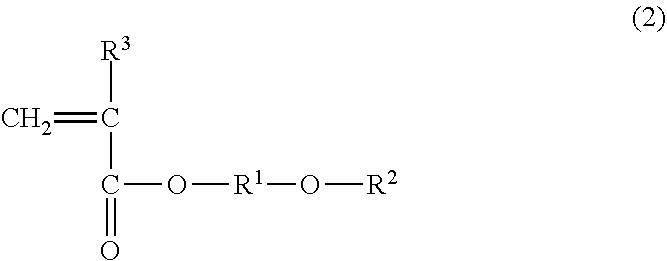
Claims (20)


Applications Claiming Priority (3)
| Application Number | Priority Date | Filing Date | Title |
|---|---|---|---|
| JP2020043497 | 2020-03-12 | ||
| JP2020043497 | 2020-03-12 | ||
| PCT/JP2021/006775 WO2021182100A1 (en) | 2020-03-12 | 2021-02-24 | Method for producing artificial lung |
Related Parent Applications (1)
| Application Number | Title | Priority Date | Filing Date |
|---|---|---|---|
| PCT/JP2021/006775 Continuation WO2021182100A1 (en) | 2020-03-12 | 2021-02-24 | Method for producing artificial lung |
Publications (2)
| Publication Number | Publication Date |
|---|---|
| US20220378996A1 US20220378996A1 (en) | 2022-12-01 |
| US12337090B2 true US12337090B2 (en) | 2025-06-24 |
Family
ID=77670647
Family Applications (1)
| Application Number | Title | Priority Date | Filing Date |
|---|---|---|---|
| US17/882,940 Active 2042-02-18 US12337090B2 (en) | 2020-03-12 | 2022-08-08 | Method for manufacturing oxygenator |
Country Status (3)
| Country | Link |
|---|---|
| US (1) | US12337090B2 (en) |
| JP (1) | JP7595644B2 (en) |
| WO (1) | WO2021182100A1 (en) |
Citations (12)
| Publication number | Priority date | Publication date | Assignee | Title |
|---|---|---|---|---|
| JP2002035116A (en) | 2000-07-19 | 2002-02-05 | Senko Medical Instr Mfg Co Ltd | Hybrid artificial lung |
| US20120048805A1 (en) * | 2010-07-16 | 2012-03-01 | University Of Texas At Austin | Method of modifying thin film composite membrane support structures for engineered osmosis applications |
| US20130240445A1 (en) * | 2012-03-16 | 2013-09-19 | General Electric Company | Polyphenol-type polymer coating of filtration membranes |
| CN104150787A (en) | 2014-08-06 | 2014-11-19 | 哈尔滨工业大学 | Modification method for preparing high-hydrophilic coating by dopamine-induced sol-gel process |
| CN107174976A (en) | 2017-05-18 | 2017-09-19 | 安徽众诚环境检测有限公司 | A kind of environment measuring modified polypropene hollow fiber filter membrane and preparation method thereof |
| US20180126316A1 (en) | 2015-06-01 | 2018-05-10 | Amogreentech Co., Ltd. | Gas filter |
| US20180147533A1 (en) | 2015-06-01 | 2018-05-31 | Amogreentech Co., Ltd. | Adsorptive liquid filter |
| CN108722200A (en) | 2018-06-01 | 2018-11-02 | 天津大学 | A kind of preparation method of the super-hydrophobic oleophobic membrane of double bionical membrane distillations with photo-thermal effect |
| CN108722207A (en) | 2018-05-30 | 2018-11-02 | 哈尔滨工业大学(威海) | A kind of preparation method of Janus composite membranes |
| US20210121831A1 (en) * | 2019-10-24 | 2021-04-29 | King Fahd University Of Petroleum And Minerals | Composite membrane containing a polydopamine-poly acyl halide matrix incorporating carbide-derived carbon and methods thereof |
| US20240325988A1 (en) * | 2023-03-29 | 2024-10-03 | King Fahd University Of Petroleum And Minerals | Polysulfone-based membrane for fractionation of erichrome black t (ebt)/divalent salts, and a method of making the same |
| US20250050284A1 (en) * | 2021-12-21 | 2025-02-13 | Gambro Lundia Ab | Membrane coated with polydopamine and chondroitin and process for producing same |
-
2021
- 2021-02-24 JP JP2022505898A patent/JP7595644B2/en active Active
- 2021-02-24 WO PCT/JP2021/006775 patent/WO2021182100A1/en not_active Ceased
-
2022
- 2022-08-08 US US17/882,940 patent/US12337090B2/en active Active
Patent Citations (12)
| Publication number | Priority date | Publication date | Assignee | Title |
|---|---|---|---|---|
| JP2002035116A (en) | 2000-07-19 | 2002-02-05 | Senko Medical Instr Mfg Co Ltd | Hybrid artificial lung |
| US20120048805A1 (en) * | 2010-07-16 | 2012-03-01 | University Of Texas At Austin | Method of modifying thin film composite membrane support structures for engineered osmosis applications |
| US20130240445A1 (en) * | 2012-03-16 | 2013-09-19 | General Electric Company | Polyphenol-type polymer coating of filtration membranes |
| CN104150787A (en) | 2014-08-06 | 2014-11-19 | 哈尔滨工业大学 | Modification method for preparing high-hydrophilic coating by dopamine-induced sol-gel process |
| US20180126316A1 (en) | 2015-06-01 | 2018-05-10 | Amogreentech Co., Ltd. | Gas filter |
| US20180147533A1 (en) | 2015-06-01 | 2018-05-31 | Amogreentech Co., Ltd. | Adsorptive liquid filter |
| CN107174976A (en) | 2017-05-18 | 2017-09-19 | 安徽众诚环境检测有限公司 | A kind of environment measuring modified polypropene hollow fiber filter membrane and preparation method thereof |
| CN108722207A (en) | 2018-05-30 | 2018-11-02 | 哈尔滨工业大学(威海) | A kind of preparation method of Janus composite membranes |
| CN108722200A (en) | 2018-06-01 | 2018-11-02 | 天津大学 | A kind of preparation method of the super-hydrophobic oleophobic membrane of double bionical membrane distillations with photo-thermal effect |
| US20210121831A1 (en) * | 2019-10-24 | 2021-04-29 | King Fahd University Of Petroleum And Minerals | Composite membrane containing a polydopamine-poly acyl halide matrix incorporating carbide-derived carbon and methods thereof |
| US20250050284A1 (en) * | 2021-12-21 | 2025-02-13 | Gambro Lundia Ab | Membrane coated with polydopamine and chondroitin and process for producing same |
| US20240325988A1 (en) * | 2023-03-29 | 2024-10-03 | King Fahd University Of Petroleum And Minerals | Polysulfone-based membrane for fractionation of erichrome black t (ebt)/divalent salts, and a method of making the same |
Non-Patent Citations (2)
| Title |
|---|
| International Preliminary Opinion, PCT/JP2021/006775, Apr. 27, 2021. |
| International Search Report, PCT/JP2021/006775, Apr. 15, 2021. |
Also Published As
| Publication number | Publication date |
|---|---|
| US20220378996A1 (en) | 2022-12-01 |
| JPWO2021182100A1 (en) | 2021-09-16 |
| JP7595644B2 (en) | 2024-12-06 |
| WO2021182100A1 (en) | 2021-09-16 |
Similar Documents
| Publication | Publication Date | Title |
|---|---|---|
| JP6711815B2 (en) | Oxygenator and method for manufacturing oxygenator | |
| US10758657B2 (en) | Artificial lung and method for manufacturing artificial lung | |
| US20260042067A1 (en) | Oxygenator and method for manufacturing same | |
| EP0908191B1 (en) | Hollow fiber membrane oxygenator | |
| US11779690B2 (en) | Oxygenator antithrombotic coating and method of manufacture | |
| US12544718B2 (en) | Method for manufacturing oxygenator | |
| JP7424873B2 (en) | Artificial lung and its manufacturing method | |
| EP1270029B1 (en) | Artificial cardiopulmonary circuit system | |
| US20220378996A1 (en) | Method for manufacturing oxygenator | |
| JP2021142162A (en) | Artificial lung and manufacturing method for the same | |
| JP2015136383A (en) | Hollow fiber membrane external perfusion type oxygenator | |
| JP2020141901A (en) | Artificial lung | |
| JP4162931B2 (en) | Cardiopulmonary circuit system | |
| US12016979B2 (en) | Method for producing artificial lung and artificial lung | |
| JP7792393B2 (en) | Method for evaluating the coating state of silicone compounds | |
| JP6956169B2 (en) | Manufacturing method of artificial lung | |
| JPWO2018168533A1 (en) | Manufacturing method of artificial lung | |
| JPH05111624A (en) | Semi-permeable membrane |
Legal Events
| Date | Code | Title | Description |
|---|---|---|---|
| FEPP | Fee payment procedure |
Free format text: ENTITY STATUS SET TO UNDISCOUNTED (ORIGINAL EVENT CODE: BIG.); ENTITY STATUS OF PATENT OWNER: LARGE ENTITY |
|
| AS | Assignment |
Owner name: TERUMO KABUSHIKI KAISHA, JAPAN Free format text: ASSIGNMENT OF ASSIGNORS INTEREST;ASSIGNOR:SATO, TAKESHI;REEL/FRAME:060753/0111 Effective date: 20220727 Owner name: TERUMO KABUSHIKI KAISHA, JAPAN Free format text: ASSIGNMENT OF ASSIGNORS INTEREST;ASSIGNOR:TAKAMA, RENJO;REEL/FRAME:060752/0738 Effective date: 20220725 |
|
| STPP | Information on status: patent application and granting procedure in general |
Free format text: DOCKETED NEW CASE - READY FOR EXAMINATION |
|
| STPP | Information on status: patent application and granting procedure in general |
Free format text: NON FINAL ACTION MAILED |
|
| STPP | Information on status: patent application and granting procedure in general |
Free format text: RESPONSE TO NON-FINAL OFFICE ACTION ENTERED AND FORWARDED TO EXAMINER |
|
| STPP | Information on status: patent application and granting procedure in general |
Free format text: NOTICE OF ALLOWANCE MAILED -- APPLICATION RECEIVED IN OFFICE OF PUBLICATIONS |
|
| STCF | Information on status: patent grant |
Free format text: PATENTED CASE |