US12316632B2 - Transferring verifiable address rights between devices of a data center (DC) network - Google Patents
Transferring verifiable address rights between devices of a data center (DC) network Download PDFInfo
- Publication number
- US12316632B2 US12316632B2 US17/335,292 US202117335292A US12316632B2 US 12316632 B2 US12316632 B2 US 12316632B2 US 202117335292 A US202117335292 A US 202117335292A US 12316632 B2 US12316632 B2 US 12316632B2
- Authority
- US
- United States
- Prior art keywords
- token
- server
- data center
- address
- addresses
- Prior art date
- Legal status (The legal status is an assumption and is not a legal conclusion. Google has not performed a legal analysis and makes no representation as to the accuracy of the status listed.)
- Active, expires
Links
Images



Classifications
-
- H—ELECTRICITY
- H04—ELECTRIC COMMUNICATION TECHNIQUE
- H04L—TRANSMISSION OF DIGITAL INFORMATION, e.g. TELEGRAPHIC COMMUNICATION
- H04L61/00—Network arrangements, protocols or services for addressing or naming
- H04L61/50—Address allocation
- H04L61/5007—Internet protocol [IP] addresses
-
- H—ELECTRICITY
- H04—ELECTRIC COMMUNICATION TECHNIQUE
- H04L—TRANSMISSION OF DIGITAL INFORMATION, e.g. TELEGRAPHIC COMMUNICATION
- H04L61/00—Network arrangements, protocols or services for addressing or naming
- H04L61/50—Address allocation
- H04L61/5038—Address allocation for local use, e.g. in LAN or USB networks, or in a controller area network [CAN]
-
- H—ELECTRICITY
- H04—ELECTRIC COMMUNICATION TECHNIQUE
- H04L—TRANSMISSION OF DIGITAL INFORMATION, e.g. TELEGRAPHIC COMMUNICATION
- H04L63/00—Network architectures or network communication protocols for network security
- H04L63/10—Network architectures or network communication protocols for network security for controlling access to devices or network resources
-
- H—ELECTRICITY
- H04—ELECTRIC COMMUNICATION TECHNIQUE
- H04W—WIRELESS COMMUNICATION NETWORKS
- H04W12/00—Security arrangements; Authentication; Protecting privacy or anonymity
- H04W12/08—Access security
- H04W12/084—Access security using delegated authorisation, e.g. open authorisation [OAuth] protocol
-
- H—ELECTRICITY
- H04—ELECTRIC COMMUNICATION TECHNIQUE
- H04L—TRANSMISSION OF DIGITAL INFORMATION, e.g. TELEGRAPHIC COMMUNICATION
- H04L2101/00—Indexing scheme associated with group H04L61/00
- H04L2101/60—Types of network addresses
- H04L2101/618—Details of network addresses
- H04L2101/622—Layer-2 addresses, e.g. medium access control [MAC] addresses
Definitions
- the present disclosure relates generally to transferring address rights (e.g., internet protocol address(es), media access control address(es), etc.) amongst devices in a data center network fabric.
- address rights e.g., internet protocol address(es), media access control address(es), etc.
- Service providers offer computing-based services, or solutions, to provide users with access to computing resources to fulfill users' computing resource needs without having to invent in and maintain computing infrastructure required to implement the services.
- These service providers often maintain networks of data centers which house servers, routers, and other devices that provide computing resources to users such as compute resources, networking resources, storage resources, database resources, application resources, security resources, and so forth.
- Users may be allocated portions of the computing resources using virtualization technology that remain available for peak demands of the users.
- the virtualized portions, or virtualized networks, of computing resources may be scaled up (or down) according to the computing needs of a given user without the need to maintain excess computing capacity.
- schedulers are utilized to automate deployment, scaling, and operations of the virtual computing resources (or “virtual resources”) across physical servers in a cloud computing network.
- the schedulers may track what virtual resources have been placed on what physical servers in order to determine where to spin up or migrate virtual resources. For example, a scheduler may determine that the resource utilization of a physical server has increased, and the physical server may be unable to support one or more virtual resources deployed to the physical server. The scheduler may then identify an additional physical server that has availability of server resources to adequately support the virtual resource. The virtual resource may then be migrated and deployed to the other physical server that has availability to support the virtual resource.
- migration of a virtual resource from one physical server to another may lead to difficulties routing communications between virtual resources executing on separate physical servers.
- a switch may be utilized to forward packets to virtual services that are deployed on the physical servers.
- the virtual resource may begin sending data from a new address, and a respective switch may transmit an advertisement message to various switches in a data center fabric alerting each of such a migration. While advertising the migration is advantageous for various reasons, there is no validation of the addresses that are exchanged between hosts, resources, and/or devices.
- FIG. 1 A illustrates a system-architecture diagram of an example flow for transferring address rights (e.g., internet protocol address(es), media access control address(es), etc.) amongst devices in a data center network fabric.
- a network controller of the data center fabric may determine that a device is requesting to communicate on an address in the network, sign a token indicating authorization to communicate on the address, and send the token to the device.
- FIG. 1 B illustrates a system-architecture diagram of an example flow for transferring address rights (e.g., internet protocol address(es), media access control address(es), etc.) amongst devices in a data center network fabric.
- a device e.g., a switch
- a device may receive a token indicating authorization to communicate on an address in the network, send one or more packets including the token to a second device in the data center fabric, and may communicate on the address.
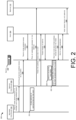
- FIG. 2 illustrates a data flow diagram of an example process according to which address rights (e.g., internet protocol address(es), media access control address(es), etc.) may be transferred between devices in a data center network fabric.
- address rights e.g., internet protocol address(es), media access control address(es), etc.
- FIG. 3 illustrates a flow diagram of an example method for a first device in a data center fabric to receive a token comprising a verifiable indication of authorization to communicate on an address in the fabric, send one or more packets comprising the token to a second device in the data center fabric, and communicate on the address.
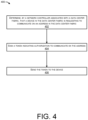
- FIG. 4 illustrates a flow diagram of an example method for a network controller associated with a data center fabric to determine that a device in the data center fabric is requesting to communicate on an address, sign a token indicating authorization to communicate on the address, and send the token to the device.
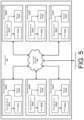
- FIG. 5 illustrates a computing system diagram illustrating a configuration for a data center that can be utilized to implement aspects of the technologies disclosed herein.
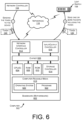
- FIG. 6 is a computer architecture diagram showing an illustrative computer hardware architecture for implementing a server device that can be utilized to implement aspects of the various technologies presented herein.
- This disclosure describes a method for a network controller (or a service controller) associated with a data center fabric network to determine that a device in the data center fabric is requesting to communicate on an address, sign a token indicating authorization to communicate on the address, and send the token to the device allowing the device to communicate on the address in the data center fabric using the signed token.
- the method includes determining, by a network controller associated with a data center fabric, that a device in the data center fabric is requesting to communicate on an address in the data center fabric. Additionally, or alternatively, the method includes signing a token indicating authorization to communicate on the address. Additionally, or alternatively, the method includes sending the token to the device.
- the method includes receiving a token at a first device in a data center fabric, the token comprising a verifiable indication of authorization to communicate on an address in the data center fabric. Additionally, or alternatively the method includes sending one or more packets from the first device to a second device in the data center fabric, the one or more packets including the token indicating the authorization to communicate on the address. Additionally, or alternatively, the method includes communicating, by the first device, data on the address.
- the techniques described herein may be performed by a system and/or device having non-transitory computer-readable media storing computer-executable instructions that, when executed by one or more processors, performs the method described above.
- a scheduler may determine that the resource utilization of a physical server has increased, and the physical server may be unable to support one or more virtual resources deployed to the physical server. The scheduler may then identify an additional physical server that has availability of server resources to adequately support the virtual resource. The virtual resource may then be migrated and deployed to the other physical server that has availability to support the virtual resource.
- migration of a virtual resource from one physical server to another may lead to difficulties routing communications between virtual resources executing on separate physical servers.
- access control lists ACLs
- policies may be applied in the fabric to ensure that that server, and only that server, can send data using the address. This is useful from a security perspective and in preventing software managing teams from affecting each other through destructive accidental events, e.g., spoofing.
- applying these ACLs and/or policies may be difficult with the movement of addresses about the data center network fabric.
- This disclosure describes techniques to generate and transfer verifiable address rights (e.g., internet protocol (IP) address(es), media access control (MAC) address(es), etc.) amongst devices in a data center network fabric.
- IP internet protocol
- MAC media access control
- a server may have one IP and/or MAC address (e.g., if the server is running an operating system) or the server may have a fixed and known set of IP and/or MAC addresses (e.g., if the server is executing virtual machine(s) (VM)).
- IP internet protocol
- MAC media access control
- a host executing on a server and/or supporting a service, may begin to utilize a new IP and/or MAC address for various reasons, such as, for example, a new VM boots up, the server is running a portion of a service chain and routing packets, or a VM has migrated.
- a device and/or service in the data center network fabric may generate and/or issue a token that represents the right to send data from a specific IP and/or MAC address.
- a node e.g., a switch
- a server in which the service and/or VM is operating
- the switch may then send one or more packets, including the token, to a second device in the data center fabric (e.g., another switch). Then, the switch may then begin to communicate data on the address on behalf of the service and/or VM.
- a device and/or service in the data center network fabric may determine that a device in the data center fabric is requesting to communicate on an address in the data center network fabric.
- the network controller, service controller, and/or any other network device in the fabric may then generate and/or sign a token indicating authorization to communicate on the address.
- the token may be signed by a private key of the possessing device and/or component.
- the network controller and/or service controller may then send the token to the device requesting to communicate on the address.
- a DC authority e.g., a network controller
- the first switch may send a request to the DC authority to communicate on an IP address (or an IP address range) in the DC network fabric.
- the switch may send the request to the DC authority to communicate on a specific MAC address in the DC network fabric.
- the DC authority may determine that the first switch is requesting to communicate on the address in the DC network fabric.
- the address may be configured as an IP address. Additionally, or alternatively, the address may be configured as a MAC address.
- the DC authority may then create a token indicating that any switch in possession of this token has the right to transmit packets from the IP address.
- the DC authority may then sign the token indicating the authorization to communicate on the address.
- the DC authority may send the token to a service controller associated with the DC network fabric. Additionally, or alternatively, the DC authority may be configured to store and/or manage the tokens without the assistance of a separate service controller.
- the DC authority may cause the first switch to block the IP address range on all of the associated ports.
- the DC authority may cause the first switch to block the address range on all of the ports prior to the service starting up on the first server.
- traffic from the host e.g., the first server
- this IP address range may be forbidden.
- a pool of IP addresses may be assigned to the service.
- the DC authority may assign the pool of IP addresses to the service.
- the service controller may assign the pool of IP addresses to the service. From here, the token for the address range may be passed from the DC authority and/or the service controller over the link that is configured to host the IP address.
- the host may then pass the token to the first switch, the DC authority, and/or the service controller, where the first switch (or the DC authority or the service controller) may validate the token.
- the first switch may validate the token using various validation techniques, such as, for example, a crypto signature check and/or a validation of a reference against a database entry, or the like.
- the first switch may then be configured to open the access control lists (ACLs) for the IP range on the port and/or the bond going to the host to permit data being sent from the IP address. Additionally, or alternatively, the first switch may inform other devices in the DC network fabric (e.g., additional switches) that other uses of the token, and therefore the IP address, have been revoked. In some examples, the first switch may be configured to inform the other devices directly. Additionally, or alternatively, the first switch may be configured to inform the other devices by employing the assistance of the DC authority.
- ACLs access control lists
- the host may now send from the address range matching the token.
- incoming traffic to an address in the address range is received at the host, as the first switch is aware that the host has this address range and has the authorized validation to communicate on the address range.
- the host may then send the traffic into the service.
- the tokens described herein may be configured such that they may only be active in one location (e.g., one switch) at a time. Additionally, or alternatively, the tokens may be configured such that they may be active in several locations, such as, for example, in equal-cost multi-path routing (ECMP) implementations, where the address is in several locations simultaneously.
- ECMP equal-cost multi-path routing
- the service may migrate from the first server in the DC network fabric to a second server in the DC network fabric.
- a second switch associated with the second server may send a request for the token to the first switch.
- the first switch may perform a token delegation to the second switch.
- the first switch may perform the token delegation in various ways, such as, for example, a transfer of some or all rights associated with the token or a duplication of some or all rights associated with the token and subsequent transfer of the duplicated rights.
- the token delegation may be configured as a simple transfer of the data (e.g., the token) from the first switch to the second switch, and the token may be configured such that whoever has a copy can utilize it.
- the token delegation may be configured as a cryptographic operation where information may be added and/or replaced in the token, while the token remains covered by a signature indicating the validity of the token.
- the token delegation procedure may be performed utilizing the DC authority (e.g., the DC authority may reissue the token to a desired location and/or revoke a token from a previous location) and/or may be performed by asking the locally connected device (e.g., the first switch) to reissue the token and specifying any additional information to include in the token.
- token delegation methods may include explicit token revocation instructions, such that, when the token is utilized (e.g., transmitted with a packet), the DC authority may revoke any rights associated with the token on the previous host and/or at any other host included in the DC network fabric.
- a computing-based and/or cloud-based solution and/or service can generally include any type of resources implemented by virtualization techniques, such as containers, virtual machines, virtual storage, and so forth.
- virtualization techniques such as containers, virtual machines, virtual storage, and so forth.
- the techniques described as being implemented in data center fabrics and/or a cloud computing network are generally applicable for any network of devices managed by any entity where virtual resources are provisioned.
- the techniques may be performed by a schedulers or orchestrator, and in other examples, various components may be used in a system to perform the techniques described herein.
- the devices and components by which the techniques are performed herein are a matter of implementation, and the techniques described are not limited to any specific architecture or implementation.
- the techniques described herein provide various improvements and efficiencies with respect to transferring addresses (e.g., IP address, MAC address, etc.) amongst hosts, services, and/or devices in a data center network fabric.
- addresses e.g., IP address, MAC address, etc.
- the techniques described herein create and sign a token that indicates validated rights to send from a specified address.
- the rights can be delegated from one machine to another in a data center network fabric, allowing for a data center authority to apply address restrictions automatically to new services that spin up in the data center network fabric, resulting in an increased scalability.
- the rights can be seamlessly delegated from one device to another following migration of a service from one location to another.
- FIG. 1 A illustrates a system-architecture diagram of an example flow 100 for transferring address rights (e.g., internet protocol address(es), media access control address(es), etc.) amongst devices in a data center network fabric 102 .
- address rights e.g., internet protocol address(es), media access control address(es), etc.
- a network controller 104 of the data center fabric 102 may determine that a device is requesting to communicate on an address in the network 102 , sign a token indicating authorization to communicate on the address, and send the token to the device.
- the data center fabric 102 may comprise one or more data centers that include various networking devices, such as, spine network switches 106 A-N, leaf network switch(es) 108 ( 1 )-(N), and physical servers 110 ( 1 )( 1 )-(N)(N), where N is any integer greater than “1.”
- the data center(s) may be located across geographic areas, and the data center fabric 102 may be a distributed network through which users (often customers) may interact via user devices to manage or otherwise interact with service provided by the data center network fabric 102 .
- the data center network fabric 102 may provide on-demand availability of computing system resources of physical server(s) 110 , such as data storage, computing power (e.g., CPU, GPU, etc.), networking, databases, etc., without direct active management by users.
- the data center network fabric 102 may be managed and maintained by a service provider such that users do not have to invest in and maintain the computing infrastructure for their computing resource needs.
- a user may be provided access to, or allocated use of, a portion of the computing resources of physical server(s) 110 in the data center network fabric 102 .
- the data center network fabric 102 may scale, such as by spinning up resources or spinning down resources, based on demand for the individual users.
- the portions of the data center network fabric 102 may be allocated using hardware virtualization such that portions of the data center network fabric 102 can be configured and managed by the user (e.g., security configuration, load balancing configuration, etc.).
- the data center network fabric 102 need not be managed by a service provider, and can be managed by any entity, including the user themselves that run the applications or services.
- physical server(s) 110 may host one or more virtual machines. Each virtual machine may be configured to execute one of various operations and act as one or more virtual components for the cloud computing network 102 , such as, for example, a service 112 ( 1 )( 1 )-(N)(N) where N is any integer greater than “1.” In some examples, the physical server(s) 110 may host any number of virtual machines.
- the number of services 112 may scale based on a number of users 114 interacting with the cloud computing network.
- the users 114 may comprise one or more of individual users, groups of users, organizations, businesses, or other entities that interact with the data center network fabric 102 via respective user devices.
- the user devices may be any type of computing device capable of connecting to the data center network fabric 102 via a suitable data communications network 116 such as, but not limited to, a laptop or desktop computer, a tablet computing device, a server computer, a television, or a mobile telephone.
- Administrative users employed by the operator of the data center network fabric 102 such as administrators managing the operation of the data center network fabric 102 , might also connect with, manage, and utilize resources provided by the data center network fabric 102 in a similar fashion.
- the users 114 may provide input data 118 via the network(s) 116 to interact with the service 112 that is supported by the virtual machines running on the servers 110 .
- the users 114 may submit requests to process data, retrieve data, store data, and so forth such that virtual machines hosting the services 112 are spun up or spun down to process the requests based on demand.
- the data center network fabric 102 may generate and transfer verifiable address rights (e.g., internet protocol (IP) address(es), media access control (MAC) address(es), etc.) amongst devices in the data center network fabric 102 .
- IP internet protocol
- MAC media access control
- a server 110 may have one IP and/or MAC address (e.g., if the server is running an operating system) or the server 110 may have a fixed and known set of IP and/or MAC addresses (e.g., if the server is executing virtual machine(s) (VM)).
- IP internet protocol
- MAC media access control
- a host executing on a server 110 and/or supporting a service 112 , may begin to utilize a new IP and/or MAC address for various reasons, such as, for example, anew VM boots up, the server 110 is running a portion of a service chain and routing packets, or a VM has migrated.
- a device 110 , component (e.g., the network controller 104 ), and/or service 112 in the data center network fabric 102 may generate and/or issue a token 120 that represents the right to send data from a specific IP and/or MAC address.
- a node e.g., a switch 108
- a server 110 in which the service 112 and/or VM is operating, may receive a token 120 comprising a verifiable indication of authorization to communicate on an address in the data center fabric 102 .
- a DC authority e.g., a network controller 104
- a DC authority may receive an indication of such a startup from a first switch 108 A associated with the first server 110 ( 1 )( 1 ) on which the service 112 ( 1 )( 1 ) is operating.
- the first switch 108 ( 1 ) may send a request to the DC authority 104 to communicate on an IP address (or an IP address range) in the DC network fabric 102 .
- the first switch 108 ( 1 ) may send the request to the DC authority 104 to communicate on a specific MAC address in the DC network fabric 102 .
- the tokens 120 described herein may be configured such that they may only be active in one location (e.g., one switch) at a time. Additionally, or alternatively, the tokens 120 may be configured such that they may be active in several locations, such as, for example, in equal-cost multi-path routing (ECMP) implementations, where the address is in several locations simultaneously.
- ECMP equal-cost multi-path routing
- the DC authority 104 may determine that the first switch 108 ( 1 ) is requesting to communicate on the address in the DC network fabric 102 .
- the address may be configured as an IP address. Additionally, or alternatively, the address may be configured as a MAC address. As such, it should be appreciated that any of the process(es) described herein may be performed with respect to an IP address and/or a MAC address of a device 110 and/or service 112 in the data center network fabric 102 .
- the DC authority 104 may then create a token 120 indicating that any switch 106 , 108 in possession of this token has the right to transmit packets from the IP address. In some examples, the DC authority 104 may then sign the token 120 indicating the authorization to communicate on the address. In some examples, the DC authority 104 may sign, or otherwise verify and/or authorize the token 120 using a private key and/or public key value. the DC authority may send the token to a service controller associated with the DC network fabric. Additionally, or alternatively, the DC authority may be configured to store and/or manage the tokens without the assistance of a separate service controller.
- the example flow may continue from step “ 3 ” of FIG. 1 A to step “ 4 ” of FIG. 1 B . Additionally, or alternatively, the example flow may begin from step “ 4 ” of FIG. 1 B and continue from step “ 6 ” of FIG. 1 B to step “ 1 ” of FIG. 1 A . Additionally, or alternatively, the example flow from FIG. 1 A may be executed simultaneously with the example flow of FIG. 1 B .
- FIG. 1 B illustrates a system-architecture diagram of an example flow for transferring address rights (e.g., internet protocol address(es), media access control address(es), etc.) amongst devices in a data center network fabric 102 .
- a device e.g., a switch 108
- a device may receive a token indicating authorization to communicate on an address in the network, send one or more packets including the token 120 to a second device in the data center fabric 102 , and may communicate on the address.
- the first switch 108 ( 1 ) may receive the token 120 from the DC authority 104 . Additionally, or alternatively, the first switch 108 ( 1 ) may receive the token 120 from one or more additional switch(es) 108 ( 1 )- 108 (N) included in the data center fabric 102 .
- the token 120 may comprise an indication of an address, such as, for example, a MAC address and/or an IP address, and/or a verifiable authorization to communicate on the address.
- the token 120 may be signed by a public key and/or private key of the DC authority 104 and/or the switch 108 from which the token was received.
- the first switch 108 ( 1 ) may pass along the token 120 to the service 112 ( 1 )( 1 ) and/or the first server 110 ( 1 )( 1 ) supporting the service 112 ( 1 )( 1 ). Additionally, or alternatively, the DC authority 104 may transmit the token 120 directly to the service 112 ( 1 )( 1 ) and/or the first server 110 ( 1 )( 1 ) supporting the service 112 A( 1 ).
- the first server 110 ( 1 )( 1 ) and/or the service 112 ( 1 )( 1 ) may send one or more packets to the first switch 108 ( 1 ).
- the one or more packets may include the token 120 .
- the first switch 108 ( 1 ) may receive the token 120 and validate the token 120 , that is, the first switch 108 ( 1 ) may decrypt the token 120 using a public key of the network controller 104 and/or the switch 108 from which the token 120 was received.
- the service 112 ( 1 )( 1 ), the first server 110 ( 1 )( 1 ), and/or the first switch 108 ( 1 ) may be configured to communicate on the address. That is, the service 112 ( 1 )( 1 ), the first server 110 ( 1 )( 1 ), and/or the first switch 108 ( 1 ) may be configured to transmit data to and from an additional service 112 , an additional server 110 , and/or an additional switch 108 such that the address indicated by the token supports the communication. In some examples, the first switch 108 ( 1 ) may open the access control list (ACL) for the address range indicated by the token 120 .
- ACL access control list
- the service 112 ( 1 )( 1 ) may migrate from the first server 110 ( 1 )( 1 ) in the DC network fabric 102 to a second server 110 ( 2 )( 1 ) in the DC network fabric 102 .
- a second switch 108 ( 2 ) associated with the second server 110 ( 2 )( 1 ) may send a request for the token 120 to the first switch 108 ( 1 ).
- the first switch 108 ( 1 ) and/or the first server 110 ( 1 )( 1 ) may perform a token delegation to the second switch 108 ( 2 ) and/or the second server 110 ( 2 )( 1 ).
- the first switch 108 ( 1 ) may perform the token delegation in various ways, such as, for example, a transfer of some or all rights associated with the token 120 or a duplication of some or all rights associated with the token 120 and subsequent transfer of the duplicated rights.
- the token delegation may be configured as a simple transfer of the data (e.g., the token 120 ) from the first switch 108 ( 1 ) to the second switch 108 ( 2 ), and the token 120 may be configured such that whatever device has a copy can utilize it. Additionally, or alternatively, the token delegation may be configured as a cryptographic operation where information may be added and/or replaced in the token 120 , while the token remains covered by a signature indicating the validity of the token, such as, for example, a signature using the private key of the device from which the token 120 is migrating from (e.g., the first switch 108 (A) and/or the first server 110 ( 1 )( 1 ).
- the token delegation procedure may be performed utilizing the DC authority 104 (e.g., the DC authority 104 may reissue the token 120 to a desired location and/or revoke a token 120 from a previous location) and/or may be performed by asking the locally connected device (e.g., the first switch 108 ( 1 )) to reissue the token 120 and specifying any additional information to include in the token 120 .
- token delegation methods may include explicit token revocation instructions, such that, when the token 120 is utilized (e.g., transmitted with a packet), the DC authority 104 may revoke any rights associated with the token 120 on the previous host and/or at any other host included in the DC network fabric 102 .
- FIG. 2 illustrates a data flow diagram of an example process 200 according to which address rights (e.g., internet protocol address(es), media access control address(es), etc.) may be transferred between devices in a data center network fabric 102 .
- the data center network fabric 102 may include a network controller 104 , one or more switch(es) 106 , 108 , one or more physical servers 110 supporting one or more virtual services 112 , a service controller 202 , and/or one or more host(s) 204 .
- the process 200 may include creating a token indicating that any switch in possession of this token has the right to transmit packets from the IP address.
- the DC authority 104 and/or the service controller 202 may create the token.
- the DC authority 104 and/or the service controller 202 may then sign the token indicating the authorization to communicate on the address.
- the DC authority 104 may send the token to a service controller 202 associated with the DC network fabric 102 .
- the DC authority 104 may be configured to store and/or manage the tokens without the assistance of a separate service controller 202 .
- the DC authority may cause the first switch to block the IP address range on all of the associated ports.
- the DC authority 104 may cause a first switch to block the address range on all of the ports prior to a service starting up on a first server, while a service starts up on a first server, and/or after the service has started up on a first server.
- traffic from the host 204 (e.g., the first server) on this IP address range may be forbidden.
- a pool of IP addresses may be assigned to the service.
- the DC authority 104 may assign the pool of IP addresses to the service.
- the service controller 202 may assign the pool of IP addresses to the service.
- the token for the address range may be passed from the DC authority 104 and/or the service controller 202 over the link that is configured to host the IP address.
- the host 204 may then pass the token to the first switch, the DC authority 104 , and/or the service controller 202 , where the first switch (or the DC authority or the service controller) may validate the token.
- the first switch may validate the token using various validation techniques, such as, for example, a crypto signature check and/or a validation of a reference against a database entry, or the like.
- the first switch may then be configured to open the access control lists (ACLs) for the IP range on the port and/or the bond going to the host 204 to permit data being sent from the IP address. Additionally, or alternatively, the first switch may inform other devices in the DC network fabric 102 (e.g., additional switches) that other uses of the token, and therefore the IP address, have been revoked. In some examples, the first switch may be configured to inform the other devices directly. Additionally, or alternatively, the first switch may be configured to inform the other devices by employing the assistance of the DC authority 104 and/or the service controller 202 .
- ACLs access control lists
- the host 204 may now send from the address range matching the token.
- the first switch may gain awareness that the host 204 has this address range and has the authorized validation to communicate on the address range.
- incoming traffic to an address in the address range is received at the host 204 from the first switch.
- the host 204 may then send the traffic into the service.
- FIGS. 3 and 4 illustrate flow diagrams of example methods 300 and 400 and that illustrate aspects of the functions performed at least partly by the data center fabric 102 , the network controller 104 , and/or the service controller 202 as described in FIGS. 1 A, 1 B, and 2 .
- the logical operations described herein with respect to FIGS. 3 and 4 may be implemented (1) as a sequence of computer-implemented acts or program modules running on a computing system and/or (2) as interconnected machine logic circuits or circuit modules within the computing system.
- the method(s) 300 and 400 may be performed by a system comprising one or more processors and one or more non-transitory computer-readable media storing computer-executable instructions that, when executed by the one or more processors, cause the one or more processors to perform the method(s) 300 and 400 .
- FIG. 3 illustrates a flow diagram of an example method 300 for a first device in a data center fabric 102 to receive a token comprising a verifiable indication of authorization to communicate on an address in the fabric, send one or more packets comprising the token to a second device in the data center fabric, and communicate on the address.
- the method 300 may include receiving a token at a first device in a data center fabric.
- the token may comprise a verifiable indication of authorization to communicate on an address in the data center fabric 102 .
- the token may be configured as the token 120 as described with respect to FIGS. 1 A- 2 .
- the method 300 may include sending one or more packets from the first device to a second device in the data center fabric 102 .
- the one or more packets may include the token indicating the authorization to communicate on the address.
- the first device may be configured as the first server 110 ( 1 )( 1 ) and the second device may be configured as the first switch 108 ( 1 ) as described with respect to FIGS. 1 A- 2 .
- the method 300 may include communicating, by the first device, data on the address.
- a service executing on the first device may communicate the data on the address.
- the service and/or the first device may send communication data to the second device, where the second device may be configured to route the communication data to additional devices in the data center network fabric 102 .
- the method 300 may include receiving the token from a network controller 104 associated with the data center fabric 102 .
- the token may be signed using the private key of the network controller 104 .
- the method 300 may include signing the token using the private key of the first device to generate a signed token.
- sending the one or more packets may include sending the signed token.
- the method 300 may include determining that the address is to be migrated to at least one of a different device or a different service.
- the first device may determine that the address is to be migrated.
- the method 300 may include signing, by the first device, an indication that the address is to be migrated to at least one of the different device or the different service. Additionally, or alternatively, the method 300 may include sending the indication into the data center fabric.
- the method 300 may include determining, by the first device, that the address is to be migrated to at least one of a different device or a different service. Additionally, or alternatively, the method 300 may include signing, by the first device, an indication that the address is to be migrated to at least one of the different device or the different service. Additionally, or alternatively, the method 300 may include sending the token to at least one of the different device or the different service.
- the method 300 may include sending, to one or more devices associated with the data center fabric, an indication that the authorization to communicate on the address has been transferred to at least one of the different device or the different service.
- the address may comprise at least one of an internet protocol (IP) address or a media access control (MAC) address.
- IP internet protocol
- MAC media access control
- FIG. 4 illustrates a flow diagram of an example method 400 for a network controller 104 associated with a data center fabric 102 to determine that a device in the data center fabric 102 is requesting to communicate on an address, sign a token indicating authorization to communicate on the address, and send the token to the device.
- the method 400 may include determining that a device in the data center fabric 102 is requesting to communicate on an address in the data center fabric 102 .
- a network controller 104 associated with a data center fabric 102 may determine that the device in the data center fabric 102 is requesting to communicate on the address.
- the device may be configured as the first server 110 ( 1 )( 1 ) or the first switch 108 ( 1 ) as described with respect to FIGS. 1 A- 2 .
- the method 400 may include signing a token indicating authorization to communicate on the address. Additionally, or alternatively, the method 400 may include creating the token by the network controller 104 .
- the token may comprise a verifiable indication of authorization to communicate on an address in the data center fabric 102 .
- the token may be configured as the token 120 as described with respect to FIGS. 1 A- 2 .
- the method 400 may include sending the token to the device.
- the token may be sent from the network controller 104 to the first device. Additionally, or alternatively, the token may be sent from an additional device included in the data center network fabric 102 and to the first device.
- the address may comprise at least one of an internet protocol (IP) address or a media access control (MAC) address.
- IP internet protocol
- MAC media access control
- the method 400 may include receiving a request from the device to transfer the authorization to communicate on the address to an additional device in the data center fabric. Additionally, or alternatively, the method 400 may include signing an additional token indicating authorization to communicate on the address. Additionally, or alternatively, the method 400 may include sending the additional token to the additional device.
- the method 400 may include receiving a request from the device to transfer the authorization to communicate on the address to an additional device in the data center fabric. Additionally, or alternatively, the method 400 may include sending, to one or more devices associated with the data center fabric, an indication that the authorization to communicate on the address is to be transferred from the device to the additional device.
- signing the token may comprise signing the token using a private key of the network controller.
- the method 400 may include determining, by the network controller, that the address is to be migrated to at least one of a different device or a different service. Additionally, or alternatively, the method 400 may include signing, by the network controller, an indication that the address is to be migrated to at least one of the different device or the different service. Additionally, or alternatively, the method 400 may include sending the indication into the data center fabric. Additionally, or alternatively, the method 400 may include sending the token to at least one of the different device or the different service.
- FIG. 5 is a computing system diagram illustrating a configuration for a data center 500 that can be utilized to implement aspects of the technologies disclosed herein.
- the example data center 500 shown in FIG. 5 includes several server computers 502 A- 502 E (which might be referred to herein singularly as “a server computer 502 ” or in the plural as “the server computers 502 ”) for providing computing resources.
- the server computers 502 may include, or correspond to, the servers described herein with respect to FIG. 1 .
- the server computers 502 can be standard tower, rack-mount, or blade server computers configured appropriately for providing the computing resources described herein.
- the computing resources provided by the data center network fabric 102 can be data processing resources such as VM instances or hardware computing systems, database clusters, computing clusters, storage clusters, data storage resources, database resources, networking resources, and others.
- Some of the servers 502 can also be configured to execute a resource manager capable of instantiating and/or managing the computing resources.
- the resource manager can be a hypervisor or another type of program configured to enable the execution of multiple VM instances on a single server computer 502 .
- Server computers 502 in the data center 500 can also be configured to provide network services and other types of services.
- an appropriate LAN 508 is also utilized to interconnect the server computers 502 A- 502 E.
- the configuration and network topology described herein has been greatly simplified and that many more computing systems, software components, networks, and networking devices can be utilized to interconnect the various computing systems disclosed herein and to provide the functionality described above.
- Appropriate load balancing devices or other types of network infrastructure components can also be utilized for balancing a load between data centers 500 , between each of the server computers 502 A- 502 E in each data center 500 , and, potentially, between computing resources in each of the server computers 502 .
- the configuration of the data center 500 described with reference to FIG. 5 is merely illustrative and that other implementations can be utilized.
- the server computers 502 may each execute one or more network switch(es) 504 , the service(s) 112 , and/or the host(s) 204 , provisioned across a set or cluster of servers 502 .
- the data center network fabric 102 may provide computing resources, like application containers, VM instances, and storage, on a permanent or an as-needed basis.
- the computing resources provided by the data center network fabric 102 may be utilized to implement the various services described above.
- the computing resources provided by the data center network fabric 102 can include various types of computing resources, such as data processing resources like application containers and VM instances, data storage resources, networking resources, data communication resources, network services, and the like.
- Each type of computing resource provided by the data center network fabric 102 can be general-purpose or can be available in a number of specific configurations.
- data processing resources can be available as physical computers or VM instances in a number of different configurations.
- the VM instances can be configured to execute applications, including web servers, application servers, media servers, database servers, some or all of the network services described above, and/or other types of programs.
- Data storage resources can include file storage devices, block storage devices, and the like.
- the computing resources network 102 can also be configured to provide other types of computing resources not mentioned specifically herein.
- the computing resources provided by the data center network fabric 102 may be enabled in one embodiment by one or more data centers 500 (which might be referred to herein singularly as “a data center 500 ” or in the plural as “the data centers 500 ”).
- the data centers 500 are facilities utilized to house and operate computer systems and associated components.
- the data centers 500 typically include redundant and backup power, communications, cooling, and security systems.
- the data centers 500 can also be located in geographically disparate locations.
- One illustrative embodiment for a data center 500 that can be utilized to implement the technologies disclosed herein will be described below with regard to FIG. 5 .
- FIG. 6 shows an example computer architecture for a computing device (or network switch) 502 capable of executing program components for implementing the functionality described above.
- the computer architecture shown in FIG. 6 illustrates a conventional server computer, workstation, desktop computer, laptop, tablet, network appliance, e-reader, smartphone, or other computing device, and can be utilized to execute any of the software components presented herein.
- the computing device 502 may, in some examples, correspond to a physical server 116 described herein with respect to FIG. 1 .
- the computing device 502 includes a baseboard 602 , or “motherboard,” which is a printed circuit board to which a multitude of components or devices can be connected by way of a system bus or other electrical communication paths.
- a baseboard 602 or “motherboard”
- the CPUs 604 can be standard programmable processors that perform arithmetic and logical operations necessary for the operation of the computing device 502 .
- the CPUs 604 perform operations by transitioning from one discrete, physical state to the next through the manipulation of switching elements that differentiate between and change these states.
- Switching elements generally include electronic circuits that maintain one of two binary states, such as flip-flops, and electronic circuits that provide an output state based on the logical combination of the states of one or more other switching elements, such as logic gates. These basic switching elements can be combined to create more complex logic circuits, including registers, adders-subtractors, arithmetic logic units, floating-point units, and the like.
- the chipset 606 provides an interface between the CPUs 604 and the remainder of the components and devices on the baseboard 602 .
- the chipset 606 can provide an interface to a RAM 608 , used as the main memory in the computing device 502 .
- the chipset 606 can further provide an interface to a computer-readable storage medium such as a read-only memory (“ROM”) 610 or non-volatile RAM (“NVRAM”) for storing basic routines that help to startup the computing device 502 and to transfer information between the various components and devices.
- ROM 610 or NVRAM can also store other software components necessary for the operation of the computing device 502 in accordance with the configurations described herein.
- the computing device 502 can operate in a networked environment using logical connections to remote computing devices and computer systems through a network, such as the network 116 .
- the chipset 606 can include functionality for providing network connectivity through a NIC 612 , such as a gigabit Ethernet adapter.
- the NIC 612 is capable of connecting the computing device 502 to other computing devices over the network 116 . It should be appreciated that multiple NICs 612 can be present in the computing device 502 , connecting the computer to other types of networks and remote computer systems.
- the computing device 502 can be connected to a storage device 618 that provides non-volatile storage for the computing device 502 .
- the storage device 618 can store an operating system 620 , programs 622 , and data, which have been described in greater detail herein.
- the storage device 618 can be connected to the computing device 502 through a storage controller 614 connected to the chipset 606 .
- the storage device 618 can consist of one or more physical storage units.
- the storage controller 614 can interface with the physical storage units through a serial attached SCSI (“SAS”) interface, a serial advanced technology attachment (“SATA”) interface, a fiber channel (“FC”) interface, or other type of interface for physically connecting and transferring data between computers and physical storage units.
- SAS serial attached SCSI
- SATA serial advanced technology attachment
- FC fiber channel
- the computing device 502 can store data on the storage device 618 by transforming the physical state of the physical storage units to reflect the information being stored.
- the specific transformation of physical state can depend on various factors, in different embodiments of this description. Examples of such factors can include, but are not limited to, the technology used to implement the physical storage units, whether the storage device 618 is characterized as primary or secondary storage, and the like.
- the computing device 502 can store information to the storage device 618 by issuing instructions through the storage controller 614 to alter the magnetic characteristics of a particular location within a magnetic disk drive unit, the reflective or refractive characteristics of a particular location in an optical storage unit, or the electrical characteristics of a particular capacitor, transistor, or other discrete component in a solid-state storage unit.
- Other transformations of physical media are possible without departing from the scope and spirit of the present description, with the foregoing examples provided only to facilitate this description.
- the computing device 502 can further read information from the storage device 618 by detecting the physical states or characteristics of one or more particular locations within the physical storage units.
- the computing device 502 can have access to other computer-readable storage media to store and retrieve information, such as program modules, data structures, or other data.
- computer-readable storage media is any available media that provides for the non-transitory storage of data and that can be accessed by the computing device 502 .
- the operations performed by the data center network fabric 102 , and or any components included therein may be supported by one or more devices similar to computing device 502 . Stated otherwise, some or all of the operations performed by the data center network fabric 102 , and or any components included therein, may be performed by one or more computing device 502 operating in a cloud-based arrangement.
- Computer-readable storage media can include volatile and non-volatile, removable and non-removable media implemented in any method or technology.
- Computer-readable storage media includes, but is not limited to, RAM, ROM, erasable programmable ROM (“EPROM”), electrically-erasable programmable ROM (“EEPROM”), flash memory or other solid-state memory technology, compact disc ROM (“CD-ROM”), digital versatile disk (“DVD”), high definition DVD (“HD-DVD”), BLU-RAY, or other optical storage, magnetic cassettes, magnetic tape, magnetic disk storage or other magnetic storage devices, or any other medium that can be used to store the desired information in a non-transitory fashion.
- the storage device 618 can store an operating system 620 utilized to control the operation of the computing device 502 .
- the operating system comprises the LINUX operating system.
- the operating system comprises the WINDOWS® SERVER operating system from MICROSOFT Corporation of Redmond, Washington
- the operating system can comprise the UNIX operating system or one of its variants. It should be appreciated that other operating systems can also be utilized.
- the storage device 618 can store other system or application programs and data utilized by the computing device 502 .
- the storage device 618 or other computer-readable storage media is encoded with computer-executable instructions which, when loaded into the computing device 502 , transform the computer from a general-purpose computing system into a special-purpose computer capable of implementing the embodiments described herein. These computer-executable instructions transform the computing device 502 by specifying how the CPUs 604 transition between states, as described above.
- the computing device 502 has access to computer-readable storage media storing computer-executable instructions which, when executed by the computing device 502 , perform the various processes described above with regard to FIGS. 1 - 4 .
- the computing device 502 can also include computer-readable storage media having instructions stored thereupon for performing any of the other computer-implemented operations described herein.
- the computing device 502 can also include one or more input/output controllers 616 for receiving and processing input from a number of input devices, such as a keyboard, a mouse, a touchpad, a touch screen, an electronic stylus, or other type of input device. Similarly, an input/output controller 616 can provide output to a display, such as a computer monitor, a flat-panel display, a digital projector, a printer, or other type of output device. It will be appreciated that the computing device 502 might not include all of the components shown in FIG. 5 , can include other components that are not explicitly shown in FIG. 5 , or might utilize an architecture completely different than that shown in FIG. 5 .
- the server computer 502 may be configured to communicate with the network controller 104 and/or one or more leaf switches 108 .
- the server computer 502 and/or an associated leaf switch 108 may receive a token representing a validated authorization to communicate on an address in the data center network fabric.
- the server computer 502 may send one or more packets including the token to an associated leaf switch 108 .
- the leaf switch 108 may then validate the token, and the server computer 502 may then be allowed to communicate data on the address.
Landscapes
- Engineering & Computer Science (AREA)
- Computer Networks & Wireless Communication (AREA)
- Signal Processing (AREA)
- Computer Security & Cryptography (AREA)
- Computer Hardware Design (AREA)
- Computing Systems (AREA)
- General Engineering & Computer Science (AREA)
- Data Exchanges In Wide-Area Networks (AREA)
Abstract
Description
Claims (20)
Priority Applications (1)
| Application Number | Priority Date | Filing Date | Title |
|---|---|---|---|
| US17/335,292 US12316632B2 (en) | 2021-06-01 | 2021-06-01 | Transferring verifiable address rights between devices of a data center (DC) network |
Applications Claiming Priority (1)
| Application Number | Priority Date | Filing Date | Title |
|---|---|---|---|
| US17/335,292 US12316632B2 (en) | 2021-06-01 | 2021-06-01 | Transferring verifiable address rights between devices of a data center (DC) network |
Publications (2)
| Publication Number | Publication Date |
|---|---|
| US20220385662A1 US20220385662A1 (en) | 2022-12-01 |
| US12316632B2 true US12316632B2 (en) | 2025-05-27 |
Family
ID=84195304
Family Applications (1)
| Application Number | Title | Priority Date | Filing Date |
|---|---|---|---|
| US17/335,292 Active 2043-02-17 US12316632B2 (en) | 2021-06-01 | 2021-06-01 | Transferring verifiable address rights between devices of a data center (DC) network |
Country Status (1)
| Country | Link |
|---|---|
| US (1) | US12316632B2 (en) |
Families Citing this family (1)
| Publication number | Priority date | Publication date | Assignee | Title |
|---|---|---|---|---|
| US12488346B2 (en) * | 2023-03-17 | 2025-12-02 | Truist Bank | Automatic bulk token migration using reduced memory resources |
Citations (13)
| Publication number | Priority date | Publication date | Assignee | Title |
|---|---|---|---|---|
| US20110075674A1 (en) | 2009-09-30 | 2011-03-31 | Alcatel-Lucent Usa Inc. | Scalable architecture for enterprise extension in a cloud topology |
| US20150341318A1 (en) * | 2013-02-26 | 2015-11-26 | Zentera Systems, Inc. | Distributed firewall security system for cloud computing environments |
| US20160308825A1 (en) | 2013-12-05 | 2016-10-20 | Cisco Technology, Inc. | Detection of a misconfigured duplicate ip address in a distributed data center network fabric |
| US9860324B1 (en) * | 2014-12-10 | 2018-01-02 | Google Llc | Rapid establishment of a connection from multiple address locations |
| US10348767B1 (en) * | 2013-02-26 | 2019-07-09 | Zentera Systems, Inc. | Cloud over IP session layer network |
| US20190288859A1 (en) | 2018-03-16 | 2019-09-19 | Microsoft Technology Licensing, Llc | Relying party certificate validation when client uses relying party's ip address |
| US10430225B1 (en) * | 2017-09-29 | 2019-10-01 | Amazon Technologies, Inc. | Traffic management on an interconnect |
| US10484334B1 (en) * | 2013-02-26 | 2019-11-19 | Zentera Systems, Inc. | Distributed firewall security system that extends across different cloud computing networks |
| US20200274977A1 (en) | 2019-02-22 | 2020-08-27 | Ricoh Company, Ltd. | Information processing apparatus, system and method for data transfer |
| US20200344058A1 (en) * | 2019-04-29 | 2020-10-29 | Google Llc | Systems and methods for distributed verification of online identity |
| US20210019194A1 (en) | 2019-07-16 | 2021-01-21 | Cisco Technology, Inc. | Multi-cloud service mesh orchestration platform |
| US11128464B1 (en) * | 2017-08-24 | 2021-09-21 | Amazon Technologies, Inc. | Identity token for accessing computing resources |
| US11615403B1 (en) * | 2019-05-24 | 2023-03-28 | Workday, Inc. | System and method for dynamically retrieving an attribute value of an identity claim from an issuing party using a digitally signed access token |
-
2021
- 2021-06-01 US US17/335,292 patent/US12316632B2/en active Active
Patent Citations (13)
| Publication number | Priority date | Publication date | Assignee | Title |
|---|---|---|---|---|
| US20110075674A1 (en) | 2009-09-30 | 2011-03-31 | Alcatel-Lucent Usa Inc. | Scalable architecture for enterprise extension in a cloud topology |
| US10484334B1 (en) * | 2013-02-26 | 2019-11-19 | Zentera Systems, Inc. | Distributed firewall security system that extends across different cloud computing networks |
| US20150341318A1 (en) * | 2013-02-26 | 2015-11-26 | Zentera Systems, Inc. | Distributed firewall security system for cloud computing environments |
| US10348767B1 (en) * | 2013-02-26 | 2019-07-09 | Zentera Systems, Inc. | Cloud over IP session layer network |
| US20160308825A1 (en) | 2013-12-05 | 2016-10-20 | Cisco Technology, Inc. | Detection of a misconfigured duplicate ip address in a distributed data center network fabric |
| US9860324B1 (en) * | 2014-12-10 | 2018-01-02 | Google Llc | Rapid establishment of a connection from multiple address locations |
| US11128464B1 (en) * | 2017-08-24 | 2021-09-21 | Amazon Technologies, Inc. | Identity token for accessing computing resources |
| US10430225B1 (en) * | 2017-09-29 | 2019-10-01 | Amazon Technologies, Inc. | Traffic management on an interconnect |
| US20190288859A1 (en) | 2018-03-16 | 2019-09-19 | Microsoft Technology Licensing, Llc | Relying party certificate validation when client uses relying party's ip address |
| US20200274977A1 (en) | 2019-02-22 | 2020-08-27 | Ricoh Company, Ltd. | Information processing apparatus, system and method for data transfer |
| US20200344058A1 (en) * | 2019-04-29 | 2020-10-29 | Google Llc | Systems and methods for distributed verification of online identity |
| US11615403B1 (en) * | 2019-05-24 | 2023-03-28 | Workday, Inc. | System and method for dynamically retrieving an attribute value of an identity claim from an issuing party using a digitally signed access token |
| US20210019194A1 (en) | 2019-07-16 | 2021-01-21 | Cisco Technology, Inc. | Multi-cloud service mesh orchestration platform |
Also Published As
| Publication number | Publication date |
|---|---|
| US20220385662A1 (en) | 2022-12-01 |
Similar Documents
| Publication | Publication Date | Title |
|---|---|---|
| US11290336B1 (en) | Controlling permissions for remote management of computing resources | |
| US11843610B2 (en) | Providing multiple namespaces | |
| US12556475B2 (en) | Distributed tenant overlay network with centralized routing control plane | |
| US12105817B2 (en) | Serverless identity management | |
| US11477092B2 (en) | Configuring secure connectivity between devices in separate sites of a multi-site domain | |
| US20240314219A1 (en) | Routing application control and data-plane traffic in support of cloud-native applications | |
| US20250126059A1 (en) | Data sovereignty and service insertion in multisite network fabric | |
| US20240396945A1 (en) | Security policy enforcement for resources in bridge mode | |
| US20250274304A1 (en) | Sharing transport interfaces between tenants on multi-tenant edge devices | |
| US10587529B1 (en) | Dynamic selection of router groups to manage computing instances | |
| US20220385662A1 (en) | Transferring verifiable address rights between devices of a data center (dc) network | |
| US11558292B2 (en) | Automatic configuration and connection of heterogeneous bandwidth managed multicast fabrics | |
| US11888808B2 (en) | Routing traffic for virtualized/containerized network functions | |
| US11245660B1 (en) | Communication of endpoint information among virtual switches | |
| US12375445B1 (en) | Managed activation of licensed software | |
| US12052313B2 (en) | Hybrid cloud services for enterprise fabric | |
| US12170646B1 (en) | Operating containers in existing network namespaces in a service provider network | |
| US20240073188A1 (en) | Optimal routing for secure access to resources |
Legal Events
| Date | Code | Title | Description |
|---|---|---|---|
| AS | Assignment |
Owner name: CISCO TECHNOLOGY, INC., CALIFORNIA Free format text: ASSIGNMENT OF ASSIGNORS INTEREST;ASSIGNORS:WELLS, IAN JAMES;MESTERY, KYLE ANDREW DONALD;SIGNING DATES FROM 20210528 TO 20210529;REEL/FRAME:056400/0424 |
|
| FEPP | Fee payment procedure |
Free format text: ENTITY STATUS SET TO UNDISCOUNTED (ORIGINAL EVENT CODE: BIG.); ENTITY STATUS OF PATENT OWNER: LARGE ENTITY |
|
| STPP | Information on status: patent application and granting procedure in general |
Free format text: DOCKETED NEW CASE - READY FOR EXAMINATION |
|
| STPP | Information on status: patent application and granting procedure in general |
Free format text: NON FINAL ACTION MAILED |
|
| STPP | Information on status: patent application and granting procedure in general |
Free format text: RESPONSE TO NON-FINAL OFFICE ACTION ENTERED AND FORWARDED TO EXAMINER |
|
| STPP | Information on status: patent application and granting procedure in general |
Free format text: FINAL REJECTION MAILED |
|
| STPP | Information on status: patent application and granting procedure in general |
Free format text: DOCKETED NEW CASE - READY FOR EXAMINATION |
|
| STPP | Information on status: patent application and granting procedure in general |
Free format text: NON FINAL ACTION MAILED |
|
| STPP | Information on status: patent application and granting procedure in general |
Free format text: RESPONSE TO NON-FINAL OFFICE ACTION ENTERED AND FORWARDED TO EXAMINER |
|
| STPP | Information on status: patent application and granting procedure in general |
Free format text: NOTICE OF ALLOWANCE MAILED -- APPLICATION RECEIVED IN OFFICE OF PUBLICATIONS |
|
| STCF | Information on status: patent grant |
Free format text: PATENTED CASE |