US12270020B2 - Cell culture instrument and cell processing method - Google Patents
Cell culture instrument and cell processing method Download PDFInfo
- Publication number
- US12270020B2 US12270020B2 US17/312,620 US201917312620A US12270020B2 US 12270020 B2 US12270020 B2 US 12270020B2 US 201917312620 A US201917312620 A US 201917312620A US 12270020 B2 US12270020 B2 US 12270020B2
- Authority
- US
- United States
- Prior art keywords
- layer
- cells
- polymer
- photothermal
- culture instrument
- Prior art date
- Legal status (The legal status is an assumption and is not a legal conclusion. Google has not performed a legal analysis and makes no representation as to the accuracy of the status listed.)
- Active, expires
Links
Images




Classifications
-
- C—CHEMISTRY; METALLURGY
- C12—BIOCHEMISTRY; BEER; SPIRITS; WINE; VINEGAR; MICROBIOLOGY; ENZYMOLOGY; MUTATION OR GENETIC ENGINEERING
- C12M—APPARATUS FOR ENZYMOLOGY OR MICROBIOLOGY; APPARATUS FOR CULTURING MICROORGANISMS FOR PRODUCING BIOMASS, FOR GROWING CELLS OR FOR OBTAINING FERMENTATION OR METABOLIC PRODUCTS, i.e. BIOREACTORS OR FERMENTERS
- C12M47/00—Means for after-treatment of the produced biomass or of the fermentation or metabolic products, e.g. storage of biomass
- C12M47/02—Separating microorganisms from the culture medium; Concentration of biomass
-
- C—CHEMISTRY; METALLURGY
- C08—ORGANIC MACROMOLECULAR COMPOUNDS; THEIR PREPARATION OR CHEMICAL WORKING-UP; COMPOSITIONS BASED THEREON
- C08F—MACROMOLECULAR COMPOUNDS OBTAINED BY REACTIONS ONLY INVOLVING CARBON-TO-CARBON UNSATURATED BONDS
- C08F220/00—Copolymers of compounds having one or more unsaturated aliphatic radicals, each having only one carbon-to-carbon double bond, and only one being terminated by only one carboxyl radical or a salt, anhydride ester, amide, imide or nitrile thereof
- C08F220/02—Monocarboxylic acids having less than ten carbon atoms; Derivatives thereof
- C08F220/52—Amides or imides
- C08F220/54—Amides, e.g. N,N-dimethylacrylamide or N-isopropylacrylamide
-
- C—CHEMISTRY; METALLURGY
- C08—ORGANIC MACROMOLECULAR COMPOUNDS; THEIR PREPARATION OR CHEMICAL WORKING-UP; COMPOSITIONS BASED THEREON
- C08L—COMPOSITIONS OF MACROMOLECULAR COMPOUNDS
- C08L33/00—Compositions of homopolymers or copolymers of compounds having one or more unsaturated aliphatic radicals, each having only one carbon-to-carbon double bond, and only one being terminated by only one carboxyl radical, or of salts, anhydrides, esters, amides, imides or nitriles thereof; Compositions of derivatives of such polymers
- C08L33/18—Homopolymers or copolymers of nitriles
- C08L33/20—Homopolymers or copolymers of acrylonitrile
-
- C—CHEMISTRY; METALLURGY
- C09—DYES; PAINTS; POLISHES; NATURAL RESINS; ADHESIVES; COMPOSITIONS NOT OTHERWISE PROVIDED FOR; APPLICATIONS OF MATERIALS NOT OTHERWISE PROVIDED FOR
- C09D—COATING COMPOSITIONS, e.g. PAINTS, VARNISHES OR LACQUERS; FILLING PASTES; CHEMICAL PAINT OR INK REMOVERS; INKS; CORRECTING FLUIDS; WOODSTAINS; PASTES OR SOLIDS FOR COLOURING OR PRINTING; USE OF MATERIALS THEREFOR
- C09D133/00—Coating compositions based on homopolymers or copolymers of compounds having one or more unsaturated aliphatic radicals, each having only one carbon-to-carbon double bond, and at least one being terminated by only one carboxyl radical, or of salts, anhydrides, esters, amides, imides, or nitriles thereof; Coating compositions based on derivatives of such polymers
- C09D133/18—Homopolymers or copolymers of nitriles
- C09D133/20—Homopolymers or copolymers of acrylonitrile
-
- C—CHEMISTRY; METALLURGY
- C12—BIOCHEMISTRY; BEER; SPIRITS; WINE; VINEGAR; MICROBIOLOGY; ENZYMOLOGY; MUTATION OR GENETIC ENGINEERING
- C12M—APPARATUS FOR ENZYMOLOGY OR MICROBIOLOGY; APPARATUS FOR CULTURING MICROORGANISMS FOR PRODUCING BIOMASS, FOR GROWING CELLS OR FOR OBTAINING FERMENTATION OR METABOLIC PRODUCTS, i.e. BIOREACTORS OR FERMENTERS
- C12M23/00—Constructional details, e.g. recesses, hinges
- C12M23/20—Material Coatings
-
- C—CHEMISTRY; METALLURGY
- C12—BIOCHEMISTRY; BEER; SPIRITS; WINE; VINEGAR; MICROBIOLOGY; ENZYMOLOGY; MUTATION OR GENETIC ENGINEERING
- C12M—APPARATUS FOR ENZYMOLOGY OR MICROBIOLOGY; APPARATUS FOR CULTURING MICROORGANISMS FOR PRODUCING BIOMASS, FOR GROWING CELLS OR FOR OBTAINING FERMENTATION OR METABOLIC PRODUCTS, i.e. BIOREACTORS OR FERMENTERS
- C12M25/00—Means for supporting, enclosing or fixing the microorganisms, e.g. immunocoatings
-
- C—CHEMISTRY; METALLURGY
- C12—BIOCHEMISTRY; BEER; SPIRITS; WINE; VINEGAR; MICROBIOLOGY; ENZYMOLOGY; MUTATION OR GENETIC ENGINEERING
- C12M—APPARATUS FOR ENZYMOLOGY OR MICROBIOLOGY; APPARATUS FOR CULTURING MICROORGANISMS FOR PRODUCING BIOMASS, FOR GROWING CELLS OR FOR OBTAINING FERMENTATION OR METABOLIC PRODUCTS, i.e. BIOREACTORS OR FERMENTERS
- C12M33/00—Means for introduction, transport, positioning, extraction, harvesting, peeling or sampling of biological material in or from the apparatus
-
- C—CHEMISTRY; METALLURGY
- C12—BIOCHEMISTRY; BEER; SPIRITS; WINE; VINEGAR; MICROBIOLOGY; ENZYMOLOGY; MUTATION OR GENETIC ENGINEERING
- C12M—APPARATUS FOR ENZYMOLOGY OR MICROBIOLOGY; APPARATUS FOR CULTURING MICROORGANISMS FOR PRODUCING BIOMASS, FOR GROWING CELLS OR FOR OBTAINING FERMENTATION OR METABOLIC PRODUCTS, i.e. BIOREACTORS OR FERMENTERS
- C12M47/00—Means for after-treatment of the produced biomass or of the fermentation or metabolic products, e.g. storage of biomass
- C12M47/04—Cell isolation or sorting
-
- C—CHEMISTRY; METALLURGY
- C12—BIOCHEMISTRY; BEER; SPIRITS; WINE; VINEGAR; MICROBIOLOGY; ENZYMOLOGY; MUTATION OR GENETIC ENGINEERING
- C12N—MICROORGANISMS OR ENZYMES; COMPOSITIONS THEREOF; PROPAGATING, PRESERVING, OR MAINTAINING MICROORGANISMS; MUTATION OR GENETIC ENGINEERING; CULTURE MEDIA
- C12N5/00—Undifferentiated human, animal or plant cells, e.g. cell lines; Tissues; Cultivation or maintenance thereof; Culture media therefor
- C12N5/06—Animal cells or tissues; Human cells or tissues
- C12N5/0602—Vertebrate cells
-
- G—PHYSICS
- G03—PHOTOGRAPHY; CINEMATOGRAPHY; ANALOGOUS TECHNIQUES USING WAVES OTHER THAN OPTICAL WAVES; ELECTROGRAPHY; HOLOGRAPHY
- G03F—PHOTOMECHANICAL PRODUCTION OF TEXTURED OR PATTERNED SURFACES, e.g. FOR PRINTING, FOR PROCESSING OF SEMICONDUCTOR DEVICES; MATERIALS THEREFOR; ORIGINALS THEREFOR; APPARATUS SPECIALLY ADAPTED THEREFOR
- G03F7/00—Photomechanical, e.g. photolithographic, production of textured or patterned surfaces, e.g. printing surfaces; Materials therefor, e.g. comprising photoresists; Apparatus specially adapted therefor
- G03F7/004—Photosensitive materials
- G03F7/039—Macromolecular compounds which are photodegradable, e.g. positive electron resists
-
- G—PHYSICS
- G03—PHOTOGRAPHY; CINEMATOGRAPHY; ANALOGOUS TECHNIQUES USING WAVES OTHER THAN OPTICAL WAVES; ELECTROGRAPHY; HOLOGRAPHY
- G03F—PHOTOMECHANICAL PRODUCTION OF TEXTURED OR PATTERNED SURFACES, e.g. FOR PRINTING, FOR PROCESSING OF SEMICONDUCTOR DEVICES; MATERIALS THEREFOR; ORIGINALS THEREFOR; APPARATUS SPECIALLY ADAPTED THEREFOR
- G03F7/00—Photomechanical, e.g. photolithographic, production of textured or patterned surfaces, e.g. printing surfaces; Materials therefor, e.g. comprising photoresists; Apparatus specially adapted therefor
- G03F7/004—Photosensitive materials
- G03F7/09—Photosensitive materials characterised by structural details, e.g. supports, auxiliary layers
- G03F7/095—Photosensitive materials characterised by structural details, e.g. supports, auxiliary layers having more than one photosensitive layer
-
- G—PHYSICS
- G03—PHOTOGRAPHY; CINEMATOGRAPHY; ANALOGOUS TECHNIQUES USING WAVES OTHER THAN OPTICAL WAVES; ELECTROGRAPHY; HOLOGRAPHY
- G03F—PHOTOMECHANICAL PRODUCTION OF TEXTURED OR PATTERNED SURFACES, e.g. FOR PRINTING, FOR PROCESSING OF SEMICONDUCTOR DEVICES; MATERIALS THEREFOR; ORIGINALS THEREFOR; APPARATUS SPECIALLY ADAPTED THEREFOR
- G03F7/00—Photomechanical, e.g. photolithographic, production of textured or patterned surfaces, e.g. printing surfaces; Materials therefor, e.g. comprising photoresists; Apparatus specially adapted therefor
- G03F7/004—Photosensitive materials
- G03F7/09—Photosensitive materials characterised by structural details, e.g. supports, auxiliary layers
- G03F7/105—Photosensitive materials characterised by structural details, e.g. supports, auxiliary layers having substances, e.g. indicators, for forming visible images
-
- G—PHYSICS
- G03—PHOTOGRAPHY; CINEMATOGRAPHY; ANALOGOUS TECHNIQUES USING WAVES OTHER THAN OPTICAL WAVES; ELECTROGRAPHY; HOLOGRAPHY
- G03F—PHOTOMECHANICAL PRODUCTION OF TEXTURED OR PATTERNED SURFACES, e.g. FOR PRINTING, FOR PROCESSING OF SEMICONDUCTOR DEVICES; MATERIALS THEREFOR; ORIGINALS THEREFOR; APPARATUS SPECIALLY ADAPTED THEREFOR
- G03F7/00—Photomechanical, e.g. photolithographic, production of textured or patterned surfaces, e.g. printing surfaces; Materials therefor, e.g. comprising photoresists; Apparatus specially adapted therefor
- G03F7/20—Exposure; Apparatus therefor
- G03F7/2022—Multi-step exposure, e.g. hybrid; backside exposure; blanket exposure, e.g. for image reversal; edge exposure, e.g. for edge bead removal; corrective exposure
-
- C—CHEMISTRY; METALLURGY
- C08—ORGANIC MACROMOLECULAR COMPOUNDS; THEIR PREPARATION OR CHEMICAL WORKING-UP; COMPOSITIONS BASED THEREON
- C08F—MACROMOLECULAR COMPOUNDS OBTAINED BY REACTIONS ONLY INVOLVING CARBON-TO-CARBON UNSATURATED BONDS
- C08F2810/00—Chemical modification of a polymer
- C08F2810/50—Chemical modification of a polymer wherein the polymer is a copolymer and the modification is taking place only on one or more of the monomers present in minority
-
- C—CHEMISTRY; METALLURGY
- C12—BIOCHEMISTRY; BEER; SPIRITS; WINE; VINEGAR; MICROBIOLOGY; ENZYMOLOGY; MUTATION OR GENETIC ENGINEERING
- C12N—MICROORGANISMS OR ENZYMES; COMPOSITIONS THEREOF; PROPAGATING, PRESERVING, OR MAINTAINING MICROORGANISMS; MUTATION OR GENETIC ENGINEERING; CULTURE MEDIA
- C12N2509/00—Methods for the dissociation of cells, e.g. specific use of enzymes
-
- C—CHEMISTRY; METALLURGY
- C12—BIOCHEMISTRY; BEER; SPIRITS; WINE; VINEGAR; MICROBIOLOGY; ENZYMOLOGY; MUTATION OR GENETIC ENGINEERING
- C12N—MICROORGANISMS OR ENZYMES; COMPOSITIONS THEREOF; PROPAGATING, PRESERVING, OR MAINTAINING MICROORGANISMS; MUTATION OR GENETIC ENGINEERING; CULTURE MEDIA
- C12N2533/00—Supports or coatings for cell culture, characterised by material
- C12N2533/30—Synthetic polymers
Definitions
- the present disclosure relates to a cell culture instrument and a cell processing method.
- adhesion between the cells and the culture instrument is cut in the presence of a protease such as trypsin and a chelating agent such as EDTA, and released cells are detached and recovered (see WO2017/010100).
- a protease such as trypsin
- a chelating agent such as EDTA
- the cells when the cells are cultured on a culture instrument, the cells adhere to one another to form a cell mass such as a sheet.
- a cell mass such as a sheet.
- cells on the entire surface of the culture instrument can be recovered by the method using a protease, but the working position of the protease cannot be limited so that the cells at the desired position cannot be recovered.
- a cell culture instrument (hereinafter, also referred to as a “culture instrument”) is provided, the cell culture instrument including: a substrate; and a photoreactive layer having a photosolubility and a photothermal convertibility, wherein the photoreactive layer is laminated on the substrate, and the photoreactive layer includes a polymer having a photosolubility and a photothermal convertibility.
- a cell processing method including: a culturing step of culturing cells in the cell culture instrument; a first irradiation step of irradiating the photoreactive layer with first light that causes photodissolution; and a second irradiation step of irradiating the photoreactive layer with second light that causes photothermal conversion.
- FIGS. 2 A- 2 E are schematic views showing an example of a cell processing method of the first embodiment.
- FIGS. 4 A- 4 E are schematic views showing an example of a cell processing method of the second embodiment.
- FIGS. 5 A and 5 B show a region of cells to be processed and the result after processing in Example 1.
- FIG. 5 A shows a region of cells to be processed in a culture instrument
- FIG. 5 B is a photograph showing the result of the culture instrument after processing by a processing method.
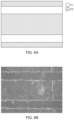
- FIGS. 6 A and 6 B show a region of cells to be processed and the result after processing in Example 2.
- FIG. 6 A shows a region of cells to be processed in a culture instrument
- FIG. 6 B is a photograph showing the result of the culture instrument after processing by a processing method.
- FIGS. 7 A and 7 B show a region of cells to be processed and the result after processing in Example 3.
- FIG. 7 A shows a region of cells to be processed in a culture instrument
- FIG. 7 B is a photograph showing the result of the culture instrument after processing by a processing method.
- FIGS. 8 A and 8 B show a region of cells to be processed and the result after processing in Example 3.
- FIG. 8 A shows a region of cells to be processed in a culture instrument
- FIG. 8 B is a photograph showing the result of the culture instrument after processing by a processing method.
- FIGS. 9 A and 9 B show a region of cells to be processed and the result after processing in Example 4.
- FIG. 9 A shows a region of cells to be processed in a culture instrument
- FIG. 9 B is a photograph showing the result of the culture instrument after processing by a processing method.
- cells mean, for example, isolated cells, cell masses composed of cells, tissues, or organs.
- the cells may be, for example, cultured cells or cells isolated from a living body.
- the cell mass, tissue, or organ may be, for example, a cell mass, a cell sheet, a tissue, or an organ made from the cells, or a cell mass, a tissue, or an organ isolated from a living body.
- cell processing may be used in any sense of, for example, detachment of cells, recovery of cells, removal of unnecessary cells, and retention or maintenance of necessary cells.
- FIGS. 1 A to 1 C are schematic views showing the configuration of a culture instrument 100 of the first embodiment.
- FIG. 1 A is a schematic perspective view of the culture instrument 100
- FIG. 1 B is a schematic cross-sectional view of the culture instrument 100 taken along line I-I of FIG. 1 A
- FIG. 1 C is a schematic cross-sectional view of the culture instrument 100 taken along line I-I of FIG. 1 A in a state where cells are cultured in the culture instrument 100 .
- the culture instrument 100 includes a container 11 and a photoreactive layer 12 .
- the material of the container 11 and the substrate 11 a and the side wall 11 b that comprise the container 11 may be the same or different.
- a material used for a cell culture container can be used as the material, for example, and the material can be a translucent material.
- the material include plastics such as polystyrene, polymethylpentene, polycarbonate, cycloolefin polymers, and the like; glass; quartz; silicone resins; and cellulosic materials.
- the photosoluble polymer is, for example, a polymer whose solvent solubility is changed by light irradiation, and is, for example, a polymer whose solubility in an aqueous solvent (e.g., water, a medium, or the like) is greatly changed by light irradiation. Therefore, in the case where the photoreactive layer 12 includes the photosoluble polymer, when the cells C are cultured on the photoreactive layer 12 as shown in FIG. 1 C , indirect fixation (adhesion) of the cells C to the substrate 11 a can be released by dissolving the photoreactive layer 12 in a solvent by light irradiation.
- an aqueous solvent e.g., water, a medium, or the like
- the photosoluble polymer has a main chain and a side chain, the side chain has an aromatic ring, the aromatic ring includes a first carbon atom substituted with a nitro group and a second carbon atom substituted with an aldehyde group or a functional group represented by the following formula (1), and the first carbon atom and the second carbon atom are adjacent to each other within the same benzene ring, for example.
- the solubility in an aqueous solvent can be greatly changed by the light irradiation, and the photosolubility can be suitably exhibited.
- the main chain can also be referred to as, for example, a skeleton constituting a polymer.
- the skeleton constituting the polymer include an acrylic polymer such as an acrylamide polymer, a polystyrene polymer, a polyolefin polymer, polyvinyl acetate, polyvinyl chloride, a polyolefin polymer, a polycarbonate polymer, and an epoxy polymer.
- the aromatic ring may be, for example, an aromatic hydrocarbon or a heteroaromatic compound.
- the aromatic ring include a benzene ring, a naphthalene ring, an anthracene ring, and a naphthacene ring.
- the aromatic ring is bonded directly or indirectly to the main chain (A, described below), for example. In the direct bond, the aromatic ring is directly bonded to the main chain in a single bond.
- the indirect bond may be a bond via an ester bond, an ether bond, an amide bond, a thioether bond, a thioester bond, a urethane bond, or an alkylene group, or may be a bond via an ester bond, an ether bond, an amide bond, a thioether bond, a thioester bond, a urethane bond, or another functional group having an alkylene group, for example.
- the photosoluble polymer can include a polymer represented by the following formula (2):
- A is a single bond or a functional group
- R 1 is an aldehyde group or a functional group represented by the formula (1)
- R 1 and NO 2 are each attached to adjacent carbon atoms
- R 2 is at least one selected from the group consisting of hydrogen atoms, alkyl groups, functional groups represented by the following formula (3), and functional groups represented by the following formula (4)
- R 3 and R 4 may be the same or different and are each independently a hydrogen atom or an alkyl group
- G is three or less alkyl groups which may be substituted with hydrogen in a benzene ring
- w and z represent mole percentages and satisfy 0 ⁇ w ⁇ 100 and 0 ⁇ z ⁇ 100
- the structure of A that links the main chain and the benzene ring is not restricted, and may be, for example, a single bond, an ester bond, an ether bond, an amide bond, a thioether bond, a thioester bond, a urethane bond, or a functional group having an alkylene group.
- the photosoluble polymer can include a polymer represented by the following formula (5).
- monomers may be randomly polymerized or may be polymerized with regularity.
- a and B may be the same or different and are each independently a single bond or a functional group
- R 3 , R 4 , and R 9 may be the same or different and are each independently a hydrogen atom or an alkyl group
- R 6 and R 7 may be the same or different and are each independently a hydrogen atom, an alkyl group, or an aromatic ring
- R 6 and R 7 are each an alkyl group
- R 6 and R 7 can each be an iso-propyl group or a tert-butyl group.
- the main chain can also be referred to as, for example, a skeleton constituting a polymer.
- the skeleton constituting the polymer include an acrylic polymer such as an acrylamide polymer, a polystyrene polymer, a polyolefin polymer, polyvinyl acetate, polyvinyl chloride, a polyolefin polymer, a polycarbonate polymer, and an epoxy polymer.
- the side chain can have a chromophore having a predetermined absorbance at a wavelength of 350 nm or more.
- the predetermined absorbance is, for example, 0.01 or more, such as 0.1 or more.
- the side chain can have an absorbance of 0.01 or more, such as 0.1 or more, in a wavelength range of 350 nm or more and 1300 nm or less, for example.
- the absorbance can be measured using an absorbance meter.
- the photosoluble and photothermal convertible polymer is a polymer having both characteristics of a photosoluble polymer and a photothermal convertible polymer.
- an atomic group responsible for a photosolubility and an atomic group responsible for a photothermal convertibility exhibit their characteristics by light having different characteristics, for example.
- the atomic group responsible for a photosolubility and the atomic group responsible for a photothermal convertibility exhibit their characteristics by light of different energies (light irradiation amounts), and the atomic group responsible for a photothermal convertibility exhibits its characteristic by light of high energy as compared to the atomic group responsible for a photosolubility.
- Examples of the polymers represented by the formula (6) include polymers represented by the formula (13) to be described below.
- the photoreactive layer 12 may include other components besides the photoreactive polymer.
- the other components include photomeltable materials.
- the photomeltable material means, for example, a photoresponsive material configured to induce solidification and liquefaction by light of different wavelengths.
- a method for producing the culture instrument 100 of the present embodiment includes, for example, a photoreactive layer forming step of forming the photoreactive layer 12 on the substrate 11 a .
- the photoreactive layer 12 may be formed by, for example, a known film forming method, and specific examples of the method include a coating method, a printing method (screen method), a vapor deposition method, a sputtering method, a casting method, and a spin coating method.
- the photoreactive polymer in the photoreactive layer 12 includes the photosoluble polymer and the photothermal convertible polymer
- the photoreactive layer 12 can be formed by mixing the photosoluble polymer and the photothermal convertible polymer and using the obtained mixture.
- the culture instrument 100 of the present embodiment may include, for example, a connection layer connecting the photoreactive layer 12 and the substrate 11 a .
- the connection layer is laminated on the substrate 11 a and the photoreactive layer 12 is laminated on the connection layer, i.e., the connection layer is disposed between the substrate 11 a and the photoreactive layer 12 .
- the culture instrument 100 can maintain the responsiveness of the photoreactive layer 12 even when long-term cell culture is performed so that the cells C can be excellently detached even after long-term culture, for example.
- the cell culture base material may include a peptide fragment of the protein or a fragment of the sugar chain.
- the peptide fragment of the protein may be a fragment of laminin
- Examples of the fragment of laminin include laminin 211-E8, laminin 311-E8, laminin 411-E8, and laminin 511-E8.
- the laminin 211-E8 is composed of fragments of the ⁇ 2, ⁇ 1, and ⁇ 1 chains of laminin.
- the laminin 311-E8 is composed of fragments of the ⁇ 3, ⁇ 1, and ⁇ 1 chains of laminin.
- the laminin 411-E8 is composed of fragments of the ⁇ 4, ⁇ 1, and ⁇ 1 chains of laminin.
- the laminin 511-E8 is composed of fragments of the ⁇ 5, ⁇ 1, and ⁇ 1 chains of laminin, for example.
- cells are cultured in the culture instrument 100 (culturing step).
- Cells to be cultured can be introduced, for example, by introducing a cell suspension into the culture instrument 100 .
- the culture conditions (culture temperature, culture humidity, gas partial pressure, culture time, and the like) in the culturing step can be appropriately determined according to the type of the cells, for example.
- the culture can be performed in a wet environment at 5% CO 2 and 25 to 40° C.
- the light irradiation amount is, for example, 0.5 to 10 J/cm 2 , such as 1 to 5 J/cm 2 .
- L 1 is laser light, i.e., point light in the present embodiment, L 1 is not limited thereto and may be planar light.
- the processing method of the present embodiment can effectively prevent, for example, that the cells C 1 to be processed remain in the cells C 2 not to be processed and that the cells C 2 not to be processed are detached together with the cells C 1 to be processed.
- the photosoluble layer 12 b is irradiated with first light (L 1 ) that causes photodissolution (first irradiation step). More specifically, in the first irradiation step, the photosoluble layer 12 b corresponding to cells C 1 to be processed (detached) among cells C is irradiated with L 1 , that is, the photosoluble layer 12 b immediately below the cells C 1 to be processed is irradiated with L 1 . As a result, as shown in FIG. 4 C , the photosoluble layer 12 b immediately below the cells C 1 to be processed is dissolved, and the indirect fixation (adhesion) of the cells C 1 to the substrate 11 a is released.
- first light L 1
- first irradiation step the photosoluble layer 12 b corresponding to cells C 1 to be processed (detached) among cells C is irradiated with L 1 , that is, the photosoluble layer 12 b immediately below the cells C 1 to be processed is irradiated with L 1
- the wavelength of L 1 is a wavelength at which an atomic group responsible for a photosolubility exhibits a photosolubility in the photoreactive polymer.
- L 1 is laser light, i.e., point light in the present embodiment, L 1 is not limited thereto and may be planar light.
- the processing method of the present embodiment can detach the cells C 1 to be processed.
- the photothermal convertible layer 12 a immediately below the cell C 2 adjacent to the cells C 1 is irradiated with L 2 .
- the object to be irradiated with L 2 is not limited thereto.
- the first irradiation step may be performed after the second irradiation step, or these steps may be performed in parallel.
- the photothermal convertible layer 12 a immediately below the cell C 2 adjacent to the cells C 1 to be processed or the photothermal convertible layer 12 a immediately below the cells C 1 adjacent to the cells C 2 not to be processed is irradiated with L 2 in the second irradiation step, for example.
- the photosoluble layer 12 b immediately below the cells C 1 may be irradiated with L 1 .
- a culture instrument was produced and whether cells at a desired position can be detached by a processing method was examined.
- the photoreactive layer 12 immediately below the cell C 2 adjacent to the cells C 1 among the cells C 1 to be processed and the cells C 2 not to be processed was irradiated with L 2 .
- L 2 was laser light having a wavelength of 405 nm, a diameter of 25 ⁇ m, and an energy intensity of 0.8 W, and scanning was performed at a velocity of 300 mm/s. Irradiation with L 2 was repeated 4 times to induce a cell monolayer to be killed.
- the culture apparatus 100 was rotated by about 90°, and the irradiation with L 1 and L 2 was performed in the same manner. After the irradiation, the culture apparatus 100 was stored in an incubator for a while, and then the medium was lightly sprayed onto the surface thereof. As a result, the cells C 1 to be processed were detached as shown in FIG. 5 B .
- a connection layer was provided between the photoreactive layer 12 and the substrate 11 a and a cell culture base material layer was laminated on the photoreactive layer 12 in the culture instrument 100 of the first embodiment, thereby preparing a culture instrument.
- the photosoluble polymer the polymer of formula (11) synthesized in Example 1 (1) described above was used.
- the photothermal convertible polymer a polymer of the formula (9) was synthesized.
- a TFE solution containing 1.9% (w/w) photosoluble polymer and 0.088% (w/w) photothermal convertible polymer was prepared, and the obtained solution was spin-coated on the surface of the substrate 11 a made of polystyrene. After the spin coating, the resultant was irradiated with ultraviolet light having a wavelength of 365 nm and an energy density of 0.9 mW/cm 2 for 15 seconds, thereby forming the photoreactive layer 12 .
- a cell culture base material layer was formed in the culture instrument having the photoreactive layer 12 according to the attached protocol. In this manner, a culture instrument (Example 2) was produced.
- Human iPS cells (201B7 line, purchased from Riken BioResource Research Center) suspended in the medium were seeded into the culture instrument of Example 2 and cultured for 5 days.
- a medium for the iPS cells StemFitAK02N (Ajinomoto Co., Inc.) was used.
- the culture was performed at 5% CO 2 and 37° C., and under a wet condition. After the culturing, the cells were checked to be adhered and extended throughout the surface of the substrate 11 a . Then, L 1 and L 2 were emitted using the cell processing apparatus from the bottom surface side (lower side in FIG. 1 ) of the substrate 11 a toward the cells C on the photoreactive layer 12 . Specifically, as shown in FIG.
- L 1 was laser light having a wavelength of 405 nm, a diameter of 25 ⁇ m, and an energy intensity of 0.2 W or 0.3 W, and scanning was performed once (in the case of 0.3 W) or twice (in the case of 0.2 W) in the range of a width of 0.6 mm at 10 ⁇ m pitch and a velocity of 1000 mm/s, thereby inducing the dissolution of the photoreactive layer 12 .
- L 1 was laser light having a wavelength of 405 nm, a diameter of 25 ⁇ m, and an energy intensity of 0.2 W or 0.3 W, and scanning was performed once (in the case of 0.3 W) or twice (in the case of 0.2 W) in the range of a width of 0.6 mm at 10 ⁇ m pitch and a velocity of 1000 mm/s, thereby inducing the dissolution of the photoreactive layer 12 .
- a culture instrument was produced and whether cells at a desired position can be detached by a processing method was examined
- L 2 was laser light having a wavelength of 405 nm, a diameter of 25 ⁇ m, and an energy intensity of 0.8 W, and scanning was performed at a velocity of 200 mm/s to induce a cell monolayer to be killed.
- the culture apparatus 100 was stored in an incubator for a while, and then the medium was lightly sprayed onto the surface thereof.
- the cells C 1 to be processed were detached as shown in FIG. 7 B . While FIG. 7 B is a photograph in the case where L 1 was 0.2 W, the detachment of the cell C 1 to be processed was observed also in the case where L 1 was 0.3 W.
- a culture instrument was produced and whether cells at a desired position can be detached by a processing method was examined
- the culture instrument 200 of the second embodiment was prepared.
- the photothermal convertible polymer the polymer of the formula (10) was synthesized. Specifically, 0.0035 g of 4-(4-nitrophenylazo)phenol and 0.008 g poly(glycidyl methacrylate) were dissolved in 0.457 g of acetone. To the obtained solution, 0.0086 g of 1,2-dichloroethane solution containing 2.8% (w/w) diazabicycloundecene (DBU) was added, and then stirred and reacted at 60° C. for 5 days. As a result, the color was changed from orange to deep red.
- DBU diazabicycloundecene
- the photoreactive layer 12 immediately below the cells C 1 to be processed was irradiated with L 1 .
- L 1 was laser light having a wavelength of 405 nm, a diameter of 25 ⁇ m, and an energy intensity of 0.2 W or 0.3 W, and scanning was performed in the range of a width of 0.6 mm at 10 ⁇ m pitch and a velocity of 1000 mm/s, thereby inducing the dissolution of the photoreactive layer 12 .
- the photoreactive layer 12 immediately below the cell C 2 adjacent to the cells C 1 among the cells C 1 to be processed and the cells C 2 not to be processed was irradiated with L 2 .
Landscapes
- Health & Medical Sciences (AREA)
- Engineering & Computer Science (AREA)
- Life Sciences & Earth Sciences (AREA)
- Chemical & Material Sciences (AREA)
- Organic Chemistry (AREA)
- Wood Science & Technology (AREA)
- Bioinformatics & Cheminformatics (AREA)
- Zoology (AREA)
- Biotechnology (AREA)
- Biomedical Technology (AREA)
- Genetics & Genomics (AREA)
- Microbiology (AREA)
- Biochemistry (AREA)
- General Engineering & Computer Science (AREA)
- General Health & Medical Sciences (AREA)
- Sustainable Development (AREA)
- Physics & Mathematics (AREA)
- General Physics & Mathematics (AREA)
- Immunology (AREA)
- Molecular Biology (AREA)
- Clinical Laboratory Science (AREA)
- Cell Biology (AREA)
- Polymers & Plastics (AREA)
- Structural Engineering (AREA)
- Chemical Kinetics & Catalysis (AREA)
- Medicinal Chemistry (AREA)
- Architecture (AREA)
- Spectroscopy & Molecular Physics (AREA)
- Materials Engineering (AREA)
- Apparatus Associated With Microorganisms And Enzymes (AREA)
- Micro-Organisms Or Cultivation Processes Thereof (AREA)
- Addition Polymer Or Copolymer, Post-Treatments, Or Chemical Modifications (AREA)
Abstract
Description


Claims (18)


Applications Claiming Priority (3)
| Application Number | Priority Date | Filing Date | Title |
|---|---|---|---|
| JP2018233382 | 2018-12-13 | ||
| JP2018-233382 | 2018-12-13 | ||
| PCT/JP2019/048865 WO2020122225A1 (en) | 2018-12-13 | 2019-12-13 | Cell culture tool and cell treatment method |
Publications (2)
| Publication Number | Publication Date |
|---|---|
| US20220073862A1 US20220073862A1 (en) | 2022-03-10 |
| US12270020B2 true US12270020B2 (en) | 2025-04-08 |
Family
ID=71076461
Family Applications (1)
| Application Number | Title | Priority Date | Filing Date |
|---|---|---|---|
| US17/312,620 Active 2042-08-12 US12270020B2 (en) | 2018-12-13 | 2019-12-13 | Cell culture instrument and cell processing method |
Country Status (5)
| Country | Link |
|---|---|
| US (1) | US12270020B2 (en) |
| EP (1) | EP3896099A4 (en) |
| JP (1) | JP7554428B2 (en) |
| CN (1) | CN113166313B (en) |
| WO (1) | WO2020122225A1 (en) |
Families Citing this family (1)
| Publication number | Priority date | Publication date | Assignee | Title |
|---|---|---|---|---|
| EP3896099A4 (en) * | 2018-12-13 | 2022-01-19 | National Institute Of Advanced Industrial Science And Technology | CELL CULTURE TOOL AND CELL PROCESSING METHOD |
Citations (15)
| Publication number | Priority date | Publication date | Assignee | Title |
|---|---|---|---|---|
| JP2003155357A (en) | 2001-11-21 | 2003-05-27 | National Institute Of Advanced Industrial & Technology | Water wettability controlled film by light and method for producing the same |
| US20030219889A1 (en) * | 2002-05-24 | 2003-11-27 | National Institute Of Advanced Industrial Science And Technology | Cell-culturing device and sorting method using same |
| WO2011125615A1 (en) | 2010-04-02 | 2011-10-13 | 独立行政法人産業技術総合研究所 | Method for separating cells, cell culture medium, and device for separating cells |
| JP5396803B2 (en) | 2008-10-06 | 2014-01-22 | コニカミノルタ株式会社 | Cell culture substrate and cell culture method |
| CN103570872A (en) * | 2013-10-11 | 2014-02-12 | 天津大学 | High-strength light-sensitive hydrogel and its preparation method and application |
| JP5879942B2 (en) * | 2011-11-08 | 2016-03-08 | 大日本印刷株式会社 | Cell culture substrate manufacturing method, cell culture substrate, and cell sheet manufacturing method using the same |
| WO2016194454A1 (en) | 2015-06-01 | 2016-12-08 | 株式会社片岡製作所 | Cell treatment method, laser processing machine, and cell culture vessel |
| WO2017010100A1 (en) | 2015-07-16 | 2017-01-19 | ダイキン工業株式会社 | Container for cell administration, storage or culturing |
| WO2017213226A1 (en) | 2016-06-08 | 2017-12-14 | 国立研究開発法人産業技術総合研究所 | Polymer compound and method for manipulating cell using same |
| WO2019035436A1 (en) * | 2017-08-16 | 2019-02-21 | 東ソー株式会社 | Culture substrate for pluripotent stem cell and method for producing pluripotent stem cell |
| WO2020071332A1 (en) * | 2018-10-01 | 2020-04-09 | 株式会社片岡製作所 | Cell culture tool and method for manufacturing cell culture tool |
| US20210340482A1 (en) * | 2018-10-01 | 2021-11-04 | Kataoka Corporation | Cell culture tool and method for producing cell culture tool |
| US20220073862A1 (en) * | 2018-12-13 | 2022-03-10 | National Institute Of Advanced Industrial Science And Technology | Cell culture instrument and cell processing method |
| US11441113B2 (en) * | 2016-06-01 | 2022-09-13 | Kataoka Corporation | Cell treatment system |
| US11504810B2 (en) * | 2015-06-29 | 2022-11-22 | Kataoka Corporation | Cell processing method, laser processing machine |
Family Cites Families (2)
| Publication number | Priority date | Publication date | Assignee | Title |
|---|---|---|---|---|
| US20120225448A1 (en) * | 2009-11-13 | 2012-09-06 | Hitachi High-Technologies Corporation | Substrate with Photo-Controllable Cell Adhesion Property, Method for Analyzing and Fractionating Cells, and Device for Analysis and Fractionation of Cells |
| US10358269B2 (en) | 2015-07-22 | 2019-07-23 | Nestec S.A. | Hinged closure for a container |
-
2019
- 2019-12-13 EP EP19894692.3A patent/EP3896099A4/en active Pending
- 2019-12-13 CN CN201980081707.0A patent/CN113166313B/en active Active
- 2019-12-13 JP JP2020559334A patent/JP7554428B2/en active Active
- 2019-12-13 US US17/312,620 patent/US12270020B2/en active Active
- 2019-12-13 WO PCT/JP2019/048865 patent/WO2020122225A1/en not_active Ceased
Patent Citations (24)
| Publication number | Priority date | Publication date | Assignee | Title |
|---|---|---|---|---|
| JP2003155357A (en) | 2001-11-21 | 2003-05-27 | National Institute Of Advanced Industrial & Technology | Water wettability controlled film by light and method for producing the same |
| US20030219889A1 (en) * | 2002-05-24 | 2003-11-27 | National Institute Of Advanced Industrial Science And Technology | Cell-culturing device and sorting method using same |
| JP5396803B2 (en) | 2008-10-06 | 2014-01-22 | コニカミノルタ株式会社 | Cell culture substrate and cell culture method |
| WO2011125615A1 (en) | 2010-04-02 | 2011-10-13 | 独立行政法人産業技術総合研究所 | Method for separating cells, cell culture medium, and device for separating cells |
| US20130023025A1 (en) | 2010-04-02 | 2013-01-24 | Kimio Sumaru | Method for separating cells, cell culture substrate, and device for separating cells |
| JP5879942B2 (en) * | 2011-11-08 | 2016-03-08 | 大日本印刷株式会社 | Cell culture substrate manufacturing method, cell culture substrate, and cell sheet manufacturing method using the same |
| CN103570872A (en) * | 2013-10-11 | 2014-02-12 | 天津大学 | High-strength light-sensitive hydrogel and its preparation method and application |
| US20180142193A1 (en) | 2015-06-01 | 2018-05-24 | Kataoka Corporation | Cell treatment method, laser processing machine, and cell culture vessel |
| US10876086B2 (en) * | 2015-06-01 | 2020-12-29 | Kataoka Corporation | Cell treatment method, laser processing machine, and cell culture vessel |
| JP6090891B1 (en) | 2015-06-01 | 2017-03-08 | 株式会社片岡製作所 | Cell processing method, laser processing machine, cell culture container |
| US12018239B2 (en) * | 2015-06-01 | 2024-06-25 | Kataoka Corporation | Laser processing machine |
| EP3305888A1 (en) | 2015-06-01 | 2018-04-11 | Kataoka Corporation | Cell treatment method, laser processing machine, and cell culture vessel |
| WO2016194454A1 (en) | 2015-06-01 | 2016-12-08 | 株式会社片岡製作所 | Cell treatment method, laser processing machine, and cell culture vessel |
| US11504810B2 (en) * | 2015-06-29 | 2022-11-22 | Kataoka Corporation | Cell processing method, laser processing machine |
| US20180201890A1 (en) | 2015-07-16 | 2018-07-19 | Daikin Industries, Ltd. | Container for cell administration, storage or culturing |
| WO2017010100A1 (en) | 2015-07-16 | 2017-01-19 | ダイキン工業株式会社 | Container for cell administration, storage or culturing |
| US11441113B2 (en) * | 2016-06-01 | 2022-09-13 | Kataoka Corporation | Cell treatment system |
| US20200317839A1 (en) | 2016-06-08 | 2020-10-08 | National Institute Of Advanced Industrial Sicience And Technology | Polymer compound and method for manipulating cell using same |
| US11566093B2 (en) * | 2016-06-08 | 2023-01-31 | National Institute Of Advanced Industrial Science And Technology | Polymer compound and method for manipulating cell using same |
| WO2017213226A1 (en) | 2016-06-08 | 2017-12-14 | 国立研究開発法人産業技術総合研究所 | Polymer compound and method for manipulating cell using same |
| WO2019035436A1 (en) * | 2017-08-16 | 2019-02-21 | 東ソー株式会社 | Culture substrate for pluripotent stem cell and method for producing pluripotent stem cell |
| US20210340482A1 (en) * | 2018-10-01 | 2021-11-04 | Kataoka Corporation | Cell culture tool and method for producing cell culture tool |
| WO2020071332A1 (en) * | 2018-10-01 | 2020-04-09 | 株式会社片岡製作所 | Cell culture tool and method for manufacturing cell culture tool |
| US20220073862A1 (en) * | 2018-12-13 | 2022-03-10 | National Institute Of Advanced Industrial Science And Technology | Cell culture instrument and cell processing method |
Non-Patent Citations (5)
| Title |
|---|
| Extended European Search Report dated Dec. 17, 2021 received in 19894692.3. |
| International Search Report dated Mar. 17, 2020 issued in PCT/JP2019/048865. |
| Negrell C. et al., "From monomer synthesis to polymers with pendant aldehyde groups", European Polymer Journal, 2018, vol. 109, pp. 544-563. |
| Sumaru K. et.al., "Photo-manipulation of Cultured Cell Monolayer Using PAG Polymer Thin Layer", Membrane, 2015, vol. 40, No. 3, pp. 130-136, cited in ISR. |
| Sumaru K. et.al., "Photoresponsive Aqueous Dissolution of Poly(N-Isopropylacrylamide) Functionalized with o-Nitrobenzaldehyde through Phase Transition", Biomacromlecules, 2018, vol. 19, pp. 2913-2922, cited in ISR. |
Also Published As
| Publication number | Publication date |
|---|---|
| JPWO2020122225A1 (en) | 2021-10-21 |
| EP3896099A4 (en) | 2022-01-19 |
| CN113166313B (en) | 2023-06-06 |
| JP7554428B2 (en) | 2024-09-20 |
| US20220073862A1 (en) | 2022-03-10 |
| CN113166313A (en) | 2021-07-23 |
| WO2020122225A1 (en) | 2020-06-18 |
| EP3896099A1 (en) | 2021-10-20 |
Similar Documents
| Publication | Publication Date | Title |
|---|---|---|
| Nelson et al. | Photoinduced dithiolane crosslinking for multiresponsive dynamic hydrogels | |
| Mabesoone et al. | Solute–solvent interactions in modern physical organic chemistry: supramolecular polymers as a muse | |
| Scheutz et al. | Harnessing strained disulfides for photocurable adaptable hydrogels | |
| JP6580221B2 (en) | Medical device, cell culture method, and fluorine-containing cyclic olefin polymer composition | |
| JP6056111B2 (en) | Photodegradable cross-linking agent, photodegradable gel, cell culture instrument, cell arrangement / sorting device, cell arrangement method, cell sorting method, tissue body forming method, and tissue body | |
| US20120015440A1 (en) | Spheroid composite, spheroid-containing hydrogel and processes for production of same | |
| US12270020B2 (en) | Cell culture instrument and cell processing method | |
| Zhiganshina et al. | Tetramethacrylic benzylidene cyclopentanone dye for one-and two-photon photopolymerization | |
| JP5388092B2 (en) | Spheroid-containing hydrogel, method for producing the same, and spheroid-containing hydrogel laminate | |
| Kollarigowda et al. | Light-responsive polymer brushes: Active topographic cues for cell culture applications | |
| Jin et al. | Two-photon lithography in visible and NIR ranges using multibranched-based sensitizers for efficient acid generation | |
| JP2020054341A (en) | Cell culture device and method for manufacturing cell culture device | |
| CN116693487A (en) | Coumarin-based thioester photoinitiator suitable for photopolymerization and preparation method thereof | |
| JP2013099282A (en) | Cell culture container and cultured cell recovery method | |
| WO2016158039A1 (en) | Medical instrument, fluorinated cyclic olefin polymer, fluorinated cyclic olefin polymer composition, and cell culture method | |
| EP3848450A1 (en) | Cell culture tool and method for manufacturing cell culture tool | |
| CN106543428B (en) | Aggretion type ultra-violet absorber of the side group containing UV-0 and preparation method thereof | |
| JP5388126B2 (en) | Branched polyalkylene glycol derivative, photosensitive composition, crosslinked product and substrate | |
| CN103987739B (en) | The phenacyl molecule being substituted and optical Response polymer | |
| JP6718610B2 (en) | Cell culture substrate, method for producing the same, and method for controlling physical properties of cell culture substrate | |
| JP2013099285A (en) | Method for producing cell culture container | |
| JP6314458B2 (en) | Temperature-responsive cell culture substrate and method for producing the same | |
| Gernhardt | Multi-material microstructures with novel stimuli-responsive properties | |
| JPH04151287A (en) | Two-layer organic optical recording medium having polycarbonate crosslinking body as record retaining layer and manufacture thereof | |
| JP5866983B2 (en) | Cell culture vessel |
Legal Events
| Date | Code | Title | Description |
|---|---|---|---|
| AS | Assignment |
Owner name: KATAOKA CORPORATION, JAPAN Free format text: ASSIGNMENT OF ASSIGNORS INTEREST;ASSIGNORS:SUMARU, KIMIO;TAKAGI, TOSHIYUKI;KANAMORI, TOSHIYUKI;AND OTHERS;SIGNING DATES FROM 20210511 TO 20210513;REEL/FRAME:056500/0458 Owner name: NATIONAL INSTITUTE OF ADVANCED INDUSTRIAL SCIENCE AND TECHNOLOGY, JAPAN Free format text: ASSIGNMENT OF ASSIGNORS INTEREST;ASSIGNORS:SUMARU, KIMIO;TAKAGI, TOSHIYUKI;KANAMORI, TOSHIYUKI;AND OTHERS;SIGNING DATES FROM 20210511 TO 20210513;REEL/FRAME:056500/0458 |
|
| FEPP | Fee payment procedure |
Free format text: ENTITY STATUS SET TO UNDISCOUNTED (ORIGINAL EVENT CODE: BIG.); ENTITY STATUS OF PATENT OWNER: LARGE ENTITY |
|
| STPP | Information on status: patent application and granting procedure in general |
Free format text: DOCKETED NEW CASE - READY FOR EXAMINATION |
|
| STPP | Information on status: patent application and granting procedure in general |
Free format text: NON FINAL ACTION MAILED |
|
| STPP | Information on status: patent application and granting procedure in general |
Free format text: RESPONSE TO NON-FINAL OFFICE ACTION ENTERED AND FORWARDED TO EXAMINER |
|
| STPP | Information on status: patent application and granting procedure in general |
Free format text: NOTICE OF ALLOWANCE MAILED -- APPLICATION RECEIVED IN OFFICE OF PUBLICATIONS |
|
| ZAAB | Notice of allowance mailed |
Free format text: ORIGINAL CODE: MN/=. |
|
| STPP | Information on status: patent application and granting procedure in general |
Free format text: PUBLICATIONS -- ISSUE FEE PAYMENT VERIFIED |
|
| STCF | Information on status: patent grant |
Free format text: PATENTED CASE |