US12248835B2 - Method for anti-tampering apparatus servicing data and system thereof - Google Patents

Method for anti-tampering apparatus servicing data and system thereof Download PDF

Info

Publication number
US12248835B2
US12248835B2 US18/145,717 US202218145717A US12248835B2 US 12248835 B2 US12248835 B2 US 12248835B2 US 202218145717 A US202218145717 A US 202218145717A US 12248835 B2 US12248835 B2 US 12248835B2
Authority
US
United States
Prior art keywords
contract
code
file
data
tampering apparatus
Prior art date
Legal status (The legal status is an assumption and is not a legal conclusion. Google has not performed a legal analysis and makes no representation as to the accuracy of the status listed.)
Active, expires
Application number
US18/145,717
Other versions
US20240169167A1 (en
Inventor
Min-Hao Li
Yu-Chiao WANG
Ya-Ping Lee
Wei-Der Chung
Jhy-Ping WU
Current Assignee (The listed assignees may be inaccurate. Google has not performed a legal analysis and makes no representation or warranty as to the accuracy of the list.)
Industrial Technology Research Institute ITRI
Original Assignee
Industrial Technology Research Institute ITRI
Priority date (The priority date is an assumption and is not a legal conclusion. Google has not performed a legal analysis and makes no representation as to the accuracy of the date listed.)
Filing date
Publication date
Application filed by Industrial Technology Research Institute ITRI filed Critical Industrial Technology Research Institute ITRI
Assigned to INDUSTRIAL TECHNOLOGY RESEARCH INSTITUTE reassignment INDUSTRIAL TECHNOLOGY RESEARCH INSTITUTE ASSIGNMENT OF ASSIGNORS INTEREST (SEE DOCUMENT FOR DETAILS). Assignors: CHUNG, WEI-DER, LEE, YA-PING, LI, MIN-HAO, WANG, YU-CHIAO, WU, JHY-PING
Publication of US20240169167A1 publication Critical patent/US20240169167A1/en
Application granted granted Critical
Publication of US12248835B2 publication Critical patent/US12248835B2/en
Active legal-status Critical Current
Adjusted expiration legal-status Critical

Links

Images

Classifications

    • GPHYSICS
    • G06COMPUTING OR CALCULATING; COUNTING
    • G06KGRAPHICAL DATA READING; PRESENTATION OF DATA; RECORD CARRIERS; HANDLING RECORD CARRIERS
    • G06K7/00Methods or arrangements for sensing record carriers, e.g. for reading patterns
    • G06K7/0008General problems related to the reading of electronic memory record carriers, independent of its reading method, e.g. power transfer
    • HELECTRICITY
    • H04ELECTRIC COMMUNICATION TECHNIQUE
    • H04LTRANSMISSION OF DIGITAL INFORMATION, e.g. TELEGRAPHIC COMMUNICATION
    • H04L9/00Cryptographic mechanisms or cryptographic arrangements for secret or secure communications; Network security protocols
    • H04L9/32Cryptographic mechanisms or cryptographic arrangements for secret or secure communications; Network security protocols including means for verifying the identity or authority of a user of the system or for message authentication, e.g. authorization, entity authentication, data integrity or data verification, non-repudiation, key authentication or verification of credentials
    • H04L9/3236Cryptographic mechanisms or cryptographic arrangements for secret or secure communications; Network security protocols including means for verifying the identity or authority of a user of the system or for message authentication, e.g. authorization, entity authentication, data integrity or data verification, non-repudiation, key authentication or verification of credentials using cryptographic hash functions
    • HELECTRICITY
    • H04ELECTRIC COMMUNICATION TECHNIQUE
    • H04LTRANSMISSION OF DIGITAL INFORMATION, e.g. TELEGRAPHIC COMMUNICATION
    • H04L9/00Cryptographic mechanisms or cryptographic arrangements for secret or secure communications; Network security protocols
    • H04L9/32Cryptographic mechanisms or cryptographic arrangements for secret or secure communications; Network security protocols including means for verifying the identity or authority of a user of the system or for message authentication, e.g. authorization, entity authentication, data integrity or data verification, non-repudiation, key authentication or verification of credentials
    • H04L9/3236Cryptographic mechanisms or cryptographic arrangements for secret or secure communications; Network security protocols including means for verifying the identity or authority of a user of the system or for message authentication, e.g. authorization, entity authentication, data integrity or data verification, non-repudiation, key authentication or verification of credentials using cryptographic hash functions
    • H04L9/3239Cryptographic mechanisms or cryptographic arrangements for secret or secure communications; Network security protocols including means for verifying the identity or authority of a user of the system or for message authentication, e.g. authorization, entity authentication, data integrity or data verification, non-repudiation, key authentication or verification of credentials using cryptographic hash functions involving non-keyed hash functions, e.g. modification detection codes [MDCs], MD5, SHA or RIPEMD
    • HELECTRICITY
    • H04ELECTRIC COMMUNICATION TECHNIQUE
    • H04LTRANSMISSION OF DIGITAL INFORMATION, e.g. TELEGRAPHIC COMMUNICATION
    • H04L9/00Cryptographic mechanisms or cryptographic arrangements for secret or secure communications; Network security protocols
    • H04L9/32Cryptographic mechanisms or cryptographic arrangements for secret or secure communications; Network security protocols including means for verifying the identity or authority of a user of the system or for message authentication, e.g. authorization, entity authentication, data integrity or data verification, non-repudiation, key authentication or verification of credentials
    • H04L9/3247Cryptographic mechanisms or cryptographic arrangements for secret or secure communications; Network security protocols including means for verifying the identity or authority of a user of the system or for message authentication, e.g. authorization, entity authentication, data integrity or data verification, non-repudiation, key authentication or verification of credentials involving digital signatures
    • HELECTRICITY
    • H04ELECTRIC COMMUNICATION TECHNIQUE
    • H04LTRANSMISSION OF DIGITAL INFORMATION, e.g. TELEGRAPHIC COMMUNICATION
    • H04L9/00Cryptographic mechanisms or cryptographic arrangements for secret or secure communications; Network security protocols
    • H04L9/50Cryptographic mechanisms or cryptographic arrangements for secret or secure communications; Network security protocols using hash chains, e.g. blockchains or hash trees

Definitions

  • the present disclosure relates to a technology for anti-tampering apparatus servicing data, and more particularly, to a method for anti-tampering apparatus servicing data and a system thereof that can prevent human operation.
  • An aspect of the present disclosure is to provide a method for anti-tampering apparatus servicing data implemented by a calculation device connected to a target device after reading, the method for anti-tampering apparatus servicing data comprises: identifying a contract identification code and obtaining a contract package file and a contract authentication code from at least one remote device according to the contract identification code, wherein the calculation device has a device embedded code corresponding to the target device; determining whether the device embedded code matches the contract authentication code and obtaining a microservice file corresponding to the target device from the remote device after confirming the match; performing the microservice file to enable the target device to operate according to the contract package file and generate an execution report after the target device completes the operation; publishing the execution report to the remote device to obtain an acceptance certification code; and combining and hashing the device embedded code, the contract authentication code, and the acceptance certification code to generate a hash value, and then sending the hash value to a blockchain.
  • Another aspect of the present disclosure is to provide a system for anti-tampering apparatus servicing data, comprising: at least one remote device including a database that stores a contract package file, a contract authentication code, at least one microservice file, and data including device information, device service items, process parameters, monitoring data, and acceptance specifications; and a calculation device connected to a target device, including: an identification analysis module configured to identify a contract identification code and obtain the contract package file and the contract authentication code from the remote device according to the contract identification code; a match module having a device embedded code corresponding to the target device, and the match module determines whether the device embedded code matches the contract authentication code and obtains a microservice file corresponding to the target device from the remote device after confirming the match; an execute contract module performing the microservice file to enable the target device to operate according to the contract package file, generate an execution report after the target device completes the operation, and publish the execution report to the remote device to obtain an acceptance certification code; and an uplink module combining hashing the device embedded code, the contract authentication code, and
  • the method for anti-tampering apparatus servicing data and the system thereof according to the present disclosure may ensure that the device service data will not be tampered with during the whole operation process. When the device is in operation, it will automatically and completely follow the contract content, therefore preventing human intervention and data from being tampered with Furthermore, the method for anti-tampering apparatus servicing data and the system thereof according to the present disclosure may also expand and update the device services at any time under a device service binding contract and a device service will automatically be converted into a code-free smart contract. Hence, the present disclosure has characteristics of service scalability and upgradeability.
  • FIG. 1 is a flow chart of a method for anti-tampering apparatus servicing data according to an embodiment of the present disclosure.
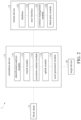
  • FIG. 2 is a schematic view of a system for anti-tampering apparatus servicing data according to an embodiment of the present disclosure.
  • FIG. 1 is a flow chart of a method for anti-tampering apparatus servicing data according to an embodiment of the present disclosure
  • FIG. 2 is a schematic view of a system for anti-tampering apparatus servicing data according to an embodiment of the present disclosure.
  • the system for anti-tampering apparatus servicing data 1 comprises a calculation device 11 and at least one remote device 12 and connects a target device 10 and a blockchain 13 to implement.
  • the calculation device 11 includes an identification analysis module 111 , a match module 112 , an execution contract module 113 , an uplink module 114 , and an asset generation module 115
  • the remote device 12 includes a database 121 , a user interface 122 , a contract management module 123 , and a third party module 124 .
  • the method for anti-tampering apparatus servicing data and the system thereof according to the present disclosure may be divided into a construction phase, a contract establishment phase, and an application phase, which are described in detail below.
  • the calculation device 11 is connected to the target device 10 in a one-to-one manner through a communication interface (such as Ethernet) or a communication protocol (such as MQTT, OPC UA, Modbus, and so on).
  • the calculation device 11 may be a desktop computer, a notebook computer, a tablet, or a server, or it may be an embedded hardware, as long as it is a hardware with a processor, a memory, and a storage device and has computing functions.
  • the target device 10 may be a testing device or a processing device, and the remote device 12 may be, but not limited to, a cloud server.
  • each of the above modules may be an APP, a software, a firmware, or a program codes stored in the storage device and implement after being read through the processor with the memory.
  • the asset generation module 115 in the calculation device 11 may generate a microservice file corresponding to the target device 10 and generate data including device information, device service items, process parameters, monitoring data, and acceptance specifications, according to functions of the target device 10 . Afterwards, the asset generation module 115 may publish the microservice file to the remote device 12 to obtain the device embedded code and also publish the data including the device information, the device service items, the process parameters, the monitoring data, and the acceptance specifications to the remote end device 12 to register.
  • the asset generation module 115 further generates a device service list based on the data including the device information, the device service items, the process parameters, the monitoring data, and the acceptance specifications and stores the device service list to the database 121 of the remote device 12 to register.
  • a format of the device service list may be, but not limited to, AAS X, DTDL, and so on.
  • the device service list may be a hierarchical list, wherein different device information corresponds to different device service items, and different device service items correspond to various process parameters, monitoring data, and acceptance specifications.
  • the device information may be, for example, a device type
  • the device service items may include, for example, a transmission efficiency test, a rigid backlash test, and so on
  • the process parameters may include a rated torque, an output torque, a forward/reverse rotation, and so on.
  • the microservice file may be a plurality of applications, which may respectively correspond to different functions of the target device 10 after performing.
  • the asset generation module 115 may publish the microservice file to the third party module 124 to obtain the device embedded code, check the device embedded code with the data in the database 121 , and store the device embedded code in the match module 112 .
  • the third party module 124 may be a Docker platform, and the device embedded code is a hash value.
  • the corresponding microservice file may be obtained by sending the device embedded code to the Docker platform, and of course, the data including the device information, the device service items, the process parameters, the monitoring data, and the acceptance specifications may also be obtained from the database 121 .
  • the asset generation module 115 will generate a new microservice file and a new device service list (such as V2.0), but will not delete the old microservice file and the old device service list (such as V1.0). They can exist at the same time, so that the user can select later. Furthermore, actually, there may be multiple target devices 10 and corresponding calculation devices 11 (for example, forming a complete supply chain), and they may connect to the remote device 12 at the same time. Moreover, a new target device 10 and a new calculation device 11 may be added at any time, as long as the new calculation device 11 registers the new target device 10 , so that a content corresponding to the new target device 10 will appear at the device service list.
  • the user can browse the user interface 122 of the remote device 12 , and the user interface 122 reads the device service list for the user to select.
  • the user interface 122 is an interactive webpage presented by a dynamic web server providing HTTP protocol services, but the present disclosure is not limited thereto. The user can select the corresponding device information, device service items, process parameter, monitoring data, and acceptance specification on the user interface 122 according to the device under test.
  • the device information may be selected as a reducer test stand
  • the device service items may be selected as a transmission efficiency test or a rigid backlash test, and so on
  • the corresponding process parameters may include a rated torque, an output torque, a forward/reverse rotation, and so on.
  • the monitoring data are data that need to be monitored during the execution process, and their types may correspond to the process parameters, which can be set by the user according to the needs.
  • the acceptance specifications are items for testing, and their types may correspond to the device service items, the process parameters, and so on.
  • a contract content and a signing field appears on the user interface 122 .
  • the contract management module 123 will combine the device information, the device service items, the process parameters, the monitoring data, and the acceptance specifications selected by the user (may also combine with the device under test, the user profile, and so on) to generate a contract package file.
  • a format of the contract package file may be AASX, DTDL, and so on, and its writing language may be a plain text file format (such as .xml, .JSON), that is, the contract package file is, but not limited to, a codeless smart contract.
  • the contract control module 123 may publish the contract package file to the third party module 124 (it may also be stored in the database 121 at the same time) to obtain the contract authentication code, package a website or a contract code that can download the contract package file into the contract identification code, and store the contract authentication code in the remote device 12 .
  • the contract identification code is, but not limited to, a QR code or a RFID tag.
  • the third party module 124 may be a git platform, and the contract authentication code is a hash value, so that the corresponding contract package file can be obtained by sending the contract authentication code to the git platform.
  • the third party module 124 may be the Docker platform or the git platform, which means that when the remote device 12 is a cloud server, the Docker platform and the git platform are built in the cloud server at the same time, and there are multiple third party modules 124 in this case.
  • the Docker platform and the git platform may not be built in the remote device 12 , which is mentioned in the present disclosure, but using the Docker platform and the git platform that have been built to receive the microservice file and the contract package file respectively.
  • the present disclosure is not limited thereto.
  • the contract control module 123 may also provide operation such as contract query, addition, modification, deletion, transmission, and progress control, and present them on the user interface 122 for the user to confirm.
  • the identification analysis module 111 of the calculation device 11 is used to identify the contract identification code.
  • the identification analysis module 111 may be a QR code scanner or a RFID tag sensor, or it may be a software that uses a camera to take a picture of the contract identification code and analyzes its content.
  • the calculation device 11 may directly link the website to obtain the contract package file and the contract authentication code; and if the analyzed content of the contract identification code is a contract code (such as a series of numbers), the calculation device 11 may query with the remote device 12 according to the contract code and correspondingly obtain the contract package file and the contract authentication code.
  • the identification analysis module 111 may also analyze the contract package file, for example, through a device service table grammar file, store the analyzed contract items (such as the device information, the device service items, the process parameters, monitoring data, and the acceptance specifications) in a task sequence for management, and generate instructions corresponding the target device 10 according to the communication interface or the communication protocol. Then go to step S 2 .
  • step S 2 the match module 112 is used to determine whether the device embedded code matches the contract authentication code. Since the match module 112 has the device embedded code corresponding to the target device 10 , the device information and the device service items corresponding to the device embedded code may be obtained from the database 121 , and the match module 112 may also obtain the corresponding device information and device service items according to the contract authentication code. The match module 112 confirms the match, that is, the match module 112 determines whether the device information and the device service items corresponding to the device embedded code are identical to the device information and the device service items corresponding to the contract authentication code. If they match, go to step S 3 , and if not, go to step S 7 to reject the test.
  • the purpose is to confirm that the target device 10 in the laboratory can correspond to the device under test and to confirm that there is a contractual relationship between the target device 10 and the device under test, so as to prevent the device under test from being sent to the wrong laboratory, or implementing without the contract.
  • the match module 112 confirms the match, the microservice file corresponding to the device can be obtained from the third party module 124 (step S 3 ). Then go to step S 4 .
  • step S 4 the contract execution module 113 starts to execute the contract, that is, performs the microservice file to enable the target device 10 according to the contract package file.
  • the corresponding data including the device information, the device service items, the process parameters, the monitoring data, and the acceptance specifications may be parsed out from the contract package file.
  • the execution contract module 113 enables the target device 10 to execute against the device under test according to the device service items and the process parameter, to record a value according to the monitoring data during executing, and finally to generate an execution report according to the acceptance specification.
  • the execution report is a test result report of the device under test
  • the execution report is a product barcode of the device under test (that is, the processing device). Then go to step S 5 .
  • step S 5 the execution contract module 113 publishes the execution report to the third party module 124 of the remote device 12 to obtain the acceptance certification code.
  • the third party module 124 may be a git platform, and the acceptance certification code is a hash value.
  • the corresponding execution report can be obtained by sending the acceptance certification code to the git platform. Then go to step S 6 .
  • the uplink module 114 may combine the device embedded code, the contract authentication code, and the acceptance certification code into character strings, and perform a hash operation (such as hash256 algorithm) to generate a hash value, and then send the hash value to the blockchain 13 .
  • the blockchain 13 may be, but not limited to, IOTA or Ethereum.
  • the uplink module 114 may send the hash value back to the remote device 12 to let the remote device 12 notify the user that the contract has been fulfilled, and the remote device 12 may send the hash value and the execution report to the user at the same time.
  • the device embedded code, the contract authentication code, and the acceptance certification code are hash values, it can ensure that the microservice file, the contract package file, and the execution report may not be tampered. That is, if the microservice file, the contract package file, and the execution report are changed, or the hash values of the device embedded code, the contract authentication code, and the acceptance certification code are changed, they will not correspond to each other. Hence, an anti-tampering effect can be achieved.
  • the present disclosure also combines the device embedded code, the contract authentication code, and the acceptance certification code to generate a hash value to ensure that the device embedded code, the contract authentication code, and the acceptance certification code will not be tampered. Hence, a double anti-tampering effect can be achieved.
  • the method for anti-tampering apparatus servicing data and the system thereof according to the present disclosure may ensure that the device service data will not be tampered during the whole process. When the device is in operation, it will automatically and completely follow the contract content. There is no possibility of human intervention. Hence, the present disclosure has an effect of preventing human operation and data tampering. Furthermore, the method for anti-tampering apparatus servicing data and the system thereof according to the present disclosure may also expand and update device services at any time under a device service binding contract and a device service automatically converted into code-free smart contract. Hence, the present disclosure has characteristics of service scalability and upgradeability.

Landscapes

  • Engineering & Computer Science (AREA)
  • Computer Security & Cryptography (AREA)
  • Computer Networks & Wireless Communication (AREA)
  • Signal Processing (AREA)
  • Artificial Intelligence (AREA)
  • Computer Vision & Pattern Recognition (AREA)
  • Physics & Mathematics (AREA)
  • General Physics & Mathematics (AREA)
  • Theoretical Computer Science (AREA)
  • Storage Device Security (AREA)
  • Management, Administration, Business Operations System, And Electronic Commerce (AREA)

Abstract

The present disclosure provides a method for anti-tampering apparatus servicing data implemented by a calculation device connected to a target device, the method comprising: identifying a contract identification code and obtaining a contract package file and a contract authentication code from at least one remote device; obtaining a microservice file corresponding to the target device from the remote device when a device embedded code of the calculation device is matching the contract authentication code; performing the microservice file to enable the target device according to the contract package file and generate an execution report; publishing the execution report to the remote device to obtain an acceptance certification code; and combining and hashing the device embedded code, the contract authentication code and the acceptance certification code to generate a hash value, and sending the hash value to a blockchain. The present disclosure further provides a system for anti-tampering apparatus servicing data.

Description

BACKGROUND 1. Technical Field
The present disclosure relates to a technology for anti-tampering apparatus servicing data, and more particularly, to a method for anti-tampering apparatus servicing data and a system thereof that can prevent human operation.
2. Description of Related Art
In recent years, data forging and tampering occurred one after another at various key component manufacturers in the supply chain, for example, a steel company forged factory test data of the strength and size of some aluminum and copper products for a long time and sell defective products as quality products; a metal company did not conduct testing according to customer requirements and regulations and changed testing conditions or directly tampers testing results for 30 years; an airbag company continuously and systematically tampered a key testing data related to product safety; a motor company forged a quality testing data for more than 30 years, and so on. The events show that there are no good certification and traceability mechanisms for products currently, and they only rely on the self-discipline of the key component manufacturers in the supply chain. If a fraudulent event occurs in the supply chain such as in the aerospace industry, it may endanger the safety of consumers. In addition, currently, the key component manufacturers only provide paper documents as evidence for items such as devices, materials, and manufacturing methods, which increases the possibility of data being tampered with. Also, the paper documents cannot effectively ensure which device is actually used in the supply chain, and there is no historical information available for querying.
SUMMARY
An aspect of the present disclosure is to provide a method for anti-tampering apparatus servicing data implemented by a calculation device connected to a target device after reading, the method for anti-tampering apparatus servicing data comprises: identifying a contract identification code and obtaining a contract package file and a contract authentication code from at least one remote device according to the contract identification code, wherein the calculation device has a device embedded code corresponding to the target device; determining whether the device embedded code matches the contract authentication code and obtaining a microservice file corresponding to the target device from the remote device after confirming the match; performing the microservice file to enable the target device to operate according to the contract package file and generate an execution report after the target device completes the operation; publishing the execution report to the remote device to obtain an acceptance certification code; and combining and hashing the device embedded code, the contract authentication code, and the acceptance certification code to generate a hash value, and then sending the hash value to a blockchain.
Another aspect of the present disclosure is to provide a system for anti-tampering apparatus servicing data, comprising: at least one remote device including a database that stores a contract package file, a contract authentication code, at least one microservice file, and data including device information, device service items, process parameters, monitoring data, and acceptance specifications; and a calculation device connected to a target device, including: an identification analysis module configured to identify a contract identification code and obtain the contract package file and the contract authentication code from the remote device according to the contract identification code; a match module having a device embedded code corresponding to the target device, and the match module determines whether the device embedded code matches the contract authentication code and obtains a microservice file corresponding to the target device from the remote device after confirming the match; an execute contract module performing the microservice file to enable the target device to operate according to the contract package file, generate an execution report after the target device completes the operation, and publish the execution report to the remote device to obtain an acceptance certification code; and an uplink module combining hashing the device embedded code, the contract authentication code, and the acceptance certification code to generate a hash value, and then sending the hash value to a blockchain.
The method for anti-tampering apparatus servicing data and the system thereof according to the present disclosure may ensure that the device service data will not be tampered with during the whole operation process. When the device is in operation, it will automatically and completely follow the contract content, therefore preventing human intervention and data from being tampered with Furthermore, the method for anti-tampering apparatus servicing data and the system thereof according to the present disclosure may also expand and update the device services at any time under a device service binding contract and a device service will automatically be converted into a code-free smart contract. Hence, the present disclosure has characteristics of service scalability and upgradeability.
BRIEF DESCRIPTION OF THE DRAWINGS
FIG. 1 is a flow chart of a method for anti-tampering apparatus servicing data according to an embodiment of the present disclosure.
FIG. 2 is a schematic view of a system for anti-tampering apparatus servicing data according to an embodiment of the present disclosure.
DETAILED DESCRIPTIONS
The following describes the implementation of the present disclosure with specific embodiments. Those familiar with the art can easily understand the other advantages and effects of the present disclosure from the content disclosed in this specification. The present disclosure can also be implemented or applied by other different specific embodiments.
Please refer to FIG. 1 and FIG. 2 . FIG. 1 is a flow chart of a method for anti-tampering apparatus servicing data according to an embodiment of the present disclosure, and FIG. 2 is a schematic view of a system for anti-tampering apparatus servicing data according to an embodiment of the present disclosure. The system for anti-tampering apparatus servicing data 1 comprises a calculation device 11 and at least one remote device 12 and connects a target device 10 and a blockchain 13 to implement. The calculation device 11 includes an identification analysis module 111, a match module 112, an execution contract module 113, an uplink module 114, and an asset generation module 115, and the remote device 12 includes a database 121, a user interface 122, a contract management module 123, and a third party module 124. The method for anti-tampering apparatus servicing data and the system thereof according to the present disclosure may be divided into a construction phase, a contract establishment phase, and an application phase, which are described in detail below.
At the construction phase, the calculation device 11 is connected to the target device 10 in a one-to-one manner through a communication interface (such as Ethernet) or a communication protocol (such as MQTT, OPC UA, Modbus, and so on). In this embodiment, the calculation device 11 may be a desktop computer, a notebook computer, a tablet, or a server, or it may be an embedded hardware, as long as it is a hardware with a processor, a memory, and a storage device and has computing functions. The target device 10 may be a testing device or a processing device, and the remote device 12 may be, but not limited to, a cloud server. In addition, each of the above modules may be an APP, a software, a firmware, or a program codes stored in the storage device and implement after being read through the processor with the memory.
After the calculation device 11 is connected to the target device 10, the asset generation module 115 in the calculation device 11 may generate a microservice file corresponding to the target device 10 and generate data including device information, device service items, process parameters, monitoring data, and acceptance specifications, according to functions of the target device 10. Afterwards, the asset generation module 115 may publish the microservice file to the remote device 12 to obtain the device embedded code and also publish the data including the device information, the device service items, the process parameters, the monitoring data, and the acceptance specifications to the remote end device 12 to register.
In detail, the asset generation module 115 further generates a device service list based on the data including the device information, the device service items, the process parameters, the monitoring data, and the acceptance specifications and stores the device service list to the database 121 of the remote device 12 to register. A format of the device service list may be, but not limited to, AAS X, DTDL, and so on. The device service list may be a hierarchical list, wherein different device information corresponds to different device service items, and different device service items correspond to various process parameters, monitoring data, and acceptance specifications. For example, in the case where the target device 10 is a testing device, the device information may be, for example, a device type, the device service items may include, for example, a transmission efficiency test, a rigid backlash test, and so on, and the process parameters may include a rated torque, an output torque, a forward/reverse rotation, and so on. The microservice file may be a plurality of applications, which may respectively correspond to different functions of the target device 10 after performing. The asset generation module 115 may publish the microservice file to the third party module 124 to obtain the device embedded code, check the device embedded code with the data in the database 121, and store the device embedded code in the match module 112.
In an embodiment, the third party module 124 may be a Docker platform, and the device embedded code is a hash value. The corresponding microservice file may be obtained by sending the device embedded code to the Docker platform, and of course, the data including the device information, the device service items, the process parameters, the monitoring data, and the acceptance specifications may also be obtained from the database 121.
In an embodiment, if the target device 10 is upgraded after registering, the asset generation module 115 will generate a new microservice file and a new device service list (such as V2.0), but will not delete the old microservice file and the old device service list (such as V1.0). They can exist at the same time, so that the user can select later. Furthermore, actually, there may be multiple target devices 10 and corresponding calculation devices 11 (for example, forming a complete supply chain), and they may connect to the remote device 12 at the same time. Moreover, a new target device 10 and a new calculation device 11 may be added at any time, as long as the new calculation device 11 registers the new target device 10, so that a content corresponding to the new target device 10 will appear at the device service list.
At the contract establishment phase, when the user has a requirement to test a device under test, the user can browse the user interface 122 of the remote device 12, and the user interface 122 reads the device service list for the user to select. Specifically, the user interface 122 is an interactive webpage presented by a dynamic web server providing HTTP protocol services, but the present disclosure is not limited thereto. The user can select the corresponding device information, device service items, process parameter, monitoring data, and acceptance specification on the user interface 122 according to the device under test. For example, in the case where the device under test is a reducer, the device information may be selected as a reducer test stand, the device service items may be selected as a transmission efficiency test or a rigid backlash test, and so on, and the corresponding process parameters may include a rated torque, an output torque, a forward/reverse rotation, and so on. The monitoring data are data that need to be monitored during the execution process, and their types may correspond to the process parameters, which can be set by the user according to the needs. The acceptance specifications are items for testing, and their types may correspond to the device service items, the process parameters, and so on.
After the user selects the items such as the device information, the device service items, the process parameters, the monitoring data, the acceptance specifications, and so on, a contract content and a signing field appears on the user interface 122. After the user agrees the contract content and signs in the signature field, the contract management module 123 will combine the device information, the device service items, the process parameters, the monitoring data, and the acceptance specifications selected by the user (may also combine with the device under test, the user profile, and so on) to generate a contract package file. In this embodiment, a format of the contract package file may be AASX, DTDL, and so on, and its writing language may be a plain text file format (such as .xml, .JSON), that is, the contract package file is, but not limited to, a codeless smart contract. Afterwards, the contract control module 123 may publish the contract package file to the third party module 124 (it may also be stored in the database 121 at the same time) to obtain the contract authentication code, package a website or a contract code that can download the contract package file into the contract identification code, and store the contract authentication code in the remote device 12. In an embodiment, the contract identification code is, but not limited to, a QR code or a RFID tag. In an embodiment, the third party module 124 may be a git platform, and the contract authentication code is a hash value, so that the corresponding contract package file can be obtained by sending the contract authentication code to the git platform.
As mentioned above, the third party module 124 may be the Docker platform or the git platform, which means that when the remote device 12 is a cloud server, the Docker platform and the git platform are built in the cloud server at the same time, and there are multiple third party modules 124 in this case. Of course, the Docker platform and the git platform may not be built in the remote device 12, which is mentioned in the present disclosure, but using the Docker platform and the git platform that have been built to receive the microservice file and the contract package file respectively. The present disclosure is not limited thereto.
In an embodiment, the contract control module 123 may also provide operation such as contract query, addition, modification, deletion, transmission, and progress control, and present them on the user interface 122 for the user to confirm.
After the contract establishment phase is completed, then go to the application phase. At this phase, the user may send the device under test together with the contract identification code to the laboratory where the target device 10 is located. Please refer to FIG. 1 and FIG. 2 at the same time. In step S1, the identification analysis module 111 of the calculation device 11 is used to identify the contract identification code. In this embodiment, the identification analysis module 111 may be a QR code scanner or a RFID tag sensor, or it may be a software that uses a camera to take a picture of the contract identification code and analyzes its content. If an analyzed content of the contract identification code is a website, the calculation device 11 may directly link the website to obtain the contract package file and the contract authentication code; and if the analyzed content of the contract identification code is a contract code (such as a series of numbers), the calculation device 11 may query with the remote device 12 according to the contract code and correspondingly obtain the contract package file and the contract authentication code. The identification analysis module 111 may also analyze the contract package file, for example, through a device service table grammar file, store the analyzed contract items (such as the device information, the device service items, the process parameters, monitoring data, and the acceptance specifications) in a task sequence for management, and generate instructions corresponding the target device 10 according to the communication interface or the communication protocol. Then go to step S2.
In step S2, the match module 112 is used to determine whether the device embedded code matches the contract authentication code. Since the match module 112 has the device embedded code corresponding to the target device 10, the device information and the device service items corresponding to the device embedded code may be obtained from the database 121, and the match module 112 may also obtain the corresponding device information and device service items according to the contract authentication code. The match module 112 confirms the match, that is, the match module 112 determines whether the device information and the device service items corresponding to the device embedded code are identical to the device information and the device service items corresponding to the contract authentication code. If they match, go to step S3, and if not, go to step S7 to reject the test. The purpose is to confirm that the target device 10 in the laboratory can correspond to the device under test and to confirm that there is a contractual relationship between the target device 10 and the device under test, so as to prevent the device under test from being sent to the wrong laboratory, or implementing without the contract. After the match module 112 confirms the match, the microservice file corresponding to the device can be obtained from the third party module 124 (step S3). Then go to step S4.
In step S4, the contract execution module 113 starts to execute the contract, that is, performs the microservice file to enable the target device 10 according to the contract package file. In detail, the corresponding data including the device information, the device service items, the process parameters, the monitoring data, and the acceptance specifications may be parsed out from the contract package file. The execution contract module 113 enables the target device 10 to execute against the device under test according to the device service items and the process parameter, to record a value according to the monitoring data during executing, and finally to generate an execution report according to the acceptance specification. In an embodiment, when the target device 10 is a testing device, the execution report is a test result report of the device under test, and when the target device 10 is a processing device, the execution report is a product barcode of the device under test (that is, the processing device). Then go to step S5.
In step S5, the execution contract module 113 publishes the execution report to the third party module 124 of the remote device 12 to obtain the acceptance certification code. In this embodiment, the third party module 124 may be a git platform, and the acceptance certification code is a hash value. The corresponding execution report can be obtained by sending the acceptance certification code to the git platform. Then go to step S6.
In step S6, the uplink module 114 may combine the device embedded code, the contract authentication code, and the acceptance certification code into character strings, and perform a hash operation (such as hash256 algorithm) to generate a hash value, and then send the hash value to the blockchain 13. In an embodiment, the blockchain 13 may be, but not limited to, IOTA or Ethereum. Afterwards, the uplink module 114 may send the hash value back to the remote device 12 to let the remote device 12 notify the user that the contract has been fulfilled, and the remote device 12 may send the hash value and the execution report to the user at the same time.
Since the device embedded code, the contract authentication code, and the acceptance certification code according to the present disclosure are hash values, it can ensure that the microservice file, the contract package file, and the execution report may not be tampered. That is, if the microservice file, the contract package file, and the execution report are changed, or the hash values of the device embedded code, the contract authentication code, and the acceptance certification code are changed, they will not correspond to each other. Hence, an anti-tampering effect can be achieved. In addition, the present disclosure also combines the device embedded code, the contract authentication code, and the acceptance certification code to generate a hash value to ensure that the device embedded code, the contract authentication code, and the acceptance certification code will not be tampered. Hence, a double anti-tampering effect can be achieved.
In summary, the method for anti-tampering apparatus servicing data and the system thereof according to the present disclosure may ensure that the device service data will not be tampered during the whole process. When the device is in operation, it will automatically and completely follow the contract content. There is no possibility of human intervention. Hence, the present disclosure has an effect of preventing human operation and data tampering. Furthermore, the method for anti-tampering apparatus servicing data and the system thereof according to the present disclosure may also expand and update device services at any time under a device service binding contract and a device service automatically converted into code-free smart contract. Hence, the present disclosure has characteristics of service scalability and upgradeability.
The above embodiments are used for illustrating the technical principles, characteristics, and effects only rather than limiting the present disclosure. Anyone skilled in the art can modify and alter the above embodiments without departing from the spirit and scope of the present disclosure. Any equivalent modifications and alterations accomplished based on the content taught in the present disclosure should still be included in the scope of the accompanying claims. Therefore, the range claimed by the present disclosure should be as described by the accompanying claims listed below.

Claims (22)

What is claimed is:
1. A method for anti-tampering apparatus servicing data implemented by a calculation device connected to a target device after reading, the method for anti-tampering apparatus servicing data comprises:
identifying a contract identification code, obtaining a contract package file and a contract authentication code from at least one remote device according to the contract identification code, wherein the calculation device has a device embedded code corresponding to the target device;
determining whether the device embedded code matches the contract authentication code and obtaining a microservice file corresponding to the target device from the remote device after confirming the match;
performing the microservice file to enable the target device to operate according to the contract package file and generate an execution report after the target device completes the operation;
publishing the execution report to the remote device to obtain an acceptance certification code; and
combining and hashing the device embedded code, the contract authentication code, and the acceptance certification code to generate a hash value, and then sending the hash value to a blockchain.
2. The method for anti-tampering apparatus servicing data of claim 1, further comprising: generating a microservice file corresponding to the target device and publishing the microservice file to the remote device to obtain the device embedded code.
3. The method for anti-tampering apparatus servicing data of claim 2, wherein the device embedded code or the contract authentication code is a hash value, and data including device information, device service items, process parameters, monitoring data, and acceptance specifications can be correspondingly obtained from the remote device.
4. The method for anti-tampering apparatus servicing data of claim 3, wherein the step of determining whether the device embedded code matches the contract authentication code is: determining whether the device information and the device service items corresponding to the device embedded code are identical to the device information and the device service items corresponding to the contract authentication code.
5. The method for anti-tampering apparatus servicing data of claim 3, wherein the step of enabling the target device to operate according to the contract package file is: the target device operates an execution according to the device service items and the process parameters, records a value according to the monitoring data during executing, and finally generates the execution report according to the acceptance specification.
6. The method for anti-tampering apparatus servicing data of claim 3, wherein the remote device includes a database storing a device service list, and the device service list includes the device information, the device service items, the process parameters, the monitoring data, and the acceptance specifications.
7. The method for anti-tampering apparatus servicing data of claim 6, wherein the remote device provides a user interface, the user interface reads the device service list and lets a user select, and the remote device combines the device information, the device service items, the process parameters, the monitoring data, and the acceptance specifications selected by the user to generate the contract package file and the contract identification code, and the remote device correspondingly generates the contract authentication code of the contract package file.
8. The method for anti-tampering apparatus servicing data of claim 1, wherein the acceptance certification code is a hash value, and the execution report can be correspondingly obtained from the remote device.
9. The method for anti-tampering apparatus servicing data of claim 1, wherein the remote device is a cloud server, git platform, or Docker platform.
10. The method for anti-tampering apparatus servicing data of claim 1, wherein the target device is a testing device or a processing device.
11. The method for anti-tampering apparatus servicing data of claim 10, wherein when the target device is the processing device, the execution report is a product barcode of a processed product.
12. The method for anti-tampering apparatus servicing data of claim 1, wherein the contract identification code is a QR code or a RFID tag.
13. A system for anti-tampering apparatus servicing data, comprising:
at least one remote device including a database that stores a contract package file, a contract authentication code, at least one microservice file, and data including device information, device service items, process parameters, monitoring data, and acceptance specifications; and
a calculation device connected to a target device, including:
an identification analysis module configured to identify a contract identification code and obtain the contract package file and the contract authentication code from the remote device according to the contract identification code;
a match module having a device embedded code corresponding to the target device, and the match module determines whether the device embedded code matches the contract authentication code and obtains a microservice file corresponding to the target device from the remote device after confirming the match;
an execute contract module performing the microservice file to enable the target device to operate according to the contract package file, generate an execution report after the target device completes the operation, and publish the execution report to the remote device to obtain an acceptance certification code; and
an uplink module combining and hashing the device embedded code, the contract authentication code, and the acceptance certification code to generate a hash value, and then sending the hash value to a blockchain.
14. The system for anti-tampering apparatus servicing data of claim 13, wherein the calculation device further includes an asset generation module, and the asset generation module is configured to generate a microservice file corresponding to the target device and publish the microservice file to the remote device to obtain the device embedded code.
15. The system for anti-tampering apparatus servicing data of claim 14, wherein the remote device further includes at least one third party module, and the third party module is configured to receive the contract package file and correspondingly generate the contract authentication code, to receive the microservice file to correspondingly generate the device embedded code, or to receive the execution report to correspondingly generate the acceptance certification code.
16. The system for anti-tampering apparatus servicing data of claim 15, wherein the third party module is a git platform or a Docker platform, the third party module is configured to generate the contract authentication code and the acceptance certification code when the third party module is the git platform, and the third party module is configured to generate the device embedded code when the third party module is the Docker platform.
17. The system for anti-tampering apparatus servicing data of claim 13, wherein the match module determines whether the device information and the device service items corresponding to the device embedded code are identical to the device information and the device service items corresponding to the contract authentication code.
18. The system for anti-tampering apparatus servicing data of claim 13, wherein the execute contract module enables the target device to execute according to the device service items and the process parameters, to record a value according to the monitoring data during executing, and finally to generate the execution report according to the acceptance specification.
19. The system for anti-tampering apparatus servicing data of claim 13, wherein the database further stores a device service list, and the device service list includes the device information, the device service items, the process parameters, the monitoring data, and the acceptance specifications.
20. The system for anti-tampering apparatus servicing data of claim 19, wherein the remote device further includes a user interface and a contract management module, the user interface reads the device service list and lets a user select, and the contract management module combines the device information, the device service items, the process parameters, the monitoring data, and the acceptance specifications selected by the user to generate the contract package file and the contract identification code.
21. The system for anti-tampering apparatus servicing data of claim 13, wherein the remote device is a cloud server, a git platform, or a Docker platform.
22. The system for anti-tampering apparatus servicing data of claim 13, wherein the contract identification code is a QR code or a RFID tag.
US18/145,717 2022-11-21 2022-12-22 Method for anti-tampering apparatus servicing data and system thereof Active 2043-10-27 US12248835B2 (en)

Applications Claiming Priority (2)

Application Number Priority Date Filing Date Title
TW111144472 2022-11-21
TW111144472A TWI844171B (en) 2022-11-21 2022-11-21 Method for anti-tampering apparatus servicing data and system thereof

Publications (2)

Publication Number Publication Date
US20240169167A1 US20240169167A1 (en) 2024-05-23
US12248835B2 true US12248835B2 (en) 2025-03-11

Family

ID=91079955

Family Applications (1)

Application Number Title Priority Date Filing Date
US18/145,717 Active 2043-10-27 US12248835B2 (en) 2022-11-21 2022-12-22 Method for anti-tampering apparatus servicing data and system thereof

Country Status (2)

Country Link
US (1) US12248835B2 (en)
TW (1) TWI844171B (en)

Citations (14)

* Cited by examiner, † Cited by third party
Publication number Priority date Publication date Assignee Title
US20150261966A1 (en) * 2014-03-12 2015-09-17 Apple Inc. Secure factory data generation and restoration
US20180040041A1 (en) * 2016-08-03 2018-02-08 Raise Marketplace Inc. Consumption based redemption in an exchange item marketplace network
US20180248880A1 (en) * 2017-02-24 2018-08-30 Verizon Patent And Licensing Inc. Permissions using blockchain
US10181948B1 (en) * 2018-01-25 2019-01-15 Fortress Cyber Security, LLC Secure storage of hashes within a distributed ledger
US20190172067A1 (en) * 2017-12-04 2019-06-06 Mastercard International Incorporated Method and system for risk scoring anonymized transactions
CN110490613A (en) 2019-08-27 2019-11-22 山东浪潮质量链科技有限公司 A kind of method and system of the product testing based on block chain
US20200027066A1 (en) * 2018-04-30 2020-01-23 Bank Of America Corporation Blockchain-Based Digital Token Utilization
TW202008290A (en) 2018-07-27 2020-02-16 香港商阿里巴巴集團服務有限公司 Blockchain-based service rental methods and devices
US20200286162A1 (en) * 2018-05-31 2020-09-10 Launch Tech Co., Ltd. Method and server for managing shared vehicles
US20200293500A1 (en) * 2019-03-13 2020-09-17 Ajit Vilasrao Patil Image blockchain system and method
US20210314305A1 (en) * 2018-08-17 2021-10-07 Yoti Holding Limited Blockchain autonomous agents
US20210344717A1 (en) * 2020-04-30 2021-11-04 Vmware, Inc. Exchanging and acting on security events at an enterprise using permissioned blockchain
US20210342329A1 (en) * 2020-05-04 2021-11-04 Salesforce.Com, Inc. System or method to run distributed validation of workflows across a network in a shared distributed ledger in multi-tenant cloud environment
US20220100731A1 (en) 2020-09-30 2022-03-31 International Business Machines Corporation Validating test results using a blockchain network

Family Cites Families (4)

* Cited by examiner, † Cited by third party
Publication number Priority date Publication date Assignee Title
US9967159B2 (en) * 2012-01-31 2018-05-08 Infosys Limited Systems and methods for providing decision time brokerage in a hybrid cloud ecosystem
US10069633B2 (en) * 2016-09-30 2018-09-04 Data I/O Corporation Unified programming environment for programmable devices
CN110050474A (en) * 2016-12-30 2019-07-23 英特尔公司 The type name of subobject for the composite object in Internet of Things network and block chain
US12166688B2 (en) * 2020-12-24 2024-12-10 Intel Corporation Methods, systems, articles of manufacture and apparatus to optimize resources in edge networks

Patent Citations (14)

* Cited by examiner, † Cited by third party
Publication number Priority date Publication date Assignee Title
US20150261966A1 (en) * 2014-03-12 2015-09-17 Apple Inc. Secure factory data generation and restoration
US20180040041A1 (en) * 2016-08-03 2018-02-08 Raise Marketplace Inc. Consumption based redemption in an exchange item marketplace network
US20180248880A1 (en) * 2017-02-24 2018-08-30 Verizon Patent And Licensing Inc. Permissions using blockchain
US20190172067A1 (en) * 2017-12-04 2019-06-06 Mastercard International Incorporated Method and system for risk scoring anonymized transactions
US10181948B1 (en) * 2018-01-25 2019-01-15 Fortress Cyber Security, LLC Secure storage of hashes within a distributed ledger
US20200027066A1 (en) * 2018-04-30 2020-01-23 Bank Of America Corporation Blockchain-Based Digital Token Utilization
US20200286162A1 (en) * 2018-05-31 2020-09-10 Launch Tech Co., Ltd. Method and server for managing shared vehicles
TW202008290A (en) 2018-07-27 2020-02-16 香港商阿里巴巴集團服務有限公司 Blockchain-based service rental methods and devices
US20210314305A1 (en) * 2018-08-17 2021-10-07 Yoti Holding Limited Blockchain autonomous agents
US20200293500A1 (en) * 2019-03-13 2020-09-17 Ajit Vilasrao Patil Image blockchain system and method
CN110490613A (en) 2019-08-27 2019-11-22 山东浪潮质量链科技有限公司 A kind of method and system of the product testing based on block chain
US20210344717A1 (en) * 2020-04-30 2021-11-04 Vmware, Inc. Exchanging and acting on security events at an enterprise using permissioned blockchain
US20210342329A1 (en) * 2020-05-04 2021-11-04 Salesforce.Com, Inc. System or method to run distributed validation of workflows across a network in a shared distributed ledger in multi-tenant cloud environment
US20220100731A1 (en) 2020-09-30 2022-03-31 International Business Machines Corporation Validating test results using a blockchain network

Non-Patent Citations (7)

* Cited by examiner, † Cited by third party
Title
Ali et al., "Efficient and Secure Energy Trading in Internet of Electric Vehicles Using IOTA Blockchain," 2020 IEEE 17th International Conference on Smart Communities: Improving Quality of Life Using ICT, IoT and AI (HONET), 2020, pp. 87-91, doi: 10.1109/HONET50430.2020.9322826.
Bhandary et al., "A Blockchain Solution based on Directed Acyclic Graph for IoT Data Security using IoTA Tangle," 2020 5th International Conference on Communication and Electronics Systems (ICCES), 2020, pp. 827-832, doi: 10.1109/ICCES48766.2020.9137858.
Bhandary et al., "Securing Logs of a System—An IoTA Tangle Use Case," 2020 International Conference on Electronics and Sustainable Communication Systems (ICESC), 2020, pp. 697-702, doi: 10.1109/ICESC48915.2020.9155563.
Leivadaros et al., "Secure Asset Tracking in Manufacturing through Employing IOTA Distributed Ledger Technology," 2021 IEEE/ACM 21st International Symposium on Cluster, Cloud and Internet Computing (CCGrid), 2021, pp. 754-761, doi: 10.1109/CCGrid51090.2021.00091.
Nakada et al., "An IOTA-Based Micropayment System for Air Quality Monitoring Application," 2021 IEEE 94th Vehicular Technology Conference (VTC2021-Fall), 2021, pp. 1-6, doi: 10.1109/VTC2021-Fall52928.2021.9625358.
Vieira et al., "IOTApass: Enabling Public Transport Payments with IOTA," 2020 IEEE 6th World Forum on Internet of Things (WF-IoT), 2020, pp. 1-6, doi: 10.1109/WF-IoT48130.2020.9221224.
Zichichi et al., "A Framework Based on Distributed Ledger Technologies for Data Management and Services in Intelligent Transportation Systems," in IEEE Access, vol. 8, pp. 100384-100402, 2020, doi: 10.1109/ACCESS.2020.2998012.

Also Published As

Publication number Publication date
TWI844171B (en) 2024-06-01
TW202422390A (en) 2024-06-01
US20240169167A1 (en) 2024-05-23

Similar Documents

Publication Publication Date Title
US20250166044A1 (en) Heuristic money laundering detection engine
US12061463B2 (en) Systems and methods for enabling and disabling operation of manufacturing machines
CN109978573B (en) Information traceability system based on block chain
CN111274045B (en) Multi-platform docking method and device, computer equipment and readable storage medium
CN114327374A (en) Business process generation method, device and computer equipment
CN112348535A (en) Traceability application method and system based on block chain technology
CN113297357B (en) Asynchronous processing method and device for business process data
WO2020180798A1 (en) System and method of documenting condition, repair, and overhaul of aircraft parts
US20230306442A1 (en) Product object story signaling for consumer communications
US12248835B2 (en) Method for anti-tampering apparatus servicing data and system thereof
CN111143404B (en) Service processing method and device
CN116757574A (en) Server customized tag management method, system, terminal and storage medium
CN118246842B (en) Multi-material tracking and tracing method, device, equipment and storage medium
CN110648219B (en) Method and device for standardizing input area of bank transaction system
CN1979541A (en) System and method for checking waybill phase-sign and retrospecting method therefor
CN115689594A (en) Processing method and system for silicon product information management
JP2018160037A (en) Server apparatus, asset management system, client apparatus, control method, and program
CN114445185A (en) Software product delivery method, device, equipment and storage medium based on RPA and AI
CN117171816B (en) Data verification method based on industrial identification and related equipment
US20250226996A1 (en) System and process for digital label and compliance authentication
TWM594201U (en) Document recognition system
JP2018018371A (en) Information processing system and information processing method
CN117076781A (en) Policy data processing methods, devices, computer equipment and storage media
KR100372260B1 (en) Method and system for producing a web-barcode
CN116912844A (en) A method for extracting data from digital images

Legal Events

Date Code Title Description
FEPP Fee payment procedure

Free format text: ENTITY STATUS SET TO UNDISCOUNTED (ORIGINAL EVENT CODE: BIG.); ENTITY STATUS OF PATENT OWNER: LARGE ENTITY

AS Assignment

Owner name: INDUSTRIAL TECHNOLOGY RESEARCH INSTITUTE, TAIWAN

Free format text: ASSIGNMENT OF ASSIGNORS INTEREST;ASSIGNORS:LI, MIN-HAO;WANG, YU-CHIAO;LEE, YA-PING;AND OTHERS;REEL/FRAME:062349/0541

Effective date: 20230103

STPP Information on status: patent application and granting procedure in general

Free format text: DOCKETED NEW CASE - READY FOR EXAMINATION

STPP Information on status: patent application and granting procedure in general

Free format text: NOTICE OF ALLOWANCE MAILED -- APPLICATION RECEIVED IN OFFICE OF PUBLICATIONS

STPP Information on status: patent application and granting procedure in general

Free format text: PUBLICATIONS -- ISSUE FEE PAYMENT VERIFIED

STCF Information on status: patent grant

Free format text: PATENTED CASE