US12233483B2 - Low temperature soldering solutions for polymer substrates, printed circuit boards and other joining applications - Google Patents
Low temperature soldering solutions for polymer substrates, printed circuit boards and other joining applications Download PDFInfo
- Publication number
- US12233483B2 US12233483B2 US17/286,704 US201917286704A US12233483B2 US 12233483 B2 US12233483 B2 US 12233483B2 US 201917286704 A US201917286704 A US 201917286704A US 12233483 B2 US12233483 B2 US 12233483B2
- Authority
- US
- United States
- Prior art keywords
- solder
- activator
- solder alloy
- bismuth
- alloy
- Prior art date
- Legal status (The legal status is an assumption and is not a legal conclusion. Google has not performed a legal analysis and makes no representation as to the accuracy of the status listed.)
- Active, expires
Links
Images

Classifications
-
- B—PERFORMING OPERATIONS; TRANSPORTING
- B23—MACHINE TOOLS; METAL-WORKING NOT OTHERWISE PROVIDED FOR
- B23K—SOLDERING OR UNSOLDERING; WELDING; CLADDING OR PLATING BY SOLDERING OR WELDING; CUTTING BY APPLYING HEAT LOCALLY, e.g. FLAME CUTTING; WORKING BY LASER BEAM
- B23K35/00—Rods, electrodes, materials, or media, for use in soldering, welding, or cutting
- B23K35/22—Rods, electrodes, materials, or media, for use in soldering, welding, or cutting characterised by the composition or nature of the material
- B23K35/24—Selection of soldering or welding materials proper
- B23K35/26—Selection of soldering or welding materials proper with the principal constituent melting at less than 400°C
- B23K35/264—Bi as the principal constituent
-
- B—PERFORMING OPERATIONS; TRANSPORTING
- B23—MACHINE TOOLS; METAL-WORKING NOT OTHERWISE PROVIDED FOR
- B23K—SOLDERING OR UNSOLDERING; WELDING; CLADDING OR PLATING BY SOLDERING OR WELDING; CUTTING BY APPLYING HEAT LOCALLY, e.g. FLAME CUTTING; WORKING BY LASER BEAM
- B23K35/00—Rods, electrodes, materials, or media, for use in soldering, welding, or cutting
- B23K35/02—Rods, electrodes, materials, or media, for use in soldering, welding, or cutting characterised by mechanical features, e.g. shape
-
- B—PERFORMING OPERATIONS; TRANSPORTING
- B23—MACHINE TOOLS; METAL-WORKING NOT OTHERWISE PROVIDED FOR
- B23K—SOLDERING OR UNSOLDERING; WELDING; CLADDING OR PLATING BY SOLDERING OR WELDING; CUTTING BY APPLYING HEAT LOCALLY, e.g. FLAME CUTTING; WORKING BY LASER BEAM
- B23K35/00—Rods, electrodes, materials, or media, for use in soldering, welding, or cutting
- B23K35/02—Rods, electrodes, materials, or media, for use in soldering, welding, or cutting characterised by mechanical features, e.g. shape
- B23K35/0222—Rods, electrodes, materials, or media, for use in soldering, welding, or cutting characterised by mechanical features, e.g. shape for use in soldering or brazing
- B23K35/0244—Powders, particles or spheres; Preforms made therefrom
- B23K35/025—Pastes, creams or slurries
-
- B—PERFORMING OPERATIONS; TRANSPORTING
- B23—MACHINE TOOLS; METAL-WORKING NOT OTHERWISE PROVIDED FOR
- B23K—SOLDERING OR UNSOLDERING; WELDING; CLADDING OR PLATING BY SOLDERING OR WELDING; CUTTING BY APPLYING HEAT LOCALLY, e.g. FLAME CUTTING; WORKING BY LASER BEAM
- B23K35/00—Rods, electrodes, materials, or media, for use in soldering, welding, or cutting
- B23K35/22—Rods, electrodes, materials, or media, for use in soldering, welding, or cutting characterised by the composition or nature of the material
- B23K35/24—Selection of soldering or welding materials proper
- B23K35/26—Selection of soldering or welding materials proper with the principal constituent melting at less than 400°C
-
- B—PERFORMING OPERATIONS; TRANSPORTING
- B23—MACHINE TOOLS; METAL-WORKING NOT OTHERWISE PROVIDED FOR
- B23K—SOLDERING OR UNSOLDERING; WELDING; CLADDING OR PLATING BY SOLDERING OR WELDING; CUTTING BY APPLYING HEAT LOCALLY, e.g. FLAME CUTTING; WORKING BY LASER BEAM
- B23K35/00—Rods, electrodes, materials, or media, for use in soldering, welding, or cutting
- B23K35/22—Rods, electrodes, materials, or media, for use in soldering, welding, or cutting characterised by the composition or nature of the material
- B23K35/24—Selection of soldering or welding materials proper
- B23K35/26—Selection of soldering or welding materials proper with the principal constituent melting at less than 400°C
- B23K35/262—Sn as the principal constituent
-
- B—PERFORMING OPERATIONS; TRANSPORTING
- B23—MACHINE TOOLS; METAL-WORKING NOT OTHERWISE PROVIDED FOR
- B23K—SOLDERING OR UNSOLDERING; WELDING; CLADDING OR PLATING BY SOLDERING OR WELDING; CUTTING BY APPLYING HEAT LOCALLY, e.g. FLAME CUTTING; WORKING BY LASER BEAM
- B23K35/00—Rods, electrodes, materials, or media, for use in soldering, welding, or cutting
- B23K35/22—Rods, electrodes, materials, or media, for use in soldering, welding, or cutting characterised by the composition or nature of the material
- B23K35/36—Selection of non-metallic compositions, e.g. coatings or fluxes; Selection of soldering or welding materials, conjoint with selection of non-metallic compositions, both selections being of interest
-
- B—PERFORMING OPERATIONS; TRANSPORTING
- B23—MACHINE TOOLS; METAL-WORKING NOT OTHERWISE PROVIDED FOR
- B23K—SOLDERING OR UNSOLDERING; WELDING; CLADDING OR PLATING BY SOLDERING OR WELDING; CUTTING BY APPLYING HEAT LOCALLY, e.g. FLAME CUTTING; WORKING BY LASER BEAM
- B23K35/00—Rods, electrodes, materials, or media, for use in soldering, welding, or cutting
- B23K35/22—Rods, electrodes, materials, or media, for use in soldering, welding, or cutting characterised by the composition or nature of the material
- B23K35/36—Selection of non-metallic compositions, e.g. coatings or fluxes; Selection of soldering or welding materials, conjoint with selection of non-metallic compositions, both selections being of interest
- B23K35/3612—Selection of non-metallic compositions, e.g. coatings or fluxes; Selection of soldering or welding materials, conjoint with selection of non-metallic compositions, both selections being of interest with organic compounds as principal constituents
-
- B—PERFORMING OPERATIONS; TRANSPORTING
- B23—MACHINE TOOLS; METAL-WORKING NOT OTHERWISE PROVIDED FOR
- B23K—SOLDERING OR UNSOLDERING; WELDING; CLADDING OR PLATING BY SOLDERING OR WELDING; CUTTING BY APPLYING HEAT LOCALLY, e.g. FLAME CUTTING; WORKING BY LASER BEAM
- B23K35/00—Rods, electrodes, materials, or media, for use in soldering, welding, or cutting
- B23K35/22—Rods, electrodes, materials, or media, for use in soldering, welding, or cutting characterised by the composition or nature of the material
- B23K35/36—Selection of non-metallic compositions, e.g. coatings or fluxes; Selection of soldering or welding materials, conjoint with selection of non-metallic compositions, both selections being of interest
- B23K35/3612—Selection of non-metallic compositions, e.g. coatings or fluxes; Selection of soldering or welding materials, conjoint with selection of non-metallic compositions, both selections being of interest with organic compounds as principal constituents
- B23K35/3613—Polymers, e.g. resins
-
- B—PERFORMING OPERATIONS; TRANSPORTING
- B23—MACHINE TOOLS; METAL-WORKING NOT OTHERWISE PROVIDED FOR
- B23K—SOLDERING OR UNSOLDERING; WELDING; CLADDING OR PLATING BY SOLDERING OR WELDING; CUTTING BY APPLYING HEAT LOCALLY, e.g. FLAME CUTTING; WORKING BY LASER BEAM
- B23K35/00—Rods, electrodes, materials, or media, for use in soldering, welding, or cutting
- B23K35/22—Rods, electrodes, materials, or media, for use in soldering, welding, or cutting characterised by the composition or nature of the material
- B23K35/36—Selection of non-metallic compositions, e.g. coatings or fluxes; Selection of soldering or welding materials, conjoint with selection of non-metallic compositions, both selections being of interest
- B23K35/362—Selection of compositions of fluxes
-
- C—CHEMISTRY; METALLURGY
- C22—METALLURGY; FERROUS OR NON-FERROUS ALLOYS; TREATMENT OF ALLOYS OR NON-FERROUS METALS
- C22C—ALLOYS
- C22C13/00—Alloys based on tin
-
- C—CHEMISTRY; METALLURGY
- C22—METALLURGY; FERROUS OR NON-FERROUS ALLOYS; TREATMENT OF ALLOYS OR NON-FERROUS METALS
- C22C—ALLOYS
- C22C13/00—Alloys based on tin
- C22C13/02—Alloys based on tin with antimony or bismuth as the next major constituent
-
- B—PERFORMING OPERATIONS; TRANSPORTING
- B23—MACHINE TOOLS; METAL-WORKING NOT OTHERWISE PROVIDED FOR
- B23K—SOLDERING OR UNSOLDERING; WELDING; CLADDING OR PLATING BY SOLDERING OR WELDING; CUTTING BY APPLYING HEAT LOCALLY, e.g. FLAME CUTTING; WORKING BY LASER BEAM
- B23K2101/00—Articles made by soldering, welding or cutting
- B23K2101/36—Electric or electronic devices
- B23K2101/42—Printed circuits
-
- B—PERFORMING OPERATIONS; TRANSPORTING
- B23—MACHINE TOOLS; METAL-WORKING NOT OTHERWISE PROVIDED FOR
- B23K—SOLDERING OR UNSOLDERING; WELDING; CLADDING OR PLATING BY SOLDERING OR WELDING; CUTTING BY APPLYING HEAT LOCALLY, e.g. FLAME CUTTING; WORKING BY LASER BEAM
- B23K2103/00—Materials to be soldered, welded or cut
- B23K2103/08—Non-ferrous metals or alloys
Definitions
- the present invention relates generally to the field of metallurgy, and more particularly to a solder alloy and solder paste.
- the solder alloy is particularly, though not exclusively, suitable for use in electronic soldering applications such as wave soldering, surface mounting technology, hot air leveling and ball grid arrays, land grid arrays, bottom terminated packages, LEDs and chip scale packages.
- Wave soldering is a widely used method of mass soldering electronic assemblies. It may be used, for example, for through-hole circuit boards, where the board is passed over a wave of molten solder, which laps against the bottom of the board to wet the metal surfaces to be joined.
- Another soldering technique involves printing of the solder paste on the soldering pads on the printed circuit boards followed by placement and sending the whole assembly through a reflow oven. During the reflow process, the solder melts and wets the soldering surfaces on the boards as well as the components.
- Another soldering process involves immersing printed wiring boards into molten solder in order to coat the copper terminations with a solderable protective layer. This process is known as hot-air leveling.
- a ball grid array joint or chip scale package is assembled typically with spheres of solder between two substrates. Arrays of these joints are used to mount chips on circuit boards.
- polyimide has been the substrate of choice for printed circuit boards (PCBs) because of its high temperature stability above 300° C. This enables use of tin-silver-copper (SAC) solder pastes that melt at 218° C. These PI-based circuit boards are typically soldered at peak temperatures of 240° C.-260° C.
- SAC tin-silver-copper
- PET polyethylene terephthalate
- PET Films cannot be used and soldered at these high temperatures because of heat distortion and thermal breakdown. Thus lower temperature soldering temperatures are required if PET-based films need to be used as a substrate.
- solder alloys are typically employed in a solder paste.
- a solder paste typically contains an organic paste vehicle (paste flux) and solder powder (alloy).
- the role of the paste flux is to provide printing performance and stability of the paste along with coalescence of solder particles at given reflow conditions.
- a solder paste flux comprises the following building blocks: rosin/resins, a solvent package, an activator package, additives, rheology modifying agents and corrosion inhibitors.
- Conventional solder fluxes would not be suitable for use with a low temperature solder alloy. This is because most of the activators commonly employed in solder pastes tend to be activated at higher temperatures (i.e. before the solder melts).
- solder alloy having a lower melting point than that of conventional solder alloys, but with similar or more favourable mechanical and thermal properties.
- solder alloy capable of being soldered on a PET substrate.
- solder flux suitable for use with such a solder alloy to form a solder paste.
- the present invention aims to solve at least some of the problems associated with the prior art or to provide a commercially acceptable alternative.
- the present invention provides a solder alloy comprising:
- solder alloy used herein encompasses a fusible metal alloy with a melting point in the range of from 90 to 400° C.
- the alloys are preferably lead-free and/or antimony-free meaning that no lead and/or antimony is added intentionally. Thus, the lead and antimony contents are zero or at no more than accidental impurity levels.
- the solder alloy may exhibit a combination of low reflow temperature and favourable mechanical properties.
- the solder alloy may be soldered at a temperature of less than 170° C., more typically less than 150° C., even more typically below 140° C.
- the solder alloy may be capable of carrying out solder reflow on low temperature substrates and may reduce reflow-induced warpage of conventional substrates and components.
- Such low temperature substrates may comprise, for example, PET or heat-stabilised PET. PET substrates are lower cost than conventional PI substrates (typically $9/sqm versus $90/sqm), and may also exhibit increased flexibility.
- PET circuit boards can be water clear (i.e.
- solder alloy and PET substrate are particularly suitable for use in, for example, displays, lighting, smart packaging and smart labels.
- solder alloy and PET substrate may be particularly suitable in applications in which the “arc resistance” property of PET is desired.
- the solder alloy may act as a replacement for conventional electrically conductive adhesives (ECAs).
- the solder alloy may exhibit favourable wetting characteristics, for example wetting characteristics substantially similar to or better than those of conventional solder alloys such as, for example SAC solder alloys.
- solder alloys may exhibit suitable mechanical and physical stability for electronic components attached on to printed circuit boards, in particular flexible polymer substrates.
- the solder alloys may exhibit acceptable levels of thermo-mechanical reliability suitable for flexible circuit applications.
- the indium may serve to reduce the reflow temperature of the solder alloy.
- the addition of at least one of gallium, zinc, copper, cobalt, silver, titanium and nickel in the recited amounts does not substantially change the melting behavior of the solder, but can change the bulk alloy properties by modifying the solidification dynamics.
- the indium is added to the base alloy in the recited amount in combination with at least one of gallium, zinc, copper, cobalt, silver, titanium and nickel, the reduced reflow temperature is exhibited with only a small decrease, typically substantially no decrease, in the favourable soldering properties and mechanical properties of the base alloy. This is surprising since indium is known to decrease the favourable properties of a solder alloy, for example its mechanical properties, solderability and propensity to oxidation.
- the solder alloy comprises from 40 to 65 wt. % bismuth.
- the solder alloy comprises from 42 to 60 wt. % bismuth, more preferably from 45 to 59 wt. % bismuth, even more preferably from 47 to 58.5 wt. % bismuth, still even more preferably from 50 to 58 wt. % bismuth, still even more preferably from 55 to 57.5 wt. % bismuth.
- the solder alloy comprises from 50 to 55 wt. % bismuth.
- the solder alloy comprises from 56 to 59 wt. % bismuth.
- the solder alloy comprises from 43 to 47 w. % bismuth.
- the presence of bismuth in the specified amount may serve to improve mechanical properties through solid solution strengthening. Bismuth may also act to improve creep resistance. Bismuth may also improve wetting and spread.
- the solder alloy comprises from 1 to 10 wt. % indium.
- the solder alloy comprises from 1.5 to 9 wt. % indium, more preferably from 2 to 8 wt. % indium, even more preferably from 3 to 7 wt. % indium.
- the solder alloy comprises from 2.5 to 3.5 wt. % indium, preferably about 3 wt. % indium.
- the solder alloy comprises from 3.5 to 4.5 wt. % indium, preferably about 4 wt. % indium.
- the solder alloy comprises from 4.5 to 5.5 wt. % indium, preferably about 5 wt. % indium.
- the solder alloy comprises from 5.5 to 6.5 wt. % indium, preferably about 6 wt. % indium. In another preferred embodiment, the solder alloy comprises from 6.5 to 7.5 wt. % indium, preferably about 7 wt. % indium.
- the presence of indium in the recited amounts, together with the other alloy elements, may serve to reduce the liquidus temperature of the solder alloy, thereby alloying the alloy to be reflowed at a lower temperature than the base alloy.
- greater amounts of indium may decrease the favourable properties of the solder alloy, such as its mechanical strength, solderability and long-term thermo-mechanical stability.
- greater amounts of indium may render the solder alloy unfavourably susceptible to oxidation.
- the solder alloy optionally comprises from 0.1 to 5 wt. % gallium. It is preferable that the alloy comprises gallium. Of the at least one or more elements gallium, zinc, copper, cobalt, silver, titanium and nickel, it is preferable that the solder alloy comprises at least gallium.
- the solder alloy preferably comprises from 0.5 to 4 wt. % gallium, more preferably from 0.75 to 3.5 wt. % gallium, even more preferably from 1 to 3 wt. % gallium.
- the solder alloy comprises from 0.5 to 1.5 wt. % gallium, preferably about 1 wt. % gallium. In another preferred embodiment the solder alloy comprises from 1.5 to 2.5 wt.
- gallium may serve to decrease the liquidus temperature of the solder alloy.
- gallium may provide solid solution strengthening. While gallium is less effective than indium at reducing the reflow temperature, gallium may reduce the reflow temperature without substantially decreasing the favourable mechanical properties. Accordingly, a combination of indium and gallium in the recited amounts is particularly effective at providing the solder alloy with a combination of low liquidus temperature and favourable mechanical properties.
- the presence of gallium may also increase the stability of a solder paste comprising the solder alloy. However, greater levels of gallium may decrease the solderability of the solder alloy.
- the solder alloy optionally comprises from 0.1 to 5 wt. % zinc. It is preferable that the alloy comprises zinc.
- the solder alloy preferably comprises from 0.5 to 4 wt. % zinc, more preferably from 1 to 3 wt. % zinc.
- the solder alloy comprises from 0.5 to 1.5 wt. % zinc, preferably about 1 wt. % zinc.
- the solder alloy comprises from 1.5 to 2.5 wt. % zinc, preferably about 2 wt. % zinc.
- Zinc may provide solid solution strengthening. Accordingly, a combination of indium and zinc in the recited amounts is particularly effective at providing the solder alloy with a combination of low liquidus temperature and favourable mechanical properties. However, greater levels of zinc may decrease the solderability of the solder alloy.
- the solder alloy optionally comprises from 0.1 to 2 w. % copper. It is preferable that the alloy comprises copper.
- the solder alloy preferably comprises from 0.15 to 1.5 wt. % copper, more preferably from 0.18 to 0.32 wt. % copper.
- the solder alloy comprises from 0.18 to 0.32 wt. % copper, preferably from 0.2 to 0.3 wt. % copper.
- the solder alloy comprises from 0.7 to 1.1 wt. % copper, preferably from 0.8 to 1 wt. % copper.
- the presence of copper in the specified amount may serve to improve mechanical properties, for example strength, through the formation of intermetallic compounds.
- the presence of copper reduces copper dissolution and may also improve creep resistance. Accordingly, a combination of indium and copper in the recited amounts is particularly effective at providing the solder alloy with a combination of low liquidus temperature and favourable mechanical properties.
- the solder alloy optionally comprises from 0.01 to 0.1 wt. % cobalt. It is preferable that the solder alloy comprises cobalt.
- the solder alloy preferably comprises from 0.02 to 0.09 wt. % cobalt, more preferably from 0.03 to 0.08 wt. % cobalt. Cobalt may also slow the rate of IMC formation at the substrate/solder interface, and increase drop-shock resistance. Cobalt may also reduce copper dissolution. Accordingly, a combination of indium and cobalt in the recited amounts is particularly effective at providing the solder alloy with a combination of low liquidus temperature and favourable mechanical properties.
- the solder alloy optionally comprises from 0.1 to 2 wt. % silver. It is preferable that the solder alloy comprises silver.
- the solder alloy preferably comprises from 0.2 to 1.5 wt. % silver, more preferably from 0.3 to 1.2 wt. % silver.
- the solder alloy comprises from 0.1 to 0.4 wt. % silver, preferably from 0.2 to 0.3 wt. % silver.
- the solder alloy comprises from 0.7 to 1.1 wt. % silver, preferably from 0.8 to 1 wt. % silver.
- the presence of silver in the specified amount may serve to improve mechanical properties, for example strength, through the formation of intermetallic compounds.
- the presence of silver may act to improve wetting and spread. Accordingly, a combination of indium and silver in the recited amounts is particularly effective at providing the solder alloy with a combination of low liquidus temperature and favourable mechanical properties.
- the solder alloy optionally comprises from 0.005 to 0.05 wt. % titanium. It is preferable that the solder alloy comprises titanium.
- the solder alloy preferably comprises from 0.055 to 0.045 wt. % titanium, more preferably from 0.01 to 0.04 wt. % titanium.
- the presence of titanium in the specified amount may serve to improve strength and interfacial reactions. Titanium may also improve drop shock performance by controlling copper diffusion at the substrate/solder interface. Accordingly, a combination of indium and titanium in the recited amounts is particularly effective at providing the solder alloy with a combination of low liquidus temperature and favourable mechanical properties.
- the solder alloy optionally comprises from 0.01 to 1 wt. % nickel. It is preferable that the solder alloy comprises nickel.
- the solder alloy preferably comprises 0.02 to 0.9 wt. % nickel, more preferably from 0.025 to 0.8 wt. % nickel, even more preferably from 0.03 to 0.5 wt. % nickel.
- the presence of nickel in the specified amount may serve to improve mechanical properties through the formation of intermetallic compounds with tin, which can result in precipitation strengthening.
- Nickel may also increase drop shock resistance by decreasing IMC growth at the substrate/solder interface. Nickel may also reduce copper dissolution. Accordingly, a combination of indium and nickel in the recited amounts is particularly effective at providing the solder alloy with a combination of low liquidus temperature and favourable mechanical properties.
- the solder alloy optionally comprises up to 1 wt. % germanium. If germanium is present, the solder alloy preferably comprises from 0.001 to 1 wt. % germanium, more preferably from 0.01 to 0.5 wt. % germanium, even more preferably from 0.1 to 0.3 wt. % germanium. The solder alloy optionally comprises up to 1 wt. % rare earth metals. If rare earth metals is present, the solder alloy preferably comprises from 0.001 to 1 wt. % rare earth metals, more preferably from 0.01 to 0.5 wt. % rare earth metals, even more preferably from 0.1 to 0.3 wt. % rare earth metals. The solder alloy optionally comprises up to 1 wt.
- the solder alloy preferably comprises from 0.001 to 1 wt. % neodymium, more preferably from 0.01 to 0.5 wt. % neodymium, even more preferably from 0.1 to 0.3 wt. % neodymium.
- the solder alloy optionally comprises up to 1 wt. % chromium. If chromium is present, the solder alloy preferably comprises from 0.001 to 1 wt. % chromium, more preferably from 0.01 to 0.5 wt. % chromium, even more preferably from 0.1 to 0.3 wt. % chromium.
- the solder alloy optionally comprises up to 1 wt. % iron. If iron is present, the solder alloy preferably comprises from 0.001 to 1 wt. % iron, more preferably from 0.01 to 0.5 wt. % iron, even more preferably from 0.1 to 0.3 wt. % iron. The solder alloy optionally comprises up to 1 wt. % aluminium. If aluminium is present, the solder alloy preferably comprises from 0.001 to 1 wt. % aluminium, more preferably from 0.01 to 0.5 wt. % aluminium, even more preferably from 0.1 to 0.3 wt. % aluminium. The solder alloy optionally comprises up to 1 wt. % phosphorus.
- the solder alloy preferably comprises from 0.001 to 1 wt. % phosphorus, more preferably from 0.01 to 0.5 wt. % phosphorus, even more preferably from 0.1 to 0.3 wt. % phosphorus.
- the solder alloy optionally comprises up to 1 wt. % gold. If gold is present, the solder alloy preferably comprises from 0.001 to 1 wt. % gold, more preferably from 0.01 to 0.5 wt. % gold, even more preferably from 0.1 to 0.3 wt. % gold.
- the solder alloy optionally comprises up to 1 wt. % tellurium. If tellurium is present, the solder alloy preferably comprises from 0.001 to 1 wt.
- the solder alloy optionally comprises up to 1 wt. % selenium. If selenium is present, the solder alloy preferably comprises from 0.001 to 1 wt. % selenium, more preferably from 0.01 to 0.5 wt. % selenium, even more preferably from 0.1 to 0.3 wt. % selenium.
- the solder alloy optionally comprises up to 1 wt. % calcium. If calcium is present, the solder alloy preferably comprises from 0.001 to 1 wt. % calcium, more preferably from 0.01 to 0.5 wt.
- the solder alloy optionally comprises up to 1 wt. % vanadium. If vanadium is present, the solder alloy preferably comprises from 0.001 to 1 wt. % vanadium, more preferably from 0.01 to 0.5 wt. % vanadium, even more preferably from 0.1 to 0.3 wt. % vanadium.
- the solder alloy optionally comprises up to 1 wt. % molybdenum. If molybdenum is present, the solder alloy preferably comprises from 0.001 to 1 wt. % molybdenum, more preferably from 0.01 to 0.5 wt.
- the solder alloy optionally comprises up to 1 wt. % platinum. If platinum is present, the solder alloy preferably comprises from 0.001 to 1 wt. % platinum, more preferably from 0.01 to 0.5 wt. % platinum, even more preferably from 0.1 to 0.3 wt. % platinum.
- the solder alloy optionally comprises up to 1 wt. % magnesium. If magnesium is present, the solder alloy preferably comprises from 0.001 to 1 wt. % magnesium, more preferably from 0.01 to 0.5 wt. % magnesium, even more preferably from 0.1 to 0.3 wt. % magnesium.
- the presence of manganese in the specified amount may serve to improve strength and interfacial reactions. Manganese may also improve drop shock performance. Aluminium, calcium, vanadium, magnesium, phosphorus, neodymium, silicon and vanadium may serve as deoxidisers and may improve wettability of the solder alloy. Gold, chromium, iron, molybdenum, platinum, tellurium and selenium may serve as deoxidisers and may serve to improve strength and interfacial reactions.
- the term rare earth element as used herein refers to one or more elements selected from Sc, Y, La, Ce, Pr, Nd, Pm, Sm, Eu, Gd, Tb, Dy, Ho, Er, Tm, Yb and Lu. Rare earths may act to improve spread and wettability. Cerium has been found to be particularly effective in this regard.
- the alloy will typically comprise at least 25 wt. % tin, more typically at least 30 wt. % tin, still more typically at least 32 wt. % tin.
- the alloy will typically comprise up to 50 wt. % tin, more typically up to 45 wt. % tin, still more typically up to 43 wt. % tin.
- the alloys described herein may contain unavoidable impurities, although, in total, these are unlikely to exceed 1 wt. % of the composition.
- the solder alloys contain unavoidable impurities in an amount of not more than 0.5 wt. % of the composition, more preferably not more than 0.3 wt. % of the composition, still more preferably not more than 0.1 wt. % of the composition, still more preferably not more than 0.05 wt. % of the composition, and most preferably not more than 0.02 wt. % of the composition.
- solder alloys described herein may consist of the recite elements. Alternatively, the solder alloys described herein may consist essentially of the recited elements. It will therefore be appreciated that in addition to those elements that are mandatory (i.e. tin, bismuth, indium and at least one of gallium, zinc, copper, cobalt, silver, titanium and nickel) other non-specified elements may be present in the composition provided that the essential characteristics of the composition are not materially affected by their presence.
- the solder alloy consists of from 50 to 54 wt. % bismuth, from 4 to 6 wt. % indium, from 0.5 to 1.5 wt. % gallium and the balance tin together with any unavoidable impurities.
- the solder alloy consists of from 49 to 53 wt. % bismuth, from 5 to 7 wt. % indium, from 0.5 to 1.5 wt. % gallium and the balance tin together with any unavoidable impurities.
- the solder alloy consists of from 49 to 53 wt. % bismuth, from 4 to 6 wt. % indium, from 1.5 to 2.5 wt. % gallium and the balance tin together with any unavoidable impurities.
- the solder alloy consists of from 56 to 59 wt. % bismuth, from 0.1 to 0.3 wt. % copper, from 0.02 to 0.04 cobalt from 2 to 4 wt. % indium and the balance tin together with any unavoidable impurities.
- the solder alloy consists of from 56 to 59 wt. % bismuth, from 0.1 to 0.3 wt. % copper, from 0.02 to 0.04 cobalt from 4 to 6 wt. % indium, from 1 to 3 wt. % gallium and the balance tin together with any unavoidable impurities.
- the solder alloy consists of from 56 to 59 wt. % bismuth, from 0.2 to 0.6 wt. % silver, from 2 to 4 wt. % indium, and the balance tin together with any unavoidable impurities.
- the solder alloy consists of from 56 to 59 wt. % bismuth, from 0.2 to 0.6 wt. % silver, from 4 to 6 wt. % indium, from 1 to 3 wt. % gallium and the balance tin together with any unavoidable impurities.
- solder alloy comprising:
- the solder alloy preferably comprises from 5 to 9 wt. % bismuth, more preferably from 6 to 8 wt. % bismuth, even more preferably from 6.5 to 7.5 wt. % bismuth.
- the presence of bismuth in the specified amount may serve to improve mechanical properties through solid solution strengthening.
- Bismuth may also act to improve creep resistance.
- Bismuth may also improve wetting and spread.
- the solder alloy consists of from 6 to 8 wt. % bismuth, from 4 to 6 wt. % indium, from 1 to 3 wt. % gallium and the balance tin together with any unavoidable impurities.
- the solder alloy consists of from 6 to 8 wt. % bismuth, from 5 to 7 wt. % indium, from 1 to 3 wt. % gallium and the balance tin together with any unavoidable impurities.
- the solder alloy of either aspect is preferably capable of reflowing at a temperature at least 10° C. lower than tin-bismuth alloy or tin-bismuth-silver eutectic alloy.
- solder alloy of either aspect is preferably in the form of a bar, a stick, a solid or flux cored wire, a foil or strip, a film, a preform, a powder or paste (powder plus flux blend), or solder spheres for use in ball grid array joints or chip scale packages, or other pre-formed solder pieces, with or without a flux core or a flux coating.
- solder alloy comprising:
- the present invention provide the following alloy composition:
- the present invention provide the following alloy composition:
- the present invention provide the following alloy composition:
- the present invention provides a soldered joint comprising a solder alloy as described herein.
- the present invention provides a solder paste comprising: the solder alloy as described herein, and a solder flux.
- solder paste comprising:
- solder paste exhibits printing performance suitable for SMT applications.
- the solder paste may also be stable at room temperature. When used in soldering, acceptable coalescence of solder particles below a 180° C. reflow temperature may be observed. Furthermore, the paste may exhibit high electrical reliability and may satisfy electrical testing (SIR) requirements.
- solder paste exhibits adequate activity at low temperatures without any significant decrease, typically no significant decrease, in the soldering properties in comparison to conventional solder pastes. Accordingly, the solder paste is both stable and can be used to provide a high reliability solder joint.
- solder alloy comprises bismuth and/or indium. This is surprising since such metals have the tendency to oxidise readily and tend to adversely react with the paste flux, even when stored at low or ambient temperatures.
- solder alloy In the solder paste the solder alloy is typically in the form of a powder.
- the molar ratio of organic acid activator to organic amine activator is preferably from 1 to 2.
- the solder paste is particularly stable and is particularly suitable for providing a high reliability solder joint.
- the solder paste preferably comprises:
- solder alloy and solder flux may provide a combination of particularly favourable rheology characteristics and particularly favourable sintering characteristics.
- the solder flux preferably comprises from 12 to 20 wt. % of the activator based on the total weight of the solder flux.
- Such amounts of activator may provide a combination of particularly favourable rheology characteristics and particularly favourable sintering characteristics
- the solder flux preferably comprises one or more of:
- the paste flux plays a crucial role to control the viscosity, rheology, tack and slumping performance of the solder paste that is vital for printing and SMT application process.
- the rosin and/or resin may achieve such rheological properties of the solder paste.
- Non-limiting examples of rosin/resins are gum rosin, hydrogenated rosins, esterified rosins, modified rosin resin or dimerized rosins, with varied degree of softening points and acid values.
- the solvent typically a combination of solvents
- Typical solvent compositions include, for example, glycols, glycol esters, glycol ethers and combinations thereof.
- Non-limiting examples includes, hexyl carbitol, diethylene glycol dibutyl ether and tripropyleneglycol monobutyl ether.
- suitable rheology modifiers include, but are not limited to, those available under the tradenames THIXIN-R, Crayvallac-Super, Brij 35, 58, L4, O20, S100, 93, C10, O10, L23, O10, S10 and S20.
- Additives can be used alone or in a mixture.
- Non-limiting examples of additives include organic molecules, polymers, surfactants and inorganic materials to improve the functional features or the rheological properties of the solder paste and residue characteristics of the solder paste after coalescence.
- surfactants may also be used to control the rheological or other functional properties of solder paste.
- Surfactants may be anionic, cationic or non-ionic surfactants.
- Non-limiting examples include surfactants available under the tradenames SPAN-80, SPAN-20, Tween-80, Triton-X-100, Sorbitan, IGEPAL-CA-630, Nonidet P-40, Cetyl alcohol, FS-3100, FS-2800, FS-2900. FS-230, FS-30.
- the organic acid activator preferably comprises one or more di-carboxylic acids, one or more mono-carboxylic acids, one or more halo-benzoic acids, and combinations thereof, preferably one or more of phenylsuccinic acid, glutaric acid, adipic acid, suberic acid, sebacic acid, brassylic acid, maleic acid, phenylglutaric acid, dodecandioic acid, diglycolic acid and 2-iodobenzoic acid.
- the organic amine activator preferably comprises one or more aliphatic- or aromatic-containing primary, secondary or tertiary amines, heterocyclic amines, polyamines solely, and combinations thereof, preferably one or more of benzimidazole, 2-ethylimidazole, diphenylguanidine, triethanolamine, benzotriazole and tolyltriazole.
- the activator preferably further comprises one or more amino acid activators.
- the amino acid activator preferably comprises one or more of glutamic acid, aspartic acid, phenylalanine, valine, tyrosine and tryptophan. Amino acid activators are particularly effective activators. The amino acid activator is not counted in the molar ratio of organic acid activators to organic amine activators.
- the activator comprises:
- the activator comprises:
- the activator comprises:
- the solder flux preferably comprises:
- thermoplastic polymers For low-temperature soldering paste, post coalescence electrical reliability is often very challenging. As the reflow temperature is often lower as compared to decomposition of paste flux residue, it contaminates with residual acid, amine or any other ionic impurities. These residues conduct significant electrical charges when test bias voltages are applied in the presence of moisture and temperature combinations during a Surface Insulation Test (SIR test).
- SIR test Surface Insulation Test
- Such problems may be overcome by including one or more of the thermoplastic polymers, waxes and thermoset network forming resins. Without being bound by theory, it is considered that such species may form three-dimensional thermosetting resin networks and, as a result, may help the post-reflowed residues to solidify and trap residual imputers.
- the solder flux further comprises a corrosion inhibitor, preferably comprising a triazole derivative, more preferably comprising one or more of benzotriazole, tolyltriazole, and carboxybenzotriazole.
- a corrosion inhibitor preferably comprising a triazole derivative, more preferably comprising one or more of benzotriazole, tolyltriazole, and carboxybenzotriazole.
- the presence of such corrosion inhibitors may help to protect the resulting solder joint during ambient storage or during electrical or thermal reliability testing conditions.
- the solder alloy preferably comprises bismuth and/or indium. This provides a combination of the favourable features of the paste and the favourable feature of bismuth and/or indium, since the paste is stable enough to cope with the presence of indium and/or bismuth.
- the solder alloy preferably comprises (or is) the solder alloy described herein.
- solder paste composition including the following:
- the present invention provides a solder flux comprising an activator, wherein the activator comprises both an organic acid activator and an organic amine activator, and wherein the molar ratio of organic acid activator to organic amine activator is from 0.8 to 2.5.
- the present invention provides a method of forming a solder joint comprising:
- the work pieces may be components of a printed circuit board, such as a substrate and a die.
- At least one of the work pieces is preferably a polymer film, more preferably a polymer film comprising one or more of polyethylene terephthalate (PET), heat-stabilized PET, polyethylene naphthalate (PEN), heat-stabilized PEN, polyether ether ketone (PEEK), and polycarbonate (PC).
- PET polyethylene terephthalate
- PEN polyethylene naphthalate
- PEEK polyether ether ketone
- PC polycarbonate
- PET films and especially heat-stabilized PET films are particularly preferred in this regard.
- the present invention provides use of a solder alloy as described herein or the solder paste described herein in a soldering method.
- the soldering method is preferably selected from wave soldering, Surface Mount Technology (SMT) soldering, die attach soldering, thermal interface soldering, hand soldering, laser and RF induction soldering, soldering to a solar module, soldering of level 2 LED package boards, and rework soldering.
- SMT Surface Mount Technology
- solder alloys and solder pastes described herein may be used in a SMT type assembly on flexible polymer substrates (examples include: standard PET, heat-stabilized PET, and other polymer substrates such as, PEN, PEEK, PC, PI etc.).
- solder alloys and solder pastes described herein may be used in a hierarchical solder assembly on flexible or rigid substrates. Examples include ultra low temperature assembly (Level 2) using the solder alloys or solder pastes described herein, with use of SnBi-like (e.g. SnBi) or SAC-like (e.g. Sn—Ag—Cu) alloy for Die attach (Level 1).
- SnBi-like e.g. SnBi
- SAC-like alloy e.g. Sn—Ag—Cu
- solder alloys and solder pastes described herein may be used in an ultra low temperature SMT-type assembly onto dual side rigid PCBs.
- the first side may be soldered with off-eutectic Alpha SnBi (HRL1) or Alpha eutectic Sn-57/58Bi-0.2Cu-0.03Co (SBX02) alloy, and the second side with the alloy described herein. Both assemblies on Level 2 SMT assemblies.
- HRL1 off-eutectic Alpha SnBi
- SBX02 Alpha eutectic Sn-57/58Bi-0.2Cu-0.03Co
- solder alloys and solder pastes described herein may be used to solder low temperature and/or heat sensitive components such as, for example, batteries, displays (e.g. OLEDs) and sensors (in particular assembly of low temperature medical sensors).
- batteries e.g. OLEDs
- sensors in particular assembly of low temperature medical sensors.
- solder alloys and solder pastes described herein may be used to prepare low temperature hermetic seals and/or for low temperature lamination.
- solder alloys and solder pastes described herein may be used in an assembly process that ensures no degradation and/or discoloration of temperature sensitive substrates and other components.
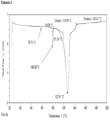
- FIG. 1 shows a DSC plot (Heat Flow Q (mW) versus Temperature T (C) for the alloy Sn—Bi-6 In.
- FIG. 2 shows a DSC plot (Heat Flow Q (mW) versus Temperature T (C) for the alloy Sn—Bi-6 In-1Ga.
- solder alloys were prepared: Sn-5Bi-6 In and Sn-5Bi-6In-1Ga. As can be seen from FIGS. 1 and 2 , the addition of 1% Ga to Sn-5Bi-6 In solder reduces the onset temperature of the main melting phase from 118° C. to 110° C. and eliminates phases melting at 78° C. and 100° C. It also introduces a small fraction of another phase melting around 87° C.
- Solder joints were prepared using the two solder alloys.
- the additional of 1% Ga did not have a significant detrimental effect on the mechanical properties of the solder joint.
- the alloys exhibited similar shear strengths and similar thermal cycling behaviours.
- a solder alloy was prepared having the following composition:
- the alloy exhibited a combination of low reflow temperature and favourable mechanical properties.
- a solder alloy was prepared having the following composition:
- the alloy exhibited a combination of low reflow temperature and favourable mechanical properties.
- a solder alloy was prepared having the following composition:
- the alloy exhibited a combination of low reflow temperature and favourable mechanical properties.
- a solder alloy was prepared having the following composition:
- the alloy exhibited a combination of low reflow temperature and favourable mechanical properties.
- a solder alloy was prepared having the following composition:
- the alloy exhibited a combination of low reflow temperature and favourable mechanical properties.
Landscapes
- Engineering & Computer Science (AREA)
- Mechanical Engineering (AREA)
- Chemical & Material Sciences (AREA)
- Materials Engineering (AREA)
- Metallurgy (AREA)
- Organic Chemistry (AREA)
- Electric Connection Of Electric Components To Printed Circuits (AREA)
- Reinforced Plastic Materials (AREA)
Abstract
Description
-
- from 40 to 65 wt. % bismuth;
- from 1 to 10 wt. % indium;
- at least one of:
- from 0.1 to 5 wt. % gallium,
- from 0.1 to 5 wt. % zinc,
- from 0.1 to 2 w. % copper,
- from 0.01 to 0.1 wt. % cobalt,
- from 0.1 to 2 wt. % silver,
- from 0.005 to 0.05 wt. % titanium, and
- from 0.01 to 1 wt. % nickel;
- optionally one or more of:
- up to 1 wt. % germanium,
- up to 1 wt. % rare earth metals,
- up to 1 wt. % neodymium,
- up to 1 wt. % chromium,
- up to 1 wt. % iron,
- up to 1 wt. % aluminium,
- up to 1 wt. % phosphorus,
- up to 1 wt. % gold,
- up to 1 wt. % tellurium,
- up to 1 wt. % selenium,
- up to 1 wt. % calcium,
- up to 1 wt. % vanadium,
- up to 1 wt. % molybdenum,
- up to 1 wt. % platinum,
- up to 1 wt. % magnesium,
- up to 1 wt. % silicon, and
- up to 1 wt. % manganese; and
- the balance tin together with any unavoidable impurities.
-
- from 1 to 10 wt. % bismuth;
- from 1 to 10 wt. % indium;
- at least one of:
- from 0.1 to 5 wt. % gallium,
- from 0.1 to 5 wt. % zinc,
- from 0.1 to 2 w. % copper,
- from 0.01 to 0.1 wt. % cobalt,
- from 0.1 to 2 wt. % silver,
- from 0.005 to 0.05 wt. % titanium, and
- from 0.01 to 1 wt. % nickel;
- optionally one or more of:
- up to 1 wt. % vanadium,
- up to 1 wt. % rare earth metals,
- up to 1 wt. % neodymium,
- up to 1 wt. % chromium,
- up to 1 wt. % iron,
- up to 1 wt. % aluminium,
- up to 1 wt. % phosphorus,
- up to 1 wt. % gold,
- up to 1 wt. % tellurium,
- up to 1 wt. % selenium,
- up to 1 wt. % calcium,
- up to 1 wt. % vanadium,
- up to 1 wt. % molybdenum,
- up to 1 wt. % platinum,
- up to 1 wt. % magnesium,
- up to 1 wt. % silicon, and
- up to 1 wt. % manganese; and
- the balance tin together with any unavoidable impurities.
-
- from 1 to 10 wt. % indium;
- at least one of:
- from 0.1 to 5 wt. % gallium,
- from 0.1 to 5 wt. % zinc,
- from 0.1 to 2 w. % copper,
- from 0.01 to 0.1 wt. % cobalt,
- from 0.1 to 2 wt. % silver,
- from 0.005 to 0.05 wt. % titanium, and
- from 0.01 to 1 wt. % nickel;
- optionally one or more of:
- up to 1 wt. % vanadium,
- up to 1 wt. % rare earth metals,
- up to 1 wt. % neodymium,
- up to 1 wt. % chromium,
- up to 1 wt. % iron,
- up to 1 wt. % aluminium,
- up to 1 wt. % phosphorus,
- up to 1 wt. % gold,
- up to 1 wt. % tellurium,
- up to 1 wt. % selenium,
- up to 1 wt. % calcium,
- up to 1 wt. % vanadium,
- up to 1 wt. % molybdenum,
- up to 1 wt. % platinum,
- up to 1 wt. % magnesium,
- up to 1 wt. % silicon, and
- up to 1 wt. % manganese; and
- the balance tin together with any unavoidable impurities.
-
- (a) from 48 to 57 wt. % of Bi
- (b) from 1 to 10 wt % of In
- (c) one or more of
- 0 to 1 wt. % nickel, e.g. 0<wt. % nickel≤1
- 0 to 1 wt. % of copper, e.g. 0<wt. % copper≤1
- 0 to 5 wt % of silver, e.g. 0<wt. % silver≤1
- (d) Optionally one or more of the following elements
- up to 1 wt. % of titanium
- up to 2 wt. % of one or more rare earths, cerium, lanthanum,
- neodymium, e.g. up to 2 wt. %
- up to 1 wt. % of chromium
- up to 10 wt. % of germanium
- up to 1 wt. % gallium
- up to 1 wt. % cobalt
- up to 1 wt. % of iron
- up to 10 wt. % of aluminum
- up to 1 wt. % of phosphorus
- up to 1 wt. % of gold
- up to 1 wt. % of tellurium
- up to 1 wt. % of selenium
- up to 1 wt. % of calcium
- up to 1 wt. % of vanadium
- up to 1 wt. % of molybdenum
- up to 1 wt. % of platinum
- up to 1 wt. % of magnesium
- up to 1 wt. % of silicon
- (e) the balance tin, together with unavoidable impurities.
-
- (a) from 48 to 57 wt. % of Bi
- (b) from 1 to 10 wt % of In
- (c) one or more of
- 0 to 1 wt. % nickel
- 0 to 1 wt. % of copper
- 0 to 5 wt % of cobalt
- (d) Optionally one or more of the following elements
- up to 1 wt. % of titanium
- up to 2 wt. % of one or more rare earths, cerium, lanthanum, neodymium
- up to 1 wt. % of chromium
- up to 10 wt. % of germanium
- up to 1 wt. % gallium
- up to 1 wt. % of iron
- up to 10 wt. % of aluminium
- up to 1 wt. % of phosphorus
- up to 1 wt. % of gold
- up to 1 wt. % of tellurium
- up to 1 wt. % of selenium
- up to 1 wt. % of calcium
- up to 1 wt. % of vanadium
- up to 1 wt. % of molybdenum
- up to 1 wt. % of platinum
- up to 1 wt. % of magnesium
- up to 1 wt. % of silicon
- up to 1 wt. % of molybdenum
- up to 5 wt % of silver
- (d) the balance tin, together with unavoidable impurities.
-
- (a) from 40 to 60 wt. % of Bi
- (b) from 40 to 60 wt % of In
- (c) one or more of
- 0 to 1 wt. % nickel
- 0 to 1 wt. % of copper
- 0 to 1 wt % of cobalt
- (d) Optionally one or more of the following elements
- up to 1 wt. % of titanium
- up to 2 wt. % of one or more rare earths, cerium, lanthanum, neodymium
- up to 1 wt. % of chromium
- up to 10 wt. % of germanium
- up to 1 wt. % gallium
- up to 1 wt. % of iron
- up to 10 wt. % of aluminium
- up to 1 wt. % of phosphorus
- up to 1 wt. % of gold
- up to 1 wt. % of tellurium
- up to 1 wt. % of selenium
- up to 1 wt. % of calcium
- up to 1 wt. % of vanadium
- up to 1 wt. % of molybdenum
- up to 1 wt. % of platinum
- up to 1 wt. % of magnesium
- up to 1 wt. % of silicon
- up to 1 wt. % of molybdenum
- up to 5 wt % of silver
- (d) the balance tin, together with unavoidable impurities.
-
- a solder alloy, and
- a solder flux comprising an activator,
wherein the activator comprises both an organic acid activator and an organic amine activator, and wherein the molar ratio of organic acid activator to organic amine activator is from 0.8 to 2.5.
-
- from 78 to 92 wt. % of the solder alloy; and
- from 8 to 22 wt. % of the solder flux.
-
- one or more rosins and/or one or more resins, preferably in an amount of from 25 to 40 wt. %;
- one or more solvents, preferably in an amount of from 20 to 40 wt. %;
- one or more additives, preferably in an amount of from 4 to 12 wt. %;
- one or more rheology modifying agents, preferably in an amount of from 1 to 10 wt. %; and
- one or more corrosion inhibitors, preferably in an amount of from 0.5 to 3 wt. %.
-
- from 1 to 5 wt. % glutaric acid,
- from 5 to 12 wt. % adipic acid,
- from 0 to 2 wt. % 2-iodobenzoic acid (e.g. 0 wt. % or greater than 0 to 2 wt. %, such as 0.1 to 2 wt. %), and
- from 2 to 10 wt. % 2-ethylimidazole.
-
- from 7 to 15 wt. % adipic acid,
- from 0 to 2 wt. % 2-iodobenzoic acid (e.g. 0 wt. % or greater than 0 to 2 wt. %, such as 0.1 to 2 wt. %), and
- from 2 to 10 wt. % 2-ethylimidazole.
-
- from 1 to 5 wt. % glutaric acid,
- from 1 to 10 wt. % glutamic acid,
- from 3 to 10 wt. % adipic acid,
- from 0 to 2 wt. % 2-iodobenzoic acid (e.g. 0 wt. % or greater than 0 to 2 wt. %, such as 0.1 to 2 wt. %), and
- from 2 to 10 wt. % 2-ethylimidazole.
-
- one or more thermoplastic polymers, preferably selected from polyester, poly acrylates and poly phenoxy resins; and/or
- one or more waxes, preferably selected from vegetable oil waxes and natural waxes; and/or
- one or more thermoset network forming resins, preferably selected from resins containing polyester or polyacrylate or polyurethane backbones, the product of the reaction of epoxy with hardeners such as amine, acid, anhydrides, the product of the reaction of acid or its derivative with amine, the product of the reaction of acid or its derives with alcohol, the product of the reaction of multiple carbon-carbon bond having allyl, vinyl, methacrylate, methacrylamide functionality, the reaction of hydroxy and isocyanate.
-
- a) In and Bi containing solder alloys as described herein of (78-92 weight %) and Solder Flux of (8-22 weight %),
- b) while the solder paste flux comprises of the following building blocks:
- a. Rosin/Resins (25-40 wt. %),
- b. Solvent package (20-40 wt. %),
- c. Activator package (12-20 wt. %),
- d. Additives (4-12 wt. %),
- e. Rheology modifying agents (1-10 wt. %), and
- f. Corrosion inhibitors (0.5-3 wt. %).
-
- (i) providing two or more work pieces to be joined;
- (ii) providing a solder alloy as described herein or a solder paste as described herein; and
- (iii) heating the solder alloy or solder paste in the vicinity of the work pieces to be joined.
-
- (a) from 53 to 54 wt. % of Bi
- (b) from 4 to 5 wt % of In
- (c) 0 to 0.05 wt. % nickel
- (d) the balance tin, together with unavoidable impurities.
-
- (a) from 55 to 56 wt. % of Bi
- (b) from 2 to 3 wt % of In
- (c) 0 to 0.05 wt. % nickel
- (d) 0.3 to 0.5% Cu
- (e) the balance tin, together with unavoidable impurities.
-
- (a) from 51 to 53 wt % of In
- (b) 0 to 0.05 wt. % nickel
- (c) 0.3 to 0.5% Cu
- (d) the balance tin, together with unavoidable impurities.
-
- (a) from 51 to 53 wt % of In
- (b) 0 to 0.05 wt. % nickel
- (c) 0 to 0.05% Ge
- (d) the balance tin, together with unavoidable impurities.
-
- (a) from 51 to 53 wt % of In
- (b) 0 to 0.05 wt. % nickel
- (c) 0 to 0.03% P
- (d) the balance tin, together with unavoidable impurities.
Claims (23)
Applications Claiming Priority (3)
| Application Number | Priority Date | Filing Date | Title |
|---|---|---|---|
| IN201811040134 | 2018-10-24 | ||
| IN201811040134 | 2018-10-24 | ||
| PCT/EP2019/025358 WO2020083529A1 (en) | 2018-10-24 | 2019-10-23 | Low temperature soldering solutions for polymer substrates, printed circuit boards and other joining applications |
Related Parent Applications (1)
| Application Number | Title | Priority Date | Filing Date |
|---|---|---|---|
| PCT/EP2019/025358 A-371-Of-International WO2020083529A1 (en) | 2018-10-24 | 2019-10-23 | Low temperature soldering solutions for polymer substrates, printed circuit boards and other joining applications |
Related Child Applications (1)
| Application Number | Title | Priority Date | Filing Date |
|---|---|---|---|
| US19/019,729 Continuation US20250153280A1 (en) | 2018-10-24 | 2025-01-14 | Low temperature soldering solutions for polymer substrates, printed circuit boards and other joining applications |
Publications (2)
| Publication Number | Publication Date |
|---|---|
| US20210283727A1 US20210283727A1 (en) | 2021-09-16 |
| US12233483B2 true US12233483B2 (en) | 2025-02-25 |
Family
ID=68468647
Family Applications (2)
| Application Number | Title | Priority Date | Filing Date |
|---|---|---|---|
| US17/286,704 Active 2041-09-24 US12233483B2 (en) | 2018-10-24 | 2019-10-23 | Low temperature soldering solutions for polymer substrates, printed circuit boards and other joining applications |
| US19/019,729 Pending US20250153280A1 (en) | 2018-10-24 | 2025-01-14 | Low temperature soldering solutions for polymer substrates, printed circuit boards and other joining applications |
Family Applications After (1)
| Application Number | Title | Priority Date | Filing Date |
|---|---|---|---|
| US19/019,729 Pending US20250153280A1 (en) | 2018-10-24 | 2025-01-14 | Low temperature soldering solutions for polymer substrates, printed circuit boards and other joining applications |
Country Status (9)
| Country | Link |
|---|---|
| US (2) | US12233483B2 (en) |
| EP (1) | EP3870389A1 (en) |
| JP (2) | JP2022502265A (en) |
| KR (2) | KR20240042569A (en) |
| CN (1) | CN112912204A (en) |
| CA (1) | CA3116600C (en) |
| MX (2) | MX2021004334A (en) |
| TW (5) | TWI756575B (en) |
| WO (1) | WO2020083529A1 (en) |
Families Citing this family (9)
| Publication number | Priority date | Publication date | Assignee | Title |
|---|---|---|---|---|
| JP6912742B1 (en) * | 2020-02-14 | 2021-08-04 | 千住金属工業株式会社 | Lead-free and antimony-free solder alloys, solder balls, and solder fittings |
| JP6836040B1 (en) * | 2020-07-31 | 2021-02-24 | 千住金属工業株式会社 | Solder alloy |
| JP7478173B2 (en) * | 2021-03-03 | 2024-05-02 | 株式会社タムラ製作所 | Flux composition and solder composition |
| CN117279733A (en) * | 2021-05-06 | 2023-12-22 | 日本斯倍利亚社股份有限公司 | Lead-free solder paste |
| CN117226338B (en) * | 2022-06-07 | 2026-08-07 | 苏州优诺电子材料科技有限公司 | Resin reinforced solder paste and preparation method thereof |
| CN116748733A (en) * | 2023-04-04 | 2023-09-15 | 中山翰华锡业有限公司 | Highly reliable low melting point solder paste and preparation method thereof |
| TW202545659A (en) * | 2024-05-15 | 2025-12-01 | 美商阿爾發金屬化工公司 美國康乃狄克州華特伯瑞市佛萊特街 245 號 | Sintering composition |
| TWI919317B (en) | 2024-07-01 | 2026-03-21 | 昇貿科技股份有限公司 | Bismuth-containing solder joint and method for producing the same |
| CN120460974B (en) * | 2025-07-15 | 2025-09-19 | 锦州阳光能源有限公司 | Alloying-promoting welding-assisting material, preparation method thereof and photovoltaic module welding process |
Citations (30)
| Publication number | Priority date | Publication date | Assignee | Title |
|---|---|---|---|---|
| US5074928A (en) * | 1989-11-24 | 1991-12-24 | Nippondenso Co., Ltd. | Water-soluble soldering flux |
| JPH08150493A (en) | 1994-09-29 | 1996-06-11 | Fujitsu Ltd | Solder alloy, solder powder, solder paste, printed wiring board, electronic component, soldering method, and soldering apparatus |
| DE19647478C1 (en) | 1996-01-31 | 1997-06-05 | Leybold Materials Gmbh | Tin sputtering target joined to back plate |
| US5755896A (en) * | 1996-11-26 | 1998-05-26 | Ford Motor Company | Low temperature lead-free solder compositions |
| US5833921A (en) | 1997-09-26 | 1998-11-10 | Ford Motor Company | Lead-free, low-temperature solder compositions |
| JPH11221695A (en) | 1998-02-06 | 1999-08-17 | Nippon Superia Sha:Kk | Lead-free solder alloy |
| JP2001358459A (en) | 2000-06-12 | 2001-12-26 | Hitachi Ltd | Electronic equipment and solder used for its connection |
| EP1317991A2 (en) | 2001-12-07 | 2003-06-11 | Senju Metal Industry Co., Ltd | Solder paste |
| EP1416508A1 (en) | 2002-10-30 | 2004-05-06 | Uchihashi Estec Co., Ltd. | Alloy type thermal fuse and wire member for a thermal fuse element |
| JP2007326124A (en) | 2006-06-07 | 2007-12-20 | Napura:Kk | Lead-free solder alloy |
| US20080053571A1 (en) * | 2006-09-05 | 2008-03-06 | Denso Corporation | Soldering flux and solder paste composition |
| EP1914035A1 (en) | 2005-08-11 | 2008-04-23 | Senju Metal Industry Co., Ltd. | Lead free solder paste and application thereof |
| EP2052805A1 (en) | 2006-08-04 | 2009-04-29 | Panasonic Corporation | Bonding material, bonded portion and circuit board |
| JP2010077265A (en) | 2008-09-25 | 2010-04-08 | Panasonic Electric Works Co Ltd | Thermosetting resin composition, production method thereof and circuit board |
| US20100147567A1 (en) | 2006-08-28 | 2010-06-17 | Panasonic Electric Works Co., Ltd. | Thermosetting Resin Composition, Method of Manufacturing the Same and Circuit Board |
| WO2012118074A1 (en) | 2011-03-02 | 2012-09-07 | 千住金属工業株式会社 | Flux |
| US8410377B2 (en) | 2007-11-01 | 2013-04-02 | Panasonic Corporation | Mounted structure |
| EP2623253A1 (en) | 2010-09-29 | 2013-08-07 | Koki Company Limited | Soldering paste and flux |
| EP2671667A1 (en) | 2012-06-08 | 2013-12-11 | Nihon Almit Co., Ltd. | Solder paste for bonding micro components |
| EP2689885A1 (en) | 2011-03-23 | 2014-01-29 | Senju Metal Industry Co., Ltd. | Lead-free solder alloy |
| WO2014034139A1 (en) | 2012-08-30 | 2014-03-06 | パナソニック株式会社 | Solder material and mounted body |
| EP2868423A1 (en) | 2012-06-29 | 2015-05-06 | Harima Chemicals, Inc. | Solder alloy, solder paste, and electronic circuit board |
| CN105195915A (en) | 2015-10-30 | 2015-12-30 | 苏州优诺电子材料科技有限公司 | Low-temperature lead-free solder alloy |
| CN105215569A (en) | 2015-10-30 | 2016-01-06 | 苏州优诺电子材料科技有限公司 | A kind of leadless welding alloy |
| WO2016012754A2 (en) | 2014-07-21 | 2016-01-28 | Alpha Metals, Inc. | Low temperature high reliability alloy for solder hierarchy |
| EP2979807A1 (en) | 2014-06-24 | 2016-02-03 | Harima Chemicals, Inc. | Solder alloy, solder composition, solder paste and electronic circuit board |
| WO2016144945A1 (en) * | 2015-03-10 | 2016-09-15 | Indium Corporation | Mixed alloy solder paste |
| US20160318134A1 (en) | 2013-12-31 | 2016-11-03 | Alpha Metals, Inc. | Rosin-Free Thermosetting Flux Formulations |
| WO2016178000A1 (en) | 2015-05-02 | 2016-11-10 | Alpha Metals, Inc. | Lead-free solder alloy with low melting point |
| EP3165323A1 (en) | 2015-05-26 | 2017-05-10 | Senju Metal Industry Co., Ltd. | Solder alloy, solder ball, chip solder, solder paste and solder joint |
Family Cites Families (7)
| Publication number | Priority date | Publication date | Assignee | Title |
|---|---|---|---|---|
| GB2413565A (en) * | 2004-04-15 | 2005-11-02 | Henkel Loctite Adhesives Ltd | Lead-free, bismuth-free solder alloy powders and a method of production thereof |
| PL2886245T3 (en) * | 2013-12-17 | 2019-12-31 | Heraeus Deutschland GmbH & Co. KG | Soldering paste with adipic acid, oxalic acid and amine components |
| JP2016002553A (en) * | 2014-06-13 | 2016-01-12 | 荒川化学工業株式会社 | Lead-free solder paste |
| JP5723056B1 (en) * | 2014-12-15 | 2015-05-27 | ハリマ化成株式会社 | Solder alloy, solder paste and electronic circuit board |
| US20180102464A1 (en) * | 2016-10-06 | 2018-04-12 | Alpha Assembly Solutions Inc. | Advanced Solder Alloys For Electronic Interconnects |
| CN108629393A (en) * | 2017-03-17 | 2018-10-09 | 苏州昭舜物联科技有限公司 | RFID high frequency aluminum antenna low temperature solders connect bridging technique |
| CN106944767B (en) * | 2017-05-15 | 2019-08-02 | 深圳市爱汶斯特科技有限公司 | High lead semiconductor weld-aiding cream, preparation method and tin cream |
-
2019
- 2019-10-23 CA CA3116600A patent/CA3116600C/en active Active
- 2019-10-23 US US17/286,704 patent/US12233483B2/en active Active
- 2019-10-23 MX MX2021004334A patent/MX2021004334A/en unknown
- 2019-10-23 KR KR1020247010061A patent/KR20240042569A/en not_active Ceased
- 2019-10-23 WO PCT/EP2019/025358 patent/WO2020083529A1/en not_active Ceased
- 2019-10-23 EP EP19798166.5A patent/EP3870389A1/en active Pending
- 2019-10-23 CN CN201980067543.6A patent/CN112912204A/en active Pending
- 2019-10-23 JP JP2021521122A patent/JP2022502265A/en active Pending
- 2019-10-23 KR KR1020217014815A patent/KR20210080443A/en not_active Ceased
- 2019-10-24 TW TW108138392A patent/TWI756575B/en active
- 2019-10-24 TW TW109144395A patent/TWI773022B/en not_active IP Right Cessation
- 2019-10-24 TW TW114127110A patent/TW202542327A/en unknown
- 2019-10-24 TW TW111102185A patent/TWI816282B/en active
- 2019-10-24 TW TW112132001A patent/TWI892215B/en active
-
2021
- 2021-04-15 MX MX2025013148A patent/MX2025013148A/en unknown
-
2023
- 2023-07-14 JP JP2023115852A patent/JP2023139088A/en active Pending
-
2025
- 2025-01-14 US US19/019,729 patent/US20250153280A1/en active Pending
Patent Citations (33)
| Publication number | Priority date | Publication date | Assignee | Title |
|---|---|---|---|---|
| US5074928A (en) * | 1989-11-24 | 1991-12-24 | Nippondenso Co., Ltd. | Water-soluble soldering flux |
| JPH08150493A (en) | 1994-09-29 | 1996-06-11 | Fujitsu Ltd | Solder alloy, solder powder, solder paste, printed wiring board, electronic component, soldering method, and soldering apparatus |
| DE19647478C1 (en) | 1996-01-31 | 1997-06-05 | Leybold Materials Gmbh | Tin sputtering target joined to back plate |
| US5755896A (en) * | 1996-11-26 | 1998-05-26 | Ford Motor Company | Low temperature lead-free solder compositions |
| EP0845324A1 (en) | 1996-11-26 | 1998-06-03 | Ford Motor Company | Solder Compositions |
| US5833921A (en) | 1997-09-26 | 1998-11-10 | Ford Motor Company | Lead-free, low-temperature solder compositions |
| JPH11221695A (en) | 1998-02-06 | 1999-08-17 | Nippon Superia Sha:Kk | Lead-free solder alloy |
| JP2001358459A (en) | 2000-06-12 | 2001-12-26 | Hitachi Ltd | Electronic equipment and solder used for its connection |
| EP1317991A2 (en) | 2001-12-07 | 2003-06-11 | Senju Metal Industry Co., Ltd | Solder paste |
| EP1416508A1 (en) | 2002-10-30 | 2004-05-06 | Uchihashi Estec Co., Ltd. | Alloy type thermal fuse and wire member for a thermal fuse element |
| EP1914035A1 (en) | 2005-08-11 | 2008-04-23 | Senju Metal Industry Co., Ltd. | Lead free solder paste and application thereof |
| JP2007326124A (en) | 2006-06-07 | 2007-12-20 | Napura:Kk | Lead-free solder alloy |
| EP2052805A1 (en) | 2006-08-04 | 2009-04-29 | Panasonic Corporation | Bonding material, bonded portion and circuit board |
| US20100147567A1 (en) | 2006-08-28 | 2010-06-17 | Panasonic Electric Works Co., Ltd. | Thermosetting Resin Composition, Method of Manufacturing the Same and Circuit Board |
| US20080053571A1 (en) * | 2006-09-05 | 2008-03-06 | Denso Corporation | Soldering flux and solder paste composition |
| EP1897652A1 (en) | 2006-09-05 | 2008-03-12 | Denso Corporation | Soldering flux and solder paste composition |
| US8410377B2 (en) | 2007-11-01 | 2013-04-02 | Panasonic Corporation | Mounted structure |
| JP2010077265A (en) | 2008-09-25 | 2010-04-08 | Panasonic Electric Works Co Ltd | Thermosetting resin composition, production method thereof and circuit board |
| EP2623253A1 (en) | 2010-09-29 | 2013-08-07 | Koki Company Limited | Soldering paste and flux |
| WO2012118074A1 (en) | 2011-03-02 | 2012-09-07 | 千住金属工業株式会社 | Flux |
| EP2689885A1 (en) | 2011-03-23 | 2014-01-29 | Senju Metal Industry Co., Ltd. | Lead-free solder alloy |
| EP2671667A1 (en) | 2012-06-08 | 2013-12-11 | Nihon Almit Co., Ltd. | Solder paste for bonding micro components |
| EP2868423A1 (en) | 2012-06-29 | 2015-05-06 | Harima Chemicals, Inc. | Solder alloy, solder paste, and electronic circuit board |
| WO2014034139A1 (en) | 2012-08-30 | 2014-03-06 | パナソニック株式会社 | Solder material and mounted body |
| US20160318134A1 (en) | 2013-12-31 | 2016-11-03 | Alpha Metals, Inc. | Rosin-Free Thermosetting Flux Formulations |
| EP2979807A1 (en) | 2014-06-24 | 2016-02-03 | Harima Chemicals, Inc. | Solder alloy, solder composition, solder paste and electronic circuit board |
| WO2016012754A2 (en) | 2014-07-21 | 2016-01-28 | Alpha Metals, Inc. | Low temperature high reliability alloy for solder hierarchy |
| US20170197281A1 (en) | 2014-07-21 | 2017-07-13 | Alpha Assembly Solutions Inc. | Low Temperature High Reliability Alloy for Solder Hierarchy |
| WO2016144945A1 (en) * | 2015-03-10 | 2016-09-15 | Indium Corporation | Mixed alloy solder paste |
| WO2016178000A1 (en) | 2015-05-02 | 2016-11-10 | Alpha Metals, Inc. | Lead-free solder alloy with low melting point |
| EP3165323A1 (en) | 2015-05-26 | 2017-05-10 | Senju Metal Industry Co., Ltd. | Solder alloy, solder ball, chip solder, solder paste and solder joint |
| CN105195915A (en) | 2015-10-30 | 2015-12-30 | 苏州优诺电子材料科技有限公司 | Low-temperature lead-free solder alloy |
| CN105215569A (en) | 2015-10-30 | 2016-01-06 | 苏州优诺电子材料科技有限公司 | A kind of leadless welding alloy |
Also Published As
| Publication number | Publication date |
|---|---|
| TWI773022B (en) | 2022-08-01 |
| KR20210080443A (en) | 2021-06-30 |
| CN112912204A (en) | 2021-06-04 |
| TW202542327A (en) | 2025-11-01 |
| KR20240042569A (en) | 2024-04-02 |
| TWI892215B (en) | 2025-08-01 |
| TW202242155A (en) | 2022-11-01 |
| TW202129022A (en) | 2021-08-01 |
| JP2023139088A (en) | 2023-10-03 |
| CA3116600C (en) | 2023-05-09 |
| US20250153280A1 (en) | 2025-05-15 |
| TW202424219A (en) | 2024-06-16 |
| CA3116600A1 (en) | 2020-04-30 |
| TW202024345A (en) | 2020-07-01 |
| WO2020083529A1 (en) | 2020-04-30 |
| JP2022502265A (en) | 2022-01-11 |
| MX2021004334A (en) | 2021-06-23 |
| US20210283727A1 (en) | 2021-09-16 |
| TWI816282B (en) | 2023-09-21 |
| EP3870389A1 (en) | 2021-09-01 |
| MX2025013148A (en) | 2025-12-01 |
| TWI756575B (en) | 2022-03-01 |
Similar Documents
| Publication | Publication Date | Title |
|---|---|---|
| US20250153280A1 (en) | Low temperature soldering solutions for polymer substrates, printed circuit boards and other joining applications | |
| KR101985646B1 (en) | Low temperature high reliability tin alloy for soldering | |
| EP1914035B1 (en) | Lead free solder paste and application thereof | |
| EP1402990B1 (en) | Solder composition | |
| EP3089844B1 (en) | Rosin-free thermosetting flux formulations | |
| WO2016178000A1 (en) | Lead-free solder alloy with low melting point | |
| CN105900180B (en) | Conductive paste, bonded structure, and method for producing bonded structure | |
| EP3902654A1 (en) | Lead-free solder compositions | |
| US20010002982A1 (en) | Lead-free, high tin ternary solder alloy of tin, silver, and bismuth | |
| KR20230015361A (en) | Lead-free solder paste containing mixed solder powders for high-temperature applications | |
| US20170373034A1 (en) | Tin-indium based low temperature solder alloy | |
| JP4242725B2 (en) | Lead-free soldering flux and solder paste | |
| JP2005021975A (en) | Flux for joining unleaded solder, and solder paste | |
| CN102848095B (en) | Grafting material, junction surface and circuit substrate |
Legal Events
| Date | Code | Title | Description |
|---|---|---|---|
| FEPP | Fee payment procedure |
Free format text: ENTITY STATUS SET TO UNDISCOUNTED (ORIGINAL EVENT CODE: BIG.); ENTITY STATUS OF PATENT OWNER: LARGE ENTITY |
|
| STPP | Information on status: patent application and granting procedure in general |
Free format text: APPLICATION UNDERGOING PREEXAM PROCESSING |
|
| AS | Assignment |
Owner name: ALPHA ASSEMBLY SOLUTIONS INC., CONNECTICUT Free format text: ASSIGNMENT OF ASSIGNORS INTEREST;ASSIGNORS:RAUT, RAHUL;CHAKI, NIRMALYA KUMAR;SINGH, BAWA;AND OTHERS;SIGNING DATES FROM 20210823 TO 20210909;REEL/FRAME:057705/0813 |
|
| STPP | Information on status: patent application and granting procedure in general |
Free format text: DOCKETED NEW CASE - READY FOR EXAMINATION |
|
| STPP | Information on status: patent application and granting procedure in general |
Free format text: NON FINAL ACTION MAILED |
|
| STPP | Information on status: patent application and granting procedure in general |
Free format text: RESPONSE TO NON-FINAL OFFICE ACTION ENTERED AND FORWARDED TO EXAMINER |
|
| STPP | Information on status: patent application and granting procedure in general |
Free format text: NON FINAL ACTION MAILED |
|
| STPP | Information on status: patent application and granting procedure in general |
Free format text: RESPONSE TO NON-FINAL OFFICE ACTION ENTERED AND FORWARDED TO EXAMINER |
|
| STPP | Information on status: patent application and granting procedure in general |
Free format text: NOTICE OF ALLOWANCE MAILED -- APPLICATION RECEIVED IN OFFICE OF PUBLICATIONS |
|
| ZAAB | Notice of allowance mailed |
Free format text: ORIGINAL CODE: MN/=. |
|
| STPP | Information on status: patent application and granting procedure in general |
Free format text: AWAITING TC RESP., ISSUE FEE NOT PAID |
|
| STPP | Information on status: patent application and granting procedure in general |
Free format text: NOTICE OF ALLOWANCE MAILED -- APPLICATION RECEIVED IN OFFICE OF PUBLICATIONS |
|
| STPP | Information on status: patent application and granting procedure in general |
Free format text: DOCKETED NEW CASE - READY FOR EXAMINATION |
|
| STPP | Information on status: patent application and granting procedure in general |
Free format text: NOTICE OF ALLOWANCE MAILED -- APPLICATION RECEIVED IN OFFICE OF PUBLICATIONS |
|
| STPP | Information on status: patent application and granting procedure in general |
Free format text: PUBLICATIONS -- ISSUE FEE PAYMENT VERIFIED |
|
| STCF | Information on status: patent grant |
Free format text: PATENTED CASE |