US12202808B2 - Substituted antivirals for treating coronavirus infection - Google Patents
Substituted antivirals for treating coronavirus infection Download PDFInfo
- Publication number
- US12202808B2 US12202808B2 US18/068,744 US202218068744A US12202808B2 US 12202808 B2 US12202808 B2 US 12202808B2 US 202218068744 A US202218068744 A US 202218068744A US 12202808 B2 US12202808 B2 US 12202808B2
- Authority
- US
- United States
- Prior art keywords
- subject
- compound
- alkyl
- heteroaryl
- aryl
- Prior art date
- Legal status (The legal status is an assumption and is not a legal conclusion. Google has not performed a legal analysis and makes no representation as to the accuracy of the status listed.)
- Active, expires
Links
Images

Classifications
-
- A—HUMAN NECESSITIES
- A61—MEDICAL OR VETERINARY SCIENCE; HYGIENE
- A61K—PREPARATIONS FOR MEDICAL, DENTAL OR TOILETRY PURPOSES
- A61K31/00—Medicinal preparations containing organic active ingredients
- A61K31/33—Heterocyclic compounds
- A61K31/395—Heterocyclic compounds having nitrogen as a ring hetero atom, e.g. guanethidine or rifamycins
-
- C—CHEMISTRY; METALLURGY
- C07—ORGANIC CHEMISTRY
- C07D—HETEROCYCLIC COMPOUNDS
- C07D273/00—Heterocyclic compounds containing rings having nitrogen and oxygen atoms as the only ring hetero atoms, not provided for by groups C07D261/00 - C07D271/00
- C07D273/08—Heterocyclic compounds containing rings having nitrogen and oxygen atoms as the only ring hetero atoms, not provided for by groups C07D261/00 - C07D271/00 having two nitrogen atoms and more than one oxygen atom
-
- A—HUMAN NECESSITIES
- A61—MEDICAL OR VETERINARY SCIENCE; HYGIENE
- A61K—PREPARATIONS FOR MEDICAL, DENTAL OR TOILETRY PURPOSES
- A61K9/00—Medicinal preparations characterised by special physical form
- A61K9/0012—Galenical forms characterised by the site of application
- A61K9/0019—Injectable compositions; Intramuscular, intravenous, arterial, subcutaneous administration; Compositions to be administered through the skin in an invasive manner
-
- A—HUMAN NECESSITIES
- A61—MEDICAL OR VETERINARY SCIENCE; HYGIENE
- A61K—PREPARATIONS FOR MEDICAL, DENTAL OR TOILETRY PURPOSES
- A61K9/00—Medicinal preparations characterised by special physical form
- A61K9/0012—Galenical forms characterised by the site of application
- A61K9/0043—Nose
-
- A—HUMAN NECESSITIES
- A61—MEDICAL OR VETERINARY SCIENCE; HYGIENE
- A61P—SPECIFIC THERAPEUTIC ACTIVITY OF CHEMICAL COMPOUNDS OR MEDICINAL PREPARATIONS
- A61P31/00—Antiinfectives, i.e. antibiotics, antiseptics, chemotherapeutics
- A61P31/12—Antivirals
-
- C—CHEMISTRY; METALLURGY
- C07—ORGANIC CHEMISTRY
- C07D—HETEROCYCLIC COMPOUNDS
- C07D413/00—Heterocyclic compounds containing two or more hetero rings, at least one ring having nitrogen and oxygen atoms as the only ring hetero atoms
- C07D413/02—Heterocyclic compounds containing two or more hetero rings, at least one ring having nitrogen and oxygen atoms as the only ring hetero atoms containing two hetero rings
- C07D413/10—Heterocyclic compounds containing two or more hetero rings, at least one ring having nitrogen and oxygen atoms as the only ring hetero atoms containing two hetero rings linked by a carbon chain containing aromatic rings
Definitions
- the invention is in the field of medicine, more specifically antiviral therapy for treating or preventing coronavirus infection such as SARS-CoV-2 infection.
- the invention provides medical uses for coronavirus antiviral compounds or agents. More specifically, the invention relates to BAF complex modulating compounds, preferably BAF complex modulating compounds that inhibit ARID1A subunit-containing BAF complexes, for use in treating or preventing coronavirus infection in a subject.
- Antiviral therapies are being investigated alongside vaccines for the treatment and prevention of COVID-19. These investigational antiviral therapies are generally designed to target and inhibit different phases of the virus life cycle, such as viral entry (via the angiotensin-converting enzyme 2 (ACE2) receptor and transmembrane serine protease 2 (TMPRSS2)), viral membrane fusion and endocytosis, or the activity of the SARS-CoV-2 3-chymotrypsin-like protease (3CLpro) and the SARS-CoV-2 RNA-dependent RNA polymerase.
- ACE2 angiotensin-converting enzyme 2
- TMPRSS2 transmembrane serine protease 2
- SARS-CoV-2 3-chymotrypsin-like protease 3CLpro
- SARS-CoV-2 RNA-dependent RNA polymerase SARS-CoV-2 RNA-dependent RNA polymerase
- remdesivir is the only FDA-approved antiviral drug for the treatment of COVID-19. More specifically, remdesivir is approved by the FDA for the treatment of COVID-19 in hospitalized adult and pediatric patients.
- the NIH COVID-19 Treatment Guidelines Panel does not recommend the use of other antivirals such as ivermectin, and advises against the use of nitazoxanide, hydroxychloroquine, chloroquine and azithromycin. The panel also advises against the use of HIV protease inhibitors such as lopinavir and ritonavir.
- SARS-CoV-2 antiviral agents that can be used to treat or prevent coronavirus infection.
- the inventors unexpectedly discovered that a previously identified compound class of BAF complex modulating compounds, which specifically inhibit ARID1A-containing BAF complexes, can be used as an antiviral in the treatment or prevention of a coronavirus infection.
- This compound class has inter alia been described by Marian et al. (Cell Chemical Biology 25, 1443-1455 (2016)) and in WO 2020/014524 A1 in relation to HIV latency reversal.
- This compound class has also been described in US 2020/0255416 A1 in relation to cancer combination therapy.
- the invention provides a BAF complex modulating compound for use as a coronavirus antiviral (in a subject); wherein the BAF complex modulating compound is of Formula (I):
- R 1 is selected from the group consisting of amine, substituted amine, alkylaminocarbonylamino, substituted alkylaminocarbonylamino, alkanoylamino, substituted alkanoylamino, arylaminocarbonylamino, substituted arylaminocarbonylamino, carbamate, substituted carbamate, aroylamino and substituted aroylamino;
- R 2 is selected from the group consisting of heteroaryl-aryl-alkyl, substituted heteroaryl-aryl-alkyl, aryl-heteroaryl-alkyl, substituted aryl-heteroaryl alkyl, alkanoyl and substituted alkanoyl;
- R 3 to R 6 are each independently selected from the group consisting of H, alkyl and substituted alkyl;
- each center may independently be of R-configuration or S-configuration or a mixture thereof.
- the stereochemistry at C2, C5 and C6 is configured to provide the S, S, R stereoisomer at C2, C5 and C6 respectively.
- the stereochemistry of the compound of formula (I) is configured to provide the R, S, R stereoisomer at C2, C5 and C6 respectively.
- the BAF complex modulating compound is of formula (IA):
- R 1 is selected from the group consisting of amine, substituted amine, alkylaminocarbonylamino, substituted alkylaminocarbonylamino, alkanoylamino, substituted alkanoylamino, arylaminocarbonylamino, substituted arylaminocarbonylamino, carbamate, substituted carbamate, aroylamino and substituted aroylamino;
- R 2 is selected from the group consisting of heteroaryl-aryl-alkyl, substituted heteroaryl-aryl-alkyl, aryl-heteroaryl-alkyl, substituted aryl-heteroaryl alkyl, alkanoyl and substituted alkanoyl;
- R 3 to R 6 are each independently selected from the group consisting of H, alkyl and substituted alkyl;
- the stereochemistry at C2, C5 and C6 is configured to provide the S, S, R stereoisomer at C2, C5 and C6 respectively.
- the stereochemistry of the compound of formula (IA) is configured to provide the R, S, R stereoisomer at C2, C5 and C6, respectively.
- the BAF complex modulating compound is of formula (IB):
- R 1 is selected from the group consisting of amine, substituted amine, alkylaminocarbonylamino, substituted alkylaminocarbonylamino, alkanoylamino, substituted alkanoylamino, arylaminocarbonylamino, substituted arylaminocarbonylamino, carbamate, substituted carbamate, aroylamino and substituted aroylamino;
- R 2 is selected from the group consisting of heteroaryl-aryl-alkyl, substituted heteroaryl-aryl-alkyl, aryl-heteroaryl-alkyl, substituted aryl-heteroaryl alkyl, alkanoyl and substituted alkanoyl;
- R 3 to R 6 are each independently selected from the group consisting of H, alkyl and substituted alkyl;
- R 1 is an alkylaminocarbonylamino.
- alkylaminocarbonylamino groups include, but are not limited to isopropyl-NHCONH— and propyl-NHCONH.
- R 1 is an arylaminocarbonylamino group.
- arylaminocarbonylamino group includes, but is not limited to phenyl-NHCONH—.
- R 1 is an amine.
- amines include, but are not limited to —NH2 and pyrimidine-NH—.
- R 1 is a carbamate.
- a particular example of a carbamate includes, but is not limited to, isopropyl-OCONH—.
- R 1 is an alkanoylamino.
- alkanoylamino groups include, but are not limited to isopropyl-CONH— and propyl-CONH—.
- R 1 is an aroylamino.
- a particular example of an aroylamino group includes, but is not limited to, phenyl-CONH—.
- R 1 is selected from the group consisting of:
- R 7 , R 8 and R 9 are each independently selected from the group consisting of alkyl, substituted alkyl, aryl, substituted aryl, heteroaryl, substituted heteroaryl, cycloalkyl, substituted cycloalkyl, heterocycle and substituted heterocycle; wherein R 10 is selected from the group consisting of H, alkyl, substituted alkyl, aryl, substituted aryl, heteroaryl, substituted heteroaryl, cycloalkyl, substituted cycloalkyl, heterocycle and substituted heterocycle.
- R 7 is alkyl or substituted alkyl.
- R 7 is methyl, ethyl, propyl, isopropyl, butyl, sec-butyl, tert-butyl, pentyl or hexyl.
- R 7 is an aryl or a substituted aryl group such as phenyl or substituted phenyl.
- R 7 is an heteroaryl or substituted heteroaryl.
- R 7 is cycloalkyl or substituted cycloalkyl.
- R 7 is a heterocycle or substituted heterocycle.
- R 8 is alkyl or substituted alkyl.
- R 8 is methyl, ethyl, propyl, isopropyl, butyl, sec-butyl, tert-butyl, pentyl or hexyl.
- R 8 is an aryl or a substituted aryl group such as phenyl or substituted phenyl.
- R 8 is an heteroaryl or substituted heteroaryl.
- R 8 is cycloalkyl or substituted cycloalkyl.
- R 8 is a heterocycle or substituted heterocycle.
- R 9 is alkyl or substituted alkyl.
- R 9 is methyl, ethyl, propyl, isopropyl, butyl, sec-butyl, tert-butyl, pentyl or hexyl.
- R 9 is an aryl or a substituted aryl group such as phenyl or substituted phenyl.
- R 9 is an heteroaryl or substituted heteroaryl.
- R 9 is cycloalkyl or substituted cycloalkyl.
- R 9 is a heterocycle or substituted heterocycle.
- R 10 is H.
- R 10 is alkyl or substituted alkyl.
- R 10 is methyl, ethyl, propyl, isopropyl, butyl, sec-butyl, tert-butyl, pentyl or hexyl.
- R 10 is an aryl or a substituted aryl group such as phenyl or substituted phenyl.
- R 10 is an heteroaryl or substituted heteroaryl.
- R 10 is cycloalkyl or substituted cycloalkyl.
- R 10 is a heterocycle or substituted heterocycle.
- R 10 is a nitrogen containing heteroaryl, e.g. pyridine, pyrimidine, pyridazine, pyrazine, triazine. In embodiments, R 10 is pyrimidine.
- R 1 is selected from the group consisting of
- R 1 is selected from the group consisting of
- R 2 is heteroaryl-aryl-alkyl, such as 4-(pyridin-2-yl)-benzyl, 4-(pyridin-3-yl)-benzyl or 4-(pyridine-4-yl)-benzyl.
- R 2 is aryl-heteroaryl-alkyl.
- R 2 is alkanoyl, such as cyclopropyl-acetyl.
- R 2 is of the formula: L 1 -Z (IC); or L 2 -C(O)-L 3 -R 11 (ID) wherein L 1 is an alkyl linker or a substituted alkyl linker; wherein L 2 and L 3 are each independently selected from the group consisting of a covalent bond, an alkyl linker and a substituted alkyl linker; wherein Z is selected from the group consisting of heteroaryl-aryl, substituted heteroaryl-aryl, aryl-heteroaryl and substituted aryl-heteroaryl; and wherein R 11 is selected from the group consisting of alkyl, substituted alkyl, C 3-10 cycloalkyl, substituted C 3-10 cycloalkyl, C 3-10 heterocycle and substitute
- L 1 , L 2 or L 3 is a (C 1 -C 12 )alkyl linker, which may be straight or branched, e.g., methyl, ethyl, n-propyl, 1-methylethyl (iso-propyl), n-butyl, n-pentyl, 1,1-dimethylethyl, (t-butyl), and the like.
- L 1 is methyl.
- L 2 is a covalent bond.
- L 3 is methyl.
- the R 2 group of formula (IC) is of the formula (IE):
- R 11 and R 12 are independently selected from OH, alkyl, substituted alkyl, alkenyl, substituted alkenyl, aryl, substituted aryl, alkoxy, substituted alkoxy, —OCF 3 , —CF 3 , halogen, azide, amine, substituted amine, amide, cycloalkyl, substituted cycloalkyl, heterocycle and substituted heterocycle;
- n is an integer from 1 to 12;
- n is an integer from 0 to 4.
- p is an integer from 0 to 5.
- X 1 is a nitrogen atom
- X 2 and X 3 are carbon atoms
- n is 1, m is 0 and p is 0.
- X 2 is a nitrogen atom
- X 1 and X 3 are carbon atoms
- n is 1, m is 0 and p is 0.
- X 3 is a nitrogen atom
- X 1 and X 2 are carbon atoms
- n is 1, m is 0 and p is 0.
- the R 2 group of formula (ID) has a formula of any one of (IF1)-(IF4):
- R 13 , R 14 , R 15 and R 16 are independently selected from OH, alkyl, substituted alkyl, alkenyl, substituted alkenyl, aryl, substituted aryl, alkoxy, substituted alkoxy, —OCF 3 , —CF 3 , halogen, azide, amine, substituted amine, amide, cycloalkyl, substituted cycloalkyl, heterocycle and substituted heterocycle;
- q 1 to q 4 are each independently an integer from 0 to 12;
- r is an integer from 0 to 5:
- s is an integer from 0 to 7;
- t is an integer from 0 to 9;
- u is an integer from 0 to 11.
- the R 2 group of formula (ID) is of the formula (IF1), wherein optionally q 1 is 1 and r is 0.
- the R 2 group is selected from:
- R 11 is alkyl, substituted alkyl, C 3 -C 10 cycloalkyl, substituted C 3 -C 10 cycloalkyl, C 3 -C 10 heterocycle or substituted C 3 -C 10 heterocycle.
- R 11 is a lower alkyl, e.g., methyl, ethyl, propyl, isopropyl, butyl, sec-butyl, tert-butyl, pentyl or hexyl.
- R 11 is selected from C 3 -C 10 cycloalkyl, e.g, cyclopropyl, cyclobutyl, cyclopentyl, cyclohexyl, cycloheptyl, cyclooctyl. In some cases, R 11 is a cyclopropyl group.
- the R 2 group is:
- the R 2 group is:
- each of R 3 to R 6 is a lower alkyl group independently selected from methyl, ethyl, n-propyl, isopropyl, n-butyl, isobutyl, t-butyl, pentyl and hexyl.
- R 3 , R 4 , R 5 and/or R6 is methyl.
- each of R 3 , R 4 , R 5 and R 6 are methyl groups.
- the compound of formula (I) to (IB) is of formula (II):
- R 7 , R 8 and R 9 are each independently selected from the group consisting of methyl, ethyl, propyl, isopropyl, butyl, sec-butyl, tert-butyl, pentyl, hexyl, aryl, substituted aryl, heteroaryl, substituted heteroaryl, cycloalkyl, substituted cycloalkyl, heterocycle and substituted heterocycle; and wherein R 10 is selected from the group consisting of H, alkyl, substituted alkyl, aryl, substituted aryl, heteroaryl, substituted heteroaryl, cycloalkyl, substituted cycloalkyl, heterocycle and substituted heterocycle; and wherein R 2 is selected from:
- R 2 in formula (II) is
- R 2 in formula (II) is
- the compound of formula (II) is of formula (III):
- R 7 , R 8 and R 9 are each independently selected from the group consisting of methyl, ethyl, propyl, isopropyl, butyl, sec-butyl, tert-butyl, pentyl, hexyl, aryl, substituted aryl, heteroaryl, substituted heteroaryl, cycloalkyl, substituted cycloalkyl, heterocycle and substituted heterocycle; and optionally wherein R 10 is selected from the group consisting of H, alkyl, substituted alkyl, aryl, substituted aryl, heteroaryl, substituted heteroaryl, cycloalkyl, substituted cycloalkyl, heterocycle and substituted heterocycle; or a pharmaceutically acceptable salt, polymorph, hydrate, solvate, prodrug or active metabolite thereof.
- R 1 group of formulas (II) or (III) is selected from:
- R 1 group of formulas (II) or (III) is selected from:
- the BAF complex modulating compound is one of the following compounds (1)-(10):
- the BAF complex modulating compound is described by structure (1), which compound is also referred to as Baficilin1 or Bafcilin1:
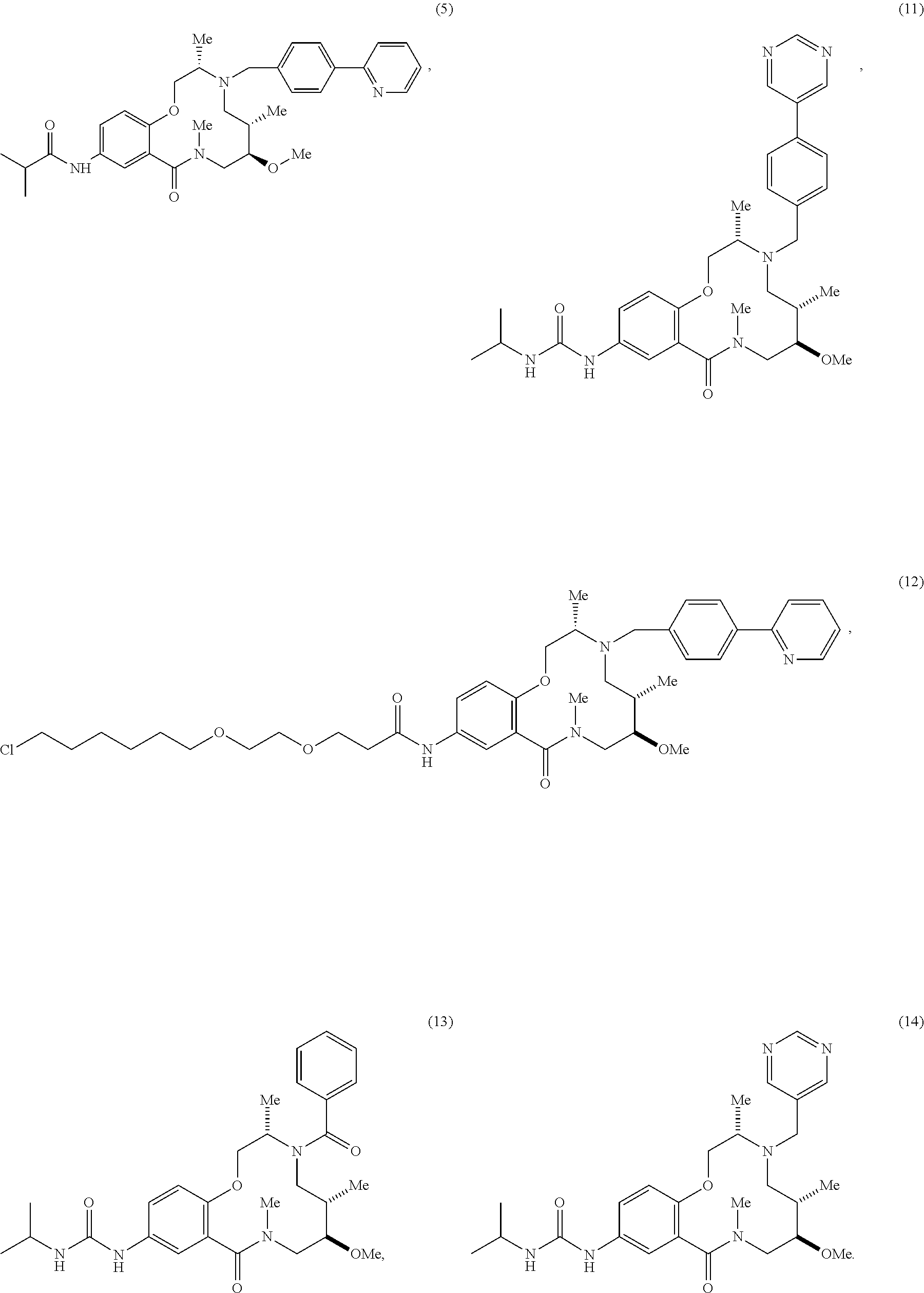
- the BAF complex modulating compound is one of the following compounds (5) and (11)-(14):
- said compound specifically inhibits a BAF complex (e.g. an ARID1A-containing BAF complex).
- a BAF complex e.g. an ARID1A-containing BAF complex
- said coronavirus antiviral is an oral antiviral.
- said compound is for use as a SARS-CoV-1, SARS-CoV-2 or MERS-CoV antiviral, preferably a SARS-CoV-2 antiviral.
- said coronavirus antiviral is a COVID (such as COVID-19 or SARS) antiviral or a MERS antiviral, e.g. a COVID (such as COVID-19 or SARS) oral antiviral or a MERS oral antiviral.
- COVID such as COVID-19 or SARS
- MERS antiviral e.g. a COVID (such as COVID-19 or SARS) oral antiviral or a MERS oral antiviral.
- said compound is for use in the treatment (which includes prevention) of a coronavirus infection in a subject.
- said subject in another preferred embodiment of a compound for use according to the invention, has a coronavirus infection or (ii) does not have a coronavirus infection but is at risk of coronavirus infection.
- said subject is (i) at least 65 years old, (ii) immunocompromised and/or (iii) wherein the subject has at least one underlying medical condition selected from the group consisting of asthma; COPD; cystic fibrosis; pulmonary fibrosis; cardiomyopathy; pulmonary hypertension; congenital heart disease; heart failure; coronary artery disease; diabetes; obesity; cancer such as lung cancer; kidney disease; liver disease and Down syndrome.
- underlying medical condition selected from the group consisting of asthma; COPD; cystic fibrosis; pulmonary fibrosis; cardiomyopathy; pulmonary hypertension; congenital heart disease; heart failure; coronary artery disease; diabetes; obesity; cancer such as lung cancer; kidney disease; liver disease and Down syndrome.
- said subject has mild to moderate coronavirus disease, preferably mild to moderate coronavirus disease 2019 (COVID-19); and wherein said subject has at least one risk factor associated with developing severe coronavirus disease selected from (i) at least 65 years old, (ii) immunocompromised and/or (iii) at least one underlying medical condition selected from the group consisting of asthma; COPD; cystic fibrosis; pulmonary fibrosis; cardiomyopathy; pulmonary hypertension; congenital heart disease; heart failure; coronary artery disease; diabetes; obesity; cancer such as lung cancer; kidney disease; liver disease and Down syndrome.
- said coronavirus infection is a SARS-CoV infection, preferably a SARS-CoV-2 infection.
- said compound is for oral, intravenous, intranasal or (oral) inhalational administration.
- said compound is for oral administration daily or bidaily for 1-14 days, preferably wherein said compound is for administration in a unit dose of 0.1-2000 mg.
- the invention provides a method for treating or preventing a coronavirus infection in a subject, comprising the step of:
- said compound specifically inhibits a BAF complex (e.g. an ARID1A-containing BAF complex).
- a BAF complex e.g. an ARID1A-containing BAF complex
- said coronavirus infection is a SARS-CoV-1, SARS-CoV-2 or MERS-CoV infection, preferably a SARS-CoV-2 infection.
- said subject in another preferred embodiment of a method for treating or preventing of the invention, has a coronavirus infection or (ii) does not have a coronavirus infection but is at risk of coronavirus infection.
- said subject is (i) at least 65 years old, (ii) immunocompromised and/or (iii) wherein the subject has at least one underlying medical condition selected from the group consisting of asthma; COPD; cystic fibrosis; pulmonary fibrosis; cardiomyopathy; pulmonary hypertension; congenital heart disease; heart failure; coronary artery disease; diabetes; obesity; cancer such as lung cancer; kidney disease; liver disease and Down syndrome.
- a medical condition selected from the group consisting of asthma; COPD; cystic fibrosis; pulmonary fibrosis; cardiomyopathy; pulmonary hypertension; congenital heart disease; heart failure; coronary artery disease; diabetes; obesity; cancer such as lung cancer; kidney disease; liver disease and Down syndrome.
- said compound is for oral, intravenous, intranasal or (oral) inhalational administration.
- said compound is for oral administration daily or bidaily for 1-14 days, preferably wherein said compound is for administration in a unit dose of 0.1-2000 mg.
- the invention provides a method for inhibiting or counteracting coronavirus replication, preferably SARS-CoV replication such as SARS-CoV-2 replication, in a subject, comprising the step of:—administering a therapeutically effective amount of a BAF complex modulating compound to a subject in need thereof; wherein said BAF complex modulating compound is as defined in any of the previous aspects and/or embodiments.
- the invention provides a use of a BAF complex modulating compound as defined in any of the aspects and/or embodiments disclosed hereinabove in the manufacture of a coronavirus antiviral, preferably in the manufacture of a medicament for treating or preventing coronavirus infection in a subject.
- the coronavirus antiviral is as defined in any one of the aspects and/or embodiments disclosed herein.
- the subject is as defined in any one of the aspects and/or embodiments disclosed herein.
- the coronavirus infection is as defined in any one of the aspects and/or embodiments disclosed herein.
- FIG. 1 The effect of Bafcilin1 and iBafcilin on SARS-CoV-2 replication in 2D human respiratory tract organoids.
- A Replication kinetics in the presence of 1 or 10 ⁇ M Bafcilin1/‘inactive’ Bafcilin (iBafcilin) or DMSO (vehicle control) in bronchiolar organoids.
- B The log 10 fold change in replication between 72 and 2 hours post infection (h p.i.) from panel A.
- C Replication kinetics in the presence of 1 or 10 ⁇ M Bafcilin1/iBafcilin, or DMSO (vehicle control) in bronchioalveolar organoids.
- D The log 10 fold change in replication between 72 and 2 hours post infection (h p.i.) from panel C.
- BAF complex refers to the SWI/SNF (SWItch/Sucrose Non-Fermentable) chromatin remodeling complex in mammals such as humans.
- SWI/SNF complex is a subfamily of ATP-dependent chromatin remodeling complexes, and is a group of proteins that associate to remodel the way DNA is packaged.
- the complex can be composed of several proteins, such as products of the SWI and SNF genes.
- the SWI/SNF complex generally possesses a DNA-stimulated ATPase activity that can destabilize histone-DNA interactions in reconstituted nucleosomes in an ATP-dependent manner.
- the BAF complex is the mammalian SWI/SNF-A chromatin remodeling complex (also referred to as canonical BAF; cBAF) and preferably contains ARID1A.
- BAF complex modulating compound includes reference to a class of compounds that modulate the activity of the BAF complex, preferably modulate the activity of the BAF complex by inhibiting ARID1A (subunit)-containing BAF complexes (but preferably not Polybromo-associated BAF (PBAF) complexes).
- BAF complex modulating compounds as disclosed herein target a BAF-specific subunit that is ARID1A.
- coronavirus includes reference to a family of viruses also referred to as Coronaviridae or Coronavirinae, which belong to the order of Nidovirales.
- the coronavirus is a virus of the subfamily of Coronaviridae, which inter alia comprises the genera of Alphacoronavirus, Betacoronavirus, Gammacoronavirus and Deltacoronavirus.
- the coronavirus is a severe acute respiratory syndrome (SARS) coronavirus (SARS-CoV) such as SARS coronavirus 1 (SARS-CoV-1) or SARS-CoV-2, preferably SARS-CoV-2.
- SARS severe acute respiratory syndrome
- Severe acute respiratory syndrome (SARS) coronaviruses are the causative agent for coronavirus disease (COVID). More specifically, SARS-CoV-2 is the causative agent for coronavirus disease 2019 (COVID-19). Testing for SARS-CoV-2 can be routinely performed, e.g. by PCR testing such as real-time reverse-transcription polymerase chain reaction (rRT-PCR) optionally combined with confirmation by nucleic acid sequencing if needed, or by LAMP (loop-mediated isothermal amplification) tests, antigen testing or serological tests, which are commonly applied throughout the world to monitor positive cases of coronavirus infection. Alternatively, the coronavirus can be a Middle East respiratory syndrome coronavirus (MERS-CoV), which is the causative agent for Middle East respiratory syndrome (MERS).
- MERS-CoV Middle East respiratory syndrome coronavirus
- COVID or “coronavirus disease”, as used herein, refers to an infectious disease caused by a severe acute respiratory syndrome coronavirus (SARS-CoV).
- SARS-CoV severe acute respiratory syndrome coronavirus
- COVID-2019 also referred to as COVID-19.
- Common COVID symptoms include fever, cough, sore throat, malaise, headache, muscle pain, nausea, vomiting, diarrhea, and loss of taste and smell. While the majority of cases result in mild or moderate disease, some progress to severe disease characterized by e.g. pneumonia and multi-organ failure.
- antiviral includes reference to a compound, agent or drug (which terms can be used interchangeably herein) that exhibits antiviral activity, such as inhibition of viral replication, against or towards a virus pathogen.
- antiviral activity are amongst others interfering with the ability of a virus to enter a target cell, inhibiting uncoating of virus after cell entry, inhibiting viral replication inside a host cell, etc.
- the coronavirus antiviral as disclosed herein is a SARS-CoV-1, SARS-CoV-2 or MERS-CoV antiviral, more preferably a SARS-CoV-2 antiviral.
- the coronavirus antiviral is (i) a COVID antiviral (such as COVID-19 or SARS antiviral) or a MERS antiviral, such as a COVID oral antiviral or a MERS oral antiviral.
- the BAF complex modulating compounds as disclosed herein are for use in coronavirus antiviral therapy, preferably COVID antiviral therapy (such as COVID-19 or SARS antiviral therapy) or MERS antiviral therapy, e.g.
- coronavirus oral antiviral therapy preferably COVID oral antiviral therapy (such as COVID-19 oral antiviral therapy or SARS oral antiviral therapy) or MERS oral antiviral therapy.
- COVID oral antiviral therapy such as COVID-19 oral antiviral therapy or SARS oral antiviral therapy
- MERS oral antiviral therapy can be used interchangeably with “antiviral against a coronavirus”.
- coronavirus antiviral therapy can be used interchangeably with “antiviral therapy against a coronavirus infection.
- Antivirals may find application in both therapeutic and prophylactic treatment of coronavirus infection.
- the coronavirus antiviral as disclosed herein is an oral coronavirus antiviral such as a coronavirus antiviral in the form of a pill that is for oral administration.
- the term “subject”, as used herein, includes reference to a mammal, preferably a human individual, in need of a BAF complex modulating compound as disclosed herein.
- the subject has a coronavirus infection or is at risk of coronavirus infection for instance because the subject has been in virus-transmissible contact with a person that has a coronavirus infection.
- An example of virus-transmissible contact is being part of the same household as an individual who has a coronavirus infection.
- the individual is an elderly human such as a human that is at least 65, 70, 75, 80, or at least 85 years old.
- the subject is immunocompromised and/or has at least one underlying medical condition selected from the group consisting of asthma; COPD; cystic fibrosis; pulmonary fibrosis; cardiomyopathy; pulmonary hypertension; congenital heart disease; heart failure; coronary artery disease; diabetes; obesity; cancer such as lung cancer; kidney disease; liver disease and Down syndrome.
- the subject can either be hospitalized or non-hospitalized.
- the subject is non-hospitalized and either has a coronavirus infection or is at risk of coronavirus infection.
- the subject may not show any signs or symptoms of coronavirus disease.
- coronavirus infection includes reference to the presence of a coronavirus in a mammalian subject, preferably a human individual, optionally in combination with at least some extent of viral replication in said subject.
- An early stage of viral infection is viral entry and subsequent replication in a host cell.
- a subject that has a coronavirus infection is a subject that has tested positive for a coronavirus infection by one of the standard available commercial diagnostic coronavirus tests (e.g. a PCR test), although also subjects that test negative but which in fact carry a coronavirus that has replicated at least to some extent but not sufficient in order for the test to be positive (i.e. subclinical), are considered to be subjects which have a coronavirus infection.
- coronavirus infection also encompasses coronavirus disease (COVID) which is an infectious disease that may either be symptomatic or asymptomatic and may result in hospitalization.
- COVID coronavirus disease
- a coronavirus infection is one of the following four types as defined by the NIH: (1) an asymptomatic or presymptomatic infection. As an example, this type of infection may relate to subjects who test positive for SARS-CoV-2 using a virologic test (i.e., a nucleic acid amplification test (NAAT) or an antigen test) but who have no symptoms that are consistent with COVID-19. (2) Mild illness.
- NAAT nucleic acid amplification test
- this type of infection may relate to subjects who have any of the various signs and symptoms of COVID-19 (e.g., fever, cough, sore throat, malaise, headache, muscle pain, nausea, vomiting, diarrhea, loss of taste and smell) but who do not have shortness of breath, dyspnea, or abnormal chest imaging.
- mild illness is mild COVID.
- Moderate illness As an example, this type of infection may relate to subjects who show evidence of lower respiratory disease during clinical assessment or imaging and who have an oxygen saturation (SpO2) ⁇ 94% on room air at sea level.
- moderate illness is moderate COVID.
- Severe illness is the various signs and symptoms of COVID-19 (e.g., fever, cough, sore throat, malaise, headache, muscle pain, nausea, vomiting, diarrhea, loss of taste and smell) but who do not have shortness of breath, dyspnea, or abnormal chest imaging.
- mild illness is mild COVID.
- Moderate illness As an example, this type of infection may relate to subjects who show evidence of lower respiratory disease during
- this may relate to subjects who have SpO2 ⁇ 94% on room air at sea level, a ratio of arterial partial pressure of oxygen to fraction of inspired oxygen (PaO2/FiO2) ⁇ 300 mm Hg, a respiratory rate >30 breaths/min, and/or lung infiltrates >50%, optionally in combination with respiratory failure, septic shock, and/or multiple organ dysfunction.
- severe illness is severe COVID.
- the subject to be treated does not have severe illness or severe COVID as defined above.
- the subject to be treated preferably has (i) an asymptomatic or presymptomatic coronavirus infection, (ii) mild illness such as mild COVID or (iii) moderate illness such as moderate COVID.
- the subject has mild to moderate COVID, preferably mild to moderate coronavirus disease 2019 (COVID-19).
- the subject has tested positive for a coronavirus (infection), such as SARS-CoV-2 (infection).
- a coronavirus infection
- the subject to be treated is a subject with a positive coronavirus, such as SARS-CoV-2, diagnostic test (result).
- the subject has (i) a laboratory confirmed SARS-CoV-2 infection with sample collection ⁇ 7 (such as ⁇ 5) days prior to therapy start and/or (ii) had initial onset of one or more signs or symptoms attributable to COVID-19 for ⁇ 7 (such as ⁇ 5) days prior to therapy start and at least one sign or symptom attributable to COVID-19 on the day of therapy start.
- the BAF complex modulating compound is for administration within 5 days or within 7 days after symptom onset or within 5 days or within 7 days after testing positive for SARS-CoV-2 infection.
- At risk of coronavirus infection includes reference to subjects that do not have a (measurable) coronavirus infection but which are at risk of coronavirus infection because they e.g. have been in recent (corona)virus-transmissible contact with a subject who at that moment had a coronavirus infection such as a subject from the same household, family, group of friends, work place, etc.
- terapéuticaally effective amount includes reference to an amount of a BAF complex modulating compound as disclosed herein that (i) treats or prevents the particular disease, condition, or disorder, (ii) attenuates, ameliorates, or eliminates one or more symptoms of the particular disease, condition, or disorder, or (iii) prevents or delays the onset of one or more symptoms of the particular disease, condition, or disorder described herein.
- treating includes reference to reversing, alleviating, inhibiting the progress of, delaying the progression of, delaying the onset of, or preventing the disorder or condition to which such term applies, or one or more symptoms of such disorder or condition.
- treatment includes reference to the act of treating.
- reference herein to “treatment” explicitly includes reference to both curative and prophylactic (preventative) treatment, and to the administration of a medicament for use in such treatment.
- the term “treatment”, as used herein, includes reference to a therapeutic treatment of a coronavirus infection (such as coronavirus disease) or may also refer to a prophylactic (preventative) treatment, i.e. preventing, coronavirus infection in a subject.
- a viral infection preferably involves the entry in cells of the body by the virus followed by viral replication and/or release of virus particles from the infected cell.
- immunocompromised includes reference to a subject with an immune system that is weakened (such as an immune system that is deficient or suppressed) to such an extent that it has a reduced ability to fight infections such as opportunistic infections and/or other diseases.
- An immune system can become weakened by certain diseases or conditions, such as AIDS, cancer, diabetes, malnutrition, and certain genetic disorders.
- An immune system can also become weakened by being subjected to certain immunosuppressive medicaments or therapies.
- bafcilin and “baficilin” can be used interchangeably herein.
- Examples of terms that may be used interchangeably are bafcilin1 and baficilin1.
- pharmaceutically acceptable includes reference to those compounds, materials, compositions, and/or dosage forms which are, within the scope of sound medical judgment, suitable for use in contact with the tissues of human beings and animals without excessive toxicity, irritation, allergic response, or other problem or complication, commensurate with a reasonable benefit/risk ratio.
- carrier includes reference to e.g. a diluent, adjuvant, excipient, or vehicle with which a compound as disclosed herein is administered.
- Such pharmaceutical carriers can be liquids, such as water, saline, aqueous solutions and the like.
- the pharmaceutical compositions as disclosed herein are preferably sterile.
- aqueous liquid such as water is a preferred vehicle when a compound as disclosed herein is administered parenterally such as intravenously.
- Saline solutions and aqueous dextrose solutions can also be employed as liquid vehicles, particularly for injectable solutions.
- the pharmaceutical compositions as disclosed herein can also contain minor amounts of wetting agents, or pH buffering agents.
- the BAF complex modulating compound may be formulated with one or more pharmaceutically acceptable carriers such as starch, lactose, microcrystalline cellulose, silicon dioxide and/or a cyclic oligosaccaride such as cyclodextrin. Additional ingredients, in this or other embodiments of this invention may include lubricants such as magnesium stearate and/or calcium stearate.
- pharmaceutically acceptable carriers for use with BAF complex modulation compounds as disclosed herein may include sterile aqueous or non-aqueous solutions, suspensions, and emulsions.
- non-aqueous solvents are propylene glycol, polyethylene glycol, vegetable oils such as olive oil, and injectable organic esters such as ethyl oleate.
- Aqueous carriers include water, alcoholic/aqueous solutions, emulsions or suspensions, and microparticles, including saline and buffered media.
- Carriers that constitute parenteral vehicles include sodium chloride solution, Ringer's dextrose, dextrose and sodium chloride, lactated Ringer's or fixed oils.
- Carriers that constitute intravenous vehicles include fluid and nutrient replenishers, electrolyte replenishers (such as those based on Ringer's dextrose), and the like.
- a composition comprising an active agent may also be lyophilized using means well known in the art, for subsequent reconstitution and use according to the invention.
- a BAF complex modulating compound as disclosed herein is formulated in an aqueous buffer.
- Suitable aqueous buffers include, but are not limited to, acetate, succinate, citrate, and phosphate buffers varying in strengths from about 5 mM to about 100 mM.
- the aqueous buffer includes reagents that provide for an isotonic solution. Such reagents include, but are not limited to, sodium chloride; and sugars e.g., mannitol, dextrose, sucrose, and the like.
- nasal administration may also be referred to as ‘nasal administration’, and includes reference to a route of administration in which a drug is provided through the nostrils into the upper respiratory tract as part of a prophylactic and/or therapeutic treatment as disclosed herein.
- this form of administration provides for drug in the nasal cavity.
- oral inhalation may also be referred to as ‘mouth inhalation’, and includes reference to a route of administration in which a drug is provided through the mouth to the respiratory tract, preferably lower respiratory tract such as lungs, as part of a prophylactic and/or therapeutic treatment as disclosed herein.
- Oral inhalation may for example be applied for drugs in their powdered form and drugs in the form of liquid droplets or aerosols.
- BAF complex modulating compounds as disclosed herein, and their method of manufacture have previously been described in relation to HIV latency reversal (WO 2020/014524 A1) and cancer combination therapies (US 2020/0255416 A1), which documents are hereby incorporated by reference especially embodiments directed to the compounds and their formulation such as the embodiments disclosed in WO 2020/014524 A1 on page 6, line 24-page 17, line 5, which relate to BAF complex modulating compounds, and page 17, line 6-page 23, line 29, which relate to formulations, dosages and routes of administration of said BAF complex modulating compounds.
- RNA sequencing experimentation and subsequent gene set enrichment analysis showed that genes downregulated by treatment with compounds as disclosed herein were enriched for genes that are normally upregulated during coronavirus infection, and vice versa. This suggests that the compounds disclosed herein antagonize the transcriptional program induced by coronavirus infection.
- Exemplary BAF modulating compounds that can be used as a coronavirus antiviral are defined in formulas I-III and structures 1-14 such as bafcilin1, which are disclosed hereinabove in the Summary section and hereinbelow, or pharmaceutically acceptable forms thereof such as a pharmaceutically acceptable salt, polymorph, hydrate, solvate, prodrug or active metabolites thereof.
- a salt of the compound may be advantageous due to one or more of the salt's physical properties, such as enhanced pharmaceutical stability in differing temperatures and humidifies, or a desirable solubility in water or oil.
- a salt of a compound also may be used as an aid in the isolation, purification, and/or resolution of the compound.
- the BAF modulating compounds as disclosed herein are non-toxic e.g. when administered in a therapeutically effective dose.
- the invention provides a compound of any one of structures (11)-(14) as disclosed herein, or pharmaceutically acceptable forms thereof such as a pharmaceutically acceptable salt, polymorph, hydrate, solvate, prodrug or active metabolites thereof.
- the BAF complex modulating compound is preferably for administration in the form of a pharmaceutical composition.
- the invention provides a pharmaceutical composition comprising a BAF complex modulating compound and a pharmaceutically acceptable carrier, for use as a coronavirus antiviral in a subject.
- the invention provides a method for treating or preventing a coronavirus infection in a subject, comprising the step of:—administering a therapeutically effective amount of a pharmaceutical composition comprising a BAF complex modulating compound and a pharmaceutically acceptable carrier, to a subject in need thereof.
- the pharmaceutically acceptable carrier can be a solid, a liquid, or both, and may be formulated with the BAF complex modulating compound as a unit-dose composition, for example, a capsule, tablet or pill, which may comprise from 0.05% to 95% by weight of the active compounds. Other pharmacologically active substances may also be present in said composition.
- the BAF complex modulating compounds disclosed herein may be administered by any suitable route, preferably in the form of a pharmaceutical composition adapted to such a route, and in a dose effective for the treatment intended.
- the BAF complex modulating compounds, and their compositions may be administered orally; parenterally such as intravenously; intranasally; or by oral inhalation.
- Oral administration a form of enteral administration, can be performed using a solid dose form, for example, discrete units, such as hard or soft capsules, pills, cachets, lozenges, or tablets, each containing a predetermined amount of at least one BAF complex modulating compound as disclosed herein.
- the oral administration may be in a powder or granule form.
- the BAF complex modulating compound is formulated as a capsule, pill or tablet.
- Such a capsule or pill may comprise excipients such as croscarmellose hydroxypropyl cellulose, magnesium stearate and/or microcrystalline cellulose.
- the oral dose form is sub-lingual, such as, for example, a lozenge.
- the BAF complex modulating compound as disclosed herein are ordinarily combined with one or more adjuvants.
- Such capsules or tablets may contain a controlled release formulation.
- the dosage forms also may comprise buffering agents or may be prepared with enteric coatings.
- oral administration may be in a liquid dose form.
- Liquid dosage forms for oral administration include, for example, pharmaceutically acceptable emulsions, solutions, suspensions, syrups, and elixirs containing inert diluents commonly used in the art (e.g., water).
- Such compositions also may comprise adjuvants, such as wetting, emulsifying, suspending, flavoring (e.g., sweetening), and/or perfuming agents.
- BAF complex modulating compounds as disclosed herein, and their pharmaceutical compositions can be administered in a parenteral dose form.
- Parenteral administration includes, for example, subcutaneous injections, intravenous injections, intraperitoneal injections, intramuscular injections, intrasternal injections, and infusion.
- injectable preparations e.g., sterile injectable aqueous suspensions
- the administration is intravenously.
- An BAF complex modulating compound as disclosed herein can be formulated into a pharmaceutical composition for injection by dissolving, suspending or emulsifying the compound in an aqueous or nonaqueous solvent, such as vegetable or other similar oils, synthetic aliphatic acid glycerides, esters of higher aliphatic acids or propylene glycol; and if desired, with conventional additives such as solubilizers, isotonic agents, suspending agents, emulsifying agents, stabilizers and preservatives.
- BAF complex modulating compounds as disclosed herein, and their pharmaceutical compositions can be administered in a topical dose form.
- Topical administration includes, for example, intranasal or (oral) inhalation administration.
- the BAF complex modulating compounds as disclosed herein, and their pharmaceutical compositions can be conveniently delivered in the form of a solution or suspension from a pump spray container that is squeezed or pumped by the subject or as an aerosol spray from a pressurized container or a nebulizer, with the use of a suitable propellant.
- Formulations suitable for intranasal administration are typically administered in the form of a dry powder (either alone, as a mixture, for example, in a dry blend with lactose, or as a mixed component particle, for example, mixed with phospholipids, such as phosphatidylcholine) from a dry powder inhaler or as an aerosol spray from a pressurized container, pump, spray, atomizer, or nebulizer, with or without the use of a suitable propellant, such as 1,1,1,2-tetrafluoroethane or 1,1,1,2,3,3,3-heptafluoropropane.
- the powder may comprise a bioadhesive agent, for example, chitosan or cyclodextrin.
- compositions of the invention may be prepared by any of the well-known techniques of pharmacy, such as effective formulation and administration procedures.
- effective formulations and administration procedures are well known in the art and are described in standard textbooks.
- Formulation of drugs is discussed in, for example, Hoover, John E., Remington's Pharmaceutical Sciences, Mack Publishing Co., Easton, Pennsylvania, 1975; Liberman et al., Eds., Pharmaceutical Dosage Forms, Marcel Decker, New York, N.Y., 1980; and Kibbe et al., Eds., Handbook of Pharmaceutical Excipients (3rd Ed.), American Pharmaceutical Association, Washington, 1999.
- BAF complex modulating compounds as disclosed herein are administered at therapeutically effective dosages.
- the dosage of the BAF complex modulating compound and/or pharmaceutical compositions containing said compound is based on a variety of factors, including the age, weight, sex, severity of the medical condition to be treated, and the route of administration.
- a BAF complex modulating compound as disclosed herein can be administered in a dose that ranges from 0.1-2000 mg per dose, such as 0.1-50 mg per dose, 1-50 mg per dose, 1-100 mg per dose, 50-100 mg per dose, 100-150 mg per dose, 150-200 mg per dose, 200-250 mg per dose, 250-300 mg per dose, 300-400 mg per dose, 400-500 mg per dose, 500-600 mg per dose, 600-800 mg per dose, 800-1000 mg per dose, 1000-1400 mg per dose or 1400-2000 mg per dose.
- 0.1-2000 mg per dose such as 0.1-50 mg per dose, 1-50 mg per dose, 1-100 mg per dose, 50-100 mg per dose, 100-150 mg per dose, 150-200 mg per dose, 200-250 mg per dose, 250-300 mg per dose, 300-400 mg per dose, 400-500 mg per dose, 500-600 mg per dose, 600-800 mg per dose, 800-1000 mg per dose, 1000-1400 mg per dose or 1400-2000 mg per dose.
- dosage regimens that provide for about 0.01 mg to about 100 mg per kilogram of body weight per day may be used in the treatment or prevention of a coronavirus infection.
- the total daily dose of a BAF complex modulating compound as disclosed herein is typically from about 0.01 to about 100 mg/kg.
- the total daily dose of the compound of the invention is from about 0.1 to about 50 mg/kg, and in another embodiment, from about 0.5 to about 30 mg/kg (i.e., mg BAF complex modulating compound as disclosed herein per kg body weight).
- dosing is from 0.01 to 10 mg/kg/day.
- dosing is from 0.1 to 1.0 mg/kg/day.
- a BAF complex modulating compound as disclosed herein is for administration at a dose of about 10 mg/kg, for instance 10 mg/kg/day for at least 1, 2, 3, 4, 5, 6 or 7 days (e.g. once or twice a day).
- a BAF complex modulating compound as disclosed herein is for daily administration or is for administration multiple times per day, for instance two times a day, three times a day or four times a day. In other embodiments, a BAF complex modulating compound as disclosed herein is for administration every other day, three times a week, two times a week or once a week.
- a BAF complex modulating compound as disclosed herein is for administration during a period of time of at least one week, at least two weeks, at least three weeks or at least one month.
- a BAF complex modulating compound as disclosed herein is for administration during a period of time of at least one week or at least two weeks, such as about one week or about two weeks.
- the invention provides a BAF complex modulating compound as disclosed herein for use as a coronavirus antiviral, e.g. a SARS-CoV or MERS-CoV antiviral, preferably a SARS-CoV-2 antiviral.
- a coronavirus antiviral e.g. a SARS-CoV or MERS-CoV antiviral, preferably a SARS-CoV-2 antiviral.
- the invention provides a BAF complex modulating compound as disclosed herein for use in a method for treatment or prevention of a coronavirus infection in a subject in need thereof.
- the coronavirus infection is a SARS-CoV infection, more preferably a SARS-CoV-2 infection.
- the subject is a mammal such as a human individual that has a coronavirus infection or is at risk of coronavirus infection.
- a subject such as a human individual, can be at risk of coronavirus infection when the subject has been in coronavirus-transmissible contact with a subject that has a coronavirus infection.
- the subject which term can be used interchangeably with the term “patient” or “individual”, is a mammal, preferably a human, who is in need of treatment or prevention of a coronavirus infection.
- the subject can be at least 30 or at least 40 years old. More preferably, the subject is at least 50, 51, 52, 53, 54, 55, 56, 57, 58, 59, 60, 61, 62, 63, 64 or at least 65 years old and/or is an individual that is immunocompromised (also referred to as immunosuppressed). Even more preferably, a subject is at least 66, 67, 68, 69 or at least 70 or at least 80 years old.
- the subject has one or more risk factors associated with developing severe (including critical) coronavirus disease.
- the subject is at least 50, at least 65 or at least 70 years old, (ii) is immunocompromised and/or (iii) has at least one underlying medical condition selected from the group consisting of asthma; COPD; cystic fibrosis; pulmonary fibrosis; cardiomyopathy; pulmonary hypertension; congenital heart disease; heart failure; coronary artery disease; diabetes; obesity; cancer such as lung cancer; kidney disease; liver disease and Down syndrome.
- the subject is defined by (i) and (ii), (i) and (iii), (ii) and (iii) or (i), (ii) and (iii).
- the subject has tested positive for a coronavirus (infection), such as SARS-CoV-2 (infection), by a diagnostic test (e.g. by a nasopharyngeal swab followed by antigen- or PCR-based testing for the presence of a coronavirus (infection).
- a coronavirus such as SARS-CoV-2 (infection)
- a diagnostic test e.g. by a nasopharyngeal swab followed by antigen- or PCR-based testing for the presence of a coronavirus (infection).
- the subject (i) did not previously have coronavirus disease (COVID), (ii) was not vaccinated against coronavirus disease 1-14 days, preferably 1-7 days, prior to administration of said BAF complex modulating compound and/or (iii) does not show any sign and/or symptom of coronavirus disease (COVID) when administration of said BAF complex modulating compound starts.
- COVID coronavirus disease
- the subject is defined by (i) and (ii), (i) and (iii), (ii) and (iii) or (i), (ii) and (iii); and, optionally in addition, the subject can is at least 50 or at least 65 years old, (ii) is immunocompromised and/or (iii) has at least one underlying medical condition selected from the group consisting of asthma; COPD; cystic fibrosis; pulmonary fibrosis; cardiomyopathy; pulmonary hypertension; congenital heart disease; heart failure; coronary artery disease; diabetes; obesity; cancer such as lung cancer; kidney disease; liver disease and Down syndrome.
- the subject is a non-hospitalized Covid-19 patient with at least one risk factor associated with developing severe (including critical) coronavirus disease.
- a BAF complex modulating compound as disclosed herein is for parenteral administration or enteral administration.
- said BAF complex modulating compound as disclosed herein is for oral, intravenous, intranasal or (oral) inhalational administration.
- said BAF complex modulating compound as disclosed herein is for oral administration daily or bidaily for 1-14 days, e.g. 1.10 or 1-7 days, preferably wherein said compound is for administration in a unit dose of 0.1-2000 mg.
- a BAF complex modulating compound as disclosed herein can be administered alone or in combination with one or more additional therapeutic agents.
- administered in combination or “combination therapy” it is meant that a BAF complex modulating compound as disclosed herein and one or more additional therapeutic agents are administered concurrently to the subject being treated.
- each therapeutic agent may be administered at the same time or sequentially in any order at different points in time.
- each agent may be administered separately but sufficiently closely in time so as to provide the desired therapeutic effect.
- the medical methods as disclosed herein include use of combination agents.
- the invention provides a BAF complex modulating compound as disclosed herein for use in a method of treatment or prevention of a coronavirus infection in a subject; wherein the method comprises administration of a further therapeutic agent.
- the further therapeutic agent is an immunosuppressant, e.g. dexamethasone.
- references to “method for treating”, “treatment method”, “compound for use” and “use of a compound in the manufacture of a medicament” can all be used interchangeably and embodiments disclosed in relation to any one of those aspects also applies in relation to said other aspects. In other words, they all refer to medical treatments involving a BAF complex modulating compound as disclosed herein.
- Bronchiolar and bronchioalveolar cultures were infected at a multiplicity of infection (MOI) of 0.1 with SARS-CoV-2, which means that 0.1 virus particle per cell was added.
- MOI multiplicity of infection
- the apical side of the cultures were washed with advanced DMEM/F12 medium (Gibco).
- RNA was extracted from cells and RT-qPCR was performed as previously described (Lamers et al., Science. 2020; 369(6499):50-54). Ct values were compared to a titrated standard to generate TCID50 equivalents (eq.) per ml.
- Bronchiolar organoid-derived cultures as described in Example 1 were treated for 24 h with either DMSO (control vehicle) or Bafcilin1 (1 ⁇ M or 10 ⁇ M) after which RNA was isolated using Trizol reagent (Sigma) according to manufacturer's instructions and sequenced using the 3′ mRNA-Seq Library Prep Kit Protocol for Ion Torrent (QuantSeq-LEXOGENTM, Vienna, Austria), according to manufacturer's instructions. It was established that, as compared to treatment with DMSO, expression of 653 genes was affected (i.e. differentially expressed) in cells treated with 1 ⁇ M Bafcilin1 and expression of 2938 genes was affected (i.e.
- GSEA gene set enrichment analysis
- BAF complex modulating compounds as disclosed herein such as Bafcilin1
- Bafcilin1 antagonize the transcriptional program induced by infection with coronaviruses such as SARS-CoV-2.
Landscapes
- Health & Medical Sciences (AREA)
- Chemical & Material Sciences (AREA)
- Organic Chemistry (AREA)
- Life Sciences & Earth Sciences (AREA)
- Veterinary Medicine (AREA)
- Medicinal Chemistry (AREA)
- Pharmacology & Pharmacy (AREA)
- Animal Behavior & Ethology (AREA)
- General Health & Medical Sciences (AREA)
- Public Health (AREA)
- Epidemiology (AREA)
- Dermatology (AREA)
- Otolaryngology (AREA)
- Virology (AREA)
- Communicable Diseases (AREA)
- Oncology (AREA)
- Chemical Kinetics & Catalysis (AREA)
- General Chemical & Material Sciences (AREA)
- Nuclear Medicine, Radiotherapy & Molecular Imaging (AREA)
- Pharmaceuticals Containing Other Organic And Inorganic Compounds (AREA)
Abstract
Description

wherein R1 is selected from the group consisting of amine, substituted amine, alkylaminocarbonylamino, substituted alkylaminocarbonylamino, alkanoylamino, substituted alkanoylamino, arylaminocarbonylamino, substituted arylaminocarbonylamino, carbamate, substituted carbamate, aroylamino and substituted aroylamino;

wherein R1 is selected from the group consisting of amine, substituted amine, alkylaminocarbonylamino, substituted alkylaminocarbonylamino, alkanoylamino, substituted alkanoylamino, arylaminocarbonylamino, substituted arylaminocarbonylamino, carbamate, substituted carbamate, aroylamino and substituted aroylamino;


wherein R7, R8 and R9 are each independently selected from the group consisting of alkyl, substituted alkyl, aryl, substituted aryl, heteroaryl, substituted heteroaryl, cycloalkyl, substituted cycloalkyl, heterocycle and substituted heterocycle;
wherein R10 is selected from the group consisting of H, alkyl, substituted alkyl, aryl, substituted aryl, heteroaryl, substituted heteroaryl, cycloalkyl, substituted cycloalkyl, heterocycle and substituted heterocycle.


L1-Z (IC); or
L2-C(O)-L3-R11 (ID)
wherein L1 is an alkyl linker or a substituted alkyl linker;
wherein L2 and L3 are each independently selected from the group consisting of a covalent bond, an alkyl linker and a substituted alkyl linker;
wherein Z is selected from the group consisting of heteroaryl-aryl, substituted heteroaryl-aryl, aryl-heteroaryl and substituted aryl-heteroaryl; and wherein R11 is selected from the group consisting of alkyl, substituted alkyl, C3-10 cycloalkyl, substituted C3-10 cycloalkyl, C3-10 heterocycle and substituted C3-10 heterocycle.

wherein:
two of X1, X2 and X3 are carbon atoms and one of X1, X2 and X3 is a nitrogen atom; R11 and R12 are independently selected from OH, alkyl, substituted alkyl, alkenyl, substituted alkenyl, aryl, substituted aryl, alkoxy, substituted alkoxy, —OCF3, —CF3, halogen, azide, amine, substituted amine, amide, cycloalkyl, substituted cycloalkyl, heterocycle and substituted heterocycle;

wherein:
R13, R14, R15 and R16 are independently selected from OH, alkyl, substituted alkyl, alkenyl, substituted alkenyl, aryl, substituted aryl, alkoxy, substituted alkoxy, —OCF3, —CF3, halogen, azide, amine, substituted amine, amide, cycloalkyl, substituted cycloalkyl, heterocycle and substituted heterocycle;

wherein R11 is alkyl, substituted alkyl, C3-C10 cycloalkyl,
substituted C3-C10 cycloalkyl, C3-C10 heterocycle or substituted C3-C10 heterocycle. In certain embodiments, R11 is a lower alkyl, e.g., methyl, ethyl, propyl, isopropyl, butyl, sec-butyl, tert-butyl, pentyl or hexyl. In other embodiments, R11 is selected from C3-C10 cycloalkyl, e.g, cyclopropyl, cyclobutyl, cyclopentyl, cyclohexyl, cycloheptyl, cyclooctyl. In some cases, R11 is a cyclopropyl group.


wherein:
R1 is

wherein R7, R8 and R9 are each independently selected from the group consisting of methyl, ethyl, propyl, isopropyl, butyl, sec-butyl, tert-butyl, pentyl, hexyl, aryl, substituted aryl, heteroaryl, substituted heteroaryl, cycloalkyl, substituted cycloalkyl, heterocycle and substituted heterocycle; and wherein R10 is selected from the group consisting of H, alkyl, substituted alkyl, aryl, substituted aryl, heteroaryl, substituted heteroaryl, cycloalkyl, substituted cycloalkyl, heterocycle and substituted heterocycle;
and wherein R2 is selected from:

or a pharmaceutically acceptable salt, polymorph, hydrate, solvate, prodrug or active metabolite thereof.


wherein:
R1 is

wherein
R7, R8 and R9 are each independently selected from the group consisting of methyl, ethyl, propyl, isopropyl, butyl, sec-butyl, tert-butyl, pentyl, hexyl, aryl, substituted aryl, heteroaryl, substituted heteroaryl, cycloalkyl, substituted cycloalkyl, heterocycle and substituted heterocycle;
and optionally wherein R10 is selected from the group consisting of H, alkyl, substituted alkyl, aryl, substituted aryl, heteroaryl, substituted heteroaryl, cycloalkyl, substituted cycloalkyl, heterocycle and substituted heterocycle;
or a pharmaceutically acceptable salt, polymorph, hydrate, solvate, prodrug or active metabolite thereof.


-
- administering a therapeutically effective amount of a BAF complex modulating compound as defined in any of the previous aspects and/or embodiments to a subject in need thereof.

Results
Claims (17)

L1-Z (IC)
L2-C(O)-L3-R11 (ID)

L1-Z (IC)
L2-C(O)-L3-R11 (ID)

L1-Z (IC).


Priority Applications (1)
| Application Number | Priority Date | Filing Date | Title |
|---|---|---|---|
| US18/068,744 US12202808B2 (en) | 2021-12-21 | 2022-12-20 | Substituted antivirals for treating coronavirus infection |
Applications Claiming Priority (2)
| Application Number | Priority Date | Filing Date | Title |
|---|---|---|---|
| US202163292032P | 2021-12-21 | 2021-12-21 | |
| US18/068,744 US12202808B2 (en) | 2021-12-21 | 2022-12-20 | Substituted antivirals for treating coronavirus infection |
Publications (2)
| Publication Number | Publication Date |
|---|---|
| US20230192634A1 US20230192634A1 (en) | 2023-06-22 |
| US12202808B2 true US12202808B2 (en) | 2025-01-21 |
Family
ID=80034818
Family Applications (1)
| Application Number | Title | Priority Date | Filing Date |
|---|---|---|---|
| US18/068,744 Active 2042-12-20 US12202808B2 (en) | 2021-12-21 | 2022-12-20 | Substituted antivirals for treating coronavirus infection |
Country Status (2)
| Country | Link |
|---|---|
| US (1) | US12202808B2 (en) |
| EP (1) | EP4201404A1 (en) |
Citations (4)
| Publication number | Priority date | Publication date | Assignee | Title |
|---|---|---|---|---|
| WO2009026527A1 (en) | 2007-08-22 | 2009-02-26 | Novobiotic Pharmaceuticals Llc | Novel macrolactam compounds |
| WO2020014524A1 (en) * | 2018-07-12 | 2020-01-16 | The Board Of Trustees Of The Leland Stanford Junior University | Methods for reversing hiv latency using baf complex modulating compounds |
| US20200255416A1 (en) * | 2017-09-14 | 2020-08-13 | The Board Of Trustees Of The Leland Stanford Junior University | BAF Complex Modulating Compounds and Methods of Using the Same |
| WO2021191312A1 (en) | 2020-03-24 | 2021-09-30 | Bausch Health Ireland Limited | Methods of treating covid-19 with rifaximin |
-
2022
- 2022-01-26 EP EP22153463.9A patent/EP4201404A1/en active Pending
- 2022-12-20 US US18/068,744 patent/US12202808B2/en active Active
Patent Citations (5)
| Publication number | Priority date | Publication date | Assignee | Title |
|---|---|---|---|---|
| WO2009026527A1 (en) | 2007-08-22 | 2009-02-26 | Novobiotic Pharmaceuticals Llc | Novel macrolactam compounds |
| US20200255416A1 (en) * | 2017-09-14 | 2020-08-13 | The Board Of Trustees Of The Leland Stanford Junior University | BAF Complex Modulating Compounds and Methods of Using the Same |
| US11267809B2 (en) * | 2017-09-14 | 2022-03-08 | The Board Of Trustees Of The Leland Stanford Junior University | BAF complex modulating compounds and methods of using the same |
| WO2020014524A1 (en) * | 2018-07-12 | 2020-01-16 | The Board Of Trustees Of The Leland Stanford Junior University | Methods for reversing hiv latency using baf complex modulating compounds |
| WO2021191312A1 (en) | 2020-03-24 | 2021-09-30 | Bausch Health Ireland Limited | Methods of treating covid-19 with rifaximin |
Non-Patent Citations (7)
| Title |
|---|
| Jul. 19, 2022 (EP) Extended European Search Report Application No. 22153463.9. |
| Marian et al. "Small Molecule Targeting of Specific BAF (mSWI/SNF) complexes for HIV Latency Reversal" Cell Chemical Biology, Elsevier, vol. 25, No. 12, 2018, 1443-1455. |
| Marian et al., 2018, (Cell Chemical Biology 25, 1443-1455, Dec. 20, 2018, Small Molecule Targeting of Specific BAF (mSWI/SNF) Complexes for HIV Latency Reversal) (Year: 2018). * |
| Milad Shirvaliloo, (Epigenomics 13(10), 745-750, Apr. 2021 Epigenomics in COVID-19; the link between DNA methylation, histone modifications and SARS-CoV-2 infection) (Year: 2021). * |
| Shirvaliloo, Milad. "Epigenomics in COVID-19; the link between DNA methylation, histone modifications and SARS-CoV-2 infetion" Epigenomics 2021, 13(10) 745-750. |
| Wei et al. "Genome-wide CRISPR Screens Reveal Host Factors Critical for SARS-CoV-2 Infection" 2021, Cell 184, 76-91. |
| Wei et al., (Cell 184, 76-91, 2021, Genome-wide CRISPR Screens Reveal Host Factors Critical for SARS-CoV-2 Infection (Year: 2021). * |
Also Published As
| Publication number | Publication date |
|---|---|
| US20230192634A1 (en) | 2023-06-22 |
| EP4201404A1 (en) | 2023-06-28 |
Similar Documents
| Publication | Publication Date | Title |
|---|---|---|
| CN115362004B (en) | Inhaled formulations of 1'-cyano-substituted carbon nucleoside analogs | |
| CN111557939B (en) | Application of favipiravir in preparing medicine for treating coronavirus infection | |
| TW202233204A (en) | Compounds and methods for treatment of viral infections | |
| TWI791212B (en) | Vidofludimus for use in the treatment or prevention of viral diseases | |
| CN1289086C (en) | Uses for anti-malarial therapeutic agents | |
| CN116033894A (en) | Systems, methods and medicaments for reducing viral replication in airway mucosa | |
| US20240307333A1 (en) | Anti-viral therapeutic agents and uses thereof | |
| TW202110461A (en) | Prophylactic and/or therapeutic agent for influenza virus infection or corona virus infection | |
| US20210276967A1 (en) | Inhibitors of hepatitis b virus | |
| WO2021151099A1 (en) | Therapeutic double stranded rna and methods for producing the same | |
| WO2015027848A1 (en) | Method of administering formulation comprising peramivir and/or derivative thereof | |
| Smyk et al. | Favipiravir in the battle with respiratory viruses | |
| Aoki | Antiviral drugs for influenza and other respiratory virus infections | |
| US20240216365A1 (en) | Methods and uses of protein disulfide isomerase inhibitory compounds | |
| US20230192634A1 (en) | Antiviral Compounds for Use in the Treatment of Coronavirus Infection | |
| CN115443126A (en) | Compatible solutes for preventing or treating SARS-CoV-2 infection | |
| CN115605193A (en) | Cysteamine for the treatment of SARS-CoV-2 infection | |
| US11752113B2 (en) | Polyamine transport inhibitors as antivirals | |
| EP4183396A1 (en) | Use of a nitrogen-containing bisphosphonate in combination with a glucocorticoid in preventing or treating viral pneumonia | |
| CN115666550A (en) | Cysteine protease inhibitors for the prevention and/or treatment of coronaviruses | |
| WO2016183276A1 (en) | Immune modulation methods to reactivate hiv-1 reservoir | |
| US20250019392A2 (en) | Bicyclic heterocyclic compounds for prophylaxis andtreatment of viral infections | |
| US20240207299A1 (en) | Pyrrolopyrimidine nucleosides for treating or preventing a sars-cov-2 infection | |
| Singh et al. | Potential antiviral therapies for coronavirus disease 2019 (COVID-19) | |
| HK40085702A (en) | Use of a nitrogen-containing bisphosphonate in combination with a glucocorticoid in preventing or treating viral pneumonia |
Legal Events
| Date | Code | Title | Description |
|---|---|---|---|
| FEPP | Fee payment procedure |
Free format text: ENTITY STATUS SET TO UNDISCOUNTED (ORIGINAL EVENT CODE: BIG.); ENTITY STATUS OF PATENT OWNER: LARGE ENTITY |
|
| STPP | Information on status: patent application and granting procedure in general |
Free format text: DOCKETED NEW CASE - READY FOR EXAMINATION |
|
| AS | Assignment |
Owner name: ERASMUS UNIVERSITY MEDICAL CENTER ROTTERDAM, NETHERLANDS Free format text: ASSIGNMENT OF ASSIGNORS INTEREST;ASSIGNORS:LAMERS, MART MATTHIAS;HAAGMANS, BARTHOLOMEUS LEONARDUS;MAHMOUDI, TOKAMEH;SIGNING DATES FROM 20220120 TO 20220125;REEL/FRAME:062997/0477 |
|
| AS | Assignment |
Owner name: PURDUE RESEARCH FOUNDATION, INDIANA Free format text: ASSIGNMENT OF ASSIGNORS INTEREST;ASSIGNOR:DYKHUIZEN, EMILY C;REEL/FRAME:063133/0019 Effective date: 20230321 |
|
| STPP | Information on status: patent application and granting procedure in general |
Free format text: NON FINAL ACTION MAILED |
|
| STPP | Information on status: patent application and granting procedure in general |
Free format text: RESPONSE TO NON-FINAL OFFICE ACTION ENTERED AND FORWARDED TO EXAMINER |
|
| STPP | Information on status: patent application and granting procedure in general |
Free format text: NON FINAL ACTION MAILED |
|
| STPP | Information on status: patent application and granting procedure in general |
Free format text: RESPONSE TO NON-FINAL OFFICE ACTION ENTERED AND FORWARDED TO EXAMINER |
|
| STPP | Information on status: patent application and granting procedure in general |
Free format text: NOTICE OF ALLOWANCE MAILED -- APPLICATION RECEIVED IN OFFICE OF PUBLICATIONS |
|
| ZAAB | Notice of allowance mailed |
Free format text: ORIGINAL CODE: MN/=. |
|
| STPP | Information on status: patent application and granting procedure in general |
Free format text: PUBLICATIONS -- ISSUE FEE PAYMENT RECEIVED |
|
| STPP | Information on status: patent application and granting procedure in general |
Free format text: PUBLICATIONS -- ISSUE FEE PAYMENT VERIFIED |
|
| STCF | Information on status: patent grant |
Free format text: PATENTED CASE |