US12191663B2 - Power supply and demand planning device - Google Patents
Power supply and demand planning device Download PDFInfo
- Publication number
- US12191663B2 US12191663B2 US17/641,833 US202017641833A US12191663B2 US 12191663 B2 US12191663 B2 US 12191663B2 US 202017641833 A US202017641833 A US 202017641833A US 12191663 B2 US12191663 B2 US 12191663B2
- Authority
- US
- United States
- Prior art keywords
- output
- power generator
- power
- power generation
- time section
- Prior art date
- Legal status (The legal status is an assumption and is not a legal conclusion. Google has not performed a legal analysis and makes no representation as to the accuracy of the status listed.)
- Active, expires
Links
Images




Classifications
-
- G—PHYSICS
- G06—COMPUTING OR CALCULATING; COUNTING
- G06Q—INFORMATION AND COMMUNICATION TECHNOLOGY [ICT] SPECIALLY ADAPTED FOR ADMINISTRATIVE, COMMERCIAL, FINANCIAL, MANAGERIAL OR SUPERVISORY PURPOSES; SYSTEMS OR METHODS SPECIALLY ADAPTED FOR ADMINISTRATIVE, COMMERCIAL, FINANCIAL, MANAGERIAL OR SUPERVISORY PURPOSES, NOT OTHERWISE PROVIDED FOR
- G06Q10/00—Administration; Management
- G06Q10/06—Resources, workflows, human or project management; Enterprise or organisation planning; Enterprise or organisation modelling
- G06Q10/063—Operations research, analysis or management
-
- G—PHYSICS
- G06—COMPUTING OR CALCULATING; COUNTING
- G06Q—INFORMATION AND COMMUNICATION TECHNOLOGY [ICT] SPECIALLY ADAPTED FOR ADMINISTRATIVE, COMMERCIAL, FINANCIAL, MANAGERIAL OR SUPERVISORY PURPOSES; SYSTEMS OR METHODS SPECIALLY ADAPTED FOR ADMINISTRATIVE, COMMERCIAL, FINANCIAL, MANAGERIAL OR SUPERVISORY PURPOSES, NOT OTHERWISE PROVIDED FOR
- G06Q30/00—Commerce
- G06Q30/02—Marketing; Price estimation or determination; Fundraising
- G06Q30/0201—Market modelling; Market analysis; Collecting market data
- G06Q30/0202—Market predictions or forecasting for commercial activities
-
- G—PHYSICS
- G06—COMPUTING OR CALCULATING; COUNTING
- G06Q—INFORMATION AND COMMUNICATION TECHNOLOGY [ICT] SPECIALLY ADAPTED FOR ADMINISTRATIVE, COMMERCIAL, FINANCIAL, MANAGERIAL OR SUPERVISORY PURPOSES; SYSTEMS OR METHODS SPECIALLY ADAPTED FOR ADMINISTRATIVE, COMMERCIAL, FINANCIAL, MANAGERIAL OR SUPERVISORY PURPOSES, NOT OTHERWISE PROVIDED FOR
- G06Q50/00—Information and communication technology [ICT] specially adapted for implementation of business processes of specific business sectors, e.g. utilities or tourism
- G06Q50/06—Energy or water supply
-
- H—ELECTRICITY
- H02—GENERATION; CONVERSION OR DISTRIBUTION OF ELECTRIC POWER
- H02J—ELECTRIC POWER NETWORKS; CIRCUIT ARRANGEMENTS OR SYSTEMS FOR SUPPLYING OR DISTRIBUTING ELECTRIC POWER; SYSTEMS FOR STORING ELECTRIC ENERGY
- H02J3/00—Circuit arrangements for AC mains or AC distribution networks
- H02J3/003—Load forecast, e.g. methods or systems for forecasting future load demand
-
- H—ELECTRICITY
- H02—GENERATION; CONVERSION OR DISTRIBUTION OF ELECTRIC POWER
- H02J—ELECTRIC POWER NETWORKS; CIRCUIT ARRANGEMENTS OR SYSTEMS FOR SUPPLYING OR DISTRIBUTING ELECTRIC POWER; SYSTEMS FOR STORING ELECTRIC ENERGY
- H02J3/00—Circuit arrangements for AC mains or AC distribution networks
- H02J3/004—Generation forecast, e.g. methods or systems for forecasting future energy generation
-
- H—ELECTRICITY
- H02—GENERATION; CONVERSION OR DISTRIBUTION OF ELECTRIC POWER
- H02J—ELECTRIC POWER NETWORKS; CIRCUIT ARRANGEMENTS OR SYSTEMS FOR SUPPLYING OR DISTRIBUTING ELECTRIC POWER; SYSTEMS FOR STORING ELECTRIC ENERGY
- H02J3/00—Circuit arrangements for AC mains or AC distribution networks
- H02J3/38—Arrangements for feeding a single network from two or more generators or sources in parallel; Arrangements for feeding already energised networks from additional generators or sources in parallel
- H02J3/46—Controlling the sharing of generated power between the generators, sources or networks
- H02J3/466—Scheduling or selectively controlling the operation of the generators or sources, e.g. connecting or disconnecting generators to meet a demand
Definitions
- the present invention relates to a power generation planning apparatus which supports the planning of a power supply plan performed by business operators that own a plurality of power generation facilities or power suppliers such as power brokers.
- a power generation plan of a power generator is a plan of deciding the operation and shutdown status and the output of the power generator to match the power demand, based on the power demand forecast value at each time of the plan period, so as to satisfy the operational constraints of each power generator or power system.
- This kind of power generation planning method of a power generator is disclosed, for example, in NPTL 1 and NPTL 2.
- the power generation plan is calculated so as to minimize the total power generation cost while satisfying the power generation balance so that the power demand and power supply will coincide, and the operational constraints of each power generator or power system such as the minimum-up time and the minimum-down time where the power generator maintains its status for a given period after the generator turns on or off.
- renewable energy such as photovoltaic generation in which its output is dependent on the weather is being connected to a large-scale power system.
- photovoltaic generation its power is generated only during the time period with sunlight, but since enormous amount of photovoltaic generations are introduced to power system, it becomes a power generation amount that is nearly equivalent to most of the power demand during the day.
- photovoltaic generation amount decreasing sharply from daytime to nighttime, the demand obtained by subtracting the photovoltaic generation amount from the power demand will change sharply.
- the power generation equivalent to this sharply changing demand needs to be generated by using, for example, thermal power generators, and it is necessary to decide the start/stop and output of each thermal power generator so that it can keep up with the sharp change.
- the thermal power generator has the operational constrains known as the output ramp rate, which is the maximum speed that the output can be adjusted, with a thermal power generator having a small output change speed, the output needs to be adjusted in advance.
- the output ramp rate which is the maximum speed that the output can be adjusted
- the output needs to be adjusted in advance.
- the challenge is how to shorten the computation time of the power generation plan.
- an object of this invention is to construct the power generation plan in a shorter time.
- the present invention provides a power generation planning apparatus, including: an output range calculation unit which calculates an output range of a power generator in each time section that satisfies a plurality of operational constraints; an output calculation unit which calculates a power generator output in each time section based on the output range calculated by the output range calculation unit; and a previous time section output correction unit which calculates a target power outputs for generators violating operational constraints when violation of operational constraint occurs in the power generator output calculated by the output calculation unit, and, in order to eliminate the operational constraint violation, corrects the output range and the power generator outputs violating operational constraints and a previous time section than the time section when operational constraints are violated so that the power generator output in the time section when operational constraints are violated becomes the target output.
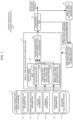
- FIG. 1 is a diagram showing a functional configuration example of the power generation planning apparatus according to the first embodiment.
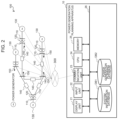
- FIG. 2 is a diagram showing a hardware configuration example of the power generation planning apparatus according to the first embodiment.
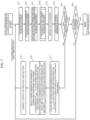
- FIG. 3 is a flowchart showing a power generator output dispatch processing example of the power generation planning apparatus according to the first embodiment.
- FIG. 4 is a diagram explaining an output correction example for eliminating a constraint violation in the specified previous time section output correction unit according to the first embodiment.
- FIG. 5 is a diagram showing an example of the display screen displayed on the display unit by single time section output saving unit according to the first embodiment.
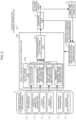
- FIG. 6 is a diagram showing a functional configuration example of the power generation planning apparatus according to the second embodiment.
- FIG. 7 is a flowchart showing an output dispatch processing example of the power generation planning apparatus according to the second embodiment.
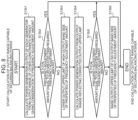
- FIG. 8 is a flowchart showing a processing example of the frequency adjustment dispatch upper and lower limit dispatch unit of the power generation planning apparatus according to the second embodiment.
- FIG. 9 is a diagram showing an example of the characteristics of the frequency adjustment dispatch of each power generator in the processing performed by the frequency adjustment dispatch upper and lower limit dispatch unit of the power generation planning apparatus according to the second embodiment.
- FIG. 10 is a diagram showing a functional configuration example of the power generation planning apparatus according to the third embodiment.
- FIG. 11 is a flowchart showing an output dispatch processing example of the power generation planning apparatus according to the third embodiment.
- FIG. 12 is a diagram showing an example of the characteristics of the power output associated with the power generation unit price in relation to the processing performed by the power generation planning apparatus according to the third embodiment.
- FIG. 1 is a diagram showing a functional configuration example of the power generation planning apparatus 10 according to the first embodiment.
- the power generation planning apparatus 10 comprises a power generation planning information unit 11 , a single time section output dispatch unit 12 , a constraint determination unit 13 , a specified previous time section output correction unit 14 , and a single time section output saving unit 15 .
- the single time section output dispatch unit 12 comprises an output range calculation unit 121 , and a power generation output range output calculation unit 122 .
- the output range calculation unit 121 comprises a start/stop curve calculation unit 1211 , a power output ramp rate upper and lower limit calculation unit 1212 , and a group constraint upper and lower limit dispatch unit 1213 .
- the power generation planning information unit 11 stores, as a database, power generator information 11 a such as the equipment constant indicating the characteristics of each power generator, periodic inspection information 11 b for shut down or limiting the output of each power generator for maintenance inspection, system information 11 c such as the maximum transmission capacity of the interconnection line of the power system, demand information 11 d corresponding to the required power generation amount, and other information required for the generation plan.
- power generator information 11 a such as the equipment constant indicating the characteristics of each power generator
- system information 11 c such as the maximum transmission capacity of the interconnection line of the power system
- demand information 11 d corresponding to the required power generation amount
- the single time section output dispatch unit 12 calculates each power generator output giving consideration only to a single time section (output at a certain time) based on the input of information stored in the power generation planning information unit 11 .
- the constraint determination unit 13 determines whether an operational constraint is being satisfied in relation to each power generator or power system or generation, saves the result of the power generator output in the single time section output saving unit 15 when there is no constraint violation, and outputs the violating time section to the specified previous time section output correction unit 14 when there is a constraint violation.
- the specified previous time section output correction unit 14 eliminates the constraint violation by correcting the power generator output in each time section up to the previous time section by going back from the constraint-violating time section to a certain number of time sections, and saves each of the output-corrected time sections in the single time section output saving unit 15 .
- the single time section output saving unit 15 displays, on a screen, the results of the output correction of each time section that was saved.
- the single time section output dispatch unit 12 uses the output range calculation unit 121 to calculate, for each operational constraint, a power generator output range which satisfies each operational constraint based on the input of information stored in the power generation planning information unit 11 , and outputs, as an output range, the overlapping range of the respective power generator output ranges calculated for each operational constraint.
- the power generation output range output calculation unit 122 calculates the power output of each power generator within the foregoing output range.
- the output range calculation unit 121 comprises a start/stop curve calculation unit 1211 , a power output ramp rate upper and lower limit calculation unit 1212 , and a group constraint upper and lower limit dispatch unit 1213 .
- the start/stop curve calculation unit 1211 sets the output upper and lower limit so as to achieve a specified output curve when the start or stop of the power generator is commenced.
- the power output ramp rate upper and lower limit calculation unit 1212 calculates the output upper and lower limit in which the power output in the current time section will fall within the specification range based on the power output in the previous time section.
- the group constraint upper and lower limit dispatch unit 1213 calculates the output upper and lower limit of each power generator so that the total output of a plurality of power generators will fall within a specified range.
- the output range calculation unit 121 selects an output range which overlaps for each power generator from each output range that satisfies the respective operational constraints calculated respectively by the start/stop curve calculation unit 1211 , the power output ramp rate upper and lower limit calculation unit 1212 , and the group constraint upper and lower limit dispatch unit 1213 .
- FIG. 2 is a diagram showing a hardware configuration example of the power generation planning apparatus 10 according to the first embodiment.
- FIG. 2 shows a hardware configuration example of a power system 100 in which information such as the power generator information 11 a and a plurality of measurement data such as a load 150 are stored in a database via the communication network 300 , and the power generation planning apparatus 10 of this embodiment.
- the power system 100 is a system in which a plurality of power generators 130 and the load 150 are mutually linked via a bus (node) 110 , a transformer 120 , a transmission line 140 and the like. Note that, in FIG.
- the communication unit 23 of FIG. 2 additionally communicates with a meteorological system, a power market system, and an aggregator which monitors and controls a plurality of distributed power supplies such as a VPP (Virtual Power Plant) and consumers.
- VPP Virtual Power Plant
- the power generation planning apparatus 10 is configured from a computer system, and a display unit 21 such as a display apparatus, an input unit 22 such as a keyboard or a mouse, a communication unit 23 , a CPU 24 , a memory 25 , and various types of databases (system information database DB 1 , power generation plan database DB 2 ) are connected via a bus line 26 .
- the display unit 21 may also be configured, for example, to additionally use a printer device or a sound output device in substitute for, or together with, a display device.
- the input unit 22 may be configured by comprising, for example, at least one among a keyboard switch, a pointing device such as a mouse, a touch panel, and a voice command device.
- the communication unit 23 comprises a circuit and a communication protocol for connecting to the communication network 300 .
- the CPU 24 realizes the various units of the power generation planning apparatus 10 by executing programs in coordination with the memory 25 , gives instructions on the image data to be displayed, and searches for data in various types of databases.
- the CPU 24 may be configured as one or more semiconductor chips, or may be configured as a computer device such as a computer server.
- the memory 25 is configured, for example, as a RAM (Random Access Memory), and stores computer programs, and stores calculation result data and image data required for each processing. The data stored in the memory 25 is sent to and displayed by the display unit 21 .
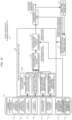
- FIG. 3 is a flowchart showing a power generator output dispatch processing example of the power generation planning apparatus 10 according to the first embodiment.
- the power generation planning apparatus 10 acquires, from the power generation planning information unit 11 , information required for the output calculation of the power generator such as the demand of each power generator and the equipment information of the power generator, and uses the output range calculation unit 121 and the power generation output range output calculation unit 122 to calculate the power generator output in a single time section.
- the output range calculation unit 121 Prior to the output dispatch processing of the single time section shown in S 11 to S 15 , selects one single time section to be processed.
- the operational constraint there are, for example, a start/stop curve constraint that the power output is changed from 0 to a specified output or from a specified output to 0 for transitions of operation on/off status, the power output ramp rate constraint which is the maximum speed that the output can be adjusted in each time section, and a group constraint which is limitation of the total power output of the designated generators to meet transmission capacity for power system.
- the start/stop curve calculation unit 1211 , the power output ramp rate upper and lower limit calculation unit 1212 , and the group constraint upper and lower limit dispatch unit 1213 in the output range calculation unit 121 calculate, for each of these operational constraints, the output upper and lower limit of each power generator which satisfies the respective operational constraints.
- the method of calculating the output upper and lower limit in the various units is now explained.
- the start/stop curve calculation unit 1211 fixes the output range in the start/stop curve. Specifically, the start/stop curve calculation unit 1211 causes the output upper and lower limit of the power generator that was fixed at the commencement of the start/stop to be the same as the time series data of the output according to the status at the commencement of the start/stop given in advance. This is because the power generator output at the commencement of the start/stop becomes the power generator output that is the same as the time series data of the output according to the status at the commencement of the start/stop given in advance.
- the power output ramp rate upper and lower limit calculation unit 1212 calculates the output upper and lower limit in which the power output in the current time section will fall within a specification range based on the power output in the previous time section.
- the group constraint upper and lower limit dispatch unit 1213 calculates the upper and lower limit output which satisfies the group constraint on the condition that the total fuel cost of the power generators will be minimized.
- the upper and lower limit to meet the group constraint are calculated by solving the optimization problem expressed in following Formula (1-1) to (1-5). When there are multiple group constraints, an operational constraint is added for each group constraint.
- the quadratic function based on the coefficients a i , b i , c i indicating the power generation cost is used as the objective function, and the upper and lower limit value that minimizes the power generation cost is obtained by maximizing the total value of the upper limit P it_max and minimizing the total value of the lower limit P it_min within a range that satisfies the group constraint.
- an optimization technique such as quadratic programming may be adopted.
- the output of the group constraint upper and lower limit dispatch unit 1213 may also be operated in advance from the value of each group constraint targeting the candidates of the start/stop status of the power generator.
- the result of the computation performed in advance to the candidates of a similar start/stop status may be cited.
- the output range calculation unit 121 integrates the output upper and lower limits that satisfy the respective operational constraints in order according to a predetermined priority of the operational constraints in the output upper and lower limit calculated above for each of the operational constraints.
- the output range calculation unit 121 calculates the output range excluding the operational constraint with no solution.
- the priority may be decided and changed according to the constraint deviation amount or the number of deviations for each constraint classification in a previous time section.
- the power generation output range output calculation unit 122 calculates the power output of each power generator which minimizes the power generation cost based on the operational constraint of obtaining a total power output that is equivalent to the demand in the output range of each power generator calculated as described above. Note that, as this calculation method, the equal incremental cost method or the like may be used.
- the constraint determination unit 13 determines whether there is a constraint violation in the processing result of S 15 .
- the constraint determination unit 13 proceeds to the processing of S 17 to S 19 , which is the elimination processing of the constraint violation performed by the specified previous time section output correction unit 14 .
- the constraint determination unit 13 advances the processing to S 11 , and proceeds to the processing of the next time section.
- FIG. 4 is a diagram explaining an output correction example for eliminating a constraint violation in the specified previous time section output correction unit 14 according to the first embodiment. Moreover, in the following explanation, explained is a case where the total output of the power generator is unable to keep up with the demand due to the constraint of the power output ramp rate of the power generator when there is a sharp change in the demand, and a constraint violation of the generation balance has occurred.
- the specified previous time section output correction unit 14 calculates the index required for correcting the output in order to eliminate the constraint violation by correcting the output of each power generator of a plurality of previous time sections from the current time section in S 17 to S 19 .
- a power generator having a small power output ramp rate is unable to adapt to the change in demand and a constraint violation of the generation balance may occur (power generator output indicated with white circles in FIG. 4 ( b ) ).
- the specified previous time section output correction unit 14 executes the same processing as S 11 to S 15 based on the operational constraint that does not give consideration to the power output ramp rate and calculates, as the index P it_ideal , the target output of each power generator capable of eliminating the constraint violation in the violating time section T.
- the constraint violation classification supply and demand inconsistency, group constraint violation, frequency balancing power inadequacy described later, and so on
- the specified previous time section output correction unit 14 corrects the output range targeting a power generator having a large deviation ⁇ P and capable of eliminating the constraint violation.
- the output of the power generator is corrected in a plurality of previous time sections targeting power generators in which ⁇ P>0.
- the output lower limit in each time section should be equal to the output upper limit giving consideration to the power output ramp rate across the number of previous time sections corresponding to ( ⁇ P/power output ramp rate) so that it becomes an output that is the same as the index P it_ideal in the time section where the constraint violation occurred.
- the output range is corrected so that the lower limit of the output range of the power generator in which ⁇ P>0 becomes equal to the upper limit across the number of previous time sections corresponding to ( ⁇ P/power output ramp rate).
- the specified previous time section output correction unit 14 performs the same power dispatch processing as S 11 to S 15 based on the output range changed in S 18 across the number of time previous sections equivalent to the maximum value of ( ⁇ P/power output ramp rate) among the power generators determined to be ⁇ P>0 in S 18 . Consequently, the power generator in which the output range has been corrected across the previous time sections in S 18 becomes a value in which the output thereof has also be corrected, and the output of other power generators is corrected pursuant to the correction of the output of a certain power generator.
- the present invention is not limited to this embodiment.
- the output range should be corrected so that the upper limit becomes the lower limit targeting power generators in which ⁇ P ⁇ 0.
- the constraint can be eliminated by correcting the output upper limit or the output lower limit according to the polarity of ⁇ P capable of reducing the constraint violation in the same group.
- the power generation planning apparatus 10 proceeds to the processing of the next time section and, after repeating the processing up to the final time section (S 20 : Yes), the power dispatch processing of the power generator is thereby completed.
- the output range and the output of the power generator of the previous time section were corrected by giving consideration to the power output ramp rate constraint in S 17 to S 18 in order to eliminate the constraint violation determined in S 16
- the output range and the output of the power generator of the previous time section may also be corrected by giving consideration to another operational constraint.
- the single time section output saving unit 15 may calculate (output upper limit ⁇ output) or (output ⁇ output lower limit) of each power generator, and display the result on a screen of the display unit 21 or save the data thereof, together with the power generator output, as the output margin of each time section.
- FIG. 5 is a diagram showing an example of the display screen 21 a displayed on the display unit 21 by the single time section output saving unit 15 according to the first embodiment.
- the power generator output in each time (time section) is calculated only based on the output computation of a single time section.
- the power generator output in the case of not giving consideration to the power output ramp rate constraint is calculated as the index, and, if there is a difference (deviation ⁇ P) upon comparing the output in the violating time section and the index, it is determined that the constraint violation can be eliminated and the constraint violation elimination processing is performed.
- a power generator capable of eliminating the constraint violation is selected from the polarity and amount of ⁇ P according to the constraint violation classification (supply and demand inconsistency, group constraint violation, and frequency balancing power inadequacy described later).
- the output of the selected power generator is corrected based on a plurality of previous time sections than the constraint violating time section, and the power generator output capable of eliminating the constraint violation is calculated by re-calculating the output of all power generators.
- This processing is entirely realized only by applying the output computation of a single time section, and, by reducing the parameters of the optimization computation to be processed simultaneously, the scale of optimization to be calculated based on the processing for each single time section will decrease, and realized is a shorter computation time in comparison to the calculation of optimizing a plurality of time sections based on simultaneous processing.
- each output range in the single time section computation it is also possible to decide the candidate of the start/stop status of the power generator, calculate the output range in advance for each pattern based on the candidate of the start/stop status and the constraint value, and create a table of the computation results.
- the output range calculated in advance is cited without calculating the output range. Consequently, the calculation amount will decrease, and even faster computation can be realized.
- the adjustable output amount (output upper limit—output, output—output lower limit) of each power generator and of all power generators can be calculated from the output range and the output of each power generator.
- FIG. 6 is a diagram showing a functional configuration example of the power generation planning apparatus 10 B according to the second embodiment.
- the power generation planning apparatus 10 B of the second embodiment shown in FIG. 6 differs from the power generation planning apparatus 10 of the first embodiment in that the output range calculation unit 121 B in the single time section output dispatch unit 12 B is equipped with a frequency adjustment amount upper and lower limit dispatch unit 1214 .
- the frequency adjustment amount upper and lower limit dispatch unit 1214 outputs the output range of each power generator capable of securing the required balancing power (required frequency adjustment amount) based on the input of information including the power generator information 11 a such as the specification indicating the characteristics related to the frequency adjustment amount of each power generator from the power generation planning information unit 11 , important information 11 d and required balancing power 11 f .
- the output range calculation unit 121 outputs the output range that overlaps with each power generator from the output range that satisfies each operational constraint calculated by the respective units of the output range calculation unit 121 B, including the output of the frequency adjustment amount upper and lower limit dispatch unit 1214 .
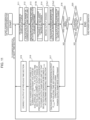
- FIG. 7 is a flowchart showing an output dispatch processing example of the power generation planning apparatus 10 B according to the second embodiment.
- the processing of S 13 b has been added subsequent to S 13 in comparison to the output dispatch processing of the power generation planning apparatus 10 of the first embodiment.
- the frequency adjustment amount is the adjustment amount of the output of the power generator capable of suppressing the frequency fluctuation in several minutes by adjusting the output of the power generator when the frequency of the power system, which is being operated at a system frequency of 50 Hz or 60 Hz, fluctuates.
- the output that can be adjusted in several minutes is the frequency adjustment amount, and the act of securing the frequency adjustment amount required for the system operation with all power generators are treated as the frequency adjustment amount constraint.
- the start/stop curve calculation unit 1211 calculates the output upper and lower limit of each power generator which satisfies the respective operational constraints.
- the calculation method the output upper and lower limit performed by the frequency adjustment amount upper and lower limit dispatch unit 1214 in S 13 b of FIG. 7 is now explained.
- FIG. 8 is a flowchart showing a processing example of the frequency adjustment amount upper and lower limit dispatch unit 1214 of the power generation planning apparatus 10 B according to the second embodiment, and shows the details of the internal processing of the frequency adjustment amount upper and lower limit dispatch unit 1214 in S 13 b .
- FIG. 9 is a diagram showing an example of the characteristics of the frequency adjustment amount of each power generator in the processing performed by the frequency adjustment amount upper and lower limit dispatch unit 1214 of the power generation planning apparatus 10 B according to the second embodiment.
- the characteristics of the frequency adjustment amount according to the power generator output are classified into three output bands as shown in FIG. 9 .
- the three output bands are a low output band in which the secured frequency adjustment amount increases pursuant to the output increase, a medium output band in which the secured frequency adjustment amount is unchanged irrespective of the output increase, and a high output band in which the secured frequency adjustment amount decreases pursuant to the output increase.
- the frequency adjustment amount upper and lower limit dispatch unit 1214 calculates the power generator output within a range that satisfies the other constraints without giving consideration to the frequency adjustment amount, and calculates the total frequency adjustment amount that has currently been secured.
- the frequency adjustment amount upper and lower limit dispatch unit 1214 calculates the power output of each power generator from the output range that satisfies the other constraints without giving consideration to the frequency adjustment amount constraint.
- S 13 b 1 is equivalent to executing S 11 to S 15 of the first embodiment without giving consideration to the frequency adjustment amount upper and lower limit dispatch unit 1214 .
- the power output of each power generator calculated in S 13 b 1 is, for example, the power output calculated to become the most economic based on the equal incremental cost method, in FIG.
- the frequency adjustment amount upper and lower limit dispatch unit 1214 determines whether the total frequency adjustment amount based on the power output calculated in S 13 b 1 satisfies the required frequency adjustment amount, performs the processing of S 13 b 3 onward when there is a shortage (S 13 b 2 : NO), and skips the processing of S 13 b 3 onward when the required frequency adjustment amount is satisfied (S 13 b 2 : YES).
- the frequency adjustment amount upper and lower limit dispatch unit 1214 increases the frequency adjustment amount by decreasing the upper limit of the output range and lowering the power output in the high output band calculated in S 13 b 1 .
- the power output in the low output band may be increased or the power output in the high output band may be reduced.
- the processing of S 13 b 3 targets the high output band.
- the frequency adjustment amount upper and lower limit dispatch unit 1214 calculates the upper limit of the output range which secures the frequency balancing power by solving the optimization problem of following Formulas (2-1) to (2-3) so that the frequency balancing power can be secured while suppressing the power generation cost.
- the optimization problem can be solved based on quadratic programming or the like.
- the “adjustment amount secured according to output of power generator i in high output band” indicated in the left member of following Formula (2-2) is shown taking the characteristics of the frequency adjustment amount of the “power generator 1” in FIG. 9 as an example.
- the frequency adjustment amount upper and lower limit dispatch unit 1214 reflects the upper limit calculated in S 13 b 3 in the output range, and calculates the power output of each power generator in the same manner as S 13 b 1 .
- the upper limit of the power generator in the high output band has decreased in comparison to S 13 b 1 , the power output in the high output band will decrease, and the secured total frequency balancing power will increase.
- the frequency adjustment amount upper and lower limit dispatch unit 1214 determines whether the total frequency adjustment amount based on the power output of each power generator calculated in S 13 b 4 satisfies the required frequency adjustment amount, performs the processing of S 13 b 6 when there is a shortage (S 13 b 5 : NO), and skips the processing of S 13 b 6 when the required frequency adjustment amount is satisfied (S 13 b 5 : YES).
- the frequency adjustment amount upper and lower limit dispatch unit 1214 increases the frequency adjustment amount by increasing the lower limit of the output range and increasing the power output in the low output band calculated in S 13 b 4 .
- the frequency adjustment amount upper and lower limit dispatch unit 1214 calculates the lower limit of the output range which secures the frequency balancing power by solving the optimization problem of following Formulas (3-1) to (3-3) so that the frequency balancing power can be secured while suppressing the power generation cost.
- the “adjustment amount secured according to output of power generator i in low output band” indicated in the left member of following Formula (3-2) is shown taking the characteristics of the frequency adjustment amount of the “power generator 1” in FIG. 9 as an example.
- the frequency adjustment amount upper and lower limit dispatch unit 1214 outputs, to the processing of S 14 onward of FIG. 7 , the upper and lower limit value of the output range that was corrected for securing the frequency adjustment amount described above as the output of S 13 b.
- S 14 onward of FIG. 7 is the same as the first embodiment other than S 18 .
- a condition may be added to the power generator selection described above.
- ⁇ P>0 may be added as a condition.
- the power output in each single time section may be calculated by executing only the power load dispatch decision processing of S 11 to S 15 of FIG. 7 .
- the required frequency adjustment amount is foremost secured by restricting the power output in the high output band so that the power generation cost will become inexpensive, and the required frequency adjustment amount is subsequently secured by increasing the power generator output in a low output band, in which the power generation unit price is expensive, so that the power generation cost will become inexpensive.
- an effect is yielded in that the scale of optimization can be decreased and the computation time can be shortened in comparison to giving consideration to all power outputs of generators simultaneously.
- an effect is yielded in that the economic efficiency can be maintained by preferentially securing the frequency balancing power from a high output band capable of securing the frequency balancing power less expensively than a low output band.
- FIG. 10 is a diagram showing a functional configuration example of the power generation planning apparatus 10 C according to the third embodiment.
- the power generation planning apparatus 10 C of the third embodiment shown in FIG. 10 differs from the power generation planning apparatus 10 B of the second embodiment in that the single time section output dispatch unit 12 B is equipped with a multiple-case assumption output calculation unit 123 .
- the power generation planning apparatus 10 C differs from the power generation planning apparatus 10 B of the second embodiment in that the power generation planning information unit 11 C additionally stores power demand fluctuation information (probability distribution) 11 g and power market price fluctuation information (probability distribution) 11 h.
- the multiple-case assumption output calculation unit 123 calculates and outputs, based on the representative case, the power generator output and the market trading volume in multiple cases anticipated from the demand fluctuation and the market price fluctuation based on the output and the power generation unit price of the power generator in the representative case of demands and market prices from the power generation output range output calculation unit 122 , and the input of the power demand fluctuation information (probability distribution) 11 g and the power market price fluctuation information (probability distribution) 11 h from the power generation planning information unit 11 C.
- FIG. 11 is a flowchart showing an output dispatch processing example of the power generation planning apparatus 10 C according to the third embodiment, and, due to the addition of the multiple-case assumption output calculation unit 123 , S 15 c 1 and S 15 c 2 have been added in substitute for S 15 in comparison to the output dispatch processing of the second embodiment shown in FIG. 7 .
- the output range calculation unit 121 B selects information required for the output calculation of the power generator such as the demand and the specification information of the power generator from the power generation planning information unit 11 C, and calculates the output range of the power generator capable of satisfying the operational constraint. Subsequently, in S 15 c 1 , the power generation output range output calculation unit 122 calculates the power generator output in a representative case capable of output within the output range calculated in S 14 . Moreover, in S 15 c 2 , the multiple-case assumption output calculation unit 123 calculates the power generator output in multiple cases with difference market prices and demands based on the power generator output in the representative case. The processing of S 15 c 1 and S 15 c 2 in the third embodiment is now explained.
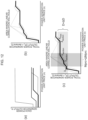
- FIG. 12 ( a ) The relation of the power generation unit price ⁇ and the output P it of each power generator based on foregoing Formula (4) is shown in FIG. 12 ( a )
- Mt can be indicated with the same relation as FIG. 12 by deeming Mt to be the same as the power generator output P it .
- ⁇ and ⁇ of following Formula (6) are coefficient values derived from the power generator constant of the power generator that has not yet reached the upper and lower limit of the output range and the coefficient M k of foregoing Formula (5).
- [Math 6] ⁇ ⁇ D+ ⁇ M prc (6)
- the power generation output range output calculation unit 122 calculates each representative case included in the linear section that will be affected by the input demand fluctuation ⁇ D and the market price fluctuation ⁇ M prc as shown in FIG. 12 ( c ) , in the same manner as the second embodiment, based on the input of the demand fluctuation information (probability distribution) 11 g and the power market price fluctuation information (probability distribution) 11 h from the power generation planning information unit 11 C.
- the traded power is used as the output by treating it in the same manner also when based on the market price fluctuation ⁇ M prc .
- the market price M prc may be used.
- the multiple-case assumption output calculation unit 123 creates one or more cases anticipating the demand fluctuation ⁇ D and the market price fluctuation ⁇ Mprc, using a method such as Monte Carlo simulation of creating the occurrence probability and case from probability distribution, based on the demand fluctuation information (probability distribution) 11 g and the power market price fluctuation information (probability distribution) 11 h.
- the multiple-case assumption output calculation unit 123 compares the case created by anticipating the demand fluctuation ⁇ D and the market price fluctuation ⁇ Mprc with the demand for each ⁇ section indicating the representative case selected in S 15 c 1 , and selects ⁇ section as a neighborhood and the demand at such time.
- the multiple-case assumption output calculation unit 123 deems cases in the neighborhood of the respective representative cases among the multiple cases as similar cases, and sets the difference between the demands of similar cases and the representative case in the neighborhood thereof as ⁇ D, and the difference between the market prices as ⁇ M prc .
- ⁇ section + ⁇ obtained by adding ⁇ section indicating the representative case to ⁇ calculated from ⁇ D, ⁇ M prc and foregoing Formula (6) is used as the power generation unit price ⁇ in each of the similar cases.
- the power output in the similar cases is calculated by assigning the power generation unit price ⁇ in the similar cases to foregoing Formula (4) and Formula (5).
- the subsequent processing is the same as the other embodiments.
- the power generator output in each single time section may also be calculated by executing only the power output dispatch decision processing of S 11 to S 15 c 2 of FIG. 11 .
- a relation of the total power output and the power generation unit price of the power generators is used for calculating the power generator output in a plurality of similar cases with different demands and prices, the representative values of demands and power generation unit prices that are representative for each linear area in which the linear approximation will hold are selected, and, when calculating similar cases, each power generator output is calculated based on the power generation unit price of the representative case and through linear approximation from demands and prices.
- the present invention is not limited thereto, and may also be broadly applied to various systems, devices, methods, and programs.
- information such as programs, tables, files and the like that realize the respective functions of the power generation planning apparatus may also be stored in a memory, or a storage device such as a hard disk or an SSD (Solid State Drive), or a storage medium such as an IC card, an SD card, a DVD or the like.
- a storage device such as a hard disk or an SSD (Solid State Drive), or a storage medium such as an IC card, an SD card, a DVD or the like.
- the present invention is not limited to the embodiments described above, and includes various modified examples.
- the foregoing embodiments were explained in detail for explaining the present invention in an easy-to-understand manner, and the present invention is not necessarily limited to a type which comprises all of the configurations explained in the embodiments.
- a part of the configuration of a certain embodiment may be replaced with the configuration of another embodiment, and the configuration of another embodiment may be added to the configuration of one embodiment.
- a part of the configuration of each embodiment may undergo addition, deletion, replacement, integration or distribution of another configuration.
- the configuration and processing described in the embodiments described above may undergo distribution, integration or replacement as needed in light of processing efficiency or mounting efficiency.
Landscapes
- Engineering & Computer Science (AREA)
- Business, Economics & Management (AREA)
- Power Engineering (AREA)
- Strategic Management (AREA)
- Economics (AREA)
- Human Resources & Organizations (AREA)
- Development Economics (AREA)
- Entrepreneurship & Innovation (AREA)
- General Physics & Mathematics (AREA)
- Accounting & Taxation (AREA)
- Finance (AREA)
- Marketing (AREA)
- Physics & Mathematics (AREA)
- General Business, Economics & Management (AREA)
- Theoretical Computer Science (AREA)
- Tourism & Hospitality (AREA)
- Health & Medical Sciences (AREA)
- Game Theory and Decision Science (AREA)
- Public Health (AREA)
- General Health & Medical Sciences (AREA)
- Water Supply & Treatment (AREA)
- Primary Health Care (AREA)
- Data Mining & Analysis (AREA)
- Educational Administration (AREA)
- Operations Research (AREA)
- Quality & Reliability (AREA)
- Supply And Distribution Of Alternating Current (AREA)
- Management, Administration, Business Operations System, And Electronic Commerce (AREA)
Abstract
Description
- [NPTL 1] Mototsune Yoshikawa, Toshiyuki Sawa, Hiroshi Nakashima, Mitsuo Kinoshita, Yoshiyuki Kurebayashi, Yuji Nakata, “Method for Unit Commitment of Thermal and Pumped storage Hydro Power Plants”, Journal of the Institute of Electrical Engineers of Japan B (Publication of Power and Energy Society), The Institute of Electrical Engineers of Japan, 1994, Vol. 114, No. 12, p. 1220-1226
- [NPTL 2] Toshiyuki Sawa, Yasuo Sato, Mitsuo Tsurugai, Tsukasa Onishi, “Daily Integrated Generation Scheduling for Thermal, Pumped-Storage Hydro and Cascaded Hydro Units and Purchasing Power Considering Network Constraints”, Journal of the Institute of Electrical Engineers of Japan B (Publication of Power and Energy Society), The Institute of Electrical Engineers of Japan, 2008, Vol. 128, No. 10, p. 1227-1234
- [NPTL 3] Yasuhiro Kojima, Shizuka Nakamura, Masaya Abe, Osamu Takahashi, Eiichi Tsukada, Takahisa Kurokawa, “Development of EDC Considering Cooperation with AFC”, Journal of the Institute of Electrical Engineers of Japan B (Publication of Power and Energy Society), The Institute of Electrical Engineers of Japan, 2005, Vol. 125, No. 2, p. 170-176
Operational Constraints:
Total value of upper limit (P it_max) of specified power generator upper limit of total output of specified power generator (1-2)
Total value of lower limit (P it_min) of specified power generator lower limit of total output of specified power generator (1-3)
Total value of upper limit (P it_max) of specified power generator is maximized (1-4)
Total value of lower limit (P it_min) of specified power generator is minimized (1-5)
i: power generator number, Ngen: number of power generators, t: time section,
Pit_max: upper limit of output range of power generator i in time section t,
Pit_min: lower limit of output range of power generator i in time section t,
ai, bi, ci: power generation cost coefficient of power generator i
Pit_max: upper limit of output range of power generator i in time section t,
PLFCup_i: lowest output value of high output band, i: power generator number, t: time section,
LFCi+Ki′ (Pit_max-PLFcup_i): adjustment amount secured according to output of power generator i in high output band,
LFCi: maximum frequency adjustment amount secured in high output band,
RLFCup: total frequency adjustment amount secured in high output band, ai, bi, ci: power generation cost coefficient of power generator i
Pit_min: lower limit of output range of power generator in time section t,
PLFClow_i: maximum output value of low output band, i: power generator number, t: time section,
Ki (Pit_min−PLFCmin_i): adjustment amount secured according to output of power generator i in low output band,
PLFClow: total frequency adjustment amount secured in low output band,
ai, bi, ci: power generation cost coefficient of power generator i
λ: power generation unit price according to output of power generator
Pit: power output of power generator i
ai, bi, ci: power generation cost coefficient (indicates power generation cost based on aiPit 2+biPit+ci)
[Math 6]
Δλ=αΔD+βΔM prc (6)
-
- 10, 10B, 10C: power generation planning apparatus, 11, 11C: power generation planning information unit, 12, 12B, 12C: single time section output dispatch unit, 13: constraint determination unit, 14: specified previous time section output correction unit, 15: single time section output saving unit, 21: display unit, 21 a: display screen, 121, 121B: output range calculation unit, 122: power generation output range output calculation unit, 123: multiple-case assumption output calculation unit.
Claims (9)
Applications Claiming Priority (3)
| Application Number | Priority Date | Filing Date | Title |
|---|---|---|---|
| JP2019-209675 | 2019-11-20 | ||
| JP2019209675A JP7245761B2 (en) | 2019-11-20 | 2019-11-20 | Power supply and demand planning device |
| PCT/JP2020/033187 WO2021100285A1 (en) | 2019-11-20 | 2020-09-02 | Power supply and demand planning device |
Publications (2)
| Publication Number | Publication Date |
|---|---|
| US20220376500A1 US20220376500A1 (en) | 2022-11-24 |
| US12191663B2 true US12191663B2 (en) | 2025-01-07 |
Family
ID=75965527
Family Applications (1)
| Application Number | Title | Priority Date | Filing Date |
|---|---|---|---|
| US17/641,833 Active 2041-10-14 US12191663B2 (en) | 2019-11-20 | 2020-09-02 | Power supply and demand planning device |
Country Status (4)
| Country | Link |
|---|---|
| US (1) | US12191663B2 (en) |
| EP (1) | EP4064494A4 (en) |
| JP (1) | JP7245761B2 (en) |
| WO (1) | WO2021100285A1 (en) |
Families Citing this family (4)
| Publication number | Priority date | Publication date | Assignee | Title |
|---|---|---|---|---|
| JP7716357B2 (en) * | 2022-03-09 | 2025-07-31 | 株式会社日立製作所 | Grid violation resolution control calculation system, grid violation resolution system, fault calculation system, grid stabilization system, preventive control system, and grid violation resolution control calculation method |
| CN115114854B (en) * | 2022-06-30 | 2026-02-17 | 长沙理工大学 | Two-stage self-organizing optimization aggregation method and system for distributed resources of virtual power plant |
| JP7792892B2 (en) * | 2022-12-16 | 2025-12-26 | 三菱重工業株式会社 | Power generation control device, power supply control system, power generation control method, and program |
| JP7844381B2 (en) * | 2023-03-22 | 2026-04-13 | 株式会社日立製作所 | Energy operation planning device and energy operation planning method |
Citations (4)
| Publication number | Priority date | Publication date | Assignee | Title |
|---|---|---|---|---|
| US20140172503A1 (en) * | 2012-12-14 | 2014-06-19 | Battelle Memorial Institute | Transactive control and coordination framework and associated toolkit functions |
| US20160258361A1 (en) * | 2015-03-03 | 2016-09-08 | General Electric Company | Methods and systems for enhancing control of power plant generating units |
| US20160281607A1 (en) * | 2015-03-27 | 2016-09-29 | General Electric Company | Methods and systems for enhancing operation of power plant generating units and systems |
| US20170060161A1 (en) * | 2015-08-24 | 2017-03-02 | Dominion Resources, Inc. | Systems and methods for stabilizer control |
Family Cites Families (10)
| Publication number | Priority date | Publication date | Assignee | Title |
|---|---|---|---|---|
| US9251479B2 (en) * | 2010-07-02 | 2016-02-02 | General Electric Technology Gmbh | Multi-interval dispatch method for enabling dispatchers in power grid control centers to manage changes |
| CN102255319B (en) * | 2011-07-15 | 2013-07-24 | 广东电网公司电力科学研究院 | Electrical network voltage wattless real time control assessment method based on section data extraction and system thereof |
| CN102969740B (en) * | 2012-11-15 | 2015-08-12 | 南京南瑞继保电气有限公司 | A kind of power plant real-time generation schedule modification method |
| CN104037815B (en) * | 2014-06-19 | 2016-07-06 | 清华大学 | Eliminate the photovoltaic plant active power autocontrol method that electrical grid transmission power is out-of-limit |
| JP6889592B2 (en) * | 2017-04-06 | 2021-06-18 | 株式会社小糸製作所 | Lamp |
| JP6785717B2 (en) * | 2017-05-11 | 2020-11-18 | 三菱電機株式会社 | Optimal tidal current calculator, optimal tidal current calculation method, and optimal tidal current calculation program |
| JP6892349B2 (en) * | 2017-08-01 | 2021-06-23 | 株式会社東芝 | Power supply and demand control device, power supply and demand control system, computer program for power supply and demand control, and power supply and demand control method |
| JP6969350B2 (en) * | 2017-12-18 | 2021-11-24 | 富士電機株式会社 | Production allocation determination device and production allocation determination method |
| JP7240156B2 (en) * | 2018-12-06 | 2023-03-15 | 株式会社日立製作所 | Power supply and demand planning device |
| CN110932281B (en) * | 2019-11-27 | 2022-07-01 | 中国电力科学研究院有限公司 | Multi-section cooperative correction method and system based on quasi-steady-state sensitivity of power grid |
-
2019
- 2019-11-20 JP JP2019209675A patent/JP7245761B2/en active Active
-
2020
- 2020-09-02 US US17/641,833 patent/US12191663B2/en active Active
- 2020-09-02 EP EP20888959.2A patent/EP4064494A4/en active Pending
- 2020-09-02 WO PCT/JP2020/033187 patent/WO2021100285A1/en not_active Ceased
Patent Citations (4)
| Publication number | Priority date | Publication date | Assignee | Title |
|---|---|---|---|---|
| US20140172503A1 (en) * | 2012-12-14 | 2014-06-19 | Battelle Memorial Institute | Transactive control and coordination framework and associated toolkit functions |
| US20160258361A1 (en) * | 2015-03-03 | 2016-09-08 | General Electric Company | Methods and systems for enhancing control of power plant generating units |
| US20160281607A1 (en) * | 2015-03-27 | 2016-09-29 | General Electric Company | Methods and systems for enhancing operation of power plant generating units and systems |
| US20170060161A1 (en) * | 2015-08-24 | 2017-03-02 | Dominion Resources, Inc. | Systems and methods for stabilizer control |
Non-Patent Citations (7)
| Title |
|---|
| International Search Report of PCT/JP2020/033187 dated Nov. 17, 2020. |
| Motonobu Yoshikawa, et al., Method for Unit Commitment of Thermal and Pumped-storage Hydro Power Plants, T. IEE Japan, 1994, vol. 114-B, No. 12, p. 1220-1226. |
| Partial Supplementary European Search Report received in corresponding European Application No. 20888959.2 dated Nov. 6, 2023. |
| Rong, A. et al., "An Effective Heuristic for Combined Heat-and-Power Production Planning with Power Ramp Constraints", Applied Energy, Nov. 10, 2006, pp. 307-325, vol. 84, No. 3, Elsevier Science Publishers, GB, XP005758322, ISSN: 0306-2619, DOI: 10.1016/J.APENERGY.2006.07.005. |
| Toshiyuki SAWA, et al., Daily Integrated Generation Scheduling for Thermal, Pumped-Storage Hydro and Cascaded Hydro Units and Purchasing Power Considering Network Constraints, The Institute of Electrical Engineers of Japan, 2008, vol. 128, No. 10, p. 1227-1234. |
| Yasuhiro Kojima, et al., Development of EDC Considering Cooperation with AFC, Journal of the Institute of Electrical Engineers of Japan, 2005, vol. 125, No. 2, p. 170-176. |
| Yorino, N. et al., "Feasible Operation Region for Dynamic Economic Load Dispatch", Tencon 2010—2010 IEEE Region 10 Conference, IEEE, Piscataway, NJ, USA, Nov. 21, 2010, pp. 563-567, XP031898498, DOI: 10.1109/TENCON.2010.5686744, ISBN: 978-1-4244-6889-8. |
Also Published As
| Publication number | Publication date |
|---|---|
| WO2021100285A1 (en) | 2021-05-27 |
| JP2021083235A (en) | 2021-05-27 |
| EP4064494A4 (en) | 2024-02-28 |
| EP4064494A1 (en) | 2022-09-28 |
| JP7245761B2 (en) | 2023-03-24 |
| US20220376500A1 (en) | 2022-11-24 |
Similar Documents
| Publication | Publication Date | Title |
|---|---|---|
| US12002121B2 (en) | Thermal energy production, storage, and control system with heat recovery chillers | |
| EP3358426B1 (en) | Building energy cost optimization system with asset sizing | |
| US20220376500A1 (en) | Power supply and demand planning device | |
| US11036249B2 (en) | Building energy storage system with peak load contribution cost optimization | |
| US11068821B2 (en) | Building energy optimization system with capacity market program (CMP) participation | |
| US11379935B2 (en) | Central plant control system with equipment maintenance evaluation | |
| US10423138B2 (en) | Building energy storage system with planning tool | |
| US20190206000A1 (en) | Building energy storage system with multiple demand charge cost optimization | |
| US20180357577A1 (en) | Building energy optimization system with economic load demand response (eldr) optimization | |
| US12001181B2 (en) | Power generation planning apparatus | |
| US20240275179A1 (en) | Electrical power system and a multi-timescale coordinated optimization scheduling method therefor | |
| EP3547234A1 (en) | Building energy optimization system with capacity market program (cmp) participation | |
| US20120253532A1 (en) | Systems and methods for forecasting electrical load | |
| JP6996494B2 (en) | Power controllers, power control methods, and programs | |
| Mokryani et al. | Combined Monte Carlo simulation and OPF for wind turbines integration into distribution networks | |
| Mokryani et al. | Optimal allocation of wind turbines in microgrids by using genetic algorithm | |
| O’Neill et al. | Recent ISO software enhancements and future software and modeling plans | |
| Jiang et al. | Leverage reactive power ancillary service under high penetration of renewable energies: An incentive-compatible obligation-based market mechanism | |
| US20240280617A1 (en) | Aggregator System | |
| Awad et al. | The impact of wind farm location and control strategy on wind generation penetration and market prices | |
| US12155209B2 (en) | Adjustment power procurement device and adjustment power procuring method | |
| Baral et al. | Unleashing the economic potential of wind power for ancillary services | |
| Rahmat et al. | Equal Incremental Cost Method with Adjustable Gamma Control to Solve Generator Scheduling | |
| Ikeda | Grid Integration of Renewable Energy | |
| Davoudi et al. | Economic Implications of Dynamic Line Ratings on System Costs and Reserve Nodal Prices |
Legal Events
| Date | Code | Title | Description |
|---|---|---|---|
| AS | Assignment |
Owner name: HITACHI, LTD., JAPAN Free format text: ASSIGNMENT OF ASSIGNORS INTEREST;ASSIGNORS:KINOSHITA, YOSHIHITO;IMAI, KOTA;MAEDA, TATSUYA;REEL/FRAME:059217/0505 Effective date: 20220119 |
|
| FEPP | Fee payment procedure |
Free format text: ENTITY STATUS SET TO UNDISCOUNTED (ORIGINAL EVENT CODE: BIG.); ENTITY STATUS OF PATENT OWNER: LARGE ENTITY |
|
| STPP | Information on status: patent application and granting procedure in general |
Free format text: DOCKETED NEW CASE - READY FOR EXAMINATION |
|
| STPP | Information on status: patent application and granting procedure in general |
Free format text: NON FINAL ACTION MAILED |
|
| STPP | Information on status: patent application and granting procedure in general |
Free format text: RESPONSE TO NON-FINAL OFFICE ACTION ENTERED AND FORWARDED TO EXAMINER |
|
| STPP | Information on status: patent application and granting procedure in general |
Free format text: NOTICE OF ALLOWANCE MAILED -- APPLICATION RECEIVED IN OFFICE OF PUBLICATIONS |
|
| STPP | Information on status: patent application and granting procedure in general |
Free format text: PUBLICATIONS -- ISSUE FEE PAYMENT VERIFIED |
|
| STCF | Information on status: patent grant |
Free format text: PATENTED CASE |