US12174882B2 - Image retrieval system and image retrieval method - Google Patents
Image retrieval system and image retrieval method Download PDFInfo
- Publication number
- US12174882B2 US12174882B2 US17/291,196 US201917291196A US12174882B2 US 12174882 B2 US12174882 B2 US 12174882B2 US 201917291196 A US201917291196 A US 201917291196A US 12174882 B2 US12174882 B2 US 12174882B2
- Authority
- US
- United States
- Prior art keywords
- image data
- data
- database
- pixel data
- pieces
- Prior art date
- Legal status (The legal status is an assumption and is not a legal conclusion. Google has not performed a legal analysis and makes no representation as to the accuracy of the status listed.)
- Active
Links
Images




Classifications
-
- G—PHYSICS
- G06—COMPUTING OR CALCULATING; COUNTING
- G06N—COMPUTING ARRANGEMENTS BASED ON SPECIFIC COMPUTATIONAL MODELS
- G06N3/00—Computing arrangements based on biological models
- G06N3/02—Neural networks
- G06N3/06—Physical realisation, i.e. hardware implementation of neural networks, neurons or parts of neurons
- G06N3/063—Physical realisation, i.e. hardware implementation of neural networks, neurons or parts of neurons using electronic means
-
- G—PHYSICS
- G06—COMPUTING OR CALCULATING; COUNTING
- G06F—ELECTRIC DIGITAL DATA PROCESSING
- G06F16/00—Information retrieval; Database structures therefor; File system structures therefor
- G06F16/50—Information retrieval; Database structures therefor; File system structures therefor of still image data
- G06F16/58—Retrieval characterised by using metadata, e.g. metadata not derived from the content or metadata generated manually
- G06F16/583—Retrieval characterised by using metadata, e.g. metadata not derived from the content or metadata generated manually using metadata automatically derived from the content
-
- G—PHYSICS
- G06—COMPUTING OR CALCULATING; COUNTING
- G06F—ELECTRIC DIGITAL DATA PROCESSING
- G06F18/00—Pattern recognition
- G06F18/20—Analysing
- G06F18/21—Design or setup of recognition systems or techniques; Extraction of features in feature space; Blind source separation
- G06F18/214—Generating training patterns; Bootstrap methods, e.g. bagging or boosting
-
- G—PHYSICS
- G06—COMPUTING OR CALCULATING; COUNTING
- G06N—COMPUTING ARRANGEMENTS BASED ON SPECIFIC COMPUTATIONAL MODELS
- G06N3/00—Computing arrangements based on biological models
- G06N3/02—Neural networks
- G06N3/04—Architecture, e.g. interconnection topology
-
- G—PHYSICS
- G06—COMPUTING OR CALCULATING; COUNTING
- G06N—COMPUTING ARRANGEMENTS BASED ON SPECIFIC COMPUTATIONAL MODELS
- G06N3/00—Computing arrangements based on biological models
- G06N3/02—Neural networks
- G06N3/04—Architecture, e.g. interconnection topology
- G06N3/045—Combinations of networks
-
- G—PHYSICS
- G06—COMPUTING OR CALCULATING; COUNTING
- G06N—COMPUTING ARRANGEMENTS BASED ON SPECIFIC COMPUTATIONAL MODELS
- G06N3/00—Computing arrangements based on biological models
- G06N3/02—Neural networks
- G06N3/04—Architecture, e.g. interconnection topology
- G06N3/0464—Convolutional networks [CNN, ConvNet]
-
- G—PHYSICS
- G06—COMPUTING OR CALCULATING; COUNTING
- G06N—COMPUTING ARRANGEMENTS BASED ON SPECIFIC COMPUTATIONAL MODELS
- G06N3/00—Computing arrangements based on biological models
- G06N3/02—Neural networks
- G06N3/08—Learning methods
- G06N3/09—Supervised learning
-
- G—PHYSICS
- G06—COMPUTING OR CALCULATING; COUNTING
- G06V—IMAGE OR VIDEO RECOGNITION OR UNDERSTANDING
- G06V10/00—Arrangements for image or video recognition or understanding
- G06V10/20—Image preprocessing
- G06V10/25—Determination of region of interest [ROI] or a volume of interest [VOI]
-
- G—PHYSICS
- G06—COMPUTING OR CALCULATING; COUNTING
- G06V—IMAGE OR VIDEO RECOGNITION OR UNDERSTANDING
- G06V10/00—Arrangements for image or video recognition or understanding
- G06V10/70—Arrangements for image or video recognition or understanding using pattern recognition or machine learning
- G06V10/74—Image or video pattern matching; Proximity measures in feature spaces
- G06V10/75—Organisation of the matching processes, e.g. simultaneous or sequential comparisons of image or video features; Coarse-fine approaches, e.g. multi-scale approaches; using context analysis; Selection of dictionaries
- G06V10/751—Comparing pixel values or logical combinations thereof, or feature values having positional relevance, e.g. template matching
-
- G—PHYSICS
- G06—COMPUTING OR CALCULATING; COUNTING
- G06V—IMAGE OR VIDEO RECOGNITION OR UNDERSTANDING
- G06V10/00—Arrangements for image or video recognition or understanding
- G06V10/70—Arrangements for image or video recognition or understanding using pattern recognition or machine learning
- G06V10/82—Arrangements for image or video recognition or understanding using pattern recognition or machine learning using neural networks
-
- G—PHYSICS
- G06—COMPUTING OR CALCULATING; COUNTING
- G06N—COMPUTING ARRANGEMENTS BASED ON SPECIFIC COMPUTATIONAL MODELS
- G06N3/00—Computing arrangements based on biological models
- G06N3/02—Neural networks
- G06N3/08—Learning methods
Definitions
- One embodiment of the present invention relates to an information retrieval system and an information retrieval method.
- one embodiment of the present invention is not limited to the above technical field.
- Examples of the technical field of one embodiment of the present invention include a semiconductor device, a display device, a light-emitting device, a power storage device, a memory device, an electronic device, a lighting device, a method for driving any of them, and a method for manufacturing any of them.
- Patent Document 1 describes an invention in which template matching is performed on part of a verification image and a reference image to calculate similarity degree between both images.
- Patent Document 2 discloses an invention in which matrix data for convolution operation in a convolutional neural network is divided into two parts, the former part and the latter part with reference to the threshold to reduce the amount of arithmetic operation.
- Feature-based matching and area-based matching can be given as methods of template matching.
- feature-based matching matching between images is performed by extraction of feature points from the images and calculation of features.
- area-based matching images to be a template (template images) are compared with the query image one by one, whereby the template image partly including an image similar to the query image is extracted.
- One embodiment of the present invention is an image retrieval system including a processing portion.
- the processing portion includes a neural network.
- the neural network includes an intermediate layer.
- the intermediate layer has a function of outputting a first output value corresponding to the first image data when the first image data is input to the neural network.
- the intermediate layer has a function of outputting a second output value corresponding to the second image data when the second image data is input to the neural network.
- the processing portion has a function of comparing the first output value with the second output value.
- One embodiment of the present invention is an image retrieval system including a processing portion.
- the processing portion includes a neural network.
- the neural network includes a convolutional layer and a pooling layer.
- the pooling layer has a function of outputting a first output value corresponding to the first image data when the first image data is input to the neural network.
- the pooling layer has a function of outputting a second output value corresponding to the second image data when the second image data is input to the neural network.
- the processing portion has a function of comparing the first output value with the second output value.
- One embodiment of the present invention is an image retrieval system including a processing portion.
- the processing portion includes a neural network.
- the neural network includes a convolutional layer and an intermediate layer.
- the processing portion has a function of comparing image data with a plurality of pieces of database image data when the image data and the database image data are input to the processing portion.
- the processing portion has a function of extracting the database image data including an area with a high degree of correspondence to the image data as extracted image data.
- the intermediate layer has a function of outputting a first output value corresponding to the image data when the image data is input to the neural network.
- the intermediate layer has a function of outputting a second output value corresponding to the extracted image data when the extracted image data is input to the neural network.
- the processing portion has a function of comparing the first output value with the second output value.
- One embodiment of the present invention is an image retrieval system including a processing portion.
- the processing portion includes a neural network.
- the neural network includes a convolutional layer and an intermediate layer.
- the processing portion has a function of comparing image data with a plurality of pieces of database image data when the image data and the database image data are input to the processing portion.
- the processing portion has a function of extracting the database image data including an area with a high degree of correspondence to the image data as extracted image data.
- a pooling layer has a function of outputting a first output value corresponding to the image data when the image data is input to the neural network.
- the pooling layer has a function of outputting a second output value corresponding to the extracted image data when the extracted image data is input to the neural network.
- the processing portion has a function of comparing the first output value with the second output value.
- One embodiment of the present invention is an image retrieval system including a processing portion.
- the processing portion includes a neural network.
- the neural network includes an intermediate layer.
- the processing portion has a function of comparing image data with a plurality of pieces of database image data when the image data and the database image data are input to the processing portion.
- the processing portion has a function of extracting the database image data including an area with a high degree of correspondence to the image data as extracted image data.
- the processing portion has a function of extracting data of the area with a high degree of correspondence to the image data as partial image data from the extracted image data.
- the intermediate layer has a function of outputting a first output value corresponding to the image data when the image data is input to the neural network.
- the intermediate layer has a function of outputting a second output value corresponding to the partial image data when the partial image data is input to the neural network.
- the processing portion has a function of comparing the first output value with the second output value.
- One embodiment of the present invention is an image retrieval system including a processing portion.
- the processing portion includes a neural network.
- the neural network includes a convolutional layer and a pooling layer.
- the processing portion has a function of comparing image data with a plurality of pieces of database image data when the image data and the database image data are input to the processing portion.
- the processing portion has a function of extracting the database image data including an area with a high degree of correspondence to the image data as extracted image data.
- the processing portion has a function of extracting data of the area with a high degree of correspondence to the image data as partial image data from the extracted image data.
- the pooling layer has a function of outputting a first output value corresponding to the image data when the image data is input to the neural network.
- the pooling layer has a function of outputting a second output value corresponding to the partial image data when the partial image data is input to the neural network.
- the processing portion has a function of comparing the first output value with the second output value
- the number of pieces of pixel data included in the image data may be less than or equal to the number of pieces of pixel data included in the database image data.
- the image data may be compared with the database image data by area-based matching.
- the image data may include a plurality of pieces of the pixel data, and the processing portion may have a function of generating a plurality of pieces of the image data, which are different in the number of the pieces of the pixel data to be provided, on the basis of the input image data.
- the neural network may have a function of performing learning using the database image data.
- One embodiment of the present invention is an image retrieval method in which first image data is input to a neural network including an intermediate layer so that a first output value output from the intermediate layer is acquired, second image data is input to the neural network so that a second output value output from the intermediate layer is acquired, and the first output value and the second output value are compared.
- One embodiment of the present invention is an image retrieval method in which first image data is input to a neural network including a convolutional layer and a pooling layer so that a first output value output from the pooling layer is acquired, second image data is input to the neural network so that a second output value output from the pooling layer is acquired, and the first output value and the second output value are compared.
- One embodiment of the present invention is an image retrieval method in which image data is compared with a plurality of pieces of database image data, database image data including an area with a high degree of correspondence to the image data is extracted as extracted image data, the image data is input to a neural network including an intermediate layer so that a first output value output from a layer is acquired, the extracted image data is input to the neural network so that a second output value output from the intermediate layer is acquired, and the first output value and the second output value are compared.
- One embodiment of the present invention is an image retrieval method in which image data is compared with a plurality of pieces of database image data, database image data including an area with a high degree of correspondence to the image data is extracted as extracted image data, the image data is input to a neural network including a convolutional layer and a pooling layer so that a first output value output from a layer is acquired, the extracted image data is input to the neural network so that a second output value output from the pooling layer is acquired, and the first output value and the second output value are compared.
- One embodiment of the present invention is an image retrieval method in which image data is compared with a plurality of pieces of database image data, database image data including an area with a high degree of correspondence to the image data is extracted as extracted image data, data of the area with a high degree of correspondence to the image data is extracted as partial image data from the extracted image data, the image data is input to a neural network including an intermediate layer so that a first output value output from the intermediate layer is acquired, the partial image data is input to the neural network so that a second output value output from the intermediate layer is acquired, and the first output value and the second output value are compared.
- One embodiment of the present invention is an image retrieval method in which image data is compared with a plurality of pieces of database image data, database image data including an area with a high degree of correspondence to the image data is extracted as extracted image data, data of the area with a high degree of correspondence to the image data is extracted as partial image data from the extracted image data, the image data is input to a neural network including a convolutional layer and a pooling layer so that a first output value output from the pooling layer is acquired, the partial image data is input to the neural network so that a second output value output from the pooling layer is acquired, and the first output value and the second output value are compared.
- the number of pieces of pixel data included in the image data may be less than or equal to the number of pieces of pixel data included in the database image data.
- the image data may be compared with the database image data by area-based matching.
- the image data may include a plurality of pieces of pixel data, and the image data may be compared with database image data after a plurality of pieces of the image data, which are different in the number of the pieces of the pixel data to be provided, is generated on the basis of the image data.
- the neural network may perform learning using the database image data.
- an image retrieval system that enables high-accuracy image retrieval can be provided.
- an image retrieval system that enables image retrieval in a short time can be provided.
- a novel image retrieval system can be provided.
- an image retrieval method that enables high-accuracy image retrieval can be provided.
- an image retrieval method that enables image retrieval in a short time can be provided.
- a novel image retrieval method can be provided.
- FIG. 1 is a block diagram showing a structure example of an image retrieval system.
- FIG. 2 is a flow chart showing an example of an image retrieval method.
- FIG. 3 A and FIG. 3 B are diagrams showing an example of an image retrieval method.
- FIG. 4 is a diagram showing an example of an image retrieval method.
- FIG. 5 A , FIG. 5 B 1 , and FIG. 5 B 2 are diagrams showing an example of an image retrieval method.
- FIG. 6 A and FIG. 6 B are diagrams showing examples of an image retrieval method.
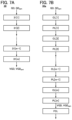
- FIG. 7 A and FIG. 7 B are diagrams showing structure examples of neural networks.
- FIG. 8 A and FIG. 8 B are diagrams showing examples of an image retrieval method.
- FIG. 9 is a diagram showing an example of an image retrieval method.
- FIG. 10 is a diagram showing a structure example of a neural network.
- FIG. 11 is a diagram showing an example of an image retrieval method.
- FIG. 12 is a flow chart showing an example of an image retrieval method.
- FIG. 13 A and FIG. 13 B are diagrams showing an example of an image retrieval method.
- FIG. 14 is a diagram showing an example of an image retrieval method.
- FIG. 15 is a diagram showing an example of an image retrieval method.
- FIG. 16 is a diagram showing a structure of a neural network according to Example.
- An image retrieval system of one embodiment of the present invention includes a processing portion and a database.
- the processing portion includes a neural network, and the neural network includes a layer provided with neurons.
- the neural network indicates a general model having the capability of solving problems, which is modeled on a biological neural network and determines the connection strength of neurons by the learning.
- connection strength of neurons also referred to as weight coefficient
- Query image data representing a query image and database image data stored in a database are input to the processing portion.
- a user of the image retrieval system of one embodiment of the present invention inputs the query image to the processing portion.
- the number of pixels of the query image can be less than or equal to the number of pixels of a database image, for example.
- the image retrieval system of one embodiment of the present invention has a function of retrieving the database image including an image similar to the query image.
- the processing portion has a function of, for example, comparing one piece of query image data with a plurality of pieces of database image data. Specifically, first, the query image data and the database image data are compared by area-based matching or the like, whereby the degree of correspondence to the query image data is calculated for each area of the database image data. Next, the database image data including an area with a high correspondence degree is extracted as extracted image data. From the extracted image data, partial image data, which is data of the area with a high degree of correspondence to the query image data, is then extracted.
- one piece of image data means image data corresponding to one image, for example.
- the query image data and the partial image data are input to the neural network included in the processing portion.
- the processing portion can acquire output values output from a layer included in the neural network.
- the output values output from the layer included in the neural network represent features of the image data input to the neural network, for example.
- the above output values in the case where the respective pieces of partial image data are input are compared with the above output value in the case where the query image data is input.
- the degree of similarity to the query image data can be calculated as a numerical value for each partial image data. Consequently, the degree of similarity to the query image data can be calculated as a numerical value for each extracted image data.
- the above similarity can be calculated with high accuracy in a short time by comparison between the output values output from the layer included in the neural network as described above. Accordingly, the database image partly including an image similar to the query image can be retrieved with high accuracy as compared with the case where the query image and the database image are compared only by area-based matching, for example. The database image partly including an image similar to the query image can be retrieved in a short time as compared with the case where the query image and the database image are compared only by feature-based matching, for example. Furthermore, since the above similarity can be calculated as a numerical value, the degrees of correspondence of the database images to the query image can be ranked, for example.
- FIG. 1 is a block diagram showing a structure example of an image retrieval system 10 .
- the image retrieval system 10 includes at least a processing portion 13 .
- the image retrieval system 10 illustrated in FIG. 1 further includes an input portion 11 , a transmission path 12 , a memory portion 15 , a database 17 , and an output portion 19 .
- image data or the like is supplied from the outside of the image retrieval system 10 .
- the image data or the like supplied to the input portion 11 is supplied to the processing portion 13 , the memory portion 15 , or the database 17 through the transmission path 12 .
- the transmission path 12 has a function of transmitting the image data or the like. Transmission and reception of information between the input portion 11 , the processing portion 13 , the memory portion 15 , the database 17 , and the output portion 19 can be performed through the transmission path 12 .
- the processing portion 13 has a function of performing arithmetic operation, inference, or the like with use of the image data or the like supplied from the input portion 11 , the memory portion 15 , the database 17 , or the like.
- the processing portion 13 includes the neural network and can perform arithmetic operation, inference, or the like using the neural network.
- the processing portion 13 can also perform arithmetic operation or the like without using the neural network.
- the processing portion 13 can supply an arithmetic operation result, an inference result, or the like to the memory portion 15 , the database 17 , the output portion 19 , or the like.
- a transistor including a metal oxide in a channel formation region is preferably used in the processing portion 13 .
- the transistor has an extremely low off-state current; therefore, with the use of the transistor as a switch for retaining charge (data) which flows into a capacitor functioning as a memory element, a long data retention period can be ensured.
- the processing portion 13 can be operated only when needed, and otherwise can be off while information processed immediately before turning off the processing portion 13 is stored in the memory element; accordingly, normally-off computing is possible and the power consumption of the image retrieval system can be reduced.
- a metal oxide is an oxide of metal in a broad sense. Metal oxides are classified into an oxide insulator, an oxide conductor (including a transparent oxide conductor), an oxide semiconductor (also simply referred to as an OS), and the like. For example, in the case where a metal oxide is used in a semiconductor layer of a transistor, the metal oxide is referred to as an oxide semiconductor in some cases. That is to say, a metal oxide that has at least one of an amplifying function, a rectifying function, and a switching function can be referred to as metal oxide semiconductor, or OS for short.
- a transistor including an oxide semiconductor or a metal oxide in its channel formation region is referred to as an oxide semiconductor transistor or an OS transistor.
- the metal oxide in the channel formation region preferably contains indium (In).
- the metal oxide in the channel formation region that contains indium increases the carrier mobility (electron mobility) of the OS transistor.
- the metal oxide in the channel formation region is preferably an oxide semiconductor containing an element M.
- the element M is preferably aluminum (Al), gallium (Ga), tin (Sn), or the like.
- the element M is boron (B), silicon (Si), titanium (Ti), iron (Fe), nickel (Ni), germanium (Ge), yttrium (Y), zirconium (Zr), molybdenum (Mo), lanthanum (La), cerium (Ce), neodymium (Nd), hafnium (Hf), tantalum (Ta), tungsten (W), and the like. Note that two or more of the above elements can be used in combination as the element M in some cases.
- the element M is an element having high bonding energy with oxygen, for example.
- the element M is an element whose bonding energy with oxygen is higher than that of indium, for example.
- the metal oxide included in the channel formation region is preferably a metal oxide containing zinc (Zn). The metal oxide containing zinc is easily crystallized in some cases.
- the metal oxide in the channel formation region is not limited to a metal oxide containing indium.
- the semiconductor layer may be, for example, a metal oxide that does not contain indium but contains at least one of zinc, gallium, and tin (e.g., zinc tin oxide or gallium tin oxide).
- the processing portion 13 includes, for example, an operation circuit, a central processing unit (CPU), or the like.
- the processing portion 13 may include a microprocessor such as a DSP (Digital Signal Processor) or a GPU (Graphics Processing Unit).
- the microprocessor may be constructed with a PLD (Programmable Logic Device) such as an FPGA (Field Programmable Gate Array) or an FPAA (Field Programmable Analog Array).
- PLD Programmable Logic Device
- FPGA Field Programmable Gate Array
- FPAA Field Programmable Analog Array
- the processing portion 13 may include a main memory.
- the main memory includes at least one of a volatile memory such as a RAM (Random Access Memory) and a nonvolatile memory such as a ROM (Read Only Memory).
- a volatile memory such as a RAM (Random Access Memory)
- a nonvolatile memory such as a ROM (Read Only Memory).
- a DRAM dynamic random access memory
- SRAM static random access memory
- a virtual memory space is assigned to the RAM to be used as a work space for the processing portion 13 .
- An operating system, an application program, a program module, program data, a look-up table, and the like which are stored in the memory portion 15 are loaded into the RAM and executed.
- the data, program, and program module which are loaded into the RAM are each directly accessed and operated by the processing portion 13 .
- ROM a BIOS (Basic Input/Output System), firmware, and the like for which rewriting is not needed can be stored.
- ROM a mask ROM, an OTPROM (One Time Programmable Read Only Memory), an EPROM (Erasable Programmable Read Only Memory), and the like can be given.
- EPROM a UV-EPROM (Ultra-Violet Erasable Programmable Read Only Memory) which can erase stored data by ultraviolet irradiation, an EEPROM (Electrically Erasable Programmable Read Only Memory), a flash memory, and the like can be given.
- the memory portion 15 has a function of storing a program to be executed by the processing portion 13 .
- the memory portion 15 may have a function of storing an arithmetic result and an inference result generated by the processing portion 13 , the image data or the like input to the input portion 11 , and the like.
- the memory portion 15 includes at least one of a volatile memory and a nonvolatile memory.
- the memory portion 15 may include a volatile memory such as a DRAM or an SRAM.
- the memory portion 15 may include a nonvolatile memory such as an ReRAM (Resistive Random Access Memory also referred to as a resistance-change memory), a PRAM (Phase change Random Access Memory), an FeRAM (Ferroelectric Random Access Memory), or a MRAM (Magnetoresistive Random Access Memory, also referred to a magneto-resistive memory), or a flash memory.
- the memory portion 15 may include storage media drives such as a hard disk drive (Hard Disc Drive: HDD) and a solid state drive (SSD).
- the database 17 has a function of storing reference image data.
- the database 17 may have a function of storing an arithmetic result and an inference result generated by the processing portion 13 and the image data or the like input to the input portion 11 .
- the memory portion 15 and the database 17 are not necessarily separated from each other.
- the image retrieval system 10 may include a storage unit that has both the functions of the memory portion 15 and that of the database 17 .
- image data stored in a database or the like is referred to as database image data.
- An image corresponding to the database image data is referred to as a database image.
- the output portion 19 has a function of supplying information to the outside of the image retrieval system 10 .
- an arithmetic result, an inference result, or the like in the processing portion 13 can be supplied to the outside.
- FIG. 2 is a flow chart showing an example of an image retrieval method using the image retrieval system 10 .
- image data GD and database image data GD DB are input to the processing portion 13 .
- the image data GD is input to the input portion 11 from the outside of the image retrieval system 10 . After that, the image data GD is supplied from the input portion 11 to the processing portion 13 through the transmission path 12 ; or the image data GD transmitted through the transmission path 12 may be stored in the memory portion 15 or the database 17 , and supplied from the memory portion 15 or the database 17 to the processing portion 13 through the transmission path 12 .
- the database image data GD DB is supplied from the database 17 to the processing portion 13 through the transmission path 12 .
- the database image data GD DB may be supplied from the memory portion 15 to the processing portion 13 through the transmission path 12 .
- the image data GD can be referred to as query image data, for example.
- the number of pixels of an image corresponding to the image data GD can be less than or equal to the number of pixels of a database image. That is, the number of pixels of the query image can be less than or equal to the number of pixels of the database image.
- the image retrieval system 10 can retrieve the database image partly including an image similar to the image corresponding to the image data GD. That is, the image retrieval system 10 can retrieve the database image partly including an image similar to the query image, for example.
- image data GD and the database image data GD DB data representing a drawing included in intellectual property information can be used.
- the intellectual property information are publications such as a patent document (e.g., published application publication, and a patent publication), a utility model publication, a design publication, and a paper. Not only publications issued domestically but also those issued in foreign countries can be used as the intellectual property information
- the intellectual property information is not limited to publications.
- a variety of files such as an image file independently possessed by a user or a user group of the image retrieval system can also be used as the image data GD or the database image data GD DB .
- a drawing and the like illustrating an invention, a device, or a design can also be given as the intellectual property information. These are also suitable as both the image data GD and the database image data GD DB .
- the image data GD can be data corresponding to a drawing illustrating an invention, a device, or a design before filing, for example.
- the database image data GD DB can include, for example, data representing a drawing described in a patent document of a specific applicant or data representing a drawing described in a patent document of a specific technical field.
- a patent document, a paper, or an industrial product before sale can be retrieved by the image retrieval system 10 .
- the database image data GD DB includes data corresponding to images described in one's own patent documents, whether patent applications are appropriately filed in association with technologies for the one's own industrial product before sale can be confirmed.
- the database image data GD DB includes data corresponding to images described in others' patent documents, whether or not the one's own industrial product before sale infringes the others' intellectual property right can be confirmed.
- a patent document, a paper, or an industrial product that is similar to a specific patent can be retrieved by the image retrieval system 10 .
- search based on the filing date of the specific patent can reveal easily and accurately whether or not the patent includes grounds for invalidation.
- the processing portion 13 compares the image data GD with the database image data GD DB to extract the database image data GD DB including an area with a high degree of correspondence to the image data GD.
- the database image data GD DB extracted is referred to as extracted image data GD Ex .
- the comparison between the image data GD and the database image data GD DB can be performed by area-based matching, for example.
- Step S 02 An operation example of Step S 02 is described in detail with reference to FIG. 3 to FIG. 5 .
- the image data GD is compared with each of n pieces (n is an integer greater than or equal to 1) of the database image data GD DB , as illustrated in FIG. 3 A .
- n may be less than or equal to the number of the pieces of the database image data GD DB stored in the database 17 .
- n may be greater than the number of the pieces of the database image data GD DB stored in the database 17 .
- the image data GD is compared with the image data stored in the memory portion 15 and/or the image data input from the outside of the image retrieval system 10 to the processing portion 13 through the input portion 11 as well as the database image data GD DB stored in the database 17 .
- the image data GD may be compared with the image data stored in the memory portion 15 and/or the image data input from the outside of the image retrieval system 10 to the processing portion 13 through the input portion 11 .
- Step S 02 the operation of Step S 02 can be performed in a short time.
- the database image data GD DB including an area with a high degree of correspondence to the image data GD can be extracted with high accuracy.
- [1], [2], and the like are sometimes added to the end of the reference numerals to distinguish a plurality of components.
- pieces of the database image data GD DB are distinguished by denotation of database image data GD DB [ 1 ], database image data GD DB [ 2 ], and database image data GD DB [n] in FIG. 3 A .
- FIG. 3 B is a diagram illustrating a procedure in which the image data GD and the database image data GD DB are compared by area-based matching.
- the number of pixels of the image corresponding to the image data GD is 2 ⁇ 2 and the number of pixels of an image corresponding to the database image data GD DB is 4 ⁇ 4.
- the image data GD includes 2 ⁇ 2 pieces of pixel data and the database image data GD DB includes 4 ⁇ 4 pieces of pixel data.
- the 2 ⁇ 2 pieces of pixel data included in the image data GD is referred to as pixel data d 11 , pixel data d 12 , pixel data d 21 , and pixel data d 22 .
- the pixel data d 11 is pixel data corresponding to a pixel in a first row and a first column
- the pixel data d 12 is pixel data corresponding to a pixel in the first row and a second column
- the pixel data d 21 is pixel data corresponding to a pixel in a second row and the first column
- the pixel data d 22 is pixel data corresponding to a pixel in the second row and the second column, for example.
- the 4 ⁇ 4 pieces of pixel data included in the database image data GD DB is referred to as pixel data ddb 11 to pixel data ddb 44 .
- the pixel data ddb 11 is pixel data corresponding to a pixel in a first row and a first column
- the pixel data ddb 14 is pixel data corresponding to a pixel in the first row and a fourth column
- the pixel data ddb 41 is pixel data corresponding to a pixel in a fourth row and the first column
- the pixel data ddb 44 is pixel data corresponding to a pixel in the fourth row and the fourth column, for example.
- pixel data means data representing the luminance of each pixel.
- the luminance of each pixel can be represented by 256 gray levels.
- Image data can be said to include a set of pixel data and the number of pieces of pixel data can be equal to the number of pixels, for example. It can be said that in the case where the number of pixels of an image is 2 ⁇ 2, image data representing the image includes 2 ⁇ 2 pieces of pixel data, for example.
- the pixel data d 11 , the pixel data d 12 , the pixel data d 21 , and the pixel data d 22 are compared with the pixel data ddb 11 , the pixel data ddb 12 , the pixel data d 21 , and the pixel data ddb 22 . Consequently, the degree of correspondence between the image data GD and an area formed of the pixel data ddb 11 , the pixel data ddb 12 , the pixel data ddb 21 , and the pixel data ddb 22 in the database image data GD DB can be calculated. Note that in FIG. 3 B , pixel data compared with the image data GD, which are among the pixel data included in the database image data GD DB , are referred to as a compared data area 21 surrounded by a dashed line.
- the compared data area 21 slides one column at a time in the pixel data included in the database image data GD DB , and comparison between the pixel data is performed as described above to calculate correspondence degree.
- the pixel data d 11 , the pixel data d 12 , the pixel data d 21 , and the pixel data d 22 are compared with the pixel data ddb 12 , the pixel data ddb 13 , the pixel data ddb 22 , and the pixel data ddb 23 .
- the degree of correspondence between the image data GD and an area formed of the pixel data ddb 12 , the pixel data ddb 13 , the pixel data ddb 22 , and the pixel data ddb 23 in the database image data GD DB can be calculated.
- the compared data area 21 slides one column at a time in the pixel data included in the database image data GD DB , and comparison between the pixel data is performed as described above to calculate correspondence degree.
- the pixel data d 11 , the pixel data d 12 , the pixel data d 21 , and the pixel data d 22 are compared with the pixel data ddb 13 , the pixel data ddb 14 , the pixel data ddb 23 , and the pixel data ddb 24 .
- the degree of correspondence between the image data GD and an area formed of the pixel data ddb 13 , the pixel data ddb 14 , the pixel data ddb 23 , and the pixel data ddb 24 in the database image data GD DB can be calculated.
- the compared data area 21 slides one row at a time in the pixel data included in the database image data GD DB , and pixel data in the second row and pixel data in the third row in the pixel data included in the database image data GD DB are compared with the image data GD as described above for each column. Consequently, the degree of correspondence between the image data GD and the pixel data in the second row and the third row included in the database image data GD DB can be calculated as described above for each column.
- the compared data area 21 slides one row at a time in the pixel data included in the database image data GD DB , and pixel data in the third row and pixel data in the fourth row in the pixel data included in the database image data GD DB are compared with the image data GD as described above for each column. Consequently, the degree of correspondence between the image data GD and the pixel data in the third row and the fourth row included in the database image data GD DB can be calculated as described above for each column.
- the highest correspondence degree is regarded as the degree of correspondence of the database image data GD DB to the image data GD, for example.
- the above is performed for each of the n pieces of the database image data GD DB .
- the database image data GD DB with a high degree of correspondence to the image data GD is extracted as the extracted image data GD Ex from the n pieces of the database image data GD DB .
- a prescribed number of pieces of the database image data GD DB may be extracted as the extracted image data GD Ex in descending order of the correspondence degree.
- the database image data GD DB with a degree of correspondence to the image data GD which is higher than or equal to a prescribed value, may be extracted as the extracted image data GD Ex .
- the extraction of the database image data GD DB may be omitted.
- the database image data GD DB compared with the image data GD can all be the extracted image data GD Ex .
- FIG. 4 is a drawing showing the extraction of the database image data GD DB .
- FIG. 4 shows the case where one piece of image data is extracted as the extracted image data GD Ex from the database image data GD DB [ 1 ] to the database image data GD DB [ 3 ].
- An image corresponding to the image data GD illustrated in FIG. 4 includes a transistor symbol, for example.
- An image corresponding to the database image data GD DB [ 2 ] illustrated in FIG. 4 includes a transistor symbol, while an image corresponding to the database image data GD DB [ 1 ] and an image corresponding to the database image data GD DB [ 3 ] do not include a transistor symbol.
- the degree of correspondence of the database image data GD DB [ 2 ] to the image data GD is higher than the degrees of correspondence of the database image data GD DB [ 1 ] and the database image data GD DB [ 3 ] to the image data GD.
- the database image data GD DB [ 2 ] can be extracted as the extracted image data GD Ex .
- comparison between the image data GD and the database image data GD DB and calculation of the correspondence degree can be performed by SAD (Sum of Absolute Differences), SSD (Sum of Squared Differences), NCC (Normalized Cross Correlation), ZNCC (Zero-mean Normalized Cross Correlation), POC (Phase-Only Correlation), or the like.
- the compared data area 21 slides one column or one row at a time in the pixel data included in the database image data GD DB in FIG. 3 B , one embodiment of the present invention is not limited thereto.
- the compared data area 21 may slide two or more columns or two or more rows at a time in the pixel data included in the database image data GD DB .
- the pixel data d 11 , the pixel data d 12 , the pixel data d 21 , and the pixel data d 22 are compared with the pixel data ddb 11 , the pixel data ddb 12 , the pixel data ddb 21 , and the pixel data ddb 22 , the pixel data d 11 , the pixel data d 12 , the pixel data d 21 , and the pixel data d 22 may be compared with the pixel data ddb 13 , the pixel data ddb 14 , the pixel data ddb 23 , and the pixel data ddb 24 .
- the pixel data d 11 , the pixel data d 12 , the pixel data d 21 , and the pixel data d 22 are not compared with the pixel data ddb 12 , the pixel data ddb 13 , the pixel data ddb 22 , and the pixel data ddb 23 .
- the pixel data d 11 , the pixel data d 12 , the pixel data d 21 , and the pixel data d 22 are compared with the pixel data ddb 13 , the pixel data ddb 14 , the pixel data ddb 23 , and the pixel data ddb 24 , the pixel data d 11 , the pixel data d 12 , the pixel data d 21 , and the pixel data d 22 may be compared with the pixel data ddb 31 , the pixel data ddb 32 , the pixel data ddb 41 , and the pixel data ddb 42 .
- An increase in the slide width of the compared data area 21 can reduce the number of arithmetic operations for the comparison between the pixel data included in the image data GD and the pixel data included in the database image data GD DB . Accordingly, the degree of correspondence of the database image data GD DB to the image data GD can be calculated in a short time.
- FIG. 3 A shows the case where one piece of image data GD is compared with each of the n pieces of the database image data GD DB
- one embodiment of the present invention is not limited thereto.
- a plurality of pieces of the image data that differ in the number of pieces of the pixel data may be generated on the basis of the image data GD input to the processing portion 13 .
- FIG. 5 A shows the case where image data GD[ 1 ], image data GD[ 2 ], and image data GD[ 3 ], which differ in the number of pieces of the pixel data, are generated on the basis of the image data GD input to the processing portion 13 .
- FIG. 5 A shows the case where image data GD[ 1 ], image data GD[ 2 ], and image data GD[ 3 ], which differ in the number of pieces of the pixel data, are generated on the basis of the image data GD input to the processing portion 13 .
- the number of pixels of an image corresponding to the image data GD[ 1 ], the number of pixels of an image corresponding to the image data GD[ 2 ], and the number of pixels of an image corresponding to the image data GD[ 3 ] are different from each other.
- the images corresponding to the image data GD[ 1 ] to the image data GD[ 3 ] can be regarded as enlarged or reduced images of the image corresponding to the image data GD input to the processing portion 13 .
- each of the plurality of pieces of the image data GD is compared with the database image data GD DB [ 1 ] to the database image data GD DB [n].
- the degrees of correspondence the database image data GD DB [ 1 ] to the database image data GD DB [n] to each of the plurality of pieces of the image data GD can be calculated.
- the highest correspondence degree of the above degrees of correspondence to the plurality of pieces of the image data GD can be regarded as the degree of correspondence of the database image data GD DB to the image data GD input to the processing portion 13 , for example.
- the image data GD[ 1 ] is compared with each of the database image data GD DB [ 1 ] to the database image data GD DB [n]
- the image data GD[ 2 ] is compared with each of the database image data GD DB [ 1 ] to the database image data GD DB [n]
- the image data GD[ 3 ] is compared with each of the database image data GD DB [ 1 ] to the database image data GD DB [n].
- the degree of correspondence to the image data GD[ 1 ], the degree of correspondence to the image data GD[ 2 ], and the degree of correspondence to the image data GD[ 3 ] can be calculated for each of the database image data GD DB [ 1 ] to the database image data GD DB [n].
- the highest correspondence degree of the degree of correspondence to the image data GD[ 1 ], the degree of correspondence to the image data GD[ 2 ], and the degree of correspondence to the image data GD[ 3 ] can be regarded as the degree of correspondence of the database image data GD DB to the image data GD input to the processing portion 13 .
- the highest correspondence degree of the degree of correspondence of the database image data GD DB [ 1 ] to the image data GD[ 1 ], the degree of correspondence thereof to the image data GD[ 2 ], and the degree of correspondence thereof to the image data GD[ 3 ] can be regarded as the degree of correspondence of the database image data GD DB [ 1 ] to the image data GD input to the processing portion 13 .
- the database image data GD DB is possibly judged not to include an area with a high degree of correspondence to the image data GD.
- the same component which is a transistor symbol
- the size of the transistor symbol illustrated in the image corresponding to the image data GD and the size of the transistor symbol illustrated in the image corresponding to the database image data GD DB are different from each other. In this case, the degree of correspondence of the database image data GD DB to the image data GD is possibly judged to be low.
- the same components which are transistor symbols, are illustrated in both the image corresponding to the image data GD and the image corresponding to the database image data GD DB and the components also have the same size.
- the database image data GD DB can be judged to include an area with a high degree of correspondence to the image data GD by the processing portion 13 .
- the size of the component illustrated in the image corresponding to the image data GD can be enlarged or reduced.
- the degree of correspondence between the both images can be high.
- the image data GD illustrated in FIG. 5 B 1 is input to the processing portion 13
- the image data GD illustrated in FIG. 5 B 1 is input to the processing portion 13 .
- the degree of correspondence of the database image data GD DB to the image data GD input to the processing portion 13 can be calculated with high accuracy.
- partial image data GD part which is data of an area with a high degree of correspondence to the image data GD, is extracted from the extracted image data GD Ex by the processing portion 13 .
- the degrees of correspondence of the areas of the database image data GD DB to the image data GD are each calculated by the method illustrated in FIG. 3 B
- the area with the highest correspondence degree is extracted as the partial image data GD part .
- the number of pieces of the pixel data included in the partial image data GD part can be equal to the number of pieces of the pixel data included in the image data GD.
- FIG. 6 A and FIG. 6 B are diagrams showing operation examples of Step S 03 . Areas with high degrees of correspondence to the image data GD in extracted image data GD Ex [ 1 ] to extracted image data GD Ex [ 4 ] are hatched as illustrated in FIG. 6 A and FIG. 6 B . As illustrated in FIG. 6 A and FIG. 6 B , the hatched areas can be extracted to be partial image data GD part [ 1 ] to partial image data GD part [ 4 ]. In FIG. 6 A and FIG. 6 B , image data extracted from the extracted image data GD Ex [ 1 ] to the extracted image data GD Ex [ 4 ] are referred to as the partial image data GD pa r t [ 1 ] to the partial image data GD part [ 4 ], respectively.
- FIG. 6 A shows the case where one piece of the image data GD is compared with the database image data GD DB as illustrated in FIG. 3 A .
- the images corresponding to the partial image data GD part can all have the same number of pixels.
- FIG. 6 B shows the case where the plurality of pieces of the image data GD that differ in the number of pieces of the pixel data are compared with the database image data GD DB as illustrated in FIG. 5 A .
- the number of pixels of the images corresponding to the partial image data GD part can be equal to the number of pixels of the image corresponding to the image data GD with the highest correspondence degree.
- the numbers of pixels of the images corresponding to the partial image data GD part may differ depending on the partial image data GD part .
- FIG. 6 B shows the case where the numbers of pixels of the images corresponding to the partial image data GD part [ 1 ] to the partial image data GD part [ 4 ] are different from each other.
- the extraction of the partial image data GD part may be omitted.
- the following description can be applied when the partial image data GD part is read as the extracted image data GD Ex as appropriate; or the whole extracted image data GD Ex can be regarded as the partial image data GD part .
- the image retrieval method of one embodiment of the present invention can be executed without the extraction of the partial image data GD part .
- the image retrieval method of one embodiment of the present invention can be executed without the extraction of the partial image data GD part .
- the number of pieces of the pixel data included in one or both of the image data GD and the extracted image data GD Ex is increased or decreased, whereby the image retrieval method of one embodiment of the present invention can be executed.
- the image data GD and the partial image data GD part are input to the neural network included in the processing portion 13 .
- FIG. 7 A is a diagram showing a structure example of a neural network 30 , which is the neural network included in the processing portion 13 .
- the neural network 30 includes a layer 31 [ 1 ] to a layer 31 [ m ] (m is an integer greater than or equal to 1).
- the layer 31 [ 1 ] to the layer 31 [ m ] include neurons and the neurons provided in the layers are connected to each other.
- the neuron provided in the layer 31 [ 1 ] is connected to the neuron provided in the layer 31 [ 2 ].
- the neuron provided in the layer 31 [ 2 ] is connected to the neuron provided in the layer 31 [ 1 ] and the neuron provided in the layer 31 [ 3 ]. That is, the layer 31 [ 1 ] to the layer 31 [ m ] form a hierarchical neural network.
- the image data GD and the partial image data GD part are input to the layer 31 [ 1 ], and the layer 31 [ 1 ] outputs data corresponding to the input image data.
- the data is input to the layer 31 [ 2 ], and the layer 31 [ 2 ] outputs data corresponding to the input data.
- Data output from the layer 31 [ m - 1 ] is input to the layer 31 [ m ], and the layer 31 [ m ] outputs data corresponding to the input data.
- the layer 31 [ 1 ] can be the input layer
- the layer 31 [ 2 ] to the layer 31 [ m - 1 ] can be the intermediate layers
- the layer 31 [ m ] can be the output layer.
- Step S 04 the processing portion 13 acquires the values of data output (output values) from the layer 31 [ 1 ] to the layer 31 [ m ] when the image data GD is input to the neural network 30 .
- the processing portion 13 acquires the output values output from the layer 31 [ 1 ] to the layer 31 [ m ] when all pieces of the partial image data GD part are input to the neural network 30 , for example.
- the output values output from the layer 31 [ 1 ] to the layer 31 [ m ] represent, for example, the features of the image data input to the neural network 30 .
- the neural network 30 has learned in advance so that, for example, the output values output from the layer 31 [ 1 ] to the layer 31 [ m ] represent features of the image data input to the neural network 30 .
- Learning can be performed by unsupervised leaning, supervised learning, or the like. Unsupervised learning does not require teacher data (also referred to as a correct label) and thus is particularly preferred.
- teacher data also referred to as a correct label
- a backpropagation method or the like can be used as a learning algorithm.
- the database image data GD DB is preferably used as learning data. This enables, for example, the output values output from the layer 31 [ 1 ] to the layer 31 [ m ] to accurately represent the features of the image data input to the neural network 30 .
- all the database image data GD DB stored in the database 17 is used as the learning data so that the neural network 30 can perform learning.
- part of the database image data GD DB is used as the learning data so that the neural network 30 can perform learning.
- the image data stored in the memory portion 15 and the image data input from the outside of the image retrieval system 10 to the processing portion 13 through the input portion 11 are used as the learning data so that the neural network 30 can perform learning.
- the use of the database image data GD DB as the learning data is not necessarily needed.
- the image data input from the outside of the image retrieval system 10 to the processing portion 13 through the input portion 11 is used as the learning data so that the neural network 30 can perform learning.
- the number of pieces of the pixel data included in the image data used as the learning data is preferably equal to the number of pieces of the pixel data included in the image data input to the neural network 30 .
- the number of pieces of the pixel data of the database image data GD DB or the like used as the learning data is preferably adjusted by being increased or decreased as needed when the neural network 30 performs learning.
- the number of pieces of the pixel data of the image data GD or the partial image data GD part is preferably adjusted by being increased or decreased as needed when the image data GD or the partial image data GD part is input to the neural network 30 .
- increasing the number of pieces of the pixel data is preferably performed by padding, for example, and is preferably performed by zero padding, for example.
- FIG. 8 A is a diagram showing the adjustment of the number of pieces of the pixel data included in the database image data GD DB .
- the numbers of pieces of the pixel data included in the database image data GD DB [ 1 ] to the database image data GD DB [ 4 ] are all different from each other.
- the numbers of pieces of the pixel data included in the database image data GD DB [ 1 ] to the database image data GD DB [ 4 ] are preferably equalized as illustrated in FIG. 8 A .
- FIG. 8 B is a diagram showing the adjustment of the number of pieces of the pixel data included in the partial image data GD part .
- the partial image data GD part is part of the pixel data included in the database image data GD DB stored in the database 17 or the like.
- the numbers of pieces of the pixel data included in the partial image data GD part [ 1 ] to the partial image data GD part [ 4 ] are all different from each other.
- the number of pieces of the pixel data included in the partial image data GD part is preferably equalized to the number of pieces of the pixel data included in the image data used for the learning in the neural network 30 by padding or the like.
- the number of pieces of the pixel data included in the image data GD is preferably equalized to the number of pieces of the pixel data included in the image data used for the learning in the neural network 30 when the image data GD is input to the neural network 30 .
- the neural network 30 can be a convolutional neural network (CNN).
- FIG. 7 B is a diagram showing a structure example of the neural network 30 in the case where a CNN is used as the neural network 30 .
- the neural network 30 using a CNN is referred to as a neural network 30 a.
- the neural network 30 a includes a convolutional layer CL, a pooling layer PL, and a fully connected layer FCL.
- FIG. 7 B shows the case where the neural network 30 a includes m convolutional layers CL, m pooling layers PL (m is an integer greater than or equal to 1), and one fully connected layer FCL. Note that the neural network 30 a may include two or more fully connected layers FCL.
- the convolutional layer CL has a function of performing convolution on data input to the convolutional layer CL.
- a convolutional layer CL[ 1 ] has a function of performing convolution on image data, for example.
- a convolutional layer CL[ 2 ] has a function of performing convolution on data output from a pooling layer PL[ 1 ].
- a convolutional layer CL[m] has a function of performing convolution on data output from a pooling layer PL[m ⁇ 1].
- Convolution is performed by repetition of product-sum operation of the data input to the convolutional layer CL and the filter value of a weight filter.
- the convolution in the convolutional layer CL a feature or the like of an image corresponding to the image data input to the neural network 30 a is extracted.
- the data subjected to the convolution is converted using an activation function, and then output to a pooling layer PL.
- an activation function Rectified Linear Units
- ReLU is a function that outputs “0” when an input value is negative and outputs the input value as it is when the input value is greater than or equal to “0”.
- a sigmoid function, a tanh function, or the like may be used as well.
- the pooling layer PL has a function of performing pooling on the data input from the convolution layer CL.
- Pooling is processing in which the data is partitioned into a plurality of regions, and predetermined data is extracted from each of the regions and arranged in a matrix. By the pooling, the size of the data can be reduced while the features extracted by the convolution layer CL remains. Robustness for a minute difference of the input data can be increased. Note that as the pooling, max pooling, average pooling, Lp pooling, or the like can be used.
- a fully connected layer FCL has a function of determining an image using the image data subjected to convolution and pooling.
- the fully connected layer FCL has a structure in which all the nodes in one layer are connected to all the nodes in the next layer.
- the data output from the convolution layer CL or the pooling layer PL is a two-dimensional feature map and is unfolded into a one-dimensional feature map when input to the fully connected layer FCL. Then, data obtained as a result of the inference by the fully connected layer FCL is output from the fully connected layer FCL.
- the structure of the neural network 30 a is not limited to the structure in FIG. 7 B .
- the pooling layer PL may be provided for each plurality of convolutional layers CL.
- the number of the pooling layers PL included in the neural network 30 a may be less than the number of the convolutional layers CL.
- the pooling layer PL may be omitted.
- the filter value of the weight filter, the weight coefficient of the fully connected layer FCL, or the like can be optimized.
- data input to the convolutional layer CL includes input data values in three rows and three columns (an input data value i 11 , an input data value i 12 , an input data value i 13 , an input data value i 21 , an input data value i 22 , an input data value i 23 , an input data value i 31 , an input data value i 32 , and an input data value i 33 ).
- the weight filter includes filter values in two rows and two columns (a filter value f 11 , a filter value f 12 , a filter value f 21 , and a filter value f 22 ).
- the above input data value input to the convolutional layer CL[ 1 ] can be a gray level represented by pixel data.
- the above input data value input to the convolutional layer CL[ 2 ] can be an output value of the pooling layer PC[ 1 ] and the above input data value input to the convolutional layer CL[m] can be an output value of a pooling layer PC[m ⁇ 1].
- the convolution is performed by product-sum operation of the input data value and the filter value.
- the filter value can be data representing a prescribed feature (referred to as feature data).
- feature data a prescribed feature
- feature extraction can be performed for the image data input to the neural network 30 a.
- FIG. 9 shows a state where the convolutional layer CL performs filter processing on the input data value i 11 , the input data value i 12 , the input data value i 21 , and the input data value i 22 to acquire a convolution value C 11 , which is an output value output from the convolutional layer CL.
- FIG. 9 also shows a state where the convolutional layer CL performs filter processing on the input data value i 12 , the input data value i 13 , the input data value i 22 , and the input data value i 23 to acquire a convolution value C 12 , which is an output value output from the convolutional layer CL.
- FIG. 9 shows a state where the convolutional layer CL performs filter processing on the input data value i 11 , the input data value i 12 , the input data value i 21 , and the input data value i 22 to acquire a convolution value C 11 , which is an output value output from the convolutional layer CL.
- FIG. 9 shows a state where the con
- FIG. 9 also shows a state where the convolutional layer CL performs filter processing on the input data value i 21 , the input data value i 22 , the input data value i 31 , and the input data value i 32 to acquire a convolution value C 21 , which is an output value output from the convolutional layer CL.
- FIG. 9 further shows a state where the convolutional layer CL performs filter processing on the input data value i 22 , the input data value i 23 , the input data value i 32 , and the input data value i 33 to acquire a convolution value C 22 , which is an output value output from the convolutional layer CL.
- a stride of the convolution processing illustrated in FIG. 9 is one.
- the convolution value C 11 , the convolution value C 12 , the convolution value C 21 , and the convolution value C 22 can be acquired by the product-sum operation shown below.
- C 11 i 11 ⁇ f 11+ i 12 ⁇ f 12 +i 21 ⁇ f 21+ i 22 ⁇ f 22 (1)
- C 12 i 12 ⁇ f 11+ i 13 ⁇ f 12 +i 22 ⁇ f 21+ i 23 ⁇ f 22
- C 21 i 21 ⁇ f 11+ i 22 ⁇ f 12 +i 31 ⁇ f 21+ i 32 ⁇ f 22
- C 22 i 22 ⁇ f 11+ i 23 ⁇ f 12 +i 32 ⁇ f 21+ i 33 ⁇ f 22 (4)
- the convolution value C 11 , the convolution value C 12 , the convolution value C 21 , and the convolution value C 22 acquired by the convolutional layer CL are arranged in a matrix according to an address and then output to the pooling layer PL. Specifically, the convolution value C 11 is placed in a first row and a first column, the convolution value C 12 is placed in the first row and a second column, the convolution value C 21 is placed in a second row and the first column, and the convolution value C 22 is placed in the second row and the second column.
- FIG. 9 shows a state where the convolution value C 11 , the convolution value C 12 , the convolution value C 21 , and the convolution value C 22 are input to the pooling layer PL and one value is set to a pooling value P on the basis of the four convolution values.
- the maximum value of the convolution value C 11 , the convolution value C 12 , the convolution value C 21 , and the convolution value C 22 can be set to the pooling value P, or the average value of the convolution value C 11 , the convolution value C 12 , the convolution value C 21 , and the convolution value C 22 can be set to the pooling value P.
- the pooling value P is an output value output from the pooling layer PL.
- FIG. 9 shows the case where the data input to the convolutional layer CL is processed by one weight filter
- the processing may be performed by two or more weight filters.
- a plurality of features included in the image data input to the neural network 30 a can be extracted.
- the processing illustrated in FIG. 9 is performed for each filter.
- the stride is one in FIG. 9 as described above, the stride may be two or more.
- FIG. 10 is a diagram showing a structure example of the convolutional layer CL and the pooling layer PL included in the neural network 30 a .
- FIG. 10 shows the case where the convolutional layer CL and the pooling layer PL perform the operation illustrated in FIG. 9 .
- FIG. 10 illustrates neurons 32 . Specifically, a neuron 32 a , a neuron 32 b , and a neuron 32 c are illustrated as the neurons 32 .
- an output value output from the neuron 32 is shown inside the neuron 32 .
- the output value is output in the direction of an arrow. In the case where the output value is multiplied by a weight coefficient, the weight coefficient is described near the arrow.
- the filter value f 11 , the filter value f 12 , the filter value f 21 , and the filter value f 22 are weight coefficients.
- the neuron 32 a is the neuron 32 included in a layer L which is a layer prior to the convolutional layer CL illustrated in FIG. 10 .
- the layer L can be an input layer when the convolutional layer CL is the convolutional layer CL[ 1 ]
- the layer L can be the pooling layer PL[ 1 ] when the convolutional layer CL is the convolutional layer CL[ 2 ]
- the layer L can be the pooling layer PL[m ⁇ 1] when the convolutional layer CL is the convolutional layer CL[m].
- FIG. 10 illustrates a neuron 32 a [ 1 ] to a neuron 32 a [ 9 ] as the neurons 32 a .
- the neuron 32 a [ 1 ] outputs the input data value i 11
- the neuron 32 a [ 2 ] outputs the input data value i 12
- the neuron 32 a [ 3 ] outputs the input data value i 13
- the neuron 32 a [ 4 ] outputs the input data value i 21
- the neuron 32 a [ 5 ] outputs the input data value i 22
- the neuron 32 a [ 6 ] outputs the input data value i 23
- the neuron 32 a [ 7 ] outputs the input data value i 31
- the neuron 32 a [ 8 ] outputs the input data value i 32
- the neuron 32 a [ 9 ] outputs the input data value i 33 .
- the neuron 32 b is the neuron 32 included in the convolutional layer CL illustrated in FIG. 10 .
- FIG. 10 illustrates a neuron 32 b [ 1 ] to a neuron 32 b [ 4 ] as the neurons 32 b.
- a value obtained by multiplying the input data value i 11 by the filter value f 11 , a value obtained by multiplying the input data value i 12 by the filter value f 12 , a value obtained by multiplying the input data value i 21 by the filter value f 21 , and a value obtained by multiplying the input data value i 22 by the filter value f 22 are input to the neuron 32 b [ 1 ]. Then, the convolution value C 11 which is the sum of these values is output from the neuron 32 b [ 1 ].
- a value obtained by multiplying the input data value i 12 by the filter value f 11 , a value obtained by multiplying the input data value i 13 by the filter value f 12 , a value obtained by multiplying the input data value i 22 by the filter value f 21 , and a value obtained by multiplying the input data value i 23 by the filter value f 22 are input to the neuron 32 b [ 2 ]. Then, the convolution value C 12 which is the sum of these values is output from the neuron 32 b [ 2 ].
- a value obtained by multiplying the input data value i 21 by the filter value f 11 , a value obtained by multiplying the input data value i 22 by the filter value f 12 , a value obtained by multiplying the input data value i 31 by the filter value f 21 , and a value obtained by multiplying the input data value i 32 by the filter value f 22 are input to the neuron 32 b [ 3 ]. Then, the convolution value C 21 which is the sum of these values is output from the neuron 32 b [ 3 ].
- a value obtained by multiplying the input data value i 22 by the filter value f 11 , a value obtained by multiplying the input data value i 23 by the filter value f 12 , a value obtained by multiplying the input data value i 32 by the filter value f 21 , and a value obtained by multiplying the input data value i 33 by the filter value f 22 are input to the neuron 32 b [ 4 ]. Then, the convolution value C 22 which is the sum of these values is output from the neuron 32 b [ 4 ].
- each of the neuron 32 b [ 1 ] to the neuron 32 b [ 4 ] is connected to some of the neuron 32 a [ 1 ] to the neuron 32 a [ 9 ].
- the convolutional layer CL is a partial connection layer.
- the neuron 32 c is the neuron 32 included in the pooling layer PL illustrated in FIG. 10 .
- the convolution value C 11 , the convolution value C 12 , the convolution value C 21 , and the convolution value C 22 are input to the neuron 32 c .
- the pooling value P is output from the neuron 32 c .
- the convolution value output from the neuron 32 b is not multiplied by a weight coefficient.
- a weight coefficient is a parameter optimized by the learning in the neural network, as described above. Hence, the structure in which the parameter optimized by the learning is not used as a parameter used in the arithmetic operation by the pooling layer PL can be employed.
- the output value which is output from the layer included in the neural network when the image data GD is input to the neural network included in the processing portion 13 , is compared with the output value, which is output from the layer included in the neural network when the partial image data GD part is input. This allows the calculation of the similarity of the partial image data GD part to the image data GD, as a numerical value.
- the output values output from any of the layer 31 [ 1 ] to the layer 31 [ m ] are compared.
- the output values output from the layer 31 [ m ] are compared. Note that only the output values of one layer of the layer 31 [ 1 ] to the layer 31 [ m ] may be compared or the output values of the two or more layers may be compared. Comparing the output values of many layers 31 enables high accuracy calculation of the similarity of the partial image data GD part to the image data GD.
- an output value VGD is the output value that is compared as described above, among the output values output from the layer included in the neural network when the image data GD is input to the neural network included in the processing portion 13 .
- An output value VGD part is the output value that is compared as described above, among the output values output from the layer included in the neural network when the partial image data GD part is input to the neural network included in the processing portion 13 . That is, in Step S 05 , the output value VGD and the output value VGD part are compared.
- the output value VGD and the output value VGD part are the output values from the layer 31 [ m].
- output values output from any of the pooling layer PL[ 1 ] to the pooling layer PL[m] are compared.
- the output values from the pooling layer PL[m] are compared.
- the output values output from any of the convolutional layer PL[ 1 ] to the convolutional layer PL[m] may be compared or the output values output from the fully connected layer FCL may be compared.
- the output values of only one layer or the output values of two or more layers of the convolutional layer CL[ 1 ] to the convolutional layer CL[m], the pooling layer PL[ 1 ] to the pooling layer PL[m], and the fully connected layer FCL may be compared. Comparing the output values of many layers enables high accuracy calculation of the similarity of the partial image data GD part to the image data GD.
- the output value VGD and the output value VGD part are the output values from the pooling layer PL[m].
- FIG. 11 shows the case where the output values from the pooling layer PL which outputs the pooling value P in an x-th row and a y-th column (x and y are integers greater than or equal to 1) are the output value VGD and the output value VGD part .
- the image data GD and k pieces (k is an integer greater than or equal to 1) of the partial image data GD part are input to the neural network 30 a.
- the output values VGD part corresponding to the k pieces of the partial image data GD part are distinguished by being referred to as an output value VGD part [ 1 ] to an output value VGD part [k].
- the output value VGD includes a pooling value P GD [ 1 , 1 ] to a pooling value P GD [x,y].
- the output value VGD part [ 1 ] includes a pooling value P 1 part [ 1 , 1 ] to a pooling value P 1 part [x,y]
- the output value VGD part [ 2 ] includes a pooling value P 2 part [ 1 , 1 ] to a pooling value P 2 part [x,y]
- the output value VGD part [k] includes a pooling value Pk part [ 1 , 1 ] to a pooling value Pk part [x,y].
- the output value VGD is compared with each of the output value VGD part [ 1 ] to the output value VGD part [k].
- the similarity to the image data GD is calculated for each of the k pieces of the partial image data GD part .
- cosine similarity is calculated, or Euclidian similarity, Minkowski similarity, or the like may be calculated.
- the database image partly including an image similar to the image corresponding to the image data GD can be retrieved.
- the above similarity can be calculated with high accuracy in a short time by comparison between the output values of the layer included in the neural network provided in the processing portion 13 as described above. Accordingly, the database image partly including an image similar to the image corresponding to the image data GD can be retrieved with high accuracy as compared with the case where the image data GD and the database image data GD DB are compared only by area-based matching, for example.
- the database image partly including an image similar to the image corresponding to the image data GD can be retrieved in a short time as compared with the case where the image data GD and the database image data GD DB are compared only by feature-based matching, for example.
- the degrees of correspondence of the database images to the image corresponding to the image data GD can be ranked, for example.
- the image data GD is compared with the database image data GD DB by area-based matching or the like, and the database image data GD DB including an area with a high degree of correspondence to the image data GD is extracted as the extracted image data GD Ex .
- the partial image data GD part is extracted from the extracted image data GD Ex , and the image data GD and the partial image data GD part are input to the neural network included in the processing portion 13 .
- the database image data GD DB which represents the database image that does not include an image with a high degree of correspondence to the image corresponding to the image data GD
- the neural network included in the processing portion 13 the database image partly including an image similar to the image corresponding to the image data GD
- the above retrieval can be performed with high accuracy in a short time even without the extraction of the database image data GD DB .
- the number of pieces of the pixel data included in the image data GD input to the processing portion 13 is less than or equal to the number of pieces of the pixel data included in the database image data GD DB in the description of the image retrieval method of one embodiment of the present invention, one embodiment of the present invention is not limited thereto.
- the number of pieces of the pixel data included in the image data GD input to the processing portion 13 may be greater than the number of pieces of the pixel data included in the database image data GD DB .
- the image retrieval system 10 can retrieve a database image similar to part of the query image, for example.
- FIG. 12 is a flow chart showing an example of an image retrieval method using the image retrieval system 10 in the case where the number of pieces of the pixel data included in the image data GD is greater than the number of pieces of the pixel data included in the database image data GD DB .
- Step S 01 shown in FIG. 2 the image data GD and the database image data GD DB are input to the processing portion 13 .
- the processing portion 13 compares the image data GD with the database image data GD DB to extract the database image data GD DB including an area with a high degree of correspondence to part of the image data GD as the extracted image data GD Ex .
- the comparison between the image data GD and the database image data GD DB can be performed by area-based matching, for example.
- Step S 12 An operation example of Step S 12 is described in detail with reference to FIG. 13 and FIG. 14 .
- the image data GD is compared with each of n pieces of the database image data GD DB , as illustrated in FIG. 13 A .
- FIG. 13 B is a diagram illustrating a procedure in which the image data GD and the database image data GD DB are compared by area-based matching.
- the number of pixels of the image corresponding to the image data GD is 4 ⁇ 4 and the number of pixels of an image corresponding to the database image data GD DB is 2 ⁇ 2.
- the image data GD includes 4 ⁇ 4 pieces of pixel data and the database image data GD DB includes 2 ⁇ 2 pieces of pixel data.
- the 4 ⁇ 4 pieces of pixel data included in the image data GD is referred to as the pixel data d 11 to the pixel data d 44 .
- the pixel data d 11 is pixel data corresponding to a pixel in a first row and a first column
- the pixel data d 14 is pixel data corresponding to a pixel in the first row and a fourth column
- the pixel data d 41 is pixel data corresponding to a pixel in a fourth row and the first column
- the pixel data d 44 is pixel data corresponding to a pixel in the fourth row and the fourth column, for example.
- the 2 ⁇ 2 pieces of pixel data included in the database image data GD DB is referred to as the pixel data ddb 11 , the pixel data ddb 12 , the pixel data ddb 21 , and the pixel data ddb 22 .
- the pixel data ddb 11 is pixel data corresponding to a pixel in a first row and a first column
- the pixel data ddb 12 is pixel data corresponding to a pixel in the first row and a second column
- the pixel data ddb 21 is pixel data corresponding to a pixel in a second row and the first column
- the pixel data ddb 22 is pixel data corresponding to a pixel in the second row and the second column, for example.
- the pixel data ddb 11 , the pixel data ddb 12 , the pixel data ddb 21 , and the pixel data ddb 22 are compared with the pixel data d 11 , the pixel data d 12 , the pixel data d 21 , and the pixel data d 22 . Consequently, the degree of correspondence between the database image data GD DB and an area formed of the pixel data d 11 , the pixel data d 12 , the pixel data d 21 , and the pixel data d 22 in the image data GD can be calculated. Note that in FIG. 13 B , pixel data compared with the database image data GD DB , which are among the pixel data included in the image data GD, are referred to as the compared data area 21 surrounded by a dashed line.
- the compared data area 21 slides one column at a time in the pixel data included in the image data GD, and comparison between the pixel data is performed as described above to calculate correspondence degree.
- the pixel data ddb 11 , the pixel data ddb 12 , the pixel data ddb 21 , and the pixel data ddb 22 are compared with the pixel data d 12 , the pixel data d 13 , the pixel data d 22 , and the pixel data d 23 .
- the degree of correspondence between the database image data GD DB and an area formed of the pixel data d 12 , the pixel data d 13 , the pixel data d 22 , and the pixel data d 23 in the image data GD can be calculated.
- the compared data area 21 slides one column at a time in the pixel data included in the image data GD, and comparison between the pixel data is performed as described above to calculate correspondence degree.
- the pixel data ddb 11 , the pixel data ddb 12 , the pixel data ddb 21 , and the pixel data ddb 22 are compared with the pixel data d 13 , the pixel data d 14 , the pixel data d 23 , and the pixel data d 24 .
- the degree of correspondence between the database image data GD DB and an area formed of the pixel data d 13 , the pixel data d 14 , the pixel data d 23 , and the pixel data d 24 in the image data GD can be calculated.
- the compared data area 21 slides one row at a time in the pixel data included in the image data GD, and pixel data in the second row and pixel data in the third row in the pixel data included in the image data GD are compared with the database image data GD DB as described above for each column. Consequently, the degree of correspondence between th database image data GD DB and the pixel data in the second row and the third row included in the image data GD can be calculated as described above for each column.
- the compared data area 21 slides one row at a time in the pixel data included in the image data GD, and pixel data in the third row and pixel data in the fourth row in the pixel data included in the image data GD are compared with the database image data GD DB as described above for each column. Consequently, the degree of correspondence between the database image data GD DB and the pixel data in the third row and the fourth row included in the image data GD can be calculated as described above for each column.
- the highest correspondence degree is regarded as the degree of correspondence of the database image data GD DB to the image data GD, for example.
- the above is performed for each of then pieces of the database image data GD DB .
- the database image data GD DB with a high degree of correspondence to the image data GD is extracted as the extracted image data GD Ex from the n pieces of the database image data GD DB .
- the extraction of the database image data GD DB may be omitted.
- FIG. 14 is a drawing showing the extraction of the database image data GD DB .
- FIG. 14 shows the case where one piece of image data is extracted as the extracted image data GD Ex from the database image data GD DB [ 1 ] to the database image data GD DB [ 3 ].
- An image corresponding to the image data GD illustrated in FIG. 14 includes a transistor symbol and a capacitor symbol, for example.
- An image corresponding to the database image data GD DB [ 2 ] illustrated in FIG. 14 includes a transistor symbol, while an image corresponding to the database image data GD DB [ 1 ] and an image corresponding to the database image data GD DB [ 3 ] do not include a transistor symbol and a capacitor symbol.
- the degree of correspondence of the database image data GD DB [ 2 ] to the image data GD is higher than the degrees of correspondence of the database image data GD DB [ 1 ] and the database image data GD DB [ 3 ] to the image data GD.
- the database image data GD DB [ 2 ] can be extracted as the extracted image data GD Ex .
- Step S 02 a method similar to the method that can be used in Step S 02 can be used for the comparison between the image data GD and the database image data GD DB and the calculation of the correspondence degree.
- the compared data area slides one column or one row at a time for the pixel data included in the image data GD in FIG. 13 B
- the compared data area 21 may slide two or more columns or two or more rows at a time for the pixel data included in the image data GD, as in Step S 02 .
- a plurality of pieces of the image data GD that differ in the number of pieces of the pixel data may be generated on the basis of the image data GD input to the processing portion 13 .
- partial image data GD part-q which is data of an area with a high degree of correspondence to the extracted image data GD Ex , is extracted from the image data GD by the processing portion 13 .
- the degrees of correspondence of the areas of the image data GD to the database image data GD DB are each calculated by the method illustrated in FIG. 13 B
- the area with the highest correspondence degree is extracted as the partial image data GD part-q .
- the number of pieces of the pixel data included in the partial image data GD part-q can be equal to the number of pieces of the pixel data included in the extracted image data GD Ex .
- FIG. 15 is a diagram showing an example of the operation of Step S 13 .
- the image data GD illustrated in FIG. 15 corresponds to a circuit diagram in which a transistor symbol is shown in the upper left and a capacitor symbol is shown in the lower right.
- An image corresponding to the extracted image data GD Ex [ 1 ] includes a transistor symbol, and an image corresponding to the extracted image data GD Ex [ 2 ] includes a capacitor symbol.
- the upper left portion of the image corresponding to the image data GD is the area with the highest degree of correspondence to the extracted image data GD Ex [ 1 ].
- data corresponding to the upper left area of the image data GD is referred to as partial image data GD part-q [ 1 ].
- the lower right portion of the image corresponding to the image data GD is the area with the highest degree of correspondence to the extracted image data GD Ex [ 2 ].
- data corresponding to the lower right area of the image data GD is referred to as partial image data GD part-q [ 2 ].
- a plurality of pieces of the partial image data GD part-q are extracted from one piece of the image data GD.
- Step S 13 the same number of pieces of the image data as that of the pieces of the extracted image data GD Ex may be extracted from the image data GD as the partial image data GD part-q , or the number of pieces of the image data with smaller than that of the pieces of the extracted image data GD Ex may be extracted from the image data GD as the partial image data GD part-q .
- the number of pieces of the partial image data GD part-q extracted from the image data GD can be one in that areas. In other words, it is not necessary to extract the plurality of pieces of the same partial image data GD part-q .
- the extraction of the partial image data GD part-q may be omitted.
- the following description can be applied when the partial image data GD part-q is read as the image data GD as appropriate; or the whole image data GD can be regarded as the partial image data GD part-q .
- the image retrieval method of one embodiment of the present invention can be executed without the extraction of the partial image data GD part-q .
- the image retrieval method of one embodiment of the present invention can be executed without the extraction of the partial image data GD part-q .
- the number of pieces of the pixel data included in one or both of the image data GD and the extracted image data GD Ex is increased or decreased, whereby the image retrieval method of one embodiment of the present invention can be executed.
- the neural network can have the structure illustrated in FIG. 7 A or FIG. 7 B .
- Step S 04 can be as appropriate referred to for the operation in Step S 14 when the image data GD is rephrased as the partial image data GD part-q and the partial image data GD part is rephrased as the extracted image data GD Ex , for example.
- the image data GD is rephrased as the extracted image data GD Ex and the partial image data GD part is rephrased as the partial image data GD part-q in some cases.
- the output value which is output from the layer included in the neural network when the extracted image data GD Ex is input to the neural network included in the processing portion 13 , is compared with the output value, which is output from the layer included in the neural network when the partial image data GD part-q is input. This allows the calculation of the similarity of the extracted image data GD Ex to the image data GD part-q , as a numerical value.
- similarity of the extracted image data GD Ex to the partial image data GD part-q corresponding to the extracted image data GD Ex is calculated.
- the image data GD and the extracted image data GD Ex [ 1 ] are compared to extract the partial image data GD part-q [ 1 ] from the image data GD
- the image data GD and the extracted image data GD Ex [ 2 ] are compared to extract the partial image data GD part-q [ 2 ] from the image data GD, as illustrated in FIG. 15 .
- the similarity of the extracted image data GD Ex [ 1 ] to the partial image data GD part-q [ 1 ] is calculated, for example.
- the similarity of the extracted image data GD Ex [ 2 ] to the partial image data GD part-q [ 2 ] is calculated.
- the output values output from any of the layer 31 [ 1 ] to the layer 31 [ m ] are compared as in Step S 05 .
- the output values output from the layer 31 [ m ] are compared. Note that only the output values of one layer of the layer 31 [ 1 ] to the layer 31 [ m ] may be compared or the output values of the two or more layers may be compared.
- output values output from any of the pooling layer PL[ 1 ] to the pooling layer PL[m] are compared as in Step S 05 .
- the output values from the pooling layer PL[m] are compared.
- the output values output from any of the convolutional layer PL[ 1 ] to the convolutional layer PL[m] may be compared or the output values output from the fully connected layer FCL may be compared.
- an output value VGD part-q is the output value that is compared as described above, among the output values output from the layer included in the neural network when the partial image data GD part-q is input to the neural network included in the processing portion 13 .
- An output value VGD Ex is the output value that is compared as described above, among the output values output from the layer included in the neural network when the extracted image data GD Ex is input to the neural network included in the processing portion 13 . That is, in Step S 15 , the output value VGD part-q and the output value VGD Ex are compared.
- Step S 05 can be as appropriate referred to for the operation in Step S 15 when the output value VGD is rephrased as the output value VGD part-q and the output value VGD part is rephrased as the output value VGD Ex , for example.
- Step S 15 the database image similar to part of the image corresponding to the image data GD can be retrieved.
- the output values of the layer included in the neural network provided in the processing portion 13 are compared, whereby similarity of the extracted image data GD Ex to the partial image data GD part-q can be calculated with high accuracy in a short time, as described above. Accordingly, the database image similar to part of the image corresponding to the image data GD can be retrieved with high accuracy as compared with the case where the image data GD and the database image data GD DB are compared only by area-based matching, for example. The database image similar to part of the image corresponding to the image data GD can be retrieved in a short time as compared with the case where the image data GD and the database image data GD DB are compared only by feature-based matching, for example. Furthermore, since the above similarity can be calculated as a numerical value, the degrees of correspondence of the database images to the image corresponding to the image data GD can be ranked, for example.
- the image data GD is compared with the database image data GD DB by area-based matching or the like, and the database image data GD DB with a high degree of correspondence to part of the image data GD is extracted as the extracted image data GD Ex .
- the partial image data GD part-q is extracted from the image data GD, and the partial image data GD part-q and the extracted image data GD Ex are input to the neural network included in the processing portion 13 .
- the database image data GD DB which represents the database image that does not include an image with a high degree of correspondence to part of the image corresponding to the image data GD, to the neural network included in the processing portion 13 .
- the database image similar to the image corresponding to part of the image data GD can be retrieved with high accuracy in a short time. Note that, for example, in the case where the number of pieces of the database image data GD DB compared with the image data GD is small, the above retrieval can be performed with high accuracy in a short time even without the extraction of the database image data GD DB .
- This example describes the results of retrieval of a database image including a portion similar to an image input to the image retrieval system.
- one image was input to the image retrieval system. After that, 100 database images including a portion similar to the image were retrieved in each of Condition 1 and Condition 2. In both Condition 1 and Condition 2, the image input to the image retrieval system was a circuit diagram, and as the database images, circuit diagrams, graphs, and the like were prepared.
- Condition 1 the image data GD corresponding to the image input to the image retrieval system was compared with the database image data GD DB by area-based matching, and the 100 database images were retrieved in descending order of the correspondence degree.
- the database images including a portion similar to the image input to the image retrieval system were retrieved by the method illustrated in FIG. 2 of Embodiment. Specifically, first, the image data GD was compared with the database image data GD DB by area-based matching, and 400 pieces of the database image data GD DB were extracted as the extracted image data GD Ex in descending order of the correspondence degree. Next, from each of the 400 pieces of the extracted image data GD Ex , data of the area with the highest degree of correspondence to the image data GD was extracted as the partial image data GD part . Next, as illustrated in FIG.
- the image data GD and the partial image data GD part were input to the neural network formed of the convolutional layer CL[ 1 ] to the convolutional layer CL[ 5 ], the pooling layer PL[ 1 ] to the pooling layer PL[ 5 ], and a fully connected layer FCL[ 1 ] to a fully connected layer FCL[ 3 ].
- the output value VGD which is the output value output from the pooling layer PL[ 5 ] when the image data GD was input to the neural network
- was compared with the output values VGD part which are the output values output from the pooling layer PL[ 5 ] when the partial image data GD part was input, and similarity was calculated.
- the 100 pieces of the partial image data GD part were extracted in descending order of the similarity to the image data GD, and the database images including the extracted partial image data GD part were retrieved.
- Condition 1 6 images of the 100 retrieved database images include the circuit diagram.
- Condition 2 30 images of the 100 retrieved database images include the circuit diagram.
Landscapes
- Engineering & Computer Science (AREA)
- Theoretical Computer Science (AREA)
- Physics & Mathematics (AREA)
- General Physics & Mathematics (AREA)
- Evolutionary Computation (AREA)
- Data Mining & Analysis (AREA)
- Health & Medical Sciences (AREA)
- Artificial Intelligence (AREA)
- General Engineering & Computer Science (AREA)
- Software Systems (AREA)
- General Health & Medical Sciences (AREA)
- Computing Systems (AREA)
- Life Sciences & Earth Sciences (AREA)
- Computer Vision & Pattern Recognition (AREA)
- Biomedical Technology (AREA)
- Biophysics (AREA)
- Databases & Information Systems (AREA)
- Multimedia (AREA)
- Mathematical Physics (AREA)
- Molecular Biology (AREA)
- Computational Linguistics (AREA)
- Library & Information Science (AREA)
- Medical Informatics (AREA)
- Evolutionary Biology (AREA)
- Bioinformatics & Computational Biology (AREA)
- Bioinformatics & Cheminformatics (AREA)
- Neurology (AREA)
- Information Retrieval, Db Structures And Fs Structures Therefor (AREA)
- Image Analysis (AREA)
Abstract
Description
-
- [Patent Document 1] Japanese Published Patent Application No. 2005-284731
- [Patent Document 2] Japanese Published Patent Application No. 2018-160086
[Formula 1]
C11=i11·f11+i12·f12+i21·f21+i22·f22 (1)
[Formula 2]
C12=i12·f11+i13·f12+i22·f21+i23·f22 (2)
[Formula 3]
C21=i21·f11+i22·f12+i31·f21+i32·f22 (3)
[Formula 4]
C22=i22·f11+i23·f12+i32·f21+i33·f22 (4)
Claims (9)
Applications Claiming Priority (3)
| Application Number | Priority Date | Filing Date | Title |
|---|---|---|---|
| JP2018-212899 | 2018-11-13 | ||
| JP2018212899 | 2018-11-13 | ||
| PCT/IB2019/059521 WO2020099985A1 (en) | 2018-11-13 | 2019-11-06 | Image search system and image search method |
Related Parent Applications (1)
| Application Number | Title | Priority Date | Filing Date |
|---|---|---|---|
| PCT/IB2019/059521 A-371-Of-International WO2020099985A1 (en) | 2018-11-13 | 2019-11-06 | Image search system and image search method |
Related Child Applications (1)
| Application Number | Title | Priority Date | Filing Date |
|---|---|---|---|
| US18/985,817 Continuation US20250117424A1 (en) | 2018-11-13 | 2024-12-18 | Image retrieval system and image retrieval method |
Publications (2)
| Publication Number | Publication Date |
|---|---|
| US20220075815A1 US20220075815A1 (en) | 2022-03-10 |
| US12174882B2 true US12174882B2 (en) | 2024-12-24 |
Family
ID=70731329
Family Applications (2)
| Application Number | Title | Priority Date | Filing Date |
|---|---|---|---|
| US17/291,196 Active US12174882B2 (en) | 2018-11-13 | 2019-11-06 | Image retrieval system and image retrieval method |
| US18/985,817 Pending US20250117424A1 (en) | 2018-11-13 | 2024-12-18 | Image retrieval system and image retrieval method |
Family Applications After (1)
| Application Number | Title | Priority Date | Filing Date |
|---|---|---|---|
| US18/985,817 Pending US20250117424A1 (en) | 2018-11-13 | 2024-12-18 | Image retrieval system and image retrieval method |
Country Status (3)
| Country | Link |
|---|---|
| US (2) | US12174882B2 (en) |
| JP (3) | JP7378421B2 (en) |
| WO (1) | WO2020099985A1 (en) |
Families Citing this family (3)
| Publication number | Priority date | Publication date | Assignee | Title |
|---|---|---|---|---|
| JP2022138761A (en) * | 2021-03-11 | 2022-09-26 | セイコーエプソン株式会社 | Method, Apparatus and Computer Program |
| CN113656628B (en) * | 2021-05-24 | 2023-03-28 | 江苏省特种设备安全监督检验研究院 | Crane image retrieval method based on attention mechanism and feature fusion |
| JP7372697B1 (en) * | 2022-06-21 | 2023-11-01 | キャディ株式会社 | Similar drawing search device, similar drawing search method, and similar drawing search program |
Citations (9)
| Publication number | Priority date | Publication date | Assignee | Title |
|---|---|---|---|---|
| JP2005284731A (en) | 2004-03-30 | 2005-10-13 | Sharp Corp | Image collation device, image collation method, image collation program, and computer-readable recording medium on which image collation program is recorded |
| JP2016018444A (en) | 2014-07-09 | 2016-02-01 | 日本電信電話株式会社 | Image search apparatus, method, and program |
| US20160350886A1 (en) * | 2011-04-15 | 2016-12-01 | Ip Street Holdings, Llc | Method and System for Evaluating Intellectual Property |
| US20170083792A1 (en) | 2015-09-22 | 2017-03-23 | Xerox Corporation | Similarity-based detection of prominent objects using deep cnn pooling layers as features |
| US20170330029A1 (en) * | 2010-06-07 | 2017-11-16 | Affectiva, Inc. | Computer based convolutional processing for image analysis |
| JP2018124740A (en) | 2017-01-31 | 2018-08-09 | 株式会社デンソーアイティーラボラトリ | Image retrieval system, image retrieval method and image retrieval program |
| WO2018179338A1 (en) | 2017-03-31 | 2018-10-04 | 三菱電機株式会社 | Machine learning device and image recognition device |
| JP2018160086A (en) | 2017-03-23 | 2018-10-11 | 株式会社日立製作所 | Processing method using convolutional neural network, learning method for convolutional neural network, and processing device including convolutional neural network |
| US20200387744A1 (en) * | 2018-02-01 | 2020-12-10 | Beijing Jingdong Shangke Information Technology Co., Ltd | Method and apparatus for generating information |
Family Cites Families (1)
| Publication number | Priority date | Publication date | Assignee | Title |
|---|---|---|---|---|
| JPH06187450A (en) * | 1992-12-22 | 1994-07-08 | Fujitsu Ltd | Pattern recognition method and recognition device |
-
2019
- 2019-11-06 WO PCT/IB2019/059521 patent/WO2020099985A1/en not_active Ceased
- 2019-11-06 JP JP2020556362A patent/JP7378421B2/en active Active
- 2019-11-06 US US17/291,196 patent/US12174882B2/en active Active
-
2023
- 2023-10-31 JP JP2023186817A patent/JP7585431B2/en active Active
-
2024
- 2024-11-06 JP JP2024194599A patent/JP2025020323A/en active Pending
- 2024-12-18 US US18/985,817 patent/US20250117424A1/en active Pending
Patent Citations (12)
| Publication number | Priority date | Publication date | Assignee | Title |
|---|---|---|---|---|
| JP2005284731A (en) | 2004-03-30 | 2005-10-13 | Sharp Corp | Image collation device, image collation method, image collation program, and computer-readable recording medium on which image collation program is recorded |
| US20170330029A1 (en) * | 2010-06-07 | 2017-11-16 | Affectiva, Inc. | Computer based convolutional processing for image analysis |
| US20160350886A1 (en) * | 2011-04-15 | 2016-12-01 | Ip Street Holdings, Llc | Method and System for Evaluating Intellectual Property |
| JP2016018444A (en) | 2014-07-09 | 2016-02-01 | 日本電信電話株式会社 | Image search apparatus, method, and program |
| US20170083792A1 (en) | 2015-09-22 | 2017-03-23 | Xerox Corporation | Similarity-based detection of prominent objects using deep cnn pooling layers as features |
| EP3147799A1 (en) | 2015-09-22 | 2017-03-29 | Xerox Corporation | Similarity-based detection of prominent objects using deep cnn pooling layers as features |
| JP2017062781A (en) | 2015-09-22 | 2017-03-30 | ゼロックス コーポレイションXerox Corporation | Similarity-based detection of prominent objects using deep cnn pooling layers as features |
| US9767381B2 (en) | 2015-09-22 | 2017-09-19 | Xerox Corporation | Similarity-based detection of prominent objects using deep CNN pooling layers as features |
| JP2018124740A (en) | 2017-01-31 | 2018-08-09 | 株式会社デンソーアイティーラボラトリ | Image retrieval system, image retrieval method and image retrieval program |
| JP2018160086A (en) | 2017-03-23 | 2018-10-11 | 株式会社日立製作所 | Processing method using convolutional neural network, learning method for convolutional neural network, and processing device including convolutional neural network |
| WO2018179338A1 (en) | 2017-03-31 | 2018-10-04 | 三菱電機株式会社 | Machine learning device and image recognition device |
| US20200387744A1 (en) * | 2018-02-01 | 2020-12-10 | Beijing Jingdong Shangke Information Technology Co., Ltd | Method and apparatus for generating information |
Non-Patent Citations (2)
| Title |
|---|
| International Search Report (Application No. PCT/IB2019/059521) Dated Feb. 10, 2020. |
| Written Opinion (Application No. PCT/IB2019/059521) Dated Feb. 10, 2020. |
Also Published As
| Publication number | Publication date |
|---|---|
| JP7378421B2 (en) | 2023-11-13 |
| US20220075815A1 (en) | 2022-03-10 |
| JP7585431B2 (en) | 2024-11-18 |
| JP2024008989A (en) | 2024-01-19 |
| JPWO2020099985A1 (en) | 2021-10-14 |
| WO2020099985A1 (en) | 2020-05-22 |
| JP2025020323A (en) | 2025-02-12 |
| US20250117424A1 (en) | 2025-04-10 |
Similar Documents
| Publication | Publication Date | Title |
|---|---|---|
| US20250117424A1 (en) | Image retrieval system and image retrieval method | |
| US20240135139A1 (en) | Implementing Traditional Computer Vision Algorithms as Neural Networks | |
| US20220413769A1 (en) | Storage controller having data augmentation components for use with non-volatile memory die | |
| US12061644B2 (en) | Image retrieval system and image retrieval method | |
| US20200184137A1 (en) | Layout design system and layout design method | |
| US20150112910A1 (en) | Hardware enhancements to radial basis function with restricted coulomb energy learning and/or k-nearest neighbor based neural network classifiers | |
| Ni et al. | An energy-efficient and high-throughput bitwise CNN on sneak-path-free digital ReRAM crossbar | |
| CN115063658B (en) | Target detection method, device, equipment, storage medium and program product | |
| CN112215855A (en) | Method for achieving image connected region judgment based on memristor array and electronic device | |
| WO2020243922A1 (en) | Automatic machine learning policy network for parametric binary neural networks | |
| Nguyen et al. | Quantization, training, parasitic resistance correction, and programming techniques of memristor-crossbar neural networks for edge intelligence | |
| GB2619918A (en) | Hardware implementation of an attention-based neural network | |
| TWI863083B (en) | Apparatus and methods for a hardware neural network engine | |
| Wang | Semi-supervised learning using multiple one-dimensional embedding based adaptive interpolation | |
| Sanny et al. | Energy-efficient histogram on FPGA | |
| CN115965799B (en) | Image recognition method, device, computer equipment and storage medium | |
| TWI919304B (en) | Image retrieval system and image retrieval method | |
| Karpagam et al. | Improved content-based classification and retrieval of images using support vector machine | |
| US20250217378A1 (en) | Data processing system and data processing method | |
| Haj-Ali et al. | Memristor-based in-memory logic and its application in image processing | |
| CN117710235B (en) | Image target enhancement method, device, computer equipment and storage medium | |
| Chen et al. | Effective model construction for enhanced prediction in example-based super-resolution | |
| CN112906582B (en) | Digital identification method, device, terminal equipment and storage medium | |
| WO2025172812A1 (en) | Electrical characteristic prediction system and electrical characteristic prediction method | |
| Wicaksono et al. | Memory-based hardware-accelerated system for high-speed human detection |
Legal Events
| Date | Code | Title | Description |
|---|---|---|---|
| AS | Assignment |
Owner name: SEMICONDUCTOR ENERGY LABORATORY CO., LTD., JAPAN Free format text: ASSIGNMENT OF ASSIGNORS INTEREST;ASSIGNORS:AKIMOTO, KENGO;FUKUTOME, TAKAHIRO;HAYASHI, KENTARO;SIGNING DATES FROM 20210416 TO 20210420;REEL/FRAME:056131/0839 |
|
| FEPP | Fee payment procedure |
Free format text: ENTITY STATUS SET TO UNDISCOUNTED (ORIGINAL EVENT CODE: BIG.); ENTITY STATUS OF PATENT OWNER: LARGE ENTITY |
|
| STPP | Information on status: patent application and granting procedure in general |
Free format text: DOCKETED NEW CASE - READY FOR EXAMINATION |
|
| STPP | Information on status: patent application and granting procedure in general |
Free format text: NON FINAL ACTION MAILED |
|
| STPP | Information on status: patent application and granting procedure in general |
Free format text: RESPONSE TO NON-FINAL OFFICE ACTION ENTERED AND FORWARDED TO EXAMINER |
|
| STPP | Information on status: patent application and granting procedure in general |
Free format text: FINAL REJECTION MAILED |
|
| STPP | Information on status: patent application and granting procedure in general |
Free format text: NON FINAL ACTION MAILED |
|
| STPP | Information on status: patent application and granting procedure in general |
Free format text: RESPONSE TO NON-FINAL OFFICE ACTION ENTERED AND FORWARDED TO EXAMINER |
|
| STPP | Information on status: patent application and granting procedure in general |
Free format text: FINAL REJECTION MAILED |
|
| STPP | Information on status: patent application and granting procedure in general |
Free format text: DOCKETED NEW CASE - READY FOR EXAMINATION |
|
| STPP | Information on status: patent application and granting procedure in general |
Free format text: NOTICE OF ALLOWANCE MAILED -- APPLICATION RECEIVED IN OFFICE OF PUBLICATIONS |
|
| STPP | Information on status: patent application and granting procedure in general |
Free format text: PUBLICATIONS -- ISSUE FEE PAYMENT VERIFIED |
|
| STCF | Information on status: patent grant |
Free format text: PATENTED CASE |