US12155398B2 - Soft decision-based low-complexity decoding method and computing device for performing the method - Google Patents
Soft decision-based low-complexity decoding method and computing device for performing the method Download PDFInfo
- Publication number
- US12155398B2 US12155398B2 US18/113,756 US202318113756A US12155398B2 US 12155398 B2 US12155398 B2 US 12155398B2 US 202318113756 A US202318113756 A US 202318113756A US 12155398 B2 US12155398 B2 US 12155398B2
- Authority
- US
- United States
- Prior art keywords
- decoding
- codeword
- decoding result
- algorithm
- vector
- Prior art date
- Legal status (The legal status is an assumption and is not a legal conclusion. Google has not performed a legal analysis and makes no representation as to the accuracy of the status listed.)
- Active
Links
Images


Classifications
-
- H—ELECTRICITY
- H03—ELECTRONIC CIRCUITRY
- H03M—CODING; DECODING; CODE CONVERSION IN GENERAL
- H03M13/00—Coding, decoding or code conversion, for error detection or error correction; Coding theory basic assumptions; Coding bounds; Error probability evaluation methods; Channel models; Simulation or testing of codes
- H03M13/37—Decoding methods or techniques, not specific to the particular type of coding provided for in groups H03M13/03 - H03M13/35
- H03M13/3707—Adaptive decoding and hybrid decoding, e.g. decoding methods or techniques providing more than one decoding algorithm for one code
-
- H—ELECTRICITY
- H03—ELECTRONIC CIRCUITRY
- H03M—CODING; DECODING; CODE CONVERSION IN GENERAL
- H03M13/00—Coding, decoding or code conversion, for error detection or error correction; Coding theory basic assumptions; Coding bounds; Error probability evaluation methods; Channel models; Simulation or testing of codes
- H03M13/03—Error detection or forward error correction by redundancy in data representation, i.e. code words containing more digits than the source words
- H03M13/05—Error detection or forward error correction by redundancy in data representation, i.e. code words containing more digits than the source words using block codes, i.e. a predetermined number of check bits joined to a predetermined number of information bits
- H03M13/11—Error detection or forward error correction by redundancy in data representation, i.e. code words containing more digits than the source words using block codes, i.e. a predetermined number of check bits joined to a predetermined number of information bits using multiple parity bits
- H03M13/1102—Codes on graphs and decoding on graphs, e.g. low-density parity check [LDPC] codes
- H03M13/1105—Decoding
- H03M13/1111—Soft-decision decoding, e.g. by means of message passing or belief propagation algorithms
-
- H—ELECTRICITY
- H03—ELECTRONIC CIRCUITRY
- H03M—CODING; DECODING; CODE CONVERSION IN GENERAL
- H03M13/00—Coding, decoding or code conversion, for error detection or error correction; Coding theory basic assumptions; Coding bounds; Error probability evaluation methods; Channel models; Simulation or testing of codes
- H03M13/37—Decoding methods or techniques, not specific to the particular type of coding provided for in groups H03M13/03 - H03M13/35
- H03M13/3746—Decoding methods or techniques, not specific to the particular type of coding provided for in groups H03M13/03 - H03M13/35 with iterative decoding
-
- H—ELECTRICITY
- H03—ELECTRONIC CIRCUITRY
- H03M—CODING; DECODING; CODE CONVERSION IN GENERAL
- H03M13/00—Coding, decoding or code conversion, for error detection or error correction; Coding theory basic assumptions; Coding bounds; Error probability evaluation methods; Channel models; Simulation or testing of codes
- H03M13/37—Decoding methods or techniques, not specific to the particular type of coding provided for in groups H03M13/03 - H03M13/35
- H03M13/45—Soft decoding, i.e. using symbol reliability information
-
- H—ELECTRICITY
- H03—ELECTRONIC CIRCUITRY
- H03M—CODING; DECODING; CODE CONVERSION IN GENERAL
- H03M13/00—Coding, decoding or code conversion, for error detection or error correction; Coding theory basic assumptions; Coding bounds; Error probability evaluation methods; Channel models; Simulation or testing of codes
- H03M13/65—Purpose and implementation aspects
- H03M13/6502—Reduction of hardware complexity or efficient processing
-
- H—ELECTRICITY
- H03—ELECTRONIC CIRCUITRY
- H03M—CODING; DECODING; CODE CONVERSION IN GENERAL
- H03M13/00—Coding, decoding or code conversion, for error detection or error correction; Coding theory basic assumptions; Coding bounds; Error probability evaluation methods; Channel models; Simulation or testing of codes
- H03M13/03—Error detection or forward error correction by redundancy in data representation, i.e. code words containing more digits than the source words
- H03M13/05—Error detection or forward error correction by redundancy in data representation, i.e. code words containing more digits than the source words using block codes, i.e. a predetermined number of check bits joined to a predetermined number of information bits
- H03M13/13—Linear codes
- H03M13/15—Cyclic codes, i.e. cyclic shifts of codewords produce other codewords, e.g. codes defined by a generator polynomial, Bose-Chaudhuri-Hocquenghem [BCH] codes
- H03M13/151—Cyclic codes, i.e. cyclic shifts of codewords produce other codewords, e.g. codes defined by a generator polynomial, Bose-Chaudhuri-Hocquenghem [BCH] codes using error location or error correction polynomials
- H03M13/152—Bose-Chaudhuri-Hocquenghem [BCH] codes
Definitions
- One or more embodiments relate to a soft decision-based low-complexity decoding method, and more particularly, to a soft decision-based low-complexity decoding algorithm for a high-density parity-check code.
- a Belief Propagation (BP) algorithm may be known as a representative decoding algorithm that achieves high performance when soft-decision information is given in a Low-Density Parity-Check (LDPC) code.
- LDPC Low-Density Parity-Check
- HDPC High Density Parity-Check
- BCH Bose-Chaudhuri-Hocquenghem
- RS Reed-Solomon
- a method has been studied that uses an automorphism group capable of transforming a Parity-Check Matrix by replacement while maintaining a code structure. More specifically, a random redundant decoding (RRD) algorithm has been developed which addresses the issue of the performance degradation caused by failure in the spread of information to all nodes due to the short cycle of HDPC since the RRD algorithm may correct an error by passing through a different Parity-Check Matrix for each decoding through an automorphism group.
- RRD random redundant decoding
- mRRD modified RRD
- the existing mRRD algorithm may generate all of decoding result candidates to prevent mis-decoding and thus have an issue of increasing decoding complexity in proportion to the number of decoding result candidates to be generated.
- Embodiments provide a low-complexity decoding method based on soft decision and a semi-parallel Random Redundant Decoding (sRRD) algorithm that designs a detector capable of detecting whether mis-decoding occurs to solve the complexity issue of a modified Random Redundant Decoding (mRRD) algorithm.
- sRRD semi-parallel Random Redundant Decoding
- a method of low-complexity decoding based on soft decision performed by a computing device, the method including receiving a vector, in which a codeword is modulated, through a channel, determining a decoding result by sequentially applying the received vector to one or more decoding algorithms, and decoding the codeword based on an analysis on the decoding result of a detector corresponding to each of the one or more decoding algorithms.
- the detector may be configured to determine whether the decoding of the codeword succeeds based on a threshold value set by analyzing a statistical distribution of an inner product of the vector received through the channel and the decoding result of the decoding algorithm.
- the detector may be configured to determine that the decoding of the codeword succeeds when the inner product of the vector received through the channel and the decoding result of the decoding algorithm exceeds the threshold value and determine that mis-decoding occurs when the inner product is less than the threshold value.
- the determining of the decoding result may include generating a log likelihood ratio (LLR) vector by using the vector received through the channel, replacing the generated LLR vector with an arbitrary automorphism in an automorphism group of a code, and deriving a decoding result by applying, to a Belief Propagation (BP) algorithm, the LLR vector replaced with the arbitrary automorphism.
- LLR log likelihood ratio
- the determining of the decoding result may include inversely replacing the decoding result and transmitting the inversely-replaced decoding result when the decoding result derived through BP algorithm is the codeword or is decoded up to a maximum iteration count.
- the determining of the decoding result may include re-selecting an arbitrary automorphism from the automorphism group, replacing the LLR vector with the reselected arbitrary automorphism, and then iterating a process of deriving the decoding result through the BP algorithm when the decoding result derived through the BP algorithm is not the codeword and does not reach a maximum iteration count.
- the decoding of the codeword may include determining that the decoding of the codeword succeeds and terminating a decoding process when the decoding result determined through the decoding algorithm succeeds and no mis-decoding is detected through the detector.
- the decoding of the codeword may include determining that the decoding of the codeword is a failure and storing a corresponding decoding result separately when the decoding result determined through the decoding algorithm is a failure or the decoding result succeeds but mis-decoding is detected through the detector.
- the decoding of the codeword may include determining, to be a codeword, a decoding result closest to the received vector among stored decoding results, when the decoding result determined through all of the decoding algorithms is a failure or the mis-decoding is detected in a successful decoding result.
- computing device including a processor, a memory configured to load a program executed by the processor, and a storage configured to store the program.
- the program may include instructions to receive a vector, in which a codeword is modulated, through a channel, sequentially apply the received vector to one or more decoding algorithms to determine a decoding result, and decode the codeword based on an analysis on the decoding result of a detector corresponding to the one or more decoding algorithms.
- the detector may be configured to determine whether the decoding of the codeword succeeds based on a threshold value set by analyzing a statistical distribution of an inner product of the vector received through the channel and the decoding result of the decoding algorithm.
- the detector may be configured to determine that the decoding of the codeword succeeds when the inner product of the vector received through the channel and the decoding result of the decoding algorithm exceeds the threshold value and determine that mis-decoding occurs when the inner product is less than the threshold value.
- the processor may be configured to generate a log likelihood ratio (LLR) vector by using the vector received through the channel, replace the generated LLR vector with an arbitrary automorphism in an automorphism group of a code, and derive a decoding result by applying, to a Belief Propagation (BP) algorithm, the LLR vector replaced with the arbitrary automorphism.
- LLR log likelihood ratio
- the processor may be configured to inversely replace the decoding result and transmit the inversely-replaced decoding result when the decoding result derived through BP algorithm is the codeword or is decoded up to a maximum iteration count.
- the processor may be configured to re-select an arbitrary automorphism from the automorphism group, replace the LLR vector with the re-selected arbitrary automorphism, and then iterate a process of deriving the decoding result through the BP algorithm when the decoding result derived through the BP algorithm is not the codeword and does not reach a maximum iteration count.
- the processor may be configured to determine that the decoding of the codeword succeeds and terminate a decoding process when the decoding result determined through the decoding algorithm succeeds and no mis-decoding is detected through the detector.
- the processor may be configured to determine that the decoding of the codeword is a failure and store a corresponding decoding result separately when the decoding result determined through the decoding algorithm is a failure or the decoding result succeeds but mis-decoding is detected through the detector.
- the processor may be configured to determine, to be a codeword, a decoding result closest to the received vector among stored decoding results, when the decoding result determined through all of the decoding algorithms is a failure or the mis-decoding is detected in a successful decoding result.
- the present disclosure may design a detector capable of detecting mis-decoding for early detection of mis-decoding on a received codeword such that the complexity issue of the mRRD algorithm may be resolved.
- FIG. 1 is a diagram illustrating a configuration of a computing device according to an embodiment
- FIG. 2 is a flowchart illustrating a low-complexity decoding method according to an embodiment
- FIG. 3 is a diagram illustrating an operation method of an individual Random Redundant Decoding (RRD) algorithm included in a semi-parallel Random Redundant Decoding (sRRD) algorithm, according to an embodiment
- FIG. 4 is a diagram illustrating a statistical distribution according to an inner product of a transmitted codeword and a received vector and according to an inner product of a mis-decoded codeword and a received vector; and a possibility P MD of a failure in detecting mis-decoding when a threshold value determining mis-decoding is set at ⁇ ;
- FIG. 5 is a diagram illustrating an operating method of an sRRD algorithm according to an embodiment
- FIG. 6 is a diagram comparing an empirical value P MD of P MD to a theoretical result of P MD according to a threshold value ⁇ of a detector in a (63,45,3) BCH code, according to an embodiment
- FIGS. 7 A and 7 B are diagrams comparing an existing modified RRD (mRRD) algorithm to an sRRD algorithm of the present disclosure in a (63,45,3) BCH code and a (511,493,2) BCH code in terms of performance of an error rate, respectively; and
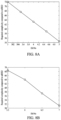
- FIGS. 8 A and 8 B are diagrams quantifying improved computational complexity of an sRRD algorithm of the present disclosure compared to an existing mRRD algorithm in a (63,45,3) BCH code and a (511,493,2) BCH code, according to an embodiment.
- first, second, and the like may be used herein to describe various components. Each of these terminologies is not used to define an essence, order or sequence of a corresponding component but used merely to distinguish the corresponding component from other component(s).
- a first component may be referred to as a second component, and similarly the second component may also be referred to as the first component.
- a third component may be “connected”, “coupled”, and “joined” between the first and second components, although the first component may be directly connected, coupled, or joined to the second component.
- FIG. 1 is a diagram illustrating a configuration of a computing device according to an embodiment.
- a computing device 100 may include one or more processors 110 , a memory 130 configured to load a program 140 executed by the processor 110 , and a storage 120 configured to store the program 140 .
- Components included in the computing device 100 of FIG. 1 are only examples, and those skilled in the art to which the present disclosure pertains may further include other general-purpose components in addition to the components shown in FIG. 1 .
- the processor 110 may control the overall operation of each of the components in the computing device 100 .
- the processor 110 may include at least one of a central processing unit (CPU), a microprocessor unit (MPU), a microcontroller unit (MCU), a graphics processing unit (GPU), and other well-known types of processors in a relevant field of technology.
- the processor 110 may perform an operation of at least one application or program to perform the methods/operations according to various embodiments.
- the computing device 100 may include one or more processors.
- the memory 130 may store various sets of data, instructions, and/or information.
- the memory 130 may load the program 140 stored in the storage 120 to execute methods/operations according to various embodiments.
- An example of the memory 130 may be random-access memory (RAM) but is not limited thereto.
- the storage 120 may non-temporarily store the one or more programs 140 .
- the storage 120 may include a nonvolatile memory such as read-only memory (ROM), erasable programmable ROM (EPROM), electrically EPROM (EEPROM) and flash memory; a hard disk drive (HDD); a solid state disk (SSD); a removable disk; or other well-known computer-readable types of recoding medium well known in the art to which the present disclosure pertains.
- ROM read-only memory
- EPROM erasable programmable ROM
- EEPROM electrically EPROM
- flash memory a nonvolatile memory
- HDD hard disk drive
- SSD solid state disk
- removable disk or other well-known computer-readable types of recoding medium well known in the art to which the present disclosure pertains.
- the program 140 may include one or more actions in which methods/operations are implemented according to various embodiments.
- an operation may correspond to instructions implemented by the program 140 .
- the program 140 may include instructions to decode a codeword by receiving a vector in which a codeword is modulated through a channel, sequentially applying the received vector to one or more decoding algorithms to determine a decoding result, and decoding the codeword based on an analysis on the decoding result of a detector corresponding to the one or more decoding algorithms.
- the processor 110 may perform methods/operations according to various embodiments by executing a plurality of operations to implement the program 140 .
- An execution screen of the program 140 may be displayed on a display 150 .
- the display 150 may be represented as a separate device connecting to the computing device 100 , but the computing device 100 of a user-portable terminal, such as a smartphone or a tablet, may include the display 150 as a component.
- a screen displayed by the display 150 may be a result before information is input to the program 140 or a result of executing the program 140 .
- FIG. 2 is a flowchart illustrating a low-complexity decoding method according to an embodiment.
- the low-complexity decoding method through a semi-parallel Random Redundant Decoding (sRRD) algorithm 200 shown in FIG. 2 may be performed by the processor 110 of the computing device 100 .
- the computing device 100 may be included in a receiver of the present disclosure and may correspond to a decoder.
- the processor 110 of the computing device 100 may receive a vector, in which a codeword is modulated, through a channel.
- BPSK Binary Phase-Shift Keying
- 1 may denote a vector in which all elements are 1.
- the processor 110 may determine a decoding result by sequentially applying the vector received through the channel to one or more decoding algorithms.
- the decoding algorithms used to determine the decoding result may be an RRD algorithm, but the type of decoding algorithm is only one example and is not limited to the above example.
- LLR Log Likelihood Ratio
- the generated LLR vector L may be a vector to be input to a Belief Propagation (BP) algorithm, and an i-th element L i may be expressed as in Equation 2 below.
- BP Belief Propagation
- the processor 110 may derive the decoding result ⁇ by replacing the generated LLR vector L with an automorphism arbitrarily selected from an automorphism group of a code and then applying the replaced automorphism to the BP algorithm.
- the processor 110 may generate the LLR vector L by using the vector r received through the channel and may replace the generated LLR vector L with ⁇ , which is arbitrarily selected from the automorphism group of the code and then apply the replaced ⁇ to the BP algorithm to thus derive the decoding result ⁇ .
- the processor 110 may inversely replace the decoding result ⁇ to be transferred to a detector corresponding to a decoding algorithm.
- the processor 110 may re-derive the decoding result ⁇ through the BP algorithm by arbitrarily re-selecting an automorphism from the automorphism group to replace the LLR vector L.
- the processor 110 may decode the codeword generated by encoding the transmitted message, based on an analysis on the decoding result ⁇ of the decoder corresponding to each of one or more decoding algorithms.
- the detector may analyze the statistical distribution of an inner product of the vector r received through the channel and the decoding result ⁇ of the decoding algorithm and thus determine whether the decoding of the codeword succeeds based on a set threshold value. More specifically, when the inner product of the vector r received through the channel and the decoding result ⁇ of the decoding algorithm is greater than the threshold value, the detector may determine that the decoding of the codeword succeeds and when the inner product is less than or equal to the threshold value, the detector may determine that mis-decoding occurs.
- the processor 110 may determine that the decoding of the codeword succeeds and terminate a decoding process.
- the processor 110 may determine, to be a codeword, a decoding result closest to the received vector r among decoding results separately stored. For example, the processor 110 may obtain a distance between the received vector r and each of separately stored decoding results in the form of sum(
- the threshold value set by the detector may be determined as follows. First, the inner product y of a BPSK modulated vector x of the codeword generated by encoding the transmitted message and the received vector r may be expressed as in Equation 3 below, which may follow Gaussian distribution where an average is a code length N and a variance is N ⁇ 2 .
- the code length may refer to a result of adding the length of a message to be transmitted and the length of a parity generated by encoding.
- the BPSK modularized vector x′ of the codeword determined to be mis-decoded may have a difference in values of elements included in the vector by as much as d min , compared to the vector x.
- d min may denote the minimum distance of codes and refer to a smallest value among distances (the number of different bits) between arbitrary two codewords. Since a position which has a difference between the elements of the vector x′ and the elements of the vector x is a least reliable area due to a channel error, it may be assumed that element values of the vector r corresponding to the position is 0.
- Equation 4 the inner product of the vector x′ and the vector r may be expressed as in Equation 4 below, which may follow a Gaussian distribution where an average is N ⁇ d min and a variance is (N ⁇ d min ) ⁇ 2 .
- Equation 5 Equation 5 below, which may be represented as the graph of FIG. 4 .
- the detector may determine that a transmitted message is accurately decoded into a codeword generated by encoding when ⁇ is greater than a certain threshold value ⁇ and may determine that mis-decoding occurs when ⁇ is less than the certain threshold value ⁇ .
- the process of obtaining the threshold value ⁇ for the possibility P MD of failure in detection of mis-decoding to be the certain value ⁇ may be determined as in Equation 6 below.
- Q may denote a function that integrates the probability density function of a standard normal deviate, and a tail area of the function of the standard normal deviate may be obtained through the function.
- FIG. 5 is a diagram illustrating an operating method of an sRRD algorithm according to an embodiment.
- an sRRD algorithm 200 operated by the processor 110 is shown.
- the processor 110 may apply a vector received through a channel to a first RRD algorithm 210 among RRD algorithms to thus determine a decoding result ⁇ 1 .
- the processor 110 may determine whether the decoding with respect to the decoding result ⁇ 1 succeeds through a detector 211 . More specifically, when the processor 110 determines the decoding result ⁇ 1 through the first RRD algorithm 210 to be successful and the detector 211 detects no mis-decoding, the processor 110 may determine decoding of the codeword to be successful and terminate the decoding process.
- the processor 110 may separately store the decoding result ⁇ 1 .
- the processor 110 may apply the vector received through the channel to a second RRD algorithm 220 among the RRD algorithms and may determine whether the decoding with respect to the decoding result ⁇ 2 succeeds through the detector 221 .
- the processor 110 may determine the decoding of the codeword to be successful and terminate the decoding process.
- the processor 110 may separately store the decoding result ⁇ 2 .
- the processor 110 may repeatedly perform the decoding process above for n number of RRD algorithms included in the sRRD algorithm. In this case, when the decoding result ⁇ determined for all of the RRD algorithms is a failure or the detector 211 detects mis-decoding in the successful decoding result ⁇ , the processor 110 may determine, to be a codeword, a decoding result closest to the received vector r among the separately stored decoding results.
- the sRRD algorithm provided by the present disclosure may have an advantage of reducing a decoding complexity since the sRRD algorithm may additionally design a detector for detecting mis-decoding for an existing mRRD algorithm such that the decoding may succeed with a small number of decoding results.
- FIG. 6 is a diagram comparing an empirical value P MD of P MD to a theoretical result of P MD according to a threshold value ⁇ of a detector in a (63,45,3) BCH code, according to an embodiment.
- FIGS. 7 A and 7 B are diagrams comparing an existing mRRD algorithm to an sRRD algorithm of the present disclosure in a (63,45,3) BCH code and a (511,493,2) BCH code in terms of performance of an error rate.
- FIG. 7 A and FIG. 7 B may show the performance of an error rate of an existing mRRD algorithm and an sRRD algorithm of the present disclosure when it is set that the maximum iteration count of a BP decoder is 1, the maximum iteration count of the RRD algorithm is 50, and the total number of decoding candidates generated is 20, in each of a (63,45,3) BCH code and a (511,493,2) BCH code.
- the detector of the sRRD algorithm may identify mis-decoding as accurately as the mRRD algorithm predicts an accurate codeword among the selected 20 candidates.
- FIGS. 8 A and 8 B are diagrams quantifying improved computational complexity of an sRRD algorithm of the present disclosure compared to an existing mRRD algorithm in a (63,45,3) BCH code and a (511,493,2) BCH code, according to an embodiment.
- FIGS. 8 A and 8 B may show the degree of improvement in computational complexity of the sRRD algorithm compared to the existing mRRD algorithm in the (63,45,3) BCH code and the (511,493,2) BCH code, respectively.
- the detector of the sRRD algorithm may quickly identify an accurate codeword, so that the degree of improvement in computational complexity may also increase.
- the components described in the embodiments may be implemented by hardware components including, for example, at least one digital signal processor (DSP), a processor, a controller, an application-specific integrated circuit (ASIC), a programmable logic element, such as a field programmable gate array (FPGA), other electronic devices, or combinations thereof.
- DSP digital signal processor
- ASIC application-specific integrated circuit
- FPGA field programmable gate array
- At least some of the functions or the processes described in the embodiments may be implemented by software, and the software may be recorded on a recording medium.
- the components, the functions, and the processes described in the embodiments may be implemented by a combination of hardware and software.
- a processing device may be implemented using one or more general-purpose or special-purpose computers, such as, for example, a processor, a controller and an arithmetic logic unit (ALU), a digital signal processor (DSP), a microcomputer, an FPGA, a programmable logic unit (PLU), a microprocessor or any other device capable of responding to and executing instructions in a defined manner.
- the processing device may run an operating system (OS) and one or more software applications that run on the OS.
- the processing device also may access, store, manipulate, process, and create data in response to execution of the software.
- OS operating system
- the processing device also may access, store, manipulate, process, and create data in response to execution of the software.
- a processing device may include multiple processing elements and multiple types of processing elements.
- the processing device may include a plurality of processors, or a single processor and a single controller.
- different processing configurations are possible, such as parallel processors.
- the software may include a computer program, a piece of code, an instruction, or some combination thereof, to independently or uniformly instruct or configure the processing device to operate as desired.
- Software and data may be embodied permanently or temporarily in any type of machine, component, physical or virtual equipment, computer storage medium or device, or in a propagated signal wave capable of providing instructions or data to or being interpreted by the processing device.
- the software also may be distributed over network-coupled computer systems so that the software is stored and executed in a distributed fashion.
- the software and data may be stored by one or more non-transitory computer-readable recording mediums.
- the methods according to the above-described embodiments may be recorded in non-transitory computer-readable media including program instructions to implement various operations of the above-described embodiments.
- the media may also include, alone or in combination with the program instructions, data files, data structures, and the like.
- the program instructions recorded on the media may be those specially designed and constructed for the purposes of examples, or they may be of the kind well-known and available to those having skill in the computer software arts.
- non-transitory computer-readable media examples include magnetic media such as hard disks, floppy disks, and magnetic tape; optical media such as CD-ROM discs, DVDs, and/or Blue-ray discs; magneto-optical media such as optical discs; and hardware devices that are specially configured to store and perform program instructions, such as ROM, random access memory (RAM), flash memory (e.g., USB flash drives, memory cards, memory sticks, etc.), and the like.
- program instructions include both machine code, such as produced by a compiler, and files containing higher-level code that may be executed by the computer using an interpreter.
- the above-described devices may be configured to act as one or more software modules in order to perform the operations of the above-described embodiments, or vice versa.
Landscapes
- Physics & Mathematics (AREA)
- Probability & Statistics with Applications (AREA)
- Engineering & Computer Science (AREA)
- Theoretical Computer Science (AREA)
- Error Detection And Correction (AREA)
Abstract
Description
x=2c−1, r=x+n [Equation 1]

Claims (16)
Applications Claiming Priority (2)
| Application Number | Priority Date | Filing Date | Title |
|---|---|---|---|
| KR10-2022-0134359 | 2022-10-18 | ||
| KR1020220134359A KR102734436B1 (en) | 2022-10-18 | 2022-10-18 | Soft decision-based low-complexity decoding method and computing device for performing the method |
Publications (2)
| Publication Number | Publication Date |
|---|---|
| US20240146330A1 US20240146330A1 (en) | 2024-05-02 |
| US12155398B2 true US12155398B2 (en) | 2024-11-26 |
Family
ID=90833232
Family Applications (1)
| Application Number | Title | Priority Date | Filing Date |
|---|---|---|---|
| US18/113,756 Active US12155398B2 (en) | 2022-10-18 | 2023-02-24 | Soft decision-based low-complexity decoding method and computing device for performing the method |
Country Status (2)
| Country | Link |
|---|---|
| US (1) | US12155398B2 (en) |
| KR (1) | KR102734436B1 (en) |
Citations (8)
| Publication number | Priority date | Publication date | Assignee | Title |
|---|---|---|---|---|
| WO2008087042A1 (en) | 2007-01-19 | 2008-07-24 | Friedrich-Alexander-Universität Erlangen-Nürnberg | Multiple-bases belief-propagation and permutation decoding for block codes |
| US8201047B2 (en) | 2004-12-02 | 2012-06-12 | Mitsubishi Electric Corporation | Decoding apparatus and communications apparatus |
| KR101198521B1 (en) | 2009-12-30 | 2012-11-06 | 한국과학기술원 | Method, apparatus for layered belief propagation decoding of irregular low density parity check codes based on degree distribution of variable nodes and medium thereof |
| US20130132791A1 (en) * | 2008-06-23 | 2013-05-23 | Ramot At Tel Aviv University Ltd. | Interruption criteria for block decoding |
| US8726119B2 (en) | 2009-12-21 | 2014-05-13 | Electronics And Telecommunications Research Institute | Fast stochastic decode method for low density parity check code |
| US20160373136A1 (en) * | 2013-11-29 | 2016-12-22 | Kabushiki Kaisha Toshiba | Belief propagation decoding for short algebraic codes with permutations within the code space |
| KR20180125298A (en) | 2017-05-15 | 2018-11-23 | 에스케이하이닉스 주식회사 | Iterative decoder, decoding method and semiconductor memory system |
| US11223448B2 (en) | 2020-03-17 | 2022-01-11 | Electronics And Telecommunications Research Institute | Method and apparatus for decoding using soft decision |
-
2022
- 2022-10-18 KR KR1020220134359A patent/KR102734436B1/en active Active
-
2023
- 2023-02-24 US US18/113,756 patent/US12155398B2/en active Active
Patent Citations (9)
| Publication number | Priority date | Publication date | Assignee | Title |
|---|---|---|---|---|
| US8201047B2 (en) | 2004-12-02 | 2012-06-12 | Mitsubishi Electric Corporation | Decoding apparatus and communications apparatus |
| WO2008087042A1 (en) | 2007-01-19 | 2008-07-24 | Friedrich-Alexander-Universität Erlangen-Nürnberg | Multiple-bases belief-propagation and permutation decoding for block codes |
| US20130132791A1 (en) * | 2008-06-23 | 2013-05-23 | Ramot At Tel Aviv University Ltd. | Interruption criteria for block decoding |
| US8726119B2 (en) | 2009-12-21 | 2014-05-13 | Electronics And Telecommunications Research Institute | Fast stochastic decode method for low density parity check code |
| KR101198521B1 (en) | 2009-12-30 | 2012-11-06 | 한국과학기술원 | Method, apparatus for layered belief propagation decoding of irregular low density parity check codes based on degree distribution of variable nodes and medium thereof |
| US20160373136A1 (en) * | 2013-11-29 | 2016-12-22 | Kabushiki Kaisha Toshiba | Belief propagation decoding for short algebraic codes with permutations within the code space |
| US9960790B2 (en) | 2013-11-29 | 2018-05-01 | Kabushiki Kaisha Toshiba | Belief propagation decoding for short algebraic codes with permutations within the code space |
| KR20180125298A (en) | 2017-05-15 | 2018-11-23 | 에스케이하이닉스 주식회사 | Iterative decoder, decoding method and semiconductor memory system |
| US11223448B2 (en) | 2020-03-17 | 2022-01-11 | Electronics And Telecommunications Research Institute | Method and apparatus for decoding using soft decision |
Non-Patent Citations (1)
| Title |
|---|
| Marvin Geiselhart et al., "Automorphism Ensemble Decoding of Quasi-Cyclic LDPC Codes by Breaking Graph Symmetries", arXiv:2022.00287v2 [cs.IT] Apr. 28, 2022. |
Also Published As
| Publication number | Publication date |
|---|---|
| US20240146330A1 (en) | 2024-05-02 |
| KR20240054076A (en) | 2024-04-25 |
| KR102734436B1 (en) | 2024-11-27 |
Similar Documents
| Publication | Publication Date | Title |
|---|---|---|
| EP2307960B1 (en) | Error-floor mitigation of codes using write verification | |
| US8448039B2 (en) | Error-floor mitigation of LDPC codes using targeted bit adjustments | |
| US9270297B2 (en) | Error-correction decoding with reduced memory and power requirements | |
| WO2015139160A1 (en) | Hard decision decoding method for ldpc code of dynamic threshold bit-flipping | |
| US9503124B2 (en) | Method and apparatus for decoding low-density parity-check code | |
| US20100192043A1 (en) | Interruption criteria for block decoding | |
| CN105247793A (en) | Miscorrection detection for error correcting codes | |
| US10965319B2 (en) | Bit flipping algorithm for decoding LDPC-encoded data | |
| US9564931B1 (en) | Systems and methods for using decoders of different complexity in a hybrid decoder architecture | |
| US9407290B2 (en) | Error-correction decoding with conditional limiting of check-node messages | |
| US10303364B2 (en) | Techniques for low-latency chase decoding of turbo product codes with soft information | |
| US20200052719A1 (en) | Communication method and apparatus using polar codes | |
| US9088302B2 (en) | Low-density parity-check code decoder and decoding method | |
| Hatami et al. | A threshold-based min-sum algorithm to lower the error floors of quantized LDPC decoders | |
| US20210006267A1 (en) | Method for constructing parity-check concatenated polar codes and apparatus therefor | |
| US9231619B2 (en) | LDPC decoder with a variable node updater which uses a scaling constant | |
| CN107733443A (en) | The soft decoder architecture of low latency for universal product code background | |
| US9590658B1 (en) | High-speed low-power LDPC decoder design | |
| US9542262B1 (en) | Error correction | |
| US11664821B1 (en) | Error floor performance of a bit flipping decoder through identifying unreliable check nodes | |
| US9026881B2 (en) | Soft input, soft output mappers and demappers for block codes | |
| US20240146330A1 (en) | Soft decision-based low-complexity decoding method and computing device for performing the method | |
| KR102186741B1 (en) | Density Evolution Method of the Bit-Flipping Decoding Algorithm of Regular Low-Density Parity-Check Codes and Apparatus Therefore | |
| US10628255B1 (en) | Multi-dimensional decoding | |
| CN106301389B (en) | Decoding method and device |
Legal Events
| Date | Code | Title | Description |
|---|---|---|---|
| AS | Assignment |
Owner name: ELECTRONICS AND TELECOMMUNICATIONS RESEARCH INSTITUTE, KOREA, REPUBLIC OF Free format text: ASSIGNMENT OF ASSIGNORS INTEREST;ASSIGNORS:HWANG, IN KI;KANG, HUN SIK;LEE, JOON KI;SIGNING DATES FROM 20230207 TO 20230208;REEL/FRAME:062794/0625 |
|
| FEPP | Fee payment procedure |
Free format text: ENTITY STATUS SET TO UNDISCOUNTED (ORIGINAL EVENT CODE: BIG.); ENTITY STATUS OF PATENT OWNER: SMALL ENTITY |
|
| FEPP | Fee payment procedure |
Free format text: ENTITY STATUS SET TO SMALL (ORIGINAL EVENT CODE: SMAL); ENTITY STATUS OF PATENT OWNER: SMALL ENTITY |
|
| STPP | Information on status: patent application and granting procedure in general |
Free format text: NON FINAL ACTION MAILED |
|
| STPP | Information on status: patent application and granting procedure in general |
Free format text: RESPONSE TO NON-FINAL OFFICE ACTION ENTERED AND FORWARDED TO EXAMINER |
|
| STPP | Information on status: patent application and granting procedure in general |
Free format text: NOTICE OF ALLOWANCE MAILED -- APPLICATION RECEIVED IN OFFICE OF PUBLICATIONS |
|
| STPP | Information on status: patent application and granting procedure in general |
Free format text: NOTICE OF ALLOWANCE MAILED -- APPLICATION RECEIVED IN OFFICE OF PUBLICATIONS |
|
| STPP | Information on status: patent application and granting procedure in general |
Free format text: PUBLICATIONS -- ISSUE FEE PAYMENT RECEIVED |
|
| STPP | Information on status: patent application and granting procedure in general |
Free format text: PUBLICATIONS -- ISSUE FEE PAYMENT VERIFIED |
|
| STPP | Information on status: patent application and granting procedure in general |
Free format text: PUBLICATIONS -- ISSUE FEE PAYMENT VERIFIED |
|
| STCF | Information on status: patent grant |
Free format text: PATENTED CASE |
|
| STPP | Information on status: patent application and granting procedure in general |
Free format text: NOTICE OF ALLOWANCE MAILED -- APPLICATION RECEIVED IN OFFICE OF PUBLICATIONS |
|
| STPP | Information on status: patent application and granting procedure in general |
Free format text: PUBLICATIONS -- ISSUE FEE PAYMENT VERIFIED |
|
| STPP | Information on status: patent application and granting procedure in general |
Free format text: DOCKETED NEW CASE - READY FOR EXAMINATION |
|
| STPP | Information on status: patent application and granting procedure in general |
Free format text: NOTICE OF ALLOWANCE MAILED -- APPLICATION RECEIVED IN OFFICE OF PUBLICATIONS |
|
| STPP | Information on status: patent application and granting procedure in general |
Free format text: PUBLICATIONS -- ISSUE FEE PAYMENT VERIFIED |
|
| STCF | Information on status: patent grant |
Free format text: PATENTED CASE |