US12109974B2 - Pedestrian protection device - Google Patents

Pedestrian protection device Download PDF

Info

Publication number
US12109974B2
US12109974B2 US18/536,866 US202318536866A US12109974B2 US 12109974 B2 US12109974 B2 US 12109974B2 US 202318536866 A US202318536866 A US 202318536866A US 12109974 B2 US12109974 B2 US 12109974B2
Authority
US
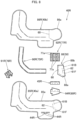
United States
Prior art keywords
airbag
region
disposed
inflation
completed
Prior art date
Legal status (The legal status is an assumption and is not a legal conclusion. Google has not performed a legal analysis and makes no representation as to the accuracy of the status listed.)
Active
Application number
US18/536,866
Other versions
US20240239299A1 (en
Inventor
Kunihiro AIKAWA
Hiroki Sakamoto
Atsushi Kashio
Makoto Ozeki
Ken NITAYAMA
Yusuke AYUKAWA
Current Assignee (The listed assignees may be inaccurate. Google has not performed a legal analysis and makes no representation or warranty as to the accuracy of the list.)
Toyoda Gosei Co Ltd
Original Assignee
Toyoda Gosei Co Ltd
Priority date (The priority date is an assumption and is not a legal conclusion. Google has not performed a legal analysis and makes no representation as to the accuracy of the date listed.)
Filing date
Publication date
Application filed by Toyoda Gosei Co Ltd filed Critical Toyoda Gosei Co Ltd
Assigned to TOYODA GOSEI CO., LTD. reassignment TOYODA GOSEI CO., LTD. ASSIGNMENT OF ASSIGNORS INTEREST (SEE DOCUMENT FOR DETAILS). Assignors: SAKAMOTO, HIROKI, AIKAWA, KUNIHIRO, AYUKAWA, YUSUKE, NITAYAMA, KEN, KASHIO, ATSUSHI, OZEKI, MAKOTO
Publication of US20240239299A1 publication Critical patent/US20240239299A1/en
Application granted granted Critical
Publication of US12109974B2 publication Critical patent/US12109974B2/en
Active legal-status Critical Current
Anticipated expiration legal-status Critical

Links

Images

Classifications

    • BPERFORMING OPERATIONS; TRANSPORTING
    • B60VEHICLES IN GENERAL
    • B60RVEHICLES, VEHICLE FITTINGS, OR VEHICLE PARTS, NOT OTHERWISE PROVIDED FOR
    • B60R21/00Arrangements or fittings on vehicles for protecting or preventing injuries to occupants or pedestrians in case of accidents or other traffic risks
    • B60R21/34Protecting non-occupants of a vehicle, e.g. pedestrians
    • B60R21/36Protecting non-occupants of a vehicle, e.g. pedestrians using airbags
    • BPERFORMING OPERATIONS; TRANSPORTING
    • B60VEHICLES IN GENERAL
    • B60RVEHICLES, VEHICLE FITTINGS, OR VEHICLE PARTS, NOT OTHERWISE PROVIDED FOR
    • B60R21/00Arrangements or fittings on vehicles for protecting or preventing injuries to occupants or pedestrians in case of accidents or other traffic risks
    • B60R21/02Occupant safety arrangements or fittings, e.g. crash pads
    • B60R21/16Inflatable occupant restraints or confinements designed to inflate upon impact or impending impact, e.g. air bags
    • B60R21/20Arrangements for storing inflatable members in their non-use or deflated condition; Arrangement or mounting of air bag modules or components
    • BPERFORMING OPERATIONS; TRANSPORTING
    • B60VEHICLES IN GENERAL
    • B60RVEHICLES, VEHICLE FITTINGS, OR VEHICLE PARTS, NOT OTHERWISE PROVIDED FOR
    • B60R21/00Arrangements or fittings on vehicles for protecting or preventing injuries to occupants or pedestrians in case of accidents or other traffic risks
    • B60R21/02Occupant safety arrangements or fittings, e.g. crash pads
    • B60R21/16Inflatable occupant restraints or confinements designed to inflate upon impact or impending impact, e.g. air bags
    • B60R21/23Inflatable members
    • B60R21/231Inflatable members characterised by their shape, construction or spatial configuration
    • BPERFORMING OPERATIONS; TRANSPORTING
    • B60VEHICLES IN GENERAL
    • B60RVEHICLES, VEHICLE FITTINGS, OR VEHICLE PARTS, NOT OTHERWISE PROVIDED FOR
    • B60R21/00Arrangements or fittings on vehicles for protecting or preventing injuries to occupants or pedestrians in case of accidents or other traffic risks
    • B60R21/34Protecting non-occupants of a vehicle, e.g. pedestrians
    • B60R2021/346Protecting non-occupants of a vehicle, e.g. pedestrians means outside vehicle body

Definitions

  • the present disclosure relates to a pedestrian protection device disposed in a vicinity of a rear end of a hood panel in a vehicle.
  • a device of a configuration shown in JP2017-177986A is already known as a pedestrian protection device disposed in a vicinity of a rear end of a hood panel of a vehicle.
  • the existing pedestrian protection device is such that a mounting space in a vehicle is divided into left and right in order to achieve compactness, and the device includes a left airbag and a right airbag that are arranged in parallel on vehicle width direction sides when inflation is completed.
  • the existing pedestrian protection device is such that each of the left airbag and the right airbag has a cowl cover portion that is disposed in such a way as to approximately follow the vehicle width direction when inflation is completed, and covers a cowl from above.
  • the left airbag and the right airbag expand in such a way that ends on sides in proximity to each other in the two cowl cover portions coincide with each other, thereby covering the cowl from above over approximately a whole length.
  • the existing pedestrian protection device is such that the ends of the cowl cover portions in the left airbag and the right airbag are simply disposed in such a way as to coincide vertically when inflation is completed.
  • a protective performance of a region in which the ends coincide with each other is a protective performance approximately equivalent to that of a general region of the cowl portions excepting the ends
  • an amount of the coinciding (overlapping) of two end regions is set to be large. That is, the existing pedestrian protection device is such that the ends of the cowl cover portions need to be caused to coincide (overlap) by a large amount when inflation of each of the left airbag and the right airbag is completed. Because of this, there is room for improvement in terms of restricting an increase in a capacity of the left airbag or the right airbag (a capacity of a case in which the folded left airbag or right airbag is housed), thereby achieving compactness.
  • a pedestrian protection device of the present disclosure includes:
  • FIG. 1 is a plan view of a vehicle in which a pedestrian protection device that is one embodiment of the present disclosure is mounted;
  • FIG. 2 is a schematic vertical sectional view showing a wiper pivot in the vehicle of FIG. 1 ;
  • FIG. 3 is a schematic vertical sectional view showing a right airbag device in the pedestrian protection device of the embodiment
  • FIG. 4 is a plan view of a right airbag used in a right airbag device in a flattened state
  • FIG. 5 is a bottom view of the right airbag of FIG. 4 ;
  • FIG. 6 A is a partial enlarged plan view showing a left end side region of a right cowl cover portion in the right airbag of FIG. 4
  • FIG. 6 B is a partial enlarged plan view of a state wherein a vehicle body side wall portion and a partitioning wall are coincided in the left end side region;
  • FIG. 7 A is a schematic partial enlarged sectional view showing a state partway through inflation of the left end side region in the right airbag of FIG. 4
  • FIG. 7 B is a schematic partial enlarged sectional view showing a state wherein inflation of the left end side region is completed;
  • FIG. 8 is a plan view wherein base members configuring the right airbag of FIG. 4 are arrayed;
  • FIG. 9 is a plan view of a state wherein a left airbag used in a left airbag device is flattened
  • FIG. 10 is a plan view wherein base members configuring the left airbag of FIG. 9 are arrayed;
  • FIG. 11 is a plan view of a vehicle showing a state wherein inflation of the left airbag and the right airbag is completed in the pedestrian protection device of the embodiment;
  • FIG. 12 is a schematic vertical sectional view showing a state wherein inflation of the right airbag is completed in the pedestrian protection device of the embodiment.
  • FIG. 13 is a schematic view showing a region of end side regions that coincide with each other when inflation of the left airbag and the right airbag is completed in the pedestrian protection device of the embodiment.
  • a pedestrian protection device M of the embodiment is mounted in a vehicle V, which is a so-called left-hand drive vehicle wherein a driver's seat is disposed on a left side, as shown in FIG. 1 .
  • the pedestrian protection device M includes two airbag devices 20 L and 20 R.
  • a left and right pair of wipers 10 L and 10 R are disposed in the vehicle V below a rear end 8 a side of a hood panel 8 , and in the case of the embodiment, in a region of a cowl 6 .
  • the two airbag devices 20 L and 20 R are disposed one each on left and right sides either side of a wiper pivot 12 R, to be described hereafter, of the wiper 10 R, which is disposed on a right side (a passenger seat side).
  • a wiper pivot 12 R to be described hereafter, of the wiper 10 R, which is disposed on a right side (a passenger seat side).
  • front-rear, up-down, and left-right directions are described as coinciding with front-rear, up-down, and left-right directions respectively of the vehicle V.
  • the cowl 6 is configured of a cowl panel 6 a of high rigidity on a body side, and a cowl louver 6 b made of a synthetic resin above the cowl panel 6 a.
  • the wipers 10 L and 10 R are a left and right pair. As shown in FIGS. 1 and 2 , the wipers 10 L and 10 R include, respectively, wiper main bodies 11 L and 11 R which are disposed on an upper side of the cowl louver 6 b , and drive mechanisms 15 L and 15 R which are disposed below the cowl louver 6 b and drive the wiper main bodies 11 L and 11 R.
  • the wiper main bodies 11 L and 11 R include wiper pivots 12 L and 12 R which are coupled to the drive mechanisms 15 L and 15 R, and elongated arm portions 13 L and 13 R. Base portion sides of the arm portions 13 L and 13 R are coupled to the wiper pivots 12 L and 12 R in such a way as to be able to pivot freely.
  • the arm portions 13 L and 13 R are coupled to upper end 12 a sides of the wiper pivots 12 L and 12 R.
  • the upper ends 12 a of the wiper pivots 12 L and 12 R protrude above the cowl louver 6 b .
  • the wiper pivot 12 R of the wiper 10 R disposed on the right side is disposed centrally in a vehicle width direction (the left-right direction).
  • the wiper pivot 12 R of the wiper 10 R on the right side is disposed in a position slightly to the left of center in the vehicle width direction (the left-right direction) of the cowl 6 (refer to FIG. 1 ).
  • Each of the two airbag devices 20 L and 20 R is disposed in a position that is below a vicinity of the rear end 8 a of the hood panel 8 .
  • the airbag devices 20 L and 20 R are disposed neighboring in positions on a front side of the cowl louver 6 b (refer to FIG. 3 ).
  • the left airbag device 20 L disposed on the left side is disposed in a region between the wiper pivots 12 L and 12 R of the wipers 10 L and 10 R respectively.
  • the right airbag device 20 R disposed on the right side is disposed in a position that is to the right of the wiper pivot 12 R of the wiper 10 R on the right side.
  • the left airbag device 20 L and the right airbag device 20 R are of the same configuration except that forms of the left airbag 40 L and the right airbag 40 R when inflation is completed differ slightly, and sizes of the actual devices (sizes of cases 22 L and 22 R, to be described hereafter, or more specifically, width dimensions between left-right direction sides of the cases 22 L and 22 R, refer to FIG. 1 ) are slightly different. Because of this, a description will be given by adding L or R after identical reference signs.
  • the rear end 8 a side of the hood panel 8 is lifted upward by an unshown actuator when the left airbag device 20 L and the right airbag device 20 R operate (refer to FIGS. 2 and 3 ).
  • the right airbag device 20 R includes the right airbag 40 R, an inflator 28 R that supplies an inflating gas to the right airbag 40 R, the case 22 R as a housing region that houses the folded right airbag 40 R and the inflator 28 R, and an airbag cover 26 R that covers the folded right airbag 40 R.
  • the case 22 R is made of metal (made of sheet metal), and is fixed to an attachment portion 2 R configured of a flange or the like that extends from the cowl panel 6 a on a body 1 side of the vehicle V. Specifically, the case 22 R is fixed to the attachment portion 2 R by utilizing a bolt 32 R of an attachment bracket 31 R of the inflator 28 R and a nut 33 R (refer to FIG. 3 ).
  • the case 22 R is of an approximately cuboid box form that has, on an upper end side, a protrusion aperture 22 a for causing the right airbag 40 R to protrude when expanding.
  • the case 22 R includes a bottom wall portion 23 R of an approximately rectangular plate form, which extends approximately following the left-right direction (the vehicle width direction) of the vehicle V, and a peripheral wall portion 24 R of an approximately rectangular tube form, which extends upward from an outer peripheral edge of the bottom wall portion 23 R.
  • the case 22 R is disposed on a front end side of the cowl 6 below the rear end 8 a of the hood panel 8 . More specifically, the case 22 R is disposed in a position that is farther forward than the wiper pivot 12 R, and in proximity to the wiper pivot 12 R on the right side (refer to FIG. 1 ). Also, as shown in FIG. 3 , the arm portion 13 R of the wiper 10 R on the right side is disposed in a region of the cowl 6 on the rear side of the case 22 R.
  • the airbag cover 26 R covers the protrusion aperture 22 a of the case 22 R.
  • the airbag cover 26 R is approximately flush with the cowl louver 6 b , and is disposed in such a way as to extend forward from the cowl louver 6 b .
  • the airbag cover 26 R is attached to a front side of the peripheral wall portion 24 R of the case 22 R. When the right airbag 40 R housed in the case 22 R expands, the airbag cover 26 R is pushed open by the right airbag 40 R.
  • the inflator 28 R is of an approximately cylindrical form disposed in such a way that an axial direction approximately follows the left-right direction (the vehicle width direction) of the vehicle V.
  • a gas discharging portion 29 R that discharges inflating gas is disposed on a leading end side (in the case of the embodiment, a right end side) of the inflator 28 R.
  • the inflator 28 R is held in a multiple (three in the case of the embodiment) of the attachment bracket 31 R, and is inserted into the right airbag 40 R in a state wherein a periphery is enveloped in an inner tube 80 R.
  • the inflator 28 R is fixed to the bottom wall portion 23 R of the case 22 R by utilizing the bolts 32 R of the attachment brackets 31 R (refer to FIG. 3 ).
  • each of the bolts 32 R of the attachment brackets 31 R penetrates the bottom wall portion 23 R, and is fastened to the attachment portion 2 R on the body 1 side of the vehicle V using the nut 33 R. That is, each of the bolts 32 R of the attachment brackets 31 R fixes the case 22 R to the attachment portion 2 R together with the inflator 28 R (refer to FIG. 3 ).
  • the right airbag 40 R is also attached and fixed to the bottom wall portion 23 R of the case 22 R.
  • the inflator 28 R is in a state inserted into the right airbag 40 R.
  • the inflator 28 R is configured in such a way as to operate when a collision between the vehicle V and a pedestrian is detected by an unshown sensor provided in a front bumper 3 of the vehicle V.
  • the right airbag 40 R and the left airbag 40 L are configured in such a way that length dimensions of a left cowl cover portion 52 L and a right cowl cover portion 52 R to be described hereafter, and disposition of case side regions 41 L and 41 R to be described hereafter, with respect to the cowl cover portions 52 L and 52 R, differ slightly. Also, the right airbag 40 R and the left airbag 40 L are such that configurations of regions central in the vehicle width direction of the cowl cover portions 52 L and 52 R differ. In regions other than this, however, the left airbag 40 L and the right airbag 40 R are such that basic configurations are approximately the same, simply being disposed in such a way as to have bilateral symmetry (refer to FIGS. 4 and 9 ). Because of this, L or R will be added after identical reference signs for members in the left airbag 40 L and the right airbag 40 R other than regions central in the vehicle width direction of the cowl cover portions 52 L and 52 R, and a description will be omitted as appropriate.
  • the right airbag 40 R includes the case side region 41 R and a main body expanding portion 50 R.
  • the case side region 41 R is a region disposed from the case 22 R side to a lower face side of the rear end 8 a of the hood panel 8 when inflation of the right airbag 40 R is completed.
  • the main body expanding portion 50 R is a region disposed in such a way as to extend rearward from the case 22 R when inflation of the right airbag 40 R is completed.
  • the right airbag 40 R has a vehicle body side wall portion 40 a which is disposed on the body 1 side when inflation is completed, and a pedestrian side wall portion 40 b disposed opposing the vehicle body side wall portion 40 a .
  • the right airbag 40 R is formed in a bag form by outer peripheral edges of the vehicle body side wall portion 40 a and the pedestrian side wall portion 40 b being joined (sewn) to each other over a whole periphery.
  • the case side region 41 R is formed in such a way as to extend forward from the right cowl cover portion 52 R, to be described hereafter, of the main body expanding portion 50 R.
  • the case side region 41 R is attached to the case 22 R on a rear end side region (the main body expanding portion 50 R side) when inflation is completed.
  • the case side region 41 R is of a configuration such as to cover from above a region on a forward side from directly above the case 22 R, that is, a vicinity of the rear end 8 a of the hood panel 8 from below, when inflation is completed (refer to FIGS. 11 and 12 ).
  • the case side region 41 R is configured to be of a smaller width (a left-right direction width dimension is set to be smaller) than the right cowl cover portion 52 R of the main body expanding portion 50 R. That is, the case side region 41 R is formed in such a way as to partially protrude forward from the right cowl cover portion 52 R.
  • a width dimension between left-right direction sides (vehicle width direction sides) of the case side region 41 R is set to be slightly smaller than a width dimension between left-right direction sides of the case 22 R (refer to FIGS. 1 and 11 ).
  • An insertion aperture portion 42 R for inserting the inflator 28 R into an interior is formed in a region configuring a rear end side of the case side region 41 R in the vehicle body side wall portion 40 a (refer to FIG. 5 ).
  • the insertion aperture portion 42 R includes an insertion slit 43 R, three insertion holes 44 R, and a cover panel 45 R that blocks off the insertion slit 43 R from an outer peripheral side.
  • the insertion slit 43 R is a region for inserting the inflator 28 R, in a state wherein the outer peripheral side is enveloped in the inner tube 80 R, into the right airbag 40 R.
  • the insertion slit 43 R is formed in an approximately linear form approximately following the left-right direction.
  • Each of the insertion holes 44 R is a region for inserting the bolt 32 R of the attachment bracket 31 R.
  • the insertion holes 44 R are formed in a region farther to the front side than the insertion slit 43 R (refer to FIGS. 5 and 8 ).
  • the cover panel 45 R covers an outer surface side of the insertion slit 43 R.
  • a rear edge side of the cover panel 45 R is joined to the vehicle body side wall portion 40 a on a rear side of the insertion slit 43 R.
  • Three attachment holes 45 a for causing the bolts 32 R of the attachment brackets 31 R to protrude are formed on a front end side of the cover panel 45 R. These attachment holes 45 a are formed corresponding to the insertion holes 44 R (refer to FIGS. 5 and 8 ).
  • the main body expanding portion 50 R when inflation is completed is an approximate L form as seen from the front side.
  • the main body expanding portion 50 R includes the right cowl cover portion 52 R and a pillar cover portion 51 R.
  • the right cowl cover portion 52 R is a region disposed approximately following the left-right direction (the vehicle width direction) in such a way as to approximately follow a lower portion 4 a of a front windshield 4 .
  • the pillar cover portion 51 R is a region that extends rearward from an end portion (a right end) on a vehicle width direction outer side of the right cowl cover portion 52 R, and covers a lower portion 5 a side of a front face of a front pillar 5 R on the right side.
  • the pillar cover portion 51 R is wider than the right cowl cover portion 52 R in a state wherein the right airbag 40 R is flattened. Further, the pillar cover portion 51 R is configured in such a way as to be able to extensively cover the lower portion 5 a side of the front face of the front pillar 5 R on the right side (refer to FIGS. 4 , 5 , and 11 ).
  • the right cowl cover portion 52 R is configured in such a way as to cover an upper face side (a front face side) from the cowl 6 to the lower portion 4 a side of the front windshield 4 when inflation of the right airbag 40 R is completed. Specifically, when inflation of the right airbag 40 R is completed, the right cowl cover portion 52 R covers a region from a right end of the cowl 6 to a region on the left of the wiper pivot 12 R of the wiper 10 R on the right side (refer to FIG. 11 ). Specifically, the right cowl cover portion 52 R has a region that extends farther to the left than the case side region 41 R.
  • the right cowl cover portion 52 R is such that a left end side region 55 positioned farther to the left than the case side region 41 R inclines slightly with respect to the left-right direction (the vehicle width direction) in such a way that an end edge 55 a side is oriented rearward in a state wherein the right airbag 40 R is flattened (refer to FIG. 4 ). Also, in the embodiment, the left end side region 55 of the right cowl cover portion 52 R is partitioned off from a remaining right-side region (a general expanding portion 54 ) by a partitioning wall 58 disposed in an interior. Owing to the partitioning wall 58 , the left end side region 55 is of a configuration such that an internal pressure when inflation is completed is raised.
  • the partitioning wall 58 disposed in the right cowl cover portion 52 R is disposed in a vicinity of a region of a boundary with the left end 41 a side of the case side region 41 R.
  • An outer peripheral edge of the partitioning wall 58 is joined to the right airbag 40 R sides (the vehicle body side wall portion 40 a and the pedestrian side wall portion 40 b ) over approximately a whole periphery, excepting one portion of a left edge 58 b side linked to the vehicle body side wall portion 40 a .
  • the partitioning wall 58 separates the left end side region 55 and the general expanding portion 54 (a general region).
  • the partitioning wall 58 includes an outflow aperture portion 65 and a reverse flow restricting portion 66 .
  • the outflow aperture portion 65 is of a configuration such that an inflating gas G that has flowed into the general expanding portion 54 can flow out to the left end side region 55 side.
  • the reverse flow restricting portion 66 is of a configuration such that a reverse flow of inflating gas that has flowed into the left end side region 55 via the outflow aperture portion 65 can be restricted. Specifically, as shown in FIGS.
  • the outflow aperture portion 65 is formed from gaps between joint regions (lower outer side partial joint portions 61 F and 61 B and a lower inner side partial joint portion 62 ) wherein the left edge 58 b side of the partitioning wall 58 is intermittently sewn (joined) to the vehicle body side wall portion 40 a .
  • the reverse flow restricting portion 66 is formed from a region that configures a periphery of the joint regions (the lower outer side partial joint portions 61 F and 61 B and the lower inner side partial joint portion 62 ) of the partitioning wall 58 .
  • the partitioning wall 58 in a state wherein the right airbag 40 R is flattened, the partitioning wall 58 is disposed in a vicinity of the rear of the left end 41 a side of the case side region 41 R in a region of the right cowl cover portion 52 R, as shown in FIGS. 4 to 6 A .
  • the partitioning wall 58 is configured of a partitioning wall panel 88 such as that shown in FIG. 8 .
  • a front edge 88 a of the partitioning wall panel 88 is of a form such as to approximately follow outer peripheral edges 85 a and 86 a of the vehicle body side wall portion 40 a (a vehicle body side panel 85 R to be described hereafter) and the pedestrian side wall portion 40 b (a pedestrian side panel 86 R to be described hereafter).
  • a rear edge 88 b of the partitioning wall panel 88 is also of a form such as to approximately follow the outer peripheral edges 85 a and 86 a of the vehicle body side wall portion 40 a (the vehicle body side panel 85 R) and the pedestrian side wall portion 40 b (the pedestrian side panel 86 R). Further, each of the front edge 88 a and the rear edge 88 b of the partitioning wall panel 88 is joined (sewn) over a whole length together with the outer peripheral edges 85 a and 86 a of the vehicle body side wall portion 40 a (the vehicle body side panel 85 R) and the pedestrian side wall portion 40 b (the pedestrian side panel 86 R) (refer to FIGS. 6 A and 6 B ).
  • a right edge 58 a of the partitioning wall panel 88 (the partitioning wall 58 ) is formed curved (bent) in a state wherein the right airbag 40 R is flattened (refer to FIGS. 6 A and 6 B ).
  • the right edge 58 a has a rear side region 58 ab , which approximately follows the front-rear direction, and a front side region 58 aa inclined in such a way that a front end is oriented leftward.
  • the right edge 58 a is joined (sewn) over a whole length to the pedestrian side wall portion 40 b (the pedestrian side panel 86 R) (refer to FIG. 6 A ).
  • the right edge 58 a is joined (sewn) to the pedestrian side wall portion 40 b (the pedestrian side panel 86 R) by an upper side joint region 60 .
  • the rear side region 58 ab of the right edge 58 a is disposed in a position farther to the right than the left end 41 a of the case side region 41 R in a state wherein the right airbag 40 R is flattened.
  • the rear side region 58 ab is disposed in a position that forms in the region of one-third of the left side of the case side region 41 R (refer to FIG. 4 ).
  • a front end of the front side region 58 aa of the right edge 58 a is positioned in a vicinity of a border region between the case side region 41 R and the left end side region 55 .
  • the left edge 58 b of the partitioning wall panel 88 (the partitioning wall 58 ) is formed as a linear form such that is approximately perpendicular to an axial direction of the left end side region 55 of the right cowl cover portion 52 R.
  • the left edge 58 b is intermittently joined (sewn) to the vehicle body side wall portion 40 a (the vehicle body side panel 85 R).
  • the left edge 58 b is such that a front end side and a rear end side in a flattened state are partially joined (sewn) to the vehicle body side wall portion 40 a (the vehicle body side panel 85 R) (refer to FIGS. 5 and 6 B ).
  • the front end side and the rear end side of the left edge 58 b are joined (sewn) to the vehicle body side wall portion 40 a (the vehicle body side panel 85 R) by the lower outer side partial joint portions 61 F and 61 B. Also, as shown in FIGS.
  • the partitioning wall panel 88 (the partitioning wall 58 ) is joined (sewn) to the vehicle body side wall portion 40 a (the vehicle body side panel 85 R) in a position slightly to the left side of a left-right center.
  • the partitioning wall panel 88 (the partitioning wall 58 ) is joined (sewn) to the vehicle body side wall portion 40 a (the vehicle body side panel 85 R) by the lower inner side partial joint portion 62 .
  • the lower inner side partial joint portion 62 is configured as a linear form such that approximately follows the lower outer side partial joint portions 61 F and 61 B (that is, the left edge 58 b of the partitioning wall 58 ).
  • a length dimension of the lower inner side partial joint portion 62 is a dimension such that the two ends coincide (overlap) one each with left-right direction sides of the lower outer side partial joint portions 61 F and 61 B in a state wherein the right airbag 40 R is flattened (refer to FIG. 6 B ). That is, the lower inner side partial joint portion 62 is of a configuration such as to block off a gap between the lower outer side partial joint portions 61 F and 61 B over a whole length in an interior separated on left-right direction sides.
  • the right airbag 40 R of the embodiment is such that the inflating gas G that has flowed into the general expanding portion 54 of the right cowl cover portion 52 R via the case side region 41 R flows into the left end side region 55 through a gap between the lower inner side partial joint portion 62 and the lower outer side partial joint portions 61 F and 61 B (refer to FIG. 7 A ).
  • the inflating gas G that has flowed into the general expanding portion 54 flows into the left end side region 55 by deviating approximately following the lower inner side partial joint portion 62 and the lower outer side partial joint portions 61 F and 61 B.
  • a region of the partitioning wall 58 configuring a periphery of the lower inner side partial joint portion 62 and the lower outer side partial joint portions 61 F and 61 B is pressed to the vehicle body side wall portion 40 a side owing to an internal pressure of the inflating gas G that has flowed into the left end side region 55 , attaining a blocked aspect (refer to FIG. 7 B ). Further, a reverse flow of the inflating gas G to the general expanding portion 54 side is restricted. By an outflow of the inflating gas G to the general expanding portion 54 side being restricted in this way, the internal pressure of the left end side region 55 after inflation is completed is maintained in a high state.
  • the partitioning wall 58 When inflation of the right airbag 40 R is completed, the partitioning wall 58 is disposed inclined with respect to the vehicle body side wall portion 40 a and the pedestrian side wall portion 40 b (with respect to the up-down direction). Also, when inflation of the right airbag 40 R is completed, the left end side region 55 is disposed slightly inclined in such a way that the end edge 55 a side is slightly lifted up, with the upper side joint region 60 joining the partitioning wall 58 to the pedestrian side wall portion 40 b side as an origin (refer to FIG. 7 B ). Further, the left end side region 55 of the right cowl cover portion 52 R configures an end portion region 70 R.
  • the end portion region 70 R is disposed in such a way as to coincide (overlap) with an upper side of a right end side region 68 (an end portion region 70 L) of the left cowl cover portion 52 L in the left airbag 40 L, in a state wherein an internal pressure is raised higher than that of the general expanding portion 54 (refer to FIGS. 11 and 13 ).
  • tethers 75 R, 76 R, and 77 R are disposed in the interior of the right airbag 40 R (refer to FIGS. 4 , 5 , and 8 ).
  • the tethers 75 R, 76 R, and 77 R link the pedestrian side wall portion 40 b and the vehicle body side wall portion 40 a , and regulate a thickness of the right airbag 40 R when inflation is completed.
  • the tether 75 R is disposed over approximately a whole region from the general expanding portion 54 of the right cowl cover portion 52 R to the pillar cover portion 51 R.
  • the tether 75 R is disposed continuously in a position that is approximately central in a width direction from the general expanding portion 54 to the pillar cover portion 51 R.
  • the tether 76 R is partially disposed on a front edge side in a vicinity of a boundary region between the right cowl cover portion 52 R and the pillar cover portion 51 R.
  • the tether 77 R is disposed in a vicinity of a boundary region between the case side region 41 R and the right cowl cover portion 52 R (the main body expanding portion 50 R).
  • the tether 77 R is disposed approximately following the left-right direction in such a way as to partially block off the boundary region.
  • a multiple (two in the case of the embodiment) of apertures 77 a formed in an approximately rectangular form are arranged in parallel on left-right direction sides in the tether 77 R (refer to FIG. 8 ).
  • a length dimension of the tether 77 R is set to be smaller than a width dimension between left-right direction sides of the case side region 41 R in a flattened state. Inflating gas that has flowed into the case side region 41 R flows into the main body expanding portion 50 R from a gap formed on both end sides of the tether 77 R and the two apertures 77 a and 77 a.
  • the inner tube 80 R that covers the outer peripheral side of the inflator 28 R is configured as indicated by two-dot chain lines in FIG. 5 .
  • the inner tube 80 R has an insertion tube portion 80 c in which the inflator 28 R to which the attachment bracket 31 R has been attached is inserted.
  • the inner tube 80 R has a region that extends to both sides from a disposition region of the gas discharging portion 29 R in the insertion tube portion 80 c , and is of an approximate three-way tubular form.
  • Outflow ports 80 a and 80 b for causing inflating gas to flow out are disposed on a leading end side of this region.
  • the inner tube 80 R is configured of a tube base member 94 R such as that shown in FIG. 8 .
  • the right airbag 40 R of the embodiment is configured of the vehicle body side panel 85 R, which configures the vehicle body side wall portion 40 a , the pedestrian side panel 86 R, which configures the pedestrian side wall portion 40 b ; the partitioning wall panel 88 configuring the partitioning wall 58 ; tether base members 90 R, 91 R, and 92 R configuring the tethers 75 R, 76 R, and 77 R respectively; and the tube base member 94 R configuring the inner tube 80 R.
  • These base members are configured of a coated fabric wherein a gas leak-preventing coating agent is applied to a surface of a woven fabric formed by weaving a polyamide-based material, a polyester-based material, or the like, and are formed by the coated fabric being cut into a predetermined form.
  • the left cowl cover portion 52 L in the left airbag 40 L is of a configuration that covers a region from a left end of the cowl 6 to the left of the wiper pivot 12 R of the wiper 10 R on the right side when inflation of the left airbag 40 L is completed.
  • the left cowl cover portion 52 L has a region that extends farther to the right than the case side region 41 L.
  • the right end side region 68 positioned farther to the right than the case side region 41 L is configured in such a way that an end edge 68 a (a right edge) is caused to neighbor the wiper pivot 12 R when inflation is completed (refer to FIGS. 11 and 13 ).
  • the partitioning wall 58 disposed in the right cowl cover portion 52 R of the right airbag 40 R is not disposed in the left cowl cover portion 52 L of the left airbag 40 L.
  • the right end side region 68 of the left cowl cover portion 52 L configures the end portion region 70 L.
  • the end portion region 70 L is disposed in such a way as to coincide (overlap) with a lower side of the left end side region 55 (the end portion region 70 R) of the right cowl cover portion 52 R of the right airbag 40 R when inflation of the right airbag 40 R and the left airbag 40 L is completed (refer to FIG. 13 ).
  • an amount by which the end portion regions 70 L and 70 R coincide with each other is set to be in the region of 100 to 180 mm.
  • An amount by which the left cowl cover portion 52 L protrudes from the case side region 41 L is set to be smaller than an amount by which the right cowl cover portion 52 R protrudes from the case side region 41 R (a width dimension between left-right direction sides of the left end side region 55 ).
  • the right airbag device 20 R which is on the passenger seat side, is mounted in a position that is to the right of the wiper pivot 12 R on the right side, in an approximate center in the vehicle width direction of the vehicle V.
  • the left airbag device 20 L which is on the driver's seat side, is of a configuration mounted in a position that is between the wiper pivots 12 L and 12 R, significantly farther to the left end side than the center in the vehicle width direction of the vehicle V. Because of this, in response to these kinds of mounting position, the lengths of the left cowl cover portion 52 L of the left airbag 40 L and the right cowl cover portion 52 R of the right airbag 40 R differ (refer to FIGS. 4 and 9 ). Further, the left airbag 40 L is of a smaller capacity than the right airbag 40 R by an amount commensurate with this kind of difference in length dimensions between the cowl cover portions 52 L and 52 R.
  • the left airbag 40 L in the same way as the right airbag 40 R, is configured of a vehicle body side panel 85 L configuring the vehicle body side wall portion 40 a , a pedestrian side panel 86 L configuring the pedestrian side wall portion 40 b , tether base members 90 L, 91 L, and 92 L configuring tethers 75 L, 76 L, and 77 L respectively, and a tube base member 94 L configuring an inner tube 80 L.
  • the right airbag 40 R is folded in such a way that the right airbag 40 R can be housed in the case 22 R.
  • the inflator 28 R to which the attachment brackets 31 R have been attached is inserted into the right airbag 40 R, utilizing the insertion slit 43 R, in a state inserted into the inner tube 80 R.
  • the bolt 32 R of each attachment bracket 31 R protruding from an attachment hole (reference sign omitted) of the inner tube 80 R is caused to protrude from the insertion hole 44 R of the right airbag 40 R.
  • the cover panel 45 R is closed in such a way as to cover the insertion slit 43 R, and the bolt 32 R is inserted through the attachment hole 45 a .
  • the right airbag 40 R and the inflator 28 R are housed in the case 22 R.
  • the right airbag device 20 R is assembled by attaching the airbag cover 26 R to the case 22 R.
  • the case 22 R is disposed in a predetermined position in the vehicle V.
  • the bolts 32 R protruding from the case 22 R are fastened to the attachment portion 2 R using the nuts 33 R.
  • the right airbag device 20 R can be mounted in the vehicle V by connecting the inflator 28 R to an unshown operation circuit.
  • the pedestrian protection device M of the embodiment is such that when an unshown operation circuit detects a collision between the vehicle V and a pedestrian based on an operation signal from an unshown sensor disposed in the front bumper 3 , each inflator 28 L and 28 R is operated. Further, the right airbag 40 R and the left airbag 40 L expand owing to inflating gas being caused to flow into the interior. The right airbag 40 R expands in such a way as to cover a region that is roughly a right half of the cowl 6 , and the lower portion 5 a side of the front face of the front pillar 5 R on the right side.
  • the left airbag 40 L expands in such a way as to cover a region that is roughly a left half of the cowl 6 , and the lower portion 5 a side of a front face of a front pillar 5 L on the left side (refer to a two-dot chain line in FIG. 1 and to FIG. 11 ).
  • the pedestrian protection device M of the embodiment is such that the cowl cover portions 52 L and 52 R of the left airbag 40 L and the right airbag 40 R respectively include the end portion regions 70 L and 70 R, which are caused to coincide (overlap) with each other on up-down direction sides when inflation is completed. Further, at least one of the end portion regions 70 L and 70 R (in the case of the embodiment, the end portion region 70 R formed in the right cowl cover portion 52 R of the right airbag 40 R) is of a configuration disposed with the internal pressure raised higher than that of a general region (the general expanding portion 54 ) of the right airbag 40 R.
  • the pedestrian protection device M of the embodiment is such that the end portion region 70 R, of the coinciding (overlapping) end portion regions of the cowl cover portions 52 L and 52 R, is of a configuration disposed in a state wherein high internal pressure is maintained. This means that even when an amount by which end portion regions coincide with each other is set to be small in comparison with a case wherein end portion regions coincide with each other with the internal pressure approximately the same in all regions of a cowl cover portion, a high protective performance can be secured. As a result of this, a pedestrian can be stably protected by the end portion regions 70 L and 70 R.
  • the pedestrian protection device M of the embodiment is such that the amount by which the end portion regions 70 L and 70 R of the cowl cover portions 52 L and 52 R respectively coincide with each other can be reduced.
  • the length dimension of the right cowl cover portion 52 R caused to coincide on the upper side can be relatively small. Because of this, an increase in the capacity of the right airbag 40 R can be restricted.
  • the pedestrian protection device M of the embodiment is such that an increase in the capacity of the left airbag 40 L or the right airbag 40 R (specifically, the right airbag 40 R) can be restricted, and a stable protective performance can be secured.
  • an upper side end portion region positioned on the upper side when inflation is completed is such that an internal pressure when inflation is completed is raised higher than that of another general region (the general expanding region 54 of the right cowl cover portion 52 R).
  • a region that expands relatively firmly receives the pedestrian because of which a reactive force necessary for protection of the pedestrian is more easily secured in comparison with a case wherein a region whose internal pressure is set to be high coincides on a lower side, and the pedestrian can be stably protected.
  • a configuration may be such that the internal pressure of an end portion region caused to coincide on the lower side is raised.
  • only an end portion region caused to coincide on the upper side is of a configuration wherein the internal pressure when inflation is completed is set to be high, but of course, both end portion regions may be of a configuration wherein the internal pressure when inflation is completed is raised higher than that of another general region.
  • the left airbag 40 L and the right airbag 40 R are configured in such a way as to expand on the left and the right respectively of the wiper pivot 12 R disposed centrally in the vehicle width direction in the left and right pair of wipers 10 L and 10 R.
  • the end portion region 70 L (the right end side region 68 ) of the left airbag 40 L, which is positioned on the lower side when inflation is completed, is of a configuration such that the end edge 68 a is caused to neighbor the wiper pivot 12 R.
  • an aspect is such that the wiper pivot 12 R is disposed in a recessed region occurring between the end edge 68 a of the end portion region 70 L (the right end side region 68 ) on the lower side and the lower face side of the end portion region 70 R (the left end side region 55 ) on the upper side when inflation of the left airbag 40 L and the right airbag 40 R is completed (refer to FIG. 13 ).
  • the end portion region 70 R (the left end side region 55 ) is of an aspect such that the lower face side is supported by the end portion region 70 L (the right end side region 68 ).
  • a region that expands thickly in such a way that the end portion region 70 R (the left end side region 55 ) and the end portion region 70 L (the right end side region 68 ) are caused to coincide vertically is caused to neighbor the wiper pivot 12 R when inflation of the left airbag 40 L and the right airbag 40 R is completed.
  • the end portion region 70 R (the left end side region 55 ), whose internal pressure is set to be high, covers the wiper pivot 12 R from above.
  • the pedestrian protection device M of the embodiment is such that the left end side region 55 (the end portion region 70 R) of the right cowl cover portion 52 R of the right airbag 40 R is disposed inclined in such a way that the end edge 55 a side is slightly lifted up. Because of this, the left end side region 55 (the end side region 70 R) rises up easily when the left airbag 40 L and the right airbag 40 R are expanding, and the left end side region 55 (the end side region 70 R) is easily disposed in such a way as to cover the upper side of the right end side region 68 (the end side region 70 L).
  • the pedestrian protection device M of the embodiment is such that the length dimension of the right cowl cover portion 52 R of the right airbag 40 R disposed on the right side, which is the passenger seat side, is set to be greater than that of the left cowl cover portion 52 L of the left airbag 40 L disposed on the left side, which is the driver's seat side.
  • the right cowl cover portion 52 R is of a configuration such that the partitioning wall 58 is provided in the interior in order that the end portion region 70 R expands with a high internal pressure, and the end portion region 70 R is caused to coincide on the upper side.
  • a pedestrian protection device of the invention is not limited to the embodiment.
  • An airbag disposed on a driver's seat side may be of a configuration such that an end portion region of a cowl cover portion is caused to expand with a high internal pressure, and is caused to coincide on an upper side.
  • an airbag on the driver's seat side needs to be housed in a case mounted in a region in a gap between wiper pivots of two wipers, and a large mounting space is more difficult to secure in comparison with an airbag on the passenger seat side mounted in a region to a side of a wiper pivot that is central in a vehicle width direction.
  • a configuration such that an airbag including an end portion region of a configuration caused to expand with a high internal pressure is mounted on the passenger seat side, where mounting space can easily be secured, is also preferable as a configuration such that capacity is increased.
  • a configuration may be such that, as heretofore described, this kind of end portion region with a high internal pressure is provided on not only one airbag side, but in both airbags.
  • a pedestrian protection device is mounted in a left-hand drive vehicle, but the pedestrian protection device can, of course, be mounted in a right-hand drive vehicle wherein the driver's seat is disposed on the right side.
  • the left and right wipers are mounted in such a way as to be inverted left and right with respect to a left-hand drive vehicle. Further, when adopting a configuration wherein an end portion region with a high internal pressure is provided in one airbag, adopting a configuration wherein the end portion region with a high internal pressure is provided in an airbag disposed on the left side, which is the passenger seat side, is preferable.
  • the pedestrian protection device of the embodiment is such that the left airbag and the right airbag are of configurations such as to expand owing to inflating gas supplied from separate inflators being caused to flow into the interiors, but a configuration wherein two airbags are caused to expand by inflating gas supplied from one inflator, using a branching gas supply tube or the like, may be adopted.
  • the present disclosure relates to a pedestrian protection device of the following configuration.
  • the pedestrian protection device includes:
  • At least one of the end portion regions caused to coincide with each other on up-down direction sides in the cowl cover portions of the left airbag and the right airbag is of a configuration disposed with internal pressure raised higher than that of a general region. That is, in the pedestrian protection device of the present disclosure, at least one of the end portion regions coinciding in the cowl cover portions is of a configuration disposed in a state wherein a high internal pressure is maintained. This means that even when an amount by which end portion regions coincide with each other is set to be small in comparison with a case wherein end portion regions coincide with each other with the internal pressure approximately the same in all regions of a cowl cover portion, a high protective performance can be secured.
  • the pedestrian protection device of the present disclosure is such that the amount by which the end portion regions of the cowl cover portions coincide with each other can be reduced. In other words, the length dimension of the cowl cover portion can be relatively small. Because of this, an increase in the capacity of the left airbag or the right airbag can be restricted.
  • the pedestrian protection device of the present disclosure is such that an increase in the capacity of the left airbag or the right airbag can be restricted, and a stable protective performance can be secured.
  • the pedestrian protection device of the present disclosure is such that an upper side end portion region positioned on the upper side when inflation is completed is preferably such that an internal pressure when inflation is completed is raised higher than that of another general region.
  • Adopting this kind of configuration means that when a pedestrian is received in a vicinity of a boundary region between the cowl cover portions (the end portion regions that coincide with each other) when inflation of the left airbag and the right airbag is completed, firstly, a region whose internal pressure is set to be high (the upper side end portion region) comes into contact with the pedestrian in a state wherein a lower face side is supported by the lower side end portion region, and receives the pedestrian. That is, a region that expands relatively firmly receives the pedestrian. Because of this, a reactive force necessary for protection of the pedestrian is more easily secured in comparison with a case wherein a region whose internal pressure is set to be high coincides on the lower side, and the pedestrian can be stably protected.
  • the pedestrian protection device of the heretofore described configuration is such that the left airbag and the right airbag are of configurations that expand on the left and the right respectively of a wiper pivot disposed centrally in the vehicle width direction in a left and right pair of wipers, and
  • an aspect is such that the wiper pivot is disposed in a recessed region occurring between the end edge of the lower side end portion region and the lower face side of the upper side end portion region in a region where the lower side end portion region and the upper side end portion region vertically overlap when inflation of the left airbag and the right airbag is completed.
  • the wiper pivot can be reliably covered from above by the upper side end portion region.
  • the upper side end portion region is of an aspect such that the lower face side is supported by the lower side end portion region.
  • a region that expands thickly in such a way that the upper side end portion region and the lower side end portion region are caused to coincide vertically is caused to neighbor the wiper pivot when inflation of the left airbag and the right airbag is completed.
  • the upper side end portion region whose internal pressure is set to be high, covers the wiper pivot from above. This means that even when an aspect is such that a pedestrian comes into contact with a region in a vicinity of the wiper pivot when inflation of the left airbag and the right airbag is completed, the contact between the pedestrian and the wiper pivot can be reliably restricted by the upper side end portion region, wherein high internal pressure is maintained, and the lower side end portion region supporting the lower face side of the upper side end portion region.

Landscapes

  • Engineering & Computer Science (AREA)
  • Mechanical Engineering (AREA)
  • Air Bags (AREA)
  • Body Structure For Vehicles (AREA)

Abstract

A pedestrian protection device includes a left airbag and a right airbag that are disposed in a vicinity of a rear end of a hood panel in a vehicle, and are arranged in parallel on vehicle width direction sides. The left airbag and the right airbag each include a cowl cover portion that is disposed following the vehicle width direction and covers an upper face side of a cowl. The cowl cover portions have end portion regions disposed coinciding with each other on up-down direction sides on end sides that are in proximity to each other. At least one of the end portion regions is configured in such a way that an internal pressure when inflation is completed is raised higher than that of a general region.

Description

CROSS REFERENCE TO RELATED APPLICATIONS
The present application claims priority from Japanese Patent Application No. 2023-5488 of Aikawa et al., filed on Jan. 17, 2023, the entire disclosures of which are incorporated herein by reference.
BACKGROUND 1. Technical Field
The present disclosure relates to a pedestrian protection device disposed in a vicinity of a rear end of a hood panel in a vehicle.
2. Description of Related Art
A device of a configuration shown in JP2017-177986A is already known as a pedestrian protection device disposed in a vicinity of a rear end of a hood panel of a vehicle. The existing pedestrian protection device is such that a mounting space in a vehicle is divided into left and right in order to achieve compactness, and the device includes a left airbag and a right airbag that are arranged in parallel on vehicle width direction sides when inflation is completed. The existing pedestrian protection device is such that each of the left airbag and the right airbag has a cowl cover portion that is disposed in such a way as to approximately follow the vehicle width direction when inflation is completed, and covers a cowl from above. The left airbag and the right airbag expand in such a way that ends on sides in proximity to each other in the two cowl cover portions coincide with each other, thereby covering the cowl from above over approximately a whole length.
However, the existing pedestrian protection device is such that the ends of the cowl cover portions in the left airbag and the right airbag are simply disposed in such a way as to coincide vertically when inflation is completed. This means that in order that a protective performance of a region in which the ends coincide with each other is a protective performance approximately equivalent to that of a general region of the cowl portions excepting the ends, it is necessary that an amount of the coinciding (overlapping) of two end regions is set to be large. That is, the existing pedestrian protection device is such that the ends of the cowl cover portions need to be caused to coincide (overlap) by a large amount when inflation of each of the left airbag and the right airbag is completed. Because of this, there is room for improvement in terms of restricting an increase in a capacity of the left airbag or the right airbag (a capacity of a case in which the folded left airbag or right airbag is housed), thereby achieving compactness.
SUMMARY
A pedestrian protection device of the present disclosure includes:
    • a left airbag and a right airbag that are disposed in a vicinity of a rear end of a hood panel in a vehicle, and are arranged in parallel on vehicle width direction sides when inflation of each is completed, wherein
    • the left airbag includes a left cowl cover portion that is disposed approximately following the vehicle width direction and covers an upper face side of a cowl when inflation is completed, and
    • the right airbag includes a right cowl cover portion that is disposed approximately following the vehicle width direction and covers the upper face side of the cowl when inflation is completed, and wherein
    • the left cowl cover portion and the right cowl cover portion are configured to have end portion regions disposed coinciding with each other on up-down direction sides on end sides that are in proximity to each other when inflation is completed, and
    • at least one of the end portion regions is configured in such a way that an internal pressure when inflation is completed is raised higher than that of a general region of the left airbag or the right airbag.
BRIEF DESCRIPTION OF THE DRAWINGS
FIG. 1 is a plan view of a vehicle in which a pedestrian protection device that is one embodiment of the present disclosure is mounted;
FIG. 2 is a schematic vertical sectional view showing a wiper pivot in the vehicle of FIG. 1 ;
FIG. 3 is a schematic vertical sectional view showing a right airbag device in the pedestrian protection device of the embodiment;
FIG. 4 is a plan view of a right airbag used in a right airbag device in a flattened state;
FIG. 5 is a bottom view of the right airbag of FIG. 4 ;
FIG. 6A is a partial enlarged plan view showing a left end side region of a right cowl cover portion in the right airbag of FIG. 4 , and FIG. 6B is a partial enlarged plan view of a state wherein a vehicle body side wall portion and a partitioning wall are coincided in the left end side region;
FIG. 7A is a schematic partial enlarged sectional view showing a state partway through inflation of the left end side region in the right airbag of FIG. 4 , and FIG. 7B is a schematic partial enlarged sectional view showing a state wherein inflation of the left end side region is completed;
FIG. 8 is a plan view wherein base members configuring the right airbag of FIG. 4 are arrayed;
FIG. 9 is a plan view of a state wherein a left airbag used in a left airbag device is flattened;
FIG. 10 is a plan view wherein base members configuring the left airbag of FIG. 9 are arrayed;
FIG. 11 is a plan view of a vehicle showing a state wherein inflation of the left airbag and the right airbag is completed in the pedestrian protection device of the embodiment;
FIG. 12 is a schematic vertical sectional view showing a state wherein inflation of the right airbag is completed in the pedestrian protection device of the embodiment; and
FIG. 13 is a schematic view showing a region of end side regions that coincide with each other when inflation of the left airbag and the right airbag is completed in the pedestrian protection device of the embodiment.
DETAILED DESCRIPTION
Preferred embodiments of the present invention are described below with reference to the accompanying drawings. However, the invention is not limited to the embodiments disclosed herein. All modifications within the appended claims and equivalents relative thereto are intended to be encompassed in the scope of the claims.
Hereafter, an embodiment of the present disclosure will be described based on the drawings. A pedestrian protection device M of the embodiment is mounted in a vehicle V, which is a so-called left-hand drive vehicle wherein a driver's seat is disposed on a left side, as shown in FIG. 1 . Specifically, the pedestrian protection device M includes two airbag devices 20L and 20R. As shown in FIG. 1 , a left and right pair of wipers 10L and 10R are disposed in the vehicle V below a rear end 8 a side of a hood panel 8, and in the case of the embodiment, in a region of a cowl 6. In the embodiment, the two airbag devices 20L and 20R are disposed one each on left and right sides either side of a wiper pivot 12R, to be described hereafter, of the wiper 10R, which is disposed on a right side (a passenger seat side). In the present specification, unless particularly stated otherwise, front-rear, up-down, and left-right directions are described as coinciding with front-rear, up-down, and left-right directions respectively of the vehicle V.
The cowl 6 is configured of a cowl panel 6 a of high rigidity on a body side, and a cowl louver 6 b made of a synthetic resin above the cowl panel 6 a.
The wipers 10L and 10R are a left and right pair. As shown in FIGS. 1 and 2 , the wipers 10L and 10R include, respectively, wiper main bodies 11L and 11R which are disposed on an upper side of the cowl louver 6 b, and drive mechanisms 15L and 15R which are disposed below the cowl louver 6 b and drive the wiper main bodies 11L and 11R. The wiper main bodies 11L and 11R include wiper pivots 12L and 12R which are coupled to the drive mechanisms 15L and 15R, and elongated arm portions 13L and 13R. Base portion sides of the arm portions 13L and 13R are coupled to the wiper pivots 12L and 12R in such a way as to be able to pivot freely. Specifically, the arm portions 13L and 13R are coupled to upper end 12 a sides of the wiper pivots 12L and 12R. As shown in FIG. 2 , the upper ends 12 a of the wiper pivots 12L and 12R protrude above the cowl louver 6 b. Further, in the case of the embodiment, the wiper pivot 12R of the wiper 10R disposed on the right side (the passenger seat side) is disposed centrally in a vehicle width direction (the left-right direction). Specifically, the wiper pivot 12R of the wiper 10R on the right side is disposed in a position slightly to the left of center in the vehicle width direction (the left-right direction) of the cowl 6 (refer to FIG. 1 ).
Each of the two airbag devices 20L and 20R is disposed in a position that is below a vicinity of the rear end 8 a of the hood panel 8. Specifically, the airbag devices 20L and 20R are disposed neighboring in positions on a front side of the cowl louver 6 b (refer to FIG. 3 ). Specifically, as shown in FIG. 1 , the left airbag device 20L disposed on the left side (the driver's seat side) is disposed in a region between the wiper pivots 12L and 12R of the wipers 10L and 10R respectively. The right airbag device 20R disposed on the right side (the passenger seat side) is disposed in a position that is to the right of the wiper pivot 12R of the wiper 10R on the right side. The left airbag device 20L and the right airbag device 20R are of the same configuration except that forms of the left airbag 40L and the right airbag 40R when inflation is completed differ slightly, and sizes of the actual devices (sizes of cases 22L and 22R, to be described hereafter, or more specifically, width dimensions between left-right direction sides of the cases 22L and 22R, refer to FIG. 1 ) are slightly different. Because of this, a description will be given by adding L or R after identical reference signs. In the embodiment, a description will be given taking mainly the right airbag device 20R disposed on the right side (the passenger seat side) as an example. In the embodiment, the rear end 8 a side of the hood panel 8 is lifted upward by an unshown actuator when the left airbag device 20L and the right airbag device 20R operate (refer to FIGS. 2 and 3 ).
The right airbag device 20R includes the right airbag 40R, an inflator 28R that supplies an inflating gas to the right airbag 40R, the case 22R as a housing region that houses the folded right airbag 40R and the inflator 28R, and an airbag cover 26R that covers the folded right airbag 40R.
The case 22R is made of metal (made of sheet metal), and is fixed to an attachment portion 2R configured of a flange or the like that extends from the cowl panel 6 a on a body 1 side of the vehicle V. Specifically, the case 22R is fixed to the attachment portion 2R by utilizing a bolt 32R of an attachment bracket 31R of the inflator 28R and a nut 33R (refer to FIG. 3 ). The case 22R is of an approximately cuboid box form that has, on an upper end side, a protrusion aperture 22 a for causing the right airbag 40R to protrude when expanding. The case 22R includes a bottom wall portion 23R of an approximately rectangular plate form, which extends approximately following the left-right direction (the vehicle width direction) of the vehicle V, and a peripheral wall portion 24R of an approximately rectangular tube form, which extends upward from an outer peripheral edge of the bottom wall portion 23R. The case 22R is disposed on a front end side of the cowl 6 below the rear end 8 a of the hood panel 8. More specifically, the case 22R is disposed in a position that is farther forward than the wiper pivot 12R, and in proximity to the wiper pivot 12R on the right side (refer to FIG. 1 ). Also, as shown in FIG. 3 , the arm portion 13R of the wiper 10R on the right side is disposed in a region of the cowl 6 on the rear side of the case 22R.
The airbag cover 26R covers the protrusion aperture 22 a of the case 22R. The airbag cover 26R is approximately flush with the cowl louver 6 b, and is disposed in such a way as to extend forward from the cowl louver 6 b. The airbag cover 26R is attached to a front side of the peripheral wall portion 24R of the case 22R. When the right airbag 40R housed in the case 22R expands, the airbag cover 26R is pushed open by the right airbag 40R.
As shown in FIG. 3 , and as indicated by two-dot chain lines in FIG. 5 , the inflator 28R is of an approximately cylindrical form disposed in such a way that an axial direction approximately follows the left-right direction (the vehicle width direction) of the vehicle V. A gas discharging portion 29R that discharges inflating gas is disposed on a leading end side (in the case of the embodiment, a right end side) of the inflator 28R. In the case of the embodiment, the inflator 28R is held in a multiple (three in the case of the embodiment) of the attachment bracket 31R, and is inserted into the right airbag 40R in a state wherein a periphery is enveloped in an inner tube 80R. Further, the inflator 28R is fixed to the bottom wall portion 23R of the case 22R by utilizing the bolts 32R of the attachment brackets 31R (refer to FIG. 3 ). As heretofore described, each of the bolts 32R of the attachment brackets 31R penetrates the bottom wall portion 23R, and is fastened to the attachment portion 2R on the body 1 side of the vehicle V using the nut 33R. That is, each of the bolts 32R of the attachment brackets 31R fixes the case 22R to the attachment portion 2R together with the inflator 28R (refer to FIG. 3 ). Also, when attaching to the attachment portion 2R of the attachment brackets 31R, the right airbag 40R is also attached and fixed to the bottom wall portion 23R of the case 22R. This is because the inflator 28R is in a state inserted into the right airbag 40R. The inflator 28R is configured in such a way as to operate when a collision between the vehicle V and a pedestrian is detected by an unshown sensor provided in a front bumper 3 of the vehicle V.
The right airbag 40R and the left airbag 40L are configured in such a way that length dimensions of a left cowl cover portion 52L and a right cowl cover portion 52R to be described hereafter, and disposition of case side regions 41L and 41R to be described hereafter, with respect to the cowl cover portions 52L and 52R, differ slightly. Also, the right airbag 40R and the left airbag 40L are such that configurations of regions central in the vehicle width direction of the cowl cover portions 52L and 52R differ. In regions other than this, however, the left airbag 40L and the right airbag 40R are such that basic configurations are approximately the same, simply being disposed in such a way as to have bilateral symmetry (refer to FIGS. 4 and 9 ). Because of this, L or R will be added after identical reference signs for members in the left airbag 40L and the right airbag 40R other than regions central in the vehicle width direction of the cowl cover portions 52L and 52R, and a description will be omitted as appropriate.
As shown in FIGS. 4 and 5 , the right airbag 40R includes the case side region 41R and a main body expanding portion 50R. The case side region 41R is a region disposed from the case 22R side to a lower face side of the rear end 8 a of the hood panel 8 when inflation of the right airbag 40R is completed. The main body expanding portion 50R is a region disposed in such a way as to extend rearward from the case 22R when inflation of the right airbag 40R is completed. Also, the right airbag 40R has a vehicle body side wall portion 40 a which is disposed on the body 1 side when inflation is completed, and a pedestrian side wall portion 40 b disposed opposing the vehicle body side wall portion 40 a. External forms of the vehicle body side wall portion 40 a and the pedestrian side wall portion 40 b are approximately the same. Further, the right airbag 40R is formed in a bag form by outer peripheral edges of the vehicle body side wall portion 40 a and the pedestrian side wall portion 40 b being joined (sewn) to each other over a whole periphery.
The case side region 41R is formed in such a way as to extend forward from the right cowl cover portion 52R, to be described hereafter, of the main body expanding portion 50R. The case side region 41R is attached to the case 22R on a rear end side region (the main body expanding portion 50R side) when inflation is completed. Further, the case side region 41R is of a configuration such as to cover from above a region on a forward side from directly above the case 22R, that is, a vicinity of the rear end 8 a of the hood panel 8 from below, when inflation is completed (refer to FIGS. 11 and 12 ). The case side region 41R is configured to be of a smaller width (a left-right direction width dimension is set to be smaller) than the right cowl cover portion 52R of the main body expanding portion 50R. That is, the case side region 41R is formed in such a way as to partially protrude forward from the right cowl cover portion 52R. A width dimension between left-right direction sides (vehicle width direction sides) of the case side region 41R is set to be slightly smaller than a width dimension between left-right direction sides of the case 22R (refer to FIGS. 1 and 11 ). An insertion aperture portion 42R for inserting the inflator 28R into an interior is formed in a region configuring a rear end side of the case side region 41R in the vehicle body side wall portion 40 a (refer to FIG. 5 ). The insertion aperture portion 42R includes an insertion slit 43R, three insertion holes 44R, and a cover panel 45R that blocks off the insertion slit 43R from an outer peripheral side. The insertion slit 43R is a region for inserting the inflator 28R, in a state wherein the outer peripheral side is enveloped in the inner tube 80R, into the right airbag 40R. The insertion slit 43R is formed in an approximately linear form approximately following the left-right direction. Each of the insertion holes 44R is a region for inserting the bolt 32R of the attachment bracket 31R. The insertion holes 44R are formed in a region farther to the front side than the insertion slit 43R (refer to FIGS. 5 and 8 ). The cover panel 45R covers an outer surface side of the insertion slit 43R. A rear edge side of the cover panel 45R is joined to the vehicle body side wall portion 40 a on a rear side of the insertion slit 43R. Three attachment holes 45 a for causing the bolts 32R of the attachment brackets 31R to protrude are formed on a front end side of the cover panel 45R. These attachment holes 45 a are formed corresponding to the insertion holes 44R (refer to FIGS. 5 and 8 ).
An external form of the main body expanding portion 50R when inflation is completed is an approximate L form as seen from the front side. The main body expanding portion 50R includes the right cowl cover portion 52R and a pillar cover portion 51R. The right cowl cover portion 52R is a region disposed approximately following the left-right direction (the vehicle width direction) in such a way as to approximately follow a lower portion 4 a of a front windshield 4. The pillar cover portion 51R is a region that extends rearward from an end portion (a right end) on a vehicle width direction outer side of the right cowl cover portion 52R, and covers a lower portion 5 a side of a front face of a front pillar 5R on the right side. In the case of the embodiment, the pillar cover portion 51R is wider than the right cowl cover portion 52R in a state wherein the right airbag 40R is flattened. Further, the pillar cover portion 51R is configured in such a way as to be able to extensively cover the lower portion 5 a side of the front face of the front pillar 5R on the right side (refer to FIGS. 4, 5, and 11 ).
The right cowl cover portion 52R is configured in such a way as to cover an upper face side (a front face side) from the cowl 6 to the lower portion 4 a side of the front windshield 4 when inflation of the right airbag 40R is completed. Specifically, when inflation of the right airbag 40R is completed, the right cowl cover portion 52R covers a region from a right end of the cowl 6 to a region on the left of the wiper pivot 12R of the wiper 10R on the right side (refer to FIG. 11 ). Specifically, the right cowl cover portion 52R has a region that extends farther to the left than the case side region 41R. The right cowl cover portion 52R is such that a left end side region 55 positioned farther to the left than the case side region 41R inclines slightly with respect to the left-right direction (the vehicle width direction) in such a way that an end edge 55 a side is oriented rearward in a state wherein the right airbag 40R is flattened (refer to FIG. 4 ). Also, in the embodiment, the left end side region 55 of the right cowl cover portion 52R is partitioned off from a remaining right-side region (a general expanding portion 54) by a partitioning wall 58 disposed in an interior. Owing to the partitioning wall 58, the left end side region 55 is of a configuration such that an internal pressure when inflation is completed is raised.
Specifically, as shown in FIGS. 4 to 6A, the partitioning wall 58 disposed in the right cowl cover portion 52R is disposed in a vicinity of a region of a boundary with the left end 41 a side of the case side region 41R. An outer peripheral edge of the partitioning wall 58 is joined to the right airbag 40R sides (the vehicle body side wall portion 40 a and the pedestrian side wall portion 40 b) over approximately a whole periphery, excepting one portion of a left edge 58 b side linked to the vehicle body side wall portion 40 a. In this way, the partitioning wall 58 separates the left end side region 55 and the general expanding portion 54 (a general region). Also, the partitioning wall 58 includes an outflow aperture portion 65 and a reverse flow restricting portion 66. The outflow aperture portion 65 is of a configuration such that an inflating gas G that has flowed into the general expanding portion 54 can flow out to the left end side region 55 side. The reverse flow restricting portion 66 is of a configuration such that a reverse flow of inflating gas that has flowed into the left end side region 55 via the outflow aperture portion 65 can be restricted. Specifically, as shown in FIGS. 6B, 7A and 7B, the outflow aperture portion 65 is formed from gaps between joint regions (lower outer side partial joint portions 61F and 61B and a lower inner side partial joint portion 62) wherein the left edge 58 b side of the partitioning wall 58 is intermittently sewn (joined) to the vehicle body side wall portion 40 a. The reverse flow restricting portion 66 is formed from a region that configures a periphery of the joint regions (the lower outer side partial joint portions 61F and 61B and the lower inner side partial joint portion 62) of the partitioning wall 58.
In the case of the embodiment, in a state wherein the right airbag 40R is flattened, the partitioning wall 58 is disposed in a vicinity of the rear of the left end 41 a side of the case side region 41R in a region of the right cowl cover portion 52R, as shown in FIGS. 4 to 6A. The partitioning wall 58 is configured of a partitioning wall panel 88 such as that shown in FIG. 8 . A front edge 88 a of the partitioning wall panel 88 is of a form such as to approximately follow outer peripheral edges 85 a and 86 a of the vehicle body side wall portion 40 a (a vehicle body side panel 85R to be described hereafter) and the pedestrian side wall portion 40 b (a pedestrian side panel 86R to be described hereafter). A rear edge 88 b of the partitioning wall panel 88 is also of a form such as to approximately follow the outer peripheral edges 85 a and 86 a of the vehicle body side wall portion 40 a (the vehicle body side panel 85R) and the pedestrian side wall portion 40 b (the pedestrian side panel 86R). Further, each of the front edge 88 a and the rear edge 88 b of the partitioning wall panel 88 is joined (sewn) over a whole length together with the outer peripheral edges 85 a and 86 a of the vehicle body side wall portion 40 a (the vehicle body side panel 85R) and the pedestrian side wall portion 40 b (the pedestrian side panel 86R) (refer to FIGS. 6A and 6B). A right edge 58 a of the partitioning wall panel 88 (the partitioning wall 58) is formed curved (bent) in a state wherein the right airbag 40R is flattened (refer to FIGS. 6A and 6B). Specifically, the right edge 58 a has a rear side region 58 ab, which approximately follows the front-rear direction, and a front side region 58 aa inclined in such a way that a front end is oriented leftward. The right edge 58 a is joined (sewn) over a whole length to the pedestrian side wall portion 40 b (the pedestrian side panel 86R) (refer to FIG. 6A). The right edge 58 a is joined (sewn) to the pedestrian side wall portion 40 b (the pedestrian side panel 86R) by an upper side joint region 60. The rear side region 58 ab of the right edge 58 a is disposed in a position farther to the right than the left end 41 a of the case side region 41R in a state wherein the right airbag 40R is flattened. Specifically, the rear side region 58 ab is disposed in a position that forms in the region of one-third of the left side of the case side region 41R (refer to FIG. 4 ). A front end of the front side region 58 aa of the right edge 58 a is positioned in a vicinity of a border region between the case side region 41R and the left end side region 55. The left edge 58 b of the partitioning wall panel 88 (the partitioning wall 58) is formed as a linear form such that is approximately perpendicular to an axial direction of the left end side region 55 of the right cowl cover portion 52R. The left edge 58 b is intermittently joined (sewn) to the vehicle body side wall portion 40 a (the vehicle body side panel 85R). Specifically, the left edge 58 b is such that a front end side and a rear end side in a flattened state are partially joined (sewn) to the vehicle body side wall portion 40 a (the vehicle body side panel 85R) (refer to FIGS. 5 and 6B). The front end side and the rear end side of the left edge 58 b are joined (sewn) to the vehicle body side wall portion 40 a (the vehicle body side panel 85R) by the lower outer side partial joint portions 61F and 61B. Also, as shown in FIGS. 5 and 6B, the partitioning wall panel 88 (the partitioning wall 58) is joined (sewn) to the vehicle body side wall portion 40 a (the vehicle body side panel 85R) in a position slightly to the left side of a left-right center. The partitioning wall panel 88 (the partitioning wall 58) is joined (sewn) to the vehicle body side wall portion 40 a (the vehicle body side panel 85R) by the lower inner side partial joint portion 62. The lower inner side partial joint portion 62 is configured as a linear form such that approximately follows the lower outer side partial joint portions 61F and 61B (that is, the left edge 58 b of the partitioning wall 58). Also, a length dimension of the lower inner side partial joint portion 62 is a dimension such that the two ends coincide (overlap) one each with left-right direction sides of the lower outer side partial joint portions 61F and 61B in a state wherein the right airbag 40R is flattened (refer to FIG. 6B). That is, the lower inner side partial joint portion 62 is of a configuration such as to block off a gap between the lower outer side partial joint portions 61F and 61B over a whole length in an interior separated on left-right direction sides.
Further, the right airbag 40R of the embodiment is such that the inflating gas G that has flowed into the general expanding portion 54 of the right cowl cover portion 52R via the case side region 41R flows into the left end side region 55 through a gap between the lower inner side partial joint portion 62 and the lower outer side partial joint portions 61F and 61B (refer to FIG. 7A). Specifically, as shown in FIG. 6B, the inflating gas G that has flowed into the general expanding portion 54 flows into the left end side region 55 by deviating approximately following the lower inner side partial joint portion 62 and the lower outer side partial joint portions 61F and 61B. Further, when the left end side region 55 expands owing to inflating gas being caused to flow into the interior, a region of the partitioning wall 58 configuring a periphery of the lower inner side partial joint portion 62 and the lower outer side partial joint portions 61F and 61B is pressed to the vehicle body side wall portion 40 a side owing to an internal pressure of the inflating gas G that has flowed into the left end side region 55, attaining a blocked aspect (refer to FIG. 7B). Further, a reverse flow of the inflating gas G to the general expanding portion 54 side is restricted. By an outflow of the inflating gas G to the general expanding portion 54 side being restricted in this way, the internal pressure of the left end side region 55 after inflation is completed is maintained in a high state.
When inflation of the right airbag 40R is completed, the partitioning wall 58 is disposed inclined with respect to the vehicle body side wall portion 40 a and the pedestrian side wall portion 40 b (with respect to the up-down direction). Also, when inflation of the right airbag 40R is completed, the left end side region 55 is disposed slightly inclined in such a way that the end edge 55 a side is slightly lifted up, with the upper side joint region 60 joining the partitioning wall 58 to the pedestrian side wall portion 40 b side as an origin (refer to FIG. 7B). Further, the left end side region 55 of the right cowl cover portion 52R configures an end portion region 70R. When inflation of the right airbag 40R and the left airbag 40L is completed, the end portion region 70R is disposed in such a way as to coincide (overlap) with an upper side of a right end side region 68 (an end portion region 70L) of the left cowl cover portion 52L in the left airbag 40L, in a state wherein an internal pressure is raised higher than that of the general expanding portion 54 (refer to FIGS. 11 and 13 ).
Also, in the embodiment, tethers 75R, 76R, and 77R are disposed in the interior of the right airbag 40R (refer to FIGS. 4, 5, and 8 ). The tethers 75R, 76R, and 77R link the pedestrian side wall portion 40 b and the vehicle body side wall portion 40 a, and regulate a thickness of the right airbag 40R when inflation is completed. The tether 75R is disposed over approximately a whole region from the general expanding portion 54 of the right cowl cover portion 52R to the pillar cover portion 51R. Specifically, the tether 75R is disposed continuously in a position that is approximately central in a width direction from the general expanding portion 54 to the pillar cover portion 51R. The tether 76R is partially disposed on a front edge side in a vicinity of a boundary region between the right cowl cover portion 52R and the pillar cover portion 51R. The tether 77R is disposed in a vicinity of a boundary region between the case side region 41R and the right cowl cover portion 52R (the main body expanding portion 50R). The tether 77R is disposed approximately following the left-right direction in such a way as to partially block off the boundary region. Also, a multiple (two in the case of the embodiment) of apertures 77 a formed in an approximately rectangular form are arranged in parallel on left-right direction sides in the tether 77R (refer to FIG. 8 ). A length dimension of the tether 77R is set to be smaller than a width dimension between left-right direction sides of the case side region 41R in a flattened state. Inflating gas that has flowed into the case side region 41R flows into the main body expanding portion 50R from a gap formed on both end sides of the tether 77R and the two apertures 77 a and 77 a.
The inner tube 80R that covers the outer peripheral side of the inflator 28R is configured as indicated by two-dot chain lines in FIG. 5 . The inner tube 80R has an insertion tube portion 80 c in which the inflator 28R to which the attachment bracket 31R has been attached is inserted. Also, the inner tube 80R has a region that extends to both sides from a disposition region of the gas discharging portion 29R in the insertion tube portion 80 c, and is of an approximate three-way tubular form. Outflow ports 80 a and 80 b for causing inflating gas to flow out are disposed on a leading end side of this region. Three attachment holes (reference sign omitted) through which the bolts 32R of each attachment bracket 31R inserted are formed in the insertion tube portion 80 c. The inner tube 80R is configured of a tube base member 94R such as that shown in FIG. 8 .
As shown in FIG. 8 , the right airbag 40R of the embodiment is configured of the vehicle body side panel 85R, which configures the vehicle body side wall portion 40 a, the pedestrian side panel 86R, which configures the pedestrian side wall portion 40 b; the partitioning wall panel 88 configuring the partitioning wall 58; tether base members 90R, 91R, and 92R configuring the tethers 75R, 76R, and 77R respectively; and the tube base member 94R configuring the inner tube 80R. These base members are configured of a coated fabric wherein a gas leak-preventing coating agent is applied to a surface of a woven fabric formed by weaving a polyamide-based material, a polyester-based material, or the like, and are formed by the coated fabric being cut into a predetermined form.
As shown in FIG. 11 , the left cowl cover portion 52L in the left airbag 40L is of a configuration that covers a region from a left end of the cowl 6 to the left of the wiper pivot 12R of the wiper 10R on the right side when inflation of the left airbag 40L is completed. As shown in FIG. 9 , the left cowl cover portion 52L has a region that extends farther to the right than the case side region 41L. The right end side region 68 positioned farther to the right than the case side region 41L is configured in such a way that an end edge 68 a (a right edge) is caused to neighbor the wiper pivot 12R when inflation is completed (refer to FIGS. 11 and 13 ). The partitioning wall 58 disposed in the right cowl cover portion 52R of the right airbag 40R is not disposed in the left cowl cover portion 52L of the left airbag 40L. The right end side region 68 of the left cowl cover portion 52L configures the end portion region 70L. The end portion region 70L is disposed in such a way as to coincide (overlap) with a lower side of the left end side region 55 (the end portion region 70R) of the right cowl cover portion 52R of the right airbag 40R when inflation of the right airbag 40R and the left airbag 40L is completed (refer to FIG. 13 ). Specifically, in the pedestrian protection device M of the embodiment, an amount by which the end portion regions 70L and 70R coincide with each other (an overlapping amount), when inflation of the left airbag 40L and the right airbag 40R is completed, is set to be in the region of 100 to 180 mm. An amount by which the left cowl cover portion 52L protrudes from the case side region 41L (a width dimension between left-right direction sides of the right end side region 68) is set to be smaller than an amount by which the right cowl cover portion 52R protrudes from the case side region 41R (a width dimension between left-right direction sides of the left end side region 55). Also, in the embodiment, the right airbag device 20R, which is on the passenger seat side, is mounted in a position that is to the right of the wiper pivot 12R on the right side, in an approximate center in the vehicle width direction of the vehicle V. Further, the left airbag device 20L, which is on the driver's seat side, is of a configuration mounted in a position that is between the wiper pivots 12L and 12R, significantly farther to the left end side than the center in the vehicle width direction of the vehicle V. Because of this, in response to these kinds of mounting position, the lengths of the left cowl cover portion 52L of the left airbag 40L and the right cowl cover portion 52R of the right airbag 40R differ (refer to FIGS. 4 and 9 ). Further, the left airbag 40L is of a smaller capacity than the right airbag 40R by an amount commensurate with this kind of difference in length dimensions between the cowl cover portions 52L and 52R.
As shown in FIG. 10 , the left airbag 40L, in the same way as the right airbag 40R, is configured of a vehicle body side panel 85L configuring the vehicle body side wall portion 40 a, a pedestrian side panel 86L configuring the pedestrian side wall portion 40 b, tether base members 90L, 91L, and 92 L configuring tethers 75L, 76L, and 77L respectively, and a tube base member 94L configuring an inner tube 80L.
A mounting of the pedestrian protection device M of the embodiment in the vehicle V will be described. Firstly, the right airbag 40R is folded in such a way that the right airbag 40R can be housed in the case 22R. The inflator 28R to which the attachment brackets 31R have been attached is inserted into the right airbag 40R, utilizing the insertion slit 43R, in a state inserted into the inner tube 80R. Further, the bolt 32R of each attachment bracket 31R protruding from an attachment hole (reference sign omitted) of the inner tube 80R is caused to protrude from the insertion hole 44R of the right airbag 40R. Next, the cover panel 45R is closed in such a way as to cover the insertion slit 43R, and the bolt 32R is inserted through the attachment hole 45 a. Subsequently, the right airbag 40R and the inflator 28R are housed in the case 22R. The right airbag device 20R is assembled by attaching the airbag cover 26R to the case 22R. Next, the case 22R is disposed in a predetermined position in the vehicle V. The bolts 32R protruding from the case 22R are fastened to the attachment portion 2R using the nuts 33R. The right airbag device 20R can be mounted in the vehicle V by connecting the inflator 28R to an unshown operation circuit. By assembling the left airbag device 20L and mounting the left airbag device 20L in the vehicle V in the same way, the pedestrian protection device M can be mounted in the vehicle V.
The pedestrian protection device M of the embodiment is such that when an unshown operation circuit detects a collision between the vehicle V and a pedestrian based on an operation signal from an unshown sensor disposed in the front bumper 3, each inflator 28L and 28R is operated. Further, the right airbag 40R and the left airbag 40L expand owing to inflating gas being caused to flow into the interior. The right airbag 40R expands in such a way as to cover a region that is roughly a right half of the cowl 6, and the lower portion 5 a side of the front face of the front pillar 5R on the right side. The left airbag 40L expands in such a way as to cover a region that is roughly a left half of the cowl 6, and the lower portion 5 a side of a front face of a front pillar 5L on the left side (refer to a two-dot chain line in FIG. 1 and to FIG. 11 ).
Further, the pedestrian protection device M of the embodiment is such that the cowl cover portions 52L and 52R of the left airbag 40L and the right airbag 40R respectively include the end portion regions 70L and 70R, which are caused to coincide (overlap) with each other on up-down direction sides when inflation is completed. Further, at least one of the end portion regions 70L and 70R (in the case of the embodiment, the end portion region 70R formed in the right cowl cover portion 52R of the right airbag 40R) is of a configuration disposed with the internal pressure raised higher than that of a general region (the general expanding portion 54) of the right airbag 40R. That is, the pedestrian protection device M of the embodiment is such that the end portion region 70R, of the coinciding (overlapping) end portion regions of the cowl cover portions 52L and 52R, is of a configuration disposed in a state wherein high internal pressure is maintained. This means that even when an amount by which end portion regions coincide with each other is set to be small in comparison with a case wherein end portion regions coincide with each other with the internal pressure approximately the same in all regions of a cowl cover portion, a high protective performance can be secured. As a result of this, a pedestrian can be stably protected by the end portion regions 70L and 70R. That is, the pedestrian protection device M of the embodiment is such that the amount by which the end portion regions 70L and 70R of the cowl cover portions 52L and 52R respectively coincide with each other can be reduced. In other words, in the case of the embodiment, the length dimension of the right cowl cover portion 52R caused to coincide on the upper side can be relatively small. Because of this, an increase in the capacity of the right airbag 40R can be restricted.
Consequently, the pedestrian protection device M of the embodiment is such that an increase in the capacity of the left airbag 40L or the right airbag 40R (specifically, the right airbag 40R) can be restricted, and a stable protective performance can be secured.
Also, in the pedestrian protection device M of the embodiment, an upper side end portion region positioned on the upper side when inflation is completed (in the case of the embodiment, the end portion region 70R of the right airbag 40R caused to coincide on the upper side) is such that an internal pressure when inflation is completed is raised higher than that of another general region (the general expanding region 54 of the right cowl cover portion 52R). This means that when a pedestrian is received in a vicinity of a boundary region between the cowl cover portions 52L and 52R (the end portion regions 70L and 70R that coincide with each other) when inflation of the left airbag 40L and the right airbag 40R is completed, firstly, a region whose internal pressure is set to be high (the end portion region 70R caused to coincide on the upper side) comes into contact with the pedestrian in a state wherein a lower face side is supported by the end portion region 70L, and receives the pedestrian. That is, a region that expands relatively firmly receives the pedestrian, because of which a reactive force necessary for protection of the pedestrian is more easily secured in comparison with a case wherein a region whose internal pressure is set to be high coincides on a lower side, and the pedestrian can be stably protected. When such a point is not taken into consideration, a configuration may be such that the internal pressure of an end portion region caused to coincide on the lower side is raised. Also, in the embodiment, only an end portion region caused to coincide on the upper side is of a configuration wherein the internal pressure when inflation is completed is set to be high, but of course, both end portion regions may be of a configuration wherein the internal pressure when inflation is completed is raised higher than that of another general region. When a configuration wherein the internal pressure of both end portion regions is raised is adopted, an overlapping amount (a coinciding amount) of the end portion regions can be further reduced.
Furthermore, in the pedestrian protection device M of the embodiment, the left airbag 40L and the right airbag 40R are configured in such a way as to expand on the left and the right respectively of the wiper pivot 12R disposed centrally in the vehicle width direction in the left and right pair of wipers 10L and 10R. Further, the end portion region 70L (the right end side region 68) of the left airbag 40L, which is positioned on the lower side when inflation is completed, is of a configuration such that the end edge 68 a is caused to neighbor the wiper pivot 12R. That is, an aspect is such that the wiper pivot 12R is disposed in a recessed region occurring between the end edge 68 a of the end portion region 70L (the right end side region 68) on the lower side and the lower face side of the end portion region 70R (the left end side region 55) on the upper side when inflation of the left airbag 40L and the right airbag 40R is completed (refer to FIG. 13 ). This means that even when adopting a configuration wherein the wiper pivot 12R partially protruding upward from the cowl 6 (specifically, the cowl louver 6 b) is covered from above by a vicinity of an end of the right cowl cover portion 52R, that is, the end portion region 70R (the left end side region 55), the end portion region 70R (the left end side region 55) can be restricted from interfering with the wiper pivot 12R, whose upper end 12 a side is partially protruding from the cowl louver 6 b, and significantly rising up. As a result of this, the wiper pivot 12R can be reliably covered from above by the end portion region 70R (the left end side region 55). Also, the end portion region 70R (the left end side region 55) is of an aspect such that the lower face side is supported by the end portion region 70L (the right end side region 68). In other words, a region that expands thickly in such a way that the end portion region 70R (the left end side region 55) and the end portion region 70L (the right end side region 68) are caused to coincide vertically is caused to neighbor the wiper pivot 12R when inflation of the left airbag 40L and the right airbag 40R is completed. In addition, the end portion region 70R (the left end side region 55), whose internal pressure is set to be high, covers the wiper pivot 12R from above. This means that even when an aspect is such that a pedestrian comes into contact with a region in a vicinity of the wiper pivot 12R when inflation of the left airbag 40L and the right airbag 40R is completed, the contact between the pedestrian and the wiper pivot 12R can be reliably restricted by the end portion region 70R (the left end side region 55), wherein high internal pressure is maintained, and the end portion region 70L (the right end side region 68) supporting the lower face side of the end portion region 70R.
Also, the pedestrian protection device M of the embodiment is such that the left end side region 55 (the end portion region 70R) of the right cowl cover portion 52R of the right airbag 40R is disposed inclined in such a way that the end edge 55 a side is slightly lifted up. Because of this, the left end side region 55 (the end side region 70R) rises up easily when the left airbag 40L and the right airbag 40R are expanding, and the left end side region 55 (the end side region 70R) is easily disposed in such a way as to cover the upper side of the right end side region 68 (the end side region 70L).
The pedestrian protection device M of the embodiment is such that the length dimension of the right cowl cover portion 52R of the right airbag 40R disposed on the right side, which is the passenger seat side, is set to be greater than that of the left cowl cover portion 52L of the left airbag 40L disposed on the left side, which is the driver's seat side. Further, the right cowl cover portion 52R is of a configuration such that the partitioning wall 58 is provided in the interior in order that the end portion region 70R expands with a high internal pressure, and the end portion region 70R is caused to coincide on the upper side. Of course, a pedestrian protection device of the invention is not limited to the embodiment. An airbag disposed on a driver's seat side may be of a configuration such that an end portion region of a cowl cover portion is caused to expand with a high internal pressure, and is caused to coincide on an upper side. However, an airbag on the driver's seat side needs to be housed in a case mounted in a region in a gap between wiper pivots of two wipers, and a large mounting space is more difficult to secure in comparison with an airbag on the passenger seat side mounted in a region to a side of a wiper pivot that is central in a vehicle width direction. Because of this, adopting a configuration wherein an airbag including an end portion region of a configuration caused to expand with a high internal pressure is mounted on the passenger seat side, where mounting space can easily be secured, is also preferable as a configuration such that capacity is increased. Of course, a configuration may be such that, as heretofore described, this kind of end portion region with a high internal pressure is provided on not only one airbag side, but in both airbags. Also, in the embodiment, a pedestrian protection device is mounted in a left-hand drive vehicle, but the pedestrian protection device can, of course, be mounted in a right-hand drive vehicle wherein the driver's seat is disposed on the right side. In the case of a right-hand drive vehicle, the left and right wipers are mounted in such a way as to be inverted left and right with respect to a left-hand drive vehicle. Further, when adopting a configuration wherein an end portion region with a high internal pressure is provided in one airbag, adopting a configuration wherein the end portion region with a high internal pressure is provided in an airbag disposed on the left side, which is the passenger seat side, is preferable. Furthermore, the pedestrian protection device of the embodiment is such that the left airbag and the right airbag are of configurations such as to expand owing to inflating gas supplied from separate inflators being caused to flow into the interiors, but a configuration wherein two airbags are caused to expand by inflating gas supplied from one inflator, using a branching gas supply tube or the like, may be adopted.
The present disclosure relates to a pedestrian protection device of the following configuration.
The pedestrian protection device includes:
    • a left airbag and a right airbag that are disposed in a vicinity of a rear end of a hood panel in a vehicle, and are arranged in parallel on vehicle width direction sides when inflation of each is completed, wherein
    • the left airbag includes a left cowl cover portion that is disposed approximately following the vehicle width direction and covers an upper face side of a cowl when inflation is completed, and
    • the right airbag includes a right cowl cover portion that is disposed approximately following the vehicle width direction and covers the upper face side of the cowl when inflation is completed, and wherein
    • the left cowl cover portion and the right cowl cover portion are configured to have end portion regions disposed coinciding with each other on up-down direction sides on end sides that are in proximity to each other when inflation is completed, and
    • at least one of the end portion regions is configured in such a way that an internal pressure when inflation is completed is raised higher than that of a general region of the left airbag or the right airbag.
In the pedestrian protection device of the present disclosure, at least one of the end portion regions caused to coincide with each other on up-down direction sides in the cowl cover portions of the left airbag and the right airbag is of a configuration disposed with internal pressure raised higher than that of a general region. That is, in the pedestrian protection device of the present disclosure, at least one of the end portion regions coinciding in the cowl cover portions is of a configuration disposed in a state wherein a high internal pressure is maintained. This means that even when an amount by which end portion regions coincide with each other is set to be small in comparison with a case wherein end portion regions coincide with each other with the internal pressure approximately the same in all regions of a cowl cover portion, a high protective performance can be secured. As a result of this, a pedestrian can be stably protected by the end portion regions coinciding vertically. That is, the pedestrian protection device of the present disclosure is such that the amount by which the end portion regions of the cowl cover portions coincide with each other can be reduced. In other words, the length dimension of the cowl cover portion can be relatively small. Because of this, an increase in the capacity of the left airbag or the right airbag can be restricted.
Consequently, the pedestrian protection device of the present disclosure is such that an increase in the capacity of the left airbag or the right airbag can be restricted, and a stable protective performance can be secured.
Also, the pedestrian protection device of the present disclosure is such that an upper side end portion region positioned on the upper side when inflation is completed is preferably such that an internal pressure when inflation is completed is raised higher than that of another general region. Adopting this kind of configuration means that when a pedestrian is received in a vicinity of a boundary region between the cowl cover portions (the end portion regions that coincide with each other) when inflation of the left airbag and the right airbag is completed, firstly, a region whose internal pressure is set to be high (the upper side end portion region) comes into contact with the pedestrian in a state wherein a lower face side is supported by the lower side end portion region, and receives the pedestrian. That is, a region that expands relatively firmly receives the pedestrian. Because of this, a reactive force necessary for protection of the pedestrian is more easily secured in comparison with a case wherein a region whose internal pressure is set to be high coincides on the lower side, and the pedestrian can be stably protected.
Furthermore, the pedestrian protection device of the heretofore described configuration is such that the left airbag and the right airbag are of configurations that expand on the left and the right respectively of a wiper pivot disposed centrally in the vehicle width direction in a left and right pair of wipers, and
    • the lower side end portion region positioned on the lower side when inflation is completed is preferably of a configuration wherein an end edge is caused to neighbor the wiper pivot.
When adopting the heretofore described configuration for the pedestrian protection device, an aspect is such that the wiper pivot is disposed in a recessed region occurring between the end edge of the lower side end portion region and the lower face side of the upper side end portion region in a region where the lower side end portion region and the upper side end portion region vertically overlap when inflation of the left airbag and the right airbag is completed. This means that even when adopting a configuration wherein the wiper pivot partially protruding upward from the cowl is covered from above by a vicinity of an end of the cowl cover portion, that is, the end portion region, in the expanded left airbag or right airbag, a region (the end portion region) on the end side of the cowl cover portion in the left airbag or the right airbag can be restricted from interfering with the wiper pivot and significantly rising up. As a result of this, the wiper pivot can be reliably covered from above by the upper side end portion region. Also, the upper side end portion region is of an aspect such that the lower face side is supported by the lower side end portion region. In other words, a region that expands thickly in such a way that the upper side end portion region and the lower side end portion region are caused to coincide vertically is caused to neighbor the wiper pivot when inflation of the left airbag and the right airbag is completed. In addition, the upper side end portion region, whose internal pressure is set to be high, covers the wiper pivot from above. This means that even when an aspect is such that a pedestrian comes into contact with a region in a vicinity of the wiper pivot when inflation of the left airbag and the right airbag is completed, the contact between the pedestrian and the wiper pivot can be reliably restricted by the upper side end portion region, wherein high internal pressure is maintained, and the lower side end portion region supporting the lower face side of the upper side end portion region.

Claims (5)

What is claimed is:
1. A pedestrian protection device, comprising
a left airbag and a right airbag that are disposed in a vicinity of a rear end of a hood panel in a vehicle, and are arranged in parallel on vehicle width direction sides when inflation of each is completed, wherein
the left airbag includes a left cowl cover portion that is disposed approximately following the vehicle width direction and covers an upper face side of a cowl when inflation is completed, and
the right airbag includes a right cowl cover portion that is disposed approximately following the vehicle width direction and covers the upper face side of the cowl when inflation is completed, and wherein
the left cowl cover portion and the right cowl cover portion are configured to have end portion regions disposed coinciding with each other on up-down direction sides on end sides that are in proximity to each other when inflation is completed, and
at least one of the end portion regions is configured in such a way that an internal pressure when inflation is completed is raised higher than that of a general region of the left airbag or the right airbag.
2. The pedestrian protection device according to claim 1, wherein
an upper side end portion region positioned on an upper side when inflation is completed is configured in such a way that an internal pressure when inflation is completed is raised higher than that of another general region.
3. The pedestrian protection device according to claim 2, wherein
the left airbag and the right airbag are configured in such a way as to expand on a left and a right respectively of a wiper pivot disposed centrally in the vehicle width direction in a left and right pair of wipers, and
a lower side end portion region positioned on a lower side when inflation is completed is configured in such a way that an end edge is caused to neighbor the wiper pivot.
4. The pedestrian protection device according to claim 3, wherein
the upper side end portion region is of a configuration disposed inclined in such a way that an end edge is lifted upward.
5. The pedestrian protection device according to claim 2, wherein
a wall that separates the upper side end portion region and the general region is disposed in the left cowl cover portion or the right cowl cover portion.
US18/536,866 2023-01-17 2023-12-12 Pedestrian protection device Active US12109974B2 (en)

Applications Claiming Priority (3)

Application Number Priority Date Filing Date Title
JP2023-005488 2023-01-17
JP2023-5488 2023-01-17
JP2023005488A JP7757987B2 (en) 2023-01-17 2023-01-17 Pedestrian Protection Devices

Publications (2)

Publication Number Publication Date
US20240239299A1 US20240239299A1 (en) 2024-07-18
US12109974B2 true US12109974B2 (en) 2024-10-08

Family

ID=91855056

Family Applications (1)

Application Number Title Priority Date Filing Date
US18/536,866 Active US12109974B2 (en) 2023-01-17 2023-12-12 Pedestrian protection device

Country Status (3)

Country Link
US (1) US12109974B2 (en)
JP (1) JP7757987B2 (en)
CN (1) CN118358512A (en)

Citations (10)

* Cited by examiner, † Cited by third party
Publication number Priority date Publication date Assignee Title
EP1475276A1 (en) * 2003-05-07 2004-11-10 Takata Corporation Airbag and airbag apparatus
JP2006044291A (en) * 2004-07-30 2006-02-16 Toyoda Gosei Co Ltd Pedestrian protection device
US20070114090A1 (en) * 2005-11-18 2007-05-24 Honda Motor Co., Ltd. Collision object protection device
WO2007099912A1 (en) * 2006-02-27 2007-09-07 Mazda Motor Corporation Airbag device
WO2017141857A1 (en) * 2016-02-18 2017-08-24 豊田合成株式会社 Air bag and method for manufacturing air bag
JP2017177986A (en) 2016-03-29 2017-10-05 マツダ株式会社 Pedestrian protection device
JP2017177967A (en) * 2016-03-29 2017-10-05 マツダ株式会社 Pedestrian protection device
DE102018118186A1 (en) * 2017-07-28 2019-01-31 Toyoda Gosei Co., Ltd. air bag
JP2019151203A (en) * 2018-03-02 2019-09-12 豊田合成株式会社 Airbag for pedestrian
JP2021054253A (en) * 2019-09-30 2021-04-08 豊田合成株式会社 Air bag device for pedestrian

Family Cites Families (3)

* Cited by examiner, † Cited by third party
Publication number Priority date Publication date Assignee Title
DE20119580U1 (en) 2001-12-03 2002-04-11 Trw Repa Gmbh Pedestrian safety device
JP4680292B2 (en) * 2008-11-04 2011-05-11 トヨタ自動車株式会社 Hood airbag device for vehicle
DE102014001305A1 (en) 2014-01-31 2015-08-06 GM Global Technology Operations LLC (n. d. Gesetzen des Staates Delaware) Airbag module for pedestrian protection

Patent Citations (11)

* Cited by examiner, † Cited by third party
Publication number Priority date Publication date Assignee Title
EP1475276A1 (en) * 2003-05-07 2004-11-10 Takata Corporation Airbag and airbag apparatus
JP2006044291A (en) * 2004-07-30 2006-02-16 Toyoda Gosei Co Ltd Pedestrian protection device
US20070114090A1 (en) * 2005-11-18 2007-05-24 Honda Motor Co., Ltd. Collision object protection device
WO2007099912A1 (en) * 2006-02-27 2007-09-07 Mazda Motor Corporation Airbag device
WO2017141857A1 (en) * 2016-02-18 2017-08-24 豊田合成株式会社 Air bag and method for manufacturing air bag
JP2017177986A (en) 2016-03-29 2017-10-05 マツダ株式会社 Pedestrian protection device
JP2017177967A (en) * 2016-03-29 2017-10-05 マツダ株式会社 Pedestrian protection device
US20190092272A1 (en) 2016-03-29 2019-03-28 Mazda Motor Corporation Pedestrian protecting device
DE102018118186A1 (en) * 2017-07-28 2019-01-31 Toyoda Gosei Co., Ltd. air bag
JP2019151203A (en) * 2018-03-02 2019-09-12 豊田合成株式会社 Airbag for pedestrian
JP2021054253A (en) * 2019-09-30 2021-04-08 豊田合成株式会社 Air bag device for pedestrian

Also Published As

Publication number Publication date
JP7757987B2 (en) 2025-10-22
CN118358512A (en) 2024-07-19
JP2024101479A (en) 2024-07-29
US20240239299A1 (en) 2024-07-18

Similar Documents

Publication Publication Date Title
US7185912B2 (en) Knee protection airbag device
US5806879A (en) Air bag apparatus for passenger seat and bag folding method used therefor
US7527121B2 (en) Pedestrian protection air bag system
US8167075B2 (en) Air bag system
US9340173B2 (en) Knee protection airbag apparatus
JP5527534B2 (en) Automobile roof structure
EP1479571A1 (en) Occupant leg protection apparatus
JP2004168111A (en) Pedestrian protection device
JP2013514924A (en) Inflatable airbag assembly having a non-planar inflation gas deflector
US11267430B2 (en) Knee protection airbag device
US9511736B2 (en) Airbag apparatus
US11745695B2 (en) Pedestrian airbag device
JP5541253B2 (en) Air bag device for knee protection
US12109974B2 (en) Pedestrian protection device
US12109973B2 (en) Pedestrian protection device
JP6981382B2 (en) Airbag
JP2001122073A (en) Pillar garnish mounting structure for vehicles with head protection airbags
JP4096855B2 (en) Airbag device
JP6052158B2 (en) Pedestrian protection airbag device
JP4013679B2 (en) Air bag device for knee protection
JP7342899B2 (en) pedestrian airbag
JP2002178868A (en) Air bag device
JP4207823B2 (en) Food panel
EP4656465A1 (en) Vehicle instrument panel structure
JP4160892B2 (en) Air bag device for knee protection

Legal Events

Date Code Title Description
AS Assignment

Owner name: TOYODA GOSEI CO., LTD., JAPAN

Free format text: ASSIGNMENT OF ASSIGNORS INTEREST;ASSIGNORS:AIKAWA, KUNIHIRO;SAKAMOTO, HIROKI;KASHIO, ATSUSHI;AND OTHERS;SIGNING DATES FROM 20231129 TO 20231206;REEL/FRAME:065844/0632

FEPP Fee payment procedure

Free format text: ENTITY STATUS SET TO UNDISCOUNTED (ORIGINAL EVENT CODE: BIG.); ENTITY STATUS OF PATENT OWNER: LARGE ENTITY

STPP Information on status: patent application and granting procedure in general

Free format text: DOCKETED NEW CASE - READY FOR EXAMINATION

STPP Information on status: patent application and granting procedure in general

Free format text: NOTICE OF ALLOWANCE MAILED -- APPLICATION RECEIVED IN OFFICE OF PUBLICATIONS

STPP Information on status: patent application and granting procedure in general

Free format text: PUBLICATIONS -- ISSUE FEE PAYMENT RECEIVED

STPP Information on status: patent application and granting procedure in general

Free format text: PUBLICATIONS -- ISSUE FEE PAYMENT VERIFIED

STCF Information on status: patent grant

Free format text: PATENTED CASE