US12037164B2 - Devices and methods facilitating sample testing - Google Patents
Devices and methods facilitating sample testing Download PDFInfo
- Publication number
- US12037164B2 US12037164B2 US16/875,008 US202016875008A US12037164B2 US 12037164 B2 US12037164 B2 US 12037164B2 US 202016875008 A US202016875008 A US 202016875008A US 12037164 B2 US12037164 B2 US 12037164B2
- Authority
- US
- United States
- Prior art keywords
- base
- lid
- side wall
- annular
- culture dish
- Prior art date
- Legal status (The legal status is an assumption and is not a legal conclusion. Google has not performed a legal analysis and makes no representation as to the accuracy of the status listed.)
- Active, expires
Links
- 238000000034 method Methods 0.000 title description 15
- 238000012360 testing method Methods 0.000 title description 15
- 239000000463 material Substances 0.000 claims description 37
- XLYOFNOQVPJJNP-UHFFFAOYSA-N water Chemical compound O XLYOFNOQVPJJNP-UHFFFAOYSA-N 0.000 claims description 35
- 230000035699 permeability Effects 0.000 claims description 28
- QVGXLLKOCUKJST-UHFFFAOYSA-N atomic oxygen Chemical compound [O] QVGXLLKOCUKJST-UHFFFAOYSA-N 0.000 claims description 18
- 229910052760 oxygen Inorganic materials 0.000 claims description 18
- 239000001301 oxygen Substances 0.000 claims description 18
- 239000004793 Polystyrene Substances 0.000 claims description 7
- 229920002223 polystyrene Polymers 0.000 claims description 7
- 238000007789 sealing Methods 0.000 claims description 7
- 229920001684 low density polyethylene Polymers 0.000 claims description 5
- 239000004702 low-density polyethylene Substances 0.000 claims description 5
- 230000036961 partial effect Effects 0.000 claims description 3
- 239000001963 growth medium Substances 0.000 description 31
- 230000001580 bacterial effect Effects 0.000 description 12
- 238000011534 incubation Methods 0.000 description 12
- 239000003153 chemical reaction reagent Substances 0.000 description 9
- 238000004519 manufacturing process Methods 0.000 description 7
- 230000005540 biological transmission Effects 0.000 description 4
- 230000000813 microbial effect Effects 0.000 description 4
- 229920001817 Agar Polymers 0.000 description 3
- 239000008272 agar Substances 0.000 description 3
- 230000009286 beneficial effect Effects 0.000 description 3
- 239000003086 colorant Substances 0.000 description 3
- 238000011109 contamination Methods 0.000 description 3
- 230000002401 inhibitory effect Effects 0.000 description 3
- 230000001737 promoting effect Effects 0.000 description 3
- 241000894006 Bacteria Species 0.000 description 2
- 229920000089 Cyclic olefin copolymer Polymers 0.000 description 2
- 230000015572 biosynthetic process Effects 0.000 description 2
- 238000009826 distribution Methods 0.000 description 2
- 239000000499 gel Substances 0.000 description 2
- 208000015181 infectious disease Diseases 0.000 description 2
- 230000005499 meniscus Effects 0.000 description 2
- 238000012986 modification Methods 0.000 description 2
- 230000004048 modification Effects 0.000 description 2
- 238000000465 moulding Methods 0.000 description 2
- 239000001967 plate count agar Substances 0.000 description 2
- 230000008569 process Effects 0.000 description 2
- 239000000047 product Substances 0.000 description 2
- 238000012800 visualization Methods 0.000 description 2
- 206010012735 Diarrhoea Diseases 0.000 description 1
- 241000588724 Escherichia coli Species 0.000 description 1
- JOYRKODLDBILNP-UHFFFAOYSA-N Ethyl urethane Chemical compound CCOC(N)=O JOYRKODLDBILNP-UHFFFAOYSA-N 0.000 description 1
- 241000589602 Francisella tularensis Species 0.000 description 1
- 208000005577 Gastroenteritis Diseases 0.000 description 1
- 241000589902 Leptospira Species 0.000 description 1
- 208000007101 Muscle Cramp Diseases 0.000 description 1
- 206010036790 Productive cough Diseases 0.000 description 1
- 241000589517 Pseudomonas aeruginosa Species 0.000 description 1
- 206010037660 Pyrexia Diseases 0.000 description 1
- 241000607142 Salmonella Species 0.000 description 1
- 241000607768 Shigella Species 0.000 description 1
- 241000607762 Shigella flexneri Species 0.000 description 1
- 241000607760 Shigella sonnei Species 0.000 description 1
- 241000607626 Vibrio cholerae Species 0.000 description 1
- 206010047700 Vomiting Diseases 0.000 description 1
- 241000607447 Yersinia enterocolitica Species 0.000 description 1
- NIXOWILDQLNWCW-UHFFFAOYSA-N acrylic acid group Chemical group C(C=C)(=O)O NIXOWILDQLNWCW-UHFFFAOYSA-N 0.000 description 1
- 230000008901 benefit Effects 0.000 description 1
- 235000013361 beverage Nutrition 0.000 description 1
- 239000008280 blood Substances 0.000 description 1
- 210000004369 blood Anatomy 0.000 description 1
- 229940041514 candida albicans extract Drugs 0.000 description 1
- 238000004891 communication Methods 0.000 description 1
- 238000010586 diagram Methods 0.000 description 1
- 201000010099 disease Diseases 0.000 description 1
- 208000037265 diseases, disorders, signs and symptoms Diseases 0.000 description 1
- 239000003814 drug Substances 0.000 description 1
- 230000005489 elastic deformation Effects 0.000 description 1
- 230000007613 environmental effect Effects 0.000 description 1
- 230000008020 evaporation Effects 0.000 description 1
- 238000001704 evaporation Methods 0.000 description 1
- 239000012530 fluid Substances 0.000 description 1
- 235000013305 food Nutrition 0.000 description 1
- 229940118764 francisella tularensis Drugs 0.000 description 1
- 235000011389 fruit/vegetable juice Nutrition 0.000 description 1
- 230000001788 irregular Effects 0.000 description 1
- 230000000670 limiting effect Effects 0.000 description 1
- 230000013011 mating Effects 0.000 description 1
- 238000005259 measurement Methods 0.000 description 1
- 235000013372 meat Nutrition 0.000 description 1
- 239000002609 medium Substances 0.000 description 1
- 244000005700 microbiome Species 0.000 description 1
- 235000013336 milk Nutrition 0.000 description 1
- 239000008267 milk Substances 0.000 description 1
- 210000004080 milk Anatomy 0.000 description 1
- 239000000203 mixture Substances 0.000 description 1
- 238000004806 packaging method and process Methods 0.000 description 1
- 238000010422 painting Methods 0.000 description 1
- 230000001717 pathogenic effect Effects 0.000 description 1
- 239000012466 permeate Substances 0.000 description 1
- 239000000049 pigment Substances 0.000 description 1
- 239000011295 pitch Substances 0.000 description 1
- 210000002381 plasma Anatomy 0.000 description 1
- 239000004033 plastic Substances 0.000 description 1
- 229920003023 plastic Polymers 0.000 description 1
- 239000004417 polycarbonate Substances 0.000 description 1
- 229920000515 polycarbonate Polymers 0.000 description 1
- 230000002829 reductive effect Effects 0.000 description 1
- 210000000582 semen Anatomy 0.000 description 1
- 210000002966 serum Anatomy 0.000 description 1
- 210000003802 sputum Anatomy 0.000 description 1
- 208000024794 sputum Diseases 0.000 description 1
- 238000003860 storage Methods 0.000 description 1
- 238000010998 test method Methods 0.000 description 1
- 210000001519 tissue Anatomy 0.000 description 1
- 210000002700 urine Anatomy 0.000 description 1
- 229940118696 vibrio cholerae Drugs 0.000 description 1
- 230000008673 vomiting Effects 0.000 description 1
- 244000000028 waterborne pathogen Species 0.000 description 1
- 239000012138 yeast extract Substances 0.000 description 1
- 229940098232 yersinia enterocolitica Drugs 0.000 description 1
Images




Classifications
-
- B—PERFORMING OPERATIONS; TRANSPORTING
- B65—CONVEYING; PACKING; STORING; HANDLING THIN OR FILAMENTARY MATERIAL
- B65D—CONTAINERS FOR STORAGE OR TRANSPORT OF ARTICLES OR MATERIALS, e.g. BAGS, BARRELS, BOTTLES, BOXES, CANS, CARTONS, CRATES, DRUMS, JARS, TANKS, HOPPERS, FORWARDING CONTAINERS; ACCESSORIES, CLOSURES, OR FITTINGS THEREFOR; PACKAGING ELEMENTS; PACKAGES
- B65D43/00—Lids or covers for rigid or semi-rigid containers
- B65D43/02—Removable lids or covers
- B65D43/0202—Removable lids or covers without integral tamper element
- B65D43/0214—Removable lids or covers without integral tamper element secured only by friction or gravity
- B65D43/0218—Removable lids or covers without integral tamper element secured only by friction or gravity on both the inside and the outside of the mouth of the container
-
- C—CHEMISTRY; METALLURGY
- C12—BIOCHEMISTRY; BEER; SPIRITS; WINE; VINEGAR; MICROBIOLOGY; ENZYMOLOGY; MUTATION OR GENETIC ENGINEERING
- C12M—APPARATUS FOR ENZYMOLOGY OR MICROBIOLOGY; APPARATUS FOR CULTURING MICROORGANISMS FOR PRODUCING BIOMASS, FOR GROWING CELLS OR FOR OBTAINING FERMENTATION OR METABOLIC PRODUCTS, i.e. BIOREACTORS OR FERMENTERS
- C12M23/00—Constructional details, e.g. recesses, hinges
- C12M23/02—Form or structure of the vessel
- C12M23/10—Petri dish
-
- C—CHEMISTRY; METALLURGY
- C12—BIOCHEMISTRY; BEER; SPIRITS; WINE; VINEGAR; MICROBIOLOGY; ENZYMOLOGY; MUTATION OR GENETIC ENGINEERING
- C12M—APPARATUS FOR ENZYMOLOGY OR MICROBIOLOGY; APPARATUS FOR CULTURING MICROORGANISMS FOR PRODUCING BIOMASS, FOR GROWING CELLS OR FOR OBTAINING FERMENTATION OR METABOLIC PRODUCTS, i.e. BIOREACTORS OR FERMENTERS
- C12M23/00—Constructional details, e.g. recesses, hinges
- C12M23/20—Material Coatings
-
- C—CHEMISTRY; METALLURGY
- C12—BIOCHEMISTRY; BEER; SPIRITS; WINE; VINEGAR; MICROBIOLOGY; ENZYMOLOGY; MUTATION OR GENETIC ENGINEERING
- C12M—APPARATUS FOR ENZYMOLOGY OR MICROBIOLOGY; APPARATUS FOR CULTURING MICROORGANISMS FOR PRODUCING BIOMASS, FOR GROWING CELLS OR FOR OBTAINING FERMENTATION OR METABOLIC PRODUCTS, i.e. BIOREACTORS OR FERMENTERS
- C12M23/00—Constructional details, e.g. recesses, hinges
- C12M23/22—Transparent or translucent parts
-
- C—CHEMISTRY; METALLURGY
- C12—BIOCHEMISTRY; BEER; SPIRITS; WINE; VINEGAR; MICROBIOLOGY; ENZYMOLOGY; MUTATION OR GENETIC ENGINEERING
- C12M—APPARATUS FOR ENZYMOLOGY OR MICROBIOLOGY; APPARATUS FOR CULTURING MICROORGANISMS FOR PRODUCING BIOMASS, FOR GROWING CELLS OR FOR OBTAINING FERMENTATION OR METABOLIC PRODUCTS, i.e. BIOREACTORS OR FERMENTERS
- C12M23/00—Constructional details, e.g. recesses, hinges
- C12M23/24—Gas permeable parts
-
- C—CHEMISTRY; METALLURGY
- C12—BIOCHEMISTRY; BEER; SPIRITS; WINE; VINEGAR; MICROBIOLOGY; ENZYMOLOGY; MUTATION OR GENETIC ENGINEERING
- C12M—APPARATUS FOR ENZYMOLOGY OR MICROBIOLOGY; APPARATUS FOR CULTURING MICROORGANISMS FOR PRODUCING BIOMASS, FOR GROWING CELLS OR FOR OBTAINING FERMENTATION OR METABOLIC PRODUCTS, i.e. BIOREACTORS OR FERMENTERS
- C12M23/00—Constructional details, e.g. recesses, hinges
- C12M23/28—Constructional details, e.g. recesses, hinges disposable or single use
-
- C—CHEMISTRY; METALLURGY
- C12—BIOCHEMISTRY; BEER; SPIRITS; WINE; VINEGAR; MICROBIOLOGY; ENZYMOLOGY; MUTATION OR GENETIC ENGINEERING
- C12M—APPARATUS FOR ENZYMOLOGY OR MICROBIOLOGY; APPARATUS FOR CULTURING MICROORGANISMS FOR PRODUCING BIOMASS, FOR GROWING CELLS OR FOR OBTAINING FERMENTATION OR METABOLIC PRODUCTS, i.e. BIOREACTORS OR FERMENTERS
- C12M23/00—Constructional details, e.g. recesses, hinges
- C12M23/52—Mobile; Means for transporting the apparatus
-
- C—CHEMISTRY; METALLURGY
- C12—BIOCHEMISTRY; BEER; SPIRITS; WINE; VINEGAR; MICROBIOLOGY; ENZYMOLOGY; MUTATION OR GENETIC ENGINEERING
- C12Q—MEASURING OR TESTING PROCESSES INVOLVING ENZYMES, NUCLEIC ACIDS OR MICROORGANISMS; COMPOSITIONS OR TEST PAPERS THEREFOR; PROCESSES OF PREPARING SUCH COMPOSITIONS; CONDITION-RESPONSIVE CONTROL IN MICROBIOLOGICAL OR ENZYMOLOGICAL PROCESSES
- C12Q1/00—Measuring or testing processes involving enzymes, nucleic acids or microorganisms; Compositions therefor; Processes of preparing such compositions
- C12Q1/02—Measuring or testing processes involving enzymes, nucleic acids or microorganisms; Compositions therefor; Processes of preparing such compositions involving viable microorganisms
- C12Q1/04—Determining presence or kind of microorganism; Use of selective media for testing antibiotics or bacteriocides; Compositions containing a chemical indicator therefor
- C12Q1/06—Quantitative determination
-
- B—PERFORMING OPERATIONS; TRANSPORTING
- B65—CONVEYING; PACKING; STORING; HANDLING THIN OR FILAMENTARY MATERIAL
- B65D—CONTAINERS FOR STORAGE OR TRANSPORT OF ARTICLES OR MATERIALS, e.g. BAGS, BARRELS, BOTTLES, BOXES, CANS, CARTONS, CRATES, DRUMS, JARS, TANKS, HOPPERS, FORWARDING CONTAINERS; ACCESSORIES, CLOSURES, OR FITTINGS THEREFOR; PACKAGING ELEMENTS; PACKAGES
- B65D2543/00—Lids or covers essentially for box-like containers
- B65D2543/00009—Details of lids or covers for rigid or semi-rigid containers
- B65D2543/00018—Overall construction of the lid
- B65D2543/00064—Shape of the outer periphery
- B65D2543/00074—Shape of the outer periphery curved
- B65D2543/00092—Shape of the outer periphery curved circular
-
- B—PERFORMING OPERATIONS; TRANSPORTING
- B65—CONVEYING; PACKING; STORING; HANDLING THIN OR FILAMENTARY MATERIAL
- B65D—CONTAINERS FOR STORAGE OR TRANSPORT OF ARTICLES OR MATERIALS, e.g. BAGS, BARRELS, BOTTLES, BOXES, CANS, CARTONS, CRATES, DRUMS, JARS, TANKS, HOPPERS, FORWARDING CONTAINERS; ACCESSORIES, CLOSURES, OR FITTINGS THEREFOR; PACKAGING ELEMENTS; PACKAGES
- B65D2543/00—Lids or covers essentially for box-like containers
- B65D2543/00009—Details of lids or covers for rigid or semi-rigid containers
- B65D2543/00018—Overall construction of the lid
- B65D2543/00259—Materials used
- B65D2543/00296—Plastic
Definitions
- the present disclosure relates to sample testing and, more particularly, to devices and methods facilitating the testing of a sample, e.g., a water sample or other suitable sample, for microbial organisms.
- a sample e.g., a water sample or other suitable sample, for microbial organisms.
- Bacterial contamination is the major cause of water-borne infections in the world, resulting in gastroenteritis, diarrhea, cramps, vomiting, and fever. In underdeveloped countries, these infections kill millions of people annually.
- the principle bacterial water-borne pathogens that have been shown to cause human disease include: Salmonella species; Shigella dystenteriae; S. flexneri; S. sonnei; Vibrio cholerae; Leptospira spp.; Yersinia enterocolitica; Francisella tularensis; Escherichia coli ; and Pseudomonas aeruginosa.
- a culture dish including a lid and a base.
- the base defines a longitudinal axis and has a top end and a bottom end.
- the base includes a side wall, a floor, and an annular rim.
- the side wall extends from the top end of the base towards the bottom end of the base.
- the side wall includes an annular inner surface and an annular outer surface.
- the floor is supported by the side wall at a position disposed between the top and bottom ends of the base.
- the floor extends radially inwardly from the annular inner surface of the side wall and longitudinally towards the bottom end of the base.
- the floor has a concave surface facing the top end of the base and a convex surface facing the bottom end of the base.
- the concave surface of the floor and the annular inner surface of the side wall define a first interior volume that is open at the top end of the base.
- the annular rim extends from the side wall at a position disposed between the floor and the bottom end of the base.
- the lid defines a longitudinal axis and has a top end and a bottom end.
- the lid includes a side wall extending from the top end of the lid towards the bottom end of the lid.
- the side wall includes an annular inner surface and an annular outer surface.
- the lid further includes a ceiling disposed atop the side wall at the top end of the lid. The ceiling defines an inner surface facing the bottom end of the lid and an outer surface facing the top end of the lid.
- the inner surface of the ceiling and the annular inner surface of the side wall define a second interior volume that is open at the bottom end of the lid.
- the lid also includes an annular rim extending radially outwardly from the annular outer surface of the side wall.
- the inner annular surface of the side wall of the lid is configured for slidable receipt about the outer annular surface of the side wall of the base to engage the lid about the base with the first and second interior volumes at least partially overlapping one another to define a sealed, combined internal volume bounded by the side walls of the base and the lid, the floor, and the ceiling.
- the base is formed from an optically clear material and the lid is formed from an opaque material.
- the base is formed from a relatively hard material and the lid is formed from a relatively flexible material.
- the annular rim of the base includes a radial portion extending radially outwardly from the side wall and a longitudinal portion extending longitudinally from the side wall to the bottom end of the base.
- the annular rim surrounds a cylindrical volume.
- an outer diameter of the annular rim of the lid is greater than an outer diameter of the ceiling to define a ring-shaped recess atop the annular rim of the lid and about the ceiling.
- the ceiling is configured for receipt within the cylindrical volume of the longitudinal portion of the annular rim of the base with the longitudinal portion of the annular rim of the base disposed within the ring-shaped recess of the lid to stack the base on the lid.
- the inner annular surface of the side wall of the lid is disposed at a first angle and the outer annular surface of the side wall of the base is disposed at a second angle different from the first angle.
- the annular rims of the lid and base define finger holds configured to facilitate manipulation, engagement, and disengagement of the lid and base.
- the side wall of the base in a bottomed-out condition, corresponding to a fully engaged position of the lid about the base, the side wall of the base abuts the ceiling of the lid and/or the side wall of the lid abuts the annular rim of the base.
- the side wall of the base in a bottomed-out condition, corresponding to a fully engaged position of the lid about the base, the side wall of the base abuts the ceiling of the lid and the side wall of the lid is spaced from the annular rim of the base.
- the base defines a longitudinal axis and has a top end and a bottom end.
- the base further includes a side wall including an annular inner surface and an annular outer surface, and a floor supported by the side wall at a position disposed between the top and bottom ends of the base.
- the lid defines a longitudinal axis and has a top end and a bottom end.
- the lid includes a side wall including an annular inner surface and an annular outer surface, and a ceiling disposed atop the side wall at the top end of the lid.
- One of the base or the lid defines a relatively hard configuration and the other of the base or the lid defines a relatively flexible configuration.
- the inner annular surface of the side wall of the lid is configured for slidable receipt about the outer annular surface of the side wall of the base.
- the relatively flexible one of the base or the lid is configured to flex to enable slidable receipt of the inner annular surface of the side wall of the lid about the outer annular surface of the side wall of the base and to sealingly engage the lid about the base.
- the base defines the relatively hard configuration and the lid defines the relatively flexible configuration.
- the base may be formed from hard polystyrene and/or the lid may be formed from low density polyethylene.
- the base and/or the lid is formed from a material having a high oxygen permeability and a low permeability for water vapor.
- the base and/or the lid includes an annular rim extending from the respective side wall thereof.
- the annular rim(s) defines a finger hold configured to facilitate manipulation, engagement, and disengagement of the base and/or the lid.
- the base includes an annular rim extending from the side wall thereof and the ceiling of the lid is configured for at least partial receipt within the annular rim of the base to stack the base on the lid.
- the method includes obtaining a culture dish.
- the culture dish may include any or all of the features of the culture dishes detailed above or otherwise herein.
- the culture dish includes a base and a lid.
- the base includes a side wall and a floor supported by the side wall.
- the floor has a concave surface facing an open top end of the base and a convex surface facing a bottom end of the base.
- the lid includes a side wall and a ceiling disposed atop the side wall at a top end of the lid.
- the ceiling defines an inner surface facing a bottom end of the lid and an outer surface facing the top end of the lid.
- the lid is engaged about the base with an inner annular surface of the side wall of the lid disposed about an outer annular surface of the side wall of the base to define a sealed internal volume bounded by the side walls of the base and the lid, the floor, and the ceiling.
- the method further includes disengaging the lid from the base, pouring a sample into the base such that the sample is distributed across the concave surface of the floor, approximating the lid relative to the base such that the inner annular surface of the side wall of the lid is slid into sealed engagement about the outer annular surface of the side wall of the base to sealingly enclose the sample within the sealed internal volume, incubating the culture dish, and counting any bacterial colonies formed within the sealed internal volume.
- a growth medium is disposed within the base or introduced into the base prior to pouring the sample into the base.
- pouring the sample includes pouring the sample onto the growth medium.
- counting any bacterial colonies includes looking through the base and utilizing the cover as a backdrop.
- the side wall of the lid is flexed as the inner annular surface of the side wall of the lid is slid into sealed engagement about the outer annular surface of the side wall of the base.
- the inner annular surface of the side wall of the lid is disposed at a first angle and the outer annular surface of the side wall of the base is disposed at a second, different angle such that as the inner annular surface of the side wall of the lid is progressively slid into sealed engagement about the outer annular surface of the side wall, a strength of the engagement therebetween is progressively increased.
- incubating the culture dish includes permitting oxygen to permeate through at least one of the lid or the base into the sealed internal volume and inhibiting water vapor from permeating through the lid or the base from the sealed internal volume.
- the method further includes stacking the culture dish atop another culture dish and/or stacking another culture dish atop the culture dish.
- the method further includes inverting the culture dish such that the culture dish is supported by the lid.
- the culture dish may be inverted prior to incubation or prior to counting.
- disengaging the lid from the base includes grasping annular rims associated with the lid and the base and pulling at least one of the lid or the base apart from the other. Additionally or alternatively, approximating the lid relative to the base to sealingly enclose the sample within the sealed internal volume includes grasping annular rims associated with the lid and the base and pushing at least one of the lid or the base towards the other.
- approximating the lid relative to the base further includes bottoming-out the lid against the base and/or the base against the lid.
- FIG. 1 illustrates a culture dish provided in accordance with the present disclosure including a top, perspective view of a base of the culture dish and a bottom perspective view of a lid of the culture dish, wherein the lid is removed from the base;
- FIG. 2 is a top, perspective view of the culture dish of FIG. 1 with the lid engaged on the base;
- FIG. 3 is a bottom, perspective view of the culture dish of FIG. 1 with the lid engaged on the base;
- FIGS. 4 A and 4 B are respective top and bottom perspective views of the base of the culture dish of FIG. 1 ;
- FIG. 5 is a side, perspective view of the base of the culture dish of FIG. 1 ;
- FIG. 6 is a top view of the base of the culture dish of FIG. 1 ;
- FIG. 7 is a cross-sectional view taken along section line “ 7 - 7 ” of FIG. 6 ;
- FIG. 8 is an enlarged, cross-sectional view of the area of detail indicated as “ 8 ” in FIG. 7 ;
- FIG. 9 is a top perspective view of the lid of the culture dish of FIG. 1 , including markings;
- FIG. 9 A is a top perspective view of the lid of the culture dish of FIG. 1 without markings;
- FIG. 9 B is a bottom perspective view of the lid of the culture dish of FIG. 1 ;
- FIG. 10 is a side, perspective view of the lid of the culture dish of FIG. 1 ;
- FIG. 11 is a top view of the lid of the culture dish of FIG. 1 ;
- FIG. 12 is a cross-sectional view taken along section line “ 12 - 12 ” of FIG. 11 ;
- FIG. 13 is an enlarged, cross-sectional view of the area of detail indicated as “ 13 ” in FIG. 12 ;
- FIG. 14 is a flow diagram illustrating a method of determining the presence or absence of microbial organisms in a water sample in accordance with the present disclosure
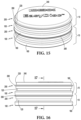
- FIG. 15 is a side, perspective view illustrating two culture dishes in accordance with the present disclosure stacked on top of one another;
- FIG. 16 is a side view of the stacked culture dishes of FIG. 15 ;
- FIG. 17 is a transverse, cross-sectional view taken along section line “ 17 - 17 ” of FIG. 16 ;
- FIGS. 18 A- 18 E are top perspective, bottom perspective, top, bottom, and side views, respectively, of the culture dish of FIG. 1 ;
- FIGS. 19 A- 19 E are top perspective, bottom perspective, top, bottom, and side views, respectively, of the lid of the culture dish of FIG. 1 ;
- FIGS. 20 A- 20 E are top perspective, bottom perspective, top, bottom, and side views, respectively, of the base of the culture dish of FIG. 1 .
- the present disclosure provides a culture dish, generally identified by reference numeral 10 , and a method of testing a sample, e.g., a water sample, using the same (see FIG. 14 ).
- suitable samples to be tested may include, for example: beverages, milk, meat juices, food, environmental samples, pharmaceuticals, urine, sputum, semen, tissues, a swab or swabbing, blood, serum, and plasma.
- Culture dish 10 includes a base 100 and a lid 200 .
- Culture dish 10 facilitates manipulation of lid 200 and base 100 (as separate components and when engaged with one another), pouring growth medium and/or a test sample into base 100 (although it contemplated, as detailed below, that the growth medium be disposed within base 100 during manufacturing), sealing engagement of lid 200 with base 100 , disengagement of lid 200 from base 100 , stacking of plural culture dishes 10 atop one another, incubation, and counting the number of resultant bacterial colonies after incubation.
- base 100 is formed as a single, monolithic piece of material from molding or other suitable process.
- Base 100 is formed from an optically clear material to enable visualization therethrough.
- the material forming base 100 has a “high” oxygen permeability while having a “low” permeability for water vapor.
- Oxygen permeability may be beneficial in promoting the growth of aerobic microbes or facultatively aerobic microbes.
- a “high” oxygen permeability of base 100 for the purposes herein is considered an oxygen transmission rate, measured in 25 ⁇ g/m 2 /24 h, in embodiments, of at least 2000, in other embodiments, of at least 3000, and in still other embodiments, of at least 4000.
- a “low” permeability for water vapor of base 100 for the purposes herein is considered a water vapor transmission rate, measured in 25 ⁇ g/m 2 /24 h, in embodiments, of no greater than 200, in other embodiments, no greater than 170, and in still other embodiments, no greater than 140.
- the material forming base 100 has a relatively high oxygen permeability and a relatively low permeability for water vapor, wherein such relativity for the purposes herein is considered a ratio of oxygen permeability to water vapor permeability of, in embodiments, of at least 10:1, in other embodiments, at least 20:1 and, in still other embodiments, at least 30:1.
- Base 100 is formed from a relatively hard material.
- the relatively hard base 100 is configured with sufficient hardness to inhibit significant deformation of base 100 during use, without being too brittle such that base 100 may break during normal use, e.g., when placed on a surface, when stacked on or stacked upon, when lid is engaged/disengaged, etc.
- base 100 is formed from polystyrene
- at least a portion of base 100 e.g., floor 140 and/or the interior surface of side wall 120 , or the entirety thereof, may be plasma-treated to increase the surface energy of the polystyrene, thereby reducing hydrophobicity (thus making the polystyrene more hydrophilic).
- Such a configuration promotes adherence of the growth medium to base 100 which, as detailed below, may be dried to base 100 during manufacturing.
- This configuration may additionally or alternatively, facilitate pouring the test sample and/or growth medium (in embodiments where the growth medium is poured into base 100 by a user rather than disposed within base 100 during manufacturing) into and distributing the same within base 100 .
- plasma treating may likewise be utilized for similar purposes.
- base 100 defines a top end 102 and a bottom end 104 and includes a side wall 120 , a floor 140 , and an annular rim 160 .
- Side wall 120 defines a generally cylindrical configuration and is open at top end 102 of base 100 .
- Floor 140 is supported by and depends from side wall 120 at an intermediate position between top and bottom ends 102 , 104 , respectively, of base 100 .
- Annular rim 160 extends from side wall 120 at bottom end 104 of base 100 .
- Side wall 120 defines a generally cylindrical configuration.
- Side wall 120 surrounds a cylindrical volume having a circular transverse cross-section.
- side wall 120 is not perfectly cylindrical, in embodiments. Rather, in such embodiments, outer annular surface 122 of side wall 120 tapers radially inwardly in a bottom-to-top direction along at least a portion of the length of side wall 120 , e.g., from bottom end 104 of base to top end 102 thereof.
- outer annular surface 122 of side wall 120 may be angled relative to (rather than parallel to) the longitudinal axis “X” of base 100 .
- outer annular surface 122 is angled radially inwardly off of parallel at an angle “A” in a bottom-to-top direction.
- the angle “A,” in embodiments, may be from 2 degrees to 4 degrees, in embodiments, from 2.5 degrees to 3.5 degrees and, in still other embodiments, 3 degrees.
- floor 140 of base 100 is supported by and depends from side wall 120 at an intermediate position between top and bottom ends 102 , 104 , respectively, of base 100 . More specifically, floor 140 extends radially inwardly and towards bottom end 104 of base 100 from an inner annular surface 124 of side wall 120 .
- Floor 140 defines a radially-symmetric, e.g., centered about longitudinal axis “X,” concave surface 142 that faces towards top end 102 of base 100 .
- floor 140 is centered on longitudinal axis “X.”
- Floor 140 conversely defines a radially-symmetric, e.g., centered about longitudinal axis “X,” convex surface 144 that faces towards bottom end 104 of base 100 with the apex thereof centered on longitudinal axis “X.”
- the above-detailed configuration of side wall 120 and floor 140 defines an internal volume “VB” bounded radially by inner annular surface 124 of side wall 120 and towards bottom end 104 of base 100 by concave surface 142 of floor 140 .
- Top end 102 of base 100 is open, thus providing access to the internal volume “VB” to permit pouring of a test sample (and, in embodiments, the growth medium) into internal volume “VB.”
- Concave bottom surface 142 of internal volume “VB” facilitates pouring and distributing of the sample (and, in embodiments, the growth medium) by inhibiting or reducing meniscus formation resulting in uneven distribution wherein the sample (and/or medium) builds up about the annular perimeter, e.g., against inner annular surface 124 .
- bottom surface 142 may be slanted, define different depths, define different pitches, etc.
- Base 100 is configured such that the surface area of concave bottom surface 142 enables a 1 mL sample, e.g., water, to be evenly distributed thereabout.
- base 100 may be differently configured to enable a different size test sample to be evenly distributed about concave bottom surface 142 .
- annular rim 160 of base extends from side wall 120 at bottom end 104 of base 100 .
- Annular rim 160 more specifically, includes a radial portion 162 extending radially outwardly relative to side wall 120 at bottom end 104 of base, and a longitudinal portion 164 extending longitudinally away from side wall 120 .
- a first elbow 166 interconnects side wall 120 and radial portion 162 of annular rim 160 and a second elbow 168 interconnects radial portion of annular rim 160 with longitudinal portion 164 of annular rim 160 .
- annular rim 160 includes an annular shelf 170 facing towards top end 102 of base 100 .
- Annular shelf 170 defines an upper surface lying within a plane that extend perpendicularly relative to longitudinal axis “X.”
- a free end 174 of longitudinal portion 164 of annular rim 160 defines a support edge upon which base 100 is configured to be supported on a surface, e.g., a table, shelf, etc. In this manner, floor 140 is supported above and spaced-apart from the surface.
- a cylindrical area “C” is defined radially within longitudinal portion 164 of annular rim 160 and longitudinally between free end 174 of longitudinal portion 164 of annular rim 160 and second elbow 168 of annular rim 160 .
- An additional area is defined radially within side wall 120 and longitudinally between convex surface 144 of floor 140 and first elbow 166 of annular rim 160 .
- This additional area defines a diameter less than the diameter of cylindrical area “C.” Further, this additional area is irregular due to the convex configuration of floor 140 . Convex surface 144 of floor 140 does not extend beyond the bottom end of side wall 120 and, thus, does not extend beyond the additional area into cylindrical area “C.”
- lid 200 of culture dish 10 is configured to releasably sealingly engage base 100 ( FIGS. 1 - 8 ).
- Lid 200 is formed as a single, monolithic piece of material from molding or other suitable process. Lid 200 is opaque and may achieve opaqueness through opaque pigment throughout the material forming lid 200 . Alternatively, lid 200 may achieve opaqueness via frosting, painting, stickering, etc. at least a portion of lid 200 .
- lid 100 may include markings conveying product information, e.g., product name, manufacturer name, etc., and/or markings conveying other information for tracking, identifying, etc. different culture dishes 10 , e.g., numbers, letters, etc.
- the markings may be raised markings extending from ceiling 240 of lid 200 (as shown), or may be etched, molded into, drawn, transferred, printed, or otherwise formed on ceiling 240 of lid 200 (and/or any other suitable portion of culture dish 10 ). Alternatively, as shown in FIG. 9 A , markings may be omitted.
- lid 200 is white to provide contrast with bacterial colonies growing within base 100 .
- the growth medium may contain a color indicator reagent that colors the colonies, e.g., red blue, etc., to increase contrast and make the colonies more easily visible against the white background of lid 200 .
- white provides good contrast for viewing certain bacterial colonies, e.g., indicator colors red, blue, etc.
- other opaque colors can be chosen depending on the color of the bacterial colonies. For example, substantially colorless colonies may be better viewed against a darker background and, thus, lid 200 may be a darker color to provide such contrast.
- lid 200 is formed from an optically clear material and is set on and/or against an opaque, e.g., white or dark-color, background separate from lid 200 .
- lid 200 may include a grid pattern (not shown) thereon, e.g., on ceiling 240 , of a different color, darkness, texture, etc., that is visible when viewed through base 100 .
- the grid pattern facilitates the determination of the number of colonies per unit surface area.
- base 100 FIGS. 1 - 8
- base 100 may include a grid pattern. Whether provided on base 100 ( FIGS. 1 - 8 ) and/or lid 200 , the grid pattern may be disposed on an inside and/or outside surface of the base 100 ( FIGS.
- lid 200 may be laser etched, molded into, drawn, transferred, printed, etc., onto the surface(s). Further still, base 100 ( FIGS. 1 - 8 ), lid 200 , or the assembled culture dish 10 may be placed on a surface or carrier having a grid pattern thereon for similar purposes.
- Lid 200 is formed from a relatively flexible material to enable lid 200 be deformed and/or stretched over base 100 in sealing engagement therewith, as detailed below.
- “Flexible” as utilized herein includes any combination of deformation, e.g., permanent or elastic, properties. That is, flexibility may be provided by softness, e.g., low hardness, that enables permanent deformation to sealingly engage base 100 , and/or compliance, e.g., high elongation number, that enables elastic deformation to sealing engage base 100 .
- the materials forming lid 200 and base 100 are selected to achieve a sealed, sufficiently secure interference fit engagement therebetween, as detailed below. This is accomplished by selecting materials for lid 200 and base 100 that cooperate to have a suitable coefficient of fiction and mating engagement.
- the “seal” established between base 100 and lid 200 is a direct-contact seal, e.g., wherein the material forming the base 100 and the material forming the lid 200 directly contact and interact to achieve a seal, formed as a result of the configuration of lid 200 and base 100 as detailed herein.
- the seal may be a hermetic seal, a liquid-impervious seal, or other suitable seal.
- the material forming lid 200 has a “high” oxygen permeability while having a “low” permeability for water vapor.
- Oxygen permeability may be beneficial in promoting the growth of aerobic microbes or facultatively aerobic microbes.
- a “high” oxygen permeability of lid 200 for the purposes herein is considered an oxygen transmission rate, measured in 25 ⁇ g/m 2 /24 h, in embodiments, of at least 4000, in other embodiments, of at least 6000, and in still other embodiments, of at least 8000.
- the “high” oxygen permeability of lid 200 may be in-line with that of base 100 ( FIGS. 1 - 8 ).
- a “low” permeability for water vapor of lid 200 for the purposes herein is considered a water vapor transmission rate, measured in 25 ⁇ g/m 2 /24 h, in embodiments, of no greater than 100, in other embodiments, no greater than 50, and in still other embodiments, no greater than 25.
- the “low” permeability for water vapor of lid 200 may be in-line with that of base 100 ( FIGS. 1 - 8 ).
- the material forming base 100 has a relatively high oxygen permeability and a relatively low permeability for water vapor, wherein such relativity for the purposes herein is considered a ratio of oxygen permeability to water vapor permeability of, in embodiments, of at least 100:1, in other embodiments, at least 200:1 and, in still other embodiments, at least 400:1 or, alternatively, may be in-line with that of base 100 ( FIGS. 1 - 8 ).
- One suitable material meeting the above criteria is flexible, low density polyethylene (LDPE), although other suitable materials are also contemplated, e.g., plastics that have a rubber component.
- LDPE low density polyethylene
- base 100 FIGS. 4 A- 8
- lid 200 As an alternative to the above-detailed material properties of base 100 ( FIGS. 4 A- 8 ) and lid 200 , such may be reversed, e.g., wherein base 100 ( FIGS. 4 A- 8 ) is formed from a flexible material such as LDPE and lid 200 is formed from a hard material such as polystyrene.
- base 100 FIGS. 4 A- 8
- lid 200 is formed from a hard material such as polystyrene.
- lid 200 defines a top end 202 and a bottom end 204 and includes a side wall 220 , a ceiling 240 , and an annular rim 260 .
- Side wall 220 defines a generally cylindrical configuration and is open at bottom end 204 of lid 220 .
- Ceiling 240 disposed at top end 202 and extends across side wall 220 to enclose top end 202 of lid 200 .
- Bottom end 204 of lid 200 is open to an internal volume “VL” defined by sidewall 220 .
- Annular rim 260 extends from side wall 220 at a position towards but spaced-apart from top end 202 of lid 200 .
- side wall 220 defines a generally cylindrical configuration.
- Side wall 220 surrounds a cylindrical internal volume “VL” having a circular transverse cross-section.
- side wall 220 is not perfectly cylindrical, in embodiments. Rather, in such embodiments, inner annular surface 224 of side wall 220 tapers radially outwardly in a top-to-bottom direction along at least a portion of the length of side wall 220 , e.g., from top end 202 to bottom end 204 of lid 200 , such that inner annular surface 224 of side wall 220 is angled relative to (rather than parallel to) the longitudinal axis “XX” of lid 200 .
- inner annular surface 224 of side wall 220 is angled radially outwardly off of parallel at an angle “AA” in a top-to-bottom direction.
- the angle “AA,” in embodiments, may be from 1 degree to 3 degrees, in embodiments, from 1.5 degrees to 2.5 degrees and, in still other embodiments, 2 degrees. Further, the angle “AA” may be, in embodiments, from 0.5 degrees to 1.5 degrees, in other embodiments, from 0.75 degrees to 1.25 degrees and, in still other embodiments 1 degree less than the angle “A” defined between outer annular surface 122 of side wall 120 of base 100 and the longitudinal axis “X” of base 100 (see FIG. 8 ). This configuration facilitates a robust sealed engagement between lid 200 and base 100 , as detailed below. It is noted that longitudinal axes “X” and “XX” are coaxial with one another, although other configurations are also contemplated.
- ceiling 240 of lid 200 is disposed at top end 202 of lid 200 and extends across side wall 220 to enclose top end 202 of lid 200 .
- Ceiling 240 more specifically, defines a generally planar, circular-shaped configuration; however, due to the flexible configuration of lid 200 , ceiling 240 may not be perfectly planar; that is, ceiling 240 may define a convex, concave, or other non-planar configurations, depending upon forces and/or pressures acting thereon.
- Ceiling 240 defines an inner surface 242 that faces towards bottom end 204 of lid 200 and defines a top-end boundary of the internal volume “VL” defined by inner annular surface 224 of side wall 220 at top end 202 of lid 200 . Ceiling 240 further defines an outer surface 244 opposite inner surface 242 and defining a portion of the exterior of lid 200 . Bottom end 204 of lid 200 is open, thus providing access to the internal volume “VL.”
- annular rim 260 extends from side wall 220 towards but spaced-apart from top end 204 of lid 200 . In this manner, a ring-shaped recess 266 is disposed atop a top-end-facing surface 262 of annular rim 260 and about ceiling 240 . Annular rim 260 further defines a bottom-end-facing surface 264 opposite top-end-facing surface 262 .
- the above-detailed configuration of culture dish 10 facilitates manipulation of lid 200 and base 100 (as separate components and when engaged with one another), pouring a test sample (and/or growth medium) into base 100 , sealing engagement of lid 200 with base 100 , disengagement of lid 200 from base 100 , stacking of plural culture dishes 10 atop one another, incubation, and counting the number of resultant bacterial colonies after incubation (although other testing methods are also contemplated).
- annular rims 160 , 260 of base 100 and lid 200 protrude from respective side walls 120 , 220 to provide finger holds for a user to grasp and manipulate base 100 and lid 200 , respectively, without slipping.
- the annular configuration of annular rims 160 , 260 provides such finger holds about the entire outer perimeters of base and lid 200 .
- the above-detailed configuration of finger holds formed by annular rims 160 , 260 enables one-handed manipulation, engagement, and disengagement of base 100 and lid 200 .
- one-handed engagement and disengagement may be accomplished as follows: one or more fingers of the hand are used to engage annular rim 160 or another of base 100 to hold or otherwise stabilize base 100 , e.g., against a table or other support structure, while another finger or fingers of the same hand are used to engage annular rim 260 or another portion of lid 200 to engage lid 200 with base 100 or disengage lid 200 from base 100 . Further, with regard to disengagement, lifting lid 200 on only one side, e.g., angling lid 200 upwardly on one side while the opposite side initially remains in contact and at least partial engagement with base 100 , may be sufficient to create an opening to enable the addition of the sample, e.g., with a pipette held with the opposite hand.
- lid 200 With respect to sealing engagement of lid 200 about base 100 , more specifically, lid 200 , led by bottom end 204 thereof, and/or base 100 , led by top end 102 thereof, are approximated relative to one another such that side wall 220 of lid 200 is slid about side wall 120 of base 100 .
- a maximum, minimum, or average diameter of inner annular surface 224 of side wall 220 of lid 200 may be equal to a respective maximum, minimum, or average diameter of outer annular surface 122 of side wall 120 of base 100 .
- lid 200 helps establish a robust sealed engagement between lid 200 and base 100 , wherein the seal and engagement is increasingly tightened as side wall 220 of lid 200 is slid further about side wall 120 of base 100 (and lid 200 is further flexed) to a fully engaged position.
- the top end edge of side wall 120 of base 100 may abut inner surface 242 of ceiling 240 of lid 200 and/or the bottom end edge of side wall 220 of lid 200 may abut the exterior surface of annular shelf 170 of annular rim 160 of base 100 .
- the desired abutment(s) may be achieved by varying the relative heights of side walls 120 , 220 such that the abutment is provided between side wall 120 and ceiling 240 , between side wall 220 and annular shelf 170 , or between both side walls 120 , 220 and ceiling 240 and annular shelf 170 , respectively (e.g., substantially simultaneously).
- side wall 220 of lid 200 defines a reduced height as compared to side wall 120 base 100 , such that, in the bottomed-out condition (the fully engaged position), side wall 120 abuts ceiling 240 and a spacing is defined between side wall 220 and annular shelf 170 .
- the sealed interior volume “VS” defined within culture dish 10 with lid 200 sealed about base 100 in the bottomed-out condition in embodiments, is from about 5 mL to about 10 mL; in other embodiments, from about 6 mL to about 9 mL; and in still other embodiments, from about 7 mL to about 8 mL.
- An about 1 mL sample and/or an about 3.5 mL reagent within the culture dish 10 may be utilized with the above-noted volume ranges, although other sample volumes, reagent volumes, and/or sealed volumes “VS” are also contemplated.
- sealed interior volume “VS” of culture dish 10 may define a maximum inner diameter of, in embodiments, from about 40 mm to about 48 mm; in other embodiments, from about 42 mm to about 46 mm; and in still other embodiments from about 43 mm to about 45 mm.
- An about 1 mL sample and/or an about 3.5 mL reagent within the culture dish 10 may be utilized with the above-noted diameter ranges, although other sample volumes, reagent volumes, and/or diameters are also contemplated.
- sealed interior volume “VS” of culture dish 10 may define a maximum inner height of, in embodiments, from about 4 mm to about 8 mm; in other embodiments, from about 5 mm to about 7 mm; and in still other embodiments from about 5.5 mm to about 6.5 mm.
- An about 1 mL sample and/or an about 3.5 mL reagent within the culture dish 10 may be utilized with the above-noted height ranges, although other sample volumes, reagent volumes, and/or diameters are also contemplated.
- a ratio of the sealed interior volume “VS” to the volume of sample may be from about 5 to about 10 in embodiments; in other embodiments, from about 6 to about 9; and in still other embodiments, from about 7 to about 8.
- a ratio of the sealed interior volume “VS” to the volume of the reagent may be from about 1.4 to about 2.8, in embodiments; in other embodiments, from about 1.8 to about 2.4; and in still other embodiments, from about 2.0 to about 2.2.
- the present disclosure contemplates ratio ranges of the sample and/or reagent volumes, collectively or separately, relative to the volume, maximum height, and/or maximum width of the sealed interior volume “VS” of culture dish 10 , as can be readily calculated from the above.
- lid 200 about base 100 resists opening, e.g., when culture dish 10 is dropped. As can be appreciated, this helps prevent both loss of sample and dissemination of microorganism that have amplified in number.
- concave bottom surface 142 of floor 140 of base 100 facilitates pouring and distributing the test sample (and/or growth medium) about floor 140 of base 100 by inhibiting or reducing meniscus formation resulting in uneven distribution and build up about the annular perimeter, e.g., against inner annular surface 124 .
- base 100 is configured to enable a 1 mL sample, e.g., water, to be poured and evenly distributed therein, as also detailed above.
- the base 100 of an upper culture dish 10 is approximated relative to the lid 200 of a lower culture dish such that the free end 174 of the longitudinal portion 164 of the annular rim 160 of the base 100 of the upper culture dish 100 is seated on the top-end-facing surface 262 of the annular rim 260 of the lid 200 of the lower culture dish 10 .
- the cylindrical area “C” defined within the bottom end 104 of the base 100 of the upper culture dish 100 receives the ceiling 240 of the lid 200 of the lower culture dish 100 therein.
- the ceilings 240 of the lids 200 may define outer diameters that generally approximate the diameters of the cylindrical areas “C” of the bases 100 such that minimal play is defined therebetween in a stacked configuration of two or more culture dishes 10 .
- the above-detailed configuration enables stable stacking of multiple culture dishes 10 on top of one another.
- the sealed engagement between lid 200 and base 100 prevents evaporation of the water (or other) sample from the growth medium during incubation. This is particularly important given the relatively small volume of sample contemplated for use: 1 mL of test sample, e.g., water, and becomes more important the longer the incubation period. For example, incubation of a water sample on R2A growth medium may require 7 days. Further, the high or relatively high oxygen permeability and low or relatively low permeability for water vapor of base 100 and lid 200 may be beneficial in promoting the growth of aerobic microbes or facultatively aerobic microbes.
- the optically clear base 100 allows visualization therethrough into the interior of base 100 , while the opaque, e.g., white, lid 200 provides a backdrop with suitable contrast to facilitate counting. Additional features of lid 200 may further enhance counting ability, such as those detailed above. Counting may additionally or alternatively be performed with the lid 200 removed from the base 100 .
- a method provided in accordance with the present disclosure includes providing a culture dish, e.g., culture dish 10 .
- culture dish 10 includes a growth medium disposed therein during manufacturing, lid 200 is sealingly engaged about base 100 with the growth medium therein, and culture dish 10 is wrapped or otherwise packaged for transport, storage, etc. until ready for use.
- the growth medium may be added to the base 100 as a fluid, allowed to cool to form a gel, and then dried (dehydrated) to floor 140 of base 100 .
- the growth medium may be an R2A (Reasoner's 2A Agar) growth medium or other suitable growth medium such as, for example: YEA (Yeast Extract Agar), PCA (Plate Count Agar), or SMA (Standards Methods Agar).
- R2A Reasoner's 2A Agar
- suitable growth medium such as, for example: YEA (Yeast Extract Agar), PCA (Plate Count Agar), or SMA (Standards Methods Agar).
- the method further includes unwrapping and/or removing packaging from about the culture dish and removing the lid from the culture dish, e.g., by grasping annular rim 160 of base 100 and/or annular rim 260 of lid 200 and pulling base 100 and/or lid 200 apart from one another.
- a test sample is poured into an interior volume of the base of the dish and, e.g., evenly distributed therein due to the configuration of floor 140 of base 100 .
- the growth medium may likewise be poured into base 100 before, after, or overlapping with the pouring of the sample.
- base 100 is configured such that a 1 mL sample, e.g., of water, poured into the interior volume “VB” of base 100 is evenly distributed about floor 140 of base 100 .
- other sample sizes and configurations are also contemplated.
- the sample e.g., water or other suitable sample
- the sample may be agitated to spread the sample about the growth medium.
- the 1 mL water sample is poured into base 100 , the water interacts with the dried growth medium to reconstitute (rehydrate) it.
- the same or similar methods may be utilized for testing other samples such as those noted above.
- the lid of the culture dish is sealingly engaged about the base to enclose and seal the water sample and growth medium therein, e.g., via the sliding, sealed interference fit engagement of side wall 220 of lid 200 about side wall 120 of base 100 .
- the culture dish may be inverted and placed to rest on the lid.
- the culture dish may be placed to rest on base 100 in a non-inverted orientation.
- Multiple culture dishes may be stacked on top of one another, similarly as detailed above with respect to culture dish 10 .
- the sealed culture dish is then incubated for a suitable time and under suitable conditions to support growth.
- the number of bacterial growth colonies are counted against the backdrop of the lid to determine the presence or absence of microbial organisms in the water sample. More specifically, with respect to culture dish 10 , a user can look through the optically clear base 100 and count the number of bacterial growth colonies using the white, opaque lid 200 as a contrast-providing backdrop. Inverting the culture dish 10 (if not already done so for incubation) may, in some instances, be performed to facilitate counting; in other instances, culture dish 10 need not be inverted. Counting may additionally or alternatively be performed with the lid 200 removed from the base 100 .
- the methods detailed hereinabove may further include waiting period(s) between some or all of the actions. For example, a sufficient waiting period after agitating the sample and prior to sealingly engaging the lid and/or a sufficient waiting period after sealingly engaging the lid and prior to inverting the seal culture dish may be implemented to enable the sample/growth medium mixture to set, gel, cool-off, etc. Additional or alternative waiting periods may be implemented between other actions for similar or different purposes.
Landscapes
- Health & Medical Sciences (AREA)
- Chemical & Material Sciences (AREA)
- Engineering & Computer Science (AREA)
- Life Sciences & Earth Sciences (AREA)
- Organic Chemistry (AREA)
- Wood Science & Technology (AREA)
- Zoology (AREA)
- Bioinformatics & Cheminformatics (AREA)
- Genetics & Genomics (AREA)
- General Engineering & Computer Science (AREA)
- General Health & Medical Sciences (AREA)
- Biotechnology (AREA)
- Biochemistry (AREA)
- Microbiology (AREA)
- Biomedical Technology (AREA)
- Clinical Laboratory Science (AREA)
- Sustainable Development (AREA)
- Immunology (AREA)
- Proteomics, Peptides & Aminoacids (AREA)
- Mechanical Engineering (AREA)
- Biophysics (AREA)
- Molecular Biology (AREA)
- Analytical Chemistry (AREA)
- Physics & Mathematics (AREA)
- Toxicology (AREA)
- Apparatus Associated With Microorganisms And Enzymes (AREA)
- Measuring Or Testing Involving Enzymes Or Micro-Organisms (AREA)
Abstract
Description
Claims (29)
Priority Applications (1)
| Application Number | Priority Date | Filing Date | Title |
|---|---|---|---|
| US16/875,008 US12037164B2 (en) | 2019-05-17 | 2020-05-15 | Devices and methods facilitating sample testing |
Applications Claiming Priority (2)
| Application Number | Priority Date | Filing Date | Title |
|---|---|---|---|
| US201962849509P | 2019-05-17 | 2019-05-17 | |
| US16/875,008 US12037164B2 (en) | 2019-05-17 | 2020-05-15 | Devices and methods facilitating sample testing |
Publications (2)
| Publication Number | Publication Date |
|---|---|
| US20200361667A1 US20200361667A1 (en) | 2020-11-19 |
| US12037164B2 true US12037164B2 (en) | 2024-07-16 |
Family
ID=71069947
Family Applications (1)
| Application Number | Title | Priority Date | Filing Date |
|---|---|---|---|
| US16/875,008 Active 2041-10-05 US12037164B2 (en) | 2019-05-17 | 2020-05-15 | Devices and methods facilitating sample testing |
Country Status (9)
| Country | Link |
|---|---|
| US (1) | US12037164B2 (en) |
| EP (1) | EP3969557A1 (en) |
| JP (1) | JP7593949B2 (en) |
| CN (2) | CN118931709A (en) |
| AU (1) | AU2020279883B2 (en) |
| BR (1) | BR112021022791A2 (en) |
| CA (1) | CA3140646A1 (en) |
| MX (1) | MX2021013987A (en) |
| WO (1) | WO2020236552A1 (en) |
Families Citing this family (1)
| Publication number | Priority date | Publication date | Assignee | Title |
|---|---|---|---|---|
| USD930476S1 (en) * | 2019-10-28 | 2021-09-14 | Zume, Inc. | Cap for a beverage keg |
Citations (13)
| Publication number | Priority date | Publication date | Assignee | Title |
|---|---|---|---|---|
| US3173574A (en) * | 1963-08-08 | 1965-03-16 | Gen Am Transport | Container stacking and covering devices |
| US3729382A (en) | 1970-12-09 | 1973-04-24 | Becton Dickinson Co | Microorganism sampling dish |
| US3886047A (en) * | 1973-11-02 | 1975-05-27 | Billups Rothenberg Inc | Culture chamber |
| JPS63105669A (en) | 1986-10-20 | 1988-05-10 | ミリポール・ソシエテ・アノニム | Container for bacteria culture medium |
| JPH0657199U (en) | 1993-01-28 | 1994-08-09 | 積水化学工業株式会社 | Microbial inspection tool |
| US20020045245A1 (en) | 1994-05-04 | 2002-04-18 | Oxyrase, Inc. | Apparatus and method for growing anaerobic microorganisms |
| US6602704B1 (en) * | 2002-06-24 | 2003-08-05 | Biomerieux, Inc. | Sample contact plate with latchable cover |
| JP2005087030A (en) | 2003-09-12 | 2005-04-07 | Japan Tissue Engineering:Kk | Culture apparatus and culture kit |
| US20050189362A1 (en) * | 2004-02-27 | 2005-09-01 | Muller Charles D. | Container assembly having coupling lugs |
| US20080064090A1 (en) * | 2006-09-07 | 2008-03-13 | Nalge Nunc International | Culture dish with lid |
| US20080085556A1 (en) * | 2005-02-23 | 2008-04-10 | William Cook Australia Pty. Ltd. | Culture device |
| US20110174820A1 (en) | 2010-01-18 | 2011-07-21 | Becton, Dickinson And Company | Container Assembly |
| JP2017503489A (en) | 2013-12-20 | 2017-02-02 | スリーエム イノベイティブ プロパティズ カンパニー | System and method for sample concentration and detection |
Family Cites Families (1)
| Publication number | Priority date | Publication date | Assignee | Title |
|---|---|---|---|---|
| US5830746A (en) * | 1994-05-04 | 1998-11-03 | Oxyrase, Inc. | Apparatus and method for growing anaerobic microorganisms |
-
2020
- 2020-05-15 CN CN202411269905.9A patent/CN118931709A/en active Pending
- 2020-05-15 MX MX2021013987A patent/MX2021013987A/en unknown
- 2020-05-15 CA CA3140646A patent/CA3140646A1/en active Pending
- 2020-05-15 EP EP20731640.7A patent/EP3969557A1/en active Pending
- 2020-05-15 BR BR112021022791A patent/BR112021022791A2/en unknown
- 2020-05-15 JP JP2021568526A patent/JP7593949B2/en active Active
- 2020-05-15 US US16/875,008 patent/US12037164B2/en active Active
- 2020-05-15 WO PCT/US2020/033058 patent/WO2020236552A1/en not_active Ceased
- 2020-05-15 AU AU2020279883A patent/AU2020279883B2/en active Active
- 2020-05-15 CN CN202080036446.3A patent/CN113840904A/en active Pending
Patent Citations (14)
| Publication number | Priority date | Publication date | Assignee | Title |
|---|---|---|---|---|
| US3173574A (en) * | 1963-08-08 | 1965-03-16 | Gen Am Transport | Container stacking and covering devices |
| US3729382A (en) | 1970-12-09 | 1973-04-24 | Becton Dickinson Co | Microorganism sampling dish |
| US3886047A (en) * | 1973-11-02 | 1975-05-27 | Billups Rothenberg Inc | Culture chamber |
| JPS63105669A (en) | 1986-10-20 | 1988-05-10 | ミリポール・ソシエテ・アノニム | Container for bacteria culture medium |
| JPH0657199U (en) | 1993-01-28 | 1994-08-09 | 積水化学工業株式会社 | Microbial inspection tool |
| US20020045245A1 (en) | 1994-05-04 | 2002-04-18 | Oxyrase, Inc. | Apparatus and method for growing anaerobic microorganisms |
| US6602704B1 (en) * | 2002-06-24 | 2003-08-05 | Biomerieux, Inc. | Sample contact plate with latchable cover |
| JP2005087030A (en) | 2003-09-12 | 2005-04-07 | Japan Tissue Engineering:Kk | Culture apparatus and culture kit |
| US20050189362A1 (en) * | 2004-02-27 | 2005-09-01 | Muller Charles D. | Container assembly having coupling lugs |
| US20080085556A1 (en) * | 2005-02-23 | 2008-04-10 | William Cook Australia Pty. Ltd. | Culture device |
| US20080064090A1 (en) * | 2006-09-07 | 2008-03-13 | Nalge Nunc International | Culture dish with lid |
| US20110174820A1 (en) | 2010-01-18 | 2011-07-21 | Becton, Dickinson And Company | Container Assembly |
| JP2011167187A (en) | 2010-01-18 | 2011-09-01 | Becton Dickinson & Co | Container assembly |
| JP2017503489A (en) | 2013-12-20 | 2017-02-02 | スリーエム イノベイティブ プロパティズ カンパニー | System and method for sample concentration and detection |
Non-Patent Citations (4)
| Title |
|---|
| Chinese Office Action issued in corresponding CN Patent Application No. 202080036446.3 dated Jan. 22, 2024, with English translation. |
| International Preliminary Report on Patentability dated Nov. 16, 2021 by the International Bureau on behalf of the U.S. Patent and Trademark Office acting as International Searching Authority in International Application No. PCT/US2020/033058. |
| International Search Report and Written Opinion issued in corresponding International Application No. PCT/US2020/033058 dated Sep. 17, 2020, 17 pages. |
| Notice of Reasons for Refusal issued by the Japanese Patent Office on May 21, 2024 in corresponding JP Patent Application No. 2021-568526, with English translation. |
Also Published As
| Publication number | Publication date |
|---|---|
| JP7593949B2 (en) | 2024-12-03 |
| CA3140646A1 (en) | 2020-11-26 |
| BR112021022791A2 (en) | 2022-01-11 |
| JP2022533367A (en) | 2022-07-22 |
| MX2021013987A (en) | 2022-01-04 |
| US20200361667A1 (en) | 2020-11-19 |
| AU2020279883A1 (en) | 2021-12-16 |
| CN113840904A (en) | 2021-12-24 |
| CN118931709A (en) | 2024-11-12 |
| WO2020236552A1 (en) | 2020-11-26 |
| AU2020279883B2 (en) | 2025-05-01 |
| EP3969557A1 (en) | 2022-03-23 |
Similar Documents
| Publication | Publication Date | Title |
|---|---|---|
| AU723048B2 (en) | Method for quantification of biological material in a sample | |
| US8846334B2 (en) | Detection of acid-producing bacteria | |
| US12503285B2 (en) | Mason jar valved-lid component and kit for use in fermentation | |
| JP5925200B2 (en) | Microorganism detection system and method | |
| EP0267093B1 (en) | Container intended to receive one or more micro-organism culture mediums | |
| Bird et al. | Evaluation of the 3M™ Petrifilm™ rapid yeast and mold count plate for the enumeration of yeast and mold in food: Collaborative study, first action 2014.05 | |
| US12391907B2 (en) | Water-reconstitutable culture medium resistant to liquefaction by microorganisms | |
| US12037164B2 (en) | Devices and methods facilitating sample testing | |
| US4072577A (en) | Method and miniaturized apparatus for cultivating bacteria | |
| CN105189727A (en) | Culture device and method for counting mold colonies | |
| ADEOYE et al. | Microbial assessment and proximate composition of bread samples collected from different bakeries in Ogbomoso, Oyo state, Nigeria | |
| US4766063A (en) | Process and device for detecting the activity of a substance on a micro-organism or on a mixture of micro-organisms | |
| WO1993002210A1 (en) | Apparatus and methods for preserving, transporting, storing, re-hydrating and delivering viable microorganisms | |
| Muhammad et al. | Antibacterial Susceptibility Pattern of Bacteria Isolated from Ready-to-Eat Lettuce and Gurasa Sold within Kaduna State University (Main Campus), Kaduna State, Nigeria | |
| US4952510A (en) | Apparatus for detecting and culturing microorganisms using a biphasic culture vessel | |
| WO2012083346A1 (en) | Inoculum and method of preparation | |
| Codd et al. | Lenticules for the control of quantitative methods in food microbiology | |
| US20160122697A1 (en) | Devices and Methods for Creating and Testing Microbes and Biofilms | |
| CN119464445A (en) | Testing method for the antiseptic properties of oyster sauce | |
| RU175134U1 (en) | BOTTLE FOR CULTIVATION OF MICRO-ORGANISMS | |
| Sharpe | Labor-Saving Devices and Automation of Traditional Methods | |
| CA2237639C (en) | Method for quantification of biological material in a sample | |
| Woodward et al. | Practical tray-rack for culture dish incubation | |
| JP2000116397A (en) | Apparatus and method for evaluating microorganism | |
| Stanley | Evaluation of methods for determining coliforms in food |
Legal Events
| Date | Code | Title | Description |
|---|---|---|---|
| AS | Assignment |
Owner name: IDEXX LABORATORIES INC., MAINE Free format text: ASSIGNMENT OF ASSIGNORS INTEREST;ASSIGNORS:BRODER, DANIEL HOWARD;WAGNER, SCOTT W.;REEL/FRAME:052672/0162 Effective date: 20200515 |
|
| FEPP | Fee payment procedure |
Free format text: ENTITY STATUS SET TO UNDISCOUNTED (ORIGINAL EVENT CODE: BIG.); ENTITY STATUS OF PATENT OWNER: LARGE ENTITY |
|
| STPP | Information on status: patent application and granting procedure in general |
Free format text: APPLICATION DISPATCHED FROM PREEXAM, NOT YET DOCKETED |
|
| STPP | Information on status: patent application and granting procedure in general |
Free format text: DOCKETED NEW CASE - READY FOR EXAMINATION |
|
| STPP | Information on status: patent application and granting procedure in general |
Free format text: NON FINAL ACTION MAILED |
|
| STPP | Information on status: patent application and granting procedure in general |
Free format text: RESPONSE TO NON-FINAL OFFICE ACTION ENTERED AND FORWARDED TO EXAMINER |
|
| STPP | Information on status: patent application and granting procedure in general |
Free format text: NON FINAL ACTION MAILED |
|
| STPP | Information on status: patent application and granting procedure in general |
Free format text: ADVISORY ACTION MAILED |
|
| STPP | Information on status: patent application and granting procedure in general |
Free format text: NON FINAL ACTION MAILED |
|
| STPP | Information on status: patent application and granting procedure in general |
Free format text: RESPONSE TO NON-FINAL OFFICE ACTION ENTERED AND FORWARDED TO EXAMINER |
|
| STPP | Information on status: patent application and granting procedure in general |
Free format text: NOTICE OF ALLOWANCE MAILED -- APPLICATION RECEIVED IN OFFICE OF PUBLICATIONS |
|
| ZAAA | Notice of allowance and fees due |
Free format text: ORIGINAL CODE: NOA |
|
| ZAAB | Notice of allowance mailed |
Free format text: ORIGINAL CODE: MN/=. |
|
| STPP | Information on status: patent application and granting procedure in general |
Free format text: WITHDRAW FROM ISSUE AWAITING ACTION |
|
| STPP | Information on status: patent application and granting procedure in general |
Free format text: AWAITING TC RESP., ISSUE FEE NOT PAID |
|
| ZAAA | Notice of allowance and fees due |
Free format text: ORIGINAL CODE: NOA |
|
| STPP | Information on status: patent application and granting procedure in general |
Free format text: PUBLICATIONS -- ISSUE FEE PAYMENT VERIFIED |
|
| STCF | Information on status: patent grant |
Free format text: PATENTED CASE |