US12024784B2 - Sustainable, facile separation of the molten carbonate electrolysis cathode product - Google Patents
Sustainable, facile separation of the molten carbonate electrolysis cathode product Download PDFInfo
- Publication number
- US12024784B2 US12024784B2 US17/734,341 US202217734341A US12024784B2 US 12024784 B2 US12024784 B2 US 12024784B2 US 202217734341 A US202217734341 A US 202217734341A US 12024784 B2 US12024784 B2 US 12024784B2
- Authority
- US
- United States
- Prior art keywords
- electrolyte
- product
- process according
- carbon
- chamber
- Prior art date
- Legal status (The legal status is an assumption and is not a legal conclusion. Google has not performed a legal analysis and makes no representation as to the accuracy of the status listed.)
- Active
Links
Images




Classifications
-
- B—PERFORMING OPERATIONS; TRANSPORTING
- B01—PHYSICAL OR CHEMICAL PROCESSES OR APPARATUS IN GENERAL
- B01D—SEPARATION
- B01D24/00—Filters comprising loose filtering material, i.e. filtering material without any binder between the individual particles or fibres thereof
- B01D24/02—Filters comprising loose filtering material, i.e. filtering material without any binder between the individual particles or fibres thereof with the filter bed stationary during the filtration
- B01D24/10—Filters comprising loose filtering material, i.e. filtering material without any binder between the individual particles or fibres thereof with the filter bed stationary during the filtration the filtering material being held in a closed container
- B01D24/12—Downward filtration, the filtering material being supported by pervious surfaces
-
- B—PERFORMING OPERATIONS; TRANSPORTING
- B01—PHYSICAL OR CHEMICAL PROCESSES OR APPARATUS IN GENERAL
- B01D—SEPARATION
- B01D29/00—Filters with filtering elements stationary during filtration, e.g. pressure or suction filters, not covered by groups B01D24/00 - B01D27/00; Filtering elements therefor
- B01D29/01—Filters with filtering elements stationary during filtration, e.g. pressure or suction filters, not covered by groups B01D24/00 - B01D27/00; Filtering elements therefor with flat filtering elements
- B01D29/05—Filters with filtering elements stationary during filtration, e.g. pressure or suction filters, not covered by groups B01D24/00 - B01D27/00; Filtering elements therefor with flat filtering elements supported
-
- C—CHEMISTRY; METALLURGY
- C01—INORGANIC CHEMISTRY
- C01B—NON-METALLIC ELEMENTS; COMPOUNDS THEREOF; METALLOIDS OR COMPOUNDS THEREOF NOT COVERED BY SUBCLASS C01C
- C01B32/00—Carbon; Compounds thereof
- C01B32/15—Nano-sized carbon materials
- C01B32/158—Carbon nanotubes
- C01B32/16—Preparation
-
- C—CHEMISTRY; METALLURGY
- C01—INORGANIC CHEMISTRY
- C01B—NON-METALLIC ELEMENTS; COMPOUNDS THEREOF; METALLOIDS OR COMPOUNDS THEREOF NOT COVERED BY SUBCLASS C01C
- C01B32/00—Carbon; Compounds thereof
- C01B32/15—Nano-sized carbon materials
- C01B32/158—Carbon nanotubes
- C01B32/168—After-treatment
- C01B32/17—Purification
-
- C—CHEMISTRY; METALLURGY
- C25—ELECTROLYTIC OR ELECTROPHORETIC PROCESSES; APPARATUS THEREFOR
- C25B—ELECTROLYTIC OR ELECTROPHORETIC PROCESSES FOR THE PRODUCTION OF COMPOUNDS OR NON-METALS; APPARATUS THEREFOR
- C25B1/00—Electrolytic production of inorganic compounds or non-metals
- C25B1/01—Products
- C25B1/135—Carbon
-
- C—CHEMISTRY; METALLURGY
- C25—ELECTROLYTIC OR ELECTROPHORETIC PROCESSES; APPARATUS THEREFOR
- C25B—ELECTROLYTIC OR ELECTROPHORETIC PROCESSES FOR THE PRODUCTION OF COMPOUNDS OR NON-METALS; APPARATUS THEREFOR
- C25B15/00—Operating or servicing cells
- C25B15/08—Supplying or removing reactants or electrolytes; Regeneration of electrolytes
- C25B15/083—Separating products
-
- C—CHEMISTRY; METALLURGY
- C25—ELECTROLYTIC OR ELECTROPHORETIC PROCESSES; APPARATUS THEREFOR
- C25B—ELECTROLYTIC OR ELECTROPHORETIC PROCESSES FOR THE PRODUCTION OF COMPOUNDS OR NON-METALS; APPARATUS THEREFOR
- C25B9/00—Cells or assemblies of cells; Constructional parts of cells; Assemblies of constructional parts, e.g. electrode-diaphragm assemblies; Process-related cell features
- C25B9/09—Fused bath cells
Definitions
- carbon nanomaterials such as carbon nanotubes, carbon nanofibers, carbon nano-onions, carbon scaffolds, carbon platelets, and graphene
- molten carbonate electrolysis see, e.g., citations 1-6 listed herein.
- carbon nanotubes may be formed by electrolysis in molten lithium carbonate (melting point 723° C.) or in related mixes including alkali or alkali earth carbonates, with or without oxides, borates, phosphates, sulfates, nitrates, chlorides or other inorganic salts.
- the carbon nanomaterials are typically deposited on the electrolysis cathode but are bound to the cathode with an excess of electrolyte.
- the electrochemical CO 2 reductive splitting to carbon in a molten salt electrolyte is a promising and comprehensive solution to mitigate the increasing levels of atmospheric CO 2 , see, e.g., citations 9-13. Recently, this electrochemical CO 2 utilization has been widely explored owing to the flexible operation parameter, high coulombic efficiency, and controllable carbon products.
- CNTs Carbon NanoTubes
- CNTs are flexible and have the highest tensile strength of any material measured to date, see, e.g., citations 18, 21. If Li 2 CO 3 (melting point 723° C.) is used as the electrolyte the electrolysis can proceed in accordance with equations 3 to 5: Li 2 CO 3 ⁇ C CNT +O 2 +Li 2 O (3)
- CO 2 added to the electrolyte dissolves and chemically reacts with lithium oxide to renew and reform Li 2 CO 3 : CO 2 +Li 2 O ⁇ Li 2 CO 3 (4) CO 2 C CNT +O 2 (5)
- This purification method not only entails extensive acid usage, but also produces more CO 2 than captured. Therefore, it is not typically considered a green process. However, if the CNTs were synthesized from CO 2 , and also combined with the separation, the overall process would be carbon negative.
- the molten salt CO 2 electrochemical system contains liquid electrolyte bulk electrolyte and a solid nanocarbon product combined with the liquid electrolyte at the cathode.
- This situation is different from the electrolytic aluminum separation, in that the molten carbonate process operates at a lower temperature and generates a solid product as a gel on the cathode, while in aluminum production the product is the metal in the liquid product phase.
- the aluminum separating process is unsuitable to be directly adapted to the molten salt CO 2 electrolysis.
- the principles and technical features of the press filtration have been introduced in many works of literature but has been mainly used for a separation and dehydration of the waste slurry at ambient temperature. Press filtration remains unfamiliar territory in the molten 700 to 800° C. carbonate salt temperature domain.
- U.S. Pat. No. 11,028,493 discloses a process for separating electrolyte from a solid carbon product/molten electrolyte mixture.
- the present invention relates to an improved process for the separation of the carbon product from a solid carbon/molten electrolyte mixed product (a carbanogel) formed, e.g., on the cathode, during a carbonate electrolysis reaction.
- a solid carbon/molten electrolyte mixed product a carbanogel
- a variety of carbon nanomaterials can be deposited on the cathode by control of the electrolysis conditions.
- the carbon formed at the cathode exhibits a strong affinity for electrolyte, and the cathode product contains a mix of solid carbon and molten electrolyte.
- the deposited cathode product is a paste or gel at temperatures above the melting point of the electrolyte, or when the cathode is removed and allowed to cool to room temperature, the cathode product is a solid mixture of the carbon and congealed electrolyte. In either case, the cathode deposition contains a majority of electrolyte by mass compared to carbon.
- the solid carbon product/electrolyte mix is spontaneously formed on the cathode in real time during the electrolysis, and not after the solid carbon is formed. Solid product is not dislodged from the cathode to subsequently form a slurry with the electrolyte.
- the paste is black in color (and red hot) and is clearly distinguished from the clear molten electrolyte between the electrodes and in the electrolysis chamber.
- the product is a thick paste layer on the cathode which grows as the electrolysis continues.
- the percentage of electrolyte in the paste which contains the cathode product ranges from 70 to 97 percent by weight and is typically in the range from 90 to 97 percent by weight.
- the force is applied, such as by compression or by turbulence. In other embodiments of any of the processes described herein, the force is gravitational.
- the process in conducted in vacuo (i.e., by applying a vacuum during the separation/extraction process).
- the vacuum enhances removal of the electrolyte and separation of the solid carbon product.
- the vacuum applied is between about 0.1 and about 0.9 atmospheres.
- the vacuum applied is greater than about 0.8 atmospheres, or greater than about 0.9 atmospheres, such as between about 0.8 and about 0.999 atmospheres, or between about 0.9 and about 0.99 atmospheres.
- the process is conducted at a pressure between about 0.1 and about 0.9 atmospheres, such as between about 0.2 and about 0.9 atmospheres.
- the process is conducted at a pressure less than about 0.1 atmospheres, such as less than about 0.01 atmospheres.
- the vacuum applied is between about 0.01 MPa and about 0.1 MPa, such as between about 0.05 MPa and about 0.1 MPa, such as about 0.09 MPa.
- the process is conducted in the absence of oxygen, for example, under a blanket of gas that is free or substantially free of oxygen (an oxygen excluding gas).
- oxygen excluding gas blankets the mixed product to protect the solid carbon product from oxidation.
- the oxygen excluding gas is an inert non-oxidizing gas, such as, for example, nitrogen, carbon dioxide, argon, or a reducing gas, such as, for example, methane, ammonia, hydrogen and hydrogen sulfide, and any combination of any of the foregoing.
- an inert non-oxidizing gas such as, for example, nitrogen, carbon dioxide, argon, or a reducing gas, such as, for example, methane, ammonia, hydrogen and hydrogen sulfide, and any combination of any of the foregoing.
- the process is conducted at a temperature between about 399° C. and about 900° C., such as between about 700° C. and about 900° C. In another embodiment of any of the processes described herein, the process is conducted at a temperature of about 399° C., about 723° C. or about 891° C., which correspond, respectively, to the melting points of eutectic lithium sodium potassium carbonate, lithium carbonate, and pure potassium carbonate.
- the mixed product is cooled to below the point of solidification, such as below 700° C., after its formation by electrolysis and then reheated/melted prior to the one or more compression step(s) in the processes described herein.
- the solid carbon/molten electrolyte mixed product is compressed directly on the cathode in the electrolysis chamber.
- the solid carbon/molten electrolyte mixed product is removed from the cathode.
- the solid carbon/molten electrolyte mixed product is removed from the cathode in the electrolysis chamber, e.g. without pumping, into a separate extraction compression chamber prior to separation of the solid product.
- the process does not involve a flowing electrolyte.
- the process does not involve a recirculation loop.
- the resulting solid carbon product has an average thickness greater than 10 ⁇ m, such as greater than 0.3 mm, greater than 1 mm or greater than 3 mm.
- the resulting solid carbon product comprises greater than about 80% carbon nano-materials, such as greater than about 85%, greater than about 90% or greater than about 95% carbon nano-materials.
- the carbon nano-materials are carbon nanotubes, carbon nano-onions, carbon nano-platelets, carbon nano-scaffolds, graphene or any combination thereof.
- a morphological template is not present on the cathode during formation and/or separation (compression) of the solid carbon/molten electrolyte mixed product.
- the present invention relates to a chamber useful for conducting any of the process described herein.
- the present invention relates to an extraction chamber for separating electrolyte from a solid carbon/molten electrolyte mixed product formed during a carbonate electrolysis, the extraction chamber comprising
- the extraction chamber is operated in the vertical mode.
- the extraction chamber is operated in an angular mode.
- the extraction chamber is operated within a kiln.
- the extraction chamber is situated with an electrolysis chamber.
- the present invention relates to a system for separating material from raw product, comprising:
- a divider plate extending transversely across the extraction chamber at the interior space, said divider plate having through-holes and a top surface;
- FIG. 1 A is a block diagram showing separation at the cathode in an electrolysis chamber of electrolyte from the solid carbon in the solid carbon/electrolyte cathode product of a molten carbonate electrolysis reaction.
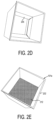
- FIG. 2 A shows one exemplary shape of a suitable extraction chamber for use in the processes described herein.
- FIG. 2 B shows another exemplary shape of a suitable extraction chamber for use in the processes described herein.
- FIG. 2 D shows another exemplary shape of a suitable extraction chamber for use in the processes described herein.
- FIG. 4 A shows an exemplary extraction chamber for collecting raw material from an electrode in accordance with the processes described herein, with the extraction chamber positioned at an angle and directly interfaced to the electrolysis chamber.
- FIG. 4 B shows an exemplary extraction chamber for collecting raw material from an electrode in accordance with the processes described herein, with the extraction chamber positioned at an angle and directly interfaced to the electrolysis chamber.
- FIG. 4 C shows an exemplary extraction chamber for collecting raw material from an electrode in accordance with the processes described herein, with the extraction chamber positioned at an angle and directly interfaced to the electrolysis chamber.
- FIG. 4 E shows an exemplary extraction chamber for collecting raw material from an electrode in accordance with the processes described herein, with the extraction chamber positioned at an angle and directly interfaced to the electrolysis chamber.
- FIG. 6 B shows pressure being applied to extraction chamber for use in the processes described herein by pneumatic pressure.
- the extraction unit is inside the kiln.
- FIG. 7 F shows an exemplary product extractor situated within the electrolysis chamber and an extraction process.
- FIG. 7 G shows an exemplary product extractor situated within the electrolysis chamber and an extraction process.
- FIG. 7 H shows an exemplary product extractor situated within the electrolysis chamber and an extraction process.
- FIG. 12 shows a plot of the electrolyte extraction and carbon preservation change with multiple mesh sizes.
- FIG. 14 D shows an SEM image of the initial product and the product pressed for 0.5 hr, 1 hr, 2 hrs, and 3 hrs.
- the cathode 106 and material 104 is placed in the center section 101 b .
- the compressor 102 is located above the center section 101 b and is forced downward into the center section 101 b , such as by pneumatic operation. As the compressor 102 moves downward, it forces product 104 to separate.
- the first interface 108 a can have a first filter mechanism (e.g., first porous material) that filters a first product (i.e., gas, liquid or material), and the second interface 108 b can have a second filter mechanism (e.g., second porous material) that filters a second product (e.g., gas, liquid or material) which is the same or different from the first product.
- first filter mechanism e.g., first porous material
- second filter mechanism e.g., second porous material
- the expelled product reaches the collection device 560 .
- the collection device 560 can be a plate with openings or pores and can have a mesh screen or other filter mechanism situated on the porous plate.
- the distal end of the collection device 560 can contact the press wall 556 and/or extend under the press wall 556 .
- the paste product expelled by the compression enters the collection device 560 , which collects clean product (such as carbon or graphene), and allows clean electrolyte to pass through and return to the bottom of the electrolysis chamber 502 .
- electrolyte When pressed, electrolyte is pressed and separated from the paste through the supported screen.
- the clean electrolyte has returned to the electrolysis chamber 502 , and the clean product is in the collection device 560 .
- FIG. 7 C the clean product is in the collection device 560 .
- a compression force is illustrated, other suitable forces can be applied, such as a torque, centripetal force, twisting, or rotational force.
- Another suitable force is applied turbulence.
- the applied turbulence may be achieved with a forced gas, liquid, or solid applied to the carbon/molten electrolyte mix, which is then optionally isolated such as by filtering.
- Analogous applied turbulent forces may be achieved with power washers and abrasive grit blasting.
- the invention is illustrated for use with a paste product to separate electrolyte and carbon product, the system can be utilized for separating other suitable materials.
- the mixed product is separated without cooling from the molten stage, for example, for reinclusion in the electrolysis without loss of heat.
- the mixed product is cooled, and the cooled congealed product is reheated above the electrolyte melting point prior to compression (separation).
- the molten mix may be compressed through the application of pressure and pressed through the interface 108 with pores smaller than the carbon matrix size.
- the macroscopic (greater than micron) pore size is larger than the nm dimensions of nanomaterials in the carbon product, but smaller than the carbon matrix size.
- Product compression draws electrolyte out of the product while solid carbon is restrained by the pores and retained in the product.
- a solid carbon/molten electrolyte mixed product (carbonogel), removed from the cathode of a brass cathode and formed on the cathode by electrolysis in a molten alkali carbonate electrolyte at 750° C. at an applied current density of 0.1 A cm ⁇ 2 between an Inconel anode and the brass cathode for 4 hours, was separated into carbon nanotubes and clear electrolyte using the product extractor shown on the middle and right sides of FIG. 2 A . No carbon felt was used. Use of a larger press minimized leakage at the press plate edges, and decreased the press time, both improving extraction efficiency even in the absence of a vacuum draw.
- Li 2 CO 3 (99.6%, Rockwood), Na 2 CO 3 (99.9%, Solvay), and Inconel sheet (onlinemetal.com) were used for the electrosynthesis.
- Monel wire cloth (mesh size 50 ⁇ 50, 100 ⁇ 100, and 200 ⁇ 200, from Mcmaster.com), Stainless Steel 316 wire cloth (mesh size 200 ⁇ 1400 and 325 ⁇ 2300, from Mcmaster.com), Inconel alloy 600 wire cloth (mesh size 40 ⁇ 40, from Cleveland Wire Cloth & Mfg. Co.), and Steel perforated sheet (thickness: 0.125 inch hole Size: 0.25 inch stagger: 0.375 inch, onlinemetal.com) were employed for HTPF.
- a modified Paragon Caldera kiln was used for the temperature control.
- a self-coded pressure control software paired with a commercially available 20-ton hydraulic H-frame press was used to apply pressure control.
- the chamber is elongated with a central longitudinal axis
- the divider and screen extend transversely across the chamber orthogonal to the chamber walls and longitudinal axis
- the handles raise and lower the board in a direction parallel to the longitudinal axis.
- the divider (e) and screen (d) need not be separate elements, but can be joined to form a single integral perforated divider that is affixed to the side walls of the chamber and have openings extending therethrough and a top surface that retains the raw product.
- One or more filters (c) can optionally be placed on the top surface of the perforated divider, and raw product placed on top of the filters.
- the tray is positioned below the perforated divider and collects electrolyte that passes through the filter and divider openings by the top lid 902 pressing down on the raw product from the top of the chamber.
- a force can optionally be applied to the top lid 902 to apply a greater pressure to the raw product.
- the force can be, for example, compression, turbulence, gravitational, and applied manually, pneumatically or hydraulically.
- the top lid 902 need not touch the raw product at all, and the raw product can pass through the filters and divider by the gravitational force operating on the raw product alone.
- FIG. 10 is a diagram of the steps for an exemplary HTPF procedure for CNT separation from molten salt.
- the HTPF chamber is pre-heated in the kiln to 750° C. before the extraction.
- this can be greater than or equal to the melting point of the electrolyte in the raw product.
- the temperature can be greater than or equal to the 720° C. melting point of a Li 2 CO 3 electrolyte.
- this can be greater than or equal to the melting point of mixed carbonate electrolyte, such as above the 600° C. melting point of a mix of Na 2 CO 3 and Li 2 CO 3 electrolyte, further lowered by inclusion of hydroxides, borate or other salts.
- this can be greater than or equal to the 399° C. melting point of a ternary Li 2 CO 3 , Na 2 CO 3 , K 2 CO 3 eutectic mix electrolyte.
- step S 1004 (Assemble operational mode), the raw product is loaded in between the filter and top lid.
- the sample can be easily removed from the electrode with a heated steel shovel when it is fresh, gel-like, and hot. If the sample is solidified in room temperature, wait ⁇ 30 min to re-melt. A quick transfer is always preferred to retain and preserve heat.
- the raw sample can be poured into the chamber onto the filters.
- the screen assembly can be raised out of the chamber, the raw sample placed onto the filters, then the screen assembly lowered back down into the chamber to rest on the divider and optional cross-support.
- a press is used to apply a constant pressure on the top lid 902 .
- the press can be an artificial force, such as a hydraulic or other mechanical press.
- the pressure used preferably ranges from 1 to 100 atm.
- the electrolyte will be pressed out and collected by the bottom collector tray 912 . That is, the electrolyte presses out of the raw material, then passes through the filter (c) and the holes in the screen board (d), and into the bottom collector tray 912 . The CNT will be retained on top of the filter (c). A 5 mL/min Ar or N 2 flow is applied through the tube 910 to decrease potential CNT oxidation.
- step S 1008 (Release operational mode), the pressure is released after the designated pressing time is done.
- the CNT sample is removed from the chamber with the filter by lifting the perforated steel board using the handle.
- the as-produced carbon patty is slim and chunky.
- the electrolyte collected in the tray 912 can be directly transferred back to the synthesis cell.
- the entire chamber housing can have one or more handles, and the chamber lifted out of the tray 912 .
- the tray 912 can have an outlet port through which the electrolyte can be removed or pumped back to the electrolysis chamber.
- the perforated board (c) is removably positioned in the chamber housing by using a divider shelf.
- the shelf and cross-support need not be used, and instead feet can be mounted to the bottom of the board to create a distance between the bottom of the tray 912 and the bottom of the board.
- the board can be fixedly mounted to the housing and not have handles. Accordingly, the disclosure is not limited to the specific examples shown and described herein.
- M e is the original electrolyte weight estimated from multiple aliquots.
- a PHENOM Pro-X SEM and a FEI Talos F200X TEM were used to analyze the morphology of the CNT and the surface of the metal screen.
- C2CNT Carbon NanoTube
- Citation 16 A previously reported CO 2 to Carbon NanoTube (C2CNT) molten carbonate electrolysis methodology (see e.g. Citation 16) was applied to provide the raw product.
- the electrolyte composition is 80% Li 2 CO 3 and 20% Na 2 CO 3 .
- a pair of 37.5 cm ⁇ 23 cm brass sheet and Inconel 718 sheet were used as cathode and anode.
- Electrolysis was conducted under 0.2 A/cm 2 constant current for 4 hours at 750° C.
- the average diameter of the CNT product sample used is about 100 nm and 30-100 ⁇ m long with 5% amorphous carbon impurities.
- filter (c) is one useful aspect to optimization of the filtration process. Due to the high temperature of the molten alkali carbonate salt, a casually chosen filter may damage quickly and lead to inconsistent or even counterproductive results. Utilizing stable material is advantageous for effective and economical production.
- Stainless steel, nickel, brass, nickel-chromium alloy, and nickel-copper alloy are common electrodes in molten salt CO 2 electrolysis, that have screens in a variety of mesh sizes that are commercially available.
- a 100 g sample was tested with filter screen of mesh size 50 ⁇ 50 (Monel, open size 279 ⁇ m), 100 ⁇ 100 (Monel, open size 140 ⁇ m), 200 ⁇ 200 (Monel, open size 86 ⁇ m), 400 ⁇ 400 (SS 316, open size 38 ⁇ m), 200 ⁇ 1400 (SS, open size 10 ⁇ m) and 325 ⁇ 2300 (SS 316, open size 5 ⁇ m) in small chamber under 500 kg pressure and 750° C. for 30 min.
- the calculated Electrolyte Extracted percentage (EE %) and carbon preserved percentage (the actual pure carbon weight compared with the theoretical value) results are shown in FIG. 12 .
- the percentage of electrolyte extracted decreases when the mesh number increases, —while the carbon preserved on the filter increases.
- the CNT sample tested is 30-100 ⁇ m in length and ⁇ 100 nm in radius, and even with aggregation will escape with electrolyte when the pore size is too large. On the other hand, the CNT bundle under pressure can clog up too small a pore. It was found the Monel 200 ⁇ 200 filter has the best overall extraction performance, considering that SS 316 400 ⁇ 400 wire diameter is only 25 ⁇ m and potentially not durable for repetitive use.
- Example 4 utilizes the materials, process, and apparatus discussed in Example 3, but the process varies in the HTPF procedure shown with regard to FIG. 10 in that it uses gravitational force in the absence of (without) an artificial force such as a mechanical press. That modified HTPF process is described with respect to FIG. 15 .
- the sample can be easily removed from the electrode with a heated steel shovel when it is fresh, gel-like, and hot. If the sample is solidified in room temperature, wait ⁇ 30 min to re-melt. A quick transfer is always preferred to retain and preserve heat.
- the CNT sample is removed from the chamber with the filter by lifting the perforated steel board with the handle.
- the removed electrolyte appears free of (black) carbon product.
- the dripped electrolyte is collected in a pan under the cathode and is available for return and reuse in the electrolyte.
- drawings may illustrate, and the description and claims may use geometric or relational terms, such as square, rectangular, perimeter, top, bottom. These terms are not intended to limit the disclosure and, in general, are used for convenience to facilitate the description based on the examples shown in the figures.
- geometric or relational terms may not be exact. For instance, walls may not be exactly square because of, for example, roughness of surfaces, tolerances allowed in manufacturing, etc., but may still be considered to be square.
Landscapes
- Chemical & Material Sciences (AREA)
- Engineering & Computer Science (AREA)
- Materials Engineering (AREA)
- Organic Chemistry (AREA)
- Chemical Kinetics & Catalysis (AREA)
- Electrochemistry (AREA)
- Metallurgy (AREA)
- Inorganic Chemistry (AREA)
- Nanotechnology (AREA)
- Electrodes For Compound Or Non-Metal Manufacture (AREA)
- Electrolytic Production Of Metals (AREA)
Abstract
Description
Li2CO3+Al2O3→2 LiAlO2+CO2 (gas evolved) (1)
2Li2CO3+SiO2→Li4SiO4+2CO2 (gas evolved) (2a)
Li2CO3+SiO2→Li2SiO3+CO2 (gas evolved) (2b)
Li2CO3→CCNT+O2+Li2O (3)
CO2+Li2O→Li2CO3 (4)
CO2CCNT+O2 (5)
2HCl(aq)+Li2CO3 (solid)→CO2(g)+H2O+2LiCl(aq) (6)
100 g×10%=10 g=0.83 mol carbon
100 g×90%=90 g=1.22 mol Li2CO3
2×1.22 mol=2.44 mol HCl
-
- (i) applying a force to a solid carbon/molten electrolyte mixed product to remove the electrolyte;
- (ii) removing the force; and
- (iii) optionally, isolating the solid carbon product.
-
- (i) a solid carbon/molten electrolyte mixed product formed during a carbonate electrolysis;
- (ii) a compression device compressing the solid carbon/molten electrolyte mixed product;
- (iii) a removal device configured to remove the compression;
- (iv) an interface with pores through which electrolyte separated from the mixed product during compression is collected; and
- (v) optionally, a vacuum applied to the extraction chamber.
EE %=M EE /M e×100%
-
- 1. At step S1502, (Standby operational mode), \ the HTPF chamber is preheated in the kiln to 750° C. before the extraction. As above, the temperate range is equal to or above that of the melting point of the electrolyte in the raw product.
- 2. At step S1504, (Assemble operational mode), the raw product is loaded in between the filter and top lid.
-
- 3. At step S1506, (Press operational mode), a gravitational (rather than artificial) force is applied to the solid/carbon molten electrolyte. After electrolysis, this gravitational force can include (i) weights pressing on the solid/carbon molten electrolyte, and/or (ii) hanging the cathode with solid/molten electrolyte and excess electrolyte spontaneously drips from the solid/molten electrolyte due to its weight. After ½ hour, this gravitational applied force will have removed greater than 35% by weight of electrolyte from the solid/molten electrolyte on the cathode. In the embodiment shown, a lid covers the raw material, but in other embodiments no lid is provided and the electrolyte can pass out of the raw material by force of gravity. In one embodiment, the raw material rests on the filter and is not hung.
- 4. At step S1508, (Release operational mode), the gravitational force is removed after the predesignated pressing time is done.
- (1) Ren et al., One-pot synthesis of carbon nanofibers from CO2 , Nano. Lett., 15, 6142-6148 (2015); (2) Johnson et al., Carbon nanotube wools made directly from CO2 by molten electrolysis: Value driven pathways to carbon dioxide greenhouse gas mitigation, Materials Today Energy, 5, 230-236 (2017); (3) Ren et al., Tracking airborne CO2 mitigation and low-cost transformation into valuable carbon Nanotubes, Scientific Reports, Nature, 6, 27760 1-10 (2016); (4) Wu et al., One-pot synthesis of nanostructured carbon material from carbon dioxide via electrolysis in molten carbonate salts, Carbon, 106, 208-217 (2016); (5) Wang et al., Exploration of alkali cation variation on the synthesis of carbon nanotubes by electrolysis of CO2 in molten carbonates, J. CO 2 Utilization, 34, 303-312 (2019); (6) Liu et al., Carbon Nano-Onions Made Directly from CO2 by Molten Electrolysis for Greenhouse Gas Mitigation, Advanced Sustainable Systems, 1900056, 1-10 (2019); (7) Yu et al., Strength and Breaking Mechanism of Multiwalled Carbon Nanotubes Under Tensile Load, Science. 287, 637-640 (2000); (8) Chang et al., A New Lower Limit for the Ultimate Breaking Strain of Carbon Nanotubes, ACS Nano, 4, 5095-5100 (2010); (9) S. Licht, B. Wang, S. Ghosh, H. Ayub, D. Jiang, J. Ganley, A New Solar Carbon Capture Process: Solar Thermal Electrochemical Photo (STEP) Carbon Capture, J. Phys. Chem. Lett. 1 (2010), 2363-2368; (10) J. Ren, F.-F. Li, J. Lau, L. González-Urbina, S. Licht, One-pot synthesis of carbon nanofibers from CO2, Nano Lett. 15, (2015) 6142-6148; (11) Z. Chen, Y. Gu, K. Du, X. Wang, W., Xiao, X. Mao, D. Wang, Enhanced electrocatalysis performance of amorphous electrolytic carbon from CO2 for oxygen reduction by surface modification in molten salt, Electrochim. Acta 253 (2017) 248-256; (12) W. Weng, T. Lizi, W. Xiao, Capture and electro-splitting of CO2 in molten salts, J. Energy Chem. 28 (2019) 128-143; (13) J. Ren, A. Yu, P. Peng, M. Lefler, F.-F. Li, F. F., S. Licht, Recent Advances in Solar Thermal Electrochemical Process (STEP) for Carbon Neutral Products and High Value Nanocarbons, Accounts Chem. Res. 52 (2019) 3177-3187; (14) M. Johnson, J., Ren, M. Lefler, G. Licht, J. Vicini, X. Liu, S. Licht, Carbon Nanotube Wools Made Directly from CO2 by Molten Electrolysis: Value Driven Pathways to Carbon Dioxide Greenhouse Gas Mitigation, Materials Today Energy 5 (2017) 230-236; (15) Z. Li, G. Wang, W. Zhang, Z. Qiao, Z., H. Wu, Carbon Nanotubes Synthesis from CO2 Based on the Molten Salts Electrochemistry: Effect of Alkaline Earth Carbonate Additives on the Diameter of the Carbon Nanotubes, J. Electrochem, Soc. 166 (2019) D415-D420; (16) X. Wang, X. Liu, G. Licht, B. Wang, B., S. Licht, Exploration of alkali cation variation on the synthesis of carbon nanotubes by electrolysis of CO2 in molten carbonates, J, CO2 Utilization 34 (2019) 303-312; (17) X. Wang, F. Sharif, X. Liu, G. Licht, M. Lefler, S. Licht, Magnetic Carbon Nanotubes: Carbide nucleated electrochemical growth of ferromagnetic CNGTs from CO2, J. CO2 Utilization 40 (2020) 101218; (18) M.-F. Yu, O. Lourie, M. Dyer, K. Moloni, T. Kelly, R. Ruoff, Strength and Breaking Mechanism of Multiwalled Carbon Nanotubes Under Tensile Load, Science 287 (2000) 637-640; (19) C.-C. Chang, H.-K. Hsu, M. Aykol, W.-H. Hung, C.-C. Chen, S. Cronin, A New Lower Limit for the Ultimate Breaking Strain of Carbon Nanotubes, ACS Nano 4 (2010) 5095-5100; (20) J. B. Knighton, R. G. Auge, J. W. Berry, R. C. Franchini, Molten salt extraction of americium from molten plutonium metal, No. RFP-2365, Atomics International Div., Golden, Colo (USA). (1976); (21) J. H. L. Van Linden, D. L. Stewart, Molten salt flux composition effects in aluminum scrap re-melting, Essential Readings in Light Metal, Springer, (2016) 173-180); (22) X. Y. Yan, D. J. Fray, Molten salt electrolysis for sustainable metals extraction and materials processing—A review, Electrolysis: Theory, Types and Applications, S. Kuai and J. Meng, eds., Nova Science, New York (2010); (23) N. Q. Minh, Extraction of metals by molten salt electrolysis: Chemical fundamentals and design factors J. Mat. 37 (1985) 28-33; (24) M. Zhou, D., Shu, K. Li, W. Y. Zhang, H. J. Ni, B. D. Sun, J. Wang, Deep filtration of molten aluminum using ceramic foam filters and ceramic particles with active coatings, Metallurgical and Materials Transactions A 34 (2003) 1183-1191; (25) L. N. W. Damoah, L. Zhang, Removal of inclusions from aluminum through filtration. Metallurgical Mat. Trans. B 41 (2010) 886-907; (26) L. J. Gauckler, M. M. Waeber, C. Conti, M. Jacob-Duliere, Ceramic foam for molten metal filtration, J. Mat., 37 (1985) 47-50; (27) Gui et al., Carbon nanotube sponges, Advanced Materials, 22, 617-621 (2010); (28) Wu et al., Carbon nanofiber aerogels for emergent cleanup of oil spillage and chemical leakage under harsh conditions, Scientific Reports, 4, 4079 1-6 (2014); (29) Kim et al., Graphene-Coated Carbon Nanotube Aerogels Remain Superelastic while Resisting Fatigue and Creep over −100 to +500° C., Chemistry of Materials, 4, 2748-2755 (2017); (30) X. Gui, J. Wei, K. Wang, A. Cao, H. Zhu, Y. Jia, Q. Shu, D. Wu, Carbon nanotube sponges, Adv, Mat. 22 (2010) 617-621; (31) Z.-Y. Wu, C. Li, H.-W. Liang, Y.-N. Zhang, X. Wang, J.-F. Chen, S.-H. Yu, Carbon nanofiber aerogels for emergent cleanup of oil spillage and chemical leakage under harsh conditions, Scientific Reports 4 (2014) 4079 1-6; (32) Kyu Hun Kim, Michelle N. Tsui, and Mohammad F. Islam, Graphene-Coated Carbon Nanotube Aerogels Remain Superelastic while Resisting Fatigue and Creep over −100 to +500° C., Chemistry of Materials, 4(2017) 2748-2755; (33) W. Wan, R. Zhang, W. Li, H. Liu, Y. Lin, L. Li, Y. Zhou, Graphene—carbon nanotube aerogel as an ultra-light, compressible and recyclable highly efficient absorbent for oil and dyes. Environmental Science, Nano, 3(1) (2016) 107-113; (34) S. Ozden, T. N. Narayanan, C. S. Tiwary, P. Dong, A. H. Hart, R. Vajtai, P. M. Ajayan, 3D macroporous solids from chemically cross-linked carbon nanotubes, Small 11 (2015) 688-693; (35) K. Behler, S. Osswald, H. Ye, S. Dimovski, Y. Gogotsi, Effect of thermal treatment on the structure of multi-walled carbon nanotubes, J. Nanoparticle Res., 8 (2006) 615-625.
Claims (29)
Priority Applications (1)
| Application Number | Priority Date | Filing Date | Title |
|---|---|---|---|
| US17/734,341 US12024784B2 (en) | 2020-08-06 | 2022-05-02 | Sustainable, facile separation of the molten carbonate electrolysis cathode product |
Applications Claiming Priority (4)
| Application Number | Priority Date | Filing Date | Title |
|---|---|---|---|
| US202063062103P | 2020-08-06 | 2020-08-06 | |
| US202163185803P | 2021-05-07 | 2021-05-07 | |
| US17/394,786 US12286717B2 (en) | 2020-08-06 | 2021-08-05 | Sustainable, facile separation of the molten carbonate electrolysis cathode product |
| US17/734,341 US12024784B2 (en) | 2020-08-06 | 2022-05-02 | Sustainable, facile separation of the molten carbonate electrolysis cathode product |
Related Parent Applications (1)
| Application Number | Title | Priority Date | Filing Date |
|---|---|---|---|
| US17/394,786 Continuation US12286717B2 (en) | 2020-08-06 | 2021-08-05 | Sustainable, facile separation of the molten carbonate electrolysis cathode product |
Publications (3)
| Publication Number | Publication Date |
|---|---|
| US20230042844A1 US20230042844A1 (en) | 2023-02-09 |
| US20230203685A9 US20230203685A9 (en) | 2023-06-29 |
| US12024784B2 true US12024784B2 (en) | 2024-07-02 |
Family
ID=80113669
Family Applications (2)
| Application Number | Title | Priority Date | Filing Date |
|---|---|---|---|
| US17/394,786 Active US12286717B2 (en) | 2020-08-06 | 2021-08-05 | Sustainable, facile separation of the molten carbonate electrolysis cathode product |
| US17/734,341 Active US12024784B2 (en) | 2020-08-06 | 2022-05-02 | Sustainable, facile separation of the molten carbonate electrolysis cathode product |
Family Applications Before (1)
| Application Number | Title | Priority Date | Filing Date |
|---|---|---|---|
| US17/394,786 Active US12286717B2 (en) | 2020-08-06 | 2021-08-05 | Sustainable, facile separation of the molten carbonate electrolysis cathode product |
Country Status (2)
| Country | Link |
|---|---|
| US (2) | US12286717B2 (en) |
| WO (1) | WO2022031949A1 (en) |
Families Citing this family (3)
| Publication number | Priority date | Publication date | Assignee | Title |
|---|---|---|---|---|
| CN116829244A (en) | 2021-05-20 | 2023-09-29 | 指引空气收集有限责任公司 | Device, system and method for preparing carbon gel bucky paper from carbon dioxide and its products |
| CN114618865B (en) * | 2022-02-28 | 2023-05-16 | 北京科技大学 | Recycling method of anode carbon residue |
| WO2025264529A1 (en) * | 2024-06-18 | 2025-12-26 | Birla Carbon U.S.A., Inc. | Electrolytic production and purification of graphite |
Citations (35)
| Publication number | Priority date | Publication date | Assignee | Title |
|---|---|---|---|---|
| US1535577A (en) | 1923-01-04 | 1925-04-28 | Cleave Arthur Harold Wyld | Apparatus for the electrolytic deposition of metals |
| US2943032A (en) | 1951-06-23 | 1960-06-28 | Nat Res Corp | Electrolytic production of titanium |
| US3002898A (en) | 1957-12-24 | 1961-10-03 | Jarvis Ralph Herbert | Process of and apparatus for producing finely-divided metals |
| US4212736A (en) | 1977-09-22 | 1980-07-15 | Davy-Loewy Limited | Production of metal powder |
| US4214519A (en) | 1979-02-01 | 1980-07-29 | Stollenwerk Hubert C | Horizontal fruit press and process for pressing fruit |
| US4421645A (en) | 1982-09-27 | 1983-12-20 | Henry Filters, Inc. | Compact universal drum filter settler |
| US4897110A (en) | 1986-07-02 | 1990-01-30 | Dornier System Gmbh | Production of noble metal/non-noble metal oxide powder |
| US5419250A (en) | 1993-08-30 | 1995-05-30 | Ferguson; Jason | Hamburger degreaser |
| US5626751A (en) | 1992-07-15 | 1997-05-06 | Daiichi Pharmaceutical Co., Ltd. | Filter unit and high-pressure sizing apparatus |
| CA2276444A1 (en) | 1997-01-03 | 1998-07-09 | The Electrolyser Corporation Ltd. | Electrochemical cells and electrochemical systems |
| US7831735B1 (en) | 2003-12-31 | 2010-11-09 | Symantec Operating Corporation | Coherency of replicas for a distributed file sharing system |
| US20130092877A1 (en) | 2007-08-17 | 2013-04-18 | Juzer Jangbarwala | Methane Steam Reforming Using Fibrous Composite Catalytic Structures Having at Least Three Solid Phases |
| US20130161199A1 (en) | 2011-12-23 | 2013-06-27 | Academia Sinica | Production of Graphene |
| US20130220946A1 (en) | 2012-02-28 | 2013-08-29 | Edgar B. Klunder | Foam drive system and method for dewatering filter cake |
| US20130254484A1 (en) | 2009-09-30 | 2013-09-26 | Netlogic Microsystems, Inc. | System and Method for Conditionally Sending a Request for Data to a Home Node |
| US20140202874A1 (en) | 2013-01-22 | 2014-07-24 | Saratoga Energy Research Partners, LLC | Electrolytic generation of graphite |
| US20150264153A1 (en) | 2014-03-12 | 2015-09-17 | Instart Logic, Inc. | Fast cache purge optimization |
| US20160053391A1 (en) | 2012-09-13 | 2016-02-25 | Ge-Hitachi Nuclear Energy Americas Llc | Methods of fabricating metallic fuel from surplus plutonium |
| US20160115601A1 (en) | 2013-05-30 | 2016-04-28 | The University Of Manchester | Electrochemical process for production of graphene |
| US20160168726A1 (en) | 2013-08-06 | 2016-06-16 | The University Of Manchester | Production of graphene and graphane |
| CN205391790U (en) | 2016-02-17 | 2016-07-27 | 辽宁石化职业技术学院 | Heavy crystal experimental apparatus |
| CN205719848U (en) | 2016-05-31 | 2016-11-23 | 安徽理工大学 | A kind of filter-press type sludge specific resistance measurement apparatus |
| US20180044183A1 (en) | 2015-02-26 | 2018-02-15 | The George Washington University | Methods And Systems For Carbon Nanofiber Production |
| US20180093942A1 (en) | 2013-07-23 | 2018-04-05 | Bayer Cropscience Aktiengesellschaft | Process for preparing chlorinated biphenylanilides and biphenylanilines |
| US20180127888A1 (en) | 2015-05-13 | 2018-05-10 | Aqua Metals Inc. | Electrodeposited Lead Composition, Methods of Production, and Uses |
| US20180126408A1 (en) | 2015-05-13 | 2018-05-10 | Showa Denko K.K. | Method for manufacturing carbon nanotube composite sheet |
| WO2018093942A1 (en) | 2016-11-16 | 2018-05-24 | The George Washington University | Methods and systems for production of elongated carbon nanofibers |
| CN207680146U (en) | 2017-11-15 | 2018-08-03 | 浙江实美润滑科技有限公司 | A kind of multistage Buchner funnel |
| US20180319667A1 (en) | 2017-05-05 | 2018-11-08 | The Regents Of The University Of California | Purification and drying of graphene oxide |
| US20190039040A1 (en) | 2015-10-13 | 2019-02-07 | C2Cnt Llc | Methods and systems for carbon nanofiber production |
| US20190062517A1 (en) | 2015-02-05 | 2019-02-28 | Aerogel Technologies, Llc | Systems and methods for producing aerogel material |
| US20190093246A1 (en) | 2017-09-28 | 2019-03-28 | Saratoga Energy Research Partners, LLC | Electrolytic generation and purification of carbon |
| CN209575901U (en) | 2018-11-02 | 2019-11-05 | 上海皓元生物医药科技有限公司 | A kind of inert gas shielding Suction filtration device |
| US20200149173A1 (en) | 2018-10-29 | 2020-05-14 | C2Cnt Llc | Sustainable, facile separation of the molten carbonate electrolysis cathode product |
| WO2021053468A1 (en) | 2019-09-16 | 2021-03-25 | Lowe Sean | Electrochemical reactor |
Family Cites Families (1)
| Publication number | Priority date | Publication date | Assignee | Title |
|---|---|---|---|---|
| MA42498A (en) * | 2015-07-17 | 2018-05-30 | Sergio Nates Maya | ORGANIC MATTER TREATMENT SYSTEM |
-
2021
- 2021-08-05 US US17/394,786 patent/US12286717B2/en active Active
- 2021-08-05 WO PCT/US2021/044705 patent/WO2022031949A1/en not_active Ceased
-
2022
- 2022-05-02 US US17/734,341 patent/US12024784B2/en active Active
Patent Citations (38)
| Publication number | Priority date | Publication date | Assignee | Title |
|---|---|---|---|---|
| US1535577A (en) | 1923-01-04 | 1925-04-28 | Cleave Arthur Harold Wyld | Apparatus for the electrolytic deposition of metals |
| US2943032A (en) | 1951-06-23 | 1960-06-28 | Nat Res Corp | Electrolytic production of titanium |
| US3002898A (en) | 1957-12-24 | 1961-10-03 | Jarvis Ralph Herbert | Process of and apparatus for producing finely-divided metals |
| US4212736A (en) | 1977-09-22 | 1980-07-15 | Davy-Loewy Limited | Production of metal powder |
| US4214519A (en) | 1979-02-01 | 1980-07-29 | Stollenwerk Hubert C | Horizontal fruit press and process for pressing fruit |
| US4421645A (en) | 1982-09-27 | 1983-12-20 | Henry Filters, Inc. | Compact universal drum filter settler |
| US4897110A (en) | 1986-07-02 | 1990-01-30 | Dornier System Gmbh | Production of noble metal/non-noble metal oxide powder |
| US5626751A (en) | 1992-07-15 | 1997-05-06 | Daiichi Pharmaceutical Co., Ltd. | Filter unit and high-pressure sizing apparatus |
| US5419250A (en) | 1993-08-30 | 1995-05-30 | Ferguson; Jason | Hamburger degreaser |
| CA2276444A1 (en) | 1997-01-03 | 1998-07-09 | The Electrolyser Corporation Ltd. | Electrochemical cells and electrochemical systems |
| US7831735B1 (en) | 2003-12-31 | 2010-11-09 | Symantec Operating Corporation | Coherency of replicas for a distributed file sharing system |
| US20130092877A1 (en) | 2007-08-17 | 2013-04-18 | Juzer Jangbarwala | Methane Steam Reforming Using Fibrous Composite Catalytic Structures Having at Least Three Solid Phases |
| US20130254484A1 (en) | 2009-09-30 | 2013-09-26 | Netlogic Microsystems, Inc. | System and Method for Conditionally Sending a Request for Data to a Home Node |
| US20130161199A1 (en) | 2011-12-23 | 2013-06-27 | Academia Sinica | Production of Graphene |
| US20130220946A1 (en) | 2012-02-28 | 2013-08-29 | Edgar B. Klunder | Foam drive system and method for dewatering filter cake |
| US20160053391A1 (en) | 2012-09-13 | 2016-02-25 | Ge-Hitachi Nuclear Energy Americas Llc | Methods of fabricating metallic fuel from surplus plutonium |
| US20140202874A1 (en) | 2013-01-22 | 2014-07-24 | Saratoga Energy Research Partners, LLC | Electrolytic generation of graphite |
| US20160115601A1 (en) | 2013-05-30 | 2016-04-28 | The University Of Manchester | Electrochemical process for production of graphene |
| US20180093942A1 (en) | 2013-07-23 | 2018-04-05 | Bayer Cropscience Aktiengesellschaft | Process for preparing chlorinated biphenylanilides and biphenylanilines |
| US20160168726A1 (en) | 2013-08-06 | 2016-06-16 | The University Of Manchester | Production of graphene and graphane |
| US20150264153A1 (en) | 2014-03-12 | 2015-09-17 | Instart Logic, Inc. | Fast cache purge optimization |
| US20190062517A1 (en) | 2015-02-05 | 2019-02-28 | Aerogel Technologies, Llc | Systems and methods for producing aerogel material |
| US20180044183A1 (en) | 2015-02-26 | 2018-02-15 | The George Washington University | Methods And Systems For Carbon Nanofiber Production |
| US20180127888A1 (en) | 2015-05-13 | 2018-05-10 | Aqua Metals Inc. | Electrodeposited Lead Composition, Methods of Production, and Uses |
| US20180126408A1 (en) | 2015-05-13 | 2018-05-10 | Showa Denko K.K. | Method for manufacturing carbon nanotube composite sheet |
| US10689769B2 (en) | 2015-05-13 | 2020-06-23 | Aqua Metals Inc. | Electrodeposited lead composition, methods of production, and uses |
| US20190039040A1 (en) | 2015-10-13 | 2019-02-07 | C2Cnt Llc | Methods and systems for carbon nanofiber production |
| CN205391790U (en) | 2016-02-17 | 2016-07-27 | 辽宁石化职业技术学院 | Heavy crystal experimental apparatus |
| CN205719848U (en) | 2016-05-31 | 2016-11-23 | 安徽理工大学 | A kind of filter-press type sludge specific resistance measurement apparatus |
| WO2018093942A1 (en) | 2016-11-16 | 2018-05-24 | The George Washington University | Methods and systems for production of elongated carbon nanofibers |
| US20180319667A1 (en) | 2017-05-05 | 2018-11-08 | The Regents Of The University Of California | Purification and drying of graphene oxide |
| US20190093246A1 (en) | 2017-09-28 | 2019-03-28 | Saratoga Energy Research Partners, LLC | Electrolytic generation and purification of carbon |
| CN207680146U (en) | 2017-11-15 | 2018-08-03 | 浙江实美润滑科技有限公司 | A kind of multistage Buchner funnel |
| US20200149173A1 (en) | 2018-10-29 | 2020-05-14 | C2Cnt Llc | Sustainable, facile separation of the molten carbonate electrolysis cathode product |
| US11028493B2 (en) | 2018-10-29 | 2021-06-08 | C2Cnt Llc | Sustainable, facile separation of the molten carbonate electrolysis cathode product |
| US11346013B2 (en) * | 2018-10-29 | 2022-05-31 | C2Cnt Llc | Sustainable, facile separation of the molten carbonate electrolysis cathode product |
| CN209575901U (en) | 2018-11-02 | 2019-11-05 | 上海皓元生物医药科技有限公司 | A kind of inert gas shielding Suction filtration device |
| WO2021053468A1 (en) | 2019-09-16 | 2021-03-25 | Lowe Sean | Electrochemical reactor |
Non-Patent Citations (25)
| Title |
|---|
| Bozhko et al. Resistance VS. pressure of single-wall carbon nanotubes. Applied Physics A. Materials Science & Processing. 67, 75-77. 1998. (Year: 1998). |
| Chia Chi Chang, et al., "A New Lower Limit for the Ultimate Breaking Strain of Carbon Nanotubes", ACS Nano, www.acsnano.org; vol. 4, No. 9, 2010, pp. 5095-5100. |
| Dey, Gangotri , et al., How does amalgamated Ni cathode affect Carbon Nanotube growth? A Density Functional Theory Study, RCA Advanced Accepted Manuscript, 2013, 8 pages. |
| Extended European Search Report issued in EP19880020.3 dated Sep. 9, 2022. |
| H. Wu, et al., "One-Pot Synthesis of Nanostructured Carbon Materials from Carbon Dioxide via Electrolysis in Molten Carbonate Salts", ScienceDirect, www.elsevier.com/locate/carbon, vol. 106, 2016, pp. 208-217. |
| International Search Report and Written Opinion for PCT/US19/58585, dated Jan. 27, 2020, 10 pages. |
| International Search Report and Written Opinion for PCT/US20/44705, dated Jan. 19, 2022, 8 pgs. |
| ISR and Written Opinion issued in PCT/US20/44705 dated Oct. 23, 2020. |
| J. Ren, et al., "One-Pot Synthesis of Carbon Nanofibers from CO2", Nano Letters, pubs.acs.org/NanoLett, vol. 15, 2015, pp. 6142-6148. |
| J. Ren, et al., "Tracking Airborne CO2 Mitigation and Low Cost Transformation into Valuable Carbon Nanotubes", Scientific Reports, www.nature.com/scientificreports, vol. 6, 27760. 2016, pp. 1-10. |
| Johnson, M , et al., Data on SEM, TEM and Raman Spectra of doped, and wool carbon nanotubes made directly from CO2 by molten electrolysis, Data in Brief 14, 2017, 592-606. |
| K. H. Kim, et al., "Graphene-Coated Carbon Nanotube Aerogels Remain Superelastic While Resting Fatigue and Creep Over -100 to -500 ° C.", Chemistry of Materials, vol. 29, 2017, pp. 2748-2755. |
| Lau, Jason , et al., Thermodynamic assessment of CO2 to carbon nanofiber transformation for carbon sequestration in a combined cycle gas or a coal power plant, Energy Conversion and Management, 2016, 122:400-410. |
| Licht, Stuart , Co-Production of Cement and Carbon Nanotubes with a Carbon Negative Footprint, 2017, 17 pages. |
| Licht, Stuart, et al., Carbon Nanotubes Produced from Ambient Carbon Dioxide for Environmentally Sustainable Lithium-Ion and Sodium-Ion Battery Anodes, ACS Cent. Sci., 2016, 2:162-168. |
| M. Johnson, et al., "Carbon Nanotube Wools Made Directly from CO2 by Molten Electrolysis: Value Driven Pathways to Carbon Dioxide Greenhouse Gas Mitigation", Materials Today Energy, www.journals.elsevier.com/materials-today-energy, vol. 5, 2017, pp. 230-236. |
| Min-Feng Yu, et al., "Strength and Breaking Mechanism of Multiwalled Carbon Nanotubes Under Tensile Load", Science, www.sciencemag.org, vol. 287, Jan. 28, 2000, pp. 637-640. |
| Ren, Jiawen, et al., The Minimum Electrolytic Energy Needed to Convert Carbon Dioxide to Carbon by Electrolysis in Carbonate Melts, J. Phys. Chem., 2015, 23342-23349. |
| Ren, Jiawen, et al., Transformation of the Greenhouse gas CO2 by Molten Electrolysis into a wide controlled selection of carbon nanotubes, 2016, 31 pages. |
| Wang Xirui et al: "Green and scalable separation and purification of carbon materials in molten salt by efficient high-temperature press filtration", Separation and Purification Technology, Elsevier Science, Amsterdam, NL, vol. 255, Sep. 12, 2020 (Sep. 12, 2020), XP086320537, ISSN: 1383-5866, DOI: 10.1016/J.SEPPUR.2020.117719 [retrieved on Sep. 12, 2020]. |
| Wikipedia page on Buchner funnel, wayback machine stamped (Year: 2018). |
| X. Gui, et al., "Carbon Nanotube Sponges", Materials Views, www.materialsviews.com; Advanced Materials, vol. 22, 2010, pp. 617-621. |
| X. Liu, et al., "Carbon Nano-Onions Made Directly from CO2 by Molten Electrolysis for Greenhouse Gas Mitigation", Advanced Sustainable Systems, www.advsustainsys.com; 2019, pp. 10 pgs. |
| X. Wang, et al., "Exploration of Alkali Cation Variation on the Synthesis of Carbon Nanotubes by Electrolysis of CO2 in Molten Carbonates", Journal of CO2 Utilization, www.elsevier.com/locate/jcou, vol. 34, 2019, pp. 303-312. |
| Zhen-Yu Wu, et al., "Carbon Nanofiber Aerogels for Emergent Cleanup of Oil Spillage and Chemical Leakage under Harsh Conditions", Scientific Reports, www.nature.com/scientificreports, vol. 4, 4079, 2014, pp. 1-6. |
Also Published As
| Publication number | Publication date |
|---|---|
| WO2022031949A1 (en) | 2022-02-10 |
| US20230042844A1 (en) | 2023-02-09 |
| US20220042193A1 (en) | 2022-02-10 |
| US12286717B2 (en) | 2025-04-29 |
| US20230203685A9 (en) | 2023-06-29 |
Similar Documents
| Publication | Publication Date | Title |
|---|---|---|
| US20230042844A1 (en) | Sustainable, facile separation of the molten carbonate electrolysis cathode product | |
| US11821094B2 (en) | Sustainable, facile separation of the molten carbonate electrolysis cathode product | |
| Wang et al. | Green and scalable separation and purification of carbon materials in molten salt by efficient high-temperature press filtration | |
| Zhang et al. | Silicon carbide recovered from photovoltaic industry waste as photocatalysts for hydrogen production | |
| TWI669418B (en) | Method and apparatus for producing carbon, carbide electrodes and carbon compositions | |
| CN109216682A (en) | A kind of phosphorus base negative electrode material and preparation method thereof, cathode and lithium ion battery | |
| CN101443932A (en) | Preparation of nanostructured metals and metal compounds and uses thereof | |
| TW201410597A (en) | Method for purifying multi-wall carbon nanotube | |
| CN103723705A (en) | Graphene/nano-aluminum compound and preparation method thereof | |
| CN109378457A (en) | A kind of high compacted density porous silicon chip/carbon compound cathode materials and preparation method | |
| Zhang et al. | Ni-doped hierarchical porous carbon with ap/n-junction promotes electrochemical water splitting | |
| Wang et al. | Zn-assisted synthesis of high-performance adsorbent for methylene blue | |
| Zhang et al. | Highly ordered macroporous carbon spheres and their catalytic application for methanol oxidation | |
| CA3118079C (en) | Sustainable, facile separation of the molten carbonate electrolysis cathode product | |
| WO2022056643A1 (en) | Processes for the preparation of expanded graphite and exfoliated graphene oxide | |
| Lu et al. | Highly efficient hydrogen storage with PdAg nanotubes | |
| CN107119283A (en) | The electrochemical preparation method of mesoporous carbon nanocoils | |
| JP2004342524A (en) | Method and apparatus for removing impurities from negative electrode alloy obtained from waste secondary battery | |
| CN202297809U (en) | Negative electrode device | |
| BR112021007934B1 (en) | EASY AND SUSTAINABLE SEPARATION OF CARBONATE ELECTROLYSIS CATHODE PRODUCT IN FUSION | |
| CN214400662U (en) | Separation equipment for recycling nickel and cobalt elementary substances from ternary lithium ion battery positive electrode material | |
| CN117385176B (en) | A system for extracting valuable lithium from solid wastewater treatment residue from aluminum electrolysis | |
| CN218053418U (en) | Silica gel raw materials double-roll rubber refining device | |
| CN116639686A (en) | Method for preparing porous graphite from waste lithium ion battery carbon residues | |
| CN117263168A (en) | A nanoporous carbon material and its application and method for recovering valuable metals in lithium batteries |
Legal Events
| Date | Code | Title | Description |
|---|---|---|---|
| AS | Assignment |
Owner name: C2CNT LLC, VIRGINIA Free format text: ASSIGNMENT OF ASSIGNORS INTEREST;ASSIGNORS:LICHT, STUART;LICHT, GAD;SIGNING DATES FROM 20220131 TO 20220503;REEL/FRAME:060699/0363 |
|
| AS | Assignment |
Owner name: C2CNT LLC, FLORIDA Free format text: REDOMICILE IN FLORIDA;ASSIGNOR:C2CNT LLC;REEL/FRAME:061884/0781 Effective date: 20220210 |
|
| STPP | Information on status: patent application and granting procedure in general |
Free format text: FINAL REJECTION MAILED |
|
| STPP | Information on status: patent application and granting procedure in general |
Free format text: DOCKETED NEW CASE - READY FOR EXAMINATION |
|
| STPP | Information on status: patent application and granting procedure in general |
Free format text: NON FINAL ACTION MAILED |
|
| STPP | Information on status: patent application and granting procedure in general |
Free format text: RESPONSE TO NON-FINAL OFFICE ACTION ENTERED AND FORWARDED TO EXAMINER |
|
| STPP | Information on status: patent application and granting procedure in general |
Free format text: NOTICE OF ALLOWANCE MAILED -- APPLICATION RECEIVED IN OFFICE OF PUBLICATIONS |
|
| STPP | Information on status: patent application and granting procedure in general |
Free format text: NOTICE OF ALLOWANCE MAILED -- APPLICATION RECEIVED IN OFFICE OF PUBLICATIONS |
|
| STPP | Information on status: patent application and granting procedure in general |
Free format text: AWAITING TC RESP., ISSUE FEE NOT PAID |
|
| STPP | Information on status: patent application and granting procedure in general |
Free format text: NOTICE OF ALLOWANCE MAILED -- APPLICATION RECEIVED IN OFFICE OF PUBLICATIONS |
|
| STPP | Information on status: patent application and granting procedure in general |
Free format text: PUBLICATIONS -- ISSUE FEE PAYMENT VERIFIED |
|
| STCF | Information on status: patent grant |
Free format text: PATENTED CASE |