US11977458B2 - System and method for storage awareness service failover - Google Patents
System and method for storage awareness service failover Download PDFInfo
- Publication number
- US11977458B2 US11977458B2 US17/722,512 US202217722512A US11977458B2 US 11977458 B2 US11977458 B2 US 11977458B2 US 202217722512 A US202217722512 A US 202217722512A US 11977458 B2 US11977458 B2 US 11977458B2
- Authority
- US
- United States
- Prior art keywords
- request
- storage
- awareness service
- response
- storage awareness
- Prior art date
- Legal status (The legal status is an assumption and is not a legal conclusion. Google has not performed a legal analysis and makes no representation as to the accuracy of the status listed.)
- Active
Links
Images

Classifications
-
- G—PHYSICS
- G06—COMPUTING OR CALCULATING; COUNTING
- G06F—ELECTRIC DIGITAL DATA PROCESSING
- G06F11/00—Error detection; Error correction; Monitoring
- G06F11/07—Responding to the occurrence of a fault, e.g. fault tolerance
- G06F11/16—Error detection or correction of the data by redundancy in hardware
- G06F11/20—Error detection or correction of the data by redundancy in hardware using active fault-masking, e.g. by switching out faulty elements or by switching in spare elements
- G06F11/202—Error detection or correction of the data by redundancy in hardware using active fault-masking, e.g. by switching out faulty elements or by switching in spare elements where processing functionality is redundant
- G06F11/2023—Failover techniques
- G06F11/2025—Failover techniques using centralised failover control functionality
-
- G—PHYSICS
- G06—COMPUTING OR CALCULATING; COUNTING
- G06F—ELECTRIC DIGITAL DATA PROCESSING
- G06F11/00—Error detection; Error correction; Monitoring
- G06F11/07—Responding to the occurrence of a fault, e.g. fault tolerance
- G06F11/14—Error detection or correction of the data by redundancy in operations
- G06F11/1446—Point-in-time backing up or restoration of persistent data
- G06F11/1458—Management of the backup or restore process
- G06F11/1469—Backup restoration techniques
-
- G—PHYSICS
- G06—COMPUTING OR CALCULATING; COUNTING
- G06F—ELECTRIC DIGITAL DATA PROCESSING
- G06F11/00—Error detection; Error correction; Monitoring
- G06F11/07—Responding to the occurrence of a fault, e.g. fault tolerance
- G06F11/0703—Error or fault processing not based on redundancy, i.e. by taking additional measures to deal with the error or fault not making use of redundancy in operation, in hardware, or in data representation
- G06F11/0766—Error or fault reporting or storing
- G06F11/0772—Means for error signaling, e.g. using interrupts, exception flags, dedicated error registers
-
- G—PHYSICS
- G06—COMPUTING OR CALCULATING; COUNTING
- G06F—ELECTRIC DIGITAL DATA PROCESSING
- G06F11/00—Error detection; Error correction; Monitoring
- G06F11/07—Responding to the occurrence of a fault, e.g. fault tolerance
- G06F11/14—Error detection or correction of the data by redundancy in operations
- G06F11/1446—Point-in-time backing up or restoration of persistent data
- G06F11/1458—Management of the backup or restore process
- G06F11/1464—Management of the backup or restore process for networked environments
-
- G—PHYSICS
- G06—COMPUTING OR CALCULATING; COUNTING
- G06F—ELECTRIC DIGITAL DATA PROCESSING
- G06F11/00—Error detection; Error correction; Monitoring
- G06F11/07—Responding to the occurrence of a fault, e.g. fault tolerance
- G06F11/14—Error detection or correction of the data by redundancy in operations
- G06F11/1479—Generic software techniques for error detection or fault masking
- G06F11/1482—Generic software techniques for error detection or fault masking using middleware or operating system [OS] functionalities
- G06F11/1484—Generic software techniques for error detection or fault masking using middleware or operating system [OS] functionalities involving virtual machines
-
- G—PHYSICS
- G06—COMPUTING OR CALCULATING; COUNTING
- G06F—ELECTRIC DIGITAL DATA PROCESSING
- G06F11/00—Error detection; Error correction; Monitoring
- G06F11/07—Responding to the occurrence of a fault, e.g. fault tolerance
- G06F11/16—Error detection or correction of the data by redundancy in hardware
- G06F11/20—Error detection or correction of the data by redundancy in hardware using active fault-masking, e.g. by switching out faulty elements or by switching in spare elements
- G06F11/202—Error detection or correction of the data by redundancy in hardware using active fault-masking, e.g. by switching out faulty elements or by switching in spare elements where processing functionality is redundant
- G06F11/2023—Failover techniques
- G06F11/2028—Failover techniques eliminating a faulty processor or activating a spare
-
- G—PHYSICS
- G06—COMPUTING OR CALCULATING; COUNTING
- G06F—ELECTRIC DIGITAL DATA PROCESSING
- G06F11/00—Error detection; Error correction; Monitoring
- G06F11/07—Responding to the occurrence of a fault, e.g. fault tolerance
- G06F11/16—Error detection or correction of the data by redundancy in hardware
- G06F11/20—Error detection or correction of the data by redundancy in hardware using active fault-masking, e.g. by switching out faulty elements or by switching in spare elements
- G06F11/202—Error detection or correction of the data by redundancy in hardware using active fault-masking, e.g. by switching out faulty elements or by switching in spare elements where processing functionality is redundant
- G06F11/2038—Error detection or correction of the data by redundancy in hardware using active fault-masking, e.g. by switching out faulty elements or by switching in spare elements where processing functionality is redundant with a single idle spare processing component
-
- G—PHYSICS
- G06—COMPUTING OR CALCULATING; COUNTING
- G06F—ELECTRIC DIGITAL DATA PROCESSING
- G06F11/00—Error detection; Error correction; Monitoring
- G06F11/07—Responding to the occurrence of a fault, e.g. fault tolerance
- G06F11/16—Error detection or correction of the data by redundancy in hardware
- G06F11/20—Error detection or correction of the data by redundancy in hardware using active fault-masking, e.g. by switching out faulty elements or by switching in spare elements
- G06F11/202—Error detection or correction of the data by redundancy in hardware using active fault-masking, e.g. by switching out faulty elements or by switching in spare elements where processing functionality is redundant
- G06F11/2046—Error detection or correction of the data by redundancy in hardware using active fault-masking, e.g. by switching out faulty elements or by switching in spare elements where processing functionality is redundant where the redundant components share persistent storage
-
- H—ELECTRICITY
- H04—ELECTRIC COMMUNICATION TECHNIQUE
- H04L—TRANSMISSION OF DIGITAL INFORMATION, e.g. TELEGRAPHIC COMMUNICATION
- H04L67/00—Network arrangements or protocols for supporting network services or applications
- H04L67/01—Protocols
- H04L67/10—Protocols in which an application is distributed across nodes in the network
- H04L67/1097—Protocols in which an application is distributed across nodes in the network for distributed storage of data in networks, e.g. transport arrangements for network file system [NFS], storage area networks [SAN] or network attached storage [NAS]
-
- H—ELECTRICITY
- H04—ELECTRIC COMMUNICATION TECHNIQUE
- H04L—TRANSMISSION OF DIGITAL INFORMATION, e.g. TELEGRAPHIC COMMUNICATION
- H04L67/00—Network arrangements or protocols for supporting network services or applications
- H04L67/14—Session management
- H04L67/146—Markers for unambiguous identification of a particular session, e.g. session cookie or URL-encoding
-
- H—ELECTRICITY
- H04—ELECTRIC COMMUNICATION TECHNIQUE
- H04L—TRANSMISSION OF DIGITAL INFORMATION, e.g. TELEGRAPHIC COMMUNICATION
- H04L69/00—Network arrangements, protocols or services independent of the application payload and not provided for in the other groups of this subclass
- H04L69/40—Network arrangements, protocols or services independent of the application payload and not provided for in the other groups of this subclass for recovering from a failure of a protocol instance or entity, e.g. service redundancy protocols, protocol state redundancy or protocol service redirection
-
- G—PHYSICS
- G06—COMPUTING OR CALCULATING; COUNTING
- G06F—ELECTRIC DIGITAL DATA PROCESSING
- G06F2201/00—Indexing scheme relating to error detection, to error correction, and to monitoring
- G06F2201/815—Virtual
Definitions
- This disclosure relates to deploying virtualized storage systems and, more particularly, to minimizing delays during storage awareness service failover within the virtualized storage system.
- a computer-implemented method is executed on a computing system including, but is not limited to, determining whether a storage awareness service provider node of a storage system has failed.
- an intermediate storage awareness service may be deployed within the storage system.
- At least one request may be processed on the storage system via the intermediate storage awareness service.
- the storage awareness service may be VMware API for Storage Awareness (VASA). Processing, via the intermediate storage awareness service, at least one request on the storage system includes determining whether the at least one request is one of: a request with an unknown session identifier; a getEvents request; a getAlarms request; and a setContext request. In response to determining that the at least one request is a request with an unknown session identifier, the intermediate storage awareness service may provide an invalid session response for the unknown session identifier. In response to determining that the at least one request is one of a getEvents request and a getAlarms request, the intermediate storage awareness service may provide an empty response to the request.
- VASA Storage Awareness
- the intermediate storage awareness service may provide a new session identifier.
- the intermediate storage awareness service may provide a busy response to the at least one request.
- the storage awareness service provider node may be recovered on another node of the storage system, thus defining a new storage awareness service provider node. Processing of the at least one request may be switched from the intermediate storage awareness service to the new storage awareness service provider node.
- a computer program product resides on a computer readable medium and has a plurality of instructions stored on it. When executed by a processor, the instructions cause the processor to perform operations including, but not limited to, determining whether a storage awareness service provider node of a storage system has failed. In response to determining that the storage awareness service provider node has failed, an intermediate storage awareness service may be deployed within the storage system. At least one request may be processed on the storage system via the intermediate storage awareness service.
- the storage awareness service may be VMware API for Storage Awareness (VASA). Processing, via the intermediate storage awareness service, at least one request on the storage system includes determining whether the at least one request is one of: a request with an unknown session identifier; a getEvents request; a getAlarms request; and a setContext request. In response to determining that the at least one request is a request with an unknown session identifier, the intermediate storage awareness service may provide an invalid session response for the unknown session identifier. In response to determining that the at least one request is one of a getEvents request and a getAlarms request, the intermediate storage awareness service may provide an empty response to the request.
- VASA Storage Awareness
- the intermediate storage awareness service may provide a new session identifier.
- the intermediate storage awareness service may provide a busy response to the at least one request.
- the storage awareness service provider node may be recovered on another node of the storage system, thus defining a new storage awareness service provider node. Processing of the at least one request may be switched from the intermediate storage awareness service to the new storage awareness service provider node.
- a computing system includes a processor and a memory system configured to perform operations including, but is not limited to, determining whether a storage awareness service provider node of a storage system has failed. In response to determining that the storage awareness service provider node has failed, an intermediate storage awareness service may be deployed within the storage system. At least one request may be processed on the storage system via the intermediate storage awareness service.
- the storage awareness service may be VMware API for Storage Awareness (VASA). Processing, via the intermediate storage awareness service, at least one request on the storage system includes determining whether the at least one request is one of: a request with an unknown session identifier; a getEvents request; a getAlarms request; and a setContext request. In response to determining that the at least one request is a request with an unknown session identifier, the intermediate storage awareness service may provide an invalid session response for the unknown session identifier. In response to determining that the at least one request is one of a getEvents request and a getAlarms request, the intermediate storage awareness service may provide an empty response to the request.
- VASA Storage Awareness
- the intermediate storage awareness service may provide a new session identifier.
- the intermediate storage awareness service may provide a busy response to the at least one request.
- the storage awareness service provider node may be recovered on another node of the storage system, thus defining a new storage awareness service provider node. Processing of the at least one request may be switched from the intermediate storage awareness service to the new storage awareness service provider node.
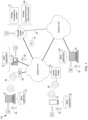
- FIG. 1 is a diagrammatic view of a storage system, a storage awareness service failover process and a storage management process coupled to a distributed computing network;
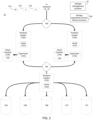
- FIG. 2 is a diagrammatic view of the storage system of FIG. 1 according to one or more embodiments of the present disclosure
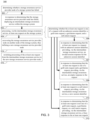
- FIG. 3 is a flow chart of the storage awareness service failover process of FIG. 1 according to one or more embodiments of the present disclosure
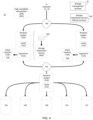
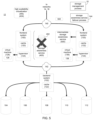
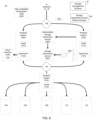
- FIGS. 4 - 6 are diagrammatic views of the storage awareness service failover process of FIG. 1 according to one or more embodiments of the present disclosure.
- storage management process 10 may reside on and may be executed by storage system 12 , which may be connected to network 14 (e.g., the Internet or a local area network).
- network 14 e.g., the Internet or a local area network.
- Examples of storage system 12 may include, but are not limited to: a Network Attached Storage (NAS) system, a Storage Area Network (SAN), a personal computer with a memory system, a server computer with a memory system, and a cloud-based device with a memory system.
- NAS Network Attached Storage
- SAN Storage Area Network
- a SAN may include one or more of a personal computer, a server computer, a series of server computers, a mini computer, a mainframe computer, a RAID device and a NAS system.
- the various components of storage system 12 may execute one or more operating systems, examples of which may include but are not limited to: Microsoft Windows ServerTM; Redhat LinuxTM, Unix, or a custom operating system, for example.
- Storage device 16 may include but is not limited to: a hard disk drive; a tape drive; an optical drive; a RAID device; a random access memory (RAM); a read-only memory (ROM); and all forms of flash memory storage devices.
- Network 14 may be connected to one or more secondary networks (e.g., network 18 ), examples of which may include but are not limited to: a local area network; a wide area network; or an intranet, for example.
- secondary networks e.g., network 18
- networks may include but are not limited to: a local area network; a wide area network; or an intranet, for example.
- IO requests may be sent from client applications 22 , 24 , 26 , 28 to storage system 12 .
- Examples of IO request 20 may include but are not limited to data write requests (i.e. a request that content be written to storage system 12 ) and data read requests (i.e. a request that content be read from storage system 12 ).
- the instruction sets and subroutines of client applications 22 , 24 , 26 , 28 which may be stored on storage devices 30 , 32 , 34 , 36 (respectively) coupled to client electronic devices 38 , 40 , 42 , 44 (respectively), may be executed by one or more processors (not shown) and one or more memory architectures (not shown) incorporated into client electronic devices 38 , 40 , 42 , 44 (respectively).
- Storage devices 30 , 32 , 34 , 36 may include but are not limited to: hard disk drives; tape drives; optical drives; RAID devices; random access memories (RAM); read-only memories (ROM), and all forms of flash memory storage devices.
- client electronic devices 38 , 40 , 42 , 44 may include, but are not limited to, personal computer 38 , laptop computer 40 , smartphone 42 , notebook computer 44 , a server (not shown), a data-enabled, cellular telephone (not shown), and a dedicated network device (not shown).
- Users 46 , 48 , 50 , 52 may access storage system 12 directly through network 14 or through secondary network 18 . Further, storage system 12 may be connected to network 14 through secondary network 18 , as illustrated with link line 54 .
- the various client electronic devices may be directly or indirectly coupled to network 14 (or network 18 ).
- personal computer 38 is shown directly coupled to network 14 via a hardwired network connection.
- notebook computer 44 is shown directly coupled to network 18 via a hardwired network connection.
- Laptop computer 40 is shown wirelessly coupled to network 14 via wireless communication channel 56 established between laptop computer and wireless access point (i.e., WAP) 58 , which is shown directly coupled to network 14 .
- WAP 58 may be, for example, an IEEE 802.11a, 802.11b, 802.11g, 802.11n, Wi-Fi, and/or Bluetooth device that is capable of establishing wireless communication channel 56 between laptop computer 40 and WAP 58.
- Smartphone 42 is shown wirelessly coupled to network 14 via wireless communication channel 60 established between smartphone 42 and cellular network/bridge 62 , which is shown directly coupled to network 14 .
- Client electronic devices 38 , 40 , 42 , 44 may each execute an operating system, examples of which may include but are not limited to Microsoft WindowsTM, Apple MacintoshTM, Redhat LinuxTM, or a custom operating system.
- storage system 12 will be described as being a network-based storage system that includes a plurality of backend storage devices.
- this is for illustrative purposes only and is not intended to be a limitation of this disclosure, as other configurations are possible and are considered to be within the scope of this disclosure.
- data storage system 12 may include frontend system 100 , backend system 102 and a plurality of storage targets (e.g. storage targets 104 , 106 , 108 , 110 , 112 ).
- Storage targets 104 , 106 , 108 , 110 , 112 may be configured to provide various levels of performance and/or high availability.
- one or more of storage targets 104 , 106 , 108 , 110 , 112 may be configured as a RAID 0 array, in which data is striped across storage targets.
- RAID 0 arrays do not provide a level of high availability.
- one or more of storage targets 104 , 106 , 108 , 110 , 112 may be configured as a RAID 1 array, in which data is mirrored between storage targets. By mirroring data between storage targets, a level of high availability is achieved as multiple copies of the data are stored within storage system 12 .
- storage targets 104 , 106 , 108 , 110 , 112 are discussed above as being configured in a RAID 0 or RAID 1 array, this is for illustrative purposes only and is not intended to be a limitation of this disclosure, as other configurations are possible.
- storage targets 104 , 106 , 108 , 110 , 112 may be configured as a RAID 3, RAID 4, RAID 5, RAID 6 or RAID 7 array.
- storage targets 104 , 106 , 108 , 110 , 112 need not be limited to any type of RAID systems, as other configurations are possible and are considered to be within the scope of this disclosure.
- storage targets 104 , 106 , 108 , 110 , 112 may be configured as e.g., scale-out SANs (such as VMWare vSANTM and Dell EMC Scale IOTM).
- storage system 12 is shown to include five storage targets (e.g. storage targets 104 , 106 , 108 , 110 , 112 ), this is for illustrative purposes only and is not intended to be a limitation of this disclosure. Specifically, the actual number of storage targets may be increased or decreased depending upon e.g. the level of redundancy/performance/capacity required.
- One or more of storage targets 104 , 106 , 108 , 110 , 112 may be configured to store coded data, wherein such coded data may allow for the regeneration of data lost/corrupted on one or more of storage targets 104 , 106 , 108 , 110 , 112 .
- Examples of such coded data may include but is not limited to parity data and Reed-Solomon data.
- Such coded data may be distributed across all of storage targets 104 , 106 , 108 , 110 , 112 or may be stored within a specific storage device.
- Examples of storage targets 104 , 106 , 108 , 110 , 112 may include one or more electro-mechanical hard disk drives and/or solid-state/flash devices.
- Storage system 12 may execute all or a portion of storage management process 10 .
- the instruction sets and subroutines of storage management process 10 which may be stored on a storage device (e.g., storage device 16 ) coupled to frontend system 100 and/or backend system 102 , may be executed by one or more processors (not shown) and one or more memory architectures (not shown) included within frontend system 100 and/or backend system 102 .
- Storage device 16 may include but is not limited to: a hard disk drive; a RAID device; random access memory (RAM); read-only memory (ROM); and all forms of flash memory storage devices.
- IO requests may be generated. For example, these IO requests may be sent from client applications 22 , 24 , 26 , 28 to storage system 12 . Additionally/alternatively and when frontend system 100 is configured as an application server, these IO requests may be internally generated within frontend system 100 . Examples of IO request 20 may include but are not limited to data write request 114 (i.e. a request that content 116 be written to storage system 12 ) and data read request 118 (i.e. a request that content 116 be read from storage system 12 ).
- frontend system 100 content 116 to be written to storage system 12 may be processed by frontend system 100 . Additionally/alternatively and when frontend system 100 is configured as an application server, content 116 to be written to storage system 12 may be internally generated by frontend system 100 .
- Frontend system 100 may include frontend cache memory system 120 .
- frontend cache memory system 120 may include but are not limited to a volatile, solid-state, cache memory system (e.g., a dynamic RAM cache memory system) and/or a non-volatile, solid-state, cache memory system (e.g., a flash-based, cache memory system).
- Frontend system 100 may initially store content 116 within frontend cache memory system 120 . Depending upon the manner in which frontend cache memory system 120 is configured, frontend system 100 may immediately provide content 116 to backend system 102 (if frontend cache memory system 120 is configured as a write-through cache) or may subsequently provide content 116 to backend system 102 (if frontend cache memory system 120 is configured as a write-back cache).
- Backend system 102 may include backend cache memory system 122 .
- backend cache memory system 122 may include but are not limited to a volatile, solid-state, cache memory system (e.g., a dynamic RAM cache memory system) and/or a non-volatile, solid-state, cache memory system (e.g., a flash-based, cache memory system).
- content 116 to be written to storage targets 104 , 106 , 108 , 110 , 112 may be received from frontend system 100 .
- Backend system 112 may initially store content 116 within backend cache memory system 122 prior to being stored on e.g. one or more of storage targets 104 , 106 , 108 , 110 , 112 .
- Frontend system 100 may include and/or execute a hypervisor (e.g., hypervisor 124 ) that may allow for the execution of one or more virtual machines (e.g., virtual machine 126 ).
- a hypervisor e.g., hypervisor 124
- the hypervisor e.g., hypervisor 124
- the hypervisor may present and manage a guest operating system on a virtual operating platform. Therefore, multiple instantiations of a variety of operating systems may be effectuated on shared hardware resources. For example, LinuxTM, WindowsTM, and MacTM operating system instantiations may all run on a single physical x86 system.
- frontend system 100 may be a Dell EMC PowerStore infrastructure platform developed by Dell EMC of Hopkinton, Massachusetts.
- PowerStore may provide a storage system with VMware vSphere built-in.
- vSphere is a virtualization storage platform.
- frontend system 100 may include or deploy a VMware ESXiTM hypervisor developed by VMware, Inc. of Palo Alto, California.
- ESXi is an enterprise-class, type-1 hypervisor developed by VMware for deploying and serving virtual machines. In this manner, frontend system 100 may be referred to as an ESXi host.
- ESXi ESXi host.
- examples have been provided of an ESXi and other virtualization products from VMware, it will be appreciated that these are for example purposes only and that any type of virtualization components may be used within the scope of the present disclosure.
- virtual machine 126 may be an emulation of a physical computer system.
- virtual machine 126 may be configured to provide the functionality of a WindowsTM based computing system and may allow for the execution of Windows-based application 128
- another virtual machine may be configured to provide the functionality of a LinuxTM based computing system and may allow for the execution of a Linux-based application.
- hypervisor 124 is shown with one virtual machine (e.g., virtual machine 126 ), it will be appreciated that hypervisor 124 may create and run any number of virtual machines within the scope of the present disclosure.
- Frontend system 100 and/or backend system 102 may include one or more physical hardware components (not shown) that may be configurable by hypervisor 124 to form virtual machines (e.g., virtual machines 126 ).
- these physical hardware components may include but are not limited to: hard drives (e.g., storage targets 104 , 106 , 108 , 110 , 112 ), RAID arrays (e.g., formed by storage targets 104 , 106 , 108 , 110 , 112 ), host bus adapters, network controllers, network systems and components, processor cores, cache memory architectures (e.g., frontend cache memory system 120 and/or backend cache memory system 122 ), volatile memory architectures, and persistent memory architectures. Accordingly and when virtual machine 126 is executed on hypervisor 124 , various portions of these physical hardware components may be assigned to/mapped to virtual machine 126 .
- frontend system 130 may include additional frontend systems (e.g., frontend system 130 ) that may be configured in a manner similar to frontend system 100 . Therefore, frontend system 130 may include a frontend cache system (e.g., frontend cache 132 ) and may include and/or execute a hypervisor (e.g., hypervisor 134 ) that may allow for the execution of one or more virtual machines (e.g., virtual machine 136 ), which may run applications (e.g., application 138 ). While an example with two frontend systems has been described above, it will be appreciated that any number of frontend systems may be used within the scope of the present disclosure.
- a frontend cache system e.g., frontend cache 132
- hypervisor e.g., hypervisor 134
- the various components of storage system 12 may be interconnected with (and may communicate through) one or more communication networks (e.g., networks 140 , 142 ).
- SAS Storage Awareness Service
- the instruction sets and subroutines of storage awareness service (SAS) failover process 144 which may be stored on a storage device (e.g., storage device 16 ) coupled to frontend system 100 , frontend system 130 , and/or backend system 102 , may be executed by one or more processors (not shown) and one or more memory architectures (not shown) included within frontend system 100 , frontend system 130 , and/or backend system 102 .
- SAS storage awareness service
- SAS failover process 144 may determine 300 whether a storage awareness service provider node of a storage system has failed. In response to determining that the storage awareness service provider node has failed, an intermediate storage awareness service may be deployed 302 within the storage system. At least one request may be processed 304 on the storage system via the intermediate storage awareness service.
- Implementations of the present disclosure may generally allow for minimal delays in storage awareness service (SAS) failover from one storage node to another.
- SAS storage awareness service
- many modern storage systems are configured to support virtualized storage components (i.e., virtual storage appliances, virtual machines, etc.).
- virtualized storage components i.e., virtual storage appliances, virtual machines, etc.
- various storage awareness services are used.
- the availability of such storage awareness services defines the overall availability the storage system for its clients.
- conventional failover processes may eventually recover the functionality of the storage awareness service, periods of time without storage awareness services may be prolonged by predefined status reporting constraints associated with particular vendors.
- SAS failover process 144 may provide limited functionality via an intermediate storage awareness service to process storage awareness requests while full storage awareness services are restored. In this manner, SAS failover process 144 may minimize failover downtime when a storage awareness service provider is unavailable.
- SAS failover process 144 may determine 300 whether a storage awareness service provider node of a storage system has failed.
- a virtualized storage system may include one or more storage nodes (e.g., frontend systems 100 , 130 ) with one or more hypervisors (e.g., hypervisors 124 , 134 ).
- the one or more hypervisors may include ESXi hypervisors.
- each of the storage nodes e.g., frontend systems 100 , 130
- ESXi hosts configured to deploy one or more virtual machines (e.g., virtual machines 126 , 136 ).
- the virtualized storage system may be configured as a VMware vSphere virtualization platform.
- the vSphere virtualization platform includes one or more ESXi hosts configured to deploy and manage a plurality of virtual machines.
- the virtualized storage system may include a storage awareness service (e.g., storage awareness service 400 ) configured to manage the virtualized storage components within the virtualized storage system.
- the storage awareness service (e.g., storage awareness service 400 ) may be deployed on a storage node (e.g., frontend system 100 ).
- a storage node e.g., frontend system 100
- a storage awareness service provider node within the scope of the present disclosure.
- frontend system 100 may be referred to as a storage awareness service provider node.
- the storage awareness service may include, but is not limited to, the VMware API for Storage Awareness (VASA).
- the virtualized storage system may include the VMware vSphere virtualization storage platform.
- VASA is a software component that acts as a storage awareness service for the vSphere virtualization storage platform.
- a storage node e.g., frontend system 100
- a storage awareness service e.g., storage awareness service 400
- a VASA provider within the scope of the present disclosure.
- the VASA services of a VASA provider may be a part of the storage system management stack (e.g., storage system management stack 402 ) of a storage node (e.g., frontend system 100 ). While the example of VASA has been provided for the storage awareness service, it will be appreciated that other types of storage awareness services may be used within the scope of the present disclosure.
- SAS failover process 144 may provide storage awareness services (e.g., storage awareness service 400 ) to a high availability (HA) virtualization utility (e.g., HA virtualization utility 404 ).
- the high availability virtualization utility e.g., HA virtualization utility 404
- the high availability virtualization utility may be configured to monitor storage nodes and virtual machines to detect hardware and guest operating system failures; restart virtual machines on other storage nodes without manual intervention when a storage node outage is detected; and reduce application downtime by automatically restarting virtual machines upon detection of an operating system failure.
- the high availability virtualization utility e.g., HA virtualization utility 404
- other high availability virtualization utilities may be used within the scope of the present disclosure.
- the high availability virtualization utility (e.g., HA virtualization utility 404 ) may be configured to determine when a storage node has failed.
- the HA virtualization utility (e.g., HA virtualization utility 404 ) may include various predefined timeout periods between successful commands or requests on the storage system to indicate a storage node failure.
- the state of a storage awareness service provider node (e.g., a VASA provider) may defined by a e.g., 60 second timeout from the last successful command. When the e.g., 60 second timer expires, the VASA provider state may be redefined as unhealthy.
- the high availability virtualization utility may include a failover timeout in response to identifying a storage node failure.
- the HA virtualization utility e.g., HA virtualization utility 404
- the HA virtualization utility may wait e.g., 120 seconds based on a predefined timeout period before determining whether a new storage awareness service provider node is operational.
- conventional failover approaches may require at least e.g., 180 seconds before the HA virtualization utility (e.g., HA virtualization utility 404 ) determines that the storage awareness service is recovered on another node.
- availability of a storage awareness service provider e.g., a VASA provider
- SAS failover process 144 may provide or deploy 302 an intermediate storage awareness service provider to prevent the HA virtualization utility (e.g., HA virtualization utility 404 ) from determining that the storage awareness service provider node has failed. In this manner, SAS failover process 144 may avoid the predefined, unchangeable timeout periods of the HA virtualization utility (e.g., HA virtualization utility 404 ) from further delaying storage awareness service failover.
- a storage node e.g., frontend system 100
- a storage system management stack e.g., storage system management stack 402
- storage awareness service e.g., storage awareness service 400
- frontend system 100 may be referred to as a storage awareness service provider node as frontend system 100 is providing storage awareness service 400 .
- frontend system 100 becomes unavailable (e.g., in response to a loss of power, a failure within frontend system 100 , and/or a request to shut down frontend system 100 ).
- SAS failover process 144 may utilize various monitoring services and/or systems to determine that frontend system 100 has failed (e.g., become unavailable).
- SAS failover process 144 may, in response to determining 300 that the storage awareness service provider node has failed, deploy 302 an intermediate storage awareness service within the storage system.
- An intermediate storage awareness service (e.g., intermediate storage awareness service 500 ) may generally include a limited instantiation of storage awareness service 400 that is configured to perform a subset of the functions of storage awareness service.
- the intermediate storage awareness service (e.g., intermediate storage awareness service 500 ) may be configured to provide the minimal protocol-required functionality to make the associated client(s) consider storage components to be available.
- Deploying 302 the intermediate storage awareness service may include deploying the intermediate storage awareness service (e.g., intermediate storage awareness service 500 ) via another node of the storage system (e.g., frontend system 130 ) and/or via a separate computing device within the storage system.
- the intermediate storage awareness service (e.g., intermediate storage awareness service 500 ) may be configured to initialize quickly to process requests from various virtual machines and/or from the high availability virtualization utility (e.g., HA virtualization utility 404 ).
- SAS failover process 144 may process 304 , via the intermediate storage awareness service, at least one request on the storage system. For example and as discussed above, when deploying various virtual machines (e.g., virtual machine 126 ) on a functioning storage node (e.g., frontend system 100 ), the storage node may generate and/or relay requests from the virtual machines deployed on the storage node to the storage awareness service also deployed on that storage node.
- various virtual machines e.g., virtual machine 126
- a functioning storage node e.g., frontend system 100
- the storage node may generate and/or relay requests from the virtual machines deployed on the storage node to the storage awareness service also deployed on that storage node.
- SAS failover process 144 may process 304 , via the storage awareness service (e.g., storage awareness service 400 ) on the storage awareness service provider node (e.g., frontend system 100 ), requests (e.g., request 502 ) from various virtual machines on various storage nodes and/or the HA virtualization utility (e.g., HA virtualization utility 404 ).
- the storage awareness service e.g., storage awareness service 400
- the storage awareness service provider node e.g., frontend system 100
- requests e.g., request 502
- the HA virtualization utility e.g., HA virtualization utility 404
- requests e.g., request 502
- the HA virtualization utility e.g., HA virtualization utility 404
- the intermediate storage awareness service e.g., intermediate storage awareness service 500
- At least one request on the storage system may include determining 306 whether the at least one request is one of a request with an unknown session identifier; getEvents request; a getAlarms request; and a setContext request.
- the at least one request e.g., request 502
- the at least one request may include a request to obtain an event (e.g., getEvents as defined for VASA); a request to obtain an alarm (e.g., getAlarms as defined for VASA); and/or a request to set the session context (e.g., setContext as defined for VASA).
- SAS failover process 144 may provide specific responses, via the intermediate storage awareness service (e.g., intermediate storage awareness service 500 ), for specific types of requests (e.g., a getEvents request, a getAlarms request, and/or a setContext request). In this manner, SAS failover process 144 may determine 306 the request type and provide a particular type of response to that determined request in order to avoid having a HA virtualization utility (e.g., HA virtualization utility 404 ) determine that the storage awareness service provider node is unhealthy and extending the failover recovery time of the virtualized storage system.
- a HA virtualization utility e.g., HA virtualization utility 404
- SAS failover process 144 may provide 307 , via the intermediate storage awareness service, an invalid session response for the unknown session identifier.
- a client e.g., an ESXi host, a HA virtualization utility, and/or another computing device
- the request may include a session identifier specific to a particular storage awareness service provider (e.g., a VASA provider).
- the storage awareness service provider node e.g., frontend system 100
- the previous session identifier may be unknown to the intermediate storage awareness service (e.g., intermediate storage awareness service 500 ).
- SAS failover process 144 may provide 307 , via the intermediate storage awareness service, an invalid session response for the unknown session identifier. As will be discussed in greater detail below, when an invalid session response is returned to the client, the client may attempt to initiate a new session by sending a setContext request.
- SAS failover process 144 may provide 308 , via the intermediate storage awareness service, an empty response to the at least one request. For example, suppose the request (e.g., request 502 ) is a getEvents request. As is known in the art, a getEvents request causes the storage awareness service provider to respond with any event information since the previous request.
- SAS failover process 144 may provide 308 , via the intermediate storage awareness service, an empty response to the getEvents request. In this manner, the HA virtualization utility (e.g., HA virtualization utility 404 ) may not timeout and further delay the failover recovery time of the virtualized storage system.
- the HA virtualization utility e.g., HA virtualization utility 404
- the request (e.g., request 502 ) is a getEvents request.
- a getAlarms request causes the storage awareness service provider to respond with any alarm information since the previous request.
- SAS failover process 144 may provide 308 , via the intermediate storage awareness service, an empty response to the getAlarms request. In this manner, the HA virtualization utility (e.g., HA virtualization utility 404 ) may not timeout and further delay the failover recovery time of the virtualized storage system.
- SAS failover process 144 may provide 310 , via the intermediate storage awareness service, a new session identifier.
- a new session identifier For example, suppose that the request (e.g., request 502 ) is a setContext request.
- a setContext request causes the storage awareness service provider to respond with a new session identifier.
- the request may include a session identifier specific to a particular storage awareness service provider (e.g., a VASA provider).
- the previous session identifier may be unknown to the intermediate storage awareness service (e.g., intermediate storage awareness service 500 ).
- SAS failover process 144 may provide 310 , via the intermediate storage awareness service (e.g., intermediate storage awareness service 500 ), a new session identifier.
- the intermediate storage awareness service e.g., intermediate storage awareness service 500
- SAS failover process 144 may provide a new session identifier to initiate a new session between the requesting device (e.g., an ESXi host, a HA virtualization utility, and/or another computing device) and the intermediate storage awareness service (e.g., intermediate storage awareness service 500 ).
- the HA virtualization utility e.g., HA virtualization utility 404
- SAS failover process 144 may provide 312 , via the intermediate storage awareness service, a busy response to the at least one request. For example, for other requests (e.g., other than a getEvents request, a getAlarms request, and/or a setContext request), SAS failover process 144 may provide 312 , via the intermediate storage awareness service (e.g., intermediate storage awareness service 500 ) a busy response to the at least one request (e.g., request 502 ).
- the intermediate storage awareness service e.g., intermediate storage awareness service 500
- SAS failover process 144 may provide 312 , via the intermediate storage awareness service (e.g., intermediate storage awareness service 500 ) a “VASA BUSY” response. Accordingly, SAS failover process 144 may provide 312 busy responses to ensure that the HA virtualization utility (e.g., HA virtualization utility 404 ) does not timeout and further delay the failover recovery time of the virtualized storage system.
- the HA virtualization utility e.g., HA virtualization utility 404
- SAS failover process 144 may recover 314 the storage awareness service provider node on another node of the storage system, thus defining a new storage awareness service provider node.
- SAS failover process 144 may failover the storage system stack (e.g., storage system stack 600 ) from the failed storage awareness service provider node (e.g., frontend system 100 ) to another node (e.g., frontend system 130 ), thus defining a new storage awareness service provider node (e.g., with storage system stack 600 and storage awareness services 602 operating on frontend system 130 ).
- SAS failover process 144 may switch 316 processing of the at least one request from the intermediate storage awareness service to the new storage awareness service provider node. For example, SAS failover process 144 may switch 316 processing of requests from the intermediate storage awareness service (e.g., intermediate storage awareness service 500 ) to the new storage awareness provider node (e.g., frontend system 130 with storage awareness service 602 ) when the new storage awareness provider node (e.g., frontend system 130 with storage awareness service 306 ) is ready to handle incoming requests.
- the intermediate storage awareness service e.g., intermediate storage awareness service 500
- the new storage awareness provider node e.g., frontend system 130 with storage awareness service 602
- the new storage awareness provider node e.g., frontend system 130 with storage awareness service 306
- switching 316 processing of the at least one request from the intermediate storage awareness service to the new storage awareness service provider node may include providing a new session identifier as requested (e.g., in response to a setContext request). In this manner, no data may be shared between the intermediate storage awareness service (e.g., intermediate storage awareness service 500 ) and the new storage awareness service (e.g., storage awareness service 602 ).
- the intermediate storage awareness service e.g., intermediate storage awareness service 500
- the new storage awareness service e.g., storage awareness service 602
- SAS failover process 144 may deactivate or otherwise disable the intermediate storage awareness service (e.g., intermediate storage awareness service 500 ).
- the present disclosure may be embodied as a method, a system, or a computer program product. Accordingly, the present disclosure may take the form of an entirely hardware embodiment, an entirely software embodiment (including firmware, resident software, micro-code, etc.) or an embodiment combining software and hardware aspects that may all generally be referred to herein as a “circuit,” “module” or “system.” Furthermore, the present disclosure may take the form of a computer program product on a computer-usable storage medium having computer-usable program code embodied in the medium.
- the computer-usable or computer-readable medium may be, for example but not limited to, an electronic, magnetic, optical, electromagnetic, infrared, or semiconductor system, apparatus, device, or propagation medium. More specific examples (a non-exhaustive list) of the computer-readable medium may include the following: an electrical connection having one or more wires, a portable computer diskette, a hard disk, a random access memory (RAM), a read-only memory (ROM), an erasable programmable read-only memory (EPROM or Flash memory), an optical fiber, a portable compact disc read-only memory (CD-ROM), an optical storage device, a transmission media such as those supporting the Internet or an intranet, or a magnetic storage device.
- the computer-usable or computer-readable medium may also be paper or another suitable medium upon which the program is printed, as the program can be electronically captured, via, for instance, optical scanning of the paper or other medium, then compiled, interpreted, or otherwise processed in a suitable manner, if necessary, and then stored in a computer memory.
- a computer-usable or computer-readable medium may be any medium that can contain, store, communicate, propagate, or transport the program for use by or in connection with the instruction execution system, apparatus, or device.
- the computer-usable medium may include a propagated data signal with the computer-usable program code embodied therewith, either in baseband or as part of a carrier wave.
- the computer usable program code may be transmitted using any appropriate medium, including but not limited to the Internet, wireline, optical fiber cable, RF, etc.
- Computer program code for carrying out operations of the present disclosure may be written in an object oriented programming language such as Java, Smalltalk, C++ or the like. However, the computer program code for carrying out operations of the present disclosure may also be written in conventional procedural programming languages, such as the “C” programming language or similar programming languages.
- the program code may execute entirely on the user's computer, partly on the user's computer, as a stand-alone software package, partly on the user's computer and partly on a remote computer or entirely on the remote computer or server. In the latter scenario, the remote computer may be connected to the user's computer through a local area network/a wide area network/the Internet (e.g., network 14 ).
- These computer program instructions may also be stored in a computer-readable memory that may direct a computer or other programmable data processing apparatus to function in a particular manner, such that the instructions stored in the computer-readable memory produce an article of manufacture including instruction means which implement the function/act specified in the flowchart and/or block diagram block or blocks.
- the computer program instructions may also be loaded onto a computer or other programmable data processing apparatus to cause a series of operational steps to be performed on the computer or other programmable apparatus to produce a computer implemented process such that the instructions which execute on the computer or other programmable apparatus provide steps for implementing the functions/acts specified in the flowchart and/or block diagram block or blocks.
- each block in the flowchart or block diagrams may represent a module, segment, or portion of code, which comprises one or more executable instructions for implementing the specified logical function(s).
- the functions noted in the block may occur out of the order noted in the figures. For example, two blocks shown in succession may, in fact, be executed substantially concurrently, or the blocks may sometimes be executed in the reverse order, depending upon the functionality involved.
Landscapes
- Engineering & Computer Science (AREA)
- Theoretical Computer Science (AREA)
- Quality & Reliability (AREA)
- Physics & Mathematics (AREA)
- General Engineering & Computer Science (AREA)
- General Physics & Mathematics (AREA)
- Computer Networks & Wireless Communication (AREA)
- Signal Processing (AREA)
- Computer Security & Cryptography (AREA)
- Information Retrieval, Db Structures And Fs Structures Therefor (AREA)
- Hardware Redundancy (AREA)
Abstract
Description
Claims (20)
Applications Claiming Priority (2)
| Application Number | Priority Date | Filing Date | Title |
|---|---|---|---|
| RU2021130628 | 2021-10-21 | ||
| RU2021130628 | 2021-10-21 |
Publications (2)
| Publication Number | Publication Date |
|---|---|
| US20230126331A1 US20230126331A1 (en) | 2023-04-27 |
| US11977458B2 true US11977458B2 (en) | 2024-05-07 |
Family
ID=86056386
Family Applications (1)
| Application Number | Title | Priority Date | Filing Date |
|---|---|---|---|
| US17/722,512 Active US11977458B2 (en) | 2021-10-21 | 2022-04-18 | System and method for storage awareness service failover |
Country Status (1)
| Country | Link |
|---|---|
| US (1) | US11977458B2 (en) |
Citations (2)
| Publication number | Priority date | Publication date | Assignee | Title |
|---|---|---|---|---|
| US20140085480A1 (en) * | 2008-03-03 | 2014-03-27 | Videolq, Inc. | Content-aware computer networking devices with video analytics for reducing video storage and video communication bandwidth requirements of a video surveillance network camera system |
| US10678576B1 (en) * | 2015-06-30 | 2020-06-09 | EMC IP Holding Company LLC | Managing data storage migration for virtual machines |
-
2022
- 2022-04-18 US US17/722,512 patent/US11977458B2/en active Active
Patent Citations (2)
| Publication number | Priority date | Publication date | Assignee | Title |
|---|---|---|---|---|
| US20140085480A1 (en) * | 2008-03-03 | 2014-03-27 | Videolq, Inc. | Content-aware computer networking devices with video analytics for reducing video storage and video communication bandwidth requirements of a video surveillance network camera system |
| US10678576B1 (en) * | 2015-06-30 | 2020-06-09 | EMC IP Holding Company LLC | Managing data storage migration for virtual machines |
Also Published As
| Publication number | Publication date |
|---|---|
| US20230126331A1 (en) | 2023-04-27 |
Similar Documents
| Publication | Publication Date | Title |
|---|---|---|
| US8938643B1 (en) | Cloning using streaming restore | |
| US9354907B1 (en) | Optimized restore of virtual machine and virtual disk data | |
| US10353640B2 (en) | Seamless data migration in a clustered environment | |
| US8281071B1 (en) | Systems and methods for managing cluster node connectivity information | |
| US20120017031A1 (en) | Robust live migration using shared filesystem | |
| US20140173330A1 (en) | Split Brain Detection and Recovery System | |
| US9792150B1 (en) | Detecting site change for migrated virtual machines | |
| US10552268B1 (en) | Broken point continuous backup in virtual datacenter | |
| US9148479B1 (en) | Systems and methods for efficiently determining the health of nodes within computer clusters | |
| US10713129B1 (en) | System and method for identifying and configuring disaster recovery targets for network appliances | |
| US11169719B2 (en) | System and method for deploying multi-node virtual storage appliances | |
| KR20150111608A (en) | Method for duplication of virtualization server and Virtualization control apparatus thereof | |
| US11307899B2 (en) | System and method for validating virtual storage appliance deployment | |
| US11435955B1 (en) | System and method for offloading copy processing across non-volatile memory express (NVMe) namespaces | |
| US11675673B2 (en) | System and method for promoting fractured volumes | |
| US11513731B2 (en) | System and method for non-disruptive storage protocol conversion | |
| US10938703B1 (en) | Status monitoring system and method | |
| US11301156B2 (en) | Virtual disk container and NVMe storage management system and method | |
| US20130205006A1 (en) | Intelligent failover or shutdown of an application using input/output shipping in response to loss of connectivity to data storage in a cluster | |
| US9535806B1 (en) | User-defined storage system failure detection and failover management | |
| US20230126331A1 (en) | System and method for storage awareness service failover | |
| KR101618992B1 (en) | System for providing virtual desktop service, control method thereof, recording medium for recording program for executing the control method, application saved in the recording medium for executing the control method being combined with hardware | |
| US11615004B2 (en) | System and method for failure handling for virtual volumes across multiple storage systems | |
| US11740803B2 (en) | System and method for stretching storage protection configurations in a storage cluster | |
| US20120180066A1 (en) | Virtual tape library cluster |
Legal Events
| Date | Code | Title | Description |
|---|---|---|---|
| AS | Assignment |
Owner name: EMC IP HOLDING COMPANY, LLC, MASSACHUSETTS Free format text: ASSIGNMENT OF ASSIGNORS INTEREST;ASSIGNORS:KIRICHENKO, EVGENIY;ALEXEEV, SERGEY;BELIKOV, YAKOV;AND OTHERS;SIGNING DATES FROM 20211020 TO 20211022;REEL/FRAME:059621/0666 |
|
| FEPP | Fee payment procedure |
Free format text: ENTITY STATUS SET TO UNDISCOUNTED (ORIGINAL EVENT CODE: BIG.); ENTITY STATUS OF PATENT OWNER: LARGE ENTITY |
|
| STPP | Information on status: patent application and granting procedure in general |
Free format text: NON FINAL ACTION MAILED |
|
| STPP | Information on status: patent application and granting procedure in general |
Free format text: RESPONSE TO NON-FINAL OFFICE ACTION ENTERED AND FORWARDED TO EXAMINER |
|
| STPP | Information on status: patent application and granting procedure in general |
Free format text: NOTICE OF ALLOWANCE MAILED -- APPLICATION RECEIVED IN OFFICE OF PUBLICATIONS |
|
| STPP | Information on status: patent application and granting procedure in general |
Free format text: AWAITING TC RESP., ISSUE FEE NOT PAID |
|
| STPP | Information on status: patent application and granting procedure in general |
Free format text: NOTICE OF ALLOWANCE MAILED -- APPLICATION RECEIVED IN OFFICE OF PUBLICATIONS |
|
| STPP | Information on status: patent application and granting procedure in general |
Free format text: PUBLICATIONS -- ISSUE FEE PAYMENT VERIFIED |
|
| STCF | Information on status: patent grant |
Free format text: PATENTED CASE |
|
| CC | Certificate of correction |