US11939347B2 - 1′-cyano nucleoside analogs and uses thereof - Google Patents
1′-cyano nucleoside analogs and uses thereof Download PDFInfo
- Publication number
- US11939347B2 US11939347B2 US17/355,813 US202117355813A US11939347B2 US 11939347 B2 US11939347 B2 US 11939347B2 US 202117355813 A US202117355813 A US 202117355813A US 11939347 B2 US11939347 B2 US 11939347B2
- Authority
- US
- United States
- Prior art keywords
- compound
- alkyl
- pharmaceutically acceptable
- acceptable salt
- cycloalkyl
- Prior art date
- Legal status (The legal status is an assumption and is not a legal conclusion. Google has not performed a legal analysis and makes no representation as to the accuracy of the status listed.)
- Active, expires
Links
Classifications
-
- A—HUMAN NECESSITIES
- A61—MEDICAL OR VETERINARY SCIENCE; HYGIENE
- A61P—SPECIFIC THERAPEUTIC ACTIVITY OF CHEMICAL COMPOUNDS OR MEDICINAL PREPARATIONS
- A61P31/00—Antiinfectives, i.e. antibiotics, antiseptics, chemotherapeutics
- A61P31/12—Antivirals
-
- C—CHEMISTRY; METALLURGY
- C07—ORGANIC CHEMISTRY
- C07F—ACYCLIC, CARBOCYCLIC OR HETEROCYCLIC COMPOUNDS CONTAINING ELEMENTS OTHER THAN CARBON, HYDROGEN, HALOGEN, OXYGEN, NITROGEN, SULFUR, SELENIUM OR TELLURIUM
- C07F9/00—Compounds containing elements of Groups 5 or 15 of the Periodic Table
- C07F9/02—Phosphorus compounds
- C07F9/547—Heterocyclic compounds, e.g. containing phosphorus as a ring hetero atom
- C07F9/6561—Heterocyclic compounds, e.g. containing phosphorus as a ring hetero atom containing systems of two or more relevant hetero rings condensed among themselves or condensed with a common carbocyclic ring or ring system, with or without other non-condensed hetero rings
-
- A—HUMAN NECESSITIES
- A61—MEDICAL OR VETERINARY SCIENCE; HYGIENE
- A61K—PREPARATIONS FOR MEDICAL, DENTAL OR TOILETRY PURPOSES
- A61K31/00—Medicinal preparations containing organic active ingredients
- A61K31/66—Phosphorus compounds
- A61K31/675—Phosphorus compounds having nitrogen as a ring hetero atom, e.g. pyridoxal phosphate
-
- A—HUMAN NECESSITIES
- A61—MEDICAL OR VETERINARY SCIENCE; HYGIENE
- A61K—PREPARATIONS FOR MEDICAL, DENTAL OR TOILETRY PURPOSES
- A61K45/00—Medicinal preparations containing active ingredients not provided for in groups A61K31/00 - A61K41/00
- A61K45/06—Mixtures of active ingredients without chemical characterisation, e.g. antiphlogistics and cardiaca
-
- C—CHEMISTRY; METALLURGY
- C07—ORGANIC CHEMISTRY
- C07D—HETEROCYCLIC COMPOUNDS
- C07D487/00—Heterocyclic compounds containing nitrogen atoms as the only ring hetero atoms in the condensed system, not provided for by groups C07D451/00 - C07D477/00
- C07D487/02—Heterocyclic compounds containing nitrogen atoms as the only ring hetero atoms in the condensed system, not provided for by groups C07D451/00 - C07D477/00 in which the condensed system contains two hetero rings
- C07D487/04—Ortho-condensed systems
Definitions
- compositions and methods for treating viral infections for example Paramyxoviridae, Pneumoviridae, Picornaviridae, Flaviviridae, Filoviridae, Arenaviridae, Orthomyxovirus, and Coronaviridae infections.
- the present disclosure addresses these and other needs.
- the disclosure provides pharmaceutical compositions comprising a compound disclosed herein, or a pharmaceutically acceptable salt thereof.
- the disclosure provides methods of treating or preventing a viral infection in a human in need thereof, wherein the method comprises administering to the human a compound of the disclosure, or a pharmaceutically acceptable salt thereof.
- the disclosure provides methods for manufacturing a medicament for treating or preventing a viral infection in a human in need thereof, characterized in that a compound of the disclosure, or a pharmaceutically acceptable salt thereof, is used.
- the disclosure provides use of a compound of the disclosure, or a pharmaceutically acceptable salt thereof, for the manufacture of a medicament for the treatment or prevention of a viral infection in a human in need thereof.
- the invention relates generally to methods and compounds for treating or preventing viral infections, for example paramyxoviridae, pneumoviridae, picornaviridae, flaviviridae, filoviridae, arenaviridae, orthomyxovirus, and coronaviridae (including but not limited to MERS, SARS, and SARS-CoV-2) infections.
- viral infections for example paramyxoviridae, pneumoviridae, picornaviridae, flaviviridae, filoviridae, arenaviridae, orthomyxovirus, and coronaviridae (including but not limited to MERS, SARS, and SARS-CoV-2) infections.
- a compound of the disclosure or “a compound of Formula I” means a compound of Formula I, or a pharmaceutically acceptable salt, thereof.
- a compound of Formula (number) means a compound of that formula and pharmaceutically acceptable salts thereof.
- Alkyl refers to an unbranched or branched saturated hydrocarbon chain.
- an alkyl group can have 1 to 20 carbon atoms (i.e, C 1 -C 20 alkyl), 1 to 8 carbon atoms (i.e., C 1 -C 8 alkyl), 1 to 6 carbon atoms (i.e., C 1 -C 6 alkyl), or 1 to 3 carbon atoms (i.e., C 1 -C 3 alkyl).
- alkyl groups include, but are not limited to, methyl (Me, —CH 3 ), ethyl (Et, —CH 2 CH 3 ), 1-propyl (n-Pr, n-propyl, —CH 2 CH 2 CH 3 ), 2-propyl (i-Pr, i-propyl, —CH(CH 3 ) 2 ), 1-butyl (n-Bu, n-butyl, —CH 2 CH 2 CH 2 CH 3 ), 2-methyl-1-propyl (i-Bu, i-butyl, —CH 2 CH(CH 3 ) 2 ), 2-butyl (s-Bu, s-butyl, —CH(CH 3 )CH 2 CH 3 ), 2-methyl-2-propyl (t-Bu, t-butyl, —C(CH 3 ) 3 ), 1-pentyl (n-pentyl, —CH 2 CH 2 CH 2 CH 3 ), 2-pentyl (—CH(CH 3 )
- Alkoxy means a group having the formula —O-alkyl, in which an alkyl group, as defined above, is attached to the parent molecule via an oxygen atom.
- the alkyl portion of an alkoxy group can have 1 to 20 carbon atoms (i.e., C 1 -C 20 alkoxy), 1 to 12 carbon atoms (i.e., C 1 -C 12 alkoxy), 1 to 8 carbon atoms (i.e., C 1 -C 8 alkoxy), 1 to 6 carbon atoms (i.e., C 1 -C 6 alkoxy) or 1 to 3 carbon atoms (i.e., C 1 -C 3 alkoxy).
- alkoxy groups include, but are not limited to, methoxy (—O—CH 3 or —OMe), ethoxy (—OCH 2 CH 3 or —OEt), t-butoxy (—O—C(CH 3 ) 3 or —OtBu) and the like.
- Haloalkyl is an alkyl group, as defined above, in which one or more hydrogen atoms of the alkyl group is replaced with a halogen atom.
- the alkyl portion of a haloalkyl group can have 1 to 20 carbon atoms (i.e., C 1 -C 20 haloalkyl), 1 to 12 carbon atoms (i.e., C 1 -C 12 haloalkyl), 1 to 8 carbon atoms (i.e., C 1 -C 8 haloalkyl), 1 to 6 carbon atoms (i.e., C 1 -C 6 haloalkyl) or 1 to 3 carbon atoms (i.e., C 1 -C 3 haloalkyl).
- suitable haloalkyl groups include, but are not limited to, —CF 3 , —CHF 2 , —CFH 2 , —CH 2 CF 3 , and the like.
- Aryl means an aromatic hydrocarbon radical derived by the removal of one hydrogen atom from a single carbon atom of a parent aromatic ring system.
- an aryl group can have 6 to 20 carbon atoms, 6 to 14 carbon atoms, or 6 to 10 carbon atoms.
- Typical aryl groups include, but are not limited to, radicals derived from benzene (e.g., phenyl), substituted benzene, naphthalene, anthracene, biphenyl, and the like.
- Cycloalkyl refers to a saturated or partially saturated cyclic alkyl group having a single ring or multiple rings including fused, bridged, and spiro ring systems.
- cycloalkyl has from 3 to 20 ring carbon atoms (i.e., C 3-20 cycloalkyl), 3 to 12 ring carbon atoms (i.e., C 3-12 cycloalkyl), 3 to 10 ring carbon atoms (i.e., C 3-10 cycloalkyl), 3 to 8 ring carbon atoms (i.e., C 3-8 cycloalkyl), or 3 to 6 ring carbon atoms (i.e., C 3-6 cycloalkyl).
- Examples of cycloalkyl groups include cyclopropyl, cyclobutyl, cyclopentyl, cyclohexyl, cycloheptyl, and cyclooctyl.
- Heterocycle or “heterocyclyl” refer to a saturated or unsaturated cyclic alkyl group, with one or more ring heteroatoms independently selected from nitrogen, oxygen and sulfur.
- a heterocycloalkyl may be a single ring or multiple rings wherein the multiple rings may be fused, bridged, or spiro.
- heterocyclyl has 3 to 20 ring atoms (i.e., 3 to 20 membered heterocyclyl), 3 to 12 ring atoms (i.e., 3 to 12 membered heterocyclyl), 3 to 10 ring atoms (i.e., 3 to 10 membered heterocyclyl), 3 to 8 ring atoms (i.e., 3 to 8 membered heterocyclyl), 4 to 12 ring carbon atoms (i.e., 4 to 12 membered heterocyclyl), 4 to 8 ring atoms (i.e., 4 to 8 membered heterocyclyl), or 4 to 6 ring atoms (i.e., 4 to 6 membered heterocyclyl).
- heterocyclyl groups include pyrrolidinyl, piperidinyl, piperazinyl, oxetanyl, dioxolanyl, azetidinyl, and morpholinyl.
- optionally substituted in reference to a particular moiety of the compound of Formula I (e.g., an optionally substituted aryl group) refers to a moiety wherein all substituents are hydrogen or wherein one or more of the hydrogens of the moiety may be replaced by the listed substituents.
- the carbon atoms of the compounds of Formula I are intended to have a valence of four. If in some chemical structure representations, carbon atoms do not have a sufficient number of variables attached to produce a valence of four, the remaining carbon substituents needed to provide a valence of four should be assumed to be hydrogen.
- treating means reversing, alleviating, inhibiting the progress of, or preventing the disorder or condition to which such term applies, or one or more symptoms of such disorder or condition.
- treatment refers to the act of treating, as “treating” is defined immediately above.
- terapéuticaally effective amount is the amount of compound of Formula I present in a composition described herein that is needed to provide a desired level of drug in the secretions and tissues of the airways and lungs, or alternatively, in the bloodstream of a subject to be treated to give an anticipated physiological response or desired biological effect when such a composition is administered by the chosen route of administration.
- adjacent carbons refers to consecutive carbons atoms that are directly attached to each other. For example, in
- C 1 and C 2 are adjacent carbons
- C 2 and C 3 are adjacent carbons
- C 3 and C 4 are adjacent carbons
- C 4 and C 5 are adjacent carbons.
- C 1 and C 2 are adjacent carbons
- C 2 and C 3 are adjacent carbons
- C 3 and C 4 are adjacent carbons
- C 4 and C 5 are adjacent carbons
- C 5 and C 6 are adjacent carbons
- C 6 and C 1 are adjacent carbons.
- the compound of Formula I is a compound of Formula Ia:
- the compound of Formula I is a compound of Formula Ib:
- the Base is
- the Base is N-(2-aminoethyl)-2-aminoethyl-N-(2-aminoethyl)-2-aminoethyl-N-(2-aminoethyl)-2-aminoethyl-N-(2-aminoethyl)-2-aminoethyl-N-(2-aminoethyl)-2-aminoethyl
- the Base is N-(2-aminoethyl)-2-aminoethyl-N-(2-aminoethyl)-2-aminoethyl-N-(2-aminoethyl)-2-aminoethyl-N-(2-aminoethyl)-2-aminoethyl-N-(2-aminoethyl)-2-aminoethyl
- the compound of Formula I has a Formula II:
- the compound of Formula I, Ia or II has a Formula IIa:
- the compound of Formula I, Ib or II has a Formula IIb:
- R 3A is C 1 -C 6 alkyl optionally substituted with —OH or phenyl. In some embodiments, R 3A is C 1 -C 6 alkyl optionally substituted with —OH. In some embodiments of the, R 3A is C 1 -C 6 alkyl optionally substituted with a phenyl.
- R 3A is C 1 -C 3 alkyl optionally substituted with —OH or phenyl. In some embodiments, R 3A is C 1 -C 3 alkyl optionally substituted with —OH. In some embodiments of the, R 3A is C 1 -C 3 alkyl optionally substituted with a phenyl.
- R 3A is H or C 1 -C 6 alkyl. In some embodiments, R 3A is H or C 1 -C 3 alkyl. In some embodiments, R 3A is H. In some embodiments, R 3A is C 1 -C 6 alkyl. In some embodiments, R 3A is C 1 -C 3 alkyl. In some embodiments, R 3A is methyl.
- R 3B is H. In some embodiments, R 3B is C 1 -C 3 alkyl. In some embodiments, R 3B is methyl.
- both R 3A and R 3B are H.
- R 3A is C 1 -C 6 alkyl and R 3B is H.
- R 3A is C 1 -C 3 alkyl and R 3B is H.
- R 3A is methyl and R 3B is H.
- both R 3A and R 3B are C 1 -C 3 alkyl.
- both R 3A and R 3B are methyl.
- R 3A is a C 1 -C 6 alkyl optionally substituted with —OH or phenyl
- R 3B is a H.
- R 3A is a C 1 -C 3 alkyl optionally substituted with —OH or phenyl
- R 3B is a H.
- R 3A is methyl optionally substituted with —OH or phenyl and R 3B is H.
- the compound of Formula I, Ia, Ib, II, IIa, or IIb is a compound of Formula III:
- the compound of Formula I, Ia, II, or IIa is a compound of Formula IIIa:
- the compound of Formula I, Ib, II, or IIb has a Formula IIIb:
- the compound of Formula I, Ia, II, IIa, III, or IIIa has a Formula IIIc:
- R 1 and R 2 are H and the other is —(CO)C 1 -C 6 alkyl or —(CO)OC 1 -C 6 alkyl.
- R 1 is H and R 2 is —(CO)C 1 -C 6 alkyl or —(CO)OC 1 -C 6 alkyl.
- R 1 is H and R 2 is —(CO)C 1 -C 3 alkyl or —(CO)OC 1 -C 3 alkyl.
- R 1 is —(CO)C 1 -C 6 alkyl or —(CO)OC 1 -C 6 alkyl and R 2 is H. In some embodiments, R 1 is —(CO)C 1 -C 3 alkyl or —(CO)OC 1 -C 3 alkyl and R 2 is H.
- R 1 and R 2 are H and the other is a —(CO)C 1 -C 6 alkyl.
- R 1 is H and R 2 is —(CO)C 1 -C 6 alkyl.
- R 1 is H and R 2 is —(CO)C 1 -C 3 alkyl.
- R 1 is H and R 2 is —(CO)methyl, —(CO)ethyl, —(CO)n-propyl, or —(CO)iso-propyl.
- R 1 is H and R 2 is —(CO)methyl. In some embodiments, R 1 is H and R 2 is —(CO)ethyl. In some embodiments, R 1 is H and R 2 is —(CO)n-propyl. In some embodiments, R 1 is H and R 2 is —(CO)iso-propyl.
- R 1 is —(CO)C 1 -C 6 alkyl and R 2 is H. In some embodiments, R 1 is —(CO)C 1 -C 3 alkyl and R 2 is H. In some embodiments, R 1 is —(CO)methyl, —(CO)ethyl, —(CO)n-propyl, or —(CO)iso-propyl and R 2 is H. In some embodiments, R 1 is —(CO)methyl and R 2 is H.
- R 1 is —(CO)ethyl and R 2 is H. In some embodiments, R 1 is —(CO)n-propyl and R 2 is H. In some embodiments, R 1 is —(CO)iso-propyl and R 2 is H.
- R 1 is —COCH(CH 3 ) 2 , —COCH 3 , —COCH 2 CH 3 , —COCH 2 CH(CH 3 ) 2 or —COCH(NH 2 )CH(CH 3 ) 2 .
- R 2 is —COCH(CH 3 ) 2 , —COCH 3 , —COCH 2 CH 3 , —COCH 2 CH(CH 3 ) 2 or —COCH(NH 2 )CH(CH 3 ) 2 .
- both R 1 and R 2 are independently selected from the group consisting of —COCH(CH 3 ) 2 , —COCH 3 , —COCH 2 CH 3 , —COCH 2 CH(CH 3 ) 2 or —COCH(NH 2 )CH(CH 3 ) 2 .
- R 1 is a —(CO)C 1 -C 6 alkyl and R 2 is a —(CO)C 1 -C 6 alkyl. In some embodiments, R 1 is a —(CO)C 1 -C 3 alkyl and R 2 is a —(CO)C 1 -C 3 alkyl.
- R 1 is —(CO)methyl, —(CO)ethyl, —(CO)n-propyl, or —(CO)iso-propyl and R 2 is —(CO)methyl, —(CO)ethyl, —(CO)n-propyl, or —(CO)iso-propyl.
- R 1 is —(CO)methyl and R 2 is —(CO)methyl, —(CO)ethyl, —(CO)n-propyl, or —(CO)iso-propyl.
- R 1 is —(CO)ethyl and R 2 is —(CO)methyl, —(CO)ethyl, —(CO)n-propyl, or —(CO)iso-propyl.
- R 1 is —(CO)n-propyl and R 2 is —(CO)methyl, —(CO)ethyl, —(CO)n-propyl, or —(CO)iso-propyl.
- R 1 is —(CO)iso-propyl and R 2 is —(CO)methyl, —(CO)ethyl, —(CO)n-propyl, or —(CO)iso-propyl.
- R 1 is —(CO)methyl, —(CO)ethyl, —(CO)n-propyl, or —(CO)iso-propyl and R 2 is —(CO)methyl.
- R 1 is —(CO)methyl, —(CO)ethyl, —(CO)n-propyl, or —(CO)iso-propyl and R 2 is —(CO)ethyl.
- R 1 is —(CO)methyl, —(CO)ethyl, —(CO)n-propyl, or —(CO)iso-propyl and R 2 is —(CO)n-propyl.
- R 1 is —(CO)methyl, —(CO)ethyl, —(CO)n-propyl, or —(CO)iso-propyl and R 2 is —(CO)iso-propyl.
- both R 1 and R 2 are —(CO)methyl. In some embodiments, both R 1 and R 2 are —(CO)ethyl. In some embodiments, both R 1 and R 2 are —(CO)n-propyl. In some embodiments, both R 1 and R 2 are —(CO)iso-propyl.
- R 1 and R 2 are combined to form —C(O)—, —C(O)—C(R 1A )(R 1B )—C(O)— or —C(O)—C(O)—, wherein each R 1A and R 1B is independently H or C 1 -C 6 alkyl.
- R 1 and R 2 are combined to form —C(O)— or —C(O)—C(R 1A )(R 1B )—C(O)— wherein each R 1A and R 1B is independently H or C 1 -C 6 alkyl.
- R 1 and R 2 are combined to form —C(O)—C(R 1A )(R 1B )—C(O)—, wherein each R 1A and R 1B is independently H or C 1 -C 6 alkyl. In some embodiments, R 1 and R 2 are combined to form —C(O)—C(R 1A )(R 1B )—C(O)—, wherein each R 1A and R 1B is independently H, methyl, or ethyl.
- R 1 and R 2 are combined to form —C(O)—C(R 1A )(R 1B )—C(O)—, wherein R 1A is H and R 1B is H, methyl, or ethyl. In some embodiments, R 1 and R 2 are combined to form —C(O)—C(R 1A )(R 1B )—C(O)—, wherein R 1A is H and R 1B is methyl, or ethyl.
- R 1 and R 2 are combined to form —C(O)—C(O)—.
- R 1 and R 2 are combined to form —C(O)—.
- R 1 and R 2 are both H;
- R 1 and R 2 are both H and R 4 is (a) —(CR 8 R 9 CR 10 R 11 O) m R 12 , (b) monocyclic C 3 -C 10 cycloalkyl substituted with one or two R 4A groups, (c) bicyclic C 3 -C 10 cycloalkyl, (d) 4 to 6 membered heterocyclyl having 1 to 3 heteroatoms independently selected from N, O and S, or (e) 5 to 6 membered heteroaryl having 1 to 3 heteroatoms independently selected from N, O and S; wherein the bicyclic C 3 -C 10 cycloalkyl, 4 to 6 membered heterocyclyl, or 5 to 6 membered heteroaryl is optionally substituted with one or two R 4A groups.
- R 1 and R 2 are both H and R 4 is a monocyclic C 3 -C 10 cycloalkyl substituted with one or two R 4A groups.
- R 1 and R 2 are both H and R 4 is a bicyclic C 3 -C 10 cycloalkyl optionally substituted with one or two R 4A groups.
- R 1 and R 2 are both H and R 4 is a 4 to 6 membered heterocyclyl having 1 to 3 heteroatoms independently selected from N, O and S, and optionally substituted with one or two R 4A groups.
- R 1 and R 2 are both H and R 4 is a 5 to 6 membered heteroaryl having 1 to 3 heteroatoms independently selected from N, O and S, and optionally substituted with one or two R 4A groups.
- R 1 and R 2 are both H
- R 4 is C 1 -C 8 alkyl substituted with one or two groups independently selected from C 1 -C 3 alkoxy, C 1 -C 3 haloalkyl, C 3 -C 10 cycloalkyl, C 6 -C 10 aryl, or 4 to 6 membered heterocyclyl having 1 to 3 heteroatoms independently selected from N, O and S; wherein the C 3 -C 10 cycloalkyl, C 6 -C 10 aryl, or 4 to 6 membered heterocyclyl is optionally substituted with one or two substituents independently selected from the group consisting of C 1 -C 6 alkyl, halo, C 1 -C 6 haloalkyl, and C 1 -C 6 alkoxy.
- both R 1 and R 2 are both H
- R 4 is C 1 -C 8 alkyl substituted with one or two groups independently selected from C 1 -C 3 alkoxy, C 1 -C 3 haloalkyl, C 3 -C 10 cycloalkyl, C 6 -C 10 aryl, or 4 to 6 membered heterocyclyl having 1 to 3 heteroatoms independently selected from N, O and S.
- R 1 and R 2 are both H. In some embodiments, R 1 and R 2 are both H and n is 1, 2, or 3. In some embodiments, R 1 and R 2 are both H and R 4 is —(CR 8 R 9 CR 10 R 11 O) m R 12 . In some embodiments, R 1 and R 2 are both H and Base is
- R 4 is (i) C 1 -C 8 alkyl, (ii) —(CR 8 R 9 CR 10 R 11 O) m R 12 , (iii) C 3 -C 10 cycloalkyl, (iv) 4 to 6 membered heterocyclyl having 1 to 3 heteroatoms independently selected from N, O and S, or (v) 5 to 6 membered heteroaryl having 1 to 3 heteroatoms independently selected from N, O and S; wherein the C 1 -C 8 alkyl, C 3 -C 10 cycloalkyl, 4 to 6 membered heterocyclyl, and 5 to 6 membered heteroaryl is optionally substituted with one or two R 4A .
- R 4 is (i) C 1 -C 8 alkyl, (ii) —(CR 8 R 9 CR 10 R 11 O) m R 12 , (iii) C 3 -C 10 cycloalkyl, or (iv) 4 to 6 membered heterocyclyl having 1 to 3 heteroatoms independently selected from N, O and S; wherein the C 1 -C 8 alkyl, C 3 -C 10 cycloalkyl, or 4 to 6 membered heterocyclyl is optionally substituted with one or two R 4A .
- R 4 is (i) C 1 -C 8 alkyl, (ii) —(CR 8 R 9 CR 10 R 11 O) m R 12 , or (iii) C 3 -C 10 cycloalkyl; wherein the C 1 -C 8 alkyl or C 3 -C 10 cycloalkyl is optionally substituted with one or two R 4A .
- R 4 is (i) C 1 -C 8 alkyl, (ii) —(CR 8 R 9 CR 10 R 11 O) m R 12 , or (iii) 4 to 6 membered heterocyclyl having 1 to 3 heteroatoms independently selected from N, O and S; wherein the C 1 -C 8 alkyl or 4 to 6 membered heterocyclyl is optionally substituted with one or two R 4A .
- R 4 is (i) C 3 -C 10 cycloalkyl, (ii) —(CR 8 R 9 CR 10 R 11 O) m R 12 , or (iii) 4 to 6 membered heterocyclyl having 1 to 3 heteroatoms independently selected from N, O and S; wherein the C 3 -C 10 cycloalkyl or 4 to 6 membered heterocyclyl is optionally substituted with one or two R 4A .
- R 4 is C 1 -C 8 alkyl optionally substituted with one or two R 4A .
- R 4 is C 3 -C 10 cycloalkyl optionally substituted with one or two R 4A .
- R 4 is 4 to 6 membered heterocyclyl having 1 to 3 heteroatoms independently selected from N, O and S, and optionally substituted with one or two R 4A .
- R 4 is 5 to 6 membered heteroaryl having 1 to 3 heteroatoms independently selected from N, O and S, and optionally substituted with one or two R 4A .
- R 4 is (i) C 1 -C 8 alkyl, (ii) —(CR 8 R 9 CR 10 R 11 O) m R 12 , (iii) C 3 -C 10 cycloalkyl, or (iv) 4 to 6 membered heterocyclyl having 1 to 3 heteroatoms independently selected from N, O and S.
- R 4 is (i) C 1 -C 8 alkyl, (ii) —(CR 8 R 9 CR 10 R 11 O) m R 12 , or (iii) C 3 -C 10 cycloalkyl.
- R 4 is (i) C 1 -C 8 alkyl, (ii) —(CR 8 R 9 CR 10 R 11 O) m R 12 , or (iii) 4 to 6 membered heterocyclyl having 1 to 3 heteroatoms independently selected from N, O and S. In some embodiments, R 4 is (i) C 3 -C 10 cycloalkyl or (ii) 4 to 6 membered heterocyclyl having 1 to 3 heteroatoms independently selected from N, O and S. In some embodiments, R 4 is C 1 -C 8 alkyl.
- R 4 is C 3 -C 10 cycloalkyl. In some embodiments, R 4 is 4 to 6 membered heterocyclyl having 1 to 3 heteroatoms independently selected from N, O and S. In some embodiments, R 4 is 5 to 6 membered heteroaryl having 1 to 3 heteroatoms independently selected from N, O and S.
- R 4 is C 1 -C 8 alkyl optionally substituted with one R 4A . In some embodiments, R 4 is a C 1-6 alkyl optionally substituted with one R 4A . In some embodiments, R 4 is C 1 -C 4 alkyl optionally substituted with one R 4A . In some embodiments, R 4 is methyl, ethyl, propyl, or butyl optionally substituted with one R 4A . In some embodiments, R 4 is methyl optionally substituted with one R 4A . In some embodiments, R 4 is ethyl optionally substituted with one R 4A . In some embodiments, R 4 is propyl optionally substituted with one R 4A . In some embodiments, R 4 is butyl optionally substituted with one R 4A .
- R 4 is C 1 -C 8 alkyl. In some embodiments, R 4 is a C 1-6 alkyl. In some embodiments, R 4 is a C 1-4 alkyl. In some embodiments, R 4 is methyl, ethyl, propyl, or butyl. In some embodiments, R 4 is methyl. In some embodiments, R 4 is ethyl. In some embodiments, R 4 is propyl. In some embodiments, R 4 is butyl.
- R 4 is C 3 -C 10 cycloalkyl optionally substituted with one R 4A .
- R 4 is cyclopropyl, cyclobutyl, cyclopentyl, cyclohexyl, cycloheptyl, or cyclooctyl optionally substituted with one R 4A .
- R 4 is cyclobutyl, cyclohexyl, or cyclooctyl optionally substituted with one R 4A .
- R 4 is cyclopropyl optionally substituted with one R 4A .
- R 4 is cyclobutyl optionally substituted with one R 4A .
- R 4 is cyclopentyl optionally substituted with one R 4A . In some embodiments, R 4 is cyclohexyl optionally substituted with one R 4A . In some embodiments, R 4 is cycloheptyl optionally substituted with one R 4A . In some embodiments, R 4 is cyclooctyl optionally substituted with one R 4A .
- R 4 is C 3 -C 10 cycloalkyl.
- R 4 is cyclopropyl, cyclobutyl, cyclopentyl, cyclohexyl, cycloheptyl, or cyclooctyl.
- R 4 is cyclobutyl, cyclohexyl, or cyclooctyl.
- R 4 is cyclopropyl.
- R 4 is cyclobutyl.
- R 4 is cyclopentyl.
- R 4 is cyclohexyl.
- R 4 is cycloheptyl.
- R 4 is cyclooctyl.
- R 4 is a 4 to 6 membered heterocyclyl having 1 to 3 heteroatoms independently selected from N, O and S, wherein the 4 to 6 membered heterocyclyl is optionally substituted with one R 4A .
- R 4 is a 4 to 6 membered heterocyclyl having 1 or 2 heteroatoms independently selected from N, O and S, wherein the 4 to 6 membered heterocyclyl is optionally substituted with one R 4A .
- R 4 is a 4 to 6 membered heterocyclyl having 1 heteroatom selected from N, O and S, wherein the 4 to 6 membered heterocyclyl is optionally substituted with one R 4A .
- R 4 is a 4 to 6 membered heterocyclyl having one O atom, wherein the 4 to 6 membered heterocyclyl is optionally substituted with one R 4A .
- R 4 is a oxetanyl, tetrahydrofuryl, or tetrahydropyranyl, each of which is optionally substituted with one R 4A .
- R 4 is a oxetanyl or tetrahydropyranyl, each of which is optionally substituted with one R 4A .
- R 4 is a oxetanyl optionally substituted with one R 4A .
- R 4 is a tetrahydropyranyl optionally substituted with one R 4A .
- R 4 is a 4 to 6 membered heterocyclyl having 1 to 3 heteroatoms independently selected from N, O and S. In some embodiments, R 4 is a 4 to 6 membered heterocyclyl having 1 or 2 heteroatoms independently selected from N, O and S. In some embodiments, R 4 is a 4 to 6 membered heterocyclyl having 1 heteroatom selected from N, O and S. In some embodiments, R 4 is a 4 to 6 membered heterocyclyl having one O atom. In some embodiments, R 4 is a oxetanyl, tetrahydrofuryl, or tetrahydropyranyl.
- R 4 is a oxetanyl or tetrahydropyranyl. In some embodiments, R 4 is a oxetanyl. In some embodiments, R 4 is a tetrahydropyranyl.
- R 4 is C 1 -C 8 alkyl, C 3 -C 10 cycloalkyl, or 4-6 membered heterocyclyl containing one heteroatom selected from N, O, and S, wherein the C 1 -C 8 alkyl, C 3 -C 10 cycloalkyl, or 4-6 membered heterocyclyl is optionally substituted with one R 4A .
- R 4 is C 1 -C 8 alkyl, C 3 -C 10 cycloalkyl, or 4-6 membered heterocyclyl containing one O atom, wherein the C 1 -C 8 alkyl, C 3 -C 10 cycloalkyl, or 4-6 membered heterocyclyl is optionally substituted with one R 4A .
- R 4 is a C 1-6 alkyl, C 3 -C 8 cycloalkyl, or 4-6 membered heterocyclyl containing one heteroatom selected from N, O, and S, wherein the C 1-6 alkyl, C 3 -C 8 cycloalkyl, or 4-6 membered heterocyclyl is optionally substituted with one R 4A .
- R 4 is a C 1-4 alkyl, C 3 -C 8 cycloalkyl, or 4-6 membered heterocyclyl containing one heteroatom selected from N, O, and S, wherein the C 1-4 alkyl, C 3 -C 8 cycloalkyl, or 4-6 membered heterocyclyl is optionally substituted with one R 4A .
- R 4 is methyl, ethyl, propyl, butyl, cyclobutyl, cyclohexyl, cyclooctyl, oxetanyl, tetrahydrofuryl, or tetrahydropyranyl, each of which is optionally substituted with one R 4A .
- R 4 is C 1 -C 8 alkyl, C 3 -C 10 cycloalkyl, or 4-6 membered heterocyclyl containing one heteroatom selected from N, O, and S.
- R 4 is a C 1 -C 6 alkyl, C 3 -C 8 cycloalkyl, or 4-6 membered heterocyclyl containing one heteroatom selected from N, O, and S.
- R 4 is methyl, ethyl, propyl, butyl, pentyl, hexyl, cyclobutyl, cyclohexyl, cyclooctyl, oxetanyl, tetrahydrofuryl, or tetrahydropyranyl.
- R 4 is —(CR 8 R 9 CR 10 R 11 O) m R 12 , wherein m is 1, 2, 3, 4, or 5; each R 8 , R 9 , R 10 , and R 11 is independently H or methyl; and R 12 is C 1 -C 3 alkyl. In some embodiments, m is 1, 2, 3, 4, or 5; each R 8 , R 9 , R 10 , and R 11 is H; and R 12 is C 1 -C 3 alkyl.
- R 4 is methyl, ethyl, n-propyl, isopropyl
- R 4 is methyl, ethyl
- R 1 is a —(CO)C 1 -C 3 alkyl
- R 2 is a —(CO)C 1 -C 3 alkyl
- R 4 is C 1 -C 8 alkyl, —(CR 8 R 9 CR 10 R 11 O) m R 12 , C 3 -C 10 cycloalkyl, or 4-6 membered heterocyclyl containing one heteroatom selected from N, O, and S, wherein the C 1 -C 8 alkyl, C 3 -C 10 cycloalkyl, or 4-6 membered heterocyclyl is optionally substituted with one R 4A .
- R 1 is a —(CO)C 1 -C 3 alkyl
- R 2 is a —(CO)C 1 -C 3 alkyl
- R 4 is C 1 -C 6 alkyl, —(CR 8 R 9 CR 10 R 11 O) m R 12 , C 3 -C 10 cycloalkyl, or 4-6 membered heterocyclyl containing one O atom, wherein the C 1 -C 6 alkyl, C 3 -C 10 cycloalkyl, or 4-6 membered heterocyclyl is optionally substituted with one R 4A .
- R 1 is —(CO)methyl, —(CO)ethyl, —(CO)n-propyl, or —(CO)i-propyl
- R 2 —(CO)methyl, —(CO)ethyl, —(CO)n-propyl, or —(CO)i-propyl
- R 4 is methyl, ethyl, propyl, butyl, cyclobutyl, cyclohexyl, cyclooctyl, oxetanyl, tetrahydrofuryl, or tetrahydropyranyl, each of which is optionally substituted with one R 4A .
- R 4A is C 1 -C 3 alkyl, C 1 -C 3 alkoxy, C 1 -C 3 haloalkyl, C 3 -C 10 cycloalkyl, C 6 -C 10 aryl, or 4 to 6 membered heterocyclyl having 1 to 3 heteroatoms independently selected from N, O and S; wherein the C 3 -C 10 cycloalkyl, C 6 -C 10 aryl, or 4 to 6 membered heterocyclyl is optionally substituted with one or two substituents independently selected from the group consisting of C 1 -C 6 alkyl, halo, C 1 -C 6 haloalkyl, and C 1 -C 6 alkoxy.
- R 4A is C 1 -C 3 alkyl, C 1 -C 3 alkoxy, C 1 -C 3 haloalkyl, C 3 -C 10 cycloalkyl, C 6 -C 10 aryl, or 4 to 6 membered heterocyclyl having 1 to 3 heteroatoms independently selected from N, O and S.
- R 4A is C 1 -C 3 alkyl, C 1 -C 3 alkoxy, C 1 -C 3 haloalkyl, C 3 -C 10 cycloalkyl, C 6 -C 10 aryl, or 4 to 6 membered heterocyclyl having 1 or 2 heteroatoms independently selected from N, O and S.
- R 4A is C 1 -C 3 alkyl, C 1 -C 3 alkoxy, C 1 -C 3 haloalkyl, C 3 -C 10 cycloalkyl, C 6 -C 10 aryl, or 4 to 6 membered heterocyclyl having one heteroatom selected from N, O and S.
- R 4A is C 1 -C 3 alkyl, C 1 -C 3 alkoxy, C 1 -C 3 haloalkyl, C 3 -C 10 cycloalkyl, or 4 to 6 membered heterocyclyl having one heteroatom selected from N, O and S.
- R 4A is methyl, ethyl, propyl, halo methyl, methoxy, halo ethyl, halo propyl, cyclopropyl, cyclobutyl, cyclopropyl, cyclohexyl, oxetanyl, tetrahydrofuryl, or tetrahydropyranyl.
- R 4A is methyl, ethyl, propyl, methoxy, cyclopropyl, cyclobutyl, cyclopropyl, cyclohexyl, oxetanyl, tetrahydrofuryl, or tetrahydropyranyl.
- R 4A is methyl, ethyl, methoxy, cyclobutyl, cyclohexyl, oxetanyl, or tetrahydropyranyl. In some embodiments, R 4A is methoxy, cyclobutyl, cyclohexyl, oxetanyl, or tetrahydropyranyl.
- n is 0, 1, 2, or 3.
- n is 0, 1, or 2, or n is 0 or 1.
- n is 0.
- n is 1.
- n is 2.
- n is 3.
- each R 5 is independently halo, cyano, C 1 -C 6 alkyl, C 1 -C 6 haloalkyl, C 3 -C 6 cycloalkyl, C 1 -C 6 alkoxy, C 3 -C 6 cycloalkoxy, —COOR 5A , —SO 2 R 5A , 4 to 6 membered heterocycloalkyl containing one, two or three heteroatoms selected from N, O, and S, or 5 to 6 membered heteroaryl containing one, two or three heteroatoms selected from N, O, and S; wherein the C 1 -C 6 alkyl, C 1 -C 6 haloalkyl, C 3 -C 6 cycloalkyl, C 3 -C 6 cycloalkoxy, C 1 -C 6 alkoxy, 4 to 6 member
- each R 5 is independently halo, cyano, C 1 -C 6 alkyl, C 1 -C 6 haloalkyl, C 3 -C 6 cycloalkyl, C 3 -C 6 cycloalkoxy, C 1 -C 6 alkoxy, —COOR 5A , or —SO 2 R 5A ; wherein the C 1 -C 6 alkyl, C 1 -C 6 haloalkyl, C 3 -C 6 cycloalkyl, C 3 -C 6 cycloalkoxy and C 1 -C 6 alkoxy is optionally substituted with one or two R 5B groups.
- R 5 is independently halo, cyano, C 1 -C 6 alkyl, C 3 -C 6 cycloalkyl, C 1 -C 6 alkoxy, or —SO 2 R 5A ; wherein the C 1 -C 6 alkyl, C 3 -C 6 cycloalkyl and C 1 -C 6 alkoxy is optionally substituted with one or two R 5B groups; or two R 5 groups on adjacent carbon atoms are joined to form a C 5 -C 6 cycloalkyl.
- each R 5 is independently halo, cyano, C 1 -C 6 alkyl, C 3 -C 6 cycloalkyl, C 1 -C 6 alkoxy, or —SO 2 R 5A ; wherein the C 1 -C 6 alkyl is optionally substituted with one or two R 5B groups.
- each R 5A is independently C 1- C 6 alkyl and each R 5B is independently —COOR 5 c and —NHCOOR 5D ; wherein R 5C is C 1- C 6 alkyl and R 5D is C 1 -C 3 alkyl optionally substituted with a phenyl group.
- each R 5 group on adjacent carbon atoms are joined to form a C 5 -C 6 cycloalkyl.
- each R 5 is independently halo, cyano, C 1 -C 6 alkyl, or C 3 -C 6 cycloalkyl.
- each R 5 is independently C 1 -C 6 alkyl or C 3 -C 6 cycloalkyl.
- each R 5 is independently methyl, tert butyl, or cyclopropyl.
- n is 1, 2, or 3, and each R 5 is independently C 1 -C 6 alkyl or C 3 -C 6 cycloalkyl. In some embodiments, n is 1 or 2, and each R 5 is independently C 1 -C 6 alkyl or C 3 -C 6 cycloalkyl. In some embodiments, n is 1, 2, or 3, and each R 5 is independently methyl, tert butyl, or cyclopropyl.
- R 5 is C 1 -C 4 alkyl. In some embodiments, in some embodiments, R 5 is methyl, ethyl, propyl, or butyl. In some embodiments R 5 is methyl or tert-butyl.
- heteroaryl is or 5 to 10 membered heteroaryl containing one, two, or three heteroatoms selected from the group consisting of O, N, and S.
- each R 5 is independently halo, cyano, C 1 -C 6 alkyl, C 3 -C 6 cycloalkyl, C 1 -C 6 alkoxy, or —SO 2 R 5A ; or two R 5 groups on adjacent carbon atoms are joined to form a C 5 -C 6 cycloalkyl.
- each R 5 is independently halo, cyano, C 1 -C 6 alkyl, C 3 -C 6 cycloalkyl, C 1 -C 6 alkoxy, or —SO 2 R 5A ; or two R 5 groups on adjacent carbon atoms are joined to form a C 5 -C 6 cycloalkyl.
- each R 5 is independently C 1 -C 6 alkyl or C 3 -C 6 cycloalkyl; or two R 5 groups on adjacent carbon atoms are joined to form a C 5 -C 6 cycloalkyl.
- each R 5 is independently C 1 -C 6 alkyl or C 3 -C 6 cycloalkyl; or wherein two R 5 groups on adjacent carbon atoms are joined to form a C 5 -C 6 cycloalkyl.
- each R 5 is independently C 1 -C 6 alkyl or C 3 -C 6 cycloalkyl; or two R 5 groups on adjacent carbon atoms are joined to form a C 5 -C 6 cycloalkyl.
- n is 0, 1, or 2
- each R 5 is independently C 1 -C 6 alkyl or C 3 -C 6 cycloalkyl; or two R 5 groups on adjacent carbon atoms are joined to form a C 5 -C 6 cycloalkyl.
- each R 5 is independently C 1 -C 6 alkyl or C 3 -C 6 cycloalkyl; or two R 5 groups on adjacent carbon atoms are joined to form a C 5 -C 6 cycloalkyl.
- each R 5 is independently C 1 -C 6 alkyl or C 3 -C 6 cycloalkyl; or two R 5 groups on adjacent carbon atoms are joined to form a C 5 -C 6 cycloalkyl.
- each R 5 is independently C 1 -C 6 alkyl or C 3 -C 6 cycloalkyl; or two R 5 groups on adjacent carbon atoms are joined to form a C 5 -C 6 cycloalkyl.
- n is 0, 1, or 2; and each R 5 is independently C 1 -C 6 alkyl or C 3 -C 6 cycloalkyl; or two R 5 groups on adjacent carbon atoms are joined to form a C 5 -C 6 cycloalkyl.
- n is 0, 1, 2, or 3; and each R 5 is independently C 1 -C 6 alkyl or C 3 -C 6 cycloalkyl.
- n is 0, 1, or 2; and each R 5 is independently C 1 -C 6 alkyl or C 3 -C 6 cycloalkyl.
- n is 0, 1, 2, or 3; and each R 5 is independently C 1 -C 6 alkyl or C 3 -C 6 cycloalkyl.
- n is 0, 1, or 2; and each R 5 is independently C 1 -C 6 alkyl or C 3 -C 6 cycloalkyl.
- n is 0, 1, 2, or 3; and each R 5 is independently C 1 -C 6 alkyl or C 3 -C 6 cycloalkyl.
- n is 0, 1, or 2; and each R 5 is independently C 1 -C 6 alkyl or C 3 -C 6 cycloalkyl.
- Ar is a napthyl and n is 0.
- each R 5 is independently halo, cyano, C 1 -C 6 alkyl, C 3 -C 6 cycloalkyl, C 1 -C 6 alkoxy, or —SO 2 R 5A ; or two R 5 groups on adjacent carbon atoms are joined to form a C 5 -C 6 cycloalkyl.
- each R 5 is independently C 1 -C 6 alkyl or C 3 -C 6 cycloalkyl; or two R 5 groups on adjacent carbons atoms are joined to form a C 5 -C 6 cycloalkyl.
- each R 5 is independently C 1 -C 6 alkyl or C 3 -C 6 cycloalkyl.
- phenyl or napthyl is a phenyl or napthyl; wherein the phenyl or naphthyl is optionally substituted with one or two R 5 groups; wherein each R 5 is independently C 1 -C 6 alkyl or C 3 -C 6 cycloalkyl; or two R 5 groups on adjacent carbon atoms are joined to form a C 5 -C 6 cycloalkyl.
- R 5 is independently C 1 -C 6 alkyl or C 3 -C 6 cycloalkyl; or two R 5 groups on adjacent carbon atoms are joined to form a C 5 -C 6 cycloalkyl.
- each R 5 is independently C 1 -C 6 alkyl or C 3 -C 6 cycloalkyl.
- each R 5 is independently C 1 -C 6 alkyl or C 3 -C 6 cycloalkyl; or two R 5 groups on adjacent carbon atoms are joined to form a C 5 -C 6 cycloalkyl.
- each R 5 is independently C 1 -C 6 alkyl or C 3 -C 6 cycloalkyl.
- each R 5 is independently C 1 -C 6 alkyl or C 3 -C 6 cycloalkyl; or two R 5 groups on adjacent carbon atoms are joined to form a C 5 -C 6 cycloalkyl.
- each R 5 is independently C 1 -C 6 alkyl or C 3 -C 6 cycloalkyl.
- R 1 is a —(CO)C 1 -C 3 alkyl
- R 2 is a —(CO)C 1 -C 3 alkyl
- R 4 is C 1 -C 8 alkyl, —(CR 8 R 9 CR 10 R 11 O) m R 12 , C 3 -C 10 cycloalkyl, or 4-6 membered heterocyclyl containing one heteroatom selected from N, O, and S, wherein the C 1 -C 8 alkyl, C 3 -C 10 cycloalkyl, or 4-6 membered heterocyclyl is optionally substituted with one or two R 4A ;
- each R 8 , R 9 , R 10 , R 11 and R 12 is independently H or C 1 -C 3 alkyl;
- R 4A is C 1 -C 3 alkyl, C 1 -C 3 alkoxy, C 1 -C 3 haloalkyl, C 3 -C 10 cycloalkyl, or 4 to 6 membered heterocyclyl having one heteroatom selected from N, O and S;
- n 0, 1, or 2;
- R 5 is C 1 -C 6 alkyl or C 3 -C 6 cycloalkyl.
- R 1 is a —(CO)C 1 -C 3 alkyl
- R 2 is a —(CO)C 1 -C 3 alkyl
- R 4 is C 1 -C 8 alkyl, —(CR 8 R 9 CR 10 R 11 O) m R 12 , C 3 -C 10 cycloalkyl, or 4-6 membered heterocyclyl containing one O atom, wherein the C 1 -C 8 alkyl, C 3 -C 10 cycloalkyl, or 4-6 membered heterocyclyl is optionally substituted with one or two R 4A ;
- each R 8 , R 9 , R 10 , R 11 and R 12 is independently H or C 1 -C 3 alkyl
- R 4A is methyl, ethyl, propyl, halo methoxy, halo ethyl, halo propyl, cyclopropyl, cyclobutyl, cyclopropyl, cyclohexyl, oxetanyl, tetrahydrofuryl, or tetrahydropyranyl;
- n 0, 1, or 2;
- R 5 is C 1 -C 6 alkyl or C 3 -C 6 cycloalkyl.
- R 1 is a —(CO)C 1 -C 3 alkyl
- R 2 is a —(CO)C 1 -C 3 alkyl
- R 4 is C 1 -C 8 alkyl, C 3 -C 10 cycloalkyl, or 4-6 membered heterocyclyl containing one 0 atom, wherein the C 1 -C 8 alkyl, C 3 -C 10 cycloalkyl, or 4-6 membered heterocyclyl is optionally substituted with one or two R 4A ;
- R 4A is methyl, methoxy, ethyl, propyl, cyclopropyl, cyclobutyl, cyclopropyl, cyclohexyl, oxetanyl, tetrahydrofuryl, or tetrahydropyranyl;
- n 0 or 1
- R 5 is C 1 -C 6 alkyl or C 3 -C 6 cycloalkyl.
- R 1 is a —(CO)C 1 -C 3 alkyl
- R 2 is a —(CO)C 1 -C 3 alkyl
- R 4 is C 1 -C 8 alkyl, —(CR 8 R 9 CR 10 R 11 O) m R 12 , C 3 -C 10 cycloalkyl, or 4-6 membered heterocyclyl containing one O atom, wherein the C 1 -C 8 alkyl, C 3 -C 10 cycloalkyl, or 4-6 membered heterocyclyl is optionally substituted with one or two R 4A ;
- each R 8 , R 9 , R 10 , R 11 and R 12 is independently H or methyl
- R 4A is methyl, methoxy, ethyl, cyclobutyl, cyclohexyl, oxetanyl, or tetrahydropyranyl;
- n 0, 1, or 2;
- R 5 is C 1 -C 6 alkyl or cyclopropyl.
- R 1 is a —(CO)C 1 -C 3 alkyl
- R 2 is a —(CO)C 1 -C 3 alkyl
- R 4 is C 1 -C 8 alkyl, —(CR 8 R 9 CR 10 R 11 O) m R 12 , C 3 -C 10 cycloalkyl, or 4-6 membered heterocyclyl containing one O atom, wherein the C 1 -C 8 alkyl, C 3 -C 10 cycloalkyl, or 4-6 membered heterocyclyl is optionally substituted with one or two R 4A ;
- each R 8 , R 9 , R 10 , R 11 and R 12 is independently H or methyl
- R 4A is cyclobutyl, cyclohexyl, methoxy, oxetanyl, or tetrahydropyranyl;
- n 0, 1 or 2;
- R 5 is C 1 -C 6 alkyl or cyclopropyl.
- the compound of Formula I, Ia, Ib, II, IIa, IIb, III, IIIa, IIIb, or IIIc is selected from the group consisting of:
- the compound of Formula I, Ia, Ib, II, IIa, IIb, III, IIIa, IIIB, or IIIc is selected from the group consisting of:
- the compound of Formula I, Ia, Ib, II, IIa, IIb, III, IIIa, IIIb, or IIIc is selected from the group consisting of:
- the compound of Formula I, Ia, Ib, II, IIa, IIb, III, IIIa, IIIb, or IIIc is selected from the group consisting of:
- any reference to the compounds of the invention described herein also includes a reference to a pharmaceutically acceptable salt thereof.
- pharmaceutically acceptable salts of the compounds of the invention include salts derived from an appropriate base, such as an alkali metal or an alkaline earth (for example, Na + , Li + , K + , Ca +2 and Mg +2 ), ammonium and NR 4 + (wherein R is defined herein).
- salts of a nitrogen atom or an amino group include (a) acid addition salts formed with inorganic acids, for example, hydrochloric acid, hydrobromic acid, sulfuric acid, sulfamic acids, phosphoric acid, nitric acid and the like; (b) salts formed with organic acids such as, for example, acetic acid, oxalic acid, tartaric acid, succinic acid, maleic acid, fumaric acid, gluconic acid, citric acid, malic acid, ascorbic acid, benzoic acid, isethionic acid, lactobionic acid, tannic acid, palmitic acid, alginic acid, polyglutamic acid, naphthalenesulfonic acid, methanesulfonic acid, p-toluenesulfonic acid, benzenesulfonic acid, naphthalenedisulfonic acid, polygalacturonic acid, malonic acid, sulfosalicylic acid, glycolic acid,
- crystalline polymorphism means the ability of a crystalline compound to exist in different crystal structures.
- the crystalline polymorphism may result from differences in crystal packing (packing polymorphism) or differences in packing between different conformers of the same molecule (conformational polymorphism).
- crystalline pseudopolymorphism means the ability of a hydrate or solvate of a compound to exist in different crystal structures.
- the pseudopolymorphs of the instant invention may exist due to differences in crystal packing (packing pseudopolymorphism) or due to differences in packing between different conformers of the same molecule (conformational pseudopolymorphism).
- the instant invention comprises all polymorphs and pseudopolymorphs of the compounds of Formula I, Ia, Ib, II, IIa, IIb, III, IIIa, IIIb, or IIIc, and their pharmaceutically acceptable salts.
- the compounds disclosed herein may also exist as an amorphous solid.
- an amorphous solid is a solid in which there is no long-range order of the positions of the atoms in the solid. This definition applies as well when the crystal size is two nanometers or less.
- Additives, including solvents may be used to create the amorphous forms of the instant invention.
- the instant invention comprises all amorphous forms of the compounds of Formula I, Ta, Tb, II, IIa, IIb, III, IIIa, IIIb, or IIIc, and their pharmaceutically acceptable salts.
- salts of active ingredients of the compounds of the invention will be pharmaceutically acceptable, i.e. they will be salts derived from a pharmaceutically acceptable acid or base.
- salts of acids or bases which are not pharmaceutically acceptable may also find use, for example, in the preparation or purification of a pharmaceutically acceptable compound. All salts, whether or not derived form a pharmaceutically acceptable acid or base, are within the scope of the present invention.
- compositions herein comprise compounds of the invention in their un-ionized, as well as zwitterionic form, and combinations with stoichiometric amounts of water as in hydrates.
- the compounds of the invention may have chiral centers, e.g. chiral carbon or phosphorus atoms.
- the compounds of the invention thus include racemic mixtures of all stereoisomers, including enantiomers, diastereomers, and atropisomers.
- the compounds of the invention include enriched or resolved optical isomers at any or all asymmetric, chiral atoms.
- the chiral centers apparent from the depictions are provided as the chiral isomers or racemic mixtures.
- racemic and diastereomeric mixtures, as well as the individual optical isomers isolated or synthesized, substantially free of their enantiomeric or diastereomeric partners are all within the scope of the invention.
- racemic mixtures are separated into their individual, substantially optically pure isomers through appropriate techniques such as, for example, the separation of diastereomeric salts formed with optically active adjuncts, e.g., acids or bases followed by conversion back to the optically active substances.
- optically active adjuncts e.g., acids or bases followed by conversion back to the optically active substances.
- the desired optical isomer is synthesized by means of stereospecific reactions, beginning with the appropriate stereoisomer of the desired starting material.
- racemic mixture A 50:50 mixture of enantiomers is referred to as a racemic mixture or a racemate, which may occur where there has been no stereoselection or stereospecificity in a chemical reaction or process.
- racemic mixture and “racemate” refer to an equimolar mixture of two enantiomeric species, devoid of optical activity.
- the compounds of the invention may also exist as tautomeric isomers in certain cases. Although only one delocalized resonance structure may be depicted, all such forms are contemplated within the scope of the invention.
- ene-amine tautomers can exist for purine, pyrimidine, imidazole, guanidine, amidine, and tetrazole systems and all their possible tautomeric forms are within the scope of the invention.
- any formula or structure given herein, including Formula I compounds, is also intended to represent unlabeled forms as well as isotopically labeled forms of the compounds.
- Isotopically labeled compounds have structures depicted by the formulas given herein except that one or more atoms are replaced by an atom having a selected atomic mass or mass number.
- isotopes that can be incorporated into compounds of the disclosure include isotopes of hydrogen, carbon, nitrogen, oxygen, phosphorous, fluorine and chlorine, such as, but not limited to 2 H (deuterium, D), 3 H (tritium), 11 C, 13 C, 14 C, 15 N, 18 F, 31 P, 32 P, 35 S, 36 Cl and 125 I.
- isotopically labeled compounds of the present disclosure for example those into which radioactive isotopes such as 3 H, 13 C and 14 C are incorporated.
- isotopically labelled compounds may be useful in metabolic studies, reaction kinetic studies, detection or imaging techniques, such as positron emission tomography (PET) or single-photon emission computed tomography (SPECT) including drug or substrate tissue distribution assays or in radioactive treatment of patients.
- PET positron emission tomography
- SPECT single-photon emission computed tomography
- the disclosure also includes compounds of Formula I in which from 1 to n hydrogens attached to a carbon atom is/are replaced by deuterium, in which n is the number of hydrogens in the molecule.
- Such compounds exhibit increased resistance to metabolism and are thus useful for increasing the half-life of any compound of Formula I when administered to a mammal, particularly a human. See, for example, Foster, “Deuterium Isotope Effects in Studies of Drug Metabolism”, Trends Pharmacol. Sci. 5(12):524-527 (1984).
- such compounds are synthesized by means known in the art, for example by employing starting materials in which one or more hydrogens have been replaced by deuterium.
- Deuterium labeled or substituted therapeutic compounds of the disclosure may have improved DMPK (drug metabolism and pharmacokinetics) properties, relating to distribution, metabolism and excretion (ADME). Substitution with heavier isotopes such as deuterium may afford certain therapeutic advantages resulting from greater metabolic stability, for example increased in vivo half-life, reduced dosage requirements and/or an improvement in therapeutic index.
- An 18 F labeled compound may be useful for PET or SPECT studies.
- Isotopically labeled compounds of this disclosure and prodrugs thereof can generally be prepared by carrying out the procedures disclosed in the schemes or in the examples and preparations described below by substituting a readily available isotopically labeled reagent for a non-isotopically labeled reagent. It is understood that deuterium in this context is regarded as a substituent in the compound of Formula I.
- the concentration of such a heavier isotope, specifically deuterium may be defined by an isotopic enrichment factor.
- any atom not specifically designated as a particular isotope is meant to represent any stable isotope of that atom.
- a position is designated specifically as “H” or “hydrogen”, the position is understood to have hydrogen at its natural abundance isotopic composition.
- any atom specifically designated as a deuterium (D) is meant to represent deuterium.
- Wavy lines, indicate the site of covalent bond attachments to the adjoining substructures, groups, moieties, or atoms.
- the compounds disclosed herein may be formulated with conventional carriers and excipients.
- tablets will contain excipients, glidants, fillers, binders and the like.
- Aqueous formulations are prepared in sterile form, and when intended for delivery by other than oral administration generally will be isotonic. All formulations may optionally contain excipients such as those set forth in the “Handbook of Pharmaceutical Excipients” (1986).
- Excipients include ascorbic acid and other antioxidants, chelating agents such as EDTA, carbohydrates such as dextran, hydroxyalkylcellulose, hydroxyalkylmethylcellulose, stearic acid and the like.
- the pH of the formulations ranges from about 3 to about 11, but is ordinarily about 7 to 10. In some embodiments, the pH of the formulations ranges from about 2 to about 5, but is ordinarily about 3 to 4.
- the active ingredients While it is possible for the compounds of the disclosure (“the active ingredients”) to be administered alone it may be preferable to present them as pharmaceutical formulations.
- the formulations, both for veterinary and for human use, of the invention comprise at least one active ingredient, as above defined, together with one or more acceptable carriers therefor and optionally other therapeutic ingredients, particularly those additional therapeutic ingredients as discussed herein.
- the carrier(s) must be “acceptable” in the sense of being compatible with the other ingredients of the formulation and physiologically innocuous to the recipient thereof.
- the formulations include those suitable for the foregoing administration routes.
- the formulations may conveniently be presented in unit dosage form and may be prepared by any appropriate method known in the art of pharmacy. Techniques and formulations generally are found in Remington's Pharmaceutical Sciences (Mack Publishing Co., Easton, PA). Such methods include the step of bringing into association the active ingredient with the carrier which constitutes one or more accessory ingredients. In general the formulations are prepared by uniformly and intimately bringing into association the active ingredient with liquid carriers or finely divided solid carriers or both, and then, if necessary, shaping the product.
- Formulations of the present invention suitable for oral administration may be presented as discrete units such as capsules, cachets or tablets each containing a predetermined amount of the active ingredient; as a powder or granules; as a solution or a suspension in an aqueous or non-aqueous liquid; or as an oil-in-water liquid emulsion or a water-in-oil liquid emulsion.
- the active ingredient may also be administered as a bolus, electuary or paste.
- a tablet is made by compression or molding, optionally with one or more accessory ingredients.
- Compressed tablets may be prepared by compressing in a suitable machine the active ingredient in a free-flowing form such as a powder or granules, optionally mixed with a binder, lubricant, inert diluent, preservative, surface active or dispersing agent.
- Molded tablets may be made by molding in a suitable machine a mixture of the powdered active ingredient moistened with an inert liquid diluent.
- the tablets may optionally be coated or scored and optionally are formulated so as to provide slow or controlled release of the active ingredient therefrom.
- the formulations are preferably applied as a topical ointment or cream containing the active ingredient(s) in an amount of, for example, 0.075 to 20% w/w (including active ingredient(s) in a range between 0.1% and 20% in increments of 0.1% w/w such as 0.6% w/w, 0.7% w/w, etc.), preferably 0.2 to 15% w/w and most preferably 0.5 to 10% w/w.
- the active ingredients may be employed with either a paraffinic or a water-miscible ointment base.
- the active ingredients may be formulated in a cream with an oil-in-water cream base.
- the aqueous phase of the cream base may include, for example, at least 30% w/w of a polyhydric alcohol, i.e. an alcohol having two or more hydroxyl groups such as propylene glycol, butane 1,3-diol, mannitol, sorbitol, glycerol and polyethylene glycol (including PEG 400) and mixtures thereof.
- the topical formulations may desirably include a compound which enhances absorption or penetration of the active ingredient through the skin or other affected areas. Examples of such dermal penetration enhancers include dimethyl sulphoxide and related analogs.
- the oily phase of the emulsions of this invention may be constituted from known ingredients in a known manner. While the phase may comprise merely an emulsifier (otherwise known as an emulgent), it desirably comprises a mixture of at least one emulsifier with a fat or an oil or with both a fat and an oil. Preferably, a hydrophilic emulsifier is included together with a lipophilic emulsifier which acts as a stabilizer. It is also preferred to include both an oil and a fat.
- the emulsifier(s) with or without stabilizer(s) make up the so-called emulsifying wax
- the wax together with the oil and fat make up the so-called emulsifying ointment base which forms the oily dispersed phase of the cream formulations.
- Emulgents and emulsion stabilizers suitable for use in the formulation of the invention include Tween® 60, Span® 80, cetostearyl alcohol, benzyl alcohol, myristyl alcohol, glyceryl mono-stearate and sodium lauryl sulfate. Further emulgents and emulsion stabilizers suitable for use in the formulation of the invention include Tween® 80.
- the choice of suitable oils or fats for the formulation is based on achieving the desired cosmetic properties.
- the cream should preferably be a non-greasy, non-staining and washable product with suitable consistency to avoid leakage from tubes or other containers.
- Straight or branched chain, mono- or dibasic alkyl esters such as di-isoadipate, isocetyl stearate, propylene glycol diester of coconut fatty acids, isopropyl myristate, decyl oleate, isopropyl palmitate, butyl stearate, 2-ethylhexyl palmitate or a blend of branched chain esters known as Crodamol CAP may be used, the last three being preferred esters. These may be used alone or in combination depending on the properties required. Alternatively, high melting point lipids such as white soft paraffin and/or liquid paraffin or other mineral oils are used.
- compositions according to the present invention comprise a compound according to the invention together with one or more pharmaceutically acceptable carriers or excipients and optionally other therapeutic agents.
- Pharmaceutical formulations containing the active ingredient may be in any form suitable for the intended method of administration. When used for oral use for example, tablets, troches, lozenges, aqueous or oil suspensions, dispersible powders or granules, emulsions, hard or soft capsules, syrups or elixirs may be prepared.
- compositions intended for oral use may be prepared according to any method known to the art for the manufacture of pharmaceutical compositions and such compositions may contain one or more agents including sweetening agents, flavoring agents, coloring agents and preserving agents, in order to provide a palatable preparation.
- Tablets containing the active ingredient in admixture with non-toxic pharmaceutically acceptable excipient which are suitable for manufacture of tablets are acceptable.
- excipients may be, for example, inert diluents, such as calcium or sodium carbonate, lactose, calcium or sodium phosphate; granulating and disintegrating agents, such as maize starch, or alginic acid; binding agents, such as starch, gelatin or acacia; and lubricating agents, such as magnesium stearate, stearic acid or talc. Tablets may be uncoated or may be coated by known techniques including microencapsulation to delay disintegration and adsorption in the gastrointestinal tract and thereby provide a sustained action over a longer period. For example, a time delay material such as glyceryl monostearate or glyceryl distearate alone or with a wax may be employed.
- inert diluents such as calcium or sodium carbonate, lactose, calcium or sodium phosphate
- granulating and disintegrating agents such as maize starch, or alginic acid
- binding agents such as starch, ge
- Formulations for oral use may be also presented as hard gelatin capsules where the active ingredient is mixed with an inert solid diluent, for example calcium phosphate or kaolin, or as soft gelatin capsules wherein the active ingredient is mixed with water or an oil medium, such as peanut oil, liquid paraffin or olive oil.
- an inert solid diluent for example calcium phosphate or kaolin
- an oil medium such as peanut oil, liquid paraffin or olive oil.
- Aqueous suspensions of the invention contain the active materials in admixture with excipients suitable for the manufacture of aqueous suspensions.
- excipients include a suspending agent, such as sodium carboxymethylcellulose, methylcellulose, hydroxypropyl methylcelluose, sodium alginate, polyvinylpyrrolidone, gum tragacanth and gum acacia, and dispersing or wetting agents such as a naturally-occurring phosphatide (e.g., lecithin), a condensation product of an alkylene oxide with a fatty acid (e.g., polyoxyethylene stearate), a condensation product of ethylene oxide with a long chain aliphatic alcohol (e.g., heptadecaethyleneoxycetanol), a condensation product of ethylene oxide with a partial ester derived from a fatty acid and a hexitol anhydride (e.g., polyoxyethylene sorbitan monooleate).
- the aqueous suspension may also contain one or more preservatives such as ethyl or n-propyl p-hydroxy-benzoate, one or more coloring agents, one or more flavoring agents and one or more sweetening agents, such as sucrose or saccharin.
- preservatives such as ethyl or n-propyl p-hydroxy-benzoate
- coloring agents such as ethyl or n-propyl p-hydroxy-benzoate
- flavoring agents such as sucrose or saccharin.
- sweetening agents such as sucrose or saccharin.
- suspending agents include Cyclodextrin and Captisol (Sulfobutyl ether beta-cyclodextrin; SEB-beta-CD).
- Oil suspensions may be formulated by suspending the active ingredient in a vegetable oil, such as arachis oil, olive oil, sesame oil or coconut oil, or in a mineral oil such as liquid paraffin.
- the oral suspensions may contain a thickening agent, such as beeswax, hard paraffin or cetyl alcohol.
- Sweetening agents, such as those set forth above, and flavoring agents may be added to provide a palatable oral preparation.
- These compositions may be preserved by the addition of an antioxidant such as ascorbic acid.
- Dispersible powders and granules of the invention suitable for preparation of an aqueous suspension by the addition of water provide the active ingredient in admixture with a dispersing or wetting agent, a suspending agent, and one or more preservatives.
- a dispersing or wetting agent e.g., sodium tartrate
- suspending agent e.g., sodium EDTA
- preservatives e.g., sodium bicarbonate, sodium bicarbonate, sodium bicarbonate, sodium bicarbonate
- the pharmaceutical compositions of the invention may also be in the form of oil-in-water emulsions.
- the oily phase may be a vegetable oil, such as olive oil or arachis oil, a mineral oil, such as liquid paraffin, or a mixture of these.
- Suitable emulsifying agents include naturally-occurring gums, such as gum acacia and gum tragacanth, naturally-occurring phosphatides, such as soybean lecithin, esters or partial esters derived from fatty acids and hexitol anhydrides, such as sorbitan monooleate, and condensation products of these partial esters with ethylene oxide, such as polyoxyethylene sorbitan monooleate.
- the emulsion may also contain sweetening and flavoring agents.
- Syrups and elixirs may be formulated with sweetening agents, such as glycerol, sorbitol or sucrose. Such formulations may also contain a demulcent, a preservative, a flavoring or a coloring agent.
- sweetening agents such as glycerol, sorbitol or sucrose.
- Such formulations may also contain a demulcent, a preservative, a flavoring or a coloring agent.
- compositions of the invention may be in the form of a sterile injectable preparation, such as a sterile injectable aqueous or oleaginous suspension.
- a sterile injectable preparation such as a sterile injectable aqueous or oleaginous suspension.
- This suspension may be formulated according to the known art using those suitable dispersing or wetting agents and suspending agents which have been mentioned above.
- the sterile injectable preparation may also be a sterile injectable solution or suspension in a non-toxic parenterally acceptable diluent or solvent, such as a solution in 1,3-butane-diol or prepared as a lyophilized powder.
- the acceptable vehicles and solvents that may be employed are water, Ringer's solution and isotonic sodium chloride solution.
- sterile fixed oils may conventionally be employed as a solvent or suspending medium.
- any bland fixed oil may be employed including synthetic mono- or diglycerides.
- fatty acids such as oleic acid may likewise be used in the preparation of injectables.
- acceptable vehicles and solvents that may be employed are water, Ringer's solution isotonic sodium chloride solution, and hypertonic sodium chloride solution.
- a time-release formulation intended for oral administration to humans may contain approximately 1 to 1000 mg of active material compounded with an appropriate and convenient amount of carrier material which may vary from about 5 to about 95% of the total compositions (weight:weight).
- the pharmaceutical composition can be prepared to provide easily measurable amounts for administration.
- an aqueous solution intended for intravenous infusion may contain from about 3 to 500 ⁇ g of the active ingredient per milliliter of solution in order that infusion of a suitable volume at a rate of about 30 mL/hr can occur.
- Formulations suitable for topical administration to the eye also include eye drops wherein the active ingredient is dissolved or suspended in a suitable carrier, especially an aqueous solvent for the active ingredient.
- the active ingredient is preferably present in such formulations in a concentration of 0.5 to 20%, advantageously 0.5 to 10%, and particularly about 1.5% w/w.
- Formulations suitable for topical administration in the mouth include lozenges comprising the active ingredient in a flavored basis, usually sucrose and acacia or tragacanth; pastilles comprising the active ingredient in an inert basis such as gelatin and glycerin, or sucrose and acacia; and mouthwashes comprising the active ingredient in a suitable liquid carrier.
- Formulations for rectal administration may be presented as a suppository with a suitable base comprising for example cocoa butter or a salicylate.
- the compounds disclosed herein are administered by inhalation.
- formulations suitable for intrapulmonary or nasal administration have a particle size for example in the range of 0.1 to 500 microns, such as 0.5, 1, 30, 35 etc., which is administered by rapid inhalation through the nasal passage or by inhalation through the mouth so as to reach the alveolar sacs.
- Suitable formulations include aqueous or oily solutions of the active ingredient.
- Formulations suitable for aerosol or dry powder administration may be prepared according to conventional methods and may be delivered with other therapeutic agents.
- the compounds used herein are formulated and dosed as dry powder.
- the compounds used herein are formulated and dosed as a nebulized formulation.
- the compounds used herein are formulated for delivery by a face mask.
- the compounds used herein are formulated for delivery by a face tent.
- Formulations suitable for vaginal administration may be presented as pessaries, tampons, creams, gels, pastes, foams or spray formulations containing in addition to the active ingredient such carriers as are known in the art to be appropriate.
- Formulations suitable for parenteral administration include aqueous and non-aqueous sterile injection solutions which may contain anti-oxidants, buffers, bacteriostats and solutes which render the formulation isotonic with the blood of the intended recipient; and aqueous and non-aqueous sterile suspensions which may include suspending agents and thickening agents.
- the formulations are presented in unit-dose or multi-dose containers, for example sealed ampoules and vials, and may be stored in a freeze-dried (lyophilized) condition requiring only the addition of the sterile liquid carrier, for example water for injection, immediately prior to use.
- sterile liquid carrier for example water for injection
- Extemporaneous injection solutions and suspensions are prepared from sterile powders, granules and tablets of the kind previously described.
- Preferred unit dosage formulations are those containing a daily dose or unit daily sub-dose, as herein above recited, or an appropriate fraction thereof, of the active ingredient.
- formulations of this invention may include other agents conventional in the art having regard to the type of formulation in question, for example those suitable for oral administration may include flavoring agents.
- the invention further provides veterinary compositions comprising at least one active ingredient as above defined together with a veterinary carrier therefor.
- Veterinary carriers are materials useful for the purpose of administering the composition and may be solid, liquid or gaseous materials which are otherwise inert or acceptable in the veterinary art and are compatible with the active ingredient. These veterinary compositions may be administered orally, parenterally or by any other desired route.
- controlled release formulations in which the release of the active ingredient are controlled and regulated to allow less frequency dosing or to improve the pharmacokinetic or toxicity profile of a given active ingredient.
- kits that includes a compound disclosed herein (e.g. compounds of Formula I, Ia, Ib, II, IIa, IIb, III, IIIa, IIIb, or IIIc), a pharmaceutically acceptable salt, stereoisomer, mixture of stereoisomers or tautomer thereof.
- the kits described herein may comprise a label and/or instructions for use of the compound in the treatment of a disease or condition in a subject (e.g., human) in need thereof.
- the disease or condition is viral infection.
- the kit may also comprise one or more additional therapeutic agents and/or instructions for use of additional therapeutic agents in combination with the compound of Formula I in the treatment of the disease or condition in a subject (e.g., human) in need thereof.
- a subject e.g., human
- kits provided herein comprises individual dose units of a compound as described herein, or a pharmaceutically acceptable salt, racemate, enantiomer, diastereomer, tautomer, polymorph, pseudopolymorph, amorphous form, hydrate or solvate thereof.
- individual dosage units may include pills, tablets, capsules, prefilled syringes or syringe cartridges, IV bags, inhalers, nebulizers etc., each comprising a therapeutically effective amount of the compound in question, or a pharmaceutically acceptable salt, racemate, enantiomer, diastereomer, tautomer, polymorph, pseudopolymorph, amorphous form, hydrate or solvate thereof.
- the kit may contain a single dosage unit and in others multiple dosage units are present, such as the number of dosage units required for a specified regimen or period.
- articles of manufacture that include a compound of Formula I, or a pharmaceutically acceptable salt, stereoisomer, mixture of stereoisomers or tautomer thereof; and a container.
- the container of the article of manufacture is a vial, jar, ampoule, preloaded syringe, blister package, tin, can, bottle, box, an intravenous bag, an inhaler, or a nebulizer.
- One or more compounds of the invention are administered by any route appropriate to the condition to be treated. Suitable routes include oral, rectal, inhalation, pulmonary, topical (including buccal and sublingual), vaginal and parenteral (including subcutaneous, intramuscular, intravenous, intradermal, intrathecal and epidural), and the like. In some embodiments, the compounds disclosed herein are administered by inhalation or intravenously. It will be appreciated that the preferred route may vary with for example the condition of the recipient.
- the compounds of the present invention can be administered at any time to a human who may come into contact with the virus or is already suffering from the viral infection.
- the compounds of the present invention can be administered prophylactically to humans coming into contact with humans suffering from the viral infection or at risk of coming into contact with humans suffering from the viral infection, e.g. healthcare providers.
- administration of the compounds of the present invention can be to humans testing positive for the viral infection but not yet showing symptoms of the viral infection.
- administration of the compounds of the present invention can be to humans upon commencement of symptoms of the viral infection.
- the methods disclosed herein comprise event driven administration of the compound of Formula I, or a pharmaceutically acceptable salt thereof, to the subject.
- the terms “event driven” or “event driven administration” refer to administration of the compound of Formula I, or a pharmaceutically acceptable salt thereof, (1) prior to an event (e.g., 2 hours, 1 day, 2 days, 5 day, or 7 or more days prior to the event) that would expose the individual to the virus (or that would otherwise increase the individual's risk of acquiring the viral infection); and/or (2) during an event (or more than one recurring event) that would expose the individual to the virus (or that would otherwise increase the individual's risk of acquiring the viral infection); and/or (3) after an event (or after the final event in a series of recurring events) that would expose the individual to the virus (or that would otherwise increase the individual's risk of acquiring the viral infection).
- an event e.g., 2 hours, 1 day, 2 days, 5 day, or 7 or more days prior to the event
- an event e.g., 2 hours, 1 day, 2 days, 5 day, or 7 or more days prior to the event
- an event e.g.,
- the event driven administration is performed pre-exposure of the subject to the virus. In some embodiments, the event driven administration is performed post-exposure of the subject to the virus. In some embodiments, the event driven administration is performed pre-exposure of the subject to the virus and post-exposure of the subject to the virus.
- the methods disclosed herein involve administration prior to and/or after an event that would expose the individual to the virus or that would otherwise increase the individual's risk of acquiring the viral infection, e.g., as pre-exposure prophylaxis (PrEP) and/or as post-exposure prophylaxis (PEP).
- the methods disclosed herein comprise pre-exposure prophylaxis (PrEP).
- methods disclosed herein comprise post-exposure prophylaxis (PEP).
- the compound of Formula I, or a pharmaceutically acceptable salt thereof is administered before exposure of the subject to the virus.
- the compound of Formula I, or a pharmaceutically acceptable salt thereof is administered before and after exposure of the subject to the virus.
- the compound of Formula I, or a pharmaceutically acceptable salt thereof is administered after exposure of the subject to the virus.
- An example of event driven dosing regimen includes administration of the compound of Formula I, or a pharmaceutically acceptable salt thereof, within 24 to 2 hours prior to the virus, followed by administration of the compound of Formula I, or a pharmaceutically acceptable salt, every 24 hours during the period of exposure, followed by a further administration of the compound of Formula I, or a pharmaceutically acceptable salt thereof, after the last exposure, and one last administration of the compound of Formula I, or a pharmaceutically acceptable salt thereof, 24 hours later.
- a further example of an event driven dosing regimen includes administration of the compound of Formula I, or a pharmaceutically acceptable salt thereof, within 24 hours before the viral exposure, then daily administration during the period of exposure, followed by a last administration approximately 24 hours later after the last exposure (which may be an increased dose, such as a double dose).
- Effective dose of active ingredient depends at least on the nature of the condition being treated, toxicity, whether the compound is being used prophylactically or against an active viral infection, the method of delivery, and the pharmaceutical formulation, and will be determined by the clinician using conventional dose escalation studies. It can be expected to be from about 0.0001 to about 100 mg/kg body weight per day; typically, from about 0.01 to about 10 mg/kg body weight per day; more typically, from about 0.01 to about 5 mg/kg body weight per day; most typically, from about 0.05 to about 0.5 mg/kg body weight per day.
- the daily candidate dose for an adult human of approximately 70 kg body weight will range from 1 mg to 1000 mg, preferably between 5 mg and 500 mg, and may take the form of single or multiple doses.
- administration can be for from 1 day to 100 days, including 2, 3, 4, 5, 6, 7, 8, 9, 10, 15, 20, 25, 30, 40, 50, 60, 70, 80, or 90 days.
- the administration can also be for from 1 week to 15 weeks, including 2, 3, 4, 5, 6, 7, 8, 9, 10, 11, 12, 13, or 14 weeks. Longer periods of administration are also contemplated.
- the compounds disclosed herein are administered once daily. In some embodiments, the compounds disclosed herein are administered once every alternate day. In some embodiments, the compounds disclosed herein are administered once a week. In some embodiments, the compounds disclosed herein are administered twice a week.
- one or more compounds disclosed herein are administered once daily.
- the once daily dose may be administered for as long as required, for example for up to 5 days, up to 7 days, up to 10 days, up to 15 days, up to 20 days, up to 25 days, up to a month or longer.
- the once daily dose is administered for up to 20 days, up to 15 days, up to 14 days, up to 13 days, up to 12 days, up to 10 days, up to 8 days, up to 6 days, up to 4 days, up to 3 days, up to 2 days or for one day.
- the one or more compounds disclosed herein are dosed once daily, for about 6 to 12 days, for example for about 8-10 days. In some embodiments, the one or more compounds are administered once daily for about 9 days. In some embodiments, the one or more compounds are administered once daily for about 10 days. In some embodiments about 50-150 mg of one or more compounds disclosed herein is administered once daily for about 5 to 12 days, for e.g. for about 10 days. In some embodiments about 100 mg of one or more compounds disclosed herein is administered once daily for about 5 to 12 days, for e.g. for about 10 days.
- the present disclosure also provides a method of treating or preventing a viral infection in a subject (e.g. human) in need thereof, the method comprising administering to the subject a compound described herein.
- the present disclosure provides a method of treating a viral infection in a subject (e.g. human) in need thereof, the method comprising administering to a subject in need thereof a compound described herein.
- the present disclosure provides for methods of treating or preventing a viral infection in a subject (e.g. human) in need thereof, the method comprising administering to the subject a compound disclosed herein and at least one additional active therapeutic agent.
- the present disclosure provides for methods of treating a viral infection in a subject (e.g. human) in need thereof, the method comprising administering to the subject a compound disclosed herein, and at least one additional active therapeutic agent.
- the present disclosure provides for methods of inhibiting a viral polymerase in a cell, the methods comprising contacting the cell infected a virus with a compound disclosed herein, whereby the viral polymerase is inhibited.
- the present disclosure provides for methods of inhibiting a viral polymerase in a cell, the methods comprising contacting the cell infected a virus with a compound disclosed herein, and at least one additional active therapeutic agent, whereby the viral polymerase is inhibited.
- uses of the compounds disclosed herein for use in treating a viral infection in a subject in need thereof are also provided here.
- the viral infection is a paramyxoviridae virus infection.
- the present disclosure provides methods for treating a paramyxoviridae infection in a subject (e.g. a human) in need thereof, the method comprising administering to the subject a compound disclosed herein.
- Paramyxoviridae viruses include, but are not limited to Nipah virus, Hendra virus, measles, mumps, and parainfluenze virus.
- the viral infection is a pneumoviridae virus infection.
- the present disclosure provides a method of treating a pneumoviridae virus infection in a human in need thereof, the method comprising administering to the human a compound provided herein.
- Pneumoviridae viruses include, but are not limited to, respiratory snycytial virus and human metapneumovirus.
- the pneumoviridae virus infection is a respiratory syncytial virus infection.
- the pneumoviridae virus infection is human metapneumovirus infection.
- the present disclosure provides a compound disclosed herein, for use in the treatment of a pneumoviridae virus infection in a human in need thereof.
- the pneumoviridae virus infection is a respiratory syncytial virus infection.
- the pneumoviridae virus infection is human metapneumovirus infection.
- the present disclosure provides methods for treating a RSV infection in a human in need thereof, the method comprising administering to the human a compound provided herein.
- the human is suffering from a chronic respiratory syncytial viral infection.
- the human is acutely infected with RSV.
- a method of inhibiting RSV replication comprises administering to a human in need thereof, a compound disclosed herein, wherein the administration is by inhalation.
- the present disclosure provides a method for reducing the viral load associated with RSV infection, wherein the method comprises administering to a human infected with RSV a compound disclosed herein.
- the viral infection is a picornaviridae virus infection.
- the present disclosure provides a method of treating a picornaviridae virus infection in a human in need thereof, the method comprising administering to the human a compound of the present disclosure.
- Picornaviridae viruses are eneteroviruses causing a heterogeneous group of infections including herpangina, aseptic meningitis, a common-cold-like syndrome (human rhinovirus infection), a non-paralytic poliomyelitis-like syndrome, epidemic pleurodynia (an acute, febrile, infectious disease generally occurring in epidemics), hand-foot-mouth syndrome, pediatric and adult pancreatitis and serious myocarditis.
- the Picornaviridae virus infection is human rhinovirus infection.
- the present disclosure provides a compound, for use in the treatment of a picornaviridae virus infection in a human in need thereof.
- the picornaviridae virus infection is human rhinovirus infection.
- the viral infection is a flaviviridae virus infection.
- the present disclosure provides a method of treating a flaviviridae virus infection in a human in need thereof, the method comprising administering to the human a compound described herein.
- Representative flaviviridae viruses include, but are not limited to, dengue, Yellow fever, West Nile, Zika, Japanese encephalitis virus, and Hepatitis C (HCV).
- the flaviviridae virus infection is a dengue virus infection.
- the flaviviridae virus infection is a yellow fever virus infection.
- the flaviviridae virus infection is a West Nile virus infection.
- the flaviviridae virus infection is a zika virus infection. In some embodiments, the flaviviridae virus infection is a Japanese ensephalitis virus infection. In some embodiments, the flaviviridae virus infection is a hepatitis C virus infection.
- the present disclosure provides use of a compound disclosed herein for treatment of a flaviviridae virus infection in a human in need thereof.
- the flaviviridae virus infection is a dengue virus infection.
- the flaviviridae virus infection is a yellow fever virus infection.
- the flaviviridae virus infection is a West Nile virus infection.
- the flaviviridae virus infection is a zika virus infection.
- the flaviviridae virus infection is a hepatitis C virus infection.
- the viral infection is a filoviridae virus infection.
- a method of treating a filoviridae virus infection in a human in need thereof comprising administering to the human a compound disclosed herein.
- Representative filoviridae viruses include, but are not limited to, ebola (variants Zaire, Bundibugio, Sudan, Tai forest, or Reston) and marburg.
- the filoviridae virus infection is an ebola virus infection.
- the filoviridae virus infection is a marburg virus infection.
- the present disclosure provides a compound for use in the treatment of a filoviridae virus infection in a human in need thereof.
- the filoviridae virus infection is an ebola virus infection.
- the filoviridae virus infection is a marburg virus infection.
- the viral infection is a coronavirus infection.
- a method of treating a coronavirus infection in a human in need thereof wherein the method comprises administering to the human a compound provided herein.
- the coronavirus infection is a Severe Acute Respiratory Syndrome (SARS) infection, Middle Eastern Respiratory Syndrome (MERS) infection, SARS-CoV-2 infection, other human coronavirus (229E, NL63, OC43, HKU1, or WIV1) infections, zoonotic coronavirus (PEDV or HKU CoV isolates such as HKU3, HKU5, or HKU9) infections.
- the viral infection is a Severe Acute Respiratory Syndrome (SARS) infection.
- the viral infection is a Middle Eastern Respiratory Syndrome (MERS) infection.
- the viral infection is SARS-CoV-2 infection.
- the present disclosure provides a compound for use in the treatment of a coronavirus virus infection in a human in need thereof.
- the coronavirus infection is a Severe Acute Respiratory Syndrome (SARS) infection, Middle Eastern Respiratory Syndrome (MERS) infection, SARS-CoV-2 infection, other human coronavirus (229E, NL63, OC43, HKU1, or WIV1) infections, zoonotic coronavirus (PEDV or HKU CoV isolates such as HKU3, HKU5, or HKU9) infections.
- the viral infection is a Severe Acute Respiratory Syndrome (SARS) infection.
- the viral infection is a Middle Eastern Respiratory Syndrome (MERS) infection.
- the viral infection is SARS-CoV-2 infection (COVID19).
- the viral infection is an arenaviridae virus infection.
- the disclosure provides a method of treating an arenaviridae virus infection in a human in need thereof, the method comprising administering to the human a compound disclosed herein.
- the arenaviridae virus infection is a Lassa infection or a Junin infection.
- the present disclosure provides a compound for use in the treatment of a arenaviridae virus infection in a human in need thereof.
- the arenaviridae virus infection is a Lassa infection or a Junin infection.
- the viral infection is an orthomyxovirus infection, for example, an influenza virus infection.
- the viral infection is an influenza virus A, influenza virus B, or influenza virus C infection.
- the compounds described herein can be administered with one or more additional therapeutic agent(s) to an individual (e.g. a human) infected with a viral infection.
- the additional therapeutic agent(s) can be administered to the infected individual at the same time as the compound of the present disclosure or before or after administration of the compound of the present disclosure.
- the compounds described herein can also be used in combination with one or more additional therapeutic agents.
- methods of treatment of the a viral infection in a subject in need thereof comprising administering to the subject a compound disclosed therein and a therapeutically effective amount of one or more additional therapeutic agents.
- the additional therapeutic agent is an antiviral agent.
- Any suitable antiviral agent can be used in the methods described herein.
- the antiviral agent is selected from the group consisting of 5-substituted 2′-deoxyuridine analogues, nucleoside analogues, pyrophosphate analogues, nucleoside reverse transcriptase inhibitors, non-nucleoside reverse transcriptase inhibitors, protease inhibitors, integrase inhibitors, entry inhibitors, acyclic guanosine analogues, acyclic nucleoside phosphonate analogues, HCV NS5A/NS5B inhibitors, influenza virus inhibitors, interferons, immunostimulators, oligonucleotides, antimitotic inhibitors, and combinations thereof.
- the additional therapeutic agent is a 5-substituted 2′-deoxyuridine analogue.
- the additional therapeutic agent is selected from the group consisting of idoxuridine, trifluridine, brivudine [BVDU], and combinations thereof.
- the additional therapeutic agent is a nucleoside analogue.
- the additional therapeutic agent is selected from the group consisting of vidarabine, entecavir (ETV), telbivudine, lamivudine, adefovir dipivoxil, tenofovir disoproxil fumarate (TDF) and combinations thereof.
- the additional therapeutic agent is favipiravir, ribavirin, galidesivir, ⁇ -D-N4-hydroxycytidine or a combination thereof.
- the additional therapeutic agent is a pyrophosphate analogue.
- the additional therapeutic agent is foscarnet or phosphonoacetic acid. In some embodiments, the additional therapeutic agent is foscarnet.
- the additional therapeutic agent is nucleoside reverse transcriptase inhibitor.
- the antiviral agent is zidovudine, didanosine, zalcitabine, stavudine, lamivudine, abacavir, emtricitabine, and combinations thereof.
- the additional therapeutic agent is a non-nucleoside reverse transcriptase inhibitor.
- the antiviral agent is selected from the group consisting of nevirapine, delavirdine, efavirenz, etravirine, rilpivirine, and combinations thereof.
- the additional therapeutic agent is a protease inhibitor.
- the protease inhibitor is a HIV protease inhibitor.
- the antiviral agent is selected from the group consisting of saquinavir, ritonavir, indinavir, nelfinavir, amprenavir, lopinavir, atazanavir, fosamprenavir, darunavir, tipranavir, cobicistat, and combinations thereof.
- the antiviral agent is selected from the group consisting of saquinavir, ritonavir, indinavir, nelfinavir, amprenavir, lopinavir, atazanavir, fosamprenavir, darunavir, tipranavir, and combinations thereof.
- the protease inhibitor is a HCV NS3/4A protease inhibitor.
- the additional therapeutic agent is selected from the group consisting of voxilaprevir, asunaprevir, boceprevir, paritaprevir, simeprevir, telaprevir, vaniprevir, grazoprevir, ribavirin, danoprevir, faldaprevir, vedroprevir, sovaprevir, deldeprevir, narlaprevir and combinations thereof.
- the additional therapeutic agent is selected from the group consisting of voxilaprevir, asunaprevir, boceprevir, paritaprevir, simeprevir, telaprevir, vaniprevir, grazoprevir, and combinations thereof.
- the additional therapeutic agent is an integrase inhibitor.
- the additional therapeutic agent is selected from the group consisting of raltegravir, dolutegravir, elvitegravir, abacavir, lamivudine, and combinations thereof.
- the additional therapeutic agent is selected from the group consisting of bictegravir, raltegravir, dolutegravir, cabotegravir, elvitegravir, and combinations thereof.
- the additional therapeutic agent is selected from the group consisting of bictegravir, dolutegravir, and cabotegravir, and combinations thereof.
- the additional therapeutic agent is bictegravir.
- the additional therapeutic agent is an entry inhibitor.
- the additional therapeutic agent is selected from the group consisting of docosanol, enfuvirtide, maraviroc, ibalizumab, fostemsavir, leronlimab, ibalizumab, fostemsavir, leronlimab, palivizumab, respiratory syncytial virus immune globulin, intravenous [RSV-IGIV], varicella-zoster immunoglobulin [VariZIG], varicella-zoster immune globulin [VZIG]), and combinations thereof.
- the additional therapeutic agent is an acyclic guanosine analogue.
- the additional therapeutic agent is selected from the group consisting of acyclovir, ganciclovir, valacyclovir (also known as valaciclovir), valganciclovir, penciclovir, famciclovir, and combinations thereof.
- the additional therapeutic agent is an acyclic nucleoside phosphonate analogues.
- the additional therapeutic agent is selected from a group consisting of cidofovir, adefovir, adefovir dipivoxil, tenofovir, TDF, emtricitabine, efavirenz, rilpivirine, elvitegravir, and combinations thereof.
- the additional therapeutic agent is selected from the group consisting of cidofovir, adefovir, adefovir dipivoxil, tenofovir, TDF, and combinations thereof.
- the additional therapeutic agent is selected from the group consisting of cidofovir, adefovir dipivoxil, TDF, and combinations thereof.
- the additional therapeutic agent is a HCV NS5A/NS5B inhibitor. In some embodiments, the additional therapeutic agent is a NS3/4A protease inhibitor. In some embodiments, the additional therapeutic agent is a NS5A protein inhibitor. In some embodiments, the additional therapeutic agent is a NS5B polymerase inhibitor of the nucleoside/nucleotide type. In some embodiments, the additional therapeutic agent is a NS5B polymerase inhibitor of the nonnucleoside type.
- the additional therapeutic agent is selected from the group consisting of daclatasvir, ledipasvir, velpatasvir, ombitasvir, elbasvir, sofosbuvir, dasabuvir, ribavirin, asunaprevir, simeprevir, paritaprevir, ritonavir, elbasvir, grazoprevir, and combinations thereof.
- the additional therapeutic agent is selected from the group consisting of daclatasvir, ledipasvir, velpatasvir, ombitasvir, elbasvir, sofosbuvir, dasabuvir, and combinations thereof.
- the additional therapeutic agent is an influenza virus inhibitor.
- the additional therapeutic agents is a matrix 2 inhibitor.
- the additional therapeutic agent is selected from the group consisting of amantadine, rimantadine, and combinations thereof.
- the additional therapeutic agent is a neuraminidase inhibitor.
- the additional therapeutic agent is selected from the group consisting of zanamivir, oseltamivir, peramivir, laninamivir octanoate, and combinations thereof.
- the additional therapeutic agent is a polymerase inhibitor.
- the additional therapeutic agent is selected from the group consisting of ribavirin, favipiravir, and combinations thereof.
- the additional therapeutic agent is selected from the group consisting of amantadine, rimantadine, arbidol (umifenovir), baloxavir marboxil, oseltamivir, peramivir, ingavirin, laninamivir octanoate, zanamivir, favipiravir, ribavirin, and combinations thereof.
- the additional therapeutic agent is selected from the group consisting of amantadine, rimantadine, zanamivir, oseltamivir, peramivir, laninamivir octanoate, ribavirin, favipiravir, and combinations thereof.
- the additional therapeutic agent is an interferon.
- the additional therapeutic agent is selected from the group consisting of interferon alfacon 1, interferon alfa 1b, interferon alfa 2a, interferon alfa 2b, pegylated interferon alfacon 1, pegylated interferon alfa 1b, pegylated interferon alfa 2a (PegIFN ⁇ -2a), and PegIFN ⁇ -2b.
- the additional therapeutic agent is selected from the group consisting of interferon alfacon 1, interferon alfa 1b, interferon alfa 2a, interferon alfa 2b, pegylated interferon alfa 2a (PegIFN ⁇ -2a), and PegIFN ⁇ -2b.
- the additional therapeutic agent is selected from the group consisting of interferon alfacon 1, pegylated interferon alfa 2a (PegIFN ⁇ -2a), PegIFN ⁇ -2b, and ribavirin.
- the additional therapeutic agent is pegylated interferon alfa-2a, pegylated interferon alfa-2b, or a combination thereof.
- the additional therapeutic agent is an immunostimulatory agent. In some embodiments, the additional therapeutic agent is an oligonucleotide. In some embodiments, the additional therapeutic agent is an antimitotic inhibitor. For example, in some embodiments, the additional therapeutic agent is selected from the group consisting of fomivirsen, podofilox, imiquimod, sinecatechins, and combinations thereof.
- the additional therapeutic agent is selected from the group consisting of besifovir, nitazoxanide, REGN2222, doravirine, sofosbuvir, velpatasvir, daclatasvir, asunaprevir, beclabuvir, FV100, and letermovir, and combinations thereof.
- the additional therapeutic agent is an agent for treatment of RSV.
- the antiviral agent is ribavirin, ALS-8112 or presatovir.
- the antiviral agent is ALS-8112 or presatovir.
- the additional therapeutic agent is an agent for treatment of picornavirus.
- the additional therapeutic agent is selected from the group consisting of hydantoin, guanidine hydrochloride, L-buthionine sulfoximine, Py-11, and combinations thereof.
- the additional therapeutic agent is a picornavirus polymerase inhibitor.
- the additional therapeutic agent is rupintrivir.
- the additional therapeutic agent is an agent for treatment of malaria. In some embodiments, the additional therapeutic agent is chloroquine.
- the additional therapeutic agent is selected from the group consisting of hydroxychloroquine, chloroquine, artemether, lumefantrine, atovaquone, proguanil, tafenoquine, pyronaridine, artesunate, artenimol, piperaquine, artesunate, amodiaquine, pyronaridine, artesunate, halofantrine, quinine sulfate, mefloquine, solithromycin, pyrimethamine, MMV-390048, ferroquine, artefenomel mesylate, ganaplacide, DSM-265, cipargamin, artemisone, and combinations thereof.
- the additional therapeutic agent is an agent for treatment of coronavirus.
- the additional therapeutic agent is selected from a group consisting of IFX-1, FM-201, CYNK-001, DPP4-Fc, ranpirnase, nafamostat, LB-2, AM-1, anti-viroporins, and combinations thereof.
- the additional therapeutic agent is an agent for treatment of ebola virus.
- the additional therapeutic agent is selected from the group consisting of ribavirin, palivizumab, motavizumab, RSV-IGIV (RespiGam ⁇ ), MEDI-557, A-60444, MDT-637, BMS-433771, amiodarone, dronedarone, verapamil, Ebola Convalescent Plasma (ECP), TKM-100201, BCX4430 ((2S,3S,4R,5R)-2-(4-amino-5H-pyrrolo[3,2-d]pyrimidin-7-yl)-5-(hydroxymethyl)pyrrolidine-3,4-diol), favipiravir (also known as T-705 or Avigan), T-705 monophosphate, T-705 diphosphate, T-705 triphosphate, FGI-106 (1-N,7-N-bis[3-(dimethylamino)propyl]-3
- the additional therapeutic agent is an agent for treatment of HCV.
- the additional therapeutic agent is a HCV polymerase inhibitor.
- the additional therapeutic agent is selected from the group consisting of sofosbuvir, GS-6620, PSI-938, ribavirin, tegobuvir, radalbuvir, MK-0608, and combinations thereof.
- the additional therapeutic agent is a HCV protease inhibitor.
- the additional therapeutic agent is selected from the group consisting of such as GS-9256, vedroprevir, voxilaprevir, and combinations thereof.
- the additional therapeutic agent is a NS5A inhibitor.
- the additional therapeutic agent is selected from the group consisting of ledipasvir, velpatasvir, and combinations thereof.
- the additional therapeutic agent is an anti HBV agent.
- the additional therapeutic agent is tenofovir disoproxil fumarate and emtricitabine, or a combination thereof.
- additional anti HBV agents include but are not limited to alpha-hydroxytropolones, amdoxovir, antroquinonol, beta-hydroxycytosine nucleosides, ARB-199, CCC-0975, ccc-R08, elvucitabine, ezetimibe, cyclosporin A, gentiopicrin (gentiopicroside), HH-003, hepalatide, JNJ-56136379, nitazoxanide, birinapant, NJK14047, NOV-205 (molixan, BAM-205), oligotide, mivotilate, feron, GST-HG-131, levamisole, Ka Shu Ning, alloferon, WS-007,
- the additional therapeutic agent is a HBV polymerase inhibitor.
- HBV DNA polymerase inhibitors include, but are not limited to, adefovir (HEPSERA®), emtricitabine (EMTRIVA®), tenofovir disoproxil fumarate (VIREAD®), tenofovir alafenamide, tenofovir, tenofovir disoproxil, tenofovir alafenamide fumarate, tenofovir alafenamide hemifumarate, tenofovir dipivoxil, tenofovir dipivoxil fumarate, tenofovir octadecyloxyethyl ester, CMX-157, tenofovir exalidex, besifovir, entecavir (BARACLUDE®), entecavir maleate, telbivudine (TYZEKA®), filocilovir, pradefovir, clev
- the additional therapeutic agent is an agent for treatment of HIV.
- the additional therapeutic agent is selected from the group consisting of HIV protease inhibitors, HIV integrase inhibitors, entry inhibitors, HIV nucleoside reverse transcriptase inhibitors, HIV nonnucleoside reverse transcriptase inhibitors, acyclic nucleoside phosphonate analogues, and combinations thereof.
- the additional therapeutic agent is selected from the group consisting of HIV protease inhibitors, HIV non-nucleoside or non-nucleotide inhibitors of reverse transcriptase, HIV nucleoside or nucleotide inhibitors of reverse transcriptase, HIV integrase inhibitors, HIV non-catalytic site (or allosteric) integrase inhibitors, HIV entry inhibitors, HIV maturation inhibitors, immunomodulators, immunotherapeutic agents, antibody-drug conjugates, gene modifiers, gene editors (such as CRISPR/Cas9, zinc finger nucleases, homing nucleases, synthetic nucleases, TALENs), and cell therapies (such as chimeric antigen receptor T-cell, CAR-T, and engineered T cell receptors, TCR-T, autologous T cell therapies).
- HIV protease inhibitors HIV non-nucleoside or non-nucleotide inhibitors of reverse transcriptase
- the additional therapeutic agent is selected from the group consisting of combination drugs for HIV, other drugs for treating HIV, HIV protease inhibitors, HIV reverse transcriptase inhibitors, HIV integrase inhibitors, HIV non-catalytic site (or allosteric) integrase inhibitors, HIV entry (fusion) inhibitors, HIV maturation inhibitors, latency reversing agents, capsid inhibitors, immune-based therapies, PI3K inhibitors, HIV antibodies, and bispecific antibodies, and “antibody-like” therapeutic proteins, and combinations thereof.
- the additional therapeutic agent is a HIV combination drug.
- HIV combination drugs include, but are not limited to ATRIPLA® (efavirenz, tenofovir disoproxil fumarate, and emtricitabine); BIKTARVY® (bictegravir, emtricitabine, and tenofovir alafenamide); COMPLERA® (EVIPLERA®; rilpivirine, tenofovir disoproxil fumarate, and emtricitabine); STRIBILD® (elvitegravir, cobicistat, tenofovir disoproxil fumarate, and emtricitabine); TRUVADA® (tenofovir disoproxil fumarate and emtricitabine; TDF+FTC); DESCOVY® (tenofovir alafenamide and emtricitabine); ODEFSEY® (tenofovir alafenamide, emtricitabine, and rilpivirine); GENVOYA® (tenofovir
- the additional therapeutic agent is a HIV protease inhibitor.
- the additional therapeutic agent is selected from the group consisting of saquinavir, ritonavir, indinavir, nelfinavir, amprenavir, lopinavir, atazanavir, fosamprenavir, darunavir, tipranavir, cobicistat, ASC-09, AEBL-2, MK-8718, GS-9500, GS-1156, and combinations thereof.
- the additional therapeutic agent is selected from the group consisting of saquinavir, ritonavir, indinavir, nelfinavir, amprenavir, lopinavir, atazanavir, fosamprenavir, darunavir, tipranavir, cobicistat.
- the additional therapeutic agent is selected from the group consisting of amprenavir, atazanavir, brecanavir, darunavir, fosamprenavir, fosamprenavir calcium, indinavir, indinavir sulfate, lopinavir, nelfinavir, nelfinavir mesylate, ritonavir, saquinavir, saquinavir mesylate, tipranavir, DG-17, TMB-657 (PPL-100), T-169, BL-008, MK-8122, TMB-607, TMC-310911, and combinations thereof.
- the additional therapeutic agent is a HIV integrase inhibitor.
- the additional therapeutic agent is selected from the group consisting of raltegravir, elvitegravir, dolutegravir, abacavir, lamivudine, bictegravir and combinations thereof.
- the additional therapeutic agent is bictegravir.
- the additional therapeutic agent is selected from a group consisting of bictegravir, elvitegravir, curcumin, derivatives of curcumin, chicoric acid, derivatives of chicoric acid, 3,5-dicaffeoylquinic acid, derivatives of 3,5-dicaffeoylquinic acid, aurintricarboxylic acid, derivatives of aurintricarboxylic acid, caffeic acid phenethyl ester, derivatives of caffeic acid phenethyl ester, tyrphostin, derivatives of tyrphostin, quercetin, derivatives of quercetin, raltegravir, dolutegravir, JTK-351, bictegravir, AVX-15567, BMS-986197, cabotegravir (long-acting injectable), diketo quinolin-4-1 derivatives, integrase-LEDGF inhibitor, ledgins, M-522, M-532, NSC-3102
- the additional therapeutic agent is a HIV entry inhibitor.
- the additional therapeutic agent is selected from the group consisting of enfuvirtide, maraviroc, and combinations thereof.
- HIV entry inhibitors include, but are not limited to, cenicriviroc, CCR5 inhibitors, gp41 inhibitors, CD4 attachment inhibitors, DS-003 (BMS-599793), gp120 inhibitors, and CXCR4 inhibitors.
- CCR5 inhibitors examples include aplaviroc, vicriviroc, maraviroc, cenicriviroc, leronlimab (PRO-140), adaptavir (RAP-101), nifeviroc (TD-0232), anti-GP120/CD4 or CCR5 bispecific antibodies, B-07, MB-66, polypeptide C25P, TD-0680, and vMIP (Haimipu).
- CXCR4 inhibitors include plerixafor, ALT-1188, N15 peptide, and vMIP (Haimipu).
- the additional therapeutic agent is a HIV nucleoside reverse transcriptase inhibitors. In some embodiments, the additional therapeutic agent is a HIV nonnucleoside reverse transcriptase inhibitors. In some embodiments, the additional therapeutic agent is an acyclic nucleoside phosphonate analogue. In some embodiments, the additional therapeutic agent is a HIV capsid inhibitor.
- the additional therapeutic agent is a HIV nucleoside or nucleotide inhibitor of reverse transcriptase.
- the additional therapeutic agent is selected from the group consisting of adefovir, adefovir dipivoxil, azvudine, emtricitabine, tenofovir, tenofovir alafenamide, tenofovir alafenamide fumarate, tenofovir alafenamide hemifumarate, tenofovir disoproxil, tenofovir disoproxil fumarate, tenofovir disoproxil hemifumarate, VIDEX® and VIDEX EC® (didanosine, ddl), abacavir, abacavir sulfate, alovudine, apricitabine, censavudine, didanosine, elvucitabine, festinavir, fosalvudine ti
- the additional therapeutic agent is a HIV non-nucleoside or non-nucleotide inhibitor of reverse transcriptase.
- the additional agent is selected from the group consisting of dapivirine, delavirdine, delavirdine mesylate, doravirine, efavirenz, etravirine, lentinan, MK-8583, nevirapine, rilpivirine, TMC-278LA, ACC-007, AIC-292, KM-023, PC-1005, elsulfavirine rilp (VM-1500), combinations thereof.
- the additional therapeutic agents are selected from ATRIPLA® (efavirenz, tenofovir disoproxil fumarate, and emtricitabine); COMPLERA® (EVIPLERA®; rilpivirine, tenofovir disoproxil fumarate, and emtricitabine); STRIBILD® (elvitegravir, cobicistat, tenofovir disoproxil fumarate, and emtricitabine); TRUVADA® (tenofovir disoproxil fumarate and emtricitabine; TDF+FTC); DESCOVY® (tenofovir alafenamide and emtricitabine); ODEFSEY® (tenofovir alafenamide, emtricitabine, and rilpivirine); GENVOYA® (tenofovir alafenamide, emtricitabine, cobicistat, and elvitegravir); adefo
- the additional therapeutic agent is selected from the group consisting of colistin, valrubicin, icatibant, bepotastine, epirubicin, epoprosetnol, vapreotide, aprepitant, caspofungin, perphenazine, atazanavir, efavirenz, ritonavir, acyclovir, ganciclovir, penciclovir, prulifloxacin, bictegravir, nelfinavir, tegobuvi, nelfinavir, praziquantel, pitavastatin, perampanel, eszopiclone, and zopiclone.
- the additional therapeutic agent is an inhibitor of Bruton tyrosine kinase (BTK, AGMX1, AT, ATK, BPK, IGHD3, IMD1, PSCTK1, XLA; NCBI Gene ID: 695).
- BTK Bruton tyrosine kinase
- the additional therapeutic agent is selected from the group consisting of (S)-6-amino-9-(1-(but-2-ynoyl)pyrrolidin-3-yl)-7-(4-phenoxyphenyl)-7H-purin-8(9H)-one, acalabrutinib (ACP-196), BGB-3111, CB988, HM71224, ibrutinib (Imbruvica), M-2951 (evobrutinib), M7583, tirabrutinib (ONO-4059), PRN-1008, spebrutinib (CC-292), TAK-020, vecabrutinib, ARQ-531, SHR-1459, DTRMWXHS-12, TAS-5315, AZD6738, calquence, danvatirsen, and combinations thereof.
- the additional therapeutic agent is selected from a group consisting of tirabrutinib, ibrutinib, acalabrutinib, and combinations thereof. In some embodiments, the additional therapeutic agent is selected from a group consisting of tirabrutinib, ibrutinib, and combinations thereof. In some embodiments, the additional therapeutic agent is tyrphostin A9 (A9).
- the additional therapeutic agent is a KRAS inhibitor.
- the additional therapeutic agent is selected from the group consisting of AMG-510, COTI-219, MRTX-1257, ARS-3248, ARS-853, WDB-178, BI-3406, BI-1701963, ARS-1620 (G12C), SML-8-73-1 (G12C), Compound 3144 (G12D), Kobe0065/2602 (Ras GTP), RT11, MRTX-849 (G12C) and K-Ras(G12D)-selective inhibitory peptides, including KRpep-2 (Ac-RRCPLYISYDPVCRR-NH2), KRpep-2d (Ac-RRRRCPLYISYDPVCRRRR-NH2), and combinations thereof.
- the additional therapeutic agent is a proteasome inhibitor.
- the additional therapeutic agent is selected from a group consisting of ixazomib, carfilzomib, marizomib, bortezomib, and combinations thereof. in some embodiments, the additional therapeutic agent is carfilzomib.
- the additional therapeutic agent is a vaccine.
- the additional therapeutic agent is a DNA vaccine, RNA vaccine, live-attenuated vaccine, therapeutic vaccine, prophylactic vaccine, protein based vaccine, or a combination thereof.
- the additional therapeutic agent is mRNA-1273.
- the additional therapeutic agent is INO-4800 or INO-4700.
- the additional therapeutic agent is live-attenuated RSV vaccine MEDI-559, human monoclonal antibody REGN2222 against RSV, palivizumab, respiratory syncytial virus immune globulin, intravenous [RSV-IGIV], and combinations thereof.
- the additional therapeutic agent is a HBV vaccine, for example pediarix, engerix-B, and recombivax HB.
- the additional therapeutic agent is a VZV vaccine, for example zostavax and varivax.
- the additional therapeutic agent is a HPV vaccine, for example cervarix, gardasil 9, and gardasil.
- the additional therapeutic agent is an influenza virus vaccine.
- a (i) monovalent vaccine for influenza A e.g. influenza A [H5N1] virus monovalent vaccine and influenza A [H1N1] 2009 virus monovalent vaccines
- trivalent vaccine for influenza A and B viruses e.g.
- the additional therapeutic agent is a human adenovirus vaccine (e.g. Adenovirus Type 4 and Type 7 Vaccine, Live, Oral).
- the additional therapeutic agent is a rotavirus vaccine (e.g. Rotarix for rotavirus serotype G1, G3, G4, or G9 and RotaTeq for rotavirus serotype G1, G2, G3, or G4).
- the additional therapeutic agent is a hepatitis A virus vaccine (e.g. Havrix and Vagta).
- the additional therapeutic agent is poliovirus vaccines (e.g. Kinrix, Quadracel, and Ipol).
- the additional therapeutic agent is a yellow fever virus vaccine (e.g. YF-Vax).
- the additional therapeutic agent is a Japanese encephalitis virus vaccines (e.g. Ixiaro and JE-Vax).
- the additional therapeutic agent is a measles vaccine (e.g. M-M-R II and ProQuad).
- the additional therapeutic agent is a mumps vaccine (e.g.
- the additional therapeutic agent is a rubella vaccine (e.g. M-M-R II and ProQuad). In some embodiments, the additional therapeutic agent is a varicella vaccine (e.g. ProQuad). In some embodiments, the additional therapeutic agent is a rabies vaccine (e.g. Imovax and RabAvert). In some embodiments, the additional therapeutic agent is a variola virus (smallpox) vaccine (ACAM2000). In some embodiments, the additional therapeutic agent is a and hepatitis E virus (HEV) vaccine (e.g. HEV239). In some embodiments, the additional therapeutic agent is a 2019-nCov vaccine.
- a rubella vaccine e.g. M-M-R II and ProQuad
- the additional therapeutic agent is a varicella vaccine (e.g. ProQuad).
- the additional therapeutic agent is a rabies vaccine (e.g. Imovax and RabAvert).
- the additional therapeutic agent is a variola virus (smallpox
- the additional therapeutic agent is an antibody, for example a monoclonal antibody.
- the additional therapeutic agent is an antibody against 2019-nCov selected from the group consisting of the Regeneron antibodies, the Wuxi Antibodies, the Vir Biotechnology Antibodies, antibodies that target the SARS-CoV-2 spike protein, antibodies that can neutralize SARS-CoV-2 (SARS-CoV-2 neutralizing antibodies), and combinations thereof.
- the additional therapeutic agent is anti-SARS CoV antibody CR-3022.
- the additional therapeutic agent is aPD-1 antibody.
- the additional therapeutic agent is recombinant cytokine gene-derived protein injection.
- the additional therapeutic agent is a polymerase inhibitor.
- the additional therapeutic agent is a DNA polymerase inhibitor.
- the additional therapeutic agent is cidofovir.
- the additional therapeutic agent is a RNA polymerase inhibitor.
- the additional therapeutic agent is selected from the group consisting of ribavirin, favipiravir, lamivudine, pimodivir and combination thereof.
- the additional therapeutic agent is selected from the group consisting of lopinavir, ritonavir, interferon-alpha-2b, ritonavir, arbidol, hydroxychloroquine, darunavir and cobicistat, abidol hydrochloride, oseltamivir, litonavir, emtricitabine, tenofovir alafenamide fumarate, baloxavir marboxil, ruxolitinib, and combinations thereof.
- the additional therapeutic agent is selected from the group consisting of 6′-fluorinated aristeromycin analogues, acyclovir fleximer analogues, disulfiram, thiopurine analogues, ASC09F, GC376, GC813, phenylisoserine derivatives, neuroiminidase inhibitor analogues, pyrithiobac derivatives, bananins and 5-hydroxychromone derivatives, SSYA10-001, griffithsin, HR2P-M1, HR2P-M2, P21S10, Dihydrotanshinone E-64-C and E-64-D, OC43-HR2P, MERS-5HB, 229E-HR1P, 229E-HR2P, resveratrol, 1-thia-4-azaspiro[4.5]decan-3-one derivatives, gemcitabine hydrochloride, loperamide, recombinant interferons, cyclosporine A
- the additional therapeutic agent is an antibody. In some embodiments, the additional therapeutic agent is an antibody that binds to a coronavirus, for example an antibody that binds to SARS or MERS. In some embodiments, the additional therapeutic agent is a of 2019-nCoV virus antibody.
- compositions of the invention are also used in combination with other active ingredients.
- the other active therapeutic agent is active against coronavirus infections, for example 2019-nCoV virus infections.
- the compounds and compositions of the present invention are also intended for use with general care provided patients with 2019-nCoV viral infections, including parenteral fluids (including dextrose saline and Ringer's lactate) and nutrition, antibiotic (including metronidazole and cephalosporin antibiotics, such as ceftriaxone and cefuroxime) and/or antifungal prophylaxis, fever and pain medication, antiemetic (such as metoclopramide) and/or antidiarrheal agents, vitamin and mineral supplements (including Vitamin K and zinc sulfate), anti-inflammatory agents (such as ibuprofen or steroids), corticosteroids such as methylprednisolone, immonumodulatory medications (e.g.
- the additional therapeutic agent is dihydroartemisinin/piperaquine.
- the additional therapeutic agent is an immunomodulator.
- immune-based therapies include toll-like receptors modulators such as tlr1, tlr2, tlr3, tlr4, tlr5, tlr6, tlr7, tlr8, tlr9, tlr10, tlr11, tlr12, and tlr13; programmed cell death protein 1 (Pd-1) modulators; programmed death-ligand 1 (Pd-L1) modulators; IL-15 modulators; DermaVir; interleukin-7; plaquenil (hydroxychloroquine); proleukin (aldesleukin, IL-2); interferon alfa; interferon alfa-2b; interferon alfa-n3; pegylated interferon alfa; interferon gamma; hydroxyurea; mycophenolate mofetil (MPA) and its ester derivative mycophenolate mofetil (MMF); rib
- the additional therapeutic agent is an IL-6 inhibitor, for example tocilizumab, sarilumab, or a combination thereof.
- the additional therapeutic agent is an anti-TNF inhibitor.
- the additional therapeutic agent is adalimumab, etanercept, golimurmab, infliximab, or a combination thereof.
- the additional therapeutic agent is a JAK inhibitor, for example the additional therapeutic agent is baricitinib, filgotinib, olumiant, or a combination thereof.
- the additional therapeutic agent is an inflammation inhibitor, for example pirfenidone.
- the additional therapeutic agent is an antibiotic for secondary bacterial pneumonia.
- the additional therapeutic agent is macrolide antibiotics (e.g. azithromycin, clarithromycin, and Mycoplasma pneumoniae ), fluoroquinolones (e.g. ciprofloxacin and levofloxacin), tetracyclines (e.g. doxycycline and tetracycline), or a combination thereof.
- the compounds disclosed herein are used in combination with pneumonia standard of care (see e.g. Pediatric Community Pneumonia Guidelines, CID 2011:53 (1 October)).
- Treatment for pneumonia generally involves curing the infection and preventing complications. Specific treatment will depend on several factors, including the type and severity of pneumonia, age and overall health of the individuals. The options include: (i) antibiotics, (ii) cough medicine, and (iii) fever reducers/pain relievers (for e.g. aspirin, ibuprofen (Advil, Motrin IB, others) and acetaminophen (Tylenol, others)).
- the additional therapeutic agent is bromhexine anti-cough.
- the compounds disclosed herein are used in combination with immunoglobulin from cured COVID-19 patients. In some embodiments, the compounds disclosed herein are used in combination with plasma transfusion. In some embodiments, the compounds disclosed herein are used in combination with stem cells.
- the additional therapeutic agent is an TLR agonist.
- TLR agonists include, but are not limited to, vesatolimod (GS-9620), GS-986, IR-103, lefitolimod, tilsotolimod, rintatolimod, DSP-0509, AL-034, G-100, cobitolimod, AST-008, motolimod, GSK-1795091, GSK-2245035, VTX-1463, GS-9688, LHC-165, BDB-001, RG-7854, telratolimod.RO-7020531.
- the additional therapeutic agent is selected from the group consisting of bortezomid, flurazepam, ponatinib, sorafenib, paramethasone, clocortolone, flucloxacillin, sertindole, clevidipine, atorvastatin, cinolazepam, clofazimine, fosaprepitant, and combinations thereof.
- the additional therapeutic agent is carrimycin, suramin, triazavirin, dipyridamole, bevacizumab, meplazumab, GD31 (rhizobium), NLRP inflammasome inhibitor, or ⁇ -ketoamine.
- the additional therapeutic agent is recombinant human angiotensin-converting enzyme 2 (rhACE2).
- the additional therapeutic agent is viral macrophage inflammatory protein (vMIP).
- the additional therapeutic agent is an anti-viroporin therapeutic.
- the additional therapeutic agent is BIT-314 or BIT-225.
- the additional therapeutic agent is coronavirus E protein inhibitor.
- the additional therapeutic agent is BIT-009. Further examples of additional therapeutic agents include those described in WO-2004112687, WO-2006135978, WO-2018145148, and WO-2009018609.
- any compound of the invention with one or more additional active therapeutic agents in a unitary dosage form for simultaneous or sequential administration to a patient.
- the combination therapy may be administered as a simultaneous or sequential regimen.
- the combination When administered sequentially, the combination may be administered in two or more administrations.
- Co-administration of a compound of the invention with one or more other active therapeutic agents generally refers to simultaneous or sequential administration of a compound of the invention and one or more other active therapeutic agents, such that therapeutically effective amounts of the compound of the invention and one or more other active therapeutic agents are both present in the body of the patient.
- Co-administration includes administration of unit dosages of the compounds of the invention before or after administration of unit dosages of one or more other active therapeutic agents, for example, administration of the compounds of the invention within seconds, minutes, or hours of the administration of one or more other active therapeutic agents.
- a unit dose of a compound of the invention can be administered first, followed within seconds or minutes by administration of a unit dose of one or more other active therapeutic agents.
- a unit dose of one or more other therapeutic agents can be administered first, followed by administration of a unit dose of a compound of the invention within seconds or minutes.
- the combination therapy may provide “synergy” and “synergistic”, i.e. the effect achieved when the active ingredients used together is greater than the sum of the effects that results from using the compounds separately.
- a synergistic effect may be attained when the active ingredients are: (1) co-formulated and administered or delivered simultaneously in a combined formulation; (2) delivered by alternation or in parallel as separate formulations; or (3) by some other regimen.
- a synergistic effect may be attained when the compounds are administered or delivered sequentially, e.g. in separate tablets, pills or capsules, or by different injections in separate syringes.
- an effective dosage of each active ingredient is administered sequentially, i.e. serially
- effective dosages of two or more active ingredients are administered together.
- a synergistic anti-viral effect denotes an antiviral effect which is greater than the predicted purely additive effects of the individual compounds of the combination.
- the compounds provided herein are also used in combination with other active therapeutic agents.
- the other active therapeutic agent is active against Pneumoviridae virus infections, particularly respiratory syncytial virus infections and/or metapneumovirus infections.
- Non-limiting examples of these other active therapeutic agents active against RSV are ribavirin, palivizumab, motavizumab, RSV-IGIV (RespiGam®), MEDI-557, A-60444 (also known as RSV604), MDT-637, BMS-433771, ALN-RSV0, ALX-0171 and mixtures thereof.
- respiratory syncytial virus protein F inhibitors such as AK-0529; RV-521, ALX-0171, JNJ-53718678, BTA-585, and presatovir
- RNA polymerase inhibitors such as lumicitabine and ALS-8112
- anti-RSV G protein antibodies such as anti-G-protein mAb
- viral replication inhibitors such as nitazoxanide.
- the other active therapeutic agent may be a vaccine for the treatment or prevention of RSV, including but not limited to MVA-BN RSV, RSV-F, MEDI-8897, JNJ-64400141, DPX-RSV, SynGEM, GSK-3389245A, GSK-300389-1A, RSV-MEDI deltaM2-2 vaccine, VRC-RSVRGP084-00VP, Ad35-RSV-FA2, Ad26-RSV-FA2, and RSV fusion glycoprotein subunit vaccine.
- RSV including but not limited to MVA-BN RSV, RSV-F, MEDI-8897, JNJ-64400141, DPX-RSV, SynGEM, GSK-3389245A, GSK-300389-1A, RSV-MEDI deltaM2-2 vaccine, VRC-RSVRGP084-00VP, Ad35-RSV-FA2, Ad26-RSV-FA2, and RSV fusion glycoprotein subunit vaccine.
- Non-limiting examples of other active therapeutic agents active against metapneumovirus infections include sialidase modulators such as DAS-181; RNA polymerase inhibitors, such as ALS-8112; and antibodies for the treatment of Metapneumovirus infections, such as EV-046113.
- the other active therapeutic agent may be a vaccine for the treatment or prevention of metapneumovirus infections, including but not limited to mRNA-1653 and rHMPV-Pa vaccine.
- the compounds provided herein are also used in combination with other active therapeutic agents.
- the other active therapeutic agent is active against Picornaviridae virus infections, particularly Enterovirus infections.
- Non-limiting examples of these other active therapeutic agents are capsid binding inhibitors such as pleconaril, BTA-798 (vapendavir) and other compounds disclosed by Wu, et al. (U.S. Pat. No. 7,078,403) and Watson (U.S. Pat. No.
- fusion sialidase protein such as DAS-181
- a capsid protein VP1 inhibitor such as VVX-003 and AZN-001
- a viral protease inhibitor such as CW-33
- a phosphatidylinositol 4 kinase beta inhibitor such as GSK-480 and GSK-533
- anti-EV71 antibody anti-EV71 antibody.
- the other active therapeutic agent may be a vaccine for the treatment or prevention of Picornaviridae virus infections, including but not limited to EV71 vaccines, TAK-021, and EV-D68 adenovector-based vaccine.
- additional active therapeutics used to treat respiratory symptoms and sequelae of infection may be used in combination with the compounds provided herein.
- the additional agents are preferably administered orally or by direct inhalation.
- other preferred additional therapeutic agents in combination with the compounds provided herein for the treatment of viral respiratory infections include, but are not limited to, bronchodilators and corticosteroids.
- Glucocorticoids which were first introduced as an asthma therapy in 1950 (Carryer, Journal of Allergy, 21, 282-287, 1950), remain the most potent and consistently effective therapy for this disease, although their mechanism of action is not yet fully understood (Morris, J. Allergy Clin. Immunol., 75 (1 Pt) 1-13, 1985).
- oral glucocorticoid therapies are associated with profound undesirable side effects such as truncal obesity, hypertension, glaucoma, glucose intolerance, acceleration of cataract formation, bone mineral loss, and psychological effects, all of which limit their use as long-term therapeutic agents (Goodman and Gilman, 10th edition, 2001).
- a solution to systemic side effects is to deliver steroid drugs directly to the site of inflammation.
- corticosteroids Inhaled corticosteroids (ICS) have been developed to mitigate the severe adverse effects of oral steroids.
- corticosteroids that may be used in combinations with the compounds provided herein are dexamethasone, dexamethasone sodium phosphate, fluorometholone, fluorometholone acetate, loteprednol, loteprednol etabonate, hydrocortisone, prednisolone, fludrocortisones, triamcinolone, triamcinolone acetonide, betamethasone, beclomethasone diproprionate, methylprednisolone, fluocinolone, fluocinolone acetonide, flunisolide, fluocortin-21-butylate, flumethasone, flumetasone pivalate, budesonide, halobetasol propionate, mometasone furoate, fluticasone, AZD-7594
- anti-inflammatory signal transduction modulators like phosphodiesterase inhibitors (e.g. PDE-4, PDE-5, or PDE-7 specific), transcription factor inhibitors (e.g. blocking NF ⁇ B through IKK inhibition), or kinase inhibitors (e.g. blocking P38 MAP, JNK, PI3K, EGFR or Syk) is a logical approach to switching off inflammation as these small molecules target a limited number of common intracellular pathways—those signal transduction pathways that are critical points for the anti-inflammatory therapeutic intervention (see review by P. J.
- non-limiting additional therapeutic agents include: 5-(2,4-Difluoro-phenoxy)-1-isobutyl-1H-indazole-6-carboxylic acid (2-dimethylamino-ethyl)-amide (P38 Map kinase inhibitor ARRY-797); 3-Cyclopropylmethoxy-N-(3,5-dichloro-pyridin-4-yl)-4-difluorormethoxy-benzamide (PDE-4 inhibitor Roflumilast); 4-[2-(3-cyclopentyloxy-4-methoxyphenyl)-2-phenyl-ethyl]-pyridine (PDE-4 inhibitor CDP-840); N-(3,5-dichloro-4-pyridinyl)-4-(difluoromethoxy)-8-[(methylsulfonyl)amino]-1-dibenzofurancarboxamide (PDE-4 inhibitor Oglemilast); N-(3,5-Dichloro
- Combinations comprising inhaled 02-adrenoreceptor agonist bronchodilators such as formoterol, albuterol or salmeterol with the compounds provided herein are also suitable, but non-limiting, combinations useful for the treatment of respiratory viral infections.
- Combinations of inhaled 02-adrenoreceptor agonist bronchodilators such as formoterol or salmeterol with ICS's are also used to treat both the bronchoconstriction and the inflammation (Symbicort® and Advair®, respectively).
- the combinations comprising these ICS and 02-adrenoreceptor agonist combinations along with the compounds provided herein are also suitable, but non-limiting, combinations useful for the treatment of respiratory viral infections.
- Beta 2 adrenoceptor agonists are bedoradrine, vilanterol, indacaterol, olodaterol, tulobuterol, formoterol, abediterol, salbutamol, arformoterol, levalbuterol, fenoterol, and TD-5471.
- anticholinergics are of potential use and, therefore, useful as an additional therapeutic agent in combination with the compounds provided herein for the treatment of viral respiratory infections.
- anticholinergics include, but are not limited to, antagonists of the muscarinic receptor (particularly of the M3 subtype) which have shown therapeutic efficacy in man for the control of cholinergic tone in COPD (Witek, 1999); 1- ⁇ 4-Hydroxy-1-[3,3,3-tris-(4-fluoro-phenyl)-propionyl]-pyrrolidine-2-carbonyl ⁇ -pyrrolidine-2-carboxylic acid (1-methyl-piperidin-4-ylmethyl)-amide; 3-[3-(2-Diethylamino-acetoxy)-2-phenyl-propionyloxy]-8-isopropyl-8-methyl-8-azonia-bicyclo[3.2.1]octane (Ipratropium-N,N
- the compounds provided herein may also be combined with mucolytic agents to treat both the infection and symptoms of respiratory infections.
- a non-limiting example of a mucolytic agent is ambroxol.
- the compounds may be combined with expectorants to treat both the infection and symptoms of respiratory infections.
- a non-limiting example of an expectorant is guaifenesin.
- Nebulized hypertonic saline is used to improve immediate and long-term clearance of small airways in patients with lung diseases (Kuzik, J. Pediatrics 2007, 266).
- the compounds provided herein may also be combined with nebulized hypertonic saline particularly when the virus infection is complicated with bronchiolitis.
- the combination of the compound provided herein with hypertonic saline may also comprise any of the additional agents discussed above. In one embodiment, nebulized about 3% hypertonic saline is used.
- the compounds and compositions provided herein are also used in combination with other active therapeutic agents.
- the other active therapeutic agent is active against Flaviviridae virus infections.
- non-limiting examples of the other active therapeutic agents are host cell factor modulators, such as GBV-006; fenretinide ABX-220, BRM-211; alpha-glucosidase 1 inhibitors, such as celgosivir; platelet activating factor receptor (PAFR) antagonists, such as modipafant; cadherin-5/Factor Ia modulators, such as FX-06; NS4B inhibitors, such as JNJ-8359; viral RNA splicing modulators, such as ABX-202; a NS5 polymerase inhibitor; a NS3 protease inhibitor; and a TLR modulator.
- host cell factor modulators such as GBV-006
- alpha-glucosidase 1 inhibitors such as celgosivir
- platelet activating factor receptor (PAFR) antagonists such as modipafant
- the other active therapeutic agent may be a vaccine for the treatment or prevention of dengue, including but not limited to TetraVax-DV, Dengvaxia®, DPIV-001, TAK-003, live attenuated dengue vaccine, tetravalent dengue fever vaccine, tetravalent DNA vaccine, rDEN2delta30-7169; and DENV-1 PIV.
- a vaccine for the treatment or prevention of dengue including but not limited to TetraVax-DV, Dengvaxia®, DPIV-001, TAK-003, live attenuated dengue vaccine, tetravalent dengue fever vaccine, tetravalent DNA vaccine, rDEN2delta30-7169; and DENV-1 PIV.
- the other active therapeutic agent is active against Filoviridae virus infections, particularly Marburg virus, Ebola virus and Cueva virus infections.
- Non-limiting examples of these other active therapeutic agents are: ribavirin, palivizumab, motavizumab, RSV-IGIV (RespiGam®), MEDI-557, A-60444, MDT-637, BMS-433771, amiodarone, dronedarone, verapamil, Ebola Convalescent Plasma (ECP), TKM-100201, BCX4430 ((2S,3S,4R,5R)-2-(4-amino-5H-pyrrolo[3,2-d]pyrimidin-7-yl)-5-(hydroxymethyl)pyrrolidine-3,4-diol), TKM-Ebola, T-705 monophosphate, T-705 diphosphate, T-705 triphosphate, FGI-106 (1-
- Non-limiting active therapeutic agents active against Ebola include an alpha-glucosidase 1 inhibitor, a cathepsin B inhibitor, a CD29 antagonist, a dendritic ICAM-3 grabbing nonintegrin 1 inhibitor, an estrogen receptor antagonist, a factor VII antagonist HLA class II antigen modulator, a host cell factor modulator, a Interferon alpha ligand, a neutral alpha glucosidase AB inhibitor, a niemann-Pick C1 protein inhibitor, a nucleoprotein inhibitor, a polymerase cofactor VP35 inhibitor, a Serine protease inhibitor, a tissue factor inhibitor, a TLR-3 agonist, a viral envelope glycoprotein inhibitor, and an Ebola virus entry inhibitors (NPC1 inhibitors).
- NPC1 inhibitors Ebola virus entry inhibitors
- the other active therapeutic agent may be a vaccine for the treatment or prevention of Ebola, including but not limited to VRC-EBOADC076-00-VP, adenovirus-based Ebola vaccine, rVSV-EBOV, rVSVN4CT1-EBOVGP, MVA-BN Filo+Ad26-ZEBOV regimen, INO-4212, VRC-EBODNA023-00-VP, VRC-EBOADC069-00-VP, GamEvac-combi vaccine, SRC VB Vector, HPIV3/EboGP vaccine, MVA-EBOZ, Ebola recombinant glycoprotein vaccine, Vaxart adenovirus vector 5-based Ebola vaccine, FiloVax vaccine, GOVX-E301, and GOVX-E302.
- VRC-EBOADC076-00-VP adenovirus-based Ebola vaccine
- rVSV-EBOV rVSVN4CT1-EBOVGP
- PMOs phosphoramidate morpholino oligomers
- Examples of PMOs include but are not limited to AVI-7287, AVI-7288, AVI-7537, AVI-7539, AVI-6002, and AVI-6003.
- the compounds provided herein are also intended for use with general care provided to patients with Filoviridae viral infections, including parenteral fluids (including dextrose saline and Ringer's lactate) and nutrition, antibiotic (including metronidazole and cephalosporin antibiotics, such as ceftriaxone and cefuroxime) and/or antifungal prophylaxis, fever and pain medication, antiemetic (such as metoclopramide) and/or antidiarrheal agents, vitamin and mineral supplements (including Vitamin K and zinc sulfate), anti-inflammatory agents (such as ibuprofen), pain medications, and medications for other common diseases in the patient population, such anti-malarial agents (including artemether and artesunate-lumefantrine combination therapy), typhoid (including quinolone antibiotics, such as ciprofloxacin, macrolide antibiotics, such as azithromycin, cephalosporin antibiotics, such as ceftriaxone, or amino
- the present disclosure provides processes and intermediates useful for preparing the compounds provided herein or pharmaceutically acceptable salts thereof.
- Compounds described herein can be purified by any of the means known in the art, including chromatographic means, such as high performance liquid chromatography (HPLC), preparative thin layer chromatography, flash column chromatography and ion exchange chromatography. Any suitable stationary phase can be used, including normal and reversed phases as well as ionic resins. Most typically the disclosed compounds are purified via silica gel and/or alumina chromatography.
- any of the processes for preparation of the compounds provided herein it may be necessary and/or desirable to protect sensitive or reactive groups on any of the molecules concerned. This may be achieved by means of conventional protecting groups as described in standard works, such as T. W. Greene and P. G. M. Wuts, “Protective Groups in Organic Synthesis,” 4 th ed., Wiley, New York 2006.
- the protecting groups may be removed at a convenient subsequent stage using methods known from the art.
- the methods of the present disclosure generally provide a specific enantiomer or diastereomer as the desired product, although the stereochemistry of the enantiomer or diastereomer was not determined in all cases.
- the stereochemistry of the specific stereocenter in the enantiomer or diastereomer is not determined, the compound is drawn without showing any stereochemistry at that specific stereocenter even though the compound can be substantially enantiomerically or disatereomerically pure.
- the compounds of the present disclosure may be prepared using the methods disclosed herein and routine modifications thereof, which will be apparent to a skilled artisan given the disclosure herein and methods well known in the art. Conventional and well-known synthetic methods may be used in addition to the teachings herein. The synthesis of typical compounds described herein may be accomplished as described in the following examples. If available, reagents may be purchased commercially, e.g., from Sigma Aldrich or other chemical suppliers.
- compounds described herein are typically stable and isolatable at room temperature and pressure.
- the compounds prepared herein can be purified using the methods known to the person of ordinary skill in the art, including those described herein.
- acids e.g. TFA
- the final product may be isolated as a salt (for e.g. TFA salt).
- Typical embodiments of compounds disclosed herein may be synthesized using the general reaction schemes described below. It will be apparent to a skilled artisan given the description herein that the general schemes may be altered by substitution of the starting materials with other materials having similar structures to result in products that are correspondingly different. Descriptions of syntheses follow to provide numerous examples of how the starting materials may vary to provide corresponding products. Given a desired product for which the substituent groups are defined, the necessary starting materials generally may be determined by inspection. Starting materials are typically obtained from commercial sources or synthesized using published methods. For synthesizing compounds which are embodiments disclosed in the present disclosure, inspection of the structure of the compound to be synthesized will provide the identity of each substituent group. The identity of the final product will generally render apparent the identity of the necessary starting materials by a simple process of inspection, given the examples herein.
- solvent refers to a solvent inert under the conditions of the reaction being described in conjunction therewith (including, for example, benzene, toluene, acetonitrile, tetrahydrofuran (“THF”), dimethylformamide (“DMF”), chloroform, methylene chloride (or dichloromethane), diethyl ether, methanol, and the like).
- solvents used in the reactions of the present disclosure are inert organic solvents, and the reactions are carried out under an inert gas, preferably nitrogen or argon.
- Exemplary compounds of Formula I, Formula Ia, and Formula Ib may be prepared using the methods similar to the Reaction Scheme I shown below.
- Phenol (iii) and phosphorus(V)oxychloride are mixed in presence of a base (e.g. N, N-diisopropylethylamine) in a suitable solvent (for e.g. dichloromethane) at a suitable temperature (e.g. at ⁇ 78° C. to room temperature).
- a suitable solvent for e.g. dichloromethane
- natural or unnatural amino acid ester (ii) is added along with a suitable base at a suitable temperature (e.g. at ⁇ 78° C.).
- pentafluorophenol and a suitable base is added to generate the phosphoramidate reagent.
- the natural or unnatural amino acid ester (ii) is reacted with phenyl dichlorophosphate in the presence of a suitable base (e.g. triethylamine) at a suitable temperature (e.g. ⁇ 78° C. to room temp).
- a suitable base e.g. triethylamine
- pentfluorophenol along with a suitable base are added to form the phosphoramidate reagent.
- the phosphoramidate reagents can be purified using any suitable method, e.g. chromatography (e.g. HPLC).
- the nucleoside (i) is converted to (iv) by adding the phosphoramidate reagent as described above to (i) in a suitable solvent (e.g. acetonitrile), then adding magnesium chloride and a base (e.g. N,N-disisopropylamine). This reaction is conducted at any suitable temperature (for example at 0° C. to room temperature). Intermediate (iv) is then treated with an acid e.g. (HCl) to provide the phosphoramidate nucleoside (v). Separation of the isomers at phosphorus can be performed using HPLC, chiral HPLC methods, or other suitable methods.
- Exemplary compounds of Formula III, Formula IIIa, and Formula IIIb may be prepared using the methods similar to the Reaction Scheme II shown below.
- the Reaction Scheme II follows the same general method as described for Reaction Scheme 1 except the amino acid ester is D or L alanine amino acid ester or a mixture of D or L alanine amino acid esters.
- Exemplary compounds of Formula IIIc may be prepared using the methods similar to the Reaction Scheme III shown below.
- N,N-diisopropylethylamine (11.4 mL, 65.2 mmol) was added over 5 minutes. After 30 minutes, 2,3,4,5,6-pentafluorophenol (6.0 g, 32.6 mmol) was added. N,N-diisopropylethylamine (5.68 mL, 32.6 mmol) was added over 5 minutes. After 15 minutes, the reaction was allowed to warm to room temperature. After 30 minutes, the reaction was acidified with acetic acid (5 mL). The reaction was washed with water (50 mL). The organics were dried over sodium sulfate, filtered and concentrated.
- Intermediate B1 was made in a similar manner as intermediate A1 except that methyl (2S)-2-aminopropanoate hydrochloride was used instead of 2-ethylbutyl (2S)-2-aminopropanoate hydrochloride.
- LC system Agilent 1260 Infinity II HPLC; MS system: G6124B Single Quad; Column: Kinetix 2.6u C18 100A, 50 mm ⁇ 2.1 mm; Solvents: acetonitrile with 0.1% acetic acid, water with 0.1% acetic acid; Gradient: 0-1.00 min 10%-100% acetonitrile, 1.00-1.35 min 100% acetonitrile, 1.35-1.36 min 100-10% acetonitrile at 2 ⁇ L/min.
- Intermediate C1 was made in a similar manner as intermediate A1 except that ethyl (2S)-2-aminopropanoate hydrochloride was used instead of 2-ethylbutyl (2S)-2-aminopropanoate hydrochloride.
- LC system Agilent 1260 Infinity II HPLC; MS system: G6124B Single Quad; Column: Kinetix 2.6u C18 100A, 50 mm ⁇ 2.1 mm; Solvents: acetonitrile with 0.1% acetic acid, water with 0.1% acetic acid; Gradient: 0-1.00 min 10%-100% acetonitrile, 1.00-1.35 min 100% acetonitrile, 1.35-1.36 min 100-10% acetonitrile at 2 ⁇ L/min.
- Intermediate D1 was made in a similar manner as intermediate A1 except that 2,6-dimethyl phenol was used instead of 4-tert-butyl phenol (43% yield).
- LC system Agilent 1260 Infinity II HPLC; MS system: G6124B Single Quad;
- Solvents acetonitrile with 0.1% acetic acid, water with 0.1% acetic acid; Gradient: 0-1.00 min 10%-100% acetonitrile, 1.00-1.35 min 100% acetonitrile, 1.35-1.36 min 100-10% acetonitrile at 2 ⁇ L/min.
- reaction mixture was washed with water (50 mL), twice with 10% solution of citric acid (2 ⁇ 40 mL), twice with saturated aqueous sodium bicarbonate solution (2 ⁇ 40 mL) and once with brine (50 mL), dried over sodium sulfate, filtered through a 3 cm layer of silica gel which was washed with additional dichloromethane.
- the combined organics were concentrated down under reduced pressure, co-distilled with dichloromethane and dried under high vacuum overnight to afford the title compound. The residue was used without further purification.
- N,N-diisopropylethylamine (0.75 mL, 4.32 mmol) was added over 5 minutes. After 30 minutes, 2,3,4,5,6-pentafluorophenol (0.40 g, 2.16 mmol) was added. N,N-diisopropylethylamine (0.38 mL, 2.16 mmol) was added over 5 minutes. After 15 minutes, the reaction was allowed to warm to room temperature. After 30 minutes, the reaction was acidified with acetic acid (3 mL). The reaction was washed with water (50 mL). The organics were dried over sodium sulfate, filtered and concentrated.
- reaction mixture was washed with water (50 mL), twice with 10% solution of citric acid (2 ⁇ 40 mL), twice with saturated aqueous sodium bicarbonate solution (2 ⁇ 40 mL) and once with brine (50 mL), dried over sodium sulfate, filtered through a 3 cm layer of silica gel which was washed with additional dichloromethane.
- the combined organics were concentrated down under reduced pressure, co-distilled with dichloromethane and dried under high vacuum overnight to afford the title compound.
- the intermediate G1 (18.3 g, 59.93 mmol) was dissolved in 50 mL of 4 M HCl in 1,4-dioxane and the reaction mixture was stirred at room temperature for 2 hours, concentrated under reduced pressure and co-distilled with toluene to give the cure solid which was dried under high vacuum for 1 hour.
- the solids were suspended in dichloromethane (100 mL) and phenyl dichlorophosphate (9.81 mL, 65.92 mmol) and triethylamine (18.28 mL, 131.84 mmol) were sequentially added at ⁇ 78° C. and the resulting mixture was stirred at room temperature for 2 hours. The reaction mixture was cooled down to 0° C.
- LC system Thermo Accela 1250 UHPLC;
- MS system Thermo LCQ Fleet;
- Solvents acetonitrile with 0.1% acetic acid, water with 0.1% acetic acid;
- Gradient 0 min-0.2 min 2% acetonitrile, 0.2 min-1.5 min 2-100% acetonitrile, 1.5 min-2.2 min 100% acetonitrile, 2.2 min-2.4 min 100%-2% acetonitrile, 2.4 min-2.5 min 2% acetonitrile at 2 ⁇ l/min.
- reaction mixture was washed with water (30 mL), twice with 10% solution of citric acid (2 ⁇ 20 mL), twice with saturated aqueous sodium bicarbonate solution (2 ⁇ 20 mL) and once with brine (20 mL), dried over sodium sulfate, filtered through a 3 cm layer of silica gel which was washed with 3:1 mixture of dichloromethane and ethyl acetate. The combined organics were concentrated down under reduced pressure, co-distilled with dichloromethane and dried under high vacuum overnight to afford the title compound.
- the intermediate H1 (5.1 g, 18.52 mmol) was dissolved in 15 mL of 4M HCl in 1,4-dioxane and the reaction mixture was stirred at room temperature for 2 hours, concentrated under reduced pressure and co-distilled with toluene to give the cure solid which was dried under high vacuum for 1 hour.
- the solids were suspended in dichloromethane (100 mL) and phenyl dichlorophosphate (3.03 mL, 20.37 mmol) and triethylamine (5.65 mL, 40.75 mmol) were sequentially added at ⁇ 78° C. and the resulting mixture was stirred at room temperature for 2 hours. The reaction mixture was cooled down to 0° C.
- LC system Agilent 1260 Infinity II HPLC; MS system: G6124B Single Quad;
- Solvents acetonitrile with 0.1% acetic acid, water with 0.1% acetic acid;
- Gradient 0-1.00 min 10%-100% acetonitrile, 1.00-1.35 min 100% acetonitrile, 1.35-1.36 min 100-10% acetonitrile at 2 ⁇ L/min.
- N,N-diisopropylethylamine (12.04 mL, 69.2 mmol) was added slowly over 5 minutes. After 30 minutes, 2,3,4,5,6-pentafluorophenol (6.36 g, 34.6 mmol) was added. N,N-diisopropylethylamine (6.02 mL, 34.6 mmol) was added slowly over 5 minutes. After 15 minutes, the reaction was allowed to warm to room temperature. After 30 minutes, the reaction was acidified with acetic acid (5 mL). The reaction was washed with water (50 mL). The organics were dried over sodium sulfate, filtered and concentrated.
- LC system Agilent 1260 Infinity II HPLC; MS system: G6124B Single Quad; Column: Kinetix 2.6u C18 100A, 50 mm ⁇ 2.1 mm; Solvents: acetonitrile with 0.1% acetic acid, water with 0.1% acetic acid; Gradient: 0-1.00 min 10%-100% acetonitrile, 1.00-1.35 min 100% acetonitrile, 1.35-1.36 min 100-10% acetonitrile at 2 ⁇ L/min.
- Example 15 Methyl ((((2R,3S,4R,5R)-5-(4-aminopyrrolo[2,1-f][1,2,4]triazin-7-yl)-5-cyano-3,4-dihydroxytetrahydrofuran-2-yl)methoxy)(4-(tert-butyl)phenoxy)phosphoryl)-L-alaninate
- Intermediate B2 was made in a similar manner as intermediate A2 except that intermediate B1 was used instead of intermediate A1.
- LC system Agilent 1260 Infinity II HPLC; MS system: G6124B Single Quad; Column: Kinetix 2.6u C18 100A, 50 mm ⁇ 2.1 mm; Solvents: acetonitrile with 0.1% acetic acid, water with 0.1% acetic acid; Gradient: 0-1.00 min 10%-100% acetonitrile, 1.00-1.35 min 100% acetonitrile, 1.35-1.36 min 100-10% acetonitrile at 2 ⁇ L/min.
- Example 17 Ethyl ((((2R,3S,4R,5R)-5-(4-aminopyrrolo[2,1-f][1,2,4]triazin-7-yl)-5-cyano-3,4-dihydroxytetrahydrofuran-2-yl)methoxy)(4-(tert-butyl)phenoxy)phosphoryl)-L-alaninate
- Intermediate C2 was made in a similar manner as intermediate A2 except that intermediate C1 was used instead of intermediate A1.
- LC system Agilent 1260 Infinity II HPLC; MS system: G6124B Single Quad;
- Solvents acetonitrile with 0.1% acetic acid, water with 0.1% acetic acid; Gradient: 0-1.00 min 10%-100% acetonitrile, 1.00-1.35 min 100% acetonitrile, 1.35-1.36 min 100-10% acetonitrile at 2 ⁇ L/min.
- Intermediate D2 was made in a similar manner as intermediate A2 except that intermediate D1 was used instead of intermediate A1.
- LC system Agilent 1260 Infinity II HPLC; MS system: G6124B Single Quad; Column: Kinetix 2.6u C18 100A, 50 mm ⁇ 2.1 mm; Solvents: acetonitrile with 0.1% acetic acid, water with 0.1% acetic acid; Gradient: 0-1.00 min 10%-100% acetonitrile, 1.00-1.35 min 100% acetonitrile, 1.35-1.36 min 100-10% acetonitrile at 2 ⁇ L/min.
- Compound 20 was made in a similar manner as compound 14 except that compound 19 was used instead of compound 13.
- LC system Agilent 1260 Infinity II HPLC; MS system: G6124B Single Quad; Column: Kinetix 2.6u C18 100A, 50 mm ⁇ 2.1 mm; Solvents: acetonitrile with 0.1% acetic acid, water with 0.1% acetic acid; Gradient: 0-1.00 min 10%-100% acetonitrile, 1.00-1.35 min 100% acetonitrile, 1.35-1.36 min 100-10% acetonitrile at 2 ⁇ L/min.
- Compound 21 was made in a similar manner as compound 14 except that cyclobutyl ((((2R,3S,4R,5R)-5-(4-aminopyrrolo[2,1-f][1,2,4]triazin-7-yl)-5-cyano-3,4-dihydroxytetrahydrofuran-2-yl)methoxy)(phenoxy)phosphoryl)-L-alaninate (prepared according to US 2015 14926062) was used instead of compound 13.
- LC system Agilent 1260 Infinity II HPLC; MS system: G6124B Single Quad; Column: Kinetix 2.6u C18 100A, 50 mm ⁇ 2.1 mm; Solvents: acetonitrile with 0.1% acetic acid, water with 0.1% acetic acid; Gradient: 0-1.00 min 10%-100% acetonitrile, 1.00-1.35 min 100% acetonitrile, 1.35-1.36 min 100-10% acetonitrile at 2 ⁇ L/min.
- Tetrahydrofuran 14 mL was added to a mixture of (3aR,4R,6R,6aR)-4-(4-aminopyrrolo[2,1-f][1,2,4]triazin-7-yl)-6-(hydroxymethyl)-2,2-dimethyltetrahydrofuro[3,4-d][1,3]dioxole-4-carbonitrile (prepared according to WO2016069825, 2.00 g, 6.04 mmol), intermediate G2 (4.14 g, 7.85 mmol), and magnesium chloride (862 mg, 9.05 mmol) at room temperature. The mixture was heated to 40° C.
- the reaction mixture was diluted with ethyl acetate (100 mL) and water (100 mL) at 0° C. and the resulting mixture was washed with saturated aqueous sodium bicarbonate solution (100 mL) and brine (50 mL). The organic layer was dried over anhydrous sodium sulfate and concentrated under reduced pressure.
- the crude residue was purified by silica gel column chromatography using gradient from 0-10% methanol in dichloromethane to afford the title compound.
- LC system Agilent 1260 Infinity II HPLC; MS system: G6124B Single Quad;
- Solvents acetonitrile with 0.1% acetic acid, water with 0.1% acetic acid;
- Gradient 0-1.00 min 10%-100% acetonitrile, 1.00-1.35 min 100% acetonitrile, 1.35-1.36 min 100-10% acetonitrile at 2 ⁇ L/min.
- Example 24 2-Methoxy-2-methylpropyl ((((2R,3S,4R,5R)-5-(4-aminopyrrolo[2,1-f][1,2,4]triazin-7-yl)-5-cyano-3,4-dihydroxytetrahydrofuran-2-yl)methoxy)(phenoxy)phosphoryl)-L-alaninate
- Tetrahydrofuran (11 mL) was added to a mixture of (3aR,4R,6R,6aR)-4-(4-aminopyrrolo[2,1-f][1,2,4]triazin-7-yl)-6-(hydroxymethyl)-2,2-dimethyltetrahydrofuro[3,4-d][1,3]dioxole-4-carbonitrile (prepared according to WO2016069825, 1500 mg, 4.53 mmol), intermediate H2 (2480 mg, 4.98 mmol), and magnesium chloride (647 mg, 6.79 mmol) at room temperature. The mixture was heated to 40° C.
- the reaction mixture was diluted with ethyl acetate (100 mL) and water (100 mL) at 0° C. and the resulting mixture was washed with saturated aqueous sodium bicarbonate solution (100 mL) and brine (50 mL). The organic layer was dried over anhydrous sodium sulfate and concentrated under reduced pressure.
- the crude residue was purified by silica gel column chromatography using gradient from 0-10% methanol in dichloromethane to afford the title compound.
- LC system Agilent 1260 Infinity II HPLC; MS system: G6124B Single Quad;
- Solvents acetonitrile with 0.1% acetic acid, water with 0.1% acetic acid;
- Gradient 0-1.00 min 10%-100% acetonitrile, 1.00-1.35 min 100% acetonitrile, 1.35-1.36 min 100-10% acetonitrile at 2 ⁇ L/min.
- Compound 25 was made in a similar manner as compound 14 except that compound 24 was used instead of compound 13.
- Tetrahydrofuran (11 mL) was added to a mixture of (3aR,4R,6R,6aR)-4-(4-aminopyrrolo[2,1-f][1,2,4]triazin-7-yl)-6-(hydroxymethyl)-2,2-dimethyltetrahydrofuro[3,4-d][1,3]dioxole-4-carbonitrile (prepared according to WO2016069825, 1000 mg, 3.02 mmol), intermediate L1 (2160 mg, 3.92 mmol), and magnesium chloride (431 mg, 4.53 mmol) at room temperature. The mixture was heated to 40° C.
- LC system Agilent 1260 Infinity II HPLC; MS system: G6124B Single Quad; Column: Kinetix 2.6u C18 100A, 50 mm ⁇ 2.1 mm; Solvents: acetonitrile with 0.1% acetic acid, water with 0.1% acetic acid; Gradient: 0-1.00 min 10%-100% acetonitrile, 1.00-1.35 min 100% acetonitrile, 1.35-1.36 min 100-10% acetonitrile at 2 ⁇ L/min.
- Compound 27 was made in a similar manner as compound 14 except that compound 26 was used instead of compound 13.
- LC system Agilent 1260 Infinity II HPLC; MS system: G6124B Single Quad; Column: Kinetix 2.6u C18 100A, 50 mm ⁇ 2.1 mm; Solvents: acetonitrile with 0.1% acetic acid, water with 0.1% acetic acid; Gradient: 0-1.00 min 10%-100% acetonitrile, 1.00-1.35 min 100% acetonitrile, 1.35-1.36 min 100-10% acetonitrile at 2 ⁇ L/min.
- Example 28 2-Ethylbutyl ((S)-(((2R,3S,4R,5R)-5-cyano-3,4-dihydroxy-5-(4-imino-3-((phosphonooxy)methyl)-3,4-dihydropyrrolo[2,1-f][1,2,4]triazin-7-yl)tetrahydrofuran-2-yl)methoxy)(phenoxy)phosphoryl)-L-alaninate
- LC system Agilent 1260 Infinity II HPLC; MS system: G6124B Single Quad;
- Solvents acetonitrile with 0.1% acetic acid, water with 0.1% acetic acid;
- Gradient 0-1.00 min 10%-100% acetonitrile, 1.00-1.35 min 100% acetonitrile, 1.35-1.36 min 100-10% acetonitrile at 2 ⁇ L/min.
- Intermediate T1 (2.52 g, 42%) was made in a similar manner as intermediate E2 except that cyclobutyl L-alaninate hydrochloride (1.76 g, 9.78 mmol) was used instead of spiro[3.3]heptan-2-yl (2S)-2-aminopropanoate hydrochloride.
- Compound 31 was made in a similar manner as Compound 13 except that intermediate T2 (346 mg, 0.517 mmol) was used instead of intermediate A2.
- the 1:1 mixture of diastereomers was isolated by column chromatography using 10% methanol in dichloromethane as eluting solvent mixture.
- 50 mg of Compound 31 was further purified by preparatory HPLC (Gemini Sum NX-C18 110A LC column 100 ⁇ 30 mm, 95% to 0% water acetonitrile gradient).
- Compound 32 was made in a similar manner as Example 5 except that 31 (42.5 mg, 0.068 mmol) was used instead of methyl ((S)-(((2R,3S,4R,5R)-5-(4-aminopyrrolo[2,1-f][1,2,4]triazin-7-yl)-5-cyano-3,4-dihydroxytetrahydrofuran-2-yl)methoxy)(phenoxy)phosphoryl)-L-alaninate.
- Compound 33 was made in a similar manner as Example 30 except that 31 (42.5 mg, 0.068 mmol) was used instead of 29.
- Intermediate T8 was made in a similar manner as intermediate A2 except that intermediate T7 (520 mg, 0.968 mmol) was used instead of intermediate A1.
- Compound 35 was made in a similar manner as Example 30 except that 34 (43.6 mg, 0.064 mmol) was used instead of 29.
- the desired analog was isolated using preparatory HPLC (Gemini Sum NX-C18 110A LC column 100 ⁇ 30 mm, 95% to 0% water acetonitrile gradient).
- Intermediate T10 was made in a similar manner as intermediate A2 except that intermediate T9 (340 mg, 0.653 mmol) was used instead of intermediate A1.
- Example 41 Ethyl ((((2R,3S,4R,5R)-5-(4-aminopyrrolo[2,1-f][1,2,4]triazin-7-yl)-5-cyano-3,4-dihydroxytetrahydrofuran-2-yl)methoxy)(4-(bicyclo[1.1.1]pentan-1-yl)phenoxy)phosphoryl)-L-alaninate
- Compound 41 was made in a similar manner as Compound 13 except that intermediate T12 (318 mg, 0.487 mmol) was used instead of intermediate A2.
- the 1:1 mixture of diastereomers was isolated by column chromatography using 10% methanol in dichloromethane as eluting solvent mixture.
- 50 mg of Compound 41 was further purified by preparatory HPLC (Gemini Sum NX-C18 110A LC column 100 ⁇ 30 mm, 95% to 0% water acetonitrile gradient).
- Compound 42 was made in a similar manner as Example 30 except that 41 (48 mg, 0.078 mmol) was used instead of 29.
- Intermediate T16 was made in a similar manner as intermediate H2 except that intermediate T15 (590 mg, 2.69 mmol) was used instead of 2-methoxy-2-methylpropyl L-alaninate hydrochloride and N-ethyl-N-isopropyl-propan-2-amine (1.4 mL, 8.06 mmol, 3 equiv) was used as base instead of triethylamine.
- Example 44 spiro[3.3]heptan-2-yl ((((2R,3S,4R,5R)-5-(4-aminopyrrolo[2,1-f][1,2,4]triazin-7-yl)-5-cyano-3,4-dihydroxytetrahydrofuran-2-yl)methoxy)(phenoxy)phosphoryl)-L-alaninate
- Intermediate T17 was made in a similar manner as intermediate A2 except that intermediate T16 (408 mg, 0.808 mmol) was used instead of intermediate A1.
- Compound 44 was further purified by preparatory HPLC (Gemini Sum NX-C18 110A LC column 100 ⁇ 30 mm, 95% to 0% water acetonitrile gradient) to separate the individual isomers.
- Compound 45 was further purified by preparatory HPLC (Gemini Sum NX-C18 110A LC column 100 ⁇ 30 mm, 95% to 0% water acetonitrile gradient) to separate the individual isomers.
- Compound 46 was further purified by preparatory HPLC (Gemini 5 um NX-C18 110A LC column 100 ⁇ 30 mm, 95% to 0% water acetonitrile gradient) to separate the individual isomers.
- reaction mixture was washed with water (2 ⁇ 50 mL), and once with brine (50 mL), dried over magnesium sulfate, filtered through a 3 cm layer of silica gel which was washed with additional dichloromethane. The combined organics were concentrated down under reduced pressure and dried under high vacuum.
- Compound 48 was made in a similar manner as compound 14 except that compound 48 was used instead of compound 13. Individual isomers of Compound 48 were separated by preparatory HPLC (Gemini Sum NX-C18 110A LC column 100 ⁇ 30 mm, 95% to 0% water acetonitrile gradient).
- reaction mixture was washed with water (2 ⁇ 50 mL), and once with brine (50 mL), dried over magnesium sulfate, filtered through a 3 cm layer of silica gel which was washed with additional dichloromethane. The combined organics were concentrated down under reduced pressure and dried under high vacuum overnight.
- the product P4 was purified by silica gel chromatography (0-20% ethyl acetate in hexanes) to afford cyclobutyl (2S)-2-[[(4-tert-butylphenoxy)-(2,3,4,5,6-pentafluorophenoxy)phosphoryl]amino]propanoate.
- Compound 50 was made in a similar manner as compound 14 except that compound 49 was used instead of compound 13. Individual isomers of Compound 50 were separated by preparatory HPLC (Gemini 5 um NX-C18 110A LC column 100 ⁇ 30 mm, 95% to 0% water acetonitrile gradient).
- Peak 1: First eluting isomer Compound 50a: LCMS: MS m/z 768.8 [M+H + ].
- Example 51 cyclobutyl (2S)-2-[[[(2R,3S,4R,5R)-5-(4-aminopyrrolo[2,1-f][1,2,4]triazin-7-yl)-5-cyano-3,4-dihydroxy-tetrahydrofuran-2-yl]methoxy-(cyclopropylphenoxy)phosphoryl]amino]propanoate
- Peak 1: First eluting isomer Compound 51a: LCMS: MS m/z 612.8 [M+H + ].
- Peak 2: Second eluting isomer Compound 51b: LCMS: MS m/z 612.8 [M+H + ].
- Compound 52 was made in a similar manner as compound 14 except that compound 51 was used instead of compound 13. Individual isomers of Compound 52 were separated by preparatory HPLC (Gemini Sum NX-C18 110A LC column 100 ⁇ 30 mm, 95% to 0% water acetonitrile gradient).
- Compound 53 was made in a similar manner as compound 14 except that compound 51 was used instead of compound 13 and acetic anhydride was used in place of isobutyric anhydride. Individual isomers of Compound 53 were separated by preparatory HPLC (Gemini Sum NX-C18 110A LC column 100 ⁇ 30 mm, 95% to 0% water acetonitrile gradient).
- Peak 1: First eluting isomer Compound 53a: LCMS: MS m/z 696.8 [M+H + ].
- Compound 54 was made in a similar manner as compound 14 except that compound 51 was used instead of compound 13 and propionic anhydride was used in place of isobutyric anhydride. Individual isomers of Compound 54 were separated by preparatory HPLC (Gemini Sum NX-C18 110A LC column 100 ⁇ 30 mm, 95% to 0% water acetonitrile gradient).
- Peak 1: First eluting isomer Compound 54a: LCMS: MS m/z 724.8 [M+H + ].
- Compound 55 was made in a similar manner as compound 14 except that Intermediate P6a was used instead of compound 13. Individual isomers of Compound 55 were separated by preparatory HPLC (Gemini 5 um NX-C18 110A LC column 100 ⁇ 30 mm, 95% to 0% water acetonitrile gradient).
- Peak 1: First eluting isomer Compound 55a: LCMS: MS m/z 762.8 [M+H + ].
- reaction mixture was washed with water (2 ⁇ 50 mL), and once with brine (50 mL), dried over magnesium sulfate, filtered through a 3 cm layer of silica gel which was washed with additional dichloromethane. The combined organics were concentrated down under reduced pressure and dried under high vacuum overnight.
- Compound 56 was made in a similar manner as compound 14 except that Intermediate P8a was used instead of compound 13. Individual isomers of Compound 56 were separated by preparatory HPLC (Gemini Sum NX-C18 110A LC column 100 ⁇ 30 mm, 95% to 0% water acetonitrile gradient).
- the product P9 was purified by silica gel chromatography (0-20% ethyl acetate in hexanes) to afford benzyl ((4-(tert-butyl)phenoxy)(perfluorophenoxy)phosphoryl)-L-alaninate.
- Example 57 Benzyl ((((2R,3S,4R,5R)-5-(4-aminopyrrolo[2,1-f][1,2,4]triazin-7-yl)-5-cyano-3,4-dihydroxytetrahydrofuran-2-yl)methoxy)(4-(tert-butyl)phenoxy)phosphoryl)-L-alaninate
- This compound was prepared from cyclobutylmethyl ((4-(tert-butyl)phenoxy)(perfluorophenoxy)phosphoryl)-L-alaninate (50 mg, 0.09 mmol) following the procedure for Example 13. Cyclobutylmethyl ((4-(tert-butyl)phenoxy)(perfluorophenoxy)phosphoryl)-L-alaninate was prepared from cyclobutylmethyl L-alaninate following the procedure for Intermediate H2. Cyclobutylmethyl L-alaninate was prepared from cyclobutylmethanol following the general procedure for Intermediate H1.
- LC system Agilent 1260 Infinity II HPLC; MS system: G6124B Single Quad; Column: Kinetix 2.6u C18 100A, 50 mm ⁇ 2.1 mm; Solvents: acetonitrile with 0.1% acetic acid, water with 0.1% acetic acid; Gradient: 0-1.00 min 10%-100% acetonitrile, 1.00-1.35 min 100% acetonitrile, 1.35-1.36 min 100-10% acetonitrile at 2 ⁇ L/min.
- This compound was prepared from 3,3-dimethylbutyl ((4-(tert-butyl)phenoxy) (perfluorophenoxy)phosphoryl)-L-alaninate (50 mg, 0.09 mmol) following the procedure for Example 13.
- 3,3-dimethylbutyl ((4-(tert-butyl)phenoxy) (perfluorophenoxy)phosphoryl)-L-alaninate was prepared from 3,3-dimethylbutyl L-alaninate following the procedure for Intermediate H2.
- 3,3-dimethylbutyl L-alaninate was prepared from 3,3-dimethylbutan-1-ol following the general procedure for Intermediate H1.
- LC system Agilent 1260 Infinity II HPLC; MS system: G6124B Single Quad; Column: Kinetix 2.6u C18 100A, 50 mm ⁇ 2.1 mm; Solvents: acetonitrile with 0.1% acetic acid, water with 0.1% acetic acid; Gradient: 0-1.00 min 10%-100% acetonitrile, 1.00-1.35 min 100% acetonitrile, 1.35-1.36 min 100-10% acetonitrile at 2 ⁇ L/min.
- Example 62 [(2R,3R,4R,5R)-5-(4-aminopyrrolo[2,1-f][1,2,4]triazin-7-yl)-2-[[(4-tert-butylphenoxy)-[[(1S)-2-(3,3-dimethylbutoxy)-1-methyl-2-oxo-ethyl]amino]phosphoryl]oxymethyl]-5-cyano-4-(2-methylpropanoyloxy)tetrahydrofuran-3-yl]2-methylpropanoate
- Example 61 This compound was prepared from Example 61 (10 mg, 0.02 mmol) following the procedure for Example 14.
- LC system Agilent 1260 Infinity II HPLC; MS system: G6124B Single Quad; Column: Kinetix 2.6u C18 100A, 50 mm ⁇ 2.1 mm; Solvents: acetonitrile with 0.1% acetic acid, water with 0.1% acetic acid; Gradient: 0-1.00 min 10%-100% acetonitrile, 1.00-1.35 min 100% acetonitrile, 1.35-1.36 min 100-10% acetonitrile at 2 ⁇ L/min.
- Example 63 ethyl (2S)-2-[[[(3aR,4R,6R,6aR)-4-(4-aminopyrrolo[2,1-f][1,2,4]triazin-7-yl)-4-cyano-2,2-dimethyl-6,6a-dihydro-3aH-furo[3,4-d][1,3]dioxol-6-yl]methoxy-(4-isopropylphenoxy)phosphoryl]amino]propanoate
- This compound was prepared from ethyl ((4-isopropylphenoxy)(perfluorophenoxy)phosphoryl)-L-alaninate (50 mg, 0.14 mmol) following the procedure for Example 13.
- Ethyl ((4-isopropylphenoxy)(perfluorophenoxy)phosphoryl)-L-alaninate was prepared from ethyl L-alaninate and 4-isopropylphenol following the procedure for Intermediate H2.
- Example 63 This compound was prepared from Example 63 (10 mg, 0.02 mmol) following the procedure for Example 14.
- LC system Agilent 1260 Infinity II HPLC; MS system: G6124B Single Quad; Column: Kinetix 2.6u C18 100A, 50 mm ⁇ 2.1 mm; Solvents: acetonitrile with 0.1% acetic acid, water with 0.1% acetic acid; Gradient: 0-1.00 min 10%-100% acetonitrile, 1.00-1.35 min 100% acetonitrile, 1.35-1.36 min 100-10% acetonitrile at 2 ⁇ L/min.
- Example 65 spiro[3.3]heptan-2-yl (2S)-2-[[[(2R,3S,4R,5R)-5-(4-aminopyrrolo[2,1-f][1,2,4]triazin-7-yl)-5-cyano-3,4-dihydroxy-tetrahydrofuran-2-yl]methoxy-(4-tert-butylphenoxy)phosphoryl]amino]propanoate
- This intermediate S1 was prepared from ethyl ((naphthalen-1-yloxy)(perfluorophenoxy)phosphoryl)-L-alaninate (50 mg, 0.10 mmol) following the procedure for Example 13.
- Ethyl ((naphthalen-1-yloxy)(perfluorophenoxy)phosphoryl)-L-alaninate was prepared from ethyl L-alaninate and naphthalen-1-ol following the procedure for Intermediate H2.
- LC system Agilent 1260 Infinity II HPLC; MS system: G6124B Single Quad; Column: Kinetix 2.6u C18 100A, 50 mm ⁇ 2.1 mm; Solvents: acetonitrile with 0.1% acetic acid, water with 0.1% acetic acid; Gradient: 0-1.00 min 10%-100% acetonitrile, 1.00-1.35 min 100% acetonitrile, 1.35-1.36 min 100-10% acetonitrile at 2 ⁇ L/min.
Landscapes
- Chemical & Material Sciences (AREA)
- Health & Medical Sciences (AREA)
- Organic Chemistry (AREA)
- Life Sciences & Earth Sciences (AREA)
- General Health & Medical Sciences (AREA)
- Animal Behavior & Ethology (AREA)
- Veterinary Medicine (AREA)
- Medicinal Chemistry (AREA)
- Pharmacology & Pharmacy (AREA)
- Public Health (AREA)
- Communicable Diseases (AREA)
- Virology (AREA)
- Oncology (AREA)
- Chemical Kinetics & Catalysis (AREA)
- General Chemical & Material Sciences (AREA)
- Nuclear Medicine, Radiotherapy & Molecular Imaging (AREA)
- Epidemiology (AREA)
- Molecular Biology (AREA)
- Biochemistry (AREA)
- Pharmaceuticals Containing Other Organic And Inorganic Compounds (AREA)
- Saccharide Compounds (AREA)
- Nitrogen Condensed Heterocyclic Rings (AREA)
- Nitrogen And Oxygen Or Sulfur-Condensed Heterocyclic Ring Systems (AREA)
- Medicines Containing Antibodies Or Antigens For Use As Internal Diagnostic Agents (AREA)
- Acyclic And Carbocyclic Compounds In Medicinal Compositions (AREA)
- Medicinal Preparation (AREA)
- Medicines That Contain Protein Lipid Enzymes And Other Medicines (AREA)
- Plural Heterocyclic Compounds (AREA)
Abstract
Description

-
- each R1 and R2 is independently H, —(CO)C1-C6 alkyl or —(CO)OC1-C6 alkyl, wherein the —(C(O)C1-C6 alkyl or —(CO)OC1-C6 alkyl is optionally substituted with a NH2 group; or
- R1 and R2 are combined to form —CO—, —CO—CO—, or —C(O)—C(R1A)(R1B)—C(O)—; wherein each R1A and R1B is independently H or C1-C6 alkyl;
- R3A is H or C1-C6 alkyl; wherein the C1-C6 alkyl is optionally substituted with a —OH or phenyl;
- R3B is H or C1-C3 alkyl; and
- R4 is (i) C1-C8 alkyl, (ii) —(CR8R9CR10R11O)mR12, (iii) C3-C10 cycloalkyl, (iv) 4 to 6 membered heterocyclyl having 1 to 3 heteroatoms independently selected from N, O and S, or (v) 5 to 6 membered heteroaryl having 1 to 3 heteroatoms independently selected from N, O and S; wherein the C1-C8 alkyl, C3-C10 cycloalkyl, 4 to 6 membered heterocyclyl, or 5 to 6 membered heteroaryl is optionally substituted with one or two R4A groups; wherein
- each R4A is independently C1-C3 alkyl, C1-C3 alkoxy, C1-C3 haloalkyl, C3-C10 cycloalkyl, C6-C10 aryl, or 4 to 6 membered heterocyclyl having 1 to 3 heteroatoms independently selected from N, O and S; wherein the C3-C10 cycloalkyl, C6-C10 aryl, or 4 to 6 membered heterocyclyl is optionally substituted with one or two substituents independently selected from the group consisting of C1-C6 alkyl, halo, C1-C6 haloalkyl, and C1-C6 alkoxy;
- Base is

-
- wherein
- R6 is —N(H)R6A; and
- each R6A, R7A and R7B is independently H or —CH2OP(O)(OH)2;
- Ar is C6-C10 aryl or 5 to 10 membered heteroaryl containing one, two, or three heteroatoms selected from the group consisting of O, N, and S;
- n is 0, 1, 2, or 3;
- each R5 is independently halo, cyano, C1-C6 alkyl, C1-C6 haloalkyl, C3-C6 cycloalkyl, C1-C6 alkoxy, C3-C6 cycloalkoxy, —COOR5A, —SO2R5A, 4 to 6 membered heterocycloalkyl containing one, two or three heteroatoms selected from N, O, and S, or 5 to 6 membered heteroaryl containing one, two or three heteroatoms selected from N, O, and S; wherein the C1-C6 alkyl, C1-C6 haloalkyl, C3-C6 cycloalkyl, C3-C6 cycloalkoxy, C1-C6 alkoxy, 4 to 6 membered heterocycloalkyl and 5 to 6 membered heteroaryl is optionally substituted with one or two R5B groups; or
- two R5 groups on adjacent carbon atoms are joined to form a C5-C6 cycloalkyl;
- R5A is C1-C6 alkyl;
- each R5B is independently —OH, —OR5C, —COOR5C and —NHCOOR5D; wherein R5C is C1-C6 alkyl and R5D is C13 alkyl optionally substituted with a phenyl group;
- each R8, R9, R10, R11 and R12 is independently H or C1-C3 alkyl;
- m is 1, 2, 3, 4, or 5;
- provided that when R1 and R2 are both H then:
- (i) n is 1, 2, or 3; or
- (ii) R4 is C1-C8 alkyl substituted with one or two groups independently selected from C1-C3 alkoxy, C1-C3 haloalkyl, C3-C10 cycloalkyl, C6-C10 aryl, or 4 to 6 membered heterocyclyl having 1 to 3 heteroatoms independently selected from N, O and S;
- wherein the C3-C10 cycloalkyl, C6-C10 aryl, or 4 to 6 membered heterocyclyl is optionally substituted with one or two substituents independently selected from the group consisting of C1-C6 alkyl, halo, C1-C6 haloalkyl, and C1-C6 alkoxy; or
- (iii) R4 is (a) —(CR8R9CR10R11O)mR12, (b) monocyclic C3-C10 cycloalkyl substituted with substituted with one or two R4A groups, (c) bicyclic C3-C10 cycloalkyl, (d) 4 to 6 membered heterocyclyl having 1 to 3 heteroatoms independently selected from N, O and S, or (e) 5 to 6 membered heteroaryl having 1 to 3 heteroatoms independently selected from N, O and S;
- wherein the bicyclic C3-C10 cycloalkyl, 4 to 6 membered heterocyclyl, or 5 to 6 membered heteroaryl is optionally substituted with one or two R4A groups; or
- (iv) Base is
- wherein


C1 and C2 are adjacent carbons, C2 and C3 are adjacent carbons, C3 and C4 are adjacent carbons, and C4 and C5 are adjacent carbons. Similarly, in

C1 and C2 are adjacent carbons, C2 and C3 are adjacent carbons, C3 and C4 are adjacent carbons, and C4 and C5 are adjacent carbons, C5 and C6 are adjacent carbons and C6 and C1 are adjacent carbons.

-
- each R1 and R2 is independently H, —(CO)C1-C6 alkyl or —(CO)OC1-C6 alkyl, wherein the —(C(O)C1-C6 alkyl or —(CO)OC1-C6 alkyl is optionally substituted with a NH2 group; or
- R1 and R2 are combined to form —CO—, —CO—CO—, or —C(O)—C(R1A)(R1B)—C(O)—; wherein each R1A and R1B is independently H or C1-C6 alkyl;
- R3A is H or C1-C6 alkyl; wherein the C1-C6 alkyl is optionally substituted with a —OH or phenyl;
- R3B is H or C1-C3 alkyl; and
- R4 is (i) C1-C8 alkyl, (ii) —(CR8R9CR10R11O)mR12, (iii) C3-C10 cycloalkyl, (iv) 4 to 6 membered heterocyclyl having 1 to 3 heteroatoms independently selected from N, O and S, or (v) 5 to 6 membered heteroaryl having 1 to 3 heteroatoms independently selected from N, O and S; wherein the C1-C8 alkyl, C3-C10 cycloalkyl, 4 to 6 membered heterocyclyl, or 5 to 6 membered heteroaryl is optionally substituted with one or two R4A groups; wherein
- each R4A is independently C1-C3 alkyl, C1-C3 alkoxy, C1-C3 haloalkyl, C3-C10 cycloalkyl, C6-C10 aryl, or 4 to 6 membered heterocyclyl having 1 to 3 heteroatoms independently selected from N, O and S; wherein the C3-C10 cycloalkyl, C6-C10 aryl, or 4 to 6 membered heterocyclyl is optionally substituted with one or two substituents independently selected from the group consisting of C1-C6 alkyl, halo, C1-C6 haloalkyl, and C1-C6 alkoxy;
- Base is

-
- wherein
- R6 is —N(H)R6A; and
- each R6A, R7A and R7B is independently H or —CH2OP(O)(OH)2;
- Ar is C6-C10 aryl or 5 to 10 membered heteroaryl containing one, two, or three heteroatoms selected from the group consisting of 0, N, and S;
- n is 0, 1, 2, or 3;
- each R5 is independently halo, cyano, C1-C6 alkyl, C1-C6 haloalkyl, C3-C6 cycloalkyl, C1-C6 alkoxy, C3-C6 cycloalkoxy, —COOR5A, —SO2R5A, 4 to 6 membered heterocycloalkyl containing one, two or three heteroatoms selected from N, O, and S, or 5 to 6 membered heteroaryl containing one, two or three heteroatoms selected from N, O, and S; wherein the C1-C6 alkyl, C1-C6 haloalkyl, C3-C6 cycloalkyl, C3-C6 cycloalkoxy, C1-C6 alkoxy, 4 to 6 membered heterocycloalkyl and 5 to 6 membered heteroaryl is optionally substituted with one or two R5B groups; or
- two R5 groups on adjacent carbon atoms are joined to form a C5-C6 cycloalkyl;
- R5A is C1-C6 alkyl;
- each R5B is independently —OH, —OR5C, —COOR5C and —NHCOOR5D; wherein R5C is C1-C6 alkyl and R5D is C13 alkyl optionally substituted with a phenyl group;
- each R8, R9, R10, R11 and R12 is independently H or C1-C3 alkyl;
- m is 1, 2, 3, 4, or 5;
- provided that when R1 and R2 are both H then:
- (i) n is 1, 2, or 3; or
- (ii) R4 is C1-C8 alkyl substituted with one or two groups independently selected from C1-C3 alkoxy, C1-C3 haloalkyl, C3-C10 cycloalkyl, C6-C10 aryl, or 4 to 6 membered heterocyclyl having 1 to 3 heteroatoms independently selected from N, O and S;
- wherein the C3-C10 cycloalkyl, C6-C10 aryl, or 4 to 6 membered heterocyclyl is optionally substituted with one or two substituents independently selected from the group consisting of C1-C6 alkyl, halo, C1-C6 haloalkyl, and C1-C6 alkoxy; or
- (iii) R4 is (a) —(CR8R9CR10R11O)mR12, (b) monocyclic C3-C10 cycloalkyl substituted with substituted with one or two R4A groups, (c) bicyclic C3-C10 cycloalkyl, (d) 4 to 6 membered heterocyclyl having 1 to 3 heteroatoms independently selected from N, O and S, or (e) 5 to 6 membered heteroaryl having 1 to 3 heteroatoms independently selected from N, O and S;
- wherein the bicyclic C3-C10 cycloalkyl, 4 to 6 membered heterocyclyl, or 5 to 6 membered heteroaryl is optionally substituted with one or two R4A groups; or
- (iv) Base is
- wherein


In some embodiments, the Base

In some embodiments, the Base is

In some embodiments, the Base is


-
- (i) n is 1, 2, or 3; or
- (ii) R4 is C1-C8 alkyl substituted with one or two groups independently selected from C1-C3 alkoxy, C1-C3 haloalkyl, C3-C10 cycloalkyl, C6-C10 aryl, or 4 to 6 membered heterocyclyl having 1 to 3 heteroatoms independently selected from N, O and S;
- wherein the C3-C10 cycloalkyl, C6-C10 aryl, or 4 to 6 membered heterocyclyl is optionally substituted with one or two substituents independently selected from the group consisting of C1-C6 alkyl, halo, C1-C6 haloalkyl, and C1-C6 alkoxy; or
- (iii) R4 is (a) —(CR8R9CR10R11O)mR12, (b) monocyclic C3-C10 cycloalkyl substituted with one or two R4A groups, (c) bicyclic C3-C10 cycloalkyl, (d) 4 to 6 membered heterocyclyl having 1 to 3 heteroatoms independently selected from N, O and S, or (e) 5 to 6 membered heteroaryl having 1 to 3 heteroatoms independently selected from N, O and S;
- wherein the bicyclic C3-C10 cycloalkyl, 4 to 6 membered heterocyclyl, or 5 to 6 membered heteroaryl is optionally substituted with one or two R4A groups; or
- (iv) Base is


cyclobutyl, cyclohexyl, cyclooctyl,


oxetanyl, tetrahydropyranyl, cyclobutyl, cyclohexyl, cyclooctyl,

C1 alkyl substituted with a tetrahydropyranyl,


is or 5 to 10 membered heteroaryl containing one, two, or three heteroatoms selected from the group consisting of O, N, and S.

is a C6-C10 aryl; n is 0, 1, 2, or 3; and each R5 is independently halo, cyano, C1-C6 alkyl, C3-C6 cycloalkyl, C1-C6 alkoxy, or —SO2R5A; or two R5 groups on adjacent carbon atoms are joined to form a C5-C6 cycloalkyl.

is a C6-C10 aryl; n is 0, 1, or 2; and each R5 is independently halo, cyano, C1-C6 alkyl, C3-C6 cycloalkyl, C1-C6 alkoxy, or —SO2R5A; or two R5 groups on adjacent carbon atoms are joined to form a C5-C6 cycloalkyl. In some embodiments,

is a C6-C10 aryl, n is 0, 1, 2, or 3, and each R5 is independently C1-C6 alkyl or C3-C6 cycloalkyl; or two R5 groups on adjacent carbon atoms are joined to form a C5-C6 cycloalkyl. In some embodiments,

is a C6-C10 aryl, n is 0, 1, or 2, and each R5 is independently C1-C6 alkyl or C3-C6 cycloalkyl; or wherein two R5 groups on adjacent carbon atoms are joined to form a C5-C6 cycloalkyl. In some embodiments,

is a phenyl or napthyl; n is 0, 1, 2, or 3, and each R5 is independently C1-C6 alkyl or C3-C6 cycloalkyl; or two R5 groups on adjacent carbon atoms are joined to form a C5-C6 cycloalkyl. In some embodiments,

is a phenyl or napthyl; n is 0, 1, or 2, and each R5 is independently C1-C6 alkyl or C3-C6 cycloalkyl; or two R5 groups on adjacent carbon atoms are joined to form a C5-C6 cycloalkyl. In some embodiments,

is a phenyl, n is 0, 1, 2, or 3, and each R5 is independently C1-C6 alkyl or C3-C6 cycloalkyl; or two R5 groups on adjacent carbon atoms are joined to form a C5-C6 cycloalkyl. In some embodiments,

is a phenyl, n is 0, 1, or 2, and each R5 is independently C1-C6 alkyl or C3-C6 cycloalkyl; or two R5 groups on adjacent carbon atoms are joined to form a C5-C6 cycloalkyl. In some embodiments,

is a napthyl, n is 0, 1, 2, or 3, and each R5 is independently C1-C6 alkyl or C3-C6 cycloalkyl; or two R5 groups on adjacent carbon atoms are joined to form a C5-C6 cycloalkyl. In some embodiments,

is a napthyl; n is 0, 1, or 2; and each R5 is independently C1-C6 alkyl or C3-C6 cycloalkyl; or two R5 groups on adjacent carbon atoms are joined to form a C5-C6 cycloalkyl.

is a phenyl or napthyl; n is 0, 1, 2, or 3; and each R5 is independently C1-C6 alkyl or C3-C6 cycloalkyl. In some embodiments,

is a phenyl or napthyl; n is 0, 1, or 2; and each R5 is independently C1-C6 alkyl or C3-C6 cycloalkyl. In some embodiments,

is a phenyl; n is 0, 1, 2, or 3; and each R5 is independently C1-C6 alkyl or C3-C6 cycloalkyl. In some embodiments,

is a phenyl; n is 0, 1, or 2; and each R5 is independently C1-C6 alkyl or C3-C6 cycloalkyl. In some embodiments,

is a napthyl; n is 0, 1, 2, or 3; and each R5 is independently C1-C6 alkyl or C3-C6 cycloalkyl. In some embodiments,

is a napthyl; n is 0, 1, or 2; and each R5 is independently C1-C6 alkyl or C3-C6 cycloalkyl. In some embodiments,

is a phenyl and n is 0. In some embodiments, Ar is a napthyl and n is 0.

is a C6-C10 aryl optionally substituted with one or two R5 groups; wherein each R5 is independently halo, cyano, C1-C6 alkyl, C3-C6 cycloalkyl, C1-C6 alkoxy, or —SO2R5A; or two R5 groups on adjacent carbon atoms are joined to form a C5-C6 cycloalkyl. In some embodiments,
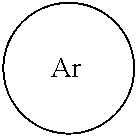
is a C6-C10 aryl optionally substituted with one or two R5 groups; wherein each R5 is independently C1-C6 alkyl or C3-C6 cycloalkyl; or two R5 groups on adjacent carbons atoms are joined to form a C5-C6 cycloalkyl. In some embodiments,

is a C6-C10 aryl optionally substituted with one or two R5 groups; wherein each R5 is independently C1-C6 alkyl or C3-C6 cycloalkyl. In some embodiments,

is a phenyl or napthyl; wherein the phenyl or naphthyl is optionally substituted with one or two R5 groups; wherein each R5 is independently C1-C6 alkyl or C3-C6 cycloalkyl; or two R5 groups on adjacent carbon atoms are joined to form a C5-C6 cycloalkyl. In some embodiments,

is a phenyl or napthyl; wherein the phenyl or naphthyl is optionally substituted with one or two R5 groups; wherein each R5 is independently C1-C6 alkyl or C3-C6 cycloalkyl. In some embodiments,

is a phenyl optionally substituted with one or two R5 groups; wherein each R5 is independently C1-C6 alkyl or C3-C6 cycloalkyl; or two R5 groups on adjacent carbon atoms are joined to form a C5-C6 cycloalkyl. In some embodiments,

is a phenyl optionally substituted with one or two R5 groups; wherein each R5 is independently C1-C6 alkyl or C3-C6 cycloalkyl. In some embodiments,

is a phenyl.

is a napthyl optionally substituted with one or two R5 groups; wherein each R5 is independently C1-C6 alkyl or C3-C6 cycloalkyl; or two R5 groups on adjacent carbon atoms are joined to form a C5-C6 cycloalkyl. In some embodiments,

is a napthyl optionally substituted with one or two R5 groups; wherein each R5 is independently C1-C6 alkyl or C3-C6 cycloalkyl. In some embodiments,

is 1-napthyl or 2-napthyl.

is selected from the group consisting of:


is napthyl or phenyl;

is napthyl or phenyl;

is napthyl or phenyl;

is napthyl or phenyl;


or a pharmaceutically acceptable salt thereof.


| TABLE 1 |
| Antiviral activity of exemplary compounds |
| SARS- | EC50 | ||||
| EC50-RSV- | CoV-2 | RSV | EC50 RSV | RSVFluc- | |
| Example | HEP-2-96 | EC50 | CC50 | HEP2 384 | Hep2 384 |
| No. | (nM) | (nM) | (nM) | (nM) | (nM) |
| 1 | 121.7 | — | 5486 | ||
| 2 | 84.4 | — | 8408 | ||
| 3 | 44.119 | 113.2 | 5823 | 18.3 | |
| 4 | 93.9 | 5583 | |||
| 5 | 109 | — | 9542 | ||
| 6 | 192.6 | — | 26391 | ||
| 7 | 77.9 | 241.4 | 12558 | ||
| 8 | 156.5 | >40000 | |||
| 9 | 227.8 | >50000 | |||
| 10 | 52.93 | 10336 | |||
| 11 | 67.2 | 76.8 | 12825 | ||
| 12 | 165.7 | — | 30885 | ||
| 13 | 34.5 | 88.9 | 3797 | 58.8 | 20.1 |
| 13a | 91.2 | 52.1 | |||
| 13b | 33.4 | 26.7 | |||
| 14 | 29 | — | 2730 | ||
| 15 | 184.8 | — | 22931 | ||
| 16 | 9.3 | 83.8 | 2838 | ||
| 17 | 164 | — | 20789 | ||
| 18 | 7.7494 | 2615 | 83.4 | ||
| 18a | 65.4 | ||||
| 18b | 75.0 | ||||
| 19 | 687.3 | — | 26513 | ||
| 20 | 444.1 | — | 5178 | ||
| 21 | 19.8 | 122.7 | 3110 | 58.8 | 29.4 |
| 21a | 92.0 | ||||
| 21b | 34.7 | ||||
| 22 | >4715 | — | >50000 | ||
| 23 | 75.9 | — | 5643 | ||
| 24 | 1474.6 | — | >50000 | ||
| 25 | 11.1 | 121.7 | 4778 | ||
| 26a | 1156.4 | — | >45000 | ||
| 26b | 603.4 | — | 2404 | ||
| 27 | 958.2 | — | 5855 | ||
| 28 | 31 | — | 7451 | 21.5 | |
| 29 | 10.7 | 65.1 | 2652 | 62.2 | 36.9 |
| 30 | 7.3 | — | 2313 | 39.7 | 27.1 |
| TABLE 2 |
| Antiviral activity of further exemplary compounds |
| EC50- | SARS- | ||
| RSV- | CoV-2 | RSV | |
| HEP-2-96 | EC50 | CC50 | |
| Compound | (nM) | (nM) | (nM) |
 |
14.9 | 110 | 6077 |
 |
143.9 | — | 48533 |
 |
363.9 | — | >9600 |
 |
295.9 | — | >70000 |
 |
75.1 | — | 34179 |
| TABLE 3 |
| Antiviral activity of further exemplary compounds in HEP-2- Cells |
| EC50 RSV | EC50 RSV | EC50 RSVFluc- | |
| HEP2 96 | HEP2 384 | Hep2 384 | |
| Example | (nM) | (nM) | (nM) |
| Example 31 | 53.23 | ||
| Example 31a | 29.24 | ||
| Example 31b | 41.06 | ||
| Example 32a | 25.39 | ||
| Example 32b | 30.00 | ||
| Example 33a | 22.72 | ||
| Example 33b | 27.16 | ||
| Example 34 | 1498.40 | ||
| Example 35 | 185.18 | ||
| Example 36 | 101.75 | ||
| Example 37 | 187.42 | ||
| Example 38 | 137.92 | ||
| Example 39 | 1602.40 | ||
| Example 40 | 226.18 | ||
| Example 41 | 141.84 | ||
| Example 42a | 68.30 | ||
| Example 42b | 68.83 | ||
| Example 43 | 62.83 | ||
| Example 44 | 56.02 | 18.32 | |
| Example 44a | 21.67 | ||
| Example 44b | 22.90 | ||
| Example 45 | 31.09 | 19.02 | |
| Example 45a | 60.37 | 22.72 | |
| Example 45b | 23.88 | 6.87 | |
| Example 46 | 52.33 | 19.26 | |
| Example 46a | 30.22 | ||
| Example 46b | 30.03 | ||
| Example 47a | 41.64 | ||
| Example 47b | 68.26 | ||
| Example 48a | 34.05 | ||
| Example 48b | 55.43 | ||
| Example 50a | 21.28 | ||
| Example 50b | 8.52 | ||
| Example 51a | 66.07 | ||
| Example 51b | 86.80 | ||
| Example 52a | 20.46 | ||
| Example 52b | 25.44 | ||
| Example 53a | 38.11 | ||
| Example 53b | 21.23 | ||
| Example 54a | 13.05 | ||
| Example 54b | 20.92 | ||
| Intermediate P7a-1 | 224.36 | ||
| Intermediate P7a-2 | 65.09 | ||
| Example 55a | 7.09 | ||
| Example 55b | 7.44 | ||
| Intermediate P8a | 20.28 | ||
| Example 56a | 35.52 | ||
| Example 56b | 74.73 | ||
| Example 57 | 186.29 | ||
| Example 58 | 71.54 | ||
| Example 59 | 25.29 | ||
| Example 60 | 64.05 | ||
| Example 61 | 36.73 | 72.41 | |
| Example 62 | 70.63 | ||
| Example 63a | 104.24 | ||
| Example 63b | 98.56 | ||
| Example 64 | 57.88 | ||
| Example 65 | 335.73 | ||
| Example 66 | 61.87 | ||
| Intermediate S1 | 93.30 | ||
| Example 67 | 17.98 | ||
| Example 68a | 60.81 | ||
| Example 68b | 34.44 | ||
| Intermediate S2 | 84.85 | ||
| Intermediate S3-a | 28.25 | ||
| Intermediate S3-b | 18.78 | 67.95 | |
| Example 69a | 22.08 | ||
| Example 69b | 36.86 | ||
| Example 70 | 48.98 | ||
| Example 71 | 1788.50 | ||
| Example 72 | 555.65 | ||
| Example 73 | 551.89 | ||
| Intermediate S4 | 14.91 | ||
| Example 74 | 131.39 | ||
| Example 75 | 288.64 | ||
| Example 76 | 29.21 | ||
| Example 77a | 194.33 | ||
| Example 77b | 197.56 | ||
| Example 78a | 65.24 | ||
| Example 78b | 20.97 | 75.64 | 33.80 |
| Example 79a | 61.24 | ||
| Example 79b | 21.65 | 45.61 | |
| Example 80 | 16.89 | ||
| Example 81a | 16.12 | 37.66 | |
| Example 81b | 20.63 | ||
| Example 82a | 62.81 | 168.45 | 61.83 |
| Example 82b | 16.53 | 41.36 | 16.22 |
| Example 83a | 21.85 | 32.76 | |
| Example 83b | 7.32 | 27.88 | 20.40 |
| Example 84a | 184.95 | ||
| Example 84b | 186.15 | ||
| Example 85a | 62.73 | ||
| Example 85b | 80.54 | ||
| Example 86a | 21.60 | 88.16 | |
| Example 86b | 20.92 | 28.30 | |
| Example 87a | 31.12 | ||
| Example 87b | 8.30 | 44.85 | |
| Example 88 | 21.38 | ||
| Example 89 | 387.62 | ||
| Example 90 | 20.37 | 123.67 | |
| Example 91 | 194.20 | ||
| Example 92 | 2490.50 | ||
| Example 93 | 67.59 | ||
| Example 94 | 84.55 | ||
| Example 95 | 61.75 | ||
| Example 96 | 39.87 | 30.25 | |
| Example 96a | 26.54 | 21.18 | |
| Example 96b | 27.94 | 22.47 | |
| Example 97a | 102.96 | ||
| Example 97b | 105.82 | ||
| Example 98a | 62.12 | ||
| Example 98b | 52.20 | ||
| Example 99a | 81.73 | ||
| Example 99b | 66.90 | ||
| Example 100a | 110.76 | ||
| Example 100b | 95.47 | ||
| Example 101a | 41.10 | ||
| Example 101b | 79.23 | ||
| Example 102a | 31.98 | 8.68 | |
| Example 102b | 42.97 | 25.96 | |
| Example 103a | |||
| Example 103b | 42.02 | ||
| Example 104a | 39.04 | ||
| Example 104b | 57.81 | 22.79 | |
| Example 105a | 54.62 | ||
| Example 105b | 60.67 | ||
| Example 106a | 46.82 | ||
| Example 106b | 34.20 | ||
| Example 107 | 20.07 | ||
| Example 108 | 27.73 | ||
| Example 109 | 43.48 | ||
| Example 110 | 57.61 | ||
| Example 111 | 846.22 | ||
| Example 112 | 560.08 | ||
| Intermediate D9 | 65.39 | ||
| Example 113 | 22.06 | ||
| Example 114 | 61.02 | ||
| Example 115 | 62.59 | ||
| Example 116 | 11.25 | ||
| Example 117 | 11.01 | ||
| Example 118 | 23.52 | ||
| Example 119 | 559.43 | ||
| Example 120 | 73.88 | ||
| Example 121 | 23.50 | ||
| Example 122 | 16.43 | ||
| Example 123 | 63.68 | ||
| Example 124 | 67.14 | ||
| Example 125 | 21.14 | ||
| Example 126 | 17.04 | 116.35 | |
| Example 127 | 34.12 | ||
| Example 128 | 524.78 | ||
| Example 129 | 361.82 | ||
| Example 130 | 52.81 | ||
| Example 131 | 56.20 | ||
| Example 132 | 125.62 | ||
| Example 133 | 33.65 | ||
| Example 134 | 93.82 | ||
| Example 135 | 1260.10 | ||
| Example 136 | 376.58 | ||
| Example 137 | 31.48 | 22.11 | |
| Example 138 | 36.62 | ||
| Example 139 | 194.21 | ||
| Example 140 | 301.61 | ||
| Example 141 | 305.03 | ||
| Example 142 | 73.51 | ||
| Example 143 | 737.36 | ||
| Example 144 | 780.17 | ||
| Example 145 | 34.97 | ||
| Example 146 | 459.06 | ||
| Example 147 | 334.36 | ||
| Example 148 | 59.30 | ||
| Example 149 | 99.37 | ||
| Example 150 | 78.23 | ||
| Example 151 | 55.58 | ||
| Example 152 | 210.69 | ||
| Example 153 | 270.37 | ||
| Example 154 | 104.95 | ||
| Example 155 | 682.67 | ||
| Example 156 | 195.34 | ||
| Example 157 | 79.55 | ||
| Example 158 | 272.19 | ||
| Example 159 | 79.33 | ||
| Example 160 | 218.62 | ||
| Example 161 | 112.97 | ||
| Example 162 | 72.45 | ||
| Example 163 | 68.04 | ||
| Example 164 | 107.27 | ||
| Example 165 | 5000.00 | ||
| Example 166 | 5000.00 | ||
| Example 167 | 5000.00 | ||
| Example 168 | 110.64 | ||
| Example 169 | 62.88 | ||
| Example 170 | 1009.60 | ||
| Example 170a | 1418.70 | ||
| Example 170b | 843.40 | ||
| Example 171a | 712.47 | ||
| Example 171b | 537.13 | ||
| Example 172a | 749.62 | ||
| Example 172b | 610.07 | ||
| Example 173 | 797.51 | ||
| Example 173a | 821.80 | ||
| Example 173b | 765.36 | ||
| Example 174a | 7.09 | ||
| Example 174b | 62.84 | ||
| Example 175a | 5000.00 | ||
| Example 175b | 5000.00 | ||
| Example 176 | 153.25 | ||
| Example 177 | 16.98 | ||
| Example 178 | 84.98 | ||
| Example 179 | 16.78 | ||
| TABLE 4 |
| Antiviral activity of exemplary compounds |
| in SARS CoV-2 Cells and NHBE cells |
| EC50 SARS | EC50 RSVFluc | |||
| Example | CoV2 (nM) | NHBE 96 (nM) | ||
| Example 1 | 338.29 | 6.56 | ||
| Example 2 | 102.24 | 4.53 | ||
| Example 3 | 129.32 | 5.55 | ||
| Example 7 | 372.22 | |||
| Example 11 | 208.03 | |||
| Example 12 | 139.22 | |||
| Example 13 | 319.48 | 2.92 | ||
| Example 13a | 180.72 | 5.92 | ||
| Example 13b | 174.26 | 6.86 | ||
| Example 14 | 186.22 | 3.72 | ||
| Example 15 | 776.55 | |||
| Example 16 | 199.03 | |||
| Example 17 | 850.40 | |||
| Example 18 | 209.94 | 6.69 | ||
| Example 18a | 312.41 | 22.23 | ||
| Example 18b | 332.42 | 15.07 | ||
| Example 21 | 234.15 | 5.36 | ||
| Example 21a | 125.10 | 37.37 | ||
| Example 21b | 190.67 | 33.11 | ||
| Example 25 | 349.95 | |||
| Example 28 | 1616.90 | 35.05 | ||
| Example 29 | 123.24 | 3.93 | ||
| Example 30 | 201.89 | 4.49 | ||
| Example 31 | 249.62 | |||
| Example 31a | 92.29 | 6.33 | ||
| Example 32a | 157.14 | 16.73 | ||
| Example 32b | 59.70 | 10.70 | ||
| Example 33a | 133.75 | 9.06 | ||
| Example 33b | 231.31 | 12.23 | ||
| Example 37 | 282.44 | |||
| Example 42a | 120.87 | 9.56 | ||
| Example 42b | 51.32 | 8.00 | ||
| Example 43 | 167.81 | |||
| Example 44 | 104.05 | 9.47 | ||
| Example 44a | 101.81 | 9.13 | ||
| Example 44b | 129.94 | 12.45 | ||
| Example 45 | 105.46 | 5.29 | ||
| Example 45a | 72.76 | 7.29 | ||
| Example 45b | 56.93 | 10.30 | ||
| Example 46 | 237.16 | 7.79 | ||
| Example 46a | 249.41 | 5.59 | ||
| Example 46b | 399.74 | 6.63 | ||
| Example 50a | 38.79 | 27.48 | ||
| Example 50b | 239.35 | 5.36 | ||
| Example 52a | 64.53 | 20.76 | ||
| Example 53b | 102.58 | |||
| Example 54a | 101.55 | |||
| Example 54b | 163.70 | |||
| Intermediate P7a-2 | 275.19 | |||
| Example 55a | 104.08 | 19.86 | ||
| Example 55b | 108.34 | 6.12 | ||
| Example 59 | 159.54 | |||
| Example 60 | 180.04 | |||
| Example 66 | 207.48 | |||
| Example 65 | 264.52 | 3.24 | ||
| Intermediate S1 | 713.80 | |||
| Example 67 | 27.17 | 8.72 | ||
| Intermediate S2 | 207.08 | |||
| Intermediate S2-b | 116.33 | 2.96 | ||
| Example 70 | 319.43 | |||
| Intermediate S3 | 112.93 | 5.51 | ||
| Example 78a | 116.74 | |||
| Example 78b | 20.03 | 5.67 | ||
| Example 79a | 125.88 | |||
| Example 79b | 27.84 | 6.33 | ||
| Example 80 | 310.17 | 16.46 | ||
| Example 81a | 236.88 | 8.39 | ||
| Example 81b | 226.69 | 14.79 | ||
| Example 82a | 151.06 | |||
| Example 82b | 71.30 | 4.84 | ||
| Example 83a | 49.04 | 6.98 | ||
| Example 83b | 32.80 | 7.12 | ||
| Example 86a | 109.37 | 7.93 | ||
| Example 86b | 23.60 | 9.46 | ||
| Example 87a | 60.19 | |||
| Example 87b | 16.34 | 7.36 | ||
| Example 93 | 123.38 | 4.43 | ||
| Example 94 | 369.64 | |||
| Example 95 | 263.98 | |||
| Example 96 | 95.88 | 5.48 | ||
| Example 96a | 198.45 | 8.53 | ||
| Example 96b | 276.15 | 25.13 | ||
| Example 98a | 176.03 | |||
| Example 101a | 148.06 | |||
| Example 102a | 154.80 | 8.46 | ||
| Example 102b | 86.01 | |||
| Example 103b | 363.22 | |||
| Example 104a | 233.59 | 10.84 | ||
| Example 104b | 293.65 | |||
| Example 105a | 132.69 | |||
| Example 106a | 83.08 | |||
| Example 106b | 97.78 | 12.18 | ||
| Example 107 | 180.38 | |||
| Example 108 | 82.92 | |||
| Example 113 | 125.80 | |||
| Example 116 | 55.97 | 24.98 | ||
| Example 117 | 191.52 | 22.06 | ||
| Example 118 | 328.77 | |||
| Example 121 | 110.02 | |||
| Example 122 | 167.41 | 8.73 | ||
| Example 126 | 77.42 | |||
| Example 133 | 36.88 | 13.79 | ||
| Example 137 | 67.39 | 4.82 | ||
| Example 138 | 341.59 | |||
| Example 145 | 101.43 | |||
| Example 154 | 330.04 | |||
| Example 156 | 363.01 | |||
| Example 159 | 369.16 | |||
| Example 163 | 377.72 | |||
| Example 165 | 10000.00 | |||
| Example 166 | 10000.00 | |||
| Example 170a | 959.84 | |||
| Example 170b | 923.18 | |||
| Example 171a | 930.87 | |||
| Example 171b | 415.35 | |||
| Example 172b | 871.30 | |||
| Example 173a | 10000.00 | |||
| Example 175a | 3364.10 | |||
| Example 175b | 10000.00 | |||
| Example 177 | 410.27 | 15.96 | ||
| Example 178 | 1371.20 | 12.20 | ||
| Example 179 | 849.5 | 7.84 | ||
Claims (45)


Priority Applications (3)
| Application Number | Priority Date | Filing Date | Title |
|---|---|---|---|
| US17/355,813 US11939347B2 (en) | 2020-06-24 | 2021-06-23 | 1′-cyano nucleoside analogs and uses thereof |
| US18/544,561 US12404289B2 (en) | 2020-06-24 | 2023-12-19 | 1′-cyano nucleoside analogs and uses thereof |
| US19/264,949 US20260035394A1 (en) | 2020-06-24 | 2025-07-10 | 1`-cyano nucleoside analogs and uses thereof |
Applications Claiming Priority (3)
| Application Number | Priority Date | Filing Date | Title |
|---|---|---|---|
| US202063043349P | 2020-06-24 | 2020-06-24 | |
| US202163139648P | 2021-01-20 | 2021-01-20 | |
| US17/355,813 US11939347B2 (en) | 2020-06-24 | 2021-06-23 | 1′-cyano nucleoside analogs and uses thereof |
Related Child Applications (1)
| Application Number | Title | Priority Date | Filing Date |
|---|---|---|---|
| US18/544,561 Continuation US12404289B2 (en) | 2020-06-24 | 2023-12-19 | 1′-cyano nucleoside analogs and uses thereof |
Publications (2)
| Publication Number | Publication Date |
|---|---|
| US20230040586A1 US20230040586A1 (en) | 2023-02-09 |
| US11939347B2 true US11939347B2 (en) | 2024-03-26 |
Family
ID=76959096
Family Applications (3)
| Application Number | Title | Priority Date | Filing Date |
|---|---|---|---|
| US17/355,813 Active 2042-04-02 US11939347B2 (en) | 2020-06-24 | 2021-06-23 | 1′-cyano nucleoside analogs and uses thereof |
| US18/544,561 Active US12404289B2 (en) | 2020-06-24 | 2023-12-19 | 1′-cyano nucleoside analogs and uses thereof |
| US19/264,949 Pending US20260035394A1 (en) | 2020-06-24 | 2025-07-10 | 1`-cyano nucleoside analogs and uses thereof |
Family Applications After (2)
| Application Number | Title | Priority Date | Filing Date |
|---|---|---|---|
| US18/544,561 Active US12404289B2 (en) | 2020-06-24 | 2023-12-19 | 1′-cyano nucleoside analogs and uses thereof |
| US19/264,949 Pending US20260035394A1 (en) | 2020-06-24 | 2025-07-10 | 1`-cyano nucleoside analogs and uses thereof |
Country Status (18)
| Country | Link |
|---|---|
| US (3) | US11939347B2 (en) |
| EP (1) | EP4172160A2 (en) |
| JP (1) | JP2023531524A (en) |
| KR (1) | KR102911165B1 (en) |
| CN (2) | CN115996928B (en) |
| AU (2) | AU2021296841B2 (en) |
| BR (1) | BR112022026321A2 (en) |
| CA (1) | CA3187821A1 (en) |
| CL (1) | CL2022003733A1 (en) |
| CO (1) | CO2022018715A2 (en) |
| CR (1) | CR20220675A (en) |
| DO (1) | DOP2022000293A (en) |
| IL (1) | IL299202A (en) |
| MX (1) | MX2022016405A (en) |
| PE (1) | PE20230618A1 (en) |
| PH (1) | PH12022553530A1 (en) |
| TW (1) | TWI819321B (en) |
| WO (1) | WO2021262826A2 (en) |
Cited By (6)
| Publication number | Priority date | Publication date | Assignee | Title |
|---|---|---|---|---|
| US12030906B2 (en) | 2017-05-01 | 2024-07-09 | Gilead Sciences, Inc. | Crystalline forms of (s)-2-ethylbutyl 2-(((s)-(((2r,3s,4r,5r)-5-(4-aminopyrrolo[2,1-f] [1,2,4]triazin-7-yl)-5-cyano-3,4-dihydroxytetrahydrofuran-2-yl)methoxy) (phenoxy) phosphoryl)amino)propanoate |
| US12180217B2 (en) | 2022-03-02 | 2024-12-31 | Gilead Sciences, Inc. | Compounds and methods for treatment of viral infections |
| US12297226B2 (en) | 2020-08-27 | 2025-05-13 | Gilead Sciences, Inc. | Compounds and methods for treatment of viral infections |
| US12357577B1 (en) | 2024-02-02 | 2025-07-15 | Gilead Sciences, Inc. | Pharmaceutical formulations and uses thereof |
| US12404289B2 (en) | 2020-06-24 | 2025-09-02 | Gilead Sciences, Inc. | 1′-cyano nucleoside analogs and uses thereof |
| US12509466B2 (en) | 2010-07-22 | 2025-12-30 | Gilead Sciences, Inc. | Methods and compounds for treating paramyxoviridae virus infections |
Families Citing this family (10)
| Publication number | Priority date | Publication date | Assignee | Title |
|---|---|---|---|---|
| EP4512475A3 (en) | 2017-07-11 | 2025-05-14 | Gilead Sciences, Inc. | Compositions comprising an rna polymerase inhibitor and cyclodextrin for treating viral infections |
| AU2021214911A1 (en) | 2020-01-27 | 2022-07-21 | Gilead Sciences, Inc. | Methods for treating SARS CoV-2 infections |
| CN118994170A (en) | 2020-03-12 | 2024-11-22 | 吉利德科学公司 | Process for preparing 1' -cyanonucleosides |
| ES3041698T3 (en) | 2020-05-29 | 2025-11-13 | Gilead Sciences Inc | Remdesivir for the treatment of viral infections |
| WO2022166581A1 (en) * | 2021-02-07 | 2022-08-11 | 石家庄迪斯凯威医药科技有限公司 | Nucleotide derivative, pharmaceutical composite thereof and use thereof |
| CA3256146A1 (en) * | 2022-04-25 | 2025-07-03 | Miracure Biotechnology Limited | Nucleoside drug for treating or preventing coronavirus infection, and use thereof |
| CN118165034A (en) * | 2022-12-09 | 2024-06-11 | 深圳市塔吉瑞生物医药有限公司 | Nucleotide compounds, compositions and uses thereof |
| CN116284135B (en) * | 2023-05-04 | 2025-03-21 | 南京颐媛生物医学研究院有限公司 | Preparation method and application of anti-coronavirus nucleoside compounds |
| CN116332996B (en) * | 2023-05-04 | 2025-04-01 | 南京颐媛生物医学研究院有限公司 | L-ribofuranose anti-coronavirus compound and preparation method and application thereof |
| CN116410228B (en) * | 2023-05-04 | 2025-10-31 | 南京颐媛生物医学研究院有限公司 | Preparation method and application of anti-coronavirus nucleoside compound |
Citations (218)
| Publication number | Priority date | Publication date | Assignee | Title |
|---|---|---|---|---|
| US4816570A (en) | 1982-11-30 | 1989-03-28 | The Board Of Regents Of The University Of Texas System | Biologically reversible phosphate and phosphonate protective groups |
| US4968788A (en) | 1986-04-04 | 1990-11-06 | Board Of Regents, The University Of Texas System | Biologically reversible phosphate and phosphonate protective gruops |
| WO1991019721A1 (en) | 1990-06-13 | 1991-12-26 | Arnold Glazier | Phosphorous produgs |
| US5663159A (en) | 1990-09-14 | 1997-09-02 | Institute Of Organic Chemistry And Biochemistry Of The Academy Of Sciences Of The Czech Republic | Prodrugs of phosphonates |
| WO1999045029A1 (en) | 1998-03-03 | 1999-09-10 | Novo Nordisk A/S | New salt forms of (2e)- 5-amino-5- methylhex-2- enoic acid n-methyl-n-((1r)-1-(n- methyl-n-((1r)-1-(methylcarbamoyl)-2- phenylethyl)carbamoyl)-2- (2-naphtyl)ethyl)amide |
| WO2000056734A1 (en) | 1999-03-20 | 2000-09-28 | Aventis Cropscience Gmbh | Bicyclic heterocycles, method for producing them and their use as herbicides and pharmaceutical agents |
| WO2000075157A1 (en) | 1999-06-03 | 2000-12-14 | Abbott Laboratories | Oligonucleotide synthesis with lewis acids as activators |
| WO2001032153A2 (en) | 1999-11-04 | 2001-05-10 | Shire Biochem Inc. | Method for the treatment or prevention of flaviviridae viral infection using nucleoside analogues |
| WO2001060315A2 (en) | 2000-02-18 | 2001-08-23 | Shire Biochem Inc. | Method for the treatment or prevention of flavivirus infections using nucleoside analogues |
| US6312662B1 (en) | 1998-03-06 | 2001-11-06 | Metabasis Therapeutics, Inc. | Prodrugs phosphorus-containing compounds |
| WO2001090121A2 (en) | 2000-05-23 | 2001-11-29 | Idenix (Cayman) Limited | Methods and compositions for treating hepatitis c virus |
| WO2001092282A2 (en) | 2000-05-26 | 2001-12-06 | Idenix (Cayman) Limited | Methods and compositions for treating flaviviruses and pestiviruses |
| WO2001091737A2 (en) | 2000-05-26 | 2001-12-06 | Idenix (Cayman) Limited | Methods for treating hepatitis delta virus infection with beta-l-2' deoxy-nucleosides |
| WO2002008241A2 (en) | 2000-07-21 | 2002-01-31 | Gilead Sciences, Inc. | Prodrugs of phosphonate nucleotide analogues and methods for selecting and making same |
| WO2002018404A2 (en) | 2000-08-30 | 2002-03-07 | F. Hoffmann-La Roche Ag | Nucleoside derivatives for the treatment of hepatitis c |
| WO2002032920A2 (en) | 2000-10-18 | 2002-04-25 | Pharmasset Limited | Modified nucleosides for treatment of viral infections and abnormal cellular proliferation |
| WO2002057287A2 (en) | 2001-01-22 | 2002-07-25 | Merck & Co., Inc. | Nucleoside derivatives as inhibitors of rna-dependent rna viral polymerase |
| US6475985B1 (en) | 1998-03-27 | 2002-11-05 | Regents Of The University Of Minnesota | Nucleosides with antiviral and anticancer activity |
| US6476030B1 (en) | 1998-10-16 | 2002-11-05 | Merck Sharp & Dohme Ltd. | Pyrazolo-triazine derivatives as ligands for GABA receptors |
| US20030092775A1 (en) | 2001-09-13 | 2003-05-15 | Hansgeorg Ernst | Process for the preparation of meso-zeaxanthin |
| WO2003093272A1 (en) | 2002-05-02 | 2003-11-13 | Merck Sharp & Dohme Limited | Imidazo-triazine derivatives as ligands for gaba receptors |
| WO2003093273A1 (en) | 2002-05-02 | 2003-11-13 | Merck Sharp & Dohme Limited | Imidazo-triazine derivatives as ligands for gaba receptors |
| US6656915B1 (en) | 1999-09-15 | 2003-12-02 | Biocryst Pharmaceuticals, Inc. | Inhibiting T-cell proliferation |
| WO2003100009A2 (en) | 2002-05-23 | 2003-12-04 | Biocryst Pharmaceuticals, Inc. | Enhancing the efficacy of reverse transcriptase and dna polymerase inhibitors (nucleoside analogs) using pnp inhibitors and/or 2'-deoxyguanosine and/or prodrug thereof |
| US20040006002A1 (en) | 2001-09-28 | 2004-01-08 | Jean-Pierre Sommadossi | Methods and compositions for treating flaviviruses and pestiviruses using 4'-modified nucleoside |
| US20040023901A1 (en) | 2002-02-28 | 2004-02-05 | Cook Phillip D. | Nucleoside 5'-monophosphate mimics and their prodrugs |
| US20040063658A1 (en) | 2002-05-06 | 2004-04-01 | Roberts Christopher Don | Nucleoside derivatives for treating hepatitis C virus infection |
| WO2004046331A2 (en) | 2002-11-15 | 2004-06-03 | Idenix (Cayman) Limited | 2’-branched nucleosides and flaviviridae mutation |
| WO2004046159A1 (en) | 2002-11-19 | 2004-06-03 | F. Hoffmann-La-Roche Ag | Antiviral nucleoside derivatives |
| US20040138170A1 (en) | 2002-03-06 | 2004-07-15 | Montgomery John A. | Nucleosides, preparation thereof and use as inhibitors of rna viral polymerases |
| WO2004112687A2 (en) | 2003-06-26 | 2004-12-29 | Biotron Limited | Antiviral acylguanidine compounds and methods |
| WO2005009418A2 (en) | 2003-07-25 | 2005-02-03 | Idenix (Cayman) Limited | Purine nucleoside analogues for treating diseases caused by flaviviridae including hepatitis c |
| US6909011B2 (en) | 2001-12-28 | 2005-06-21 | Dsm Fine Chemicals Austria Nfg Gmbh & Co Kg | Process for preparing protected, enantiomer-enriched cyanohydrins by in-situ derivatization |
| JP2005185235A (en) | 2003-12-26 | 2005-07-14 | Univ Of Tokyo | Methods and kits for diagnosis of susceptibility to viral infection. |
| JP2005187428A (en) | 2003-12-26 | 2005-07-14 | Univ Of Tokyo | Anti-MGL antibody treatment for filovirus |
| US20050187180A1 (en) | 1996-10-28 | 2005-08-25 | University Of Washington | Induction of viral mutation by incorporation of miscoding ribonucleoside analogs into viral RNA |
| US20050209166A1 (en) | 2004-03-16 | 2005-09-22 | Boehringer Ingelheim International Gmbh | Glucopyranosyl-substituted phenyl derivatives, medicaments containing such compounds, their use and process for their manufacture |
| US20050215513A1 (en) | 2003-04-25 | 2005-09-29 | Boojamra Constantine G | Antiviral phosphonate analogs |
| WO2005123087A2 (en) | 2004-06-15 | 2005-12-29 | Merck & Co., Inc. | C-purine nucleoside analogs as inhibitors of rna-dependent rna viral polymerase |
| WO2006031725A2 (en) | 2004-09-14 | 2006-03-23 | Pharmasset, Inc. | Preparation of 2'fluoro-2'- alkyl- substituted or other optionally substituted ribofuranosyl pyrimidines and purines and their derivatives |
| WO2006050161A2 (en) | 2004-10-29 | 2006-05-11 | Biocryst Pharmaceuticals, Inc. | Therapeutic furopyrimidines and thienopyrimidines |
| WO2006064033A2 (en) | 2004-12-16 | 2006-06-22 | Boehringer Ingelheim International Gmbh | Glucopyranosyl-substituted benzene derivatives, medicaments containing such compounds, their use and process for their manufacture |
| WO2006065335A2 (en) | 2004-10-21 | 2006-06-22 | Merck & Co., Inc. | Fluorinated pyrrolo[2,3-d]pyrimidine nucleosides for the treatment of rna-dependent rna viral infection |
| US20060142238A1 (en) | 2003-07-21 | 2006-06-29 | Mcguigan Christopher | Chemical compounds |
| US7078403B1 (en) | 1999-06-18 | 2006-07-18 | Biota Scientific Management Pty Ltd. | Antiviral agents |
| US20060241064A1 (en) | 2005-04-25 | 2006-10-26 | Genelabs Technologies, Inc. | Nucleoside compounds for treating viral infections |
| WO2006121820A1 (en) | 2005-05-05 | 2006-11-16 | Valeant Research & Development | Phosphoramidate prodrugs for treatment of viral infection |
| WO2006135978A1 (en) | 2005-06-24 | 2006-12-28 | Biotron Limited | Antiviral compounds and methods |
| US7166604B2 (en) | 2000-12-18 | 2007-01-23 | Biota Scientific Management Pty Ltd | Antiviral agents |
| WO2007027248A2 (en) | 2005-05-16 | 2007-03-08 | Valeant Research & Development | 3', 5' - cyclic nucleoside analogues for treatment of hcv |
| WO2007056170A2 (en) | 2005-11-02 | 2007-05-18 | Bayer Healthcare Ag | Pyrrolo[2,1-f] [1,2,4] triazin-4-ylamines igf-1r kinase inhibitors for the treatment of cancer and other hyperproliferative diseases |
| WO2007062542A2 (en) | 2005-12-01 | 2007-06-07 | Basilea Pharmaceutica Ag | Process for the manufacture of epoxybutanol intermediates |
| WO2007064883A2 (en) | 2005-12-02 | 2007-06-07 | Bayer Healthcare Llc. | Substituted 4-amino-pyrrolotriazine derivatives useful for treating hyper-proliferative disorders and diseases associated with angiogenesis |
| WO2007064931A2 (en) | 2005-12-02 | 2007-06-07 | Bayer Healthcare Llc | Substituted 4-amino-pyrrolotriazine derivatives useful for treating hyper-proliferative disorders and diseases associated with angiogenesis |
| WO2007065829A1 (en) | 2005-12-09 | 2007-06-14 | F. Hoffmann-La Roche Ag | Antiviral nucleosides |
| WO2007065289A2 (en) | 2005-12-09 | 2007-06-14 | Basilea Pharmaceutica Ag | 4-oxo-(iso)tretinoin for the topical treatment of severe dermatological disorders |
| WO2007095269A2 (en) | 2006-02-14 | 2007-08-23 | Merck & Co., Inc. | Nucleoside aryl phosphoramidates for the treatment of rna-dependent rna viral infection |
| WO2007097991A2 (en) | 2006-02-16 | 2007-08-30 | Pharmasset, Inc. | Methods and kits for dosing of antiviral agents |
| US7268119B2 (en) | 2003-08-27 | 2007-09-11 | Biota Scientific Management Pty Ltd | Tricyclic nucleosides or nucleotides as therapeutic agents |
| WO2007113294A1 (en) | 2006-04-03 | 2007-10-11 | Ludwig-Maximilians-Universität München | Process for synthesizing organoelemental compounds |
| US7285658B2 (en) | 2002-02-28 | 2007-10-23 | Biota, Inc. | Nucleotide mimics and their prodrugs |
| WO2007135134A1 (en) | 2006-05-22 | 2007-11-29 | Anadys Pharmaceuticals, Inc. | Crystalline a and b forms of a maleate salt of 5-amino-3- (2 ', 3 '-di-o-acetyl-beta-d-ribofuranosyl) -3h-thiaz0l0 [4, 5-d] pyrimidin-2-one |
| WO2008005542A2 (en) | 2006-07-07 | 2008-01-10 | Gilead Sciences, Inc., | Antiviral phosphinate compounds |
| WO2008011406A2 (en) | 2006-07-18 | 2008-01-24 | Anadys Pharmaceuticals, Inc. | Carbonate and carbamate prodrugs of thiazolo [4,5-d] pyrimidines |
| WO2008055870A1 (en) | 2006-11-06 | 2008-05-15 | Boehringer Ingelheim International Gmbh | Glucopyranosyl-substituted benzyl-benzonitrile derivatives, medicaments containing such compounds, their use and process for their manufacture |
| WO2008079206A1 (en) | 2006-12-20 | 2008-07-03 | Merck & Co., Inc. | Nucleoside cyclic phosphoramidates for the treatment of rna-dependent rna viral infection |
| US20080161324A1 (en) | 2006-09-14 | 2008-07-03 | Johansen Lisa M | Compositions and methods for treatment of viral diseases |
| WO2008082601A2 (en) | 2006-12-28 | 2008-07-10 | Idenix Pharmaceuticals, Inc. | Compounds and pharmaceutical compositions for the treatment of viral infections |
| WO2008085508A2 (en) | 2007-01-05 | 2008-07-17 | Merck & Co., Inc. | Nucleoside aryl phosphoramidates for the treatment of rna-dependent rna viral infection |
| WO2008089105A2 (en) | 2007-01-12 | 2008-07-24 | Biocryst Pharmaceuticals, Inc. | Antiviral nucleoside analogs |
| WO2008116064A2 (en) | 2007-03-21 | 2008-09-25 | Bristol-Myers Squibb Company | Fused heterocyclic compounds useful for the treatment of proliferative, allergic, autoimmune or inflammatory diseases |
| WO2008121634A2 (en) | 2007-03-30 | 2008-10-09 | Pharmasset, Inc. | Nucleoside phosphoramidate prodrugs |
| WO2008141079A1 (en) | 2007-05-10 | 2008-11-20 | Biocryst Pharmaceuticals, Inc. | Tetrahydrofuro [3 4-d] dioxolane compounds for use in the treatment of viral infections and cancer |
| US20090004138A1 (en) | 2005-03-08 | 2009-01-01 | Biota Scientific Management Pty Ltd | Bicyclic Nucleosides and Nucleotides as Therapeutic Agents |
| WO2009009951A1 (en) | 2007-07-16 | 2009-01-22 | Zhengzhou University | 2'-fluoro-4'-substituted nucleosides, the preparation and use |
| WO2009018609A1 (en) | 2007-08-03 | 2009-02-12 | Biotrom Limited | Hepatitis c antiviral compositions and methods |
| US7514410B2 (en) | 2005-03-29 | 2009-04-07 | Biocryst Pharmaceuticals, Inc. | Hepatitis C therapies |
| US7560434B2 (en) | 2004-06-22 | 2009-07-14 | Biocryst Pharmaceuticals, Inc. | AZA nucleosides, preparation thereof and use as inhibitors of RNA viral polymerases |
| US20090221524A1 (en) | 2005-10-03 | 2009-09-03 | Kotra Lakshmi P | Odcase inhibitors for the treatment of malaria |
| US20090233879A1 (en) | 2008-03-17 | 2009-09-17 | Hetero Drugs Limited | Novel nucleoside derivatives |
| WO2009132135A1 (en) | 2008-04-23 | 2009-10-29 | Gilead Sciences, Inc. | 1' -substituted carba-nucleoside analogs for antiviral treatment |
| WO2009131926A1 (en) | 2008-04-23 | 2009-10-29 | Bristol-Myers Squibb Company | Quinuclidine compounds as alpha-7 nicotinic acetylcholine receptor ligands |
| WO2010002877A2 (en) | 2008-07-03 | 2010-01-07 | Biota Scientific Management | Bycyclic nucleosides and nucleotides as therapeutic agents |
| US20100065512A1 (en) | 2005-11-17 | 2010-03-18 | Fluens Synthesis As | Continuous Flow Reactor |
| WO2010036407A2 (en) | 2008-05-15 | 2010-04-01 | Biocryst Pharmaceuticals, Inc. | Antiviral nucleoside analogs |
| WO2010039548A2 (en) | 2008-09-23 | 2010-04-08 | Alnylam Pharmaceuticals, Inc. | Chemical modifications of monomers and oligonucleotides with cycloaddition |
| US20100203015A1 (en) | 2009-02-10 | 2010-08-12 | Gilead Sciences, Inc. | Carba-nucleoside analogs for antiviral treatment |
| WO2010099458A1 (en) | 2009-02-27 | 2010-09-02 | Intermune, Inc. | Combination of a nucleoside polymerase inhibitor with a macrocyclic protease inhibitor and use thereof in the treatment of hepatitis c, liver fibrosis and impaired liver function |
| WO2010108140A1 (en) | 2009-03-20 | 2010-09-23 | Alios Biopharma, Inc. | Substituted nucleoside and nucleotide analogs |
| WO2010111381A2 (en) | 2009-03-24 | 2010-09-30 | Biocryst Pharmaceuticals, Inc. | Useful pharmaceutical salts of 7-[(3r, 4r)-3-hydroxy-4-hydroxymethyl-pyrrolidin-1-ylmethyl]-3,5-dihydro-pyrrolo[3,2-d]pyrimidin-4-one |
| US20100298257A1 (en) | 2009-05-20 | 2010-11-25 | Pharmasset, Inc. | Nucleoside phosphoramidates |
| US20100305202A1 (en) | 2007-11-22 | 2010-12-02 | Yong Youn Hwang | Lyophilized pharmaceutical composition with improved stability containing taxane derivatives, and method of manufacturing the same |
| WO2011011303A1 (en) | 2009-07-21 | 2011-01-27 | Gilead Sciences, Inc. | Inhibitors of flaviviridae viruses |
| WO2011035231A1 (en) | 2009-09-21 | 2011-03-24 | Gilead Sciences, Inc. | 2' -fluoro substituted carba-nucleoside analogs for antiviral treatment |
| US20110070194A1 (en) | 2009-09-21 | 2011-03-24 | Gilead Sciences, Inc. | 2'-fluoro substituted carba-nucleoside analogs for antiviral treatment |
| WO2011035250A1 (en) | 2009-09-21 | 2011-03-24 | Gilead Sciences, Inc. | Processes and intermediates for the preparation of 1'-substituted carba-nucleoside analogs |
| WO2011080568A2 (en) | 2009-12-28 | 2011-07-07 | Development Center For Biotechnology | Novel pyrimidine compounds as mtor and p13k inhibitors |
| US7994139B2 (en) | 2008-03-05 | 2011-08-09 | Biocryst Pharmaceuticals, Inc. | Antiviral therapeutic agents |
| WO2011100131A2 (en) | 2010-01-28 | 2011-08-18 | Alnylam Pharmacuticals, Inc. | Monomers and oligonucleotides comprising cycloaddition adduct(s) |
| WO2011123645A2 (en) | 2010-03-31 | 2011-10-06 | Pharmasset, Inc. | Nucleoside phosphoramidates |
| WO2011123672A1 (en) | 2010-03-31 | 2011-10-06 | Pharmasset, Inc. | Purine nucleoside phosphoramidate |
| WO2011150288A1 (en) | 2010-05-28 | 2011-12-01 | Gilead Sciences, Inc. | 1'-substituted-carba-nucleoside prodrugs for antiviral treatment |
| US20120009147A1 (en) | 2009-09-21 | 2012-01-12 | Gilead Sciences, Inc. | 2'-fluoro substituted carba-nucleoside analogs for antiviral treatment |
| WO2012012465A1 (en) | 2010-07-19 | 2012-01-26 | Clarke, Michael, O'neil Hanrahan | Methods for the preparation of diasteromerically pure phosphoramidate prodrugs |
| WO2012012776A1 (en) | 2010-07-22 | 2012-01-26 | Gilead Sciences, Inc. | Methods and compounds for treating paramyxoviridae virus infections |
| US20120071434A1 (en) | 2010-09-22 | 2012-03-22 | Alios Biopharma, Inc. | Substituted nucleotide analogs |
| WO2012039791A1 (en) | 2010-09-20 | 2012-03-29 | Gilead Sciences, Inc. | 2' -fluoro substituted carba-nucleoside analogs for antiviral treatment |
| WO2012051570A1 (en) | 2010-10-15 | 2012-04-19 | Shanta Bantia | Methods and compositions for inhibition of polymerase |
| US20120107274A1 (en) | 2010-09-13 | 2012-05-03 | Gilead Sciences, Inc. | 2'-fluoro substituted carba-nucleoside analogs for antiviral treatment |
| WO2012121764A1 (en) | 2010-11-25 | 2012-09-13 | Ratiopharm Gmbh | Novel salts and polymorphic forms of afatinib |
| WO2012142523A2 (en) | 2011-04-13 | 2012-10-18 | Gilead Sciences, Inc. | 1'-substituted pyrimidine n-nucleoside analogs for antiviral treatment |
| WO2012158643A1 (en) | 2011-05-13 | 2012-11-22 | Ah Usa 42 Llc | Hendra and nipah virus g glycoprotein immunogenic compositions |
| US20130143835A1 (en) | 2011-12-05 | 2013-06-06 | Medivir Ab | HCV Polymerase Inhibitors |
| WO2013084165A1 (en) | 2011-12-05 | 2013-06-13 | Medivir Ab | Hcv polymerase inhibitors |
| US20130315868A1 (en) | 2012-05-22 | 2013-11-28 | Idenix Pharmaceuticals, Inc. | D-amino acid compounds for liver disease |
| WO2014033617A1 (en) | 2012-08-31 | 2014-03-06 | Novartis Ag | 2'-ethynyl nucleoside derivatives for treatment of viral infections |
| WO2014042433A2 (en) | 2012-09-14 | 2014-03-20 | Kainos Medicine, Inc. | Compounds and compositions for modulating adenosine a3 receptor activity |
| WO2014078463A1 (en) | 2012-11-19 | 2014-05-22 | Merck Sharp & Dohme Corp. | 2 -alkynyl substituted nucleoside derivatives for treating viral diseases |
| WO2014078778A2 (en) | 2012-11-16 | 2014-05-22 | Biocryst Pharmaceuticals, Inc. | Antiviral azasugar-containing nucleosides |
| WO2014116755A1 (en) | 2013-01-22 | 2014-07-31 | Massachusetts Institute Of Technology | Uses of dihydro bases |
| US20140219958A1 (en) | 2013-02-01 | 2014-08-07 | Enanta Pharmaceuticals, Inc. | 5, 6-d2 uridine nucleoside/tide derivatives |
| WO2014169280A2 (en) | 2013-04-12 | 2014-10-16 | Achillion Pharmaceuticals, Inc. | Deuterated nucleoside prodrugs useful for treating hcv |
| US8889159B2 (en) | 2011-11-29 | 2014-11-18 | Gilead Pharmasset Llc | Compositions and methods for treating hepatitis C virus |
| WO2014209979A1 (en) | 2013-06-26 | 2014-12-31 | Alios Biopharma, Inc. | Substituted nucleosides, nucleotides and analogs thereof |
| US20150031687A1 (en) | 2012-09-10 | 2015-01-29 | Hoffmann-La Roche Inc. | Novel 6-amino acid heteroaryldihydropyrimidines for the treatment and prophylaxis of hepatitis B virus infection |
| US8980865B2 (en) | 2011-12-22 | 2015-03-17 | Alios Biopharma, Inc. | Substituted nucleotide analogs |
| WO2015054465A1 (en) | 2013-10-11 | 2015-04-16 | Alios Biopharma, Inc. | Substituted nucleosides, nucleotides and analogs thereof |
| US20150133395A1 (en) | 2013-11-11 | 2015-05-14 | Gilead Sciences, Inc. | PYRROLO[1,2-f][1,2,4]TRIAZINES USEFUL FOR TREATING RESPIRATORY SYNCITIAL VIRUS INFECTIONS |
| US20150210682A1 (en) | 2014-01-30 | 2015-07-30 | Hoffmann-La Roche Inc. | Novel dihydroquinolizinones for the treatment and prophylaxis of hepatitis B virus infection |
| US20150252057A1 (en) | 2014-03-07 | 2015-09-10 | Hoffmann-La Roche Inc. | Novel 6-fused heteroaryldihydropyrimidines for the treatment and prophylaxis of hepatitis B virus infection |
| WO2015173164A1 (en) | 2014-05-13 | 2015-11-19 | F. Hoffmann-La Roche Ag | Novel dihydroquinolizinones for the treatment and prophylaxis of hepatitis b virus infection |
| WO2015200219A1 (en) | 2014-06-24 | 2015-12-30 | Alios Biopharma, Inc. | Substituted nucleosides, nucleotides and analogs thereof |
| WO2015200205A1 (en) | 2014-06-24 | 2015-12-30 | Alios Biopharma, Inc. | Substituted nucleosides, nucleotides and analogs thereof |
| US9243022B2 (en) | 2012-12-21 | 2016-01-26 | Alios Biopharma, Inc. | Substituted nucleosides, nucleotides and analogs thereof |
| WO2016012470A1 (en) | 2014-07-25 | 2016-01-28 | F. Hoffmann-La Roche Ag | New amorphous and crystalline forms of (3s)-4-[[(4r)-4-(2-chloro-4-fluoro-phenyl)-5-methoxycarbonyl-2-thiazol-2-yl-1, 4-dihydropyrimidin-6-yl]methyl]morpholine-3-carboxylic acid |
| WO2016023877A1 (en) | 2014-08-14 | 2016-02-18 | F. Hoffmann-La Roche Ag | Novel pyridazones and triazinones for the treatment and prophylaxis of hepatitis b virus infection |
| US20160058779A1 (en) | 2014-06-02 | 2016-03-03 | The Board Of Regents Of The University Of Texas System | Methods for treating viral infections using hydrogen sulfide donors |
| US20160122344A1 (en) | 2014-11-03 | 2016-05-05 | Hoffmann-La Roche Inc. | Novel 6,7-dihydrobenzo[a]quinolizin-2-one derivatives for the treatment and prophylaxis of hepatitis B virus infection |
| US20160122374A1 (en) | 2014-10-29 | 2016-05-05 | Gilead Sciences, Inc. | Methods for treating filoviridae virus infections |
| US20160176899A1 (en) | 2014-12-23 | 2016-06-23 | Hoffmann-La Roche Inc. | Co-crystals of 5-amino-2-oxothiazolo[4,5-d]pyrimidin-3(2h)-yl-5-hydroxymethyl tetrahydrofuran-3-yl acetate and methods for preparing and using the same |
| WO2016102438A1 (en) | 2014-12-23 | 2016-06-30 | F. Hoffmann-La Roche Ag | Process for the preparation of 4-phenyl-5-alkoxycarbonyl-2-thiazol-2-yl-1,4-dihydropyrimidine analogues |
| WO2016107832A1 (en) | 2014-12-30 | 2016-07-07 | F. Hoffmann-La Roche Ag | Novel tetrahydropyridopyrimidines and tetrahydropyridopyridines for the treatment and prophylaxis of hepatitis b virus infection |
| WO2016107833A1 (en) | 2014-12-31 | 2016-07-07 | F. Hoffmann-La Roche Ag | A novel high-throughput method for quantification of hbv cccdna from cell lysate by real-time pcr |
| US9393256B2 (en) | 2011-09-16 | 2016-07-19 | Gilead Pharmasset Llc | Methods for treating HCV |
| WO2016120186A1 (en) | 2015-01-27 | 2016-08-04 | F. Hoffmann-La Roche Ag | Recombinant hbv cccdna, the method to generate thereof and the use thereof |
| US20160220586A1 (en) | 2013-09-11 | 2016-08-04 | INSERM (Institut National de la Santé et de la Recherche Médicale) | Methods and pharmaceutical compositions for the treatment of hepatitis b virus infection |
| US20160237090A1 (en) | 2015-01-16 | 2016-08-18 | Hoffmann-La Roche Inc. | Novel pyrazine compounds for the treatment of infectious diseases |
| WO2016128335A1 (en) | 2015-02-11 | 2016-08-18 | F. Hoffmann-La Roche Ag | Novel 2-oxo-6,7-dihydrobenzo[a]quinolizine-3-carboxylic acid derivatives for the treatment and prophylaxis of hepatitis b virus infection |
| US9452154B2 (en) | 2010-12-20 | 2016-09-27 | Gilead Sciences, Inc. | Methods for treating HCV |
| US9481703B2 (en) | 2013-09-04 | 2016-11-01 | Medivir Ab | HCV polymerase inhibitors |
| US20170071964A1 (en) | 2015-09-16 | 2017-03-16 | Gilead Sciences, Inc. | Methods for treating arenaviridae and coronaviridae virus infections |
| US9616076B2 (en) | 2014-06-02 | 2017-04-11 | The Board Of Regents Of The University Of Texas Systems | Methods for treating viral infections using hydrogen sulfide donors |
| WO2017165489A1 (en) | 2016-03-23 | 2017-09-28 | Emory University | Antiviral agents for treating zika and dengue virus infections |
| WO2017184668A1 (en) | 2016-04-20 | 2017-10-26 | Gilead Sciences, Inc. | Methods for treating flaviviridae virus infections |
| WO2018085307A1 (en) | 2016-11-03 | 2018-05-11 | Wu Laurence I | Prodrugs of clofarabine |
| WO2018121678A1 (en) | 2016-12-29 | 2018-07-05 | 广东东阳光药业有限公司 | Prodrug of antiviral nucleoside analogues, and composition and use thereof |
| WO2018145148A1 (en) | 2017-02-08 | 2018-08-16 | Biotron Limited | Methods of treating influenza |
| WO2018204198A1 (en) | 2017-05-01 | 2018-11-08 | Gilead Sciences, Inc. | Crystalline forms of (s) 2 ethylbutyl 2 (((s) (((2r,3s,4r,5r) 5 (4 aminopyrrolo[2,1-f] [1,2,4]triazin-7-yl)-5-cyano-3,4-dihydroxytetrahydrofuran-2 yl)methoxy)(phenoxy) phosphoryl)amino)propanoate |
| WO2018217906A1 (en) | 2017-05-23 | 2018-11-29 | The University Of North Carolina At Chapel Hill | Methods and compositions for dengue virus serotype 4 epitopes |
| WO2019014247A1 (en) | 2017-07-11 | 2019-01-17 | Gilead Sciences, Inc. | Compositions comprising an rna polymerase inhibitor and cyclodextrin for treating viral infections |
| US20190023745A1 (en) | 2017-07-19 | 2019-01-24 | The University Of North Carolina At Chapel Hill | Methods and compositions for zika virus vaccines |
| WO2019053696A1 (en) | 2017-09-18 | 2019-03-21 | Alios Biopharma, Inc. | Substituted nucleosides, nucleotides and analogs thereof |
| WO2019079594A1 (en) | 2017-10-18 | 2019-04-25 | The University Of North Carolina At Chapel Hill | Methods and compositions for norovirus vaccines and diagnostics |
| CN110330540A (en) | 2019-08-08 | 2019-10-15 | 木天(济南)生物科技有限公司 | Nucleosides salt and preparation method thereof |
| CN110724174A (en) | 2019-09-10 | 2020-01-24 | 嘉兴金派特生物科技有限公司 | Pyrrolotriazine compound, composition and application thereof |
| CN110776512A (en) | 2019-11-28 | 2020-02-11 | 成都傲飞生物化学品有限责任公司 | Preparation method of nucleoside analogue |
| CN111171078A (en) | 2020-02-27 | 2020-05-19 | 江苏阿尔法药业有限公司 | Synthesis method of Reidesciclovir |
| CN111205327A (en) | 2020-02-17 | 2020-05-29 | 南京法恩化学有限公司 | Preparation method of Reidesciclovir |
| CN111205294A (en) | 2020-02-27 | 2020-05-29 | 江苏阿尔法药业有限公司 | Preparation method of Reidesciclovir intermediate |
| CN111233869A (en) | 2020-03-12 | 2020-06-05 | 杭州新博思生物医药有限公司 | Novel compound for preparing Rudexilvir key intermediate and preparation method thereof |
| CN111265532A (en) | 2020-01-21 | 2020-06-12 | 中国人民解放军军事科学院军事医学研究院 | Application of substituted aminopropionate compounds in the treatment of 2019-nCoV infection |
| US10682368B2 (en) | 2017-03-14 | 2020-06-16 | Gilead Sciences, Inc. | Methods of treating feline coronavirus infections |
| CN111440176A (en) | 2020-04-28 | 2020-07-24 | 江苏大学 | Synthesis of metal complex-promoted remdesivir intermediates |
| CN111548384A (en) | 2020-03-29 | 2020-08-18 | 常州安蒂卫生物科技有限公司 | Substituted N4-hydroxycytidine derivatives and prodrugs thereof for use in anti-novel coronavirus therapy |
| CN111961057A (en) | 2020-05-26 | 2020-11-20 | 李小冬 | Alpha-configuration nucleoside and application thereof in treating feline coronavirus infection |
| WO2021021717A1 (en) | 2019-07-27 | 2021-02-04 | Brii Biosciences, Inc. | Adenosine derivative and pharmaceutical composition comprising the same |
| WO2021040356A1 (en) | 2019-08-23 | 2021-03-04 | Kainos Medicine, Inc. | C-nucleosides, c-nucleotides and their analogs, equivalents and prodrugs thereof for ectonucleotidase inhibition |
| WO2021050961A1 (en) | 2019-09-11 | 2021-03-18 | The Scripps Research Institute | Antiviral prodrugs and formulations thereof |
| CN112778310A (en) | 2020-04-20 | 2021-05-11 | 中国科学院上海药物研究所 | Application of nucleoside analogue or combination preparation containing nucleoside analogue in resisting virus |
| WO2021102363A1 (en) | 2019-11-20 | 2021-05-27 | The University Of North Carolina At Chapel Hill | Methods and compositions for recombinant dengue viruses for vaccine and diagnostic development |
| CN113185519A (en) | 2021-04-23 | 2021-07-30 | 苏州富德兆丰生化科技有限公司 | Nucleoside compound and application thereof in treating feline infectious peritonitis |
| WO2021154530A1 (en) | 2020-01-27 | 2021-08-05 | Vanderbilt University | Human anti-dengue antibodies and methods of use therefor |
| CN113248508A (en) | 2020-02-13 | 2021-08-13 | 安徽诺全药业有限公司 | N-protected heterocycles, method for the production thereof and method for the production of C-nucleoside derivatives |
| CN113292565A (en) | 2020-02-24 | 2021-08-24 | 平湖森科园林工程有限公司 | Nucleoside compound and preparation method and application thereof |
| WO2021175296A1 (en) | 2020-03-04 | 2021-09-10 | 中国科学院上海药物研究所 | Intermediate of remdesivir and preparation method therefor |
| CN113387954A (en) | 2020-03-11 | 2021-09-14 | 上海特化医药科技有限公司 | Preparation method of Reidesciclovir intermediate |
| US20210283150A1 (en) | 2020-01-27 | 2021-09-16 | Gilead Sciences, Inc. | Methods for treating sars cov-2 infections |
| WO2021188915A1 (en) | 2020-03-19 | 2021-09-23 | The University Of North Carolina At Chapel Hill | Methods and compositions for treatment of coronavirus infection |
| WO2021195661A1 (en) | 2020-03-23 | 2021-09-30 | Gregg John M H | Anti-viral compounds and methods for administration thereof |
| US20210309689A1 (en) | 2020-03-12 | 2021-10-07 | Gilead Sciences, Inc. | Methods of preparing 1'-cyano nucleosides |
| WO2021202907A2 (en) | 2020-04-02 | 2021-10-07 | The Regents Of The University Of Michigan | Remdesivir and remdesivir analogs, solutions, and nanoparticle, liposomal, and microparticle compositions for treating viral infections |
| WO2021207049A1 (en) | 2020-04-06 | 2021-10-14 | Gilead Sciences, Inc. | Inhalation formulations of 1'-cyano substituted carbanucleoside analogs |
| WO2021222807A1 (en) | 2020-04-30 | 2021-11-04 | Ajk Pharmaceutical Llc | Fatty acyl and fatty ether conjugates of remdesivir and its active metabolites as antivirals |
| CN113698405A (en) | 2021-06-03 | 2021-11-26 | 南方科技大学坪山生物医药研究院 | Crystal form of nucleoside compound and preparation method thereof |
| CN113735862A (en) | 2020-12-30 | 2021-12-03 | 南方科技大学 | Nucleoside compound for treating virus infection and application thereof |
| CN113754665A (en) | 2020-12-30 | 2021-12-07 | 南方科技大学 | A kind of preparation method of nucleoside compound |
| US20210393653A1 (en) | 2020-05-29 | 2021-12-23 | Gilead Sciences, Inc. | Remdesivir treatment methods |
| WO2022008642A1 (en) | 2020-07-08 | 2022-01-13 | Apeiron Biologics Ag | Treatment of sars-cov-2 infection with a combination of targets |
| US11225508B1 (en) | 2020-09-23 | 2022-01-18 | The University Of North Carolina At Chapel Hill | Mouse-adapted SARS-CoV-2 viruses and methods of use thereof |
| WO2022029704A1 (en) | 2020-08-06 | 2022-02-10 | Richter Gedeon Nyrt. | Remdesivir intermediates |
| WO2022047441A1 (en) | 2020-08-28 | 2022-03-03 | Emphascience, Inc. | Formulations of anti-viral compounds |
| WO2022047065A2 (en) | 2020-08-27 | 2022-03-03 | Gilead Sciences, Inc. | Compounds and methods for treatment of viral infections |
| WO2022081870A1 (en) | 2020-10-14 | 2022-04-21 | The United States Of America, As Represented By The Secretary, Department Of Health And Human Services | Stabilized norovirus virus-like particles as vaccine immunogens |
| WO2022093895A1 (en) | 2020-10-27 | 2022-05-05 | The University Of North Carolina At Chapel Hill | Chimeric coronavirus s protein compositions and methods of use |
| CN114437159A (en) | 2022-04-11 | 2022-05-06 | 佛山市晨康生物科技有限公司 | Cyclic carbonate nucleoside compound and application thereof |
| WO2022098371A1 (en) | 2020-11-09 | 2022-05-12 | Yan Matthew | Prodrugs of 1'-substituted carba-nucleoside analogues for antiviral treatment |
| CN114621229A (en) | 2020-12-11 | 2022-06-14 | 嘉兴金派特生物科技有限公司 | Compounds or compositions for treating or preventing feline infectious peritonitis |
| US11377456B2 (en) | 2020-06-11 | 2022-07-05 | Apotex Inc. | Crystalline form of Remdesivir |
| WO2022165386A1 (en) | 2021-01-29 | 2022-08-04 | Virbis Llc | Lnp and lmp delivery of antiviral nucleotide 5'-phosphates |
| WO2022174194A1 (en) | 2021-02-15 | 2022-08-18 | Emory University | 4'-halogen containing nucleotide and nucleoside therapeutic compositions and uses related thereto |
| WO2022197950A1 (en) | 2021-03-17 | 2022-09-22 | The University Of North Carolina At Chapel Hill | Methods and compositions for mature dengue viruses as vaccines and diagnostics |
| WO2022217153A2 (en) | 2021-04-09 | 2022-10-13 | Emory University | Nucleosides and nucleotides analogs as antiviral agents |
| WO2022218274A1 (en) | 2021-04-15 | 2022-10-20 | 中国科学院上海药物研究所 | Nucleoside analog and use thereof |
| US20220356196A1 (en) | 2020-02-18 | 2022-11-10 | Gilead Sciences, Inc. | Antiviral compounds |
| WO2022251663A2 (en) | 2021-05-27 | 2022-12-01 | Emory University | Novel universal anti-rna virus agents |
| WO2022265964A1 (en) | 2021-06-14 | 2022-12-22 | VenatoRx Pharmaceuticals, Inc. | Orally-bioavailable nucleoside analogs |
| US11541071B1 (en) | 2021-12-16 | 2023-01-03 | Ascletis BioScience Co., Ltd | Nucleoside derivatives and methods of use thereof |
| US20230040586A1 (en) | 2020-06-24 | 2023-02-09 | Gilead Sciences, Inc. | 1'-cyano nucleoside analogs and uses thereof |
Family Cites Families (22)
| Publication number | Priority date | Publication date | Assignee | Title |
|---|---|---|---|---|
| US4894376A (en) | 1988-02-26 | 1990-01-16 | Trustees Of The University Of Pennsylvania | Methods of treating diseases characterized by hyperexcitability of neurons |
| DK1163250T3 (en) | 1999-03-24 | 2006-11-13 | Exiqon As | Improved synthesis of [2.2.1] bicyclonucleosides |
| US20050129764A1 (en) | 2003-12-11 | 2005-06-16 | Vergez Juan A. | Osmotic device containing licofelone |
| SI2308514T1 (en) | 2007-03-23 | 2013-09-30 | To-Bbb Holding B.V. | Conjugates for targeted drug delivery across the blood-brain barrier |
| WO2013039861A2 (en) | 2011-09-12 | 2013-03-21 | modeRNA Therapeutics | Engineered nucleic acids and methods of use thereof |
| WO2015143712A1 (en) | 2014-03-28 | 2015-10-01 | Merck Sharp & Dohme Corp. | 4'-substituted nucleoside reverse transcriptase inhibitors |
| US9938283B2 (en) | 2014-05-01 | 2018-04-10 | Sun Pharmaceutical Industries Limited | Crystalline form of baricitinib |
| EP3330276A1 (en) | 2016-11-30 | 2018-06-06 | Universität Bern | Novel bicyclic nucleosides and oligomers prepared therefrom |
| CN109748944B (en) | 2017-11-03 | 2021-12-10 | 中国科学院上海药物研究所 | 5 '-deoxy-5' -isopropyl substituted amino nucleoside compound, and preparation method and application thereof |
| CN108084192B (en) | 2017-12-28 | 2020-06-05 | 大连微凯化学有限公司 | Method for carrying out cyano hydrolysis reaction by using microchannel reactor |
| CN111233929B (en) * | 2020-02-28 | 2023-02-28 | 成都阿奇生物医药科技有限公司 | Deuterated nucleoside analogue and preparation method and application thereof |
| US20210353650A1 (en) | 2020-05-18 | 2021-11-18 | Cai Gu Huang | Pharmaceutical formulation containing remdesivir and its active metabolites for dry powder inhalation |
| KR20230170948A (en) | 2021-04-16 | 2023-12-19 | 길리애드 사이언시즈, 인코포레이티드 | Method for producing carbanucleosides using amides |
| TW202525810A (en) | 2022-03-02 | 2025-07-01 | 美商基利科學股份有限公司 | Compounds and methods for treatment of viral infections |
| CN119604286A (en) | 2022-06-06 | 2025-03-11 | 吉利德科学公司 | Methods for treating viral infections including SARS-CoV-2 |
| WO2024006376A1 (en) | 2022-06-29 | 2024-01-04 | Gilead Sciences, Inc. | Solid forms of a nucleoside analogue and uses thereof |
| WO2024006461A1 (en) | 2022-06-30 | 2024-01-04 | Gilead Sciences, Inc. | Solid forms of a nucleoside analogue and uses thereof |
| WO2024054618A1 (en) | 2022-09-09 | 2024-03-14 | Gilead Sciences, Inc. | Methods for treatment of viral infections |
| WO2024076951A2 (en) | 2022-10-04 | 2024-04-11 | The Scripps Research Institute | Antiviral prodrugs and formulations thereof |
| TWI883612B (en) | 2022-10-27 | 2025-05-11 | 美商基利科學股份有限公司 | Pharmaceutical formulations and uses thereof |
| JP2025540572A (en) | 2022-11-18 | 2025-12-16 | ギリアード サイエンシーズ, インコーポレイテッド | How to Treat a Poxvirus Infection |
| TW202545959A (en) | 2023-04-28 | 2025-12-01 | 美商基利科學股份有限公司 | Compounds and methods for treatment of viral infections |
-
2021
- 2021-06-23 CA CA3187821A patent/CA3187821A1/en active Pending
- 2021-06-23 JP JP2022579747A patent/JP2023531524A/en active Pending
- 2021-06-23 CN CN202180045346.1A patent/CN115996928B/en active Active
- 2021-06-23 CN CN202511933206.4A patent/CN121800834A/en active Pending
- 2021-06-23 CR CR20220675A patent/CR20220675A/en unknown
- 2021-06-23 AU AU2021296841A patent/AU2021296841B2/en active Active
- 2021-06-23 EP EP21742986.9A patent/EP4172160A2/en active Pending
- 2021-06-23 PH PH1/2022/553530A patent/PH12022553530A1/en unknown
- 2021-06-23 MX MX2022016405A patent/MX2022016405A/en unknown
- 2021-06-23 KR KR1020237002629A patent/KR102911165B1/en active Active
- 2021-06-23 TW TW110122894A patent/TWI819321B/en active
- 2021-06-23 PE PE2022003018A patent/PE20230618A1/en unknown
- 2021-06-23 IL IL299202A patent/IL299202A/en unknown
- 2021-06-23 WO PCT/US2021/038645 patent/WO2021262826A2/en not_active Ceased
- 2021-06-23 US US17/355,813 patent/US11939347B2/en active Active
- 2021-06-23 BR BR112022026321A patent/BR112022026321A2/en unknown
-
2022
- 2022-12-22 CL CL2022003733A patent/CL2022003733A1/en unknown
- 2022-12-22 DO DO2022000293A patent/DOP2022000293A/en unknown
- 2022-12-22 CO CONC2022/0018715A patent/CO2022018715A2/en unknown
-
2023
- 2023-12-19 US US18/544,561 patent/US12404289B2/en active Active
-
2025
- 2025-04-17 AU AU2025202745A patent/AU2025202745A1/en active Pending
- 2025-07-10 US US19/264,949 patent/US20260035394A1/en active Pending
Patent Citations (351)
| Publication number | Priority date | Publication date | Assignee | Title |
|---|---|---|---|---|
| US4816570A (en) | 1982-11-30 | 1989-03-28 | The Board Of Regents Of The University Of Texas System | Biologically reversible phosphate and phosphonate protective groups |
| US4968788A (en) | 1986-04-04 | 1990-11-06 | Board Of Regents, The University Of Texas System | Biologically reversible phosphate and phosphonate protective gruops |
| WO1991019721A1 (en) | 1990-06-13 | 1991-12-26 | Arnold Glazier | Phosphorous produgs |
| US5663159A (en) | 1990-09-14 | 1997-09-02 | Institute Of Organic Chemistry And Biochemistry Of The Academy Of Sciences Of The Czech Republic | Prodrugs of phosphonates |
| US5792756A (en) | 1990-09-14 | 1998-08-11 | Institute Of Organic Chemistry And Biochemistry Of The Academy Of Sciences Of The Czech Republic | Prodrugs of phosphonates |
| US20050187180A1 (en) | 1996-10-28 | 2005-08-25 | University Of Washington | Induction of viral mutation by incorporation of miscoding ribonucleoside analogs into viral RNA |
| WO1999045029A1 (en) | 1998-03-03 | 1999-09-10 | Novo Nordisk A/S | New salt forms of (2e)- 5-amino-5- methylhex-2- enoic acid n-methyl-n-((1r)-1-(n- methyl-n-((1r)-1-(methylcarbamoyl)-2- phenylethyl)carbamoyl)-2- (2-naphtyl)ethyl)amide |
| US6312662B1 (en) | 1998-03-06 | 2001-11-06 | Metabasis Therapeutics, Inc. | Prodrugs phosphorus-containing compounds |
| US6475985B1 (en) | 1998-03-27 | 2002-11-05 | Regents Of The University Of Minnesota | Nucleosides with antiviral and anticancer activity |
| US6476030B1 (en) | 1998-10-16 | 2002-11-05 | Merck Sharp & Dohme Ltd. | Pyrazolo-triazine derivatives as ligands for GABA receptors |
| US7368437B1 (en) | 1999-03-20 | 2008-05-06 | Bayer Cropscience Ag | Bicyclic heterocycles, processes for their preparation and their use as herbicides and pharmaceutical agents |
| WO2000056734A1 (en) | 1999-03-20 | 2000-09-28 | Aventis Cropscience Gmbh | Bicyclic heterocycles, method for producing them and their use as herbicides and pharmaceutical agents |
| WO2000075157A1 (en) | 1999-06-03 | 2000-12-14 | Abbott Laboratories | Oligonucleotide synthesis with lewis acids as activators |
| US7078403B1 (en) | 1999-06-18 | 2006-07-18 | Biota Scientific Management Pty Ltd. | Antiviral agents |
| US6656915B1 (en) | 1999-09-15 | 2003-12-02 | Biocryst Pharmaceuticals, Inc. | Inhibiting T-cell proliferation |
| WO2001032153A2 (en) | 1999-11-04 | 2001-05-10 | Shire Biochem Inc. | Method for the treatment or prevention of flaviviridae viral infection using nucleoside analogues |
| WO2001060315A2 (en) | 2000-02-18 | 2001-08-23 | Shire Biochem Inc. | Method for the treatment or prevention of flavivirus infections using nucleoside analogues |
| US20030050229A1 (en) | 2000-05-23 | 2003-03-13 | Jean-Pierre Sommadossi | Methods and compositions for treating hepatitis C virus |
| US7608597B2 (en) | 2000-05-23 | 2009-10-27 | Idenix Pharmaceuticals, Inc. | Methods and compositions for treating hepatitis C virus |
| WO2001090121A2 (en) | 2000-05-23 | 2001-11-29 | Idenix (Cayman) Limited | Methods and compositions for treating hepatitis c virus |
| WO2001091737A2 (en) | 2000-05-26 | 2001-12-06 | Idenix (Cayman) Limited | Methods for treating hepatitis delta virus infection with beta-l-2' deoxy-nucleosides |
| WO2001092282A2 (en) | 2000-05-26 | 2001-12-06 | Idenix (Cayman) Limited | Methods and compositions for treating flaviviruses and pestiviruses |
| US7105493B2 (en) | 2000-05-26 | 2006-09-12 | Idenix Pharmaceuticals, Inc. | Methods and compositions for treating flaviviruses and pestiviruses |
| US7390791B2 (en) | 2000-07-21 | 2008-06-24 | Gilead Sciences, Inc. | Prodrugs of phosphonate nucleotide analogues |
| WO2002008241A2 (en) | 2000-07-21 | 2002-01-31 | Gilead Sciences, Inc. | Prodrugs of phosphonate nucleotide analogues and methods for selecting and making same |
| US7803788B2 (en) | 2000-07-21 | 2010-09-28 | Gilead Sciences, Inc. | Prodrugs of phosphonate nucoleotide analogues |
| WO2002018404A2 (en) | 2000-08-30 | 2002-03-07 | F. Hoffmann-La Roche Ag | Nucleoside derivatives for the treatment of hepatitis c |
| WO2002032920A2 (en) | 2000-10-18 | 2002-04-25 | Pharmasset Limited | Modified nucleosides for treatment of viral infections and abnormal cellular proliferation |
| US7166604B2 (en) | 2000-12-18 | 2007-01-23 | Biota Scientific Management Pty Ltd | Antiviral agents |
| US7125855B2 (en) | 2001-01-22 | 2006-10-24 | Merck & Co., Inc. | Nucleoside derivatives as inhibitors of RNA-dependent RNA viral polymerase |
| US20040067901A1 (en) | 2001-01-22 | 2004-04-08 | Balkrishen Bhat | Nucleoside derivatives as inhibitors of RNA-dependent RNA viral polymerase |
| WO2002057287A2 (en) | 2001-01-22 | 2002-07-25 | Merck & Co., Inc. | Nucleoside derivatives as inhibitors of rna-dependent rna viral polymerase |
| WO2002057425A2 (en) | 2001-01-22 | 2002-07-25 | Merck & Co., Inc. | Nucleoside derivatives as inhibitors of rna-dependent rna viral polymerase |
| US20030092775A1 (en) | 2001-09-13 | 2003-05-15 | Hansgeorg Ernst | Process for the preparation of meso-zeaxanthin |
| US20040006002A1 (en) | 2001-09-28 | 2004-01-08 | Jean-Pierre Sommadossi | Methods and compositions for treating flaviviruses and pestiviruses using 4'-modified nucleoside |
| US6909011B2 (en) | 2001-12-28 | 2005-06-21 | Dsm Fine Chemicals Austria Nfg Gmbh & Co Kg | Process for preparing protected, enantiomer-enriched cyanohydrins by in-situ derivatization |
| US7285658B2 (en) | 2002-02-28 | 2007-10-23 | Biota, Inc. | Nucleotide mimics and their prodrugs |
| US7598230B2 (en) | 2002-02-28 | 2009-10-06 | Biota Scientific Management Pty Ltd | Nucleotide mimics and their prodrugs |
| US20040023901A1 (en) | 2002-02-28 | 2004-02-05 | Cook Phillip D. | Nucleoside 5'-monophosphate mimics and their prodrugs |
| US7807653B2 (en) | 2002-02-28 | 2010-10-05 | Biota Scientific Management Pty Ltd | Nucleotide mimics and their prodrugs |
| US20040138170A1 (en) | 2002-03-06 | 2004-07-15 | Montgomery John A. | Nucleosides, preparation thereof and use as inhibitors of rna viral polymerases |
| US7176203B2 (en) | 2002-05-02 | 2007-02-13 | Merck Sharp & Dohme Ltd. | Imidazo-triazine derivatives as ligands for gaba receptors |
| WO2003093272A1 (en) | 2002-05-02 | 2003-11-13 | Merck Sharp & Dohme Limited | Imidazo-triazine derivatives as ligands for gaba receptors |
| US20060058303A1 (en) | 2002-05-02 | 2006-03-16 | Chambers Mark S | Imidazo-triazine derivatives as ligands for gaba receptors |
| WO2003093273A1 (en) | 2002-05-02 | 2003-11-13 | Merck Sharp & Dohme Limited | Imidazo-triazine derivatives as ligands for gaba receptors |
| US20040063658A1 (en) | 2002-05-06 | 2004-04-01 | Roberts Christopher Don | Nucleoside derivatives for treating hepatitis C virus infection |
| US20050250728A1 (en) | 2002-05-23 | 2005-11-10 | Shanta Bantia | Enhancing the efficacy of reverse transcriptase and dna polymerase inhibitors (nucleoside analogs) using pnp inhibitors and/or 2'-deoxyguanosine and/or prodrug thereof |
| WO2003100009A2 (en) | 2002-05-23 | 2003-12-04 | Biocryst Pharmaceuticals, Inc. | Enhancing the efficacy of reverse transcriptase and dna polymerase inhibitors (nucleoside analogs) using pnp inhibitors and/or 2'-deoxyguanosine and/or prodrug thereof |
| WO2004046331A2 (en) | 2002-11-15 | 2004-06-03 | Idenix (Cayman) Limited | 2’-branched nucleosides and flaviviridae mutation |
| WO2004046159A1 (en) | 2002-11-19 | 2004-06-03 | F. Hoffmann-La-Roche Ag | Antiviral nucleoside derivatives |
| US20050215513A1 (en) | 2003-04-25 | 2005-09-29 | Boojamra Constantine G | Antiviral phosphonate analogs |
| WO2004112687A2 (en) | 2003-06-26 | 2004-12-29 | Biotron Limited | Antiviral acylguanidine compounds and methods |
| USRE47589E1 (en) | 2003-07-21 | 2019-09-03 | NuCana plc | Phosphoramidate compounds and methods of use |
| US20060142238A1 (en) | 2003-07-21 | 2006-06-29 | Mcguigan Christopher | Chemical compounds |
| US7951787B2 (en) | 2003-07-21 | 2011-05-31 | Cardiff Protides Limited | Phosphoramidate compounds and methods of use |
| WO2005009418A2 (en) | 2003-07-25 | 2005-02-03 | Idenix (Cayman) Limited | Purine nucleoside analogues for treating diseases caused by flaviviridae including hepatitis c |
| US7268119B2 (en) | 2003-08-27 | 2007-09-11 | Biota Scientific Management Pty Ltd | Tricyclic nucleosides or nucleotides as therapeutic agents |
| US7713941B2 (en) | 2003-08-27 | 2010-05-11 | Biota Scientific Management Pty Ltd | Tricyclic nucleosides or nucleotides as therapeutic agents |
| JP2005185235A (en) | 2003-12-26 | 2005-07-14 | Univ Of Tokyo | Methods and kits for diagnosis of susceptibility to viral infection. |
| JP2005187428A (en) | 2003-12-26 | 2005-07-14 | Univ Of Tokyo | Anti-MGL antibody treatment for filovirus |
| WO2005092877A1 (en) | 2004-03-16 | 2005-10-06 | Boehringer Ingelheim International Gmbh | Glucopyranosyl-substituted benzol derivatives, drugs containing said compounds, the use thereof and method for the production thereof |
| US20050209166A1 (en) | 2004-03-16 | 2005-09-22 | Boehringer Ingelheim International Gmbh | Glucopyranosyl-substituted phenyl derivatives, medicaments containing such compounds, their use and process for their manufacture |
| WO2005123087A2 (en) | 2004-06-15 | 2005-12-29 | Merck & Co., Inc. | C-purine nucleoside analogs as inhibitors of rna-dependent rna viral polymerase |
| US7560434B2 (en) | 2004-06-22 | 2009-07-14 | Biocryst Pharmaceuticals, Inc. | AZA nucleosides, preparation thereof and use as inhibitors of RNA viral polymerases |
| WO2006031725A2 (en) | 2004-09-14 | 2006-03-23 | Pharmasset, Inc. | Preparation of 2'fluoro-2'- alkyl- substituted or other optionally substituted ribofuranosyl pyrimidines and purines and their derivatives |
| US20080280842A1 (en) | 2004-10-21 | 2008-11-13 | Merck & Co., Inc. | Fluorinated Pyrrolo[2,3-D]Pyrimidine Nucleosides for the Treatment of Rna-Dependent Rna Viral Infection |
| WO2006065335A2 (en) | 2004-10-21 | 2006-06-22 | Merck & Co., Inc. | Fluorinated pyrrolo[2,3-d]pyrimidine nucleosides for the treatment of rna-dependent rna viral infection |
| WO2006050161A2 (en) | 2004-10-29 | 2006-05-11 | Biocryst Pharmaceuticals, Inc. | Therapeutic furopyrimidines and thienopyrimidines |
| US7429571B2 (en) | 2004-10-29 | 2008-09-30 | Biocryst Pharmaceuticals, Inc. | Therapeutic furopyrimidines and thienopyrimidines |
| WO2006064033A2 (en) | 2004-12-16 | 2006-06-22 | Boehringer Ingelheim International Gmbh | Glucopyranosyl-substituted benzene derivatives, medicaments containing such compounds, their use and process for their manufacture |
| US20100291031A2 (en) | 2005-03-08 | 2010-11-18 | Biota Scientific Management Pty Ltd | Bicyclic nucleosides and nucleotides as therapeutic agents |
| US20090004138A1 (en) | 2005-03-08 | 2009-01-01 | Biota Scientific Management Pty Ltd | Bicyclic Nucleosides and Nucleotides as Therapeutic Agents |
| US7514410B2 (en) | 2005-03-29 | 2009-04-07 | Biocryst Pharmaceuticals, Inc. | Hepatitis C therapies |
| US20060241064A1 (en) | 2005-04-25 | 2006-10-26 | Genelabs Technologies, Inc. | Nucleoside compounds for treating viral infections |
| WO2006121820A1 (en) | 2005-05-05 | 2006-11-16 | Valeant Research & Development | Phosphoramidate prodrugs for treatment of viral infection |
| WO2007027248A2 (en) | 2005-05-16 | 2007-03-08 | Valeant Research & Development | 3', 5' - cyclic nucleoside analogues for treatment of hcv |
| WO2006135978A1 (en) | 2005-06-24 | 2006-12-28 | Biotron Limited | Antiviral compounds and methods |
| US20090221524A1 (en) | 2005-10-03 | 2009-09-03 | Kotra Lakshmi P | Odcase inhibitors for the treatment of malaria |
| WO2007056170A2 (en) | 2005-11-02 | 2007-05-18 | Bayer Healthcare Ag | Pyrrolo[2,1-f] [1,2,4] triazin-4-ylamines igf-1r kinase inhibitors for the treatment of cancer and other hyperproliferative diseases |
| US20100065512A1 (en) | 2005-11-17 | 2010-03-18 | Fluens Synthesis As | Continuous Flow Reactor |
| WO2007062542A2 (en) | 2005-12-01 | 2007-06-07 | Basilea Pharmaceutica Ag | Process for the manufacture of epoxybutanol intermediates |
| WO2007064883A2 (en) | 2005-12-02 | 2007-06-07 | Bayer Healthcare Llc. | Substituted 4-amino-pyrrolotriazine derivatives useful for treating hyper-proliferative disorders and diseases associated with angiogenesis |
| WO2007064931A2 (en) | 2005-12-02 | 2007-06-07 | Bayer Healthcare Llc | Substituted 4-amino-pyrrolotriazine derivatives useful for treating hyper-proliferative disorders and diseases associated with angiogenesis |
| WO2007065289A2 (en) | 2005-12-09 | 2007-06-14 | Basilea Pharmaceutica Ag | 4-oxo-(iso)tretinoin for the topical treatment of severe dermatological disorders |
| WO2007065829A1 (en) | 2005-12-09 | 2007-06-14 | F. Hoffmann-La Roche Ag | Antiviral nucleosides |
| WO2007095269A2 (en) | 2006-02-14 | 2007-08-23 | Merck & Co., Inc. | Nucleoside aryl phosphoramidates for the treatment of rna-dependent rna viral infection |
| WO2007097991A2 (en) | 2006-02-16 | 2007-08-30 | Pharmasset, Inc. | Methods and kits for dosing of antiviral agents |
| US20110084230A1 (en) | 2006-04-03 | 2011-04-14 | Paul Knochel | Process for Synthesizing Organoelemental Compounds |
| WO2007113294A1 (en) | 2006-04-03 | 2007-10-11 | Ludwig-Maximilians-Universität München | Process for synthesizing organoelemental compounds |
| WO2007135134A1 (en) | 2006-05-22 | 2007-11-29 | Anadys Pharmaceuticals, Inc. | Crystalline a and b forms of a maleate salt of 5-amino-3- (2 ', 3 '-di-o-acetyl-beta-d-ribofuranosyl) -3h-thiaz0l0 [4, 5-d] pyrimidin-2-one |
| WO2008005542A2 (en) | 2006-07-07 | 2008-01-10 | Gilead Sciences, Inc., | Antiviral phosphinate compounds |
| US7842672B2 (en) | 2006-07-07 | 2010-11-30 | Gilead Sciences, Inc. | Phosphonate inhibitors of HCV |
| US20080107628A1 (en) | 2006-07-07 | 2008-05-08 | Boojamra Constantine G | Phosphonate inhibitors of HCV |
| WO2008011406A2 (en) | 2006-07-18 | 2008-01-24 | Anadys Pharmaceuticals, Inc. | Carbonate and carbamate prodrugs of thiazolo [4,5-d] pyrimidines |
| US20080161324A1 (en) | 2006-09-14 | 2008-07-03 | Johansen Lisa M | Compositions and methods for treatment of viral diseases |
| WO2008055870A1 (en) | 2006-11-06 | 2008-05-15 | Boehringer Ingelheim International Gmbh | Glucopyranosyl-substituted benzyl-benzonitrile derivatives, medicaments containing such compounds, their use and process for their manufacture |
| WO2008079206A1 (en) | 2006-12-20 | 2008-07-03 | Merck & Co., Inc. | Nucleoside cyclic phosphoramidates for the treatment of rna-dependent rna viral infection |
| WO2008082601A2 (en) | 2006-12-28 | 2008-07-10 | Idenix Pharmaceuticals, Inc. | Compounds and pharmaceutical compositions for the treatment of viral infections |
| US8071568B2 (en) | 2007-01-05 | 2011-12-06 | Merck Sharp & Dohme Corp. | Nucleoside aryl phosphoramidates for the treatment of RNA-dependent RNA viral infection |
| US20100035835A1 (en) | 2007-01-05 | 2010-02-11 | Frank Narjes | Nucleoside aryl phosphoramidates for the treatment of rna-dependent rna viral infection |
| WO2008085508A2 (en) | 2007-01-05 | 2008-07-17 | Merck & Co., Inc. | Nucleoside aryl phosphoramidates for the treatment of rna-dependent rna viral infection |
| WO2008089105A2 (en) | 2007-01-12 | 2008-07-24 | Biocryst Pharmaceuticals, Inc. | Antiviral nucleoside analogs |
| US20100015094A1 (en) | 2007-01-12 | 2010-01-21 | Babu Yarlagadda S | Antiviral nucleoside analogs |
| WO2008116064A2 (en) | 2007-03-21 | 2008-09-25 | Bristol-Myers Squibb Company | Fused heterocyclic compounds useful for the treatment of proliferative, allergic, autoimmune or inflammatory diseases |
| US20100016251A1 (en) | 2007-03-30 | 2010-01-21 | Pharmasset, Inc. | Nucleoside phosphoramidate prodrugs |
| US20110257122A1 (en) | 2007-03-30 | 2011-10-20 | Pharmasset, Inc. | Nucleoside phosphoramidate prodrugs |
| WO2008121634A2 (en) | 2007-03-30 | 2008-10-09 | Pharmasset, Inc. | Nucleoside phosphoramidate prodrugs |
| US8242085B2 (en) | 2007-05-10 | 2012-08-14 | Biocryst Pharmaceuticals, Inc. | Tetrahydrofuro [3,4-D] dioxolane compounds for use in the treatment of viral infections and cancer |
| WO2008141079A1 (en) | 2007-05-10 | 2008-11-20 | Biocryst Pharmaceuticals, Inc. | Tetrahydrofuro [3 4-d] dioxolane compounds for use in the treatment of viral infections and cancer |
| WO2009009951A1 (en) | 2007-07-16 | 2009-01-22 | Zhengzhou University | 2'-fluoro-4'-substituted nucleosides, the preparation and use |
| US20100234584A1 (en) | 2007-07-16 | 2010-09-16 | Junbiao Chang | 2'-Fluorine-4'-Substituted-Nucleoside Analogues, Preparation Methods and Uses Thereof |
| WO2009018609A1 (en) | 2007-08-03 | 2009-02-12 | Biotrom Limited | Hepatitis c antiviral compositions and methods |
| US20100305202A1 (en) | 2007-11-22 | 2010-12-02 | Yong Youn Hwang | Lyophilized pharmaceutical composition with improved stability containing taxane derivatives, and method of manufacturing the same |
| US7994139B2 (en) | 2008-03-05 | 2011-08-09 | Biocryst Pharmaceuticals, Inc. | Antiviral therapeutic agents |
| US20090233879A1 (en) | 2008-03-17 | 2009-09-17 | Hetero Drugs Limited | Novel nucleoside derivatives |
| WO2009132123A1 (en) | 2008-04-23 | 2009-10-29 | Gilead Sciences, Inc. | Carba-nucleoside analogs for antiviral treatment |
| US8853171B2 (en) | 2008-04-23 | 2014-10-07 | Gilead Sciences, Inc. | 1′-substituted carba-nucleoside analogs for antiviral treatment |
| US20090317361A1 (en) | 2008-04-23 | 2009-12-24 | Gilead Sciences, Inc. | Carba-nucleoside analogs for antiviral treatment |
| USRE46762E1 (en) | 2008-04-23 | 2018-03-27 | Gilead Sciences, Inc | 1′-substituted carba-nucleoside analogs for antiviral treatment |
| WO2009132135A1 (en) | 2008-04-23 | 2009-10-29 | Gilead Sciences, Inc. | 1' -substituted carba-nucleoside analogs for antiviral treatment |
| US8012941B2 (en) | 2008-04-23 | 2011-09-06 | Gilead Sciences, Inc. | Carba-nucleoside analogs for antiviral treatment |
| US8008264B2 (en) | 2008-04-23 | 2011-08-30 | Gilead Sciences, Inc. | 1′-substituted carba-nucleoside analogs for antiviral treatment |
| US20110293563A1 (en) | 2008-04-23 | 2011-12-01 | Gilead Sciences, Inc. | 1'substituted carba-nucleoside analogs for antiviral treatment |
| US20100021425A1 (en) | 2008-04-23 | 2010-01-28 | Gilead Sciences, Inc. | 1'-substituted carba-nucleoside analogs for antiviral treatment |
| WO2009131926A1 (en) | 2008-04-23 | 2009-10-29 | Bristol-Myers Squibb Company | Quinuclidine compounds as alpha-7 nicotinic acetylcholine receptor ligands |
| US20130344028A2 (en) | 2008-04-23 | 2013-12-26 | Gilead Sciences, Inc. | 1'-substituted carba-nucleoside analogs for antiviral treatment |
| US20130034521A1 (en) | 2008-04-23 | 2013-02-07 | Gilead Sciences, Inc. | 1'-substituted carba-nucleoside analogs for antiviral treatment |
| US8318682B2 (en) | 2008-04-23 | 2012-11-27 | Gilead Sciences, Inc. | 1′substituted carba-nucleoside analogs for antiviral treatment |
| WO2010036407A2 (en) | 2008-05-15 | 2010-04-01 | Biocryst Pharmaceuticals, Inc. | Antiviral nucleoside analogs |
| US20100035836A1 (en) | 2008-07-03 | 2010-02-11 | Paula Francom | Bicyclic nucleosides and nucleotides as therapeutic agents |
| WO2010002877A2 (en) | 2008-07-03 | 2010-01-07 | Biota Scientific Management | Bycyclic nucleosides and nucleotides as therapeutic agents |
| US8119607B2 (en) | 2008-07-03 | 2012-02-21 | Biota Scientific Management Pty Ltd | Bicyclic nucleosides and nucleotides as therapeutic agents |
| WO2010039548A2 (en) | 2008-09-23 | 2010-04-08 | Alnylam Pharmaceuticals, Inc. | Chemical modifications of monomers and oligonucleotides with cycloaddition |
| US8012942B2 (en) | 2009-02-10 | 2011-09-06 | Gilead Sciences, Inc. | Carba-nucleoside analogs for antiviral treatment |
| US20100203015A1 (en) | 2009-02-10 | 2010-08-12 | Gilead Sciences, Inc. | Carba-nucleoside analogs for antiviral treatment |
| WO2010093608A1 (en) | 2009-02-10 | 2010-08-19 | Gilead Sciences, Inc. | Carba-nucleoside analogs for antiviral treatment |
| WO2010099458A1 (en) | 2009-02-27 | 2010-09-02 | Intermune, Inc. | Combination of a nucleoside polymerase inhibitor with a macrocyclic protease inhibitor and use thereof in the treatment of hepatitis c, liver fibrosis and impaired liver function |
| WO2010108140A1 (en) | 2009-03-20 | 2010-09-23 | Alios Biopharma, Inc. | Substituted nucleoside and nucleotide analogs |
| US20100249068A1 (en) | 2009-03-20 | 2010-09-30 | Alios Biopharma, Inc. | Substituted nucleoside and nucleotide analogs |
| WO2010111381A2 (en) | 2009-03-24 | 2010-09-30 | Biocryst Pharmaceuticals, Inc. | Useful pharmaceutical salts of 7-[(3r, 4r)-3-hydroxy-4-hydroxymethyl-pyrrolidin-1-ylmethyl]-3,5-dihydro-pyrrolo[3,2-d]pyrimidin-4-one |
| US20100298257A1 (en) | 2009-05-20 | 2010-11-25 | Pharmasset, Inc. | Nucleoside phosphoramidates |
| WO2010135569A1 (en) | 2009-05-20 | 2010-11-25 | Pharmasset, Inc. | N- [ (2 ' r) -2 ' -deoxy-2 ' -fluoro-2 ' -methyl-p-phenyl-5 ' -uridylyl] -l-alanine 1-methylethyl ester and process for its production |
| WO2011011303A1 (en) | 2009-07-21 | 2011-01-27 | Gilead Sciences, Inc. | Inhibitors of flaviviridae viruses |
| US10023600B2 (en) | 2009-09-21 | 2018-07-17 | Gilead Sciences, Inc. | Processes and intermediates for the preparation of 1′-substituted carba-nucleoside analogs |
| US7973013B2 (en) | 2009-09-21 | 2011-07-05 | Gilead Sciences, Inc. | 2'-fluoro substituted carba-nucleoside analogs for antiviral treatment |
| WO2011035231A1 (en) | 2009-09-21 | 2011-03-24 | Gilead Sciences, Inc. | 2' -fluoro substituted carba-nucleoside analogs for antiviral treatment |
| US20120009147A1 (en) | 2009-09-21 | 2012-01-12 | Gilead Sciences, Inc. | 2'-fluoro substituted carba-nucleoside analogs for antiviral treatment |
| US20110070194A1 (en) | 2009-09-21 | 2011-03-24 | Gilead Sciences, Inc. | 2'-fluoro substituted carba-nucleoside analogs for antiviral treatment |
| WO2011035250A1 (en) | 2009-09-21 | 2011-03-24 | Gilead Sciences, Inc. | Processes and intermediates for the preparation of 1'-substituted carba-nucleoside analogs |
| US20210403497A1 (en) | 2009-09-21 | 2021-12-30 | Gilead Sciences, Inc. | Processes and intermediates for the preparation of 1`-substituted carba-nucleoside analogs |
| US10988498B2 (en) | 2009-09-21 | 2021-04-27 | Gilead Sciences, Inc. | Processes and intermediates for the preparation of 1′-substituted carba-nucleoside analogs |
| US20110230654A1 (en) | 2009-09-21 | 2011-09-22 | Gilead Sciences, Inc. | Processes and intermediates for the preparation of 1'-substituted carba-nucleoside analogs |
| US8455451B2 (en) | 2009-09-21 | 2013-06-04 | Gilead Sciences, Inc. | 2'-fluoro substituted carba-nucleoside analogs for antiviral treatment |
| WO2011080568A2 (en) | 2009-12-28 | 2011-07-07 | Development Center For Biotechnology | Novel pyrimidine compounds as mtor and p13k inhibitors |
| WO2011100131A2 (en) | 2010-01-28 | 2011-08-18 | Alnylam Pharmacuticals, Inc. | Monomers and oligonucleotides comprising cycloaddition adduct(s) |
| WO2011123645A2 (en) | 2010-03-31 | 2011-10-06 | Pharmasset, Inc. | Nucleoside phosphoramidates |
| WO2011123668A2 (en) | 2010-03-31 | 2011-10-06 | Pharmasset, Inc. | Stereoselective synthesis of phosphorus containing actives |
| WO2011123672A1 (en) | 2010-03-31 | 2011-10-06 | Pharmasset, Inc. | Purine nucleoside phosphoramidate |
| WO2011150288A1 (en) | 2010-05-28 | 2011-12-01 | Gilead Sciences, Inc. | 1'-substituted-carba-nucleoside prodrugs for antiviral treatment |
| US20120020921A1 (en) | 2010-05-28 | 2012-01-26 | Gilead Sciences, Inc. | 1'-substituted-carba-nucleoside prodrugs for antiviral treatment |
| US8415308B2 (en) | 2010-05-28 | 2013-04-09 | Gilead Sciences, Inc. | 1′-substituted-carba-nucleoside prodrugs for antiviral treatment |
| US9090642B2 (en) | 2010-07-19 | 2015-07-28 | Gilead Sciences, Inc. | Methods for the preparation of diasteromerically pure phosphoramidate prodrugs |
| US9487544B2 (en) | 2010-07-19 | 2016-11-08 | Gilead Sciences, Inc. | Methods for the preparation of diasteromerically pure phosphoramidate prodrugs |
| WO2012012465A1 (en) | 2010-07-19 | 2012-01-26 | Clarke, Michael, O'neil Hanrahan | Methods for the preparation of diasteromerically pure phosphoramidate prodrugs |
| US20130281686A1 (en) | 2010-07-19 | 2013-10-24 | Gilead Sciences, Inc. | Methods for the preparation of diasteromerically pure phosphoramidate prodrugs |
| US20230125751A1 (en) | 2010-07-22 | 2023-04-27 | Gilead Sciences, Inc. | Methods and compounds for treating paramyxoviridae virus infections |
| US11492353B2 (en) | 2010-07-22 | 2022-11-08 | Gilead Sciences, Inc. | Methods and compounds for treating Paramyxoviridae virus infections |
| US20120027752A1 (en) | 2010-07-22 | 2012-02-02 | Gilead Sciences, Inc. | Methods and compounds for treating paramyxoviridae virus infections |
| US10065958B2 (en) | 2010-07-22 | 2018-09-04 | Gilead Sciences, Inc. | Methods and compounds for treating Paramyxoviridae virus infections |
| US20150152116A1 (en) | 2010-07-22 | 2015-06-04 | Gilead Sciences, Inc. | Methods and compounds for treating paramyxoviridae virus infections |
| US10696679B2 (en) | 2010-07-22 | 2020-06-30 | Gilead Sciences, Inc. | Methods and compounds for treating paramyxoviridae virus infections |
| US20210061806A1 (en) | 2010-07-22 | 2021-03-04 | Gilead Sciences, Inc. | Methods and compounds for treating paramyxoviridae virus infections |
| US20150111839A1 (en) | 2010-07-22 | 2015-04-23 | Gilead Sciences, Inc. | Methods and compounds for treating paramyxoviridae virus infections |
| WO2012012776A1 (en) | 2010-07-22 | 2012-01-26 | Gilead Sciences, Inc. | Methods and compounds for treating paramyxoviridae virus infections |
| US20120107274A1 (en) | 2010-09-13 | 2012-05-03 | Gilead Sciences, Inc. | 2'-fluoro substituted carba-nucleoside analogs for antiviral treatment |
| WO2012039787A1 (en) | 2010-09-20 | 2012-03-29 | Gilead Sciences, Inc. | 2' -fluoro substituted carba-nucleoside analogs for antiviral treatment |
| WO2012039791A1 (en) | 2010-09-20 | 2012-03-29 | Gilead Sciences, Inc. | 2' -fluoro substituted carba-nucleoside analogs for antiviral treatment |
| US9278990B2 (en) | 2010-09-22 | 2016-03-08 | Alios Biopharma, Inc. | Substituted nucleotide analogs |
| US20120071434A1 (en) | 2010-09-22 | 2012-03-22 | Alios Biopharma, Inc. | Substituted nucleotide analogs |
| WO2012040127A1 (en) | 2010-09-22 | 2012-03-29 | Alios Biopharma, Inc. | Substituted nucleotide analogs |
| US8871737B2 (en) | 2010-09-22 | 2014-10-28 | Alios Biopharma, Inc. | Substituted nucleotide analogs |
| WO2012051570A1 (en) | 2010-10-15 | 2012-04-19 | Shanta Bantia | Methods and compositions for inhibition of polymerase |
| WO2012121764A1 (en) | 2010-11-25 | 2012-09-13 | Ratiopharm Gmbh | Novel salts and polymorphic forms of afatinib |
| US9452154B2 (en) | 2010-12-20 | 2016-09-27 | Gilead Sciences, Inc. | Methods for treating HCV |
| WO2012142523A2 (en) | 2011-04-13 | 2012-10-18 | Gilead Sciences, Inc. | 1'-substituted pyrimidine n-nucleoside analogs for antiviral treatment |
| WO2012158643A1 (en) | 2011-05-13 | 2012-11-22 | Ah Usa 42 Llc | Hendra and nipah virus g glycoprotein immunogenic compositions |
| US9393256B2 (en) | 2011-09-16 | 2016-07-19 | Gilead Pharmasset Llc | Methods for treating HCV |
| US8889159B2 (en) | 2011-11-29 | 2014-11-18 | Gilead Pharmasset Llc | Compositions and methods for treating hepatitis C virus |
| US9549941B2 (en) | 2011-11-29 | 2017-01-24 | Gilead Pharmasset Llc | Compositions and methods for treating hepatitis C virus |
| US20130143835A1 (en) | 2011-12-05 | 2013-06-06 | Medivir Ab | HCV Polymerase Inhibitors |
| WO2013084165A1 (en) | 2011-12-05 | 2013-06-13 | Medivir Ab | Hcv polymerase inhibitors |
| US8980865B2 (en) | 2011-12-22 | 2015-03-17 | Alios Biopharma, Inc. | Substituted nucleotide analogs |
| US9605018B2 (en) | 2011-12-22 | 2017-03-28 | Alios Biopharma, Inc. | Substituted nucleotide analogs |
| US20130315868A1 (en) | 2012-05-22 | 2013-11-28 | Idenix Pharmaceuticals, Inc. | D-amino acid compounds for liver disease |
| WO2014033617A1 (en) | 2012-08-31 | 2014-03-06 | Novartis Ag | 2'-ethynyl nucleoside derivatives for treatment of viral infections |
| US20150031687A1 (en) | 2012-09-10 | 2015-01-29 | Hoffmann-La Roche Inc. | Novel 6-amino acid heteroaryldihydropyrimidines for the treatment and prophylaxis of hepatitis B virus infection |
| WO2014042433A2 (en) | 2012-09-14 | 2014-03-20 | Kainos Medicine, Inc. | Compounds and compositions for modulating adenosine a3 receptor activity |
| WO2014078778A2 (en) | 2012-11-16 | 2014-05-22 | Biocryst Pharmaceuticals, Inc. | Antiviral azasugar-containing nucleosides |
| WO2014078463A1 (en) | 2012-11-19 | 2014-05-22 | Merck Sharp & Dohme Corp. | 2 -alkynyl substituted nucleoside derivatives for treating viral diseases |
| US9249174B2 (en) | 2012-12-21 | 2016-02-02 | Alios Biopharma, Inc. | Substituted nucleosides, nucleotides and analogs thereof |
| US9243022B2 (en) | 2012-12-21 | 2016-01-26 | Alios Biopharma, Inc. | Substituted nucleosides, nucleotides and analogs thereof |
| WO2014116755A1 (en) | 2013-01-22 | 2014-07-31 | Massachusetts Institute Of Technology | Uses of dihydro bases |
| US20140219958A1 (en) | 2013-02-01 | 2014-08-07 | Enanta Pharmaceuticals, Inc. | 5, 6-d2 uridine nucleoside/tide derivatives |
| US10034893B2 (en) | 2013-02-01 | 2018-07-31 | Enanta Pharmaceuticals, Inc. | 5, 6-D2 uridine nucleoside/tide derivatives |
| WO2014169280A2 (en) | 2013-04-12 | 2014-10-16 | Achillion Pharmaceuticals, Inc. | Deuterated nucleoside prodrugs useful for treating hcv |
| WO2014209979A1 (en) | 2013-06-26 | 2014-12-31 | Alios Biopharma, Inc. | Substituted nucleosides, nucleotides and analogs thereof |
| US9828408B2 (en) | 2013-09-04 | 2017-11-28 | Medivir Ab | HCV polymerase inhibitors |
| US9481703B2 (en) | 2013-09-04 | 2016-11-01 | Medivir Ab | HCV polymerase inhibitors |
| US9540411B2 (en) | 2013-09-04 | 2017-01-10 | Medivir Ab | HCV polymerase inhibitors |
| US20160220586A1 (en) | 2013-09-11 | 2016-08-04 | INSERM (Institut National de la Santé et de la Recherche Médicale) | Methods and pharmaceutical compositions for the treatment of hepatitis b virus infection |
| WO2015054465A1 (en) | 2013-10-11 | 2015-04-16 | Alios Biopharma, Inc. | Substituted nucleosides, nucleotides and analogs thereof |
| US9388208B2 (en) | 2013-11-11 | 2016-07-12 | Gilead Sciences, Inc. | Pyrrolo[1,2-f][1,2,4]triazines useful for treating respiratory syncitial virus infections |
| US10377761B2 (en) | 2013-11-11 | 2019-08-13 | Gilead Sciences, Inc. | Pyrrolo[1,2-f][1,2,4]triazines useful for treating respiratory syncitial virus infections |
| US10059716B2 (en) | 2013-11-11 | 2018-08-28 | Gilead Sciences, Inc. | Pyrrolo[1,2-f][1,2,4]triazines useful for treating respiratory syncitial virus infections |
| WO2015069939A1 (en) | 2013-11-11 | 2015-05-14 | Gilead Sciences, Inc. | Pyrrolo [1,2,f] [1,2,4] triazines useful for treating respiratory syncitial virus infections |
| US20150133395A1 (en) | 2013-11-11 | 2015-05-14 | Gilead Sciences, Inc. | PYRROLO[1,2-f][1,2,4]TRIAZINES USEFUL FOR TREATING RESPIRATORY SYNCITIAL VIRUS INFECTIONS |
| US9701682B2 (en) | 2013-11-11 | 2017-07-11 | Gilead Sciences, Inc. | Pyrrolo[1,2-f][1,2,4]triazines useful for treating respiratory syncitial virus infections |
| US20150210682A1 (en) | 2014-01-30 | 2015-07-30 | Hoffmann-La Roche Inc. | Novel dihydroquinolizinones for the treatment and prophylaxis of hepatitis B virus infection |
| US20150252057A1 (en) | 2014-03-07 | 2015-09-10 | Hoffmann-La Roche Inc. | Novel 6-fused heteroaryldihydropyrimidines for the treatment and prophylaxis of hepatitis B virus infection |
| WO2015173164A1 (en) | 2014-05-13 | 2015-11-19 | F. Hoffmann-La Roche Ag | Novel dihydroquinolizinones for the treatment and prophylaxis of hepatitis b virus infection |
| US20160058779A1 (en) | 2014-06-02 | 2016-03-03 | The Board Of Regents Of The University Of Texas System | Methods for treating viral infections using hydrogen sulfide donors |
| US9504701B2 (en) | 2014-06-02 | 2016-11-29 | The Board Of Regents Of The University Of Texas System | Methods for treating viral infections using hydrogen sulfide donors |
| US9616076B2 (en) | 2014-06-02 | 2017-04-11 | The Board Of Regents Of The University Of Texas Systems | Methods for treating viral infections using hydrogen sulfide donors |
| WO2015200205A1 (en) | 2014-06-24 | 2015-12-30 | Alios Biopharma, Inc. | Substituted nucleosides, nucleotides and analogs thereof |
| WO2015200219A1 (en) | 2014-06-24 | 2015-12-30 | Alios Biopharma, Inc. | Substituted nucleosides, nucleotides and analogs thereof |
| WO2016012470A1 (en) | 2014-07-25 | 2016-01-28 | F. Hoffmann-La Roche Ag | New amorphous and crystalline forms of (3s)-4-[[(4r)-4-(2-chloro-4-fluoro-phenyl)-5-methoxycarbonyl-2-thiazol-2-yl-1, 4-dihydropyrimidin-6-yl]methyl]morpholine-3-carboxylic acid |
| WO2016023877A1 (en) | 2014-08-14 | 2016-02-18 | F. Hoffmann-La Roche Ag | Novel pyridazones and triazinones for the treatment and prophylaxis of hepatitis b virus infection |
| US20210052613A1 (en) | 2014-10-29 | 2021-02-25 | Gilead Sciences, Inc. | Methods for treating filoviridae virus infections |
| US11344565B2 (en) | 2014-10-29 | 2022-05-31 | Gilead Sciences, Inc. | Methods for the preparation of ribosides |
| US20200197422A1 (en) | 2014-10-29 | 2020-06-25 | Gilead Sciences, Inc. | Methods for the preparation of ribosides |
| US10695357B2 (en) | 2014-10-29 | 2020-06-30 | Gilead Sciences, Inc. | Methods for treating filoviridae virus infections |
| US20220354873A1 (en) | 2014-10-29 | 2022-11-10 | Gilead Sciences, Inc. | Methods for the preparation of ribosides |
| US9724360B2 (en) | 2014-10-29 | 2017-08-08 | Gilead Sciences, Inc. | Methods for treating Filoviridae virus infections |
| US9949994B2 (en) | 2014-10-29 | 2018-04-24 | Gilead Sciences, Inc. | Methods for treating Filoviridae virus infections |
| WO2016069826A1 (en) | 2014-10-29 | 2016-05-06 | Gilead Sciences, Inc. | Methods for treating filoviridae virus infections |
| WO2016069825A1 (en) | 2014-10-29 | 2016-05-06 | Gilead Sciences, Inc. | Methods for the preparation of ribosides |
| WO2016069827A1 (en) | 2014-10-29 | 2016-05-06 | Gilead Sciences, Inc. | Methods for treating filoviridae virus infections |
| US20160122374A1 (en) | 2014-10-29 | 2016-05-05 | Gilead Sciences, Inc. | Methods for treating filoviridae virus infections |
| US10251898B2 (en) | 2014-10-29 | 2019-04-09 | Gilead Sciences, Inc. | Methods for treating Filoviridae virus infections |
| US11266666B2 (en) | 2014-10-29 | 2022-03-08 | Gilead Sciences, Inc. | Methods for treating Filoviridae virus infections |
| US20160122356A1 (en) | 2014-10-29 | 2016-05-05 | Gilead Sciences, Inc. | Methods for the preparation of ribosides |
| US20160122344A1 (en) | 2014-11-03 | 2016-05-05 | Hoffmann-La Roche Inc. | Novel 6,7-dihydrobenzo[a]quinolizin-2-one derivatives for the treatment and prophylaxis of hepatitis B virus infection |
| WO2016102438A1 (en) | 2014-12-23 | 2016-06-30 | F. Hoffmann-La Roche Ag | Process for the preparation of 4-phenyl-5-alkoxycarbonyl-2-thiazol-2-yl-1,4-dihydropyrimidine analogues |
| US20160176899A1 (en) | 2014-12-23 | 2016-06-23 | Hoffmann-La Roche Inc. | Co-crystals of 5-amino-2-oxothiazolo[4,5-d]pyrimidin-3(2h)-yl-5-hydroxymethyl tetrahydrofuran-3-yl acetate and methods for preparing and using the same |
| WO2016107832A1 (en) | 2014-12-30 | 2016-07-07 | F. Hoffmann-La Roche Ag | Novel tetrahydropyridopyrimidines and tetrahydropyridopyridines for the treatment and prophylaxis of hepatitis b virus infection |
| WO2016107833A1 (en) | 2014-12-31 | 2016-07-07 | F. Hoffmann-La Roche Ag | A novel high-throughput method for quantification of hbv cccdna from cell lysate by real-time pcr |
| US20160237090A1 (en) | 2015-01-16 | 2016-08-18 | Hoffmann-La Roche Inc. | Novel pyrazine compounds for the treatment of infectious diseases |
| WO2016120186A1 (en) | 2015-01-27 | 2016-08-04 | F. Hoffmann-La Roche Ag | Recombinant hbv cccdna, the method to generate thereof and the use thereof |
| WO2016128335A1 (en) | 2015-02-11 | 2016-08-18 | F. Hoffmann-La Roche Ag | Novel 2-oxo-6,7-dihydrobenzo[a]quinolizine-3-carboxylic acid derivatives for the treatment and prophylaxis of hepatitis b virus infection |
| WO2017049060A1 (en) | 2015-09-16 | 2017-03-23 | Gilead Sciences, Inc. | Methods for treating arenaviridae and coronaviridae virus infections |
| US11007208B2 (en) | 2015-09-16 | 2021-05-18 | Gilead Sciences, Inc. | Methods for treating arenaviridae and coronaviridae virus infections |
| US11382926B2 (en) | 2015-09-16 | 2022-07-12 | Gilead Sciences, Inc. | Methods for treating Arenaviridae and Coronaviridae virus infections |
| US20210393659A1 (en) | 2015-09-16 | 2021-12-23 | Gilead Sciences, Inc. | Methods for treating arenaviridae and coronaviridae virus infections |
| US10251904B2 (en) | 2015-09-16 | 2019-04-09 | Gilead Sciences, Inc. | Methods for treating arenaviridae and coronaviridae virus infections |
| US20230027727A1 (en) | 2015-09-16 | 2023-01-26 | Gilead Sciences, Inc. | Methods for treating arenaviridae and coronaviridae virus infections |
| US20170071964A1 (en) | 2015-09-16 | 2017-03-16 | Gilead Sciences, Inc. | Methods for treating arenaviridae and coronaviridae virus infections |
| US10695361B2 (en) | 2015-09-16 | 2020-06-30 | Gilead Sciences, Inc. | Methods for treating arenaviridae and coronaviridae virus infections |
| WO2017165489A1 (en) | 2016-03-23 | 2017-09-28 | Emory University | Antiviral agents for treating zika and dengue virus infections |
| WO2017184668A1 (en) | 2016-04-20 | 2017-10-26 | Gilead Sciences, Inc. | Methods for treating flaviviridae virus infections |
| WO2018085307A1 (en) | 2016-11-03 | 2018-05-11 | Wu Laurence I | Prodrugs of clofarabine |
| WO2018121678A1 (en) | 2016-12-29 | 2018-07-05 | 广东东阳光药业有限公司 | Prodrug of antiviral nucleoside analogues, and composition and use thereof |
| WO2018145148A1 (en) | 2017-02-08 | 2018-08-16 | Biotron Limited | Methods of treating influenza |
| US10682368B2 (en) | 2017-03-14 | 2020-06-16 | Gilead Sciences, Inc. | Methods of treating feline coronavirus infections |
| US20200376014A1 (en) | 2017-03-14 | 2020-12-03 | Gilead Sciences, Inc. | Methods of treating feline coronavirus infections |
| US11260070B2 (en) | 2017-03-14 | 2022-03-01 | Gilead Sciences, Inc. | Methods of treating feline coronavirus infections |
| US10836787B2 (en) | 2017-05-01 | 2020-11-17 | Gilead Sciences, Inc. | Crystalline forms of (S)-2-ethylbutyl 2-(((S)-(((2R,3S,4R,5R)-5- (4-aminopyrrolo[2,1-f] [1,2,4]triazin-7-yl)-5-cyano-3,4-dihydroxytetrahydrofuran-2-yl)methoxy)(phenoxy) phosphoryl)amino)propanoate |
| US20180346504A1 (en) | 2017-05-01 | 2018-12-06 | Gilead Sciences, Inc. | Crystalline forms of (s)-2-ethylbutyl 2-(((s)-(((2r,3s,4r,5r)-5- (4-aminopyrrolo[2,1-f] [1,2,4]triazin-7-yl)-5-cyano-3,4-dihydroxytetrahydrofuran-2-yl)methoxy) (phenoxy) phosphoryl)amino)propanoate |
| WO2018204198A1 (en) | 2017-05-01 | 2018-11-08 | Gilead Sciences, Inc. | Crystalline forms of (s) 2 ethylbutyl 2 (((s) (((2r,3s,4r,5r) 5 (4 aminopyrrolo[2,1-f] [1,2,4]triazin-7-yl)-5-cyano-3,4-dihydroxytetrahydrofuran-2 yl)methoxy)(phenoxy) phosphoryl)amino)propanoate |
| US11597742B2 (en) | 2017-05-01 | 2023-03-07 | Gilead Sciences, Inc. | Crystalline forms of (S)-2-ethylbutyl 2-(((S)-(((2R,3S,4R,5R)-5-(4-aminopyrrolo[2,1-f] [1,2,4]triazin-7-yl)-5-cyano-3,4-dihydroxytetrahydrofuran-2-yl)methoxy) (phenoxy) phosphoryl)amino)propanoate |
| WO2018217906A1 (en) | 2017-05-23 | 2018-11-29 | The University Of North Carolina At Chapel Hill | Methods and compositions for dengue virus serotype 4 epitopes |
| US20200360420A1 (en) | 2017-07-11 | 2020-11-19 | Gilead Sciences, Inc. | Compositions comprising an rna polymerase inhibitor and cyclodextrin for treating viral infections |
| WO2019014247A1 (en) | 2017-07-11 | 2019-01-17 | Gilead Sciences, Inc. | Compositions comprising an rna polymerase inhibitor and cyclodextrin for treating viral infections |
| US10675296B2 (en) | 2017-07-11 | 2020-06-09 | Gilead Sciences, Inc. | Compositions comprising an RNA polymerase inhibitor and cyclodextrin for treating viral infections |
| US20190083525A1 (en) | 2017-07-11 | 2019-03-21 | Gilead Sciences, Inc. | Compositions comprising an rna polymerase inhibitor and cyclodextrin for treating viral infections |
| US20220280549A1 (en) | 2017-07-11 | 2022-09-08 | Gilead Sciences, Inc. | Compositions comprising an rna polymerase inhibitor and cyclodextrin for treating viral infections |
| US11266681B2 (en) | 2017-07-11 | 2022-03-08 | Gilead Sciences, Inc. | Compositions comprising an RNA polymerase inhibitor and cyclodextrin for treating viral infections |
| US20190023745A1 (en) | 2017-07-19 | 2019-01-24 | The University Of North Carolina At Chapel Hill | Methods and compositions for zika virus vaccines |
| WO2019053696A1 (en) | 2017-09-18 | 2019-03-21 | Alios Biopharma, Inc. | Substituted nucleosides, nucleotides and analogs thereof |
| WO2019079594A1 (en) | 2017-10-18 | 2019-04-25 | The University Of North Carolina At Chapel Hill | Methods and compositions for norovirus vaccines and diagnostics |
| WO2021021717A1 (en) | 2019-07-27 | 2021-02-04 | Brii Biosciences, Inc. | Adenosine derivative and pharmaceutical composition comprising the same |
| CN110330540A (en) | 2019-08-08 | 2019-10-15 | 木天(济南)生物科技有限公司 | Nucleosides salt and preparation method thereof |
| WO2021040356A1 (en) | 2019-08-23 | 2021-03-04 | Kainos Medicine, Inc. | C-nucleosides, c-nucleotides and their analogs, equivalents and prodrugs thereof for ectonucleotidase inhibition |
| CN110724174A (en) | 2019-09-10 | 2020-01-24 | 嘉兴金派特生物科技有限公司 | Pyrrolotriazine compound, composition and application thereof |
| WO2021050961A1 (en) | 2019-09-11 | 2021-03-18 | The Scripps Research Institute | Antiviral prodrugs and formulations thereof |
| WO2021102363A1 (en) | 2019-11-20 | 2021-05-27 | The University Of North Carolina At Chapel Hill | Methods and compositions for recombinant dengue viruses for vaccine and diagnostic development |
| CN110776512A (en) | 2019-11-28 | 2020-02-11 | 成都傲飞生物化学品有限责任公司 | Preparation method of nucleoside analogue |
| WO2021147236A1 (en) | 2020-01-21 | 2021-07-29 | 中国人民解放军军事科学院军事医学研究院 | Use of substituted aminopropionate compound in treatment of sars-cov-2 infections |
| CN111265532A (en) | 2020-01-21 | 2020-06-12 | 中国人民解放军军事科学院军事医学研究院 | Application of substituted aminopropionate compounds in the treatment of 2019-nCoV infection |
| WO2021154530A1 (en) | 2020-01-27 | 2021-08-05 | Vanderbilt University | Human anti-dengue antibodies and methods of use therefor |
| US20210283150A1 (en) | 2020-01-27 | 2021-09-16 | Gilead Sciences, Inc. | Methods for treating sars cov-2 infections |
| US11660307B2 (en) | 2020-01-27 | 2023-05-30 | Gilead Sciences, Inc. | Methods for treating SARS CoV-2 infections |
| CN113248508A (en) | 2020-02-13 | 2021-08-13 | 安徽诺全药业有限公司 | N-protected heterocycles, method for the production thereof and method for the production of C-nucleoside derivatives |
| CN111205327A (en) | 2020-02-17 | 2020-05-29 | 南京法恩化学有限公司 | Preparation method of Reidesciclovir |
| US20220356196A1 (en) | 2020-02-18 | 2022-11-10 | Gilead Sciences, Inc. | Antiviral compounds |
| CN113292565A (en) | 2020-02-24 | 2021-08-24 | 平湖森科园林工程有限公司 | Nucleoside compound and preparation method and application thereof |
| CN111171078A (en) | 2020-02-27 | 2020-05-19 | 江苏阿尔法药业有限公司 | Synthesis method of Reidesciclovir |
| CN111205294A (en) | 2020-02-27 | 2020-05-29 | 江苏阿尔法药业有限公司 | Preparation method of Reidesciclovir intermediate |
| WO2021175296A1 (en) | 2020-03-04 | 2021-09-10 | 中国科学院上海药物研究所 | Intermediate of remdesivir and preparation method therefor |
| CN113387954A (en) | 2020-03-11 | 2021-09-14 | 上海特化医药科技有限公司 | Preparation method of Reidesciclovir intermediate |
| CN111233869A (en) | 2020-03-12 | 2020-06-05 | 杭州新博思生物医药有限公司 | Novel compound for preparing Rudexilvir key intermediate and preparation method thereof |
| US11613553B2 (en) | 2020-03-12 | 2023-03-28 | Gilead Sciences, Inc. | Methods of preparing 1′-cyano nucleosides |
| US20210309689A1 (en) | 2020-03-12 | 2021-10-07 | Gilead Sciences, Inc. | Methods of preparing 1'-cyano nucleosides |
| WO2021188915A1 (en) | 2020-03-19 | 2021-09-23 | The University Of North Carolina At Chapel Hill | Methods and compositions for treatment of coronavirus infection |
| WO2021195661A1 (en) | 2020-03-23 | 2021-09-30 | Gregg John M H | Anti-viral compounds and methods for administration thereof |
| CN111548384A (en) | 2020-03-29 | 2020-08-18 | 常州安蒂卫生物科技有限公司 | Substituted N4-hydroxycytidine derivatives and prodrugs thereof for use in anti-novel coronavirus therapy |
| WO2021202907A2 (en) | 2020-04-02 | 2021-10-07 | The Regents Of The University Of Michigan | Remdesivir and remdesivir analogs, solutions, and nanoparticle, liposomal, and microparticle compositions for treating viral infections |
| WO2021207049A1 (en) | 2020-04-06 | 2021-10-14 | Gilead Sciences, Inc. | Inhalation formulations of 1'-cyano substituted carbanucleoside analogs |
| US11701372B2 (en) | 2020-04-06 | 2023-07-18 | Gilead Sciences, Inc. | Inhalation formulations of 1'-cyano substituted carba-nucleoside analogs |
| US20210330685A1 (en) | 2020-04-06 | 2021-10-28 | Gilead Sciences, Inc. | Inhalation formulations of 1'-cyano substituted carba-nucleoside analogs |
| CN112778310A (en) | 2020-04-20 | 2021-05-11 | 中国科学院上海药物研究所 | Application of nucleoside analogue or combination preparation containing nucleoside analogue in resisting virus |
| WO2021213288A1 (en) | 2020-04-20 | 2021-10-28 | 中国科学院上海药物研究所 | Antiviral application of nucleoside analog or combination formulation containing nucleoside analog |
| CN111440176A (en) | 2020-04-28 | 2020-07-24 | 江苏大学 | Synthesis of metal complex-promoted remdesivir intermediates |
| WO2021222807A1 (en) | 2020-04-30 | 2021-11-04 | Ajk Pharmaceutical Llc | Fatty acyl and fatty ether conjugates of remdesivir and its active metabolites as antivirals |
| CN111961057A (en) | 2020-05-26 | 2020-11-20 | 李小冬 | Alpha-configuration nucleoside and application thereof in treating feline coronavirus infection |
| US20210393653A1 (en) | 2020-05-29 | 2021-12-23 | Gilead Sciences, Inc. | Remdesivir treatment methods |
| US11491169B2 (en) | 2020-05-29 | 2022-11-08 | Gilead Sciences, Inc. | Remdesivir treatment methods |
| US20230233587A1 (en) | 2020-05-29 | 2023-07-27 | Gilead Sciences, Inc. | Remdesivir treatment methods |
| US20220175805A1 (en) | 2020-05-29 | 2022-06-09 | Gilead Sciences, Inc. | Remdesivir treatment methods |
| US11377456B2 (en) | 2020-06-11 | 2022-07-05 | Apotex Inc. | Crystalline form of Remdesivir |
| US20230040586A1 (en) | 2020-06-24 | 2023-02-09 | Gilead Sciences, Inc. | 1'-cyano nucleoside analogs and uses thereof |
| WO2022008642A1 (en) | 2020-07-08 | 2022-01-13 | Apeiron Biologics Ag | Treatment of sars-cov-2 infection with a combination of targets |
| WO2022029704A1 (en) | 2020-08-06 | 2022-02-10 | Richter Gedeon Nyrt. | Remdesivir intermediates |
| WO2022047065A2 (en) | 2020-08-27 | 2022-03-03 | Gilead Sciences, Inc. | Compounds and methods for treatment of viral infections |
| US20220081462A1 (en) | 2020-08-27 | 2022-03-17 | Gilead Sciences, Inc. | Compounds and methods for treatment of viral infections |
| US20230151043A1 (en) | 2020-08-27 | 2023-05-18 | Gilead Sciences, Inc. | Compounds and methods for treatment of viral infections |
| WO2022047441A1 (en) | 2020-08-28 | 2022-03-03 | Emphascience, Inc. | Formulations of anti-viral compounds |
| US11225508B1 (en) | 2020-09-23 | 2022-01-18 | The University Of North Carolina At Chapel Hill | Mouse-adapted SARS-CoV-2 viruses and methods of use thereof |
| WO2022081870A1 (en) | 2020-10-14 | 2022-04-21 | The United States Of America, As Represented By The Secretary, Department Of Health And Human Services | Stabilized norovirus virus-like particles as vaccine immunogens |
| WO2022093895A1 (en) | 2020-10-27 | 2022-05-05 | The University Of North Carolina At Chapel Hill | Chimeric coronavirus s protein compositions and methods of use |
| WO2022098371A1 (en) | 2020-11-09 | 2022-05-12 | Yan Matthew | Prodrugs of 1'-substituted carba-nucleoside analogues for antiviral treatment |
| CN114621229A (en) | 2020-12-11 | 2022-06-14 | 嘉兴金派特生物科技有限公司 | Compounds or compositions for treating or preventing feline infectious peritonitis |
| CN113754665A (en) | 2020-12-30 | 2021-12-07 | 南方科技大学 | A kind of preparation method of nucleoside compound |
| CN113735862A (en) | 2020-12-30 | 2021-12-03 | 南方科技大学 | Nucleoside compound for treating virus infection and application thereof |
| WO2022142477A1 (en) | 2020-12-30 | 2022-07-07 | Southern University Of Science And Technology | Methods and modified nucleosides for treating coronavirus infections |
| WO2022143473A1 (en) | 2020-12-30 | 2022-07-07 | 南方科技大学 | Nucleoside compound and use thereof |
| CN114292272A (en) | 2020-12-30 | 2022-04-08 | 南方科技大学 | Nucleoside compound and application thereof |
| WO2022165386A1 (en) | 2021-01-29 | 2022-08-04 | Virbis Llc | Lnp and lmp delivery of antiviral nucleotide 5'-phosphates |
| WO2022174194A1 (en) | 2021-02-15 | 2022-08-18 | Emory University | 4'-halogen containing nucleotide and nucleoside therapeutic compositions and uses related thereto |
| WO2022197950A1 (en) | 2021-03-17 | 2022-09-22 | The University Of North Carolina At Chapel Hill | Methods and compositions for mature dengue viruses as vaccines and diagnostics |
| WO2022217153A2 (en) | 2021-04-09 | 2022-10-13 | Emory University | Nucleosides and nucleotides analogs as antiviral agents |
| WO2022217155A2 (en) | 2021-04-09 | 2022-10-13 | Emory University | Thionucleosides as antiviral agents |
| WO2022217154A2 (en) | 2021-04-09 | 2022-10-13 | Emory University | Modified nucleosides and nucleotides analogs as antiviral agents for corona and other viruses |
| WO2022218274A1 (en) | 2021-04-15 | 2022-10-20 | 中国科学院上海药物研究所 | Nucleoside analog and use thereof |
| CN113185519A (en) | 2021-04-23 | 2021-07-30 | 苏州富德兆丰生化科技有限公司 | Nucleoside compound and application thereof in treating feline infectious peritonitis |
| WO2022222994A1 (en) | 2021-04-23 | 2022-10-27 | 苏州旺山旺水生物医药有限公司 | Nucleoside compound and application thereof in the treatment of feline infectious peritonitis |
| CN114765979A (en) | 2021-04-23 | 2022-07-19 | 苏州旺山旺水生物医药有限公司 | Nucleoside compound and application thereof in treating feline infectious peritonitis |
| WO2022251663A2 (en) | 2021-05-27 | 2022-12-01 | Emory University | Novel universal anti-rna virus agents |
| CN113698405A (en) | 2021-06-03 | 2021-11-26 | 南方科技大学坪山生物医药研究院 | Crystal form of nucleoside compound and preparation method thereof |
| WO2022265964A1 (en) | 2021-06-14 | 2022-12-22 | VenatoRx Pharmaceuticals, Inc. | Orally-bioavailable nucleoside analogs |
| US11541071B1 (en) | 2021-12-16 | 2023-01-03 | Ascletis BioScience Co., Ltd | Nucleoside derivatives and methods of use thereof |
| CN114437159A (en) | 2022-04-11 | 2022-05-06 | 佛山市晨康生物科技有限公司 | Cyclic carbonate nucleoside compound and application thereof |
Non-Patent Citations (415)
| Title |
|---|
| "Molecular Nuclear Medicine," First Edition, Wang (ed.), May 31, 2001, pp. 388-391, 11 pages (with English translation). |
| "Veterinary Microbiology," 4th Edition, Lu (ed.), 2007, p. 304: paragraph 2, p. 408: paragraph 1, p. 419: paragraphs 1-2, 7 pages (with English translation). |
| Adlington et al., "Synthesis of novel C-nucleosides with potential applications in combination and parallel synthesis," Tetrahedron Letters, 2000, 41:575-578. |
| Agostini et al., "Coronavirus Susceptibility to the Antiviral Remdesivir (GS5734) Is Mediated by the Viral Polymerase and the Proofreading Exoribonuclease", MBIO, Mar. 6, 2018, 9(2):1-15. |
| Al-Aly et al., "High-dimensional characterization of post-acute sequelae of COVID-19," Nature, Jun. 2021, 594(7862): 259-64. |
| Aleissa et al., "New Perspectives on Antimicrobial Agents: Remdesivir Treatment for COVID-19," Antimicrobial Agents and Chemotherapy, Dec. 2020, 65(1): 18 pages. |
| Alessandrini, et al., Synthesis of Differently Protected 1-C-methyl-ribofuranoses Intermediates for the Preparation of Biologically Active l'-C-methyl-ribonucleosides, Journal of Carbohydrate Chemistry, 2008, pp. 332-344, vol. 27, No. 5. |
| Ali, et al., Quantitative structure-activity relationships (QSAR) of two series of O-aryl or N-acyl O-ethyl phosphoramidate and phosphorodiamidate fungicides incorporating amino acid ethyl esters, Bulletin of Environmental Contamination and Toxicology, 2000, pp. 415-420, vol. 65, No. 4. |
| Anderson et al., "The use of convalescent plasma therapy and remdesivir in the successful management of a critically ill obstetric patient with novel coronavirus 2019 infection: A case report," Case Reports in Women's Health, May 2020, 27: 3 pages. |
| Anonymous [online], "University of Alabama & Multi-Center Collaboration Help Develop Remdesivir with Gilead Thanks to $37.5m from NIH," TrialSiteNews.com, retrieved on Mar. 13, 2023, URL <https://www.trialsitenews.com/a/university-of-alabama-multi-center-collaboration-help-develop-remdesivir-with-gilead-thanks-to-37-5m-from-nih>, Mar. 1, 2020, 5 pages. |
| Anonymous, "Gillings research on broad-spectrum antiviral could aid public health response to coronavirus outbreaks",—UNC Gillings School of Global Public Health, Jan. 10, 2020, retrieved on May 13, 2021, retrieved from URL <"https://sph.unc.edu/sph-news/gillings-research-on-broad-spectrum-antiviral-could-aid-public-health-response-to-coronavirus-outbreaks/">, 5 pages. |
| Arimilli, et al., Synthesis, In Vitro Biological Evaluation and Oral Bioavailability of 9-[2-(phosphonomethoxy )propyl]adenine (PMPA) Prodrugs, Antiviral Chemistry & Chemotherapy, 1997, pp. 557-564, vol. 8, No. 6. |
| Asbun, et al., Synthesis of 5-substituted Pyrimidines. II, Journal of Organic Chemistry, 1968, pp. 140-142, vol. 31. |
| Assiri et al., "Epidemiological, Demographic, and Clinical Characteristics of 47 Cases of Middle East Respiratory Syndrome Coronavirus Disease From Saudi Arabia: A Descriptive Study," The Lancet Infectious Diseases, Sep. 2013, 13(9):752-61. |
| Austin, "An Introduction to Propensity Score Methods for Reducing the Effects of Confounding in Observational Studies," Multivariate behavioral research, May 2011, 46(3): 399-424. |
| Australian Office Action in AU Appln. No. 2021296841, dated Jan. 10, 2024, 5 pages. |
| Baker et al., "Prodrugs of 9-Beta-D-Arabinofuranosyladenine. 1. Synthesis and Evaluation of some 5′-(O-Acyl) Derivatives," Journal of Medicinal Chemistry, Dec. 1978, 21(12): 1218-1221. |
| Ballini, et al., Enantioselective Synthesis of the Lactone Moiety of the Mevinic Acids using D-Xylose as a Chiral Precursor, Journal of the Chemical Society, Perkin Transactions 1, 1991, pp. 490-491. |
| Balzarini, et al., Inhibition of Feline (FIPV) and Human (SARS) Coronavirus by Semisynthetic Derivatives of Glycopeptide Antibiotics, Antiviral Research, 2006, pp. 20-33, vol. 72. |
| Bandini, et al., Indium tribromide: a highly effective catalyst for the addition of trimethylsilyl cyanide to α-hetero-substituted ketone, Tetrahedron Letters, 2001, pp. 3041-3043. vol. 42. |
| Barker, et al., 2,3,5-Tri-O-benzyl-D-ribosyl and -L-arabinosyl Bromides, Journal of Organic Chemistry, 1961, pp. 4605-4609, vol. 26, No. 11. |
| Barl, et al., The halogen/magnesium-exchange using iPrMgCl⋅LiCl and related exchange reagents, Heterocycles, Jan. 2014, pp. 827-844, vol. 88, No. 2. |
| Beer et al., "Characteristics of Filoviridae: Marburg and Ebola Viruses," Naturwissenschaften, 1999, 86:8-17. |
| Behzadi et al., "Overview of Current Therapeutics and Novel Candidates Against Influenza Respiratory Syncytial Virus, and Middle East Respiratory Syndrome Coronavirus Infections," Frontiers in Microbiology, Jun. 2019, 10:1327, pp. 1-16. |
| Beigel et al., "Remdesivir for the Treatment of Covid-19—Final Report," New England Journal of Medicine, Nov. 5, 2020, 383(19): 1813-1826. |
| Belokon et al., "Optimized catalysts for the asymmetric addition of trimethylsilyl cyanide to aldehydes and ketones," Tetrahedron, 2001, 57: 771-779. |
| Benksim et al., "A Novel Stereospecific Synthesis of Glycosyl Cyanides from 1,2-O-sulfinyl Derivatives," Organic Letters, 2004, 6(22): 3913-3915. |
| Benzaria et al., "Synthesis, In Vitro Antiviral Evaluation, and Stability Studies of Bis(S-acyl-2-thioethyl) Ester Derivatives of 9-[2-(phosphonomethoxy)ethyl]adenine (PMEA) as Potential PMEA prodrugs with Improved Oral Bioavailability," J. Med. Chem., 1996, 39(25): 4958-4965. |
| Bhimraj et al., "Infectious Diseases Society of America guidelines on the treatment and management of patients with COVID-19," Clinical Infectious Diseases, Apr. 27, 2020, 20 pages. |
| Bio et al., "Practical Synthesis of a Potent Hepatitis C Virus RNA Replication Inhibitor," J. Org. Chem., 2004, 69(19): 6257-6266. |
| Bobeck et al., "Advances in Nucleoside Monophosphate Prodrugs as Anti-HCV Agents," Antiviral Therapy, 2010, 15: 935-950. |
| Bobrowski et al., "Synergistic and Antagonistic Drug Combinations against SARS-CoV-2", Molecular Therapy, Feb. 2021, 29(2):873-885. |
| Bojack, et al., Design and Synthesis of Inhibitors of Adenosine and AMP Deaminases, Organic Letters, 2001, pp. 839-842, vol. 3, No. 6. |
| Bonilauri et al., "Animal Coronaviruses and SARS-COV-2 in Animals, What Do We Actually Know?" Life, Feb. 2021, 11(2): 1-17. |
| Bornholdt et al., "A Two-Antibody Pan-Ebolavirus Cocktail Confers Broad Therapeutic Protection in Ferrets and Nonhuman Primates," Cell Host Microbe, Jan. 2019, 25(1): 49-58, e1-e5. |
| Bowie et al., "RIG-I: tri-ing to discriminate between self and non-self RNA," Trends in Immunology, Apr. 2007, 28(4): 147-150. |
| Boyer, et al., Pathogenesis, diagnosis and management of hepatitis C, Journal of Hepatology, 2000, pp. 98-112, vol. 32. |
| Bozza, Zika Outbreak, Brazil 2015, ISARIC, 2015, 28 pages. |
| Bradley et al., "The Management of Community-Acquired Pneumonia in Infants and Children Older Than 3 Months of Age: Clinical Practice Guidelines by the Pediatric Infectious Diseases Society and the Infectious Diseases Society of America", Pediatric Community Pneumonia Guidelines, Clinical Infectious Diseases, Oct. 2011, 53(7):e25-e76. |
| Brands et al., "Crystallization-Induced Diastereomer Transformations," Chem. Rev., 2006, 106(7): 2711-2733. |
| Brannan et al., "Post-exposure immunotherapy for two ebolaviruses and Marburg virus in nonhuman primates," Nature Communications, Jan. 2019, 10: 105, 10 pages. |
| Brittain, Polymorphism in Pharmaceutical Solids, 2nd Edition, 2009, pp. 183-226, Informa Healthcare USA, Inc. |
| Brotschi et al., "Bipyridyl and biphenyl DNA: A recognition motif based on interstrand aromatic stacking," Chemistry—A European Journal, 2005, 11(6):1911-1923. |
| Brown et al., "Broad spectrum antiviral remdesivir inhibits human endemic and zoonotic deltacoronaviruses with a highly divergent RNA dependent RNA polymerase", Antiviral Research, Jun. 21, 2019, 169:1-31. |
| Brown, "Progress towards improving antiviral therapy for hepatitis C virus polymerase inhibitors", Part O: Nucleoside analogues, 2009, 18: 709-725. |
| Bullard-Feibelman et al., "The FDA-approved drug Sofosbuvir inhibits Zika Virus infection," Antiviral Res., Jan. 1, 2018, 137: 134-140. |
| Burns, "A Glimmer of Hope for Fatal Feline Disease," JAVMAnews, Dec. 15, 2017, 5 pages. |
| Butora et al., "Synthesis and HCV inhibitory properties of 9-deaza- and 7,9-dideaza-7-oxa-2′-C-methyladenosine," Bioorganic & Medicinal Chemistry, 2007, 15(15): 5219-5229. |
| Cabirol et al., Robust and Efficient, yet Uncatalyzed, Synthesis of Triarylsilyl-protected Cyanohydrins from Ketones, 2008, pp. 2446-2449, vol. 73. |
| Caira, "Crystalline Polymorphism of Organic Compounds," Topics in Current Chemistry, 1998, 198: 163-208. |
| Cales et al., "Treatment of liver fibrosis: clinical aspects," Gastroentérologie Clinique et Biologique, 2009, 33(10-11): 958-966. |
| Calisher et al., "Antigenic Relationships between Flaviviruses as Determined by Cross-neutralization Tests with Polyclonal Antisera," Journal of General Virology, 1989, 70: 37-43. |
| Camps, "Studies on Structurally Simple -αβ-butenolides-II," Tetrahedron, 1982, 38(15): 2395-2402. |
| Carey et al., "Addition, Condensation and Substitution Reactions of Carbonyl Compounds," Advanced Organic Chemistry: Part B: Reaction and Synthesis, Springer Science & Business Media, 2007, pp. 629-711. |
| Carroll, "Robust Antiviral Efficacy upon Administration of a Nucleoside Analog to Hepatitis C Virus-Infected Chimpanzees," Antimicrobial Agents and Chemotherapy, 2009, 53(3): 926-934. |
| Carryer et al., "The effect of cortisone on bronchial asthma and hay fever occurring in subjects sensitive to ragweed pollen", Journal of Allergy, Jul. 1950, 21(4): 282-287. |
| CAS No. 1476-52-4, "Desethyl Chloroquine", ChemSRc, retrieved on Jul. 29, 2021, retrieved from URL <"https://www.chemsrc.com/en/cas/1476-52-4_1032909.html">, 5 pages. |
| CAS No. 4298-15-1, "2-[4-[(7-chloroquinolin-4-yl)amino]pentylamino]ethanol", ChemSRc, retrieved on Jul. 29, 2021, retrieved from URL <"https://www.chemsrc.com/en/cas/4298-15-1_589766.html">, 4 pages. |
| CAS No. 54-05-7, "Chloroquine", ChemSRc, retrieved on Jul. 29, 2021, retrieved from URL <"https://www.chemsrc.com/en/cas/54-05-7_419322.html">, 16 pages. |
| CAS Registry No. 1809249-37-3, "L-Alanine, N-[(S)-hydroxyphenoxyphosphinyl]-, 2-ethylbutyl ester, 6-ester with 2-C-(4-aminopyrrolo[2,1-f][1,2,4]triazin-7-yl)-2,5-anhydro-D-altrononitrile", American Cemical Society, retrieved on Jul. 27, 2021, retrieved from URL <"https://commonchemistry.cas.org/detail?cas_rn=1809249-37-3">, 3 pages. |
| Center for Disease Control and Prevention (CDC) [online], "Animals & COVID-19," COVID-19, last updated Apr. 7, 2023, retrieved on Aug. 29, 2023, retrieved from URL: <https://www.cdc.gov/coronavirus/2019-ncov/daily-life-coping/animals.html>, 4 pages. |
| Center for Disease Control and Prevention (CDC) [online], "Classifications & Definitions," COVID-19, last updated Mar. 20, 2023, retrieved on Aug. 29, 2023, retrieved from URL: <https://www.cdc.gov/coronavirus/2019-ncov/variants/variant-classifications.html>, 6 pages. |
| Center for Disease Control and Prevention (CDC) [online], "COVID Data Tracker," last updated Aug. 24, 2023, retrieved on Aug. 25, 2023, retrieved from URL <https://covid.cdc.gov/covid-data-tracker/#datatracker-home>, 5 pages. |
| Center for Disease Control and Prevention (CDC) [online], "SARS-CoV-2 variant classifications and definitions," last updated Mar. 20, 2023, retrieved on Aug. 25, 2023, retrieved from URL <https://www.cdc.gov/coronavirus/2019-ncov/variants/variant-classifications.html>, 6 pages. |
| Chapman et al., "RSV604, a Novel Inhibitor of Respiratory Syncytial Virus Replication," Antimicrobial Agents and Chemotherapy, 2007, 51(9): 3346-3353. |
| Charytan et al., "Decreasing Incidence of Acute Kidney Injury in Patients with COVID-19 Critical Illness in New York City," Kidney International Reports, Apr. 2021, 6(4):916-27. |
| Chinen et al., "Critical respiratory failure in pregnancy complicated with COVID-19: A case report." Case Reports in Women's Health, Apr. 2021, 30: 4 pages. |
| Cho et al., "Discovery of the First C-Nucleoside HCV Polymerase Inhibitor (GS-6620) with Demonstrated Antiviral Response in HCV Infected Patients," J. Med. Chem., 2014, 57(5): 1812-1825. |
| Cho et al., "Synthesis and antiviral Activity of a Series of 1′-Substituted 4-aza-7,9-dideazaadenosine C-Nucleosides", Bioorganic & Medicinal Chemistry Letters, 2012, 22(8):2705-2707. |
| Choi et al., "Clinical Presentation and Outcomes of Middle East Respiratory Syndrome in the Republic of Korea," Infection & Chemotherapy, Jun. 2016, 48(2): 118-26. |
| Cihlar et al., "Design and Profiling of GS-9148, a Novel Nucleotide Analog Active against Nucleoside-resistant Variants of Human Immunodeficiency Virus Type 1, and Its Orally Bioavailable Phosphonoamidate Prodrug, GS-9131," Antimicrobial Agents and Chemotherapy, 2008, 52(2): 655-665. |
| Clark et al., "Design, Synthesis, and Antiviral Activity of 2′-Deoxy-2′-fluoro-2′-C-methylcytidine, a Potent Inhibitor of Hepatitis C Virus Replication," Journal of Medicinal Chemistry, 2005, 48(17): 5504-5508. |
| Clarke et al., "Discovery of beta-D-2′-Deoxy-2′-alpha-Fluoro-4′-alpha-Cyano-5-aza-7,9-Dideaza Adenosine as a Potent Nucleoside Inhibitor of Respiratory Syncytial Virus with Excellent Selectivity Over Mitochondrial RNA and DNA Polymerases," Bioorganic & Medicinal Chemistry Letters, Apr. 29, 2015, 25: 2484-2487. |
| Coffin et al., "Persistent Marburg Virus Infection in the Testes of Nonhuman Primate Survivors," Cell Host & Microbe, Sep. 2018, 24(1): 405-416. |
| Colacino et al., "Synthesis and Biological Evaluation of Some 5-Nitro- and 5-Amino Derivatives of 2′-Deoxycytidine, 2′,3′-Dideoxyuridine, and 2′,3′-Dideoxycytidine," Nucleoside, Nucleotides & Nucleic Acids, 2003, 22(11): 2013-2026. |
| Complexity Science Hub Vienna [online], "SARS-ANI VIS: A Global Open Access Dataset of Reported SARS-CoV-2 Events in Animals," last updated Jul. 12, 2023, retrieved on Aug. 29, 2023, retrieved from URL: <https://vis.csh.ac.at/sars-ani/#variants>, 2 pages. |
| Coppock et al., "COVID-19 treatment combinations and associations with mortality in a large multi-site healthcare system," PloS one, Jun. 11, 2021, 16(6): 13 pages. |
| Cox et al., "Therapeutically administered ribonucleoside analogue MK-4482/EIDD-2801 blocks SARS-CoV-2 transmission in ferrets," Nature Microbiology, 2020, 6(1): 11-18. |
| Cross et al., Combination therapy protects macaques against advanced Marburg virus disease. Nature Communications, Mar. 2021, 12(1): 1891, 10 pages. |
| Dai et al., "Synthesis of 2′-C-β-Fluoromethyluridine," Organic Letters, 2003, 5(6): 807-810. |
| Damont et al., "Synthesis of 1′-C-Fluoromethyladenosine," Nucleosides, Nucleotides, and Nucleic Acids, 2007, 26:1431-1434. |
| Dande et al., "Remdesivir in a pregnant patient with COVID-19 pneumonia," Journal of Community Hospital Internal Medicine Perspectives, Jan. 2021, 11(1): 103-6. |
| De Clercq, "Antiviral Drugs: Current State of the Art," J. Clin. Virol., 2001, 22(1):73-89. |
| De Clercq, "Molecular Targets for Antiviral Agents," The Journal of Pharmacology and Experimental Therapeutics, 2001, 297(1): 1-10. |
| De Francesco et al., "Approaching a New Era for Hepatitis C Virus Therapy: Inhibitors of the NS3-4A Serine Protease and the NS5B RNA-Dependent RNA Polymerase," Antiviral Research, 2003, 58(1): 1-16. |
| De Las Heras, "Synthesis of Ribosyl and Arabinosyl Cyanides by Reaction of 1-O-Acyl Sugars with Trimethylsilyl Cyanide," Journal of the Chemical Society, Perkin Transactions 1, 1982, pp. 903-907. |
| De Lombaert et al., "N-Phosphonomethyl Dipeptides and Their Phosphonate Prodrugs, a New Generation of Neutral Endopeptidase (NEP, EC 3.4.24.11) Inhibitors," J. Med. Chem., 1994, 37(4): 498-511. |
| De Wit et al., "Prophylactic and Therapeutic Remdesivir (GS-5734) Treatment in the Rhesus Macaque Model of MERS-CoV Infection," Proceedings of the National Academy of Sciences of the United States of America, Mar. 2020, 117(12): 6771-6776. |
| De Wit et al., "SARS and MERS: Recent Insights Into Emerging Coronaviruses," Nature Review, Jun. 2016; 14: 523-34. |
| Di Bisceglie et al., "The Unmet Challenges of Hepatitis C," Scientific American, Oct. 1999, pp. 80-85. |
| Dinnon et al., "A mouse-adapted model of SARS-CoV-2 to test COVID-19 countermeasures," Nature, Aug. 2020, 586: 560-566. |
| Dolzhenko et al., "Pyrazolo[1,5-a][1,3,5]Triazines(5-Aza-9-Deazapurines): Synthesis and Biological Activity," Heterocycles, 2008, 75(7): 1575-1622. |
| Domingo et al., "The quasispecies (extremely heterogeneous) nature of viral RNA genome populations: biological relevance—a review," Gene, 1985, 40: 1-8. |
| Dondoni et al., "Thiazole-Based Synthesis of Formyl C-Glycosides," Journal of Organic Chemistry, 1994, 59: 6404-6414. |
| Douafer et al., "Scope and limitations on aerosol drug delivery for the treatment of infectious respiratory diseases," Journal of Controlled Release, Sep. 2020, 325: 276-292. |
| Dudfield et al., "Synthesis of C-ribosyl 1,2,4-triazolo[3,4-f][1,2,4]triazines as Inhibitors of Adenosine and AMP Deaminasses," J. Chem. Soc., Perkin Trans. 1, 1999, pp. 2937-2942. |
| Dudfield et al., "Synthesis of C-ribosyl imidazo[2,1-f][1,2,4]triazines as inhibitors of adenosine and AMP deaminases," J. Chem. Soc, Perkin Trans I, 1999, pp. 2929-2936. |
| Durcan et al., "Hydroxychloroquine Blood Levels in Systemic Lupus Erythematosus: Clarifying Dosing Controversies and Improving Adherence", Journal of Rheumatology, 2015, 42(11):2092-2097. |
| Dymock et al., "Novel approaches to the treatment of hepatitis C virus infection," Antiviral Chemistry & Chemotherapy, 2000, 11(2): 79-96. |
| Easterlin et al.. "Extremely Preterm Infant Born to a Mother With Severe COVID-19 Pneumonia." Journal of Investigative Medicine High Impact Case Reports, Jul. 2020, 8: 1-5. |
| Eastman et al., "Remdesivir: A Review of Its Discovery and Development Leading to Emergency Use Authorization for Treatment of COVID-19," ACS Central Science, May 4, 2020; 6(5): 672-83. |
| El Safadi et al., "5-Modified-2′-dU and 2′-dC as Mutagenic Anti HIV-1 Proliferation Agents: Synthesis and Activity," Journal of Medicinal Chemistry, 2010, 53(4): 1534-1545. |
| ERA-EDTA Council et al., "Chronic kidney disease is a key risk factor for severe COVID-19: a call to action by the ERA-EDTA," Nephrology Dialysis Transplantation, Jan. 2021, 36(1): 87-94. |
| European Centre for Disease Prevention and Control (ECDC) [online], "SARS-CoV-2 variants of concern as of Aug. 24, 2023," last updated Aug. 24, 2023, retrieved on Aug. 29, 2023, retrieved from URL: <https://www.ecdc.europa.eu/en/covid-19/variants-concern>, 18 pages. |
| European Medicines Agency, "New vaccine for prevention of Ebola virus disease recommended for approval in the European Union," Press Release, May 29, 2020, 3 pages. |
| Farquhar et al., "Biologically Reversible Phosphate-Protective Groups," Journal of Pharmaceutical Sciences, 1983, 72(3): 324-325. |
| Fauquet et al., "Abbreviations for vertebrate virus species names", Archives of Virology, Dec. 31, 1999, pp. 1865-1880. |
| fda.gov [online], "Remdesivir by Gilead Sciences: FDA Warns of Newly Discovered Potential Drug Interaction That May Reduce Effectiveness of Treatment," Jun. 15, 2020, retrieved on Sep. 2, 2022, retrieved from URL <https://www.fda.gov/safety/medical-product-safety-information/remdesivir-gilead-sciences-fda-warns-newly-discovered-potential-drug-interaction-may-reduce>, 2 pages. |
| Feldmann et al., "Ebola," New England Journal of Medicine, May 2020, 382: 1832-42. |
| Flint et al., "Functional analysis of cell surface-expressed hepatitis C virus E2 glycoprotein," J. Virol., Aug. 1999, 73(8): 6782-6790. |
| Flythe et al., "Characteristics and Outcomes of Individuals With Pre-existing Kidney Disease and COVID-19 Admitted to Intensive Care Units in the United States," American Journal of Kidney Diseases, Feb. 2021, 77(2): 190-203. |
| Foster et al., "Deuterium isotope effects in studies of drug metabolism," Trends in Pharmacological Sciences, Jan. 1984, 5:524-527. |
| Franchetti et al., "Antitumor Activity of C-Methyl-β-D-ribofuranosyladenine Nuceoside Ribonuceotide Reductase Inhibitors," J. Med. Chem. 2005, 48: 4983-4989. |
| Freeman et al., "3 Prodrug Design for Phosphates and Phosphonates," Progress in Medicinal Chemistry, 1997, 34: 111-147. |
| Fukumoto et al., "Viral Dynamics of Hepatitis C Early After Orthotopic Liver Transplantation: Evidence for Rapid Turnover of Serum Virions," Hepatology, 1996, 24: 1351-1354. |
| Garcia et al., "Synthesis of (2,3,4,6-tetra-O-acetyl-alpha-D-glycopyranosyl)thiophene derivatives as new C-nucleoside analogues," J. Carbohydrate Chemistry, 2001, 20(7/8): 681-687. |
| Gardelli et al., "Phosphoramidate Prodrugs of 2′-C-Methylcytidine for Therapy of Hepatitis C Virus Infection," Journal of Medicinal Chemistry, 2009, 52(17): 5394-5407. |
| Geisbert et al., "Considerations in the Use of Nonhuman Primate Models of Ebola Virus and Marburg Virus Infection," The Journal of Infectious Diseases, Oct. 2015, 212(Suppl. 2), S91-97. |
| Geisbert et al., "Single-injection vaccine protects nonhuman primates against infection with marburg virus and three species of ebola virus," Journal of Virology, Jul. 2009, 83(14): 7296-7304. |
| George et al., "Preparation of silyl- and germylmetallic compounds," Journal of the American Chemical Society, Jan. 1960, 82(2):403-6. |
| Gil et al., "COVID-19: Drug Targets and Potential Treatments," Journal of Medicinal Chemistry, Jun. 2020, 63(21): 12359-12386. |
| Gilead Sciences, Inc., "Veklury 100 mg powder for concentrate for solution for infusion," Package Leaflet, last revised Jun. 2023, 12 pages. |
| Gilead Sciences, Inc., "Veklury® (remdesivir) Full Prescribing Information" last revised Jul. 2023, 44 pages. |
| Gleeson et al., "Prediction of the Potency of Inhibitors of Adenosine Deaminase by QM/MM Calculations," Chem. Commun., 2003, pp. 2180-2181. |
| Goldman et al., "COVID-19 in immunocompromised populations: implications for prognosis and repurposing of immunotherapies," Journal for Immunotherapy of Cancer, Jun. 11, 2021, 9(6): 1-13. |
| Goldman et al., "Remdesivir for 5 or 10 Days in Patients with Severe Covid-19," New England Journal of Medicine, May 2020, 383(19), 1827-37. |
| Gordon et al., "Remdesivir is a direct-acting antiviral that inhibits RNA-dependent RNA polymerase from severe acute respiratory syndrome coronavirus 2 with high potency," J. Biol. Chem., 2020, 295(20):6785-6797. |
| Gordon et al., "The antiviral compound remdesivir potently inhibits RNA-dependent RNA polymerase from Middle East respiratory syndrome coronavirus," Journal of Biol. Chemistry, 2020, 295(15):4773-4779. |
| Gordon et al., Control of Hepatitis C: A Medicinal Chemistry Perspective, J. Med. Chem., 2005, pp. 1-20, vol. 48, No. 1. |
| Greene et al., "Protective Groups in Organic Synthesis," John Wiley & Sons., 1991, pp. 118-142. |
| Greene et al., "Protective Groups in Organic Synthesis," published by John Wiley & Sons, v Inc., 1991, pp. 1-4, 10-14, 47-53 and 100-103. |
| Grein et al., "Compassionate Use of Remdesivir for Patients with Severe Covid-19", The New England Journal of Medicine, Apr. 2020, 382(24): 2327-2336. |
| Gudmundsson et al., "Synthesis of imidazo[1,2-a]pyridine C-Nucleosides with an Unexpected Site of Ribosylation," Journal of Organic Chemistry, 1997, 62: 3453-3459. |
| Gudmundsson et al., "The Condensation of 2,6-dichloroimidazo[1,2-a]pyridine C-nucleoside with an Unexpected Site of Ribosylation," Tetrahedron Letters, 1996, 7(14): 2365-2368. |
| Gunic et al., "Cyclic monophosphate prodrugs of base-modified 2′-C-methyl ribonucleosides as potent inhibitors of hepatitis C virus RNA replication," Bioorganic & Medicinal Chemistry Letters, 2007, 17: 2452-2455. |
| Gupta et al., "Factors Associated With Death in Critically Ill Patients With Coronavirus Disease 2019 in the US," JAMA Internal Medicine, Nov. 2020, 180(11): 1436-47. |
| Hadi et al., "Outcomes of COVID-19 in Solid Organ Transplant Recipients: A Propensity-matched Analysis of a Large Research Network," Transplantation, Jun. 1, 2021; 105(6): 1365-71. |
| Hamann et al., "Synthesis and antiviral evaluation of 7,9-dideaza-8-thiapurine C-nucleoside derivatives," Collection Symposium Series, 2008, 10: 347-349. |
| Hamann et al., "Synthesis and antiviral evaluation of thieno[3,4-d]pyrimidine C-nucleoside analogues of 2′,3′-dideoxy- and 2′,3′-dideoxy-2′,3′-didehydro-adenosine and -inosine," Bioorganic & Medicinal Chemistry, 2009, 17: 2321-2326. |
| Han et al., "Genetic, antigenic and pathogenic characterization of avian coronaviruses isolated from pheasants (Phasianus colchicus) in China," Veterinary Microbiology, Nov. 2019, 240: 1-14. |
| Han et al., "Synthesis of 1-Chloroacetyl-1-dehydroxy-2, 3,5-tri-O-benzoyl-β-D-ribofuranose. A Potentially Versatile Intermediate for the Synthesis of C-Nucleosides," Synthetic Communications, 1992, 22(19): 2815-2822. |
| Haraguchi et al., "Stereoselective Synthesis of 1′-C-Branched Uracil Nucleosides From Uridine," Nucleosides & Nucleotides, 1995, 14(3-5): 417-420. |
| Harcourt et al., "Molecular Characterization of the Polymerase Gene and Genomic Termini of Nipah Virus," Virology, 2001, 287: 192-201. |
| Harki et al., "Synthesis and Antiviral Activity of 5-Substituted Cytidine Analogues: Identification of Potent Inhibitor of Viral RNA-Dependent RNA Polymerases," Journal of Medicinal Chemistry, 2006, 49(21): 6166-6169. |
| Harvey et al., "Association of SARS-CoV-2 Seropositive Antibody Test With Risk of Future Infection," JAMA Internal Medicine, Feb. 24, 2021; 181(5): 672-679. |
| Hayashi et al., "C-Nucleosides, A Synthesis of 2-Substituted 7-(b-D-Ribofuranosyl)-Pyrrolo[2,1-f]-1,2,4-Triazines. A New Type of "Purine Like" C-Nucleoside," Heterocycles, 1992, 34(3): 569-574. |
| He et al., Species Differences in Size Discrimination in the Paracellular Pathway Reflected by Oral Bioavailability of Poly(ethylene glycol) and D-peptides, Journal of Pharmaceutical Sciences, May 1998, 87(5): 626-633. |
| Hecker et al., "Liver Targeted Prodrugs of 2′-C-Methyladenosine for Therapy of Hepatitis C Virus Infection," J. Med. Chem., 2007, 50(16): 3891-3896. |
| Henry et al., "Chronic kidney disease is associated with severe coronavirus disease 2019 (COVID-19) infection," International urology and nephrology, Jun. 2020, 52(6): 1193-4. |
| Herbert et al., "Development of an antibody cocktail for treatment of Sudan virus infection," Proceedings of the National Academy of Sciences, Feb. 2020, 117: 3768-78. |
| Higgs et al., "Prevail IV: A Randomized, Double-Blind, 2-Phase, Phase 2 Trial of Remdesivir vs Placebo for Reduction of Ebola Virus RNA in the Semen of Male Survivors," Clinical Infectious Diseases, Nov. 2021, 73(10): 1849-1856. |
| Hoffmann et al., "When, in the context of drug design, can a fluorine atom successfully substitute a hydroxyl group?," International Journal of Quantum Chemistry, 2002, 89: 419-427. |
| Holshue et al., "First Case of 2019 Novel Coronavirus in the United States", The New England Journal of Medicine, Jan. 2020, 9 pages. |
| Hoste et al., "Assessment of renal function in recently admitted critically ill patients with normal serum creatinine," Nephrology Dialysis Transplantation, Apr. 2005, 20(4): 747-53. |
| Hsu et al., COVID-19 Among US Dialysis Patients: Risk Factors and Outcomes From a National Dialysis Provider, American Journal of Kidney Disease, May 2021, 77(5):748-56. |
| Huang et al., "Recent development of therapeutics for chronic HCV infection," Antiviral Research, Sep. 2006, 71(2-3): 351-362. |
| Humeniuk et al., "Pharmacokinetic, Pharmacodynamic, and Drug-Interaction Profile of Remdesivir, a SARS-CoV-2 Replication Inhibitor," Clinical pharmacokinetics, May 2021, 60(2021): 569-583. |
| Igbinosa et al., "Use of remdesivir for pregnant patients with severe novel coronavirus disease 2019," American Journal of Obstetrics & Gynecology, Aug. 2020, 223(5): 768-770. |
| Itoh et al., "Divergent and Stereocontrolled Approach to the Synthesis of Uracil Nucleosides Branched at the Anomeric Position," J. Org. Chem, 1995, 60: 656-662. |
| Jacobson et al., "Use of dexamethasone, remdesivir, convalescent plasma and prone positioning in the treatment of severe COVID-19 infection in pregnancy: A case report," Case Reports in Women's Health, Jan. 2021, 29: 3 pages. |
| Jasko et al., "5′-Phosphonates of Ribonucleosides and 2′-Deoxyribonucleosides: Synthesis and Antiviral Activity," Nucleosides & Nucleotides, 1993, 12(8): 879-893. |
| Jonckers et al., "2′Deoxy-2′-spirocyclopropylcytidine Revisited: A New and Selective Inhibitor of the Hepatitis C Virus NS5B Polymerase," Journal of Medicinal Chemistry, Nov. 2010, 53(22)8150-60. |
| Jones et al., "Di- and Triester Prodrugs of the Varicella-Zoster Antiviral Agent 6-Methoxypurine Arabinoside," Journal of Medicinal Chemistry, Jan. 1992, 35(1):56-63. |
| Joseph [online], "As the coronavirus spreads, a drug that once raised the world's hopes is given a second shot," StatNews.com, retrieved on Mar. 13, 2023, URL <https://www.statnews.com/2020/03/16/remdesivir-surges-ahead-against-coronavirus>, Mar. 16, 2020, 11 pages. |
| Kabat et al., "Nucleosides, CXLVIII, Synthesis of 6-(β-D-Ribofuranosyl)picolinamide: A Novel C-Nucleoside from D-Ribonolactone", Chemical & Pharmaceutical Bulletin, 1988, pp. 634-640, vol. 36, No. 2. |
| Kaewkhao et al., "High sensitivity methods to quantify chloroquine and its metabolite in human blood samples using LC-MS/MS", Bioanalysis, Mar. 2019, 11(5):333-347. |
| Kalil et al., "Baricitinib plus Remdesivir for hospitalized adults with Covid-19," New England Journal of Medicine, Dec. 11, 2020, 13 pages. |
| Khamnei et al., "Neighboring Group Catalysis in the Design of Nucleotide Prodrugs," J. Med. Chem., 1996, 39(20): 4109-4115. |
| Khan et al., "Coronaviruses disease 2019 (COVID-19): Causative agent, mental health concerns, and potential management options," Journal of Infection and Public Health, Dec. 2020, 13(12):1840-1844. |
| Khbou et al., "Coronaviruses in farm animals: Epidemiology and public health implications," Veterinary Medicine and Science, Sep. 2020, 7(2): 322-347. |
| Kim et al., "Detection of bovine coronavirus in nasal swab of non-captive wild water deer, Korea," Transboundary and Emerging Diseases, Mar. 2018, 65(3): 627-631. |
| Kim et al., "Reversal of the Progression of Fatal Coronavirus Infection in Cats by a Broad-Spectrum Coronavirus Protease Inhibitor," PLOS Pathogens, Mar. 30, 2016, 18 pages. |
| Kim et al., "Synthesis and Evaluation of 2-Amino-6-fluoro-9-(4-hydroxy-3-hydroxymethylbut-1-yl) purine Mono—and Diesters as Potential Prodrugs of Penciclovir," Bioorganic & Medicinal Chemistry, Mar. 1999, 7(3):565-70. |
| Kim et al., "Synthesis and Evaluation of 2-Amino-9-(1,3-dihydroxy-2-propoxymethyl)-6-fluoropurine Mono—and Diesters as Potential Prodrugs of Ganciclovir," Journal of Medicinal Chemistry, Jan. 1999, 42(2):324-28. |
| Klumpp et al., "Chapter 20: Discovery and Clinical Evaluation of the Nucleoside Analog Balapiravir (R1626) for the Treatment of HCV Infection," Antiviral Drugs: From Basic Discovery through Clinical Trials, Jun. 20, 2011, pp. 287-304. |
| Klumpp et al., "The Novel Nucleoside Analog R1479 (4′-Azidocytidine) is a Potent Inhibitor of NS5B-dependent RNA Synthesis and Hepatitis C virus Replication in Cell Culture," Journal of Biological Chemistry, 2006, 281(7): 3793-3799. |
| Knaggs et al., A QSAR Study Investigating the Effect of L-Alanine Ester Variation on the Anti-HIV Activity of Some Phosphoramidate Derivatives of d4T, Bioorganic & Medicinal Chemistry Letters, 2000, 10: 2075-2078. |
| Knutsen et al., "Synthesis of Imidazo-fused Bridgehead-nitrogen C-Nucleosides : Coupling-Elimination Reactions of 2,5-Anhydro-3,4,6-tri-O-benzoyl-D-allonic Acid," J. Chem. Soc. Perkin Trans I, 1985, pp. 621-630. |
| Knutsen et al., "Synthesis of Imidazo-fused Bridgehead-nitrogen C-Nucleosides via Dehydrative Coupling Reactions of 2,5-Anhydro-3,4,6-tri-O-benzoyl-D-allonic Acid," J. Chem. Soc. Perkin Trans I, 1984, pp. 229-238. |
| Kobe et al., "Use of Distance Geometry Approach for the In Vitro Antiviral Activity Evaluation of N-bridgehead C-nucleosides," European J. Med. Chem., 1992, 27(3): 259-266. |
| Koplon [online], "$37.5 million grant will address research of high-priority infections," UAB News, retrieved on Mar. 13, 2023, URL <https://www.uab.edu/news/health/item/10307-37-5-million-grant-will-address-research-of-high-priority-infections>, Mar. 20, 2019, 1 page. |
| Ksiazek et al., "A Novel Coronavirus Associated with Severe Acute Respiratory Syndrome," New England Journal of Medicine, May 2003, 348(20): 1953-66. |
| Kulli, "K Banhatti Polynomials of Remdesivir, Chloroquine, Hydroxychloroquine: Research Advances for the Prevention and Treatment of COVID-19," SSRG International Journal of Applied Chemistry, May-Aug. 2020, 7(2):48-55. |
| Kushner et al., "Pharmacological uses and perspectives of heavy water and deuterated compounds," Canadian Journal of Physiology and Pharmacology, Feb. 1999, 77(2):79-88. |
| Kuzik et al., "Nebulized Hypertonic Saline in the Treatment of Viral Bronchiolitis in Infants", The Journal of Pediatrics, Sep. 2007, 151(3):266-270.e1. |
| Languon et al., "Filovirus Disease Outbreaks: A Chronological Overview," Virology: Research and Treatment, Jun. 2019, 10: 1-12. |
| Lat et al., "Therapeutic options in the treatment of severe acute respiratory syndrome coronavirus 2 in pregnant patient," American Journal of Obstetrics & Gynecology MFM, Nov. 2020, 2(4): 100224. |
| Lefebvre et al., "Mononucleoside Phosphotriester Derivatives with S-Acyl-2-thioethyl Bioreversible Phosphate-Protecting Groups: Intracellular Delivery of 3′-Azido-2′,3′-dideoxythymidine 5′-Monophosphate," Journal of Medicinal Chemistry, 1995, 38(20): 3941-3950. |
| Lefebvre et al., "Synthesis, Decomposition Pathways and ‘In Vitro’ Evaluation of Bioreversible Phosphotriesters of Azt, Nucleosides," Nucleotides & Nucleic Acids, 1995, 14(3-5): 763-766. |
| Leyssen et al., "Molecular strategies to inhibit the replication of RNA Viruses," Antiviral Research, 2008, 78:9-25. |
| Lindell et al., "Synthesis and Biochemical Testing of 3-(Carboxyphenylethyl)imidazo[2,1-f][1,2,4]triazines as Inhibitors of AMP Deaminase," ACS Medicinal Chemistry Letters, 2010, 1(6): 286-289. |
| Liu et al., "Hydroxychloroquine, a less toxic derivative of chloroquine, is effective in inhibiting SARS-CoV-2 infection in vitro," Cell Discovery, Mar. 18, 2020, 6:16, 4 pages. |
| Lo et al., "GS-5734 and its parent nucleoside analog inhibit Filo-, Pneumo-, and Paramyxoviruses," Scientific Reports, 2017, 7(43395):1-7. |
| Lovelette, "1,2,4-Triazines. Synthesis of selected members of the s-triazolo[3,4-f][1,2,4]triazine and tetrazolo[1,5-f][1,2,4]triazine ring systems," Journal of Heterocyclic Chemistry, 1979, 16: 555-560. |
| Lu, Chengping, Veterinary Microbiology 5th edition, Jan. 31, 2013, p. 431, China Agriculure Press (No English Translation available). |
| Mackman et al., "Prodrugs of a 1′-CN-4-Aza-7,9-dideazaadenosine C-Nucleoside Leading to the Discovery of Remdesivir (GS-5734) as a Potent Inhibitor of Respiratory Syncytial Virus with Efficacy in the African Green Monkey Model of RSV," Journal of Medicinal Chemistry, Apr. 2021, 64(8): 5001-5017. |
| Maldarelli et al., "Remdesivir Treatment for Severe COVID-19 in Third-Trimester Pregnancy: Case Report and Management Discussion," Open Forum Infectious Diseases, Sep. 2020, 7(9): 4 pages. |
| Markham, "REGN-EB3: First Approval," Drugs, Jan. 2021, 81: 175-178. |
| Martell et al., "Hepatitis C Virus (HCV) Circulates as a Population of Different but Closely Related Genomes: Quasispecies Nature of HCV Genome Distribution," Journal of Virology, 1992, 6695: 3225-3229. |
| Martin et al., "Genetic Conservation of SARS-CoV-2 RNA Replication Complex in Globally Circulating Isolates and Recently Emerged Variants from Humans and Minks Suggests Minimal Pre-Existing Resistance to Remdesivir," Antiviral Research, Apr. 2021, 188: 7 pages. |
| Martin et al., "Hint2, A Mitochondrial Apoptotic Sensitizer Down-Regulated in Hepatocellular Carcinoma," Gastroenterology, Jun. 2006, 130(7):2179-2188. |
| Mason et al., "Polyadenylation-dependent screening assay for respiratory syncytial virus RNA transcriptase activity and identification of an inhibitor," Nucleic Acids Research, 2004, 32(16): 4758-4767. |
| Matulic-Adamic et al., "Synthesis of 3-(β-D-Ribofuranosyl)-2-Fluoropyridine and 3-(β-D-Ribofuranosyl)-Pyridin-2-one," Tetrahedron Letters, 1997, 38(2): 203-206. |
| Matulic-Adamic et al., "Synthesis of 5-(β-D-Ribofuranosyl)-Pyridin-2-one: a ‘Deletion-Modified’ Analogue of Uridine," Tetrahedron Letters, 1997, 38(10): 1669-1672. |
| McCoy et al., "Compassionate use of remdesivir for treatment of severe coronavirus disease 2019 in pregnant women at a United States academic center," American Journal of Obstetrics & Gynecology MFM, Aug. 2020, 2(Suppl 3): 4 pages. |
| McGuigan et al. "Application of Phosphoramidate ProTide Technology Significantly Improves Antiviral Potency of Carbocyclic Adenosine Derivatives," J. Med. Chem., 2006, 49: 7215-7226. |
| McGuigan et al., "Aryl Phosphoramidate Derivatives of d4T Have Improved Anti-HIV Efficacy in Tissue Culture and May Act by the Generation of a Novel Intracellular Metabolite," J. Med. Chem., 1996, 39: 1748-1753. |
| McGuigan et al., "Design, synthesis and biological evaluation of phosphorodiamidate prodrugs of antiviral and anticancer nucleosides," European Journal of Medical Chemistry, 2013, 70:326-340. |
| McGuigan et al., "Intracellular Delivery of Bioactive AZT Nucleotides by Aryl Phosphate Derivatives of AZT," J. Med. Chem., 1993, 36(8): 1048-1052. |
| Mehellou et al., "Aryloxy Phosphoramidate Triesters: a Technology for Delivering Monophosphorylated Nucleosides and Sugars into Cells," ChemMedChem, 2009, 4:1779-1791. |
| Meppen et al., "Cyclic phosphoramidates as prodrugs of 2′-C-methylcytidine," European Journal of Medicinal Chemistry, 2009, 49(9): 3765-3770. |
| Meppen et al., "Medi-404—A Prodrug Approach for the Treatment of HCV Infection," Abstracts of papers, 236th ACS National Meeting, Philadelphia, PA, United States, Aug. 17-21, 2008, 1 page. |
| Metobo et al., "Practical synthesis of 1′-substituted Tubercidin C-nucleoside analogs," Tetrahedron Letters, Feb. 2012, 53(5): 484-486. |
| Migliaccio et al., "Characterization of Resistance to Non-obligate Chain-terminating Ribonucleoside Analogs That Inhibit Hepatitis C Virus Replication in vitro," The Journal of Biological Chemistry, 2003, 278(49): 49164-49170. |
| Mitchell et al., "Bioreversible Protection for the Phospho Group: Bioactivation of the Di(4-acyloxybenzyl) and Mono(4-acyloxybenzyl) Phosphoesters of Methylphosphonate and Phosphonoacetate," J. Chem. Soc., Perkin Trans. 1, 1992, pp. 2345-2353. |
| Mitchell et al., "Synthesis of C-Nucleoside Isosteres of 9-(2-Hydroxyethoxymethyl)guanine (Acyclovir)," J. Het. Chem., 1984, 21(3): 697-699. |
| Moennig et al., "The Pestiviruses", Advances in Virus Research, 1992, 41: 53-98. |
| Moorman et al., "5′-ester prodrugs of the varicella-zoster antiviral agent, 6-methoxypurine arabinoside," Antiviral Chemistry & Chemotherapy, Jun. 1992, 3(3):141-46. |
| Moradpour et al., "Replication of hepatitis C virus," Nature Reviews Microbiology, 2007, 5(6): 453-463. |
| Morris, "Mechanisms of action and therapeutic role of corticosteroids in asthma", J. Allergy Clin. Immunol., Jan. 1985, 75(1 Pt):1-13. |
| Moscow et al., "Reduced Folate Carrier Gene (RFC1) Expression and Anti-Folate Resistance in Transfected and Non-Selected Cell Lines," International Journal of Cancer, 1997, 72: 184-190. |
| Mossel et al., "Exogenous ACE2 expression allows refractory cell lines to support severe acute respiratory syndrome coronavirus replication," Journal of Virology, Mar. 15, 2005, 79(6):3846-50. |
| Mulangu et al., "A Randomized, Controlled Trial of Ebola Virus Disease Therapeutics," New England Journal of Medicine, Dec. 2019; 381(24): 2293-303. |
| Munster et al., "Hydroxychloroquine concentration—response relationships in patients with rheumatoid arthritis", Arthritis Rheumatology, Jun. 2002, 46(6):1460-1469. |
| Murakami et al., "Mechanism of Activation of Beta-D-2′-Fluoro-2′-C-Methylcytidine and Inhibition of Hepatitis C Virus NS5B RNA Polymerase", Antimicrob Agents Chemother., Feb. 2007, 51(2):503-509. |
| Murakami et al., "Mechanism of Activation of PSI-7851 and Its Diastereoisomer PSI-7977", The Journal of Biological Chemistry, 2010, 285(45):34337-34347. |
| Murphy et al., "The Nucleoside Analog GS-441524 Strongly Inhibits Feline Infectious Peritonisitis (FIP) Virus in Tissue Culture and Experimental Cat Infection Studies", Veterinary Microbiology, 2018, 219:226-233. |
| Naqvi et al., "Tocilizumab and Remdesivir in a Pregnant Patient With Coronavirus Disease 2019 (COVID-19)," Obstetrics & Gynecology, Nov. 2020, 136(5): 1025-9. |
| Nasrallah et al., "Pharmacological treatment in pregnant women with moderate symptoms of coronavirus disease 2019 (COVID-19) pneumonia," The Journal of Maternal-Fetal & Neonatal Medicine Mar. 2021, 35(25): 5970-5977. |
| National Institute of Diabetes and Digestive and Kidney Diseases (NIDDK), "2009 CKD-EPI Creatinine Calculator," Chronic Kidney Disease Epidemiology Collaboration (CKD-EPI) equation, last reviewed Dec. 2022, retrieved from URL <https://www.niddk.nih.gov/health-information/professionals/clinical-tools-patient-management/kidney-disease/laboratory-evaluation/glomerular-filtration-rate-calculators/historical>, 2 pages. |
| Neumann et al., "Hepatitis C Viral Dynamics in Vivo and the Antiviral Efficacy of Interferon-α Therapy", Science, 1998, 282:103-107. |
| Nguyen et al., "Favipiravir pharmacokinetics in Ebola-Infected patients of the JIKI trial reveals concentrations lower than targeted," PLoS Neglected Tropical Diseases, Feb. 2017, 11(2), 18 pages. |
| Nilsson et al., "Discovery of 4′-azido-2′-deoxy-2′-C-methyl cytidine and prodrugs thereof: A potent inhibitor of Hepatitis C virus replication," Bioorganic & Medicinal Chemistry Letters, May 2012, 22(9):3265-68. |
| Nishimura et al., "Synthesis of pyrrolo[2,1-f][1,2,4]triazine C-nucleosides. Isosteres of sangivamycin, tubercidin, and toyocamycin," Carbohydrate Research, 2001, 331: 77-82. |
| Ogura et al., "Reaction of Ethynyl Compounds with Lactones," Journal of Organic Chemistry, 1972, 37(1): 72-75. |
| Olsen et al., "A 7-Deaza-Adenosine Analog Is a Potent and Selective Inhibitor of Hepatitis C Virus Replication with Excellent Pharmacokinetic Properties," Antimicrobial agents and Chemotherapy, 2004, 3944-3953. |
| O'Toole et al., "Tracking the international spread of SARS-CoV-2 lineages B.1.1.7 and B.1.351/501Y-V2," Wellcome Open Research, May 2021, 18 pages. |
| Otter et al., "Conformational Properties of Purine-Like C-Nucleosides," Nucleosides & Nucleotides, 1996, 15(1-3): 793-807. |
| Owusu et al., "A Comparison Analysis on Remdesivir, Favipiravir, Hydroxychloroquine, Chloroquine and Azithromycin in the Treatment of Corona Virus Disease 2019 (COVID-19)—A Review," World Journal of Pharmacy and Pharmaceutical Sciences, May 2020, 9(5):121-133. |
| Ozturk et al., "Mortality analysis of COVID-19 infection in chronic kidney disease, haemodialysis and renal transplant patients compared with patients without kidney disease: a nationwide analysis from Turkey," Nephrology Dialysis Transplantation, Dec. 2020, 35(12): 2083-95. |
| Pankiewicz et al., "C-Nucleoside Analogues of Nicotinamide Mononucleotide (NMN)," Nucleosides and Nucleotides, 1988, 7(5&6): 589-593. |
| Pankiewicz et al., "Efficient Synthesis of 5-(β-D-Ribofuranosyl)nicotinamide and its α-Isomer," Journal of Organic Chemistry, 1988, 53: 3473-3479. |
| Patani et al., "Bioisosterism: a rational approach in drug design," Chem. Rev., 1996, 96:3147-3176. |
| Patel et al., "Analysis of MarketScan Data for Immunosuppressive Conditions and Hospitalizations for Acute Respiratory Illness, United States," Emerging Infectious Diseases, Apr. 29, 2020; 26(8): 1720-30. |
| Patil et al., "4-Aza-7,9-Dideazaadenosine, a New Cytotoxic Synthetic C-Nucleoside Analogue of Adenosine, " Tetrahedron Letters, 1994, 35(30): 5339-5342. |
| Patil et al., "C-Glycosylation of Substituted Heterocycles under Friedel—Crafts Conditions (II): Robosylation of Multi-Functionalized Thiophenes and Furans for the Synthesis of Purine-Like C-Nucleosides," Nucleosides & Nucleotides, 1990, 9(7): 937-956. |
| Patil et al., "Synthesis of Pyrrolo[2,1-f][1,2,4]triazine Congeners of Nucleic Acid Purines via the N-Amination of 2-Substituted Pyrroles," J. Het. Chem., 1994, 31: 781-786. |
| Patil et al., "Synthesis of some new thieno[3,4-d]pyrimidines and their C-nucleosides," Journal of Heterocyclic Chemistry, 1993, 30(2): 509-515. |
| PCT International Search Report and Written Opinion in International Application No. PCT/US2021/038645, dated Jan. 18, 2022, 27 pages. |
| Pelet et al., "High throughput screening assay for negative single stranded RNA virus polymerase inhibitors," J. Virol. Methods, Sep. 2005, 128(1-2): 29-36. |
| Perrone et al., "Application of the Phosphoramidate ProTide Approach to 4′-Azidouridine Confers Sub-micromolar Potency versus Hepatitis C Virus on an Inactive Nucleoside", Journal of Medicinal Chemistry, 2007, 50(8):1840-1849. |
| Perrone et al., "First Example of Phosphoramidate Approach Applied to a 4′-Substituted Purine Nucleoside (4′-Azidoadenosine): Conversion of an Inactive Nucleoside to a Submicromolar Compound versus Hepatitis C Virus," Journal of Medicinal Chemistry, Oct. 2007, 50(22): 5463-5470. |
| Peterson et al., "Prodrug approaches to improving the oral absorption of antiviral nucleotide analogues," Expert Opinion, Drug Deliv., 2009, 6(4): 405-420. |
| Piccirilli et al., "A Direct Route to 3-(D-Ribofuranosyl)pyridine Nucleosides," Helvetica Chimica Acta, 1991, 74: 397-406. |
| Pierce-Williams et al., "Clinical course of severe and critical coronavirus disease 2019 in hospitalized pregnancies: a United States cohort study," American Journal of Obstetrics & Gynecology MFM, Aug. 2020, 2(3): 12 pages. |
| Pierra et al., "Synthesis and Pharmacokinetics of Valopicitabine (NM283), and Efficient Prodrug of the Potent Anti-HCV Agent 2′-C-Methylcytidine," Journal of Medicinal Chemistry, 2006, 49(22): 6614-6620. |
| Pilcer et al., "Formulation strategy and use of excipients in pulmonary drug delivery," International Journal of Pharmaceutics, Jun. 2010, 392(1-2): 1-19. |
| Pizzorno et al., "In vitro evaluation of antiviral activity of single and combined repurposable drugs against SARS-CoV-2," Antiviral Research, Sep. 2020, 181:104878. |
| Poduch et al., "Design of Inhibitors of Orotidine Monophosphate Decarboxylase Using Bioisosteric Replacement and Determination of Inhibition Kinetics," Journal of Medicinal Chemistry, 2006, 49(16): 4937-4945. |
| Porter et al., "Remdesivir (GS-5734) Is Efficacious in Cynomolgus Macaques Infected With Marburg Virus," The Journal of Infectious Diseases, Jun. 2020, 222(11): 1894-1901. |
| Porter et al., "Zika virus, drug discovery, and student projects," ScienceBlogs, Mar. 9, 2016, 7 pages. |
| Prasad et al., "Resistance of Cynomolgus Monkeys to Nipah and Hendra Virus Disease Is Associated With Cell-Mediated and Humoral Immunity," The Journal of Infectious Diseases, May 2020, 221(Suppl. 4): S436-447. |
| Pruijssers et al., "Remdesivir Inhibits SARS-CoV-2 in Human Lung Cells and Chimeric SARS-CoV Expressing the SARS-CoV-2 RNA Polymerase in Mice," Cell Reports, 2020, 32(107940):1-16. |
| Puech et al., "Intracellular Delivery of Nucleoside Monophosphates through a Reductase-mediated Activation Process," Antiviral Research, 1993, 22(4): 155-174. |
| Rahim et al., "Postexposure Protective Efficacy of T-705 (Favipiravir) Against Sudan Virus Infection in Guinea Pigs," The Journal of Infectious Diseases, Jul. 2018, 218(Suppl. 5): S649-S657. |
| Ramasamy et al., "Synthesis and Antitumor Activity of Certain 3-B-D-Ribofuranosy1-1,2,4-triazolo[3,4-f]-1,2,4-triazines Related to Formycin Prepared via Ring Closure of a 1,2,4-Triazine Precursor," J. Med. Chem., 1986, 29(11): 2231-2235. |
| Rao et al., "C-Glycosylation of Substituted Heterocycles under Friedel-Crafts Conditions (I): A Two-Step Synthesis of the Thieno[3,4-d]Pyrimidine C-Nucleoside Analog of Inosine," Tetrahedron Letters, 1988, 29(29): 3537-3540. |
| Rebeaud et al., "SARS-CoV-2 and the Use of Chloroquine as an Antiviral Treatment," Frontiers in Medicine, Apr. 24, 2020, 7:184, 6 pages. |
| Reddy et al., "Stereoselective Synthesis of Nucleoside Monophosphate HepDirectTM Prodrugs," Tet. Lett., 2005, 46: 4321-4324. |
| Remington's Pharmaceutical Science, 17th ed., Gennaro (ed)., 1985, Chapter 68, 58 pages. |
| Ronco et al., "Kidney Involvement in COVID-19 and Rationale for Extracorporeal Therapies," Nature Reviews Nephrology, Apr. 2020, 16: 308-310. |
| Ross et al., "Synthesis of Diastereomerically Pure Nucleotide and Phosphoramidates," J. Org. Chem., 2011, 76: 8311-8319. |
| Sacramento et al., "The clinically approved antiviral drug Sofosbuvir inhibits Zika Virus replication," Nature, Jan. 18, 2017, 7: 40920, 12 pages. |
| Sahakijpijarn et al., "Development of Remdesivir as a Dry Powder for Inhalation by Thin Film Freezing," Pharmaceutics, Oct. 2020, 12(11):1002, 27 pages. |
| Saroyo et al., "Remdesivir Treatment for COVID 19 in Pregnant Patients with Moderate to Severe Symptoms: Serial Case Report," Infectious Disease Reports, May 2021, 13(2): 437-443. |
| Schindell et al., "Persistence and Sexual Transmission of Filoviruses," Viruses, Dec. 2018, 10(12), 22 pages. |
| Schnettler et al., "Severe acute respiratory distress syndrome in coronavirus disease 2019-infected pregnancy: obstetric and intensive care considerations," American Journal of Obstetrics & Gynecology MFM, Aug. 2020, 2(Suppl 3): 10 pages. |
| Schnirring, "China releases genetic data on new coronavirus, now deadly," CIDRAP News, Jan. 2020, retrieved on Mar. 15, 2022, retrieved from URL <https://www.cidrap.umn.edu/news-perspective/2020/01/china-releases-genetic-data-new-coronavirus-now-deadly>, 3 pages. |
| Schul et al., "A Dengue Fever Viremia Model in Mice Shows Reduction in Viral Replication and Suppression of the Inflammatory Response after Treatment with Antiviral Drugs," Journal of Infectious Diseases, 2007, 195: 665-674. |
| Schultz, "Prodrugs of Biologically Active Phosphate Esters," Bioorganic & Medicinal Chemistry, 2003, 11: 885-898. |
| Scott et al., "Interferon-a-2b Plus Ribavirin: A Review of its Use in the Management of Chronic Hepatitis C," Drugs, 2002, 62(3): 507-556. |
| Sheahan et al., "Broad-spectrum antiviral GS-5734 inhibits both epidemic and zoonotic coronaviruses", Science Translational Medicine, Jun. 2017, 9(396):eaal3653, 11 pages. |
| Sheahan et al., "Comparative therapeutic efficacy of remdesivir and combination lopinavir, ritonavir, and interferon beta against MER-CoV," Nature Communications, 2020, 11(222):1-14. |
| Sheahan, "Preparing for future pandemics, today with broad-spectrum antivirals", Nature Portfolio Microbiology Community, Jan. 10, 2020, retrieved on May 13, 2021, retrieved from URL <"https://naturemicrobiologycommunity.nature.com/posts/58125-preparing-for-future-pandemics-today-with-broad-spectrum-antivirals", 13 pages. |
| Shekunov et al., "Crystallization processes in pharmaceutical technology and drug delivery design," Journal of Crystal Growth, 2000, 211: 122-136. |
| Shetty et al., "COVID-19-Associated Glomerular Disease," Journal of the American Society of Nephrology, Jan. 2021, 32(1): 33-40. |
| Shi et al., "Synthesis and anti-viral activity of a series of d- and 1-2′-deoxy-2′-fluororibonucleosides in the subgenomic HCV replicon system," Bioorganic & Medicinal Chemistry, Mar. 2005, 13(5):1641-1652. |
| Siegel et al., "Discovery and Synthesis of a Phosphoramidate Prodrug of a Pyrrolo[2,1-f][triazin-4-amino] Adenine C-Nucleoside (GS-5734) for the Treatment of Ebola and Emerging Viruses," J. Med. Chem., 2017, 60, 5, 1648-1661 Supplementary Material. |
| Siegel et al., "Discovery and Synthesis of a Phosphoramidate Prodrug of a Pyrrolo[2,1-f][triazin-4-amino] Adenine C-Nucleoside(GS-5734) for the Treatment of Ebola and Emerging Viruses", Journal of Medicinal Chemistry, 2017, 60(5): 1648-1661. |
| Silverman et al., "The Organic Chemistry of Drug Design and Drug Action," Elsevier Science, 1992, pp. 19-23. |
| Silverman, "The Organic Chemistry of Drug Design and Drug Action," Elsevier Science, 2nd Ed., 2004, pp. 29-34. |
| Singh et al., "Treatment With Remdesivir in Two Pregnant Patients With COVID-19 Pneumonia," Cureus, May 2021, 13(5): 6 pages. |
| Sofia et al., "Discovery of a β-d-2′-Deoxy-2′-α-fluoro-2′-β-C-methyluridine Nucleotide Prodrug (PSI-7977) for the Treatment of Hepatitis C Virus," Journal of Medicinal Chemistry, Sep. 2010, 53(19):7202-7218. |
| Spinner et al., "Effect of Remdesivir vs Standard Care on Clinical Status at 11 Days in Patients With Moderate COVID-19: A Randomized Clinical Trial," Jama, Sep. 2020, 324(11): 1048-1057. |
| Srivastav et al., "Antiviral Activity of Various 1-(2′-Deoxy-β-D-lyxofuranosyl), 1-(2′-Fluoro-β-D-xylofuranosyl), 1-(3′-Fluor-β-D-arabinofuranosyl), and 2′-Fluoro-2′,3′-didehydro-2′,3′-dideoxyribose Pyrimidine Nucleoside Analogues against Duck Hepatitis B Virus (DHBV) and Human Hepatitis B Virus (HBV) Replication," Journal of Medicinal Chemistry, 2010, 53(19): 7156-7166. |
| Stein et al., "Phosphorylation of Nucleoside Analog Antiretrovirals: A Review for Clinicians," Pharmacotherapy, Jan. 2001, 21(1):11-34. |
| Stella et al., "Cyclodextrins," Toxicologic Pathology, 2008, 36(1):30-42. |
| Streetman, "Drug Interaction Concerns for COVID-19 Treatments", Wolters Kluwer, Apr. 15, 2020, retrieved on Sep. 7, 2021, retrieved from URL <"https://www.wolterskluwer.com/en/expert-insights/drug-interaction-concerns-for-covid-19-treatments">, 10 pages. |
| Sun, "Remdesivir for Treatment of COVID-19: Combination of Pulmonary and IV Administration May Offer Additional Benefit", The AAPS Journal, 2020, 22(77):1-6. |
| Szente et al., "Sulfobutylether-beta-cyclodextrin-enabled antiviral remdesivir: Characterization of electrospun- and lyophilized formulations," Carbohydrate Polymers, 2021, 264:118011, 8 pages. |
| Taiwanese Office Action in TW Appln. No. 110122894, dated Aug. 11, 2022, 14 pages (with English search report). |
| Tapia et al., "Combination of a Mutagenic Agent with a Reverse Transcriptase Inhibitor Results n Systematic Inhibition of HIV-1 Infection," Virology, 2005, 338: 1-8. |
| Taylor et al., "Neutralizing Monoclonal Antibodies for Treatment of COVID-19," Nature Reviews Immunology, Apr. 2021, 21(6): 382-393. |
| Taylor, "Aulton's Pharmaceutics: The Design and Manufacture of Medicines; Chapter 37: Pulmonary Drug Delivery," 5th ed., Aulton et al (ed), 2018: 653-670. |
| The Recovery Collaborative Group, "Dexamethasone in Hospitalized Patients with Covid-19," New England Journal of Medicine, Feb. 2020, 384(8): 693-704. |
| Thi et al., "Rescue of non-human primates from advanced Sudan ebolavirus infection with lipid encapsulated siRNA," Nature Microbiology, Aug. 2016, 1: 16142, 21 pages. |
| Third Party Opposition in Colombian Appln. No. NC2022/0018715, dated May 31, 2023, 22 pages (with English translation). |
| Totura et al., "Broad-spectrum coronavirus antiviral drug discovery", Expert Opinion on Drug Discovery, Mar. 2019, 17 pages. |
| Towner et al., "Newly Discovered Ebola Virus Associated with Hemorrhagic Fever Outbreak in Uganda," PLoS Pathogens, 2008, 4(11): e1000212, 6 pages. |
| Tschesnokov et al., "Template-dependent inhibition of coronavirus RNA-dependent RNA polymerase by remdesivir reveals a second mechanism of action," J. Biol. Chem., 2020, 295(47):16156-16165. |
| U.S. Appl. No. 12/428,176, filed Apr. 22, 2009, Thomas Butler. |
| U.S. Appl. No. 12/886,248, filed Sep. 20, 2010, Thomas Butler. |
| U.S. Appl. No. 13/189,373, filed Jul. 22, 2011, Richard L. Mackman. |
| U.S. Appl. No. 13/196,117, filed Aug. 2, 2011, Thomas Butler. |
| U.S. Appl. No. 13/649,511, filed Oct. 11, 2012, Thomas Butler. |
| U.S. Appl. No. 13/813,886, filed Jun. 25, 2013, Aesop Cho. |
| U.S. Appl. No. 14/579,348, filed Dec. 22, 2014, Richard L. Mackman. |
| U.S. Appl. No. 14/613,719, filed Feb. 4, 2015, Richard L. Mackman. |
| U.S. Appl. No. 14/746,430, filed Jun. 22, 2015, Aesop Cho. |
| U.S. Appl. No. 14/926,062, filed Oct. 29, 2015, Byoung Chun. |
| U.S. Appl. No. 14/926,063, filed Oct. 29, 2015, Steven Donald Axt. |
| U.S. Appl. No. 15/246,240, filed Aug. 24, 2016, Byoung Chun. |
| U.S. Appl. No. 15/267,433, filed Sep. 16, 2016, Michael O'Neil Hanrahan Clarke. |
| U.S. Appl. No. 15/902,690, filed Feb. 22, 2018, Byoung Chun. |
| U.S. Appl. No. 15/919,750, filed Mar. 13, 2018, Michel Joseph Perron. |
| U.S. Appl. No. 15/964,597, filed Apr. 27, 2018, Katrien Brak. |
| U.S. Appl. No. 16/011,055, filed Jun. 18, 2018, Thomas Butler. |
| U.S. Appl. No. 16/031,620, filed Jul. 10, 2018, Nate Larson. |
| U.S. Appl. No. 16/042,085, filed Jul. 23, 2018, Richard L. Mackman. |
| U.S. Appl. No. 16/265,016, filed Feb. 1, 2019, Michael O'Neil Hanrahan Clarke. |
| U.S. Appl. No. 16/274,049, filed Feb. 12, 2019, Byoung Chun. |
| U.S. Appl. No. 16/692,966, filed Nov. 22, 2019, Steven Axt. |
| U.S. Appl. No. 16/852,102, filed Apr. 17, 2020, Michel Joseph Perron. |
| U.S. Appl. No. 16/863,566, filed Apr. 30, 2020, Michael O'Neil Hanrahan Clarke. |
| U.S. Appl. No. 16/865,209, filed May 1, 2020, Nate Larson. |
| U.S. Appl. No. 16/879,491, filed May 20, 2020, Richard L. Mackman. |
| U.S. Appl. No. 16/881,419, filed May 22, 2020, Byoung-Kwon Chun. |
| U.S. Appl. No. 16/988,250, filed Aug. 7, 2020, Thomas Butler. |
| U.S. Appl. No. 17/069,248, filed Oct. 13, 2020, Katrien Brak. |
| U.S. Appl. No. 17/158,391, filed Jan. 26, 2021, Tomas Cihlar. |
| U.S. Appl. No. 17/198,829, filed Mar. 11, 2021, Pavel R. Badalov. |
| U.S. Appl. No. 17/209,639, filed Mar. 23, 2021, Thomas Butler. |
| U.S. Appl. No. 17/222,066, filed Apr. 5, 2021, Michael O'Neil Hanrahan Clarke. |
| U.S. Appl. No. 17/222,125, filed Apr. 5, 2021, Scott Ellis. |
| U.S. Appl. No. 17/333,389, filed May 28, 2021, Tomas Cihlar. |
| U.S. Appl. No. 17/458,023, filed Aug. 26, 2021, Byoung-Kwon Chun. |
| U.S. Appl. No. 17/458,023, filed Aug. 26, 2021, Elaine Bunyan. |
| U.S. Appl. No. 17/578,682, filed Jan. 19, 2022, Michel Joseph Perron. |
| U.S. Appl. No. 17/579,650, filed Jan. 20, 2022, Byoung Kwon Chun. |
| U.S. Appl. No. 17/585,651, filed Jan. 27, 2022, Nate Larson. |
| U.S. Appl. No. 17/665,724, filed Feb. 7, 2022, Steven Donald Axt. |
| U.S. Appl. No. 17/676,920, filed Feb. 22, 2022, Tomas Cihlar. |
| U.S. Appl. No. 17/748,400, filed May 19, 2022, Michael O'Neil Hanrahan Clarke. |
| U.S. Appl. No. 17/854,818, filed Jun. 30, 2022, Richard L. Mackman. |
| U.S. Appl. No. 17/895,123, filed Aug. 25, 2022, Michel Joseph Perron. |
| U.S. Appl. No. 17/897,380, filed Aug. 29, 2022, Byoung Kwon Chun. |
| U.S. Appl. No. 18/098,950, filed Jan. 19, 2023, Byoung-Kwon Chun. |
| U.S. Appl. No. 18/098,950, filed Jan. 19, 2023, Elaine Bunyan. |
| U.S. Appl. No. 18/099,477, filed Jan. 20, 2023, Katrien Brak. |
| U.S. Appl. No. 18/108,480, filed Feb. 10, 2023, Pavel R. Badalov. |
| U.S. Appl. No. 18/115,895, filed Mar. 1, 2023, Rao V. Kalla. |
| U.S. Appl. No. 18/115,955, filed Mar. 1, 2023, Mark J. Bartlett. |
| U.S. Appl. No. 18/117,858, filed Mar. 6, 2023, Mark J. Bartlett. |
| U.S. Appl. No. 18/117,878, filed Mar. 6, 2023, Mark J. Bartlett. |
| U.S. Appl. No. 18/117,913, filed Mar. 6, 2023, Mark J. Bartlett. |
| U.S. Appl. No. 18/128,850, filed Mar. 30, 2023, Tomas Cihlar. |
| U.S. Appl. No. 18/131,106, filed Apr. 5, 2023, Tomas Cihlar. |
| U.S. Appl. No. 18/133,612, filed Apr. 12, 2023, Michel Joseph Perron. |
| U.S. Appl. No. 18/134,792, filed Apr. 14, 2023, Byoung Kwon Chun. |
| U.S. Appl. No. 18/202,751, filed May 26, 2023, Scott Ellis. |
| U.S. Appl. No. 18/205,745, filed Jun. 5, 2023, Roy Maxim Bannister. |
| U.S. Appl. No. 18/215,217, filed Jun. 28, 2023, Kassibla E. Dempah. |
| U.S. Appl. No. 18/215,881, filed Jun. 29, 2023, Kassibla E. Dempah. |
| U.S. Appl. No. 18/237,152, filed Aug. 25, 2023, Mark J. Bartlett. |
| U.S. Appl. No. 18/241,303, filed Sep. 1, 2023, Nate Larson. |
| U.S. Department of Agriculture (USDA) [online], "Confirmed Cases of SARS-CoV-2 in Animals in the United States," last updated Aug. 29, 2023, retrieved on Aug. 29, 2023, retrieved from URL: <https://www.aphis.usda.gov/aphis/dashboards/tableau/sars-dashboard>, 1 page. |
| U.S. Department of Health and Human Services (HHS) [online], "Most common forms based on Pango lineage designations," last updated Aug. 25, 2023, retrieved on Aug. 29, 2023, retrieved from URL: <https://cov.lanl.gov/components/sequence/COV/pangocommonforms.comp>, 264 pages. |
| U.S. Food and Drug Administration (FDA), "First FDA-approved vaccine for the prevention of Ebola virus disease, marking a critical milestone in public health preparedness and response," Press Release, Dec. 19, 2019, 3 pages. |
| Uchiyama et al., "O-selective Phosphorylation of Nucleosides without N-protection," J. Org. Chem., Jan. 1, 1993, 58(2): 373-379. |
| Vaghefi et al., "Synthesis and Antiviral Activity of Certain Nucleoside 5′-Phosphonoformate Derivatives," Journal of Medicinal Chemistry, 1986, 29(8): 1389-1393. |
| Vandesompele et al., "Accurate normalization of real-time quantitative RT-PCR data by geometric averaging of multiple internal control genes," Genome Biology, Jun. 2002, 3(7): 1-12. |
| Venkatachalam et al., "Effect of change in nucleoside structure on the activation and antiviral activity of phosphoramidate derivatives," Bioorganic & Medicinal Chemistry, 2005, 13: 5408-5423. |
| Vermillion et al., "Inhaled remdesivir reduces viral burden in a nonhuman primate model of SARS-CoV-2 infection," Science Translational Medicine, Dec. 2021, 20 pages. |
| Vieira et al., "Development of a Large-Scale Cyanation Process Using Continuous Flow Chemistry En Route to the Synthesis of Remdesivir," Organic Process Research & Development, May 2020, 24(10):2113-2121. |
| V'kovski et al., "Coronavirus Biology and Replication: Implications for SARS-CoV-2," Nature Reviews Microbiology, Oct. 2021, 19(3): 155-170. |
| Walker et al., "Plasma chloroquine and desethylchloroquine concentrations in children during and after chloroquine treatment for malaria.", British Journal Clinical Pharmacology, Dec. 1983, 16(6):701-705. |
| Wang et al., "Annovar: functional annotation of genetic variants from high-throughput sequencing data," Nucleic Acids Research, 2010, 38(16): e164, 7 pages. |
| Wang et al., "Remdesivir and chloroquine effectively inhibit the recently emerged novel coronavirus (2019-nCoV) in vitro", Cell Research, 2020, 30:269-271. |
| Wang et al., "Remdesivir in adults with severe COVID-19: a randomised, double-blind, placebo-controlled, multicentre trial," Lancet, Apr. 29, 2020, 395:1569-1578. |
| Warfield et al., "Homologous and heterologous protection of nonhuman primates by Ebola and Sudan virus-like particles," PLoS ONE, Mar. 2015, 10(3): 16 pages. |
| Warren et al., "Protection against filovirus diseases by a novel broad-spectrum nucleoside analogue BCX4430", Nature, Apr. 2014, 508(7496):402-405. |
| Warren et al., "Therapeutic efficacy of the small molecules GS-5734 against Ebola virus in rhesus monkeys", Nature, Mar. 17, 2016, 531(7594): 381-385. |
| Wec et al., "Development of a Human Antibody Cocktail that Deploys Multiple Functions to Confer Pan-Ebolavirus Protection," Cell Host Microbe, Jan. 2019, 25(1): 39-48, e1-e5. |
| Williamson et al., "Factors associated with COVID-19-related death using OpenSAFELY," Nature, Aug. 2020, 584(7821): 430-6. |
| Wolfel et al., "Virological assessment of hospitalized patients with COVID-2019," Nature, Apr. 2020, 581: 465-470. |
| World Health Organization (WHO) [online], "Tracking SARS-CoV-2 variants," last updated Aug. 17, 2023, retrieved on Aug. 25, 2023, retrieved from URL <https://www.who.int/en/activities/tracking-SARS-CoV-2-variants>, 11 pages. |
| World Health Organization (WHO), "Ebola hemorrhagic fever in Zaire, 1976: Report of an International Commission," Bulletin of the World Health Organization, 1978, 56(2): 271-293. |
| Wu et al., "AKI and Collapsing Glomerulopathy Associated with COVID-19 and APOLI High-Risk Genotype," Journal of the American Society of Nephrology, Aug. 2020, 31(8):1688-95. |
| Wu et al., "Synthetic Methodologies for C-Nucleosides," Synthesis, 2004, 10: 1533-1553. |
| Xie et al., "A nanoluciferase SARS-CoV-2 for rapid neutralization testing and screening of anti-infective drugs for COVID-19," Nature Communications, Oct. 15, 2020, 11(1):1-11. |
| Xie et al., "Engineering SARS-CoV-2 using a reverse genetic system," Nature protocols, Jan. 29, 2021. 16(3): 1761-1784. |
| Xie et al., "Weinreb Amide Approach to the Practical Synthesis of a Key Remdesivir Intermediate," The Journal of Organic Chemistry, 2021, 86:5065-5072. |
| Xu et al., "Off-Target In Vitro Profiling Demonstrates that Remdesivir Is a Highly Selective Antiviral Agent," Antimicrobial Agents and Chemotherapy, Jan. 20, 2021, 65(2), 14 pages. |
| Yamanaka et al., "Metabolic Studies on BMS-200475, a New Antiviral Compound Active against Hepatitis B Virus," Antimicrobial Agents and Chemotherapy, 1999, p. 43(1): 190. |
| Yan et al., "Advantages of the Parent Nucleoside GS-441524 over Remdesivir for Covid-19 Treatment," ACS Medicinal Chemistry Letters, Jun. 30, 2020, 11(7):1361-1366. |
| Yan et al., "Gilead should ditch remdesivir and focus on its simpler and safer ancestor," STAT Health Care News, May 14, 2020, 6 pages. |
| Yan et al., "Pharmacokinetics of 1 Orally Administered GS-441524 in Dogs," bioRxiv Preprint, May 31, 2021, 18 pages. |
| Yang et al., "Lewis acid catalyzed direct cyanation of indoles and pyrroles with N-cyano-N-phenyl-p-toluenesulfonamide (NCTS)," Organic Letters, 2011, 13(20): 5608-5611. |
| Yates et al., "The evolution of antiviral nucleoside analogues: A review for chemists and non-chemists. Part II: Complex modifications to the nucleoside scaffold", Antiviral Research, Dec. 8, 2018, 162:5-21. |
| Yoon et al., "High-throughput screening-based identification of paramyxovirus inhibitors," J. Biomol. Screen., Aug. 2008, 13(7): 591-608. |
| Yoshimura et al., "Synthesis and Biological Evaluation of 1′-C-Cyano-Pyrimidine Nucleosides," Nucleosides & Nucleotides, 1996, 15(1-3): 305-324. |
| Zeng et al., "Identification and pathological characterization of persistent asymptomatic Ebola virus infection in rhesus monkeys," Nature Microbiology, Jul. 2017, 2(1), 11 pages. |
| Zhang et al., "A bacterial artificial chromosome (BAC)-vectored noninfectious replicon of SARS-CoV-2", Antiviral Research, Jan. 2021, 185(1), 9 pages. |
| Zhang et al., "A Practical Synthesis of (2R)-3,5-di-O-benzoyl-2-fluoro-2-C-methyl-D-ribono-y-lactone", Tetrahedron: Asymmetry, 2009, 20:305-312. |
| Zhu et al., "A novel coronavirus from patients with pneumonia in China, 2019," New England Journal of Medicine, Jan. 24, 2020, 14 pages. |
Cited By (7)
| Publication number | Priority date | Publication date | Assignee | Title |
|---|---|---|---|---|
| US12509466B2 (en) | 2010-07-22 | 2025-12-30 | Gilead Sciences, Inc. | Methods and compounds for treating paramyxoviridae virus infections |
| US12030906B2 (en) | 2017-05-01 | 2024-07-09 | Gilead Sciences, Inc. | Crystalline forms of (s)-2-ethylbutyl 2-(((s)-(((2r,3s,4r,5r)-5-(4-aminopyrrolo[2,1-f] [1,2,4]triazin-7-yl)-5-cyano-3,4-dihydroxytetrahydrofuran-2-yl)methoxy) (phenoxy) phosphoryl)amino)propanoate |
| US12404289B2 (en) | 2020-06-24 | 2025-09-02 | Gilead Sciences, Inc. | 1′-cyano nucleoside analogs and uses thereof |
| US12297226B2 (en) | 2020-08-27 | 2025-05-13 | Gilead Sciences, Inc. | Compounds and methods for treatment of viral infections |
| US12180217B2 (en) | 2022-03-02 | 2024-12-31 | Gilead Sciences, Inc. | Compounds and methods for treatment of viral infections |
| US12448383B2 (en) | 2022-03-02 | 2025-10-21 | Gilead Sciences, Inc. | Compounds and methods for treatment of viral infections |
| US12357577B1 (en) | 2024-02-02 | 2025-07-15 | Gilead Sciences, Inc. | Pharmaceutical formulations and uses thereof |
Also Published As
| Publication number | Publication date |
|---|---|
| CL2022003733A1 (en) | 2023-06-30 |
| CN115996928B (en) | 2026-01-09 |
| KR20230028486A (en) | 2023-02-28 |
| DOP2022000293A (en) | 2023-01-31 |
| CR20220675A (en) | 2023-02-15 |
| WO2021262826A2 (en) | 2021-12-30 |
| AU2021296841B2 (en) | 2025-01-23 |
| CA3187821A1 (en) | 2021-12-30 |
| US20240287109A1 (en) | 2024-08-29 |
| IL299202A (en) | 2023-02-01 |
| WO2021262826A3 (en) | 2022-02-17 |
| AU2025202745A1 (en) | 2025-05-08 |
| CO2022018715A2 (en) | 2022-12-30 |
| TW202417008A (en) | 2024-05-01 |
| BR112022026321A2 (en) | 2023-01-17 |
| US20260035394A1 (en) | 2026-02-05 |
| US20230040586A1 (en) | 2023-02-09 |
| PH12022553530A1 (en) | 2024-06-24 |
| TW202214264A (en) | 2022-04-16 |
| JP2023531524A (en) | 2023-07-24 |
| US12404289B2 (en) | 2025-09-02 |
| CN115996928A (en) | 2023-04-21 |
| PE20230618A1 (en) | 2023-04-14 |
| MX2022016405A (en) | 2023-01-30 |
| TWI819321B (en) | 2023-10-21 |
| EP4172160A2 (en) | 2023-05-03 |
| KR102911165B1 (en) | 2026-01-13 |
| CN121800834A (en) | 2026-04-07 |
| AU2021296841A1 (en) | 2023-02-16 |
Similar Documents
| Publication | Publication Date | Title |
|---|---|---|
| US12404289B2 (en) | 1′-cyano nucleoside analogs and uses thereof | |
| EP4424372A2 (en) | Compounds and methods for treatment of viral infections | |
| US12473314B2 (en) | Phospholipid compounds and uses thereof | |
| US11963967B2 (en) | Phospholipid compounds and uses thereof | |
| EP4486746A1 (en) | Compounds and methods for treatment of viral infections | |
| JP2024015041A (en) | antiviral compounds | |
| TWI919113B (en) | 1'-cyano nucleoside analogs and uses thereof | |
| EA052341B1 (en) | 1'-CYANONUCLEOSIDE ANALOGUES AND METHODS OF THEIR USE | |
| HK40115603A (en) | Compounds and methods for treatment of viral infections | |
| HK40088505A (en) | 1’-cyano nucleoside analogs and uses thereof | |
| HK40096311B (en) | Phospholipid compounds and uses thereof | |
| HK40096311A (en) | Phospholipid compounds and uses thereof | |
| HK40096334B (en) | Compounds and methods for treatment of viral infections | |
| HK40096334A (en) | Compounds and methods for treatment of viral infections |
Legal Events
| Date | Code | Title | Description |
|---|---|---|---|
| FEPP | Fee payment procedure |
Free format text: ENTITY STATUS SET TO UNDISCOUNTED (ORIGINAL EVENT CODE: BIG.); ENTITY STATUS OF PATENT OWNER: LARGE ENTITY |
|
| AS | Assignment |
Owner name: GILEAD SCIENCES, INC., CALIFORNIA Free format text: ASSIGNMENT OF ASSIGNORS INTEREST;ASSIGNORS:CHUN, BYOUNG-KWON;CLARKE, MICHAEL O.;JANSA, PETR;AND OTHERS;SIGNING DATES FROM 20210615 TO 20210622;REEL/FRAME:057498/0669 |
|
| AS | Assignment |
Owner name: GILEAD SCIENCES, INC., CALIFORNIA Free format text: ASSIGNMENT OF ASSIGNORS INTEREST;ASSIGNOR:BYUN, DANIEL H.;REEL/FRAME:057660/0429 Effective date: 20210621 |
|
| STPP | Information on status: patent application and granting procedure in general |
Free format text: DOCKETED NEW CASE - READY FOR EXAMINATION |
|
| STPP | Information on status: patent application and granting procedure in general |
Free format text: NON FINAL ACTION MAILED |
|
| STPP | Information on status: patent application and granting procedure in general |
Free format text: RESPONSE TO NON-FINAL OFFICE ACTION ENTERED AND FORWARDED TO EXAMINER |
|
| STPP | Information on status: patent application and granting procedure in general |
Free format text: AWAITING TC RESP., ISSUE FEE NOT PAID |
|
| STPP | Information on status: patent application and granting procedure in general |
Free format text: AWAITING TC RESP., ISSUE FEE NOT PAID |
|
| STPP | Information on status: patent application and granting procedure in general |
Free format text: NOTICE OF ALLOWANCE MAILED -- APPLICATION RECEIVED IN OFFICE OF PUBLICATIONS |
|
| STPP | Information on status: patent application and granting procedure in general |
Free format text: AWAITING TC RESP., ISSUE FEE NOT PAID |
|
| STPP | Information on status: patent application and granting procedure in general |
Free format text: NOTICE OF ALLOWANCE MAILED -- APPLICATION RECEIVED IN OFFICE OF PUBLICATIONS |
|
| STPP | Information on status: patent application and granting procedure in general |
Free format text: PUBLICATIONS -- ISSUE FEE PAYMENT RECEIVED |
|
| STPP | Information on status: patent application and granting procedure in general |
Free format text: PUBLICATIONS -- ISSUE FEE PAYMENT VERIFIED |
|
| STCF | Information on status: patent grant |
Free format text: PATENTED CASE |
|
| STPP | Information on status: patent application and granting procedure in general |
Free format text: NOTICE OF ALLOWANCE MAILED -- APPLICATION RECEIVED IN OFFICE OF PUBLICATIONS |
|
| STPP | Information on status: patent application and granting procedure in general |
Free format text: PUBLICATIONS -- ISSUE FEE PAYMENT VERIFIED |
|
| STCF | Information on status: patent grant |
Free format text: PATENTED CASE |
|
| CC | Certificate of correction |