US11921845B2 - Risk evaluation and countermeasure planning system, and risk evaluation and countermeasure planning method - Google Patents

Risk evaluation and countermeasure planning system, and risk evaluation and countermeasure planning method Download PDF

Info

Publication number
US11921845B2
US11921845B2 US17/428,678 US202017428678A US11921845B2 US 11921845 B2 US11921845 B2 US 11921845B2 US 202017428678 A US202017428678 A US 202017428678A US 11921845 B2 US11921845 B2 US 11921845B2
Authority
US
United States
Prior art keywords
countermeasure
attack
vulnerability
information
evaluation
Prior art date
Legal status (The legal status is an assumption and is not a legal conclusion. Google has not performed a legal analysis and makes no representation as to the accuracy of the status listed.)
Active, expires
Application number
US17/428,678
Other versions
US20220121739A1 (en
Inventor
Takashi Kawauchi
Chinatsu YAMAUCHI
Yiwen Chen
Eriko Ando
Current Assignee (The listed assignees may be inaccurate. Google has not performed a legal analysis and makes no representation or warranty as to the accuracy of the list.)
Hitachi Ltd
Original Assignee
Hitachi Ltd
Priority date (The priority date is an assumption and is not a legal conclusion. Google has not performed a legal analysis and makes no representation as to the accuracy of the date listed.)
Filing date
Publication date
Application filed by Hitachi Ltd filed Critical Hitachi Ltd
Assigned to HITACHI, LTD. reassignment HITACHI, LTD. ASSIGNMENT OF ASSIGNORS INTEREST (SEE DOCUMENT FOR DETAILS). Assignors: ANDO, ERIKO, CHEN, YIWEN, KAWAUCHI, TAKASHI, YAMAUCHI, Chinatsu
Publication of US20220121739A1 publication Critical patent/US20220121739A1/en
Application granted granted Critical
Publication of US11921845B2 publication Critical patent/US11921845B2/en
Active legal-status Critical Current
Adjusted expiration legal-status Critical

Links

Images

Classifications

    • HELECTRICITY
    • H04ELECTRIC COMMUNICATION TECHNIQUE
    • H04LTRANSMISSION OF DIGITAL INFORMATION, e.g. TELEGRAPHIC COMMUNICATION
    • H04L63/00Network architectures or network communication protocols for network security
    • H04L63/14Network architectures or network communication protocols for network security for detecting or protecting against malicious traffic
    • H04L63/1433Vulnerability analysis
    • GPHYSICS
    • G06COMPUTING OR CALCULATING; COUNTING
    • G06FELECTRIC DIGITAL DATA PROCESSING
    • G06F21/00Security arrangements for protecting computers, components thereof, programs or data against unauthorised activity
    • G06F21/50Monitoring users, programs or devices to maintain the integrity of platforms, e.g. of processors, firmware or operating systems
    • G06F21/55Detecting local intrusion or implementing counter-measures
    • GPHYSICS
    • G06COMPUTING OR CALCULATING; COUNTING
    • G06FELECTRIC DIGITAL DATA PROCESSING
    • G06F21/00Security arrangements for protecting computers, components thereof, programs or data against unauthorised activity
    • G06F21/50Monitoring users, programs or devices to maintain the integrity of platforms, e.g. of processors, firmware or operating systems
    • G06F21/57Certifying or maintaining trusted computer platforms, e.g. secure boots or power-downs, version controls, system software checks, secure updates or assessing vulnerabilities
    • HELECTRICITY
    • H04ELECTRIC COMMUNICATION TECHNIQUE
    • H04WWIRELESS COMMUNICATION NETWORKS
    • H04W12/00Security arrangements; Authentication; Protecting privacy or anonymity
    • H04W12/60Context-dependent security
    • H04W12/67Risk-dependent, e.g. selecting a security level depending on risk profiles
    • GPHYSICS
    • G06COMPUTING OR CALCULATING; COUNTING
    • G06FELECTRIC DIGITAL DATA PROCESSING
    • G06F2221/00Indexing scheme relating to security arrangements for protecting computers, components thereof, programs or data against unauthorised activity
    • G06F2221/03Indexing scheme relating to G06F21/50, monitoring users, programs or devices to maintain the integrity of platforms
    • G06F2221/033Test or assess software
    • HELECTRICITY
    • H04ELECTRIC COMMUNICATION TECHNIQUE
    • H04LTRANSMISSION OF DIGITAL INFORMATION, e.g. TELEGRAPHIC COMMUNICATION
    • H04L63/00Network architectures or network communication protocols for network security
    • H04L63/14Network architectures or network communication protocols for network security for detecting or protecting against malicious traffic
    • H04L63/1441Countermeasures against malicious traffic
    • HELECTRICITY
    • H04ELECTRIC COMMUNICATION TECHNIQUE
    • H04WWIRELESS COMMUNICATION NETWORKS
    • H04W12/00Security arrangements; Authentication; Protecting privacy or anonymity
    • H04W12/12Detection or prevention of fraud
    • HELECTRICITY
    • H04ELECTRIC COMMUNICATION TECHNIQUE
    • H04WWIRELESS COMMUNICATION NETWORKS
    • H04W84/00Network topologies
    • H04W84/02Hierarchically pre-organised networks, e.g. paging networks, cellular networks, WLAN [Wireless Local Area Network] or WLL [Wireless Local Loop]
    • H04W84/10Small scale networks; Flat hierarchical networks
    • H04W84/12WLAN [Wireless Local Area Networks]

Definitions

  • the present invention relates to a risk evaluation and countermeasure planning system, and a risk evaluation and countermeasure planning method.
  • vulnerabilities software vulnerabilities
  • Patent Document 1 describes a technique for supporting security countermeasures for which it is possible to verify the cost-effectiveness of a combination of security countermeasures.
  • Patent Document 1 With the security countermeasure selection support technique described in Patent Document 1, only the cost-effectiveness of a combination of security countermeasures is inspected, and no determination is made to as to whether a vulnerability impacts an asset or a service provided by an IoT system. Accordingly, with Patent Document 1, it is difficult to determine how far to implement countermeasures or security tests to mitigate vulnerabilities.
  • the purpose of the present invention is to determine a countermeasure or security test for mitigating a vulnerability, in a risk evaluation and countermeasure planning system.
  • a risk evaluation and countermeasure planning system has a processing apparatus and a storage apparatus, plans a countermeasure plan pertaining to an attack on a system, and plans a security test, where, in this system, the storage apparatus stores a vulnerability database that stores vulnerability information pertaining to a vulnerability, and a product information database that stores product information, and the processing apparatus has an input/output processing unit into which design information is inputted, a vulnerability analysis unit that analyzes the vulnerability on the basis of the design information, a threat analysis processing unit that, on the basis of an analysis result from the vulnerability analysis unit, analyzes a threat to the system and outputs a threat analysis result, a countermeasure planning unit that, on the basis of the threat analysis result outputted from the threat analysis processing unit and the vulnerability information stored in the vulnerability database, plans the countermeasure plan which reduces an impact of the vulnerability, a security test planning unit that plans the security test on the basis of the countermeasure plan planned by the countermeasure planning unit, an evaluation calculation unit that performs an evaluation on the basis of the security test planned by
  • a risk evaluation and countermeasure planning method is for planning a countermeasure plan pertaining to an attack on a system, and planning a security test, the method including: analyzing a vulnerability on the basis of design information; analyzing a threat to the system on the basis of an analysis result and outputting a threat analysis result; planning, on the basis of the threat analysis result and vulnerability information, the countermeasure plan which reduces an impact of the vulnerability; planning the security test on the basis of the countermeasure plan; performing an evaluation on the basis of the security test and outputting an evaluation result; and processing the evaluation result and generating the security countermeasure.
  • FIG. 1 is a view that illustrates a hardware configuration of a risk evaluation and countermeasure planning system according to an embodiment.
  • FIG. 2 is a view that illustrates a block view of the entirety of a risk evaluation and countermeasure planning system at a product design stage.
  • FIG. 3 is a view that illustrates a block view of the entirety of a risk evaluation and countermeasure planning system at a post-shipment vulnerability countermeasure stage.
  • FIG. 4 is a view that illustrates a configuration of a specification information table.
  • FIG. 5 is a view that illustrates an example of a configuration of an attack method information table.
  • FIG. 6 is a view that illustrates an example of a configuration of a specification item—related vulnerability correspondence information table.
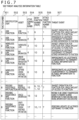
  • FIG. 7 is a view that illustrates an example of a configuration of a threat analysis information table.
  • FIG. 8 is a view that illustrates an example of a configuration of an attack route table.
  • FIG. 9 A and FIG. 9 B taken together, are a view that illustrates an example of a configuration of an evaluation table.
  • FIG. 10 is a view that illustrates an example of a configuration of a countermeasure table.
  • FIG. 11 is a view that illustrates an example of a configuration of a test table.
  • FIG. 12 is an overall sequence diagram for the risk evaluation and countermeasure planning system.
  • FIG. 13 is a system evaluation determination flow chart.
  • FIG. 14 is a view of a configuration of an IoT device that is an evaluation target.
  • FIG. 15 is a view that illustrates an example of an output screen for a countermeasure candidate list and a test requirement list of the system.
  • FIG. 16 is a view that illustrates an example of an output screen for an evaluation result of the system.
  • a risk evaluation and countermeasure planning system is directly connected to an input apparatus and an output apparatus that a user uses.
  • an asset that can be an attack target in the embodiment refers to two things: an information asset that is data held by a device that forms part of a system or IoT system impacted by an attack such as where an attacker exploits information, and a functional asset that is impacted by an attack for stopping functionality such as a DoS made by an attacker.
  • a risk evaluation and countermeasure planning system 1 is configured by a CPU (processing apparatus) 101 , a memory 102 , a storage apparatus 103 , a communication apparatus 104 , a power supply apparatus 105 , an input/output apparatus 106 , a bus 107 , and a user 108 .
  • the user 108 inputs information to and outputs information from the risk evaluation and countermeasure planning system 1 via the input/output apparatus 106 .
  • the CPU 101 While operating, the CPU 101 holds an input/output processing unit 2 , a threat analysis processing unit 3 , a countermeasure planning unit 4 , a security test planning unit 5 , an evaluation calculation unit 6 , a result processing unit 7 , a vulnerability analysis unit 8 , and a product applicability determination unit 9 .
  • the memory 102 holds a specification item—vulnerability correspondence information DB 10 and a product information DB 11 .
  • the communication apparatus 104 is connected, via a network, to an external attack method DB 12 , which is described below.
  • the risk evaluation and countermeasure planning system 1 has the input/output processing unit 2 , the threat analysis processing unit 3 into which design information is inputted from the input/output processing unit 2 , the countermeasure planning unit 4 into which a threat analysis result is inputted from the threat analysis processing unit 3 , the security test planning unit 5 into which a countermeasure plan candidate is inputted from the countermeasure planning unit 4 , the evaluation calculation unit 6 into which a test requirement is inputted from the security test planning unit 5 , the result processing unit 7 into which an evaluation result is inputted from the evaluation calculation unit 6 , the product information DB 11 to which product information is outputted from the result processing unit 7 , the vulnerability analysis unit 8 into which vulnerability information is inputted from the input/output processing unit 2 , and the specification item—related vulnerability correspondence information DB 10 into which specification item—related vulnerability correspondence information is inputted from the vulnerability analysis unit 8 .
  • the attack method DB 12 stores an attack method table 310 .
  • the specification item—related vulnerability correspondence information DB 10 stores a specification item—related vulnerability correspondence information table 400 .
  • the product information DB 11 stores product information including a security countermeasure or a countermeasure that has been implemented.
  • the risk evaluation and countermeasure planning system 1 has the input/output processing unit 2 that receives information regarding new vulnerabilities and attack method information, the vulnerability analysis unit 8 that is inputted with vulnerability information from the input/output processing unit 2 , the product applicability determination unit 9 that determines from the information regarding new vulnerabilities and past product information whether vulnerability information applies to a product, the evaluation calculation unit 6 that evaluates the impact of the vulnerability on the product in the case where the determination result is that the vulnerability applies to the product, a countermeasure planning unit 4 that plans a countermeasure for reducing the impact of the vulnerability, the product information DB 12 that stores product information including countermeasures that have been implemented, and the specification item—related vulnerability correspondence information DB 11 that updates and stores specification item—related vulnerability correspondence information on the basis of a result from the vulnerability analysis unit 8 .
  • FIG. 4 illustrates an example of a configuration of a specification information table 200 that indicates, to a user, connections between functions and a function configuration of an IoT device that is an evaluation target and is described below.
  • the specification information table 200 includes a function number 201 which is a number for uniquely specifying a function number, a specification item 202 that indicates a function element, 203 which indicates a software version, an asset 204 which indicates functions and information held by the respective function, an asset requirement 205 that indicates the importance of the respective asset, and a link function number that indicates a function configuration of an IoT device.
  • a wireless LAN function which has the function number 2 has the software version of WLAP 2.0, and has as assets a wireless LAN function, map information, update software (navigation function) and update software (driving assistance HMI function).
  • Asset requirements that respectively indicate the importance of these assets namely wireless LAN function, map information, update software (navigation function), and update software (driving assistance HMI function), are SIL 1, SIL 1, SIL 1, and SIL 2.
  • the update software (driving assistance HMI function) is indicated as being a more important asset requirement.
  • the link function numbers indicates that the wireless LAN function which has the function number 2 is connected to the FTP function which has the function number 5 and the wireless LAN IF which has the function number 10 .
  • SIL is an abbreviation for Safety Integrity Level, and is a target value for reducing, to be less than or equal to a certain level, the probability per hour that an attack which impacts the asset will occur and the asset will cease to function.
  • the safety level is not limited to an occurrence probability.
  • the number of countermeasures, the difficulty of an attack, or the number of attack procedures that impact an asset may be used for the safety level.
  • the safety level is not limited to this if it is possible to evaluate the probability of accessing an asset, the difficulty of accessing the asset, the difficulty of an attack process, and so on.
  • the assets held by each function number are not assets that are held at all times, and also include information that is temporarily distributed along a route that makes up a connection described earlier.
  • assets include not just information assets but functions that are executed by software or hardware.
  • the function configuration indicated by the specification information table 200 of FIG. 4 is illustrated in FIG. 14 as a view of the configuration of an IoT device that is an evaluation target.
  • an external IF is the starting point of the attack.
  • an asset of the USB function which has the function number 1 is attacked from the USB IF which has the function number 9 .
  • An asset of the wireless LAN function which has the function number 2 is attacked from the wireless LAN IF which has the function number 10 .
  • the mobile communication function which has the function number 3 is attacked from the mobile communication function IF which has the function number 11 .
  • the control NW function which has the function number 4 is attacked from the control NW IF which has the function number 12 .
  • the attack method information table 310 indicates an attack method number 311 that uniquely specifies an attack method type, an attack method 312 , a related function 313 that indicates a function that the attack method 311 could impact, an asset 314 that the attack method 311 could impact, and a related vulnerability 315 that indicates a vulnerability of software used when an attack is made with the attack method 311 .
  • the attack method number 50 in FIG. 5 indicates that, when attempting an unauthorized connection to the wireless LAN function or the mobile communication function of an IoT device, in order to make an unauthorized connection to the wireless LAN function or the mobile communication function, an attacker attempts to connect through unauthorized use of a connection password in the attack method 312 and, as the related vulnerability 315 , uses a vulnerability with the vulnerability number 522 in which a password that can be easily guessed is set or a vulnerability with the vulnerability number 640 in which reobtainment of a password for a case where the password is forgotten is abused.
  • an attacker Normally, an attacker rarely uses a single attack method to impact assets of an IoT device, but instead combines a plurality of attack methods 312 to impact an asset.
  • a combination of attack methods is outputted from an asset composition and routes for an IoT device, and on the basis of a result of this, vulnerabilities which could be present in each function are specified.
  • the attack method information table 310 may be obtained from an external unit, or may be created by an analyst or implementer themself, envisioning attack methods 312 with respect to each function that has been implemented.
  • the attack method 312 is not limited to simply the method for an attack, and may be a list of vulnerabilities and attack methods that are a result of analysis of cyber attack cases for which there was an impact in the past. An attack method list and a vulnerability list may be present separately.
  • the specification item—related vulnerability correspondence information table 400 is configured from a function number 401 , a specification item 402 , an attack method number 403 , a related attack method 404 , and a related vulnerability 405 .
  • the function number 401 and the specification item 402 correspond to the function number 201 and the specification item 202 indicated in FIG. 4 .
  • the function number 401 and specification item 402 of the specification information in FIG. 6 what kind of attack is performed by an attacker and what vulnerability is attack is indicated.
  • the attack method number 403 , related attack method 404 , and related vulnerability 405 specify, with respect to a specification item 202 of the specification information table 200 illustrated in FIG. 4 , an attack method 312 and a related vulnerability 315 with respect to the specification item 202 of the attack method information table 310 illustrated in FIG. 5 .
  • the threat analysis information table 500 is configured from an asset item number 501 , an asset 502 , an attack scenario number 504 , an entry function number 505 , an attack target function number 506 , and a threat event 507 .
  • FIG. 7 illustrates a list that is a result of exhaustively analyzing the threat event 507 with respect to the asset 503 held by the specification item 502 of each function number 501 of the specification information.
  • the threat analysis information table 500 is a list that exhaustively specifies, with respect to the specification item 502 on the design specification and the asset 503 , from which attack starting point (entry function number 505 (FROM)) is there an attack from and what impact (threat event 707 ) does the attack have on the IoT device.
  • attack starting point entity function number 505 (FROM)
  • FROM logic function number 505
  • the assets held by the USB function which has the function number 1 in FIG. 7 are the USB function and the map information.
  • the threat event 507 for a case where the USB function which has the function number 1 is accessed with a large amount of data from the USB IF which has the function number 9 and the function is impaired corresponds to the attack scenario item number 1 .
  • the threat event 507 of tampered map information being transmitted from the USB IF which has the function number 9 to the USB function which has the function number 1 corresponds to the attack scenario item number 2 .
  • an occurrence probability is evaluated from a combination of attack methods which is described below, a related vulnerability test method, and additional countermeasures for an attack route, and, by comparing the occurrence probability with a safety level occurrence probability, a determination is made as to whether there is a level of safety that can be permitted.
  • the attack route table 600 is configured from a function number 601 , a specification item 602 , an entry function (FROM) 603 , and an attack route 604 .
  • FIG. 8 illustrates attack routes for from which attack starting point and via which attack routes an attacker will make an attack on the specification item 602 of a specification.
  • assets held by the driving assistance HMI function which has the function number 8 could be attacked on four attack routes.
  • an attacker In order to cause the threat event 507 for each attack scenario item number 504 indicated in FIG. 7 , an attacker repeatedly, in the order for the route, succeeds in an attack that applies the related attack method 404 to the related vulnerability 405 with respect to the specification item 402 indicated in FIG. 6 , for respective functions of specification items on the attack route.
  • an evaluation table 700 which is outputted by the evaluation calculation unit 6 and includes attack scenarios indicating attack methods present for an attack route, and an order in which functions are attacked.
  • the evaluation table 700 is an evaluation table that exhaustively specifies attack scenarios that cause threat events with respect to all assets of an IoT device that is an analysis target.
  • the evaluation table 700 includes an attack scenario item number 701 , a threat event 702 , an asset 703 , an occurrence probability 704 , an attack route 705 , and occurrence location: attack method procedures 706 through 710 .
  • An attack scenario indicates, by the attack procedure and attack location, a threat event connected to an asset 703 .
  • a threat event indicates an event with the possibility of causing damage or having an impact due to a cyber attack.
  • An asset includes information or a function that is impacted by the threat event.
  • the occurrence probability indicates the probability per hour of the threat event occurring and the asset ceasing to function.
  • the occurrence probability 704 indicates the probability of the attack methods on the attack route occurring in order.
  • the occurrence probability is evaluated after multiplying it by a coefficient based on the effect of an additional countermeasure described below or the effect of a test implementation plan with respect to each vulnerability.
  • calculation is performed by, for example, multiplication on the basis of the number of additional countermeasures or the number of vulnerabilities that an attack method relates to.
  • the occurrence probability evaluated here is not limited to this if the occurrence probability evaluates a threat event for a cyber attack. An occurrence probability obtained in this way is compared with the asset requirement 205 indicated in FIG. 4 by each asset 703 , and it is determined whether the requirement is satisfied.
  • the attack route 705 indicates through which route the asset 703 would be attacked, and is represented using the function number 601 of each specification item 602 indicated in FIG. 8 .
  • the attack route 9 ⁇ 1 indicates a route on which the USB function which has the function number 1 is attacked, with the USB IF which has the function number 9 as the attack starting point.
  • the occurrence location: attack method procedures 706 through 710 indicate the order, along the attack route, of the attack occurrence location and attack method procedure for each function for the attacker.
  • an attack with the attack method being attack method number 10 obtainment of transmission data is made with respect to one related vulnerability among 201 : exposure of transmission data, 306 : authentication defect for transmission data, and 311 : cryptographic defect for transmission data which are indicated in FIG. 6 , is implemented against the USB function having the function 1 and is indicated by occurrence location: attack method procedure 1 : 706 .
  • attack method number 457 an attack that used a USB memory
  • an attack is implemented against a related vulnerability that is 284 : insufficient limits on USB protocol service, on the USB function with function 1 indicated by attack method procedure 2 : 707 .
  • attack method number 186 unauthorized software update
  • an attack is implemented against a related vulnerability that is 494 : software update with no version check, on the update function with function 6 indicated by attack method procedure 3 : 708 .
  • attack method number 76 unauthorized use of rewrite function
  • an attack is implemented against the related vulnerabilities 264 : privilege escalation and 272 violation of minimum privilege, on the driving assistance HMI function of function 8 indicated by attack method procedure 4 : 709 .
  • the countermeasure table 800 is configured from an attack method number 801 , an attack method 802 , a countermeasure 803 , a countermeasure location 804 , a countermeasure cost 805 , and an effect 806 .
  • the countermeasure table 800 is a countermeasure list that indicates countermeasures and countermeasure locations with respect to attack methods of the attack method information table 310 illustrated in FIG. 5 .
  • the attack method number 801 is a number that uniquely specifies an attack method indicated in FIG. 5 .
  • the attack method 802 indicates an attack method.
  • the countermeasure 803 is a countermeasure for the attack method.
  • the countermeasure location 804 indicates a location where the countermeasure can be implemented.
  • the countermeasure cost 805 indicates the cost when the countermeasure is implemented, in three stages: high, medium, and low. Since the countermeasure cost 805 indicates the countermeasure cost at a time of implementation, it may be an implementation cost estimated from actual person-hours, and there is no limitation to this. Since the effect 806 indicates a reduction effect in a case of preventing the attack method 802 , the effect 806 is indicated in three stages: high, medium, and low. It is sufficient if the effect 806 indicates, with respect to the attack method, the occurrence probability of a cyber attack, and there is no limitation to this.
  • test table 900 description is given regarding a configuration of a test table 900 .
  • the test table 900 is a list of types of tests for determining whether or not there is a vulnerability, envisioning each attack method illustrated in FIG. 5 .
  • the test table 900 is configured from a test number 901 , a test type 902 , an effect 903 , and a cost 904 .
  • the test type 902 indicates the type of a test, such as a checklist, a fuzzing test, a design review, and a penetration test.
  • a checklist indicates a method by which a developer of an IoT device that is an analysis target performs implementation after confirming, from the specification item—related vulnerability correspondence information table 400 illustrated in FIG. 6 , an attack method and related vulnerability with respect to a portion of specification items they are responsible for.
  • a fuzzing test indicates a test method by which a developer of an IoT device that is an analysis target decides parameters for testing an attack method and related vulnerability with respect to a portion of specification items they are responsible for.
  • a design review indicates a test method by which a developer of an IoT device that is an analysis target checks from a design document that there is no attack method and related vulnerability with respect to a portion of specification items they are responsible for.
  • a penetration test indicates a test method by which, after an IoT device is developed, an attack method with respect to a specification item is used to attack a related vulnerability in order to determine whether or not there is a vulnerability.
  • the effect 903 indicates an effect of mitigating the vulnerability
  • the effect 903 is indicated by three stages: high, medium, and low. It is sufficient if the effect 903 indicates an evaluation of reducing the impact of a vulnerability after each test has been implemented, and there is no limitation to this.
  • step 101 the user 108 inputs the specification information stipulated in the specification information table 200 to the risk evaluation and countermeasure planning system 1 , via the input/output processing unit 2 or the communication unit 80 .
  • step 102 the user 108 inputs the threat analysis information stipulated in the threat analysis information table 500 to the risk evaluation and countermeasure planning system 1 , via the input/output processing unit 2 or the communication unit 80 .
  • the threat analysis information exhaustively specifies threat events with respect to all assets that a specification item holds.
  • step 103 the user 108 inputs the countermeasure candidate list stipulated in the countermeasure table 800 illustrated in FIG. 10 to the risk evaluation and countermeasure planning system 1 , via the input/output processing unit 2 or the communication unit 80 .
  • the user 108 selects a countermeasure and a countermeasure location, in accordance with an attack method indicated in FIG. 10 .
  • step 104 the user 108 inputs the test list stipulated in the test table 900 to the risk evaluation and countermeasure planning system 1 , via the input/output processing unit 2 or the communication unit 80 .
  • a determination is made as to whether a test method adapted from the test table 900 illustrated in FIG. 11 applies to a vulnerability relating to an attack method indicated in FIG. 6 , and a determination is made as to whether to implement a test for each vulnerability.
  • step 105 from the attack route table 600 and specification item—related vulnerability correspondence information from the specification item—related vulnerability correspondence information DB 10 in the countermeasure planning unit 5 of the risk evaluation and countermeasure planning system 1 , for each attack route of all protected asset items indicated in the evaluation table 700 illustrated in FIG. 9 A and FIG. 9 B , calculation is made for the occurrence probability of an threat event actually occurring from a vulnerability number relating to an attack method and the attack method, in accordance with countermeasures for the route and the order of attack methods for the route.
  • step 106 in the case where the attack occurrence probability with respect to all assets in the evaluation table 700 outputted by the risk evaluation and countermeasure planning system 1 is less than a target occurrence probability, product information including a countermeasure candidate list and test candidates are outputted to the result processing unit 8 , and the risk evaluation processing ends. In the case of not being less than the target occurrence probability, the processing transitions to step 107 .
  • step 107 in the case where the order of connections for attack type information in risk evaluation and countermeasure planning does not correspond to the attack methods 802 in the countermeasure table 800 , the risk countermeasure planning unit 4 of the risk evaluation and countermeasure planning system 1 deletes risk evaluation and countermeasure planning that does not correspond. Note that step 105 and step 107 are repeatedly performed until the occurrence probability of all attacks on asset information that is the target of an attack becomes less than a requested occurrence probability.
  • step 108 the result processing unit 7 of the risk evaluation and countermeasure planning system 1 saves the product information that includes the test list and the countermeasure candidate list that has been planned in the product information DB 12 , and ends the processing.
  • the processing illustrated in FIG. 13 is performed, and a risk evaluation is performed for each route for all assets.
  • step 1300 the evaluation calculation unit 6 of the risk evaluation and countermeasure planning system 1 receives a design specification from the input/output processing unit 2 .
  • step 1301 the evaluation calculation unit 6 of the risk evaluation and countermeasure planning system 1 receives a countermeasure candidate list from the input/output processing unit 2 .
  • step 1302 the evaluation calculation unit 6 of the risk evaluation and countermeasure planning system 1 receives a test list from the input/output processing unit 2 .
  • step 1303 the first attack route for the evaluation target is selected, and a transition is made to the next processing.
  • step 1304 the first asset for the evaluation target is selected, and the next processing is transitioned to.
  • step 1305 the occurrence probability for the n-th asset and n-th route of the risk evaluation and countermeasure planning system 1 is calculated, and the risk is evaluated from the occurrence probability and the asset value for the n-th asset.
  • step 1306 and step 1307 the evaluation target transitions to the next asset.
  • implementation is made for the evaluation target asset n+1 until all assets have been made to be the evaluation target.
  • step 1308 and step 1309 the evaluation target transitions to the next route.
  • implementation is made for the evaluation target route n+1 until all attack routes have been made to be the evaluation target.
  • step 1310 a comparison is made as to whether the occurrence probability for the attack route to each asset to each asset is less than or equal to a requested level for the asset.
  • step 1311 in the case where the occurrence probability for all assets and the routes with respect to the assets is less than the requested occurrence probability, the processing transitions to step 106 . If the requested occurrence probability is exceeded, the processing transitions to step 105 .
  • the inputter inputs an additional countermeasure or additional test in S 106 .
  • the inputter selects an evaluation 813 , and inputs additional countermeasures and test requirements until the occurrence probability of attacks with respect to all assets of the overall system are less than a target occurrence probability which is based on asset requirements.
  • display is given in an order for a risk reduction effect for the additional countermeasure candidate list or the test requirement list, but display may be performed on the basis of an index such as cost performance which is obtained by dividing an effect by cost, an order of largest test for implementing a test item or a planned countermeasure, or execution cost.
  • a risk evaluation and countermeasure planning priority evaluation result and a system evaluation result are created in S 107 .
  • the occurrence probability for each protected asset item is compared with the target occurrence probability which is based on an asset requirement, and determination is made as to whether the occurrence probability is less than the target occurrence probability.
  • the evaluation result 814 for the system is “pass.”
  • the method of calculating an evaluation value is not limited to a specific calculation method as long as priorities are assigned for risk evaluation and countermeasure planning.

Landscapes

  • Engineering & Computer Science (AREA)
  • Computer Security & Cryptography (AREA)
  • Software Systems (AREA)
  • Theoretical Computer Science (AREA)
  • Computer Hardware Design (AREA)
  • General Engineering & Computer Science (AREA)
  • General Physics & Mathematics (AREA)
  • Physics & Mathematics (AREA)
  • Computer Networks & Wireless Communication (AREA)
  • Signal Processing (AREA)
  • Computing Systems (AREA)
  • Management, Administration, Business Operations System, And Electronic Commerce (AREA)
  • Computer And Data Communications (AREA)

Abstract

The present invention is provided with a threat analysis processing unit that, on the basis of an analysis result from the vulnerability analysis unit, analyzes a threat to the system and outputs a threat analysis result; a countermeasure planning unit that, on the basis of the threat analysis result and vulnerability information, plans the countermeasure plan which reduces the impact of the vulnerability; a security test planning unit that plans the security test on the basis of the countermeasure plan; an evaluation calculation unit that performs an evaluation on the basis of the security test, and outputs an evaluation result; and a result processing unit that processes the evaluation result and generates a security countermeasure.

Description

TECHNICAL FIELD
The present invention relates to a risk evaluation and countermeasure planning system, and a risk evaluation and countermeasure planning method.
BACKGROUND ART
In recent years, techniques for realizing services that improve control system efficiency or services that perform software updates or appropriately update information used, by connecting communication apparatuses that obtain external information with control systems for factories, automobiles, and the like, have started to spread. In such an IoT (Internet of Things) system, there is a greater risk of suffering a cyber attack from outside of these devices, and improved security performance is requested.
Furthermore, software that forms a part of these devices has defects, referred to as software vulnerabilities (hereinafter referred to as vulnerabilities), such as flaws or specification problems in computer programs.
Accordingly, from the design stage to the development stage, service providers, users, and manufacturers of devices that form part of an IoT system are requested to reduce the possibility of the occurrence of an event that impacts a control system due to a security attack by correcting vulnerabilities through the implementation of security tests or the addition of security countermeasures to a product.
In addition, in a case where a new vulnerability is discovered after shipment of a product, if there is an impact on a service provided by an IoT system, measures such as software updates are requested.
However, there is a problem in that how far to implement security countermeasures must rely on the findings of experts, and opinions differ depending on the expert.
To solve this problem, Patent Document 1 describes a technique for supporting security countermeasures for which it is possible to verify the cost-effectiveness of a combination of security countermeasures.
PRIOR ART DOCUMENT Patent Document
  • Patent Document 1: JP-2016-200991-A
SUMMARY OF THE INVENTION Problem to be Solved by the Invention
However, with the security countermeasure selection support technique described in Patent Document 1, only the cost-effectiveness of a combination of security countermeasures is inspected, and no determination is made to as to whether a vulnerability impacts an asset or a service provided by an IoT system. Accordingly, with Patent Document 1, it is difficult to determine how far to implement countermeasures or security tests to mitigate vulnerabilities.
The purpose of the present invention is to determine a countermeasure or security test for mitigating a vulnerability, in a risk evaluation and countermeasure planning system.
Means for Solving the Problem
A risk evaluation and countermeasure planning system according to an aspect of the present invention has a processing apparatus and a storage apparatus, plans a countermeasure plan pertaining to an attack on a system, and plans a security test, where, in this system, the storage apparatus stores a vulnerability database that stores vulnerability information pertaining to a vulnerability, and a product information database that stores product information, and the processing apparatus has an input/output processing unit into which design information is inputted, a vulnerability analysis unit that analyzes the vulnerability on the basis of the design information, a threat analysis processing unit that, on the basis of an analysis result from the vulnerability analysis unit, analyzes a threat to the system and outputs a threat analysis result, a countermeasure planning unit that, on the basis of the threat analysis result outputted from the threat analysis processing unit and the vulnerability information stored in the vulnerability database, plans the countermeasure plan which reduces an impact of the vulnerability, a security test planning unit that plans the security test on the basis of the countermeasure plan planned by the countermeasure planning unit, an evaluation calculation unit that performs an evaluation on the basis of the security test planned by the security test planning unit, and outputs an evaluation result, and a result processing unit that processes the evaluation result evaluated by the evaluation calculation unit, generates a security countermeasure as the product information, and stores the security countermeasure in the product information database.
A risk evaluation and countermeasure planning method according to an aspect of the present invention is for planning a countermeasure plan pertaining to an attack on a system, and planning a security test, the method including: analyzing a vulnerability on the basis of design information; analyzing a threat to the system on the basis of an analysis result and outputting a threat analysis result; planning, on the basis of the threat analysis result and vulnerability information, the countermeasure plan which reduces an impact of the vulnerability; planning the security test on the basis of the countermeasure plan; performing an evaluation on the basis of the security test and outputting an evaluation result; and processing the evaluation result and generating the security countermeasure.
Advantages of the Invention
By virtue of one aspect of the present invention, in a risk evaluation and countermeasure planning system, it is possible to determine a countermeasure or security test for mitigating a vulnerability.
BRIEF DESCRIPTION OF THE DRAWINGS
FIG. 1 is a view that illustrates a hardware configuration of a risk evaluation and countermeasure planning system according to an embodiment.
FIG. 2 is a view that illustrates a block view of the entirety of a risk evaluation and countermeasure planning system at a product design stage.
FIG. 3 is a view that illustrates a block view of the entirety of a risk evaluation and countermeasure planning system at a post-shipment vulnerability countermeasure stage.
FIG. 4 is a view that illustrates a configuration of a specification information table.
FIG. 5 is a view that illustrates an example of a configuration of an attack method information table.
FIG. 6 is a view that illustrates an example of a configuration of a specification item—related vulnerability correspondence information table.
FIG. 7 is a view that illustrates an example of a configuration of a threat analysis information table.
FIG. 8 is a view that illustrates an example of a configuration of an attack route table.
FIG. 9A and FIG. 9B, taken together, are a view that illustrates an example of a configuration of an evaluation table.
FIG. 10 is a view that illustrates an example of a configuration of a countermeasure table.
FIG. 11 is a view that illustrates an example of a configuration of a test table.
FIG. 12 is an overall sequence diagram for the risk evaluation and countermeasure planning system.
FIG. 13 is a system evaluation determination flow chart.
FIG. 14 is a view of a configuration of an IoT device that is an evaluation target.
FIG. 15 is a view that illustrates an example of an output screen for a countermeasure candidate list and a test requirement list of the system.
FIG. 16 is a view that illustrates an example of an output screen for an evaluation result of the system.
MODES FOR CARRYING OUT THE INVENTION
Using the drawings, description is given below regarding an embodiment.
Embodiment
In the embodiment, a risk evaluation and countermeasure planning system is directly connected to an input apparatus and an output apparatus that a user uses. Note that an asset that can be an attack target in the embodiment refers to two things: an information asset that is data held by a device that forms part of a system or IoT system impacted by an attack such as where an attacker exploits information, and a functional asset that is impacted by an attack for stopping functionality such as a DoS made by an attacker.
With reference to FIG. 1 , description is given regarding the configuration of the risk evaluation and countermeasure planning system 1 according to the embodiment.
A risk evaluation and countermeasure planning system 1 is configured by a CPU (processing apparatus) 101, a memory 102, a storage apparatus 103, a communication apparatus 104, a power supply apparatus 105, an input/output apparatus 106, a bus 107, and a user 108. The user 108 inputs information to and outputs information from the risk evaluation and countermeasure planning system 1 via the input/output apparatus 106.
While operating, the CPU 101 holds an input/output processing unit 2, a threat analysis processing unit 3, a countermeasure planning unit 4, a security test planning unit 5, an evaluation calculation unit 6, a result processing unit 7, a vulnerability analysis unit 8, and a product applicability determination unit 9. The memory 102 holds a specification item—vulnerability correspondence information DB 10 and a product information DB 11. The communication apparatus 104 is connected, via a network, to an external attack method DB 12, which is described below.
With reference to FIG. 2 , description is given regarding the configuration of the risk evaluation and countermeasure planning system 1 at a product design stage.
The risk evaluation and countermeasure planning system 1 has the input/output processing unit 2, the threat analysis processing unit 3 into which design information is inputted from the input/output processing unit 2, the countermeasure planning unit 4 into which a threat analysis result is inputted from the threat analysis processing unit 3, the security test planning unit 5 into which a countermeasure plan candidate is inputted from the countermeasure planning unit 4, the evaluation calculation unit 6 into which a test requirement is inputted from the security test planning unit 5, the result processing unit 7 into which an evaluation result is inputted from the evaluation calculation unit 6, the product information DB 11 to which product information is outputted from the result processing unit 7, the vulnerability analysis unit 8 into which vulnerability information is inputted from the input/output processing unit 2, and the specification item—related vulnerability correspondence information DB 10 into which specification item—related vulnerability correspondence information is inputted from the vulnerability analysis unit 8.
The attack method DB 12 stores an attack method table 310. The specification item—related vulnerability correspondence information DB 10 stores a specification item—related vulnerability correspondence information table 400. The product information DB 11 stores product information including a security countermeasure or a countermeasure that has been implemented.
With reference to FIG. 3 , description is given regarding the configuration of the risk evaluation and countermeasure planning system 1 at a post-shipment vulnerability countermeasure stage.
The risk evaluation and countermeasure planning system 1 has the input/output processing unit 2 that receives information regarding new vulnerabilities and attack method information, the vulnerability analysis unit 8 that is inputted with vulnerability information from the input/output processing unit 2, the product applicability determination unit 9 that determines from the information regarding new vulnerabilities and past product information whether vulnerability information applies to a product, the evaluation calculation unit 6 that evaluates the impact of the vulnerability on the product in the case where the determination result is that the vulnerability applies to the product, a countermeasure planning unit 4 that plans a countermeasure for reducing the impact of the vulnerability, the product information DB 12 that stores product information including countermeasures that have been implemented, and the specification item—related vulnerability correspondence information DB 11 that updates and stores specification item—related vulnerability correspondence information on the basis of a result from the vulnerability analysis unit 8.
FIG. 4 illustrates an example of a configuration of a specification information table 200 that indicates, to a user, connections between functions and a function configuration of an IoT device that is an evaluation target and is described below.
The specification information table 200 includes a function number 201 which is a number for uniquely specifying a function number, a specification item 202 that indicates a function element, 203 which indicates a software version, an asset 204 which indicates functions and information held by the respective function, an asset requirement 205 that indicates the importance of the respective asset, and a link function number that indicates a function configuration of an IoT device.
In FIG. 4 , for example, a wireless LAN function which has the function number 2 has the software version of WLAP 2.0, and has as assets a wireless LAN function, map information, update software (navigation function) and update software (driving assistance HMI function).
Asset requirements that respectively indicate the importance of these assets, namely wireless LAN function, map information, update software (navigation function), and update software (driving assistance HMI function), are SIL 1, SIL 1, SIL 1, and SIL 2. The update software (driving assistance HMI function) is indicated as being a more important asset requirement. The link function numbers indicates that the wireless LAN function which has the function number 2 is connected to the FTP function which has the function number 5 and the wireless LAN IF which has the function number 10.
SIL is an abbreviation for Safety Integrity Level, and is a target value for reducing, to be less than or equal to a certain level, the probability per hour that an attack which impacts the asset will occur and the asset will cease to function. For example, SIL 1 and SIL 2 are safety levels at which being safe can be rationally determined if the probability can be respectively kept to SIL 1>=a target value in the range of 10 the power of −6 and 10 to the power of −5, and SIL 2>=a target value in the range of 10 to the power of −7 and 10 to the power of −6.
The safety level is not limited to an occurrence probability. For example, the number of countermeasures, the difficulty of an attack, or the number of attack procedures that impact an asset may be used for the safety level. The safety level is not limited to this if it is possible to evaluate the probability of accessing an asset, the difficulty of accessing the asset, the difficulty of an attack process, and so on.
The assets held by each function number are not assets that are held at all times, and also include information that is temporarily distributed along a route that makes up a connection described earlier. In addition, assets include not just information assets but functions that are executed by software or hardware. The function configuration indicated by the specification information table 200 of FIG. 4 is illustrated in FIG. 14 as a view of the configuration of an IoT device that is an evaluation target.
In addition, the premise for a cyber attack is that an external IF is the starting point of the attack. As illustrated in FIG. 14 , for example, an asset of the USB function which has the function number 1 is attacked from the USB IF which has the function number 9. An asset of the wireless LAN function which has the function number 2 is attacked from the wireless LAN IF which has the function number 10. The mobile communication function which has the function number 3 is attacked from the mobile communication function IF which has the function number 11. The control NW function which has the function number 4 is attacked from the control NW IF which has the function number 12.
Furthermore, attacks from respective IFs follow a connected route in the function configuration, and assets of functions that are not directly connected to an IF are also attacked. For example, as illustrated in FIG. 14 , from the USB IF which has the function number 9, the map information and update function of the update function which has the function number 6 as well as the map information and the navigation function of the navigation function which has the function number 7 are attacked in addition to the map information and the USB function which has the function number 1, which are assets held by the USB function.
With reference to FIG. 5 , description is given regarding a configuration of the attack method information table 310 held by the attack method DB 12.
The attack method information table 310 indicates an attack method number 311 that uniquely specifies an attack method type, an attack method 312, a related function 313 that indicates a function that the attack method 311 could impact, an asset 314 that the attack method 311 could impact, and a related vulnerability 315 that indicates a vulnerability of software used when an attack is made with the attack method 311.
The attack method number 50 in FIG. 5 , for example, indicates that, when attempting an unauthorized connection to the wireless LAN function or the mobile communication function of an IoT device, in order to make an unauthorized connection to the wireless LAN function or the mobile communication function, an attacker attempts to connect through unauthorized use of a connection password in the attack method 312 and, as the related vulnerability 315, uses a vulnerability with the vulnerability number 522 in which a password that can be easily guessed is set or a vulnerability with the vulnerability number 640 in which reobtainment of a password for a case where the password is forgotten is abused.
Normally, an attacker rarely uses a single attack method to impact assets of an IoT device, but instead combines a plurality of attack methods 312 to impact an asset. On the basis of threat analysis described below, a combination of attack methods is outputted from an asset composition and routes for an IoT device, and on the basis of a result of this, vulnerabilities which could be present in each function are specified.
The attack method information table 310 may be obtained from an external unit, or may be created by an analyst or implementer themself, envisioning attack methods 312 with respect to each function that has been implemented. The attack method 312 is not limited to simply the method for an attack, and may be a list of vulnerabilities and attack methods that are a result of analysis of cyber attack cases for which there was an impact in the past. An attack method list and a vulnerability list may be present separately.
With reference to FIG. 6 , description is given regarding a configuration of the specification item—related vulnerability correspondence information table 400 which is held by the specification item—related vulnerability correspondence information DB 10.
The specification item—related vulnerability correspondence information table 400 is configured from a function number 401, a specification item 402, an attack method number 403, a related attack method 404, and a related vulnerability 405.
The function number 401 and the specification item 402 correspond to the function number 201 and the specification item 202 indicated in FIG. 4 . With respect to each function number 401 and specification item 402 of the specification information in FIG. 6 , what kind of attack is performed by an attacker and what vulnerability is attack is indicated.
The attack method number 403, related attack method 404, and related vulnerability 405 specify, with respect to a specification item 202 of the specification information table 200 illustrated in FIG. 4 , an attack method 312 and a related vulnerability 315 with respect to the specification item 202 of the attack method information table 310 illustrated in FIG. 5 .
With reference to FIG. 7 , description is given regarding a configuration of a threat analysis information table 500 which is outputted by the threat analysis processing unit 3.
The threat analysis information table 500 is configured from an asset item number 501, an asset 502, an attack scenario number 504, an entry function number 505, an attack target function number 506, and a threat event 507. FIG. 7 illustrates a list that is a result of exhaustively analyzing the threat event 507 with respect to the asset 503 held by the specification item 502 of each function number 501 of the specification information.
The threat analysis information table 500 is a list that exhaustively specifies, with respect to the specification item 502 on the design specification and the asset 503, from which attack starting point (entry function number 505 (FROM)) is there an attack from and what impact (threat event 707) does the attack have on the IoT device.
For example, the assets held by the USB function which has the function number 1 in FIG. 7 are the USB function and the map information. In relation to the USB function, the threat event 507 for a case where the USB function which has the function number 1 is accessed with a large amount of data from the USB IF which has the function number 9 and the function is impaired corresponds to the attack scenario item number 1. In relation to the map information, the threat event 507 of tampered map information being transmitted from the USB IF which has the function number 9 to the USB function which has the function number 1 corresponds to the attack scenario item number 2.
For the threat event 507 of each attack scenario item number 504, an occurrence probability is evaluated from a combination of attack methods which is described below, a related vulnerability test method, and additional countermeasures for an attack route, and, by comparing the occurrence probability with a safety level occurrence probability, a determination is made as to whether there is a level of safety that can be permitted.
With reference to FIG. 8 , description is given regarding a configuration of an attack route table 600.
The attack route table 600 is configured from a function number 601, a specification item 602, an entry function (FROM) 603, and an attack route 604. FIG. 8 illustrates attack routes for from which attack starting point and via which attack routes an attacker will make an attack on the specification item 602 of a specification.
For example, in FIG. 8 , assets held by the driving assistance HMI function which has the function number 8 could be attacked on four attack routes. There is a possibility for an attack on the attack route 9168 to be made from the USB IF which has the function number 9. There is a possibility for an attack on the attack route 102568 to be made from the wireless LAN IF which has the function number 10. There is a possibility for an attack on the attack route 113568 to be made from the mobile communication IF which has the function number 11. There is a possibility for an attack on the attack route 1248 to be made from the control NW IF which has the function number 12.
In order to cause the threat event 507 for each attack scenario item number 504 indicated in FIG. 7 , an attacker repeatedly, in the order for the route, succeeds in an attack that applies the related attack method 404 to the related vulnerability 405 with respect to the specification item 402 indicated in FIG. 6 , for respective functions of specification items on the attack route.
With reference to FIG. 9A and FIG. 9B, description is given regarding a configuration of an evaluation table 700 which is outputted by the evaluation calculation unit 6 and includes attack scenarios indicating attack methods present for an attack route, and an order in which functions are attacked.
The evaluation table 700 is an evaluation table that exhaustively specifies attack scenarios that cause threat events with respect to all assets of an IoT device that is an analysis target.
The evaluation table 700 includes an attack scenario item number 701, a threat event 702, an asset 703, an occurrence probability 704, an attack route 705, and occurrence location: attack method procedures 706 through 710.
An attack scenario indicates, by the attack procedure and attack location, a threat event connected to an asset 703. A threat event indicates an event with the possibility of causing damage or having an impact due to a cyber attack. An asset includes information or a function that is impacted by the threat event. The occurrence probability indicates the probability per hour of the threat event occurring and the asset ceasing to function. The occurrence probability 704 indicates the probability of the attack methods on the attack route occurring in order.
For example, the occurrence probability 704 is obtained by setting the occurrence probability for one procedure to P, defining the occurrence probability=(P1× . . . Pn), with Pi=(1/number of all attack method types)×(number of vulnerabilities that attack procedure relates to/number of all vulnerability types), for example. In addition, the occurrence probability is evaluated after multiplying it by a coefficient based on the effect of an additional countermeasure described below or the effect of a test implementation plan with respect to each vulnerability. For example, with the coefficient set to 0.0001 where the effect of an additional countermeasure is high, 0.001 where the effect is medium, and 0.1 where the effect is low, calculation is performed by, for example, multiplication on the basis of the number of additional countermeasures or the number of vulnerabilities that an attack method relates to.
The occurrence probability evaluated here is not limited to this if the occurrence probability evaluates a threat event for a cyber attack. An occurrence probability obtained in this way is compared with the asset requirement 205 indicated in FIG. 4 by each asset 703, and it is determined whether the requirement is satisfied. The attack route 705 indicates through which route the asset 703 would be attacked, and is represented using the function number 601 of each specification item 602 indicated in FIG. 8 .
For example, the attack route 91 indicates a route on which the USB function which has the function number 1 is attacked, with the USB IF which has the function number 9 as the attack starting point. The occurrence location: attack method procedures 706 through 710 indicate the order, along the attack route, of the attack occurrence location and attack method procedure for each function for the attacker.
For example, regarding the attack scenario item number 17-1 shown in FIG. 9A and FIG. 9B, an attack with the attack method being attack method number 10: obtainment of transmission data is made with respect to one related vulnerability among 201: exposure of transmission data, 306: authentication defect for transmission data, and 311: cryptographic defect for transmission data which are indicated in FIG. 6 , is implemented against the USB function having the function 1 and is indicated by occurrence location: attack method procedure 1:706.
By attack method number 457: an attack that used a USB memory, an attack is implemented against a related vulnerability that is 284: insufficient limits on USB protocol service, on the USB function with function 1 indicated by attack method procedure 2: 707.
By attack method number 186: unauthorized software update, an attack is implemented against a related vulnerability that is 494: software update with no version check, on the update function with function 6 indicated by attack method procedure 3: 708.
By attack method number 76: unauthorized use of rewrite function, an attack is implemented against the related vulnerabilities 264: privilege escalation and 272 violation of minimum privilege, on the driving assistance HMI function of function 8 indicated by attack method procedure 4: 709.
By implementing attacks such as these, there is an update of tampered software to the function, which is a threat event, and update software (driving assistance HMI function) which is an asset is impacted.
With reference to FIG. 10 , description is given regarding a configuration of a countermeasure table 800.
The countermeasure table 800 is configured from an attack method number 801, an attack method 802, a countermeasure 803, a countermeasure location 804, a countermeasure cost 805, and an effect 806. The countermeasure table 800 is a countermeasure list that indicates countermeasures and countermeasure locations with respect to attack methods of the attack method information table 310 illustrated in FIG. 5 .
The attack method number 801 is a number that uniquely specifies an attack method indicated in FIG. 5 . The attack method 802 indicates an attack method. The countermeasure 803 is a countermeasure for the attack method. The countermeasure location 804 indicates a location where the countermeasure can be implemented. The countermeasure cost 805 indicates the cost when the countermeasure is implemented, in three stages: high, medium, and low. Since the countermeasure cost 805 indicates the countermeasure cost at a time of implementation, it may be an implementation cost estimated from actual person-hours, and there is no limitation to this. Since the effect 806 indicates a reduction effect in a case of preventing the attack method 802, the effect 806 is indicated in three stages: high, medium, and low. It is sufficient if the effect 806 indicates, with respect to the attack method, the occurrence probability of a cyber attack, and there is no limitation to this.
With reference to FIG. 11 , description is given regarding a configuration of a test table 900.
The test table 900 is a list of types of tests for determining whether or not there is a vulnerability, envisioning each attack method illustrated in FIG. 5 . The test table 900 is configured from a test number 901, a test type 902, an effect 903, and a cost 904.
The test type 902 indicates the type of a test, such as a checklist, a fuzzing test, a design review, and a penetration test. For example, a checklist indicates a method by which a developer of an IoT device that is an analysis target performs implementation after confirming, from the specification item—related vulnerability correspondence information table 400 illustrated in FIG. 6 , an attack method and related vulnerability with respect to a portion of specification items they are responsible for.
A fuzzing test indicates a test method by which a developer of an IoT device that is an analysis target decides parameters for testing an attack method and related vulnerability with respect to a portion of specification items they are responsible for.
A design review indicates a test method by which a developer of an IoT device that is an analysis target checks from a design document that there is no attack method and related vulnerability with respect to a portion of specification items they are responsible for.
A penetration test indicates a test method by which, after an IoT device is developed, an attack method with respect to a specification item is used to attack a related vulnerability in order to determine whether or not there is a vulnerability.
Since the effect 903 indicates an effect of mitigating the vulnerability, the effect 903 is indicated by three stages: high, medium, and low. It is sufficient if the effect 903 indicates an evaluation of reducing the impact of a vulnerability after each test has been implemented, and there is no limitation to this.
With reference to FIG. 12 , description is given regarding a processing sequence for the risk evaluation and countermeasure planning system 1.
In step 101, the user 108 inputs the specification information stipulated in the specification information table 200 to the risk evaluation and countermeasure planning system 1, via the input/output processing unit 2 or the communication unit 80.
In step 102, the user 108 inputs the threat analysis information stipulated in the threat analysis information table 500 to the risk evaluation and countermeasure planning system 1, via the input/output processing unit 2 or the communication unit 80. The threat analysis information exhaustively specifies threat events with respect to all assets that a specification item holds.
In step 103, the user 108 inputs the countermeasure candidate list stipulated in the countermeasure table 800 illustrated in FIG. 10 to the risk evaluation and countermeasure planning system 1, via the input/output processing unit 2 or the communication unit 80. The user 108 selects a countermeasure and a countermeasure location, in accordance with an attack method indicated in FIG. 10 .
In step 104, the user 108 inputs the test list stipulated in the test table 900 to the risk evaluation and countermeasure planning system 1, via the input/output processing unit 2 or the communication unit 80. A determination is made as to whether a test method adapted from the test table 900 illustrated in FIG. 11 applies to a vulnerability relating to an attack method indicated in FIG. 6 , and a determination is made as to whether to implement a test for each vulnerability.
In step 105, from the attack route table 600 and specification item—related vulnerability correspondence information from the specification item—related vulnerability correspondence information DB 10 in the countermeasure planning unit 5 of the risk evaluation and countermeasure planning system 1, for each attack route of all protected asset items indicated in the evaluation table 700 illustrated in FIG. 9A and FIG. 9B, calculation is made for the occurrence probability of an threat event actually occurring from a vulnerability number relating to an attack method and the attack method, in accordance with countermeasures for the route and the order of attack methods for the route.
In step 106, in the case where the attack occurrence probability with respect to all assets in the evaluation table 700 outputted by the risk evaluation and countermeasure planning system 1 is less than a target occurrence probability, product information including a countermeasure candidate list and test candidates are outputted to the result processing unit 8, and the risk evaluation processing ends. In the case of not being less than the target occurrence probability, the processing transitions to step 107.
In step 107, in the case where the order of connections for attack type information in risk evaluation and countermeasure planning does not correspond to the attack methods 802 in the countermeasure table 800, the risk countermeasure planning unit 4 of the risk evaluation and countermeasure planning system 1 deletes risk evaluation and countermeasure planning that does not correspond. Note that step 105 and step 107 are repeatedly performed until the occurrence probability of all attacks on asset information that is the target of an attack becomes less than a requested occurrence probability.
In step 108, the result processing unit 7 of the risk evaluation and countermeasure planning system 1 saves the product information that includes the test list and the countermeasure candidate list that has been planned in the product information DB 12, and ends the processing.
With reference to the flow chart of FIG. 13 , description is given regarding the processing of the evaluation calculation unit 6 of the risk evaluation and countermeasure planning system 1.
The processing illustrated in FIG. 13 is performed, and a risk evaluation is performed for each route for all assets.
In step 1300, the evaluation calculation unit 6 of the risk evaluation and countermeasure planning system 1 receives a design specification from the input/output processing unit 2.
In step 1301, the evaluation calculation unit 6 of the risk evaluation and countermeasure planning system 1 receives a countermeasure candidate list from the input/output processing unit 2.
In step 1302, the evaluation calculation unit 6 of the risk evaluation and countermeasure planning system 1 receives a test list from the input/output processing unit 2.
In step 1303, the first attack route for the evaluation target is selected, and a transition is made to the next processing.
In step 1304, the first asset for the evaluation target is selected, and the next processing is transitioned to.
In step 1305, the occurrence probability for the n-th asset and n-th route of the risk evaluation and countermeasure planning system 1 is calculated, and the risk is evaluated from the occurrence probability and the asset value for the n-th asset.
In step 1306 and step 1307, the evaluation target transitions to the next asset. To have the second asset for the second and subsequent rounds of processing, implementation is made for the evaluation target asset n+1 until all assets have been made to be the evaluation target.
In step 1308 and step 1309, the evaluation target transitions to the next route. To have the second route for the second and subsequent rounds of processing, implementation is made for the evaluation target route n+1 until all attack routes have been made to be the evaluation target.
In step 1310, a comparison is made as to whether the occurrence probability for the attack route to each asset to each asset is less than or equal to a requested level for the asset.
In step 1311, in the case where the occurrence probability for all assets and the routes with respect to the assets is less than the requested occurrence probability, the processing transitions to step 106. If the requested occurrence probability is exceeded, the processing transitions to step 105.
With reference to FIG. 15 , description is given regarding an example of input for an input screen 905 in a case where an inputter selects an additional countermeasure or an additional test on the basis of a system evaluation result.
The inputter inputs an additional countermeasure or additional test in S106. After inputting, the inputter selects an evaluation 813, and inputs additional countermeasures and test requirements until the occurrence probability of attacks with respect to all assets of the overall system are less than a target occurrence probability which is based on asset requirements. In the embodiment, display is given in an order for a risk reduction effect for the additional countermeasure candidate list or the test requirement list, but display may be performed on the basis of an index such as cost performance which is obtained by dividing an effect by cost, an order of largest test for implementing a test item or a planned countermeasure, or execution cost.
With reference to FIG. 16 , description is given regarding an output example of an output screen 906 for a system evaluation result.
A risk evaluation and countermeasure planning priority evaluation result and a system evaluation result are created in S107.
The occurrence probability for each protected asset item is compared with the target occurrence probability which is based on an asset requirement, and determination is made as to whether the occurrence probability is less than the target occurrence probability. In a case where the risk evaluation result is that the occurrence probability with respect to all protected assets of the system satisfies the target occurrence probability, the evaluation result 814 for the system is “pass.”
The method of calculating an evaluation value is not limited to a specific calculation method as long as priorities are assigned for risk evaluation and countermeasure planning.
In addition, by preparing a plurality of methods of calculating an evaluation value and making it so that an administrator can make a selection, it becomes possible for the administrator to compare and evaluate each priority of the risk evaluation and countermeasure planning in accordance with the selected calculation method. As a result, usage is possible when estimating a test design or making an explanation to a customer.
By virtue of the embodiment described above, it is possible to determine whether or not to implement sufficiently necessary security countermeasures or security tests that are based on the quantitative evaluation of whether it is possible for an attack to occur.
REFERENCE SIGNS DESCRIPTION
    • 1: Risk evaluation and countermeasure planning system
    • 2: Input/output processing unit
    • 3: Threat analysis processing unit
    • 4: Countermeasure planning unit
    • 5: Security test planning unit
    • 6: Evaluation calculation unit
    • 7: Result processing unit
    • 8: Vulnerability analysis unit
    • 9: Product applicability determination unit
    • 10: Specification item—vulnerability correspondence information DB
    • 11: Product information DB
    • 101: CPU
    • 102: Memory
    • 103: Storage apparatus
    • 104: Communication apparatus
    • 105: Power supply apparatus
    • 106: Input/output apparatus
    • 107: Bus
    • 108: User

Claims (9)

The invention claimed is:
1. A risk evaluation and countermeasure planning system comprising:
a storage apparatus configured to store:
a vulnerability database that stores vulnerability information pertaining to a vulnerability, and
a product information database that stores product information; and
a processing apparatus including a memory and a processor coupled to the memory, the memory storing instructions that when executed by the processor, configures the processor to:
receive an input of design information,
analyze the vulnerability on a basis of the design information to generate an analysis result,
on a basis of the analysis result, analyze a threat to the system and output a threat analysis result,
on a basis of the output threat analysis result and the vulnerability information stored in the vulnerability database, plan a countermeasure plan which reduce an impact of the vulnerability,
plan a security test on a basis of the countermeasure plan,
perform an evaluation on a basis of the security test planned and output an evaluation result,
process the evaluation result, generate a security countermeasure as the product information, and store the security countermeasure as the product information database,
in a case where information regarding new vulnerabilities is input after product shipment, determine, from the information regarding new vulnerabilities and past product information, whether the information regarding new vulnerabilities applies to a product that forms a part of the system,
in a case that a result of the determination is that the information regarding new vulnerabilities applies to the product, evaluate an impact of the new vulnerabilities on the product, and determine whether an additional countermeasure is necessary by comparing the impact of the new vulnerabilities on the system with a requirement with respect to an asset value,
in a case where determination is that the additional countermeasure is necessary, plan the additional countermeasure for reducing the impact of the new vulnerabilities, and
generate the additional countermeasure as the product information, and store the product information in the product information database.
2. The risk evaluation and countermeasure planning system according to claim 1,
wherein the processor is configured to:
on a basis of a plurality of components of the system, a connection relation between the plurality of components, and the vulnerability information which relates to the components, generate an attack route connected to the components from a starting point for the attack, and
on the basis of an order of attack methods present for the attack route, the vulnerability which relates to the attack methods, and the security test, generate an asset value and an occurrence probability of a threat event occurring, the asset value and occurrence probability being held by each of the components, and
plan an additional countermeasure for reducing the occurrence probability to be an occurrence probability that is less than or equal to a requirement with respect to the asset value.
3. The risk evaluation and countermeasure planning system according to claim 1,
wherein the processor is configured to:
create a priority by calculating an evaluation value for the countermeasure plan.
4. The risk evaluation and countermeasure planning system according to claim 1,
wherein the processor is configured to:
on the basis of the analysis result, obtain a combination of the attack method from the asset value and the attack route, and specify the vulnerability which could be present in the component.
5. The risk evaluation and countermeasure planning system according to claim 1,
wherein the processor is configured to:
generate an attack scenario that indicates the attack method present for the attack route, and an order in which the components are attacked, and
from the attack scenario, specify an attack pattern which causes a threat event for the asset value of the product that forms a part of the system.
6. The risk evaluation and countermeasure planning system according to claim 1,
wherein the processor is configured to:
determine whether an occurrence probability for the attack route with respect to the asset value is less than or equal to a requested level for the asset value,
determine that the countermeasure plan is unnecessary in a case where the occurrence probability is less than or equal to the requested level, and
determine that the countermeasure plan is necessary in a case where the occurrence probability exceeds the requested level.
7. The risk evaluation and countermeasure planning system according to claim 1, further comprising:
a display coupled to the processor,
wherein the processor is configured to:
display, on the display, as a list, a candidate for an additional countermeasure plan and a test requirement for the security test, and
display, on an output screen, the output evaluation result.
8. A risk evaluation and countermeasure planning method for planning a countermeasure plan pertaining to an attack on a system, and planning a security test, the method comprising:
analyzing a vulnerability on a basis of design information;
analyzing a threat to the system on a basis of an analysis result and outputting a threat analysis result;
planning, on a basis of the threat analysis result and vulnerability information, the countermeasure plan which reduces an impact of the vulnerability;
planning the security test on a basis of the countermeasure plan;
performing an evaluation on a basis of the security test and outputting an evaluation result;
processing the evaluation result and generating a security countermeasure;
in a case where information regarding new vulnerabilities is input after product shipment, determining, from the information regarding new vulnerabilities and past product information, whether the information regarding new vulnerabilities applies to a product that forms a part of the system;
in a case that a result of the determination is that the information regarding new vulnerabilities applies to the product, evaluating an impact of the new vulnerabilities on the product, and determining whether an additional countermeasure is necessary by comparing the impact of the new vulnerabilities on the system with a requirement with respect to an asset value;
in a case where determination is that the additional countermeasure is necessary, planning the additional countermeasure for reducing the impact of the new vulnerabilities; and
generating the additional countermeasure as the product information, and store the product information in the product information database.
9. The risk evaluation and countermeasure planning method according claim 8, wherein
on a basis of a plurality of components of the system, a connection relation between the plurality of components, and the vulnerability information which relates to the components, an attack route connected to the components from a starting point for the attack is generated, and
on a basis of an order of attack methods present for the attack route, the vulnerability which relates to the attack methods, and the security test, an asset value and an occurrence probability of a threat event occurring are generated, the asset value and occurrence probability being held by each of the components, and
an additional countermeasure for reducing the occurrence probability to be an occurrence probability that is less than or equal to a requirement with respect to the asset value is planned.
US17/428,678 2019-03-29 2020-02-27 Risk evaluation and countermeasure planning system, and risk evaluation and countermeasure planning method Active 2040-10-14 US11921845B2 (en)

Applications Claiming Priority (3)

Application Number Priority Date Filing Date Title
JP2019067455A JP7149219B2 (en) 2019-03-29 2019-03-29 Risk evaluation countermeasure planning system and risk evaluation countermeasure planning method
JP2019-067455 2019-03-29
PCT/JP2020/007999 WO2020202934A1 (en) 2019-03-29 2020-02-27 Risk evaluation/countermeasure planning system and risk evaluation/countermeasure planning method

Publications (2)

Publication Number Publication Date
US20220121739A1 US20220121739A1 (en) 2022-04-21
US11921845B2 true US11921845B2 (en) 2024-03-05

Family

ID=72668761

Family Applications (1)

Application Number Title Priority Date Filing Date
US17/428,678 Active 2040-10-14 US11921845B2 (en) 2019-03-29 2020-02-27 Risk evaluation and countermeasure planning system, and risk evaluation and countermeasure planning method

Country Status (4)

Country Link
US (1) US11921845B2 (en)
EP (1) EP3913556A4 (en)
JP (1) JP7149219B2 (en)
WO (1) WO2020202934A1 (en)

Cited By (2)

* Cited by examiner, † Cited by third party
Publication number Priority date Publication date Assignee Title
US20240070291A1 (en) * 2022-08-24 2024-02-29 Hyundai Motor Company Attack path analysis apparatus for vehicle cyber security and attack path analysis method thereof
US12244450B1 (en) * 2023-09-05 2025-03-04 Cisco Technology, Inc. Method and system for network segmentation using safety integrity level (SIL)

Families Citing this family (26)

* Cited by examiner, † Cited by third party
Publication number Priority date Publication date Assignee Title
CN112904817B (en) * 2021-01-19 2022-08-12 哈尔滨工业大学(威海) A global safety detection system for intelligent manufacturing production line and its working method
US12034755B2 (en) * 2021-03-18 2024-07-09 International Business Machines Corporation Computationally assessing and remediating security threats
CN117223000A (en) * 2021-05-07 2023-12-12 三菱电机株式会社 Attack progress evaluation device, attack progress evaluation method and attack progress evaluation program
JP7578541B2 (en) * 2021-05-24 2024-11-06 株式会社日立製作所 ATTACK SCENARIO GENERATION DEVICE AND ATTACK SCENARIO GENERATION METHOD
US20220382876A1 (en) * 2021-05-25 2022-12-01 International Business Machines Corporation Security vulnerability management
CN113326508B (en) * 2021-06-04 2023-02-07 中国电子信息产业集团有限公司第六研究所 Method and device for evaluating platform security risk
JP7230146B1 (en) 2021-09-24 2023-02-28 エヌ・ティ・ティ・コミュニケーションズ株式会社 Vehicle security analysis device, method and program thereof
JP7688957B2 (en) * 2021-09-27 2025-06-05 パナソニックオートモーティブシステムズ株式会社 Threat analysis method and threat analysis system
CN113886258A (en) * 2021-10-19 2022-01-04 北京天融信网络安全技术有限公司 Fuzzy test method and device for automatically excavating bugs
JP7612564B2 (en) * 2021-12-27 2025-01-14 株式会社日立製作所 Security management system and security management method
JP7597748B2 (en) * 2022-01-06 2024-12-10 株式会社日立製作所 Scenario construction system, scenario construction device, and scenario construction method
JP2023125718A (en) * 2022-02-28 2023-09-07 株式会社東芝 Information processing device, information processing method, and information processing program
JP2023172806A (en) * 2022-05-24 2023-12-06 株式会社日立情報通信エンジニアリング Security countermeasure planning support system and security countermeasure planning support method
CN115361150B (en) * 2022-05-27 2023-10-13 南京邮电大学 Security risk assessment method for power distribution network risk cascade under network attack
JP7551034B2 (en) * 2022-05-27 2024-09-13 三菱電機株式会社 SECURITY ANALYSIS DEVICE, SECURITY ANALYSIS METHOD, AND SECURITY ANALYSIS PROGRAM
JP7733623B2 (en) * 2022-08-24 2025-09-03 株式会社日立システムズ Evaluation methods for computer systems and security measures
CN115834187B (en) * 2022-11-21 2026-01-02 嬴彻科技(浙江)有限公司 Vehicle controller vulnerability management methods, systems, electronic devices, and storage media
IL300324A (en) 2023-01-31 2024-08-01 C2A Sec Ltd System and method for security controls
JP2024156343A (en) * 2023-04-24 2024-11-06 株式会社日立製作所 Fault analysis support system and fault analysis support method
KR102693969B1 (en) * 2023-04-28 2024-08-12 (주)아스트론시큐리티 Method and mapping server for generating mapping information for cloud events
CN116389171B (en) * 2023-06-05 2023-08-11 汉兴同衡科技集团有限公司 Information security assessment detection method, system, device and medium
CN116739310B (en) * 2023-08-11 2023-10-24 威海市城市规划技术服务中心有限公司 Building site survey planning system based on geographic information
IL309475A (en) * 2023-12-17 2025-07-01 C2A Sec Ltd Attack path adjustment system and method
JP7594144B1 (en) 2024-03-13 2024-12-03 パナソニックオートモーティブシステムズ株式会社 Vulnerability analysis system, vulnerability analysis method, and program
WO2025234139A1 (en) * 2024-05-07 2025-11-13 三菱電機株式会社 Attack visualization device, attack visualization method, and attack visualization program
CN119135368B (en) * 2024-07-25 2025-11-21 北京天融信网络安全技术有限公司 Threat analysis method, device, medium and program product for intelligent networking automobile

Citations (12)

* Cited by examiner, † Cited by third party
Publication number Priority date Publication date Assignee Title
JP2005135239A (en) 2003-10-31 2005-05-26 Fujitsu Social Science Laboratory Ltd Information security management program, device and method
JP2005242754A (en) 2004-02-27 2005-09-08 Mitsubishi Electric Corp Security management system
WO2008004498A1 (en) 2006-07-06 2008-01-10 Nec Corporation Security risk management system, device, method, and program
US20090024627A1 (en) * 2007-07-17 2009-01-22 Oracle International Corporation Automated security manager
US20110078797A1 (en) * 2008-07-29 2011-03-31 Novell, Inc. Endpoint security threat mitigation with virtual machine imaging
US20120180133A1 (en) * 2011-01-10 2012-07-12 Saudi Arabian Oil Company Systems, Program Product and Methods For Performing a Risk Assessment Workflow Process For Plant Networks and Systems
US20140137257A1 (en) 2012-11-12 2014-05-15 Board Of Regents, The University Of Texas System System, Method and Apparatus for Assessing a Risk of One or More Assets Within an Operational Technology Infrastructure
JP2016200991A (en) 2015-04-10 2016-12-01 日本電信電話株式会社 Security measure selection support system and security measure selection support method
JP2017111796A (en) 2015-12-16 2017-06-22 パナソニック インテレクチュアル プロパティ コーポレーション オブ アメリカPanasonic Intellectual Property Corporation of America Security processing method and server
US20180260573A1 (en) * 2015-09-15 2018-09-13 Nec Corporation Information processing apparatus, information processing method, and program
US20190087570A1 (en) * 2017-09-20 2019-03-21 Bank Of America Corporation System for generation and execution of event impact mitigation
US20190147161A1 (en) * 2017-05-17 2019-05-16 Threatmodeler Software Inc. Threat Model Chaining and Attack Simulation Systems and Related Methods

Family Cites Families (2)

* Cited by examiner, † Cited by third party
Publication number Priority date Publication date Assignee Title
US8312549B2 (en) * 2004-09-24 2012-11-13 Ygor Goldberg Practical threat analysis
WO2018049437A2 (en) * 2016-09-08 2018-03-15 Thandisizwe Ezwenilethu Pama Cybersecurity artificial intelligence system

Patent Citations (12)

* Cited by examiner, † Cited by third party
Publication number Priority date Publication date Assignee Title
JP2005135239A (en) 2003-10-31 2005-05-26 Fujitsu Social Science Laboratory Ltd Information security management program, device and method
JP2005242754A (en) 2004-02-27 2005-09-08 Mitsubishi Electric Corp Security management system
WO2008004498A1 (en) 2006-07-06 2008-01-10 Nec Corporation Security risk management system, device, method, and program
US20090024627A1 (en) * 2007-07-17 2009-01-22 Oracle International Corporation Automated security manager
US20110078797A1 (en) * 2008-07-29 2011-03-31 Novell, Inc. Endpoint security threat mitigation with virtual machine imaging
US20120180133A1 (en) * 2011-01-10 2012-07-12 Saudi Arabian Oil Company Systems, Program Product and Methods For Performing a Risk Assessment Workflow Process For Plant Networks and Systems
US20140137257A1 (en) 2012-11-12 2014-05-15 Board Of Regents, The University Of Texas System System, Method and Apparatus for Assessing a Risk of One or More Assets Within an Operational Technology Infrastructure
JP2016200991A (en) 2015-04-10 2016-12-01 日本電信電話株式会社 Security measure selection support system and security measure selection support method
US20180260573A1 (en) * 2015-09-15 2018-09-13 Nec Corporation Information processing apparatus, information processing method, and program
JP2017111796A (en) 2015-12-16 2017-06-22 パナソニック インテレクチュアル プロパティ コーポレーション オブ アメリカPanasonic Intellectual Property Corporation of America Security processing method and server
US20190147161A1 (en) * 2017-05-17 2019-05-16 Threatmodeler Software Inc. Threat Model Chaining and Attack Simulation Systems and Related Methods
US20190087570A1 (en) * 2017-09-20 2019-03-21 Bank Of America Corporation System for generation and execution of event impact mitigation

Non-Patent Citations (3)

* Cited by examiner, † Cited by third party
Title
International Search Report PCT/JP2020/007999 dated Jun. 9, 2020.
Japanese Office Action received in corresponding Japanese Application No. 2019-067455 dated Jul. 5, 2022.
Ueda, T. et al., "Security Vulnerability Analysis Method Using Design Model", 2018 Symposium on Cryptography and Information Security, Jan. 26-26, 2018, pp. 1-8.

Cited By (3)

* Cited by examiner, † Cited by third party
Publication number Priority date Publication date Assignee Title
US20240070291A1 (en) * 2022-08-24 2024-02-29 Hyundai Motor Company Attack path analysis apparatus for vehicle cyber security and attack path analysis method thereof
US12244450B1 (en) * 2023-09-05 2025-03-04 Cisco Technology, Inc. Method and system for network segmentation using safety integrity level (SIL)
US20250080393A1 (en) * 2023-09-05 2025-03-06 Cisco Technology, Inc. Method and System for Network Segmentation Using Safety Integrity Level (SIL)

Also Published As

Publication number Publication date
JP2020166650A (en) 2020-10-08
JP7149219B2 (en) 2022-10-06
US20220121739A1 (en) 2022-04-21
EP3913556A4 (en) 2022-10-12
EP3913556A1 (en) 2021-11-24
WO2020202934A1 (en) 2020-10-08

Similar Documents

Publication Publication Date Title
US11921845B2 (en) Risk evaluation and countermeasure planning system, and risk evaluation and countermeasure planning method
EP3664411A1 (en) Generating attack graphs in agile security platforms
US8413237B2 (en) Methods of simulating vulnerability
US20220019676A1 (en) Threat analysis and risk assessment for cyber-physical systems based on physical architecture and asset-centric threat modeling
US11861015B1 (en) Risk scoring system for vulnerability mitigation
US11546365B2 (en) Computer network security assessment engine
Casola et al. Security-by-design in clouds: a security-SLA driven methodology to build secure cloud applications
US20080262863A1 (en) Integrated, Rules-Based Security Compliance And Gateway System
Ghosh et al. Netsecuritas: An integrated attack graph-based security assessment tool for enterprise networks
Phillips et al. An architecture, system engineering, and acquisition approach for space system software resiliency
Izurieta et al. Leveraging secdevops to tackle the technical debt associated with cybersecurity attack tactics
CN113282946B (en) Information security method and system based on data access process in high-reliability environment
US12536285B2 (en) Threat analysis method and threat analysis system
KR20180121459A (en) Method and apparatus for security investment based on evaluating security risks
Oka Building secure cars: assuring the automotive software development lifecycle
US7748042B2 (en) Security vulnerability determination in a computer system
Vinzenz et al. Integrating fuzz testing into the cybersecurity validation strategy
Axelrod Reducing software assurance risks for security-critical and safety-critical systems
Gilliam Managing information technology security risk
Shaaban et al. The design of a divide-and-conquer security framework for autonomous vehicles
CN117896145B (en) A test method, system, device and storage medium for simulating attacks
Hoang et al. Creating A Security Baseline and Cybersecurity Framework for the Internet of Things Via Security Controls
CN117749420A (en) Weak point analysis method and device for network system
Rebiha et al. Multi-Centered Attack-Surface-Driven Threat Modeling: Securing Healthcare Systems
Guerra et al. Measuring and assessing the cybersecurity risk of support equipment to complex systems

Legal Events

Date Code Title Description
AS Assignment

Owner name: HITACHI, LTD., JAPAN

Free format text: ASSIGNMENT OF ASSIGNORS INTEREST;ASSIGNORS:KAWAUCHI, TAKASHI;YAMAUCHI, CHINATSU;CHEN, YIWEN;AND OTHERS;REEL/FRAME:057088/0691

Effective date: 20210628

FEPP Fee payment procedure

Free format text: ENTITY STATUS SET TO UNDISCOUNTED (ORIGINAL EVENT CODE: BIG.); ENTITY STATUS OF PATENT OWNER: LARGE ENTITY

STPP Information on status: patent application and granting procedure in general

Free format text: DOCKETED NEW CASE - READY FOR EXAMINATION

STPP Information on status: patent application and granting procedure in general

Free format text: NON FINAL ACTION MAILED

STPP Information on status: patent application and granting procedure in general

Free format text: RESPONSE TO NON-FINAL OFFICE ACTION ENTERED AND FORWARDED TO EXAMINER

STPP Information on status: patent application and granting procedure in general

Free format text: NOTICE OF ALLOWANCE MAILED -- APPLICATION RECEIVED IN OFFICE OF PUBLICATIONS

STPP Information on status: patent application and granting procedure in general

Free format text: PUBLICATIONS -- ISSUE FEE PAYMENT VERIFIED

STCF Information on status: patent grant

Free format text: PATENTED CASE