US11905306B2 - Substituted phenyl ethynyl pyridine carboxamides as potent inhibitors of SARS virus - Google Patents
Substituted phenyl ethynyl pyridine carboxamides as potent inhibitors of SARS virus Download PDFInfo
- Publication number
- US11905306B2 US11905306B2 US18/086,445 US202218086445A US11905306B2 US 11905306 B2 US11905306 B2 US 11905306B2 US 202218086445 A US202218086445 A US 202218086445A US 11905306 B2 US11905306 B2 US 11905306B2
- Authority
- US
- United States
- Prior art keywords
- alkyl
- present
- hydrogen
- independently selected
- haloalkoxy
- Prior art date
- Legal status (The legal status is an assumption and is not a legal conclusion. Google has not performed a legal analysis and makes no representation as to the accuracy of the status listed.)
- Active
Links
Classifications
-
- C—CHEMISTRY; METALLURGY
- C07—ORGANIC CHEMISTRY
- C07F—ACYCLIC, CARBOCYCLIC OR HETEROCYCLIC COMPOUNDS CONTAINING ELEMENTS OTHER THAN CARBON, HYDROGEN, HALOGEN, OXYGEN, NITROGEN, SULFUR, SELENIUM OR TELLURIUM
- C07F9/00—Compounds containing elements of Groups 5 or 15 of the Periodic Table
- C07F9/02—Phosphorus compounds
- C07F9/547—Heterocyclic compounds, e.g. containing phosphorus as a ring hetero atom
- C07F9/553—Heterocyclic compounds, e.g. containing phosphorus as a ring hetero atom having one nitrogen atom as the only ring hetero atom
- C07F9/576—Six-membered rings
- C07F9/58—Pyridine rings
-
- C—CHEMISTRY; METALLURGY
- C07—ORGANIC CHEMISTRY
- C07D—HETEROCYCLIC COMPOUNDS
- C07D213/00—Heterocyclic compounds containing six-membered rings, not condensed with other rings, with one nitrogen atom as the only ring hetero atom and three or more double bonds between ring members or between ring members and non-ring members
- C07D213/02—Heterocyclic compounds containing six-membered rings, not condensed with other rings, with one nitrogen atom as the only ring hetero atom and three or more double bonds between ring members or between ring members and non-ring members having three double bonds between ring members or between ring members and non-ring members
- C07D213/04—Heterocyclic compounds containing six-membered rings, not condensed with other rings, with one nitrogen atom as the only ring hetero atom and three or more double bonds between ring members or between ring members and non-ring members having three double bonds between ring members or between ring members and non-ring members having no bond between the ring nitrogen atom and a non-ring member or having only hydrogen or carbon atoms directly attached to the ring nitrogen atom
- C07D213/24—Heterocyclic compounds containing six-membered rings, not condensed with other rings, with one nitrogen atom as the only ring hetero atom and three or more double bonds between ring members or between ring members and non-ring members having three double bonds between ring members or between ring members and non-ring members having no bond between the ring nitrogen atom and a non-ring member or having only hydrogen or carbon atoms directly attached to the ring nitrogen atom with substituted hydrocarbon radicals attached to ring carbon atoms
- C07D213/54—Radicals substituted by carbon atoms having three bonds to hetero atoms with at the most one bond to halogen, e.g. ester or nitrile radicals
- C07D213/56—Amides
-
- C—CHEMISTRY; METALLURGY
- C07—ORGANIC CHEMISTRY
- C07D—HETEROCYCLIC COMPOUNDS
- C07D401/00—Heterocyclic compounds containing two or more hetero rings, having nitrogen atoms as the only ring hetero atoms, at least one ring being a six-membered ring with only one nitrogen atom
- C07D401/02—Heterocyclic compounds containing two or more hetero rings, having nitrogen atoms as the only ring hetero atoms, at least one ring being a six-membered ring with only one nitrogen atom containing two hetero rings
- C07D401/12—Heterocyclic compounds containing two or more hetero rings, having nitrogen atoms as the only ring hetero atoms, at least one ring being a six-membered ring with only one nitrogen atom containing two hetero rings linked by a chain containing hetero atoms as chain links
-
- C—CHEMISTRY; METALLURGY
- C07—ORGANIC CHEMISTRY
- C07D—HETEROCYCLIC COMPOUNDS
- C07D413/00—Heterocyclic compounds containing two or more hetero rings, at least one ring having nitrogen and oxygen atoms as the only ring hetero atoms
- C07D413/02—Heterocyclic compounds containing two or more hetero rings, at least one ring having nitrogen and oxygen atoms as the only ring hetero atoms containing two hetero rings
- C07D413/12—Heterocyclic compounds containing two or more hetero rings, at least one ring having nitrogen and oxygen atoms as the only ring hetero atoms containing two hetero rings linked by a chain containing hetero atoms as chain links
-
- C—CHEMISTRY; METALLURGY
- C07—ORGANIC CHEMISTRY
- C07D—HETEROCYCLIC COMPOUNDS
- C07D417/00—Heterocyclic compounds containing two or more hetero rings, at least one ring having nitrogen and sulfur atoms as the only ring hetero atoms, not provided for by group C07D415/00
- C07D417/02—Heterocyclic compounds containing two or more hetero rings, at least one ring having nitrogen and sulfur atoms as the only ring hetero atoms, not provided for by group C07D415/00 containing two hetero rings
- C07D417/12—Heterocyclic compounds containing two or more hetero rings, at least one ring having nitrogen and sulfur atoms as the only ring hetero atoms, not provided for by group C07D415/00 containing two hetero rings linked by a chain containing hetero atoms as chain links
-
- C—CHEMISTRY; METALLURGY
- C07—ORGANIC CHEMISTRY
- C07D—HETEROCYCLIC COMPOUNDS
- C07D471/00—Heterocyclic compounds containing nitrogen atoms as the only ring hetero atoms in the condensed system, at least one ring being a six-membered ring with one nitrogen atom, not provided for by groups C07D451/00 - C07D463/00
- C07D471/02—Heterocyclic compounds containing nitrogen atoms as the only ring hetero atoms in the condensed system, at least one ring being a six-membered ring with one nitrogen atom, not provided for by groups C07D451/00 - C07D463/00 in which the condensed system contains two hetero rings
- C07D471/04—Ortho-condensed systems
-
- C—CHEMISTRY; METALLURGY
- C07—ORGANIC CHEMISTRY
- C07D—HETEROCYCLIC COMPOUNDS
- C07D487/00—Heterocyclic compounds containing nitrogen atoms as the only ring hetero atoms in the condensed system, not provided for by groups C07D451/00 - C07D477/00
- C07D487/02—Heterocyclic compounds containing nitrogen atoms as the only ring hetero atoms in the condensed system, not provided for by groups C07D451/00 - C07D477/00 in which the condensed system contains two hetero rings
- C07D487/04—Ortho-condensed systems
Definitions
- Coronaviruses are single-stranded, RNA viruses with a large genome in which mutations are very common.
- coronavirus There are seven known human types of coronavirus: 229E, OC43, NL63, HKU1, which are often associated with mild upper respiratory tract infections, as well as the virus causing severe acute respiratory syndrome (SARS-CoV), Middle East respiratory syndrome (MERS-CoV), and severe acute respiratory syndrome coronavirus 2 (SARS-CoV-2), each of which are zoonotic but have also caused human disease.
- SARS-CoV severe acute respiratory syndrome
- MERS-CoV Middle East respiratory syndrome
- SARS-CoV-2 severe acute respiratory syndrome coronavirus 2
- Interspecies transmission and the resulting emergent coronaviruses have been important factors in emerging respiratory disease as coronaviruses are known to infect feline, swine, canine, and bat species.
- MERS-CoV, SARS-CoV, and SARS-CoV-2 emerged from animal reservoirs and are now increasingly important respiratory virus threats. To date, over 239 million cases of SARS-CoV-2 have been confirmed in humans, resulting in over 4,500,000 deaths. Thus, there remains a need for potent therapies that can ameliorate coronavirus infection. These needs and others are met by the present invention.
- the invention in one aspect, relates to substituted phenyl ethynyl pyridine carboxamide compounds, pharmaceutical compositions containing the compounds, and methods of using the compounds in, for example, the prevention and treatment of viral infections due to a Coronavirus such as, for example, 229E, NL63, OC43, HKU1, Middle East respiratory syndrome coronavirus (MERS-CoV), severe acute respiratory syndrome coronavirus (SARS-CoV), and severe acute respiratory syndrome coronavirus disease 2019 (SARS-CoV-2).
- a Coronavirus such as, for example, 229E, NL63, OC43, HKU1, Middle East respiratory syndrome coronavirus (MERS-CoV), severe acute respiratory syndrome coronavirus (SARS-CoV), and severe acute respiratory syndrome coronavirus disease 2019 (SARS-CoV-2).
- A is selected from —NR 10 C(O)— and —C(O)NR 11 ; wherein each of R 10 , when present, and R 11 , when present, is selected from hydrogen and C1-C4 alkyl; wherein each of Z 1 and Z 2 is independently selected from —N ⁇ and —C(R 13 ) ⁇ ; wherein each occurrence of R 13 , when present, is independently selected from hydrogen, halogen, —CN, —NH 2 , —OH, —NO 2 , C1-C4 alkyl, C2-C4 alkenyl, C1-C4 haloalkyl, C1-C4 cyanoalkyl, C1-C4 hydroxyalkyl, C1-C4 haloalkoxy, C1-C4 alkoxy, C1-C4 alkylamino, (C1-C4)(C1-C4) dialkylamino, and C1-C4 aminoalkyl; wherein each of R 1a , R 1
- A is selected from —NR 10 C(O)— and —C(O)NR 11 ; wherein each of R 10 , when present, and R 11 , when present, is selected from hydrogen and C1-C4 alkyl; wherein each of Z 1 and Z 2 is independently selected from —N ⁇ and —C(R 13 ) ⁇ ; wherein each occurrence of R 13 , when present, is independently selected from hydrogen, halogen, —CN, —NH 2 , —OH, —NO 2 , C1-C4 alkyl, C2-C4 alkenyl, C1-C4 haloalkyl, C1-C4 cyanoalkyl, C1-C4 hydroxyalkyl, C1-C4 haloalkoxy, C1-C4 alkoxy, C1-C4 alkylamino, (C1-C4)(C1-C4) dialkylamino, and C1-C4 aminoalkyl; wherein each of R 1a , R 1
- A is selected from —NR 10 C(O)— and —C(O)NR 11 ; wherein each of R 10 , when present, and R H , when present, is selected from hydrogen and C1-C4 alkyl; wherein each of Z 1 and Z 2 is independently selected from —N ⁇ and —C(R 13 ) ⁇ ; wherein each occurrence of R 13 , when present, is independently selected from hydrogen, halogen, —CN, —NH 2 , —OH, —NO 2 , C1-C4 alkyl, C2-C4 alkenyl, C1-C4 haloalkyl, C1-C4 cyanoalkyl, C1-C4 hydroxyalkyl, C1-C4 haloalkoxy, C1-C4 alkoxy, C1-C4 alkylamino, (C1-C4)(C1-C4) dialkylamino, and C1-C4 aminoalkyl; wherein each of R 1a , R 1
- A is selected from —NR 10 C(O)— and —C(O)NR 11 ; wherein each of R 10 , when present, and R 11 , when present, is selected from hydrogen and C1-C4 alkyl; wherein each of Z 1 and Z 2 is independently selected from —N ⁇ and —C(R 13 ) ⁇ ; wherein each occurrence of R 13 , when present, is independently selected from hydrogen, halogen, —CN, —NH 2 , —OH, —NO 2 , C1-C4 alkyl, C2-C4 alkenyl, C1-C4 haloalkyl, C1-C4 cyanoalkyl, C1-C4 hydroxyalkyl, C1-C4 haloalkoxy, C1-C4 alkoxy, C1-C4 alkylamino, (C1-C4)(C1-C4) dialkylamino, and C1-C4 aminoalkyl; wherein each of R 1a , R 1
- A is selected from —NR 10 C(O)— and —C(O)NR 11 ; wherein each of R 10 , when present, and R 11 , when present, is selected from hydrogen and C1-C4 alkyl; wherein each of Z 1 and Z 2 is independently selected from —N ⁇ and —C(R 13 ) ⁇ ; wherein each occurrence of R 13 , when present, is independently selected from hydrogen, halogen, —CN, —NH 2 , —OH, —NO 2 , C1-C4 alkyl, C2-C4 alkenyl, C1-C4 haloalkyl, C1-C4 cyanoalkyl, C1-C4 hydroxyalkyl, C1-C4 haloalkoxy, C1-C4 alkoxy, C1-C4 alkylamino, (C1-C4)(C1-C4) dialkylamino, and C1-C4 aminoalkyl; wherein each of R 1a , R 1
- A is selected from —NR 10 C(O)— and —C(O)NR 11 ; wherein each of R 10 , when present, and R 11 , when present, is selected from hydrogen and C1-C4 alkyl; wherein each of Z 1 and Z 2 is independently selected from —N ⁇ and —C(R 13 ) ⁇ ; wherein each occurrence of R 13 , when present, is independently selected from hydrogen, halogen, —CN, —NH 2 , —OH, —NO 2 , C1-C4 alkyl, C2-C4 alkenyl, C1-C4 haloalkyl, C1-C4 cyanoalkyl, C1-C4 hydroxyalkyl, C1-C4 haloalkoxy, C1-C4 alkoxy, C1-C4 alkylamino, (C1-C4)(C1-C4) dialkylamino, and C1-C4 aminoalkyl; wherein each of R 1a , R 1
- kits comprising a compound having a structure represented by a formula:
- A is selected from —NR 10 C(O)— and —C(O)NR 11 ; wherein each of R 10 , when present, and R 11 , when present, is selected from hydrogen and C1-C4 alkyl; wherein each of Z 1 and Z 2 is independently selected from —N ⁇ and —C(R 13 ) ⁇ ; wherein each occurrence of R 13 , when present, is independently selected from hydrogen, halogen, —CN, —NH 2 , —OH, —NO 2 , C1-C4 alkyl, C2-C4 alkenyl, C1-C4 haloalkyl, C1-C4 cyanoalkyl, C1-C4 hydroxyalkyl, C1-C4 haloalkoxy, C1-C4 alkoxy, C1-C4 alkylamino, (C1-C4)(C1-C4) dialkylamino, and C1-C4 aminoalkyl; wherein each of R 1a , R 1
- kits comprising a compound having a structure represented by a formula:
- A is selected from —NR 10 C(O)— and —C(O)NR 11 ; wherein each of R 10 , when present, and R 11 , when present, is selected from hydrogen and C1-C4 alkyl; wherein each of Z 1 and Z 2 is independently selected from —N ⁇ and —C(R 13 ) ⁇ ; wherein each occurrence of R 13 , when present, is independently selected from hydrogen, halogen, —CN, —NH 2 , —OH, —NO 2 , C1-C4 alkyl, C2-C4 alkenyl, C1-C4 haloalkyl, C1-C4 cyanoalkyl, C1-C4 hydroxyalkyl, C1-C4 haloalkoxy, C1-C4 alkoxy, C1-C4 alkylamino, (C1-C4)(C1-C4) dialkylamino, and C1-C4 aminoalkyl; wherein each of R 1a , R 1
- Ranges can be expressed herein as from “about” one particular value, and/or to “about” another particular value. When such a range is expressed, another aspect includes from the one particular value and/or to the other particular value. Similarly, when values are expressed as approximations, by use of the antecedent “about,” it will be understood that the particular value forms another aspect. It will be further understood that the endpoints of each of the ranges are significant both in relation to the other endpoint, and independently of the other endpoint. It is also understood that there are a number of values disclosed herein, and that each value is also herein disclosed as “about” that particular value in addition to the value itself. For example, if the value “10” is disclosed, then “about 10” is also disclosed. It is also understood that each unit between two particular units are also disclosed. For example, if 10 and 15 are disclosed, then 11, 12, 13, and 14 are also disclosed.
- the terms “about” and “at or about” mean that the amount or value in question can be the value designated some other value approximately or about the same. It is generally understood, as used herein, that it is the nominal value indicated ⁇ 10% variation unless otherwise indicated or inferred. The term is intended to convey that similar values promote equivalent results or effects recited in the claims. That is, it is understood that amounts, sizes, formulations, parameters, and other quantities and characteristics are not and need not be exact, but can be approximate and/or larger or smaller, as desired, reflecting tolerances, conversion factors, rounding off, measurement error and the like, and other factors known to those of skill in the art.
- an amount, size, formulation, parameter or other quantity or characteristic is “about” or “approximate” whether or not expressly stated to be such. It is understood that where “about” is used before a quantitative value, the parameter also includes the specific quantitative value itself, unless specifically stated otherwise.
- references in the specification and concluding claims to parts by weight of a particular element or component in a composition denotes the weight relationship between the element or component and any other elements or components in the composition or article for which a part by weight is expressed.
- X and Y are present at a weight ratio of 2:5, and are present in such ratio regardless of whether additional components are contained in the compound.
- a weight percent (wt. %) of a component is based on the total weight of the formulation or composition in which the component is included.
- IC 50 is intended to refer to the concentration of a substance (e.g., a compound or a drug) that is required for 50% inhibition of a biological process, or component of a process, including a protein, subunit, organelle, ribonucleoprotein, etc.
- a substance e.g., a compound or a drug
- an IC 50 can refer to the concentration of a substance that is required for 50% inhibition in vivo, as further defined elsewhere herein.
- EC 50 is intended to refer to the concentration of a substance (e.g., a compound or a drug) that is required for 50% agonism of a biological process, or component of a process, including a protein, subunit, organelle, ribonucleoprotein, etc.
- a substance e.g., a compound or a drug
- an EC 50 can refer to the concentration of a substance that is required for 50% agonism in vivo, as further defined elsewhere herein.
- EC 50 refers to the concentration of agonist that provokes a response halfway between the baseline and maximum response.
- CC 50 is intended to refer to the concentration of a substance (e.g., a compound or a drug) that is required for 50% reduction of cell viability.
- a CC 50 can refer to the concentration of a substance that is required for 50% reduction of cell viability in vivo, as further defined elsewhere herein.
- CC 50 can refer to the concentration of a substance that is required for 50% reduction of cell viability in vitro, as further defined elsewhere herein.
- the terms “optional” or “optionally” means that the subsequently described event or circumstance can or cannot occur, and that the description includes instances where said event or circumstance occurs and instances where it does not.
- the term “subject” can be a vertebrate, such as a mammal, a fish, a bird, a reptile, or an amphibian.
- the subject of the herein disclosed methods can be a human, non-human primate, horse, pig, rabbit, dog, sheep, goat, cow, cat, guinea pig or rodent.
- the term does not denote a particular age or sex. Thus, adult and newborn subjects, as well as fetuses, whether male or female, are intended to be covered.
- the subject is a mammal.
- a patient refers to a subject afflicted with a disease or disorder.
- patient includes human and veterinary subjects.
- treatment refers to the medical management of a patient with the intent to cure, ameliorate, stabilize, or prevent a disease, pathological condition, or disorder.
- This term includes active treatment, that is, treatment directed specifically toward the improvement of a disease, pathological condition, or disorder, and also includes causal treatment, that is, treatment directed toward removal of the cause of the associated disease, pathological condition, or disorder.
- this term includes palliative treatment, that is, treatment designed for the relief of symptoms rather than the curing of the disease, pathological condition, or disorder; preventative treatment, that is, treatment directed to minimizing or partially or completely inhibiting the development of the associated disease, pathological condition, or disorder; and supportive treatment, that is, treatment employed to supplement another specific therapy directed toward the improvement of the associated disease, pathological condition, or disorder.
- the term covers any treatment of a subject, including a mammal (e.g., a human), and includes: (i) preventing the disease from occurring in a subject that can be predisposed to the disease but has not yet been diagnosed as having it; (ii) inhibiting the disease, i.e., arresting its development; or (iii) relieving the disease, i.e., causing regression of the disease.
- the subject is a mammal such as a primate, and, in a further aspect, the subject is a human.
- subject also includes domesticated animals (e.g., cats, dogs, etc.), livestock (e.g., cattle, horses, pigs, sheep, goats, etc.), and laboratory animals (e.g., mouse, rabbit, rat, guinea pig, fruit fly, etc.).
- domesticated animals e.g., cats, dogs, etc.
- livestock e.g., cattle, horses, pigs, sheep, goats, etc.
- laboratory animals e.g., mouse, rabbit, rat, guinea pig, fruit fly, etc.
- prevent refers to precluding, averting, obviating, forestalling, stopping, or hindering something from happening, especially by advance action. It is understood that where reduce, inhibit or prevent are used herein, unless specifically indicated otherwise, the use of the other two words is also expressly disclosed.
- diagnosis means having been subjected to a physical examination by a person of skill, for example, a physician, and found to have a condition that can be diagnosed or treated by the compounds, compositions, or methods disclosed herein.
- administering refers to any method of providing a pharmaceutical preparation to a subject. Such methods are well known to those skilled in the art and include, but are not limited to, oral administration, transdermal administration, administration by inhalation, nasal administration, topical administration, intravaginal administration, ophthalmic administration, intraaural administration, intracerebral administration, rectal administration, sublingual administration, buccal administration, and parenteral administration, including injectable such as intravenous administration, intra-arterial administration, intramuscular administration, and subcutaneous administration. Administration can be continuous or intermittent.
- a preparation can be administered therapeutically; that is, administered to treat an existing disease or condition.
- a preparation can be administered prophylactically; that is, administered for prevention of a disease or condition.
- the terms “effective amount” and “amount effective” refer to an amount that is sufficient to achieve the desired result or to have an effect on an undesired condition.
- a “therapeutically effective amount” refers to an amount that is sufficient to achieve the desired therapeutic result or to have an effect on undesired symptoms, but is generally insufficient to cause adverse side effects.
- the specific therapeutically effective dose level for any particular patient will depend upon a variety of factors including the disorder being treated and the severity of the disorder; the specific composition employed; the age, body weight, general health, sex and diet of the patient; the time of administration; the route of administration; the rate of excretion of the specific compound employed; the duration of the treatment; drugs used in combination or coincidental with the specific compound employed and like factors well known in the medical arts. For example, it is well within the skill of the art to start doses of a compound at levels lower than those required to achieve the desired therapeutic effect and to gradually increase the dosage until the desired effect is achieved. If desired, the effective daily dose can be divided into multiple doses for purposes of administration.
- compositions can contain such amounts or submultiples thereof to make up the daily dose.
- the dosage can be adjusted by the individual physician in the event of any contraindications. Dosage can vary, and can be administered in one or more dose administrations daily, for one or several days. Guidance can be found in the literature for appropriate dosages for given classes of pharmaceutical products.
- a preparation can be administered in a “prophylactically effective amount”; that is, an amount effective for prevention of a disease or condition.
- dosage form means a pharmacologically active material in a medium, carrier, vehicle, or device suitable for administration to a subject.
- a dosage forms can comprise inventive a disclosed compound, a product of a disclosed method of making, or a salt, solvate, or polymorph thereof, in combination with a pharmaceutically acceptable excipient, such as a preservative, buffer, saline, or phosphate buffered saline.
- Dosage forms can be made using conventional pharmaceutical manufacturing and compounding techniques.
- Dosage forms can comprise inorganic or organic buffers (e.g., sodium or potassium salts of phosphate, carbonate, acetate, or citrate) and pH adjustment agents (e.g., hydrochloric acid, sodium or potassium hydroxide, salts of citrate or acetate, amino acids and their salts) antioxidants (e.g., ascorbic acid, alpha-tocopherol), surfactants (e.g., polysorbate 20, polysorbate 80, polyoxyethylene 9-10 nonyl phenol, sodium desoxycholate), solution and/or cryo/lyo stabilizers (e.g., sucrose, lactose, mannitol, trehalose), osmotic adjustment agents (e.g., salts or sugars), antibacterial agents (e.g., benzoic acid, phenol, gentamicin), antifoaming agents (e.g., polydimethylsilozone), preservatives (e.g., thimerosal, 2-phen
- kit means a collection of at least two components constituting the kit. Together, the components constitute a functional unit for a given purpose. Individual member components may be physically packaged together or separately. For example, a kit comprising an instruction for using the kit may or may not physically include the instruction with other individual member components. Instead, the instruction can be supplied as a separate member component, either in a paper form or an electronic form which may be supplied on computer readable memory device or downloaded from an internet website, or as recorded presentation.
- instruction(s) means documents describing relevant materials or methodologies pertaining to a kit. These materials may include any combination of the following: background information, list of components and their availability information (purchase information, etc.), brief or detailed protocols for using the kit, trouble-shooting, references, technical support, and any other related documents. Instructions can be supplied with the kit or as a separate member component, either as a paper form or an electronic form, which may be supplied on computer readable memory device or downloaded from an internet website, or as recorded presentation. Instructions can comprise one or multiple documents, and are meant to include future updates.
- therapeutic agent include any synthetic or naturally occurring biologically active compound or composition of matter which, when administered to an organism (human or nonhuman animal), induces a desired pharmacologic, immunogenic, and/or physiologic effect by local and/or systemic action.
- the term therefore encompasses those compounds or chemicals traditionally regarded as drugs, vaccines, and biopharmaceuticals including molecules such as proteins, peptides, hormones, nucleic acids, gene constructs and the like.
- therapeutic agents include, without limitation, medicaments; vitamins; mineral supplements; substances used for the treatment, prevention, diagnosis, cure or mitigation of a disease or illness; substances that affect the structure or function of the body, or pro-drugs, which become biologically active or more active after they have been placed in a physiological environment.
- the term “therapeutic agent” includes compounds or compositions for use in all of the major therapeutic areas including, but not limited to, adjuvants; anti-infectives such as antibiotics and antiviral agents; analgesics and analgesic combinations, anorexics, anti-inflammatory agents, anti-epileptics, local and general anesthetics, hypnotics, sedatives, antipsychotic agents, neuroleptic agents, antidepressants, anxiolytics, antagonists, neuron blocking agents, anticholinergic and cholinomimetic agents, antimuscarinic and muscarinic agents, antiadrenergics, antiarrhythmics, antihypertensive agents, hormones, and nutrients, antiarthritics, antiasthmatic agents, anticonvulsants, antihistamines, antinauseants, antineoplastics, antipruritics, antipyretics; antispasmodics, cardiovascular preparations (including calcium channel blockers, beta-blockers, an
- the agent may be a biologically active agent used in medical, including veterinary, applications and in agriculture, such as with plants, as well as other areas.
- therapeutic agent also includes without limitation, medicaments; vitamins; mineral supplements; substances used for the treatment, prevention, diagnosis, cure or mitigation of disease or illness; or substances which affect the structure or function of the body; or pro-drugs, which become biologically active or more active after they have been placed in a predetermined physiological environment.
- pharmaceutically acceptable describes a material that is not biologically or otherwise undesirable, i.e., without causing an unacceptable level of undesirable biological effects or interacting in a deleterious manner.
- derivative refers to a compound having a structure derived from the structure of a parent compound (e.g., a compound disclosed herein) and whose structure is sufficiently similar to those disclosed herein and based upon that similarity, would be expected by one skilled in the art to exhibit the same or similar activities and utilities as the claimed compounds, or to induce, as a precursor, the same or similar activities and utilities as the claimed compounds.
- exemplary derivatives include salts, esters, and amides, salts of esters or amides, and N-oxides of a parent compound.
- aqueous and nonaqueous carriers include water, ethanol, polyols (such as glycerol, propylene glycol, polyethylene glycol and the like), carboxymethylcellulose and suitable mixtures thereof, vegetable oils (such as olive oil) and injectable organic esters such as ethyl oleate.
- Proper fluidity can be maintained, for example, by the use of coating materials such as lecithin, by the maintenance of the required particle size in the case of dispersions and by the use of surfactants.
- These compositions can also contain adjuvants such as preservatives, wetting agents, emulsifying agents and dispersing agents.
- Prevention of the action of microorganisms can be ensured by the inclusion of various antibacterial and antifungal agents such as paraben, chlorobutanol, phenol, sorbic acid and the like. It can also be desirable to include isotonic agents such as sugars, sodium chloride and the like.
- Prolonged absorption of the injectable pharmaceutical form can be brought about by the inclusion of agents, such as aluminum monostearate and gelatin, which delay absorption.
- Injectable depot forms are made by forming microencapsule matrices of the drug in biodegradable polymers such as polylactide-polyglycolide, poly(orthoesters) and poly(anhydrides). Depending upon the ratio of drug to polymer and the nature of the particular polymer employed, the rate of drug release can be controlled. Depot injectable formulations are also prepared by entrapping the drug in liposomes or microemulsions which are compatible with body tissues.
- the injectable formulations can be sterilized, for example, by filtration through a bacterial-retaining filter or by incorporating sterilizing agents in the form of sterile solid compositions that can be dissolved or dispersed in sterile water or other sterile injectable media just prior to use.
- Suitable inert carriers can include sugars such as lactose. Desirably, at least 95% by weight of the particles of the active ingredient have an effective particle size in the range of 0.01 to 10 micrometers.
- the compounds according to this disclosure may form prodrugs at hydroxyl or amino functionalities using alkoxy, amino acids, etc., groups as the prodrug forming moieties.
- the hydroxymethyl position may form mono-, di- or triphosphates and again these phosphates can form prodrugs.
- Preparations of such prodrug derivatives are discussed in various literature sources (examples are: Alexander et al., J. Med. Chem. 1988, 31, 318; Aligas-Martin et al., PCT WO 2000/041531, p. 30).
- the nitrogen function converted in preparing these derivatives is one (or more) of the nitrogen atoms of a compound of the disclosure.
- “Derivatives” of the compounds disclosed herein are pharmaceutically acceptable salts, prodrugs, deuterated forms, radioactively labeled forms, isomers, solvates and combinations thereof.
- the “combinations” mentioned in this context are refer to derivatives falling within at least two of the groups: pharmaceutically acceptable salts, prodrugs, deuterated forms, radioactively labeled forms, isomers, and solvates.
- Examples of radioactively labeled forms include compounds labeled with tritium, phosphorous-32, iodine-129, carbon-11, fluorine-18, and the like.
- Compounds described herein comprise atoms in both their natural isotopic abundance and in non-natural abundance.
- the disclosed compounds can be isotopically labeled or isotopically substituted compounds identical to those described, but for the fact that one or more atoms are replaced by an atom having an atomic mass or mass number different from the atomic mass or mass number typically found in nature.
- isotopes that can be incorporated into compounds of the invention include isotopes of hydrogen, carbon, nitrogen, oxygen, phosphorous, fluorine and chlorine, such as 2 H, 3 H, 13 C, 14 C, 15 N, 18 O, 17 O, 35 S, 18 F and 36 Cl, respectively.
- Compounds further comprise prodrugs thereof, and pharmaceutically acceptable salts of said compounds or of said prodrugs which contain the aforementioned isotopes and/or other isotopes of other atoms are within the scope of this invention.
- Certain isotopically labeled compounds of the present invention for example those into which radioactive isotopes such as 3 H and 14 C are incorporated, are useful in drug and/or substrate tissue distribution assays. Tritiated, i.e., 3 H, and carbon-14, i.e., 14 C, isotopes are particularly preferred for their ease of preparation and detectability.
- isotopically labeled compounds of the present invention and prodrugs thereof can generally be prepared by carrying out the procedures below, by substituting a readily available isotopically labeled reagent for a non-isotopically labeled reagent.
- the compounds described in the invention can be present as a solvate.
- the solvent used to prepare the solvate is an aqueous solution, and the solvate is then often referred to as a hydrate.
- the compounds can be present as a hydrate, which can be obtained, for example, by crystallization from a solvent or from aqueous solution.
- one, two, three or any arbitrary number of solvent or water molecules can combine with the compounds according to the invention to form solvates and hydrates.
- the invention includes all such possible solvates.
- co-crystal means a physical association of two or more molecules that owe their stability through non-covalent interaction.
- One or more components of this molecular complex provide a stable framework in the crystalline lattice.
- the guest molecules are incorporated in the crystalline lattice as anhydrates or solvates, see e.g. “Crystal Engineering of the Composition of Pharmaceutical Phases. Do Pharmaceutical Co-crystals Represent a New Path to Improved Medicines?” Almarasson, O., et. al., The Royal Society of Chemistry, 1889-1896, 2004.
- Examples of co-crystals include p-toluenesulfonic acid and benzenesulfonic acid.
- polymorphic forms or modifications It is known that chemical substances form solids that are present in different states of order that are termed polymorphic forms or modifications.
- the different modifications of a polymorphic substance can differ greatly in their physical properties.
- the compounds according to the invention can be present in different polymorphic forms, with it being possible for particular modifications to be metastable. Unless stated to the contrary, the invention includes all such possible polymorphic forms.
- Certain materials, compounds, compositions, and components disclosed herein can be obtained commercially or readily synthesized using techniques generally known to those of skill in the art.
- the starting materials and reagents used in preparing the disclosed compounds and compositions are either available from commercial suppliers such as Aldrich Chemical Co., (Milwaukee, Wis.), Acros Organics (Morris Plains, N.J.), Strem Chemicals (Newburyport, MA), Fisher Scientific (Pittsburgh, Pa.), or Sigma (St.
- compositions of the invention Disclosed are the components to be used to prepare the compositions of the invention as well as the compositions themselves to be used within the methods disclosed herein.
- these and other materials are disclosed herein, and it is understood that when combinations, subsets, interactions, groups, etc. of these materials are disclosed that while specific reference of each various individual and collective combinations and permutation of these compounds cannot be explicitly disclosed, each is specifically contemplated and described herein. For example, if a particular compound is disclosed and discussed and a number of modifications that can be made to a number of molecules including the compounds are discussed, specifically contemplated is each and every combination and permutation of the compound and the modifications that are possible unless specifically indicated to the contrary.
- compositions disclosed herein have certain functions. Disclosed herein are certain structural requirements for performing the disclosed functions, and it is understood that there are a variety of structures that can perform the same function that are related to the disclosed structures, and that these structures will typically achieve the same result.
- the invention relates to compounds useful in treating disorders associated with a viral infection due to a Coronavirus (e.g., Middle East Respiratory Syndromes coronavirus (MERS-CoV), Severe Acute Respiratory Syndrome coronavirus (SARS-CoV), and SARS-CoV-2).
- a Coronavirus e.g., Middle East Respiratory Syndromes coronavirus (MERS-CoV), Severe Acute Respiratory Syndrome coronavirus (SARS-CoV), and SARS-CoV-2.
- the disclosed compounds exhibit antiviral activity.
- the compounds of the invention are useful in inhibiting viral activity in a mammal. In a further aspect, the compounds of the invention are useful in inhibiting viral activity in at least one cell.
- the compounds of the invention are useful in the treatment of viral infections, as further described herein.
- each disclosed derivative can be optionally further substituted. It is also contemplated that any one or more derivative can be optionally omitted from the invention. It is understood that a disclosed compound can be provided by the disclosed methods. It is also understood that the disclosed compounds can be employed in the disclosed methods of using.
- A is selected from —NR 10 C(O)— and —C(O)NR 11 ; wherein each of R 10 , when present, and R H , when present, is selected from hydrogen and C1-C4 alkyl; wherein each of Z 1 and Z 2 is independently selected from —N ⁇ and —C(R 13 ) ⁇ ; wherein each occurrence of R 13 , when present, is independently selected from hydrogen, halogen, —CN, —NH 2 , —OH, —NO 2 , C1-C4 alkyl, C2-C4 alkenyl, C1-C4 haloalkyl, C1-C4 cyanoalkyl, C1-C4 hydroxyalkyl, C1-C4 haloalkoxy, C1-C4 alkoxy, C1-C4 alkylamino, (C1-C4)(C1-C4) dialkylamino, and C1-C4 aminoalkyl; wherein each of R 1a , R 1
- A is selected from —NR 10 C(O)— and —C(O)NR 11 ; wherein each of R 10 , when present, and R 11 , when present, is selected from hydrogen and C1-C4 alkyl; wherein each of Z 1 and Z 2 is independently selected from —N ⁇ and —C(R 13 ) ⁇ ; wherein each occurrence of R 13 , when present, is independently selected from hydrogen, halogen, —CN, —NH 2 , —OH, —NO 2 , C1-C4 alkyl, C2-C4 alkenyl, C1-C4 haloalkyl, C1-C4 cyanoalkyl, C1-C4 hydroxyalkyl, C1-C4 haloalkoxy, C1-C4 alkoxy, C1-C4 alkylamino, (C1-C4)(C1-C4) dialkylamino, and C1-C4 aminoalkyl; wherein each of R 1a , R 1
- the compound has a structure represented by a formula:
- the compound has a structure represented by a formula:
- the compound has a structure represented by a formula:
- the compound has a structure represented by a formula:
- the compound has a structure represented by a formula:
- the compound has a structure represented by a formula:
- the compound has a structure represented by a formula:
- the compound has a structure represented by a formula:
- the compound has a structure represented by a formula:
- the compound has a structure represented by a formula:
- the compound has a structure represented by a formula:
- the compound has a structure represented by a formula:
- the compound has a structure represented by a formula:
- n is selected from 1, 2, 3, 4, 5, and 6; wherein Z 3 is selected from —O—, —NR 40 —, and —CR 41a R 41b ; wherein R 40 , when present, is selected from hydrogen and C1-C4 alkyl; wherein each of R 41a and R 41b , when present, is independently selected from hydrogen and C1-C4 alkyl; and wherein each occurrence of R 31a and R 31b , when present, is independently selected from hydrogen, halogen, and C1-C4 alkyl.
- the compound has a structure represented by a formula:
- m is selected from 1, 2, and 3; wherein each occurrence of Z 4 is independently selected from —O—, —NR 42 —, and —CR 43a R 43b ; wherein each occurrence of R 42 , when present, is independently selected from hydrogen and C1-C4 alkyl; and wherein each occurrence of R 43a and R 43b , when present, is independently selected from hydrogen and C1-C4 alkyl, provided that no more than one occurrence of Z 4 is —O— or —NR 42 —.
- the compound has a structure represented by a formula:
- the compound has a structure represented by a formula:
- the compound has a structure represented by a formula:
- the compound has a structure represented by a formula:
- the compound has a structure represented by a formula:
- the compound has a structure represented by a formula:
- the compound is selected from:
- the compound is selected from:
- the compound has a structure represented by a formula:
- A is selected from —NR 10 C(O)— and —C(O)NR 11 ; wherein each of R 10 , when present, and R 11 , when present, is selected from hydrogen and C1-C4 alkyl; wherein each of Z 1 and Z 2 is independently selected from —N ⁇ and —C(R 13 ) ⁇ ; wherein each occurrence of R 13 , when present, is independently selected from hydrogen, halogen, —CN, —NH 2 , —OH, —NO 2 , C1-C4 alkyl, C2-C4 alkenyl, C1-C4 haloalkyl, C1-C4 cyanoalkyl, C1-C4 hydroxyalkyl, C1-C4 haloalkoxy, C1-C4 alkoxy, C1-C4 alkylamino, (C1-C4)(C1-C4) dialkylamino, and C1-C4 aminoalkyl; wherein each of R 1a , R 1
- the compound has a structure represented by a formula:
- n is selected from 1, 2, 3, 4, 5, and 6; wherein Z 3 is selected from —O—, —NR 40 —, and —CR 41a R 41b , wherein R 40 , when present, is selected from hydrogen and C1-C4 alkyl; wherein each of R 41a and R 41b , when present, is independently selected from hydrogen and C1-C4 alkyl; and wherein each occurrence of R 31a and R 31b , when present, is independently selected from hydrogen, halogen, and C1-C4 alkyl.
- the compound has a structure represented by a formula:
- the compound has a structure represented by a formula:
- m is selected from 1, 2, and 3; wherein each occurrence of Z 4 is independently selected from —O—, —NR 42 —, and —CR 43a R 43b ; wherein each occurrence of R 42 , when present, is independently selected from hydrogen and C1-C4 alkyl; and wherein each occurrence of R 43a and R 43b , when present, is independently selected from hydrogen and C1-C4 alkyl, provided that no more than one occurrence of Z 4 is —O— or —NR 42 —.
- the compound has a structure represented by a formula:
- the compound is:
- n is selected from 1, 2, 3, 4, 5, and 6. In a further aspect, n is selected from 1, 2, 3, 4, and 5. In a still further aspect, n is selected from 1, 2, 3, and 4. In yet a further aspect, n is selected from 1, 2, and 3. In an even further aspect, n is selected from 1 and 2. In a still further aspect, n is 3. In yet a further aspect, n is 2. In an even further aspect, n is 1.
- n is selected from 1, 2, and 3. In a further aspect, m is selected from 1 and 2. In a still further aspect, m is 3. In yet a further aspect, m is 2. In an even further aspect, m is 1.
- A is selected from —NR 10 C(O)— and —C(O)NR 11 —.
- A is —NR 10 C(O)—. In a still further aspect, A is —N(C1-C4 alkyl)C(O)—. In yet a further aspect, A is —NHC(O)—.
- A is —C(O)NR 11 —. In a still further aspect, A is —C(O)N(C1-C4 alkyl)-. In yet a further aspect, A is —C(O)NH—.
- each of Z 1 and Z 2 is independently selected from —N ⁇ and —C(R 13 ) ⁇ . In a further aspect, each of Z 1 and Z 2 is —N ⁇ . In a still further aspect, each of Z 1 and Z 2 is —C(R 13 ) ⁇ .
- each of Z 1 and Z 2 is —C(R 13 ) ⁇ , wherein each occurrence of R 13 , when present, is independently selected from hydrogen, halogen, —CN, —NH 2 , —OH, —NO 2 , C1-C4 alkyl, C2-C4 alkenyl, C1-C4 haloalkyl, C1-C4 cyanoalkyl, C1-C4 hydroxyalkyl, C1-C4 haloalkoxy, C1-C4 alkoxy, C1-C4 alkylamino, (C1-C4)(C1-C4) dialkylamino, and C1-C4 aminoalkyl.
- each of Z 1 and Z 2 is —CH ⁇ .
- one of Z 1 and Z 2 is —N ⁇ . In a still further aspect, each of Z 1 and Z 2 is —N ⁇ .
- one of Z 1 and Z 2 is —C(R 13 ) ⁇ . In a still further aspect, each of Z 1 and Z 2 is —C(R 13 ) ⁇ . In yet a further aspect, each occurrence of R 13 is hydrogen.
- Z 1 is —N ⁇ and Z 2 is —C(R 13 ) ⁇ .
- Z 1 is —N ⁇ and Z 2 is —C(R 13 ) ⁇ , wherein R 13 is selected from halogen, —CN, —NH 2 , —OH, —NO 2 , C1-C4 alkyl, C2-C4 alkenyl, C1-C4 haloalkyl, C1-C4 cyanoalkyl, C1-C4 hydroxyalkyl, C1-C4 haloalkoxy, C1-C4 alkoxy, C1-C4 alkylamino, (C1-C4)(C1-C4) dialkylamino, and C1-C4 aminoalkyl.
- Z 1 is —N ⁇ and Z 2 is —CH ⁇ .
- Z 2 is —N ⁇ and Z 1 is —C(R 13 ) ⁇ . In a still further aspect, Z 2 is —N ⁇ and Z 1 is —C(R 13 ) ⁇ . wherein R 13 is selected from halogen, —CN, —NH 2 , —OH, —NO 2 , C1-C4 alkyl, C2-C4 alkenyl, C1-C4 haloalkyl, C1-C4 cyanoalkyl, C1-C4 hydroxyalkyl, C1-C4 haloalkoxy, C1-C4 alkoxy, C1-C4 alkylamino, (C1-C4)(C1-C4) dialkylamino, and C1-C4 aminoalkyl. In yet a further aspect, Z 2 is —N ⁇ and Z 1 is —CH ⁇ .
- Z 3 is selected from —O—, —NR 40 —, and —CR 41a R 41b —. In a further aspect, Z 3 is selected from —O— and —NR 40 —. In a still further aspect, Z 3 is —O—. In yet a further aspect, Z 3 is —NR 40 —. In an even further aspect, Z 3 is —CR 41a R 41b —.
- Z 3 is selected from —O—, —NH—, and —CH 2 . In a further aspect, Z 3 is selected from —O— and —NH—. In a still further aspect, Z 3 is —NH—. In an even further aspect, Z 3 is —CH 2 —.
- each occurrence of Z 4 is independently selected from —O—, —NR 42 —, and —CR 43a R 43b —, provided that no more than one occurrence of Z 4 is —O— or —NR 42 —.
- each occurrence of Z 4 is independently selected from —O— and —CR 43a R 43b —.
- each occurrence of Z 4 is independently selected from —NR 42 — and —CR 43a R 43b —.
- each occurrence of Z 4 is —CR 43a R 43b —.
- each occurrence of Z 4 is independently selected from —O—, —NR 42 —, and —CH 2 —. In a further aspect, each occurrence of Z 4 is independently selected from —O— and —CH 2 —. In a still further aspect, each occurrence of Z 4 is independently selected from —NR 42 — and —CH 2 —. In an even further aspect, each occurrence of Z 4 is —CH 2 —.
- each of R 1a , R 1b , R 1c , and R 1d is independently selected from hydrogen, halogen, —CN, —NH 2 , —OH, —NO 2 , C1-C4 alkyl, C2-C4 alkenyl, C1-C4 haloalkyl, C1-C4 cyanoalkyl, C1-C4 hydroxyalkyl, C1-C4 haloalkoxy, C1-C4 alkoxy, C1-C4 alkylamino, (C1-C4)(C1-C4) dialkylamino, and C1-C4 aminoalkyl.
- each of R 1a , R 1b , R 1c , and R 1d is independently selected from hydrogen, —F, —NH 2 , —CN, —OH, —NO 2 , methyl, ethyl, n-propyl, i-propyl, ethenyl, propenyl, isopropenyl, —CH 2 F, —CH 2 Cl, —CH 2 CH 2 F, —CH 2 CH 2 Cl, —CH 2 CH 2 CH 2 F, —CH 2 CH 2 CH 2 Cl, —CH(CH 3 )CH 2 F, —CH(CH 3 )CH 2 Cl, —CH 2 CN, —CH 2 CH 2 CN, —CH 2 CH 2 CH 2 CN, —CH(CH 3 )CH 2 CN, —CH 2 OH, —CH 2 CH 2 OH, —CH 2 CH 2 CH 2 OH, —CH(CH 3 )CH 2 OH, —OCF
- each of R 1a , R 1b , R 1c , and R 1d is independently selected from hydrogen, —F, —Cl, —NH 2 , —CN, —OH, —NO 2 , methyl, ethyl, ethenyl, —CH 2 F, —CH 2 Cl, —CH 2 CH 2 F, —CH 2 CH 2 Cl, —CH 2 CN, —CH 2 CH 2 CN, —CH 2 OH, —CH 2 CH 2 OH, —OCF 3 , —OCH 2 CF 3 , —OCH 3 , —OCH 2 CH 3 , —NHCH 3 , —NHCH 2 CH 3 , —N(CH 3 ) 2 , —N(CH 2 CH 3 ) 2 , —N(CH 3 )(CH 2 CH 3 ), —CH 2 NH 2 , and —CH 2 CH 2 NH 2 .
- each of R 1a , R 1b , R 1c , and R 1d is independently selected from hydrogen, —F, —CN, —OH, —NO 2 , methyl, —CH 2 F, —CH 2 Cl, —CH 2 CN, —CH 2 OH, —OCF 3 , —OCH 2 CF 3 , —OCH 3 , —NHCH 3 , —N(CH 3 ) 2 , and —CH 2 NH 2 .
- each of R 1a , R 1b , R 1c , and R 1d is independently selected from hydrogen, halogen, —CN, —NH 2 , —OH, —NO 2 , C1-C4 alkyl, and C2-C4 alkenyl.
- each of R 1a , R 1b , R 1c , and R 1d is independently selected from hydrogen, —F, —Cl, —NH 2 , —CN, —OH, —NO 2 , methyl, ethyl, n-propyl, i-propyl, ethenyl, propenyl, and isopropenyl.
- each of R 1a , R 1b , R 1c , and R 1d is independently selected from hydrogen, —F, —Cl, —NH 2 , —CN, —OH, —NO 2 , methyl, ethyl, and ethenyl.
- each of R 1a , R 1b , R 1c , and R 1d is independently selected from hydrogen, —F, —Cl, —NH 2 , —CN, —OH, —NO 2 , and methyl.
- each of R 1a , R 1b , R 1c , and R 1d is independently selected from hydrogen, C1-C4 alkyl, and C2-C4 alkenyl.
- each of R 1a , R 1b , R 1c , and R 1d is independently selected from hydrogen, methyl, ethyl, n-propyl, propyl, ethenyl, propenyl, and isopropenyl.
- each of R 1a , R 1b , R 1c , and R 1d is independently selected from hydrogen, methyl, ethyl, and ethenyl.
- each of R 1a , R 1b , R 1c , and R 1d is independently selected from hydrogen and methyl.
- each of R 1a , R 1b , R 1c , and R 1d is independently selected from hydrogen, halogen, —CN, —NH 2 , —OH, —NO 2 , C1-C4 haloalkyl, and C1-C4 haloalkoxy.
- each of R 1a , R 1b , R 1c , and R 1d is independently selected from hydrogen, —F, —Cl, —NH 2 , —CN, —OH, —NO 2 , —CH 2 F, —CH 2 Cl, —CH 2 CH 2 F, —CH 2 CH 2 Cl, —CH 2 CH 2 CH 2 F, —CH 2 CH 2 CH 2 Cl, —CH(CH 3 )CH 2 F, —CH(CH 3 )CH 2 Cl, —OCF 3 , —OCH 2 CF 3 , —OCH 2 CH 2 CF 3 , and —OCH(CH 3 )CF 3 .
- each of R 1a , R 1b , R 1c , and R 1d is independently selected from hydrogen, —F, —Cl, —NH 2 , —CN, —OH, —NO 2 , —CH 2 F, —CH 2 Cl, —CH 2 CH 2 F, —CH 2 CH 2 Cl, —OCF 3 , and —OCH 2 CF 3 .
- each of R 1a , R 1b , R 1c , and R 1d is independently selected from hydrogen, —F, —Cl, —NH 2 , —CN, —OH, —NO 2 , —CH 2 F, —CH 2 Cl, —OCF 3 , and —OCH 2 CF 3 .
- each of R 1a , R 1b , R 1c , and R 1d is independently selected from hydrogen, halogen, C1-C4 haloalkyl, and C1-C4 haloalkoxy.
- each of R 1a , R 1b , R 1c , and R 1d is independently selected from hydrogen, —F, —Cl, —CH 2 F, —CH 2 Cl, —CH 2 CH 2 F, —CH 2 CH 2 Cl, —CH 2 CH 2 CH 2 F, —CH 2 CH 2 CH 2 Cl, —CH(CH 3 )CH 2 F, —CH(CH 3 )CH 2 Cl, —OCF 3 , —OCH 2 CF 3 , —OCH 2 CH 2 CF 3 , and —OCH(CH 3 )CF 3 .
- each of R 1a , R 1b , R 1c , and R 1d is independently selected from hydrogen, —F, —Cl, —CH 2 F, —CH 2 Cl, —CH 2 CH 2 F, —CH 2 CH 2 Cl, —OCF 3 , and —OCH 2 CF 3 .
- each of R 1a , R 1b , R 1c , and R 1d is independently selected from hydrogen, —F, —Cl, —CH 2 F, —CH 2 Cl, —OCF 3 , and —OCH 2 CF 3 .
- each of R 1a , R 1b , R 1c , and R 1d is independently selected from hydrogen, halogen, —CN, —NH 2 , —OH, —NO 2 , and C1-C4 cyanoalkyl.
- each of R 1a , R 1b , R 1c , and R 1d is independently selected from hydrogen, —F, —Cl, —NH 2 , —CN, —OH, —NO 2 , —CH 2 CN, —CH 2 CH 2 CN, —CH 2 CH 2 CH 2 CN, and —CH(CH 3 )CH 2 CN.
- each of R 1a , R 1b , R 1c , and R 1d is independently selected from hydrogen, —F, —Cl, —NH 2 , —CN, —OH, —NO 2 , —CH 2 CN, and —CH 2 CH 2 CN.
- each of R 1a , R 1b , R 1c , and R 1d is independently selected from hydrogen, —F, —Cl, —NH 2 , —CN, —OH, —NO 2 , and —CH 2 CN.
- each of R 1a , R 1b , R 1c , and R 1d is independently selected from hydrogen and C1-C4 cyanoalkyl.
- each of R 1a , R 1b , R 1c , and R 1d is independently selected from hydrogen, —CH 2 CN, —CH 2 CH 2 CN, —CH 2 CH 2 CH 2 CN, and —CH(CH 3 )CH 2 CN.
- each of R 1a , R 1b , R 1c , and R 1d is independently selected from hydrogen, —CH 2 CN, and —CH 2 CH 2 CN.
- each of R 1a , R 1b , R 1c , and R 1d is independently selected from hydrogen and —CH 2 CN.
- each of R 1a , R 1b , R 1c , and R 1d is independently selected from hydrogen, halogen, —CN, —NH 2 , —OH, —NO 2 , C1-C4 hydroxyalkyl, and C1-C4 alkoxy.
- each of R 1a , R 1b , R 1c , and R 1d is independently selected from hydrogen, —F, —Cl, —NH 2 , —CN, —OH, —NO 2 , —CH 2 OH, —CH 2 CH 2 OH, —CH 2 CH 2 CH 2 OH, —CH(CH 3 )CH 2 OH, —OCH 3 , —OCH 2 CH 3 , —OCH 2 CH 2 CH 3 , and —OCH(CH 3 )CH 3 .
- each of R 1a , R 1b , R 1c , and R 1d is independently selected from hydrogen, —F, —Cl, —NH 2 , —CN, —OH, —NO 2 , —CH 2 OH, —CH 2 CH 2 OH, —OCH 3 , and —OCH 2 CH 3 .
- each of R 1a , R 1b , R 1c , and R 1d is independently selected from hydrogen, —F, —Cl, —NH 2 , —CN, —OH, —NO 2 , —CH 2 OH, and —OCH 3 .
- each of R 1a , R 1b , R 1c , and R 1d is independently selected from hydrogen, C1-C4 hydroxyalkyl, and C1-C4 alkoxy.
- each of R 1a , R 1b , R 1c , and R 1d is independently selected from hydrogen, —CH 2 OH, —CH 2 CH 2 OH, —CH 2 CH 2 CH 2 OH, —CH(CH 3 )CH 2 OH, —OCH 3 , —OCH 2 CH 3 , —OCH 2 CH 2 CH 3 , and —OCH(CH 3 )CH 3 .
- each of R 1a , R 1b , R 1c , and R 1d is independently selected from hydrogen, —CH 2 OH, —CH 2 CH 2 OH, —OCH 3 , and —OCH 2 CH 3 .
- each of R 1a , R 1b , R 1c , and R 1d is independently selected from hydrogen, —CH 2 OH, and —OCH 3 .
- each of R 1a , R 1b , R 1c , and R 1d is independently selected from hydrogen, halogen, —CN, —NH 2 , —OH, —NO 2 , C1-C4 alkylamino, (C1-C4)(C1-C4) dialkylamino, and C1-C4 aminoalkyl.
- each of R 1a , R 1b , R 1c , and R 1d is independently selected from hydrogen, —F, —Cl, —NH 2 , —CN, —OH, —NO 2 , —NHCH 3 , —NHCH 2 CH 3 , —NHCH 2 CH 2 CH 3 , —NHCH(CH 3 )CH 3 , —N(CH 3 ) 2 , —N(CH 2 CH 3 ) 2 , —N(CH 2 CH 2 CH 3 ) 2 , —N(CH(CH 3 )CH 3 ) 2 , —N(CH 3 )(CH 2 CH 3 ), —CH 2 NH 2 , —CH 2 CH 2 NH 2 , —CH 2 CH 2 CH 2 NH 2 , and —CH(CH 3 )CH 2 NH 2 .
- each of R 1a , R 1b , R 1c , and R 1d is independently selected from hydrogen, —F, —Cl, —NH 2 , —CN, —OH, —NO 2 , —NHCH 3 , —NHCH 2 CH 3 , —N(CH 3 ) 2 , —N(CH 2 CH 3 ) 2 , —N(CH 3 )(CH 2 CH 3 ), —CH 2 NH 2 , and —CH 2 CH 2 NH 2 .
- each of R 1a , R 1b , R 1c , and R 1d is independently selected from hydrogen, —F, —Cl, —NH 2 , —CN, —OH, —NO 2 , —NHCH 3 , —N(CH 3 ) 2 , and —CH 2 NH 2 .
- each of R 1a , R 1b , R 1c , and R 1d is independently selected from hydrogen, C1-C4 alkylamino, (C1-C4)(C1-C4) dialkylamino, and C1-C4 aminoalkyl.
- each of R 1a , R 1b , R 1c , and R 1d is independently selected from hydrogen, —NHCH 3 , —NHCH 2 CH 3 , —NHCH 2 CH 2 CH 3 , —NHCH(CH 3 )CH 3 , —N(CH 3 ) 2 , —N(CH 2 CH 3 ) 2 , —N(CH 2 CH 2 CH 3 ) 2 , —N(CH(CH 3 )CH 3 ) 2 , —N(CH 3 )(CH 2 CH 3 ), —CH 2 NH 2 , —CH 2 CH 2 NH 2 , —CH 2 CH 2 CH 2 NH 2 , and —CH(CH 3 )CH 2 NH 2 .
- each of R 1a , R 1b , R 1c , and R 1d is independently selected from hydrogen, —NHCH 3 , —NHCH 2 CH 3 , —N(CH 3 ) 2 , —N(CH 2 CH 3 ) 2 , —N(CH 3 )(CH 2 CH 3 ), —CH 2 NH 2 , and —CH 2 CH 2 NH 2 .
- each of R 1a , R 1b , R 1c , and R 1d is independently selected from hydrogen, —NHCH 3 , —N(CH 3 ) 2 , and —CH 2 NH 2 .
- each of R 1a , R 1b , R 1c , and R 1d is hydrogen.
- each of R 2a and R 2b is independently selected from hydrogen, halogen, —CN, —NH 2 , —OH, —NO 2 , C1-C4 alkyl, C2-C4 alkenyl, C1-C4 haloalkyl, C1-C4 cyanoalkyl, C1-C4 hydroxyalkyl, C1-C4 haloalkoxy, C1-C4 alkoxy, C1-C4 alkylamino, (C1-C4)(C1-C4) dialkylamino, and C1-C4 aminoalkyl
- R 3 is selected from C1-C4 alkyl, C1-C4 haloalkyl, C1-C4 haloalkoxy, C1-C4 hydroxyhaloalkyl, —NR 14 C(O)R 15 , —C(O)NR 16a R 16b , —OSO 2 NR 16a R 16b , —NR 17 SO 2
- each of R 2a and R 2b is independently selected from hydrogen, halogen, —CN, —NH 2 , —OH, —NO 2 , C1-C4 alkyl, C2-C4 alkenyl, C1-C4 haloalkyl, C1-C4 cyanoalkyl, C1-C4 hydroxyalkyl, C1-C4 haloalkoxy, C1-C4 alkoxy, C1-C4 alkylamino, (C1-C4)(C1-C4) dialkylamino, and C1-C4 aminoalkyl, and R 3 is selected from C1-C4 alkyl, C1-C4 haloalkyl, C1-C4 haloalkoxy, C1-C4 hydroxyhaloalkyl, —NR 10 C(O)R 15 , —C(O)NR 16a R 16b , —NR 17 SO 2 R 18 , —P(O)(OR 19
- each of R 2a and R 2b is independently selected from hydrogen, halogen, —CN, —NH 2 , —OH, —NO 2 , C1-C4 alkyl, C2-C4 alkenyl, C1-C4 haloalkyl, C1-C4 cyanoalkyl, C1-C4 hydroxyalkyl, C1-C4 haloalkoxy, C1-C4 alkoxy, C1-C4 alkylamino, (C1-C4)(C1-C4) dialkylamino, and C1-C4 aminoalkyl, and R 3 is selected from C1-C4 alkyl, C1-C4 haloalkyl, C1-C4 haloalkoxy, C1-C4 hydroxyhaloalkyl, —NR 14 C(O)R 15 , —C(O)NR 16a R 16b , —NR 17 SO 2 R 18 , —P(O)(OR 19
- each of R 2a and R 2b is independently selected from hydrogen, halogen, —CN, —NH 2 , —OH, —NO 2 , C1-C4 alkyl, C2-C4 alkenyl, C1-C4 haloalkyl, C1-C4 cyanoalkyl, C1-C4 hydroxyalkyl, C1-C4 haloalkoxy, C1-C4 alkoxy, C1-C4 alkylamino, (C1-C4)(C1-C4) dialkylamino, and C1-C4 aminoalkyl.
- each of R 2a and R 2b is independently selected from hydrogen, —F, —Cl, —NH 2 , —CN, —OH, —NO 2 , methyl, ethyl, n-propyl, i-propyl, ethenyl, propenyl, isopropenyl, —CH 2 F, —CH 2 Cl, —CH 2 CH 2 F, —CH 2 CH 2 Cl, —CH 2 CH 2 CH 2 F, —CH 2 CH 2 CH 2 Cl, —CH(CH 3 )CH 2 F, —CH(CH 3 )CH 2 Cl, —CH 2 CN, —CH 2 CH 2 CN, —CH 2 CH 2 CH 2 CN, —CH(CH 3 )CH 2 CN, —CH 2 OH, —CH 2 CH 2 OH, —CH 2 CH 2 CH 2 OH, —CH(CH 3 )CH 2 OH, —OCF 3 , —OCH
- each of R 2a and R 2b is independently selected from hydrogen, —F, —Cl, —NH 2 , —CN, —OH, —NO 2 , methyl, ethyl, ethenyl, —CH 2 F, —CH 2 Cl, —CH 2 CH 2 F, —CH 2 CH 2 Cl, —CH 2 CN, —CH 2 CH 2 CN, —CH 2 OH, —CH 2 CH 2 OH, —OCF 3 , —OCH 2 CF 3 , —OCH 3 , —OCH 2 CH 3 , —NHCH 3 , —NHCH 2 CH 3 , —N(CH 3 ) 2 , —N(CH 2 CH 3 ) 2 , —N(CH 3 )(CH 2 CH 3 ), —CH 2 NH 2 , and —CH 2 CH 2 NH 2 .
- each of R 2a and R 2b is independently selected from hydrogen, —F, —Cl, —NH 2 , —CN, —OH, —NO 2 , methyl, —CH 2 F, —CH 2 Cl, —CH 2 CN, —CH 2 OH, —OCF 3 , —OCH 2 CF 3 , —OCH 3 , —NHCH 3 , —N(CH 3 ) 2 , and —CH 2 NH 2 .
- each of R 2a and R 2b is independently selected from hydrogen, halogen, —CN, —NH 2 , —OH, —NO 2 , C1-C4 alkyl, and C2-C4 alkenyl.
- each of R 2a and R 2b is independently selected from hydrogen, —F, —Cl, —NH 2 , —CN, —OH, —NO 2 , methyl, ethyl, n-propyl, i-propyl, ethenyl, propenyl, and isopropenyl.
- each of R 2a and R 2b is independently selected from hydrogen, —F, —Cl, —NH 2 , —CN, —OH, —NO 2 , methyl, ethyl, and ethenyl.
- each of R 2a and R 2b is independently selected from hydrogen, —F, —Cl, —NH 2 , —CN, —OH, —NO 2 , and methyl.
- each of R 2a and R 2b is independently selected from hydrogen, C1-C4 alkyl, and C2-C4 alkenyl.
- each of R 2a and R 2b is independently selected from hydrogen, methyl, ethyl, n-propyl, i-propyl, ethenyl, propenyl, and isopropenyl.
- each of R 2a and R 2b is independently selected from hydrogen, methyl, ethyl, and ethenyl.
- each of R 2a and R 2b is independently selected from hydrogen and methyl.
- each of R 2a and R 2b is independently selected from hydrogen, halogen, —CN, —NH 2 , —OH, —NO 2 , C1-C4 haloalkyl, and C1-C4 haloalkoxy.
- each of R 2a and R 2b is independently selected from hydrogen, —F, —Cl, —NH 2 , —CN, —OH, —NO 2 , —CH 2 F, —CH 2 Cl, —CH 2 CH 2 F, —CH 2 CH 2 Cl, —CH 2 CH 2 CH 2 F, —CH 2 CH 2 CH 2 Cl, —CH(CH 3 )CH 2 F, —CH(CH 3 )CH 2 Cl, —OCF 3 , —OCH 2 CF 3 , —OCH 2 CH 2 CF 3 , and —OCH(CH 3 )CF 3 .
- each of R 2a and R 2b is independently selected from hydrogen, —F, —Cl, —NH 2 , —CN, —OH, —NO 2 , —CH 2 F, —CH 2 Cl, —CH 2 CH 2 F, —CH 2 CH 2 Cl, —OCF 3 , and —OCH 2 CF 3 .
- each of R 2a and R 2b is independently selected from hydrogen, —F, —Cl, —NH 2 , —CN, —OH, —NO 2 , —CH 2 F, —CH 2 Cl, —OCF 3 , and —OCH 2 CF 3 .
- each of R 2a and R 2b is independently selected from hydrogen, halogen, C1-C4 haloalkyl, and C1-C4 haloalkoxy.
- each of R 2a and R 2b is independently selected from hydrogen, —F, —Cl, —CH 2 F, —CH 2 Cl, —CH 2 CH 2 F, —CH 2 CH 2 Cl, —CH 2 CH 2 CH 2 F, —CH 2 CH 2 CH 2 Cl, —CH(CH 3 )CH 2 F, —CH(CH 3 )CH 2 Cl, —OCF 3 , —OCH 2 CF 3 , —OCH 2 CH 2 CF 3 , and —OCH(CH 3 )CF 3 .
- each of R 2a and R 2b is independently selected from hydrogen, —F, —Cl, —CH 2 F, —CH 2 Cl, —CH 2 CH 2 F, —CH 2 CH 2 Cl, —OCF 3 , and —OCH 2 CF 3 .
- each of R 2a and R 2b is independently selected from hydrogen, —F, —Cl, —CH 2 F, —CH 2 Cl, —OCF 3 , and —OCH 2 CF 3 .
- each of R 2a and R 2b is independently selected from hydrogen, halogen, —CN, —NH 2 , —OH, —NO 2 , and C1-C4 cyanoalkyl.
- each of R 2a and R 2b is independently selected from hydrogen, —F, —Cl, —NH 2 , —CN, —OH, —NO 2 , —CH 2 CN, —CH 2 CH 2 CN, —CH 2 CH 2 CH 2 CN, and —CH(CH 3 )CH 2 CN.
- each of R 2a and R 2b is independently selected from hydrogen, —F, —Cl, —NH 2 , —CN, —OH, —NO 2 , —CH 2 CN, and —CH 2 CH 2 CN.
- each of R 2a and R 2b is independently selected from hydrogen, —F, —Cl, —NH 2 , —CN, —OH, —NO 2 , and —CH 2 CN.
- each of R 2a and R 2b is independently selected from hydrogen and C1-C4 cyanoalkyl.
- each of R 2a and R 2b is independently selected from hydrogen, —CH 2 CN, —CH 2 CH 2 CN, —CH 2 CH 2 CH 2 CN, and —CH(CH 3 )CH 2 CN.
- each of R 2a and R 2b is independently selected from hydrogen, —CH 2 CN, and —CH 2 CH 2 CN.
- each of R 2a and R 2b is independently selected from hydrogen and —CH 2 CN.
- each of R 2a and R 2b is independently selected from hydrogen, halogen, —CN, —NH 2 , —OH, —NO 2 , C1-C4 hydroxyalkyl, and C1-C4 alkoxy.
- each of R 2a and R 2b is independently selected from hydrogen, —F, —Cl, —NH 2 , —CN, —OH, —NO 2 , —CH 2 OH, —CH 2 CH 2 OH, —CH 2 CH 2 CH 2 OH, —CH(CH 3 )CH 2 OH, —OCH 3 , —OCH 2 CH 3 , —OCH 2 CH 2 CH 3 , and —OCH(CH 3 )CH 3 .
- each of R ea and R 2b is independently selected from hydrogen, —F, —Cl, —NH 2 , —CN, —OH, —NO 2 , —CH 2 OH, —CH 2 CH 2 OH, —OCH 3 , and —OCH 2 CH 3 .
- each of R 2a and R 2b is independently selected from hydrogen, —F, —Cl, —NH 2 , —CN, —OH, —NO 2 , —CH 2 OH, and —OCH 3 .
- each of R 2a and R 2b is independently selected from hydrogen, C1-C4 hydroxyalkyl, and C1-C4 alkoxy.
- each of R 2a and R 2b is independently selected from hydrogen, —CH 2 OH, —CH 2 CH 2 OH, —CH 2 CH 2 CH 2 OH, —CH(CH 3 )CH 2 OH, —OCH 3 , —OCH 2 CH 3 , —OCH 2 CH 2 CH 3 , and —OCH(CH 3 )CH 3 .
- each of R 2a and R 2b is independently selected from hydrogen, —CH 2 OH, —CH 2 CH 2 OH, —OCH 3 , and —OCH 2 CH 3 .
- each of R 2a and R 2b is independently selected from hydrogen, —CH 2 OH, and —OCH 3 .
- each of R 2a and R 2b is independently selected from hydrogen, halogen, —CN, —NH 2 , —OH, —NO 2 , C1-C4 alkylamino, (C1-C4)(C1-C4) dialkylamino, and C1-C4 aminoalkyl.
- each of R 2a and R 2b is independently selected from hydrogen, —F, —Cl, —NH 2 , —CN, —OH, —NO 2 , —NHCH 3 , —NHCH 2 CH 3 , —NHCH 2 CH 2 CH 3 , —NHCH(CH 3 )CH 3 , —N(CH 3 ) 2 , —N(CH 2 CH 3 ) 2 , —N(CH 2 CH 2 CH 3 ) 2 , —N(CH(CH 3 )CH 3 ) 2 , —N(CH 3 )(CH 2 CH 3 ), —CH 2 NH 2 , —CH 2 CH 2 NH 2 , —CH 2 CH 2 CH 2 NH 2 , and —CH(CH 3 )CH 2 NH 2 .
- each of R 2a and R 2b is independently selected from hydrogen, —F, —Cl, —NH 2 , —CN, —OH, —NO 2 , —NHCH 3 , —NHCH 2 CH 3 , —N(CH 3 ) 2 , —N(CH 2 CH 3 ) 2 , —N(CH 3 )(CH 2 CH 3 ), —CH 2 NH 2 , and —CH 2 CH 2 NH 2 .
- each of R 2a and R 2b is independently selected from hydrogen, —F, —Cl, —NH 2 , —CN, —OH, —NO 2 , —NHCH 3 , —N(CH 3 ) 2 , and —CH 2 NH 2 .
- each of R 2a and R 2b is independently selected from hydrogen, C1-C4 alkylamino, (C1-C4)(C1-C4) dialkylamino, and C1-C4 aminoalkyl.
- each of R 2a and R 2b is independently selected from hydrogen, —NHCH 3 , —NHCH 2 CH 3 , —NHCH 2 CH 2 CH 3 , —NHCH(CH 3 )CH 3 , —N(CH 3 ) 2 , —N(CH 2 CH 3 ) 2 , —N(CH 2 CH 2 CH 3 ) 2 , —N(CH(CH 3 )CH 3 ) 2 , —N(CH 3 )(CH 2 CH 3 ), —CH 2 NH 2 , —CH 2 CH 2 NH 2 , —CH 2 CH 2 CH 2 NH 2 , and —CH(CH 3 )CH 2 NH 2 .
- each of R 2a and R 2b is independently selected from hydrogen, —NHCH 3 , —NHCH 2 CH 3 , —N(CH 3 ) 2 , —N(CH 2 CH 3 ) 2 , —N(CH 3 )(CH 2 CH 3 ), —CH 2 NH 2 , and —CH 2 CH 2 NH 2 .
- each of R 2a and R 2b is independently selected from hydrogen, —NHCH 3 , —N(CH 3 ) 2 , and —CH 2 NH 2 .
- each of R 2a and R 2b is hydrogen.
- R 3 is selected from C1-C4 alkyl, C1-C4 haloalkyl, C1-C4 haloalkoxy, C1-C4 hydroxyhaloalkyl, —NR 14 C(O)R 15 , —C(O)NR 16a R 16b , —OSO 2 NR 16a R 16b , —NR 17 SO 2 R 18 , —P(O)(OR 19 ) 2 , —CO 2 (C1-C4 alkyl), —CO 2 Cy 1 , —CO 2 (C1-C4 alkyl)Cy 1 , Cy 1 , and —CH 2 Cy 5 .
- R 3 is selected from methyl, ethyl, n-propyl, isopropyl, —CH 2 F, —CH 2 Cl, —CH 2 CH 2 F, —CH 2 CH 2 Cl, —CH 2 CH 2 CH 2 F, —CH 2 CH 2 CH 2 Cl, —CH(CH 3 )CH 2 F, —CH(CH 3 )CH 2 Cl, —OCH 2 F, —OCH 2 Cl, —OCH 2 CH 2 F, —OCH 2 CH 2 Cl, —OCH 2 CH 2 CH 2 F, —OCH 2 CH 2 CH 2 Cl, —OCH(CH 3 )CH 2 F, —OCH(CH 3 )CH 2 Cl, —CH(OH)F, —CH(OH)CF 3 , —C(OH)(CF 3 ) 2 , —CH 2 CH(OH)CH 2 F, —CH 2 CH(OH)CHF 2 , —C(CH 3 )(OH)CF 3 ) 2 ,
- R 3 is selected from methyl, ethyl, —CH 2 F, —CH 2 Cl, —CH 2 CH 2 F, —CH 2 CH 2 Cl, —OCH 2 F, —OCH 2 Cl, —OCH 2 CH 2 F, —OCH 2 CH 2 Cl, —CH(OH)F, —CH(OH)CF 3 , —C(OH)(CF 3 ) 2 , —NR 14 C(O)R 15 , —C(O)NR 16a R 16b , —NR 17 SO 2 R 18 , —P(O)(OR 19 ) 2 , —CO 2 CH 3 , —CO 2 CH 2 CH 3 , —CO 2 Cy 1 , —CO 2 CH 2 Cy 1 , —CO 2 CH 2 CH 2 Cy 1 , Cy 1 , and —CH 2 Cy 5 .
- R 3 is selected from methyl, —CH 2 F, —CH 2 Cl, —OCH 2 F, —OCH 2 Cl, —CH(OH)F, —NR 14 C(O)R 15 , —C(O)NR 16a R 16b , —NR 17 SO 2 R 18 , —P(O)(OR 19 ) 2 , —CO 2 CH 3 , —CO 2 Cy 1 , —CO 2 CH 2 Cy 1 , Cy 1 , and —CH 2 Cy 5 .
- R 3 is selected from C1-C4 alkyl, C1-C4 haloalkyl, C1-C4 haloalkoxy, C1-C4 hydroxyhaloalkyl, —NR 14 C(O)R 15 , —C(O)NR 16a R 16b , —NR 17 SO 2 R 18 , —P(O)(OR 19 ) 2 , —CO 2 (C1-C4 alkyl), —CO 2 Cy 1 , —CO 2 (C1-C4 alkyl)Cy 1 , and Cy 1 .
- R 3 is selected from methyl, ethyl, n-propyl, isopropyl, —CH 2 F, —CH 2 Cl, —CH 2 CH 2 F, —CH 2 CH 2 Cl, —CH 2 CH 2 CH 2 F, —CH 2 CH 2 CH 2 Cl, —CH(CH 3 )CH 2 F, —CH(CH 3 )CH 2 Cl, —OCH 2 F, —OCH 2 Cl, —OCH 2 CH 2 F, —OCH 2 CH 2 Cl, —OCH 2 CH 2 CH 2 F, —OCH 2 CH 2 CH 2 Cl, —OCH(CH 3 )CH 2 F, —OCH(CH 3 )CH 2 Cl, —CH(OH)F, —CH(OH)CF 3 , —C(OH)(CF 3 ) 2 , —CH 2 CH(OH)CH 2 F, —CH 2 CH(OH)CHF 2 , —C(CH 3 )(OH)CF 3 ) 2 ,
- R 3 is selected from methyl, ethyl, —CH 2 F, —CH 2 Cl, —CH 2 CH 2 F, —CH 2 CH 2 Cl, —OCH 2 F, —OCH 2 Cl, —OCH 2 CH 2 F, —OCH 2 CH 2 Cl, —CH(OH)F, —CH(OH)CF 3 , —C(OH)(CF 3 ) 2 , —NR 14 C(O)R 15 , —C(O)NR 16a R 16b , —NR 17 SO 2 R 18 , —P(O)(OR 19 ) 2 —CO 2 CH 3 , —CO 2 CH 2 CH 3 , —CO 2 Cy 1 , —CO 2 CH 2 Cy 1 , —CO 2 CH 2 CH 2 Cy 1 , and Cy 1 .
- R 3 is selected from methyl, —CH 2 F, —CH 2 Cl, —OCH 2 F, —OCH 2 Cl, —CH(OH)F, —NR 14 C(O)R 15 , —C(O)NR 16a R 16b , —NR 17 SO 2 R 18 , —P(O)(OR 19 ) 2 , —CO 2 CH 3 , —CO 2 Cy 1 , —CO 2 CH 2 Cy 1 , and Cy 1 .
- R 3 is selected from C1-C4 alkyl, —CO 2 (C1-C4 alkyl), —CO 2 Cy 1 , —CO 2 (C1-C4 alkyl)Cy 1 , and Cy 1 .
- R 3 is selected from methyl, ethyl, n-propyl, isopropyl, —CO 2 CH 3 , —CO 2 CH 2 CH 3 , —CO 2 CH 2 CH 2 CH 3 , —CO 2 CH(CH 3 ) 2 , —CO 2 Cy 1 , —CO 2 CH 2 Cy 1 , —CO 2 CH 2 CH 2 Cy 1 , —CO 2 CH 2 CH 2 CH 2 Cy 1 , —CO 2 CH(CH 3 )CH 2 Cy 1 , and Cy 1 .
- R 3 is selected from methyl, ethyl, —CO 2 CH 3 , —CO 2 CH 2 CH 3 , —CO 2 Cy 1 , —CO 2 CH 2 Cy 1 , —CO 2 CH 2 CH 2 Cy 1 , and Cy 1 .
- R 3 is selected from methyl, —CO 2 CH 3 , —CO 2 Cy 1 , —CO 2 CH 2 Cy 1 , and Cy 1 .
- R 3 is C1-C4 alkyl. In a further aspect, R 3 is selected from methyl, ethyl, n-propyl, and isopropyl. In a still further aspect, R 3 is selected from methyl and ethyl. In yet a further aspect, R 3 is methyl.
- R 3 is selected from —CO 2 (C1-C4 alkyl), —CO 2 Cy 1 , and —CO 2 (C1-C4 alkyl)Cy 1 .
- R 3 is selected from —CO 2 CH 3 , —CO 2 CH 2 CH 3 , —CO 2 CH 2 CH 2 CH 3 , —CO 2 CH(CH 3 ) 2 , —CO 2 Cy 1 , —CO 2 CH 2 Cy 1 , —CO 2 CH 2 CH 2 Cy 1 , —CO 2 CH 2 CH 2 CH 2 Cy 1 , and —CO 2 CH(CH 3 )CH 2 Cy 1 .
- R 3 is selected from —CO 2 CH 3 , —CO 2 CH 2 CH 3 , —CO 2 Cy 1 , —CO 2 CH 2 Cy 1 , and —CO 2 CH 2 CH 2 Cy 1 .
- R 3 is selected from —CO 2 CH 3 , —CO 2 Cy 1 , and —CO 2 CH 2 Cy 1 .
- R 3 is Cy 1 .
- R 3 is selected from C1-C4 haloalkyl, C1-C4 haloalkoxy, and C1-C4 hydroxyhaloalkyl.
- R 3 is selected from —CH 2 F, —CH 2 Cl, —CH 2 CH 2 F, —CH 2 CH 2 Cl, —CH 2 CH 2 CH 2 F, —CH 2 CH 2 CH 2 Cl, —CH(CH 3 )CH 2 F, —CH(CH 3 )CH 2 Cl, —OCH 2 F, —OCH 2 Cl, —OCH 2 CH 2 F, —OCH 2 CH 2 Cl, —OCH 2 CH 2 CH 2 F, —OCH 2 CH 2 CH 2 Cl, —OCH(CH 3 )CH 2 F, —OCH(CH 3 )CH 2 Cl, —CH(OH)F, —CH(OH)CF 3 , —C(OH)(CF 3 ) 2 , —CH 2 CH(OH)CH 2 F, —CH 2 CH(OH)
- R 3 is selected from —CH 2 F, —CH 2 Cl, —CH 2 CH 2 F, —CH 2 CH 2 Cl, —OCH 2 F, —OCH 2 Cl, —OCH 2 CH 2 F, —OCH 2 CH 2 Cl, —CH(OH)F, —CH(OH)CF 3 , and —C(OH)(CF 3 ) 2 .
- R 3 is selected from —CH 2 F, —CH 2 Cl, —OCH 2 F, —OCH 2 Cl, and —CH(OH)F.
- R 3 is selected from —NR 14 C(O)R 15 , —C(O)NR 16a R 16b , —NR 17 SO 2 R 18 , and —P(O)(OR 19 ) 2 .
- R 3 is selected from —NR 14 C(O)R 15 , —C(O)NR 16a R 16b , and —NR 17 SO 2 R 18 .
- R 3 is selected from —NR 14 C(O)R 15 and —C(O)NR 16a R 16b .
- R 3 is selected from —NR 17 SO 2 R 18 and —P(O)(OR 19 ) 2 .
- R 3 is —NR 14 C(O)R 15 . In a still further aspect, R 3 is —C(O)NR 16a R 16b . In yet a further aspect, R 3 is —NR 17 SO 2 R 18 . In an even further aspect, R 3 is —P(O)(OR 19 ) 2 .
- R 3 is selected from C1-C4 alkyl, C1-C4 haloalkyl, C1-C4 haloalkoxy, C1-C4 hydroxyhaloalkyl, —CO 2 (C1-C4 alkyl), —CO 2 Cy 1 , —CO 2 (C1-C4 alkyl)Cy 1 , and Cy 1 .
- R 3 is selected from methyl, ethyl, n-propyl, isopropyl, —CH 2 F, —CH 2 Cl, —CH 2 CH 2 F, —CH 2 CH 2 Cl, —CH 2 CH 2 CH 2 F, —CH 2 CH 2 CH 2 Cl, —CH(CH 3 )CH 2 F, —CH(CH 3 )CH 2 Cl, —OCH 2 F, —OCH 2 Cl, —OCH 2 CH 2 F, —OCH 2 CH 2 Cl, —OCH 2 CH 2 CH 2 F, —OCH 2 CH 2 CH 2 Cl, —OCH(CH 3 )CH 2 F, —OCH(CH 3 )CH 2 Cl, —CH(OH)F, —CH(OH)CF 3 , —C(OH)(CF 3 ) 2 , —CH 2 CH(OH)CH 2 F, —CH 2 CH(OH)CHF 2 , —C(CH 3 )(OH)CF 3 ) 2 ,
- R 3 is selected from methyl, ethyl, —CH 2 F, —CH 2 Cl, —CH 2 CH 2 F, —CH 2 CH 2 Cl, —OCH 2 F, —OCH 2 Cl, —OCH 2 CH 2 F, —OCH 2 CH 2 Cl, —CH(OH)F, —CH(OH)CF 3 , —C(OH)(CF 3 ) 2 , —CO 2 CH 3 , —CO 2 CH 2 CH 3 , —CO 2 Cy 1 , —CO 2 CH 2 Cy 1 , —CO 2 CH 2 CH 2 Cy 1 , —CO 2 CH 2 CH 2 Cy 1 , and Cy 1 .
- R 3 is selected from methyl, —CH 2 F, —CH 2 Cl, —OCH 2 F, —OCH 2 Cl, —CH(OH)F, —CO 2 CH 3 , —CO 2 Cy 1 , —CO 2 CH 2 Cy 1 , and Cy 1 .
- R 2a is selected from hydrogen, halogen, —CN, —NH 2 , —OH, —NO 2 , C1-C4 alkyl, C2-C4 alkenyl, C1-C4 haloalkyl, C1-C4 cyanoalkyl, C1-C4 hydroxyalkyl, C1-C4 haloalkoxy, C1-C4 alkoxy, C1-C4 alkylamino, (C1-C4)(C1-C4) dialkylamino, and C1-C4 aminoalkyl, and R 2b and R 3 are covalently bonded, and, together with the intermediate atoms, comprise a 5- or 6-membered heteroaryl, and are substituted with 0, 1, 2, or 3 groups independently selected from halogen, —CN, —NH 2 , —OH, —NO 2 , C1-C4 alkyl, C2-C4 alkenyl, C1-C4 haloalkyl,
- R 2a is selected from hydrogen, halogen, —CN, —NH 2 , —OH, —NO 2 , C1-C4 alkyl, C2-C4 alkenyl, C1-C4 haloalkyl, C1-C4 cyanoalkyl, C1-C4 hydroxyalkyl, C1-C4 haloalkoxy, C1-C4 alkoxy, C1-C4 alkylamino, (C1-C4)(C1-C4) dialkylamino, and C1-C4 aminoalkyl.
- R 2a is selected from hydrogen, —F, —Cl, —NH 2 , —CN, —OH, —NO 2 , methyl, ethyl, n-propyl, i-propyl, ethenyl, propenyl, isopropenyl, —CH 2 F, —CH 2 Cl, —CH 2 CH 2 F, —CH 2 CH 2 Cl, —CH 2 CH 2 CH 2 F, —CH 2 CH 2 CH 2 Cl, —CH(CH 3 )CH 2 F, —CH(CH 3 )CH 2 Cl, —CH 2 CN, —CH 2 CH 2 CN, —CH 2 CH 2 CH 2 CN, —CH(CH 3 )CH 2 CN, —CH 2 OH, —CH 2 CH 2 OH, —CH 2 CH 2 CH 2 OH, —CH(CH 3 )CH 2 OH, —OCF 3 , —OCH 2 CF 3 ,
- R 2a is selected from hydrogen, —F, —Cl, —NH 2 , —CN, —OH, —NO 2 , methyl, ethyl, ethenyl, —CH 2 F, —CH 2 Cl, —CH 2 CH 2 F, —CH 2 CH 2 Cl, —CH 2 CN, —CH 2 CH 2 CN, —CH 2 OH, —CH 2 CH 2 OH, —OCF 3 , —OCH 2 CF 3 , —OCH 3 , —OCH 2 CH 3 , —NHCH 3 , —NHCH 2 CH 3 , —N(CH 3 ) 2 , —N(CH 2 CH 3 ) 2 , —N(CH 3 )(CH 2 CH 3 ), —CH 2 NH 2 , and —CH 2 CH 2 NH 2 .
- R 2a is selected from hydrogen, —F, —Cl, —NH 2 , —CN, —OH, —NO 2 , methyl, —CH 2 F, —CH 2 Cl, —CH 2 CN, —CH 2 OH, —OCF 3 , —OCH 2 CF 3 , —OCH 3 , —NHCH 3 , —N(CH 3 ) 2 , and —CH 2 NH 2 .
- R 2a is selected from hydrogen, halogen, —CN, —NH 2 , —OH, —NO 2 , C1-C4 alkyl, and C2-C4 alkenyl.
- R 2a is selected from hydrogen, —F, —Cl, —NH 2 , —CN, —OH, —NO 2 , methyl, ethyl, n-propyl, i-propyl, ethenyl, propenyl, and isopropenyl.
- R 2a is selected from hydrogen, —F, —Cl, —NH 2 , —CN, —OH, —NO 2 , methyl, ethyl, and ethenyl.
- R 2a is selected from hydrogen, —F, —Cl, —NH 2 , —CN, —OH, —NO 2 , and methyl.
- R 2a is selected from hydrogen, C1-C4 alkyl, and C2-C4 alkenyl.
- R 2a is selected from hydrogen, methyl, ethyl, n-propyl, i-propyl, ethenyl, propenyl, and isopropenyl.
- R 2a is selected from hydrogen, methyl, ethyl, and ethenyl.
- R 2a is selected from hydrogen and methyl.
- R 2a is selected from hydrogen, halogen, —CN, —NH 2 , —OH, —NO 2 , C1-C4 haloalkyl, and C1-C4 haloalkoxy.
- R 2a is selected from hydrogen, —F, —Cl, —NH 2 , —CN, —OH, —NO 2 , —CH 2 F, —CH 2 Cl, —CH 2 CH 2 F, —CH 2 CH 2 Cl, —CH 2 CH 2 CH 2 F, —CH 2 CH 2 CH 2 Cl, —CH(CH 3 )CH 2 F, —CH(CH 3 )CH 2 Cl, —OCF 3 , —OCH 2 CF 3 , —OCH 2 CH 2 CF 3 , and —OCH(CH 3 )CF 3 .
- R 2a is selected from hydrogen, —F, —Cl, —NH 2 , —CN, —OH, —NO 2 , —CH 2 F, —CH 2 Cl, —CH 2 CH 2 F, —CH 2 CH 2 Cl, —OCF 3 , and —OCH 2 CF 3 .
- R 2a is selected from hydrogen, —F, —Cl, —NH 2 , —CN, —OH, —NO 2 , —CH 2 F, —CH 2 Cl, —OCF 3 , and —OCH 2 CF 3 .
- R 2a is selected from hydrogen, halogen, C1-C4 haloalkyl, and C1-C4 haloalkoxy.
- R 2a is selected from hydrogen, —F, —Cl, —CH 2 F, —CH 2 Cl, —CH 2 CH 2 F, —CH 2 CH 2 Cl, —CH 2 CH 2 CH 2 F, —CH 2 CH 2 CH 2 Cl, —CH(CH 3 )CH 2 F, —CH(CH 3 )CH 2 Cl, —OCF 3 , —OCH 2 CF 3 , —OCH 2 CH 2 CF 3 , and —OCH(CH 3 )CF 3 .
- R 2a is selected from hydrogen, —F, —Cl, —CH 2 F, —CH 2 Cl, —CH 2 CH 2 F, —CH 2 CH 2 Cl, —OCF 3 , and —OCH 2 CF 3 .
- R 2a is selected from hydrogen, —F, —Cl, —CH 2 F, —CH 2 Cl, —OCF 3 , and —OCH 2 CF 3 .
- R 2a is selected from hydrogen, halogen, —CN, —NH 2 , —OH, —NO 2 , and C1-C4 cyanoalkyl.
- R 2a is selected from hydrogen, —F, —Cl, —NH 2 , —CN, —OH, —NO 2 , —CH 2 CN, —CH 2 CH 2 CN, —CH 2 CH 2 CH 2 CN, and —CH(CH 3 )CH 2 CN.
- R 2a is selected from hydrogen, —F, —Cl, —NH 2 , —CN, —OH, —NO 2 , —CH 2 CN, and —CH 2 CH 2 CN.
- R 2a is selected from hydrogen, —F, —Cl, —NH 2 , —CN, —OH, —NO 2 , and —CH 2 CN.
- R 2a is selected from hydrogen and C1-C4 cyanoalkyl.
- R 2a is selected from hydrogen, —CH 2 CN, —CH 2 CH 2 CN, —CH 2 CH 2 CH 2 CN, and —CH(CH 3 )CH 2 CN.
- R 2a is selected from hydrogen, —CH 2 CN, and —CH 2 CH 2 CN.
- R 2a is selected from hydrogen and —CH 2 CN.
- R 2a is selected from hydrogen, halogen, —CN, —NH 2 , —OH, —NO 2 , C1-C4 hydroxyalkyl, and C1-C4 alkoxy.
- R 2a is selected from hydrogen, —F, —Cl, —NH 2 , —CN, —OH, —NO 2 , —CH 2 OH, —CH 2 CH 2 OH, —CH 2 CH 2 CH 2 OH, —CH(CH 3 )CH 2 OH, —OCH 3 , —OCH 2 CH 3 , —OCH 2 CH 2 CH 3 , and —OCH(CH 3 )CH 3 .
- R 2a is selected from hydrogen, —F, —Cl, —NH 2 , —CN, —OH, —NO 2 , —CH 2 OH, —CH 2 CH 2 OH, —OCH 3 , and —OCH 2 CH 3 .
- R 2a is selected from hydrogen, —F, —Cl, —NH 2 , —CN, —OH, —NO 2 , —CH 2 OH, and —OCH 3 .
- R 2a is selected from hydrogen, C1-C4 hydroxyalkyl, and C1-C4 alkoxy.
- R 2a is selected from hydrogen, —CH 2 OH, —CH 2 CH 2 OH, —CH 2 CH 2 CH 2 OH, —CH(CH 3 )CH 2 OH, —OCH 3 , —OCH 2 CH 3 , —OCH 2 CH 2 CH 3 , and —OCH(CH 3 )CH 3 .
- R 2a is selected from hydrogen, —CH 2 OH, —CH 2 CH 2 OH, —OCH 3 , and —OCH 2 CH 3 .
- R 2a is selected from hydrogen, —CH 2 OH, and —OCH 3 .
- R 2a is selected from hydrogen, halogen, —CN, —NH 2 , —OH, —NO 2 , C1-C4 alkylamino, (C1-C4)(C1-C4) dialkylamino, and C1-C4 aminoalkyl.
- R 2a is selected from hydrogen, —F, —Cl, —NH 2 , —CN, —OH, —NO 2 , —NHCH 3 , —NHCH 2 CH 3 , —NHCH 2 CH 2 CH 3 , —NHCH(CH 3 )CH 3 , —N(CH 3 ) 2 , —N(CH 2 CH 3 ) 2 , —N(CH 2 CH 2 CH 3 ) 2 , —N(CH(CH 3 )CH 3 ) 2 , —N(CH 3 )(CH 2 CH 3 ), —CH 2 NH 2 , —CH 2 CH 2 NH 2 , —CH 2 CH 2 CH 2 NH 2 , and —CH(CH 3 )CH 2 NH 2 .
- R 2a is selected from hydrogen, —F, —Cl, —NH 2 , —CN, —OH, —NO 2 , —NHCH 3 , —NHCH 2 CH 3 , —N(CH 3 ) 2 , —N(CH 2 CH 3 ) 2 , —N(CH 3 )(CH 2 CH 3 ), —CH 2 NH 2 , and —CH 2 CH 2 NH 2 .
- R 2a is selected from hydrogen, —F, —Cl, —NH 2 , —CN, —OH, —NO 2 , —NHCH 3 , —N(CH 3 ) 2 , and —CH 2 NH 2 .
- R 2a is selected from hydrogen, C1-C4 alkylamino, (C1-C4)(C1-C4) dialkylamino, and C1-C4 aminoalkyl.
- R 2a is selected from hydrogen, —NHCH 3 , —NHCH 2 CH 3 , —NHCH 2 CH 2 CH 3 , —NHCH(CH 3 )CH 3 , —N(CH 3 ) 2 , —N(CH 2 CH 3 ) 2 , —N(CH 2 CH 2 CH 3 ) 2 , —N(CH(CH 3 )CH 3 ) 2 , —N(CH 3 )(CH 2 CH 3 ), —CH 2 NH 2 , —CH 2 CH 2 NH 2 , —CH 2 CH 2 CH 2 NH 2 , and —CH(CH 3 )CH 2 NH 2 .
- R 2a is selected from hydrogen, —NHCH 3 , —NHCH 2 CH 3 , —N(CH 3 ) 2 , —N(CH 2 CH 3 ) 2 , —N(CH 3 )(CH 2 CH 3 ), —CH 2 NH 2 , and —CH 2 CH 2 NH 2 .
- R 2a is selected from hydrogen, —NHCH 3 , —N(CH 3 ) 2 , and —CH 2 NH 2 .
- R 2a is hydrogen
- R 2b and R 3 are covalently bonded, and, together with the intermediate atoms, comprise a 5- or 6-membered heteroaryl, and are substituted with 0, 1, 2, or 3 groups independently selected from halogen, —CN, —NH 2 , —OH, —NO 2 , C1-C4 alkyl, C2-C4 alkenyl, C1-C4 haloalkyl, C1-C4 cyanoalkyl, C1-C4 hydroxyalkyl, C1-C4 haloalkoxy, C1-C4 alkoxy, C1-C4 alkylamino, (C1-C4)(C1-C4) dialkylamino, and C1-C4 aminoalkyl.
- Examples of 5- and 6-membered heteroaryls include, but are not limited to, furan, pyrrole, thiophene, oxazole, isothiazole, pyridine, and triazine.
- R 2b and R 3 are covalently bonded, and, together with the intermediate atoms, comprise a 5- or 6-membered heteroaryl, and are substituted with 0, 1, or 2 groups independently selected from halogen, —CN, —NH 2 , —OH, —NO 2 , C1-C4 alkyl, C2-C4 alkenyl, C1-C4 haloalkyl, C1-C4 cyanoalkyl, C1-C4 hydroxyalkyl, C1-C4 haloalkoxy, C1-C4 alkoxy, C1-C4 alkylamino, (C1-C4)(C1-C4) dialkylamino, and C1-C4 aminoalkyl.
- R 2b and R 3 are covalently bonded, and, together with the intermediate atoms, comprise a 5- or 6-membered heteroaryl, and are substituted with 0 or 1 group selected from halogen, —CN, —NH 2 , —OH, —NO 2 , C1-C4 alkyl, C2-C4 alkenyl, C1-C4 haloalkyl, C1-C4 cyanoalkyl, C1-C4 hydroxyalkyl, C1-C4 haloalkoxy, C1-C4 alkoxy, C1-C4 alkylamino, (C1-C4)(C1-C4) dialkylamino, and C1-C4 aminoalkyl.
- R 2b and R 3 are covalently bonded, and, together with the intermediate atoms, comprise a 5- or 6-membered heteroaryl, and are monosubstituted with a group selected from halogen, —CN, —NH 2 , —OH, —NO 2 , C1-C4 alkyl, C2-C4 alkenyl, C1-C4 haloalkyl, C1-C4 cyanoalkyl, C1-C4 hydroxyalkyl, C1-C4 haloalkoxy, C1-C4 alkoxy, C1-C4 alkylamino, (C1-C4)(C1-C4) dialkylamino, and C1-C4 aminoalkyl.
- R 2b and R 3 are covalently bonded, and, together with the intermediate atoms, comprise an unsubstituted 5- or 6-membered heteroaryl.
- R 2b and R 3 are covalently bonded, and, together with the intermediate atoms, comprise a 5-membered heteroaryl, and are substituted with 0, 1, 2, or 3 groups independently selected from halogen, —CN, —NH 2 , —OH, —NO 2 , C1-C4 alkyl, C2-C4 alkenyl, C1-C4 haloalkyl, C1-C4 cyanoalkyl, C1-C4 hydroxyalkyl, C1-C4 haloalkoxy, C1-C4 alkoxy, C1-C4 alkylamino, (C1-C4)(C1-C4) dialkylamino, and C1-C4 aminoalkyl.
- R 2b and R 3 are covalently bonded, and, together with the intermediate atoms, comprise a 5-membered heteroaryl, and are substituted with 0, 1, or 2 groups independently selected from halogen, —CN, —NH 2 , —OH, —NO 2 , C1-C4 alkyl, C2-C4 alkenyl, C1-C4 haloalkyl, C1-C4 cyanoalkyl, C1-C4 hydroxyalkyl, C1-C4 haloalkoxy, C1-C4 alkoxy, C1-C4 alkylamino, (C1-C4)(C1-C4) dialkylamino, and C1-C4 aminoalkyl.
- R 2b and R 3 are covalently bonded, and, together with the intermediate atoms, comprise a 5-membered heteroaryl, and are substituted with 0 or 1 group selected from halogen, —CN, —NH 2 , —OH, —NO 2 , C1-C4 alkyl, C2-C4 alkenyl, C1-C4 haloalkyl, C1-C4 cyanoalkyl, C1-C4 hydroxyalkyl, C1-C4 haloalkoxy, C1-C4 alkoxy, C1-C4 alkylamino, (C1-C4)(C1-C4) dialkylamino, and C1-C4 aminoalkyl.
- R 2b and R 3 are covalently bonded, and, together with the intermediate atoms, comprise a 5-membered heteroaryl, and are monosubstituted with a group selected from halogen, —CN, —NH 2 , —OH, —NO 2 , C1-C4 alkyl, C2-C4 alkenyl, C1-C4 haloalkyl, C1-C4 cyanoalkyl, C1-C4 hydroxyalkyl, C1-C4 haloalkoxy, C1-C4 alkoxy, C1-C4 alkylamino, (C1-C4)(C1-C4) dialkylamino, and C1-C4 aminoalkyl.
- R 2b and R 3 are covalently bonded, and, together with the intermediate atoms, comprise an unsubstituted 5-membered heteroaryl.
- R 2b and R 3 are covalently bonded, and, together with the intermediate atoms, comprise a heteroaryl having a structure represented by a formula:
- R 30 is selected from hydrogen, halogen, —CN, —NH 2 , —OH, —NO 2 , C1-C4 alkyl, C2-C4 alkenyl, C1-C4 haloalkyl, C1-C4 cyanoalkyl, C1-C4 hydroxyalkyl, C1-C4 haloalkoxy, C1-C4 alkoxy, C1-C4 alkylamino, (C1-C4)(C1-C4) dialkylamino, and C1-C4 aminoalkyl.
- R 2b and R 3 are covalently bonded, and, together with the intermediate atoms, comprise a heteroaryl having a structure represented by a formula:
- R 2b and R 3 are covalently bonded, and, together with the intermediate atoms, comprise a 6-membered heteroaryl, and are substituted with 0, 1, 2, or 3 groups independently selected from halogen, —CN, —NH 2 , —OH, —NO 2 , C1-C4 alkyl, C2-C4 alkenyl, C1-C4 haloalkyl, C1-C4 cyanoalkyl, C1-C4 hydroxyalkyl, C1-C4 haloalkoxy, C1-C4 alkoxy, C1-C4 alkylamino, (C1-C4)(C1-C4) dialkylamino, and C1-C4 aminoalkyl.
- R 2b and R 3 are covalently bonded, and, together with the intermediate atoms, comprise a 6-membered heteroaryl, and are substituted with 0, 1, or 2 groups independently selected from halogen, —CN, —NH 2 , —OH, —NO 2 , C1-C4 alkyl, C2-C4 alkenyl, C1-C4 haloalkyl, C1-C4 cyanoalkyl, C1-C4 hydroxyalkyl, C1-C4 haloalkoxy, C1-C4 alkoxy, C1-C4 alkylamino, (C1-C4)(C1-C4) dialkylamino, and C1-C4 aminoalkyl.
- R 2b and R 3 are covalently bonded, and, together with the intermediate atoms, comprise a 6-membered heteroaryl, and are substituted with 0 or 1 group selected from halogen, —CN, —NH 2 , —OH, —NO 2 , C1-C4 alkyl, C2-C4 alkenyl, C1-C4 haloalkyl, C1-C4 cyanoalkyl, C1-C4 hydroxyalkyl, C1-C4 haloalkoxy, C1-C4 alkoxy, C1-C4 alkylamino, (C1-C4)(C1-C4) dialkylamino, and C1-C4 aminoalkyl.
- R 2b and R 3 are covalently bonded, and, together with the intermediate atoms, comprise a 6-membered heteroaryl, and are monosubstituted with a group selected from halogen, —CN, —NH 2 , —OH, —NO 2 , C1-C4 alkyl, C2-C4 alkenyl, C1-C4 haloalkyl, C1-C4 cyanoalkyl, C1-C4 hydroxyalkyl, C1-C4 haloalkoxy, C1-C4 alkoxy, C1-C4 alkylamino, (C1-C4)(C1-C4) dialkylamino, and C1-C4 aminoalkyl.
- R 2b and R 3 are covalently bonded, and, together with the intermediate atoms, comprise an unsubstituted 6-membered heteroaryl.
- R 4 is selected from hydrogen, halogen, —CN, —NH 2 , —OH, —NO 2 , C1-C4 alkyl, C2-C4 alkenyl, C1-C4 haloalkyl, C1-C4 cyanoalkyl, C1-C4 hydroxyalkyl, C1-C4 haloalkoxy, C1-C4 alkoxy, C1-C4 alkylamino, (C1-C4)(C1-C4) dialkylamino, C1-C4 aminoalkyl, Cy 4 , and —O(C1-C4 alkyl)Cy 4 .
- R 4 is selected from hydrogen, —F, —Cl, —NH 2 , —CN, —OH, —NO 2 , methyl, ethyl, n-propyl, i-propyl, ethenyl, propenyl, isopropenyl, —CH 2 F, —CH 2 Cl, —CH 2 CH 2 F, —CH 2 CH 2 Cl, —CH 2 CH 2 CH 2 F, —CH 2 CH 2 CH 2 Cl, —CH(CH 3 )CH 2 F, —CH(CH 3 )CH 2 Cl, —CH 2 CN, —CH 2 CH 2 CN, —CH 2 CH 2 CH 2 CN, —CH(CH 3 )CH 2 CN, —CH 2 OH, —CH 2 CH 2 OH, —CH 2 CH 2 CH 2 OH, —CH(CH 3 )CH 2 OH, —OCF 3 , —OCH 2 CF 3 , —
- R 4 is selected from hydrogen, —F, —Cl, —NH 2 , —CN, —OH, —NO 2 , methyl, ethyl, ethenyl, —CH 2 F, —CH 2 Cl, —CH 2 CH 2 F, —CH 2 CH 2 Cl, —CH 2 CN, —CH 2 CH 2 CN, —CH 2 OH, —CH 2 CH 2 OH, —OCF 3 , —OCH 2 CF 3 , —OCH 3 , —OCH 2 CH 3 , —NHCH 3 , —NHCH 2 CH 3 , —N(CH 3 ) 2 , —N(CH 2 CH 3 ) 2 , —N(CH 3 )(CH 2 CH 3 ), —CH 2 NH 2 , and —CH 2 CH 2 NH 2 .
- R 4 is selected from hydrogen, —F, —Cl, —NH 2 , —CN, —OH, —NO 2 , methyl, —CH 2 F, —CH 2 Cl, —CH 2 CN, —CH 2 OH, —OCF 3 , —OCH 2 CF 3 , —OCH 3 , —NHCH 3 , —N(CH 3 ) 2 , and —CH 2 NH 2 .
- R 4 is selected from hydrogen, halogen, —CN, —NH 2 , —OH, —NO 2 , C1-C4 alkyl, and C2-C4 alkenyl.
- R 4 is selected from hydrogen, —F, —Cl, —NH 2 , —CN, —OH, —NO 2 , methyl, ethyl, n-propyl, i-propyl, ethenyl, propenyl, and isopropenyl.
- R 4 is selected from hydrogen, —F, —Cl, —NH 2 , —CN, —OH, —NO 2 , methyl, ethyl, and ethenyl. In a still further aspect, R 4 is selected from hydrogen, —F, —Cl, —NH 2 , —CN, —OH, —NO 2 , and methyl.
- R 4 is selected from hydrogen, C1-C4 alkyl, and C2-C4 alkenyl.
- R 4 is selected from hydrogen, methyl, ethyl, n-propyl, i-propyl, ethenyl, propenyl, and isopropenyl.
- R 4 is selected from hydrogen, methyl, ethyl, and ethenyl.
- R 4 is selected from hydrogen and methyl.
- R 4 is selected from hydrogen, halogen, —CN, —NH 2 , —OH, —NO 2 , C1-C4 haloalkyl, and C1-C4 haloalkoxy.
- R 4 is selected from hydrogen, —F, —Cl, —NH 2 , —CN, —OH, —NO 2 , —CH 2 F, —CH 2 Cl, —CH 2 CH 2 F, —CH 2 CH 2 Cl, —CH 2 CH 2 CH 2 F, —CH 2 CH 2 CH 2 Cl, —CH(CH 3 )CH 2 F, —CH(CH 3 )CH 2 Cl, —OCF 3 , —OCH 2 CF 3 , —OCH 2 CH 2 CF 3 , and —OCH(CH 3 )CF 3 .
- R 4 is selected from hydrogen, —F, —Cl, —NH 2 , —CN, —OH, —NO 2 , —CH 2 F, —CH 2 Cl, —CH 2 CH 2 F, —CH 2 CH 2 Cl, —OCF 3 , and —OCH 2 CF 3 .
- R 4 is selected from hydrogen, —F, —Cl, —NH 2 , —CN, —OH, —NO 2 , —CH 2 F, —CH 2 Cl, —OCF 3 , and —OCH 2 CF 3 .
- R 4 is selected from hydrogen, halogen, C1-C4 haloalkyl, and C1-C4 haloalkoxy.
- R 4 is selected from hydrogen, —F, —Cl, —CH 2 F, —CH 2 Cl, —CH 2 CH 2 F, —CH 2 CH 2 Cl, —CH 2 CH 2 CH 2 F, —CH 2 CH 2 CH 2 Cl, —CH(CH 3 )CH 2 F, —CH(CH 3 )CH 2 Cl, —OCF 3 , —OCH 2 CF 3 , —OCH 2 CH 2 CF 3 , and —OCH(CH 3 )CF 3 .
- R 4 is selected from hydrogen, —F, —Cl, —CH 2 F, —CH 2 Cl, —CH 2 CH 2 F, —CH 2 CH 2 Cl, —OCF 3 , and —OCH 2 CF 3 .
- R 4 is selected from hydrogen, —F, —Cl, —CH 2 F, —CH 2 Cl, —OCF 3 , and —OCH 2 CF 3 .
- R 4 is selected from hydrogen, halogen, —CN, —NH 2 , —OH, —NO 2 , and C1-C4 cyanoalkyl.
- R 4 is selected from hydrogen, —F, —Cl, —NH 2 , —CN, —OH, —NO 2 , —CH 2 CN, —CH 2 CH 2 CN, —CH 2 CH 2 CH 2 CN, and —CH(CH 3 )CH 2 CN.
- R 4 is selected from hydrogen, —F, —NH 2 , —CN, —OH, —NO 2 , —CH 2 CN, and —CH 2 CH 2 CN.
- R 4 is selected from hydrogen, —F, —Cl, —NH 2 , —CN, —OH, —NO 2 , and —CH 2 CN.
- R 4 is selected from hydrogen and C1-C4 cyanoalkyl.
- R 4 is selected from hydrogen, —CH 2 CN, —CH 2 CH 2 CN, —CH 2 CH 2 CH 2 CN, and —CH(CH 3 )CH 2 CN.
- R 4 is selected from hydrogen, —CH 2 CN, and —CH 2 CH 2 CN.
- R 4 is selected from hydrogen and —CH 2 CN.
- R 4 is selected from hydrogen, halogen, —CN, —NH 2 , —OH, —NO 2 , C1-C4 hydroxyalkyl, and C1-C4 alkoxy.
- R 4 is selected from hydrogen, —F, —Cl, —NH 2 , —CN, —OH, —NO 2 , —CH 2 OH, —CH 2 CH 2 OH, —CH 2 CH 2 CH 2 OH, —CH(CH 3 )CH 2 OH, —OCH 3 , —OCH 2 CH 3 , —OCH 2 CH 2 CH 3 , and —OCH(CH 3 )CH 3 .
- R 4 is selected from hydrogen, —F, —NH 2 , —CN, —OH, —NO 2 , —CH 2 OH, —CH 2 CH 2 OH, —OCH 3 , and —OCH 2 CH 3 .
- R 4 is selected from hydrogen, —F, —Cl, —NH 2 , —CN, —OH, —NO 2 , —CH 2 OH, and —OCH 3 .
- R 4 is selected from hydrogen, C1-C4 hydroxyalkyl, and C1-C4 alkoxy.
- R 4 is selected from hydrogen, —CH 2 OH, —CH 2 CH 2 OH, —CH 2 CH 2 CH 2 OH, —CH(CH 3 )CH 2 OH, —OCH 3 , —OCH 2 CH 3 , —OCH 2 CH 2 CH 3 , and —OCH(CH 3 )CH 3 .
- R 4 is selected from hydrogen, —CH 2 OH, —CH 2 CH 2 OH, —OCH 3 , and —OCH 2 CH 3 .
- R 4 is selected from hydrogen, —CH 2 OH, and —OCH 3 .
- R 4 is selected from hydrogen, halogen, —CN, —NH 2 , —OH, —NO 2 , C1-C4 alkylamino, (C1-C4)(C1-C4) dialkylamino, and C1-C4 aminoalkyl.
- R 4 is selected from hydrogen, —F, —Cl, —NH 2 , —CN, —OH, —NO 2 , —NHCH 3 , —NHCH 2 CH 3 , —NHCH 2 CH 2 CH 3 , —NHCH(CH 3 )CH 3 , —N(CH 3 ) 2 , —N(CH 2 CH 3 ) 2 , —N(CH 2 CH 2 CH 3 ) 2 , —N(CH(CH 3 )CH 3 ) 2 , —N(CH 3 )(CH 2 CH 3 ), —CH 2 NH 2 , —CH 2 CH 2 NH 2 , —CH 2 CH 2 CH 2 NH 2 , and —CH(CH 3 )CH 2 NH 2 .
- R 4 is selected from hydrogen, —F, —Cl, —NH 2 , —CN, —OH, —NO 2 , —NHCH 3 , —NHCH 2 CH 3 , —N(CH 3 ) 2 , —N(CH 2 CH 3 ) 2 , —N(CH 3 )(CH 2 CH 3 ), —CH 2 NH 2 , and —CH 2 CH 2 NH 2 .
- R 4 is selected from hydrogen, —F, —Cl, —NH 2 , —CN, —OH, —NO 2 , —NHCH 3 , —N(CH 3 ) 2 , and —CH 2 NH 2 .
- R 4 is selected from hydrogen, C1-C4 alkylamino, (C1-C4)(C1-C4) dialkylamino, and C1-C4 aminoalkyl.
- R 4 is selected from hydrogen, —NHCH 3 , —NHCH 2 CH 3 , —NHCH 2 CH 2 CH 3 , —NHCH(CH 3 )CH 3 , —N(CH 3 ) 2 , —N(CH 2 CH 3 ) 2 , —N(CH 2 CH 2 CH 3 ) 2 , —N(CH(CH 3 )CH 3 ) 2 , —N(CH 3 )(CH 2 CH 3 ), —CH 2 NH 2 , —CH 2 CH 2 NH 2 , —CH 2 CH 2 CH 2 NH 2 , and —CH(CH 3 )CH 2 NH 2 .
- R 4 is selected from hydrogen, —NHCH 3 , —NHCH 2 CH 3 , —N(CH 3 ) 2 , —N(CH 2 CH 3 ) 2 , —N(CH 3 )(CH 2 CH 3 ), —CH 2 NH 2 , and —CH 2 CH 2 NH 2 .
- R 4 is selected from hydrogen, —NHCH 3 , —N(CH 3 ) 2 , and —CH 2 NH 2 .
- R 4 is hydrogen
- each of R 10 , when present, and R 11 , when present, is selected from hydrogen and C1-C4 alkyl. In a further aspect, each of R 10 , when present, and R 11 , when present, is hydrogen.
- each of R 10 , when present, and R 11 when present, is selected from hydrogen, methyl, ethyl, n-propyl, and isopropyl. In a further aspect, each of R 10 , when present, and R 11 , when present, is selected from hydrogen, methyl, and ethyl. In a still further aspect, each of R 10 , when present, and R 11 , when present, is selected from hydrogen and ethyl. In yet a further aspect, each of R 10 , when present, and R 11 , when present, is selected from hydrogen and methyl.
- each of R 10 , when present, and R 11 , when present, is C1-C4 alkyl. In a further aspect, each of R 10 , when present, and R 11 , when present, is selected from methyl, ethyl, n-propyl, and isopropyl. In a still further aspect, each of R 10 , when present, and R 11 , when present, is selected from methyl and ethyl. In yet a further aspect, each of R 10 , when present, and R 11 , when present, is ethyl. In an even further aspect, each of R 10 , when present, and R 11 , when present, is methyl.
- each occurrence of R 13 when present, is independently selected from hydrogen, halogen, —CN, —NH 2 , —OH, —NO 2 , C1-C4 alkyl, C2-C4 alkenyl, C1-C4 haloalkyl, C1-C4 cyanoalkyl, C1-C4 hydroxyalkyl, C1-C4 haloalkoxy, C1-C4 alkoxy, C1-C4 alkylamino, (C1-C4)(C1-C4) dialkylamino, and C1-C4 aminoalkyl.
- each occurrence of R 13 when present, is independently selected from hydrogen, —F, —Cl, —NH 2 , —CN, —OH, —NO 2 , methyl, ethyl, n-propyl, i-propyl, ethenyl, propenyl, isopropenyl, —CH 2 F, —CH 2 Cl, —CH 2 CH 2 F, —CH 2 CH 2 Cl, —CH 2 CH 2 CH 2 F, —CH 2 CH 2 CH 2 Cl, —CH(CH 3 )CH 2 F, —CH(CH 3 )CH 2 Cl, —CH 2 CN, —CH 2 CH 2 CN, —CH 2 CH 2 CH 2 CN, —CH(CH 3 )CH 2 CN, —CH 2 OH, —CH 2 CH 2 OH, —CH 2 CH 2 CH 2 OH, —CH(CH 3 )CH 2 OH, —OCF 3 , —
- each occurrence of R 13 when present, is independently selected from hydrogen, —F, —Cl, —NH 2 , —CN, —OH, —NO 2 , methyl, ethyl, ethenyl, —CH 2 F, —CH 2 Cl, —CH 2 CH 2 F, —CH 2 CH 2 Cl, —CH 2 CN, —CH 2 CH 2 CN, —CH 2 OH, —CH 2 CH 2 OH, —OCF 3 , —OCH 2 CF 3 , —OCH 3 , —OCH 2 CH 3 , —NHCH 3 , —NHCH 2 CH 3 , —N(CH 3 ) 2 , —N(CH 2 CH 3 ) 2 , —N(CH 3 )(CH 2 CH 3 ), —CH 2 NH 2 , and —CH 2 CH 2 NH 2 .
- each occurrence of R 13 when present, is independently selected from hydrogen, —F, —Cl, —NH 2 , —CN, —OH, —NO 2 , methyl, —CH 2 F, —CH 2 Cl, —CH 2 CN, —CH 2 OH, —OCF 3 , —OCH 2 CF 3 , —OCH 3 , —NHCH 3 , —N(CH 3 ) 2 , and —CH 2 NH 2 .
- each occurrence of R 13 when present, is independently selected from hydrogen, halogen, —CN, —NH 2 , —OH, —NO 2 , C1-C4 alkyl, and C2-C4 alkenyl.
- each occurrence of R 13 when present, is independently selected from hydrogen, —F, —Cl, —NH 2 , —CN, —OH, —NO 2 , methyl, ethyl, n-propyl, i-propyl, ethenyl, propenyl, and isopropenyl.
- each occurrence of R 13 when present, is independently selected from hydrogen, —F, —Cl, —NH 2 , —CN, —OH, —NO 2 , methyl, ethyl, and ethenyl.
- each occurrence of R 13 when present, is independently selected from hydrogen, —F, —Cl, —NH 2 , —CN, —OH, —NO 2 , and methyl.
- each occurrence of R 13 when present, is independently selected from hydrogen, C1-C4 alkyl, and C2-C4 alkenyl.
- each occurrence of R 13 when present, is independently selected from hydrogen, methyl, ethyl, n-propyl, i-propyl, ethenyl, propenyl, and isopropenyl.
- each occurrence of R 13 when present, is independently selected from hydrogen, methyl, ethyl, and ethenyl.
- each occurrence of R 13 when present, is independently selected from hydrogen and methyl.
- each occurrence of R 13 when present, is independently selected from hydrogen, halogen, —CN, —NH 2 , —OH, —NO 2 , C1-C4 haloalkyl, and C1-C4 haloalkoxy.
- each occurrence of R 13 when present, is independently selected from hydrogen, —F, —Cl, —NH 2 , —CN, —OH, —NO 2 , —CH 2 F, —CH 2 Cl, —CH 2 CH 2 F, —CH 2 CH 2 Cl, —CH 2 CH 2 CH 2 F, —CH 2 CH 2 CH 2 Cl, —CH(CH 3 )CH 2 F, —CH(CH 3 )CH 2 Cl, —OCF 3 , —OCH 2 CF 3 , —OCH 2 CH 2 CF 3 , and —OCH(CH 3 )CF 3 .
- each occurrence of R 13 when present, is independently selected from hydrogen, —F, —Cl, —NH 2 , —CN, —OH, —NO 2 , —CH 2 F, —CH 2 Cl, —CH 2 CH 2 F, —CH 2 CH 2 Cl, —OCF 3 , and —OCH 2 CF 3 .
- each occurrence of R 13 when present, is independently selected from hydrogen, —F, —Cl, —NH 2 , —CN, —OH, —NO 2 , —CH 2 F, —CH 2 Cl, —OCF 3 , and —OCH 2 CF 3 .
- each occurrence of R 13 when present, is independently selected from hydrogen, halogen, C1-C4 haloalkyl, and C1-C4 haloalkoxy.
- each occurrence of R 13 when present, is independently selected from hydrogen, —F, —Cl, —CH 2 F, —CH 2 Cl, —CH 2 CH 2 F, —CH 2 CH 2 Cl, —CH 2 CH 2 CH 2 F, —CH 2 CH 2 CH 2 Cl, —CH(CH 3 )CH 2 F, —CH(CH 3 )CH 2 Cl, —OCF 3 , —OCH 2 CF 3 , —OCH 2 CH 2 CF 3 , and —OCH(CH 3 )CF 3 .
- each occurrence of R 13 when present, is independently selected from hydrogen, —F, —Cl, —CH 2 F, —CH 2 Cl, —CH 2 CH 2 F, —CH 2 CH 2 Cl, —OCF 3 , and —OCH 2 CF 3 .
- each occurrence of R 13 when present, is independently selected from hydrogen, —F, —Cl, —CH 2 F, —CH 2 Cl, —OCF 3 , and —OCH 2 CF 3 .
- each occurrence of R 13 when present, is independently selected from hydrogen, halogen, —CN, —NH 2 , —OH, —NO 2 , and C1-C4 cyanoalkyl.
- each occurrence of R 13 when present, is independently selected from hydrogen, —F, —Cl, —NH 2 , —CN, —OH, —NO 2 , —CH 2 CN, —CH 2 CH 2 CN, —CH 2 CH 2 CH 2 CN, and —CH(CH 3 )CH 2 CN.
- each occurrence of R 13 when present, is independently selected from hydrogen, —F, —Cl, —NH 2 , —CN, —OH, —NO 2 , —CH 2 CN, and —CH 2 CH 2 CN.
- each occurrence of R 13 when present, is independently selected from hydrogen, —F, —Cl, —NH 2 , —CN, —OH, —NO 2 , and —CH 2 CN.
- each occurrence of R 13 when present, is independently selected from hydrogen and C1-C4 cyanoalkyl.
- each occurrence of R 13 when present, is independently selected from hydrogen, —CH 2 CN, —CH 2 CH 2 CN, —CH 2 CH 2 CH 2 CN, and —CH(CH 3 )CH 2 CN.
- each occurrence of R 13 when present, is independently selected from hydrogen, —CH 2 CN, and —CH 2 CH 2 CN.
- each occurrence of R 13 when present, is independently selected from hydrogen and —CH 2 CN.
- each occurrence of R 13 when present, is independently selected from hydrogen, halogen, —CN, —NH 2 , —OH, —NO 2 , C1-C4 hydroxyalkyl, and C1-C4 alkoxy.
- each occurrence of R 13 when present, is independently selected from hydrogen, —F, —Cl, —NH 2 , —CN, —OH, —NO 2 , —CH 2 OH, —CH 2 CH 2 OH, —CH 2 CH 2 CH 2 OH, —CH(CH 3 )CH 2 OH, —OCH 3 , —OCH 2 CH 3 , —OCH 2 CH 2 CH 3 , and —OCH(CH 3 )CH 3 .
- each occurrence of R 13 when present, is independently selected from hydrogen, —F, —Cl, —NH 2 , —CN, —OH, —NO 2 , —CH 2 OH, —CH 2 CH 2 OH, —OCH 3 , and —OCH 2 CH 3 .
- each occurrence of R 13 when present, is independently selected from hydrogen, —F, —Cl, —NH 2 , —CN, —OH, —NO 2 , —CH 2 OH, and —OCH 3 .
- each occurrence of R 13 when present, is independently selected from hydrogen, C1-C4 hydroxyalkyl, and C1-C4 alkoxy.
- each occurrence of R 13 when present, is independently selected from hydrogen, —CH 2 OH, —CH 2 CH 2 OH, —CH 2 CH 2 CH 2 OH, —CH(CH 3 )CH 2 OH, —OCH 3 , —OCH 2 CH 3 , —OCH 2 CH 2 CH 3 , and —OCH(CH 3 )CH 3 .
- each occurrence of R 13 when present, is independently selected from hydrogen, —CH 2 OH, —CH 2 CH 2 OH, —OCH 3 , and —OCH 2 CH 3 . In a still further aspect, each occurrence of R 13 , when present, is independently selected from hydrogen, —CH 2 OH, and —OCH 3 .
- each occurrence of R 13 when present, is independently selected from hydrogen, halogen, —CN, —NH 2 , —OH, —NO 2 , C1-C4 alkylamino, (C1-C4)(C1-C4) dialkylamino, and C1-C4 aminoalkyl.
- each occurrence of R 13 when present, is independently selected from hydrogen, —F, —Cl, —NH 2 , —CN, —OH, —NO 2 , —NHCH 3 , —NHCH 2 CH 3 , —NHCH 2 CH 2 CH 3 , —NHCH(CH 3 )CH 3 , —N(CH 3 ) 2 , —N(CH 2 CH 3 ) 2 , —N(CH 2 CH 2 CH 3 ) 2 , —N(CH(CH 3 )CH 3 ) 2 , —N(CH 3 )(CH 2 CH 3 ), —CH 2 NH 2 , —CH 2 CH 2 NH 2 , —CH 2 CH 2 CH 2 NH 2 , and —CH(CH 3 )CH 2 NH 2 .
- each occurrence of R 13 when present, is independently selected from hydrogen, —F, —Cl, —NH 2 , —CN, —OH, —NO 2 , —NHCH 3 , —NHCH 2 CH 3 , —N(CH 3 ) 2 , —N(CH 2 CH 3 ) 2 , —N(CH 3 )(CH 2 CH 3 ), —CH 2 NH 2 , and —CH 2 CH 2 NH 2 .
- each occurrence of R 13 when present, is independently selected from hydrogen, —F, —Cl, —NH 2 , —CN, —OH, —NO 2 , —NHCH 3 , —N(CH 3 ) 2 , and —CH 2 NH 2 .
- each occurrence of R 13 when present, is independently selected from hydrogen, C1-C4 alkylamino, (C1-C4)(C1-C4) dialkylamino, and C1-C4 aminoalkyl.
- each occurrence of R 13 when present, is independently selected from hydrogen, —NHCH 3 , —NHCH 2 CH 3 , —NHCH 2 CH 2 CH 3 , —NHCH(CH 3 )CH 3 , —N(CH 3 ) 2 , —N(CH 2 CH 3 ) 2 , —N(CH 2 CH 2 CH 3 ) 2 , —N(CH(CH 3 )CH 3 ) 2 , —N(CH 3 )(CH 2 CH 3 ), —CH 2 NH 2 , —CH 2 CH 2 NH 2 , —CH 2 CH 2 CH 2 NH 2 , and —CH(CH 3 )CH 2 NH 2 .
- each occurrence of R 13 when present, is independently selected from hydrogen, —NHCH 3 , —NHCH 2 CH 3 , —N(CH 3 ) 2 , —N(CH 2 CH 3 ) 2 , —N(CH 3 )(CH 2 CH 3 ), —CH 2 NH 2 , and —CH 2 CH 2 NH 2 .
- each occurrence of R 13 when present, is independently selected from hydrogen, —NHCH 3 , —N(CH 3 ) 2 , and —CH 2 NH 2 .
- each occurrence of R 13 when present, is hydrogen.
- R 14 when present, is selected from hydrogen and C1-C4 alkyl
- R 15 when present, is selected from C1-C4 alkyl, C1-C4 haloalkyl, C1-C4 alkoxy, C1-C4 haloalkoxy, C1-C4 aminoalkyl, —OR 20 , —NR 21a R 21b , —CH 2 NR 21a R 21b , and Cy 2 ; or R 14 and R 15 , when present, are covalently bonded, and, together with the intermediate atoms, comprise a 4- to 9-membered heterocycloalkyl ring substituted with 0, 1, 2, or 3 groups independently selected from halogen, —CN, —NH 2 , —OH, —NO 2 , C1-C4 alkyl, C2-C4 alkenyl, C1-C4 haloalkyl, C1-C4 cyanoalkyl, C1-C4 hydroxyalky
- R 14 when present, is selected from hydrogen and C1-C4 alkyl. In a further aspect, R 14 , when present, is selected from hydrogen, methyl, ethyl, n-propyl, and isopropyl. In a still further aspect, R 14 , when present, is selected from hydrogen, methyl, and ethyl. In yet a further aspect, R 14 , when present, is selected from hydrogen and ethyl. In an even further aspect, R 14 , when present, is selected from hydrogen and methyl.
- R 14 when present, is C1-C4 alkyl. In a further aspect, R 14 , when present, is selected from methyl, ethyl, n-propyl, and isopropyl. In a still further aspect, R 14 , when present, is selected from methyl and ethyl. In yet a further aspect, R 14 , when present, is ethyl. In an even further aspect, R 14 , when present, is methyl.
- R 14 when present, is hydrogen.
- R 15 when present, is selected from C1-C4 alkyl, C1-C4 haloalkyl, C1-C4 alkoxy, C1-C4 haloalkoxy, C1-C4 aminoalkyl, —OR 20 , —NR 21a R 21b , —CH 2 NR 21a R 21b , and Cy 2 .
- R 15 when present, is selected from methyl, ethyl, n-propyl, i-propyl, —CH 2 F, —CH 2 Cl, —CH 2 CH 2 F, —CH 2 CH 2 Cl, —CH 2 CH 2 CH 2 F, —CH 2 CH 2 CH 2 Cl, —CH(CH 3 )CH 2 F, —CH(CH 3 )CH 2 Cl, —OCH 3 , —OCH 2 CH 3 , —OCH 2 CH 2 CH 3 , —OCH(CH 3 )CH 3 , —OCF 3 , —OCH 2 CF 3 , —OCH 2 CH 2 CF 3 , —OCH(CH 3 )CF 3 , —CH 2 NH 2 , —CH 2 CH 2 NH 2 , —CH(CH 3 )CH 2 NH 2 , —OR 20 , —NR 21a R 21b
- R 15 when present, is selected from methyl, ethyl, —CH 2 F, —CH 2 Cl, —CH 2 CH 2 F, —CH 2 CH 2 Cl, —OCH 3 , —OCH 2 CH 3 , —OCF 3 , —OCH 2 CF 3 , —CH 2 NH 2 , —CH 2 CH 2 NH 2 , —OR 20 , —NR 21a R 21b , —CH 2 NR 21a R 21b , and Cy 2 .
- R 15 when present, is selected from methyl, —CH 2 F, —CH 2 Cl, —OCH 3 , —OCF 3 , —CH 2 NH 2 , —OR 20 , —NR 21a R 21b , —CH 2 NR 21a R 21b , and Cy 2 .
- R 15 when present, is selected from C1-C4 alkyl, C1-C4 alkoxy, —OR 20 , and Cy 2 .
- R 15 when present, is selected from methyl, ethyl, n-propyl, i-propyl, —OCH 3 , —OCH 2 CH 3 , —OCH 2 CH 2 CH 3 , —OCH(CH 3 )CH 3 , —OR 20 , and Cy 2 .
- R 15 when present, is selected from methyl, ethyl, —OCH 3 , —OCH 2 CH 3 , —OR 20 , and Cy 2 .
- R 15 when present, is selected from methyl, —OCH 3 , —OR 20 , and Cy 2 .
- R 15 when present, is selected from C1-C4 haloalkyl and C1-C4 haloalkoxy. In a further aspect, R 15 , when present, is selected from methyl, ethyl, n-propyl, i-propyl, —CH 2 F, —CH 2 Cl, —CH 2 CH 2 F, —CH 2 CH 2 Cl, —CH 2 CH 2 CH 2 F, —CH 2 CH 2 CH 2 Cl, —CH(CH 3 )CH 2 F, and —CH(CH 3 )CH 2 C1.
- R 15 when present, is selected from methyl, ethyl, —CH 2 F, —CH 2 Cl, —CH 2 CH 2 F, and —CH 2 CH 2 C1. In yet a further aspect, R 15 , when present, is selected from methyl, —CH 2 F, and —CH 2 C1.
- R 15 when present, is selected from C1-C4 aminoalkyl, —NR 21a R 21b , and —CH 2 NR 21a R 21b .
- R 15 when present, is selected from —CH 2 NH 2 , —CH 2 CH 2 NH 2 , —CH 2 CH 2 CH 2 NH 2 , —CH(CH 3 )CH 2 NH 2 , —NR 21a R 21b , and —CH 2 NR 21a R 21b .
- R 15 when present, is selected from —CH 2 NH 2 , —CH 2 CH 2 NH 2 , —NR 21a R 21b , and —CH 2 NR 21a R 21b . In yet a further aspect, R 15 , when present, is selected from —CH 2 NH 2 , —NR 21a R 21b , and —CH 2 NR 21a R 21b .
- R 14 and R 15 when present, are covalently bonded, and, together with the intermediate atoms, comprise a 4- to 9-membered heterocycloalkyl ring substituted with 0, 1, 2, or 3 groups independently selected from halogen, —CN, —NH 2 , —OH, —NO 2 , C1-C4 alkyl, C2-C4 alkenyl, C1-C4 haloalkyl, C1-C4 cyanoalkyl, C1-C4 hydroxyalkyl, C1-C4 haloalkoxy, C1-C4 alkoxy, C1-C4 alkylamino, (C1-C4)(C1-C4) dialkylamino, and C1-C4 aminoalkyl.
- R 14 and R 15 when present, are covalently bonded, and, together with the intermediate atoms, comprise a 4- to 9-membered heterocycloalkyl ring substituted with 0, 1, or 2 groups independently selected from halogen, —CN, —NH 2 , —OH, —NO 2 , C1-C4 alkyl, C2-C4 alkenyl, C1-C4 haloalkyl, C1-C4 cyanoalkyl, C1-C4 hydroxyalkyl, C1-C4 haloalkoxy, C1-C4 alkoxy, C1-C4 alkylamino, (C1-C4)(C1-C4) dialkylamino, and C1-C4 aminoalkyl.
- R 14 and R 15 when present, are covalently bonded, and, together with the intermediate atoms, comprise a 4- to 9-membered heterocycloalkyl ring substituted with 0 or 1 group selected from halogen, —CN, —NH 2 , —OH, —NO 2 , C1-C4 alkyl, C2-C4 alkenyl, C1-C4 haloalkyl, C1-C4 cyanoalkyl, C1-C4 hydroxyalkyl, C1-C4 haloalkoxy, C1-C4 alkoxy, C1-C4 alkylamino, (C1-C4)(C1-C4) dialkylamino, and C1-C4 aminoalkyl.
- halogen —CN, —NH 2 , —OH, —NO 2
- C1-C4 alkyl C2-C4 alkenyl
- C1-C4 haloalkyl C1-C4 cyanoal
- R 14 and R 15 when present, are covalently bonded, and, together with the intermediate atoms, comprise a 4- to 9-membered heterocycloalkyl ring monosubstituted with a group selected from halogen, —CN, —NH 2 , —OH, —NO 2 , C1-C4 alkyl, C2-C4 alkenyl, C1-C4 haloalkyl, C1-C4 cyanoalkyl, C1-C4 hydroxyalkyl, C1-C4 haloalkoxy, C1-C4 alkoxy, C1-C4 alkylamino, (C1-C4)(C1-C4) dialkylamino, and C1-C4 aminoalkyl.
- R 14 and R 15 when present, are covalently bonded, and, together with the intermediate atoms, comprise an unsubstituted 4- to 9-membered heterocycloalkyl
- R 14 and R 15 when present, are covalently bonded, and, together with the intermediate atoms, comprise a 4- to 7-membered heterocycloalkyl ring substituted with 0, 1, 2, or 3 groups independently selected from halogen, —CN, —NH 2 , —OH, —NO 2 , C1-C4 alkyl, C2-C4 alkenyl, C1-C4 haloalkyl, C1-C4 cyanoalkyl, C1-C4 hydroxyalkyl, C1-C4 haloalkoxy, C1-C4 alkoxy, C1-C4 alkylamino, (C1-C4)(C1-C4) dialkylamino, and C1-C4 aminoalkyl.
- R 14 and R 15 when present, are covalently bonded, and, together with the intermediate atoms, comprise a 4- to 7-membered heterocycloalkyl ring substituted with 0, 1, or 2 groups independently selected from halogen, —CN, —NH 2 , —OH, —NO 2 , C1-C4 alkyl, C2-C4 alkenyl, C1-C4 haloalkyl, C1-C4 cyanoalkyl, C1-C4 hydroxyalkyl, C1-C4 haloalkoxy, C1-C4 alkoxy, C1-C4 alkylamino, (C1-C4)(C1-C4) dialkylamino, and C1-C4 aminoalkyl.
- R 14 and R 15 when present, are covalently bonded, and, together with the intermediate atoms, comprise a 4- to 7-membered heterocycloalkyl ring substituted with 0 or 1 group selected from halogen, —CN, —NH 2 , —OH, —NO 2 , C1-C4 alkyl, C2-C4 alkenyl, C1-C4 haloalkyl, C1-C4 cyanoalkyl, C1-C4 hydroxyalkyl, C1-C4 haloalkoxy, C1-C4 alkoxy, C1-C4 alkylamino, (C1-C4)(C1-C4) dialkylamino, and C1-C4 aminoalkyl.
- halogen —CN, —NH 2 , —OH, —NO 2
- C1-C4 alkyl C2-C4 alkenyl
- C1-C4 haloalkyl C1-C4 cyanoal
- R 14 and R 15 when present, are covalently bonded, and, together with the intermediate atoms, comprise a 4- to 7-membered heterocycloalkyl ring monosubstituted with a group selected from halogen, —CN, —NH 2 , —OH, —NO 2 , C1-C4 alkyl, C2-C4 alkenyl, C1-C4 haloalkyl, C1-C4 cyanoalkyl, C1-C4 hydroxyalkyl, C1-C4 haloalkoxy, C1-C4 alkoxy, C1-C4 alkylamino, (C1-C4)(C1-C4) dialkylamino, and C1-C4 aminoalkyl.
- R 14 and R 15 when present, are covalently bonded, and, together with the intermediate atoms, comprise an unsubstituted 4- to 7-membered heterocycloalkyl
- R 14 and R 15 when present, are covalently bonded, and, together with the intermediate atoms, comprise a 5- to 6-membered heterocycloalkyl ring substituted with 0, 1, 2, or 3 groups independently selected from halogen, —CN, —NH 2 , —OH, —NO 2 , C1-C4 alkyl, C2-C4 alkenyl, C1-C4 haloalkyl, C1-C4 cyanoalkyl, C1-C4 hydroxyalkyl, C1-C4 haloalkoxy, C1-C4 alkoxy, C1-C4 alkylamino, (C1-C4)(C1-C4) dialkylamino, and C1-C4 aminoalkyl.
- R 14 and R 15 when present, are covalently bonded, and, together with the intermediate atoms, comprise a 5- to 6-membered heterocycloalkyl ring substituted with 0, 1, or 2 groups independently selected from halogen, —CN, —NH 2 , —OH, —NO 2 , C1-C4 alkyl, C2-C4 alkenyl, C1-C4 haloalkyl, C1-C4 cyanoalkyl, C1-C4 hydroxyalkyl, C1-C4 haloalkoxy, C1-C4 alkoxy, C1-C4 alkylamino, (C1-C4)(C1-C4) dialkylamino, and C1-C4 aminoalkyl.
- R 14 and R 15 when present, are covalently bonded, and, together with the intermediate atoms, comprise a 5- to 6-membered heterocycloalkyl ring substituted with 0 or 1 group selected from halogen, —CN, —NH 2 , —OH, —NO 2 , C1-C4 alkyl, C2-C4 alkenyl, C1-C4 haloalkyl, C1-C4 cyanoalkyl, C1-C4 hydroxyalkyl, C1-C4 haloalkoxy, C1-C4 alkoxy, C1-C4 alkylamino, (C1-C4)(C1-C4) dialkylamino, and C1-C4 aminoalkyl.
- halogen —CN, —NH 2 , —OH, —NO 2
- C1-C4 alkyl C2-C4 alkenyl
- C1-C4 haloalkyl C1-C4 cyanoalky
- R 14 and R 15 when present, are covalently bonded, and, together with the intermediate atoms, comprise a 5- to 6-membered heterocycloalkyl ring monosubstituted with a group selected from halogen, —CN, —NH 2 , —OH, —NO 2 , C1-C4 alkyl, C2-C4 alkenyl, C1-C4 haloalkyl, C1-C4 cyanoalkyl, C1-C4 hydroxyalkyl, C1-C4 haloalkoxy, C1-C4 alkoxy, C1-C4 alkylamino, (C1-C4)(C1-C4) dialkylamino, and C1-C4 aminoalkyl.
- R 14 and R 15 when present, are covalently bonded, and, together with the intermediate atoms, comprise an unsubstituted 5- to 6-membered heterocycloalkyl
- R 15 when present, and R 2b are covalently bonded, and, together with the intermediate atoms, comprise a 5- to 7-membered heterocycloalkyl ring substituted with 0, 1, 2, or 3 groups independently selected from halogen, —CN, —NH 2 , —OH, —NO 2 , C1-C4 alkyl, C2-C4 alkenyl, C1-C4 haloalkyl, C1-C4 cyanoalkyl, C1-C4 hydroxyalkyl, C1-C4 haloalkoxy, C1-C4 alkoxy, C1-C4 alkylamino, (C1-C4)(C1-C4) dialkylamino, and C1-C4 aminoalkyl.
- groups independently selected from halogen, —CN, —NH 2 , —OH, —NO 2 , C1-C4 alkyl, C2-C4 alkenyl, C1-C4 haloalkyl,
- R 15 when present, and R 2b are covalently bonded, and, together with the intermediate atoms, comprise a 5- to 7-membered heterocycloalkyl ring substituted with 0, 1, or 2 groups independently selected from halogen, —CN, —NH 2 , —OH, —NO 2 , C1-C4 alkyl, C2-C4 alkenyl, C1-C4 haloalkyl, C1-C4 cyanoalkyl, C1-C4 hydroxyalkyl, C1-C4 haloalkoxy, C1-C4 alkoxy, C1-C4 alkylamino, (C1-C4)(C1-C4) dialkylamino, and C1-C4 aminoalkyl.
- R 15 when present, and R 2b are covalently bonded, and, together with the intermediate atoms, comprise a 5- to 7-membered heterocycloalkyl ring substituted with 0 or 1 group selected from halogen, —CN, —NH 2 , —OH, —NO 2 , C1-C4 alkyl, C2-C4 alkenyl, C1-C4 haloalkyl, C1-C4 cyanoalkyl, C1-C4 hydroxyalkyl, C1-C4 haloalkoxy, C1-C4 alkoxy, C1-C4 alkylamino, (C1-C4)(C1-C4) dialkylamino, and C1-C4 aminoalkyl.
- R 15 when present, and R 2b are covalently bonded, and, together with the intermediate atoms, comprise an unsubstituted 5- to 7-membered heterocycloal
- R 14 and R 15 when present, are covalently bonded, and, together with the intermediate atoms, comprise a 5- to 6-membered heterocycloalkyl ring substituted with 0, 1, 2, or 3 groups independently selected from halogen, —CN, —NH 2 , —OH, —NO 2 , C1-C4 alkyl, C2-C4 alkenyl, C1-C4 haloalkyl, C1-C4 cyanoalkyl, C1-C4 hydroxyalkyl, C1-C4 haloalkoxy, C1-C4 alkoxy, C1-C4 alkylamino, (C1-C4)(C1-C4) dialkylamino, and C1-C4 aminoalkyl.
- R 14 and R 15 when present, are covalently bonded, and, together with the intermediate atoms, comprise a 5- to 6-membered heterocycloalkyl ring substituted with 0, 1, or 2 groups independently selected from halogen, —CN, —NH 2 , —OH, —NO 2 , C1-C4 alkyl, C2-C4 alkenyl, C1-C4 haloalkyl, C1-C4 cyanoalkyl, C1-C4 hydroxyalkyl, C1-C4 haloalkoxy, C1-C4 alkoxy, C1-C4 alkylamino, (C1-C4)(C1-C4) dialkylamino, and C1-C4 aminoalkyl.
- R 14 and R 15 when present, are covalently bonded, and, together with the intermediate atoms, comprise a 5- to 6-membered heterocycloalkyl ring substituted with 0 or 1 group selected from halogen, —CN, —NH 2 , —OH, —NO 2 , C1-C4 alkyl, C2-C4 alkenyl, C1-C4 haloalkyl, C1-C4 cyanoalkyl, C1-C4 hydroxyalkyl, C1-C4 haloalkoxy, C1-C4 alkoxy, C1-C4 alkylamino, (C1-C4)(C1-C4) dialkylamino, and C1-C4 aminoalkyl.
- halogen —CN, —NH 2 , —OH, —NO 2
- C1-C4 alkyl C2-C4 alkenyl
- C1-C4 haloalkyl C1-C4 cyanoalky
- R 14 and R 15 when present, are covalently bonded, and, together with the intermediate atoms, comprise a 5- to 6-membered heterocycloalkyl ring monosubstituted with a group selected from halogen, —CN, —NH 2 , —OH, —NO 2 , C1-C4 alkyl, C2-C4 alkenyl, C1-C4 haloalkyl, C1-C4 cyanoalkyl, C1-C4 hydroxyalkyl, C1-C4 haloalkoxy, C1-C4 alkoxy, C1-C4 alkylamino, (C1-C4)(C1-C4) dialkylamino, and C1-C4 aminoalkyl.
- R 14 and R 15 when present, are covalently bonded, and, together with the intermediate atoms, comprise an unsubstituted 5- to 6-membered heterocycloalkyl
- R 15 when present, and R 2b are covalently bonded, and, together with the intermediate atoms, comprise a 5- to 6-membered heterocycloalkyl ring substituted with 0, 1, 2, or 3 groups independently selected from halogen, —CN, —NH 2 , —OH, —NO 2 , C1-C4 alkyl, C2-C4 alkenyl, C1-C4 haloalkyl, C1-C4 cyanoalkyl, C1-C4 hydroxyalkyl, C1-C4 haloalkoxy, C1-C4 alkoxy, C1-C4 alkylamino, (C1-C4)(C1-C4) dialkylamino, and C1-C4 aminoalkyl.
- groups independently selected from halogen, —CN, —NH 2 , —OH, —NO 2 , C1-C4 alkyl, C2-C4 alkenyl, C1-C4 haloalkyl, C
- R 15 when present, and R 2b are covalently bonded, and, together with the intermediate atoms, comprise a 5- to 6-membered heterocycloalkyl ring substituted with 0, 1, or 2 groups independently selected from halogen, —CN, —NH 2 , —OH, —NO 2 , C1-C4 alkyl, C2-C4 alkenyl, C1-C4 haloalkyl, C1-C4 cyanoalkyl, C1-C4 hydroxyalkyl, C1-C4 haloalkoxy, C1-C4 alkoxy, C1-C4 alkylamino, (C1-C4)(C1-C4) dialkylamino, and C1-C4 aminoalkyl.
- R 15 when present, and R 2b are covalently bonded, and, together with the intermediate atoms, comprise a 5- to 6-membered heterocycloalkyl ring substituted with 0 or 1 group selected from halogen, —CN, —NH 2 , —OH, —NO 2 , C1-C4 alkyl, C2-C4 alkenyl, C1-C4 haloalkyl, C1-C4 cyanoalkyl, C1-C4 hydroxyalkyl, C1-C4 haloalkoxy, C1-C4 alkoxy, C1-C4 alkylamino, (C1-C4)(C1-C4) dialkylamino, and C1-C4 aminoalkyl.
- R 15 when present, and R 2b are covalently bonded, and, together with the intermediate atoms, comprise an unsubstituted 5- to 6-membered heterocycloalkyl
- R 14 and R 15 when present, are covalently bonded, and, together with the intermediate atoms, comprise a 5- to 6-membered heterocycloalkyl ring substituted with 0, 1, 2, or 3 groups independently selected from halogen, —CN, —NH 2 , —OH, —NO 2 , C1-C4 alkyl, C2-C4 alkenyl, C1-C4 haloalkyl, C1-C4 cyanoalkyl, C1-C4 hydroxyalkyl, C1-C4 haloalkoxy, C1-C4 alkoxy, C1-C4 alkylamino, (C1-C4)(C1-C4) dialkylamino, and C1-C4 aminoalkyl.
- R 14 and R 15 when present, are covalently bonded, and, together with the intermediate atoms, comprise a 5- to 6-membered heterocycloalkyl ring substituted with 0, 1, or 2 groups independently selected from halogen, —CN, —NH 2 , —OH, —NO 2 , C1-C4 alkyl, C2-C4 alkenyl, C1-C4 haloalkyl, C1-C4 cyanoalkyl, C1-C4 hydroxyalkyl, C1-C4 haloalkoxy, C1-C4 alkoxy, C1-C4 alkylamino, (C1-C4)(C1-C4) dialkylamino, and C1-C4 aminoalkyl.
- R 14 and R 15 when present, are covalently bonded, and, together with the intermediate atoms, comprise a 5- to 6-membered heterocycloalkyl ring substituted with 0 or 1 group selected from halogen, —CN, —NH 2 , —OH, —NO 2 , C1-C4 alkyl, C2-C4 alkenyl, C1-C4 haloalkyl, C1-C4 cyanoalkyl, C1-C4 hydroxyalkyl, C1-C4 haloalkoxy, C1-C4 alkoxy, C1-C4 alkylamino, (C1-C4)(C1-C4) dialkylamino, and C1-C4 aminoalkyl.
- halogen —CN, —NH 2 , —OH, —NO 2
- C1-C4 alkyl C2-C4 alkenyl
- C1-C4 haloalkyl C1-C4 cyanoalky
- R 14 and R 15 when present, are covalently bonded, and, together with the intermediate atoms, comprise a 5- to 6-membered heterocycloalkyl ring monosubstituted with a group selected from halogen, —CN, —NH 2 , —OH, —NO 2 , C1-C4 alkyl, C2-C4 alkenyl, C1-C4 haloalkyl, C1-C4 cyanoalkyl, C1-C4 hydroxyalkyl, C1-C4 haloalkoxy, C1-C4 alkoxy, C1-C4 alkylamino, (C1-C4)(C1-C4) dialkylamino, and C1-C4 aminoalkyl.
- R 14 and R 15 when present, are covalently bonded, and, together with the intermediate atoms, comprise an unsubstituted 5- to 6-membered heterocycloalkyl
- R 15 when present, and R 2b are covalently bonded, and, together with the intermediate atoms, comprise a 5-membered heterocycloalkyl ring substituted with 0, 1, 2, or 3 groups independently selected from halogen, —CN, —NH 2 , —OH, —NO 2 , C1-C4 alkyl, C2-C4 alkenyl, C1-C4 haloalkyl, C1-C4 cyanoalkyl, C1-C4 hydroxyalkyl, C1-C4 haloalkoxy, C1-C4 alkoxy, C1-C4 alkylamino, (C1-C4)(C1-C4) dialkylamino, and C1-C4 aminoalkyl.
- groups independently selected from halogen, —CN, —NH 2 , —OH, —NO 2 , C1-C4 alkyl, C2-C4 alkenyl, C1-C4 haloalkyl, C1-
- R 15 when present, and R 2b are covalently bonded, and, together with the intermediate atoms, comprise a 5-membered heterocycloalkyl ring substituted with 0, 1, or 2 groups independently selected from halogen, —CN, —NH 2 , —OH, —NO 2 , C1-C4 alkyl, C2-C4 alkenyl, C1-C4 haloalkyl, C1-C4 cyanoalkyl, C1-C4 hydroxyalkyl, C1-C4 haloalkoxy, C1-C4 alkoxy, C1-C4 alkylamino, (C1-C4)(C1-C4) dialkylamino, and C1-C4 aminoalkyl.
- R 15 when present, and R 2b are covalently bonded, and, together with the intermediate atoms, comprise a 5-membered heterocycloalkyl ring substituted with 0 or 1 group selected from halogen, —CN, —NH 2 , —OH, —NO 2 , C1-C4 alkyl, C2-C4 alkenyl, C1-C4 haloalkyl, C1-C4 cyanoalkyl, C1-C4 hydroxyalkyl, C1-C4 haloalkoxy, C1-C4 alkoxy, C1-C4 alkylamino, (C1-C4)(C1-C4) dialkylamino, and C1-C4 aminoalkyl.
- R 15 when present, and R 2b are covalently bonded, and, together with the intermediate atoms, comprise an unsubstituted 5-membered heterocycloalkyl ring.
- each of R 16a and R 16b when present, is independently selected from hydrogen, C1-C4 alkyl, and Cy 3 . In a further aspect, each of R 16a and R 16b , when present, is independently selected from hydrogen, methyl, ethyl, n-propyl, isopropyl, and Cy 3 . In a still further aspect, each of R 16a and R 16b , when present, is independently selected from hydrogen, methyl, ethyl, and Cy 3 . In yet a further aspect, each of R 16a and R 16b , when present, is independently selected from hydrogen, methyl, and Cy 3 .
- each of R 16a and R 16b when present, is independently selected from hydrogen and C1-C4 alkyl. In a further aspect, each of R 16a and R 16b , when present, is independently selected from hydrogen, methyl, ethyl, n-propyl, and isopropyl. In a still further aspect, each of R 16a and R 16b , when present, is independently selected from hydrogen, methyl, and ethyl. In yet a further aspect, each of R 16a and R 16b , when present, is independently selected from hydrogen and methyl.
- each of R 16a and R 16b when present, is independently C1-C4 alkyl. In a further aspect, each of R 16a and R 16b , when present, is independently selected from methyl, ethyl, n-propyl, and isopropyl. In a still further aspect, each of R 16a and R 16b , when present, is independently selected from methyl and ethyl. In yet a further aspect, each of R 16a and R 16b , when present, is methyl.
- each of R 16a and R 16b when present, is independently selected from hydrogen and Cy 3 . In a further aspect, each of R 16a and R 16b , when present, is Cy 3 .
- each of R 16a and R 16b when present, is hydrogen.
- R 17 when present, is selected from hydrogen and C1-C4 alkyl
- R 18 when present is a C1-C4 alkyl
- R 17 and R 18 when present, are covalently bonded, and together with the intermediate atoms, comprise a 5- to 7-membered heterocycloalkyl substituted with 0, 1, 2, or 3 groups independently selected from halogen, —CN, —NH 2 , —OH, —NO 2 , C1-C4 alkyl, C2-C4 alkenyl, C1-C4 haloalkyl, C1-C4 cyanoalkyl, C1-C4 hydroxyalkyl, C1-C4 haloalkoxy, C1-C4 alkoxy, C1-C4 alkylamino, (C1-C4)(C1-C4) dialkylamino, and C1-C4 aminoalkyl.
- R 17 when present, is selected from hydrogen and C1-C4 alkyl
- R 18 when present is a C1-C4 alkyl
- R 17 when present, is selected from hydrogen, methyl, ethyl, n-propyl, and isopropyl. In a still further aspect, R 17 , when present, is selected from hydrogen, methyl, and ethyl. In yet a further aspect, R 17 , when present, is selected from hydrogen and ethyl. In an even further aspect, R 17 , when present, is selected from hydrogen and methyl.
- R 17 when present, is C1-C4 alkyl. In a further aspect, R 17 , when present, is selected from methyl, ethyl, n-propyl, and isopropyl. In a still further aspect, R 17 , when present, is selected from methyl and ethyl. In yet a further aspect, R 17 , when present, is ethyl. In an even further aspect, R 17 , when present, is methyl.
- R 17 when present, is hydrogen.
- R 18 when present is a C1-C4 alkyl. In a further aspect, R 18 , when present is selected from methyl, ethyl, n-propyl, and isopropyl. In a still further aspect, R 18 , when present is selected from methyl and ethyl. In yet a further aspect, R 18 , when present is methyl.
- R 17 and R 18 when present, are covalently bonded, and together with the intermediate atoms, comprise a 5- to 7-membered heterocycloalkyl substituted with 0, 1, 2, or 3 groups independently selected from halogen, —CN, —NH 2 , —OH, —NO 2 , C1-C4 alkyl, C2-C4 alkenyl, C1-C4 haloalkyl, C1-C4 cyanoalkyl, C1-C4 hydroxyalkyl, C1-C4 haloalkoxy, C1-C4 alkoxy, C1-C4 alkylamino, (C1-C4)(C1-C4) dialkylamino, and C1-C4 aminoalkyl.
- R 17 and R 18 when present, are covalently bonded, and together with the intermediate atoms, comprise a 5- to 7-membered heterocycloalkyl substituted with 0, 1, or 2 groups independently selected from halogen, —CN, —NH 2 , —OH, —NO 2 , C1-C4 alkyl, C2-C4 alkenyl, C1-C4 haloalkyl, C1-C4 cyanoalkyl, C1-C4 hydroxyalkyl, C1-C4 haloalkoxy, C1-C4 alkoxy, C1-C4 alkylamino, (C1-C4)(C1-C4) dialkylamino, and C1-C4 aminoalkyl.
- R 17 and R 18 when present, are covalently bonded, and together with the intermediate atoms, comprise a 5- to 7-membered heterocycloalkyl substituted with 0 or 1 group selected from halogen, —CN, —NH 2 , —OH, —NO 2 , C1-C4 alkyl, C2-C4 alkenyl, C1-C4 haloalkyl, C1-C4 cyanoalkyl, C1-C4 hydroxyalkyl, C1-C4 haloalkoxy, C1-C4 alkoxy, C1-C4 alkylamino, (C1-C4)(C1-C4) dialkylamino, and C1-C4 aminoalkyl.
- halogen —CN, —NH 2 , —OH, —NO 2
- C1-C4 alkyl C2-C4 alkenyl
- C1-C4 haloalkyl C1-C4 cyanoalkyl
- R 17 and R 18 when present, are covalently bonded, and together with the intermediate atoms, comprise a 5- to 7-membered heterocycloalkyl monosubstituted with a group selected from halogen, —CN, —NH 2 , —OH, —NO 2 , C1-C4 alkyl, C2-C4 alkenyl, C1-C4 haloalkyl, C1-C4 cyanoalkyl, C1-C4 hydroxyalkyl, C1-C4 haloalkoxy, C1-C4 alkoxy, C1-C4 alkylamino, (C1-C4)(C1-C4) dialkylamino, and C1-C4 aminoalkyl.
- R 17 and R 18 when present, are covalently bonded, and together with the intermediate atoms, comprise an unsubstituted 5- to 7-membered heterocycloalkyl.
- R 17 and R 18 when present, are covalently bonded, and together with the intermediate atoms, comprise a 5- to 6-membered heterocycloalkyl substituted with 0, 1, 2, or 3 groups independently selected from halogen, —CN, —NH 2 , —OH, —NO 2 , C1-C4 alkyl, C2-C4 alkenyl, C1-C4 haloalkyl, C1-C4 cyanoalkyl, C1-C4 hydroxyalkyl, C1-C4 haloalkoxy, C1-C4 alkoxy, C1-C4 alkylamino, (C1-C4)(C1-C4) dialkylamino, and C1-C4 aminoalkyl.
- R 17 and R 18 when present, are covalently bonded, and together with the intermediate atoms, comprise a 5- to 6-membered heterocycloalkyl substituted with 0, 1, or 2 groups independently selected from halogen, —CN, —NH 2 , —OH, —NO 2 , C1-C4 alkyl, C2-C4 alkenyl, C1-C4 haloalkyl, C1-C4 cyanoalkyl, C1-C4 hydroxyalkyl, C1-C4 haloalkoxy, C1-C4 alkoxy, C1-C4 alkylamino, (C1-C4)(C1-C4) dialkylamino, and C1-C4 aminoalkyl.
- R 17 and R 18 when present, are covalently bonded, and together with the intermediate atoms, comprise a 5- to 6-membered heterocycloalkyl substituted with 0 or 1 group selected from halogen, —CN, —NH 2 , —OH, —NO 2 , C1-C4 alkyl, C2-C4 alkenyl, C1-C4 haloalkyl, C1-C4 cyanoalkyl, C1-C4 hydroxyalkyl, C1-C4 haloalkoxy, C1-C4 alkoxy, C1-C4 alkylamino, (C1-C4)(C1-C4) dialkylamino, and C1-C4 aminoalkyl.
- halogen —CN, —NH 2 , —OH, —NO 2
- C1-C4 alkyl C2-C4 alkenyl
- C1-C4 haloalkyl C1-C4 cyanoalkyl
- R 17 and R 18 when present, are covalently bonded, and together with the intermediate atoms, comprise a 5- to 6-membered heterocycloalkyl monosubstituted with a group selected from halogen, —CN, —NH 2 , —OH, —NO 2 , C1-C4 alkyl, C2-C4 alkenyl, C1-C4 haloalkyl, C1-C4 cyanoalkyl, C1-C4 hydroxyalkyl, C1-C4 haloalkoxy, C1-C4 alkoxy, C1-C4 alkylamino, (C1-C4)(C1-C4) dialkylamino, and C1-C4 aminoalkyl.
- R 17 and R 18 when present, are covalently bonded, and together with the intermediate atoms, comprise an unsubstituted 5- to 6-membered heterocycloalkyl.
- R 17 and R 18 when present, are covalently bonded, and together with the intermediate atoms, comprise a 5-membered heterocycloalkyl substituted with 0, 1, 2, or 3 groups independently selected from halogen, —CN, —NH 2 , —OH, —NO 2 , C1-C4 alkyl, C2-C4 alkenyl, C1-C4 haloalkyl, C1-C4 cyanoalkyl, C1-C4 hydroxyalkyl, C1-C4 haloalkoxy, C1-C4 alkoxy, C1-C4 alkylamino, (C1-C4)(C1-C4) dialkylamino, and C1-C4 aminoalkyl.
- R 17 and R 18 when present, are covalently bonded, and together with the intermediate atoms, comprise a 5-membered heterocycloalkyl substituted with 0, 1, or 2 groups independently selected from halogen, —CN, —NH 2 , —OH, —NO 2 , C1-C4 alkyl, C2-C4 alkenyl, C1-C4 haloalkyl, C1-C4 cyanoalkyl, C1-C4 hydroxyalkyl, C1-C4 haloalkoxy, C1-C4 alkoxy, C1-C4 alkylamino, (C1-C4)(C1-C4) dialkylamino, and C1-C4 aminoalkyl.
- R 17 and R 18 when present, are covalently bonded, and together with the intermediate atoms, comprise a 5-membered heterocycloalkyl substituted with 0 or 1 group selected from halogen, —CN, —NH 2 , —OH, —NO 2 , C1-C4 alkyl, C2-C4 alkenyl, C1-C4 haloalkyl, C1-C4 cyanoalkyl, C1-C4 hydroxyalkyl, C1-C4 haloalkoxy, C1-C4 alkoxy, C1-C4 alkylamino, (C1-C4)(C1-C4) dialkylamino, and C1-C4 aminoalkyl.
- halogen —CN, —NH 2 , —OH, —NO 2
- C1-C4 alkyl C2-C4 alkenyl
- C1-C4 haloalkyl C1-C4 cyanoalkyl
- R 17 and R 18 when present, are covalently bonded, and together with the intermediate atoms, comprise a 5-membered heterocycloalkyl monosubstituted with a group selected from halogen, —CN, —NH 2 , —OH, —NO 2 , C1-C4 alkyl, C2-C4 alkenyl, C1-C4 haloalkyl, C1-C4 cyanoalkyl, C1-C4 hydroxyalkyl, C1-C4 haloalkoxy, C1-C4 alkoxy, C1-C4 alkylamino, (C1-C4)(C1-C4) dialkylamino, and C1-C4 aminoalkyl.
- R 17 and R 18 when present, are covalently bonded, and together with the intermediate atoms, comprise an unsubstituted 5-membered heterocycloalkyl.
- each occurrence of R 19 when present, is independently selected from hydrogen and C1-C4 alkyl. In a further aspect, each occurrence of R 19 , when present, is independently selected from hydrogen, methyl, ethyl, n-propyl, and isopropyl. In yet a further aspect, each occurrence of R 19 , when present, is independently selected from hydrogen, methyl, and ethyl. In an even further aspect, each occurrence of R 19 , when present, is independently selected from hydrogen and methyl.
- each occurrence of R 19 when present, is independently C1-C4 alkyl. In a further aspect, each occurrence of R 19 , when present, is independently selected from methyl, ethyl, n-propyl, and isopropyl. In yet a further aspect, each occurrence of R 19 , when present, is independently selected from methyl and ethyl. In an even further aspect, each occurrence of R 19 , when present, is methyl.
- each occurrence of R 19 when present, is hydrogen.
- R 20 when present, is selected from hydrogen and C1-C4 alkyl. In a further aspect, R 20 , when present, is selected from hydrogen, methyl, ethyl, n-propyl, and isopropyl. In a still further aspect, R 20 , when present, is selected from hydrogen, methyl, and ethyl. In yet a further aspect, R 20 , when present, is selected from hydrogen and ethyl. In an even further aspect, R 20 , when present, is selected from hydrogen and methyl.
- R 20 when present, is C1-C4 alkyl. In a further aspect, R 20 , when present, is selected from methyl, ethyl, n-propyl, and isopropyl. In a still further aspect, R 20 , when present, is selected from methyl and ethyl. In yet a further aspect, R 20 , when present, is ethyl. In an even further aspect, R 20 , when present, is methyl.
- R 20 when present, is hydrogen.
- each of R 21a and R 21b when present, is independently selected from hydrogen and C1-C4 alkyl, or R 21a and R 21b , when present, are covalently bonded, and, together with the intermediate atoms, comprise a 4- to 6-membered heterocycloalkyl substituted with 0, 1, 2, or 3 groups independently selected from halogen, —CN, —NH 2 , —OH, —NO 2 , C1-C4 alkyl, C2-C4 alkenyl, C1-C4 haloalkyl, C1-C4 cyanoalkyl, C1-C4 hydroxyalkyl, C1-C4 haloalkoxy, C1-C4 alkoxy, C1-C4 alkylamino, (C1-C4)(C1-C4) dialkylamino, and C1-C4 aminoalkyl.
- each of R 21a and R 21b when present, is independently selected from hydrogen and C1-C4 alkyl. In a further aspect, each of R 21a and R 21b , when present, is independently selected from hydrogen, methyl, ethyl, n-propyl, and isopropyl. In a still further aspect, each of R 21a and R 21b , when present, is independently selected from hydrogen, methyl, and ethyl. In yet a further aspect, each of R 21a and R 21b , when present, is independently selected from hydrogen and ethyl. In an even further aspect, each of R 21a and R 21b , when present, is independently selected from hydrogen and methyl.
- each of R 21a and R 21b when present, is independently C1-C4 alkyl. In a further aspect, each of R 21a and R 21b , when present, is independently selected from methyl, ethyl, n-propyl, and isopropyl. In a still further aspect, each of R 21a and R 21b , when present, is independently selected from methyl and ethyl. In yet a further aspect, each of R 21a and R 21b , when present, is ethyl. In an even further aspect, each of R 21a and R 21b , when present, is methyl.
- each of R 21a and R 21b when present, is hydrogen.
- R 21a and R 21b when present, are covalently bonded, and, together with the intermediate atoms, comprise a 4- to 6-membered heterocycloalkyl substituted with 0, 1, 2, or 3 groups independently selected from halogen, —CN, —NH 2 , —OH, —NO 2 , C1-C4 alkyl, C2-C4 alkenyl, C1-C4 haloalkyl, C1-C4 cyanoalkyl, C1-C4 hydroxyalkyl, C1-C4 haloalkoxy, C1-C4 alkoxy, C1-C4 alkylamino, (C1-C4)(C1-C4) dialkylamino, and C1-C4 aminoalkyl.
- R 21a and R 21b when present, are covalently bonded, and, together with the intermediate atoms, comprise a 4- to 6-membered heterocycloalkyl substituted with 0, 1, or 2 groups independently selected from halogen, —CN, —NH 2 , —OH, —NO 2 , C1-C4 alkyl, C2-C4 alkenyl, C1-C4 haloalkyl, C1-C4 cyanoalkyl, C1-C4 hydroxy alkyl, C1-C4 haloalkoxy, C1-C4 alkoxy, C1-C4 alkylamino, (C1-C4)(C1-C4) dialkylamino, and C1-C4 aminoalkyl.
- R 21a and R 21b when present, are covalently bonded, and, together with the intermediate atoms, comprise a 4- to 6-membered heterocycloalkyl substituted with 0 or 1 group selected from halogen, —CN, —NH 2 , —OH, —NO 2 , C1-C4 alkyl, C2-C4 alkenyl, C1-C4 haloalkyl, C1-C4 cyanoalkyl, C1-C4 hydroxyalkyl, C1-C4 haloalkoxy, C1-C4 alkoxy, C1-C4 alkylamino, (C1-C4)(C1-C4) dialkylamino, and C1-C4 aminoalkyl.
- halogen —CN, —NH 2 , —OH, —NO 2
- C1-C4 alkyl C2-C4 alkenyl
- C1-C4 haloalkyl C1-C4 cyanoalky
- R 21a and R 21b when present, are covalently bonded, and, together with the intermediate atoms, comprise a 4- to 6-membered heterocycloalkyl monosubstituted with a group selected from halogen, —CN, —NH 2 , —OH, —NO 2 , C1-C4 alkyl, C2-C4 alkenyl, C1-C4 haloalkyl, C1-C4 cyanoalkyl, C1-C4 hydroxyalkyl, C1-C4 haloalkoxy, C1-C4 alkoxy, C1-C4 alkylamino, (C1-C4)(C1-C4) dialkylamino, and C1-C4 aminoalkyl.
- R 21a and R 21b when present, are covalently bonded, and, together with the intermediate atoms, comprise a 4- to 6-membered unsubstituted heterocycloal
- R 21a and R 21b when present, are covalently bonded, and, together with the intermediate atoms, comprise a 4-membered heterocycloalkyl substituted with 0, 1, 2, or 3 groups independently selected from halogen, —CN, —NH 2 , —OH, —NO 2 , C1-C4 alkyl, C2-C4 alkenyl, C1-C4 haloalkyl, C1-C4 cyanoalkyl, C1-C4 hydroxyalkyl, C1-C4 haloalkoxy, C1-C4 alkoxy, C1-C4 alkylamino, (C1-C4)(C1-C4) dialkylamino, and C1-C4 aminoalkyl.
- R 21a and R 21b when present, are covalently bonded, and, together with the intermediate atoms, comprise a 4-membered heterocycloalkyl substituted with 0, 1, or 2 groups independently selected from halogen, —CN, —NH 2 , —OH, —NO 2 , C1-C4 alkyl, C2-C4 alkenyl, C1-C4 haloalkyl, C1-C4 cyanoalkyl, C1-C4 hydroxyalkyl, C1-C4 haloalkoxy, C1-C4 alkoxy, C1-C4 alkylamino, (C1-C4)(C1-C4) dialkylamino, and C1-C4 aminoalkyl.
- R 21a and R 21b when present, are covalently bonded, and, together with the intermediate atoms, comprise a 4-membered heterocycloalkyl substituted with 0 or 1 group selected from halogen, —CN, —NH 2 , —OH, —NO 2 , C1-C4 alkyl, C2-C4 alkenyl, C1-C4 haloalkyl, C1-C4 cyanoalkyl, C1-C4 hydroxyalkyl, C1-C4 haloalkoxy, C1-C4 alkoxy, C1-C4 alkylamino, (C1-C4)(C1-C4) dialkylamino, and C1-C4 aminoalkyl.
- halogen —CN, —NH 2 , —OH, —NO 2
- C1-C4 alkyl C2-C4 alkenyl
- C1-C4 haloalkyl C1-C4 cyanoalkyl
- R 21a and R 21b when present, are covalently bonded, and, together with the intermediate atoms, comprise a 4-membered heterocycloalkyl monosubstituted with a group selected from halogen, —CN, —NH 2 , —OH, —NO 2 , C1-C4 alkyl, C2-C4 alkenyl, C1-C4 haloalkyl, C1-C4 cyanoalkyl, C1-C4 hydroxyalkyl, C1-C4 haloalkoxy, C1-C4 alkoxy, C1-C4 alkylamino, (C1-C4)(C1-C4) dialkylamino, and C1-C4 aminoalkyl.
- R 21a and R 21b when present, are covalently bonded, and, together with the intermediate atoms, comprise a 4-membered unsubstituted heterocycloalkyl.
- R 21a and R 21b when present, are covalently bonded, and, together with the intermediate atoms, comprise a 5-membered heterocycloalkyl substituted with 0, 1, 2, or 3 groups independently selected from halogen, —CN, —NH 2 , —OH, —NO 2 , C1-C4 alkyl, C2-C4 alkenyl, C1-C4 haloalkyl, C1-C4 cyanoalkyl, C1-C4 hydroxyalkyl, C1-C4 haloalkoxy, C1-C4 alkoxy, C1-C4 alkylamino, (C1-C4)(C1-C4) dialkylamino, and C1-C4 aminoalkyl.
- R 21a and R 21b when present, are covalently bonded, and, together with the intermediate atoms, comprise a 5-membered heterocycloalkyl substituted with 0, 1, or 2 groups independently selected from halogen, —CN, —NH 2 , —OH, —NO 2 , C1-C4 alkyl, C2-C4 alkenyl, C1-C4 haloalkyl, C1-C4 cyanoalkyl, C1-C4 hydroxyalkyl, C1-C4 haloalkoxy, C1-C4 alkoxy, C1-C4 alkylamino, (C1-C4)(C1-C4) dialkylamino, and C1-C4 aminoalkyl.
- R 21a and R 21b when present, are covalently bonded, and, together with the intermediate atoms, comprise a 5-membered heterocycloalkyl substituted with 0 or 1 group selected from halogen, —CN, —NH 2 , —OH, —NO 2 , C1-C4 alkyl, C2-C4 alkenyl, C1-C4 haloalkyl, C1-C4 cyanoalkyl, C1-C4 hydroxyalkyl, C1-C4 haloalkoxy, C1-C4 alkoxy, C1-C4 alkylamino, (C1-C4)(C1-C4) dialkylamino, and C1-C4 aminoalkyl.
- halogen —CN, —NH 2 , —OH, —NO 2
- C1-C4 alkyl C2-C4 alkenyl
- C1-C4 haloalkyl C1-C4 cyanoalkyl
- R 21a and R 21b when present, are covalently bonded, and, together with the intermediate atoms, comprise a 5-membered heterocycloalkyl monosubstituted with a group selected from halogen, —CN, —NH 2 , —OH, —NO 2 , C1-C4 alkyl, C2-C4 alkenyl, C1-C4 haloalkyl, C1-C4 cyanoalkyl, C1-C4 hydroxyalkyl, C1-C4 haloalkoxy, C1-C4 alkoxy, C1-C4 alkylamino, (C1-C4)(C1-C4) dialkylamino, and C1-C4 aminoalkyl.
- R 21a and R 21b when present, are covalently bonded, and, together with the intermediate atoms, comprise a 5-membered unsubstituted heterocycloalkyl.
- R 21a and R 21b when present, are covalently bonded, and, together with the intermediate atoms, comprise a 6-membered heterocycloalkyl substituted with 0, 1, 2, or 3 groups independently selected from halogen, —CN, —NH 2 , —OH, —NO 2 , C1-C4 alkyl, C2-C4 alkenyl, C1-C4 haloalkyl, C1-C4 cyanoalkyl, C1-C4 hydroxyalkyl, C1-C4 haloalkoxy, C1-C4 alkoxy, C1-C4 alkylamino, (C1-C4)(C1-C4) dialkylamino, and C1-C4 aminoalkyl.
- R 21a and R 21b when present, are covalently bonded, and, together with the intermediate atoms, comprise a 6-membered heterocycloalkyl substituted with 0, 1, or 2 groups independently selected from halogen, —CN, —NH 2 , —OH, —NO 2 , C1-C4 alkyl, C2-C4 alkenyl, C1-C4 haloalkyl, C1-C4 cyanoalkyl, C1-C4 hydroxyalkyl, C1-C4 haloalkoxy, C1-C4 alkoxy, C1-C4 alkylamino, (C1-C4)(C1-C4) dialkylamino, and C1-C4 aminoalkyl.
- R 21a and R 21b when present, are covalently bonded, and, together with the intermediate atoms, comprise a 6-membered heterocycloalkyl substituted with 0 or 1 group selected from halogen, —CN, —NH 2 , —OH, —NO 2 , C1-C4 alkyl, C2-C4 alkenyl, C1-C4 haloalkyl, C1-C4 cyanoalkyl, C1-C4 hydroxyalkyl, C1-C4 haloalkoxy, C1-C4 alkoxy, C1-C4 alkylamino, (C1-C4)(C1-C4) dialkylamino, and C1-C4 aminoalkyl.
- halogen —CN, —NH 2 , —OH, —NO 2
- C1-C4 alkyl C2-C4 alkenyl
- C1-C4 haloalkyl C1-C4 cyanoalkyl
- R 21a and R 21b when present, are covalently bonded, and, together with the intermediate atoms, comprise a 6-membered heterocycloalkyl monosubstituted with a group selected from halogen, —CN, —NH 2 , —OH, —NO 2 , C1-C4 alkyl, C2-C4 alkenyl, C1-C4 haloalkyl, C1-C4 cyanoalkyl, C1-C4 hydroxyalkyl, C1-C4 haloalkoxy, C1-C4 alkoxy, C1-C4 alkylamino, (C1-C4)(C1-C4) dialkylamino, and C1-C4 aminoalkyl.
- R 21a and R 21b when present, are covalently bonded, and, together with the intermediate atoms, comprise a 6-membered unsubstituted heterocycloalkyl.
- R 30 is selected from hydrogen, halogen, —CN, —NH 2 , —OH, —NO 2 , C1-C4 alkyl, C2-C4 alkenyl, C1-C4 haloalkyl, C1-C4 cyanoalkyl, C1-C4 hydroxyalkyl, C1-C4 haloalkoxy, C1-C4 alkoxy, C1-C4 alkylamino, (C1-C4)(C1-C4) dialkylamino, and C1-C4 aminoalkyl.
- R 30 is selected from hydrogen, —F, —Cl, —NH 2 , —CN, —OH, —NO 2 , methyl, ethyl, n-propyl, i-propyl, ethenyl, propenyl, isopropenyl, —CH 2 Cl, —CH 2 CH 2 F, —CH 2 CH 2 Cl, —CH 2 CH 2 CH 2 F, —CH 2 CH 2 CH 2 Cl, —CH(CH 3 )CH 2 F, —CH(CH 3 )CH 2 Cl, —CH 2 CN, —CH 2 CH 2 CN, —CH 2 CH 2 CH 2 CN, —CH(CH 3 )CH 2 CN, —CH 2 OH, —CH 2 CH 2 OH, —CH 2 CH 2 CH 2 OH, —CH(CH 3 )CH 2 OH, —OCF 3 , —OCH 2 CF 3 , —OCH 2 CH 2
- R 30 is selected from hydrogen, —F, —Cl, —NH 2 , —CN, —OH, —NO 2 , methyl, ethyl, ethenyl, —CH 2 F, —CH 2 Cl, —CH 2 CH 2 F, —CH 2 CH 2 Cl, —CH 2 CN, —CH 2 CH 2 CN, —CH 2 OH, —CH 2 CH 2 OH, —OCF 3 , —OCH 2 CF 3 , —OCH 3 , —OCH 2 CH 3 , —NHCH 3 , —NHCH 2 CH 3 , —N(CH 3 ) 2 , —N(CH 2 CH 3 ) 2 , —N(CH 3 )(CH 2 CH 3 ), —CH 2 NH 2 , and —CH 2 CH 2 NH 2 .
- R 30 is selected from hydrogen, —F, —Cl, —NH 2 , —CN, —OH, —NO 2 , methyl, —CH 2 F, —CH 2 Cl, —CH 2 CN, —CH 2 OH, —OCH 2 CF 3 , —OCH 3 , —NHCH 3 , —N(CH 3 ) 2 , and —CH 2 NH 2 .
- R 30 is selected from hydrogen, halogen, —CN, —NH 2 , —OH, —NO 2 , C1-C4 alkyl, and C2-C4 alkenyl.
- R 30 is selected from hydrogen, —F, —Cl, —NH 2 , —CN, —OH, —NO 2 , methyl, ethyl, n-propyl, i-propyl, ethenyl, propenyl, and isopropenyl.
- R 30 is selected from hydrogen, —F, —Cl, —NH 2 , —CN, —OH, —NO 2 , methyl, ethyl, and ethenyl. In a still further aspect, R 30 is selected from hydrogen, —F, —Cl, —NH 2 , —CN, —OH, —NO 2 , and methyl.
- R 30 is selected from hydrogen, C1-C4 alkyl, and C2-C4 alkenyl.
- R 30 is selected from hydrogen, methyl, ethyl, n-propyl, i-propyl, ethenyl, propenyl, and isopropenyl.
- R 30 is independently selected from hydrogen, methyl, ethyl, and ethenyl.
- R 30 is selected from hydrogen and methyl.
- R 30 is selected from hydrogen, halogen, —CN, —NH 2 , —OH, —NO 2 , C1-C4 haloalkyl, and C1-C4 haloalkoxy.
- R 30 is selected from hydrogen, —F, —Cl, —NH 2 , —CN, —OH, —NO 2 , —CH 2 Cl, —CH 2 CH 2 F, —CH 2 CH 2 Cl, —CH 2 CH 2 CH 2 F, —CH 2 CH 2 CH 2 Cl, —CH(CH 3 )CH 2 F, —CH(CH 3 )CH 2 Cl, —OCH 2 CF 3 , —OCH 2 CH 2 CF 3 , and —OCH(CH 3 )CF 3 .
- R 30 is selected from hydrogen, —F, —Cl, —NH 2 , —CN, —OH, —NO 2 , —CH 2 Cl, —CH 2 CH 2 F, —CH 2 CH 2 Cl, —OCF 3 , and —OCH 2 CF 3 .
- R 30 is selected from hydrogen, —F, —Cl, —NH 2 , —CN, —OH, —NO 2 , —CH 2 Cl, —OCF 3 , and —OCH 2 CF 3 .
- R 30 is selected from hydrogen, halogen, C1-C4 haloalkyl, and C1-C4 haloalkoxy.
- R 30 is selected from hydrogen, —F, —Cl, —CH 2 Cl, —CH 2 CH 2 F, —CH 2 CH 2 Cl, —CH 2 CH 2 CH 2 F, —CH 2 CH 2 CH 2 Cl, —CH(CH 3 )CH 2 F, —CH(CH 3 )CH 2 Cl, —OCH 2 CF 3 , —OCH 2 CH 2 CF 3 , and —OCH(CH 3 )CF 3 .
- R 30 is selected from hydrogen, —F, —Cl, —CH 2 Cl, —CH 2 CH 2 F, —CH 2 CH 2 Cl, —OCF 3 , and —OCH 2 CF 3 .
- R 30 is selected from hydrogen, —F, —Cl, —CH 2 Cl, —OCF 3 , and —OCH 2 CF 3 .
- R 30 is selected from hydrogen, halogen, —CN, —NH 2 , —OH, —NO 2 , and C1-C4 cyanoalkyl.
- R 30 is selected from hydrogen, —F, —Cl, —NH 2 , —CN, —OH, —NO 2 , —CH 2 CN, —CH 2 CH 2 CN, —CH 2 CH 2 CH 2 CN, and —CH(CH 3 )CH 2 CN.
- R 30 is selected from hydrogen, —F, —Cl, —NH 2 , —CN, —OH, —NO 2 , —CH 2 CN, and —CH 2 CH 2 CN.
- R 30 is selected from hydrogen, —F, —Cl, —NH 2 , —CN, —OH, —NO 2 , and —CH 2 CN.
- R 30 is selected from hydrogen and C1-C4 cyanoalkyl.
- R 30 is selected from hydrogen, —CH 2 CN, —CH 2 CH 2 CN, —CH 2 CH 2 CH 2 CN, and —CH(CH 3 )CH 2 CN.
- R 30 is selected from hydrogen, —CH 2 CN, and —CH 2 CH 2 CN.
- R 30 is selected from hydrogen and —CH 2 CN.
- R 30 is selected from hydrogen, halogen, —CN, —NH 2 , —OH, —NO 2 , C1-C4 hydroxyalkyl, and C1-C4 alkoxy.
- R 30 is selected from hydrogen, —F, —Cl, —NH 2 , —CN, —OH, —NO 2 , —CH 2 OH, —CH 2 CH 2 OH, —CH 2 CH 2 CH 2 OH, —CH(CH 3 )CH 2 OH, —OCH 3 , —OCH 2 CH 3 , —OCH 2 CH 2 CH 3 , and —OCH(CH 3 )CH 3 .
- R 30 is selected from hydrogen, —F, —Cl, —NH 2 , —CN, —OH, —NO 2 , —CH 2 OH, —CH 2 CH 2 OH, —OCH 3 , and —OCH 2 CH 3 .
- R 30 is selected from hydrogen, —F, —Cl, —NH 2 , —CN, —OH, —NO 2 , —CH 2 OH, and —OCH 3 .
- R 30 is selected from hydrogen, C1-C4 hydroxyalkyl, and C1-C4 alkoxy.
- R 30 is selected from hydrogen, —CH 2 OH, —CH 2 CH 2 OH, —CH 2 CH 2 CH 2 OH, —CH(CH 3 )CH 2 OH, —OCH 3 , —OCH 2 CH 3 , —OCH 2 CH 2 CH 3 , and —OCH(CH 3 )CH 3 .
- R 30 is selected from hydrogen, —CH 2 OH, —CH 2 CH 2 OH, —OCH 3 , and —OCH 2 CH 3 .
- R 30 is selected from hydrogen, —CH 2 OH, and —OCH 3 .
- R 30 is selected from hydrogen, halogen, —CN, —NH 2 , —OH, —NO 2 , C1-C4 alkylamino, (C1-C4)(C1-C4) dialkylamino, and C1-C4 aminoalkyl.
- R 30 is selected from hydrogen, —F, —Cl, —NH 2 , —CN, —OH, —NO 2 , —NHCH 3 , —NHCH 2 CH 3 , —NHCH 2 CH 2 CH 3 , —NHCH(CH 3 )CH 3 , —N(CH 3 ) 2 , —N(CH 2 CH 3 ) 2 , —N(CH 2 CH 2 CH 3 ) 2 , —N(CH(CH 3 )CH 3 ) 2 , —N(CH 3 )(CH 2 CH 3 ), —CH 2 NH 2 , —CH 2 CH 2 NH 2 , —CH 2 CH 2 CH 2 NH 2 , and —CH(CH 3 )CH 2 NH 2 .
- R 30 is selected from hydrogen, —F, —Cl, —NH 2 , —CN, —OH, —NO 2 , —NHCH 3 , —NHCH 2 CH 3 , —N(CH 3 ) 2 , —N(CH 2 CH 3 ) 2 , —N(CH 3 )(CH 2 CH 3 ), —CH 2 NH 2 , and —CH 2 CH 2 NH 2 .
- R 30 is selected from hydrogen, —F, —Cl, —NH 2 , —CN, —OH, —NO 2 , —NHCH 3 , —N(CH 3 ) 2 , and —CH 2 NH 2 .
- R 30 is selected from hydrogen, C1-C4 alkylamino, (C1-C4)(C1-C4) dialkylamino, and C1-C4 aminoalkyl.
- R 30 is selected from hydrogen, —NHCH 3 , —NHCH 2 CH 3 , —NHCH 2 CH 2 CH 3 , —NHCH(CH 3 )CH 3 , —N(CH 3 ) 2 , —N(CH 2 CH 3 ) 2 , —N(CH 2 CH 2 CH 3 ) 2 , —N(CH(CH 3 )CH 3 ) 2 , —N(CH 3 )(CH 2 CH 3 ), —CH 2 NH 2 , —CH 2 CH 2 NH 2 , —CH 2 CH 2 CH 2 NH 2 , and —CH(CH 3 )CH 2 NH 2 .
- R 30 is selected from hydrogen, —NHCH 3 , —NHCH 2 CH 3 , —N(CH 3 ) 2 , —N(CH 2 CH 3 ) 2 , —N(CH 3 )(CH 2 CH 3 ), —CH 2 NH 2 , and —CH 2 CH 2 NH 2 .
- R 30 is selected from hydrogen, —NHCH 3 , —N(CH 3 ) 2 , and —CH 2 NH 2 .
- R 30 is C1-C4 alkyl. In a further aspect, R 30 is selected from methyl, ethyl, n-propyl, and isopropyl. In a still further aspect, R 30 is selected from methyl and ethyl. In yet a further aspect, R 30 is methyl.
- R 30 is hydrogen
- each occurrence of R 31a and R 31b when present, is independently selected from hydrogen, halogen, and C1-C4 alkyl. In a further aspect, each occurrence of R 31a and R 31b , when present, is independently selected from hydrogen, —F, —Cl, —Br, methyl, ethyl, n-propyl, and isopropyl. In a still further aspect, each occurrence of R 31a and R 31b , when present, is independently selected from hydrogen, —F, —Cl, methyl, and ethyl. In yet a further aspect, each occurrence of R 31a and R 31b , when present, is independently selected from hydrogen, —F, —Cl, and methyl.
- each occurrence of R 31a and R 31b when present, is independently selected from hydrogen and halogen. In a further aspect, each occurrence of R 31a and R 31b , when present, is independently selected from hydrogen, —F, —Cl, and —Br. In a still further aspect, each occurrence of R 31a and R 31b , when present, is independently selected from hydrogen, —F, and —Cl. In yet a further aspect, each occurrence of R 31a and R 31b , when present, is independently selected from hydrogen and —Cl. In an even further aspect, each occurrence of R 31a and R 31b , when present, is independently selected from hydrogen and —F.
- each occurrence of R 31a and R 31b when present, is independently halogen. In a further aspect, each occurrence of R 31a and R 31b , when present, is independently selected from —F, —Cl, and —Br. In a still further aspect, each occurrence of R 31a and R 31b , when present, is independently selected from —F and —Cl. In yet a further aspect, each occurrence of R 31a and R 31b , when present, is —Cl. In an even further aspect, each occurrence of R 31a and R 31b , when present, is —F.
- each occurrence of R 31a and R 31b when present, is independently selected from hydrogen and C1-C4 alkyl. In a further aspect, each occurrence of R 31a and R 31b , when present, is independently selected from hydrogen, methyl, ethyl, n-propyl, and isopropyl. In a still further aspect, each occurrence of R 31a and R 31b , when present, is independently selected from hydrogen, methyl, and ethyl. In yet a further aspect, each occurrence of R 31a and R 31b , when present, is independently selected from hydrogen and methyl.
- each occurrence of R 31a and R 31b when present, is independently C1-C4 alkyl. In a further aspect, each occurrence of R 31a and R 31b , when present, is independently selected from methyl, ethyl, n-propyl, and isopropyl. In a still further aspect, each occurrence of R 31a and R 31b , when present, is independently selected from methyl and ethyl. In yet a further aspect, each occurrence of R 31a and R 31b , when present, is methyl.
- each occurrence of R 31a and R 31b when present, is hydrogen.
- R 40 when present, is selected from hydrogen and C1-C4 alkyl. In a further aspect, R 40 , when present, is selected from hydrogen, methyl, ethyl, n-propyl, and isopropyl. In a still further aspect, R 40 , when present, is selected from hydrogen, methyl, and ethyl. In yet a further aspect, R 40 , when present, is selected from hydrogen and ethyl. In an even further aspect, R 40 , when present, is selected from hydrogen and methyl.
- R 40 when present, is C1-C4 alkyl. In a further aspect, R 40 , when present, is selected from methyl, ethyl, n-propyl, and isopropyl. In a still further aspect, R 40 , when present, is selected from methyl and ethyl. In yet a further aspect, R 40 , when present, is ethyl. In an even further aspect, R 40 , when present, is methyl.
- R 40 when present, is hydrogen.
- each of R 41a and R 41b when present, is independently selected from hydrogen and C1-C4 alkyl. In a further aspect, each of R 41a and R 41b , when present, is independently selected from hydrogen, methyl, ethyl, n-propyl, and isopropyl. In a still further aspect, each of R 41a and R 41b , when present, is independently selected from hydrogen, methyl, and ethyl. In yet a further aspect, each of R 41a and R 41b , when present, is independently selected from hydrogen and ethyl. In an even further aspect, each of R 41a and R 41b , when present, is independently selected from hydrogen and methyl.
- each of R 41a and R 41b when present, is independently C1-C4 alkyl. In a further aspect, each of R 41a and R 41b , when present, is independently selected from methyl, ethyl, n-propyl, and isopropyl. In a still further aspect, each of R 41a and R 41b , when present, is independently selected from methyl and ethyl. In yet a further aspect, each of R 41a and R 41b , when present, is ethyl. In an even further aspect, each of R 41a and R 41b , when present, is methyl.
- each of R 41a and R 41b when present, is hydrogen.
- each occurrence of R 42 when present, is independently selected from hydrogen and C1-C4 alkyl. In a further aspect, each occurrence of R 42 , when present, is independently selected from hydrogen, methyl, ethyl, n-propyl, and isopropyl. In a still further aspect, each occurrence of R 42 , when present, is independently selected from hydrogen, methyl, and ethyl. In yet a further aspect, each occurrence of R 42 , when present, is independently selected from hydrogen and ethyl. In an even further aspect, each occurrence of R 42 , when present, is independently selected from hydrogen and methyl.
- each occurrence of R 42 when present, is independently C1-C4 alkyl. In a further aspect, each occurrence of R 42 , when present, is independently selected from methyl, ethyl, n-propyl, and isopropyl. In a still further aspect, each occurrence of R 42 , when present, is independently selected from methyl and ethyl. In yet a further aspect, each occurrence of R 42 , when present, is ethyl. In an even further aspect, each occurrence of R 42 , when present, is methyl.
- each occurrence of R 42 when present, is hydrogen.
- each occurrence of R 43a and R 43b when present, is independently selected from hydrogen and C1-C4 alkyl. In a further aspect, each occurrence of R 43a and R 43b , when present, is independently selected from hydrogen, methyl, ethyl, n-propyl, and isopropyl. In a still further aspect, each occurrence of R 43a and R 43b , when present, is independently selected from hydrogen, methyl, and ethyl. In yet a further aspect, each occurrence of R 43a and R 43b , when present, is independently selected from hydrogen and ethyl. In an even further aspect, each occurrence of R 43a and R 43b , when present, is independently selected from hydrogen and methyl.
- each occurrence of R 43a and R 43b when present, is independently C1-C4 alkyl. In a further aspect, each occurrence of R 43a and R 43b , when present, is independently selected from methyl, ethyl, n-propyl, and isopropyl. In a still further aspect, each occurrence of R 43a and R 43b , when present, is independently selected from methyl and ethyl. In yet a further aspect, each occurrence of R 43a and R 43b , when present, is ethyl. In an even further aspect, each occurrence of R 43a and R 43b , when present, is methyl.
- each occurrence of R 43a and R 43b when present, is hydrogen.
- Cy 1 when present, is a C3-C6 cycloalkyl substituted with 0, 1, 2, or 3 groups independently selected from halogen, —CN, —NH 2 , —OH, —NO 2 , C1-C4 alkyl, C2-C4 alkenyl, C1-C4 haloalkyl, C1-C4 cyanoalkyl, C1-C4 hydroxyalkyl, C1-C4 haloalkoxy, C1-C4 alkoxy, C1-C4 alkylamino, (C1-C4)(C1-C4) dialkylamino, and C1-C4 aminoalkyl.
- C3-C6 cycloalkyls include, but are not limited to, cyclopropyl, cyclobutyl, cyclopentyl, cyclohexyl, and spiro[2.2]pentane.
- Cy 1 when present, is a C3-C6 cycloalkyl substituted with 0, 1, or 2 groups independently selected from halogen, —CN, —NH 2 , —OH, —NO 2 , C1-C4 alkyl, C2-C4 alkenyl, C1-C4 haloalkyl, C1-C4 cyanoalkyl, C1-C4 hydroxyalkyl, C1-C4 haloalkoxy, C1-C4 alkoxy, C1-C4 alkylamino, (C1-C4)(C1-C4) dialkylamino, and C1-C4 aminoalkyl.
- Cy 1 when present, is a C3-C6 cycloalkyl substituted with 0 or 1 group selected from halogen, —CN, —NH 2 , —OH, —NO 2 , C1-C4 alkyl, C2-C4 alkenyl, C1-C4 haloalkyl, C1-C4 cyanoalkyl, C1-C4 hydroxyalkyl, C1-C4 haloalkoxy, C1-C4 alkoxy, C1-C4 alkylamino, (C1-C4)(C1-C4) dialkylamino, and C1-C4 aminoalkyl.
- Cy 1 when present, is a C3-C6 cycloalkyl monosubstituted with a group selected from halogen, —CN, —NH 2 , —OH, —NO 2 , C1-C4 alkyl, C2-C4 alkenyl, C1-C4 haloalkyl, C1-C4 cyanoalkyl, C1-C4 hydroxyalkyl, C1-C4 haloalkoxy, C1-C4 alkoxy, C1-C4 alkylamino, (C1-C4)(C1-C4) dialkylamino, and C1-C4 aminoalkyl.
- Cy 1 when present, is an unsubstituted C3-C6 cycloalkyl.
- Cy 1 when present, is a C4-C6 cycloalkyl substituted with 0, 1, 2, or 3 groups independently selected from halogen, —CN, —NH 2 , —OH, —NO 2 , C1-C4 alkyl, C2-C4 alkenyl, C1-C4 haloalkyl, C1-C4 cyanoalkyl, C1-C4 hydroxyalkyl, C1-C4 haloalkoxy, C1-C4 alkoxy, C1-C4 alkylamino, (C1-C4)(C1-C4) dialkylamino, and C1-C4 aminoalkyl.
- Cy 1 when present, is a C4-C6 cycloalkyl substituted with 0, 1, or 2 groups independently selected from halogen, —CN, —NH 2 , —OH, —NO 2 , C1-C4 alkyl, C2-C4 alkenyl, C1-C4 haloalkyl, C1-C4 cyanoalkyl, C1-C4 hydroxyalkyl, C1-C4 haloalkoxy, C1-C4 alkoxy, C1-C4 alkylamino, (C1-C4)(C1-C4) dialkylamino, and C1-C4 aminoalkyl.
- Cy 1 when present, is a C4-C6 cycloalkyl substituted with 0 or 1 group selected from halogen, —CN, —NH 2 , —OH, —NO 2 , C1-C4 alkyl, C2-C4 alkenyl, C1-C4 haloalkyl, C1-C4 cyanoalkyl, C1-C4 hydroxyalkyl, C1-C4 haloalkoxy, C1-C4 alkoxy, C1-C4 alkylamino, (C1-C4)(C1-C4) dialkylamino, and C1-C4 aminoalkyl.
- Cy 1 when present, is a C4-C6 cycloalkyl monosubstituted with a group selected from halogen, —CN, —NH 2 , —OH, —NO 2 , C1-C4 alkyl, C2-C4 alkenyl, C1-C4 haloalkyl, C1-C4 cyanoalkyl, C1-C4 hydroxyalkyl, C1-C4 haloalkoxy, C1-C4 alkoxy, C1-C4 alkylamino, (C1-C4)(C1-C4) dialkylamino, and C1-C4 aminoalkyl.
- Cy 1 when present, is an unsubstituted C4-C6 cycloalkyl.
- Cy 1 when present, is a C5-C6 cycloalkyl substituted with 0, 1, 2, or 3 groups independently selected from halogen, —CN, —NH 2 , —OH, —NO 2 , C1-C4 alkyl, C2-C4 alkenyl, C1-C4 haloalkyl, C1-C4 cyanoalkyl, C1-C4 hydroxyalkyl, C1-C4 haloalkoxy, C1-C4 alkoxy, C1-C4 alkylamino, (C1-C4)(C1-C4) dialkylamino, and C1-C4 aminoalkyl.
- Cy 1 when present, is a C5-C6 cycloalkyl substituted with 0, 1, or 2 groups independently selected from halogen, —CN, —NH 2 , —OH, —NO 2 , C1-C4 alkyl, C2-C4 alkenyl, C1-C4 haloalkyl, C1-C4 cyanoalkyl, C1-C4 hydroxyalkyl, C1-C4 haloalkoxy, C1-C4 alkoxy, C1-C4 alkylamino, (C1-C4)(C1-C4) dialkylamino, and C1-C4 aminoalkyl.
- Cy 1 when present, is a C5-C6 cycloalkyl substituted with 0 or 1 group selected from halogen, —CN, —NH 2 , —OH, —NO 2 , C1-C4 alkyl, C2-C4 alkenyl, C1-C4 haloalkyl, C1-C4 cyanoalkyl, C1-C4 hydroxyalkyl, C1-C4 haloalkoxy, C1-C4 alkoxy, C1-C4 alkylamino, (C1-C4)(C1-C4) dialkylamino, and C1-C4 aminoalkyl.
- Cy 1 when present, is a C5-C6 cycloalkyl monosubstituted with a group selected from halogen, —CN, —NH 2 , —OH, —NO 2 , C1-C4 alkyl, C2-C4 alkenyl, C1-C4 haloalkyl, C1-C4 cyanoalkyl, C1-C4 hydroxyalkyl, C1-C4 haloalkoxy, C1-C4 alkoxy, C1-C4 alkylamino, (C1-C4)(C1-C4) dialkylamino, and C1-C4 aminoalkyl.
- Cy 1 when present, is an unsubstituted C5-C6 cycloalkyl.
- Cy 2 when present, is selected from C3-C6 cycloalkyl, C3-C6 heterocycloalkyl, C6-C14 aryl, and C2-C10 heteroaryl, and is substituted with 0, 1, 2, or 3 groups independently selected from halogen, —CN, —NH 2 , —OH, —NO 2 , C1-C4 alkyl, C2-C4 alkenyl, C1-C4 haloalkyl, C1-C4 cyanoalkyl, C1-C4 hydroxyalkyl, C1-C4 haloalkoxy, C1-C4 alkoxy, C1-C4 alkylamino, (C1-C4)(C1-C4) dialkylamino, and C1-C4 aminoalkyl.
- Cy 2 when present, is selected from C3-C6 cycloalkyl, C3-C6 heterocycloalkyl, C6-C14 aryl, and C2-C10 heteroaryl, and is substituted with 0, 1, or 2 groups independently selected from halogen, —CN, —NH 2 , —OH, —NO 2 , C1-C4 alkyl, C2-C4 alkenyl, C1-C4 haloalkyl, C1-C4 cyanoalkyl, C1-C4 hydroxyalkyl, C1-C4 haloalkoxy, C1-C4 alkoxy, C1-C4 alkylamino, (C1-C4)(C1-C4) dialkylamino, and C1-C4 aminoalkyl.
- Cy 2 when present, is selected from C3-C6 cycloalkyl, C3-C6 heterocycloalkyl, C6-C14 aryl, and C2-C10 heteroaryl, and is substituted with 0 or 1 group selected from halogen, —CN, —NH 2 , —OH, —NO 2 , C1-C4 alkyl, C2-C4 alkenyl, C1-C4 haloalkyl, C1-C4 cyanoalkyl, C1-C4 hydroxyalkyl, C1-C4 haloalkoxy, C1-C4 alkoxy, C1-C4 alkylamino, (C1-C4)(C1-C4) dialkylamino, and C1-C4 aminoalkyl.
- Cy 2 when present, is selected from C3-C6 cycloalkyl, C3-C6 heterocycloalkyl, C6-C14 aryl, and C2-C10 heteroaryl, and is monosubstituted with a group selected from halogen, —CN, —NH 2 , —OH, —NO 2 , C1-C4 alkyl, C2-C4 alkenyl, C1-C4 haloalkyl, C1-C4 cyanoalkyl, C1-C4 hydroxyalkyl, C1-C4 haloalkoxy, C1-C4 alkoxy, C1-C4 alkylamino, (C1-C4)(C1-C4) dialkylamino, and C1-C4 aminoalkyl.
- Cy 2 when present, is selected from C3-C6 cycloalkyl, C3-C6 heterocycloalkyl, C6-C14 aryl, and C2-C10 heteroaryl, and is unsubstituted.
- Cy 2 when present, is selected from C3-C6 cycloalkyl and C3-C6 heterocycloalkyl, and is substituted with 0, 1, 2, or 3 groups independently selected from halogen, —CN, —NH 2 , —OH, —NO 2 , C1-C4 alkyl, C2-C4 alkenyl, C1-C4 haloalkyl, C1-C4 cyanoalkyl, C1-C4 hydroxyalkyl, C1-C4 haloalkoxy, C1-C4 alkoxy, C1-C4 alkylamino, (C1-C4)(C1-C4) dialkylamino, and C1-C4 aminoalkyl.
- Cy 2 when present, is selected from C3-C6 cycloalkyl and C3-C6 heterocycloalkyl, and is substituted with 0, 1, or 2 groups independently selected from halogen, —CN, —NH 2 , —OH, —NO 2 , C1-C4 alkyl, C2-C4 alkenyl, C1-C4 haloalkyl, C1-C4 cyanoalkyl, C1-C4 hydroxyalkyl, C1-C4 haloalkoxy, C1-C4 alkoxy, C1-C4 alkylamino, (C1-C4)(C1-C4) dialkylamino, and C1-C4 aminoalkyl.
- Cy 2 when present, is selected from C3-C6 cycloalkyl and C3-C6 heterocycloalkyl, and is substituted with 0 or 1 group selected from halogen, —CN, —NH 2 , —OH, —NO 2 , C1-C4 alkyl, C2-C4 alkenyl, C1-C4 haloalkyl, C1-C4 cyanoalkyl, C1-C4 hydroxyalkyl, C1-C4 haloalkoxy, C1-C4 alkoxy, C1-C4 alkylamino, (C1-C4)(C1-C4) dialkylamino, and C1-C4 aminoalkyl.
- Cy 2 when present, is selected from C3-C6 cycloalkyl and C3-C6 heterocycloalkyl, and is monosubstituted with a group selected from halogen, —CN, —NH 2 , —OH, —NO 2 , C1-C4 alkyl, C2-C4 alkenyl, C1-C4 haloalkyl, C1-C4 cyanoalkyl, C1-C4 hydroxyalkyl, C1-C4 haloalkoxy, C1-C4 alkoxy, C1-C4 alkylamino, (C1-C4)(C1-C4) dialkylamino, and C1-C4 aminoalkyl.
- Cy 2 when present, is selected from C3-C6 cycloalkyl and C3-C6 heterocycloalkyl, and is unsubstituted.
- Cy 2 when present, is C3-C6 cycloalkyl substituted with 0, 1, 2, or 3 groups independently selected from halogen, —CN, —NH 2 , —OH, —NO 2 , C1-C4 alkyl, C2-C4 alkenyl, C1-C4 haloalkyl, C1-C4 cyanoalkyl, C1-C4 hydroxyalkyl, C1-C4 haloalkoxy, C1-C4 alkoxy, C1-C4 alkylamino, (C1-C4)(C1-C4) dialkylamino, and C1-C4 aminoalkyl.
- C3-C6 cycloalkyls include, but are not limited to, cyclopropyl, cyclobutyl, cyclopentyl, cyclohexyl, and spiro[2.2]pentane.
- Cy 2 when present, is C3-C6 cycloalkyl substituted with 0, 1, or 2 groups independently selected from halogen, —CN, —NH 2 , —OH, —NO 2 , C1-C4 alkyl, C2-C4 alkenyl, C1-C4 haloalkyl, C1-C4 cyanoalkyl, C1-C4 hydroxyalkyl, C1-C4 haloalkoxy, C1-C4 alkoxy, C1-C4 alkylamino, (C1-C4)(C1-C4) dialkylamino, and C1-C4 aminoalkyl.
- Cy 2 when present, is C3-C6 cycloalkyl substituted with 0 or 1 group selected from halogen, —CN, —NH 2 , —OH, —NO 2 , C1-C4 alkyl, C2-C4 alkenyl, C1-C4 haloalkyl, C1-C4 cyanoalkyl, C1-C4 hydroxyalkyl, C1-C4 haloalkoxy, C1-C4 alkoxy, C1-C4 alkylamino, (C1-C4)(C1-C4) dialkylamino, and C1-C4 aminoalkyl.
- Cy 2 when present, is C3-C6 cycloalkyl monosubstituted with a group selected from halogen, —CN, —NH 2 , —OH, —NO 2 , C1-C4 alkyl, C2-C4 alkenyl, C1-C4 haloalkyl, C1-C4 cyanoalkyl, C1-C4 hydroxyalkyl, C1-C4 haloalkoxy, C1-C4 alkoxy, C1-C4 alkylamino, (C1-C4)(C1-C4) dialkylamino, and C1-C4 aminoalkyl.
- Cy 2 when present, is unsubstituted C3-C6 cycloalkyl.
- Cy 2 when present, is C3-C6 heterocycloalkyl substituted with 0, 1, 2, or 3 groups independently selected from halogen, —CN, —NH 2 , —OH, —NO 2 , C1-C4 alkyl, C2-C4 alkenyl, C1-C4 haloalkyl, C1-C4 cyanoalkyl, C1-C4 hydroxyalkyl, C1-C4 haloalkoxy, C1-C4 alkoxy, C1-C4 alkylamino, (C1-C4)(C1-C4) dialkylamino, and C1-C4 aminoalkyl.
- C2-C5 heterocycloalkyls include, but are not limited to, thiirane, oxirane, aziridine, thietane, azetidine, oxetane, pyrrolidine, imidazolidine, tetrahydrothiophene, tetrahydrofuran, piperidine, piperazine, thiane, and morpholine.
- Cy 2 when present, is C3-C6 heterocycloalkyl substituted with 0, 1, or 2 groups independently selected from halogen, —CN, —NH 2 , —OH, —NO 2 , C1-C4 alkyl, C2-C4 alkenyl, C1-C4 haloalkyl, C1-C4 cyanoalkyl, C1-C4 hydroxyalkyl, C1-C4 haloalkoxy, C1-C4 alkoxy, C1-C4 alkylamino, (C1-C4)(C1-C4) dialkylamino, and C1-C4 aminoalkyl.
- Cy 2 when present, is C3-C6 heterocycloalkyl substituted with 0 or 1 group selected from halogen, —CN, —NH 2 , —OH, —NO 2 , C1-C4 alkyl, C2-C4 alkenyl, C1-C4 haloalkyl, C1-C4 cyanoalkyl, C1-C4 hydroxyalkyl, C1-C4 haloalkoxy, C1-C4 alkoxy, C1-C4 alkylamino, (C1-C4)(C1-C4) dialkylamino, and C1-C4 aminoalkyl.
- Cy 2 when present, is C3-C6 heterocycloalkyl monosubstituted with a group selected from halogen, —CN, —NH 2 , —OH, —NO 2 , C1-C4 alkyl, C2-C4 alkenyl, C1-C4 haloalkyl, C1-C4 cyanoalkyl, C1-C4 hydroxyalkyl, C1-C4 haloalkoxy, C1-C4 alkoxy, C1-C4 alkylamino, (C1-C4)(C1-C4) dialkylamino, and C1-C4 aminoalkyl.
- Cy 2 when present, is unsubstituted C3-C6 heterocycloalkyl.
- Cy 2 when present, is selected from C6-C14 aryl and C2-C10 heteroaryl, and is substituted with 0, 1, 2, or 3 groups independently selected from halogen, —CN, —NH 2 , —OH, —NO 2 , C1-C4 alkyl, C2-C4 alkenyl, C1-C4 haloalkyl, C1-C4 cyanoalkyl, C1-C4 hydroxyalkyl, C1-C4 haloalkoxy, C1-C4 alkoxy, C1-C4 alkylamino, (C1-C4)(C1-C4) dialkylamino, and C1-C4 aminoalkyl.
- Cy 2 when present, is selected from C6-C14 aryl and C2-C10 heteroaryl, and is substituted with 0, 1, or 2 groups independently selected from halogen, —CN, —NH 2 , —OH, —NO 2 , C1-C4 alkyl, C2-C4 alkenyl, C1-C4 haloalkyl, C1-C4 cyanoalkyl, C1-C4 hydroxyalkyl, C1-C4 haloalkoxy, C1-C4 alkoxy, C1-C4 alkylamino, (C1-C4)(C1-C4) dialkylamino, and C1-C4 aminoalkyl.
- Cy 2 when present, is selected from C6-C14 aryl and C2-C10 heteroaryl, and is substituted with 0 or 1 group selected from halogen, —CN, —NH 2 , —OH, —NO 2 , C1-C4 alkyl, C2-C4 alkenyl, C1-C4 haloalkyl, C1-C4 cyanoalkyl, C1-C4 hydroxyalkyl, C1-C4 haloalkoxy, C1-C4 alkoxy, C1-C4 alkylamino, (C1-C4)(C1-C4) dialkylamino, and C1-C4 aminoalkyl.
- Cy 2 when present, is selected from C6-C14 aryl and C2-C10 heteroaryl, and is monosubstituted with a group selected from halogen, —CN, —NH 2 , —OH, —NO 2 , C1-C4 alkyl, C2-C4 alkenyl, C1-C4 haloalkyl, C1-C4 cyanoalkyl, C1-C4 hydroxyalkyl, C1-C4 haloalkoxy, C1-C4 alkoxy, C1-C4 alkylamino, (C1-C4)(C1-C4) dialkylamino, and C1-C4 aminoalkyl.
- Cy 2 when present, is selected from C6-C14 aryl and C2-C10 heteroaryl, and is unsubstituted.
- Cy 2 when present, is C6-C14 aryl substituted with 0, 1, 2, or 3 groups independently selected from halogen, —CN, —NH 2 , —OH, —NO 2 , C1-C4 alkyl, C2-C4 alkenyl, C1-C4 haloalkyl, C1-C4 cyanoalkyl, C1-C4 hydroxyalkyl, C1-C4 haloalkoxy, C1-C4 alkoxy, C1-C4 alkylamino, (C1-C4)(C1-C4) dialkylamino, and C1-C4 aminoalkyl.
- C6-C14 aryls include, but are not limited to, phenyl, naphthyl, phenanthryl, and anthracenyl.
- Cy 2 when present, is C6-C14 aryl substituted with 0, 1, or 2 groups independently selected from halogen, —CN, —NH 2 , —OH, —NO 2 , C1-C4 alkyl, C2-C4 alkenyl, C1-C4 haloalkyl, C1-C4 cyanoalkyl, C1-C4 hydroxyalkyl, C1-C4 haloalkoxy, C1-C4 alkoxy, C1-C4 alkylamino, (C1-C4)(C1-C4) dialkylamino, and C1-C4 aminoalkyl.
- Cy 2 when present, is C6-C14 aryl substituted with 0 or 1 group selected from halogen, —CN, —NH 2 , —OH, —NO 2 , C1-C4 alkyl, C2-C4 alkenyl, C1-C4 haloalkyl, C1-C4 cyanoalkyl, C1-C4 hydroxyalkyl, C1-C4 haloalkoxy, C1-C4 alkoxy, C1-C4 alkylamino, (C1-C4)(C1-C4) dialkylamino, and C1-C4 aminoalkyl.
- Cy 2 when present, is C6-C14 aryl monosubstituted with a group selected from halogen, —CN, —NH 2 , —OH, —NO 2 , C1-C4 alkyl, C2-C4 alkenyl, C1-C4 haloalkyl, C1-C4 cyanoalkyl, C1-C4 hydroxyalkyl, C1-C4 haloalkoxy, C1-C4 alkoxy, C1-C4 alkylamino, (C1-C4)(C1-C4) dialkylamino, and C1-C4 aminoalkyl.
- Cy 2 when present, is unsubstituted C6-C14 aryl.
- Cy 2 when present, is C2-C10 heteroaryl substituted with 0, 1, 2, or 3 groups independently selected from halogen, —CN, —NH 2 , —OH, —NO 2 , C1-C4 alkyl, C2-C4 alkenyl, C1-C4 haloalkyl, C1-C4 cyanoalkyl, C1-C4 hydroxyalkyl, C1-C4 haloalkoxy, C1-C4 alkoxy, C1-C4 alkylamino, (C1-C4)(C1-C4) dialkylamino, and C1-C4 aminoalkyl.
- C2-C10 heteroaryls include, but are not limited to, pyridinyl, pyridazinyl, pyrimidinyl, pyrazinyl, thiophenyl, pyrazolyl, imidazolyl, benzo[d]oxazolyl, benzo[d]thiazolyl, quinolinyl, quinazolinyl, indazolyl, imidazo[1,2-b]pyridazinyl, imidazo[1,2-a]pyrazinyl, benzo[c][1,2,5]thiadiazolyl, benzo[c][1,2,5]oxadiazolyl, and pyrido[2,3-b]pyrazinyl.
- Cy 2 when present, is C2-C10 heteroaryl substituted with 0, 1, or 2 groups independently selected from halogen, —CN, —NH 2 , —OH, —NO 2 , C1-C4 alkyl, C2-C4 alkenyl, C1-C4 haloalkyl, C1-C4 cyanoalkyl, C1-C4 hydroxyalkyl, C1-C4 haloalkoxy, C1-C4 alkoxy, C1-C4 alkylamino, (C1-C4)(C1-C4) dialkylamino, and C1-C4 aminoalkyl.
- Cy 2 when present, is C2-C10 heteroaryl substituted with 0 or 1 group selected from halogen, —CN, —NH 2 , —OH, —NO 2 , C1-C4 alkyl, C2-C4 alkenyl, C1-C4 haloalkyl, C1-C4 cyanoalkyl, C1-C4 hydroxyalkyl, C1-C4 haloalkoxy, C1-C4 alkoxy, C1-C4 alkylamino, (C1-C4)(C1-C4) dialkylamino, and C1-C4 aminoalkyl.
- Cy 2 when present, is C2-C10 heteroaryl monosubstituted with a group selected from halogen, —CN, —NH 2 , —OH, —NO 2 , C1-C4 alkyl, C2-C4 alkenyl, C1-C4 haloalkyl, C1-C4 cyanoalkyl, C1-C4 hydroxyalkyl, C1-C4 haloalkoxy, C1-C4 alkoxy, C1-C4 alkylamino, (C1-C4)(C1-C4) dialkylamino, and C1-C4 aminoalkyl.
- Cy 2 when present, is unsubstituted C2-C10 heteroaryl.
- Cy 3 when present, is a C3-C6 cycloalkyl substituted with 0, 1, 2, or 3 groups independently selected from halogen, —CN, —NH 2 , —OH, —NO 2 , C1-C4 alkyl, C2-C4 alkenyl, C1-C4 haloalkyl, C1-C4 cyanoalkyl, C1-C4 hydroxyalkyl, C1-C4 haloalkoxy, C1-C4 alkoxy, C1-C4 alkylamino, (C1-C4)(C1-C4) dialkylamino, and C1-C4 aminoalkyl.
- C3-C6 cycloalkyls include, but are not limited to, cyclopropyl, cyclobutyl, cyclopentyl, cyclohexyl, and spiro[2.2]pentane.
- Cy 3 when present, is a C3-C6 cycloalkyl substituted with 0, 1, or 2 groups independently selected from halogen, —CN, —NH 2 , —OH, —NO 2 , C1-C4 alkyl, C2-C4 alkenyl, C1-C4 haloalkyl, C1-C4 cyanoalkyl, C1-C4 hydroxyalkyl, C1-C4 haloalkoxy, C1-C4 alkoxy, C1-C4 alkylamino, (C1-C4)(C1-C4) dialkylamino, and C1-C4 aminoalkyl.
- Cy 3 when present, is a C3-C6 cycloalkyl substituted with 0 or 1 group selected from halogen, —CN, —NH 2 , —OH, —NO 2 , C1-C4 alkyl, C2-C4 alkenyl, C1-C4 haloalkyl, C1-C4 cyanoalkyl, C1-C4 hydroxyalkyl, C1-C4 haloalkoxy, C1-C4 alkoxy, C1-C4 alkylamino, (C1-C4)(C1-C4) dialkylamino, and C1-C4 aminoalkyl.
- Cy 3 when present, is a C3-C6 cycloalkyl monosubstituted with a group selected from halogen, —CN, —NH 2 , —OH, —NO 2 , C1-C4 alkyl, C2-C4 alkenyl, C1-C4 haloalkyl, C1-C4 cyanoalkyl, C1-C4 hydroxyalkyl, C1-C4 haloalkoxy, C1-C4 alkoxy, C1-C4 alkylamino, (C1-C4)(C1-C4) dialkylamino, and C1-C4 aminoalkyl.
- Cy 3 when present, is an unsubstituted C3-C6 cycloalkyl.
- Cy 3 when present, is a C4-C6 cycloalkyl substituted with 0, 1, 2, or 3 groups independently selected from halogen, —CN, —NH 2 , —OH, —NO 2 , C1-C4 alkyl, C2-C4 alkenyl, C1-C4 haloalkyl, C1-C4 cyanoalkyl, C1-C4 hydroxyalkyl, C1-C4 haloalkoxy, C1-C4 alkoxy, C1-C4 alkylamino, (C1-C4)(C1-C4) dialkylamino, and C1-C4 aminoalkyl.
- Cy 3 when present, is a C4-C6 cycloalkyl substituted with 0, 1, or 2 groups independently selected from halogen, —CN, —NH 2 , —OH, —NO 2 , C1-C4 alkyl, C2-C4 alkenyl, C1-C4 haloalkyl, C1-C4 cyanoalkyl, C1-C4 hydroxyalkyl, C1-C4 haloalkoxy, C1-C4 alkoxy, C1-C4 alkylamino, (C1-C4)(C1-C4) dialkylamino, and C1-C4 aminoalkyl.
- Cy 3 when present, is a C4-C6 cycloalkyl substituted with 0 or 1 group selected from halogen, —CN, —NH 2 , —OH, —NO 2 , C1-C4 alkyl, C2-C4 alkenyl, C1-C4 haloalkyl, C1-C4 cyanoalkyl, C1-C4 hydroxyalkyl, C1-C4 haloalkoxy, C1-C4 alkoxy, C1-C4 alkylamino, (C1-C4)(C1-C4) dialkylamino, and C1-C4 aminoalkyl.
- Cy 3 when present, is a C4-C6 cycloalkyl monosubstituted with a group selected from halogen, —CN, —NH 2 , —OH, —NO 2 , C1-C4 alkyl, C2-C4 alkenyl, C1-C4 haloalkyl, C1-C4 cyanoalkyl, C1-C4 hydroxyalkyl, C1-C4 haloalkoxy, C1-C4 alkoxy, C1-C4 alkylamino, (C1-C4)(C1-C4) dialkylamino, and C1-C4 aminoalkyl.
- Cy 3 when present, is an unsubstituted C4-C6 cycloalkyl.
- Cy 3 when present, is a C5-C6 cycloalkyl substituted with 0, 1, 2, or 3 groups independently selected from halogen, —CN, —NH 2 , —OH, —NO 2 , C1-C4 alkyl, C2-C4 alkenyl, C1-C4 haloalkyl, C1-C4 cyanoalkyl, C1-C4 hydroxyalkyl, C1-C4 haloalkoxy, C1-C4 alkoxy, C1-C4 alkylamino, (C1-C4)(C1-C4) dialkylamino, and C1-C4 aminoalkyl.
- Cy 3 when present, is a C5-C6 cycloalkyl substituted with 0, 1, or 2 groups independently selected from halogen, —CN, —NH 2 , —OH, —NO 2 , C1-C4 alkyl, C2-C4 alkenyl, C1-C4 haloalkyl, C1-C4 cyanoalkyl, C1-C4 hydroxyalkyl, C1-C4 haloalkoxy, C1-C4 alkoxy, C1-C4 alkylamino, (C1-C4)(C1-C4) dialkylamino, and C1-C4 aminoalkyl.
- Cy 3 when present, is a C5-C6 cycloalkyl substituted with 0 or 1 group selected from halogen, —CN, —NH 2 , —OH, —NO 2 , C1-C4 alkyl, C2-C4 alkenyl, C1-C4 haloalkyl, C1-C4 cyanoalkyl, C1-C4 hydroxyalkyl, C1-C4 haloalkoxy, C1-C4 alkoxy, C1-C4 alkylamino, (C1-C4)(C1-C4) dialkylamino, and C1-C4 aminoalkyl.
- Cy 3 when present, is a C5-C6 cycloalkyl monosubstituted with a group selected from halogen, —CN, —NH 2 , —OH, —NO 2 , C1-C4 alkyl, C2-C4 alkenyl, C1-C4 haloalkyl, C1-C4 cyanoalkyl, C1-C4 hydroxyalkyl, C1-C4 haloalkoxy, C1-C4 alkoxy, C1-C4 alkylamino, (C1-C4)(C1-C4) dialkylamino, and C1-C4 aminoalkyl.
- Cy 3 when present, is an unsubstituted C5-C6 cycloalkyl.
- Cy 4 when present, is a C3-C6 cycloalkyl substituted with 0, 1, 2, or 3 groups independently selected from halogen, —CN, —NH 2 , —OH, —NO 2 , C1-C4 alkyl, C2-C4 alkenyl, C1-C4 haloalkyl, C1-C4 cyanoalkyl, C1-C4 hydroxyalkyl, C1-C4 haloalkoxy, C1-C4 alkoxy, C1-C4 alkylamino, (C1-C4)(C1-C4) dialkylamino, and C1-C4 aminoalkyl.
- C3-C6 cycloalkyls include, but are not limited to, cyclopropyl, cyclobutyl, cyclopentyl, cyclohexyl, and spiro[2.2]pentane.
- Cy 4 when present, is a C3-C6 cycloalkyl substituted with 0, 1, or 2 groups independently selected from halogen, —CN, —NH 2 , —OH, —NO 2 , C1-C4 alkyl, C2-C4 alkenyl, C1-C4 haloalkyl, C1-C4 cyanoalkyl, C1-C4 hydroxyalkyl, C1-C4 haloalkoxy, C1-C4 alkoxy, C1-C4 alkylamino, (C1-C4)(C1-C4) dialkylamino, and C1-C4 aminoalkyl.
- Cy 4 when present, is a C3-C6 cycloalkyl substituted with 0 or 1 group selected from halogen, —CN, —NH 2 , —OH, —NO 2 , C1-C4 alkyl, C2-C4 alkenyl, C1-C4 haloalkyl, C1-C4 cyanoalkyl, C1-C4 hydroxyalkyl, C1-C4 haloalkoxy, C1-C4 alkoxy, C1-C4 alkylamino, (C1-C4)(C1-C4) dialkylamino, and C1-C4 aminoalkyl.
- Cy 4 when present, is a C3-C6 cycloalkyl monosubstituted with a group selected from halogen, —CN, —NH 2 , —OH, —NO 2 , C1-C4 alkyl, C2-C4 alkenyl, C1-C4 haloalkyl, C1-C4 cyanoalkyl, C1-C4 hydroxyalkyl, C1-C4 haloalkoxy, C1-C4 alkoxy, C1-C4 alkylamino, (C1-C4)(C1-C4) dialkylamino, and C1-C4 aminoalkyl.
- Cy 4 when present, is an unsubstituted C3-C6 cycloalkyl.
- Cy 4 when present, is a C4-C6 cycloalkyl substituted with 0, 1, 2, or 3 groups independently selected from halogen, —CN, —NH 2 , —OH, —NO 2 , C1-C4 alkyl, C2-C4 alkenyl, C1-C4 haloalkyl, C1-C4 cyanoalkyl, C1-C4 hydroxyalkyl, C1-C4 haloalkoxy, C1-C4 alkoxy, C1-C4 alkylamino, (C1-C4)(C1-C4) dialkylamino, and C1-C4 aminoalkyl.
- Cy 4 when present, is a C4-C6 cycloalkyl substituted with 0, 1, or 2 groups independently selected from halogen, —CN, —NH 2 , —OH, —NO 2 , C1-C4 alkyl, C2-C4 alkenyl, C1-C4 haloalkyl, C1-C4 cyanoalkyl, C1-C4 hydroxyalkyl, C1-C4 haloalkoxy, C1-C4 alkoxy, C1-C4 alkylamino, (C1-C4)(C1-C4) dialkylamino, and C1-C4 aminoalkyl.
- Cy 4 when present, is a C4-C6 cycloalkyl substituted with 0 or 1 group selected from halogen, —CN, —NH 2 , —OH, —NO 2 , C1-C4 alkyl, C2-C4 alkenyl, C1-C4 haloalkyl, C1-C4 cyanoalkyl, C1-C4 hydroxyalkyl, C1-C4 haloalkoxy, C1-C4 alkoxy, C1-C4 alkylamino, (C1-C4)(C1-C4) dialkylamino, and C1-C4 aminoalkyl.
- Cy 4 when present, is a C4-C6 cycloalkyl monosubstituted with a group selected from halogen, —CN, —NH 2 , —OH, —NO 2 , C1-C4 alkyl, C2-C4 alkenyl, C1-C4 haloalkyl, C1-C4 cyanoalkyl, C1-C4 hydroxyalkyl, C1-C4 haloalkoxy, C1-C4 alkoxy, C1-C4 alkylamino, (C1-C4)(C1-C4) dialkylamino, and C1-C4 aminoalkyl.
- Cy 4 when present, is an unsubstituted C4-C6 cycloalkyl.
- Cy 4 when present, is a C5-C6 cycloalkyl substituted with 0, 1, 2, or 3 groups independently selected from halogen, —CN, —NH 2 , —OH, —NO 2 , C1-C4 alkyl, C2-C4 alkenyl, C1-C4 haloalkyl, C1-C4 cyanoalkyl, C1-C4 hydroxyalkyl, C1-C4 haloalkoxy, C1-C4 alkoxy, C1-C4 alkylamino, (C1-C4)(C1-C4) dialkylamino, and C1-C4 aminoalkyl.
- Cy 4 when present, is a C5-C6 cycloalkyl substituted with 0, 1, or 2 groups independently selected from halogen, —CN, —NH 2 , —OH, —NO 2 , C1-C4 alkyl, C2-C4 alkenyl, C1-C4 haloalkyl, C1-C4 cyanoalkyl, C1-C4 hydroxyalkyl, C1-C4 haloalkoxy, C1-C4 alkoxy, C1-C4 alkylamino, (C1-C4)(C1-C4) dialkylamino, and C1-C4 aminoalkyl.
- Cy 4 when present, is a C5-C6 cycloalkyl substituted with 0 or 1 group selected from halogen, —CN, —NH 2 , —OH, —NO 2 , C1-C4 alkyl, C2-C4 alkenyl, C1-C4 haloalkyl, C1-C4 cyanoalkyl, C1-C4 hydroxyalkyl, C1-C4 haloalkoxy, C1-C4 alkoxy, C1-C4 alkylamino, (C1-C4)(C1-C4) dialkylamino, and C1-C4 aminoalkyl.
- Cy 4 when present, is a C5-C6 cycloalkyl monosubstituted with a group selected from halogen, —CN, —NH 2 , —OH, —NO 2 , C1-C4 alkyl, C2-C4 alkenyl, C1-C4 haloalkyl, C1-C4 cyanoalkyl, C1-C4 hydroxyalkyl, C1-C4 haloalkoxy, C1-C4 alkoxy, C1-C4 alkylamino, (C1-C4)(C1-C4) dialkylamino, and C1-C4 aminoalkyl.
- Cy 4 when present, is an unsubstituted C5-C6 cycloalkyl.
- Cy 5 when present, is a C3-C6 heterocycloalkyl substituted with at least one ⁇ O group, and substituted with 0, 1, or 2 additional groups independently selected from halogen, —CN, —NH 2 , —OH, —NO 2 , C1-C4 alkyl, C2-C4 alkenyl, C1-C4 haloalkyl, C1-C4 cyanoalkyl, C1-C4 hydroxyalkyl, C1-C4 haloalkoxy, C1-C4 alkoxy, C1-C4 alkylamino, (C1-C4)(C1-C4) dialkylamino, and C1-C4 aminoalkyl.
- C3-C6 heterocycloalkyls substituted with at least one ⁇ O group include, but are not limited to, 2,3-pyrrolidinedione, 2,5-pyrrolidinedione, pyrrolidin-2-one, pyrrolidin-3-one, dihydrofuran-2(3H)-one, dihydrothiophen-2(3H)-one, dihydrothiophene-2,5-dione, dihydrofuran-2,5-dione, tetrahydro-2H-pyran-2-one, dihydro-2H-pyran-2,6(3H)-dione, piperidine-2,6-dione, piperidin-2-one, tetrahydro-2H-thiopyran-2-one, and dihydro-2H-thiopyran-2,6(3H)-dione.
- Cy 5 when present, is a C3-C6 heterocycloalkyl substituted with at least one ⁇ O group, and substituted with 0 or 1 additional group selected from halogen, —CN, —NH 2 , —OH, —NO 2 , C1-C4 alkyl, C2-C4 alkenyl, C1-C4 haloalkyl, C1-C4 cyanoalkyl, C1-C4 hydroxyalkyl, C1-C4 haloalkoxy, C1-C4 alkoxy, C1-C4 alkylamino, (C1-C4)(C1-C4) dialkylamino, and C1-C4 aminoalkyl.
- Cy 5 when present, is a C3-C6 heterocycloalkyl substituted with at least one ⁇ O group, and monosubstituted with an additional group selected from halogen, —CN, —NH 2 , —OH, —NO 2 , C1-C4 alkyl, C2-C4 alkenyl, C1-C4 haloalkyl, C1-C4 cyanoalkyl, C1-C4 hydroxyalkyl, C1-C4 haloalkoxy, C1-C4 alkoxy, C1-C4 alkylamino, (C1-C4)(C1-C4) dialkylamino, and C1-C4 aminoalkyl.
- Cy 5 when present, is a C3-C6 heterocycloalkyl substituted with at least one ⁇ O group, and substituted with 0 additional groups.
- Cy 5 when present, is a pyrrolidinedione substituted with 0, 1, or 2 additional groups independently selected from halogen, —CN, —NH 2 , —OH, —NO 2 , C1-C4 alkyl, C2-C4 alkenyl, C1-C4 haloalkyl, C1-C4 cyanoalkyl, C1-C4 hydroxyalkyl, C1-C4 haloalkoxy, C1-C4 alkoxy, C1-C4 alkylamino, (C1-C4)(C1-C4) dialkylamino, and C1-C4 aminoalkyl.
- Cy 5 when present, is a pyrrolidinedione substituted with 0 or 1 additional group selected from halogen, —CN, —NH 2 , —OH, —NO 2 , C1-C4 alkyl, C2-C4 alkenyl, C1-C4 haloalkyl, C1-C4 cyanoalkyl, C1-C4 hydroxyalkyl, C1-C4 haloalkoxy, C1-C4 alkoxy, C1-C4 alkylamino, (C1-C4)(C1-C4) dialkylamino, and C1-C4 aminoalkyl.
- Cy 5 when present, is a pyrrolidinedione monosubstituted with an additional group selected from halogen, —CN, —NH 2 , —OH, —NO 2 , C1-C4 alkyl, C2-C4 alkenyl, C1-C4 haloalkyl, C1-C4 cyanoalkyl, C1-C4 hydroxyalkyl, C1-C4 haloalkoxy, C1-C4 alkoxy, C1-C4 alkylamino, (C1-C4)(C1-C4) dialkylamino, and C1-C4 aminoalkyl.
- Cy 5 when present, is an unsubstituted pyrrolidinedione.
- a compound can be present as one or more of the following structures:
- a compound can be present as one or more of the following structures:
- a compound can be present as one or more of the following structures:
- compositions comprising a therapeutically effective amount of a disclosed compound, or a pharmaceutically acceptable salt thereof, and a pharmaceutically acceptable carrier.
- compositions comprising a therapeutically effective amount of a compound having a structure represented by a formula:
- A is selected from —NR 10 C(O)— and —C(O)NR 11 ; wherein each of R 10 , when present, and R 11 , when present, is selected from hydrogen and C1-C4 alkyl; wherein each of Z 1 and Z 2 is independently selected from —N ⁇ and —C(R 13 ) ⁇ ; wherein each occurrence of R 13 , when present, is independently selected from hydrogen, halogen, —CN, —NH 2 , —OH, —NO 2 , C1-C4 alkyl, C2-C4 alkenyl, C1-C4 haloalkyl, C1-C4 cyanoalkyl, C1-C4 hydroxyalkyl, C1-C4 haloalkoxy, C1-C4 alkoxy, C1-C4 alkylamino, (C1-C4)(C1-C4) dialkylamino, and C1-C4 aminoalkyl; wherein each of R 1a , R 1
- A is selected from —NR 10 C(O)— and —C(O)NR 11 ; wherein each of R 10 , when present, and R 11 , when present, is selected from hydrogen and C1-C4 alkyl; wherein each of Z 1 and Z 2 is independently selected from —N ⁇ and —C(R 13 ) ⁇ ; wherein each occurrence of R 13 , when present, is independently selected from hydrogen, halogen, —CN, —NH 2 , —OH, —NO 2 , C1-C4 alkyl, C2-C4 alkenyl, C1-C4 haloalkyl, C1-C4 cyanoalkyl, C1-C4 hydroxyalkyl, C1-C4 haloalkoxy, C1-C4 alkoxy, C1-C4 alkylamino, (C1-C4)(C1-C4) dialkylamino, and C1-C4 aminoalkyl; wherein each of R 1a , R 1
- compositions comprising a therapeutically effective amount of a compound having a structure represented by a formula:
- A is selected from —NR 10 C(O)— and —C(O)NR 11 ; wherein each of R 10 , when present, and R 11 , when present, is selected from hydrogen and C1-C4 alkyl; wherein each of Z 1 and Z 2 is independently selected from —N ⁇ and —C(R 13 ) ⁇ ; wherein each occurrence of R 13 , when present, is independently selected from hydrogen, halogen, —CN, —NH 2 , —OH, —NO 2 , C1-C4 alkyl, C2-C4 alkenyl, C1-C4 haloalkyl, C1-C4 cyanoalkyl, C1-C4 hydroxyalkyl, C1-C4 haloalkoxy, C1-C4 alkoxy, C1-C4 alkylamino, (C1-C4)(C1-C4) dialkylamino, and C1-C4 aminoalkyl; wherein each of R 1a , R 1
- the compound has a structure represented by a formula:
- n is selected from 1, 2, 3, 4, 5, and 6; wherein Z 3 is selected from —O—, —NR 40 —, and —CR 41a R 41b , wherein R 40 , when present, is selected from hydrogen and C1-C4 alkyl; wherein each of R 41a and R 41b , when present, is independently selected from hydrogen and C1-C4 alkyl; and wherein each occurrence of R 31a and R 31b , when present, is independently selected from hydrogen, halogen, and C1-C4 alkyl.
- the compound has a structure represented by a formula:
- the compound has a structure represented by a formula:
- m is selected from 1, 2, and 3; wherein each occurrence of Z 4 is independently selected from —O—, —NR 42 —, and —CR 43a R 43b ; wherein each occurrence of R 42 , when present, is independently selected from hydrogen and C1-C4 alkyl; and wherein each occurrence of R 43a and R 43b , when present, is independently selected from hydrogen and C1-C4 alkyl, provided that no more than one occurrence of Z 4 is —O— or —NR 42 —.
- the compound has a structure represented by a formula:
- the compound is:
- the compound is selected from:
- the compound is selected from:
- the compounds and compositions of the invention can be administered in pharmaceutical compositions, which are formulated according to the intended method of administration.
- the compounds and compositions described herein can be formulated in a conventional manner using one or more physiologically acceptable carriers or excipients.
- a pharmaceutical composition can be formulated for local or systemic administration, e.g., administration by drops or injection into the ear, insufflation (such as into the ear), intravenous, topical, or oral administration.
- the pharmaceutical compositions for administration is dependent on the mode of administration and can readily be determined by one of ordinary skill in the art.
- the pharmaceutical composition is sterile or sterilizable.
- the therapeutic compositions featured in the invention can contain carriers or excipients, many of which are known to skilled artisans. Excipients that can be used include buffers (for example, citrate buffer, phosphate buffer, acetate buffer, and bicarbonate buffer), amino acids, urea, alcohols, ascorbic acid, phospholipids, polypeptides (for example, serum albumin), EDTA, sodium chloride, liposomes, mannitol, sorbitol, water, and glycerol.
- nucleic acids, polypeptides, small molecules, and other modulatory compounds featured in the invention can be administered by any standard route of administration.
- administration can be parenteral, intravenous, subcutaneous, or oral.
- a modulatory compound can be formulated in various ways, according to the corresponding route of administration.
- liquid solutions can be made for administration by drops into the ear, for injection, or for ingestion; gels or powders can be made for ingestion or topical application. Methods for making such formulations are well known and can be found in, for example, Remington's Pharmaceutical Sciences, 18th Ed., Gennaro, ed., Mack Publishing Co., Easton, PA 1990.
- the disclosed pharmaceutical compositions comprise a disclosed compound (including pharmaceutically acceptable salt(s) thereof) as an active ingredient, a pharmaceutically acceptable carrier, and, optionally, other therapeutic ingredients or adjuvants.
- the instant compositions include those suitable for oral, rectal, topical, and parenteral (including subcutaneous, intramuscular, and intravenous) administration, although the most suitable route in any given case will depend on the particular host, and nature and severity of the conditions for which the active ingredient is being administered.
- the pharmaceutical compositions can be conveniently presented in unit dosage form and prepared by any of the methods well known in the art of pharmacy.
- compositions of this invention can include a pharmaceutically acceptable carrier and a compound or a pharmaceutically acceptable salt of the compounds of the invention.
- the compounds of the invention, or pharmaceutically acceptable salts thereof, can also be included in pharmaceutical compositions in combination with one or more other therapeutically active compounds.
- the pharmaceutical carrier employed can be, for example, a solid, liquid, or gas.
- solid carriers include lactose, terra alba, sucrose, talc, gelatin, agar, pectin, acacia, magnesium stearate, and stearic acid.
- liquid carriers are sugar syrup, peanut oil, olive oil, and water.
- gaseous carriers include carbon dioxide and nitrogen.
- any convenient pharmaceutical media can be employed.
- water, glycols, oils, alcohols, flavoring agents, preservatives, coloring agents and the like can be used to form oral liquid preparations such as suspensions, elixirs and solutions; while carriers such as starches, sugars, microcrystalline cellulose, diluents, granulating agents, lubricants, binders, disintegrating agents, and the like can be used to form oral solid preparations such as powders, capsules and tablets.
- carriers such as starches, sugars, microcrystalline cellulose, diluents, granulating agents, lubricants, binders, disintegrating agents, and the like can be used to form oral solid preparations such as powders, capsules and tablets.
- tablets and capsules are the preferred oral dosage units whereby solid pharmaceutical carriers are employed.
- tablets can be coated by standard aqueous or nonaqueous techniques.
- a tablet containing the composition of this invention can be prepared by compression or molding, optionally with one or more accessory ingredients or adjuvants.
- Compressed tablets can be prepared by compressing, in a suitable machine, the active ingredient in a free-flowing form such as powder or granules, optionally mixed with a binder, lubricant, inert diluent, surface active or dispersing agent. Molded tablets can be made by molding in a suitable machine, a mixture of the powdered compound moistened with an inert liquid diluent.
- compositions of the present invention comprise a compound of the invention (or pharmaceutically acceptable salts thereof) as an active ingredient, a pharmaceutically acceptable carrier, and optionally one or more additional therapeutic agents or adjuvants.
- the instant compositions include compositions suitable for oral, rectal, topical, and parenteral (including subcutaneous, intramuscular, and intravenous) administration, although the most suitable route in any given case will depend on the particular host, and nature and severity of the conditions for which the active ingredient is being administered.
- the pharmaceutical compositions can be conveniently presented in unit dosage form and prepared by any of the methods well known in the art of pharmacy.
- compositions of the present invention suitable for parenteral administration can be prepared as solutions or suspensions of the active compounds in water.
- a suitable surfactant can be included such as, for example, hydroxypropylcellulose.
- Dispersions can also be prepared in glycerol, liquid polyethylene glycols, and mixtures thereof in oils. Further, a preservative can be included to prevent the detrimental growth of microorganisms.
- compositions of the present invention suitable for injectable use include sterile aqueous solutions or dispersions.
- the compositions can be in the form of sterile powders for the extemporaneous preparation of such sterile injectable solutions or dispersions.
- the final injectable form must be sterile and must be effectively fluid for easy syringability.
- the pharmaceutical compositions must be stable under the conditions of manufacture and storage; thus, preferably should be preserved against the contaminating action of microorganisms such as bacteria and fungi.
- the carrier can be a solvent or dispersion medium containing, for example, water, ethanol, polyol (e.g., glycerol, propylene glycol and liquid polyethylene glycol), vegetable oils, and suitable mixtures thereof.
- compositions of the present invention can be in a form suitable for topical use such as, for example, an aerosol, cream, ointment, lotion, dusting powder, mouth washes, gargles, and the like. Further, the compositions can be in a form suitable for use in transdermal devices. These formulations can be prepared, utilizing a compound of the invention, or pharmaceutically acceptable salts thereof, via conventional processing methods. As an example, a cream or ointment is prepared by mixing hydrophilic material and water, together with about 5 wt % to about 10 wt % of the compound, to produce a cream or ointment having a desired consistency.
- compositions of this invention can be in a form suitable for rectal administration wherein the carrier is a solid. It is preferable that the mixture forms unit dose suppositories. Suitable carriers include cocoa butter and other materials commonly used in the art. The suppositories can be conveniently formed by first admixing the composition with the softened or melted carrier(s) followed by chilling and shaping in molds.
- the pharmaceutical formulations described above can include, as appropriate, one or more additional carrier ingredients such as diluents, buffers, flavoring agents, binders, surface-active agents, thickeners, lubricants, preservatives (including anti-oxidants) and the like.
- additional carrier ingredients such as diluents, buffers, flavoring agents, binders, surface-active agents, thickeners, lubricants, preservatives (including anti-oxidants) and the like.
- additional carrier ingredients such as diluents, buffers, flavoring agents, binders, surface-active agents, thickeners, lubricants, preservatives (including anti-oxidants) and the like.
- additional carrier ingredients such as diluents, buffers, flavoring agents, binders, surface-active agents, thickeners, lubricants, preservatives (including anti-oxidants) and the like.
- other adjuvants can be included to render the formulation isotonic with the blood of the intended recipient
- the effective amount is a therapeutically effective amount. In a still further aspect, the effective amount is a prophylactically effective amount.
- the pharmaceutical composition is formulated for nasal administration.
- the pharmaceutical composition is formulated as a nasal spray.
- the nasal spray can be administered as at least one spray per nostril once per day, at least two sprays per nostril once per day, at least one spray per nostril twice per day, or at least two sprays per nostril twice per day.
- the pharmaceutical composition is formulated for inhalation (e.g., via a nebulizer or metered dose inhaler).
- the pharmaceutical composition is formulated for intravenous administration.
- the pharmaceutical composition is administered to a mammal.
- the mammal is a human.
- the human is a patient.
- the pharmaceutical composition is used to treat a viral infection such as, for example, a coronavirus such as 229E, NL63, OC43, HKU1, Middle East respiratory syndrome coronavirus (MERS-CoV), severe acute respiratory syndrome coronavirus (SARS-CoV), and severe acute respiratory syndrome coronavirus disease 2019 (SARS-CoV-2).
- a viral infection such as, for example, a coronavirus such as 229E, NL63, OC43, HKU1, Middle East respiratory syndrome coronavirus (MERS-CoV), severe acute respiratory syndrome coronavirus (SARS-CoV), and severe acute respiratory syndrome coronavirus disease 2019 (SARS-CoV-2).
- a viral infection such as, for example, a coronavirus such as 229E, NL63, OC43, HKU1, Middle East respiratory syndrome coronavirus (MERS-CoV), severe acute respiratory syndrome coronavirus (SARS-CoV), and severe acute respiratory syndrome coronavirus disease 2019 (SARS-Co
- compositions can be prepared from the disclosed compounds. It is also understood that the disclosed compositions can be employed in the disclosed methods of using.
- the compounds of this invention can be prepared by employing reactions as shown in the following schemes, in addition to other standard manipulations that are known in the literature, exemplified in the experimental sections or clear to one skilled in the art. For clarity, examples having a single substituent are shown where multiple substituents are allowed under the definitions disclosed herein.
- Reactions used to generate the compounds of this invention are prepared by employing reactions as shown in the following Reaction Schemes, as described and exemplified below.
- the disclosed compounds can be prepared by Routes I-VI, as described and exemplified below.
- the following examples are provided so that the invention might be more fully understood, are illustrative only, and should not be construed as limiting.
- substituted phenyl ethynyl pyridine carboxamide analogs can be prepared as shown below.
- compounds of type 1.10 and similar compounds can be prepared according to reaction Scheme 1B above.
- compounds of type 1.8 can be prepared by reacting an appropriate aryl halide, e.g., 1.6 as shown above, with an appropriate alkyne, e.g., 1.7 as shown above.
- Appropriate aryl halides and appropriate alkynes are commercially available or prepared by methods known to one skilled in the art.
- reaction is carried out in the presence of a appropriate catalyst system, e.g., bis(triphenylphosphine)palladium (II) dichloride and copper (I) iodide, and a appropriate base, e.g., triethylamine, in a appropriate solvent, e.g., dimethylformamide, at a appropriate temperature, e.g., 80° C. under conventional heating, for a appropriate period of time, e.g., 16 hours.
- a appropriate catalyst system e.g., bis(triphenylphosphine)palladium (II) dichloride and copper (I) iodide
- a appropriate base e.g., triethylamine
- a appropriate solvent e.g., dimethylformamide
- carboxylic acids are commercially available or prepared by methods known to one skilled in the art.
- the reaction is carried out in the presence of an appropriate activating agent, e.g., bis(2-oxo-3-oxazolidinyl)phosphinic chloride (BOP-Cl) or 1-[bis(dimethylamino)methylene]-1H-1,2,3-triazolo[4,5-b]pyridinium 3-oxide hexafluorophosphate (HATU), and an appropriate base, e.g., triethylamine (TEA) or diisopropylethylamine (DIPEA), in an appropriate solvent, e.g., dichloromethane (DCM) or dimethylformamide (DMF), for an appropriate period of time, e.g., 16 hours.
- BOP-Cl bis(2-oxo-3-oxazolidinyl)phosphinic chloride
- DIPEA diisopropylethylamine
- solvent
- compounds of type 1.10 can be prepared by reacting an appropriate amine, e.g., 1.8 as shown above, with an appropriate ester. See, e.g., 1.4 as shown above.
- Appropriate esters are commercially available or prepared by methods known to one skilled in the art. The reaction is carried out in the presence of an appropriate Lewis acid, e.g., trimethylaluminum, in an appropriate solvent, e.g., dichloromethane, at an appropriate temperature, e.g., 0° C. to room temperature.
- the above reaction provides an example of a generalized approach wherein compounds similar in structure to the specific reactants above (compounds similar to compounds of type 1.1, 1.2, 1.3, and 1.4) can be substituted in the reaction to provide substituted phenyl ethynyl pyridine carboxamide analogs similar to Formula 1.5.
- substituted ester analogs can be prepared as shown below.
- compounds of type 2.10 and similar compounds can be prepared according to reaction Scheme 2B above.
- compounds of type 2.8 can be prepared by reacting an appropriate amine, e.g., 2.6 as shown above, with an appropriate haloisocyanate compound, e.g., 2.7 as shown above.
- Appropriate amines and appropriate haloisocyanate compounds are commercially available or prepared by methods known to one skilled in the art.
- the reaction is carried out in the presence of an appropriate base, e.g., sodium hydride, in an appropriate solvent, e.g., tetrahydrofuran, at a appropriate temperature, e.g., 0° C. to room temperature.
- Compounds of type 2.10 can be prepared by reacting an appropriate urea, e.g., 2.8 as shown above, with an appropriate alkyl halide, e.g., 2.9 as shown above. The reaction is carried out in the presence of an appropriate base, e.g., sodium hydride, in an appropriate solvent, e.g., dimethylformamide, for an appropriate period of time, e.g., 3 hours.
- an appropriate base e.g., sodium hydride
- an appropriate solvent e.g., dimethylformamide
- substituted ester analogs can be prepared as shown below.
- compounds of type 3.6 and similar compounds can be prepared according to reaction Scheme 3B above.
- compounds of type 3.6 can be prepared by reacting an appropriate aryl halide, e.g., 3.4 as shown above, with an appropriate amide, e.g., 3.5 as shown above.
- Appropriate aryl halides and appropriate amides are commercially available or prepared by methods known to one skilled in the art.
- the reaction is carried out in the presence of an appropriate base, e.g., N,N-dimethylethylenediamine, and an appropriate salt, e.g., potassium phosphate, in a appropriate solvent, e.g., toluene, for an appropriate period of time, e.g., 16 hours, at an appropriate temperature, e.g., reflux.
- an appropriate base e.g., N,N-dimethylethylenediamine
- an appropriate salt e.g., potassium phosphate
- a solvent e.g., toluene
- substituted ester analogs can be prepared as shown below.
- compounds of type 4.8 and similar compounds can be prepared according to reaction Scheme 4B above.
- compounds of type 4.7 can be prepared by reacting an appropriate amine compound, e.g., 4.5 as shown above, with an appropriate carboxylic acid or acyl halide, e.g., 4.6 as shown above.
- Appropriate amines, appropriate, carboxylic acids, and appropriate acyl halides are commercially available or prepared by methods known to one skilled in the art.
- the reaction is carried out in the presence of a appropriate base, e.g., potassium carbonate, in a appropriate solvent, e.g., dichloromethane, for an appropriate period of time, e.g., 3 hours.
- Compounds of type 4.8 can be prepared by cyclizing an appropriate haloamide compound, e.g., 4.7 as shown above. The cyclization is carried out in the presence of an appropriate base, e.g., sodium tert-butoxide, in an appropriate solvent, e.g., dimethylformamide, for an appropriate period of time, e.g., 3 hours.
- an appropriate base e.g., sodium tert-butoxide
- an appropriate solvent e.g., dimethylformamide
- substituted phenyl ethynyl pyridine carboxamide analogs can be prepared as shown below.
- compounds of type 5.10 and similar compounds can be prepared according to reaction Scheme 5B above.
- compounds of type 5.8 can be prepared by coupling an appropriate amine, e.g., 5.6 as shown above, with an appropriate carboxylic acid, e.g., 5.7 as shown above.
- Appropriate amines and appropriate carboxylic acids are commercially available or prepared by methods known to one skilled in the art.
- the coupling reaction is carried out in the presence of an appropriate coupling agent, e.g., bis(2-oxo-3-oxazolidinyl)phosphinic chloride, and an appropriate base, e.g., triethylamine, in a appropriate solvent, e.g., dichloromethane, for an appropriate period of time, e.g., 3 hours, at an appropriate temperature, e.g., reflux.
- an appropriate coupling agent e.g., bis(2-oxo-3-oxazolidinyl)phosphinic chloride
- an appropriate base e.g., triethylamine
- a appropriate solvent e.g., dichloromethane
- Compounds of type 5.10 can be prepared by coupling an appropriate ester, e.g., 5.8, and an appropriate amine, e.g., 5.9 as show above.
- Appropriate amines are commercially available or prepared by methods known to one skilled in the art.
- the coupling reaction is carried out in the presence of an appropriate Lewis acid, e.g., trimethylaluminum, in an appropriate solvent, e.g., dichloromethane, at an appropriate temperature, e.g., 0° C. to reflux, for an appropriate period of time, e.g., 16 hours.
- an appropriate Lewis acid e.g., trimethylaluminum
- an appropriate solvent e.g., dichloromethane
- substituted ester analogs can be prepared as shown below.
- compounds of type 6.6 and similar compounds can be prepared according to reaction Scheme 6B above.
- compounds of type 6.6 can be prepared by coupling an appropriate amine, e.g., 6.4 as shown above, with an appropriate carboxylic acid, e.g., 6.5 as shown above.
- Appropriate amines and appropriate carboxylic acids are commercially available or prepared by methods known to one skilled in the art.
- the reaction is carried out in the presence of an appropriate coupling agent, e.g., HATU, and an appropriate base, e.g., DIPEA, in a appropriate solvent, e.g., dimethylformamide, at a appropriate temperature, e.g., room temperature.
- the above reaction provides an example of a generalized approach wherein compounds similar in structure to the specific reactants above (compounds similar to compounds of type 6.1 and 6.2) can be substituted in the reaction to provide substituted ester analogs similar to Formula 6.3.
- substituted phenyl ethynyl pyridine carboxamide analogs can be prepared as shown below.
- compounds of type 7.10 and similar compounds can be prepared according to reaction Scheme 7B above.
- compounds of type 7.8 can be prepared by reacting an appropriate aryl halide, e.g., 7.6 as shown above, with an appropriate nitrile, e.g., 7.7 as shown above.
- Appropriate aryl halides and appropriate nitriles are commercially available or prepared by methods known to one skilled in the art.
- the coupling reaction is carried out in the presence of an appropriate catalyst system, e.g., bis(triphenylphosphine)palladium (II) dichloride and copper (I) iodide, and an appropriate base, e.g., triethylamine, in an appropriate solvent, e.g., toluene, at an appropriate temperature, e.g., reflux, for an appropriate period of time, e.g., 3 hours.
- catalyst system e.g., bis(triphenylphosphine)palladium (II) dichloride and copper (I) iodide
- an appropriate base e.g., triethylamine
- an appropriate solvent e.g., toluene
- Compounds of type 7.10 can be prepared by reacting an appropriate ester, e.g., 7.8 as shown above, and an appropriate amine, e.g., 7.9 as shown above.
- Appropriate amines are commercially
- the reaction is carried out in the presence of an appropriate Lewis acid, e.g., trimethylaluminum, in an appropriate solvent, e.g., dichloromethane, at an appropriate temperature, e.g., 0° C. to reflux, for an appropriate period of time, e.g., 5 hours.
- an appropriate Lewis acid e.g., trimethylaluminum
- an appropriate solvent e.g., dichloromethane
- an appropriate temperature e.g., 0° C. to reflux
- an appropriate period of time e.g., 5 hours.
- the above reaction provides an example of a generalized approach wherein compounds similar in structure to the specific reactants above (compounds similar to compounds of type 7.1, 7.2, 7.3, and 7.4) can be substituted in the reaction to provide substituted phenyl ethynyl pyridine carboxamide analogs similar to Formula 7.5.
- substituted amine analogs can be prepared as shown below.
- compounds of type 8.5 and similar compounds can be prepared according to reaction Scheme 8B above.
- compounds of type 8.4 can be prepared by reacting an appropriate aniline derivative, e.g., 8.3 as shown above, with an appropriate amine, e.g., azeitidine as shown above, in the presence of an appropriate oxidant, e.g., triphosgene.
- an appropriate oxidant e.g., triphosgene.
- Appropriate aniline derivatives and appropriate amines are commercially available or prepared by methods known to one skilled in the art.
- the reaction is carried out in the presence of an appropriate base, e.g., triethylamine, in an appropriate solvent, e.g., dichloromethane.
- Compounds of type 8.5 can be prepared by deprotection of an appropriate urea, e.g., 8.4. The deprotection is carried out in the presence of an appropriate deprotecting agent, e.g., trifluoroacetic acid, in an appropriate solvent, e.g., dichloromethane, at an appropriate temperature, e.g., 0° C. to room temperature, for an appropriate period of time, e.g., 3 hours.
- an appropriate deprotecting agent e.g., trifluoroacetic acid
- an appropriate solvent e.g., dichloromethane
- substituted amine analogs can be prepared as shown below.
- compounds of type 9.7 and similar compounds can be prepared according to reaction Scheme 9B above.
- compounds of type 9.6 can be prepared by reacting an appropriate carboxylic acid, e.g., 9.4 as shown above, with an appropriate amine, e.g., 9.5 as shown above.
- Appropriate carboxylic acids and appropriate amines are commercially available or prepared by methods known to one skilled in the art.
- the reaction is carried out in the presence of a appropriate base, e.g., DIPEA, and an appropriate coupling agent, e.g., HATU, at a appropriate temperature, e.g., room temperature, for an appropriate period of time, e.g., 16 hours.
- the above reaction provides an example of a generalized approach wherein compounds similar in structure to the specific reactants above (compounds similar to compounds of type 9.1 and 9.2) can be substituted in the reaction to provide substituted amine analogs similar to Formula 9.3.
- the compounds and pharmaceutical compositions of the invention are useful in treating or controlling disorders associated with a viral infection due to a Coronavirus such as, for example, 229E, NL63, OC43, HKU1, Middle East respiratory syndrome coronavirus (MERS-CoV), severe acute respiratory syndrome coronavirus (SARS-CoV), and severe acute respiratory syndrome coronavirus disease 2019 (SARS-CoV-2).
- a Coronavirus such as, for example, 229E, NL63, OC43, HKU1, Middle East respiratory syndrome coronavirus (MERS-CoV), severe acute respiratory syndrome coronavirus (SARS-CoV), and severe acute respiratory syndrome coronavirus disease 2019 (SARS-CoV-2).
- A is selected from —NR 10 C(O)— and —C(O)NR 11 ; wherein each of R 10 , when present, and R 11 , when present, is selected from hydrogen and C1-C4 alkyl; wherein each of Z 1 and Z 2 is independently selected from —N ⁇ and —C(R 13 ) ⁇ ; wherein each occurrence of R 13 , when present, is independently selected from hydrogen, halogen, —CN, —NH 2 , —OH, —NO 2 , C1-C4 alkyl, C2-C4 alkenyl, C1-C4 haloalkyl, C1-C4 cyanoalkyl, C1-C4 hydroxyalkyl, C1-C4 haloalkoxy, C1-C4 alkoxy, C1-C4 alkylamino, (C1-C4)(C1-C4) dialkylamino, and C1-C4 aminoalkyl; wherein each of R 1a , R 1
- methods for treating a viral infection in a subject in need thereof the method comprising administering to the subject an effective amount of a compound having a structure represented by a formula:
- A is selected from —NR 10 C(O)— and —C(O)NR 11 ; wherein each of R 10 , when present, and R 11 , when present, is selected from hydrogen and C1-C4 alkyl; wherein each of Z 1 and Z 2 is independently selected from —N ⁇ and —C(R 13 ) ⁇ ; wherein each occurrence of R 13 , when present, is independently selected from hydrogen, halogen, —CN, —NH 2 , —OH, —NO 2 , C1-C4 alkyl, C2-C4 alkenyl, C1-C4 haloalkyl, C1-C4 cyanoalkyl, C1-C4 hydroxyalkyl, C1-C4 haloalkoxy, C1-C4 alkoxy, C1-C4 alkylamino, (C1-C4)(C1-C4) dialkylamino, and C1-C4 aminoalkyl; wherein each of R 1a , R 1
- the compound has a structure represented by a formula:
- A is selected from —NR 10 C(O)— and —C(O)NR 11 ; wherein each of R 10 , when present, and R 11 , when present, is selected from hydrogen and C1-C4 alkyl; wherein each of Z 1 and Z 2 is independently selected from —N ⁇ and —C(R 13 ) ⁇ ; wherein each occurrence of R 13 , when present, is independently selected from hydrogen, halogen, —CN, —NH 2 , —OH, —NO 2 , C1-C4 alkyl, C2-C4 alkenyl, C1-C4 haloalkyl, C1-C4 cyanoalkyl, C1-C4 hydroxyalkyl, C1-C4 haloalkoxy, C1-C4 alkoxy, C1-C4 alkylamino, (C1-C4)(C1-C4) dialkylamino, and C1-C4 aminoalkyl; wherein each of R 1a , R 1
- the compound has a structure represented by a formula:
- A is selected from —NR 10 C(O)— and —C(O)NR 11 ; wherein each of R 10 , when present, and R 11 , when present, is selected from hydrogen and C1-C4 alkyl; wherein each of Z 1 and Z 2 is independently selected from —N ⁇ and —C(R 13 ) ⁇ ; wherein each occurrence of R 13 , when present, is independently selected from hydrogen, halogen, —CN, —NH 2 , —OH, —NO 2 , C1-C4 alkyl, C2-C4 alkenyl, C1-C4 haloalkyl, C1-C4 cyanoalkyl, C1-C4 hydroxyalkyl, C1-C4 haloalkoxy, C1-C4 alkoxy, C1-C4 alkylamino, (C1-C4)(C1-C4) dialkylamino, and C1-C4 aminoalkyl; wherein each of R 1a , R 1
- the compound is:
- the compound is selected from:
- the compound is selected from:
- the viral infection is due to a Coronavirus.
- the Coronavirus is selected from 229E, NL63, OC43, HKU1, Middle East respiratory syndrome coronavirus (MERS-CoV), severe acute respiratory syndrome coronavirus (SARS-CoV), and severe acute respiratory syndrome coronavirus disease 2019 (SARS-CoV-2).
- the Coronavirus is SARS CoV-2.
- the compounds and pharmaceutical compositions comprising the compounds are administered to a subject in need thereof, such as a vertebrate, e.g., a mammal, a fish, a bird, a reptile, or an amphibian.
- the subject can be a human, non-human primate, horse, pig, rabbit, dog, sheep, goat, cow, cat, guinea pig, or rodent.
- the term does not denote a particular age or sex. Thus, adult and newborn subjects, as well as fetuses, whether male or female, are intended to be covered.
- the subject is preferably a mammal, such as a human.
- the subject Prior to administering the compounds or compositions, the subject can be diagnosed with a need for treatment of a viral infection, such as, for example, a coronavirus.
- the compounds or compositions can be administered to the subject according to any method.
- Such methods are well known to those skilled in the art and include, but are not limited to, oral administration, transdermal administration, administration by inhalation, nasal administration, topical administration, intravaginal administration, ophthalmic administration, intraaural administration, intracerebral administration, rectal administration, sublingual administration, buccal administration and parenteral administration, including injectable such as intravenous administration, intra-arterial administration, intramuscular administration, and subcutaneous administration. Administration can be continuous or intermittent.
- a preparation can be administered therapeutically; that is, administered to treat an existing disease or condition.
- a preparation can also be administered prophylactically; that is, administered for prevention of a viral infection, such as, for example, a viral infection due to a Coronavirus.
- the subject has been diagnosed with a need for treatment of the viral infection prior to the administering step.
- the subject is a mammal.
- the mammal is a human.
- the method further comprises the step of identifying a subject in need of treatment of the viral infection.
- the Coronavirus is selected from Middle East Respiratory Syndromes coronavirus (MERS-CoV), Severe Acute Respiratory Syndrome coronavirus (SARS-CoV), and SARS-CoV-2.
- MERS-CoV Middle East Respiratory Syndromes coronavirus
- SARS-CoV Severe Acute Respiratory Syndrome coronavirus
- SARS-CoV-2 SARS-CoV-2.
- the subject has coronavirus disease 2019 (COVID-19).
- the therapeutically effective amount or dosage of each active agent can vary within wide limits. Such a dosage is adjusted to the individual requirements in each particular case including the specific compound(s) being administered, the route of administration, the condition being treated, as well as the patient being treated. In general, in the case of nasal or parenteral administration to adult humans weighing approximately 70 Kg or more, a daily dosage of about 10 mg to about 10,000 mg, preferably from about 200 mg to about 1,000 mg, should be appropriate, although the upper limit may be exceeded.
- the daily dosage can be administered as a single dose or in divided doses, or for parenteral administration, as a continuous infusion. Single dose compositions can contain such amounts or submultiples thereof of the compound or composition to make up the daily dose. The dosage can be adjusted by the individual physician in the event of any contraindications. Dosage can vary, and can be administered in one or more dose administrations daily, for one or several days.
- the effective amount is a therapeutically effective amount. In a still further aspect, the effective amount is a prophylactically effective amount.
- the method further comprises the step of administering an effective amount of at least one antiviral agent.
- the at least one agent is selected from acemannan, acyclovir, acyclovir sodium, adamantanamine, adefovir, adenine arabinoside, alovudine, alvircept sudotox, amantadine hydrochloride, aranotin, arildone, atevirdine mesylate, avridine, cidofovir, cipamfylline, cytarabine hydrochloride, BMS 806, C31G, carrageenan, cellulose sulfate, cyclodextrins, dapivirine, delavirdine mesylate, desciclovir, dextrin 2-sulfate, didanosine, disoxaril, dolutegravir, edoxudine, enviradene, enviroz
- the compound and the agent are administered sequentially. In a still further aspect, the compound and the agent are administered simultaneously.
- the compound and the agent are co-formulated. In a still further aspect, the compound and the agent are co-packaged.
- the compounds and pharmaceutical compositions of the invention are also useful in inhibiting a viral infection in a mammal.
- exemplary viral infections include, but are not limited to, a coronavirus such as 229E, NL63, OC43, HKU1, Middle East respiratory syndrome coronavirus (MERS-CoV), severe acute respiratory syndrome coronavirus (SARS-CoV), and severe acute respiratory syndrome coronavirus disease 2019 (SARS-CoV-2).
- disclosed are methods for inhibiting a viral infection in a mammal the method comprising administering to the mammal an effective amount of a disclosed compound, or a pharmaceutically acceptable salt thereof, thereby inhibiting the viral infection in the mammal.
- A is selected from —NR 10 C(O)— and —C(O)NR 11 ; wherein each of R 10 , when present, and R 11 , when present, is selected from hydrogen and C1-C4 alkyl; wherein each of Z 1 and Z 2 is independently selected from —N ⁇ and —C(R 13 ) ⁇ ; wherein each occurrence of R 13 , when present, is independently selected from hydrogen, halogen, —CN, —NH 2 , —OH, —NO 2 , C1-C4 alkyl, C2-C4 alkenyl, C1-C4 haloalkyl, C1-C4 cyanoalkyl, C1-C4 hydroxyalkyl, C1-C4 haloalkoxy, C1-C4 alkoxy, C1-C4 alkylamino, (C1-C4)(C1-C4) dialkylamino, and C1-C4 aminoalkyl; wherein each of R 1a , R 1
- a viral infection in a mammal comprising administering to the mammal an effective amount of a compound having a structure represented by a formula:
- A is selected from —NR 10 C(O)— and —C(O)NR 11 ; wherein each of R 10 , when present, and R 11 , when present, is selected from hydrogen and C1-C4 alkyl; wherein each of Z 1 and Z 2 is independently selected from —N ⁇ and —C(R 13 ) ⁇ ; wherein each occurrence of R 13 , when present, is independently selected from hydrogen, halogen, —CN, —NH 2 , —OH, —NO 2 , C1-C4 alkyl, C2-C4 alkenyl, C1-C4 haloalkyl, C1-C4 cyanoalkyl, C1-C4 hydroxyalkyl, C1-C4 haloalkoxy, C1-C4 alkoxy, C1-C4 alkylamino, (C1-C4)(C1-C4) dialkylamino, and C1-C4 aminoalkyl; wherein each of R 1a , R 1
- the compound has a structure represented by a formula:
- A is selected from —NR 10 C(O)— and —C(O)NR 11 ; wherein each of R 10 , when present, and R 11 , when present, is selected from hydrogen and C1-C4 alkyl; wherein each of Z 1 and Z 2 is independently selected from —N ⁇ and —C(R 13 ) ⁇ ; wherein each occurrence of R 13 , when present, is independently selected from hydrogen, halogen, —CN, —NH 2 , —OH, —NO 2 , C1-C4 alkyl, C2-C4 alkenyl, C1-C4 haloalkyl, C1-C4 cyanoalkyl, C1-C4 hydroxyalkyl, C1-C4 haloalkoxy, C1-C4 alkoxy, C1-C4 alkylamino, (C1-C4)(C1-C4) dialkylamino, and C1-C4 aminoalkyl; wherein each of R 1a , R 1
- the compound has a structure represented by a formula:
- A is selected from —NR 10 C(O)— and —C(O)NR 11 ; wherein each of R 10 , when present, and R 11 , when present, is selected from hydrogen and C1-C4 alkyl; wherein each of Z 1 and Z 2 is independently selected from —N ⁇ and —C(R 13 ) ⁇ ; wherein each occurrence of R 13 , when present, is independently selected from hydrogen, halogen, —CN, —NH 2 , —OH, —NO 2 , C1-C4 alkyl, C2-C4 alkenyl, C1-C4 haloalkyl, C1-C4 cyanoalkyl, C1-C4 hydroxyalkyl, C1-C4 haloalkoxy, C1-C4 alkoxy, C1-C4 alkylamino, (C1-C4)(C1-C4) dialkylamino, and C1-C4 aminoalkyl; wherein each of R 1a , R 1
- the compound exhibits inhibition of a viral infection.
- the compound exhibits a decrease in a viral infection.
- the viral infection is a coronavirus such as, for example, 229E, NL63, OC43, HKU1, Middle East respiratory syndrome coronavirus (MERS-CoV), severe acute respiratory syndrome coronavirus (SARS-CoV), and severe acute respiratory syndrome coronavirus disease 2019 (SARS-CoV-2).
- the compound exhibits inhibition of viral activity with an IC 50 of less than about 30 ⁇ M. In a still further aspect, the compound exhibits inhibition of viral activity with an IC 50 of less than about 25 ⁇ M. In yet a further aspect, the compound exhibits inhibition of viral activity with an IC 50 of less than about 20 ⁇ M. In an even further aspect, the compound exhibits inhibition of viral activity with an IC 50 of less than about 15 ⁇ M. In a still further aspect, the compound exhibits inhibition of viral activity with an IC 50 of less than about 10 ⁇ M. In yet a further aspect, the compound exhibits inhibition of viral activity with an IC 50 of less than about 5 ⁇ M. In an even further aspect, the compound exhibits inhibition of viral activity with an IC 50 of less than about 1 ⁇ M In a still further aspect, the compound exhibits inhibition of viral activity with an IC 50 of less than about 0.5 ⁇ M.
- the compound exhibits inhibition of viral SARS-CoV-2 activity with an IC 50 of less than about 30 ⁇ M. In a still further aspect, the compound exhibits inhibition of viral SARS-CoV-2 activity with an IC 50 of less than about 25 ⁇ M. In yet a further aspect, the compound exhibits inhibition of viral SARS-CoV-2 activity with an IC 50 of less than about 20 ⁇ M. In an even further aspect, the compound exhibits inhibition of viral SARS-CoV-2 activity with an IC 50 of less than about 15 ⁇ M. In a still further aspect, the compound exhibits inhibition of viral SARS-CoV-2 activity with an IC 50 of less than about 10 ⁇ M.
- the compound exhibits inhibition of viral SARS-CoV-2 activity with an IC 50 of less than about 5 ⁇ M. In an even further aspect, the compound exhibits inhibition of viral SARS-CoV-2 activity with an IC 50 of less than about 1 ⁇ M. In a still further aspect, the compound exhibits inhibition of viral SARS-CoV-2 activity with an IC 50 of less than about 0.5 ⁇ M.
- the subject is a mammal. In a still further aspect, the subject is a human.
- the subject has been diagnosed with a need for treatment of the viral infection prior to the administering step.
- the method further comprises the step of identifying a subject in need of treatment of the viral infection.
- the subject has coronavirus disease 2019 (COVID-19).
- the compounds and pharmaceutical compositions of the invention are also useful in inhibiting a viral infection in at least one cell.
- exemplary viral infections include, but are not limited to, a coronavirus such as 229E, NL63, OC43, HKU1, Middle East respiratory syndrome coronavirus (MERS-CoV), severe acute respiratory syndrome coronavirus (SARS-CoV), and severe acute respiratory syndrome coronavirus disease 2019 (SARS-CoV-2).
- disclosed are methods for inhibiting a viral infection in a cell the method comprising contacting the cell with an effective amount of a disclosed compound, or a pharmaceutically acceptable salt thereof, thereby inhibiting the viral infection in the cell.
- A is selected from —NR 10 C(O)— and —C(O)NR 11 ; wherein each of R 10 , when present, and R 11 , when present, is selected from hydrogen and C1-C4 alkyl; wherein each of Z 1 and Z 2 is independently selected from —N ⁇ and —C(R 13 ) ⁇ ; wherein each occurrence of R 13 , when present, is independently selected from hydrogen, halogen, —CN, —NH 2 , —OH, —NO 2 , C1-C4 alkyl, C2-C4 alkenyl, C1-C4 haloalkyl, C1-C4 cyanoalkyl, C1-C4 hydroxyalkyl, C1-C4 haloalkoxy, C1-C4 alkoxy, C1-C4 alkylamino, (C1-C4)(C1-C4) dialkylamino, and C1-C4 aminoalkyl; wherein each of R 1a , R 1
- a viral infection in a cell comprising contacting the cell with an effective amount of a compound having a structure represented by a formula:
- A is selected from —NR 10 C(O)— and —C(O)NR 11 ; wherein each of R 10 , when present, and R 11 , when present, is selected from hydrogen and C1-C4 alkyl; wherein each of Z 1 and Z 2 is independently selected from —N ⁇ and —C(R 13 ) ⁇ ; wherein each occurrence of R 13 , when present, is independently selected from hydrogen, halogen, —CN, —NH 2 , —OH, —NO 2 , C1-C4 alkyl, C2-C4 alkenyl, C1-C4 haloalkyl, C1-C4 cyanoalkyl, C1-C4 hydroxyalkyl, C1-C4 haloalkoxy, C1-C4 alkoxy, C1-C4 alkylamino, (C1-C4)(C1-C4) dialkylamino, and C1-C4 aminoalkyl; wherein each of R 1a , R 1
- the compound has a structure represented by a formula:
- A is selected from —NR 10 C(O)— and —C(O)NR 11 ; wherein each of R 10 , when present, and R 11 , when present, is selected from hydrogen and C1-C4 alkyl; wherein each of Z 1 and Z 2 is independently selected from —N ⁇ and —C(R 13 ) ⁇ ; wherein each occurrence of R 13 , when present, is independently selected from hydrogen, halogen, —CN, —NH 2 , —OH, —NO 2 , C1-C4 alkyl, C2-C4 alkenyl, C1-C4 haloalkyl, C1-C4 cyanoalkyl, C1-C4 hydroxyalkyl, C1-C4 haloalkoxy, C1-C4 alkoxy, C1-C4 alkylamino, (C1-C4)(C1-C4) dialkylamino, and C1-C4 aminoalkyl; wherein each of R 1a , R 1
- the compound has a structure represented by a formula:
- A is selected from —NR 10 C(O)— and —C(O)NR 11 ; wherein each of R 10 , when present, and R 11 , when present, is selected from hydrogen and C1-C4 alkyl; wherein each of Z 1 and Z 2 is independently selected from —N ⁇ and —C(R 13 ) ⁇ ; wherein each occurrence of R 13 , when present, is independently selected from hydrogen, halogen, —CN, —NH 2 , —OH, —NO 2 , C1-C4 alkyl, C2-C4 alkenyl, C1-C4 haloalkyl, C1-C4 cyanoalkyl, C1-C4 hydroxyalkyl, C1-C4 haloalkoxy, C1-C4 alkoxy, C1-C4 alkylamino, (C1-C4)(C1-C4) dialkylamino, and C1-C4 aminoalkyl; wherein each of R 1a , R 1
- the cell is mammalian. In a still further aspect, the cell is human. In yet a further aspect, the cell has been isolated from a mammal prior to the contacting step.
- contacting is via administration to a mammal.
- the invention relates to the use of a disclosed compound or a product of a disclosed method.
- a use relates to the manufacture of a medicament for the treatment of a viral infection such as, for example, a coronavirus, in a subject.
- the invention relates to use of at least one disclosed compound; or a pharmaceutically acceptable salt, hydrate, solvate, or polymorph thereof.
- the compound used is a product of a disclosed method of making.
- the use relates to a process for preparing a pharmaceutical composition
- a pharmaceutical composition comprising a therapeutically effective amount of a disclosed compound or a product of a disclosed method of making, or a pharmaceutically acceptable salt, solvate, or polymorph thereof, for use as a medicament.
- the use relates to a process for preparing a pharmaceutical composition
- a pharmaceutical composition comprising a therapeutically effective amount of a disclosed compound or a product of a disclosed method of making, or a pharmaceutically acceptable salt, solvate, or polymorph thereof, wherein a pharmaceutically acceptable carrier is intimately mixed with a therapeutically effective amount of the compound or the product of a disclosed method of making.
- the use relates to a treatment of a viral infection in a subject. Also disclosed is the use of a compound for antagonism of a viral infection. In one aspect, the use is characterized in that the subject is a human. In one aspect, the use is characterized in that the disorder is a viral infection.
- the use relates to the manufacture of a medicament for the treatment of a viral infection in a subject.
- the use relates to antagonism of a viral infection in a subject. In a further aspect, the use relates to modulating viral activity in a subject. In a still further aspect, the use relates to modulating viral activity in a cell. In yet a further aspect, the subject is a human.
- the disclosed uses can be employed in connection with the disclosed compounds, products of disclosed methods of making, methods, compositions, and kits.
- the invention relates to the use of a disclosed compound or a disclosed product in the manufacture of a medicament for the treatment of a viral infection in a mammal.
- the viral infection is selected from 229E, NL63, OC43, HKU1, Middle East respiratory syndrome coronavirus (MERS-CoV), severe acute respiratory syndrome coronavirus (SARS-CoV), and severe acute respiratory syndrome coronavirus disease 2019 (SARS-CoV-2).
- the invention relates to a method for the manufacture of a medicament for treating a viral infection in a subject having the viral infection, the method comprising combining a therapeutically effective amount of a disclosed compound or product of a disclosed method with a pharmaceutically acceptable carrier or diluent.
- the present method includes the administration to an animal, particularly a mammal, and more particularly a human, of a therapeutically effective amount of the compound effective in the inhibition of a viral infection.
- the dose administered to an animal, particularly a human, in the context of the present invention should be sufficient to affect a therapeutic response in the animal over a reasonable time frame.
- dosage will depend upon a variety of factors including the condition of the animal and the body weight of the animal.
- the total amount of the compound of the present disclosure administered in a typical treatment is preferably between about 10 mg/kg and about 1000 mg/kg of body weight for mice, and between about 100 mg/kg and about 500 mg/kg of body weight, and more preferably between 200 mg/kg and about 400 mg/kg of body weight for humans per daily dose.
- This total amount is typically, but not necessarily, administered as a series of smaller doses over a period of about one time per day to about three times per day for about 24 months, and preferably over a period of twice per day for about 12 months.
- the size of the dose also will be determined by the route, timing and frequency of administration as well as the existence, nature and extent of any adverse side effects that might accompany the administration of the compound and the desired physiological effect. It will be appreciated by one of skill in the art that various conditions or disease states, in particular chronic conditions or disease states, may require prolonged treatment involving multiple administrations.
- the invention relates to the manufacture of a medicament comprising combining a disclosed compound or a product of a disclosed method of making, or a pharmaceutically acceptable salt, solvate, or polymorph thereof, with a pharmaceutically acceptable carrier or diluent.
- kits comprising an effective amount of a disclosed compound, or a pharmaceutically acceptable salt thereof, and one or more of: (a) at least one antiviral agent; (b) at least one immunity booster; (c) instructions for administering the compound in connection with treating a viral infection; (d) instructions for administering the compound in connection with reducing the risk of a viral infection; and (e) instructions for treating a viral infection.
- kits comprising a compound having a structure represented by a formula:
- A is selected from —NR 10 C(O)— and —C(O)NR 11 ; wherein each of R 10 , when present, and R 11 , when present, is selected from hydrogen and C1-C4 alkyl; wherein each of Z 1 and Z 2 is independently selected from —N ⁇ and —C(R 13 ) ⁇ ; wherein each occurrence of R 13 , when present, is independently selected from hydrogen, halogen, —CN, —NH 2 , —OH, —NO 2 , C1-C4 alkyl, C2-C4 alkenyl, C1-C4 haloalkyl, C1-C4 cyanoalkyl, C1-C4 hydroxyalkyl, C1-C4 haloalkoxy, C1-C4 alkoxy, C1-C4 alkylamino, (C1-C4)(C1-C4) dialkylamino, and C1-C4 aminoalkyl; wherein each of R 1a , R 1
- kits comprising a compound having a structure represented by a formula:
- A is selected from —NR 10 C(O)— and —C(O)NR 11 ; wherein each of R 10 , when present, and R 11 , when present, is selected from hydrogen and C1-C4 alkyl; wherein each of Z 1 and Z 2 is independently selected from —N ⁇ and —C(R 13 ) ⁇ ; wherein each occurrence of R 13 , when present, is independently selected from hydrogen, halogen, —CN, —NH 2 , —OH, —NO 2 , C1-C4 alkyl, C2-C4 alkenyl, C1-C4 haloalkyl, C1-C4 cyanoalkyl, C1-C4 hydroxyalkyl, C1-C4 haloalkoxy, C1-C4 alkoxy, C1-C4 alkylamino, (C1-C4)(C1-C4) dialkylamino, and C1-C4 aminoalkyl; wherein each of R 1a , R 1
- the compound has a structure represented by a formula:
- A is selected from —NR 10 C(O)— and —C(O)NR 11 ; wherein each of R 10 , when present, and R 11 , when present, is selected from hydrogen and C1-C4 alkyl; wherein each of Z 1 and Z 2 is independently selected from —N ⁇ and —C(R 13 ) ⁇ ; wherein each occurrence of R 13 , when present, is independently selected from hydrogen, halogen, —CN, —NH 2 , —OH, —NO 2 , C1-C4 alkyl, C2-C4 alkenyl, C1-C4 haloalkyl, C1-C4 cyanoalkyl, C1-C4 hydroxyalkyl, C1-C4 haloalkoxy, C1-C4 alkoxy, C1-C4 alkylamino, (C1-C4)(C1-C4) dialkylamino, and C1-C4 aminoalkyl; wherein each of R 1a , R 1
- the compound has a structure represented by a formula:
- A is selected from —NR 10 C(O)— and —C(O)NR 11 ; wherein each of R 10 , when present, and R 11 , when present, is selected from hydrogen and C1-C4 alkyl; wherein each of Z 1 and Z 2 is independently selected from —N ⁇ and —C(R 13 ) ⁇ ; wherein each occurrence of R 13 , when present, is independently selected from hydrogen, halogen, —CN, —NH 2 , —OH, —NO 2 , C1-C4 alkyl, C2-C4 alkenyl, C1-C4 haloalkyl, C1-C4 cyanoalkyl, C1-C4 hydroxyalkyl, C1-C4 haloalkoxy, C1-C4 alkoxy, C1-C4 alkylamino, (C1-C4)(C1-C4) dialkylamino, and C1-C4 aminoalkyl; wherein each of R 1a , R 1
- the compound has a structure represented by a formula:
- A is selected from —NR 10 C(O)— and —C(O)NR 11 ; wherein each of R 10 , when present, and R 11 , when present, is selected from hydrogen and C1-C4 alkyl; wherein each of Z 1 and Z 2 is independently selected from —N ⁇ and —C(R 13 ) ⁇ ; wherein each occurrence of R 13 , when present, is independently selected from hydrogen, halogen, —CN, —NH 2 , —OH, —NO 2 , C1-C4 alkyl, C2-C4 alkenyl, C1-C4 haloalkyl, C1-C4 cyanoalkyl, C1-C4 hydroxyalkyl, C1-C4 haloalkoxy, C1-C4 alkoxy, C1-C4 alkylamino, (C1-C4)(C1-C4) dialkylamino, and C1-C4 aminoalkyl; wherein each of R 1a , R 1
- the viral infection is selected from 229E, NL63, OC43, HKU1, Middle East respiratory syndrome coronavirus (MERS-CoV), severe acute respiratory syndrome coronavirus (SARS-CoV), and severe acute respiratory syndrome coronavirus disease 2019 (SARS-CoV-2).
- the viral infection is due to a Coronavirus.
- the Coronavirus is selected from 229E, NL63, OC43, HKU1, Middle East respiratory syndrome coronavirus (MERS-CoV), severe acute respiratory syndrome coronavirus (SARS-CoV), and severe acute respiratory syndrome coronavirus disease 2019 (SARS-CoV-2).
- the Coronavirus is SARS-CoV.
- the Coronavirus is SARS-CoV-2.
- the antiviral agent is selected from selected from acemannan, acyclovir, acyclovir sodium, adamantanamine, adefovir, adenine arabinoside, alovudine, alvircept sudotox, amantadine hydrochloride, aranotin, arildone, atevirdine mesylate, avridine, cidofovir, cipamfylline, cytarabine hydrochloride, BMS 806, C31G, carrageenan, cellulose sulfate, cyclodextrins, dapivirine, delavirdine mesylate, desciclovir, dextrin 2-sulfate, didanosine, disoxaril, dolutegravir, edoxudine, enviradene, envirozime, etravirine, famciclovir, famotine hydrochloride,
- the immunity booster is selected from vitamin D, elderberry, Echinacea , a probiotic, vitamin C, vitamin B, green tea, turmeric, zinc, ashwagandha, a prebiotic, and a synbiotic.
- the compound and the antiviral agent are co-packaged. In a still further aspect, the compound and the antiviral agent are co-formulated.
- the compound and the immunity booster are co-packaged. In a still further aspect, the compound and the immunity booster are co-formulated.
- kits can also comprise compounds and/or products co-packaged, co-formulated, and/or co-delivered with other components.
- a drug manufacturer, a drug reseller, a physician, a compounding shop, or a pharmacist can provide a kit comprising a disclosed compound and/or product and another component for delivery to a patient.
- kits can be prepared from the disclosed compounds, products, and pharmaceutical compositions. It is also understood that the disclosed kits can be employed in connection with the disclosed methods of using.
- the reactions were performed under a dry argon atmosphere and reaction temperatures were measured externally.
- Anhydrous solvents over molecular sieves were purchased from Aldrich and used as such in reactions.
- Microwave (MW) reactions were performed in CEM Discover Labmate System with Intelligent Technology for FocusedTM Microwave Synthesizer (Explorer 48) or Biotage Initiator+ equipped with Robot Eight microwave system.
- the reactions were monitored by thin-layer chromatography (TLC) on pre-coated silica gel (60F 254 ) aluminium plates (0.25 mm) from E. Merck and visualized using UV light (254 nm). Purification of compounds was performed on an Isco Teledyne Combiflash Rf200.
- the chemical shifts ( ⁇ ) are in ppm downfield from standard tetramethylsilane (TMS).
- HPLC of final compounds were run on an Agilent 1100 LC equipped with a diode array UV detector and were monitored at 254 nm using the following using Sunfire C18 column (5 ⁇ m, 4.6 ⁇ 150 mm) using H 2 O—CH 3 CN (both containing 0.1% formic acid) 5-95% in 20 min with flow rate 1.0 mL/min.
- reaction mixture was cooled in an ice bath and quenched by dropwise addition of water (50 mL). Aqueous layer was extracted with EtOAc (3 ⁇ 50 mL). The combined organic layer was washed with brine (50 mL), dried over Na 2 SO 4 , filtered and evaporated to dryness under reduced pressure to give a residue, followed by trituration with DCM and hexanes yielded pure product.
- Step 2 4-(4,4-Difluoro-2-oxopiperidin-1-yl)-N-(3-(pyridin-2-ylethynyl)phenyl)benzamide (23)
- reaction mixture 4 M hydrochloric acid in dioxane (1 mL, 3.87 mmol) was added. After complete addition, reaction mixture was allowed to stir at room temperature for 16 h. After the completion of reaction (TLC analysis), reaction mixture was concentrated under reduced pressure and used directly into next step as a hydrochloride salt (ii). Yield: 210 mg (95.2%).
- Step 4 4-(4-Cyclobutyl-2-oxopiperazin-1-yl)-N-(3-(pyridin-2-ylethynyl)phenyl)benzamide (32)
- reaction was cooled to room temperature and quenched by dropwise addition of MeOH. Reaction mixture was concentrated under reduced pressure and diluted with water (30 mL). Aqueous layer was extracted with EtOAc (3 ⁇ 30 mL). The combined organic layer was washed with brine (30 mL), dried over Na 2 SO 4 , filtered and evaporated to dryness under reduced pressure, followed by purification on pre-packed Silica gel column on ISCO using 0-4% MeOH in DCM (37 min) gave the pure product (32). Yield: 26 mg (25%).
- Step 2 4-(1-Oxo-2-azaspiro[3.3]heptan-2-yl)-N-(3-(pyridin-2-ylethynyl)phenyl)benzamide (35)
- Step 2 4-(5-Oxo-6-Azaspiro[3.5]nonan-6-yl)-N-(3-(pyridin-2-ylethynyl)phenyl)benzamide (36)
Landscapes
- Chemical & Material Sciences (AREA)
- Organic Chemistry (AREA)
- Health & Medical Sciences (AREA)
- Life Sciences & Earth Sciences (AREA)
- Biochemistry (AREA)
- General Health & Medical Sciences (AREA)
- Molecular Biology (AREA)
- Pharmaceuticals Containing Other Organic And Inorganic Compounds (AREA)
- Organic Low-Molecular-Weight Compounds And Preparation Thereof (AREA)
Abstract
Description

wherein A is selected from —NR10C(O)— and —C(O)NR11; wherein each of R10, when present, and R11, when present, is selected from hydrogen and C1-C4 alkyl; wherein each of Z1 and Z2 is independently selected from —N═ and —C(R13)═; wherein each occurrence of R13, when present, is independently selected from hydrogen, halogen, —CN, —NH2, —OH, —NO2, C1-C4 alkyl, C2-C4 alkenyl, C1-C4 haloalkyl, C1-C4 cyanoalkyl, C1-C4 hydroxyalkyl, C1-C4 haloalkoxy, C1-C4 alkoxy, C1-C4 alkylamino, (C1-C4)(C1-C4) dialkylamino, and C1-C4 aminoalkyl; wherein each of R1a, R1b, R1c, and R1d is independently selected from hydrogen, halogen, —CN, —NH2, —OH, —NO2, C1-C4 alkyl, C2-C4 alkenyl, C1-C4 haloalkyl, C1-C4 cyanoalkyl, C1-C4 hydroxyalkyl, C1-C4 haloalkoxy, C1-C4 alkoxy, C1-C4 alkylamino, (C1-C4)(C1-C4) dialkylamino, and C1-C4 aminoalkyl; wherein each of R2a and R2b is independently selected from hydrogen, halogen, —CN, —NH2, —OH, —NO2, C1-C4 alkyl, C2-C4 alkenyl, C1-C4 haloalkyl, C1-C4 cyanoalkyl, C1-C4 hydroxyalkyl, C1-C4 haloalkoxy, C1-C4 alkoxy, C1-C4 alkylamino, (C1-C4)(C1-C4) dialkylamino, and C1-C4 aminoalkyl; wherein R3 is selected from C1-C4 alkyl, C1-C4 haloalkyl, C1-C4 haloalkoxy, C1-C4 hydroxyhaloalkyl, —NR14C(O)R15, —C(O)NR16aR16b, —OSO2NR16aR16b, —NR17SO2R18, —P(O)(OR19)2, —CO2(C1-C4 alkyl), —CO2Cy1, —CO2(C1-C4 alkyl)Cy1, Cy1, and —CH2Cy5; wherein R14, when present, is selected from hydrogen and C1-C4 alkyl; wherein R15, when present, is selected from C1-C4 alkyl, C1-C4 haloalkyl, C1-C4 alkoxy, C1-C4 haloalkoxy, C1-C4 aminoalkyl, —OR20, —NR21aR21b, CH2NR21aR21b, and Cy2; wherein R20, when present, is selected from hydrogen and C1-C4 alkyl; wherein each of R21a and R21b, when present, is independently selected from hydrogen and C1-C4 alkyl; or wherein R21a and R21b, when present, are covalently bonded, and, together with the intermediate atoms, comprise a 4- to 6-membered heterocycloalkyl substituted with 0, 1, 2, or 3 groups independently selected from halogen, —CN, —NH2, —OH, —NO2, C1-C4 alkyl, C2-C4 alkenyl, C1-C4 haloalkyl, C1-C4 cyanoalkyl, C1-C4 hydroxyalkyl, C1-C4 haloalkoxy, C1-C4 alkoxy, C1-C4 alkylamino, (C1-C4)(C1-C4) dialkylamino, and C1-C4 aminoalkyl; wherein Cy2, when present, is selected from C3-C6 cycloalkyl, C3-C6 heterocycloalkyl, C6-C14 aryl, and C2-C10 heteroaryl, and is substituted with 0, 1, 2, or 3 groups independently selected from halogen, —CN, —NH2, —OH, —NO2, C1-C4 alkyl, C2-C4 alkenyl, C1-C4 haloalkyl, C1-C4 cyanoalkyl, C1-C4 hydroxyalkyl, C1-C4 haloalkoxy, C1-C4 alkoxy, C1-C4 alkylamino, (C1-C4)(C1-C4) dialkylamino, and C1-C4 aminoalkyl; or wherein R14 and R15, when present, are covalently bonded, and, together with the intermediate atoms, comprise a 4- to 9-membered heterocycloalkyl ring substituted with 0, 1, 2, or 3 groups independently selected from halogen, —CN, —NH2, —OH, —NO2, C1-C4 alkyl, C2-C4 alkenyl, C1-C4 haloalkyl, C1-C4 cyanoalkyl, C1-C4 hydroxyalkyl, C1-C4 haloalkoxy, C1-C4 alkoxy, C1-C4 alkylamino, (C1-C4)(C1-C4) dialkylamino, and C1-C4 aminoalkyl; or wherein R15, when present, and R2b are covalently bonded, and, together with the intermediate atoms, comprise a 5- to 7-membered heterocycloalkyl ring substituted with 0, 1, 2, or 3 groups independently selected from halogen, —CN, —NH2, —OH, —NO2, C1-C4 alkyl, C2-C4 alkenyl, C1-C4 haloalkyl, C1-C4 cyanoalkyl, C1-C4 hydroxyalkyl, C1-C4 haloalkoxy, C1-C4 alkoxy, C1-C4 alkylamino, (C1-C4)(C1-C4) dialkylamino, and C1-C4 aminoalkyl; wherein each of R16a and R16b, when present, is independently selected from hydrogen, C1-C4 alkyl, and Cy3; wherein Cy3, when present, is a C3-C6 cycloalkyl substituted with 0, 1, 2, or 3 groups independently selected from halogen, —CN, —NH2, —OH, —NO2, C1-C4 alkyl, C2-C4 alkenyl, C1-C4 haloalkyl, C1-C4 cyanoalkyl, C1-C4 hydroxyalkyl, C1-C4 haloalkoxy, C1-C4 alkoxy, C1-C4 alkylamino, (C1-C4)(C1-C4) dialkylamino, and C1-C4 aminoalkyl; wherein R17, when present, is selected from hydrogen and C1-C4 alkyl; wherein R18, when present is a C1-C4 alkyl; or wherein R17 and R18, when present, are covalently bonded, and together with the intermediate atoms, comprise a 5- to 7-membered heterocycloalkyl substituted with 0, 1, 2, or 3 groups independently selected from halogen, —CN, —NH2, —OH, —NO2, C1-C4 alkyl, C2-C4 alkenyl, C1-C4 haloalkyl, C1-C4 cyanoalkyl, C1-C4 hydroxyalkyl, C1-C4 haloalkoxy, C1-C4 alkoxy, C1-C4 alkylamino, (C1-C4)(C1-C4) dialkylamino, and C1-C4 aminoalkyl; wherein each occurrence of R19, when present, is independently selected from hydrogen and C1-C4 alkyl; wherein Cy1, when present, is a C3-C6 cycloalkyl substituted with 0, 1, 2, or 3 groups independently selected from halogen, —CN, —NH2, —OH, —NO2, C1-C4 alkyl, C2-C4 alkenyl, C1-C4 haloalkyl, C1-C4 cyanoalkyl, C1-C4 hydroxyalkyl, C1-C4 haloalkoxy, C1-C4 alkoxy, C1-C4 alkylamino, (C1-C4)(C1-C4) dialkylamino, and C1-C4 aminoalkyl; and wherein Cy5, when present, is a C3-C6 heterocycloalkyl substituted with at least one ═O group, and substituted with 0, 1, or 2 additional groups independently selected from halogen, —CN, —NH2, —OH, —NO2, C1-C4 alkyl, C2-C4 alkenyl, C1-C4 haloalkyl, C1-C4 cyanoalkyl, C1-C4 hydroxyalkyl, C1-C4 haloalkoxy, C1-C4 alkoxy, C1-C4 alkylamino, (C1-C4)(C1-C4) dialkylamino, and C1-C4 aminoalkyl; or wherein R2a is selected from hydrogen, halogen, —CN, —NH2, —OH, —NO2, C1-C4 alkyl, C2-C4 alkenyl, C1-C4 haloalkyl, C1-C4 cyanoalkyl, C1-C4 hydroxyalkyl, C1-C4 haloalkoxy, C1-C4 alkoxy, C1-C4 alkylamino, (C1-C4)(C1-C4) dialkylamino, and C1-C4 aminoalkyl, and wherein R2b and R3 are covalently bonded, and, together with the intermediate atoms, comprise a 5- or 6-membered heteroaryl, and are substituted with 0, 1, 2, or 3 groups independently selected from halogen, —CN, —NH2, —OH, —NO2, C1-C4 alkyl, C2-C4 alkenyl, C1-C4 haloalkyl, C1-C4 cyanoalkyl, C1-C4 hydroxyalkyl, C1-C4 haloalkoxy, C1-C4 alkoxy, C1-C4 alkylamino, (C1-C4)(C1-C4) dialkylamino, and C1-C4 aminoalkyl; wherein R4 is selected from hydrogen, halogen, —CN, —NH2, —OH, —NO2, C1-C4 alkyl, C2-C4 alkenyl, C1-C4 haloalkyl, C1-C4 cyanoalkyl, C1-C4 hydroxyalkyl, C1-C4 haloalkoxy, C1-C4 alkoxy, C1-C4 alkylamino, (C1-C4)(C1-C4) dialkylamino, C1-C4 aminoalkyl, Cy4, and —O(C1-C4 alkyl)Cy4; and wherein Cy4, when present, is a C3-C6 cycloalkyl substituted with 0, 1, 2, or 3 groups independently selected from halogen, —CN, —NH2, —OH, —NO2, C1-C4 alkyl, C2-C4 alkenyl, C1-C4 haloalkyl, C1-C4 cyanoalkyl, C1-C4 hydroxyalkyl, C1-C4 haloalkoxy, C1-C4 alkoxy, C1-C4 alkylamino, (C1-C4)(C1-C4) dialkylamino, and C1-C4 aminoalkyl, provided that when A is —NR10C(O)—, then R3 is —NR14C(O)R15, —C(O)NR16aR16b, —NR17SO2R18, —P(O)(OR19)2, —CO2(C1-C4 alkyl), —CO2Cy1, —CO2(C1-C4 alkyl)Cy1, and Cy1, and provided that when A is —NR10C(O)— and R3 is —NR14C(O)R15, then R15 is selected from C1-C4 alkyl, C1-C4 haloalkyl, C1-C4 alkoxy, C1-C4 haloalkoxy, C1-C4 aminoalkyl, —NR21aR21b, and —CH2NR21aR21b, or a pharmaceutically acceptable salt thereof.

wherein A is selected from —NR10C(O)— and —C(O)NR11; wherein each of R10, when present, and R11, when present, is selected from hydrogen and C1-C4 alkyl; wherein each of Z1 and Z2 is independently selected from —N═ and —C(R13)═; wherein each occurrence of R13, when present, is independently selected from hydrogen, halogen, —CN, —NH2, —OH, —NO2, C1-C4 alkyl, C2-C4 alkenyl, C1-C4 haloalkyl, C1-C4 cyanoalkyl, C1-C4 hydroxyalkyl, C1-C4 haloalkoxy, C1-C4 alkoxy, C1-C4 alkylamino, (C1-C4)(C1-C4) dialkylamino, and C1-C4 aminoalkyl; wherein each of R1a, R1b, R1c, and R1d is independently selected from hydrogen, halogen, —CN, —NH2, —OH, —NO2, C1-C4 alkyl, C2-C4 alkenyl, C1-C4 haloalkyl, C1-C4 cyanoalkyl, C1-C4 hydroxyalkyl, C1-C4 haloalkoxy, C1-C4 alkoxy, C1-C4 alkylamino, (C1-C4)(C1-C4) dialkylamino, and C1-C4 aminoalkyl; wherein each of Ra and Rb is independently selected from hydrogen, halogen, —CN, —NH2, —OH, —NO2, C1-C4 alkyl, C2-C4 alkenyl, C1-C4 haloalkyl, C1-C4 cyanoalkyl, C1-C4 hydroxyalkyl, C1-C4 haloalkoxy, C1-C4 alkoxy, C1-C4 alkylamino, (C1-C4)(C1-C4) dialkylamino, and C1-C4 aminoalkyl; wherein R3 is selected from C1-C4 alkyl, C1-C4 haloalkyl, C1-C4 haloalkoxy, C1-C4 hydroxyhaloalkyl, —NR14C(O)R15, —C(O)NR16aR16b, —NR17SO2R18, —P(O)(OR19)2, —CO2(C1-C4 alkyl), —CO2Cy1, —CO2(C1-C4 alkyl)Cy1, and Cy1; wherein R14, when present, is selected from hydrogen and C1-C4 alkyl; wherein R15, when present, is selected from C1-C4 alkyl, C1-C4 haloalkyl, C1-C4 alkoxy, C1-C4 haloalkoxy, C1-C4 aminoalkyl, —OR20, —NR21aR21b, —CH2NR21aR21b; and Cy2; wherein R20, when present, is selected from hydrogen and C1-C4 alkyl; wherein each of R21a and R21b, when present, is independently selected from hydrogen and C1-C4 alkyl; or wherein R21a and R21b, when present, are covalently bonded, and, together with the intermediate atoms, comprise a 4- to 6-membered heterocycloalkyl substituted with 0, 1, 2, or 3 groups independently selected from halogen, —CN, —NH2, —OH, —NO2, C1-C4 alkyl, C2-C4 alkenyl, C1-C4 haloalkyl, C1-C4 cyanoalkyl, C1-C4 hydroxyalkyl, C1-C4 haloalkoxy, C1-C4 alkoxy, C1-C4 alkylamino, (C1-C4)(C1-C4) dialkylamino, and C1-C4 aminoalkyl; wherein Cy2, when present, is selected from C3-C6 cycloalkyl, C3-C6 heterocycloalkyl, C6-C14 aryl, and C2-C10 heteroaryl, and is substituted with 0, 1, 2, or 3 groups independently selected from halogen, —CN, —NH2, —OH, —NO2, C1-C4 alkyl, C2-C4 alkenyl, C1-C4 haloalkyl, C1-C4 cyanoalkyl, C1-C4 hydroxyalkyl, C1-C4 haloalkoxy, C1-C4 alkoxy, C1-C4 alkylamino, (C1-C4)(C1-C4) dialkylamino, and C1-C4 aminoalkyl; or wherein R14 and R15, when present, are covalently bonded, and, together with the intermediate atoms, comprise a 4- to 9-membered heterocycloalkyl ring substituted with 0, 1, 2, or 3 groups independently selected from halogen, —CN, —NH2, —OH, —NO2, C1-C4 alkyl, C2-C4 alkenyl, C1-C4 haloalkyl, C1-C4 cyanoalkyl, C1-C4 hydroxyalkyl, C1-C4 haloalkoxy, C1-C4 alkoxy, C1-C4 alkylamino, (C1-C4)(C1-C4) dialkylamino, and C1-C4 aminoalkyl; or wherein R15, when present, and R2b are covalently bonded, and, together with the intermediate atoms, comprise a 5- to 7-membered heterocycloalkyl ring substituted with 0, 1, 2, or 3 groups independently selected from halogen, —CN, —NH2, —OH, —NO2, C1-C4 alkyl, C2-C4 alkenyl, C1-C4 haloalkyl, C1-C4 cyanoalkyl, C1-C4 hydroxyalkyl, C1-C4 haloalkoxy, C1-C4 alkoxy, C1-C4 alkylamino, (C1-C4)(C1-C4) dialkylamino, and C1-C4 aminoalkyl; wherein each of R16a and R16b, when present, is independently selected from hydrogen, C1-C4 alkyl, and Cy3; wherein Cy3, when present, is a C3-C6 cycloalkyl substituted with 0, 1, 2, or 3 groups independently selected from halogen, —CN, —NH2, —OH, —NO2, C1-C4 alkyl, C2-C4 alkenyl, C1-C4 haloalkyl, C1-C4 cyanoalkyl, C1-C4 hydroxyalkyl, C1-C4 haloalkoxy, C1-C4 alkoxy, C1-C4 alkylamino, (C1-C4)(C1-C4) dialkylamino, and C1-C4 aminoalkyl; wherein R17, when present, is selected from hydrogen and C1-C4 alkyl; wherein R18, when present is a C1-C4 alkyl; or wherein R17 and R18, when present, are covalently bonded, and together with the intermediate atoms, comprise a 5- to 7-membered heterocycloalkyl substituted with 0, 1, 2, or 3 groups independently selected from halogen, —CN, —NH2, —OH, —NO2, C1-C4 alkyl, C2-C4 alkenyl, C1-C4 haloalkyl, C1-C4 cyanoalkyl, C1-C4 hydroxyalkyl, C1-C4 haloalkoxy, C1-C4 alkoxy, C1-C4 alkylamino, (C1-C4)(C1-C4) dialkylamino, and C1-C4 aminoalkyl; wherein each occurrence of R19, when present, is independently selected from hydrogen and C1-C4 alkyl; and wherein Cy1, when present, is a C3-C6 cycloalkyl substituted with 0, 1, 2, or 3 groups independently selected from halogen, —CN, —NH2, —OH, —NO2, C1-C4 alkyl, C2-C4 alkenyl, C1-C4 haloalkyl, C1-C4 cyanoalkyl, C1-C4 hydroxyalkyl, C1-C4 haloalkoxy, C1-C4 alkoxy, C1-C4 alkylamino, (C1-C4)(C1-C4) dialkylamino, and C1-C4 aminoalkyl; or wherein R2a is selected from hydrogen, halogen, —CN, —NH2, —OH, —NO2, C1-C4 alkyl, C2-C4 alkenyl, C1-C4 haloalkyl, C1-C4 cyanoalkyl, C1-C4 hydroxyalkyl, C1-C4 haloalkoxy, C1-C4 alkoxy, C1-C4 alkylamino, (C1-C4)(C1-C4) dialkylamino, and C1-C4 aminoalkyl, and wherein R2b and R3 are covalently bonded, and, together with the intermediate atoms, comprise a 5- or 6-membered heteroaryl, and are substituted with 0, 1, 2, or 3 groups independently selected from halogen, —CN, —NH2, —OH, —NO2, C1-C4 alkyl, C2-C4 alkenyl, C1-C4 haloalkyl, C1-C4 cyanoalkyl, C1-C4 hydroxyalkyl, C1-C4 haloalkoxy, C1-C4 alkoxy, C1-C4 alkylamino, (C1-C4)(C1-C4) dialkylamino, and C1-C4 aminoalkyl; wherein R4 is selected from hydrogen, halogen, —CN, —NH2, —OH, —NO2, C1-C4 alkyl, C2-C4 alkenyl, C1-C4 haloalkyl, C1-C4 cyanoalkyl, C1-C4 hydroxyalkyl, C1-C4 haloalkoxy, C1-C4 alkoxy, C1-C4 alkylamino, (C1-C4)(C1-C4) dialkylamino, C1-C4 aminoalkyl, Cy4, and —O(C1-C4 alkyl)Cy4; and wherein Cy4, when present, is a C3-C6 cycloalkyl substituted with 0, 1, 2, or 3 groups independently selected from halogen, —CN, —NH2, —OH, —NO2, C1-C4 alkyl, C2-C4 alkenyl, C1-C4 haloalkyl, C1-C4 cyanoalkyl, C1-C4 hydroxyalkyl, C1-C4 haloalkoxy, C1-C4 alkoxy, C1-C4 alkylamino, (C1-C4)(C1-C4) dialkylamino, and C1-C4 aminoalkyl, provided that when A is —NR10C(O)—, then R3 is —NR14C(O)R15, —C(O)NR16aR16b, —NR17SO2R18, —P(O)(OR19)2, —CO2(C1-C4 alkyl), —CO2Cy1, —CO2(C1-C4 alkyl)Cy1, and Cy1, and provided that when A is —NR10C(O)— and R3 is —NR14C(O)R15, then R15 is selected from C1-C4 alkyl, C1-C4 haloalkyl, C1-C4 alkoxy, C1-C4 haloalkoxy, C1-C4 aminoalkyl, —NR21aR21b, and —CH2NR21aR21b, or a pharmaceutically acceptable salt thereof.


or a pharmaceutically acceptable salt thereof.

wherein A is selected from —NR10C(O)— and —C(O)NR11; wherein each of R10, when present, and RH, when present, is selected from hydrogen and C1-C4 alkyl; wherein each of Z1 and Z2 is independently selected from —N═ and —C(R13)═; wherein each occurrence of R13, when present, is independently selected from hydrogen, halogen, —CN, —NH2, —OH, —NO2, C1-C4 alkyl, C2-C4 alkenyl, C1-C4 haloalkyl, C1-C4 cyanoalkyl, C1-C4 hydroxyalkyl, C1-C4 haloalkoxy, C1-C4 alkoxy, C1-C4 alkylamino, (C1-C4)(C1-C4) dialkylamino, and C1-C4 aminoalkyl; wherein each of R1a, R1b, R1c, and R1d is independently selected from hydrogen, halogen, —CN, —NH2, —OH, —NO2, C1-C4 alkyl, C2-C4 alkenyl, C1-C4 haloalkyl, C1-C4 cyanoalkyl, C1-C4 hydroxyalkyl, C1-C4 haloalkoxy, C1-C4 alkoxy, C1-C4 alkylamino, (C1-C4)(C1-C4) dialkylamino, and C1-C4 aminoalkyl; wherein each of R2a and R2b is independently selected from hydrogen, halogen, —CN, —NH2, —OH, —NO2, C1-C4 alkyl, C2-C4 alkenyl, C1-C4 haloalkyl, C1-C4 cyanoalkyl, C1-C4 hydroxyalkyl, C1-C4 haloalkoxy, C1-C4 alkoxy, C1-C4 alkylamino, (C1-C4)(C1-C4) dialkylamino, and C1-C4 aminoalkyl; wherein R3 is selected from C1-C4 alkyl, C1-C4 haloalkyl, C1-C4 haloalkoxy, C1-C4 hydroxyhaloalkyl, —NR14C(O)R15, —C(O)NR16aR16b, —OSO2NR16aR16b, —NR17SO2R18, —P(O)(OR19)2, —CO2(C1-C4 alkyl), —CO2Cy1, —CO2(C1-C4 alkyl)Cy1, Cy1, and —CH2Cy5; wherein R14, when present, is selected from hydrogen and C1-C4 alkyl; wherein R15, when present, is selected from C1-C4 alkyl, C1-C4 haloalkyl, C1-C4 alkoxy, C1-C4 haloalkoxy, C1-C4 aminoalkyl, —OR20, —NR21aR21b, CH2NR21aR21b, and Cy2; wherein R20, when present, is selected from hydrogen and C1-C4 alkyl; wherein each of R21a and R21b, when present, is independently selected from hydrogen and C1-C4 alkyl; or wherein R21a and R21b, when present, are covalently bonded, and, together with the intermediate atoms, comprise an unsubstituted 4- to 6-membered heterocycloalkyl; wherein Cy2, when present, is selected from C3-C6 cycloalkyl, C3-C6 heterocycloalkyl, C6-C14 aryl, and C2-C10 heteroaryl, and is substituted with 0, 1, 2, or 3 groups independently selected from halogen, —CN, —NH2, —OH, —NO2, C1-C4 alkyl, C2-C4 alkenyl, C1-C4 haloalkyl, C1-C4 cyanoalkyl, C1-C4 hydroxyalkyl, C1-C4 haloalkoxy, C1-C4 alkoxy, C1-C4 alkylamino, (C1-C4)(C1-C4) dialkylamino, and C1-C4 aminoalkyl; or wherein R14 and R15, when present, are covalently bonded, and, together with the intermediate atoms, comprise a 4- to 9-membered heterocycloalkyl ring substituted with 0, 1, 2, or 3 groups independently selected from halogen, —CN, —NH2, —OH, —NO2, C1-C4 alkyl, C2-C4 alkenyl, C1-C4 haloalkyl, C1-C4 cyanoalkyl, C1-C4 hydroxyalkyl, C1-C4 haloalkoxy, C1-C4 alkoxy, C1-C4 alkylamino, (C1-C4)(C1-C4) dialkylamino, and C1-C4 aminoalkyl; or wherein R15, when present, and R2b are covalently bonded, and, together with the intermediate atoms, comprise a 5- to 7-membered heterocycloalkyl ring substituted with 0, 1, 2, or 3 groups independently selected from halogen, —CN, —NH2, —OH, —NO2, C1-C4 alkyl, C2-C4 alkenyl, C1-C4 haloalkyl, C1-C4 cyanoalkyl, C1-C4 hydroxyalkyl, C1-C4 haloalkoxy, C1-C4 alkoxy, C1-C4 alkylamino, (C1-C4)(C1-C4) dialkylamino, and C1-C4 aminoalkyl; wherein each of R16a and R16b, when present, is independently selected from hydrogen, C1-C4 alkyl, and Cy3; wherein Cy3, when present, is a C3-C6 cycloalkyl substituted with 0, 1, 2, or 3 groups independently selected from halogen, —CN, —NH2, —OH, —NO2, C1-C4 alkyl, C2-C4 alkenyl, C1-C4 haloalkyl, C1-C4 cyanoalkyl, C1-C4 hydroxyalkyl, C1-C4 haloalkoxy, C1-C4 alkoxy, C1-C4 alkylamino, (C1-C4)(C1-C4) dialkylamino, and C1-C4 aminoalkyl; wherein R17, when present, is selected from hydrogen and C1-C4 alkyl; wherein R18, when present is a C1-C4 alkyl; or wherein R17 and R18, when present, are covalently bonded, and together with the intermediate atoms, comprise an unsubstituted 5- to 7-membered heterocycloalkyl; wherein each occurrence of R19, when present, is independently selected from hydrogen and C1-C4 alkyl; wherein Cy1, when present, is a C3-C6 cycloalkyl substituted with 0, 1, 2, or 3 groups independently selected from halogen, —CN, —NH2, —OH, —NO2, C1-C4 alkyl, C2-C4 alkenyl, C1-C4 haloalkyl, C1-C4 cyanoalkyl, C1-C4 hydroxyalkyl, C1-C4 haloalkoxy, C1-C4 alkoxy, C1-C4 alkylamino, (C1-C4)(C1-C4) dialkylamino, and C1-C4 aminoalkyl; and wherein Cy5, when present, is a C3-C6 heterocycloalkyl substituted with at least one ═O group, and substituted with 0, 1, or 2 additional groups independently selected from halogen, —CN, —NH2, —OH, —NO2, C1-C4 alkyl, C2-C4 alkenyl, C1-C4 haloalkyl, C1-C4 cyanoalkyl, C1-C4 hydroxyalkyl, C1-C4 haloalkoxy, C1-C4 alkoxy, C1-C4 alkylamino, (C1-C4)(C1-C4) dialkylamino, and C1-C4 aminoalkyl; or wherein R2a is selected from hydrogen, halogen, —CN, —NH2, —OH, —NO2, C1-C4 alkyl, C2-C4 alkenyl, C1-C4 haloalkyl, C1-C4 cyanoalkyl, C1-C4 hydroxyalkyl, C1-C4 haloalkoxy, C1-C4 alkoxy, C1-C4 alkylamino, (C1-C4)(C1-C4) dialkylamino, and C1-C4 aminoalkyl, and wherein R2b and R3 are covalently bonded, and, together with the intermediate atoms, comprise a 5- or 6-membered heteroaryl, and are substituted with 0, 1, 2, or 3 groups independently selected from halogen, —CN, —NH2, —OH, —NO2, C1-C4 alkyl, C2-C4 alkenyl, C1-C4 haloalkyl, C1-C4 cyanoalkyl, C1-C4 hydroxyalkyl, C1-C4 haloalkoxy, C1-C4 alkoxy, C1-C4 alkylamino, (C1-C4)(C1-C4) dialkylamino, and C1-C4 aminoalkyl; wherein R4 is selected from hydrogen, halogen, —CN, —NH2, —OH, —NO2, C1-C4 alkyl, C2-C4 alkenyl, C1-C4 haloalkyl, C1-C4 cyanoalkyl, C1-C4 hydroxyalkyl, C1-C4 haloalkoxy, C1-C4 alkoxy, C1-C4 alkylamino, (C1-C4)(C1-C4) dialkylamino, C1-C4 aminoalkyl, Cy4, and —O(C1-C4 alkyl)Cy4; and wherein Cy4, when present, is a C3-C6 cycloalkyl substituted with 0, 1, 2, or 3 groups independently selected from halogen, —CN, —NH2, —OH, —NO2, C1-C4 alkyl, C2-C4 alkenyl, C1-C4 haloalkyl, C1-C4 cyanoalkyl, C1-C4 hydroxyalkyl, C1-C4 haloalkoxy, C1-C4 alkoxy, C1-C4 alkylamino, (C1-C4)(C1-C4) dialkylamino, and C1-C4 aminoalkyl, or a pharmaceutically acceptable salt thereof, and a pharmaceutically acceptable carrier.

wherein A is selected from —NR10C(O)— and —C(O)NR11; wherein each of R10, when present, and R11, when present, is selected from hydrogen and C1-C4 alkyl; wherein each of Z1 and Z2 is independently selected from —N═ and —C(R13)═; wherein each occurrence of R13, when present, is independently selected from hydrogen, halogen, —CN, —NH2, —OH, —NO2, C1-C4 alkyl, C2-C4 alkenyl, C1-C4 haloalkyl, C1-C4 cyanoalkyl, C1-C4 hydroxyalkyl, C1-C4 haloalkoxy, C1-C4 alkoxy, C1-C4 alkylamino, (C1-C4)(C1-C4) dialkylamino, and C1-C4 aminoalkyl; wherein each of R1a, R1b, R1c, and R1d is independently selected from hydrogen, halogen, —CN, —NH2, —OH, —NO2, C1-C4 alkyl, C2-C4 alkenyl, C1-C4 haloalkyl, C1-C4 cyanoalkyl, C1-C4 hydroxyalkyl, C1-C4 haloalkoxy, C1-C4 alkoxy, C1-C4 alkylamino, (C1-C4)(C1-C4) dialkylamino, and C1-C4 aminoalkyl; wherein each of R2a and R2b is independently selected from hydrogen, halogen, —CN, —NH2, —OH, —NO2, C1-C4 alkyl, C2-C4 alkenyl, C1-C4 haloalkyl, C1-C4 cyanoalkyl, C1-C4 hydroxyalkyl, C1-C4 haloalkoxy, C1-C4 alkoxy, C1-C4 alkylamino, (C1-C4)(C1-C4) dialkylamino, and C1-C4 aminoalkyl; wherein R3 is selected from C1-C4 alkyl, C1-C4 haloalkyl, C1-C4 haloalkoxy, C1-C4 hydroxyhaloalkyl, —NR14C(O)R15, —C(O)NR16aR16b, —NR17SO2R18, —P(O)(OR19)2, —CO2(C1-C4 alkyl), —CO2Cy1, —CO2(C1-C4 alkyl)Cy1, and Cy1; wherein R14, when present, is selected from hydrogen and C1-C4 alkyl; wherein R15, when present, is selected from C1-C4 alkyl, C1-C4 haloalkyl, C1-C4 alkoxy, C1-C4 haloalkoxy, C1-C4 aminoalkyl, —OR20, —NR21aR21b, —CH2NR21aR21b, and Cy2; wherein R20, when present, is selected from hydrogen and C1-C4 alkyl; wherein each of R21a and R21b, when present, is independently selected from hydrogen and C1-C4 alkyl; or wherein R21a and R21b, when present, are covalently bonded, and, together with the intermediate atoms, comprise an unsubstituted 4- to 6-membered heterocycloalkyl; wherein Cy2, when present, is selected from C3-C6 cycloalkyl, C3-C6 heterocycloalkyl, C6-C14 aryl, and C2-C10 heteroaryl, and is substituted with 0, 1, 2, or 3 groups independently selected from halogen, —CN, —NH2, —OH, —NO2, C1-C4 alkyl, C2-C4 alkenyl, C1-C4 haloalkyl, C1-C4 cyanoalkyl, C1-C4 hydroxyalkyl, C1-C4 haloalkoxy, C1-C4 alkoxy, C1-C4 alkylamino, (C1-C4)(C1-C4) dialkylamino, and C1-C4 aminoalkyl; or wherein R14 and R15, when present, are covalently bonded, and, together with the intermediate atoms, comprise a 4- to 9-membered heterocycloalkyl ring substituted with 0, 1, 2, or 3 groups independently selected from halogen, —CN, —NH2, —OH, —NO2, C1-C4 alkyl, C2-C4 alkenyl, C1-C4 haloalkyl, C1-C4 cyanoalkyl, C1-C4 hydroxyalkyl, C1-C4 haloalkoxy, C1-C4 alkoxy, C1-C4 alkylamino, (C1-C4)(C1-C4) dialkylamino, and C1-C4 aminoalkyl; or wherein R15, when present, and R2b are covalently bonded, and, together with the intermediate atoms, comprise a 5- to 7-membered heterocycloalkyl ring substituted with 0, 1, 2, or 3 groups independently selected from halogen, —CN, —NH2, —OH, —NO2, C1-C4 alkyl, C2-C4 alkenyl, C1-C4 haloalkyl, C1-C4 cyanoalkyl, C1-C4 hydroxyalkyl, C1-C4 haloalkoxy, C1-C4 alkoxy, C1-C4 alkylamino, (C1-C4)(C1-C4) dialkylamino, and C1-C4 aminoalkyl; wherein each of R16a and R16b, when present, is independently selected from hydrogen, C1-C4 alkyl, and Cy3; wherein Cy3, when present, is a C3-C6 cycloalkyl substituted with 0, 1, 2, or 3 groups independently selected from halogen, —CN, —NH2, —OH, —NO2, C1-C4 alkyl, C2-C4 alkenyl, C1-C4 haloalkyl, C1-C4 cyanoalkyl, C1-C4 hydroxyalkyl, C1-C4 haloalkoxy, C1-C4 alkoxy, C1-C4 alkylamino, (C1-C4)(C1-C4) dialkylamino, and C1-C4 aminoalkyl; wherein R17, when present, is selected from hydrogen and C1-C4 alkyl; wherein R18, when present is a C1-C4 alkyl; or wherein R17 and R18, when present, are covalently bonded, and together with the intermediate atoms, comprise an unsubstituted 5- to 7-membered heterocycloalkyl; wherein each occurrence of R19, when present, is independently selected from hydrogen and C1-C4 alkyl; and wherein Cy1, when present, is a C3-C6 cycloalkyl substituted with 0, 1, 2, or 3 groups independently selected from halogen, —CN, —NH2, —OH, —NO2, C1-C4 alkyl, C2-C4 alkenyl, C1-C4 haloalkyl, C1-C4 cyanoalkyl, C1-C4 hydroxyalkyl, C1-C4 haloalkoxy, C1-C4 alkoxy, C1-C4 alkylamino, (C1-C4)(C1-C4) dialkylamino, and C1-C4 aminoalkyl; or wherein R2a is selected from hydrogen, halogen, —CN, —NH2, —OH, —NO2, C1-C4 alkyl, C2-C4 alkenyl, C1-C4 haloalkyl, C1-C4 cyanoalkyl, C1-C4 hydroxyalkyl, C1-C4 haloalkoxy, C1-C4 alkoxy, C1-C4 alkylamino, (C1-C4)(C1-C4) dialkylamino, and C1-C4 aminoalkyl, and wherein R2b and R3 are covalently bonded, and, together with the intermediate atoms, comprise a 5- or 6-membered heteroaryl, and are substituted with 0, 1, 2, or 3 groups independently selected from halogen, —CN, —NH2, —OH, —NO2, C1-C4 alkyl, C2-C4 alkenyl, C1-C4 haloalkyl, C1-C4 cyanoalkyl, C1-C4 hydroxyalkyl, C1-C4 haloalkoxy, C1-C4 alkoxy, C1-C4 alkylamino, (C1-C4)(C1-C4) dialkylamino, and C1-C4 aminoalkyl; wherein R4 is selected from hydrogen, halogen, —CN, —NH2, —OH, —NO2, C1-C4 alkyl, C2-C4 alkenyl, C1-C4 haloalkyl, C1-C4 cyanoalkyl, C1-C4 hydroxyalkyl, C1-C4 haloalkoxy, C1-C4 alkoxy, C1-C4 alkylamino, (C1-C4)(C1-C4) dialkylamino, C1-C4 aminoalkyl, Cy4, and —O(C1-C4 alkyl)Cy4; and wherein Cy4, when present, is a C3-C6 cycloalkyl substituted with 0, 1, 2, or 3 groups independently selected from halogen, —CN, —NH2, —OH, —NO2, C1-C4 alkyl, C2-C4 alkenyl, C1-C4 haloalkyl, C1-C4 cyanoalkyl, C1-C4 hydroxyalkyl, C1-C4 haloalkoxy, C1-C4 alkoxy, C1-C4 alkylamino, (C1-C4)(C1-C4) dialkylamino, and C1-C4 aminoalkyl, or a pharmaceutically acceptable salt thereof, and a pharmaceutically acceptable carrier.

wherein A is selected from —NR10C(O)— and —C(O)NR11; wherein each of R10, when present, and R11, when present, is selected from hydrogen and C1-C4 alkyl; wherein each of Z1 and Z2 is independently selected from —N═ and —C(R13)═; wherein each occurrence of R13, when present, is independently selected from hydrogen, halogen, —CN, —NH2, —OH, —NO2, C1-C4 alkyl, C2-C4 alkenyl, C1-C4 haloalkyl, C1-C4 cyanoalkyl, C1-C4 hydroxyalkyl, C1-C4 haloalkoxy, C1-C4 alkoxy, C1-C4 alkylamino, (C1-C4)(C1-C4) dialkylamino, and C1-C4 aminoalkyl; wherein each of R1a, R1b, R1c, and R1d is independently selected from hydrogen, halogen, —CN, —NH2, —OH, —NO2, C1-C4 alkyl, C2-C4 alkenyl, C1-C4 haloalkyl, C1-C4 cyanoalkyl, C1-C4 hydroxyalkyl, C1-C4 haloalkoxy, C1-C4 alkoxy, C1-C4 alkylamino, (C1-C4)(C1-C4) dialkylamino, and C1-C4 aminoalkyl; wherein each of Ra and Rb is independently selected from hydrogen, halogen, —CN, —NH2, —OH, —NO2, C1-C4 alkyl, C2-C4 alkenyl, C1-C4 haloalkyl, C1-C4 cyanoalkyl, C1-C4 hydroxyalkyl, C1-C4 haloalkoxy, C1-C4 alkoxy, C1-C4 alkylamino, (C1-C4)(C1-C4) dialkylamino, and C1-C4 aminoalkyl; wherein R3 is selected from C1-C4 alkyl, C1-C4 haloalkyl, C1-C4 haloalkoxy, C1-C4 hydroxyhaloalkyl, —NR14C(O)R15, —C(O)NR16aR16b, —OSO2NR16aR16b, —NR17SO2R18, —P(O)(OR19)2, —CO2(C1-C4 alkyl), —CO2Cy1, —CO2(C1-C4 alkyl)Cy1, Cy1, and —CH2Cy5; wherein R14, when present, is selected from hydrogen and C1-C4 alkyl; —wherein R15, when present, is selected from C1-C4 alkyl, C1-C4 haloalkyl, C1-C4 alkoxy, C1-C4 haloalkoxy, C1-C4 aminoalkyl, —OR20, —NR21aR21b, CH2NR21aR21b, and Cy2; wherein R20, when present, is selected from hydrogen and C1-C4 alkyl; wherein each of R21a and R21b, when present, is independently selected from hydrogen and C1-C4 alkyl; or wherein R21a and R21b, when present, are covalently bonded, and, together with the intermediate atoms, comprise an unsubstituted 4- to 6-membered heterocycloalkyl; wherein Cy2, when present, is selected from C3-C6 cycloalkyl, C3-C6 heterocycloalkyl, C6-C14 aryl, and C2-C10 heteroaryl, and is substituted with 0, 1, 2, or 3 groups independently selected from halogen, —CN, —NH2, —OH, —NO2, C1-C4 alkyl, C2-C4 alkenyl, C1-C4 haloalkyl, C1-C4 cyanoalkyl, C1-C4 hydroxyalkyl, C1-C4 haloalkoxy, C1-C4 alkoxy, C1-C4 alkylamino, (C1-C4)(C1-C4) dialkylamino, and C1-C4 aminoalkyl; or wherein R14 and R15, when present, are covalently bonded, and, together with the intermediate atoms, comprise a 4- to 9-membered heterocycloalkyl ring substituted with 0, 1, 2, or 3 groups independently selected from halogen, —CN, —NH2, —OH, —NO2, C1-C4 alkyl, C2-C4 alkenyl, C1-C4 haloalkyl, C1-C4 cyanoalkyl, C1-C4 hydroxyalkyl, C1-C4 haloalkoxy, C1-C4 alkoxy, C1-C4 alkylamino, (C1-C4)(C1-C4) dialkylamino, and C1-C4 aminoalkyl; or wherein R15, when present, and R2b are covalently bonded, and, together with the intermediate atoms, comprise a 5- to 7-membered heterocycloalkyl ring substituted with 0, 1, 2, or 3 groups independently selected from halogen, —CN, —NH2, —OH, —NO2, C1-C4 alkyl, C2-C4 alkenyl, C1-C4 haloalkyl, C1-C4 cyanoalkyl, C1-C4 hydroxyalkyl, C1-C4 haloalkoxy, C1-C4 alkoxy, C1-C4 alkylamino, (C1-C4)(C1-C4) dialkylamino, and C1-C4 aminoalkyl; wherein each of R16a and R16b, when present, is independently selected from hydrogen, C1-C4 alkyl, and Cy3; wherein Cy3, when present, is a C3-C6 cycloalkyl substituted with 0, 1, 2, or 3 groups independently selected from halogen, —CN, —NH2, —OH, —NO2, C1-C4 alkyl, C2-C4 alkenyl, C1-C4 haloalkyl, C1-C4 cyanoalkyl, C1-C4 hydroxyalkyl, C1-C4 haloalkoxy, C1-C4 alkoxy, C1-C4 alkylamino, (C1-C4)(C1-C4) dialkylamino, and C1-C4 aminoalkyl; wherein R17, when present, is selected from hydrogen and C1-C4 alkyl; wherein R18, when present is a C1-C4 alkyl; or wherein R17 and R18, when present, are covalently bonded, and together with the intermediate atoms, comprise an unsubstituted 5- to 7-membered heterocycloalkyl; wherein each occurrence of R19, when present, is independently selected from hydrogen and C1-C4 alkyl; wherein Cy1, when present, is a C3-C6 cycloalkyl substituted with 0, 1, 2, or 3 groups independently selected from halogen, —CN, —NH2, —OH, —NO2, C1-C4 alkyl, C2-C4 alkenyl, C1-C4 haloalkyl, C1-C4 cyanoalkyl, C1-C4 hydroxyalkyl, C1-C4 haloalkoxy, C1-C4 alkoxy, C1-C4 alkylamino, (C1-C4)(C1-C4) dialkylamino, and C1-C4 aminoalkyl; and wherein Cy5, when present, is a C3-C6 heterocycloalkyl substituted with at least one ═O group, and substituted with 0, 1, or 2 additional groups independently selected from halogen, —CN, —NH2, —OH, —NO2, C1-C4 alkyl, C2-C4 alkenyl, C1-C4 haloalkyl, C1-C4 cyanoalkyl, C1-C4 hydroxyalkyl, C1-C4 haloalkoxy, C1-C4 alkoxy, C1-C4 alkylamino, (C1-C4)(C1-C4) dialkylamino, and C1-C4 aminoalkyl; or wherein R2a is selected from hydrogen, halogen, —CN, —NH2, —OH, —NO2, C1-C4 alkyl, C2-C4 alkenyl, C1-C4 haloalkyl, C1-C4 cyanoalkyl, C1-C4 hydroxy alkyl, C1-C4 haloalkoxy, C1-C4 alkoxy, C1-C4 alkylamino, (C1-C4)(C1-C4) dialkylamino, and C1-C4 aminoalkyl, and wherein R2b and R3 are covalently bonded, and, together with the intermediate atoms, comprise a 5- or 6-membered heteroaryl, and are substituted with 0, 1, 2, or 3 groups independently selected from halogen, —CN, —NH2, —OH, —NO2, C1-C4 alkyl, C2-C4 alkenyl, C1-C4 haloalkyl, C1-C4 cyanoalkyl, C1-C4 hydroxyalkyl, C1-C4 haloalkoxy, C1-C4 alkoxy, C1-C4 alkylamino, (C1-C4)(C1-C4) dialkylamino, and C1-C4 aminoalkyl; wherein R4 is selected from hydrogen, halogen, —CN, —NH2, —OH, —NO2, C1-C4 alkyl, C2-C4 alkenyl, C1-C4 haloalkyl, C1-C4 cyanoalkyl, C1-C4 hydroxyalkyl, C1-C4 haloalkoxy, C1-C4 alkoxy, C1-C4 alkylamino, (C1-C4)(C1-C4) dialkylamino, C1-C4 aminoalkyl, Cy4, and —O(C1-C4 alkyl)Cy4; and wherein Cy4, when present, is a C3-C6 cycloalkyl substituted with 0, 1, 2, or 3 groups independently selected from halogen, —CN, —NH2, —OH, —NO2, C1-C4 alkyl, C2-C4 alkenyl, C1-C4 haloalkyl, C1-C4 cyanoalkyl, C1-C4 hydroxyalkyl, C1-C4 haloalkoxy, C1-C4 alkoxy, C1-C4 alkylamino, (C1-C4)(C1-C4) dialkylamino, and C1-C4 aminoalkyl, or a pharmaceutically acceptable salt thereof, wherein the viral infection is due to a Coronavirus.

wherein A is selected from —NR10C(O)— and —C(O)NR11; wherein each of R10, when present, and R11, when present, is selected from hydrogen and C1-C4 alkyl; wherein each of Z1 and Z2 is independently selected from —N═ and —C(R13)═; wherein each occurrence of R13, when present, is independently selected from hydrogen, halogen, —CN, —NH2, —OH, —NO2, C1-C4 alkyl, C2-C4 alkenyl, C1-C4 haloalkyl, C1-C4 cyanoalkyl, C1-C4 hydroxyalkyl, C1-C4 haloalkoxy, C1-C4 alkoxy, C1-C4 alkylamino, (C1-C4)(C1-C4) dialkylamino, and C1-C4 aminoalkyl; wherein each of R1a, R1b, R1c, and R1d is independently selected from hydrogen, halogen, —CN, —NH2, —OH, —NO2, C1-C4 alkyl, C2-C4 alkenyl, C1-C4 haloalkyl, C1-C4 cyanoalkyl, C1-C4 hydroxyalkyl, C1-C4 haloalkoxy, C1-C4 alkoxy, C1-C4 alkylamino, (C1-C4)(C1-C4) dialkylamino, and C1-C4 aminoalkyl; wherein each of Ra and Rb is independently selected from hydrogen, halogen, —CN, —NH2, —OH, —NO2, C1-C4 alkyl, C2-C4 alkenyl, C1-C4 haloalkyl, C1-C4 cyanoalkyl, C1-C4 hydroxyalkyl, C1-C4 haloalkoxy, C1-C4 alkoxy, C1-C4 alkylamino, (C1-C4)(C1-C4) dialkylamino, and C1-C4 aminoalkyl; wherein R3 is selected from C1-C4 alkyl, C1-C4 haloalkyl, C1-C4 haloalkoxy, C1-C4 hydroxyhaloalkyl, —NR14C(O)R15, —C(O)NR16aR16b, —NR17SO2R18, —P(O)(OR19)2, —CO2(C1-C4 alkyl), —CO2Cy1, —CO2(C1-C4 alkyl)Cy1, and Cy1; wherein R14, when present, is selected from hydrogen and C1-C4 alkyl; wherein R15, when present, is selected from C1-C4 alkyl, C1-C4 haloalkyl, C1-C4 alkoxy, C1-C4 haloalkoxy, C1-C4 aminoalkyl, —OR20, —NR21aR21b, —CH2NR21aR21b, and Cy2; wherein R20, when present, is selected from hydrogen and C1-C4 alkyl; wherein each of R21a and R21b, when present, is independently selected from hydrogen and C1-C4 alkyl; or wherein R21a and R21b, when present, are covalently bonded, and, together with the intermediate atoms, comprise an unsubstituted 4- to 6-membered heterocycloalkyl; wherein Cy2, when present, is selected from C3-C6 cycloalkyl, C3-C6 heterocycloalkyl, C6-C14 aryl, and C2-C10 heteroaryl, and is substituted with 0, 1, 2, or 3 groups independently selected from halogen, —CN, —NH2, —OH, —NO2, C1-C4 alkyl, C2-C4 alkenyl, C1-C4 haloalkyl, C1-C4 cyanoalkyl, C1-C4 hydroxyalkyl, C1-C4 haloalkoxy, C1-C4 alkoxy, C1-C4 alkylamino, (C1-C4)(C1-C4) dialkylamino, and C1-C4 aminoalkyl; or wherein R14 and R15, when present, are covalently bonded, and, together with the intermediate atoms, comprise a 4- to 9-membered heterocycloalkyl ring substituted with 0, 1, 2, or 3 groups independently selected from halogen, —CN, —NH2, —OH, —NO2, C1-C4 alkyl, C2-C4 alkenyl, C1-C4 haloalkyl, C1-C4 cyanoalkyl, C1-C4 hydroxyalkyl, C1-C4 haloalkoxy, C1-C4 alkoxy, C1-C4 alkylamino, (C1-C4)(C1-C4) dialkylamino, and C1-C4 aminoalkyl; or wherein R15, when present, and R2b are covalently bonded, and, together with the intermediate atoms, comprise a 5- to 7-membered heterocycloalkyl ring substituted with 0, 1, 2, or 3 groups independently selected from halogen, —CN, —NH2, —OH, —NO2, C1-C4 alkyl, C2-C4 alkenyl, C1-C4 haloalkyl, C1-C4 cyanoalkyl, C1-C4 hydroxyalkyl, C1-C4 haloalkoxy, C1-C4 alkoxy, C1-C4 alkylamino, (C1-C4)(C1-C4) dialkylamino, and C1-C4 aminoalkyl; wherein each of R16a and R16b, when present, is independently selected from hydrogen, C1-C4 alkyl, and Cy3; wherein Cy3, when present, is a C3-C6 cycloalkyl substituted with 0, 1, 2, or 3 groups independently selected from halogen, —CN, —NH2, —OH, —NO2, C1-C4 alkyl, C2-C4 alkenyl, C1-C4 haloalkyl, C1-C4 cyanoalkyl, C1-C4 hydroxyalkyl, C1-C4 haloalkoxy, C1-C4 alkoxy, C1-C4 alkylamino, (C1-C4)(C1-C4) dialkylamino, and C1-C4 aminoalkyl; wherein R17, when present, is selected from hydrogen and C1-C4 alkyl; wherein R18, when present is a C1-C4 alkyl; or wherein R17 and R18, when present, are covalently bonded, and together with the intermediate atoms, comprise an unsubstituted 5- to 7-membered heterocycloalkyl; wherein each occurrence of R19, when present, is independently selected from hydrogen and C1-C4 alkyl; and wherein Cy1, when present, is a C3-C6 cycloalkyl substituted with 0, 1, 2, or 3 groups independently selected from halogen, —CN, —NH2, —OH, —NO2, C1-C4 alkyl, C2-C4 alkenyl, C1-C4 haloalkyl, C1-C4 cyanoalkyl, C1-C4 hydroxyalkyl, C1-C4 haloalkoxy, C1-C4 alkoxy, C1-C4 alkylamino, (C1-C4)(C1-C4) dialkylamino, and C1-C4 aminoalkyl; or wherein Ra is selected from hydrogen, halogen, —CN, —NH2, —OH, —NO2, C1-C4 alkyl, C2-C4 alkenyl, C1-C4 haloalkyl, C1-C4 cyanoalkyl, C1-C4 hydroxyalkyl, C1-C4 haloalkoxy, C1-C4 alkoxy, C1-C4 alkylamino, (C1-C4)(C1-C4) dialkylamino, and C1-C4 aminoalkyl, and wherein R2b and R3 are covalently bonded, and, together with the intermediate atoms, comprise a 5- or 6-membered heteroaryl, and are substituted with 0, 1, 2, or 3 groups independently selected from halogen, —CN, —NH2, —OH, —NO2, C1-C4 alkyl, C2-C4 alkenyl, C1-C4 haloalkyl, C1-C4 cyanoalkyl, C1-C4 hydroxyalkyl, C1-C4 haloalkoxy, C1-C4 alkoxy, C1-C4 alkylamino, (C1-C4)(C1-C4) dialkylamino, and C1-C4 aminoalkyl; wherein R4 is selected from hydrogen, halogen, —CN, —NH2, —OH, —NO2, C1-C4 alkyl, C2-C4 alkenyl, C1-C4 haloalkyl, C1-C4 cyanoalkyl, C1-C4 hydroxyalkyl, C1-C4 haloalkoxy, C1-C4 alkoxy, C1-C4 alkylamino, (C1-C4)(C1-C4) dialkylamino, C1-C4 aminoalkyl, Cy4, and —O(C1-C4 alkyl)Cy4; and wherein Cy4, when present, is a C3-C6 cycloalkyl substituted with 0, 1, 2, or 3 groups independently selected from halogen, —CN, —NH2, —OH, —NO2, C1-C4 alkyl, C2-C4 alkenyl, C1-C4 haloalkyl, C1-C4 cyanoalkyl, C1-C4 hydroxyalkyl, C1-C4 haloalkoxy, C1-C4 alkoxy, C1-C4 alkylamino, (C1-C4)(C1-C4) dialkylamino, and C1-C4 aminoalkyl, or a pharmaceutically acceptable salt thereof, wherein the viral infection is due to a Coronavirus.

wherein A is selected from —NR10C(O)— and —C(O)NR11; wherein each of R10, when present, and R11, when present, is selected from hydrogen and C1-C4 alkyl; wherein each of Z1 and Z2 is independently selected from —N═ and —C(R13)═; wherein each occurrence of R13, when present, is independently selected from hydrogen, halogen, —CN, —NH2, —OH, —NO2, C1-C4 alkyl, C2-C4 alkenyl, C1-C4 haloalkyl, C1-C4 cyanoalkyl, C1-C4 hydroxyalkyl, C1-C4 haloalkoxy, C1-C4 alkoxy, C1-C4 alkylamino, (C1-C4)(C1-C4) dialkylamino, and C1-C4 aminoalkyl; wherein each of R1a, R1b, R1c, and R1d is independently selected from hydrogen, halogen, —CN, —NH2, —OH, —NO2, C1-C4 alkyl, C2-C4 alkenyl, C1-C4 haloalkyl, C1-C4 cyanoalkyl, C1-C4 hydroxyalkyl, C1-C4 haloalkoxy, C1-C4 alkoxy, C1-C4 alkylamino, (C1-C4)(C1-C4) dialkylamino, and C1-C4 aminoalkyl; wherein each of R2a and R2b is independently selected from hydrogen, halogen, —CN, —NH2, —OH, —NO2, C1-C4 alkyl, C2-C4 alkenyl, C1-C4 haloalkyl, C1-C4 cyanoalkyl, C1-C4 hydroxyalkyl, C1-C4 haloalkoxy, C1-C4 alkoxy, C1-C4 alkylamino, (C1-C4)(C1-C4) dialkylamino, and C1-C4 aminoalkyl; wherein R3 is selected from C1-C4 alkyl, C1-C4 haloalkyl, C1-C4 haloalkoxy, C1-C4 hydroxyhaloalkyl, —NR14C(O)R15, —C(O)NR16aR16b, —OSO2NR16aR16b, —NR17SO2R18, —P(O)(OR19)2, —CO2(C1-C4 alkyl), —CO2Cy1, —CO2(C1-C4 alkyl)Cy1, aCy1, and —CH2Cy5; wherein R14, when present, is selected from hydrogen and C1-C4 alkyl; wherein R15, when present, is selected from C1-C4 alkyl, C1-C4 haloalkyl, C1-C4 alkoxy, C1-C4 haloalkoxy, C1-C4 aminoalkyl, —OR20, —NR21aR21b, CH2NR21aR21b, and Cy2; wherein R20, when present, is selected from hydrogen and C1-C4 alkyl; wherein each of R21a and R21b, when present, is independently selected from hydrogen and C1-C4 alkyl; or wherein R21a and R21b, when present, are covalently bonded, and, together with the intermediate atoms, comprise an unsubstituted 4- to 6-membered heterocycloalkyl; wherein Cy2, when present, is selected from C3-C6 cycloalkyl, C3-C6 heterocycloalkyl, C6-C14 aryl, and C2-C10 heteroaryl, and is substituted with 0, 1, 2, or 3 groups independently selected from halogen, —CN, —NH2, —OH, —NO2, C1-C4 alkyl, C2-C4 alkenyl, C1-C4 haloalkyl, C1-C4 cyanoalkyl, C1-C4 hydroxyalkyl, C1-C4 haloalkoxy, C1-C4 alkoxy, C1-C4 alkylamino, (C1-C4)(C1-C4) dialkylamino, and C1-C4 aminoalkyl; or wherein R14 and R15, when present, are covalently bonded, and, together with the intermediate atoms, comprise a 4- to 9-membered heterocycloalkyl ring substituted with 0, 1, 2, or 3 groups independently selected from halogen, —CN, —NH2, —OH, —NO2, C1-C4 alkyl, C2-C4 alkenyl, C1-C4 haloalkyl, C1-C4 cyanoalkyl, C1-C4 hydroxyalkyl, C1-C4 haloalkoxy, C1-C4 alkoxy, C1-C4 alkylamino, (C1-C4)(C1-C4) dialkylamino, and C1-C4 aminoalkyl; or wherein R15, when present, and R2b are covalently bonded, and, together with the intermediate atoms, comprise a 5- to 7-membered heterocycloalkyl ring substituted with 0, 1, 2, or 3 groups independently selected from halogen, —CN, —NH2, —OH, —NO2, C1-C4 alkyl, C2-C4 alkenyl, C1-C4 haloalkyl, C1-C4 cyanoalkyl, C1-C4 hydroxyalkyl, C1-C4 haloalkoxy, C1-C4 alkoxy, C1-C4 alkylamino, (C1-C4)(C1-C4) dialkylamino, and C1-C4 aminoalkyl; wherein each of R16a and R16b, when present, is independently selected from hydrogen, C1-C4 alkyl, and Cy3; wherein Cy3, when present, is a C3-C6 cycloalkyl substituted with 0, 1, 2, or 3 groups independently selected from halogen, —CN, —NH2, —OH, —NO2, C1-C4 alkyl, C2-C4 alkenyl, C1-C4 haloalkyl, C1-C4 cyanoalkyl, C1-C4 hydroxyalkyl, C1-C4 haloalkoxy, C1-C4 alkoxy, C1-C4 alkylamino, (C1-C4)(C1-C4) dialkylamino, and C1-C4 aminoalkyl; wherein R17, when present, is selected from hydrogen and C1-C4 alkyl; wherein R18, when present is a C1-C4 alkyl; or wherein R17 and R18, when present, are covalently bonded, and together with the intermediate atoms, comprise an unsubstituted 5- to 7-membered heterocycloalkyl; wherein each occurrence of R19, when present, is independently selected from hydrogen and C1-C4 alkyl; wherein Cy1, when present, is a C3-C6 cycloalkyl substituted with 0, 1, 2, or 3 groups independently selected from halogen, —CN, —NH2, —OH, —NO2, C1-C4 alkyl, C2-C4 alkenyl, C1-C4 haloalkyl, C1-C4 cyanoalkyl, C1-C4 hydroxyalkyl, C1-C4 haloalkoxy, C1-C4 alkoxy, C1-C4 alkylamino, (C1-C4)(C1-C4) dialkylamino, and C1-C4 aminoalkyl; and wherein Cy5, when present, is a C3-C6 heterocycloalkyl substituted with at least one ═O group, and substituted with 0, 1, or 2 additional groups independently selected from halogen, —CN, —NH2, —OH, —NO2, C1-C4 alkyl, C2-C4 alkenyl, C1-C4 haloalkyl, C1-C4 cyanoalkyl, C1-C4 hydroxyalkyl, C1-C4 haloalkoxy, C1-C4 alkoxy, C1-C4 alkylamino, (C1-C4)(C1-C4) dialkylamino, and C1-C4 aminoalkyl; or wherein R2a is selected from hydrogen, halogen, —CN, —NH2, —OH, —NO2, C1-C4 alkyl, C2-C4 alkenyl, C1-C4 haloalkyl, C1-C4 cyanoalkyl, C1-C4 hydroxyalkyl, C1-C4 haloalkoxy, C1-C4 alkoxy, C1-C4 alkylamino, (C1-C4)(C1-C4) dialkylamino, and C1-C4 aminoalkyl, and wherein R2b and R3 are covalently bonded, and, together with the intermediate atoms, comprise a 5- or 6-membered heteroaryl, and are substituted with 0, 1, 2, or 3 groups independently selected from halogen, —CN, —NH2, —OH, —NO2, C1-C4 alkyl, C2-C4 alkenyl, C1-C4 haloalkyl, C1-C4 cyanoalkyl, C1-C4 hydroxyalkyl, C1-C4 haloalkoxy, C1-C4 alkoxy, C1-C4 alkylamino, (C1-C4)(C1-C4) dialkylamino, and C1-C4 aminoalkyl; wherein R4 is selected from hydrogen, halogen, —CN, —NH2, —OH, —NO2, C1-C4 alkyl, C2-C4 alkenyl, C1-C4 haloalkyl, C1-C4 cyanoalkyl, C1-C4 hydroxyalkyl, C1-C4 haloalkoxy, C1-C4 alkoxy, C1-C4 alkylamino, (C1-C4)(C1-C4) dialkylamino, C1-C4 aminoalkyl, Cy4, and —O(C1-C4 alkyl)Cy4; wherein Cy4, when present, is a C3-C6 cycloalkyl substituted with 0, 1, 2, or 3 groups independently selected from halogen, —CN, —NH2, —OH, —NO2, C1-C4 alkyl, C2-C4 alkenyl, C1-C4 haloalkyl, C1-C4 cyanoalkyl, C1-C4 hydroxyalkyl, C1-C4 haloalkoxy, C1-C4 alkoxy, C1-C4 alkylamino, (C1-C4)(C1-C4) dialkylamino, and C1-C4 aminoalkyl, or a pharmaceutically acceptable salt thereof, and one or more selected from: (a) at least one antiviral agent; (b) at least one immunity booster; (c) instructions for administering the compound in connection with treating a viral infection; (d) instructions for administering the compound in connection with reducing the risk of viral infection; and (e) instructions for treating a viral infection, wherein the viral infection is due to a Coronavirus.

wherein A is selected from —NR10C(O)— and —C(O)NR11; wherein each of R10, when present, and R11, when present, is selected from hydrogen and C1-C4 alkyl; wherein each of Z1 and Z2 is independently selected from —N═ and —C(R13)═; wherein each occurrence of R13, when present, is independently selected from hydrogen, halogen, —CN, —NH2, —OH, —NO2, C1-C4 alkyl, C2-C4 alkenyl, C1-C4 haloalkyl, C1-C4 cyanoalkyl, C1-C4 hydroxyalkyl, C1-C4 haloalkoxy, C1-C4 alkoxy, C1-C4 alkylamino, (C1-C4)(C1-C4) dialkylamino, and C1-C4 aminoalkyl; wherein each of R1a, R1b, R1c, and R1d is independently selected from hydrogen, halogen, —CN, —NH2, —OH, —NO2, C1-C4 alkyl, C2-C4 alkenyl, C1-C4 haloalkyl, C1-C4 cyanoalkyl, C1-C4 hydroxyalkyl, C1-C4 haloalkoxy, C1-C4 alkoxy, C1-C4 alkylamino, (C1-C4)(C1-C4) dialkylamino, and C1-C4 aminoalkyl; wherein each of R2a and R2b is independently selected from hydrogen, halogen, —CN, —NH2, —OH, —NO2, C1-C4 alkyl, C2-C4 alkenyl, C1-C4 haloalkyl, C1-C4 cyanoalkyl, C1-C4 hydroxyalkyl, C1-C4 haloalkoxy, C1-C4 alkoxy, C1-C4 alkylamino, (C1-C4)(C1-C4) dialkylamino, and C1-C4 aminoalkyl; wherein R3 is selected from C1-C4 alkyl, C1-C4 haloalkyl, C1-C4 haloalkoxy, C1-C4 hydroxyhaloalkyl, —NR14C(O)R15, —C(O)NR16aR16b, —NR17SO2R18, —P(O)(OR19)2, —CO2(C1-C4 alkyl), —CO2Cy1, —CO2(C1-C4 alkyl)Cy1, and Cy1; wherein R14, when present, is selected from hydrogen and C1-C4 alkyl; wherein R15, when present, is selected from C1-C4 alkyl, C1-C4 haloalkyl, C1-C4 alkoxy, C1-C4 haloalkoxy, C1-C4 aminoalkyl, —OR20, —NR21aR21b, —CH2NR21aR21b, and Cy2; wherein R20, when present, is selected from hydrogen and C1-C4 alkyl; wherein each of R21a and R21b, when present, is independently selected from hydrogen and C1-C4 alkyl; or wherein R21a and R21b, when present, are covalently bonded, and, together with the intermediate atoms, comprise an unsubstituted 4- to 6-membered heterocycloalkyl; wherein Cy2, when present, is selected from C3-C6 cycloalkyl, C3-C6 heterocycloalkyl, C6-C14 aryl, and C2-C10 heteroaryl, and is substituted with 0, 1, 2, or 3 groups independently selected from halogen, —CN, —NH2, —OH, —NO2, C1-C4 alkyl, C2-C4 alkenyl, C1-C4 haloalkyl, C1-C4 cyanoalkyl, C1-C4 hydroxyalkyl, C1-C4 haloalkoxy, C1-C4 alkoxy, C1-C4 alkylamino, (C1-C4)(C1-C4) dialkylamino, and C1-C4 aminoalkyl; or wherein R14 and R15, when present, are covalently bonded, and, together with the intermediate atoms, comprise a 4- to 9-membered heterocycloalkyl ring substituted with 0, 1, 2, or 3 groups independently selected from halogen, —CN, —NH2, —OH, —NO2, C1-C4 alkyl, C2-C4 alkenyl, C1-C4 haloalkyl, C1-C4 cyanoalkyl, C1-C4 hydroxyalkyl, C1-C4 haloalkoxy, C1-C4 alkoxy, C1-C4 alkylamino, (C1-C4)(C1-C4) dialkylamino, and C1-C4 aminoalkyl; or wherein R15, when present, and R2b are covalently bonded, and, together with the intermediate atoms, comprise a 5- to 7-membered heterocycloalkyl ring substituted with 0, 1, 2, or 3 groups independently selected from halogen, —CN, —NH2, —OH, —NO2, C1-C4 alkyl, C2-C4 alkenyl, C1-C4 haloalkyl, C1-C4 cyanoalkyl, C1-C4 hydroxyalkyl, C1-C4 haloalkoxy, C1-C4 alkoxy, C1-C4 alkylamino, (C1-C4)(C1-C4) dialkylamino, and C1-C4 aminoalkyl; wherein each of R16a and R16b, when present, is independently selected from hydrogen, C1-C4 alkyl, and Cy3; wherein Cy3, when present, is a C3-C6 cycloalkyl substituted with 0, 1, 2, or 3 groups independently selected from halogen, —CN, —NH2, —OH, —NO2, C1-C4 alkyl, C2-C4 alkenyl, C1-C4 haloalkyl, C1-C4 cyanoalkyl, C1-C4 hydroxyalkyl, C1-C4 haloalkoxy, C1-C4 alkoxy, C1-C4 alkylamino, (C1-C4)(C1-C4) dialkylamino, and C1-C4 aminoalkyl; wherein R17, when present, is selected from hydrogen and C1-C4 alkyl; wherein R18, when present is a C1-C4 alkyl; or wherein R17 and R18, when present, are covalently bonded, and together with the intermediate atoms, comprise an unsubstituted 5- to 7-membered heterocycloalkyl; wherein each occurrence of R19, when present, is independently selected from hydrogen and C1-C4 alkyl; and wherein Cy1, when present, is a C3-C6 cycloalkyl substituted with 0, 1, 2, or 3 groups independently selected from halogen, —CN, —NH2, —OH, —NO2, C1-C4 alkyl, C2-C4 alkenyl, C1-C4 haloalkyl, C1-C4 cyanoalkyl, C1-C4 hydroxyalkyl, C1-C4 haloalkoxy, C1-C4 alkoxy, C1-C4 alkylamino, (C1-C4)(C1-C4) dialkylamino, and C1-C4 aminoalkyl; or wherein R2a is selected from hydrogen, halogen, —CN, —NH2, —OH, —NO2, C1-C4 alkyl, C2-C4 alkenyl, C1-C4 haloalkyl, C1-C4 cyanoalkyl, C1-C4 hydroxyalkyl, C1-C4 haloalkoxy, C1-C4 alkoxy, C1-C4 alkylamino, (C1-C4)(C1-C4) dialkylamino, and C1-C4 aminoalkyl, and wherein R2b and R3 are covalently bonded, and, together with the intermediate atoms, comprise a 5- or 6-membered heteroaryl, and are substituted with 0, 1, 2, or 3 groups independently selected from halogen, —CN, —NH2, —OH, —NO2, C1-C4 alkyl, C2-C4 alkenyl, C1-C4 haloalkyl, C1-C4 cyanoalkyl, C1-C4 hydroxyalkyl, C1-C4 haloalkoxy, C1-C4 alkoxy, C1-C4 alkylamino, (C1-C4)(C1-C4) dialkylamino, and C1-C4 aminoalkyl; wherein R4 is selected from hydrogen, halogen, —CN, —NH2, —OH, —NO2, C1-C4 alkyl, C2-C4 alkenyl, C1-C4 haloalkyl, C1-C4 cyanoalkyl, C1-C4 hydroxyalkyl, C1-C4 haloalkoxy, C1-C4 alkoxy, C1-C4 alkylamino, (C1-C4)(C1-C4) dialkylamino, C1-C4 aminoalkyl, Cy4, and —O(C1-C4 alkyl)Cy4; wherein Cy4, when present, is a C3-C6 cycloalkyl substituted with 0, 1, 2, or 3 groups independently selected from halogen, —CN, —NH2, —OH, —NO2, C1-C4 alkyl, C2-C4 alkenyl, C1-C4 haloalkyl, C1-C4 cyanoalkyl, C1-C4 hydroxyalkyl, C1-C4 haloalkoxy, C1-C4 alkoxy, C1-C4 alkylamino, (C1-C4)(C1-C4) dialkylamino, and C1-C4 aminoalkyl, or a pharmaceutically acceptable salt thereof, and one or more selected from: (a) at least one antiviral agent; (b) at least one immunity booster; (c) instructions for administering the compound in connection with treating a viral infection; (d) instructions for administering the compound in connection with reducing the risk of viral infection; and (e) instructions for treating a viral infection, wherein the viral infection is due to a Coronavirus.

wherein A is selected from —NR10C(O)— and —C(O)NR11; wherein each of R10, when present, and RH, when present, is selected from hydrogen and C1-C4 alkyl; wherein each of Z1 and Z2 is independently selected from —N═ and —C(R13)═; wherein each occurrence of R13, when present, is independently selected from hydrogen, halogen, —CN, —NH2, —OH, —NO2, C1-C4 alkyl, C2-C4 alkenyl, C1-C4 haloalkyl, C1-C4 cyanoalkyl, C1-C4 hydroxyalkyl, C1-C4 haloalkoxy, C1-C4 alkoxy, C1-C4 alkylamino, (C1-C4)(C1-C4) dialkylamino, and C1-C4 aminoalkyl; wherein each of R1a, R1b, R1c, and R1d is independently selected from hydrogen, halogen, —CN, —NH2, —OH, —NO2, C1-C4 alkyl, C2-C4 alkenyl, C1-C4 haloalkyl, C1-C4 cyanoalkyl, C1-C4 hydroxyalkyl, C1-C4 haloalkoxy, C1-C4 alkoxy, C1-C4 alkylamino, (C1-C4)(C1-C4) dialkylamino, and C1-C4 aminoalkyl; wherein each of R2a and R2b is independently selected from hydrogen, halogen, —CN, —NH2, —OH, —NO2, C1-C4 alkyl, C2-C4 alkenyl, C1-C4 haloalkyl, C1-C4 cyanoalkyl, C1-C4 hydroxyalkyl, C1-C4 haloalkoxy, C1-C4 alkoxy, C1-C4 alkylamino, (C1-C4)(C1-C4) dialkylamino, and C1-C4 aminoalkyl; wherein R3 is selected from C1-C4 alkyl, C1-C4 haloalkyl, C1-C4 haloalkoxy, C1-C4 hydroxyhaloalkyl, —NR14C(O)R15, —C(O)NR16aR16b, —OSO2NR16aR16b, —NR17SO2R18, —P(O)(OR19)2, —CO2(C1-C4 alkyl), —CO2Cy1, —CO2(C1-C4 alkyl)Cy1, Cy1, and —CH2Cy5; wherein R14, when present, is selected from hydrogen and C1-C4 alkyl; wherein R15, when present, is selected from C1-C4 alkyl, C1-C4 haloalkyl, C1-C4 alkoxy, C1-C4 haloalkoxy, C1-C4 aminoalkyl, —OR20, —NR21aR21b, —CH2NR21aR21b, and Cy2; wherein R20, when present, is selected from hydrogen and C1-C4 alkyl; wherein each of R21a and R21b, when present, is independently selected from hydrogen and C1-C4 alkyl; or wherein R21a and R21b, when present, are covalently bonded, and, together with the intermediate atoms, comprise a 4- to 6-membered heterocycloalkyl substituted with 0, 1, 2, or 3 groups independently selected from halogen, —CN, —NH2, —OH, —NO2, C1-C4 alkyl, C2-C4 alkenyl, C1-C4 haloalkyl, C1-C4 cyanoalkyl, C1-C4 hydroxyalkyl, C1-C4 haloalkoxy, C1-C4 alkoxy, C1-C4 alkylamino, (C1-C4)(C1-C4) dialkylamino, and C1-C4 aminoalkyl; wherein Cy2, when present, is selected from C3-C6 cycloalkyl, C3-C6 heterocycloalkyl, C6-C14 aryl, and C2-C10 heteroaryl, and is substituted with 0, 1, 2, or 3 groups independently selected from halogen, —CN, —NH2, —OH, —NO2, C1-C4 alkyl, C2-C4 alkenyl, C1-C4 haloalkyl, C1-C4 cyanoalkyl, C1-C4 hydroxyalkyl, C1-C4 haloalkoxy, C1-C4 alkoxy, C1-C4 alkylamino, (C1-C4)(C1-C4) dialkylamino, and C1-C4 aminoalkyl; or wherein R14 and R15, when present, are covalently bonded, and, together with the intermediate atoms, comprise a 4- to 9-membered heterocycloalkyl ring substituted with 0, 1, 2, or 3 groups independently selected from halogen, —CN, —NH2, —OH, —NO2, C1-C4 alkyl, C2-C4 alkenyl, C1-C4 haloalkyl, C1-C4 cyanoalkyl, C1-C4 hydroxyalkyl, C1-C4 haloalkoxy, C1-C4 alkoxy, C1-C4 alkylamino, (C1-C4)(C1-C4) dialkylamino, and C1-C4 aminoalkyl; or wherein R15, when present, and R2b are covalently bonded, and, together with the intermediate atoms, comprise a 5- to 7-membered heterocycloalkyl ring substituted with 0, 1, 2, or 3 groups independently selected from halogen, —CN, —NH2, —OH, —NO2, C1-C4 alkyl, C2-C4 alkenyl, C1-C4 haloalkyl, C1-C4 cyanoalkyl, C1-C4 hydroxyalkyl, C1-C4 haloalkoxy, C1-C4 alkoxy, C1-C4 alkylamino, (C1-C4)(C1-C4) dialkylamino, and C1-C4 aminoalkyl; wherein each of R16a and R16b, when present, is independently selected from hydrogen, C1-C4 alkyl, and Cy3; wherein Cy3, when present, is a C3-C6 cycloalkyl substituted with 0, 1, 2, or 3 groups independently selected from halogen, —CN, —NH2, —OH, —NO2, C1-C4 alkyl, C2-C4 alkenyl, C1-C4 haloalkyl, C1-C4 cyanoalkyl, C1-C4 hydroxyalkyl, C1-C4 haloalkoxy, C1-C4 alkoxy, C1-C4 alkylamino, (C1-C4)(C1-C4) dialkylamino, and C1-C4 aminoalkyl; wherein R17, when present, is selected from hydrogen and C1-C4 alkyl; wherein R18, when present is a C1-C4 alkyl; or wherein R17 and R18, when present, are covalently bonded, and together with the intermediate atoms, comprise a 5- to 7-membered heterocycloalkyl substituted with 0, 1, 2, or 3 groups independently selected from halogen, —CN, —NH2, —OH, —NO2, C1-C4 alkyl, C2-C4 alkenyl, C1-C4 haloalkyl, C1-C4 cyanoalkyl, C1-C4 hydroxyalkyl, C1-C4 haloalkoxy, C1-C4 alkoxy, C1-C4 alkylamino, (C1-C4)(C1-C4) dialkylamino, and C1-C4 aminoalkyl; wherein each occurrence of R19, when present, is independently selected from hydrogen and C1-C4 alkyl; wherein Cy1, when present, is a C3-C6 cycloalkyl substituted with 0, 1, 2, or 3 groups independently selected from halogen, —CN, —NH2, —OH, —NO2, C1-C4 alkyl, C2-C4 alkenyl, C1-C4 haloalkyl, C1-C4 cyanoalkyl, C1-C4 hydroxyalkyl, C1-C4 haloalkoxy, C1-C4 alkoxy, C1-C4 alkylamino, (C1-C4)(C1-C4) dialkylamino, and C1-C4 aminoalkyl; and wherein Cy5, when present, is a C3-C6 heterocycloalkyl substituted with at least one ═O group, and substituted with 0, 1, or 2 additional groups independently selected from halogen, —CN, —NH2, —OH, —NO2, C1-C4 alkyl, C2-C4 alkenyl, C1-C4 haloalkyl, C1-C4 cyanoalkyl, C1-C4 hydroxyalkyl, C1-C4 haloalkoxy, C1-C4 alkoxy, C1-C4 alkylamino, (C1-C4)(C1-C4) dialkylamino, and C1-C4 aminoalkyl; or wherein R2a is selected from hydrogen, halogen, —CN, —NH2, —OH, —NO2, C1-C4 alkyl, C2-C4 alkenyl, C1-C4 haloalkyl, C1-C4 cyanoalkyl, C1-C4 hydroxyalkyl, C1-C4 haloalkoxy, C1-C4 alkoxy, C1-C4 alkylamino, (C1-C4)(C1-C4) dialkylamino, and C1-C4 aminoalkyl, and wherein R2b and R3 are covalently bonded, and, together with the intermediate atoms, comprise a 5- or 6-membered heteroaryl, and are substituted with 0, 1, 2, or 3 groups independently selected from halogen, —CN, —NH2, —OH, —NO2, C1-C4 alkyl, C2-C4 alkenyl, C1-C4 haloalkyl, C1-C4 cyanoalkyl, C1-C4 hydroxyalkyl, C1-C4 haloalkoxy, C1-C4 alkoxy, C1-C4 alkylamino, (C1-C4)(C1-C4) dialkylamino, and C1-C4 aminoalkyl; wherein R4 is selected from hydrogen, halogen, —CN, —NH2, —OH, —NO2, C1-C4 alkyl, C2-C4 alkenyl, C1-C4 haloalkyl, C1-C4 cyanoalkyl, C1-C4 hydroxyalkyl, C1-C4 haloalkoxy, C1-C4 alkoxy, C1-C4 alkylamino, (C1-C4)(C1-C4) dialkylamino, C1-C4 aminoalkyl, Cy4, and —O(C1-C4 alkyl)Cy4; and wherein Cy4, when present, is a C3-C6 cycloalkyl substituted with 0, 1, 2, or 3 groups independently selected from halogen, —CN, —NH2, —OH, —NO2, C1-C4 alkyl, C2-C4 alkenyl, C1-C4 haloalkyl, C1-C4 cyanoalkyl, C1-C4 hydroxyalkyl, C1-C4 haloalkoxy, C1-C4 alkoxy, C1-C4 alkylamino, (C1-C4)(C1-C4) dialkylamino, and C1-C4 aminoalkyl, provided that when A is —NR10C(O)—, then R3 is —NR14C(O)R15, —C(O)NR16aR16b, —NR17SO2R18, —P(O)(OR19)2, —CO2(C1-C4 alkyl), —CO2Cy1, —CO2(C1-C4 alkyl)Cy1, and Cy1, and provided that when A is —NR10C(O)— and R3 is —NR14C(O)R15, then R15 is selected from C1-C4 alkyl, C1-C4 haloalkyl, C1-C4 alkoxy, C1-C4 haloalkoxy, C1-C4 aminoalkyl, —NR21aR21b, and —CH2NR21aR21b, or a pharmaceutically acceptable salt thereof.

wherein A is selected from —NR10C(O)— and —C(O)NR11; wherein each of R10, when present, and R11, when present, is selected from hydrogen and C1-C4 alkyl; wherein each of Z1 and Z2 is independently selected from —N═ and —C(R13)═; wherein each occurrence of R13, when present, is independently selected from hydrogen, halogen, —CN, —NH2, —OH, —NO2, C1-C4 alkyl, C2-C4 alkenyl, C1-C4 haloalkyl, C1-C4 cyanoalkyl, C1-C4 hydroxyalkyl, C1-C4 haloalkoxy, C1-C4 alkoxy, C1-C4 alkylamino, (C1-C4)(C1-C4) dialkylamino, and C1-C4 aminoalkyl; wherein each of R1a, R1b, R1c, and R1d is independently selected from hydrogen, halogen, —CN, —NH2, —OH, —NO2, C1-C4 alkyl, C2-C4 alkenyl, C1-C4 haloalkyl, C1-C4 cyanoalkyl, C1-C4 hydroxyalkyl, C1-C4 haloalkoxy, C1-C4 alkoxy, C1-C4 alkylamino, (C1-C4)(C1-C4) dialkylamino, and C1-C4 aminoalkyl; wherein each of Ra and Rb is independently selected from hydrogen, halogen, —CN, —NH2, —OH, —NO2, C1-C4 alkyl, C2-C4 alkenyl, C1-C4 haloalkyl, C1-C4 cyanoalkyl, C1-C4 hydroxyalkyl, C1-C4 haloalkoxy, C1-C4 alkoxy, C1-C4 alkylamino, (C1-C4)(C1-C4) dialkylamino, and C1-C4 aminoalkyl; wherein R3 is selected from C1-C4 alkyl, C1-C4 haloalkyl, C1-C4 haloalkoxy, C1-C4 hydroxyhaloalkyl, —NR14C(O)R15, —C(O)NR16aR16b, —NR17SO2R18, —P(O)(OR19)2, —CO2(C1-C4 alkyl), —CO2Cy1, —CO2(C1-C4 alkyl)Cy1, and Cy1; wherein R14, when present, is selected from hydrogen and C1-C4 alkyl; wherein R15, when present, is selected from C1-C4 alkyl, C1-C4 haloalkyl, C1-C4 alkoxy, C1-C4 haloalkoxy, C1-C4 aminoalkyl, —OR20, —NR21aR21b, —CH2NR21aR21b; and Cy2; wherein R20, when present, is selected from hydrogen and C1-C4 alkyl; wherein each of R21a and R21b, when present, is independently selected from hydrogen and C1-C4 alkyl; or wherein R21a and R21b, when present, are covalently bonded, and, together with the intermediate atoms, comprise a 4- to 6-membered heterocycloalkyl substituted with 0, 1, 2, or 3 groups independently selected from halogen, —CN, —NH2, —OH, —NO2, C1-C4 alkyl, C2-C4 alkenyl, C1-C4 haloalkyl, C1-C4 cyanoalkyl, C1-C4 hydroxyalkyl, C1-C4 haloalkoxy, C1-C4 alkoxy, C1-C4 alkylamino, (C1-C4)(C1-C4) dialkylamino, and C1-C4 aminoalkyl; wherein Cy2, when present, is selected from C3-C6 cycloalkyl, C3-C6 heterocycloalkyl, C6-C14 aryl, and C2-C10 heteroaryl, and is substituted with 0, 1, 2, or 3 groups independently selected from halogen, —CN, —NH2, —OH, —NO2, C1-C4 alkyl, C2-C4 alkenyl, C1-C4 haloalkyl, C1-C4 cyanoalkyl, C1-C4 hydroxyalkyl, C1-C4 haloalkoxy, C1-C4 alkoxy, C1-C4 alkylamino, (C1-C4)(C1-C4) dialkylamino, and C1-C4 aminoalkyl; or wherein R14 and R15, when present, are covalently bonded, and, together with the intermediate atoms, comprise a 4- to 9-membered heterocycloalkyl ring substituted with 0, 1, 2, or 3 groups independently selected from halogen, —CN, —NH2, —OH, —NO2, C1-C4 alkyl, C2-C4 alkenyl, C1-C4 haloalkyl, C1-C4 cyanoalkyl, C1-C4 hydroxyalkyl, C1-C4 haloalkoxy, C1-C4 alkoxy, C1-C4 alkylamino, (C1-C4)(C1-C4) dialkylamino, and C1-C4 aminoalkyl; or wherein R15, when present, and R2b are covalently bonded, and, together with the intermediate atoms, comprise a 5- to 7-membered heterocycloalkyl ring substituted with 0, 1, 2, or 3 groups independently selected from halogen, —CN, —NH2, —OH, —NO2, C1-C4 alkyl, C2-C4 alkenyl, C1-C4 haloalkyl, C1-C4 cyanoalkyl, C1-C4 hydroxyalkyl, C1-C4 haloalkoxy, C1-C4 alkoxy, C1-C4 alkylamino, (C1-C4)(C1-C4) dialkylamino, and C1-C4 aminoalkyl; wherein each of R16a and R16b, when present, is independently selected from hydrogen, C1-C4 alkyl, and Cy3; wherein Cy3, when present, is a C3-C6 cycloalkyl substituted with 0, 1, 2, or 3 groups independently selected from halogen, —CN, —NH2, —OH, —NO2, C1-C4 alkyl, C2-C4 alkenyl, C1-C4 haloalkyl, C1-C4 cyanoalkyl, C1-C4 hydroxyalkyl, C1-C4 haloalkoxy, C1-C4 alkoxy, C1-C4 alkylamino, (C1-C4)(C1-C4) dialkylamino, and C1-C4 aminoalkyl; wherein R17, when present, is selected from hydrogen and C1-C4 alkyl; wherein R18, when present is a C1-C4 alkyl; or wherein R17 and R18, when present, are covalently bonded, and together with the intermediate atoms, comprise a 5- to 7-membered heterocycloalkyl substituted with 0, 1, 2, or 3 groups independently selected from halogen, —CN, —NH2, —OH, —NO2, C1-C4 alkyl, C2-C4 alkenyl, C1-C4 haloalkyl, C1-C4 cyanoalkyl, C1-C4 hydroxyalkyl, C1-C4 haloalkoxy, C1-C4 alkoxy, C1-C4 alkylamino, (C1-C4)(C1-C4) dialkylamino, and C1-C4 aminoalkyl; wherein each occurrence of R19, when present, is independently selected from hydrogen and C1-C4 alkyl; and wherein Cy1, when present, is a C3-C6 cycloalkyl substituted with 0, 1, 2, or 3 groups independently selected from halogen, —CN, —NH2, —OH, —NO2, C1-C4 alkyl, C2-C4 alkenyl, C1-C4 haloalkyl, C1-C4 cyanoalkyl, C1-C4 hydroxyalkyl, C1-C4 haloalkoxy, C1-C4 alkoxy, C1-C4 alkylamino, (C1-C4)(C1-C4) dialkylamino, and C1-C4 aminoalkyl; or wherein R2a is selected from hydrogen, halogen, —CN, —NH2, —OH, —NO2, C1-C4 alkyl, C2-C4 alkenyl, C1-C4 haloalkyl, C1-C4 cyanoalkyl, C1-C4 hydroxyalkyl, C1-C4 haloalkoxy, C1-C4 alkoxy, C1-C4 alkylamino, (C1-C4)(C1-C4) dialkylamino, and C1-C4 aminoalkyl, and wherein R2b and R3 are covalently bonded, and, together with the intermediate atoms, comprise a 5- or 6-membered heteroaryl, and are substituted with 0, 1, 2, or 3 groups independently selected from halogen, —CN, —NH2, —OH, —NO2, C1-C4 alkyl, C2-C4 alkenyl, C1-C4 haloalkyl, C1-C4 cyanoalkyl, C1-C4 hydroxyalkyl, C1-C4 haloalkoxy, C1-C4 alkoxy, C1-C4 alkylamino, (C1-C4)(C1-C4) dialkylamino, and C1-C4 aminoalkyl; wherein R4 is selected from hydrogen, halogen, —CN, —NH2, —OH, —NO2, C1-C4 alkyl, C2-C4 alkenyl, C1-C4 haloalkyl, C1-C4 cyanoalkyl, C1-C4 hydroxyalkyl, C1-C4 haloalkoxy, C1-C4 alkoxy, C1-C4 alkylamino, (C1-C4)(C1-C4) dialkylamino, C1-C4 aminoalkyl, Cy4, and —O(C1-C4 alkyl)Cy4; and wherein Cy4, when present, is a C3-C6 cycloalkyl substituted with 0, 1, 2, or 3 groups independently selected from halogen, —CN, —NH2, —OH, —NO2, C1-C4 alkyl, C2-C4 alkenyl, C1-C4 haloalkyl, C1-C4 cyanoalkyl, C1-C4 hydroxyalkyl, C1-C4 haloalkoxy, C1-C4 alkoxy, C1-C4 alkylamino, (C1-C4)(C1-C4) dialkylamino, and C1-C4 aminoalkyl, provided that when A is —NR10C(O)—, then R3 is —NR14C(O)R15, —C(O)NR16aR16b, —NR17SO2R18, —P(O)(OR19)2, —CO2(C1-C4 alkyl), —CO2Cy1, —CO2(C1-C4 alkyl)Cy1, and Cy1, and provided that when A is —NR10C(O)— and R3 is —NR14C(O)R15, then R15 is selected from C1-C4 alkyl, C1-C4 haloalkyl, C1-C4 alkoxy, C1-C4 haloalkoxy, C1-C4 aminoalkyl, —NR21aR21b, and —CH2NR21aR21b, or a pharmaceutically acceptable salt thereof.


or a pharmaceutically acceptable salt thereof.


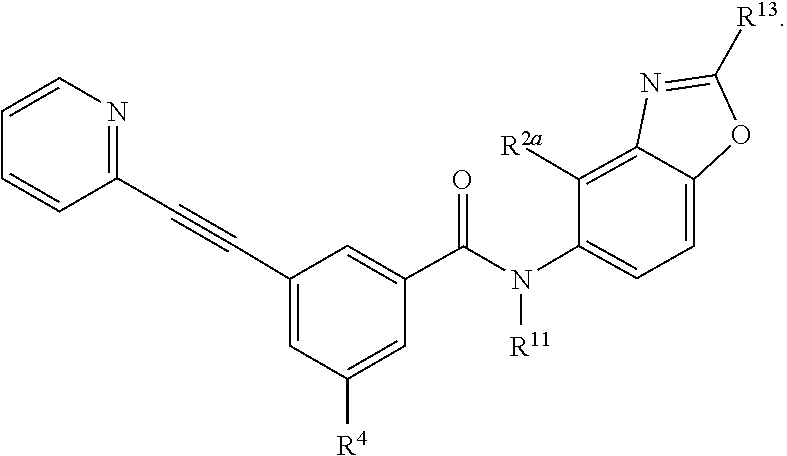

wherein n is selected from 1, 2, 3, 4, 5, and 6; wherein Z3 is selected from —O—, —NR40—, and —CR41aR41b; wherein R40, when present, is selected from hydrogen and C1-C4 alkyl; wherein each of R41a and R41b, when present, is independently selected from hydrogen and C1-C4 alkyl; and wherein each occurrence of R31a and R31b, when present, is independently selected from hydrogen, halogen, and C1-C4 alkyl.

wherein m is selected from 1, 2, and 3; wherein each occurrence of Z4 is independently selected from —O—, —NR42—, and —CR43aR43b; wherein each occurrence of R42, when present, is independently selected from hydrogen and C1-C4 alkyl; and wherein each occurrence of R43a and R43b, when present, is independently selected from hydrogen and C1-C4 alkyl, provided that no more than one occurrence of Z4 is —O— or —NR42—.


or a pharmaceutically acceptable salt thereof.


or a pharmaceutically acceptable salt thereof.

wherein A is selected from —NR10C(O)— and —C(O)NR11; wherein each of R10, when present, and R11, when present, is selected from hydrogen and C1-C4 alkyl; wherein each of Z1 and Z2 is independently selected from —N═ and —C(R13)═; wherein each occurrence of R13, when present, is independently selected from hydrogen, halogen, —CN, —NH2, —OH, —NO2, C1-C4 alkyl, C2-C4 alkenyl, C1-C4 haloalkyl, C1-C4 cyanoalkyl, C1-C4 hydroxyalkyl, C1-C4 haloalkoxy, C1-C4 alkoxy, C1-C4 alkylamino, (C1-C4)(C1-C4) dialkylamino, and C1-C4 aminoalkyl; wherein each of R1a, R1b, R1c, and R1d is independently selected from hydrogen, halogen, —CN, —NH2, —OH, —NO2, C1-C4 alkyl, C2-C4 alkenyl, C1-C4 haloalkyl, C1-C4 cyanoalkyl, C1-C4 hydroxyalkyl, C1-C4 haloalkoxy, C1-C4 alkoxy, C1-C4 alkylamino, (C1-C4)(C1-C4) dialkylamino, and C1-C4 aminoalkyl; wherein each of R2a and R2b is independently selected from hydrogen, halogen, —CN, —NH2, —OH, —NO2, C1-C4 alkyl, C2-C4 alkenyl, C1-C4 haloalkyl, C1-C4 cyanoalkyl, C1-C4 hydroxyalkyl, C1-C4 haloalkoxy, C1-C4 alkoxy, C1-C4 alkylamino, (C1-C4)(C1-C4) dialkylamino, and C1-C4 aminoalkyl; wherein R3 is selected from C1-C4 alkyl, C1-C4 haloalkyl, C1-C4 haloalkoxy, C1-C4 hydroxyhaloalkyl, —NR14C(O)R15, —C(O)NR16aR16b, —NR17SO2R18, —P(O)(OR19)2, —CO2(C1-C4 alkyl), —CO2Cy1, —CO2(C1-C4 alkyl)Cy1, and Cy1; wherein R14, when present, is selected from hydrogen and C1-C4 alkyl; wherein R15, when present, is selected from C1-C4 alkyl, C1-C4 haloalkyl, C1-C4 alkoxy, C1-C4 haloalkoxy, C1-C4 aminoalkyl, —OR20, —NR21aR21b, —CH2NR21aR21b, and Cy2; wherein R20, when present, is selected from hydrogen and C1-C4 alkyl; wherein each of R21a and R21b, when present, is independently selected from hydrogen and C1-C4 alkyl; or wherein R21a and R21b, when present, are covalently bonded, and, together with the intermediate atoms, comprise an unsubstituted 4- to 6-membered heterocycloalkyl; wherein Cy2, when present, is selected from C3-C6 cycloalkyl, C3-C6 heterocycloalkyl, C6-C14 aryl, and C2-C10 heteroaryl, and is substituted with 0, 1, 2, or 3 groups independently selected from halogen, —CN, —NH2, —OH, —NO2, C1-C4 alkyl, C2-C4 alkenyl, C1-C4 haloalkyl, C1-C4 cyanoalkyl, C1-C4 hydroxyalkyl, C1-C4 haloalkoxy, C1-C4 alkoxy, C1-C4 alkylamino, (C1-C4)(C1-C4) dialkylamino, and C1-C4 aminoalkyl; or wherein R14 and R15, when present, are covalently bonded, and, together with the intermediate atoms, comprise a 4- to 9-membered heterocycloalkyl ring substituted with 0, 1, 2, or 3 groups independently selected from halogen, —CN, —NH2, —OH, —NO2, C1-C4 alkyl, C2-C4 alkenyl, C1-C4 haloalkyl, C1-C4 cyanoalkyl, C1-C4 hydroxyalkyl, C1-C4 haloalkoxy, C1-C4 alkoxy, C1-C4 alkylamino, (C1-C4)(C1-C4) dialkylamino, and C1-C4 aminoalkyl; or wherein R15, when present, and R2b are covalently bonded, and, together with the intermediate atoms, comprise a 5- to 7-membered heterocycloalkyl ring substituted with 0, 1, 2, or 3 groups independently selected from halogen, —CN, —NH2, —OH, —NO2, C1-C4 alkyl, C2-C4 alkenyl, C1-C4 haloalkyl, C1-C4 cyanoalkyl, C1-C4 hydroxyalkyl, C1-C4 haloalkoxy, C1-C4 alkoxy, C1-C4 alkylamino, (C1-C4)(C1-C4) dialkylamino, and C1-C4 aminoalkyl; wherein each of R16a and R16b, when present, is independently selected from hydrogen, C1-C4 alkyl, and Cy3; wherein Cy3, when present, is a C3-C6 cycloalkyl substituted with 0, 1, 2, or 3 groups independently selected from halogen, —CN, —NH2, —OH, —NO2, C1-C4 alkyl, C2-C4 alkenyl, C1-C4 haloalkyl, C1-C4 cyanoalkyl, C1-C4 hydroxyalkyl, C1-C4 haloalkoxy, C1-C4 alkoxy, C1-C4 alkylamino, (C1-C4)(C1-C4) dialkylamino, and C1-C4 aminoalkyl; wherein R17, when present, is selected from hydrogen and C1-C4 alkyl; wherein R18, when present is a C1-C4 alkyl; or wherein R17 and R18, when present, are covalently bonded, and together with the intermediate atoms, comprise an unsubstituted 5- to 7-membered heterocycloalkyl; wherein each occurrence of R19, when present, is independently selected from hydrogen and C1-C4 alkyl; and wherein Cy1, when present, is a C3-C6 cycloalkyl substituted with 0, 1, 2, or 3 groups independently selected from halogen, —CN, —NH2, —OH, —NO2, C1-C4 alkyl, C2-C4 alkenyl, C1-C4 haloalkyl, C1-C4 cyanoalkyl, C1-C4 hydroxyalkyl, C1-C4 haloalkoxy, C1-C4 alkoxy, C1-C4 alkylamino, (C1-C4)(C1-C4) dialkylamino, and C1-C4 aminoalkyl; or wherein R2a is selected from hydrogen, halogen, —CN, —NH2, —OH, —NO2, C1-C4 alkyl, C2-C4 alkenyl, C1-C4 haloalkyl, C1-C4 cyanoalkyl, C1-C4 hydroxyalkyl, C1-C4 haloalkoxy, C1-C4 alkoxy, C1-C4 alkylamino, (C1-C4)(C1-C4) dialkylamino, and C1-C4 aminoalkyl, and wherein R2b and R3 are covalently bonded, and, together with the intermediate atoms, comprise a 5- or 6-membered heteroaryl, and are substituted with 0, 1, 2, or 3 groups independently selected from halogen, —CN, —NH2, —OH, —NO2, C1-C4 alkyl, C2-C4 alkenyl, C1-C4 haloalkyl, C1-C4 cyanoalkyl, C1-C4 hydroxyalkyl, C1-C4 haloalkoxy, C1-C4 alkoxy, C1-C4 alkylamino, (C1-C4)(C1-C4) dialkylamino, and C1-C4 aminoalkyl; wherein R4 is selected from hydrogen, halogen, —CN, —NH2, —OH, —NO2, C1-C4 alkyl, C2-C4 alkenyl, C1-C4 haloalkyl, C1-C4 cyanoalkyl, C1-C4 hydroxyalkyl, C1-C4 haloalkoxy, C1-C4 alkoxy, C1-C4 alkylamino, (C1-C4)(C1-C4) dialkylamino, C1-C4 aminoalkyl, Cy4, and —O(C1-C4 alkyl)Cy4; and wherein Cy4, when present, is a C3-C6 cycloalkyl substituted with 0, 1, 2, or 3 groups independently selected from halogen, —CN, —NH2, —OH, —NO2, C1-C4 alkyl, C2-C4 alkenyl, C1-C4 haloalkyl, C1-C4 cyanoalkyl, C1-C4 hydroxyalkyl, C1-C4 haloalkoxy, C1-C4 alkoxy, C1-C4 alkylamino, (C1-C4)(C1-C4) dialkylamino, and C1-C4 aminoalkyl, or a pharmaceutically acceptable salt thereof, and a pharmaceutically acceptable carrier.

wherein n is selected from 1, 2, 3, 4, 5, and 6; wherein Z3 is selected from —O—, —NR40—, and —CR41aR41b, wherein R40, when present, is selected from hydrogen and C1-C4 alkyl; wherein each of R41a and R41b, when present, is independently selected from hydrogen and C1-C4 alkyl; and wherein each occurrence of R31a and R31b, when present, is independently selected from hydrogen, halogen, and C1-C4 alkyl.


wherein m is selected from 1, 2, and 3; wherein each occurrence of Z4 is independently selected from —O—, —NR42—, and —CR43aR43b; wherein each occurrence of R42, when present, is independently selected from hydrogen and C1-C4 alkyl; and wherein each occurrence of R43a and R43b, when present, is independently selected from hydrogen and C1-C4 alkyl, provided that no more than one occurrence of Z4 is —O— or —NR42—.


wherein R30 is selected from hydrogen, halogen, —CN, —NH2, —OH, —NO2, C1-C4 alkyl, C2-C4 alkenyl, C1-C4 haloalkyl, C1-C4 cyanoalkyl, C1-C4 hydroxyalkyl, C1-C4 haloalkoxy, C1-C4 alkoxy, C1-C4 alkylamino, (C1-C4)(C1-C4) dialkylamino, and C1-C4 aminoalkyl.


or a pharmaceutically acceptable salt thereof.


or a pharmaceutically acceptable salt thereof.


or a pharmaceutically acceptable salt thereof.

wherein A is selected from —NR10C(O)— and —C(O)NR11; wherein each of R10, when present, and R11, when present, is selected from hydrogen and C1-C4 alkyl; wherein each of Z1 and Z2 is independently selected from —N═ and —C(R13)═; wherein each occurrence of R13, when present, is independently selected from hydrogen, halogen, —CN, —NH2, —OH, —NO2, C1-C4 alkyl, C2-C4 alkenyl, C1-C4 haloalkyl, C1-C4 cyanoalkyl, C1-C4 hydroxyalkyl, C1-C4 haloalkoxy, C1-C4 alkoxy, C1-C4 alkylamino, (C1-C4)(C1-C4) dialkylamino, and C1-C4 aminoalkyl; wherein each of R1a, R1b, R1c, and R1d is independently selected from hydrogen, halogen, —CN, —NH2, —OH, —NO2, C1-C4 alkyl, C2-C4 alkenyl, C1-C4 haloalkyl, C1-C4 cyanoalkyl, C1-C4 hydroxyalkyl, C1-C4 haloalkoxy, C1-C4 alkoxy, C1-C4 alkylamino, (C1-C4)(C1-C4) dialkylamino, and C1-C4 aminoalkyl; wherein each of R2a and R2b is independently selected from hydrogen, halogen, —CN, —NH2, —OH, —NO2, C1-C4 alkyl, C2-C4 alkenyl, C1-C4 haloalkyl, C1-C4 cyanoalkyl, C1-C4 hydroxyalkyl, C1-C4 haloalkoxy, C1-C4 alkoxy, C1-C4 alkylamino, (C1-C4)(C1-C4) dialkylamino, and C1-C4 aminoalkyl; wherein R3 is selected from C1-C4 alkyl, C1-C4 haloalkyl, C1-C4 haloalkoxy, C1-C4 hydroxyhaloalkyl, —NR14C(O)R15, —C(O)NR16aR16b, —NR16aR16b, —NR17SO2R18, —P(O)(OR19)2, —CO2(C1-C4 alkyl), —CO2Cy1, —CO2(C1-C4 alkyl)Cy1, Cy1, and —CH2Cy5; wherein R14, when present, is selected from hydrogen and C1-C4 alkyl; wherein R15, when present, is selected from C1-C4 alkyl, C1-C4 haloalkyl, C1-C4 alkoxy, C1-C4 haloalkoxy, C1-C4 aminoalkyl, —OR20, —NR21aR21b, CH2NR21aR21b, and Cy2; wherein R20, when present, is selected from hydrogen and C1-C4 alkyl; wherein each of R21a and R21b, when present, is independently selected from hydrogen and C1-C4 alkyl; or wherein R21a and R21b, when present, are covalently bonded, and, together with the intermediate atoms, comprise an unsubstituted 4- to 6-membered heterocycloalkyl; wherein Cy2, when present, is selected from C3-C6 cycloalkyl, C3-C6 heterocycloalkyl, C6-C14 aryl, and C2-C10 heteroaryl, and is substituted with 0, 1, 2, or 3 groups independently selected from halogen, —CN, —NH2, —OH, —NO2, C1-C4 alkyl, C2-C4 alkenyl, C1-C4 haloalkyl, C1-C4 cyanoalkyl, C1-C4 hydroxyalkyl, C1-C4 haloalkoxy, C1-C4 alkoxy, C1-C4 alkylamino, (C1-C4)(C1-C4) dialkylamino, and C1-C4 aminoalkyl; or wherein R14 and R15, when present, are covalently bonded, and, together with the intermediate atoms, comprise a 4- to 9-membered heterocycloalkyl ring substituted with 0, 1, 2, or 3 groups independently selected from halogen, —CN, —NH2, —OH, —NO2, C1-C4 alkyl, C2-C4 alkenyl, C1-C4 haloalkyl, C1-C4 cyanoalkyl, C1-C4 hydroxyalkyl, C1-C4 haloalkoxy, C1-C4 alkoxy, C1-C4 alkylamino, (C1-C4)(C1-C4) dialkylamino, and C1-C4 aminoalkyl; or wherein R15, when present, and R2b are covalently bonded, and, together with the intermediate atoms, comprise a 5- to 7-membered heterocycloalkyl ring substituted with 0, 1, 2, or 3 groups independently selected from halogen, —CN, —NH2, —OH, —NO2, C1-C4 alkyl, C2-C4 alkenyl, C1-C4 haloalkyl, C1-C4 cyanoalkyl, C1-C4 hydroxyalkyl, C1-C4 haloalkoxy, C1-C4 alkoxy, C1-C4 alkylamino, (C1-C4)(C1-C4) dialkylamino, and C1-C4 aminoalkyl; wherein each of R16a and R16b, when present, is independently selected from hydrogen, C1-C4 alkyl, and Cy3; wherein Cy3, when present, is a C3-C6 cycloalkyl substituted with 0, 1, 2, or 3 groups independently selected from halogen, —CN, —NH2, —OH, —NO2, C1-C4 alkyl, C2-C4 alkenyl, C1-C4 haloalkyl, C1-C4 cyanoalkyl, C1-C4 hydroxyalkyl, C1-C4 haloalkoxy, C1-C4 alkoxy, C1-C4 alkylamino, (C1-C4)(C1-C4) dialkylamino, and C1-C4 aminoalkyl; wherein R17, when present, is selected from hydrogen and C1-C4 alkyl; wherein R18, when present is a C1-C4 alkyl; or wherein R17 and R18, when present, are covalently bonded, and together with the intermediate atoms, comprise an unsubstituted 5- to 7-membered heterocycloalkyl; wherein each occurrence of R19, when present, is independently selected from hydrogen and C1-C4 alkyl; wherein Cy1, when present, is a C3-C6 cycloalkyl substituted with 0, 1, 2, or 3 groups independently selected from halogen, —CN, —NH2, —OH, —NO2, C1-C4 alkyl, C2-C4 alkenyl, C1-C4 haloalkyl, C1-C4 cyanoalkyl, C1-C4 hydroxyalkyl, C1-C4 haloalkoxy, C1-C4 alkoxy, C1-C4 alkylamino, (C1-C4)(C1-C4) dialkylamino, and C1-C4 aminoalkyl; and wherein Cy5, when present, is a C3-C6 heterocycloalkyl substituted with at least one ═O group, and substituted with 0, 1, or 2 additional groups independently selected from halogen, —CN, —NH2, —OH, —NO2, C1-C4 alkyl, C2-C4 alkenyl, C1-C4 haloalkyl, C1-C4 cyanoalkyl, C1-C4 hydroxyalkyl, C1-C4 haloalkoxy, C1-C4 alkoxy, C1-C4 alkylamino, (C1-C4)(C1-C4) dialkylamino, and C1-C4 aminoalkyl; or wherein R2a is selected from hydrogen, halogen, —CN, —NH2, —OH, —NO2, C1-C4 alkyl, C2-C4 alkenyl, C1-C4 haloalkyl, C1-C4 cyanoalkyl, C1-C4 hydroxy alkyl, C1-C4 haloalkoxy, C1-C4 alkoxy, C1-C4 alkylamino, (C1-C4)(C1-C4) dialkylamino, and C1-C4 aminoalkyl, and wherein R2b and R3 are covalently bonded, and, together with the intermediate atoms, comprise a 5- or 6-membered heteroaryl, and are substituted with 0, 1, 2, or 3 groups independently selected from halogen, —CN, —NH2, —OH, —NO2, C1-C4 alkyl, C2-C4 alkenyl, C1-C4 haloalkyl, C1-C4 cyanoalkyl, C1-C4 hydroxyalkyl, C1-C4 haloalkoxy, C1-C4 alkoxy, C1-C4 alkylamino, (C1-C4)(C1-C4) dialkylamino, and C1-C4 aminoalkyl; wherein R4 is selected from hydrogen, halogen, —CN, —NH2, —OH, —NO2, C1-C4 alkyl, C2-C4 alkenyl, C1-C4 haloalkyl, C1-C4 cyanoalkyl, C1-C4 hydroxyalkyl, C1-C4 haloalkoxy, C1-C4 alkoxy, C1-C4 alkylamino, (C1-C4)(C1-C4) dialkylamino, C1-C4 aminoalkyl, Cy4, and —O(C1-C4 alkyl)Cy4; and wherein Cy4, when present, is a C3-C6 cycloalkyl substituted with 0, 1, 2, or 3 groups independently selected from halogen, —CN, —NH2, —OH, —NO2, C1-C4 alkyl, C2-C4 alkenyl, C1-C4 haloalkyl, C1-C4 cyanoalkyl, C1-C4 hydroxyalkyl, C1-C4 haloalkoxy, C1-C4 alkoxy, C1-C4 alkylamino, (C1-C4)(C1-C4) dialkylamino, and C1-C4 aminoalkyl, or a pharmaceutically acceptable salt thereof, and a pharmaceutically acceptable carrier.

wherein A is selected from —NR10C(O)— and —C(O)NR11; wherein each of R10, when present, and R11, when present, is selected from hydrogen and C1-C4 alkyl; wherein each of Z1 and Z2 is independently selected from —N═ and —C(R13)═; wherein each occurrence of R13, when present, is independently selected from hydrogen, halogen, —CN, —NH2, —OH, —NO2, C1-C4 alkyl, C2-C4 alkenyl, C1-C4 haloalkyl, C1-C4 cyanoalkyl, C1-C4 hydroxyalkyl, C1-C4 haloalkoxy, C1-C4 alkoxy, C1-C4 alkylamino, (C1-C4)(C1-C4) dialkylamino, and C1-C4 aminoalkyl; wherein each of R1a, R1b, R1c, and R1d is independently selected from hydrogen, halogen, —CN, —NH2, —OH, —NO2, C1-C4 alkyl, C2-C4 alkenyl, C1-C4 haloalkyl, C1-C4 cyanoalkyl, C1-C4 hydroxyalkyl, C1-C4 haloalkoxy, C1-C4 alkoxy, C1-C4 alkylamino, (C1-C4)(C1-C4) dialkylamino, and C1-C4 aminoalkyl; wherein each of Ra and Rb is independently selected from hydrogen, halogen, —CN, —NH2, —OH, —NO2, C1-C4 alkyl, C2-C4 alkenyl, C1-C4 haloalkyl, C1-C4 cyanoalkyl, C1-C4 hydroxyalkyl, C1-C4 haloalkoxy, C1-C4 alkoxy, C1-C4 alkylamino, (C1-C4)(C1-C4) dialkylamino, and C1-C4 aminoalkyl; wherein R3 is selected from C1-C4 alkyl, C1-C4 haloalkyl, C1-C4 haloalkoxy, C1-C4 hydroxyhaloalkyl, —NR14C(O)R15, —C(O)NR16aR16b, —NR17SO2R18, —P(O)(OR19)2, —CO2(C1-C4 alkyl), —CO2Cy1, —CO2(C1-C4 alkyl)Cy1, and Cy1; wherein R14, when present, is selected from hydrogen and C1-C4 alkyl; wherein R15, when present, is selected from C1-C4 alkyl, C1-C4 haloalkyl, C1-C4 alkoxy, C1-C4 haloalkoxy, C1-C4 aminoalkyl, —OR20, —NR21aR21b, —CH2NR21aR21b, and Cy2; wherein R20, when present, is selected from hydrogen and C1-C4 alkyl; wherein each of R21a and R21b, when present, is independently selected from hydrogen and C1-C4 alkyl; or wherein R21a and R21b, when present, are covalently bonded, and, together with the intermediate atoms, comprise an unsubstituted 4- to 6-membered heterocycloalkyl; wherein Cy2, when present, is selected from C3-C6 cycloalkyl, C3-C6 heterocycloalkyl, C6-C14 aryl, and C2-C10 heteroaryl, and is substituted with 0, 1, 2, or 3 groups independently selected from halogen, —CN, —NH2, —OH, —NO2, C1-C4 alkyl, C2-C4 alkenyl, C1-C4 haloalkyl, C1-C4 cyanoalkyl, C1-C4 hydroxyalkyl, C1-C4 haloalkoxy, C1-C4 alkoxy, C1-C4 alkylamino, (C1-C4)(C1-C4) dialkylamino, and C1-C4 aminoalkyl; or wherein R14 and R15, when present, are covalently bonded, and, together with the intermediate atoms, comprise a 4- to 9-membered heterocycloalkyl ring substituted with 0, 1, 2, or 3 groups independently selected from halogen, —CN, —NH2, —OH, —NO2, C1-C4 alkyl, C2-C4 alkenyl, C1-C4 haloalkyl, C1-C4 cyanoalkyl, C1-C4 hydroxyalkyl, C1-C4 haloalkoxy, C1-C4 alkoxy, C1-C4 alkylamino, (C1-C4)(C1-C4) dialkylamino, and C1-C4 aminoalkyl; or wherein R15, when present, and R2b are covalently bonded, and, together with the intermediate atoms, comprise a 5- to 7-membered heterocycloalkyl ring substituted with 0, 1, 2, or 3 groups independently selected from halogen, —CN, —NH2, —OH, —NO2, C1-C4 alkyl, C2-C4 alkenyl, C1-C4 haloalkyl, C1-C4 cyanoalkyl, C1-C4 hydroxyalkyl, C1-C4 haloalkoxy, C1-C4 alkoxy, C1-C4 alkylamino, (C1-C4)(C1-C4) dialkylamino, and C1-C4 aminoalkyl; wherein each of R16a and R16b, when present, is independently selected from hydrogen, C1-C4 alkyl, and Cy3; wherein Cy3, when present, is a C3-C6 cycloalkyl substituted with 0, 1, 2, or 3 groups independently selected from halogen, —CN, —NH2, —OH, —NO2, C1-C4 alkyl, C2-C4 alkenyl, C1-C4 haloalkyl, C1-C4 cyanoalkyl, C1-C4 hydroxyalkyl, C1-C4 haloalkoxy, C1-C4 alkoxy, C1-C4 alkylamino, (C1-C4)(C1-C4) dialkylamino, and C1-C4 aminoalkyl; wherein R17, when present, is selected from hydrogen and C1-C4 alkyl; wherein R18, when present is a C1-C4 alkyl; or wherein R17 and R18, when present, are covalently bonded, and together with the intermediate atoms, comprise an unsubstituted 5- to 7-membered heterocycloalkyl; wherein each occurrence of R19, when present, is independently selected from hydrogen and C1-C4 alkyl; and wherein Cy1, when present, is a C3-C6 cycloalkyl substituted with 0, 1, 2, or 3 groups independently selected from halogen, —CN, —NH2, —OH, —NO2, C1-C4 alkyl, C2-C4 alkenyl, C1-C4 haloalkyl, C1-C4 cyanoalkyl, C1-C4 hydroxyalkyl, C1-C4 haloalkoxy, C1-C4 alkoxy, C1-C4 alkylamino, (C1-C4)(C1-C4) dialkylamino, and C1-C4 aminoalkyl; or wherein R2a is selected from hydrogen, halogen, —CN, —NH2, —OH, —NO2, C1-C4 alkyl, C2-C4 alkenyl, C1-C4 haloalkyl, C1-C4 cyanoalkyl, C1-C4 hydroxyalkyl, C1-C4 haloalkoxy, C1-C4 alkoxy, C1-C4 alkylamino, (C1-C4)(C1-C4) dialkylamino, and C1-C4 aminoalkyl, and wherein R2b and R3 are covalently bonded, and, together with the intermediate atoms, comprise a 5- or 6-membered heteroaryl, and are substituted with 0, 1, 2, or 3 groups independently selected from halogen, —CN, —NH2, —OH, —NO2, C1-C4 alkyl, C2-C4 alkenyl, C1-C4 haloalkyl, C1-C4 cyanoalkyl, C1-C4 hydroxyalkyl, C1-C4 haloalkoxy, C1-C4 alkoxy, C1-C4 alkylamino, (C1-C4)(C1-C4) dialkylamino, and C1-C4 aminoalkyl; wherein R4 is selected from hydrogen, halogen, —CN, —NH2, —OH, —NO2, C1-C4 alkyl, C2-C4 alkenyl, C1-C4 haloalkyl, C1-C4 cyanoalkyl, C1-C4 hydroxyalkyl, C1-C4 haloalkoxy, C1-C4 alkoxy, C1-C4 alkylamino, (C1-C4)(C1-C4) dialkylamino, C1-C4 aminoalkyl, Cy4, and —O(C1-C4 alkyl)Cy4; and wherein Cy4, when present, is a C3-C6 cycloalkyl substituted with 0, 1, 2, or 3 groups independently selected from halogen, —CN, —NH2, —OH, —NO2, C1-C4 alkyl, C2-C4 alkenyl, C1-C4 haloalkyl, C1-C4 cyanoalkyl, C1-C4 hydroxyalkyl, C1-C4 haloalkoxy, C1-C4 alkoxy, C1-C4 alkylamino, (C1-C4)(C1-C4) dialkylamino, and C1-C4 aminoalkyl, or a pharmaceutically acceptable salt thereof, and a pharmaceutically acceptable carrier.

wherein A is selected from —NR10C(O)— and —C(O)NR11; wherein each of R10, when present, and R11, when present, is selected from hydrogen and C1-C4 alkyl; wherein each of Z1 and Z2 is independently selected from —N═ and —C(R13)═; wherein each occurrence of R13, when present, is independently selected from hydrogen, halogen, —CN, —NH2, —OH, —NO2, C1-C4 alkyl, C2-C4 alkenyl, C1-C4 haloalkyl, C1-C4 cyanoalkyl, C1-C4 hydroxyalkyl, C1-C4 haloalkoxy, C1-C4 alkoxy, C1-C4 alkylamino, (C1-C4)(C1-C4) dialkylamino, and C1-C4 aminoalkyl; wherein each of R1a, R1b, R1c, and R1d is independently selected from hydrogen, halogen, —CN, —NH2, —OH, —NO2, C1-C4 alkyl, C2-C4 alkenyl, C1-C4 haloalkyl, C1-C4 cyanoalkyl, C1-C4 hydroxyalkyl, C1-C4 haloalkoxy, C1-C4 alkoxy, C1-C4 alkylamino, (C1-C4)(C1-C4) dialkylamino, and C1-C4 aminoalkyl; wherein each of R2a and R2b is independently selected from hydrogen, halogen, —CN, —NH2, —OH, —NO2, C1-C4 alkyl, C2-C4 alkenyl, C1-C4 haloalkyl, C1-C4 cyanoalkyl, C1-C4 hydroxyalkyl, C1-C4 haloalkoxy, C1-C4 alkoxy, C1-C4 alkylamino, (C1-C4)(C1-C4) dialkylamino, and C1-C4 aminoalkyl; wherein R3 is selected from C1-C4 alkyl, C1-C4 haloalkyl, C1-C4 haloalkoxy, C1-C4 hydroxyhaloalkyl, —NR14C(O)R15, —C(O)NR16aR16b, —NR17SO2R18, —P(O)(OR19)2, —CO2(C1-C4 alkyl), —CO2Cy1, —CO2(C1-C4 alkyl)Cy1, and Cy1; wherein R14, when present, is selected from hydrogen and C1-C4 alkyl; wherein R15, when present, is selected from C1-C4 alkyl, C1-C4 haloalkyl, C1-C4 alkoxy, C1-C4 haloalkoxy, C1-C4 aminoalkyl, —OR20, —NR21aR21b, —CH2NR21aR21b, and Cy2; wherein R20, when present, is selected from hydrogen and C1-C4 alkyl; wherein each of R21a and R21b, when present, is independently selected from hydrogen and C1-C4 alkyl; or wherein R21a and R21b, when present, are covalently bonded, and, together with the intermediate atoms, comprise a 4- to 6-membered heterocycloalkyl substituted with 0, 1, 2, or 3 groups independently selected from halogen, —CN, —NH2, —OH, —NO2, C1-C4 alkyl, C2-C4 alkenyl, C1-C4 haloalkyl, C1-C4 cyanoalkyl, C1-C4 hydroxyalkyl, C1-C4 haloalkoxy, C1-C4 alkoxy, C1-C4 alkylamino, (C1-C4)(C1-C4) dialkylamino, and C1-C4 aminoalkyl; wherein Cy2, when present, is selected from C3-C6 cycloalkyl, C3-C6 heterocycloalkyl, C6-C14 aryl, and C2-C10 heteroaryl, and is substituted with 0, 1, 2, or 3 groups independently selected from halogen, —CN, —NH2, —OH, —NO2, C1-C4 alkyl, C2-C4 alkenyl, C1-C4 haloalkyl, C1-C4 cyanoalkyl, C1-C4 hydroxyalkyl, C1-C4 haloalkoxy, C1-C4 alkoxy, C1-C4 alkylamino, (C1-C4)(C1-C4) dialkylamino, and C1-C4 aminoalkyl; or wherein R14 and R15, when present, are covalently bonded, and, together with the intermediate atoms, comprise a 4- to 9-membered heterocycloalkyl ring substituted with 0, 1, 2, or 3 groups independently selected from halogen, —CN, —NH2, —OH, —NO2, C1-C4 alkyl, C2-C4 alkenyl, C1-C4 haloalkyl, C1-C4 cyanoalkyl, C1-C4 hydroxyalkyl, C1-C4 haloalkoxy, C1-C4 alkoxy, C1-C4 alkylamino, (C1-C4)(C1-C4) dialkylamino, and C1-C4 aminoalkyl; or wherein R15, when present, and R2b are covalently bonded, and, together with the intermediate atoms, comprise a 5- to 7-membered heterocycloalkyl ring substituted with 0, 1, 2, or 3 groups independently selected from halogen, —CN, —NH2, —OH, —NO2, C1-C4 alkyl, C2-C4 alkenyl, C1-C4 haloalkyl, C1-C4 cyanoalkyl, C1-C4 hydroxyalkyl, C1-C4 haloalkoxy, C1-C4 alkoxy, C1-C4 alkylamino, (C1-C4)(C1-C4) dialkylamino, and C1-C4 aminoalkyl; wherein each of R16a and R16b, when present, is independently selected from hydrogen, C1-C4 alkyl, and Cy3; wherein Cy3, when present, is a C3-C6 cycloalkyl substituted with 0, 1, 2, or 3 groups independently selected from halogen, —CN, —NH2, —OH, —NO2, C1-C4 alkyl, C2-C4 alkenyl, C1-C4 haloalkyl, C1-C4 cyanoalkyl, C1-C4 hydroxyalkyl, C1-C4 haloalkoxy, C1-C4 alkoxy, C1-C4 alkylamino, (C1-C4)(C1-C4) dialkylamino, and C1-C4 aminoalkyl; wherein R17, when present, is selected from hydrogen and C1-C4 alkyl; wherein R18, when present is a C1-C4 alkyl; or wherein R17 and R18, when present, are covalently bonded, and together with the intermediate atoms, comprise a 5- to 7-membered heterocycloalkyl substituted with 0, 1, 2, or 3 groups independently selected from halogen, —CN, —NH2, —OH, —NO2, C1-C4 alkyl, C2-C4 alkenyl, C1-C4 haloalkyl, C1-C4 cyanoalkyl, C1-C4 hydroxyalkyl, C1-C4 haloalkoxy, C1-C4 alkoxy, C1-C4 alkylamino, (C1-C4)(C1-C4) dialkylamino, and C1-C4 aminoalkyl; wherein each occurrence of R19, when present, is independently selected from hydrogen and C1-C4 alkyl; and wherein Cy1, when present, is a C3-C6 cycloalkyl substituted with 0, 1, 2, or 3 groups independently selected from halogen, —CN, —NH2, —OH, —NO2, C1-C4 alkyl, C2-C4 alkenyl, C1-C4 haloalkyl, C1-C4 cyanoalkyl, C1-C4 hydroxyalkyl, C1-C4 haloalkoxy, C1-C4 alkoxy, C1-C4 alkylamino, (C1-C4)(C1-C4) dialkylamino, and C1-C4 aminoalkyl; or wherein R2a is selected from hydrogen, halogen, —CN, —NH2, —OH, —NO2, C1-C4 alkyl, C2-C4 alkenyl, C1-C4 haloalkyl, C1-C4 cyanoalkyl, C1-C4 hydroxyalkyl, C1-C4 haloalkoxy, C1-C4 alkoxy, C1-C4 alkylamino, (C1-C4)(C1-C4) dialkylamino, and C1-C4 aminoalkyl, and wherein R2b and R3 are covalently bonded, and, together with the intermediate atoms, comprise a 5- or 6-membered heteroaryl, and are substituted with 0, 1, 2, or 3 groups independently selected from halogen, —CN, —NH2, —OH, —NO2, C1-C4 alkyl, C2-C4 alkenyl, C1-C4 haloalkyl, C1-C4 cyanoalkyl, C1-C4 hydroxyalkyl, C1-C4 haloalkoxy, C1-C4 alkoxy, C1-C4 alkylamino, (C1-C4)(C1-C4) dialkylamino, and C1-C4 aminoalkyl; wherein R4 is selected from hydrogen, halogen, —CN, —NH2, —OH, —NO2, C1-C4 alkyl, C2-C4 alkenyl, C1-C4 haloalkyl, C1-C4 cyanoalkyl, C1-C4 hydroxyalkyl, C1-C4 haloalkoxy, C1-C4 alkoxy, C1-C4 alkylamino, (C1-C4)(C1-C4) dialkylamino, C1-C4 aminoalkyl, Cy4, and —O(C1-C4 alkyl)Cy4; and wherein Cy4, when present, is a C3-C6 cycloalkyl substituted with 0, 1, 2, or 3 groups independently selected from halogen, —CN, —NH2, —OH, —NO2, C1-C4 alkyl, C2-C4 alkenyl, C1-C4 haloalkyl, C1-C4 cyanoalkyl, C1-C4 hydroxyalkyl, C1-C4 haloalkoxy, C1-C4 alkoxy, C1-C4 alkylamino, (C1-C4)(C1-C4) dialkylamino, and C1-C4 aminoalkyl, provided that when A is —NR10C(O)—, then R3 is —NR14C(O)R15, —C(O)NR16aR16b, —NR17SO2R18, —P(O)(OR19)2, —CO2(C1-C4 alkyl), —CO2Cy1, —CO2(C1-C4 alkyl)Cy1, and Cy1, and provided that when A is —NR10C(O)— and R3 is —NR14C(O)R15, then R15 is selected from C1-C4 alkyl, C1-C4 haloalkyl, C1-C4 alkoxy, C1-C4 haloalkoxy, C1-C4 aminoalkyl, —NR21aR21b, and —CH2NR21aR21b, or a pharmaceutically acceptable salt thereof, and a pharmaceutically acceptable carrier.

wherein n is selected from 1, 2, 3, 4, 5, and 6; wherein Z3 is selected from —O—, —NR40—, and —CR41aR41b, wherein R40, when present, is selected from hydrogen and C1-C4 alkyl; wherein each of R41a and R41b, when present, is independently selected from hydrogen and C1-C4 alkyl; and wherein each occurrence of R31a and R31b, when present, is independently selected from hydrogen, halogen, and C1-C4 alkyl.


wherein m is selected from 1, 2, and 3; wherein each occurrence of Z4 is independently selected from —O—, —NR42—, and —CR43aR43b; wherein each occurrence of R42, when present, is independently selected from hydrogen and C1-C4 alkyl; and wherein each occurrence of R43a and R43b, when present, is independently selected from hydrogen and C1-C4 alkyl, provided that no more than one occurrence of Z4 is —O— or —NR42—.


wherein A is selected from —NR10C(O)— and —C(O)NR11; wherein each of R10, when present, and R11, when present, is selected from hydrogen and C1-C4 alkyl; wherein each of Z1 and Z2 is independently selected from —N═ and —C(R13)═; wherein each occurrence of R13, when present, is independently selected from hydrogen, halogen, —CN, —NH2, —OH, —NO2, C1-C4 alkyl, C2-C4 alkenyl, C1-C4 haloalkyl, C1-C4 cyanoalkyl, C1-C4 hydroxyalkyl, C1-C4 haloalkoxy, C1-C4 alkoxy, C1-C4 alkylamino, (C1-C4)(C1-C4) dialkylamino, and C1-C4 aminoalkyl; wherein each of R1a, R1b, R1c, and R1d is independently selected from hydrogen, halogen, —CN, —NH2, —OH, —NO2, C1-C4 alkyl, C2-C4 alkenyl, C1-C4 haloalkyl, C1-C4 cyanoalkyl, C1-C4 hydroxyalkyl, C1-C4 haloalkoxy, C1-C4 alkoxy, C1-C4 alkylamino, (C1-C4)(C1-C4) dialkylamino, and C1-C4 aminoalkyl; wherein each of Ra and Rb is independently selected from hydrogen, halogen, —CN, —NH2, —OH, —NO2, C1-C4 alkyl, C2-C4 alkenyl, C1-C4 haloalkyl, C1-C4 cyanoalkyl, C1-C4 hydroxyalkyl, C1-C4 haloalkoxy, C1-C4 alkoxy, C1-C4 alkylamino, (C1-C4)(C1-C4) dialkylamino, and C1-C4 aminoalkyl; wherein R3 is selected from C1-C4 alkyl, C1-C4 haloalkyl, C1-C4 haloalkoxy, C1-C4 hydroxyhaloalkyl, —NR14C(O)R15, —C(O)NR16aR16b, —OSO2NR16aR16b, —NR17SO2R18, —P(O)(OR19)2, —CO2(C1-C4 alkyl), —CO2Cy1, —CO2(C1-C4 alkyl)Cy1, Cy1, and —CH2Cy5; wherein R14, when present, is selected from hydrogen and C1-C4 alkyl; —wherein R15, when present, is selected from C1-C4 alkyl, C1-C4 haloalkyl, C1-C4 alkoxy, C1-C4 haloalkoxy, C1-C4 aminoalkyl, —OR20, —NR21aR21b, CH2NR21aR21b, and Cy2; wherein R20, when present, is selected from hydrogen and C1-C4 alkyl; wherein each of R21a and R21b, when present, is independently selected from hydrogen and C1-C4 alkyl; or wherein R21a and R21b, when present, are covalently bonded, and, together with the intermediate atoms, comprise an unsubstituted 4- to 6-membered heterocycloalkyl; wherein Cy2, when present, is selected from C3-C6 cycloalkyl, C3-C6 heterocycloalkyl, C6-C14 aryl, and C2-C10 heteroaryl, and is substituted with 0, 1, 2, or 3 groups independently selected from halogen, —CN, —NH2, —OH, —NO2, C1-C4 alkyl, C2-C4 alkenyl, C1-C4 haloalkyl, C1-C4 cyanoalkyl, C1-C4 hydroxyalkyl, C1-C4 haloalkoxy, C1-C4 alkoxy, C1-C4 alkylamino, (C1-C4)(C1-C4) dialkylamino, and C1-C4 aminoalkyl; or wherein R14 and R15, when present, are covalently bonded, and, together with the intermediate atoms, comprise a 4- to 9-membered heterocycloalkyl ring substituted with 0, 1, 2, or 3 groups independently selected from halogen, —CN, —NH2, —OH, —NO2, C1-C4 alkyl, C2-C4 alkenyl, C1-C4 haloalkyl, C1-C4 cyanoalkyl, C1-C4 hydroxyalkyl, C1-C4 haloalkoxy, C1-C4 alkoxy, C1-C4 alkylamino, (C1-C4)(C1-C4) dialkylamino, and C1-C4 aminoalkyl; or wherein R15, when present, and R2b are covalently bonded, and, together with the intermediate atoms, comprise a 5- to 7-membered heterocycloalkyl ring substituted with 0, 1, 2, or 3 groups independently selected from halogen, —CN, —NH2, —OH, —NO2, C1-C4 alkyl, C2-C4 alkenyl, C1-C4 haloalkyl, C1-C4 cyanoalkyl, C1-C4 hydroxyalkyl, C1-C4 haloalkoxy, C1-C4 alkoxy, C1-C4 alkylamino, (C1-C4)(C1-C4) dialkylamino, and C1-C4 aminoalkyl; wherein each of R16a and R16b, when present, is independently selected from hydrogen, C1-C4 alkyl, and Cy3; wherein Cy3, when present, is a C3-C6 cycloalkyl substituted with 0, 1, 2, or 3 groups independently selected from halogen, —CN, —NH2, —OH, —NO2, C1-C4 alkyl, C2-C4 alkenyl, C1-C4 haloalkyl, C1-C4 cyanoalkyl, C1-C4 hydroxyalkyl, C1-C4 haloalkoxy, C1-C4 alkoxy, C1-C4 alkylamino, (C1-C4)(C1-C4) dialkylamino, and C1-C4 aminoalkyl; wherein R17, when present, is selected from hydrogen and C1-C4 alkyl; wherein R18, when present is a C1-C4 alkyl; or wherein R17 and R18, when present, are covalently bonded, and together with the intermediate atoms, comprise an unsubstituted 5- to 7-membered heterocycloalkyl; wherein each occurrence of R19, when present, is independently selected from hydrogen and C1-C4 alkyl; wherein Cy1, when present, is a C3-C6 cycloalkyl substituted with 0, 1, 2, or 3 groups independently selected from halogen, —CN, —NH2, —OH, —NO2, C1-C4 alkyl, C2-C4 alkenyl, C1-C4 haloalkyl, C1-C4 cyanoalkyl, C1-C4 hydroxyalkyl, C1-C4 haloalkoxy, C1-C4 alkoxy, C1-C4 alkylamino, (C1-C4)(C1-C4) dialkylamino, and C1-C4 aminoalkyl; and wherein Cy5, when present, is a C3-C6 heterocycloalkyl substituted with at least one ═O group, and substituted with 0, 1, or 2 additional groups independently selected from halogen, —CN, —NH2, —OH, —NO2, C1-C4 alkyl, C2-C4 alkenyl, C1-C4 haloalkyl, C1-C4 cyanoalkyl, C1-C4 hydroxyalkyl, C1-C4 haloalkoxy, C1-C4 alkoxy, C1-C4 alkylamino, (C1-C4)(C1-C4) dialkylamino, and C1-C4 aminoalkyl; or wherein R2a is selected from hydrogen, halogen, —CN, —NH2, —OH, —NO2, C1-C4 alkyl, C2-C4 alkenyl, C1-C4 haloalkyl, C1-C4 cyanoalkyl, C1-C4 hydroxy alkyl, C1-C4 haloalkoxy, C1-C4 alkoxy, C1-C4 alkylamino, (C1-C4)(C1-C4) dialkylamino, and C1-C4 aminoalkyl, and wherein R2b and R3 are covalently bonded, and, together with the intermediate atoms, comprise a 5- or 6-membered heteroaryl, and are substituted with 0, 1, 2, or 3 groups independently selected from halogen, —CN, —NH2, —OH, —NO2, C1-C4 alkyl, C2-C4 alkenyl, C1-C4 haloalkyl, C1-C4 cyanoalkyl, C1-C4 hydroxyalkyl, C1-C4 haloalkoxy, C1-C4 alkoxy, C1-C4 alkylamino, (C1-C4)(C1-C4) dialkylamino, and C1-C4 aminoalkyl; wherein R4 is selected from hydrogen, halogen, —CN, —NH2, —OH, —NO2, C1-C4 alkyl, C2-C4 alkenyl, C1-C4 haloalkyl, C1-C4 cyanoalkyl, C1-C4 hydroxyalkyl, C1-C4 haloalkoxy, C1-C4 alkoxy, C1-C4 alkylamino, (C1-C4)(C1-C4) dialkylamino, C1-C4 aminoalkyl, Cy4, and —O(C1-C4 alkyl)Cy4; and wherein Cy4, when present, is a C3-C6 cycloalkyl substituted with 0, 1, 2, or 3 groups independently selected from halogen, —CN, —NH2, —OH, —NO2, C1-C4 alkyl, C2-C4 alkenyl, C1-C4 haloalkyl, C1-C4 cyanoalkyl, C1-C4 hydroxyalkyl, C1-C4 haloalkoxy, C1-C4 alkoxy, C1-C4 alkylamino, (C1-C4)(C1-C4) dialkylamino, and C1-C4 aminoalkyl, or a pharmaceutically acceptable salt thereof, wherein the viral infection is due to a Coronavirus.

wherein A is selected from —NR10C(O)— and —C(O)NR11; wherein each of R10, when present, and R11, when present, is selected from hydrogen and C1-C4 alkyl; wherein each of Z1 and Z2 is independently selected from —N═ and —C(R13)═; wherein each occurrence of R13, when present, is independently selected from hydrogen, halogen, —CN, —NH2, —OH, —NO2, C1-C4 alkyl, C2-C4 alkenyl, C1-C4 haloalkyl, C1-C4 cyanoalkyl, C1-C4 hydroxyalkyl, C1-C4 haloalkoxy, C1-C4 alkoxy, C1-C4 alkylamino, (C1-C4)(C1-C4) dialkylamino, and C1-C4 aminoalkyl; wherein each of R1a, R1b, R1c, and R1d is independently selected from hydrogen, halogen, —CN, —NH2, —OH, —NO2, C1-C4 alkyl, C2-C4 alkenyl, C1-C4 haloalkyl, C1-C4 cyanoalkyl, C1-C4 hydroxyalkyl, C1-C4 haloalkoxy, C1-C4 alkoxy, C1-C4 alkylamino, (C1-C4)(C1-C4) dialkylamino, and C1-C4 aminoalkyl; wherein each of R2a and R2b is independently selected from hydrogen, halogen, —CN, —NH2, —OH, —NO2, C1-C4 alkyl, C2-C4 alkenyl, C1-C4 haloalkyl, C1-C4 cyanoalkyl, C1-C4 hydroxyalkyl, C1-C4 haloalkoxy, C1-C4 alkoxy, C1-C4 alkylamino, (C1-C4)(C1-C4) dialkylamino, and C1-C4 aminoalkyl; wherein R3 is selected from C1-C4 alkyl, C1-C4 haloalkyl, C1-C4 haloalkoxy, C1-C4 hydroxyhaloalkyl, —NR14C(O)R15, —C(O)NR16aR16b, —NR17SO2R18, —P(O)(OR19)2, —CO2(C1-C4 alkyl), —CO2Cy1, —CO2(C1-C4 alkyl)Cy1, and Cy1; wherein R14, when present, is selected from hydrogen and C1-C4 alkyl; wherein R15, when present, is selected from C1-C4 alkyl, C1-C4 haloalkyl, C1-C4 alkoxy, C1-C4 haloalkoxy, C1-C4 aminoalkyl, —OR20, —NR21aR21b, —CH2NR21aR21b, and Cy2; wherein R20, when present, is selected from hydrogen and C1-C4 alkyl; wherein each of R21a and R21b, when present, is independently selected from hydrogen and C1-C4 alkyl; or wherein R21a and R21b, when present, are covalently bonded, and, together with the intermediate atoms, comprise an unsubstituted 4- to 6-membered heterocycloalkyl; wherein Cy2, when present, is selected from C3-C6 cycloalkyl, C3-C6 heterocycloalkyl, C6-C14 aryl, and C2-C10 heteroaryl, and is substituted with 0, 1, 2, or 3 groups independently selected from halogen, —CN, —NH2, —OH, —NO2, C1-C4 alkyl, C2-C4 alkenyl, C1-C4 haloalkyl, C1-C4 cyanoalkyl, C1-C4 hydroxyalkyl, C1-C4 haloalkoxy, C1-C4 alkoxy, C1-C4 alkylamino, (C1-C4)(C1-C4) dialkylamino, and C1-C4 aminoalkyl; or wherein R14 and R15, when present, are covalently bonded, and, together with the intermediate atoms, comprise a 4- to 9-membered heterocycloalkyl ring substituted with 0, 1, 2, or 3 groups independently selected from halogen, —CN, —NH2, —OH, —NO2, C1-C4 alkyl, C2-C4 alkenyl, C1-C4 haloalkyl, C1-C4 cyanoalkyl, C1-C4 hydroxyalkyl, C1-C4 haloalkoxy, C1-C4 alkoxy, C1-C4 alkylamino, (C1-C4)(C1-C4) dialkylamino, and C1-C4 aminoalkyl; or wherein R15, when present, and R2b are covalently bonded, and, together with the intermediate atoms, comprise a 5- to 7-membered heterocycloalkyl ring substituted with 0, 1, 2, or 3 groups independently selected from halogen, —CN, —NH2, —OH, —NO2, C1-C4 alkyl, C2-C4 alkenyl, C1-C4 haloalkyl, C1-C4 cyanoalkyl, C1-C4 hydroxyalkyl, C1-C4 haloalkoxy, C1-C4 alkoxy, C1-C4 alkylamino, (C1-C4)(C1-C4) dialkylamino, and C1-C4 aminoalkyl; wherein each of R16a and R16b, when present, is independently selected from hydrogen, C1-C4 alkyl, and Cy3; wherein Cy3, when present, is a C3-C6 cycloalkyl substituted with 0, 1, 2, or 3 groups independently selected from halogen, —CN, —NH2, —OH, —NO2, C1-C4 alkyl, C2-C4 alkenyl, C1-C4 haloalkyl, C1-C4 cyanoalkyl, C1-C4 hydroxyalkyl, C1-C4 haloalkoxy, C1-C4 alkoxy, C1-C4 alkylamino, (C1-C4)(C1-C4) dialkylamino, and C1-C4 aminoalkyl; wherein R17, when present, is selected from hydrogen and C1-C4 alkyl; wherein R18, when present is a C1-C4 alkyl; or wherein R17 and R18, when present, are covalently bonded, and together with the intermediate atoms, comprise an unsubstituted 5- to 7-membered heterocycloalkyl; wherein each occurrence of R19, when present, is independently selected from hydrogen and C1-C4 alkyl; and wherein Cy1, when present, is a C3-C6 cycloalkyl substituted with 0, 1, 2, or 3 groups independently selected from halogen, —CN, —NH2, —OH, —NO2, C1-C4 alkyl, C2-C4 alkenyl, C1-C4 haloalkyl, C1-C4 cyanoalkyl, C1-C4 hydroxyalkyl, C1-C4 haloalkoxy, C1-C4 alkoxy, C1-C4 alkylamino, (C1-C4)(C1-C4) dialkylamino, and C1-C4 aminoalkyl; or wherein R2a is selected from hydrogen, halogen, —CN, —NH2, —OH, —NO2, C1-C4 alkyl, C2-C4 alkenyl, C1-C4 haloalkyl, C1-C4 cyanoalkyl, C1-C4 hydroxyalkyl, C1-C4 haloalkoxy, C1-C4 alkoxy, C1-C4 alkylamino, (C1-C4)(C1-C4) dialkylamino, and C1-C4 aminoalkyl, and wherein R2b and R3 are covalently bonded, and, together with the intermediate atoms, comprise a 5- or 6-membered heteroaryl, and are substituted with 0, 1, 2, or 3 groups independently selected from halogen, —CN, —NH2, —OH, —NO2, C1-C4 alkyl, C2-C4 alkenyl, C1-C4 haloalkyl, C1-C4 cyanoalkyl, C1-C4 hydroxyalkyl, C1-C4 haloalkoxy, C1-C4 alkoxy, C1-C4 alkylamino, (C1-C4)(C1-C4) dialkylamino, and C1-C4 aminoalkyl; wherein R4 is selected from hydrogen, halogen, —CN, —NH2, —OH, —NO2, C1-C4 alkyl, C2-C4 alkenyl, C1-C4 haloalkyl, C1-C4 cyanoalkyl, C1-C4 hydroxyalkyl, C1-C4 haloalkoxy, C1-C4 alkoxy, C1-C4 alkylamino, (C1-C4)(C1-C4) dialkylamino, C1-C4 aminoalkyl, Cy4, and —O(C1-C4 alkyl)Cy4; and wherein Cy4, when present, is a C3-C6 cycloalkyl substituted with 0, 1, 2, or 3 groups independently selected from halogen, —CN, —NH2, —OH, —NO2, C1-C4 alkyl, C2-C4 alkenyl, C1-C4 haloalkyl, C1-C4 cyanoalkyl, C1-C4 hydroxyalkyl, C1-C4 haloalkoxy, C1-C4 alkoxy, C1-C4 alkylamino, (C1-C4)(C1-C4) dialkylamino, and C1-C4 aminoalkyl, or a pharmaceutically acceptable salt thereof, wherein the viral infection is due to a Coronavirus.

wherein A is selected from —NR10C(O)— and —C(O)NR11; wherein each of R10, when present, and R11, when present, is selected from hydrogen and C1-C4 alkyl; wherein each of Z1 and Z2 is independently selected from —N═ and —C(R13)═; wherein each occurrence of R13, when present, is independently selected from hydrogen, halogen, —CN, —NH2, —OH, —NO2, C1-C4 alkyl, C2-C4 alkenyl, C1-C4 haloalkyl, C1-C4 cyanoalkyl, C1-C4 hydroxyalkyl, C1-C4 haloalkoxy, C1-C4 alkoxy, C1-C4 alkylamino, (C1-C4)(C1-C4) dialkylamino, and C1-C4 aminoalkyl; wherein each of R1a, R1b, R1c, and R1d is independently selected from hydrogen, halogen, —CN, —NH2, —OH, —NO2, C1-C4 alkyl, C2-C4 alkenyl, C1-C4 haloalkyl, C1-C4 cyanoalkyl, C1-C4 hydroxyalkyl, C1-C4 haloalkoxy, C1-C4 alkoxy, C1-C4 alkylamino, (C1-C4)(C1-C4) dialkylamino, and C1-C4 aminoalkyl; wherein each of R2a and R2b is independently selected from hydrogen, halogen, —CN, —NH2, —OH, —NO2, C1-C4 alkyl, C2-C4 alkenyl, C1-C4 haloalkyl, C1-C4 cyanoalkyl, C1-C4 hydroxyalkyl, C1-C4 haloalkoxy, C1-C4 alkoxy, C1-C4 alkylamino, (C1-C4)(C1-C4) dialkylamino, and C1-C4 aminoalkyl; wherein R3 is selected from C1-C4 alkyl, C1-C4 haloalkyl, C1-C4 haloalkoxy, C1-C4 hydroxyhaloalkyl, —NR14C(O)R15, —C(O)NR16aR16b, —NR17SO2R18, —P(O)(OR19)2, —CO2(C1-C4 alkyl), —CO2Cy1, —CO2(C1-C4 alkyl)Cy1, and Cy1; wherein R14, when present, is selected from hydrogen and C1-C4 alkyl; wherein R15, when present, is selected from C1-C4 alkyl, C1-C4 haloalkyl, C1-C4 alkoxy, C1-C4 haloalkoxy, C1-C4 aminoalkyl, —OR20, —NR21aR21b, —CH2NR21aR21b, and Cy2; wherein R20, when present, is selected from hydrogen and C1-C4 alkyl; wherein each of R21a and R21b, when present, is independently selected from hydrogen and C1-C4 alkyl; or wherein R21a and R21b, when present, are covalently bonded, and, together with the intermediate atoms, comprise a 4- to 6-membered heterocycloalkyl substituted with 0, 1, 2, or 3 groups independently selected from halogen, —CN, —NH2, —OH, —NO2, C1-C4 alkyl, C2-C4 alkenyl, C1-C4 haloalkyl, C1-C4 cyanoalkyl, C1-C4 hydroxyalkyl, C1-C4 haloalkoxy, C1-C4 alkoxy, C1-C4 alkylamino, (C1-C4)(C1-C4) dialkylamino, and C1-C4 aminoalkyl; wherein Cy2, when present, is selected from C3-C6 cycloalkyl, C3-C6 heterocycloalkyl, C6-C14 aryl, and C2-C10 heteroaryl, and is substituted with 0, 1, 2, or 3 groups independently selected from halogen, —CN, —NH2, —OH, —NO2, C1-C4 alkyl, C2-C4 alkenyl, C1-C4 haloalkyl, C1-C4 cyanoalkyl, C1-C4 hydroxyalkyl, C1-C4 haloalkoxy, C1-C4 alkoxy, C1-C4 alkylamino, (C1-C4)(C1-C4) dialkylamino, and C1-C4 aminoalkyl; or wherein R14 and R15, when present, are covalently bonded, and, together with the intermediate atoms, comprise a 4- to 9-membered heterocycloalkyl ring substituted with 0, 1, 2, or 3 groups independently selected from halogen, —CN, —NH2, —OH, —NO2, C1-C4 alkyl, C2-C4 alkenyl, C1-C4 haloalkyl, C1-C4 cyanoalkyl, C1-C4 hydroxyalkyl, C1-C4 haloalkoxy, C1-C4 alkoxy, C1-C4 alkylamino, (C1-C4)(C1-C4) dialkylamino, and C1-C4 aminoalkyl; or wherein R15, when present, and R2b are covalently bonded, and, together with the intermediate atoms, comprise a 5- to 7-membered heterocycloalkyl ring substituted with 0, 1, 2, or 3 groups independently selected from halogen, —CN, —NH2, —OH, —NO2, C1-C4 alkyl, C2-C4 alkenyl, C1-C4 haloalkyl, C1-C4 cyanoalkyl, C1-C4 hydroxyalkyl, C1-C4 haloalkoxy, C1-C4 alkoxy, C1-C4 alkylamino, (C1-C4)(C1-C4) dialkylamino, and C1-C4 aminoalkyl; wherein each of R16a and R16b, when present, is independently selected from hydrogen, C1-C4 alkyl, and Cy3; wherein Cy3, when present, is a C3-C6 cycloalkyl substituted with 0, 1, 2, or 3 groups independently selected from halogen, —CN, —NH2, —OH, —NO2, C1-C4 alkyl, C2-C4 alkenyl, C1-C4 haloalkyl, C1-C4 cyanoalkyl, C1-C4 hydroxyalkyl, C1-C4 haloalkoxy, C1-C4 alkoxy, C1-C4 alkylamino, (C1-C4)(C1-C4) dialkylamino, and C1-C4 aminoalkyl; wherein R17, when present, is selected from hydrogen and C1-C4 alkyl; wherein R18, when present is a C1-C4 alkyl; or wherein R17 and R18, when present, are covalently bonded, and together with the intermediate atoms, comprise a 5- to 7-membered heterocycloalkyl substituted with 0, 1, 2, or 3 groups independently selected from halogen, —CN, —NH2, —OH, —NO2, C1-C4 alkyl, C2-C4 alkenyl, C1-C4 haloalkyl, C1-C4 cyanoalkyl, C1-C4 hydroxyalkyl, C1-C4 haloalkoxy, C1-C4 alkoxy, C1-C4 alkylamino, (C1-C4)(C1-C4) dialkylamino, and C1-C4 aminoalkyl; wherein each occurrence of R19, when present, is independently selected from hydrogen and C1-C4 alkyl; and wherein Cy1, when present, is a C3-C6 cycloalkyl substituted with 0, 1, 2, or 3 groups independently selected from halogen, —CN, —NH2, —OH, —NO2, C1-C4 alkyl, C2-C4 alkenyl, C1-C4 haloalkyl, C1-C4 cyanoalkyl, C1-C4 hydroxyalkyl, C1-C4 haloalkoxy, C1-C4 alkoxy, C1-C4 alkylamino, (C1-C4)(C1-C4) dialkylamino, and C1-C4 aminoalkyl; or wherein R2a is selected from hydrogen, halogen, —CN, —NH2, —OH, —NO2, C1-C4 alkyl, C2-C4 alkenyl, C1-C4 haloalkyl, C1-C4 cyanoalkyl, C1-C4 hydroxyalkyl, C1-C4 haloalkoxy, C1-C4 alkoxy, C1-C4 alkylamino, (C1-C4)(C1-C4) dialkylamino, and C1-C4 aminoalkyl, and wherein R2b and R3 are covalently bonded, and, together with the intermediate atoms, comprise a 5- or 6-membered heteroaryl, and are substituted with 0, 1, 2, or 3 groups independently selected from halogen, —CN, —NH2, —OH, —NO2, C1-C4 alkyl, C2-C4 alkenyl, C1-C4 haloalkyl, C1-C4 cyanoalkyl, C1-C4 hydroxyalkyl, C1-C4 haloalkoxy, C1-C4 alkoxy, C1-C4 alkylamino, (C1-C4)(C1-C4) dialkylamino, and C1-C4 aminoalkyl; wherein R4 is selected from hydrogen, halogen, —CN, —NH2, —OH, —NO2, C1-C4 alkyl, C2-C4 alkenyl, C1-C4 haloalkyl, C1-C4 cyanoalkyl, C1-C4 hydroxyalkyl, C1-C4 haloalkoxy, C1-C4 alkoxy, C1-C4 alkylamino, (C1-C4)(C1-C4) dialkylamino, C1-C4 aminoalkyl, Cy4, and —O(C1-C4 alkyl)Cy4; and wherein Cy4, when present, is a C3-C6 cycloalkyl substituted with 0, 1, 2, or 3 groups independently selected from halogen, —CN, —NH2, —OH, —NO2, C1-C4 alkyl, C2-C4 alkenyl, C1-C4 haloalkyl, C1-C4 cyanoalkyl, C1-C4 hydroxyalkyl, C1-C4 haloalkoxy, C1-C4 alkoxy, C1-C4 alkylamino, (C1-C4)(C1-C4) dialkylamino, and C1-C4 aminoalkyl, provided that when A is —NR10C(O)—, then R3 is —NR14C(O)R15, —C(O)NR16aR16b, —NR17SO2R18, —P(O)(OR19)2, —CO2(C1-C4 alkyl), —CO2Cy1, —CO2(C1-C4 alkyl)Cy1, and Cy1, and provided that when A is —NR10C(O)— and R3 is —NR14C(O)R15, then R15 is selected from C1-C4 alkyl, C1-C4 haloalkyl, C1-C4 alkoxy, C1-C4 haloalkoxy, C1-C4 aminoalkyl, —NR21aR21b, and —CH2NR21aR21b, or a pharmaceutically acceptable salt thereof.

wherein A is selected from —NR10C(O)— and —C(O)NR11; wherein each of R10, when present, and R11, when present, is selected from hydrogen and C1-C4 alkyl; wherein each of Z1 and Z2 is independently selected from —N═ and —C(R13)═; wherein each occurrence of R13, when present, is independently selected from hydrogen, halogen, —CN, —NH2, —OH, —NO2, C1-C4 alkyl, C2-C4 alkenyl, C1-C4 haloalkyl, C1-C4 cyanoalkyl, C1-C4 hydroxyalkyl, C1-C4 haloalkoxy, C1-C4 alkoxy, C1-C4 alkylamino, (C1-C4)(C1-C4) dialkylamino, and C1-C4 aminoalkyl; wherein each of R1a, R1b, R1c, and R1d is independently selected from hydrogen, halogen, —CN, —NH2, —OH, —NO2, C1-C4 alkyl, C2-C4 alkenyl, C1-C4 haloalkyl, C1-C4 cyanoalkyl, C1-C4 hydroxyalkyl, C1-C4 haloalkoxy, C1-C4 alkoxy, C1-C4 alkylamino, (C1-C4)(C1-C4) dialkylamino, and C1-C4 aminoalkyl; wherein each of R2a and R2b is independently selected from hydrogen, halogen, —CN, —NH2, —OH, —NO2, C1-C4 alkyl, C2-C4 alkenyl, C1-C4 haloalkyl, C1-C4 cyanoalkyl, C1-C4 hydroxyalkyl, C1-C4 haloalkoxy, C1-C4 alkoxy, C1-C4 alkylamino, (C1-C4)(C1-C4) dialkylamino, and C1-C4 aminoalkyl; wherein R3 is selected from C1-C4 alkyl, C1-C4 haloalkyl, C1-C4 haloalkoxy, C1-C4 hydroxyhaloalkyl, —NR14C(O)R15, —C(O)NR16aR16b, —NR17SO2R18, —P(O)(OR19)2, —CO2(C1-C4 alkyl), —CO2Cy1, —CO2(C1-C4 alkyl)Cy1, and Cy1; wherein R14, when present, is selected from hydrogen and C1-C4 alkyl; wherein R15, when present, is selected from C1-C4 alkyl, C1-C4 haloalkyl, C1-C4 alkoxy, C1-C4 haloalkoxy, C1-C4 aminoalkyl, —OR20, —NR21aR21b, —CH2NR21aR21b, and Cy2; wherein R20, when present, is selected from hydrogen and C1-C4 alkyl; wherein each of R21a and R21b, when present, is independently selected from hydrogen and C1-C4 alkyl; or wherein R21a and R21b, when present, are covalently bonded, and, together with the intermediate atoms, comprise an unsubstituted 4- to 6-membered heterocycloalkyl; wherein Cy2, when present, is selected from C3-C6 cycloalkyl, C3-C6 heterocycloalkyl, C6-C14 aryl, and C2-C10 heteroaryl, and is substituted with 0, 1, 2, or 3 groups independently selected from halogen, —CN, —NH2, —OH, —NO2, C1-C4 alkyl, C2-C4 alkenyl, C1-C4 haloalkyl, C1-C4 cyanoalkyl, C1-C4 hydroxyalkyl, C1-C4 haloalkoxy, C1-C4 alkoxy, C1-C4 alkylamino, (C1-C4)(C1-C4) dialkylamino, and C1-C4 aminoalkyl; or wherein R14 and R15, when present, are covalently bonded, and, together with the intermediate atoms, comprise a 4- to 9-membered heterocycloalkyl ring substituted with 0, 1, 2, or 3 groups independently selected from halogen, —CN, —NH2, —OH, —NO2, C1-C4 alkyl, C2-C4 alkenyl, C1-C4 haloalkyl, C1-C4 cyanoalkyl, C1-C4 hydroxyalkyl, C1-C4 haloalkoxy, C1-C4 alkoxy, C1-C4 alkylamino, (C1-C4)(C1-C4) dialkylamino, and C1-C4 aminoalkyl; or wherein R15, when present, and R2b are covalently bonded, and, together with the intermediate atoms, comprise a 5- to 7-membered heterocycloalkyl ring substituted with 0, 1, 2, or 3 groups independently selected from halogen, —CN, —NH2, —OH, —NO2, C1-C4 alkyl, C2-C4 alkenyl, C1-C4 haloalkyl, C1-C4 cyanoalkyl, C1-C4 hydroxyalkyl, C1-C4 haloalkoxy, C1-C4 alkoxy, C1-C4 alkylamino, (C1-C4)(C1-C4) dialkylamino, and C1-C4 aminoalkyl; wherein each of R16a and R16b, when present, is independently selected from hydrogen, C1-C4 alkyl, and Cy3; wherein Cy3, when present, is a C3-C6 cycloalkyl substituted with 0, 1, 2, or 3 groups independently selected from halogen, —CN, —NH2, —OH, —NO2, C1-C4 alkyl, C2-C4 alkenyl, C1-C4 haloalkyl, C1-C4 cyanoalkyl, C1-C4 hydroxyalkyl, C1-C4 haloalkoxy, C1-C4 alkoxy, C1-C4 alkylamino, (C1-C4)(C1-C4) dialkylamino, and C1-C4 aminoalkyl; wherein R17, when present, is selected from hydrogen and C1-C4 alkyl; wherein R18, when present is a C1-C4 alkyl; or wherein R17 and R18, when present, are covalently bonded, and together with the intermediate atoms, comprise an unsubstituted 5- to 7-membered heterocycloalkyl; wherein each occurrence of R19, when present, is independently selected from hydrogen and C1-C4 alkyl; and wherein Cy1, when present, is a C3-C6 cycloalkyl substituted with 0, 1, 2, or 3 groups independently selected from halogen, —CN, —NH2, —OH, —NO2, C1-C4 alkyl, C2-C4 alkenyl, C1-C4 haloalkyl, C1-C4 cyanoalkyl, C1-C4 hydroxyalkyl, C1-C4 haloalkoxy, C1-C4 alkoxy, C1-C4 alkylamino, (C1-C4)(C1-C4) dialkylamino, and C1-C4 aminoalkyl; or wherein R2a is selected from hydrogen, halogen, —CN, —NH2, —OH, —NO2, C1-C4 alkyl, C2-C4 alkenyl, C1-C4 haloalkyl, C1-C4 cyanoalkyl, C1-C4 hydroxyalkyl, C1-C4 haloalkoxy, C1-C4 alkoxy, C1-C4 alkylamino, (C1-C4)(C1-C4) dialkylamino, and C1-C4 aminoalkyl, and wherein R2b and R3 are covalently bonded, and, together with the intermediate atoms, comprise a 5- or 6-membered heteroaryl, and are substituted with 0, 1, 2, or 3 groups independently selected from halogen, —CN, —NH2, —OH, —NO2, C1-C4 alkyl, C2-C4 alkenyl, C1-C4 haloalkyl, C1-C4 cyanoalkyl, C1-C4 hydroxyalkyl, C1-C4 haloalkoxy, C1-C4 alkoxy, C1-C4 alkylamino, (C1-C4)(C1-C4) dialkylamino, and C1-C4 aminoalkyl; wherein R4 is selected from hydrogen, halogen, —CN, —NH2, —OH, —NO2, C1-C4 alkyl, C2-C4 alkenyl, C1-C4 haloalkyl, C1-C4 cyanoalkyl, C1-C4 hydroxyalkyl, C1-C4 haloalkoxy, C1-C4 alkoxy, C1-C4 alkylamino, (C1-C4)(C1-C4) dialkylamino, C1-C4 aminoalkyl, Cy4, and —O(C1-C4 alkyl)Cy4; and wherein Cy4, when present, is a C3-C6 cycloalkyl substituted with 0, 1, 2, or 3 groups independently selected from halogen, —CN, —NH2, —OH, —NO2, C1-C4 alkyl, C2-C4 alkenyl, C1-C4 haloalkyl, C1-C4 cyanoalkyl, C1-C4 hydroxyalkyl, C1-C4 haloalkoxy, C1-C4 alkoxy, C1-C4 alkylamino, (C1-C4)(C1-C4) dialkylamino, and C1-C4 aminoalkyl, or a pharmaceutically acceptable salt thereof.


wherein A is selected from —NR10C(O)— and —C(O)NR11; wherein each of R10, when present, and R11, when present, is selected from hydrogen and C1-C4 alkyl; wherein each of Z1 and Z2 is independently selected from —N═ and —C(R13)═; wherein each occurrence of R13, when present, is independently selected from hydrogen, halogen, —CN, —NH2, —OH, —NO2, C1-C4 alkyl, C2-C4 alkenyl, C1-C4 haloalkyl, C1-C4 cyanoalkyl, C1-C4 hydroxyalkyl, C1-C4 haloalkoxy, C1-C4 alkoxy, C1-C4 alkylamino, (C1-C4)(C1-C4) dialkylamino, and C1-C4 aminoalkyl; wherein each of R1a, R1b, R1c, and R1d is independently selected from hydrogen, halogen, —CN, —NH2, —OH, —NO2, C1-C4 alkyl, C2-C4 alkenyl, C1-C4 haloalkyl, C1-C4 cyanoalkyl, C1-C4 hydroxyalkyl, C1-C4 haloalkoxy, C1-C4 alkoxy, C1-C4 alkylamino, (C1-C4)(C1-C4) dialkylamino, and C1-C4 aminoalkyl; wherein each of Ra and Rb is independently selected from hydrogen, halogen, —CN, —NH2, —OH, —NO2, C1-C4 alkyl, C2-C4 alkenyl, C1-C4 haloalkyl, C1-C4 cyanoalkyl, C1-C4 hydroxyalkyl, C1-C4 haloalkoxy, C1-C4 alkoxy, C1-C4 alkylamino, (C1-C4)(C1-C4) dialkylamino, and C1-C4 aminoalkyl; wherein R3 is selected from C1-C4 alkyl, C1-C4 haloalkyl, C1-C4 haloalkoxy, C1-C4 hydroxyhaloalkyl, —NR14C(O)R15, —C(O)NR16aR16b, —OSO2NR16aR16b, —NR17SO2R18, —P(O)(OR19)2, —CO2(C1-C4 alkyl), —CO2Cy1, —CO2(C1-C4 alkyl)Cy1, Cy1, and —CH2Cy5; wherein R14, when present, is selected from hydrogen and C1-C4 alkyl; —wherein R15, when present, is selected from C1-C4 alkyl, C1-C4 haloalkyl, C1-C4 alkoxy, C1-C4 haloalkoxy, C1-C4 aminoalkyl, —OR20, —NR21aR21b, CH2NR21aR21b, and Cy2; wherein R20, when present, is selected from hydrogen and C1-C4 alkyl; wherein each of R21a and R21b, when present, is independently selected from hydrogen and C1-C4 alkyl; or wherein R21a and R21b, when present, are covalently bonded, and, together with the intermediate atoms, comprise an unsubstituted 4- to 6-membered heterocycloalkyl; wherein Cy2, when present, is selected from C3-C6 cycloalkyl, C3-C6 heterocycloalkyl, C6-C14 aryl, and C2-C10 heteroaryl, and is substituted with 0, 1, 2, or 3 groups independently selected from halogen, —CN, —NH2, —OH, —NO2, C1-C4 alkyl, C2-C4 alkenyl, C1-C4 haloalkyl, C1-C4 cyanoalkyl, C1-C4 hydroxyalkyl, C1-C4 haloalkoxy, C1-C4 alkoxy, C1-C4 alkylamino, (C1-C4)(C1-C4) dialkylamino, and C1-C4 aminoalkyl; or wherein R14 and R15, when present, are covalently bonded, and, together with the intermediate atoms, comprise a 4- to 9-membered heterocycloalkyl ring substituted with 0, 1, 2, or 3 groups independently selected from halogen, —CN, —NH2, —OH, —NO2, C1-C4 alkyl, C2-C4 alkenyl, C1-C4 haloalkyl, C1-C4 cyanoalkyl, C1-C4 hydroxyalkyl, C1-C4 haloalkoxy, C1-C4 alkoxy, C1-C4 alkylamino, (C1-C4)(C1-C4) dialkylamino, and C1-C4 aminoalkyl; or wherein R15, when present, and R2b are covalently bonded, and, together with the intermediate atoms, comprise a 5- to 7-membered heterocycloalkyl ring substituted with 0, 1, 2, or 3 groups independently selected from halogen, —CN, —NH2, —OH, —NO2, C1-C4 alkyl, C2-C4 alkenyl, C1-C4 haloalkyl, C1-C4 cyanoalkyl, C1-C4 hydroxyalkyl, C1-C4 haloalkoxy, C1-C4 alkoxy, C1-C4 alkylamino, (C1-C4)(C1-C4) dialkylamino, and C1-C4 aminoalkyl; wherein each of R16a and R16b, when present, is independently selected from hydrogen, C1-C4 alkyl, and Cy3; wherein Cy3, when present, is a C3-C6 cycloalkyl substituted with 0, 1, 2, or 3 groups independently selected from halogen, —CN, —NH2, —OH, —NO2, C1-C4 alkyl, C2-C4 alkenyl, C1-C4 haloalkyl, C1-C4 cyanoalkyl, C1-C4 hydroxyalkyl, C1-C4 haloalkoxy, C1-C4 alkoxy, C1-C4 alkylamino, (C1-C4)(C1-C4) dialkylamino, and C1-C4 aminoalkyl; wherein R17, when present, is selected from hydrogen and C1-C4 alkyl; wherein R18, when present is a C1-C4 alkyl; or wherein R17 and R18, when present, are covalently bonded, and together with the intermediate atoms, comprise an unsubstituted 5- to 7-membered heterocycloalkyl; wherein each occurrence of R19, when present, is independently selected from hydrogen and C1-C4 alkyl; wherein Cy1, when present, is a C3-C6 cycloalkyl substituted with 0, 1, 2, or 3 groups independently selected from halogen, —CN, —NH2, —OH, —NO2, C1-C4 alkyl, C2-C4 alkenyl, C1-C4 haloalkyl, C1-C4 cyanoalkyl, C1-C4 hydroxyalkyl, C1-C4 haloalkoxy, C1-C4 alkoxy, C1-C4 alkylamino, (C1-C4)(C1-C4) dialkylamino, and C1-C4 aminoalkyl; and wherein Cy5, when present, is a C3-C6 heterocycloalkyl substituted with at least one ═O group, and substituted with 0, 1, or 2 additional groups independently selected from halogen, —CN, —NH2, —OH, —NO2, C1-C4 alkyl, C2-C4 alkenyl, C1-C4 haloalkyl, C1-C4 cyanoalkyl, C1-C4 hydroxyalkyl, C1-C4 haloalkoxy, C1-C4 alkoxy, C1-C4 alkylamino, (C1-C4)(C1-C4) dialkylamino, and C1-C4 aminoalkyl; or wherein R2a is selected from hydrogen, halogen, —CN, —NH2, —OH, —NO2, C1-C4 alkyl, C2-C4 alkenyl, C1-C4 haloalkyl, C1-C4 cyanoalkyl, C1-C4 hydroxy alkyl, C1-C4 haloalkoxy, C1-C4 alkoxy, C1-C4 alkylamino, (C1-C4)(C1-C4) dialkylamino, and C1-C4 aminoalkyl, and wherein R2b and R3 are covalently bonded, and, together with the intermediate atoms, comprise a 5- or 6-membered heteroaryl, and are substituted with 0, 1, 2, or 3 groups independently selected from halogen, —CN, —NH2, —OH, —NO2, C1-C4 alkyl, C2-C4 alkenyl, C1-C4 haloalkyl, C1-C4 cyanoalkyl, C1-C4 hydroxyalkyl, C1-C4 haloalkoxy, C1-C4 alkoxy, C1-C4 alkylamino, (C1-C4)(C1-C4) dialkylamino, and C1-C4 aminoalkyl; wherein R4 is selected from hydrogen, halogen, —CN, —NH2, —OH, —NO2, C1-C4 alkyl, C2-C4 alkenyl, C1-C4 haloalkyl, C1-C4 cyanoalkyl, C1-C4 hydroxyalkyl, C1-C4 haloalkoxy, C1-C4 alkoxy, C1-C4 alkylamino, (C1-C4)(C1-C4) dialkylamino, C1-C4 aminoalkyl, Cy4, and —O(C1-C4 alkyl)Cy4; and wherein Cy4, when present, is a C3-C6 cycloalkyl substituted with 0, 1, 2, or 3 groups independently selected from halogen, —CN, —NH2, —OH, —NO2, C1-C4 alkyl, C2-C4 alkenyl, C1-C4 haloalkyl, C1-C4 cyanoalkyl, C1-C4 hydroxyalkyl, C1-C4 haloalkoxy, C1-C4 alkoxy, C1-C4 alkylamino, (C1-C4)(C1-C4) dialkylamino, and C1-C4 aminoalkyl, or a pharmaceutically acceptable salt thereof, wherein the viral infection is due to a Coronavirus.

wherein A is selected from —NR10C(O)— and —C(O)NR11; wherein each of R10, when present, and R11, when present, is selected from hydrogen and C1-C4 alkyl; wherein each of Z1 and Z2 is independently selected from —N═ and —C(R13)═; wherein each occurrence of R13, when present, is independently selected from hydrogen, halogen, —CN, —NH2, —OH, —NO2, C1-C4 alkyl, C2-C4 alkenyl, C1-C4 haloalkyl, C1-C4 cyanoalkyl, C1-C4 hydroxyalkyl, C1-C4 haloalkoxy, C1-C4 alkoxy, C1-C4 alkylamino, (C1-C4)(C1-C4) dialkylamino, and C1-C4 aminoalkyl; wherein each of R1a, R1b, R1c, and R1d is independently selected from hydrogen, halogen, —CN, —NH2, —OH, —NO2, C1-C4 alkyl, C2-C4 alkenyl, C1-C4 haloalkyl, C1-C4 cyanoalkyl, C1-C4 hydroxyalkyl, C1-C4 haloalkoxy, C1-C4 alkoxy, C1-C4 alkylamino, (C1-C4)(C1-C4) dialkylamino, and C1-C4 aminoalkyl; wherein each of Ra and Rb is independently selected from hydrogen, halogen, —CN, —NH2, —OH, —NO2, C1-C4 alkyl, C2-C4 alkenyl, C1-C4 haloalkyl, C1-C4 cyanoalkyl, C1-C4 hydroxyalkyl, C1-C4 haloalkoxy, C1-C4 alkoxy, C1-C4 alkylamino, (C1-C4)(C1-C4) dialkylamino, and C1-C4 aminoalkyl; wherein R3 is selected from C1-C4 alkyl, C1-C4 haloalkyl, C1-C4 haloalkoxy, C1-C4 hydroxyhaloalkyl, —NR14C(O)R15, —C(O)NR16aR16b, —NR17SO2R18, —P(O)(OR19)2, —CO2(C1-C4 alkyl), —CO2Cy1, —CO2(C1-C4 alkyl)Cy1, and Cy1; wherein R14, when present, is selected from hydrogen and C1-C4 alkyl; wherein R15, when present, is selected from C1-C4 alkyl, C1-C4 haloalkyl, C1-C4 alkoxy, C1-C4 haloalkoxy, C1-C4 aminoalkyl, —OR20, —NR21aR21b, —CH2NR21aR21b, and Cy2; wherein R20, when present, is selected from hydrogen and C1-C4 alkyl; wherein each of R21a and R21b, when present, is independently selected from hydrogen and C1-C4 alkyl; or wherein R21a and R21b, when present, are covalently bonded, and, together with the intermediate atoms, comprise an unsubstituted 4- to 6-membered heterocycloalkyl; wherein Cy2, when present, is selected from C3-C6 cycloalkyl, C3-C6 heterocycloalkyl, C6-C14 aryl, and C2-C10 heteroaryl, and is substituted with 0, 1, 2, or 3 groups independently selected from halogen, —CN, —NH2, —OH, —NO2, C1-C4 alkyl, C2-C4 alkenyl, C1-C4 haloalkyl, C1-C4 cyanoalkyl, C1-C4 hydroxyalkyl, C1-C4 haloalkoxy, C1-C4 alkoxy, C1-C4 alkylamino, (C1-C4)(C1-C4) dialkylamino, and C1-C4 aminoalkyl; or wherein R14 and R15, when present, are covalently bonded, and, together with the intermediate atoms, comprise a 4- to 9-membered heterocycloalkyl ring substituted with 0, 1, 2, or 3 groups independently selected from halogen, —CN, —NH2, —OH, —NO2, C1-C4 alkyl, C2-C4 alkenyl, C1-C4 haloalkyl, C1-C4 cyanoalkyl, C1-C4 hydroxyalkyl, C1-C4 haloalkoxy, C1-C4 alkoxy, C1-C4 alkylamino, (C1-C4)(C1-C4) dialkylamino, and C1-C4 aminoalkyl; or wherein R15, when present, and R2b are covalently bonded, and, together with the intermediate atoms, comprise a 5- to 7-membered heterocycloalkyl ring substituted with 0, 1, 2, or 3 groups independently selected from halogen, —CN, —NH2, —OH, —NO2, C1-C4 alkyl, C2-C4 alkenyl, C1-C4 haloalkyl, C1-C4 cyanoalkyl, C1-C4 hydroxyalkyl, C1-C4 haloalkoxy, C1-C4 alkoxy, C1-C4 alkylamino, (C1-C4)(C1-C4) dialkylamino, and C1-C4 aminoalkyl; wherein each of R16a and R16b, when present, is independently selected from hydrogen, C1-C4 alkyl, and Cy3; wherein Cy3, when present, is a C3-C6 cycloalkyl substituted with 0, 1, 2, or 3 groups independently selected from halogen, —CN, —NH2, —OH, —NO2, C1-C4 alkyl, C2-C4 alkenyl, C1-C4 haloalkyl, C1-C4 cyanoalkyl, C1-C4 hydroxyalkyl, C1-C4 haloalkoxy, C1-C4 alkoxy, C1-C4 alkylamino, (C1-C4)(C1-C4) dialkylamino, and C1-C4 aminoalkyl; wherein R17, when present, is selected from hydrogen and C1-C4 alkyl; wherein R18, when present is a C1-C4 alkyl; or wherein R17 and R18, when present, are covalently bonded, and together with the intermediate atoms, comprise an unsubstituted 5- to 7-membered heterocycloalkyl; wherein each occurrence of R19, when present, is independently selected from hydrogen and C1-C4 alkyl; and wherein Cy1, when present, is a C3-C6 cycloalkyl substituted with 0, 1, 2, or 3 groups independently selected from halogen, —CN, —NH2, —OH, —NO2, C1-C4 alkyl, C2-C4 alkenyl, C1-C4 haloalkyl, C1-C4 cyanoalkyl, C1-C4 hydroxyalkyl, C1-C4 haloalkoxy, C1-C4 alkoxy, C1-C4 alkylamino, (C1-C4)(C1-C4) dialkylamino, and C1-C4 aminoalkyl; or wherein Ra is selected from hydrogen, halogen, —CN, —NH2, —OH, —NO2, C1-C4 alkyl, C2-C4 alkenyl, C1-C4 haloalkyl, C1-C4 cyanoalkyl, C1-C4 hydroxyalkyl, C1-C4 haloalkoxy, C1-C4 alkoxy, C1-C4 alkylamino, (C1-C4)(C1-C4) dialkylamino, and C1-C4 aminoalkyl, and wherein Rb and R3 are covalently bonded, and, together with the intermediate atoms, comprise a 5- or 6-membered heteroaryl, and are substituted with 0, 1, 2, or 3 groups independently selected from halogen, —CN, —NH2, —OH, —NO2, C1-C4 alkyl, C2-C4 alkenyl, C1-C4 haloalkyl, C1-C4 cyanoalkyl, C1-C4 hydroxyalkyl, C1-C4 haloalkoxy, C1-C4 alkoxy, C1-C4 alkylamino, (C1-C4)(C1-C4) dialkylamino, and C1-C4 aminoalkyl; wherein R4 is selected from hydrogen, halogen, —CN, —NH2, —OH, —NO2, C1-C4 alkyl, C2-C4 alkenyl, C1-C4 haloalkyl, C1-C4 cyanoalkyl, C1-C4 hydroxyalkyl, C1-C4 haloalkoxy, C1-C4 alkoxy, C1-C4 alkylamino, (C1-C4)(C1-C4) dialkylamino, C1-C4 aminoalkyl, Cy4, and —O(C1-C4 alkyl)Cy4; and wherein Cy4, when present, is a C3-C6 cycloalkyl substituted with 0, 1, 2, or 3 groups independently selected from halogen, —CN, —NH2, —OH, —NO2, C1-C4 alkyl, C2-C4 alkenyl, C1-C4 haloalkyl, C1-C4 cyanoalkyl, C1-C4 hydroxyalkyl, C1-C4 haloalkoxy, C1-C4 alkoxy, C1-C4 alkylamino, (C1-C4)(C1-C4) dialkylamino, and C1-C4 aminoalkyl, or a pharmaceutically acceptable salt thereof, wherein the viral infection is due to a Coronavirus.

wherein A is selected from —NR10C(O)— and —C(O)NR11; wherein each of R10, when present, and R11, when present, is selected from hydrogen and C1-C4 alkyl; wherein each of Z1 and Z2 is independently selected from —N═ and —C(R13)═; wherein each occurrence of R13, when present, is independently selected from hydrogen, halogen, —CN, —NH2, —OH, —NO2, C1-C4 alkyl, C2-C4 alkenyl, C1-C4 haloalkyl, C1-C4 cyanoalkyl, C1-C4 hydroxyalkyl, C1-C4 haloalkoxy, C1-C4 alkoxy, C1-C4 alkylamino, (C1-C4)(C1-C4) dialkylamino, and C1-C4 aminoalkyl; wherein each of R1a, R1b, R1c, and R1d is independently selected from hydrogen, halogen, —CN, —NH2, —OH, —NO2, C1-C4 alkyl, C2-C4 alkenyl, C1-C4 haloalkyl, C1-C4 cyanoalkyl, C1-C4 hydroxyalkyl, C1-C4 haloalkoxy, C1-C4 alkoxy, C1-C4 alkylamino, (C1-C4)(C1-C4) dialkylamino, and C1-C4 aminoalkyl; wherein each of R2a and R2b is independently selected from hydrogen, halogen, —CN, —NH2, —OH, —NO2, C1-C4 alkyl, C2-C4 alkenyl, C1-C4 haloalkyl, C1-C4 cyanoalkyl, C1-C4 hydroxyalkyl, C1-C4 haloalkoxy, C1-C4 alkoxy, C1-C4 alkylamino, (C1-C4)(C1-C4) dialkylamino, and C1-C4 aminoalkyl; wherein R3 is selected from C1-C4 alkyl, C1-C4 haloalkyl, C1-C4 haloalkoxy, C1-C4 hydroxyhaloalkyl, —NR14C(O)R15, —C(O)NR16aR16b, —NR17SO2R18, —P(O)(OR19)2, —CO2(C1-C4 alkyl), —CO2Cy1, —CO2(C1-C4 alkyl)Cy1, and Cy1; wherein R14, when present, is selected from hydrogen and C1-C4 alkyl; wherein R15, when present, is selected from C1-C4 alkyl, C1-C4 haloalkyl, C1-C4 alkoxy, C1-C4 haloalkoxy, C1-C4 aminoalkyl, —OR20, —NR21aR21b, —CH2NR21aR21b, and Cy2; wherein R20, when present, is selected from hydrogen and C1-C4 alkyl; wherein each of R21a and R21b, when present, is independently selected from hydrogen and C1-C4 alkyl; or wherein R21a and R21b, when present, are covalently bonded, and, together with the intermediate atoms, comprise a 4- to 6-membered heterocycloalkyl substituted with 0, 1, 2, or 3 groups independently selected from halogen, —CN, —NH2, —OH, —NO2, C1-C4 alkyl, C2-C4 alkenyl, C1-C4 haloalkyl, C1-C4 cyanoalkyl, C1-C4 hydroxyalkyl, C1-C4 haloalkoxy, C1-C4 alkoxy, C1-C4 alkylamino, (C1-C4)(C1-C4) dialkylamino, and C1-C4 aminoalkyl; wherein Cy2, when present, is selected from C3-C6 cycloalkyl, C3-C6 heterocycloalkyl, C6-C14 aryl, and C2-C10 heteroaryl, and is substituted with 0, 1, 2, or 3 groups independently selected from halogen, —CN, —NH2, —OH, —NO2, C1-C4 alkyl, C2-C4 alkenyl, C1-C4 haloalkyl, C1-C4 cyanoalkyl, C1-C4 hydroxyalkyl, C1-C4 haloalkoxy, C1-C4 alkoxy, C1-C4 alkylamino, (C1-C4)(C1-C4) dialkylamino, and C1-C4 aminoalkyl; or wherein R14 and R15, when present, are covalently bonded, and, together with the intermediate atoms, comprise a 4- to 9-membered heterocycloalkyl ring substituted with 0, 1, 2, or 3 groups independently selected from halogen, —CN, —NH2, —OH, —NO2, C1-C4 alkyl, C2-C4 alkenyl, C1-C4 haloalkyl, C1-C4 cyanoalkyl, C1-C4 hydroxyalkyl, C1-C4 haloalkoxy, C1-C4 alkoxy, C1-C4 alkylamino, (C1-C4)(C1-C4) dialkylamino, and C1-C4 aminoalkyl; or wherein R15, when present, and R2b are covalently bonded, and, together with the intermediate atoms, comprise a 5- to 7-membered heterocycloalkyl ring substituted with 0, 1, 2, or 3 groups independently selected from halogen, —CN, —NH2, —OH, —NO2, C1-C4 alkyl, C2-C4 alkenyl, C1-C4 haloalkyl, C1-C4 cyanoalkyl, C1-C4 hydroxyalkyl, C1-C4 haloalkoxy, C1-C4 alkoxy, C1-C4 alkylamino, (C1-C4)(C1-C4) dialkylamino, and C1-C4 aminoalkyl; wherein each of R16a and R16b, when present, is independently selected from hydrogen, C1-C4 alkyl, and Cy3; wherein Cy3, when present, is a C3-C6 cycloalkyl substituted with 0, 1, 2, or 3 groups independently selected from halogen, —CN, —NH2, —OH, —NO2, C1-C4 alkyl, C2-C4 alkenyl, C1-C4 haloalkyl, C1-C4 cyanoalkyl, C1-C4 hydroxyalkyl, C1-C4 haloalkoxy, C1-C4 alkoxy, C1-C4 alkylamino, (C1-C4)(C1-C4) dialkylamino, and C1-C4 aminoalkyl; wherein R17, when present, is selected from hydrogen and C1-C4 alkyl; wherein R18, when present is a C1-C4 alkyl; or wherein R17 and R18, when present, are covalently bonded, and together with the intermediate atoms, comprise a 5- to 7-membered heterocycloalkyl substituted with 0, 1, 2, or 3 groups independently selected from halogen, —CN, —NH2, —OH, —NO2, C1-C4 alkyl, C2-C4 alkenyl, C1-C4 haloalkyl, C1-C4 cyanoalkyl, C1-C4 hydroxyalkyl, C1-C4 haloalkoxy, C1-C4 alkoxy, C1-C4 alkylamino, (C1-C4)(C1-C4) dialkylamino, and C1-C4 aminoalkyl; wherein each occurrence of R19, when present, is independently selected from hydrogen and C1-C4 alkyl; and wherein Cy1, when present, is a C3-C6 cycloalkyl substituted with 0, 1, 2, or 3 groups independently selected from halogen, —CN, —NH2, —OH, —NO2, C1-C4 alkyl, C2-C4 alkenyl, C1-C4 haloalkyl, C1-C4 cyanoalkyl, C1-C4 hydroxyalkyl, C1-C4 haloalkoxy, C1-C4 alkoxy, C1-C4 alkylamino, (C1-C4)(C1-C4) dialkylamino, and C1-C4 aminoalkyl; or wherein R2a is selected from hydrogen, halogen, —CN, —NH2, —OH, —NO2, C1-C4 alkyl, C2-C4 alkenyl, C1-C4 haloalkyl, C1-C4 cyanoalkyl, C1-C4 hydroxyalkyl, C1-C4 haloalkoxy, C1-C4 alkoxy, C1-C4 alkylamino, (C1-C4)(C1-C4) dialkylamino, and C1-C4 aminoalkyl, and wherein R2b and R3 are covalently bonded, and, together with the intermediate atoms, comprise a 5- or 6-membered heteroaryl, and are substituted with 0, 1, 2, or 3 groups independently selected from halogen, —CN, —NH2, —OH, —NO2, C1-C4 alkyl, C2-C4 alkenyl, C1-C4 haloalkyl, C1-C4 cyanoalkyl, C1-C4 hydroxyalkyl, C1-C4 haloalkoxy, C1-C4 alkoxy, C1-C4 alkylamino, (C1-C4)(C1-C4) dialkylamino, and C1-C4 aminoalkyl; wherein R4 is selected from hydrogen, halogen, —CN, —NH2, —OH, —NO2, C1-C4 alkyl, C2-C4 alkenyl, C1-C4 haloalkyl, C1-C4 cyanoalkyl, C1-C4 hydroxyalkyl, C1-C4 haloalkoxy, C1-C4 alkoxy, C1-C4 alkylamino, (C1-C4)(C1-C4) dialkylamino, C1-C4 aminoalkyl, Cy4, and —O(C1-C4 alkyl)Cy4; and wherein Cy4, when present, is a C3-C6 cycloalkyl substituted with 0, 1, 2, or 3 groups independently selected from halogen, —CN, —NH2, —OH, —NO2, C1-C4 alkyl, C2-C4 alkenyl, C1-C4 haloalkyl, C1-C4 cyanoalkyl, C1-C4 hydroxyalkyl, C1-C4 haloalkoxy, C1-C4 alkoxy, C1-C4 alkylamino, (C1-C4)(C1-C4) dialkylamino, and C1-C4 aminoalkyl, provided that when A is —NR10C(O)—, then R3 is —NR14C(O)R15, —C(O)NR16aR16b, —NR17SO2R18, —P(O)(OR19)2, —CO2(C1-C4 alkyl), —CO2Cy1, —CO2(C1-C4 alkyl)Cy1, and Cy1, and provided that when A is —NR10C(O)— and R3 is —NR14C(O)R15, then R15 is selected from C1-C4 alkyl, C1-C4 haloalkyl, C1-C4 alkoxy, C1-C4 haloalkoxy, C1-C4 aminoalkyl, —NR21aR21b, and —CH2NR21aR21b, or a pharmaceutically acceptable salt thereof.

wherein A is selected from —NR10C(O)— and —C(O)NR11; wherein each of R10, when present, and R11, when present, is selected from hydrogen and C1-C4 alkyl; wherein each of Z1 and Z2 is independently selected from —N═ and —C(R13)═; wherein each occurrence of R13, when present, is independently selected from hydrogen, halogen, —CN, —NH2, —OH, —NO2, C1-C4 alkyl, C2-C4 alkenyl, C1-C4 haloalkyl, C1-C4 cyanoalkyl, C1-C4 hydroxyalkyl, C1-C4 haloalkoxy, C1-C4 alkoxy, C1-C4 alkylamino, (C1-C4)(C1-C4) dialkylamino, and C1-C4 aminoalkyl; wherein each of R1a, R1b, R1c, and R1d is independently selected from hydrogen, halogen, —CN, —NH2, —OH, —NO2, C1-C4 alkyl, C2-C4 alkenyl, C1-C4 haloalkyl, C1-C4 cyanoalkyl, C1-C4 hydroxyalkyl, C1-C4 haloalkoxy, C1-C4 alkoxy, C1-C4 alkylamino, (C1-C4)(C1-C4) dialkylamino, and C1-C4 aminoalkyl; wherein each of R2a and R2b is independently selected from hydrogen, halogen, —CN, —NH2, —OH, —NO2, C1-C4 alkyl, C2-C4 alkenyl, C1-C4 haloalkyl, C1-C4 cyanoalkyl, C1-C4 hydroxyalkyl, C1-C4 haloalkoxy, C1-C4 alkoxy, C1-C4 alkylamino, (C1-C4)(C1-C4) dialkylamino, and C1-C4 aminoalkyl; wherein R3 is selected from C1-C4 alkyl, C1-C4 haloalkyl, C1-C4 haloalkoxy, C1-C4 hydroxyhaloalkyl, —NR14C(O)R15, —C(O)NR16aR16b, —NR17SO2R18, —P(O)(OR19)2, —CO2(C1-C4 alkyl), —CO2Cy1, —CO2(C1-C4 alkyl)Cy1, and Cy1; wherein R14, when present, is selected from hydrogen and C1-C4 alkyl; wherein R15, when present, is selected from C1-C4 alkyl, C1-C4 haloalkyl, C1-C4 alkoxy, C1-C4 haloalkoxy, C1-C4 aminoalkyl, —OR20, —NR21aR21b, —CH2NR21aR21b, and Cy2; wherein R20, when present, is selected from hydrogen and C1-C4 alkyl; wherein each of R21a and R21b, when present, is independently selected from hydrogen and C1-C4 alkyl; or wherein R21a and R21b, when present, are covalently bonded, and, together with the intermediate atoms, comprise an unsubstituted 4- to 6-membered heterocycloalkyl; wherein Cy2, when present, is selected from C3-C6 cycloalkyl, C3-C6 heterocycloalkyl, C6-C14 aryl, and C2-C10 heteroaryl, and is substituted with 0, 1, 2, or 3 groups independently selected from halogen, —CN, —NH2, —OH, —NO2, C1-C4 alkyl, C2-C4 alkenyl, C1-C4 haloalkyl, C1-C4 cyanoalkyl, C1-C4 hydroxyalkyl, C1-C4 haloalkoxy, C1-C4 alkoxy, C1-C4 alkylamino, (C1-C4)(C1-C4) dialkylamino, and C1-C4 aminoalkyl; or wherein R14 and R15, when present, are covalently bonded, and, together with the intermediate atoms, comprise a 4- to 9-membered heterocycloalkyl ring substituted with 0, 1, 2, or 3 groups independently selected from halogen, —CN, —NH2, —OH, —NO2, C1-C4 alkyl, C2-C4 alkenyl, C1-C4 haloalkyl, C1-C4 cyanoalkyl, C1-C4 hydroxyalkyl, C1-C4 haloalkoxy, C1-C4 alkoxy, C1-C4 alkylamino, (C1-C4)(C1-C4) dialkylamino, and C1-C4 aminoalkyl; or wherein R15, when present, and R2b are covalently bonded, and, together with the intermediate atoms, comprise a 5- to 7-membered heterocycloalkyl ring substituted with 0, 1, 2, or 3 groups independently selected from halogen, —CN, —NH2, —OH, —NO2, C1-C4 alkyl, C2-C4 alkenyl, C1-C4 haloalkyl, C1-C4 cyanoalkyl, C1-C4 hydroxyalkyl, C1-C4 haloalkoxy, C1-C4 alkoxy, C1-C4 alkylamino, (C1-C4)(C1-C4) dialkylamino, and C1-C4 aminoalkyl; wherein each of R16a and R16b, when present, is independently selected from hydrogen, C1-C4 alkyl, and Cy3; wherein Cy3, when present, is a C3-C6 cycloalkyl substituted with 0, 1, 2, or 3 groups independently selected from halogen, —CN, —NH2, —OH, —NO2, C1-C4 alkyl, C2-C4 alkenyl, C1-C4 haloalkyl, C1-C4 cyanoalkyl, C1-C4 hydroxyalkyl, C1-C4 haloalkoxy, C1-C4 alkoxy, C1-C4 alkylamino, (C1-C4)(C1-C4) dialkylamino, and C1-C4 aminoalkyl; wherein R17, when present, is selected from hydrogen and C1-C4 alkyl; wherein R18, when present is a C1-C4 alkyl; or wherein R17 and R18, when present, are covalently bonded, and together with the intermediate atoms, comprise an unsubstituted 5- to 7-membered heterocycloalkyl; wherein each occurrence of R19, when present, is independently selected from hydrogen and C1-C4 alkyl; and wherein Cy1, when present, is a C3-C6 cycloalkyl substituted with 0, 1, 2, or 3 groups independently selected from halogen, —CN, —NH2, —OH, —NO2, C1-C4 alkyl, C2-C4 alkenyl, C1-C4 haloalkyl, C1-C4 cyanoalkyl, C1-C4 hydroxyalkyl, C1-C4 haloalkoxy, C1-C4 alkoxy, C1-C4 alkylamino, (C1-C4)(C1-C4) dialkylamino, and C1-C4 aminoalkyl; or wherein R2a is selected from hydrogen, halogen, —CN, —NH2, —OH, —NO2, C1-C4 alkyl, C2-C4 alkenyl, C1-C4 haloalkyl, C1-C4 cyanoalkyl, C1-C4 hydroxyalkyl, C1-C4 haloalkoxy, C1-C4 alkoxy, C1-C4 alkylamino, (C1-C4)(C1-C4) dialkylamino, and C1-C4 aminoalkyl, and wherein R2b and R3 are covalently bonded, and, together with the intermediate atoms, comprise a 5- or 6-membered heteroaryl, and are substituted with 0, 1, 2, or 3 groups independently selected from halogen, —CN, —NH2, —OH, —NO2, C1-C4 alkyl, C2-C4 alkenyl, C1-C4 haloalkyl, C1-C4 cyanoalkyl, C1-C4 hydroxyalkyl, C1-C4 haloalkoxy, C1-C4 alkoxy, C1-C4 alkylamino, (C1-C4)(C1-C4) dialkylamino, and C1-C4 aminoalkyl; wherein R4 is selected from hydrogen, halogen, —CN, —NH2, —OH, —NO2, C1-C4 alkyl, C2-C4 alkenyl, C1-C4 haloalkyl, C1-C4 cyanoalkyl, C1-C4 hydroxyalkyl, C1-C4 haloalkoxy, C1-C4 alkoxy, C1-C4 alkylamino, (C1-C4)(C1-C4) dialkylamino, C1-C4 aminoalkyl, Cy4, and —O(C1-C4 alkyl)Cy4; and wherein Cy4, when present, is a C3-C6 cycloalkyl substituted with 0, 1, 2, or 3 groups independently selected from halogen, —CN, —NH2, —OH, —NO2, C1-C4 alkyl, C2-C4 alkenyl, C1-C4 haloalkyl, C1-C4 cyanoalkyl, C1-C4 hydroxyalkyl, C1-C4 haloalkoxy, C1-C4 alkoxy, C1-C4 alkylamino, (C1-C4)(C1-C4) dialkylamino, and C1-C4 aminoalkyl, or a pharmaceutically acceptable salt thereof.

wherein A is selected from —NR10C(O)— and —C(O)NR11; wherein each of R10, when present, and R11, when present, is selected from hydrogen and C1-C4 alkyl; wherein each of Z1 and Z2 is independently selected from —N═ and —C(R13)═; wherein each occurrence of R13, when present, is independently selected from hydrogen, halogen, —CN, —NH2, —OH, —NO2, C1-C4 alkyl, C2-C4 alkenyl, C1-C4 haloalkyl, C1-C4 cyanoalkyl, C1-C4 hydroxyalkyl, C1-C4 haloalkoxy, C1-C4 alkoxy, C1-C4 alkylamino, (C1-C4)(C1-C4) dialkylamino, and C1-C4 aminoalkyl; wherein each of R1a, R1b, R1c, and R1d is independently selected from hydrogen, halogen, —CN, —NH2, —OH, —NO2, C1-C4 alkyl, C2-C4 alkenyl, C1-C4 haloalkyl, C1-C4 cyanoalkyl, C1-C4 hydroxyalkyl, C1-C4 haloalkoxy, C1-C4 alkoxy, C1-C4 alkylamino, (C1-C4)(C1-C4) dialkylamino, and C1-C4 aminoalkyl; wherein each of R2a and R2b is independently selected from hydrogen, halogen, —CN, —NH2, —OH, —NO2, C1-C4 alkyl, C2-C4 alkenyl, C1-C4 haloalkyl, C1-C4 cyanoalkyl, C1-C4 hydroxyalkyl, C1-C4 haloalkoxy, C1-C4 alkoxy, C1-C4 alkylamino, (C1-C4)(C1-C4) dialkylamino, and C1-C4 aminoalkyl; wherein R3 is selected from C1-C4 alkyl, C1-C4 haloalkyl, C1-C4 haloalkoxy, C1-C4 hydroxyhaloalkyl, —NR14C(O)R15, —C(O)NR16aR16b, —OSO2NR16aR16b, —NR17SO2R18, —P(O)(OR19)2, —CO2(C1-C4 alkyl), —CO2Cy1, —CO2(C1-C4 alkyl)Cy1, Cy1, and —CH2Cy5; wherein R14, when present, is selected from hydrogen and C1-C4 alkyl; —wherein R15, when present, is selected from C1-C4 alkyl, C1-C4 haloalkyl, C1-C4 alkoxy, C1-C4 haloalkoxy, C1-C4 aminoalkyl, —OR20, —NR21aR21b, CH2NR21aR21b, and Cy2; wherein R20, when present, is selected from hydrogen and C1-C4 alkyl; wherein each of R21a and R21b, when present, is independently selected from hydrogen and C1-C4 alkyl; or wherein R21a and R21b, when present, are covalently bonded, and, together with the intermediate atoms, comprise an unsubstituted 4- to 6-membered heterocycloalkyl; wherein Cy2, when present, is selected from C3-C6 cycloalkyl, C3-C6 heterocycloalkyl, C6-C14 aryl, and C2-C10 heteroaryl, and is substituted with 0, 1, 2, or 3 groups independently selected from halogen, —CN, —NH2, —OH, —NO2, C1-C4 alkyl, C2-C4 alkenyl, C1-C4 haloalkyl, C1-C4 cyanoalkyl, C1-C4 hydroxyalkyl, C1-C4 haloalkoxy, C1-C4 alkoxy, C1-C4 alkylamino, (C1-C4)(C1-C4) dialkylamino, and C1-C4 aminoalkyl; or wherein R14 and R15, when present, are covalently bonded, and, together with the intermediate atoms, comprise a 4- to 9-membered heterocycloalkyl ring substituted with 0, 1, 2, or 3 groups independently selected from halogen, —CN, —NH2, —OH, —NO2, C1-C4 alkyl, C2-C4 alkenyl, C1-C4 haloalkyl, C1-C4 cyanoalkyl, C1-C4 hydroxyalkyl, C1-C4 haloalkoxy, C1-C4 alkoxy, C1-C4 alkylamino, (C1-C4)(C1-C4) dialkylamino, and C1-C4 aminoalkyl; or wherein R15, when present, and R2b are covalently bonded, and, together with the intermediate atoms, comprise a 5- to 7-membered heterocycloalkyl ring substituted with 0, 1, 2, or 3 groups independently selected from halogen, —CN, —NH2, —OH, —NO2, C1-C4 alkyl, C2-C4 alkenyl, C1-C4 haloalkyl, C1-C4 cyanoalkyl, C1-C4 hydroxyalkyl, C1-C4 haloalkoxy, C1-C4 alkoxy, C1-C4 alkylamino, (C1-C4)(C1-C4) dialkylamino, and C1-C4 aminoalkyl; wherein each of R16a and R16b, when present, is independently selected from hydrogen, C1-C4 alkyl, and Cy3; wherein Cy3, when present, is a C3-C6 cycloalkyl substituted with 0, 1, 2, or 3 groups independently selected from halogen, —CN, —NH2, —OH, —NO2, C1-C4 alkyl, C2-C4 alkenyl, C1-C4 haloalkyl, C1-C4 cyanoalkyl, C1-C4 hydroxyalkyl, C1-C4 haloalkoxy, C1-C4 alkoxy, C1-C4 alkylamino, (C1-C4)(C1-C4) dialkylamino, and C1-C4 aminoalkyl; wherein R17, when present, is selected from hydrogen and C1-C4 alkyl; wherein R18, when present is a C1-C4 alkyl; or wherein R17 and R18, when present, are covalently bonded, and together with the intermediate atoms, comprise an unsubstituted 5- to 7-membered heterocycloalkyl; wherein each occurrence of R19, when present, is independently selected from hydrogen and C1-C4 alkyl; wherein Cy1, when present, is a C3-C6 cycloalkyl substituted with 0, 1, 2, or 3 groups independently selected from halogen, —CN, —NH2, —OH, —NO2, C1-C4 alkyl, C2-C4 alkenyl, C1-C4 haloalkyl, C1-C4 cyanoalkyl, C1-C4 hydroxyalkyl, C1-C4 haloalkoxy, C1-C4 alkoxy, C1-C4 alkylamino, (C1-C4)(C1-C4) dialkylamino, and C1-C4 aminoalkyl; and wherein Cy5, when present, is a C3-C6 heterocycloalkyl substituted with at least one ═O group, and substituted with 0, 1, or 2 additional groups independently selected from halogen, —CN, —NH2, —OH, —NO2, C1-C4 alkyl, C2-C4 alkenyl, C1-C4 haloalkyl, C1-C4 cyanoalkyl, C1-C4 hydroxyalkyl, C1-C4 haloalkoxy, C1-C4 alkoxy, C1-C4 alkylamino, (C1-C4)(C1-C4) dialkylamino, and C1-C4 aminoalkyl; or wherein R2a is selected from hydrogen, halogen, —CN, —NH2, —OH, —NO2, C1-C4 alkyl, C2-C4 alkenyl, C1-C4 haloalkyl, C1-C4 cyanoalkyl, C1-C4 hydroxyalkyl, C1-C4 haloalkoxy, C1-C4 alkoxy, C1-C4 alkylamino, (C1-C4)(C1-C4) dialkylamino, and C1-C4 aminoalkyl, and wherein R2b and R3 are covalently bonded, and, together with the intermediate atoms, comprise a 5- or 6-membered heteroaryl, and are substituted with 0, 1, 2, or 3 groups independently selected from halogen, —CN, —NH2, —OH, —NO2, C1-C4 alkyl, C2-C4 alkenyl, C1-C4 haloalkyl, C1-C4 cyanoalkyl, C1-C4 hydroxyalkyl, C1-C4 haloalkoxy, C1-C4 alkoxy, C1-C4 alkylamino, (C1-C4)(C1-C4) dialkylamino, and C1-C4 aminoalkyl; wherein R4 is selected from hydrogen, halogen, —CN, —NH2, —OH, —NO2, C1-C4 alkyl, C2-C4 alkenyl, C1-C4 haloalkyl, C1-C4 cyanoalkyl, C1-C4 hydroxyalkyl, C1-C4 haloalkoxy, C1-C4 alkoxy, C1-C4 alkylamino, (C1-C4)(C1-C4) dialkylamino, C1-C4 aminoalkyl, Cy4, and —O(C1-C4 alkyl)Cy4; and wherein Cy4, when present, is a C3-C6 cycloalkyl substituted with 0, 1, 2, or 3 groups independently selected from halogen, —CN, —NH2, —OH, —NO2, C1-C4 alkyl, C2-C4 alkenyl, C1-C4 haloalkyl, C1-C4 cyanoalkyl, C1-C4 hydroxyalkyl, C1-C4 haloalkoxy, C1-C4 alkoxy, C1-C4 alkylamino, (C1-C4)(C1-C4) dialkylamino, and C1-C4 aminoalkyl, or a pharmaceutically acceptable salt thereof, wherein the viral infection is due to a Coronavirus.

wherein A is selected from —NR10C(O)— and —C(O)NR11; wherein each of R10, when present, and R11, when present, is selected from hydrogen and C1-C4 alkyl; wherein each of Z1 and Z2 is independently selected from —N═ and —C(R13)═; wherein each occurrence of R13, when present, is independently selected from hydrogen, halogen, —CN, —NH2, —OH, —NO2, C1-C4 alkyl, C2-C4 alkenyl, C1-C4 haloalkyl, C1-C4 cyanoalkyl, C1-C4 hydroxyalkyl, C1-C4 haloalkoxy, C1-C4 alkoxy, C1-C4 alkylamino, (C1-C4)(C1-C4) dialkylamino, and C1-C4 aminoalkyl; wherein each of R1a, R1b, R1c, and R1d is independently selected from hydrogen, halogen, —CN, —NH2, —OH, —NO2, C1-C4 alkyl, C2-C4 alkenyl, C1-C4 haloalkyl, C1-C4 cyanoalkyl, C1-C4 hydroxyalkyl, C1-C4 haloalkoxy, C1-C4 alkoxy, C1-C4 alkylamino, (C1-C4)(C1-C4) dialkylamino, and C1-C4 aminoalkyl; wherein each of R2a and R2b is independently selected from hydrogen, halogen, —CN, —NH2, —OH, —NO2, C1-C4 alkyl, C2-C4 alkenyl, C1-C4 haloalkyl, C1-C4 cyanoalkyl, C1-C4 hydroxyalkyl, C1-C4 haloalkoxy, C1-C4 alkoxy, C1-C4 alkylamino, (C1-C4)(C1-C4) dialkylamino, and C1-C4 aminoalkyl; wherein R3 is selected from C1-C4 alkyl, C1-C4 haloalkyl, C1-C4 haloalkoxy, C1-C4 hydroxyhaloalkyl, —NR14C(O)R15, —C(O)NR16aR16b, —NR17SO2R18, —P(O)(OR19)2, —CO2(C1-C4 alkyl), —CO2Cy1, —CO2(C1-C4 alkyl)Cy1, and Cy1; wherein R14, when present, is selected from hydrogen and C1-C4 alkyl; wherein R15, when present, is selected from C1-C4 alkyl, C1-C4 haloalkyl, C1-C4 alkoxy, C1-C4 haloalkoxy, C1-C4 aminoalkyl, —OR20, —NR21aR21b, —CH2NR21aR21b, and Cy2; wherein R20, when present, is selected from hydrogen and C1-C4 alkyl; wherein each of R21a and R21b, when present, is independently selected from hydrogen and C1-C4 alkyl; or wherein R21a and R21b, when present, are covalently bonded, and, together with the intermediate atoms, comprise an unsubstituted 4- to 6-membered heterocycloalkyl; wherein Cy2, when present, is selected from C3-C6 cycloalkyl, C3-C6 heterocycloalkyl, C6-C14 aryl, and C2-C10 heteroaryl, and is substituted with 0, 1, 2, or 3 groups independently selected from halogen, —CN, —NH2, —OH, —NO2, C1-C4 alkyl, C2-C4 alkenyl, C1-C4 haloalkyl, C1-C4 cyanoalkyl, C1-C4 hydroxyalkyl, C1-C4 haloalkoxy, C1-C4 alkoxy, C1-C4 alkylamino, (C1-C4)(C1-C4) dialkylamino, and C1-C4 aminoalkyl; or wherein R14 and R15, when present, are covalently bonded, and, together with the intermediate atoms, comprise a 4- to 9-membered heterocycloalkyl ring substituted with 0, 1, 2, or 3 groups independently selected from halogen, —CN, —NH2, —OH, —NO2, C1-C4 alkyl, C2-C4 alkenyl, C1-C4 haloalkyl, C1-C4 cyanoalkyl, C1-C4 hydroxyalkyl, C1-C4 haloalkoxy, C1-C4 alkoxy, C1-C4 alkylamino, (C1-C4)(C1-C4) dialkylamino, and C1-C4 aminoalkyl; or wherein R15, when present, and R2b are covalently bonded, and, together with the intermediate atoms, comprise a 5- to 7-membered heterocycloalkyl ring substituted with 0, 1, 2, or 3 groups independently selected from halogen, —CN, —NH2, —OH, —NO2, C1-C4 alkyl, C2-C4 alkenyl, C1-C4 haloalkyl, C1-C4 cyanoalkyl, C1-C4 hydroxyalkyl, C1-C4 haloalkoxy, C1-C4 alkoxy, C1-C4 alkylamino, (C1-C4)(C1-C4) dialkylamino, and C1-C4 aminoalkyl; wherein each of R16a and R16b, when present, is independently selected from hydrogen, C1-C4 alkyl, and Cy3; wherein Cy3, when present, is a C3-C6 cycloalkyl substituted with 0, 1, 2, or 3 groups independently selected from halogen, —CN, —NH2, —OH, —NO2, C1-C4 alkyl, C2-C4 alkenyl, C1-C4 haloalkyl, C1-C4 cyanoalkyl, C1-C4 hydroxyalkyl, C1-C4 haloalkoxy, C1-C4 alkoxy, C1-C4 alkylamino, (C1-C4)(C1-C4) dialkylamino, and C1-C4 aminoalkyl; wherein R17, when present, is selected from hydrogen and C1-C4 alkyl; wherein R18, when present is a C1-C4 alkyl; or wherein R17 and R18, when present, are covalently bonded, and together with the intermediate atoms, comprise an unsubstituted 5- to 7-membered heterocycloalkyl; wherein each occurrence of R19, when present, is independently selected from hydrogen and C1-C4 alkyl; and wherein Cy1, when present, is a C3-C6 cycloalkyl substituted with 0, 1, 2, or 3 groups independently selected from halogen, —CN, —NH2, —OH, —NO2, C1-C4 alkyl, C2-C4 alkenyl, C1-C4 haloalkyl, C1-C4 cyanoalkyl, C1-C4 hydroxyalkyl, C1-C4 haloalkoxy, C1-C4 alkoxy, C1-C4 alkylamino, (C1-C4)(C1-C4) dialkylamino, and C1-C4 aminoalkyl; or wherein R2a is selected from hydrogen, halogen, —CN, —NH2, —OH, —NO2, C1-C4 alkyl, C2-C4 alkenyl, C1-C4 haloalkyl, C1-C4 cyanoalkyl, C1-C4 hydroxyalkyl, C1-C4 haloalkoxy, C1-C4 alkoxy, C1-C4 alkylamino, (C1-C4)(C1-C4) dialkylamino, and C1-C4 aminoalkyl, and wherein R2b and R3 are covalently bonded, and, together with the intermediate atoms, comprise a 5- or 6-membered heteroaryl, and are substituted with 0, 1, 2, or 3 groups independently selected from halogen, —CN, —NH2, —OH, —NO2, C1-C4 alkyl, C2-C4 alkenyl, C1-C4 haloalkyl, C1-C4 cyanoalkyl, C1-C4 hydroxyalkyl, C1-C4 haloalkoxy, C1-C4 alkoxy, C1-C4 alkylamino, (C1-C4)(C1-C4) dialkylamino, and C1-C4 aminoalkyl; wherein R4 is selected from hydrogen, halogen, —CN, —NH2, —OH, —NO2, C1-C4 alkyl, C2-C4 alkenyl, C1-C4 haloalkyl, C1-C4 cyanoalkyl, C1-C4 hydroxyalkyl, C1-C4 haloalkoxy, C1-C4 alkoxy, C1-C4 alkylamino, (C1-C4)(C1-C4) dialkylamino, C1-C4 aminoalkyl, Cy4, and —O(C1-C4 alkyl)Cy4; and wherein Cy4, when present, is a C3-C6 cycloalkyl substituted with 0, 1, 2, or 3 groups independently selected from halogen, —CN, —NH2, —OH, —NO2, C1-C4 alkyl, C2-C4 alkenyl, C1-C4 haloalkyl, C1-C4 cyanoalkyl, C1-C4 hydroxyalkyl, C1-C4 haloalkoxy, C1-C4 alkoxy, C1-C4 alkylamino, (C1-C4)(C1-C4) dialkylamino, and C1-C4 aminoalkyl, or a pharmaceutically acceptable salt thereof, wherein the viral infection is due to a Coronavirus.

wherein A is selected from —NR10C(O)— and —C(O)NR11; wherein each of R10, when present, and R11, when present, is selected from hydrogen and C1-C4 alkyl; wherein each of Z1 and Z2 is independently selected from —N═ and —C(R13)═; wherein each occurrence of R13, when present, is independently selected from hydrogen, halogen, —CN, —NH2, —OH, —NO2, C1-C4 alkyl, C2-C4 alkenyl, C1-C4 haloalkyl, C1-C4 cyanoalkyl, C1-C4 hydroxyalkyl, C1-C4 haloalkoxy, C1-C4 alkoxy, C1-C4 alkylamino, (C1-C4)(C1-C4) dialkylamino, and C1-C4 aminoalkyl; wherein each of R1a, R1b, R1c, and R1d is independently selected from hydrogen, halogen, —CN, —NH2, —OH, —NO2, C1-C4 alkyl, C2-C4 alkenyl, C1-C4 haloalkyl, C1-C4 cyanoalkyl, C1-C4 hydroxyalkyl, C1-C4 haloalkoxy, C1-C4 alkoxy, C1-C4 alkylamino, (C1-C4)(C1-C4) dialkylamino, and C1-C4 aminoalkyl; wherein each of Ra and Rb is independently selected from hydrogen, halogen, —CN, —NH2, —OH, —NO2, C1-C4 alkyl, C2-C4 alkenyl, C1-C4 haloalkyl, C1-C4 cyanoalkyl, C1-C4 hydroxyalkyl, C1-C4 haloalkoxy, C1-C4 alkoxy, C1-C4 alkylamino, (C1-C4)(C1-C4) dialkylamino, and C1-C4 aminoalkyl; wherein R3 is selected from C1-C4 alkyl, C1-C4 haloalkyl, C1-C4 haloalkoxy, C1-C4 hydroxyhaloalkyl, —NR14C(O)R15, —C(O)NR16aR16b, —NR17SO2R18, —P(O)(OR19)2, —CO2(C1-C4 alkyl), —CO2Cy1, —CO2(C1-C4 alkyl)Cy1, and Cy1; wherein R14, when present, is selected from hydrogen and C1-C4 alkyl; wherein R15, when present, is selected from C1-C4 alkyl, C1-C4 haloalkyl, C1-C4 alkoxy, C1-C4 haloalkoxy, C1-C4 aminoalkyl, —OR20, —NR21aR21b, —CH2NR21aR21b, and Cy2; wherein R20, when present, is selected from hydrogen and C1-C4 alkyl; wherein each of R21a and R21b, when present, is independently selected from hydrogen and C1-C4 alkyl; or wherein R21a and R21b, when present, are covalently bonded, and, together with the intermediate atoms, comprise a 4- to 6-membered heterocycloalkyl substituted with 0, 1, 2, or 3 groups independently selected from halogen, —CN, —NH2, —OH, —NO2, C1-C4 alkyl, C2-C4 alkenyl, C1-C4 haloalkyl, C1-C4 cyanoalkyl, C1-C4 hydroxyalkyl, C1-C4 haloalkoxy, C1-C4 alkoxy, C1-C4 alkylamino, (C1-C4)(C1-C4) dialkylamino, and C1-C4 aminoalkyl; wherein Cy2, when present, is selected from C3-C6 cycloalkyl, C3-C6 heterocycloalkyl, C6-C14 aryl, and C2-C10 heteroaryl, and is substituted with 0, 1, 2, or 3 groups independently selected from halogen, —CN, —NH2, —OH, —NO2, C1-C4 alkyl, C2-C4 alkenyl, C1-C4 haloalkyl, C1-C4 cyanoalkyl, C1-C4 hydroxyalkyl, C1-C4 haloalkoxy, C1-C4 alkoxy, C1-C4 alkylamino, (C1-C4)(C1-C4) dialkylamino, and C1-C4 aminoalkyl; or wherein R14 and R15, when present, are covalently bonded, and, together with the intermediate atoms, comprise a 4- to 9-membered heterocycloalkyl ring substituted with 0, 1, 2, or 3 groups independently selected from halogen, —CN, —NH2, —OH, —NO2, C1-C4 alkyl, C2-C4 alkenyl, C1-C4 haloalkyl, C1-C4 cyanoalkyl, C1-C4 hydroxyalkyl, C1-C4 haloalkoxy, C1-C4 alkoxy, C1-C4 alkylamino, (C1-C4)(C1-C4) dialkylamino, and C1-C4 aminoalkyl; or wherein R15, when present, and R2b are covalently bonded, and, together with the intermediate atoms, comprise a 5- to 7-membered heterocycloalkyl ring substituted with 0, 1, 2, or 3 groups independently selected from halogen, —CN, —NH2, —OH, —NO2, C1-C4 alkyl, C2-C4 alkenyl, C1-C4 haloalkyl, C1-C4 cyanoalkyl, C1-C4 hydroxyalkyl, C1-C4 haloalkoxy, C1-C4 alkoxy, C1-C4 alkylamino, (C1-C4)(C1-C4) dialkylamino, and C1-C4 aminoalkyl; wherein each of R16a and R16b, when present, is independently selected from hydrogen, C1-C4 alkyl, and Cy3; wherein Cy3, when present, is a C3-C6 cycloalkyl substituted with 0, 1, 2, or 3 groups independently selected from halogen, —CN, —NH2, —OH, —NO2, C1-C4 alkyl, C2-C4 alkenyl, C1-C4 haloalkyl, C1-C4 cyanoalkyl, C1-C4 hydroxyalkyl, C1-C4 haloalkoxy, C1-C4 alkoxy, C1-C4 alkylamino, (C1-C4)(C1-C4) dialkylamino, and C1-C4 aminoalkyl; wherein R17, when present, is selected from hydrogen and C1-C4 alkyl; wherein R18, when present is a C1-C4 alkyl; or wherein R17 and R18, when present, are covalently bonded, and together with the intermediate atoms, comprise a 5- to 7-membered heterocycloalkyl substituted with 0, 1, 2, or 3 groups independently selected from halogen, —CN, —NH2, —OH, —NO2, C1-C4 alkyl, C2-C4 alkenyl, C1-C4 haloalkyl, C1-C4 cyanoalkyl, C1-C4 hydroxyalkyl, C1-C4 haloalkoxy, C1-C4 alkoxy, C1-C4 alkylamino, (C1-C4)(C1-C4) dialkylamino, and C1-C4 aminoalkyl; wherein each occurrence of R19, when present, is independently selected from hydrogen and C1-C4 alkyl; and wherein Cy1, when present, is a C3-C6 cycloalkyl substituted with 0, 1, 2, or 3 groups independently selected from halogen, —CN, —NH2, —OH, —NO2, C1-C4 alkyl, C2-C4 alkenyl, C1-C4 haloalkyl, C1-C4 cyanoalkyl, C1-C4 hydroxyalkyl, C1-C4 haloalkoxy, C1-C4 alkoxy, C1-C4 alkylamino, (C1-C4)(C1-C4) dialkylamino, and C1-C4 aminoalkyl; or wherein R2a is selected from hydrogen, halogen, —CN, —NH2, —OH, —NO2, C1-C4 alkyl, C2-C4 alkenyl, C1-C4 haloalkyl, C1-C4 cyanoalkyl, C1-C4 hydroxyalkyl, C1-C4 haloalkoxy, C1-C4 alkoxy, C1-C4 alkylamino, (C1-C4)(C1-C4) dialkylamino, and C1-C4 aminoalkyl, and wherein R2b and R3 are covalently bonded, and, together with the intermediate atoms, comprise a 5- or 6-membered heteroaryl, and are substituted with 0, 1, 2, or 3 groups independently selected from halogen, —CN, —NH2, —OH, —NO2, C1-C4 alkyl, C2-C4 alkenyl, C1-C4 haloalkyl, C1-C4 cyanoalkyl, C1-C4 hydroxyalkyl, C1-C4 haloalkoxy, C1-C4 alkoxy, C1-C4 alkylamino, (C1-C4)(C1-C4) dialkylamino, and C1-C4 aminoalkyl; wherein R4 is selected from hydrogen, halogen, —CN, —NH2, —OH, —NO2, C1-C4 alkyl, C2-C4 alkenyl, C1-C4 haloalkyl, C1-C4 cyanoalkyl, C1-C4 hydroxyalkyl, C1-C4 haloalkoxy, C1-C4 alkoxy, C1-C4 alkylamino, (C1-C4)(C1-C4) dialkylamino, C1-C4 aminoalkyl, Cy4, and —O(C1-C4 alkyl)Cy4; and wherein Cy4, when present, is a C3-C6 cycloalkyl substituted with 0, 1, 2, or 3 groups independently selected from halogen, —CN, —NH2, —OH, —NO2, C1-C4 alkyl, C2-C4 alkenyl, C1-C4 haloalkyl, C1-C4 cyanoalkyl, C1-C4 hydroxyalkyl, C1-C4 haloalkoxy, C1-C4 alkoxy, C1-C4 alkylamino, (C1-C4)(C1-C4) dialkylamino, and C1-C4 aminoalkyl, provided that when A is —NR10C(O)—, then R3 is —NR14C(O)R15, —C(O)NR16aR16b, —NR17SO2R18, —P(O)(OR19)2, —CO2(C1-C4 alkyl), —CO2Cy1, —CO2(C1-C4 alkyl)Cy1, and Cy1, and provided that when A is —NR10C(O)— and R3 is —NR14C(O)R15, then R15 is selected from C1-C4 alkyl, C1-C4 haloalkyl, C1-C4 alkoxy, C1-C4 haloalkoxy, C1-C4 aminoalkyl, —NR21aR21b, and —CH2NR21aR21b, or a pharmaceutically acceptable salt thereof.

wherein A is selected from —NR10C(O)— and —C(O)NR11; wherein each of R10, when present, and R11, when present, is selected from hydrogen and C1-C4 alkyl; wherein each of Z1 and Z2 is independently selected from —N═ and —C(R13)═; wherein each occurrence of R13, when present, is independently selected from hydrogen, halogen, —CN, —NH2, —OH, —NO2, C1-C4 alkyl, C2-C4 alkenyl, C1-C4 haloalkyl, C1-C4 cyanoalkyl, C1-C4 hydroxyalkyl, C1-C4 haloalkoxy, C1-C4 alkoxy, C1-C4 alkylamino, (C1-C4)(C1-C4) dialkylamino, and C1-C4 aminoalkyl; wherein each of R1a, R1b, R1c, and R1d is independently selected from hydrogen, halogen, —CN, —NH2, —OH, —NO2, C1-C4 alkyl, C2-C4 alkenyl, C1-C4 haloalkyl, C1-C4 cyanoalkyl, C1-C4 hydroxyalkyl, C1-C4 haloalkoxy, C1-C4 alkoxy, C1-C4 alkylamino, (C1-C4)(C1-C4) dialkylamino, and C1-C4 aminoalkyl; wherein each of R2a and R2b is independently selected from hydrogen, halogen, —CN, —NH2, —OH, —NO2, C1-C4 alkyl, C2-C4 alkenyl, C1-C4 haloalkyl, C1-C4 cyanoalkyl, C1-C4 hydroxyalkyl, C1-C4 haloalkoxy, C1-C4 alkoxy, C1-C4 alkylamino, (C1-C4)(C1-C4) dialkylamino, and C1-C4 aminoalkyl; wherein R3 is selected from C1-C4 alkyl, C1-C4 haloalkyl, C1-C4 haloalkoxy, C1-C4 hydroxyhaloalkyl, —NR14C(O)R15, —C(O)NR16aR16b, —NR17SO2R18, —P(O)(OR19)2, —CO2(C1-C4 alkyl), —CO2Cy1, —CO2(C1-C4 alkyl)Cy1, and Cy1; wherein R14, when present, is selected from hydrogen and C1-C4 alkyl; wherein R15, when present, is selected from C1-C4 alkyl, C1-C4 haloalkyl, C1-C4 alkoxy, C1-C4 haloalkoxy, C1-C4 aminoalkyl, —OR20, —NR21aR21b, —CH2NR21aR21b, and Cy2; wherein R20, when present, is selected from hydrogen and C1-C4 alkyl; wherein each of R21a and R21b, when present, is independently selected from hydrogen and C1-C4 alkyl; or wherein R21a and R21b, when present, are covalently bonded, and, together with the intermediate atoms, comprise an unsubstituted 4- to 6-membered heterocycloalkyl; wherein Cy2, when present, is selected from C3-C6 cycloalkyl, C3-C6 heterocycloalkyl, C6-C14 aryl, and C2-C10 heteroaryl, and is substituted with 0, 1, 2, or 3 groups independently selected from halogen, —CN, —NH2, —OH, —NO2, C1-C4 alkyl, C2-C4 alkenyl, C1-C4 haloalkyl, C1-C4 cyanoalkyl, C1-C4 hydroxyalkyl, C1-C4 haloalkoxy, C1-C4 alkoxy, C1-C4 alkylamino, (C1-C4)(C1-C4) dialkylamino, and C1-C4 aminoalkyl; or wherein R14 and R15, when present, are covalently bonded, and, together with the intermediate atoms, comprise a 4- to 9-membered heterocycloalkyl ring substituted with 0, 1, 2, or 3 groups independently selected from halogen, —CN, —NH2, —OH, —NO2, C1-C4 alkyl, C2-C4 alkenyl, C1-C4 haloalkyl, C1-C4 cyanoalkyl, C1-C4 hydroxyalkyl, C1-C4 haloalkoxy, C1-C4 alkoxy, C1-C4 alkylamino, (C1-C4)(C1-C4) dialkylamino, and C1-C4 aminoalkyl; or wherein R15, when present, and R2b are covalently bonded, and, together with the intermediate atoms, comprise a 5- to 7-membered heterocycloalkyl ring substituted with 0, 1, 2, or 3 groups independently selected from halogen, —CN, —NH2, —OH, —NO2, C1-C4 alkyl, C2-C4 alkenyl, C1-C4 haloalkyl, C1-C4 cyanoalkyl, C1-C4 hydroxyalkyl, C1-C4 haloalkoxy, C1-C4 alkoxy, C1-C4 alkylamino, (C1-C4)(C1-C4) dialkylamino, and C1-C4 aminoalkyl; wherein each of R16a and R16b, when present, is independently selected from hydrogen, C1-C4 alkyl, and Cy3; wherein Cy3, when present, is a C3-C6 cycloalkyl substituted with 0, 1, 2, or 3 groups independently selected from halogen, —CN, —NH2, —OH, —NO2, C1-C4 alkyl, C2-C4 alkenyl, C1-C4 haloalkyl, C1-C4 cyanoalkyl, C1-C4 hydroxyalkyl, C1-C4 haloalkoxy, C1-C4 alkoxy, C1-C4 alkylamino, (C1-C4)(C1-C4) dialkylamino, and C1-C4 aminoalkyl; wherein R17, when present, is selected from hydrogen and C1-C4 alkyl; wherein R18, when present is a C1-C4 alkyl; or wherein R17 and R18, when present, are covalently bonded, and together with the intermediate atoms, comprise an unsubstituted 5- to 7-membered heterocycloalkyl; wherein each occurrence of R19, when present, is independently selected from hydrogen and C1-C4 alkyl; and wherein Cy1, when present, is a C3-C6 cycloalkyl substituted with 0, 1, 2, or 3 groups independently selected from halogen, —CN, —NH2, —OH, —NO2, C1-C4 alkyl, C2-C4 alkenyl, C1-C4 haloalkyl, C1-C4 cyanoalkyl, C1-C4 hydroxyalkyl, C1-C4 haloalkoxy, C1-C4 alkoxy, C1-C4 alkylamino, (C1-C4)(C1-C4) dialkylamino, and C1-C4 aminoalkyl; or wherein R2a is selected from hydrogen, halogen, —CN, —NH2, —OH, —NO2, C1-C4 alkyl, C2-C4 alkenyl, C1-C4 haloalkyl, C1-C4 cyanoalkyl, C1-C4 hydroxyalkyl, C1-C4 haloalkoxy, C1-C4 alkoxy, C1-C4 alkylamino, (C1-C4)(C1-C4) dialkylamino, and C1-C4 aminoalkyl, and wherein R2b and R3 are covalently bonded, and, together with the intermediate atoms, comprise a 5- or 6-membered heteroaryl, and are substituted with 0, 1, 2, or 3 groups independently selected from halogen, —CN, —NH2, —OH, —NO2, C1-C4 alkyl, C2-C4 alkenyl, C1-C4 haloalkyl, C1-C4 cyanoalkyl, C1-C4 hydroxyalkyl, C1-C4 haloalkoxy, C1-C4 alkoxy, C1-C4 alkylamino, (C1-C4)(C1-C4) dialkylamino, and C1-C4 aminoalkyl; wherein R4 is selected from hydrogen, halogen, —CN, —NH2, —OH, —NO2, C1-C4 alkyl, C2-C4 alkenyl, C1-C4 haloalkyl, C1-C4 cyanoalkyl, C1-C4 hydroxyalkyl, C1-C4 haloalkoxy, C1-C4 alkoxy, C1-C4 alkylamino, (C1-C4)(C1-C4) dialkylamino, C1-C4 aminoalkyl, Cy4, and —O(C1-C4 alkyl)Cy4; and wherein Cy4, when present, is a C3-C6 cycloalkyl substituted with 0, 1, 2, or 3 groups independently selected from halogen, —CN, —NH2, —OH, —NO2, C1-C4 alkyl, C2-C4 alkenyl, C1-C4 haloalkyl, C1-C4 cyanoalkyl, C1-C4 hydroxyalkyl, C1-C4 haloalkoxy, C1-C4 alkoxy, C1-C4 alkylamino, (C1-C4)(C1-C4) dialkylamino, and C1-C4 aminoalkyl, or a pharmaceutically acceptable salt thereof.

wherein A is selected from —NR10C(O)— and —C(O)NR11; wherein each of R10, when present, and R11, when present, is selected from hydrogen and C1-C4 alkyl; wherein each of Z1 and Z2 is independently selected from —N═ and —C(R13)═; wherein each occurrence of R13, when present, is independently selected from hydrogen, halogen, —CN, —NH2, —OH, —NO2, C1-C4 alkyl, C2-C4 alkenyl, C1-C4 haloalkyl, C1-C4 cyanoalkyl, C1-C4 hydroxyalkyl, C1-C4 haloalkoxy, C1-C4 alkoxy, C1-C4 alkylamino, (C1-C4)(C1-C4) dialkylamino, and C1-C4 aminoalkyl; wherein each of R1a, R1b, R1c, and R1d is independently selected from hydrogen, halogen, —CN, —NH2, —OH, —NO2, C1-C4 alkyl, C2-C4 alkenyl, C1-C4 haloalkyl, C1-C4 cyanoalkyl, C1-C4 hydroxyalkyl, C1-C4 haloalkoxy, C1-C4 alkoxy, C1-C4 alkylamino, (C1-C4)(C1-C4) dialkylamino, and C1-C4 aminoalkyl; wherein each of R2a and R2b is independently selected from hydrogen, halogen, —CN, —NH2, —OH, —NO2, C1-C4 alkyl, C2-C4 alkenyl, C1-C4 haloalkyl, C1-C4 cyanoalkyl, C1-C4 hydroxyalkyl, C1-C4 haloalkoxy, C1-C4 alkoxy, C1-C4 alkylamino, (C1-C4)(C1-C4) dialkylamino, and C1-C4 aminoalkyl; wherein R3 is selected from C1-C4 alkyl, C1-C4 haloalkyl, C1-C4 haloalkoxy, C1-C4 hydroxyhaloalkyl, —NR14C(O)R15, —C(O)NR16aR16b, —OSO2NR16aR16b, —NR17SO2R18, —P(O)(OR19)2, —CO2(C1-C4 alkyl), —CO2Cy1, —CO2(C1-C4 alkyl)Cy1, aCy1, and —CH2Cy5; wherein R14, when present, is selected from hydrogen and C1-C4 alkyl; wherein R15, when present, is selected from C1-C4 alkyl, C1-C4 haloalkyl, C1-C4 alkoxy, C1-C4 haloalkoxy, C1-C4 aminoalkyl, —OR20, —NR21aR21b, —CH2NR21aR21b, and Cy2; wherein R20, when present, is selected from hydrogen and C1-C4 alkyl; wherein each of R21a and R21b, when present, is independently selected from hydrogen and C1-C4 alkyl; or wherein R21a and R21b, when present, are covalently bonded, and, together with the intermediate atoms, comprise an unsubstituted 4- to 6-membered heterocycloalkyl; wherein Cy2, when present, is selected from C3-C6 cycloalkyl, C3-C6 heterocycloalkyl, C6-C14 aryl, and C2-C10 heteroaryl, and is substituted with 0, 1, 2, or 3 groups independently selected from halogen, —CN, —NH2, —OH, —NO2, C1-C4 alkyl, C2-C4 alkenyl, C1-C4 haloalkyl, C1-C4 cyanoalkyl, C1-C4 hydroxyalkyl, C1-C4 haloalkoxy, C1-C4 alkoxy, C1-C4 alkylamino, (C1-C4)(C1-C4) dialkylamino, and C1-C4 aminoalkyl; or wherein R14 and R15, when present, are covalently bonded, and, together with the intermediate atoms, comprise a 4- to 9-membered heterocycloalkyl ring substituted with 0, 1, 2, or 3 groups independently selected from halogen, —CN, —NH2, —OH, —NO2, C1-C4 alkyl, C2-C4 alkenyl, C1-C4 haloalkyl, C1-C4 cyanoalkyl, C1-C4 hydroxyalkyl, C1-C4 haloalkoxy, C1-C4 alkoxy, C1-C4 alkylamino, (C1-C4)(C1-C4) dialkylamino, and C1-C4 aminoalkyl; or wherein R15, when present, and R2b are covalently bonded, and, together with the intermediate atoms, comprise a 5- to 7-membered heterocycloalkyl ring substituted with 0, 1, 2, or 3 groups independently selected from halogen, —CN, —NH2, —OH, —NO2, C1-C4 alkyl, C2-C4 alkenyl, C1-C4 haloalkyl, C1-C4 cyanoalkyl, C1-C4 hydroxyalkyl, C1-C4 haloalkoxy, C1-C4 alkoxy, C1-C4 alkylamino, (C1-C4)(C1-C4) dialkylamino, and C1-C4 aminoalkyl; wherein each of R16a and R16b, when present, is independently selected from hydrogen, C1-C4 alkyl, and Cy3; wherein Cy3, when present, is a C3-C6 cycloalkyl substituted with 0, 1, 2, or 3 groups independently selected from halogen, —CN, —NH2, —OH, —NO2, C1-C4 alkyl, C2-C4 alkenyl, C1-C4 haloalkyl, C1-C4 cyanoalkyl, C1-C4 hydroxyalkyl, C1-C4 haloalkoxy, C1-C4 alkoxy, C1-C4 alkylamino, (C1-C4)(C1-C4) dialkylamino, and C1-C4 aminoalkyl; wherein R17, when present, is selected from hydrogen and C1-C4 alkyl; wherein R18, when present is a C1-C4 alkyl; or wherein R17 and R18, when present, are covalently bonded, and together with the intermediate atoms, comprise an unsubstituted 5- to 7-membered heterocycloalkyl; wherein each occurrence of R19, when present, is independently selected from hydrogen and C1-C4 alkyl; wherein Cy2, when present, is a C3-C6 cycloalkyl substituted with 0, 1, 2, or 3 groups independently selected from halogen, —CN, —NH2, —OH, —NO2, C1-C4 alkyl, C2-C4 alkenyl, C1-C4 haloalkyl, C1-C4 cyanoalkyl, C1-C4 hydroxyalkyl, C1-C4 haloalkoxy, C1-C4 alkoxy, C1-C4 alkylamino, (C1-C4)(C1-C4) dialkylamino, and C1-C4 aminoalkyl; and wherein Cy5, when present, is a C3-C6 heterocycloalkyl substituted with at least one ═O group, and substituted with 0, 1, or 2 additional groups independently selected from halogen, —CN, —NH2, —OH, —NO2, C1-C4 alkyl, C2-C4 alkenyl, C1-C4 haloalkyl, C1-C4 cyanoalkyl, C1-C4 hydroxyalkyl, C1-C4 haloalkoxy, C1-C4 alkoxy, C1-C4 alkylamino, (C1-C4)(C1-C4) dialkylamino, and C1-C4 aminoalkyl; or wherein R2a is selected from hydrogen, halogen, —CN, —NH2, —OH, —NO2, C1-C4 alkyl, C2-C4 alkenyl, C1-C4 haloalkyl, C1-C4 cyanoalkyl, C1-C4 hydroxyalkyl, C1-C4 haloalkoxy, C1-C4 alkoxy, C1-C4 alkylamino, (C1-C4)(C1-C4) dialkylamino, and C1-C4 aminoalkyl, and wherein R2b and R3 are covalently bonded, and, together with the intermediate atoms, comprise a 5- or 6-membered heteroaryl, and are substituted with 0, 1, 2, or 3 groups independently selected from halogen, —CN, —NH2, —OH, —NO2, C1-C4 alkyl, C2-C4 alkenyl, C1-C4 haloalkyl, C1-C4 cyanoalkyl, C1-C4 hydroxyalkyl, C1-C4 haloalkoxy, C1-C4 alkoxy, C1-C4 alkylamino, (C1-C4)(C1-C4) dialkylamino, and C1-C4 aminoalkyl; wherein R4 is selected from hydrogen, halogen, —CN, —NH2, —OH, —NO2, C1-C4 alkyl, C2-C4 alkenyl, C1-C4 haloalkyl, C1-C4 cyanoalkyl, C1-C4 hydroxyalkyl, C1-C4 haloalkoxy, C1-C4 alkoxy, C1-C4 alkylamino, (C1-C4)(C1-C4) dialkylamino, C1-C4 aminoalkyl, Cy4, and —O(C1-C4 alkyl)Cy4; wherein Cy4, when present, is a C3-C6 cycloalkyl substituted with 0, 1, 2, or 3 groups independently selected from halogen, —CN, —NH2, —OH, —NO2, C1-C4 alkyl, C2-C4 alkenyl, C1-C4 haloalkyl, C1-C4 cyanoalkyl, C1-C4 hydroxyalkyl, C1-C4 haloalkoxy, C1-C4 alkoxy, C1-C4 alkylamino, (C1-C4)(C1-C4) dialkylamino, and C1-C4 aminoalkyl, or a pharmaceutically acceptable salt thereof, and one or more selected from: (a) at least one antiviral agent; (b) at least one immunity booster; (c) instructions for administering the compound in connection with treating a viral infection; (d) instructions for administering the compound in connection with reducing the risk of viral infection; and (e) instructions for treating a viral infection, wherein the viral infection is due to a Coronavirus.

wherein A is selected from —NR10C(O)— and —C(O)NR11; wherein each of R10, when present, and R11, when present, is selected from hydrogen and C1-C4 alkyl; wherein each of Z1 and Z2 is independently selected from —N═ and —C(R13)═; wherein each occurrence of R13, when present, is independently selected from hydrogen, halogen, —CN, —NH2, —OH, —NO2, C1-C4 alkyl, C2-C4 alkenyl, C1-C4 haloalkyl, C1-C4 cyanoalkyl, C1-C4 hydroxyalkyl, C1-C4 haloalkoxy, C1-C4 alkoxy, C1-C4 alkylamino, (C1-C4)(C1-C4) dialkylamino, and C1-C4 aminoalkyl; wherein each of R1a, R1b, R1c, and R1d is independently selected from hydrogen, halogen, —CN, —NH2, —OH, —NO2, C1-C4 alkyl, C2-C4 alkenyl, C1-C4 haloalkyl, C1-C4 cyanoalkyl, C1-C4 hydroxyalkyl, C1-C4 haloalkoxy, C1-C4 alkoxy, C1-C4 alkylamino, (C1-C4)(C1-C4) dialkylamino, and C1-C4 aminoalkyl; wherein each of R2a and R2b is independently selected from hydrogen, halogen, —CN, —NH2, —OH, —NO2, C1-C4 alkyl, C2-C4 alkenyl, C1-C4 haloalkyl, C1-C4 cyanoalkyl, C1-C4 hydroxyalkyl, C1-C4 haloalkoxy, C1-C4 alkoxy, C1-C4 alkylamino, (C1-C4)(C1-C4) dialkylamino, and C1-C4 aminoalkyl; wherein R3 is selected from C1-C4 alkyl, C1-C4 haloalkyl, C1-C4 haloalkoxy, C1-C4 hydroxyhaloalkyl, —NR14C(O)R15, —C(O)NR16aR16b, —NR17SO2R18, —P(O)(OR19)2, —CO2(C1-C4 alkyl), —CO2Cy1, —CO2(C1-C4 alkyl)Cy1, and Cy1; wherein R14, when present, is selected from hydrogen and C1-C4 alkyl; wherein R15, when present, is selected from C1-C4 alkyl, C1-C4 haloalkyl, C1-C4 alkoxy, C1-C4 haloalkoxy, C1-C4 aminoalkyl, —OR20, —NR21aR21b, —CH2NR21aR21b, and Cy2; wherein R20, when present, is selected from hydrogen and C1-C4 alkyl; wherein each of R21a and R21b, when present, is independently selected from hydrogen and C1-C4 alkyl; or wherein R21a and R21b, when present, are covalently bonded, and, together with the intermediate atoms, comprise an unsubstituted 4- to 6-membered heterocycloalkyl; wherein Cy2, when present, is selected from C3-C6 cycloalkyl, C3-C6 heterocycloalkyl, C6-C14 aryl, and C2-C10 heteroaryl, and is substituted with 0, 1, 2, or 3 groups independently selected from halogen, —CN, —NH2, —OH, —NO2, C1-C4 alkyl, C2-C4 alkenyl, C1-C4 haloalkyl, C1-C4 cyanoalkyl, C1-C4 hydroxyalkyl, C1-C4 haloalkoxy, C1-C4 alkoxy, C1-C4 alkylamino, (C1-C4)(C1-C4) dialkylamino, and C1-C4 aminoalkyl; or wherein R14 and R15, when present, are covalently bonded, and, together with the intermediate atoms, comprise a 4- to 9-membered heterocycloalkyl ring substituted with 0, 1, 2, or 3 groups independently selected from halogen, —CN, —NH2, —OH, —NO2, C1-C4 alkyl, C2-C4 alkenyl, C1-C4 haloalkyl, C1-C4 cyanoalkyl, C1-C4 hydroxyalkyl, C1-C4 haloalkoxy, C1-C4 alkoxy, C1-C4 alkylamino, (C1-C4)(C1-C4) dialkylamino, and C1-C4 aminoalkyl; or wherein R15, when present, and R2b are covalently bonded, and, together with the intermediate atoms, comprise a 5- to 7-membered heterocycloalkyl ring substituted with 0, 1, 2, or 3 groups independently selected from halogen, —CN, —NH2, —OH, —NO2, C1-C4 alkyl, C2-C4 alkenyl, C1-C4 haloalkyl, C1-C4 cyanoalkyl, C1-C4 hydroxyalkyl, C1-C4 haloalkoxy, C1-C4 alkoxy, C1-C4 alkylamino, (C1-C4)(C1-C4) dialkylamino, and C1-C4 aminoalkyl; wherein each of R16a and R16b, when present, is independently selected from hydrogen, C1-C4 alkyl, and Cy3; wherein Cy3, when present, is a C3-C6 cycloalkyl substituted with 0, 1, 2, or 3 groups independently selected from halogen, —CN, —NH2, —OH, —NO2, C1-C4 alkyl, C2-C4 alkenyl, C1-C4 haloalkyl, C1-C4 cyanoalkyl, C1-C4 hydroxyalkyl, C1-C4 haloalkoxy, C1-C4 alkoxy, C1-C4 alkylamino, (C1-C4)(C1-C4) dialkylamino, and C1-C4 aminoalkyl; wherein R17, when present, is selected from hydrogen and C1-C4 alkyl; wherein R18, when present is a C1-C4 alkyl; or wherein R17 and R18, when present, are covalently bonded, and together with the intermediate atoms, comprise an unsubstituted 5- to 7-membered heterocycloalkyl; wherein each occurrence of R19, when present, is independently selected from hydrogen and C1-C4 alkyl; and wherein Cy1, when present, is a C3-C6 cycloalkyl substituted with 0, 1, 2, or 3 groups independently selected from halogen, —CN, —NH2, —OH, —NO2, C1-C4 alkyl, C2-C4 alkenyl, C1-C4 haloalkyl, C1-C4 cyanoalkyl, C1-C4 hydroxyalkyl, C1-C4 haloalkoxy, C1-C4 alkoxy, C1-C4 alkylamino, (C1-C4)(C1-C4) dialkylamino, and C1-C4 aminoalkyl; or wherein R2a is selected from hydrogen, halogen, —CN, —NH2, —OH, —NO2, C1-C4 alkyl, C2-C4 alkenyl, C1-C4 haloalkyl, C1-C4 cyanoalkyl, C1-C4 hydroxyalkyl, C1-C4 haloalkoxy, C1-C4 alkoxy, C1-C4 alkylamino, (C1-C4)(C1-C4) dialkylamino, and C1-C4 aminoalkyl, and wherein R2b and R3 are covalently bonded, and, together with the intermediate atoms, comprise a 5- or 6-membered heteroaryl, and are substituted with 0, 1, 2, or 3 groups independently selected from halogen, —CN, —NH2, —OH, —NO2, C1-C4 alkyl, C2-C4 alkenyl, C1-C4 haloalkyl, C1-C4 cyanoalkyl, C1-C4 hydroxyalkyl, C1-C4 haloalkoxy, C1-C4 alkoxy, C1-C4 alkylamino, (C1-C4)(C1-C4) dialkylamino, and C1-C4 aminoalkyl; wherein R4 is selected from hydrogen, halogen, —CN, —NH2, —OH, —NO2, C1-C4 alkyl, C2-C4 alkenyl, C1-C4 haloalkyl, C1-C4 cyanoalkyl, C1-C4 hydroxyalkyl, C1-C4 haloalkoxy, C1-C4 alkoxy, C1-C4 alkylamino, (C1-C4)(C1-C4) dialkylamino, C1-C4 aminoalkyl, Cy4, and —O(C1-C4 alkyl)Cy4; wherein Cy4, when present, is a C3-C6 cycloalkyl substituted with 0, 1, 2, or 3 groups independently selected from halogen, —CN, —NH2, —OH, —NO2, C1-C4 alkyl, C2-C4 alkenyl, C1-C4 haloalkyl, C1-C4 cyanoalkyl, C1-C4 hydroxyalkyl, C1-C4 haloalkoxy, C1-C4 alkoxy, C1-C4 alkylamino, (C1-C4)(C1-C4) dialkylamino, and C1-C4 aminoalkyl, or a pharmaceutically acceptable salt thereof, and one or more selected from: (a) at least one antiviral agent; (b) at least one immunity booster; (c) instructions for administering the compound in connection with treating a viral infection; (d) instructions for administering the compound in connection with reducing the risk of viral infection; and (e) instructions for treating a viral infection, wherein the viral infection is due to a Coronavirus.

wherein A is selected from —NR10C(O)— and —C(O)NR11; wherein each of R10, when present, and R11, when present, is selected from hydrogen and C1-C4 alkyl; wherein each of Z1 and Z2 is independently selected from —N═ and —C(R13)═; wherein each occurrence of R13, when present, is independently selected from hydrogen, halogen, —CN, —NH2, —OH, —NO2, C1-C4 alkyl, C2-C4 alkenyl, C1-C4 haloalkyl, C1-C4 cyanoalkyl, C1-C4 hydroxyalkyl, C1-C4 haloalkoxy, C1-C4 alkoxy, C1-C4 alkylamino, (C1-C4)(C1-C4) dialkylamino, and C1-C4 aminoalkyl; wherein each of R1a, R1b, R1c, and R1d is independently selected from hydrogen, halogen, —CN, —NH2, —OH, —NO2, C1-C4 alkyl, C2-C4 alkenyl, C1-C4 haloalkyl, C1-C4 cyanoalkyl, C1-C4 hydroxyalkyl, C1-C4 haloalkoxy, C1-C4 alkoxy, C1-C4 alkylamino, (C1-C4)(C1-C4) dialkylamino, and C1-C4 aminoalkyl; wherein each of R2a and R2b is independently selected from hydrogen, halogen, —CN, —NH2, —OH, —NO2, C1-C4 alkyl, C2-C4 alkenyl, C1-C4 haloalkyl, C1-C4 cyanoalkyl, C1-C4 hydroxyalkyl, C1-C4 haloalkoxy, C1-C4 alkoxy, C1-C4 alkylamino, (C1-C4)(C1-C4) dialkylamino, and C1-C4 aminoalkyl; wherein R3 is selected from C1-C4 alkyl, C1-C4 haloalkyl, C1-C4 haloalkoxy, C1-C4 hydroxyhaloalkyl, —NR14C(O)R15, —C(O)NR16aR16b, —NR17SO2R18, —P(O)(OR19)2, —CO2(C1-C4 alkyl), —CO2Cy1, —CO2(C1-C4 alkyl)Cy1, and Cy1; wherein R14, when present, is selected from hydrogen and C1-C4 alkyl; wherein R15, when present, is selected from C1-C4 alkyl, C1-C4 haloalkyl, C1-C4 alkoxy, C1-C4 haloalkoxy, C1-C4 aminoalkyl, —OR20, —NR21aR21b, —CH2NR21aR21b, and Cy2; wherein R20, when present, is selected from hydrogen and C1-C4 alkyl; wherein each of R21a and R21b, when present, is independently selected from hydrogen and C1-C4 alkyl; or wherein R21a and R21b, when present, are covalently bonded, and, together with the intermediate atoms, comprise a 4- to 6-membered heterocycloalkyl substituted with 0, 1, 2, or 3 groups independently selected from halogen, —CN, —NH2, —OH, —NO2, C1-C4 alkyl, C2-C4 alkenyl, C1-C4 haloalkyl, C1-C4 cyanoalkyl, C1-C4 hydroxyalkyl, C1-C4 haloalkoxy, C1-C4 alkoxy, C1-C4 alkylamino, (C1-C4)(C1-C4) dialkylamino, and C1-C4 aminoalkyl; wherein Cy2, when present, is selected from C3-C6 cycloalkyl, C3-C6 heterocycloalkyl, C6-C14 aryl, and C2-C10 heteroaryl, and is substituted with 0, 1, 2, or 3 groups independently selected from halogen, —CN, —NH2, —OH, —NO2, C1-C4 alkyl, C2-C4 alkenyl, C1-C4 haloalkyl, C1-C4 cyanoalkyl, C1-C4 hydroxyalkyl, C1-C4 haloalkoxy, C1-C4 alkoxy, C1-C4 alkylamino, (C1-C4)(C1-C4) dialkylamino, and C1-C4 aminoalkyl; or wherein R14 and R15, when present, are covalently bonded, and, together with the intermediate atoms, comprise a 4- to 9-membered heterocycloalkyl ring substituted with 0, 1, 2, or 3 groups independently selected from halogen, —CN, —NH2, —OH, —NO2, C1-C4 alkyl, C2-C4 alkenyl, C1-C4 haloalkyl, C1-C4 cyanoalkyl, C1-C4 hydroxyalkyl, C1-C4 haloalkoxy, C1-C4 alkoxy, C1-C4 alkylamino, (C1-C4)(C1-C4) dialkylamino, and C1-C4 aminoalkyl; or wherein R15, when present, and R2b are covalently bonded, and, together with the intermediate atoms, comprise a 5- to 7-membered heterocycloalkyl ring substituted with 0, 1, 2, or 3 groups independently selected from halogen, —CN, —NH2, —OH, —NO2, C1-C4 alkyl, C2-C4 alkenyl, C1-C4 haloalkyl, C1-C4 cyanoalkyl, C1-C4 hydroxyalkyl, C1-C4 haloalkoxy, C1-C4 alkoxy, C1-C4 alkylamino, (C1-C4)(C1-C4) dialkylamino, and C1-C4 aminoalkyl; wherein each of R16a and R16b, when present, is independently selected from hydrogen, C1-C4 alkyl, and Cy3; wherein Cy3, when present, is a C3-C6 cycloalkyl substituted with 0, 1, 2, or 3 groups independently selected from halogen, —CN, —NH2, —OH, —NO2, C1-C4 alkyl, C2-C4 alkenyl, C1-C4 haloalkyl, C1-C4 cyanoalkyl, C1-C4 hydroxyalkyl, C1-C4 haloalkoxy, C1-C4 alkoxy, C1-C4 alkylamino, (C1-C4)(C1-C4) dialkylamino, and C1-C4 aminoalkyl; wherein R17, when present, is selected from hydrogen and C1-C4 alkyl; wherein R18, when present is a C1-C4 alkyl; or wherein R17 and R18, when present, are covalently bonded, and together with the intermediate atoms, comprise a 5- to 7-membered heterocycloalkyl substituted with 0, 1, 2, or 3 groups independently selected from halogen, —CN, —NH2, —OH, —NO2, C1-C4 alkyl, C2-C4 alkenyl, C1-C4 haloalkyl, C1-C4 cyanoalkyl, C1-C4 hydroxyalkyl, C1-C4 haloalkoxy, C1-C4 alkoxy, C1-C4 alkylamino, (C1-C4)(C1-C4) dialkylamino, and C1-C4 aminoalkyl; wherein each occurrence of R19, when present, is independently selected from hydrogen and C1-C4 alkyl; and wherein Cy1, when present, is a C3-C6 cycloalkyl substituted with 0, 1, 2, or 3 groups independently selected from halogen, —CN, —NH2, —OH, —NO2, C1-C4 alkyl, C2-C4 alkenyl, C1-C4 haloalkyl, C1-C4 cyanoalkyl, C1-C4 hydroxyalkyl, C1-C4 haloalkoxy, C1-C4 alkoxy, C1-C4 alkylamino, (C1-C4)(C1-C4) dialkylamino, and C1-C4 aminoalkyl; or wherein R2a is selected from hydrogen, halogen, —CN, —NH2, —OH, —NO2, C1-C4 alkyl, C2-C4 alkenyl, C1-C4 haloalkyl, C1-C4 cyanoalkyl, C1-C4 hydroxyalkyl, C1-C4 haloalkoxy, C1-C4 alkoxy, C1-C4 alkylamino, (C1-C4)(C1-C4) dialkylamino, and C1-C4 aminoalkyl, and wherein R2b and R3 are covalently bonded, and, together with the intermediate atoms, comprise a 5- or 6-membered heteroaryl, and are substituted with 0, 1, 2, or 3 groups independently selected from halogen, —CN, —NH2, —OH, —NO2, C1-C4 alkyl, C2-C4 alkenyl, C1-C4 haloalkyl, C1-C4 cyanoalkyl, C1-C4 hydroxyalkyl, C1-C4 haloalkoxy, C1-C4 alkoxy, C1-C4 alkylamino, (C1-C4)(C1-C4) dialkylamino, and C1-C4 aminoalkyl; wherein R4 is selected from hydrogen, halogen, —CN, —NH2, —OH, —NO2, C1-C4 alkyl, C2-C4 alkenyl, C1-C4 haloalkyl, C1-C4 cyanoalkyl, C1-C4 hydroxyalkyl, C1-C4 haloalkoxy, C1-C4 alkoxy, C1-C4 alkylamino, (C1-C4)(C1-C4) dialkylamino, C1-C4 aminoalkyl, Cy4, and —O(C1-C4 alkyl)Cy4; and wherein Cy4, when present, is a C3-C6 cycloalkyl substituted with 0, 1, 2, or 3 groups independently selected from halogen, —CN, —NH2, —OH, —NO2, C1-C4 alkyl, C2-C4 alkenyl, C1-C4 haloalkyl, C1-C4 cyanoalkyl, C1-C4 hydroxyalkyl, C1-C4 haloalkoxy, C1-C4 alkoxy, C1-C4 alkylamino, (C1-C4)(C1-C4) dialkylamino, and C1-C4 aminoalkyl, provided that when A is —NR10C(O)—, then R3 is —NR10C(O)R15, —C(O)NR16aR16b, —NR17SO2R18, —P(O)(OR19)2, —CO2(C1-C4 alkyl), —CO2Cy1, —CO2(C1-C4 alkyl)Cy1, and Cy1, and provided that when A is —NR10C(O)— and R3 is —NR14C(O)R15, then R15 is selected from C1-C4 alkyl, C1-C4 haloalkyl, C1-C4 alkoxy, C1-C4 haloalkoxy, C1-C4 aminoalkyl, —NR21aR21b, and —CH2NR21aR21b, or a pharmaceutically acceptable salt thereof.

wherein A is selected from —NR10C(O)— and —C(O)NR11; wherein each of R10, when present, and R11, when present, is selected from hydrogen and C1-C4 alkyl; wherein each of Z1 and Z2 is independently selected from —N═ and —C(R13)═; wherein each occurrence of R13, when present, is independently selected from hydrogen, halogen, —CN, —NH2, —OH, —NO2, C1-C4 alkyl, C2-C4 alkenyl, C1-C4 haloalkyl, C1-C4 cyanoalkyl, C1-C4 hydroxyalkyl, C1-C4 haloalkoxy, C1-C4 alkoxy, C1-C4 alkylamino, (C1-C4)(C1-C4) dialkylamino, and C1-C4 aminoalkyl; wherein each of R1a, R1b, R1c, and R1d is independently selected from hydrogen, halogen, —CN, —NH2, —OH, —NO2, C1-C4 alkyl, C2-C4 alkenyl, C1-C4 haloalkyl, C1-C4 cyanoalkyl, C1-C4 hydroxyalkyl, C1-C4 haloalkoxy, C1-C4 alkoxy, C1-C4 alkylamino, (C1-C4)(C1-C4) dialkylamino, and C1-C4 aminoalkyl; wherein each of R2a and R2b is independently selected from hydrogen, halogen, —CN, —NH2, —OH, —NO2, C1-C4 alkyl, C2-C4 alkenyl, C1-C4 haloalkyl, C1-C4 cyanoalkyl, C1-C4 hydroxyalkyl, C1-C4 haloalkoxy, C1-C4 alkoxy, C1-C4 alkylamino, (C1-C4)(C1-C4) dialkylamino, and C1-C4 aminoalkyl; wherein R3 is selected from C1-C4 alkyl, C1-C4 haloalkyl, C1-C4 haloalkoxy, C1-C4 hydroxyhaloalkyl, —NR14C(O)R15, —C(O)NR16aR16b, —NR17SO2R18, —P(O)(OR19)2, —CO2(C1-C4 alkyl), —CO2Cy1, —CO2(C1-C4 alkyl)Cy1, and Cy1; wherein R14, when present, is selected from hydrogen and C1-C4 alkyl; wherein R15, when present, is selected from C1-C4 alkyl, C1-C4 haloalkyl, C1-C4 alkoxy, C1-C4 haloalkoxy, C1-C4 aminoalkyl, —OR20, —NR21aR21b, —CH2NR21aR21b; and Cy2; wherein R20, when present, is selected from hydrogen and C1-C4 alkyl; wherein each of R21a and R21b, when present, is independently selected from hydrogen and C1-C4 alkyl; or wherein R21a and R21b, when present, are covalently bonded, and, together with the intermediate atoms, comprise an unsubstituted 4- to 6-membered heterocycloalkyl; wherein Cy2, when present, is selected from C3-C6 cycloalkyl, C3-C6 heterocycloalkyl, C6-C14 aryl, and C2-C10 heteroaryl, and is substituted with 0, 1, 2, or 3 groups independently selected from halogen, —CN, —NH2, —OH, —NO2, C1-C4 alkyl, C2-C4 alkenyl, C1-C4 haloalkyl, C1-C4 cyanoalkyl, C1-C4 hydroxyalkyl, C1-C4 haloalkoxy, C1-C4 alkoxy, C1-C4 alkylamino, (C1-C4)(C1-C4) dialkylamino, and C1-C4 aminoalkyl; or wherein R14 and R15, when present, are covalently bonded, and, together with the intermediate atoms, comprise a 4- to 9-membered heterocycloalkyl ring substituted with 0, 1, 2, or 3 groups independently selected from halogen, —CN, —NH2, —OH, —NO2, C1-C4 alkyl, C2-C4 alkenyl, C1-C4 haloalkyl, C1-C4 cyanoalkyl, C1-C4 hydroxyalkyl, C1-C4 haloalkoxy, C1-C4 alkoxy, C1-C4 alkylamino, (C1-C4)(C1-C4) dialkylamino, and C1-C4 aminoalkyl; or wherein R15, when present, and R2b are covalently bonded, and, together with the intermediate atoms, comprise a 5- to 7-membered heterocycloalkyl ring substituted with 0, 1, 2, or 3 groups independently selected from halogen, —CN, —NH2, —OH, —NO2, C1-C4 alkyl, C2-C4 alkenyl, C1-C4 haloalkyl, C1-C4 cyanoalkyl, C1-C4 hydroxyalkyl, C1-C4 haloalkoxy, C1-C4 alkoxy, C1-C4 alkylamino, (C1-C4)(C1-C4) dialkylamino, and C1-C4 aminoalkyl; wherein each of R16a and R16b, when present, is independently selected from hydrogen, C1-C4 alkyl, and Cy3; wherein Cy3, when present, is a C3-C6 cycloalkyl substituted with 0, 1, 2, or 3 groups independently selected from halogen, —CN, —NH2, —OH, —NO2, C1-C4 alkyl, C2-C4 alkenyl, C1-C4 haloalkyl, C1-C4 cyanoalkyl, C1-C4 hydroxyalkyl, C1-C4 haloalkoxy, C1-C4 alkoxy, C1-C4 alkylamino, (C1-C4)(C1-C4) dialkylamino, and C1-C4 aminoalkyl; wherein R17, when present, is selected from hydrogen and C1-C4 alkyl; wherein R18, when present is a C1-C4 alkyl; or wherein R17 and R18, when present, are covalently bonded, and together with the intermediate atoms, comprise an unsubstituted 5- to 7-membered heterocycloalkyl; wherein each occurrence of R19, when present, is independently selected from hydrogen and C1-C4 alkyl; and wherein Cy1, when present, is a C3-C6 cycloalkyl substituted with 0, 1, 2, or 3 groups independently selected from halogen, —CN, —NH2, —OH, —NO2, C1-C4 alkyl, C2-C4 alkenyl, C1-C4 haloalkyl, C1-C4 cyanoalkyl, C1-C4 hydroxyalkyl, C1-C4 haloalkoxy, C1-C4 alkoxy, C1-C4 alkylamino, (C1-C4)(C1-C4) dialkylamino, and C1-C4 aminoalkyl; or wherein R2a is selected from hydrogen, halogen, —CN, —NH2, —OH, —NO2, C1-C4 alkyl, C2-C4 alkenyl, C1-C4 haloalkyl, C1-C4 cyanoalkyl, C1-C4 hydroxyalkyl, C1-C4 haloalkoxy, C1-C4 alkoxy, C1-C4 alkylamino, (C1-C4)(C1-C4) dialkylamino, and C1-C4 aminoalkyl, and wherein R2b and R3 are covalently bonded, and, together with the intermediate atoms, comprise a 5- or 6-membered heteroaryl, and are substituted with 0, 1, 2, or 3 groups independently selected from halogen, —CN, —NH2, —OH, —NO2, C1-C4 alkyl, C2-C4 alkenyl, C1-C4 haloalkyl, C1-C4 cyanoalkyl, C1-C4 hydroxyalkyl, C1-C4 haloalkoxy, C1-C4 alkoxy, C1-C4 alkylamino, (C1-C4)(C1-C4) dialkylamino, and C1-C4 aminoalkyl; wherein R4 is selected from hydrogen, halogen, —CN, —NH2, —OH, —NO2, C1-C4 alkyl, C2-C4 alkenyl, C1-C4 haloalkyl, C1-C4 cyanoalkyl, C1-C4 hydroxyalkyl, C1-C4 haloalkoxy, C1-C4 alkoxy, C1-C4 alkylamino, (C1-C4)(C1-C4) dialkylamino, C1-C4 aminoalkyl, Cy4, and —O(C1-C4 alkyl)Cy4; and wherein Cy4, when present, is a C3-C6 cycloalkyl substituted with 0, 1, 2, or 3 groups independently selected from halogen, —CN, —NH2, —OH, —NO2, C1-C4 alkyl, C2-C4 alkenyl, C1-C4 haloalkyl, C1-C4 cyanoalkyl, C1-C4 hydroxyalkyl, C1-C4 haloalkoxy, C1-C4 alkoxy, C1-C4 alkylamino, (C1-C4)(C1-C4) dialkylamino, and C1-C4 aminoalkyl, or a pharmaceutically acceptable salt thereof.

wherein A is selected from —NR10C(O)— and —C(O)NR11; wherein each of R10, when present, and R11, when present, is selected from hydrogen and C1-C4 alkyl; wherein each of Z1 and Z2 is independently selected from —N═ and —C(R13)═; wherein each occurrence of R13, when present, is independently selected from hydrogen, halogen, —CN, —NH2, —OH, —NO2, C1-C4 alkyl, C2-C4 alkenyl, C1-C4 haloalkyl, C1-C4 cyanoalkyl, C1-C4 hydroxyalkyl, C1-C4 haloalkoxy, C1-C4 alkoxy, C1-C4 alkylamino, (C1-C4)(C1-C4) dialkylamino, and C1-C4 aminoalkyl; wherein each of R1a, R1b, R1c, and R1d is independently selected from hydrogen, halogen, —CN, —NH2, —OH, —NO2, C1-C4 alkyl, C2-C4 alkenyl, C1-C4 haloalkyl, C1-C4 cyanoalkyl, C1-C4 hydroxyalkyl, C1-C4 haloalkoxy, C1-C4 alkoxy, C1-C4 alkylamino, (C1-C4)(C1-C4) dialkylamino, and C1-C4 aminoalkyl; wherein each of R2a and R2b is independently selected from hydrogen, halogen, —CN, —NH2, —OH, —NO2, C1-C4 alkyl, C2-C4 alkenyl, C1-C4 haloalkyl, C1-C4 cyanoalkyl, C1-C4 hydroxyalkyl, C1-C4 haloalkoxy, C1-C4 alkoxy, C1-C4 alkylamino, (C1-C4)(C1-C4) dialkylamino, and C1-C4 aminoalkyl; wherein R3 is selected from C1-C4 alkyl, C1-C4 haloalkyl, C1-C4 haloalkoxy, C1-C4 hydroxyhaloalkyl, —NR14C(O)R15, —C(O)NR16aR16b, —NR17SO2R18, —P(O)(OR19)2, —CO2(C1-C4 alkyl), —CO2Cy1, —CO2(C1-C4 alkyl)Cy1, and Cy1; wherein R14, when present, is selected from hydrogen and C1-C4 alkyl; wherein R15, when present, is selected from C1-C4 alkyl, C1-C4 haloalkyl, C1-C4 alkoxy, C1-C4 haloalkoxy, C1-C4 aminoalkyl, —OR20, —NR21aR21b, —CH2NR21aR21b, and Cy2; wherein R20, when present, is selected from hydrogen and C1-C4 alkyl; wherein each of R21a and R21b, when present, is independently selected from hydrogen and C1-C4 alkyl; or wherein R21a and R21b, when present, are covalently bonded, and, together with the intermediate atoms, comprise an unsubstituted 4- to 6-membered heterocycloalkyl; wherein Cy2, when present, is selected from C3-C6 cycloalkyl, C3-C6 heterocycloalkyl, C6-C14 aryl, and C2-C10 heteroaryl, and is substituted with 0, 1, 2, or 3 groups independently selected from halogen, —CN, —NH2, —OH, —NO2, C1-C4 alkyl, C2-C4 alkenyl, C1-C4 haloalkyl, C1-C4 cyanoalkyl, C1-C4 hydroxyalkyl, C1-C4 haloalkoxy, C1-C4 alkoxy, C1-C4 alkylamino, (C1-C4)(C1-C4) dialkylamino, and C1-C4 aminoalkyl; or wherein R14 and R15, when present, are covalently bonded, and, together with the intermediate atoms, comprise a 4- to 9-membered heterocycloalkyl ring substituted with 0, 1, 2, or 3 groups independently selected from halogen, —CN, —NH2, —OH, —NO2, C1-C4 alkyl, C2-C4 alkenyl, C1-C4 haloalkyl, C1-C4 cyanoalkyl, C1-C4 hydroxyalkyl, C1-C4 haloalkoxy, C1-C4 alkoxy, C1-C4 alkylamino, (C1-C4)(C1-C4) dialkylamino, and C1-C4 aminoalkyl; or wherein R15, when present, and R2b are covalently bonded, and, together with the intermediate atoms, comprise a 5- to 7-membered heterocycloalkyl ring substituted with 0, 1, 2, or 3 groups independently selected from halogen, —CN, —NH2, —OH, —NO2, C1-C4 alkyl, C2-C4 alkenyl, C1-C4 haloalkyl, C1-C4 cyanoalkyl, C1-C4 hydroxyalkyl, C1-C4 haloalkoxy, C1-C4 alkoxy, C1-C4 alkylamino, (C1-C4)(C1-C4) dialkylamino, and C1-C4 aminoalkyl; wherein each of R16a and R16b, when present, is independently selected from hydrogen, C1-C4 alkyl, and Cy3; wherein Cy3, when present, is a C3-C6 cycloalkyl substituted with 0, 1, 2, or 3 groups independently selected from halogen, —CN, —NH2, —OH, —NO2, C1-C4 alkyl, C2-C4 alkenyl, C1-C4 haloalkyl, C1-C4 cyanoalkyl, C1-C4 hydroxyalkyl, C1-C4 haloalkoxy, C1-C4 alkoxy, C1-C4 alkylamino, (C1-C4)(C1-C4) dialkylamino, and C1-C4 aminoalkyl; wherein R17, when present, is selected from hydrogen and C1-C4 alkyl; wherein R18, when present is a C1-C4 alkyl; or wherein R17 and R18, when present, are covalently bonded, and together with the intermediate atoms, comprise an unsubstituted 5- to 7-membered heterocycloalkyl; wherein each occurrence of R19, when present, is independently selected from hydrogen and C1-C4 alkyl; and wherein Cy1, when present, is a C3-C6 cycloalkyl substituted with 0, 1, 2, or 3 groups independently selected from halogen, —CN, —NH2, —OH, —NO2, C1-C4 alkyl, C2-C4 alkenyl, C1-C4 haloalkyl, C1-C4 cyanoalkyl, C1-C4 hydroxyalkyl, C1-C4 haloalkoxy, C1-C4 alkoxy, C1-C4 alkylamino, (C1-C4)(C1-C4) dialkylamino, and C1-C4 aminoalkyl; or wherein R2a is selected from hydrogen, halogen, —CN, —NH2, —OH, —NO2, C1-C4 alkyl, C2-C4 alkenyl, C1-C4 haloalkyl, C1-C4 cyanoalkyl, C1-C4 hydroxyalkyl, C1-C4 haloalkoxy, C1-C4 alkoxy, C1-C4 alkylamino, (C1-C4)(C1-C4) dialkylamino, and C1-C4 aminoalkyl, and wherein R2b and R3 are covalently bonded, and, together with the intermediate atoms, comprise a 5- or 6-membered heteroaryl, and are substituted with 0, 1, 2, or 3 groups independently selected from halogen, —CN, —NH2, —OH, —NO2, C1-C4 alkyl, C2-C4 alkenyl, C1-C4 haloalkyl, C1-C4 cyanoalkyl, C1-C4 hydroxyalkyl, C1-C4 haloalkoxy, C1-C4 alkoxy, C1-C4 alkylamino, (C1-C4)(C1-C4) dialkylamino, and C1-C4 aminoalkyl; wherein R4 is selected from hydrogen, halogen, —CN, —NH2, —OH, —NO2, C1-C4 alkyl, C2-C4 alkenyl, C1-C4 haloalkyl, C1-C4 cyanoalkyl, C1-C4 hydroxyalkyl, C1-C4 haloalkoxy, C1-C4 alkoxy, C1-C4 alkylamino, (C1-C4)(C1-C4) dialkylamino, C1-C4 aminoalkyl, Cy4, and —O(C1-C4 alkyl)Cy4; and wherein Cy4, when present, is a C3-C6 cycloalkyl substituted with 0, 1, 2, or 3 groups independently selected from halogen, —CN, —NH2, —OH, —NO2, C1-C4 alkyl, C2-C4 alkenyl, C1-C4 haloalkyl, C1-C4 cyanoalkyl, C1-C4 hydroxyalkyl, C1-C4 haloalkoxy, C1-C4 alkoxy, C1-C4 alkylamino, (C1-C4)(C1-C4) dialkylamino, and C1-C4 aminoalkyl, or a pharmaceutically acceptable salt thereof.


| TABLE 1 | |
| No. | Structure |
| 1 |
 |
| 2 |
 |
| 3 |
 |
| 4 |
 |
| 5 |
 |
| 6 |
 |
| 7 |
 |
| 8 |
 |
| 9 |
 |
| 10 |
 |
| 11 |
 |
| 12 |
 |
| 13 |
 |
| 14 |
 |
| 15 |
 |
| 16 |
 |
| 17 |
 |
| 18 |
 |
| 19 |
 |
| 20 |
 |
| 21 |
 |
| 22 |
 |
| 23 |
 |
| 24 |
 |
| 25 |
 |
| 26 |
 |
| 27 |
 |
| 28 |
 |
| 29 |
 |
| 30 |
 |
| 31 |
 |
| 32 |
 |
| 33 |
 |
| 34 |
 |
| 35 |
 |
| 36 |
 |
| 37 |
 |
| 38 |
 |
| 39 |
 |
| 40 |
 |
| 41 |
 |
| 42 |
 |
| 43 |
 |
| 44 |
 |
| 45 |
 |
| 46 |
 |
| 47 |
 |
| 48 |
 |
| 49 |
 |
| 50 |
 |
| 51 |
 |
| 52 |
 |
| 53 |
 |
| 54 |
 |
| 55 |
 |
| 56 |
 |
| 57 |
 |
| 58 |
 |
| 59 |
 |
| 60 |
 |
| 61 |
 |
| 62 |
 |
| 63 |
 |
| 64 |
 |
| 65 |
 |
| 66 |
 |
| 67 |
 |
| 68 |
 |
| 69 |
 |
| 70 |
 |
| 71 |
 |
| 72 |
 |
| 73 |
 |
| 74 |
 |
| 75 |
 |
| 76 |
 |
| 77 |
 |
| 78 |
 |
| 79 |
 |
| 80 |
 |
| TABLE 2 | ||||||
| SARS-2 | ||||||
| VU-VTR | SARS-2 | |||||
| SARS-1 | SARS-2 | @ 20 μM | VU-EC50 | |||
| EC50 | EC50 | CC50 | (A549- | (μM) | ||
| (μM) | (μM) | (μM) | hACE2) | (A549- | ||
| No. | VeroE6 | VeroE6 | VeroE6 | MW | (logs) | hACE2) |
| 1 | 5.07 ± 2.89 | 5.81 ± 2.51 | >30 | 367.4 | 1.95 | 7.32 |
| 2 | 1.46 | 2.55 | >30 | 381.4 | 3.32 | 3.59 |
| 3 | >30 | 11.59 | 15.81 | 369.37 | ND | ND |
| 4 | 1.39 | 1.5 | 22.9 | 381.4 | 2.55 | 1.5 |
| 5 | 2.14 | 3.89 | >30 | 355.4 | 2.05 | 3.58 |
| 6 | 0.92 | 1.01 | >30 | 369.42 | ND | ND |
| 7 | 0.16 | 0.26 | >30 | 383.44 | ND | ND |
| 8 | 0.47 | 0.94 | >30 | 381.43 | 1.53 | 1.07 |
| 9 | 0.21 | 0.26 | >30 | 395.45 | 1.88 | 0.69 |
| 10 | 4.89 | 6.52 | >30 | 409.36 | ND | ND |
| 11 | 0.84 | 1.07 | >30 | 385.42 | ND | ND |
| 12 | >30 | >30 | >30 | 356.38 | ND | ND |
| 13 | 7.94 | 8.25 | >40 | 426.47 | ND | ND |
| 14 | 1.05 | 1.06 | >30 | 382.41 | 1.84 | 2.31 |
| 15 | 9.71 | 7.81 | >30 | 396.44 | ND | ND |
| 16 | 0.75 | 1.28 | >30 | 396.44 | ND | ND |
| 17 | 2.37 | 0.61 | >30 | 424.49 | 2.12 | 0.43 |
| 18 | >30 | >30 | >30 | 397.43 | ND | ND |
| 19 | 2.19 | 3.92 | >30 | 369.42 | ND | ND |
| 20 | 2.12 | 11.7 | >30 | 367.4 | ND | ND |
| 21 | 0.52 | 0.32 | >30 | 395.45 | ND | ND |
| 22 | 1.3 | 1.87 | >30 | 395.45 | 2.4 | 1.05 |
| 23 | 1.737 | 2.44 | >30 | 431.43 | ND | ND |
| 24 | >30 | >30 | >30 | 411.45 | ND | ND |
| 25 | 0.52 | 1.09 | >30 | 409.48 | ND | ND |
| 26 | 0.35 | 0.49 | >30 | 435.45 | 1.16 | 0.69 |
| 27 | >30 | >30 | >30 | 447.48 | ND | ND |
| 28 | 17.05 | >30 | >30 | 433.46 | ND | ND |
| 29 | 0.76 | 1.07 | >30 | 373.38 | 2.6 | 1.86 |
| 30 | 6.18 | 4.37 | >30 | 371.39 | ND | ND |
| 31 | >30 | >30 | >30 | 357.37 | ND | ND |
| 32 | 6.08 | 5.02 | 23.09 | 450.53 | ND | ND |
| 33 | 4.62 | >30 | >30 | 464.56 | ND | ND |
| 34 | 2.01 | 2.11 | 26.14 | 353.37 | ND | ND |
| 35 | 0.43 | 1.64 | >30 | 407.46 | ND | ND |
| 36 | 0.35 | 0.49 | 15.34 | 435.52 | ND | ND |
| 37 | 2.12 | 4 | >30 | 381.43 | ND | ND |
| 38 | 0.75 | 1.64 | >30 | 395.16 | ND | ND |
| 39 | 0.53 | 1 | >40 | 409.18 | ND | ND |
| 40 | 0.53 | 1 | 38.6 | 364.41 | 3.2 | 0.81 |
| 41 | 0.93 | 1.54 | >30 | 366.11 | ND | ND |
| 42 | 1.57 | 6.52 | >30 | 341.41 | ND | ND |
| 43 | 0.26 | 0.52 | >30 | 356.12 | 2.36 | 0.58 |
| 44 | 0.07 | 0.16 | 24.2 | 398.45 | 2.41 | 0.22 |
| 45 | 3.12 | 3.72 | 20.76 | 363.42 | ND | ND |
| 46 | 0.83 | 0.78 | >30 | 397.43 | 2.66 | 0.53 |
| 47 | 5.51 | 6.29 | >30 | 382.41 | ND | ND |
| 48 | 0.21 | 0.45 | >30 | 425.48 | 3.08 | 0.10 |
| 49 | >30 | >30 | >30 | 352.39 | ND | ND |
| 50 | 0.13 | 0.18 | >30 | 479.45 | 2.59 | 0.09 |
| 51 | 0.51 | 0.52 | 12.23 | 411.45 | ND | ND |
| 52 | 26.01 | 25.99 | >30 | 410.47 | ND | ND |
| 53 | 0.062 | 0.18 | >30 | 465.54 | ND | ND |
| 54 | >30 | 3 | >30 | 367.41 | 2.24 | 1.42 |
| 55 | 2.82 | 4.18 | >30 | 355.40 | ND | ND |
| 56 | 1.11 | 1.58 | >30 | 383.45 | ND | ND |
| 57 | 1.74 | 4.01 | >30 | 367.40 | ND | ND |
| 58 | 0.30 | 0.5 | >40 | 395.45 | 1.93 | 0.38 |
| 59 | 1.05 | 2.0 | >30 | 395.45 | 2.98 | 0.66 |
| 60 | 3.93 | 7.75 | >30 | 396.45 | ND | ND |
| 61 | >30 | 0.71 | >30 | 395.45 | ND | ND |
| 62 | >30 | 0.48 | >30 | 409.48 | ND | ND |
| 63 | 0.43 | 0.55 | >30 | 356.37 | ND | ND |
| 64 | 4.19 | >30 | 21.74 | 356.11 | ND | ND |
| 65 | 0.16 | 0.46 | >30 | 384.43 | 2.78 | 0.29 |
| 66 | 0.49 | 0.83 | >30 | 396.14 | 1.73 | 0.46 |
| 67 | 3.51 | 4.25 | >30 | 354.17 | ND | ND |
| 68 | 0.52 | 27.7 | 9.72 | 464.36 | ND | ND |
| 69 | 0.24 | 0.45 | >30 | 406.17 | 3.3 | 0.22 |
| 70 | 1.29 | 1.08 | >30 | 431.51 | 2.47 | 0.82 |
| 71 | 3.98 | 4.13 | >30 | 356.13 | ND | ND |
| 72 | 0.24 | 0.51 | 26.58 | 425.48 | ND | ND |
| 73 | 0.18 | 0.45 | >30 | 434.43 | 2.93 | 0.003 |
| 74 | 0.91 | >30 | >30 | 417.11 | ND | ND |
| 75 | 0.065 | 0.128 | >30 | 461.14 | ND | ND |
| 76 | 0.172 | 0.189 | >30 | 461.53 | ND | ND |
| 77 | 0.791 | 0.957 | >30 | 431.51 | ND | ND |
| 78 | 1.545 | 1.973 | >30 | 420.46 | ND | ND |
| 79 | 4.452 | 8.187 | >30 | 439.46 | ND | ND |
| 80 | 14.33 | >30 | >30 | 393.42 | ND | ND |
Claims (20)


Priority Applications (1)
| Application Number | Priority Date | Filing Date | Title |
|---|---|---|---|
| US18/086,445 US11905306B2 (en) | 2021-12-21 | 2022-12-21 | Substituted phenyl ethynyl pyridine carboxamides as potent inhibitors of SARS virus |
Applications Claiming Priority (2)
| Application Number | Priority Date | Filing Date | Title |
|---|---|---|---|
| US202163292407P | 2021-12-21 | 2021-12-21 | |
| US18/086,445 US11905306B2 (en) | 2021-12-21 | 2022-12-21 | Substituted phenyl ethynyl pyridine carboxamides as potent inhibitors of SARS virus |
Publications (2)
| Publication Number | Publication Date |
|---|---|
| US20230192733A1 US20230192733A1 (en) | 2023-06-22 |
| US11905306B2 true US11905306B2 (en) | 2024-02-20 |
Family
ID=86767381
Family Applications (1)
| Application Number | Title | Priority Date | Filing Date |
|---|---|---|---|
| US18/086,445 Active US11905306B2 (en) | 2021-12-21 | 2022-12-21 | Substituted phenyl ethynyl pyridine carboxamides as potent inhibitors of SARS virus |
Country Status (2)
| Country | Link |
|---|---|
| US (1) | US11905306B2 (en) |
| WO (1) | WO2023122212A2 (en) |
Families Citing this family (5)
| Publication number | Priority date | Publication date | Assignee | Title |
|---|---|---|---|---|
| WO2018204198A1 (en) | 2017-05-01 | 2018-11-08 | Gilead Sciences, Inc. | Crystalline forms of (s) 2 ethylbutyl 2 (((s) (((2r,3s,4r,5r) 5 (4 aminopyrrolo[2,1-f] [1,2,4]triazin-7-yl)-5-cyano-3,4-dihydroxytetrahydrofuran-2 yl)methoxy)(phenoxy) phosphoryl)amino)propanoate |
| CN118994170A (en) | 2020-03-12 | 2024-11-22 | 吉利德科学公司 | Process for preparing 1' -cyanonucleosides |
| TW202525810A (en) | 2022-03-02 | 2025-07-01 | 美商基利科學股份有限公司 | Compounds and methods for treatment of viral infections |
| US12357577B1 (en) | 2024-02-02 | 2025-07-15 | Gilead Sciences, Inc. | Pharmaceutical formulations and uses thereof |
| WO2026034972A1 (en) * | 2024-08-06 | 2026-02-12 | 주식회사 비보존 | Dual regulator for mglur5 and hdac6 and use thereof |
Citations (10)
| Publication number | Priority date | Publication date | Assignee | Title |
|---|---|---|---|---|
| WO1999002497A2 (en) | 1997-07-11 | 1999-01-21 | Novartis Ag | Pyridine derivatives |
| WO2000041531A2 (en) | 1999-01-13 | 2000-07-20 | Genentech, Inc. | Serine protease inhibitors |
| WO2013081783A1 (en) | 2011-11-28 | 2013-06-06 | E. I. Du Pont De Nemours And Company | N- (4 -quinolinylmethyl) sulfonamide derivatives and their use as anthelmintics |
| CN104250253A (en) | 2014-09-12 | 2014-12-31 | 辽宁大学 | Substituted tetrahydronaphthalene amide compound, pharmaceutically acceptable salt thereof, and preparation method and application |
| US8937055B2 (en) * | 2010-07-15 | 2015-01-20 | Takeda Pharmaceutical Company Limited | Heterocyclic ring compound having muscle cell or adipocyte differentiation regulating action |
| WO2015038503A1 (en) | 2013-09-13 | 2015-03-19 | E. I. Du Pont De Nemours And Company | Heterocycle-substituted bicyclic azole pesticides |
| WO2016144351A1 (en) | 2015-03-11 | 2016-09-15 | E. I. Du Pont De Nemours And Company | Heterocycle-substituted bicyclic azole pesticides |
| CN106699729A (en) | 2015-11-12 | 2017-05-24 | 浙江大德药业集团有限公司 | Benzamide compounds containing acetenyl group |
| CN107226809A (en) | 2016-03-23 | 2017-10-03 | 浙江大德药业集团有限公司 | Tyrosine kinase inhibitor |
| US20180194767A1 (en) | 2015-04-15 | 2018-07-12 | Shanghai Institute Of Materia Medica, Chinese Academy Of Sciences | 5-aromatic alkynyl substituted benzamide compound and preparation method, pharmaceutical composition, and use thereof |
-
2022
- 2022-12-21 WO PCT/US2022/053714 patent/WO2023122212A2/en not_active Ceased
- 2022-12-21 US US18/086,445 patent/US11905306B2/en active Active
Patent Citations (11)
| Publication number | Priority date | Publication date | Assignee | Title |
|---|---|---|---|---|
| WO1999002497A2 (en) | 1997-07-11 | 1999-01-21 | Novartis Ag | Pyridine derivatives |
| WO2000041531A2 (en) | 1999-01-13 | 2000-07-20 | Genentech, Inc. | Serine protease inhibitors |
| US8937055B2 (en) * | 2010-07-15 | 2015-01-20 | Takeda Pharmaceutical Company Limited | Heterocyclic ring compound having muscle cell or adipocyte differentiation regulating action |
| WO2013081783A1 (en) | 2011-11-28 | 2013-06-06 | E. I. Du Pont De Nemours And Company | N- (4 -quinolinylmethyl) sulfonamide derivatives and their use as anthelmintics |
| WO2015038503A1 (en) | 2013-09-13 | 2015-03-19 | E. I. Du Pont De Nemours And Company | Heterocycle-substituted bicyclic azole pesticides |
| CN104250253A (en) | 2014-09-12 | 2014-12-31 | 辽宁大学 | Substituted tetrahydronaphthalene amide compound, pharmaceutically acceptable salt thereof, and preparation method and application |
| WO2016144351A1 (en) | 2015-03-11 | 2016-09-15 | E. I. Du Pont De Nemours And Company | Heterocycle-substituted bicyclic azole pesticides |
| US20180194767A1 (en) | 2015-04-15 | 2018-07-12 | Shanghai Institute Of Materia Medica, Chinese Academy Of Sciences | 5-aromatic alkynyl substituted benzamide compound and preparation method, pharmaceutical composition, and use thereof |
| US10618900B2 (en) | 2015-04-15 | 2020-04-14 | Shanghai Institute Of Materia Medica, Chinese Academy Of Sciences | 5-aromatic alkynyl substituted benzamide compound and preparation method, pharmaceutical composition, and use thereof |
| CN106699729A (en) | 2015-11-12 | 2017-05-24 | 浙江大德药业集团有限公司 | Benzamide compounds containing acetenyl group |
| CN107226809A (en) | 2016-03-23 | 2017-10-03 | 浙江大德药业集团有限公司 | Tyrosine kinase inhibitor |
Non-Patent Citations (10)
| Title |
|---|
| Alexander et al., (Acyloxy)alkyl carbamates as novel bioreversible prodrugs for amines: increased permeation through biological membranes, J. Med. Chem. 1988, 31, 318. |
| Almarasson, O., et. al., Crystal engineering of the composition of pharmaceutical phases. Do pharmaceutical co-crystals represent a new path to improved medicines?, The Royal Society of Chemistry, 1889-1896, 2004. |
| Desai et al., Rapid discovery of a novel series of Abl kinase inhibitors by application of an integrated microfluidic synthesis and screening platform, (2013) J Med Chem 56(7): 3033-3047. |
| Kaitsiotou et al., Inhibitors to Overcome Secondary Mutations in the Stem Cell Factor Receptor KIT (2017) J Med Chem 60(21): 8801-8815. |
| PubChem-SID-133076981, Modify Date: May 31, 2019. |
| PubChem-SID-293677308, Modify Date: Jan. 20, 2016. |
| PubChem-SID-372264414, Modify Date May 25, 2018. |
| U.S. Appl. No. 63/292,407, filed Dec. 21, 2021, Syed Kaleem Ahmed. |
| WO, PCT/US2022/053714, Dec. 21, 2022, Syed Kaleem Ahmed. |
| Young et al., Structure-activity relationships of substituted 1-pyridyl-2-phenyl-1,2-ethanediones: potent, selective carboxylesterase inhibitors, (2010) J Med Chem 53(24): 8709-8715. |
Also Published As
| Publication number | Publication date |
|---|---|
| WO2023122212A3 (en) | 2023-08-03 |
| US20230192733A1 (en) | 2023-06-22 |
| WO2023122212A2 (en) | 2023-06-29 |
Similar Documents
| Publication | Publication Date | Title |
|---|---|---|
| US20230192733A1 (en) | Substituted phenyl et458hynyl pyridine carboxamides as potent inhibitors of sars virus | |
| US11958837B2 (en) | Quinazolinones as PARP14 inhibitors | |
| US6291464B1 (en) | Aminopiperazine derivatives | |
| EP2592933B1 (en) | Mif inhibitors and their uses | |
| EP2734517B1 (en) | Benzamides | |
| US8183281B2 (en) | CXC-chemokine receptor ligands | |
| EP3327017B1 (en) | Benzamide derivatives as modulators of the follicle stimulating hormone | |
| US12227512B2 (en) | Benzimidazoles and methods of using same | |
| US20240199623A1 (en) | SUBSTITUTED PYRAZOLO[1,5-a]PYRIMIDINES AS CFTR MODULATORS | |
| US11752153B2 (en) | Substituted quinazoline sulfonamides as thioredoxin interacting protein (TXNIP) inhibitors | |
| JP7833486B2 (en) | Substituting carbamate macrocyclic compounds and related therapeutic methods | |
| US11858956B2 (en) | 6-aza-nucleoside prodrugs as antiviral agents for treating virus infections | |
| JP2022504703A (en) | Pyrimidine and pyrazine HDAC1, 2 inhibitors | |
| US20230120566A1 (en) | Novel 2-Pyrimidone Analogs as Potent Antiviral Agents Against Alphaviruses | |
| WO2001070703A2 (en) | Substituted 1-(4-aminophenyl)imidazoles and their use as anti-inflammatory agents | |
| US20200399264A1 (en) | 4-substituted-2-thiazole amides as antiviral agents | |
| US20240228495A1 (en) | Tricyclic Inhibitors of Influenza Virus Endonuclease | |
| US11066357B2 (en) | Benzoannulene derivatives as antiviral agents | |
| CN117396480A (en) | Pyrazolopyrimidinone compounds | |
| US20240343707A1 (en) | Substituted phenyl ethynyl pyrimidines as potent inhibitors of alphaviruses | |
| CN105899506A (en) | Heteroaryl sultam derivatives as RORc modulators | |
| WO2023164246A1 (en) | Uracil derivatives for stimulating read-through of premature termination codons | |
| WO2025175175A1 (en) | Substituted tetrahydrobenzothiophene and tetrahydropyridothiophene derivatives as potential antiviral agents |
Legal Events
| Date | Code | Title | Description |
|---|---|---|---|
| FEPP | Fee payment procedure |
Free format text: ENTITY STATUS SET TO UNDISCOUNTED (ORIGINAL EVENT CODE: BIG.); ENTITY STATUS OF PATENT OWNER: SMALL ENTITY |
|
| AS | Assignment |
Owner name: THE UNIVERSITY OF NORTH CAROLINA AT CHAPEL HILL, NORTH CAROLINA Free format text: ASSIGNMENT OF ASSIGNORS INTEREST;ASSIGNORS:SHEAHAN, TIMOTHY PATRICK;SIMS, AMY CATHERINE;BARIC, RALPH S.;SIGNING DATES FROM 20220103 TO 20220124;REEL/FRAME:062242/0396 Owner name: SOUTHERN RESEARCH INSTITUTE, ALABAMA Free format text: ASSIGNMENT OF ASSIGNORS INTEREST;ASSIGNORS:AHMED, SYED KALEEM;DUTTA, SHILPA;TILLOTSON, JOHN PHILLIP;AND OTHERS;SIGNING DATES FROM 20211222 TO 20220106;REEL/FRAME:062242/0484 Owner name: VANDERBILT UNIVERSITY, TENNESSEE Free format text: ASSIGNMENT OF ASSIGNORS INTEREST;ASSIGNOR:DENISON, MARK R.;REEL/FRAME:062242/0322 Effective date: 20220104 |
|
| FEPP | Fee payment procedure |
Free format text: ENTITY STATUS SET TO SMALL (ORIGINAL EVENT CODE: SMAL); ENTITY STATUS OF PATENT OWNER: SMALL ENTITY |
|
| STPP | Information on status: patent application and granting procedure in general |
Free format text: DOCKETED NEW CASE - READY FOR EXAMINATION |
|
| STPP | Information on status: patent application and granting procedure in general |
Free format text: NOTICE OF ALLOWANCE MAILED -- APPLICATION RECEIVED IN OFFICE OF PUBLICATIONS |
|
| STPP | Information on status: patent application and granting procedure in general |
Free format text: PUBLICATIONS -- ISSUE FEE PAYMENT RECEIVED |
|
| STPP | Information on status: patent application and granting procedure in general |
Free format text: PUBLICATIONS -- ISSUE FEE PAYMENT VERIFIED |
|
| STCF | Information on status: patent grant |
Free format text: PATENTED CASE |
|
| CC | Certificate of correction |