US11872192B2 - RET inhibitor for use in treating cancer having a RET alteration - Google Patents
RET inhibitor for use in treating cancer having a RET alteration Download PDFInfo
- Publication number
- US11872192B2 US11872192B2 US17/377,885 US202117377885A US11872192B2 US 11872192 B2 US11872192 B2 US 11872192B2 US 202117377885 A US202117377885 A US 202117377885A US 11872192 B2 US11872192 B2 US 11872192B2
- Authority
- US
- United States
- Prior art keywords
- ret
- cancer
- compound
- amino acid
- acid position
- Prior art date
- Legal status (The legal status is an assumption and is not a legal conclusion. Google has not performed a legal analysis and makes no representation as to the accuracy of the status listed.)
- Active, expires
Links
Images


Classifications
-
- A—HUMAN NECESSITIES
- A61—MEDICAL OR VETERINARY SCIENCE; HYGIENE
- A61K—PREPARATIONS FOR MEDICAL, DENTAL OR TOILETRY PURPOSES
- A61K31/00—Medicinal preparations containing organic active ingredients
- A61K31/33—Heterocyclic compounds
- A61K31/395—Heterocyclic compounds having nitrogen as a ring hetero atom, e.g. guanethidine or rifamycins
- A61K31/495—Heterocyclic compounds having nitrogen as a ring hetero atom, e.g. guanethidine or rifamycins having six-membered rings with two or more nitrogen atoms as the only ring heteroatoms, e.g. piperazine or tetrazines
- A61K31/505—Pyrimidines; Hydrogenated pyrimidines, e.g. trimethoprim
- A61K31/506—Pyrimidines; Hydrogenated pyrimidines, e.g. trimethoprim not condensed and containing further heterocyclic rings
-
- A—HUMAN NECESSITIES
- A61—MEDICAL OR VETERINARY SCIENCE; HYGIENE
- A61K—PREPARATIONS FOR MEDICAL, DENTAL OR TOILETRY PURPOSES
- A61K31/00—Medicinal preparations containing organic active ingredients
- A61K31/33—Heterocyclic compounds
- A61K31/395—Heterocyclic compounds having nitrogen as a ring hetero atom, e.g. guanethidine or rifamycins
- A61K31/435—Heterocyclic compounds having nitrogen as a ring hetero atom, e.g. guanethidine or rifamycins having six-membered rings with one nitrogen as the only ring hetero atom
- A61K31/47—Quinolines; Isoquinolines
-
- A—HUMAN NECESSITIES
- A61—MEDICAL OR VETERINARY SCIENCE; HYGIENE
- A61K—PREPARATIONS FOR MEDICAL, DENTAL OR TOILETRY PURPOSES
- A61K31/00—Medicinal preparations containing organic active ingredients
- A61K31/33—Heterocyclic compounds
- A61K31/395—Heterocyclic compounds having nitrogen as a ring hetero atom, e.g. guanethidine or rifamycins
- A61K31/495—Heterocyclic compounds having nitrogen as a ring hetero atom, e.g. guanethidine or rifamycins having six-membered rings with two or more nitrogen atoms as the only ring heteroatoms, e.g. piperazine or tetrazines
- A61K31/505—Pyrimidines; Hydrogenated pyrimidines, e.g. trimethoprim
- A61K31/517—Pyrimidines; Hydrogenated pyrimidines, e.g. trimethoprim ortho- or peri-condensed with carbocyclic ring systems, e.g. quinazoline, perimidine
-
- A—HUMAN NECESSITIES
- A61—MEDICAL OR VETERINARY SCIENCE; HYGIENE
- A61K—PREPARATIONS FOR MEDICAL, DENTAL OR TOILETRY PURPOSES
- A61K45/00—Medicinal preparations containing active ingredients not provided for in groups A61K31/00 - A61K41/00
- A61K45/06—Mixtures of active ingredients without chemical characterisation, e.g. antiphlogistics and cardiaca
-
- A—HUMAN NECESSITIES
- A61—MEDICAL OR VETERINARY SCIENCE; HYGIENE
- A61K—PREPARATIONS FOR MEDICAL, DENTAL OR TOILETRY PURPOSES
- A61K9/00—Medicinal preparations characterised by special physical form
- A61K9/0012—Galenical forms characterised by the site of application
- A61K9/0053—Mouth and digestive tract, i.e. intraoral and peroral administration
-
- A—HUMAN NECESSITIES
- A61—MEDICAL OR VETERINARY SCIENCE; HYGIENE
- A61P—SPECIFIC THERAPEUTIC ACTIVITY OF CHEMICAL COMPOUNDS OR MEDICINAL PREPARATIONS
- A61P35/00—Antineoplastic agents
-
- A—HUMAN NECESSITIES
- A61—MEDICAL OR VETERINARY SCIENCE; HYGIENE
- A61P—SPECIFIC THERAPEUTIC ACTIVITY OF CHEMICAL COMPOUNDS OR MEDICINAL PREPARATIONS
- A61P35/00—Antineoplastic agents
- A61P35/04—Antineoplastic agents specific for metastasis
Definitions
- This disclosure relates to methods for treating a subject afflicted with a cancer having an activating RET alteration by administering an effective amount of a selective RET inhibitor, i.e., a compound which is specifically designed to selectively target one or more RET or RET-altered kinases.
- a selective RET inhibitor i.e., a compound which is specifically designed to selectively target one or more RET or RET-altered kinases.
- the term “afflicted with a cancer” means having a cancer.
- a subject afflicted with a cancer has a cancer. More specifically, the methods described herein relate to treating a subject having a cancer characterized by an activating RET alteration.
- the selective RET inhibitor is Compound 1 or pharmaceutically acceptable salts thereof.
- the selective RET inhibitor is administered once daily.
- the effective amount is 60 mg to 400 mg, 100 mg to 400 mg, 300 mg, or 400 mg. In some embodiments, the effective amount is 60 mg to 400 mg, 100 mg to 400 mg, 300 mg, or 400 mg administered once daily.
- the cancer is a RET-altered solid tumor, a RET-altered non-small cell lung cancer, or a RET-altered thyroid cancer. In some embodiments, the cancer is a brain cancer, wherein the brain cancer is associated with non-small cell lung cancer. This disclosure also relates to methods of treating RET-altered cancers by administering a physiological effective dose of a selective RET inhibitor that produces a sustained down-regulation of at least one effect marker.
- RTK receptor tyrosine kinase
- GDNF glial cell line-derived neurotrophic factors
- GFR ⁇ GDNF family receptors- ⁇
- Oncogenic RET activation occurs via gain of function mutation or RET gene rearrangement resulting in the production of a RET fusion protein with constitutively active RET signaling that promotes ligand-independent tumor growth.
- Oncogenic RET activation was initially described in hereditary and sporadic thyroid cancers and subsequently in non-small cell lung cancer (NSCLC).
- RET-rearranged NSCLC typically has adenocarcinoma histology (though occasionally squamous) and occurs in young, non-smoking patients. Because diagnostic testing for RET is not standard of care, RET-rearranged patients with advanced NSCLC are treated per NCCN guidelines for epidermal growth factor receptor (EGFR—) and ALK-negative adenocarcinoma. This usually includes chemotherapy with a platinum doublet or more recently with a checkpoint inhibitor however, clinical response and overall survival specifically in RET-rearranged NSCLC with these agents is not well understood. Subsequent therapy beyond chemotherapy and checkpoint inhibitors for refractory patients per NCCN guidelines is best supportive care or clinical trial.
- Oncogenic RET activation is also associated with thyroid cancer.
- Thyroid cancer consists primarily of differentiated thyroid cancer (DTC; ⁇ 90% of cases), medullary thyroid cancer (MTC; ⁇ 5% of cases), and anaplastic thyroid cancer ( ⁇ 5% of cases).
- DTC arises sporadically from thyroid follicular cells and consists of papillary thyroid cancer (PTC) ( ⁇ 80% of all thyroid cancer cases) and follicular thyroid cancer.
- PTC papillary thyroid cancer
- MTC arises from parafollicular C cells and occurs in both hereditary and sporadic forms.
- Oncogenic RET activation has been implicated as a driver in both MTC and PTC.
- Recurrent gene rearrangements involving RET and a dimerization domain-encoding gene have been identified in approximately 5%-20% of sporadic papillary tumors in adults.
- Kinase-activating RET mutations occur in nearly all cases of hereditary MTC (87%-97%) (Machens A et al., N Engl J Med 349:1517-25 (2003); Mulligan L M et al., Nature 363(6428):458-60 (1993 Jun. 3); Mulligan L M et al., J Int Med. 238(4):343-346 (1995)) and approximately 43%-65% of sporadic MTC (Elisei R. et al., J Clin Endocrinol Metab.
- RET mutations occur in the extracellular domain (primarily at the C634 position) which promote ligand-independent dimerization and activation of RET, and kinase domains mutations (primarily M918T, A883F or V804L/M) which promote RET auto-activation and consequent oncogenic signaling (Romei C et al., Nat Rev Endocrinol. 12(4):192-202 (2016 Apr.)).
- Cabozantinib and vandetanib are approved MKIs for advanced MTC and are used regardless of RET mutational status.
- MKIs used to treat thyroid cancer have broad activity against many kinases (e.g., RAF, MET, EGFR, VEGFR1-3, PDGFR, RET and others), and are associated with significant dermatologic, cardiovascular, and gastrointestinal side effects. Therefore, National Clinical Practice Guidelines in Oncology from the National Comprehensive Cancer Network (available at https://www.nccn.org/professionals/physician_gls/f_guidelines.asp) recommends careful monitoring and dose interruption and/or dose modification for drug-related side effects with these agents. For patients with disease progression on MKI therapy or MKI intolerance, there are no effective therapies and NCCN guidelines recommend clinical trial participation.
- NCCN guidelines recommend clinical trial participation.
- Small molecule compounds that selectively inhibit RET are a desirable means for treating cancers having an activating RET alteration.
- One small molecule is (1S,4R)—N—((S)-1-(6-(4-fluoro-1H-pyrazol-1-yl)pyridin-3-yl)ethyl)-1-methoxy-4-(4-methyl-6-((5-methyl-1H-pyrazol-3-yl)amino)pyrimidin-2-yl)cyclohexanecarboxamide (Compound 1).
- Compound 1 has the chemical structure:
- Compound 1 (also known as BLU-667) entered Phase I clinical trials in the United States for the treatment of patients with thyroid cancer, non-small cell lung cancer, and other advanced solid tumors (NCT03037385).
- WO 2017/079140 describes the synthesis of Compound 1 (Example Compound 130) and also discloses the therapeutic activity of this molecule to inhibit, regulate, and/or modulate RET kinase (Assays, Example 10 on pp. 72-74).
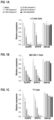
- FIGS. 1 A, 1 B, and 1 C are a series of bar graphs which show the impact of Compound 1 on expression of DUSP6 and SPRY4 in LC2/ad ( FIG. 1 A ), MZ-CRC-1 ( FIG. 1 B ), and TT ( FIG. 1 C ) cells.
- FIG. 2 is a bar graph which shows the sustained decrease in expression of the MAPK target genes DUSP6 and SPRY4 in a KIF5B-RET NSCLC PDX model.
- FIG. 3 is a graph which shows in vivo anti-tumor activity of Compound 1 in a cabozantinib-resistant tumor model generated from an engineered KIF5B-RET V804L cell line.
- FIG. 4 A is a graph which shows tumor size and levels of calcitonin and CEA (carcinoembryonic antigen) decrease over the course of treatment with Compound 1.
- the RET-mutant MTC patient (RET L629P, D631_R635DELINSG, V637R MTC) was treated with 60 mg once daily and then received successive dose escalation up to 300 mg once daily.
- FIG. 4 B is a CT scan of the same RET-mutant MTC patient of FIG. 4 A at baseline (top) and after 8 weeks of Compound 1 treatment (bottom) demonstrating rapid reduction in tumor growth.
- FIG. 4 A is a graph which shows tumor size and levels of calcitonin and CEA (carcinoembryonic antigen) decrease over the course of treatment with Compound 1.
- the RET-mutant MTC patient (RET L629P, D631_R635DELINSG, V637R MTC) was treated with 60 mg once daily and then received successive dose escalation up to 300
- FIG. 4 C is a graph which shows tumor size and the levels of calcitonin and CEA decrease in a patient with RET M918T-mutant MTC over the course of treatment with Compound 1 with 300 mg once daily.
- FIG. 4 D is a CT scan of the RET M918T-mutant patient of FIG. 4 C 's tumor at baseline (top) and after 24 weeks of Compound 1 treatment (bottom).
- FIG. 4 E is a graph which shows ctDNA analysis of RET M918T levels in plasma from an MTC patient during treatment. Pre- and post-treatment tumor biopsy revealed a 93% decrease in DUSP6 and 86% decrease in SPRY4 mRNA expression after 28 days of treatment with Compound 1.
- FIG. 5 A is a graph which shows lung tumor and KIF5B-RET and TP53 ctDNA reduction over the course of treatment with 200 mg once daily Compound 1;
- FIG. 5 B is a CT scan which illustrates tumor at baseline (top) and after 32 weeks of Compound 1 treatment (bottom).
- FIG. 6 A is a graph which shows the mean plasma concentration (ng/mL) vs. time (h);
- FIG. 6 B is a bar graph which shows the percent change from baseline in mean gene expression levels of DUSP6 and SPRY4.
- FIG. 7 A is a bar graph which shows dose-dependent reduction in CEA in patients measured on cycle 2, day 1.
- FIG. 7 B is a bar graph which shows dose-dependent reduction in calcitonin in patients measured on cycle 2 day 1.
- FIG. 8 is a waterfall plot which shows maximum tumor reduction-sum of diameter change from baseline percent—from patients in the phase I clinical study. Data cut-off: Apr. 6, 2018.
- FIG. 9 A is a brain CT scan at baseline prior to treatment with Compound 1.
- FIG. 9 B is a brain CT scan after 8 weeks of treatment with Compound 1 treatment.
- FIG. 10 is a chart which shows patient response rate in RET-altered NSCLC. Data cut-off: Apr. 6, 2018.
- FIG. 11 A is a CT scan at baseline prior to treatment with Compound 1.
- FIG. 11 B is a CT scan after 8 weeks of treatment with Compound 1.
- FIG. 11 C is a CT scan at baseline prior to treatment with Compound 1.
- FIG. 11 D is a CT scan after 8 weeks of treatment with Compound 1.
- FIG. 12 is a graph which shows that the response rate in medullary thyroid cancer patients increases with dose and duration of therapy. Specifically, the graph shows the response rate for dosing Compound 1 at 60 to 200 mg once daily and 300/400 mg once daily over a period of 8 to 24+weeks.
- FIG. 13 is a CT scan at baseline (BSL) and after 5 months of treatment with Compound 1 at 400 mg once daily.
- Compound 1 is (1S,4R)—N—((S)-1-(6-(4-fluoro-1H-pyrazol-1-yl)pyridine-3-yl)ethyl)-1-methoxy-4-(4-methyl-6-((5-methyl-1H-pyrazol-3-yl)amino)pyrimidin-2-yl)cyclohexanecarboxamide:
- DOR duration of response
- PD progressive disease
- SD stable disease
- CR means complete response
- ORR means overall all response rate
- CBR clinical benefit rate
- PFS progression free survival
- a “fusion” is a protein that results from a chromosomal translocation in which two genes are joined with an in-frame coding sequence and results in a chimeric protein.
- a fusion is a chromosomal translocation where the kinase domain of one protein fuses to a dimerization domain of another gene.
- RET-altered cancer is a cancer having an activating rearranged during transfection (RET) alteration, which drives tumorigenesis.
- activating RET alterations include mutations, fusions, and copy number variations.
- RET fusion is a gene rearrangement. RET rearrangements create a fusion protein juxtaposing the RET kinase domain and a dimerization domain of another protein, creating a constitutively activated dimer, which drives tumorigenesis.
- RET fusion protein is the result of a gene rearrangement.
- RET activating mutation means a mutation in RET kinase which promotes ligand-independent, constitutive RET kinase activation, which drives tumorigenesis.
- RET mutations can occur in the extracellular cysteine residues (e.g., C620R or C634R/W), which trigger aberrant receptor dimerization, or RET mutations can occur in the intracellular kinase domain.
- RET inhibitor is a compound which inhibits the activity of RET kinase.
- RET kinase is wild-type RET kinase and/or one or more RET-altered kinases (e.g., RET fusion, RET mutation, or RET copy number variation).
- RET inhibitors include, but are not limited to, Compound 1, LOXO-292 (selpercatinib), cabozantinib, vandetanib, alectinib, sorafenib, levatinib, ponatinib, dovitinib, sunitinib, foretinib, sitravatinib, DS-5010 (BOS172738), and RXDX-105.
- Compound 1 LOXO-292 (selpercatinib), cabozantinib, vandetanib, alectinib, sorafenib, levatinib, ponatinib, dovitinib, sunitinib, foretinib, sitravatinib, DS-5010 (BOS172738), and RXDX-105.
- a RET inhibitor may also inhibit other kinases.
- a “multi-kinase RET inhibitor” is a compound which inhibits wild type RET kinase and inhibits at least one other kinase equally or more potently than wild type RET kinase. Examples of multikinase RET inhibitors include: cabozantinib; vandetanib; alectinib; sorafenib; levatinib, ponatinib; dovitinib; sunitinib; foretinib; sitravatinib; DS-5010; and RXDX-105.
- selective RET inhibitor means a compound which selectively inhibits RET kinase.
- RET kinase can include RET wild type kinase and/or one or more RET-altered kinases (e.g., RET fusion, RET mutation, or RET copy number variation).
- a selective RET inhibitor's inhibitory activity against RET kinase is more potent in terms of IC 50 value (i.e., the IC 50 value is subnanomolar) when compared with its inhibitory activity against many other kinases (e.g., KDR, VEGFR-2, ABL, EGFR, FGFR2, HER2, IGFIR, JAKI, KIT, MET, AKTI, MEK1). Potency can be measured using known biochemical assays.
- Examples of selective RET inhibitors include Compound 1 and selpercatinib.
- the term “subject” or “patient” refers to organisms to be treated by the methods of the present disclosure. Such organisms include, but are not limited to, mammals (e.g., murines, simians, equines, bovines, porcines, canines, felines, and the like), and in some embodiments, humans.
- mammals e.g., murines, simians, equines, bovines, porcines, canines, felines, and the like
- humans in some embodiments, humans.
- cancers have been linked to aberrant RET expression (Kato et al., Clin. Cancer Res. 23(8):1988-97 (2017)).
- cancer as used herein include lung cancer, head and neck cancer, gastrointestinal cancer, breast cancer, skin cancer, genitourinary tract cancer, gynecological cancer, hematological cancer, central nervous system (CNS) cancer, peripheral nervous system cancer, endometrial cancer, colorectal cancer, bone cancer, sarcoma, spitzoid neoplasm, adenosquamous carcinoma, pheochromocytoma (PCC), hepatocellular carcinoma, multiple endocrine neoplasia (MEN2A and MEN2B), and inflammatory myofibroblastic tumor.
- CNS central nervous system
- PCC pheochromocytoma
- MEN2A and MEN2B multiple endocrine neoplasia
- MEN2A and MEN2B inflammatory myo
- cancers include hemangiopericytoma, differentiated thyroid carcinoma, anaplastic thyroid carcinoma, lung carcinosarcoma, ureter urothelial carcinoma, uterine carcinosarcoma, basal cell carcinoma, Merkel cell carcinoma, atypical lung carcinoma, fallopian tube adenocarcinoma, ovarian epithelial carcinoma, salivary gland adenocarcinoma, meningioma, duodenal adenocarcinoma, cervical adenocarcinoma, adrenal carcinoma, gastroesophageal junction carcinoma, cutaneous squamous cell carcinoma, pancreatic ductal adenocarcinoma, prostate adenocarcinoma, esophageal adenocarcinoma, endometrial adenocarcinoma, ovarian serous carcinoma, carcinoma unknown primary, bladder urothelial (transition cell) carcinoma, lung squamous cell carcinoma, colorectal adenocarcinoma
- the cancer is liver cholangiocarcinoma. In some embodiments, the cancer is duodenum adenocarcinoma. In some embodiments, the cancer is uterus endometrial adenocarcinoma endometrioid.
- MEN2A is associated with pheochromocytoma and parathyroid hyperplasia.
- MEN2B is associated with mucosal neuromas, pheochromocytomas, intestinal ganglioneuromas and marfanoid habitus.
- the lung cancer is chosen from small cell lung cancer (SCLC), lung adenocarcinoma, non-small cell lung cancer (NSCLC), bronchioles lung cell carcinoma, and mesothelioma.
- SCLC small cell lung cancer
- NSCLC non-small cell lung cancer
- bronchioles lung cell carcinoma and mesothelioma.
- the lung cancer is SCLC.
- the lung cancer is NSCLC.
- the head and neck cancer is chosen from thyroid cancer and cancer of the salivary gland.
- the thyroid cancer is chosen from papillary thyroid carcinoma (PTC), metastatic papillary thyroid cancer, medullary thyroid cancer (MTC), diffuse sclerosing variant of papillary thyroid cancer, and thyroid gland carcinoma.
- the cancer is familial medullary thyroid cancer.
- the thyroid cancer is PTC.
- the thyroid cancer is MTC.
- the gastrointestinal cancer is chosen from esophageal cancer, esophagogastric cancer, gastrointestinal stromal tumor (e.g., imatinib-resistant gastrointestinal stromal tumor), small bowel cancer, diffuse gastric cancer, and ampullary carcinoma.
- the breast cancer is metastatic breast cancer.
- skin cancer is melanoma or non-melanoma.
- the genitourinary tract cancer is chosen from colon cancer, metastatic colon cancer, bladder cancer, renal cell carcinoma (RCC), prostate cancer, hepatobiliary cancer, intrahepatic bile duct cancer, adrenocortical carcinoma, pancreatic cancer, and pancreatic ductal adenocarcinoma.
- the gynecological cancer is chosen from uterine sarcoma, germ cell tumor, cervical cancer, rectal cancer, testicular cancer, and ovarian cancer.
- the hematological cancer is chosen from leukemia, primary myelofibrosis with secondary acute myeloid leukemia, myelodysplasia (MDS), non-Hodgkin lymphoma, chronic myeloid leukemia, Philadelphia chromosome-positive acute lymphoblastic leukemia, and chronic myelomonocytic leukemia (CMML).
- the peripheral nervous system cancer is paraganglioma.
- the endometrial cancer isendometrial adenocarcinoma.
- the sarcoma is a soft tissue sarcoma.
- the central nervous system (CNS) cancer is chosen from brain cancer associated with lung cancer and glioma.
- Lung cancer is known to spread to the brain in about 40 percent of cases in which a metastasis has occurred. With lung cancer, this is considered stage 4 of the disease, and the average survival time with brain metastases is usually less than a year. Lung cancers with metastases to the brain have a relatively poor prognosis, e.g., chemotherapy drugs. Brain metastases are difficult to treat for many reasons. Often, by the time the patient first exhibits symptoms, they already have multiple lesions. Brain metastases tend to be very aggressive. The brain has many defenses to reduce the penetration of harmful substances. Specifically, the blood-brain-barrier prevents many medications, e.g., compounds from entering the brain. Treatment options may damage surrounding normal tissue and have a significant impact on the quality of life. In particular, there is a need to provide compounds that can be administered at a safe dose, with good tolerability, and which penetrate the brain for treatment of brain metastases.
- the cancer is brain metastasis associated with lung cancer.
- the cancer is a “RET-altered cancer,” which, as used herein, means the cancer has an activating RET alteration.
- the RET-altered cancer has a RET mutation or a RET gene rearrangement.
- the RET-altered cancer is a RET-altered solid tumor.
- the term “effective amount” refers to the amount of a selective RET inhibitor (e.g., Compound 1 or a pharmaceutically acceptable salt thereof) sufficient to effect beneficial or desired results.
- Beneficial or desired results may be a therapeutic benefit or result or a physiological benefit or result.
- An effective amount can be administered in one or more administrations, applications, or dosages and is not intended to be limited to a specific formulation or administration route.
- the term “therapeutically effective amount” refers to the amount of a selective inhibitor (e.g., Compound 1 or a pharmaceutically acceptable salt thereof) sufficient to effect beneficial or desired therapeutic results in a subject.
- a therapeutically effective amount can be administered to a subject in need thereof in one or more administrations, applications, or dosages and is not intended to be limited to a specific formulation or administration route.
- a therapeutically effective amount provides the desired safety, exposure, and tolerability.
- Selecting the therapeutically effective amount, i.e., the right dose for administering a compound is a required step in the development of a pharmaceutical drug for clinical use. Without adequate information on dosage, it is not possible for doctors to prescribe a particular drug to patients. Therefore, determining the correct drug dosage is a key question that can only be answered in clinical studies. If the dose and frequency of administration that allows safe and predictable administration cannot be identified, then the compound cannot be a medically useful or commercially viable pharmaceutical product.
- physiologically effective amount refers to the amount of a selective inhibitor (e.g., Compound 1 or a pharmaceutically acceptable salt thereof) sufficient to effect beneficial or desired physiological result in a subject.
- a physiological result may be a sustained down-regulation of at least one effect marker in the subject.
- treating includes any effect, e.g., lessening, reducing, modulating, ameliorating, or eliminating, that results in the improvement of the condition, disease, disorder, and the like, or ameliorating a symptom thereof.
- an “effect marker” means DUSP6 mRNA expression, SPRY4 mRNA expression, CEA, calcitonin, KIF5B ctDNA or TP53 ctDNA.
- Example RET Point Mutation Example RET Point Mutation
- Amino acid position 2 Amino acid position 665 (e.g., H665Q) Amino acid position 3
- Amino acid position 666 e.g., K666E, K666M, or K666N
- Amino acid position 4 Amino acid position 686 (e.g., S686N) Amino acid position 5
- Amino acid position 691 e.g., G691S
- Amino acid position 694 e.g., R694Q
- Amino acid position 7 Amino acid position 700 (e.g., M700L)
- Amino acid position 706 e.g., V706M or V706A
- Amino acid position 11 Amino acid position 713 splice variant (e.g., E713K) Amino acid position 12
- Amino acid position 736 e
- R525W and A513D may act in combination with S891A to enhance oncogenic
- RET fusion partner Exemplary cancers in which the fusion is found BCR Chronic Myelomonocytic Leukemia (CMML) CLIP 1 Adenocarcinoma KIFSB NSCLC, Ovarian Cancer, Spitzoid Neoplasm; Lung Adenocarcinoma, Adenosquamous Carcinomas CCDC6 NSCLC, Colon Cancer, Papillary Thyroid Cancer; Adenocarcinoma; Lung Adenocarcinoma; Metastatic Colorectal Cancer; Adenosquamous Carcinoma, Metastatic papillary thyroid cancer PTClex9 Metastatic papillary thyroid cancer NCOA4 Papillary Thyroid Cancer, NSCLC, Colon Cancer, Salivary Gland Cancer, Metastatic Colorectal Cancer; Lung Adenocarcinoma, Adenosquamous Carcinomas; Diffuse Sclerosing Variant of Papillary Thyroid Cancer TRIM33 NSCLC, Papillary Thyroid Cancer ERC
- a person of ordinary skill in the art may determine if a subject possesses a RET-altered cell, cancer, gene, or gene product, e.g., having a mutation, e.g., a fusion, deletion, insertion, translocation, frameshift, duplication, point mutation, and/or rearrangement, e.g., using a method selected from hybridization-based methods, amplification-based methods, microarray analysis, flow cytometry analysis, DNA sequencing, next-generation sequencing (NGS), primer extension, PCR, in situ hybridization, fluorescent in situ hybridization, dot blot, and Southern blot.
- primary tumor samples may be collected from a subject.
- the samples are processed, the nucleic acids are isolated using techniques known in the art, then the nucleic acids are sequenced using methods known in the art. Sequences are then mapped to individual exons, and measures of transcriptional expression (such as RPKM, or reads per kilobase per million reads mapped), are quantified.
- Raw sequences and exon array data are available from sources such as TCGA, ICGC, and the NCBI Gene Expression Omnibus (GEO). For a given sample, individual exon coordinates are annotated with gene identifier information, and exons belonging to kinase domains are flagged. The exon levels are then z-score normalized across all tumors samples.
- breakpoint is the boundary at which two different genes are fused. It is sometimes referred to as a “fusion point.” The location where the difference in exon expression is maximal between 5′ and 3′ is the inferred breakpoint of the fusion.
- Thousands of tumor samples can be rapidly profiled in this manner, generating a list of fusion candidates (ranked by t-statistic). High-ranking candidates can then be validated, and fusion partners identified by examining the raw RNA-seq data sets, and identifying chimeric pairs and/or split reads which support the fusion. Candidate fusions can then be experimentally confirmed as described below.
- Compound 1 can be administered as a pharmaceutical formulation, wherein Compound 1 is combined with one or more pharmaceutically acceptable excipients or carriers.
- Compound 1 may be formulated for administration in any convenient way for use in human or veterinary medicine.
- the compound included in the pharmaceutical preparation may be active itself, or may be a prodrug, e.g., capable of being converted to an active compound in a physiological setting.
- phrases “pharmaceutically acceptable” is employed herein to refer to those compounds, materials, compositions, and/or dosage forms which are, within the scope of sound medical judgment, suitable for use in contact with the tissues of human beings and animals without excessive toxicity, irritation, allergic response, or other problem or complication, commensurate with a reasonable benefit/risk ratio.
- Examples of pharmaceutically acceptable carriers include: (1) sugars, such as lactose, glucose, and sucrose; (2) starches, such as corn starch and potato starch; (3) cellulose and its derivatives, such as sodium carboxymethyl cellulose, ethyl cellulose, and cellulose acetate; (4) powdered tragacanth; (5) malt; (6) gelatin; (7) talc; (8) excipients, such as cocoa butter and suppository waxes; (9) oils, such as peanut oil, cottonseed oil, safflower oil, sesame oil, olive oil, corn oil, and soybean oil; (10) glycols, such as propylene glycol; (11) polyols, such as glycerin, sorbitol, mannitol, and polyethylene glycol; (12) esters, such as ethyl oleate and ethyl laurate; (13) agar; (14) buffering agents, such as magnesium hydroxide and aluminum hydroxide; (15)
- antioxidants examples include: (1) water soluble antioxidants, such as ascorbic acid, cysteine hydrochloride, sodium bisulfate, sodium metabisulfite, sodium sulfite, and the like; (2) oil-soluble antioxidants, such as ascorbyl palmitate, butylated hydroxyanisole (BHA), butylated hydroxytoluene (BHT), lecithin, propyl gallate, alpha-tocopherol, and the like; and (3) metal chelating agents, such as citric acid, ethylenediamine tetraacetic acid (EDTA), sorbitol, tartaric acid, phosphoric acid, and the like.
- water soluble antioxidants such as ascorbic acid, cysteine hydrochloride, sodium bisulfate, sodium metabisulfite, sodium sulfite, and the like
- oil-soluble antioxidants such as ascorbyl palmitate, butylated hydroxyanisole (BHA), butylated hydroxytoluene (BHT
- Solid dosage forms can include one or more pharmaceutically acceptable carriers, such as sodium citrate or dicalcium phosphate, and/or any of the following: (1) fillers or extenders, such as starches, lactose, sucrose, glucose, mannitol, and/or silicic acid; (2) binders, such as, for example, carboxymethylcellulose, alginates, gelatin, polyvinyl pyrrolidone, sucrose, and/or acacia; (3) humectants, such as glycerol; (4) disintegrating agents, such as agar-agar, calcium carbonate, potato or tapioca starch, alginic acid, certain silicates, and sodium carbonate; (5) solution retarding agents, such as paraffin; (6) absorption accelerators, such as quaternary ammonium compounds; (7) wetting agents, such as, for example, cetyl alcohol and g
- Liquid dosage forms can include pharmaceutically acceptable emulsions, microemulsions, solutions, suspensions, syrups, and elixirs.
- the liquid dosage forms may contain inert diluents commonly used in the art, such as, for example, water or other solvents, solubilizing agents and emulsifiers, such as ethyl alcohol, isopropyl alcohol, ethyl carbonate, ethyl acetate, benzyl alcohol, benzyl benzoate, propylene glycol, 1,3-butylene glycol, oils (in particular, cottonseed, groundnut, corn, germ, olive, castor and sesame oils), glycerol, tetrahydrofuryl alcohol, polyethylene glycols, and fatty acid esters of sorbitan, and mixtures thereof.
- inert diluents commonly used in the art, such as, for example, water or other solvents, solubilizing agents and emulsifiers
- Suspensions in addition to the active compounds, may contain suspending agents as, for example, ethoxylated isostearyl alcohols, polyoxyethylene sorbitol and sorbitan esters, microcrystalline cellulose, aluminum metahydroxide, bentonite, agar-agar and tragacanth, and mixtures thereof.
- suspending agents as, for example, ethoxylated isostearyl alcohols, polyoxyethylene sorbitol and sorbitan esters, microcrystalline cellulose, aluminum metahydroxide, bentonite, agar-agar and tragacanth, and mixtures thereof.
- Ointments, pastes, creams, and gels may contain, in addition to an active compound, excipients, such as animal and vegetable fats, oils, waxes, paraffins, starch, tragacanth, cellulose derivatives, polyethylene glycols, silicones, bentonites, silicic acid, talc, and zinc oxide, or mixtures thereof.
- excipients such as animal and vegetable fats, oils, waxes, paraffins, starch, tragacanth, cellulose derivatives, polyethylene glycols, silicones, bentonites, silicic acid, talc, and zinc oxide, or mixtures thereof.
- Powders and sprays can contain, in addition to an active compound, excipients such as lactose, talc, silicic acid, aluminum hydroxide, calcium silicates, and polyamide powder, or mixtures of these substances.
- Sprays can additionally contain customary propellants, such as chlorofluorohydrocarbons and volatile unsubstituted hydrocarbons, such as butane and propane.
- Dosage forms for the topical or transdermal administration of Compound 1 include powders, sprays, ointments, pastes, creams, lotions, gels, solutions, patches, and inhalants.
- the active compound may be mixed under sterile conditions with a pharmaceutically acceptable carrier, and with any preservatives, buffers, or propellants that may be required.
- Compound 1 When Compound 1 is administered as a pharmaceutical, to humans and animals, it can be given per se or as a pharmaceutical composition containing, for example, 0.1 to 99.5% (such as 0.5 to 90%) of active ingredient in combination with a pharmaceutically acceptable carrier.
- the formulations can be administered topically, orally, transdermally, rectally, vaginally, parentally, intranasally, intrapulmonary, intraocularly, intravenously, intramuscularly, intraarterially, intrathecally, intracapsularly, intradermally, intraperitoneally, subcutaneously, subcuticularly, or by inhalation.
- FIGS. 1 A- 1 C show relative transcript expression of RET pathway targets DUSP6 and SPRY4 and AKT-pathway target GSK3B 7 hours after treatment of L2C/ad cells ( FIG.
- FIG. 2 shows relative transcript expression of DUSP6, SPRY4 and GSK3B from KIF5B-RET NSCLC PDX. Tumors collected at the indicated times (hours) after administration of last dose. Data are the mean+SD. *P ⁇ 0.05, **P ⁇ 0.01, ***P ⁇ 0.001, 2-sided Student's t-test. SD, standard deviation.
- the DNA encoding the amino acid sequence of human KIF5B-RET variant 1 was placed in a lentivirus vector under a doxycycline-inducible promoter to maximize expression with a carboxyl-terminal FLAG epitope to facilitate immunodetection of the fusion by anti-FLAG antibodies.
- Lentiviral-mediated gene transduction was used to express KIF5B-RET in Ba/F3 cells, KIF5B-RET dependent cells were selected by IL-3 withdrawal and confirmed to express the KIF5B-RET fusion protein by immunoblot analysis.
- WT KIF5B-RET Ba/F3 cells were mutagenized overnight with ENU and plated in 96-well plates for a period of 2 weeks in the presence of 6 concentrations of MKIs (ponatinib, regorafenib, cabozantinib, or vandetanib).
- concentrations chosen ranged from 2 ⁇ -64 ⁇ the proliferation IC 50 for each compound: 125 nM to 4 ⁇ mol/L cabozantinib, 20 to 640 nM ponatinib, and 250 nM to 8 ⁇ mol/L vandetanib.
- FIG. 3 shows antitumor activity of Compound 1 compared with cabozantinib in KIF5B-RET V804L Ba/F3 allografts.
- a phase I, first-in-human study (NCT03037385) to define the maximum tolerated dose, safety profile, pharmacokinetics, and preliminary anti-tumor activity of Compound 1 in advanced, RET-altered NSCLC, MTC and other solid tumors was initiated.
- Written informed consent was obtained from all patients for treatment with Compound 1 and collection of blood and tumor samples for exploratory biomarker analyses to characterize potential predictive biomarkers of safety and efficacy.
- Adult patients ( ⁇ 18 years of age) must have had advanced, unresectable solid tumors, with an Eastern Cooperative Oncology Group performance status of 0 to 2, and adequate bone marrow, hepatic, renal, and cardiac function.
- Compound 1 was administered orally, once daily, on a 4-week cycle using a Bayesian Optimal Interval Design. At dose levels ⁇ 120 mg, documented RET-alteration was additionally required for study entry. Adverse events were graded per Common Terminology Criteria for Adverse Events (CTCAE). Radiographic response by computed tomography was evaluated RECIST version 1.1 ( European Journal of Cancer 45: 228-247 (2009)). Levels of ctDNA in plasma were assessed using the PlasmaSELECTTM-R64 NGS panel (Personal Genome Diagnostics, Baltimore, MD). Serum calcitonin levels in MTC patients were measured by ELISA (Medpace, Cincinnati, OH). Tumor DUSP6/SPRY4 levels were analyzed by qRT-PCR (Molecular MD, Portland, OR).
- Patient 1 was a 27-year-old patient with sporadic MTC harboring multiple RET mutations (L629P, D631_R635DELINSG, and V637R).
- the patient was tyrosine kinase inhibitor na ⁇ ve prior to the start of Compound 1 treatment with highly invasive disease that required emergent tracheostomy and extensive surgery, including total thyroidectomy, central neck dissection, bilateral levels 1 through 4 neck dissection, total thymectomy, and median sternotomy.
- the postoperative course was complicated by chylothorax.
- the patient was enrolled on the Compound 1 clinical trial and began treatment at the second dose level (60 mg, QD).
- the serum tumor marker calcitonin FIG. 4 A
- target lesions were reduced by 19%.
- the patient achieved partial response with >30% tumor reduction per Response Evaluation Criteria in Solid Tumors (RECIST) version 1.1 ( FIG. 4 B ).
- This patient subsequently escalated to 300 mg QD Compound 1 and achieved a confirmed partial response (47% maximal reduction) at 10 months.
- carcinoembryonic antigen (CEA) levels decreased by 57% over this period.
- Compound 1 Improved health status with Compound 1 treatment allowed for removal of the patient's tracheostomy tube and a return to baseline body weight after several kilograms of weight loss prior to treatment.
- Compound 1 has been well tolerated throughout 11 months of continuous treatment with the only drug-related adverse event being transient grade 1 decrease in white blood cells, which resolved without drug interruption or dose modification. As of Apr. 13, 2018, the patient remains on therapy.
- Patient 2 was a 56-year-old with sporadic RET M918T-mutant MTC, who had responded and then progressed on vandetanib, initiated therapy with Compound 1, 300 mg QD.
- RET M918T circulating tumor DNA (ctDNA) decreased by 47% after 28 days and was not detectable after 56 days.
- Paired tumor biopsies collected pretreatment and 28 days post-treatment demonstrated a 93% reduction in DUSP6 and an 86% reduction in SPRY4 mRNA expression, confirming RET-pathway inhibition within the tumor ( FIG. 4 E ).
- Patient 3 was a 37-year-old patient with metastatic RET-altered NSCLC, who had progressed on cisplatin, pemetrexed, and bevacizumab, had tumor tissue test positive for a RET fusion via FISH analysis.
- the patient initiated treatment with 200 mg QD Compound 1, and ctDNA analysis at baseline revealed a canonical KIF5B-RET fusion and co-occurring TP53 mutation. Tumor reduction ( ⁇ 25%) was noted at first radiographic assessment after 8 weeks of treatment and correlated with a concomitant decline in KIF5B-RET and TP53 ctDNA levels ( FIG. 5 A ).
- the patient achieved a partial response on the second radiographic assessment after 16 weeks ( FIG.
- Patient 4 was a 69-year-old patient with NSCLC, who had prior lung resection nephrectomy, and pleural drainage.
- the patient initiated treatment with 400 mg QD Compound 1.
- Tumor reduction was noted against KIF5B-RET NSCLC brain metastases ( FIG. 9 ).
- evidence of intracranial anti-tumor activity was observed in the patient.
- the patient had an approximately 6 mm metastatic lesion in the brain, which appeared to resolve after 8 weeks on treatment.
- the patient was determined to have stable disease.
- Patient 5 was a 74-year-old former smoker with locally advanced KIF5B-RET NSCLC.
- the patient's CT scans are shown in FIGS. 11 A- 11 D .
- the patient had received concurrent chemoradiation with cisplatin and pemetrexed, was then treated with carboplatin and nab-paclitaxel and eventually progressed.
- the patient achieved a partial response, but restaging scans performed after 11 cycles showed progressive disease, which was associated with clinical symptoms of increasing dyspnea and worsening performance status.
- the patient was then enrolled on the phase 1 trial of Compound 1.
- the patient had a partial response with 34% reduction of tumor volume ( FIGS. 11 C and 11 D ) and improvement of dyspnea and performance status.
- Compound 1 has been well tolerated throughout treatment, and the patient has not experienced drug-related adverse events as of Apr. 13, 2018.
- Patient 6 was a 23-year old woman with PTC, sclerosing variant (CCDC 6 -RET fusion), who presented 6 years ago with symptomatic diffuse lung metastases requiring supplemental oxygen, since diagnosis. She had progressed on sorafenib and lenvatinib. She initiated treatment with Compound 1 at 400 mg once daily.
- FIG. 13 shows tumor reduction after 5 months of treatment with Compound 1. Within 5 months, she was weaned to room air.
- PlasmaSELECTTM 64 analyzes circulating tumor DNA for genetic alterations in cancer. Specifically, PlasmaSELECTTM 64 evaluates a targeted panel of 64 well-characterized cancer genes. Cell-free DNA is extracted from plasma and prepared using proprietary methods that accommodate low abundance sample DNA. Samples are then processed using a proprietary capture process and high coverage next-generation sequencing.
- Plasma samples were collected at pre-determined time points from patients dosed with 30 to 600 mg Compound 1 orally once daily. Plasma samples were analyzed for Compound 1 using a validated liquid chromatography-tandem mass spectrometry (LC-MS/MS) method. The plasma Compound 1 concentration-time data were graphed using Phoenix WinNonlin ⁇ (Version 6.4, Certara L. P.) or Graphpad Prism (Version 7.02). FIG. 6 A shows the plasma concentration-time profile of Compound 1 at steady state.
- the RET IC 90 and brain IC 90 are based on projections and extrapolations based on PK and PD data in animals.
- BID dosing schedule was also explored as part of the phase I clinical trial.
- the BID dosing schedule started at a 300 mg total daily dose (200 mg in the morning, 100 mg in the evening).
- a total of 9 patients were enrolled into the BID dose escalation: 4 patients at 300 mg total daily dose (200 mg in the morning, 100 mg in the evening) and 5 patients at 200 mg total daily dose (100 mg BID).
- 4 patients enrolled at the 300 mg total daily dose 2 patients experienced dose limiting toxicities (DLTs) of Grade 3 hypertension and the dose was subsequently de-escalated to 100 mg BID.
- DLTs dose limiting toxicities
- Two of 5 patients at 100 mg BID experienced DLTs, including 1 patient with Grade 3 hypertension and 1 patient with Grade 3 tumor lysis syndrome. Based on overall safety, exposure, and tolerability, QD was the superior dosing schedule and chosen for the dose expansion.
Landscapes
- Health & Medical Sciences (AREA)
- Animal Behavior & Ethology (AREA)
- Chemical & Material Sciences (AREA)
- General Health & Medical Sciences (AREA)
- Medicinal Chemistry (AREA)
- Public Health (AREA)
- Veterinary Medicine (AREA)
- Pharmacology & Pharmacy (AREA)
- Life Sciences & Earth Sciences (AREA)
- Epidemiology (AREA)
- Organic Chemistry (AREA)
- Nuclear Medicine, Radiotherapy & Molecular Imaging (AREA)
- General Chemical & Material Sciences (AREA)
- Chemical Kinetics & Catalysis (AREA)
- Oncology (AREA)
- Nutrition Science (AREA)
- Physiology (AREA)
- Pharmaceuticals Containing Other Organic And Inorganic Compounds (AREA)
- Medicines That Contain Protein Lipid Enzymes And Other Medicines (AREA)
- Acyclic And Carbocyclic Compounds In Medicinal Compositions (AREA)
- Medicines Containing Antibodies Or Antigens For Use As Internal Diagnostic Agents (AREA)
- Measuring Or Testing Involving Enzymes Or Micro-Organisms (AREA)
Abstract
Description


-
- 1. A method of treating a subject afflicted with a cancer having an activating rearranged during transfection (RET) alteration, the method comprising administering to the subject a therapeutically effective amount of 300 to 400 mg of
Compound 1 or a pharmaceutically acceptable salt thereof once daily. - 2. The method of
embodiment 1, wherein the amount administered is 300 mg. - 3. The method of
embodiment - 4. The method of any one of embodiments 1-3, wherein the cancer is chosen from papillary thyroid carcinoma (PTC), medullary thyroid cancer (MTC), pheochromocytoma (PCC), pancreatic ductal adenocarcinoma, multiple endocrine neoplasia (MEN2A and MEN2B), metastatic breast cancer, testicular cancer, small cell lung cancer, non-small cell lung cancer (NSCLC), chronic myelomonocytic leukemia (CMML), colorectal cancer, ovarian cancer, inflammatory myofibroblastic tumor, and cancer of the salivary gland.
- 5. The method of any one of embodiments 1-3, wherein the cancer is chosen from esophageal cancer, skin cancer (non-melanoma), endometrial cancer, head and neck cancer, bladder cancer, prostate cancer, hematological cancer, leukemia, soft tissue sarcoma, renal cell carcinoma (RCC), non-Hodgkin lymphoma, hepatobiliary cancer, adrenocortical carcinoma, myelodysplasia (MDS), uterine sarcoma, germ cell tumor, cervical cancer, central nervous system cancer, bone cancer, ampullary carcinoma, gastrointestinal stromal tumor, small bowel cancer, mesothelioma, rectal cancer, paraganglioma, and intrahepatic bile duct cancer.
- 6. The method of any one of embodiments 1-3, wherein the cancer is chosen from adenocarcinoma, spitzoid neoplasm, lung adenocarcinoma, adenosquamous carcinoma, colon cancer, metastatic colon cancer, metastatic papillary thyroid cancer, diffuse sclerosing variant of papillary thyroid cancer, primary myelofibrosis with secondary acute myeloid leukemia, diffuse gastric cancer, thyroid gland carcinoma, and bronchioles lung cell carcinoma.
- 7. The method of any one of embodiments 1-3, wherein the cancer is chosen from hepatobiliary cancer, ampullary carcinoma, small bowel cancer, intrahepatic bile duct cancer, metastatic colon cancer, brain cancer associated with lung cancer, brain metastasis associated with lung cancer, and retropentoneal paraganglioma.
- 8. The method of any one of embodiments 1-3, wherein the cancer is chosen from medullary thyroid cancer (MTC) and non-small cell lung cancer (NSCLC).
- 9. The method of
embodiment 8, wherein the cancer is chosen from sporadic MTC, metastatic RET-altered NSCLC, tyrosine kinase inhibitor (TKI)-refractory KIF5B-RET NSCLC, and KIF5B-RET NSCLC. - 10. The method of any one of embodiments 1-3, wherein the cancer is chosen from a brain cancer associated with a lung cancer.
- 11. The method of
embodiment 10, wherein the brain cancer is brain metastasis. - 12. The method of any one of embodiments 1-11, wherein the activating RET alteration comprises a RET mutation or a RET gene rearrangement (fusion).
- 13. The method of any one of embodiments 1-11, wherein the activating RET alteration is a RET mutation.
- 14. The method of
embodiment - 15. The method of any one of embodiments 12-14, wherein the RET mutation is a resistance mutation.
- 16. The method of any one of embodiments 12-15, wherein the RET alteration is a RET mutation chosen from Table 1.
- 17. The method of any one of embodiments 12-16, wherein the RET mutation is V804M, M918T, C634R, or C634W.
- 18. The method of any one of embodiments 1-4, 8, 9, and 12-16, wherein the cancer is RET-altered medullary thyroid cancer (MTC).
- 19. The method of embodiment 18, wherein the cancer is familial MTC.
- 20. The method of embodiment 18, wherein the cancer is sporadic MTC.
- 21. The method of any one of embodiments 1-3 and 12-19, wherein the cancer is MTC having a M918T mutation.
- 22. The method of any one of embodiments 1-3 and 12-19, wherein the cancer is MTC having a C634R mutation.
- 23. The method of any one of embodiments 1-3 and 12-19, wherein the cancer is MTC having a V804M mutation.
- 24. The method of any one of embodiments 1-3, 6, and 12-16, wherein the cancer is paraganglioma.
- 25. The method of
embodiment 24, wherein the cancer is retropentoneal paraganglioma. - 26. The method of any one of embodiments 1-3, 6, 12-16, 24, and 25, wherein the paraganglioma has a R77H mutation.
- 27. The method of any one of embodiments 1-11, wherein the activating RET alteration is a gene-rearrangement (fusion).
- 28. The method of embodiment 27, wherein the activating RET alteration is a fusion with a RET fusion partner chosen from Table 2.
- 29. The method of
embodiment 27 or 28, wherein the fusion is KIF5B-RET, CCDC6-RET, KIAA1468-RET, or NCOA4-RET. - 30. The method of any one of embodiments 1-4 and 27-29, wherein the cancer is RET-altered NSCLC.
- 31. The method of
embodiment 30, wherein the cancer is NSCLC having a KIF5B-RET fusion. - 32. The method of
embodiment 30, wherein the cancer is NSCLC having a CCDC6-RET fusion. - 33. The method of
embodiment 30, wherein the cancer is NSCLC having a KIAA1468-RET fusion. - 34. The method of
embodiment 30, wherein the cancer is NSCLC having a RET fusion identified as FISH positive. - 35. The method of
embodiment - 36. The method of
embodiment - 37. The method of any one of embodiments 1-4 and 27-29, wherein the cancer is RET-altered PTC.
- 38. The method of embodiment 37, wherein the cancer is PTC having a CCDC6-RET fusion.
- 39. The method of embodiment 37, wherein the cancer is PTC having a NCOA4-RET fusion.
- 40. The method of any one of embodiments 1-3 and 27-29, wherein the cancer is RET-altered intrahepatic bile duct carcinoma.
- 41. The method of
embodiment 40, wherein the cancer is intrahepatic bile duct carcinoma having a NCOA4-RET fusion. - 42. The method of any one of embodiments 1-41, wherein the subject has not received prior treatment with a multikinase RET inhibitor.
- 43. The method of any one of embodiments 1-41 wherein the subject has received one or more prior treatments with a multikinase RET inhibitor.
- 44. The method of
embodiment 43, wherein the multikinase RET inhibitor is chosen from lenvatinib, vandetanib, cabozantinib, and RXDX-105. - 45. The method of any one of embodiments 1-41, wherein the subject has not received prior treatment with platinum.
- 46. The method of any one of embodiments 1-41, wherein the subject has received prior treatment with platinum.
- 47. The method of any one of embodiments 1-41, wherein the subject has received prior treatment with a selective RET inhibitor.
- 48. The method of any one of embodiments 1-47, wherein the subject has not received prior chemotherapy.
- 49. The method of any one of embodiments 1-47, wherein the subject has received prior chemotherapy.
- 50. The method of embodiment 49, wherein the prior chemotherapy is chosen from carboplatin, pemetrexed, abraxane, cisplatin, bevacizumab, and combinations thereof.
- 51. The method of any one of embodiments 1-42, wherein the subject has not received prior immunotherapy.
- 52. The method of any one of embodiments 1-42, wherein the subject has received prior immunotherapy.
- 53. The method of embodiment 52, wherein the prior immunotherapy is chosen from ipilimumab, pembrolizumab, nivolumab, MPDL3280A, MEDI4736, and combinations thereof.
- 54. A method of treating a subject afflicted with a brain cancer associated with a RET-altered lung cancer, the method comprising administering to the subject a therapeutically effective amount of
Compound 1 or a pharmaceutically acceptable salt thereof. - 55. The method of embodiment 54, wherein the brain cancer is brain metastasis.
- 56. A method of treating a subject afflicted with a cancer having an activating RET mutation, the comprising administering to the subject a physiologically effective amount of a RET inhibitor, wherein administration of the RET inhibitor is associated with a sustained down-regulation of at least one effect marker in the subject.
- 57. The method of embodiment 56, wherein the RET inhibitor is orally administered.
- 58. The method of
embodiment 56 or 57, wherein the RET inhibitor isCompound 1 or a pharmaceutically acceptable salt thereof. - 59. The method of any one of embodiments 56-58, wherein the effect marker is chosen from DUSP6 mRNA expression, SPRY4 mRNA expression, carcinoembryonic antigen level, and calcitonin level.
- 60. The method of any one of embodiments 56-58, wherein the effect marker is KIF5B ctDNA level or TP53 ctDNA level.
- 61. The method of any one of embodiments 56-59, wherein the amount administered to the subject produces a greater than 95% down-regulation of at least one effect marker.
- 62. The method of any one of embodiments 56-59, wherein the amount administered to the subject produces a greater than 94%, greater than 93%, greater than 92%, greater than 91%, greater than 90%, greater than 89%, greater than 88%, greater than 87%, greater than 86% greater than 85%, greater than 80%, greater than 75%, greater than 70%, greater than 65%, greater than 60%, greater than 55%, or greater than 50% down-regulation in at least one effect marker.
- 63. The method of embodiment 61, wherein the amount administered to the subject produces a greater than 89%, greater than 88%, greater than 87%, greater than 86%, greater than 85%, greater than 80%, greater than 75%, or greater than 70% down-regulation in at least one effect marker.
- 64. The method of any one of embodiments 56-59, wherein at least two effect markers are down-regulated.
- 1. A method of treating a subject afflicted with a cancer having an activating rearranged during transfection (RET) alteration, the method comprising administering to the subject a therapeutically effective amount of 300 to 400 mg of
| TABLE 1 |
| RET Point Mutations. |
| Example RET Point Mutation | Example RET Point Mutation |
| Amino acid position 2 | Amino acid position 665 (e.g., H665Q) |
| Amino acid position 3 | Amino acid position 666 (e.g., K666E, K666M, or |
| K666N) | |
| Amino acid position 4 | Amino acid position 686 (e.g., S686N) |
| Amino acid position 5 | Amino acid position 691 (e.g., G691S) |
| Amino acid position 6 | Amino acid position 694 (e.g., R694Q) |
| Amino acid position 7 | Amino acid position 700 (e.g., M700L) |
| Amino acid position 8 | Amino acid position 706 (e.g., V706M or V706A) |
| Amino acid position 11 | Amino acid position 713 splice variant (e.g., |
| E713K) | |
| Amino acid position 12 | Amino acid position 736 (e.g., G736R) |
| Amino acid position 13 | Amino acid position 748 (e.g., G748C) |
| Amino acid position 20 | Amino acid position 750 (e.g., A750P) |
| Amino acid position 32 (e.g., S32L) | Amino acid position 765 (e.g., S765P) |
| Amino acid position 34 (e.g., D34S) | Amino acid position 766 (e.g., P766S or P766M6) |
| Amino acid position 40 (e.g., L40P) | Amino acid position 768 (e.g., E768Q or E768D) |
| Amino acid position 64 (e.g., P64L) | Amino acid position 769 (e.g., L769L) |
| Amino acid position 67 (e.g., R67H) | Amino acid position 770 (e.g., R770Q) |
| Amino acid position 114 (e.g., R114H) | Amino acid position 771 (e.g., D771N) |
| Amino acid position 136 (e.g., glutamic | Amino acid position 777 (e.g., N777S) |
| acid to stop codon) | |
| Amino acid position 145 (e.g., V145G) | Amino acid position 778 (e.g., V778I) |
| Amino acid position 180 (e.g., arginine to | Amino acid position 781 (e.g., Q781R) |
| stop codon) | |
| Amino acid position 200 | Amino acid position 790 (e.g., L790F) |
| Amino acid position 292 (e.g., V292M) | Amino acid position 791 (e.g., Y791F or Y791N) |
| Amino acid position 294 | Amino acid position 802 |
| Amino acid position 321 (e.g., G321R) | Amino acid position 804 (e.g., V804L, V804M, |
| V804M, or V804E) | |
| Amino acid position 330 (e.g., R330Q) | Amino acid position 805 (e.g., E805K) |
| Amino acid position 338 (e.g., T3381) | Amino acid position 806 (e.g., E806C, Y806E, |
| Y806F, Y806S, Y806G, Y806H, Y806N, or | |
| Y806C) | |
| Amino acid position 360 (e.g., R360W) | Amino acid position 818 (e.g., E818K) |
| Amino acid position 373 (e.g., alanine to | Amino acid position 819 (e.g., S819I) |
| frameshift) | |
| Amino acid position 388 (e.g., V388A) | |
| Amino acid position 393 (e.g., F393L) | Amino acid position 823 (e.g., G823E) |
| Amino acid position 432 | Amino acid position 826 (e.g., Y826M) |
| Δ Amino acid residues 505-506 (6-Base | Amino acid position 833 (e.g., R833C) |
| Pair In-Frame Germline Deletion in Exon 7) | |
| Amino acid position 510 (e.g., A510V) | Amino acid position 841 (e.g., P841L or P841P) |
| Amino acid position 511 (e.g., E511K) | Amino acid position 843 (e.g., E843D) |
| Amino acid position 513 (e.g., A513D) | Amino acid position 844 (e.g., R844W, R844Q, or |
| R844L) | |
| Amino acid position 515 (e.g., C515S, | Amino acid position 848 (e.g., M848T) |
| C515W) | |
| Amino acid position 525 (e.g., R525W) | Amino acid position 852 (e.g., 1852M) |
| Amino acid position 531 (e.g., C531R, or | Amino acid position 866 (e.g., A866W) |
| 9 base pair duplication) | |
| Amino acid position 532 (e.g., duplication) | Amino acid position 873 (e.g., R873W) |
| Amino acid position 533 (e.g., G533C or | Amino acid position 876 (e.g., A876V) |
| G533S) | |
| Amino acid position 550 (e.g., G550E) | Amino acid position 881 (e.g., L881V) |
| Amino acid position 591 (e.g., V591I) | Amino acid position 882 |
| Amino acid position 593 (e.g., G593E) | Amino acid position 883 (e.g., A883F, A883S, |
| A883T, or A883T*) | |
| Amino acid position 600 (e.g., R600Q) | Amino acid position 884 (e.g., E884K) |
| Amino acid position 602 (e.g., I602V) | Amino acid position 886 (e.g., R886W) |
| Amino acid position 603 (e.g., K603Q or | Amino acid position 891 (e.g., S891A) |
| K603E2) | |
| Amino acid position 606 (e.g., Y606C) | Amino acid position 897 (e.g., R897Q) |
| Amino acid position 609 (e.g., C609Y, | Amino acid position 898 (e.g., D898V) |
| C609S, C609G, C609R, C609F, or C609W) | |
| Amino acid position 611 (e.g., C611R, | Amino acid position 901 (e.g., E901K) |
| C611S, C611G, C611Y, C611F, or C611W) | |
| Amino acid position 618 (e.g., C618S, | Amino acid position 904 (e.g., S904F or S904C2) |
| C618Y, C618R, C618Y, C618G, C618F, | |
| C618W) | |
| Amino acid position 619 (e.g., F619F) | Amino acid position 907 (e.g., K907E or K907M) |
| Amino acid position 620 (e.g., C620S, | Amino acid position 908 (e.g., R908K) |
| C620W, C620R, C620G, C620L, C620Y, | |
| C620F) | |
| Amino acid position 623 (e.g., E623K) | Amino acid position 911 (e.g., G911D) |
| Amino acid position 624 (e.g., D624N) | Amino acid position 912 (e.g., R912P, R912Q) |
| Amino acid position 629 (e.g., L629P) | |
| Amino acid position 630 (e.g., C630A, | Amino acid position 918 (e.g., M918T, M918V, or |
| C630R, C630S, C630Y, or C630F) | M918L6) |
| Amino acid position 631 (e.g., D631N, | Amino acid position 919 (e.g., A919V) |
| D631Y, D631A, D631G, D631V, or | |
| D631E, D631_R635DELINSG) | |
| Amino acid position 632 (e.g., E632K or | Amino acid position 921 (e.g., E921K) |
| E632G5) | |
| Δ Amino acid residues 632-633 (6-Base | Amino acid position 922 (e.g., S922P or S922Y) |
| Pair In-Frame Germline Deletion in Exon 11) | |
| Amino acid position 633 (e.g., 9 base pair | Amino acid position 930 (e.g., T930M) |
| duplication) | |
| Amino acid position 634 (e.g., C634W, | Amino acid position 961 (e.g., F961L) |
| C634Y, C634S, C634R, C634F, C634G, | |
| C634L, C634A, or C634T, or an insertion | |
| ELCR2, or a 12 base pair duplication) | |
| Amino acid position 635 (e.g., R635G) | Amino acid position 972 (e.g., R972G) |
| Amino acid position 636 (e.g., T636P or | Amino acid position 982 (e.g., R982C) |
| T636M4) | |
| Amino acid position 637 (e.g., V637R) | |
| Amino acid position 640 (e.g., A640G) | Amino acid position 1009 (e.g., M1009V) |
| Amino acid position 641 (e.g., A641S or | Amino acid position 1017 (e.g., D1017N) |
| A641T8) | |
| Amino acid position 648 (e.g., V6481) | Amino acid position 1041 (e.g., V1041G) |
| Amino acid position 649 (e.g., S649L) | Amino acid position 1064 (e.g., M1064T) |
| Amino acid position 664 (e.g., A664D) | RET + 3 |
| Amino acid position 629 (e.g., L629P) | Amino acid position 637 (e.g., V637R) |
| TABLE 2 |
| RET Fusions. |
| RET fusion partner | Exemplary cancers in which the fusion is found |
| BCR | Chronic Myelomonocytic Leukemia (CMML) |
| |
Adenocarcinoma |
| KIFSB | NSCLC, Ovarian Cancer, Spitzoid Neoplasm; Lung |
| Adenocarcinoma, Adenosquamous Carcinomas | |
| CCDC6 | NSCLC, Colon Cancer, Papillary Thyroid Cancer; |
| Adenocarcinoma; Lung Adenocarcinoma; | |
| Metastatic Colorectal Cancer; Adenosquamous | |
| Carcinoma, Metastatic papillary thyroid cancer | |
| PTClex9 | Metastatic papillary thyroid cancer |
| NCOA4 | Papillary Thyroid Cancer, NSCLC, Colon Cancer, |
| Salivary Gland Cancer, Metastatic Colorectal Cancer; | |
| Lung Adenocarcinoma, Adenosquamous Carcinomas; | |
| Diffuse Sclerosing Variant of Papillary Thyroid Cancer | |
| TRIM33 | NSCLC, Papillary Thyroid Cancer |
| ERC1 | Papillary Thyroid Cancer, Breast Cancer |
| FGFRIOP | CMML, Primary Myelofibrosis with secondary |
| Acute Myeloid Leukemia | |
| MBD1 | Papillary Thyroid Cancer |
| RAB61P2 | Papillary Thyroid Cancer |
| PRKAR1A | Papillary Thyroid Cancer |
| TRIM24 | Papillary Thyroid Cancer |
| KTN1 | Papillary Thyroid Cancer |
| GOLGA5 | Papillary Thyroid Cancer, Spitzoid Neoplasms |
| HOOK3 | Papillary Thyroid Cancer |
| KIAA1468 | Papillary Thyroid Cancer, Lung Adenocarcinoma |
| TRIM27 | Papillary Thyroid Cancer |
| AKAP13 | Papillary Thyroid Cancer |
| FKBP15 | Papillary Thyroid Cancer |
| SPECC1L | Papillary Thyroid Cancer, Thyroid Gland Carcinoma |
| TBL1XR1 | Papillary Thyroid Cancer, Thyroid Gland Carcinoma |
| CEP55 | Diffuse Gastric Cancer |
| CUX1 | Lung Adenocarcinoma |
| ACBD5 | Papillary Thyroid Carcinoma |
| MYH13 | Medullary Thyroid Carcinoma |
| PIBF1 | Bronchiolus Lung Cell Carcinoma |
| KIAA1217 | Papillary Thyroid Cancer, Lung Adenocarcinoma, |
| NSCLC | |
| MPRIP | NSCLC |
Claims (19)


Priority Applications (1)
| Application Number | Priority Date | Filing Date | Title |
|---|---|---|---|
| US17/377,885 US11872192B2 (en) | 2018-04-03 | 2021-07-16 | RET inhibitor for use in treating cancer having a RET alteration |
Applications Claiming Priority (8)
| Application Number | Priority Date | Filing Date | Title |
|---|---|---|---|
| US201862652284P | 2018-04-03 | 2018-04-03 | |
| US201862656297P | 2018-04-11 | 2018-04-11 | |
| US201862657605P | 2018-04-13 | 2018-04-13 | |
| US201862741683P | 2018-10-05 | 2018-10-05 | |
| PCT/US2019/025655 WO2019195471A1 (en) | 2018-04-03 | 2019-04-03 | Ret inhibitor for use in treating cancer having a ret alteration |
| US17/061,743 US11963958B2 (en) | 2018-04-03 | 2020-10-02 | RET inhibitor for use in treating cancer having a RET alteration |
| US17/127,041 US11273160B2 (en) | 2018-04-03 | 2020-12-18 | RET inhibitor for use in treating cancer having a RET alteration |
| US17/377,885 US11872192B2 (en) | 2018-04-03 | 2021-07-16 | RET inhibitor for use in treating cancer having a RET alteration |
Related Parent Applications (1)
| Application Number | Title | Priority Date | Filing Date |
|---|---|---|---|
| US17/127,041 Continuation US11273160B2 (en) | 2018-04-03 | 2020-12-18 | RET inhibitor for use in treating cancer having a RET alteration |
Publications (2)
| Publication Number | Publication Date |
|---|---|
| US20220175773A1 US20220175773A1 (en) | 2022-06-09 |
| US11872192B2 true US11872192B2 (en) | 2024-01-16 |
Family
ID=66223846
Family Applications (5)
| Application Number | Title | Priority Date | Filing Date |
|---|---|---|---|
| US17/044,884 Abandoned US20210100795A1 (en) | 2018-04-03 | 2019-04-03 | Ret inhibitor for use in treating cancer having a ret alteration |
| US17/061,743 Active 2041-04-12 US11963958B2 (en) | 2018-04-03 | 2020-10-02 | RET inhibitor for use in treating cancer having a RET alteration |
| US17/127,041 Active US11273160B2 (en) | 2018-04-03 | 2020-12-18 | RET inhibitor for use in treating cancer having a RET alteration |
| US17/377,885 Active 2039-06-30 US11872192B2 (en) | 2018-04-03 | 2021-07-16 | RET inhibitor for use in treating cancer having a RET alteration |
| US18/606,346 Active US12539303B2 (en) | 2018-04-03 | 2024-03-15 | RET inhibitor for use in treating cancer having a RET alteration |
Family Applications Before (3)
| Application Number | Title | Priority Date | Filing Date |
|---|---|---|---|
| US17/044,884 Abandoned US20210100795A1 (en) | 2018-04-03 | 2019-04-03 | Ret inhibitor for use in treating cancer having a ret alteration |
| US17/061,743 Active 2041-04-12 US11963958B2 (en) | 2018-04-03 | 2020-10-02 | RET inhibitor for use in treating cancer having a RET alteration |
| US17/127,041 Active US11273160B2 (en) | 2018-04-03 | 2020-12-18 | RET inhibitor for use in treating cancer having a RET alteration |
Family Applications After (1)
| Application Number | Title | Priority Date | Filing Date |
|---|---|---|---|
| US18/606,346 Active US12539303B2 (en) | 2018-04-03 | 2024-03-15 | RET inhibitor for use in treating cancer having a RET alteration |
Country Status (26)
| Country | Link |
|---|---|
| US (5) | US20210100795A1 (en) |
| EP (2) | EP4353317A3 (en) |
| JP (3) | JP7422084B2 (en) |
| KR (1) | KR20200139749A (en) |
| AU (1) | AU2019247766A1 (en) |
| BR (1) | BR112020020273A2 (en) |
| CA (1) | CA3096043A1 (en) |
| CL (1) | CL2020002544A1 (en) |
| CR (1) | CR20200522A (en) |
| DK (1) | DK3773589T3 (en) |
| ES (1) | ES2970041T3 (en) |
| FI (1) | FI3773589T3 (en) |
| HR (1) | HRP20240124T1 (en) |
| HU (1) | HUE065374T2 (en) |
| IL (1) | IL277629A (en) |
| LT (1) | LT3773589T (en) |
| MX (1) | MX2020010417A (en) |
| MY (1) | MY203645A (en) |
| PE (1) | PE20210096A1 (en) |
| PL (1) | PL3773589T3 (en) |
| PT (1) | PT3773589T (en) |
| RS (1) | RS65127B1 (en) |
| SG (1) | SG11202009681YA (en) |
| SI (1) | SI3773589T1 (en) |
| WO (1) | WO2019195471A1 (en) |
| ZA (1) | ZA202006072B (en) |
Cited By (4)
| Publication number | Priority date | Publication date | Assignee | Title |
|---|---|---|---|---|
| US12448366B2 (en) | 2020-05-29 | 2025-10-21 | Rigel Pharmaceuticals, Inc. | Solid forms of pralsetinib |
| US12539303B2 (en) | 2018-04-03 | 2026-02-03 | Rigel Pharmaceuticals, Inc. | RET inhibitor for use in treating cancer having a RET alteration |
| US12655128B2 (en) | 2015-11-02 | 2026-06-16 | Rigel Pharmaceuticals, Inc. | Inhibitors of ret |
| US12692251B2 (en) | 2020-05-29 | 2026-07-28 | Rigel Pharmaceuticals, Inc. | Pralsetinib pharmaceutical compositions |
Families Citing this family (4)
| Publication number | Priority date | Publication date | Assignee | Title |
|---|---|---|---|---|
| US10202365B2 (en) | 2015-02-06 | 2019-02-12 | Blueprint Medicines Corporation | 2-(pyridin-3-yl)-pyrimidine derivatives as RET inhibitors |
| US11666570B2 (en) * | 2019-07-11 | 2023-06-06 | The Board Of Trustees Of The Leland Stanford Junior University | Diagnosis and regulation of epidermal differentiation and cancer cell activity |
| US11946935B2 (en) * | 2020-08-25 | 2024-04-02 | Regents Of The University Of Minnesota | Circulating tumor markers for meningiomas |
| JP1746261S (en) * | 2022-10-17 | 2023-06-14 | Quantum encryption key transmitter |
Citations (97)
| Publication number | Priority date | Publication date | Assignee | Title |
|---|---|---|---|---|
| WO2001060816A1 (en) | 2000-02-17 | 2001-08-23 | Amgen Inc. | Kinase inhibitors |
| WO2004009087A1 (en) | 2002-07-24 | 2004-01-29 | University Of Cincinnati | 4-4(methylpiperazin-1-ylmethyl)-n-[4-methyl-3-(pyridin-3-yl)pyrimidin-2-ylamino)phenyl]-benzamide for treating mutated-ret kinase associated diseases |
| WO2005062795A2 (en) | 2003-12-19 | 2005-07-14 | Plexxikon, Inc. | Compounds and methods for development of ret modulators |
| WO2007023382A2 (en) | 2005-08-25 | 2007-03-01 | Pfizer Inc. | Pyrimidine amino pyrazole compounds, potent kinase inhibitors |
| WO2007087245A2 (en) | 2006-01-24 | 2007-08-02 | Merck & Co., Inc. | Ret tyrosine kinase inhibition |
| WO2007124221A1 (en) | 2006-04-18 | 2007-11-01 | Rigel Pharmaceuticals, Inc. | Methods of treating cell proliferative disorders by using pyrimidinediamine compounds |
| WO2007136103A1 (en) | 2006-05-18 | 2007-11-29 | Eisai R & D Management Co., Ltd. | Antitumor agent for thyroid cancer |
| WO2008061201A1 (en) | 2006-11-15 | 2008-05-22 | Rigel Pharmaceuticals, Inc. | Methods for treating renal tumors using 2,4-pyrimidinediamine drug and prodrug compounds |
| WO2009003136A1 (en) | 2007-06-26 | 2008-12-31 | Rigel Pharmaceuticals, Inc. | Substituted pyrimidine-2, 4 -diamines for treating cell proliferative disorders |
| WO2009007748A2 (en) | 2007-07-09 | 2009-01-15 | Astrazeneca Ab | Trisubstituted pyrimidine derivatives for the treatment of proliferative diseases |
| WO2009014637A2 (en) | 2007-07-19 | 2009-01-29 | Schering Corporation | Heterocyclic amide compounds as protein kinase inhibitors |
| WO2009100536A1 (en) | 2008-02-15 | 2009-08-20 | Methylgene Inc. | Inhibitors of kinase activity with 1,2-di-cyclyl substituted alkyne structures |
| WO2010006432A1 (en) | 2008-07-14 | 2010-01-21 | Queen's University At Kingston | Pharmaceutical compositions comprising ret inhibitors and methods for the treatment of cancer |
| WO2010111056A1 (en) | 2009-03-24 | 2010-09-30 | Banyu Pharmaceutical Co., Ltd. | Novel aminopyridine derivatives having aurora a selective inhibitory action |
| WO2010144359A1 (en) | 2009-06-08 | 2010-12-16 | Abraxis Bioscience, Llc | Triazine derivatives and their therapeutical applications |
| WO2010144394A1 (en) | 2009-06-09 | 2010-12-16 | Abraxis Bioscience, Llc | Benzyl substituted triazine derivatives and their therapeutical applications |
| WO2011060295A1 (en) | 2009-11-13 | 2011-05-19 | Genosco | Kinase inhibitors |
| US8088806B2 (en) | 2005-05-09 | 2012-01-03 | Achillion Pharmaceuticals, Inc. | Thiazole compounds and methods of use |
| US20120316137A1 (en) | 2009-10-30 | 2012-12-13 | Ariad Pharmaceuticals, Inc. | Methods and Compositions for Treating Cancer |
| US20130096136A1 (en) | 2011-09-30 | 2013-04-18 | Methylgene Inc. | Inhibitors of Protein Tyrosine Kinase Activity |
| US20130116280A1 (en) | 2011-10-31 | 2013-05-09 | Macrogen Inc. | Fusion protein comprising C-terminal domain of RET protein and use thereof as a diagnosing marker |
| US20130115313A1 (en) | 2011-11-09 | 2013-05-09 | Vertex Pharmaceuticals Incorporated | Compounds Useful as Inhibitors of ATR Kinase |
| WO2013077921A2 (en) | 2011-09-02 | 2013-05-30 | The Regents Of The University Of California | Substituted pyrazolo[3,4-d]pyrimidines and uses thereof |
| WO2013133367A1 (en) | 2012-03-09 | 2013-09-12 | カルナバイオサイエンス株式会社 | Novel triazine derivative |
| WO2013170159A1 (en) | 2012-05-10 | 2013-11-14 | Synta Pharmaceuticals Corp. | Treating cancer with hsp90 inhibitory compounds |
| WO2014039971A1 (en) | 2012-09-07 | 2014-03-13 | Exelixis, Inc. | Inhibitors of met, vegfr and ret for use in the treatment of lung adenocarcinoma |
| WO2014050781A1 (en) | 2012-09-25 | 2014-04-03 | 中外製薬株式会社 | Ret inhibitor |
| WO2014072220A1 (en) | 2012-11-07 | 2014-05-15 | Nerviano Medical Sciences S.R.L. | Substituted pyrimidinyl and pyridinyl-pyrrolopyridinones, process for their preparation and their use as kinase inhibitors |
| US20140187559A1 (en) | 2012-12-28 | 2014-07-03 | Blueprint Medicines Corporation | Inhibitors of the fibroblast growth factor receptor |
| US20140221404A1 (en) | 2011-08-04 | 2014-08-07 | Lsip, Llc | FUSION GENE OF Kif5b GENE AND Ret GENE, AND METHOD FOR DETERMINING EFFECTIVENESS OF CANCER TREATMENT TARGETING FUSION GENE |
| US8802697B2 (en) | 2012-07-11 | 2014-08-12 | Blueprint Medicines Corporation | Inhibitors of the fibroblast growth factor receptor |
| WO2014130810A1 (en) | 2013-02-25 | 2014-08-28 | Bristol-Myers Squibb Company | C-3 alkyl and alkenyl modified betulinic acid derivatives useful in the treatment of hiv |
| WO2014141187A1 (en) | 2013-03-15 | 2014-09-18 | Glaxosmithkline Intellectual Property Development Limited | Pyridine derivatives as rearranged during transfection (ret) kinase inhibitors |
| US20140272951A1 (en) | 2005-05-26 | 2014-09-18 | The Johns Hopkins University | Methods of identifying mutations in nucleic acid |
| WO2014147640A2 (en) | 2013-03-19 | 2014-09-25 | Glenmark Pharmaceuticals Limited; Glenmark Generics Limited | Process for the preparation of anagliptin |
| WO2015006875A1 (en) | 2013-07-18 | 2015-01-22 | Methylgene Inc. | Process for the preparation of substituted pyrimidines |
| US20150057335A1 (en) | 2013-08-20 | 2015-02-26 | National Cancer Center | Novel fusion genes identified in lung cancer |
| WO2015079251A1 (en) | 2013-11-29 | 2015-06-04 | Cancer Research Technology Limited | Quinazoline compounds |
| JP2015109806A (en) | 2012-03-22 | 2015-06-18 | アステラス製薬株式会社 | Method for detecting new ret fused body |
| US20150177246A1 (en) | 2012-07-26 | 2015-06-25 | Lsip, Llc | Fusion gene of cep55 gene and ret gene |
| CN104844567A (en) | 2015-04-23 | 2015-08-19 | 暨南大学 | A kind of synthetic method of intermediate 1-(3-chloro-2-pyridyl)-3-bromo-1H-5-pyrazolecarboxylic acid |
| US9187475B2 (en) | 2012-04-25 | 2015-11-17 | Raqualia Pharma Inc. | Pyrrolopyridinone derivatives as TTX-S blockers |
| US9200002B2 (en) | 2013-10-17 | 2015-12-01 | Blueprint Medicines Corporation | Compositions useful for treating disorders related to KIT |
| CN105255927A (en) | 2015-09-30 | 2016-01-20 | 温州医科大学附属第一医院 | KIAA1217-RET fusion gene |
| WO2016037578A1 (en) | 2014-09-10 | 2016-03-17 | Glaxosmithkline Intellectual Property Development Limited | Novel compounds as rearranged during transfection (ret) inhibitors |
| WO2016038552A1 (en) | 2014-09-10 | 2016-03-17 | Glaxosmithkline Intellectual Property Development Limited | Pyridone derivatives as rearranged during transfection (ret) kinase inhibitors |
| US9297011B2 (en) | 2011-08-23 | 2016-03-29 | Foundation Medicine, Inc. | KIF5B-RET fusion molecules and uses thereof |
| US9334263B2 (en) | 2013-10-17 | 2016-05-10 | Blueprint Medicines Corporation | Compositions useful for treating disorders related to kit |
| WO2016075224A1 (en) | 2014-11-14 | 2016-05-19 | Nerviano Medical Sciences S.R.L. | 6-amino-7-bicyclo-7-deaza-purine derivatives as protein kinase inhibitors |
| WO2016127074A1 (en) | 2015-02-06 | 2016-08-11 | Blueprint Medicines Corporation | 2-(pyridin-3-yl)-pyrimidine derivatives as ret inhibitors |
| US9434700B2 (en) | 2013-10-25 | 2016-09-06 | Neil Bifulco, JR. | Inhibitors of the fibroblast growth factor receptor |
| US9499522B2 (en) | 2013-03-15 | 2016-11-22 | Blueprint Medicines Corporation | Compositions useful for treating disorders related to kit |
| WO2017011776A1 (en) | 2015-07-16 | 2017-01-19 | Array Biopharma, Inc. | Substituted pyrazolo[1,5-a]pyridine compounds as ret kinase inhibitors |
| US20170022206A1 (en) | 2015-07-24 | 2017-01-26 | Blueprint Medicines Corporation | Compositions useful for treating disorders related to kit and pdfgr |
| US20170066773A1 (en) | 2015-08-26 | 2017-03-09 | Blueprint Medicines Corporation | Compounds and compositions useful for treating disorders related to ntrk |
| US20170121312A1 (en) | 2015-11-02 | 2017-05-04 | Blueprint Medicines Corporation | Inhibitors of ret |
| WO2017079121A2 (en) | 2015-11-02 | 2017-05-11 | Janssen Pharmaceutica Nv | Anti-il1rap antibodies, bispecific antigen binding molecules that bind il1rap and cd3, and uses thereof |
| WO2017079117A1 (en) | 2015-11-02 | 2017-05-11 | Five Prime Therapeutics, Inc. | Cd80 extracellular domain polypeptides and their use in cancer treatment |
| US20170145018A1 (en) | 2015-11-19 | 2017-05-25 | Blueprint Medicines Corporation | Compounds and compositions useful for treating disorders related to ntrk |
| WO2017100642A1 (en) | 2015-12-11 | 2017-06-15 | Regeneron Pharmaceuticals, Inc. | Methods for reducing or preventing growth of tumors resistant to egfr and/or erbb3 blockade |
| US9688680B2 (en) | 2014-08-04 | 2017-06-27 | Blueprint Medicines Corporation | Compositions useful for treating disorders related to kit |
| US9695165B2 (en) | 2014-01-15 | 2017-07-04 | Blueprint Medicines Corporation | Inhibitors of the fibroblast growth factor receptor |
| WO2017145050A1 (en) | 2016-02-23 | 2017-08-31 | Glaxosmithkline Intellectual Property Development Limited | Pyridylpyridone derivative useful as a ret kinase inhibitor in the treatment of ibs and cancer |
| US20170267661A1 (en) | 2016-03-17 | 2017-09-21 | Blueprint Medicines Corporation | Inhibitors of ret |
| US20170281633A1 (en) | 2016-04-01 | 2017-10-05 | Signal Pharmaceuticals, Llc | Substituted aminopurine compounds, compositions thereof, and methods of treatment therewith |
| WO2017178844A1 (en) | 2016-04-15 | 2017-10-19 | Cancer Research Technology Limited | Heterocyclic compounds as ret kinase inhibitors |
| WO2017178845A1 (en) | 2016-04-15 | 2017-10-19 | Cancer Research Technology Limited | Heterocyclic compounds as ret kinase inhibitors |
| US20170298069A1 (en) | 2016-04-15 | 2017-10-19 | Blueprint Medicines Corporation | Inhibitors of activin receptor-like kinase |
| US20180022732A1 (en) | 2016-07-22 | 2018-01-25 | Blueprint Medicines Corporation | Compounds useful for treating disorders related to ret |
| US20180030032A1 (en) | 2016-07-27 | 2018-02-01 | Blueprint Medicines Corporation | Compounds useful for treating disorders related to ret |
| WO2018049233A1 (en) | 2016-09-08 | 2018-03-15 | Nicolas Stransky | Inhibitors of the fibroblast growth factor receptor in combination with cyclin-dependent kinase inhibitors |
| WO2018060714A1 (en) | 2016-09-29 | 2018-04-05 | Daiichi Sankyo Company, Limited | Pyridine compound |
| WO2018064852A1 (en) | 2016-10-09 | 2018-04-12 | 南京纳丁菲医药科技有限公司 | Naphthyridine compound, pharmaceutical composition and use thereof |
| WO2018071447A1 (en) | 2016-10-10 | 2018-04-19 | Andrews Steven W | Substituted pyrazolo[1,5-a]pyridine compounds as ret kinase inhibitors |
| WO2018071454A1 (en) | 2016-10-10 | 2018-04-19 | Andrews Steven W | Substituted pyrazolo[1,5-a]pyridine compounds as ret kinase inhibitors |
| CN107980784A (en) | 2017-12-13 | 2018-05-04 | 中国农业大学 | Application of the 5- amino pyrazoles compounds in terms of coordinate plant growth |
| WO2018102455A1 (en) | 2016-12-01 | 2018-06-07 | Ignyta, Inc. | Methods for the treatment of cancer |
| WO2018136663A1 (en) | 2017-01-18 | 2018-07-26 | Array Biopharma, Inc. | Ret inhibitors |
| WO2018136661A1 (en) | 2017-01-18 | 2018-07-26 | Andrews Steven W | SUBSTITUTED PYRAZOLO[1,5-a]PYRAZINE COMPOUNDS AS RET KINASE INHIBITORS |
| CN108341782A (en) | 2018-03-30 | 2018-07-31 | 南京哈柏医药科技有限公司 | The synthesis technology of 3- amino-5-methylpyrazoles |
| WO2018183712A1 (en) | 2017-03-31 | 2018-10-04 | Blueprint Medicines Corporation | Pyrrolo[1,2-b]pyridazine compounds and compositions useful for treating disorders related to kit and pdgfr |
| WO2018189553A1 (en) | 2017-04-13 | 2018-10-18 | Cancer Research Technology Limited | Compounds useful as ret inhibitors |
| WO2018213329A1 (en) | 2017-05-15 | 2018-11-22 | Blueprint Medicines Corporation | Combinations of ret inhibitors and mtorc1 inhibitors and uses thereof for the treatment of cancer mediated by aberrant ret activity |
| WO2018237134A1 (en) | 2017-06-23 | 2018-12-27 | San Diego State University Research Foundation | ATROPISOMERISM FOR ENHANCED SELECTIVITY OF KINASE INHIBITORS |
| WO2019001556A1 (en) | 2017-06-30 | 2019-01-03 | 厦门大学 | Substituted aryl ether compound, preparation method therefor, pharmaceutical composition and use thereof |
| WO2019008172A1 (en) | 2017-07-07 | 2019-01-10 | Nipd Genetics Public Company Limited | Target-enriched multiplexed parallel analysis for assessment of tumor biomarkers |
| WO2019126121A1 (en) | 2017-12-19 | 2019-06-27 | Tp Therapeutics, Inc. | Macrocyclic compounds for treating disease |
| WO2019143991A1 (en) | 2018-01-18 | 2019-07-25 | Array Biopharma Inc. | SUBSTITUTED PYRAZOLO[3,4-d]PYRIMIDINE COMPOUNDS AS RET KINASE INHIBITORS |
| WO2019143977A1 (en) | 2018-01-18 | 2019-07-25 | Array Biopharma Inc. | Substituted pyrrolo[2,3-d]pyrimidines compounds as ret kinase inhibitors |
| WO2019143994A1 (en) | 2018-01-18 | 2019-07-25 | Array Biopharma Inc. | Substituted pyrazolyl[4,3-c]pyridinecompounds as ret kinase inhibitors |
| WO2019195471A1 (en) | 2018-04-03 | 2019-10-10 | Blueprint Medicines Corporation | Ret inhibitor for use in treating cancer having a ret alteration |
| WO2020033838A2 (en) | 2018-08-10 | 2020-02-13 | Blueprint Medicines Corporation | Treatment of egfr-mutant cancer |
| CN111362923A (en) | 2020-03-25 | 2020-07-03 | 魏威 | Method for preparing RET inhibitor pracetib, intermediate of pracetib and preparation method of pracetib |
| CN111440151A (en) | 2020-03-25 | 2020-07-24 | 魏威 | Method for preparing antitumor drug prasutinib |
| WO2021243186A1 (en) | 2020-05-29 | 2021-12-02 | Blueprint Medicines Corporation | Pralsetinib pharmaceutical compositions |
| WO2021243192A1 (en) | 2020-05-29 | 2021-12-02 | Blueprint Medicines Corporation | Solid forms of pralsetinib |
| WO2022120136A1 (en) | 2020-12-04 | 2022-06-09 | Blueprint Medicines Corporation | Method of preparing pralsetinib |
Family Cites Families (1)
| Publication number | Priority date | Publication date | Assignee | Title |
|---|---|---|---|---|
| WO2009018415A1 (en) | 2007-07-31 | 2009-02-05 | Vertex Pharmaceuticals Incorporated | Process for preparing 5-fluoro-1h-pyrazolo [3, 4-b] pyridin-3-amine and derivatives thereof |
-
2019
- 2019-04-03 SG SG11202009681YA patent/SG11202009681YA/en unknown
- 2019-04-03 RS RS20240107A patent/RS65127B1/en unknown
- 2019-04-03 CR CR20200522A patent/CR20200522A/en unknown
- 2019-04-03 PT PT197185317T patent/PT3773589T/en unknown
- 2019-04-03 HR HRP20240124TT patent/HRP20240124T1/en unknown
- 2019-04-03 MX MX2020010417A patent/MX2020010417A/en unknown
- 2019-04-03 DK DK19718531.7T patent/DK3773589T3/en active
- 2019-04-03 SI SI201930702T patent/SI3773589T1/en unknown
- 2019-04-03 AU AU2019247766A patent/AU2019247766A1/en not_active Withdrawn
- 2019-04-03 WO PCT/US2019/025655 patent/WO2019195471A1/en not_active Ceased
- 2019-04-03 US US17/044,884 patent/US20210100795A1/en not_active Abandoned
- 2019-04-03 CA CA3096043A patent/CA3096043A1/en active Pending
- 2019-04-03 EP EP23199171.2A patent/EP4353317A3/en not_active Withdrawn
- 2019-04-03 LT LTEPPCT/US2019/025655T patent/LT3773589T/en unknown
- 2019-04-03 KR KR1020207031426A patent/KR20200139749A/en not_active Withdrawn
- 2019-04-03 FI FIEP19718531.7T patent/FI3773589T3/en active
- 2019-04-03 EP EP19718531.7A patent/EP3773589B1/en not_active Revoked
- 2019-04-03 PE PE2020001523A patent/PE20210096A1/en unknown
- 2019-04-03 BR BR112020020273-8A patent/BR112020020273A2/en not_active Application Discontinuation
- 2019-04-03 PL PL19718531.7T patent/PL3773589T3/en unknown
- 2019-04-03 JP JP2020553633A patent/JP7422084B2/en active Active
- 2019-04-03 HU HUE19718531A patent/HUE065374T2/en unknown
- 2019-04-03 ES ES19718531T patent/ES2970041T3/en active Active
- 2019-04-03 MY MYPI2020005148A patent/MY203645A/en unknown
-
2020
- 2020-09-27 IL IL277629A patent/IL277629A/en unknown
- 2020-09-30 ZA ZA2020/06072A patent/ZA202006072B/en unknown
- 2020-10-01 CL CL2020002544A patent/CL2020002544A1/en unknown
- 2020-10-02 US US17/061,743 patent/US11963958B2/en active Active
- 2020-12-18 US US17/127,041 patent/US11273160B2/en active Active
-
2021
- 2021-07-16 US US17/377,885 patent/US11872192B2/en active Active
- 2021-12-09 JP JP2021199945A patent/JP2022022391A/en active Pending
-
2023
- 2023-09-28 JP JP2023167564A patent/JP2023165937A/en not_active Withdrawn
-
2024
- 2024-03-15 US US18/606,346 patent/US12539303B2/en active Active
Patent Citations (142)
| Publication number | Priority date | Publication date | Assignee | Title |
|---|---|---|---|---|
| WO2001060816A1 (en) | 2000-02-17 | 2001-08-23 | Amgen Inc. | Kinase inhibitors |
| WO2004009087A1 (en) | 2002-07-24 | 2004-01-29 | University Of Cincinnati | 4-4(methylpiperazin-1-ylmethyl)-n-[4-methyl-3-(pyridin-3-yl)pyrimidin-2-ylamino)phenyl]-benzamide for treating mutated-ret kinase associated diseases |
| WO2005062795A2 (en) | 2003-12-19 | 2005-07-14 | Plexxikon, Inc. | Compounds and methods for development of ret modulators |
| US8088806B2 (en) | 2005-05-09 | 2012-01-03 | Achillion Pharmaceuticals, Inc. | Thiazole compounds and methods of use |
| US20140272951A1 (en) | 2005-05-26 | 2014-09-18 | The Johns Hopkins University | Methods of identifying mutations in nucleic acid |
| WO2007023382A2 (en) | 2005-08-25 | 2007-03-01 | Pfizer Inc. | Pyrimidine amino pyrazole compounds, potent kinase inhibitors |
| WO2007087245A2 (en) | 2006-01-24 | 2007-08-02 | Merck & Co., Inc. | Ret tyrosine kinase inhibition |
| WO2007124221A1 (en) | 2006-04-18 | 2007-11-01 | Rigel Pharmaceuticals, Inc. | Methods of treating cell proliferative disorders by using pyrimidinediamine compounds |
| WO2007136103A1 (en) | 2006-05-18 | 2007-11-29 | Eisai R & D Management Co., Ltd. | Antitumor agent for thyroid cancer |
| WO2008061201A1 (en) | 2006-11-15 | 2008-05-22 | Rigel Pharmaceuticals, Inc. | Methods for treating renal tumors using 2,4-pyrimidinediamine drug and prodrug compounds |
| WO2009003136A1 (en) | 2007-06-26 | 2008-12-31 | Rigel Pharmaceuticals, Inc. | Substituted pyrimidine-2, 4 -diamines for treating cell proliferative disorders |
| WO2009007748A2 (en) | 2007-07-09 | 2009-01-15 | Astrazeneca Ab | Trisubstituted pyrimidine derivatives for the treatment of proliferative diseases |
| WO2009014637A2 (en) | 2007-07-19 | 2009-01-29 | Schering Corporation | Heterocyclic amide compounds as protein kinase inhibitors |
| WO2009100536A1 (en) | 2008-02-15 | 2009-08-20 | Methylgene Inc. | Inhibitors of kinase activity with 1,2-di-cyclyl substituted alkyne structures |
| WO2010006432A1 (en) | 2008-07-14 | 2010-01-21 | Queen's University At Kingston | Pharmaceutical compositions comprising ret inhibitors and methods for the treatment of cancer |
| WO2010111056A1 (en) | 2009-03-24 | 2010-09-30 | Banyu Pharmaceutical Co., Ltd. | Novel aminopyridine derivatives having aurora a selective inhibitory action |
| WO2010144359A1 (en) | 2009-06-08 | 2010-12-16 | Abraxis Bioscience, Llc | Triazine derivatives and their therapeutical applications |
| WO2010144394A1 (en) | 2009-06-09 | 2010-12-16 | Abraxis Bioscience, Llc | Benzyl substituted triazine derivatives and their therapeutical applications |
| US20120316137A1 (en) | 2009-10-30 | 2012-12-13 | Ariad Pharmaceuticals, Inc. | Methods and Compositions for Treating Cancer |
| WO2011060295A1 (en) | 2009-11-13 | 2011-05-19 | Genosco | Kinase inhibitors |
| US9216172B2 (en) | 2011-08-04 | 2015-12-22 | National Cancer Center | Method for determining effectiveness of cancer treatment by assessing the presence of a KIF5B-RET chimeric gene |
| US20140221404A1 (en) | 2011-08-04 | 2014-08-07 | Lsip, Llc | FUSION GENE OF Kif5b GENE AND Ret GENE, AND METHOD FOR DETERMINING EFFECTIVENESS OF CANCER TREATMENT TARGETING FUSION GENE |
| US9297011B2 (en) | 2011-08-23 | 2016-03-29 | Foundation Medicine, Inc. | KIF5B-RET fusion molecules and uses thereof |
| US20170014413A1 (en) | 2011-08-23 | 2017-01-19 | Foundation Medicine, Inc. | Novel kif5b-ret fusion molecules and uses thereof |
| WO2013077921A2 (en) | 2011-09-02 | 2013-05-30 | The Regents Of The University Of California | Substituted pyrazolo[3,4-d]pyrimidines and uses thereof |
| US20140243357A1 (en) | 2011-09-02 | 2014-08-28 | Mount Sinai School Of Medicine | Substituted pyrazolo[3,4-d]pyrimidines and uses thereof |
| US20130096136A1 (en) | 2011-09-30 | 2013-04-18 | Methylgene Inc. | Inhibitors of Protein Tyrosine Kinase Activity |
| US20130116280A1 (en) | 2011-10-31 | 2013-05-09 | Macrogen Inc. | Fusion protein comprising C-terminal domain of RET protein and use thereof as a diagnosing marker |
| US20130115313A1 (en) | 2011-11-09 | 2013-05-09 | Vertex Pharmaceuticals Incorporated | Compounds Useful as Inhibitors of ATR Kinase |
| WO2013133367A1 (en) | 2012-03-09 | 2013-09-12 | カルナバイオサイエンス株式会社 | Novel triazine derivative |
| JP2015109806A (en) | 2012-03-22 | 2015-06-18 | アステラス製薬株式会社 | Method for detecting new ret fused body |
| US9187475B2 (en) | 2012-04-25 | 2015-11-17 | Raqualia Pharma Inc. | Pyrrolopyridinone derivatives as TTX-S blockers |
| WO2013170159A1 (en) | 2012-05-10 | 2013-11-14 | Synta Pharmaceuticals Corp. | Treating cancer with hsp90 inhibitory compounds |
| US20170066812A1 (en) | 2012-07-11 | 2017-03-09 | Blueprint Medicines Corporation | Inhibitors of the fibroblast growth factor receptor |
| US8802697B2 (en) | 2012-07-11 | 2014-08-12 | Blueprint Medicines Corporation | Inhibitors of the fibroblast growth factor receptor |
| US10196436B2 (en) | 2012-07-11 | 2019-02-05 | Blueprint Medicines Corporation | Inhibitors of the fibroblast growth factor receptor |
| US9340514B2 (en) | 2012-07-11 | 2016-05-17 | Blueprint Medicines Corporation | Inhibitors of the fibroblast growth factor receptor |
| US9126951B2 (en) | 2012-07-11 | 2015-09-08 | Blueprint Medicines Corporation | Inhibitors of the fibroblast growth factor receptor |
| US20150177246A1 (en) | 2012-07-26 | 2015-06-25 | Lsip, Llc | Fusion gene of cep55 gene and ret gene |
| WO2014039971A1 (en) | 2012-09-07 | 2014-03-13 | Exelixis, Inc. | Inhibitors of met, vegfr and ret for use in the treatment of lung adenocarcinoma |
| WO2014050781A1 (en) | 2012-09-25 | 2014-04-03 | 中外製薬株式会社 | Ret inhibitor |
| WO2014072220A1 (en) | 2012-11-07 | 2014-05-15 | Nerviano Medical Sciences S.R.L. | Substituted pyrimidinyl and pyridinyl-pyrrolopyridinones, process for their preparation and their use as kinase inhibitors |
| US20140187559A1 (en) | 2012-12-28 | 2014-07-03 | Blueprint Medicines Corporation | Inhibitors of the fibroblast growth factor receptor |
| WO2014130810A1 (en) | 2013-02-25 | 2014-08-28 | Bristol-Myers Squibb Company | C-3 alkyl and alkenyl modified betulinic acid derivatives useful in the treatment of hiv |
| WO2014141187A1 (en) | 2013-03-15 | 2014-09-18 | Glaxosmithkline Intellectual Property Development Limited | Pyridine derivatives as rearranged during transfection (ret) kinase inhibitors |
| US9994552B2 (en) | 2013-03-15 | 2018-06-12 | Blueprint Medicines Corporation | Compositions useful for treating disorders related to kit |
| US20170029409A1 (en) | 2013-03-15 | 2017-02-02 | Blueprint Medicines Corporation | Compositions useful for treating disorders related to kit |
| US9499522B2 (en) | 2013-03-15 | 2016-11-22 | Blueprint Medicines Corporation | Compositions useful for treating disorders related to kit |
| WO2014147640A2 (en) | 2013-03-19 | 2014-09-25 | Glenmark Pharmaceuticals Limited; Glenmark Generics Limited | Process for the preparation of anagliptin |
| WO2015006875A1 (en) | 2013-07-18 | 2015-01-22 | Methylgene Inc. | Process for the preparation of substituted pyrimidines |
| EP3037547A1 (en) | 2013-08-20 | 2016-06-29 | National Cancer Center | New fusion gene detected in lung cancer |
| US20150057335A1 (en) | 2013-08-20 | 2015-02-26 | National Cancer Center | Novel fusion genes identified in lung cancer |
| US20160102097A1 (en) | 2013-10-17 | 2016-04-14 | Blueprint Medicines Corporation | Compositions useful for treating disorders related to kit |
| US20170057953A1 (en) | 2013-10-17 | 2017-03-02 | Blueprint Medicines Corporation | Compositions useful for treating disorders related to kit |
| US9944651B2 (en) | 2013-10-17 | 2018-04-17 | Blueprint Medicines Corporation | Compositions useful for treating disorders related to kit |
| US9334263B2 (en) | 2013-10-17 | 2016-05-10 | Blueprint Medicines Corporation | Compositions useful for treating disorders related to kit |
| US20170204104A1 (en) | 2013-10-17 | 2017-07-20 | Blueprint Medicines Corporation | Compositions useful for treating disorders related to kit |
| US9200002B2 (en) | 2013-10-17 | 2015-12-01 | Blueprint Medicines Corporation | Compositions useful for treating disorders related to KIT |
| US9884861B2 (en) | 2013-10-17 | 2018-02-06 | Blueprint Medicines Corporation | Compositions useful for treating disorders related to kit |
| US9994575B2 (en) | 2013-10-17 | 2018-06-12 | Blueprint Medicines Corporation | Compositions useful for treating disorders related to kit |
| US10221154B2 (en) | 2013-10-25 | 2019-03-05 | Blueprint Medicines Corporation | Inhibitors of the fibroblast growth factor receptor |
| US9434700B2 (en) | 2013-10-25 | 2016-09-06 | Neil Bifulco, JR. | Inhibitors of the fibroblast growth factor receptor |
| US20170174652A1 (en) | 2013-10-25 | 2017-06-22 | Blueprint Medicines Corporation | Inhibitors of the fibroblast growth factor receptor |
| WO2015079251A1 (en) | 2013-11-29 | 2015-06-04 | Cancer Research Technology Limited | Quinazoline compounds |
| US20170253593A1 (en) | 2014-01-15 | 2017-09-07 | Blueprint Medicines Corporation | Inhibitors of the fibroblast growth factor receptor |
| US10000490B2 (en) | 2014-01-15 | 2018-06-19 | Blueprint Medicines Corporation | Inhibitors of the fibroblast growth factor receptor |
| US9695165B2 (en) | 2014-01-15 | 2017-07-04 | Blueprint Medicines Corporation | Inhibitors of the fibroblast growth factor receptor |
| US9688680B2 (en) | 2014-08-04 | 2017-06-27 | Blueprint Medicines Corporation | Compositions useful for treating disorders related to kit |
| WO2016037578A1 (en) | 2014-09-10 | 2016-03-17 | Glaxosmithkline Intellectual Property Development Limited | Novel compounds as rearranged during transfection (ret) inhibitors |
| WO2016038552A1 (en) | 2014-09-10 | 2016-03-17 | Glaxosmithkline Intellectual Property Development Limited | Pyridone derivatives as rearranged during transfection (ret) kinase inhibitors |
| WO2016075224A1 (en) | 2014-11-14 | 2016-05-19 | Nerviano Medical Sciences S.R.L. | 6-amino-7-bicyclo-7-deaza-purine derivatives as protein kinase inhibitors |
| US20180022731A1 (en) | 2015-02-06 | 2018-01-25 | Blueprint Medicines Corporation | 2-(pyridin-3-yl)-pyrimidine derivatives as ret inhibitors |
| WO2016127074A1 (en) | 2015-02-06 | 2016-08-11 | Blueprint Medicines Corporation | 2-(pyridin-3-yl)-pyrimidine derivatives as ret inhibitors |
| US10202365B2 (en) | 2015-02-06 | 2019-02-12 | Blueprint Medicines Corporation | 2-(pyridin-3-yl)-pyrimidine derivatives as RET inhibitors |
| US10774070B2 (en) | 2015-02-06 | 2020-09-15 | Blueprint Medicines Corporation | 2-(pyridin-3-yl)-pyrimidine derivatives as RET inhibitors |
| CN104844567A (en) | 2015-04-23 | 2015-08-19 | 暨南大学 | A kind of synthetic method of intermediate 1-(3-chloro-2-pyridyl)-3-bromo-1H-5-pyrazolecarboxylic acid |
| WO2017011776A1 (en) | 2015-07-16 | 2017-01-19 | Array Biopharma, Inc. | Substituted pyrazolo[1,5-a]pyridine compounds as ret kinase inhibitors |
| US10000496B2 (en) | 2015-07-24 | 2018-06-19 | Blueprint Medicines Corporation | Compositions useful for treating disorders related to kit and PDGFR |
| US20170022206A1 (en) | 2015-07-24 | 2017-01-26 | Blueprint Medicines Corporation | Compositions useful for treating disorders related to kit and pdfgr |
| US20170066773A1 (en) | 2015-08-26 | 2017-03-09 | Blueprint Medicines Corporation | Compounds and compositions useful for treating disorders related to ntrk |
| US10017512B2 (en) | 2015-08-26 | 2018-07-10 | Blueprint Medicines Corporation | Compounds and compositions useful for treating disorders related to NTRK |
| CN105255927A (en) | 2015-09-30 | 2016-01-20 | 温州医科大学附属第一医院 | KIAA1217-RET fusion gene |
| US20190185454A1 (en) | 2015-11-02 | 2019-06-20 | Blueprint Medicines Corporation | Inhibitors of ret |
| US10584114B2 (en) | 2015-11-02 | 2020-03-10 | Blueprint Medicines Corporation | Inhibitors of RET |
| US20200407341A1 (en) | 2015-11-02 | 2020-12-31 | Blueprint Medicines Corporation | Inhibitors of ret |
| US11279688B2 (en) | 2015-11-02 | 2022-03-22 | Blueprint Medicines Corporation | Inhibitors of RET |
| WO2017079140A1 (en) | 2015-11-02 | 2017-05-11 | Blueprint Medicines Corporation | Inhibitors of ret |
| US10030005B2 (en) | 2015-11-02 | 2018-07-24 | Blueprint Medicines Corporation | Inhibitors of RET |
| US20170121312A1 (en) | 2015-11-02 | 2017-05-04 | Blueprint Medicines Corporation | Inhibitors of ret |
| WO2017079121A2 (en) | 2015-11-02 | 2017-05-11 | Janssen Pharmaceutica Nv | Anti-il1rap antibodies, bispecific antigen binding molecules that bind il1rap and cd3, and uses thereof |
| WO2017079117A1 (en) | 2015-11-02 | 2017-05-11 | Five Prime Therapeutics, Inc. | Cd80 extracellular domain polypeptides and their use in cancer treatment |
| US20220315560A1 (en) | 2015-11-02 | 2022-10-06 | Blueprint Medicines Corporation | Inhibitors of ret |
| US20170145018A1 (en) | 2015-11-19 | 2017-05-25 | Blueprint Medicines Corporation | Compounds and compositions useful for treating disorders related to ntrk |
| WO2017100642A1 (en) | 2015-12-11 | 2017-06-15 | Regeneron Pharmaceuticals, Inc. | Methods for reducing or preventing growth of tumors resistant to egfr and/or erbb3 blockade |
| WO2017145050A1 (en) | 2016-02-23 | 2017-08-31 | Glaxosmithkline Intellectual Property Development Limited | Pyridylpyridone derivative useful as a ret kinase inhibitor in the treatment of ibs and cancer |
| US10183928B2 (en) | 2016-03-17 | 2019-01-22 | Blueprint Medicines Corporation | Inhibitors of RET |
| US20170267661A1 (en) | 2016-03-17 | 2017-09-21 | Blueprint Medicines Corporation | Inhibitors of ret |
| WO2017161269A1 (en) | 2016-03-17 | 2017-09-21 | Blueprint Medicines Corporation | Inhibitors of ret receptor tyrosine kinases |
| US20170281633A1 (en) | 2016-04-01 | 2017-10-05 | Signal Pharmaceuticals, Llc | Substituted aminopurine compounds, compositions thereof, and methods of treatment therewith |
| WO2017178844A1 (en) | 2016-04-15 | 2017-10-19 | Cancer Research Technology Limited | Heterocyclic compounds as ret kinase inhibitors |
| WO2017178845A1 (en) | 2016-04-15 | 2017-10-19 | Cancer Research Technology Limited | Heterocyclic compounds as ret kinase inhibitors |
| US20170298069A1 (en) | 2016-04-15 | 2017-10-19 | Blueprint Medicines Corporation | Inhibitors of activin receptor-like kinase |
| US10227329B2 (en) | 2016-07-22 | 2019-03-12 | Blueprint Medicines Corporation | Compounds useful for treating disorders related to RET |
| WO2018017983A1 (en) | 2016-07-22 | 2018-01-25 | Blueprint Medicines Corporation | Compounds useful for treating disorders related to ret |
| US20180022732A1 (en) | 2016-07-22 | 2018-01-25 | Blueprint Medicines Corporation | Compounds useful for treating disorders related to ret |
| WO2018022761A1 (en) | 2016-07-27 | 2018-02-01 | Blueprint Medicines Corporation | Substituted cyclopentane-amides for treating disorders related to ret |
| US20180030032A1 (en) | 2016-07-27 | 2018-02-01 | Blueprint Medicines Corporation | Compounds useful for treating disorders related to ret |
| US10035789B2 (en) | 2016-07-27 | 2018-07-31 | Blueprint Medicines Corporation | Compounds useful for treating disorders related to RET |
| US20190192522A1 (en) | 2016-09-08 | 2019-06-27 | Blueprint Medicines Corporation | Inhibitors of the fibroblast growth factor receptor 4 in combination with cyclin-dependent kinase inhibitors |
| WO2018049233A1 (en) | 2016-09-08 | 2018-03-15 | Nicolas Stransky | Inhibitors of the fibroblast growth factor receptor in combination with cyclin-dependent kinase inhibitors |
| WO2018060714A1 (en) | 2016-09-29 | 2018-04-05 | Daiichi Sankyo Company, Limited | Pyridine compound |
| WO2018064852A1 (en) | 2016-10-09 | 2018-04-12 | 南京纳丁菲医药科技有限公司 | Naphthyridine compound, pharmaceutical composition and use thereof |
| WO2018071447A1 (en) | 2016-10-10 | 2018-04-19 | Andrews Steven W | Substituted pyrazolo[1,5-a]pyridine compounds as ret kinase inhibitors |
| WO2018071454A1 (en) | 2016-10-10 | 2018-04-19 | Andrews Steven W | Substituted pyrazolo[1,5-a]pyridine compounds as ret kinase inhibitors |
| WO2018102455A1 (en) | 2016-12-01 | 2018-06-07 | Ignyta, Inc. | Methods for the treatment of cancer |
| WO2018136663A1 (en) | 2017-01-18 | 2018-07-26 | Array Biopharma, Inc. | Ret inhibitors |
| WO2018136661A1 (en) | 2017-01-18 | 2018-07-26 | Andrews Steven W | SUBSTITUTED PYRAZOLO[1,5-a]PYRAZINE COMPOUNDS AS RET KINASE INHIBITORS |
| WO2018183712A1 (en) | 2017-03-31 | 2018-10-04 | Blueprint Medicines Corporation | Pyrrolo[1,2-b]pyridazine compounds and compositions useful for treating disorders related to kit and pdgfr |
| WO2018189553A1 (en) | 2017-04-13 | 2018-10-18 | Cancer Research Technology Limited | Compounds useful as ret inhibitors |
| WO2018213329A1 (en) | 2017-05-15 | 2018-11-22 | Blueprint Medicines Corporation | Combinations of ret inhibitors and mtorc1 inhibitors and uses thereof for the treatment of cancer mediated by aberrant ret activity |
| WO2018237134A1 (en) | 2017-06-23 | 2018-12-27 | San Diego State University Research Foundation | ATROPISOMERISM FOR ENHANCED SELECTIVITY OF KINASE INHIBITORS |
| WO2019001556A1 (en) | 2017-06-30 | 2019-01-03 | 厦门大学 | Substituted aryl ether compound, preparation method therefor, pharmaceutical composition and use thereof |
| WO2019008172A1 (en) | 2017-07-07 | 2019-01-10 | Nipd Genetics Public Company Limited | Target-enriched multiplexed parallel analysis for assessment of tumor biomarkers |
| CN107980784A (en) | 2017-12-13 | 2018-05-04 | 中国农业大学 | Application of the 5- amino pyrazoles compounds in terms of coordinate plant growth |
| WO2019126121A1 (en) | 2017-12-19 | 2019-06-27 | Tp Therapeutics, Inc. | Macrocyclic compounds for treating disease |
| WO2019143991A1 (en) | 2018-01-18 | 2019-07-25 | Array Biopharma Inc. | SUBSTITUTED PYRAZOLO[3,4-d]PYRIMIDINE COMPOUNDS AS RET KINASE INHIBITORS |
| WO2019143977A1 (en) | 2018-01-18 | 2019-07-25 | Array Biopharma Inc. | Substituted pyrrolo[2,3-d]pyrimidines compounds as ret kinase inhibitors |
| WO2019143994A1 (en) | 2018-01-18 | 2019-07-25 | Array Biopharma Inc. | Substituted pyrazolyl[4,3-c]pyridinecompounds as ret kinase inhibitors |
| CN108341782A (en) | 2018-03-30 | 2018-07-31 | 南京哈柏医药科技有限公司 | The synthesis technology of 3- amino-5-methylpyrazoles |
| US11273160B2 (en) * | 2018-04-03 | 2022-03-15 | Blueprint Medicines Corporation | RET inhibitor for use in treating cancer having a RET alteration |
| US20210085680A1 (en) | 2018-04-03 | 2021-03-25 | Blueprint Medicines Corporation | Ret inhibitor for use in treating cancer having a ret alteration |
| US20210100799A1 (en) | 2018-04-03 | 2021-04-08 | Blueprint Medicines Corporation | Ret inhibitor for use in treating cancer having a ret alteration |
| US20210100795A1 (en) | 2018-04-03 | 2021-04-08 | Blueprint Medicines Corporation | Ret inhibitor for use in treating cancer having a ret alteration |
| WO2019195471A1 (en) | 2018-04-03 | 2019-10-10 | Blueprint Medicines Corporation | Ret inhibitor for use in treating cancer having a ret alteration |
| WO2020033838A2 (en) | 2018-08-10 | 2020-02-13 | Blueprint Medicines Corporation | Treatment of egfr-mutant cancer |
| US20210308134A1 (en) | 2018-08-10 | 2021-10-07 | Blueprint Medicines Corporation | Treatment of egfr-mutant cancer |
| CN111362923A (en) | 2020-03-25 | 2020-07-03 | 魏威 | Method for preparing RET inhibitor pracetib, intermediate of pracetib and preparation method of pracetib |
| CN111440151A (en) | 2020-03-25 | 2020-07-24 | 魏威 | Method for preparing antitumor drug prasutinib |
| WO2021243192A1 (en) | 2020-05-29 | 2021-12-02 | Blueprint Medicines Corporation | Solid forms of pralsetinib |
| WO2021243186A1 (en) | 2020-05-29 | 2021-12-02 | Blueprint Medicines Corporation | Pralsetinib pharmaceutical compositions |
| US20230203009A1 (en) | 2020-05-29 | 2023-06-29 | Blueprint Medicines Corporation | Pralsetinib pharmaceutical compositions |
| WO2022120136A1 (en) | 2020-12-04 | 2022-06-09 | Blueprint Medicines Corporation | Method of preparing pralsetinib |
Non-Patent Citations (126)
| Title |
|---|
| Abdel-Rahman, O. and M. Fouad (2014) "Risk of cardiovascular toxicities in patients with solid tumors treated with sunitinib, axitinib, cediranib or regorafenib: an updated systematic review and comparative meta-analysis" Crit Rev Oncol Hematol,92:194-207. |
| Ahn M. et al. "OA 09.03 TATTON Ph lb Expansion Cohort: Osimertinib plus Savolitinib for Pts with EGFR-Mutant MET-Amplified NSCLC after Progression on Prior EGFR-TKI." J Thorac Oncol. 12(11) S1768, 2017. |
| Anonymous "BLU-667 Targets RET-Altered Cancers" Cancer Discovery, vol. 8, No. 6, OF8, Jun. 2018 (Jun. 2018), p. 5pp, XP002792436, Retrieved from the Internet: URL:http://cancerdiscovery.aacrjournals.or g/content/8/6/OF8.long [retrieved on Jun. 25, 2019]. |
| Anonymous "Estimating the Maximum Safe Starting Dose in Initial Clinical Trials for Therapeutics in Adult Healthy Volunteers", Guidance for Industry, Jul. 1, 2005 (Jul. 1, 2005), pp. 1-30, XP093000005, Retrieved from the Internet: URL:https://www.fda.gov/media/ 72309/download [retrieved on Nov. 21, 2022]. |
| Anonymous, "Phase 1 Study of the Highly-selective RET Inhibitor BLU-667 in Patients With Thyroid Cancer, Non-Small Cell Lung Cancer, and Other Advanced Solid Tumors," ClinicalTrials.org Internet Citation, Apr. 21, 2017 (Apr. 21, 2017), p. 8pp, XP002783685. |
| Anonymous: "Phase 1 Study of the Highly-selective RET Inhibitor BLU-667 in Patients With Thyroid Cancer, Non-Small Cell Lung Cancer, and Other Advanced Solid Tumors," Internet Citation, Apr. 21, 2017, Retrieved from the Internet: URL:https://www.clinicaltrials.gov/ct2/history/NCT03037385?V_3=View#StudyPageTop. |
| Antonescu, C.R. et al. (Jul. 2015) "Molecular Characterization of Inflammatory Myofibroblastic Tumors with Frequent ALK and ROS1 Fusions and Rare Novel RET Gene Rearrangement" Am J Surg Pathol, 39(7):957-967. HHS Public Access Author Manuscript;available in PMC Jul. 1, 2015 (19 pages). |
| Arighi, E. et al. (2005) "RET tyrosine kinase signaling in development and cancer" Cytokine & Growth Factor Reviews, 16:441-467. |
| Baselga, J. et al. (2005) "Phase II and Tumor Pharmacodynamic Study of Gefitinib in Patients with Advanced Breast Cancer" J Clin Oncol, 23(23):5323-5333. |
| Bentzien, F. et al. (2013) "In Vitro and in Vivo Activity of Cabozantinib (XL184), an Inhibitor of RET, MET, and VEGFR2, in a Model of Medullary Thyroid Cancer" Thyroid, 23(12):1569-1577. |
| Brandt, W. et al. (2010) "Inhibitors of the RET tyrosine kinase based on a 2-(alkylsulfanyl)-4-(3-thienyl) nicotinonitrile scaffold" Eur J Med Chem, 45:2919-2927. |
| Brown et al. (1984) "Heterocyclic Amplifiers of Phleomycin. IV Pyrimidinylpurines, Phenylpyrimidines and Related Systems with Basic Side Chains," Aust. J. Chem., 37:2093-101. |
| Caira (1998) "Crystalline Polymorphism of Organic Compounds," Topics in Current Chemistry 198:163-208. |
| Caprelsa (vandetanib) "Full Prescribing Information" Reference ID: 3964956, Cambridge, MA: Sanofi Genzyme; 2016. |
| Carlomagno, F. et al. (Feb. 1995) "Point Mutation of the Ret Proto-oncogene in the TT Human Medullary Thyroid Carcinoma Cell Line" Biochem Biophys Res Common, 207(3):1022-1028. |
| Cascone, T et al., "Significant Systemic and CNS Activity of RET Inhibitor Vandetanib Combined with mTOR Inhibitor Everolimus in Patients with Advanced NSCLC with RET Fusion", J. of Clinical Oncology 34, No. 15, 2 pages. |
| Ceccherini, I. et al. (1997) "Somatic in frame deletions not involving juxtamembranous cysteine residues strongly activate the RET proto-oncogene" Oncogene, 14:2609-2612. |
| Chalice Software Technical Guide, Horizon CombinatoRx Inc., Cambridge, MA, USA (downloaded Jul. 2018). |
| Chen, M-H et al. (2014) "Antitumor activity of the combination of a HSP90 inhibitor and a PI3K/mTOR dual inhibitor against cholangiocarcinoma," Oncotarget, 5(8):2372-2389. |
| Chilean Search Report dated Jun. 27, 2022, in Chilean Patent Application No. 202002544, Chilean National Stage of International Patent Application No. PCT/US2019/025655, filed Apr. 3, 2019, by Blueprint Medicines Corp. |
| Chilean Search Report dated Mar. 16, 2023, in Chilean Patent Application No. 202002544, Chilean National Stage of International Patent Application No. PCT/US2019/025655, filed Apr. 3, 2019, by Blueprint Medicines Corp. |
| Cometriq (cabozantinib)"Full Prescribing Information" Reference ID: 3964956, South San Francisco, CA: Exelixix, Inc.; 2018. |
| Drilon et al. (2018) "Targeting RET-driven cancers: lessons from evolving preclinical and clinical landscapes," Nature Reviews Clinical Oncology 15:151-167. |
| Druker, B.J. et al. (2001) "Efficacy and Safety of a Specific Inhibitor of the BCR-ABL Tyrosine Kinase in Chronic Myeloid Leukemia" New Engl J Med, 344(14):1031-1037. |
| Eisenhauer, E.A. et al. (2009) "New response evaluation criteria in solid tumours: Revised RECIST guideline (version 1.1)" Eur J Cancer, 45:228-247. |
| Elisei, R. et al. (2008) "Prognostic Significance of Somatic RET Oncogene Mutations in Sporadic Medullary Thyroid Cancer: A 10-Year Follow-Up Study" J Clin Endocrinol Metab, 93(3):682-687. |
| Engelman J.A. et al. "MET Amplification Leads to Gefitinib Resistance in Lung Cancer by Activating ERBB3 Signaling." Science, 2007, 316 (5827), pp. 1039-1043. |
| Evans, E. (May 1, 2016) "The Development of Potent and Selective RET Inhibitors" Slides presented at the 2016 Annual Meeting of the International Thyroid Oncology Group at the University of Colorado (19 pages). |
| Fagin, J.A. et al. "Biologic and Clinical Perspectives on Thyroid Cancer." N Engl J Med. 2016, 375 (11) pp. 1054-1067. |
| Fang, P. et al. (Feb. 2016) "Detection of a novel RET gene fusion in a non-small cell lung cancer patient using AMP chemistry" J Thorac Oncol, 11.2:S21-S22. |
| Ferrara et al. "Clinical and Translational Implications of RET Rearrangements in Non-Small Cell Lung Cancer," Journal of Thoracic Oncology, 2018, 13, pp. 27-45. |
| Gainor J.F. et al. "Dramatic Response to Combination Erlotinib and Crizotinib in a Patient with Advanced, EGFR-Mutant Lung Cancer Harboring De Novo MET Amplification." J Thorac Oncol. 11(7) 2016, pp. e83-e85. |
| Gautschi, O. et al. (2016) "Targeting RET in patients with RET-rearranged lung cancers: Results from a global registry" J Clin Oncol, 34(15S) (suppl; abstr 9014). |
| Gild, M.L. et al. (Oct. 2013) "Targeting mTOR in RET mutant medullary and differentiated thyroid cancer cells" Endocr Re/at Cancer, 20(5):659-667. HHS Public Access Author Manuscript; available in PMC Mar. 27, 2015 (16 pages). |
| Graham et al., 17 Bioorganic & Medicinal Chemistry, 5886-5893 (2007). |
| Grubbs, E.G. et al. (Mar. 2015) "RET Fusion as a Novel Driver of Medullary Thyroid Carcinoma" J Clin Endocrinol Metab, 100:788-793. |
| Halkova, T. et al. (2015) "A novel RET/PTC variant detected in a pediatric patient with papillary thyroid cancer without ionization history" Hum Pathol, 46:1962-1969. |
| Hayashi, H. et al. (2000) "Characterization of intracellular signals via tyrosine 1062 in RET activated by glial cell line-derived neurotrophic factor" Oncogene, 19:4469-4475. |
| Hilfiker et al. (2006) "Relevance of Solid-state Properties for Pharmaceutical Products," Polymorphism in the Pharmaceutical Industry, XP002528052, 19 pages. |
| Horiike, A. et al. (2016) "Sorafenib treatment for patients with RET fusion-positive non-small cell lung cancer" Lung Cancer, 93:43-46. |
| Hughes (2021) "Review of Synthetic Routes and Crystalline Forms of the Oncology Drugs Capmatinib, Selpercatinib, and Pralsetinib," Org. Process Res. Dev. 25:2192-2204. |
| International Search Report and Written Opinion dated Apr. 29, 2016, in International Patent Application No. PCT/US2016/016808, filed Feb. 5, 2016, by Blueprint Medicines Corp. (8 pages). |
| International Search Report and Written Opinion dated Aug. 16, 2021, in International Patent Application No. PCT/US2021/034823, filed May 28, 2021, by Blueprint Medicines Corp. (14 pages). |
| International Search Report and Written Opinion dated Aug. 21, 2018, in International Patent Application No. PCT/US2018/032794, filed May 15, 2018, by Blueprint Medicines Corp. (18 pages). |
| International Search Report and Written Opinion dated Feb. 24, 2022, in International Patent Application No. PCT/US2021/061754, filed Dec. 3, 2021, by Blueprint Medicines Corp. (16 pages). |
| International Search Report and Written Opinion dated Jan. 18, 2017, in International Patent Application No. PCT/US2016/059879, filed Nov. 1, 2016, by Blueprint Medicines Corp. (12 pages). |
| International Search Report and Written Opinion dated Jun. 12, 2017, in International Patent Application No. PCT/US2017/022969, filed Mar. 17, 2017, by Blueprint Medicines Corp. (12 pages). |
| International Search Report and Written Opinion dated May 11, 2021, in International Patent Application No. PCT/US2021/034811, filed May 28, 2021, by Blueprint Medicines Corp. (16 pages). |
| International Search Report and Written Opinion dated Oct. 12, 2017, in International Patent Application No. PCT/US2017/043964, filed Jul. 26, 2017, by Blueprint Medicines Corp. (13 pages). |
| International Search Report and Written Opinion dated Oct. 25, 2017, in International Patent Application No. PCT/US2017/043340, filed Jul. 21, 2017, by Blueprint Medicines Corp. (14 pages). |
| International Search Report and Written Opinion of the International Searching Authority for Intenational Application No. PCT/US2019/025655 dated Jul. 23, 2019 (16 pages). |
| International Search Report and Written Opinion of the International Searching Authority for International Application No. PCT/US2019/045919 dated Jan. 22, 2020 (11 pages). |
| Jin, N. et al. (Oct. 1, 20115), "Synergistic Action of a RAF Inhibitor and a Dual PI3K/mTOR Inhibitor in Thyroid Cancer," Clin Cancer Res, 17(20):6482-6489. |
| Joung, J.Y. et al. (2016) "Diffuse sclerosing variant of papillary thyroid carcinoma: major genetic alterations and prognostic implications" Histopathology, 69:45-53. |
| Jovanovic, R. et al. (2015) "Novel RET Mutations in Macedonian Patients with Medullary Thyroid Carcinoma: Genotype-Phenotype Correlations" Prilozi, 36(1):93-107. |
| Kamil et al. "Dose estimation, conversion and translation from animal to human and human to animal for clinical and animal studies", Int. J. Biol. Biotech., Jul. 1, 2017 (Jul. 1, 2017), pp. 311-317, XP093000013, Retrieved from the Internet: URL:https://www.researchgate.net/publication/322329638_Dose_estimation_conversion_and_translation_from_animal_to_human_and_hu man_to_animal_for_clinical_and_animal_studies [retrieved on Nov. 21, 2022]. |
| Karrasch, T. et al. (2016) "How to Assess the Clinical Relevance of Novel RET Missense Variants in the Absence of Functional Studies?" Eur Thyroid J, 5:73-77. |
| Kato, S. et al. (Apr. 15, 2017) "RET Aberrations in Diverse Cancers: Next-Generation Sequencing of 4,871 Patients" Clin Cancer Res, 23(8):1988-1997. |
| Kim, S.H. et al. (2015) "A New Germline ALA641 THR Variant in the Transmembrane Domain of the RET Gene Associated with Medullary Thyroid Cancer" Acta Endocrinologica (Buc), 11.2:189-194. |
| Klempner et al. "Emergence of RET rearrangement co-existing with activated EGFR mutation in EGFR-mutated NSCLC patients who had progressed on first- or second-generation EGFR TKI" Lung Cancer, Sep. 2015, vol. 89, No. 3, pp. 357-359; abstract, p. 358, col. 1, para 2, p. 359, col. 1, para 2. |
| Kohno et al. (2023) "RET fusion gene: Translation to personalized lung cancer therapy," Cancer Sci 104(11):1396-1400. |
| Krampitz, G.W. and J.A. Norton (2014) "RET Gene Mutations (Genotype and Phenotype) of Multiple Endocrine Neoplasia Type 2 and Familial Medullary Thyroid Carcinoma" Cancer, 120:1920-1931. |
| Kuster, B. (Ed.) (2012) Kinase Inhibitors. Methods and Protocols. Humana Press; Chapters 1 and 2, pp. 1-44. |
| Latteyer, S. et al. (Mar. 2016) "A 6-Base Pair in Frame Germline Deletion in Exon 7 of RET Leads to Increased RET Phosphorylation, ERK Activation, and MEN2A" J Clin Endocrinol Metab, 101(3):1016-1022. |
| Le Rolle, A. et al. (2015) "Identification and characterization of RET fusions in advanced colorectal cancer" Oncotarget, 6(30):28929-28937. |
| Lee, M.S. et al. (2016) "Efficacy of the combination of MEK and CDK4/6 inhibitors in vitro and in vivo in KRAS mutant colorectal cancer models" Oncotarget, 7(26):39595-39608. |
| Lehar, J. et al. (2009) "Synergistic drug combinations improve therapeutic selectivity" Nat Biotechnol, 27(7):659-666. HHS Public Access Author Manuscript; available in PMC Jan. 1, 2010 (23 pages). |
| Lin, J.J. et al. (2016) "Clinical Activity of Alectinib in Advanced RET-Rearranged Non-Small Cell Lung Cancer" J Thorac Oncol, 11(11):2027-2032. |
| Lipson, D. et al. (2012) "Identification of new ALK and RET gene fusions from colorectal and lung cancer biopsies" Nat Med, 18(3):382-384. HHS Public Access Author Manuscript; available in PMC Feb. 6, 2014 (7 pages). |
| Machens, A et al. (2003) "Early Malignant Progression of Hereditary Medullary Thyroid Cancer" New Engl J Med, 349:1517-1525. |
| Mcmahon et al (2000). * |
| Mologni, L. et al. (2010) "Synthesis, structure-activity relationship and crystallographic studies of 3-substituted indolin-2-one RET inhibitors" Bioorg Med Chem, 18:1482-1496. |
| Mologni, L. et al. (2013) "Ponatinib is a potent inhibitor of wild-type and drug-resistant gatekeeper mutant RET kinase" Mol Cell Endocrinol, 377:1-6. |
| Mologni, L. et al. (2017) "RET kinase inhibitors: a review of recent patents (2012-2015)" Exp Opin Ther Patents, 27(1):91-99. |
| Moura, M.M. et al. (2009) "Correlation of RET somatic mutations with clinicopathological features in sporadic medullary thyroid carcinomas" Br J Cancer, 100:1777-1783. |
| Mulligan, L.M. (Mar. 2014) "RET revisited: expanding the oncogenic portfolio" Nat Rev Cancer, 14:173-186. |
| Mulligan, L.M. et al. (1995) "Genotype-phenotype correlation in multiple endocrine neoplasia type 2: report of the International RET Mutation Consortium" J Int Med, 238:343-346. |
| Mulligan, L.M. et al. (Jun. 3, 1993) "Germ-line mutations of the RET proto-oncogene in multiple endocrine neoplasia type 2A" Nature, 363:458-460. |
| NCT03037385, entitled "Phase 1 Study of BLU-667 in Patients With Thyroid Cancer, Non-Small Cell Lung Cancer, and Other Advanced Solid Tumors," ClinicalTrials.gov, Jan. 17, 2018 (8 pages). |
| NCT03037385, entitled "Phase 1 Study of BLU-667 in Patients With Thyroid Cancer, Non-Small Cell Lung Cancer, and Other Advanced Solid Tumors," ClinicalTrials.gov, Jan. 27, 2017 (7 pages). |
| NCT03037385, entitled Phase 1/2 Study of the Highly-selective RET Inhibitor, Pralsetinib (BLU-667), in Patients With Thyroid Cancer, Non-Small Cell Lung Cancer, and Other Advanced Solid Tumors (ARROW) (13 pages). |
| NCT04222972, entitled AcceleRET Lung Study of Pralsetinib for 1L RET Fusion-positive, Metastatic NSCLC (11 pages). |
| Oxnard, G.R. et al. "Assessment of Resistance Mechanisms and Clinical Implications in Patients With EGFR T790M-Positive Lung Cancer and Acquired Resistance to Osimertinib." JAMA Oncol. 2018, 4(11), pp. 1527-1534. |
| Pinedo et al (2000). * |
| Piotrowska et al. (2018) "Landscape of Acquired Resistance to Osimertinib in EGFR-Mutant NSCLC and Clinical Validation of Combined EGFR and RET Inhibition with Osimertinib and BLU-677 for Acquired RET Fusion," Cancer Discovery 8(12):1529-1539. |
| Piotrowska et al.(2018) "MA26.03 Activity of Osimertinib and the Selective RET Inhibitor BLU-667 in an EGFR-Mutant Patient with Acquired RET Rearrangement," Journal of Thoracic Oncology—IASLC 19th World Conference on Lung Cancer, Sep. 23, 2018, pp. S451-S451. |
| Pirker, R. and M. Filipits (2015) "Alectinib in RET-rearranged non-small cell lung cancer—Another progress in precision medicine?" Transl Lung Cancer Res, 4(6):797-800. |
| Plaza-Menacho, I. et al. (2014) "Mechanisms of RET signaling in cancer: Current and future implications for targeted therapy" Cellular Signalling, 26:1743-1752. |
| Pound et al. "Is it possible to overcome issues of external validity in preclinical animal research? Why most animal models are bound to fail", J. Transl Med, Jan. 1, 2018 (Jan. 1, 2018), pp. 1-8, XP093000231, DOI: 10.1186/s12967-018-1678-1 Retrieved from the Internet: URL:https://www.researchgate.net/publication/328793141_1s_it_possible_to_overcome_issues_of_external_validity_in_preclinical_animal_r esearch_Why_most_animal_models_are_bound_to_fail [retrieved on Nov. 21, 2022]. |
| Qi, X. et al. (2015) "RET mutation p.S891A in a Chinese family with familial medullary thyroid carcinoma and associated cutaneous amyloidosis binding OSMR variant p.G513D" Oncotarget, 6(32):33993-34003. |
| Rahal, R. (Apr. 18, 2016) "The development of potent, selective RET inhibitors" Slides of a Presentation at the American Association for Cancer Research (AACR) Annual Meeting, Apr. 16-20, 2016, New Orleans (15 pages). |
| Rahal, R. et al. (2016) "The development of potent, selective RET inhibitors that target both wild-type RET and prospectively identified resistance mutations to multi-kinase inhibitors" Abstract submitted to the American Association for CancerResearch (AACR) Annual Meeting, Apr. 16-20, 2016, New Orleans; submission date Dec. 1, 2015 (2 pages). |
| Rahal, R. et al. "BLU-667 is a Potent and Highly Selective RET Inhibitor Being Developed for RET—Driven Cancers," Poster B151, Blueprint Medicines Corporation (1 page). |
| Ramalingam et al. "Osimertinib As First-Line Treatment of EGFR Mutation-Positive Advanced Non-Small-Cell Lung Cancer" Journal Of Clinical Oncology, Mar. 20, 2018, vol. 36, No. 9, p. 841-849; abstract. |
| Reagan-Shaw et al. (2007) "Dose translation from animal to human studies revisited" The FASEB Journal, 22:659-661. |
| Reckamp et al. (2014) "Phase II trial of XL184 (cabozantinib) plus erlotinib in patients (pts) with advanced EGFR-mutant non-small cell lung cancer (NSCLC) with progressive disease (PD) on epidermal growth factor receptor (EGFR) tyrosine kinase inhibitor (TKI) therapy: A California Cancer Consortium phase II trial (NCI 9303)," Journal of Clinical Oncology 32(15)8014 4 pages. |
| Reckamp, K. L. et al. "Abstract 936: Analysis of cell-free DNA from 32,991 advanced cancers reveals novel co-occurring activating RET alterations and oncogenic signaling pathway aberrations." Cancer Research. Pubished Jul. 2018. Proceedings: AACR Annual Meeting 2018; Apr. 14-18, 2018; Chicago, IL. Retrieved from the internet URL: "<https://cancerres.aacrjournals.org/content/78/13_Supplement/936>" (3 pages). |
| Robinett, R.G. et al. (2007) "The discovery of substituted 4-(3-hyroxyanilino)-quinolines as potent RET kinase inhibitors" Bioorg Med Chem Lett, 17:5886-5893. |
| Robinson B. G. et al. "Vandetanib (100 mg) in Patients with Locally Advanced or Metastatic Hereditary Medullary Thyroid Cancer," Journal of Clinical En Doc Ri No Logy and Metabolism, vol. 95, No. 6, Jun. 1, 2010 (Jun. 1, 2010), pp. 2664-2671, XP055599340. |
| Romei, C. et al. (Apr. 2016) "A comprehensive overview of the role of the RET proto-oncogene in thyroid carcinoma" Nat Rev Endocrinol, 12:192-202. |
| Russian Search Report dated Jan. 13, 2023, in Russian Patent Application No. 2020135917, Russian National Stage of International Patent Application No. PCT/US2019/025655, filed Apr. 3, 2019, by Blueprint Medicines Corp. |
| Saito, M. et al. (Jun. 2016) "Gene aberrations for precision medicine against lung adenocarcinoma" Cancer Sci, 107(6):713-720. |
| Sarker, D. and P. Workman (2007) "Pharmacodynamic Biomarkers for Molecular Cancer Therapeutics" Adv Cancer Res, 96:213-268. |
| Schrock, A.B. et al. "Receptor Tyrosine Kinase Fusions and BRAF Kinase Fusions are Rare but Actionable Resistance Mechanisms to EGFR Tyrosine Kinase Inhibitors." Translational Oncology, 2018, 13 (9) pp. 1312-1323. |
| Scollo, C. et al. (2016) "A novel RET gene mutation in a patient with apparently sporadic pheochromocytoma" Endocr J, 63(1):87-91. |
| Sentürk et al. (2020) "Quantitative bioanalytical assay for the selective RET inhibitors selpercatinib and pralsetinib in mouse plasma and tissue homogenates using liquid chromatography-tandem mass spectrometry," Journal of Chromatography B 1147:122131 8 pages. |
| Silva, A.L. et al. (2015) "Identification and characterization of two novel germline RET variants associated with medullary thyroid carcinoma" Endocrine, 49:366-372. |
| Singapore Written Opinion dated Dec. 13, 2021, in Singapore Patent Application No. 11202009681Y, Singapore National Stage of International Patent Application No. PCT/US2019/025655, filed Apr. 3, 2019, by Blueprint Medicines Corp. |
| Stransky, N. et al. (2014) "The landscape of kinase fusions in cancer" Nat Commun, 5:4846 (10 pages). |
| Subbiah et al. "Clinical activity and safety of the RET inhibitor pralsetinib in patients with RET fusion-positive solid tumours: update from the ARROW trial", ASCO, Jun. 4, 2021 (Jun. 4, 2021), pp. 1-1, XP093000210, Retrieved from the Internet: URL:https://ascopubs.org/doi/abs/10.1200/JCO.2021 .39.15_suppl.3079 [retrieved on Nov. 21, 2022]. |
| Subbiah et al. Abstract CT043 "Highly potent and selective RET inhibitor, BLU-667, achieves proof of concept in a phase I study of advanced, RET-altered solid tumors," Cancer Research vol. 78, No. 13, Supplement Jul. 1, 2018 (Jul. 2018), XP002792435, Proceedings: AACR Annual Meeting 2018; Apr. 14-18, 2018; Chicago, IL. Retrieved from the Internet: URL:http://cancerres.aacrjournals.org/cont ent/78/13 Supplement/CT043 [retrieved on Jun. 26, 2019]. |
| Subbiah V. et al. "Precision Targeted Therapy with BLU-667 for RET-Driven Cancers," Cancer Discovery, vol. 8, No. 7, Apr. 15, 2018 (pp. 836-849). |
| Subbiah, V. et al. (Jul. 2015) "Systemic and CNS activity of the RET inhibitor vandetanib combined with the mTOR inhibitor everolimus in KIF5B-RET re-arranged Non-Small Cell Lung Cancer with brain metastases" Lung Cancer, 89(1):76-79. HHS Public Access Author Manuscript; available in PMC Aug. 25, 2016 (10 pages). |
| Suehara, Y. et al. (Dec. 15, 2012) "Identification of KIF5B-RET and GOPC-ROS1 fusions in lung adenocarcinomas through a comprehensive mRNA-based screen for tyrosine kinase fusions" Clin Cancer Res, 18(24):6599-6608. HHS Public Access AuthorManuscript; available in PMC Nov. 17, 2014 (18 pages). |
| Suzuki, M. et al. (Jul. 2013) "Identification of a lung adenocarcinoma cell line with CCDC6-RET fusion gene and the effect of RET inhibitors in vitro and in vivo" Cancer Sci, 104(7):896-903. |
| Takeuchi, K. et al. (Mar. 2012) "RET, ROS1 and ALK fusions in lung cancer" Nat Med, 18(3):378-381. |
| Tan, D.S. et al. (2009) "Biomarker-Driven Early Clinical Trials in Oncology" Cancer J, 15(5):406-420. |
| Thackaberry et al. (2012) "Non-clinical toxicological considerations for pharmaceutical salt selection," Expert Opin. Drug Metab. Toxicol. 8(11):1419-1433. |
| Touat, M. et al. (2015) "Targeting FGFR Signaling in Cancer" Clin Cancer Res, 21(12):2684-2694. |
| U.S. Appl. No. 17/061,743, filed Oct. 2, 2020. * |
| U.S. Nat'l Library of Med., A Phase 1 Trial of Vandetanib (a Multi-kinase Inhibitor of EGFR, VEGFR and RET Inhibitor) in Combination With Everolimus (an mTOR Inhibitor) in Advanced Cancer, ClinicalTrials.gov,https://clinicaltrials.gov/ct2/show/NCT01582191 (last updated Jul. 3, 2018) (7 pages). |
| U.S. Nat'l Library of Med., Phase 1 Study of the Highly-selective RET Inhibitor BLU-667 in Patients With Thyroid Cancer, Non-Small Cell Lung Cancer, and Other Advanced Solid Tumors, ClinicalTrials.gov, https://clinicaltrials.gov/ct2/show/NCT03037385(last updated Jun. 27, 2018) (8 pages). |
| Wakelee et al. (2017) "A phase Ib/II study of cabozantinib (XL184) with or without erlotinib in patients with non-small cell lung cancer," Cancer Chemother Pharmacol 79:923-932. |
| Wang, L. et al. (2012) "Identification of a Novel, Recurrent HEY1-NCOA2 Fusion in Mesenchymal Chondrosarcoma based on a Genome-wide Screen of Exon-level Expression Data" Genes Chromosomes Cancer, 51(2):127-139. HHS Public Access Author Manuscript;available in PMC Feb. 1, 2013 (24 pages). |
| Wang, R. et al. (Dec. 10, 2012) "RET Fusions Define a Unique Molecular and Clinicopathologic Subtype of Non-Small-Cell Lung Cancer" J Clin Oncol, 30(35):4352-4359. |
| Wells, S.A. et al. (2015) "Revised American Thyroid Association Guidelines for the Management of Medullary Thyroid Carcinoma" Thyroid, 25(6):567-610. |
Cited By (4)
| Publication number | Priority date | Publication date | Assignee | Title |
|---|---|---|---|---|
| US12655128B2 (en) | 2015-11-02 | 2026-06-16 | Rigel Pharmaceuticals, Inc. | Inhibitors of ret |
| US12539303B2 (en) | 2018-04-03 | 2026-02-03 | Rigel Pharmaceuticals, Inc. | RET inhibitor for use in treating cancer having a RET alteration |
| US12448366B2 (en) | 2020-05-29 | 2025-10-21 | Rigel Pharmaceuticals, Inc. | Solid forms of pralsetinib |
| US12692251B2 (en) | 2020-05-29 | 2026-07-28 | Rigel Pharmaceuticals, Inc. | Pralsetinib pharmaceutical compositions |
Also Published As
Similar Documents
| Publication | Publication Date | Title |
|---|---|---|
| US12539303B2 (en) | RET inhibitor for use in treating cancer having a RET alteration | |
| US20210290620A1 (en) | Combinations of RET Inhibitors and mTORC1 Inhibitors and Uses Thereof for the Treatment of Cancer Mediated by Aberrant RET Activity | |
| Muñoz et al. | The substance P/neurokinin-1 receptor system in lung cancer: focus on the antitumor action of neurokinin-1 receptor antagonists | |
| Morgillo et al. | Results of the safety run-in part of the METAL (METformin in Advanced Lung cancer) study: A multicentre, open-label phase I–II study of metformin with erlotinib in second-line therapy of patients with stage IV non-small-cell lung cancer | |
| JP7490635B2 (en) | Treatment of EGFR-mutated cancer | |
| WO2013170182A1 (en) | Treating cancer with an hsp90 inhibitory compound | |
| JP2024528705A (en) | Compositions and methods for inhibiting creatine transport as a treatment for cancer - Patents.com | |
| JP2016516005A (en) | Novel androgen receptor mutation | |
| US20220056123A1 (en) | Use of il-1beta binding antibodies | |
| RU2800951C2 (en) | Ret inhibitor for use in the treatment of cancer with ret alteration | |
| HK40046992B (en) | Ret inhibitor for use in treating cancer having a ret alteration | |
| HK40046992A (en) | Ret inhibitor for use in treating cancer having a ret alteration | |
| Nicola et al. | Emerging therapeutics for radioiodide-refractory thyroid cancer | |
| Alvarez et al. | Medical Treatment Horizons for Metastatic Differentiated and Medullary Thyroid Cancer | |
| Read et al. | Targeting Non-Canonical Pathways as a Strategy to Modulate the NIS Symporter | |
| Quattrone et al. | Selected genes involved in GIST evolution from indolent to advanced tumours |
Legal Events
| Date | Code | Title | Description |
|---|---|---|---|
| FEPP | Fee payment procedure |
Free format text: ENTITY STATUS SET TO UNDISCOUNTED (ORIGINAL EVENT CODE: BIG.); ENTITY STATUS OF PATENT OWNER: LARGE ENTITY |
|
| AS | Assignment |
Owner name: BLUEPRINT MEDICINES CORPORATION, MASSACHUSETTS Free format text: ASSIGNMENT OF ASSIGNORS INTEREST;ASSIGNOR:RAAB, ERICA EVANS;REEL/FRAME:058989/0770 Effective date: 20200110 Owner name: BLUEPRINT MEDICINES CORPORATION, MASSACHUSETTS Free format text: ASSIGNMENT OF ASSIGNORS INTEREST;ASSIGNOR:WOLF, BENI B.;REEL/FRAME:058989/0616 Effective date: 20190402 |
|
| STPP | Information on status: patent application and granting procedure in general |
Free format text: DOCKETED NEW CASE - READY FOR EXAMINATION |
|
| AS | Assignment |
Owner name: TAO TALENTS, LLC, TEXAS Free format text: SECURITY INTEREST;ASSIGNOR:BLUEPRINT MEDICINES CORPORATION;REEL/FRAME:060616/0923 Effective date: 20220630 |
|
| STPP | Information on status: patent application and granting procedure in general |
Free format text: NON FINAL ACTION MAILED |
|
| STPP | Information on status: patent application and granting procedure in general |
Free format text: RESPONSE TO NON-FINAL OFFICE ACTION ENTERED AND FORWARDED TO EXAMINER |
|
| STPP | Information on status: patent application and granting procedure in general |
Free format text: NOTICE OF ALLOWANCE MAILED -- APPLICATION RECEIVED IN OFFICE OF PUBLICATIONS |
|
| STPP | Information on status: patent application and granting procedure in general |
Free format text: PUBLICATIONS -- ISSUE FEE PAYMENT VERIFIED |
|
| STCF | Information on status: patent grant |
Free format text: PATENTED CASE |
|
| AS | Assignment |
Owner name: BLUEPRINT MEDICINES CORPORATION, MASSACHUSETTS Free format text: RELEASE BY SECURED PARTY;ASSIGNOR:TAO TALENTS, LLC, AS ADMINISTRATIVE AGENT;REEL/FRAME:066536/0717 Effective date: 20240222 Owner name: BLUEPRINT MEDICINES CORPORATION, MASSACHUSETTS Free format text: RELEASE OF SECURITY INTEREST;ASSIGNOR:TAO TALENTS, LLC, AS ADMINISTRATIVE AGENT;REEL/FRAME:066536/0717 Effective date: 20240222 |
|
| AS | Assignment |
Owner name: RIGEL PHARMACEUTICALS, INC., CALIFORNIA Free format text: ASSIGNMENT OF ASSIGNORS INTEREST;ASSIGNOR:BLUEPRINT MEDICINES CORPORATION;REEL/FRAME:066703/0974 Effective date: 20240222 |
|
| AS | Assignment |
Owner name: MIDCAP FINANCIAL TRUST, MARYLAND Free format text: SECURITY INTEREST;ASSIGNOR:RIGEL PHARMACEUTICALS, INC.;REEL/FRAME:067509/0146 Effective date: 20240318 |
|
| AS | Assignment |
Owner name: BLUEPRINT MEDICINES CORPORATION, MASSACHUSETTS Free format text: RELEASE OF SECURITY INTEREST (REEL/FRAME NUMBER 060616/0923);ASSIGNOR:TAO TALENTS, LLC;REEL/FRAME:072193/0847 Effective date: 20250717 |