US11857348B2 - Techniques for determining a timing uncertainty of a component of an optical measurement system - Google Patents
Techniques for determining a timing uncertainty of a component of an optical measurement system Download PDFInfo
- Publication number
- US11857348B2 US11857348B2 US17/202,583 US202117202583A US11857348B2 US 11857348 B2 US11857348 B2 US 11857348B2 US 202117202583 A US202117202583 A US 202117202583A US 11857348 B2 US11857348 B2 US 11857348B2
- Authority
- US
- United States
- Prior art keywords
- tdc
- photodetector
- measurement system
- optical measurement
- component
- Prior art date
- Legal status (The legal status is an assumption and is not a legal conclusion. Google has not performed a legal analysis and makes no representation as to the accuracy of the status listed.)
- Active, expires
Links
Images




Classifications
-
- A—HUMAN NECESSITIES
- A61—MEDICAL OR VETERINARY SCIENCE; HYGIENE
- A61B—DIAGNOSIS; SURGERY; IDENTIFICATION
- A61B5/00—Measuring for diagnostic purposes; Identification of persons
- A61B5/0033—Features or image-related aspects of imaging apparatus, e.g. for MRI, optical tomography or impedance tomography apparatus; Arrangements of imaging apparatus in a room
- A61B5/004—Features or image-related aspects of imaging apparatus, e.g. for MRI, optical tomography or impedance tomography apparatus; Arrangements of imaging apparatus in a room adapted for image acquisition of a particular organ or body part
- A61B5/0042—Features or image-related aspects of imaging apparatus, e.g. for MRI, optical tomography or impedance tomography apparatus; Arrangements of imaging apparatus in a room adapted for image acquisition of a particular organ or body part for the brain
-
- A—HUMAN NECESSITIES
- A61—MEDICAL OR VETERINARY SCIENCE; HYGIENE
- A61B—DIAGNOSIS; SURGERY; IDENTIFICATION
- A61B5/00—Measuring for diagnostic purposes; Identification of persons
- A61B5/72—Signal processing specially adapted for physiological signals or for diagnostic purposes
- A61B5/7203—Signal processing specially adapted for physiological signals or for diagnostic purposes for noise prevention, reduction or removal
- A61B5/7207—Signal processing specially adapted for physiological signals or for diagnostic purposes for noise prevention, reduction or removal of noise induced by motion artifacts
- A61B5/7214—Signal processing specially adapted for physiological signals or for diagnostic purposes for noise prevention, reduction or removal of noise induced by motion artifacts using signal cancellation, e.g. based on input of two identical physiological sensors spaced apart, or based on two signals derived from the same sensor, for different optical wavelengths
-
- A—HUMAN NECESSITIES
- A61—MEDICAL OR VETERINARY SCIENCE; HYGIENE
- A61B—DIAGNOSIS; SURGERY; IDENTIFICATION
- A61B5/00—Measuring for diagnostic purposes; Identification of persons
- A61B5/0059—Measuring for diagnostic purposes; Identification of persons using light, e.g. diagnosis by transillumination, diascopy, fluorescence
-
- A—HUMAN NECESSITIES
- A61—MEDICAL OR VETERINARY SCIENCE; HYGIENE
- A61B—DIAGNOSIS; SURGERY; IDENTIFICATION
- A61B5/00—Measuring for diagnostic purposes; Identification of persons
- A61B5/0059—Measuring for diagnostic purposes; Identification of persons using light, e.g. diagnosis by transillumination, diascopy, fluorescence
- A61B5/0082—Measuring for diagnostic purposes; Identification of persons using light, e.g. diagnosis by transillumination, diascopy, fluorescence adapted for particular medical purposes
-
- A—HUMAN NECESSITIES
- A61—MEDICAL OR VETERINARY SCIENCE; HYGIENE
- A61B—DIAGNOSIS; SURGERY; IDENTIFICATION
- A61B5/00—Measuring for diagnostic purposes; Identification of persons
- A61B5/68—Arrangements of detecting, measuring or recording means, e.g. sensors, in relation to patient
- A61B5/6801—Arrangements of detecting, measuring or recording means, e.g. sensors, in relation to patient specially adapted to be attached to or worn on the body surface
- A61B5/6802—Sensor mounted on worn items
- A61B5/6803—Head-worn items, e.g. helmets, masks, headphones or goggles
-
- A—HUMAN NECESSITIES
- A61—MEDICAL OR VETERINARY SCIENCE; HYGIENE
- A61B—DIAGNOSIS; SURGERY; IDENTIFICATION
- A61B2562/00—Details of sensors; Constructional details of sensor housings or probes; Accessories for sensors
- A61B2562/02—Details of sensors specially adapted for in-vivo measurements
- A61B2562/0233—Special features of optical sensors or probes classified in A61B5/00
- A61B2562/0238—Optical sensor arrangements for performing transmission measurements on body tissue
-
- A—HUMAN NECESSITIES
- A61—MEDICAL OR VETERINARY SCIENCE; HYGIENE
- A61B—DIAGNOSIS; SURGERY; IDENTIFICATION
- A61B2562/00—Details of sensors; Constructional details of sensor housings or probes; Accessories for sensors
- A61B2562/04—Arrangements of multiple sensors of the same type
- A61B2562/046—Arrangements of multiple sensors of the same type in a matrix array
-
- A—HUMAN NECESSITIES
- A61—MEDICAL OR VETERINARY SCIENCE; HYGIENE
- A61B—DIAGNOSIS; SURGERY; IDENTIFICATION
- A61B2576/00—Medical imaging apparatus involving image processing or analysis
- A61B2576/02—Medical imaging apparatus involving image processing or analysis specially adapted for a particular organ or body part
- A61B2576/026—Medical imaging apparatus involving image processing or analysis specially adapted for a particular organ or body part for the brain
-
- A—HUMAN NECESSITIES
- A61—MEDICAL OR VETERINARY SCIENCE; HYGIENE
- A61B—DIAGNOSIS; SURGERY; IDENTIFICATION
- A61B5/00—Measuring for diagnostic purposes; Identification of persons
- A61B5/0059—Measuring for diagnostic purposes; Identification of persons using light, e.g. diagnosis by transillumination, diascopy, fluorescence
- A61B5/0073—Measuring for diagnostic purposes; Identification of persons using light, e.g. diagnosis by transillumination, diascopy, fluorescence by tomography, i.e. reconstruction of 3D images from 2D projections
-
- A—HUMAN NECESSITIES
- A61—MEDICAL OR VETERINARY SCIENCE; HYGIENE
- A61B—DIAGNOSIS; SURGERY; IDENTIFICATION
- A61B5/00—Measuring for diagnostic purposes; Identification of persons
- A61B5/0059—Measuring for diagnostic purposes; Identification of persons using light, e.g. diagnosis by transillumination, diascopy, fluorescence
- A61B5/0075—Measuring for diagnostic purposes; Identification of persons using light, e.g. diagnosis by transillumination, diascopy, fluorescence by spectroscopy, i.e. measuring spectra, e.g. Raman spectroscopy, infrared absorption spectroscopy
Definitions
- Detecting neural activity in the brain is useful for medical diagnostics, imaging, neuroengineering, brain-computer interfacing, and a variety of other diagnostic and consumer-related applications. For example, it may be desirable to detect neural activity in the brain of a user to determine if a particular region of the brain has been impacted by reduced blood irrigation, a hemorrhage, or any other type of damage. As another example, it may be desirable to detect neural activity in the brain of a user and computationally decode the detected neural activity into commands that can be used to control various types of consumer electronics (e.g., by controlling a cursor on a computer screen, changing channels on a television, turning lights on, etc.).
- Neural activity and other attributes of the brain may be determined or inferred by measuring responses of tissue within the brain to light pulses.
- One technique to measure such responses is time-correlated single-photon counting (TCSPC).
- Time-correlated single-photon counting detects single photons and measures a time of arrival of the photons with respect to a reference signal (e.g., a light source).
- a reference signal e.g., a light source
- TCSPC may accumulate a sufficient number of photon events to statistically determine a histogram representing the distribution of detected photons. Based on the histogram of photon distribution, the response of tissue to light pulses may be determined in order to study the detected neural activity and/or other attributes of the brain.
- a photodetector capable of detecting a single photon is an example of a non-invasive detector that can be used in an optical measurement system to detect neural activity within the brain.
- An exemplary photodetector is implemented by a semiconductor-based single-photon avalanche diode (SPAD), which is capable of capturing individual photons with very high time-of-arrival resolution (a few tens of picoseconds).
- SPAD semiconductor-based single-photon avalanche diode
- FIG. 1 shows an exemplary optical measurement system.
- FIG. 2 illustrates an exemplary detector architecture
- FIG. 3 illustrates an exemplary timing diagram for performing an optical measurement operation using an optical measurement system.
- FIG. 4 illustrates a graph of an exemplary temporal point spread function that may be generated by an optical measurement system in response to a light pulse.
- FIG. 5 shows an exemplary non-invasive wearable brain interface system.
- FIG. 6 shows an exemplary wearable module assembly.
- FIG. 7 shows an exemplary photodetector array and a corresponding time-to-digital converter array that may be included in an optical measurement system.
- FIG. 8 shows an exemplary configuration that may be used to characterize a timing uncertainty of a component included in an optical measurement system
- FIG. 9 illustrates an exemplary processing unit.
- FIG. 10 shows an exemplary implementation of the configuration shown in FIG. 8 .
- FIG. 11 illustrates an exemplary implementation of a phase locked loop circuit based architecture.
- FIG. 12 shows an exemplary transfer curve
- FIG. 13 shows an exemplary impulse response function
- FIGS. 14 - 15 show exemplary implementations of the configuration shown in FIG. 8 .
- FIGS. 16 - 21 illustrate embodiments of a wearable device that includes elements of the optical detection systems described herein.
- FIG. 22 illustrates an exemplary computing device.
- FIG. 23 illustrates an exemplary method.
- a photodetector capable of capturing individual photons with very high time-of-arrival resolution is an example of a non-invasive detector that can be used in an optical measurement system to detect neural activity within a body (e.g., the brain).
- each photodetector in an array of photodetectors has timing uncertainty when it triggers a detected event.
- each time-to-digital converter (TDC) in an array of TDCs has its own timing uncertainty, differential nonlinearity (DNL), and integral nonlinearity (INL) characteristics.
- TDC time-to-digital converter
- DNL differential nonlinearity
- INL integral nonlinearity
- Such timing uncertainties may be systematic (e.g., caused by manufacturing process variations, etc.) and/or random.
- the systems, circuits, and methods described herein facilitate characterization of the timing uncertainty, such as nonlinearities and/or impulse response functions (e.g., jitter), of individual photodetectors, TDCs, and/or other components (e.g., other circuits of interest) within an optical measurement system. Based on this characterization, various actions may be performed. For example, systems, circuits, and/or methods described herein may compensate for the timing uncertainty associated with a particular component, rate (e.g., grade an effectiveness of) a particular component, and/or selectively disable a particular component so that measurement results (e.g., histograms) output by the optical measurement system are not skewed or otherwise affected by the timing uncertainties of a particular component. This may make the photon detection operation of the optical measurement system more accurate and effective.
- rate e.g., grade an effectiveness of
- measurement results e.g., histograms
- FIG. 1 shows an exemplary optical measurement system 100 configured to perform an optical measurement operation with respect to a body 102 .
- Optical measurement system 100 may, in some examples, be portable and/or wearable by a user.
- Optical measurement systems that may be used in connection with the embodiments described herein are described more fully in U.S. patent application Ser. No. 17/176,315, filed Feb. 16, 2021; U.S. patent application Ser. No. 17/176,309, filed Feb. 16, 2021; U.S. patent application Ser. No. 17/176,460, filed Feb. 16, 2021; U.S. patent application Ser. No. 17/176,470, filed Feb. 16, 2021; U.S. patent application Ser. No. 17/176,487, filed Feb.
- optical measurement operations performed by optical measurement system 100 are associated with a time domain-based optical measurement technique.
- Example time domain-based optical measurement techniques include, but are not limited to, TCSPC, time domain near infrared spectroscopy (TD-NIRS), time domain diffusive correlation spectroscopy (TD-DCS), and time domain Digital Optical Tomography (TD-DOT).
- optical measurement system 100 includes a detector 104 that includes a plurality of individual photodetectors (e.g., photodetector 106 ), a processor 108 coupled to detector 104 , a light source 110 , a controller 112 , and optical conduits 114 and 116 (e.g., light pipes).
- a detector 104 that includes a plurality of individual photodetectors (e.g., photodetector 106 ), a processor 108 coupled to detector 104 , a light source 110 , a controller 112 , and optical conduits 114 and 116 (e.g., light pipes).
- one or more of these components may not, in certain embodiments, be considered to be a part of optical measurement system 100 .
- processor 108 and/or controller 112 may in some embodiments be separate from optical measurement system 100 and not configured to be worn by the user.
- Detector 104 may include any number of photodetectors 106 as may serve a particular implementation, such as 2 n photodetectors (e.g., 256, 512, . . . , 16384, etc.), where n is an integer greater than or equal to one (e.g., 4, 5, 8, 10, 11, 14, etc.). Photodetectors 106 may be arranged in any suitable manner.
- 2 n photodetectors e.g., 256, 512, . . . , 16384, etc.
- n is an integer greater than or equal to one (e.g., 4, 5, 8, 10, 11, 14, etc.).
- Photodetectors 106 may be arranged in any suitable manner.
- Photodetectors 106 may each be implemented by any suitable circuit configured to detect individual photons of light incident upon photodetectors 106 .
- each photodetector 106 may be implemented by a single photon avalanche diode (SPAD) circuit and/or other circuitry as may serve a particular implementation.
- SPAD photon avalanche diode
- Processor 108 may be implemented by one or more physical processing (e.g., computing) devices. In some examples, processor 108 may execute instructions (e.g., software) configured to perform one or more of the operations described herein.
- instructions e.g., software
- Light source 110 may be implemented by any suitable component configured to generate and emit light.
- light source 110 may be implemented by one or more laser diodes, distributed feedback (DFB) lasers, super luminescent diodes (SLDs), light emitting diodes (LEDs), diode-pumped solid-state (DPSS) lasers, super luminescent light emitting diodes (sLEDs), vertical-cavity surface-emitting lasers (VCSELs), titanium sapphire lasers, micro light emitting diodes (mLEDs), and/or any other suitable laser or light source.
- the light emitted by light source 110 is high coherence light (e.g., light that has a coherence length of at least 5 centimeters) at a predetermined center wavelength.
- Light source 110 is controlled by controller 112 , which may be implemented by any suitable computing device (e.g., processor 108 ), integrated circuit, and/or combination of hardware and/or software as may serve a particular implementation.
- controller 112 is configured to control light source 110 by turning light source 110 on and off and/or setting an intensity of light generated by light source 110 .
- Controller 112 may be manually operated by a user, or may be programmed to control light source 110 automatically.
- Light emitted by light source 110 may travel via an optical conduit 114 (e.g., a light pipe, a light guide, a waveguide, a single-mode optical fiber, and/or or a multi-mode optical fiber) to body 102 of a subject.
- an optical conduit 114 e.g., a light pipe, a light guide, a waveguide, a single-mode optical fiber, and/or or a multi-mode optical fiber
- the light guide may be spring loaded and/or have a cantilever mechanism to allow for conformably pressing the light guide firmly against body 102 .
- Body 102 may include any suitable turbid medium.
- body 102 is a head or any other body part of a human or other animal.
- body 102 may be a non-living object.
- body 102 is a human head.
- the light emitted by light source 110 enters body 102 at a first location 122 on body 102 .
- a distal end of optical conduit 114 may be positioned at (e.g., right above, in physical contact with, or physically attached to) first location 122 (e.g., to a scalp of the subject).
- the light may emerge from optical conduit 114 and spread out to a certain spot size on body 102 to fall under a predetermined safety limit. At least a portion of the light indicated by arrow 120 may be scattered within body 102 .
- distal means nearer, along the optical path of the light emitted by light source 110 or the light received by detector 104 , to the target (e.g., within body 102 ) than to light source 110 or detector 104 .
- distal end of optical conduit 114 is nearer to body 102 than to light source 110
- distal end of optical conduit 116 is nearer to body 102 than to detector 104 .
- proximal means nearer, along the optical path of the light emitted by light source 110 or the light received by detector 104 , to light source 110 or detector 104 than to body 102 .
- the proximal end of optical conduit 114 is nearer to light source 110 than to body 102
- the proximal end of optical conduit 116 is nearer to detector 104 than to body 102 .
- optical conduit 116 e.g., a light pipe, a light guide, a waveguide, a single-mode optical fiber, and/or a multi-mode optical fiber
- optical conduit 116 may collect at least a portion of the scattered light (indicated as light 124 ) as it exits body 102 at location 126 and carry light 124 to detector 104 .
- Light 124 may pass through one or more lenses and/or other optical elements (not shown) that direct light 124 onto each of the photodetectors 106 included in detector 104 .
- Photodetectors 106 may be connected in parallel in detector 104 . An output of each of photodetectors 106 may be accumulated to generate an accumulated output of detector 104 . Processor 108 may receive the accumulated output and determine, based on the accumulated output, a temporal distribution of photons detected by photodetectors 106 . Processor 108 may then generate, based on the temporal distribution, a histogram representing a light pulse response of a target (e.g., brain tissue, blood flow, etc.) in body 102 . Example embodiments of accumulated outputs are described herein.
- a target e.g., brain tissue, blood flow, etc.
- FIG. 2 illustrates an exemplary detector architecture 200 that may be used in accordance with the systems and methods described herein.
- architecture 200 includes a SPAD circuit 202 that implements photodetector 106 , a control circuit 204 , a time-to-digital converter (TDC) 206 , and a signal processing circuit 208 .
- TDC time-to-digital converter
- Architecture 200 may include additional or alternative components as may serve a particular implementation.
- SPAD circuit 202 includes a SPAD and a fast gating circuit configured to operate together to detect a photon incident upon the SPAD. As described herein, SPAD circuit 202 may generate an output when SPAD circuit 202 detects a photon.
- the fast gating circuit included in SPAD circuit 202 may be implemented in any suitable manner.
- the fast gating circuit may include a capacitor that is pre-charged with a bias voltage before a command is provided to arm the SPAD.
- Gating the SPAD with a capacitor instead of with an active voltage source has a number of advantages and benefits.
- a SPAD that is gated with a capacitor may be armed practically instantaneously compared to a SPAD that is gated with an active voltage source. This is because the capacitor is already charged with the bias voltage when a command is provided to arm the SPAD. This is described more fully in U.S. Pat. Nos. 10,158,038 and 10,424,683, which are incorporated herein by reference in their respective entireties.
- SPAD circuit 202 does not include a fast gating circuit.
- the SPAD included in SPAD circuit 202 may be gated in any suitable manner or be configured to operate in a free running mode with passive quenching.
- Control circuit 204 may be implemented by an application specific integrated circuit (ASIC) or any other suitable circuit configured to control an operation of various components within SPAD circuit 202 .
- control circuit 204 may output control logic that puts the SPAD included in SPAD circuit 202 in either an armed or a disarmed state.
- ASIC application specific integrated circuit
- control circuit 204 may control a gate delay, which specifies a predetermined amount of time control circuit 204 is to wait after an occurrence of a light pulse (e.g., a laser pulse) to put the SPAD in the armed state.
- control circuit 204 may receive light pulse timing information, which indicates a time at which a light pulse occurs (e.g., a time at which the light pulse is applied to body 102 ).
- Control circuit 204 may also control a programmable gate width, which specifies how long the SPAD is kept in the armed state before being disarmed.
- Control circuit 204 is further configured to control signal processing circuit 208 .
- control circuit 204 may provide histogram parameters (e.g., time bins, number of light pulses, type of histogram, etc.) to signal processing circuit 208 .
- Signal processing circuit 208 may generate histogram data in accordance with the histogram parameters.
- control circuit 204 is at least partially implemented by controller 112 .
- TDC 206 is configured to measure a time difference between an occurrence of an output pulse generated by SPAD circuit 202 and an occurrence of a light pulse. To this end, TDC 206 may also receive the same light pulse timing information that control circuit 204 receives. TDC 206 may be implemented by any suitable circuitry as may serve a particular implementation.
- Signal processing circuit 208 is configured to perform one or more signal processing operations on data output by TDC 206 .
- signal processing circuit 208 may generate histogram data based on the data output by TDC 206 and in accordance with histogram parameters provided by control circuit 204 .
- signal processing circuit 208 may generate, store, transmit, compress, analyze, decode, and/or otherwise process histograms based on the data output by TDC 206 .
- signal processing circuit 208 may provide processed data to control circuit 204 , which may use the processed data in any suitable manner.
- signal processing circuit 208 is at least partially implemented by processor 108 .
- each photodetector 106 may have a dedicated TDC 206 associated therewith.
- TDC 206 may be associated with multiple photodetectors 106 .
- control circuit 204 and a single signal processing circuit 208 may be provided for a one or more photodetectors 106 and/or TDCs 206 .
- FIG. 3 illustrates an exemplary timing diagram 300 for performing an optical measurement operation using optical measurement system 100 .
- Optical measurement system 100 may be configured to perform the optical measurement operation by directing light pulses (e.g., laser pulses) toward a target within a body (e.g., body 102 ).
- the light pulses may be short (e.g., 10-2000 picoseconds (ps)) and repeated at a high frequency (e.g., between 100,000 hertz (Hz) and 100 megahertz (MHz)).
- the light pulses may be scattered by the target and then detected by optical measurement system 100 .
- Optical measurement system 100 may measure a time relative to the light pulse for each detected photon.
- optical measurement system 100 may generate a histogram that represents a light pulse response of the target (e.g., a temporal point spread function (TPSF)).
- TPSF temporal point spread function
- timing diagram 300 shows a sequence of light pulses 302 (e.g., light pulses 302 - 1 and 302 - 2 ) that may be applied to the target (e.g., tissue within a brain of a user, blood flow, a fluorescent material used as a probe in a body of a user, etc.).
- the target e.g., tissue within a brain of a user, blood flow, a fluorescent material used as a probe in a body of a user, etc.
- Timing diagram 300 also shows a pulse wave 304 representing predetermined gated time windows (also referred as gated time periods) during which photodetectors 106 are gated ON to detect photons.
- predetermined gated time windows also referred as gated time periods
- Photodetectors 106 may be armed at time t 1 , enabling photodetectors 106 to detect photons scattered by the target during the predetermined gated time window.
- time t 1 is set to be at a certain time after time t 0 , which may minimize photons detected directly from the laser pulse, before the laser pulse reaches the target.
- time t 1 is set to be equal to time t 0 .
- the predetermined gated time window ends.
- photodetectors 106 may be disarmed at time t 2 .
- photodetectors 106 may be reset (e.g., disarmed and re-armed) at time t 2 or at a time subsequent to time t 2 .
- photodetectors 106 may detect photons scattered by the target.
- Photodetectors 106 may be configured to remain armed during the predetermined gated time window such that photodetectors 106 maintain an output upon detecting a photon during the predetermined gated time window.
- a photodetector 106 may detect a photon at a time t 3 , which is during the predetermined gated time window between times t 1 and t 2 .
- the photodetector 106 may be configured to provide an output indicating that the photodetector 106 has detected a photon.
- the photodetector 106 may be configured to continue providing the output until time t 2 , when the photodetector may be disarmed and/or reset.
- Optical measurement system 100 may generate an accumulated output from the plurality of photodetectors. Optical measurement system 100 may sample the accumulated output to determine times at which photons are detected by photodetectors 106 to generate a TPSF.
- photodetector 106 may be configured to operate in a free-running mode such that photodetector 106 is not actively armed and disarmed (e.g., at the end of each predetermined gated time window represented by pulse wave 304 ).
- photodetector 106 may be configured to reset within a configurable time period after an occurrence of a photon detection event (i.e., after photodetector 106 detects a photon) and immediately begin detecting new photons.
- a desired time window e.g., during each gated time window represented by pulse wave 304
- FIG. 4 illustrates a graph 400 of an exemplary TPSF 402 that may be generated by optical measurement system 100 in response to a light pulse 404 (which, in practice, represents a plurality of light pulses).
- Graph 400 shows a normalized count of photons on a y-axis and time bins on an x-axis.
- TPSF 402 is delayed with respect to a temporal occurrence of light pulse 404 .
- the number of photons detected in each time bin subsequent to each occurrence of light pulse 404 may be aggregated (e.g., integrated) to generate TPSF 402 .
- TPSF 402 may be analyzed and/or processed in any suitable manner to determine or infer detected neural activity.
- Optical measurement system 100 may be implemented by or included in any suitable device.
- optical measurement system 100 may be included, in whole or in part, in a non-invasive wearable device (e.g., a headpiece) that a user may wear to perform one or more diagnostic, imaging, analytical, and/or consumer-related operations.
- the non-invasive wearable device may be placed on a user's head or other part of the user to detect neural activity.
- neural activity may be used to make behavioral and mental state analysis, awareness and predictions for the user.
- Mental state described herein refers to the measured neural activity related to physiological brain states and/or mental brain states, e.g., joy, excitement, relaxation, surprise, fear, stress, anxiety, sadness, anger, disgust, contempt, contentment, calmness, focus, attention, approval, creativity, positive or negative reflections/attitude on experiences or the use of objects, etc. Further details on the methods and systems related to a predicted brain state, behavior, preferences, or attitude of the user, and the creation, training, and use of neuromes can be found in U.S. Provisional Patent Application No. 63/047,991, filed Jul. 3, 2020. Exemplary measurement systems and methods using biofeedback for awareness and modulation of mental state are described in more detail in U.S. patent application Ser. No. 16/364,338, filed Mar.
- FIG. 5 shows an exemplary non-invasive wearable brain interface system 500 (“brain interface system 500 ”) that implements optical measurement system 100 (shown in FIG. 1 ).
- brain interface system 500 includes a head-mountable component 502 configured to be attached to a user's head.
- Head-mountable component 502 may be implemented by a cap shape that is worn on a head of a user.
- Alternative implementations of head-mountable component 502 include helmets, beanies, headbands, other hat shapes, or other forms conformable to be worn on a user's head, etc.
- Head-mountable component 502 may be made out of any suitable cloth, soft polymer, plastic, hard shell, and/or any other suitable material as may serve a particular implementation. Examples of headgears used with wearable brain interface systems are described more fully in U.S. Pat. No. 10,340,408, incorporated herein by reference in its entirety.
- Head-mountable component 502 includes a plurality of detectors 504 , which may implement or be similar to detector 104 , and a plurality of light sources 506 , which may be implemented by or be similar to light source 110 . It will be recognized that in some alternative embodiments, head-mountable component 502 may include a single detector 504 and/or a single light source 506 .
- Brain interface system 500 may be used for controlling an optical path to the brain and for transforming photodetector measurements into an intensity value that represents an optical property of a target within the brain.
- Brain interface system 500 allows optical detection of deep anatomical locations beyond skin and bone (e.g., skull) by extracting data from photons originating from light source 506 and emitted to a target location within the user's brain, in contrast to conventional imaging systems and methods (e.g., optical coherence tomography (OCT)), which only image superficial tissue structures or through optically transparent structures.
- OCT optical coherence tomography
- Brain interface system 500 may further include a processor 508 configured to communicate with (e.g., control and/or receive signals from) detectors 504 and light sources 506 by way of a communication link 510 .
- Communication link 510 may include any suitable wired and/or wireless communication link.
- Processor 508 may include any suitable housing and may be located on the user's scalp, neck, shoulders, chest, or arm, as may be desirable. In some variations, processor 508 may be integrated in the same assembly housing as detectors 504 and light sources 506 .
- brain interface system 500 may optionally include a remote processor 512 in communication with processor 508 .
- remote processor 512 may store measured data from detectors 504 and/or processor 508 from previous detection sessions and/or from multiple brain interface systems (not shown).
- Power for detectors 504 , light sources 506 , and/or processor 508 may be provided via a wearable battery (not shown).
- processor 508 and the battery may be enclosed in a single housing, and wires carrying power signals from processor 508 and the battery may extend to detectors 504 and light sources 506 .
- power may be provided wirelessly (e.g., by induction).
- head mountable component 502 does not include individual light sources. Instead, a light source configured to generate the light that is detected by photodetector 504 may be included elsewhere in brain interface system 500 . For example, a light source may be included in processor 508 and coupled to head mountable component 502 through optical connections.
- Optical measurement system 100 may alternatively be included in a non-wearable device (e.g., a medical device and/or consumer device that is placed near the head or other body part of a user to perform one or more diagnostic, imaging, and/or consumer-related operations).
- Optical measurement system 100 may alternatively be included in a sub-assembly enclosure of a wearable invasive device (e.g., an implantable medical device for brain recording and imaging).
- Optical measurement system 100 may be modular in that one or more components of optical measurement system 100 may be removed, changed out, or otherwise modified as may serve a particular implementation. Additionally or alternatively, optical measurement system 100 may be modular such that one or more components of optical measurement system 100 may be housed in a separate housing (e.g., module) and/or may be movable relative to other components. Exemplary modular multimodal measurement systems are described in more detail in U.S. patent application Ser. No. 17/176,460, filed Feb. 16, 2021, U.S. patent application Ser. No. 17/176,470, filed Feb. 16, 2021, U.S. patent application Ser. No. 17/176,487, filed Feb. 16, 2021, U.S. Provisional Patent Application No. 63/038,481, filed Jun. 12, 2020, and U.S. patent application Ser. No. 17/176,560, filed Feb. 16, 2021, which applications are incorporated herein by reference in their respective entireties.
- FIG. 6 shows an exemplary wearable module assembly 600 (“assembly 600 ”) that implements one or more of the optical measurement features described herein.
- Assembly 600 may be worn on the head or any other suitable body part of the user.
- assembly 600 may include a plurality of modules 602 (e.g., modules 602 - 1 through 602 - 3 ). While three modules 602 are shown to be included in assembly 600 in FIG. 6 , in alternative configurations, any number of modules 602 (e.g., a single module up to sixteen or more modules) may be included in assembly 600 .
- modules 602 are shown to be adjacent to and touching one another, modules 602 may alternatively be spaced apart from one another (e.g., in implementations where modules 602 are configured to be inserted into individual slots or cutouts of the headgear).
- modules 602 are shown to have a hexagonal shape, modules 602 may alternatively have any other suitable geometry (e.g., in the shape of a pentagon, octagon, square, rectangular, circular, triangular, free-form, etc.).
- Assembly 600 may conform to three-dimensional surface geometries, such as a user's head. Exemplary wearable module assemblies comprising a plurality of wearable modules are described in more detail in U.S. Provisional Patent Application No. 62/992,550, filed Mar. 20, 2020, which application is incorporated herein by reference in its entirety.
- Each module 602 includes a source 604 and a plurality of detectors 606 (e.g., detectors 606 - 1 through 606 - 6 ).
- Source 604 may be implemented by one or more light sources similar to light source 110 .
- Each detector 606 may implement or be similar to detector 104 and may include a plurality of photodetectors (e.g., SPADs) as well as other circuitry (e.g., TDCs). As shown, detectors 606 are arranged around and substantially equidistant from source 604 .
- the spacing between a light source (i.e., a distal end portion of a light source optical conduit) and the detectors (i.e., distal end portions of optical conduits for each detector) are maintained at the same fixed distance on each module to ensure homogeneous coverage over specific areas and to facilitate processing of the detected signals.
- the fixed spacing also provides consistent spatial (lateral and depth) resolution across the target area of interest, e.g., brain tissue.
- maintaining a known distance between the light emitter and the detector allows subsequent processing of the detected signals to infer spatial (e.g., depth localization, inverse modeling) information about the detected signals.
- Detectors 606 may be alternatively disposed as may serve a particular implementation.
- FIG. 7 shows an exemplary photodetector array 702 and a corresponding TDC array 704 that may be included in an optical measurement system (e.g., optical measurement system 100 ).
- photodetector array 702 may include a plurality of photodetectors (e.g., photodetector 706 ). Each photodetector may be similar to any of the photodetectors described herein. For example, each photodetector may be implemented by a SPAD. In some examples, photodetector array 702 is included in a detector (e.g., one of detectors 606 shown in FIG. 6 ) located on a module (e.g., one of modules 602 shown in FIG. 6 ).
- TDC array 704 may include a plurality of TDCs (e.g., TDC 708 ). Each TDC may be similar to any of the TDCs described herein and may correspond to a different one of the photodetectors included in photodetector array 702 .
- TDC 708 corresponds to photodetector 706 (i.e., TDC 708 is configured to detect photon arrival times for photodetector 706 ).
- TDC 708 may be configured to detect a photodetector output pulse generated by photodetector 706 when photodetector 706 detects a photon and, in response, record a timestamp symbol when the photodetector output pulse is detected.
- the timestamp symbol may, for example, be a multi-bit data sequence or code that represents an amount of elapsed time between when a light pulse including the photon is emitted and when TDC 708 detects the photodetector output pulse.
- a propagation time between when photodetector 706 detects a photon and TDC 708 records a corresponding timestamp symbol is represented in FIG. 7 by line 710 . This propagation time may be different for different TDC/photodetector pairs due to different timing uncertainties associated with each individual photodetector and TDC.
- the systems, circuits, and methods described herein may be configured to characterize (e.g., determine electrical characteristics of) a timing uncertainty of any of the photodetectors included in photodetector array 702 , any of the TDCs included in TDC array 704 , and/or any other component included in the optical measurement system 100 .
- the systems, circuits, and methods described herein may characterize all or a portion of a propagation time (e.g., the propagation time represented by line 710 ) between when a photodetector detects a photon and a corresponding TDC records a timestamp symbol.
- FIG. 8 shows an exemplary configuration 800 that may be used to characterize a timing uncertainty of a component 802 included in an optical measurement system.
- Component 802 may include a photodetector, a TDC, and/or any other circuit of interest within the optical measurement system.
- configuration 800 may include a signal generator 804 and a processing unit 806 in communication one with another.
- Processing unit 806 may be implemented by processor 108 , controller 112 , control circuit 204 , and/or any other suitable processing and/or computing device or circuit.
- FIG. 9 illustrates an exemplary implementation of processing unit 806 in which processing unit 806 includes a memory 902 and a processor 904 configured to be selectively and communicatively coupled to one another.
- memory 902 and processor 904 may be distributed between multiple devices and/or multiple locations as may serve a particular implementation.
- Memory 902 may be implemented by any suitable non-transitory computer-readable medium and/or non-transitory processor-readable medium, such as any combination of non-volatile storage media and/or volatile storage media.
- Exemplary non-volatile storage media include, but are not limited to, read-only memory, flash memory, a solid-state drive, a magnetic storage device (e.g., a hard drive), ferroelectric random-access memory (“RAM”), and an optical disc.
- Exemplary volatile storage media include, but are not limited to, RAM (e.g., dynamic RAM).
- Memory 902 may maintain (e.g., store) executable data used by processor 904 to perform one or more of the operations described herein.
- memory 902 may store instructions 906 that may be executed by processor 904 to perform any of the operations described herein.
- Instructions 906 may be implemented by any suitable application, program (e.g., sound processing program), software, code, and/or other executable data instance.
- Memory 902 may also maintain any data received, generated, managed, used, and/or transmitted by processor 904 .
- Processor 904 may be configured to perform (e.g., execute instructions 906 stored in memory 902 to perform) various operations described herein.
- processor 904 may be configured to perform any of the operations described herein as being performed by processing unit 806 .
- processing unit 806 may be configured to transmit a command to signal generator 804 that directs signal generator 804 to apply a signal to component 802 .
- Component 802 may be configured to generate a response to the applied signal. Exemplary responses are described herein.
- Processing unit 806 may detect the response and generate, based on the response, characterization data representative of a timing uncertainty associated with component 802 . Based on the characterization data, processing unit 806 may perform an action associated with component 802 . Examples of this are described herein.
- FIG. 10 shows an exemplary implementation 1000 of configuration 800 in which component 802 is implemented by a TDC 1002 and signal generator 804 is implemented by a phase locked loop (PLL) circuit 1004 and a precision timing circuit 1006 .
- PLL circuit 1004 and precision timing circuit 1006 together constitute a PLL circuit based architecture 1008 .
- Implementation 1000 further includes a photodetector 1010 , a multiplexer 1012 , and an output buffer 1014 .
- TDC 1002 may be similar to any of the TDCs described herein and may correspond to photodetector 1010 , which may be similar to any of the photodetectors described herein.
- TDC 1002 may be configured to measure a time difference between an occurrence of a light pulse and an occurrence of a photodetector output pulse generated by photodetector 1010 , where the photodetector output pulse indicates that photodetector 1010 has detected a photon from the light pulse after the light pulse is scattered by a target.
- Multiplexer 1012 is configured to selectively pass, to TDC 1002 (e.g., by way of output buffer 1014 ), output pulses generated by precision timing circuit 1006 or a photodetector output pulse output by photodetector 1010 .
- Processing unit 806 may control multiplexer 1012 by providing a MUX selector command to multiplexer 1012 .
- the MUX selector command may cause multiplexer 1012 to selectively pass the output pulses generated by precision timing circuit 1006 to TDC 1002 when it desired to characterize a timing uncertainty of TDC 1002 (e.g., during a calibration mode).
- PLL circuit 1004 is configured to have a PLL feedback period.
- the output pulses generated by precision timing circuit 1006 may have programmable temporal positions within the PLL feedback period. These programmable temporal positions may be specified by a timing command provided by processing unit 806 . In this manner, as described herein, the output pulses may be used to characterize a timing uncertainty of TDC 1002 (e.g., one or more nonlinearities of TDC 1002 ).
- FIG. 11 illustrates an exemplary implementation of PLL circuit based architecture 1008 .
- PLL circuit based architecture 1008 may be configured to generate and set a temporal position (e.g., of a rising edge and/or of a falling edge) of a timing pulse that may be used to set a temporal position of one or more output pulses described herein.
- a temporal position e.g., of a rising edge and/or of a falling edge
- architecture 1008 includes PLL circuit 1004 communicatively coupled to precision timing circuit 1006 .
- PLL circuit 1004 includes a VCO 1106 , a feedback divider 1108 , a phase detector 1110 , a charge pump 1112 , and a loop filter 1114 connected in a feedback loop configuration.
- Phase detector 1110 may receive a reference clock as an input such that PLL circuit 1004 has a PLL feedback period defined by the reference clock.
- the reference clock may have any suitable frequency, such as any frequency between 1 MHz and 200 MHz.
- VCO 1106 may be implemented by any suitable combination of circuitry (e.g., a differential multi-stage gated ring oscillator (GRO) circuit) and is configured to lock to the reference clock (i.e., to a multiple of a frequency of the reference clock).
- VCO 1106 may include a plurality of stages configured to output a plurality of fine phase signals each having a different phase and uniformly distributed in time. In some examples, each stage may output two fine phase signals that have complimentary phases.
- VCO 1106 may include any suitable number of stages configured to output any suitable number of fine phase signals (e.g., eight stages that output sixteen fine phase signals). The duration of a fine phase signal pulse depends on the oscillator frequency of VCO 1106 and the total number of fine phase signals.
- these fine phase signals may provide precision timing circuit 1006 with the ability to adjust a phase (i.e., temporal position) of a timing pulse with relatively fine resolution.
- Feedback divider 1108 is configured to be clocked by a single fine phase signal included in the plurality of fine phase signals output by VCO 1106 and have a plurality of feedback divider states during the PLL feedback period.
- the number of feedback divider states depends on the oscillator frequency of VCO 1106 and the frequency of the reference clock. For example, if the oscillator frequency is 1 gigahertz (GHz) and the reference clock has a frequency of 50 MHz, the number of feedback divider states is equal to 1 GHz/50 MHz, which is equal to 20 feedback divider states.
- these feedback divider states may provide precision timing circuit 1006 with the ability to adjust a phase (i.e., temporal position) of a timing pulse with relatively course resolution.
- Feedback divider 1108 may be implemented by any suitable circuitry. In some alternative examples, feedback divider 1108 is at least partially integrated into precision timing circuit 1006 .
- Precision timing circuit 1006 may be configured to generate a timing pulse and set, based on a combination of one of the fine phase signals and one of the feedback dividers states, a temporal position of the timing pulse within the PLL feedback period. For example, if there are N total fine phase signals and M total feedback divider states, precision timing circuit 1006 may set the temporal position of the timing pulse to be one of N times M possible temporal positions within the PLL feedback period. To illustrate, if N is 16 and M is 20, and if the duration of a pulse included in a fine phase signal is 62.5 ps, the temporal position of the timing pulse may be set to be one of 320 possible positions in 62.5 ps steps.
- the timing pulse generated by precision timing circuit 1006 may be used within optical measurement system 100 in any suitable manner.
- the timing pulse may be configured to trigger a start (e.g., a rising edge) of an output pulse used by a component within optical measurement system 100 .
- the timing pulse may be configured to trigger an end (e.g., a falling edge) of an output pulse used by a component within optical measurement system 100 .
- the timing pulse itself may be provided for use as an output pulse used by a component within optical measurement system 100 .
- precision timing circuit 1006 may generate multiple timing pulses each used for a different purpose within optical measurement system 100 .
- PLL circuit based architecture 1008 is described in more detail in U.S. Provisional Patent Application No. 63/027,011, filed May 19, 2020, and incorporated herein by reference in its entirety.
- processing unit 806 may use the output pulses generated by precision timing circuit 1006 to characterize a timing uncertainty of TDC 1002 by using the output pulses to characterize one or more nonlinearities of TDC 1002 . This may be performed in any suitable manner.
- processing unit 806 may direct precision timing circuit 1006 to apply the output pulses to TDC 1002 by directing multiplexer 1012 to pass the output pulses to TDC 1002 by way of output buffer 1014 and by directing precision timing circuit 1006 to sweep the output pulses across a plurality of temporal positions.
- Processing unit 806 may generate characterization data for TDC 1002 by generating, based on timestamp symbols recorded by TDC 1002 in response to the output pulses, data representative of a transfer curve that represents a characterization of one or more nonlinearities of TDC 1002 . In some examples, this characterization may be performed while optical measurement system 100 is operating in a high resolution mode in which precision timing circuit 1006 is configured to sweep the output pulses across a plurality of relatively finely spaced temporal positions.
- FIG. 12 shows an exemplary transfer curve 1200 that may be generated by processing unit 806 and that represents a characterization of one or more nonlinearities of TDC 1002 .
- transfer curve 1200 represents a plot of actual temporal positions (the x-axis labeled “Time”) of the output pulses versus timestamp symbols recorded by TDC 1002 (the y-axis labeled “Code”).
- the actual temporal positions of the output pulses and the timestamp symbols have a one to one correspondence, thereby resulting in linear transfer curve 1200 , as shown in FIG. 12 .
- one or more nonlinearities of TDC 1002 may cause transfer curve 1200 to have one or more irregularities (e.g., one or more nonlinearities).
- processing unit 806 may perform one or more suitable actions. For example, processing unit 806 may compensate for the one or more irregularities in transfer curve 1200 . To illustrate, processing unit 806 may program one or more digital offsets into timestamp symbols recorded by TDC 1002 to cause transfer curve 1200 to be linear.
- processing unit 806 may use the output pulses generated by precision timing circuit 1006 to characterize a timing uncertainty of TDC 1002 by using the output pulses to characterize an impulse response function (e.g., an electrical impulse response function, also referred to as jitter) of TDC 1002 .
- FIG. 13 shows an exemplary impulse response function 1302 that may be associated with TDC 1002 (or any other component within optical measurement system 100 that is being characterized).
- a time spread 1304 of impulse response function 1302 represents time uncertainty, which adds time uncertainty to an overall histogram measurement. In other words, the more time uncertainty in an impulse response function, the broader the histogram will be independent of the actual signal being measured.
- Processing unit 806 may characterize an impulse response function of TDC 1002 in any suitable manner.
- processing unit 806 may be configured to direct precision timing circuit 1006 to generate output pulses each having the same programmable temporal position within the PLL feedback period of PLL circuit 1004 .
- Processing unit 806 may further direct precision timing circuit 1006 to apply the output pulses to TDC 1002 (e.g., by way of output buffer 1012 ). Any suitable plurality of output pulses may be applied to TDC 1002 as may serve a particular implementation.
- Processing unit 806 may generate characterization data for TDC 1002 by determining a variation in timestamp symbols recorded by TDC 1002 in response to the output pulses and generating, based on the determined variation, data representative of a characterization of an impulse response function of TDC 1002 .
- processing unit 806 may perform one or more suitable actions. For example, processing unit 806 may rate TDC 1002 based on the characterization data. This rating may be compared to other TDCs (e.g., in the same TDC array). In some examples, if the rating of TDC 1002 is outside a predetermined range of values (e.g., if the rating value deviates too much from a range of rating values for other TDCs in the same TDC array), thereby indicating that TDC 1002 has a relatively poor impulse response function, TDC 1002 and its corresponding photodetector may be disabled so as to not skew an overall histogram generated by optical measurement system 100 .
- a predetermined range of values e.g., if the rating value deviates too much from a range of rating values for other TDCs in the same TDC array
- TDC 1002 and its corresponding photodetector may be disabled in any suitable manner.
- processing unit 806 may disable a power supply for TDC 1002 and/or its corresponding photodetector, transmit a control signal to TDC 1002 and/or its corresponding photodetector that turns off or disables TDC 1002 and/or its corresponding photodetector, and/or abstain from transmitting a gate on pulse to the photodetector.
- Processing unit 806 may be configured to additionally or alternatively characterize a timing uncertainty (e.g., an impulse response function, also referred to as jitter) of a photodetector included in optical measurement system 100 .
- a timing uncertainty e.g., an impulse response function, also referred to as jitter
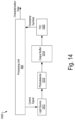
- FIG. 14 shows an exemplary implementation 1400 of configuration 800 in which component 802 is implemented by photodetector 1010 and signal generator 804 is implemented by a light source 1412 configured to generate a plurality of light pulses.
- Implementation 1400 further includes output buffer 1014 and TDC 1002 .
- implementation 1400 further includes multiplexer 1012 so that processing unit 806 may selectively switch between characterizing photodetector 1010 and TDC 1002 .
- processing unit 806 may be configured to direct light source 1412 (e.g., by transmitting a control signal to light source 1412 ) to output a plurality of light pulses.
- Photodetector 1010 is configured to output a photodetector output pulse each time photodetector 1010 detects a photon from the light pulses.
- TDC 1002 is configured to record a timestamp symbol each time TDC 1002 detects an occurrence of the photodetector output pulse.
- Processing unit 806 may generate characterization data for photodetector 1010 by determining a variation in the timestamp symbols recorded by TDC 1002 and generating, based on the variation in the timestamp symbols recorded by TDC 1002 , data representative of a characterization of an impulse response function of photodetector 1010 .
- processing unit 806 may perform one or more suitable actions. For example, processing unit 806 may rate photodetector 1010 based on the characterization data. This rating may be compared to other photodetectors (e.g., in the same photodetector array).
- photodetector 1010 may be disabled so as to not skew an overall histogram generated by optical measurement system 100 . Photodetector 1010 may be disabled in any suitable manner.
- processing unit 806 may disable a power supply for photodetector 1010 , transmit a control signal to photodetector 1010 that turns off or disables photodetector 1010 , and/or abstain from transmitting a gate on pulse to photodetector 1010 .
- processing unit 806 may be configured to isolate each TDC/photodetector pair so that only one TDC/photodetector pair is active at any given time. This may allow a timing uncertainty of each individual TDC and/or photodetector to be characterized.
- processing unit 806 may disable other TDCs within an array of TDCs (e.g., TDC array 704 ) of which TDC 1002 is a part and other photodetectors within an array of photodetectors (e.g., photodetector array 702 ) of which photodetector 1010 is a part. This may be performed in any suitable manner.
- processing unit 806 may be configured to place optical measurement system 100 in a calibration mode (e.g., during a startup procedure for optical measurement system 100 ) and perform one or more timing uncertainty characterizations described herein while optical measurement system 100 is in the calibration mode.
- FIG. 15 illustrates an exemplary implementation 1500 of configuration 800 in which processing unit 806 is configured to use output pulses generated by precision timing circuit 1006 to characterize a timing uncertainty of a circuit of interest 1502 .
- Implementation 1500 is similar to implementation 1000 , except that in implementation 1500 , multiplexer 1012 is configured to selectively pass output pulses, an output of circuit of interest 1502 , or an output of photodetector 1010 to TDC 1002 by way of output buffer 1014 .
- Circuit of interest 1502 may include any suitable circuit and/or electrical path within a detector that includes a photodetector.
- optical measurement system 100 may be at least partially wearable by a user.
- optical measurement system 100 may be implemented by a wearable device configured to be worn by a user (e.g., a head-mountable component configured to be worn on a head of the user).
- the wearable device may include one or more photodetectors, modules, and/or any of the other components described herein.
- one or more components e.g., processing unit 806 , processor 108 , controller 112 , etc.
- one or more communication interfaces e.g., cables, wireless interfaces, etc.
- FIGS. 16 - 21 illustrate embodiments of a wearable device 1600 that includes elements of the optical detection systems described herein.
- the wearable devices 1600 shown in FIGS. 16 - 21 include a plurality of modules 1602 , similar to the modules shown in FIG. 6 as described herein.
- each module 1602 may include a source (e.g., source 604 ) and a plurality of detectors (e.g., detectors 606 - 1 through 606 - 6 ).
- the wearable devices 1600 may each also include a controller (e.g., controller 112 ) and a processor (e.g., processor 108 ) and/or be communicatively connected to a controller and processor.
- wearable device 1600 may be implemented by any suitable headgear and/or clothing article configured to be worn by a user.
- the headgear and/or clothing article may include batteries, cables, and/or other peripherals for the components of the optical measurement systems described herein.
- FIG. 16 illustrates an embodiment of a wearable device 1600 in the form of a helmet with a handle 1604 .
- a cable 1606 extends from the wearable device 1600 for attachment to a battery or hub (with components such as a processor or the like).
- FIG. 17 illustrates another embodiment of a wearable device 1600 in the form of a helmet showing a back view.
- FIG. 18 illustrates a third embodiment of a wearable device 1600 in the form of a helmet with the cable 1606 leading to a wearable garment 1608 (such as a vest or partial vest) that can include a battery or a hub.
- the wearable device 1600 can include a crest 1610 or other protrusion for placement of the hub or battery.
- FIG. 19 illustrates another embodiment of a wearable device 1600 in the form of a cap with a wearable garment 1608 in the form of a scarf that may contain or conceal a cable, battery, and/or hub.
- FIG. 20 illustrates additional embodiments of a wearable device 1600 in the form of a helmet with a one-piece scarf 1608 or two-piece scarf 1608 - 1 .
- FIG. 21 illustrates an embodiment of a wearable device 1600 that includes a hood 1610 and a beanie 1612 which contains the modules 1602 , as well as a wearable garment 1608 that may contain a battery or hub.
- a non-transitory computer-readable medium storing computer-readable instructions may be provided in accordance with the principles described herein.
- the instructions when executed by a processor of a computing device, may direct the processor and/or computing device to perform one or more operations, including one or more of the operations described herein.
- Such instructions may be stored and/or transmitted using any of a variety of known computer-readable media.
- a non-transitory computer-readable medium as referred to herein may include any non-transitory storage medium that participates in providing data (e.g., instructions) that may be read and/or executed by a computing device (e.g., by a processor of a computing device).
- a non-transitory computer-readable medium may include, but is not limited to, any combination of non-volatile storage media and/or volatile storage media.
- Exemplary non-volatile storage media include, but are not limited to, read-only memory, flash memory, a solid-state drive, a magnetic storage device (e.g.
- RAM ferroelectric random-access memory
- optical disc e.g., a compact disc, a digital video disc, a Blu-ray disc, etc.
- RAM e.g., dynamic RAM
- FIG. 22 illustrates an exemplary computing device 2200 that may be specifically configured to perform one or more of the processes described herein. Any of the systems, units, computing devices, and/or other components described herein may be implemented by computing device 2200 .
- computing device 2200 may include a communication interface 2202 , a processor 2204 , a storage device 2206 , and an input/output (“I/O”) module 2208 communicatively connected one to another via a communication infrastructure 2210 . While an exemplary computing device 2200 is shown in FIG. 22 , the components illustrated in FIG. 22 are not intended to be limiting. Additional or alternative components may be used in other embodiments. Components of computing device 2200 shown in FIG. 22 will now be described in additional detail.
- Processor 2204 generally represents any type or form of processing unit capable of processing data and/or interpreting, executing, and/or directing execution of one or more of the instructions, processes, and/or operations described herein. Processor 2204 may perform operations by executing computer-executable instructions 2212 (e.g., an application, software, code, and/or other executable data instance) stored in storage device 2206 .
- computer-executable instructions 2212 e.g., an application, software, code, and/or other executable data instance
- Storage device 2206 may include one or more data storage media, devices, or configurations and may employ any type, form, and combination of data storage media and/or device.
- storage device 2206 may include, but is not limited to, any combination of the non-volatile media and/or volatile media described herein.
- Electronic data, including data described herein, may be temporarily and/or permanently stored in storage device 2206 .
- data representative of computer-executable instructions 2212 configured to direct processor 2204 to perform any of the operations described herein may be stored within storage device 2206 .
- data may be arranged in one or more databases residing within storage device 2206 .
- I/O module 2208 may include one or more I/O modules configured to receive user input and provide user output.
- I/O module 2208 may include any hardware, firmware, software, or combination thereof supportive of input and output capabilities.
- I/O module 2208 may include hardware and/or software for capturing user input, including, but not limited to, a keyboard or keypad, a touchscreen component (e.g., touchscreen display), a receiver (e.g., an RF or infrared receiver), motion sensors, and/or one or more input buttons.
- I/O module 2208 may include one or more devices for presenting output to a user, including, but not limited to, a graphics engine, a display (e.g., a display screen), one or more output drivers (e.g., display drivers), one or more audio speakers, and one or more audio drivers.
- I/O module 2208 is configured to provide graphical data to a display for presentation to a user.
- the graphical data may be representative of one or more graphical user interfaces and/or any other graphical content as may serve a particular implementation.
- FIG. 23 illustrates an exemplary method 2300 that may be performed by a processing unit as described herein. While FIG. 23 illustrates exemplary operations according to one embodiment, other embodiments may omit, add to, reorder, and/or modify any of the operations shown in FIG. 23 . Each of the operations shown in FIG. 23 may be performed in any of the ways described herein.
- a processing unit causes a signal to be applied to a component (e.g., TDC and its corresponding photodetector, photodetector(s) and/or any other circuit of interest) within an optical measurement system.
- a component e.g., TDC and its corresponding photodetector, photodetector(s) and/or any other circuit of interest
- the processing unit In operation 2304 , the processing unit generates, based on a response of the component to the signal, characterization data representative of a timing uncertainty associated with the component.
- the processing unit performs, based on the characterization data, an action associated with the component.
- the action may include compensating for the timing uncertainty, rating the component, disabling the component, and/or any other suitable action.
- An exemplary optical measurement system includes a signal generator configured to generate a signal and a processing unit configured to direct the signal generator to apply the signal to a component within the optical measurement system, generate, based on a response of the component to the signal, characterization data representative of a timing uncertainty associated with the component, and perform, based on the characterization data, an action associated with the component.
- An exemplary optical measurement system includes a phase lock loop (PLL) circuit having a PLL feedback period, a precision timing circuit configured to generate output pulses having programmable temporal positions within the PLL feedback period, and a processing unit configured to use the output pulses to generate characterization data representative of a characterization of a timing uncertainty associated with a component of the optical measurement system and perform, based on the characterization data, an action associated with the component.
- PLL phase lock loop
- An exemplary system includes a memory storing instructions and a processor communicatively coupled to the memory and configured to execute the instructions to cause a signal to be applied to a component within an optical measurement system; generate, based on a response of the component to the signal, characterization data representative of a timing uncertainty associated with the component; and perform, based on the characterization data, an action associated with the component.
Landscapes
- Health & Medical Sciences (AREA)
- Life Sciences & Earth Sciences (AREA)
- Engineering & Computer Science (AREA)
- Public Health (AREA)
- Molecular Biology (AREA)
- Veterinary Medicine (AREA)
- General Health & Medical Sciences (AREA)
- Physics & Mathematics (AREA)
- Animal Behavior & Ethology (AREA)
- Biophysics (AREA)
- Pathology (AREA)
- Biomedical Technology (AREA)
- Heart & Thoracic Surgery (AREA)
- Medical Informatics (AREA)
- Surgery (AREA)
- Signal Processing (AREA)
- Computer Vision & Pattern Recognition (AREA)
- Artificial Intelligence (AREA)
- Psychiatry (AREA)
- Physiology (AREA)
- Nuclear Medicine, Radiotherapy & Molecular Imaging (AREA)
- Radiology & Medical Imaging (AREA)
- Neurology (AREA)
- Investigating Or Analysing Materials By Optical Means (AREA)
Abstract
Description
Claims (18)
Priority Applications (2)
| Application Number | Priority Date | Filing Date | Title |
|---|---|---|---|
| US17/202,583 US11857348B2 (en) | 2020-03-20 | 2021-03-16 | Techniques for determining a timing uncertainty of a component of an optical measurement system |
| US18/370,323 US12433543B2 (en) | 2020-03-20 | 2023-09-19 | Techniques for determining a timing uncertainty of a component of an optical measurement system |
Applications Claiming Priority (3)
| Application Number | Priority Date | Filing Date | Title |
|---|---|---|---|
| US202062992499P | 2020-03-20 | 2020-03-20 | |
| US202063044521P | 2020-06-26 | 2020-06-26 | |
| US17/202,583 US11857348B2 (en) | 2020-03-20 | 2021-03-16 | Techniques for determining a timing uncertainty of a component of an optical measurement system |
Related Child Applications (1)
| Application Number | Title | Priority Date | Filing Date |
|---|---|---|---|
| US18/370,323 Division US12433543B2 (en) | 2020-03-20 | 2023-09-19 | Techniques for determining a timing uncertainty of a component of an optical measurement system |
Publications (2)
| Publication Number | Publication Date |
|---|---|
| US20210290169A1 US20210290169A1 (en) | 2021-09-23 |
| US11857348B2 true US11857348B2 (en) | 2024-01-02 |
Family
ID=77746371
Family Applications (2)
| Application Number | Title | Priority Date | Filing Date |
|---|---|---|---|
| US17/202,583 Active 2042-01-16 US11857348B2 (en) | 2020-03-20 | 2021-03-16 | Techniques for determining a timing uncertainty of a component of an optical measurement system |
| US18/370,323 Active 2041-09-13 US12433543B2 (en) | 2020-03-20 | 2023-09-19 | Techniques for determining a timing uncertainty of a component of an optical measurement system |
Family Applications After (1)
| Application Number | Title | Priority Date | Filing Date |
|---|---|---|---|
| US18/370,323 Active 2041-09-13 US12433543B2 (en) | 2020-03-20 | 2023-09-19 | Techniques for determining a timing uncertainty of a component of an optical measurement system |
Country Status (1)
| Country | Link |
|---|---|
| US (2) | US11857348B2 (en) |
Cited By (2)
| Publication number | Priority date | Publication date | Assignee | Title |
|---|---|---|---|---|
| US20240000392A1 (en) * | 2020-03-20 | 2024-01-04 | Hi Llc | Techniques for Determining a Timing Uncertainty of a Component of an Optical Measurement System |
| US12436280B2 (en) | 2020-08-11 | 2025-10-07 | Hi Llc | Maintaining consistent photodetector sensitivity in an optical measurement system |
Citations (317)
| Publication number | Priority date | Publication date | Assignee | Title |
|---|---|---|---|---|
| US4018534A (en) | 1975-05-21 | 1977-04-19 | The United States Of America As Represented By The Secretary Of The Army | Aerosol average-density determining system |
| US4207892A (en) | 1977-09-13 | 1980-06-17 | Arnold Binder | Method and apparatus for the diagnosis of tissue samples |
| US4281645A (en) | 1977-06-28 | 1981-08-04 | Duke University, Inc. | Method and apparatus for monitoring metabolism in body organs |
| US4515165A (en) | 1980-02-04 | 1985-05-07 | Energy Conversion Devices, Inc. | Apparatus and method for detecting tumors |
| US4655225A (en) | 1985-04-18 | 1987-04-07 | Kurabo Industries Ltd. | Spectrophotometric method and apparatus for the non-invasive |
| WO1988004034A2 (en) | 1986-11-25 | 1988-06-02 | The Secretary Of State For Defence In Her Britanni | Avalanche photodiode quenching circuit |
| US4928248A (en) | 1988-05-07 | 1990-05-22 | Hamamatsu Photonics Kabushiki Kaisha | Light source driving device |
| US4963727A (en) | 1988-10-20 | 1990-10-16 | Consiglio Nazionale Delle Ricerche | Active quenching circuit for avalanche photodiodes |
| US4995044A (en) | 1990-03-23 | 1991-02-19 | Tektronix, Inc. | Laser diode impulse circuit |
| US5088493A (en) | 1984-08-07 | 1992-02-18 | Sclavo, S.P.A. | Multiple wavelength light photometer for non-invasive monitoring |
| US5090415A (en) | 1989-02-14 | 1992-02-25 | Hamamatsu Photonics Kabushiki Kaisha | Examination apparatus |
| US5309458A (en) | 1992-03-02 | 1994-05-03 | Ecrm Trust | Method and apparatus for stabilizing laser diode energy output |
| US5386827A (en) | 1993-03-30 | 1995-02-07 | Nim Incorporated | Quantitative and qualitative in vivo tissue examination using time resolved spectroscopy |
| EP0656536A1 (en) | 1993-12-01 | 1995-06-07 | Hamamatsu Photonics K.K. | Method and apparatus for measuring scattering medium |
| US5528365A (en) | 1994-03-01 | 1996-06-18 | The Trustees Of The University Of Pennsylvania | Methods and apparatus for imaging with diffuse light |
| US5625458A (en) | 1994-11-10 | 1997-04-29 | Research Foundation Of City College Of New York | Method and system for imaging objects in turbid media using diffusive fermat photons |
| US5761230A (en) | 1995-05-22 | 1998-06-02 | Nec Corporation | Laser-diode driving circuit with temperature compensation |
| US5853370A (en) | 1996-09-13 | 1998-12-29 | Non-Invasive Technology, Inc. | Optical system and method for non-invasive imaging of biological tissue |
| US5895984A (en) | 1995-12-13 | 1999-04-20 | Leica Geosystems Ag | Circuit arrangement for feeding a pulse output stage |
| US5929982A (en) | 1997-02-04 | 1999-07-27 | Tektronix, Inc. | Active APD gain control for an optical receiver |
| WO1999053577A1 (en) | 1998-04-14 | 1999-10-21 | Optobahn Corporation | Temperature compensation of laser diodes |
| US5983120A (en) | 1995-10-23 | 1999-11-09 | Cytometrics, Inc. | Method and apparatus for reflected imaging analysis |
| US5987045A (en) | 1997-04-02 | 1999-11-16 | The United States Of America As Represented By The Secretary Of The Navy | High power narrow pulse laser diode circuit |
| US6163715A (en) | 1996-07-17 | 2000-12-19 | Criticare Systems, Inc. | Direct to digital oximeter and method for calculating oxygenation levels |
| US6240309B1 (en) | 1995-10-06 | 2001-05-29 | Hitachi, Ltd. | Optical measurement instrument for living body |
| US6384663B2 (en) | 2000-03-09 | 2002-05-07 | Politecnico De Milano | Circuit for high precision detection of the time of arrival of photons falling on single photon avalanche diodes |
| US20020195545A1 (en) | 2001-06-20 | 2002-12-26 | Nishimura Ken A. | Avalanche photodiode array biasing device and avalanche photodiode structure |
| US6541752B2 (en) | 2000-03-09 | 2003-04-01 | Politecnico Di Milano | Monolithic circuit of active quenching and active reset for avalanche photodiodes |
| US6618614B1 (en) | 1995-01-03 | 2003-09-09 | Non-Invasive Technology, Inc. | Optical examination device, system and method |
| US6683294B1 (en) | 1998-12-18 | 2004-01-27 | Qinetiq Limited | Avalanche photo-diodes |
| US20040057478A1 (en) | 2002-09-20 | 2004-03-25 | Alps Electric Co., Ltd. | Control circuit for constantly setting optical output of semiconductor laser |
| US20040078216A1 (en) | 2002-02-01 | 2004-04-22 | Gregory Toto | Clinical trial process improvement method and system |
| US6748254B2 (en) | 2001-10-12 | 2004-06-08 | Nellcor Puritan Bennett Incorporated | Stacked adhesive optical sensor |
| US20040160996A1 (en) | 2003-01-02 | 2004-08-19 | Giorgi David M. | Apparatus and method for driving a pulsed laser diode |
| US20050038344A1 (en) | 1998-02-13 | 2005-02-17 | Britton Chance | Transabdominal examination, monitoring and imaging of tissue |
| US20050061986A1 (en) | 2003-07-15 | 2005-03-24 | Kabushiki Kaisha Toshiba | Circuit for a single photon detector |
| US20050124863A1 (en) | 2001-06-28 | 2005-06-09 | Cook Daniel R. | Drug profiling apparatus and method |
| US20050228291A1 (en) | 1998-02-11 | 2005-10-13 | Britton Chance | Imaging and characterization of brain tissue |
| US6992772B2 (en) | 2003-06-19 | 2006-01-31 | Optix Lp | Method and apparatus for optical sampling to reduce interfering variances |
| US20060171845A1 (en) | 2005-01-31 | 2006-08-03 | Dakota Technologies, Inc. | Sensors for measuring analytes |
| US7095491B2 (en) | 2002-03-27 | 2006-08-22 | MCC Gesellschaft für Diagnosesysteme in Medizin und Technik mbH & Co. KG | Device and method for measuring constituents in blood |
| US20060197452A1 (en) | 2005-03-02 | 2006-09-07 | Bin Zhang | Apparatus and method for generating an output signal that tracks the temperature coefficient of a light source |
| US20070038116A1 (en) | 2003-07-29 | 2007-02-15 | Hamamatsu Photonics K.K. | Device and method for measuring scattering absorber |
| US20070083097A1 (en) | 2003-09-19 | 2007-04-12 | Michiyuki Fujiwara | Living body information signal processing system combining living body optical measurement apparatus and brain wave measurement apparatus and probe device used for the same |
| CN200950235Y (en) | 2006-09-25 | 2007-09-19 | 深圳飞通光电子技术有限公司 | Temperature compensation bias circuit of avalanche photodiode |
| US20080021341A1 (en) | 2006-06-23 | 2008-01-24 | Neurovista Corporation A Delware Corporation | Methods and Systems for Facilitating Clinical Trials |
| US7356365B2 (en) | 2003-07-09 | 2008-04-08 | Glucolight Corporation | Method and apparatus for tissue oximetry |
| WO2008144831A1 (en) | 2007-05-30 | 2008-12-04 | Invision Medical Technologies Pty Ltd | Method and apparatus for inspecting tissue |
| US20090012402A1 (en) | 2006-03-20 | 2009-01-08 | Mintz Frederick W | Mobile in vivo infra red data collection and diagnoses comparison system |
| US20090054789A1 (en) | 2007-08-21 | 2009-02-26 | Hitachi, Ltd. | Head-coupled holder for living body optical measurement |
| US7507596B2 (en) | 2003-09-24 | 2009-03-24 | Taiwan Semiconductor Manufacturing Co., Ltd. | Method of fabricating a high quantum efficiency photodiode |
| US7547872B2 (en) | 2005-02-14 | 2009-06-16 | Ecole Polytechnique Federale De Lausanne | Integrated circuit comprising an array of single photon avalanche diodes |
| US20090163775A1 (en) | 2007-12-21 | 2009-06-25 | Barrett Bruce J | Physiological sensor |
| US7613504B2 (en) | 2001-06-05 | 2009-11-03 | Lumidigm, Inc. | Spectroscopic cross-channel method and apparatus for improved optical measurements of tissue |
| US20090313048A1 (en) | 2000-05-31 | 2009-12-17 | Medidata Ft, Inc. | Clinical trials management system and method |
| US7667400B1 (en) | 2006-06-09 | 2010-02-23 | Array Optronix, Inc. | Back-illuminated Si photomultipliers: structure and fabrication methods |
| US7705284B2 (en) | 2006-03-06 | 2010-04-27 | Nihon University | High-speed single-photon detector in telecommunication wavelength band |
| US7714292B2 (en) | 2006-02-01 | 2010-05-11 | Koninklijke Philips Electronics N.V. | Geiger mode avalanche photodiode |
| US20100210952A1 (en) | 2008-05-02 | 2010-08-19 | Olympus Corporation | Optical inspection device, electromagnetic wave detection method, electromagnetic wave detection device, organism observation method, microscope, endoscope, and optical tomographic image generation device |
| US20100249557A1 (en) | 2009-03-31 | 2010-09-30 | Nellcor Puritan Bennett Llc | Medical sensor with flexible components and technique for using the same |
| US20100301194A1 (en) | 2009-05-26 | 2010-12-02 | Princeton Lightwave, Inc. | Optical Receiver Comprising Breakdown-Voltage Compensation |
| US7899506B2 (en) | 2002-11-04 | 2011-03-01 | Tianjin Sunshine Optics Technolies Co. Ltd. | Composite spectral measurement method and its spectral detection instrument |
| WO2011083563A1 (en) | 2010-01-05 | 2011-07-14 | 株式会社島津製作所 | Holder and photobiological measuring device using same |
| US20110208675A1 (en) | 2009-08-03 | 2011-08-25 | Colorado Seminary, Which Owns And Operates The University Of Denver | Brain imaging system and methods for direct prosthesis control |
| US8026471B2 (en) | 2008-07-23 | 2011-09-27 | Princeton Lightwave, Inc. | Single-photon avalanche detector-based focal plane array |
| US20110248175A1 (en) | 2008-12-15 | 2011-10-13 | Koninklijke Philips Electronics N.V. | Temperature compensation circuit for silicon photomultipliers and other single photon counters |
| US8078250B2 (en) | 2002-07-26 | 2011-12-13 | Cas Medical Systems, Inc. | Method for spectrophotometric blood oxygenation monitoring |
| US8082015B2 (en) | 2004-04-13 | 2011-12-20 | The Trustees Of The University Of Pennsylvania | Optical measurement of tissue blood flow, hemodynamics and oxygenation |
| US20120016635A1 (en) | 2010-07-13 | 2012-01-19 | At&T Intellectual Property I, L.P. | Characterization of Single-Photon Detectors Using a Continuous Wave Laser Source |
| US20120029304A1 (en) | 2010-07-29 | 2012-02-02 | Nellcor Puritan Bennett Llc | Configurable patient monitoring system |
| US8115170B2 (en) | 2007-01-09 | 2012-02-14 | International Business Machines Corporation | Method and apparatus for creating time-resolved emission images of integrated circuits using a single-point single-photon detector and a scanning system |
| US20120083673A1 (en) | 2010-09-28 | 2012-04-05 | Ammar Al-Ali | Depth of consciousness monitor including oximeter |
| US20120101838A1 (en) | 2010-10-20 | 2012-04-26 | Helen Mary Lingard | Systems and Processes for Managing and Supporting Regulatory Submissions in Clinical Trials |
| WO2012135068A1 (en) | 2011-03-25 | 2012-10-04 | Drexel University | Functional near infrared spectrocopy based brain computer interface |
| US8352012B2 (en) | 2009-10-28 | 2013-01-08 | Board Of Governors For Higher Education, State Of Rhode Island And Providence Plantations | Biomedical electrode for detecting localized electrical signals and providing electrical stimulation |
| US20130015331A1 (en) | 2011-07-12 | 2013-01-17 | Leica Microsystems Cms Gmbh | Device and method for detecting light |
| US20130030270A1 (en) | 2011-07-26 | 2013-01-31 | National Chiao Tung University | Physiological signal collection unit and detector thereof |
| US20130030267A1 (en) | 2011-07-29 | 2013-01-31 | Nellcor Puritan Bennett Llc | Multi-purpose sensor system |
| US20130032713A1 (en) | 2011-08-05 | 2013-02-07 | Barbi Nicholas C | Electron detector including one or more intimately-coupled scintillator-photomultiplier combinations, and electron microscope employing same |
| WO2013034770A2 (en) | 2011-09-08 | 2013-03-14 | Borowski, André | Time-to-digital converter, 3d imager using same, method for time-to-digital conversion and method for 3d imaging |
| US20130090541A1 (en) | 2011-03-02 | 2013-04-11 | Board Of Regents, The University Of Texas System | Functional Near Infrared Spectroscopy Imaging System and Method |
| WO2013066959A1 (en) | 2011-10-31 | 2013-05-10 | The Trustees Of Columbia University In The City Of New York | Systems and methods for imaging using single photon avalanche diodes |
| US20130144644A1 (en) | 2010-04-09 | 2013-06-06 | Biogenerics IP Development Pty Ltd. | Clinical trial management systems and methods |
| US20130225953A1 (en) | 2010-02-26 | 2013-08-29 | Fundacion Hospital Nacional De Paraplejicos | Concurrent stimulation effect detection |
| US20130221221A1 (en) | 2011-06-28 | 2013-08-29 | Korea Institute Of Science And Technology | Single photon detector in the near infrared using an ingaas/inp avalanche photodiode operated with a bipolar rectangular gating signal |
| US20130342835A1 (en) | 2012-06-25 | 2013-12-26 | California Institute Of Technology | Time resolved laser raman spectroscopy using a single photon avalanche diode array |
| US8633431B2 (en) | 2008-07-25 | 2014-01-21 | Samsung Electronics Co., Ltd. | Image method and apparatus |
| US8637875B2 (en) | 2008-07-11 | 2014-01-28 | The Regents Of The University Of California | Single photon IR detectors and their integration with silicon detectors |
| US20140028211A1 (en) | 2012-07-26 | 2014-01-30 | Osram Sylvania Inc. | Flyback ac-to-dc converter |
| US20140027607A1 (en) | 2012-05-04 | 2014-01-30 | Princeton Lightwave, Inc. | High-Repetition-Rate Single-Photon Receiver and Method Therefor |
| US20140055181A1 (en) | 2011-05-06 | 2014-02-27 | Fujitsu Limited | Clock generating circuit |
| US20140066783A1 (en) | 2008-07-03 | 2014-03-06 | Cercacor Laboratories, Inc. | Noise shielding for a noninvaise device |
| US8754378B2 (en) | 2007-08-08 | 2014-06-17 | Koninklijke Philips N.V. | Silicon photomultiplier readout circuitry |
| US20140171757A1 (en) | 2011-11-08 | 2014-06-19 | Advanced Telecommunications Research Institute International | Apparatus and method for supporting brain function enhancement |
| US20140185643A1 (en) | 2012-12-31 | 2014-07-03 | Nlight Photonics Corporation | Pulsed bias current for gain switched semiconductor lasers for amplified spontaneous emission reduction |
| US20140191115A1 (en) | 2013-01-09 | 2014-07-10 | The University Court Of The Uniersity Of Edinburgh | Spad sensor circuit with biasing circuit |
| US20140211194A1 (en) | 2013-01-27 | 2014-07-31 | Quanergy Systems, Inc. | Cost-effective lidar sensor for multi-signal detection, weak signal detection and signal disambiguation and method of using same |
| US8817257B2 (en) | 2011-12-16 | 2014-08-26 | Commissariat à l'Energie Atomique et aux Energies Alternatives | Method for reconstructing the optical properties of a medium using a combination of a plurality of mellin-laplace transforms of a magnitude comprising a time distribution of a received signal, and associated reconstruction system |
| US20140275891A1 (en) | 2013-03-13 | 2014-09-18 | Cephalogics, LLC | Optical tomography sensor and related apparatus and methods |
| US20140289001A1 (en) | 1996-02-17 | 2014-09-25 | Robert Shelton | System and method for recruiting subjects for research studies and clinical trials over the internet |
| US20140291481A1 (en) | 2013-04-01 | 2014-10-02 | Omnivision Technologies, Inc. | Enhanced photon detection device with biased deep trench isolation |
| US8937509B2 (en) | 2010-10-15 | 2015-01-20 | Imec | Multi-channel biopotential signal acquisition systems |
| US20150038811A1 (en) | 2012-03-29 | 2015-02-05 | Hitachi Medical Corporation | Living body optical measurement apparatus, living body optical measurement method, and engagement member for mobile position sensor |
| US20150041625A1 (en) | 2013-08-06 | 2015-02-12 | Stmicroelectronics (Research & Development) Limited | Time to digital converter and applications thereof |
| US20150041627A1 (en) | 2013-08-12 | 2015-02-12 | Omnivision Technologies, Inc. | Partitioned silicon photomultiplier with delay equalization |
| US20150057511A1 (en) | 2012-03-28 | 2015-02-26 | Wayne State University | Sensor and method for continuous health monitoring |
| US20150054111A1 (en) | 2013-08-23 | 2015-02-26 | Kabushiki Kaisha Toyota Chuo Kenkyusho | Single photon avalanche diode |
| US20150077279A1 (en) | 2013-09-17 | 2015-03-19 | Qualcomm Incorporated | Time-to-digital converter |
| US8986207B2 (en) | 2009-11-12 | 2015-03-24 | Covidien Lp | Systems and methods for providing sensor arrays for detecting physiological characteristics |
| US20150094552A1 (en) | 2012-10-07 | 2015-04-02 | Rhythm Diagnostics Systems, Inc. | Health monitoring systems and methods |
| WO2015052523A1 (en) | 2013-10-10 | 2015-04-16 | The University Court Of The University Of Glasgow | Endoscopy capsule with spad array for detecting fluorescence emitted by biological tissue |
| US9012860B2 (en) | 2012-05-15 | 2015-04-21 | Princeton Lightwave, Inc. | Dual-SPAD-based single-photon receiver |
| US9041136B2 (en) | 2011-10-20 | 2015-05-26 | Agency For Science, Technology And Research | Avalanche photodiode |
| US20150150505A1 (en) | 2013-12-03 | 2015-06-04 | Qualcomm Incorporated | Method, Devices and Systems for Sensor with Removable Nodes |
| US20150157262A1 (en) | 2013-12-11 | 2015-06-11 | Samsung Electronics, Ltd. | Self-aligning sensor array |
| US20150157435A1 (en) | 2013-12-06 | 2015-06-11 | PegaSense, Inc. | Equine fitness monitor |
| US9058081B2 (en) | 2010-11-30 | 2015-06-16 | Stmicroelectronics (Research & Development) Limited | Application using a single photon avalanche diode (SPAD) |
| US20150182136A1 (en) | 2013-12-26 | 2015-07-02 | Fundacio Institut De Ciencies Fotoniques | Speckle contrast optical tomography |
| US9076707B2 (en) | 2013-04-19 | 2015-07-07 | Lightspin Technologies, Inc. | Integrated avalanche photodiode arrays |
| US20150192677A1 (en) | 2014-01-03 | 2015-07-09 | Quanergy Systems, Inc. | Distributed lidar sensing system for wide field of view three dimensional mapping and method of using same |
| US20150200222A1 (en) | 2014-01-15 | 2015-07-16 | Omnivision Technologies, Inc. | Single photon avalanche diode imaging sensor for complementary metal oxide semiconductor stacked chip applications |
| WO2015109005A1 (en) | 2014-01-14 | 2015-07-23 | Canon U.S.A., Inc. | Near-infrared spectroscopy and diffuse correlation spectroscopy device and methods |
| US9101279B2 (en) | 2006-02-15 | 2015-08-11 | Virtual Video Reality By Ritchey, Llc | Mobile user borne brain activity data and surrounding environment data correlation system |
| US9131861B2 (en) | 2004-11-30 | 2015-09-15 | Academisch Medisch Centrum | Pulsed lighting imaging systems and methods |
| US9157858B2 (en) | 2006-11-21 | 2015-10-13 | Ricardo J. Claps | Time-resolved spectroscopy system and methods for multiple-species analysis in fluorescence and cavity-ringdown applications |
| US20150293224A1 (en) | 2013-05-09 | 2015-10-15 | Quanergy Systems, Inc. | Solid state optical phased array lidar and method of using same |
| US9176241B2 (en) | 2011-08-03 | 2015-11-03 | Koninklijke Philips N.V. | Position-sensitive readout modes for digital silicon photomultiplier arrays |
| US9178100B2 (en) | 2010-09-08 | 2015-11-03 | Stmicroelectronics (Research & Development) Limited | Single photon avalanche diode for CMOS circuits |
| US9190552B2 (en) | 2012-06-13 | 2015-11-17 | Stmicroelectronics (Grenoble 2) Sas | Method and device for adjusting the bias voltage of a SPAD photodiode |
| US20150333095A1 (en) | 2014-05-13 | 2015-11-19 | Stmicroelectronics S.R.L. | Solid state photomultipliers array of enhanced fill factor and simplified packaging |
| US20150327777A1 (en) | 2014-05-14 | 2015-11-19 | Stryker Corporation | Tissue monitoring apparatus and system |
| US9201138B2 (en) | 2009-09-11 | 2015-12-01 | Robert Bosch Gmbh | Photon detector with a paralyzable photon-sensitive element, in particular SPAD, and distance measuring device comprising said type of photon detector |
| US9209320B1 (en) | 2014-08-07 | 2015-12-08 | Omnivision Technologies, Inc. | Method of fabricating a single photon avalanche diode imaging sensor |
| US20150364635A1 (en) | 2013-01-31 | 2015-12-17 | Malvern Instruments Limited | Single photon counting |
| US9257523B2 (en) | 2008-01-21 | 2016-02-09 | Infineon Technologies Ag | Avalanche diode having an enhanced defect concentration level and method of making the same |
| US20160049765A1 (en) | 2014-08-15 | 2016-02-18 | Quanergy Systems, Inc. | Three-dimensional-mapping two-dimensional-scanning lidar based on one-dimensional-steering optical phased arrays and method of using same |
| US9299873B2 (en) | 2013-05-16 | 2016-03-29 | Stmicroelectronics S.R.L. | Avalanche photodiode operating in geiger mode including a structure for electro-optical confinement for crosstalk reduction, and array of photodiodes |
| US9299732B2 (en) | 2013-10-28 | 2016-03-29 | Omnivision Technologies, Inc. | Stacked chip SPAD image sensor |
| US20160099371A1 (en) | 2014-10-03 | 2016-04-07 | Omnivision Technologies, Inc. | Back side illuminated image sensor with guard ring region reflecting structure |
| US9316735B2 (en) | 2010-11-30 | 2016-04-19 | Stmicroelectronics (Research & Development) Limited | Proximity detection apparatus and associated methods having single photon avalanche diodes for determining a quality metric based upon the number of events |
| US20160119983A1 (en) | 2010-11-30 | 2016-04-28 | STMicroelectronics (Research & Development ) Limited | Application using a single photon avalanche diode (spad) |
| US9331116B2 (en) | 2014-01-15 | 2016-05-03 | Omnivision Technologies, Inc. | Back side illuminated single photon avalanche diode imaging sensor with high short wavelength detection efficiency |
| US20160150963A1 (en) | 2011-09-26 | 2016-06-02 | Michael Lee Roukes | One-photon integrated neurophotonic systems |
| US20160161600A1 (en) | 2013-08-19 | 2016-06-09 | Quanergy Systems, Inc. | Optical phased array lidar system and method of using same |
| US9368487B1 (en) | 2015-01-28 | 2016-06-14 | Taiwan Semiconductor Manufacturing Company Limited | Semiconductor device with dynamic low voltage triggering mechanism |
| US20160181302A1 (en) | 2014-12-19 | 2016-06-23 | Sensl Technologies Ltd | Semiconductor photomultiplier |
| US20160182902A1 (en) | 2014-12-18 | 2016-06-23 | General Electric Company | Silicon photomultipliers with internal calibration circuitry |
| US9401448B2 (en) | 2013-11-19 | 2016-07-26 | National Institute Of Standards And Technology | Photon detector and process for detecting a single photon |
| US20160218236A1 (en) | 2015-01-27 | 2016-07-28 | Voxtel, Inc. | Clamped Avalanche Photodiode |
| US9407796B2 (en) | 2011-12-23 | 2016-08-02 | Commissariat á l'énergie atomique et aux énergies alternatives | System for reconstructing optical properties in a diffusing medium, comprising a pulsed radiation source and at least two detectors of two different types, and associated reconstruction method |
| US20160247301A1 (en) | 2015-02-25 | 2016-08-25 | National Chiao Tung University | Light detection apparatus and image reconstruction method using the same |
| US9431439B2 (en) | 2012-10-16 | 2016-08-30 | Kabushiki Kaisha Toyota Chuo Kenkyusho | Light detector |
| US9442201B2 (en) | 2013-09-12 | 2016-09-13 | Siemens Medical Solutions Usa, Inc. | CMOS SPAD array with mixed timing pick-off for time-of-flight positron emission tomography |
| US9449377B2 (en) | 2012-10-09 | 2016-09-20 | The United States Of America As Represented By The Secretary Of The Department Of Health And Human Services | Imaging methods and computer-readable media |
| US9450007B1 (en) | 2015-05-28 | 2016-09-20 | Stmicroelectronics S.R.L. | Integrated circuit with reflective material in trenches and related methods |
| US20160278715A1 (en) | 2015-03-23 | 2016-09-29 | University Of Kentucky Research Foundation | Noncontact Three-dimensional Diffuse Optical Imaging of Deep Tissue Blood Flow Distribution |
| US20160287107A1 (en) | 2014-01-30 | 2016-10-06 | Intel Corporation | Intelligent photoplethysmograph signal-to-noise ratio control for recovery of biosignals during times of motion |
| US20160296168A1 (en) | 2015-04-09 | 2016-10-13 | Geelux Holdings, Ltd. | Device configured to be supported on a human body, to measure a biological parameter of the human body, and to control a characteristic of the human body |
| WO2016166002A1 (en) | 2015-04-15 | 2016-10-20 | Ams Ag | Avalanche diode arrangement and method for providing a detection signal |
| US9478579B2 (en) | 2012-10-16 | 2016-10-25 | Omnivision Technologies, Inc. | Stacked chip image sensor with light-sensitive circuit elements on the bottom chip |
| US9476979B2 (en) | 2013-11-28 | 2016-10-25 | Stmicroelectronics (Grenoble 2) Sas | Method for evaluating position and motion using time of flight detectors |
| US20160341656A1 (en) | 2015-05-22 | 2016-11-24 | Taiwan Semiconductor Manufacturing Co., Ltd. | Optical biosensor device |
| US20160356718A1 (en) | 2015-06-08 | 2016-12-08 | The Regents Of The University Of Michigan | Pixel circuit and method for optical sensing |
| US20160357260A1 (en) | 2015-06-03 | 2016-12-08 | Stmicroelectronics (Research & Development) Limited | Distance independent gesture detection |
| US9529079B1 (en) | 2015-03-26 | 2016-12-27 | Google Inc. | Multiplexed multichannel photodetector |
| US9535157B2 (en) | 2013-09-24 | 2017-01-03 | Stmicroelectronics (Research & Development) Limited | Proximity sensor including reference detector for stray radiation detection |
| WO2017004663A1 (en) | 2015-07-08 | 2017-01-12 | The Commonwealth Of Australia | Spad array structures and methods of operation |
| US20170030769A1 (en) | 2015-07-27 | 2017-02-02 | Sick Ag | Light Receiver with Avalanche Photo Diodes in a Geiger Mode |
| US9574936B2 (en) | 2015-03-24 | 2017-02-21 | Sharper Shape Oy | Planar imaging sensor having plural photo detector groups with different detection windows |
| US20170052065A1 (en) | 2015-08-20 | 2017-02-23 | Apple Inc. | SPAD array with gated histogram construction |
| US20170085547A1 (en) | 2015-09-22 | 2017-03-23 | International Business Machines Corporation | Storing, indexing and recalling data based on brain activity |
| US9625580B2 (en) | 2014-01-03 | 2017-04-18 | Princeton Lightwave, Inc. | LiDAR system comprising a single-photon detector |
| US9634826B1 (en) | 2015-11-30 | 2017-04-25 | Intel Corporation | Apparatus and method for automatic bandwidth calibration for phase locked loop |
| US20170118423A1 (en) | 2006-10-06 | 2017-04-27 | California Institute Of Technology | Glare suppression through fog by optical phase conjugation assisted active cancellation |
| US9640704B2 (en) | 2015-05-29 | 2017-05-02 | Commissariat à l'énergie atomique et aux énergies alternatives | High quantum efficiency photodetector |
| US20170124713A1 (en) | 2015-10-30 | 2017-05-04 | Snapchat, Inc. | Image based tracking in augmented reality systems |
| US20170131143A1 (en) | 2014-07-02 | 2017-05-11 | Andreas G. Andreou | Photodetection circuit and operating method thereof |
| WO2017083826A1 (en) | 2015-11-13 | 2017-05-18 | Neurolutions, Inc. | Eeg headsets with precise and consistent electrode positioning |
| US20170141100A1 (en) | 2015-11-16 | 2017-05-18 | Taiwan Semiconductor Manufacturing Co., Ltd. | Esd hard backend structures in nanometer dimension |
| US20170139041A1 (en) | 2015-11-16 | 2017-05-18 | Stmicroelectronics (Grenoble 2) Sas | Ranging device with imaging capability |
| US9658158B2 (en) | 2012-06-08 | 2017-05-23 | Stmicroelectronics S.R.L. | Diagnostic device with integrated photodetector, and diagnostic system including the same |
| US9659980B2 (en) | 2014-12-19 | 2017-05-23 | Sensl Technologies Ltd | Semiconductor photomultiplier |
| US9671284B1 (en) | 2016-01-14 | 2017-06-06 | Kiskeya Microsystems Llc | Single-photon avalanche diode circuit with variable hold-off time and dual delay regime |
| US20170164857A1 (en) | 2015-12-09 | 2017-06-15 | Rythm | Method and device for bioelectric physiological signal acquisition and processing |
| US9681844B2 (en) | 2013-06-27 | 2017-06-20 | Imec Vzw | Biopotential signal acquisition system and method |
| US20170179173A1 (en) | 2015-12-20 | 2017-06-22 | Apple Inc. | Spad array with pixel-level bias control |
| US20170176579A1 (en) | 2015-12-20 | 2017-06-22 | Apple Inc. | Light detection and ranging sensor |
| US20170176596A1 (en) | 2010-08-11 | 2017-06-22 | Apple Inc. | Time-of-flight detector with single-axis scan |
| US20170186798A1 (en) | 2015-12-28 | 2017-06-29 | Taiwan Semiconductor Manufacturing Co., Ltd. | Stacked spad image sensor |
| US9702758B2 (en) | 2014-06-09 | 2017-07-11 | Kiskeya Microsystems Llc | Systems and methods for readout of event-driven pixels |
| US20170202518A1 (en) | 2016-01-14 | 2017-07-20 | Technion Research And Development Foundation Ltd. | System and method for brain state classification |
| KR20170087639A (en) | 2016-01-21 | 2017-07-31 | 서강대학교산학협력단 | Quenching bias circuit with current mirror for Single Photon Avalanche Photodiodes |
| WO2017130682A1 (en) | 2016-01-29 | 2017-08-03 | パナソニック・タワージャズセミコンダクター株式会社 | Solid-state image capture device |
| US9728659B2 (en) | 2013-06-21 | 2017-08-08 | Stmicroelectronics (Research & Development) Limited | SPAD device with radiation blocking rings and vias and related arrays and methods |
| US9741879B2 (en) | 2015-06-11 | 2017-08-22 | Commissariat A L'energie Atomique Et Aux Energies Alternatives | SPAD photodiode covered with a network |
| US9753351B2 (en) | 2014-06-30 | 2017-09-05 | Quanergy Systems, Inc. | Planar beam forming and steering optical phased array chip and method of using same |
| WO2017150146A1 (en) | 2016-02-29 | 2017-09-08 | パナソニック・タワージャズセミコンダクター株式会社 | Semiconductor device and method for manufacturing same |
| US9768211B2 (en) | 2015-05-06 | 2017-09-19 | LightSpin Technologies Inc. | Integrated avalanche photodiode arrays |
| US9767246B2 (en) | 2015-06-17 | 2017-09-19 | General Electric Company | Adjustment and compensation of delays in photo sensor microcells |
| US20170265822A1 (en) | 2015-10-30 | 2017-09-21 | Shanghai United Imaging Healthcare Co., Ltd. | Anti-scatter grid for radiation detector |
| US20170276545A1 (en) | 2014-08-21 | 2017-09-28 | Totalfoersvarets Forskningsinstitut | An imaging system parallelizing compressive sensing imaging |
| US20170281086A1 (en) | 2016-04-01 | 2017-10-05 | Thomas Alan Donaldson | Sensors to determine neuronal activity of an organism to facilitate a human-machine interface |
| US20170299700A1 (en) | 2014-10-20 | 2017-10-19 | Quanergy Systems, Inc. | Three-dimensional lidar sensor based on two-dimensional scanning of one-dimensional optical emitter and method of using same |
| US20170303789A1 (en) | 2016-04-26 | 2017-10-26 | Illinois Institute Of Technology | Apparatus and method for enhanced early photon detection in optical projection tomography |
| US9804092B2 (en) | 2013-02-14 | 2017-10-31 | British Columbia Cancer Agency Branch | Integrated spectral probe for raman, reflectance and fluorescence spectral measurements |
| US20170314989A1 (en) | 2016-04-28 | 2017-11-02 | Stmicroelectronics S.R.L. | Semiconductor device for detecting ultraviolet and infrared radiation and related manufacturing process |
| WO2017203936A1 (en) | 2016-05-25 | 2017-11-30 | パナソニック・タワージャズセミコンダクター株式会社 | Solid-state imaging element |
| US20170363467A1 (en) | 2016-06-17 | 2017-12-21 | Sick Ag | Light receiver having geiger-mode avalanche photodiodes and method for reading out |
| US9851302B2 (en) | 2015-12-18 | 2017-12-26 | Stmicroelectronics (Research & Development) Limited | Apparatus for use in luminescence applications |
| US20170367650A1 (en) | 2014-11-21 | 2017-12-28 | Centre Hospitalier Universitaire | Device for measuring the brain activity signals of an individual |
| US20180003821A1 (en) | 2016-07-01 | 2018-01-04 | Shigeaki Imai | Object detector, sensing device, and mobile apparatus |
| US9867250B1 (en) | 2015-04-20 | 2018-01-09 | The Arizona Board Of Regents On Behalf Of The University Of Arizona | System having a configurable pico-second pulsed LED driver circuit and photomultiplier tube biasing and gating circuits for real-time, time-resolved transient recording of fluorescence |
| WO2018007829A1 (en) | 2016-07-07 | 2018-01-11 | The University Court Of The University Of Edinburgh | Imaging method and apparatus |
| US20180014741A1 (en) | 2015-01-26 | 2018-01-18 | Chang-An Chou | Wearable physiological monitoring device |
| US20180019268A1 (en) | 2016-07-18 | 2018-01-18 | Omnivision Technologies, Inc. | Stacked-chip backside-illuminated spad sensor with high fill-factor |
| US20180020960A1 (en) | 2016-07-25 | 2018-01-25 | Biobeat Technologies Ltd | Method and device for optical measurement of biological properties |
| US20180027196A1 (en) | 2016-07-20 | 2018-01-25 | Omnivision Technologies, Inc. | High dynamic range image sensor with virtual high-low sensitivity pixels |
| US20180026147A1 (en) | 2016-07-21 | 2018-01-25 | Omnivision Technologies, Inc. | Vertical gate guard ring for single photon avalanche diode pitch minimization |
| US9881963B1 (en) | 2016-09-13 | 2018-01-30 | Omnivision Technologies, Inc. | Horizontal avalanche photodiode |
| US9882003B1 (en) | 2016-07-11 | 2018-01-30 | Tower Semiconductor Ltd. | Device and system of a silicon controlled rectifier (SCR) |
| US20180033895A1 (en) | 2016-07-27 | 2018-02-01 | Stmicroelectronics S.R.L. | Array of geiger-mode avalanche photodiodes for detecting infrared radiation |
| US9886095B2 (en) | 2015-09-24 | 2018-02-06 | Stmicroelectronics Sa | Device and method for recognizing hand gestures using time-of-flight sensing |
| US20180039053A1 (en) | 2015-02-24 | 2018-02-08 | Leica Microsystems Cms Gmbh | Device and method for detecting light |
| US20180045816A1 (en) | 2016-08-11 | 2018-02-15 | Qualcomm Incorporated | System and method for measuring reference and returned light beams in an optical system |
| WO2018033751A1 (en) | 2016-08-19 | 2018-02-22 | Gowerlabs Limited | Measuring apparatus and device for measuring changes in chromophore concentration |
| US20180062345A1 (en) | 2016-08-30 | 2018-03-01 | Apple Inc. | Radiation source with a small-angle scanning array |
| US20180069043A1 (en) | 2016-09-05 | 2018-03-08 | Taiwan Semiconductor Manufacturing Co., Ltd. | Semiconductor device structure and manufacturing process thereof |
| US20180066986A1 (en) | 2015-04-03 | 2018-03-08 | Hitachi High-Technologies Corporation | Light amount detection device, immune analyzing apparatus and charged particle beam apparatus that each use the light amount detection device |
| US20180070830A1 (en) | 2015-04-09 | 2018-03-15 | The General Hospital Corporation | Systems and methods for time-resolved diffuse correlation spectroscopy |
| US20180070831A1 (en) | 2015-04-09 | 2018-03-15 | The General Hospital Corporation | System and method for monitoring absolute blood flow |
| US20180081061A1 (en) | 2016-09-22 | 2018-03-22 | Apple Inc. | Adaptive transmission power control for a LIDAR |
| US20180089848A1 (en) | 2016-09-28 | 2018-03-29 | Stmicroelectronics (Research & Development) Limited | Image capturing apparatus, system and method |
| US20180090526A1 (en) | 2016-09-23 | 2018-03-29 | Apple Inc. | Stacked Backside Illuminated SPAD Array |
| US20180089531A1 (en) | 2015-06-03 | 2018-03-29 | Innereye Ltd. | Image classification by brain computer interface |
| CN107865635A (en) | 2016-09-28 | 2018-04-03 | 首都儿科研究所 | A combined sensor |
| US9939316B2 (en) | 2015-09-30 | 2018-04-10 | Stmicroelectronics (Research & Development) Limited | Sensing apparatus having a light sensitive detector field |
| US9939536B2 (en) | 2016-02-19 | 2018-04-10 | Sensi Technologies Ltd. | Semiconductor photomultiplier with baseline restoration for a fast terminal signal output including output loads to correct an overshoot of an output signal (as amended) |
| US20180102442A1 (en) | 2013-05-22 | 2018-04-12 | W&Wsens, Devices Inc. | Microstructure enhanced absorption photosensitive devices |
| US20180103528A1 (en) | 2016-10-12 | 2018-04-12 | Stmicroelectronics (Research & Development) Limited | Apparatus for controlling driver current for illumination source |
| US20180122560A1 (en) | 2015-07-17 | 2018-05-03 | Fdk Corporation | Multilayer inductor and method for manufacturing multilayer inductor |
| US20180117331A1 (en) | 2016-11-03 | 2018-05-03 | New York University | Minimally Invasive Subgaleal Extra-Cranial Electroencephalography EEG Monitoring Device |
| USD817553S1 (en) | 2016-10-31 | 2018-05-08 | Smith Optics, Inc. | Helmet |
| US9983670B2 (en) | 2012-09-14 | 2018-05-29 | Interaxon Inc. | Systems and methods for collecting, analyzing, and sharing bio-signal and non-bio-signal data |
| US20180156660A1 (en) | 2012-06-22 | 2018-06-07 | Fitbit, Inc. | Ambient light determination using physiological metric sensor data |
| US20180167606A1 (en) | 2016-12-12 | 2018-06-14 | Commissariat à l'Energie Atomique et aux Energies Alternatives | Image sensor for capturing 2d image and depth |
| US20180175230A1 (en) | 2016-12-19 | 2018-06-21 | Waymo Llc | Hybrid integration of photodetector array with digital front end |
| US20180180473A1 (en) | 2016-12-22 | 2018-06-28 | Sick Ag | Light Receiver Having a Plurality of Avalanche Photodiode Elements and Method for Supplying a Bias Voltage |
| WO2018122560A1 (en) | 2016-12-30 | 2018-07-05 | The University Court Of The University Of Edinburgh | Photon sensor apparatus |
| US20180185667A1 (en) | 2017-01-03 | 2018-07-05 | Li-Da Huang | Method and apparatus for brain function enhancement |
| US10016137B1 (en) | 2017-11-22 | 2018-07-10 | Hi Llc | System and method for simultaneously detecting phase modulated optical signals |
| US20180217261A1 (en) | 2017-01-27 | 2018-08-02 | Samsung Electronics Co., Ltd. | Apparatus and method for range measurement |
| USD825112S1 (en) | 2017-01-06 | 2018-08-07 | Manuel Saez | Programmable electronic helmet design |
| US10056415B2 (en) | 2015-08-04 | 2018-08-21 | Artilux Corporation | Germanium-silicon light sensing apparatus |
| US10103513B1 (en) | 2017-06-23 | 2018-10-16 | Google Llc | Common cathode laser driving circuit |
| US20180296094A1 (en) | 2016-03-24 | 2018-10-18 | Hitachi, Ltd. | Optical Scanning Device, Imaging Device, and TOF Type Analyzer |
| US10157954B2 (en) | 2015-08-27 | 2018-12-18 | Artilux Corporation | Wide spectrum optical sensor |
| US10158038B1 (en) | 2018-05-17 | 2018-12-18 | Hi Llc | Fast-gated photodetector architectures comprising dual voltage sources with a switch configuration |
| EP3419168A1 (en) | 2017-06-23 | 2018-12-26 | ams AG | Avalanche diode arrangement and method for controlling an avalanche diode arrangement |
| US20190006399A1 (en) | 2016-10-18 | 2019-01-03 | Sony Semiconductor Solutions Corporation | Photodetector |
| US20190026849A1 (en) | 2010-06-16 | 2019-01-24 | Parexel International Corporation | Integrated clinical trial workflow system |
| US10219700B1 (en) | 2017-12-15 | 2019-03-05 | Hi Llc | Systems and methods for quasi-ballistic photon optical coherence tomography in diffusive scattering media using a lock-in camera detector |
| US20190091483A1 (en) | 2016-03-15 | 2019-03-28 | Leibniz-Institut Fuer Neurobiologie Magdeburg | Micro-electrode array and method for producing a micro-electrode array |
| US20190113385A1 (en) | 2017-10-13 | 2019-04-18 | Canon Kabushiki Kaisha | Photo-detection device, imaging apparatus, and imaging system |
| US20190120975A1 (en) | 2016-04-14 | 2019-04-25 | Commissariat à I'énergie atomique et aux énergies alternatives | Device for counting particles for a radiation detector |
| EP3487072A1 (en) | 2017-11-21 | 2019-05-22 | Sick Ag | Pulse generation device |
| US20190167211A1 (en) | 2017-04-20 | 2019-06-06 | Gmeci, Llc | Systems and methods for measuring physiological parameters |
| US10340408B1 (en) | 2018-05-17 | 2019-07-02 | Hi Llc | Non-invasive wearable brain interface systems including a headgear and a plurality of self-contained photodetector units configured to removably attach to the headgear |
| US20190200888A1 (en) | 2017-12-31 | 2019-07-04 | Neuroenhancement Lab, LLC | Method and apparatus for neuroenhancement to enhance emotional response |
| US20190209012A1 (en) | 2016-09-05 | 2019-07-11 | Hamamatsu Photonics K.K. | Biological measurement device and biological measurement method |
| US20190261869A1 (en) | 2016-11-14 | 2019-08-29 | The General Hospital Corporation | Systems and methods for multi-distance, multi-wavelength diffuse correlation spectroscopy |
| US20190343395A1 (en) | 2017-01-10 | 2019-11-14 | Braindex S.A.S | Physiological sensor for a near-infrared spectroscopy at different depths |
| US20190355773A1 (en) | 2018-05-17 | 2019-11-21 | Hi Llc | Stacked Photodetector Assemblies |
| WO2019221784A1 (en) | 2018-05-17 | 2019-11-21 | Hi Llc | Non-invasive wearable brain interface systems |
| US20190391213A1 (en) | 2018-06-25 | 2019-12-26 | Hi Llc | Magnetic field measurement systems and methods of making and using |
| US20190388018A1 (en) | 2018-06-20 | 2019-12-26 | Hi Llc | Spatial and Temporal-based Diffusive Correlation Spectroscopy Systems and Methods |
| US20200022581A1 (en) | 2018-07-23 | 2020-01-23 | Northeastern University | Optically Monitoring Brain Activities Using 3D-Aware Head-Probe |
| US20200044098A1 (en) | 2017-03-31 | 2020-02-06 | Denso Corporation | Light detector |
| US20200041727A1 (en) | 2018-08-03 | 2020-02-06 | Fujitsu Limited | Wavelength multiplexing optical module, wavelength demultiplexing optical module, and optical module |
| US10558171B2 (en) | 2017-03-17 | 2020-02-11 | Kabushiki Kaisha Toshiba | Time measuring circuitry and distance measuring apparatus |
| US20200056263A1 (en) | 2018-08-17 | 2020-02-20 | Hi Llc | Dispensing of alkali metals mediated by zero oxidation state gold surfaces |
| US20200057115A1 (en) | 2018-08-20 | 2020-02-20 | Hi Llc | Magnetic field shaping components for magnetic field measurement systems and methods for making and using |
| US20200057116A1 (en) | 2018-08-17 | 2020-02-20 | Hi Llc | Integrated gas cell and optical components for atomic magnetometry and methods for making and using |
| US20200060542A1 (en) | 2018-08-23 | 2020-02-27 | Hi Llc | Time-of-flight optical measurement and decoding of fast-optical signals |
| US20200088811A1 (en) | 2018-09-18 | 2020-03-19 | Hi Llc | Dynamic magnetic shielding and beamforming using ferrofluid for compact magnetoencephalography (meg) |
| US20200109481A1 (en) | 2018-10-09 | 2020-04-09 | Hi Llc | Dispensing of alkali metals via electrodeposition using alkali metal salts in ionic liquids |
| US10627460B2 (en) | 2018-08-28 | 2020-04-21 | Hi Llc | Systems and methods including multi-mode operation of optically pumped magnetometer(s) |
| US20200123416A1 (en) | 2018-10-19 | 2020-04-23 | Hi Llc | Methods and systems using molecular glue for covalent bonding of solid substrates |
| US20200136632A1 (en) | 2018-10-29 | 2020-04-30 | Taiwan Semiconductor Manufacturing Co., Ltd. | Apparatus, circuits and methods for calibrating a time to digital converter |
| US20200191883A1 (en) | 2018-12-18 | 2020-06-18 | Hi Llc | Covalently-bound anti-relaxation surface coatings and application in magnetometers |
| US20200188030A1 (en) | 2017-02-08 | 2020-06-18 | Duke University | Augmented Reality-Based Navigation for Use in Surgical and Non-Surgical Procedures |
| US20200196932A1 (en) | 2018-12-21 | 2020-06-25 | Hi Llc | Biofeedback for awareness and modulation of mental state using a non-invasive brain interface system and method |
| US10695167B2 (en) * | 2012-04-23 | 2020-06-30 | E-Vision Smart Optics, Inc. | Systems, devices, and/or methods for managing implantable devices |
| US20200241094A1 (en) | 2019-01-25 | 2020-07-30 | Hi Llc | Magnetic field measurement system with amplitude-selective magnetic shield |
| US20200253479A1 (en) | 2019-02-12 | 2020-08-13 | Brown University | High spatiotemporal resolution brain imaging |
| US20200256929A1 (en) | 2019-02-12 | 2020-08-13 | Hi Llc | Neural feedback loop filters for enhanced dynamic range magnetoencephalography (meg) systems and methods |
| US20200309873A1 (en) | 2019-03-29 | 2020-10-01 | Hi Llc | Integrated magnetometer arrays for magnetoencephalography (meg) detection systems and methods |
| US20200315510A1 (en) | 2019-04-04 | 2020-10-08 | Hi Llc | Modulation of mental state of a user using a non-invasive brain interface system and method |
| US10809796B2 (en) | 2017-09-29 | 2020-10-20 | Apple Inc. | Monitoring a user of a head-wearable electronic device |
| US20200334559A1 (en) | 2019-04-19 | 2020-10-22 | Hi Llc | Systems and methods for suppression of interferences in magnetoencephalography (meg) and other magnetometer measurements |
| US20200341081A1 (en) | 2019-04-23 | 2020-10-29 | Hi Llc | Compact optically pumped magnetometers with pump and probe configuration and systems and methods |
| US20200337624A1 (en) | 2019-04-26 | 2020-10-29 | Hi Llc | Non-invasive system and method for product formulation assessment based on product-elicited brain state measurements |
| US20200348368A1 (en) | 2019-05-03 | 2020-11-05 | Hi Llc | Interface configurations for a wearable sensor unit that includes one or more magnetometers |
| US20200381128A1 (en) | 2019-05-31 | 2020-12-03 | Hi Llc | Magnetoencephalography (meg) phantoms for simulating neural activity |
| US20200390358A1 (en) | 2019-06-11 | 2020-12-17 | Hi Llc | Non-invasive systems and methods for the detection and modulation of a user's mental state through awareness of priming effects |
| US20200393902A1 (en) | 2019-06-11 | 2020-12-17 | Blueberry X Technologies Inc. | Wearable closed loop ai with light based brain sensing: technology at the boundary between self and environs |
| US20200400763A1 (en) | 2019-06-21 | 2020-12-24 | Hi Llc | Systems and methods with angled input beams for an optically pumped magnetometer |
| US20210013974A1 (en) | 2019-07-10 | 2021-01-14 | Industrial Technology Research Institute | Mimo wideband receiver and transmitter, and method thereof |
| US20210011094A1 (en) | 2019-07-12 | 2021-01-14 | Hi Llc | Detachable arrangement for on-scalp magnetoencephalography (meg) calibration |
| US20210015385A1 (en) | 2019-07-16 | 2021-01-21 | Hi Llc | Systems and methods for frequency and wide-band tagging of magnetoencephalograpy (meg) signals |
| US20210041512A1 (en) | 2019-08-06 | 2021-02-11 | Hi Llc | Systems and methods for multiplexed or interleaved operation of magnetometers |
| US20210063510A1 (en) | 2019-09-03 | 2021-03-04 | Hi Llc | Methods and systems for fast field zeroing for magnetoencephalography (meg) |
| US10976386B2 (en) | 2018-07-17 | 2021-04-13 | Hi Llc | Magnetic field measurement system and method of using variable dynamic range optical magnetometers |
| US10996293B2 (en) | 2019-08-06 | 2021-05-04 | Hi Llc | Systems and methods having an optical magnetometer array with beam splitters |
| US20210139742A1 (en) | 2019-11-08 | 2021-05-13 | Hi Llc | Methods and systems for homogenous optically-pumped vapor cell array assembly from discrete vapor cells |
| US20210265512A1 (en) | 2020-02-26 | 2021-08-26 | Commissariat à I'énergie atomique et aux énergies alternatives | Spad photodiode control circuit |
| US20210294996A1 (en) | 2020-03-20 | 2021-09-23 | Hi Llc | Phase Lock Loop Circuit Based Adjustment of a Measurement Time Window in an Optical Measurement System |
| US20210290064A1 (en) | 2020-03-20 | 2021-09-23 | Hi Llc | Temporal Resolution Control for Temporal Point Spread Function Generation in an Optical Measurement System |
Family Cites Families (38)
| Publication number | Priority date | Publication date | Assignee | Title |
|---|---|---|---|---|
| US5218962A (en) | 1991-04-15 | 1993-06-15 | Nellcor Incorporated | Multiple region pulse oximetry probe and oximeter |
| US6195580B1 (en) | 1995-07-10 | 2001-02-27 | Richard J. Grable | Diagnostic tomographic laser imaging apparatus |
| US20040064052A1 (en) | 1996-01-02 | 2004-04-01 | Britton Chance | Non-invasive imaging of biological tissue |
| US5924982A (en) | 1997-07-30 | 1999-07-20 | Nellcor Puritan Bennett Incorporated | Oximeter sensor with user-modifiable color surface |
| JP3839202B2 (en) | 1999-10-28 | 2006-11-01 | 株式会社日立製作所 | Biological light measuring device and program for causing this device to function |
| US20020033454A1 (en) | 2000-08-04 | 2002-03-21 | Xuefeng Cheng | Optical imaging system with direct image construction |
| US20050059869A1 (en) | 2003-09-15 | 2005-03-17 | John Scharf | Physiological monitoring system and improved sensor device |
| WO2005050156A2 (en) | 2003-11-18 | 2005-06-02 | Chameleon Medical Innovation Ltd. | Measurement system and method for use in determining the patient's condition |
| US8498681B2 (en) | 2004-10-05 | 2013-07-30 | Tomophase Corporation | Cross-sectional mapping of spectral absorbance features |
| US8965472B2 (en) | 2005-10-21 | 2015-02-24 | Cas Medical Systems, Inc. | Method and apparatus for spectrophotometric based oximetry |
| EP2086403B1 (en) | 2006-11-10 | 2016-04-13 | Koninklijke Philips N.V. | Ecg electrode contact quality measurement system |
| US20080269848A1 (en) | 2007-04-24 | 2008-10-30 | Conopco, Inc. D/B/A Unilever | Scalp treatment device |
| US7888973B1 (en) | 2007-06-05 | 2011-02-15 | Marvell International Ltd. | Matrix time-to-digital conversion frequency synthesizer |
| US8269563B2 (en) | 2008-06-10 | 2012-09-18 | Qualcomm Incorporated | Dithering a digitally-controlled oscillator output in a phase-locked loop |
| JP5658993B2 (en) | 2010-12-15 | 2015-01-28 | 株式会社日立製作所 | Biological measuring device |
| EP2469301A1 (en) | 2010-12-23 | 2012-06-27 | André Borowski | Methods and devices for generating a representation of a 3D scene at very high speed |
| FR2984522B1 (en) | 2011-12-20 | 2014-02-14 | St Microelectronics Grenoble 2 | DEVICE FOR DETECTING THE PROXIMITY OF AN OBJECT, COMPRISING SPAD PHOTODIODS |
| WO2013166465A1 (en) * | 2012-05-03 | 2013-11-07 | Vioptix, Inc. | Tissue oximetry probe with tissue marking feature |
| US9351671B2 (en) | 2012-07-16 | 2016-05-31 | Timothy Ruchti | Multiplexed pathlength resolved noninvasive analyzer apparatus and method of use thereof |
| US9584750B2 (en) | 2014-08-20 | 2017-02-28 | Seek Thermal, Inc. | Adaptive adjustment of the operating bias of an imaging system |
| US10154815B2 (en) | 2014-10-07 | 2018-12-18 | Masimo Corporation | Modular physiological sensors |
| JP6005781B2 (en) | 2015-03-05 | 2016-10-12 | 日本航空電子工業株式会社 | Resolver device |
| EP3098626B1 (en) | 2015-05-29 | 2021-05-19 | Hexagon Technology Center GmbH | Timer circuit and optoelectronic range finder using such a timer circuit |
| US10203400B2 (en) | 2015-07-31 | 2019-02-12 | Avago Technologies International Sales Pte. Limited | Optical measurement system incorporating ambient light component nullification |
| EP3184043A1 (en) | 2015-12-22 | 2017-06-28 | IMEC vzw | Sensor, system and holder arrangement for biosignal activity measurement |
| US9554738B1 (en) | 2016-03-30 | 2017-01-31 | Zyomed Corp. | Spectroscopic tomography systems and methods for noninvasive detection and measurement of analytes using collision computing |
| US10263794B2 (en) | 2016-05-19 | 2019-04-16 | Linear Technology Corporation | Maintain power signature controller at power interface of PoE or PoDL system |
| JP6562467B2 (en) | 2016-06-21 | 2019-08-21 | サムスン エレクトロニクス カンパニー リミテッド | Fan-out semiconductor package |
| US11026608B2 (en) | 2017-01-09 | 2021-06-08 | Vox Biomedical Llc | Cerebral oximetry using time-gated direct sequence spread spectrum |
| EP3521856B1 (en) | 2018-01-31 | 2023-09-13 | ams AG | Time-of-flight arrangement and method for a time-of-flight measurement |
| US20190239753A1 (en) | 2018-02-06 | 2019-08-08 | Kendall Research Systems, LLC | Interleaved photon detection array for optically measuring a physical sample |
| DE102018004314A1 (en) | 2018-05-30 | 2019-12-05 | Schuberth Gmbh | helmet |
| DE102018120141A1 (en) | 2018-08-17 | 2020-02-20 | Sick Ag | Detect light with a variety of avalanche photo diode elements |
| US11221253B2 (en) | 2020-01-21 | 2022-01-11 | Semiconductor Components Industries, Llc | System with a SPAD-based semiconductor device having dark pixels for monitoring sensor parameters |
| US11950879B2 (en) | 2020-02-21 | 2024-04-09 | Hi Llc | Estimation of source-detector separation in an optical measurement system |
| US20210290066A1 (en) | 2020-03-20 | 2021-09-23 | Hi Llc | Dynamic Range Optimization in an Optical Measurement System |
| US11857348B2 (en) * | 2020-03-20 | 2024-01-02 | Hi Llc | Techniques for determining a timing uncertainty of a component of an optical measurement system |
| WO2021188496A1 (en) | 2020-03-20 | 2021-09-23 | Hi Llc | Photodetector calibration of an optical measurement system |
-
2021
- 2021-03-16 US US17/202,583 patent/US11857348B2/en active Active
-
2023
- 2023-09-19 US US18/370,323 patent/US12433543B2/en active Active
Patent Citations (367)
| Publication number | Priority date | Publication date | Assignee | Title |
|---|---|---|---|---|
| US4018534A (en) | 1975-05-21 | 1977-04-19 | The United States Of America As Represented By The Secretary Of The Army | Aerosol average-density determining system |
| US4281645A (en) | 1977-06-28 | 1981-08-04 | Duke University, Inc. | Method and apparatus for monitoring metabolism in body organs |
| US4321930A (en) | 1977-06-28 | 1982-03-30 | Duke University, Inc. | Apparatus for monitoring metabolism in body organs |
| US4207892A (en) | 1977-09-13 | 1980-06-17 | Arnold Binder | Method and apparatus for the diagnosis of tissue samples |
| US4515165A (en) | 1980-02-04 | 1985-05-07 | Energy Conversion Devices, Inc. | Apparatus and method for detecting tumors |
| US5088493A (en) | 1984-08-07 | 1992-02-18 | Sclavo, S.P.A. | Multiple wavelength light photometer for non-invasive monitoring |
| US4655225A (en) | 1985-04-18 | 1987-04-07 | Kurabo Industries Ltd. | Spectrophotometric method and apparatus for the non-invasive |
| WO1988004034A2 (en) | 1986-11-25 | 1988-06-02 | The Secretary Of State For Defence In Her Britanni | Avalanche photodiode quenching circuit |
| US4928248A (en) | 1988-05-07 | 1990-05-22 | Hamamatsu Photonics Kabushiki Kaisha | Light source driving device |
| US4963727A (en) | 1988-10-20 | 1990-10-16 | Consiglio Nazionale Delle Ricerche | Active quenching circuit for avalanche photodiodes |
| US5090415A (en) | 1989-02-14 | 1992-02-25 | Hamamatsu Photonics Kabushiki Kaisha | Examination apparatus |
| US4995044A (en) | 1990-03-23 | 1991-02-19 | Tektronix, Inc. | Laser diode impulse circuit |
| US5309458A (en) | 1992-03-02 | 1994-05-03 | Ecrm Trust | Method and apparatus for stabilizing laser diode energy output |
| US5386827A (en) | 1993-03-30 | 1995-02-07 | Nim Incorporated | Quantitative and qualitative in vivo tissue examination using time resolved spectroscopy |
| EP0656536A1 (en) | 1993-12-01 | 1995-06-07 | Hamamatsu Photonics K.K. | Method and apparatus for measuring scattering medium |
| US5528365A (en) | 1994-03-01 | 1996-06-18 | The Trustees Of The University Of Pennsylvania | Methods and apparatus for imaging with diffuse light |
| US5625458A (en) | 1994-11-10 | 1997-04-29 | Research Foundation Of City College Of New York | Method and system for imaging objects in turbid media using diffusive fermat photons |
| US6618614B1 (en) | 1995-01-03 | 2003-09-09 | Non-Invasive Technology, Inc. | Optical examination device, system and method |
| US5761230A (en) | 1995-05-22 | 1998-06-02 | Nec Corporation | Laser-diode driving circuit with temperature compensation |
| US6640133B2 (en) | 1995-10-06 | 2003-10-28 | Hitachi, Ltd. | Optical measurement instrument for living body |
| US6240309B1 (en) | 1995-10-06 | 2001-05-29 | Hitachi, Ltd. | Optical measurement instrument for living body |
| US7774047B2 (en) | 1995-10-06 | 2010-08-10 | Hitachi, Ltd. | Optical measurement instrument for living body |
| US5983120A (en) | 1995-10-23 | 1999-11-09 | Cytometrics, Inc. | Method and apparatus for reflected imaging analysis |
| US5895984A (en) | 1995-12-13 | 1999-04-20 | Leica Geosystems Ag | Circuit arrangement for feeding a pulse output stage |
| US20140289001A1 (en) | 1996-02-17 | 2014-09-25 | Robert Shelton | System and method for recruiting subjects for research studies and clinical trials over the internet |
| US6163715A (en) | 1996-07-17 | 2000-12-19 | Criticare Systems, Inc. | Direct to digital oximeter and method for calculating oxygenation levels |
| US5853370A (en) | 1996-09-13 | 1998-12-29 | Non-Invasive Technology, Inc. | Optical system and method for non-invasive imaging of biological tissue |
| US5929982A (en) | 1997-02-04 | 1999-07-27 | Tektronix, Inc. | Active APD gain control for an optical receiver |
| US5987045A (en) | 1997-04-02 | 1999-11-16 | The United States Of America As Represented By The Secretary Of The Navy | High power narrow pulse laser diode circuit |
| US20050228291A1 (en) | 1998-02-11 | 2005-10-13 | Britton Chance | Imaging and characterization of brain tissue |
| US20050038344A1 (en) | 1998-02-13 | 2005-02-17 | Britton Chance | Transabdominal examination, monitoring and imaging of tissue |
| WO1999053577A1 (en) | 1998-04-14 | 1999-10-21 | Optobahn Corporation | Temperature compensation of laser diodes |
| US6683294B1 (en) | 1998-12-18 | 2004-01-27 | Qinetiq Limited | Avalanche photo-diodes |
| US6541752B2 (en) | 2000-03-09 | 2003-04-01 | Politecnico Di Milano | Monolithic circuit of active quenching and active reset for avalanche photodiodes |
| US6384663B2 (en) | 2000-03-09 | 2002-05-07 | Politecnico De Milano | Circuit for high precision detection of the time of arrival of photons falling on single photon avalanche diodes |
| US20090313048A1 (en) | 2000-05-31 | 2009-12-17 | Medidata Ft, Inc. | Clinical trials management system and method |
| US7613504B2 (en) | 2001-06-05 | 2009-11-03 | Lumidigm, Inc. | Spectroscopic cross-channel method and apparatus for improved optical measurements of tissue |
| US20020195545A1 (en) | 2001-06-20 | 2002-12-26 | Nishimura Ken A. | Avalanche photodiode array biasing device and avalanche photodiode structure |
| US20050124863A1 (en) | 2001-06-28 | 2005-06-09 | Cook Daniel R. | Drug profiling apparatus and method |
| EP2294973A2 (en) | 2001-10-12 | 2011-03-16 | Nellcor Puritan Bennett LLC | Stacked adhesive optical sensor |
| US6748254B2 (en) | 2001-10-12 | 2004-06-08 | Nellcor Puritan Bennett Incorporated | Stacked adhesive optical sensor |
| US20040078216A1 (en) | 2002-02-01 | 2004-04-22 | Gregory Toto | Clinical trial process improvement method and system |
| US7095491B2 (en) | 2002-03-27 | 2006-08-22 | MCC Gesellschaft für Diagnosesysteme in Medizin und Technik mbH & Co. KG | Device and method for measuring constituents in blood |
| US8078250B2 (en) | 2002-07-26 | 2011-12-13 | Cas Medical Systems, Inc. | Method for spectrophotometric blood oxygenation monitoring |
| US20040057478A1 (en) | 2002-09-20 | 2004-03-25 | Alps Electric Co., Ltd. | Control circuit for constantly setting optical output of semiconductor laser |
| US7899506B2 (en) | 2002-11-04 | 2011-03-01 | Tianjin Sunshine Optics Technolies Co. Ltd. | Composite spectral measurement method and its spectral detection instrument |
| US20040160996A1 (en) | 2003-01-02 | 2004-08-19 | Giorgi David M. | Apparatus and method for driving a pulsed laser diode |
| US6992772B2 (en) | 2003-06-19 | 2006-01-31 | Optix Lp | Method and apparatus for optical sampling to reduce interfering variances |
| US7356365B2 (en) | 2003-07-09 | 2008-04-08 | Glucolight Corporation | Method and apparatus for tissue oximetry |
| US20050061986A1 (en) | 2003-07-15 | 2005-03-24 | Kabushiki Kaisha Toshiba | Circuit for a single photon detector |
| US20070038116A1 (en) | 2003-07-29 | 2007-02-15 | Hamamatsu Photonics K.K. | Device and method for measuring scattering absorber |
| US20070083097A1 (en) | 2003-09-19 | 2007-04-12 | Michiyuki Fujiwara | Living body information signal processing system combining living body optical measurement apparatus and brain wave measurement apparatus and probe device used for the same |
| US7507596B2 (en) | 2003-09-24 | 2009-03-24 | Taiwan Semiconductor Manufacturing Co., Ltd. | Method of fabricating a high quantum efficiency photodiode |
| US8082015B2 (en) | 2004-04-13 | 2011-12-20 | The Trustees Of The University Of Pennsylvania | Optical measurement of tissue blood flow, hemodynamics and oxygenation |
| US9131861B2 (en) | 2004-11-30 | 2015-09-15 | Academisch Medisch Centrum | Pulsed lighting imaging systems and methods |
| US20060171845A1 (en) | 2005-01-31 | 2006-08-03 | Dakota Technologies, Inc. | Sensors for measuring analytes |
| US8168934B2 (en) | 2005-02-14 | 2012-05-01 | Ecole Polytechnique Federale De Lausanne | Integrated circuit comprising an array of single photon avalanche diodes |
| US7547872B2 (en) | 2005-02-14 | 2009-06-16 | Ecole Polytechnique Federale De Lausanne | Integrated circuit comprising an array of single photon avalanche diodes |
| US20060197452A1 (en) | 2005-03-02 | 2006-09-07 | Bin Zhang | Apparatus and method for generating an output signal that tracks the temperature coefficient of a light source |
| US7714292B2 (en) | 2006-02-01 | 2010-05-11 | Koninklijke Philips Electronics N.V. | Geiger mode avalanche photodiode |
| US9101279B2 (en) | 2006-02-15 | 2015-08-11 | Virtual Video Reality By Ritchey, Llc | Mobile user borne brain activity data and surrounding environment data correlation system |
| US7705284B2 (en) | 2006-03-06 | 2010-04-27 | Nihon University | High-speed single-photon detector in telecommunication wavelength band |
| US20090012402A1 (en) | 2006-03-20 | 2009-01-08 | Mintz Frederick W | Mobile in vivo infra red data collection and diagnoses comparison system |
| US7667400B1 (en) | 2006-06-09 | 2010-02-23 | Array Optronix, Inc. | Back-illuminated Si photomultipliers: structure and fabrication methods |
| US20080021341A1 (en) | 2006-06-23 | 2008-01-24 | Neurovista Corporation A Delware Corporation | Methods and Systems for Facilitating Clinical Trials |
| CN200950235Y (en) | 2006-09-25 | 2007-09-19 | 深圳飞通光电子技术有限公司 | Temperature compensation bias circuit of avalanche photodiode |
| US20170118423A1 (en) | 2006-10-06 | 2017-04-27 | California Institute Of Technology | Glare suppression through fog by optical phase conjugation assisted active cancellation |
| US9157858B2 (en) | 2006-11-21 | 2015-10-13 | Ricardo J. Claps | Time-resolved spectroscopy system and methods for multiple-species analysis in fluorescence and cavity-ringdown applications |
| US8115170B2 (en) | 2007-01-09 | 2012-02-14 | International Business Machines Corporation | Method and apparatus for creating time-resolved emission images of integrated circuits using a single-point single-photon detector and a scanning system |
| WO2008144831A1 (en) | 2007-05-30 | 2008-12-04 | Invision Medical Technologies Pty Ltd | Method and apparatus for inspecting tissue |
| US8754378B2 (en) | 2007-08-08 | 2014-06-17 | Koninklijke Philips N.V. | Silicon photomultiplier readout circuitry |
| US20090054789A1 (en) | 2007-08-21 | 2009-02-26 | Hitachi, Ltd. | Head-coupled holder for living body optical measurement |
| US20090163775A1 (en) | 2007-12-21 | 2009-06-25 | Barrett Bruce J | Physiological sensor |
| US9257523B2 (en) | 2008-01-21 | 2016-02-09 | Infineon Technologies Ag | Avalanche diode having an enhanced defect concentration level and method of making the same |
| US9812438B2 (en) | 2008-01-21 | 2017-11-07 | Infineon Technologies Ag | Avalanche diode having an enhanced defect concentration level and method of making the same |
| US20100210952A1 (en) | 2008-05-02 | 2010-08-19 | Olympus Corporation | Optical inspection device, electromagnetic wave detection method, electromagnetic wave detection device, organism observation method, microscope, endoscope, and optical tomographic image generation device |
| US20140066783A1 (en) | 2008-07-03 | 2014-03-06 | Cercacor Laboratories, Inc. | Noise shielding for a noninvaise device |
| US8637875B2 (en) | 2008-07-11 | 2014-01-28 | The Regents Of The University Of California | Single photon IR detectors and their integration with silicon detectors |
| US8026471B2 (en) | 2008-07-23 | 2011-09-27 | Princeton Lightwave, Inc. | Single-photon avalanche detector-based focal plane array |
| US8633431B2 (en) | 2008-07-25 | 2014-01-21 | Samsung Electronics Co., Ltd. | Image method and apparatus |
| US20110248175A1 (en) | 2008-12-15 | 2011-10-13 | Koninklijke Philips Electronics N.V. | Temperature compensation circuit for silicon photomultipliers and other single photon counters |
| US20100249557A1 (en) | 2009-03-31 | 2010-09-30 | Nellcor Puritan Bennett Llc | Medical sensor with flexible components and technique for using the same |
| US20100301194A1 (en) | 2009-05-26 | 2010-12-02 | Princeton Lightwave, Inc. | Optical Receiver Comprising Breakdown-Voltage Compensation |
| US20110208675A1 (en) | 2009-08-03 | 2011-08-25 | Colorado Seminary, Which Owns And Operates The University Of Denver | Brain imaging system and methods for direct prosthesis control |
| US9201138B2 (en) | 2009-09-11 | 2015-12-01 | Robert Bosch Gmbh | Photon detector with a paralyzable photon-sensitive element, in particular SPAD, and distance measuring device comprising said type of photon detector |
| US8352012B2 (en) | 2009-10-28 | 2013-01-08 | Board Of Governors For Higher Education, State Of Rhode Island And Providence Plantations | Biomedical electrode for detecting localized electrical signals and providing electrical stimulation |
| US8986207B2 (en) | 2009-11-12 | 2015-03-24 | Covidien Lp | Systems and methods for providing sensor arrays for detecting physiological characteristics |
| WO2011083563A1 (en) | 2010-01-05 | 2011-07-14 | 株式会社島津製作所 | Holder and photobiological measuring device using same |
| US20130225953A1 (en) | 2010-02-26 | 2013-08-29 | Fundacion Hospital Nacional De Paraplejicos | Concurrent stimulation effect detection |
| US20130144644A1 (en) | 2010-04-09 | 2013-06-06 | Biogenerics IP Development Pty Ltd. | Clinical trial management systems and methods |
| US20190026849A1 (en) | 2010-06-16 | 2019-01-24 | Parexel International Corporation | Integrated clinical trial workflow system |
| US20120016635A1 (en) | 2010-07-13 | 2012-01-19 | At&T Intellectual Property I, L.P. | Characterization of Single-Photon Detectors Using a Continuous Wave Laser Source |
| US20120029304A1 (en) | 2010-07-29 | 2012-02-02 | Nellcor Puritan Bennett Llc | Configurable patient monitoring system |
| US20170176596A1 (en) | 2010-08-11 | 2017-06-22 | Apple Inc. | Time-of-flight detector with single-axis scan |
| US9178100B2 (en) | 2010-09-08 | 2015-11-03 | Stmicroelectronics (Research & Development) Limited | Single photon avalanche diode for CMOS circuits |
| US20120083673A1 (en) | 2010-09-28 | 2012-04-05 | Ammar Al-Ali | Depth of consciousness monitor including oximeter |
| US8937509B2 (en) | 2010-10-15 | 2015-01-20 | Imec | Multi-channel biopotential signal acquisition systems |
| US20120101838A1 (en) | 2010-10-20 | 2012-04-26 | Helen Mary Lingard | Systems and Processes for Managing and Supporting Regulatory Submissions in Clinical Trials |
| US20160119983A1 (en) | 2010-11-30 | 2016-04-28 | STMicroelectronics (Research & Development ) Limited | Application using a single photon avalanche diode (spad) |
| US9316735B2 (en) | 2010-11-30 | 2016-04-19 | Stmicroelectronics (Research & Development) Limited | Proximity detection apparatus and associated methods having single photon avalanche diodes for determining a quality metric based upon the number of events |
| US9058081B2 (en) | 2010-11-30 | 2015-06-16 | Stmicroelectronics (Research & Development) Limited | Application using a single photon avalanche diode (SPAD) |
| US20130090541A1 (en) | 2011-03-02 | 2013-04-11 | Board Of Regents, The University Of Texas System | Functional Near Infrared Spectroscopy Imaging System and Method |
| WO2012135068A1 (en) | 2011-03-25 | 2012-10-04 | Drexel University | Functional near infrared spectrocopy based brain computer interface |
| US20150038812A1 (en) | 2011-03-25 | 2015-02-05 | Drexel University | Functional near infrared spectrocopy based brain computer interface |
| US9946344B2 (en) | 2011-03-25 | 2018-04-17 | Drexel University | Functional near infrared spectroscopy based brain computer interface |
| US20140055181A1 (en) | 2011-05-06 | 2014-02-27 | Fujitsu Limited | Clock generating circuit |
| US20130221221A1 (en) | 2011-06-28 | 2013-08-29 | Korea Institute Of Science And Technology | Single photon detector in the near infrared using an ingaas/inp avalanche photodiode operated with a bipolar rectangular gating signal |
| US20130015331A1 (en) | 2011-07-12 | 2013-01-17 | Leica Microsystems Cms Gmbh | Device and method for detecting light |
| US20130030270A1 (en) | 2011-07-26 | 2013-01-31 | National Chiao Tung University | Physiological signal collection unit and detector thereof |
| US20130030267A1 (en) | 2011-07-29 | 2013-01-31 | Nellcor Puritan Bennett Llc | Multi-purpose sensor system |
| US9176241B2 (en) | 2011-08-03 | 2015-11-03 | Koninklijke Philips N.V. | Position-sensitive readout modes for digital silicon photomultiplier arrays |
| US20130032713A1 (en) | 2011-08-05 | 2013-02-07 | Barbi Nicholas C | Electron detector including one or more intimately-coupled scintillator-photomultiplier combinations, and electron microscope employing same |
| WO2013034770A2 (en) | 2011-09-08 | 2013-03-14 | Borowski, André | Time-to-digital converter, 3d imager using same, method for time-to-digital conversion and method for 3d imaging |
| US9419635B2 (en) | 2011-09-08 | 2016-08-16 | Fastree 3D Bv | Time-to-digital converter and method therefor |
| US20160150963A1 (en) | 2011-09-26 | 2016-06-02 | Michael Lee Roukes | One-photon integrated neurophotonic systems |
| US9041136B2 (en) | 2011-10-20 | 2015-05-26 | Agency For Science, Technology And Research | Avalanche photodiode |
| US9831283B2 (en) | 2011-10-31 | 2017-11-28 | The Trustees Of Columbia University In The City Of New York | Systems and methods for imaging using single photon avalanche diodes |
| WO2013066959A1 (en) | 2011-10-31 | 2013-05-10 | The Trustees Of Columbia University In The City Of New York | Systems and methods for imaging using single photon avalanche diodes |
| US20140217264A1 (en) | 2011-10-31 | 2014-08-07 | The Trustees Of Columbia University In The City Of New York | Systems and methods for imaging using single photon avalanche diodes |
| US20140171757A1 (en) | 2011-11-08 | 2014-06-19 | Advanced Telecommunications Research Institute International | Apparatus and method for supporting brain function enhancement |
| US8817257B2 (en) | 2011-12-16 | 2014-08-26 | Commissariat à l'Energie Atomique et aux Energies Alternatives | Method for reconstructing the optical properties of a medium using a combination of a plurality of mellin-laplace transforms of a magnitude comprising a time distribution of a received signal, and associated reconstruction system |
| US9407796B2 (en) | 2011-12-23 | 2016-08-02 | Commissariat á l'énergie atomique et aux énergies alternatives | System for reconstructing optical properties in a diffusing medium, comprising a pulsed radiation source and at least two detectors of two different types, and associated reconstruction method |
| US20150057511A1 (en) | 2012-03-28 | 2015-02-26 | Wayne State University | Sensor and method for continuous health monitoring |
| US20150038811A1 (en) | 2012-03-29 | 2015-02-05 | Hitachi Medical Corporation | Living body optical measurement apparatus, living body optical measurement method, and engagement member for mobile position sensor |
| US10695167B2 (en) * | 2012-04-23 | 2020-06-30 | E-Vision Smart Optics, Inc. | Systems, devices, and/or methods for managing implantable devices |
| US20140027607A1 (en) | 2012-05-04 | 2014-01-30 | Princeton Lightwave, Inc. | High-Repetition-Rate Single-Photon Receiver and Method Therefor |
| US9012860B2 (en) | 2012-05-15 | 2015-04-21 | Princeton Lightwave, Inc. | Dual-SPAD-based single-photon receiver |
| US9658158B2 (en) | 2012-06-08 | 2017-05-23 | Stmicroelectronics S.R.L. | Diagnostic device with integrated photodetector, and diagnostic system including the same |
| US9190552B2 (en) | 2012-06-13 | 2015-11-17 | Stmicroelectronics (Grenoble 2) Sas | Method and device for adjusting the bias voltage of a SPAD photodiode |
| US20180156660A1 (en) | 2012-06-22 | 2018-06-07 | Fitbit, Inc. | Ambient light determination using physiological metric sensor data |
| US20130342835A1 (en) | 2012-06-25 | 2013-12-26 | California Institute Of Technology | Time resolved laser raman spectroscopy using a single photon avalanche diode array |
| US20140028211A1 (en) | 2012-07-26 | 2014-01-30 | Osram Sylvania Inc. | Flyback ac-to-dc converter |
| US9983670B2 (en) | 2012-09-14 | 2018-05-29 | Interaxon Inc. | Systems and methods for collecting, analyzing, and sharing bio-signal and non-bio-signal data |
| US20150094552A1 (en) | 2012-10-07 | 2015-04-02 | Rhythm Diagnostics Systems, Inc. | Health monitoring systems and methods |
| US9449377B2 (en) | 2012-10-09 | 2016-09-20 | The United States Of America As Represented By The Secretary Of The Department Of Health And Human Services | Imaging methods and computer-readable media |
| US9478579B2 (en) | 2012-10-16 | 2016-10-25 | Omnivision Technologies, Inc. | Stacked chip image sensor with light-sensitive circuit elements on the bottom chip |
| US9431439B2 (en) | 2012-10-16 | 2016-08-30 | Kabushiki Kaisha Toyota Chuo Kenkyusho | Light detector |
| US20140185643A1 (en) | 2012-12-31 | 2014-07-03 | Nlight Photonics Corporation | Pulsed bias current for gain switched semiconductor lasers for amplified spontaneous emission reduction |
| US20140191115A1 (en) | 2013-01-09 | 2014-07-10 | The University Court Of The Uniersity Of Edinburgh | Spad sensor circuit with biasing circuit |
| US20140211194A1 (en) | 2013-01-27 | 2014-07-31 | Quanergy Systems, Inc. | Cost-effective lidar sensor for multi-signal detection, weak signal detection and signal disambiguation and method of using same |
| US20150364635A1 (en) | 2013-01-31 | 2015-12-17 | Malvern Instruments Limited | Single photon counting |
| US9804092B2 (en) | 2013-02-14 | 2017-10-31 | British Columbia Cancer Agency Branch | Integrated spectral probe for raman, reflectance and fluorescence spectral measurements |
| US20140275891A1 (en) | 2013-03-13 | 2014-09-18 | Cephalogics, LLC | Optical tomography sensor and related apparatus and methods |
| US9160949B2 (en) | 2013-04-01 | 2015-10-13 | Omnivision Technologies, Inc. | Enhanced photon detection device with biased deep trench isolation |
| US20140291481A1 (en) | 2013-04-01 | 2014-10-02 | Omnivision Technologies, Inc. | Enhanced photon detection device with biased deep trench isolation |
| US9076707B2 (en) | 2013-04-19 | 2015-07-07 | Lightspin Technologies, Inc. | Integrated avalanche photodiode arrays |
| US9627569B2 (en) | 2013-04-19 | 2017-04-18 | Lightspin Technologies, Inc. | Integrated Avalanche Photodiode arrays |
| US20150293224A1 (en) | 2013-05-09 | 2015-10-15 | Quanergy Systems, Inc. | Solid state optical phased array lidar and method of using same |
| US9299873B2 (en) | 2013-05-16 | 2016-03-29 | Stmicroelectronics S.R.L. | Avalanche photodiode operating in geiger mode including a structure for electro-optical confinement for crosstalk reduction, and array of photodiodes |
| US9899557B2 (en) | 2013-05-16 | 2018-02-20 | Stmicroelectronics S.R.L. | Avalanche photodiode operating in geiger mode including a structure for electro-optical confinement for crosstalk reduction, and array of photodiodes |
| US20180102442A1 (en) | 2013-05-22 | 2018-04-12 | W&Wsens, Devices Inc. | Microstructure enhanced absorption photosensitive devices |
| US9728659B2 (en) | 2013-06-21 | 2017-08-08 | Stmicroelectronics (Research & Development) Limited | SPAD device with radiation blocking rings and vias and related arrays and methods |
| US9681844B2 (en) | 2013-06-27 | 2017-06-20 | Imec Vzw | Biopotential signal acquisition system and method |
| US20150041625A1 (en) | 2013-08-06 | 2015-02-12 | Stmicroelectronics (Research & Development) Limited | Time to digital converter and applications thereof |
| US9639063B2 (en) | 2013-08-06 | 2017-05-02 | Stmicroelectronics (Research & Development) Limited | Time to digital converter and applications thereof |
| US20150041627A1 (en) | 2013-08-12 | 2015-02-12 | Omnivision Technologies, Inc. | Partitioned silicon photomultiplier with delay equalization |
| US20160161600A1 (en) | 2013-08-19 | 2016-06-09 | Quanergy Systems, Inc. | Optical phased array lidar system and method of using same |
| US9257589B2 (en) | 2013-08-23 | 2016-02-09 | Kabushiki Kaisha Toyota Chuo Kenkyusho | Single photon avalanche diode with second semiconductor layer burried in epitaxial layer |
| US20150054111A1 (en) | 2013-08-23 | 2015-02-26 | Kabushiki Kaisha Toyota Chuo Kenkyusho | Single photon avalanche diode |
| US9442201B2 (en) | 2013-09-12 | 2016-09-13 | Siemens Medical Solutions Usa, Inc. | CMOS SPAD array with mixed timing pick-off for time-of-flight positron emission tomography |
| US20150077279A1 (en) | 2013-09-17 | 2015-03-19 | Qualcomm Incorporated | Time-to-digital converter |
| US9535157B2 (en) | 2013-09-24 | 2017-01-03 | Stmicroelectronics (Research & Development) Limited | Proximity sensor including reference detector for stray radiation detection |
| WO2015052523A1 (en) | 2013-10-10 | 2015-04-16 | The University Court Of The University Of Glasgow | Endoscopy capsule with spad array for detecting fluorescence emitted by biological tissue |
| US9299732B2 (en) | 2013-10-28 | 2016-03-29 | Omnivision Technologies, Inc. | Stacked chip SPAD image sensor |
| US9401448B2 (en) | 2013-11-19 | 2016-07-26 | National Institute Of Standards And Technology | Photon detector and process for detecting a single photon |
| US9476979B2 (en) | 2013-11-28 | 2016-10-25 | Stmicroelectronics (Grenoble 2) Sas | Method for evaluating position and motion using time of flight detectors |
| US20150150505A1 (en) | 2013-12-03 | 2015-06-04 | Qualcomm Incorporated | Method, Devices and Systems for Sensor with Removable Nodes |
| US20150157435A1 (en) | 2013-12-06 | 2015-06-11 | PegaSense, Inc. | Equine fitness monitor |
| US20150157262A1 (en) | 2013-12-11 | 2015-06-11 | Samsung Electronics, Ltd. | Self-aligning sensor array |
| US20150182136A1 (en) | 2013-12-26 | 2015-07-02 | Fundacio Institut De Ciencies Fotoniques | Speckle contrast optical tomography |
| US9625580B2 (en) | 2014-01-03 | 2017-04-18 | Princeton Lightwave, Inc. | LiDAR system comprising a single-photon detector |
| US20150192677A1 (en) | 2014-01-03 | 2015-07-09 | Quanergy Systems, Inc. | Distributed lidar sensing system for wide field of view three dimensional mapping and method of using same |
| US10912504B2 (en) | 2014-01-14 | 2021-02-09 | Canon U.S.A., Inc. | Near-infrared spectroscopy and diffuse correlation spectroscopy device and methods |
| WO2015109005A1 (en) | 2014-01-14 | 2015-07-23 | Canon U.S.A., Inc. | Near-infrared spectroscopy and diffuse correlation spectroscopy device and methods |
| US20160345880A1 (en) | 2014-01-14 | 2016-12-01 | Haruo Nakaji | Near-infrared spectroscopy and diffuse correlation spectroscopy device and methods |
| US20150200222A1 (en) | 2014-01-15 | 2015-07-16 | Omnivision Technologies, Inc. | Single photon avalanche diode imaging sensor for complementary metal oxide semiconductor stacked chip applications |
| US9331116B2 (en) | 2014-01-15 | 2016-05-03 | Omnivision Technologies, Inc. | Back side illuminated single photon avalanche diode imaging sensor with high short wavelength detection efficiency |
| US9312401B2 (en) | 2014-01-15 | 2016-04-12 | Omnivision Technologies, Inc. | Single photon avalanche diode imaging sensor for complementary metal oxide semiconductor stacked chip applications |
| US20160287107A1 (en) | 2014-01-30 | 2016-10-06 | Intel Corporation | Intelligent photoplethysmograph signal-to-noise ratio control for recovery of biosignals during times of motion |
| US20150333095A1 (en) | 2014-05-13 | 2015-11-19 | Stmicroelectronics S.R.L. | Solid state photomultipliers array of enhanced fill factor and simplified packaging |
| US9466631B2 (en) | 2014-05-13 | 2016-10-11 | Stmicroelectronics S.R.L. | Solid state photomultipliers array of enhanced fill factor and simplified packaging |
| US20150327777A1 (en) | 2014-05-14 | 2015-11-19 | Stryker Corporation | Tissue monitoring apparatus and system |
| US9702758B2 (en) | 2014-06-09 | 2017-07-11 | Kiskeya Microsystems Llc | Systems and methods for readout of event-driven pixels |
| US9753351B2 (en) | 2014-06-30 | 2017-09-05 | Quanergy Systems, Inc. | Planar beam forming and steering optical phased array chip and method of using same |
| US20170131143A1 (en) | 2014-07-02 | 2017-05-11 | Andreas G. Andreou | Photodetection circuit and operating method thereof |
| US9209320B1 (en) | 2014-08-07 | 2015-12-08 | Omnivision Technologies, Inc. | Method of fabricating a single photon avalanche diode imaging sensor |
| US9869753B2 (en) | 2014-08-15 | 2018-01-16 | Quanergy Systems, Inc. | Three-dimensional-mapping two-dimensional-scanning lidar based on one-dimensional-steering optical phased arrays and method of using same |
| US20160049765A1 (en) | 2014-08-15 | 2016-02-18 | Quanergy Systems, Inc. | Three-dimensional-mapping two-dimensional-scanning lidar based on one-dimensional-steering optical phased arrays and method of using same |
| US20170276545A1 (en) | 2014-08-21 | 2017-09-28 | Totalfoersvarets Forskningsinstitut | An imaging system parallelizing compressive sensing imaging |
| US9685576B2 (en) | 2014-10-03 | 2017-06-20 | Omnivision Technologies, Inc. | Back side illuminated image sensor with guard ring region reflecting structure |
| US20160099371A1 (en) | 2014-10-03 | 2016-04-07 | Omnivision Technologies, Inc. | Back side illuminated image sensor with guard ring region reflecting structure |
| US20170299700A1 (en) | 2014-10-20 | 2017-10-19 | Quanergy Systems, Inc. | Three-dimensional lidar sensor based on two-dimensional scanning of one-dimensional optical emitter and method of using same |
| US20170367650A1 (en) | 2014-11-21 | 2017-12-28 | Centre Hospitalier Universitaire | Device for measuring the brain activity signals of an individual |
| US20160182902A1 (en) | 2014-12-18 | 2016-06-23 | General Electric Company | Silicon photomultipliers with internal calibration circuitry |
| US20160181302A1 (en) | 2014-12-19 | 2016-06-23 | Sensl Technologies Ltd | Semiconductor photomultiplier |
| US9659980B2 (en) | 2014-12-19 | 2017-05-23 | Sensl Technologies Ltd | Semiconductor photomultiplier |
| US20170047372A1 (en) | 2014-12-19 | 2017-02-16 | Sensl Technologies Ltd | Semiconductor Photomultiplier |
| US20180014741A1 (en) | 2015-01-26 | 2018-01-18 | Chang-An Chou | Wearable physiological monitoring device |
| US20160218236A1 (en) | 2015-01-27 | 2016-07-28 | Voxtel, Inc. | Clamped Avalanche Photodiode |
| US9368487B1 (en) | 2015-01-28 | 2016-06-14 | Taiwan Semiconductor Manufacturing Company Limited | Semiconductor device with dynamic low voltage triggering mechanism |
| US20180039053A1 (en) | 2015-02-24 | 2018-02-08 | Leica Microsystems Cms Gmbh | Device and method for detecting light |
| US20160247301A1 (en) | 2015-02-25 | 2016-08-25 | National Chiao Tung University | Light detection apparatus and image reconstruction method using the same |
| US20160278715A1 (en) | 2015-03-23 | 2016-09-29 | University Of Kentucky Research Foundation | Noncontact Three-dimensional Diffuse Optical Imaging of Deep Tissue Blood Flow Distribution |
| US9574936B2 (en) | 2015-03-24 | 2017-02-21 | Sharper Shape Oy | Planar imaging sensor having plural photo detector groups with different detection windows |
| US9529079B1 (en) | 2015-03-26 | 2016-12-27 | Google Inc. | Multiplexed multichannel photodetector |
| US20180066986A1 (en) | 2015-04-03 | 2018-03-08 | Hitachi High-Technologies Corporation | Light amount detection device, immune analyzing apparatus and charged particle beam apparatus that each use the light amount detection device |
| US20180070831A1 (en) | 2015-04-09 | 2018-03-15 | The General Hospital Corporation | System and method for monitoring absolute blood flow |
| US20180070830A1 (en) | 2015-04-09 | 2018-03-15 | The General Hospital Corporation | Systems and methods for time-resolved diffuse correlation spectroscopy |
| US20180103861A1 (en) | 2015-04-09 | 2018-04-19 | The General Hospital Corporation | System and method for non-invasively monitoring intracranial pressure |
| US20160296168A1 (en) | 2015-04-09 | 2016-10-13 | Geelux Holdings, Ltd. | Device configured to be supported on a human body, to measure a biological parameter of the human body, and to control a characteristic of the human body |
| US20180120152A1 (en) | 2015-04-15 | 2018-05-03 | Ams Ag | Avalanche diode arrangement and method for providing a detection signal |
| WO2016166002A1 (en) | 2015-04-15 | 2016-10-20 | Ams Ag | Avalanche diode arrangement and method for providing a detection signal |
| US10533893B2 (en) | 2015-04-15 | 2020-01-14 | Ams Ag | Avalanche diode arrangement and method for providing a detection signal |
| US9867250B1 (en) | 2015-04-20 | 2018-01-09 | The Arizona Board Of Regents On Behalf Of The University Of Arizona | System having a configurable pico-second pulsed LED driver circuit and photomultiplier tube biasing and gating circuits for real-time, time-resolved transient recording of fluorescence |
| US9768211B2 (en) | 2015-05-06 | 2017-09-19 | LightSpin Technologies Inc. | Integrated avalanche photodiode arrays |
| US20160341656A1 (en) | 2015-05-22 | 2016-11-24 | Taiwan Semiconductor Manufacturing Co., Ltd. | Optical biosensor device |
| US9773930B2 (en) | 2015-05-28 | 2017-09-26 | Stmicroelectronics S.R.L. | Integrated circuit with reflective material in trenches and related methods |
| US9450007B1 (en) | 2015-05-28 | 2016-09-20 | Stmicroelectronics S.R.L. | Integrated circuit with reflective material in trenches and related methods |
| US9640704B2 (en) | 2015-05-29 | 2017-05-02 | Commissariat à l'énergie atomique et aux énergies alternatives | High quantum efficiency photodetector |
| US20180089531A1 (en) | 2015-06-03 | 2018-03-29 | Innereye Ltd. | Image classification by brain computer interface |
| US20160357260A1 (en) | 2015-06-03 | 2016-12-08 | Stmicroelectronics (Research & Development) Limited | Distance independent gesture detection |
| US20160356718A1 (en) | 2015-06-08 | 2016-12-08 | The Regents Of The University Of Michigan | Pixel circuit and method for optical sensing |
| US9741879B2 (en) | 2015-06-11 | 2017-08-22 | Commissariat A L'energie Atomique Et Aux Energies Alternatives | SPAD photodiode covered with a network |
| US9767246B2 (en) | 2015-06-17 | 2017-09-19 | General Electric Company | Adjustment and compensation of delays in photo sensor microcells |
| US10697829B2 (en) | 2015-07-08 | 2020-06-30 | The Commonwealth Of Australia | SPAD array structures and methods of operation |
| WO2017004663A1 (en) | 2015-07-08 | 2017-01-12 | The Commonwealth Of Australia | Spad array structures and methods of operation |
| US20180122560A1 (en) | 2015-07-17 | 2018-05-03 | Fdk Corporation | Multilayer inductor and method for manufacturing multilayer inductor |
| US20170030769A1 (en) | 2015-07-27 | 2017-02-02 | Sick Ag | Light Receiver with Avalanche Photo Diodes in a Geiger Mode |
| US10056415B2 (en) | 2015-08-04 | 2018-08-21 | Artilux Corporation | Germanium-silicon light sensing apparatus |
| US10256264B2 (en) | 2015-08-04 | 2019-04-09 | Artilux Corporation | Germanium-silicon light sensing apparatus |
| US20170052065A1 (en) | 2015-08-20 | 2017-02-23 | Apple Inc. | SPAD array with gated histogram construction |
| US10157954B2 (en) | 2015-08-27 | 2018-12-18 | Artilux Corporation | Wide spectrum optical sensor |
| US20170085547A1 (en) | 2015-09-22 | 2017-03-23 | International Business Machines Corporation | Storing, indexing and recalling data based on brain activity |
| US9886095B2 (en) | 2015-09-24 | 2018-02-06 | Stmicroelectronics Sa | Device and method for recognizing hand gestures using time-of-flight sensing |
| US9939316B2 (en) | 2015-09-30 | 2018-04-10 | Stmicroelectronics (Research & Development) Limited | Sensing apparatus having a light sensitive detector field |
| US20170265822A1 (en) | 2015-10-30 | 2017-09-21 | Shanghai United Imaging Healthcare Co., Ltd. | Anti-scatter grid for radiation detector |
| US20170124713A1 (en) | 2015-10-30 | 2017-05-04 | Snapchat, Inc. | Image based tracking in augmented reality systems |
| WO2017083826A1 (en) | 2015-11-13 | 2017-05-18 | Neurolutions, Inc. | Eeg headsets with precise and consistent electrode positioning |
| US20170141100A1 (en) | 2015-11-16 | 2017-05-18 | Taiwan Semiconductor Manufacturing Co., Ltd. | Esd hard backend structures in nanometer dimension |
| US20170139041A1 (en) | 2015-11-16 | 2017-05-18 | Stmicroelectronics (Grenoble 2) Sas | Ranging device with imaging capability |
| US9634826B1 (en) | 2015-11-30 | 2017-04-25 | Intel Corporation | Apparatus and method for automatic bandwidth calibration for phase locked loop |
| US20170164857A1 (en) | 2015-12-09 | 2017-06-15 | Rythm | Method and device for bioelectric physiological signal acquisition and processing |
| US9851302B2 (en) | 2015-12-18 | 2017-12-26 | Stmicroelectronics (Research & Development) Limited | Apparatus for use in luminescence applications |
| US20170176579A1 (en) | 2015-12-20 | 2017-06-22 | Apple Inc. | Light detection and ranging sensor |
| US9997551B2 (en) | 2015-12-20 | 2018-06-12 | Apple Inc. | Spad array with pixel-level bias control |
| US20170179173A1 (en) | 2015-12-20 | 2017-06-22 | Apple Inc. | Spad array with pixel-level bias control |
| US20170186798A1 (en) | 2015-12-28 | 2017-06-29 | Taiwan Semiconductor Manufacturing Co., Ltd. | Stacked spad image sensor |
| US9671284B1 (en) | 2016-01-14 | 2017-06-06 | Kiskeya Microsystems Llc | Single-photon avalanche diode circuit with variable hold-off time and dual delay regime |
| US10594306B2 (en) | 2016-01-14 | 2020-03-17 | Kiskeya Microsystems Llc | Delay circuit with dual delay resolution regime |
| US20170202518A1 (en) | 2016-01-14 | 2017-07-20 | Technion Research And Development Foundation Ltd. | System and method for brain state classification |
| KR20170087639A (en) | 2016-01-21 | 2017-07-31 | 서강대학교산학협력단 | Quenching bias circuit with current mirror for Single Photon Avalanche Photodiodes |
| WO2017130682A1 (en) | 2016-01-29 | 2017-08-03 | パナソニック・タワージャズセミコンダクター株式会社 | Solid-state image capture device |
| US9939536B2 (en) | 2016-02-19 | 2018-04-10 | Sensi Technologies Ltd. | Semiconductor photomultiplier with baseline restoration for a fast terminal signal output including output loads to correct an overshoot of an output signal (as amended) |
| US10483125B2 (en) | 2016-02-29 | 2019-11-19 | Towerjazz Panasonic Semiconductor Co., Ltd. | Semiconductor device and method for manufacturing same |
| WO2017150146A1 (en) | 2016-02-29 | 2017-09-08 | パナソニック・タワージャズセミコンダクター株式会社 | Semiconductor device and method for manufacturing same |
| US20180366342A1 (en) | 2016-02-29 | 2018-12-20 | Towerjazz Panasonic Semiconductor Co., Ltd. | Semiconductor device and method for manufacturing same |
| US20190091483A1 (en) | 2016-03-15 | 2019-03-28 | Leibniz-Institut Fuer Neurobiologie Magdeburg | Micro-electrode array and method for producing a micro-electrode array |
| US20180296094A1 (en) | 2016-03-24 | 2018-10-18 | Hitachi, Ltd. | Optical Scanning Device, Imaging Device, and TOF Type Analyzer |
| US20170281086A1 (en) | 2016-04-01 | 2017-10-05 | Thomas Alan Donaldson | Sensors to determine neuronal activity of an organism to facilitate a human-machine interface |
| US10772561B2 (en) | 2016-04-01 | 2020-09-15 | Thomas Alan Donaldson | Sensors to determine neuronal activity of an organism to facilitate a human-machine interface |
| US20190120975A1 (en) | 2016-04-14 | 2019-04-25 | Commissariat à I'énergie atomique et aux énergies alternatives | Device for counting particles for a radiation detector |
| US20170303789A1 (en) | 2016-04-26 | 2017-10-26 | Illinois Institute Of Technology | Apparatus and method for enhanced early photon detection in optical projection tomography |
| US20170314989A1 (en) | 2016-04-28 | 2017-11-02 | Stmicroelectronics S.R.L. | Semiconductor device for detecting ultraviolet and infrared radiation and related manufacturing process |
| WO2017203936A1 (en) | 2016-05-25 | 2017-11-30 | パナソニック・タワージャズセミコンダクター株式会社 | Solid-state imaging element |
| US20190088697A1 (en) | 2016-05-25 | 2019-03-21 | Towerjazz Panasonic Semiconductor Co., Ltd. | Solid-state imaging element |
| US10825847B2 (en) | 2016-05-25 | 2020-11-03 | Tower Partners Semiconductor Co., Ltd. | Solid-state imaging element |
| US20170363467A1 (en) | 2016-06-17 | 2017-12-21 | Sick Ag | Light receiver having geiger-mode avalanche photodiodes and method for reading out |
| US20180003821A1 (en) | 2016-07-01 | 2018-01-04 | Shigeaki Imai | Object detector, sensing device, and mobile apparatus |
| WO2018007829A1 (en) | 2016-07-07 | 2018-01-11 | The University Court Of The University Of Edinburgh | Imaging method and apparatus |
| US20190298158A1 (en) | 2016-07-07 | 2019-10-03 | The University Court Of The University Of Edinburg | Imaging method and apparatus |
| US9882003B1 (en) | 2016-07-11 | 2018-01-30 | Tower Semiconductor Ltd. | Device and system of a silicon controlled rectifier (SCR) |
| US20180019268A1 (en) | 2016-07-18 | 2018-01-18 | Omnivision Technologies, Inc. | Stacked-chip backside-illuminated spad sensor with high fill-factor |
| US20180027196A1 (en) | 2016-07-20 | 2018-01-25 | Omnivision Technologies, Inc. | High dynamic range image sensor with virtual high-low sensitivity pixels |
| US10141458B2 (en) | 2016-07-21 | 2018-11-27 | Omnivision Technologies, Inc. | Vertical gate guard ring for single photon avalanche diode pitch minimization |
| US20180026147A1 (en) | 2016-07-21 | 2018-01-25 | Omnivision Technologies, Inc. | Vertical gate guard ring for single photon avalanche diode pitch minimization |
| US20180020960A1 (en) | 2016-07-25 | 2018-01-25 | Biobeat Technologies Ltd | Method and device for optical measurement of biological properties |
| US20180033895A1 (en) | 2016-07-27 | 2018-02-01 | Stmicroelectronics S.R.L. | Array of geiger-mode avalanche photodiodes for detecting infrared radiation |
| US9899544B1 (en) | 2016-07-27 | 2018-02-20 | Stmicroelectronics S.R.L. | Array of geiger-mode avalanche photodiodes for detecting infrared radiation |
| US20180045816A1 (en) | 2016-08-11 | 2018-02-15 | Qualcomm Incorporated | System and method for measuring reference and returned light beams in an optical system |
| WO2018033751A1 (en) | 2016-08-19 | 2018-02-22 | Gowerlabs Limited | Measuring apparatus and device for measuring changes in chromophore concentration |
| US20190175068A1 (en) | 2016-08-19 | 2019-06-13 | Gowerlabs Limited | Measuring Apparatus and Device for Measuring Changes in Chromophore Concentration |
| US20180062345A1 (en) | 2016-08-30 | 2018-03-01 | Apple Inc. | Radiation source with a small-angle scanning array |
| US20180069043A1 (en) | 2016-09-05 | 2018-03-08 | Taiwan Semiconductor Manufacturing Co., Ltd. | Semiconductor device structure and manufacturing process thereof |
| US20190209012A1 (en) | 2016-09-05 | 2019-07-11 | Hamamatsu Photonics K.K. | Biological measurement device and biological measurement method |
| US9881963B1 (en) | 2016-09-13 | 2018-01-30 | Omnivision Technologies, Inc. | Horizontal avalanche photodiode |
| US20180081061A1 (en) | 2016-09-22 | 2018-03-22 | Apple Inc. | Adaptive transmission power control for a LIDAR |
| US20180090536A1 (en) | 2016-09-23 | 2018-03-29 | Apple Inc. | Stacked Backside Illuminated SPAD Array |
| US20180090526A1 (en) | 2016-09-23 | 2018-03-29 | Apple Inc. | Stacked Backside Illuminated SPAD Array |
| CN107865635A (en) | 2016-09-28 | 2018-04-03 | 首都儿科研究所 | A combined sensor |
| US20180089848A1 (en) | 2016-09-28 | 2018-03-29 | Stmicroelectronics (Research & Development) Limited | Image capturing apparatus, system and method |
| US20180103528A1 (en) | 2016-10-12 | 2018-04-12 | Stmicroelectronics (Research & Development) Limited | Apparatus for controlling driver current for illumination source |
| US20190006399A1 (en) | 2016-10-18 | 2019-01-03 | Sony Semiconductor Solutions Corporation | Photodetector |
| USD817553S1 (en) | 2016-10-31 | 2018-05-08 | Smith Optics, Inc. | Helmet |
| US20180117331A1 (en) | 2016-11-03 | 2018-05-03 | New York University | Minimally Invasive Subgaleal Extra-Cranial Electroencephalography EEG Monitoring Device |
| US20190261869A1 (en) | 2016-11-14 | 2019-08-29 | The General Hospital Corporation | Systems and methods for multi-distance, multi-wavelength diffuse correlation spectroscopy |
| US20180167606A1 (en) | 2016-12-12 | 2018-06-14 | Commissariat à l'Energie Atomique et aux Energies Alternatives | Image sensor for capturing 2d image and depth |
| US20180175230A1 (en) | 2016-12-19 | 2018-06-21 | Waymo Llc | Hybrid integration of photodetector array with digital front end |
| US20180180473A1 (en) | 2016-12-22 | 2018-06-28 | Sick Ag | Light Receiver Having a Plurality of Avalanche Photodiode Elements and Method for Supplying a Bias Voltage |
| WO2018122560A1 (en) | 2016-12-30 | 2018-07-05 | The University Court Of The University Of Edinburgh | Photon sensor apparatus |
| US20180185667A1 (en) | 2017-01-03 | 2018-07-05 | Li-Da Huang | Method and apparatus for brain function enhancement |
| USD825112S1 (en) | 2017-01-06 | 2018-08-07 | Manuel Saez | Programmable electronic helmet design |
| US20190343395A1 (en) | 2017-01-10 | 2019-11-14 | Braindex S.A.S | Physiological sensor for a near-infrared spectroscopy at different depths |
| US20180217261A1 (en) | 2017-01-27 | 2018-08-02 | Samsung Electronics Co., Ltd. | Apparatus and method for range measurement |
| US20200188030A1 (en) | 2017-02-08 | 2020-06-18 | Duke University | Augmented Reality-Based Navigation for Use in Surgical and Non-Surgical Procedures |
| US10558171B2 (en) | 2017-03-17 | 2020-02-11 | Kabushiki Kaisha Toshiba | Time measuring circuitry and distance measuring apparatus |
| US20200044098A1 (en) | 2017-03-31 | 2020-02-06 | Denso Corporation | Light detector |
| US20190167211A1 (en) | 2017-04-20 | 2019-06-06 | Gmeci, Llc | Systems and methods for measuring physiological parameters |
| US20200182692A1 (en) | 2017-06-23 | 2020-06-11 | Ams Ag | Avalanche diode arrangement and method for controlling an avalanche diode arrangement |
| EP3419168A1 (en) | 2017-06-23 | 2018-12-26 | ams AG | Avalanche diode arrangement and method for controlling an avalanche diode arrangement |
| US10103513B1 (en) | 2017-06-23 | 2018-10-16 | Google Llc | Common cathode laser driving circuit |
| US10809796B2 (en) | 2017-09-29 | 2020-10-20 | Apple Inc. | Monitoring a user of a head-wearable electronic device |
| US20190113385A1 (en) | 2017-10-13 | 2019-04-18 | Canon Kabushiki Kaisha | Photo-detection device, imaging apparatus, and imaging system |
| EP3487072A1 (en) | 2017-11-21 | 2019-05-22 | Sick Ag | Pulse generation device |
| US10016137B1 (en) | 2017-11-22 | 2018-07-10 | Hi Llc | System and method for simultaneously detecting phase modulated optical signals |
| US10219700B1 (en) | 2017-12-15 | 2019-03-05 | Hi Llc | Systems and methods for quasi-ballistic photon optical coherence tomography in diffusive scattering media using a lock-in camera detector |
| US20190200888A1 (en) | 2017-12-31 | 2019-07-04 | Neuroenhancement Lab, LLC | Method and apparatus for neuroenhancement to enhance emotional response |
| US10424683B1 (en) | 2018-05-17 | 2019-09-24 | Hi Llc | Photodetector comprising a single photon avalanche diode and a capacitor |
| US20190355773A1 (en) | 2018-05-17 | 2019-11-21 | Hi Llc | Stacked Photodetector Assemblies |
| US10340408B1 (en) | 2018-05-17 | 2019-07-02 | Hi Llc | Non-invasive wearable brain interface systems including a headgear and a plurality of self-contained photodetector units configured to removably attach to the headgear |
| US10158038B1 (en) | 2018-05-17 | 2018-12-18 | Hi Llc | Fast-gated photodetector architectures comprising dual voltage sources with a switch configuration |
| US20190355861A1 (en) | 2018-05-17 | 2019-11-21 | Hi Llc | Non-invasive Wearable Brain Interface Systems Including a Headgear and a Plurality of Self-contained Photodetector Units |
| WO2019221784A1 (en) | 2018-05-17 | 2019-11-21 | Hi Llc | Non-invasive wearable brain interface systems |
| US10515993B2 (en) | 2018-05-17 | 2019-12-24 | Hi Llc | Stacked photodetector assemblies |
| US20190378869A1 (en) | 2018-05-17 | 2019-12-12 | Hi Llc | Wearable Systems with Stacked Photodetector Assemblies |
| US20190363210A1 (en) | 2018-05-17 | 2019-11-28 | Hi Llc | Wearable Systems with Fast-Gated Photodetector Architectures |
| US20190388018A1 (en) | 2018-06-20 | 2019-12-26 | Hi Llc | Spatial and Temporal-based Diffusive Correlation Spectroscopy Systems and Methods |
| US20190391213A1 (en) | 2018-06-25 | 2019-12-26 | Hi Llc | Magnetic field measurement systems and methods of making and using |
| US10976386B2 (en) | 2018-07-17 | 2021-04-13 | Hi Llc | Magnetic field measurement system and method of using variable dynamic range optical magnetometers |
| US20200022581A1 (en) | 2018-07-23 | 2020-01-23 | Northeastern University | Optically Monitoring Brain Activities Using 3D-Aware Head-Probe |
| US20200041727A1 (en) | 2018-08-03 | 2020-02-06 | Fujitsu Limited | Wavelength multiplexing optical module, wavelength demultiplexing optical module, and optical module |
| US20200056263A1 (en) | 2018-08-17 | 2020-02-20 | Hi Llc | Dispensing of alkali metals mediated by zero oxidation state gold surfaces |
| US20200057116A1 (en) | 2018-08-17 | 2020-02-20 | Hi Llc | Integrated gas cell and optical components for atomic magnetometry and methods for making and using |
| US20200057115A1 (en) | 2018-08-20 | 2020-02-20 | Hi Llc | Magnetic field shaping components for magnetic field measurement systems and methods for making and using |
| US10983177B2 (en) | 2018-08-20 | 2021-04-20 | Hi Llc | Magnetic field shaping components for magnetic field measurement systems and methods for making and using |
| US20200060542A1 (en) | 2018-08-23 | 2020-02-27 | Hi Llc | Time-of-flight optical measurement and decoding of fast-optical signals |
| US10627460B2 (en) | 2018-08-28 | 2020-04-21 | Hi Llc | Systems and methods including multi-mode operation of optically pumped magnetometer(s) |
| US20200088811A1 (en) | 2018-09-18 | 2020-03-19 | Hi Llc | Dynamic magnetic shielding and beamforming using ferrofluid for compact magnetoencephalography (meg) |
| US20200109481A1 (en) | 2018-10-09 | 2020-04-09 | Hi Llc | Dispensing of alkali metals via electrodeposition using alkali metal salts in ionic liquids |
| US20200123416A1 (en) | 2018-10-19 | 2020-04-23 | Hi Llc | Methods and systems using molecular glue for covalent bonding of solid substrates |
| US20200136632A1 (en) | 2018-10-29 | 2020-04-30 | Taiwan Semiconductor Manufacturing Co., Ltd. | Apparatus, circuits and methods for calibrating a time to digital converter |
| US20200191883A1 (en) | 2018-12-18 | 2020-06-18 | Hi Llc | Covalently-bound anti-relaxation surface coatings and application in magnetometers |
| US11006876B2 (en) | 2018-12-21 | 2021-05-18 | Hi Llc | Biofeedback for awareness and modulation of mental state using a non-invasive brain interface system and method |
| US20200196932A1 (en) | 2018-12-21 | 2020-06-25 | Hi Llc | Biofeedback for awareness and modulation of mental state using a non-invasive brain interface system and method |
| US20200241094A1 (en) | 2019-01-25 | 2020-07-30 | Hi Llc | Magnetic field measurement system with amplitude-selective magnetic shield |
| US20200256929A1 (en) | 2019-02-12 | 2020-08-13 | Hi Llc | Neural feedback loop filters for enhanced dynamic range magnetoencephalography (meg) systems and methods |
| US20200253479A1 (en) | 2019-02-12 | 2020-08-13 | Brown University | High spatiotemporal resolution brain imaging |
| US20200309873A1 (en) | 2019-03-29 | 2020-10-01 | Hi Llc | Integrated magnetometer arrays for magnetoencephalography (meg) detection systems and methods |
| US20200315510A1 (en) | 2019-04-04 | 2020-10-08 | Hi Llc | Modulation of mental state of a user using a non-invasive brain interface system and method |
| US11006878B2 (en) | 2019-04-04 | 2021-05-18 | Hi Llc | Modulation of mental state of a user using a non-invasive brain interface system and method |
| US20200334559A1 (en) | 2019-04-19 | 2020-10-22 | Hi Llc | Systems and methods for suppression of interferences in magnetoencephalography (meg) and other magnetometer measurements |
| US20200341081A1 (en) | 2019-04-23 | 2020-10-29 | Hi Llc | Compact optically pumped magnetometers with pump and probe configuration and systems and methods |
| US20200337624A1 (en) | 2019-04-26 | 2020-10-29 | Hi Llc | Non-invasive system and method for product formulation assessment based on product-elicited brain state measurements |
| US20200348368A1 (en) | 2019-05-03 | 2020-11-05 | Hi Llc | Interface configurations for a wearable sensor unit that includes one or more magnetometers |
| US20200381128A1 (en) | 2019-05-31 | 2020-12-03 | Hi Llc | Magnetoencephalography (meg) phantoms for simulating neural activity |
| US20200390358A1 (en) | 2019-06-11 | 2020-12-17 | Hi Llc | Non-invasive systems and methods for the detection and modulation of a user's mental state through awareness of priming effects |
| US20200393902A1 (en) | 2019-06-11 | 2020-12-17 | Blueberry X Technologies Inc. | Wearable closed loop ai with light based brain sensing: technology at the boundary between self and environs |
| US20200400763A1 (en) | 2019-06-21 | 2020-12-24 | Hi Llc | Systems and methods with angled input beams for an optically pumped magnetometer |
| US20210013974A1 (en) | 2019-07-10 | 2021-01-14 | Industrial Technology Research Institute | Mimo wideband receiver and transmitter, and method thereof |
| US20210011094A1 (en) | 2019-07-12 | 2021-01-14 | Hi Llc | Detachable arrangement for on-scalp magnetoencephalography (meg) calibration |
| US20210015385A1 (en) | 2019-07-16 | 2021-01-21 | Hi Llc | Systems and methods for frequency and wide-band tagging of magnetoencephalograpy (meg) signals |
| US20210041512A1 (en) | 2019-08-06 | 2021-02-11 | Hi Llc | Systems and methods for multiplexed or interleaved operation of magnetometers |
| US10996293B2 (en) | 2019-08-06 | 2021-05-04 | Hi Llc | Systems and methods having an optical magnetometer array with beam splitters |
| US20210063510A1 (en) | 2019-09-03 | 2021-03-04 | Hi Llc | Methods and systems for fast field zeroing for magnetoencephalography (meg) |
| US20210139742A1 (en) | 2019-11-08 | 2021-05-13 | Hi Llc | Methods and systems for homogenous optically-pumped vapor cell array assembly from discrete vapor cells |
| US20210265512A1 (en) | 2020-02-26 | 2021-08-26 | Commissariat à I'énergie atomique et aux énergies alternatives | Spad photodiode control circuit |
| US20210294996A1 (en) | 2020-03-20 | 2021-09-23 | Hi Llc | Phase Lock Loop Circuit Based Adjustment of a Measurement Time Window in an Optical Measurement System |
| US20210290064A1 (en) | 2020-03-20 | 2021-09-23 | Hi Llc | Temporal Resolution Control for Temporal Point Spread Function Generation in an Optical Measurement System |
Non-Patent Citations (80)
| Title |
|---|
| "emojipedia.org", https://emojipedia.org (accessed May 27, 2021). |
| "International Search Report and Written Opinion received in International Application No. PCT/2021/018188". |
| "International Search Report and Written Opinion received in International Application No. PCT/US2021/018155". |
| "International Search Report and Written Opinion received in International Application No. PCT/US2021/018187". |
| "International Search Report and Written Opinion received in International Application No. PCT/US2021/018190". |
| "scienceofpeople.com/emojis", https://www.scienceofpeople.com/emojis/ (accessed May 27, 2021). |
| Alayed, et al.,"Characterization of a Time-Resolved Diffuse Optical Spectroscopy Prototype Using Low-Cost, Compact Single Photon Avalanche Detectors for Tissue Optics Applications," Sensors 2018, 18, 3680; doi:10.3390/s18113680, Oct. 29, 2018. |
| Alayed, et al.,"Characterization of a Time-Resolved Diffuse Optical Spectroscopy Prototype Using Low-Cost, Compact Single Photon Avalanche Detectors for Tissue Optics Applications," Sensors 2018, 18, 3680; doi:10.3390/s18113680. |
| Bellis, et al.,"Photon counting imaging: the DigitalAPD," Society of Photo-Optical Instrumentation Engineers (SPIE) Conference Series, Feb. 2006, vol. 6068, pp. 111-120. |
| Blutman, et al.,"A 0.1 pJ Freeze Vernier Time-to-Digital Converter in 65nm CMOS," 2014 International Symposium on Circuits and Systems (ISCAS), Melbourne, Australia, Jun. 1-5, 2014. |
| Blutman, et al.,"A 0.1 pJ Freeze Vernier Time-to-Digital Converter in 65nm CMOS," 2014 International Symposium on Circuits and Systems (ISCAS), Melbourne, Australia. |
| Cambie, et al.,"Every photon counts: understanding and optimizing photon paths in luminescent solar concentrator-based photomicroreactors (LSC-PMs)," React. Chem. Eng., 2017, 2, 561-566. |
| Chen, et al., "A PVT Insensitive Field Programmable Gate Array Time-to-digital Converter", 2013 IEEE Nordic-Mediterranean Workshop on Time-To-Digital Converters. Oct. 3, 2013. |
| Contini, et al.,"Photon migration through a turbid slab described by a model based on diffusion approximation. I. Theory," Appl. Opt. 36(19), 4587 (1997). |
| Dalla Mora, et al., "Fast-Gated Single-Photon Avalanche Diode for Wide Dynamic Range Near Infrared Spectroscopy," IEEE Journal of Selected Topics in Quantum Electronics, vol. 16, No. 4, Jul./Aug. 2010. |
| Dalla Mora, et al., "Memory effect in silicon time-gated single-photon avalanche diodes," http://dx.doi.org/10.1063/1.4915332, Journal of Applied Physics 117, 114501, 2015. |
| De Heyn, et al.,"A fast start-up 3GHZ-10GHz digitally controlled oscillator for UWB impulse radio in 90nm CMOS," 2007 European Solid-State Circuits Conference—(ESSCIRC), Munich, Germany, pp. 484-487, Sep. 11-13, 2007. |
| De Heyn, et al.,"A fast start-up 3GHZ-10GHz digitally controlled oscillator for UWB impulse radio in 90nm CMOS," 2007 European Solid-State Circuits Conference—(ESSCIRC), Munich, Germany, pp. 484-487. |
| Di Sieno, et al., "Probe-hosted large area silicon photomultiplier and high-throughput timing electronics for enhanced performance time-domain functional near-infrared spectroscopy," Biomed. Opt. Express 11(11), 6389 (2020). |
| Dutton, et al.,"A Time-Correlated Single-Photon-Counting Sensor with 14GS/s Histogramming Time-to-Digital Converter," 2015 IEEE International Solid-State Circuits Conference ISSCC 2015 / SESSION 11 / Sensors and Imagers for Life Sciences / 11.5, Feb. 22-26, 2015. |
| Dutton, et al.,"A Time-Correlated Single-Photon-Counting Sensor with 14GS/s Histogramming Time-to-Digital Converter," 2015 IEEE International Solid-State Circuits Conference ISSCC 2015 / SESSION 11 / Sensors and Imagers for Life Sciences / 11.5. |
| Field, et al., "A 100-fps, Time-Correlated Single-PhotonCounting-Based Fluorescence-Lifetime Imager in 130-nm CMOS", IEEE Journal of Solid-State Circuits, vol. 49, No. 4, Apr. 2014. |
| Fishburn, et al., "Temporal Derivative Distribution Repair (TDDR): A motion correction method for fNIRS," Neuroimage. Jan. 1, 2019; 184: 171-179. doi:10.1016/j.neuroimage.2018.09.025. |
| Fisher, et al.,"A Reconfigurable Single-Photon-Counting Integrating Receiver for Optical Communications," IEEE Journal of Solid-State Circuits, vol. 48, No. 7, Jul. 2013, https://www.researchgate.net/publication/260626902. |
| Gallivanoni, et al.,"Progress in Quenching Circuits for Single Photon Avalanche Diodes," IEEE Transactions on Nuclear Science, vol. 57, No. 6, Dec. 2010. |
| Gnecchi, et al.,"A 1×16 SIPM Array for Automotive 3D Imaging LIDAR Systems.", Proceedings of the 2017 International Image Sensor Workshop (IISW), Hiroshima, Japan (2017). |
| Harmon, et al.,"Compound Semiconductor SPAD Arrays," LightSpin Technologies, http://www.lightspintech.com/publications.html (2013). |
| Hebert, et al.,"Spatiotemporal image correlation spectroscopy (STICS) theory, verification, and application to protein velocity mapping in living CHO cells", Biophysical journal 88, No. 5 (2005): 3601-3614. |
| Henderson, et al.,"A 192 × 128 Time Correlated SPAD Image Sensor in 40-nm CMOS Technology," IEEE Journal of Solid-State Circuits, 2019. |
| Henderson, et al.,"A 256×256 40nm/90nm CMOS 3D-Stacked 120dB Dynamic-Range Reconfigurable Time-Resolved SPAD Imager," 2019 IEEE International Solid- State Circuits Conference—(ISSCC), San Francisco, CA, USA, 2019, pp. 106-108. doi: 10.1109/ISSCC.2019.8662355. |
| Huppert, et al.,"HomER: a review of time-series analysis methods for near-infrared spectroscopy of the brain," Appl. Opt. 48(10), D280 (2009). |
| International Search Report and Written Opinion received in International Application No. PCT/2020/027537, dated Sep. 7, 2020. |
| International Search Report and Written Opinion received in International Application No. PCT/2020/028820, dated Aug. 26, 2020. |
| International Search Report and Written Opinion received in International Application No. PCT/US20/34062, dated Aug. 26, 2020. |
| International Search Report and Written Opinion received in International Application No. PCT/US2018/058580, dated Feb. 12, 2019. |
| International Search Report and Written Opinion received in International Application No. PCT/US2018/062777, dated Feb. 13, 2019. |
| International Search Report and Written Opinion received in International Application No. PCT/US2019/019317, dated May 28, 2019. |
| Kheng, et al.,"Image Processing", https://www.comp.nus.edu.sg/˜cs4243/lecture/imageproc.pdf, Mar. 9, 2014. |
| Kienle, et al.,"Improved solutions of the steady-state and the time-resolved diffusion equations for reflectance from a semi-infinite turbid medium," J. Opt. Soc. Am. A 14(1), 246 (1997). |
| Konugolu, et al.,"Broadband (600-1350 nm) Time-Resolved Diffuse Optical Spectrometer for Clinical Use," IEEE Journal of Selected Topics in Quantum Electronics, vol. 22, No. 3, May/Jun. 2016. |
| Ku, et al.,"A 655 μW Silicon Photomultiplier-Based NIRS/EEG/EIT Monitoring ASIC for Wearable Functional Brain Imaging", IEEE Transactions on Biomedical Circuits and Systems, IEEE, US, vol. 12, No. 6, Dec. 1, 2018. |
| Lacerenza, et al.,"Wearable and wireless time-domain near-infrared spectroscopy system for brain and muscle hemodynamic monitoring," Biomed. Opt. Express 11(10), 5934 (2020). |
| Lange, et al.,"Clinical Brain Monitoring with Time Domain NIRS: A Review and Future Perspectives," Applied Sciences 9(8), 1612 (2019). |
| Lange, et al.,"Maestros: A Multiwavelength Time-Domain NIRS System to Monitor Changes in Oxygenation and Oxidation State of Cytochrome-C-Oxidase," IEEE J. Select. Topics Quantum Electron. 25(1), 1-12 (2019). |
| Lebid, et al., "Multi-Timescale Measurements of Brain Responses in Visual Cortex During Functional Stimulation Using Time-Resolved Spectroscopy", SPIE vol. 5826. Dec. 31, 2005. p 609, last paragraph—p. 610, paragraph 1. |
| Lee, et al.,"High-Performance Back-Illuminated Three-Dimensional Stacked Single-Photon Avalanche Diode Implemented in 45-nm CMOS Technology," IEEE Journal of Selected Topics in Quantum Electronics 6, 1-9 (2018). |
| Mandai, et al.,"A 4 × 4 × 416 digital SiPM array with 192 TDCs for multiple high-resolution timestamp acquisition," 2013 JINST 8 PO5024, May 31, 2013. |
| Mandai, et al.,"A 4 × 4 × 416 digital SiPM array with 192 TDCs for multiple high-resolution timestamp acquisition," 2013 JINST 8 PO5024. |
| Martelli, et al.,"Optimal estimation reconstruction of the optical properties of a two-layered tissue phantom from time-resolved single-distance measurements," Journal of Biomedical Optics 20(11), 115001 (Nov. 2015). |
| Maruyama, et al.,"A 1024 × 8, 700-ps Time-Gated SPAD Line Sensor for Planetary Surface Exploration With Laser Raman Spectroscopy and LIBS," IEEE Journal of Solid-State Circuits, vol. 49, No. 1, Jan. 2014. |
| Mita, et al.,"High-Speed and Compact Quenching Circuit for Single-Photon Avalanche Diodes," IEEE Transactions on Instrumentation and Measurement, vol. 57, No. 3, Mar. 2008. pp. 543-547. |
| Mora, et al.,"Fast silicon photomultiplier improves signal harvesting and reduces complexity in time-domain diffuse optics," Opt. Express 23(11), 13937 (2015). |
| Mora, et al.,"Fast-Gated Single-Photon Avalanche Diode for Wide Dynamic Range Near Infrared Spectroscopy," IEEE Journal of Selected Topics in Quantum Electronics, vol. 16, No. 4, pp. 1023-1030, Jul./Aug. 2010. |
| Non-Final Office Action received in U.S. Appl. No. 16/177,351, dated Apr. 1, 2019. |
| Non-Final Office Action received in U.S. Appl. No. 16/283,730, dated May 16, 2019. |
| Non-Final Office Action received in U.S. Appl. No. 16/370,991, dated Feb. 10, 2020. |
| Non-Final Office Action received in U.S. Appl. No. 16/537,360, dated Feb. 25, 2020. |
| Non-Final Office Action received in U.S. Appl. No. 16/544,850, dated Jun. 25, 2020. |
| Non-Final Office Action received in U.S. Appl. No. 16/856,524, dated Dec. 1, 2020. |
| Parmesan, et al.,"A 256 × 256 SPAD array with in-pixel Time to Amplitude Conversion for Fluorescence Lifetime Imaging Microscopy," 2015. |
| Parmesan, et al.,"A 256 × 256 SPAD array with in-pixel Time to Amplitude Conversion for Fluorescence Lifetime Imaging Microscopy," Memory 900.M4, 2015. |
| Partial Search Report received in International Application No. PCT/2020/028820, dated Jul. 1, 2020. |
| Partial Search Report received in International Application No. PCT/US2020/027537, dated Jul. 17, 2020. |
| Pifferi, et al.,"Performance assessment of photon migration instruments: the MEDPHOT protocol," Applied Optics, 44(11), 2104-2114 (2005). |
| Prahl, et al.,"Optical Absorption of Hemoglobin," http://omic.ogi.edu/spectra/hemoglobin/index.html (1999). |
| Puszka, et al.,"Time-resolved diffuse optical tomography using fast-gated single-photon avalanche diodes," Biomedical optics express, 2013, vol. 4, No. 8, pp. 1351-1365 (Year: 2013). |
| Re, et al.,"Multi-channel medical device for time domain functional near infrared spectroscopy based on wavelength space multiplexing," Biomed. Opt. Express 4(10), 2231 (2013). |
| Renna, et al.,"Eight-Wavelength, Dual Detection Channel Instrument for Near-Infrared Time-Resolved Diffuse Optical Spectroscopy," IEEE J. Select. Topics Quantum Electron. 25(1), 1-11 (2019). |
| Richardson, et al.,"A 32×32 50ps resolution 10 bit time to digital converter array in 130nm CMOS for time correlated imaging," CICC 2009 Proceedings of the IEEE 2009 Custom Integrated Circuits Conference. IEEE Society, San Jose, U.S.A., pp. 77-80, CICC 2009, San Jose, U.S.A., Sep. 13, 2009. https://doi.org/doi:10.1109/CICC.2009.5280890. |
| Sneha, et al.,"Understanding Correlation", https://www.allaboutcircuits.com/technical-articles/understanding- correlation/, Jan. 4, 2017. |
| Takai, et al.,"Single-Photon Avalanche Diode with Enhanced NIR-Sensitivity for Automotive LIDAR Systems," Sensors, 2016, 16(4): 459, pp. 1-9 (Year: 2016). |
| Torricelli, et al.,"Time domain functional NIRS imaging for human brain mapping," Neuroimage 85, 28-50 (2014). |
| Wabnitz, et al.,"Depth-selective data analysis for time-domain fNIRS; moments vs. time windows," Biomed. Opt. Express 11(8), 4224 (2020). |
| Wabnitz, et al.,"Performance assessment of time-domain optical brain imagers, part 1: basic instrumental performance protocol," Journal of Biomedical Optics 19(8), 086010 (Aug. 2014). |
| Wabnitz, et al.,"Performance assessment of time-domain optical brain imagers, part 2: nEUROPt protocol," Journal of Biomedical Optics 19(8), 086012 (Aug. 2014). |
| Wojtkiewicz, et al.,"Self-calibrating time-resolved near infrared spectroscopy," Biomed. Opt. Express 10(5), 2657 (2019). |
| Zhang, et al.,"A CMOS SPAD Imager with Collision Detection and 128 Dynamically Reallocating TDCs for Single-Photon Counting and 3D Time-of-Flight Imaging," Sensors (Basel, Switzerland), 18(11), 4016. doi:10.3390/s18114016 Nov. 17, 2018. |
| Zheng, et al., "An Integrated Bias Voltage Control Method for SPAD Arrays", Oct. 1, 2018, IEEE Service Center. |
| Zucchelli, et al.,"Method for the discrimination of superficial and deep absorption variations by time domain fNIRS," 2013 OSA Dec. 1, 2013 | vol. 4, No. 12 | DOI:10.1364/BOE.4.002893 | Biomedical Optics Express 2893. |
| Zucconi, et al.,"The Autocorrelation Function", https://www.alanzucconi.com/2016/06/06/autocorrelation-function/, Jun. 6, 2016. |
Cited By (3)
| Publication number | Priority date | Publication date | Assignee | Title |
|---|---|---|---|---|
| US20240000392A1 (en) * | 2020-03-20 | 2024-01-04 | Hi Llc | Techniques for Determining a Timing Uncertainty of a Component of an Optical Measurement System |
| US12433543B2 (en) * | 2020-03-20 | 2025-10-07 | Hi Llc | Techniques for determining a timing uncertainty of a component of an optical measurement system |
| US12436280B2 (en) | 2020-08-11 | 2025-10-07 | Hi Llc | Maintaining consistent photodetector sensitivity in an optical measurement system |
Also Published As
| Publication number | Publication date |
|---|---|
| US20210290169A1 (en) | 2021-09-23 |
| US12433543B2 (en) | 2025-10-07 |
| US20240000392A1 (en) | 2024-01-04 |
Similar Documents
| Publication | Publication Date | Title |
|---|---|---|
| US12147870B2 (en) | Phase lock loop circuit based adjustment of a measurement time window in an optical measurement system | |
| US11607132B2 (en) | Temporal resolution control for temporal point spread function generation in an optical measurement system | |
| US12213765B2 (en) | Photodetector calibration of an optical measurement system | |
| US11656119B2 (en) | High density optical measurement systems with minimal number of light sources | |
| US11575382B2 (en) | Phase lock loop circuit based signal generation in an optical measurement system | |
| US12226187B2 (en) | Estimation of source-detector separation in an optical measurement system | |
| US12433543B2 (en) | Techniques for determining a timing uncertainty of a component of an optical measurement system | |
| US20210290066A1 (en) | Dynamic Range Optimization in an Optical Measurement System | |
| US12059270B2 (en) | Systems and methods for noise removal in an optical measurement system | |
| US12138068B2 (en) | Techniques for characterizing a nonlinearity of a time-to-digital converter in an optical measurement system | |
| US20210259583A1 (en) | Multiplexing techniques for interference reduction in time-correlated single photon counting | |
| US12436280B2 (en) | Maintaining consistent photodetector sensitivity in an optical measurement system | |
| US20210290168A1 (en) | Compensation for Delays in an Optical Measurement System | |
| US12097010B2 (en) | Maintaining consistent photodetector sensitivity in an optical measurement system | |
| US12059262B2 (en) | Maintaining consistent photodetector sensitivity in an optical measurement system | |
| US12085789B2 (en) | Bias voltage generation in an optical measurement system |
Legal Events
| Date | Code | Title | Description |
|---|---|---|---|
| FEPP | Fee payment procedure |
Free format text: ENTITY STATUS SET TO UNDISCOUNTED (ORIGINAL EVENT CODE: BIG.); ENTITY STATUS OF PATENT OWNER: SMALL ENTITY |
|
| AS | Assignment |
Owner name: HI LLC, CALIFORNIA Free format text: ASSIGNMENT OF ASSIGNORS INTEREST;ASSIGNORS:FIELD, RYAN;DO VALLE, BRUNO;DAHLE, JACOB;AND OTHERS;SIGNING DATES FROM 20210318 TO 20210319;REEL/FRAME:055717/0085 |
|
| FEPP | Fee payment procedure |
Free format text: ENTITY STATUS SET TO SMALL (ORIGINAL EVENT CODE: SMAL); ENTITY STATUS OF PATENT OWNER: SMALL ENTITY |
|
| AS | Assignment |
Owner name: TRIPLEPOINT PRIVATE VENTURE CREDIT INC., CALIFORNIA Free format text: SECURITY INTEREST;ASSIGNOR:HI LLC;REEL/FRAME:057047/0328 Effective date: 20210701 |
|
| STPP | Information on status: patent application and granting procedure in general |
Free format text: DOCKETED NEW CASE - READY FOR EXAMINATION |
|
| STPP | Information on status: patent application and granting procedure in general |
Free format text: RESPONSE TO NON-FINAL OFFICE ACTION ENTERED AND FORWARDED TO EXAMINER |
|
| STPP | Information on status: patent application and granting procedure in general |
Free format text: NOTICE OF ALLOWANCE MAILED -- APPLICATION RECEIVED IN OFFICE OF PUBLICATIONS |
|
| STPP | Information on status: patent application and granting procedure in general |
Free format text: PUBLICATIONS -- ISSUE FEE PAYMENT RECEIVED |
|
| STPP | Information on status: patent application and granting procedure in general |
Free format text: PUBLICATIONS -- ISSUE FEE PAYMENT VERIFIED |
|
| STCF | Information on status: patent grant |
Free format text: PATENTED CASE |