US11856489B2 - Uplink broadcast/multicast packet processing - Google Patents
Uplink broadcast/multicast packet processing Download PDFInfo
- Publication number
- US11856489B2 US11856489B2 US16/985,157 US202016985157A US11856489B2 US 11856489 B2 US11856489 B2 US 11856489B2 US 202016985157 A US202016985157 A US 202016985157A US 11856489 B2 US11856489 B2 US 11856489B2
- Authority
- US
- United States
- Prior art keywords
- packet
- pdu session
- broadcast
- uplink
- multicast
- Prior art date
- Legal status (The legal status is an assumption and is not a legal conclusion. Google has not performed a legal analysis and makes no representation as to the accuracy of the status listed.)
- Active
Links
- 238000012545 processing Methods 0.000 title claims abstract description 30
- 238000000034 method Methods 0.000 claims abstract description 99
- 238000004891 communication Methods 0.000 claims description 90
- 230000006870 function Effects 0.000 claims description 43
- 230000008569 process Effects 0.000 claims description 35
- 230000005540 biological transmission Effects 0.000 description 65
- 230000001413 cellular effect Effects 0.000 description 17
- 238000010586 diagram Methods 0.000 description 17
- 238000005516 engineering process Methods 0.000 description 9
- 238000001228 spectrum Methods 0.000 description 9
- 238000012544 monitoring process Methods 0.000 description 8
- 239000000969 carrier Substances 0.000 description 7
- 238000007726 management method Methods 0.000 description 7
- 238000012937 correction Methods 0.000 description 5
- 238000013507 mapping Methods 0.000 description 4
- 238000005259 measurement Methods 0.000 description 4
- 230000011664 signaling Effects 0.000 description 4
- 230000008901 benefit Effects 0.000 description 3
- 230000006835 compression Effects 0.000 description 3
- 238000007906 compression Methods 0.000 description 3
- 230000006837 decompression Effects 0.000 description 3
- 238000012546 transfer Methods 0.000 description 3
- 101000741965 Homo sapiens Inactive tyrosine-protein kinase PRAG1 Proteins 0.000 description 2
- 102100038659 Inactive tyrosine-protein kinase PRAG1 Human genes 0.000 description 2
- 238000003491 array Methods 0.000 description 2
- 238000013461 design Methods 0.000 description 2
- 238000001514 detection method Methods 0.000 description 2
- 238000012986 modification Methods 0.000 description 2
- 230000004048 modification Effects 0.000 description 2
- 230000010363 phase shift Effects 0.000 description 2
- 238000012913 prioritisation Methods 0.000 description 2
- 230000011218 segmentation Effects 0.000 description 2
- 238000012384 transportation and delivery Methods 0.000 description 2
- 238000012795 verification Methods 0.000 description 2
- 230000006978 adaptation Effects 0.000 description 1
- 230000002776 aggregation Effects 0.000 description 1
- 238000004220 aggregation Methods 0.000 description 1
- 238000013459 approach Methods 0.000 description 1
- 230000009286 beneficial effect Effects 0.000 description 1
- 239000003795 chemical substances by application Substances 0.000 description 1
- 125000004122 cyclic group Chemical group 0.000 description 1
- 238000013523 data management Methods 0.000 description 1
- 230000001419 dependent effect Effects 0.000 description 1
- 230000009977 dual effect Effects 0.000 description 1
- 238000001914 filtration Methods 0.000 description 1
- 239000007943 implant Substances 0.000 description 1
- 230000000977 initiatory effect Effects 0.000 description 1
- 230000007774 longterm Effects 0.000 description 1
- 238000012423 maintenance Methods 0.000 description 1
- 239000011159 matrix material Substances 0.000 description 1
- 230000007246 mechanism Effects 0.000 description 1
- 239000000203 mixture Substances 0.000 description 1
- 230000006855 networking Effects 0.000 description 1
- 230000003287 optical effect Effects 0.000 description 1
- 239000003826 tablet Substances 0.000 description 1
- 238000012549 training Methods 0.000 description 1
- 230000001960 triggered effect Effects 0.000 description 1
- 239000002699 waste material Substances 0.000 description 1
Images






Classifications
-
- H—ELECTRICITY
- H04—ELECTRIC COMMUNICATION TECHNIQUE
- H04L—TRANSMISSION OF DIGITAL INFORMATION, e.g. TELEGRAPHIC COMMUNICATION
- H04L12/00—Data switching networks
- H04L12/02—Details
- H04L12/16—Arrangements for providing special services to substations
- H04L12/18—Arrangements for providing special services to substations for broadcast or conference, e.g. multicast
- H04L12/189—Arrangements for providing special services to substations for broadcast or conference, e.g. multicast in combination with wireless systems
-
- H—ELECTRICITY
- H04—ELECTRIC COMMUNICATION TECHNIQUE
- H04W—WIRELESS COMMUNICATION NETWORKS
- H04W4/00—Services specially adapted for wireless communication networks; Facilities therefor
- H04W4/06—Selective distribution of broadcast services, e.g. multimedia broadcast multicast service [MBMS]; Services to user groups; One-way selective calling services
-
- H—ELECTRICITY
- H04—ELECTRIC COMMUNICATION TECHNIQUE
- H04L—TRANSMISSION OF DIGITAL INFORMATION, e.g. TELEGRAPHIC COMMUNICATION
- H04L12/00—Data switching networks
- H04L12/02—Details
- H04L12/16—Arrangements for providing special services to substations
- H04L12/18—Arrangements for providing special services to substations for broadcast or conference, e.g. multicast
- H04L12/1886—Arrangements for providing special services to substations for broadcast or conference, e.g. multicast with traffic restrictions for efficiency improvement, e.g. involving subnets or subdomains
-
- H—ELECTRICITY
- H04—ELECTRIC COMMUNICATION TECHNIQUE
- H04L—TRANSMISSION OF DIGITAL INFORMATION, e.g. TELEGRAPHIC COMMUNICATION
- H04L5/00—Arrangements affording multiple use of the transmission path
- H04L5/003—Arrangements for allocating sub-channels of the transmission path
- H04L5/0044—Allocation of payload; Allocation of data channels, e.g. PDSCH or PUSCH
-
- H—ELECTRICITY
- H04—ELECTRIC COMMUNICATION TECHNIQUE
- H04L—TRANSMISSION OF DIGITAL INFORMATION, e.g. TELEGRAPHIC COMMUNICATION
- H04L5/00—Arrangements affording multiple use of the transmission path
- H04L5/003—Arrangements for allocating sub-channels of the transmission path
- H04L5/0048—Allocation of pilot signals, i.e. of signals known to the receiver
-
- H—ELECTRICITY
- H04—ELECTRIC COMMUNICATION TECHNIQUE
- H04L—TRANSMISSION OF DIGITAL INFORMATION, e.g. TELEGRAPHIC COMMUNICATION
- H04L5/00—Arrangements affording multiple use of the transmission path
- H04L5/003—Arrangements for allocating sub-channels of the transmission path
- H04L5/0053—Allocation of signalling, i.e. of overhead other than pilot signals
-
- H—ELECTRICITY
- H04—ELECTRIC COMMUNICATION TECHNIQUE
- H04W—WIRELESS COMMUNICATION NETWORKS
- H04W24/00—Supervisory, monitoring or testing arrangements
- H04W24/08—Testing, supervising or monitoring using real traffic
-
- H—ELECTRICITY
- H04—ELECTRIC COMMUNICATION TECHNIQUE
- H04W—WIRELESS COMMUNICATION NETWORKS
- H04W28/00—Network traffic management; Network resource management
- H04W28/02—Traffic management, e.g. flow control or congestion control
- H04W28/06—Optimizing the usage of the radio link, e.g. header compression, information sizing, discarding information
-
- H—ELECTRICITY
- H04—ELECTRIC COMMUNICATION TECHNIQUE
- H04W—WIRELESS COMMUNICATION NETWORKS
- H04W72/00—Local resource management
- H04W72/30—Resource management for broadcast services
-
- H—ELECTRICITY
- H04—ELECTRIC COMMUNICATION TECHNIQUE
- H04W—WIRELESS COMMUNICATION NETWORKS
- H04W80/00—Wireless network protocols or protocol adaptations to wireless operation
- H04W80/02—Data link layer protocols
Definitions
- the present disclosure relates generally to wireless communication, and more particularly, to processing uplink broadcast or multicast packets from a user equipment (UE) and distributing the broadcast or multicast packets to other UEs in a network.
- UE user equipment
- Wireless communications systems are widely deployed to provide various types of communication content such as voice, video, packet data, messaging, broadcast, and so on. These systems may be capable of supporting communication with multiple users by sharing the available system resources (for example, time, frequency, and power).
- Examples of such multiple-access systems include fourth generation (4G) systems such as Long Term Evolution (LTE) systems, LTE-Advanced (LTE-A) systems, or LTE-A Pro systems, and fifth generation (5G) systems which may be referred to as New Radio (NR) systems.
- 4G systems such as Long Term Evolution (LTE) systems, LTE-Advanced (LTE-A) systems, or LTE-A Pro systems
- 5G systems which may be referred to as New Radio (NR) systems.
- a method, a computer-readable medium, and an apparatus are provided for wireless communication performed by a network entity.
- the apparatus receives an uplink packet including broadcast or multicast (broadcast/multicast) Ethernet data from a first user equipment (UE), the uplink packet being associated with a first protocol data unit (PDU) session of the first UE with a data network (DN) and transmits a downlink packet based on the uplink packet to a group of UEs including one or more second UEs, each of the second UEs having a respective PDU session with the DN.
- UE user equipment
- PDU protocol data unit
- DN data network
- FIG. 2 A is a diagram illustrating an example of a first subframe within a first 5G/new radio (NR) frame structure.
- NR new radio
- FIG. 2 B is a diagram illustrating an example of downlink (DL) channels within a 5G/NR subframe.
- FIG. 2 C is a diagram illustrating an example of a second subframe within a 5G/NR frame structure.
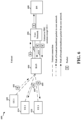
- FIG. 6 illustrates an example of wireless communication including uplink broadcast/multicast packets for a PDU session with a DN and unicast of a corresponding downlink packet in accordance with some aspects of the present disclosure.
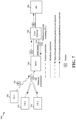
- FIG. 7 illustrates an example of wireless communication including uplink broadcast/multicast packets for a PDU session with a DN and targeted multicast of a corresponding downlink packet in accordance with some aspects of the present disclosure.
- FIG. 10 is an example communication flow involving a UE and a network that supports multicast/broadcast packets in accordance with some aspects of the present disclosure in accordance with some aspects of the present disclosure.
- FIG. 11 is a flowchart illustrating a method of wireless communication that supports multicast/broadcast packets in accordance with some aspects of the present disclosure in accordance with some aspects of the present disclosure.
- FIG. 12 is a flowchart illustrating a method of wireless communication that supports multicast/broadcast packets in accordance with some aspects of the present disclosure in accordance with some aspects of the present disclosure.
- FIG. 13 is a diagram illustrating an example of a hardware implementation for an apparatus in accordance with some aspects of the present disclosure.
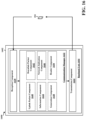
- FIG. 16 is a diagram illustrating an example of a hardware implementation for an apparatus in accordance with some aspects of the present disclosure.
- the base station may broadcast or multicast the broadcast/multicast packet including the broadcast/multicast Ethernet data to a group of UEs, including the source UE that originally transmitted the uplink broadcast/multicast packet.
- the source UE may be configured to discard or otherwise not process the broadcast/multicast packet based on determining that the broadcast/multicast packet corresponds to the uplink pack including the broadcast/multicast Ethernet data that the source UE transmitted to the base station (or underlying data network).
- aspects presented herein enable more efficient handling of uplink broadcast/multicast packets, such as broadcast/multicast Ethernet packets, and the corresponding downlink transmission of the broadcast/multicast packets.
- the transmission of downlink broadcast/multicast packets to the source UE that originally sent the uplink broadcast/multicast packet may lead to propagation of the packets back into the network as uplink packets.
- Aspects presented herein avoid repeated propagation of broadcast/multicast packets by transmitting the packets in a way that avoids transmission to the source UE or by having the source UE discard packets that it originated.
- FIG. 1 is a diagram illustrating an example of a wireless communications system and an access network 100 .
- the wireless communications system (also referred to as a wireless wide area network (WWAN)) includes base stations 102 , UEs 104 , an Evolved Packet Core (EPC) 160 , and another core network 190 (for example, a 5G Core (5GC)).
- the base stations 102 may include macrocells (high power cellular base station) or small cells (low power cellular base station).
- the macrocells include base stations.
- the small cells include femtocells, picocells, and microcells.
- the base stations 102 may perform one or more of the following functions: transfer of user data, radio channel ciphering and deciphering, integrity protection, header compression, mobility control functions (for example, handover, dual connectivity), inter-cell interference coordination, connection setup and release, load balancing, distribution for non-access stratum (NAS) messages, NAS node selection, synchronization, radio access network (RAN) sharing, multimedia broadcast multicast service (MBMS), subscriber and equipment trace, RAN information management (RIM), paging, positioning, and delivery of warning messages.
- the base stations 102 may communicate directly or indirectly (such as through the EPC 160 or core network 190 ) with each other over third backhaul links 134 (such as an X2 interface).
- the first backhaul links 132 , the second backhaul links 184 , and the third backhaul links 134 may be wired or wireless.
- the base stations 102 may wirelessly communicate with the UEs 104 . Each of the base stations 102 may provide communication coverage for a respective geographic coverage area 110 . There may be overlapping geographic coverage areas 110 .
- the small cell 102 ′ may have a coverage area 110 ′ that overlaps the coverage area 110 of one or more macro base stations 102 .
- a network that includes both small cell and macrocells may be known as a heterogeneous network.
- a heterogeneous network may also include Home Evolved Node Bs (eNBs) (HeNBs), which may provide service to a restricted group known as a closed subscriber group (CSG).
- eNBs Home Evolved Node Bs
- CSG closed subscriber group
- the base stations 102 /UEs 104 may use spectrum up to Y MHz (for example 5, 10, 15, 20, 100, or 400 MHz and so forth) bandwidth per carrier allocated in a carrier aggregation of up to a total of Yx MHz (x component carriers) used for transmission in each direction.
- the carriers may or may not be adjacent to each other. Allocation of carriers may be asymmetric with respect to DL and UL (for example, more or fewer carriers may be allocated for DL than for UL).
- the component carriers may include a primary component carrier and one or more secondary component carriers.
- a primary component carrier may be referred to as a primary cell (PCell) and a secondary component carrier may be referred to as a secondary cell (SCell).
- PCell primary cell
- SCell secondary cell
- the wireless communications system may further be based on Institute of Electrical and Electronics Engineers (IEEE) 802.11 standard, and may include a Wi-Fi access point (AP) 150 in communication with Wi-Fi stations (STAs) 152 via communication links 154 , for example, in a 5 GHz unlicensed frequency spectrum or the like.
- AP Wi-Fi access point
- STAs Wi-Fi stations
- communication links 154 for example, in a 5 GHz unlicensed frequency spectrum or the like.
- the STAs 152 /AP 150 may perform a clear channel assessment (CCA) prior to communicating in order to determine whether the channel is available.
- CCA clear channel assessment
- the small cell 102 ′ may operate in a licensed or an unlicensed frequency spectrum.
- the small cell 102 ′ may employ NR and use the same unlicensed frequency spectrum (such as 5 GHz, or the like) as used by the Wi-Fi AP 150 .
- the small cell 102 ′, employing NR in an unlicensed frequency spectrum, may boost coverage to or increase capacity of the access network.
- the electromagnetic spectrum is often subdivided, based on frequency/wavelength, into various classes, bands, channels, etc.
- frequency range designations FR1 410 MHz-7.125 GHz
- FR2 24.25 GHz-52.6 GHz
- the frequencies between FR1 and FR2 are often referred to as mid-band frequencies.
- FR1 is often referred to (interchangeably) as a “sub-6 GHz” band in various documents and articles.
- FR2 which is often referred to (interchangeably) as a “millimeter wave” band in documents and articles, despite being different from the extremely high frequency (EHF) band (30 GHz-300 GHz) which is identified by the International Telecommunications Union (ITU) as a “millimeter wave” band.
- EHF extremely high frequency
- ITU International Telecommunications Union
- the base station 180 and the UE 104 may each include a plurality of antennas, such as antenna elements, antenna panels, or antenna arrays to facilitate the beamforming.
- the base station 180 may transmit a beamformed signal to the UE 104 in one or more transmit directions 182 ′.
- the UE 104 may receive the beamformed signal from the base station 180 in one or more receive directions 182 ′′.
- the UE 104 may also transmit a beamformed signal to the base station 180 in one or more transmit directions.
- the base station 180 may receive the beamformed signal from the UE 104 in one or more receive directions.
- the base station 180 /UE 104 may perform beam training to determine the best receive and transmit directions for each of the base station 180 /UE 104 .
- the transmit and receive directions for the base station 180 may or may not be the same.
- the transmit and receive directions for the UE 104 may or may not be the same.
- the EPC 160 may include a Mobility Management Entity (MME) 162 , other MMES 164 , a Serving Gateway 166 , a Multimedia Broadcast Multicast Service (MBMS) Gateway 168 , a Broadcast Multicast Service Center (BM-SC) 170 , and a Packet Data Network (PDN) Gateway 172 .
- MME Mobility Management Entity
- MBMS Multimedia Broadcast Multicast Service
- BM-SC Broadcast Multicast Service Center
- PDN Packet Data Network
- the MME 162 may be in communication with a Home Subscriber Server (HSS) 174 .
- HSS Home Subscriber Server
- the MME 162 is the control node that processes the signaling between the UEs 104 and the EPC 160 .
- the MME 162 provides bearer and connection management. All user Internet protocol (IP) packets are transferred through the Serving Gateway 166 , which itself is connected to the PDN Gateway 172 .
- IP Internet protocol
- the MBMS Gateway 168 may be used to distribute MBMS traffic to the base stations 102 belonging to a Multicast Broadcast Single Frequency Network (MBSFN) area broadcasting a particular service, and may be responsible for session management (start/stop) and for collecting eMBMS related charging information.
- MMSFN Multicast Broadcast Single Frequency Network
- the UE 104 may also be referred to as a station, a mobile station, a subscriber station, a mobile unit, a subscriber unit, a wireless unit, a remote unit, a mobile device, a wireless device, a wireless communications device, a remote device, a mobile subscriber station, an access terminal, a mobile terminal, a wireless terminal, a remote terminal, a handset, a user agent, a mobile client, a client, or some other suitable terminology.
- a PDU session may be established between a UE and a data network outside a core network (such as EPC 160 , core network 190 , etc.) using the wireless communication network as an access network.
- the PDU session may include a logical connection between the UE 104 and the data network, such as IP services 196 , 197 .
- the PDU Session can be set up between a UE 104 and a component of a core network (such as between UPF 195 and UE 104 ).
- the UE and the data network may exchange packets (for example, in the form of PDUs) that may include an IP packet.
- a packet format may be used for communication between the UE and the DN, for example, such that packets are tunneled via the access network.
- One type of PDU session may include an Ethernet PDU session between a UE and an Ethernet DN.
- a UE may establish one or more PDU sessions with a same data network, as well
- FIG. 2 A is a diagram 200 illustrating an example of a first subframe within a 5G/NR frame structure.
- FIG. 2 B is a diagram 230 illustrating an example of DL channels within a 5G/NR subframe.
- FIG. 2 C is a diagram 250 illustrating an example of a second subframe within a 5G/NR frame structure.
- FIG. 2 D is a diagram 280 illustrating an example of UL channels within a 5G/NR subframe.
- the 5G/NR frame structure may be FDD in which for a particular set of subcarriers (carrier system bandwidth), subframes within the set of subcarriers are dedicated for either DL or UL, or may be TDD in which for a particular set of subcarriers (carrier system bandwidth), subframes within the set of subcarriers are dedicated for both DL and UL.
- the 5G/NR frame structure is assumed to be TDD, with subframe 4 being configured with slot format 28 (with mostly DL), where D is DL, U is UL, and X is flexible for use between DL/UL, and subframe 3 being configured with slot format 34 (with mostly UL).
- slot formats 0 , 1 are all DL, UL, respectively.
- Other slot formats 2 - 61 include a mix of DL, UL, and flexible symbols.
- UEs are configured with the slot format (dynamically through DL control information (DCI), or semi-statically/statically through radio resource control (RRC) signaling) through a received slot format indicator (SFI).
- DCI DL control information
- RRC radio resource control
- the symbols on UL may be CP-OFDM symbols (for high throughput scenarios) or discrete Fourier transform (DFT) spread OFDM (DFT-s-OFDM) symbols (also referred to as single carrier frequency-division multiple access (SC-FDMA) symbols) (for power limited scenarios; limited to a single stream transmission).
- DFT discrete Fourier transform
- SC-FDMA single carrier frequency-division multiple access
- the number of slots within a subframe is based on the slot configuration and the numerology. For slot configuration 0 , different numerologies ⁇ 0 to 5 allow for 1, 2, 4, 8, 16, and 32 slots, respectively, per subframe. For slot configuration 1 , different numerologies 0 to 2 allow for 2, 4, and 8 slots, respectively, per subframe.
- the RS may include demodulation RS (DM-RS) (indicated as Rx for one particular configuration, where 100 ⁇ is the port number, but other DM-RS configurations are possible) and channel state information reference signals (CSI-RS) for channel estimation at the UE.
- DM-RS demodulation RS
- CSI-RS channel state information reference signals
- the RS may also include beam measurement RS (BRS), beam refinement RS (BRRS), and phase tracking RS (PT-RS).
- BRS beam measurement RS
- BRRS beam refinement RS
- PT-RS phase tracking RS
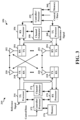
- FIG. 3 is a block diagram of a base station 310 in communication with a UE 350 in an access network.
- IP packets from the EPC 160 may be provided to a controller/processor 375 .
- the controller/processor 375 implements layer 3 and layer 2 functionality.
- Layer 3 includes a radio resource control (RRC) layer
- layer 2 includes a service data adaptation protocol (SDAP) layer, a packet data convergence protocol (PDCP) layer, a radio link control (RLC) layer, and a medium access control (MAC) layer.
- RRC radio resource control
- SDAP service data adaptation protocol
- PDCP packet data convergence protocol
- RLC radio link control
- MAC medium access control
- broadcast/multicast Ethernet packets may refer to packets for a PDU session of a UE with a DN.
- the type may be indicated in one or more packet fields, such as at least one of a destination MAC address or an EtherType field.
- FIG. 4 B illustrates an example in which the EtherType field may indicate that the packet is a broadcast/multicast Ethernet packet.
- uplink broadcast packets include packets for address resolution protocol (ARP) and neighbor discovery protocol, among other examples.
- uplink multicast packets include packets for precision time protocol (PTP) and spanning tree protocol (STP), among other examples.
- FIG. 4 B illustrates example information field that support broadcast/multicast packets. The fields may be included in a broadcast/multicast packet, such as a broadcast/multicast Ethernet packet.
- Each of examples fields 451 , 452 , and 453 are shown as including information about a source (for example, a source address) of the broadcast/multicast packet, a destination for the broadcast/multicast packet (for example, a destination address), a payload, an EtherType, and a checksum.
- the source is the UE sending the uplink packet.
- the UE 402 a is the source of packet 403
- the UE 410 a is the source of packet 405 .
- the destination is the corresponding DN, such as the DN 408 or the DN 412 .
- the EtherType information indicates the type of packet.
- the EtherType information may identify the packet as a broadcast/multicast Ethernet packet.
- the payload may include information that indicates the PDU session of the UE with the DN along with a payload.
- the example fields 452 further include a virtual local area network (VLAN) identifier (ID).
- a VLAN ID (VID) may indicate at least one of a tag protocol identifier (TPID) or tag control information (TCI).
- the example fields 453 further include a second VID.
- An uplink broadcast packet that includes a VID from a PDU session may be multicast on a VID level.
- the DN may send the broadcast/multicast packet back to all PDU sessions to the DN with the limitation that the receiving UEs associated with the PDU session have a membership to the VID.
- the network may distribute the broadcast/multicast packet to the UEs having the PDU sessions with the DN and associated with the VID except for the source PDU session.
- the multicast may exclude the PDU session of UE 402 a that originated packet 403 from the downlink transmission of packet 403 or exclude the PDU session of UE 410 a from the downlink transmission of packet 405 .
- the network may multicast uplink broadcast/multicast Broadcast/multicast packets with a multicast address and EtherType associated with a specific application (for example, a PTP/generic PTP (gPTP)), on an application level.
- the network may restrict the downlink transmission of the broadcast/multicast packet to a subset of PDU sessions within the DN or to a VID based group.
- the transmission may exclude the source PDU session, such as excluding the PDU session of UE 402 a that originated the packet 403 from the downlink transmission of broadcast/multicast packet 403 or excluding the PDU session of UE 410 a from the downlink transmission of broadcast/multicast packet 405 .
- aspects presented herein enable more efficient handling of uplink broadcast/multicast packets, such as broadcast/multicast Ethernet packets, and the corresponding downlink transmission of the broadcast/multicast packets.
- the transmission of downlink broadcast/multicast packets to the source UE that originally sent the uplink broadcast/multicast packet may lead to propagation of the packets back into the network as uplink packets.
- Aspects presented herein avoid repeated propagation of broadcast/multicast packets by transmitting the packets in a way that avoids transmission to the source UE or by having the source UE discard packets that it originated.
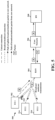
- FIG. 5 illustrates an example of a wireless communication network 500 that supports uplink broadcast/multicast packets for a PDU session with a DN and corresponding broadcast/multicast downlink packets.
- FIG. 5 illustrates an example in which the UE 502 transmits an uplink broadcast/multicast packet, such as a broadcast/multicast Ethernet packet, for a PDU session with the DN 508 .
- the RAN 504 receives the uplink broadcast/multicast packet and provides the broadcast/multicast packet to the core network 506 that provides the broadcast/multicast packet to the DN 508 .
- the core network 506 may return the packet for transmission to the UEs having PDU sessions with the DN (such as a DN level broadcast, a VID level multicast, an application level multicast, among other examples).
- FIG. 5 illustrates the broadcast/multicast packet transmitted from the RAN as a downlink transmission that is broadcast or multicast to the UEs 502 , 514 , and 516 .
- the UE 502 may waste processing power, because the information in the packet is originally from the UE 502 .
- a UPF or a NW-TT at the core network 606 may send the downlink broadcast/multicast packet 605 via PDU sessions for the DN 608 for one or more UEs associated with the core network 606 except PDU session P of UE 602 .
- unicasting the downlink broadcast/multicast packet may involve use of an individual tunnel 610 and 613 between the core network 606 and the RAN 604 for the UE 614 and the UE 616 .
- the core network 606 or the RAN 604 may avoid sending the downlink broadcast/multicast packet 605 to PDU session P of UE 602
- the network may send the downlink packet to any other PDU session of the UE 602 .
- Multiple sessions of the same UE may be associated with the same DN. For example a PDU session may be established per UE port.
- Multicasting to a group of UEs may include at least one of sending the broadcast/multicast packet from the core network 706 to the RAN 704 using a single tunnel 710 or transmitting the packet from the RAN 704 to the UEs (such as the UE 714 and the UE 716 ) using a joint transmission.
- Targeted multicast by the network may include the creation and maintenance of a multicast group per UE. For example, for each UE, a multicast group can be formed that excludes that UE (such as UE 702 in the example in FIG. 7 ) in order to handle downlink transmissions corresponding to uplink packets from that UE.
- the UE 502 may discard, not use, or not process, downlink broadcast/multicast packets on a port having a same MAC address as an entry on the list maintained by the UE 502 .
- the UE 502 may discard the packet based on discard criteria that is used to identify whether the packet originated from UE 502 . If the UE 502 has multiple PDU sessions with the DN 508 , the UE 502 may determine to keep or process the downlink broadcast/multicast packet for a different PDU session even if the downlink packet is based on an uplink broadcast/multicast packet transmitted by the UE 502 for a first PDU session with the DN 508 .
- the information may include any of a source MAC address for the uplink packet, a VID for the uplink packet, a destination MAC address for the uplink packet, other header field(s) for the uplink packet, a function of one or more fields of a corresponding uplink packet (such as a hash function or other function), one or more bytes (such as the first n bytes) of non-header field(s) of the uplink packet, or one or more fields in a suffix for the uplink packet.
- the information (such as a list) may be maintained by any of a UPF, an NW-TT, an SMF, or an AMF of the core network 506 .
- the UE 502 may similarly use the aspects described in connection with FIG. 5 to discard a broadcast/multicast packet received in a downlink unicast transmission from the network that corresponds to a previous uplink broadcast/multicast packet from the UE 502 .
- the UE 802 may discard the packet 805 for PDU session P based on the discard indication 807 from the core network 806 and the RAN 804 .
- the UE 802 may use the packet 805 for PDU sessions other than PDU session P.
- the indication 907 may inform the UE 902 not to use the packet 905 (that is based on packet 901 ) for PDU session P.
- the UE 902 may use the packet 905 for another PDU session.
- the indication 907 may be added by a PDCP layer, an SDAP layer, or another layer of the RAN 904 based on the indication 909 that the RAN 904 receives from the core network 906 .
- the indication 909 may be from a UPF or a NW-TT of the core network 906 .
- the RAN 1004 may provide the broadcast/multicast packet(s) 1003 to the core network 1006 that may provide the broadcast/multicast packet(s) 1005 to the DN 1008 .
- the DN 1008 may process the uplink broadcast/multicast packet(s) 1005 .
- the core network 1006 may return the broadcast/multicast packet(s) 1009 for transmission to one or more UEs.
- the core network 1006 may provide the packet(s) 1009 to the RAN 1004 , and the RAN 1004 may transmit the packets to the one or more UEs.
- the UE determines whether the downlink packet corresponds to an uplink packet for the PDU session that was previously transmitted to a base station. The determination may be performed, such as by determination component 1342 of apparatus 1302 .
- the UE may transmit uplink packets for a PDU session with the DN.
- the uplink packets may be transmitted, such as by at least one of the uplink packet component 1344 or the transmission component 1334 of the apparatus 1302 .
- the UE may make the determination at 1112 in various ways, such as described in connection with any of FIGS. 5 and 8 - 10 .
- the determination may be based on information at the UE.
- the UE may monitor uplink packets transmitted by the UE, and may store information regarding the uplink packets. The monitoring may be performed, for example, by the monitor component 1352 of the apparatus 1302 .
- the determination, at 1112 , regarding whether the downlink packet corresponds to the uplink packet for the PDU session that was previously transmitted to the base station may be based on information stored at the UE, such as based on the monitoring.
- the stored information may include a list identifying the uplink packets transmitted by the UE for the PDU session.
- the information may further include at least one of a source MAC address for the uplink packet, a VID for the uplink packet, a destination MAC address for the uplink packet, a header field for the uplink packet, a function of one or more fields of a corresponding uplink packet, non-header information included in a non-header field of the uplink packet, or suffix information included in a suffix for the uplink packet.
- the UE may remove one or more entries identifying ones of the uplink packets from the list in order to maintain a current list.
- entries may be removed based on a timer.
- the entries may be removed, for example, by the list component 1350 of the apparatus 1302 .
- the list may include substantially any identification of the uplink packets, which may or may not be in list form.
- the determination, at 1112 may be based on information from the network.
- the UE may receive information from the base station or a network, for example, a core network, and may use the information to perform the determination at 1112 .
- the information is illustrated as being received after the receipt of the downlink packet, the information may instead be received prior to receipt of the downlink packet.
- the information may be received, for example, by the network information component 1354 or the reception component 1330 of the apparatus 1302 .
- the information may include uplink packet information associated with uplink packets previously transmitted by the UE.
- the information may include a list identifying uplink packets transmitted by the UE.
- the information may further include at least one of a source MAC address for the uplink packet, a VID for the uplink packet, a destination MAC address for the uplink packet, a header field for the uplink packet, a function of one or more fields of a corresponding uplink packet, non-header information included in a non-header field of the uplink packet, or suffix information included in a suffix for the uplink packet.
- the information may include an indication to the UE to not process or use the downlink packet for the PDU session, for example, as described in connection with FIG. 8 or 9 . The indication may be received in a header of a PDU including the downlink packet.
- the UE discards the downlink packet for the PDU session based at least in part on the determination. For example, the UE may discard the downlink packet for the PDU session when the downlink packet corresponds to an uplink packet for the same PDU session that was previously transmitted to the base station. The discard may be performed, for example, by the discard component 1348 of the apparatus 1302 .
- the UE may determine, at 1114 , whether the downlink packet is for another PDU session of the UE with the DN.
- the UE may determine to process the downlink packet for another PDU session of the UE, for example, even if the downlink packet corresponds to the uplink packet for the PDU session that the UE previously transmitted.
- the determination may be performed, for example, by the determination component 1342 of the apparatus 1302 .
- the UE may process the downlink packet, for example, if the packet does not correspond to a previous uplink packet from the UE, as determined at 1112 , or if the packet is for another PDU session of the UE with the DN, as determined at 1114 .
- the downlink packet may be processed, for example, by the process component 1346 of the apparatus 1302 .
- FIG. 12 is a flowchart 1200 illustrating an example of a method of wireless communication that supports multicast/broadcast packets in accordance with some aspects of the present disclosure.
- the method may be performed by a UE or a component of a UE (such as the UE 104 , 350 1002 ; the apparatus 1302 , which may include the memory 360 and which may be the entire UE 350 or a component of the UE 350 , such as the TX processor 368 , the RX processor 356 , or the controller/processor 359 ).
- the method may enable a UE to handle downlink packets of broadcast/multicast packets based on uplink packets previously transmitted by the UE.
- the UE determines whether the downlink packet corresponds to an uplink packet including the broadcast/multicast Ethernet data for the PDU session that was previously transmitted to a base station by the UE. The determination may be performed, such as by determination component 1342 of apparatus 1302 .
- the UE may transmit uplink packets for a PDU session with the DN.
- the uplink packets may be transmitted, such as by at least one of the uplink packet component 1344 or the transmission component 1334 of the apparatus 1302 .
- the UE may make the determination at 1204 in various ways, such as described in connection with any of FIGS. 5 and 8 - 10 .
- the determination may be based on information at the UE, as described above.
- the determination, at 1204 may be based on information from the network, as described above.
- the UE may process the downlink packet for the PDU session based on determining that the UE did not previously transmit the corresponding uplink packet including the broadcast/multicast Ethernet data for the PDU session to the base station.
- the downlink packet may be processed, for example, by the process component 1346 of the apparatus 1302 .
- FIG. 13 is a diagram 1300 illustrating an example of a hardware implementation for an apparatus 1302 .
- the apparatus 1302 may be a UE or a component of a UE and includes a cellular baseband processor 1304 (also referred to as a modem) coupled to a cellular RF transceiver 1322 and one or more subscriber identity modules (SIM) cards 1320 , an application processor 1306 coupled to a secure digital (SD) card 1308 and a screen 1310 , a Bluetooth module 1312 , a wireless local area network (WLAN) module 1314 , a Global Positioning System (GPS) module 1316 , and a power supply 1318 .
- a cellular baseband processor 1304 also referred to as a modem
- SIM subscriber identity modules
- SD secure digital
- SD secure digital
- Bluetooth module 1312 a wireless local area network
- WLAN wireless local area network
- GPS Global Positioning System
- the cellular baseband processor 1304 communicates through the cellular RF transceiver 1322 with the UE 104 and/or BS 102 / 180 .
- the cellular baseband processor 1304 may include a computer-readable medium/memory.
- the computer-readable medium/memory may be non-transitory.
- the cellular baseband processor 1304 is responsible for general processing, including the execution of software stored on the computer-readable medium/memory.
- the software when executed by the cellular baseband processor 1304 , causes the cellular baseband processor 1304 to perform the various functions described herein.
- the computer-readable medium/memory may also be used for storing data that is manipulated by the cellular baseband processor 1304 when executing software.
- the cellular baseband processor 1304 further includes a reception component 1330 , a communication manager 1332 , and a transmission component 1334 .
- the communication manager 1332 includes the one or more illustrated components.
- the components within the communication manager 1332 may be stored in the computer-readable medium/memory and/or configured as hardware within the cellular baseband processor 1304 .
- the cellular baseband processor 1304 may be a component of the UE 350 and may include the memory 360 and/or at least one of the TX processor 368 , the RX processor 356 , and the controller/processor 359 .
- the apparatus 1302 may be a modem chip and include just the baseband processor 1304 , and in another configuration, the apparatus 1302 may be the entire UE (for example, see 350 of FIG. 3 ) and include the additional modules of the apparatus 1302 discussed herein.
- the apparatus 1302 includes a reception component 1330 that receives downlink communication from a base station 102 or 180 , such as described in connection with 1108 or 1110 in FIG. 11 or 12 .
- the apparatus 1302 includes a transmission component 1334 that transmits uplink communication to the base station 102 or 180 .
- the apparatus 1302 includes a downlink component 1340 configured to receive a downlink packet for a PDU session of the UE with a DN.
- the communication manager 1332 includes a determination component 1342 configured to determine whether the downlink packet corresponds to an uplink packet for the PDU session that was previously transmitted to a base station 102 or 180 .
- the communication manager 1332 includes a discard component 1348 configured to discard the downlink packet for the PDU session based at least in part on the determination.
- the communication manager 1332 may include a process component 1346 configured to process the downlink packet, such as based on the determination of the determination component 1342 .
- the communication manager 1332 may include an uplink packet component 1344 configured to transmit uplink packets for a PDU session with a DN.
- the communication manager 1332 may include a monitor component 1352 configured to monitor uplink packets transmitted by the UE.
- the apparatus 1302 may include a list component 1350 configured to maintain the list or other identification identifying the uplink packets, which may include removing one or more entries identifying ones of the uplink packets from the list based on a timer.
- the communication manager 1332 may include a network information component 1354 configured to receive information from one or more of the base station or a network. The determination of whether to discard the downlink packet may be further based on the information.
- the apparatus may include additional components that perform each of the blocks of the algorithm in the aforementioned flowchart of FIG. 11 or 12 .
- each block in the aforementioned flowchart of FIG. 11 or 12 may be performed by a component and the apparatus may include one or more of those components.
- the components may be one or more hardware components specifically configured to carry out the stated processes/algorithm, implemented by a processor configured to perform the stated processes/algorithm, stored within a computer-readable medium for implementation by a processor, or some combination thereof.
- the apparatus 1302 includes means for receiving a downlink packet for a PDU session of the UE with a DN.
- the apparatus 1302 includes means for determining whether the downlink packet corresponds to an uplink packet for the PDU session that was previously transmitted to a base station and means for discarding the downlink packet for the PDU session based at least in part on the determination.
- the apparatus 1302 may include means for processing the downlink packet.
- the apparatus 1302 may include means for monitoring uplink packets transmitted by the UE.
- the apparatus 1302 may include means for maintaining the list identifying the uplink packets.
- the apparatus 1302 may include means for removing one or more entries identifying ones of the uplink packets from the list based on a timer.
- the apparatus 1302 may include means for receiving information from one or more of the base station or a network, where the determination of whether to discard the downlink packet is further based on the information.
- the aforementioned means may be one or more of the aforementioned components of the apparatus 1302 configured to perform the functions recited by the aforementioned means.
- the apparatus 1302 may include the TX Processor 368 , the RX Processor 356 , and the controller/processor 359 .
- the aforementioned means may be the TX Processor 368 , the RX Processor 356 , and the controller/processor 359 configured to perform the functions recited by the aforementioned means.
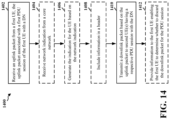
- FIG. 14 is a flowchart 1400 of an example of a method of wireless communication that supports multicast/broadcast packets in accordance with some aspects of the present disclosure.
- the method may be performed by a network entity, such as a base station or component of a base station, a core network entity or a component of a core network (such as the base station 102 , 180 , or 310 , the RAN 404 , 504 , 604 , 704 , 804 , 904 , or 1004 , the core network 406 , 506 , 606 , 706 , 806 , 906 , or 1006 ; the apparatus 1602 , which may include the memory 376 and which may be the entire base station 310 or a component of the base station 310 , such as any of the TX processor 316 , the RX processor 370 , or the controller/processor 375 and which may be a core network entity or a component of a core network entity).
- a network entity
- the network entity receives an uplink packet including broadcast/multicast Ethernet data from a first UE, the uplink packet being associated with a first PDU session of the first UE with a DN, such as described in connection with any of FIGS. 4 - 10 .
- the uplink packet may include broadcast or multicast (broadcast/multicast) Ethernet data.
- the uplink packet may be received, such as by the reception component 1630 or the uplink packet component 1640 of the apparatus 1602 .
- the network entity transmits (e.g., distributes) a downlink packet based on the uplink packet to a group of UEs including one or more second UEs, each of the one or more second UEs having a respective PDU session with the DN.
- the transmission of the downlink packet may be performed, such as by the downlink packet component 1642 or the transmission component 1634 of the apparatus 1602 .
- the group of UEs may include the first UE, and the network entity may transmit information to the first UE enabling the first UE to determine whether to discard the downlink packet for the PDU session.
- the information may be transmitted in a header of a PDU including the downlink packet.
- the information may include an indication indicating, to the first UE, to discard the downlink packet for the PDU session.
- the information may include uplink packet information about uplink packets previously transmitted by the UE.
- the information may include a list identifying the uplink packets previously transmitted by the first UE.
- the information may include at least one of a source MAC address for the uplink packet, a VID for the uplink packet, a destination MAC address for the uplink packet, a header field for the uplink packet, a function of one or more fields of a corresponding uplink packet, non-header information included in a non-header field of the uplink packet, or suffix information included in a suffix for the uplink packet.
- the downlink packet may be multicast to the group of UEs including the first UE. In some examples, the downlink packet may be unicast to each of the one or more second UEs.
- the transmission of the downlink packet may avoid the first UE for the first PDU session, such as described in connection with the examples in FIG. 6 or 7 .
- the transmission of the downlink packet is unicast to each of the one or more second UEs, as described in connection with FIG. 6 .
- the transmission of the downlink packet may be further unicast to the first UE, for example for a second PDU session of the first UE.
- the network entity may be a base station of a RAN, and the downlink packet may be received from a core network using an individual tunnel for each of the one or more second UEs to which the downlink packet is transmitted, such as described in connection with FIG. 6 . Then, the RAN may transmit the downlink packet to each of the one or more second UEs using individual downlink transmissions.
- the network entity may include a core network entity, and the downlink packet may be transmitted from the core network entity to base station of a RAN using an individual tunnel for each of the one or more second UEs to which the downlink packet is transmitted, such as described in connection with FIG. 6 .
- the downlink packet may be transmitted to each of the one or more second UEs using individual downlink transmissions.
- the transmission of the downlink packet can be multicast to a group of UEs including the one or more second UEs.
- the group of UEs may not include the first UE.
- the group of UEs may exclude the first UE, as described in connection with the example in FIG. 7 .
- the network entity may be a base station of a RAN, and prior to transmitting the downlink packet, the downlink packet may be received from a core network using a joint tunnel for multiple UEs of the group of UEs, such as described in connection with FIG. 7 .
- the downlink packet may then be transmitted to the one or more second UEs using a common downlink transmission, for example, the multicast.
- the network entity may include a core network entity, and the downlink packet may be transmitted to a RAN using a joint tunnel for the group of UEs, such as described in connection with FIG. 7 .
- the downlink packet may be multicast, to a group of UEs including the first UE, such as described in connection with FIG. 5 , 8 , or 9 .
- the network entity may provide information to the first UE enabling the first UE to determine whether to discard the downlink packet for the PDU session.
- the information may be provided, for example, by the information component 1644 of the apparatus 1602 .
- the information may include uplink packet information about uplink packets previously transmitted by the UE.
- the information may include a list or other identification identifying the uplink packets previously transmitted by the UE.
- the information may further include at least one of a source MAC address for the uplink packet, a VID for the uplink packet, a destination MAC address for the uplink packet, a header field for the uplink packet, a function of one or more fields of a corresponding uplink packet, non-header information included in a non-header field of the uplink packet, or suffix information included in a suffix for the uplink packet.
- the information provided at 1412 may include an indication to the UE to discard the downlink packet for the PDU session, for example, as described in connection with FIG. 8 or 9 .
- the indication may be included in a header of a PDU including the downlink packet.
- the indication may be provided by a core network, for example, as described in connection with FIG. 8 .
- the indication may be provided by a RAN, for example, as described in connection with FIG. 9 .
- the network entity may include the indication in the header by a layer of the RAN, at 1408 .
- the indication may be included in the header by the PDCP, SDAP, or other layer of the RAN.
- the indication may be included in the header, for example, by the header component 1650 of the apparatus 1602 .
- the network entity may receive a network indication from a core network to discard the downlink packet for the PDU session.
- the RAN may receive a discard indication from the core network.
- the network indication may be received, for example, by the network indication component 1646 or the reception component 1630 of the apparatus 1602 .
- the network entity may generate the indication for the UE based on the network indication received from the core network.
- the indication may be generated, for example, by the generation component 1648 of the apparatus 1602 .
- the RAN may include an indication in a header or field of the downlink packet that is turned on, enabled, or triggered by an indication that the RAN receives from the core network.
- the indication may be included in the header, for example, by the header component 1650 of the apparatus 1602 .
- FIG. 15 is a flowchart 1500 illustrating an example of a method of wireless communication that supports multicast/broadcast packets in accordance with some aspects of the present disclosure.
- FIG. 15 illustrates an example implementation that includes blocks 1402 and 1410 as described in connection with FIG. 14 .
- FIG. 16 is a diagram 1600 illustrating an example of a hardware implementation for an apparatus 1602 .
- the apparatus 1602 may be a network entity, such as a core network component or a base station.
- the apparatus 1602 includes a baseband unit 1604 .
- the baseband unit 1604 may communicate through a cellular RF transceiver with the UE 104 .
- the baseband unit 1604 may include a computer-readable medium/memory.
- the baseband unit 1604 is responsible for general processing, including the execution of software stored on the computer-readable medium/memory.
- the software when executed by the baseband unit 1604 , causes the baseband unit 1604 to perform the various functions described herein.
- the computer-readable medium/memory may also be used for storing data that is manipulated by the baseband unit 1604 when executing software.
- the baseband unit 1604 further includes a reception component 1630 , a communication manager 1632 , and a transmission component 1634 .
- the communication manager 1632 includes the one or more illustrated components.
- the components within the communication manager 1632 may be stored in the computer-readable medium/memory and/or configured as hardware within the baseband unit 1604 .
- the baseband unit 1604 may be a component of the BS 310 and may include the memory 376 and/or at least one of the TX processor 316 , the RX processor 370 , and the controller/processor 375 .
- the apparatus 1602 may be a network entity or a component of a network entity.
- the apparatus 1602 may be a base station or a component of a base station.
- the network entity may be another network entity, such as a core network entity.
- the apparatus 1602 includes a reception component 1630 configured to receive communication, such as described in connection with 1402 or 1404 in FIG. 14 or FIG. 15 .
- the apparatus 1602 includes a transmission component 1634 that transmits communication, such as described in connection with 1410 or 1412 in FIG. 14 or FIG. 15 .
- the communication manager 1632 includes an uplink packet component 1640 configured to receive an uplink packet from a first UE, the uplink packet being associated with a first PDU session of the first UE with a DN.
- the communication manager 1632 includes a downlink packet component 1642 configured to transmit a downlink packet based on the uplink packet to one or more second UEs, each of the second UEs having a respective PDU session with the DN.
- the communication manager 1632 may include an information component 1644 configured to provide information to the first UE enabling the first UE to determine whether to discard the downlink packet for the PDU session.
- the communication manager 1632 may include a header component 1650 configured to include the indication in the header by a layer of the RAN.
- the communication manager 1632 may include a network indication component 1646 configured to receive a network indication from a core network to discard the downlink packet for the PDU session.
- the communication manager 1632 may include a generation component 1648 configured to generate the indication for the UE based on the network indication received from the core network.
- the apparatus may include additional components that perform each of the blocks of the algorithm in the aforementioned flowchart of FIG. 14 or 15 .
- each block in the aforementioned flowchart of FIG. 14 or 15 may be performed by a component and the apparatus may include one or more of those components.
- the components may be one or more hardware components specifically configured to carry out the stated processes/algorithm, implemented by a processor configured to perform the stated processes/algorithm, stored within a computer-readable medium for implementation by a processor, or some combination thereof.
- the apparatus 1602 includes means for receiving an uplink packet from a first UE, the uplink packet being associated with a first PDU session of the first UE with a DN and means for transmitting a downlink packet based on the uplink packet to one or more second UEs, each of the second UEs having a respective PDU session with the DN.
- the apparatus 1602 may include means for providing information to the first UE enabling the first UE to determine whether to discard the downlink packet for the PDU session.
- the apparatus 1602 may include means for including the indication in the header by a layer of the RAN.
- Combinations such as “at least one of A, B, or C,” “one or more of A, B, or C,” “at least one of A, B, and C,” “one or more of A, B, and C,” and “A, B, C, or any combination thereof” include any combination of A, B, or C, and may include multiples of A, multiples of B, or multiples of C.
- combinations such as “at least one of A, B, or C,” “one or more of A, B, or C,” “at least one of A, B, and C,” “one or more of A, B, and C,” and “A, B, C, or any combination thereof” may be A only, B only, C only, A and B, A and C, B and C, or A and B and C, where any such combinations may contain one or more member or members of A, B, or C.
- the stored information comprises an identification of each of a plurality of the uplink packets transmitted by the UE for the PDU session, wherein, for each of the plurality of uplink packets, the information further comprises at least one of:
- determining whether the downlink packet corresponds to the uplink packet comprising the broadcast/multicast Ethernet data for the PDU session previously transmitted to the base station by the UE comprises determining whether the downlink packet includes same data or parameters as the uplink packet.
- a method of wireless communication performed by a network entity comprising:
- the information comprises an identification of each of a plurality of the uplink packets previously transmitted by the first UE, wherein for each of the plurality of uplink packets, the information further comprises at least one of:
- the network entity comprises a core network entity
- the downlink packet is transmitted from the core network entity to a radio access network (RAN) using an individual tunnel for each of the one or more second UEs to which the downlink packet is transmitted.
- RAN radio access network
- An apparatus for wireless communication comprising:
- An apparatus for wireless communication comprising means for performing one or more of the methods of any of examples 1 to 24.
- a computer-readable medium comprising code executable by one or more processors for wireless communications, the code comprising code for performing one or more of the methods of any of examples 1 to 24.
Landscapes
- Engineering & Computer Science (AREA)
- Signal Processing (AREA)
- Computer Networks & Wireless Communication (AREA)
- Multimedia (AREA)
- Mobile Radio Communication Systems (AREA)
Abstract
Description
-
- receiving, from a base station, a downlink packet comprising broadcast or multicast (broadcast/multicast) Ethernet data for a protocol data unit (PDU) session of the UE with a data network (DN) associated with the base station;
- determining whether the downlink packet corresponds to an uplink packet comprising the broadcast/multicast Ethernet data for the PDU session previously transmitted to the base station by the UE;
- discarding the downlink packet for the PDU session based on determining that the UE previously transmitted the corresponding uplink packet comprising the broadcast/multicast Ethernet data for the PDU session to the base station; and
- processing the downlink packet for the PDU session based on determining that the UE did not previously transmit the corresponding uplink packet comprising the broadcast/multicast Ethernet data for the PDU session to the base station.
-
- a source medium access control (MAC) address,
- a virtual local area network identifier (VID),
- a destination MAC address,
- a header field,
- a function of one or more fields of a corresponding uplink packet,
- non-header information comprised in a non-header field, or
- suffix information comprised in a suffix.
-
- maintaining a timer associated with expiring entries from the identification;
- maintaining, based at least in part on the monitoring and the timer, the identification, wherein maintaining the identification comprises removing one or more of the identifications of one or more respective uplink packets from the identification based on the timer.
-
- uplink packet information associated with uplink packets previously transmitted by the UE, or
- an identification of each of a plurality of the uplink packets transmitted by the UE, wherein, for each of the plurality of uplink packets, the information further comprises at least one of:
- a source medium access control (MAC) address,
- a virtual local area network identifier (VID),
- a destination MAC address,
- a header field,
- a function of one or more fields of a corresponding uplink packet,
- non-header information comprised in a non-header field, or
- suffix information comprised in a suffix.
-
- receiving an uplink packet comprising broadcast or multicast (broadcast/multicast) Ethernet data from a first user equipment (UE), the uplink packet being associated with a first protocol data unit (PDU) session of the first UE with a data network (DN); and
- transmitting a downlink packet based on the uplink packet to a group of UEs including one or more second UEs, each of the one or more second UEs having a respective PDU session with the DN.
-
- transmitting information to the first UE enabling the first UE to determine whether to discard the downlink packet for the PDU session.
-
- a source medium access control (MAC) address,
- a virtual local area network identifier (VID),
- a destination MAC address,
- a header field,
- a function of one or more fields of a corresponding uplink packet,
- non-header information comprised in a non-header field, or
- suffix information comprised in a suffix.
-
- receiving a network indication from a core network to discard the downlink packet for the PDU session; and
- generating an indication for the UE to discard the downlink packet based on the network indication received from the core network.
-
- the network entity comprises a radio access network (RAN),
- the downlink packet is received from a core network using an individual tunnel for each of the one or more second UEs to which the downlink packet is transmitted, and
- the downlink packet is transmitted to each of the one or more second UEs using individual downlink transmissions.
-
- the network entity comprises a radio access network (RAN),
- prior to transmitting the downlink packet, the downlink packet is received from a core network using a joint tunnel for multiple UEs of the group of UEs, and
- the downlink packet is transmitted to the one or more second UEs using a common downlink transmission.
-
- a transceiver;
- a memory configured to store instructions; and
- one or more processors communicatively coupled with the memory and the transceiver,
- wherein the one or more processors are configured to perform one or more of the methods of any of examples 1 to 24.
Claims (27)
Priority Applications (5)
| Application Number | Priority Date | Filing Date | Title |
|---|---|---|---|
| US16/985,157 US11856489B2 (en) | 2019-08-08 | 2020-08-04 | Uplink broadcast/multicast packet processing |
| EP20760680.7A EP4011034A1 (en) | 2019-08-08 | 2020-08-05 | Uplink broadcast/multicast packet processing |
| CN202080056342.9A CN114208224A (en) | 2019-08-08 | 2020-08-05 | Uplink broadcast/multicast packet handling |
| PCT/US2020/045035 WO2021026252A1 (en) | 2019-08-08 | 2020-08-05 | Uplink broadcast/multicast packet processing |
| US18/521,886 US12250614B2 (en) | 2019-08-08 | 2023-11-28 | Uplink broadcast/multicast packet processing |
Applications Claiming Priority (2)
| Application Number | Priority Date | Filing Date | Title |
|---|---|---|---|
| US201962884625P | 2019-08-08 | 2019-08-08 | |
| US16/985,157 US11856489B2 (en) | 2019-08-08 | 2020-08-04 | Uplink broadcast/multicast packet processing |
Related Child Applications (1)
| Application Number | Title | Priority Date | Filing Date |
|---|---|---|---|
| US18/521,886 Division US12250614B2 (en) | 2019-08-08 | 2023-11-28 | Uplink broadcast/multicast packet processing |
Publications (2)
| Publication Number | Publication Date |
|---|---|
| US20210044936A1 US20210044936A1 (en) | 2021-02-11 |
| US11856489B2 true US11856489B2 (en) | 2023-12-26 |
Family
ID=74498686
Family Applications (2)
| Application Number | Title | Priority Date | Filing Date |
|---|---|---|---|
| US16/985,157 Active US11856489B2 (en) | 2019-08-08 | 2020-08-04 | Uplink broadcast/multicast packet processing |
| US18/521,886 Active US12250614B2 (en) | 2019-08-08 | 2023-11-28 | Uplink broadcast/multicast packet processing |
Family Applications After (1)
| Application Number | Title | Priority Date | Filing Date |
|---|---|---|---|
| US18/521,886 Active US12250614B2 (en) | 2019-08-08 | 2023-11-28 | Uplink broadcast/multicast packet processing |
Country Status (4)
| Country | Link |
|---|---|
| US (2) | US11856489B2 (en) |
| EP (1) | EP4011034A1 (en) |
| CN (1) | CN114208224A (en) |
| WO (1) | WO2021026252A1 (en) |
Cited By (1)
| Publication number | Priority date | Publication date | Assignee | Title |
|---|---|---|---|---|
| US20240098459A1 (en) * | 2019-08-08 | 2024-03-21 | Qualcomm Incorporated | Uplink broadcast/multicast packet processing |
Families Citing this family (2)
| Publication number | Priority date | Publication date | Assignee | Title |
|---|---|---|---|---|
| CN115087136B (en) * | 2021-03-12 | 2025-09-09 | 华为技术有限公司 | Wireless communication method, communication device and communication system |
| KR20250090837A (en) * | 2023-12-13 | 2025-06-20 | 삼성전자주식회사 | Method and apparatus for controlling stp of upf in a wireless communication system |
Citations (16)
| Publication number | Priority date | Publication date | Assignee | Title |
|---|---|---|---|---|
| US20080080381A1 (en) | 2006-09-29 | 2008-04-03 | Qualcomm Incorporated | Methods and apparatus for reducing the likelihood of deadlock in a wireless communication system |
| US20100195555A1 (en) | 2009-02-05 | 2010-08-05 | Qualcomm Incorporated | Methods and apparatus for providing fast and power efficient multicast scheme |
| CN102647793A (en) | 2011-02-18 | 2012-08-22 | 罗杰康公司 | Stand alone wimax system and method |
| US20190124572A1 (en) * | 2017-10-20 | 2019-04-25 | Comcast Cable Communications, Llc | Non-Access Stratum Capability Information |
| WO2019223005A1 (en) * | 2018-05-25 | 2019-11-28 | Qualcomm Incorporated | Mixed mode multicast architecture |
| EP3866508A1 (en) * | 2020-02-14 | 2021-08-18 | KT Corporation | Methods for processing multicast/broadcast service data and apparatuses thereof |
| US20210306912A1 (en) * | 2018-08-13 | 2021-09-30 | Intel Corporation | Flexible scope of packet filters for reflective quality of service |
| US20210345108A1 (en) * | 2017-01-05 | 2021-11-04 | Huawei Technologies Co., Ltd. | Systems and methods for application-friendly protocol data unit (pdu) session management |
| US20210409999A1 (en) * | 2020-06-29 | 2021-12-30 | Qualcomm Incorporated | Downlink data prioritization for time-sensitive applications |
| WO2022027162A1 (en) * | 2020-08-03 | 2022-02-10 | Qualcomm Incorporated | Mrb architecture with pdcp retransmission |
| US20220086699A1 (en) * | 2019-05-23 | 2022-03-17 | Huawei Technologies Co., Ltd. | Client device and network node for indication of quality-of-service (qos) non-fulfillment |
| WO2022087069A1 (en) * | 2020-10-21 | 2022-04-28 | Google Llc | Managing transmission and reception of multicast and broadcast services |
| US20220174761A1 (en) * | 2019-08-18 | 2022-06-02 | Huawei Technologies Co., Ltd. | Communications method and apparatus |
| US20220224646A1 (en) * | 2020-04-30 | 2022-07-14 | Tencent Technology (Shenzhen) Company Limited | Method for implementing service continuity and related device |
| US20220329530A1 (en) * | 2019-08-15 | 2022-10-13 | Telefonaktiebolaget Lm Ericsson (Publ) | Systems and methods to measure the number of packets in cups |
| US20220338050A1 (en) * | 2021-04-16 | 2022-10-20 | Qualcomm Incorporated | Techniques for improving reflective quality of service |
Family Cites Families (3)
| Publication number | Priority date | Publication date | Assignee | Title |
|---|---|---|---|---|
| US11445335B2 (en) * | 2018-08-17 | 2022-09-13 | Huawei Technologies Co., Ltd. | Systems and methods for enabling private communication within a user equipment group |
| CN114208102B (en) * | 2019-07-02 | 2023-03-28 | 康普技术有限责任公司 | Forwarding interface for use with cloud radio access networks |
| US11856489B2 (en) * | 2019-08-08 | 2023-12-26 | Qualcomm Incorporated | Uplink broadcast/multicast packet processing |
-
2020
- 2020-08-04 US US16/985,157 patent/US11856489B2/en active Active
- 2020-08-05 WO PCT/US2020/045035 patent/WO2021026252A1/en not_active Ceased
- 2020-08-05 CN CN202080056342.9A patent/CN114208224A/en active Pending
- 2020-08-05 EP EP20760680.7A patent/EP4011034A1/en not_active Withdrawn
-
2023
- 2023-11-28 US US18/521,886 patent/US12250614B2/en active Active
Patent Citations (16)
| Publication number | Priority date | Publication date | Assignee | Title |
|---|---|---|---|---|
| US20080080381A1 (en) | 2006-09-29 | 2008-04-03 | Qualcomm Incorporated | Methods and apparatus for reducing the likelihood of deadlock in a wireless communication system |
| US20100195555A1 (en) | 2009-02-05 | 2010-08-05 | Qualcomm Incorporated | Methods and apparatus for providing fast and power efficient multicast scheme |
| CN102647793A (en) | 2011-02-18 | 2012-08-22 | 罗杰康公司 | Stand alone wimax system and method |
| US20210345108A1 (en) * | 2017-01-05 | 2021-11-04 | Huawei Technologies Co., Ltd. | Systems and methods for application-friendly protocol data unit (pdu) session management |
| US20190124572A1 (en) * | 2017-10-20 | 2019-04-25 | Comcast Cable Communications, Llc | Non-Access Stratum Capability Information |
| WO2019223005A1 (en) * | 2018-05-25 | 2019-11-28 | Qualcomm Incorporated | Mixed mode multicast architecture |
| US20210306912A1 (en) * | 2018-08-13 | 2021-09-30 | Intel Corporation | Flexible scope of packet filters for reflective quality of service |
| US20220086699A1 (en) * | 2019-05-23 | 2022-03-17 | Huawei Technologies Co., Ltd. | Client device and network node for indication of quality-of-service (qos) non-fulfillment |
| US20220329530A1 (en) * | 2019-08-15 | 2022-10-13 | Telefonaktiebolaget Lm Ericsson (Publ) | Systems and methods to measure the number of packets in cups |
| US20220174761A1 (en) * | 2019-08-18 | 2022-06-02 | Huawei Technologies Co., Ltd. | Communications method and apparatus |
| EP3866508A1 (en) * | 2020-02-14 | 2021-08-18 | KT Corporation | Methods for processing multicast/broadcast service data and apparatuses thereof |
| US20220224646A1 (en) * | 2020-04-30 | 2022-07-14 | Tencent Technology (Shenzhen) Company Limited | Method for implementing service continuity and related device |
| US20210409999A1 (en) * | 2020-06-29 | 2021-12-30 | Qualcomm Incorporated | Downlink data prioritization for time-sensitive applications |
| WO2022027162A1 (en) * | 2020-08-03 | 2022-02-10 | Qualcomm Incorporated | Mrb architecture with pdcp retransmission |
| WO2022087069A1 (en) * | 2020-10-21 | 2022-04-28 | Google Llc | Managing transmission and reception of multicast and broadcast services |
| US20220338050A1 (en) * | 2021-04-16 | 2022-10-20 | Qualcomm Incorporated | Techniques for improving reflective quality of service |
Non-Patent Citations (6)
| Title |
|---|
| "IEEE Standard for Local and Metropolitan Area Networks—Part 16: Air Interface for Fixed and Mobile Broadband Wireless Access Systems—Amendment for Physical and Medium Access Control Layers for Combined Fixed and Mobile Operation in Licensed Bands," in IEEE Std 802.16e-2005 Feb. 2006 (Year: 2006). * |
| B. H. Walke et al., "IP over wireless mobile ATM-guaranteed wireless QoS by HiperLAN/2," in Proceedings of the IEEE, vol. 89, No. 1, pp. 21-40, Jan. 2001, doi: 10.1109/5.904504. (Year: 2001). * |
| English translation of CN102647793 (Koren, et al) printed Jan. 31, 2023 (Year: 2023). * |
| International Search Report and Written Opinion—PCT/US2020/045035—ISA/EPO—dated Oct. 21, 2020. |
| Korth, H F., et al., "Mobile Computing ED", Mobile Computing, Kluwer Academic Publishers, Jan. 1, 1996 (Jan. 1, 1996), US, pp. 1-21, 1, XP008160482, 195 Pages, ISBN: 978-0-7923-9697-0. p. 153-p. 160. |
| V. K. Shrivastava, S. Baek and Y. Baek, "5G Evolution for Multicast and Broadcast Services in 3GPP Release 17," in IEEE Communications Standards Magazine, vol. 6, No. 3, pp. 70-76, Sep. 2022, doi: 10.1109/MCOMSTD.0001.2100068. (Year: 2022). * |
Cited By (2)
| Publication number | Priority date | Publication date | Assignee | Title |
|---|---|---|---|---|
| US20240098459A1 (en) * | 2019-08-08 | 2024-03-21 | Qualcomm Incorporated | Uplink broadcast/multicast packet processing |
| US12250614B2 (en) * | 2019-08-08 | 2025-03-11 | Qualcomm Incorporated | Uplink broadcast/multicast packet processing |
Also Published As
| Publication number | Publication date |
|---|---|
| US20210044936A1 (en) | 2021-02-11 |
| EP4011034A1 (en) | 2022-06-15 |
| WO2021026252A1 (en) | 2021-02-11 |
| US12250614B2 (en) | 2025-03-11 |
| US20240098459A1 (en) | 2024-03-21 |
| CN114208224A (en) | 2022-03-18 |
Similar Documents
| Publication | Publication Date | Title |
|---|---|---|
| US12177744B2 (en) | Uplink control channel resource allocation for acknowledgement of downlink multicast/broadcast | |
| US12016019B2 (en) | Multiple TRP PDSCH scheduling using DCI without TCI field | |
| US20240373357A1 (en) | Data transfer between an inactive mode user equipment and a wireless network | |
| US20190312621A1 (en) | Pdsch rate matching for aperiodic csi-rs | |
| US11350489B2 (en) | Indication of a PCI change in a mobile IAB network | |
| US12193036B2 (en) | Time domain resource allocation-based HARQ-ACK feedback generation | |
| US11743951B2 (en) | Two step RACH based L1/L2 inter-cell mobility | |
| US12250614B2 (en) | Uplink broadcast/multicast packet processing | |
| US11601159B2 (en) | Switching between different configurations of frequency and beam hopping for single-beam and multi-beam PUCCH | |
| US12052611B2 (en) | Evolved packet system (EPS) mobility configuration from wireless system | |
| US12604282B2 (en) | Uplink spatial filter and power control for channel estimation across physical uplink control channels | |
| US12113629B2 (en) | Prioritization between a scheduling request and HARQ feedback | |
| US12035135B2 (en) | Handling of slices subject to network slice specific authentication and authorization procedure | |
| US11791971B2 (en) | Component carrier group based bandwidth part switching | |
| US12267831B2 (en) | Sidelink transmissions coherency considerations | |
| US12526851B2 (en) | Assisted connectivity | |
| US20230269286A1 (en) | Convergence of unicast and broadcast for video streaming | |
| US20240314805A1 (en) | Dummy indications in dci with unified tci indication | |
| US11917602B2 (en) | Emission specifications for NTN | |
| WO2022061698A1 (en) | Recover from downlink data transfer failure |
Legal Events
| Date | Code | Title | Description |
|---|---|---|---|
| FEPP | Fee payment procedure |
Free format text: ENTITY STATUS SET TO UNDISCOUNTED (ORIGINAL EVENT CODE: BIG.); ENTITY STATUS OF PATENT OWNER: LARGE ENTITY |
|
| STPP | Information on status: patent application and granting procedure in general |
Free format text: DOCKETED NEW CASE - READY FOR EXAMINATION |
|
| AS | Assignment |
Owner name: QUALCOMM INCORPORATED, CALIFORNIA Free format text: ASSIGNMENT OF ASSIGNORS INTEREST;ASSIGNORS:JOSEPH, VINAY;PRAKASH, RAJAT;TINNAKORNSRISUPHAP, PEERAPOL;AND OTHERS;SIGNING DATES FROM 20201022 TO 20201130;REEL/FRAME:055501/0043 |
|
| STPP | Information on status: patent application and granting procedure in general |
Free format text: NON FINAL ACTION MAILED |
|
| STPP | Information on status: patent application and granting procedure in general |
Free format text: RESPONSE TO NON-FINAL OFFICE ACTION ENTERED AND FORWARDED TO EXAMINER |
|
| STPP | Information on status: patent application and granting procedure in general |
Free format text: NON FINAL ACTION MAILED |
|
| STPP | Information on status: patent application and granting procedure in general |
Free format text: FINAL REJECTION MAILED |
|
| STPP | Information on status: patent application and granting procedure in general |
Free format text: RESPONSE AFTER FINAL ACTION FORWARDED TO EXAMINER |
|
| STPP | Information on status: patent application and granting procedure in general |
Free format text: ADVISORY ACTION MAILED |
|
| STPP | Information on status: patent application and granting procedure in general |
Free format text: DOCKETED NEW CASE - READY FOR EXAMINATION |
|
| STPP | Information on status: patent application and granting procedure in general |
Free format text: NON FINAL ACTION MAILED |
|
| STPP | Information on status: patent application and granting procedure in general |
Free format text: RESPONSE TO NON-FINAL OFFICE ACTION ENTERED AND FORWARDED TO EXAMINER |
|
| STPP | Information on status: patent application and granting procedure in general |
Free format text: AWAITING TC RESP., ISSUE FEE NOT PAID |
|
| STPP | Information on status: patent application and granting procedure in general |
Free format text: NOTICE OF ALLOWANCE MAILED -- APPLICATION RECEIVED IN OFFICE OF PUBLICATIONS |
|
| STPP | Information on status: patent application and granting procedure in general |
Free format text: DOCKETED NEW CASE - READY FOR EXAMINATION |
|
| STPP | Information on status: patent application and granting procedure in general |
Free format text: FINAL REJECTION MAILED |
|
| STPP | Information on status: patent application and granting procedure in general |
Free format text: RESPONSE AFTER FINAL ACTION FORWARDED TO EXAMINER |
|
| STPP | Information on status: patent application and granting procedure in general |
Free format text: NOTICE OF ALLOWANCE MAILED -- APPLICATION RECEIVED IN OFFICE OF PUBLICATIONS |
|
| STPP | Information on status: patent application and granting procedure in general |
Free format text: PUBLICATIONS -- ISSUE FEE PAYMENT RECEIVED |
|
| STPP | Information on status: patent application and granting procedure in general |
Free format text: PUBLICATIONS -- ISSUE FEE PAYMENT VERIFIED |
|
| STCF | Information on status: patent grant |
Free format text: PATENTED CASE |