US11789245B2 - Variable magnification optical system, optical apparatus, and method for producing variable magnification optical system - Google Patents
Variable magnification optical system, optical apparatus, and method for producing variable magnification optical system Download PDFInfo
- Publication number
- US11789245B2 US11789245B2 US17/535,915 US202117535915A US11789245B2 US 11789245 B2 US11789245 B2 US 11789245B2 US 202117535915 A US202117535915 A US 202117535915A US 11789245 B2 US11789245 B2 US 11789245B2
- Authority
- US
- United States
- Prior art keywords
- lens group
- optical system
- lens
- variable magnification
- magnification optical
- Prior art date
- Legal status (The legal status is an assumption and is not a legal conclusion. Google has not performed a legal analysis and makes no representation as to the accuracy of the status listed.)
- Active
Links
- 230000003287 optical effect Effects 0.000 title claims abstract description 268
- 238000004519 manufacturing process Methods 0.000 title claims description 14
- 230000014509 gene expression Effects 0.000 claims abstract description 108
- 238000000034 method Methods 0.000 claims description 18
- 239000002131 composite material Substances 0.000 claims description 3
- 230000004075 alteration Effects 0.000 abstract description 99
- 230000000694 effects Effects 0.000 description 38
- 230000005499 meniscus Effects 0.000 description 38
- 238000003384 imaging method Methods 0.000 description 28
- 239000011521 glass Substances 0.000 description 25
- 206010010071 Coma Diseases 0.000 description 12
- 201000009310 astigmatism Diseases 0.000 description 4
- 239000000463 material Substances 0.000 description 4
- 239000006185 dispersion Substances 0.000 description 3
- 230000002547 anomalous effect Effects 0.000 description 2
- 238000012937 correction Methods 0.000 description 2
- 230000006866 deterioration Effects 0.000 description 2
- 238000006243 chemical reaction Methods 0.000 description 1
- 239000011248 coating agent Substances 0.000 description 1
- 238000000576 coating method Methods 0.000 description 1
- 150000001875 compounds Chemical class 0.000 description 1
- 230000000994 depressogenic effect Effects 0.000 description 1
- 230000002542 deteriorative effect Effects 0.000 description 1
- 230000006870 function Effects 0.000 description 1
- 238000000465 moulding Methods 0.000 description 1
- 230000011514 reflex Effects 0.000 description 1
- 239000011347 resin Substances 0.000 description 1
- 229920005989 resin Polymers 0.000 description 1
- 238000002834 transmittance Methods 0.000 description 1
Images




Classifications
-
- G—PHYSICS
- G02—OPTICS
- G02B—OPTICAL ELEMENTS, SYSTEMS OR APPARATUS
- G02B15/00—Optical objectives with means for varying the magnification
- G02B15/14—Optical objectives with means for varying the magnification by axial movement of one or more lenses or groups of lenses relative to the image plane for continuously varying the equivalent focal length of the objective
- G02B15/16—Optical objectives with means for varying the magnification by axial movement of one or more lenses or groups of lenses relative to the image plane for continuously varying the equivalent focal length of the objective with interdependent non-linearly related movements between one lens or lens group, and another lens or lens group
- G02B15/163—Optical objectives with means for varying the magnification by axial movement of one or more lenses or groups of lenses relative to the image plane for continuously varying the equivalent focal length of the objective with interdependent non-linearly related movements between one lens or lens group, and another lens or lens group having a first movable lens or lens group and a second movable lens or lens group, both in front of a fixed lens or lens group
- G02B15/167—Optical objectives with means for varying the magnification by axial movement of one or more lenses or groups of lenses relative to the image plane for continuously varying the equivalent focal length of the objective with interdependent non-linearly related movements between one lens or lens group, and another lens or lens group having a first movable lens or lens group and a second movable lens or lens group, both in front of a fixed lens or lens group having an additional fixed front lens or group of lenses
- G02B15/173—Optical objectives with means for varying the magnification by axial movement of one or more lenses or groups of lenses relative to the image plane for continuously varying the equivalent focal length of the objective with interdependent non-linearly related movements between one lens or lens group, and another lens or lens group having a first movable lens or lens group and a second movable lens or lens group, both in front of a fixed lens or lens group having an additional fixed front lens or group of lenses arranged +-+
-
- G—PHYSICS
- G02—OPTICS
- G02B—OPTICAL ELEMENTS, SYSTEMS OR APPARATUS
- G02B15/00—Optical objectives with means for varying the magnification
- G02B15/14—Optical objectives with means for varying the magnification by axial movement of one or more lenses or groups of lenses relative to the image plane for continuously varying the equivalent focal length of the objective
- G02B15/144—Optical objectives with means for varying the magnification by axial movement of one or more lenses or groups of lenses relative to the image plane for continuously varying the equivalent focal length of the objective having four groups only
- G02B15/1441—Optical objectives with means for varying the magnification by axial movement of one or more lenses or groups of lenses relative to the image plane for continuously varying the equivalent focal length of the objective having four groups only the first group being positive
- G02B15/144105—Optical objectives with means for varying the magnification by axial movement of one or more lenses or groups of lenses relative to the image plane for continuously varying the equivalent focal length of the objective having four groups only the first group being positive arranged +-+-
-
- G—PHYSICS
- G02—OPTICS
- G02B—OPTICAL ELEMENTS, SYSTEMS OR APPARATUS
- G02B15/00—Optical objectives with means for varying the magnification
- G02B15/14—Optical objectives with means for varying the magnification by axial movement of one or more lenses or groups of lenses relative to the image plane for continuously varying the equivalent focal length of the objective
- G02B15/145—Optical objectives with means for varying the magnification by axial movement of one or more lenses or groups of lenses relative to the image plane for continuously varying the equivalent focal length of the objective having five groups only
- G02B15/1451—Optical objectives with means for varying the magnification by axial movement of one or more lenses or groups of lenses relative to the image plane for continuously varying the equivalent focal length of the objective having five groups only the first group being positive
- G02B15/145105—Optical objectives with means for varying the magnification by axial movement of one or more lenses or groups of lenses relative to the image plane for continuously varying the equivalent focal length of the objective having five groups only the first group being positive arranged +-+--
-
- G—PHYSICS
- G02—OPTICS
- G02B—OPTICAL ELEMENTS, SYSTEMS OR APPARATUS
- G02B15/00—Optical objectives with means for varying the magnification
- G02B15/14—Optical objectives with means for varying the magnification by axial movement of one or more lenses or groups of lenses relative to the image plane for continuously varying the equivalent focal length of the objective
- G02B15/145—Optical objectives with means for varying the magnification by axial movement of one or more lenses or groups of lenses relative to the image plane for continuously varying the equivalent focal length of the objective having five groups only
- G02B15/1451—Optical objectives with means for varying the magnification by axial movement of one or more lenses or groups of lenses relative to the image plane for continuously varying the equivalent focal length of the objective having five groups only the first group being positive
- G02B15/145121—Optical objectives with means for varying the magnification by axial movement of one or more lenses or groups of lenses relative to the image plane for continuously varying the equivalent focal length of the objective having five groups only the first group being positive arranged +-+-+
-
- G—PHYSICS
- G02—OPTICS
- G02B—OPTICAL ELEMENTS, SYSTEMS OR APPARATUS
- G02B15/00—Optical objectives with means for varying the magnification
- G02B15/14—Optical objectives with means for varying the magnification by axial movement of one or more lenses or groups of lenses relative to the image plane for continuously varying the equivalent focal length of the objective
- G02B15/146—Optical objectives with means for varying the magnification by axial movement of one or more lenses or groups of lenses relative to the image plane for continuously varying the equivalent focal length of the objective having more than five groups
- G02B15/1461—Optical objectives with means for varying the magnification by axial movement of one or more lenses or groups of lenses relative to the image plane for continuously varying the equivalent focal length of the objective having more than five groups the first group being positive
-
- G—PHYSICS
- G02—OPTICS
- G02B—OPTICAL ELEMENTS, SYSTEMS OR APPARATUS
- G02B15/00—Optical objectives with means for varying the magnification
- G02B15/14—Optical objectives with means for varying the magnification by axial movement of one or more lenses or groups of lenses relative to the image plane for continuously varying the equivalent focal length of the objective
- G02B15/16—Optical objectives with means for varying the magnification by axial movement of one or more lenses or groups of lenses relative to the image plane for continuously varying the equivalent focal length of the objective with interdependent non-linearly related movements between one lens or lens group, and another lens or lens group
- G02B15/20—Optical objectives with means for varying the magnification by axial movement of one or more lenses or groups of lenses relative to the image plane for continuously varying the equivalent focal length of the objective with interdependent non-linearly related movements between one lens or lens group, and another lens or lens group having an additional movable lens or lens group for varying the objective focal length
Definitions
- the present invention relates to a variable magnification optical system, an optical apparatus and a method for manufacturing the variable magnification optical system.
- variable magnification optical system that is small in size but can adopt large-sized image pick-up device suitable for photo-taking a motion picture and for effecting high speed focusing.
- variable magnification optical system corrections of various aberrations have not been made sufficiently.
- the present invention is related to a variable magnification optical system comprising, in order from an object side, a first lens group having positive refractive power, a second lens group having negative refractive power, a third lens group having positive refractive power, and a rear lens group having negative refractive power;
- said third lens group or said rear lens group comprising a focusing lens group which is moved upon carrying out focusing
- f1 denotes a focal length of said first lens group
- fw denotes a focal length of said variable optical system in a wide angle end state
- BFw denotes a back focus of said variable magnification optical system in the wide angle end state
- fw denotes the focal length of said variable magnification optical system in the wide angle end state
- the present invention is related to a method for manufacturing a variable magnification optical system comprising, in order from an object side, a first lens group having positive refractive power, a second lens group having negative refractive power, a third lens group having positive refractive power, and a rear lens group having negative refractive power; comprising the steps of:
- said third lens group or said rear lens group comprises a focusing lens group which is moved upon carrying out focusing
- f1 denotes a focal length of said first lens group
- fw denotes a focal length of said variable optical system in a wide angle end state
- BFw denotes a back focus of said variable magnification optical system in the wide angle end state
- fw denotes the focal length of said variable magnification optical system in the wide angle end state
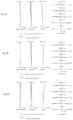
- FIG. 1 A , FIG. 1 B and FIG. 1 C are cross sectional views in the wide angle end state, in the intermediate focal length state and in the telephoto end state, respectively, of a variable magnification optical system according to a First Example.
- FIG. 2 A , FIG. 2 B and FIG. 2 C are graphs showing various aberrations, upon focusing on an infinite distance object, in the wide angle end state, in the intermediate focal length state, and in the telephoto end state, respectively, of the variable magnification optical system according to the First Example.
- FIG. 3 A , FIG. 3 B and FIG. 3 C are graphs showing various aberrations, upon focusing on a close distance object, in the wide angle end state, in the intermediate focal length state, and in the telephoto end state, respectively, of the variable magnification optical system according to the First Example.
- FIG. 4 A , FIG. 4 B and FIG. 4 C are cross sectional views in the wide angle end state, in the intermediate focal length state and in the telephoto end state, respectively, of a variable magnification optical system according to a Second Example.
- FIG. 5 A , FIG. 5 B and FIG. 5 C are graphs showing various aberrations, upon focusing on an infinite distance object, in the wide angle end state, in the intermediate focal length state, and in the telephoto end state, respectively, of the variable magnification optical system according to the Second Example.
- FIG. 6 A , FIG. 6 B and FIG. 6 C are graphs showing various aberrations, upon focusing on a close distance object, in the wide angle end state, in the intermediate focal length state and in the telephoto end state, respectively, of the variable magnification optical system according to the Second Example.
- FIG. 7 A , FIG. 7 B and FIG. 7 C are cross sectional views in the wide angle end state, in the intermediate focal length state and in the telephoto end state, respectively, of a variable magnification optical system according to a Third Example.
- FIG. 8 A , FIG. 8 B and FIG. 8 C are graphs showing various aberrations, upon focusing on an infinite distance object, in the wide angle end state, in the intermediate focal length state and in the telephoto end state, respectively, of the variable magnification optical system according to the Third Example
- FIG. 9 A , FIG. 9 B and FIG. 9 C are graphs showing various aberrations, upon focusing on a close distance object, in the wide angle end state, in the intermediate focal length state and in the telephoto end state, respectively, of the variable magnification optical system according to the Third Example.
- FIG. 10 A , FIG. 10 B and FIG. 10 C are cross sectional views in the wide angle end state, in the intermediate focal length state and in the telephoto end state, respectively, of a variable magnification optical system according to a Fourth Example.
- FIG. 11 A , FIG. 11 B and FIG. 11 C are graphs showing various aberrations, upon focusing on an infinite distance object, in the wide angle end state, in the intermediate focal length state and in the telephoto end state, respectively, of the variable magnification optical system according to the Fourth Example.
- FIG. 12 A , FIG. 12 B and FIG. 12 C are graphs showing various aberrations, upon focusing on a close distance object, in the wide angle end state, in the intermediate focal length state and in the telephoto end state, respectively, of the variable magnification optical system according to the Fourth Example.
- FIG. 13 A , FIG. 13 B and FIG. 13 C are cross sectional views in the wide angle end state, in the intermediate focal length state and in the telephoto end state, respectively, of a variable magnification optical system according to a Fifth Example.
- FIG. 14 A , FIG. 14 B and FIG. 14 C are graphs showing various aberrations, upon focusing on an infinite distance object, in the wide angle end state, in the intermediate focal length state and in the telephoto end state, respectively, of the variable magnification optical system according to the Fifth Example
- FIG. 15 A , FIG. 15 B and FIG. 15 C are graphs showing various aberrations, upon focusing on a close distance object, in the wide angle end state, in the intermediate focal length state and in the telephoto end state, respectively, of the variable magnification optical system according to the Fifth Example.
- FIG. 16 is a view showing a configuration of a camera equipped with the variable magnification optical system.
- FIG. 17 is a flowchart schematically showing a method for manufacturing the variable magnification optical system.
- variable magnification optical system an optical apparatus and a method for producing the variable magnification optical system, will be explained.
- the variable magnification optical system according to the present embodiment will be explained.
- variable magnification optical system comprises, in order from an object side, a first lens group having positive refractive power, a second lens group having negative refractive power, a third lens group having positive refractive power, and a rear lens group having negative refractive power;
- said third lens group or said rear lens group comprising a focusing lens group which is moved upon carrying out focusing from an infinite distance object to a close distance object;
- f1 denotes a focal length of said first lens group
- fw denotes a focal length of said variable optical system in a wide angle end state
- BFw denotes a back focus of said variable magnification optical system in a wide angle end state
- fw denotes the focal length of said variable magnification optical system in the wide angle end state
- the rear lens group of the variable magnification optical system according to the present embodiment comprises at least one lens group.
- a lens group means a portion which comprises at least one lens separated by an air space.
- a lens component means a single lens or a cemented lens composed of two or more lenses cemented with each other.
- variable magnification optical system can conduct superbly aberration corrections upon varying a magnification, by varying respective distances between the lens groups upon varying magnification from a wide angle end state to a telephoto end state.
- the focusing lens group may be made small in size and reduced in weight by disposing the focusing lens group in the third lens group or in the rear lens group, and as a result, high speed focusing becomes possible and the variable magnification optical system and the lens barrel can be small-sized.
- the conditional expression (1) defines a ratio of a focal length of the first lens group to a focal length of the variable optical system in the wide angle end state.
- conditional expression (2) defines a ratio of a back focus of the variable magnification optical system in the wide angle end state to a focal length of the variable magnification optical system in the wide angle end state.
- variable magnification optical system can correct superbly a coma aberration and other various aberrations in the wide angle end state.
- back focus is meant a distance from the most image side lens surface to the image plane on the optical axis.
- conditional expression (2) “back focus of the variable magnification optical system in the wide angle end state” denoted by BFw may be replaced by “back focus of the variable magnification optical system in the state where the whole length is smallest”, and “focal length of the variable magnification optical system in the wide angle end state” denoted by fw may be replaced by “focal length of the variable magnification optical system in the state where the whole length is smallest”. That is to say, the conditional expression (2) may be expressed, as below:
- BFs denotes a back focus of said variable magnification optical system in a state where the whole length is smallest
- fs denotes a focal length of said variable magnification optical system in the state where the whole length is smallest.
- variable magnification optical system can be small-sized but be made compatible with a large sized imaging device, and it is possible to realize a variable magnification optical system which can correct various aberrations superbly upon varying magnification and upon carrying out focusing.
- variable magnification optical system In the variable magnification optical system according to the present embodiment, it is desirable that the following conditional expression (3) is satisfied:
- the conditional expression (3) defines the transverse magnification of the lens group disposed on the most image plane side in the wide angle end state.
- the variable magnification optical system according to the present embodiment can correct superbly astigmatism and other various aberrations in the wide angle end state.
- the transverse magnification of the lens group disposed on the most image plane side in the wide angle end state becomes small, and it becomes difficult to correct superbly various aberrations in the wide angle end state and, in particular, astigmatism.
- the transverse magnification of the lens group disposed on the most image plane side in the wide angle end state becomes large, and curvature of field in the wide angle end state is apt to be generated, and further it becomes difficult to correct superbly various aberrations.
- variable magnification optical system it is desirable that the following conditional expression (4) is satisfied:
- f1 denotes the focal length of the first lens group
- f1Rw denotes a composite focal length of lens groups in the wide angle end state disposed on the side which is closer to the image plane than the first lens group.
- the conditional expression (4) defines a ratio of the focal length of the first lens group to the composite focal length of lens groups in the wide angle end state disposed on the side which is closer to the image plane than the first lens group.
- variable magnification optical system it is desirable that the following conditional expression (5) is satisfied:
- nd3fp denotes refractive index of a lens having the largest refractive index in the third lens group.
- the conditional expression (5) defines refractive index of the lens having the largest refractive index in the third lens group.
- the variable magnification optical system according to the present embodiment can correct superbly longitudinal chromatic aberration and spherical aberration.
- variable magnification optical system it is desirable that the following conditional expression (6) is satisfied:
- the conditional expression (6) defines the Abbe's number of a lens having the smallest Abbe's number in the third lens group.
- variable magnification optical system it is desirable that the following conditional expression (7) is satisfied:
- the conditional expression (7) defines the transverse magnification of the focusing lens group in the wide angle end state.
- the variable magnification optical system according to the present embodiment can make an amount of movement of the focusing lens group upon focusing small so that the variable magnification optical system can be made small-sized.
- variable magnification optical system it is desirable that the following conditional expression (8) is satisfied:
- the conditional expression (8) defines a ratio of the focal length of the most object side lens component in the second lens group relative to the focal length of the second lens group.
- the refractive power of the most object side lens component in the second lens group becomes small, and it becomes difficult to correct superbly spherical aberration and other various aberrations.
- the value of f2fn/f2 in the conditional expression (8) of the variable magnification optical system according to the present embodiment is equal to or falls below the lower limit value, the refractive power of the most object side lens component in the second lens group becomes large, and it becomes difficult to correct superbly spherical aberration and other various aberrations.
- variable magnification optical system it is desirable that the following conditional expression (9) is satisfied:
- the conditional expression (9) defines a ratio of the focal length of the focusing lens group relative to the focal length of the variable magnification optical system in the tele photo end state.
- the variable magnification optical system according to the present embodiment can suppress variations in spherical aberration and in other various aberrations upon conducting focusing from an infinite distance object to a close distance object, so that the variable magnification optical system and the lens barrel may be made small in size.
- the refractive power of the focusing lens group becomes small, and it becomes difficult to correct superbly variations in various aberrations and, in particular, variation in spherical aberration upon conducting focusing from an infinite distance object to a close distance object.
- the refractive power of the focusing lens group becomes large, and it becomes difficult to correct superbly variations in various aberrations upon conducting focusing from an infinite distance object to a close distance object and, in particular, variation in spherical aberration.
- the conditional expression (10) defines the half angle of view of the variable magnification optical system in the wide angle end state.
- the variable magnification optical system according to the present embodiment can correct superbly various aberrations such as coma aberration, distortion, curvature of field and the like, while maintaining large angle of view.
- the angle of view becomes too large and it becomes difficult to correct superbly various aberrations, such as coma aberration, distortion, curvature of field and the like.
- the value of ow in the conditional expression (10) of the variable magnification optical system according to the present embodiment is equal to or falls below the lower limit value, the angle of view becomes small and it becomes difficult to correct superbly various aberrations.
- the rear lens group comprises a fourth lens group having negative refractive power and a fifth lens group having positive refractive power and that the fourth lens group has a focusing lens group.
- the focusing lens group may be made small in size and light in weight, and as a result the variable magnification optical system and the lens barrel may be made small-sized.
- the optical apparatus of the present embodiment is equipped with the variable magnification optical system having the above described configuration, so it is possible to realize an optical apparatus which is compatible with a large-sized imaging device in spite that the optical apparatus is small in size, and which can correct superbly various aberrations upon varying magnification as well as upon focusing.
- a method for manufacturing a variable magnification optical system is a method for manufacturing a variable magnification optical system which comprises, in order from an object side, a first lens group having positive refractive power, a second lens group having negative refractive power, a third lens group having positive refractive power, and a rear lens group having negative refractive power; comprising the steps of:
- said third lens group or said rear lens group comprises a focusing lens group which is moved upon carrying out focusing from an infinite distance object to a close distance object;
- f1 denotes a focal length of said first lens group
- fw denotes a focal length of said variable optical system in a wide angle end state
- BFw denotes a back focus of said variable magnification optical system in the wide angle end state
- fw denotes the focal length of said variable magnification optical system in the wide angle end state
- variable magnification optical system which is compatible with a large-sized imaging device in spite that the optical system is small-sized, and which can correct superbly various aberrations upon varying magnification as well as upon focusing.
- variable magnification optical systems relating to numerical examples of the present embodiment will be explained with reference to the accompanying drawings.
- FIG. 1 A , FIG. 1 B and FIG. 1 C are, respectively, cross sectional views in a wide angle end state, in an intermediate focal length state and in a telephoto end state, of a variable magnification optical system according to a First Example of the present embodiment.
- Arrows below respective lens groups in FIG. 1 A show directions of movements of respective lens groups upon varying magnification from the wide angle end state to the intermediate focal length state.
- Arrows below respective lens groups in FIG. 1 B show movement trajectories of respective lens groups upon varying magnification from the intermediate focal length state to the telephoto end state.
- variable magnification optical system is composed of, in order from an object side along the optical axis, a first lens group G 1 having positive refractive power, a second lens group G 2 having negative refractive power, an aperture stop S, a third lens group G 3 having positive refractive power, and a rear lens group GR having negative refractive power.
- the first lens group G 1 consists of a cemented lens constructed by, in order from the object side along the optical axis, a negative meniscus lens L 11 having a convex surface facing the object side cemented with a positive meniscus lens L 12 having a convex surface facing the object side.
- the second lens group G 2 consists of, in order from the object side along the optical axis, a negative meniscus lens L 21 having a convex surface facing the object side, a double concave negative lens L 22 , and a double convex positive lens L 23 .
- the negative meniscus lens L 21 is a glass mold type aspherical lens whose object side lens surface and image plane I side lens surface are aspherical.
- the third lens group G 3 consists of, in order from the object side along the optical axis, a double convex positive lens L 31 , a cemented lens constructed by a positive meniscus lens L 32 having a concave surface facing the object side cemented with a negative meniscus lens L 33 having a concave surface facing the object side, and a cemented lens constructed by a negative meniscus lens L 34 having a convex surface facing the object side cemented with a double convex positive lens L 35 .
- the double convex positive lens L 31 is a glass mold type aspherical lens whose object side lens surface is aspherical.
- the rear lens group GR is composed of, in order from the object side along the optical axis, a fourth lens group G 4 having negative refractive power, a fifth lens group G 5 having positive refractive power and a sixth lens group G 6 having negative refractive power.
- the fourth lens group G 4 consists of a negative meniscus lens L 41 having a convex surface facing the object side.
- the negative meniscus lens L 41 is a glass mold type aspherical lens whose image plane I side lens surface is aspherical.
- the fifth lens group G 5 consists of a double convex positive lens L 51 .
- the double convex positive lens 51 is a glass mold type aspherical lens whose image plane I side lens surface is aspherical.
- the sixth lens group G 6 consists of, in order from the object side along the optical axis, a positive meniscus lens L 61 having a concave surface facing the object side, and a double concave negative lens L 62 .
- a filter FL such as a low pass filter is disposed between the sixth lens group G 6 and the image plane I.
- an imaging device (not shown) composed of CCD, CMOS or the like is disposed.
- variable magnification optical system upon varying magnification from the wide angle end state to the telephoto end state, all lens groups of the first lens group G 1 to the sixth lens group G 6 are moved along the optical axis such that a distance between the first lens group G 1 and the second lens group G 2 , a distance between the second lens group G 2 and the third lens group G 3 , a distance between the third lens group G 3 and the fourth lens group G 4 , a distance between the fourth lens group G 4 and the fifth lens group G 5 and a distance between the fifth lens group G 5 and the sixth lens group G 6 , are varied.
- the aperture stop S is moved in a body with the third lens group G 3 upon varying magnification from the wide angle end state to the telephoto end state.
- variable magnification optical system In the variable magnification optical system according to the present Example, focusing from an infinite distance object to a close distance object is carried out by moving the fourth lens group G 4 toward the image plane I along the optical axis as a focusing lens group.
- Table 1 shows various values of the variable magnification optical system relating to the present Example.
- m denotes an order of an optical surface counted from the object side
- r denotes a radius of curvature
- d denotes a surface-to-surface distance, that is, an interval from an n-th surface to an (n+1)-th surface, where n is an integer
- OP denotes an object surface
- Dn denotes a variable surface-to-surface distance
- S denotes an aperture stop
- I denotes an image plane.
- an aspherical surface is expressed by attaching “*” to the surface number, and in the column of the radius of curvature “r”, a paraxial radius of curvature is shown.
- f denotes a focal length
- FNo denotes an F-number
- ⁇ denotes a half angle of view (unit “°”)
- Y denotes a maximum image height
- TL denotes a total length of the variable magnification optical system according to the present Example, that is, a distance along the optical axis from the first lens surface to the image plane I.
- BF denotes a back focus, that is, a distance on the optical axis from a most image side lens surface to the image plane I
- BF air converted length
- W denotes a wide angle end state
- M denotes an intermediate focal length state
- T denotes a tele photo end state.
- h denotes a vertical height from the optical axis
- X denotes a sag amount which is a distance along the optical axis from the tangent plane at the vertex of the aspherical surface to the aspherical surface at the vertical height h
- ⁇ denotes a conical coefficient
- a 4 , A 6 , A 8 and A 10 each denotes an aspherical surface coefficient
- r denotes a radius of curvature of a reference sphere, that is, a paraxial radius of curvature.
- E ⁇ n denotes “ ⁇ 10 ⁇ n ”, in which “n” is an integer, and for example “1.234E ⁇ 05” denotes “1.234 ⁇ 10 ⁇ 5 ”.
- the second order aspherical coefficient A 2 is 0 and omitted.
- Dn denotes a surface to surface distance from n-th surface to (n+1)-th surface, where n is an integer.
- W denotes a wide-angle end state
- M denotes an intermediate focal length state
- T denotes a telephoto end state
- Infinite denotes time on which an infinite distance object is focused
- Close denotes time on which a close distance object is focused.
- the focal length f, the radius of curvature r and other units on the length described in Table 1 involve using generally [mm], however, the optical system acquires the equal optical performance even when proportionally enlarged or reduced and is not therefore limited to this unit.
- FIG. 2 A , FIG. 2 B and FIG. 2 C are graphs showing various aberrations upon focusing on an infinite distance object, respectively, in the wide angle end state, in the intermediate focal length state and in the telephoto end state, of the variable magnification optical system according to the First Example.
- FIG. 3 A , FIG. 3 B and FIG. 3 C are graphs showing various aberrations upon focusing on a close distance object, respectively, in the wide angle end state, in the intermediate focal length state and in the telephoto end state, of the variable magnification optical system according to the First Example.
- FNO denotes an F-number
- NA denotes a numerical aperture
- A denotes an incident angle of light rays, that is, a half angle of view (unit “°”)
- HO denotes an object height (unit: mm).
- FNO denotes an F-number
- NA denotes a numerical aperture
- A denotes an incident angle of light rays, that is, a half angle of view (unit “°”)
- HO denotes an object height (unit: mm).
- the value of F-number FNO or numerical aperture NA corresponding to the maximum aperture is shown.
- astigmatism and distortions the maximum values of the half angle of view or the maximum object height are shown respectively
- graphs showing coma aberration each half angle of view or each object height is shown.
- astigmatism a solid line indicates a sagittal image plane, and a broken line indicates a meridional image plane.
- coma aberration coma aberration in each half angle of view or each object height, that is, transverse aberration is shown. Meanwhile, in graphs showing various aberrations in the respective Examples as described below, the same symbols as in the present Example are employed.
- variable magnification optical system relating to the present Example can correct superbly various aberrations over the wide angle end state to the telephoto end state and has excellent imaging performance, and further has excellent imaging performance even upon focusing on a close distance object.
- FIG. 4 A , FIG. 4 B and FIG. 4 C are, respectively, cross sectional views in a wide angle end state, in an intermediate focal length state and in a telephoto end state, of a variable magnification optical system according to a Second Example of the variable magnification optical system of the present embodiment.
- Arrows below respective lens groups in FIG. 4 A show directions of movements of respective lens groups upon varying magnification from the wide angle end state to the intermediate focal length state.
- Arrows below respective lens groups in FIG. 4 B show movement trajectories of respective lens groups upon varying magnification from the intermediate focal length state to the telephoto end state.
- variable magnification optical system is composed of, in order from the object side along the optical axis, a first lens group G 1 having positive refractive power, a second lens group G 2 having negative refractive power, an aperture stop S, a third lens group G 3 having positive refractive power, and a rear lens group GR having negative refractive power.
- the first lens group G 1 consists of a cemented lens constructed by, in order from the object side along the optical axis, a negative meniscus lens L 11 having a convex surface facing the object side cemented with a positive meniscus lens L 12 having a convex surface facing the object side.
- the second lens group G 2 consists of, in order from the object side along the optical axis, a negative meniscus lens L 21 having a convex surface facing the object side, a double concave negative lens L 22 , and a positive meniscus lens L 23 having a convex surface facing the object side.
- the negative meniscus lens L 21 is a glass mold type aspherical lens whose object side lens surface and image plane I side lens surface are aspherical.
- the third lens group G 3 consists of, in order from the object side along the optical axis, a positive meniscus lens L 31 having a convex surface facing the object side, a positive meniscus lens L 32 having a convex surface facing the object side, a cemented lens constructed by a positive meniscus lens L 33 having a convex surface facing the object side cemented with a negative meniscus lens L 34 having a convex surface facing the object side, and a double convex positive lens L 35 .
- the positive meniscus lens L 31 is a glass mold type aspherical lens whose object side lens surface is aspherical.
- the double convex positive lens L 35 is a glass mold type aspherical lens whose object side lens surface and image plane I side lens surface are aspherical.
- the rear lens group GR is composed of, in order from the object side along the optical axis, a fourth lens group G 4 having negative refractive power and a fifth lens group G 5 having positive refractive power.
- the fourth lens group G 4 consists of a negative meniscus lens L 41 having a convex surface facing the object side.
- the negative meniscus lens L 41 is a glass mold type aspherical lens whose object side lens surface is aspherical.
- the fifth lens group G 5 consists of a positive meniscus lens group L 51 having a concave surface facing the object side.
- a filter FL such as a low pass filter is disposed between the fifth lens group G 5 and the image plane I.
- an imaging device (not shown) composed of CCD, CMOS or the like is disposed.
- variable magnification optical system upon varying magnification from the wide angle end state to the telephoto end state, the first lens group G 1 , the second lens group G 2 , the third lens group G 3 and the fourth lens group G 4 are moved along the optical axis such that a distance between the first lens group G 1 and the second lens group G 2 , a distance between the second lens group G 2 and the third lens group G 3 , a distance between the third lens group G 3 and the fourth lens group G 4 , and a distance between the fourth lens group G 4 and the fifth lens group G 5 , are varied.
- the fifth lens group G 5 is fixed relative to the image plane I.
- the aperture stop S is moved in a body with the third lens group G 3 upon varying magnification from the wide angle end state to the telephoto end state.
- variable magnification optical system In the variable magnification optical system according to the present Example, focusing from an infinite distance object to a close distance object is carried out by moving the positive lens L 35 of the third lens group G 3 toward the object along the optical axis as a focusing lens group.
- Table 2 shows various values of the variable magnification optical system relating to the present Example.
- FIG. 5 A , FIG. 5 B and FIG. 5 C are graphs showing various aberrations upon focusing on an infinite distance object, respectively, in the wide angle end state, in the intermediate focal length state and in the telephoto end state, of the variable magnification optical system according to the Second Example.
- FIG. 6 A , FIG. 6 B and FIG. 6 C are graphs showing various aberrations upon focusing on a close distance object, respectively, in the wide angle end state, in the intermediate focal length state and in the telephoto end state, of the variable magnification optical system according to the Second Example.
- variable magnification optical system relating to the present Example can correct superbly various aberrations over the wide angle end state to the telephoto end state and has excellent imaging performance, and further has excellent imaging performance even upon focusing on a close distance object.
- FIG. 7 A , FIG. 7 B and FIG. 7 C are, respectively, cross sectional views in a wide angle end state, in an intermediate focal length state and in a telephoto end state, of a variable magnification optical system according to a Third Example of the variable magnification optical system of the present embodiment.
- Arrows below respective lens groups in FIG. 7 A show directions of movements of respective lens groups upon varying magnification from the wide angle end state to the intermediate focal length state.
- Arrows below respective lens groups in FIG. 7 B show movement trajectories of respective lens groups upon varying magnification from the intermediate focal length state to the telephoto end state.
- variable magnification optical system is composed of, in order from an object side along the optical axis, a first lens group G 1 having positive refractive power, a second lens group G 2 having negative refractive power, an aperture stop S, a third lens group G 3 having positive refractive power, and a rear lens group GR having negative refractive power.
- the first lens group G 1 consists of a cemented lens constructed by, in order from the object side along the optical axis, a negative meniscus lens L 11 having a convex surface facing the object side cemented with a positive meniscus lens L 12 having a convex surface facing the object side.
- the second lens group G 2 consists of, in order from the object side along the optical axis, a negative meniscus lens L 21 having a convex surface facing the object side, a double concave negative lens L 22 , and a positive meniscus lens L 23 having a convex surface facing the object side.
- the negative meniscus lens L 21 is a glass mold type aspherical lens whose object side lens surface and image plane I side lens surface are aspherical.
- the third lens group G 3 consists of, in order from the object side along the optical axis, a positive meniscus lens L 31 having a convex surface facing the object side, a double convex positive lens L 32 , a cemented lens constructed by a double convex positive lens L 33 cemented with a double concave negative lens L 34 , and a double convex positive lens L 35 .
- the positive meniscus lens L 31 is a glass mold type aspherical lens whose object side lens surface is aspherical.
- the double convex positive lens L 35 is a glass mold type aspherical lens whose object side lens surface and image plane I side lens surface are aspherical.
- the rear lens group GR is composed of, in order from the object side along the optical axis, a fourth lens group G 4 having negative refractive power and a fifth lens group G 5 having negative refractive power.
- the fourth lens group G 4 consists of a positive meniscus lens L 41 having a concave surface facing the object side and a double concave negative lens L 42 .
- the double concave negative lens L 42 is a glass mold type aspherical lens whose object side lens surface and image plane I side lens surface are aspherical.
- the fifth lens group G 5 consists of a negative meniscus lens group L 51 having a concave surface facing the object side.
- a filter FL such as a low pass filter is disposed between the fifth lens group G 5 and the image plane I.
- an imaging device (not shown) composed of CCD, CMOS or the like is disposed.
- variable magnification optical system upon varying magnification from the wide angle end state to the telephoto end state, the first lens group G 1 , the second lens group G 2 , the third lens group G 3 and the fourth lens group G 4 are moved along the optical axis such that a distance between the first lens group G 1 and the second lens group G 2 , a distance between the second lens group G 2 and the third lens group G 3 , a distance between the third lens group G 3 and the fourth lens group G 4 , and a distance between the fourth lens group G 4 and the fifth lens group G 5 , are varied.
- the fifth lens group G 5 is fixed relative to the image plane I.
- the aperture stop S is moved in a body with the third lens group G 3 upon varying magnification from the wide angle end state to the telephoto end state.
- variable magnification optical system In the variable magnification optical system according to the present Example, focusing from an infinite distance object to a close distance object is carried out by moving the fourth lens group G 4 toward the image plane I along the optical axis as a focusing lens group.
- Table 3 shows various values of the variable magnification optical system relating to the present Example.
- FIG. 8 A , FIG. 8 B and FIG. 8 C are graphs showing various aberrations upon focusing on an infinite distance object, respectively, in the wide angle end state, in the intermediate focal length state and in the telephoto end state, of the variable magnification optical system according to the Third Example.
- FIG. 9 A , FIG. 9 B and FIG. 9 C are graphs showing various aberrations upon focusing on a close distance object, respectively, in the wide angle end state, in the intermediate focal length state and in the telephoto end state, of the variable magnification optical system according to the Third Example.
- variable magnification optical system relating to the present Example can correct superbly various aberrations over the wide angle end state to the telephoto end state and has excellent imaging performance, and further has excellent imaging performance even upon focusing on a close distance object.
- FIG. 10 A , FIG. 10 B and FIG. 10 C are, respectively, cross sectional views in a wide angle end state, in an intermediate focal length state and in a telephoto end state, of a variable magnification optical system according to a Fourth Example of the variable magnification optical system of the present embodiment.
- Arrows below respective lens groups in FIG. 10 A show directions of movements of respective lens groups upon varying magnification from the wide angle end state to the intermediate focal length state.
- Arrows below respective lens groups in FIG. 10 B show movement trajectories of respective lens groups upon varying magnification from the intermediate focal length state to the telephoto end state.
- variable magnification optical system is composed of, in order from an object side along the optical axis, a first lens group G 1 having positive refractive power, a second lens group G 2 having negative refractive power, an aperture stop S, a third lens group G 3 having positive refractive power, and a rear lens group GR having negative refractive power.
- the first lens group G 1 consists of a cemented lens constructed by, in order from the object side along the optical axis, a negative meniscus lens L 11 having a convex surface facing the object side cemented with a positive meniscus lens L 12 having a convex surface facing the object side.
- the second lens group G 2 consists of, in order from the object side along the optical axis, a double concave negative lens L 21 , a double concave negative lens L 22 , and a double convex positive lens L 23 .
- the double concave negative lens L 21 is a glass mold type aspherical lens whose object side lens surface and image plane I side lens surface are aspherical.
- the third lens group G 3 consists of, in order from the object side along the optical axis, a positive meniscus lens L 31 having a convex surface facing the object side, a double convex positive lens L 32 , a cemented lens constructed by a double convex positive lens L 33 cemented with a double concave negative lens L 34 , and a double convex positive lens L 35 .
- the positive meniscus lens L 31 is a glass mold type aspherical lens whose object side lens surface is aspherical.
- the double convex positive lens L 35 is a glass mold type aspherical lens whose object side lens surface and image plane I side lens surface are aspherical.
- the rear lens group GR consists of a fourth lens group G 4 having negative refractive power.
- the fourth lens group G 4 consists of a double convex positive lens L 41 and a double concave negative lens L 42 .
- the double concave negative lens L 42 is a glass mold type aspherical lens whose image plane I side lens surface is aspherical.
- a filter FL such as a low pass filter is disposed between the fourth lens group G 4 and the image plane I.
- an imaging device (not shown) composed of CCD, CMOS or the like is disposed.
- variable magnification optical system upon varying magnification from the wide angle end state to the telephoto end state, all lens groups of the first lens group G 1 to the fourth lens group G 4 are moved along the optical axis such that a distance between the first lens group Cl and the second lens group G 2 , a distance between the second lens group G 2 and the third lens group G 3 , and a distance between the third lens group G 3 and the fourth lens group G 4 , are varied.
- the aperture stop S is moved in a body with the third lens group G 3 upon varying magnification from the wide angle end state to the telephoto end state.
- variable magnification optical system In the variable magnification optical system according to the present Example, focusing from an infinite distance object to a close distance object is carried out by moving the fourth lens group G 4 along the optical axis toward the image plane I as a focusing lens group.
- Table 4 shows various values of the variable magnification optical system relating to the present Example.
- FIG. 11 A , FIG. 11 B and FIG. 11 C are graphs showing various aberrations upon focusing on an infinite distance object, respectively, in the wide angle end state, in the intermediate focal length state and in the telephoto end state, of the variable magnification optical system according to the Fourth Example.
- FIG. 12 A , FIG. 12 B and FIG. 12 C are graphs showing various aberrations upon focusing on a close distance object, respectively, in the wide angle end state, in the intermediate focal length state and in the telephoto end state, of the variable magnification optical system according to the Fourth Example.
- variable magnification optical system relating to the present Example can correct superbly various aberrations over the wide angle end state to the telephoto end state and has excellent imaging performance, and further has excellent imaging performance even upon focusing on a close distance object.
- FIG. 13 A , FIG. 13 B and FIG. 13 C are, respectively, cross sectional views in a wide angle end state, in an intermediate focal length state and in a telephoto end state, of a variable magnification optical system according to a Fifth Example of the variable magnification optical system of the present embodiment.
- Arrows below respective lens groups in FIG. 13 A show directions of movements of respective lens groups upon varying magnification from the wide angle end state to the intermediate focal length state.
- Arrows below respective lens groups in FIG. 13 B show movement trajectories of respective lens groups upon varying magnification from the intermediate focal length state to the telephoto end state.
- variable magnification optical system is composed of, in order from the object side along the optical axis, a first lens group G 1 having positive refractive power, a second lens group G 2 having negative refractive power, an aperture stop S, a third lens group G 3 having positive refractive power, and a rear lens group GR having negative refractive power.
- the first lens group G 1 consists of a cemented lens constructed by, in order from the object side along the optical axis, a negative meniscus lens L 11 having a convex surface facing the object side cemented with a double convex positive lens L 12 .
- the second lens group G 2 consists of, in order from the object side along the optical axis, a double concave negative lens L 21 , a double concave negative lens L 22 , and a positive meniscus lens L 23 having a convex surface facing the object side.
- the double concave negative lens L 21 is a glass mold type aspherical lens whose image plane I side lens surface is aspherical.
- the third lens group G 3 consists of, in order from the object side along the optical axis, a double convex positive lens L 31 , a double convex positive lens L 32 , a cemented lens constructed by a double convex positive lens L 33 cemented with a double concave negative lens L 34 , and a double convex positive lens L 35 .
- the double convex positive lens L 31 is a glass mold type aspherical lens whose object side lens surface is aspherical.
- the double convex positive lens L 35 is a glass mold type aspherical lens whose object side lens surface is aspherical.
- the rear lens group GR is composed of a fourth lens group G 4 having negative refractive power.
- the fourth lens group G 4 consists of a double convex positive lens L 41 and a double concave negative lens L 42 .
- the double concave negative lens L 42 is a glass mold type aspherical lens whose object side lens surface is aspherical.
- a filter FL such as a low pass filter is disposed between the fourth lens group G 4 and the image plane I.
- an imaging device (not shown) composed of CCD, CMOS or the like is disposed.
- variable magnification optical system upon varying magnification from the wide angle end state to the telephoto end state, all lens groups of the first lens group G 1 to the fourth lens group G 4 are moved along the optical axis such that a distance between the first lens group G 1 and the second lens group G 2 , a distance between the second lens group G 2 and the third lens group G 3 , and a distance between the third lens group G 3 and the fourth lens group G 4 , are varied.
- the aperture stop S is moved in a body with the third lens group G 3 upon varying magnification from the wide angle end state to the telephoto end state.
- variable magnification optical system In the variable magnification optical system according to the present Example, focusing from an infinite distance object to a close distance object is carried out by moving the fourth lens group G 4 toward the image plane I along the optical axis as a focusing lens group.
- Table 5 shows various values of the variable magnification optical system relating to the present Example.
- FIG. 14 A , FIG. 14 B and FIG. 14 C are graphs showing various aberrations upon focusing on an infinite distance object, respectively, in the wide angle end state, in the intermediate focal length state and in the telephoto end state, of the variable magnification optical system according to the Fifth Example.
- FIG. 15 A , FIG. 15 B and FIG. 15 C are graphs showing various aberrations upon focusing on a close distance object, respectively, in the wide angle end state, in the intermediate focal length state and in the telephoto end state, of the variable magnification optical system according to the Fifth Example.
- variable magnification optical system relating to the present Example can correct superbly various aberrations over the wide angle end state to the telephoto end state and has excellent imaging performance, and further has excellent imaging performance even upon focusing on a close distance object.
- variable magnification optical system which is compatible with a large-sized imaging device in spite that the optical system is small-sized, and which can correct superbly various aberrations upon varying magnification over the wide angle end state to the telephoto end state, and further has excellent imaging performance even upon focusing on a close distance object.
- variable magnification optical system relating to the present embodiment a variable magnification ratio is on the order of 2 times to 10 times and a 35 mm-size converted focal length in the wide angle end state is on the order of 20 to 30 mm. Further, in the variable magnification optical system relating to the present embodiment, an F-number in the wide angle end state is on the order of f/2.0 to f/4.5, and the F-number in the tele photo end state is on the order of f/2.0 to f/6.3.
- each of the above described Examples is a concrete example of the present embodiment, and the present embodiment is not limited to the above described Examples.
- the contents described below can be adopted without deteriorating optical performance of the variable magnification optical systems according to the present embodiment.
- variable magnification optical systems having a four group configuration, a five group configuration or a six group configuration were illustrated above as numerical examples of the variable magnification optical systems according to the present embodiment, the present embodiment is not limited to them and variable magnification optical systems having other configurations, such as seven group configuration, or the like, can be configured.
- a configuration that a lens or a lens group is added to the most object side or to the most image side of the variable magnification optical system according to each of the above described Examples is possible.
- a lens or a lens group may be added between the first lens group G 1 and the second lens group G 2 .
- a lens or a lens group may be added between the second lens group G 2 and the third lens group G 3 .
- a lens or a lens group may be added between the third lens group G 3 and the rear lens group GR.
- the rear lens group GR is composed of the fourth lens group G 4 , or of the fourth lens group G 4 and the fifth lens group G 5 , or of the fourth lens group G 4 , the fifth lens group G 5 and the sixth lens groups G 6 , were illustrated, but configurations are not limited to them.
- the focusing lens group is composed of one lens group or of a part of one lens group, but the focusing lens group may be composed of two or more lens groups.
- Auto focusing can be applied for such focusing group(s), and drive by motor for auto focusing, such as, ultrasonic motor, stepping motor VCM motor may be suitably adopted.
- any lens group in the entirety thereof or a portion thereof can be moved in a direction including a component perpendicular to the optical axis as a vibration reduction lens group, or rotationally moved (swayed) in an in-plane direction including the optical axis, whereby a configuration of a vibration reduction can be taken.
- a lens surface of a lens may be a spherical surface, a plane surface, or an aspherical surface.
- a lens surface is a spherical surface or a plane surface, lens processing, assembling and adjustment become easy, and it is possible to prevent deterioration in optical performance caused by lens processing, assembling and adjustment errors, so that it is preferable.
- deterioration in depiction performance is little, so that it is preferable.
- the aspherical surface When a lens surface is an aspherical surface, the aspherical surface may be fabricated by a grinding process, a glass molding process that a glass material is formed into an aspherical shape by a mold, or a compound type process that a resin material is formed into an aspherical shape on a glass lens surface.
- a lens surface may be a diffractive optical surface, and a lens may be a graded-index type lens (GRIN lens) or a plastic lens.
- GRIN lens graded-index type lens
- the aperture stop S is disposed between the second lens group G 2 and the third lens group G 3 , but the function may be substituted by a lens frame without disposing a member as an aperture stop.
- the lens surface(s) of the lenses configuring the variable magnification optical systems according to each of the above described Examples may be coated with anti-reflection coating(s) having a high transmittance in a wide wavelength region. With this contrivance, it is feasible to reduce a flare as well as ghost and attain excellent optical performance with high contrast.
- FIG. 16 is a view showing a configuration of the camera equipped with the variable magnification optical system according to the present embodiment.
- the camera 1 as shown in FIG. 16 is a so-called mirror-less camera of a lens interchangeable type equipped with the variable magnification optical system according to the first Example as an imaging lens 2 .
- a light emitted from an unillustrated object is converged by the imaging lens 2 , through an unillustrated OLPF (Optical low pass filter), and forms an image of the object on an imaging plane of an image pick-up portion 3 .
- the light from the object is photo-electrically converted through a photo-electric conversion element provided on the image pick-up portion 3 to form a picture image of the object.
- This picture image is displayed on an EVF (electric view finder) 4 provided on the camera 1 . Accordingly, a photographer can observe the object to be photo-taken through the EVF 4 .
- the picture image of the object formed by the image pick-up portion 3 is stored in an unillustrated memory.
- the photographer can take a photo of the object.
- variable magnification optical system relating to the First Example in which the present camera 1 is equipped with the imaging lens 2 has superb optical performance as described above and is made small in size.
- the present camera 1 can be made small in size and attain superb optical performances that various aberrations can be corrected well from the wide angle end state to the telephoto end state and excellent imaging performance is attained even upon focusing on a close distance object.
- the camera when there is configured a camera in which the variable magnification optical system according to any of the before-mentioned Second to Fifth Examples is installed as the imaging lens 2 , the camera also can attain the same effects as those of the above-mentioned camera 1 . Further, even when the variable magnification optical system according to any of the above Examples is installed in a camera of a single lens reflex type equipped with a quick return mirror in which the object image is observed through a finder optical system, the camera also can attain the same effects as those of the above-mentioned camera 1 .
- variable magnification optical system Next, an outline of a method for manufacturing the variable magnification optical system according to the present embodiment, is described with referring to FIG. 17 .
- FIG. 17 is a flowchart schematically showing a method for manufacturing the variable magnification optical system according to the present embodiment.
- the method for manufacturing the variable magnification optical system according to the present embodiment shown in FIG. 17 is a method for manufacturing a variable magnification optical system which comprises, in order from an object side, a first lens group having positive refractive power, a second lens group having negative refractive power, a third lens group having positive refractive power and a rear lens group having negative refractive power; the method comprising the following steps S1 to S3.
- Step S1 constructing such that, upon varying a magnification from a wide angle end state to a telephoto end state, a distance between the first lens group and the second lens group is varied, a distance between the second lens group and the third lens group is varied, and a distance between the third lens group and the rear lens group is varied.
- Step S2 constructing such that the third lens group or the rear lens group comprises a focusing lens group which is moved upon carrying out focusing from an infinite distance object to a close distance object.
- Step S3 constructing such that the variable magnification optical system satisfies the following conditional expressions (1) and (2):
- f1 denotes a focal length of the first lens group
- fw denotes a focal length of the variable magnification optical system in the wide angle end state
- BFw denotes a back focus of the variable magnification optical system in the wide angle end state
- fw denotes the focal length of the variable magnification optical system in the wide angle end state
- variable magnification optical system which is, while being downsized, compatible with a large-sized imaging device, and which can attain high optical performances that various aberrations can be corrected well over from the wide angle end state to the telephoto end state and which has excellent imaging performance even upon focusing on a close distance object.
Landscapes
- Physics & Mathematics (AREA)
- General Physics & Mathematics (AREA)
- Optics & Photonics (AREA)
- Nonlinear Science (AREA)
- Lenses (AREA)
Abstract
A variable magnification optical system comprising, in order from an object side, a first lens group having positive refractive power, a second lens group having negative refractive power, a third lens group having positive refractive power, and a rear lens group having negative refractive power; upon varying a magnification from a wide angle end state to a tele photo end state, a distance between the first lens group and the second lens group being varied, a distance between the second lens group and the third lens group being varied, and a distance between the third lens group and the rear lens group being varied; the third lens group or the rear lens group comprising a focusing lens group which is moved upon carrying out focusing from an infinitely distant object to a closely distant object; and predetermined conditional expression(s) being satisfied, thereby various aberrations being corrected superbly.
Description
The present invention relates to a variable magnification optical system, an optical apparatus and a method for manufacturing the variable magnification optical system.
There has been proposed a variable magnification optical system that is small in size but can adopt large-sized image pick-up device suitable for photo-taking a motion picture and for effecting high speed focusing. For example, refer to Japanese Patent application Laid-Open Gazette No. 2015-064492. However, in the conventional variable magnification optical system, corrections of various aberrations have not been made sufficiently.
- Patent Document 1: Japanese Patent application
- Laid-Open Gazette No. 2015-064492.
The present invention is related to a variable magnification optical system comprising, in order from an object side, a first lens group having positive refractive power, a second lens group having negative refractive power, a third lens group having positive refractive power, and a rear lens group having negative refractive power;
upon varying a magnification, a distance between said first lens group and said second lens group being varied, a distance between said second lens group and said third lens group being varied, and a distance between said third lens group and said rear lens group being varied;
said third lens group or said rear lens group comprising a focusing lens group which is moved upon carrying out focusing; and
the following conditional expressions being satisfied:
where f1 denotes a focal length of said first lens group, fw denotes a focal length of said variable optical system in a wide angle end state, BFw denotes a back focus of said variable magnification optical system in the wide angle end state, and fw denotes the focal length of said variable magnification optical system in the wide angle end state.
Further, the present invention is related to a method for manufacturing a variable magnification optical system comprising, in order from an object side, a first lens group having positive refractive power, a second lens group having negative refractive power, a third lens group having positive refractive power, and a rear lens group having negative refractive power; comprising the steps of:
constructing such that, upon varying a magnification, a distance between said first lens group and said second lens group is varied, a distance between said second lens group and said third lens group is varied, and a distance between said third lens group and said rear lens group is varied;
constructing such that said third lens group or said rear lens group comprises a focusing lens group which is moved upon carrying out focusing; and
constructing such that the following conditional expressions are satisfied:
where f1 denotes a focal length of said first lens group, fw denotes a focal length of said variable optical system in a wide angle end state, BFw denotes a back focus of said variable magnification optical system in the wide angle end state, and fw denotes the focal length of said variable magnification optical system in the wide angle end state.
Hereinafter, a variable magnification optical system according to the present embodiment, an optical apparatus and a method for producing the variable magnification optical system, will be explained. At first, the variable magnification optical system according to the present embodiment will be explained.
The variable magnification optical system according to the present embodiment comprises, in order from an object side, a first lens group having positive refractive power, a second lens group having negative refractive power, a third lens group having positive refractive power, and a rear lens group having negative refractive power;
upon varying a magnification from a wide angle end state to a telephoto end state, a distance between said first lens group and said second lens group being varied, a distance between said second lens group and said third lens group being varied, and a distance between said third lens group and said rear lens group being varied;
said third lens group or said rear lens group comprising a focusing lens group which is moved upon carrying out focusing from an infinite distance object to a close distance object; and
the following conditional expressions (1) and (2) being satisfied:
where f1 denotes a focal length of said first lens group, fw denotes a focal length of said variable optical system in a wide angle end state, BFw denotes a back focus of said variable magnification optical system in a wide angle end state, and fw denotes the focal length of said variable magnification optical system in the wide angle end state.
The rear lens group of the variable magnification optical system according to the present embodiment comprises at least one lens group. Meanwhile, in the present embodiment, a lens group means a portion which comprises at least one lens separated by an air space. Further, in the present embodiment, a lens component means a single lens or a cemented lens composed of two or more lenses cemented with each other.
The variable magnification optical system according to the present embodiment can conduct superbly aberration corrections upon varying a magnification, by varying respective distances between the lens groups upon varying magnification from a wide angle end state to a telephoto end state. Further, the focusing lens group may be made small in size and reduced in weight by disposing the focusing lens group in the third lens group or in the rear lens group, and as a result, high speed focusing becomes possible and the variable magnification optical system and the lens barrel can be small-sized.
The conditional expression (1) defines a ratio of a focal length of the first lens group to a focal length of the variable optical system in the wide angle end state. With satisfying the conditional expression (1), the variable magnification optical system according to the present embodiment can correct superbly coma aberration and other various aberrations in the wide angle end state.
When the value of f1/fw is equal to or exceeds the upper limit of the conditional expression (1), refractive power of the first lens group becomes small, and it becomes difficult to correct superbly various aberrations in the wide angle end state. Meanwhile, in order to secure the advantageous effect of the present embodiment more surely, it is preferable to set the upper limit value of the conditional expression (1) to 7.000. Further, in order to secure the advantageous effect of the present embodiment much more surely, it is preferable to set the upper limit value of the conditional expression (1) to 6.500, and much more preferable to 6.300.
On the other hand, when the value of f1/fw is equal to or falls below the lower limit of the conditional expression (1), refractive power of the first lens group becomes large, and it becomes difficult to correct superbly various aberrations in the wide angle end state, and in particular, coma aberration. Meanwhile, in order to secure the advantageous effect of the present embodiment more surely, it is preferable to set the lower limit value of the conditional expression (1) to 3.00. In order to secure the advantageous effect of the present-embodiment much more surely, it is preferable to set the lower limit value of the conditional expression (1) to 4.00 and more preferable to 4.50.
The conditional expression (2) defines a ratio of a back focus of the variable magnification optical system in the wide angle end state to a focal length of the variable magnification optical system in the wide angle end state.
With satisfying the conditional expression (2), the variable magnification optical system according to the present embodiment can correct superbly a coma aberration and other various aberrations in the wide angle end state. Meanwhile, by the term “back focus” is meant a distance from the most image side lens surface to the image plane on the optical axis.
When the value of BFw/fw is equal to or exceeds the upper limit of the conditional expression (2), the back focus of the variable magnification optical system in the wide angle end state relative to the focal length of the variable magnification optical system in the wide angle end state becomes large and it becomes difficult to correct superbly various aberrations in the wide angle end state. Meanwhile, in order to attain the advantageous effect of the present embodiment more surely, it is preferable to set the upper limit value of the conditional expression (2) to 1.000. Further, in order to attain the advantageous effect of the present embodiment much more surely, it is preferable to set the upper limit value of the conditional expression (2) to 0.950 and much more preferable to 0.900.
On the other hand, when the value of BFw/fw is equal to or falls below the lower limit of the conditional expression (2), the back focus of the variable magnification optical system in the wide angle end state relative to the focal length of the variable magnification optical system in the wide angle end state becomes small, and it becomes difficult to correct various aberrations in the wide angle end state, and in particular coma aberration superbly. Meanwhile, in order to secure the advantageous effect of the present embodiment more surely, it is preferable to set the lower limit value of the conditional expression (2) to 0.500. In order to secure the advantageous effect of the present embodiment much more surely, it is preferable to set the lower limit value of the conditional expression (2) to 0.600 and more preferable to 0.650.
Incidentally, in the conditional expression (2), “back focus of the variable magnification optical system in the wide angle end state” denoted by BFw may be replaced by “back focus of the variable magnification optical system in the state where the whole length is smallest”, and “focal length of the variable magnification optical system in the wide angle end state” denoted by fw may be replaced by “focal length of the variable magnification optical system in the state where the whole length is smallest”. That is to say, the conditional expression (2) may be expressed, as below:
where BFs denotes a back focus of said variable magnification optical system in a state where the whole length is smallest, and fs denotes a focal length of said variable magnification optical system in the state where the whole length is smallest.
By the above-mentioned configuration, the variable magnification optical system according to the present embodiment can be small-sized but be made compatible with a large sized imaging device, and it is possible to realize a variable magnification optical system which can correct various aberrations superbly upon varying magnification and upon carrying out focusing.
In the variable magnification optical system according to the present embodiment, it is desirable that the following conditional expression (3) is satisfied:
where βRw denotes transverse magnification of the lens group disposed on the most image plane side in the wide angle end state.
The conditional expression (3) defines the transverse magnification of the lens group disposed on the most image plane side in the wide angle end state. With satisfying the conditional expression (3), the variable magnification optical system according to the present embodiment can correct superbly astigmatism and other various aberrations in the wide angle end state.
When the value of 1/βRw is equal to or exceeds the upper limit value of the conditional expression (3) of the variable magnification optical system according to the present embodiment, the transverse magnification of the lens group disposed on the most image plane side in the wide angle end state, becomes small, and it becomes difficult to correct superbly various aberrations in the wide angle end state and, in particular, astigmatism. Meanwhile, in order to secure the advantageous effect of the present embodiment more surely, it is preferable to set the upper limit value of the conditional expression (3) to 1.100. Further, in order to secure the advantageous effect of the present embodiment much more surely, it is preferable to set the upper limit value of the conditional expression (3) to 1.000, and more preferable to 0.900.
On the other hand, when the value of 1/βRw in the conditional expression (3) of the variable magnification optical system according to the present embodiment, is equal to or falls below the lower limit value, the transverse magnification of the lens group disposed on the most image plane side in the wide angle end state, becomes large, and curvature of field in the wide angle end state is apt to be generated, and further it becomes difficult to correct superbly various aberrations. Meanwhile, in order to secure the advantageous effect of the variable magnification optical system according to the present embodiment more surely, it is preferable to set the lower limit value of the conditional expression (3) to 0.550. And in order to secure the advantageous effect of the present embodiment much more surely, it is preferable to set the lower limit value of the conditional expression (3) to 0.580, and more preferable to 0.600.
Further, in the variable magnification optical system according to the present embodiment, it is desirable that the following conditional expression (4) is satisfied:
where f1 denotes the focal length of the first lens group, and f1Rw denotes a composite focal length of lens groups in the wide angle end state disposed on the side which is closer to the image plane than the first lens group.
The conditional expression (4) defines a ratio of the focal length of the first lens group to the composite focal length of lens groups in the wide angle end state disposed on the side which is closer to the image plane than the first lens group. With satisfying the conditional expression (4), the variable magnification optical system according to the present embodiment can correct superbly coma aberration and other various aberrations in the wide angle end state. Further, with satisfying the conditional expression (4), variations in spherical aberration and in other various aberrations can be suppressed upon varying magnification from the wide angle end state to the telephoto end state.
When the value of f1/f1Rw is equal to or exceeds the upper limit value of the conditional expression (4) of the variable magnification optical system according to the present embodiment, refractive power of the lens groups in the wide angle end state disposed on the side which is closer to the image plane than the first lens group, becomes large, and it becomes difficult to correct superbly various aberrations in the wide angle end state and, in particular, coma aberration. Further, upon varying magnification from the wide angle end state to the telephoto end state, it becomes difficult to suppress variations in spherical aberration and in other various aberrations. Meanwhile, in order to secure the advantageous effect of the present embodiment more surely, it is preferable to set the upper limit value of the conditional expression (4) to 8.500. Further, in order to secure the advantageous effect of the present embodiment much more surely, it is preferable to set the upper limit value of the conditional expression (4) to 8.000, and more preferable to 7.000.
On the other hand, when the value of f1/f1Rw in the conditional expression (4) of the variable magnification optical system according to the present embodiment, is equal to or falls below the lower limit value, refractive power of the first lens group becomes large, and it becomes difficult to correct various aberrations in the wide angle end state and in particular, coma aberration. Further, upon varying magnification from the wide angle end state to the telephoto end state, it becomes difficult to suppress variations in spherical aberration and in other various aberrations. Meanwhile, in order to secure the advantageous effect of the variable magnification optical system according to the present embodiment more surely, it is preferable to set the lower limit value of the conditional expression (4) to 5.000. And in order to secure the advantageous effect of the present embodiment much more surely, it is preferable to set the lower limit value of the conditional expression (4) to 5.100, and more preferable to 5.200.
Further, in the variable magnification optical system according to the present embodiment, it is desirable that the following conditional expression (5) is satisfied:
where nd3fp denotes refractive index of a lens having the largest refractive index in the third lens group.
The conditional expression (5) defines refractive index of the lens having the largest refractive index in the third lens group. With using glass material having high refractive index satisfying the conditional expression (5), the variable magnification optical system according to the present embodiment can correct superbly longitudinal chromatic aberration and spherical aberration.
When the value of nd3fp is equal to or exceeds the upper limit value of the conditional expression (5) of the variable magnification optical system according to the present embodiment, refractive power of the third lens group becomes large, and it becomes difficult to correct superbly longitudinal chromatic aberration and spherical aberration. Meanwhile, in order to secure the advantageous effect of the present embodiment more surely, it is preferable to set the upper limit value of the conditional expression (5) to 1.750. Further, in order to secure the advantageous effect of the present embodiment much more surely, it is preferable to set the upper limit value of the conditional expression (5) to 1.700, and more preferable to 1.650.
In the variable magnification optical system according to the present embodiment, it is desirable that the following conditional expression (6) is satisfied:
where νd3p denotes Abbe's number of a lens having the smallest Abbe's number in the third lens group.
The conditional expression (6) defines the Abbe's number of a lens having the smallest Abbe's number in the third lens group. With using glass material of low dispersion satisfying the conditional expression (6), the variable magnification optical system according to the present embodiment can let the third lens group have anomalous dispersion, and it becomes possible to correct superbly longitudinal chromatic aberration and spherical aberration.
When the value of νd3p in the conditional expression (6) of the variable magnification optical system according to the present embodiment, is equal to or falls below the lower limit value, it is not possible to let the third lens group have sufficient anomalous dispersion, and it becomes difficult to correct superbly longitudinal chromatic aberration and spherical aberration. Meanwhile, in order to secure the advantageous effect of the present embodiment more surely, it is preferable to set the lower limit value of the conditional expression (6) to 55.000. And, in order to secure the advantageous effect of the present embodiment much more surely, it is preferable to set the lower limit value of the conditional expression (6) to 58.000, and more preferable to 60.000.
Further, in the variable magnification optical system according to the present embodiment, it is desirable that the following conditional expression (7) is satisfied:
where βFw denotes a transverse magnification of the focusing lens group in the wide angle end state.
The conditional expression (7) defines the transverse magnification of the focusing lens group in the wide angle end state. With satisfying the conditional expression (7), the variable magnification optical system according to the present embodiment can make an amount of movement of the focusing lens group upon focusing small so that the variable magnification optical system can be made small-sized.
When the value of βFw is equal to or exceeds the upper limit value of the conditional expression (7) of the variable magnification optical system according to the present embodiment, the amount of movement of the focusing lens group upon focusing becomes large, so it becomes difficult to make the variable magnification optical system small-sized. Meanwhile, in order to secure the advantageous effect of the present embodiment more surely, it is preferable to set the upper limit value of the conditional expression (7) to 2.000. Further, in order to secure the advantageous effect of the present embodiment much more surely, it is preferable to set the upper limit value of the conditional expression (7) to 1.800, and more preferable to 1.700.
On the other hand, when the value of βFw in the conditional expression (7) of the variable magnification optical system according to the present embodiment, is equal to or falls below the lower limit value, the amount of movement of the focusing lens group upon focusing becomes small, so it becomes difficult to control focusing. Meanwhile, in order to secure the advantageous effect of the present embodiment more surely it is preferable to set the lower limit value of the conditional expression (7) to 1.200. Further, in order to secure the advantageous effect of the present embodiment much more surely, it is preferable to set the upper limit value of the conditional expression (7) to 1.250 and more preferable to 1.300.
Further, in the variable magnification optical system according to the present embodiment, it is desirable that the following conditional expression (8) is satisfied:
where f2fn denotes a focal length of a most object side lens component in the second lens group, and f2 denotes a focal length of the second lens group.
The conditional expression (8) defines a ratio of the focal length of the most object side lens component in the second lens group relative to the focal length of the second lens group. With satisfying the conditional expression (8), the variable magnification optical system according to the present embodiment can arrange the power of the most object side lens component in the second lens group properly, so that it is possible to correct superbly spherical aberration and other various aberrations.
When the value of f2fn/f2 is equal to or exceeds the upper limit value of the conditional expression (8) of the variable magnification optical system according to the present embodiment, the refractive power of the most object side lens component in the second lens group becomes small, and it becomes difficult to correct superbly spherical aberration and other various aberrations. Meanwhile, in order to secure the advantageous effect of the present embodiment more surely, it is preferable to set the upper limit value of the conditional expression (8) to 1.000. Further, in order to secure the advantageous effect of the present embodiment much more surely, it is preferable to set the upper limit value of the conditional expression (8) to 0.900, and more preferable to 0.850.
On the other hand, when the value of f2fn/f2 in the conditional expression (8) of the variable magnification optical system according to the present embodiment, is equal to or falls below the lower limit value, the refractive power of the most object side lens component in the second lens group becomes large, and it becomes difficult to correct superbly spherical aberration and other various aberrations. Meanwhile, in order to secure the advantageous effect of the variable magnification optical system according to the present embodiment more surely, it is preferable to set the lower limit value of the conditional expression (8) to 0.550. And in order to secure the advantageous effect of the present embodiment much more surely, it is preferable to set the lower limit value of the conditional expression (8) to 0.600 and more preferable to 0.650.
Further, in the variable magnification optical system according to the present embodiment, it is desirable that the following conditional expression (9) is satisfied:
where fF denotes a focal length of the focusing lens group, and ft denotes a focal length of the variable magnification optical system in the telephoto end state.
The conditional expression (9) defines a ratio of the focal length of the focusing lens group relative to the focal length of the variable magnification optical system in the tele photo end state. With satisfying the conditional expression (9), the variable magnification optical system according to the present embodiment can suppress variations in spherical aberration and in other various aberrations upon conducting focusing from an infinite distance object to a close distance object, so that the variable magnification optical system and the lens barrel may be made small in size.
When the value of |fF|/ft is equal to or exceeds the upper limit value of the conditional expression (9) of the variable magnification optical system according to the present embodiment, the refractive power of the focusing lens group becomes small, and it becomes difficult to correct superbly variations in various aberrations and, in particular, variation in spherical aberration upon conducting focusing from an infinite distance object to a close distance object. Meanwhile, in order to secure the advantageous effect of the present embodiment more surely, it is preferable to set the upper limit value of the conditional expression (9) to 0.900. Further, in order to secure the advantageous effect of the present embodiment much more surely, it is preferable to set the upper limit value of the conditional expression (9) to 0.800, and more preferable to 0.750.
On the other hand, when the value of |fF|/ft in the conditional expression (9) of the variable magnification optical system according to the present embodiment, is equal to or falls below the lower limit value, the refractive power of the focusing lens group becomes large, and it becomes difficult to correct superbly variations in various aberrations upon conducting focusing from an infinite distance object to a close distance object and, in particular, variation in spherical aberration. Meanwhile, in order to secure the advantageous effect of the present embodiment more surely, it is preferable to set the lower limit value of the conditional expression (9) to 0.400. And in order to secure the advantageous effect of the present embodiment much more surely, it is preferable to set the lower limit value of the conditional expression (9) to 0.500, and more preferable to 0.550.
In the variable magnification optical system according to the present embodiment, it is desirable that the following conditional expression (10) is satisfied:
where ωw denotes a half angle of view of the variable magnification optical system in the wide angle end state.
The conditional expression (10) defines the half angle of view of the variable magnification optical system in the wide angle end state. With satisfying the conditional expression (10), the variable magnification optical system according to the present embodiment can correct superbly various aberrations such as coma aberration, distortion, curvature of field and the like, while maintaining large angle of view.
When the value of ωw is equal to or exceeds the upper limit value of the conditional expression (10) of the variable magnification optical system according to the present embodiment, the angle of view becomes too large and it becomes difficult to correct superbly various aberrations, such as coma aberration, distortion, curvature of field and the like. Meanwhile, in order to secure the advantageous effect of the present embodiment more surely, it is preferable to set the upper limit value of the conditional expression (10) to 84.00°. Further, in order to secure the advantageous effect of the present embodiment much more surely, it is preferable to set the upper limit value of the conditional expression (10) to 83.00°, and more preferable to 82.00°.
On the other hand, when the value of ow in the conditional expression (10) of the variable magnification optical system according to the present embodiment, is equal to or falls below the lower limit value, the angle of view becomes small and it becomes difficult to correct superbly various aberrations. Meanwhile, in order to secure the advantageous effect of the present embodiment more surely, it is preferable to set the lower limit value of the conditional expression (10) to 41.00°. Further, in order to secure the advantageous effect of the present embodiment much more surely, it is preferable to set the lower limit value of the conditional expression (10) to 42.00°, and more preferable to 43.00°.
Further, in the variable magnification optical system according to the present embodiment, it is desirable that the rear lens group comprises a fourth lens group having negative refractive power and a fifth lens group having positive refractive power and that the fourth lens group has a focusing lens group. With this configuration, in the variable magnification optical system according to the present embodiment, the focusing lens group may be made small in size and light in weight, and as a result the variable magnification optical system and the lens barrel may be made small-sized.
The optical apparatus of the present embodiment is equipped with the variable magnification optical system having the above described configuration, so it is possible to realize an optical apparatus which is compatible with a large-sized imaging device in spite that the optical apparatus is small in size, and which can correct superbly various aberrations upon varying magnification as well as upon focusing.
A method for manufacturing a variable magnification optical system according to the present embodiment, is a method for manufacturing a variable magnification optical system which comprises, in order from an object side, a first lens group having positive refractive power, a second lens group having negative refractive power, a third lens group having positive refractive power, and a rear lens group having negative refractive power; comprising the steps of:
constructing such that, upon varying a magnification from a wide angle end state to a tele photo end state, a distance between said first lens group and said second lens group is varied, a distance between said second lens group and said third lens group is varied, and a distance between said third lens group and said rear lens group is varied;
constructing such that said third lens group or said rear lens group comprises a focusing lens group which is moved upon carrying out focusing from an infinite distance object to a close distance object; and
constructing such that the following conditional expressions (1) and (2) are satisfied:
where f1 denotes a focal length of said first lens group, fw denotes a focal length of said variable optical system in a wide angle end state, BFw denotes a back focus of said variable magnification optical system in the wide angle end state, and fw denotes the focal length of said variable magnification optical system in the wide angle end state.
By this method, it is possible to manufacture a variable magnification optical system which is compatible with a large-sized imaging device in spite that the optical system is small-sized, and which can correct superbly various aberrations upon varying magnification as well as upon focusing.
Hereinafter, the variable magnification optical systems relating to numerical examples of the present embodiment will be explained with reference to the accompanying drawings.
The variable magnification optical system according to the present Example is composed of, in order from an object side along the optical axis, a first lens group G1 having positive refractive power, a second lens group G2 having negative refractive power, an aperture stop S, a third lens group G3 having positive refractive power, and a rear lens group GR having negative refractive power.
The first lens group G1 consists of a cemented lens constructed by, in order from the object side along the optical axis, a negative meniscus lens L11 having a convex surface facing the object side cemented with a positive meniscus lens L12 having a convex surface facing the object side.
The second lens group G2 consists of, in order from the object side along the optical axis, a negative meniscus lens L21 having a convex surface facing the object side, a double concave negative lens L22, and a double convex positive lens L23. The negative meniscus lens L21 is a glass mold type aspherical lens whose object side lens surface and image plane I side lens surface are aspherical.
The third lens group G3 consists of, in order from the object side along the optical axis, a double convex positive lens L31, a cemented lens constructed by a positive meniscus lens L32 having a concave surface facing the object side cemented with a negative meniscus lens L33 having a concave surface facing the object side, and a cemented lens constructed by a negative meniscus lens L34 having a convex surface facing the object side cemented with a double convex positive lens L35. The double convex positive lens L31 is a glass mold type aspherical lens whose object side lens surface is aspherical.
The rear lens group GR is composed of, in order from the object side along the optical axis, a fourth lens group G4 having negative refractive power, a fifth lens group G5 having positive refractive power and a sixth lens group G6 having negative refractive power.
The fourth lens group G4 consists of a negative meniscus lens L41 having a convex surface facing the object side. The negative meniscus lens L41 is a glass mold type aspherical lens whose image plane I side lens surface is aspherical.
The fifth lens group G5 consists of a double convex positive lens L51. The double convex positive lens 51 is a glass mold type aspherical lens whose image plane I side lens surface is aspherical.
The sixth lens group G6 consists of, in order from the object side along the optical axis, a positive meniscus lens L61 having a concave surface facing the object side, and a double concave negative lens L62.
A filter FL such as a low pass filter is disposed between the sixth lens group G6 and the image plane I.
On the image plane I, an imaging device (not shown) composed of CCD, CMOS or the like is disposed.
In the variable magnification optical system according to the present Example, upon varying magnification from the wide angle end state to the telephoto end state, all lens groups of the first lens group G1 to the sixth lens group G6 are moved along the optical axis such that a distance between the first lens group G1 and the second lens group G2, a distance between the second lens group G2 and the third lens group G3, a distance between the third lens group G3 and the fourth lens group G4, a distance between the fourth lens group G4 and the fifth lens group G5 and a distance between the fifth lens group G5 and the sixth lens group G6, are varied. The aperture stop S is moved in a body with the third lens group G3 upon varying magnification from the wide angle end state to the telephoto end state.
In the variable magnification optical system according to the present Example, focusing from an infinite distance object to a close distance object is carried out by moving the fourth lens group G4 toward the image plane I along the optical axis as a focusing lens group.
Table 1 below shows various values of the variable magnification optical system relating to the present Example.
In [Surface Data], “m” denotes an order of an optical surface counted from the object side, “r” denotes a radius of curvature, “d” denotes a surface-to-surface distance, that is, an interval from an n-th surface to an (n+1)-th surface, where n is an integer, “nd” denotes refractive index for d-line (wavelength λ=587.6 nm) and “νd” denotes an Abbe number for d-line (wavelength λ=587.6 nm). Further, “OP” denotes an object surface, “Dn” denotes a variable surface-to-surface distance, where n is an integer, “S” denotes an aperture stop, and “I” denotes an image plane. Meanwhile, radius of curvature r=∞ denotes a plane surface, and refractive index of the air nd=1.00000 is omitted. In addition, an aspherical surface is expressed by attaching “*” to the surface number, and in the column of the radius of curvature “r”, a paraxial radius of curvature is shown.
In [Various Data], “f” denotes a focal length, “FNo” denotes an F-number, “ω” denotes a half angle of view (unit “°”), “Y” denotes a maximum image height, and “TL” denotes a total length of the variable magnification optical system according to the present Example, that is, a distance along the optical axis from the first lens surface to the image plane I. “BF” denotes a back focus, that is, a distance on the optical axis from a most image side lens surface to the image plane I, and “BF” (air converted length) is a value of the distance on the optical axis from the most image side lens surface to the image plane I measured in a state where optical block(s) such as filter(s) is(are) removed from on the optical path. Meanwhile, “W” denotes a wide angle end state, “M” denotes an intermediate focal length state, and “T” denotes a tele photo end state.
In [Lens Group Data], a starting surface number “ST” and a focal length “f” of each lens group are shown.
In [Aspherical Surface Data], with respect to aspherical surface(s) shown in [Surface Data], a shape of the aspherical surface is exhibited by the following expression:
where h denotes a vertical height from the optical axis; X denotes a sag amount which is a distance along the optical axis from the tangent plane at the vertex of the aspherical surface to the aspherical surface at the vertical height h; κ denotes a conical coefficient; A4, A6, A8 and A10 each denotes an aspherical surface coefficient; r denotes a radius of curvature of a reference sphere, that is, a paraxial radius of curvature. Meanwhile, “E−n” denotes “×10−n”, in which “n” is an integer, and for example “1.234E−05” denotes “1.234×10⁻⁵”. The second order aspherical coefficient A2 is 0 and omitted.
In [Variable Distance Data], Dn denotes a surface to surface distance from n-th surface to (n+1)-th surface, where n is an integer. Further, W denotes a wide-angle end state, M denotes an intermediate focal length state, T denotes a telephoto end state, “Infinite” denotes time on which an infinite distance object is focused, and “Close” denotes time on which a close distance object is focused.
In [Values for Conditional Expressions], values with respect to respective conditional expressions are shown.
The focal length f, the radius of curvature r and other units on the length described in Table 1 involve using generally [mm], however, the optical system acquires the equal optical performance even when proportionally enlarged or reduced and is not therefore limited to this unit.
Note that the descriptions of the reference numerals and symbols in Table 1 are the same in the subsequent Examples.
| TABLE 1 |
| First Example |
| [Surface Data] |
| m | r | d | nd | νd |
| OP | ∞ | |||
| 1 | 55.56269 | 2.090 | 1.84666 | 23.8 |
| 2 | 40.07848 | 8.659 | 1.75500 | 52.3 |
| 3 | 165.87769 | D3 | ||
| *4 | 305.23816 | 2.000 | 1.83357 | 41.5 |
| *5 | 15.91291 | 8.769 | ||
| 6 | −46.53317 | 1.500 | 1.49782 | 82.6 |
| 7 | 47.28615 | 0.150 | ||
| 8 | 36.78652 | 3.869 | 2.00060 | 25.5 |
| 9 | −4410.95550 | D9 | ||
| 10 (S) | ∞ | 1.500 | ||
| *11 | 25.50000 | 5.056 | 1.61881 | 63.9 |
| 12 | −55.83871 | 1.974 | ||
| 13 | −29.70567 | 2.979 | 1.75500 | 52.3 |
| 14 | −17.48858 | 1.500 | 1.91435 | 31.0 |
| 15 | −26.37061 | 0.150 | ||
| 16 | 30.89509 | 1.500 | 1.95375 | 32.3 |
| 17 | 13.37829 | 4.608 | 1.59848 | 57.2 |
| 18 | −117.59347 | D18 | ||
| 19 | 297.46406 | 1.500 | 1.55332 | 71.7 |
| *20 | 20.53630 | D20 | ||
| 21 | 143.35194 | 6.018 | 1.55332 | 71.7 |
| *22 | −24.59285 | D22 | ||
| 23 | −42.73323 | 4.479 | 1.84666 | 23.8 |
| 24 | −25.30641 | 0.331 | ||
| 25 | −31.61248 | 1.500 | 1.85026 | 32.4 |
| 26 | 200.00000 | D26 | ||
| 27 | ∞ | 1.500 | 1.51680 | 64.1 |
| 28 | ∞ | D28 | ||
| I | ∞ | |||
| [Various Data] |
| Variable magnification ratio: 2.75 |
| W | M | T | |||
| f | 24.72 | 46.30 | 67.90 | ||
| FNo | 4.00 | 4.25 | 4.00 | ||
| ω | 43.4 | 24.3 | 17.0 | ||
| Y | 21.70 | 21.70 | 21.70 | ||
| TL | 116.068 | 129.674 | 144.273 | ||
| BF | 15.310 | 32.587 | 40.396 | ||
| BF(air converted length) | 14.799 | 32.076 | 39.885 | ||
| [Lens Group Data] |
| Lens Group | ST | f | ||
| 1st Lens Group | 1 | 113.52 | ||
| 2nd Lens Group | 4 | −25.53 | ||
| 3rd Lens Group | 10 | 23.75 | ||
| 4th Lens Group | 19 | −39.94 | ||
| 5th Lens Group | 21 | 38.43 | ||
| 6th Lens Group | 23 | −57.87 | ||
| [Aspherical Surface Data] | ||
| Surface Number: 4 K = 1.00000e+00 | ||
| A4 = 6.25659e−06 A6 = −1.91556e−08 A8 = 2.52781e−11 | ||
| A10 = −1.35238e−14 | ||
| Surface Number: 5 K = 0.00000e+00 | ||
| A4 = 2.80706e−05 A6 = 6.07832e−08 A8 = −2.35463e−11 | ||
| A10 = 1.70671e−13 | ||
| Surface Number: 11 K = 1.00000e+00 | ||
| A4 = −1.67018e−05 A6 = −1.56513e−09 A8 = 3.10565e−12 | ||
| A10 = −5.19087e−13 | ||
| Surface Number: 20 K = 1.00000e+00 | ||
| A4 = 4.64472e−06 A6 = −7.82369e−08 A8 = 6.72266e−10 | ||
| A10 = −6.64718e−12 | ||
| Surface Number: 22 K = 1.00000e+00 | ||
| A4 = 1.52142e−05 A6 = −5.80147e−09 A8 = −8.01313e−12 | ||
| A10 = 3.24010e−14 | ||
| [Variable Distance Data] |
| W | M | T | W | M | T | |
| Infinite | Infinite | Infinite | Close | Close | Close | |
| D3 | 2.000 | 16.335 | 29.807 | 2.000 | 16.335 | 29.807 |
| D9 | 21.355 | 7.927 | 2.222 | 21.355 | 7.927 | 2.222 |
| D18 | 1.630 | 1.662 | 1.111 | 3.282 | 5.509 | 8.035 |
| D20 | 9.084 | 9.053 | 9.604 | 7.433 | 5.205 | 2.680 |
| D22 | 6.556 | 1.978 | 1.000 | 6.556 | 1.978 | 1.000 |
| D26 | 13.711 | 30.988 | 38.797 | 13.711 | 30.988 | 38.797 |
| D28 | 0.100 | 0.099 | 0.099 | 0.100 | 0.099 | 0.099 |
| [Values for Conditional Expressions] |
| (1) | f1/fw = 4.5920 |
| (2) | BFw/fw = 0.6772 |
| (3) | 1/βRw = 0.7639 |
| (4) | f1/f1Rw = 5.4336 |
| (5) | nd3fp = 1.6188 |
| (6) | νd3p = 63.8544 |
| (7) | βFw = 2.4956 |
| (8) | f2fn/f2 = 0.7915 |
| (9) | |fF|/ft = 0.5882 |
| (10) | ωw = 43.4511° |
In the respective graphs showing aberrations, “FNO” denotes an F-number, “NA” denotes a numerical aperture, and “A” denotes an incident angle of light rays, that is, a half angle of view (unit “°”), and “HO” denotes an object height (unit: mm). In detail, in graphs showing spherical aberrations, the value of F-number FNO or numerical aperture NA corresponding to the maximum aperture is shown. In graphs showing astigmatism and distortions, the maximum values of the half angle of view or the maximum object height are shown respectively, and in graphs showing coma aberration, each half angle of view or each object height is shown. “d” denotes aberration for d-line (wavelength λ=587.6 nm), “g” denotes aberration for g-line (wavelength λ=435.8 nm), and graphs with “g” or “d” being not attached, show aberration for d-line. In graphs showing astigmatism, a solid line indicates a sagittal image plane, and a broken line indicates a meridional image plane. In graphs showing coma aberration, coma aberration in each half angle of view or each object height, that is, transverse aberration is shown. Meanwhile, in graphs showing various aberrations in the respective Examples as described below, the same symbols as in the present Example are employed.
As is apparent from the above-mentioned graphs showing aberrations, the variable magnification optical system relating to the present Example can correct superbly various aberrations over the wide angle end state to the telephoto end state and has excellent imaging performance, and further has excellent imaging performance even upon focusing on a close distance object.
The variable magnification optical system according to the present Example is composed of, in order from the object side along the optical axis, a first lens group G1 having positive refractive power, a second lens group G2 having negative refractive power, an aperture stop S, a third lens group G3 having positive refractive power, and a rear lens group GR having negative refractive power.
The first lens group G1 consists of a cemented lens constructed by, in order from the object side along the optical axis, a negative meniscus lens L11 having a convex surface facing the object side cemented with a positive meniscus lens L12 having a convex surface facing the object side.
The second lens group G2 consists of, in order from the object side along the optical axis, a negative meniscus lens L21 having a convex surface facing the object side, a double concave negative lens L22, and a positive meniscus lens L23 having a convex surface facing the object side. The negative meniscus lens L21 is a glass mold type aspherical lens whose object side lens surface and image plane I side lens surface are aspherical.
The third lens group G3 consists of, in order from the object side along the optical axis, a positive meniscus lens L31 having a convex surface facing the object side, a positive meniscus lens L32 having a convex surface facing the object side, a cemented lens constructed by a positive meniscus lens L33 having a convex surface facing the object side cemented with a negative meniscus lens L34 having a convex surface facing the object side, and a double convex positive lens L35. The positive meniscus lens L31 is a glass mold type aspherical lens whose object side lens surface is aspherical. The double convex positive lens L35 is a glass mold type aspherical lens whose object side lens surface and image plane I side lens surface are aspherical.
The rear lens group GR is composed of, in order from the object side along the optical axis, a fourth lens group G4 having negative refractive power and a fifth lens group G5 having positive refractive power.
The fourth lens group G4 consists of a negative meniscus lens L41 having a convex surface facing the object side. The negative meniscus lens L41 is a glass mold type aspherical lens whose object side lens surface is aspherical.
The fifth lens group G5 consists of a positive meniscus lens group L51 having a concave surface facing the object side.
A filter FL such as a low pass filter is disposed between the fifth lens group G5 and the image plane I.
On the image plane I, an imaging device (not shown) composed of CCD, CMOS or the like is disposed.
In the variable magnification optical system according to the present Example, upon varying magnification from the wide angle end state to the telephoto end state, the first lens group G1, the second lens group G2, the third lens group G3 and the fourth lens group G4 are moved along the optical axis such that a distance between the first lens group G1 and the second lens group G2, a distance between the second lens group G2 and the third lens group G3, a distance between the third lens group G3 and the fourth lens group G4, and a distance between the fourth lens group G4 and the fifth lens group G5, are varied. At this time, the fifth lens group G5 is fixed relative to the image plane I. The aperture stop S is moved in a body with the third lens group G3 upon varying magnification from the wide angle end state to the telephoto end state.
In the variable magnification optical system according to the present Example, focusing from an infinite distance object to a close distance object is carried out by moving the positive lens L35 of the third lens group G3 toward the object along the optical axis as a focusing lens group.
Table 2 below shows various values of the variable magnification optical system relating to the present Example.
| TABLE 2 |
| Second Example |
| [Surface Data] |
| m | r | d | nd | νd |
| OP | ∞ | |||
| 1 | 80.37239 | 2.191 | 1.84666 | 23.8 |
| 2 | 51.98777 | 8.571 | 1.75500 | 52.3 |
| 3 | 2070.67650 | D3 | ||
| *4 | 641.99827 | 2.000 | 1.85135 | 40.1 |
| *5 | 16.81311 | 8.912 | ||
| 6 | −42.25332 | 1.500 | 1.49782 | 82.6 |
| 7 | 110.99976 | 0.132 | ||
| 8 | 41.80583 | 3.451 | 2.00069 | 25.5 |
| 9 | 1058.33950 | D9 | ||
| 10 (S) | ∞ | 1.500 | ||
| *11 | 39.00831 | 2.770 | 1.49710 | 81.5 |
| 12 | 140.27569 | 0.100 | ||
| 13 | 43.60704 | 3.000 | 1.85896 | 22.7 |
| 14 | 289.56516 | 0.100 | ||
| 15 | 18.65400 | 3.904 | 1.49782 | 82.6 |
| 16 | 75.27582 | 1.500 | 1.85896 | 22.7 |
| 17 | 16.91540 | 7.449 | ||
| *18 | 23.17679 | 5.123 | 1.49710 | 81.5 |
| *19 | −24.33043 | D19 | ||
| *20 | 99.02941 | 1.500 | 1.74330 | 49.3 |
| 21 | 22.73753 | D21 | ||
| 22 | −272.28910 | 4.264 | 1.48749 | 70.3 |
| 23 | −65.54087 | 16.319 | ||
| 24 | ∞ | 1.500 | 1.51680 | 64.1 |
| 25 | ∞ | D25 | ||
| I | ∞ | |||
| [Various Data] |
| Variable magnification ratio 2.75 |
| W | M | T | |||
| f | 24.72 | 46.31 | 67.90 | ||
| FNo | 4.00 | 4.00 | 4.00 | ||
| ω | 43.4 | 23.6 | 16.5 | ||
| Y | 21.70 | 21.70 | 21.70 | ||
| TL | 115.511 | 129.313 | 146.760 | ||
| BF | 17.920 | 17.921 | 17.921 | ||
| BF(air converted length) | 17.409 | 17.410 | 17.410 | ||
| [Lens Group Data] |
| Lens Group | ST | f | ||
| 1st Lens Group | 1 | 118.36 | ||
| 2nd Lens Group | 4 | −26.19 | ||
| 3rd Lens Group | 10 | 24.69 | ||
| 4th Lens Group | 20 | −40.04 | ||
| 5th Lens Group | 22 | 175.88 | ||
| [Aspherical Surface Data] | ||
| Surface Number: 4 K = 1.00000e+00 | ||
| A4 = 4.80528e−06 A6 = −2.54101e−08 A8 = 4.94759e−11 | ||
| A10 = −4.51789e−14 | ||
| Surface Number: 5 K = 0.00000e+00 | ||
| A4 = 2.73459e−05 A6 = 3.32316e−08 A8 = 9.23524e−12 | ||
| A10 = −2.12635e−13 | ||
| Surface Number: 11 K = 1.00000e+00 | ||
| A4 = −5.44666e−06 A6 = −6.91574e−09 A8 = −1.69497e−11 | ||
| A10 = 3.80992e−13 | ||
| Surface Number: 18 K = 1.00000e+00 | ||
| A4 = −2.14682e−05 A6 = 1.69238e−07 A8 = −7.34656e−11 | ||
| A10 = −4.73585e−12 | ||
| Surface Number: 19 K = 1.00000e+00 | ||
| A4 = 2.20572e−05 A6 = 1.07214e−07 A8 = 3.49803e−10 | ||
| A10 = −7.90497e−12 | ||
| Surface Number: 20 K = 1.00000e+00 | ||
| A4 = 4.65831e−07 A6 = 4.17596e−08 A8 = −6.57210e−10 | ||
| A10 = 0.00000e+00 | ||
| [Variable Distance Data] |
| W | M | T | W | M | T | |
| Infinite | Infinite | Infinite | Close | Close | Close | |
| D3 | 2.000 | 18.199 | 30.446 | 2.000 | 18.199 | 30.446 |
| D9 | 22.008 | 6.706 | 1.701 | 22.008 | 6.706 | 1.701 |
| D19 | 3.665 | 3.116 | 1.770 | 4.734 | 6.005 | 7.453 |
| D21 | 11.952 | 25.405 | 36.955 | 11.952 | 25.405 | 36.955 |
| D25 | 0.101 | 0.102 | 0.102 | 0.101 | 0.102 | 0.102 |
| [Values for Conditional Expressions] |
| (1) | f1/fw = 4.7877 |
| (2) | BFw/fw = 0.8942 |
| (3) | 1/βRw = 1.1035 |
| (4) | f1/f1Rw = 5.5459 |
| (5) | nd3fp = 1.4971 |
| (6) | νd3p = 81.5584 |
| (7) | βFw = −0.0064 |
| (8) | f2fn/f2 = 0.7755 |
| (9) | |fF|/ft = 0.3645 |
| (10) | ωw = 43.4244° |
As is apparent from the above-mentioned graphs showing aberrations, the variable magnification optical system relating to the present Example can correct superbly various aberrations over the wide angle end state to the telephoto end state and has excellent imaging performance, and further has excellent imaging performance even upon focusing on a close distance object.
The variable magnification optical system according to the present Example is composed of, in order from an object side along the optical axis, a first lens group G1 having positive refractive power, a second lens group G2 having negative refractive power, an aperture stop S, a third lens group G3 having positive refractive power, and a rear lens group GR having negative refractive power.
The first lens group G1 consists of a cemented lens constructed by, in order from the object side along the optical axis, a negative meniscus lens L11 having a convex surface facing the object side cemented with a positive meniscus lens L12 having a convex surface facing the object side.
The second lens group G2 consists of, in order from the object side along the optical axis, a negative meniscus lens L21 having a convex surface facing the object side, a double concave negative lens L22, and a positive meniscus lens L23 having a convex surface facing the object side. The negative meniscus lens L21 is a glass mold type aspherical lens whose object side lens surface and image plane I side lens surface are aspherical.
The third lens group G3 consists of, in order from the object side along the optical axis, a positive meniscus lens L31 having a convex surface facing the object side, a double convex positive lens L32, a cemented lens constructed by a double convex positive lens L33 cemented with a double concave negative lens L34, and a double convex positive lens L35. The positive meniscus lens L31 is a glass mold type aspherical lens whose object side lens surface is aspherical. The double convex positive lens L35 is a glass mold type aspherical lens whose object side lens surface and image plane I side lens surface are aspherical.
The rear lens group GR is composed of, in order from the object side along the optical axis, a fourth lens group G4 having negative refractive power and a fifth lens group G5 having negative refractive power.
The fourth lens group G4 consists of a positive meniscus lens L41 having a concave surface facing the object side and a double concave negative lens L42. The double concave negative lens L42 is a glass mold type aspherical lens whose object side lens surface and image plane I side lens surface are aspherical.
The fifth lens group G5 consists of a negative meniscus lens group L51 having a concave surface facing the object side.
A filter FL such as a low pass filter is disposed between the fifth lens group G5 and the image plane I.
On the image plane I, an imaging device (not shown) composed of CCD, CMOS or the like is disposed.
In the variable magnification optical system according to the present Example, upon varying magnification from the wide angle end state to the telephoto end state, the first lens group G1, the second lens group G2, the third lens group G3 and the fourth lens group G4 are moved along the optical axis such that a distance between the first lens group G1 and the second lens group G2, a distance between the second lens group G2 and the third lens group G3, a distance between the third lens group G3 and the fourth lens group G4, and a distance between the fourth lens group G4 and the fifth lens group G5, are varied. At this time, the fifth lens group G5 is fixed relative to the image plane I. The aperture stop S is moved in a body with the third lens group G3 upon varying magnification from the wide angle end state to the telephoto end state.
In the variable magnification optical system according to the present Example, focusing from an infinite distance object to a close distance object is carried out by moving the fourth lens group G4 toward the image plane I along the optical axis as a focusing lens group.
Table 3 below shows various values of the variable magnification optical system relating to the present Example.
| TABLE 3 |
| Third Example |
| [Surface Data] |
| m | r | d | nd | νd |
| OP | ∞ | |||
| 1 | 89.76586 | 2.265 | 1.91255 | 19.4 |
| 2 | 66.23033 | 7.686 | 1.72916 | 54.6 |
| 3 | 2195.99100 | D3 | ||
| *4 | 277.38836 | 2.000 | 1.88079 | 37.3 |
| *5 | 17.49175 | 8.770 | ||
| 6 | −57.48461 | 1.500 | 1.49782 | 82.6 |
| 7 | 51.02263 | 0.150 | ||
| 8 | 35.06470 | 4.055 | 2.04370 | 27.2 |
| 9 | 245.04447 | D9 | ||
| 10 (S) | ∞ | 1.500 | ||
| *11 | 26.08134 | 2.954 | 1.49710 | 81.5 |
| 12 | 64.38198 | 0.150 | ||
| 13 | 42.81458 | 3.000 | 1.85896 | 22.7 |
| 14 | −408.89472 | 1.730 | ||
| 15 | 33.86607 | 4.307 | 1.49782 | 82.6 |
| 16 | −67.66664 | 1.500 | 1.85896 | 22.7 |
| 17 | 20.59315 | 3.307 | ||
| *18 | 24.88849 | 5.009 | 1.49710 | 81.5 |
| *19 | −20.31236 | D19 | ||
| 20 | −55.34887 | 2.804 | 1.92119 | 24.0 |
| 21 | −30.11397 | 1.627 | ||
| *22 | −37.35916 | 1.500 | 1.79864 | 45.4 |
| *23 | 56.50097 | D23 | ||
| 24 | −115.79135 | 1.614 | 1.48749 | 70.3 |
| 25 | −121.94772 | 13.000 | ||
| 26 | ∞ | 1.500 | 1.51680 | 64.1 |
| 27 | ∞ | D27 | ||
| I | ∞ | |||
| [Various Data] |
| Variable magnification ratio 2.75 |
| W | M | T | |||
| f | 24.72 | 46.31 | 67.90 | ||
| FNo | 4.00 | 4.00 | 4.00 | ||
| ω | 43.5 | 23.5 | 16.4 | ||
| Y | 21.70 | 21.70 | 21.70 | ||
| TL | 116.411 | 128.891 | 146.759 | ||
| BF | 14.601 | 14.601 | 14.601 | ||
| BF(air converted length) | 14.089 | 14.090 | 14.090 | ||
| [Lens Group Data] |
| Lens Group | ST | f | ||
| 1st Lens Group | 1 | 140.58 | ||
| 2nd Lens Group | 4 | −27.73 | ||
| 3rd Lens Group | 10 | 25.37 | ||
| 4th Lens Group | 20 | −47.81 | ||
| 5th Lens Group | 24 | −5147.18 | ||
| [Aspherical Surface Data] | ||
| Surface Number: 4 K = 1.00000e+00 | ||
| A4 = 8.89487e−06 A6 = −5.32351e−08 A8 = 1.15340e−10 | ||
| A10 = −9.61968e−14 | ||
| Surface Number: 5 K = 0.00000e+00 | ||
| A4 = 3.06664e−05 A6 = 4.19740e−08 A8 = −3.78170e−10 | ||
| A10 = 1.10549e−12 | ||
| Surface Number: 11 K = 1.00000e+00 | ||
| A4 = −1.43493e−05 A6 = −1.64931e−08 A8 = −1.16757e−10 | ||
| A10 = 5.06940e−13 | ||
| Surface Number: 18 K = 1.00000e+00 | ||
| A4 = −5.15936e−06 A6 = −8.80397e−08 A8 = 2.04540e−09 | ||
| A10 = −5.99297e−12 | ||
| Surface Number: 19 K = 1.00000e+00 | ||
| A4 = 3.60122e−05 A6 = −1.84722e−07 A8 = 2.16592e−09 | ||
| A10 = −2.51269e−12 | ||
| Surface Number: 22 K = 1.00000e+00 | ||
| A4 = 3.47799e−05 A6 = −5.63856e−07 A8 = 5.11223e−09 | ||
| A10 = −2.14413e−11 | ||
| Surface Number: 23 K = 1.00000e+00 | ||
| A4 = 4.08762e−05 A6 = −4.22039e−07 A8 = 3.84567e−09 | ||
| A10 = −1.33757e−11 | ||
| [Variable Distance Data] |
| W | M | T | W | M | T | |
| Infinite | Infinite | Infinite | Close | Close | Close | |
| D3 | 2.000 | 21.368 | 35.662 | 2.000 | 21.368 | 35.662 |
| D9 | 25.688 | 8.326 | 2.837 | 25.688 | 8.326 | 2.837 |
| D19 | 3.296 | 3.360 | 1.742 | 5.189 | 7.744 | 8.532 |
| D23 | 13.398 | 23.808 | 34.489 | 11.505 | 19.424 | 27.699 |
| D27 | 0.101 | 0.101 | 0.101 | 0.101 | 0.101 | 0.101 |
| [Values for Conditional Expressions] |
| (1) | f1/fw = 5.6876 |
| (2) | BFw/fw = 0.6726 |
| (3) | 1/βRw = 0.9927 |
| (4) | f1/f1Rw = 6.3490 |
| (5) | nd3fp = 1.4971 |
| (6) | νd3p = 81.5584 |
| (7) | βFw = 1.5940 |
| (8) | f2fn/f2 = 0.7670 |
| (9) | |fF|/ft = 0.7042 |
| (10) | ωw = 43.4653° |
As is apparent from the above-mentioned graphs showing aberrations, the variable magnification optical system relating to the present Example can correct superbly various aberrations over the wide angle end state to the telephoto end state and has excellent imaging performance, and further has excellent imaging performance even upon focusing on a close distance object.
The variable magnification optical system according to the present Example is composed of, in order from an object side along the optical axis, a first lens group G1 having positive refractive power, a second lens group G2 having negative refractive power, an aperture stop S, a third lens group G3 having positive refractive power, and a rear lens group GR having negative refractive power.
The first lens group G1 consists of a cemented lens constructed by, in order from the object side along the optical axis, a negative meniscus lens L11 having a convex surface facing the object side cemented with a positive meniscus lens L12 having a convex surface facing the object side.
The second lens group G2 consists of, in order from the object side along the optical axis, a double concave negative lens L21, a double concave negative lens L22, and a double convex positive lens L23. The double concave negative lens L21 is a glass mold type aspherical lens whose object side lens surface and image plane I side lens surface are aspherical.
The third lens group G3 consists of, in order from the object side along the optical axis, a positive meniscus lens L31 having a convex surface facing the object side, a double convex positive lens L32, a cemented lens constructed by a double convex positive lens L33 cemented with a double concave negative lens L34, and a double convex positive lens L35. The positive meniscus lens L31 is a glass mold type aspherical lens whose object side lens surface is aspherical. The double convex positive lens L35 is a glass mold type aspherical lens whose object side lens surface and image plane I side lens surface are aspherical.
The rear lens group GR consists of a fourth lens group G4 having negative refractive power.
The fourth lens group G4 consists of a double convex positive lens L41 and a double concave negative lens L42. The double concave negative lens L42 is a glass mold type aspherical lens whose image plane I side lens surface is aspherical.
A filter FL such as a low pass filter is disposed between the fourth lens group G4 and the image plane I.
On the image plane I, an imaging device (not shown) composed of CCD, CMOS or the like is disposed.
In the variable magnification optical system according to the present Example, upon varying magnification from the wide angle end state to the telephoto end state, all lens groups of the first lens group G1 to the fourth lens group G4 are moved along the optical axis such that a distance between the first lens group Cl and the second lens group G2, a distance between the second lens group G2 and the third lens group G3, and a distance between the third lens group G3 and the fourth lens group G4, are varied. The aperture stop S is moved in a body with the third lens group G3 upon varying magnification from the wide angle end state to the telephoto end state.
In the variable magnification optical system according to the present Example, focusing from an infinite distance object to a close distance object is carried out by moving the fourth lens group G4 along the optical axis toward the image plane I as a focusing lens group.
Table 4 below shows various values of the variable magnification optical system relating to the present Example.
| TABLE 4 |
| Fourth Example |
| [Surface Data] |
| m | r | d | nd | νd |
| OP | ∞ | |||
| 1 | 87.62477 | 2.150 | 1.84666 | 23.8 |
| 2 | 57.73166 | 8.600 | 1.75500 | 52.3 |
| 3 | 1380.47940 | D3 | ||
| *4 | −252.60716 | 2.000 | 1.85135 | 40.1 |
| *5 | 19.73259 | 11.312 | ||
| 6 | −40.46779 | 1.500 | 1.49782 | 82.6 |
| 7 | 146.36804 | 0.100 | ||
| 8 | 64.01884 | 4.055 | 2.00100 | 29.1 |
| 9 | −126.68848 | D9 | ||
| 10 (S) | ∞ | 1.500 | ||
| *11 | 30.22445 | 3.000 | 1.59201 | 67.0 |
| 12 | 51.27630 | 5.037 | ||
| 13 | 57.69494 | 3.000 | 1.85896 | 22.7 |
| 14 | −45.14666 | 0.100 | ||
| 15 | 106.93037 | 4.300 | 1.49782 | 82.6 |
| 16 | −30.19382 | 1.500 | 1.85896 | 22.7 |
| 17 | 23.72608 | 2.966 | ||
| *18 | 23.40247 | 6.000 | 1.49710 | 81.5 |
| *19 | −18.45086 | D19 | ||
| 20 | 757.78393 | 2.800 | 1.92119 | 24.0 |
| 21 | −62.34786 | 0.172 | ||
| 22 | −73.09604 | 1.500 | 1.80139 | 45.5 |
| *23 | 26.98448 | D23 | ||
| 24 | ∞ | 1.500 | 1.51680 | 64.1 |
| 25 | ∞ | D25 | ||
| I | ∞ | |||
| [Various Data] |
| Variable magnification ratio 2.75 |
| W | M | T | |||
| f | 24.72 | 46.32 | 67.90 | ||
| FNo | 4.00 | 4.00 | 4.00 | ||
| ω | 44.8 | 24.2 | 16.7 | ||
| Y | 21.70 | 21.70 | 21.70 | ||
| TL | 123.661 | 134.611 | 154.520 | ||
| BF | 32.085 | 47.771 | 58.404 | ||
| BF(air converted length) | 31.574 | 47.260 | 57.893 | ||
| [Lens Group Data] |
| Lens Group | ST | f | ||
| 1st Lens Group | 1 | 132.04 | ||
| 2nd Lens Group | 4 | −30.82 | ||
| 3rd Lens Group | 10 | 25.48 | ||
| 4th Lens Group | 20 | −41.00 | ||
| [Aspherical Surface Data] | ||
| Surface Number: 4 K = 1.00000e+00 | ||
| A4 = 9.70747e−06 A6 = −3.52770e−08 A8 = 6.58152e−11 | ||
| A10 = −4.95165e−14 | ||
| Surface Number: 5 K = 0.00000e+00 | ||
| A4 = 2.00742e−05 A6 = 3.39646e−08 A8 = −2.35998e−10 | ||
| A10 = 6.14412e−13 | ||
| Surface Number: 11 K = 1.00000e+00 | ||
| A4 = −1.87683e−05 A6 = −3.17314e−08 A8 = −8.74929e−11 | ||
| A10 = 1.27393e−13 | ||
| Surface Number: 18 K = 1.00000e+00 | ||
| A4 = −2.29499e−05 A6 = −5.63341e−08 A8 = 5.89446e−10 | ||
| A10 = −2.45654e−12 | ||
| Surface Number: 19 K = 1.00000e+00 | ||
| A4 = 2.51719e−05 A6 = −1.53372e−07 A8 = 1.18933e−09 | ||
| A10 = −4.11191e−12 | ||
| Surface Number: 23 K = 1.00000e+00 | ||
| A4 = −2.18656e−06 A6 = 7.65289e−08 A8 = −5.83461e−10 | ||
| A10 = 2.30823e−12 | ||
| [Variable Distance Data] |
| W | M | T | W | M | T | |
| Infinite | Infinite | Infinite | Close | Close | Close | |
| D3 | 2.000 | 18.027 | 34.324 | 2.000 | 18.027 | 34.324 |
| D9 | 24.453 | 5.483 | 0.100 | 24.453 | 5.483 | 0.100 |
| D19 | 3.531 | 1.737 | 0.100 | 4.979 | 4.625 | 4.590 |
| D23 | 30.484 | 46.169 | 56.802 | 29.035 | 43.281 | 52.312 |
| D25 | 0.101 | 0.102 | 0.102 | 0.101 | 0.102 | 0.103 |
| [Values for Conditional Expressions] |
| (1) | f1/fw = 4.8288 |
| (2) | BFw/fw = 1.2164 |
| (3) | 1/βRw = 0.6139 |
| (4) | f1/f1Rw = 5.5629 |
| (5) | nd3fp = 1.4971 |
| (6) | νd3p = 81.5584 |
| (7) | βFw = 1.6289 |
| (8) | f2fn/f2 = 0.7305 |
| (9) | |fF|/ft = 0.6426 |
| (10) | ωw = 44.2631° |
As is apparent from the above-mentioned graphs showing aberrations, the variable magnification optical system relating to the present Example can correct superbly various aberrations over the wide angle end state to the telephoto end state and has excellent imaging performance, and further has excellent imaging performance even upon focusing on a close distance object.
The variable magnification optical system according to the present Example is composed of, in order from the object side along the optical axis, a first lens group G1 having positive refractive power, a second lens group G2 having negative refractive power, an aperture stop S, a third lens group G3 having positive refractive power, and a rear lens group GR having negative refractive power.
The first lens group G1 consists of a cemented lens constructed by, in order from the object side along the optical axis, a negative meniscus lens L11 having a convex surface facing the object side cemented with a double convex positive lens L12.
The second lens group G2 consists of, in order from the object side along the optical axis, a double concave negative lens L21, a double concave negative lens L22, and a positive meniscus lens L23 having a convex surface facing the object side. The double concave negative lens L21 is a glass mold type aspherical lens whose image plane I side lens surface is aspherical.
The third lens group G3 consists of, in order from the object side along the optical axis, a double convex positive lens L31, a double convex positive lens L32, a cemented lens constructed by a double convex positive lens L33 cemented with a double concave negative lens L34, and a double convex positive lens L35. The double convex positive lens L31 is a glass mold type aspherical lens whose object side lens surface is aspherical. The double convex positive lens L35 is a glass mold type aspherical lens whose object side lens surface is aspherical.
The rear lens group GR is composed of a fourth lens group G4 having negative refractive power.
The fourth lens group G4 consists of a double convex positive lens L41 and a double concave negative lens L42. The double concave negative lens L42 is a glass mold type aspherical lens whose object side lens surface is aspherical.
A filter FL such as a low pass filter is disposed between the fourth lens group G4 and the image plane I.
On the image plane I, an imaging device (not shown) composed of CCD, CMOS or the like is disposed.
In the variable magnification optical system according to the present Example, upon varying magnification from the wide angle end state to the telephoto end state, all lens groups of the first lens group G1 to the fourth lens group G4 are moved along the optical axis such that a distance between the first lens group G1 and the second lens group G2, a distance between the second lens group G2 and the third lens group G3, and a distance between the third lens group G3 and the fourth lens group G4, are varied. The aperture stop S is moved in a body with the third lens group G3 upon varying magnification from the wide angle end state to the telephoto end state.
In the variable magnification optical system according to the present Example, focusing from an infinite distance object to a close distance object is carried out by moving the fourth lens group G4 toward the image plane I along the optical axis as a focusing lens group.
Table 5 below shows various values of the variable magnification optical system relating to the present Example.
| TABLE 5 |
| Fifth Example |
| [Surface Data] |
| m | r | d | nd | νd |
| OP | ∞ | |||
| 1 | 119.32600 | 2.150 | 1.84666 | 23.8 |
| 2 | 68.71728 | 8.600 | 1.75500 | 52.3 |
| 3 | −1041.56390 | D3 | ||
| 4 | −457.17100 | 2.000 | 1.85135 | 40.1 |
| *5 | 20.61283 | 7.414 | ||
| 6 | −71.55363 | 1.500 | 1.49782 | 82.6 |
| 7 | 108.27671 | 0.100 | ||
| 8 | 42.73022 | 4.055 | 2.00069 | 25.5 |
| 9 | 567.23839 | D9 | ||
| 10 (S) | ∞ | 1.500 | ||
| *11 | 49.74902 | 2.954 | 1.55332 | 71.7 |
| 12 | −831.68070 | 5.492 | ||
| 13 | 119.77899 | 3.000 | 1.86074 | 23.1 |
| 14 | −32.91562 | 0.100 | ||
| 15 | 788.35305 | 4.307 | 1.49782 | 82.6 |
| 16 | −22.05418 | 1.500 | 1.86074 | 23.1 |
| 17 | 30.00000 | 3.522 | ||
| *18 | 41.01853 | 7.000 | 1.59201 | 67.0 |
| 19 | −22.23377 | D19 | ||
| 20 | 1063.64530 | 2.804 | 1.90200 | 25.3 |
| 21 | −64.43734 | 3.021 | ||
| *22 | −73.11499 | 1.500 | 1.80139 | 45.5 |
| 23 | 30.53440 | D23 | ||
| 24 | ∞ | 1.500 | 1.51680 | 64.1 |
| 25 | ∞ | D25 | ||
| I | ∞ | |||
| [Various Data] |
| Variable magnification ratio 2.75 |
| W | M | T | |||
| f | 24.72 | 46.31 | 67.90 | ||
| FNo | 4.00 | 4.00 | 4.00 | ||
| ω | 43.3 | 22.1 | 15.4 | ||
| Y | 20.00 | 20.00 | 20.00 | ||
| TL | 116.346 | 132.760 | 149.927 | ||
| BF | 20.082 | 35.787 | 48.197 | ||
| BF(air converted length) | 19.571 | 35.276 | 47.686 | ||
| [Lens Group Data] |
| Lens Group | ST | f | ||
| 1st Lens Group | 1 | 154.54 | ||
| 2nd Lens Group | 4 | −34.53 | ||
| 3rd Lens Group | 10 | 28.38 | ||
| 4th Lens Group | 20 | −48.62 | ||
| [Aspherical Surface Data] | ||
| Surface Number: 5 K = 0.00000e+00 | ||
| A4 = 1.27904e−05 A6 = 4.25474e−08 A8 = −1.06207e−10 | ||
| A10 = 3.28727e−13 | ||
| Surface Number: 11 K = 1.00000e+00 | ||
| A4 = −2.37429e−05 A6 = −4.66597e−09 A8 = −4.37585e−10 | ||
| A10 = 2.03678e−12 | ||
| Surface Number: 18 K = 1.00000e+00 | ||
| A4 = −1.38634e−05 A6 = 3.10542e−08 A8 = −4.01477e−11 | ||
| A10 = 9.01450e−14 | ||
| Surface Number: 22 K = 1.00000e+00 | ||
| A4 = −4.04480e−06 A6 = −1.42432e−08 A8 = 1.81173e−10 | ||
| A10 = −7.62702e−13 | ||
| [Variable Distance Data] |
| W | M | T | W | M | T | |
| Infinite | Infinite | Infinite | Close | Close | Close | |
| D3 | 2.000 | 23.094 | 37.212 | 2.000 | 23.094 | 37.212 |
| D9 | 23.685 | 7.628 | 1.000 | 23.685 | 7.628 | 1.000 |
| D19 | 8.059 | 3.733 | 1.000 | 9.929 | 6.663 | 5.153 |
| D23 | 18.482 | 34.186 | 46.595 | 16.612 | 31.256 | 42.442 |
| D25 | 0.101 | 0.101 | 0.102 | 0.101 | 0.101 | 0.102 |
| [Values for Conditional Expressions] |
| (1) | f1/fw = 6.2515 |
| (2) | BFw/fw = 0.8702 |
| (3) | 1/βRw = 0.7392 |
| (4) | f1/f1Rw = 6.8464 |
| (5) | nd3fp = 1.5533 |
| (6) | νd3p = 71.6835 |
| (7) | βFw = 1.3529 |
| (8) | f2fn/f2 = 0.6696 |
| (9) | |fF|/ft = 0.7160 |
| (10) | ωw = 46.7678° |
As is apparent from the above-mentioned graphs showing aberrations, the variable magnification optical system relating to the present Example can correct superbly various aberrations over the wide angle end state to the telephoto end state and has excellent imaging performance, and further has excellent imaging performance even upon focusing on a close distance object.
According to the above described respective examples, it is possible to realize a variable magnification optical system which is compatible with a large-sized imaging device in spite that the optical system is small-sized, and which can correct superbly various aberrations upon varying magnification over the wide angle end state to the telephoto end state, and further has excellent imaging performance even upon focusing on a close distance object.
Meanwhile, in the variable magnification optical system relating to the present embodiment, a variable magnification ratio is on the order of 2 times to 10 times and a 35 mm-size converted focal length in the wide angle end state is on the order of 20 to 30 mm. Further, in the variable magnification optical system relating to the present embodiment, an F-number in the wide angle end state is on the order of f/2.0 to f/4.5, and the F-number in the tele photo end state is on the order of f/2.0 to f/6.3.
Further, each of the above described Examples is a concrete example of the present embodiment, and the present embodiment is not limited to the above described Examples. The contents described below can be adopted without deteriorating optical performance of the variable magnification optical systems according to the present embodiment.
Although variable magnification optical systems having a four group configuration, a five group configuration or a six group configuration were illustrated above as numerical examples of the variable magnification optical systems according to the present embodiment, the present embodiment is not limited to them and variable magnification optical systems having other configurations, such as seven group configuration, or the like, can be configured. Concretely, a configuration that a lens or a lens group is added to the most object side or to the most image side of the variable magnification optical system according to each of the above described Examples is possible. Alternatively, a lens or a lens group may be added between the first lens group G1 and the second lens group G2. Alternatively, a lens or a lens group may be added between the second lens group G2 and the third lens group G3. Alternatively, a lens or a lens group may be added between the third lens group G3 and the rear lens group GR.
Further, in each of the above described Examples, configurations that the rear lens group GR is composed of the fourth lens group G4, or of the fourth lens group G4 and the fifth lens group G5, or of the fourth lens group G4, the fifth lens group G5 and the sixth lens groups G6, were illustrated, but configurations are not limited to them.
Further, in each of the above described Examples, the focusing lens group is composed of one lens group or of a part of one lens group, but the focusing lens group may be composed of two or more lens groups. Auto focusing can be applied for such focusing group(s), and drive by motor for auto focusing, such as, ultrasonic motor, stepping motor VCM motor may be suitably adopted.
Further, in the variable magnification optical systems according to each of the above described Examples, any lens group in the entirety thereof or a portion thereof can be moved in a direction including a component perpendicular to the optical axis as a vibration reduction lens group, or rotationally moved (swayed) in an in-plane direction including the optical axis, whereby a configuration of a vibration reduction can be taken.
Further, in the variable magnification optical systems according to each of the above described Examples, a lens surface of a lens may be a spherical surface, a plane surface, or an aspherical surface. When a lens surface is a spherical surface or a plane surface, lens processing, assembling and adjustment become easy, and it is possible to prevent deterioration in optical performance caused by lens processing, assembling and adjustment errors, so that it is preferable. Moreover, even if an image plane is shifted, deterioration in depiction performance is little, so that it is preferable. When a lens surface is an aspherical surface, the aspherical surface may be fabricated by a grinding process, a glass molding process that a glass material is formed into an aspherical shape by a mold, or a compound type process that a resin material is formed into an aspherical shape on a glass lens surface. A lens surface may be a diffractive optical surface, and a lens may be a graded-index type lens (GRIN lens) or a plastic lens.
Further, in the variable magnification optical systems according to each of the above described Examples, it is preferable that the aperture stop S is disposed between the second lens group G2 and the third lens group G3, but the function may be substituted by a lens frame without disposing a member as an aperture stop.
Further, the lens surface(s) of the lenses configuring the variable magnification optical systems according to each of the above described Examples, may be coated with anti-reflection coating(s) having a high transmittance in a wide wavelength region. With this contrivance, it is feasible to reduce a flare as well as ghost and attain excellent optical performance with high contrast.
Next, a camera equipped with the variable magnification optical system according to the present embodiment, will be explained with referring to FIG. 16 .
The camera 1 as shown in FIG. 16 , is a so-called mirror-less camera of a lens interchangeable type equipped with the variable magnification optical system according to the first Example as an imaging lens 2.
In the present camera 1, a light emitted from an unillustrated object (an object to be photo-taken) is converged by the imaging lens 2, through an unillustrated OLPF (Optical low pass filter), and forms an image of the object on an imaging plane of an image pick-up portion 3. The light from the object is photo-electrically converted through a photo-electric conversion element provided on the image pick-up portion 3 to form a picture image of the object. This picture image is displayed on an EVF (electric view finder) 4 provided on the camera 1. Accordingly, a photographer can observe the object to be photo-taken through the EVF 4.
Further, upon unillustrated release button being depressed by the photographer, the picture image of the object formed by the image pick-up portion 3 is stored in an unillustrated memory. Thus, the photographer can take a photo of the object.
It is noted here that the variable magnification optical system relating to the First Example in which the present camera 1 is equipped with the imaging lens 2, has superb optical performance as described above and is made small in size. In other words, the present camera 1 can be made small in size and attain superb optical performances that various aberrations can be corrected well from the wide angle end state to the telephoto end state and excellent imaging performance is attained even upon focusing on a close distance object.
Incidentally, when there is configured a camera in which the variable magnification optical system according to any of the before-mentioned Second to Fifth Examples is installed as the imaging lens 2, the camera also can attain the same effects as those of the above-mentioned camera 1. Further, even when the variable magnification optical system according to any of the above Examples is installed in a camera of a single lens reflex type equipped with a quick return mirror in which the object image is observed through a finder optical system, the camera also can attain the same effects as those of the above-mentioned camera 1.
Next, an outline of a method for manufacturing the variable magnification optical system according to the present embodiment, is described with referring to FIG. 17 .
The method for manufacturing the variable magnification optical system according to the present embodiment shown in FIG. 17 , is a method for manufacturing a variable magnification optical system which comprises, in order from an object side, a first lens group having positive refractive power, a second lens group having negative refractive power, a third lens group having positive refractive power and a rear lens group having negative refractive power; the method comprising the following steps S1 to S3.
Step S1: constructing such that, upon varying a magnification from a wide angle end state to a telephoto end state, a distance between the first lens group and the second lens group is varied, a distance between the second lens group and the third lens group is varied, and a distance between the third lens group and the rear lens group is varied.
Step S2: constructing such that the third lens group or the rear lens group comprises a focusing lens group which is moved upon carrying out focusing from an infinite distance object to a close distance object.
Step S3: constructing such that the variable magnification optical system satisfies the following conditional expressions (1) and (2):
where f1 denotes a focal length of the first lens group, fw denotes a focal length of the variable magnification optical system in the wide angle end state, BFw denotes a back focus of the variable magnification optical system in the wide angle end state, and fw denotes the focal length of the variable magnification optical system in the wide angle end state.
According to the above-stated method for manufacturing the variable magnification optical system according to the present embodiment, it is possible to realize a variable magnification optical system which is, while being downsized, compatible with a large-sized imaging device, and which can attain high optical performances that various aberrations can be corrected well over from the wide angle end state to the telephoto end state and which has excellent imaging performance even upon focusing on a close distance object.
-
- G1 first lens group
- G2 second lens group
- G3 third lens group
- G4 fourth lens group
- G5 fifth lens group
- G6 sixth lens group
- GR rear lens group
- S aperture stop
- I image plane
Claims (12)
1. A variable magnification optical system comprising, in order from an object side, a first lens group having positive refractive power, a second lens group having negative refractive power, a third lens group having positive refractive power, and a rear lens group having negative refractive power;
upon varying a magnification, a distance between said first lens group and said second lens group being varied, a distance between said second lens group and said third lens group being varied, and a distance between said third lens group and said rear lens group being varied;
said third lens group or said rear lens group comprising at least one lens which is moved upon carrying out focusing; and
the following conditional expressions being satisfied:
where BFw denotes a back focus of said variable magnification optical system in a wide angle end state, fw denotes a focal length of said variable magnification optical system in the wide angle end state, and βRw denotes a transverse magnification of a lens group disposed at the most image side in the wide angle end state,
wherein a final lens group having negative refractive power is arranged at a most image side,
said final lens group consists of one positive lens and one negative lens,
one lens group having positive refractive power is arranged adjacent to the object side of said final lens group, and
said one lens group consists of one positive lens.
2. A variable magnification optical system according to claim 1 , wherein said third lens group or said rear lens group comprises a focusing lens group which is moved upon carrying out focusing, and
the following conditional expression is satisfied:
where fF denotes a focal length of said focusing lens group, and ft denotes a focal length of said variable magnification optical system in a telephoto end state.
3. A variable magnification optical system according to claim 1 , wherein
the following conditional expression is satisfied:
where f1 denotes a focal length of said first lens group.
4. A variable magnification optical system according to claim 1 , wherein
the following conditional expression is satisfied:
where f1 denotes a focal length of said first lens group, and f1Rw denotes a composite focal length of lens groups in the wide angle end state disposed on the side which is closer to the image plane than said first lens group.
5. A variable magnification optical system according to claim 1 , wherein said third lens group or said rear lens group comprises a focusing lens group which is moved upon carrying out focusing, and
the following conditional expression is satisfied:
where βFw denotes a transverse magnification of said focusing lens group in the wide angle end state.
6. A variable magnification optical system according to claim 1 , wherein
the following conditional expression is satisfied:
where f2fn denotes a focal length of a most object side lens component in said second lens group, and f2 denotes a focal length of said second lens group.
7. A variable magnification optical system according to claim 1 , wherein the following conditional expression is satisfied:
where ωw denotes a half angle of view of said variable magnification optical system in the wide angle end state.
8. An optical apparatus comprising a variable magnification optical system according to claim 1 .
9. A variable magnification optical system according to claim 1 , wherein said rear lens group comprises at least one lens group.
10. A method for manufacturing a variable magnification optical system which comprises, in order from an object side, a first lens group having positive refractive power, a second lens group having negative refractive power, a third lens group having positive refractive power and a rear lens group having negative refractive power; the method comprising the following steps:
constructing such that, upon varying a magnification, a distance between the first lens group and the second lens group is varied, a distance between the second lens group and the third lens group is varied, and a distance between the third lens group and the rear lens group is varied;
constructing such that the third lens group or the rear lens group comprises at least one lens which is moved upon carrying out focusing; and
constructing such that the following conditional expressions are satisfied:
where BFw denotes a back focus of the variable magnification optical system in a wide angle end state, fw denotes a focal length of the variable magnification optical system in the wide angle end state, and ßRw denotes a transverse magnification of a lens group disposed at the most image side in the wide angle end state,
wherein the method further comprises one of the following features (A) or (B):
(A) arranging, at a most image side, a final lens group having negative refractive power, the final lens group consisting of one positive lens and one negative lens, and
arranging one lens group having positive refractive power adjacent to the object side of the final lens group, the one lens group consisting of one positive lens,
(B) constructing such that the third lens group or the rear lens group comprises a lens group having positive refractive power which is moved upon carrying out focusing and consists of one positive lens.
11. A variable magnification optical system comprising, in order from an object side, a first lens group having positive refractive power, a second lens group having negative refractive power, a third lens group having positive refractive power, and a rear lens group having negative refractive power;
upon varying a magnification, a distance between said first lens group and said second lens group being varied, a distance between said second lens group and said third lens group being varied, and a distance between said third lens group and said rear lens group being varied;
said third lens group or said rear lens group comprising at least one lens which is moved upon carrying out focusing; and
the following conditional expressions being satisfied:
where BFw denotes a back focus of said variable magnification optical system in a wide angle end state, fw denotes a focal length of said variable magnification optical system in the wide angle end state, and βRw denotes a transverse magnification of a lens group disposed at the most image side in the wide angle end state; and
said third lens group or said rear lens group comprises a lens group having positive refractive power which is moved upon carrying out focusing and consists of one positive lens.
12. A variable magnification optical system according to claim 11 , wherein said rear lens group comprises at least one lens group.
Priority Applications (3)
| Application Number | Priority Date | Filing Date | Title |
|---|---|---|---|
| US17/535,915 US11789245B2 (en) | 2017-09-11 | 2021-11-26 | Variable magnification optical system, optical apparatus, and method for producing variable magnification optical system |
| US18/367,995 US12228713B2 (en) | 2017-09-11 | 2023-09-13 | Variable magnification optical system, optical apparatus, and method for producing variable magnification optical system |
| US19/021,137 US20250155691A1 (en) | 2017-09-11 | 2025-01-14 | Variable magnification optical system, optical apparatus, and method for producing variable magnification optical system |
Applications Claiming Priority (3)
| Application Number | Priority Date | Filing Date | Title |
|---|---|---|---|
| PCT/JP2017/032696 WO2019049373A1 (en) | 2017-09-11 | 2017-09-11 | Variable magnification optical system, optical device, and production method for variable magnification optical system |
| US202016645564A | 2020-03-09 | 2020-03-09 | |
| US17/535,915 US11789245B2 (en) | 2017-09-11 | 2021-11-26 | Variable magnification optical system, optical apparatus, and method for producing variable magnification optical system |
Related Parent Applications (2)
| Application Number | Title | Priority Date | Filing Date |
|---|---|---|---|
| PCT/JP2017/032696 Continuation WO2019049373A1 (en) | 2017-09-11 | 2017-09-11 | Variable magnification optical system, optical device, and production method for variable magnification optical system |
| US16/645,564 Continuation US11231566B2 (en) | 2017-09-11 | 2017-09-11 | Variable magnification optical system, optical apparatus, and method for producing variable magnification optical system |
Related Child Applications (1)
| Application Number | Title | Priority Date | Filing Date |
|---|---|---|---|
| US18/367,995 Continuation US12228713B2 (en) | 2017-09-11 | 2023-09-13 | Variable magnification optical system, optical apparatus, and method for producing variable magnification optical system |
Publications (2)
| Publication Number | Publication Date |
|---|---|
| US20220082807A1 US20220082807A1 (en) | 2022-03-17 |
| US11789245B2 true US11789245B2 (en) | 2023-10-17 |
Family
ID=65635311
Family Applications (4)
| Application Number | Title | Priority Date | Filing Date |
|---|---|---|---|
| US16/645,564 Active US11231566B2 (en) | 2017-09-11 | 2017-09-11 | Variable magnification optical system, optical apparatus, and method for producing variable magnification optical system |
| US17/535,915 Active US11789245B2 (en) | 2017-09-11 | 2021-11-26 | Variable magnification optical system, optical apparatus, and method for producing variable magnification optical system |
| US18/367,995 Active US12228713B2 (en) | 2017-09-11 | 2023-09-13 | Variable magnification optical system, optical apparatus, and method for producing variable magnification optical system |
| US19/021,137 Pending US20250155691A1 (en) | 2017-09-11 | 2025-01-14 | Variable magnification optical system, optical apparatus, and method for producing variable magnification optical system |
Family Applications Before (1)
| Application Number | Title | Priority Date | Filing Date |
|---|---|---|---|
| US16/645,564 Active US11231566B2 (en) | 2017-09-11 | 2017-09-11 | Variable magnification optical system, optical apparatus, and method for producing variable magnification optical system |
Family Applications After (2)
| Application Number | Title | Priority Date | Filing Date |
|---|---|---|---|
| US18/367,995 Active US12228713B2 (en) | 2017-09-11 | 2023-09-13 | Variable magnification optical system, optical apparatus, and method for producing variable magnification optical system |
| US19/021,137 Pending US20250155691A1 (en) | 2017-09-11 | 2025-01-14 | Variable magnification optical system, optical apparatus, and method for producing variable magnification optical system |
Country Status (4)
| Country | Link |
|---|---|
| US (4) | US11231566B2 (en) |
| JP (1) | JP7088195B2 (en) |
| CN (2) | CN114779454B (en) |
| WO (1) | WO2019049373A1 (en) |
Families Citing this family (4)
| Publication number | Priority date | Publication date | Assignee | Title |
|---|---|---|---|---|
| US7946586B2 (en) | 2000-04-12 | 2011-05-24 | Shuffle Master Gmbh & Co Kg | Swivel mounted card handling device |
| CN114779454B (en) | 2017-09-11 | 2024-04-16 | 株式会社尼康 | Variable magnification optical system and optical device |
| CN117120905A (en) * | 2021-06-09 | 2023-11-24 | 株式会社尼康 | Variable magnification optical system, optical equipment and manufacturing method of variable magnification optical system |
| WO2025079380A1 (en) * | 2023-10-12 | 2025-04-17 | 富士フイルム株式会社 | Variable magnification optical system and imaging device |
Citations (36)
| Publication number | Priority date | Publication date | Assignee | Title |
|---|---|---|---|---|
| JP2008076493A (en) | 2006-09-19 | 2008-04-03 | Olympus Imaging Corp | Zoom lens and electronic imaging apparatus using the same |
| US20080088945A1 (en) | 2006-09-19 | 2008-04-17 | Tomoyuki Satori | Zoom lens system and electronic image pickup apparatus using the same |
| JP2011039101A (en) | 2009-08-06 | 2011-02-24 | Olympus Imaging Corp | Imaging optical system and electronic imaging apparatus having the same |
| US20110102905A1 (en) | 2009-11-04 | 2011-05-05 | Nikon Corporation | Zoom optical system, optical apparatus and method for manufacturing zoom optical system |
| JP2011099925A (en) | 2009-11-04 | 2011-05-19 | Nikon Corp | Zoom optical system, optical device, method for manufacturing zoom optical system |
| JP2011209347A (en) | 2010-03-29 | 2011-10-20 | Sony Corp | Zoom lens and imaging apparatus |
| US20110267708A1 (en) | 2010-04-28 | 2011-11-03 | Toyoki Kon | Image pickup apparatus |
| US20110286105A1 (en) | 2010-05-24 | 2011-11-24 | Yamanaka Hisayukui | Enhanced variable power zoom lens |
| US20120242887A1 (en) | 2011-03-24 | 2012-09-27 | Panasonic Corporation | Zoom Lens System, Interchangeable Lens Apparatus and Camera System |
| US20120293872A1 (en) | 2011-05-19 | 2012-11-22 | Masato Katayose | Zoom Lens with Bent Optical Path and Image Pickup Apparatus Using the Same |
| JP2013182022A (en) | 2012-02-29 | 2013-09-12 | Nikon Corp | Variable power optical system, optical device, and method for manufacturing variable power optical system |
| US20130242166A1 (en) | 2012-03-19 | 2013-09-19 | Sony Corporation | Zoom lens and image pickup unit |
| JP2014209226A (en) | 2013-03-29 | 2014-11-06 | 株式会社シグマ | Zoom imaging optical system with anti-shake mechanism |
| US20140347545A1 (en) | 2013-05-24 | 2014-11-27 | Tamron Co., Ltd. | Zoom Lens and Imaging Apparatus |
| US20150085165A1 (en) | 2013-09-25 | 2015-03-26 | Sony Corporation | Zoom lens and imaging apparatus |
| JP2015102587A (en) | 2013-11-21 | 2015-06-04 | 株式会社ニコン | Zoom lens, optical device, and method of manufacturing zoom lens |
| US20150219882A1 (en) | 2014-01-31 | 2015-08-06 | Canon Kabushiki Kaisha | Zoom lens and imaging apparatus having the same |
| US20150350557A1 (en) | 2014-06-02 | 2015-12-03 | Konica Minolta, Inc. | Zoom lens system, imaging optical device, and digital apparatus |
| WO2016031256A1 (en) | 2014-08-29 | 2016-03-03 | 株式会社ニコン | Variable magnification optical system, optical device, and method for manufacturing variable magnification optical system |
| US20160062096A1 (en) | 2014-08-28 | 2016-03-03 | Canon Kabushiki Kaisha | Zoom lens and image pickup apparatus including the same |
| US20160154222A1 (en) | 2014-12-02 | 2016-06-02 | Fujifilm Corporation | Zoom lens and imaging apparatus |
| US20160209632A1 (en) | 2015-01-21 | 2016-07-21 | Panasonic Intellectual Property Management Co., Ltd. | Zoom lens system, interchangeable lens device, and camera system |
| JP2016139125A (en) | 2015-01-21 | 2016-08-04 | パナソニックIpマネジメント株式会社 | Zoom lens system, interchangeable lens device, and camera system |
| JP2016157143A (en) | 2016-05-02 | 2016-09-01 | 株式会社タムロン | Zoom lens and image pickup apparatus including the same |
| US20160349491A1 (en) | 2013-11-21 | 2016-12-01 | Nikon Corporation | Zoom lens, an optical apparatus, and a manufacturing method of the zoom lens |
| US20170242227A1 (en) | 2016-02-18 | 2017-08-24 | Panasonic Intellectual Property Management Co., Ltd. | Zoom lens system, interchangeable lens device and camera system with zoom lens system, and imaging apparatus with zoom lens system |
| JP2017146588A (en) | 2016-02-18 | 2017-08-24 | パナソニックIpマネジメント株式会社 | Zoom lens system, interchangeable lens apparatus and camera system having zoom lens system, and imaging apparatus having zoom lens system |
| US20170248777A1 (en) | 2016-02-29 | 2017-08-31 | Ricoh Imaging Company, Ltd. | Zoom lens system |
| JP2017156741A (en) | 2016-02-29 | 2017-09-07 | リコーイメージング株式会社 | Zoom lens system |
| JP2017156428A (en) | 2016-02-29 | 2017-09-07 | 株式会社ニコン | Variable magnification optical system, optical apparatus, and variable magnification optical system manufacturing method |
| JP2018031935A (en) | 2016-08-26 | 2018-03-01 | キヤノン株式会社 | Zoom lens |
| US20180164558A1 (en) | 2016-12-13 | 2018-06-14 | Canon Kabushiki Kaisha | Zoom lens and image pickup apparatus including the same |
| US20180180860A1 (en) | 2016-12-28 | 2018-06-28 | Panasonic Intellectual Property Management Co., Ltd. | Imaging optical system, and imaging device and camera system provided with imaging optical system |
| US20180252895A1 (en) | 2017-03-03 | 2018-09-06 | Canon Kabushiki Kaisha | Zoom lens and image pickup apparatus including same |
| US20180348478A1 (en) | 2017-06-02 | 2018-12-06 | Canon Kabushiki Kaisha | Zoom lens and image pickup apparatus including the same |
| US11231566B2 (en) * | 2017-09-11 | 2022-01-25 | Nikon Corporation | Variable magnification optical system, optical apparatus, and method for producing variable magnification optical system |
Family Cites Families (13)
| Publication number | Priority date | Publication date | Assignee | Title |
|---|---|---|---|---|
| US4861145A (en) * | 1987-06-30 | 1989-08-29 | Ricoh Company, Ltd. | Small-size zoom lens of widely variable magnification |
| JP5013599B2 (en) * | 2007-03-15 | 2012-08-29 | オリンパスイメージング株式会社 | Zoom lens and electronic imaging apparatus using the same |
| JP5152490B2 (en) * | 2007-12-25 | 2013-02-27 | 株式会社ニコン | Magnification optical system having anti-vibration function, optical apparatus equipped with this magnifying optical system, and magnifying method of magnifying optical system |
| US7839577B2 (en) | 2007-12-25 | 2010-11-23 | Nikon Corporation | Zoom optical system, optical instrument incorporating the zoom optical system, and method of manufacturing the zoom optical system |
| JP2009276622A (en) * | 2008-05-15 | 2009-11-26 | Olympus Imaging Corp | Zoom lens and imaging apparatus equipped therewith |
| JP5691855B2 (en) * | 2010-06-23 | 2015-04-01 | 株式会社ニコン | Photographic lens, optical apparatus having the photographic lens, and method of manufacturing the photographic lens |
| US8339714B2 (en) * | 2010-10-13 | 2012-12-25 | Olympus Imaging Corp. | Zoom lens and imaging apparatus incorporating the same |
| JPWO2012101959A1 (en) * | 2011-01-24 | 2014-06-30 | パナソニック株式会社 | Zoom lens system, imaging device and camera |
| JP5690211B2 (en) * | 2011-05-19 | 2015-03-25 | オリンパスイメージング株式会社 | Optical path reflection type zoom lens and imaging apparatus including the same |
| CN109031630B (en) * | 2013-05-31 | 2021-04-06 | 株式会社尼康 | Variable magnification optical system and imaging device |
| JP6608145B2 (en) * | 2015-02-04 | 2019-11-20 | キヤノン株式会社 | Zoom lens and imaging apparatus having the same |
| JPWO2017122235A1 (en) | 2016-01-15 | 2018-11-01 | パナソニックIpマネジメント株式会社 | Blur correction method, imaging device including the same, interchangeable lens device, and camera body |
| JP6580003B2 (en) | 2016-06-28 | 2019-09-25 | 富士フイルム株式会社 | Zoom lens and imaging device |
-
2017
- 2017-09-11 CN CN202210465260.0A patent/CN114779454B/en active Active
- 2017-09-11 JP JP2019540733A patent/JP7088195B2/en active Active
- 2017-09-11 US US16/645,564 patent/US11231566B2/en active Active
- 2017-09-11 WO PCT/JP2017/032696 patent/WO2019049373A1/en not_active Ceased
- 2017-09-11 CN CN201780094587.9A patent/CN111095071B/en active Active
-
2021
- 2021-11-26 US US17/535,915 patent/US11789245B2/en active Active
-
2023
- 2023-09-13 US US18/367,995 patent/US12228713B2/en active Active
-
2025
- 2025-01-14 US US19/021,137 patent/US20250155691A1/en active Pending
Patent Citations (50)
| Publication number | Priority date | Publication date | Assignee | Title |
|---|---|---|---|---|
| JP2008076493A (en) | 2006-09-19 | 2008-04-03 | Olympus Imaging Corp | Zoom lens and electronic imaging apparatus using the same |
| US20080088945A1 (en) | 2006-09-19 | 2008-04-17 | Tomoyuki Satori | Zoom lens system and electronic image pickup apparatus using the same |
| JP2011039101A (en) | 2009-08-06 | 2011-02-24 | Olympus Imaging Corp | Imaging optical system and electronic imaging apparatus having the same |
| US20110102905A1 (en) | 2009-11-04 | 2011-05-05 | Nikon Corporation | Zoom optical system, optical apparatus and method for manufacturing zoom optical system |
| JP2011099925A (en) | 2009-11-04 | 2011-05-19 | Nikon Corp | Zoom optical system, optical device, method for manufacturing zoom optical system |
| JP2011209347A (en) | 2010-03-29 | 2011-10-20 | Sony Corp | Zoom lens and imaging apparatus |
| US20110267708A1 (en) | 2010-04-28 | 2011-11-03 | Toyoki Kon | Image pickup apparatus |
| JP2011232624A (en) | 2010-04-28 | 2011-11-17 | Olympus Imaging Corp | Imaging device |
| US20110286105A1 (en) | 2010-05-24 | 2011-11-24 | Yamanaka Hisayukui | Enhanced variable power zoom lens |
| JP2011247962A (en) | 2010-05-24 | 2011-12-08 | Tamron Co Ltd | High variable power zoom lens |
| US20120242887A1 (en) | 2011-03-24 | 2012-09-27 | Panasonic Corporation | Zoom Lens System, Interchangeable Lens Apparatus and Camera System |
| JP2012212106A (en) | 2011-03-24 | 2012-11-01 | Panasonic Corp | Zoom lens system, interchangeable lens apparatus, and camera system |
| US20120293872A1 (en) | 2011-05-19 | 2012-11-22 | Masato Katayose | Zoom Lens with Bent Optical Path and Image Pickup Apparatus Using the Same |
| JP2013182022A (en) | 2012-02-29 | 2013-09-12 | Nikon Corp | Variable power optical system, optical device, and method for manufacturing variable power optical system |
| US20140362452A1 (en) | 2012-02-29 | 2014-12-11 | Nikon Corporation | Zooming optical system, optical apparatus and method for manufacturing zooming optical system |
| US20130242166A1 (en) | 2012-03-19 | 2013-09-19 | Sony Corporation | Zoom lens and image pickup unit |
| JP2013195619A (en) | 2012-03-19 | 2013-09-30 | Sony Corp | Zoom lens and imaging apparatus |
| JP2014209226A (en) | 2013-03-29 | 2014-11-06 | 株式会社シグマ | Zoom imaging optical system with anti-shake mechanism |
| US20140347545A1 (en) | 2013-05-24 | 2014-11-27 | Tamron Co., Ltd. | Zoom Lens and Imaging Apparatus |
| US20150085165A1 (en) | 2013-09-25 | 2015-03-26 | Sony Corporation | Zoom lens and imaging apparatus |
| JP2015064492A (en) | 2013-09-25 | 2015-04-09 | ソニー株式会社 | Zoom lens and imaging device |
| JP2015102587A (en) | 2013-11-21 | 2015-06-04 | 株式会社ニコン | Zoom lens, optical device, and method of manufacturing zoom lens |
| US20160349491A1 (en) | 2013-11-21 | 2016-12-01 | Nikon Corporation | Zoom lens, an optical apparatus, and a manufacturing method of the zoom lens |
| US20150219882A1 (en) | 2014-01-31 | 2015-08-06 | Canon Kabushiki Kaisha | Zoom lens and imaging apparatus having the same |
| JP2015145914A (en) | 2014-01-31 | 2015-08-13 | キヤノン株式会社 | Zoom lens and imaging apparatus having the same |
| US20150350557A1 (en) | 2014-06-02 | 2015-12-03 | Konica Minolta, Inc. | Zoom lens system, imaging optical device, and digital apparatus |
| US20160062096A1 (en) | 2014-08-28 | 2016-03-03 | Canon Kabushiki Kaisha | Zoom lens and image pickup apparatus including the same |
| JP2016048355A (en) | 2014-08-28 | 2016-04-07 | キヤノン株式会社 | Zoom lens and imaging apparatus including the same |
| WO2016031256A1 (en) | 2014-08-29 | 2016-03-03 | 株式会社ニコン | Variable magnification optical system, optical device, and method for manufacturing variable magnification optical system |
| US20170261728A1 (en) | 2014-08-29 | 2017-09-14 | Nikon Corporation | Zoom optical system, optical device and method for manufacturing the zoom optical system |
| US20160154222A1 (en) | 2014-12-02 | 2016-06-02 | Fujifilm Corporation | Zoom lens and imaging apparatus |
| JP2016109721A (en) | 2014-12-02 | 2016-06-20 | 富士フイルム株式会社 | Zoom lens and imaging device |
| US20160209632A1 (en) | 2015-01-21 | 2016-07-21 | Panasonic Intellectual Property Management Co., Ltd. | Zoom lens system, interchangeable lens device, and camera system |
| JP2016139125A (en) | 2015-01-21 | 2016-08-04 | パナソニックIpマネジメント株式会社 | Zoom lens system, interchangeable lens device, and camera system |
| US20170242227A1 (en) | 2016-02-18 | 2017-08-24 | Panasonic Intellectual Property Management Co., Ltd. | Zoom lens system, interchangeable lens device and camera system with zoom lens system, and imaging apparatus with zoom lens system |
| JP2017146588A (en) | 2016-02-18 | 2017-08-24 | パナソニックIpマネジメント株式会社 | Zoom lens system, interchangeable lens apparatus and camera system having zoom lens system, and imaging apparatus having zoom lens system |
| US20170248777A1 (en) | 2016-02-29 | 2017-08-31 | Ricoh Imaging Company, Ltd. | Zoom lens system |
| JP2017156741A (en) | 2016-02-29 | 2017-09-07 | リコーイメージング株式会社 | Zoom lens system |
| JP2017156428A (en) | 2016-02-29 | 2017-09-07 | 株式会社ニコン | Variable magnification optical system, optical apparatus, and variable magnification optical system manufacturing method |
| JP2016157143A (en) | 2016-05-02 | 2016-09-01 | 株式会社タムロン | Zoom lens and image pickup apparatus including the same |
| JP2018031935A (en) | 2016-08-26 | 2018-03-01 | キヤノン株式会社 | Zoom lens |
| US20180164558A1 (en) | 2016-12-13 | 2018-06-14 | Canon Kabushiki Kaisha | Zoom lens and image pickup apparatus including the same |
| JP2018097134A (en) | 2016-12-13 | 2018-06-21 | キヤノン株式会社 | Zoom lens and imaging apparatus having the same |
| US20180180860A1 (en) | 2016-12-28 | 2018-06-28 | Panasonic Intellectual Property Management Co., Ltd. | Imaging optical system, and imaging device and camera system provided with imaging optical system |
| JP2018109757A (en) | 2016-12-28 | 2018-07-12 | パナソニックIpマネジメント株式会社 | Imaging optical system, imaging apparatus and camera system including the same |
| US20180252895A1 (en) | 2017-03-03 | 2018-09-06 | Canon Kabushiki Kaisha | Zoom lens and image pickup apparatus including same |
| JP2018146739A (en) | 2017-03-03 | 2018-09-20 | キヤノン株式会社 | Zoom lens and imaging apparatus having the same |
| US20180348478A1 (en) | 2017-06-02 | 2018-12-06 | Canon Kabushiki Kaisha | Zoom lens and image pickup apparatus including the same |
| JP2018205475A (en) | 2017-06-02 | 2018-12-27 | キヤノン株式会社 | Zoom lens and imaging apparatus having the same |
| US11231566B2 (en) * | 2017-09-11 | 2022-01-25 | Nikon Corporation | Variable magnification optical system, optical apparatus, and method for producing variable magnification optical system |
Non-Patent Citations (8)
| Title |
|---|
| Decision of Refusal dated Nov. 24, 2021, in Japanese Patent Application No. 2019-540733. |
| International Search Report from International Patent Application No. PCT/JP2017/032696, dated Dec. 12, 2017. |
| Office Action dated Feb. 24, 2021, in Japanese Patent Application No. 2019-540733. |
| Office Action dated May 12, 2023, in Chinese Patent Application No. 202210465260.0. |
| Office Action dated May 21, 2021, in Chinese Patent Application No. 201780094587.9. |
| Office Action dated Nov. 1, 2022, in Japanese Patent Application No. 2022-023649. |
| Office Action dated Nov. 17, 2020, in Japanese Patent Application No. 2019-540733. |
| Office Action dated Nov. 3, 2021, in Chinese Patent Application No. 201780094587.9. |
Also Published As
| Publication number | Publication date |
|---|---|
| US11231566B2 (en) | 2022-01-25 |
| CN114779454A (en) | 2022-07-22 |
| US12228713B2 (en) | 2025-02-18 |
| CN114779454B (en) | 2024-04-16 |
| US20250155691A1 (en) | 2025-05-15 |
| WO2019049373A1 (en) | 2019-03-14 |
| CN111095071A (en) | 2020-05-01 |
| US20220082807A1 (en) | 2022-03-17 |
| CN111095071B (en) | 2022-05-10 |
| US20200278520A1 (en) | 2020-09-03 |
| JP7088195B2 (en) | 2022-06-21 |
| US20240077709A1 (en) | 2024-03-07 |
| JPWO2019049373A1 (en) | 2020-10-01 |
Similar Documents
| Publication | Publication Date | Title |
|---|---|---|
| US12235423B2 (en) | Variable magnification optical system, optical apparatus, and method for producing variable magnification optical system | |
| US12287468B2 (en) | Variable magnification optical system, optical apparatus, and method for producing variable magnification optical system | |
| US20230266575A1 (en) | Variable magnification optical system, optical apparatus, and method for producing variable magnification optical system | |
| US20260043989A1 (en) | Variable magnification optical system, optical apparatus, and method for producing variable magnification optical system | |
| US11789245B2 (en) | Variable magnification optical system, optical apparatus, and method for producing variable magnification optical system | |
| US12352938B2 (en) | Variable magnification optical system, optical device, and method for manufacturing variable magnification optical system | |
| US12061325B2 (en) | Variable magnification optical system, optical apparatus, and method for producing variable magnification optical system | |
| US20180252902A1 (en) | Variable power optical assembly, optical device, and variable power optical assembly fabrication method | |
| US11079577B2 (en) | Variable magnification optical system, optical apparatus, and method for producing variable magnification optical system | |
| US20180113285A1 (en) | Variable magnification optical system, optical device, and production method for variable magnification optical system | |
| US10126535B2 (en) | Variable magnification optical system, optical device, and production method for variable magnification optical system | |
| US10168512B2 (en) | Variable magnification optical system, optical device, and production method for variable magnification optical system | |
| US9453993B2 (en) | Variable magnification optical system, optical device, and production method for variable magnification optical system |
Legal Events
| Date | Code | Title | Description |
|---|---|---|---|
| FEPP | Fee payment procedure |
Free format text: ENTITY STATUS SET TO UNDISCOUNTED (ORIGINAL EVENT CODE: BIG.); ENTITY STATUS OF PATENT OWNER: LARGE ENTITY |
|
| STPP | Information on status: patent application and granting procedure in general |
Free format text: DOCKETED NEW CASE - READY FOR EXAMINATION |
|
| STPP | Information on status: patent application and granting procedure in general |
Free format text: NOTICE OF ALLOWANCE MAILED -- APPLICATION RECEIVED IN OFFICE OF PUBLICATIONS |
|
| STPP | Information on status: patent application and granting procedure in general |
Free format text: NOTICE OF ALLOWANCE MAILED -- APPLICATION RECEIVED IN OFFICE OF PUBLICATIONS |
|
| STPP | Information on status: patent application and granting procedure in general |
Free format text: PUBLICATIONS -- ISSUE FEE PAYMENT VERIFIED |
|
| STCF | Information on status: patent grant |
Free format text: PATENTED CASE |