US11778902B2 - Organic electroluminescent devices - Google Patents
Organic electroluminescent devices Download PDFInfo
- Publication number
- US11778902B2 US11778902B2 US16/558,691 US201916558691A US11778902B2 US 11778902 B2 US11778902 B2 US 11778902B2 US 201916558691 A US201916558691 A US 201916558691A US 11778902 B2 US11778902 B2 US 11778902B2
- Authority
- US
- United States
- Prior art keywords
- molecule
- exemplary embodiment
- organic electroluminescent
- steric hindrance
- electroluminescent device
- Prior art date
- Legal status (The legal status is an assumption and is not a legal conclusion. Google has not performed a legal analysis and makes no representation as to the accuracy of the status listed.)
- Active, expires
Links
Images


Classifications
-
- C—CHEMISTRY; METALLURGY
- C09—DYES; PAINTS; POLISHES; NATURAL RESINS; ADHESIVES; COMPOSITIONS NOT OTHERWISE PROVIDED FOR; APPLICATIONS OF MATERIALS NOT OTHERWISE PROVIDED FOR
- C09K—MATERIALS FOR MISCELLANEOUS APPLICATIONS, NOT PROVIDED FOR ELSEWHERE
- C09K11/00—Luminescent materials, e.g. electroluminescent or chemiluminescent
- C09K11/06—Luminescent materials, e.g. electroluminescent or chemiluminescent containing organic luminescent materials
-
- C—CHEMISTRY; METALLURGY
- C07—ORGANIC CHEMISTRY
- C07D—HETEROCYCLIC COMPOUNDS
- C07D209/00—Heterocyclic compounds containing five-membered rings, condensed with other rings, with one nitrogen atom as the only ring hetero atom
- C07D209/56—Ring systems containing three or more rings
- C07D209/80—[b, c]- or [b, d]-condensed
- C07D209/82—Carbazoles; Hydrogenated carbazoles
- C07D209/86—Carbazoles; Hydrogenated carbazoles with only hydrogen atoms, hydrocarbon or substituted hydrocarbon radicals, directly attached to carbon atoms of the ring system
-
- C—CHEMISTRY; METALLURGY
- C07—ORGANIC CHEMISTRY
- C07D—HETEROCYCLIC COMPOUNDS
- C07D401/00—Heterocyclic compounds containing two or more hetero rings, having nitrogen atoms as the only ring hetero atoms, at least one ring being a six-membered ring with only one nitrogen atom
- C07D401/14—Heterocyclic compounds containing two or more hetero rings, having nitrogen atoms as the only ring hetero atoms, at least one ring being a six-membered ring with only one nitrogen atom containing three or more hetero rings
-
- C—CHEMISTRY; METALLURGY
- C07—ORGANIC CHEMISTRY
- C07D—HETEROCYCLIC COMPOUNDS
- C07D403/00—Heterocyclic compounds containing two or more hetero rings, having nitrogen atoms as the only ring hetero atoms, not provided for by group C07D401/00
- C07D403/02—Heterocyclic compounds containing two or more hetero rings, having nitrogen atoms as the only ring hetero atoms, not provided for by group C07D401/00 containing two hetero rings
- C07D403/10—Heterocyclic compounds containing two or more hetero rings, having nitrogen atoms as the only ring hetero atoms, not provided for by group C07D401/00 containing two hetero rings linked by a carbon chain containing aromatic rings
-
- C—CHEMISTRY; METALLURGY
- C07—ORGANIC CHEMISTRY
- C07F—ACYCLIC, CARBOCYCLIC OR HETEROCYCLIC COMPOUNDS CONTAINING ELEMENTS OTHER THAN CARBON, HYDROGEN, HALOGEN, OXYGEN, NITROGEN, SULFUR, SELENIUM OR TELLURIUM
- C07F7/00—Compounds containing elements of Groups 4 or 14 of the Periodic Table
- C07F7/02—Silicon compounds
- C07F7/08—Compounds having one or more C—Si linkages
- C07F7/0803—Compounds with Si-C or Si-Si linkages
- C07F7/081—Compounds with Si-C or Si-Si linkages comprising at least one atom selected from the elements N, O, halogen, S, Se or Te
- C07F7/0812—Compounds with Si-C or Si-Si linkages comprising at least one atom selected from the elements N, O, halogen, S, Se or Te comprising a heterocyclic ring
-
- H—ELECTRICITY
- H10—SEMICONDUCTOR DEVICES; ELECTRIC SOLID-STATE DEVICES NOT OTHERWISE PROVIDED FOR
- H10K—ORGANIC ELECTRIC SOLID-STATE DEVICES
- H10K50/00—Organic light-emitting devices
- H10K50/10—OLEDs or polymer light-emitting diodes [PLED]
- H10K50/11—OLEDs or polymer light-emitting diodes [PLED] characterised by the electroluminescent [EL] layers
- H10K50/12—OLEDs or polymer light-emitting diodes [PLED] characterised by the electroluminescent [EL] layers comprising dopants
- H10K50/121—OLEDs or polymer light-emitting diodes [PLED] characterised by the electroluminescent [EL] layers comprising dopants for assisting energy transfer, e.g. sensitization
-
- H—ELECTRICITY
- H10—SEMICONDUCTOR DEVICES; ELECTRIC SOLID-STATE DEVICES NOT OTHERWISE PROVIDED FOR
- H10K—ORGANIC ELECTRIC SOLID-STATE DEVICES
- H10K85/00—Organic materials used in the body or electrodes of devices covered by this subclass
- H10K85/40—Organosilicon compounds, e.g. TIPS pentacene
-
- H—ELECTRICITY
- H10—SEMICONDUCTOR DEVICES; ELECTRIC SOLID-STATE DEVICES NOT OTHERWISE PROVIDED FOR
- H10K—ORGANIC ELECTRIC SOLID-STATE DEVICES
- H10K85/00—Organic materials used in the body or electrodes of devices covered by this subclass
- H10K85/60—Organic compounds having low molecular weight
- H10K85/631—Amine compounds having at least two aryl rest on at least one amine-nitrogen atom, e.g. triphenylamine
-
- H—ELECTRICITY
- H10—SEMICONDUCTOR DEVICES; ELECTRIC SOLID-STATE DEVICES NOT OTHERWISE PROVIDED FOR
- H10K—ORGANIC ELECTRIC SOLID-STATE DEVICES
- H10K85/00—Organic materials used in the body or electrodes of devices covered by this subclass
- H10K85/60—Organic compounds having low molecular weight
- H10K85/631—Amine compounds having at least two aryl rest on at least one amine-nitrogen atom, e.g. triphenylamine
- H10K85/633—Amine compounds having at least two aryl rest on at least one amine-nitrogen atom, e.g. triphenylamine comprising polycyclic condensed aromatic hydrocarbons as substituents on the nitrogen atom
-
- H—ELECTRICITY
- H10—SEMICONDUCTOR DEVICES; ELECTRIC SOLID-STATE DEVICES NOT OTHERWISE PROVIDED FOR
- H10K—ORGANIC ELECTRIC SOLID-STATE DEVICES
- H10K85/00—Organic materials used in the body or electrodes of devices covered by this subclass
- H10K85/60—Organic compounds having low molecular weight
- H10K85/631—Amine compounds having at least two aryl rest on at least one amine-nitrogen atom, e.g. triphenylamine
- H10K85/636—Amine compounds having at least two aryl rest on at least one amine-nitrogen atom, e.g. triphenylamine comprising heteroaromatic hydrocarbons as substituents on the nitrogen atom
-
- H—ELECTRICITY
- H10—SEMICONDUCTOR DEVICES; ELECTRIC SOLID-STATE DEVICES NOT OTHERWISE PROVIDED FOR
- H10K—ORGANIC ELECTRIC SOLID-STATE DEVICES
- H10K85/00—Organic materials used in the body or electrodes of devices covered by this subclass
- H10K85/60—Organic compounds having low molecular weight
- H10K85/649—Aromatic compounds comprising a hetero atom
- H10K85/654—Aromatic compounds comprising a hetero atom comprising only nitrogen as heteroatom
-
- H—ELECTRICITY
- H10—SEMICONDUCTOR DEVICES; ELECTRIC SOLID-STATE DEVICES NOT OTHERWISE PROVIDED FOR
- H10K—ORGANIC ELECTRIC SOLID-STATE DEVICES
- H10K85/00—Organic materials used in the body or electrodes of devices covered by this subclass
- H10K85/60—Organic compounds having low molecular weight
- H10K85/649—Aromatic compounds comprising a hetero atom
- H10K85/657—Polycyclic condensed heteroaromatic hydrocarbons
- H10K85/6572—Polycyclic condensed heteroaromatic hydrocarbons comprising only nitrogen in the heteroaromatic polycondensed ring system, e.g. phenanthroline or carbazole
-
- H—ELECTRICITY
- H10—SEMICONDUCTOR DEVICES; ELECTRIC SOLID-STATE DEVICES NOT OTHERWISE PROVIDED FOR
- H10K—ORGANIC ELECTRIC SOLID-STATE DEVICES
- H10K85/00—Organic materials used in the body or electrodes of devices covered by this subclass
- H10K85/60—Organic compounds having low molecular weight
- H10K85/658—Organoboranes
-
- C—CHEMISTRY; METALLURGY
- C09—DYES; PAINTS; POLISHES; NATURAL RESINS; ADHESIVES; COMPOSITIONS NOT OTHERWISE PROVIDED FOR; APPLICATIONS OF MATERIALS NOT OTHERWISE PROVIDED FOR
- C09K—MATERIALS FOR MISCELLANEOUS APPLICATIONS, NOT PROVIDED FOR ELSEWHERE
- C09K2211/00—Chemical nature of organic luminescent or tenebrescent compounds
- C09K2211/10—Non-macromolecular compounds
- C09K2211/1018—Heterocyclic compounds
-
- H—ELECTRICITY
- H10—SEMICONDUCTOR DEVICES; ELECTRIC SOLID-STATE DEVICES NOT OTHERWISE PROVIDED FOR
- H10K—ORGANIC ELECTRIC SOLID-STATE DEVICES
- H10K2101/00—Properties of the organic materials covered by group H10K85/00
- H10K2101/10—Triplet emission
-
- H—ELECTRICITY
- H10—SEMICONDUCTOR DEVICES; ELECTRIC SOLID-STATE DEVICES NOT OTHERWISE PROVIDED FOR
- H10K—ORGANIC ELECTRIC SOLID-STATE DEVICES
- H10K2101/00—Properties of the organic materials covered by group H10K85/00
- H10K2101/30—Highest occupied molecular orbital [HOMO], lowest unoccupied molecular orbital [LUMO] or Fermi energy values
-
- H—ELECTRICITY
- H10—SEMICONDUCTOR DEVICES; ELECTRIC SOLID-STATE DEVICES NOT OTHERWISE PROVIDED FOR
- H10K—ORGANIC ELECTRIC SOLID-STATE DEVICES
- H10K2101/00—Properties of the organic materials covered by group H10K85/00
- H10K2101/90—Multiple hosts in the emissive layer
-
- H—ELECTRICITY
- H10—SEMICONDUCTOR DEVICES; ELECTRIC SOLID-STATE DEVICES NOT OTHERWISE PROVIDED FOR
- H10K—ORGANIC ELECTRIC SOLID-STATE DEVICES
- H10K50/00—Organic light-emitting devices
- H10K50/10—OLEDs or polymer light-emitting diodes [PLED]
- H10K50/11—OLEDs or polymer light-emitting diodes [PLED] characterised by the electroluminescent [EL] layers
-
- H—ELECTRICITY
- H10—SEMICONDUCTOR DEVICES; ELECTRIC SOLID-STATE DEVICES NOT OTHERWISE PROVIDED FOR
- H10K—ORGANIC ELECTRIC SOLID-STATE DEVICES
- H10K85/00—Organic materials used in the body or electrodes of devices covered by this subclass
- H10K85/30—Coordination compounds
- H10K85/341—Transition metal complexes, e.g. Ru(II)polypyridine complexes
- H10K85/342—Transition metal complexes, e.g. Ru(II)polypyridine complexes comprising iridium
-
- H—ELECTRICITY
- H10—SEMICONDUCTOR DEVICES; ELECTRIC SOLID-STATE DEVICES NOT OTHERWISE PROVIDED FOR
- H10K—ORGANIC ELECTRIC SOLID-STATE DEVICES
- H10K85/00—Organic materials used in the body or electrodes of devices covered by this subclass
- H10K85/60—Organic compounds having low molecular weight
- H10K85/615—Polycyclic condensed aromatic hydrocarbons, e.g. anthracene
- H10K85/626—Polycyclic condensed aromatic hydrocarbons, e.g. anthracene containing more than one polycyclic condensed aromatic rings, e.g. bis-anthracene
Definitions
- the present disclosure relates to the field of display technologies.
- Organic electroluminescent devices also called Organic Light-Emitting Diodes, OLED
- OLED Organic Light-Emitting Diodes
- the technical problems to be solved by the present disclosure are to overcome the large singlet-triplet energy level gap ( ⁇ E ST ) of an exciplex TADF host material, the low RISC rate k RISC , the severe Triplet-Polaron Annihilate (TPA) in the light-emitting layer, and the problem that performances such as the device efficiency and the service life need to be further improved.
- the present disclosure provides an organic electroluminescent device, comprising a first electrode, a second electrode, and an organic functional layer located between the first electrode and the second electrode, wherein the organic functional layer comprises a light-emitting layer; the light-emitting layer comprising a host material and a guest material; the host material being an exciplex composed of a donor molecule and a receptor molecule; and the donor molecule and/or the receptor molecule containing a plurality of steric hindrance groups.
- the donor molecule is a compound (having a hole transport property) containing at least one of carbazolyl, triphenylaminyl, and aryl.
- the receptor molecule is a compound (having an electronic transport property) containing at least one of pyrimidinyl, triazinyl, oxadiazolyl, pyridyl, carbazolyl, aryl, cyano, acridinyl, dibenzothiophenyl, triphenylphosphonyl, and triphenylboryl.
- the donor molecule employs any one of the following molecular structures:
- X in the above molecular structures is hydrogen or a steric hindrance group, and at least one X is a steric hindrance group.
- the donor molecule employs any one of the following structures:
- the receptor molecule is a compound containing at least one of pyrimidinyl, triazinyl, oxadiazolyl, pyridyl, carbazolyl, aryl, cyano, acridinyl, dibenzothiophenyl, triphenylphosphonyl, and triphenylboryl.
- the receptor molecule employs any one of the following molecular structures:
- X in the above molecular structures is hydrogen or a steric hindrance group, and at least one X is a steric hindrance group.
- the receptor molecule employs any one of the following structures:
- the steric hindrance groups are groups each independently containing substituted or unsubstituted alkyl, cycloalkyl, aryl, silyl, and borosilicate.
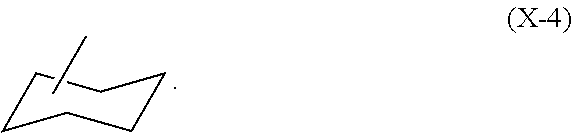
- the steric hindrance group is selected from one or more of the structures shown below:
- the number of steric hindrance groups on the donor molecule structure or the receptor molecule structure is less than or equal to six.
- the mass ratio of the donor molecule to the receptor molecule in the exciplex is 1:9 to 9:1.
- the mass ratio of the donor molecular material to the receptor molecular material is 1:2 to 1:5, or the mass ratio of the donor molecular material to the receptor molecular material is 2:1 to 5:1.
- the guest material is a fluorescent material or a phosphorescent material.
- the mass ratio of the host material to the guest material is 1000:1 to 2:1.
- the mass ratio of the host material to the guest material is 200:1 to 5:1.
- the organic electroluminescent device comprises a first electrode, a second electrode, and an organic functional layer located between the first electrode and the second electrode.
- the organic functional layer comprises a light-emitting layer.
- the light-emitting layer comprising a host material and an guest material; the host material being an exciplex composed of a donor molecule and a receptor molecule; the donor molecule and/or the receptor molecule containing a steric hindrance group X.
- the singlet-triplet energy level gap ⁇ E ST is reduced, thereby increasing the RISC rate (k RISC ) of the exciplex body, and facilitating the RISC of excitons from the triplet state to the singlet state.
- k RISC RISC rate
- the triplet energy of the exciplex body may be increased, which in turn causes molecular bonds of the exciplex body to be broken, resulting in a shortened device lifetime.
- the introduction of large steric hindrance groups X on the donor molecule and/or the receptor molecule is able to increase the distance between molecules of the exciplex body, reduce the triplet concentration of the host material in the light-emitting layer, and inhibit the Triplet-Triplet Annihilate (TTA) and TPA, thereby enabling to prolong the service life of the electroluminescent device.
- TTA Triplet-Triplet Annihilate
- the singlet or triplet energy transfer process from the host material to the guest material contains two energy transfer mechanisms, i.e., Förster energy transfer mechanism and Dexter energy transfer mechanism, as shown in FIG. 1 .
- Förster energy transfer mechanism i.e., Förster energy transfer mechanism and Dexter energy transfer mechanism
- Dexter energy transfer mechanism i.e., Dexter energy transfer mechanism
- the long-range Förster energy transfer mechanism has a longer energy transfer distance.
- the introduction of the large steric hindrance groups X on the donor molecule and/or the receptor molecule leads to an increased distance between molecules of the host material and the guest material so as to have the exciplex host material transfer energy to the guest material mainly through the Förster energy transfer mechanism, thereby inhibiting the Dexter energy transfer, avoiding the high doping concentration accompanied with the short-range Dexter energy transfer mode, and also avoiding the problems such as efficiency quenching, roll-off, and high cost of the electroluminescent device due to a high doping concentration.
- the steric hindrance of the donor molecules and/or the receptor molecules in the light-emitting layer is increased by introducing the large steric hindrance groups X of formula X-1-X-22 to the donor molecules and/or the receptor molecules, so as to increase the distance between the donor molecules and the receptor molecules, reduce the overlapping degree between HOMO and LUMO, increase the RISC rate (k RISC ) of the exciplex host material, enhance the Förster energy transfer, and improve the device efficiency.
- introducing the large steric hindrance groups of the above X-1-X-22 is able to reduce the triplet concentration of the host material in the light-emitting layer, inhibit the TPA, and prolong the device lifetime.
- X in the molecular structure of the donor molecule or the receptor molecule is hydrogen or a steric hindrance group, and at least one X is a steric hindrance group.
- At least one of the donor molecule and the receptor molecule contains a steric hindrance group, and the number of steric hindrance groups on a single donor molecule or receptor molecule structure is less than or equal to six, so that the service life of the OLED device is able to be prolonged, and the difficulty of the evaporation process is able to be controlled.
- the structure of each steric hindrance group may be different.
- FIG. 1 is a schematic diagram of energy transfer in the luminescence process of an organic electroluminescent device
- FIG. 2 is a schematic structural diagram of an organic electroluminescent device according to Exemplary embodiment 1 of the present disclosure
- FIG. 3 shows molecular structures of materials used in the electroluminescent device of Exemplary embodiments 1-4 and Comparative Exemplary embodiments 1 and 2 of the present disclosure
- FIG. 4 is an external quantum efficiency-brightness-power efficiency diagram of Exemplary embodiment 2 and Comparative Exemplary embodiment 1 of the present disclosure.
- FIG. 5 is a luminescent spectrum of an organic electroluminescent device of Exemplary embodiment 2 and Comparative Exemplary embodiment 1 of the present disclosure.
- a fluorescent OLED device capable of breaking the limitation of 25% of the internal quantum efficiency limitation mainly employs a Thermally Activated Delayed Fluorescence (TADF) mechanism.
- the TADF mechanism utilizes an organic small molecular material having a small singlet-triplet energy level gap ( ⁇ E ST ).
- ⁇ E ST small singlet-triplet energy level gap
- the triplet excitons of the organic small molecular material having a small singlet-triplet energy level gap can be converted to singlet excitons by the process of Reverse Intersystem Crossing (RISC) under the absorption of ambient heat, which allows to reach 100% of the internal quantum efficiency of the device in theory.
- RISC Reverse Intersystem Crossing
- the currently reported TADF material has a large efficiency roll-off and a short service life under high brightness, which limits its application in panchromatic display and white-light illumination.
- the present disclosure provides an organic electroluminescent device comprising an organic functional layer, the organic functional layer comprising a light-emitting layer, the light-emitting layer comprising a host material and a guest material; the host material being an exciplex composed of a donor molecule and a receptor molecule, the donor molecule and/or the receptor molecule containing a plurality of steric hindrance groups, so as to solve the problems of the large singlet-triplet energy level gap ( ⁇ EST) of an exciplex TADF host material, the low RISC rate k RISC , and the severe Triplet-Polaron Annihilate (TPA) in the light-emitting layer, thereby improving the device efficiency and the service life of the organic electroluminescent device.
- ⁇ EST large singlet-triplet energy level gap
- TPA severe Triplet-Polaron Annihilate
- This Exemplary embodiment provides an organic electroluminescent device, having a first electrode 1 , a second electrode 2 , and an organic functional layer 3 located between the first electrode 1 and the second electrode 2 , as shown in FIG. 2 .
- the first electrode 1 is an anode
- the second electrode 2 is a cathode
- the organic functional layer 3 includes a hole injection layer 31 , a hole transport layer 32 , a light-emitting layer 33 , an electron transport layer 34 , and an electron injection layer 35 which are arranged in a stacked manner. That is, the structure of the organic electroluminescent device is: anode/hole injection layer/hole transport layer/light-emitting layer/electron transport layer/electron injection layer/cathode.
- the light-emitting layer 33 is composed of a host material and a guest material doped in the host material.
- the guest material may be a fluorescent material or a phosphorescent material.
- the exciplex is used as the host material, and the mass ratio of the host material to the guest material is 1000:1 to 2:1, preferably 200:1 to 5:1.
- the exciplex is composed of a donor molecule and a receptor molecule.
- the donor molecule is a compound with the hole transport property containing at least one of carbazolyl, triphenylaminyl, and aryl.
- the receptor molecule is a compound with the electron transport property containing at least one of pyrimidinyl, triazinyl, oxadiazolyl, pyridyl, carbazolyl, aryl, cyano, acridinyl, dibenzothiophenyl, triphenylphosphonyl, and triphenylboryl.
- At least one of the donor molecule or the receptor molecule contains a steric hindrance group X for increasing the distance between the donor molecule and the receptor molecule, and the steric hindrance groups X each independently containing substituted or unsubstituted alkyl, cycloalkyl, aryl, silyl, and borosilicate.
- a compound composed of triphenylaminyl and carbazolyl is selected as the donor molecule, and the selected substituent group X is
- the compound has the structure as shown in formula (1-1):
- a compound composed of carbazolyl and triazinyl is selected as the receptor molecule, and the selected substituent group X is
- the compound has the structure as shown in formula (2-34):
- the first electrode 1 is made of ITO material
- the hole injection layer 31 is made of 2,3,6,7,10,11-hexacyano-1,4,5,8,9,12-hexaazatriphenylene (HATCN for short).
- the hole transport layer 32 is made of a hole transport material N,N′-diphenyl-N,N′-bis(1-naphthyl)-1,1′-biphenyl-4,4′-diamine (NPB for short).
- the electron transport layer 34 is made of an electron transport material 1,3,5-tris(1-phenyl-1H-benzimidazol-2-yl)benzene (TPBi for short).
- the electron injection layer 35 is made of an electron injection material LiF.
- the second electrode 2 is made of Al. The electron injection layer 35 and the second electrode 2 form an electron injection layer/metal layer structure.
- the light-emitting layer 33 is designed such that a donor molecule as shown in formula (1-1) and a receptor molecule as shown in formula (2-34) form an exciplex body.
- the mass ratio of the donor molecule as shown in formula (1-1) to the receptor molecule as shown in formula (2-34) is 2:8.
- a yellow fluorescent dye PPTPAD is selected as the guest material, and the doped yellow fluorescent material PPTPAD accounts for 1% of the mass of the light-emitting layer material to have the organic electroluminescent device form the following specific structure:
- ITO/HATCN (5 nm)/NPB (40 nm)/molecule (1-1) (19.8 wt %):molecule (2-34) (79.2 wt %):PPTPAD (1 wt %) (20 nm)/TPBi (40 nm)/LiF (0.5 nm)/Al (150 nm).
- the layer thickness is presented in parentheses, and the molecular formulas of molecule HATCN, molecule NPB, molecule PPTPAD, and molecule TPBi are as shown in FIG. 3 .
- the mass ratio of the donor molecule as shown in formula (1-1) to the receptor molecule as shown in formula (2-34) may also be selected to be other values in the range of 1:2-1:5, other values in the range of 2:1-5:1, or other values in the range of 1:9-9:1, which are all able to achieve the object of the present disclosure and fall within the protection scope of the present disclosure.
- the mass fraction of the doped yellow fluorescent material PPTPAD in the light-emitting layer material may also be selected to be other values in the range of 200:1-5:1 or other values in the range of 1000:1-2:1, which are all able to achieve the object of the present disclosure and fall within the protection scope of the present disclosure.
- the donor molecule and the receptor molecule forming the exciplex are not limited to the molecular structure as shown in formula (1-1) and the molecular structure as shown in formula (2-34):
- An exciplex is able to be formed by any one of the above provided donor molecule structures substituted by any one of the above steric hindrance groups X and any one of the above provided receptor molecules which are not substituted by the steric hindrance group X;
- An exciplex is able to be formed by any one of the above provided donor molecules which are not substituted by the steric hindrance group X and any one of the above provided receptor molecule structures substituted by any one of the above steric hindrance groups X;
- An exciplex is able to be formed by any one of the above provided donor molecule structures substituted by any one of the above steric hindrance groups X and any one of the above provided receptor molecule structures substituted by any one of the above steric hindrance groups X.
- the OLED device may be designed as an organic electroluminescent device, including an anode, a hole injection layer, a hole transport layer, an organic light-emitting layer, an electron transport layer, an electron injection layer, and a cathode.
- a compound composed of triphenylaminyl and carbazolyl is selected as the donor molecule, and the selected substituent group X is
- the compound has the structure as shown in formula (1-1):
- a compound composed of carbazolyl and triazinyl is selected as the receptor molecule and has a structure of formula (A), which differs from the molecule (2-34) used in the Exemplary embodiment 1 in that there is no large steric hindrance substituent group, i.e., tert-butyl.
- the molecular structure of formula (A) is as follows:
- the donor molecule as shown in formula (1-1) and the receptor molecule as shown in formula (A) form an exciplex.
- the mass ratio of the donor molecule as shown in formula (1-1) to the receptor molecule as shown in formula (A) is 2:8.
- Exemplary embodiment 2 differs from Exemplary embodiment 1 only in the aspect of organic light-emitting layer, i.e. the receptor molecule thereof does not contain a large steric hindrance group, and is designed as follows:
- ITO/HATCN (5 nm)/NPB (40 nm)/molecule (1-1) (19.8 wt %):molecule (A) (79.2 wt %):PPTPAD (1 wt %) (20 nm)/TPBi (40 nm)/LiF (0.5 nm)/Al (150 nm).
- the fluorescent dye PPTPAD is selected as the doping material, where the doped yellow fluorescent material PPTPAD accounts for 1% of the mass of the light-emitting layer material.
- the OLED device may be designed as an organic electroluminescent device, including an anode, a hole injection layer, a hole transport layer, an organic light-emitting layer, an electron transport layer, an electron injection layer, and a cathode.
- a compound composed of triphenylaminyl and carbazolyl is selected as the donor molecule, and has a structure of formula (B), which differs from the donor molecule (1-1) used in Exemplary embodiment 1 in that there is no large steric hindrance substituent group, i.e., tert-butyl.
- the molecular structure of formula (B) is as follows:
- a compound composed of carbazolyl and triazinyl is selected as the receptor molecule and has a structure of formula (A), which differs from the molecule (2-34) used in Exemplary embodiment 1 in that there is no large steric hindrance substituent group, i.e., tert-butyl.
- the donor molecule as shown in formula (B) and the receptor molecule as shown in formula (A) form an exciplex.
- the mass ratio of the donor molecule as shown in formula (B) to the receptor molecule as shown in formula (A) is 2:8.
- Comparative Exemplary embodiment 1 differs from Exemplary embodiments 1 and 2 only in the aspect of organic light-emitting layer, i.e. in Comparative Exemplary embodiment 1, the donor molecule and the receptor molecule do not contain a large steric hindrance group, and is designed as follows:
- ITO/HATCN 5 nm)/NPB (40 nm)/molecule (B) (19.8 wt %):molecule (A) (79.2 wt %):PPTPAD (1 wt %) (20 nm)/TPBi (40 nm)/LiF (0.5 nm)/Al (150 nm).
- the fluorescent dye PPTPAD is selected as the doping material, where the doped yellow fluorescent material PPTPAD accounts for 1% of the mass of the light-emitting layer material.
- the OLED device may be designed as an organic electroluminescent device, including an anode, a hole injection layer, a hole transport layer, an organic light-emitting layer, an electron transport layer, an electron injection layer, and a cathode.
- a compound composed of triphenylaminyl and carbazolyl is selected as the donor molecule, and the selected substituent group X is
- the compound has the structure as shown in formula (1-10):
- a compound composed of carbazolyl and triazinyl is selected as the receptor molecule, and the selected substituent group X is
- the compound has the structure as shown in formula (2-19):
- the first electrode, i.e., the anode, of the organic electroluminescent device is made of ITO material.
- the hole injection layer is made of 2,3,6,7,10,11-hexacyano-1,4,5,8,9,12-hexaazatriphenylene (HATCN for short).
- the hole transport layer is made of a hole transport material N,N′-diphenyl-N,N′-bis(1-naphthyl)-1,1′-biphenyl-4,4′-diamine (NPB for short).
- the electron transport layer is made of an electron transport material 1,3,5-tris(1-phenyl-1H-benzimidazol-2-yl)benzene (TPBi for short).
- An electron injection material LiF and a cathode material Al are selected to form an electron injection layer/metal layer structure.
- the light-emitting layer 33 is designed such that a donor molecule as shown in formula (1-10) and a receptor molecule as shown in formula (2-19) form an exciplex. In the exciplex, the mass ratio of the donor molecule as shown in formula (1-10) to the receptor molecule as shown in formula (2-19) is 1:1.
- a red phosphorescent dye Ir(piq) 3 is selected as the doping material, and the doped red phosphorescent material Ir(piq) 3 accounts for 1% of the mass of the light-emitting layer material to have the organic electroluminescent device form the following specific structure:
- ITO/HATCN (5 nm)/NPB (40 nm)/molecule (1-10) (49.5 wt %):molecule (2-19) (49.5 wt %):1 wt % Ir(piq) 3 (20 nm)/TPBi (40 nm)/LiF (0.5 nm)/Al (150 nm).
- the molecular structure of the red phosphorescent material Ir(piq) 3 is as shown in FIG. 3 .
- the OLED device may be designed as an organic electroluminescent device, including an anode, a hole injection layer, a hole transport layer, an organic light-emitting layer, an electron transport layer, an electron injection layer, and a cathode.
- a compound composed of triphenylaminyl and carbazolyl is selected as the donor molecule, and the selected substituent group X is
- the compound has the structure as shown in formula (1-10):
- a compound composed of carbazolyl and triazinyl is selected as the receptor molecule, and has a structure of formula (C), which differs from the receptor molecule (2-19) used in Exemplary embodiment 3 in that there is no large steric hindrance substituent group, i.e., tert-butyl.
- the molecular structure of formula (C) is as follows:
- An exciplex is formed by the donor molecule as shown in formula (1-10) and the receptor molecule as shown in formula (C).
- the mass ratio of the donor molecule as shown in formula (1-10) to the receptor molecule as shown in formula (C) is 1:1.
- Exemplary embodiment 4 differs from Exemplary embodiment 3 only in the aspect of organic light-emitting layer, i.e. the receptor molecule thereof does not contain a large steric hindrance group, and is designed as follows:
- ITO/HATCN (5 nm)/NPB (40 nm)/molecule (1-10) (49.5 wt %):molecule (C) (49.5 wt %):1 wt % Ir(piq) 3 (20 nm)/TPBi (40 nm)/LiF (0.5 nm)/Al (150 nm).
- a red phosphorescent dye Ir(piq) 3 is selected as the doping material, where the doped red phosphorescent material Ir(piq) 3 accounts for 1% of the mass of the light-emitting layer material.
- the OLED device may be designed as an organic electroluminescent device, including an anode, a hole injection layer, a hole transport layer, an organic light-emitting layer, an electron transport layer, an electron injection layer, and a cathode.
- a compound composed of triphenylaminyl and carbazolyl is selected as the donor molecule, and has a structure as shown in formula (B):
- a compound composed of carbazolyl and triazinyl is selected as the receptor molecule, and has a structure of formula (C), which differs from the receptor molecule (2-19) in Exemplary embodiment 3 in that there is no large steric hindrance substituent group, i.e., tert-butyl.
- the donor molecule as shown in formula (B) and the receptor molecule as shown in formula (C) form an exciplex.
- the mass ratio of the donor molecule as shown in formula (B) to the receptor molecule as shown in formula (C) is 1:1.
- Comparative Exemplary embodiment 2 differs from Exemplary embodiments 3 and 4 only in the aspect of organic light-emitting layer, i.e. in Comparative Exemplary embodiment 2, the donor molecule and the receptor molecule do not contain a large steric hindrance group, and is designed as follows:
- ITO/HATCN (5 nm)/NPB (40 nm)/molecule (B) (49.5 wt %):molecule (C) (49.5 wt %):1 wt % Ir(piq) 3 (20 nm)/TPBi (40 nm)/LiF (0.5 nm)/Al (150 nm).
- a red phosphorescent dye Ir(piq) 3 is selected as the doping material, where the doped red phosphorescent material Ir(piq) 3 accounts for 1% of the mass of the light-emitting layer material.
- This Exemplary embodiment differs from Exemplary embodiment 1 in that the donor molecule has a structure as shown in formula (1-7), the mass ratio of the donor molecule material to the receptor molecule material is 1:9, and the mass ratio of the host material to the guest material is 200:1.
- the device has an external quantum efficiency of 12.6% and a CIE color coordinate (0.32, 0.59) at a brightness of 5000 cd/m 2 .
- This Exemplary embodiment differs from Exemplary embodiment 1 in that the donor molecule has a structure as shown in formula (1-10), the mass ratio of the donor molecule material to the receptor molecule material is 1:2, and the mass ratio of the host material to the guest material is 200:1.
- the resulting device has an external quantum efficiency of 14.1% and a CIE color coordinate (0.32, 0.59) at a brightness of 5000 cd/m 2 .
- This Exemplary embodiment differs from Exemplary embodiment 1 in that the donor molecule has a structure as shown in formula (1-13), the mass ratio of the donor molecule material to the receptor molecule material is 1:1, and the mass ratio of the host material to the guest material is 5:1.
- the resulting device has an external quantum efficiency of 12.4% and a CIE color coordinate (0.32, 0.59) at a brightness of 5000 cd/m 2 .
- This Exemplary embodiment differs from Exemplary embodiment 1 in that the donor molecule has a structure as shown in formula (1-16), the mass ratio of the donor molecule to the receptor molecule is 2:3, and the mass ratio of the host material to the guest material is 2:1.
- the resulting device has an external quantum efficiency of 13.6% and a CIE color coordinate (0.32, 0.59) at a brightness of 5000 cd/m 2 .
- This Exemplary embodiment differs from Exemplary embodiment 2 in that the donor molecule has a structure as shown in formula (1-18), the mass ratio of the donor molecule to the receptor molecule is 1:3, and the mass ratio of the host material to the guest material is 100:1.
- the resulting device has an external quantum efficiency of 14.6% and a CIE color coordinate (0.32, 0.59) at a brightness of 5000 cd/m 2 .
- This Exemplary embodiment differs from Exemplary embodiment 2 in that the donor molecule has a structure as shown in formula (1-25), the mass ratio of the donor molecule to the receptor molecule is 1:4, and the mass ratio of the host material to the guest material is 150:1.
- the device has an external quantum efficiency of 15.1% and a CIE color coordinate (0.33, 0.59) at a brightness of 5000 cd/m 2 .
- This Exemplary embodiment differs from Exemplary embodiment 2 in that the donor molecule has a structure as shown in formula (1-26), the mass ratio of the donor molecule to the receptor molecule is 1:4, and the mass ratio of the host material to the guest material is 150:1.
- the resulting device has an external quantum efficiency of 13.8% and a CIE color coordinate (0.33, 0.59) at a brightness of 5000 cd/m 2 .
- This Exemplary embodiment differs from Exemplary embodiment 3 in that the receptor molecule has a structure as shown in formula (2-5), the mass ratio of the donor molecule to the receptor molecule is 2:1, and the mass ratio of the host material to the guest material is 500:1.
- the resulting device has an external quantum efficiency of 14.2% and a CIE color coordinate (0.67, 0.33) at a brightness of 5000 cd/m 2 .
- This Exemplary embodiment differs from Exemplary embodiment 3 in that the receptor molecule has a structure as shown in formula (2-16), the mass ratio of the donor molecule to the receptor molecule is 1:1, and the mass ratio of the host material to the guest material is 150:1.
- the device has an external quantum efficiency of 17.1% and a CIE color coordinate (0.67, 0.33) at a brightness of 5000 cd/m 2 .
- This Exemplary embodiment differs from Exemplary embodiment 4 in that the receptor molecule has a structure as shown in formula (2-17), the mass ratio of the donor molecule to the receptor molecule is 1:1, and the mass ratio of the host material to the guest material is 150:1.
- the device has an external quantum efficiency of 17.7% and a CIE color coordinate (0.67, 0.33) at a brightness of 5000 cd/m 2 .
- This Exemplary embodiment differs from Exemplary embodiment 1 in that the receptor molecule has a structure as shown in formula (2-20), the mass ratio of the donor molecule to the receptor molecule is 6:4, and the mass ratio of the host material to the guest material is 90:1.
- the device has an external quantum efficiency of 13.9% and a CIE color coordinate (0.33, 0.59) at a brightness of 5000 cd/m 2 .
- This Exemplary embodiment differs from Exemplary embodiment 1 in that the receptor molecule has a structure as shown in formula (2-25), the mass ratio of the donor molecule to the receptor molecule is 3:7, and the mass ratio of the host material to the guest material is 60:1.
- the device has an external quantum efficiency of 14.8% and a CIE color coordinate (0.33, 0.59) at a brightness of 5000 cd/m 2 .
- This Exemplary embodiment differs from Exemplary embodiment 2 in that the receptor molecule has a structure as shown in formula (2-26), the mass ratio of the donor molecule to the receptor molecule is 4:6, and the mass ratio of the host material to the guest material is 40:1.
- the device has an external quantum efficiency of 15.8% and a CIE color coordinate (0.33, 0.59) at a brightness of 5000 cd/m 2 .
- This Exemplary embodiment differs from Exemplary embodiment 3 in that the receptor molecule has a structure as shown in formula (2-31), the mass ratio of the donor molecule to the receptor molecule is 1:8, and the mass ratio of the host material to the guest material is 100:1.
- the device has an external quantum efficiency of 18.1% and a CIE color coordinate (0.67, 0.33) at a brightness of 5000 cd/m 2 .
- This Exemplary embodiment differs from Exemplary embodiment 3 in that the receptor molecule has a structure as shown in formula (2-32), the mass ratio of the donor molecule to the receptor molecule is 1:7, and the mass ratio of the host material to the guest material is 180:1.
- the device has an external quantum efficiency of 17.9% and a CIE color coordinate (0.67, 0.33) at a brightness of 5000 cd/m 2 .
- This Exemplary embodiment differs from Exemplary embodiment 4 in that the receptor molecule has a structure as shown in formula (2-35), the mass ratio of the donor molecule to the receptor molecule is 1:6, and the mass ratio of the host material to the guest material is 80:1.
- the device has an external quantum efficiency of 16.9% and a CIE color coordinate (0.67, 0.33) at a brightness of 5000 cd/m 2 .
- This Exemplary embodiment differs from Exemplary embodiment 4 in that the receptor molecule has a structure as shown in formula (2-36), the mass ratio of the donor molecule to the receptor molecule is 1:1, and the mass ratio of the host material to the guest material is 60:1.
- the device has an external quantum efficiency of 18.0% and a CIE color coordinate (0.67, 0.33) at a brightness of 5000 cd/m 2 .
- the selectable structural formulas and the substitutable positions of the steric hindrance group X of the donor molecule are as shown in any one of formulas (D-1) to (D-9).
- the selectable structural formulas and the substitutable positions of the steric hindrance group X of the receptor molecule are as shown in any one of formulas (A-1) to (A-12).
- X in the molecular structure of the donor molecule or the receptor molecule is hydrogen or a steric hindrance group, and at least one X is a steric hindrance group.
- At least one of the donor molecule and the receptor molecule contains a steric hindrance group, and the number of steric hindrance groups on a single donor molecule or receptor molecule structure is less than or equal to six.
- the structure of each steric hindrance group may be different.
- the steric hindrance group X may be selected from one or more of the structures shown in formulas (X-1) to (X-22).
- the structure of the donor molecule may be any one of the structures shown in formulas (1-1) to (1-27).
- the structure of the receptor molecule may be any one of the structures shown in formulas (2-1) to (2-36).
- the mass ratio of the donor molecule to the receptor molecule in the exciplex is 1:9 to 9:1.
- the mass ratio of the donor molecular material to the receptor molecular material is 1:2 to 1:5, or, the mass ratio of the donor molecular material to the receptor molecular material is 2:1 to 5:1.
- the guest materials are 1% doped fluorescent material PPTPAD.
- the external quantum efficiency and the power efficiency of the OLED devices of Exemplary embodiment 1 and Exemplary embodiment 2 are higher than those of the OLED device of Comparative Exemplary embodiment 1 at the same brightness.
- the external quantum efficiency and the power efficiency of the OLED device of Exemplary embodiment 1 are higher than those of the OLED device of Exemplary embodiment 2, since each of the donor molecule and the receptor molecule provided in Exemplary embodiment 1 contains a large steric hindrance group.
- the donor and/or receptor material containing the large steric hindrance group enables to increase the inter-molecular distance between the donor molecule and the receptor molecule, decrease the overlapping degree between the HOMO and LUMO orbitals forming the exciplex body, and reduce the singlet-triplet energy level gap ⁇ E ST , thereby increasing the RISC rate (k RISC ) of the exciplex body, enhancing the Föster energy transfer to the guest molecule, and improving the efficiency of the organic electroluminescent device.
- the ordinate is the external quantum efficiency and the power efficiency
- the abscissa is the brightness.
- the electroluminescence performance of the OLED device of Exemplary embodiment 2 is better than that of the OLED device of Comparative Exemplary embodiment 1 at the same brightness. This indicates that the device performance under the exciplex host material with a large steric hindrance group X (tert-butyl) is better than device performance under the exciplex host material without a large steric hindrance group, which is reflected in a higher external quantum efficiency and power efficiency.
- FIG. 5 shows the luminescence spectra of the organic electroluminescent devices of Exemplary embodiment 2 and Comparative Exemplary embodiment 1.
- the lifetimes LT90 of Exemplary embodiment 1, Exemplary embodiment 2 and Comparative Exemplary embodiment 1 are tested at a constant brightness of 5000 cd/m 2 , and Comparative Exemplary embodiment 1 is defined as a standard device having a lifetime of 1 equivalent.
- Comparative Exemplary embodiment 1 is defined as a standard device having a lifetime of 1 equivalent.
- Table 1 the OLED devices of Exemplary embodiment 1 and Exemplary embodiment 2 both have an improved lifetime compared to the OLED device of Comparative Exemplary embodiment 1, and the OLED device of Exemplary embodiment 1 has the longest lifetime. Therefore, the introduction of a large steric hindrance group enables to effectively reduce the triplet concentration in the light-emitting layer, inhibit the TPA, and prolong the device lifetime.
- the guest luminescent materials are 1% doped phosphorescent material Ir(piq) 3 .
- the external quantum efficiency and the power efficiency of the OLED devices of Exemplary embodiment 3 and Exemplary embodiment 4 are higher than those of the OLED device of Comparative Exemplary embodiment 2 at the same brightness.
- the donor and/or receptor molecule containing the large steric hindrance group enables to decrease the overlapping degree between the HOMO and LUMO orbitals forming the exciplex body, and reduce the singlet-triplet energy level gap ⁇ E ST , thereby increasing the RISC rate (k RISC ) of the exciplex body, enhancing the Föster energy transfer to the guest molecule, improving the efficiency of the organic electroluminescent device, and achieving a better performance of the phosphorescent luminescent device. Since both the donor molecule and the receptor molecule have the large steric hindrance group X, the OLED device of Exemplary embodiment 3 has the best performance. Moreover, the doping concentration of the guest material is only 1%, which is low and thus results in a reduced device cost.
- the lifetimes LT90 of Exemplary embodiment 3, Exemplary embodiment 4 and Comparative Exemplary embodiment 1 are tested at a constant brightness of 5000 cd/m 2
- Comparative Exemplary embodiment 2 is defined as a standard device having a lifetime of 1 equivalent.
- Table 2 the OLED devices of Exemplary embodiment 3 and Exemplary embodiment 4 both have an improved lifetime (LT90 is tested at a constant brightness of 5000 cd/m 2 ) compared to the OLED device of Comparative Exemplary embodiment 2, which indicates that the introduction of the large steric hindrance group enables to effectively reduce the triplet concentration in the light-emitting layer, inhibit the TPA, and prolong the device lifetime.
Landscapes
- Chemical & Material Sciences (AREA)
- Organic Chemistry (AREA)
- Engineering & Computer Science (AREA)
- Materials Engineering (AREA)
- Physics & Mathematics (AREA)
- Spectroscopy & Molecular Physics (AREA)
- Optics & Photonics (AREA)
- Electroluminescent Light Sources (AREA)
Abstract
Description


The compound has the structure as shown in formula (1-1):


The compound has the structure as shown in formula (2-34):


The compound has the structure as shown in formula (1-1):


The compound has the structure as shown in formula (1-10):


The compound has the structure as shown in formula (2-19):


The compound has the structure as shown in formula (1-10):


| TABLE 1 |
| Performance test of the OLED devices |
| External | Power | Device | ||||
| Brightness | quantum | efficiency | lifetime | CIE color | ||
| (cd/m2) | efficiency | (lm/W) | LT90 | coordinate | ||
| Exemplary | 5000 | 16.6% | 26.6 | 1.4 | (0.32, 0.59) |
| |
|||||
| 1 | |||||
| Exemplary | 5000 | 16.1% | 25.8 | 1.3 | (0.32, 0.59) |
| |
|||||
| 2 | |||||
| Comparative | 5000 | 11.8% | 16.1 | 1 | (0.33, 0.59) |
| | |||||
| embodiment | |||||
| 1 | |||||
| TABLE 2 |
| Performance test of the OLED devices |
| External | Power | Device | ||||
| Brightness | quantum | efficiency | lifetime | CIE color | ||
| (cd/m2) | efficiency | (lm/W) | LT90 | coordinate | ||
| Exemplary | 5000 | 18.4% | 14.8 | 1.3 | (0.67, 0.33) |
| |
|||||
| 3 | |||||
| Exemplary | 5000 | 17.6% | 13.2 | 1.1 | (0.67, 0.33) |
| embodiment | |||||
| 4 | |||||
| Comparative | 5000 | 15.2% | 11.8 | 1 | (0.67, 0.33) |
| | |||||
| embodiment | |||||
| 2 | |||||
Claims (16)




Applications Claiming Priority (3)
| Application Number | Priority Date | Filing Date | Title |
|---|---|---|---|
| CN201711302958.6A CN109904332B (en) | 2017-12-08 | 2017-12-08 | Organic electroluminescent device |
| CN201711302958.6 | 2017-12-08 | ||
| PCT/CN2018/088881 WO2019109608A1 (en) | 2017-12-08 | 2018-05-29 | Organic electroluminescent device |
Related Parent Applications (1)
| Application Number | Title | Priority Date | Filing Date |
|---|---|---|---|
| PCT/CN2018/088881 Continuation WO2019109608A1 (en) | 2017-12-08 | 2018-05-29 | Organic electroluminescent device |
Publications (2)
| Publication Number | Publication Date |
|---|---|
| US20200006666A1 US20200006666A1 (en) | 2020-01-02 |
| US11778902B2 true US11778902B2 (en) | 2023-10-03 |
Family
ID=66213226
Family Applications (1)
| Application Number | Title | Priority Date | Filing Date |
|---|---|---|---|
| US16/558,691 Active 2040-03-21 US11778902B2 (en) | 2017-12-08 | 2019-09-03 | Organic electroluminescent devices |
Country Status (4)
| Country | Link |
|---|---|
| US (1) | US11778902B2 (en) |
| CN (1) | CN109904332B (en) |
| TW (1) | TWI703202B (en) |
| WO (1) | WO2019109608A1 (en) |
Families Citing this family (11)
| Publication number | Priority date | Publication date | Assignee | Title |
|---|---|---|---|---|
| TWI826522B (en) * | 2018-09-12 | 2023-12-21 | 德商麥克專利有限公司 | Electroluminescent devices |
| CN112321630A (en) * | 2019-12-27 | 2021-02-05 | 广东聚华印刷显示技术有限公司 | Electron donor compound, method for producing the same, light-emitting device, and display device |
| CN111943829B (en) * | 2020-07-27 | 2022-04-15 | 清华大学 | Exciplex, application thereof and organic electroluminescent device adopting exciplex |
| KR20220036138A (en) * | 2020-09-15 | 2022-03-22 | 삼성전자주식회사 | A polycyclic compound and organic light emitting device including the same |
| CN112117388B (en) * | 2020-09-23 | 2023-10-24 | 京东方科技集团股份有限公司 | Organic electroluminescent device, display panel and display device |
| KR20220087631A (en) * | 2020-12-17 | 2022-06-27 | 삼성디스플레이 주식회사 | Heterocyclic compound, light emitting device including the same and electronic apparatus including the device |
| CN113346029B (en) * | 2021-05-31 | 2024-05-07 | 北京维信诺科技有限公司 | Display structure and manufacturing method thereof, display panel, and display device |
| CN113461545B (en) * | 2021-07-22 | 2023-07-18 | 季华恒烨(佛山)电子材料有限公司 | Organic phosphorescence composition, preparation method and application thereof |
| KR20230041574A (en) * | 2021-09-17 | 2023-03-24 | 삼성전자주식회사 | Heterocyclic compound, organic light emitting device including the same and electronic apparatus including the organic light emitting device |
| KR20230056805A (en) * | 2021-10-19 | 2023-04-28 | 삼성디스플레이 주식회사 | Light emitting element |
| CN116425788B (en) * | 2021-12-29 | 2025-07-11 | 广州华睿光电材料有限公司 | Organic compound and mixture, composition and organic electronic device comprising the same |
Citations (11)
| Publication number | Priority date | Publication date | Assignee | Title |
|---|---|---|---|---|
| JP2000103786A (en) | 1998-09-30 | 2000-04-11 | Fuji Photo Film Co Ltd | Electroluminescent device material and electroluminescent device using the same |
| JP2001006878A (en) | 1999-06-22 | 2001-01-12 | Matsushita Electric Ind Co Ltd | Thin film EL element and driving method thereof |
| CN1914294A (en) | 2004-01-30 | 2007-02-14 | 伊斯曼柯达公司 | Organic components for organic electroluminescent devices |
| JP2010215759A (en) * | 2009-03-16 | 2010-09-30 | Konica Minolta Holdings Inc | Organic electroluminescent element, display, lighting device, and material for organic electroluminescent element |
| US20160087227A1 (en) * | 2014-09-19 | 2016-03-24 | Samsung Display Co., Ltd. | Organic light-emitting device |
| JP2016092194A (en) | 2014-11-04 | 2016-05-23 | 株式会社半導体エネルギー研究所 | LIGHT EMITTING ELEMENT, LIGHT EMITTING DEVICE, ELECTRONIC DEVICE, AND LIGHTING DEVICE |
| US20160164020A1 (en) * | 2014-12-04 | 2016-06-09 | Seoul National University R&Db Foundation | Organic light-emitting device |
| CN105895811A (en) | 2015-01-26 | 2016-08-24 | 北京维信诺科技有限公司 | Thermal activation sensitized fluorescence organic electroluminescent light emitting device |
| CN106920884A (en) | 2015-12-25 | 2017-07-04 | 昆山工研院新型平板显示技术中心有限公司 | A kind of organic electroluminescence device |
| US20170194585A1 (en) * | 2014-05-30 | 2017-07-06 | Guangzhou Chinaray Optoelectronic Materials Ltd. | Organic mixture, formulation and organic electronic device comprising thereof, and their applications |
| US11063224B2 (en) * | 2018-05-30 | 2021-07-13 | Kunshan Go-Visionox Opto-Electronics Co., Ltd. | Organic electroluminescent device |
-
2017
- 2017-12-08 CN CN201711302958.6A patent/CN109904332B/en active Active
-
2018
- 2018-05-29 WO PCT/CN2018/088881 patent/WO2019109608A1/en not_active Ceased
- 2018-06-27 TW TW107122127A patent/TWI703202B/en active
-
2019
- 2019-09-03 US US16/558,691 patent/US11778902B2/en active Active
Patent Citations (11)
| Publication number | Priority date | Publication date | Assignee | Title |
|---|---|---|---|---|
| JP2000103786A (en) | 1998-09-30 | 2000-04-11 | Fuji Photo Film Co Ltd | Electroluminescent device material and electroluminescent device using the same |
| JP2001006878A (en) | 1999-06-22 | 2001-01-12 | Matsushita Electric Ind Co Ltd | Thin film EL element and driving method thereof |
| CN1914294A (en) | 2004-01-30 | 2007-02-14 | 伊斯曼柯达公司 | Organic components for organic electroluminescent devices |
| JP2010215759A (en) * | 2009-03-16 | 2010-09-30 | Konica Minolta Holdings Inc | Organic electroluminescent element, display, lighting device, and material for organic electroluminescent element |
| US20170194585A1 (en) * | 2014-05-30 | 2017-07-06 | Guangzhou Chinaray Optoelectronic Materials Ltd. | Organic mixture, formulation and organic electronic device comprising thereof, and their applications |
| US20160087227A1 (en) * | 2014-09-19 | 2016-03-24 | Samsung Display Co., Ltd. | Organic light-emitting device |
| JP2016092194A (en) | 2014-11-04 | 2016-05-23 | 株式会社半導体エネルギー研究所 | LIGHT EMITTING ELEMENT, LIGHT EMITTING DEVICE, ELECTRONIC DEVICE, AND LIGHTING DEVICE |
| US20160164020A1 (en) * | 2014-12-04 | 2016-06-09 | Seoul National University R&Db Foundation | Organic light-emitting device |
| CN105895811A (en) | 2015-01-26 | 2016-08-24 | 北京维信诺科技有限公司 | Thermal activation sensitized fluorescence organic electroluminescent light emitting device |
| CN106920884A (en) | 2015-12-25 | 2017-07-04 | 昆山工研院新型平板显示技术中心有限公司 | A kind of organic electroluminescence device |
| US11063224B2 (en) * | 2018-05-30 | 2021-07-13 | Kunshan Go-Visionox Opto-Electronics Co., Ltd. | Organic electroluminescent device |
Non-Patent Citations (6)
| Title |
|---|
| Chinese Office Action dated Sep. 29, 2019, in connection with corresponding CN Application No. 201711302958.6 (9 pgs., including machine-generated English translation). |
| Ding et al., "Design of star-shaped molecular architectures based on carbazole and phosphine oxide moieties: towards amorphous bipolar hosts with high triplet energy for efficient blue electrophosphorescent devices" J. Mater. Chem., 2010, 20, 8126-8133. (Year: 2010). * |
| Ikemizu D et al., machine translation of JP-2010215759-A (2010) pp. 1-178. (Year: 2010). * |
| International Search Report dated Aug. 1, 2018 in corresponding International application No. PCT/CN2018/088881; 4 pages. |
| Moonsin et al., "Carbazole dendronised triphenylamines as solution processed high Tg amorphous hole-transporting materials for organic electroluminescent devices" Chem. Commun., 2012, 48, 3382-3384. (Year: 2012). * |
| Zhang et al., "Simultaneous Enhancement of Efficiency and Stability of Phosphorescent OLEDs Based on Efficient Förster Energy Transfer from Interface Exciplex" ACS Appl. Mater. Interfaces 2016, 8, 3825-3832. (Year: 2016). * |
Also Published As
| Publication number | Publication date |
|---|---|
| TW201905167A (en) | 2019-02-01 |
| US20200006666A1 (en) | 2020-01-02 |
| CN109904332A (en) | 2019-06-18 |
| TWI703202B (en) | 2020-09-01 |
| CN109904332B (en) | 2020-04-10 |
| WO2019109608A1 (en) | 2019-06-13 |
Similar Documents
| Publication | Publication Date | Title |
|---|---|---|
| US20200006666A1 (en) | Organic electroluminescent devices | |
| US11362295B2 (en) | Organic electroluminescent device | |
| Swayamprabha et al. | Hole-transporting materials for organic light-emitting diodes: an overview | |
| US20230389415A1 (en) | Organic Light Emitting Display Device | |
| US12262636B2 (en) | Organic electroluminescent devices and preparation methods thereof | |
| US11063224B2 (en) | Organic electroluminescent device | |
| US11778908B2 (en) | Organic electroluminescent devices | |
| US11778894B2 (en) | Boron-containing organic light-emitting diode device and preparation method thereof | |
| US20240334817A1 (en) | Organic electroluminescent device, display panel, and display device | |
| US20200203610A1 (en) | Organic electroluminescent device and preparation method and display apparatus thereof | |
| US11515485B2 (en) | Organic light emitting diode and organic light emitting device having the same | |
| US11895915B2 (en) | Organic light emitting diode and organic light emitting device having the same | |
| US10658593B2 (en) | Organic light emitting display device | |
| US11417853B2 (en) | Organic light-emitting diode and organic light-emitting device having the same | |
| US10763449B2 (en) | Organic light-emitting diode (OLED) display panel, fabrication method and electronic device thereof | |
| CN108011040B (en) | Green light organic electroluminescent device | |
| US20190157570A1 (en) | Composition, thin film including the composition, and organic light-emitting device including the thin film | |
| CN116584178A (en) | Organic compounds of formula (I), compositions comprising compounds of formula (IV) and at least one compound of formulas (IVa) to (IVd), organic semiconductors comprising said compounds or compositions, for use in organic electronic devices layer, an organic electronic device comprising the organic semiconductor layer, and a display device comprising the organic electronic device | |
| US20190074467A1 (en) | Solvent coatable oled emitter composition containing non-plasmonic molecular noble metal nanoparticles and emitter materials in noncrystallizable molecular organic semiconductors | |
| US20250255091A1 (en) | Organic light-emitting diode and display apparatus | |
| US12622168B2 (en) | Organic light emitting diode and organic light emitting device including thereof | |
| US20230232711A1 (en) | Organic Electronic Device Comprising a Compound of Formula (I), Display Device Comprising the Organic Electronic Device as Well as Compounds of Formula (I) for Use in Organic Electronic Devices | |
| US20250255183A1 (en) | Organic light-emitting diode and display apparatus | |
| US10593886B2 (en) | OLED devices with improved lifetime using non-crystallizable molecular glass mixture hosts | |
| US20230165132A1 (en) | Organic light emitting diode and organic light emitting device including thereof |
Legal Events
| Date | Code | Title | Description |
|---|---|---|---|
| AS | Assignment |
Owner name: KUNSHAN GO-VISIONOX OPTO-ELECTRONICS CO., LTD., CHINA Free format text: ASSIGNMENT OF ASSIGNORS INTEREST;ASSIGNORS:DUAN, LIAN;SONG, XIAOZENG;ZHANG, DONGDONG;AND OTHERS;REEL/FRAME:050256/0166 Effective date: 20190805 Owner name: TSINGHUA UNIVERSITY, CHINA Free format text: ASSIGNMENT OF ASSIGNORS INTEREST;ASSIGNORS:DUAN, LIAN;SONG, XIAOZENG;ZHANG, DONGDONG;AND OTHERS;REEL/FRAME:050256/0166 Effective date: 20190805 Owner name: KUNSHAN GO-VISIONOX OPTO-ELECTRONICS CO., LTD., CH Free format text: ASSIGNMENT OF ASSIGNORS INTEREST;ASSIGNORS:DUAN, LIAN;SONG, XIAOZENG;ZHANG, DONGDONG;AND OTHERS;REEL/FRAME:050256/0166 Effective date: 20190805 |
|
| FEPP | Fee payment procedure |
Free format text: ENTITY STATUS SET TO UNDISCOUNTED (ORIGINAL EVENT CODE: BIG.); ENTITY STATUS OF PATENT OWNER: LARGE ENTITY |
|
| STPP | Information on status: patent application and granting procedure in general |
Free format text: APPLICATION DISPATCHED FROM PREEXAM, NOT YET DOCKETED |
|
| STPP | Information on status: patent application and granting procedure in general |
Free format text: DOCKETED NEW CASE - READY FOR EXAMINATION |
|
| STPP | Information on status: patent application and granting procedure in general |
Free format text: NON FINAL ACTION MAILED |
|
| STPP | Information on status: patent application and granting procedure in general |
Free format text: RESPONSE TO NON-FINAL OFFICE ACTION ENTERED AND FORWARDED TO EXAMINER |
|
| STPP | Information on status: patent application and granting procedure in general |
Free format text: FINAL REJECTION MAILED |
|
| STPP | Information on status: patent application and granting procedure in general |
Free format text: RESPONSE AFTER FINAL ACTION FORWARDED TO EXAMINER |
|
| STPP | Information on status: patent application and granting procedure in general |
Free format text: ADVISORY ACTION MAILED |
|
| STPP | Information on status: patent application and granting procedure in general |
Free format text: DOCKETED NEW CASE - READY FOR EXAMINATION |
|
| STPP | Information on status: patent application and granting procedure in general |
Free format text: NON FINAL ACTION MAILED |
|
| STPP | Information on status: patent application and granting procedure in general |
Free format text: NOTICE OF ALLOWANCE MAILED -- APPLICATION RECEIVED IN OFFICE OF PUBLICATIONS |
|
| STPP | Information on status: patent application and granting procedure in general |
Free format text: PUBLICATIONS -- ISSUE FEE PAYMENT VERIFIED |
|
| STCF | Information on status: patent grant |
Free format text: PATENTED CASE |