US11772408B2 - Image forming system - Google Patents

Image forming system Download PDF

Info

Publication number
US11772408B2
US11772408B2 US17/498,847 US202117498847A US11772408B2 US 11772408 B2 US11772408 B2 US 11772408B2 US 202117498847 A US202117498847 A US 202117498847A US 11772408 B2 US11772408 B2 US 11772408B2
Authority
US
United States
Prior art keywords
recording material
image forming
pressure sealing
sealing processing
unit
Prior art date
Legal status (The legal status is an assumption and is not a legal conclusion. Google has not performed a legal analysis and makes no representation as to the accuracy of the status listed.)
Active, expires
Application number
US17/498,847
Other versions
US20220134795A1 (en
Inventor
Yoshiro Tsukada
Shohei Okumura
Kota Mori
Kenichiro Kitajima
Tohru Nakaegawa
Current Assignee (The listed assignees may be inaccurate. Google has not performed a legal analysis and makes no representation or warranty as to the accuracy of the list.)
Canon Inc
Original Assignee
Canon Inc
Priority date (The priority date is an assumption and is not a legal conclusion. Google has not performed a legal analysis and makes no representation as to the accuracy of the date listed.)
Filing date
Publication date
Application filed by Canon Inc filed Critical Canon Inc
Assigned to CANON KABUSHIKI KAISHA reassignment CANON KABUSHIKI KAISHA ASSIGNMENT OF ASSIGNORS INTEREST (SEE DOCUMENT FOR DETAILS). Assignors: OKUMURA, SHOHEI, KITAJIMA, KENICHIRO, MORI, KOTA, NAKAEGAWA, TOHRU, TSUKADA, YOSHIRO
Publication of US20220134795A1 publication Critical patent/US20220134795A1/en
Application granted granted Critical
Publication of US11772408B2 publication Critical patent/US11772408B2/en
Active legal-status Critical Current
Adjusted expiration legal-status Critical

Links

Images

Classifications

    • GPHYSICS
    • G03PHOTOGRAPHY; CINEMATOGRAPHY; ANALOGOUS TECHNIQUES USING WAVES OTHER THAN OPTICAL WAVES; ELECTROGRAPHY; HOLOGRAPHY
    • G03GELECTROGRAPHY; ELECTROPHOTOGRAPHY; MAGNETOGRAPHY
    • G03G15/00Apparatus for electrographic processes using a charge pattern
    • G03G15/65Apparatus which relate to the handling of copy material
    • G03G15/6538Devices for collating sheet copy material, e.g. sorters, control, copies in staples form
    • G03G15/6541Binding sets of sheets, e.g. by stapling, glueing
    • G03G15/6544Details about the binding means or procedure
    • BPERFORMING OPERATIONS; TRANSPORTING
    • B41PRINTING; LINING MACHINES; TYPEWRITERS; STAMPS
    • B41JTYPEWRITERS; SELECTIVE PRINTING MECHANISMS, i.e. MECHANISMS PRINTING OTHERWISE THAN FROM A FORME; CORRECTION OF TYPOGRAPHICAL ERRORS
    • B41J2/00Typewriters or selective printing mechanisms characterised by the printing or marking process for which they are designed
    • B41J2/435Typewriters or selective printing mechanisms characterised by the printing or marking process for which they are designed characterised by selective application of radiation to a printing material or impression-transfer material
    • B41J2/47Typewriters or selective printing mechanisms characterised by the printing or marking process for which they are designed characterised by selective application of radiation to a printing material or impression-transfer material using the combination of scanning and modulation of light
    • B41J2/471Typewriters or selective printing mechanisms characterised by the printing or marking process for which they are designed characterised by selective application of radiation to a printing material or impression-transfer material using the combination of scanning and modulation of light using dot sequential main scanning by means of a light deflector, e.g. a rotating polygonal mirror
    • BPERFORMING OPERATIONS; TRANSPORTING
    • B42BOOKBINDING; ALBUMS; FILES; SPECIAL PRINTED MATTER
    • B42DBOOKS; BOOK COVERS; LOOSE LEAVES; PRINTED MATTER CHARACTERISED BY IDENTIFICATION OR SECURITY FEATURES; PRINTED MATTER OF SPECIAL FORMAT OR STYLE NOT OTHERWISE PROVIDED FOR; DEVICES FOR USE THEREWITH AND NOT OTHERWISE PROVIDED FOR; MOVABLE-STRIP WRITING OR READING APPARATUS
    • B42D25/00Information-bearing cards or sheet-like structures characterised by identification or security features; Manufacture thereof
    • B42D25/40Manufacture
    • B42D25/45Associating two or more layers
    • B42D25/46Associating two or more layers using pressure
    • BPERFORMING OPERATIONS; TRANSPORTING
    • B41PRINTING; LINING MACHINES; TYPEWRITERS; STAMPS
    • B41JTYPEWRITERS; SELECTIVE PRINTING MECHANISMS, i.e. MECHANISMS PRINTING OTHERWISE THAN FROM A FORME; CORRECTION OF TYPOGRAPHICAL ERRORS
    • B41J13/00Devices or arrangements of selective printing mechanisms, e.g. ink-jet printers or thermal printers, specially adapted for supporting or handling copy material in short lengths, e.g. sheets
    • BPERFORMING OPERATIONS; TRANSPORTING
    • B41PRINTING; LINING MACHINES; TYPEWRITERS; STAMPS
    • B41JTYPEWRITERS; SELECTIVE PRINTING MECHANISMS, i.e. MECHANISMS PRINTING OTHERWISE THAN FROM A FORME; CORRECTION OF TYPOGRAPHICAL ERRORS
    • B41J13/00Devices or arrangements of selective printing mechanisms, e.g. ink-jet printers or thermal printers, specially adapted for supporting or handling copy material in short lengths, e.g. sheets
    • B41J13/10Sheet holders, retainers, movable guides, or stationary guides
    • B41J13/103Sheet holders, retainers, movable guides, or stationary guides for the sheet feeding section
    • BPERFORMING OPERATIONS; TRANSPORTING
    • B42BOOKBINDING; ALBUMS; FILES; SPECIAL PRINTED MATTER
    • B42DBOOKS; BOOK COVERS; LOOSE LEAVES; PRINTED MATTER CHARACTERISED BY IDENTIFICATION OR SECURITY FEATURES; PRINTED MATTER OF SPECIAL FORMAT OR STYLE NOT OTHERWISE PROVIDED FOR; DEVICES FOR USE THEREWITH AND NOT OTHERWISE PROVIDED FOR; MOVABLE-STRIP WRITING OR READING APPARATUS
    • B42D15/00Printed matter of special format or style not otherwise provided for
    • B42D15/02Postcards; Greeting, menu, business or like cards; Letter cards or letter-sheets
    • B42D15/04Foldable or multi-part cards or sheets
    • B42D15/08Letter-cards or letter-sheets, i.e. cards or sheets each of which is to be folded with the message inside and to serve as its own envelope for mailing
    • B42D15/085Letter-cards or letter-sheets, i.e. cards or sheets each of which is to be folded with the message inside and to serve as its own envelope for mailing with special means hiding information
    • BPERFORMING OPERATIONS; TRANSPORTING
    • B42BOOKBINDING; ALBUMS; FILES; SPECIAL PRINTED MATTER
    • B42DBOOKS; BOOK COVERS; LOOSE LEAVES; PRINTED MATTER CHARACTERISED BY IDENTIFICATION OR SECURITY FEATURES; PRINTED MATTER OF SPECIAL FORMAT OR STYLE NOT OTHERWISE PROVIDED FOR; DEVICES FOR USE THEREWITH AND NOT OTHERWISE PROVIDED FOR; MOVABLE-STRIP WRITING OR READING APPARATUS
    • B42D25/00Information-bearing cards or sheet-like structures characterised by identification or security features; Manufacture thereof
    • B42D25/40Manufacture
    • B42D25/45Associating two or more layers
    • B42D25/455Associating two or more layers using heat
    • BPERFORMING OPERATIONS; TRANSPORTING
    • B42BOOKBINDING; ALBUMS; FILES; SPECIAL PRINTED MATTER
    • B42FSHEETS TEMPORARILY ATTACHED TOGETHER; FILING APPLIANCES; FILE CARDS; INDEXING
    • B42F1/00Sheets temporarily attached together without perforating; Means therefor
    • BPERFORMING OPERATIONS; TRANSPORTING
    • B65CONVEYING; PACKING; STORING; HANDLING THIN OR FILAMENTARY MATERIAL
    • B65HHANDLING THIN OR FILAMENTARY MATERIAL, e.g. SHEETS, WEBS, CABLES
    • B65H37/00Article or web delivery apparatus incorporating devices for performing specified auxiliary operations
    • B65H37/04Article or web delivery apparatus incorporating devices for performing specified auxiliary operations for securing together articles or webs, e.g. by adhesive, stitching or stapling
    • GPHYSICS
    • G03PHOTOGRAPHY; CINEMATOGRAPHY; ANALOGOUS TECHNIQUES USING WAVES OTHER THAN OPTICAL WAVES; ELECTROGRAPHY; HOLOGRAPHY
    • G03GELECTROGRAPHY; ELECTROPHOTOGRAPHY; MAGNETOGRAPHY
    • G03G15/00Apparatus for electrographic processes using a charge pattern
    • G03G15/65Apparatus which relate to the handling of copy material
    • G03G15/6582Special processing for irreversibly adding or changing the sheet copy material characteristics or its appearance, e.g. stamping, annotation printing, punching
    • GPHYSICS
    • G03PHOTOGRAPHY; CINEMATOGRAPHY; ANALOGOUS TECHNIQUES USING WAVES OTHER THAN OPTICAL WAVES; ELECTROGRAPHY; HOLOGRAPHY
    • G03GELECTROGRAPHY; ELECTROPHOTOGRAPHY; MAGNETOGRAPHY
    • G03G15/00Apparatus for electrographic processes using a charge pattern
    • G03G15/65Apparatus which relate to the handling of copy material
    • G03G15/6588Apparatus which relate to the handling of copy material characterised by the copy material, e.g. postcards, large copies, multi-layered materials, coloured sheet material
    • G03G15/6591Apparatus which relate to the handling of copy material characterised by the copy material, e.g. postcards, large copies, multi-layered materials, coloured sheet material characterised by the recording material, e.g. plastic material, OHP, ceramics, tiles, textiles
    • GPHYSICS
    • G03PHOTOGRAPHY; CINEMATOGRAPHY; ANALOGOUS TECHNIQUES USING WAVES OTHER THAN OPTICAL WAVES; ELECTROGRAPHY; HOLOGRAPHY
    • G03GELECTROGRAPHY; ELECTROPHOTOGRAPHY; MAGNETOGRAPHY
    • G03G15/00Apparatus for electrographic processes using a charge pattern
    • G03G15/65Apparatus which relate to the handling of copy material
    • G03G15/6588Apparatus which relate to the handling of copy material characterised by the copy material, e.g. postcards, large copies, multi-layered materials, coloured sheet material
    • G03G15/6594Apparatus which relate to the handling of copy material characterised by the copy material, e.g. postcards, large copies, multi-layered materials, coloured sheet material characterised by the format or the thickness, e.g. endless forms
    • BPERFORMING OPERATIONS; TRANSPORTING
    • B65CONVEYING; PACKING; STORING; HANDLING THIN OR FILAMENTARY MATERIAL
    • B65HHANDLING THIN OR FILAMENTARY MATERIAL, e.g. SHEETS, WEBS, CABLES
    • B65H2515/00Physical entities not provided for in groups B65H2511/00 or B65H2513/00
    • B65H2515/10Mass, e.g. mass flow rate; Weight; Inertia
    • BPERFORMING OPERATIONS; TRANSPORTING
    • B65CONVEYING; PACKING; STORING; HANDLING THIN OR FILAMENTARY MATERIAL
    • B65HHANDLING THIN OR FILAMENTARY MATERIAL, e.g. SHEETS, WEBS, CABLES
    • B65H2801/00Application field
    • B65H2801/24Post -processing devices
    • B65H2801/27Devices located downstream of office-type machines
    • GPHYSICS
    • G03PHOTOGRAPHY; CINEMATOGRAPHY; ANALOGOUS TECHNIQUES USING WAVES OTHER THAN OPTICAL WAVES; ELECTROGRAPHY; HOLOGRAPHY
    • G03GELECTROGRAPHY; ELECTROPHOTOGRAPHY; MAGNETOGRAPHY
    • G03G2215/00Apparatus for electrophotographic processes
    • G03G2215/00362Apparatus for electrophotographic processes relating to the copy medium handling
    • G03G2215/00535Stable handling of copy medium
    • G03G2215/00717Detection of physical properties
    • G03G2215/00742Detection of physical properties of sheet weight
    • GPHYSICS
    • G03PHOTOGRAPHY; CINEMATOGRAPHY; ANALOGOUS TECHNIQUES USING WAVES OTHER THAN OPTICAL WAVES; ELECTROGRAPHY; HOLOGRAPHY
    • G03GELECTROGRAPHY; ELECTROPHOTOGRAPHY; MAGNETOGRAPHY
    • G03G2215/00Apparatus for electrophotographic processes
    • G03G2215/00362Apparatus for electrophotographic processes relating to the copy medium handling
    • G03G2215/00535Stable handling of copy medium
    • G03G2215/00717Detection of physical properties
    • G03G2215/00751Detection of physical properties of sheet type, e.g. OHP
    • GPHYSICS
    • G03PHOTOGRAPHY; CINEMATOGRAPHY; ANALOGOUS TECHNIQUES USING WAVES OTHER THAN OPTICAL WAVES; ELECTROGRAPHY; HOLOGRAPHY
    • G03GELECTROGRAPHY; ELECTROPHOTOGRAPHY; MAGNETOGRAPHY
    • G03G2215/00Apparatus for electrophotographic processes
    • G03G2215/00362Apparatus for electrophotographic processes relating to the copy medium handling
    • G03G2215/00789Adding properties or qualities to the copy medium
    • G03G2215/00801Coating device
    • GPHYSICS
    • G03PHOTOGRAPHY; CINEMATOGRAPHY; ANALOGOUS TECHNIQUES USING WAVES OTHER THAN OPTICAL WAVES; ELECTROGRAPHY; HOLOGRAPHY
    • G03GELECTROGRAPHY; ELECTROPHOTOGRAPHY; MAGNETOGRAPHY
    • G03G2215/00Apparatus for electrophotographic processes
    • G03G2215/00362Apparatus for electrophotographic processes relating to the copy medium handling
    • G03G2215/00789Adding properties or qualities to the copy medium
    • G03G2215/00822Binder, e.g. glueing device
    • G03G2215/00864Plural selectable binding modes
    • GPHYSICS
    • G03PHOTOGRAPHY; CINEMATOGRAPHY; ANALOGOUS TECHNIQUES USING WAVES OTHER THAN OPTICAL WAVES; ELECTROGRAPHY; HOLOGRAPHY
    • G03GELECTROGRAPHY; ELECTROPHOTOGRAPHY; MAGNETOGRAPHY
    • G03G2215/00Apparatus for electrophotographic processes
    • G03G2215/00362Apparatus for electrophotographic processes relating to the copy medium handling
    • G03G2215/00789Adding properties or qualities to the copy medium
    • G03G2215/00877Folding device

Definitions

  • the present invention relates to an image forming system capable of creating a pressure-seal printed matter by forming an image on a recording material, folding the recording material on which the image is formed, applying pressure to the folded recording material, and pressure-sealing the recording material.
  • JP 2015-96296 A An apparatus that creates a pressure-seal printed matter excellent in information confidentiality has been proposed hitherto (JP 2015-96296 A).
  • Examples of the pressure-seal printed matter include a pressure-seal postcard in which personal information cannot be read until a pseudo-bonded surface is peeled off by superimposing and pseudo-bonding a surface on which personal information or the like is formed as an image.
  • the pseudo bonding mentioned herein is an aspect of bonding that can be peeled off after bonding and is difficult to re-bonded after peeling.
  • Examples of a method for performing the pseudo bonding include a paste method, a varnish method, and a film method.
  • the paste method is a method for bonding a recording material by applying a heat-sensitive paste to the recording material and applying pressure to the recording material.
  • the varnish method is a method for bonding a recording material by applying an ultraviolet-curable varnish to the recording material, irradiating the recording material with ultraviolet rays, and applying pressure to the recording material.
  • the film method is a method for bonding a recording material by inserting a heat-sensitive bonding film between superimposed surfaces and then applying heat and pressure to the recording material.
  • the magnitude for example, a temperature of the heater, a pressurizing force of a pressure sealing roller, and the like
  • the magnitude for example, a temperature of the heater, a pressurizing force of a pressure sealing roller, and the like
  • the heat or pressure applied to the recording material is changed in accordance with a type of the recording material or the like hitherto.
  • an image forming system that realizes so-called on-demand printing by connecting a post-process apparatus to an image forming apparatus that forms an image on a recording material and continuously performing processes from image formation on the recording material to a post-process without interruption.
  • the post-process apparatus it is considered to connect an apparatus (hereinafter, referred to as a pressure sealing processing apparatus) that creates the pressure-bonded printed matter described above.
  • a pressure sealing processing apparatus an apparatus that creates the pressure-bonded printed matter described above.
  • images can be generally formed on various types of recording materials.
  • the recording material on which the image can be formed by the image forming apparatus is not necessarily a recording material that can be pressure-seal by the pressure sealing processing apparatus.
  • the present invention provides an image forming system in which a user can easily perform a series of processes from image formation to pressure sealing with a configuration in which a pressure sealing processing apparatus that applies pressure to a recording material and pressure-seals the recording material is connected to an image forming apparatus.
  • an image forming system includes an image forming apparatus configured to form an image on a recording material, a pressure sealing processing apparatus configured to execute a pressure sealing processing process of pressure-sealing the recording material by folding the recording material on which the image is formed by the image forming apparatus and applying pressure to the folded recording material, and a control unit configured to control the image forming apparatus and the pressure sealing processing apparatus.
  • the control unit is configured to permit execution of the pressure sealing processing process by the pressure sealing processing apparatus on a recording material of which a grammage is smaller than a predetermined grammage, and is configured not to permit execution of the pressure sealing processing process by the pressure sealing processing apparatus on a recording material of which a grammage is equal to or more than the predetermined grammage.
  • an image forming system includes an image forming apparatus configured to form an image on a recording material, a pressure sealing processing apparatus that includes an application unit which applies varnish on the recording material on which the image is formed by the image forming apparatus, a folding unit that folds the recording material in a state in which a surface on which the varnish is applied by the application unit faces inward, and a pressure sealing unit that applies pressure to the folded recording material, and is configured to execute a pressure sealing processing process on the recording material on which the image is formed by the image forming apparatus, and a control unit configured to control the image forming apparatus and the pressure sealing processing apparatus.
  • the control unit is configured to permit execution of the pressure sealing processing process by the pressure sealing processing apparatus on a recording material of which a surface is coated, and is configured not to permit execution of the pressure sealing processing process by the pressure sealing processing apparatus on a recording material of which a surface is not coated.
  • FIG. 1 is a schematic diagram illustrating an image forming system.
  • FIG. 2 is a control block diagram of the image forming system.
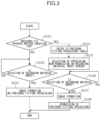
  • FIG. 3 is a flowchart illustrating a pressure-seal printed matter creating process according to a first embodiment.
  • FIGS. 4 A and 4 B are diagrams illustrating recording material input screens, in which FIG. 4 A illustrates a case where pressure sealing processing is not performed and FIG. 4 B illustrates a case where pressure sealing processing is performed.
  • FIG. 5 is a flowchart illustrating a pressure-seal printed matter creating process according to a second embodiment.
  • FIG. 6 is a view illustrating a warning screen.
  • FIG. 7 is a diagram illustrating a print execution screen.
  • FIG. 8 is a diagram illustrating a forced ending screen.
  • FIG. 9 is a schematic diagram illustrating another embodiment of the image forming system.
  • FIG. 10 is a diagram illustrating a recording material input screen in a case where pressure sealing processing is performed in the image forming system illustrated in FIG. 9 .
  • An image forming system 1 X includes an image forming apparatus 100 capable of executing an image forming mode for forming toner images on a recording material S, and a pressure sealing processing apparatus 200 capable of executing a pressure sealing mode for performing pressure sealing on the recording material S on which an image is formed by the image forming apparatus 100 .
  • the pressure sealing processing apparatus 200 is a post-process unit that can be retrofitted to the image forming apparatus 100 for function expansion, and the image forming apparatus 100 and the pressure sealing processing apparatus 200 are coupled so as to be able to transfer the recording material S.
  • the image forming system 1 X conveys the recording material S on which the image is formed by the image forming apparatus 100 to the pressure sealing processing apparatus 200 , and causes the pressure sealing processing apparatus 200 to pressure-seal the recording material S in a folded state.
  • a pressure-seal printed matter such as a pressure-seal postcard.
  • FIG. 1 as the pressure sealing processing apparatus 200 , an apparatus including an adhesive application device 300 , a folding processing device 400 , and a pressure sealing device 600 is illustrated as an example.
  • the image forming apparatus 100 , the adhesive application device 300 , the folding processing device 400 , and the pressure sealing device 600 are connected by a data input and output interface (not illustrated) capable of performing serial communication and parallel communication such that control signals, data, and the like can be transmitted and received therebetween.
  • the image forming apparatus 100 is a tandem full-color printer of an electrophotographic system. As illustrated in FIG. 1 , the image forming apparatus 100 includes image forming units Pa, Pb, Pc, and Pd that form yellow, magenta, cyan, and black images, respectively.
  • the image forming apparatus 100 forms the toner images on the recording material S in accordance with image signals from a document reading apparatus (not illustrated) connected to the apparatus body or an external device 900 such as a personal computer or an external controller connected to the apparatus body so as to be able to input and output data.
  • a sheet material such as an uncoated sheet, a coated sheet, or a synthetic sheet that can be folded is used as the recording material S.
  • the coated sheet is a recording material having high smoothness and formed by coating with a coating agent such as resin or clay, and the uncoated sheet is a recording material called a plain sheet or the like of which a surface is not coated.
  • the image forming units Pa, Pb, Pc, and Pd are arranged side by side along a moving direction of an intermediate transfer belt 130 in the apparatus body.
  • the intermediate transfer belt 130 is stretched around a plurality of rollers ( 13 , 14 , and 15 ) and rotated.
  • the intermediate transfer belt 130 carries and conveys the toner images to be primarily transferred as will be described later.
  • a secondary transfer outer roller 11 is disposed at a position facing a secondary transfer inner roller 14 stretching the intermediate transfer belt 130 with the intermediate transfer belt 130 interposed therebetween, and forms a secondary transfer portion for transferring the toner images on the intermediate transfer belt 130 to the recording material S.
  • a fixing unit 8 is disposed downstream of the secondary transfer portion in a conveyance direction of the recording material.
  • a cassette 10 that houses the recording material S is disposed below the image forming apparatus 100 .
  • the recording material S is conveyed from the cassette 10 toward a registration roller 12 by a conveying roller 16 . Thereafter, the registration roller 12 starts to rotate in synchronization with the toner images formed on the intermediate transfer belt 130 , and thus, the recording material S is conveyed to the secondary transfer portion.
  • a plurality of cassettes 10 is arranged so as to be able to house recording materials S having different sizes and thicknesses, and the recording material S selected by a user from among the plurality of cassettes 10 is conveyed. Not only the recording material S housed in the cassette 10 but also the recording material S placed on a manual feed tray 160 may be conveyed. As an option, the recording material S housed in a sheet feeding apparatus (not illustrated) connected as a casing different from the image forming apparatus 100 may be conveyed to the image forming apparatus 100 .
  • the four image forming units Pa, Pb, Pc, and Pd included in the image forming apparatus 100 have substantially the same configuration except that the developed colors are different.
  • the yellow image forming unit Pa will be described as a representative, and the illustration and description of the other image forming units Pb, Pc, and Pd will be omitted.
  • a cylindrical photosensitive drum 3 a is disposed as a photosensitive member.
  • the photosensitive drum 3 a is rotationally driven in a predetermined direction.
  • a charging unit 2 a , an exposing unit La, a developing unit 1 a , a primary transfer roller 24 a , and a drum cleaning unit 4 a are disposed around the photosensitive drum 3 a.
  • a process of forming a full-color image by the image forming apparatus 100 will be described.
  • the charging unit 2 a is, for example, a corona charger that irradiates charged particles associated with a corona discharge to charge the photosensitive drum 3 a to a uniform negative dark portion potential.
  • the photosensitive drum 3 a is scanned and exposed by a laser beam corresponding to image signals emitted from the exposing unit La. Accordingly, electrostatic latent images corresponding to the image signal are formed on the photosensitive drum 3 a .
  • the electrostatic latent images formed on the photosensitive drum 3 a is developed into toner images that are visible images by a developer containing toner and a carrier housed in the developing unit 1 a .
  • the developing unit 1 a uses, as a developer, a two-component developer containing a nonmagnetic toner and a magnetic carrier.
  • the toner images formed on the photosensitive drum 3 a are primarily transferred to the intermediate transfer belt 130 at a primary transfer portion formed between the photoconductive drum and the primary transfer roller 24 a disposed with the intermediate transfer belt 130 interposed therebetween. At this time, a primary transfer bias is applied to the primary transfer roller 24 a . The toner remaining on the surface of the photosensitive drum 3 a after the primary transfer is removed by a drum cleaning unit 4 a.
  • Such an operation is sequentially performed in the yellow, magenta, cyan, and black image forming units Pa to Pd, and toner images of four colors are superimposed on the intermediate transfer belt 130 .
  • the recording material S housed in the cassette 10 is conveyed to the secondary transfer portion in accordance with a forming timing of the toner image.
  • the full-color toner images formed on the intermediate transfer belt 130 are secondarily transferred collectively to the recording material S by applying a secondary transfer bias to the secondary transfer outer roller 11 .
  • the toner remaining on the intermediate transfer belt 130 after the secondary transfer is removed by a belt cleaning unit 22 .
  • the recording material S on which the toner images are formed is conveyed to the fixing unit 8 .
  • the fixing unit 8 heats and pressurizes the recording material S by nipping and conveying the recording material S on which the toner images are formed at a fixing nip portion formed by a pair of rollers, and fixes the toner images on the recording material S. Thereafter, the recording material S on which the toner images are fixed is conveyed to the pressure sealing processing apparatus 200 . Alternatively, the recording material is discharged to a sheet discharge tray 950 as will be described later.
  • the image forming apparatus 100 includes a main controller 101 .
  • the main controller 101 can execute, as a control unit, an image forming process of controlling the image forming apparatus 100 to form the images on the recording material S, and can execute a pressure sealing processing process of controlling the pressure sealing processing apparatus 200 to fold and pressure-seal the recording material S.
  • a control configuration of such an image forming system 1 X will be described later (see FIG. 2 ).
  • the pressure sealing processing apparatus 200 includes the adhesive application device 300 as an application unit, the folding processing device 400 as a folding unit, and the pressure sealing device 600 as a pressure sealing unit.
  • the adhesive application device 300 applies a liquid adhesive to the surface of the recording material S on which the images are formed by the image forming apparatus 100 .
  • the folding processing device 400 folds the recording material S in a state in which the surface to which the liquid adhesive is applied.
  • the pressure sealing device 600 applies heat and pressure to the folded recording material S.
  • the adhesive application device 300 , the folding processing device 400 , and the pressure sealing device 600 will be described.
  • an ultraviolet curable varnish (UV varnish) is adopted as a heat-sensitive liquid adhesive used for pseudo bonding of the recording material S in the adhesive application device 300 .
  • a method for applying the varnish to the recording material S may be an appropriate method such as a roller application method for applying the varnish by an application roller or an inkjet method for discharging the varnish from a nozzle and applying the varnish.
  • a roller application method (also referred to as a roll coater type) is used.
  • the adhesive application device 300 includes a varnish processing controller 330 and a varnish application unit 301 that applies the varnish to the recording material S and dries the recording material S.
  • the varnish processing controller 330 mainly controls the varnish application unit 301 .
  • the varnish application unit 301 includes an application roller pair 302 for applying the varnish, a supply roller 303 for supplying the varnish to the application roller pair 302 , a varnish storage unit 304 for storing the varnish, a drying unit 305 for drying the varnish, and a conveyor belt 306 for conveying the recording material S.
  • the application roller pair 302 applies the varnish to one surface (referred to as a varnish-applied surface for the sake of convenience) of the recording material S while nipping and conveying the recording material S conveyed from the image forming apparatus 100 .
  • the varnish applied by the application roller pair 302 is supplied to one roller 302 a of the application roller pair 302 by the supply roller 303 .
  • the supply roller 303 is movably provided at an abutment position at which the supply roller abuts on an outer peripheral surface of the roller 302 a and supplies the varnish and a separated position where the supply roller is separated from the outer peripheral surface of the roller 302 a and does not supply the varnish.
  • the varnish storage unit 304 is a storage case for storing the varnish therein, and has an opening portion formed at a position higher than a liquid level. Since a part of the supply roller 303 enters the inside from the opening portion of the varnish storage unit 304 and is immersed in the varnish, the supply roller 303 can supply the varnish to the roller 302 a while receiving the replenishment of the varnish from the varnish storage unit 304 by rotating.
  • the varnish applied to the recording material S is dried by the drying unit 305 .
  • the drying unit 305 irradiates the surface of the recording material S on which the varnish is applied with ultraviolet rays.
  • the adhesive application device 300 includes, as a conveyance path of the recording material S, an application path 310 that applies the varnish to the recording material S and delivers the varnish to the subsequent folding processing device 400 , and an application avoidance path 311 that delivers the recording material S to the subsequent folding processing device 400 without applying the varnish. Switching between the application path 310 and the application avoidance path 311 is performed by a flapper (not illustrated).
  • the folding processing device 400 is a device that performs folding processing of folding the recording material S on which the image forming process is performed by the image forming apparatus 100 or the recording material S on which the image forming process and an adhesive application process by the adhesive application device 300 .
  • the folding processing device 400 of a roller pressure contact type capable of performing three-folding processing and two-folding processing has been described as an example.
  • the folding processing device 400 includes a folding processing controller 430 and a folding unit 440 that folds the recording material S.
  • the folding processing controller 430 mainly controls the folding unit 440 .
  • the folding unit 440 will be described using the three-folding processing as an example.
  • the recording material S conveyed from the adhesive application device 300 is drawn into a folder by an inlet roller pair 401 , and is distributed to different conveyance paths by a branching flapper 402 in accordance with the necessity of the folding processing. That is, in a case where the folding processing is performed, the folding processing is distributed to a folding processing path toward a conveyance roller pair 403 , and in a case where the folding processing is not performed, the folding processing is distributed to a folding avoidance path toward a sheet discharge roller pair 404 .
  • the recording material S is temporarily stopped at a position of a registration roller pair 405 , and registration correction is performed by forming a loop.
  • the recording material S on which the registration correction is performed is conveyed again, and first folding processing is performed on the recording material simultaneously when the recording material is drawn by a first folding roller 407 and a second folding roller 408 at a predetermined timing after passing through a folding position detection sensor 406 .
  • first folding processing is performed on the recording material simultaneously when the recording material is drawn by a first folding roller 407 and a second folding roller 408 at a predetermined timing after passing through a folding position detection sensor 406 .
  • second folding processing is performed on the recording material simultaneously when the recording material is drawn by the second folding roller 408 and a third folding roller 410 .
  • the recording material S on which the second folding processing is performed is conveyed toward the sheet discharge roller pair 404 and is delivered to the subsequent pressure sealing device 600 by the sheet discharge roller pair 404 .
  • the recording material S is delivered to the subsequent pressure sealing device 600 by the sheet discharge roller pair 404 without performing the above-described three-folding processing.
  • the folding unit 440 will be described using the two-folding processing as an example.
  • the registration correction is performed on the recording material S similarly to the case of the above-described three-folding processing, and is conveyed again.
  • the first folding processing is performed simultaneously when the recording material is drawn by the first folding roller 407 and the second folding roller 408 .
  • the folding processing is performed simultaneously when the recording material is drawn by the first folding roller 407 and the second folding roller 408 .
  • the drawn recording material S is drawn by the second folding roller 408 and the third folding roller 410 by being guided by a leading edge guide 412 moved to a predetermined position in advance.
  • the recording material S drawn into the second folding roller 408 and the third folding roller 410 is conveyed toward the sheet discharge roller pair 404 and is delivered to the subsequent pressure sealing device 600 by the sheet discharge roller pair 404 .
  • the recording material is delivered to the subsequent pressure sealing device 600 by the sheet discharge roller pair 404 without performing the above-described two-folding processing.
  • the pressure sealing device 600 is a device that performs pressure sealing of pressure-sealing the recording material S on which the adhesive application process by the adhesive application device 300 and the folding processing process by the folding processing device 400 described above are performed.
  • the pressure sealing device 600 of the roller pressure contact type capable of performing the pressure sealing of the recording material S by applying heat and pressure to the recording material S via a pressure sealing roller pair that nips and conveys the recording material S has been illustrated.
  • the pressure sealing device 600 includes a pressure sealing processing controller 630 and a pressure sealing unit 640 that pressure-seals the recording material S.
  • the pressure sealing processing controller 630 mainly controls the pressure sealing unit 640 .
  • the pressure sealing unit 640 includes a pressure sealing roller pair 601 that rotates to nip and convey the recording material S, a heater 602 that heats the pressure sealing roller pair 601 , and a thermistor 603 that detects a temperature of the pressure sealing roller pair 601 .
  • the pressure sealing roller pair 601 includes an upper roller 601 a and a lower roller 601 b , and the upper roller 601 a and the lower roller 601 b are maintained at a desired temperature by the heater 602 in accordance with to the temperature detected by the thermistor 603 .
  • the pressure sealing roller pair 601 can apply heat and pressure to the recording material S while nipping and conveying the recording material S in the folded state.
  • the recording material S folded in a state in which the varnish-applied surface on which the varnish is applied faces inward is pseudo-bonded such that the varnish-applied surface is bonded by the varnish.
  • the pressure sealing roller pair 601 may perform pseudo bonding by bonding the varnish-applied surface with the varnish only by pressure.
  • control of an image forming system 1 X will be described with reference to FIG. 2 while referring to FIG. 1 .
  • the image forming apparatus 100 specifically, the main controller 101
  • integrally manages operation commands for the pressure sealing processing apparatus 200 the adhesive application device 300 , the folding processing device 400 , and the pressure sealing device 600
  • various devices such as a motor and a power supply are connected in addition to those illustrated in FIG. 2 , the illustration and description thereof are omitted here since these devices are not the gist of the invention.
  • the varnish processing controller 330 operates the adhesive application device 300
  • the folding processing controller 430 operates the folding processing device 400
  • the pressure sealing processing controller 630 operates the pressure sealing device 600 .
  • the main controller 101 can control the entire image forming system 1 X by transmitting the operation commands to the pressure sealing processing apparatus 200 (the adhesive application device 300 , the folding processing device 400 , and the pressure sealing device 600 ) while controlling the operation of the image forming apparatus 100 .
  • the main controller 101 , the varnish processing controller 330 , the folding processing controller 430 , and the pressure sealing processing controller 630 may have the same configuration.
  • each controller includes a central processing unit (CPU), a read only memory (ROM), and a random access memory (RAM).
  • the main controller 101 includes a CPU 102 , a ROM 103 , and a RAM 104 .
  • the ROM 103 and the RAM 104 store various programs such as an image forming process (not illustrated) and a pressure-seal printed matter creating process (see FIGS. 3 and 5 ) to be described later, and various kinds of data such as a pressure sealing processing table (see Tables 1 and 2).
  • the RAM 104 can also temporarily store arithmetic operation processing results and the like accompanying the execution of various programs.
  • the image forming apparatus 100 includes, for example, an operation unit 700 having a liquid crystal display unit (see FIG. 1 ), and the operation unit 700 is connected to the main controller 101 .
  • the operation unit 700 as an input unit is a touch panel capable of displaying various screens presenting various programs, various kinds of data, and the like on a liquid crystal display unit and accepting start inputs of various programs, various data inputs, and the like in accordance with a screen touch operation by the user.
  • the user can input the start of “pressure-seal printed matter creation job” from the operation unit 700 .
  • the CPU 102 executes a pressure-seal printed matter creating process (program) stored in the ROM 103 .
  • the pressure sealing processing apparatus 200 (the adhesive application device 300 , the folding processing device 400 , and the pressure sealing device 600 ) can be operated together with the image forming apparatus 100 .
  • the user can also input the start of “image forming job” from the operation unit 700 , and in this case, the CPU 102 executes an image forming process (program) stored in the ROM 103 .
  • the image forming apparatus 100 forms the images on the recording material S
  • the pressure sealing processing apparatus 200 does not perform the pressure sealing of the recording material S.
  • the varnish processing controller 330 includes a CPU 331 , a ROM 332 , and a RAM 333 .
  • the CPU 331 operates the adhesive application device 300 based on a control program stored in the ROM 332 .
  • the folding processing controller 430 includes a CPU 431 , a ROM 432 , and a RAM 433 .
  • the CPU 431 operates the folding processing device 400 based on a control program stored in the ROM 432 .
  • the pressure sealing processing controller 630 includes a CPU 631 , a ROM 632 , and a RAM 633 .
  • the CPU 631 operates the pressure sealing device 600 based on a control program stored in the ROM 632 .
  • a motor 634 that rotationally drives the pressure sealing roller pair 601 , the heater 602 that heats the pressure sealing roller pair 601 , and the thermistor 603 that detects the temperature of the pressure sealing roller pair 601 are connected to the pressure sealing processing controller 630 .
  • the pressure sealing processing controller 630 transmits a detection result (temperature data) of the thermistor 603 to the main controller 101 .
  • the pressure sealing processing controller 630 can change a temperature of the heater 602 by receiving a target temperature (data) from the main controller 101 .
  • the pressure sealing processing controller 630 can change a rotational speed of the motor 634 by receiving a target speed (data) of the recording material S conveyed from the main controller 101 .
  • target temperature and target speed vary depending on a type (the uncoated sheet, the coated sheet, or the like) of the recording material S, a grammage of the recording material S, and the like.
  • the pressure sealing processing apparatus 200 connected to the image forming apparatus 100 operates under the control of the main controller 101 .
  • the recording material S that can be handled by the image forming apparatus 100 may be a recording material S that is not handled by the pressure sealing processing apparatus 200 .
  • the recording material S in which the varnish applied to the surface easily permeates cannot secure a desired bonding force due to the varnish even though the image can be formed. Since there is a problem that the recording material S cannot be pressure-seal or is easily peeled off even though the recording material S can be pressure-seal, the pressure sealing processing apparatus 200 does not cope with this problem.
  • the recording material S into which the varnish easily permeates examples include a recording material S (uncoated sheet) of which a surface is not coated. Even in the case of the recording material S on which the image can be formed, in a case where the recording material S has a relatively large grammage and has a relatively large thickness, since heating by the pressure sealing roller pair 601 is not sufficient, it is not possible to secure a desired bonding force by the varnish, and thus, the same problem may occur.
  • the main controller 101 in a case where the pressure-seal printed matter is created, the main controller 101 can decide whether to execute the pressure sealing of the recording material S in accordance with the type and grammage of the recording material S, and can control the operation of the pressure sealing processing apparatus 200 in accordance with the determination. This point will be described below.
  • the pressure-seal printed matter creating process according to a first embodiment will be described with reference to FIGS. 1 and 2 while referring to FIGS. 3 to 4 B .
  • the pressure-seal printed matter creating process according to the present embodiment is a procedure of which execution is started by the main controller 101 in accordance with the activation of the image forming system 1 X.
  • the main controller 101 determines whether the start input of any one of “image forming job” and “pressure-seal printed matter creation job” is performed from the operation unit 700 (S 101 ).
  • the main controller 101 puts the system in a waiting state until the start input of any one of “image forming job” and “pressure-seal printed matter creation job” is performed from the operation unit 700 .
  • the main controller 101 displays “recording material input screen” illustrated in FIG. 4 A on the operation unit 700 and waits until the user performs a selection input of the recording material S (NO in S 102 ).
  • the recording material S that is housed in the cassette 10 , a sheet feeding apparatus (not illustrated), or the like and can be handled by the image forming apparatus 100 is displayed to be selectable on “recording material input screen”.
  • a plurality of software keys indicating “plain sheet” (uncoated sheet), “thick sheets 1 to 4 ” (uncoated sheets) having different grammages, and “coated sheets 1 to 5 ” (coated sheets) having different grammages is displayed as the recording material S that can be handled by the image forming apparatus 100 .
  • the user can touch and select any one of the software keys indicating the recording material S displayed on “recording material input screen”, and the selected recording material S is input as an image forming target by the image forming apparatus 100 .
  • a case where “coated sheet 3 ” is selected is illustrated as an example, and in order to indicate to the user that “coated sheet 3 ” is selected, a display mode of “coated sheet 3 ” is different from that of other unselected recording materials S as illustrated in the drawing.
  • the main controller 101 controls the image forming apparatus 100 to form the image on the selected recording material S (S 103 ). In this case, the main controller 101 does not transmit the operation command to the pressure sealing processing apparatus 200 while controlling the operation of the image forming apparatus 100 .
  • the image is formed on the recording material S, but the pressure sealing processing of the recording material S is not performed. That is, the recording material S on which the image is formed is simply output, and the pressure-seal printed matter is not created.
  • the main controller 101 refers to the pressure sealing processing table (Table 1) stored in the ROM 103 (S 104 ), and displays “recording material input screen” illustrated in FIG. 4 B on the operation unit 700 (S 105 ). The main controller 101 waits until the user performs the selection input of the recording material S (NO in S 106 ).
  • “plain sheet” and “thick sheet” which are uncoated sheets of which surfaces are not coated are the recording materials S that cannot be handled by the adhesive application device 300 that applies the varnish since the varnish easily permeates. Since heat is not sufficiently transmitted at the time of heating by the pressure sealing roller pair 601 due to a thickness of the coated sheet and a desired bonding force by the varnish cannot be secured, “coated sheet 5 ” is the recording material S that cannot be handled by the pressure sealing device 600 .
  • the adhesive application device 300 , the folding processing device 400 , and the pressure sealing device 600 may store, as data, the recording material S that can be handled by each device in the ROM 332 , the ROM 432 , and the ROM 632 , respectively.
  • the main controller 101 can obtain each data from the adhesive application device 300 , the folding processing device 400 , and the pressure sealing device 600 , create the pressure sealing processing table as described above, store the table in the ROM 103 or the RAM 104 , and use the table. This is advantageous because the pressure sealing processing table is automatically updated, for example, in a case where the adhesive application device 300 , the folding processing device 400 , and the pressure sealing device 600 are replaced with a new model with higher performance.
  • the recording material S that can be handled by the pressure sealing processing apparatus 200 is displayed to be selectable on “recording material input screen” displayed in a case where the start input of “pressure-seal printed matter creation job” is performed, that is, in a case where the pressure sealing processing of the recording material S is performed, in accordance with the pressure sealing processing table.
  • “coated sheets 1 to 4 ” are displayed to be selectable as the recording material S that can be handled by the pressure sealing processing apparatus 200 in accordance with the pressure sealing processing table of Table 1.
  • a display mode of a selectable recording material S and a display mode of a non-selectable recording material S are different.
  • the user can touch and select any one of “coated sheets 1 to 4 ”, but cannot touch and select any one of “plain sheet”, “thick sheet”, and “coated sheet 5 ”.
  • a case where “coated sheet 3 ” is selected is illustrated as an example, and in order to indicate to the user that “coated sheet 3 ” is selected, a display mode such as a color of “coated sheet 3 ” is different from a display mode of a software key indicating another recording material S that is not selected as illustrated in the drawing.
  • the main controller 101 controls the image forming apparatus 100 to form the image on the selected recording material S (S 107 ).
  • the main controller 101 transmits the operation command to the pressure sealing processing apparatus 200 (S 108 ). That is, in the present embodiment, the selectable recording material S is selected on “recording material input screen” illustrated in FIG. 4 B by a touch operation, and thus, the execution of the pressure sealing processing of the recording material S by the pressure sealing processing apparatus 200 is permitted.
  • the main controller 101 changes the target temperature of the heater 602 and the target speed of the recording material S (the rotational speed of the motor 634 ) to values corresponding to the recording material S in accordance with the pressure sealing processing table of Table 1. For example, in the case of “coated sheet 1 ” of which a grammage is a first grammage (50 to 100 g/cm 2 ), the temperature of the upper roller 601 a is set to a first temperature (170° C.).
  • the temperature of the upper roller 601 a is set to a second temperature (180° C.) higher than the first temperature.
  • a conveyance speed of the recording material S is set to a first speed (350 mm/s).
  • the conveyance speed of the recording material S is set to a second speed (200 mm/s) slower than the first speed.
  • the pressure-seal printed matter creating process according to the present embodiment is a procedure of which execution is started by the main controller 101 as the image forming system 1 X is powered on.
  • the main controller 101 determines whether the start input of any one of “image forming job” and “pressure-seal printed matter creation job” is performed from the operation unit 700 (S 201 ).
  • the recording material S is selected from “recording material input screen” illustrated in FIG. 4 A regardless of whether the start input of any one of “image forming job” and “pressure-seal printed matter creation job” is performed.
  • the main controller 101 puts the system in the waiting state until the selection of the recording material S from the operation unit 700 and the start input of any one of “image forming job” and “pressure-seal printed matter creation job” is performed.
  • the main controller 101 controls the image forming apparatus 100 to form the image on the recording material S selected together with the start input of “image forming job” (S 202 ). In this case, the main controller 101 does not transmit the operation command to the pressure sealing processing apparatus 200 while controlling the operation of the image forming apparatus 100 .
  • the image is formed on the recording material S, but the pressure sealing processing of the recording material S is not performed. That is, the recording material S on which the image is formed is simply output, and the pressure-seal printed matter is not created.
  • the main controller 101 collates the pressure sealing processing table (Table 1) stored in the ROM 103 with the recording material S selected together with the start input of “pressure-seal printed matter creation job” (S 203 ).
  • the main controller 101 determines whether the selected recording material S is the recording material S that can be handled by the pressure sealing processing apparatus 200 (S 204 ).
  • the main controller 101 controls the image forming apparatus 100 to form the image on the selected recording material S (S 205 ).
  • the main controller 101 transmits the operation command to the pressure sealing processing apparatus 200 (S 206 ).
  • the main controller 101 displays “warning screen” illustrated in FIG. 6 on the operation unit 700 and waits (S 207 ).
  • “warning screen” is a screen that displays that the selected recording material S is not the recording material S that can be handled by the pressure sealing processing apparatus 200 and that allows the user to select a process for the selected recording material S.
  • the process for the recording material S the user can select any one of a “printing and processing execution” process, a “printing only execution” process, and a “canceling” process.
  • the “printing and processing execution” process is a process of forcibly performing the pressure sealing processing of the recording material S even though the recording material S is not the recording material S that can be handled by the pressure sealing processing apparatus 200 .
  • the “printing only execution” process is a process of performing only the image formation by the image forming apparatus 100 since the recording material S is not handled by the pressure sealing processing apparatus 200 .
  • the “canceling” process is a process of forcibly ending (stopping) the input “pressure-seal printed matter creation job” and performing neither the image formation nor the pressure sealing processing.
  • the main controller 101 executes a process selected by the user according to “warning screen” displayed on the operation unit 700 .
  • the main controller 101 controls the image forming apparatus 100 to form the image on the selected recording material S (S 205 ).
  • the main controller 101 transmits the operation command to the pressure sealing processing apparatus 200 (S 206 ).
  • the pressure-seal printed matter can be created by performing the series of processes from the image formation to the pressure sealing on the recording material S.
  • the selected recording material S is not the recording material S that can be handled by the pressure sealing processing apparatus 200 , there is a concern that an error, a pressure sealing failure, or the like occurs in the pressure sealing processing apparatus 200 in some cases.
  • the pressure-seal printed matter can be selected in such a case.
  • the main controller 101 controls the image forming apparatus 100 to form the image on the selected recording material S (S 210 ).
  • the main controller 101 displays “print execution screen” illustrated in FIG. 7 on the operation unit 700 .
  • the main controller 101 does not transmit the operation command to the pressure sealing processing apparatus 200 while controlling the operation of the image forming apparatus 100 .
  • the image is formed on the recording material S, but the pressure sealing processing of the recording material S is not performed. That is, the recording material S on which the image is formed is simply output, and the pressure-seal printed matter is not created. Since the selected recording material S is not the recording material S that can be handled by the pressure sealing processing apparatus 200 on “print execution screen” illustrated in FIG. 7 , the fact that the pressure sealing processing is not performed on the recording material S and the image formation is performed is displayed.
  • the recording material S on which the image is formed by the image forming apparatus 100 may be sent to the sheet discharge tray 950 (escape tray) provided in the image forming apparatus 100 without being sent to the pressure sealing processing apparatus 200 .
  • the fact that the recording material S on which “printing only execution” is performed is discharged to the sheet discharge tray 950 may be displayed on “print execution screen”.
  • the main controller 101 forcibly ends “pressure-seal printed matter creation job” and does not perform the image formation nor the pressure sealing processing (S 211 ).
  • the main controller 101 displays “forced ending screen” illustrated in FIG. 8 on the operation unit 700 . Since the selected recording material S is not the recording material S that can be handled by the pressure sealing processing apparatus 200 on “forced ending screen” illustrated in FIG. 8 , the fact that “pressure-seal printed matter creation job” is forcibly ended without performing the pressure sealing processing or the image formation on the recording material S is displayed.
  • the image forming system 1 X in which the user can easily perform the series of processes from the image formation to the pressure sealing, and it is also possible to obtain the same effect as that of the above-described first embodiment that the work efficiency for creating the pressure-seal printed matter can be improved.
  • FIG. 9 illustrates an image forming system 1 XA adopting the film supply device 800 .
  • the same components as those of the image forming system 1 X illustrated in FIG. 1 are denoted by the same reference signs, and the description thereof will be simplified or omitted.
  • the image forming system 1 XA includes a pressure sealing processing apparatus 200 A that includes the folding processing device 400 , a film supply device 800 , and the pressure sealing device 600 .
  • the pressure sealing processing apparatus 200 A includes the folding processing device 400 that folds the recording material S on which the image is formed, the film supply device 800 that supplies a heat-sensitive bonding film F to the inside of the folded recording material S, and the pressure sealing device 600 that applies heat and pressure to the folded recording material S.
  • the adhesive application device 300 (see FIG. 1 ) delivers the recording material S from the image forming apparatus 100 and conveys the recording material to the folding processing device 400
  • the film supply device 800 delivers the recording material S from the folding processing device 400 and conveys the recording material to the pressure sealing device 600 .
  • the film supply device 800 as a supply unit includes a film supply controller 830 , film rolls 801 a and 801 b around which the bonding film F is wound, and a film supply unit 850 that supplies the bonding film F to the recording material S.
  • the film supply controller 830 mainly controls the film supply unit 850 .
  • the bonding film F is, for example, a film on which an adhesive layer that causes a bonding force by applying heat and pressure to front and back surfaces of two transparent films bonded together is formed.
  • the long bonding film F wound around the film rolls 801 a and 801 b is sequentially supplied along predetermined film supply paths 802 a and 802 b .
  • the bonding film F is supplied so as to be sandwiched by the recording material S. Thereafter, the bonding film F is cut into a desired size by a cutting member 805 .
  • the bonding film F is supplied so as to be sandwiched by the recording material S. Thereafter, the bonding film F is cut into a desired size by the cutting member 805 .
  • the main controller 101 can perform the above-described pressure-seal printed matter creating process (see FIG. 3 ).
  • the recording material S that can be handled by the pressure sealing processing apparatus 200 of the image forming system 1 X is different from the recording material S that can be handled by the pressure sealing processing apparatus 200 A of the image forming system 1 XA.
  • the main controller 101 can perform processing such as displaying “recording material input screen” illustrated in FIG. 10 on the operation unit 700 in accordance with Table 2 to be represented below instead of Table 1 (see S 105 in FIG. 3 ).
  • the main controller 101 determines that the recording material S is not the recording material S that can be handled by the pressure sealing processing apparatus 200 A regardless of whether the recording material S is the uncoated sheet such as “plain sheet” or “thick sheet” or “coated sheets 1 to 5 ”.
  • the main controller 101 does not permit execution of the pressure sealing processing of the recording material S by the pressure sealing processing apparatus 200 A.
  • the main controller 101 changes the target temperature of the heater 602 and the target speed of the recording material S (the rotational speed of the motor 634 ) to values corresponding to the recording material S in accordance with the pressure sealing processing table of Table 2.
  • the present invention is not limited thereto, and any one of the controllers included in the pressure sealing processing apparatus 200 ( 200 A) may execute the process.
  • the external controller may control the main controller 101 , the varnish processing controller 330 (or the film supply controller 830 ), the folding processing controller 430 , and the pressure sealing processing controller 630 .
  • the external controller controls all the image forming apparatus 100 , the pressure sealing processing apparatus 200 , the adhesive application device 300 (film supply device 800 ), the folding processing device 400 , and the pressure sealing device 600 via the controllers, and executes the above-described pressure-seal printed matter creating process ( FIGS. 3 and 5 ).
  • the controller that controls the image forming system 1 X may be provided in any casing as long as the above-described pressure-seal printed matter creating process is executed.
  • the controller that controls the entire image forming system 1 X may be the main controller 101 or the external controller described above or may be provided inside any device of the pressure sealing processing apparatus 200 , and may be configured to execute the above-described pressure-seal printed matter creating process ( FIGS. 3 and 5 ).
  • the pressure sealing processing apparatus 200 may be provided in the apparatus body (in the same casing) of the image forming apparatus 100 .
  • the main controller 101 also operates as the varnish processing controller 330 (or the film supply controller 830 ), the folding processing controller 430 , and the pressure sealing processing controller 630 described above.
  • Embodiment(s) of the present invention can also be realized by a computer of a system or apparatus that reads out and executes computer executable instructions (e.g., one or more programs) recorded on a storage medium (which may also be referred to more fully as a ‘non-transitory computer-readable storage medium’) to perform the functions of one or more of the above-described embodiment(s) and/or that includes one or more circuits (e.g., application specific integrated circuit (ASIC)) for performing the functions of one or more of the above-described embodiment(s), and by a method performed by the computer of the system or apparatus by, for example, reading out and executing the computer executable instructions from the storage medium to perform the functions of one or more of the above-described embodiment(s) and/or controlling the one or more circuits to perform the functions of one or more of the above-described embodiment(s).
  • computer executable instructions e.g., one or more programs
  • a storage medium which may also be referred to more fully as a
  • the computer may comprise one or more processors (e.g., central processing unit (CPU), micro processing unit (MPU)) and may include a network of separate computers or separate processors to read out and execute the computer executable instructions.
  • the computer executable instructions may be provided to the computer, for example, from a network or the storage medium.
  • the storage medium may include, for example, one or more of a hard disk, a random-access memory (RAM), a read only memory (ROM), a storage of distributed computing systems, an optical disk (such as a compact disc (CD), digital versatile disc (DVD), or Blu-ray Disc (BD)TM), a flash memory device, a memory card, and the like.

Landscapes

  • Engineering & Computer Science (AREA)
  • Physics & Mathematics (AREA)
  • General Physics & Mathematics (AREA)
  • Manufacturing & Machinery (AREA)
  • Textile Engineering (AREA)
  • Ceramic Engineering (AREA)
  • Control Or Security For Electrophotography (AREA)
  • Folding Of Thin Sheet-Like Materials, Special Discharging Devices, And Others (AREA)
  • Credit Cards Or The Like (AREA)
  • Paper Feeding For Electrophotography (AREA)

Abstract

An image forming system includes an image forming apparatus, a pressure sealing processing apparatus, and a control unit. The control unit is configured to permit execution of the pressure sealing processing process by the pressure sealing processing apparatus on a recording material of which a grammage is smaller than a predetermined grammage, and is configured not to permit execution of the pressure sealing processing process by the pressure sealing processing apparatus on a recording material of which a grammage is equal to or more than the predetermined grammage.

Description

BACKGROUND OF THE INVENTION Field of the Invention
The present invention relates to an image forming system capable of creating a pressure-seal printed matter by forming an image on a recording material, folding the recording material on which the image is formed, applying pressure to the folded recording material, and pressure-sealing the recording material.
Description of the Related Art
An apparatus that creates a pressure-seal printed matter excellent in information confidentiality has been proposed hitherto (JP 2015-96296 A). Examples of the pressure-seal printed matter include a pressure-seal postcard in which personal information cannot be read until a pseudo-bonded surface is peeled off by superimposing and pseudo-bonding a surface on which personal information or the like is formed as an image. The pseudo bonding mentioned herein is an aspect of bonding that can be peeled off after bonding and is difficult to re-bonded after peeling.
Examples of a method for performing the pseudo bonding include a paste method, a varnish method, and a film method. The paste method is a method for bonding a recording material by applying a heat-sensitive paste to the recording material and applying pressure to the recording material. The varnish method is a method for bonding a recording material by applying an ultraviolet-curable varnish to the recording material, irradiating the recording material with ultraviolet rays, and applying pressure to the recording material. The film method is a method for bonding a recording material by inserting a heat-sensitive bonding film between superimposed surfaces and then applying heat and pressure to the recording material.
As described above, in order to create the pressure-seal printed matter, it is necessary to pressure-seal the recording material by applying pressure or heat and pressure to the recording material. In this case, a bonding force is easily affected by the magnitude of the heat or pressure applied to the recording material. In a case where the bonding force is weak, unintended peeling may occur. On the other hand, in a case where the bonding force is strong, a layer other than the bonded surface is peeled off at the time of peeling, and thus, there is a concern that the image is transferred from one surface to the other surface. Thus, in order to perform the pseudo bonding with an appropriate bonding force, the magnitude (for example, a temperature of the heater, a pressurizing force of a pressure sealing roller, and the like) of the heat or pressure applied to the recording material is changed in accordance with a type of the recording material or the like hitherto.
Incidentally, in recent years, there has been proposed an image forming system that realizes so-called on-demand printing by connecting a post-process apparatus to an image forming apparatus that forms an image on a recording material and continuously performing processes from image formation on the recording material to a post-process without interruption. Thus, as the post-process apparatus, it is considered to connect an apparatus (hereinafter, referred to as a pressure sealing processing apparatus) that creates the pressure-bonded printed matter described above. In the image forming apparatus in such an image forming system, images can be generally formed on various types of recording materials. However, the recording material on which the image can be formed by the image forming apparatus is not necessarily a recording material that can be pressure-seal by the pressure sealing processing apparatus. In a case where a recording material that cannot be pressure-seal by the pressure sealing processing apparatus is conveyed, there is a possibility that an error, a pressure sealing failure, or the like occurs in the pressure sealing processing apparatus and the entire system including the image forming apparatus is stopped. Accordingly, even though the pressure sealing processing apparatus is connected to the image forming apparatus, since a user needs to manually set recording materials separately, it takes time and effort, and it is troublesome hitherto. Thus, the improvement of work efficiency for creating the pressure-seal printed matter cannot be expected.
SUMMARY OF THE INVENTION
In view of the above problems, the present invention provides an image forming system in which a user can easily perform a series of processes from image formation to pressure sealing with a configuration in which a pressure sealing processing apparatus that applies pressure to a recording material and pressure-seals the recording material is connected to an image forming apparatus.
According to a first aspect of the present invention, an image forming system includes an image forming apparatus configured to form an image on a recording material, a pressure sealing processing apparatus configured to execute a pressure sealing processing process of pressure-sealing the recording material by folding the recording material on which the image is formed by the image forming apparatus and applying pressure to the folded recording material, and a control unit configured to control the image forming apparatus and the pressure sealing processing apparatus. The control unit is configured to permit execution of the pressure sealing processing process by the pressure sealing processing apparatus on a recording material of which a grammage is smaller than a predetermined grammage, and is configured not to permit execution of the pressure sealing processing process by the pressure sealing processing apparatus on a recording material of which a grammage is equal to or more than the predetermined grammage.
According to a second aspect of the present invention, an image forming system includes an image forming apparatus configured to form an image on a recording material, a pressure sealing processing apparatus that includes an application unit which applies varnish on the recording material on which the image is formed by the image forming apparatus, a folding unit that folds the recording material in a state in which a surface on which the varnish is applied by the application unit faces inward, and a pressure sealing unit that applies pressure to the folded recording material, and is configured to execute a pressure sealing processing process on the recording material on which the image is formed by the image forming apparatus, and a control unit configured to control the image forming apparatus and the pressure sealing processing apparatus. The control unit is configured to permit execution of the pressure sealing processing process by the pressure sealing processing apparatus on a recording material of which a surface is coated, and is configured not to permit execution of the pressure sealing processing process by the pressure sealing processing apparatus on a recording material of which a surface is not coated.
Further features of the present invention will become apparent from the following description of exemplary embodiments (with reference to the attached drawings).
BRIEF DESCRIPTION OF THE DRAWINGS
FIG. 1 is a schematic diagram illustrating an image forming system.
FIG. 2 is a control block diagram of the image forming system.
FIG. 3 is a flowchart illustrating a pressure-seal printed matter creating process according to a first embodiment.
FIGS. 4A and 4B are diagrams illustrating recording material input screens, in which FIG. 4A illustrates a case where pressure sealing processing is not performed and FIG. 4B illustrates a case where pressure sealing processing is performed.
FIG. 5 is a flowchart illustrating a pressure-seal printed matter creating process according to a second embodiment.
FIG. 6 is a view illustrating a warning screen.
FIG. 7 is a diagram illustrating a print execution screen.
FIG. 8 is a diagram illustrating a forced ending screen.
FIG. 9 is a schematic diagram illustrating another embodiment of the image forming system.
FIG. 10 is a diagram illustrating a recording material input screen in a case where pressure sealing processing is performed in the image forming system illustrated in FIG. 9 .
DESCRIPTION OF THE EMBODIMENTS First Embodiment
Image Forming System
Hereinafter, the present embodiment will be described. First, an image forming system according to the present embodiment will be described with reference to FIG. 1 . An image forming system 1X according to the present embodiment includes an image forming apparatus 100 capable of executing an image forming mode for forming toner images on a recording material S, and a pressure sealing processing apparatus 200 capable of executing a pressure sealing mode for performing pressure sealing on the recording material S on which an image is formed by the image forming apparatus 100. The pressure sealing processing apparatus 200 is a post-process unit that can be retrofitted to the image forming apparatus 100 for function expansion, and the image forming apparatus 100 and the pressure sealing processing apparatus 200 are coupled so as to be able to transfer the recording material S. The image forming system 1X conveys the recording material S on which the image is formed by the image forming apparatus 100 to the pressure sealing processing apparatus 200, and causes the pressure sealing processing apparatus 200 to pressure-seal the recording material S in a folded state. Thus, it is possible to create a pressure-seal printed matter such as a pressure-seal postcard.
In FIG. 1 , as the pressure sealing processing apparatus 200, an apparatus including an adhesive application device 300, a folding processing device 400, and a pressure sealing device 600 is illustrated as an example. The image forming apparatus 100, the adhesive application device 300, the folding processing device 400, and the pressure sealing device 600 are connected by a data input and output interface (not illustrated) capable of performing serial communication and parallel communication such that control signals, data, and the like can be transmitted and received therebetween.
Image Forming Apparatus
The image forming apparatus 100 will be described. The image forming apparatus 100 is a tandem full-color printer of an electrophotographic system. As illustrated in FIG. 1 , the image forming apparatus 100 includes image forming units Pa, Pb, Pc, and Pd that form yellow, magenta, cyan, and black images, respectively. The image forming apparatus 100 forms the toner images on the recording material S in accordance with image signals from a document reading apparatus (not illustrated) connected to the apparatus body or an external device 900 such as a personal computer or an external controller connected to the apparatus body so as to be able to input and output data. As the recording material S, for example, a sheet material such as an uncoated sheet, a coated sheet, or a synthetic sheet that can be folded is used. The coated sheet is a recording material having high smoothness and formed by coating with a coating agent such as resin or clay, and the uncoated sheet is a recording material called a plain sheet or the like of which a surface is not coated.
As illustrated in FIG. 1 , the image forming units Pa, Pb, Pc, and Pd are arranged side by side along a moving direction of an intermediate transfer belt 130 in the apparatus body. The intermediate transfer belt 130 is stretched around a plurality of rollers (13, 14, and 15) and rotated. The intermediate transfer belt 130 carries and conveys the toner images to be primarily transferred as will be described later. A secondary transfer outer roller 11 is disposed at a position facing a secondary transfer inner roller 14 stretching the intermediate transfer belt 130 with the intermediate transfer belt 130 interposed therebetween, and forms a secondary transfer portion for transferring the toner images on the intermediate transfer belt 130 to the recording material S. A fixing unit 8 is disposed downstream of the secondary transfer portion in a conveyance direction of the recording material.
A cassette 10 that houses the recording material S is disposed below the image forming apparatus 100. The recording material S is conveyed from the cassette 10 toward a registration roller 12 by a conveying roller 16. Thereafter, the registration roller 12 starts to rotate in synchronization with the toner images formed on the intermediate transfer belt 130, and thus, the recording material S is conveyed to the secondary transfer portion. A plurality of cassettes 10 is arranged so as to be able to house recording materials S having different sizes and thicknesses, and the recording material S selected by a user from among the plurality of cassettes 10 is conveyed. Not only the recording material S housed in the cassette 10 but also the recording material S placed on a manual feed tray 160 may be conveyed. As an option, the recording material S housed in a sheet feeding apparatus (not illustrated) connected as a casing different from the image forming apparatus 100 may be conveyed to the image forming apparatus 100.
The four image forming units Pa, Pb, Pc, and Pd included in the image forming apparatus 100 have substantially the same configuration except that the developed colors are different. Thus, the yellow image forming unit Pa will be described as a representative, and the illustration and description of the other image forming units Pb, Pc, and Pd will be omitted.
In the image forming unit Pa, a cylindrical photosensitive drum 3 a is disposed as a photosensitive member. The photosensitive drum 3 a is rotationally driven in a predetermined direction. A charging unit 2 a, an exposing unit La, a developing unit 1 a, a primary transfer roller 24 a, and a drum cleaning unit 4 a are disposed around the photosensitive drum 3 a.
For example, a process of forming a full-color image by the image forming apparatus 100 will be described. First, in a case where an image forming operation is started, a surface of the rotating photosensitive drum 3 a is uniformly charged by the charging unit 2 a. The charging unit 2 a is, for example, a corona charger that irradiates charged particles associated with a corona discharge to charge the photosensitive drum 3 a to a uniform negative dark portion potential. Subsequently, the photosensitive drum 3 a is scanned and exposed by a laser beam corresponding to image signals emitted from the exposing unit La. Accordingly, electrostatic latent images corresponding to the image signal are formed on the photosensitive drum 3 a. The electrostatic latent images formed on the photosensitive drum 3 a is developed into toner images that are visible images by a developer containing toner and a carrier housed in the developing unit 1 a. In the present embodiment, the developing unit 1 a uses, as a developer, a two-component developer containing a nonmagnetic toner and a magnetic carrier.
The toner images formed on the photosensitive drum 3 a are primarily transferred to the intermediate transfer belt 130 at a primary transfer portion formed between the photoconductive drum and the primary transfer roller 24 a disposed with the intermediate transfer belt 130 interposed therebetween. At this time, a primary transfer bias is applied to the primary transfer roller 24 a. The toner remaining on the surface of the photosensitive drum 3 a after the primary transfer is removed by a drum cleaning unit 4 a.
Such an operation is sequentially performed in the yellow, magenta, cyan, and black image forming units Pa to Pd, and toner images of four colors are superimposed on the intermediate transfer belt 130. Thereafter, the recording material S housed in the cassette 10 is conveyed to the secondary transfer portion in accordance with a forming timing of the toner image. The full-color toner images formed on the intermediate transfer belt 130 are secondarily transferred collectively to the recording material S by applying a secondary transfer bias to the secondary transfer outer roller 11. The toner remaining on the intermediate transfer belt 130 after the secondary transfer is removed by a belt cleaning unit 22.
The recording material S on which the toner images are formed is conveyed to the fixing unit 8. The fixing unit 8 heats and pressurizes the recording material S by nipping and conveying the recording material S on which the toner images are formed at a fixing nip portion formed by a pair of rollers, and fixes the toner images on the recording material S. Thereafter, the recording material S on which the toner images are fixed is conveyed to the pressure sealing processing apparatus 200. Alternatively, the recording material is discharged to a sheet discharge tray 950 as will be described later.
The image forming apparatus 100 includes a main controller 101. In the case of the present embodiment, the main controller 101 can execute, as a control unit, an image forming process of controlling the image forming apparatus 100 to form the images on the recording material S, and can execute a pressure sealing processing process of controlling the pressure sealing processing apparatus 200 to fold and pressure-seal the recording material S. A control configuration of such an image forming system 1X will be described later (see FIG. 2 ).
Next, the pressure sealing processing apparatus 200 will be described. As illustrated in FIG. 1 , the pressure sealing processing apparatus 200 according to the present embodiment includes the adhesive application device 300 as an application unit, the folding processing device 400 as a folding unit, and the pressure sealing device 600 as a pressure sealing unit. The adhesive application device 300 applies a liquid adhesive to the surface of the recording material S on which the images are formed by the image forming apparatus 100. The folding processing device 400 folds the recording material S in a state in which the surface to which the liquid adhesive is applied. The pressure sealing device 600 applies heat and pressure to the folded recording material S. Hereinafter, the adhesive application device 300, the folding processing device 400, and the pressure sealing device 600 will be described.
Adhesive Application Device
First, the adhesive application device 300 will be described. In the present embodiment, an ultraviolet curable varnish (UV varnish) is adopted as a heat-sensitive liquid adhesive used for pseudo bonding of the recording material S in the adhesive application device 300. As long as the adhesive application device 300 can adjust the amount of the varnish to be applied to the recording material S, a method for applying the varnish to the recording material S may be an appropriate method such as a roller application method for applying the varnish by an application roller or an inkjet method for discharging the varnish from a nozzle and applying the varnish. In the present embodiment, a roller application method (also referred to as a roll coater type) is used.
The adhesive application device 300 includes a varnish processing controller 330 and a varnish application unit 301 that applies the varnish to the recording material S and dries the recording material S. The varnish processing controller 330 mainly controls the varnish application unit 301. The varnish application unit 301 includes an application roller pair 302 for applying the varnish, a supply roller 303 for supplying the varnish to the application roller pair 302, a varnish storage unit 304 for storing the varnish, a drying unit 305 for drying the varnish, and a conveyor belt 306 for conveying the recording material S.
The application roller pair 302 applies the varnish to one surface (referred to as a varnish-applied surface for the sake of convenience) of the recording material S while nipping and conveying the recording material S conveyed from the image forming apparatus 100. The varnish applied by the application roller pair 302 is supplied to one roller 302 a of the application roller pair 302 by the supply roller 303. The supply roller 303 is movably provided at an abutment position at which the supply roller abuts on an outer peripheral surface of the roller 302 a and supplies the varnish and a separated position where the supply roller is separated from the outer peripheral surface of the roller 302 a and does not supply the varnish. The varnish storage unit 304 is a storage case for storing the varnish therein, and has an opening portion formed at a position higher than a liquid level. Since a part of the supply roller 303 enters the inside from the opening portion of the varnish storage unit 304 and is immersed in the varnish, the supply roller 303 can supply the varnish to the roller 302 a while receiving the replenishment of the varnish from the varnish storage unit 304 by rotating. The varnish applied to the recording material S is dried by the drying unit 305. In the case of the present embodiment, the drying unit 305 irradiates the surface of the recording material S on which the varnish is applied with ultraviolet rays.
Note that the adhesive application device 300 includes, as a conveyance path of the recording material S, an application path 310 that applies the varnish to the recording material S and delivers the varnish to the subsequent folding processing device 400, and an application avoidance path 311 that delivers the recording material S to the subsequent folding processing device 400 without applying the varnish. Switching between the application path 310 and the application avoidance path 311 is performed by a flapper (not illustrated).
Folding Processing Device
Next, the folding processing device 400 will be described. The folding processing device 400 is a device that performs folding processing of folding the recording material S on which the image forming process is performed by the image forming apparatus 100 or the recording material S on which the image forming process and an adhesive application process by the adhesive application device 300. In the present embodiment, the folding processing device 400 of a roller pressure contact type capable of performing three-folding processing and two-folding processing has been described as an example. The folding processing device 400 includes a folding processing controller 430 and a folding unit 440 that folds the recording material S. The folding processing controller 430 mainly controls the folding unit 440.
The folding unit 440 will be described using the three-folding processing as an example. The recording material S conveyed from the adhesive application device 300 is drawn into a folder by an inlet roller pair 401, and is distributed to different conveyance paths by a branching flapper 402 in accordance with the necessity of the folding processing. That is, in a case where the folding processing is performed, the folding processing is distributed to a folding processing path toward a conveyance roller pair 403, and in a case where the folding processing is not performed, the folding processing is distributed to a folding avoidance path toward a sheet discharge roller pair 404.
In a case where the recording material S is distributed to the folding processing path, the recording material S is temporarily stopped at a position of a registration roller pair 405, and registration correction is performed by forming a loop. The recording material S on which the registration correction is performed is conveyed again, and first folding processing is performed on the recording material simultaneously when the recording material is drawn by a first folding roller 407 and a second folding roller 408 at a predetermined timing after passing through a folding position detection sensor 406. In a case where the drawn recording material S abuts against a folding abutment stopper 409, second folding processing is performed on the recording material simultaneously when the recording material is drawn by the second folding roller 408 and a third folding roller 410. The recording material S on which the second folding processing is performed is conveyed toward the sheet discharge roller pair 404 and is delivered to the subsequent pressure sealing device 600 by the sheet discharge roller pair 404. In a case where the recording material S is distributed to the folding avoidance path, the recording material is delivered to the subsequent pressure sealing device 600 by the sheet discharge roller pair 404 without performing the above-described three-folding processing.
The folding unit 440 will be described using the two-folding processing as an example. In a case where the recording material S is distributed to the folding processing path, the registration correction is performed on the recording material S similarly to the case of the above-described three-folding processing, and is conveyed again. The first folding processing is performed simultaneously when the recording material is drawn by the first folding roller 407 and the second folding roller 408. In the case of the two-folding processing, in a case where a trailing edge of the recording material S abuts against a trailing edge abutment stopper 411 after passing through the folding position detection sensor 406, the folding processing is performed simultaneously when the recording material is drawn by the first folding roller 407 and the second folding roller 408. At this time, the drawn recording material S is drawn by the second folding roller 408 and the third folding roller 410 by being guided by a leading edge guide 412 moved to a predetermined position in advance. The recording material S drawn into the second folding roller 408 and the third folding roller 410 is conveyed toward the sheet discharge roller pair 404 and is delivered to the subsequent pressure sealing device 600 by the sheet discharge roller pair 404. In a case where the recording material S is distributed to the folding avoidance path, the recording material is delivered to the subsequent pressure sealing device 600 by the sheet discharge roller pair 404 without performing the above-described two-folding processing.
Pressure Sealing Device
Next, the pressure sealing device 600 will be described. The pressure sealing device 600 is a device that performs pressure sealing of pressure-sealing the recording material S on which the adhesive application process by the adhesive application device 300 and the folding processing process by the folding processing device 400 described above are performed. In the present embodiment, as an example, the pressure sealing device 600 of the roller pressure contact type capable of performing the pressure sealing of the recording material S by applying heat and pressure to the recording material S via a pressure sealing roller pair that nips and conveys the recording material S has been illustrated. The pressure sealing device 600 includes a pressure sealing processing controller 630 and a pressure sealing unit 640 that pressure-seals the recording material S. The pressure sealing processing controller 630 mainly controls the pressure sealing unit 640.
The pressure sealing unit 640 will be described. The pressure sealing unit 640 includes a pressure sealing roller pair 601 that rotates to nip and convey the recording material S, a heater 602 that heats the pressure sealing roller pair 601, and a thermistor 603 that detects a temperature of the pressure sealing roller pair 601. The pressure sealing roller pair 601 includes an upper roller 601 a and a lower roller 601 b, and the upper roller 601 a and the lower roller 601 b are maintained at a desired temperature by the heater 602 in accordance with to the temperature detected by the thermistor 603. The pressure sealing roller pair 601 can apply heat and pressure to the recording material S while nipping and conveying the recording material S in the folded state. Accordingly, the recording material S folded in a state in which the varnish-applied surface on which the varnish is applied faces inward is pseudo-bonded such that the varnish-applied surface is bonded by the varnish. Although an example in which the pressure sealing roller pair 601 according to the present embodiment performs temperature control so as to maintain a predetermined temperature, the pressure sealing roller pair may perform pseudo bonding by bonding the varnish-applied surface with the varnish only by pressure.
Control Configuration of Image Forming System
Next, control of an image forming system 1X will be described with reference to FIG. 2 while referring to FIG. 1 . In the present embodiment, a case where the image forming apparatus 100 (specifically, the main controller 101) integrally manages operation commands for the pressure sealing processing apparatus 200 (the adhesive application device 300, the folding processing device 400, and the pressure sealing device 600) and controls these devices will be described as an example. Although various devices such as a motor and a power supply are connected in addition to those illustrated in FIG. 2 , the illustration and description thereof are omitted here since these devices are not the gist of the invention.
In the image forming system 1X according to the present embodiment, as illustrated in FIG. 2 , the varnish processing controller 330, the folding processing controller 430, and the pressure sealing processing controller 630 are connected to the main controller 101 via a communication cable 500 so as to be able to communicate operation commands, various kinds of data, and the like. In accordance with the operation commands from the main controller 101, the varnish processing controller 330 operates the adhesive application device 300, the folding processing controller 430 operates the folding processing device 400, and the pressure sealing processing controller 630 operates the pressure sealing device 600. That is, the main controller 101 can control the entire image forming system 1X by transmitting the operation commands to the pressure sealing processing apparatus 200 (the adhesive application device 300, the folding processing device 400, and the pressure sealing device 600) while controlling the operation of the image forming apparatus 100.
The main controller 101, the varnish processing controller 330, the folding processing controller 430, and the pressure sealing processing controller 630 may have the same configuration. For example, each controller includes a central processing unit (CPU), a read only memory (ROM), and a random access memory (RAM).
The main controller 101 includes a CPU 102, a ROM 103, and a RAM 104. The ROM 103 and the RAM 104 store various programs such as an image forming process (not illustrated) and a pressure-seal printed matter creating process (see FIGS. 3 and 5 ) to be described later, and various kinds of data such as a pressure sealing processing table (see Tables 1 and 2). The RAM 104 can also temporarily store arithmetic operation processing results and the like accompanying the execution of various programs.
The image forming apparatus 100 includes, for example, an operation unit 700 having a liquid crystal display unit (see FIG. 1 ), and the operation unit 700 is connected to the main controller 101. The operation unit 700 as an input unit is a touch panel capable of displaying various screens presenting various programs, various kinds of data, and the like on a liquid crystal display unit and accepting start inputs of various programs, various data inputs, and the like in accordance with a screen touch operation by the user.
The user can input the start of “pressure-seal printed matter creation job” from the operation unit 700. In a case where “pressure-seal printed matter creation job” is input, the CPU 102 executes a pressure-seal printed matter creating process (program) stored in the ROM 103. Accordingly, the pressure sealing processing apparatus 200 (the adhesive application device 300, the folding processing device 400, and the pressure sealing device 600) can be operated together with the image forming apparatus 100. The user can also input the start of “image forming job” from the operation unit 700, and in this case, the CPU 102 executes an image forming process (program) stored in the ROM 103. However, in this case, the image forming apparatus 100 forms the images on the recording material S, but the pressure sealing processing apparatus 200 does not perform the pressure sealing of the recording material S.
The varnish processing controller 330 includes a CPU 331, a ROM 332, and a RAM 333. The CPU 331 operates the adhesive application device 300 based on a control program stored in the ROM 332. The folding processing controller 430 includes a CPU 431, a ROM 432, and a RAM 433. The CPU 431 operates the folding processing device 400 based on a control program stored in the ROM 432.
The pressure sealing processing controller 630 includes a CPU 631, a ROM 632, and a RAM 633. The CPU 631 operates the pressure sealing device 600 based on a control program stored in the ROM 632. A motor 634 that rotationally drives the pressure sealing roller pair 601, the heater 602 that heats the pressure sealing roller pair 601, and the thermistor 603 that detects the temperature of the pressure sealing roller pair 601 are connected to the pressure sealing processing controller 630. The pressure sealing processing controller 630 transmits a detection result (temperature data) of the thermistor 603 to the main controller 101. The pressure sealing processing controller 630 can change a temperature of the heater 602 by receiving a target temperature (data) from the main controller 101. The pressure sealing processing controller 630 can change a rotational speed of the motor 634 by receiving a target speed (data) of the recording material S conveyed from the main controller 101. Such target temperature and target speed vary depending on a type (the uncoated sheet, the coated sheet, or the like) of the recording material S, a grammage of the recording material S, and the like.
As described above, the pressure sealing processing apparatus 200 connected to the image forming apparatus 100 operates under the control of the main controller 101. However, even the recording material S that can be handled by the image forming apparatus 100 may be a recording material S that is not handled by the pressure sealing processing apparatus 200. For example, the recording material S in which the varnish applied to the surface easily permeates cannot secure a desired bonding force due to the varnish even though the image can be formed. Since there is a problem that the recording material S cannot be pressure-seal or is easily peeled off even though the recording material S can be pressure-seal, the pressure sealing processing apparatus 200 does not cope with this problem. Examples of the recording material S into which the varnish easily permeates include a recording material S (uncoated sheet) of which a surface is not coated. Even in the case of the recording material S on which the image can be formed, in a case where the recording material S has a relatively large grammage and has a relatively large thickness, since heating by the pressure sealing roller pair 601 is not sufficient, it is not possible to secure a desired bonding force by the varnish, and thus, the same problem may occur. Thus, in the present embodiment, in a case where the pressure-seal printed matter is created, the main controller 101 can decide whether to execute the pressure sealing of the recording material S in accordance with the type and grammage of the recording material S, and can control the operation of the pressure sealing processing apparatus 200 in accordance with the determination. This point will be described below.
Pressure-Seal Printed Matter Creating Process
The pressure-seal printed matter creating process according to a first embodiment will be described with reference to FIGS. 1 and 2 while referring to FIGS. 3 to 4B. The pressure-seal printed matter creating process according to the present embodiment is a procedure of which execution is started by the main controller 101 in accordance with the activation of the image forming system 1X.
As illustrated in FIG. 3 , the main controller 101 determines whether the start input of any one of “image forming job” and “pressure-seal printed matter creation job” is performed from the operation unit 700 (S101). The main controller 101 puts the system in a waiting state until the start input of any one of “image forming job” and “pressure-seal printed matter creation job” is performed from the operation unit 700. In a case where the start input of “image forming job” is performed (NO in S101), the main controller 101 displays “recording material input screen” illustrated in FIG. 4A on the operation unit 700 and waits until the user performs a selection input of the recording material S (NO in S102).
In a case where the start input of “image forming job” is performed, that is, in a case where the pressure sealing processing of the recording material S is not performed, as illustrated in FIG. 4A, the recording material S that is housed in the cassette 10, a sheet feeding apparatus (not illustrated), or the like and can be handled by the image forming apparatus 100 is displayed to be selectable on “recording material input screen”. Here, a plurality of software keys indicating “plain sheet” (uncoated sheet), “thick sheets 1 to 4” (uncoated sheets) having different grammages, and “coated sheets 1 to 5” (coated sheets) having different grammages is displayed as the recording material S that can be handled by the image forming apparatus 100. The user can touch and select any one of the software keys indicating the recording material S displayed on “recording material input screen”, and the selected recording material S is input as an image forming target by the image forming apparatus 100. Here, a case where “coated sheet 3” is selected is illustrated as an example, and in order to indicate to the user that “coated sheet 3” is selected, a display mode of “coated sheet 3” is different from that of other unselected recording materials S as illustrated in the drawing.
Referring back to the description of FIG. 3 , in a case where the recording material S is selected on “recording material input screen” illustrated in FIG. 4A (YES in S102), the main controller 101 controls the image forming apparatus 100 to form the image on the selected recording material S (S103). In this case, the main controller 101 does not transmit the operation command to the pressure sealing processing apparatus 200 while controlling the operation of the image forming apparatus 100. Thus, the image is formed on the recording material S, but the pressure sealing processing of the recording material S is not performed. That is, the recording material S on which the image is formed is simply output, and the pressure-seal printed matter is not created.
On the other hand, in a case where the start input of “pressure-seal printed matter creation job” is performed (YES in S101), the main controller 101 refers to the pressure sealing processing table (Table 1) stored in the ROM 103 (S104), and displays “recording material input screen” illustrated in FIG. 4B on the operation unit 700 (S105). The main controller 101 waits until the user performs the selection input of the recording material S (NO in S106).
TABLE 1
PRESSURE UPPER LOWER
UV VARNISH FOLDING FITTING ROLLER ROLLER
PROCESSING PROCESSING PROCESSING TEMPERATURE TEMPERATURE CONVEYANCE
MACHINE MACHINE MACHINE (° C.) (° C.) SPEED (mm/s)
PLAIN SHEET x
THICK SHEET x
COATED SHEET 1 170 350
(50-100 g/cm2)
COATED SHEET 2 180 350
(101-180 g/cm2)
COATED SHEET 3 190 350
(181-260 g/cm2)
COATED SHEET 4 190 190 200
(261-340 g/cm2)
COATED SHEET 5 x
(341-420 g/cm2)
As represented in Table 1, in the pressure sealing processing table (data), whether the pressure sealing processing apparatus 200 can handle or cannot handle each recording material S is defined. In Table 1, the recording material S that can be handled is represented by “circle”, and the non-handled recording material S that cannot be handled is represented by “cross”. Accordingly, in this example, “plain sheet”, “thick sheet” (uncoated sheet), and “coated sheet 5” are the recording materials S that cannot be handled by the pressure sealing processing apparatus 200, and “coated sheets 1 to 4” having grammages smaller than that of “coated sheet 5” are the recording materials S that can be handled by the pressure sealing processing apparatus 200. Specifically, “plain sheet” and “thick sheet” which are uncoated sheets of which surfaces are not coated are the recording materials S that cannot be handled by the adhesive application device 300 that applies the varnish since the varnish easily permeates. Since heat is not sufficiently transmitted at the time of heating by the pressure sealing roller pair 601 due to a thickness of the coated sheet and a desired bonding force by the varnish cannot be secured, “coated sheet 5” is the recording material S that cannot be handled by the pressure sealing device 600.
The adhesive application device 300, the folding processing device 400, and the pressure sealing device 600 may store, as data, the recording material S that can be handled by each device in the ROM 332, the ROM 432, and the ROM 632, respectively. In that case, the main controller 101 can obtain each data from the adhesive application device 300, the folding processing device 400, and the pressure sealing device 600, create the pressure sealing processing table as described above, store the table in the ROM 103 or the RAM 104, and use the table. This is advantageous because the pressure sealing processing table is automatically updated, for example, in a case where the adhesive application device 300, the folding processing device 400, and the pressure sealing device 600 are replaced with a new model with higher performance.
As illustrated in FIG. 4B, the recording material S that can be handled by the pressure sealing processing apparatus 200 is displayed to be selectable on “recording material input screen” displayed in a case where the start input of “pressure-seal printed matter creation job” is performed, that is, in a case where the pressure sealing processing of the recording material S is performed, in accordance with the pressure sealing processing table. Here, “coated sheets 1 to 4” are displayed to be selectable as the recording material S that can be handled by the pressure sealing processing apparatus 200 in accordance with the pressure sealing processing table of Table 1. In the case of the present embodiment, a display mode of a selectable recording material S and a display mode of a non-selectable recording material S are different. The user can touch and select any one of “coated sheets 1 to 4”, but cannot touch and select any one of “plain sheet”, “thick sheet”, and “coated sheet 5”. Here, a case where “coated sheet 3” is selected is illustrated as an example, and in order to indicate to the user that “coated sheet 3” is selected, a display mode such as a color of “coated sheet 3” is different from a display mode of a software key indicating another recording material S that is not selected as illustrated in the drawing.
Referring back to the description of FIG. 3 , in a case where the recording material S is selected on “recording material input screen” illustrated in FIG. 4B (YES in S106), the main controller 101 controls the image forming apparatus 100 to form the image on the selected recording material S (S107). The main controller 101 transmits the operation command to the pressure sealing processing apparatus 200 (S108). That is, in the present embodiment, the selectable recording material S is selected on “recording material input screen” illustrated in FIG. 4B by a touch operation, and thus, the execution of the pressure sealing processing of the recording material S by the pressure sealing processing apparatus 200 is permitted. In a case where the execution of the pressure sealing processing of the recording material S by the pressure sealing processing apparatus 200 is permitted, a series of processes from image formation to pressure sealing on the recording material S is performed by the image forming apparatus 100 and the pressure sealing processing apparatus 200, and the pressure-seal printed matter is created.
Conversely, even though the touch operation is performed on the non-selectable recording material S on “recording material input screen” illustrated in FIG. 4B, the execution of the pressure sealing processing of the recording material S by the pressure sealing processing apparatus 200 is not permitted. In other words, in the case of the recording material S for which the execution of the pressure sealing processing by the pressure sealing processing apparatus 200 is not permitted, the input of the recording material S is accepted and the execution is not permitted by setting the recording material S to be non-selectable on “recording material input screen” illustrated in FIG. 4B.
In a case where the execution of the pressure sealing processing of the recording material S by the pressure sealing processing apparatus 200 is permitted, the main controller 101 changes the target temperature of the heater 602 and the target speed of the recording material S (the rotational speed of the motor 634) to values corresponding to the recording material S in accordance with the pressure sealing processing table of Table 1. For example, in the case of “coated sheet 1” of which a grammage is a first grammage (50 to 100 g/cm2), the temperature of the upper roller 601 a is set to a first temperature (170° C.). In the case of “coated sheet 2” of which a grammage is a second grammage (101 to 180 g/cm2) larger than the first grammage, the temperature of the upper roller 601 a is set to a second temperature (180° C.) higher than the first temperature. In the case of “coated sheet 3” of which a grammage is the first grammage (181 to 260 g/cm2), a conveyance speed of the recording material S is set to a first speed (350 mm/s). In the case of “coated sheet 4” of which a grammage is the second grammage (261 to 340 g/cm2) larger than the first grammage, the conveyance speed of the recording material S is set to a second speed (200 mm/s) slower than the first speed.
As described above, in the present embodiment, in the case of the configuration in which the pressure-seal printed matter by pressure-sealing the recording material S after the image is formed, whether to execute the pressure sealing processing is decided in accordance with the type and grammage of the recording material S, and the operation of the pressure sealing processing apparatus 200 can be controlled. Accordingly, the non-handled recording material S that can cause an error, a pressure sealing failure, or the like in the pressure sealing processing apparatus 200 is not conveyed to the pressure sealing processing apparatus 200. Accordingly, it is possible to provide the image forming system 1X in which the user can easily perform the series of processes from the image formation to the pressure sealing with the configuration in which the pressure sealing processing apparatus 200 is connected to the image forming apparatus 100, and thus, it is possible to improve work efficiency for creating the pressure-seal printed matter.
Second Embodiment
Pressure-Seal Printed Matter Creating Process
Next, a pressure-seal printed matter creating process according to a second embodiment will be described with reference to FIGS. 5 to 8 while referring to FIGS. 1 and 2 . The pressure-seal printed matter creating process according to the present embodiment is a procedure of which execution is started by the main controller 101 as the image forming system 1X is powered on.
As illustrated in FIG. 5 , the main controller 101 determines whether the start input of any one of “image forming job” and “pressure-seal printed matter creation job” is performed from the operation unit 700 (S201). In the case of the present embodiment, the recording material S is selected from “recording material input screen” illustrated in FIG. 4A regardless of whether the start input of any one of “image forming job” and “pressure-seal printed matter creation job” is performed. The main controller 101 puts the system in the waiting state until the selection of the recording material S from the operation unit 700 and the start input of any one of “image forming job” and “pressure-seal printed matter creation job” is performed.
In a case where the start input of the “image forming job” is performed (NO in S201), the main controller 101 controls the image forming apparatus 100 to form the image on the recording material S selected together with the start input of “image forming job” (S202). In this case, the main controller 101 does not transmit the operation command to the pressure sealing processing apparatus 200 while controlling the operation of the image forming apparatus 100. Thus, the image is formed on the recording material S, but the pressure sealing processing of the recording material S is not performed. That is, the recording material S on which the image is formed is simply output, and the pressure-seal printed matter is not created.
In a case where the start input of “pressure-seal printed matter creation job” is performed (YES in S201), the main controller 101 collates the pressure sealing processing table (Table 1) stored in the ROM 103 with the recording material S selected together with the start input of “pressure-seal printed matter creation job” (S203). The main controller 101 determines whether the selected recording material S is the recording material S that can be handled by the pressure sealing processing apparatus 200 (S204).
In a case where the selected recording material S is the recording material S that can be handled by the pressure sealing processing apparatus 200 (YES in S204), the main controller 101 controls the image forming apparatus 100 to form the image on the selected recording material S (S205). The main controller 101 transmits the operation command to the pressure sealing processing apparatus 200 (S206). Thus, in the present embodiment, it is automatically determined whether the selected recording material S is the recording material S that can be handled by the pressure sealing processing apparatus 200, and the execution of the pressure sealing processing of the recording material S by the pressure sealing processing apparatus 200 is permitted in accordance with the determination result. In a case where the execution of the pressure sealing processing of the recording material S by the pressure sealing processing apparatus 200 is permitted, a series of processes from image formation to pressure sealing on the recording material S is performed by the image forming apparatus 100 and the pressure sealing processing apparatus 200, and the pressure-seal printed matter is created.
On the other hand, in a case where the selected recording material S is not the recording material S that can be handled by the pressure sealing processing apparatus 200 (NO in S204), the main controller 101 displays “warning screen” illustrated in FIG. 6 on the operation unit 700 and waits (S207). As illustrated in FIG. 6 , “warning screen” is a screen that displays that the selected recording material S is not the recording material S that can be handled by the pressure sealing processing apparatus 200 and that allows the user to select a process for the selected recording material S. As the process for the recording material S, the user can select any one of a “printing and processing execution” process, a “printing only execution” process, and a “canceling” process. The “printing and processing execution” process is a process of forcibly performing the pressure sealing processing of the recording material S even though the recording material S is not the recording material S that can be handled by the pressure sealing processing apparatus 200. The “printing only execution” process is a process of performing only the image formation by the image forming apparatus 100 since the recording material S is not handled by the pressure sealing processing apparatus 200. The “canceling” process is a process of forcibly ending (stopping) the input “pressure-seal printed matter creation job” and performing neither the image formation nor the pressure sealing processing. The main controller 101 executes a process selected by the user according to “warning screen” displayed on the operation unit 700.
In a case where the user selects the “printing and processing execution” process (YES in S208), the main controller 101 controls the image forming apparatus 100 to form the image on the selected recording material S (S205). The main controller 101 transmits the operation command to the pressure sealing processing apparatus 200 (S206). In this case, since the execution of the pressure sealing processing of the recording material S by the pressure sealing processing apparatus 200 is permitted, the pressure-seal printed matter can be created by performing the series of processes from the image formation to the pressure sealing on the recording material S. However, since the selected recording material S is not the recording material S that can be handled by the pressure sealing processing apparatus 200, there is a concern that an error, a pressure sealing failure, or the like occurs in the pressure sealing processing apparatus 200 in some cases. However, since there is a case where it is desired to create only one pressure-seal printed matter on a trial basis, the pressure-seal printed matter can be selected in such a case.
In a case where the user selects the “printing only execution” process (NO in S208 and YES in S209), the main controller 101 controls the image forming apparatus 100 to form the image on the selected recording material S (S210). The main controller 101 displays “print execution screen” illustrated in FIG. 7 on the operation unit 700. In this case, the main controller 101 does not transmit the operation command to the pressure sealing processing apparatus 200 while controlling the operation of the image forming apparatus 100. Thus, the image is formed on the recording material S, but the pressure sealing processing of the recording material S is not performed. That is, the recording material S on which the image is formed is simply output, and the pressure-seal printed matter is not created. Since the selected recording material S is not the recording material S that can be handled by the pressure sealing processing apparatus 200 on “print execution screen” illustrated in FIG. 7 , the fact that the pressure sealing processing is not performed on the recording material S and the image formation is performed is displayed.
In a case where the user selects the “printing only execution” process, the recording material S on which the image is formed by the image forming apparatus 100 may be sent to the sheet discharge tray 950 (escape tray) provided in the image forming apparatus 100 without being sent to the pressure sealing processing apparatus 200. In such a case, the fact that the recording material S on which “printing only execution” is performed is discharged to the sheet discharge tray 950 may be displayed on “print execution screen”.
In a case where the user selects the “canceling” process (NO in S208 and NO in S209), the main controller 101 forcibly ends “pressure-seal printed matter creation job” and does not perform the image formation nor the pressure sealing processing (S211). The main controller 101 displays “forced ending screen” illustrated in FIG. 8 on the operation unit 700. Since the selected recording material S is not the recording material S that can be handled by the pressure sealing processing apparatus 200 on “forced ending screen” illustrated in FIG. 8 , the fact that “pressure-seal printed matter creation job” is forcibly ended without performing the pressure sealing processing or the image formation on the recording material S is displayed.
As described above, in the present embodiment, it is also possible to provide the image forming system 1X in which the user can easily perform the series of processes from the image formation to the pressure sealing, and it is also possible to obtain the same effect as that of the above-described first embodiment that the work efficiency for creating the pressure-seal printed matter can be improved.
Other Embodiments
In the above-described embodiment, the example in which the adhesive application device 300 (varnish machine) using the ultraviolet curable varnish (UV varnish) is adopted in order to perform pseudo bonding of the recording material S has been described. However, the present invention is not limited thereto, and a film supply device (film machine) using a bonding film may be adopted. FIG. 9 illustrates an image forming system 1XA adopting the film supply device 800. In FIG. 9 , the same components as those of the image forming system 1X illustrated in FIG. 1 are denoted by the same reference signs, and the description thereof will be simplified or omitted.
As illustrated in FIG. 9 , unlike the above-described image forming system 1X (see FIG. 1 ), the image forming system 1XA includes a pressure sealing processing apparatus 200A that includes the folding processing device 400, a film supply device 800, and the pressure sealing device 600. That is, the pressure sealing processing apparatus 200A includes the folding processing device 400 that folds the recording material S on which the image is formed, the film supply device 800 that supplies a heat-sensitive bonding film F to the inside of the folded recording material S, and the pressure sealing device 600 that applies heat and pressure to the folded recording material S. The adhesive application device 300 (see FIG. 1 ) delivers the recording material S from the image forming apparatus 100 and conveys the recording material to the folding processing device 400, but the film supply device 800 delivers the recording material S from the folding processing device 400 and conveys the recording material to the pressure sealing device 600.
Film Supply Device
The film supply device 800 as a supply unit includes a film supply controller 830, film rolls 801 a and 801 b around which the bonding film F is wound, and a film supply unit 850 that supplies the bonding film F to the recording material S. The film supply controller 830 mainly controls the film supply unit 850. The bonding film F is, for example, a film on which an adhesive layer that causes a bonding force by applying heat and pressure to front and back surfaces of two transparent films bonded together is formed.
The long bonding film F wound around the film rolls 801 a and 801 b is sequentially supplied along predetermined film supply paths 802 a and 802 b. In a case where the recording material S folded in three reaches intersection regions 804 a and 804 b between the conveyance path 803 and the film supply paths 802 a and 802 b, the bonding film F is supplied so as to be sandwiched by the recording material S. Thereafter, the bonding film F is cut into a desired size by a cutting member 805. On the other hand, in a case where the recording material S folded in two reaches an intersection region 804 a between the conveyance path 803 and the film supply path 802 a, the bonding film F is supplied so as to be sandwiched by the recording material S. Thereafter, the bonding film F is cut into a desired size by the cutting member 805.
In the case of such an image forming system 1XA, the main controller 101 can perform the above-described pressure-seal printed matter creating process (see FIG. 3 ). However, the recording material S that can be handled by the pressure sealing processing apparatus 200 of the image forming system 1X is different from the recording material S that can be handled by the pressure sealing processing apparatus 200A of the image forming system 1XA. Thus, in the case of the image forming system 1XA, the main controller 101 can perform processing such as displaying “recording material input screen” illustrated in FIG. 10 on the operation unit 700 in accordance with Table 2 to be represented below instead of Table 1 (see S105 in FIG. 3 ).
TABLE 2
PRESSURE UPPER LOWER
FOLDING FITTING ROLLER ROLLER
FILM PROCESSING PROCESSING TEMPERATURE TEMPERATURE CONVEYANCE
CORRESPONDENCE MACHINE MACHINE (° C.) (° C.) SPEED (mm/s)
PLAIN SHEET 100 100 350
(50-100 g/cm2)
THICK SHEET 1 150 150 350
(100-180 g/cm2)
THICK SHEET 2 170 170 350
(181-260 g/cm2)
THICK SHEET 3 190 190 200
(261-340 g/cm2)
THICK SHEET 4 x
(341-420 g/cm2)
COATED SHEET 1 100 100 350
(50-100 g/cm2)
COATED SHEET 2 150 150 350
(101-180 g/cm2)
COATED SHEET 3 170 170 350
(181-260 g/cm2)
COATED SHEET 4 190 190 200
(261-340 g/cm2)
COATED SHEET 5 x
(341-420 g/cm2)
As illustrated in Table 2, in the pressure sealing processing table (data), whether the pressure sealing processing apparatus 200A can handle or cannot handle each recording material S is defined. In Table 2, the recording material S that can be handled is represented by “circle”, and the non-handled recording material S that cannot be handled is represented by “cross”. In this case, in a case where the grammage of the recording material S is equal to or more than a predetermined value (here, 341 g/cm2), the main controller 101 determines that the recording material S is not the recording material S that can be handled by the pressure sealing processing apparatus 200A regardless of whether the recording material S is the uncoated sheet such as “plain sheet” or “thick sheet” or “coated sheets 1 to 5”. In the case of the recording material S having a grammage of a predetermined value or more, since heat is not sufficiently transmitted at the time of heating by the pressure sealing roller pair 601 due to the thickness thereof and a desired bonding force by the bonding film cannot be secured, the recording material S cannot be handled by the pressure sealing device 600. In the case of such a recording material S, the main controller 101 does not permit execution of the pressure sealing processing of the recording material S by the pressure sealing processing apparatus 200A.
In a case where the execution of the pressure sealing processing of the recording material S by the pressure sealing processing apparatus 200A is permitted, the main controller 101 changes the target temperature of the heater 602 and the target speed of the recording material S (the rotational speed of the motor 634) to values corresponding to the recording material S in accordance with the pressure sealing processing table of Table 2.
In the above-described embodiment, the example in which the above-described pressure-seal printed matter creating process (FIGS. 3 and 5 ) is executed by the main controller 101 has been described, but the present invention is not limited thereto, and any one of the controllers included in the pressure sealing processing apparatus 200 (200A) may execute the process. Alternatively, in the case of the image forming system 1X including an external controller as the external device 900, the external controller may control the main controller 101, the varnish processing controller 330 (or the film supply controller 830), the folding processing controller 430, and the pressure sealing processing controller 630. In this case, the external controller controls all the image forming apparatus 100, the pressure sealing processing apparatus 200, the adhesive application device 300 (film supply device 800), the folding processing device 400, and the pressure sealing device 600 via the controllers, and executes the above-described pressure-seal printed matter creating process (FIGS. 3 and 5 ).
The controller that controls the image forming system 1X may be provided in any casing as long as the above-described pressure-seal printed matter creating process is executed. For example, the controller that controls the entire image forming system 1X may be the main controller 101 or the external controller described above or may be provided inside any device of the pressure sealing processing apparatus 200, and may be configured to execute the above-described pressure-seal printed matter creating process (FIGS. 3 and 5 ).
In the above-described embodiment, although the image forming system 1X in which the pressure sealing processing apparatus 200 is connected as a different casing to the outside of the apparatus body of the image forming apparatus 100 has been described as an example, the pressure sealing processing apparatus 200 may be provided in the apparatus body (in the same casing) of the image forming apparatus 100. In this case, the main controller 101 also operates as the varnish processing controller 330 (or the film supply controller 830), the folding processing controller 430, and the pressure sealing processing controller 630 described above.
According to the present embodiment, it is possible to easily and continuously perform the processes from the image formation to the pressure sealing on the recording material without interruption, and thus, it is possible to improve the work efficiency for creating the pressure-seal printed matter.
Other Embodiments
Embodiment(s) of the present invention can also be realized by a computer of a system or apparatus that reads out and executes computer executable instructions (e.g., one or more programs) recorded on a storage medium (which may also be referred to more fully as a ‘non-transitory computer-readable storage medium’) to perform the functions of one or more of the above-described embodiment(s) and/or that includes one or more circuits (e.g., application specific integrated circuit (ASIC)) for performing the functions of one or more of the above-described embodiment(s), and by a method performed by the computer of the system or apparatus by, for example, reading out and executing the computer executable instructions from the storage medium to perform the functions of one or more of the above-described embodiment(s) and/or controlling the one or more circuits to perform the functions of one or more of the above-described embodiment(s). The computer may comprise one or more processors (e.g., central processing unit (CPU), micro processing unit (MPU)) and may include a network of separate computers or separate processors to read out and execute the computer executable instructions. The computer executable instructions may be provided to the computer, for example, from a network or the storage medium. The storage medium may include, for example, one or more of a hard disk, a random-access memory (RAM), a read only memory (ROM), a storage of distributed computing systems, an optical disk (such as a compact disc (CD), digital versatile disc (DVD), or Blu-ray Disc (BD)™), a flash memory device, a memory card, and the like.
While the present invention has been described with reference to exemplary embodiments, it is to be understood that the invention is not limited to the disclosed exemplary embodiments. The scope of the following claims is to be accorded the broadest interpretation so as to encompass all such modifications and equivalent structures and functions.
This application claims the benefit of Japanese Patent Application No. 2020-183686, filed Nov. 2, 2020, which is hereby incorporated by reference herein in its entirety.

Claims (19)

What is claimed is:
1. An image forming system comprising:
an image forming apparatus configured to form an image on a recording material;
a pressure sealing processing apparatus configured to execute a pressure sealing processing process of pressure-sealing the recording material by folding the recording material on which the image is formed by the image forming apparatus and applying pressure to the folded recording material; and
a control unit configured to control the image forming apparatus and the pressure sealing processing apparatus,
wherein the control unit is configured to permit execution of the pressure sealing processing process by the pressure sealing processing apparatus on a recording material of which a grammage is smaller than a predetermined grammage, and is configured not to permit execution of the pressure sealing processing process by the pressure sealing processing apparatus on a recording material of which a grammage is equal to or more than the predetermined grammage.
2. The image forming system according to claim 1, further comprising an input unit configured to accept an instruction from a user based on an input operation by the user,
wherein the control unit is configured to control the input unit such that a selection input of the recording material of which the grammage is equal to or more than the predetermined grammage from the input unit is not permitted in a case where the pressure sealing processing process is included in the instruction from the user that is accepted via the input unit.
3. The image forming system according to claim 1, further comprising an input unit configured to accept an instruction from a user based on an input operation by the user,
wherein the control unit is configured not to permit execution of the pressure sealing processing process by the pressure sealing processing apparatus in a case where an instruction to perform the pressure sealing processing process on the recording material of which the grammage is equal to or more than the predetermined grammage is included in the instruction from the user that is accepted via the input unit.
4. The image forming system according to claim 3, wherein
the input unit includes a display unit that displays information, and
the control unit is configured to perform warning display on the display unit in a case where the instruction to perform the pressure sealing processing process on the recording material of which the grammage is equal to or more than the predetermined grammage is included in the instruction from the user that is accepted via the input unit.
5. The image forming system according to claim 4, wherein the control unit is configured to control the display unit so as to display, as the warning display, information for accepting cancelation of the instruction from the user which is accepted via the input unit.
6. The image forming system according to claim 4, wherein the control unit is configured to control the display unit to display, as the warning display, information for accepting only image formation by the image forming apparatus based on the instruction from the user that is accepted via the input unit.
7. The image forming system according to claim 1, wherein the pressure sealing processing apparatus includes:
an application unit configured to apply varnish on a surface of the recording material on which the image is formed by the image forming apparatus,
a folding unit configured to fold the recording material in a state in which the surface on which the varnish is applied by the application unit faces inward, and
a pressure sealing unit configured to apply pressure to the recording material folded by the folding unit.
8. The image forming system according to claim 1, wherein the pressure sealing processing apparatus includes:
a folding unit configured to fold the recording material on which the image is formed by the image forming apparatus,
a supply unit configured to supply a heat-sensitive bonding film on an inside of the folded recording material, and
a pressure sealing unit configured to apply heat and pressure on the recording material in a state of being folded by the folding unit to sandwich the bonding film supplied by the supply unit.
9. An image forming system comprising:
an image forming apparatus configured to form an image on a recording material;
a pressure sealing processing apparatus that includes an application unit which applies varnish on the recording material on which the image is formed by the image forming apparatus, a folding unit that folds the recording material in a state in which a surface on which the varnish is applied by the application unit faces inward, and a pressure sealing unit that applies pressure to the folded recording material, and is configured to execute a pressure sealing processing process on the recording material on which the image is formed by the image forming apparatus; and
a control unit configured to control the image forming apparatus and the pressure sealing processing apparatus,
wherein the control unit is configured to permit execution of the pressure sealing processing process by the pressure sealing processing apparatus on a recording material of which a surface is coated, and is configured not to permit execution of the pressure sealing processing process by the pressure sealing processing apparatus on a recording material of which a surface is not coated.
10. The image forming system according to claim 9, wherein the control unit is configured to permit execution of the pressure sealing processing process by the pressure sealing processing apparatus on a recording material of which a surface is coated and a grammage is smaller than a predetermined grammage, and is configured not to permit execution of the pressure sealing processing process by the pressure sealing processing apparatus on a recording material of which a surface is coated and a grammage is equal to or more than the predetermined grammage.
11. The image forming system according to claim 9, further comprising an input unit configured to accept an instruction from a user based on an input operation by the user,
wherein the control unit is configured to control the input unit such that a selection input of the recording material of which the surface is not coated from the input unit is not permitted in a case where the pressure sealing processing process is included in the instruction from the user which is accepted via the input unit.
12. The image forming system according to claim 9, further comprising an input unit configured to accept an instruction from a user based on an input operation by the user,
wherein the control unit is configured not to permit execution of the pressure sealing processing process by the pressure sealing processing apparatus in a case where an instruction to perform the pressure sealing processing process on the recording material of which the surface is not coated is included in the instruction from the user that is accepted via the input unit.
13. The image forming system according to claim 12, wherein
the input unit includes a display unit that displays information, and
the control unit configured to perform warning display on the display unit in a case where an instruction to perform the pressure sealing processing process on the recording material of which the surface is not coated is included in the instruction from the user that is accepted via the input unit.
14. The image forming system according to claim 13, wherein the control unit is configured to control the display unit to display, as the warning display, information for accepting cancelation of the instruction from the user that is accepted via the input unit.
15. The image forming system according to claim 13, wherein the control unit is configured to control the display unit to display, as the warning display, information for accepting only image formation by the image forming apparatus based on the instruction from the user that is accepted via the input unit.
16. The image forming system according to claim 6, wherein
the image forming apparatus includes a sheet discharge tray, and
the control unit is configured to discharge the recording material on which the image is formed by the image forming apparatus to the sheet discharge tray without conveying the recording material on which the image is formed by the image forming apparatus to the pressure sealing processing apparatus in a case where only image formation by the image forming apparatus is accepted based on the instruction from the user.
17. The image forming system according to claim 13, wherein
the image forming apparatus includes a sheet discharge tray, and
the control unit is configured to discharge the recording material on which the image is formed by the image forming apparatus to the sheet discharge tray without conveying the recording material on which the image is formed by the image forming apparatus to the pressure sealing processing apparatus in a case where only image formation by the image forming apparatus is accepted based on the instruction from the user.
18. The image forming system according to claim 1, further comprising an external device connected to be able to input and output data to the image forming apparatus,
wherein the control unit is provided in the external device.
19. The image forming system according to claim 9, further comprising an external device connected to be able to input and output data to the image forming apparatus,
wherein the control unit is provided in the external device.
US17/498,847 2020-11-02 2021-10-12 Image forming system Active 2042-01-17 US11772408B2 (en)

Applications Claiming Priority (2)

Application Number Priority Date Filing Date Title
JP2020-183686 2020-11-02
JP2020183686A JP7634965B2 (en) 2020-11-02 2020-11-02 Image forming system

Publications (2)

Publication Number Publication Date
US20220134795A1 US20220134795A1 (en) 2022-05-05
US11772408B2 true US11772408B2 (en) 2023-10-03

Family

ID=78332594

Family Applications (1)

Application Number Title Priority Date Filing Date
US17/498,847 Active 2042-01-17 US11772408B2 (en) 2020-11-02 2021-10-12 Image forming system

Country Status (4)

Country Link
US (1) US11772408B2 (en)
EP (1) EP3992721B1 (en)
JP (1) JP7634965B2 (en)
CN (1) CN114434976B (en)

Cited By (5)

* Cited by examiner, † Cited by third party
Publication number Priority date Publication date Assignee Title
US20240190679A1 (en) * 2022-12-08 2024-06-13 Canon Kabushiki Kaisha Image forming system
US20240192627A1 (en) * 2022-12-08 2024-06-13 Canon Kabushiki Kaisha Image forming system
US12393151B2 (en) 2022-12-08 2025-08-19 Canon Kabushiki Kaisha Image forming system
US12393152B2 (en) 2022-12-08 2025-08-19 Canon Kabushiki Kaisha Image forming system
US12517452B2 (en) 2023-05-22 2026-01-06 Canon Kabushiki Kaisha Image forming apparatus with pressure bonding

Families Citing this family (3)

* Cited by examiner, † Cited by third party
Publication number Priority date Publication date Assignee Title
JP7693465B2 (en) * 2021-08-30 2025-06-17 キヤノン株式会社 Image forming system
JP7718921B2 (en) * 2021-09-06 2025-08-05 キヤノン株式会社 Image forming system
JP2024040637A (en) 2022-09-13 2024-03-26 キヤノン株式会社 image forming system

Citations (13)

* Cited by examiner, † Cited by third party
Publication number Priority date Publication date Assignee Title
JP2009051140A (en) 2007-08-28 2009-03-12 Casio Electronics Co Ltd Crimp printed material creation device, crimp printed material creation method
US20100314049A1 (en) 2009-06-16 2010-12-16 Canon Kabushiki Kaisha Sheet processing apparatus and image forming system
JP2012101923A (en) 2010-11-11 2012-05-31 Ricoh Co Ltd Paper processing device and image forming system
CN103870218A (en) 2012-12-13 2014-06-18 佳能株式会社 Printing system, printing apparatus, information processing apparatus, and printing control method
US20150062634A1 (en) * 2013-08-30 2015-03-05 Canon Kabushiki Kaisha Image forming apparatus and control method
JP2015096296A (en) 2013-11-15 2015-05-21 理想科学工業株式会社 Crimping postcard making device
CN105700311A (en) 2014-12-12 2016-06-22 佳能株式会社 Image forming apparatus
JP2017074710A (en) 2015-10-14 2017-04-20 キヤノン株式会社 Printing apparatus, printing apparatus control method, and program
US9676582B2 (en) * 2013-12-16 2017-06-13 Konica Minolta, Inc. Sheet-processing apparatus and image-forming system
US20180074449A1 (en) * 2016-09-12 2018-03-15 Canon Kabushiki Kaisha Image forming apparatus
US20210387467A1 (en) * 2020-06-12 2021-12-16 Ricoh Company, Ltd. Image forming system, image forming apparatus, and sheet processing device
US11261043B2 (en) * 2020-05-07 2022-03-01 Ricoh Company, Ltd. Sheet processing device, sheet laminator, image forming apparatus, and image forming system
US11487228B2 (en) * 2020-07-15 2022-11-01 Canon Kabushiki Kaisha Image forming apparatus

Family Cites Families (4)

* Cited by examiner, † Cited by third party
Publication number Priority date Publication date Assignee Title
US5048809A (en) * 1989-04-26 1991-09-17 Baumfolder Corporation Apparatus and method for sheet folding and sealing
JP2005213043A (en) 2004-01-31 2005-08-11 K D K Kk Pressure-bonding film inserting means in pressure-sensitive paper sheet manufacturing apparatus
JP2014118236A (en) 2012-12-13 2014-06-30 Ricoh Co Ltd Image formation system, sheet processing device, and image formation apparatus
JP7003587B2 (en) 2017-11-10 2022-01-20 コニカミノルタ株式会社 Image formation system and control method

Patent Citations (23)

* Cited by examiner, † Cited by third party
Publication number Priority date Publication date Assignee Title
JP2009051140A (en) 2007-08-28 2009-03-12 Casio Electronics Co Ltd Crimp printed material creation device, crimp printed material creation method
US20100314049A1 (en) 2009-06-16 2010-12-16 Canon Kabushiki Kaisha Sheet processing apparatus and image forming system
US8393372B2 (en) * 2009-06-16 2013-03-12 Canon Kabushiki Kaisha Sheet processing apparatus and image forming system
JP2012101923A (en) 2010-11-11 2012-05-31 Ricoh Co Ltd Paper processing device and image forming system
CN103870218A (en) 2012-12-13 2014-06-18 佳能株式会社 Printing system, printing apparatus, information processing apparatus, and printing control method
US20140168699A1 (en) 2012-12-13 2014-06-19 Canon Kabushiki Kaisha Printing system, printing apparatus, information processing apparatus, and printing control method
US9552538B2 (en) 2013-08-30 2017-01-24 Canon Kabushiki Kaisha Image forming apparatus that displays a remaining amount of recording material, and control method for displaying a remaining amount of recording material in an image forming apparatus
US9977388B2 (en) 2013-08-30 2018-05-22 Canon Kabushiki Kaisha Image forming apparatus that displays a remaining amount of recording material, and control method for displaying a remaining amount of recording material in an image forming apparatus
US20150062634A1 (en) * 2013-08-30 2015-03-05 Canon Kabushiki Kaisha Image forming apparatus and control method
CN104423204A (en) 2013-08-30 2015-03-18 佳能株式会社 Image Forming Apparatus And Control Method
JP2015096296A (en) 2013-11-15 2015-05-21 理想科学工業株式会社 Crimping postcard making device
US9676582B2 (en) * 2013-12-16 2017-06-13 Konica Minolta, Inc. Sheet-processing apparatus and image-forming system
CN105700311A (en) 2014-12-12 2016-06-22 佳能株式会社 Image forming apparatus
US9897959B2 (en) 2014-12-12 2018-02-20 Canon Kabushiki Kaisha Image forming apparatus with forced consumption mode for toner
US10345750B2 (en) 2014-12-12 2019-07-09 Canon Kabushiki Kaisha Image forming apparatus
JP2017074710A (en) 2015-10-14 2017-04-20 キヤノン株式会社 Printing apparatus, printing apparatus control method, and program
CN107817666A (en) 2016-09-12 2018-03-20 佳能株式会社 Image processing system
US10185265B2 (en) 2016-09-12 2019-01-22 Canon Kabushiki Kaisha Image forming apparatus that permits or prohibits a calibration process depending on a type of a mounted fixing device
US10303099B2 (en) 2016-09-12 2019-05-28 Canon Kabushiki Kaisha Image forming apparatus configured to execute a calibration process for a fixing device
US20180074449A1 (en) * 2016-09-12 2018-03-15 Canon Kabushiki Kaisha Image forming apparatus
US11261043B2 (en) * 2020-05-07 2022-03-01 Ricoh Company, Ltd. Sheet processing device, sheet laminator, image forming apparatus, and image forming system
US20210387467A1 (en) * 2020-06-12 2021-12-16 Ricoh Company, Ltd. Image forming system, image forming apparatus, and sheet processing device
US11487228B2 (en) * 2020-07-15 2022-11-01 Canon Kabushiki Kaisha Image forming apparatus

Non-Patent Citations (2)

* Cited by examiner, † Cited by third party
Title
Office Action dated Mar. 21, 2023, in Chinese Patent Application No. 202111259464.0.
Search Report dated Mar. 2, 2022, in European Patent Application No. 21203630.5.

Cited By (6)

* Cited by examiner, † Cited by third party
Publication number Priority date Publication date Assignee Title
US20240190679A1 (en) * 2022-12-08 2024-06-13 Canon Kabushiki Kaisha Image forming system
US20240192627A1 (en) * 2022-12-08 2024-06-13 Canon Kabushiki Kaisha Image forming system
US12393151B2 (en) 2022-12-08 2025-08-19 Canon Kabushiki Kaisha Image forming system
US12393152B2 (en) 2022-12-08 2025-08-19 Canon Kabushiki Kaisha Image forming system
US12517456B2 (en) * 2022-12-08 2026-01-06 Canon Kabushiki Kaisha Image forming system
US12517452B2 (en) 2023-05-22 2026-01-06 Canon Kabushiki Kaisha Image forming apparatus with pressure bonding

Also Published As

Publication number Publication date
JP2022073597A (en) 2022-05-17
EP3992721B1 (en) 2024-12-11
JP7634965B2 (en) 2025-02-25
CN114434976B (en) 2023-10-03
CN114434976A (en) 2022-05-06
EP3992721A1 (en) 2022-05-04
US20220134795A1 (en) 2022-05-05

Similar Documents

Publication Publication Date Title
US11772408B2 (en) Image forming system
US12321121B2 (en) Image forming system with pressure-bonding of folded recording material
US12117754B2 (en) Image forming system
US9690239B2 (en) Image forming apparatus for forming an image on a continuous sheet while reducing damage to a rotating member
US9897953B2 (en) Fixing device having hardness adjusting unit for adjusting a nip load, and image forming apparatus
US12330899B2 (en) Image forming system
US12393152B2 (en) Image forming system
US12517456B2 (en) Image forming system
JP2024040638A (en) image forming system
US20240190679A1 (en) Image forming system
US12393151B2 (en) Image forming system
US11977348B2 (en) Image forming system
US12436487B2 (en) Image forming system
US20240085834A1 (en) Image forming system
US12326684B2 (en) Image forming system
US20230125938A1 (en) Image forming apparatus
JP6631302B2 (en) Image forming apparatus, image forming system, and image forming condition control method
JP7770864B2 (en) Image forming system
JP7775023B2 (en) Image forming system
US7310487B2 (en) Image forming apparatus with controlled timing of contact of cleaning blade against intermediate transfer member
JP2015102836A (en) Color image formation device
JP2023035842A (en) image forming system
CN120821167A (en) Image forming apparatus and information processing device
JP2010169778A (en) Fixing device and image forming apparatus

Legal Events

Date Code Title Description
FEPP Fee payment procedure

Free format text: ENTITY STATUS SET TO UNDISCOUNTED (ORIGINAL EVENT CODE: BIG.); ENTITY STATUS OF PATENT OWNER: LARGE ENTITY

AS Assignment

Owner name: CANON KABUSHIKI KAISHA, JAPAN

Free format text: ASSIGNMENT OF ASSIGNORS INTEREST;ASSIGNORS:TSUKADA, YOSHIRO;OKUMURA, SHOHEI;MORI, KOTA;AND OTHERS;SIGNING DATES FROM 20210930 TO 20211004;REEL/FRAME:057989/0111

STPP Information on status: patent application and granting procedure in general

Free format text: DOCKETED NEW CASE - READY FOR EXAMINATION

STPP Information on status: patent application and granting procedure in general

Free format text: NOTICE OF ALLOWANCE MAILED -- APPLICATION RECEIVED IN OFFICE OF PUBLICATIONS

STPP Information on status: patent application and granting procedure in general

Free format text: PUBLICATIONS -- ISSUE FEE PAYMENT VERIFIED

STCF Information on status: patent grant

Free format text: PATENTED CASE